Grabbing headlines is an art in today’s time and some brands are simply too good at keeping the buzz live for an extended period. Realme is one such brand. The Realme 10 series is again making space in the trending topics, this time for the leaked specification.
This is not the first time information about Realme’s next line of products has surfaced online. Lately, the Realme 10 series, especially the Realme 10 5G and Realme 10 Pro+ 5G, have been regularly spotted on multiple certification websites. Last time, the two models from the series were showcased on the TENAA database, revealing the design of the handsets.
Although Realme has not made any official announcements about the launch date, if tipsters are to be believed, the Realme 10 series could hit the stores as soon as this November.
As per the leaked information, the two primary smartphones Realme 10 5G and Realme 10 Pro+ 5G supposedly carry RMX3663 and RMX3687 model numbers, respectively. The other rumoured specification of both smartphones are as follows –
The Realme 10 5G (model number – RMX3663) – Leaked Specification
Looking at the leaked renders, it can be assumed the Realme 10 would probably be available in Pink and Grey colour options. The marketing colour names, although not officially confirmed yet, are reportedly Clash White and Rush Black. Clearly, there is some confusion amongst the leaksters when it comes to the colour option.
The Realme 10 Pro+ 5G (model number – RMX3687) – Leaked Specification
Display – 6.7-inch curved AMOLED display with a full-HD+ resolution
Powered by a MediaTek Dimensity 1080 SoC
A triple rear camera setup – 108 megapixel primary camera + 8 megapixel ultra-wide angle sensor + 2 megapixel lens
16 megapixel selfie camera
4,890 mAh battery (could be launched with 5,000 mAh)
3C certification offering 67W fast charging support
Size 161.5×73.9×7.8 mm and weigh around 172.5g
To be available in 12 GB of RAM and 512 GB of onboard storage
In other news, the renders of the Realme 10 4G version, the official sibling of the 5G model, also tipped online. Interestingly, the renders show more differences between both models than just the chipset or connectivity.
The Realme 10 4G model apparently has a smaller 6.4” AMOLED display. Moreover, it also has a 50 megapixel main camera instead of the 108 megapixel module noticed on the Realme 10 5G model. The one feature that both the models definitely share is the 5,000 mAh battery support.
Realme will launch the 10 series as a successor to the popular Realme 9 and 9 Pro+.
In 2021, the global trend toward mobile continued, marking yet another transformative year for the fast-moving world of app marketing, particularly in fintech.
Adjust’s Mobile App Trends report highlighted that banking app revenue reached $6.8 billion last year — an 88% increase on 2020 — and that over half of purchases (52%) were made with a digital wallet in 2021. And Adjust’s own data shows downloads of global finance apps increased 19% in 2021 compared to 2020.
India, the third largest fintech market in the world, and Southeast Asia, too, are witnessing skyrocketing growth in fintech app installs. The Adjust and MAAS Decrypting the fintech gold rush in the new normal report finds that installs in the INSEA region increased 41% in 2021, with.
Indians registering the highest minutes in-app per session at 17 minutes and 38 seconds. Further predictions indicate India’s fintech market growth to be between USD150 to USD 160 billion by 2025.
As the fintech market continues its upward trajectory, there are huge opportunities in the space for mobile app developers and advertisers alike.
Embracing user privacy
iOS 14.5 and Apple’s AppTracking Transparency (ATT) framework marked a critical shift in focus towards protecting consumer privacy. Although Early predictions for industry-wide ATT opt-in rates were as low as 5%, Adjust’s recent data shows a much higher rate of 25% — a number that is increasing consistently.
While the opt-in rate for fintech apps sits below the industry-wide average, at 11%, changes to data privacy have reinforced the need for marketers in fintech to extract value from their own first- party data. Therefore, app marketers in the fintech realm should implement robust opt-in strategies that build trust and communicate the benefits of targeted advertising to users.
In doing so, we can expect to see continued acceleration in ATT opt-in rates for the fintech vertical as more users understand the value of receiving personalised advertisements.
It’s this exact proposition, which has already been communicated for years, that’s led to hyper casual games consent rates reaching as high as 40%.
Maintaining accelerated install growth
Adjust’s report finds that installs of fintech apps grew by 35% between 2020 and 2021. Looking at the breakdown of these installations per sub-vertical. Payment apps make up approximately 57% of the installs share, followed by banking at 34%, stock trading at 7%, and crypto at 2%.
Globally, the share of paid installs relative to organic installs in the fintech vertical grew from the beginning of 2020 until midway through 2021. Starting at 0.11 and growing to 0.15, 2021 ended with a ratio of 0.14.
Banking’s ratio dropped consistently, however — starting at 0.12 and finishing at 0.07 — showing that increased need and interest in banking apps drove users to seek the apps out themselves.
With more users than ever before flocking to fintech apps, we know that marketers and developers are looking to expand their channel mixes to capture the largest number of potential new customers. We found that this was reflected in our trends data, as the number of partners each fintech app is working with has also increased alongside the competition.
What’s more, the average number of partners for the vertical as a whole grew from 3 to 4 in 2021. Crypto saw the greatest increase — starting 2020 with an average of 2.5 partners per app and finishing 2021 with an average of 4.5.
Increasing sessions and understanding user behaviour
With an increase of 53% globally, the growth of fintech app sessions recorded is even more significant. Our findings highlight a boost in engagement within the vertical, as existing and newly acquired users record more sessions than ever before. While global sessions follow a continued upward trend throughout the year, the highest point can be seen in April, which was 92% higher than the 2020 average, and 27% up on the rest of 2021.
The breakdown of sessions across the fintech subvertical differs significantly from what we saw for installs. Banking takes first place at 46%, followed by payment at 31%. Stock trading and crypto take more of the sessions share than the installs share, at 17% and 6%, respectively. This suggests that the users who download apps in these categories are clocking more sessions than those using banking and payment apps.
We discovered that this high level of engagement is also reflected in the length of sessions by users in each subvertical, with the most significant growth seen among crypto apps. Session lengths in crypto and stock trading are consistently longer than those in banking and payment, which aligns with the business models of each category.
While a payment app might only be needed for a number of seconds for a task to be fulfilled, users buying and selling stocks or cryptocurrencies likely need to spend much longer to complete actions.
According to our report, in-app revenue for fintech apps is also increasing steadily, showing consistent growth from January 2020 through to December 2021.
While subscriptions, third parties (sellers and beneficiaries), and advertising are the key ways that fintechs monetise, we recognise that subscription models have become increasingly prominent. This helps to drive the increase in in-app revenue, as many fintechs have progressed from the growth stage into the profitability stage.
What next for mobile fintech?
In 2021, we saw the shift toward mobile accelerate, with more users than ever before turning to apps for their financial needs. With installs and sessions in the vertical increasing across all regions and sub-verticals, it is clear that the global fintech app ecosystem is thriving, and we can expect to see this growth from this space continue.
For mobile app marketers in the fintech space, focusing on getting the opt-in is crucial. Pushing this rate up by even a couple of percentage points can prove invaluable when it comes to building out conversion value models and predictive strategies for the aggregated SKAdNetwork data set.
Focusing on finding high-value users is key, along with building retention strategies that keep them sticking around. The best way to achieve this perfect balance is to improve the accuracy of your campaigns and to create a user experience that is perfectly optimized to your specific audience segments. Drilling down into your data to determine the key touch points along the user journey is how you’ll achieve this — great data makes for great insights.
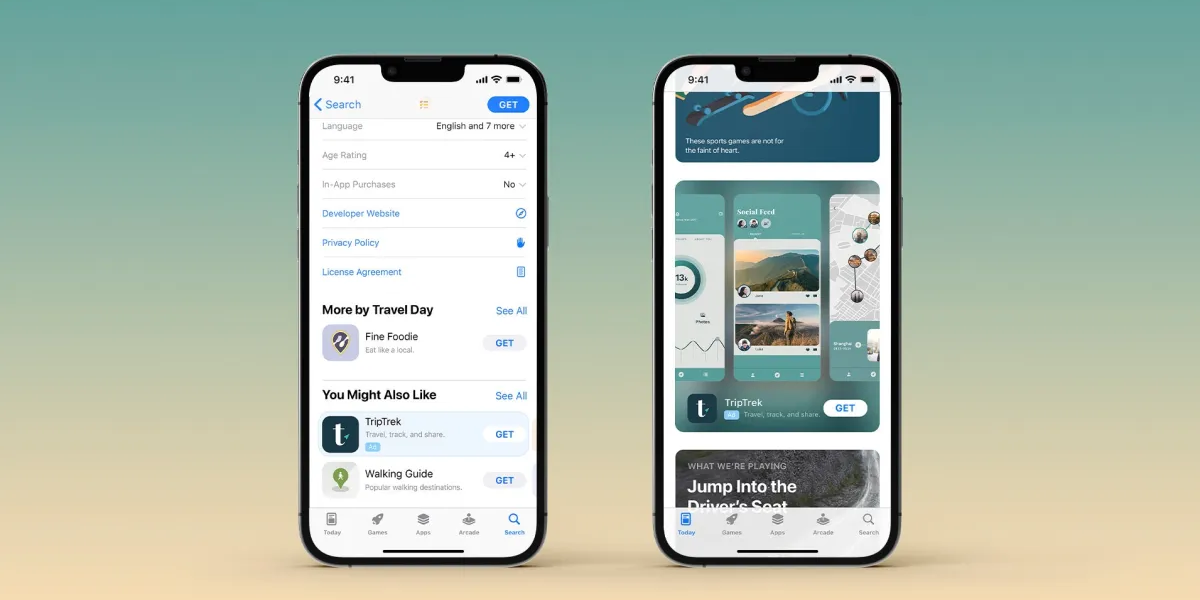
Apple is all set to start displaying ads in the “Today” section of the Apple App Store from this week. The leading tech company, reportedly, announced its business decision to developers over an email. Apple App Store earlier too had featured ads but this was only limited to the app in general or the search-based results or “suggested” section.
The placement of advertisements in the “Today” section, which is a curated space to feature all the apps picked by the Apple editorial staff themselves, is a step in a new direction. The “Today” section is what a user is exposed to first when they open the App Store.
The news was first reported by Macrumors and they also revealed the company’s plan to optimise the “You Might Also Like” section of the App Store. The changes would reflect in all countries across the globe, except China.
All advertisements in an App Store can be identified with an Ad icon with the background highlighted with blue colour.
Apple’s official website, about the App store ad placement, mentions the expected changes and briefs, “with a Today tab ad, your app can appear prominently on the front page of the App Store — making it some of the first content users see when they begin their App Store visit,”.
The company has also made it clear that there is no automated functionality for advertisements to appear on the App Store. Only apps that will be approved from the Apple Search ads will be visible in the “Today” section under the “Ad” icon.
According to Apple, the functionality to place advertisements in the “Today” or “You May Also Like” sections would give an opportunity to app developers to make their apps more noticeable and thus, reach more people. It can eventually become a good property for developers to promote their apps to the maximum number of Apple’s App Store users of iPhone and iPad.
On the other hand, legal expert Florian Mueller while countering the statement made by Apple, tweeted about the “You Might Also Like” ads that these are just “another means of increasing the effective app tax rate, forcing developers to buy ads on their own app pages in order to avoid that others steer customers away from there.”
Earlier in August, Mark Gurman of Bloomberg disclosed Apple’s immediate future plan of expanding their current advertising revenue to a minimum of $10 billion per year. In a newsletter, Gurman had predicted, “On the Apple’s App Store, display ads are currently shown in the search tab in the Suggested panel.
Apple will also soon expand ads to the main Today tab and within third-party app download pages.” Gurman also said that the tech giant would soon launch the search result ads in Google Maps, a feature that the company has been testing for some time internally.
Other Apple ventures such as Apple News and Stocks already feature the traditional banner advertisement. Though no news has surfaced about placing more ads in these pages, the company is apparently already working towards bringing similar advertisement features to Apple Podcasts, Apple Books or even Apple TV.
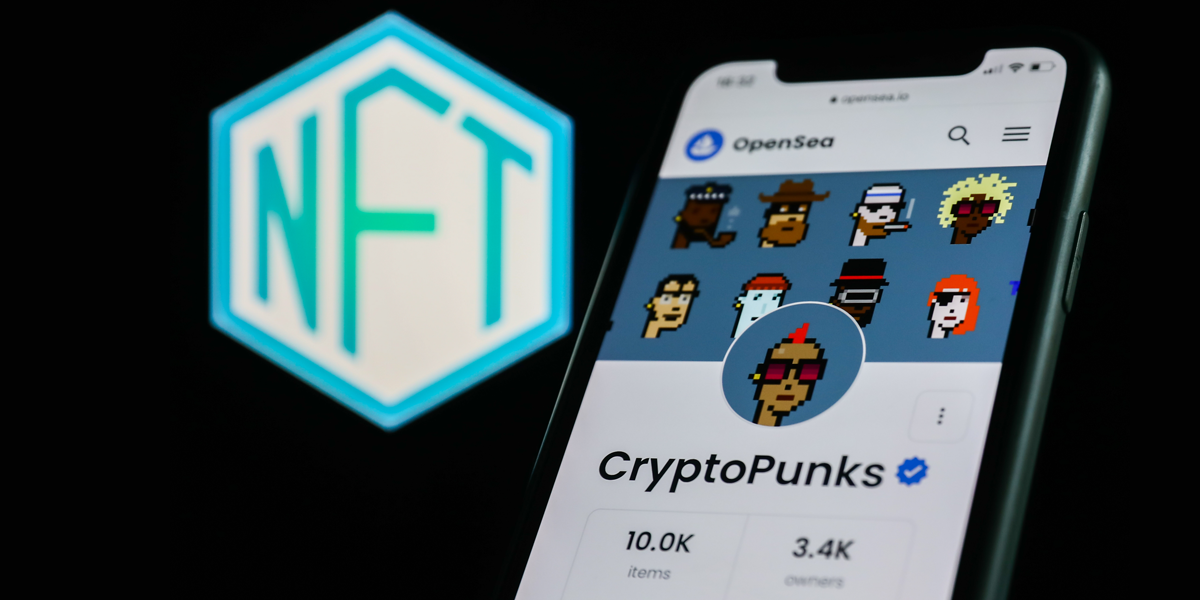
The troubles of Nate Chastain, an OpenSea former employee, are not seeing an end any time soon. In a recent development, it appears the wire fraud and money laundering case against Chastain are moving ahead with the judge denying defendant’s motion to dismiss the charges. Chastain was accused of profiting illegally off NFT sales in 2021 and the Department of Justice charged him with wire fraud and money laundering.
Several accusations about a series of allegedly dodgy trades surfaced last year that is believed to have taken place during Chastain’s tenure as the Head of Product in OpenSea between the month of January and September 2021.
Chastain allegedly used confidential information and abused his position as the Head of Product to profit off knowing which NFTs would appear on the homepage of OpenSea. Using this information, he secretly purchased tokens before they could even appear on the homepage. He subsequently sold these NFTs via multiple anonymous digital wallets making tons of profit illegally.
Lawyers representing Chastain tried to convince the judges by arguing that “the existence of securities or commodities trading is an essential element of any insider trading offence. And NFTs are neither of those, they contended.”
They also argued that the allegation of him misappropriating information doesn’t hold value as the information is “not property.” However, the Judge remained unconvinced and the indictment is now set to move forward.
As per the Department of Justice, Chastain generated as much as 19 ETH ($ 25,500 or roughly Rs. 21.1 lakh), per current prices) from all these illegal trades and schemes.
After the allegations were made public last year and OpenSea suspected Chastain of misappropriating inside information, Chastain had to resign from his position in September 2021. During the same time, social media was bombarded by many NFT traders who revealed details of a wallet that allegedly belonged to Chastain.
The wallet was said to have been at the centre of NFT transactions that later appeared on OpenSea’s featured portal. This worked as an evidence against Chastain in the indictment.
As per media reports, Chastain bought as many as 45 NFTs on 11 different occasions. All were at that shown as a part of an insider trading scheme. “In one such event his purchase and sale of the NFT “Spectrum of a Ramification Theory” on September 14, 2021, more than quadrupled his profits on that trade.”
Chastain’s lawyers maintain that the charges of money laundering against Chastain cannot be proven since the cryptocurrency transactions were performed on the Ethereum blockchain. This, thus makes all those transactions “completely visible to the public.”
OpenSea is a popular and one of the largest web3 peer-to-peer marketplace that deals in NFTs (Non-Fungible Tokens) and Crypto Collectibles. The platform is widely used across the world for browsing, buying, creating, selling and auctioning NFTs.
Headquartered in New York City, the company was founded in 2017 by Devin Finzer and Alex Atallah. With growing interest in NFTs worldwide, OpenSea has also witnessed tremendous growth over the few years of its inception. The company, as of January 2022, had been valued at $13.3 billion.
Britain’s Prime Minister Liz Truss unleashed her mini budget on investors causing a section of them to stampede from the British Pound. It caused them to move closer to cryptocurrency. The mini-budget was not on a welcome note for the investors as all their strategies lay aside after the announcement. However, it turned fruitful for cryptocurrency which was looking for better opportunities to spring.
The research firm CryptoCompare revealed that the trading volumes between bitcoin and the pound witnessed a jump of 233 percent in September when compared with the previous month. On a similar platform Euro also witnessed a hike of 68 percent while trading between cryptocurrencies.
The Chief Investment Officer at Tyr Capita, Ed Hindi stated that such a huge rise in the bitcoin volume of the currency of a developed country was witnessed for the first time. The market data firm Kaiko revealed that post-Friday budget shock British pound fell to its lowest ever against the dollar, however, the sterling and bitcoin trading volumes spiked to a record high of 846 million pounds.
In the meantime, bitcoin experienced the lowest volatility compared to the whole year. March 2020 witnessed the peak of safety turning US bonds into a safe haven according to a report rolled out by the ICE BofAML U.S. Bond Market Option Volatility Estimate Index.
In the past months, US Treasuries have come across market ructions creating a volatile background exceeding the volatility of bitcoin as well. The 10-year note of the US treasury and Bitcoin are now hovering at around 21.
One of the major USPs of bitcoin was its protection ability against currency depreciation and inflation. The aforesaid narrative could not gain ground as greater institutional adoption pointed towards cryptocurrency trading in lockstep along with traditional risky corners of the financial market. A big question arises- whether the investors are ready to approve bitcoin as a hedge coin.
The British pound witnessed similar instances where Russian and Ukrainian investors jumped into bitcoin as soon as it came under pressure. Experts jotted it down as an instance where small investors felt ease in buying bitcoin rather than entering gold or FX markets.
The chief investment officer at IDX Digital Assets, Ben McMillan stated that Bitcoin has never been a “flight to safety” but a “flight from crisis” asset even when GBP was not as weak as rouble.
Few market contenders stated that savvy traders obtaining benefits from arbitrage opportunities from changes in the bitcoin prices too affected the sterling flows.
Bitcoin Price experienced a downfall of 58 percent this year. However, the safety plays of gold and US bonds went down by 10 percent and 15 percent respectively. Additionally, Sterling too reported a loss of 16 percent and the S&P500 reportedly went down to more than 21 percent. In recent weeks, bitcoin hovered around the $19000 mark and stabilized when compared to its counterparts.
The bitcoin and sterling trading volumes have now fallen back o their previous levels as they were before the mini-budget. Few CryptoCompare analysts stated that the British pound may recover grounds post reversal of UK government fiscal plans.
on the contrary, several other cryptocurrency watchers are of the opinion that the September Surge was merely a reflection of the enduring appeal of bitcoin as an asset out of the mainstream finance.
In the bid of staying ahead of its competitors by miles, Instagram is bringing a new feature allowing its users to add songs to their profiles. Myspace introduced this feature way back but it could not gain pace in the social media platforms. Earlier Myspace rolled out this feature in the 2000s even before Orkut and Facebook came into being. it allowed the users to set a background song complementing their profile.
Likewise, the users accessed the ability to publicly express themselves through the song complementing their personality or profile. It has now become the most awaited feature update among users eager to get a new user experience after the software update.
There is stiff competition among social media platforms to present themselves as more engaging for the users. They aim their best to be as zanzy and quirky as possible. It involves always being creative in thinking and creating something cooler to get new users aboard. Recently, Alessandro Paluzzi, developer and notable leaker, tweeted a few screenshots depicting the new feature.
He revealed that this astounding feature would appear at the bottom of your bio on Instagram just below the link section. This would give a wholly new experience to the users as this most awaited update would enhance the profile presentation. The profile song or band would tell loads about you- something that your profile picture or details could not.
Instagram has not released the update for its users yet. Presently, its users can add music to their stories while selecting songs from the app’s library or from third-party apps such as Spotify etc.
In the meantime, Instagram, the meta-owned photo-sharing app has made several modifications to its social media platform to protect users from abuse along with hidden word updates. The company announced through a blog post that the accounts once blocked could not connect with you again easily.
Hidden words play an effective role in the automatic removal of any damaging content for message requests and comments. the company stated that 40% fewer comments might be termed as offensive. the company is in process of testing the automatic application of hidden words for creator accounts. the users would have access to its permissions in settings for the words, phrases, or emojis they wish to hide.
Instagram Profile Song- Journey Till Now
The Myspace era started in the early 2000s. between 2005 to 2008 it became the largest social networking website in the world as it overtook search giants Google and Yahoo and became the most visited website in the US. Its downfall started with the end of google’s advertising partnership in 2009 when its revenue fell below Twitter and Facebook and other competitors.
However, this could not end the lookout for adding songs to the profile of the users. Few dating sites like Hinge still allow users to add songs to their profiles. If the feature is released more publicly then it may surely return to the popular mainstream social media platforms as it was during the Myspace era.
Apple’s new app store policy allows apps to exist within other apps on the apple store but not have permission to unlock any additional features or content through cryptocurrency. The tech giant updated its conditions on its Apple app store review guidelines this Monday with a new set of terms and conditions surrounding NFTs.
However, the condition referring to paid unlocking of digital goods and services rolled out is that the NFTs purchased with Apple’s app are still valid for token-gated utility provided they pay 30% as Apple Tax.
Apple App Store Review Guidelines
These guidelines attain an important position as it provides all the relevant information to the developers regarding what and what not to publish. It also mentions in a dark stance that any violation of these policies could attract rejection or removal of the app concerned.
Hence the developers or other users in the business of developing or publishing through the Apple store need to work in conformity with the App store guidelines to avoid any traction between the two.
Recently it was rumored that Apple was about to make a move to take its hefty cut of NFT sales. Though the rumored 30% Apple Tax disappointed a few gaming CEOs and other crypto supporters stating that such a move would crush another nascent technology in a position to rival its grotesquely overpriced payment service (in-app).
Not only NFTs, but the revised guidelines also touch on other dimensions as well. Apart from NFTs, Apple has also updated a few of the languages around cryptocurrency exchange apps posted on the Apple App store. The guidelines mentioned that the Apps may facilitate approved exchange of transactions or transmissions until the offerings are provided in the countries or regions of the appropriate licensing and permissions of the app concerned regarding the permissions to provide cryptocurrency exchange.
The developers do not have permission to create buttons, any external links, or any CTAs to instruct users how to circumvent the app store towards other platforms to buy NFTs. On the contrary, the App Store has made arrangements for users to make in-app purchases where making payments in cryptocurrency is not an option.
This move may deter the application developers from providing their support for such arrangements (in-app purchase of NFTs). However, NFTs can still be used to unlock token-gated content.
Apple’s updated guidelines are not pursuing any ban on in-app payment services with a 30% Apple Tax on any such purchases. However, in-app use of NFTs widely used in different Web3 applications using blockchain technology for peer-to-peer token-based economies is not affected. The app makers often use NFTs to control the “gate” functionality on the basis of the ownership of the tokens.
For instance, owning or holding a particular NFT or cryptocurrency provided you with special discounts within the store or gives you access to any exclusive merchandise facilitated to certain token holders. Such transactions took place in the “tokengated commerce” launched by Shopify.
It allowed the store owners to give early access to the NFT holders to exclusive limited-edition merchandise and other lucrative experiences. Now, with the updated guidelines, no such function or facility shall be available for the developers within Shopify in the Apple app store as well.
If you have an Apple Watch, you want the watch battery to last longer because you want to do the most with it. Most Apple watches don’t cause a particular issue if you want to use them from morning to till the time you hit the bed.
But if you are a geek too, who has invested in an Apple Watch, there are probably a gazillion activities that you want to perform using your device. For example, having extra battery life on your Apple Watch becomes really important if you are using the sleep tracking functionality or extended workout management.
There are a few key tricks to getting better battery life out of any device including an Apple Watch. This is especially helpful if you are having a hard time making it through a full 24-hour run. Moreover, there can be moments when you can’t find time to charge your watch and some extra battery life can be a life saviour in those moments. So, here are some tricks on how to make your Apple Watch battery last longer.
Update Apple Watch Software
At no given point in time, the significance of keeping your device software up to date should not be underestimated. Users must ensure that the watch software is updated to the latest release in order to get the maximum out of the batteries.
This is mainly important for some of the iOS versions that upon their initial release always slow down the battery functionality due to some bugs or issues. These bugs are usually resolved in the next updated version of iOS but many users miss out since they do not pay attention to keeping the phone up-to-date.
So, keeping the Apple Watch software updated to its latest version of iOS can always ensure the battery is working to its full potential. To check for software updates, users can head to Settings > General > Software Update on the Apple Watch.
Restart the Apple Watch and Paired iPhone
Another thing that can help in enhancing the battery life is to try restarting the Apple Watch and the iPhone that is paired with it. There are chances that sometimes some process or app is hanging up in the background of the watch or the iPhone causing the battery to not work as per its full potential.
There can also be some syncing issues between the watch and the phone creating unwanted problems for the battery. In such cases, rebooting both devices can sometimes not only solve the problem but also enhance the performance of the battery.
What is the one thing that eats up the battery of your Apple Watch unnecessary? It is you. You looking at your Apple Watch or iPhone unnecessary throughout the day is one of the main battery-draining causes. Every single notification from every single app on your iPhone is why the Apple Watch battery is working up.
One way to stop this from happening is to tame the number of notifications you receive on your device every day. Turning off some notifications of some of the unnecessary apps can really ensure that the device saves battery for crucial moments. Interestingly, this will also save some of your valuable time.
Reduce Screen Brightness
This is true not just for the Apple Watch on your wrist but for any electronic device for that matter. Just reduce the screen brightness and see how much difference it makes on the battery life of your device.
When you keep the “Hey Siri” feature on your Apple Watch, the feature is always running in the background and listening. This is done to keep a check if the user is asking for Apple Digital Assistant’s assistance.
To do this, the feature has to keep the microphones on at all times and it always ends up eating up the battery life of your Apple Watch without you actually using it. Users can turn off either or both, the raised to speak or the “Hey Siri” on Apple Watch to save on some valuable battery life.
Disable the Always-On Display
This is mainly for users of the Apple Watch Series 5 or later versions. The Always-On display feature on these series 5 or later version watches shows your watch face and complications at all times. There is no need to keep the actually display always on, especially if you are having a few battery issues or looking at maximizing your battery life.
By turning off the Always-On display features, users can easily save 20% to 30% of battery life every day. This 20% to 30% could make a huge difference in the overall battery performance of your Apple Watch.
Turn Off Wake On Wrist Raise Feature
This sounds fascinating, doesn’t it? You just have to raise your wrist to be able to have a quick glance at the display. But this one feature can be a major reason for draining your Apple Watch battery life, more so when the screen lights up accidentally even when you raise or move your wrist for something else. This constant lighting up of the screen eats up battery life to a major extent and turning it off can definitely enhance battery performance.
Reset, Unpair and Pair Back
This is the last resort, something that no Apple user would want to do. So, in case none of the above-mentioned hacks is working, you can try resetting it all completely. Unpair the iPhone with the Apple Watch and pair it back again. In doing this, everything starts from scratch and any bug or issue causing the problem to the battery will automatically get resolved.
Competition and Market Authority (CMA), the UK competition watchdog has ordered Meta, owned by Facebook to sell the gif creation company Giphy in order to safeguard the business interest of other companies concerned operating in the UK. CMA had earlier intimated to Meta that disposing of Giphy’s advertising services is the only solution to the arising ambiguity in the advertising sector.
However, Meta didn’t comply with the suggestion and appealed against the previous decision to, in their purview, protect social media users from its increasing influence in social media. The tribunal’s ruling was followed by an expedient review regarding Giphy and Meta with new submissions on the two and finally, it stood by its previous decision of selling Giphy.
Competition and Markets Authority (CMA) is under the impression that Giphy’s takeover would allow other social media platforms access to GIFs. it would impact their attractiveness and competitiveness. It also mentioned the notion that this deal would impact UK businesses as they could not benefit from innovation in this market.
It declared that the deal poses harm to social media users and UK advertisers. Even the Competition Appeal Tribunal (CAT) where Meta subsequently appealed that decision was of the same opinion.
The independent panel appointed to probe into the Meta and Giphy merger mentioned its findings. It concluded that this deal would put Meta on the brighter side as it already possesses significant market power and the addition of Giphy’s advertising services on its side would:
deny or limit the access of other social media platforms to Gifs. It would increase the user time spent on social media in favor of Meta.
It could try to get access to more data from other Giphy customers such as Tik Tok, Twitter, and Snapchat in lieu of giving access to Giphy’s advertising services.
CMA revealed through their findings that GIFs play an important role in user engagement on social media platforms and that there are billions of searches of the required GIFs every month. Competition and Market Authority (CMA) believes that this deal would have a severe impact on the display advertising market.
Prior to this merger, Giphy was busy providing innovative services in the UK and its expansion abroad. Post-merger there is a threat of lack of potential advertisement toll impacting several businesses operating through visual images and GIFs in the UK.
CMA also revealed that Giphy has the potential to compete with Meta and even an upper hand when it comes to greater innovation from Meta and other competitors. Post-acquisition Meta terminated Giphy’s advertising services that worked as a potential tool for other businesses in the UK. The Competition and Market Authority (CMA) suggested that to avoid such discrepancy and inconvenience Giphy should be sold off in its entirety to an approved buyer.
Final purview
Stuart McIntosh, Chair of the inquiry group stated that the Meta- Giphy deal would impact competition in 2 markets- remove a potential competitor in the UK display ad market while empowering Meta in enhancing its substantial market power in social media.
He stated further that the proper sale of Giphy’s advertising services would promote innovation in the digital advertisement sector and ensure its benefits are received by other UK social media users as well.
WhatsApp, the Meta-owned social messaging app, faced an hours-long outage yesterday in many regions across the globe including India. The users complained of not being able to connect to the server or failing to send or receive WhatsApp messages. Phone and video call services were also affected during the downtime.
The major outage affected millions of users for around two hours. According to the official WhatsApp spokesperson, “the brief outage was a result of a technical error on our part”. The issue has been resolved and services were restored at the time of writing this update.
Many users flocked to Twitter during the WhatsApp outage as terms such as #whatsappdown kept trending the whole day. Following the tradition of finding humour in every situation, many Twitter users shared memes about the situation and its possible impact on users.
Downdetector, an online platform for tracking and analysing websites, reported that more than 27,000 users complained of the outage around the world. Out of these users, 69% of reported facing issues with sending messages on the app, 24% of users were facing troubles connecting to the server and more than 7% complained of issues with the app overall.
Also Read: WhatsApp Comes Up with Updated Features
As per the statistics released on Downdetector, the first reports of issues with connecting to the app came at around 12:30 pm in India on Tuesday. Initially, the app downtime tracking service detected about 2,610 reports. The same number, when Downdetector made the reports public, had increased to 25,597. This clearly indicates how widespread the issues were and how many users of the popular messaging service across the world were impacted.
For users in India, the heat map on Downdetector revealed that several Indian cities were particularly impacted by the outage. This included some major Tier 1 cities such as New Delhi, Bengaluru, Mumbai, and Kolkata as well as many Tier 2 or Tier 3 cities also like Indore, Surat, and Cuttack.
Moreover, WhatsApp for business also reported having issues with various features including messaging and calls. According to Downdetector, many WhatsApp for business users also flagged issues at the time of the global outage.
Meta spokesperson, while addressing the media, admitted having issues with the servers and said, “We’re aware that some people are currently having trouble sending messages and we’re working to restore WhatsApp for everyone as quickly as possible.”
WhatsApp Web and WhatsApp’s desktop apps, both of which work separately from the smartphone’s internet connection, also reportedly had the same outage. Other Meta-owned apps such as Instagram, Facebook, or even Messenger were reportedly fine during the downtime faced by WhatsApp.
WhatsApp is a widely popular freeware, cross-platform centralized instant messaging, and voice-over-IP service app that is used by internet users across the world. The app is owned by one of the biggest American tech companies, Meta Platforms.
The app is heavily used for sharing various types of content including text and voice messages, voice and video calls, images, documents, locations, and much more. According to recent eMarketer reports, WhatsApp has more users in India users than in any other country. The number of active monthly users in India currently stands at 390.1 million.