WhatsApp introduces the ability to send photos in HD Quality (3024 x 4032), providing an end to compressed images.
Users with slower internet connections will initially receive photos in Standard Quality with an option to upgrade to HD.
HD photo sharing is being rolled out globally with high-resolution video sharing coming soon.
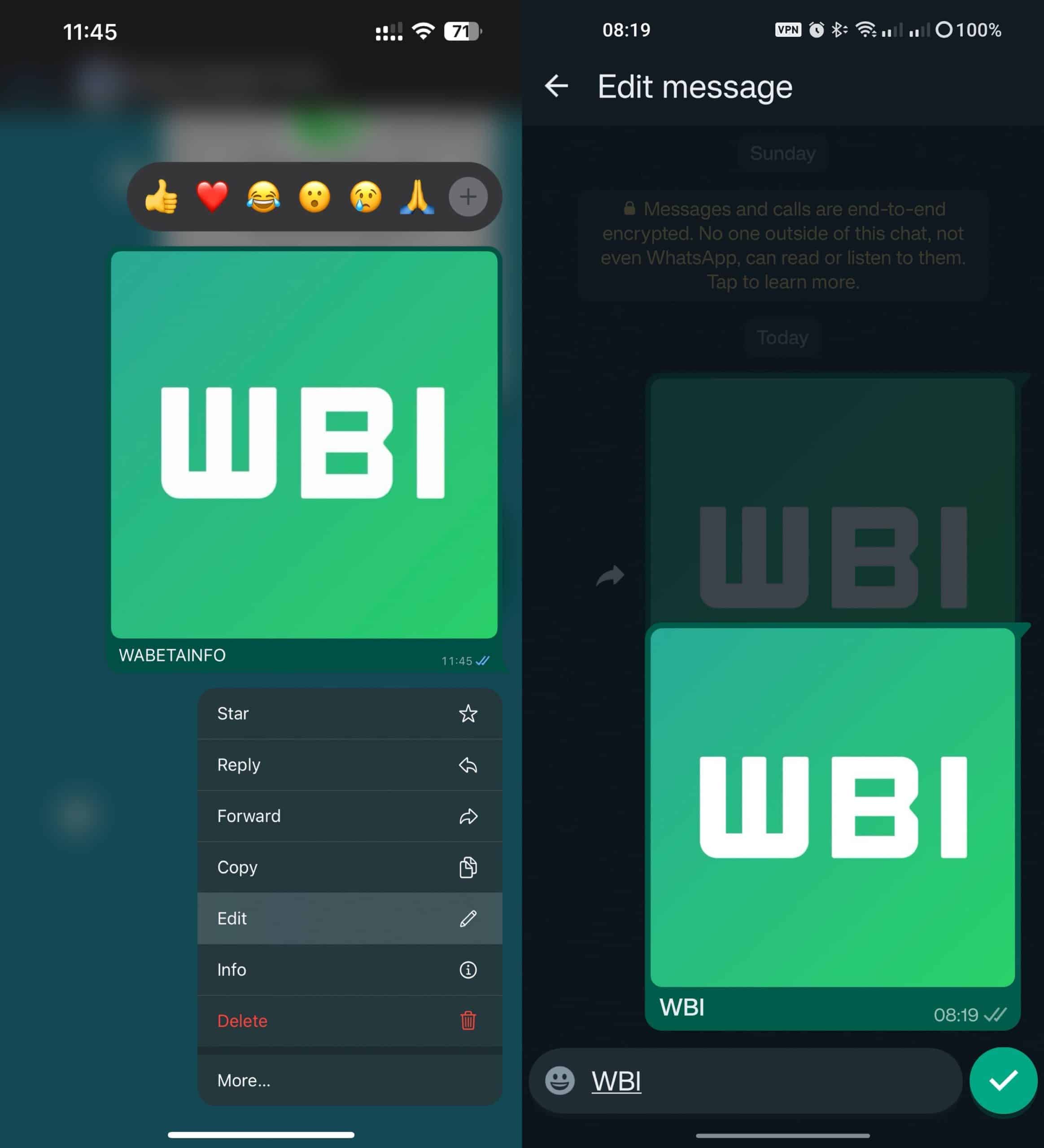
Another new feature to edit captions on photos, videos, GIFs, and documents, along with previous text message editing.
In a major move that’s sure to delight its vast user base, WhatsApp has announced the long-awaited feature to send HD photos.
This new addition allows users to send high-quality pictures to their contacts without the vexation of them being compressed.
Mark Zuckerberg, Meta CEO, took to Facebook to celebrate this upgrade, stating, “Sharing photos on WhatsApp just got an upgrade — now you can send in HD.” He further detailed the process with an accompanying video that shows a straightforward “HD” option appearing next to existing editing tools.
Detailed Look: What’s New in Photo Sharing?
Detailed Look: What’s New in Photo Sharing?
Version 23.16.0 of the WhatsApp appintroduces a new “HD” button atop the photo sharing screen. By tapping on this, users can switch between Standard Quality (920 x 1280) and HD Quality (3024 x 4032 ).
The recipient will be greeted with an HD label on the image, signalling a higher quality version. All high-resolution images continue to be protected under WhatsApp’s end-to-end encryption.
Meta has also thoughtfully considered users on low bandwidth connections. Those on slower connections will initially receive photos in Standard Quality but will have the option to upgrade to HD where available.
Global Rollout and Future Plans
Global Rollout and Future Plans
This feature is set to be rolled out globally over the coming weeks. Meta has also teased the upcoming ability to send high-resolution videos over WhatsApp, signalling another exciting development in their continuous improvement.
Additional Features: Edit Captions and Messages
Additional Features: Edit Captions and Messages
Alongside the HD photo feature, WhatsApp has made strides in improving the user’s control over their chats. A new feature that enables users to edit captions of photos, videos, GIFs and documents is reportedly being rolled out.
This builds upon the earlier ability to edit text messageswithin 15 minutes of sending, bringing uniformity in editing capabilities across various message formats.
Both Androidand iOS users will soon have access to this handy feature. By simply long-pressing a sent media message with a caption and selecting the edit option, users can amend their messages, aligning with WhatsApp’s commitment to provide more control over chat experiences.
FAQs
Q: What is the new HD photo sharing feature in WhatsApp?
A: WhatsApp’s HD photo sharing allows users to send images in high definition quality (3024 x 4032) instead of the previously compressed Standard Quality. Users can switch between these qualities using the “HD” button.
Q: How does the new feature work for users on low bandwidth connections?
A: If a user’s internet connection is slow, they will receive photos in Standard Quality and can choose to upgrade to HD Quality where available.
Q: When will the HD photo sharing feature be available to all users?
A: The HD photo sharing feature will be rolled out globally over the next few weeks, with plans to also introduce high-resolution video sharing.
Q: What are the new editing features available on WhatsApp?
A: Along with HD photo sharing, WhatsApp is introducing the ability to edit captions on media messages, such as photos, videos, GIFs, and documents, bringing uniformity in editing capabilities across all message formats.
* Realme has confirmed the launch date of the GT 5 smartphone. * The device will be the first Realme phone to feature 24GB RAM and Snapdragon 8 Gen processor. * The Realme GT 5 will feature narrow bezels on the front and a plastic frame.
Realme has officially confirmed the launch of Realme GT5launch event in China on August 28th as a part of its 5th anniversary. In a letter recently, the company’s CEO Sky Li talked about the company’s growth.
Earlier today, he said that in five years, Realme has surpassed peaks one after another, and has become one of the top 10 smartphone brands in the world with sales in 21 countries. He said that Realme wants to be a mobile phone brand for young people.
He said, at the event, Realme will keep up the “Dare to Leap” spirit and release the Leap-Forward Climbing Plan and the Fifth Anniversary Leap Up Product at the “Leap Up” Press Conference.
Realme recently confirmed240W fast chargingand up to 1TB of storage for the phone. Based on earlier rumours, the phone will feature a 1.5K flat AMOLED 144Hz screen, X7 independent display chip, Snapdragon 8 Gen 2 SoC, up to 24GB RAM and 240W / 150W variants.
Realme GT 5 Launch Date Confirmed
Realme GT 5 Smartphone in China
The teaser image posted by Realme’s official Weibo account confirms that the Realme GT 5 will launch on August 28th in the brand’s home country at 2 pm local time (11.30 am IST).
It also showcases the side of the upcoming phone with the caption “Leapfrog,” a term that the brand has been teasing since last week.
Realme China President Xu Qi Chase has already hinted that this device will feature the Snapdragon 8 Gen 2 processor. Combined with 24GB of LPDDR5X RAM, it should be a powerful device in terms of performance.
Realme GT 5 Leaked Specifications
Realme GT 5 will come with up to 24GB of RAM
Realme is tipped to launch the smartphone in4600mAh and 5000mAh variants with 240W and 150W fast charging support.
The teaser confirmed the Snapdragon 8 Gen series chipset and teased that over 30 smartphones are equipped with 8 Gen 2, but none have reached this performance limit.
Realme will equip the smartphone with better performance with Qualcomm Snapdragon 8 Gen 2 SoC.
Realme will most likely pair the chipset with LPDDR5X RAM and UFS 4.0 storage.
The leaks earlier reveal that the smartphone will have a 6.74-inch OLED display with a 144HZ refresh rate.
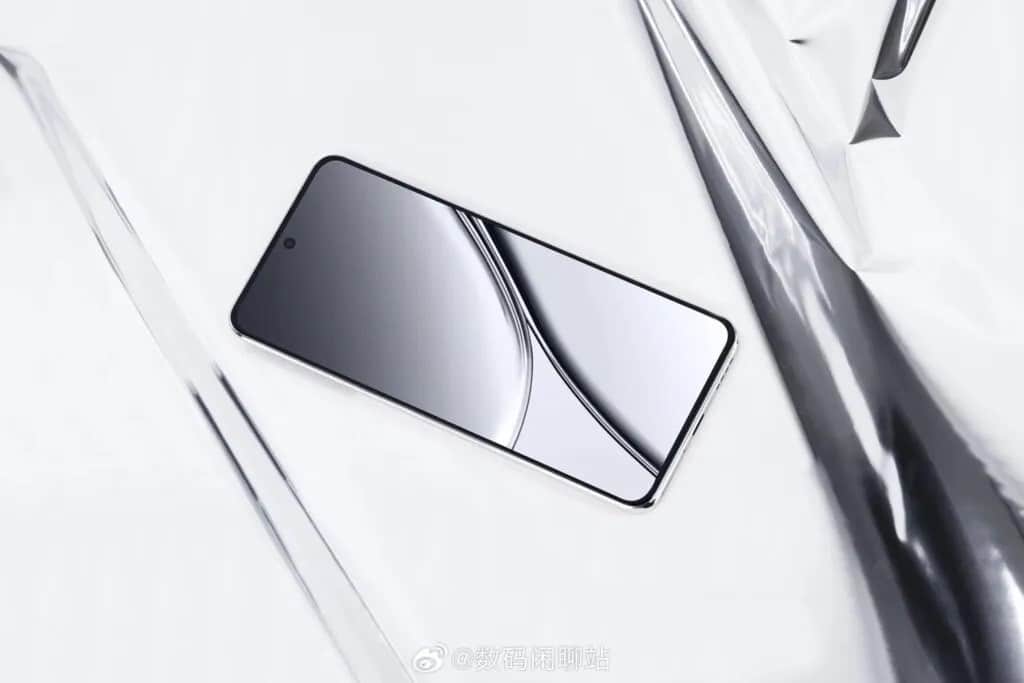
A leaked render shared by Digital Chat Station confirms that the device will feature a centred punch-hole cut-out.
The smartphone will come with ultra-thin bezels around the display. The primary microphone, USB Type-C port, SIM card slot, and speaker grille can be seen on the bottom of the smartphone.
Realme Gt 5 supports 240W wired fast charging
Realme President mentioned that 24GB RAM will help improve the user experience. Another teaser confirms that the device will be equipped with up to 1TB of storage. Realme is unlikely to launch 24GB + 1TB configurations outside China.
Realme confirmed that the device will be packed with 240W fast charging tech.
According to a leak earlier Realme will launch the smartphone in two variants with different fast charging speeds similar to Realme GT Neo 5.
Xu Qi, Realme President, confirmed that the device will pack up to 24GB of RAM.
The upcoming Realme smartphone will be the third mass-produced smartphone with 24GB of RAM.
Realme GT 5 Rumoured Specifications
Realme Gt 5 Powered by Snapdragon 8 Gen 2 chipset
* 6.74-inch (2772×1240 pixels) AMOLED display with 144Hz adaptive refresh rate, up to 1450 nits peak brightness, 100% DCI-P3 color gamut, 1440Hz high-frequency PWM dimming * Octa Core Snapdragon 8 Gen 2 4nm Mobile Platform with Adreno 740 GPU * 8GB / 12GB / 16GB / 24GB LPDDR5X RAM with 128GB / 256GB / 512GB / 1TB (UFS 4.0) storage * Android 13 with Realme UI 4.0 * Dual SIM (nano + nano) * 50MP rear camera with 1/1.56″ Sony IMX890 sensor, f/1.8 aperture, OIS, 8MP 120° ultra-wide camera, f/2.2 aperture, 2MP macro camera with f/2.4 aperture, LED flash * 16MP front-facing camera with f/2.4 aperture * In-display fingerprint sensor * Dimensions: 163.13×75.38×8.86mm; Weight: 205g * USB Type-C audio, Stereo speakers, Dolby Atmos * 5G SA/ NSA, Dual 4G VoLTE, Wi-Fi 6 802.11 ax (2.4GHz + 5GHz), Bluetooth 5.2, GPS (L1 + L5)/ GLONASS, NFC, USB Type-C * GT5 – 5160mAh(?) (typical) / 5080mAh (minimum) battery with 150W SuperVOOC fast charging * GT5 240W – 4600mAh (typical) / 4450mAh (minimum) battery with 240W SuperVOOC fast charging
Ans) Reliable tipster, Digital Chat Station, shared an image showcasing the front of the device on Chinese social media.
The bezels are rather narrow on the Realme GT 5.
However, that does not apply to all four sides of the display bezels as they’re still thicker at the chin.
The device will feature a centred punch hole camera and the tipster also mentioned that the bezel width is better than the newly launched OnePlus Ace 2 Pro and Realme K60 Extreme Edition.
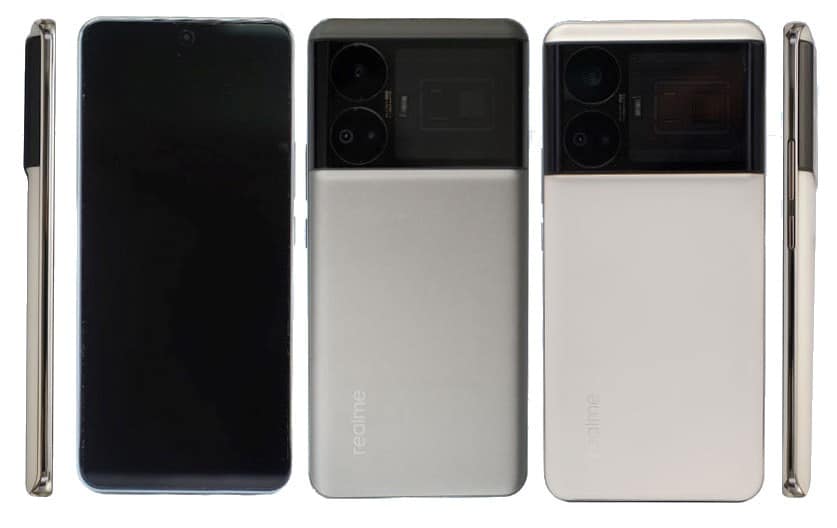
There is lack of a metal frame. As there are no antenna lines visible on the device, it is assumed that it comes with a plastic frame.
2) Which Realme Products are about to launch ?
Ans) The Realme Buds Air 5 will make their debut in India this week and then on August 28th in China. Realme 11X, Realme 11 and Realme Buds Air 5 Pro will be launching in India on August 21st.
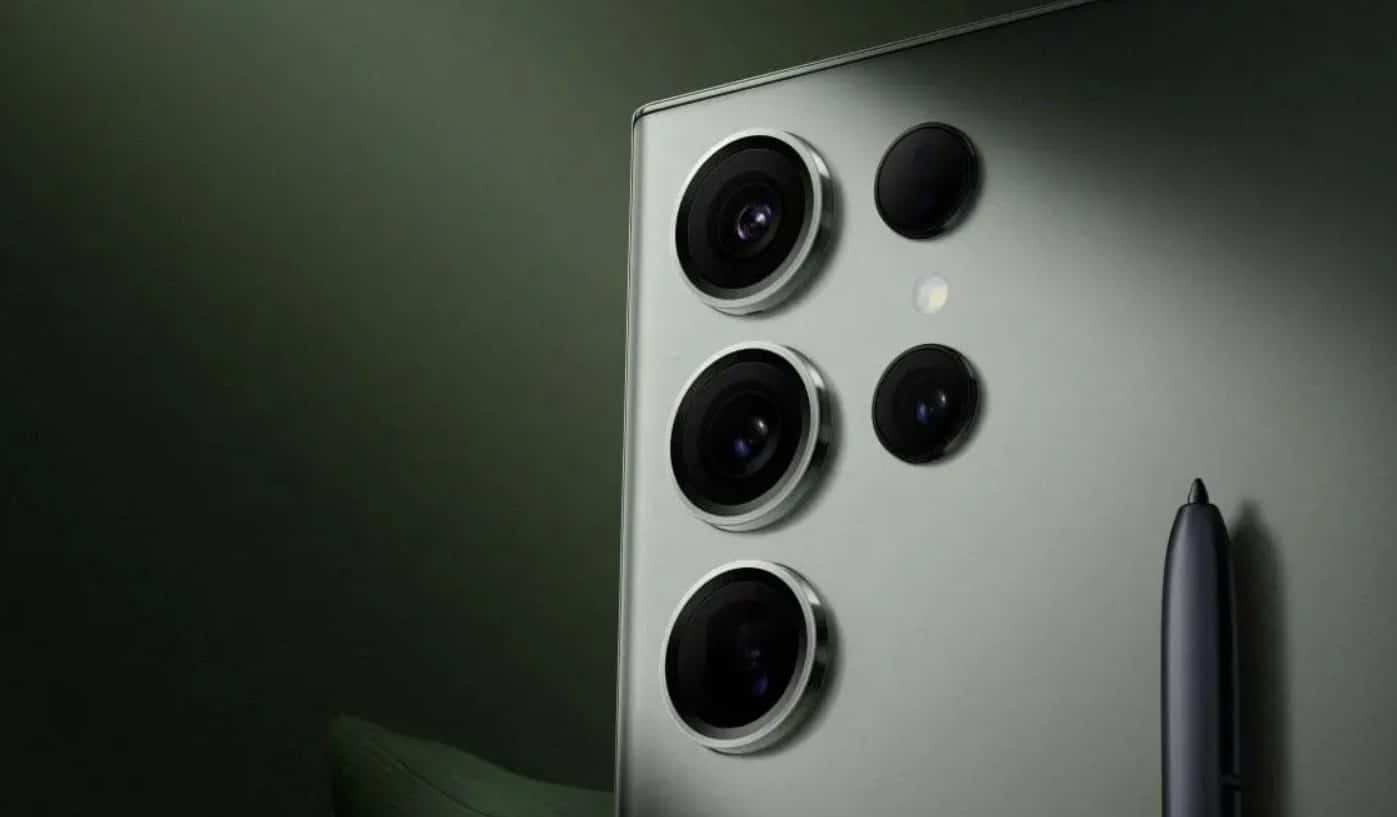
Leak hints at Samsung’s development of a groundbreaking 440MP ISOCELL HU1 sensor with a lens larger than 1 inch, stirring excitement across the tech world.
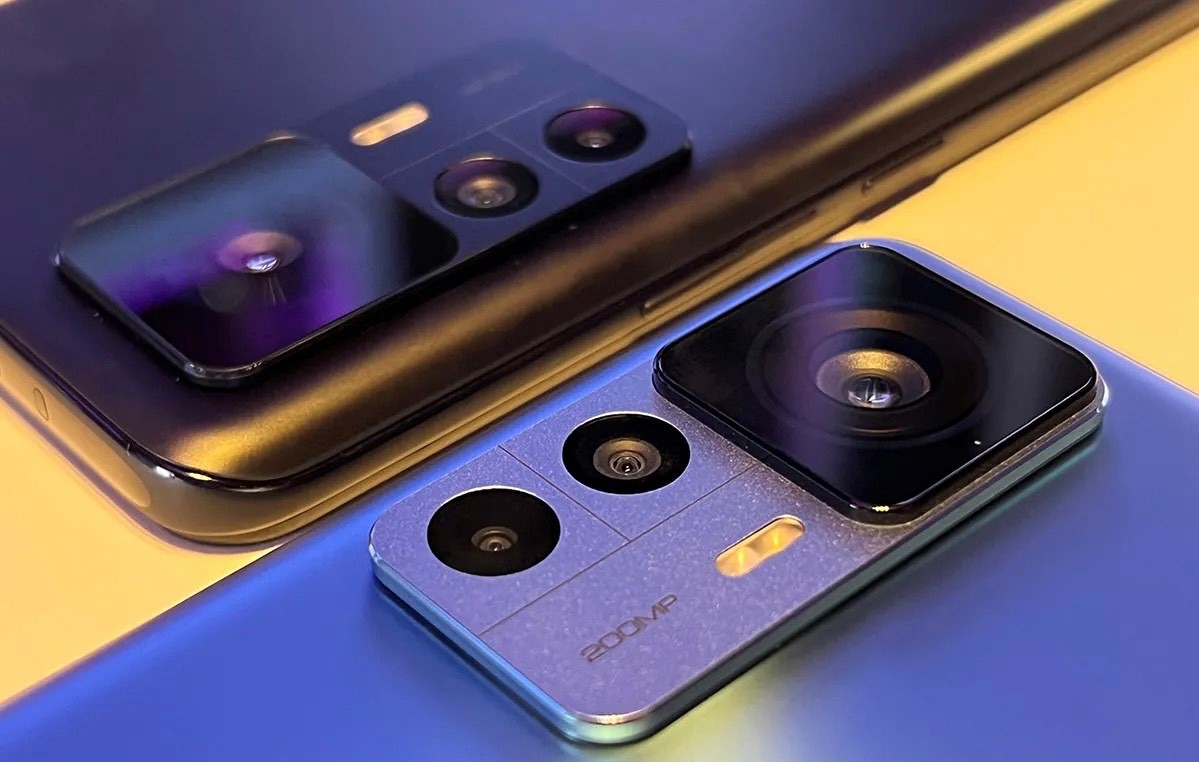
Alongside the 440MP ISOCELL, reports suggest additional innovations like the 50MP ISOCELL GN6 and the 200MP ISOCELL HP7.
The ISOCELL GN6 is speculated to compete with Sony’s IMX989 sensor, heralding a potential leap in smartphone camera technology.
Samsung’s expression of interest in reaching up to 600MP showcases an ambitious vision, despite no official confirmation.
Samsung, the renowned South Korean technology powerhouse, is reportedly on the brink of a groundbreaking leap in camera sensor technology with the development of a new 440MP ISOCELL HU1 sensor.
This remarkable advancement is very likely going to set standards in imaging capabilities and represents the forefront of the company’s ambitious endeavours in the realm of sensor technology.
A Samsung 440MP sensor?
A Samsung 440MP sensor?
Hints from tipster Revegnus mention a 440MP ISOCELL HU1, expected to feature a lens larger than 1 inch.
Although there are absolutely no other details surrounding this lens, one can speculate that it is an audacious innovation that fuels anticipation across both the mobileand automotive industries.
Given Samsung’s history of deploying camera sensorsin various applications ranging from smartphones to assisted smart-driving vehicles, the possibilities for this sensor remain tantalisingly ambiguous.
Samsung’s Reported Lineup of Camera Sensors
Samsung’s Reported Lineup of Camera Sensors
Further reports, including and insights from Sammobile, suggest that Samsung’s pipeline of innovation doesn’t end with the 440-MP ISOCELL HU1. The company is also working on additional sensors such as:
A 50MP ISOCELL GN6 1.6-inch sensor, marking a significant milestone for Samsung.
A 200MP ISOCELL HP7 0.6-inch sensor, further extending the company’s reach into high-resolution imaging.
Moreover, Samsung’s vision extends even further, as it has openly stated its aspiration to work on camera sensors with resolutions of up to 600MP.
Such a goa does reflect on the company’s relentless pursuit of technological excellence and its commitment to leading the industry in camera innovation.
Its potential applications and the ripple effect it may have on both the mobile and automotive technology landscapes underline Samsung’s status as a technological trailblazer.
FAQs
What details are known about the leaked 440MP ISOCELL HU1 Sensor by Samsung?
The 440MP ISOCELL HU1 is a rumoured camera sensor from Samsung, expected to have a lens larger than 1 inch. Although no official details have been released, it has sparked interest for its potential applications in both mobile and automotive sectors.
What are the other sensors mentioned alongside Samsung’s 440MP ISOCELL HU1?
Reports include mention of a 50MP ISOCELL GN6 1.6-inch sensor and a 200MP ISOCELL HP7 0.6-inch sensor. However, these remain speculative and unconfirmed by Samsung.
How might Samsung’s rumoured ISOCELL GN6 compare to Sony’s IMX989 sensor?
The ISOCELL GN6 is speculated to compete with Sony’s IMX989, possibly offering an upgrade for flagship smartphones. Without official specifications, direct comparisons remain theoretical.
What can be inferred about Samsung’s future plans from these leaks?
Though unconfirmed, the leaks indicate Samsung’s ambition to lead in camera sensor technology, with resolutions possibly reaching up to 600MP.
ChatGPT 5 may revolutionise multimodal understanding, expanding into audio and video content analysis.
The anticipated release is hinted for 2025, constrained by the unavailability of essential Nvidia GPUs.
Artificial General Intelligence (AGI) integration could redefine AI’s role, potentially managing daily tasks.
OpenAI faces both financial and technical challenges, striving to enhance quality over rushing new releases.
Since the introduction of ChatGPT in 2022, artificial intelligence has become an intrinsic part of daily life. It has become clear that AI has, and will, more prominently spread its wings across diverse sectors.
Currently, OpenAI, developers of ChatGPT, have released their GPT 4 model for users. Now, as technology enthusiasts eagerly await the next significant evolution, ChatGPT 5, we examine what lies on the horizon.
Evolution of ChatGPT
Evolution of ChatGPT
The genesis of OpenAI’s ChatGPT began with GPT 3.5, a remarkable feat that revolutionised how businesses and individuals interacted with technology.
Its successor, GPT 4, not only built upon these achievements but extended them, integrating seamlessly with Microsoft’s operating systems and browsers.
With anticipation building for ChatGPT 5, the next chapter in this fascinating AI journey, there are several possibilities and challenges ahead.
ChatGPT 5: A Glimpse into the Future?
ChatGPT 5: A Glimpse into the Future?
Although an official launch date remains elusive, rumours and industry speculation paint an enticing picture of what the future may hold.
OpenAI’s Sam Altman reportedly hints at a potential release around 2025, with delays attributed to the unavailability of Nvidia GPUs, essential for training complex language models.
ChatGPT 5: Anticipated Features
Artificial General Intelligence (AGI)
Multimodal Understanding: Building on GPT 4’s understanding of images and graphs,ChatGPT 5 may expand into audio and video content analysis, transforming content creation and video editing.
Expanded Knowledge Base: A more extensive and comprehensive knowledge repository could empower ChatGPT 5 to delve into complex subjects, including intricate scientific theories.
Artificial General Intelligence (AGI): Although a distant prospect, AGI integration could redefine AI’s role, entrusting it with everyday tasks like shopping and household management.
Challenges and Constraints
Challenges and Constraints
The development of ChatGPT 5 is not without obstacles. OpenAI’s significant daily expenditure on maintaining existing models, combined with the financial weight of new model creation, presents a formidable challenge.
The necessity for high-end GPUs further escalates both the technical and financial constraints.
As AI continues to flourish, rivals like Google’s Bard and Microsoft’s Bing Chat vie for market dominance. OpenAI’s strategy, however, leans towards enhancing the quality of their offerings, avoiding the rush to frequent releases.
Conclusion
ChatGPT’s Progression
With ChatGPT’s progression from 3.5 to 4, bringing logical enhancements, an expanded knowledge base, and the potential for visual comprehension, the anticipation for ChatGPT 5 grows daily.
While its release and precise features remain speculative, the technological world’s excitement is palpable.
FAQs
When is ChatGPT 5 expected to launch?
Although there is no official confirmation, OpenAI’s Sam Altman has hinted at a potential release around 2025. The delay is attributed to the unavailability of Nvidia GPUs necessary for training complex models.
What new features can we expect in ChatGPT 5?
ChatGPT 5 may introduce multimodal understanding of audio and video content, expand its knowledge base into complex subjects, and perhaps even venture into Artificial General Intelligence (AGI), transforming AI’s role in daily life.
What challenges does OpenAI face in developing ChatGPT 5?
The development of ChatGPT 5 faces substantial obstacles, including the significant daily expenditure on maintaining existing models, the financial weight of new model creation, and the need for high-end GPUs, contributing to technical and financial constraints.
How is ChatGPT 5 positioning itself against competitors like Google’s Bard and Microsoft’s Bing Chat?
OpenAI’s strategy leans towards refining the quality of their product rather than rushing into new releases. Their focus on innovation and enhancement keeps them competitive in the rapidly evolving AI landscape.
• The Bluetooth headphones comes in two attractive colour variants — Aqua and Coral . • It is available at an introductory price for just Rs 1,499. • It is available on boAt-lifestyle.com and on marketplaces including Amazon.in and Flipkart. The limited edition is also available offline in select cities.
boAt’s Rockid Rush comes with 30mm drivers tuned to deliver boAt Signature Sound & has a sound limit of 85 dB which is perfect for delicate ears of your child.
Its soft and plush earcups & feather-light design provide extra comfort.
Designed for your little explorer, it has 10 hours of playtime for them to embark on a long audio journey.
So, get a safer auditory experience with the coolest headphones designed just for your kid.
Rockid Rush, by boAt, is a pair of Bluetooth headphones that are built especially for younger kids.
Crafted with stickers and available in two lovely shades (Aqua and Coral), these pair of headphones are extremely attractive and keep your kid’s mood happy and joyful too.
boAt Rockid Rush Features
Featuring large 30mm drivers for rich and crystal-clear audio tuned by boAt’s unbeatable Signature Sound for a safe audio level delivery (max 85dB), these cute little headphones are a perfect audio accessory crafted to enhance their listening adventures.
The earcups are designed with lightweight, durable, adjustable, and adaptable materials, and lined with soft, plush, and skin-friendly earcups for a more enhanced and comfortable listening experience. Feather-light design and rock-solid durability make Rockid Rush absolutely kid-proof.
Adding fun to the already safe entertainmentis an array of customizable stickers that allow your kids to add their names, elevating the joy of learning, and solidifying their status as the coolest kid around.
boAt Kids Wireless Bluetooth Headphone ‘Rockid Rush’
Let them transform their belongings into a unique expression of their personality and style.
The vast range of stickers, with its many colours and shapes, lets your kid craft their fantasies into reality, while simultaneously developing their creative skills.
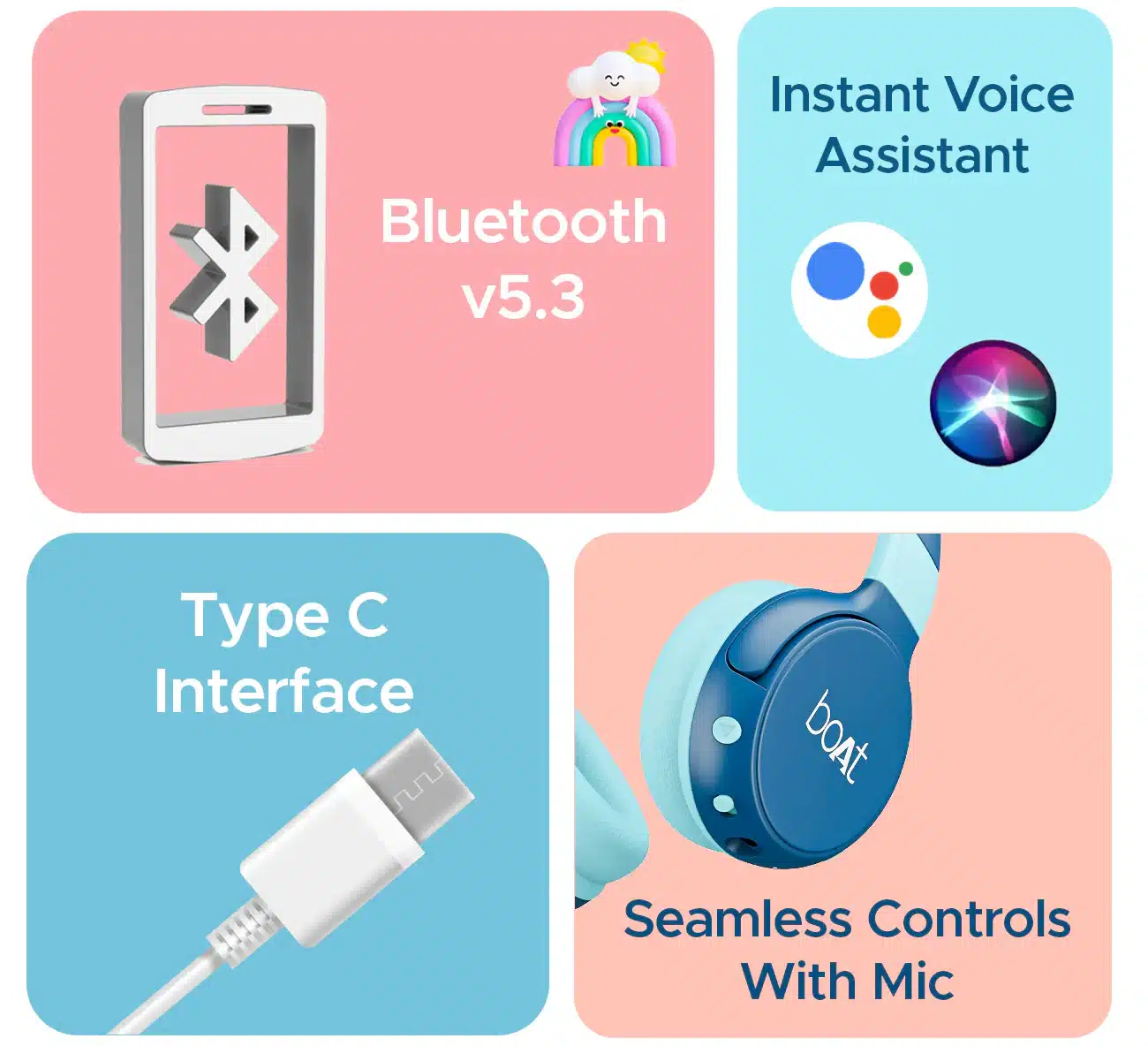
Other versatile features include 10 hours of battery life with universal USB Type-C fast charging, seamless touch controls for volume and track change, dual-connectivity Bluetooth v5.3 for multi-device pairing, and an onboard microphone for phone calls and voice assistants.
The boAt limited-edition Rockid Rush headphones are available in two attractive colour variants — Aqua and Coral and is available at an introductory price for just Rs 1,499 on boAt-lifestyle.com and on marketplaces including Amazon.inand Flipkart.
The limited edition is also available offline in select cities.
Faqs
1) What are the Color’s available in boAt Rockid Rush ?
Ans) The boAt limited-edition Rockid Rush headphones are available in two attractive colour variants — Aqua and Coral.
2) What is the price for boAt Rockid Rush ?
Ans) Rockid Rush is available at an introductory price for just Rs 1,499.
3) What are the top features of boAt Rockid Rush ?
Ans) The vast range of stickers,with its many colours and shapes, lets your kid craft their fantasies into reality, while simultaneously developing their creative skills.
Feather-light design and rock-solid durability make Rockid Rush absolutely kid-proof.
The Google Pixel Watch 2, featuring a circular face and Android 13, is expected to launch later this year.
Powered by Qualcomm’s Snapdragon W5+ Gen 1 chipset and 2GB of RAM, the watch is set to offer smooth performance.
With two distinct variants (LTE and Wi-Fi) and four strap options, the wearable will provide customization to users.
The smartwatch’s 306mAh battery promises lasting usability and is likely to be available in the Indian market.
The Google Pixel Watch 2, a highly anticipated piece of wearable technology, is stirring interest well ahead of its official unveiling.
A series of certifications, listings, and recent leaks have provided a clearer picture of what consumers might expect from this next iteration in the Pixel Watch series.
Design and Features
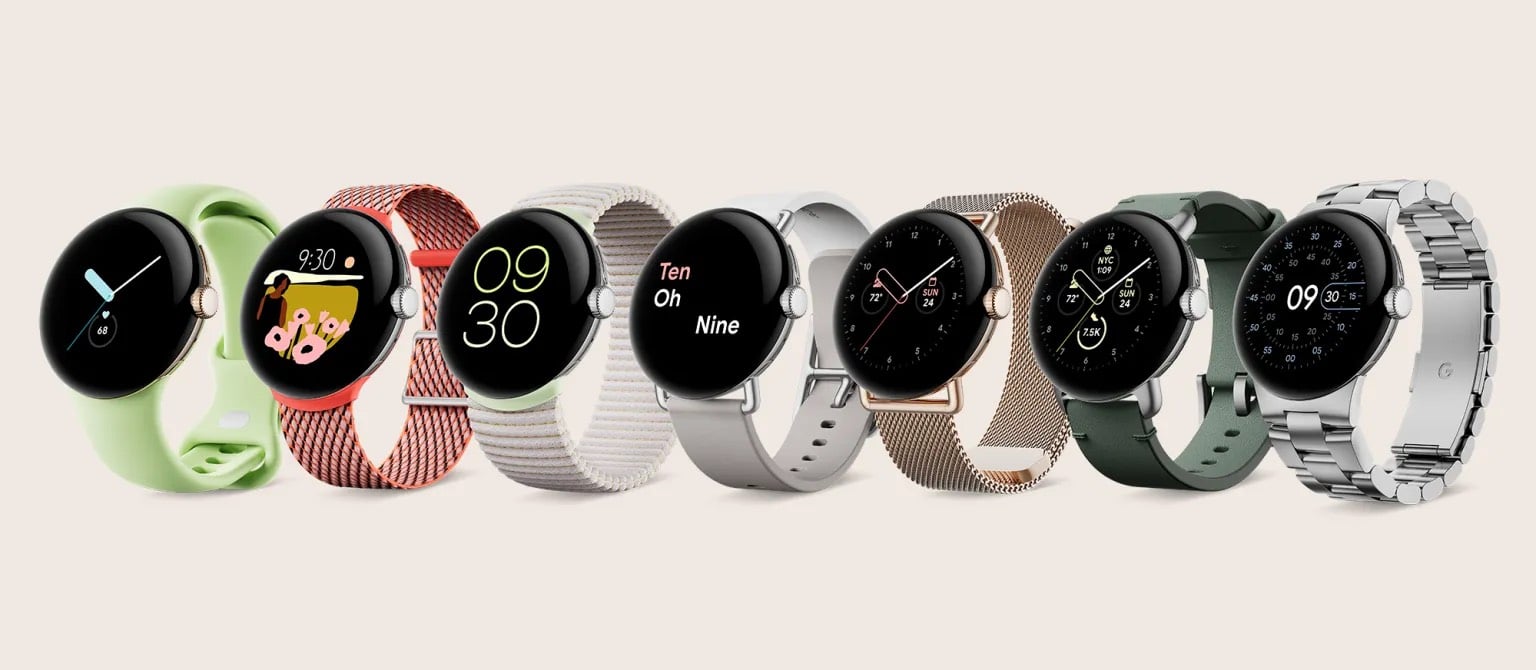
Google Pixel Watch 2 Design
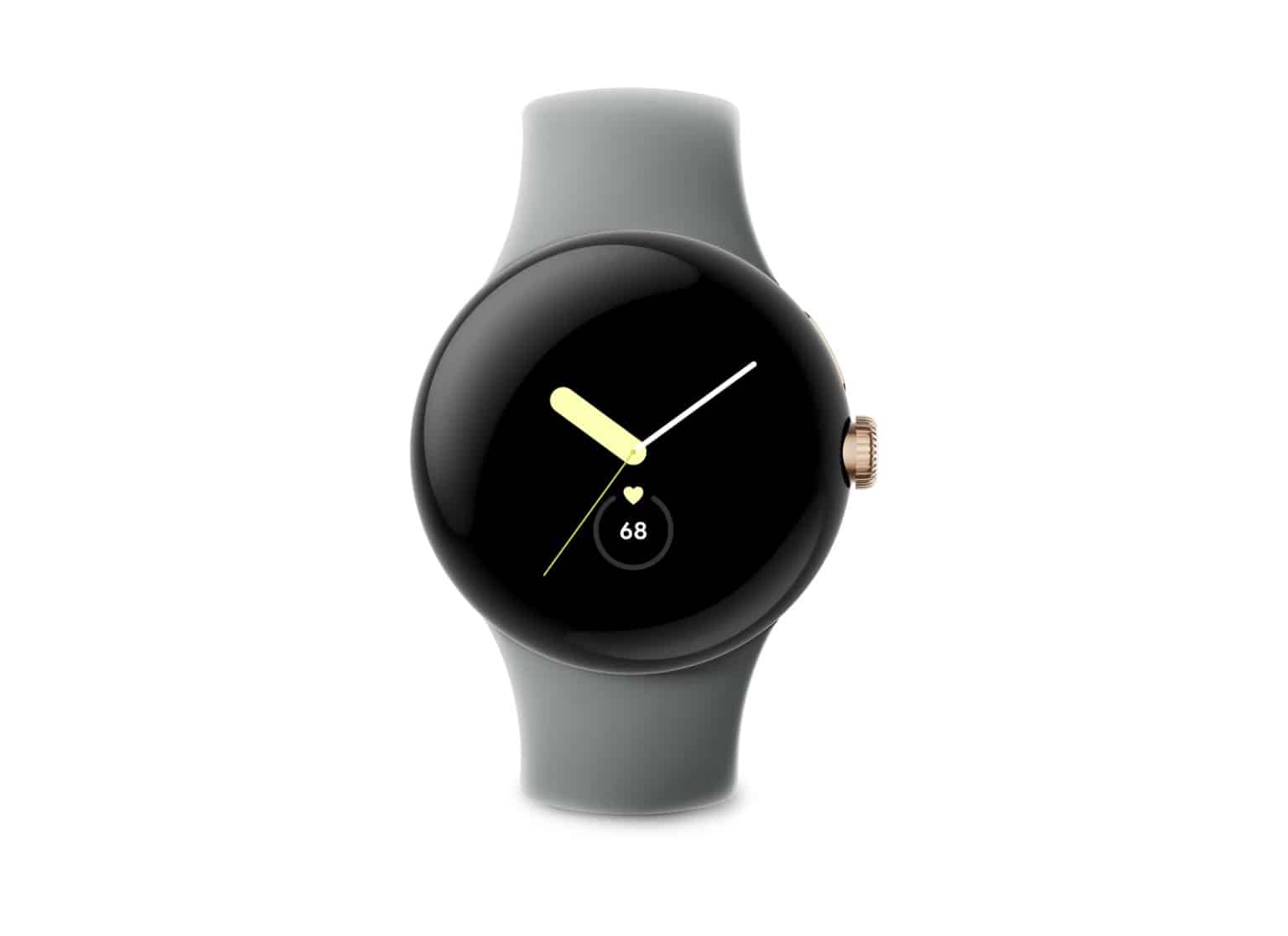
Listed under the code name “eos” on Google Play’s supported devices list, the Pixel Watch 2’s design includes a circular face, a departure from traditional square designs. The right side of the watch will boast a physical button, a design cue carried over from its predecessor.
Google Pixel Watch 2
Running on Android 13 and layered with Google’s Wear OS 4.0, this smartwatch promises to be in sync with the latest Android ecosystem.
Moreover, the wearable is anticipated to feature four innovative watch face designs: Accessible, Arc, Analog Bold, and Bold Digital, furthering personalisation options.
Performance and Battery Life
Qualcomm’s Snapdragon W5+ Gen 1 (SW5100) chipset
As per reports, underneath its sleek exterior, the Pixel Watch 2 is expected to be powered by Qualcomm’s Snapdragon W5+ Gen 1 (SW5100) chipset, paired with 2GB of RAM.
Such a combination could lead to smooth performance and efficient multitasking.
One of the vital aspects of a smartwatch is its battery life, and the Pixel Watch 2 appears to be addressing this with a 306mAh battery.
Though the real-world battery performance is yet to be seen, it holds potential for lasting usability.
Connectivity and Availability
Connectivity and Availability
The FCCcertification reveals two distinct variants of the Pixel Watch 2. Users will have the choice between an LTE-enabled model and another with Wi-Fi connectivity, offering flexibility to different user needs.
The available strap options include Accessible, Arc, Analog Bold, and Bold Digital, adding another layer of customisation to the smartwatch.
Indian Market and Expected Launch Date
Indian Market and Expected Launch Date
With the Pixel Watch 2 having received BIS certification, it’s likely that the smartwatch will be available in the Indian market.
While Google has not announced a specific release date, considering the Pixel 7 series‘ October launch in the previous year, it is reasonable to expect the wearable to be unveiled around the same period this year.
The Google Pixel Watch 2’s appearance in various listings and certifications has sparked curiosity and anticipation.
From its chic design to promising specs, this smartwatch is poised to make a significant mark in the wearable technology landscape.
The official announcement is eagerly awaited, and it’s safe to say that the Pixel Watch 2 could indeed be a key player in thenext wave of smart wearables, bridging style, functionality, and performance.
Upcoming Smartwatch’s Design
FAQs
What are the key design features of the Google Pixel Watch 2?
The Pixel Watch 2 will likely have a circular face and a physical button on the right side. It is also expected to include four new watch faces, namely Accessible, Arc, Analog Bold, and Bold Digital.
What will power the Google Pixel Watch 2, and what are the expected specifications?
The Pixel Watch 2 is anticipated to be driven by Qualcomm’s Snapdragon W5+ Gen 1 (SW5100) chipset with 2GB of RAM, sporting a display resolution of 383×384 pixels, and housing a 306mAh battery.
When is the Pixel Watch 2 expected to be released, and will it be available in India?
Though no official release date has been announced, the Pixel Watch 2 may be launched around the same time as the Pixel 7 series, possibly in October. With BIS certification, the watch is expected to be released in India.
What are the connectivity options for the Google Pixel Watch 2?
The Pixel Watch 2 is expected to be available in two variants, one with LTE connectivity and the other with Wi-Fi capability, offering users choices based on their needs.
6.67-inch OLED screen with 1.5K resolution and 144Hz refresh rate in Xiaomi 13T Pro.
Xiaomi 13T could start at £549 in the UK, with the 13T Pro version could be priced from £699.
Powerful camera system including a 50MP Sony IMX707 main camera in the 13T Pro.
Top-end 13T Pro model could feature16GB RAM and 1TB storage for robust performance.
Xiaomi is riding the waves of technological innovation, as demonstrated by its recent launches of the Xiaomi Mix Fold 3and the Redmi K60 Ultra in China.
However, the Chinese tech giant has more aces up its sleeve with the impending global debut of the Xiaomi 13T and 13T Pro, rumoured to happen on September 1st.
Xiaomi 13T Pro on Amazon
Newly leaked renders of the Xiaomi 13T Pro have fueled anticipation, while a fresh report from Dealabsunveils the expected pricing for the UK and EU markets.
The intriguing 13T model is speculated to be priced at £549 in the UK and €649 in the EU for the configuration offering 8 GB RAM with 256 GB storage.
The more advanced 13T Pro version is likely to commence at £699 in the UK, going up to €999 for the top-end model boasting a substantial 16 GB RAM and a staggering 1 TB storage.
Xiaomi 13T Pro: Rumoured Specs
Xiaomi 13T Pro: Rumoured Specs
The buzz surrounding the Xiaomi 13T Pro is not without merit, as the leaked specifications offer a glimpse into what could be a cutting-edge device.
The rumoured 6.67-inch OLED screen is set to be a feast for the eyes, boasting a crisp 1.5K resolution coupled with a high 144Hz refresh rate.
This combination could offer users a visually immersive experience, whether for gaming, streaming, or browsing.
The heart of the 13T Pro might be the Dimensity 9200 Plus chip, a choice that hints at sheer power and efficiency.
Accommodating up to 16GB of speedyRAM and an impressive 1TB of storage, this device seems poised to handle multitasking and resource-intensive applications with ease.
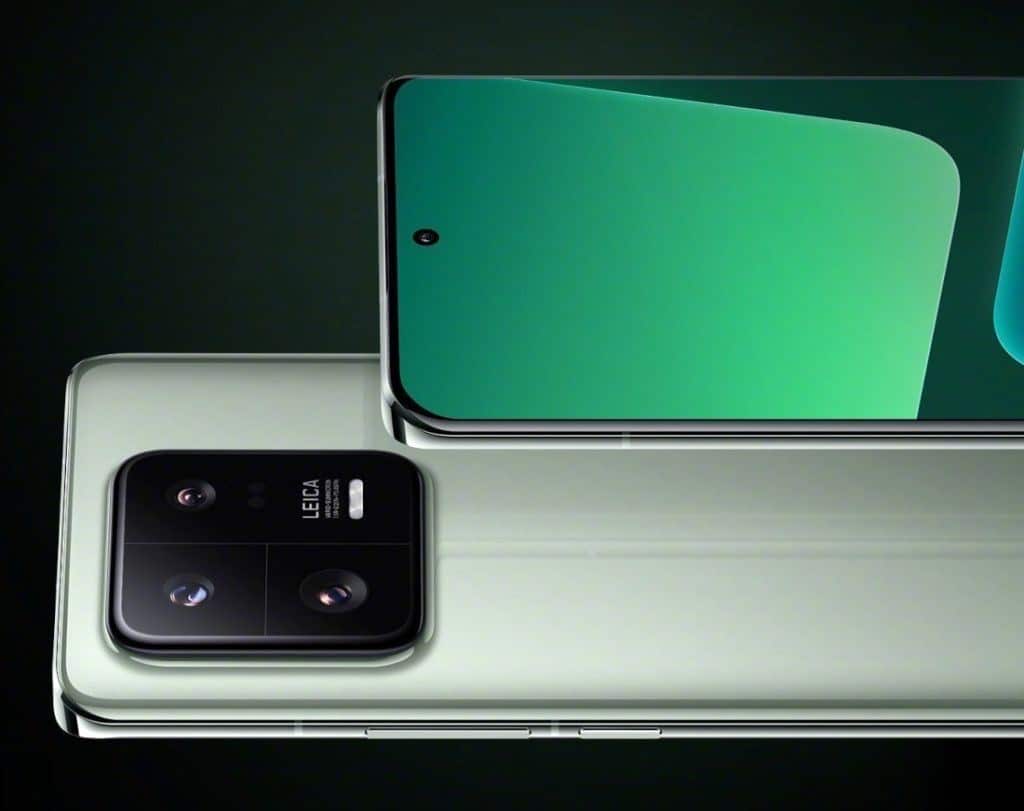
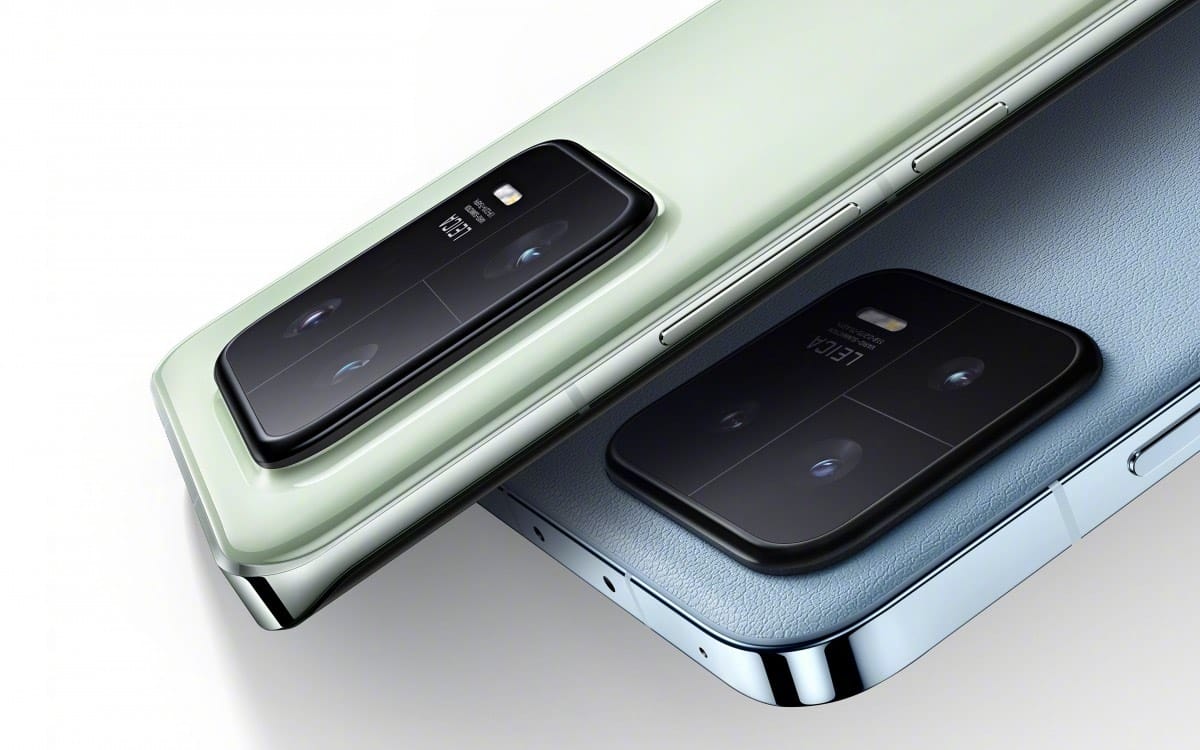
Xiaomi 13T Rear View
Photography enthusiasts may find a lot to love with the 13T Pro’s camera system. A 50MP Sony IMX707main camera is expected to lead the way, supplemented by a 13MP OmniVision OV13B ultra-wide camera and an OV50D 50MP telephoto lens.
The ensemble promises versatility and quality, capturing moments with precision and clarity.
A 20MP Sony IMX596 camera is also predicted to grace the front side of the device, potentially delivering high-quality selfies and making video calls more engaging.
Xiaomi 13T and 13T Pro: Capable smartphones?
Xiaomi 13T and 13T Pro: Capable smartphones?
The Xiaomi 13T and 13T Proseem poised to make a significant impact on the smartphone market, with the Pro version, in particular, standing out for its robust specs and promising features.
As the September 1st launch date looms closer, tech enthusiasts and potential buyers will be keeping a close watch for official confirmation and details.
If the rumours hold true,Xiaomi’snew offerings may well redefine expectations and set new benchmarks in the constantly evolving world of mobile technology.
When are the Xiaomi 13T and 13T Pro expected to launch?
The rumoured launch date for the Xiaomi 13T and 13T Pro is September 1st.
What are the key features of the Xiaomi 13T Pro’s display?
The Xiaomi 13T Pro is expected to feature a 6.67-inch OLED screen with 1.5K resolution and a 144Hz refresh rate.
What are the camera specifications of the 13T Pro?
The 13T Pro’s camera system may include a 50-megapixel Sony IMX707 main camera, a 13MP ultra-wide camera, a 50-megapixel telephoto camera, and a 20-megapixel front-facing camera.
What are the pricing details for the Xiaomi 13T and 13T Pro in the UK and EU markets?
The Xiaomi 13T is speculated to start at £549 in the UK and €649 in the EU. The 13T Pro is expected to begin at £699 in the UK, and the top-end model may cost €999 in the EU.
The Legion Go features removable Joy-Con style controllers, taking cues from existing handheld devices.
Integrated Microsoft Surface-style kickstand and possible fingerprint reader add distinctive functionalities.
Ports for a 3.5mm headphone jack, USB Type-C, and ventilation signify comprehensive connectivity.
Lenovo’s entrance into the thriving handheld gaming market illustrates the industry’s rapid evolution.
Lenovo is reportedly making waves with a fresh entry into the handheld gaming market, the Legion Go Hi-res images leaked online reveal a device poised to make a strong statement, even though official details remain scarce.
Design and Features of the Legion Go
Lenovo Legion Go: Design
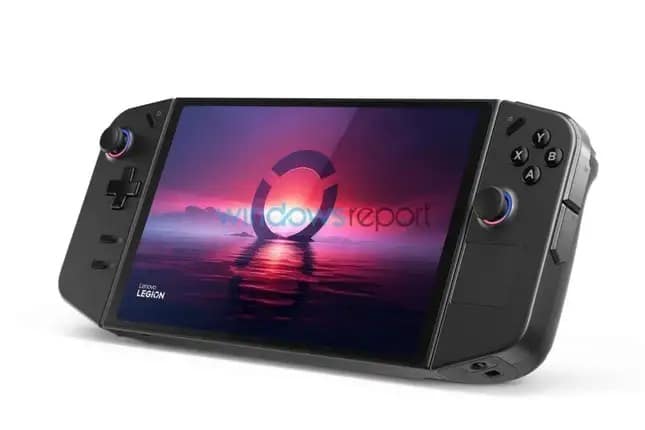
The Legion Go’s design borrows inspiration from established devices like the Steam Deck, Nintendo Switch, ROG Ally, and Ayaneo.
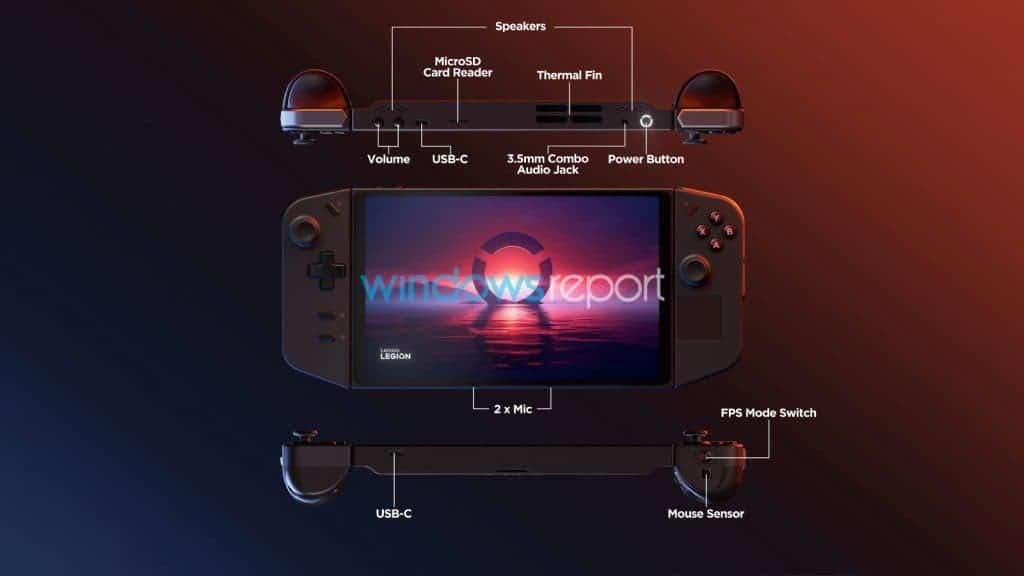
The Legion Go impresses with removable Joy-Con style controllers and an 8-inch screen. The right controller notably hosts the ABXY buttons, right joystick, a touchpad reminiscent of the Steam Deck, and three extra buttons on each grip.
Further enhancing its usability, the top of the device reveals a 3.5mm headphone jack, volume buttons, a USB Type-C port, ventilation, and even what appears to be a fingerprint reader.
A USB Type-C port on the bottom further adds to its connectivity options.
Adding to its unique design, Lenovo has integrated a Microsoft Surface-style kickstand, a feature that sets it apart from most handheld devices, except for the Nintendo Switch and Onexplayer 2 Pro.
The Handheld Gaming Landscape
Handheld Gaming Landscape
SinceValve’slaunch of the Steam Deck in February 2022, handheld gaming has exploded with new devices being released frequently.
Lenovo’s LegionGo seems keen to fill a niche in this rapidly growing market, giving gamers access to extensive libraries and enabling gaming on the go.
A Peek into Lenovo’s Past Gaming Endeavours
Lenovo’s Past Gaming Endeavours
This is not Lenovo’s first foray into the handheld gaming world. They previously developed the Android-based Legion Play, a device that was never released.
This previous attempt shows Lenovo’s continuous interest in handheld gaming.
A Bold Move by Lenovo?
Lenovo Legion Go: Front View
With the Legion Go, Lenovo appears ready to seize a slice of the booming handheld gaming market.
Though the release date remains unconfirmed, Lenovo’s innovation and commitment to handheld gaming make the Legion Go a product to watch.
It’s a sign of the company’s intent to have a meaningful impact on a rapidly evolving industry, creating anticipation for what could be a game-changing device.
FAQs
What sets the Lenovo Legion Go apart from other handheld gaming devices?
The Legion Go comes with unique features like removable Joy-Con style controllers, an integrated kickstand, and a potential fingerprint reader, along with an 8-inch screen.
Has Lenovo previously ventured into the handheld gaming market?
Yes, Lenovo previously developed an Android-based handheld device called the Legion Play, but it was never released.
What do we know about the Legion Go’s release date?
As of now, there is no official information on the release date of the Legion Go. Details remain awaited.
What can we infer from the leaked images of the Legion Go?
The leaked images have revealed various key aspects of the device’s design and features, although the exact specifications remain unclear.
The Xiaomi 14 series set to be the first to feature the new MIUI 15 operating system.
Xiaomi 14 tipped with a 50MP primary sensor, 3.9x optical zoom, and powerful charging capabilities.
Xiaomi 13T series, launching September 1st, teams up with Leica for professional-grade photography.
Both the Xiaomi 13T and 14 series mark significant technological advances in Xiaomi’s product line.
Xiaomi is on the brink of launching two major smartphone series, theXiaomi 13Tand the flagship Xiaomi 14.
Both series are expected to mark significant milestones in the smartphone industry. In an exciting turn of events, recent reports indicate that the Xiaomi 14 seriesmight be the first to receive MIUI 15.
The much-anticipated Xiaomi 14 series is set to lead the charge with the debut of MIUI 15. This next-gen operating system may come packed with new features and improvements, aligning with Xiaomi’s vision of technological excellence.
Xiaomi 14: Expected features
Xiaomi 14: Expected features
This flagship series promises more than just a new operating system. The standardXiaomi 14is tipped to feature a 50MP primary sensor with a large 1/1.28-inch sensor, a telephoto sensor with 3.9x optical zoom, a 4860mAh battery, and impressive charging capabilities, including 90W wired fast charging and 50W fast wireless charging.
The Pro variant of the Xiaomi 14 seriescould redefine premium smartphoneswith a robust 5,000mAh battery,90W/120W wired fast charging technology, and 50W wireless charging support.
Xiaomi 14: Snapdragon 8 Gen 3 and Expected Launch Date
Xiaomi 14: Snapdragon 8 Gen 3 and Expected Launch Date
The upcoming Xiaomi 14 series is set to break new ground by becoming the first smartphones to feature the Qualcomm Snapdragon 8 Gen 3 SoC.
With Qualcomm’s annual Tech Summit event scheduled for October 24th to 26th in Maui, Hawaii, industry insiders believe that the semiconductor leader will unveil the next-gen chipset at this gathering.
According to reports from Digital Chat Station, Xiaomi is poised to launch the flagship 14 series in China by November, solidifying its status as a frontrunner in the race to harness this innovative technology.
Upcoming Xiaomi 13T Series
Upcoming Xiaomi 13T Series
The Xiaomi 13T series, expected to launch on September 1st, is also expected to showcase Xiaomi’s commitment to affordability without sacrificing quality.
Collaborating with Leica, this series is poised to offer a distinct camera experience, bringing professional-grade photography to a broader audience.
Xiaomi’s Bold Steps Forward
MIUI 15 in Xiaomi 14 Series
With the upcoming launch of the Xiaomi 13T and 14 series, Xiaomi continues to push the boundaries of innovation and design.
The introduction of MIUI 15 in the Xiaomi 14 series reflects the company’s forward-thinking approach.
50 MP f/1.9, Wide Angle, Primary Camera
50 MP f/1.9, Telephoto Camera
50 MP f/2.2, Ultra-Wide Angle Camera
Autofocus
Yes, Phase Detection autofocus
Flash
Yes, LED Flash
Image Resolution
8150 x 6150 Pixels
Settings
Exposure compensation
Shooting Modes
Continuous Shooting
High Dynamic Range mode (HDR)
Camera Features
Digital Zoom
Auto Flash
Face detection
Touch to focus
Video Recording
1920×1080 @ 30 fps
FRONT CAMERA
Resolution
32 MP f/2.45, Primary Camera
Video Recording
1920×1080 @ 30 fps
Battery
Capacity
5000 mAh
Type
Li-Polymer
User Replaceable
No
Wireless Charging
Yes
Quick Charging
Yes, Fast, 67W
USB Type-C
Yes
Network & Connectivity
SIM Size
SIM1: Nano, SIM2: Nano
Network Support
5G Not Supported in India, 4G Supported in India, 3G, 2G
VoLTE
Yes
SIM 1
4G Bands:
TD-LTE 2300(band 40) FD-LTE 1800(band 3)
3G Bands:
UMTS 1900 / 2100 / 850 / 900 MHz
2G Bands:
GSM 1800 / 1900 / 850 / 900 MHz
GPRS:
Available
EDGE:
Available
SIM 2
4G Bands:
TD-LTE 2300(band 40) FD-LTE 1800(band 3)
3G Bands:
UMTS 1900 / 2100 / 850 / 900 MHz
2G Bands:
GSM 1800 / 1900 / 850 / 900 MHz
GPRS:
Available
EDGE:
Available
Wi-Fi
Yes, Wi-Fi 4 (802.11 b/g/n)
Wi-Fi Features
Mobile Hotspot
Bluetooth
Yes, v5.2
GPS
Yes with A-GPS, Glonass
NFC
Yes
USB Connectivity
Mass storage device, USB charging
Multimedia
Loudspeaker
Yes
Audio Jack
USB Type-C
Special Features
Fingerprint Sensor
Yes
Fingerprint Sensor Position
On-screen
Other Sensors
Light sensor, Accelerometer, Compass, Gyroscope
FAQs
What is MIUI 15, and how is Xiaomi 14 connected to it?
MIUI 15 is Xiaomi’s next-generation custom Android-based operating system. Reports suggest that the Xiaomi 14 series will be the first to debut this new system, showcasing enhanced features and improvements.
What are the significant features of the Xiaomi 14 series?
The Xiaomi 14 series is expected to feature a 50MP primary sensor with a large 1/1.28-inch sensor, 3.9x optical zoom, a 4860mAh battery, and rapid charging capabilities including 90W wired fast charging and 50W fast wireless charging.
How is the Xiaomi 13T series different from the 14 series?
The Xiaomi 13T series is designed to be an affordable option without compromising quality. It will feature a distinct camera experience, with a collaboration with Leica, providing professional-grade photography. It stands as an economical alternative to the flagship Xiaomi 14 series.
When are the Xiaomi 13T and 14 series expected to launch?
The Xiaomi 13T series is slated for a global launch on September 1st, while the Xiaomi 14 series’ release date has not been announced, but is expected to follow shortly after, possibly in November in China.
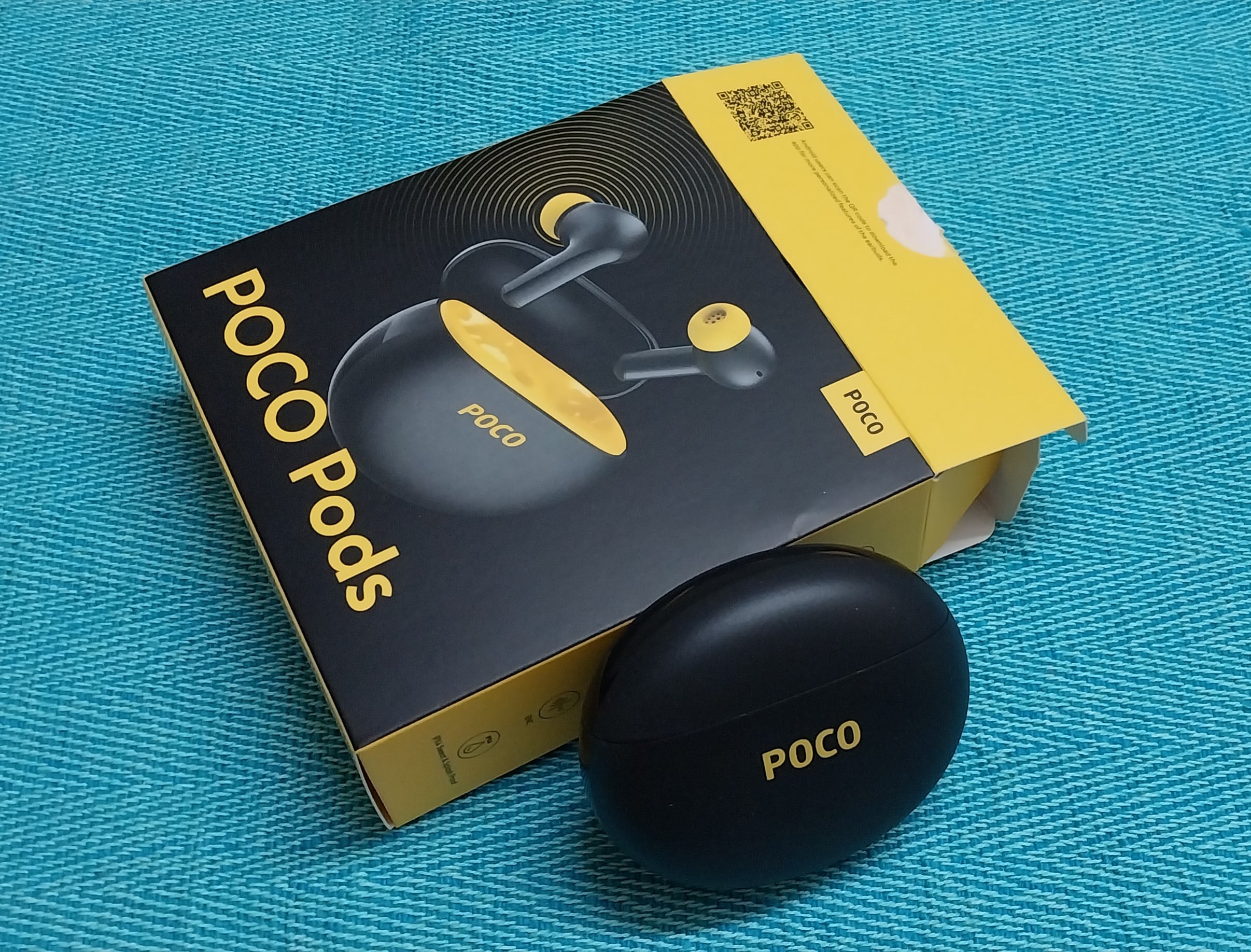
POCO Pods are the latest entry-level TWS earbuds launched in India.
The budget wireless earbuds come with ENC, 12mm drivers, 60ms Low Latency, 30 Hours Playback, Bluetooth 5.3 and an IPX4 rating.
The POCO Pods price in India is Rs 1,199 as an introductory offer.
After Apple, Oppo, OnePlus, Samsung, Xiaomi and many more, it is now POCO’s turn to enter the true wireless audio segment. The brand has recently introduced its first entry-level earbuds – POCO Pods – at an introductory price of Rs 1,199.
In our hands-on POCO Pods review, we are sharing our experience of using the earbuds as our premium audio companion for a couple of days.
Before we get to our review, here’s a glance at the key features and Pros & Cons.
POCO Pods – Key Features
POCO Pods – Key Features
In-Built Mic
Environmental Noise Cancellation
12mm Xtra Bass Drivers
60ms Low Latency for Gaming
Bluetooth v5.3
Google Fast Pair
Up to 30 hours of Playback
Fast Charge
IPX4 Sweat and Splash Proof
POCO Pods – Pros & Cons
POCO Pods – Pros & Cons
Pros
Cons
● Sleek and robust design
● Decent sound quality
● Comfortable fit
● Good 30 hours of Playback with Fast Charge technology
● IPX4 Sweat and Splash Proof
● Good Passive Environmental Noise Cancellation
● Google Fast Pair
● Decent Sound Quality
● Affordable
● No charging cable in the box
● The sound lacks the loud punch
● Subpar call quality
● No call ENC
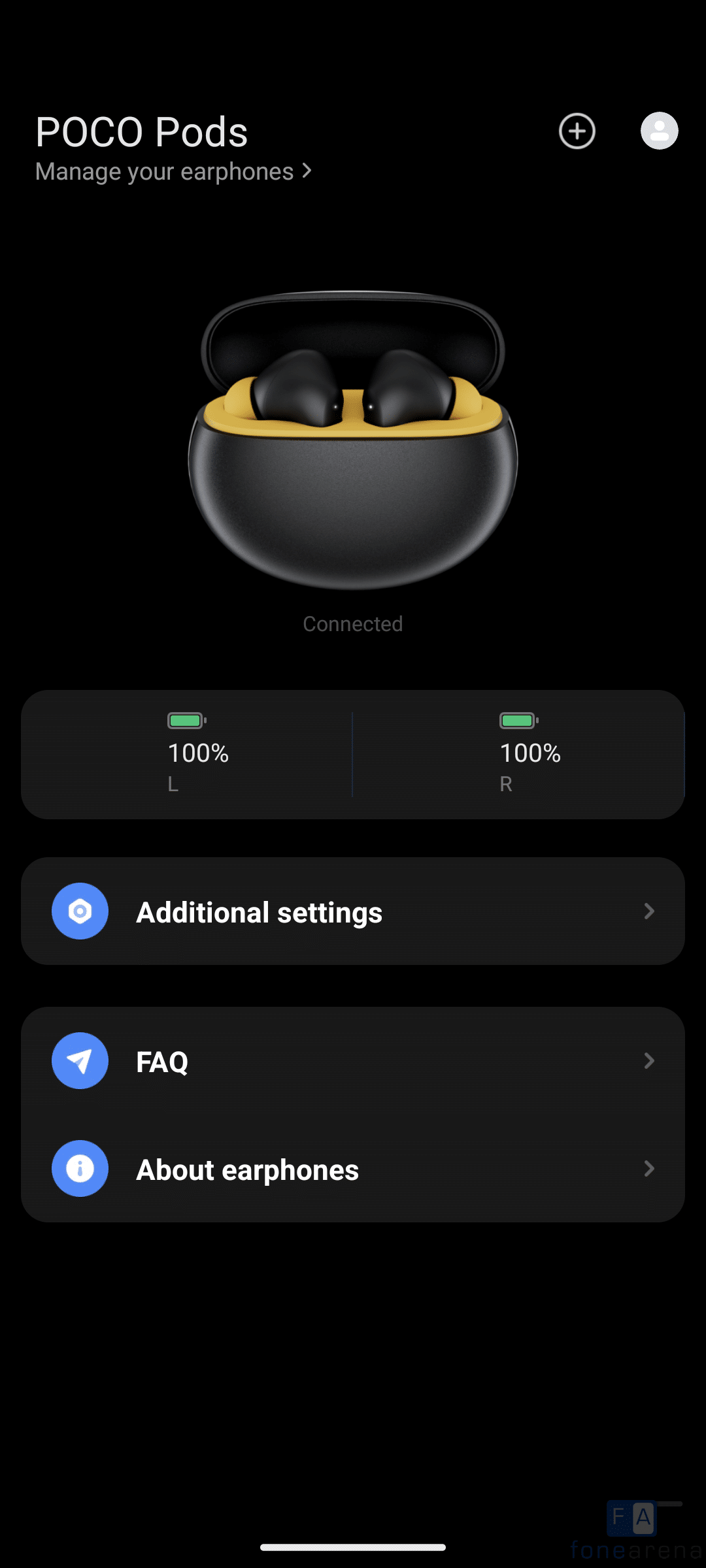
● Xiaomi Earbuds App doesn’t provide any customisations
POCO Pods – Unboxing
In-The-Box Contents
In-The-Box Contents
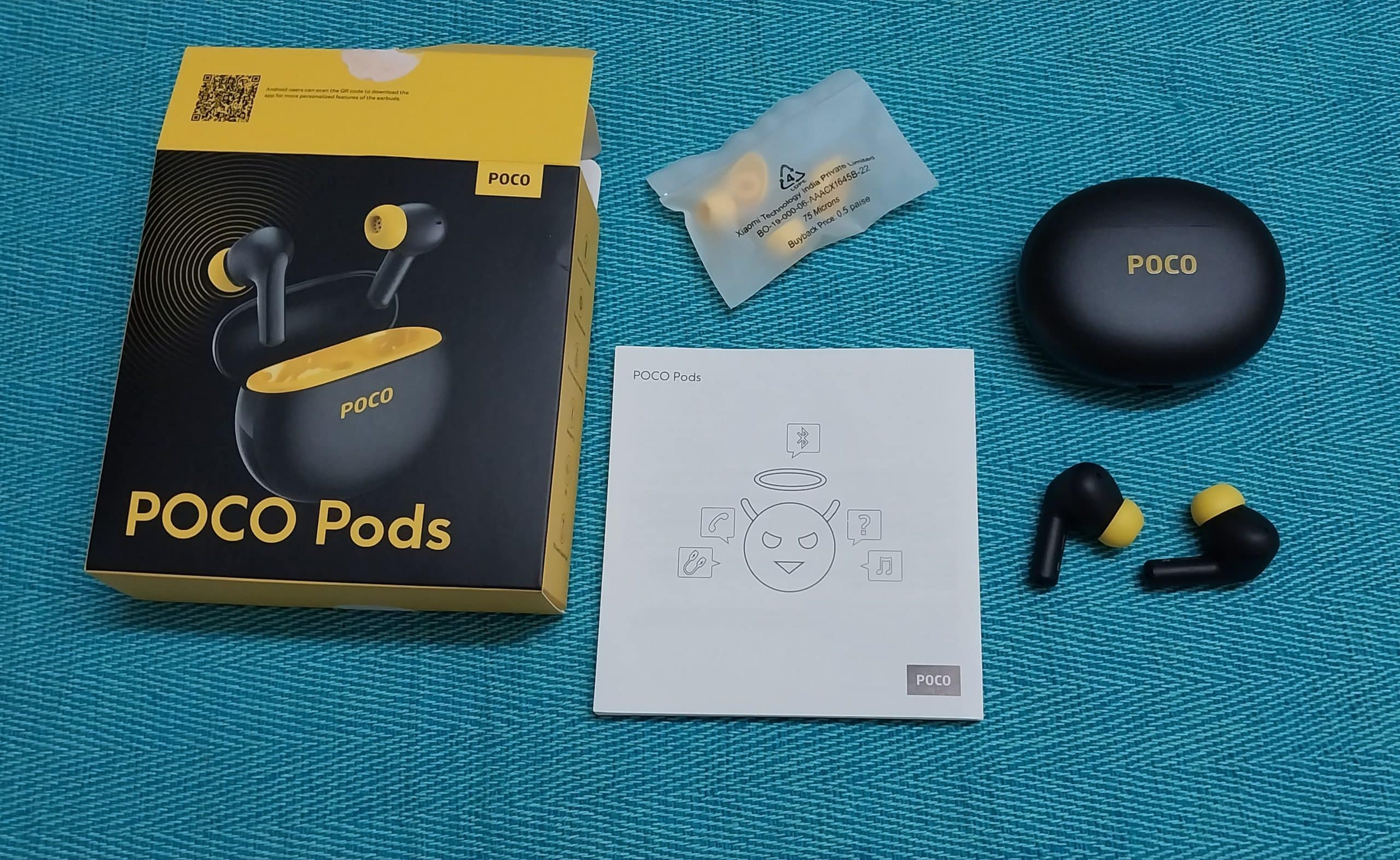
POCO Pods Bluetooth earbuds
Charging Case
Silicon Eartips – 3 Pairs (S/M/L, M installed)
User Manual
It doesn’t come with a USB Type-C cable in the box.
POCO Pods – Design, Fit and Build Quality
Design Details
Design Details
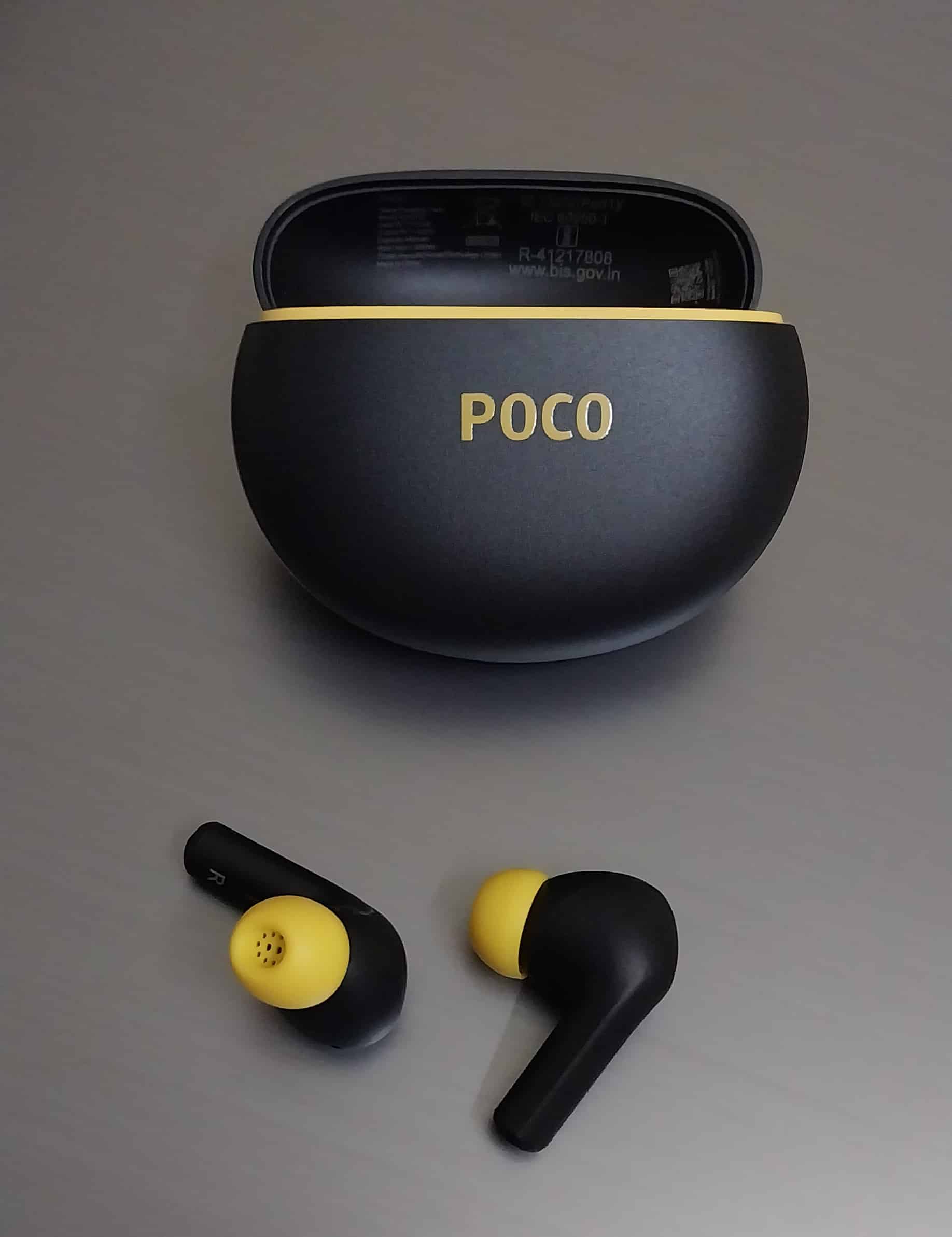
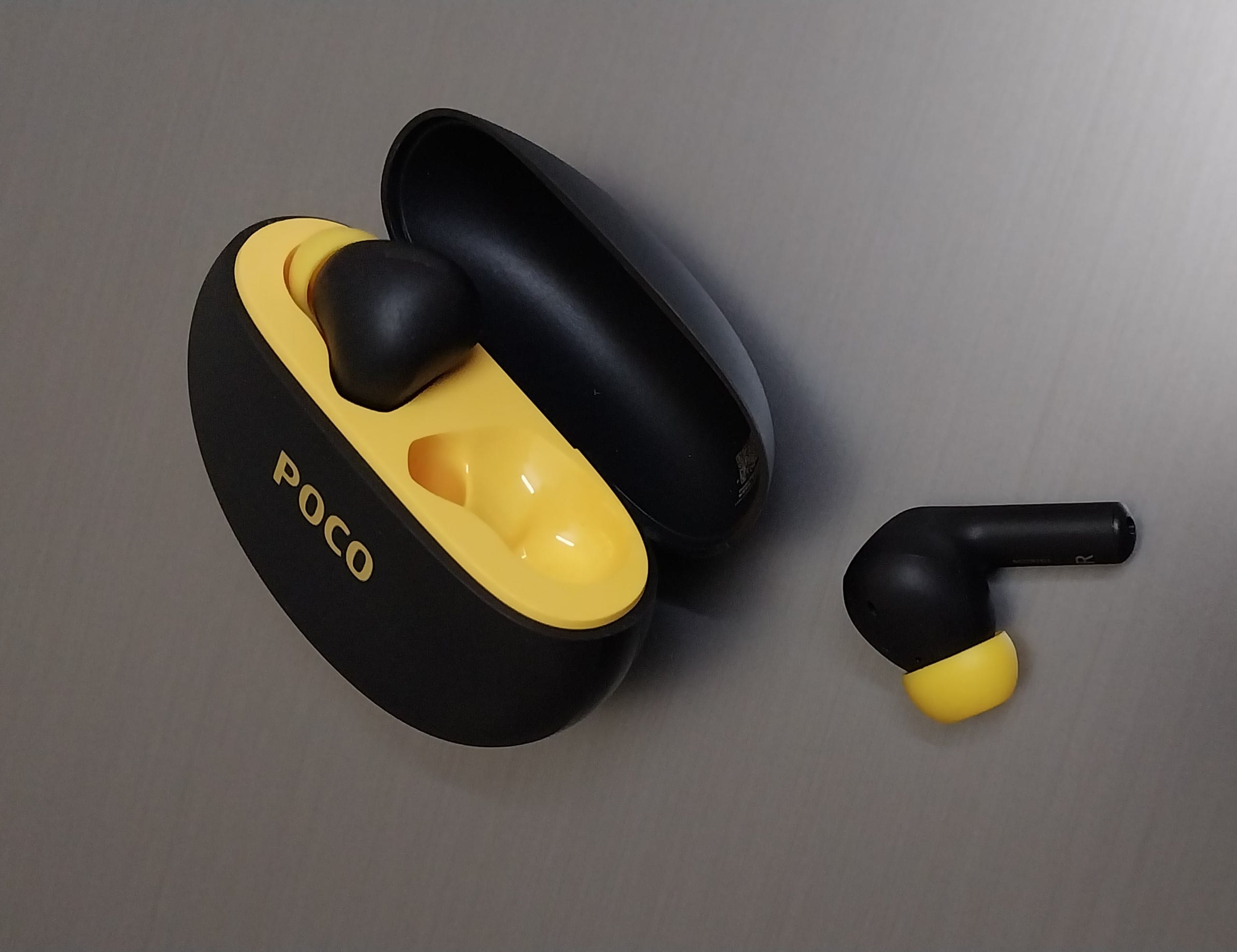
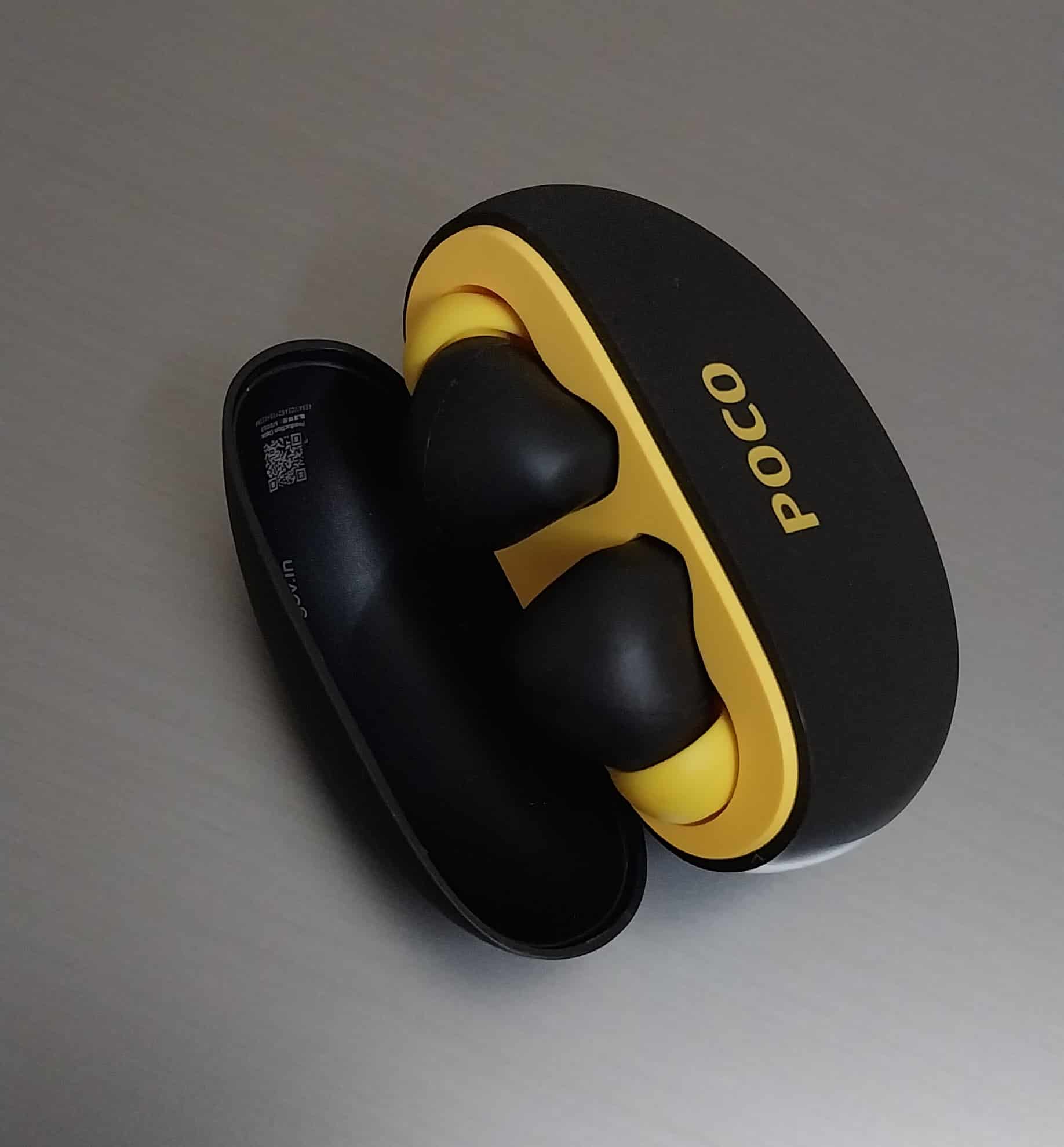
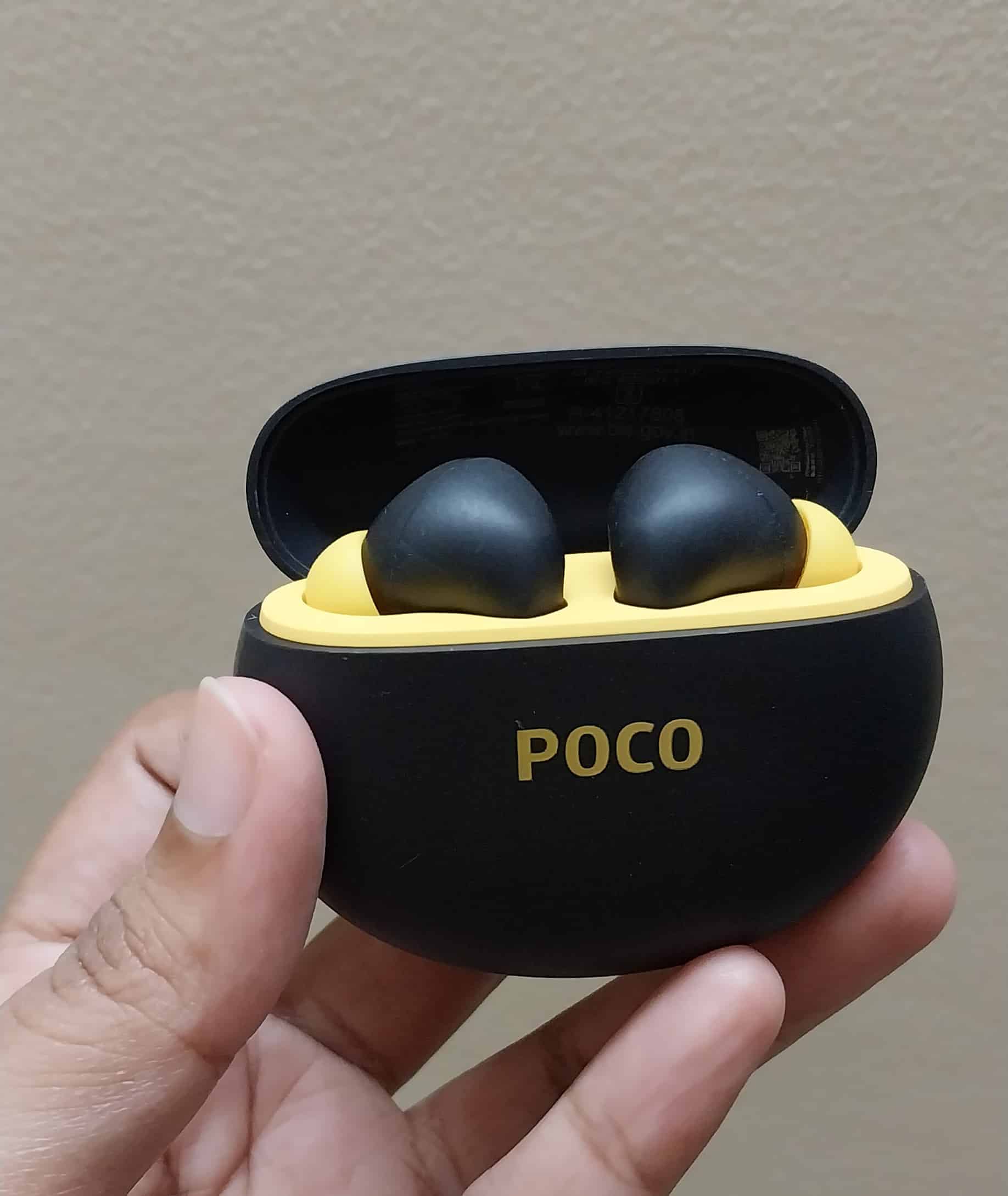
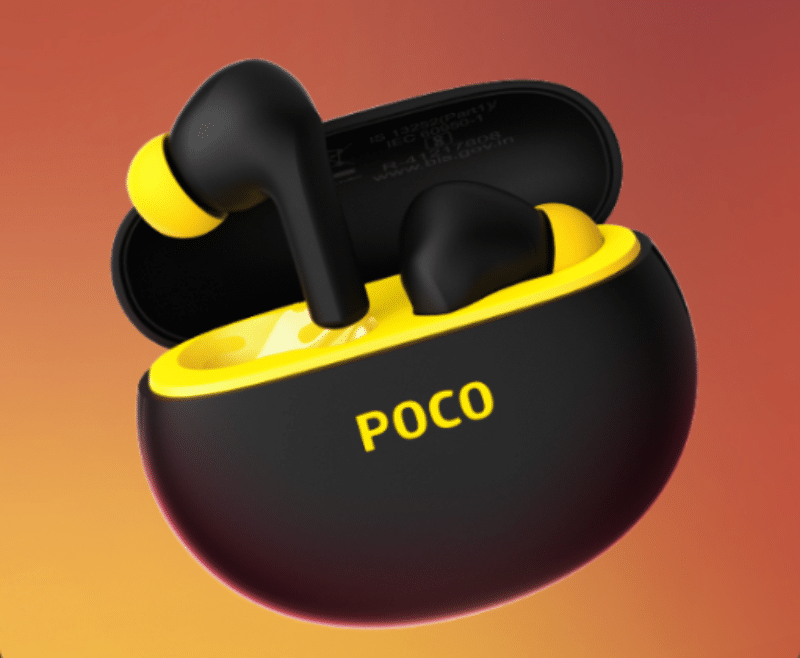
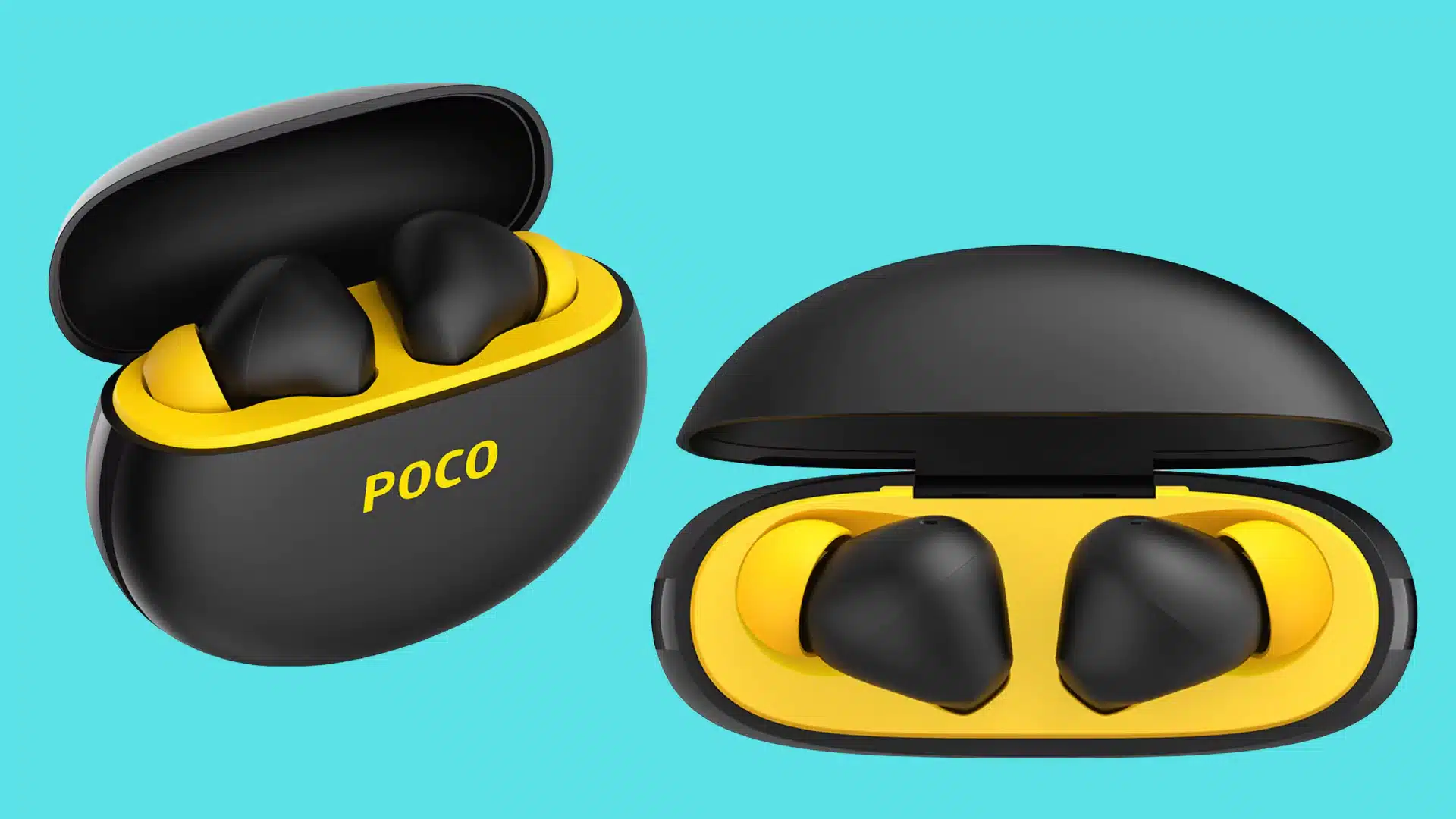
POCO Pods follow Poco’s signature yellow theme.
The interior of the case features a captivating yellow colour scheme that not only complements the overall look but also adds a unique visual dimension.
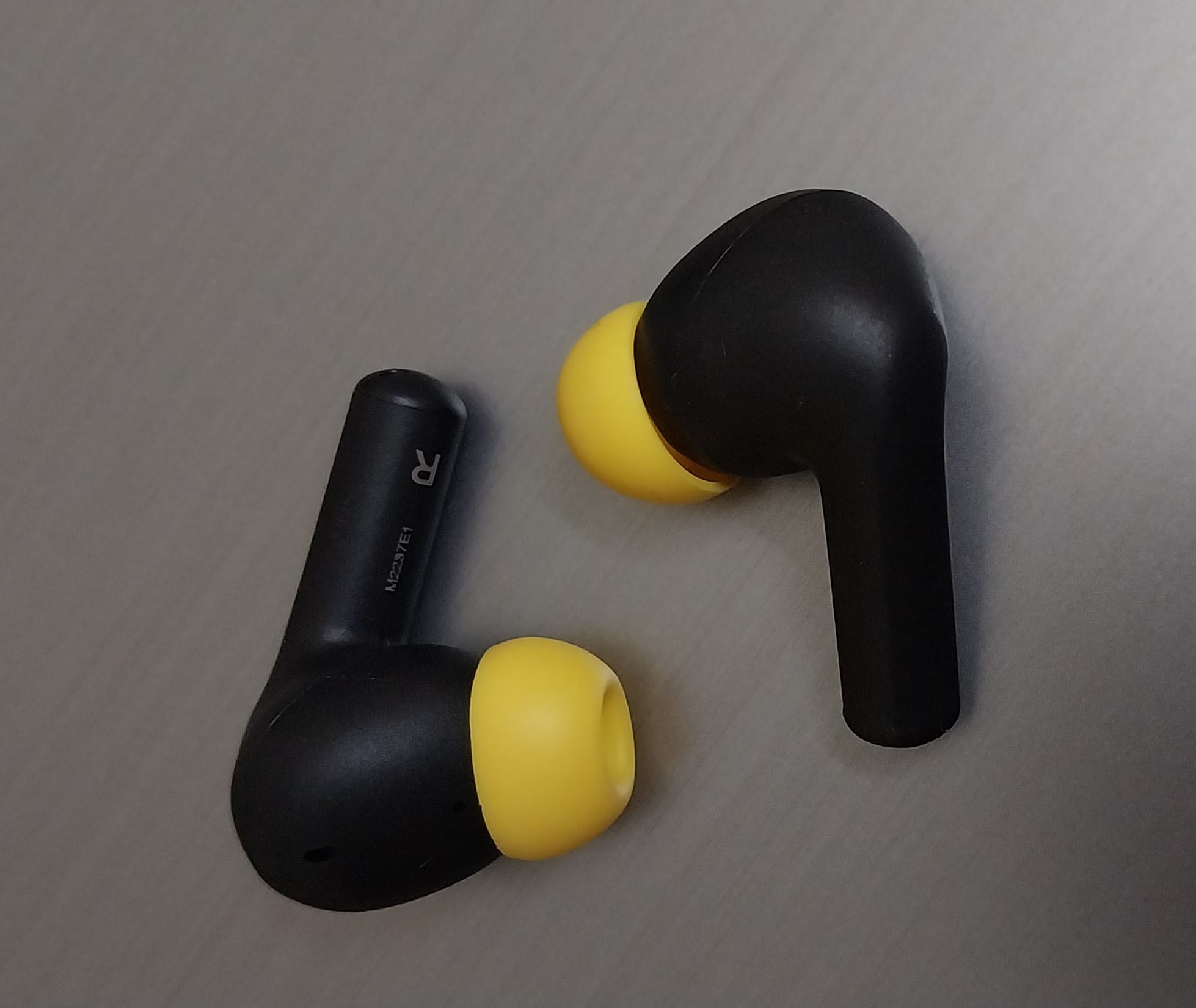
Embracing an in-ear design, the ear pods are accompanied by yellow silicon tips that not only contribute to the aesthetics.
POCO also has a convenient USB-C charging port at the bottom, simplifying the charging process.
Weighing a mere 41 grams, the device achieves a remarkable featherlight quality, making it comfortable for extended usage periods.
Case Features
Case Features
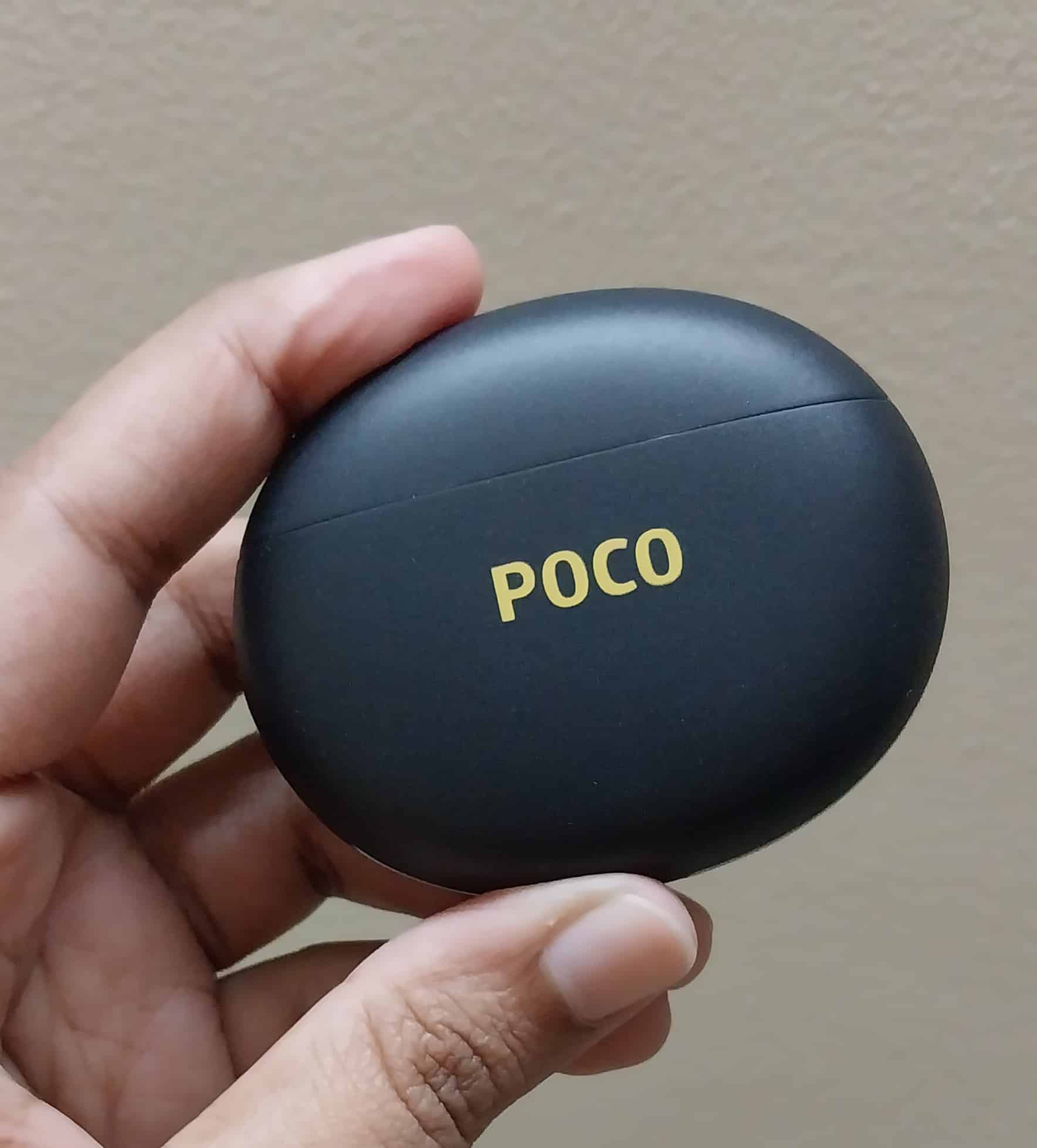
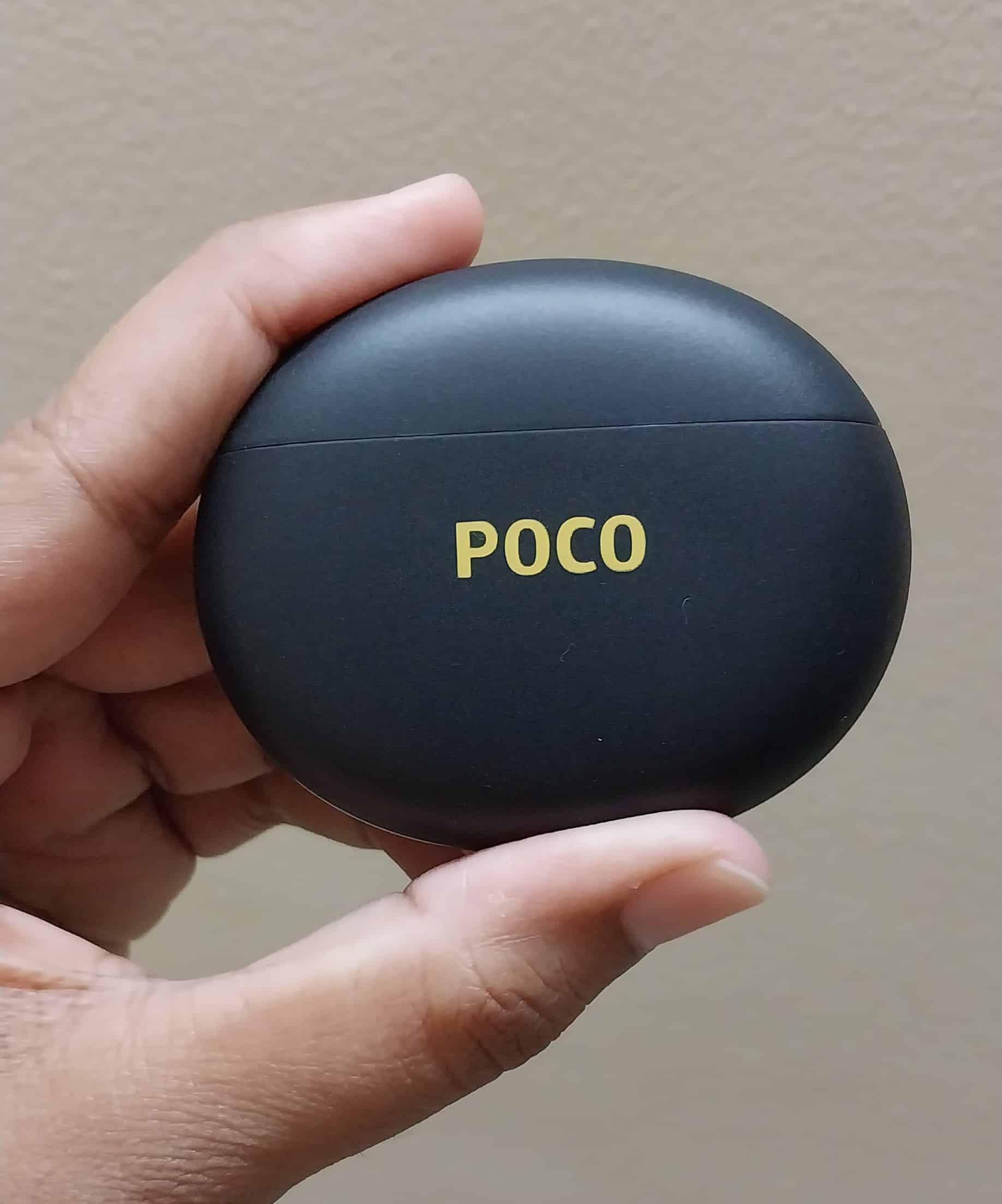
The case boasts a sophisticated matte finish. We loved the elegant appearance, apart from the durable and sturdy feel when held.
Its well-constructed design includes a lid with a robust hinge mechanism, ensuring a reliable and smooth opening and closing experience. The magnetic hold of earbuds inside the case is also strong. Earbuds don’t fall off the case easily.
The sides of the case are adorned with a glossy strip that encircles its entirety, enhancing its visual appeal and modern aesthetic. The Type-C port and indicator light are located at the bottom of the case.
What we instantly noticed at the forefront is the distinctive ‘POCO’ logo, which adds a brand-focused element to the overall design.
After thoroughly using the earbuds, we can also say these are comfortable and ergonomically fit within the ears. Even during energetic activities like running or gyming, the earbuds maintain a secure and snug fit, eliminating concerns of dislodgment.
These, in fact, are perfectly suited for workout sessions. During our usage, the earbuds remained in place despite rigorous movements, offering an ideal audio companion during exercise routines.
With an IPX4 sweat and splashproof rating, the earbuds provide robust protection against moisture, making them suitable for intense workouts and ensuring they can withstand mild splashes and sweat accumulation.
POCO Pods – Sound Quality and ENC
Sound Quality
Sound Quality
When you start using any new earbuds, the first thing you notice is how they sound. The POCO pods have pretty decentsound quality for the segment.
However, when we tried to listen to some instrumental heavy music, the lack of punch in the sound was very evident. The sound doesn’t seem loud enough in many places. This could be disappointing for people who love loudness in music.
The sound, otherwise, has immense clarity. You can hear all the notes in a song quite well.
The POCO Pods also make the sound feel like it’s coming from different directions, which is nice.
Music Testing
Music Testing
We tried these earbuds with all sorts of music.
For most songs, the sound was clear and you could hear all the different notes with clarity.
When we tested the buds playing different kinds of music such as slow songs and fast ones, the earbuds did a good job.
Bass Performance
Bass Performance
Even though these earbuds are small, they can still produce good bass.
They have something called “Xtra Bass Drivers” that make the bass sound decent.
Noise Cancellation
Noise Cancellation
The Environmental Noise Cancellation (ENC) does a good job of blocking background noise.
When you’re using the earbuds, you won’t hear as much of the noise around you. It’s like creating a quiet bubble for your ears.
POCO Pods – Features
Low Latency for Gaming
Low Latency for Gaming
Play games with less delay: POCO Pods have a special feature that reduces the time between actions and game sounds. With just 60 milliseconds of delay, your actions in games match up better with what you see and hear.
This low latency feature makes playing games on POCO Pods smoother and more fun.
A long press on both earpieces simultaneously will activate or disable the low-latency mode. It can also be activated after connecting the earbuds with the Xiaomi Earbuds App. You can download the app from Play Store or App Store.
Turning on Low Latency Mode is indicated via an audio alert when the pods are connected.
Microphone/Call Quality
Microphone/Call Quality
We tried calling using the earbuds multiple times from different locations. The overall call quality is okay even though the voice clarity sometimes isn’t as clear.
Sometimes, a little bit of extra noise came through, but it wasn’t a huge problem and didn’t really cause any trouble during the calls.
Poco Pods Touch Controls
Poco Pods Touch Controls
The manual tells you how to use the touch controls on the earbuds.
If you tap them two times on either side, you can make the music start or stop, and you can also answer calls.
Tapping them three times makes the next song play, or you can end a call if you want.
While using the POCO Pods for the first time, the touch part didn’t always work so well. But after using them for a while, the touch controls started working better without any problems.
Bluetooth 5.3 and Google Fast Pair
Bluetooth 5.3 and Google Fast Pair
Connecting the earbuds to an Android phone is easy because of something called Google Fast Pair.
All you need to do is turn on the Bluetooth on your phone, take the earbuds out of their case, and your phone will let you know they’re ready to connect.
If you’re using an iPhone, you have to do the regular pairing process.
These earbuds come with Bluetooth v5.3, which helps keep the connection strong and steady for an extended period of time.
POCO Pods – Battery
POCO Pods – Battery
POCO Pods come with a 440mAh battery in the case and a 34mAh battery in the pod. As per POCO’s claim, the POCO Pods have 30 hours of playback time on a single charge.
We used the pods for almost 6 hours continuously for a couple of days and by the end we still has almost 30% power remaining. This signifies that even in practical use, the pods do provide close to 30 hours of playback.
The POCO Pods wireless earbuds give you what you’d usually get from earbuds in this price segment.
They’re simple earbuds, but they work pretty well for the music most people who want affordable earbuds like to listen to.
The POCO Pods might not have super loud sound or any customisation features or App support, but they’re decent enough for relaxed listening.
These can be good when you’re outside, thanks to how they block out some noise. The battery also lasts quite a decent amount of time.
If you are looking for a decent pair of TWS earbuds that does its job and doesn’t make too much dent in your pocket, POCO Pods could be a good choice to go with.
POCO Pods – My Mobiles Rating
POCO Pods – My Mobiles Rating
Design – 3/5
Comfort and Fit – 3.5/5
Sound Quality – 3/5
Battery Life – 3.5/5
Features – 3/5
Overall Performance – 3/5
Buy POCO Pods For
Buy POCO Pods For
Affordability and good value for money
Good noise cancellation
Comfortable fit and decent design
Good sound quality in some genres
Good battery life
Don’t Buy POCO Pods For
Don’t Buy POCO Pods For
Details and punch in sound missing
Sound isn’t too loud
Regular design, nothing fancy
No customisation on Xiaomi Earbuds App
FAQs
Q1. What is the price of POCO Pods?
Answer. POCO Pods’ price in India is Rs. 1199. These earbuds are exclusively available on the e-commerce platform Flipkart.
Q2. How does the POCO Pods touch control work?
Answer. Both earbuds are equipped with touch sensors that allow you to control music and calls with a finger tap. By tapping the pods twice, you can play/pause the music and answer the call, and by tapping it thrice, you can skip to the next track and reject/end a call.