Home Blog Page 1026

List of Battery-Draining Android Apps with 20 Million Downloads Removed from the Google Play Store

0
Battery-Draining Android Apps

If you are an Android user, this update is crucial for you. McAfee, one of the world’s leading computer security software companies, has disclosed a list of 16 nefarious apps on the Google Play Store that were hiding malware and draining your smartphone battery. The company shared the details with Google after their team of cybersecurity researchers made the discovery.

Google, in an immediate course of action, has removed the apps from its play store. However, any users who have already downloaded the apps will have to physically remove the apps from their devices. This now becomes a cause of concern since the 16 identified apps have a combined total of over 20+ million downloads from the play store.

Also Read: 10 Apps and Gadgets to Keep You Warm During the Freezing Winters

As per McAfee, the apps have been purposefully designed to resemble important utility apps that more people download without paying much heed to the developer, review or performance. This way it becomes easy for the apps to stay on the smartphone for a longer time period and continue their malicious activities in the backend.

Some of these utility categories include different apps for flashlights, apps for QR code reading, apps for enhancing camera performance, apps for converting units and currency, apps for task managers and many more.

The computer security software company recently revealed the details of their research in an official blog post. The company shared the details, “Cybercriminals are always after illegal advertising revenue. As we have previously reported, we have seen many mobile malware masquerading as a useful tool or utility, and automatically crawling ads in the background. Recently the McAfee Mobile Research Team has identified new Clicker malware that sneaked into Google Play.

In total 16 applications that were previously on Google Play have been confirmed to have the malicious payload with an assumed 20 million installations.”

Also Read: Google Play Store to Get Now Android App

Here’s the list of battery-draining Android apps now removed from the Google Play Store
Battery-Draining Android Apps

  1. High-Speed Camera  –  10,000,000+ downloads
  2. Smart Task Manager  –  5,000,000+ downloads
  3. Flashlight+ –  1,000,000+ downloads
  4. 달력메모장 –  1,000,000+ downloads
  5. K-Dictionary –  1,000,000+ downloads
  6. BusanBus –  1,000,000+ downloads
  7. Flashlight+ –  500,000+ downloads
  8. Quick Note –  500,000+ downloads
  9. Currency Converter –  500,000+ downloads
  10. Joycode –  100,000+ downloads
  11. EzDica –  100,000+ downloads
  12. Instagram Profile Downloader –  100,000+ downloads
  13. Ez Notes –  100,000+ downloads
  14. 손전등 –  1,000+ downloads
  15. 계산기 –  100+ downloads
  16. Flashlight+ –  100+ downloads

McAfee strongly advised users to remove these apps if they are downloaded on their devices. The real concern is for apps such as the ones with more than 10 million downloads alone. There is no foolproof way for authorities and security experts to manage such a huge number of users.

Also Read: How to install android apps on windows 11?

Furthermore, the company has already updated their systems, apps and pages with the details of these malicious apps. These apps will now be automatically detected and reported for devices where McAfee product is installed. So, if you are using McAfee security software on your smartphone, the app will notify you about the developments in case any of these malicious apps are detected on your smartphone.
Battery-Draining Android Apps

As per reports, most apps identified had clicker malware embedded in them. The clicker malware reportedly hidden in these apps may not be spying on your secret information but can be harmful to the device. This malware drains the battery and uses mobile data suspiciously from the backend.

The malware has clever programming too. Industry experts say these clicker malware delays performing any suspicious activity when the device is actively in use. The initiation of any malware program waits for at least an hour after any smartphone activity is detected to have stopped.

So, this means while the user is looking at the smartphone screen and performing some commands, the malware would hide without any action. Once the user leaves the phone idle, the malware waits for at least an hour before starting any backend malicious operations. This way it reduces the chances of getting caught or making any noticeable change.

The clicker malware also generates illegal advertising revenue at the user’s expense by making illegal use of their data.

McAfee’s official blog post about the findings also mentions that users can expect improved battery performance once they delete these apps from their devices.

Also Read: Samsung Introduces Dropship App for File-Sharing Across Platforms

The blog post added, “Once you remove this and other malicious applications, you can expect an extended battery time and you will notice reduced mobile data usage while ensuring that your sensitive and personal data is protected from this and other types of threats.”

In separate news, several app developers are now in the middle of going ahead with legal proceedings against Google. After the recent monetary penalty imposed on Google by the Competition Commission of India, it seems all troubles for the tech giant are now rounding up. Concerns app developers, since the news about the penalty broke, are now seeking the status quo on the Google Play Store policies.

The Google Play Store policy announced by the company says that Indian app developers till 31st October 2022 have to start using the Google Bill Pay system for facilitating every in-app purchase. As per the policy, Google reserves the right to remove all such apps from the Play Store that don’t follow the payment policy after 31st October.

To app developer’s relief, the Competition Commission of India’s penalty and investigative report bars Google from implementing this payment policy. However, they also fear that Google may not pay heed to the verdict and file an appeal. In that case, the company would not be bound by the verdict and can move forward with the payment policy.

Also Read: Delhi Govt Launches Updated ‘one Delhi’ App For Frequent Travellers

WhatsApp Said to Be Questioned by IT Ministry for Cause of Tuesday’s Outage

0
WhatsApp service

WhatsApp service got a technical error on Tuesday and users were left complaining about the disrupted services as they were not able to send or receive text and video messages. The services halted for nearly 2 hours. It resulted in a loss of communication between individuals and businesses as well.

At first, the WhatsApp outage was thought to be a simple error as no one expected the outage to last for 2 hours. It turned out to be big news as a lot of businesses nowadays are dependent on WhatsApp services for daily operations and inter as well intra communications.

Also Read: WhatsApp’s New Feature to Mute Groups

WhatsApp is most widely used by users for group and individual chat. Several businesses also use it as a means of communication as it is mostly used by a large number of people. Owing to this popularity WhatsApp services play an important role in small business communications.

However, the normal business operation halted as the outage occurred without any prior information. It appeared as if WhatsApp itself was not aware of such an incident, however, the IT Ministry asked for the reason for this outage to which WhatsApp responded in a very feeble manner.

The Chain of Events

The IT ministry has enquired Meta Owned WhatsApp to disclose the reasons behind Tuesday’s service outage. Reportedly, the messaging platform suffered an outage on Tuesday causing disruption in the services. The snag left the users helpless as the services to receive text and video messages were hampered for nearly two hours.

The IT Ministry asked the company to share reasons for such discrepancies. However, it did not furnish any clear response to the ministry. The officials responded to the WhatsApp outage as a “technical error” on Tuesday night. The spokesperson responded that the outage occurred due to a technical error on their part and it has now been resolved.

WhatsApp service

The outage tracking reports agency, Downdetector stated that the messaging app was dysfunctional as several users across the world reported on Tuesday afternoon. At one time Approx. 29000 users flagged its report on, Downdetector. Its heatmap depicted major cities such as Delhi, Mumbai, Bengaluru, Chennai and Kolkata impacted by the snag.

Also Read: Why WhatsApp Banned 26.85 Lakh Accounts in India in September?

Yesterday it was reported that the users could not send messages via WhatsApp on android as well as on iOS. It typically displayed a single tick for the message sent and a double tick for the message delivered.

On the day of the WhatsApp outage, the users confirmed that no tick mark was displayed when they sent messages in group chats or in individual conversations. WhatsApp Web and WhatsApp’s desktop apps too were affected by similar issues.

The way Ahead

Being the foremost app used by people for their day-to-day conversations and for business communication as well, WhatsApp services must be ready for quick resolution of such outages. They need to have certain mechanisms in place to avoid such occurrences in the near future.

The experts should identify and resolve any such technical errors in advance so that the users do not face any such issues. The IT ministry too asked for the reason for the WhatsApp outage due to the reasons discussed above.

Also Read: Bengaluru Metro Launches QR Ticketing Service on WhatsApp for Commuters

Government Unveils Satcom Reforms for Faster 5G Deployment; Jio, OneWeb Get License Clearance

0
5G Deployment

The Government of India has decided to reform satellite communication services in order to smoothen the telecom clearance processes. The new policy reforms were announced on Wednesday as a step to push the telecom industry to accelerate 5G tower deployments. The centre ensures that these reforms are drafted keeping in mind the ultimate vision of expanding digital services to the most remote part of the country.

However, the Centre seems dissatisfied with the way the telecom industry is progressing with the groundwork. Voicing concerns about the current speed of tower deployment, Indian telecom minister Ashwini Vaishnaw said that at the moment only 2,500 towers are being deployed per week, which is an extremely low number. Vaishnaw added that the Government of India is expecting the very least 10,000 towers per week.

Also Read: Jio True 5G is the first to provide coverage in the Delhi-NCR area

The minister also reminded the industry and all related stakeholders that Prime Minister Narendra Modi has given a clear vision to the people of this country and India must become a leader in telecom technology worldwide.

He said, “(This) means one has to work on every aspect of telecom technology in creating new solutions, making sure that globally India’s inputs are heard at every forum.” As per the minister, after the policy reforms and every possible support from the Government, the ball now is in the telecom industry’s court.

As per the new reforms, SACFA (Standing Advisory Committee on Frequency Allocation) clearance that was earlier mandatory for the 5G antenna deployed on street furniture will no longer be a must. Also, the process has been made online for all stakeholders’ convenience.

5G Deployment

The new policy reforms also have some significant satellite communication-related procedural reforms.  These include reducing the various timelines of self-certification of antennas and streamlining the NOCC process to 6 weeks from its present timeline of almost 8 months. It also removes the current “cumbersome processes” and gives nod to mount VSAT terminals on any mobile vehicle.

Also Read: Airtel 5G Plus Now Available In Gurgaon

Amongst various other reforms, another significant change by the Department of Telecom has been the decision to delicense three bands for near-field communications. Near-field communications are used for various equipment like vehicle-related electronics and portable chargers. These are the band for the Internet of Things (IoT) and Machine to Machine communications (865-868MHz band), the band for in-vehicle equipment (433 – 434.7MHz) and some other bands that are utilized for contactless inductive chargers.

According to the telecom minister, Vaishnaw licences have been already given to five entities. Mukesh Ambani’s Jio got its licence cleared this Wednesday, the minister informed while speaking to the media. Companies like OneWeb have also received a licence.

And as for Elon Musk’s SpaceX Starlink, the company has recently filed its application for a licence. Vaishnaw said, “About 3-4 months is the time it will take for telecom regulator TRAI to come out with its recommendation on this. After that, whatever auction process or other processes, we have to follow.”

On a separate note, the telecom minister also said that all previous issues with the Telecom Regulatory Authority of India (TRAI) now stand resolved. The ministry has received comments about the draft telecommunication 2022 bill and expects to receive more by the last date i.e. November 10, 2022. The centre is working in full swing to get the bill passed in the 2023 Monsoon Session of Parliament.

Also Read: What Do You Know About 5G LAN?

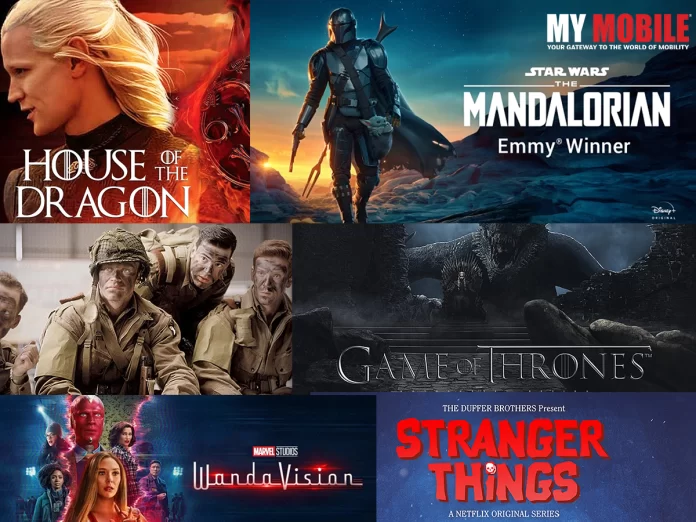
Top 10 Most Expensive OTT/TV Series Ever Made

0
The most expensive OTT series

In the world of T.V. and movie making, money is no object. These days, it seems any OTT or television series worth its salt is shelling out big bucks for high-quality, star-studded productions. Everybody in this epoch likes watching web series or TV series as they serve incredible animations supported by engaging stories.

Series have the capability to fascinate people in fact, they consist of long duration due to tons of episodes, and many movie watchers like this; as they say, series with numerous episodes go at a slow pace that covers every event perfectly.

So what are the most expensive OTT and T.V. series ever made? We’ve got the list right here! From “Game of Thrones” to “The Crown,” these ten shows pulled out all the stops in terms of budgeting. So sit back and prepare to be amazed! Check them out below!

Also Read: OTT Media Service Platforms

Lord of the Rings: The Rings of Power (2022)

Lord of the Rings: The Rings of Power (2022) - The most expensive OTT series

  • Budget: $58 million per episode
  • of episodes: 8
  • Platform: Amazon Prime
  • IMDb Rating: 9/10
  • Rotten Tomatoes Rating: 85%

Those who enjoy fantasy probably know about Lord of the Rings: The Rings of Power. This is the most expensive OTT/TV series ever made, with a budget of $1 billion. The series is based on J.R. Tolkien’s fantasy novel The Lord of the Rings, which follows a group of humans and elves fighting against evil forces to protect their world from destruction.

It is no secret that OTT/TV series such as Lord of the Rings are among the most famous in history, and they have had a lasting impact on many people around the world. Amazon Studios produced it, and it’s based on J. R. R. Tolkien’s book series called The Lord of the Rings, which was written in 1937 and 1949.

Stranger Things (2016)

Stranger Things (2016)

  • Budget: $30 million per episode.
  • of episodes: 34
  • Platform: Netflix
  • IMDb Rating: 7/10
  • Rotten Tomatoes Rating: 92%

The 2016 Netflix series Stranger Things is a science fiction horror show. During the 1980s, the series takes place and follows a group of children that discover a boy named Will that has been possessed by an interdimensional monster. Season one of the show premiered on Netflix on July 15, 2016 and has since been renewed for two additional seasons.

Also Read: What is OTT (Over-the-Top)?

With a budget of $30 million per episode, Stranger Things is one of the most expensive shows ever produced—and it shows! The show has received critical acclaim for its visual effects and acting and its unique approach to storytelling.

‘WandaVision’ (2021)

'WandaVision' (2021)

  • Budget: $25 million per episode
  • of episodes: 9
  • Platform: Disney+
  • IMDb Rating: 7.9/10
  • Rotten Tomatoes Rating: 91%

The first episode of “WandaVision” was released in 2021, immediately becoming the most expensive OTT/TV series ever made. The budget for each episode was $25 million, which is a whopping amount of money.

Also Read: Top 11 flicks that will be popular on OTT platforms in 2022 

The show is a spinoff of the original “Avengers” franchise that focuses on Wanda Maximoff (Elizabeth Olsen) and her husband Vision (Paul Bettany). Wanda is a powerful sorceress with incredible abilities and has long been one of Marvel Comics’ most popular characters.

‘The Pacific’ (2010)'The Pacific' (2010)

  • Budget: $20 million per episode
  • of episodes: 10
  • Platform: HBO
  • IMDb Rating: 3/10
  • Rotten Tomatoes Rating: 91%

OTT/TV series about the Pacific War are among the best ever made, given that it was the second-costliest war in human history. But even so, $20 million per episode? That’s a lot of dough!

Steven Spielberg and Tom Hanks, who also served as executive producers, produced the ten-episode series. It was based on a book by Hugh Ambrose and focused on three Marines: Robert Leckie, Eugene Sledge, and John Basilone. The show won two Emmy awards for Outstanding Cinematography for a Miniseries or Movie and Outstanding Sound Mixing for a Miniseries or Movie.

In addition to its hefty price tag, ‘The Pacific’ is notable for being one of the first major productions filmed in New Zealand after that country expanded its film incentives program in 2007.

House of the Dragon (2022)

House of the Dragon (2022)

  • Budget: $20 million per episode
  • of episodes: 10
  • Platform: HBO
  • IMDb Rating: 6/10
  • Rotten Tomatoes Rating: 85%

Continuing the Game of Thrones franchise, HBO presents House of the Dragon. According to the show’s plot, King Viserys I, Targaryen’s children are battling for control of the Iron Throne during the Targaryen civil war. The story is based on George R.R. Martin’s “Fire and Blood.”

Also Read: List of top 12 OTT platforms in India That Are Worth The Cost

Ryan Condal and George R. R. Martin created the show, which ran for an entire season and cost $20 million per episode—that’s a whopping $200 million for the entire season! It premiered in 2022, and at that time, it had the highest IMDb rating ever given to an OTT/TV series: 8.6/10. House of the Dragon was also well-received by critics, with 85% of reviewers giving it positive reviews on Rotten Tomatoes.

Game of Thrones (2011)

Game of Thrones (2011)

  • Budget: $15 million per episode
  • of episodes: 73
  • Platform: HBO
  • IMDb Rating: 2/10
  • Rotten Tomatoes Rating: 89%

The sixth most expensive OTT/TV series ever made is Game of Thrones. If you’re a fan of HBO, you’ve probably heard of their hit show, Game of Thrones. This fantasy drama series is based on George R.R. Martin’s best-selling A Song of Ice and Fire series of novels follows several noble families fighting for control over the fictional continents of Westeros and Essos.

The show premiered in 2011 and quickly became one of the most popular television shows. It has won 59 Emmys, including Best Drama Series in 2012, 2015, 2016, and 2019—and it has been nominated for 164 more. The show is known for its impressive sets and costumes, which cost $15 million per episode.

The Mandalorian (2019)

The Mandalorian (2019) - The most expensive OTT series

  • Budget: $15 million per episode
  • of episodes: 16
  • Platform: Disney+
  • IMDb Rating: 7/10
  • Rotten Tomatoes Rating: 93%

Set in the Star Wars universe, this series is a prime example of how OTT series are becoming more expensive to produce. The Mandalorian is set after the Galactic Empire’s fall and before the First Order’s rise. It follows a lone gunfighter on his journey through the Outer Rim. The show was produced by Jon Favreau, who also directed Iron Man and The Jungle Book. It features an international cast that includes Pedro Pascal, Gina Carano, Carl Weathers, and Werner Herzog.

Also Read: Audio OTT platform Pocket FM hits over 40mn downloads

The show debuted on Disney’s streaming service in November 2019, with all eight episodes released simultaneously. In addition to its high production budget, The Mandalorian has been praised for its visual effects and use of practical effects over CGI.

See (2019)

See (2019) - The most expensive OTT series

  • Budget: $15 million per episode
  • of episodes: 24
  • Platform: Apple TV+
  • IMDb Rating: 6/10
  • Rotten Tomatoes Rating: 63%

In the world of television, many high-budget shows cost millions of dollars. But some of those shows are downright cheap compared to others.

One show that’s probably going to make this list is See, which stars Jason Momoa as a blind man who has been gifted with the ability to see again. The series is about his new life with this ability and how it affects everyone around him.

See was created by Steven Knight (Peaky Blinders) and directed by Francis Lawrence (The Hunger Games). Following its premiere on HBO in January 2019, it has aired three seasons so far. The show was one of the most expensive ever, costing $15 million per episode.

The Morning Show (2019)

The Morning Show (2019)

  • Budget: $15 million per episode
  • of episodes: 20
  • Platform: Apple TV+
  • IMDb Rating: 3/10
  • Rotten Tomatoes Rating: 64%

OTT/TV series like The Morning Show is among the most costly productions ever. The show aired on Apple TV+ and was produced by Reese Witherspoon, Jennifer Aniston, and Steve Carell. The names of the actors featured are Reese Witherspoon, Jennifer Aniston, Steve Carell, and Rose Byrne.

The show’s plot is about a morning talk show that gets caught up in a scandal when one of its hosts is accused of sexual harassment. The story is told through flashbacks before the scandal breaks out.

E.R. (1994)

E.R. (1994) - The most expensive OTT series

  • Budget: $13 million per episode
  • of episodes: 331
  • Platform: NBC
  • IMDb Rating: 8/10
  • Rotten Tomatoes Rating: 84%

This medical drama series was one of the most expensive OTT/TV series ever made. It ran from 1994 to 2009 and was produced by Warner Bros. Television. It was created by Michael Crichton, who also served as executive producer for the first four seasons.

John Wells joined the production team in its fourth season and became a regular executive producer following the departure of Crichton. The show focused on life in the emergency room of a fictional county hospital in Los Angeles County, California.

Band of Brothers (12.5m)

Band of Brothers is our last addition to the list. The series is based on the 1992 non-fiction book Band of Brothers by historian Stephen E. Ambrose. The story of the series will revolve around the events of WW2, and all 10 episodes are super engaging with great graphics and environment.

The series has collected a rating of 9.2/10 on IMDb, and rotten tomatoes have given it a score of 97%. The budget of 12.5 million dollars per episode has made the series the most expensive TV miniseries ever.

Conclusion

People these days want to see high-budget series so that they can experience quality content in exchange for their time, so in this article, we shared some names and basic descriptions of series that are the most expensive series in the industry.

The article comprised of the top 10 most expensive series of all time, including both TV and OTT series. Each series that is mentioned here is defined with a basic description of its story and ratings, followed by its budget. So we hope that binge-watchers liked this article and will consider watching the series.

Also Read: Netflix December 2022 Releases

As you can see, the OTT/TV series production costs do not stop at just the talent fees. In fact, they are skyrocketing! And with more and more original content coming out each year, it will be interesting to see whether we ever reach an end in terms of production costs.

20 Essential Windows Keyboard Shortcuts That Will Make You Forget Your Mouse

0
20 Essential Windows Keyboard Shortcuts

Using a mouse with your Windows product is absolutely fine. However, having important keyboard shortcuts on your tips instead of reaching for the mouse each time can make a significant difference in your productivity. These shortcuts ease navigation and operation on Windows saving not only a lot of time but also making the whole interface smoother.

Some of the keyboard shortcuts are popular and you might already be using them but there are many that aren’t that well-known. So, to help in your everyday Windows tasks, we have rounded-up 20 essential window keyboard shortcuts that will make you forget your mouse.

Also Read: Microsoft Strongly Urges Users to Upgrade from Windows 10 to Windows 11

The Basics

These are the ones you most probably already be using. They are also the most useful and regularly needed keyboard shortcuts. In case, you aren’t familiar, make a note now.  

  1. Ctrl + Z : Undo
  2. Ctrl + A : Select All
  3. Ctrl + C : Copy
  4. Ctrl + V : Paste
  5. Ctrl + X : Cut
  6. Alt + Tab : Switch Screen/Tab
  7. Ctrl + Alt + Del : Open Star Task Manager
  8. Ctrl + F : Find
  9. Ctrl + H : Find and Replace
  10. Ctrl + E : Select the Search Box
  11. Ctrl + N : Open a New Window
  12. Ctrl + Mouse Scroll Wheel : Zoom In/Out

The Advanced

20 Essential Windows Keyboard Shortcuts

Win + Tab (+ Shift) : Toggle Task View

This is for the multitasker in you. When you have multiple programs simultaneously open and you constantly have to jump from one to another, it usually gets chaotic with a mouse. Pressing Win + Tab (+ Shift) will show all the open program tiles and you can scroll/jump programs as per your requirement.

Also Read: Windows 11 Slows Down Games, Asserts Microsoft

Win + L : Lock Screen

For situations when you have to run and leave your system unattended in a hurry, simply press Win + L and get the system easily locked. It saves time and protects your system from unwarranted eyes as well.

Win + D : Show Desktop

This is the quickest way to minimise every open tap and program in one go. Press Win + D and it will display the Desktop minimising all the open tabs.

Alt + F4 : Close App

Pressing Alt along with F4 will close the app you are working on. So, as much as we love this shortcut, just make sure you don’t trespass on this territory even my mistake because it can potentially make you lose all your valuable work.

Win + PrtSc : Save Screenshot

That you can take a Screenshot using the PrtSc button on your keyboard is something you probably already know. But do you know that when you press Win + PrtSc, the screenshot is taken and automatically saved in your pictures folder? Yes, a screenshot folder is automatically created in your pictures folder to save these screenshots. Try it today!

Win + I : Open Settings

Now you do not have to navigate through My Computers or Search Bar to open the Settings on your device. Just click Win + I and launch Settings with one click.

Win + S : Search for Windows

There’s that one moment when you can’t find the file you know you have saved somewhere in your system. The “Search for Windows” feature can be launched using the Win + S shortcut and then you can find your file with ease.

Fn + F2 : Rename

Now no need to select a folder then click right and find the renaming option. Try pressing Fn and F2 together when the file is selected and the rename file option would open like magic.

We advise you to start exploring right away. While not all of these will be at the top of your fingertips soon, some of these are easy to get used to. It also heavily depends on what work you perform on your Windows product and based on that some of these keyboard shortcuts can be lifesavers.

Also Read: How to Install and Use Microsoft PC Manager on Windows 11 and 10

The Latest iPadOS 16 Beta Brings Stage Manager to Older iPad Pro Models

0
iPadOS 16 Beta
Improved Transparency and Support

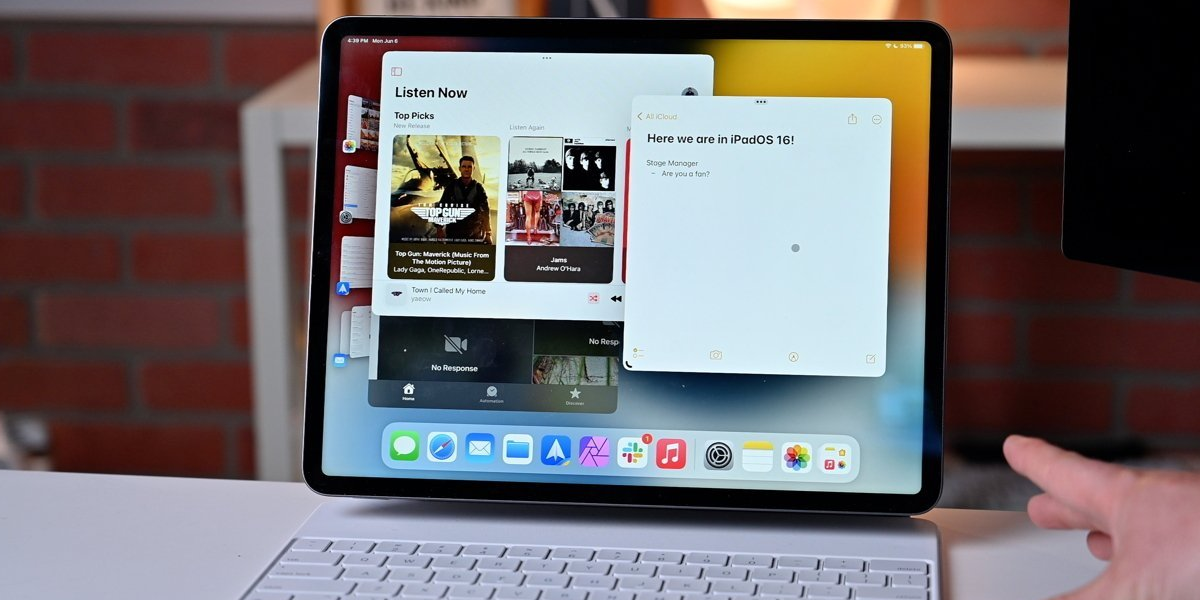
It looks like the old iPad Pro users don’t have to feel any more FOMO for not being able to get their hands on the Stage Manager. Yes, you read it right. The latest iPadOS 16 Beta version is expanding the unbelievably cool feature of Stage Manager to previous models. The predefined condition of having an M1 chip to support Stage Manager is no longer mandatory.

The Stage Manager is the new multitasking system released with iPadOS16 that allows users to switch between apps by adding overlapping resizable windows. When the iPadOS 16 was launched at the beginning of this year, the feature was said to be limited to only iPads running on an M1 Chip.

Also Read: Apple rolls out beta version of iOS 16 and iPadOS 16

The mandatory chip only came in iPad Pro 11-inch and 12.9-inch versions, both released in May of 2021. Apart from this, the M1-powered iPad Air was also in the small list of iPads that got the Stage Manager feature. Due to this limitation, every other previous iPad model was left with the new multitasking feature.

Now with the recently released beta version upgrading the game for iPad users, the Stage Manager feature will now work on a wide number of previous iPad models. This is great news for users of older models including the 2018 and 2020 iPad models that come with A12X and A12Z chips.

However, there is one catch here. The old iPad users would only be able to use the Stage Manager in the built-in iPad display. So, even with the beta version, the user of old models would not be able to expand this feature to any external displays.

 iPadOS 16 Beta

Also Read: Apple to launch a new iPad Air with A-15 chip with centre stage camera

If media reports are to be believed, Apple has revealed its decision of removing external display support of Stage Manager even from the beta iPadOS 16 version on M1 iPads. It appears the company is taking its time and paying attention to all the concerns raised by iPad users regarding the multiple issues faced with the external display feature.

Apple is expected to re-introduce the feature after putting enough hours of work into it in an upcoming software update scheduled for the end of the year.

In a statement released to select media outlets, the company reportedly said, “We introduced Stage Manager as a whole new way to multitask with overlapping, resizable windows on both the iPad display and a separate external display, with the ability to run up to eight live apps on screen at once. Delivering this multi-display support is only possible with the full power of M1-based iPads.

Also Read: How to Use Apple Passkeys on iOS 16?

Customers with iPad Pro 3rd and 4th generation have expressed strong interest in being able to experience Stage Manager on their iPads. In response, our teams have worked hard to find a way to deliver a single-screen version for these systems, with support for up to four live apps on the iPad screen at once. External display support for Stage Manager on M1 iPads will be available in a software update later this year.”

Earlier in June this year, Apple SVP of Software Engineering Craig Federighi was quoted in the media stating the reason for limiting Stage Manager to M1 chips. As per Federighi, “the availability of memory” was the primary reason behind Apple’s call to limit the feature of Stage Manager in the first launch.

Also Read: OnePlus Pad Speculated For a 2023 Launch

Realme 10 Series Specifications Surface Again, Tipped to Launch in November

0
Realme 10 Series Specifications

Grabbing headlines is an art in today’s time and some brands are simply too good at keeping the buzz live for an extended period. Realme is one such brand. The Realme 10 series is again making space in the trending topics, this time for the leaked specification.

This is not the first time information about Realme’s next line of products has surfaced online. Lately, the Realme 10 series, especially the Realme 10 5G and Realme 10 Pro+ 5G, have been regularly spotted on multiple certification websites. Last time, the two models from the series were showcased on the TENAA database, revealing the design of the handsets.

Also Read: Realme 10 Pro and Realme 10 Pro+ Launches

Although Realme has not made any official announcements about the launch date, if tipsters are to be believed, the Realme 10 series could hit the stores as soon as this November.

As per the leaked information, the two primary smartphones Realme 10 5G and Realme 10 Pro+ 5G supposedly carry RMX3663 and RMX3687 model numbers, respectively. The other rumoured specification of both smartphones are as follows –

The Realme 10 5G (model number – RMX3663) – Leaked Specification

Realme 10 5G

  • Display – 6.7-inch LCD screen, full-HD+ (1,080×2,400 pixels) resolution
  • Powered by a MediaTek Helio G99 SoC
  • A triple rear camera setup – 108 megapixel camera + 2 megapixel secondary sensor
  • 16 megapixel selfie camera
  • 4,870 mAh battery with support for 33W fast charging
  • (Some websites have claimed that it could be launched with a 5,000 mAh battery.)
  • Size 163.7×74.2×8.1 mm and weigh about 190g
  • To be available in options of 6 GB, 8 GB, or 12 GB RAM + 64 GB, 128 GB, 256 GB or 512 GB internal storage

Also Read: Best Smartphone Offers; Realme Festive Days Sale Goes Live

Looking at the leaked renders, it can be assumed the Realme 10 would probably be available in Pink and Grey colour options. The marketing colour names, although not officially confirmed yet, are reportedly Clash White and Rush Black. Clearly, there is some confusion amongst the leaksters when it comes to the colour option.

The Realme 10 Pro+ 5G (model number – RMX3687) – Leaked Specification

Realme 10 Pro+ 5G

  • Display – 6.7-inch curved AMOLED display with a full-HD+ resolution
  • Powered by a MediaTek Dimensity 1080 SoC
  • A triple rear camera setup – 108 megapixel primary camera + 8 megapixel ultra-wide angle sensor + 2 megapixel lens
  • 16 megapixel selfie camera
  • 4,890 mAh battery (could be launched with 5,000 mAh)
  • 3C certification offering 67W fast charging support
  • Size 161.5×73.9×7.8 mm and weigh around 172.5g
  • To be available in 12 GB of RAM and 512 GB of onboard storage

In other news, the renders of the Realme 10 4G version, the official sibling of the 5G model, also tipped online. Interestingly, the renders show more differences between both models than just the chipset or connectivity.

Also Read: Realme Pad X to Go on Sale in India

The Realme 10 4G model apparently has a smaller 6.4” AMOLED display. Moreover, it also has a 50 megapixel main camera instead of the 108 megapixel module noticed on the Realme 10 5G model. The one feature that both the models definitely share is the 5,000 mAh battery support.

Realme will launch the 10 series as a successor to the popular Realme 9 and 9 Pro+.

Fintech on mobile: Growth acceleration and app marketing

0
Fintech on mobile

In 2021, the global trend toward mobile continued, marking yet another transformative year for the fast-moving world of app marketing, particularly in fintech.

Adjust’s Mobile App Trends report highlighted that banking app revenue reached $6.8 billion last year — an 88% increase on 2020 — and that over half of purchases (52%) were made with a digital wallet in 2021. And Adjust’s own data shows downloads of global finance apps increased 19% in 2021 compared to 2020.

India, the third largest fintech market in the world,  and Southeast Asia, too, are witnessing skyrocketing growth in fintech app installs. The Adjust and MAAS  Decrypting the fintech gold rush in the new normal report finds that installs in the INSEA region increased 41% in 2021, with.

Also Read: Trends and Growth Projections for Fintech App Ecosystem in 2022 in India and Southeast Asia

Indians registering  the highest minutes in-app per session at 17 minutes and 38 seconds. Further predictions indicate India’s fintech market growth to be between USD150 to USD 160 billion by 2025.

As the fintech market continues its upward trajectory, there are huge opportunities in the space for mobile app developers and advertisers alike.

Embracing user privacy

iOS 14.5 and Apple’s AppTracking Transparency (ATT) framework marked a critical shift in focus towards protecting consumer privacy. Although Early predictions for industry-wide ATT opt-in rates were as low as 5%,  Adjust’s  recent data shows a much higher rate of 25% — a number that is increasing consistently.

While the opt-in rate for fintech apps sits below the industry-wide average, at 11%, changes to data privacy have reinforced the need for marketers in fintech to extract value from their own first- party data. Therefore, app marketers in the fintech realm should implement robust opt-in strategies that build trust and communicate the benefits of targeted advertising to users.

Also Read: India emerges 3rd largest FinTech ecosystem globally

In doing so, we can expect to see continued acceleration in ATT opt-in rates for the fintech vertical as more users understand the value of receiving personalised advertisements.

It’s this exact proposition, which has already been communicated for years, that’s led to hyper casual games consent rates reaching as high as 40%.

Maintaining accelerated install growth

Fintech on mobile

Adjust’s report finds that installs of fintech apps grew by 35% between 2020 and 2021. Looking at the breakdown of these installations per sub-vertical. Payment apps make up approximately 57% of the installs share, followed by banking at 34%, stock trading at 7%, and crypto at 2%.

Also Read: Fintech Startups to Watch Out for in 2021

Globally, the share of paid installs relative to organic installs in the fintech vertical grew from the beginning of 2020 until midway through 2021. Starting at 0.11 and growing to 0.15, 2021 ended with a ratio of 0.14.

Banking’s ratio dropped consistently, however — starting at 0.12 and finishing at 0.07 — showing that  increased need and interest in banking apps drove users to seek the apps out themselves.

With more users than ever before flocking to fintech apps, we know that marketers and developers are looking to expand their channel mixes to capture the largest number of potential new customers. We found that this was reflected in our trends data, as the number of partners each fintech app is working with has also increased alongside the competition.

What’s more, the average number of partners for the vertical as a whole grew from 3 to 4 in 2021. Crypto saw the greatest increase — starting 2020 with an average of 2.5 partners per app and finishing 2021 with an average of 4.5.

Also Read: HCL partners Bobble AI to offer solutions for fintech sector

Increasing sessions and understanding user behaviour

With an increase of 53% globally, the growth of fintech app sessions recorded is even more significant. Our findings highlight a boost in engagement within the vertical, as existing and newly acquired users record more sessions than ever before. While global sessions follow a continued upward trend throughout the year, the highest point can be seen in April, which was 92% higher than the 2020 average, and 27% up on the rest of 2021.

The breakdown of sessions across the fintech subvertical differs significantly from what we saw for installs. Banking takes first place at 46%, followed by payment at 31%. Stock trading and crypto take more of the sessions share than the installs share, at 17% and 6%, respectively. This suggests that the users who download apps in these categories are clocking more sessions than those using banking and payment apps.

We discovered that this high level of engagement is also reflected in the length of sessions by users in each subvertical, with the most significant growth seen among crypto apps. Session lengths in crypto and stock trading are consistently longer than those in banking and payment, which aligns with the business models of each category.

While a payment app might only be needed for a number of seconds for a task to be fulfilled, users buying and selling stocks or cryptocurrencies likely need to spend much longer to complete actions.

According to our report, in-app revenue for fintech apps is also increasing steadily, showing consistent growth from January 2020 through to December 2021.

Also Read: WazirX Bank Accounts Defreeze by Enforcement Directorate

While subscriptions, third parties (sellers and beneficiaries), and advertising are the key ways that fintechs monetise, we recognise that subscription models have become increasingly prominent. This helps to drive the increase in in-app revenue, as many fintechs have progressed from the growth stage into the profitability stage.

What next for mobile fintech?

In 2021, we saw the shift toward mobile accelerate, with more users than ever before turning to apps for their financial needs. With installs and sessions in the vertical increasing across all regions and sub-verticals, it is clear that the global fintech app ecosystem is thriving, and we can expect to see this growth from this space continue.

For mobile app marketers in the fintech space, focusing on getting the opt-in is crucial. Pushing this rate up by even a couple of percentage points can prove invaluable when it comes to building out conversion value models and predictive strategies for the aggregated SKAdNetwork data set.

Focusing on finding  high-value users is key, along with building retention strategies that keep them sticking around. The best way to achieve this perfect balance is to improve the accuracy of your campaigns and to create a user experience that is perfectly optimized to your specific audience segments. Drilling down into your data to determine the key touch points along the user journey is how you’ll achieve this — great data makes for great insights.

Also Read: LazyPay launches LazyCard to empower India’s underserved with access to credit

Apple’s App Store to Start Displaying More Ads, Details Inside

0
Apple’s App Store

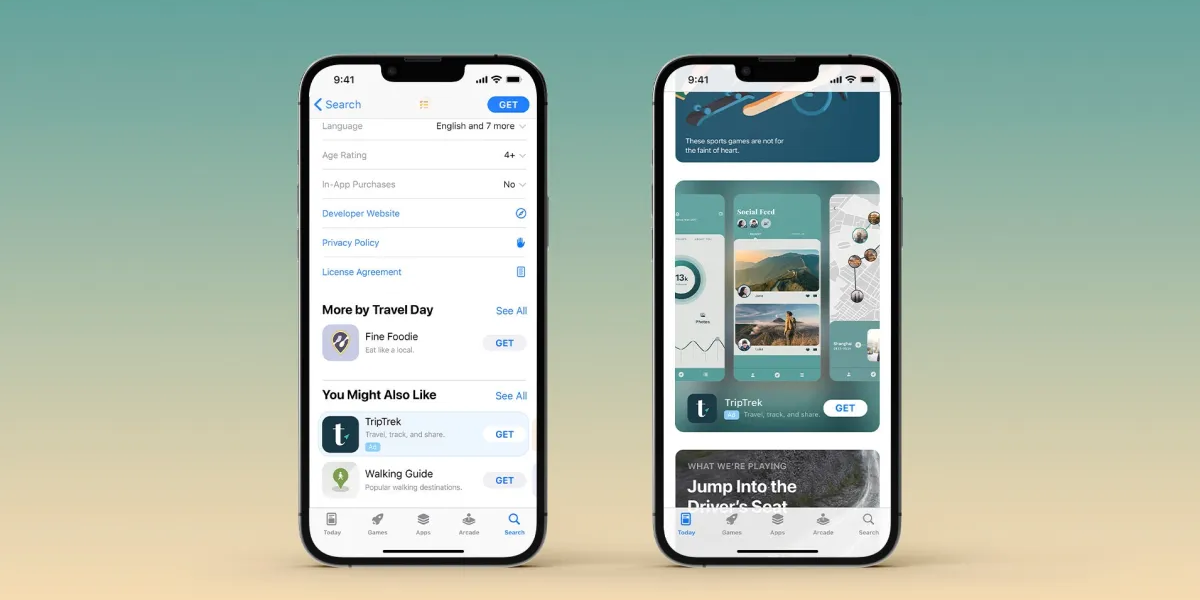
Apple is all set to start displaying ads in the “Today” section of the Apple App Store from this week. The leading tech company, reportedly, announced its business decision to developers over an email. Apple App Store earlier too had featured ads but this was only limited to the app in general or the search-based results or “suggested” section.

The placement of advertisements in the “Today” section, which is a curated space to feature all the apps picked by the Apple editorial staff themselves, is a step in a new direction. The “Today” section is what a user is exposed to first when they open the App Store.

Also Read: App Store Awards 2022 Winners

The news was first reported by Macrumors and they also revealed the company’s plan to optimise the “You Might Also Like” section of the App Store. The changes would reflect in all countries across the globe, except China.

All advertisements in an App Store can be identified with an Ad icon with the background highlighted with blue colour.

Apple’s official website, about the App store ad placement, mentions the expected changes and briefs,  “with a Today tab ad, your app can appear prominently on the front page of the App Store — making it some of the first content users see when they begin their App Store visit,”.

Also Read: Donald Trump’s Truth Social sees more download on App store

Apple’s App Store

The company has also made it clear that there is no automated functionality for advertisements to appear on the App Store. Only apps that will be approved from the Apple Search ads will be visible in the “Today” section under the “Ad” icon.

According to Apple, the functionality to place advertisements in the “Today” or “You May Also Like” sections would give an opportunity to app developers to make their apps more noticeable and thus, reach more people. It can eventually become a good property for developers to promote their apps to the maximum number of Apple’s App Store users of iPhone and iPad.

Also Read: Apple brings in support for unlisted App Store apps accessible via link

On the other hand, legal expert Florian Mueller while countering the statement made by Apple, tweeted about the “You Might Also Like” ads that these are just “another means of increasing the effective app tax rate, forcing developers to buy ads on their own app pages in order to avoid that others steer customers away from there.”

Earlier in August, Mark Gurman of Bloomberg disclosed Apple’s immediate future plan of expanding their current advertising revenue to a minimum of $10 billion per year. In a newsletter, Gurman had predicted, “On the Apple’s App Store, display ads are currently shown in the search tab in the Suggested panel.

Apple will also soon expand ads to the main Today tab and within third-party app download pages.” Gurman also said that the tech giant would soon launch the search result ads in Google Maps, a feature that the company has been testing for some time internally.

Other Apple ventures such as Apple News and Stocks already feature the traditional banner advertisement. Though no news has surfaced about placing more ads in these pages, the company is apparently already working towards bringing similar advertisement features to Apple Podcasts, Apple Books or even Apple TV.

Also Read: Questt Best app, ‘Apex Legends Mobile’ Top Game on Google Play Store in India

Former OpenSea Employee Fails to Drop Indictment in NFT Insider Trading Case

0
Former OpenSea Employee

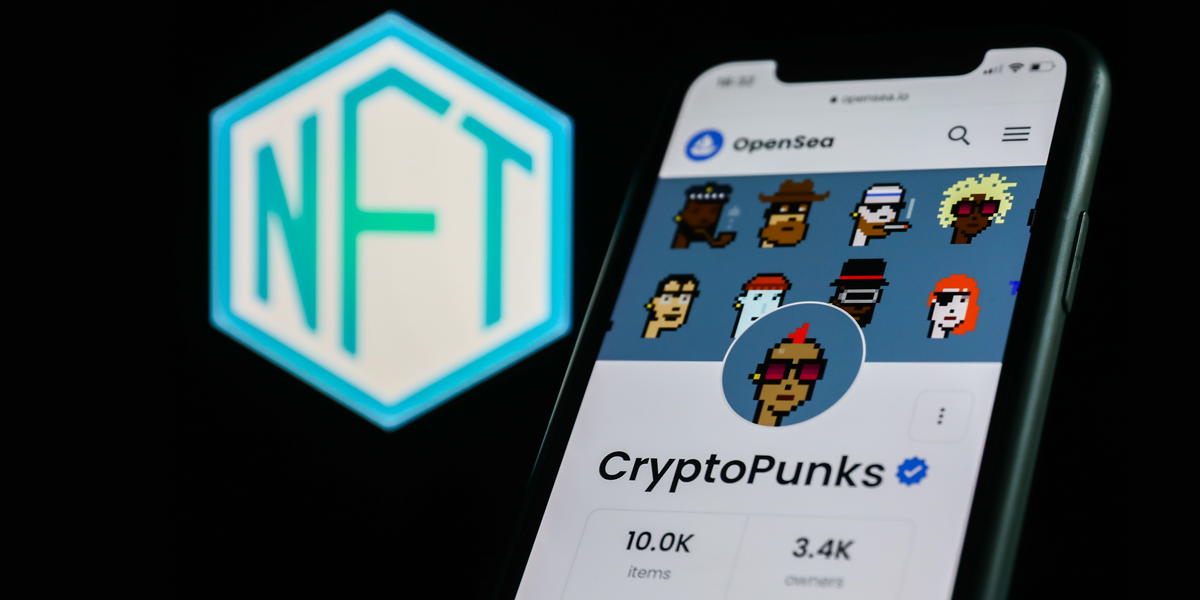
The troubles of Nate Chastain, an OpenSea former employee, are not seeing an end any time soon. In a recent development, it appears the wire fraud and money laundering case against Chastain are moving ahead with the judge denying defendant’s motion to dismiss the charges. Chastain was accused of profiting illegally off NFT sales in 2021 and the Department of Justice charged him with wire fraud and money laundering.

Several accusations about a series of allegedly dodgy trades surfaced last year that is believed to have taken place during Chastain’s tenure as the Head of Product in OpenSea between the month of January and September 2021.

Also Read: Bitcoin, Most Cryptocurrencies Register Losses

Chastain allegedly used confidential information and abused his position as the Head of Product to profit off knowing which NFTs would appear on the homepage of OpenSea. Using this information, he secretly purchased tokens before they could even appear on the homepage. He subsequently sold these NFTs via multiple anonymous digital wallets making tons of profit illegally.

Lawyers representing Chastain tried to convince the judges by arguing that “the existence of securities or commodities trading is an essential element of any insider trading offence. And NFTs are neither of those, they contended.”

They also argued that the allegation of him misappropriating information doesn’t hold value as the information is “not property.” However, the Judge remained unconvinced and the indictment is now set to move forward.

As per the Department of Justice, Chastain generated as much as 19 ETH ($ 25,500 or roughly Rs. 21.1 lakh), per current prices) from all these illegal trades and schemes.

Also Read: What is Cryptocurrency?

Former OpenSea Employee

After the allegations were made public last year and OpenSea suspected Chastain of misappropriating inside information, Chastain had to resign from his position in September 2021. During the same time, social media was bombarded by many NFT traders who revealed details of a wallet that allegedly belonged to Chastain.

The wallet was said to have been at the centre of NFT transactions that later appeared on OpenSea’s featured portal. This worked as an evidence against Chastain in the indictment.

Also Read: Reddit devices new way to accept cryptocurrency

As per media reports, Chastain bought as many as 45 NFTs on 11 different occasions. All were at that shown as a part of an insider trading scheme. “In one such event his purchase and sale of the NFT “Spectrum of a Ramification Theory” on September 14, 2021, more than quadrupled his profits on that trade.”

Chastain’s lawyers maintain that the charges of money laundering against Chastain cannot be proven since the cryptocurrency transactions were performed on the Ethereum blockchain. This, thus makes all those transactions “completely visible to the public.”

OpenSea is a popular and one of the largest web3 peer-to-peer marketplace that deals in NFTs (Non-Fungible Tokens) and Crypto Collectibles. The platform is widely used across the world for browsing, buying, creating, selling and auctioning NFTs.

Headquartered in New York City, the company was founded in 2017 by Devin Finzer and Alex Atallah. With growing interest in NFTs worldwide, OpenSea has also witnessed tremendous growth over the few years of its inception. The company, as of January 2022, had been valued at $13.3 billion.

Also Read: A Handbook To Access The Dark Web!