Samsung has been on a roll of late and has occupied the coveted top position when it comes to manufacturing the best electronic devices with little competition from its peers except Apple.
Whether it is smartphones or tablets, PCs or Smart TVs, you can always hope for the best of the best from Samsung with the latest news being that it is all set to launch the Samsung Odyssey Ark GN97B gaming monitor in India, which has many interesting features to look forward to.
This is in part of the Odyssey lineup that has a few gaming monitors in the pipeline with Ark GN97B ready to come out, which the makers are hopeful that users will receive it well just as their previous models.
Price & Specifications of Odyssey Ark Gaming Monitor
The company has revealed the official price and specifications of the Samsung Odyssey Ark that has been launched at Rs.2,38,000 where the gaming monitor that supports for Samsung SmartThings and Amazon Alexa, where you can also get a pre-loaded Samsung Gaming Hub.
The monitor comes with a 55 inch 4K display with a 1000R curvature and a 16:9 aspect ratio along with 1056 local dimming points courtesy of the mini LED technology that comes with a 14-bit processing.
To add on, it has a 165Hz refresh rate with a 1ms grey-to-grey response time along with a Quantum HDR 20000 technology, which increases the brightness to about 2000 nits, which will be an illuminating experience to all viewers.
Then you have the Flex Moving Feature through which users can modify the aspect ratio from 16:9 through 21:9 to 32:9 while the size of the image can be modified between 55 inch and 27 inch.
Finally, you add the in-built speaker system comprising of four speakers- one in each corner, while at the bottom you get two hoofers that produce a combined wattage of 60W Power where the frequency response goes as low as 45Hz.
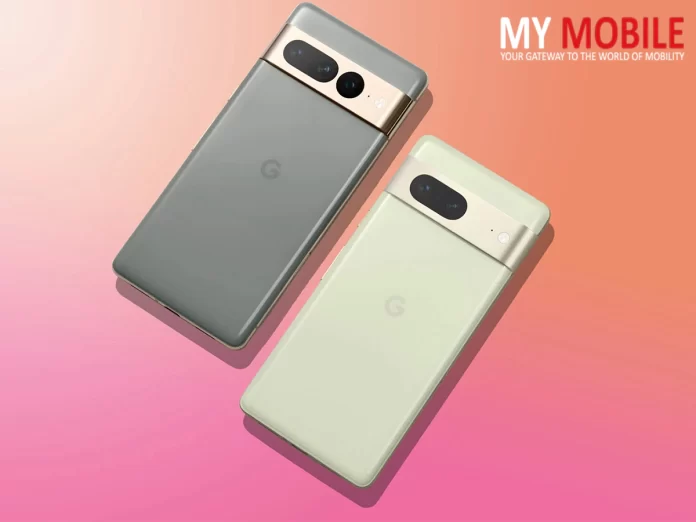
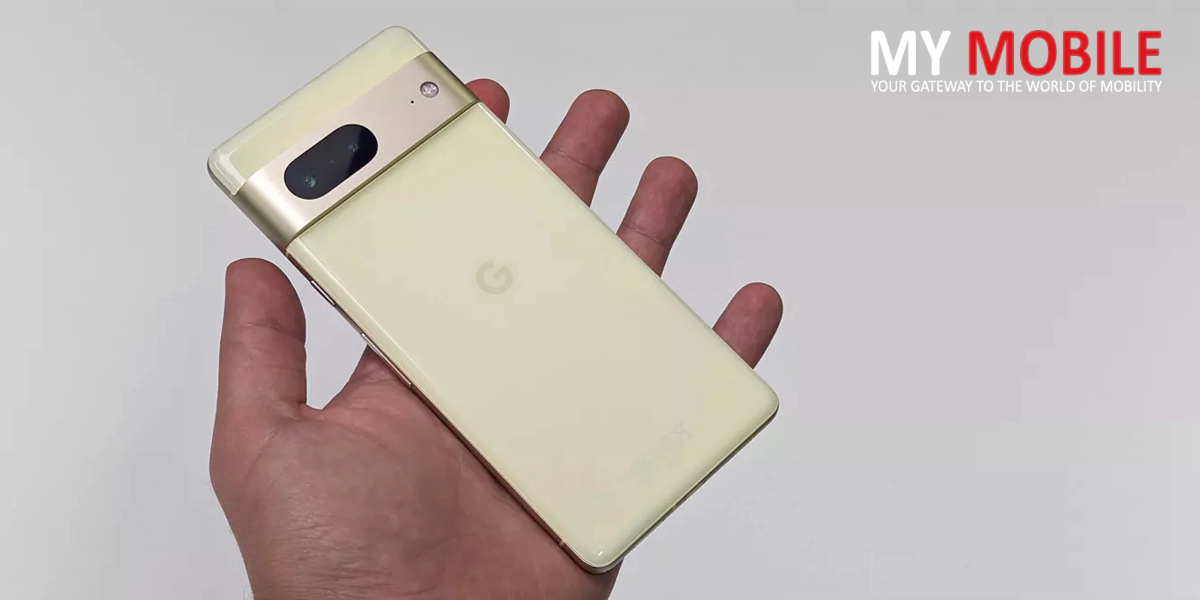
The FCC database has come out with a list of devices where many people spotted Google Pixel 7 Series with its two flagship devices viz. Pixel 7 and Pixel 7 Pro. Google is believed to be launching these two devices in the US on October 6, 2022 and the two handsets featuring on a database website only heightens rumours.
There are four other Google smartphones that have surfaced on the FCC database website, which are GP4BC, GVU6C, GE2AE, and GQML3. They are believed to be variants of Pixel 7 Series.
The first two models are listed to support sub-6GHz 5G connectivity while the latter two will support mmWave technology, which is not as widely used outside the country while its frequency is 24Hz.
With the launch date already out, pre-orders are going to open on the same day or a few days prior and once the booking is done, the smartphones will be available for purchase starting from October 13, 2022.
Vivo has so many devices lined up for 2022 that it is launching at regular intervals with the latest addition to the list being Vivo Y22s smartphones. A tipster has leaked relevant information regarding the new model like its features, specifications, along with some smaller details.
This is one of those occasions where users will have prior knowledge to a new device before its launch although such leaks do happen every now and then but this one seems to be authentic information.
Of course, one has to wait for news from official sources regarding a device but the available details that have been made public definitely gives an idea to the users whether they can look forward to it or not.
The smartphone has appeared on many certifications websites, which includes the US Federal Communications Commission (FCC) database along with an another website partnered with it and is speculated to be launched sometime in September 2022.
According to the leaked information, the device will be a 4G smartphone with a 6.55 inch HD LCD display that will be powered by Qualcomm Snapdragon 680 SoC and come with two colour options- black and blue, and will have the capability to run FuntouchOS 12.
The internal storage will be 8GB RAM + 128GB storage configuration while the videos and photos will be managed by a 50 megapixel primary sensor and a 2 megapixel secondary camera alongside an LED flash while the front camera will be 8 megapixel essential for video calls and selfies and finally, the battery is packed with 5000mAh that supports 18W fast charging.
Sony devices have always been successful all over the world and with India being one of its biggest markets, the company has achieved enormous success through its Indian markets through all their devices be it smartphone, smart TV, tablet, you name it and you’ll find many success stories where users vouch for their items.
The latest addition to the list is Sony Bravia XR 85X95K 4K Mini LED TV, which has an 85 inch screen along with many interesting features like any new device that users should know about so as to get an idea on whether it floats their boat or not.
The company has claimed the Cognitive Processor XR on the LED TV helps in reproducing content the way human beings have the power to see and hear things in the real world abd is backed by XR Backlight Master Driver technology, which uses a local dimming algorithm that gives natural mid-tones.
The device has been made available in all Sony centers across India, which include e-commerce platforms and online stores since August 16, 2022 at the starting price of Rs.6,99,990.
Features
The LED TV also supports XR 4K upscaling as Sony is well aware that its users want to enjoy their content in 4K quality and it doesn’t matter to what kind of content it will be as they’re totally mesmerized by the visuals.
Users can also avail a dedicated game mode with HDMI 2.1 compatibility that supports 4K 120fps, Auto Game Mode, Auto Low Latency Mode, Variable Refresh Rate, and Auto HDR Tone.
Then you add X-anti-reflection and X-Wide Angle technology that minimizes reflections due to which users will be able to clearly watch the content from anywhere in the house while those with a Bravia camera can also control settings like picture and sound.
The LED TV also supports audio enhancement features like Dolby Atmos, IMAX Enhanced, Netflix Adaptive Calibrated Mode, Dolby Vision, Acoustic Surface Video+, etc. that can be run on both Google and Android TV.
When it comes to messaging apps, WhatsApp holds fort over all others like Signal and Telegram, as it is not only for sending and receiving messages as it can now be used for video chats and calls as well.
There are many things to talk about WhatsApp but the latest news doing the rounds is that it has launched a new native desktop app for Windows, which was earlier limited to web based apps for Windows and Mac operating system.
WhatsApp has high hopes for native app as it vouches for the speed and reliability of the platform where users will continue to receive regular updates via notifications and messages even if their handset is offline but users can continue to login by scanning a QR code.
Mac phone users will have to wait for a while as the native desktop app is under development as of now for their smartphones and can only avail a beta version of the app for the time being.
The good news for Windows users is that they can use the native app for desktop and is currently live while users can download it through Microsoft’s website. This information was shared by WhatsApp itself on its official website.
Conclusion
The user can download the native app for desktop and then open WhatsApp on their phone following which they have to tap on ‘More Options’, which is for Android users while Apple users have to do the same via ‘Settings’.
Then they have to click on ‘Linked Devices’ option to open the QRcode scanner following which they have to point it at the QR code that is displayed on the native app to complete the process.
In this day and age, we have many forms of entertainment to look forward to with just as many platforms online to keep our interests piqued whether it is movies or video games. Speaking of video games, there was a time when we all used to enjoy Super Mario, Ninja Roberts, Swat Kats, and many others.
Nowadays, smartphones have taken over big time from video games and new games have emerged that we can now play on our phones. Mobile games too are aplenty where you have so many to choose from.
One of them is the Call of Duty franchise, which is an action adventure first person shooter game that has taken over the fancy of many youngsters with the latest buzz being that Call of Duty Warzone 2 is all set to launch in a few months on October 28, 2022.
The other good news is that Call of Duty: Modern Warfare 2 has consented to grant early access to its campaign segment where those who order a digital edition of the adventure can be allowed to play the single-player component a week in advance on any platform of their choice from October 20, 2022.
Activision Blizzard has high hopes of being launched on November 16, 2022 by its makers while players can witness the globe trotting operation in its early phase if they pre-order Call of Duty: Modern Warfare 2, which happens the moment they take control of Task Force 141.
It is a special forces unit that works under Soap MacTavish where the missions take place all over the world be it North America, Europe, Asia, etc. and get to participate in dangerous missions and hunt down Vladimir Makarov, leader of the Russian Ultranationalist Party.
Prior to this, multiplayer access was allowed only a week or so before the launch but this is the first instance when Activision has allowed early access to the campaign with many changes added for good measure.
There are many stealth missions involved in offshore sieges where there are many underwater combats to look forward to that have been totally rebuilt from ground up as now players can avail upgraded graphics quality courtesy of photogrammetry technology.
Another benefit of pre-ordering Call of Duty: Modern Warfare 2 is that players can gain early access to arms and weapons that are very essential for the mission along with access to multiplayer beta, which is all set to come out in September 2022.
Those that have a PS4 and PS5 at home can get access to multiplayer Modern Warfare 2 beta from September 16-17 while preordering on PC and Xbox grants early access from September 22, 2022.
Conclusion
The starting price of Call of Duty: Modern Warfare 2 Vault Edition is going to be Rs.6,699 where players can avail perks such as Red Team 141 and be allowed to play as the four main operators, which are Farah, Price, Ghost, and Soap.
All eyes are on October 28, 2022 and it will be interesting to see as to what response it gets from the public although makers and tech experts have high hopes that it will be received well.
Despite the fact that the Apple Photos app already allowed you to hide photos on your iPhone, anyone can easily access your hidden album. As a result, most iOS users rely heavily on photo vault apps to keep their personal photos safe. However, if you have iOS 16, you can now use Face ID/Touch ID to lock your hidden photo album on your iPhone and iPad so that no one can access your private photos without your permission. So, in iOS 16, here’s how to lock the hidden photo album.
For a long time, iPhone users have been requesting the feature to password-protect sensitive photos, and iOS 16 was finally delivered. This is one of many new features in iOS 16 that Apple did not have time to talk about on stage.
iPhone Lock Hidden Photo Album
Aside from protecting the hidden album, iOS 16 allows you to protect the “Recently Deleted” folder, where deleted photos and videos can be found for up to 30 days. This is well-thought-out in terms of privacy. We frequently delete personal images and forget to permanently delete them. As a result, they are still present on the device. However, with this new privacy feature enabled, you will no longer have to be concerned about the security of deleted images.
Face ID/Touch ID can be used to unlock hidden and recently deleted folders
To begin, launch the Settings app on your iPhone or iPad.
Now, scroll down to find and select the Photos app.
Make sure the Use Face ID/Touch ID toggle is turned on.
A tiny lock icon will now appear next to both the hidden album and the recently deleted folders from now on. It’s worth noting that anyone attempting to disable this feature must first authenticate using Touch ID or Face ID. As a result, you can rest assured that your photos are secure.
Face ID/Touch ID can be used to unlock hidden and recently deleted folders
Unlocking the hidden photo album is as simple as it gets.
Open the Photos app on your iPhone or iPad, then tap the Albums tab at the bottom of the screen.
To view your photos, go to the utility section, tap Hidden, and then authenticate with Touch ID/Face ID. Tap Recently Deleted and then authenticate if you want to see your recently deleted images.
Allow any family member or close friend access to your password-protected private photo album.
What if you want to give one of your friends or loved ones full access to your hidden album? To gain unrestricted access to the hidden album, you can ask a friend to set up an alternate appearance on your Face ID-enabled device or add a fingerprint on your Touch ID-enabled device.
Select Face ID/Touch ID & Passcode from the Settings app on your iPhone.
Now, depending on the availability, either set up an alternate appearance or add a fingerprint.
Your friend will be able to view your hidden photo album using Face ID or Touch ID in the future.
Keep your personal photos out of the hands of prying eyes
That’s how you secure your hidden photos album in iOS 16. This is a welcome addition for iPhone users who previously had to rely on third-party apps to protect their personal photos. You don’t have to worry about a third-party app stealing your data or uploading your images to the cloud because the feature is built into the Photos app.
It’s important to note that Apple has always given users the option to revoke sharing their location with apps and people, as well as access to their iPhone via Face ID and passcodes. Safety Check, on the other hand, makes it easier for people at risk of domestic abuse to quickly adjust or completely revoke these permissions from a single location, rather than having to hunt down the various settings scattered throughout the iPhone.
Safety Check functions in two ways
Manage Sharing and Access
Emergency reset
Emergency reset
As the name implies, Emergency Reset acts as a kill switch, removing all access that you may have granted to apps and people in one fell swoop. It is intended for use in situations where data sharing needs to be stopped urgently with anyone, such as your location (including any apps that might be used to track your whereabouts). Follow the steps to use this feature.
Open settings -> Privacy and Security -> Safety Check.
Tap ‘Emergency Reset‘ here. After verifying your identity with Face ID/Touch ID/Passcode, tap the ‘Start Emergency Reset‘ button. There are three steps to the process after this.
This step ensures that your iPhone no longer shares any location data, photo libraries, or other information with anyone or any app. To do this, simply tap on ‘Reset People & Apps.’ Tap on ‘Reset’ to confirm.
1.1. Following that, Safety Check will ensure that only your personal devices are linked to your Apple ID. Simply select any devices you want to remotely sign out of and remove your Apple ID. After you’ve selected the devices, click ‘Remove Selected Devices.’ If there are no such devices, simply press the ‘Skip’ button.
This step allows you to add (or remove) trusted phone numbers from your account. These are your personal phone numbers. If there are any other phone numbers in this list, simply remove them before clicking ‘Continue.’
2.1 Following that, if you’ve shared your Apple ID password with the person you’re attempting to remove yourself from, it’s critical to ensure they can’t access your Apple account. You can either use the ‘Update Password‘ button to change your password or use the ‘Update Later in Settings’ option to keep the same password.
Finally, make a list of your emergency contacts. These should be people you can rely on, such as family members or friends. These contacts will be notified if, God forbid, you ever need to use your iPhone’s Emergency SOS feature. You can add contacts here before clicking ‘Continue.’
Once you’ve completed these steps, Safety Check will recommend additional actions you can take to improve your personal safety and peace of mind. Once you’ve completed this list, simply tap ‘Done.’
If you want to remove permissions and sharing settings for specific people, use the second option titled ‘Manage Sharing & Access.’ Follow the steps to use this feature.
Open settings -> Privacy & Security -> Safety Check.
Tap ‘Manage Sharing & Access’ and then ‘Continue’ to proceed.
There are now three steps to take.
You can see whom you’ve shared information with and what information you’re sharing here. This page allows you to remove people with whom you no longer want to share information such as your location, iPhone access, and so on.
In the following step, you can see which apps have access to your data. You can uninstall any apps that you did not install yourself or that you no longer want to use. When finished, press the ‘Continue’ button.
Finally, a list of devices where you have logged in with your Apple ID will be displayed. If you notice any unidentified devices here, please remove them. You can also remove any devices belonging to the abuser so that they no longer have access to your Apple ID. If there are no such devices, select ‘Skip.’
3.1 You can also verify your trusted contacts, delete those you no longer trust, and add new ones if necessary. When finished, simply tap ‘Continue’.
3.2 The iPhone will then ask you to update your Apple ID password. This is useful if the perpetrator of the abusive relationship has written down or saved your password in a password manager. You can easily change your password to ensure that no one else has access to your Apple ID.
3.3 It is critical to establish emergency contacts. These should be people you can rely on, such as family members or friends. These contacts will be notified if, God forbid, you ever need to use your iPhone’s Emergency SOS feature. You can add contacts here before clicking ‘Continue.’
3.4 Finally, to ensure the security of your data, you will be prompted to change your device passcode. You can change your passcode or skip this step if you prefer.
Once you’ve completed these steps, Safety Check will recommend additional actions you can take to improve your personal safety and peace of mind. Once you’ve completed this list, simply tap ‘Done.’
On August 10, Samsung unveiled the Galaxy Z Fold 4 and Z Flip 4, but neither device remained the most recent foldable phone on the market for long. The next day, Motorola and Xiaomi also unveiled their foldables.
In this article, we will compare the Galaxy Fold 4 with those from Motorola and Xiaomi to give you an insight into which is the right foldable for you.
Pricing of the product
In the UK, the Samsung Galaxy Z Fold 4 costs £1649, while in the US, it costs $1799.99. Pre-orders for the gadget are being accepted now, and it will be available for purchase on August 26.
The starting price for the Xiaomi Mix Fold 2 is 8,999 RMB, which is roughly £1100, $1300, and €1300. However, for now, you cannot purchase it in the UK, US, or Europe because it is currently only available in China.
Also Read: Samsung Galaxy S23 Unpacked event date officially for 1st February
Currently, the Motorola Razr (2022) is only being sold in China and costs 5,999 CNY. It is rumoured to cost €1149 when it is sold in Europe, though this isn’t confirmed as of now. Furthermore, it won’t likely happen for a few more months.
Design of the product
Both the Samsung Galaxy Z Fold 4 and the Xiaomi Mix Fold 2 have a vertical fold that resembles a book. They both unfold to reveal a substantial main display, a front external display, and a back camera system.
The Samsung Galaxy Z Flip 4 has a beautiful, high-end design, IPX8 water and dust resistance, Corning Gorilla Glass Victus protection, an Armour frame, and other features. The Z Flip 4 comes in four standard colours, but it also has a Bespoke Edition model with 75 customization options.
A screen is placed next to a dual camera on the outside of the device, which neatly takes up about a third of the rear. Everything else in the back is plain. When the main display is opened, it has extremely thin bezels and a punch-hole camera positioned in the centre of the top. At the edge of the power button is a physical fingerprint sensor.
Comparatively, the Xiaomi Mix Fold 2 has a rectangular rear camera housing that extends across the width of the device. It has a very thin build, measuring just 5.4mm, and is available in two colours. In order to accommodate its thin build, it chooses a waterdrop hinge and is similarly protected by Corning Gorilla Glass Victus.
The Xiaomi Mix Fold 2 lacks an official IP rating but features an under-display fingerprint sensor in place of a physical option and a punch hole camera on top of both the external and main displays.
Instead of an official IP rating, the Motorola Razr (2022) has a water-repellent coating. It is available in only one colour, Quartz Black, and provides Corning Gorilla Glass 5 protection.
The device has a dual camera on the outside, but the screen is located elsewhere and is bigger than the Z Flip 4. In addition, there are logos for Motorola and Razr, indicating that the Z Flip 5’s exterior design is a little more complicated. Like the Z Flip 4, the main display has a punch hole camera positioned in the centre at the top, and it also has a fingerprint sensor integrated into the power button.
The Motorola Razr (2022) folds horizontally, offering a very small and portable device when folded and unfolded to a standard-sized phone.
Display of the product
The Samsung Galaxy Z Fold 4 has a 6.2-inch external display with a 23.1:9 aspect ratio and a resolution of 2316 x 904 pixels for a 401ppi. It is a dynamic AMOLED display with a variable refresh rate ranging from 49Hz to 120Hz. Additionally, the external display is an Always On Display.
When unfolded, the main display offered is 7.6-inches with a 2176 x 1812 pixel resolution, resulting in a pixel density of 373ppi, and an aspect ratio of 21.6:18. It too is a Dynamic AMOLED display, and it features Ultra-Thin Glass on top, allowing it to bend.
The Z Fold 4’s main display supports HDR10+ and has an adjustable refresh rate between 1Hz and 120Hz.
The 6.56-inch cover display on the Xiaomi Mix Fold 2 has a resolution of 2250 x 1080 pixels and a 21:9 aspect ratio. It has a 120Hz refresh rate and an AMOLED screen with Dolby Vision support.
An 8.02-inch OLED LTPO display with a 120Hz refresh rate and support for Dolby Vision and HDR10+ serves as the Mix Fold 2’s primary display. With a resolution of 2160 x 1914 pixels, it has a 360 ppi pixel density.
The primary display on the Motorola Razr (2022) is 6.7 inches and has a Full HD+ resolution as well. It supports HDR10+ and has a refresh rate of 144Hz, though it is not adjustable. A 2.7-inch OLED screen with a resolution of 800 x 573 pixels serves as the secondary display.
Hardware and specs
Both the Xiaomi Mix Fold 2 and the Samsung Galaxy Z Fold 4 are powered by the Qualcomm Snapdragon 8+ Gen 1 chipset, which has 12GB of RAM. Additionally, they are both available in the same storage sizes of 256GB, 512GB, and 1TB. RAM options for the Motorola Razr (2022) include 8GB and 12GB.
There’s a very slight difference in their battery capacities, though, with the Samsung Galaxy Z Fold 4 offering a 4400mAh battery and the Xiaomi Mix Fold 2 offering a slightly bigger 4500mAh capacity. The Motorola Razr (2022) offers a slightly lower battery capacity of a 3500mAh cell.
While the Mix Fold 2 has support for 67W fast charging and claims to deliver a full battery in 40 minutes, the Z Fold 4 offers support for 25W fast charging, promising a full battery in 1 hour and 30 minutes. The Razr has a 33W fast charging capability.
Camera
A 50-megapixel main sensor with an f/1.8 aperture, Dual Pixel AF, and OIS, a 12-megapixel ultra-wide sensor with an f/2.2 aperture, and a 10-megapixel telephoto lens with an f/2.4 aperture are all included in the Samsung Galaxy Z Fold 4’s triple rear camera setup. A 30X space zoom and a 3x optical zoom are available on the telephoto lens.
A 10-megapixel camera with an f/2.2 aperture, an 85-degree field of view, and 1.22 mm pixels is located on the front, while an under-display camera on the inside has an internal resolution of 4-megapixels and an f/1.8 aperture.
A 50-megapixel main sensor with f/1.8 aperture, PDAF, and OIS, a 13-megapixel ultra-wide sensor with f/2.4 aperture, and an 8-megapixel telephoto lens with f/2.6 aperture and 2x optical zoom make up the triple rear camera on the Xiaomi Mix Fold 2. There is a 20-megapixel sensor on the front.
Motorola Razr (2022) has a 13-megapixel ultra-wide sensor and a 50-megapixel main sensor with an f/1.9 aperture.
The Razr (2022)’s front camera has a 32-megapixel sensor and an f/2.5 aperture.
Software
The Samsung Galaxy Z Fold 4 comes pre-installed with One UI 4.1, based on Android 12. The Xiaomi Mix Fold 2 runs MIUI Fold 13 based on Android 12, in contrast.
Major software updates for the Galaxy Z Fold 4 will be available for four years, compared to three for the Mix Fold 2.
Although the Mix Fold 2’s software and user interface are good, the Galaxy Z Fold 4‘s are superior. The Galaxy Z fold 4 offers significantly better multitasking and user experience than the Mix Fold. All apps run smoothly on the Galaxy Z Fold 4’s software because it has been carefully optimised. The Mix Fold 2 might be able to keep up with new software updates.
Android 12 with Motorola’s MyUI 4.0 skin makes up the software of the Motorola Razr (2022). This supports Ready For 3.5, meaning users can connect it to an external display for a desktop experience. Users can connect it to an external display to experience a desktop environment because it supports Ready For 3.5.
On all these phones, you can download and install apps from the Google Play store. Additionally, you’ll receive OTA software updates.
So what do you want to buy?
Samsung provides more customizability options, a slightly more streamlined and clean design, as well as a bigger battery.
In this comparison, the Xiaomi Mix Fold 2 is the slimmer of the two devices and also provides features like an under-display fingerprint scanner, larger internal and external displays, slightly bigger battery, and faster charging.
However, the Samsung Galaxy Z Fold 4 has a wider availability and offers features like an under-display camera, S Pen compatibility, better camera zoom, an IP rating, and a user-friendly interface. Even though it isn’t quite as thin as the Mix Fold 2, the Z Fold 4 still has a beautiful design and will be available for purchase.
While Samsung is readily available across the globe, Motorola and Xiaomi are currently available only in China. The choice between these devices will, therefore, probably come down to availability as well as general design preference, given that their core hardware is fairly comparable.
One of the main differences between Android and iOS is the extensive customizability provided by Google’s mobile operating system. However, Apple has recognized this potential and has begun to catch up to Android. IOS 15 added home screen customization to the iPhone, and iOS 16 ads lock screen customization. With the help of widgets, you can finally see more than just the clock and alerts on your iPhone lock screen. So, if you’ve installed the iOS 16 beta on your iPhone, read on to learn how to easily add widgets to the lock screen.
How do iPhone Lock Screen Widgets Work?
Apple allows you to get important information at a glance by adding widgets to the iPhone lock screen in iOS 16. You can monitor live cricket scores, track your real-time steps, and even view the current weather conditions. While this is a step forward, the lock screen widgets, like the home screen widgets on the iPhone, are not interactive. You can access the corresponding app by tapping the lock screen widgets.
The lack of interactive widgets is disappointing, but it is not a deal breaker. Many users will be pleased to be able to pin widgets, customize their iPhone lock screen, and gain quick access to information. So, let’s take a look at how to customize lock screen widgets on an iPhone running iOS 16 (Eg. clock widget).
To begin, unlock your iPhone using Face ID or Touch ID but do not go to the home screen. Long-press on the lock screen wallpaper to activate it. If you want to change the current lock screen, tap the “Customize” button at the bottom. Tap the blue “+” (plus) button at the bottom-right to create a new lock screen and customize it to your liking.
Then, on the lock screen, tap on the blank rectangular box that appears below the clock to bring up the widgets panel.
The widgets panel displays suggested widgets at the top, followed by a list of apps that support lock screen widgets in iOS 16 on your iPhone. As a result, you currently have a wide range of widgets for Apple’s native apps at your disposal, with more third-party widgets expected to arrive with the official release later this year.
There are now two ways to add widgets to your iPhone’s iOS 16 lock screen. The simplest way to add widgets is to tap on them, and they will appear in the lock screen widgets panel under the clock. So, look for the appropriate widgets and tap on them.
If you want more control over widget placement, you can drag and drop widgets into the rectangular frame beneath the clock on the lock screen. You can also change the position of a widget by long-pressing it and moving it around within the rectangular box.
Now that you know how to add widgets to the lock screen, keep in mind that there is a limit to the number of widgets you can include below the clock. On the lock screen, Apple allows up to four square (1 x 1) widgets, two square (1 x 1) widgets and one rectangular (1 x 2) widget, and two rectangular (1 x 2) widgets. Here are all of the possible combinations:
When you’ve finished customizing the lock screen widgets, tap “Done” in the top right corner to confirm your changes.