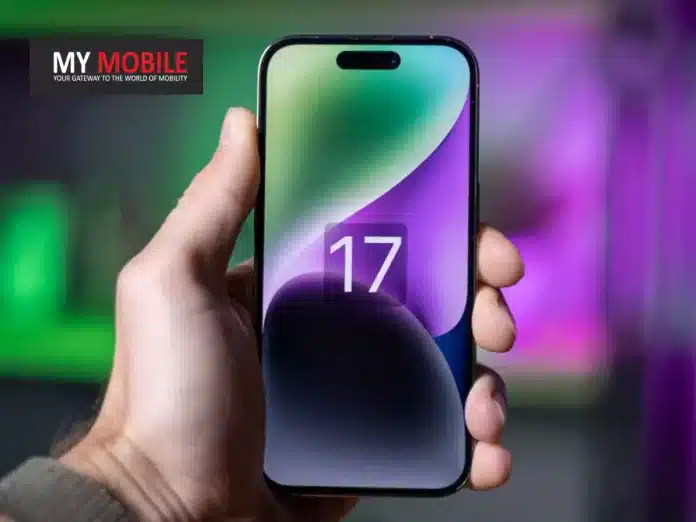
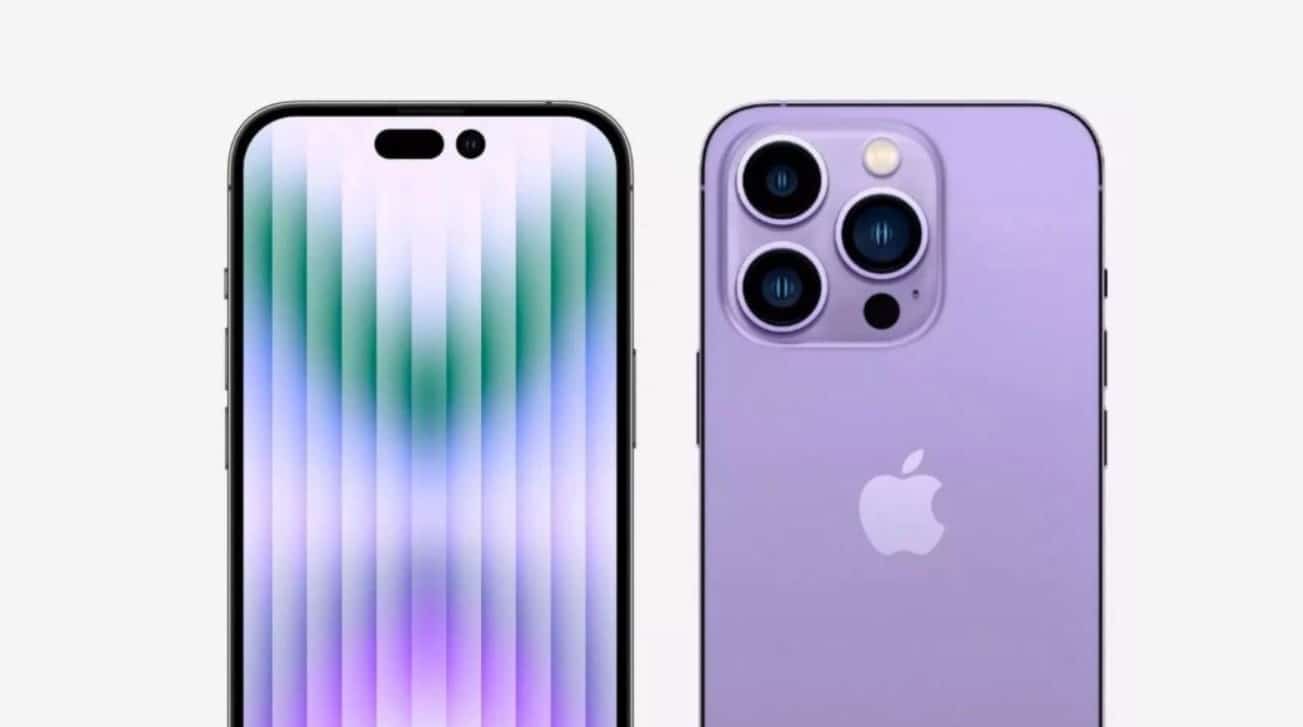
Analyst Ming-Chi Kuo discusses Apple’s plans to change the material in iPhone logic boards for more battery space.
iPhone 17 Pro battery could be improved with potentially having resin-coated copper (RCC) logic boards.
Despite the A17 Pro chip in iPhone 15 Pro models, no significant battery life improvement noted.
For users of iPhones battery life had been point of challenge for many years until Apple resolved the issues with bigger batteries and software optimisation.
Now it looks like appears Apple is taking further measures to improve the situation, specifically two years down the line.
According to well-known analyst Ming-Chi Kuo, Apple is investigating a shift in the material of its logic boards, which could pave the way for a larger iPhone 17 battery.
Ming-Chi Kuo’srecent blog post reveals Apple’s exploration of resin-coated copper (RCC) for the iPhone’s logic boards.
If the material advancements go as planned, the iPhone 17 Pro models could utilize this technology.
What does this mean for consumers? Simply put, a more compact logic board can make room for a bigger battery, potentially solving the battery life conundrum that has been a talking point recently.
But, according to Kuo, Apple’s planned internal changes could mean that the iPhone 17’s battery might be larger than that of the iPhone 16 Pro models.
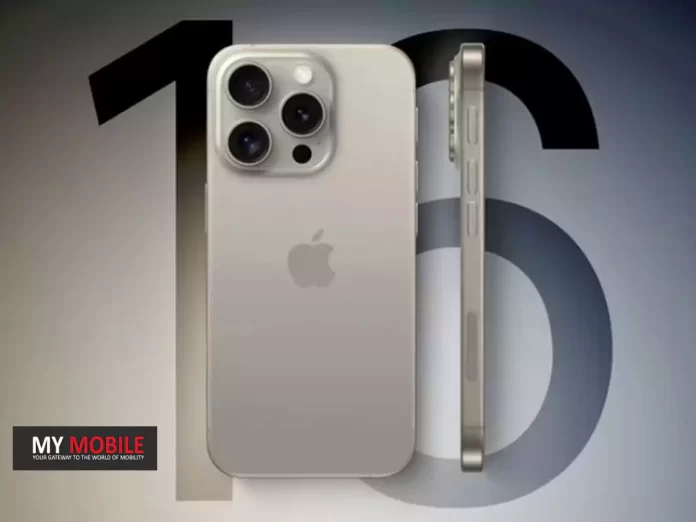
The iPhone 17 battery is not the only one to benefit from this increase, as the company could likely also alter the dynamic of the iPhone 16 Pro models next year.
They are likely to accommodate a new zoom lens.
In any case, consumers can be assured that the internal space-saving innovations on future models will have a lasting impact on battery life, starting with the iPhone 17.
To sum up, while external features often steal the limelight, it’s the internal changes—like a possible switch to RCC logic boards—that could herald a new era for iPhone battery life.
Given that this information comes from a credible source like Ming-Chi Kuo, it’s an exciting prospect worth keeping an eye on.
FAQs
What could make the iPhone 17 battery bigger?
Apple is reportedly exploring a change in logic board materials, potentially allowing for a larger battery.
Who is behind this information?
Renowned analyst Ming-Chi Kuo has outlined these potential developments in a recent blog post.
Is Apple planning to increase the size of iPhone 16 Pro models?
Yes, Apple is likely to increase the size of iPhone 16 Pro models, possibly to include a new zoom lens.
Has the A17 Pro chip improved battery life?
Despite having a more efficient chip, the iPhone 15 Pro models haven’t shown significant improvements in battery life.
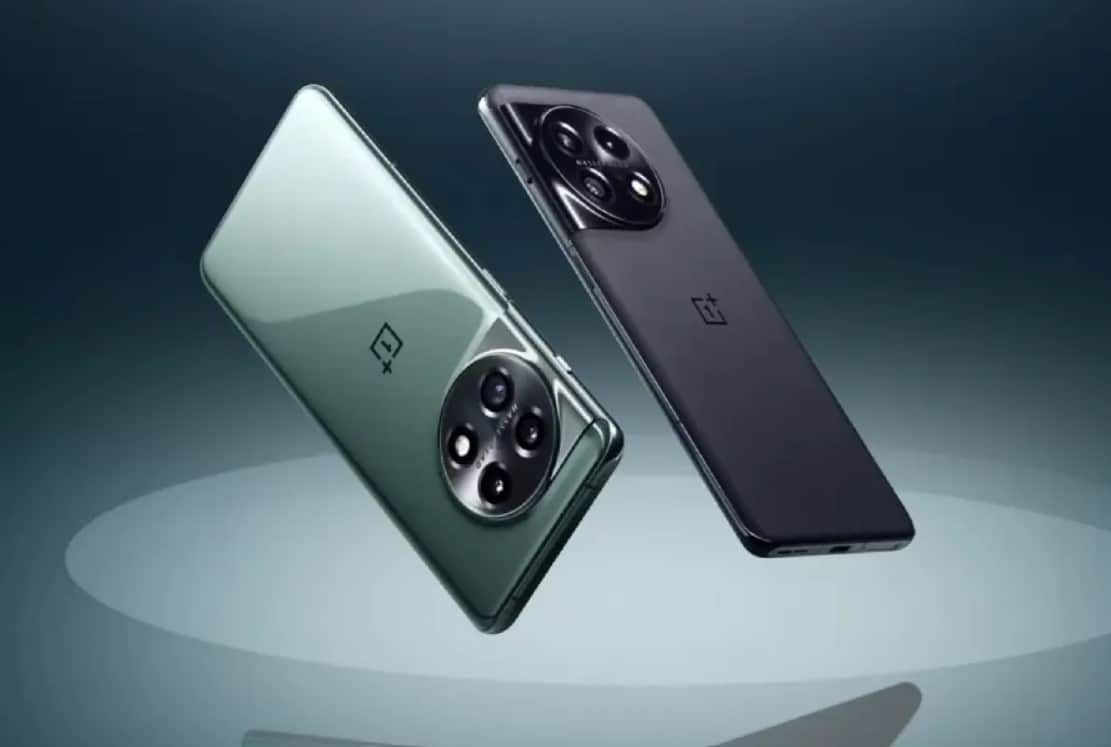
Peak brightness at an impressive 2,600 nits, double that of OnePlus 11.
Larger 6.82-inch screen with a detailed resolution of 1,440 x 3,168px.
Adaptive 120Hz LTPO refresh rate for smoother visuals.
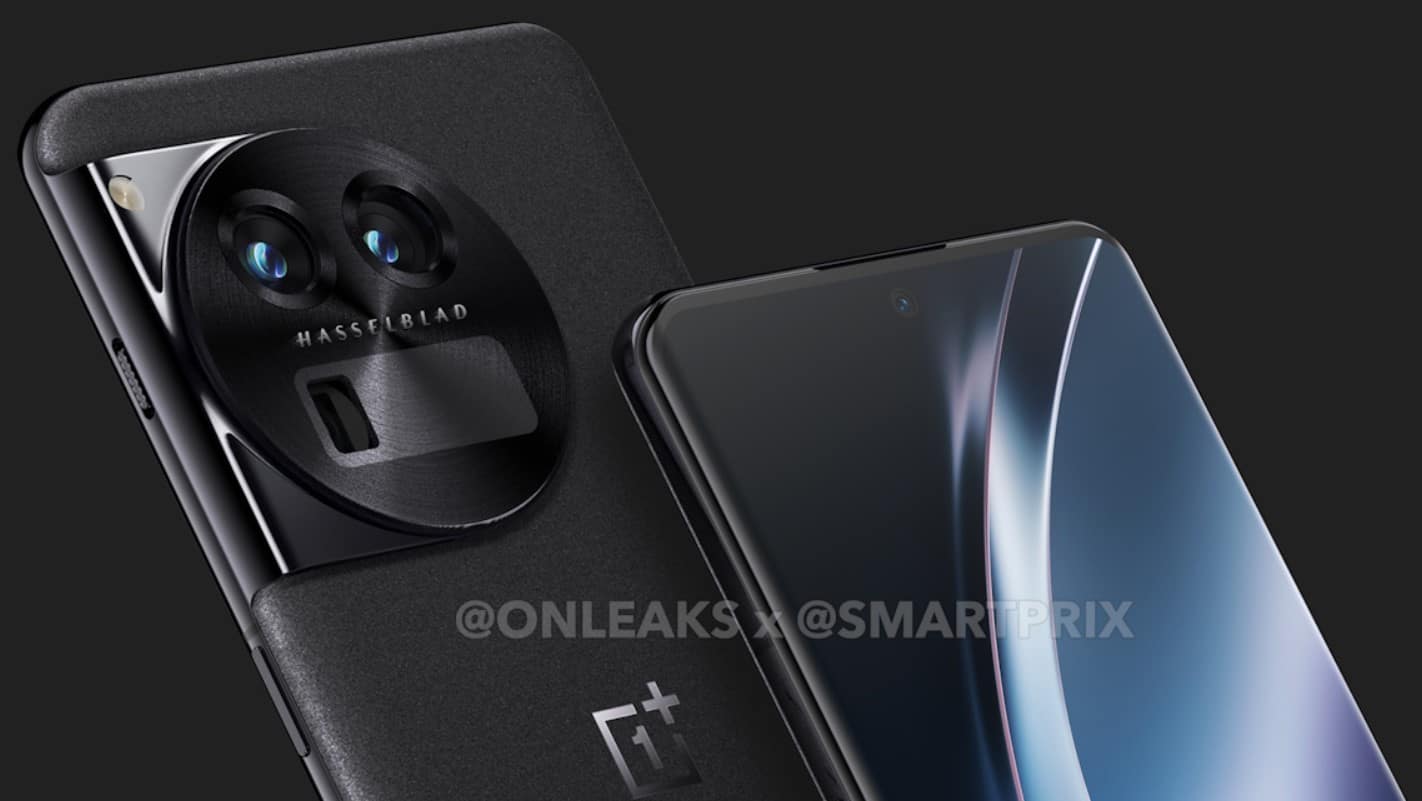
Enhanced curved design for an elevated aesthetic appeal.
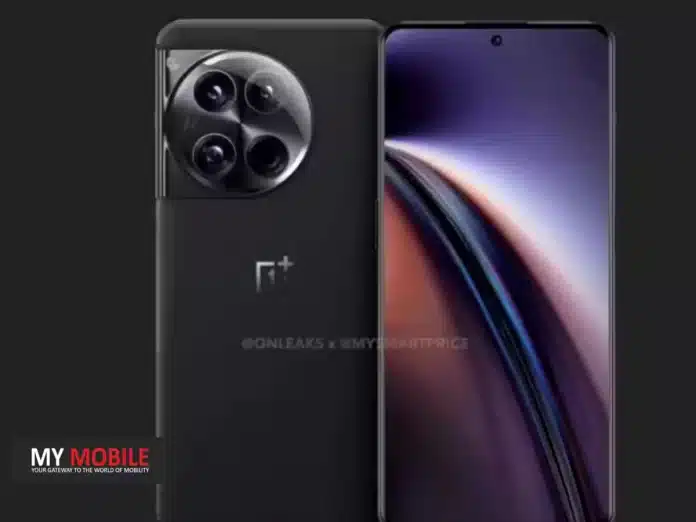
The upcoming OnePlus 12is gearing up to be a significant upgrade from its predecessor, the OnePlus 11, especially in the display department.
As per leaks on Weibo, this notable enhancement in peak brightness, coupled with advancements like high-frequency PWM dimming and increased display size, might showcase OnePlus’s intent to provide a superior visual experience to its users.
Furthermore, the shift in aspect ratio and resolution does indicate a design alteration to enhance user interaction and viewing pleasure.
Adaptive refresh rates ensure that fluidity and responsiveness are optimum, making it an attractive proposition for potential buyers.
The much-anticipated OnePlus 12 is setting the stage to redefine display brilliance.
From the information available, it’s evident that OnePlus is pushing the boundaries to ensure that its newest flagship stands out.
As a standout feature of the OnePlus 12 display is its impressive peak brightness which is touted to be at a staggering 2,600 nits. It can be considered double the peak brightness of the OnePlus 11 which ensured crisp visuals even under direct sunlight. But OnePlus didn’t stop there.
The company has integrated high-frequency PWM dimming at 2,160Hz, which is particularly beneficial at lower brightness levels, promising reduced eye strain and a more comfortable viewing experience.
Apart from that the bigger screen size on the OnePlus 12 is also an additional noteworthy improvement. Its screen is larger than the OnePlus 11’s, measuring 6.82 inches as opposed to 6.7 inches.
This increase, along with a changed aspect ratio of 19.8:9, results in a larger viewing area, which makes it ideal for watching multimedia content and playing video games.
The advanced display on the OnePlus 12 has been improved in more ways than just size and brightness, though.
Sharper images are promised by its 1,440 x 3,168px resolution. The aesthetic appeal is also evident, with CAD-based representations suggesting a more prominent curve than its predecessor.
Also rumoured is that the OnePlus 12 will feature a 120Hz LTPO adaptive refresh rate, which is the cherry on top.
This technology guarantees speedier transitions, ensuring lag-free scrolling, gaming, and everyday interactions.
It utilises the company’s vast text-to-image diffusion models which is more than likely to shape the future of how we operate Google search in the future.
Introduction to Google’s AI Image Generator
Google AI Image Generator
The new AI Image generator is one of the most anticipated features of the SGE.
Users can input a description, and within moments, the tool presents four distinct image variations.
The level of customization doesn’t end there.
Based on Google’s showcase, if a user asks for a capybara donning a chef’s hat and preparing bacon, the description can be altered, say, to have the capybara cook hash browns instead.
Rise of Multimodal AI Tools
Multimodal AI Tools
The AI world is witnessing an unprecedented focus on multimodality, emphasizing an AI’s prowess in comprehending multiple media forms, such as audio and image.
Google AI Image generator marks a significant milestone in this race. Multimodal AI isn’t just about chatbots interacting with users.
The real challenge lies in enabling the AI to “see” and “hear,” ushering in a more refined AI experience.
With OpenAI’s release of DALL-E 3and Microsoftincorporating it into Bing Image Creator, multimodality is clearly becoming a sought-after domain.
Concerns with the AI Image Generator
However, the widespread utilisation of AI image generators, brings its own set of challenges.
Misinformation and potential copyright violations loom large. Addressing this, SGE has preventive measures in place.
Additionally, it avoids generating images showcasing photorealistic human faces and recognized public figures, minimizing the risk of deepfakes.
It’s worth noting that the tool is exclusively for users aged 18 and above.
Google’s Efforts Beyond the AI Image Generator
Google’s Efforts Beyond the AI Image Generator
While the AI Image generator is the highlight, SGE has more to offer.
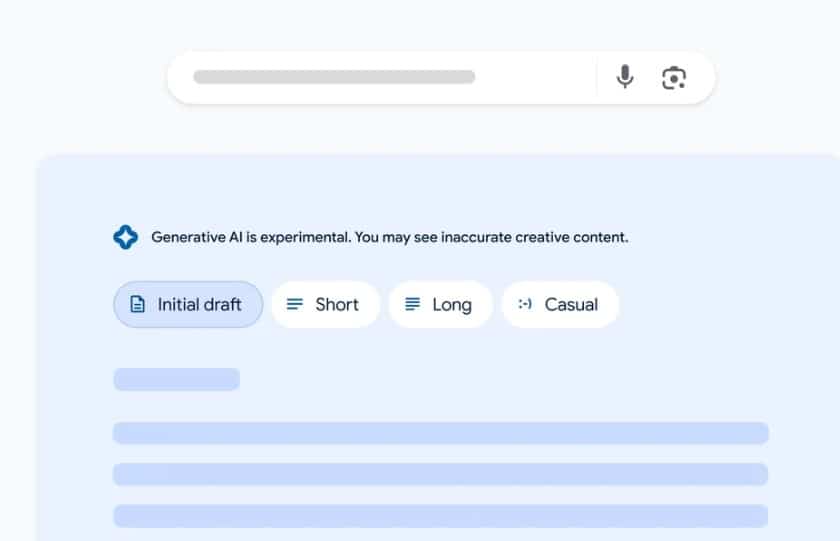
Google’s endeavor to aid users in their writing tasks is evident with the introduction of written drafts in SGE.
For those looking for writing inspiration, SGE can optimize drafts, even altering the tone for a casual feel.
Furthermore, Google hinted at an upcoming feature named “About this Image.” This tool will empower users to understand the context and credibility of images.
It can showcase when Google first identified a similar image variant or pinpoint other websites that have utilized a similar image, encompassing news or fact-checking platforms.
FAQs
What is Google’s new AI Image generator?
Google’s AI Image generator is a cutting-edge feature in the SGE, allowing users to describe and instantly receive image variations.
Why is multimodality in AI a big deal?
Multimodality in AI indicates its ability to understand different media forms, enhancing the overall AI experience and interactions.
How does Google AI Image generator ensure content safety?
The tool is designed to block harmful content, restrict photorealistic human images, and keep notable public figures out of generation results.
What’s the significance of the “About this Image” tool?
It’s an upcoming feature to help users gauge the context and trustworthiness of images, showing when and where similar images have appeared.
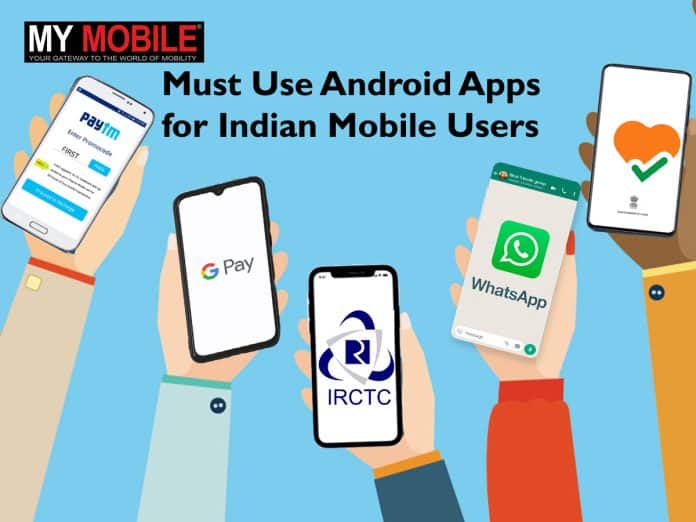
Android’s Play Store has countless apps for Indian users that enable a seamless and secure digital life.
Users can choose from a wide range of apps ranging from mobile recharges and bill payments to online shopping and more.
Smartphonesserve as our communication hub, entertainment centre, and productivity tool, all rolled into one.
The Google Play Store is a Pandora’s box that offers a plethora of apps tailored to cater to diverse needs and preferences.
From staying connected with loved ones to managing finances and accessing essential services, apps today are designed to simplify every aspect of life.
In this blog post, we will explore a curated list of must-use Android apps that can enhance the digital lives of Indian mobile users.
WhatsApp
WhatsApp
WhatsApp needs no introduction. It’s the go-to messaging app for millions of Indians.
With features like text messaging, voice and video calls, and multimedia sharing, WhatsApp keeps you connected with friends and family, both near and far.
Its end-to-end encryption ensures secure communication, making it an essential app for Indian users.
Google Pay
Google Pay
Google Pay is a popular payment app in India. It allows users to make payments, pay bills, recharge mobiles, and even send or receive money directly from their bank accounts.
Its user-friendly interface and integration with various Indian banks make it a preferred choice for digital transactions.
Paytm
PayTM
Paytm has revolutionized digital payments in India. It’s a versatile app that lets you pay bills, recharge your mobile, book flights and movie tickets, and even shop online.
With its secure payment gateway and cashback offers, Paytm has become an integral part of the Indian mobile user’s life, simplifying financial transactions.
Banking Apps (e.g., SBI Anywhere, ICICI iMobile, HDFC Mobile Banking)
Banking Apps
Banking appsprovided by major Indian banks have revolutionized the way people manage their finances.
These apps offer a plethora of services, including account balance checks, fund transfers, bill payments, and even investment management.
IRCTC Rail Connect
IRCTC Rail Connect
Travelling by train is a way of life for many Indians, and the IRCTC Rail Connect app simplifies the ticket booking process.
It enables users to book train tickets, check seat availability, and view train schedules.
With features like Tatkal booking and easy cancellation, this app is a travel essential for every Indian commuter.
Aarogya Setu
Aarogya Setu
Especially in the wake of the COVID-19 pandemic, the Aarogya Setu app has become indispensable.
Developed by the Government of India, this app helps users assess their risk of contracting the virus.
Ola/Uber
Ola/Uber
For convenient and affordable transportation, Ola and Uberare the go-to apps. They allow users to book rides, estimate fares, and even share rides to reduce costs.
These apps have transformed the way Indians commute, offering a reliable and hassle-free alternative to traditional taxis.
Zomato/Swiggy
Zomato/Swiggy
Zomato or Swiggy, culinary companions, caters to India’s love for food.
Whether you’re ordering from your favourite restaurant or exploring new dining experiences, these apps and their extensive database, user reviews, and easy ordering system ensure a delightful gastronomic journey.
These are some of the widely popular apps on Android that have significantly transformed the way Indian mobile users relationship with the digital world.
In case you are looking for more apps to make your life easier, here is a category-wise list of apps that you must look out for –
Category
Apps
Use
Communication
● WhatsApp Messenger
● Gmail
● Messenger
● Hangouts
● IMO
● Skype
● Viber
Must-use apps that keep you connected.
Social Media Channels
● Facebook
● Twitter
● Instagram
Connect with your friends and family.
Tools
● Adobe PDF
● Polaris Office
● TrueCaller
Use these apps to enhance your productivity.
Video Streaming Platforms
● YouTube
● Netflix
● Amazon Prime
● Hot Star
● Voot
● MX Player
Stream videos, movies, and your favourite TV series, and matches instantly on your phone or tablet.
Music
● Spotify
● Ganna
● Savan
● Wynk
These free apps let you listen to any kind of music anytime, anywhere for free.
Entertainment Apps
● Bookmyshow
● Paytm Insider
● PVR Cinemas
Know which movie is running at a theatre near you, check events in your city & book tickets straight.
Photography & Editing
● PhotoDirector
● Proshot
● PicsArt
● Camera360
● YouCam Perfect
Make your favourite photos look even better with these apps.
Keyboard Apps
● Fleksy
● SwiftKey
● Gboard
Do effortless typing with a swipe with these apps.
Travel
● Google Maps
● HERE Maps
● Google Translate
● Ola
● Uber
● IRCTC
● MakeMyTrip
Search places, communicate with people & book rides, rail or air tickets, and hotel accommodations.
Food & Dining
● Zomato
● Swiggy
● Food Panda
Order food online and book a table at a restaurant near you without any hassle.
Shopping
● Flipkart
● Amazon
● Myntra
Shop products online easily with some exclusive app-only offers.
Data Sharing
● SHAREit
● Xender
Grab it for getting data like movies, videos, music, contacts, apps etc.
Storage
● Google Drive
● iCloud
● One Drive
Back up all your necessary data for a restore in future.
FAQs
Q1. What is the Google Play Store, and why is it important for Android users?
Answer. The Google Play Store is the official app store for Android devices, where users can download a vast array of applications, games, movies, music, and books. It serves as the primary source for Android apps, ensuring users have access to a secure and diverse selection of digital content, enhancing their mobile experience.
Q2. How can I update my apps on the Google Play Store?
Answer. Updating apps on the Google Play Store is simple. Open the Play Store app, tap on the menu icon (usually three horizontal lines) in the top left corner, select “My apps & games,” and you’ll see a list of apps with available updates. Tap “Update All” to update all apps or select individual apps for updating.
Q3. Can I reinstall apps that I’ve previously uninstalled from the Google Play Store?
Answer. Yes, you can. Apps you’ve purchased or downloaded (even if they were free) remain associated with your Google account. To reinstall an app, go to the Play Store, tap the menu icon, select “My apps & games,” navigate to the “Library” tab, and you’ll find a list of all your previously downloaded apps. Simply tap on the app you want to reinstall.
Q4. Are all apps on the Google Play Store safe to download and use?
Answer. While Google employs strict security measures, it’s important for users to exercise caution. Stick to downloading apps from well-known developers or companies. Additionally, always read reviews, check permissions, and keep your device’s security settings updated to minimize the risk of downloading malicious apps.
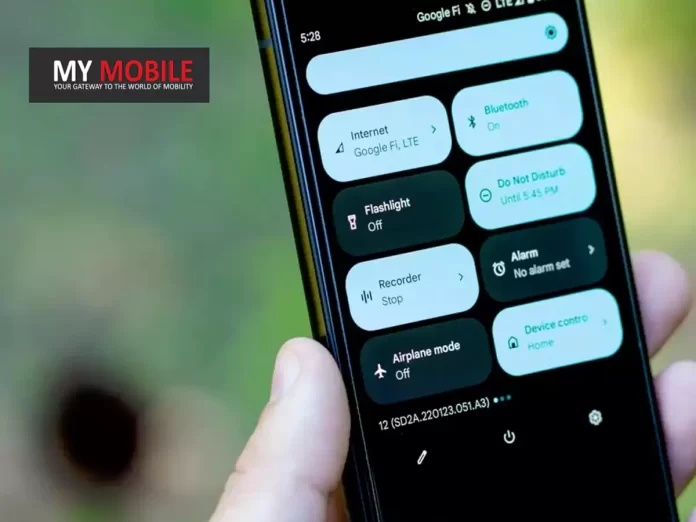
As the lineage of Android OS grows with the recent release of Android 14, Google has been caught in the act of potentially introducing an intuitive Quick Settings toggle, aiming to simplify the switch between data SIMs.
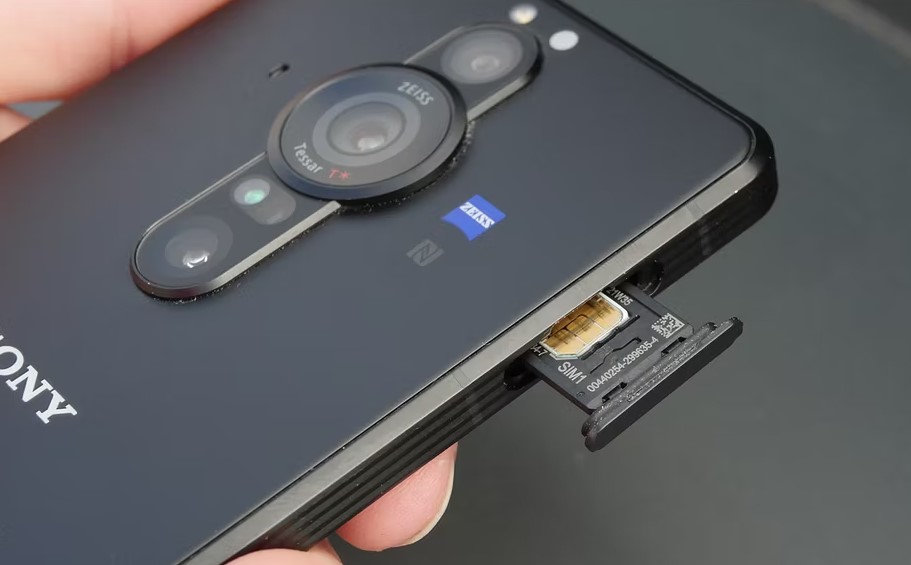
With dual-SIM compatibility already a staple feature in numerous Android phones, the ease of toggling between them has become a need of the hour.
The advent of eSIM technologyhas further expedited the process, eradicating the traditional hurdles posed by physical SIM cards.
This technological leap makes it seamless for users to operate two distinct lines on one singular device.
Google’s recognition of the eSIM’s potential was evidenced when they rolled out an eSIM transfer tool alongside the launch of Pixel 8.
Data SIM Switch
This facilitates the transition between devices. Yet, a glaring gap remained: the lack of a swift method in stock Android to swap the internet-active SIM.
While the tailored Android interfaces of giants like Samsung’s One UIand OnePlus’ Oxygen OS have been ahead of the curve, flaunting a one-tap Quick Settings toggle, it seems the base Android might soon follow suit.
Word has spread via Mishaal Rahman’s revelations on the X platform about Android’s potential plan to assimilate lessons from custom ROMs.
By incorporating a Quick Settings tile for prompt data SIM alternation, Android might just bridge the existing functionality gap.
While Google remains tight-lipped about the exact release, a hint lies in an update from a Google representative on Google IssueTracker, addressing a feature request made last year.
For those eager beavers not willing to wait, Rahman has pointed towards a stop-gap solution: an app available on the Play Store that can bestow upon your device a dedicated Quick Settings toggle for mobile data SIM.
FAQs
What is the new feature Android is introducing?
Android is working on a Quick Settings toggle to easily switch between data SIMs without diving deep into settings.
How does this compare to other Android interfaces?
Brands like Samsung and OnePlus already offer this feature in their custom Android skins, and now stock Android is catching up.
Is there a temporary solution before the official update?
Yes, an app on the Play Store offers a similar Quick Settings toggle for mobile data SIM switching.
When can we expect this feature on stock Android?
While Google hasn’t given an exact date, it’s hinted that the feature will be part of a future Android build.
Prolonged legal battle between Apple, Broadcom, and Caltech ends in settlement.
Controversy rooted in alleged infringements on advanced Wi-Fi communication patents.
Initial penalties for Apple and Broadcom combined were set at $1.1 billion.
US Court of Appeals found original damage calculations to be “legally unsupportable.”
Apple, alongside its Wi-Fi chip supplier Broadcom, has successfully settled, as per Reuters, a prolonged legal tussle with the California Institute of Technology (Caltech).
This seven-year confrontation revolved around alleged infringements on Wi-Fi communication patents held by Caltech.
Specifically, these patents encompassed advanced encoding and decoding systems devised to enhance data transmission speeds and overall performance.
Apple’s initial response was to challenge these claims, aiming to render the patents invalid. However, their efforts were in vain. By 2020, the verdict was clear: Apple and Broadcom had breached Caltech’s intellectual property rights.
Apple Wi-Fi Chip
The financial implications were hefty; Apple faced a whopping $838 million penalty, whereas Broadcom was slated to part with $270 million.
The combined penalty of $1.1 billion was poised to be among the most substantial patent-related payouts in the annals of US history.
Yet, the story took another turn.
On appeal, the US Court of Appeals for the Federal Circuit held that while both companies had indeed violated Caltech’s patents, the original damage calculation was flawed and “legally unsupportable.”
This led to the calling of a fresh trial to reassess the compensatory amounts.
However, keen to avoid another lengthy court battle, the trio – Apple, Broadcom, and Caltech – hinted in August at an impending settlement.
Fast forward to the present, and the legal dust has settled, marking an end to this marathon patent dispute.
FAQs
When did Caltech first sue Apple and Broadcom?
Caltech initiated the lawsuit against both companies in 2016 over Wi-Fi communication patents.
Which Apple products were targeted in the lawsuit?
iPhones, iPads, Macs, and Apple Watches were among the devices mentioned in the suit.
How much were Apple and Broadcom initially ordered to pay?
Apple was fined $838 million, while Broadcom was penalized with $270 million.
Was the original fine upheld by the appeals court?
No, the US Court of Appeals found the initial damage assessment to be flawed and called for a new trial.
Galaxy M44 5G showcases Bluetooth v5.2 support as per Bluetooth SIG Certification.
A powerhouse Qualcomm Snapdragon 888 SoC under the hood, as hinted by Geekbench.
The leaked imagery hints at three distinct camera sensors accompanied by an LED flash.
Comes with the latest Android 13, likely complemented by Samsung’s One UI skin.
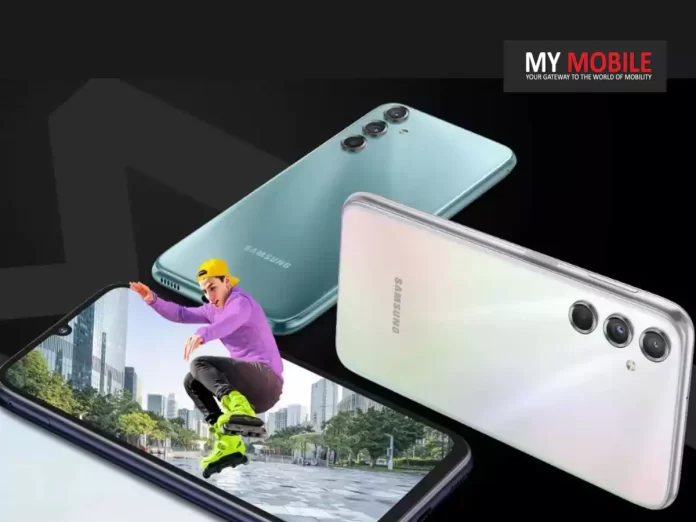
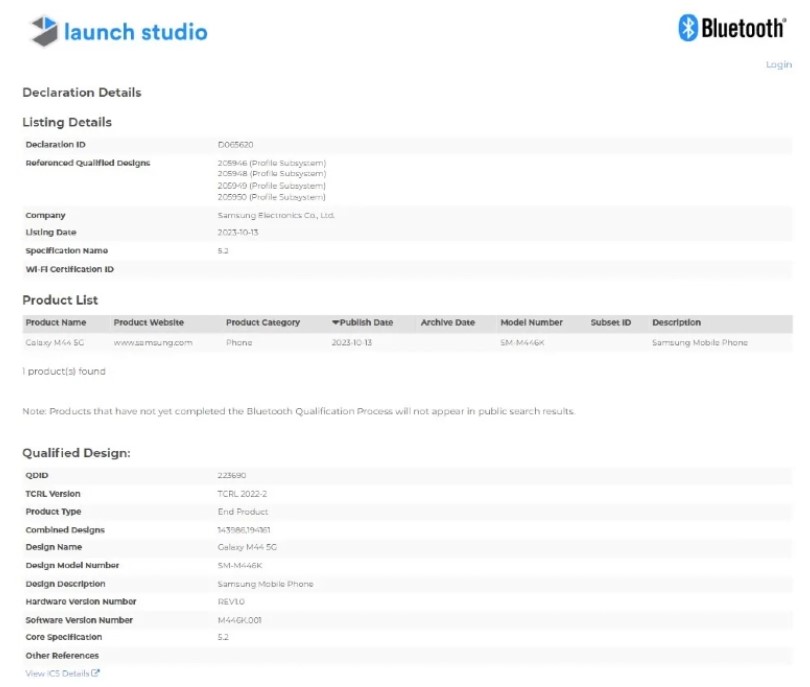
The Samsung Galaxy M44 5G, rumored to be the successor of the Galaxy M34 5G, is making waves in the tech community with its recent appearance on India’s Bluetooth SIG Certification website.
The certification was first noticed by tech enthusiasts onMySmartPrice, showcasing the model number as SM-M446K.
While the listing does confirm its moniker, “Samsung Galaxy M44,” it also points out the inclusion of Bluetooth v5.2 support, marking a step up in its connectivity game.
While this certification has opened up some details about the Galaxy M44 5G, it’s not the only tidbit of information we’ve gotten about the device.
Samsung Galaxy M44 5G Spotted on India’s Bluetooth SIG Certification Website
This powerhouse processor is expected to be coupled with a 6GB RAM, although it wouldn’t be a surprise to see more variants during its official release.
Further boosting its credentials, the phone seems to be coming with the Android 13 operating system, possibly layered with Samsung’s proprietary One UI skin.
Another sneak peek came in the form of a leaked image.
This visual showcases the Galaxy M44 5G’s three independent camera sensors, all complemented by an LED flash.
From the looks of it, the phone’s back might come with a sophisticated matte finish.
While these snippets offer a glimpse into the Galaxy M44 5G’s universe, the tech world is eagerly awaiting more exhaustive details.
With its online appearances increasing, it won’t be long before we have a more comprehensive look at this promising device.
FAQs
What is the confirmed model number for the Samsung Galaxy M44 5G?
The Bluetooth SIG Certification revealed the model number as SM-M446K.
Which chipset is expected to power the Galaxy M44 5G?
The device is rumoured to have a Qualcomm Snapdragon 888 SoC as indicated by its Geekbench listing.
How many camera sensors will the Galaxy M44 5G feature?
Leaked images suggest that the device will feature three individual camera sensors along with an LED flash.
Will the Samsung Galaxy M44 5G run on Android 13?
Yes, the device is expected to boot Android 13, potentially paired with Samsung’s One UI skin.
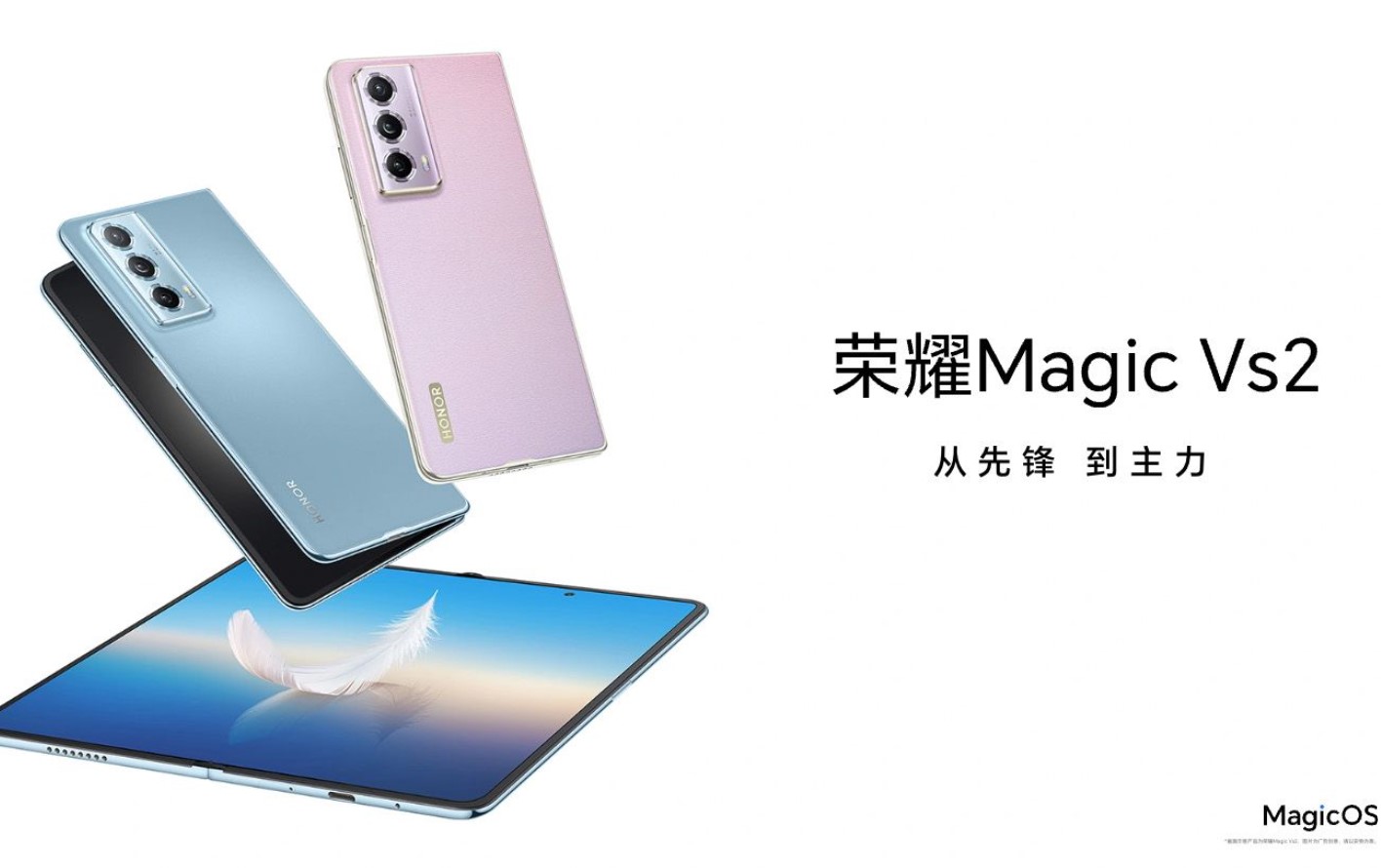
Honor Magic Vs2 showcases dual OLED displays and Snapdragon 8+ Gen 1 chipset.
Watch 4 Pro boasts a 1.5-inch LTPO AMOLED screen and comprehensive sensor suite.
Magic Vs2 offers a robust 5000 mAh battery with 66W fast charging.
Watch 4 Pro available in three colour variants with wireless fast charging capabilities.
Honor, the renowned consumer electronics brand from China, is once again making waves in the tech industry with its latest set of unveilings.
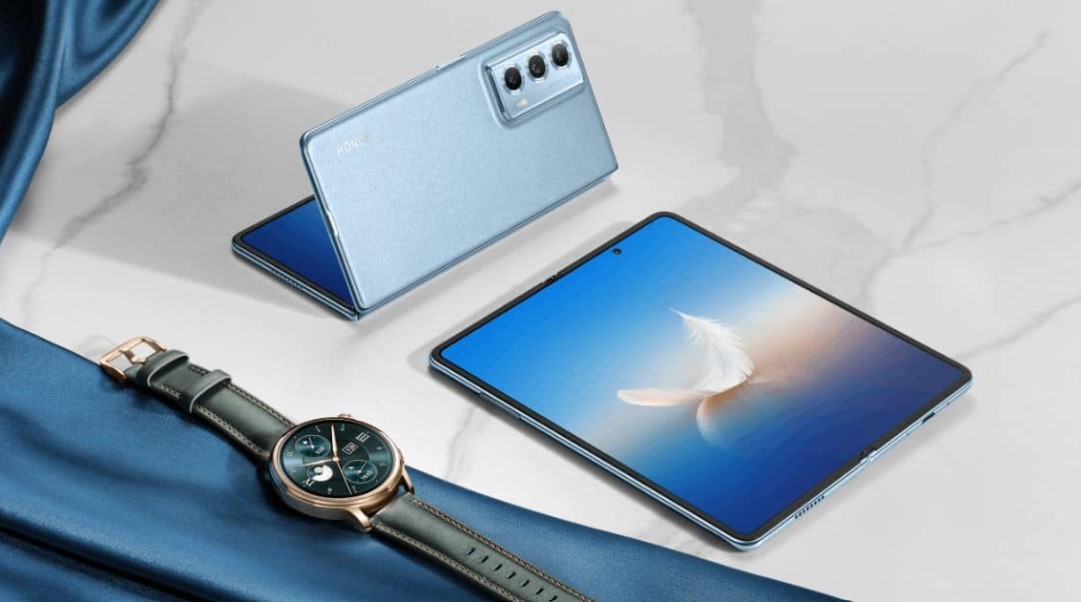
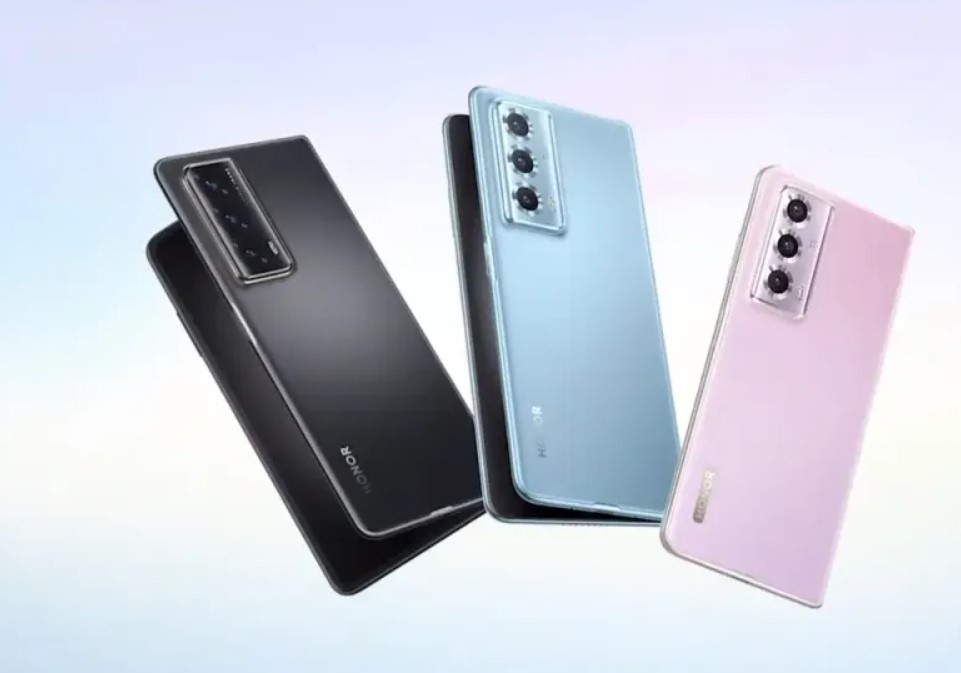
Stepping boldly into the realm of foldable technology, Honor has revealed the Magic Vs2 smartphone, designed for the discerning user seeking a blend of style and innovation.
Apart from that the company has also announced the Honor Watch 4 Pro in the Chinese market as well.
Honor Magic Vs2 Foldable: Pricing and Availability
Honor Magic Vs2 Foldable: Pricing
The Honor Magic Vs2 is available in two storage configurations: a 12GB/256GB variant priced at CNY 6,999 (about Rs 78,000) and a more robust 16GB/512GB version priced at CNY 7,699 (about Rs 88,000).
Potential buyers can choose from three distinct colour options: Black, Blue, and Purple.
Honor Magic Vs2 Foldable: Key Specs
Honor Magic Vs2 Foldable: Key Specs
Chipset: Qualcomm Snapdragon 8+ Gen 1 (3.0 GHz)
Memory and Storage: Options of 12GB/256GB & 16GB/512GB
This 5G device operates on the Android 13 platformand is integrated with the MagicOS 7.2 interface.
With the Adreno 730 GPU onboard, the device handles graphic-intensive tasks efficiently.
The smartphone offers a 7.92-inch LTPO OLED inner display with a resolution of 2156 x 2344 pixels and a 120Hz refresh rate.
Additionally, there’s a 6.43-inch LTPO OLED cover screen with a resolution of 1060 x 2376 pixels.
Honor Magic Vs2 Foldable: Specs
At the back, the Magic Vs2 features a triple camera setup with a 50MP primary sensor, a 20MP telephoto lens, and a 12MP ultrawide lens.
For front-facing photos and video calls, there’s a 16MP punch-hole camera on both the inner and cover displays.
The device supports GPS, Wi-Fi 802.11 a/b/g/n/ac/6, Bluetooth 5.2, and NFC. For security, there’s a side-mounted fingerprint sensor.
Equipped with a 5000 mAh battery, the Magic Vs2 offers a 66W wired fast charging feature and also supports a 5W reverse wired charging.
Honor Watch 4 Pro: Pricing and Availability
Honor Watch 4 Pro: Pricing
Honor’s Watch 4 Pro is offered in Black (with Black Body) priced at CNY 1,599 (about Rs 18,000) and Green (with Gold body) and Brown (with Silver body) colour variants priced at CNY 1,799 (about Rs 20,500) each.
The devices go on sale in China from 16th October onwards.
Bluetooth & NFC: Features Bluetooth 5.2 and NFC (market-dependent).
Battery: A robust 480 mAh non-removable battery, equipped with wireless fast charging.
Honor Watch 4 Pro: Features
Honor Watch 4 Pro: Features
Diving deeper into the nuances of the Watch 4 Pro, it operates on the sleek and efficient MagicOS 7.2.
The always-on-display (AOD) ensures that essential notifications and updates are never out of sight, keeping you connected without being tethered to your smartphone.
When it comes to navigation and location-based services, the watch emerges as a trailblazer.
From GPS to GLONASS and from BDS to GALILEO & QZSS, it’s equipped to keep you on the right path, wherever you are.
Adding to its repertoire of features, the watch proudly hosts an assortment of sensors.
Whether it’s the heart rate sensor monitoring your pulse during an intense workout, the SpO2 sensor ensuring your oxygen levels are optimal, or the gyroscope and accelerometer capturing your every move, the Watch 4 Pro is meticulously designed for those who demand more from their wearables.
With this timepiece, Honor reaffirms that it’s not just about wearing technology; it’s about experiencing it.
FAQs
What is the primary display size of the Honor Magic Vs2?
The Magic Vs2 features a 7.92-inch LTPO OLED foldable display.
Which chipset does the Honor Magic Vs2 utilise?
The smartphone is powered by the Qualcomm Snapdragon 8+ Gen 1 chipset.
What are the available colors for the Honor Watch 4 Pro?
The Watch 4 Pro is available in Black, Green, and Brown.
Does the Honor Watch 4 Pro support wireless charging?
Yes, the Watch 4 Pro is equipped with wireless fast charging for its 480 mAh battery.
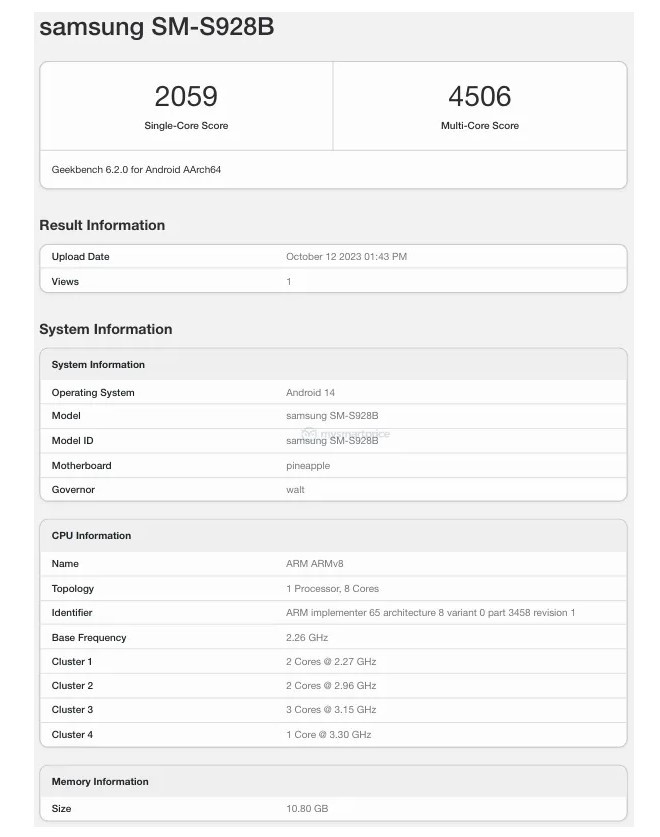
Today, the US variant of the Galaxy S24 Ultrareportedlywas spotted on the popular benchmark platform, Geekbench, revealing critical information about its core features and functionalities.
Galaxy S24 Ultra Possible Geekbench Scores
The Geekbench listing shines light on the fact that the global version of the Galaxy S24 Ultra (Model number SM-S928B) is set to harness the power of the Snapdragon 8 Gen 3 SoC.
Galaxy S24 Ultra Possible Geekbench Scores
This move by Samsung seems to diverge from its typical practice where certain global models are equipped with Exynos chipsets.
The listing shows a multi-core score of 4,506 and a single-core score of 2,059.
Under the Hood: RAM, OS, and More
The device is anticipated to host a formidable 12GB of RAM.
When it comes to its operating system, users can expect the latest Android 14, paired with Samsung’s One UI 6.0 right out of the box.
The display details, although not explicitly mentioned in the Geekbench listing, have been speculated in earlier leaks.
These leaks highlight a 6.8-inch AMOLED display, likely boasting a WQHD+ resolution.
Samsung Galaxy S24 Ultra Features
Camera enthusiasts might be in for a treat.
The S24 Ultra is expected to be outfitted with a quad-camera array.
Within this module, a whopping 200MP primary camera is likely to be the star.
Front-camera specifications, on the other hand, could entail a 12MP unit.
When it comes to powering this beast, there’s a chatter about a robust 5,000mAh battery which might further benefit from a 45W fast charging capability, a feature highlighted in a recent 3C certification.
Competition on the Horizon
Conclusively, if the buzz around its launch timeline holds any weight, Samsung might be prepping to introduce the Galaxy S24 seriesearlier than expected – potentially in January.
This strategic move positions the S24 lineup as a stiff competitor against upcoming giants like the OnePlus 12 and the Vivo X100.
FAQs
What chipset will the Galaxy S24 Ultra feature?
The Galaxy S24 Ultra is expected to feature the Snapdragon 8 Gen 3 SoC, as per its recent Geekbench listing.
Will there be an Exynos variant for the S24 Ultra?
No, unlike previous models, the global variant of S24 Ultra seems to be skipping the Exynos chipset for the Snapdragon.
What camera specifications can we expect?
The S24 Ultra might showcase a quad-camera setup with a major 200MP primary camera.
When is the Galaxy S24 series expected to launch?
Speculations suggest an early launch in January, earlier than Samsung’s usual February timeline.
iPhone 16 Pro to incorporate Qualcomm’s Snapdragon X75 for enhanced 5G connectivity.
New modem promises faster speeds and 20% reduced power consumption.
X75 chipset supports the upcoming 5G Advanced standard, leveraging AI and machine learning.
Standard iPhone 16 models to retain the current X70 modem.
As Apple prepares for its next big iPhone launch, the tech community is abuzz with predictions and speculation.
Among these rumours, viaMacrumors, is the integration of Qualcomm’s Snapdragon X75 modem into the iPhone 16 Pro models, an important step in Apple’s journey towards improved connectivity.
Evolution in Connectivity
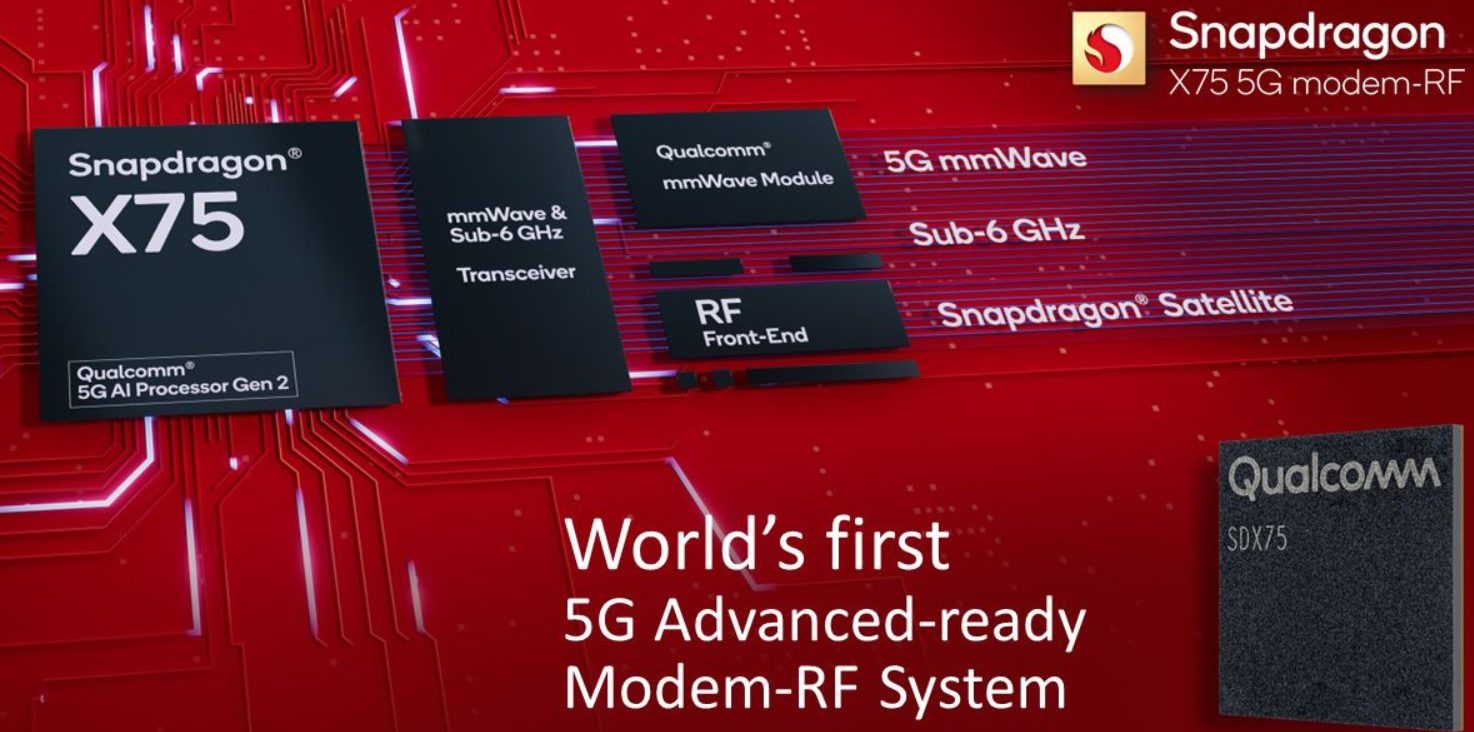
The Snapdragon X75 modem, announced in February, stands as Qualcomm’s next-generation modem.
This potent chip promises not only faster 5G connectivity but also increased power efficiency.
Its unique architecture seamlessly integrates mmWave and a sub-6Ghz transceiver. The outcome?
A modem that occupies 25% less circuit board space and sips up to 20% less power.
For the end user, this could translate to faster browsing speeds and longer battery life.
Interestingly, Apple’s standard iPhone 16 lineupwill continue to be powered by Qualcomm’s X70 modem, the same chip that currently runs the iPhone 15 series.
iPhone 16 Pro Feature Qualcomm’s Snapdragon X75 Modem
Ready for 5G Advanced Standard
One of the most significant leaps forward with the X75 modem’s introduction is the iPhone 16 Pro’s compatibility with the upcoming 5G Advanced standard.
This next-gen connectivity promises to usher in a transformative phase for mobile communications.
The integration of artificial intelligence and machine learning enhancements could redefine user experiences, laying the groundwork for the much-anticipated 6G connectivity.
Echoing past strategies, Apple might pitch this advancement similarly to how it showcased LTE Advanced with the iPhone 6s in 2015.
Apple’s Quest for Autonomy
Despite the ongoing partnership with Qualcomm, Apple’s aspirations are clear: achieve complete autonomy in modem production.
While the tech giant’s endeavours to develop an in-house 5G modem have faced challenges – think quality issues and overheating concerns – the ambition remains undeterred.