Home Blog Page 972

HP Pavilion Plus Laptop 14: Everything you need to know !

0
HP Pavilion Plus Laptop 14

If you are looking for an OLED screen that happens to have all the functionalities of a laptop then the HP Pavilion Plus Laptop 14 is the product for you. It’s all recycled aluminium construction, high-resolution display and premium quality speakers, which makes the perfect companion for a little bit of work and a lot of play. The model is HP’s premium laptop and is the slimmest laptop to come out in the series. It’s attractive and checks all boxes making it a preferred pick for anyone looking for a handy laptop.

The 14 inch IPS panel full high definition display with antiglare coating and a resolution of 2240×1400 pixel is one of the biggest highlights of the product. The display makes text and images appear a lot more sharper than other standard laptop screens. The Bang and Olufsen audio technology provides clear and crisp sound support. And the standard refresh rate of 60Hz is ideal for any laptop in this segment.

The lightweight all-metal body makes in silver colour gives the laptop a very professional appearance. It features an Intel Core i5 CPU, integrated graphics, a 512GB SSD, and 16GB of RAM.

The HP Pavilion Plus 14 come with a decent selection of ports when compared to other 14 inch laptop available in the market at this price range. The right side has two SuperSpeed USB Type-C ports (10Gbps, DisplayPort 1.4), an HDMI 2.1 video output, and a USB Type-A (5Gbps) port. The left side has another full-sized USB Type-A port, a headphone jack, and a microSD card slot.

HP Pavilion Plus Laptop 14 price in India is Rs 79,999.

Let’s find out everything that you need to know about HP Pavilion Plus Laptop 14 specifications in detail.

Key specifications
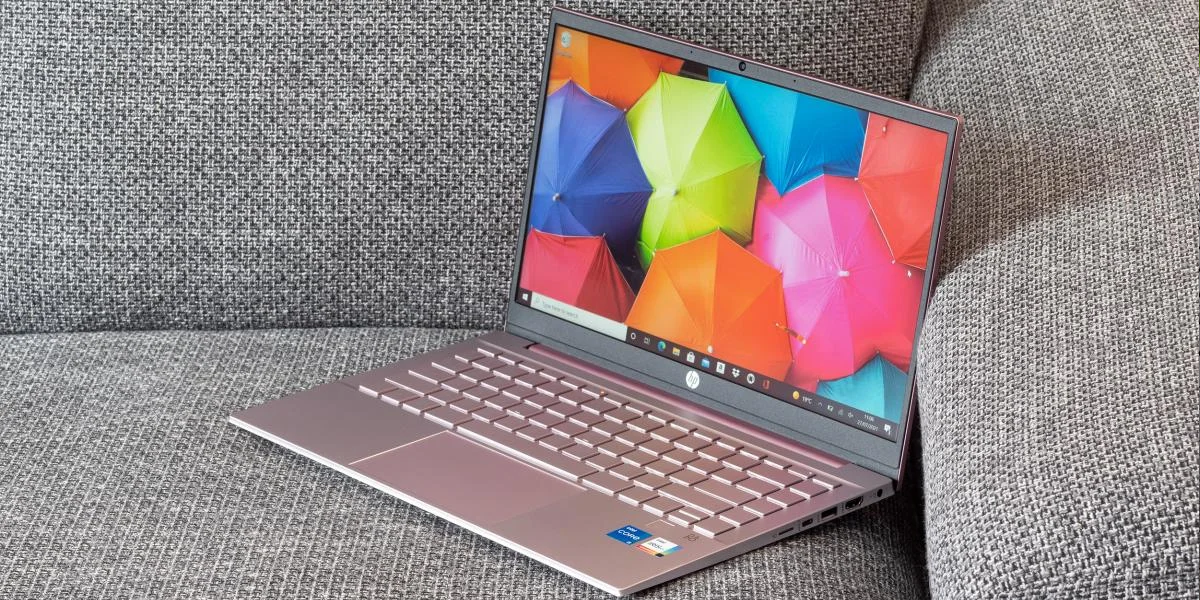
HP Pavilion Plus Laptop 14

  • Operating System Windows 11 Home
  • Processor Name – Intel® Core™ i5-12500H (up to 4.5 GHz with Intel® Turbo Boost Technology, 18 MB L3 cache, 12 cores, 16 threads)
  • Processor Footnote – Multi-core is designed to improve the performance of certain software products. Not all customers or software applications will necessarily benefit from the use of this technology. Performance and clock frequency will vary depending on the application workload and your hardware and software configurations. Intel’s numbering, branding and/or naming is not a measurement of higher performance. Intel® Turbo Boost performance varies depending on hardware, software and overall system configuration.
  • Processor Family – 12th Generation Intel® Core™ i5 processor
  • Chipset – Intel® Integrated SoC
  • Form Factor – Standard laptop
  • Memory – 16 GB DDR4-3200 MHz RAM (onboard)
  • Memory Note – Transfer rates up to 3200 MT/s.
  • Hard Drive Description – 512 GB PCIe® NVMe™ TLC SSD
  • Storage Type – SSD
  • Optical Drive – Optical drive not included
  • Cloud Service – 25 GB Dropbox storage for 12 months
  • Cloud Service Footnote – 25 GB of free Dropbox storage for 12 months from the date of registration. Internet service is required and not included.
  • Display HP – 35.6 cm (14) diagonal 2.2K display
  • Display – 35.6 cm (14) diagonal, 2.2K (2240 x 1400), IPS, micro-edge, anti-glare, Low Blue Light, 300 nits, 100% sRGB
  • Graphics – Intel® Iris® Xᵉ Graphics
  • Ports – 2 SuperSpeed USB Type-C® 10Gbps signaling rate (USB Power Delivery, DisplayPort™ 1.4, HP Sleep and Charge); 2 SuperSpeed USB Type-A 5Gbps signaling rate; 1 HDMI 2.1; 1 headphone/microphone combo
  • External I/O Ports Footnote – For best results with HP Sleep and Charge, use a USB charging protocol standard cable or cable adapter with an external device.
  • Expansion Slots – 1 microSD media card reader
  • Audio Features – Audio by B&O; Dual speakers; HP Audio Boost
  • Webcam – HP True Vision 5MP camera with temporal noise reduction and integrated dual array digital microphones
  • Fingerprint Reader – Fingerprint reader
  • Pointing Device – HP Imagepad with multi-touch gesture support
  • Keyboard – Full-size, backlit, warm gold keyboard
  • Wireless – Intel® Wi-Fi 6E AX211 (2×2) and Bluetooth® 5.2 combo (Supporting Gigabit data rate)
  • Wireless Note – MU-MIMO supported
  • Power Supply Type – 90 W USB Type-C® power adapter
  • Battery Type – 3-cell, 51 Wh Li-ion polymer
  • Battery Life Video Playback – Up to 11 hours and 30 minutes
  • Battery Weight – 210 g
  • Energy Efficiency Compliance – EPEAT® registered
  • Environmental – Ocean-bound plastic in bezel and speaker enclosure(s); Recycled metal in cover, keyboard frame and base; Keyboard keycaps and scissors contain post-consumer recycled plastic
  • Environmental Specification Footnote Number – The percentage of ocean-bound plastic contained in each component varies by product. Laptops manufactured with recycled metal material in product cover. The percentage of the recycled metal varies by product. Keyboard components contain post-consumer recycled plastic. The percentage of post-consumer recycled contained in each component varies by product.
  • Dimensions Without Stand (W X D X H) – 31.35 x 22.42 x 1.84 cm
  • Dimension Note (Metric) – Dimensions vary by configuration
  • Package Dimensions (W X D X H) – 6.9 x 48.3 x 30.5 cm
  • Weight – 1.4 kg
  • Weight Note (Metric) – Weight varies by configuration
  • Package Weight – 2.19 kg
  • Product Color – Warm gold aluminum
  • Product Design – Matte finish
  • Security Management – Trusted Platform Module (Firmware TPM) support
  • Software Included – McAfee LiveSafe™
  • Software Footnote – Free 30-day subscription of McAfee LiveSafe service included. Internet access is required and not included. Subscription required after expiration.
  • Pre-Installed Software – Microsoft Office Home and Student
  • Software – Productivity & Finance Footnote – Must activate within 180 days of Windows activation
  • Warranty – 1 year (1/1/1) limited warranty includes 1 year of parts and labor. 1 year on-site repair. Terms and conditions vary by country. Certain restrictions and exclusions apply
  • Included – HP Bag worth ₹ 2,499

Read More: HP Pavilion Plus 14 launched with Intel Processor
Read More: Top 10 Premium Laptops Under 1.5 Lakh Available In India

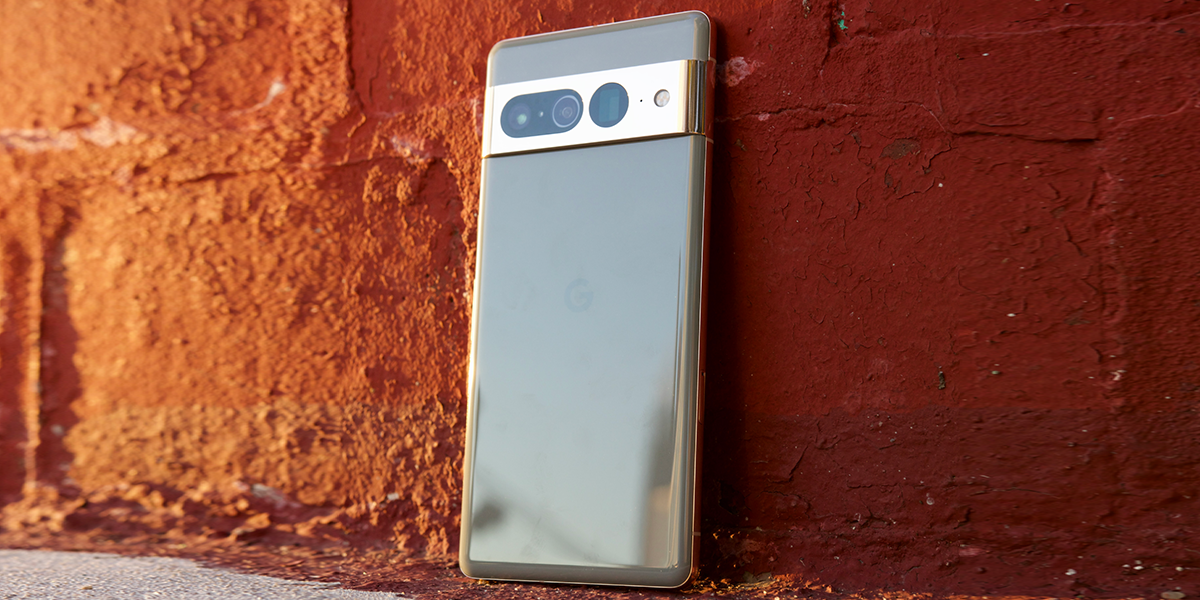
Google Pixel 7A Tipped To Feature Flagship Camera Sensors, Wireless Charging: Report

0
Google Pixel

If the latest online leaked tip is believed, Google Pixel 7A will have a significant upgrade from every previously launched smartphone in Google’s Pixel A series. The model is already slated to be the most affordable addition to the already mid range Google smartphone series. It is widely speculated to have an early 2023 launch, though no official word from the brand has hit the newsstand yet. The online buzz around the Pixel 7A suddenly skyrocketed this week when it was leaked to sport a better camera combination and wireless charging amongst various other cool features.

Interestingly, the first indication of Google Pixel 7A was noticed during a public conversation on Android’s open-source code. Many netizens quickly cracked that the codename “Lynx” was basically what later going to be named Pixel 7A and will be officially launched in the markets in 2023.

When the company released the first model in the A series pixel smartphones, the positioning of the product was around the message of making the flagship device affordable. Nevertheless, the gap between specifications, quality and experience has tremendously reduced with every new addition to the A series pixel smartphones.

Google displayed a similar approach during the launch of the Pixel 4a 5G and the Pixel 5. Targeting two extremely different segments yet both smartphones had the same Qualcomm Snapdragon 765G SoC with an aim to reduce the gap between specifications, quality and experience at the same time. The Pixel 4a 5G with 90Hz refresh rate for optimum display performance came with water resistance, a premium metal body, and wireless charging. These specifications for smartphones in the category were almost unheard of. Later, the Pixel 5A upon launch also successfully managed to keep the market selling price under a range while also offering premium features such as a water-resistant smartphone body and metal exterior finish.

Google Pixel 7A

Significantly, both the models i.e. Google Pixel 4A and Google Pixel 5A had a similar primary camera sensor just as was offered with the series flagship handsets.

Weibo leaker Digital Chat Station, at the beginning of this year, had already disclosed some details about the pixel handset. They revealed that the device is under development and most certainly, Foxconn is manufacturing it in China. Their information also added that the Pixel 7a will have the same Tensor G2 Chip that was earlier seen in the Pixel 7 series. They also said the product will be launched in a ceramic finish body and while no official confirmation is in place for the tech enthusiasts but if this information is right then that makes Pixel 7a the first Google smartphone to have a ceramic body.

Amongst all these tips and leaks from different sources, famous android researcher Kuba Wojciechowski hasn’t stayed behind in the chat. According to Wojciechowski, the “Lynx” which we have the hint to be the codename of Pixel 7a is supposedly developed with “P9222” chip for wireless charging. So, if this news is true then it defuses some of the excitement regarding the wireless charging feature that the latest leak talked about. Now, the “P9222” chip only supports 5W charging, which directly means that the wireless charging technology (if it’s there in Pixel 7A) would become a feature rather promotional than practically functional.

The Google Pixel series models currently available in the market include Pixel 7 and Pixel 7 Pro, Pixel 6a, Pixel 6 and Pixel 6 Pro, Pixel 5a, Pixel 5, Pixel 4a with 5G and Pixel 3a.

Read More: Tech News Wrap: Google Pixel 7, Pro Launch
Read More: Google’s Pixel 6a is expected to be launched in May after it reportedly appeared on the FCC website

Satellite Communications Key to Driving India’s Technology Ambitions, Internet Reach, MoS IT Says

0
Satellite Communications

The Satellite communication and space segment in future will be playing instrumental roles in ensuring India fulfils its ambition of connecting the maximum number of people to the digital economy as well as expanding Internet reach to the last mile, says Rajeev Chandrasekhar, the Minister of State for Information Technology. Chandrasekhar made the comments while speaking at the Indian Space Congress 2022 held in New Delhi recently.

Chandrasekhar said, “Our goal is to have 1.2 billion Indians connect to the internet directly through their device by 2025-26 and it will be a combination of all of this (wireless) and the role of satellite communication and the space segment is an inherent part of it,”.

While admitting the limitations that wireless technology may have at certain times or geographical locations and he further added, “satellite is clearly emerging as an important part of the blueprint of delivering quality Internet to all citizens and enterprises of India.”

According to the minister, the two segment of technology that holds the utmost significance in the coming decade or so will be satellites and space. These will be important for the overall success of any outreach plan that any government can make.

“Space and the satellite communication sectors are going to be interesting, important, and critical use cases or domains that will catalyze startups, catalyze the development of devices and electronics in the Indian ecosystem,” he said.

Satellite Communications

India has made some tremendous progress on this path. There was a time India’s tech economy was considered limited to the segment of IT services only. But times have changed now and the country has successfully made its mark in various other tech divisions such as the startup segment, fintech, consumer tech, e-commerce and more.

The minister also said, “We have a momentum going there, which makes us competitive with the rest of the world in terms of scale and quality and size, and innovation and applications that our startups are creating. But our focus is now also on the nuts and bolts of the Internet, the underlying electronics, technology, devices, and products that power the internet.”

On the sidelines of the same event, the minister also said that the Government of India wants the internet to be free from any kind of market domination. The statement particularly gains importance since it came right after the second penalty in a week was imposed on technology major Google for anti-competitive practices by the Competition Commission of India (CCI).  The CCI in its report revealed its investigation findings, which finds Google guilty of abusing its position of power in the Android smartphone manufacturing market. “Our view is that the internet should always be open and free from market domination by anyone,” Chandrasekhar said.

It was also noted during the event how India has skillfully navigated the storm of inflation, global economic slowdown and Covid-19 era struggle only to come out as a winner when the world is still fighting many disturbances. He also said that the country has emerged as the “fastest growing innovative ecosystem” after all these turbulent times the world is going through with attracting high FDI inflows that promise a hopeful future.

Read More: Google Probed by CCI; Tech Giant Allegedly Violates Revenue Sharing Terms
Read More: Google Faces Over Rs. 1330 Crore Fine by CCI for Misusing Dominant Position in Android Mobile Market


TRAI’s Concerns Over Draft Telecom Bill Provisions Said to Be Duly Addressed

0
Indian Telecommunication Act 2022

According to various media reports, a close source to the Department of Telecom (DoT) has said the government would duly address TRAI’s concerns regarding a potential dilution of power with the introduction of the Indian Telecommunication Act 2022. The source also said that the government over time might work towards strengthening the regulatory body separately, which was earlier said to be the primary intention of the government in adding certain clauses that TRAI has objections to.

As for the OTT (Over-The-Top) communication apps, the government’s intention with the draft telecom bill has been to focus on regulation related to user protection. The draft bill is not intended to interfere with the licencing part. The Department of Telecommunication plan is to put the hammer on spammers and culprits of cyber fraud making the telecom bill its weapon.

It was reported in the media that the Telecom Regulatory Authority of India, TRAI, had reservations about some clauses in the draft telecommunication bill and the agency believed those points will dilute its power. Apart from this, experts had pointed out other concerns that included the fact the Bill undermines the regulator by proposing to “take away the TRAI’s statutory independence, and seeks to make it subservient to the government”. The DoT source, however, says that the two bodies since then have had discussions and all the outstanding issues have been resolved. The source also told the media personnel that at the moment there are no differences between the two bodies.

“The Department of Telecom (DoT) has had discussions with the TRAI and all the concerns were addressed. Everyone agreed that the intent was good… There are no differences between the DoT and the TRAI. All issues have been resolved,” the source added while speaking to the media.

Indian Telecommunication Act 2022

After the discussions were held between both parties, the telecom ministry is now of the view that the specific objectionable provisions will be removed from the bill. These provisions, intended to further strengthen TRAI, are in line with the lines of the US Federal Communications Commission or the UK’s communications regulator Ofcom. The telecom ministry will take up these provisions in another three to four years through a separate exercise after having a proper discussion with all parties involved.

The telecom ministry last month circulated the draft of the Indian Telecommunication Act, 2022 to stakeholders for comments. That circulated draft telecom bill had proposed many clauses and one of those provisions was for waiving fees and penalties of telecom and internet service providers. The telecom department, in the draft telecom bill, also mooted a provision for the refund of fees. This clause was for matters where licences will be surrendered by a telecom or internet provider.

Moreover, telecom service providers are also constantly pushing for the need of bringing OTT apps such as WhatsApp or Signal under regulation. The argument in favour of this is that these apps offer services similar to the telecom service providers such as calling and messaging. It is the need of the time that these should be subject to the same licence conditions as telecom service providers. Bringing such OTT apps under the regulation will finally ensure a level playing field for all tech companies working in similar businesses.

Read more: What is OTT (Over-the-Top)? Everything You Need to Know
Read more:
Draft telecom Bill: TRAI Opposed to Regulation of OTT Platforms
Read more:
Telecom Department Addresses Power Dilution Issue; TRAI Raises Concerns

Realme 10 4G Live Shots Emerge Before Launch

0
Realme 10 4G Live Shots

Realme 10 4G specifications were leaked last week and now it’s time to see the live shots even before the smartphone is officially out. Who is doing it like Realme? They are keeping the buzz alive and it appears this sudden leak of renders is only going to help the product. Realme 10 4G is looking at an early November launch but those waiting to know how the smartphone would eventually look can now get an unofficial sneak peek, thanks to the leaked live shots.

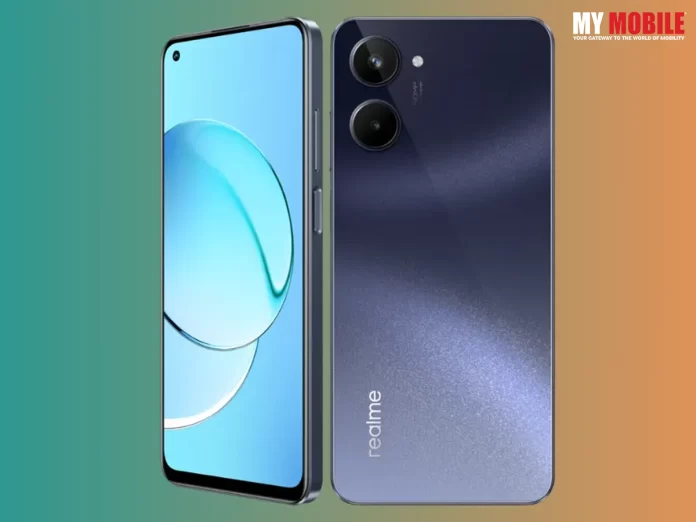
The renders give away a decent idea of the front and rear design of the smartphone. Many tech enthusiasts who saw the renders revealed online that the display of the handset has a punch-hole in the upper left corner of the front. According to them, the leaked live shots also reveal that the upcoming Realme device is equipped with the Helio G99 chipset. It reportedly runs on Realme UI 3.0. Moreover, the smartphone can be clearly noticed in white and black colours. However, both white and black models will likely have separate model marketing names which some users guessed to be Clash White and Rush Black, respectively.

The variant shown in the live shots can be noticed to have 8 GB of RAM and 128 GB of storage making it a decent storage support. Referring to the renders, it can be said that the device could be measured somewhere around 159.9 x 73.3 x 7.95 mm and total weighs around 178 grams, although nothing can be said too certainly just by looking at some live shots.

One user online also confirmed that model number RMX3630, which was earlier noticed on certification platforms by many tipsters, was also clearly seen in the new leaked live images. Many other tech media reports have also claimed that the smartphone appears to have a 6.4 inch full high definition + display (something that last week’s leaked specification also confirmed). The smartphone most likely also has a 16 megapixel front camera along with a rear dual camera setup that included a 50 megapixel + 2 megapixel. The much anticipated smartphone is most likely be priced somewhere between USD 190 and USD 210 (approx Rs 15,700 and 17,300) in the international market.

Other Realme 10 4G rumoured speciicaton include –

  • Processor – MediaTek Helio G99 | 4 GB
  • Display – 6.4 inches (16.26 cm)
  • Rear camera – 50 MP + 2 MP
  • Selfie camera – 16 MP
  • Battery – 5000 mAh

The price, the specifications and now the renders were all first leaked or noticed by industry popular tipsters. The first renders were also leaked by MySmartPrice in collaboration with one of the industry tipsters. Some of these online conversations suggested Realme 10 India price details and important specifications of Realme 10 4G. According to these tipsets, the smartphone will be priced somewhere between Rs 17,000 and Rs 19,000 in India. With many bank offers and exclusive discounts, the base price for the model is further expected to down to at least Rs 15,000. As per the tipester, the sale of the product is starting from November 1 2022.

Read More: Realme 10 Series Smartphone Specifics Leaked; Details Inside
Read More: Reealme 10 Series Specifications Surface Again, Tipped to Launch in November

Huawei’s Revenue Falls Down 2.2 Percent This Year Amid US Sanctions

0
Huawei

The Chinese telecom giant, Huawei says its revenue saw a 2.2 percent fall in the first nine months of the year amid the global economic slowdown, China covid restrictions, and most significantly, US sanctions. Apart from being the “leading global provider of information and communications technology (ICT) infrastructure and smart devices”, Huawei is the world’s biggest manufacturer of network gear for phones and internet carriers.

According to figures released by the Chinese tech brand, the company’s revenue during the first nine months of the year amounted to CNY 445.8 billion (which is nearly Rs. 5,07,400 crore), and by the numbers released earlier, the third-quarter revenue supposedly rose by 6.5 per cent from a year ago to CNY 144.2 billion (which is nearly Rs. 1,64,100 crore).

As per a statement released by the company, Huawei’s profit margin was 6.1 per cent for the first nine months of this year. This reportedly amounts to CNY 27 billion (which is nearly Rs. 30,700 crores). The company also specified that the figure was a clear decline from its previous year’s numbers. However, no specific figures of the difference were shared in the statement.

Read More:Huawei Mate 50 will be functional, even with a drained battery

In the same statement, Eric Xu, one of the three Huawei executives who take turns as chairman, said, “The decline in our device business continued to slow down, and our ICT infrastructure business maintained steady growth.” He further added, “The overall business performance is in line with forecast.”

While speaking to the international media, a company official spokesperson talked about the revenue update and revealed, “Our device business was impacted by Covid-19 and the global economic downturn.”

Huawei

In a separate statement, China’s first global tech brand revealed more concerns when it mentioned that the current year “may prove to be the most challenging for smartphones and other devices.” However, here too the company refrained from sharing any more details.

The tech company has been facing tough times since then US President Donald Trump blocked it from US technology such as chips in 2019. America has been accusing the company of facilitating Chinese spying through its products and services, a charge that Huawei has categorically denied.

After US President Joe Biden took over, the pressure on the Chinese tech company has only doubled with the US Chip Act, the legislation  “threatens Huawei’s access to global semiconductor supply chains.” Following the United States, Huawei’s 5th Generation wireless technology has also been banned in countries such as Britain and Japan citing security issues.

The Shenzhen-headquartered company has since intensified the development of network technology for various other categories of products such as auto, mines, hospitals, and manufacturing units. According to company officials, the business of Huawei is less impacted by US sanctions ever since.

Huawei’s auto venture has been instrumental in the launch of the five models by three Chinese automakers. The company is supplying software and various important components for navigation, managing vehicle systems, dashboard displays and other services.

Meanwhile, in completely separate news, the American hand drive manufacturer Seagate has revealed that the US government has warned the company as it believes Seagate has violated the export controls laws by selling hard drives to Huawei. Seagate however denies violating any laws by supplying hard drives to the Chinese tech company as the transaction was performed as per laws.

Read More: Huawei announces rollout of comprehensive enterprise-centric products


Google Cloud Launches Its Own Node-Hosting Service: Here’s What It Means for Web3 Developers

0
Google Cloud

A news that should interest all Web3 developers is coming from Google’s corner. The company has just announced the launch of the Google Cloud’s blockchain node engine that will allow hosting and deploying of fully managed blockchain nodes in Google cloud.

With its node hosting services in the cloud, Web3 developers will now find the entire process a lot faster, easier and most importantly, secure. The company made the revelation in a blog post with all the details of the launch and services.

Blockchain is changing the way the world stores and moves its information. Building on our commitment to help Web3 developers build and deploy new products on blockchain-based platforms, today we’re thrilled to announce Google Cloud’s Blockchain Node Engine,” the company said in the blog post.

Also Read: Google Cloud Gaming Service

The first blockchain supported by Blockchain Node Engine will be Ethereum. The blockchain node engine will enable developers to secure blockchain access with the provision to fully manage Ethereum nodes.

Google tried to explain in the blog post how the whole system of blockchain works. Blockchain permanently stores and encrypts transaction data while working as a decentralised database for the information.

The blockchain is governed by a node, something like a computer, laptop, or server type of device that validates and stores copies of the transaction history. These nodes constantly exchange the new blockchain data and create a dense network in the process only to ensure all nodes are in sync.

Also Read: Google Stadia Isn’t Shutting Down

The blog further mentions, “While self-managed nodes are often difficult to deploy and require constant management, Blockchain Node Engine is a fully managed node-hosting service that can minimize the need for node operations.

Web3 companies who require dedicated nodes can relay transactions, deploy smart contracts, and read or write blockchain data with the reliability, performance, and security they expect from Google Cloud compute and network infrastructure.”

James Tromans, the lead of Google Cloud Platform’s Web3 product, while speaking to select media outlets reportedly said, “The two “main challenges” the Blockchain Node Engine will address are “the time it takes to launch a node, and the pain of keeping it up and running.” He further added, “Blockchain Node Engine reduces these pain points, and furthermore affords developers complete control over where their nodes are deployed.”

Also Read: Cloud Computing sees highest talent demand-supply gap

Tromans also said that such types of services have always existed, however, they offered very few benefits. “You can use a JSON-RPC service, but then you’re sharing nodes with many other customers and you do not retain configurability, such as the region within which the node is deployed or who can access your node,” he added.

In its blog, Google also listed out the benefits of the blockchain node engine for Web3 developers. As per Google, it will streamline provisioning which is a rather time intensive process. It says, “Today, manually deploying a node is a time-intensive process that involves provisioning a compute instance, installing an Ethereum client (e.g. geth), and waiting for the node to sync with the network.

Syncing a full node from the first block (i.e., “genesis”) can take several days.” The blockchain node engine will transform the whole work outline for developers making their job must faster and easier. It also mentions how the current system has limited infrastructure security options, a fact that will change with Cloud’s blockchain node engine. It also offers fully managed operations that ensure the “blockchain infrastructure is ready and available.”

Also Read: Cloud Gaming: 5G to Bring About a Paradigm Shift

”Customer feedback is crucial, ‘Companies that listen to their customers grow 10 x faster” said Mr. Mandeep Arora, Co-founder, UBON !!

0
Mr Mandeep Arora, MD& Co-founder, UBON

From a small shop in Delhi to across 3,000 cities & a robust distribution network of 100+ partners across India, UBON has dug its roots deep into tech accessory market. Lets have a chat with UBON’s Co-founder, Mr. Mandeep Arora’s ideologies and understand how UBON has has managed to build such a strong customer base in a highly competitive market like India.

It’s very delightful to see how UBON has spread its roots into the Indian markets firmly, So What is “UBON’s” brand story and how did it manage to do so?

We started as a small shop in Lajpat Rai Market in Delhi where we used to deal with earphones and mobile accessories in our shop. While working in the wholesale business, we noticed that there was a gap in the products available in the market in terms of price, quality, and reliability it offers.

So, to eliminate cheap accessories from the Indian market, we came up with our brand, ‘UBON’ with our main focus on providing our customers with quality products at affordable pricing.

At UBON, we value the needs of ‘Connected Consumers and ‘People on the go. We aim at manufacturing excellent quality gadgets at an affordable price while focusing on both, the right assembly of equipment combined with well-built quality. The brand caters to every sector, vertical and society with its wide range product portfolio with more than 700+ SKUs.

Read More: UBON launches CL-110, the Touch Control Wireless Neckband

It would be very interesting to know your POV on the frequently changing consumer trends is this a challenge for UBON or an opportunity?

The consumer trend is changing as a result of environmental change. Retailers and consumer product firms need to comprehend the demographic, economic, and competitive context in which the consumer is reacting if they are to effectively respond to changing consumer wants and spot fresh pockets of opportunity.

However, the Indian market is so vast that we believe there are tremendous opportunities that need to be explored and tapped. UBON aims to become the Numero Uno brand in the Indian mobile accessories market providing unique and superior quality accessories perfected by continuous improvement, innovation, and creativity.

We are happy with the way we have been progressing and hope to grow further in the coming months and years.

Ubon

What are the challenges that you face while working in a highly competitive market like India?

While the market is highly competitive we have our strategy to overcome challenges.

We continue to focus on self-growth and manufacturing aesthetic and reliable accessories at the most affordable pricing. Not everyone can afford expensive headphones and Bluetooth speakers priced at 10,000 INR but at UBON, we provide value for money and quality products with a symbol of trust. UBON is an emerging brand in India and we have gained a good market reach across 3000 cities Pan-India.

Read More: UBON launches PB-X31 Champion Powerbank with 10000mAh power

We at UBON are very optimistic towards moving ahead by leveraging the rapidly expanding technological world. We are planning to enhance our portfolio in the speaker & headphone category by developing voice & internet-enabled speakers and headphones.

People no longer want to indulge in wires instead they prefer wireless products for the day-to-day needs.

In such a highly competitive market like India, how does UBON set itself apart from the rest of the competition?

In terms of what distinguishes UBON from its competitors, we believe that a high-quality product can attract the attention of customers. In keeping with our commitment to society, we promise to introduce massive quantities of items with cutting-edge technology and to provide as many job opportunities as possible.

In order to provide better service and to provide the highest quality products, UBON adheres to a strict no-compromise policy and uses the latest and most advanced technology. In addition, we are developing a minimum profit strategy because we are continually attempting to satisfy our customers rather than concentrating on revenue generation.

At both our corporate headquarters and plant, we have strict checking procedures. All of our items go through rigorous and thorough inspection processes and checks.

We also think that only when quality assurance and checks are combined can a great product be produced for the user. The first company to introduce solar power banks, wireless power banks, and wireless charging pads in India is UBON.

In addition, we frequently do surveys, engage in digital communication, and run online competitions on our Instagram page to sustain online engagement. We have developed our foundation in important Tier II and Tier III cities and significant ones like Delhi, Jaipur, Mumbai, and Chandigarh.

Which platform derives the best results in terms of sales, is it the online platform or the offline channels?

The brand has collaborated with leading online marketplaces such as Amazon, Jiomart, Tatacliq, Meesho and Flipkart to reach the masses. Apart from being available online, UBON has a robust supply chain network which enables it to distribute its products all over India with different distribution levels available in every State.

The brand has mastered the retail chain network across India and can be found in the majority of the shops & showrooms in the Country. So both channels are important and deliver results in terms of sales.

Ubon

Amongst such a wide variety of Indian electronics consumers, what is the perfect target audience for UBON and how do you acquire it in such a cutthroat competition?

The Consumer Tech sector is an emerging sector. In a country like India, customers have a wide variety of products to choose from among certain brands. I think that India is a massive market and we haven’t even reached 1% of the potential market.

The journey ahead of us is long and we strive to tap 40% of the existing mobile phone accessory industry in India. We want to position UBON as a leader in providing cutting-edge technology in the gadget industry world. We are working extensively to expand our customer base with our wide variety of SKUs.

So we would love to know your market experience in India, in terms of competition, market penetration, and local business conditions.

While there are a lot of competitors on the market, we come out as a leader by offering our customers the products they need at an affordable price. As a market leader, we are the first movers i.e., solar-powered power banks, reliable and fast chargers, touch neckbands, Bluetooth speakers with multiple connectivity, and several other items to choose from.

Our finesse products are unique from our competitors because they are developed with the advanced technology with precision and passion. As of now, we are moving forward with touch and transparent technology. In terms of market penetration, our sales and marketing teams are currently present in all states from Jammu & Kashmir to Kanyakumari, from tier-1 to tier-3 cities.

India is a very price-sensitive market, So, we would like to know how does UBON combat this challenge of providing good quality accessories in an ultra-affordable range?

We have always been committed to giving customers the ideal product-price balance. Not everyone can afford costly headphones and Bluetooth speakers that cost 10,000 INR, but UBON offers good value and high-quality goods with a symbol of trust.

Being a CEO, how valuable and importantly do you believe, customer reviews are, and how do you handle this feedback, especially the raspy ones?

‘Customer feedback is crucial, ‘Companies that listen to their customers grow 10 x faster. By proactively attending to the voices of your consumers, and measuring their satisfaction, you can get an overview of your performance over time.

The more you listen to your customers, the better you’ll understand their needs and the more loyal they will be to your brand. This will eventually increase the likeliness of turning them into advocates.

To do this, however, businesses must first learn from customers in what way their experience can be enhanced. This information can only be obtained through enticing and engaging customer surveys.

Electronics industry is getting huge day by day, so we are very interested to know your viewpoint on this fact and how you see it for your brand.

Bluetooth Connectivity, Artificial Intelligence, the Internet of Things (IoT), and Near-Field Communication (NFC) play an important role to transform  the electronic industry. We saw a positive shift in consumer sentiments toward the adoption of electronic gadgets and lifestyle accessories.

Consumers want technological-driven products that offer quality and convenience at the same time such as Bluetooth neckbands and speakers with hands-free calling with lightweight design. Smartwatches that monitor health and control smartphones. These are just a few examples of how technology has changed the preferences of consumers.

Read More: Ubon launches ‘Air Shark’ wireless earbuds in India at Rs 3,999

Google Said to Be Planning to Challenge India’s Antitrust Crackdown

0
Google

Google seems to have no desire of being the sitting duck against India’s antitrust crackdown. The American multinational technology company is planning to legally challenge and block the ruling of not one but two monetary penalties imposed by the Competition Commission of India (CCI).

Google is concerned that the recent CCI rulings will act as a restriction on how the company promotes its platforms. A source close to Google and with minute knowledge of the complete situation revealed to the international media.

In just one week, India’s antitrust watchdog imposed two fines of a total worth $275 million on the  Alphabet Inc unit. The first monetary penalty imposed on Google was for abusing its position in the market for the Android operating system and the second for charging in-app commissions.

Also Read: Google Messages Comes Up with New Feature

The company has been facing intense scrutiny for last few years across the world. The European court last month upheld a ruling set in 2018 saying the company imposed “unlawful restrictions on manufacturers of Android mobile devices.”

According to media reports, Google has been concerned since the CCI ruling and is occupied in seeking a range of measures that it can take under the current circumstances.

It is apprehensive about regulatory pressure as a result of these rulings and thus, finds a legal appeal to block them within the constraints of law as the best course of action against CCI. Such legal appeal is being planned for the coming weeks.

However, the tech company is yet to make any official statements.

Google

Also Read: Google Cloud Launches Its Own Node-Hosting Service

The company has been reiterating the same statement they made last week when the CCI ruling was out. It stated that the ruling was “a major setback for Indian consumers and businesses, opening serious security risks … and raising the cost of mobile devices for Indians.”

Meanwhile, Google’s lead counsel, Abhishek Manu Singhvi tweeted this week that the CCI order has “inherent & patent infirmities,” which makes challenging it in the court of law easy and most likely to succeed.

Over the last few years, the global tech company has been facing tough criticism from governments and industry stakeholders across the world. The company is accused of signing restrictive agreements with smartphone players for lending Android operating system licenses.

These agreements are anti-competitive and hamper the smooth business of other competitive companies.  Google, however, has constantly denied any such allegations and reiterated that Android has given more choices to people and these agreements are only signed so that the company can keep its services free.

The founder of Indian research firm Techarc, Faisal Kawoosa said that “these rulings and constant scrutiny of CCI will surely push Google to get outside in search of some other revenue model.  The CCI directions strike at the heart of Google’s revenue model for Android – which relies on a volume game where larger the user base is, multiple the avenues to monetize,” Kawoosa said.

The CCI in its order, a source noted, has been placing further restrictions on various Google apps such as “Licensing of Play Store … shall not be linked with the requirement of pre-installing” Google search services, Chrome browser, YouTube, Google Maps, Gmail or any other application of Google.

Also Read: Google Lamda: New Age Chat Tech

Meta India MD Lauds Government for Holding Companies Accountable for Internet Safety

0
Meta India

Meta India seems to be appreciative of the Government of India for its efforts and commitment to making the Internet a safe space for users in India through its policies and stringent regulations.

Internet and social media giant Meta India’s Vice President and Managing Director Ajit Mohan, while addressing a think tank event in Delhi this week, publically lauded the Centre. Meta, formerly known as Facebook, owns some of the largest social media platforms of today including Facebook, Instagram, and WhatsApp.

Mohan said, “We welcome government regulation. In India, the government has been vocal about holding companies accountable for internet safety and we are fully aligned with this agenda,”

Also Read: Mark Zuckerberg to Continue as Meta CEO in 2023

Participating in a talk about how India is the power capital of wireless technology, Mohan added, “The way the Indian government has promoted internet services in the country and practically digital services, it is a remarkable work and it is a matter of recognition.”

He further added, “What we have seen in India is the power of wireless. The digital transformation in India had started even before the COVID-19 pandemic. Low-cost 4G has been the key catalyst for the digital revolution,”

Applause for the digital revolution in India isn’t surprising to anyone who has been paying a little bit of attention to how the country’s journey into the digital world has shaped up. India’s growth in the digital world has not been limited to social media or commonly used internet services.

The country has successfully channelised the revolution and turned it into a tool in the hands of the young generation. There is a whole generational revolution that has picked up in the country with a boost from startups, entrepreneurs and monetary transactions via quality internet services.

Meta India

During the event, Mohan also highlighted how the pandemic had a role to play in its story of the digital boom. said “The pandemic exposed people to a more digital way of living.

Also Read: Meta-owned Messenger gets a new ‘Calls’ tab

We are now at a stage where more than a billion people in India have access to high-quality internet which will change the way we experience most services. The digital economy has led to a boom in entrepreneurship and the way business is conducted in India.”

He further added, “We have found that if we build a platform that enables small business, it also leads to multiple benefits for us. We differentiated ourselves by serving small businesses and not just large clients,”

Meta India’s chief also made the company’s position a little bit clear regarding all the criticism that comes its way on not being able to manage hate speech or user data security.

Mohan said, “”We look at content moderation through two lenses: Adhering to public guidelines suited to local conditions and compliance with local laws. Our economic incentives are aligned with safety and security; marketers don’t want to advertise on unsafe platforms.”

Repeating the company’s commitment to providing better transparency, Mohan said, “We are trying to work out mechanisms to allow for more transparency.”

In separate news of the week, Meta saw a sharp fall in the share market with its offering plummeting to more than 20%. The American tech behemoth also registered a second straight quarterly decline in revenue while forecasting a further drop in the fourth and final quarter.

Also Read: Meta rolls out 3D Avatars in India