Home Blog Page 907

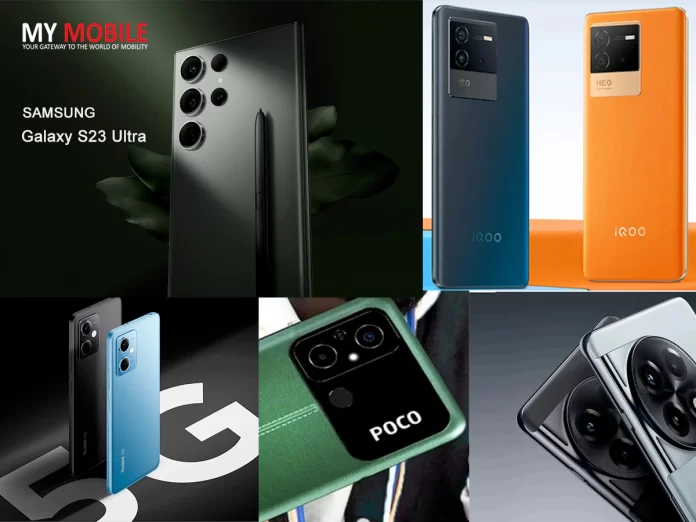
Best Phones to Buy in Different Price Segments – under 10K, under 20, under 30K, under 40K, and above 50K

0

Highlights

  • Budget is one of the most important factors in the smartphone buying decision.
  • Smartphones are usually divided into different price categories such as best phones under 10K, best phones under 20K, best phones under 30K, best phones under 40K, and best phones above 50K.
  • In this article, we are sharing the best phone to buy across price ranges.

Did you know after Samsung the next smartphone manufacturers to have the highest market share in the Indian smartphone market are brands such as Xiaomi and Vivo? Yes, that’s right.

The most crucial aspect behind the popularity of these brands is their value-for-money smartphone range that appeals to a large section of society.

Budget plays an instrumental role for most users while finalising a smartphone from a wide variety of options available in the Indian smartphone market today.

In this article, we are looking at the best phones to buy in different price segments.

Smartphones are usually divided into different price segments. We have categories such as best phones under 10K, best phones under 20K, best phones under 30K, best phones under 40K, and best phones above 50K.

So, what makes a smartphone the best in its category? Overall, a smartphone stands out in its category for its display features, processor performance, camera output and battery life. Apart from these basic specifications, a smartphone can further make its mark in the segment for its design and additional features.

So, without further ado, let’s take a look at the best phones to buy in different price segments in categories such as under 10K, under 20, under 30K, under 40K, and above 50K.

Best Phone under 10K

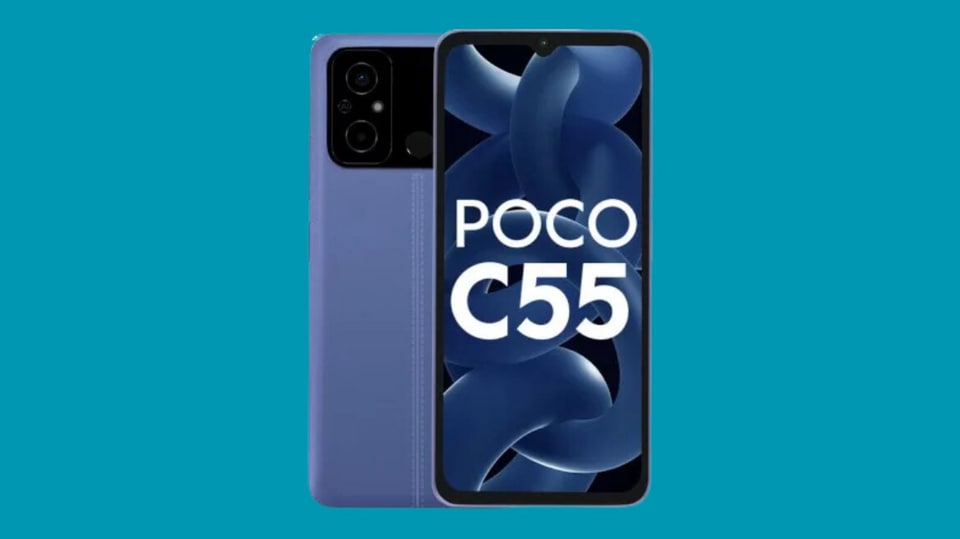
POCO C55

POCO C55

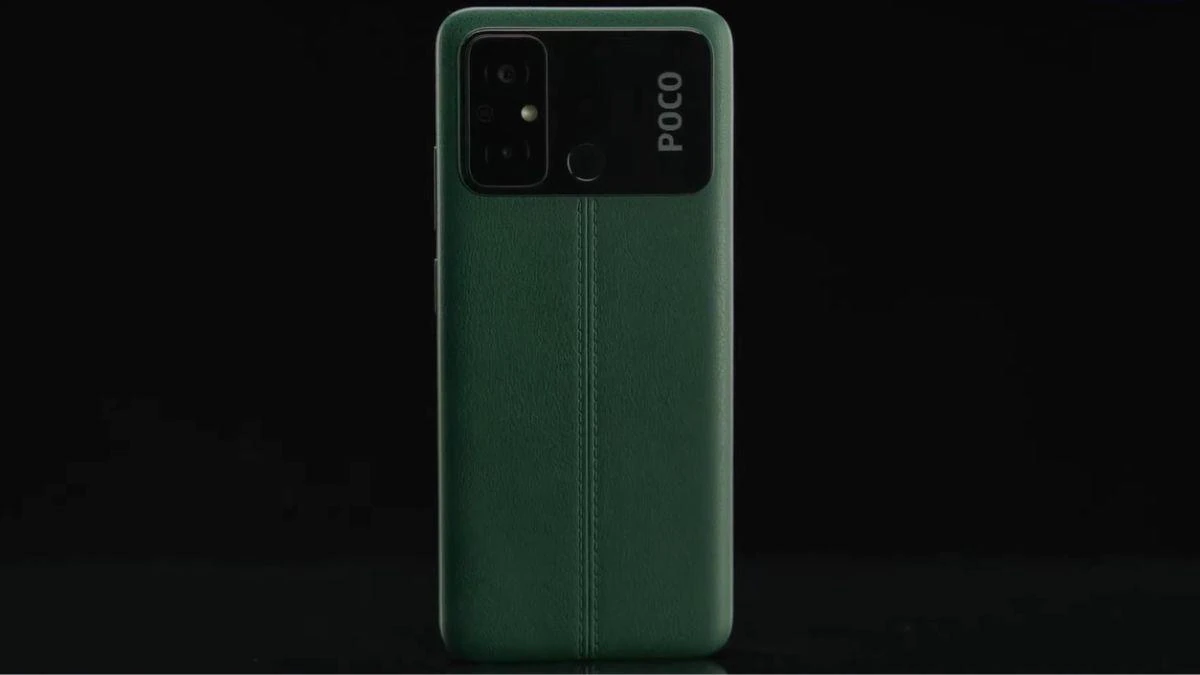
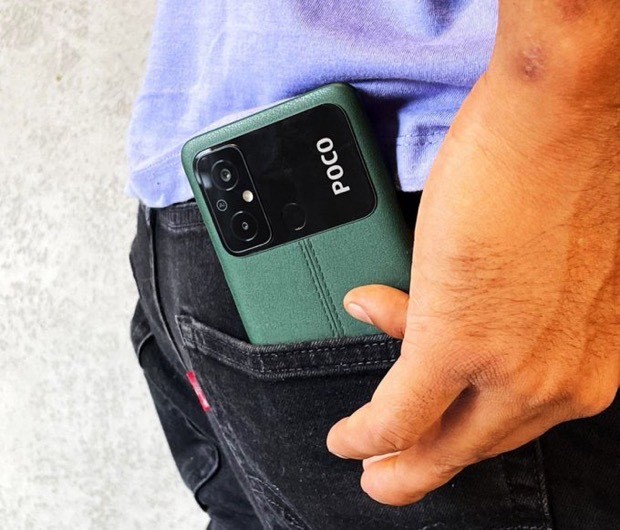
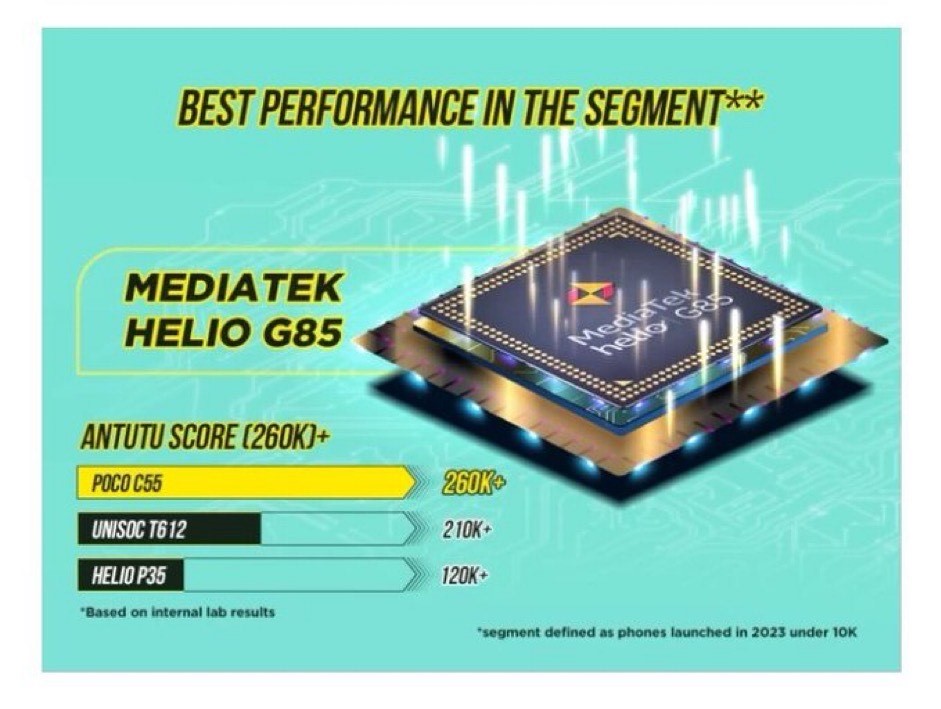
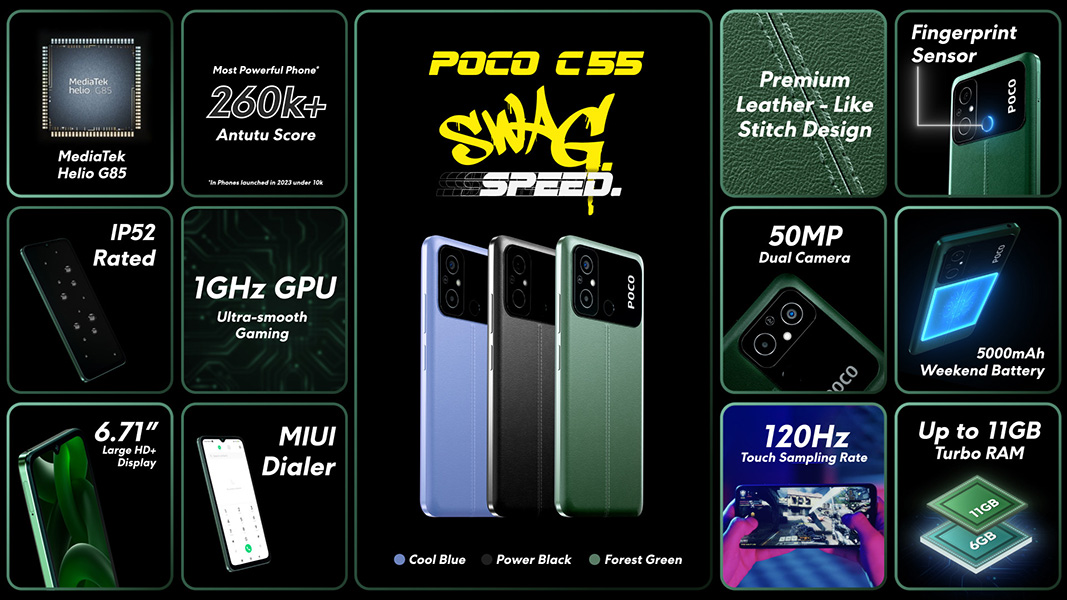
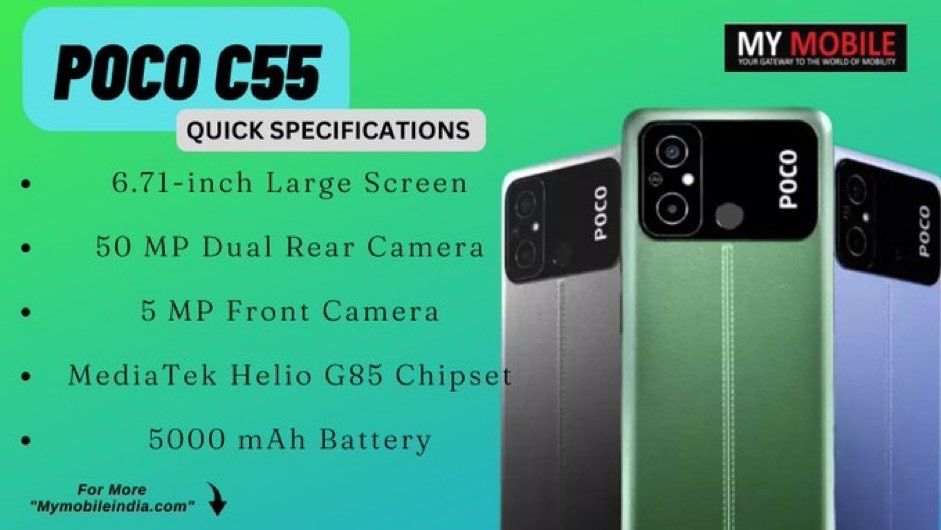
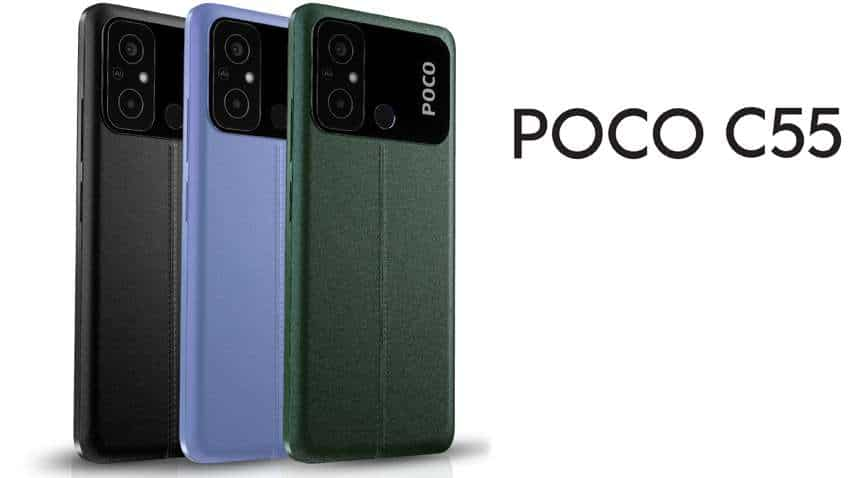
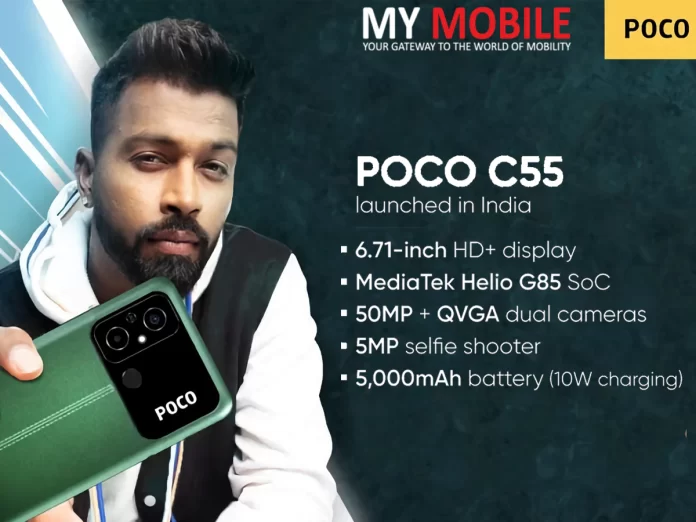
POCO C55 with the premium leather-like stitch design and the brand’s claim of being the “best-performing smartphone in the segment” is the top contender for the best phone under 10k.

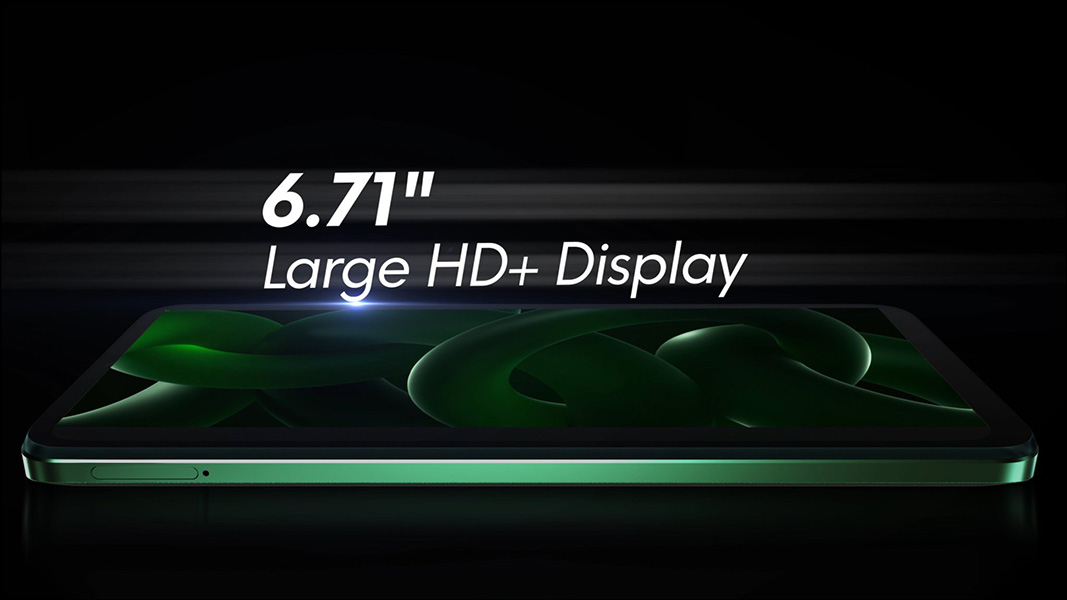
The smartphone flaunts a massive 6.71-inch HD IPS LCD display that features a pixel density of 268ppi, an aspect ratio of 20:9 and a screen resolution of 720 x 1650 pixels.

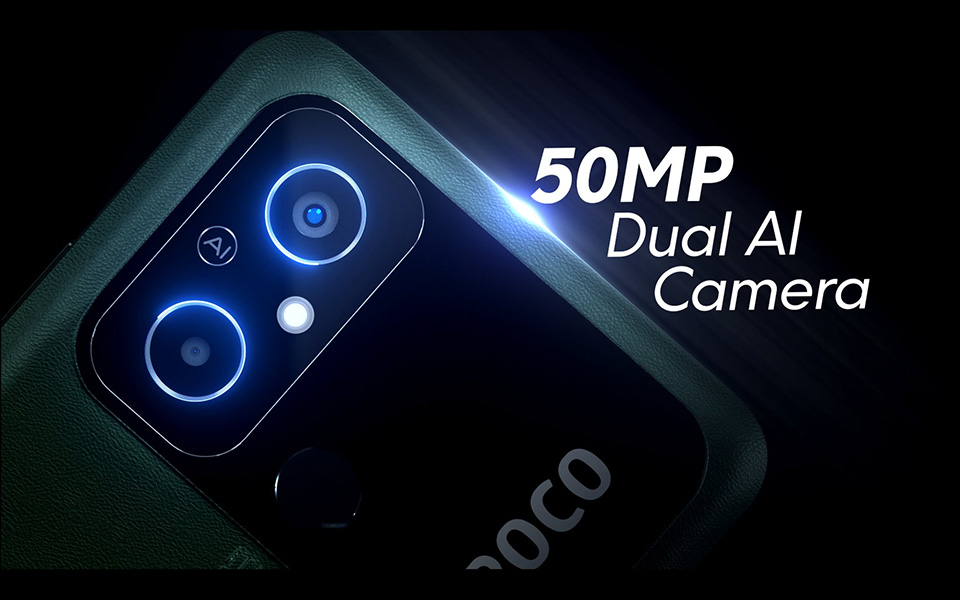
The leather-finish back panel presents a dual camera set-up housing a 50-megapixel primary lens and a 2-megapixel depth sensor.

The smartphone also comes with a 5-megapixel front camera for selfies and video calls.

POCO has powered the C55 with a MediaTek Helio G85 chipset, 4GB RAM and 64 GB internal storage in the base variant.

The higher variant is available with 6GB RAM and 128 GB internal storage options.

This storage is expandable by up to 512GB.

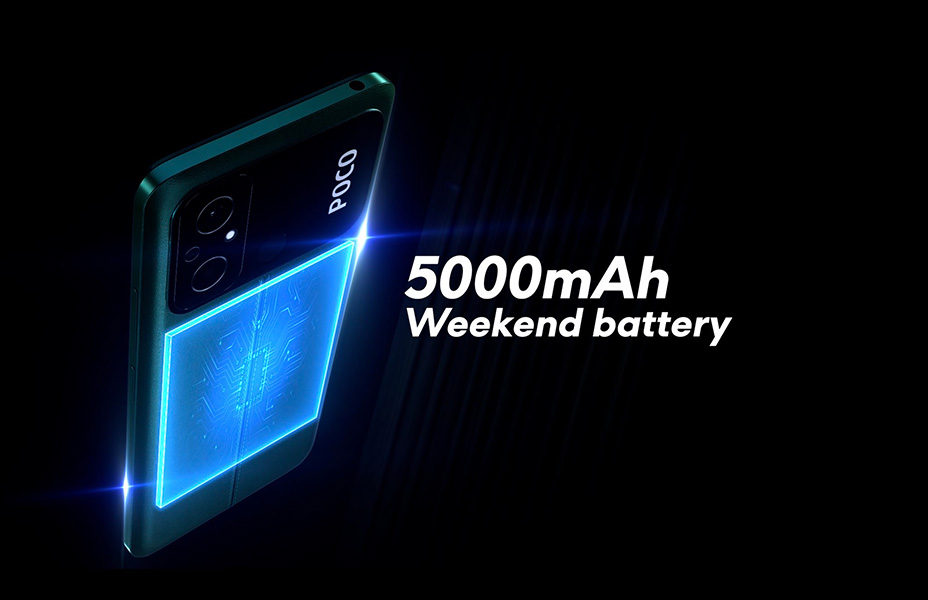
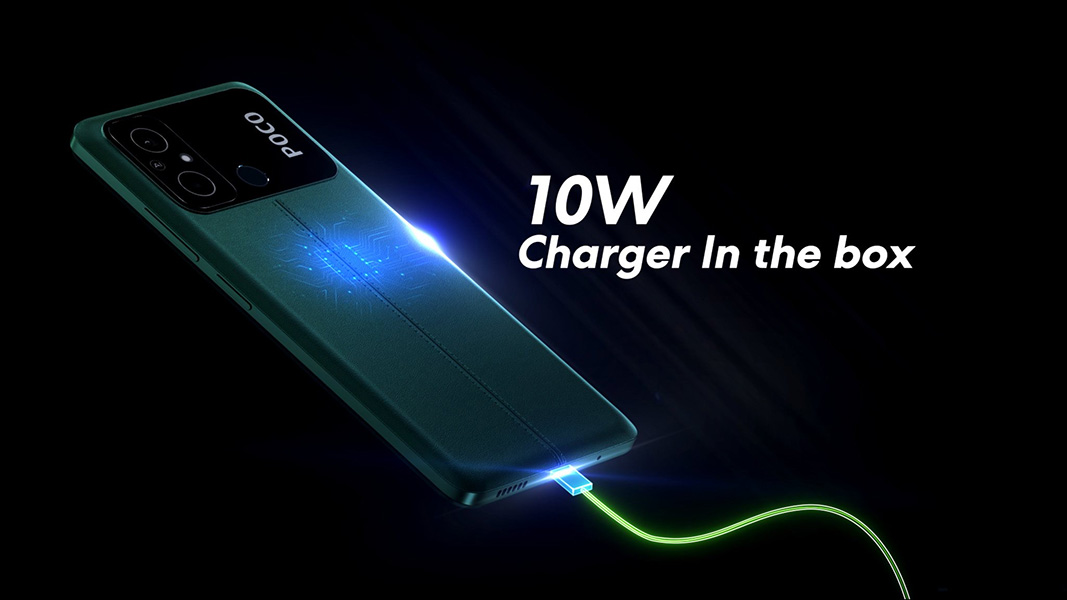
The smartphone boasts a massive 5000mAh battery capacity that is supported by a 10-watt charger.

As for connectivity requirements, POCO C55 offers Bluetooth v5.1, Mobile Hotspot, 4G, A-GPS, VolTE 5G and Wi-Fi 4.

POCO C55 Key Features
POCO C55

  • 71-inch IPS LCD Display
  • MediaTek Helio G85 Processor
  • 4GB/6GB RAM
  • 64GB/128GB Internal Storage
  • Dual Rear Camera Setup – 50-megapixel + 2-megapixel
  • 5-megapixel Front Camera
  • 5000 mAh Battery
  • Android v12 OS

POCO C55 Pros & Cons

Poco C55 launched in India; Gets a 50MP camera! Check price and  specifications | Mobile News

Pros Cons
●     Good Design with leather-like stitch design back panel

●     Good Overall Performance

●     Decent Cameras Features

●     Great Battery Life

●     IP52-Rating splash-resistant and scratch-resistant

●     Rear fingerprint sensor

●     Expandable RAM

●     Reasonably priced

●     Bloatware

●     Substandard Selfie Camera

●     Outdated microUSB 2.0 port


POCO C55 Review & Verdict

POCO C55

POCO C55 is a budget smartphone with a stylish leather-like stitch design, a decent display, good rear cameras, and a massive 5000mAh battery capacity. Overall, it’s a pretty good phone for the segment without a doubt.

However, the micro USB port and a tine 10-watt charge are surely a few downers.

And a USB type C port along with an 18-watt charger would have made POCO C55 flawless for an under 10K smartphone.

However, if one can move past these, the smartphone is definitely one of the most value-for-money devices in this segment.

POCO C55 My Mobile Rating
POCO C55 smartphone launched at Rs 9,499: 50MP dual camera, 5,000mAh  battery, MediaTek Helio G85 chipset and much more | Zee Business

Design – 4/5

Display – 3.5/5

Software – 3.5/5

Camera – 3.5/5

Performance – 3.5/5

Battery – 4/5

POCO C55 Price and Availability
poco c55

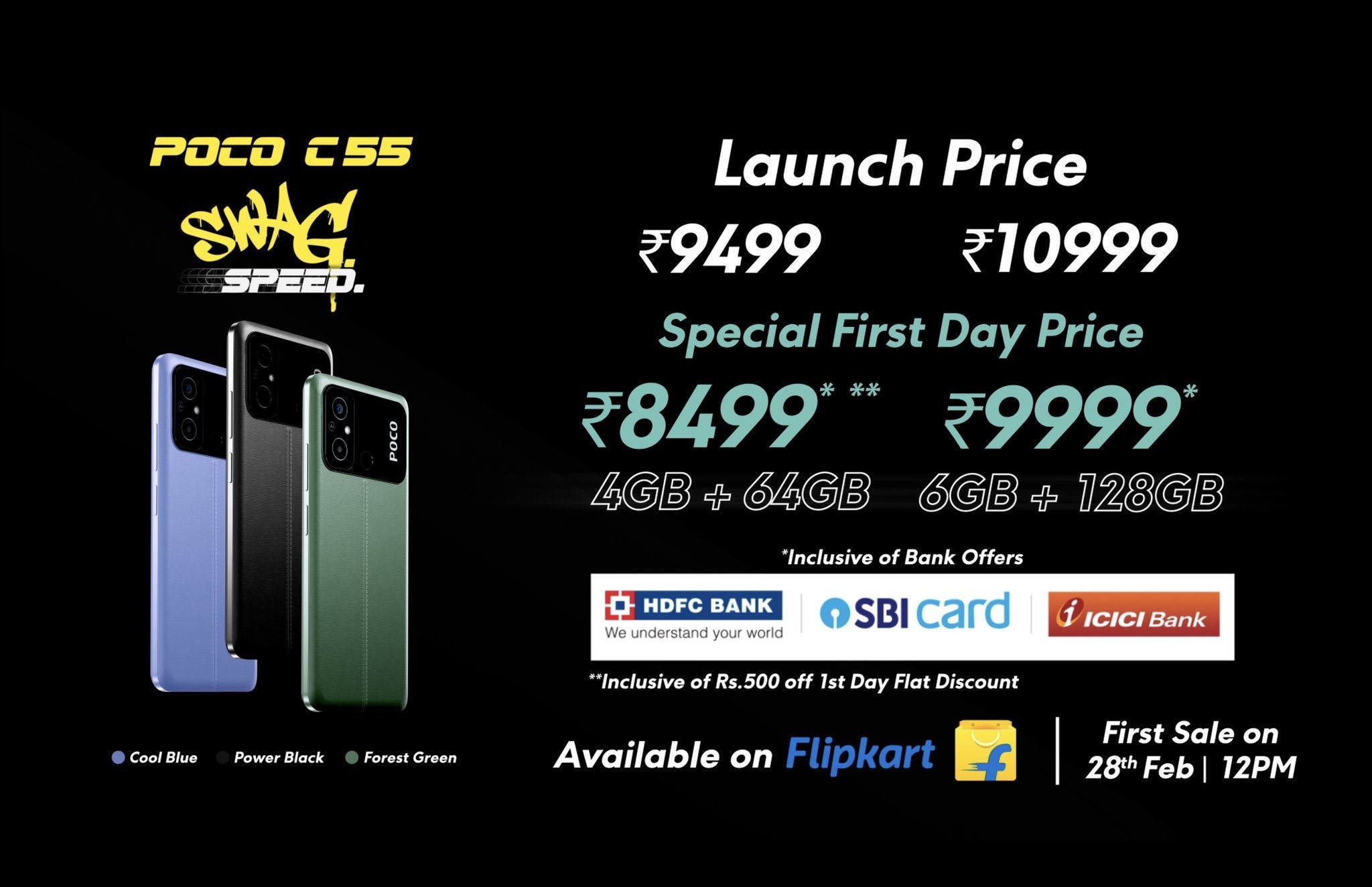
POCO C55 price in India starts from Rs. 8,999.

With a base variant of 4 GB RAM / 64 GB internal storage, POCO C55 is available in Forest Green, Power Black and Cool Blue colour options.

Best Phone under 20K

Redmi Note 12 5G
Redmi Note 12 5G

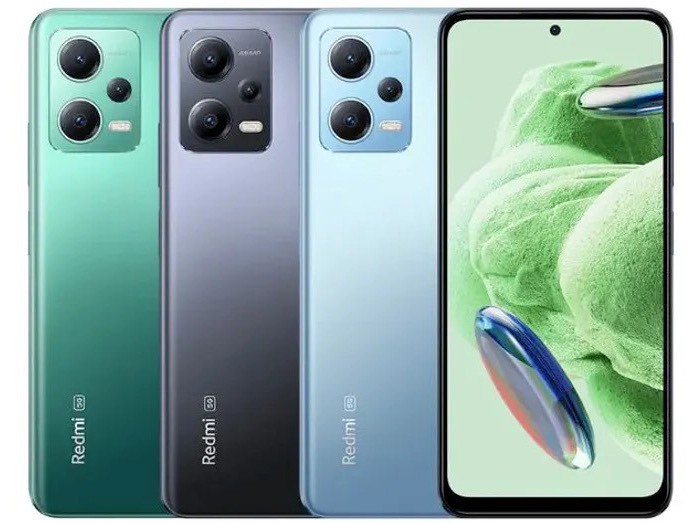
Xiaomi Redmi Note 12 features a massive 6.67-inch Super AMOLED bezel-less display that is equipped with a resolution of 1080 x 2400 pixels, a pixel density of 395ppi and a refresh rate of 120Hz compatible with multi-touch technology.

The device is powered by Qualcomm Snapdragon 4 Gen 1 chipset and an Octa-core CPU that comprises a Cortex A78 and a Cortex A55 layout.

Also, an  Adreno 619 and 4GB RAM is fitted to ensure optimum operations.

Xiaomi Redmi Note 12 comprises a triple camera composition at the rear side, which includes a 48-megapixel primary camera, an 8-megapixel ultra-wide angle camera and another 2-megapixel camera.

Users also get HDR mode, Face Detection, Auto Flash, Autofocus, ISO Control, Digital Zoom, Continuous Shooting and Exposure Compensation features loaded into the smartphone.

There is also a powerful 13-megapixel primary camera at the front for selfies and video calls.

The smartphone gets a 5000mAh Li-Polymer battery compatible with 33W fast charging technology.

As for connectivity, this smartphone is packed with 4G VoLTE and 5G network connections along with USB Type-C, A-GPS and Glonass, Bluetooth v5.2, Wi-Fi 802.11, b/g/n and Mobile Hotspot.

Redmi Note 12 5G Key Features
Redmi Note 12 4G

  • 67 inches Super AMOLED Display
  • Qualcomm Snapdragon 4 Gen 1 Processor
  • 4 GB RAM
  • 128 GB Storage
  • 48 MP + 8 MP + 2 MP Triple Rear Camera
  • 13 MP Front Camera
  • 5000 mAh Battery
  • Android v12 OS
  • 5G Network Support

Redmi Note 12 5G Pros & Cons

Pros Cons
●     AMOLED Display

●     Snapdragon 4 Gen 1 SoC

●     Expandable Storage

●     Decent Cameras

●     33W fast charging support

●     Excellent design and build quality

●     Good daylight photography

●     5G Connectivity

●     Still runs Android 12

●     Bloatware present


Redmi Note 12 5G Review & Verdict

Redmi Note 12

The first thing to consider here is that Redmi Note 12 5G is a mid-range phone that is directly competing with popular smartphones such as OPPO A78 and Realme 10 Pro 5G.

The smartphone is placed higher in terms of specs and pricing than its predecessor Redmi Note 11, which tells us that the brand believes this is the better option between the two when it comes to under 20K smartphone options.

All in all, if we closely look at the price of Redmi Note 12 5G, it appears to be a decent smartphone that offers what it promises. Though we wish for a few alterations such as getting an Android 13 instead of the Android 12 out of the box, it might get the update soon than anyone expects.

Then if you can look past the minor issues here and there, the smartphone does deliver on every front including design, display, performance, and battery capacity.

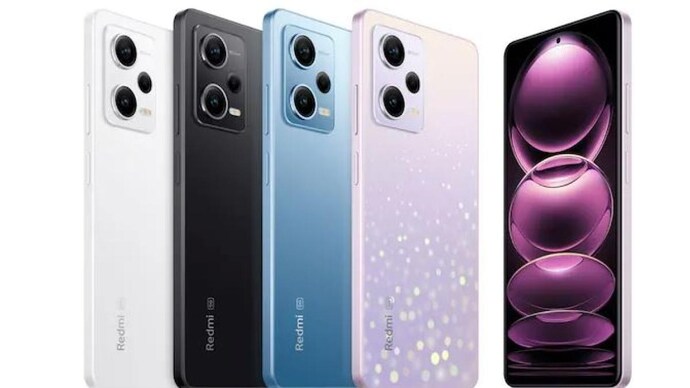
Redmi Note 12 5G My Mobile Rating
Redmi Note 12 5G is launching in India soon, officially teased by the  company - India Today

Design – 4/5

Display – 4/5

Software – 3.5/5

Camera – 4/5

Performance – 4/5

Battery – 4/5

Redmi Note 12 5G Price and Availability
Redmi Note 12 4G

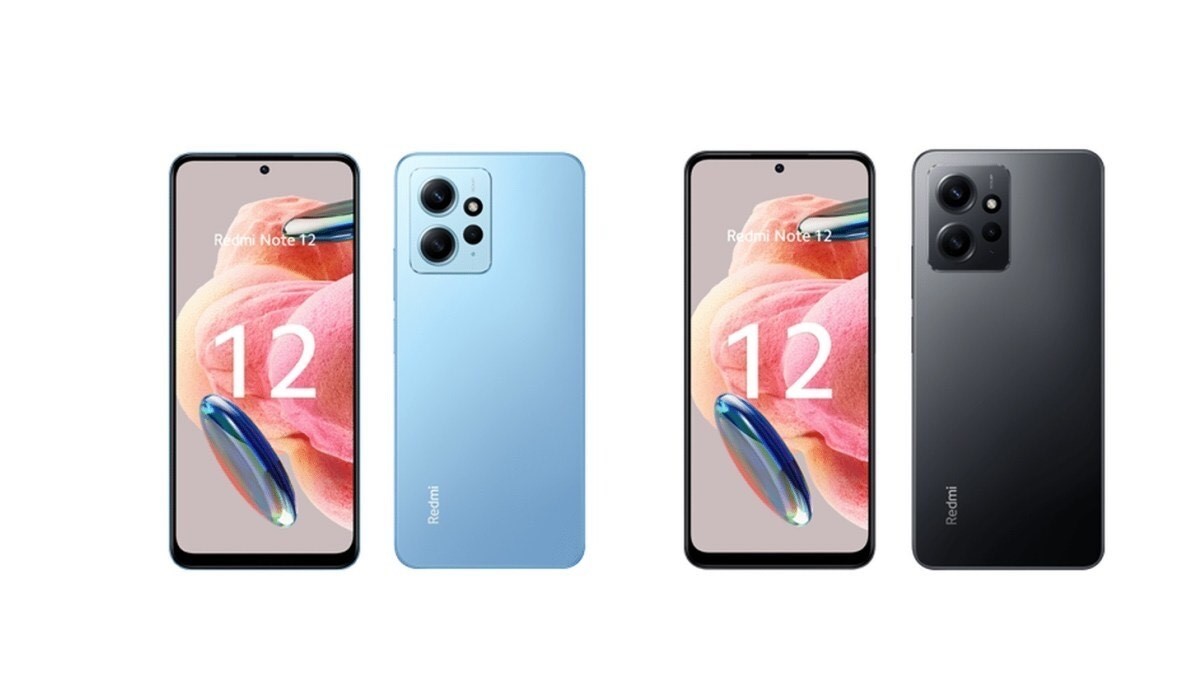
Xiaomi Redmi Note 12 price in India starts from Rs. 17,388.

It is available in Frosted Green, Mystique Blue and Matte Black colour variants.

Best Phone under 30K

iQOO Neo 7
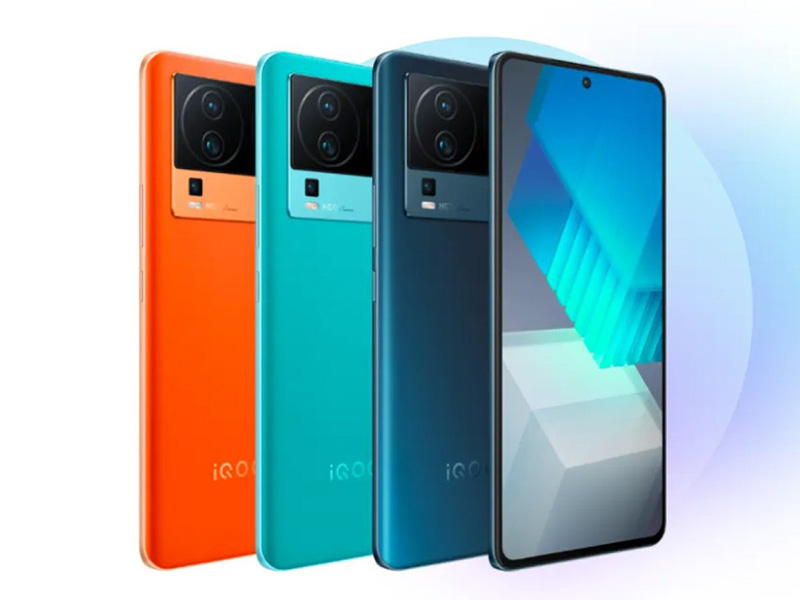
iQOO Neo 7

iQOO Neo 7 flaunts an impressive 6.78-inch AMOLED bezel-less display featuring a screen resolution of 1080 x 2400 pixels, a pixel density of 388ppi and a refresh rate of 120Hz.

The smartphone is configured with 8GB RAM, 128GB of internal storage and a MediaTek Dimensity 8200 MT6896Z chipset for optimum performance.

The smartphone boasts a triple-camera setup on the rear side that includes a 64-megapixel wide-angle primary camera, a 2-megapixel macro camera and a 2-megapixel depth camera.

The rear camera setup comes with supporting features that include Autofocus, Dual LED Flash, ISO Control, HDR mode, Digital Zoom, Face Detection and Touch to Focus.

There is also a massive 16-megapixel wide-angle primary lens for brilliant selfies and video calling support.

The smartphone has been equipped with a non-removable 5000mAh battery that supports 120W fast charging system.

For connectivity, the smartphone comes with 4G VoLTE, 5G, Wi-Fi 802.11, b/g/n, USB Type-C, Mobile Hotspot, A-GPS with Glonass, USB OTG and Bluetooth v5.3.

iQOO Neo 7 Key Features
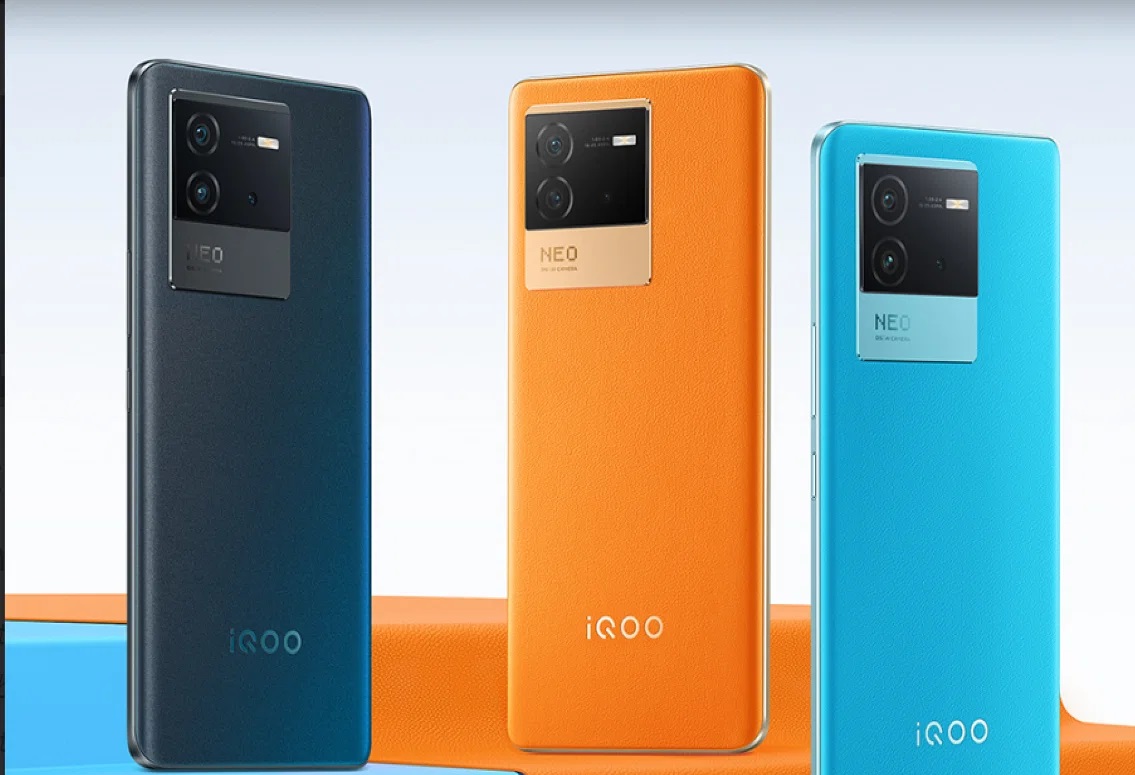
IQOO Neo 7

  • 78 inches (17.22 cm) bezel-less display
  • MediaTek Dimensity 8200 MT6896Z Octa-core Processor
  • 8 GB RAM
  • 128 GB internal storage, Non-Expandable Memory
  • 64 + 2 + 2 MP Triple Rear Cameras
  • 16 MP Front Camera
  • 5000 mAh battery with Flash Charging
  • 5G Enabled

iQOO Neo 7 Pros & Cons

iQOO Neo7 用上了iQOO 10 同款螢幕和能充120W 的5,000mAh 電池- Engadget 中文版

Pros Cons
●     Solid performance

●     Good primary camera

●     Impressive 16MP front camera

●     8GB RAM

●     Decent stereo speakers

●     Capable display

●     5G Support

●     No ultra-wide shooter

●     Basic design


iQOO Neo 7 Review & Verdict

iQOO Neo 7

The fact that iQOO Neo 7 stands out from the rest of the smartphone in this segment just by looking at the specifications is enough to say that it is definitely the best phone under 30K available in the market today.

The rear and front camera layout with extra ordinary camera features, top-notch display configuration, great internal storage and a good inbuilt battery promises seamless operation and a great overall smartphone experience.

The competitive price tag only adds up to the overall appeal of the device.

Moreover, for anyone who is looking for a mid-range gaming phone, iQOO Neo 7 is a great option.

iQOO Neo 7 My Mobile Rating
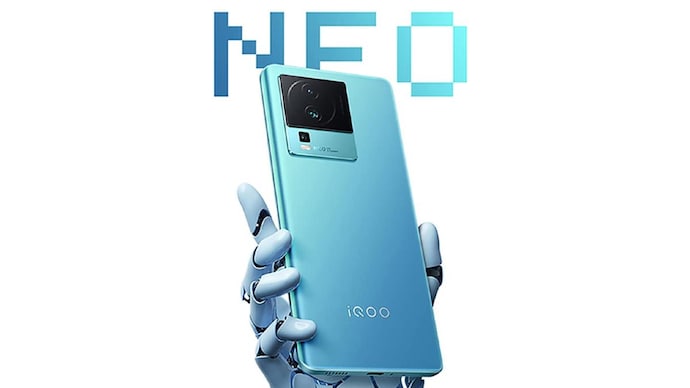
Exclusive: iQOO Neo 7 India price after bank offers - India Today

Design – 3/5

Display – 3.5/5

Software – 4/5

Camera – 4/5

Performance – 3.5/5

Battery – 3.5/5

iQOO Neo 7 Price and Availability
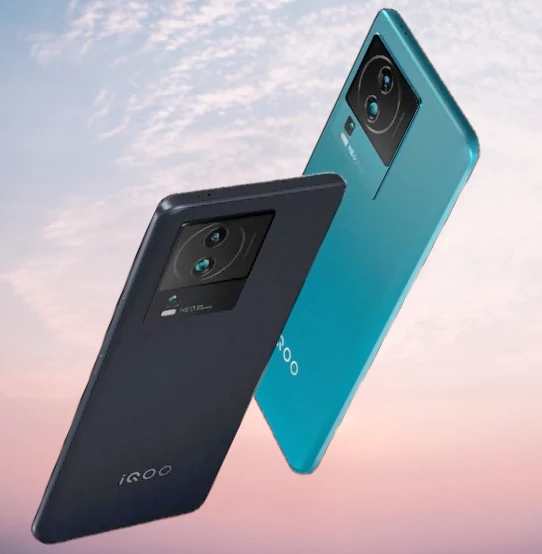
IQOO Neo 7

iQOO Neo 7 price in India starts from Rs. 29,999.

This smartphone is available in Interstellar Black and Frost Blue colour variants.

Best Phone under 40K

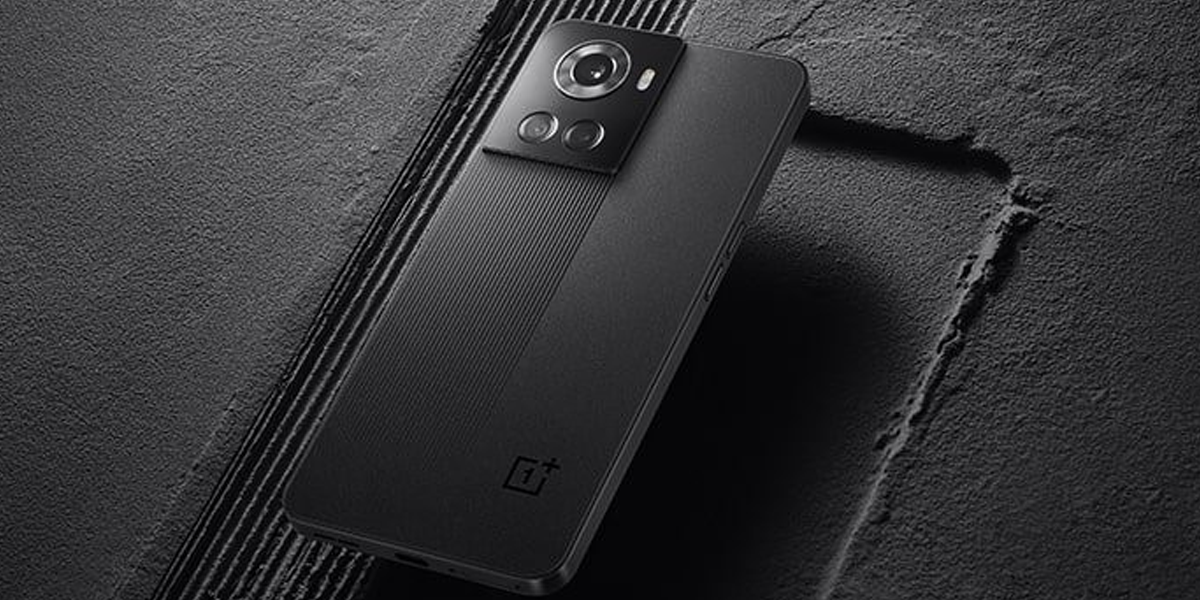
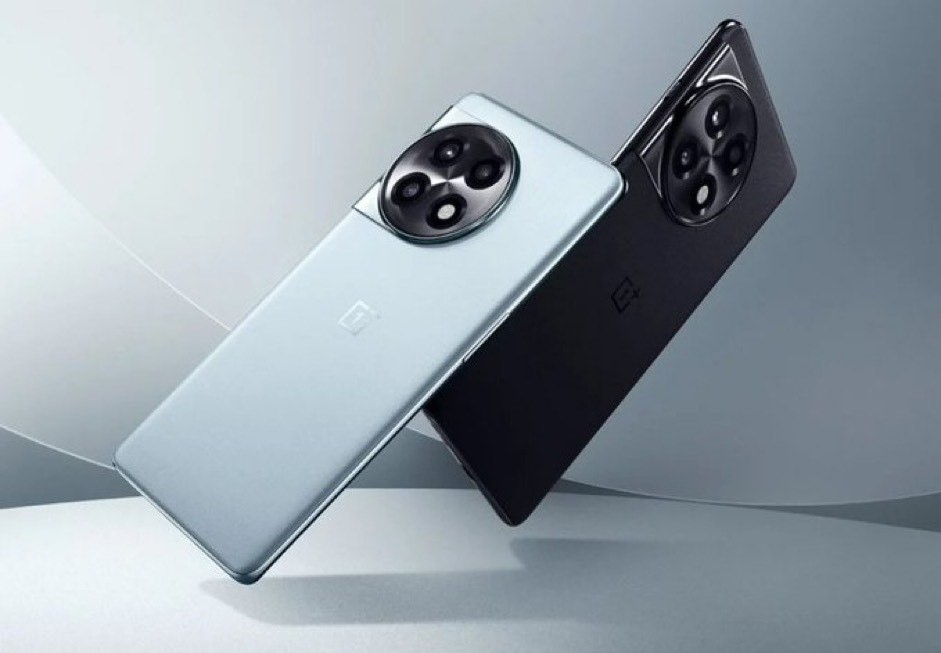
OnePlus 11R
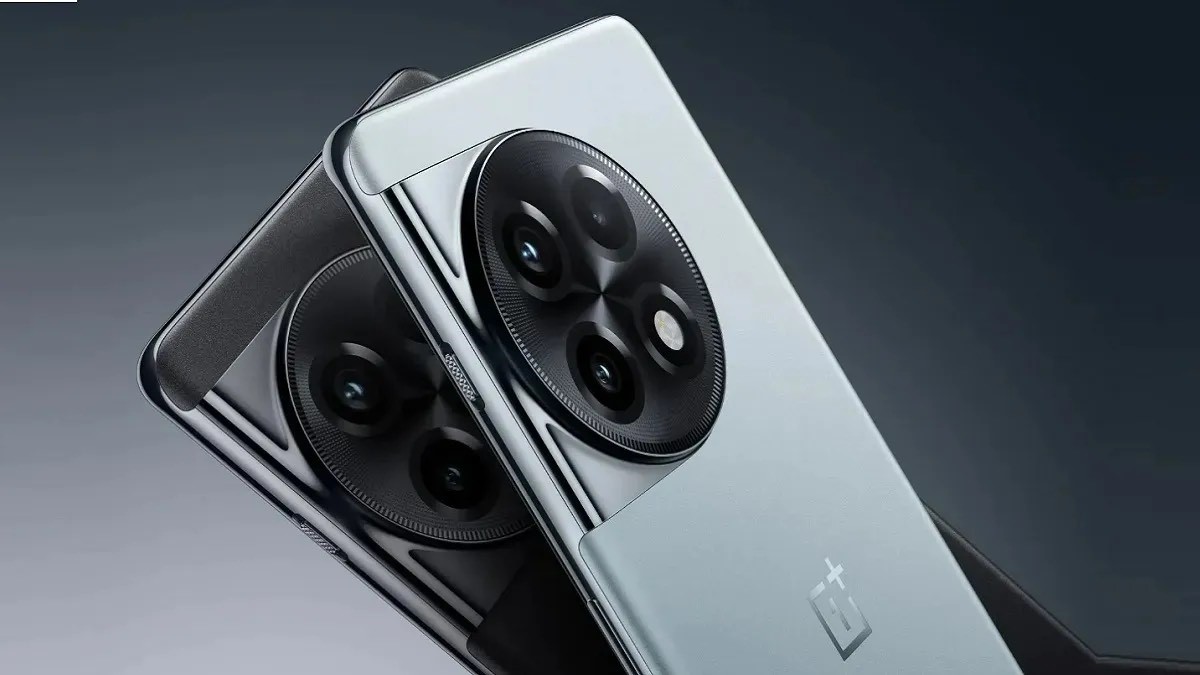
OnePlus 11R

OnePlus 11R has a 6.74-inch Fluid AMOLED bezel-less display with a screen resolution of 1240 x 2772 pixels, a pixel density of 451ppi and an aspect ratio of 20:9.

It also comes with Corning Gorilla Glass v5 that provides protection against accidental damages.

OnePlus has further packed the smartphone with a Qualcomm Snapdragon 8 Plus Gen 1 chipset, 8GB RAM and 128 GB internal storage.

There is also a rear triple camera setup that OnePlus 11R flaunts.

The camera setup includes a 50-megapixel wide-angle main lens, an 8-megapixel ultra-wide angle lens and a 2-megapixel macro lens. OnePlus has installed an impressive 16-megapixel wide-angle lens on the front to capture beautiful selfies and support video calling.

The smartphone is configured with a 5000mAh non-removable Li-Polymer battery that comes with 100W fast charging support.

Connectivity-wise, OnePlus 11R supports 5G and 4G VoLTE networks, along with Bluetooth v5.1, Wi-Fi, Mobile Hotspot, USB Type-C and A-GPS and Glonass.

OnePlus 11R Key Features
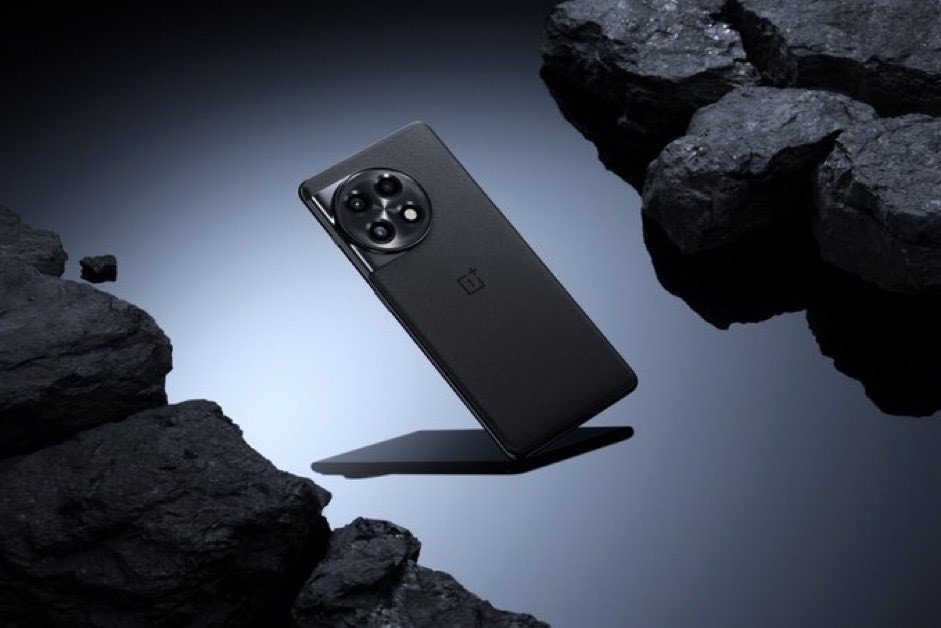
OnePlus 11R

  • 74 inches Super Fluid AMOLED Display
  • Qualcomm Snapdragon 8 Plus Gen 1 Processor
  • 8 GB RAM
  • 128 GB Storage
  • 50 MP + 8 MP + 2 MP Triple Rear Camera
  • 16 MP Front Camera
  • 5000 mAh Battery with 100W fast charging support
  • Android v13 OS
  • 5G support

OnePlus 11R Pros & Cons

OnePlus 11R

Pros Cons
●     Curved and fast display

●     Amazing battery life

●     Good primary camera

●     Consistent everyday performance

●     Excellent build quality and design

●     100W fast charging support

●     No IP rating

OnePlus 11R Review & Verdict

OnePlus 11R

The OnePlus 11R is an excellent smartphone for a regular user intending a device for everyday use.

It comes with a reliable battery, great display features, a good camera and decent battery support. Overall, specification-wise, OnePlus 11R is a good package.

Although, this one is certainly not the ideal choice for gamers.

And many tech reviewers have pointed out that the ultra-wide-angle is a little letdown. We also believe a smartphone in this price range should come with some IP rating, which was missing from OnePlus 11R.

So, all in all, If you are looking for a performance-oriented and smart-looking smartphone that comes with reliable battery backup under 4K, the OnePlus 11R can be the perfect choice for you.

OnePlus 11R My Mobile Rating
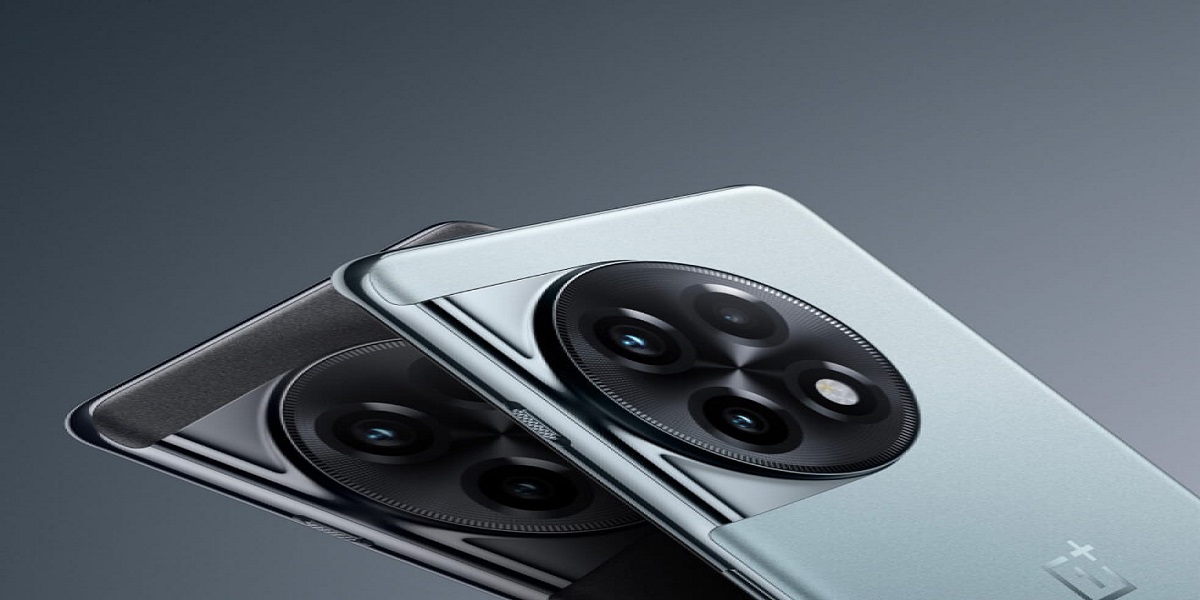
OnePlus 11R 5G

Design – 3.5/5

Display – 4/5

Software – 3.5/5

Camera – 3.5/5

Performance – 3.5/5

Battery – 3.5/5

OnePlus 11R Price and Availability

OnePlus 11R 5G

OnePlus 11R price in India starts from Rs. 39,999.

This is available in Sonic Black and Galactic Silver colour options.

Best Phone above 50K

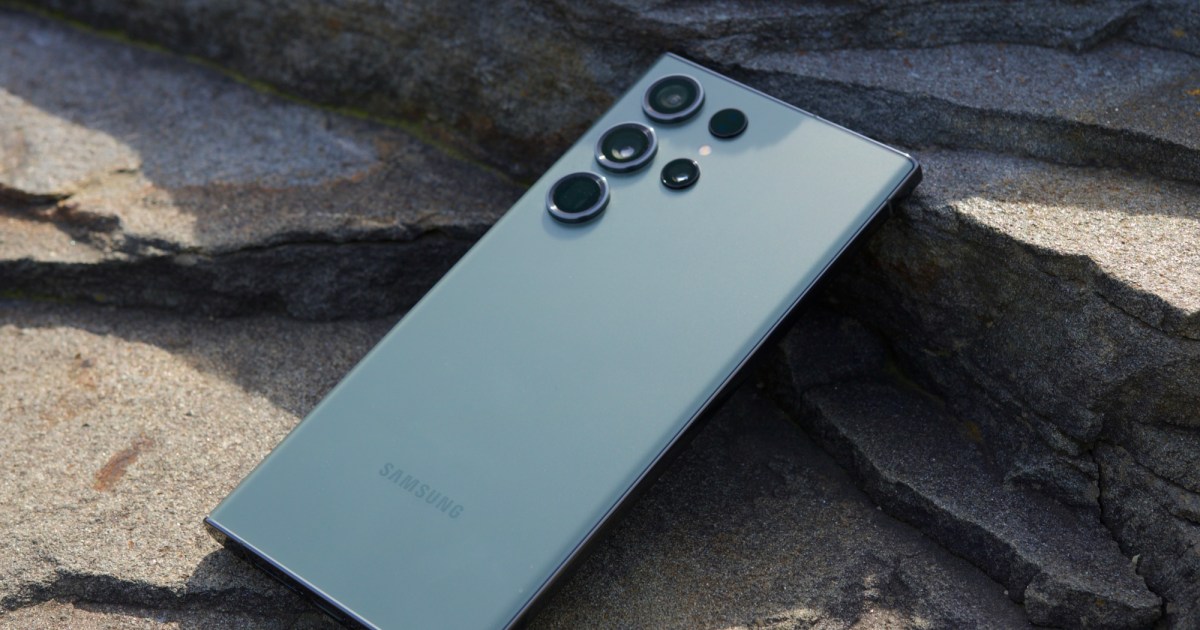
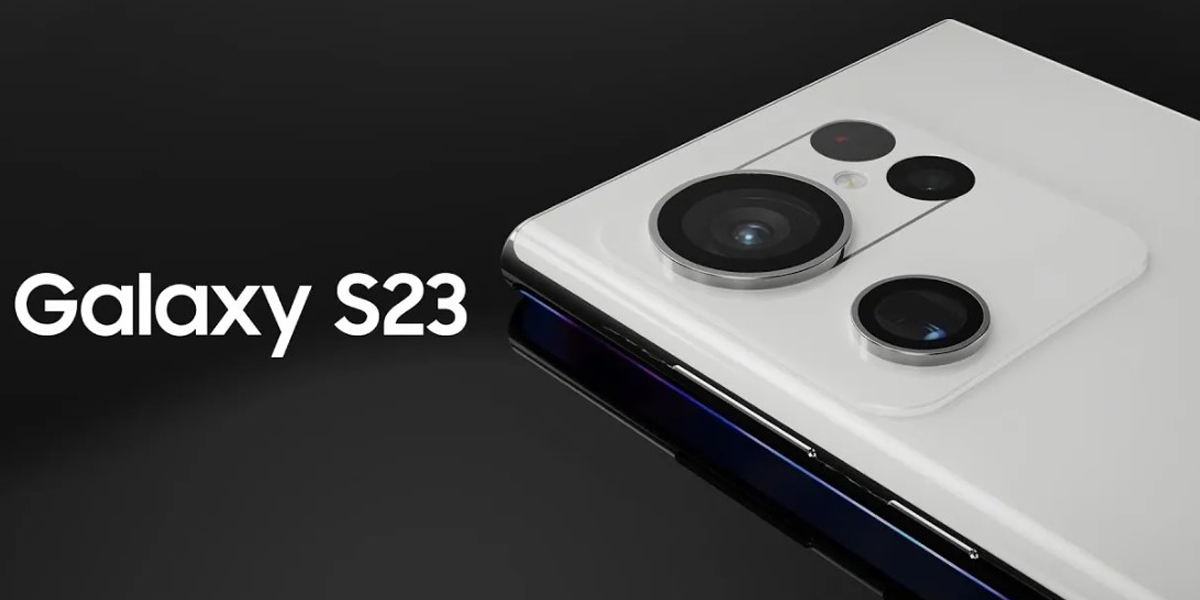
Samsung Galaxy S23 Ultra


Samsung Galaxy S23 Ultra 5G sports a bezel-less 120Hz layered 6.8-inch dynamic AMOLED Corning Gorilla Glass display with a resolution of 1440 x 3008 pixels, a pixel density of 501ppi and an aspect ratio of 20:9.

The smartphone is powered by Qualcomm Snapdragon 8 Gen 2 chipset accompanied by a 12GB RAM.

Samsung Galaxy S23 Ultra 5G, further, comes with a quad-camera setup that includes a 200-megapixel wide-angle shooter, two 10-megapixel periscope cameras, and a 12-megapixel ultra-wide angle camera with an LED Flash.

The smartphone comes with a 5000mAh Li-ion battery supported by a 45W Fast Charging system.

Samsung Galaxy S23 Ultra 5G features 4G VoLTE network connections.

Other connectivity features include Wi-Fi, Mobile Hotspot, Bluetooth v5.1, A-GPS with Glonass and USB Type-C.

Samsung Galaxy S23 Ultra Key Features


  • 8-inch dynamic AMOLED display
  • Qualcomm Snapdragon 8 Gen 2 chipset
  • 12GB RAM
  • Quad-camera (200mp + 10mp + 10mp + 12mp) setup on the backside
  • 12MP Selfie Shooter at the front
  • 5000mAh battery compatible with 45W fast charging
  • On-screen fingerprint sensor
  • Dustproof, water-resistant
  • 5G Network Support

Samsung Galaxy S23 Ultra Pros & Cons 

Samsung Galaxy S23 Ultra first look revealed - Smartprix

Pros Cons
●     Impressive flatter display

●     Great design

●     Excellent 200MP camera with great camera setup

●     Solid performance

●     Good battery life with 45W fast charging

●     Unmatched S Pen

●     Best Samsung Flagship device to ever come out

●     Expensive

●     Too huge and bulky


Samsung Galaxy S23 Ultra Review & Verdict
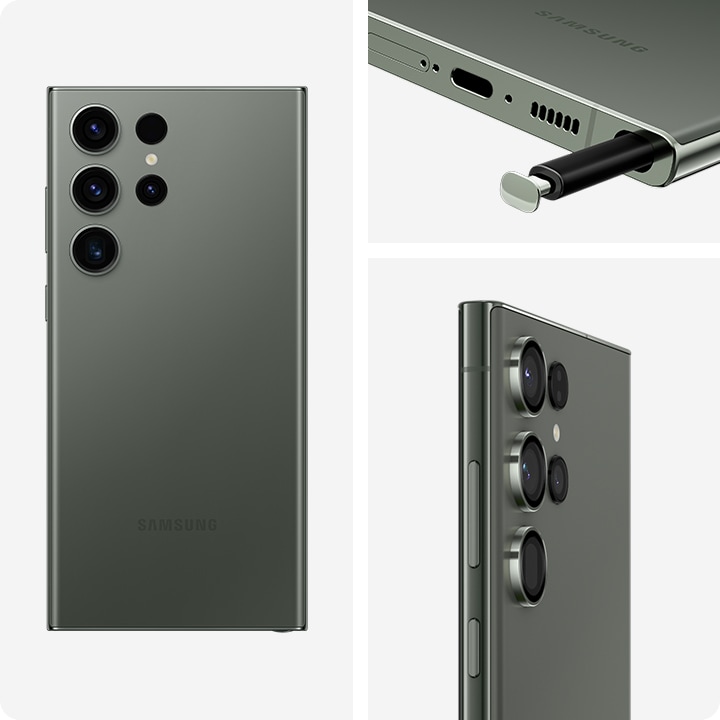
Buy Galaxy S23 Ultra | Price & Deals | Samsung UK


The S23 Ultra is definitely the best Flagship smartphone Samsung has ever produced. There is a lot to love in this smartphone and other than the hefty price tag, we can hardly point out any disadvantage.

The exquisite flatter display, outstanding build-quality, the Qualcomm Snapdragon 8 Gen 2 chipset, Quad-camera setup and massive battery capacity with an impressive 45W fast charging support, everything that Samsung Galaxy S23 Ultra has to offer just makes this device one of the best smartphones to ever come out from Samsung’s gallery.

Samsung has nicely packed every feature one can think of including water resistance, dustproof features, an on-screen optical fingerprint sensor, and advanced camera features.

Overall, if you can afford it, there is no reason why you shouldn’t go for a Samsung Galaxy S23 Ultra.

Samsung Galaxy S23 Ultra My Mobile Rating
Samsung Galaxy S23 Ultra review: the best Android phone yet | Digital Trends

Design – 4/5

Display – 4/5

Software – 3/5

Camera – 3.5/5

Performance – 3.5/5

Battery – 3.5/5

Samsung Galaxy S23 Ultra Price and Availability
Samsung Galaxy S23 Ultra

Samsung Galaxy S23 Ultra 5G price in India starts from Rs. 124,999.

The base variant of the smartphone comes with 12 GB RAM / 256 GB internal storage. It is available in Green, Red, Phantom Black, Cream, Graphite, Sky Blue and Lime colour variants.

POCO C55 Key Specs

Key Specs

RAM 4 GB
Processor MediaTek Helio G85
Rear Camera 50 MP + 2 MP
Front Camera 5 MP
Battery 5000 mAh
Display 6.71 inches (17.04 cm)

General

Launch Date April 27, 2023 (Unofficial)
Operating System Android v12

Performance

Chipset MediaTek Helio G85
CPU Octa core (2 GHz, Dual core, Cortex A75 + 1.8 GHz, Hexa Core, Cortex A55)
Architecture 64 bit
Fabrication 12 nm
Graphics Mali-G52 MC2
RAM 4 GB

Display

Display Type IPS LCD
Screen Size 6.71 inches (17.04 cm)
Resolution 720 x 1650 pixels
Aspect Ratio 20:9
Pixel Density 268 ppi
Bezel-less display Yes with waterdrop notch
Touch Screen Yes, Capacitive Touchscreen, Multi-touch

Camera

MAIN CAMERA
Camera Setup Dual
Resolution 50 MP, Primary Camera
2 MP, Depth Camera
Autofocus Yes
Flash Yes, LED Flash
Image Resolution 8150 x 6150 Pixels
Settings Exposure compensation, ISO control
Shooting Modes Continuous Shooting
High Dynamic Range mode (HDR)
Camera Features Digital Zoom
Auto Flash
Face detection
FRONT CAMERA
Camera Setup Single
Resolution 5 MP, Primary Camera

Battery

Capacity 5000 mAh
Type Li-Polymer
Removable No
USB Type-C Yes

Storage

Internal Memory 64 GB
Expandable Memory Yes, Up to 512 GB

Network & Connectivity

SIM Slot(s) Dual SIM, GSM+GSM
SIM Size SIM1: Nano, SIM2: Nano
Network Support 5G Not Supported in India, 4G Supported in India, 3G, 2G
VoLTE Yes
SIM 1
4G Bands:
TD-LTE 2300(band 40)
FD-LTE 1800(band 3)
3G Bands:
UMTS 1900 / 2100 / 850 / 900 MHz
2G Bands:
GSM 1800 / 1900 / 850 / 900 MHz
GPRS:
Available
EDGE:
Available
SIM 2
4G Bands:
TD-LTE 2300(band 40)
FD-LTE 1800(band 3)
3G Bands:
UMTS 1900 / 2100 / 850 / 900 MHz
2G Bands:
GSM 1800 / 1900 / 850 / 900 MHz
GPRS:
Available
EDGE:
Available
Wi-Fi Yes, Wi-Fi 4 (802.11 b/g/n)
Wi-Fi Features Mobile Hotspot
Bluetooth Yes, v5.1
GPS Yes with A-GPS
NFC No
USB Connectivity Mass storage device, USB charging

Multimedia

Loudspeaker Yes
Audio Jack 3.5 mm

Sensors

Fingerprint Sensor Yes
Fingerprint Sensor Position Rear
Other Sensors Light sensor, Proximity sensor, Accelerometer

Redmi Note 12 5G

Performance 

Chipset Qualcomm Snapdragon 778G
CPU Octa core (2.4 GHz, Single core, Kryo 670 + 2.2 GHz, Tri core, Kryo 670 + 1.9 GHz, Quad core, Kryo 670)
Architecture 64 bit
Fabrication 6 nm
Graphics Adreno 642L
RAM 8 GB

Camera & Display

RAM 8 GB
Processor Qualcomm Snapdragon 778G
Rear Camera 50 MP + 8 MP + 2 MP
Front Camera 16 MP
Battery 5000 mAh
Display 6.67 inches (16.94 cm)

 General

Launch Date May 17, 2023 (Unofficial)
Operating System Android v13

  Display

Display Type OLED
Screen Size 6.67 inches (16.94 cm)
Resolution 1080 x 2400 pixels
Aspect Ratio 20:9
Pixel Density 395 ppi
Screen Protection Corning Gorilla Glass
Bezel-less display Yes with punch-hole display
Touch Screen Yes, Capacitive Touchscreen, Multi-touch
HDR 10 / HDR+ support Yes, HDR 10+
Refresh Rate 120 Hz

Camera

Camera Setup Triple
Resolution 50 MP, Primary Camera
8 MP, Ultra-Wide Angle Camera
2 MP, Macro Camera
Autofocus Yes
Flash Yes, LED Flash
Image Resolution 8150 x 6150 Pixels
Settings Exposure compensation, ISO control
Shooting Modes Continuous Shooting
High Dynamic Range mode (HDR)
Camera Features Digital Zoom
Auto Flash
Face detection
Touch to focus
Video Recording 3840×2160 @ 30 fps

FRONT CAMERA

Camera Setup Single
Resolution 16 MP, Primary Camera

Battery

Capacity 5000 mAh
Type Li-Polymer
Removable No
Quick Charging Yes, Fast, 67W
USB Type-C Yes

Storage

Internal Memory 128 GB
Expandable Memory No

Network & Connectivity

SIM Slot(s) Dual SIM, GSM+GSM
SIM Size SIM1: Nano, SIM2: Nano
Network Support 5G Not Supported in India, 4G Supported in India, 3G, 2G
VoLTE Yes
SIM 1
4G Bands:
TD-LTE 2300(band 40)
FD-LTE 1800(band 3)
3G Bands:
UMTS 1900 / 2100 / 850 / 900 MHz
2G Bands:
GSM 1800 / 1900 / 850 / 900 MHz
GPRS:
Available
EDGE:
Available
SIM 2
4G Bands:
TD-LTE 2300(band 40)
FD-LTE 1800(band 3)
3G Bands:
UMTS 1900 / 2100 / 850 / 900 MHz
2G Bands:
GSM 1800 / 1900 / 850 / 900 MHz
GPRS:
Available
EDGE:
Available
Wi-Fi Yes, Wi-Fi 4 (802.11 b/g/n)
Wi-Fi Features Mobile Hotspot
Bluetooth Yes, v5.2
GPS Yes with A-GPS
USB Connectivity Mass storage device, USB charging

Multimedia

Loudspeaker Yes
Audio Jack 3.5 mm

Sensors

Fingerprint Sensor Yes
Fingerprint Sensor Position Side
Other Sensors Light sensor, Proximity sensor, Accelerometer, Compass, Gyroscope

iQOO Neo 7 Key Specs

Key Specs

RAM 8 GB
Processor MediaTek Dimensity 9000 Plus
Rear Camera 50 MP + 8 MP + 2 MP
Front Camera 16 MP
Battery 5000 mAh
Display 6.78 inches (17.22 cm)

General

Launch Date February 16, 2023 (Expected)
Operating System Android v13
Custom UI Origin OS

Performance

Chipset MediaTek Dimensity 9000 Plus
CPU Octa core (3.2 GHz, Single core, Cortex X2 + 2.85 GHz, Tri core, Cortex A710 + 1.8 GHz, Quad core, Cortex A510)
Architecture 64 bit
Fabrication 4 nm
Graphics Mali-G710 MC10
RAM 8 GB
RAM Type LPDDR5

Display

Display Type AMOLED
Screen Size 6.78 inches (17.22 cm)
Resolution 1080 x 2400 pixels
Aspect Ratio 20:9
Pixel Density 388 ppi
Screen to Body Ratio (calculated) 87.57 %
Bezel-less display Yes with punch-hole display
Touch Screen Yes, Capacitive Touchscreen, Multi-touch
HDR 10 / HDR+ support Yes, HDR 10+
Refresh Rate 120 Hz
Screen to Body Ratio (claimed by the brand) 93.11 %

Design

Height 164.8 mm Compare Size 
Width 76.9 mm
Thickness 8.5 mm
Weight 197 grams
Colours Pop Orange, Impression Blue, Geometric Black

Camera

MAIN CAMERA
Camera Setup Triple
Resolution 50 MP f/1.88, Wide Angle, Primary Camera(24 mm focal length, 1.56″ sensor size, 1µm pixel size)8 MP f/2.2, Ultra-Wide Angle Camera(16 mm focal length, 4.0″ sensor size, 1.12µm pixel size)2 MP f/2.4, Macro Camera
Sensor Exmor-RS CMOS Sensor
Autofocus Yes
OIS Yes
Flash Yes, LED Flash
Image Resolution 8150 x 6150 Pixels
Settings Exposure compensation, ISO control
Shooting Modes Continuous Shooting
High Dynamic Range mode (HDR)
Camera Features 20 x Digital Zoom
Auto Flash
Face detection
Touch to focus
Video Recording 3840×2160 @ 30 fps
1920×1080 @ 30 fps
Video Recording Features Dual Video Recording
FRONT CAMERA
Camera Setup Single
Resolution 16 MP f/2.45, Wide Angle, Primary Camera(3.1″ sensor size, 1µm pixel size)
Video Recording 1920×1080 @ 30 fps

Battery

Capacity 5000 mAh
Type Li-Polymer
Removable No
Quick Charging Yes, Fast, 120W: 50 % in 9 minutes
USB Type-C Yes

Storage

Internal Memory 128 GB
Expandable Memory No
USB OTG Yes
Storage Type UFS 3.1

Network & Connectivity

SIM Slot(s) Dual SIM, GSM+GSM
SIM Size SIM1: Nano, SIM2: Nano
Network Support 5G Supported in India, 4G Supported in India, 3G, 2G
VoLTE Yes
SIM 1
5G Bands:
FDD N1 / N3 / N5 / N8 / N28
TDD N40 / N41 / N77 / N78
4G Bands:
TD-LTE 2600(band 38) / 2300(band 40) / 2500(band 41) / 2100(band 34) / 1900(band 39)
FD-LTE 2100(band 1) / 1800(band 3) / 2600(band 7) / 900(band 8) / 700(band 28) / 1900(band 2) / 1700(band 4) / 850(band 5) / 850(band 18) / 850(band 19) / 850(band 26)
3G Bands:
UMTS 1900 / 2100 / 850 / 900 MHz
2G Bands:
GSM 1800 / 1900 / 850 / 900 MHz
GPRS:
Available
EDGE:
Available
SIM 2
5G Bands:
FDD N1 / N3 / N5 / N8 / N28
TDD N40 / N41 / N77 / N78
4G Bands:
TD-LTE 2600(band 38) / 2300(band 40) / 2500(band 41) / 2100(band 34) / 1900(band 39)
FD-LTE 2100(band 1) / 1800(band 3) / 2600(band 7) / 900(band 8) / 1900(band 2) / 1700(band 4) / 850(band 5) / 850(band 18) / 850(band 19) / 850(band 26)
3G Bands:
UMTS 1900 / 2100 / 850 / 900 MHz
2G Bands:
GSM 1800 / 1900 / 850 / 900 MHz
GPRS:
Available
EDGE:
Available
Wi-Fi Yes, Wi-Fi 5 (802.11 a/b/g/n/ac) 5GHz
Wi-Fi Features Mobile Hotspot
Bluetooth Yes, v5.3
GPS Yes with A-GPS, Glonass
NFC Yes
USB Connectivity Mass storage device, USB charging

Multimedia

FM Radio No
Loudspeaker Yes
Audio Jack USB Type-C

Sensors

Fingerprint Sensor Yes
Fingerprint Sensor Position On-screen
Fingerprint Sensor Type Optical
Other Sensors Light sensor, Proximity sensor, Accelerometer, Compass, Gyroscope

OnePlus 11R Key Specs

Key Specs

RAM 8 GB
Processor Qualcomm Snapdragon 8 Plus Gen 1
Rear Camera 50 MP + 12 MP + 2 MP
Front Camera 16 MP
Battery 5000 mAh
Display 6.7 inches (17.02 cm)

General

Launch Date February 7, 2023 (Unofficial)
Operating System Android v13
Custom UI Oxygen OS

Performance

Chipset Qualcomm Snapdragon 8 Plus Gen 1
CPU Octa core (3.2 GHz, Single core, Cortex X2 + 2.75 GHz, Tri core, Cortex A710 + 2 GHz, Quad core, Cortex A510)
Architecture 64 bit
Fabrication 4 nm
Graphics Adreno 730
RAM 8 GB

Display

Display Type Fluid AMOLED
Screen Size 6.7 inches (17.02 cm)
Resolution 1240 x 2772 pixels
Aspect Ratio 20:9
Pixel Density 453 ppi
Screen Protection Corning Gorilla Glass v5
Bezel-less display Yes with punch-hole display
Touch Screen Yes, Capacitive Touchscreen, Multi-touch
Refresh Rate 120 Hz

Camera

MAIN CAMERA
Camera Setup Triple
Resolution 50 MP f/1.8, Wide Angle, Primary Camera(23 mm focal length)12 MP f/2.4, Ultra-Wide Angle Camera
2 MP f/2.4, Macro Camera
Sensor Exmor-RS CMOS Sensor
Autofocus Yes
Flash Yes, LED Flash
Image Resolution 8150 x 6150 Pixels
Settings Exposure compensation, ISO control
Shooting Modes Continuous Shooting
High Dynamic Range mode (HDR)
Camera Features Digital Zoom
Auto Flash
Face detection
Touch to focus
FRONT CAMERA
Camera Setup Single
Resolution 16 MP f/2.4, Wide Angle, Primary Camera
Video Recording 1920×1080 @ 30 fps

Battery

Capacity 5000 mAh
Type Li-Polymer
Removable No
Quick Charging Yes, Fast, 100W
USB Type-C Yes

Storage

Internal Memory 128 GB
Expandable Memory No

Network & Connectivity

SIM Slot(s) Dual SIM, GSM+GSM
SIM Size SIM1: Nano, SIM2: Nano
Network Support 5G Not Supported in India, 4G Supported in India, 3G, 2G
VoLTE Yes
SIM 1
4G Bands:
TD-LTE 2300(band 40)
FD-LTE 1800(band 3)
3G Bands:
UMTS 1900 / 2100 / 850 / 900 MHz
2G Bands:
GSM 1800 / 1900 / 850 / 900 MHz
GPRS:
Available
EDGE:
Available
SIM 2
4G Bands:
TD-LTE 2300(band 40)
FD-LTE 1800(band 3)
3G Bands:
UMTS 1900 / 2100 / 850 / 900 MHz
2G Bands:
GSM 1800 / 1900 / 850 / 900 MHz
GPRS:
Available
EDGE:
Available
Wi-Fi Yes, Wi-Fi 4 (802.11 b/g/n)
Wi-Fi Features Mobile Hotspot
Bluetooth Yes, v5.1
GPS Yes with A-GPS, Glonass
NFC Yes
USB Connectivity Mass storage device, USB charging

Multimedia

Loudspeaker Yes
Audio Jack USB Type-C

Sensors

Fingerprint Sensor Yes
Fingerprint Sensor Position On-screen
Fingerprint Sensor Type Optical
Other Sensors Light sensor, Proximity sensor, Accelerometer, Compass, Gyroscope


Samsung Galaxy S23 Ultra Key Specs

Display & Storage

RAM 8 GB
Processor Qualcomm Snapdragon 8 Gen 2
Rear Camera 200 MP + 12 MP + 10 MP + 10 MP
Front Camera 12 MP
Battery 5000 mAh
Display 6.8 inches (17.27 cm)

General

Launch Date February 1, 2023 (Unofficial)
Operating System Android v13
Custom UI Samsung One UI

Performance

Chipset Qualcomm Snapdragon 8 Gen 2
CPU Octa core (3.2 GHz, Single core, Cortex X3 + 2.8 GHz, Quad core, Cortex A715 + 2 GHz, Tri core, Cortex A510)
Architecture 64 bit
Fabrication 4 nm
Graphics Adreno 740
RAM 8 GB
RAM Type LPDDR5X

Display

Display Type Dynamic AMOLED
Screen Size 6.8 inches (17.27 cm)
Resolution 1440 x 3088 pixels
Pixel Density 501 ppi
Screen to Body Ratio (calculated) 89.99 %
Screen Protection Corning Gorilla Glass, Glass Victus
Bezel-less display Yes with punch-hole display
Touch Screen Yes, Capacitive Touchscreen
Brightness 1750 nits
HDR 10 / HDR+ support Yes, HDR 10+
Refresh Rate 120 Hz

Design

Height 163.4 mm Compare Size 
Width 78.1 mm
Thickness 8.9 mm
Weight 223 grams
Build Material Back: Gorilla Glass
Colours Green
Waterproof Yes, Water resistant (up to 30 minutes in a depth of 1.5 meter), IP68
Ruggedness Dust proof

Camera

MAIN CAMERA
Camera Setup Quad
Resolution 200 MP f/1.7, Wide Angle, Primary Camera(23 mm focal length, 1.31″ sensor size, 0.6µm pixel size)12 MP f/2.2, Ultra-Wide Angle Camera(13 mm focal length, 2.55″ sensor size, 1.4µm pixel size)10 MP f/2.4, Telephoto Camera(70 mm focal length, 3.52″ sensor size, 1.12µm pixel size)10 MP f/4.9(230 mm focal length)
Sensor ISO-CELL
Autofocus Yes
OIS Yes
Flash Yes, LED Flash
Image Resolution 14500 x 13650 Pixels
Settings Exposure compensation, ISO control
Shooting Modes Continuous Shooting
High Dynamic Range mode (HDR)
Camera Features Digital Zoom
Auto Flash
Face detection
Touch to focus
Video Recording 7680×4320 @ 24 fps
3840×2160 @ 30 fps
1920×1080 @ 30 fps
FRONT CAMERA
Camera Setup Single
Resolution 12 MP f/2.2, Wide Angle, Primary Camera(25 mm focal length)
Autofocus Yes, Phase Detection autofocus
Video Recording 3840×2160 @ 30 fps
1920×1080 @ 30 fps

Battery

Capacity 5000 mAh
Type Li-Polymer
Removable No
Wireless Charging Yes
Quick Charging Yes, Fast, 45W
USB Type-C Yes

Storage

Internal Memory 256 GB
Expandable Memory No
Storage Type UFS 4.0
USB OTG Yes

Network & Connectivity

SIM Slot(s) Dual SIM, GSM+GSM
SIM Size SIM1: Nano, SIM2: Nano
Network Support 5G Not Supported in India, 4G Supported in India, 3G, 2G
VoLTE Yes
SIM 1
4G Bands:
TD-LTE 2600(band 38) / 2300(band 40) / 2500(band 41) / 1900(band 39)
FD-LTE 2100(band 1) / 1800(band 3) / 2600(band 7) / 900(band 8) / 700(band 28) / 1900(band 2) / 1700(band 4) / 850(band 5) / 850(band 18) / 850(band 19) / 1900(band 25) / 850(band 26)
3G Bands:
UMTS 1900 / 2100 / 850 / 900 MHz
2G Bands:
GSM 1800 / 1900 / 850 / 900 MHz
GPRS:
Available
EDGE:
Available
SIM 2
4G Bands:
TD-LTE 2600(band 38) / 2300(band 40) / 2500(band 41) / 1900(band 39)
FD-LTE 2100(band 1) / 1800(band 3) / 2600(band 7) / 900(band 8) / 700(band 28) / 1900(band 2) / 1700(band 4) / 850(band 5) / 850(band 18) / 850(band 19) / 1900(band 25) / 850(band 26)
3G Bands:
UMTS 1900 / 2100 / 850 / 900 MHz
2G Bands:
GSM 1800 / 1900 / 850 / 900 MHz
GPRS:
Available
EDGE:
Available
Wi-Fi Yes, Wi-Fi 6 (802.11 a/b/g/n/ac/ax) 5GHz
Wi-Fi Features Mobile Hotspot
Bluetooth Yes, v5.3
GPS Yes with A-GPS, Glonass
NFC Yes
USB Connectivity Mass storage device, USB charging

Multimedia

FM Radio No
Loudspeaker Yes
Audio Jack USB Type-C

Sensors

Fingerprint Sensor Yes
Fingerprint Sensor Position On-screen
Fingerprint Sensor Type Ultrasonic
Other Sensors Light sensor, Proximity sensor, Accelerometer, Compass, Gyroscope

FAQs on Best Phones to Buy

Q1. What are the camera capabilities of the POCO C55?

Answer. The POCO C55 packs dual rear cameras with a 50MP primary sensor and a 0.8MP depth sensor. The images are detailed with decent colour accuracy in daylight where the sensor is also quick to focus. There is no auto HDR, but it can be enabled from the camera layout. The HDR shots look good with enough dynamic range and balanced exposure level.  For selfies and video calling, the handset relies on a 5MP front camera that outputs hazy images, but the facial details are closer to reality. However, skin tones are subdued at times.

Q2. How much time it takes to fully charge Redmi Note 12 5G?

Answer. The Redmi Note 12 Pro+ 5G is fueled by a 4,980mAh battery unit and comes with an in-box 120W HyperCharge adapter. The fast charging technology is claimed to charge the device up to 100% in just 19 minutes.

Q3. Does iQOO Neo 7 support wireless charging?

Answer. The iQOO Neo 7 is backed by a 5000mAh battery with support for 120W wired charging. There’s no wireless charging support.

Q4. How long does OnePlus 11R take to charge?

Answer. Downtime is down to a minimum with OnePlus 11R 5G’s 5000mAh battery supplemented by its 100W SUPERVOOC fast charging. Believe it or not, it only takes 5 minutes and 17 seconds to get it from 0% to 30% battery, 10 minutes to get it to 52%, and 25 minutes to 100% battery!

Q5. Is Samsung S23 Ultra waterproof?

Answer. Unfortunately, the Galaxy S23 is not waterproof, but it has a rating of IP68, making it water-resistant and dust-proof. Though this means you shouldn’t purposely take a dip with your Galaxy S23, you do have some pretty substantial protection from water and dust particles.

Also Read: Best 5G Mobile Phones under 20000 in India

Also Read: Best 5G Mobile Phones under 15000 in India

Also Read: Best Samsung 5G Mobile Phones in India
POCO C55 Review – A Perfect Under 10K Smartphone with MediaTek Helio G85 chipset, leather-like stitch design, and 50MP rear camera

0
POCO C55

Highlights

  • POCO C55 is a recently launched budget smartphone in the under 10K segment.
  • The smartphone comes with a unique leather-like stitch design that is scratch resistant.
  • The smartphone sports a 6.71-inch HD IPS LCD display, MediaTek Helio G85 chipset, 4GB/6GB RAM and 64GB/128GB internal storage, 50MP rear camera and 5000mAh battery.
  • POCO C55 price in India starts from Rs. 8,999 and it is available in Forest Green, Power Black and Cool Blue colour options.
  • In this article, check our in-depth POCO C55 review for a closer look at the device.

POCO C55 is the recently launched budget smartphone in the under 10K segment. The brand claims it to be the “best performing in the segment” with a premium leather-like stitch design and great smartphone experience.

In this article, we are presenting our in-depth POCO C55 review to test the claim and take a closer look at the device.

POCO C55 flaunts a massive 6.71-inch HD IPS LCD display that features a pixel density of 268ppi, an aspect ratio of 20:9 and a screen resolution of 720 x 1650 pixels. The leather-finish back panel presents a dual camera set-up housing a 50-megapixel primary lens and a 2-megapixel depth sensor.

The smartphone also comes with a 5-megapixel front camera for selfies and video calls.

POCO has powered the C55 with a MediaTek Helio G85 chipset, 4GB RAM and 64 GB internal storage in the base variant.

The higher variant is available with 6GB RAM and 128 GB internal storage options. This storage is expandable by up to 512GB.

The smartphone boasts a massive 5000mAh battery capacity that is supported by a 10-watt charger.

As for connectivity requirements, POCO C55 offers Bluetooth v5.1, Mobile Hotspot, 4G, A-GPS, VolTE 5G and Wi-Fi 4.

POCO C55 price in India starts from Rs. 8,999.

Although, it can be grabbed at a lesser price with certain bank offers at select online and offline stores.

With a base variant of 4 GB RAM / 64 GB internal storage, POCO C55 is available in Forest Green, Power Black and Cool Blue colour options.

Before we get to our in-depth POCO C55 review, let’s take a quick look at the key features and Pros & Cons of this latest smartphone.

POCO C55 Key Features

POCO C55 Review

  • 71-inch IPS LCD Display
  • MediaTek Helio G85 Processor
  • 4GB/6GB RAM
  • 64GB/128GB Internal Storage
  • Dual Rear Camera Setup – 50-megapixel + 2-megapixel
  • 5-megapixel Front Camera
  • 5000 mAh Battery
  • Android v12 OS

POCO C55 Pros and Cons

POCO C55 Review

Pros Cons
●     Good Design with leather-like stitch design back panel

●     Good Overall Performance

●     Decent Cameras Features

●     Great Battery Life

●     IP52-Rating splash-resistant and scratch-resistant

●     Rear fingerprint sensor

●     Expandable RAM

●     Reasonably priced

●     Bloatware

●     Substandard Selfie Camera

●     Outdated microUSB 2.0 port


POCO C55 Unboxing

POCO C55 Review

First things first, let’s take you all through a quick unboxing.

POCO C55 comes in a standard yellow box packaging from POCO.

The box highlights all the key features of the smartphone on the top along with some manufacturing details at the back.

POCO has been consistent with the packaging design throughout its lineup so far.

Inside the box, we get the smartphone POCO C55 itself, the Sim ejector pin, some paperwork, a micro USB cable, and a 10-watt charging adapter.

POCO C55 Design

POCO C55 Review

One thing we can surely tell just by looking at POCO C55 is that it’s one of the most beautiful-looking smartphones one can get in the market under Rs 10,000.

The smartphone has a leather-like stitch design on the back with a thread design in the centre.

The texture of the back panel gives off a premium feel, which is extremely rare to find in a device in the price range.

The device comes with an IP52-Rating splash-resistant and scratch-resistant feature as well.

We get a capacitive fingerprint scanner at the back which is great for a phone in this category.

The fingerprint scanner, we must say, works smoothly and didn’t really create any issues while we were using the smartphone.

There is a single speaker at the bottom which gets quite loud and does a decent job.

POCO has also added a 3.5 headphone jack on the top to ensure plug-in wired headphones can be easily used.

The SIM tray can house two nano SIM cards and a dedicated SD card that can be expanded up to 1 TB.

POCO C55 Display

POCO C55 comes with a 6.71-inch High Definition IPS LCD display with a resolution of 1650 by 720 pixels.

The colours on the screen look decent.

It does not have the most vibrant colour, however, it appears to be tuned to look more natural. If any user prefers more punchy colours, they can definitely change it to “Saturated” from the display settings.

We watched a lot of videos and its overall streaming experience is pretty good. The display goes edge to edge with a slightly noticeable lower chin.

Since it’s only a 720p display, it isn’t very crisp but the colours look pretty nice.

POCO C55 comes with a Widevine L3 certification.

So, users would not be able to stream from apps such as Netflix and Prime videos at high resolution.

However, the device will support a stream at 540p, which we believe is totally viewable and should work for most regular smartphone users.

We don’t have the exact Nits specification of display brightness, but while using the smartphone outdoors, we didn’t face any issues. Outdoors as well the display is very clearly visible.

POCO C55 Performance

POCO C55 Review

The smartphone is powered by the MediaTek Helio G85 chipset and supports 4G LTE.

So, the thing to note here is that there is NO 5G support and anyone interested in purchasing this one should keep that in mind.

The brand has further configured a Mali-G52 MC2 GPU and an Octa-core (Cortex A55, Hexa core + Cortex A75, dual-core) CPU.

The unit we have comes with 4GB LPDDR4X RAM and with an option in the settings to extend the RAM by another 5GB giving you a total of 9GB RAM.

This is really helpful for gamers and people who often indulge in multitasking between apps and keep switching back and forth.

Overall, the performance was snappy for an under 10,000 smartphone.

We ran some benchmarks starting with Antutu and the result was around 260260, which is quite good.

The storage is eMMC 2.1 and the results were a read speed of 310 MB and a write speed of 254 MB. We also ran a CPU throttle test and the result received was 90 per cent of its peak performance.

Moreover, we played a few games and the overall smartphone behaviour was decent even considering it’s not a gaming phone.

The 40 FPS without any lag or startup was definitely decent.

However, we did notice the phone heat up during gaming but it was not to the extent of making users uncomfortable.

It’s a good device for casual gaming.

About the OS, it’s running on Android 12 with MIUI13 skin.

Overall the user interface is snappy and responsive. Opening and closing apps, multitasking, everything is very responsive.

Although we wish it came with Android 13 out of the box, many tech experts online have been guessing that the update will come soon.

Moreover, MIUI comes with a lot of handy features such as the floating apps, which is one cool and fun UI feature.

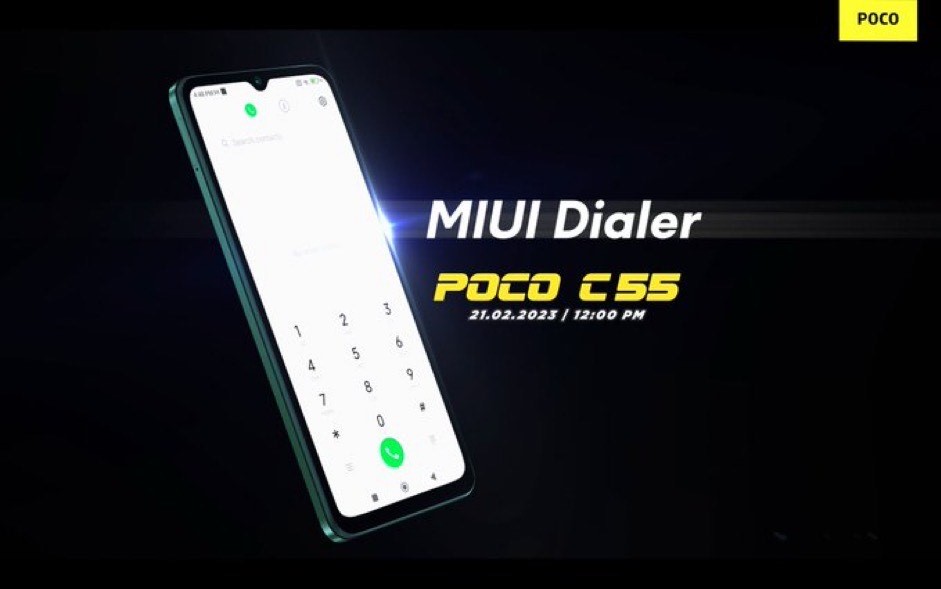
The most useful is the MIUI dialer which allows users to record calls without the recording announcement.

POCO has installed too many bloatware apps, which can be annoying but the good thing is that users can delete what they do not require.

POCO C55 Camera

As for the camera features, POCO C55 comes with a dual rear camera setup which includes a 50-megapixel primary lens and a 2-megapixel depth sensor for portrait shots.

On the front is a water drop notch that houses the 5-megapixel sensor for selfies.

The additional camera features of this device include Auto Flash, Digital Zoom, HDR Mode, Continuous Shooting Mode, ISO Control and Exposure Compensation.

We tried to take some shots with the 50-megapixel rear camera and we must say they do a pretty good job in the daytime. Shots have good dynamic range and decent colour reproduction.

The portrait sensor shots have clean edge detection although the highlights do get overexposed colours.

As for the selfies, we were not expecting too much from a 5-megapixel sensor but the selfie shooter does a decent job. The highlights, again, are a little overexposed but skin tones come off nice and give a natural appearance. The faces look clear and crisp.

Both front and rear cameras can record video at 1080p at 30 FPS. The results of handheld videos recorded are decent.

Overall, there is nothing to rave about in the camera department. However, they still get the job done and should be a good tool for an average smartphone user.

POCO C55 Battery

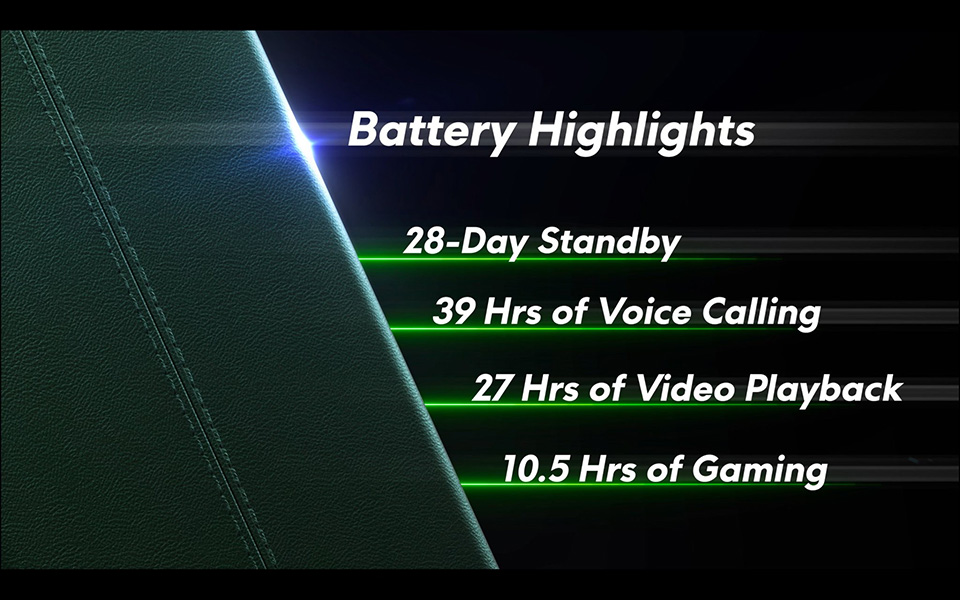
Let’s talk about the battery. POCO C55 comes with a massive 5000mAh battery.

This one is a Li-Polymer, non-removable battery type. Now, in ideal circumstances, this should easily last a day.

And for users who are into medium usage, it can even last a day and a half.

The complaint we have, however, is that this smartphone comes with a really tiny 10-watt charger.

Now with such a low charging capacity, it takes more than two hours to charge this smartphone from 0 per cent to 100 per cent.

This, in our opinion, is one of the biggest drawbacks of POCO C55.

In all honesty, an 18-watt charger would have made this the perfect under 10000 smartphone.

Verdict

POCO C55

POCO C55 is a budget smartphone with good overall performance.

It’s got a stylish-looking smartphone with a unique leather-like stitch design.

The excellent smartphone performance is facilitated by the decent display, good rear cameras, and a massive 5000mAh battery capacity. It also has the MIUI dialer, so users can record calls without that recording announcement.

Overall, it’s a pretty good phone for the package.

However, the biggest gripe is that POCO C55 comes with a micro USB port and a tine 10-watt charge.

In 2023, a smartphone should not be getting launched with a micro USB port in our opinion.

A USB type C port is a must-have today. And as we mentioned before, a 10-watt charge would have made POCO C55 perfect for the price segment.

Though we must admit, the pros of POCO C55 definitely outweigh the cons.

And once we move past the small disadvantages, the smartphone is definitely one of the most value-for-money devices in this segment.

POCO C55 – My Mobile Ratings

Design – 4/5

Display – 3.5/5

Software – 3.5/5

Camera – 3.5/5

Performance – 3.5/5

Battery – 4/5

Buy POCO C55 For

  • A decent under 10K smartphone
  • Good battery life
  • Good design with classic leather finish back panel
  • Good Overall Performance
  • Decent Cameras Features

POCO C55 KEY SPECIFICATIONS

Key Specs

RAM 4 GB
Processor MediaTek Helio G85
Rear Camera 50 MP + 2 MP
Front Camera 5 MP
Battery 5000 mAh
Display 6.71 inches (17.04 cm)

General

Launch Date April 27, 2023 (Unofficial)
Operating System Android v12

Performance

Chipset MediaTek Helio G85
CPU Octa core (2 GHz, Dual core, Cortex A75 + 1.8 GHz, Hexa Core, Cortex A55)
Architecture 64 bit
Fabrication 12 nm
Graphics Mali-G52 MC2
RAM 4 GB

Display

Display Type IPS LCD
Screen Size 6.71 inches (17.04 cm)
Resolution 720 x 1650 pixels
Aspect Ratio 20:9
Pixel Density 268 ppi
Bezel-less display Yes with waterdrop notch
Touch Screen Yes, Capacitive Touchscreen, Multi-touch

Camera

MAIN CAMERA
Camera Setup Dual
Resolution 50 MP, Primary Camera
2 MP, Depth Camera
Autofocus Yes
Flash Yes, LED Flash
Image Resolution 8150 x 6150 Pixels
Settings Exposure compensation, ISO control
Shooting Modes Continuous Shooting
High Dynamic Range mode (HDR)
Camera Features Digital Zoom
Auto Flash
Face detection
FRONT CAMERA
Camera Setup Single
Resolution 5 MP, Primary Camera

Battery

Capacity 5000 mAh
Type Li-Polymer
Removable No
USB Type-C Yes

Storage

Internal Memory 64 GB
Expandable Memory Yes, Up to 512 GB

Network & Connectivity

SIM Slot(s) Dual SIM, GSM+GSM
SIM Size SIM1: Nano, SIM2: Nano
Network Support 5G Not Supported in India, 4G Supported in India, 3G, 2G
VoLTE Yes
SIM 1
4G Bands:
TD-LTE 2300(band 40)
FD-LTE 1800(band 3)
3G Bands:
UMTS 1900 / 2100 / 850 / 900 MHz
2G Bands:
GSM 1800 / 1900 / 850 / 900 MHz
GPRS:
Available
EDGE:
Available
SIM 2
4G Bands:
TD-LTE 2300(band 40)
FD-LTE 1800(band 3)
3G Bands:
UMTS 1900 / 2100 / 850 / 900 MHz
2G Bands:
GSM 1800 / 1900 / 850 / 900 MHz
GPRS:
Available
EDGE:
Available
Wi-Fi Yes, Wi-Fi 4 (802.11 b/g/n)
Wi-Fi Features Mobile Hotspot
Bluetooth Yes, v5.1
GPS Yes with A-GPS
NFC No
USB Connectivity Mass storage device, USB charging

Multimedia

Loudspeaker Yes
Audio Jack 3.5 mm

Sensors

Fingerprint Sensor Yes
Fingerprint Sensor Position Rear
Other Sensors Light sensor, Proximity sensor, Accelerometer

FAQs on POCO C55 Review

Q1. What are the camera capabilities of the POCO C55?

Answer. POCO C55 features a 50MP Dual Camera which also has Portrait, Night and HDR modes and a 5MP front camera for amazing selfie shots.

Q2. Can I use SD Card in POCO C55?

Answer. Yes, POCO C55 comes with a dedicated slot for SD Card expandable up to 1TB.

Q3. Can I use 5GHz Wifi on POCO C55?

Answer. Yes, POCO C55 supports Dual Band Wifi (2.4/5GHz).

Q4. Does POCO C55 come with MIUI Dialer?

Answer. Yes, POCO C55 comes with MIUI Dialer.

Q5. How is the Oleophobic coating useful in POCO C55?

Answer. The Oleophobic coating in POCO C55 protects the screen and reduces fingerprints.

Q6. What are the dimensions of POCO C55?

Answer. The dimensions of POCO C55 are 168.76mm x 76.41mmx 8.77mm (Height x Width x Thickness) and its weight is only 192g.

Q7. Is POCO a trustworthy brand?

Answer. Poco was launched as a Xiaomi brand back in 2018, swiftly gaining popularity thanks to its first smartphone – the Poco F1 – which offered top-of-the-line specifications at an affordable price. Poco was separated into an independent brand by the Chinese electronics giant in 2020, before the launch of its second phone. Yes, it is a trustworthy brand and has been quickly gaining popularity for its entry-level range of smartphones.

Also Read: Poco F5 5G Launch Soon ,Memory Variants Revealed & Key Details Emerge Via FCC Certification

Also Read: POCO X5 5G with 120Hz AMOLED display, Snapdragon 695 SoC, 48MP camera & 5000mAh battery launched in India: Price in India, Specifications, Colours & Availability

Also Read: POCO C55 with 50-Megapixel Rear Camera, MediaTek Helio G85 SoC ,6.71-inch display & 5,000mAh Battery launched in India: Price, Specifications

#LenovoTechWorldIndia Event Promises A Smarter Technology Era

0

Highlights

  • Whereabout of the #LenovoTechWorldIndia event
  • Agenda of #LenovoTechWorldIndia
  • Behold the Net-Zero by 2050
  • Lenovo’s mission: Go green and digitization
  • Smarter technology and Smarter India
  • “Innovations that define growth in the 5G Era”
  • Digitally empowered India
  • “Fostering Inclusiveness in Technology”
  • “Reinventing Customer Experiences through Metaverse”

With technology evolving and becoming indispensable.

Lenovo’s annual flagship technology event #LenovoTechWorldIndia on 16th March reiterated the entire setup of what the company promises to accomplish with the help of technology in the coming years.

Introduction

On 16th of March amongst a massive crowd, including delegates and speakers, LenovoTech World India held an annual flagship technology event.

Where, Lenovo discussed vastly about emergence and adoption of  smarter technology in the world and how India is successfully coping up with it that catalyzes to build an empowered society.

The discussion was held among great tech heads, conveying the upcoming tech trends that India will be welcoming soon and how lenovo will make it accessible to the masses.

All About The Event

Lenovo invited all the tech enthusiasts on 16th March for Lenovo Tech World India 2023.

The event started at 12 noon and went over evening 7 pm.

Amidst the great hospitality of JW Marriott Hotel, Aerocity, New Delhi, India the event was worth exploring with a great demo zone setup, where the registered members of the event can experience all the technology lenovo is coming up with.

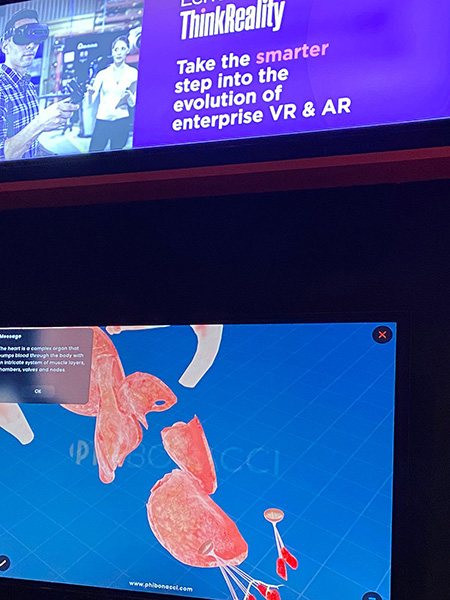
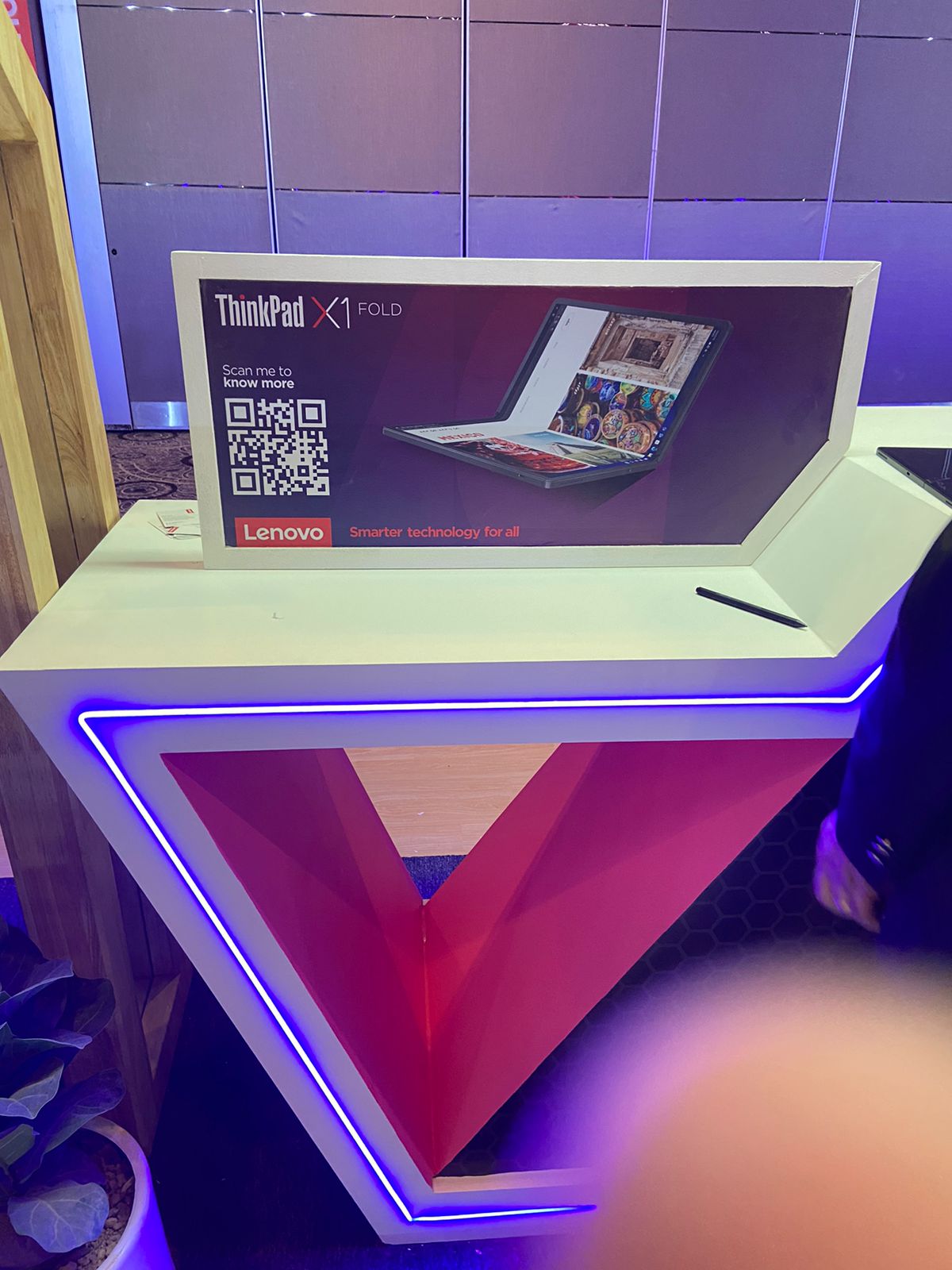
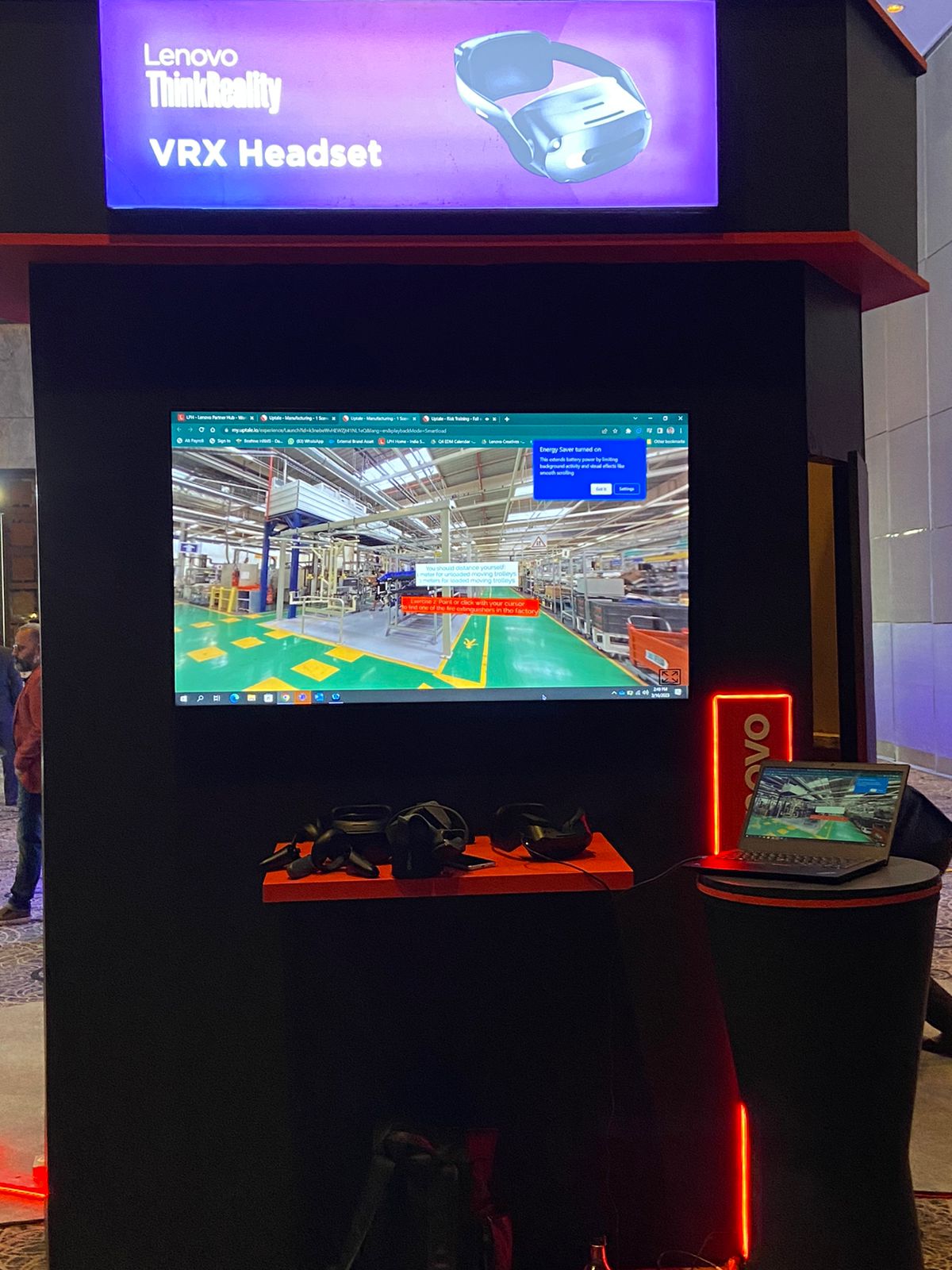
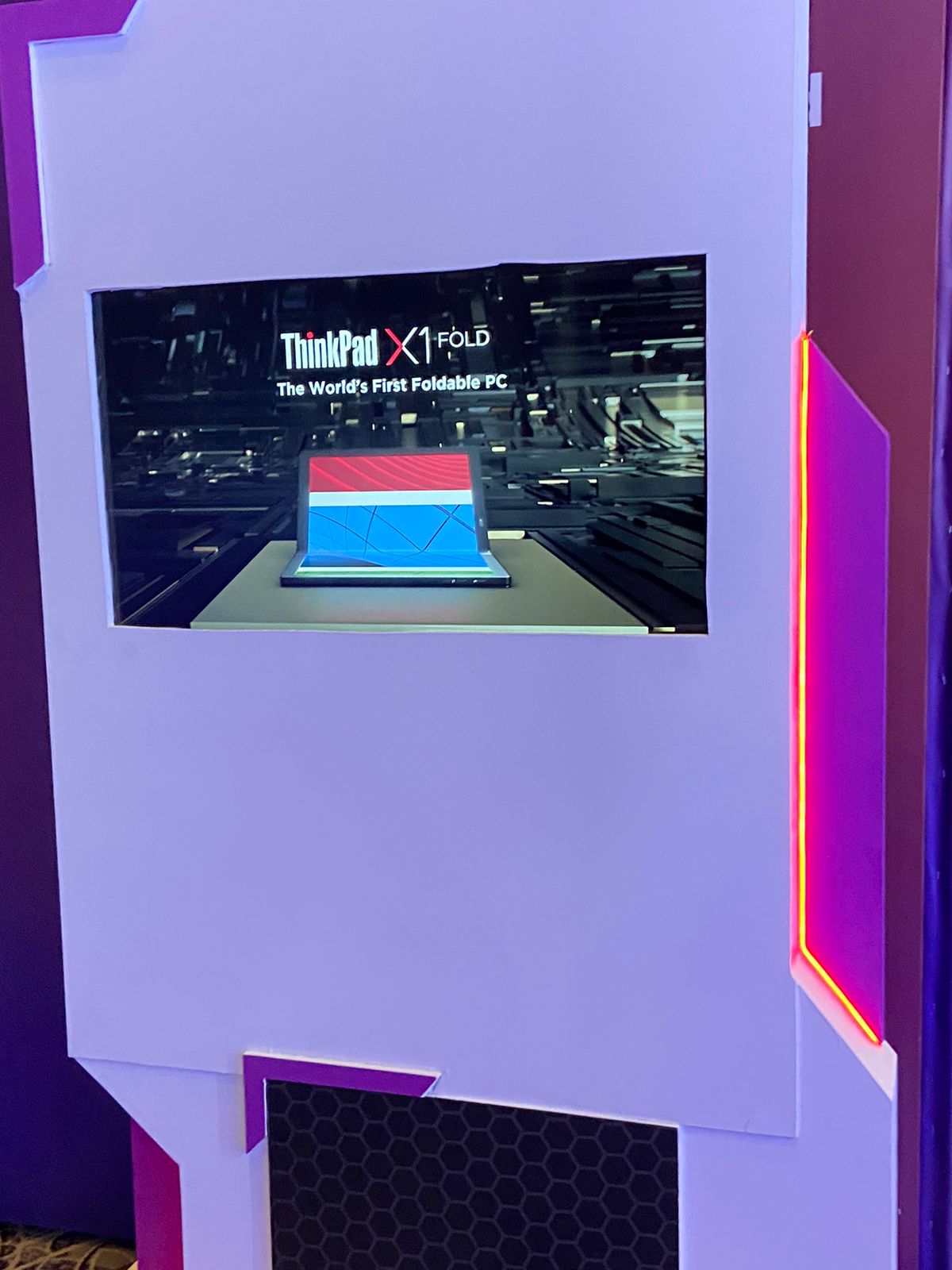
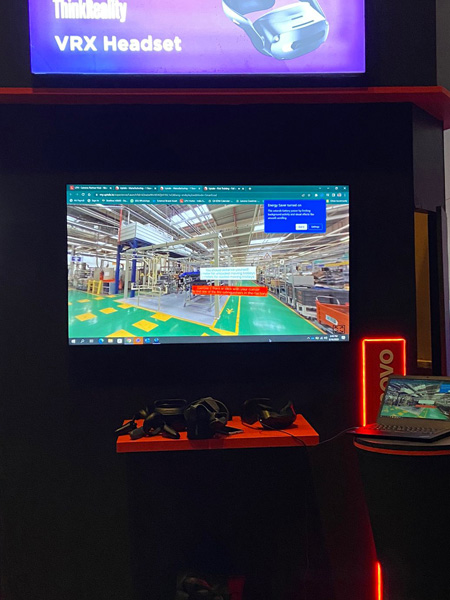
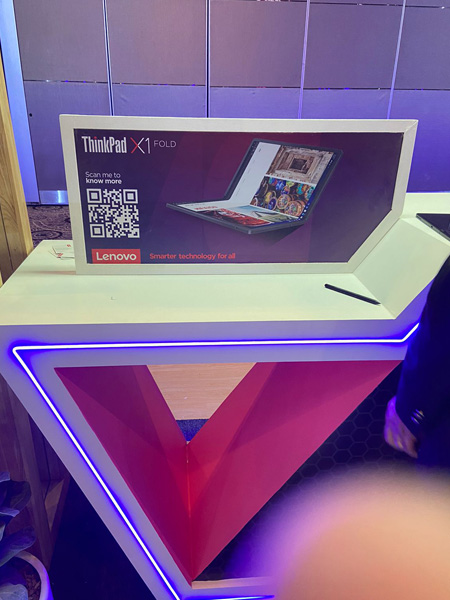
The demo zone, a heaven itself, included VRX headset gaming battle area, Hands-on experience of AR and VR technology, A3 smart glasses, Thinkpad X1 fold, and many more.

Along with the compèring by Rajiv Makhani, the gadget Guru Himself the event did not lack any WOW factor.

The event was live streamed on Amazon, Linkedin, Youtube, Twitter to engross an exceptional number of online viewers.

With the focal point remaining to enable the discussion on the current and future of technology, this intriguing event had several discussion sessions with different panel members touching diverse revolutionary acts happening around technology.

Agenda of #LenovoTechWorldIndia

With the 5G network coming in and optical fibers set on the main cities.

Along with the growing talk on sustainability and environmental concerns has drawn lenovo on a mission to solve it all with taking the interest in the agriculture sector too.

Besides taking care of societal problems, lenovo’s innovation is here to make the technology accessible to the masses.

Technology and digitization is empowering and enlightening people towards a smarter Future and lenovo’s TechWorldIndia is here to create awareness around the same, including the metaverse, AI, AR, VR, and many more is allowing the teaser to the Smarter world ahead.

Lenovo, Technology, And India!

Every ounce of work to develop Smarter India as envisioned by the leaders, have things to say that is limiting the growth, elements that can help in the growth, and what good can technology deliver to the world and environment.

The vision of smarter technology and accessible to all hot no bounds in the sectors it will penetrate its use.

As poverty and lack of accessibility is still a challenge for the country, Lenovo offers to generate tech ade for the masses.

Net Zero by 2050

LenovoTechWorldIndia Event

“Lenovo is committed to achieving net-Zero greenhouse gas emission by 2050, with science-based targets validated through the Science Based targets initiative’s Net-Zero standard.” Lenovo indicates the working of Go Green and digitization will keep the company’s reliability for future.

The Zero-emission target is for 2050 for which lenovo has started working currently and focusing on the sustainability of the product with keeping in mind the environmental richness.

The digital and intelligent transformation will change India’s tech ade shape by working for humankind.

Lenovo’s Innovation Vision

LenovoTechWorldIndia Event

Lenovo is all about innovation and also welcoming all the tech trends, such as 5G, Cloud, Edge, Sustainability, AI, and metaverse.

Also in the mission to India’s techade by establishing offices and factories of the world, investing even more on the R&D activities, and moving towards making India ‘sustainability Champion of the World.’

Moreover, eradicating the hindrances coming along, including tech skilling, access to basics, productivity, and affordable energy.

Further, Lenovo envisioned making India ‘innovation-led growth’ that will include tech workforce, Smart infrastructure, and Inclusion & sustainability.

Smarter technology and Smarter India

LenovoTechWorldIndia Event

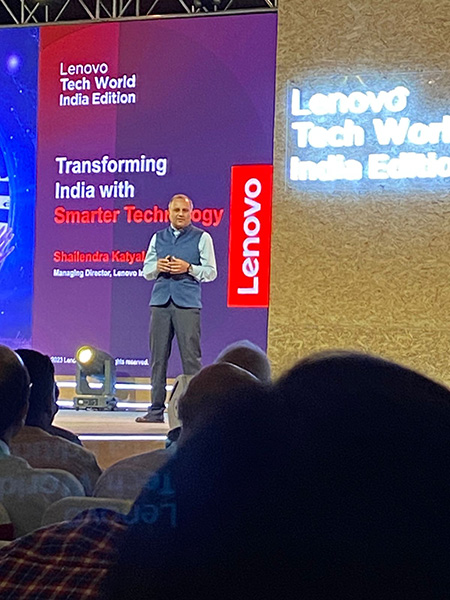
On which Shailendra Katyal MD of Lenovo states that “As India tries to solve issues for 1.4 billion people, we’ll create models for other countries as well. We are firmly committed to India’s techade”

“By 2025, 100% of our PCs will use recycled materials & will be plastic-free. I see new IT & intelligent transformation driving great opportunity, driving a higher level of sustainability and innovation” – Amar Babu, President, Lenovo Asia-Pacific stated his confidence on how lenovo will be delivering beyond ordinary to the environment and promising a sustainable development on the technology front hailing the go green agenda.

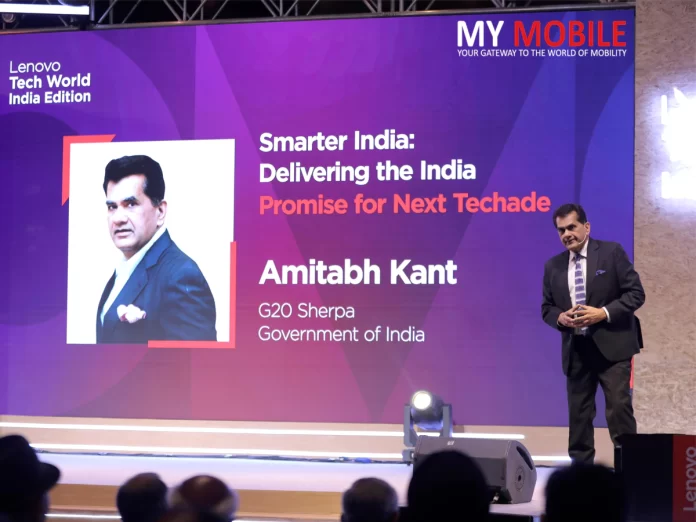
Amitabh Kant, G20 Sherpa, GOI, also addresses the environmental concerns and sustainable development will look in India by stating

“We’ll add value only if we go digital & go green. Thus, we must become the first country to industrialize without carbonizing the world. It’s the only way to become $10 trn economy”

“Innovations that define growth in the 5G Era”

LenovoTechWorldIndia Event

The unlimited and uninterrupted 5G is coming and it offers more than pace and robust connectivity. Under the discussion with Prateek Pashine, Sumir Bhatia, Santosh Vishwanathan, and moderated by Manpreet S ahuja on “Innovations that define growth in the 5G Era” was an intriguing session that briefly tells what all is coming with 5G and development is the only byproduct of it.

“Democratization is where the disruption begins”– Prateek Pashine – President, Enterprise Business, Reliance Jio states in order to lay the layers 5G network will explore meeting the many diverse demands of several sectors in line and also offering the services to the SMEs.

Sumir Bhatia, President, Asia Pacific, Infrastructure Solutions Group, Lenovo stated in the discussion that “The Edge is left to your imagination. Be it warehouses or factories or banks, the Edge is everywhere” reiterating the idea of innovation with 5G in corporations can only make things better.

Making India Digitally empowered with Rajeev Chandrasekhar

Rajeev Chandrasekhar, Minister of State for Electronics and Information Technology, also graced the stage with the insightful discussion on Making India Digitally empowered. Placing all the struggles, challenges, and the work goes behind to make the country digitally empowered. Rajeev Chandrasekhar also mentions

“In the wake of #SVB crisis, we can say with certainty that the Indian Banking System is resilient & strong and should be the preferred banking partner for Indian startups”

Moreover, adds that “Indian tech ecosystem is doing cutting-edge work & pushing the boundaries. However, we need a legal framework that is future ready & can keep up with this dynamic growth.” indicating what all work needs to be done for smooth digital working in future.

“Changing Paradigm with New IT in Modern Workplace”

Technology is penetrating people’s life faster than ever now and the Post-covid-19 scenario seems to make technology more important than before. Based on this, a panel was sat, including  Harnath Babu, CIO & Partner, KPMG, Diwa Dayal, and moderated by Shalil Gupta, discussing the “Changing Paradigm with New IT in Modern Workplace”.

“Be it managing your own organization or securing your clients firm, #innovation should be in the DNA by investing in tech like #Metaverse, #AI & ML. Therefore, security by design and privacy by design should be considered.” – Harnath Babu, CIO & Partner, KPMG states on the crucial use of technology in the workplace and how it is helping all. Technology sporting as a digital equalizer and is here to meet the diverse demands of a hybrid team.

2
4
5
7
8
9
1
2 4 5 7 8 9 1

“Fostering Inclusiveness in Technology”

The panel included Deepa Malik Athlete & Paralympic Winner and Prateek Madhav, Co-Founder & CIO, AssisTech Foundation discussing on the topic “Fostering Inclusiveness in Technology”.

In such a place where the ecosystem changes constantly, technology is the important tool to empower the people and use the upcoming innovations for different sectors, including sports.

“If we’re not including persons with disability in the conversation, we’re losing 7-8% of our GDP on the table” – Prateek Madhav, Co-Founder & CIO, AssisTech Foundation, pointed out his views on including technology, where required the most.

On the same concern Deepa Malik Athlete & Paralympic Winner stated that “Be it books, equipment, or by improving accessibility, technology is creating equity & has become an enabler. “

“Reinventing Customer Experiences through Metaverse”

LenovoTechWorldIndia EventWe can not leave without discussing metaverse, Web3, AI, and all that will be accessible to the masses.

The customer experience will go immersive with all the technology bringing in and Mataverse is among that compartment. To put the light on

“Reinventing Customer Experiences through Metaverse” the panel included Vishal Shah – General Manager, XR (AR/VR) and Metaverse, Lenovo, Rucha Nanavati – CIO, Mahindra Group, Rajesh Uppal – Executive Director & CIO, Maruti Suzuki India Ltd, Rajen Vagadia – VP and President, Qualcomm India & SAARC, and Moderator – Leslie D’Monte, Executive Editor, Mint

“PCs reduced the digital divide. Metaverse can eliminate the digital divide.”  – Vishal Shah, GM, XR & Metaverse, Lenovo, stating the impact Matverse can make and what all hindrances of the past will be negated.

Rajesh Uppal, Executive Director & CIO, Maruti Udyog Ltd. stated that “Metaverse has ensured a greater engagement by understanding customer needs and give a 360-degree experience…currently, its in a wow factor phase but in the future, it will become the norm” pointing out the development and margin of growth metaverse can provide.

Performance

Also the performance by three-time Grammy Award winner Ricky Kej, who also talked about technology and India by stating “We Indians are extremely lucky as we have co-existed with nature for a long time…I’m really glad to be here performing at Lenovo Tech World. Most of the music I created has been on Lenovo devices. I really appreciate Lenovo’s efforts towards sustainability”

Conclusion

With the world becoming smarter with the smarter technology, chances are India will lead from the front.

Might as well be away from 6G that china is providing and the working on 10G that America is Providing, India is moving at a robust pace to take all the challenges and lenovo ensures the same.

Also Read: Lenovo ThinkBook Plus Gen 3 laptop with 17.3-inch main display, 8-inch second display launched in India Priced at Rs 1,94,990: Price, Specifications & Details Here

Also Read: Tab P11 5G Lenovo Launched in India, Price, Availability & Specifications

Also Read: Lenovo IdeaPad Flex 3i Chromebook Launched Ahead of CES 2023

Also Read: Lenovo launches New Range of K14 Business Laptops

Microsoft Backed OpenAl Announces A More Advanced, New Generation ChatGPt’s successor GPT-4 says: It will replace twenty jobs, check if yours is on the list: Everything You Need to Know

0

Highlights

OpenAI has announced GPT-4, the latest version of its hugely popular artificial intelligence chatbot ChatGPT.

  • GPT-4 is a more advanced next-generation language model that is more capable of performing complex language tasks, similar to how GPT-3 and ChatGPT can understand and generate human-like language.
  • GPT-4 will initially be available to ChatGPT Plus subscribers, who pay $20 per month for premium access to the service.
  • In this article, we are sharing all details related to GPT-4 along with the difference between ChatGPT & GPT-4, ChatGPT Plus subscriptions, ChatGPT visual and more.

Microsoft-backed OpenAI, the American artificial intelligence research laboratory, recently announced the new version of their language model called GPT-4.

This model has been claimed to be even more advanced than the current ChatGPT and will be able to perform even more complex language tasks.

As per OpenAI’s announcement, it will have a larger capacity to learn and process information, and will likely have more advanced features such as a better understanding of context and improved natural language generation capabilities.

The company CEO Sam Altman recently tweeted the GPT-4 official announcement blog on their official Twitter handle. Altman tweeted, “Here is GPT-4, our most capable and aligned model yet. It is available today in our API (with a waitlist) and in ChatGPT+. It is still flawed, still limited, and it still seems more impressive on first use than it does after you spend more time with it.”

He further extended the tweet thread and added, “It is more creative than previous models, it hallucinates significantly less, and it is less biased. it can pass a bar exam and score a 5 on several AP exams. There is a version with a 32k token context. We are previewing visual input for GPT-4; we will need some time to mitigate the safety challenges. we now support a “system” message in the API that allows developers (and soon ChatGPT users) to have significant customization of behaviour. if you want an AI that always answers you in the style of Shakespeare, or in json, now you can have that.”

GPT-4, similar to ChatGPT, is a creation of generative artificial intelligence that uses algorithms and predictive text in order to generate intelligent responses based on prompts.

 GPT-4

Altman also added in a series of tweets, “We are open-sourcing OpenAI Evals, our framework for automated evaluation of AI model performance, to allow anyone to help improve our models. we have had the initial training of GPT-4 done for quite a while, but it’s taken us a long time and a lot of work to feel ready to release it. we hope you enjoy it and we really appreciate feedback on its shortcomings.”

OpenAI has also announced new partnerships with language learning apps Duolingo and Be My Eyes. With these new partnerships, the company is hoping to create AI Chatbots which can assist their users using natural language.

In this article, we are sharing all details related to GPT-4 along with the difference between ChatGPT & GPT-4, ChatGPT Plus subscriptions, ChatGPT visual and more.

What is GPT-4?

GPT

As per OpenAI’s recent announcement, GPT-4 is the recently released version of OpenAI’s language model, which is being developed as a successor to ChatGPT. It will be an even more advanced model that is capable of performing complex language tasks, similar to how GPT-3 and ChatGPT can understand and generate human-like language.

GPT-4 will initially be available to ChatGPT Plus subscribers, who pay $20 per month for premium access to the service.

The latest version of the bot has “more advanced reasoning skills” as compared to ChatGPT, OpenAI claims. The language model, for example, can find available meeting times for three schedules.

Nonetheless, OpenAI has also warned of a few shortcomings. Similar to its predecessors, OpenAI believed GPT-4 too is still not completely reliable functionally.

The company has warned users that the program may “hallucinate” at times. “Hallucination” in artificial intelligence is a phenomenon where the AI at times invents facts or can even commit reasoning errors.

What is a ChatGPT Plus Subscription?

GPT

ChatGPT Plus is a premium version of the ChatGPT API that provides additional features and functionality beyond the standard API. Some of the benefits of ChatGPT Plus include faster response times, higher message limits, and access to more advanced language processing capabilities.

To access ChatGPT Plus, users must have an OpenAI API key and be subscribed to the Plus plan, which requires payment of a monthly subscription fee.

The Plus plan is intended for users with more demanding use cases and higher volumes of requests.

Altman also tweeted this week that OpenAI loves India and shared the details about the ChatGPT Plus subscription.

Altman tweeted “we love India” while quote tweeting  OpenAI’s official Twitter page that tweeted, “Great news! ChatGPT Plus subscriptions are now available in India. Get early access to new features, including GPT-4 today: “

 GPT-4

It’s worth noting that the availability of ChatGPT Plus and its specific features may be subject to change, so interested users should check the OpenAI website for the most up-to-date information.

What is ChatGPT?

GPT

ChatGPT is a powerful natural language processing tool developed by OpenAI, a leading artificial intelligence research organization.

This tool is designed to understand and generate human-like language, making it an invaluable resource for a wide range of applications, from chatbots and customer service to content creation and language translation.

What sets ChatGPT apart is its ability to learn from vast amounts of text data using unsupervised learning, meaning it can understand and generate language without being explicitly trained on specific language tasks.

This allows ChatGPT to generate coherent language responses that are remarkably similar to what a human might say.

With ChatGPT, businesses and developers can easily integrate advanced language processing capabilities into their products and services, enabling them to better understand and communicate with their customers.

Whether you’re looking to build a chatbot, improve customer service, or create compelling content, ChatGPT can help you achieve your goals with its advanced natural language processing capabilities.

What is the Difference Between ChatGPT and GPT-4?

GPT

One major difference between GPT-4 and ChatGPT is that GPT-4 will likely have a significantly larger model size, which will enable it to process more data and perform more complex tasks.

It will also have more advanced natural language processing capabilities, such as a better understanding of context and semantics.

Additionally, GPT-4 will have improved training methods and architecture, which will enable it to learn from even larger amounts of data and generate more accurate and coherent language responses.

Overall, GPT-4 represents a significant step forward in the development of AI language models and is expected to have a significant impact on a wide range of industries and applications.

Sure, here’s a table summarizing some of the key differences between ChatGPT and GPT-4:

Features ChatGPT GPT-4
Model Size Relatively small compared to GPT-3,

Can handle 4,096 tokens or around 8,000 words

Expected to be significantly larger than GPT-3,

Can handle up to 32,768 tokens or around 64,000 words

Natural Language Processing


Can understand and generate human-like language Expected to have more advanced NLP capabilities, such as better understanding of context and semantics
Training Methods


Trained on large amounts of text data using unsupervised learning Expected to have improved training methods and architecture, enabling it to learn from even larger amounts of data
Accuracy and Coherency


Can generate coherent language responses, but may sometimes produce irrelevant or nonsensical responses Expected to have improved accuracy and coherency in generating language responses
Potential Applications


Chatbots, customer service, language translation, content creation Wide range of applications, including language translation, content creation, natural language understanding, and more

Keep in mind that GPT-4 is still going through changes, so some of these details may change or be refined as more information becomes available.

What Is Visual ChatGPT?

2
1
3
4
1
2 1 3 4 1


Visual ChatGPT is a cutting-edge technology that combines natural language processing with computer vision to create a more immersive and interactive chatbot experience.

With Visual ChatGPT, users can engage in conversations with a virtual assistant that can understand both text and images, making it easier to communicate and receive information.

The technology behind Visual ChatGPT is based on OpenAI’s advanced language processing capabilities, which enable the chatbot to understand and generate human-like language responses.

In addition, Visual ChatGPT uses computer vision algorithms to analyze and interpret images, allowing the chatbot to understand visual inputs as well.

Here is an example of Visual inputs on ChatGPT 

 GPT-4

Visual ChatGPT has a wide range of potential applications, from customer service and e-commerce to education and entertainment.

For example, a visual chatbot could help users find products by analyzing an image of the product they’re looking for or provide educational resources by answering questions based on visual inputs.

Overall, Visual ChatGPT is an exciting development in the field of natural language processing and computer vision and has the potential to revolutionize the way we interact with virtual assistants.

How To Use Visual ChatGPT?

GPT

To use Visual ChatGPT, simply navigate to a website or app that has integrated the technology and start a conversation with the virtual assistant.

Once you’ve initiated the chat, you can enter text-based questions or provide images as inputs to get a response from the chatbot.

Here are quick pointers on how to use Visual ChatGPT:

  • Navigate to a website or app that has integrated Visual ChatGPT technology.
  • Initiate a chat with the virtual assistant by clicking on the chatbot icon or typing in a text-based message.
  • Provide text-based questions or upload images as inputs to get a response from the chatbot.
  • When providing visual inputs, select clear and relevant images that the chatbot can use to understand your query.
  • Engage with the virtual assistant by answering follow-up questions or providing additional information as needed.
  • Visual ChatGPT will use its advanced language processing and computer vision capabilities to understand your queries and provide relevant responses.
  • Continue the conversation until you have received the information or assistance you need.

Overall, using Visual ChatGPT is a simple and straightforward process that can enhance your chatbot experience and enable you to communicate with virtual assistants in a more natural and interactive way.

FAQs on ChatGPT

Q1. What is the difference between GPT-3 and 4?

Answer. As OpenAI’s most advanced system, GPT-4 surpasses older versions of the models in almost every area of comparison.

It is more creative and more coherent than GPT-3. It can process longer pieces of text or even images.

It’s more accurate and less likely to make “facts” up.

Q2. Is GPT-4 free?

Answer. No, Only ChatGPT Plus subscribers will get GPT-4 access on chat.openai.com with a usage cap.

OpenAI says it will adjust the exact usage cap depending on demand and system performance in practice, but they expect to be severely capacity constrained.

So, as of now, the only way to access the text-input capability through OpenAI is with a subscription to ChatGPT Plus, which guarantees subscribers access to the language model at the price of $20 a month.

Q3. Can GPT-4 generate images?

Answer. OpenAI claims that the next-generation ChatGPT known as GPT-4 contains big improvements.

It has already stunned people with its ability to create human-like text and generate images and computer code from almost any prompt.

Q4. Where can I use ChatGPT 4?

Answer. To get to ChatGPT-4, you will need the paid version of the site, ChatGPT+. Open up the ChatGPT site, at chat.openai.com.

If you already have access to ChatGPT+, then the site will take you directly to ChatGPT4.

Q5. Will GPT-4 have any aspect of Steerability?

Answer. OpenAI, in its GPT-4 announcement blog, stated, “We’ve been working on each aspect of the plan outlined in our post about defining the behaviour of AIs, including steerability. Rather than the classic ChatGPT personality with a fixed verbosity, tone, and style, developers (and soon ChatGPT users) can now prescribe their AI’s style and task by describing those directions in the “system” message. System messages allow API users to significantly customize their users’ experience within bounds. We will keep making improvements here (and particularly know that system messages are the easiest way to “jailbreak” the current model, i.e., the adherence to the bounds is not perfect), but we encourage you to try it out and let us know what you think.”

Q6. What are some limitations of GPT-4?

Answer. Despite its capabilities, GPT-4 has similar limitations as earlier GPT models. Most importantly, it still is not fully reliable (it “hallucinates” facts and makes reasoning errors).

Great care should be taken when using language model outputs, particularly in high-stakes contexts, with the exact protocol (such as human review, grounding with additional context, or avoiding high-stakes uses altogether) matching the needs of a specific use case.

Q7. WHAT IS THE DIFFERENCE BETWEEN GPT-4 AND GPT-3.5?

Answer. GPT-3.5 takes only text prompts, whereas the latest version of the large language model can also use images as inputs to recognize objects in a picture and analyze them.

GPT-3.5 is limited to about 3,000-word responses, while GPT-4 can generate responses of more than 25,000 words.

GPT-4 is 82% less likely to respond to requests for disallowed content than its predecessor and scores 40% higher on certain tests of factuality.

It will also let developers decide their AI’s style of tone and verbosity.

For example, GPT-4 can assume a Socratic style of conversation and respond to questions with questions.

The previous iteration of the technology had a fixed tone and style. Soon ChatGPT users will have the option to change the chatbot’s tone and style of responses, OpenAI said.

Q8. WHAT ARE THE CAPABILITIES OF GPT-4?

Answer. The latest version has outperformed its predecessor in the U.S. bar exam and the Graduate Record Examination (GRE).

GPT-4 can also help individuals calculate their taxes, a demonstration by Greg Brockman, OpenAI’s president, showed.

The demo showed it could take a photo of a hand-drawn mock-up for a simple website and create a real one.

Be My Eyes, an app that caters to visually impaired people, will provide a virtual volunteer tool powered by GPT-4 on its app.

Q9.  WHAT ARE THE LIMITATIONS OF GPT-4?

Answer. According to OpenAI, GPT-4 has similar limitations as its prior versions and is
“less capable than humans in many real-world scenarios”.

Inaccurate responses known as “hallucinations” have been a challenge for many AI programs, including GPT-4.

OpenAI said GPT-4 can rival human propagandists in many domains, especially when teamed up with a human editor.

It cited an example where GPT-4 came up with suggestions that seemed plausible, when it was asked about how to get two parties to disagree with each other.

OpenAl Chief Executive Officer Sam Altman said GPT-4 was “most capable and aligned” with human values and intent, though “it is still flawed.”

GPT-4 generally lacks knowledge of events that occurred after September 2021, when the vast majority of its data was cut off. It also does not learn from experience.

Q10. WHO HAS ACCESS TO GPT-4?

Answer. While GPT-4 can process both text and image inputs, only the text-input feature will be available to ChatGPT Plus subscribers and software developers, with a waitlist, while the image-input ability is not publicly available yet.

The subscription plan, which offers faster response time and priority access to new features and improvements, was launched in February and costs $20 per month.

GPT-4 powers Microsoft’s Bing AI chatbot and some features on language learning platform Duolingo’s subscription tier.

Q11. What’s New in GPT-4?

Answer. GPT-4 is a new language model created by OpenAI that can generate text that is similar to human speech.

It advances the technology used by ChatGPT, which is currently based on GPT-3.5.

GPT is the acronym for Generative Pre-Trained Transformer, a deep learning technology that uses artificial neural networks to write like a human.

According to OpenAI, this next-generation language model is more advanced in three key areas: creativity, visual input, and longer context.

In terms of creativity, OpenAI says GPT-4 is much better at both creating and collaborating with users on creative projects.

Examples of these include music, screenplays, technical writing, and even “learning a user’s writing style.”

The longer context plays into this as well. GPT-4 can now process up to 25,000 words of text from the user.

You can even just send GPT-4 a web link and ask it to interact with the text from that page.

OpenAI says this can be helpful for the creation of long-form content, as well as “extended conversations.”

GPT-4 can also now receive images as a basis for interaction.

In the example provided on the GPT-4 website, the chatbot is given an image of a few baking ingredients and is asked what can be made with them.

It is not currently known if video can also be used in this same way.

OpenAI says it’s been trained with human feedback to make these strides, claiming to have worked with “over 50 experts for early feedback in domains including AI safety and security.”

As the first users have flocked to get their hands on it, we’re starting to learn what it’s capable of.

One user made GPT-4 create a working version of Pong in just sixty seconds, using a mix of HTML and JavaScript.

Q12. How to Use GPT-4?

Answer. The easiest way to get started with GPT-4 today is to try it out as part of Bing Chat.

Microsoft revealed that it’s been using GPT-4 in Bing Chat, which is free to use. Some GPT-4 features are missing from Bing Chat, however, such as visual input.

But you’ll still have access to that expanded LLM & the advanced intelligence that comes with it.

It should be noted that while Bing Chat is free, it is limited to 15 chats per session and 150 sessions per day.

The only other way to access GPT-4 right now is to upgrade to ChatGPT Plus.

To jump up to the $20 paid subscription, just click on “Upgrade to Plus” in the sidebar in ChatGPT.

Once you’ve entered your credit card information, you’ll be able to toggle between GPT-4 and older versions of the LLM.

You can even double-check that you’re getting GPT-4 responses since they use a black logo instead of the green logo used for older models.

From there, using GPT-4 is identical to using ChatGPT Plus with GPT-3.5. It’s more capable than ChatGPT and allows you to do things like fine-tune a dataset to get tailored results that match your needs.

Q13. What are Jobs taken Up by AI ?

Answer. The 20 jobs that will be taken up by AI
Prashanth Rangaswamy, a Twitter user, prompted GPT-4 to identify 20 current day jobs that it could replace.

He then asked the AI to plot the response in the form of ‘number, position, and human characteristic replace,’ and the result is literally shocking.

The 20 jobs that it can replace, in the order of how easy it will be for ChatGPT to replace, are:

* Data Entry Clerk
* Customer Service Representative
* Proofreader
* Paralegal
* Bookkeeper
* Translator
* Copywriter
* Market Research Analyst
* Social Media Manager
* Appointment Scheduler
* Telemarketer
* Virtual Assistant
* Transcriptionist
* News Reporter
* Travel Agent
* Tutor
* Technical Support Analyst
* Email Marketer
* Content Moderator
* Recruiter

Not only that, but GPT-4-enabled ChatGPT has also disclosed the human characteristics that it can replace in these positions.

These traits include speed and accuracy, communication and empathy, attention to detail, research and organization, mathematical skills, language proficiency, creativity and writing, analytical skills, content creation and curation, time management, persuasion and communication, multitasking and organization, listening and typing skills, fact-checking and writing, planning and coordination, knowledge and teaching, troubleshooting and problem-solving, writing and targeting, critical thinking and judgement, interviewing and assessment.

Recently, when OpenAI launched GPT-4 and demoed what all it was capable of, Twitter CEO Elon Musk put out a tweet, asking “What will be left for us people to do? We’d better get Neuralink going,”.

Q14. How AI started taking human jobs weeks before GPT-4 launch?

Answer. According to a recent poll of 1,000 business leaders conducted by Resumebuilder.com, roughly half of US businesses have adopted ChatGPT in their company in some way or the other, and have started to replace their workers with the AI chatbot, and either “release” them or resituate them within the company.

This was before OpenAI released GPT-4, so the number of businesses going for AI-based resources is only going to increase.

When Open AI released the enhanced edition of ChatGPT, which is powered by GPT-4, it was asked whether it ever considered how many jobs was it going to have an effect on.

However, OpenAI has stated that the AI chatbot cannot replace humans and is designed to assist people in their jobs.

Q15. Can you try GPT-4 right now?

Answer. GPT-4 has already been integrated into products like Duolingo, Stripe, and Khan Academy for varying purposes. While it’s yet to be made available for all for free, a $20 per month ChatGPT Plus subscription can fetch you immediate access.

The free tier of ChatGPT, meanwhile, continues to be based on GPT-3.5.

However, if you don’t wish to pay, then there’s an ‘unofficial’ way to begin using GPT-4 immediately.

Microsoft has confirmed that the new Bing search experience now runs on GPT-4 and you can access it from bing.com/chat right now.

Meanwhile, developers will gain access to GPT-4 through its API. A waitlist has been announced for API access, and it will begin accepting users later this month.

Q16. How is GPT-4 different from GPT-3?

Answer. GPT-4 can ‘see’ images now: The most noticeable change to GPT-4 is that it’s multimodal, allowing it to understand more than one modality of information. GPT-3 and ChatGPT’s GPT-3.5 were limited to textual input and output, meaning they could only read and write.

However, GPT-4 can be fed images and asked to output information accordingly. If this reminds you of Google Lens, then that’s understandable.

But Lens only searches for information related to an image. GPT-4 is a lot more advanced in that it understands an image and analyses it.

An example provided by OpenAI showed the language model explaining the joke in an image of an absurdly large iPhone connector. The only catch is that image inputs are still a research preview and are not publicly available.

GPT-4 is harder to trick: One of the biggest drawbacks of generative models like ChatGPT and Bing is their propensity to occasionally go off the rails, generating prompts that raise eyebrows, or worse, downright alarm people. They can also get facts mixed up and produce misinformation.

OpenAl says that it spent 6 months training GPT-4 using lessons from its “adversarial testing program” as well as ChatGPT, resulting in the company’s “best-ever results on factuality, steerability, and refusing to go outside of guardrails.”

GPT-4 can process a lot more information at a time: Large Language

Models (LLMs) may have been trained on billions of parameters, which means countless amounts of data, but there are limits to how much information they can process in a conversation. ChatGPT’s GPT-3.5 model could handle 4,096 tokens or around 8,000 words but GPT-4 pumps those numbers up to 32,768 tokens or around 64,000 words.

This increase means that where ChatGPT could process 8,000 words at a time before it started to lose track of things, GPT-4 can maintain its integrity over way lengthier conversations. It can also process lengthy documents and generate long-form content – something that was a lot more limited on GPT-3.5.

GPT-4 has an improved accuracy: OpenAI admits that GPT-4 has similar limitations as previous versions – it’s still not fully reliable and makes reasoning errors. However, “GPT-4 significantly reduces hallucinations relative to previous models” and scores 40 per cent higher than GPT-3.5 on factuality evaluations. It will be a lot harder to trick GPT-4 into producing undesirable outputs such as hate speech and misinformation.

GPT-4 is better at understanding languages that are not English: Machine learning data is mostly in English, as is most of the information on the internet today, so training LLMs in other languages can be challenging.

But GPT-4 is more multilingual and OpenAl has demonstrated that it outperforms GPT-3.5 and other LLMs by accurately answering thousands of multiple-choice across 26 languages. It obviously handles English best with an 85.5 per cent accuracy, but Indian languages like Telugu aren’t too far behind either, at 71.4 per cent.

What this means is that users will be able to use chatbots based on GPT-4 to produce outputs with greater clarity and higher accuracy in their native languages.

Also Read: Here’s How an Artificial Intelligence Works

Also Read: Google To Soon Integrate Text-to-Image Generator Imagen Into Gboard Android App

Also Read: ChatGPT FAQs: What is ChatGPT, how does it work, is it better than Google, what to do if ChatGPT is not working, Tips for Chat GPT to give the best answers & More

Qualcomm Snapdragon 7+ Gen 2 launched for premium phones nearly identical to the older flagship, Snapdragon 8+ Gen 1; new devices to come by March-end

0
Qualcomm Snapdragon 7+ Gen 2

HIGHLIGHTS

* Snapdragon 7+ Gen 2 SoC will target premium but not flagship phones.
* The chip claims 50 percent better CPU, 2x better GPU, and 13 percent less power consumption.
* Devices based on the new chipset may launch by March-end, and cost upward of $400 (Rs 33,000).
* Snapdragon 7+ Gen 2 will first be used on Realme and Redmi phones.
* Qualcomm says AI-related performance has seen a two-fold improvement.
* The Snapdragon 7+ Gen 2 will also offer support for aptX Lossless codec.

Qualcomm has taken the wraps off its latest sub-flagship premium chip for smartphones, the Snapdragon 7+ Gen 2.

The latter comes after Qualcomm revised its chip naming scheme in 2021, and launched the Snapdragon 7 Gen 1 chip in May last year for phones that are premium, but not a flagship.

Now, in its second generation, the Snapdragon 7+ Gen 2 claims a host of improvements over its predecessor and brings the 7 series of non-flagship chips closer to its Snapdragon 8 series of flagship chips.

Qualcomm on Friday unveiled the Snapdragon 7+ Gen 2 as the company’s latest mobile platform for mid-range smartphones. This is the first addition to the Snapdragon 7-series since the debut of the Snapdragon 7 Gen 1 last year.

The newly announced chipset is claimed to offer over 50 percent improved performance compared to its predecessor, while offering a 13 percent improvement in power efficiency.
The Snapdragon 7+ Gen 2 also features auto variable rate shading (VRS) for gaming, support for 200-megapixel cameras, and Qualcomm’s aptX Lossless codec.

AI performance per Watt over the previous generation is claimed to be improved by 40 percent, and the Snapdragon 7+ Gen 2 also lets users upscale game scenes or photos with a new AI Super Resolution feature.

Qualcomm Snapdragon 7+ Gen 2 Specifications

Qualcomm Snapdragon 7+ Gen 2

To begin with, the core configuration of Snapdragon 7+ Gen 2 is in line with what the Snapdragon 8+ Gen 1 SoC offered — it gets one Cortex-X2 performance core clocked at 2.91GHz, three Cortex-A710 bulk cores clocked at 2.49GHz, and four Cortex-A510 efficiency cores clocked at 1.8GHz.

The clock speeds differ from what the Snapdragon 8+ Gen 1 offered, but the overall configuration is considerably closer to the latter.

As a result, Qualcomm claims a bunch of improvements in almost all possible metrics. These include an overall improvement of 50 percent over the Snapdragon 7 Gen 1, and 15 percent greater single-core performance on the Geekbench benchmark over a competing chipset that Qualcomm did not specify.

In terms of graphics abilities, Qualcomm claimed that the Snapdragon 7+ Gen 2 SoC features a 2x more powerful GPU that will offer a significant jump in the graphics abilities of sub-flagship-grade Android smartphones.

This translates into 25 percent higher benchmark scores for graphics tests and 65 percent higher scores in Geekbench’s 1080p stress tests.

GPU capabilities are further augmented by features such as auto variable-rate shading, volumetric rendering, AI super rendering, and Adreno Frame Motion Engine, among others.

Finally, you get better AI capabilities too, with a 2x more powerful AI engine that delivers 40 percent more AI performance per watt.

All of this comes in a 13 percent more power-efficient package, with the chip being based on TSMC’s 4nm process instead of Samsung’s.

Snapdragon 7+ Gen 2 Phones Launch Timeline and Prices

According to Qualcomm during a press briefing session, the Snapdragon 7+ Gen 2 SoC will feature in phones launching this month itself.

Xiaomi group’s Redmi, and BBK’s Realme, are two China-based brands that are confirmed to be using the chip soon. According to Android Authority, smartphones based on this chip could be priced between $400-600, or around Rs 30,000 to Rs 50,000.

FAQ’s on Qualcomm Snapdragon 7+ Gen 2Soc

1) What are the devices which have Qualcomm Snapdragon 8 Gen 2 Chip ?

Ans) iQ00 11 for gaming enthusiasts

If you are looking for a Snapdragon 8 Gen 2-based phone primarily for gaming, we suggest the iQ00 11 over its contemporaries. The primary reason for recommending the iQ00 11 is its faster 144Hz 2K AMOLED display. The phone also has the fastest charging solution amongst all the Snapdragon 8 Gen 2 powered smartphones in India. Even on benchmarks and stress tests, we have noted that the iQ00 11 can sustain peak performance for a bit longer than the rest.

OnePlus 11 for price-conscious buyers

If you want the most affordable Snapdragon 8 Gen 2 SoC-based phone in India, then you can consider the OnePlus 11 (review), which even undercuts the 1Q00 11 with a starting price of Rs 56,999.

Despite being the most affordable model, the device packs a 2K curved display, a triple camera with Hasselblad tuning, a premium metal build with stainless steel frame, and it even supports 100W fast charging. The fast charger is included in the box.

Samsung Galaxy S23 for compact phone seekers

If you are looking for the most compact and premium flagship with the Snapdragon 8 Gen 2 at the helm, the Galaxy S23 should be the device to consider. This phone, with its 6.1-inch screen, is currently the most compact phone with Qualcomm’s flagship chip.
The device also has a capable triple camera setup, a 120Hz flat display, supports wireless charging, and it is also IP68 rated for water and dust resistance.
However, with a starting price of Rs 79,999, the Galaxy S23 is a bit expensive compared to its competitors.

Xiaomi 13 Pro for pro-camera users

If you want a Snapdragon 8 Gen 2 SoC-based phone with an emphasis on the camera, the Xiaomi 13 Pro is the phone to pick. With the Leica partnership, the Xiaomi 13 Pro is currently one of the best smartphones for still photography. While the camera setup on the Xiaomi 13 Pro might not be as versatile as the one on the Galaxy S23 Ultra, it does come with a massive 1-inch type sensor with Leica tuning to deliver pro-grade camera performance.

Samsung Galaxy S23 Ultra for the rest

A Snapdragon 8 Gen 2 listicle would be incomplete without the Samsung Galaxy
S23 Ultra in it. The S23 Ultra is not only the most expensive Snapdragon 8 Gen 2-powered phone, but it is also the most feature-packed device that one can get in India right now. From 100x hybrid zooming capability to an integrated S-Pen, there is no other phone that’s as versatile as the Galaxy S23 Ultra in India right now.

2) What are Snapdragon 7+ Gen 2 specifications?

Ans) According to Qualcomm, the Snapdragon 7+ Gen 2 is aimed at bringing some of the company’s popular features found in its flagship Snapdragon 8-series mobile platforms. The new chipset offers a peak clock speed of up to 2.91GHz. The firm says that it offers over 50 percent better performance over its predecessor in CPU performance, while the GPU performance sees a two-fold improvement. Meanwhile, it is claimed to offer 13 percent better power efficiency for improved battery life.

The new mobile platform offers a few Snapdragon Elite Gaming features like VRS for optimising content resolution and volumetric rendering for particle graphics like fog and smoke, and Snapdragon Sound with the Qualcomm aptX Lossless codec for high quality music streaming.

For images and videos, the Snapdragon 7+ Gen 2 supports up to 200-megapixel image capture along with staggered HDR video capture for improved recording. It is equipped with an 18-bit triple ISP that can capture 30 images in low light mode and merge them to get a brighter, clearer photo.

Qualcomm also says that the chipset allows users to capture over 4,000 times more camera information for better dynamic range.

The Snapdragon 7+ Gen 2 is equipped with the company’s Snapdragon X62 5G Modem-RF system, with Dual-Sim Dual Active (DSDA) support for 5G and 4G networks. It is capable of download speeds of up to 4.4Gbps while conserving more power. Meanwhile, the Qualcomm FastConnect 6900 mobile connectivity system is claimed to offer speeds of up to 3.6 Gbps over Wi-Fi 6 connections.

During Al-related tasks, smartphone users will see a two-fold improvement in performance, along with 40 percent better performance per Watt compared to last year’s chipset. The newly unveiled Snapdragon 7+ Gen 2 SoC features
Qualcomm’s Sensing Hub and support for intelligently upscaling games and photos from low resolution images with Al Super Resolution.

Also Read: Nothing Phone (2) to be powered by Snapdragon 8+ Gen 1 chipset, Qualcomm executive reveals accidentally ahead of Nothing Ear (2)launch

Also Read: Samsung Galaxy S23 FE tipped to ship with Older Qualcomm Snapdragon 8+ Gen1 SoC In an Effort to Provide Competitive Pricing

Also Read: Qualcomm Snapdragon 8 Gen 3: 3NM Chip For 2024

Sony WH-CH720N headphones with super-light body, active noise cancellation & 50 hours of battery life launched in India: Price, Features & Availability

0
Sony WH-CH720N headphones

HIGHLIGHTS

* Sony WH-CH720N is a replacement to the mid-range CH710N headphones.
* The new pair offers similar specifications of audio and features.
* However, it is significantly lighter than before.

Sony India has announced the launch of a new pair of headphones in India that will replace the outgoing WH-CH710N mid-entry level pair of active noise cancellation headphones.

Called Sony WH-CH720N, the headphones are the next generation of Sony’s third tier of over-ear headphones — after the flagship 1000X series and the mid-premium 900 series of headphones.

While Sony also launches an ‘XB’ labelled ‘Extra Bass’ pair of headphones simultaneous to the ‘CH’ line, the latest launch caters to those who prefer a more balanced sound output, and not extra bass.

Today, Sony announced the WH-CH720N wireless noise-canceling headphones in India. The new headphones feature superior noise-canceling, a Digital Sound Enhancement Engine (DSEE), Dual Noise Sensor technology, Sony’s Integrated Processor V1 chip, and other features.

Sony WH-CH720N headphones

The Sony WH-CH720N has 30mm dynamic drivers, Dual Noise Sensor technology, an Integrated Processor V1, and other features that advance noise cancellation.

The newly created wind noise reduction structure around the microphone in the new headphones reduces background noise. Through the Sony Headphones Connect app, you can also choose between 20 different levels of ambient sound.

There is a multipoint Bluetooth connection, DSEE, and the Precise Voice Pickup Technology uses four beamforming microphones and an AI-based noise reduction algorithm to isolate your voice precisely.

The 192 g headphones are advertised as being the lightest overhead wireless ANC headphones made by Sony.

With ANC turned on, you can get a playback of up to 35 hours, and without it, up to 50 hours. Additionally, a 3-minute quick charge can extend your battery life by up to 60 minutes.

Sony WH-CH720N Specifications

Sony WH-CH720N headphones

* 30mm dynamic drivers
* 20 Hz-20000 Hz response
* Bluetooth 5.2, 10m range
* SBC, AAC codec
* Sony Processor V1
* Digital Sound Enhancement Engine (DSEE)
* hands-free voice assistant, Google Fast Pair, Multipoint connection (two Bluetooth devices at the same time)
* Weight: 192g
* Battery life: Max. 35 hrs (NC ON), Max. 50 hrs (NC OFF)

Key Features

Sony WH-CH720N headphones

The key takeaway is the lightweight design of the Sony WH-CH720N, which Sony says in a media release is its lightest ever over-ear headphone design with active noise cancellation. The headphones are rated to weigh 192 grams, while the CH710N predecessor weighed 223 grams.

Despite this, the features have remained the same. The Sony WH-CH720N features dual noise sensors and the V1 noise processor for 20 levels of customisable active noise cancellation that can be adjusted through Sony’s Headphones Connect mobile app.

This also enables an active ambient sound mode, and automatic adjustment of the noise cancellation levels based on a user’s surroundings.

Users will also get Sony’s signature DSEE audio upscaling engine, while the closed 30mm dynamic drivers remain the same as its predecessors.

Instead of Bluetooth 5.0, the new CH720N headphones are powered by Bluetooth 5.2 — however, the codecs and audio formats supported by the headphones remain the same. It also gets beamforming microphones for clearer audio calls.

While the audio frequency support remains the same, the Sony WH-CH720N appears to offer higher impedance of 320 ohm, although it isn’t clear why this would be the case.

Sony WH-CH720N headphones

FAQ’s on Sony WH-CH720 N

1) What is the price of Sony WH-CH720 N ?

Ans) The Sony WH-CH720N retail at Rs 9,990 and compete with headphones from the likes of Jabra, Sennheiser, JBL, and more.

2) What are the colours available in Sony WH-CH720 N?

Ans) Sony WH-CH 720 N is available in black, blue, and white colors.

3) Where can I buy the Sony WH-CH720 N?

Ans) It will be available via www.ShopatSC.com, leading offline and online stores, and Sony retail stores (Sony Center and Sony Exclusive), starting March 17.

Also Read: Sony Alpha 7R V with 61MP Exmor R CMOS sensor, AI Autofocus and Bionz XR Engine launched in India delivers a new high-resolution imaging experience

Also Read: Sony WF-1000XM5 flagship TWS earbuds launch imminent, live images leak Design Via FCC Listing

Also Read: Sony NW-ZX707 Walkman 2023 Launched In India: Price, Availability, Features & Specifications

Realme GT Neo 5 SE, Redmi Note 12 Turbo confirmed to launch with Upcoming Snapdragon 7+ Gen 2 chip

0
Snapdragon 7+ Gen 2 Mobile platform

HIGHLIGHTS

* Both smartphones will be among the first to be powered by the Snapdragon 7+ Gen 2 SoC.
* The Realme GT Neo 5 SE is expected to launch in China by March end or April.
* Qualcomm says the new chipset enables fast gaming, dynamic low-light photography and 4K HDR videography, and much more.

Qualcomm introduced the Snapdragon 7+ Gen 2 Mobile platform today that promises 50% improved CPU performance, 2x improved GPU performance and 13% improved power efficiency.

Qualcomm’s release already revealed Redmi and realme phones will be the first to use the chip.

At the China event, Qualcomm has confirmed that the realme GT Neo5 SE and Redmi Note 12 Turbo will be the first phones with Snapdragon 7+ Gen 2 SoC.

Snapdragon 7+ Gen 2 Mobile platformAfter Qualcomm unveiled the new Snapdragon 7+ Gen 2 chipset, Realme and Redmi have both confirmed that their upcoming phones, the Realme GT Neo 5 SE and Redmi Note 12 Turbo, will be powered by the new processor.

These devices are expected to be launched in the coming months. A couple of official-looking posters shared by tipster Mukul Sharma confirm that both smartphones will be equipped with the newly launched Snapdragon 7+ Gen 2 chipset.

Meanwhile, apart from the chipset, several other specifications have been tipped for the Realme GT Neo 5 SE and the Redmi Note 12 Turbo in the past. Let us check them out.

Realme GT Neo 5 SE Specifications (Expected)

Snapdragon 7+ Gen 2 Mobile platform

The Realme GT Neo 5 SE is expected to launch in China by March end or April. Earlier, it was said that the Realme GT Neo 5 SE might be powered by the Qualcomm Snapdragon 7+ Gen 1 chipset, but a poster now confirms it will be the Snapdragon 7+ Gen 2 SoC.

As for other confirmed specifications, the smartphone will come with a 6.74-inch flat OLED display with a 144Hz refresh rate and a peak brightness of 1,100 nits.

The device is said to feature a 16MP selfie camera and a triple rear camera setup consisting of a 64MP OmniVision primary lens, an 8MP Sony IMX355 ultra-wide lens, and a 2MP lens. The smartphone will house a 5,500mAh battery with fast charging support of 100W.

Redmi Note 12 Turbo Specifications (Expected)

Snapdragon 7+ Gen 2 Mobile platform

The Redmi Note 12 Turbo might offer a 6.67-inch FHD+ AMOLED display with a 120Hz refresh rate.

It is said to come with a triple camera set up on the back with a 50MP main camera, an 8MP secondary camera, and a 2MP lens.

The details about the selfie camera are still unknown. The Qualcomm Snapdragon 7+ Gen 1 SoC will be paired with up to 12GB of RAM and 512GB of internal storage.

It might house a 5,500mAh battery with fast charging support of 67W and boot Android 13-based MIUI 14 skin out of the box.

Qualcomm Snapdragon 7+ Gen 2 Chipset Features

Snapdragon 7+ Gen 2 Mobile platform

Qualcomm claims that the newly introduced mobile platform possesses superior CPU and GPU performance, which enables fast gaming, dynamic low-light photography and 4K HDR videography, AI-enhanced experiences, and high-speed 5G and Wi-Fi connectivity.

The Qualcomm Snapdragon 7+ Gen 2 has an 18-bit Triple ISP, which enables users to capture in mega low light mode.

This mode takes 30 pictures and then combines the best portions of those pictures into a single image, which results in photos that are brighter, clearer, and more colourful in low light.

The chipset supports additional networks, frequencies, and bandwidths all over the world while offering blistering download speeds of up to 4.4 gigabits per second (Gbps) and remarkable power efficiency.

REALME GT NEO 5 SE KEY SPECIFICATIONS

Key Specs

RAM 8 GB
Processor Qualcomm Snapdragon 7 Gen 1
Rear Camera 64 MP + 8 MP + 2 MP
Front Camera 16 MP
Battery 5500 mAh
Display 6.74 inches (17.12 cm)

General

Launch Date July 18, 2023 (Unofficial)
Operating System Android v13
Custom UI Realme UI

Performance

Chipset Qualcomm Snapdragon 7 Gen 1
CPU Octa core (2.4 GHz, Single core, Cortex A710 + 2.36 GHz, Tri core, Cortex A710 + 1.8 GHz, Quad core, Cortex A510)
Architecture 64 bit
Fabrication 4 nm
Graphics Adreno 644
RAM 8 GB
RAM Type LPDDR5X

Display

Display Type AMOLED
Screen Size 6.74 inches (17.12 cm)
Resolution 1240 x 2772 pixels
Aspect Ratio 20:9
Pixel Density 451 ppi
Bezel-less display Yes with punch-hole display
Touch Screen Yes, Capacitive Touchscreen, Multi-touch
Brightness 1450 nits
Refresh Rate 144 Hz

Camera

MAIN CAMERA
Camera Setup Triple
Resolution 64 MP f/1.79, Primary Camera(25 mm focal length)8 MP f/2.2, Ultra-Wide Angle Camera
2 MP, Macro Camera
Autofocus Yes
OIS Yes
Flash Yes, LED Flash
Image Resolution 9000 x 7000 Pixels
Settings Exposure compensation, ISO control
Shooting Modes Continuous Shooting
High Dynamic Range mode (HDR)
Camera Features Digital Zoom
Auto Flash
Face detection
Touch to focus
FRONT CAMERA
Camera Setup Single
Resolution 16 MP, Primary Camera
Video Recording 1920×1080 @ 30 fps

Battery

Capacity 5500 mAh
Type Li-Polymer
Removable No
Quick Charging Yes, Super VOOC, 100W
USB Type-C Yes

Storage

Internal Memory 256 GB
Expandable Memory No

Network & Connectivity

SIM Slot(s) Dual SIM, GSM+GSM
SIM Size SIM1: Nano, SIM2: Nano
Network Support 5G Not Supported in India, 4G Supported in India, 3G, 2G
VoLTE Yes
SIM 1
4G Bands:
TD-LTE 2300(band 40)
FD-LTE 1800(band 3)
3G Bands:
UMTS 1900 / 2100 / 850 / 900 MHz
2G Bands:
GSM 1800 / 1900 / 850 / 900 MHz
GPRS:
Available
EDGE:
Available
SIM 2
4G Bands:
TD-LTE 2300(band 40)
FD-LTE 1800(band 3)
3G Bands:
UMTS 1900 / 2100 / 850 / 900 MHz
2G Bands:
GSM 1800 / 1900 / 850 / 900 MHz
GPRS:
Available
EDGE:
Available
Wi-Fi Yes, Wi-Fi 6 (802.11 a/b/g/n/ac/ax) 5GHz
Wi-Fi Features Mobile Hotspot
Bluetooth Yes, v5.2
GPS Yes with A-GPS, Glonass
NFC Yes
USB Connectivity Mass storage device, USB charging

Multimedia

Loudspeaker Yes
Audio Jack USB Type-C

Sensors

Fingerprint Sensor Yes
Fingerprint Sensor Position On-screen
Fingerprint Sensor Type Optical
Other Sensors Light sensor, Proximity sensor, Accelerometer, Compass, Gyroscope

Redmi Note 12 Turbo Key Specifications

Performance 

Chipset Qualcomm Snapdragon 778G
CPU Octa core (2.4 GHz, Single core, Kryo 670 + 2.2 GHz, Tri core, Kryo 670 + 1.9 GHz, Quad core, Kryo 670)
Architecture 64 bit
Fabrication 6 nm
Graphics Adreno 642L
RAM 8 GB

Camera & Display

RAM 8 GB
Processor Qualcomm Snapdragon 778G
Rear Camera 50 MP + 8 MP + 2 MP
Front Camera 16 MP
Battery 5000 mAh
Display 6.67 inches (16.94 cm)

 General

Launch Date May 17, 2023 (Unofficial)
Operating System Android v13

  Display

Display Type OLED
Screen Size 6.67 inches (16.94 cm)
Resolution 1080 x 2400 pixels
Aspect Ratio 20:9
Pixel Density 395 ppi
Screen Protection Corning Gorilla Glass
Bezel-less display Yes with punch-hole display
Touch Screen Yes, Capacitive Touchscreen, Multi-touch
HDR 10 / HDR+ support Yes, HDR 10+
Refresh Rate 120 Hz

Camera

Camera Setup Triple
Resolution 50 MP, Primary Camera
8 MP, Ultra-Wide Angle Camera
2 MP, Macro Camera
Autofocus Yes
Flash Yes, LED Flash
Image Resolution 8150 x 6150 Pixels
Settings Exposure compensation, ISO control
Shooting Modes Continuous Shooting
High Dynamic Range mode (HDR)
Camera Features Digital Zoom
Auto Flash
Face detection
Touch to focus
Video Recording 3840×2160 @ 30 fps
FRONT CAMERA
Camera Setup Single
Resolution 16 MP, Primary Camera

Battery

Capacity 5000 mAh
Type Li-Polymer
Removable No
Quick Charging Yes, Fast, 67W
USB Type-C Yes

Storage

Internal Memory 128 GB
Expandable Memory No

Network & Connectivity

SIM Slot(s) Dual SIM, GSM+GSM
SIM Size SIM1: Nano, SIM2: Nano
Network Support 5G Not Supported in India, 4G Supported in India, 3G, 2G
VoLTE Yes
SIM 1
4G Bands:
TD-LTE 2300(band 40)
FD-LTE 1800(band 3)
3G Bands:
UMTS 1900 / 2100 / 850 / 900 MHz
2G Bands:
GSM 1800 / 1900 / 850 / 900 MHz
GPRS:
Available
EDGE:
Available
SIM 2
4G Bands:
TD-LTE 2300(band 40)
FD-LTE 1800(band 3)
3G Bands:
UMTS 1900 / 2100 / 850 / 900 MHz
2G Bands:
GSM 1800 / 1900 / 850 / 900 MHz
GPRS:
Available
EDGE:
Available
Wi-Fi Yes, Wi-Fi 4 (802.11 b/g/n)
Wi-Fi Features Mobile Hotspot
Bluetooth Yes, v5.2
GPS Yes with A-GPS
USB Connectivity Mass storage device, USB charging

Multimedia

Loudspeaker Yes
Audio Jack 3.5 mm

Sensors

Fingerprint Sensor Yes
Fingerprint Sensor Position Side
Other Sensors Light sensor, Proximity sensor, Accelerometer, Compass, Gyroscope

FAQ’s on Qualcomm Snapdragon , Redmi Note 12 Turbo & Realme GT Neo 5 SE

1) What are the updates of Redmi Note 12 Turbo & Qualcomm Snapdragon?

Ans) Lu Weibing, the general manager of Redmi, said that the Snapdragon 7+ Gen 2 is a revolutionary product and the most powerful 7 series ever. Its appearance will completely change the status quo of the mid-end chip market and greatly promote the overall upgrade of terminal performance, he added.

He said that he is particularly optimistic about this chip, which is very important for Redmi, especially the Note series.

The GM said that that the second-generation Snapdragon 7+ chip is jointly developed by Redmi and Qualcomm after multiple rounds of in-depth discussions between the two teams.

From the initial specification proposal, precise positioning, product definition, to the final full-scale implementation of functions, I participated in the whole process.

It will offer a flagship experience, breaking the rules in the mid-range product line with the largest user base and a “disruptive” performance upgrade, he added.

The new generation of performance Redmi Note 12 Turbo will be the world’s phone to be powered by the Snapdragon 7+ Gen 2 SoC. It inherits the excellent tuning of Redmi, equipped with the latest gaming engine, not only has a million-level performance, but also offers a “full gaming experience”.

The Redmi Note 12 Turbo will launch in China later this March. Based on rumours, the phone will launch outside China as POCO F5, successor to the popular POCO F4 smartphone powered by Snapdragon 870 SoC.

2) What is the update on Realme GT Abel 5 SE & Snapdragon 7+ Gen 2 SoC?

Ans) Realme also claims that its GT Neo5 SE will be the first to be equipped with the Snapdragon 7+ Gen 2 SoC. The company already confirmed that the phone will launch later this month, probably a few days after the Redmi Note 12 Turbo launch.
Based on rumours ,the phone will feature a 6.74-inch 144Hz AMOLED display with 2160Hz high-frequency PWM dimming, 64MP rear camera with Omnivision OV64M sensor, OIS, 8MP ultra-wide camera, 2MP macro camera, 16MP front-facing camera and a 5500mAh (typical) battery with 100W SuperVOOC fast charging.

Also Read: Redmi Note 12 Turbo Tipped to Feature Snapdragon 7 Series Chipset

Also Read: Realme GT Neo 5 SE with Snapdragon 7+ Gen 1 on AnTuTu Before Launch , Specifications Spotted

iQOO Z7 5G price in India officially revealed ahead of sale on March 21st: Specifications Listed
0
iQOO Z7 5G

HIGHLIGHTS

* iQOO Z7 5G price in India starts from Rs 18,999.

* The phone ships with the new MediaTek Dimensity 930, Android 13 OS, 90Hz AMOLED display, and more.
* iQOO Z7 5G will go on sale from March 21st.
* iQoo Z7 5G features a 6.38-inch FHD+ AMOLED display.
* The upcoming smartphone flaunts a 7.8mm slim design.
* The iQoo Z7 5G’s dual rear camera unit has a 64-megapixel main sensor.

iQOO Z7 5G’s price in India was officially revealed on Friday ahead of the phone’s official launch on March 21st.

The handset arrives as a successor to the iQOO Z6 5G from last year and brings some notable improvements to the hardware.

Key specifications of the iQ0O Z7 5G include the MediaTek Dimensity 930, Android 13
OS, 44W fast charging support, and a 90Hz AMOLED display.

There is a waterdrop notch on the front to house the selfie shooter but this design choice makes the phone look a bit dated.

iQoo Z7 5G will be launched in India on March 21.

Many reports and leaks previously have suggested the possible features and price range of the upcoming device.

Now, ahead of the launch, the company has officially confirmed the price of the smartphone and some of its key specifications.

2
1
2 1

The Chinese mobile manufacturer also revealed certain bank offers and launch day discounts that the customers can avail of.

The iQoo Z7 5G claims to be the brand’s first smartphone designed specifically for the Indian market, with best-in-class hardware features and software capabilities with the purpose of providing buyers with “segment-leading performance.”

Here’s a quick look at the iQOO Z7 5G’s price in India, the sale date, and full specifications.

iQOO Z7 5G Price in India, Sale Date

iQOO Z7 5G

iQOO Z7 5G’s price in India is set at Rs 18,999 for the 6GB + 128GB model and Rs 19,999 for the 8GB + 128GB version. The phone comes in Blue and Black colours and will be on sale via Amazon from March 21st at 12 PM IST.

As a part of the launch offer, iQOO is offering a flat Rs 1,500 instant discount when paid through ICICI and HDFC debit/credit cards, no-cost EMI, and free colour earphones.

In comparison, the iQOO Z6 5G is now available at Rs 14,499 for the 4GB + 128GB model.

The upcoming smartphone by iQOO be available for purchase in India through Amazon and the iQoo e-store in two colour variants – Norway Blue and Pacific Night.

The phone will launch on March 21 at 12 noon IST and will go on sale starting at 1 pm IST on the same day.

iQoo Z7 5G will receive three years of monthly security updates and two years of Android updates, the company confirmed.

iQoo Z7 5G Specifications, Features

iQOO Z7 5G

Featuring a 6.38-inch full-HD+ AMOLED display, the iQoo Z7 5G will come with a refresh rate of 90Hz, a touch sampling rate of 360Hz, and a peak brightness level of 1300 nits.

The dual-SIM supported phone is powered by the MediaTek Dimensity 920 5G SoC, with RAM of up to 8GB. The device will run Funtouch OS 13 based on Android 13 out-of-the-box.

The dual rear camera unit of the iQoo Z7 5G smartphone will be headed by a 64-megapixel primary sensor with optical image stabilization (OIS). The camera system claims to be able to record up to 4K quality videos at 30 frames per second (fps), and it also comes with a “super night mode.”

iQOO Z7 5G

Moreover, the phone will support 44W Flash Charge that is claimed to provide up to 50 percent charge in 25 minutes. The iQoo Z7 5G has an AnTuTu score of 4,85,000+ and will come equipped with an in-display fingerprint sensor.

The smartphone will also offer WiFi 6 connectivity and flaunt a slim design of 7.8mm. Other details of the smartphone are expected to be revealed on launch.

iQOO Z7 5G Key Specs

1
2
4
5
3
1 2 4 5 3

* 6.38-inch Full-HD+ AMOLED display
* 90Hz refresh rate
* MediaTek Dimensity 930
* Up to 8GB RAM and 128GB storage
* Android 13 OS
* 64MP + 2MP dual cameras
* 16MP selfie snapper
* 4500mAh battery with 44W fast charging

IQOO Z7 Key Specifications

iQOO Z7 5G

SUMMARY

Processor Chipset Qualcomm Snapdragon 780G
RAM 8 GB
Rear Camera Triple (64MP + 8MP + 2MP)
Internal Memory 128 GB
Screen Size 6.58 inches (16.71 cms)
Battery Capacity 4500 mAh

PERFORMANCE

Chipset Qualcomm Snapdragon 780G
No Of Cores 8 (Octa Core)
CPU 2.4GHz, Single core, Kryo 6702.2GHz, Tri core, Kryo 6701.9GHz, Quad core, Kryo 670
Architecture 64-bit
Fabrication 5 nm
RAM 8 GB
Graphics Adreno 642

DESIGN

Screen Unlock Fingerprint, Face unlock

DISPLAY

Resolution 1080 x 2400 pixels
Aspect ratio 20:9
Display Type IPS LCD
Size 6.58 inches (16.71 cms)
Bezel-less display Yes, with Punch-hole
Pixel Density 400 pixels per inch (ppi)
TouchScreen Yes, Capacitive, Multi-touch
Color Reproduction 16M Colors

CAMERA

Rear camera setup Triple
Rear camera(Primary) 64 MP resolutionWide Angle lensf/1.8 aperture26 mm focal length
Rear camera(Secondary) 8 MP resolutionUltra-Wide Angle lensf/2.2 aperture
Rear camera(Tertiary) 2 MP resolutionMacro lensf/2.4 aperture
Front camera setup Single
Front camera(Primary) 16 MP resolutionWide Angle lensf/2.0 aperture
Flash LED Rear flash
Video Resolution(Rear) 1920×1080 @ 30 fps
Video Resolution(Front) 1920×1080 @ 30 fps
Camera Features Auto FlashAuto FocusFace detectionTouch to focus
Shooting Modes Continuous ShootingHigh Dynamic Range mode (HDR)

BATTERY

Type Li-Polymer
Capacity 4500 mAh
Removable No
Fast Charging Yes

STORAGE

Internal Memory 128 GB
Expandable Memory Yes, microSD, Up to 512 GB (Dedicated)

SOFTWARE

Operating System Android v11
Custom UI No

CONNECTIVITY

SIM Configuration Dual SIMSIM1: NanoSIM2: Nano
Network SIM1: 5G, 4GSIM2: 4G
SIM1 Bands
4G:TD-LTE 2300(band 40) ; FD-LTE 1800(band 3)
SIM2 Bands
4G:TD-LTE 2300(band 40) ; FD-LTE 1800(band 3)
Voice over LTE(VoLTE) Yes
Wi-Fi Yes, with b/g/n
Wi-fi features Mobile Hotspot
Bluetooth Bluetooth v5.2
USB USB Type-C, Mass storage device, USB charging
GPS Yes with A-GPS, Glonass
Infrared Yes

SOUND

Speaker Yes
Audio Jack Yes, 3.5mm
Video Player Yes, Video Formats: MP4

SENSORS

Fingerprint sensor Yes, Side
Face Unlock Yes
Other Sensor Light sensorProximity sensorAccelerometerCompassGyroscope

Faqs on IQoo Z7 5G

1) What is key specs of IQOO Z7?

Ans) iQOO Z7 5G is powered by the latest 6nm MediaTek Dimensity 930 SoC paired with the new IMG BXM-8-256 GPU. The chipset should offer improved performance over the existing Dimensity 920 SoC.

The phone runs on Android 13 OS out of the box and the company is promising 2 Android OS upgrades and 3 years of security updates. There is a decent-sized 4,500mAh battery with 44W fast charging support.

In comparison, the iQOO Z6 5G featured an 18W charging speed. iQOO Z7 5G sports a 6.38-inch FHD+ AMOLED display with a 90Hz refresh rate, a waterdrop notch for the selfie snapper, 1300nits peak brightness, 360Hz touch sampling rate, and an in-display fingerprint sensor for security.

This is an upgrade considering the iQOO Z6 5G shipped with an IPS LCD screen. Connectivity options include dual SIM 5G, 4G LTE, dual-band Wi-Fi, Bluetooth, GPS, and a USB Type-C port.

Moving to optics, the iQOO Z7 5G has dual cameras on the back, with a 64MP ISOCELL GW3 primary sensor that is aided by OIS and LED flash and a 2MP secondary sensor. There is a 16MP snapper on the front for selfies and video chats.

2) What are the two variants of IQoo Z7?

Ans) iQOO Z7 will come in two variants, including the QOO Z7 5G and the iQOO Z7 Pro 5G, with model numbers I2207 and I2213. The devices were codenamed I2207 and I2213. In China, the iQOO will launch the iQOO Z7 and the iQOO Z7x.

3) What did Nipun Marya say about IQoo Z7?

Ans) The CEO of iQOO India, Nipun Marya, recently teased a new smartphone from the company on social media. The smartphone is part of the Z-series, and is called the iQOO Z7. The image he posted showed a smartphone covered with a veil, and had the letters “Z7” in the background.

The picture showed the back of the phone, which had a rectangular camera module with two sensors, and also had OIS. The iQOO branding was at the bottom centre of the panel.

4) What do the live images of IQOO Z7 show ?

Ans) The image in the tweet shared by Marya reveals the back panel design of the iQOO Z7.
It looks similar to the last year’s Vivo T1x with a rectangular camera module housing two vertically stacked sensors. Upon a closer look, the image confirms the presence of OIS on the smartphone.

There is also a text ‘Photography High Definition’ written alongside the LED flash. There is an iQOO branding at the bottom centre of the back panel.
Lastly, the upcoming offering is seen in Teal colour and we can expect more options at launch.

5) What will set the Z7 apart from its competition in India?

Ans) The Z series is specially curated for the youth who love high performance with innovation at accessible price points.

In terms of performance, iQoo Z7 comes equipped with one of the most powerful processors, the MediaTek Dimensity 920 5G mobile platform.

This smartphone can achieve an AnTuTu score of 480,000 i.e., amongst the highest in the segment.

The ultra-bright AMOLED display and in-display fingerprint capabilities of the smartphone will further build on our consumer’s experience. iQoo Z7 is going to bring an exceptional photography experience with India’s first 64-megapixel OIS camera system in the segment.

6) What price segment will the Z7 compete in and what is its USP?

Ans) iQoo Z7 will be available for Indian consumers in the sub-Rs. 20,000 price segment with USPs such as its MediaTek Dimensity 920 SoC, AnTuTu score of 480,000+, an ultra-bright AMOLED display, and a 64-megapixel OIS camera. There is even more to the Z7 than these features, which will be revealed on the launch day, March 21.

Also Read: iQOO Z7 launch date in India revealed through brand ad, Emerges in Google Search

Also Read: iQOO Z7x Spotted on Geekbench Database with MediaTek Dimensity 920, 8GB RAM, Snapdragon 695 SoC and Android 13 Ahead of March 21 Launch

Also Read: iQOO Z7 5G India launch date revealed, Price teased by CEO: Check Design & Specifications

Also Read: iQOO Z7 5G India launch date revealed, Price teased by CEO: Check Design & Specifications

Also Read: iQOO Z7 price in India, colour options, and storage variants revealed ahead of launch March 21st

Airtel unlimited 5G data offer rolling out for prepaid and postpaid users in India: Here’s how you can claim the unlimited 5G data for free

0
Airtel

HIGHLIGHTS

* Like Jio, Airtel is also offering unlimited 5G data to prepaid and postpaid users.
* This offer is applicable to all prepaid customers who are using unlimited plans starting from Rs 239.
* The offer is available on the Airtel Thanks app on Android and iOS.
* This offer is available for all Airtel postpaid as well as prepaid plans.
* Airtel 5G Plus is now available in about 270 Indian cities.

Airtel is offering unlimited 5G data to prepaid and postpaid users across the country, in a move to take on Jio’s 5G Welcome Offer.

Both Airtel and Jio are expanding their 5G network at a fast pace across the country in major metros and towns.

Both telcos are yet to roll out dedicated 5G recharge plans but are offering 5G data on existing 4G recharge plans.

While Jio has its unlimited 5G mobile data offer under the ‘Welcome Offer’, Airtel today rolled out its own unlimited 5G data offer at no extra cost, and here are the details.

Airtel has launched a new unlimited 5G data for its prepaid and postpaid users. The company has announced that it is removing capping on data usage on all existing plans.

In simpler terms, there is now no limit on 5G data usage and this offer is available for all postpaid as well as prepaid plans that are priced at Rs 239 and above.

The Airtel 5G users now don’t have to worry about the data limits or daily data quota.

Airtel 4G Internet Balance

“Unlimited 5G Data offer is an introductory offer for Airtel customers to experience the power of 5G. Airtel customers on eligible plans who have 5G-enabled devices and have latched onto the Airtel 5G Plus network can now enjoy unlimited 5G Data,” the company said.

Airtel 5G Plus is now available in about 270 Indian cities, which is something that the company is claiming. Though, it is way behind Reliance Jio as this telecom company says that it has rolled out 5G network in 365 cities in India.

Jio promised that it will make 5G available across the country by the end of 2023. Airtel, on the other hand, announced that it will release it in all cities by March 2024.

It is worth pointing out that Reliance Jio is already offering unlimited 5G data as part of its “Jio 5G Welcome” offer. This is available only on Jio prepaid or postpaid plans that cost Rs 239 or above. A few weeks back, the telecom giant also launched a ‘5G Upgrade’ data plan with a price of Rs 61.

Airtel recharge plans

Airtel customers just need to open the company’s Airtel Thanks app to claim the “Unlimited 5G Data” offer. The banner for it will be visible on the main page and in other areas.

It is important to note that one will be able to use unlimited 5G data only in 5G network areas. For prepaid customers, unlimited 5G Data will work until the validity of the pack. For postpaid customers, it’s valid until their next bill generation.

“We are obsessed with delighting our customers with best-in-class products and services. This introductory offer is in line with the philosophy of wanting our customers to be able to surf, stream, chat and enjoy multiple benefits at blazing speeds without having to worry about data limits. We hope our customers enjoy the power of world-class Airtel 5G Plus,” said Shashwat Sharma, Director of Consumer Business, Bharti Airtel.

Airtel 5G Unlimited Data Offer now Available

Airtel Main Balance

Airtel is offering unlimited 5G data to its prepaid and postpaid customers for free right now. Airtel users can claim this offer through the Airtel Thanks app on Android and iOS, much like how Jio users claim the Welcome Offer through the MyJio app.

Here are the steps and eligibility to claim Airtel 5G unlimited data

* Firstly, this offer is applicable to all prepaid customers who recharge their number with any unlimited plan starting from Rs 239. It is also available for all postpaid users.
* Users need to head to the Airtel Thanks app, where they will see a banner on the home screen that says, “Claim Unlimited 5G data”.

Airtel-5G-data

* Once they tap the banner, they will see “unlimited 5G data” which is absolutely free, and a claim now button.

* After tapping the claim now button, they will receive a confirmation message on the mobile number, which says the unlimited 5G data offer is now activated.
* Eligibility: Do note the offer is applicable in areas where Airtel 5G is available and on 5G-enabled phones with the required OTA update. As said, they have to do a minimum recharge of Rs 239 (unlimited plan).That’s how you can claim Airtel 5G unlimited data and experience the fastest network speeds. Did you receive the offer yet?

How to Avail the Unlimited 5G Data Offer

Airtel Thanks app

Airtel customers can simply use Airtel Thanks App and claim the Unlimited 5G Data offer. Airtel 5G Plus service is available to customers in over 270 cities in the country, and Airtel says it is rapidly expanding the services, including the remotest towns and villages.

Airtel is working towards offering nationwide 5G coverage to cover every town and key rural areas by the end of March 2024.

Airtel unlimited data offer applies on following plans- Rs 239, Rs 265, Rs 296, Rs 299, Rs 319, Rs 359, Rs 399, Rs 479, Rs 499, Rs 519, Rs 549, Rs 666, Rs 699, Rs 779, Rs 839, Rs 999, Rs 2999, and Rs 3359.

1
2
1 2

FAQ’s on Airtel 5G Post paid & prepaid plans

1) I Forgot My Airtel Number. How To Check?

Ans) To know your airtel number, dial *282# from your phone. Ensure you have the sim in your mobile phone to make use of these services.

2) Which USSD Code Should I Use To Know My Data Balance?

Ans) Simply dial *121*2# from your phone carrier to know your 2G, 3G, or 4G data balance.

3) Can I Use USSD Codes Without Internet?

Ans) USSD codes do not require any internet connection to function. Customers from very remote areas with weak network coverage can easily make use of USSD codes for anything.

4) How To Get Data Loan From Airtel?

Ans) Dial *141*567# and choose data services relevant to you, i.e, 2G, 3G, or 4G. You can also dial 52141 to instantly get the data loan.

5) Can I Get Emergency Talktime Loan From Airtel?

Ans) Unfortunately, airtel has discontinued the emergency talk time loan. Instead, you can quickly recharge your number from the Airtel Thanks app.

6) How Do I Check Airtel 4G Data Speed?

Ans) You can easily check the internet speed of your Airtel number by downloading the internet speed test app on your smartphone. One can use different apps like Ookla Speedtest, and more to test the download and upload speed of the Airtel network.

7) How to do Airtel net recharge from my main balance?

Ans) You can easily recharge your internet recharge using Airtel main balance. Here’s how you can do it:

* Dial USSD code

*121# from your registered Airtel prepaid mobile number.

* Browse the Airtel prepaid plans

* Select the plan you want to recharge

* Now, simply activate it using your main balance.

8) How to check Airtel’s main balance?

Ans) You can easily check your Airtel mobile number’s main balance by dialling 121#5 from your smartphone.

9) How to check the data balance on Airtel postpaid?

Ans) In order to check the data balance, you can visit MyAirtel application. Else, you can also SMS “UNB” To 121 to get the current plan usage.

10) What USSD codes can be used to check the Airtel Balance?

Ans) There are different USSD codes assigned to check different balance categories:
To check Airtel data balance,

dial *123*10#
To check SMS Balance dial *121*7#
Use  *121*2#  USSD code to check Airtel plan validity
Dial *123# on the phone app to check Airtel talktime balance.
And to check the postpaid Airtel data dial *121#

11) Is the Airtel Thanks app compatible with iOS and Android devices?

Ans) Yes, users either with iOS or Android can install the Airtel Thanks app.

12) Airtel Data Plans: How to Recharge?

Ans) In case you are wondering how to quite possibly recharge with these data plans, it just takes a few easy steps:

Step 1: Head over to the official Airtel Prepaid Recharge Plans website or download and install the Airtel Thanks mobile app from the Google Play Store or App Store.
Step 2: In here, under the ‘Data Plans’ section, all the plans have been listed.
Step 3: Then, tap or click on the plan’s price. You will be redirected to the next page. Here, enter your mobile number and press enter or click on next.
Step 4: Select your payment mode and finally, you have successfully recharged with your desired Airtel Data Recharge Plan!

Also Read: Reliance Jio & Airtel add New Subscribers; Vi loses 2.47 Million Customers

Also Read: Airtel Balance Check Codes/Number: How to Check Airtel Data, SMS Balance, Plan, Validity Online & Via USSD Code

Also Read: Jio 5G launched in seven Northeast cities; Airtel 5G now in seven J&K cities

Alleged Google Pixel 7a prototype goes on sale on eBay with a hefty price tag for five times its retail price

0
Google Pixel 7

HIGHLIGHTS

* The alleged Pixel 7a prototype appeared for sale on eBay before launch.
* The seller initially tried to sell the prototype for $5,000 (approx Rs 4,12,482.50).
* The Google Pixel 7a is expected to be unveiled at the Google I/O 2023.

Google plans to unveil the Google Pixel 7a in the coming months. A recent report indicated that the smartphone would be unveiled at the company’s upcoming Google I/O 2023 event.

Well ahead of the official launch though, an alleged Google Pixel 7a prototype was spotted on eBay with an initial selling price of a whopping $5,000 (approx Rs 4,12,482.50).

The seller goes by the name “nikoskom-94” and was first spotted by tipster Debayan Roy. As of writing this story, the sale on eBay has ended as the product is no longer available.

This listing for what’s supposedly a Pixel 7a shows it has previously hinted-at twin 12-MP cameras, 8GB of RAM and 128GB of memory.

An eBay user spent more than $2,500 for what might be Google’s upcoming mid-range phone, a device that by the seller’s admission doesn’t even work.

Whatever you think of the sale, it at least means we’re getting a few more pictures of the alleged Pixel 7a that could be hitting store shelves in just three month’s time.

Google Pixel 7a Prototype on eBay

Google Pixel 7a

The Pixel 7a device that was sold on eBay had a design similar to what the actual Pixel 7a will look like based on several leaks and rumours, but with one difference – the branding. Google’s “G” logo appears on the rear of Pixel devices, but this prototype contains a logo that looks more like a Pac-Man silhouette.

The listing on eBay showed that the seller tried to sell the prototype device for USD 5,000, but no one was interested in the price. So, the seller brought it all the way down to a starting bid of USD 1,650 (approx Rs 1,36,123.35). To keep things in perspective, the Pixel 7a’s rumoured price is said to be under USD 500 (approx Rs 41,000), as per a GizmoChina report.

As per the eBay listing, the Pixel 7a prototype is not functional and there’s no SIM tray. It goes into fastboot mode but the buyer could probably make it work. This Google Pixel 7a has 8GB of RAM and 128GB of internal storage, as per the listing.

Google Pixel 7a Launch Timeline, Specifications

Google Pixel 7a

A recent report says the Google Pixel 7a will likely be unveiled at the Google I/O 2023 on May 10th. Like the Pixel 7 and Pixel 7 Pro, the Google Pixel 7a will likely have a punch-hole screen and a rectangular strip-shaped camera island at the top of the back panel.

The smartphone is expected to have a 6.1-inch FHD+ OLED screen with a refresh rate of 90Hz and a cutout in the middle for the front-facing camera. It will probably sport a dual rear camera setup, comprising a 64MP Sony IMX787 main sensor and a 12MP secondary camera.

1
4
5
4
1 4 5 4

The Google Pixel 7a will probably be powered by the Tensor G2 chipset and paired with 8GB of RAM and 128GB of internal storage, which may not be expandable. The Google Pixel 7a should work with Android 13 out of the box, but it should get an update to Android 14 when it’s stable.
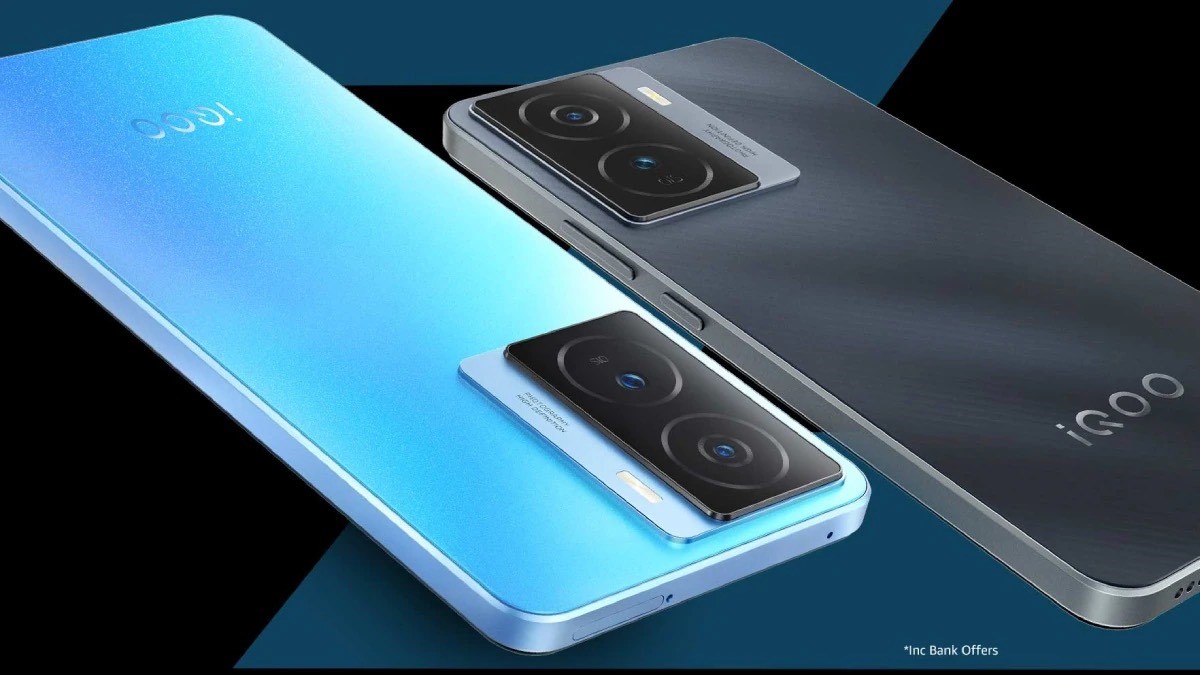
GOOGLE PIXEL 7A KEY SPECIFICATIONS

2
1
4
6
2 1 4 6

General

Launch Date April 27, 2023 (Unofficial)
Operating System Android v12

Performance

Chipset Google Tensor G2
CPU Octa core (2.8 GHz, Dual core, Cortex X1 + 2.25 GHz, Dual core, Cortex A76 + 1.8 GHz, Quad core, Cortex A55)
Co-Processor Titan M2
Architecture 64 bit
Fabrication 5 nm
Graphics Mali-G78 MP20
RAM 8 GB

Display

Display Type OLED
Screen Size 6.1 inches (15.49 cm)
Resolution 1080 x 2400 pixels
Aspect Ratio 20:9
Pixel Density 431 ppi
Bezel-less display Yes with punch-hole display
Touch Screen Yes, Capacitive Touchscreen, Multi-touch
Refresh Rate 90 Hz
Screen to Body Ratio (claimed by the brand) 84.3 %

Design

Waterproof Yes, Water resistant, IP67
Ruggedness Dust proof

Camera

MAIN CAMERA
Camera Setup Dual
Resolution 12.2 MP f/1.7, Primary Camera
12 MP f/2.2, Ultra-Wide Angle Camera
Autofocus Yes
Flash Yes, LED Flash
Image Resolution 4000 x 3000 Pixels
Settings Exposure compensation
Shooting Modes Continuous Shooting
High Dynamic Range mode (HDR)
Camera Features Digital Zoom
Auto Flash
Face detection
Touch to focus
Video Recording 3840×2160 @ 30 fps
1920×1080 @ 30 fps
FRONT CAMERA
Camera Setup Single
Resolution 8 MP f/2, Primary Camera
Video Recording 1920×1080 @ 30 fps

Battery

Capacity 4410 mAh
Type Li-Polymer
Removable No
Wireless Charging Yes
Quick Charging Yes, Fast
USB Type-C Yes

Storage

Internal Memory 128 GB
Expandable Memory No

Network & Connectivity

SIM Slot(s) Dual SIM, GSM+GSM
SIM Size SIM1: Nano, SIM2: Nano
Network Support 5G Not Supported in India, 4G Supported in India, 3G, 2G
VoLTE Yes
SIM 1
4G Bands:
TD-LTE 2300(band 40)
FD-LTE 1800(band 3)
3G Bands:
UMTS 1900 / 2100 / 850 / 900 MHz
2G Bands:
GSM 1800 / 1900 / 850 / 900 MHz
GPRS:
Available
EDGE:
Available
SIM 2
4G Bands:
TD-LTE 2300(band 40)
FD-LTE 1800(band 3)
3G Bands:
UMTS 1900 / 2100 / 850 / 900 MHz
2G Bands:
GSM 1800 / 1900 / 850 / 900 MHz
GPRS:
Available
EDGE:
Available
Wi-Fi Yes, Wi-Fi 4 (802.11 b/g/n)
Wi-Fi Features Mobile Hotspot
Bluetooth Yes
GPS Yes with A-GPS, Glonass
NFC Yes
USB Connectivity Mass storage device, USB charging

Multimedia

Loudspeaker Yes
Audio Jack USB Type-C

Sensors

Fingerprint Sensor Yes
Fingerprint Sensor Position On-screen
Fingerprint Sensor Type Optical
Other Sensors Light sensor, Proximity sensor, Accelerometer, Compass, Gyroscope

FAQs on Google pixel 7a

1) Google Pixel 7a -What is the price of Google Pixel 7a & what are the colours of google pixel 7a?

Ans) As far as the Google Pixel 7a is concerned, the device is said to arrive in a single 128GB storage variant in Europe. The device is tipped to launch in Arctic Blue, Carbon, and Cotton colour variants. There, however, might be a fourth colour option, dubbed Jade as well. The device is expected to be priced around EUR 500 (around Rs 44,000).

The device is expected to launch sometime in May 2023 and there are chances more than likely that the Google Pixel 7a will launch in India as well.

2) What are the details of Google Pixel 7a prototype on eBay?

Ans) The Pixel 7a device that was sold on eBay had a design similar to what the actual Pixel 7a will look like based on several leaks and rumours, but with one difference – the branding. Google’s “G” logo appears on the rear of Pixel devices, but this prototype contains a logo that looks more like a Pac-Man silhouette.

The listing on eBay showed that the seller tried to sell the prototype device for USD 5,000, but no one was interested in the price. So, the seller brought it all the way down to a starting bid of USD 1,650 (approx Rs 1,36,123.35). To keep things in perspective, the Pixel 7a’s rumoured price is said to be under USD 500 (approx Rs 41,000), as per a GizmoChina report.

As per the eBay listing, the Pixel 7a prototype is not functional and there’s no SIM tray. It goes into fastboot mode but the buyer could probably make it work. This Google Pixel 7a has 8GB of RAM and 128GB of internal storage, as per the listing.

3) What is Google Pixel 7a launch timeline, specifications?

Ans) A recent report says the Google Pixel 7a will likely be unveiled at the Google I/O 2023 on May 10th. Like the Pixel 7 and Pixel 7 Pro, the Google Pixel 7a will likely have a punch-hole screen and a rectangular strip-shaped camera island at the top of the back panel.

The smartphone is expected to have a 6.1-inch FHD+ OLED screen with a refresh rate of 90Hz and a cutout in the middle for the front-facing camera. It will probably sport a dual rear camera setup, comprising a 64MP Sony IMX787 main sensor and a 12MP secondary camera.

The Google Pixel 7a will probably be powered by the Tensor G2 chipset and paired with 8GB of RAM and 128GB of internal storage, which may not be expandable. The Google Pixel 7a should work with Android 13 out of the box, but it should get an update to Android 14 when it’s stable.

Also Read: Google Pixel Fold, Google Pixel 7a launch timeline, Price Leaked; Storage, Colour Options expected to launch in May at the Google I/O event

Also Read: Google Pixel 7a specifications leaked online ahead of official launch: wireless charging, Tensor G2 chipset, 64MP camera, Ahead of the Google I/O 2023
Also Read: Google Pixel 7a Images Leaked Online; Design, Specifications Revealed