WhatsApp Channels now supports message editing within a 30-day window.
Edited messages will have a special marker to indicate they’ve been altered.
No notifications are sent when a message is edited.
Editing is limited to text; media files remain unalterable.
WhatsApp is intensifying its focus on Channels, the feature that only recently became universally available this past September.
The company is unveiling a slew of new functionalities, including voice messages and stickers.
However, one update that stands out is the ability to edit messages within Channels, a feature many other social platforms have long offered.
Meta, WhatsApp’s parent company, is heavily concentrating on making Channels an engaging platform for both individuals and businesses.
Within Channels, what are generally referred to as “messages” are officially termed “updates” by WhatsApp.
Starting now, these messages come with an option for editing within a 30-day window after being posted.
To help users discern any alterations, edited messages will carry a marker next to their timestamps.
WhatsApp Message Editing
This effectively prevents any misuse, such as altering the original context or meaning of a message after it’s been seen.
Editing a message is straightforward.
On Android, simply long-press the message you want to edit in the Channel.
When the three-dot menu pops up, hit “Edit,” rewrite your message, and then tap the checkmark to confirm.
On web browsers, the procedure remains almost identical.
Hover over the message until a downward-facing caret appears, and then choose “Edit” from the dropdown menu.
Two additional clarifications from WhatsApp’s FAQs deserve mention.
First, an edited message won’t trigger a notification to other Channel users, making the edit discreet.
Secondly, the edit capability is limited to the text within the message; any media files such as photos or videos remain uneditable.
FAQs
How do I edit a message in WhatsApp Channels on Android?
Long-press the message, hit the three-dot menu, choose “Edit,” modify your message, and tap the checkmark to confirm.
What happens when a message is edited in WhatsApp Channels?
A marker will appear next to the message’s timestamp to indicate that it has been edited, offering transparency to users.
Will I receive a notification if a message is edited in a Channel?
No, WhatsApp has stated that users will not receive notifications for edited messages.
What types of content can be edited in WhatsApp Channels?
You can only edit the text within the message. Media content such as photos and videos cannot be edited.
Apple commits to next-gen CarPlay announcements in 2023
Seamless integration between the iPhone and multiple car displays promised
Radio and climate control could be operated via CarPlay
Top automakers like Land Rover, Audi, and Ford are on board
Remember the buzz Apple generated at WWDC 2022 around its CarPlay technology?
It left everyone eagerly waiting for a fusion of iPhone capabilities with automotive features.
Since then, it’s been a long and uneventful silence.
But as 2023 draws to a close, Apple reiterates that significant CarPlay updates are indeed in the pipeline for this year.
Interestingly, a fresh clue has been unearthed by 9to5Mac’s Chance Miller who discovered enticing details on Apple’s official CarPlay webpage.
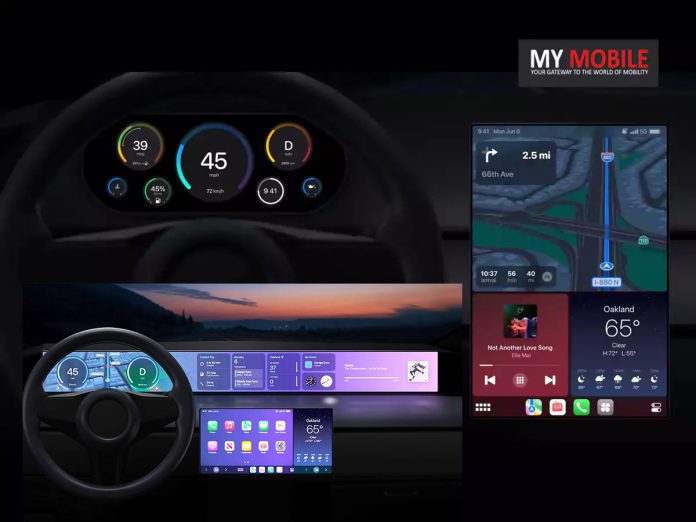
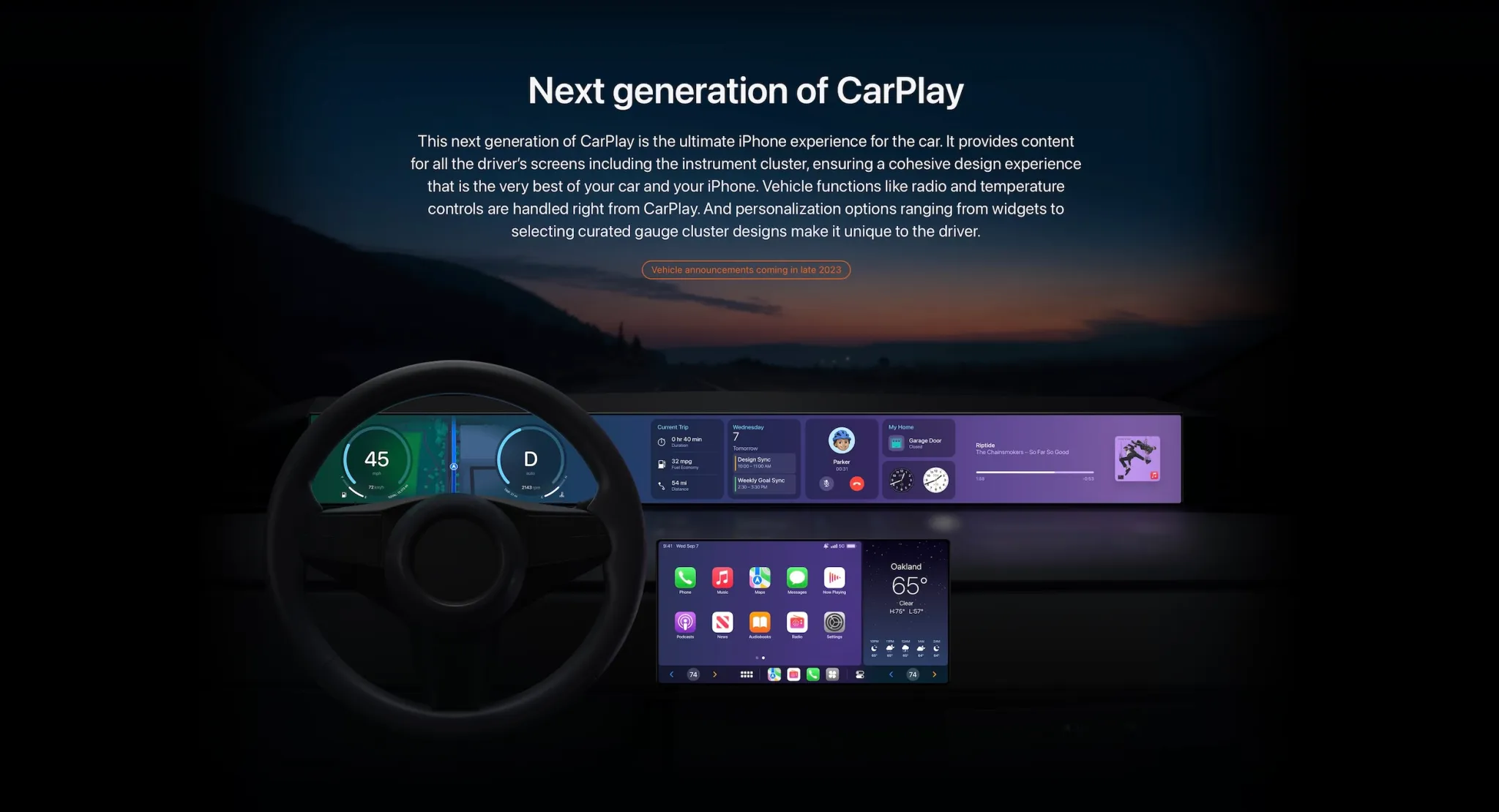
According to the tech giant from Cupertino, the upcoming version of CarPlay will offer an unparalleled integration between your iPhone and your car’s multiple displays, including the instrument cluster.
It aims to craft a seamless design experience that leverages the best of both the automobile and the iPhone.
Even in-car functions like radio tuning and climate controlcould be managed directly via CarPlay.
Apple CarPlay
And to add a personal touch, drivers will be able to customize features ranging from widgets to specialized gauge cluster layouts.
Furthermore, Apple reassures its commitment to a late 2023 timeline for these “vehicle announcements.”
Miller interprets this as a positive sign that Apple remains on schedule to fulfill its promise.
As a refresher, numerous automakers are already on board with Apple’s next-gen CarPlay vision.
These include prominent names like Land Rover, Mercedes Benz, Lincoln, Audi, Volvo, Honda, Porsche, Nissan, Ford, Jaguar, Acura, Polestar, Infiniti, and Renault.
So, as we edge closer to the end of 2023, anticipation builds for what could be a game-changing evolution in how we interact with our cars, all thanks to Apple’s CarPlay.
FAQs
What is Apple’s next-gen CarPlay all about?
The forthcoming CarPlay aims to integrate iPhone features seamlessly with your car, including control of radio and climate functions directly via CarPlay.
Is Apple on track for its late 2023 announcements?
According to 9to5Mac’s Editor-in-Chief, Apple’s unchanged timeline suggests that the company is likely to meet its late 2023 target for new CarPlay features.
Which automakers have partnered with Apple for next-gen CarPlay?
Brands like Land Rover, Mercedes Benz, Audi, and Ford are among the many automakers that have aligned with Apple’s vision for next-gen CarPlay.
Will the next-gen CarPlay offer customization options?
Yes, Apple has teased that drivers will have personalization options such as widgets and specialized gauge cluster layouts to make the CarPlay experience unique.
Apple’s 30-minute Scary Fast event filmed entirely on iPhone 15 Pro Max
Sophisticated editing transforms smartphone footage into polished presentation
Mac accessories still clinging to Lightning ports
New 24-inch iMacs also feature Lightning-only peripherals
Apple has long championed the videography capabilities of its iPhones, but this time, the tech giant took it to an unprecedented level.
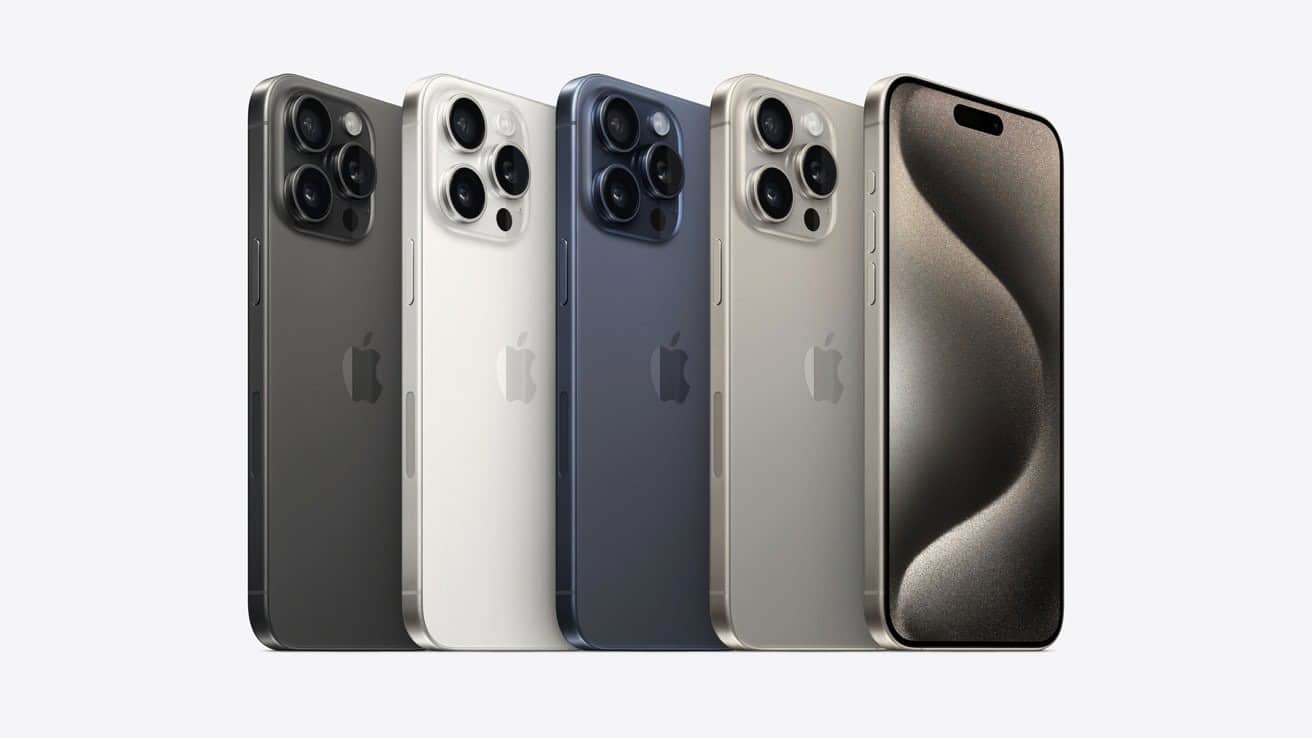
During the “Scary Fast” eventthat marked the unveiling of its new Mac models, Apple disclosed that the entire 30-minute presentation was filmed using the iPhone 15 Pro Max.
While the post-production was unsurprisingly executed on a Mac, the initial feat of capturing the event on a smartphone is nothing short of groundbreaking.
iPhone 15 Pro Max
It’s worth mentioning that achieving a final product of this quality would have required much more than merely hitting the record button on an iPhone.
Detailed planning, a skilled crew, and sophisticated editing software would have been necessary to elevate the smartphone’s raw footage to a polished presentation.
Yet, this serves as an astounding testament to what the iPhone 15 Pro Max’s hardware is capable of when wielded by experts.
This achievement sets a new benchmark in the domain of smartphone videography, displaying that under the right circumstances, a phone camera can rival more specialized equipment.
Mac Accessories: The Persistence of Lightning Ports
While the event showcased impressive advancements in technology, one area that seemed conspicuously static was Apple’s range of Mac accessories.
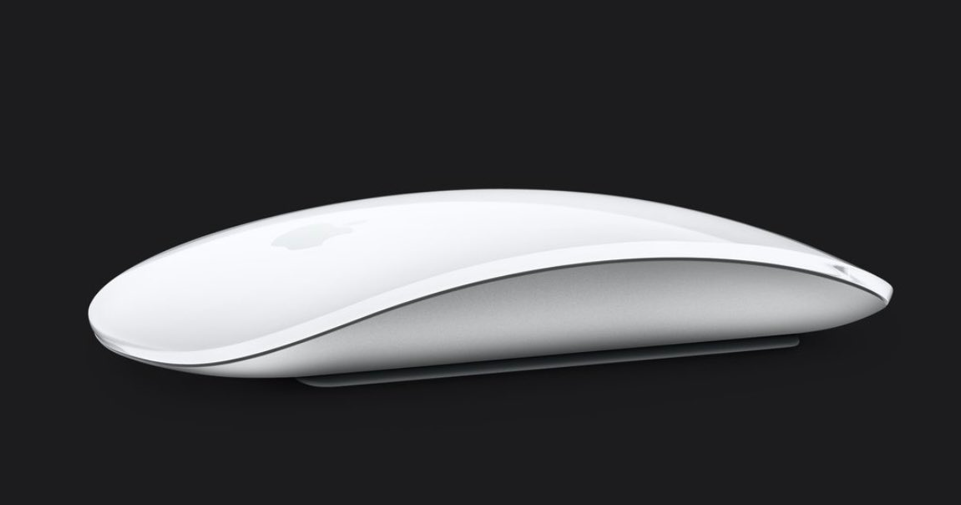
Contrary to hopes that Apple would embrace USB-C ports for its peripherals, the company continues to offer its Magic Mouse, Magic Trackpad, and Magic Keyboard exclusively with Lightning ports.
Apple Magic Mouse
This status quo also extends to the new 24-inch iMac models, which ship with Lightning-enabled accessories and a Lightning-to-USB-C cable included.
For tech enthusiasts who looked forward to streamlining their array of cables, especially following the launch of the iPhone 15, this is indeed a disappointment.
The company’s reluctance to transition completely to USB-C ports for its accessories is perplexing, given its push towards this standard in other product categories.
FAQs
Was the Scary Fast event really filmed on an iPhone 15 Pro Max?
Yes, Apple revealed that the entire 30-minute event was filmed using their latest iPhone 15 Pro Max, followed by post-production editing on a Mac.
What does this mean for smartphone videography?
This is a significant milestone, showcasing the high-quality videography capabilities of smartphones, particularly the iPhone 15 Pro Max, when used skillfully.
Are Mac accessories finally moving to USB-C?
No, despite anticipation, Apple continues to feature Lightning ports in its Magic Mouse, Magic Trackpad, and Magic Keyboard.
Do the new 24-inch iMacs have USB-C peripherals?
No, the new iMacs still come with Lightning accessories and include a Lightning-to-USB-C cable in the box.
A 14-inch mini-LED display with ProMotion technology sets new visual benchmarks.
Powered by Apple’s next-generation M3 chip, this laptop balances performance and cost.
Modern connectivity features such as HDMI, MagSafe, and an SD card reader are included.
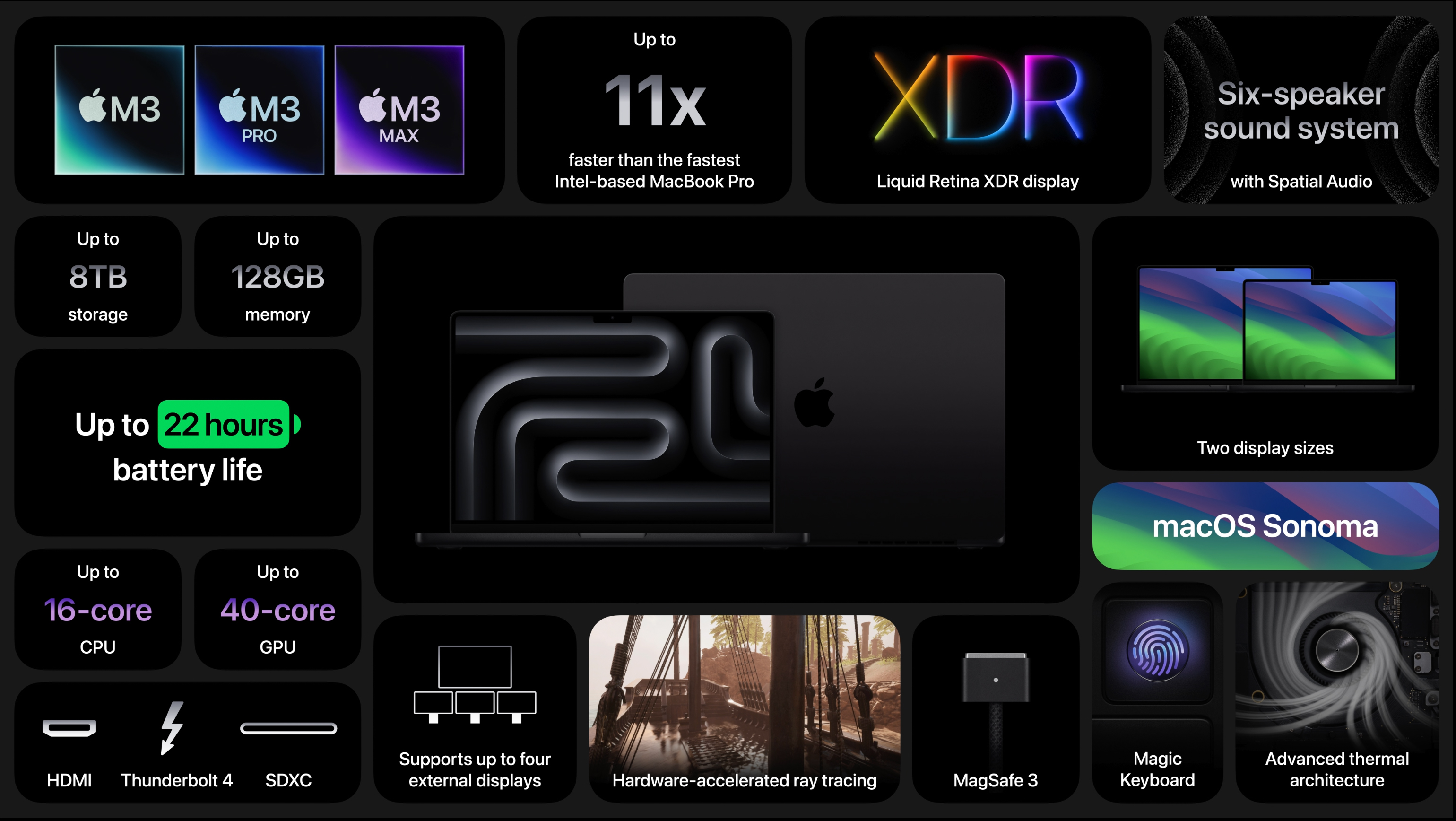
Significant improvements in battery life, clocking 22 hours of video playback.
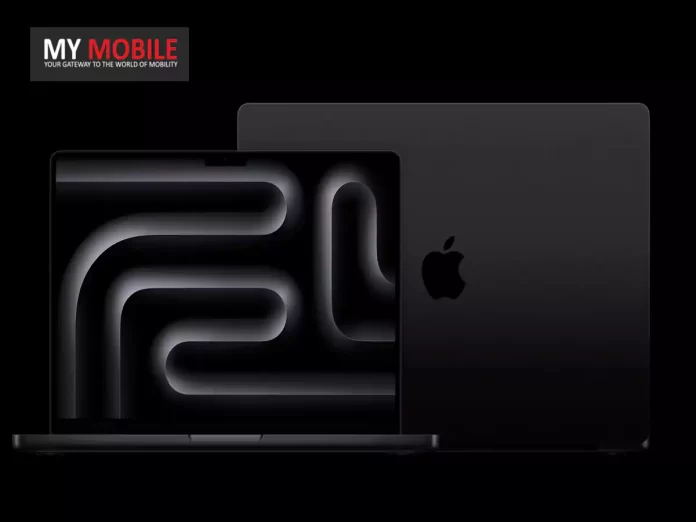
Apple took the lid off a series of new MacBook Pro models, all centered around the company’s next-generation M3 chip architecture.
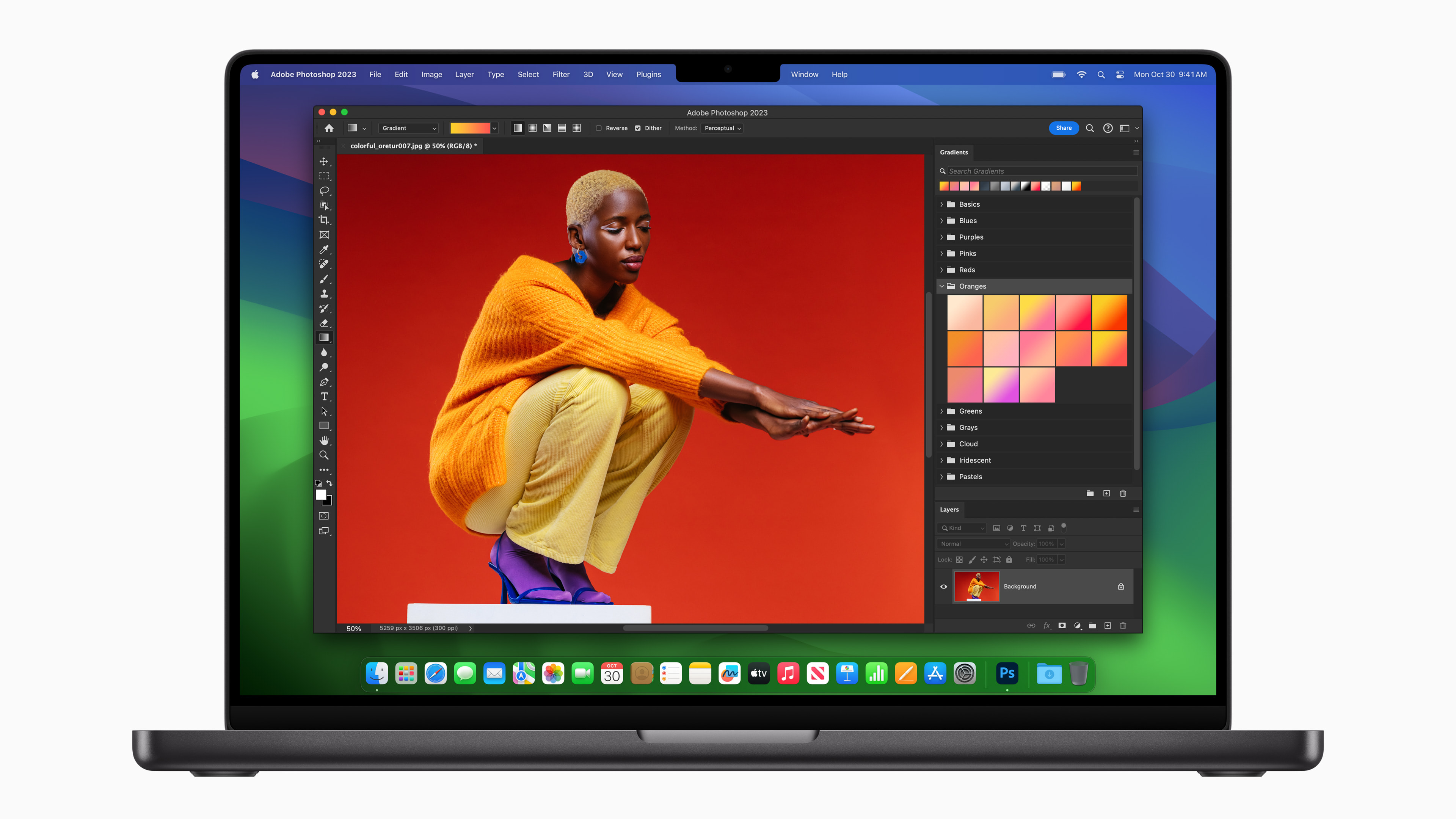
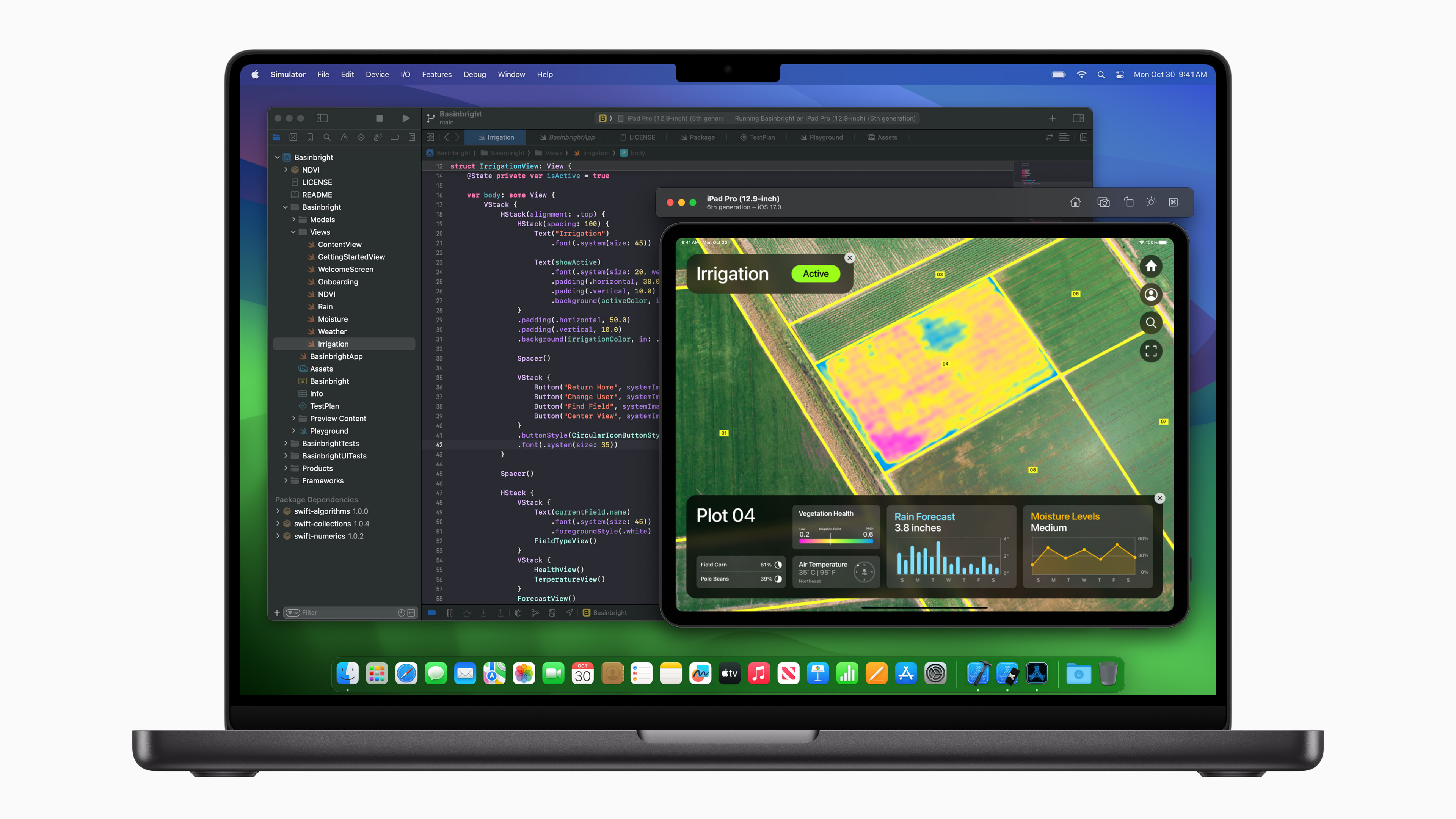
Within this lineup, the 14-inch base M3 MacBook Pro has stood out as an intriguing alternative to its more lavish siblings.
This will be Apple’s new baseline MacBook Proas we bid farewell to the 13-inch model.
But how does this base variant of the M3 MacBook Pro 14-inch compare to the rest of its siblings?
Let’s find that out in this comparison.
Base M3 MacBook Pro: Reimagining the Entry-Level Laptop
M3 MacBook Pro: Laptops
The discontinuation of the 13-inch MacBook Pro clears the path for the base version of the 14-inch MacBook Pro to shine.
This is not a watered-down iteration; it packs a substantial feature list that often mirrors its more expensive counterparts.
Display Quality and Visual Experience
Mini-LED Display: The device boasts a 14-inch mini-LED display that promises rich colors and deep blacks.
ProMotion Technology: This feature enables a 120Hz refresh rate, allowing for smoother scrolling and more fluid graphical transitions.
Peak Brightness: With a peak brightness level of up to 1600 nits, the screen is clearly visible even in intensely lit environments.
Modern Connectivity Options
HDMI and SD Card Reader: The laptop includes an HDMI port and an SD card reader, catering to both entertainment and professional needs.
1080p Webcam: A significantly upgraded webcam offers improved video conferencing capabilities.
MagSafe, Wi-Fi 6E, Bluetooth 5.3: Advanced connectivity features like MagSafe charging, Wi-Fi 6E, and Bluetooth 5.3 are not compromised in this entry-level version.
M3 MacBook Pro: Laptops Features
Economics of the Base Model: Features vs Cost
While it’s tempting to compare this model with the high-end versions featuring the M3 Pro and M3 Max chips, several factors set the entry-level model apart.
Default RAM: This model starts at 8GB of RAM compared to the higher default of 18GB in the more premium versions.
USB-C Limitations: The device only features two USB-C/Thunderbolt ports, which may require users to invest in additional dongles or hubs.
Single Fan Architecture: Unlike its dual-fan siblings, this model operates with a single internal fan, which could result in less efficient cooling under heavy workloads.
Chip Dynamics: A Dive Into the Processor Specs
Base M3 Chip: Designed with an 8-core CPU and a 10-core GPU, the base M3 chip is no slouch. However, the M3 Pro and Max Chips come with up to 16 CPU cores and can reach up to 40 GPU cores.
Common Features: All these chip versions support advanced AV1 decode and ray-tracing technologies, making them future-proof to some extent.
Memory and Storage: Scalability Constraints
Maximum RAM and Storage: While premium models can go up to 128GB RAM and a whopping 8TB of storage, the base model limits to 24GB of RAM and 2TB of storage, which may be more than sufficient for average users but could limit power users.
Battery Life: What Has Changed?
The new MacBook Pro models have achieved improvements in battery longevity, particularly evident when watching video content:
16-inch M3 Pro and Max Models: These offer 22 hours of video playback, a slight but meaningful bump from the 21 hours offered by the previous M2 Pro/Max versions.
14-inch Base M3 Model: This new model also hits the 22-hour mark, significantly improving from the 17-hour battery life on the M2 Pro or Max versions of the same size.
FAQs
What differentiates the 14-inch base M3 MacBook Pro from its higher-end siblings?
The base M3 model starts with 8GB of RAM, two USB-C ports, and a single cooling fan, whereas higher-end models offer more RAM, additional ports, and better cooling systems.
Does the 14-inch base M3 MacBook Pro support the latest connectivity options?
Yes, it includes advanced connectivity features like HDMI, MagSafe charging, Wi-Fi 6E, and Bluetooth 5.3.
How does the new base M3 MacBook Pro’s battery life compare to previous models?
The new 14-inch model offers a 22-hour video playback battery life, marking a significant five-hour improvement over older 14-inch M2 Pro or Max versions.
Is the new M3 chip in the 14-inch base model future-proof?
The base M3 chip supports advanced AV1 decode and ray-tracing technologies, making it a future-proof choice to some extent.
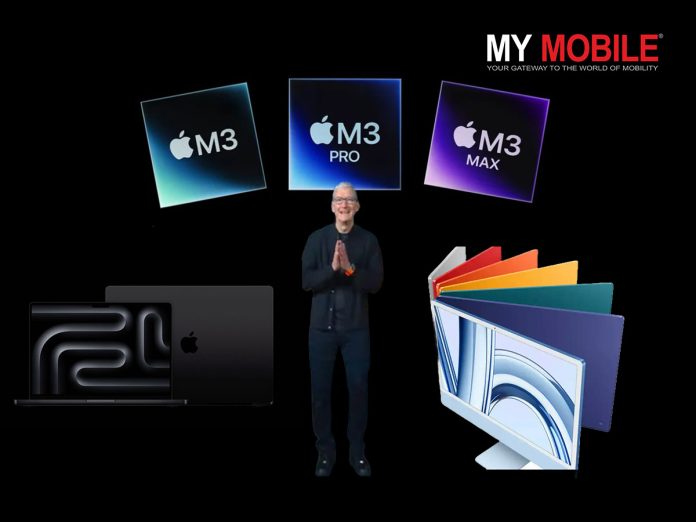
Introduction of the game changing M3, M3 Pro, and M3 Max chipsets.
14-inch MacBook Pro replaces the 13-inch model, boasting enhanced performance.
16-inch MacBook Pro arrives with exclusive Pro and Max chipset options.
24-inch iMac upgraded with the M3 chip, maintaining its iconic design.
Apple’s latest event, aptly named “Scary Fast,” unveiled a suite of transformative updates that are set to disrupt the computing landscape.
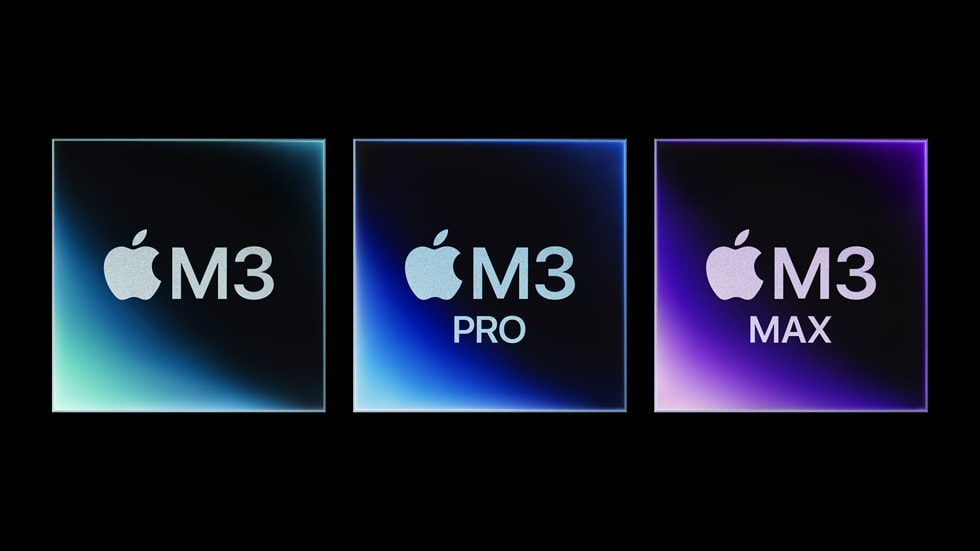
Front and centre were the new M3 chipsets, including not just the base M3 but its more potent siblings, the M3 Pro and M3 Max.
The unveiling signals the end of the 13-inch MacBook Pro, introducing its successor — the 14-inch MacBook Pro with M3.
Here’s everything you need to know.
Introduction to Apple’s M3 Chipsets
Apple’s M3 Chipsets
A surprise came in the form of not just one, but three chipsets in the M3 family.
Initially expected was the M3; however, Apple stunned the audience with the additional announcement of the M3 Pro and M3 Max.
These chipsets mark the first time Apple has implemented a 3-nanometer process, creating a significant technological leap over the existing M1 and M2 chips.
The M3 chipset brings along a quicker CPU and a redesigned GPU architecture,focusing on Dynamic Caching, which, according to Apple, considerably elevates GPU output.
Hardware-accelerated ray tracing and mesh shader support debut in Apple’s GPUs with the M3, reportedly offering a 60 percent boost in graphics performance compared to the M1.
In terms of specific hardware configurations, the base M3 comes with an eight-core CPU and either an eight-core or 10-core GPU.
The M3 Pro advances to a 12-core CPU and an 18-core GPU.
Meanwhile, the top-tier M3 Max features a 16-core CPU and a whopping 40-core GPU, also supporting up to 128GB of Unified Memory.
Introduction of 14-inch MacBook Pro with M3
14-inch MacBook Pro with M3
Apple’s 13-inch MacBook Pro is now officially a relic as the company has phased it out in favour of the 14-inch MacBook Pro, which is offered with the base M3 chip.
The new laptop starts at $1,599 and is set to hit the market on November 7.
Compared to its 13-inch predecessor with the M1 chip, Apple says that the 14-inch model promises a 60 percent speed boost in rendering performance in Final Cut Pro, 40 percent speedier code compilation, and improved spreadsheet performance by 40 percent.
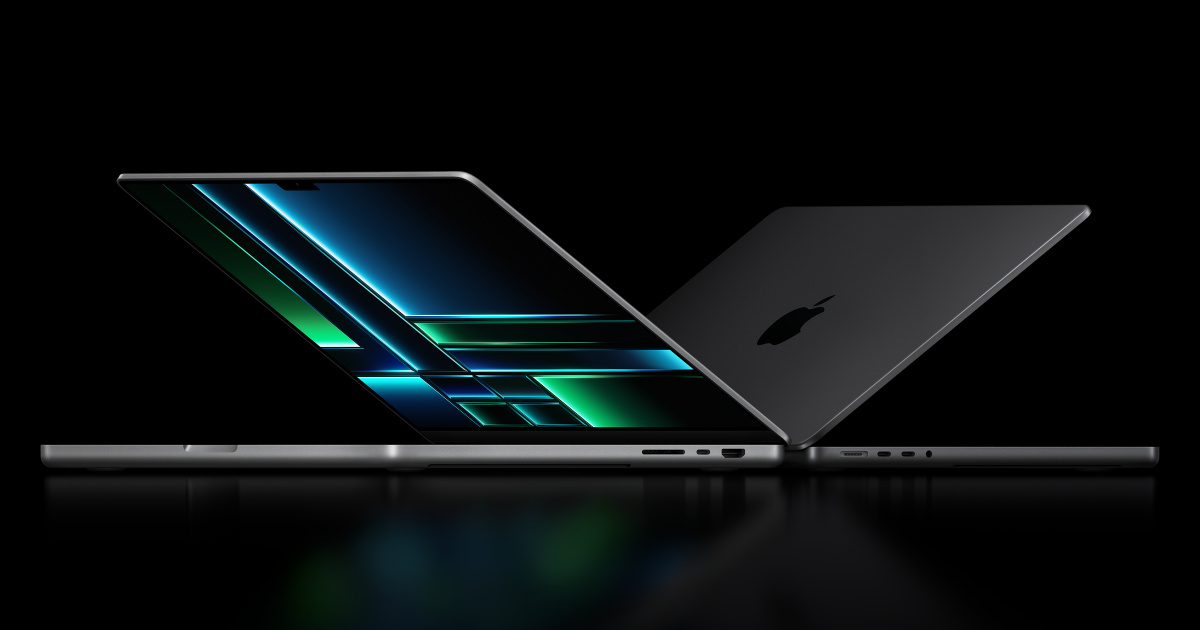
Upgraded 14-inch and 16-inch MacBook Pros with M3 Pro/Max
The 14-inch MacBook Pro can also be equipped with the M3 Pro or M3 Max, and a 16-inch variant is available exclusively with the Pro or Max chips.
Prices for these configurations start at $2,000 and $2,500, respectively.
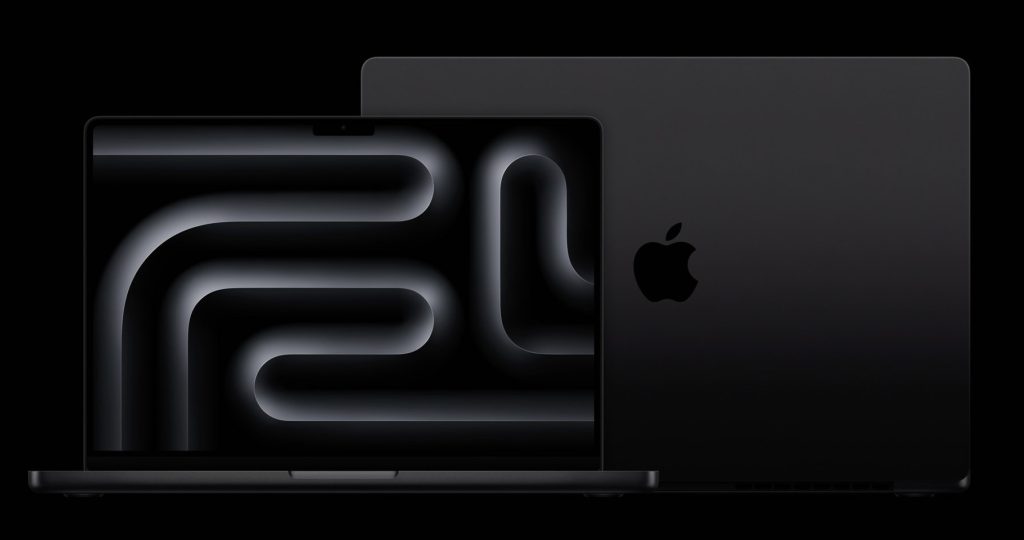
A fresh colour, Space Black, joins the palette, available only for Pro and Max models.
Apple also made updates to the Liquid Retina XDR display, now boasting up to 1,600 nits in peak brightness in HDR and 600 nits in SDR.
MacBook Pro: Space Black
Battery longevity is another talking point, with up to 22 hours promised for the 14-inch MacBook Pro with M3.
Although the battery performance is expected to be slightly less impressive with the M3 Pro and Max variants, Apple continues to lead in the realm of laptop battery life.
24-inch iMac Reimagined with M3
24-inch iMac Reimagined with M3
The iMac series also received an update, with the 24-inch model now featuring the M3 chipset. Starting at $1,300, it is available for purchase now and will arrive in stores on November 7.
This new iMac is twice as fast as its predecessor, according to Apple, while retaining its seven-colour options and 4.5K Retina display.
Connectivity enhancements include support for Wi-Fi 6E and Bluetooth 5.3. USB-C ports have also been expanded, although the base model retains only two.
The 14-inch model featuring the M3 Pro chip begins at Rs 1,99,900, or Rs 1,84,900 for educational purchases.
Meanwhile, the starting cost for the 16-inch MacBook Pro is Rs 2,49,900, and for educational buyers, it’s Rs 2,29,900.
FAQs
What are the M3, M3 Pro, and M3 Max chipsets?
Apple’s newly announced M3 chipsets include the base M3 as well as the more powerful M3 Pro and M3 Max. These chips are fabricated using a 3-nanometer process and offer significant improvements in CPU and GPU performance.
What’s new in the 14-inch MacBook Pro?
The 14-inch MacBook Pro replaces the older 13-inch model and comes with the base M3 chip. It offers improved performance in areas like rendering, code compilation, and spreadsheets. It is priced starting at $1,600.
Are there any changes to the 16-inch MacBook Pro?
Yes, the 16-inch MacBook Pro has been updated and now exclusively features either the M3 Pro or M3 Max chipsets. The pricing starts at $2,500 and it includes an improved Liquid Retina XDR display.
What upgrades does the 24-inch iMac see?
The new 24-inch iMac now incorporates the M3 chip, doubling its performance compared to its predecessor. It also adds updated connectivity options like Wi-Fi 6E and Bluetooth 5.3.
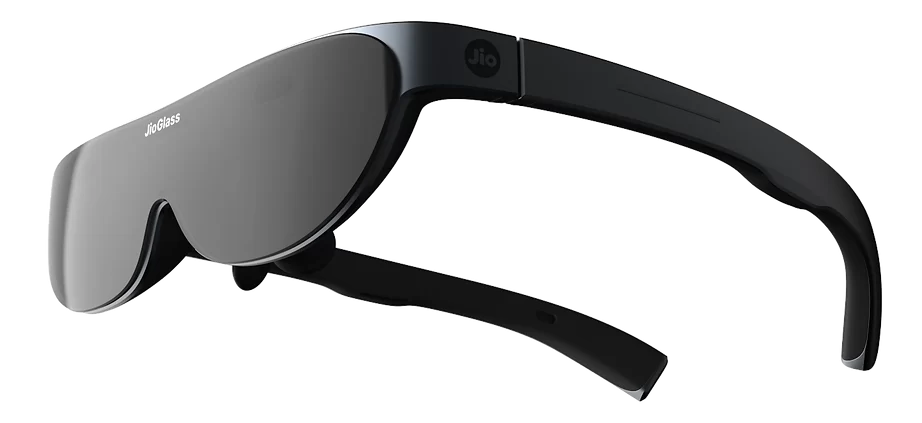
JioGlass weighs just 69 grams and features a sleek metallic grey frame.
Equipped with 1080p displays in each lens, mimicking a 100-inch virtual screen.
Switch between Augmented Reality and Virtual Reality modes with a removable flap.
Connect and charge the JioGlass using a Type-C cable linked to your smartphone.
Capturing attention at the Indian Mobile Congress this year, Jio’s booth showcased the JioGlass, a pair of innovative smart glasses that can project your smartphone’s content onto a large, immersive virtual display.
A product of Tesseract, which was acquired by Reliance Industries Limited (RIL) in 2019, the JioGlass proudly represents the ‘Make in India’ initiative as a flagship device craftedwithin the country’s borders.
As of right, the JioGlass has been said to “come out soon”, with no indications of possible pricing.
Design and Versatility
With a weight of only 69 grams, these glasses are not only portable but also highly comfortable for extended use.
They sport a stylish metallic grey frame that accommodates two 1080p lenses, creating a virtual display akin to a 100-inch screen.
Users can toggle between Augmented Reality (AR) and Virtual Reality (VR) experiences thanks to a removable flap situated behind the frame’s chrome finish.
Opening the flap provides an immersive VR experience, blocking out the surrounding environment, while closing it overlays the real world with augmented reality information.
But the JioGlass is not merely a device for isolated experiences.
It supports virtual meetings, where participants can appear as either 3D holograms or 2D avatars.
Additionally, the glasses facilitate multitasking by allowing the integration of up to three virtual screens into the user’s workflow.
JioGlass Revealed at IMC 2023
Gaming Features
For those interested in gaming, the JioGlass offers an absorbing experience by enabling connectivity with gaming consoles and PCs.
It doesn’t end there; educational content is also available through JioImmerse, offering interactive materials in subjects like Science, Mathematics, and English.
Adding to its multifaceted capabilities, Jio has unveiled its JioImmerse XR Store, claimed to be India’s most extensive library of 3D content and apps.
This includes not only JioCinema movies and TV shows that can be enjoyed on the device’s 100-inch virtual screen but also educational and gaming apps that take full advantage of VR capabilities.
One of the highlights is JioVerse, a collection of curated VR content.
Audio Immersion
Sound is another feature where the JioGlass shines.
Speakers located on the sides above the ears can generate multi-directional audio for a more engaging and lifelike auditory experience.
Finally, a Type-C cable is needed to connect the glasses to a smartphone, serving the dual purpose of data transfer and charging the device.
All in all, the JioGlass marks a significant leap in AR and VR technology, proudly originating from India.
FAQs
What is the weight of the JioGlass?
JioGlass is extremely lightweight, weighing only 69 grams, making it comfortable for extended use.
How do you switch between AR and VR modes?
The JioGlass comes with a removable flap behind its chrome finish. Open the flap for a VR experience or close it for an AR experience.
What kind of display does the JioGlass have?
Each lens in the JioGlass features a 1080p display, creating a virtual screen as large as 100 inches for an immersive experience.
How do you connect and power the JioGlass?
A Type-C cable is needed to connect the JioGlass to a smartphone. This same cable also charges the device.
New update includes in-app polling with up to four choices.
Poll duration currently fixed at 24 hours, no options for modification.
Android keyboard-based GIF insertions still not supported.
In its ongoing quest to catapult Threads into the billion-user club, Meta is infusing the app with intriguing features.
According to a recent announcement by Mark Zuckerberg, Meta’s latest update to Threads includes a native GIF picker and poll functionalities.
While the introduction of a native GIF picker is a welcome change, it’s worth noting that Threads continues to restrict Android keyboard-based GIF insertions.
This limitation, which comes despite the widespread compatibility seen in other applications, has caused some discontent among Android users.
The Latest Additions to Threads
Latest Additions to Threads
Let’s delve into the specifics.
The newly launched GIF picker within the app is Threads’ native solution for animated images.
While Android users may be disappointed by the lack of support for GIF insertions via keyboards like Gboard, the native feature does offer a semblance of that experience within the Threads environment.
On the other hand, the polls feature has been implemented in a straightforward manner. Users are afforded the ability to include up to four choices when creating a new poll.
However, the feature currently offers little flexibility, with the poll duration fixed at 24 hours and no current options to modify it.
Interestingly, the Threads web app has yet to receive support for polls, leaving a gap in the platform’s feature parity.
Android GIF Restrictions
Android GIF Restrictions
Though the inclusion of an in-app GIF picker is appreciated, the continued restrictions on Android’s GIF keyboard functionality have been received with some annoyance.
The message users receive when trying to use a Gboard GIF states that Threads has not yet added support for this feature.
This has raised eyebrows, especially given that most competing apps already offer this functionality.
FAQs
What new features has Threads introduced?
Threads has launched a native GIF picker and a polls feature in its latest update. Users can now add animated images and conduct polls directly within the app.
Is the GIF picker also available for Android users?
Yes, but with limitations. Although the app has its own GIF picker, it still blocks GIF insertions from Android keyboards like Gboard.
How does the new polls feature work?
Users can add up to four choices while creating a new poll in Threads. The poll runs for 24 hours, and currently, there is no option to modify the time.
Is the polls feature available on the Threads web app?
No, as of the latest update, the polls feature has not yet been extended to the Threads web app.
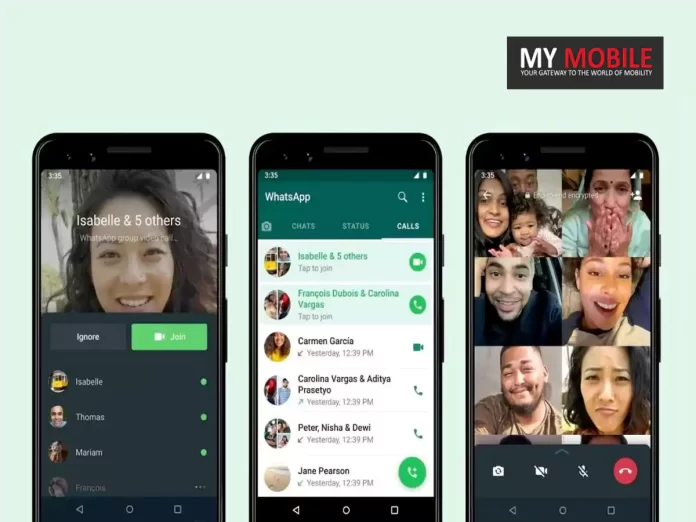
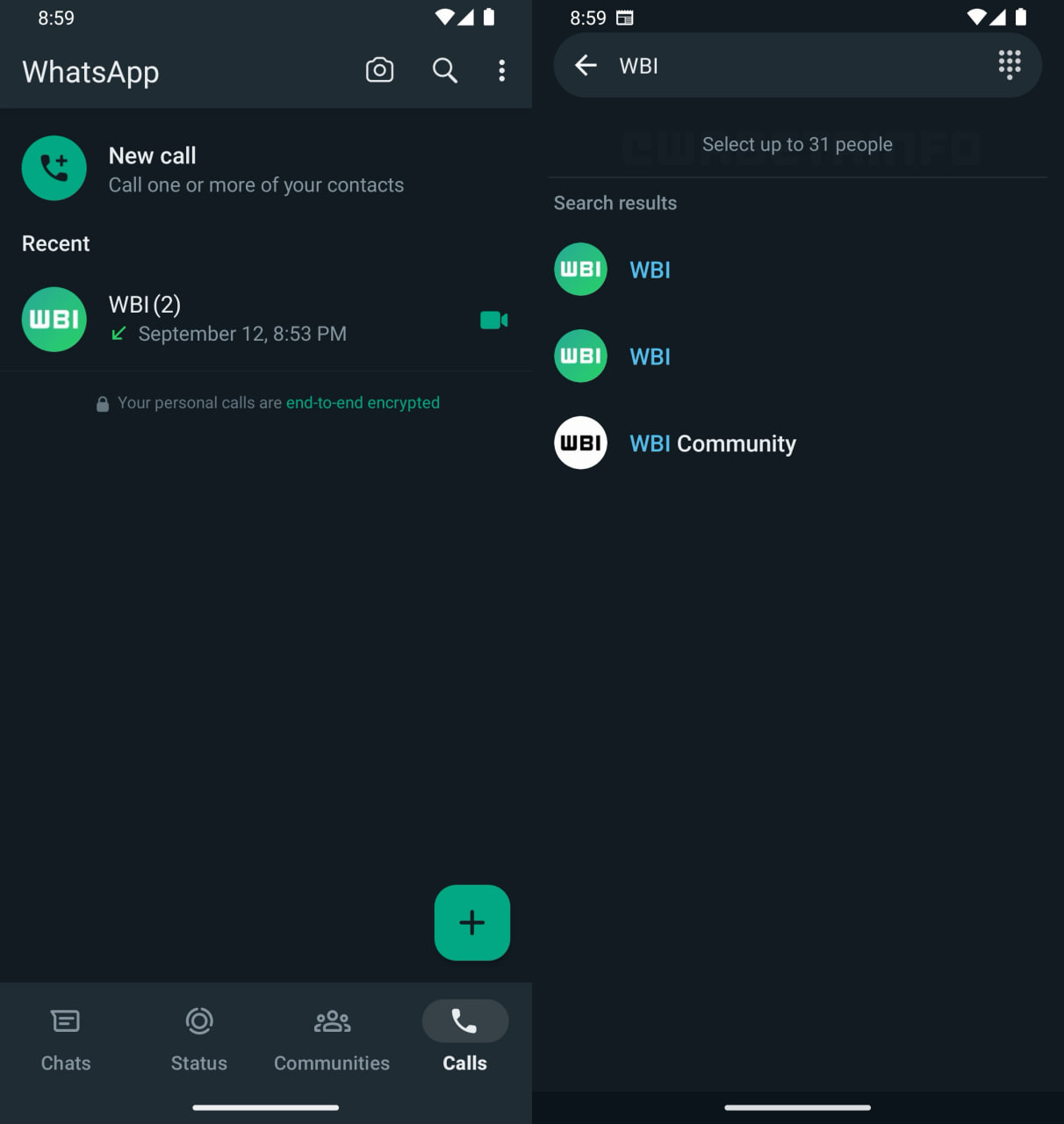
WhatsApp now allows group calls with up to 31 participants, up from the previous limit of 15.
The new feature streamlines the group calling process, allowing users to add all 32 participants from the start.
Initially rolled out for iOS users, the feature is expected to reach Android devices soon.
WhatsApp has introduced a new update that significantly enhances the group calling feature.
Prior to this update, WhatsApp users were confined to initiating group calls with a rather limited 15 participants.
This was an improvement from an even more restricted number of 7, but the latest development takes it up several notches, allowing for a group call that can include up to 31 participants.
The Streamlined Calling Experience
The real highlight of this update is the user-friendly experience it aims to deliver. Previously, the group call feature only allowed you to initiate a call with 15 participants, requiring additional users to join later.
This often interrupted the flow of the conversation and could be cumbersome to manage. Now, the app enables the initiation of a call right from the start with all 32 participants, including the host.
For WhatsApp’s sizable user base, this offers a more streamlined and enriched group calling experience.
How to Use the Feature
Using the feature is straightforward.
Simply open the group chat, tap on either the Video or Voice call button, and you’re good to go.
If the group has more than 32 members, you’ll need to choose who to include in the call.
But if it’s 32 or fewer, the call starts instantly. This simplifies the entire process, making it far more efficient and enjoyable for users.
WhatsApp Now Allows Group Calls with up to 31 Participants
The Rollout
Currently, this feature has been rolled out to iOS users and is expected to be available for Android users soon.
This phased approach helps WhatsApp ensure that the new feature integrates smoothly across different platforms.
Added Layer of Privacy
In addition to the group calling feature, WhatsApp is also in the development stages of another interesting update—enabling users to hide locked chats.
Currently, if you have a locked chat, anyone who has access to your phone can see that such a chat exists.
The new feature aims to hide these chats, only revealing them when a secret code is entered in the search bar.
While this feature is still under development, it is definitely a step forward in enhancing user privacy and security.
FAQs
How many people can now participate in a WhatsApp group call?
The latest update allows for a group call to include up to 31 participants, making it 32 including the host.
How does this new feature improve the group calling experience?
Previously, initiating a group call allowed you to start with 15 participants, requiring others to join later. The new feature allows you to add up to 31 participants right from the start, providing a more streamlined experience.
Is this feature available for Android users?
Currently, the feature is available for iOS users. However, it is expected to be rolled out for Android users in the near future.
What are the additional features being developed by WhatsApp?
WhatsApp is working on a feature that will allow users to hide their locked chats, providing an extra layer of privacy and security.
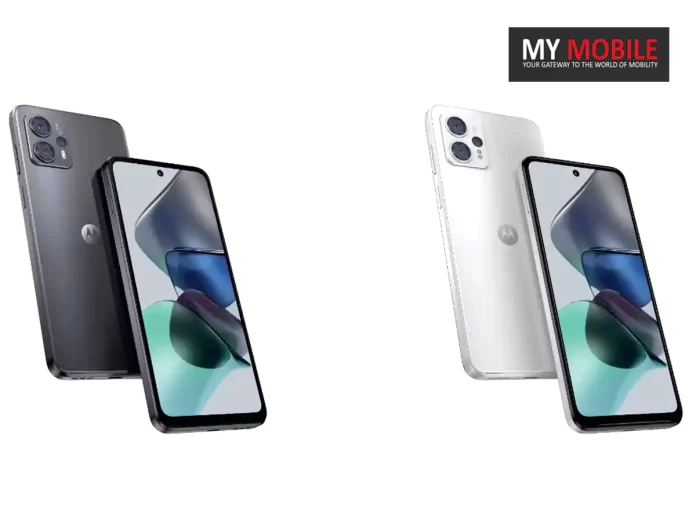
Following the recent unveilings of the Moto G14, Moto G54 5G, and Moto G84 5G, the tech giant is setting the stage for yet another mid-range marvel— the Moto G24.
This newcomer has just popped up on Geekbench, revealing some compelling details about its hardware prowess.
Geekbench Scores
Motorola appears to be aiming for competitive performance with the Moto G24.
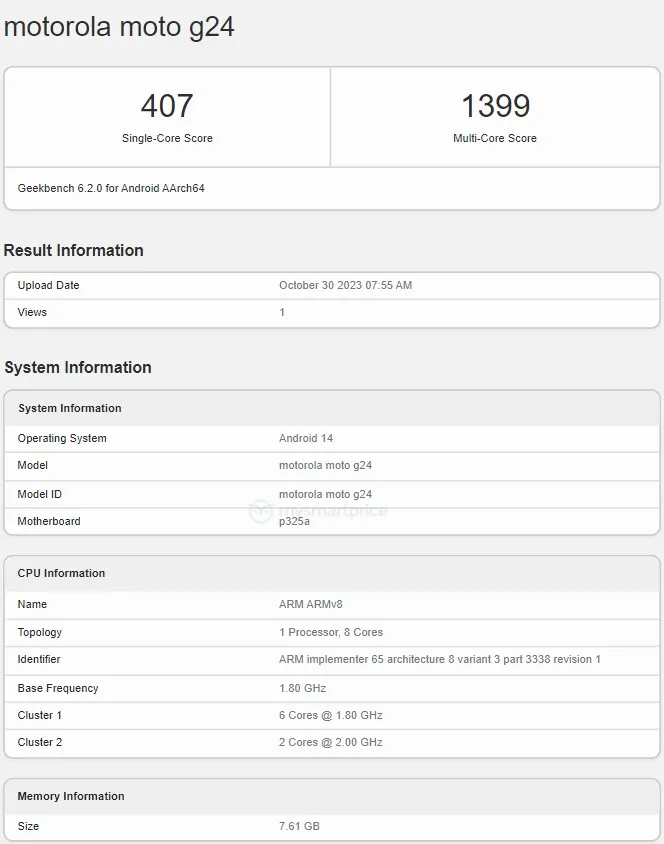
Spotted first by MySmartPrice, on Geekbench 6, the device scored 407 and 1399 points in the single-core and multi-core tests, respectively.
These scores suggest that the handset will likely offer a balanced performance, making it a solid contender in the mid-range market.
Moto G24 Spotted on Geekbench
Moto G24: Possible Features
A closer examination of the Geekbench listing hints at an octa-core MediaTek Helio SoC, equipped with a 2 + 6 core configuration.
The cores are clocked at 2.00GHz and 1.80Hz, implying that the device is optimized for both power efficiency and speed.
Accompanying this processor is an impressive 8GB of RAM.
However, the likelihood of additional memory configurations should not be dismissed, providing potential users with more options to suit their needs.
While the Geekbench data sheet doesn’t clearly indicate which MediaTek Helio chipset the Moto G24 will house, signs point toward the Helio G85.
The Mali G52 GPU included in the listing further supports this presumption.
If this proves accurate, it means the Moto G24 will follow in the footsteps of its predecessor in terms of processing power.
Adding another feather to its cap, the Moto G24 is expected to come pre-loaded with Android 14, the latest version of Google’s operating system.
This not only assures users of up-to-date software features but also enhances the device’s future-proof credentials.
FAQs
What are the Geekbench scores of Moto G24?
The Moto G24 scored 407 points in the single-core and 1399 points in the multi-core Geekbench 6 tests. These scores suggest that the phone aims to offer balanced performance.
What kind of processor does the Moto G24 have?
While it’s not explicitly mentioned, the Geekbench listing points to an octa-core MediaTek Helio SoC. The chipset is likely to be the MediaTek Helio G85, based on the mentioned Mali G52 GPU.
How much RAM will the Moto G24 feature?
The Geekbench listing indicates that the Moto G24 will house 8GB of RAM. Other memory configurations may also be available.
Which version of Android will come pre-loaded on the Moto G24?
The device is expected to come with Android 14 pre-loaded, offering users the latest software features and updates.
Xiaomi 14 Pro introduces new Snapdragon 8 Gen 3 chipset and HyperOS.
Significant display enhancements with peak brightness reaching 3,000 nits.
Modest camera updates but significant software improvements.
HyperOS replaces MIUI, focusing on AI and smart device integration.
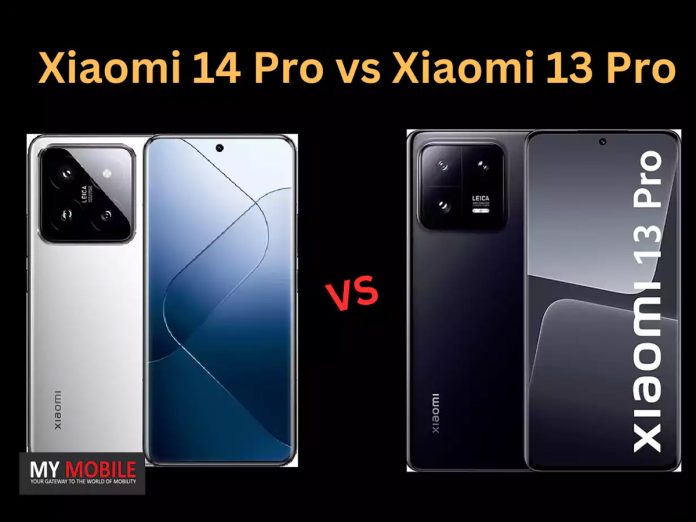
As technology enthusiasts await the global release of Xiaomi’s newest flagship devices, the Xiaomi 14and 14 Pro, it’s pertinent to explore how the new offerings compare to last year’s Xiaomi 13 Pro.
The 14 series made its debut in China, raising eyebrows with its Qualcomm Snapdragon 8 Gen 3 chipsetand the new HyperOS, which has replaced MIUI.
With no shortage of innovations, let’s delve into a head-to-head comparison between the Xiaomi 14 Pro and its predecessor, the Xiaomi 13 Pro.
Description
Xiaomi 14 Pro
Xiaomi 13 Pro
Chipset
Qualcomm Snapdragon 8 Gen 3
Qualcomm Snapdragon 8 Gen 2
OS
HyperOS based on Android 14
MIUI 13 based on Android 13
Display
6.7-inch QHD+ OLED, 3000nits
6.7-inch QHD+ OLED, 1,900nits
Camera
50MP main sensor, 50MP telephoto with 3.2x optical zoom, 50MP ultra-wide
50MP main sensor, 50MP telephoto with 3.2x optical zoom, 50MP ultra-wide
RAM and Storage
Up to 16GB LPDDR5X RAM, Up to 1TB UFS 4.0 storage
Up to 12GB LPDDR5X RAM, Up to 512TB UFS 4.0 storage
Battery and Charging
4,880mAh, 120W
4,820mAh, 120W
Design
Xiaomi 14 Pro: Design
In the design department, Xiaomihas long been perceived as crafting devices reminiscent of Apple’s iPhone series.
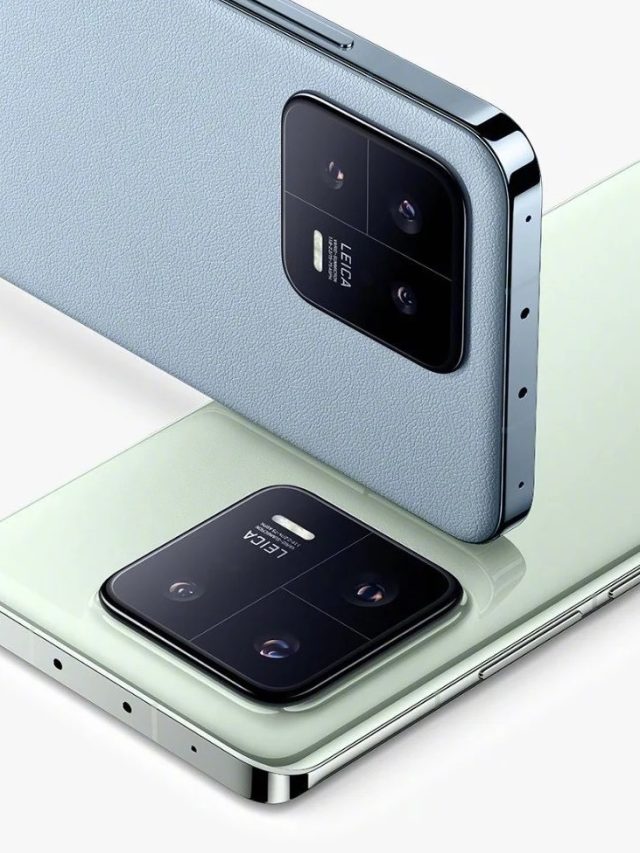
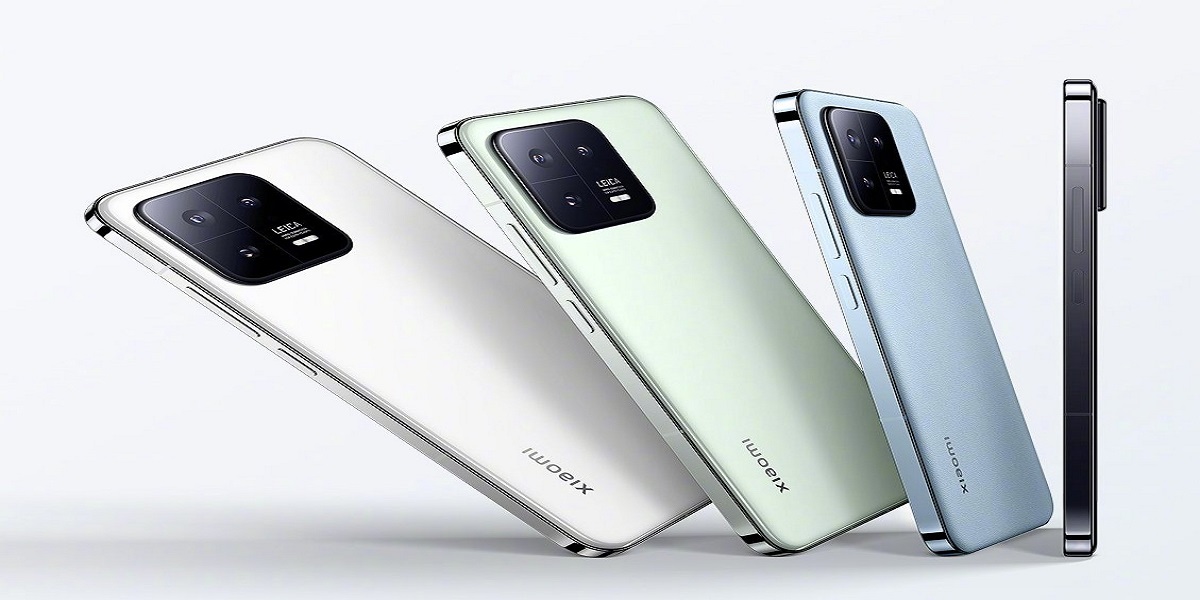
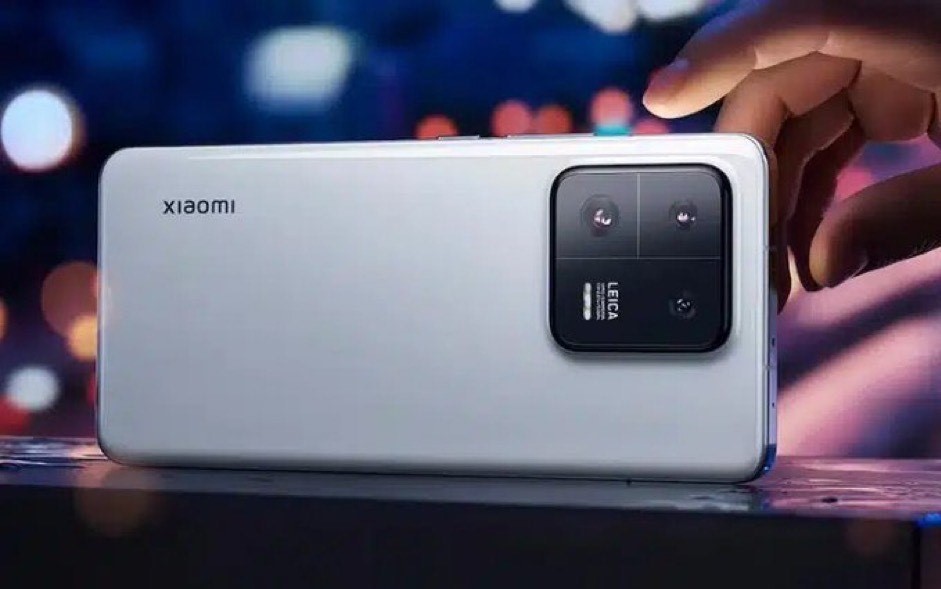
This aesthetic continues in the Xiaomi 14 Pro, with a square-shaped rear camera hump that features more refined detailing compared to last year’s model.
The device also incorporates flat sides with a chrome finish, and there’s even a Titanium model that mimics the iPhone 15 Pro’s matte sides.
However, some may argue that the Xiaomi 13 Pro possessed a more balanced and elegant design.
Display
Xiaomi 13 Pro: Display
Display technology has witnessed rapid advancements in the past year, and Xiaomi hasn’t lagged behind.
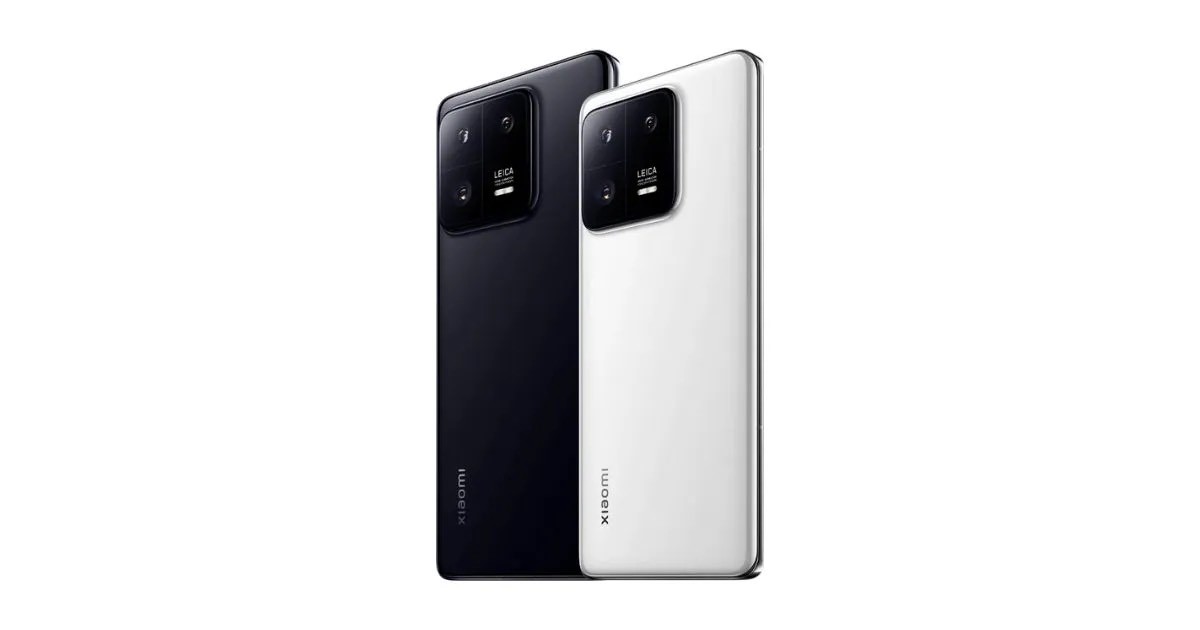
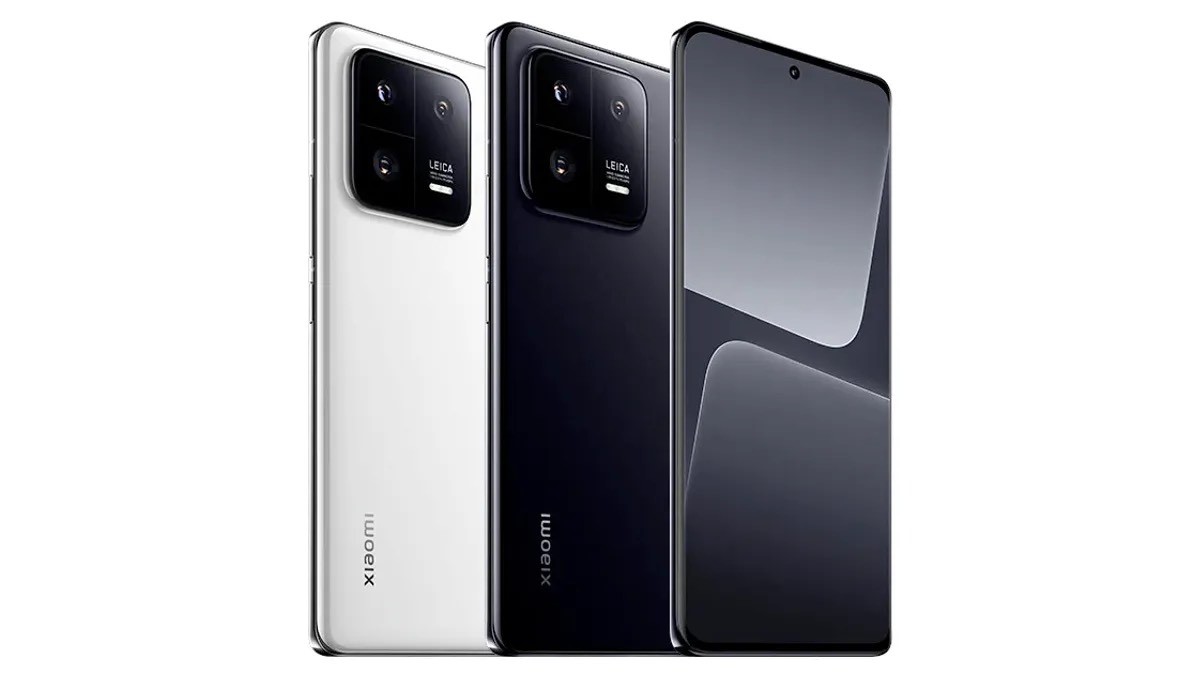
The Xiaomi 13 Pro featured a 6.7-inch QHD+ curved edge OLED panelwith 1 billion colours and a peak brightness of 1,900 nits.
In contrast, the 14 Pro also utilizes a 6.7-inch panel but opts for a flat design.
The new OLED panel supports up to 10 billion colours and a groundbreaking peak brightness of 3,000 nits.
Xiaomi has also made a shift in the protection technology, moving from Corning Gorilla Glass Victus 2 to its proprietary Longjing Glass, claiming superior protection against drops and scratches.
Performance
Xiaomi 14 Pro: Performance
In terms of performance, the 14 Pro is ahead of the curve, thanks to the new Snapdragon 8 Gen 3 chipset.
It boasts up to 16GB LPDDR5X RAM and 1TB UFS 4.0 storage, promising swift read/write speeds and rapid app loading times.
But the most noteworthy upgrade comes in the form of the new HyperOS, focusing on AI and smart device ecosystem integration, replacing the older MIUI interface.
Cameras
Xiaomi 13 Pro: Camera
On the camera front, Xiaomi has maintained a cautious approach.
The Xiaomi 13 Pro already featured an impressive camera system, so the 14 Pro sees modest hardware changes.
The device employs a new 50MP sensor while retaining the same telephoto and ultra-wide sensors as its predecessor.
On the software side, Xiaomi promises improved performance.
Additionally, the front-facing camera now supports 4K video recording at 30 fps, a feature that was lacking in the 13 Pro.
Final Verdict
Xiaomi 14 Pro Rear View
The Xiaomi 14 Pro undeniably brings several incremental improvements over the Xiaomi 13 Pro.
With a brighter display, improved performance, and software enhancements, it is a compelling upgrade for anyone using older models.
However, if camera and design are your primary concerns, the differences might not justify the switch.
In summary, the Xiaomi 14 Pro is more of an evolutionary step than a revolutionary leap, but it’s a step that takes the device significantly ahead in the fiercely competitive smartphone market.
It is important to note that these evaluations are based just on the two device’s spec sheets.
Stay tuned for a more in-depth approach when the Xiaomi 14 Pro gets a global launch.
What is the main chipset difference between Xiaomi 14 Pro and Xiaomi 13 Pro?
The Xiaomi 14 Pro features the new Qualcomm Snapdragon 8 Gen 3 chipset, providing superior performance and efficiency compared to the Snapdragon 8 Gen 2 chipset in the Xiaomi 13 Pro.
How do the displays of the two phones compare?
The Xiaomi 14 Pro retains the 6.7-inch panel but offers a peak brightness of 3,000 nits and support for 10 billion colours. The Xiaomi 13 Pro had a peak brightness of 1,900 nits.
What are the software changes in Xiaomi 14 Pro?
The Xiaomi 14 Pro debuts with HyperOS, which replaces the older MIUI interface. HyperOS focuses on AI and aims to create an ecosystem of smart devices.
Have there been significant camera upgrades?
While the Xiaomi 14 Pro maintains similar hardware for its camera system, the new software promises improved performance. Additionally, the selfie camera now supports 4K video at 30 fps.