
Home Blog Page 711

Google App on Android Introduces Comprehensive Notifications Feed Feature

0
Google App on Android Introduces Comprehensive Notifications Feed Feature
Not the First Time for Google

Highlights

  • New bell icon in Google App for Android displays unread notifications count.
  • Notifications are organized in reverse chronological order for easy access.
  • Specialized “New for you” section highlights unread and uninteracted notifications.
  • Three-dot overflow menu allows for greater user control over notification management.

Google has said that it will be incorporating a comprehensive feed, which can be understood as a one-stop repository for all the alerts you’ve received.

The feature will be accessible via the profile avatar in the upper-right corner, the new feature aims to make managing your alerts more streamlined.

Not just a cosmetic addition, the bell will also feature an unread count, letting you know at a glance how many notifications await your attention.

What sets this feed apart is its organizational capabilities.
Google seems to be aiming for a highly user-friendly interface that organizes notifications in reverse chronological order.

This ensures you can easily find the most recent updates, whether it’s the latest weather forecast, stock market performance, or sports scores.

Google App on Android Introduces Comprehensive Notifications Feed Feature

However, Google is not stopping at mere time-based organization; there’s also a specialized section labelled “New for you.”

This section will be highlighting notifications that you haven’t yet interacted with, which will provide further opportunities to engage with possibly missed information.

Apart from that you will also get a user control that comes in the form of a three-dot overflow menu available for each notification.

This menu offers options to “Delete” if you find a notification irrelevant, “Don’t get notifications like this” if you want to opt out of receiving a specific type of alert in the future, and “Send feedback” to help Google refine the notification experience based on user interaction and preferences.

This could be especially beneficial for those moments when you notice an important alert but can’t address it immediately, and then lose it with an accidental swipe later.

Google App Android Notifications

Likewise, if you find certain alerts to be too intrusive, the feature gives you a quick and straightforward way to modify your settings and minimize unwanted disturbances.

The notification feed feature is included in Google App’s beta version 14.43, confirming that it is still in the testing phases for Android devices.

It’s worth noting that the iOS version of the Google app has already received this feature, and in a recent update, it was even moved to a more easily accessible position at the bottom bar of the interface.

FAQs

What is the new feature in the Google App for Android?

The Google App for Android is introducing a notifications feed, accessible via a bell icon, to provide users with a history of all their alerts.

How are the notifications organized?

Notifications are displayed in reverse chronological order. A special section called “New for you” will highlight notifications you have yet to interact with.

What control options are available for managing notifications?

A three-dot menu next to each notification allows users to delete it, opt out of similar future notifications, or send feedback to Google.

What version of the Google App includes this feature?

The feature is currently in the beta testing stage and is available in Google App version 14.43 for Android.

Also Read: Google Pixel 8 Price Leaked, Costlier than Pixel 7: Check Launch Timeline & Specifications
Also Read: Google Pixel 8 Pro hands-on images leak: Confirm major design changes; may get a big battery boost over Pixel 7

Xiaomi Reportedly To Prep for 2024 With MIX Flip and MIX Fold 4 Smartphones

0
Xiaomi

Highlights

  • Xiaomi aims for a 2024 launch of its first flip-style foldable phone, MIX Flip.
  • Snapdragon 8 Gen 2 chipset expected to power the upcoming MIX Flip.
  • A possible two-phase release strategy hinted for MIX Flip and MIX Fold 4 in 2024.
  • Global availability of MIX Flip in question as only the Chinese model number surfaces.

In an exciting development, Xiaomi is reportedly prepping for a spectacular 2024 with the launch of its first-ever flip-style foldable phone, which is currently, in tech circles, being called as the MIX Flip.

A Chinese leaker, with a solid reputation in these matters, is reinforcing earlier leaks that had projected a 2024 release.

Interestingly, the MIX Flip won’t be Xiaomi’s only foldable phone in 2024; the company also plans to release the MIX Fold 4.

Snapdragon 8 Gen 2 Across Both

According to leaks, the MIX Flip 4 is expected to be powered by the Snapdragon 8 Gen 2 chipset.

This choice of processor seems in line with the industry trend, as other manufacturers planning foldable phone releases in 2024 are also speculated to employ this particular chipset.

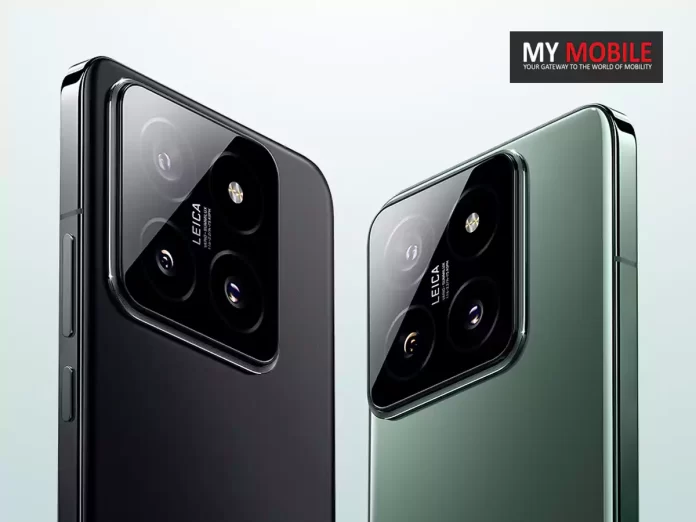
Xiaomi Mix Flip Smartphone Design

A Sequential Launch Strategy?

The MIX Flip 4 and MIX Fold 4 are both earmarked for a 2024 launch.

However, the leaker suggests that the flip-style MIX Flip may hit the market before the MIX Fold 4, possibly indicating a two-phase launch strategy for Xiaomi in the first half of 2024.

Global Availability

While specifics about the MIX Flip are still shrouded in mystery, its appearance in the IMEI database has disclosed its model number for the Chinese version—2311BPN23C.

As of now, there’s no information regarding its global release, raising questions about whether this groundbreaking device will be confined to China or see an international rollout.

However, if past launches in the foldable category by Xiaomi are any indication, the chances of Mi Mix Fold and Flip series are unlikely to see the day outside the Chinese borders.

FAQs

What is Xiaomi planning for 2024?

Xiaomi is reportedly preparing for a significant 2024 with the release of its first-ever flip-style foldable phone, known as the MIX Flip. The company also plans to release another foldable phone, the MIX Fold 4.

What chipset will power the MIX Flip?

According to leaks, the MIX Flip is expected to feature a Snapdragon 8 Gen 2 chipset, in line with industry trends for other foldable phones slated for a 2024 release.

Will the MIX Flip and MIX Fold 4 be released together?

While both phones are slated for a 2024 launch, leaks suggest that the MIX Flip may be released before the MIX Fold 4, hinting at a two-phase launch strategy for Xiaomi.

Will the MIX Flip be available globally?

It’s uncertain at this point. So far, only the model number for the Chinese version of the MIX Flip has been identified, leaving questions about a potential global release.

Also Read: Xiaomi Mix Fold 3 Confirmed to Launch Next Month – August ,but Only in China: to Feature Leica Cameras

Also Read: Xiaomi MIX Fold 3 to get UD camera, 5x optical zoom & 50W wireless charging; Also will use an under-screen camera & a periscope camera

Vivo Set to Launch X100 Series and Watch 3 in China on November 13

0
VIVO X100

Highlights

  • Dimensity 9300 chipset powers the Vivo X100 series, setting a new AnTuTu benchmark.
  • First smartphones to incorporate LPDDRT5 RAM for 13% performance boost.
  • Vivo Watch 3 to debut with Blue OS, the first OS written in Rust.
  • Competitive pricing for the X100 series at 3,999 Yuan, aligned with Xiaomi 14 series.

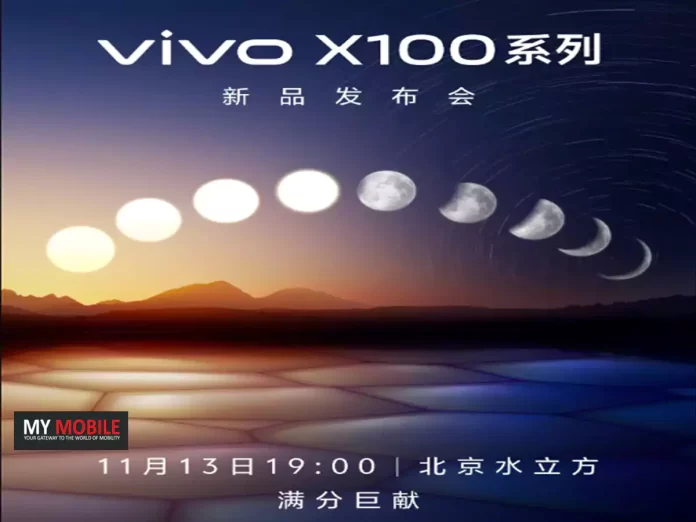
Mark your calendars for November 13, as Vivo gears up to unveil its highly-anticipated X100 series smartphones, along with the Vivo Watch 3, in a grand event slated to begin at 7 PM(4.30 PM IST) local time in China.

In all likelihood, these offerings from Vivo may just disrupt the tech market with a bevy of groundbreaking features.

Powerhouse of Performance

The performance metrics are the highlight of the announcements and the X100 series is nothing short of a marvel.

At the heart of both the X100 and X100 Pro is going to be the Dimensity 9300 chipset, making its debut appearance courtesy of MediaTek’s event scheduled for November 6.

A rival to Qualcomm’s recent Snapdragon 8 Gen 3 SoC, the X100 model with its Dimensity 9300 SoC, registered under the V2309A model number, leaves its competition in the dust with an AnTuTu benchmark score of 2,249,858.

This is currently the highest value in the Android realm.

Next-Gen Memory and Speed

The X100 series will also be the first to incorporate LPDDRT5 RAM, boasting a performance advantage of 13 percent over the existing LPDDR5x RAM seen in other current flagships.

It’s a leap that surpasses the other Snapdragon 8 Gen 3-powered rivals like the upcoming Realme GT 5 Pro, OnePlus 12, and more.

And while we’re talking about Snapdragon, let’s also not forget the X100 Pro+, which is reportedly scheduled for a Q1 2024 launch, and will be packing the Snapdragon 8 Gen 3 chip.

VIVO X100 Series in China on November 13

The Software Front

The devices will come pre-installed with the latest OriginOS 4, based on Android 14.

An official image from the brand showcases the classy rear design of the Vivo X100, which will also feature a Zeiss-certified Vario-APO-Sonnar lens, specially designed for periscope telephoto photography.

Price and Competition

If you’re budget-conscious, take note: the X100 series is expected to have a starting price tag of 3,999 CNY (about Rs 45,000), keeping pace with the pricing strategy of the Xiaomi 14 series.

Vio Watch 3: Blue OS

Smartwatch Surprise

Not to be overshadowed, the Vivo Watch 3 is going to make its debut alongside the X100 series.

This smartwatch will operate on the new Blue OS, which not only offers an independent app store but also provides unlimited watch face support through generative AI.

It’s worth noting that Blue OS is the world’s first operating system written and built on the Rust programming language.

VIVO X100 PRO 5G KEY SPECIFICATIONS

Key Specs

RAM 12 GB
Processor MediaTek Dimensity 9200 Plus MT6985
Rear Camera 64 MP + 50 MP + 12 MP + 8 MP
Front Camera 32 MP
Battery 5100 mAh
Display 6.82 inches (17.32 cm)

General

Launch Date September 20, 2023 (Unofficial)
Operating System Android v13

Performance

Chipset MediaTek Dimensity 9200 Plus MT6985
CPU Octa core (3.35 GHz, Single core, Cortex X3 + 3 GHz, Tri core, Cortex A715 + 2 GHz, Quad core, Cortex A510)
Architecture 64 bit
Fabrication 4 nm
Graphics Immortalis-G715 MC11
RAM 12 GB

Display

Display Type Super AMOLED
Screen Size 6.82 inches (17.32 cm)
Resolution 1080 x 2400 pixels
Pixel Density 386 ppi
Bezel-less display Yes with punch-hole display
Touch Screen Yes, Capacitive Touchscreen, Multi-touch

Camera

MAIN CAMERA
Camera Setup Quad
Resolution 64 MP, Primary Camera
50 MP
12 MP
8 MP
Autofocus Yes
Flash Yes, LED Flash
Image Resolution 9000 x 7000 Pixels
Settings Exposure compensation, ISO control
Shooting Modes Continuous Shooting
High Dynamic Range mode (HDR)
Camera Features Digital Zoom
Auto Flash
Face detection
Touch to focus
Video Recording 1920×1080 @ 30 fps
FRONT CAMERA
Camera Setup Single
Resolution 32 MP, Primary Camera
Video Recording 1920×1080 @ 30 fps

Battery

Capacity 5100 mAh
Type Li-Polymer
Removable No
Quick Charging Yes, Fast
USB Type-C Yes

Storage

Internal Memory 512 GB
Expandable Memory No

Network & Connectivity

SIM Slot(s) Dual SIM, GSM+GSM
SIM Size SIM1: Nano, SIM2: Nano
Network Support 5G Not Supported in India, 4G Supported in India, 3G, 2G
VoLTE Yes
SIM 1
4G Bands:
TD-LTE 2300(band 40)
FD-LTE 1800(band 3)
3G Bands:
UMTS 1900 / 2100 / 850 / 900 MHz
2G Bands:
GSM 1800 / 1900 / 850 / 900 MHz
GPRS:
Available
EDGE:
Available
SIM 2
4G Bands:
TD-LTE 2300(band 40)
FD-LTE 1800(band 3)
3G Bands:
UMTS 1900 / 2100 / 850 / 900 MHz
2G Bands:
GSM 1800 / 1900 / 850 / 900 MHz
GPRS:
Available
EDGE:
Available
Wi-Fi Yes, Wi-Fi 4 (802.11 b/g/n)
Wi-Fi Features Mobile Hotspot
Bluetooth Yes, v5.2
GPS Yes with A-GPS, Glonass
USB Connectivity Mass storage device, USB charging

Multimedia

Loudspeaker Yes
Audio Jack USB Type-C

Sensors

Fingerprint Sensor Yes
Fingerprint Sensor Position On-screen
Fingerprint Sensor Type Optical
Other Sensors Light sensor, Proximity sensor, Accelerometer, Compass, Gyroscope

FAQs

What makes the Vivo X100 series a powerhouse in performance?

The X100 series is equipped with the Dimensity 9300 chipset, scoring an extraordinary 2,249,858 on AnTuTu benchmarks, the highest in the Android market.

How does LPDDRT5 RAM in the X100 series compare to existing RAM technologies?

The X100 series will be the first smartphones to feature LPDDRT5 RAM, which offers a 13% performance increase compared to current LPDDR5x RAM in flagship devices.

What unique features does OriginOS 4 offer in the X100 series?

OriginOS 4, based on Android 14, will come pre-installed on the X100 series. The phones will also feature a Zeiss-certified Vario-APO-Sonnar lens for enhanced photography.

What can we expect from the Vivo Watch 3?

The Vivo Watch 3 will run on Blue OS, the world’s first operating system written in the Rust programming language, featuring its own app store and unlimited watch face support via generative AI.

Also Read: VIVO X100 PRO+ WILL BE THE FIRST SMARTPHONE WITH A 200 MP TELEPHOTO LENS: LEAK REVEALS DESIGN DETAILS

Also Read: Vivo X100 Series Chipset Details Tipped Ahead of Launch in Q4 of 2023

Massive Data Breach Affecting 81.5 Crore Indians Contained Only 10% Aadhaar Information

0
Digital Personal Data Protection Act

Highlights

  • Resecurity exposes data breach impacting over 81.5 crore Indian citizens.
  • Data sold by pwn0001 mainly includes names, phone numbers, and addresses.
  • Only 10 percent  of the data set contains Aadhaar information.
  • Breach occurs as India passes Digital Personal Data Protection Act, yet to be implemented.

In a significant development, the American cybersecurity agency Resecurity recently exposed a massive data breach affecting over 81.5 crore Indian citizens.

The data, being sold on the dark web by an individual using the alias ‘pwn0001,’ reportedly contains Aadhaar and Passport details.

However, the narrative takes a twist as pwn0001 reveals that only 10% of the data set has Aadhaar details, with only a few thousand records including passport information.

The Scale of the Breach

The data set in question was purchased from a now-defunct dark web forum last year for a sum of $50,000 (Rs 41.64 lakh), according to a report by MoneyControl.

The data set includes names, phone numbers, passport numbers, Aadhar numbers, and several other personal details.

While the database was advertised to contain Aadhaar and Passport details primarily, the actual composition tells a different story.

Digital Personal Data Protection Act

Limited Aadhaar Exposure

pwn0001, the individual selling this data, has stated that the database isn’t as lucrative as it was originally marketed.

Only a fraction—10%—contains Aadhaar details. Even within that, only a few thousand records boast of having passport details.

Resecurity’s HUNTER team has corroborated this, claiming to have verified some Aadhaar Card IDs from the sample data provided.

The data breach comes at a time when India has passed the Digital Personal Data Protection Act.

This law posits that platforms leaking personal data can face fines up to Rs 250 crore.

However, the law hasn’t been implemented yet, creating a window of vulnerability.

Another breach reported by Resecurity in August further indicates that data security remains a concern, notwithstanding the yet-to-be-enforced laws.

FAQs

Who exposed the data breach?

Resecurity, an American cybersecurity agency, was the first to report the massive data breach involving Indian citizens.

What types of data are included in the breach?

The data includes names, phone numbers, addresses, and in a limited number of cases, Aadhaar and Passport details.

How much of the breached data contains Aadhaar details?

Only 10% of the entire data set includes Aadhaar details, according to the individual selling the data under the alias pwn0001.

Is India’s Digital Personal Data Protection Act in force?

Though India has passed the Digital Personal Data Protection Act, it has not yet been implemented, leaving a gap in data protection measures.

Also Read: How to Download Aadhaar, PAN card on Your WhatsApp

Also Read: PAN Card Online Apply: How to Apply for PAN Card Online, Check Status, and Download e-PAN?

Samsung Launches Auto Blocker for Enhanced Security on Galaxy Devices with One UI 6

0
Samsung Launches Auto Blocker

Highlights

  • Samsung rolls out Auto Blocker on Galaxy devices running One UI 6.
  • Auto Blocker feature offers prevention of unauthorized app sideloading.
  • Additional controls include app security checks and USB software installation prevention.
  • Message Guard updated to mitigate Zero Click attacks across multiple messaging apps.

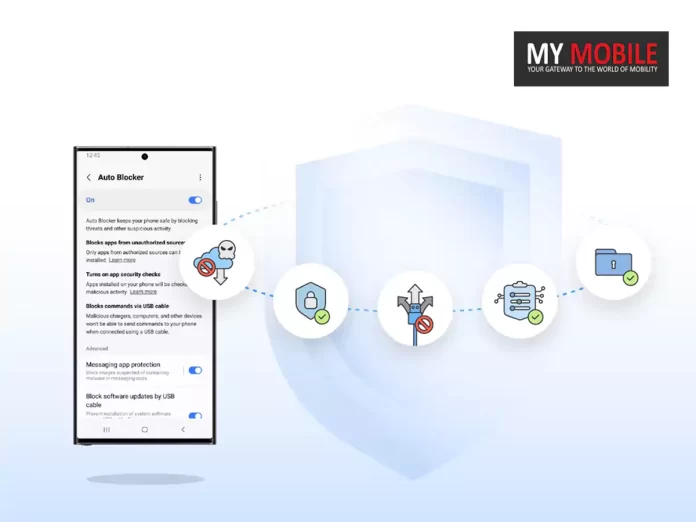
Samsung has announced Auto Blocker, a new addition to its security features available on Galaxy devices running the One UI 6 interface.

This new package aims to give users more control over their device’s security measures.

Auto Blocker happens to be an opt-in feature that comes with various capabilities, including preventing sideloading and offering security checks for apps.

User-Centric Design Philosophy

Dr. Seungwon Shin, EVP & Head of Security Team at Samsung Electronics, stated that the company aims to put the control back in the hands of users.

According to Dr. Shin, Samsung is focused on allowing users to choose the level of security that best meets their needs rather than making that decision for them.

Features of Auto Blocker

  • Prevention of App Sideloads: The feature prevents the installation of apps from unauthorized sources, an activity commonly known as sideloading.
    However, for users who intentionally sideload apps for enhanced customization, this feature is turned off by default.
  • App Security Checks: Auto Blocker also provides the ability to turn on security checks for apps, aimed at detecting potential malware.
  • USB Security: It prevents harmful software installations that could happen through a USB cable—important for scenarios where someone could have physical access to the device.
  • Message Guard Update: An update has been provided to the existing Message Guard feature, designed to mitigate Zero Click attacks, particularly those that come from image messages in third-party apps.

Security in Open Ecosystems

Auto Blocker supports the idea of an open ecosystem by providing an opt-in package of additional security measures.

It does not interfere with users who prefer to sideload apps but offers an extra layer of security to those who wish to avoid potential threats like voice phishing attacks or social engineering tactics.

FAQs

What is Samsung’s Auto Blocker?

Samsung’s Auto Blocker is a new opt-in security feature available on Galaxy devices that run on the One UI 6 interface. It provides users with several security controls, including preventing unauthorized app installations.

How does Auto Blocker improve device security?

Auto Blocker enhances device security by providing users with the option to enable app security checks, prevent unauthorized app installations, and secure software installations through USB.

Is Auto Blocker turned on by default?

No, Auto Blocker is an opt-in feature, which means it is turned off by default. Users have the choice to activate it based on their specific security needs.

What is the Message Guard feature in Auto Blocker?

Message Guard is an existing feature that has been updated in Auto Blocker. It helps protect users from Zero Click attacks, specifically those involving malicious image messages in both Samsung and third-party messaging apps.

Also Read: Samsung Galaxy S24 Ultra Camera Comes with Zoom Tech Feature

Also Read: Samsung Galaxy S23 FE 5G launch timeline tipped, said to come with Exynos 2200 & Triple-Camera Setup

YouTube Is Escalating Its Crackdown on Ad Blockers 

0
YouTube completely banned Adblockers worldwide.

Highlights

  • YouTube amplifies global efforts to curb the use of ad blockers.
  • Users given a choice: disable ad blockers or opt for YouTube Premium.
  • The move follows a third straight quarterly decline in YouTube’s ad revenue.
  • Restrictions kick in after just three videos for ad-block users.

The relationship between YouTube and advertisements is as old as the platform itself.

Since 2007, ads have served as a revenue model that not only powers the platform but also financially supports content creators.

However, users blocking out ads with the help of ad-blockers has been prevalent for a long time.

That looks to be changing in earnest.

Recent developments from the world’s biggest video-sharing platform indicate a more stringent approach against users employing ad blockers, marking a significant change in YouTube’s revenue strategy.

Early Experiments and the Problem at Hand

Initially, in June this year, YouTube started what it termed as a “small experiment.”
The focus was to encourage a limited group of users employing ad blockers to deactivate them.

Fast forward a few months, and this “experiment” has evolved into a concerted global effort.

This move coincides with the fact that in May, Reddit users noticed YouTube tinkering with the idea of making it mandatory for users to disable ad blockers if they wish to consume content.

This period also saw the company facing a third consecutive quarterly decline in ad revenue, as reported by The Wall Street Journal.

YouTube completely banned Adblockers worldwide.
YouTube Completely Banned Adblockers Worldwide

Current Measures

In its latest push, YouTube has become far more aggressive.
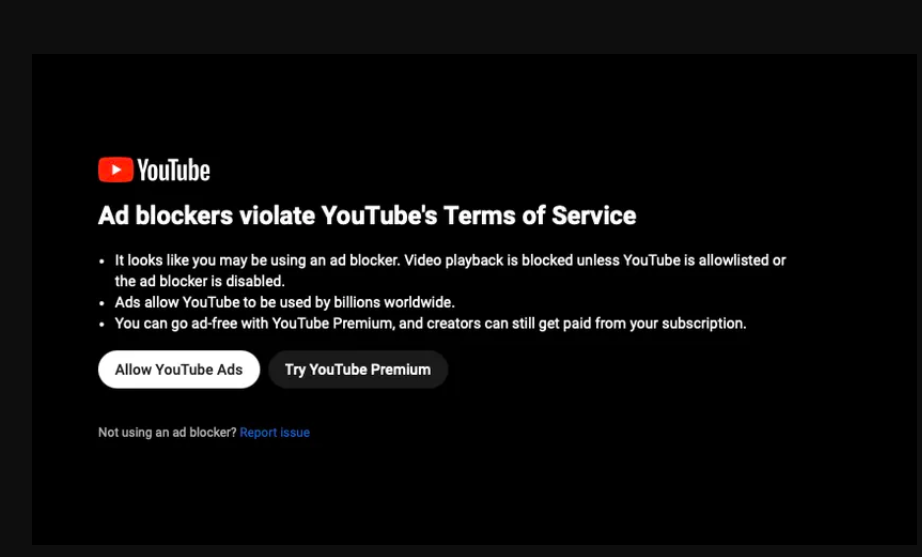
According to statements provided to The Verge by a company spokesperson, YouTube has started to disable video browsing for users who have an active ad blocker.

Initially, this restriction kicks in after the user has viewed just three videos.
It leaves the user with two choices: disable their ad blocker or opt for a YouTube Premium subscription.

Context and Implications

YouTube’s ad saturation has not just been stable; it has steadily increased.

Observers have noted more ad placements on both its mobile and desktop platforms, including the introduction of non-skippable 30-second ads on its TV app.

This ad blockade can be seen as a method to nudge users towards its Premium service while increasing ad-viewability statistics, potentially attracting more advertisers in the process.

FAQs

What is YouTube’s new policy on ad blockers?

YouTube is intensifying its global efforts to disable video browsing for users with active ad blockers. After watching three videos, users have to either disable their ad blocker or subscribe to YouTube Premium to continue browsing.

Why is YouTube cracking down on ad blockers now?

This new policy follows a series of experiments and comes at a time when YouTube has experienced a third straight quarterly drop in ad revenue. The company aims to push more users to its Premium service while maximizing ad-viewability.

How will this affect the user experience on YouTube?

The user experience is likely to change significantly. Those who rely on ad blockers will now be interrupted and prompted to make a choice, which could result in a less streamlined experience for those users.

Are there any alternatives to disabling ad blockers on YouTube?

The main alternative is to subscribe to YouTube Premium, which offers an ad-free viewing experience along with other perks like offline viewing and access to YouTube Originals.

Also Read: YouTube will not Show Videos on the users Homepage if the Watch History is Off

Also Read: ‘Like a Video and Make Money’ scam: All about the cyber fraud on Whatsapp; Received WhatsApp message asking you to like YouTube videos for Rs 150? It’s a scam

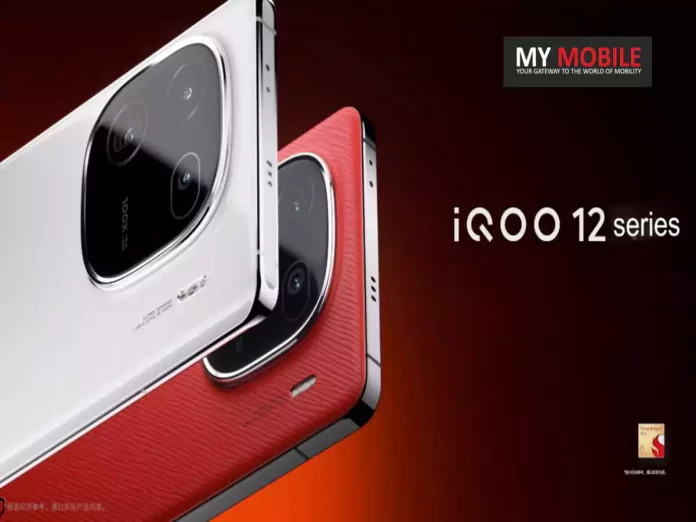
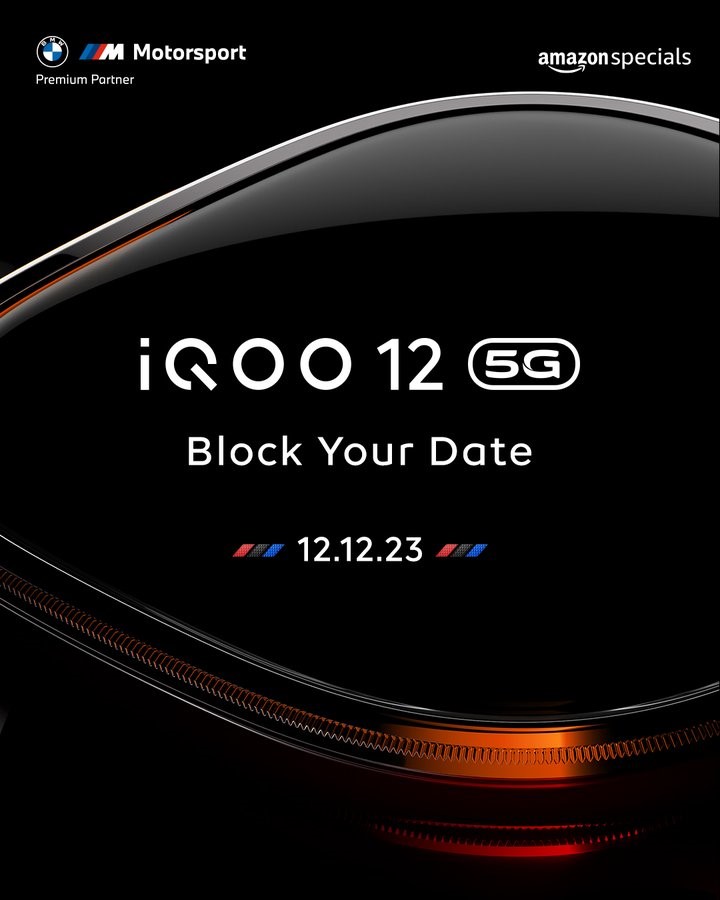
iQOO 12 Confirmed to Launch in India on December 12: Expected Specs, Features, and More

0
iQOO 12

Highlights

  • iQOO 12 confirmed to launch in India on December 12, following its China debut on November 7.
  • The device will sport a Qualcomm Snapdragon 8 Gen 3 chipset and feature a curved design.
  • Anticipated to include a triple rear camera system with 100x digital and 3x optical zoom.
  • Leaks suggest an AMOLED display with 2K resolution and 144Hz refresh rate.

The anticipation surrounding the iQOO 12 smartphone is about to reach a climax, with the official India launch date now confirmed for December 12.

The news comes shortly after iQOO disclosed that the phone would make its debut in China on November 7, promising to unveil all of its specs and features before the India unveiling.

Expected Pricing in India

While iQOO has been known for offering high-performing phones at affordable prices, the iQOO 12 may break this trend.

Considering the device’s advanced features, it remains to be seen if iQOO maintains the competitive pricing strategy that it has followed in the past.

iQOO 12 Confirmed to Launch in India on December 12

iQOO 12: Expected Features

Powered by a Qualcomm Snapdragon 8 Gen 3 chipset, the iQOO 12 is already confirmed to offer high performance.

In terms of design, the handset will feature curved edges and a slim profile for better grip, much like what we’ve seen with models such as the Oppo Reno 10 Pro+.

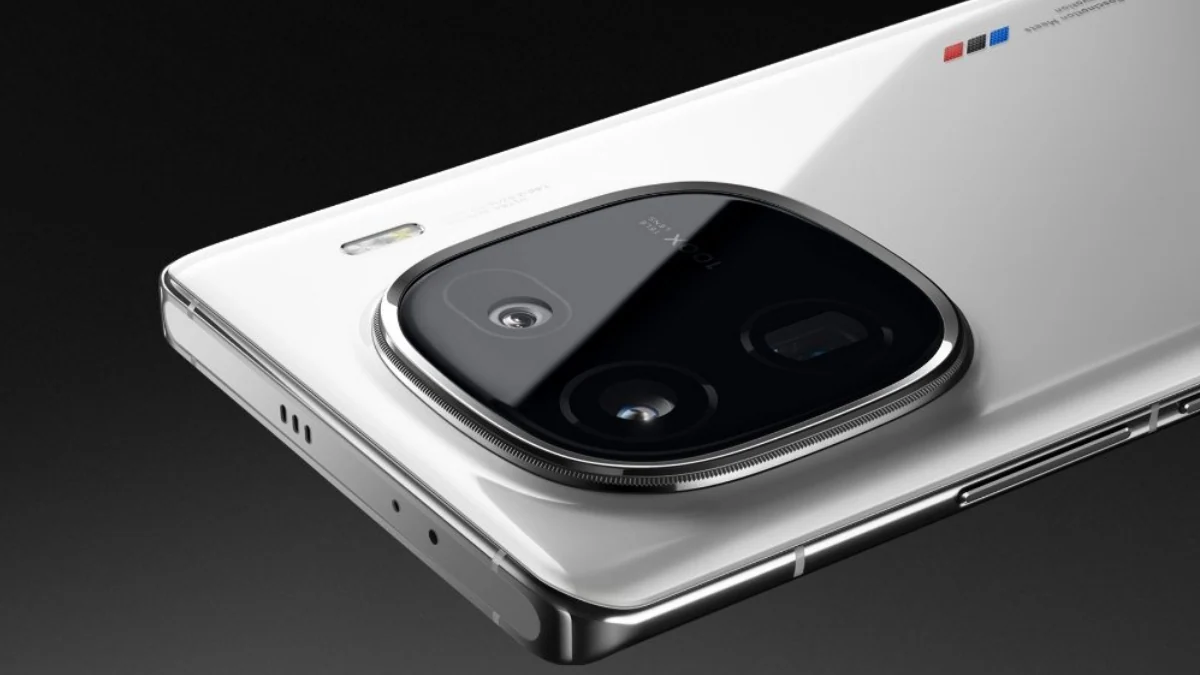
Additionally, it will have a glass back panel in white and boast a square-shaped rear camera module as opposed to the rectangle one in previous models.

The device is confirmed to include a triple camera system on the back, with capabilities like 100x digital zoom.

iQOO 12: Expected Features

Although the telephoto lens is only expected to support 3x optical zoom, according to leaks.

Based on leaked information, the iQOO 12 may come with a 2K AMOLED display with a fast 144Hz refresh rate.

It’s also rumored to include an ultrasonic in-display fingerprint scanner, capable of recognizing wet or moist fingers.

Additional leaks hint at a 5,000mAh battery and a 200W fast charging support.

IQOO 12 5G SPECIFICATIONS

Key Specs

RAM 12 GB
Processor Qualcomm Snapdragon 8 Gen 2
Rear Camera 64 MP + 16 MP + 12 MP
Front Camera 24 MP
Battery 5000 mAh
Display 6.79 inches (17.25 cm)

General

Launch Date December 11, 2023 (Unofficial)
Operating System Android v13

Performance

Chipset Qualcomm Snapdragon 8 Gen 2
CPU Octa core (3.36 GHz, Single core, Cortex X3 + 2.8 GHz, Quad core, Cortex A715 + 2 GHz, Tri core, Cortex A510)
Architecture 64 bit
Fabrication 4 nm
Graphics Adreno 740
RAM 12 GB

Display

Display Type AMOLED
Screen Size 6.79 inches (17.25 cm)
Resolution 1080 x 2400 pixels
Pixel Density 388 ppi
Bezel-less display Yes with punch-hole display
Touch Screen Yes, Capacitive Touchscreen, Multi-touch

Camera

MAIN CAMERA
Camera Setup Triple
Resolution 64 MP, Primary Camera
16 MP
12 MP
Autofocus Yes, Phase Detection autofocus
Flash Yes, LED Flash
Image Resolution 9000 x 7000 Pixels
Settings Exposure compensation, ISO control
Shooting Modes Continuous Shooting
High Dynamic Range mode (HDR)
Camera Features Digital Zoom
Auto Flash
Face detection
Touch to focus
Video Recording 1920×1080 @ 30 fps
FRONT CAMERA
Camera Setup Single
Resolution 24 MP, Primary Camera
Video Recording 1920×1080 @ 30 fps

Battery

Capacity 5000 mAh
Type Li-Polymer
Removable No
Quick Charging Yes, Fast, 200W
USB Type-C Yes

Storage

Internal Memory 256 GB
Expandable Memory No

Network & Connectivity

SIM Slot(s) Dual SIM, GSM+GSM
SIM Size SIM1: Nano, SIM2: Nano
Network Support 5G Not Supported in India, 4G Supported in India, 3G, 2G
VoLTE Yes
SIM 1
4G Bands:
TD-LTE 2300(band 40)
FD-LTE 1800(band 3)
3G Bands:
UMTS 1900 / 2100 / 850 / 900 MHz
2G Bands:
GSM 1800 / 1900 / 850 / 900 MHz
GPRS:
Available
EDGE:
Available
SIM 2
4G Bands:
TD-LTE 2300(band 40)
FD-LTE 1800(band 3)
3G Bands:
UMTS 1900 / 2100 / 850 / 900 MHz
2G Bands:
GSM 1800 / 1900 / 850 / 900 MHz
GPRS:
Available
EDGE:
Available
Wi-Fi Yes, Wi-Fi 4 (802.11 b/g/n)
Wi-Fi Features Mobile Hotspot
Bluetooth Yes, v5.3
GPS Yes with A-GPS, Glonass
NFC Yes
USB Connectivity Mass storage device, USB charging

Multimedia

Loudspeaker Yes
Audio Jack USB Type-C

Sensors

Fingerprint Sensor Yes
Fingerprint Sensor Position On-screen
Fingerprint Sensor Type Optical
Other Sensors Light sensor, Proximity sensor, Accelerometer, Compass, Gyroscope

FAQs

What is the official launch date for iQOO 12 in India?

The iQOO 12 is officially set to launch in India on December 12, following its debut in China on November 7.

What chipset will power the iQOO 12?

The device is confirmed to be equipped with a Qualcomm Snapdragon 8 Gen 3 chipset, promising high performance.

What can we expect from the camera system of the iQOO 12?

The iQOO 12 is slated to feature a triple rear camera system with 100x digital zoom. Leaks also suggest a telephoto lens with 3x optical zoom.

Are there any details on the display and other features?

Based on leaks, the iQOO 12 is expected to have a 2K AMOLED display with a 144Hz refresh rate. Rumors also hint at an ultrasonic in-display fingerprint scanner.

Also Read: iQOO 12 Camera To Reportedly Harbour a 64MP Sensor, Accompanied by 50MP Ultra-Wide Shooter

Also Read: Vivo X100 Pro, X100 Pro+ Launch Timeline, fast charging specs tipped; confirms 50W Wireless Charging, IP68 Rating and More Features

Android 13 Is Currently the Most Popular Android Version in Latest Distribution Data

0

Highlights

  • Android 13 emerges as most widely used, operating on 22.4% of Android devices.
  • Older Android 11 and Android 10 versions still hold substantial market shares.
  • Android 9 continues to linger despite reaching end-of-life status.
  • Android 14 is yet to make its mark in the distribution statistics.

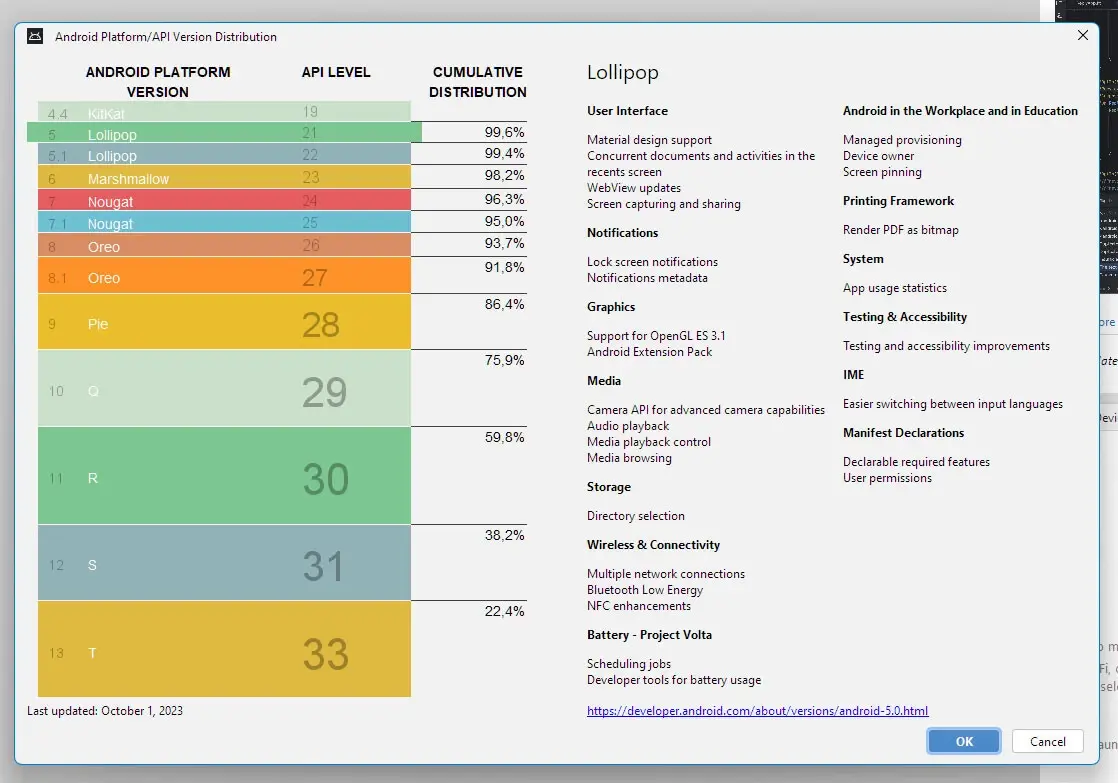
In a positive turn of events for Google’s Android platform, the latest version, Android 13, has risen to prominence as the most widely used OS variant, according to updated distribution statistics.

Data revealed in Android Studio, as reported by GizChina and Mishaal Rahman, shows that as of October 1, 2023, Android 13 is operating on 22.4 percent of Android devices.

This signifies a significant uptick of 7.4 percent in just four months since the previous update in May 2023, indicating an impressive adoption rate for an OS that has only been out for a little over a year.

However, while Android 13 takes the lead, it’s worth noting that Android 11 still commands a noteworthy share, holding onto 21.6 percent, albeit down from 23.1 percent in May.

It seems rather telling that a version released back in 2020 remains so prevalent among users.

Furthermore, Android 10 is not far behind, securing its place as the third most popular version, despite experiencing a 1.7 percent decline.
It currently runs on 16.1 percent of all devices.

Most Popular Android Version in Latest Distribution Data

Amid these numbers, there is cause for concern.
Android 12 saw a marginal decrease from 16.3% to 15.8%, ranking it as the fourth most popular OS version.

Even more alarming is the presence of Android 9 in the distribution charts, accounting for 10.5 percent of Android devices.

Given that these devices have hit their end-of-life stage, they are unlikely to receive any further updates.

This trend highlights the lingering issue of fragmentation that Android faces.

With Android 14 having just been launched at the beginning of October, its absence from the distribution chart is understandable, as Google collected the data just days before its stable build was released.

However, only a handful of devices from Samsung and Xiaomi have so far been updated to this new version.

The Android ecosystem appears to be moving in a positive direction, with manufacturers promising longer software support to reduce fragmentation.

Yet, the real challenge lies in the speed of OS rollouts, which needs to improve substantially for the landscape to become more unified.

FAQs

What is the current most popular version of Android?

Android 13 is the most popular version according to the latest data from Android Studio, accounting for 22.4% of the market share.

Are older Android versions still prevalent?

Yes, Android 11 and Android 10 still maintain significant market shares, with 21.6% and 16.1% respectively, highlighting the fragmentation issue in the Android ecosystem.

Why is Android 9 still showing up in the distribution charts?

Android 9 accounts for 10.5% of the Android market. These devices have reached end-of-life and are not expected to receive further updates, which is a concern for the Android ecosystem.

Is Android 14 included in the latest distribution data?

No, Android 14 was not included since the stable build was released after the data collection period. However, only select Samsung and Xiaomi phones have received this update so far.

Also Read: Xiaomi to launch Android 13-based MIUI 14 with India-exclusive features to release on February 27th

Also Read: Xiaomi Smartphones’ Battery Customization Via MIUI

Extra Button on iPhone 16 Could Reportedly Mean Relocating Antenna

0
iPhone 16 Pro

Highlights

  • New Action Button rumoured for iPhone 16 with solid-state technology
  • Potential relocation of mmWave antenna to accommodate extra button
  • Volume and power buttons to remain traditional, physical keys
  • Questions raised about potential impact on 5G connectivity

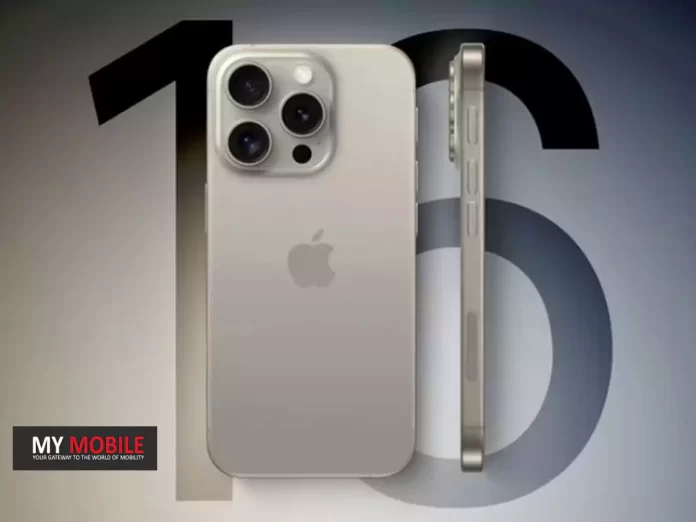
Rumours are swirling about the highly anticipated iPhone 16 models, with new information suggesting that the devices may come with an additional button, significantly impacting the phone’s internal layout.

Instant Digital, a known Weibo leaker with a proven track record for Apple-related leaks, recently claimed that Apple is actively considering the inclusion of an extra button on its iPhone 16 models.

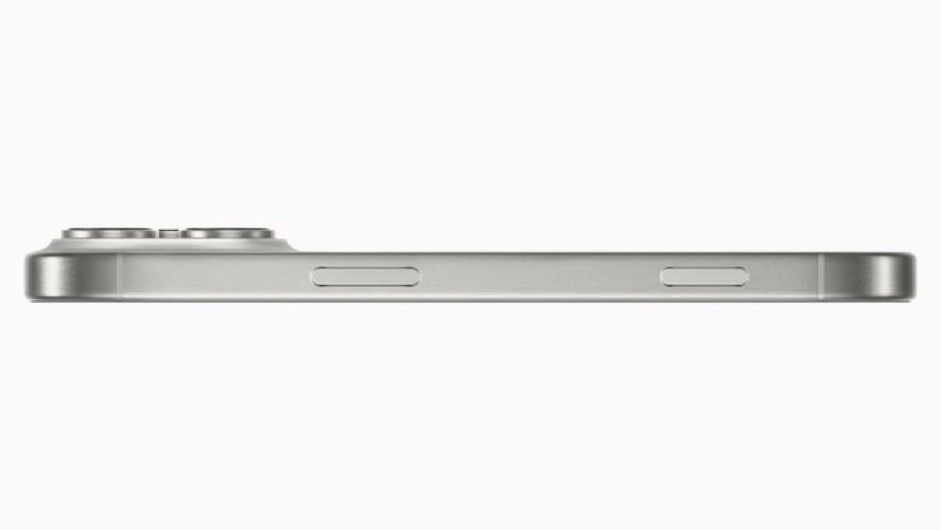
The purportedAction Button will likely leverage solid-state technology, a departure from the conventional physical buttons on previous iPhone models.

Shifting of mmWave Antenna

To make room for this new button, Apple is contemplating a change in the placement of the mmWave antenna.

The antenna, responsible for enabling high-band 5G connectivity, is planned to be shifted from its typical right-side location to the left of the device.

It’s worth mentioning that Apple had once moved antennas near the steel band wrapping the iPhone 4, which led to some connectivity issues.

However, with mmWave adoption still in its nascent stage, the risk associated with this movement may be minimal.

Extra Button on iPhone 16

Solid-State Action Button

According to Instant Digital, the new Action Button will employ solid-state technology, which means it will sit flush with the device.

Users won’t have to press the button physically; instead, it will activate predefined actions upon touch.

It should be noted that Apple had initially planned solid-state buttons for the iPhone 15 Pro models but did not go through with it.

While there’s buzz about this new Action Button, it appears the other standard buttons on the iPhone—namely the volume and power keys—will remain unchanged.

Unlike the Action Button, these will continue to be physical, protruding buttons that require pressing to function.

Solid-State Action Button
iPhone 16 Models will Reportedly Feature a New Capacitive “Capture Button”

What Does This Mean for Connectivity?

When discussing the relocation of mmWave antennas, it’s worth considering that high-band 5G signals are already relatively scarce.

Some may remember the antenna issues with iPhone 4 when Apple changed its placement.

Yet, given the sparse availability of mmWave signals, the real-world implications of this shift may be limited.

FAQs

What is the new Action Button on iPhone 16?

The rumoured Action Button on iPhone 16 is expected to be a solid-state button that will sit flush with the device, allowing predefined actions upon touch.

Why is the mmWave antenna being moved?

To accommodate the new Action Button, Apple may relocate the mmWave antenna from its usual right-side position to the left of the device.

Will other buttons like volume and power keys change?

No, the volume and power buttons are expected to remain as traditional physical buttons that need to be pressed to function.

How could this affect 5G connectivity?

The movement of the mmWave antenna may raise concerns due to its role in high-band 5G connectivity. However, mmWave adoption is still in its early stages, so the actual impact might be minimal.

Also Read: Apple iPhone 15 & iPhone 15 Plus to be manufactured (made) in India by Tata Group: Report

Also Read: Apple iPhone 15 button design to get revamped: here’s how it could be different from the button less design

Xiaomi 14 Series Likely Set for Indian Launch After BIS Certification Listing

0
Xiaomi 14 Series

Highlights

  • Xiaomi 14 Series appears on India’s BIS certification website.
  • The Global variant model number “23127PN0CG” listed on the BIS site.
  • Strong indications that India could be among the first markets for Xiaomi 14 Series launch.
  • The new series will feature Xiaomi’s latest HyperOS.

Last week, Xiaomi unveiled its much-anticipated 14 Series in China, featuring the Xiaomi 14 and 14 Pro.

With the buzz around the Xiaomi 14 Ultra’s impending launch, it appears that the tech giant is setting the stage for a broader international rollout of the series.

The base model, known as the Xiaomi 14, has made an appearance on India’s Bureau of Indian Standards (BIS) website.

This sighting strongly suggests that the phone could be making its Indian debut sooner.

Spotted under the model number “23127PN0CG,” this global variant of the Xiaomi 14 seems to have Indian tech aficionados buzzing.

Xiaomi 14 Series Likely Set for Indian Launch After BIS Certification Listing
Xiaomi 14 Series: BIS Certification Listing

Typically, Indian-specific Xiaomi models have an “I” at the end of the model number, making this BIS listing a strong indicator of Xiaomi’s intentions to introduce its 14 Series outside its home market.

India is expected to be among the first countries to witness the arrival of this new lineup.

Though the BIS listing spills little in terms of features, we already know what to expect from the Xiaomi 14, thanks to its China launch.

Of particular note is the introduction of HyperOS, Xiaomi’s latest operating system, which has taken the baton from MIUI after its 13-year reign.

While details are scarce at the moment, the BIS listing puts Xiaomi in a promising position to expand its latest series beyond China.

With the Xiaomi 14 Series, it looks like the brand is poised to offer India a slice of its most advanced technological feats yet.

Stay tuned for further developments.

XIAOMI 14 KEY SPECIFICATIONS

General

Launch Date September 7, 2023 (Unofficial)
Brand Xiaomi
Model 14
Operating System Android v13
SIM Slot(s) Dual SIM, GSM+GSM
SIM Size SIM1: Nano
SIM2: Nano
Network 5G: Not Supported in India,
4G: Available Supported in India,
3G: Available, 2G: Available
Fingerprint Sensor Yes
Quick Charging Yes

 Display

Screen Size 6.43 inches (16.33 cm)
Screen Resolution 1080 x 2100 pixels
Pixel Density 367 ppi
Display Type AMOLED
Touch Screen Yes, Capacitive Touchscreen, Multi-touch

 Performance

Chipset Qualcomm Snapdragon 8 Plus Gen 1
Processor Octa core (3.2 GHz, Single core, Cortex X2 + 2.75 GHz, Tri core, Cortex A710 + 2 GHz, Quad core, Cortex A510)
Architecture 64 bit
Graphics Adreno 730
RAM 12 GB

 Storage

Internal Memory 256 GB
Expandable Memory No

Camera

MAIN CAMERA
Resolution 50 MP f/1.9, Wide Angle, Primary Camera
50 MP f/1.9, Telephoto Camera
50 MP f/2.2, Ultra-Wide Angle Camera
Autofocus Yes, Phase Detection autofocus
Flash Yes, LED Flash
Image Resolution 8150 x 6150 Pixels
Settings Exposure compensation
Shooting Modes Continuous Shooting
High Dynamic Range mode (HDR)
Camera Features Digital Zoom
Auto Flash
Face detection
Touch to focus
Video Recording 1920×1080 @ 30 fps
FRONT CAMERA
Resolution 32 MP f/2.45, Primary Camera
Video Recording 1920×1080 @ 30 fps

 Battery

Capacity 5000 mAh
Type Li-Polymer
User Replaceable No
Wireless Charging Yes
Quick Charging Yes, Fast, 67W
USB Type-C Yes

Network & Connectivity

SIM Size SIM1: Nano, SIM2: Nano
Network Support 5G Not Supported in India, 4G Supported in India, 3G, 2G
VoLTE Yes
SIM 1
4G Bands:
TD-LTE 2300(band 40)
FD-LTE 1800(band 3)
3G Bands:
UMTS 1900 / 2100 / 850 / 900 MHz
2G Bands:
GSM 1800 / 1900 / 850 / 900 MHz
GPRS:
Available
EDGE:
Available
SIM 2
4G Bands:
TD-LTE 2300(band 40)
FD-LTE 1800(band 3)
3G Bands:
UMTS 1900 / 2100 / 850 / 900 MHz
2G Bands:
GSM 1800 / 1900 / 850 / 900 MHz
GPRS:
Available
EDGE:
Available
Wi-Fi Yes, Wi-Fi 4 (802.11 b/g/n)
Wi-Fi Features Mobile Hotspot
Bluetooth Yes, v5.2
GPS Yes with A-GPS, Glonass
NFC Yes
USB Connectivity Mass storage device, USB charging

 Multimedia

Loudspeaker Yes
Audio Jack USB Type-C

 Special Features

Fingerprint Sensor Yes
Fingerprint Sensor Position On-screen
Other Sensors Light sensor, Accelerometer, Compass, Gyroscope

XIAOMI 14 PRO KEY SPECIFICATIONS

Key Specs

RAM 12 GB
Processor Qualcomm Snapdragon 8 Gen 1
Rear Camera 64 MP + 64 MP + 64 MP
Front Camera 32 MP
Battery 5100 mAh
Display 6.8 inches (17.27 cm)

General

Launch Date June 17, 2023 (Unofficial)
Operating System Android v12

Performance

Chipset Qualcomm Snapdragon 8 Gen 1
CPU Octa core (3 GHz, Single core, Cortex X2 + 2.5 GHz, Tri core, Cortex A710 + 1.8 GHz, Quad core, Cortex A510)
Architecture 64 bit
Fabrication 4 nm
Graphics Adreno 730
RAM 12 GB

Display

Display Type Super AMOLED
Screen Size 6.8 inches (17.27 cm)
Resolution 1080 x 2400 pixels
Pixel Density 387 ppi
Screen Protection Corning Gorilla Glass v5
Bezel-less display Yes with punch-hole display
Touch Screen Yes, Capacitive Touchscreen, Multi-touch

Camera

MAIN CAMERA
Camera Setup Triple
Resolution 64 MP, Primary Camera
64 MP
64 MP
Autofocus Yes
Flash Yes, LED Flash
Image Resolution 9000 x 7000 Pixels
Settings Exposure compensation, ISO control
Shooting Modes Continuous Shooting
High Dynamic Range mode (HDR)
Camera Features Auto Flash
Face detection
Touch to focus
Video Recording 1920×1080 @ 30 fps
FRONT CAMERA
Camera Setup Single
Resolution 32 MP, Primary Camera
Video Recording 1920×1080 @ 30 fps

Battery

Capacity 5100 mAh
Type Li-Polymer
Removable No
Quick Charging Yes, Fast
USB Type-C Yes

Storage

Internal Memory 256 GB
Expandable Memory No

Network & Connectivity

SIM Slot(s) Dual SIM, GSM+GSM
SIM Size SIM1: Nano, SIM2: Nano
Network Support 5G Not Supported in India, 4G Supported in India, 3G, 2G
VoLTE Yes
SIM 1
4G Bands:
TD-LTE 2300(band 40)
FD-LTE 1800(band 3)
3G Bands:
UMTS 1900 / 2100 / 850 / 900 MHz
2G Bands:
GSM 1800 / 1900 / 850 / 900 MHz
GPRS:
Available
EDGE:
Available
SIM 2
4G Bands:
TD-LTE 2300(band 40)
FD-LTE 1800(band 3)
3G Bands:
UMTS 1900 / 2100 / 850 / 900 MHz
2G Bands:
GSM 1800 / 1900 / 850 / 900 MHz
GPRS:
Available
EDGE:
Available
Wi-Fi Yes, Wi-Fi 4 (802.11 b/g/n)
Wi-Fi Features Mobile Hotspot
Bluetooth Yes, v5.2
GPS Yes with A-GPS, Glonass
NFC Yes
USB Connectivity Mass storage device, USB charging

Multimedia

Loudspeaker Yes
Audio Jack USB Type-C

Sensors

Fingerprint Sensor Yes
Fingerprint Sensor Position On-screen
Fingerprint Sensor Type Optical
Other Sensors Light sensor, Proximity sensor, Accelerometer, Compass, Gyroscope

FAQs

What does the BIS listing mean for Xiaomi 14 Series?

The appearance of the Xiaomi 14 Series on India’s BIS certification website strongly hints at an impending launch in India.

What is the model number listed for the Xiaomi 14?

The model number “23127PN0CG” is listed on the BIS website, indicating this is the Global variant of the phone.

How is this different from other Xiaomi launches?

The Xiaomi 14 series marks the debut of HyperOS, Xiaomi’s new operating system, replacing MIUI after 13 years.

When can we expect the Xiaomi 14 Series in India?

While no official date has been announced, the BIS listing suggests that the Indian launch could be imminent.

Also Read: Xiaomi to launch Android 13-based MIUI 14 with India-exclusive features to release on February 27th

Also Read: Xiaomi Smartphones’ Battery Customization Via MIUI