Home Blog Page 1094

There is a tremendous potential in satellite communications, says ISpA Director General

0
Lt. Gen. AK Bhatt (Retd.), Director General, ISpA

With satellite communications gaining importance like never before, Indian Space Association (ISpA) – launched by Prime Minister Narendra Modi in October last year – has a great role to play in making this a success. ISpA aspires to be the collective voice of the Indian Space industry and undertakes policy advocacy and engage with all stakeholders in the Indian Space domain, including the government and its agencies, to make India self-reliant, technologically advanced and a leading player in the space arena. Lt. Gen. AK Bhatt (Retd.), Director General, ISpA, in a conversation with Ramesh Kumar Raja, elucidates how India is becoming a huge potential market for the co-existence of multiple space/satellite players to do business here, which would eventually mean the growth of satcom services as well as the space economy in the country. Excerpts:

Although satellite communication systems have been around for some time, a lot has changed recently. How do you look at this development?

Traditionally, Geosynchronous Equatorial Orbit (GEO) communication satellites have been utilised for space/satellite communications across industries, enabling vital applications such as weather mapping, navigation, and communications. Low Earth Orbit (LEO) communication satellites have recently emerged as a viable option for many international satellite companies such as Starlink, OneWeb, Amazon’s Kuiper, etc. These companies have already been setting up large global satellite constellations in Earth’s lower orbit in the last few years to provide satellite communication services around the world.

These new LEO satellites have the ability to reach the remotest of areas where terrestrial communication or internet services have not yet reached. They also provide low latency, high speed services to the users. These applications have the possibility to revolutionise the entire communication systems.

Companies such as Starlink, OneWeb and others are prepping for the big fight in satcom services. Where do you see this revolution going?

India is a huge potential market for the co-existence of multiple space/satellite players to do business here, which would eventually mean the growth of satcom services as well as the space economy in the country.

Despite the fact that these companies have been establishing their LEO satellite constellations for some time, new LEO Satcom services are still in their early stages in many nations. These communication services with low latency and high speeds have already shown to be extremely useful in disaster-stricken areas and providing emergency communication services. The LEO satellites, by their very nature can provide ubiquitous communication in difficult geographies where terrestrial communications are unavailable and are difficult to connect.

We see tremendous potential in satellite communications, and all participants must work together to help this technology achieve its maximum capabilities and revolutionize the communication infrastructure in the country. Satcom will help in connecting the one connected and overcoming the digital divide. The DoT has recently signed the first license agreement for satellite broadband With OneWeb and the satellite company has plans to commence satcom services very soon.  Also, OneWeb has signed an agreement with the NSIL, the commercial arm of ISRO to launch its satellite constellations from India. These historic landmarks in the journey of making India a global space hub and increase its share which is currently 2.6% in the global space economy.

Also Read: Satellite communication to be the next (r)evolution in the broadband space: ICRA

Satcom tech is comparable to terrestrial 5G services in terms of speed and latency. Is it so?

GEO based services in Satcom had the disadvantage of speed and latency. The constellation of satellites in the LEO orbit provide better speed and far lower latency making the users experience seamless even in far flung areas. As things progress, the LEO satellite providers claim that they would be able to provide comparable capacities and speed.

“The satellite connectivity will complement the traditional mobile connectivity that is being used by the consumers right now. With increase in demand for capacities and need for connecting far flung areas, satcom will provide backhaul capacities for terrestrial communication”

Satellite connectivity complements mobile network connectivity. What will be its use cases in time to come?

The satellite connectivity will complement the traditional mobile connectivity that is being used by the consumers right now. With increase in demand for capacities and need for connecting far flung areas, satcom will provide backhaul capacities for terrestrial communication and connect consumers where terrestrial communications cannot be established due to difficult terrain or lesser penetration due to fiberisation costs/challenges. Overall satcom will be a co-traveller with terrestrial communication to provide ubiquitous communication.

What’s your take on the TRAI’s recent recommendation that calls for co-existence of satellite communications and IMT?

ISpA welcomes TRAI’s recommendation that calls for co-existence of satellite communications and IMT in the 27.5-28.5 GHz band. We also appreciate recommending an exclusion zone for satellite earth stations (Earth to Space) in the 27.5-28.5 GHz band.

However, we are of the considered view that including all available spectrum in the 24.25-28.5 GHz bands along with low and mid bands in the auction is a case of oversupply to terrestrial telecom at the cost of the satellite industry. The 24.25-27.5 GHz bands along with 3.3-3.67 GHz band would be more than sufficient for 5G. Therefore, in line with the global best practices, the 28 GHz band should be allocated exclusively for satellite communications for future growth of the Space industry and in order to fulfil Hon’ble Prime Minister’s vision of making India a major player in the global space domain.

“ISpA welcomes TRAI’s recommendation that calls for co-existence of satellite communications and IMT in the 27.5-28.5 GHz band. We also appreciate recommending an exclusion zone for satellite earth stations (Earth to Space) in the 27.5-28.5 GHz band”

Can you please tell us about the role of ISpA in taking the satellite communication to the next level?

ISpA has already been involved in discussions with the Department of Space around the New Space Policy and given its recommendation on behalf of its members. We look at it as a positive policy which will have IN-SPACe as a single window for private industry to interact with and also be a stepping stone for the launch of satcom and other private space services in India.

ISpA’s objective is to advocate and facilitate private and public sector engagement, growth, and capacity building in India’s entire space domain. We are working with the Indian government, regulatory entities, and national and international organisations to achieve this goal along with other stakeholders, and participate in formulating effective, efficient and appropriate policies and regulatory frameworks for ease of doing business and policy stability.

What are the challenges you foresee for in India where satcom has a very long way to go in order to compete with telecom?

The space policy encompassing spacecom, remote sensing and other critical areas is in the final stages within the government and will be introduced this year. This will also be followed by the Space Activity Bill. With the Policy and Bill in place, we are positive that the space sector will experience an enormous boom with private players being a big part of India’s new space journey in all domains, be it upstream, mid-stream or in satcom, remote sensing and other downstream applications.

Presently, satcom may be marginally expensive in comparison with terrestrial communication. However, with its inherent ability to reach the remotest area, combined with economy of scales will make it a viable and desirable option in the future.

Also Read: “Satellite communications can act as backhaul for cellular networks”

Oppo releases official version of ColorOS 12

0
ColorOS 12 Beta Version

After receiving the beta version of the ColorOS12 update based on Android 12 in April, the smartphone maker has started rolling out the official ColorOS 12 update for Oppo F17 and Oppo A73.

According to the company, those interested need to submit their application for the ColorOS 12 update.

“Hello, Super Fans! The first batch of F17 Android 12 x ColorOS 12 Official Version kicks off. If you want to try the Official version, please submit your application,” reads a community post by Oppo.

How to apply

Users need to follow these steps to get the official version of ColorOS 12. Click on setting and select software update.  You need to detect the ColorOS 12 version and update.

To avoid data loss caused by incompatibility or other unforeseen circumstances, users are advised to backup important data on the phone before updating.

After updating to the latest version, the operating system will do several actions to optimize your device automatically. It might lead to your device heating, lagging, and fast battery draining. It is recommended to turn off the screen and charge the device for a whole night after it gets updated successfully. You can keep using the device and it will become normal within a few days.

You must keep in mind that some third-party applications are not compatible with Android 12. Therefore, users may face technical issues including lagging and crashing down on their device after updating these applications.

The much-talked-about Android 12-based ColorOS 12 Beta Version continues to be available on more Oppo smartphones in India.

According to the company, Oppo users will be able to experience ColorOS’ highly customizable UI and features. The features are UI customizations, three-finger translation, FlexDrop, Private System and other enhanced security features.

Also, Read Here: More Oppo phones to get ColorOS 12 Beta, official version

Government launches e-commerce marketplace Indian Business Portal

0
Indian Business Portal

With an aim to empower SMEs, artisans and farmers and support Indian exporters to get global visibility, Minister of State for Commerce & Industry Anupriya Patel launched Indian Business Portal – an e-commerce marketplace.

Described as an International Trade Hub for Indian Exporters and Foreign Buyers, the portal will focus on the promotion of GI products from India. This B2B digital marketplace will help SME exporters, artisans and farmers to identify new markets for their products and grow their sales globally.

What is Indian Business Portal

Designed by FIEO and GlobalLinker, the newly launched portal will serve exclusively exporters registered in India. Digitizing Indian exporters and helping them become discoverable online, promoting Indian exporters from across India and showcasing India’s strength in wide range of Products & Services are prominent objectives of the Indian Business Portal.

Additionally, the portal will also encourage virtual meetings between buyers and sellers and provide a trusted network of Indian exporters to foreign buyers.

The portal is custom-built to support exporters with a range of bespoke features and relevant partners integrated to build this ecosystem.

Before the launch of the portal, more than 14000 SMEs got themselves registered on the FIEO GlobalLinker platform. Out of total registrations, more than 2000 have already joined with over 40,000products and services listed on Indian Business Portal.

Global Visibility

The marketplace will be promoted by FIEO will to help Indian exporters, SMEs, and artisans promote their products and services globally.

Business Meetings

The portal will facilitate meetings between buyers & sellers. The portal will also help overseas consumers to connect directly with artisans and exporters who want to sell their products in smaller quantities of their products.

Geographical Indication (GI) products

Indian artisans, farmers, and producers dealing in more than 370 Indian Geographical Indication (GI) categories will be empowered through this portal. The portal will help them in digitizing their catalogues and showcase their unique offerings globally.

Launching the portal Patel said, “Indian Business Portal addresses a number of elements which are part of the vision of Prime Minister and a commitment of this government like digitizing exporters, supporting MSME and encouraging greater exports of products Made in India”. The Minister mentioned that during the pandemic online platforms such as e-commerce have shown immense potential in supporting millions of businesses to sustain themselves.

According to Patel, it is a very appropriate time to launch the portal as Indian exports are growing rapidly.

She further mentioned India’s overall exports, including Services and Merchandise, touched USD 676.2 billion in financial year 2021-2022. India’s overall exports were USD 526.6 Billion and USD 497.9 Billion in 2019-20 and 2020-21, respectively.

Also, Read Here: Bharat Drone Mahotsav 2022: PM inaugurates two day drone festival in Delhi

Vivo T2X specifications surfaced online ahead of June 6 launch in China

0
Vivo T2X

Ahead of its launch in China, specifications of Vivo T2X have surfaced online. Vivo is preparing to launch its affordable smartphones under its T2 series. The smartphone maker will launch its Vivo T2 and Vivo T2X on June 6.

The leaked specifications of Vivo T2X has come after the company revealed the specifications of the Vivo T2.

According to the report, to be launched affordable smartphone Vivo T2X is expected to be priced around CNY 1,000 (roughly Rs 11,500).

The upcoming Vivo T2X will feature a 6.58-inch LCD and will have a hole-punch cutout at the top centre for the 16MP front camera. The report also claims that the Vivo T2X will get the power from a MediaTek Dimensity 1300 SoC.

Equipped with a 6000 mAh battery and support 44W fast charging out of the box. On the back, the smartphone will feature a dual-camera setup. The Vivo T2X will sport a 50MP main camera and a 2MP secondary sensor.

Featuring a side-mounted fingerprint scanner, the Vivo T2X will weigh 202 grams and have a 9.2mm thickness.

On the other hand, the vanilla Vivo T2 will be powered by a Qualcomm Snapdragon 870 SoC. The Vivo T2 will have a 64MP triple-camera setup and have support for optical image stabilisation (OIS). An 8MP ultra-wide camera and a 2MP tertiary sensor are other specifications of the upcoming smartphone.

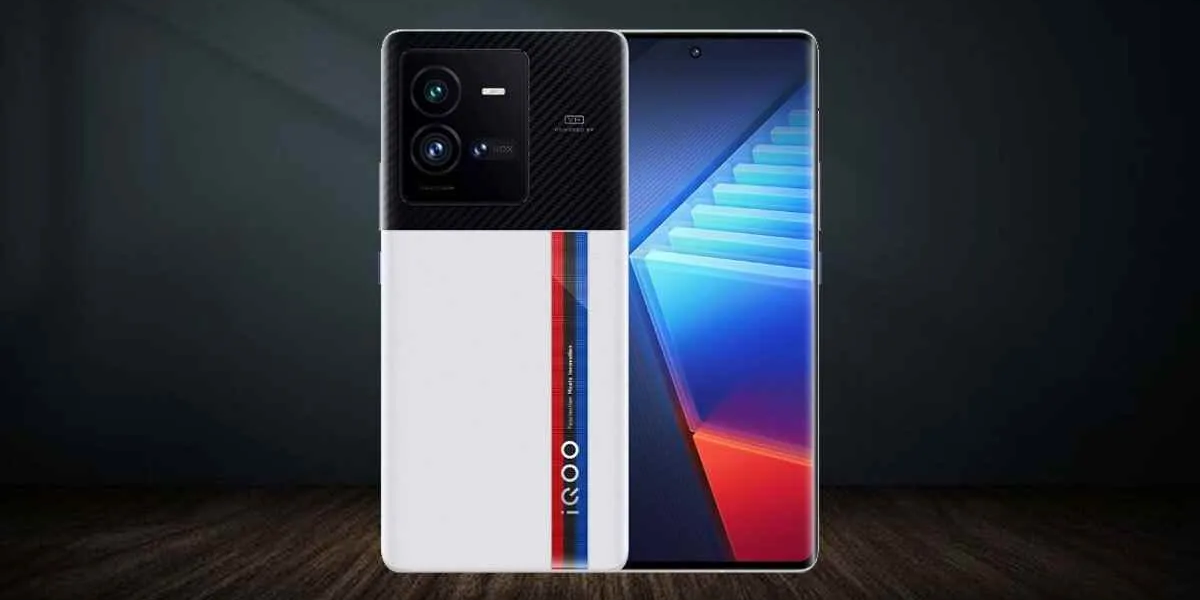
 The upcoming Vivo T2X will come up with a 6.62-inch AMOLED display, supported by a 120Hz refresh rate support. The phone will also pack a 4700 mAh battery and support 80W fast charging out of the box. It seems that Vivo T2X will have features similar to iQOO Neo 6, set to be launched on May 31. The upcoming iQoo Neo 6 is expected to be launched as a mid-range device in India.

Vivo X80

Vivo, the global smartphone brand, recently started the sale of its newly launched flagship, X80 and X80 Pro.  In addition to the flagship, Vivo has also started the sale of its all-new vivo TWS 2 series – TWS ANC 2 and TWS 2e.

Both the smartphone promises to offer the next level of premium mobile experience and mobile photography with elegant design and powerful performance. Flagship X80 Series, consisting of X80 Pro and X80, are equipped with new cinematography features in partnership with ZEISS.

Also, Read Here: Vivo TWS ANC and TWS 2E to go on sale on May 25

Here’s how to create your Meta 3D Avatar on Facebook and Instagram

0
Here's how to create your Meta 3D Avatar on Facebook and Instagram

Creating your 3D avatar is such a fun activity. This was first introduced by Snapchat, where the user can create a fun animated Bitmoji of him/her. They can add a number of features to their avatar from choosing their face shape to adding accessories and super cool outfits. Also, one great thing about these avatars is that they are 3D. So these appear real even when they’re just some animated stuff. But this is all in past now. With the popularity going crazy for these avatars, now you can make some for your Facebook and Instagram as well.

Meta rolled out 3D avatars in India for Facebook and Instagram

Months after the introduction of 3D avatars, now Meta has also brought the trend to Facebook and Instagram as well. Also Read: Meta rolls out 3D Avatars in India. These 3D avatars are very similar to Apple’s ‘Memoji’ and Snapchat’s ‘Bitmoji’.

Meta rolled out 3D avatars in India for Facebook and Instagram

In other simple words, it’s just you but in an animated version! In this post, we’ll see how you can custom and create one 3D avatar for yourself. Stay tuned!

How to create your 3D avatar on Facebook

Meta’s 3D Avatar is a unique and fun cartoon version that you can use in your conversations on messenger and Instagram. Instead of sending emojis, you can use your avatar in the same way. These can also be put on your stories and also on Meta’s quest headset! What? These are very multi-functional and really cool! However, it’s important for you to know how to create one for yourself. Follow this step-to-step guide on how to create your 3D Avatar on Facebook:

Step1: Open Facebook on your phone.

Step2: Click on the menu that looks like a hamburger icon.

Step3: Tap on the see more option.

Step4: Find Avatar and click on it.

Step5: Now, you can customize it according to your liking.

(Meta has added more facial tones and effects to make the Meta 3D Avatars look better).

Step6: Hit on the Done button.

Step7: Now, you can create a post using the Meta 3D Avatars and update the status on the Facebook app. You can also use the 3D Avatar as your profile picture.

How to Use Meta 3D Avatars on Instagram and Messenger

Now it’s time to learn how to create a Meta 3D Avatar for your Instagram. Follow this easy guide:

Step1: Open Instagram or Messenger apps.

Step2: Open a chat.

Step3: Now on Instagram, click on the Sticker button on the right and look for the Avatar option. Click on it you’ll see all the 3D Avatars. Similarly, on Messenger click on the Sticker button, and in the top section, you’ll be able to see all of the auto-generated Meta 3D Avatars.

Meta plans to bring more improvements to the 3D Avatars. It will add more sticker options and India-centric styles in the future.

“Representations in the metaverse should reflect the diversity of the real world. Avatars are just the first step toward enabling everyone to express themselves in their unique ways. When you create your avatar you can choose the right facial features, body types, clothing styles, and more to create your virtual self. We offered more than one quintillion different combinations when we launched our updated avatars last year, and we’re continuing to add more options to give people even more ways to express themselves,” said Manish Chopra, Director and Head Partnerships at Meta, India.

Indigenous OS: Will it ever make it?

0
Indigenous OS feature image

The government’s recent announcement that it is considering developing an operating system, is seen as an interesting move to break the dominance enjoyed by Google’s Android and Apple’s iOS. Although it’s a step in the right direction as India’s very own OS will give a better control over content, data and privacy to the government at local level, it’s going to be not as easy as one thinks. Developing an operating system has its own set of challenges and the government’s statement leaves more questions than answers.

There is a duopoly of Google’s Android and Apple’s iOS across the world, and India is definitely not an exception to this. In this context, the government’s recent announcement to come up with a policy that will facilitate an ecosystem for the industry to create an indigenous operating system, is seen as an interesting move to break the dominance enjoyed by these two tech majors. In order to shake the status quo, Minister of State for Electronics and Information Technology Rajeev Chandrasekhar recently informed the Parliament that “the government is considering development of the operating system, as part of its efforts to create a vibrant design and innovation ecosystem in Electronics and Information Technology.”

“The government is considering development of the operating system, as part of its efforts to create a vibrant design and innovation ecosystem in Electronics and Information Technology”

–        Rajeev Chandrasekhar, MoS, Electronics & IT

Government’s outlook

This development is in addition to the government’s earlier statement that it is talking with tech companies to come up with an indigenous OS. “There is no third one. Therefore, in a lot of ways there is tremendous interest in MeitY (Ministry of Electronics and Information Technology) and in the Government of India to even create a new handset operating system. We are talking to people. We are looking at a policy for that,” said Chandrasekhar, in an interview with a news agency.

The government is looking for capabilities within start-up and academic ecosystems for the development of the OS, said Chandrasekhar. “If there is some real capability then we will be very much interested in developing that area because that will create an alternative to iOS and Android which then an Indian brand can grow,” he stated.

As per reports, detailed discussions are presently focusing on setting up clear goals for the project, which will be followed by legislation to target specific development goals. The minister indicated that start-ups and companies working on an Indian OS may be attractive to domestic and foreign investment when raising capital. Interestingly, the project conforms to Prime Minister Narendra Modi’s ambition to create domestic leaders across multiple industries and product categories, as well as strengthen the country’s technology industry.

OS players and breakthroughs

It must be noted that the operating system is the main software of any computer and mobile device that weaves in the entire hardware and software system for effective functioning of the OS. Android and iOS have been ruling the mobile OS market for the last many years, and Microsoft Windows is a leading player in the personal computer segment. According to majority of market estimates, iOS and Android account for nearly 99% of the world’s smartphone market.

While the Android OS rules the roost with 70 per cent market share, iOS is at a distant second with nearly 29 per cent, as per web traffic analysis platform Statcounter. They also have Chrome OS and MacOS platforms, respectively, which run on computers. Control over these platforms gives them a degree of control on how apps are made, data flows, data sharing, and more. On the device front, although India is an increasingly important market to Apple, it continues to face stiff competition from Android handsets in the country.

Remarkably, Microsoft tried to break the duopoly a couple of years back and had even purchased brand Nokia to push out Windows phones, but it failed badly. Even BlackBerry has already burned their hands in this segment. Likewise, Mozilla’s Firefox OS was discontinued after efforts to crack India’s mobile market with low-cost devices failed. The Linux Foundation’s Tizen also didn’t find any takers. According to reports, China’s government has promoted Linux-derived Kylin OS for locals, but it has not won much market share.

Following the US sanctions in 2019, Huawei’s HarmonyOS in China is another attempt by a technology player to try its hands on the operating system. Considering its cross-device communication and many other features, HarmonyOS could be a serious competitor to Android in days to come.

Back in India, we have Indus OS, created by a group of IIT graduates in 2013. However, it’s not a government-mandated or supported OS. We’ll discuss about this later in the story.

Huawei’s HarmonyOS in China is a significant endeavour by a technology player to try its hands on the operating system. Considering its cross-device communication and many other features, HarmonyOS could be a serious competitor to Android in days to come

A step in the right direction

Although the government has offered no further clarity on its plans, experts believe it’s a step in the right direction. “This is a very interesting and important intent announcement considering the concerns around privacy and monopoly power of the current OS incumbents like Android and iOS in other countries. Our own OS will give a better control over content, data and privacy to the government at local level,” says Navkendar Singh, Associate Research Director, Client Devices & IPDS, IDC India.

“This is a very interesting and important intent announcement considering the concerns around privacy and monopoly power of the current OS incumbents like Android and iOS in other countries. Our own OS will give a better control over content, data and privacy to the government at local level”

–        Navkendar Singh, Associate Research Director, Client Devices & IPDS, IDC India

Arushi Chawla, Research Analyst at Counterpoint, says the Indian government, by reconsidering the development of an indigenous mobile operating system, is taking forward its aim of becoming self-reliant or “atmanirbhar”. “Indian app companies have been facing obstacles from Google and Apple for the last few years. A couple of years back, Apple increased the process for apps and in-app purchases, which impacted the equalization levy. Last year, following protests, Google decided to slash the commission it charges developers selling products and services on its Play Store. Further, recently, Apple came under an antitrust investigation in India for alleged abuse of dominance,” says Arushi.

While the focus on hardware development is already on, the software and applications should not be left behind. “It is equally strategically important to have our own OS along with the complete app ecosystem. We already have companies like IndusOS which have done great progress in creating a localised mobile ecosystem. I think we need to seriously pursue it,” says Faisal Kawoosa, Founder and Chief Analyst, Techarc.

Timeframe and resources are a must

The government has neither given any timeframe nor has it talked about hardware part which complements software in the development of an operating system. It must be noted that developing an OS takes time as well as resources, which is the reason why majority of the handset makers use Android as their operating system. The government needs to give a sufficient amount of time for the OS development and execution, besides making sure there’s a market for that operating system, experts believe.

As far as hardware is concerned, a smartphone includes important components like screen, cameras, chipset, battery and microphone, which combine with software to make a smartphone work. While developing an OS is important, working towards it without specifications about the hardware is like developing a car’s engine without a body, notes Newslaundry in a report.

In terms of technicalities, there are two types of operating systems today – open source and closed source software platforms. Android works on an open source platform, which means there is a basic version of it that can be twisted by different handset manufacturers to fit and work with their hardware. Popular brands such as Samsung, Xiaomi, Oppo, Vivo, OnePlus, Realme, Tecno, Infinix and others use Android as a base, adding skins and features on top of it to give the software a different feel and user interface for their individual devices. On the other hand, Apple’s iOS works on the closed source model, which means only an Apple device can run it. Apple, hence, offers total control over the design, hardware and software of the device which in turn ensures usability.

The government has not made anything clear on it that how it plans to provide an ecosystem, where new hardware will be designed and developed and how will a new OS be in line.

Areas of concern

Significantly, it took years for iOS, Android and KaiOS to come into being, and companies filed several patents to keep their intellectual property. Google and Android, in particular, hold patents for hardware as well as software – all of which are fiercely guarded. In such a scenario, how will the government’s policy navigate patents held by companies? Navkendar has this to say, “This has to be grounds up effort right from building hardware running an indigenous OS / software / application layer on top of it. Patents will be a roadblock, but licensing arrangements can be looked at to overcome those aspects.”

User privacy is going to be another area of concern, as an OS has access to, and control, all the data input by users into their devices. “A task as simple as sending a message requires data that is processed by the software – such as a phone number and an email address, both of which are connected to various kinds of information like bank accounts. It only gets trickier with more complex functions like making phone calls and payments,” writes tech journalist Nabeel Ahmed in an article on Newslaundry.

“With established operating systems, tech companies are under pressure to deliver on their promises of privacy and safety. This has intensified over the past couple of years, with debates and demands for companies to fix vulnerabilities in their security. It’s why Apple delayed the roll-out of its CSAM feature and jumped to fix an iOS flaw that had allegedly been exploited by the Pegasus spyware,” says Nabeel.

Besides, the government surveillance could be one of the key worries for an operating system that will be driven by the government.

Initial hurdles and way forward

According to Arushi, there are many hurdles in developing an indigenous operating system in a multi-lingual country like India. “Along with technological competencies, there is a need to ensure proper technical maintenance. Besides, competing with companies already having a strong installed base is a challenging task. From a consumer standpoint, it takes much effort and time to convince users to shift to a new technology/platform,” she emphasizes.

“There are many hurdles in developing an indigenous operating system in a multi-lingual country like India… Competing with companies already having a strong installed base is a challenging task. From a consumer standpoint, it takes much effort and time to convince users to shift to a new technology/platform”

–        Arushi Chawla, Research Analyst, Counterpoint

“Security and privacy aspects play a very important role here given the increasing digitization in daily lives. However, if India’s efforts in relation to BOSS (Bharat Operating System Solutions) are anything to go by, the country has a long way to go in earning prospective users’ confidence,” Arushi adds. It should be noted that BOSS proved to be ineffective at a mass scale and hackers from China were able to break into the Indian government’s servers.

As discussed above, prior attempts have been made by players such as Microsoft and Blackberry in introducing a different operating system. Even the Indian government has made earlier attempts with BOSS (Bharat Operating System Solution) and Indus OS to develop its indigenous operating system but have been unable to counter and/or match the presence of tech giants. “The past attempts, however, especially with Indus OS, which is available in multiple regional languages inspires the Indian app developers to build locally relevant content, helped the Indian government realize its potential and prepare for the expected bottlenecks for the upcoming journey towards an in-house operating system,” says Arushi.

Talking about other possible bottlenecks in the development of a homegrown OS, Navkendar says the developer ecosystem in the absence of a mass user base and relevant content which can attract that mass base will go hand in hand. “This is the major challenge for any new OS,” he says.

Indus OS, a homegrown platform for app and content discovery, has travelled a long way to create its own space despite the presence of tech giants like Google and Apple, with their Play Store and App Store respectively. It is touted as the world’s first multilingual operating system

A definitive framework required

“What needs to be explored before embarking on this idea is to find a middle ground and work with Android to solve the issues which are forcing us to look into building an indigenous OS,” suggests Navkendar.

Faisal, on the other hand, says the time in digital journey has come when we start making products that suit us rather than aligning with what’s available to us. “This might also help us solve a major challenge of not being able to bring millions of users in the smartphone ecosystem, who are using a feature phone at the moment. We are already at the threshold of 5G and seem helpless to shut down 2G networks,” he opines.

“The time in digital journey has come when we start making products that suit us rather than aligning with what’s available to us. This might also help us solve a major challenge of not being able to bring millions of users in the smartphone ecosystem, who are using a feature phone at the moment”

–        Faisal Kawoosa, Founder and Chief Analyst, Techarc

While the government’s intentions in developing an indigenous operating system may be right, the project needs to be a long-term one with proper planning. It is important to lay down a definitive framework and form strategic alliances with OEMs for the project’s implementation.

Also Read: How Foldable Smartphones Are Opening Up A New World Of Mobile Productivity?

Garena Free Fire OB34 Update: How to download for iOS, Android, PC, and APK

0
Garena Free Fire OB34 Update: How to download for iOS, Android, PC, and APK

Garena Free Fire is one of the most popular and loves battle royale games that India has witnessed. We don’t even have to put much emphasis on it. The name already speaks royalty and fame with its name coming up only. The game also is very much dedicated to giving the players something to look forward to, with every update. It brings many exciting events, rewards, and very timely upgrades to keep the players excited and enthusiastic about it. Now, the game has rolled out the Garena Free Fire OB34 update for all the gamers. so, if you need help on how to download and install the Garena Free Fire OB34 update on your device, this is your guide!

Garena Free Fire OB34 update released: Details

Before even installing the update let’s just look at what it has to offer. The latest OB34 update brings many upgrades for the players, as always. It has some really fun and free login rewards, get lucky Royale vouchers as well as a Magic Cube for the Free Fire Max players. Additionally, the update offers a new patch that enhances the gameplay with new game modes. This includes Clash Squad, Battle Royale, and Craftland. The Garena Free Fire OB34 also brings in-game upgrades. This includes new guns, character upgrades, skins, and so on. The software aspect of the Garena Free Fire OB34 also includes enhancements to make the game better optimized.

Garena Free Fire OB34 update released: Details

In-game enhancements are also included with the Garena Free Fire OB34. New firearms, character enhancements, skins, and other items are included. The software on the Garena Free Fire OB34 has also been improved to make the game more optimal.

Garena Free Fire OB34 update: How to download on Google Play/App Store?

The new Garena Free Fire OB34 is now live on all Garena servers worldwide. If you already have the Garena Free Fire Max app on your phone, the Garena Free Fire OB34 will be accessible to you. Here’s how to get the game updated:

Step 1: Open Google Play on your Android phone and the App Store on your iPhone

Step 2: Type and search for Garena Free Fire Max on the store, as after the original Free fire was banned by the government. Ee only have the Free Fire Max version available with us

Step 3: Here, you can find the app from Garena with the update button. Click on this and allow the app to get the Garena Free Fire OB34 update

Step 4: Once the update has been downloaded and installed, open the gaming app on your phone

Step 5: Additional files for the Garena Free Fire OB34 update to run will be installed here and you can play the game after this

How To Download Garena Free Fire OB34 Update APK File?

Downloading the Garena Free Fire OB34 update on your mobile via Google Play and the App Store is the best and safest method. However, you can still face some possible bugs, so the APK  version is the answer to all these questions. Check out here if you still want to download the APK file, here’s how to do it:

Step 1: Open the Garena Free Fire Max official website

Step 2: Now find the APK files for download for the Garena Free Fire OB34 update

Step 3: Follow the steps mentioned there, make sure you allow external files to download on your Android phone, and complete the steps.

How To Download Garena Free Fire OB34 Update On PC?

You can also get the Garena Free Fire OB34 update on your PC. But for this, you will need an Android emulator like BlueStacks, Gameloop, or NoxPlayer. Here’s how to do it:

Step 1: Open a web browser on your PC or laptop > Search for any Android emulator like BlueStacks and download it.

Step 2: Once done, log in to Google Play using your Google ID.

Step 3: Next, search for Garena Free Fire Max, which will offer you the latest version with the Garena Free Fire OB34 update.

Step 4: Download and install the game, and begin playing

This is your detailed guide on how you can enjoy all your favourite games with their latest updates and upgrades.

“Wranga is the world’s first AI-driven digital parenting platform, assisting parents in becoming their children’s friend, philosopher, and guide”

0
Amitabh Kumar -Wranga

Living in a digital world, surrounded by all kinds of content – it is of utmost importance for parents to be cautious and expose their children to only age-appropriate content, be it in the form of videos, games or interactive apps. This is where Wranga – a digital parenting app – is proving to be a game changer. The app monitors content across all leading and popular mediums and intelligently categorizes them using machine learning tools and inputs from quantitative and qualitative review teams. The app gives an age rating based on a quick text and video explainer, which breaks down the content components into aspects like educational values, positive messages, consumerism, abusive language, violence among others. Ramesh Kumar Raja caught up with Amitabh Kumar, Co-founder, Wranga, to discuss more about this platform, technology involved and how it is proving to be a game-changer for parents and parenting. Excerpts:

How can Wranga keep kids safe while accessing the web when there is so much inappropriate content?

Parenting is about creating the most educational, fun experience for your child that helps them grow, and the same ideas apply in the online world as they do in the offline world. Wranga is a one-stop online parenting resource that specialises in all things digital. We handpick the best content/game/app for your child, which you may access with a single click.

With the support of content ratings, video reviews, and recommendations, our platform assists parents in finding and selecting the most appropriate piece of material for their child’s age. The app also gives parents the option to limit screen time, track real-time location, regulate apps, and teach their children good digital habits.

How does the Wranga technology work? How does it categorize content for children based on their age?

Wranga is a digital parenting platform developed by a group of specialists in the field of digital parenting. We’ve developed a value system that includes both positive and negative messages, as well as research on their effects on youngsters.

We use our patented assessment technique to evaluate content, games, and apps. They are divided into age groups based on their performance. We are always improving our advice by working with parents and children. It’s a fine balancing act of science.

“With the support of content ratings, video reviews, and recommendations, our platform assists parents in finding and selecting the most appropriate piece of material for their child’s age. The app also gives parents the option to limit screen time, track real-time location, regulate apps, and teach their children good digital habits”

With so many parental control apps available in the market, how can Wranga keep ahead of the competition?

Wranga is the world’s first AI-driven digital parenting platform, assisting parents in becoming their children’s friend, philosopher, and guide. Because parental supervision has been shown to be ineffectual, we’ve developed an alternative technique that engages families and incorporates them in a good online play experience.

With over 4K app downloads and institutional tie-ups with major brands like Amity International School, Sanfort World School, and Dharampeth Public School, among others, the platform has gained a lot of prominence since its inception in February this year. Wranga intends to expand this in the near future and collaborate with the teaching and parent communities to do so.

In our app, everything is allocated an age rating, whether it’s an OTT series, a movie, or a smartphone game, based on a fast text and video explainer that breaks down the content components into aspects like educational values, positive messages, consumerism, abusive language, and violence, among other things.

The main goal is to make it easier for parents to navigate and get to the content they want faster, as well as to allow them to initiate conversation with their children about the content, resulting in better parenting.

What are some of the premium services offered by the brand? What does it bring to the table that the others don’t?

Some of the services offered by Wranga include:

  1. Curriculum, one-one counselling, direct age-appropriate content to parents
  2. We are on the route to becoming the gold standard for rating and reviews of online content, games and apps in India
  3. For large tech companies, we are building an AI algorithm to help them do age-appropriate content and game/app ratings

How does Wranga regulate screen time for children in this age of hyper-connectedness to the internet?

We provide alternatives to parents for equally engaging offline activities. Also clarifies the harm of excessive screen time to children. Our study has revealed that many fallacies still exist among parents; we debunk them using knowledge and solutions to help parents achieve a healthy balance of digital consumption in their children’s lives.

“We provide alternatives to parents for equally engaging offline activities. Also clarifies the harm of excessive screen time to children. Our study has revealed that many fallacies still exist among parents; we debunk them using knowledge and solutions to help parents achieve a healthy balance of digital consumption in their children’s lives”

Is Wranga planning to raise funds? If so, how do you intend to put it to use?

Yes, we are in talks to raise our next round of funding, which we will use to grow our AI capabilities as well as our effect in other South Asian countries. We will also be expanding our advisory in other languages, currently, we cater to English and Hindi speaking parents, we look forward to serving parents speaking other languages too.

Why is Wranga focusing their efforts on the Indian market? Please shed light on your collaborations with schools and other institutions?

As the founders are Indians, our first duty is towards the parents of India, though we are already on our way to starting operations in other countries. We have done numerous workshops across India and the globe; our collaborations are with large school chains and big tech companies. We are also working on numerous curriculum solutions with CBSE, ICSE.

Also Read: “Mobile phones are an ideal target for data privacy threats”

 boAT adds one more affordable smartwatch to its product list

0
boAT Wave Neo

Popular wearables brand boAt has added one more product to its portfolio by launching yet another smartwatch in the market. The latest launch has come soon after the launch of first-ever Bluetooth Calling Smartwatch — ‘boAt Primia’.

The latest addition by boAt the Wave Neo smartwatch has an Apple-like square-shaped case.  SpO2 sensor, 24/7 heart rate sensor, 10 sports mode, 2.5D glass and supports, and more are prominent features of the just-launched Wave Neo smartwatch.

In addition to Wave Neo smartwatch, boAt offers several smartwatches under the budget category. BoAT is known for offering products loaded with features and budget-friendly so they don’t dig a hole in your pockets.

Price and availability of boAT Wave Neo

Launched under the budget category, the Wave Neo smartwatch is priced at Rs1799. Available for sale from May 27 via Flipkart, boAt Wave Neo has been launched in Black, Blue, and Burgundy colour options.

Specifications of boAT Wave Neo

Featuring a 1.69-inch touchscreen display with a resolution of 454 x 454 pixels, boAT Wave Neo can be paired with a boat Hub app. The display comes with a 2.5D glass covering. Up to 550 nits of brightness is supported by the newly launched product. Stress tracker, an accelerometer and sleep tracker are other prominent features of the newly launched smartwatch.

Ten sports modes, including walking, running, climbing, yoga, basketball, cycling, hiking, skipping, badminton, and swimming are supported by Wave Neo supports. Users can keep a watch on number of steps, distance traveled, calories burned, etc through the boAt Wave Neo.

Call alerts, SMS, weather updates, sedentary reminders, alarms, music control, camera control are also offered in boAT Wave Neo.

Recent launches of boAT

The boAT Primia, Airdopes 411 ANC, BoAt Blaze smartwatch, and Boat Matrix are prominent products introduced by the Earwear brand boAT since January 2022. Matrix is first smartwatch with a stunning Always on High-Definition AMOLED screen.

The Boat Matrix Smartwatch is available on Amazon and the Boat Website for purchase. It comes in Ocean Blue, Pitch Black and Twilight Grey. boAT offers one tear warranty and seven days of replacement on its purchase.

Talking about boAT Primia, the first first-ever Bluetooth Calling Smartwatch by the company is available in India and is currently priced at Rs 4499. The watch is available in two classic colours: Black and Blue. The watch can be purchased by Amazon and the brand’s official website.

The IP67 dust, sweat, and splash-resistant shell of the boAt Primia allow users to use the watch freely in adverse weather conditions or during an intense workout. boAt Primia is powered by a strong battery that outperforms and gives up to 7 days of battery life.

Also, Read Here: Boat unveils Hybrid ANC TWS earbuds ‘Airdopes 601 ANC’

Tecno Pova 3 launched: Comes with a massive 7000mAh battery

0
Tecno Pova 3 launched: Comes with a massive 7000mAh battery

Smartphones that pack heavy features without going heavy on your pocket are great. And, Trassion’s Tecno Pova range is one such among them. Recently, Tecno launched another great budget option in the Philippines market, adding a 3 edition to its P0va series. Tecno Pova 3 comes as a successor to the Pova 2.

Now, Just like its predecessor, the Pova 3 packs a massive chunky battery of 7,000mAh power paired with a 25W fast charging support. However, this is not all it has!

Tecno Pova 3: Price and availability

Since it’s a great budget option, Tecno Pova 3 won’t go harsh on your pocket. It is currently priced at PHP 8,999(roughly INR 13,350) for the 4GB RAM + 64GB storage variant. The other 6GB RAM + 12GB storage options are priced at PHP  9,399(roughly INR 14,000).

Tecno Pova 3 unlike its successor, also offers three stunning colour options: Eco Black, Electric Blue, and Tech Silver. The phone can be purchased from all the authorized stores in the Philippines.

Tecno Pova 3: Features and specs

The Tecno Pova 3 comes all new design and specs. It features a distinct camera island at the back psired with a protruded strip going around from the top to the bottom. Tecno proudly calls it the “Energy bar” of the phone.

Coming to the general specs, the smartphone sports a massive 6.9-inch IPS LCD display paired with a 90Hz refresh rate. It also gives a Full HD+ resolution. Furthermore, it features a punch-hole panel, which Tecno calls the Dot-in display. A MediaTek Helio G88 octa-core SoC powers the device paired with two different storage options. The 4GB RAM comes 64GB storage option and the 6GB of RAM variant comes with 128GB of internal storage.

Coming to the optics, Tecno Pova 3 features a triple camera configuration on the back. It has a 50MP main lens and two 2MP auxiliary units. On the front, it features an 8MP selfie camera with a dual-flash feature.

Tecno Pova 3 launch

Talking about the massive battery that Pova 3 features is amazing. It’s also one of the phone’s main highlights- its large 7000mAh battery. You can also consider this as one of the primary selling points for this one. Although it has such a massive battery, this is the same as the predecessor, however, with some improvements. What’s improved here is the enhanced charging speed. The predecessor supported an 18W fast charging support. This one, on the other hand, gets a 25W fast charging support. And interestingly, it is bundled with a 33W fast charger inside the box as well.

Tecno has also added features like a Super Power Saving mode and reverse charging. The phone supports 10W speed for wired reverse charging. The company claims that the phone can offer up to 50 hours of music playback, 20 hours of Youtube video playback, and up to 8 hours of gaming.

It has a side-mounted fingerprint scanner for added security. It has dual speakers with DTS audio support. The phone packs a graphite cooling system offering better thermals. Lastly, the phone boots on the Android 11 OS out of the box and has the following dimensions: 173.1  78.466 x 9.44mm.

Tecno Pova 3  India launch timeline

The phone’s India arrival is yet to be confirmed, but as per the leaks, it will hit the Indian smartphone market in the next month, officially. The phone could come under Rs. 15,000 in the country and will take on the likes of iQOO Z6, Poco M4 Pro, and Moto G52.