Oppo’s upcoming Find N7 is tipped to feature passport‑like proportions when folded and a wider unfolded display.
The Find N6 is expected to debut in China in February 2026, with a global rollout in March.
Both Find N6 and N7 may share core hardware like Snapdragon 8 Elite Gen 5 chipset, 16GB RAM, triple rear cameras (200MP + 50MP + 50MP), and a 6,000mAh battery with 80W wired and 50W wireless charging.
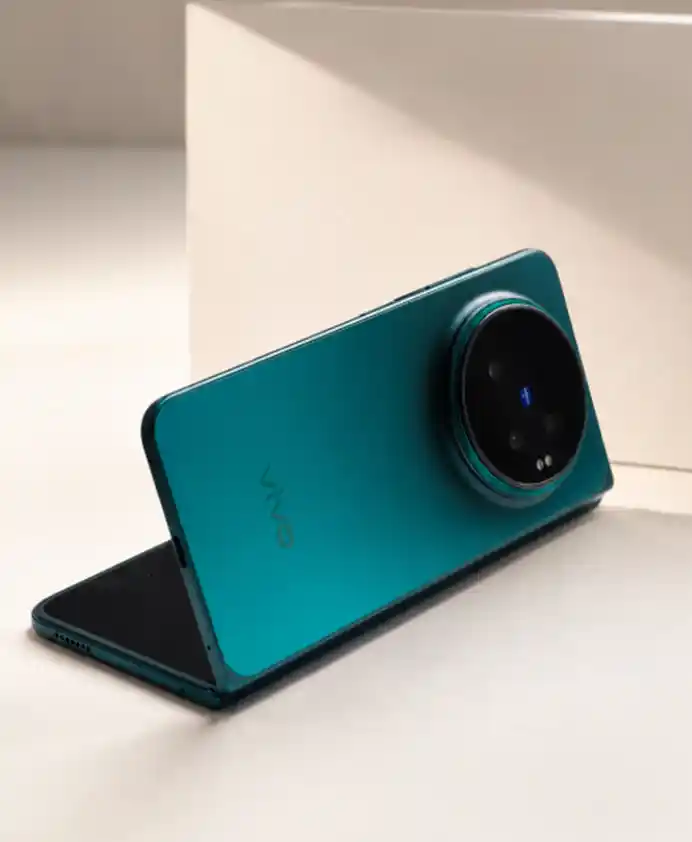
The Oppo Find N5 in the picture for reference. (Image credit – Oppo)
Oppo is reportedly working on two foldable smartphones for 2026 under its next-generation Find lineup. One of the upcoming models is said to be the Oppo Find N7, which could arrive in the second half of this year. On the other hand, Oppo is also believed to be preparing for the China launch of the Oppo Find N6 next month. Here’s what we know so far.
Oppo Find N7 Form Factor Details Tipped
As per a SmartPrix report citing tipster Yogesh Brar, the Oppo Find N7 is expected to take a different design route compared to the rumoured Find N6. When folded, the handset is said to have passport-like proportions. And unfolding it could reveal a noticeably wider display for improved multitasking and media consumption.
In contrast, the Find N6 is tipped to retain a taller form factor, similar to the existing Find N5 model. The report adds that Oppo could announce the Find N7 in September, potentially around the same time as Apple’s annual September event, where the company is also expected to unveil its first foldable iPhone, commonly referred to as the iPhone Fold.
The leak further claims that the Oppo Find N7 will share its core hardware with the upcoming Find N6, including the camera setup and battery specifications.
Oppo Find N6 Launch Timeline and Expected Specs
The tipster also noted that Oppo is gearing up to launch the Find N6 in China with a debut expected in February, followed by a global rollout in March. Previous reports suggest the Find N6 could be powered by the Snapdragon 8 Elite Gen 5 chipset, paired with 16GB of RAM.
In terms of display, the Find N6 is said to feature an 8.12-inch 2K LTPO OLED inner screen with a 120Hz refresh rate, along with a 6.62-inch AMOLED cover display. For photography, it may sport a triple rear camera system consisting of a 200-megapixel primary sensor, a 50-megapixel telephoto camera, and a 50-megapixel ultra-wide-angle lens.
The foldable is also expected to pack a 6,000mAh dual-cell battery, supporting 80W wired fast charging and 50W wireless charging.
FAQs
Q1. What design changes are expected in the Oppo Find N7?
Answer. The Oppo Find N7 is tipped to feature passport‑like proportions when folded and a wider unfolded display, aimed at enhancing multitasking and media consumption.
Q2. When is the Oppo Find N6 expected to launch?
Answer. The Oppo Find N6 is reportedly set to debut in China in February 2026, with a global rollout planned for March.
Q3. What specifications are rumoured for the Oppo Find N6?
Answer. The Find N6 may include a Snapdragon 8 Elite Gen 5 chipset, 16GB RAM, an 8.12″ 2K LTPO OLED inner display, a 6.62″ AMOLED cover screen, triple rear cameras (200MP + 50MP + 50MP), and a 6,000mAh battery with 80W wired and 50W wireless charging.
Microsoft Copilot now lets users browse and buy products directly within chat without visiting retailer websites.
It is rolling out on Copilot’s US web client with payments handled via PayPal, Stripe, and Shopify.
ChatGPT and Perplexity also enable in‑chat purchases, while Google Gemini redirects users to external retailer sites.
Microsoft Copilot Gets In-Chat Shopping. (Image credit – Microsoft)
Microsoft has begun integrating shopping directly into Copilot, allowing users to complete purchases within a chat conversation. With this update, users can ask Copilot for product suggestions such as help choosing a pair of sneakers. AI can now surface a checkout option for the selected item without requiring users to leave the chat interface.
In-chat Buying Without Visiting Retailer Websites
In a YouTube video shared by Microsoft, Copilot is shown helping a user find a bedside lamp. Alongside the recommendation, the interface displays a “Details” option for more product information and a “Buy” button. Tapping the buy option launches an in-chat checkout flow where users can enter delivery and payment details and complete the purchase, entirely bypassing the retailer’s website.
The in-chat checkout feature is currently rolling out on the Copilot web client in the US. At launch, it is limited to a group of partner retailers including Urban Outfitters, Anthropologie, Ashley Furniture, and select Etsy sellers.
Microsoft has partnered with PayPal, Stripe, and Shopify to handle payments with broader retailer support expected to roll out over the coming weeks.
AI Chatbot Shopping
This move broadly mirrors how other AI platforms are handling shopping assistance. OpenAI’s ChatGPT focuses on product discovery, comparisons, and guiding users through purchase decisions within chat, while also enabling checkout.
Perplexity follows a similar path, offering a conversational shopping experience that combines product discovery with an integrated checkout flow powered by PayPal.
Google has taken a different approach with Gemini. While Gemini uses AI to assist with product discovery and comparisons, it redirects users to retailer websites to complete payments. Unlike Copilot, it does not currently offer an instant checkout option that allows users to finalise purchases without leaving the platform.
FAQs
Q1. What new shopping feature has Microsoft added to Copilot?
Answer. Microsoft has integrated in‑chat shopping, allowing users to browse products and complete purchases directly within the chat interface without visiting retailer websites.
Q2. Which retailers and payment partners are supported at launch?
Answer. The feature is initially available with partner retailers like Urban Outfitters, Anthropologie, Ashley Furniture, and select Etsy sellers. Payments are handled via PayPal, Stripe, and Shopify.
Q3. How does Copilot’s shopping experience compare to other AI platforms?
Answer. Copilot offers instant checkout within chat, unlike Google Gemini which redirects to retailer sites. ChatGPT and Perplexity also provide conversational shopping with integrated checkout flows.
Honor Magic8 Lite launch at £399.99, offering a 6.79″ OLED display, Snapdragon 6 Gen 4 chip, 108MP camera and 7,500mAh battery with 66W charging.
Honor Magic8 Pro unveiled at £1,099.99 with Snapdragon 8 Elite Gen 5, 6.71″ LTPO OLED, 200MP telephoto camera and 6,270mAh battery with 100W wired + 80W wireless charging.
Both models debut in the UK with early bird discounts and free accessories.
Wider EU rollout is expected later with pre‑orders possibly starting January 15.
Honor Magic8 Lite (left) and Honor Magic8 Pro (right)
Honor has officially introduced the Magic8 Pro and Magic8 Lite in the UK, marking the European debut of its latest flagship and mid-range smartphones. While this is not considered a full EU launch due to the UK’s exit from the European Union, an official EU release timeline is still awaited. Some industry hints suggest that pre-orders in select markets could begin as early as January 15. In any case, here’s all you should know about both models.
Honor Magic8 Lite – Key Features
Honor Magic8 Lite.
Honor has rolled out the Magic8 Lite globally, expanding the Magic8 lineup following the launch of the Magic8 Pro. The smartphone measures 161.9 × 76.1 × 7.76mm, weighs around 189g, and is available in Reddish Brown, Forest Green, and Midnight Black colour options. It features aluminosilicate glass construction and is the first smartphone to earn SGS Triple-resistant Premium Performance certification for drop, water, and dust resistance.
The device is certified for 2.5m drop resistance and carries IPX8 and IPX9K water resistance, IP6X dust protection, and IEC 62262 impact resistance certification. It also includes IP68 and IP69K ratings, a six-layer cushioning glass structure, one-tap dust and water ejection, rain-responsive touch input, and glove-friendly touch controls.
On the front, the Honor Magic8 Lite sports a 6.79-inch OLED display with 1.5K resolution,up to 6,000 nits peak brightness, and a 120Hz adaptive refresh rate. The panel supports the DCI-P3 colour gamut and features slim 1.3mm bezels. Eye-care technologies include 3840Hz PWM dimming, dynamic dimming, AI Circadian Night Display, hardware-level low blue light, and AI Defocus Display.
For photography, the Magic8 Lite is equipped with a 108-megapixel primary rear camera with OIS, a 5-megapixel ultra-wide sensor, up to 10x digital zoom, and a 16-megapixel front-facing camera. Imaging features include an underwater photo mode, 4K HD Moving Photo Collage creation, and AI tools such as AI Eraser, AI Face Tune, reflection removal, AI Cutout, and AI Upscale.
The smartphone is powered by the Snapdragon 6 Gen 4 (4nm) chipset and uses Honor’s VC Ice Cooling System, which includes a 3,490mm² stainless steel vapour chamber and a total cooling area of 29,500mm². It packs a 7,500mAh silicon-carbon battery with support for 66W Honor SuperCharge, reverse charging, and reliable operation in temperatures ranging from –30°C to 55°C.
The Magic8 Lite runs MagicOS 9.0 based on Android 15 and brings AI features such as Google Gemini live interaction, AI Writing Tools, and Magic Portal. Audio is handled by dual stereo speakers with Honor Sound 7.3, and NFC support is included. Globally, the phone is available in an 8GB + 512GB configuration, with an 8GB + 256GB variant offered in select regions.
Honor Magic8 Lite – Price and Availability in the UK
In the UK, the Honor Magic8 Lite is priced at £399.99 (EUR 459 / USD 535 / Rs. 48,191 approx.) across all colour options.
As part of early bird offers from Honor UK, buyers can get a £50 launch discount, a free Honor CHOICE Watch 2 Pro, and a free Honor SuperCharge Power Adapter 2 (66W). These offers are available on a first-come, first-served basis exclusively through Honor UK.
The smartphone is also expected to arrive in other European markets.
Honor Magic8 Pro – Key Features
Honor Magic8 Pro.
Honor has also officially launched the Magic8 Pro in the UK, following its GCC debut in December. The smartphone measures 162 × 76 × 7.76mm, weighs 189g, and comes in Sunrise Gold, Sky Cyan, and Black colour options. It is offered in a single 12GB RAM + 512GB storage configuration.
The Magic8 Pro features Honor NanoCrystal Shield glass and has received SGS 5-Star Drop Resistance Certification, covering drops, water, and dust. It carries IP68, IP69, and IP69K ratings and supports up to 10x drop resistance. The device sports a 6.71-inch LTPO OLED display with a 1–120Hz adaptive refresh rate and HDR peak brightness of up to 6,000 nits (global peak 1,800 nits).
Display technologies include Dolby HDR Vivid, eight AI Eye Comfort innovations, Chip-Level AI Defocus Display, Dynamic Dimming, Circular Polarized Display 2.0, Circadian Night Display, and 4320Hz PWM dimming. The panel is TÜV Rheinland Full Care Display 5.0 certified.
The Honor Magic8 Pro is powered by the Snapdragon 8 Elite Gen 5 Mobile Platform, delivering enhanced CPU, GPU, and AI performance. It introduces GPU-NPU heterogeneous AI super-resolution and frame-generation technology, enabling demanding games to run at 120fps at 1080p from 60fps at 850p sources.
The device packs a 6,270mAh battery with support for 100W wired and 80W wireless Honor SuperCharge. Honor’s AI Power Management System uses a millivolt-level voltage stabilization algorithm, reducing typical power consumption by 13%.
Its AiMAGE Camera System includes a 200-megapixel Ultra Night telephoto camera with f/2.6 aperture, 1/1.4-inch sensor, 3.7x optical zoom, and OIS, a 50-megapixel Ultra Night main camera with f/1.6 aperture, 1/1.3-inch sensor, OIS, and 4-in-1 2.4μm pixel output, and a 50-megapixel ultra-wide camera with f/2.0 aperture, 122-degree field of view, and 2.5cm HD macro support. A single rear LED flash is included. On the front, the phone features a 50-megapixel camera pairedwith a 3D depth sensor, enabling 3D face unlock.
Stabilisation is handled via AI Adaptive Stabilisation, achieving CIPA 5.5-level performance. Imaging features include the Magic Colour AI engine, AI Photos Agent with AI Eraser, AI Outpainting, AI Colour, AI Cutout, and a dedicated AI Button for instant camera or AI feature access.
The Magic8 Pro runs MagicOS 10, combining on-device Honor AI with Google Gemini for cloud-based reasoning. AI features include AI Screen Suggestions, AI Settings Agent, AI Photos Agent, Gemini Live for real-time visual understanding and live translation, and Nano Banana, Veo 3, and Connected Apps for task and project management.
Honor Magic8 Pro -Price and Launch Offers in the UK
The Honor Magic8 Pro is priced at £1,099.99 (EUR 1,266 / USD 1,477 / Rs. 1,32,792 approx.) in the UK. As part of launch offers from Honor UK, a discount code “AM8PUK200” reduces the price to £899.99.
Early buyers also receive free gifts including the Honor Pad X9a for the first 1,000 units, a Honor SuperCharge GaN Power Adapter (up to 100W), and a Honor CHOICE Magic8 Pro Case.
Anwer. Honor introduced the Magic8 Pro and Magic8 Lite in the UK, marking their European debut, though a full EU rollout is still pending.
Q2. What are the key features of the Honor Magic8 Lite?
Answer. The Magic8 Lite offers a 6.79″ OLED display, Snapdragon 6 Gen 4 chipset, 108MP main camera, 7,500mAh battery with 66W charging, and SGS triple‑resistant durability certifications.
Q3. What makes the Honor Magic8 Pro stand out?
Answer. The Magic8 Pro features Snapdragon 8 Elite Gen 5, a 6.71″ LTPO OLED display, 200MP telephoto camera, 6,270mAh battery with 100W wired + 80W wireless charging, and advanced AI imaging and security tools.
Q4. How are the Honor Magic8 Pro and Lite models priced in the UK?
Answer. The Honor Magic8 Lite is priced at £399.99, while the Magic8 Pro costs £1,099.99 (discounted to £899.99 with a launch code).
Q5. What launch offers are available for UK buyers for Honor Magic8 Pro and Lite models?
Answer. Early buyers of the Magic8 Lite get a £50 discount, a free Honor Watch 2 Pro, and a 66W charger. Magic8 Pro buyers receive gifts like the Honor Pad X9a, a 100W GaN adapter, and a protective case, along with Honor Care+ screen protection.
Vivo X200T is tipped to feature a 6.67″ 1.5K AMOLED display, MediaTek Dimensity 9400+ chipset, up to 16GB RAM, 1TB storage, and a 6,200mAh battery with 90W wired + 40W wireless charging.
The phone is expected for India debut in late January 2026.
It could be priced between ₹50,000–₹55,000 with colour options Seaside Lilac and Stellar Black.
Vivo X200T colour variants leaked earlier.
The Vivo X200T appears to be gearing up for its India debut by the end of this month. The smartphone has recently been spotted on the Bluetooth SIG and BIS certification databases. While earlier leaks revealed its expected pricing and colour options, a fresh report from tipster Abhishek Yadav on X has once again detailed the full specification sheet of the upcoming handset.
Vivo X200T – Key Specifications (rumoured)
As per the tipster, the Vivo X200T is expected to feature a 6.67-inch AMOLED display with a 1.5K resolution and a smooth 120Hz refresh rate. On the software side, the smartphone is said to ship with Android 16 out of the box.
Vivo is reportedly promising long-term support with up to five major Android OS updates and seven years of security patches.
Under the hood, the device is tipped to be powered by the flagship MediaTek Dimensity 9400+ chipset. It is expected to be paired with generous memory configurations, going up to 16GB of RAM and as much as 1TB of internal storage on select variants. The phone is also said to pack a large 6,200mAh battery, supporting 90W fast wired charging along with 40W wireless charging.
In terms of optics, the Vivo X200T is rumoured to sport a triple rear camera setup. This could include a 50-megapixel Sony LYT-702 primary sensor with OIS and Zeiss super photo-sensitive branding, a 50-megapixel Samsung JN1 ultra-wide camera, and a 50-megapixel LYT-600 periscope telephoto lens. For selfies and video calls, the phone is expected to feature a 32-megapixel front camera.
Additional leaked features include Wi-Fi 7 connectivity, Bluetooth 5.4, a USB Type-C port, an ultrasonic in-display fingerprint sensor, and IP68/IP69-rated dust and water resistance. The device is also said to come with a 4.5K Nanofluid VC cooling system for sustained performance and support for eSIM.
Vivo X200T Price and Colour Options (Rumoured)
According to SmartPrix, citing tech blogger Yogesh Brar, the Vivo X200T is likely to launch in India in the last week of this month. The smartphone is expected to be priced aggressively, falling in the range of Rs 50,000 to Rs 55,000. It is tipped to arrive in colour options such as Seaside Lilac and Stellar Black.
With flagship-grade hardware and long software support, the Vivo X200T is shaping up to be a strong contender in the premium smartphone segment ahead of its official launch.
FAQs
Q1. What are the key specifications of the Vivo X200T?
Answer. The Vivo X200T is tipped to feature a 6.67‑inch 1.5K AMOLED display with 120Hz refresh rate, MediaTek Dimensity 9400+ chipset, up to 16GB RAM, 1TB storage, and a 6,200mAh battery supporting 90W wired and 40W wireless charging.
Q2. What camera setup is expected on the Vivo X200T?
Answer. Rumours suggest a triple 50MP rear camera system: Sony LYT‑702 primary sensor with OIS, Samsung JN1 ultra‑wide, and LYT‑600 periscope telephoto lens, along with a 32MP front camera.
Q3. When will the Vivo X200T launch in India and at what price?
Answer. The Vivo X200T is expected to debut in India in late January 2026, priced between ₹50,000–₹55,000, with colour options Seaside Lilac and Stellar Black.
Leaked 3D‑printed mockups suggest Apple’s iPhone Fold may resemble a compact iPad mini rather than a traditional iPhone.
Apple’s rumoured design could prioritise a tablet‑like experience in a pocketable format.
If the wider design is real, iOS 27 may need major changes to adopt iPadOS‑style.
3D-Printed Mockups of Possible iPhone Fold. (Image credit – 512 Pixels)
Fresh leaks surrounding Apple’s long-rumoured iPhone Fold are raising questions about how the device will feel in daily use. To what it’s worth, we are a bit confused if it will be more like an iPhone or closer to an iPad.
3D-Printed Mockups of Possible iPhone Fold Design Spark New Debate
Stephen Hackett of 512 Pixels recently created a 3D-printed mockup of the rumoured iPhone Fold design. Jason Snell discussed these mockups on Six Colors in an article titled,“Will the iPhone Fold be a phone you open, or an iPad you close?”
The article states: “If these mock-ups are real, this folding iPhone is not going to be what you may have pictured in your head: a modern iPhone, roughly the shape of an iPhone Pro, that folds open to reveal a larger screen inside. […] after looking at these 3D-printed mock-ups and seeing a squat, paper-notepad-shaped iPhone that unfolds into a small iPad, it seems pretty clear to me: If this is the shape of the iPhone Fold to come, Apple is focusing on it being an iPad you can fold up and stick in your pocket, not as an iPhone that unfolds into two iPhones placed side by side.”
Previous reports suggested the iPhone Fold may look very different from rival foldables such as the Samsung Galaxy Z Fold7 and the Google Pixel 10 Pro Fold. Both of those devices resemble conventional smartphones when folded and remain taller than they are wide even when unfolded.
In contrast, current rumours indicate that Apple’s foldable iPhone could feature a noticeably short and wide design when folded, transforming into something closer to an iPad mini once opened.
iOS Could Take a New Direction
Apple’s final design may ultimately differ from what these mockups suggest. Still, if the iPhone Fold does arrive with such a distinctive shape, it could push the iPhone and iOS in a bold new direction.
There is hope that iOS 27 could adopt the advanced windowing system introduced in iPadOS 26 or something similar to better take advantage of the larger unfolded display.
Adapting iOS to a Wider Display
Another open question is how Apple would adapt iOS for a folded screen with a nontraditional rectangular shape. A wider interface could require significant changes across the operating system, potentially demanding a major design effort from Apple. That challenge alone makes some observers sceptical that the leaked mockups accurately represent the final iPhone Fold design.
As leaks continue to surface, it remains to be seen whether Apple is building an iPhone that unfolds or an iPad that folds.
FAQs
Q1. How might the iPhone Fold differ from rival foldables?
Answer. Unlike Samsung’s Galaxy Z Fold7 or Google’s Pixel 10 Pro Fold, which resemble conventional smartphones when folded, leaks suggest Apple’s iPhone Fold could be shorter and wider, unfolding into something closer to an iPad mini.
Q2. What do the 3D‑printed mockups reveal about the design?
Answer. The mockups show a squat, paper‑notepad‑shaped device that unfolds into a small iPad. This suggests Apple may be positioning the iPhone Fold more as a pocketable iPad than a phone that simply doubles in size.
Q3. How could iOS adapt to the iPhone Fold’s wider display?
Answer. If the design is real, iOS 27 may need significant changes potentially adopting iPadOS‑style windowing to better utilise the larger unfolded screen and nontraditional rectangular shape.
Samsung’s DRAM division delivered $25.9B in Q4 2025 revenue, growing 34% QoQ and contributing about 40% of total revenue.
The company projects a three‑fold jump in operating profit to 20 trillion won ($13.8B), fueled by booming demand for HBM.
Rising semiconductor and memory costs may lead Samsung to reprice products with the Galaxy S26 series.
(Photo by Babak Habibi on Unsplash)
Samsung is reportedly considering repricing its products as memory prices surge and its DRAM business delivers record-breaking performance. Over the past few months, RAM prices have climbed sharply, fuelling concerns that Android smartphones and other devices could become more expensive as conventional memory supply tightens.
Despite this, Samsung’s DRAM division emerged as a major growth driver in Q4 2025, accounting for a significant share of the company’s profits.
Samsung’s DRAM Division Sets New Records
According to a Counterpoint report, Samsung achieved record DRAM sales in the fourth quarter of 2025. This figure likely includes both traditional DRAM and high-bandwidth memory (HBM) used in advanced computing applications. During the quarter, Samsung’s memory business alone generated $25.9 billion in revenue.
The report highlights a 34% quarter-on-quarter growth with DRAM sales contributing nearly 40% of Samsung’s total revenue. This performance placed Samsung at the top of the global memory market, alongside rivals SK Hynix and Micron.
Rising Costs Could Impact Galaxy S Series Pricing
The strong DRAM performance comes at a time when Samsung has hinted that higher production costs could lead to more expensive devices. A recent Bloomberg report cited comments from Samsung executive Wonjin Lee, who pointed to concerns over semiconductor supply constraints. Growing demand for HBM, driven by the rapid expansion of AI development, is pushing manufacturing costs higher.
Samsung has alluded to the need to “reprice products,” a move that could directly impact the Galaxy S lineup. Recent reports already suggest that the upcoming Galaxy S26 series may carry slightly higher price tags than its predecessors.
Beyond smartphones, consumers are also feeling the impact of rising memory prices. Users have reported steep increases in the cost of standard DDR5 PC RAM. While this memory type differs from HBM, fabrication capacity is increasingly being allocated to higher-margin AI-focused memory, reducing the availability of conventional RAM.
Samsung Projects 3X Profit in Q4 2025 Based on AI Memory Demand
Samsung projected a three-fold jump in operating profit for Q4 2025, driven largely by AI-led demand for memory chips. The company estimates operating profit of 20 trillion won (around $13.8 billion) for the October–December period, up sharply from 6.49 trillion won a year earlier and well above market expectations.
This marks Samsung’s strongest quarterly profit on record, surpassing its previous peak in 2018. The announcement pushed Samsung’s share price to a new high, extending a 155% rally over the past year.
While memory has been a standout performer, analysts expect Samsung’s mobile division profits to decline year-on-year in Q4. In contrast, the display business is likely to benefit from strong iPhone 17 sales.
TM Roh, Samsung’s co-CEO overseeing mobile and consumer electronics, acknowledged that higher memory prices will inevitably affect the business and did not rule out future price adjustments.
Meanwhile, analysts see significant growth potential in advanced memory like HBM. Although Samsung’s HBM business was relatively small last year, expectations are high from 2026 onwards. Samsung co-CEO Jun Young-hyun recently said customers have praised the competitiveness of the company’s upcoming HBM4 chips, sharing feedback that stated, “Samsung is back.”
Samsung is scheduled to release a detailed breakdown of its fourth-quarter results on January 29.
FAQs
Q1. Why is Samsung considering repricing its products?
Answer. Samsung is facing rising semiconductor and memory costs, particularly due to surging demand for high‑bandwidth memory (HBM) in AI applications. Executives have hinted that these higher production costs could lead to more expensive devices, including the Galaxy S26 series.
Q2. How did Samsung’s DRAM division perform in Q4 2025?
Answer. Samsung’s DRAM business achieved record sales of $25.9 billion in Q4 2025, marking a 34% quarter‑on‑quarter growth and contributing nearly 40% of the company’s total revenue, making it a key driver of overall profitability.
Q3. What profit outlook did Samsung announce for Q4 2025?
Answer. Samsung projected an operating profit of 20 trillion won ($13.8 billion) for Q4 2025, a threefold increase from the previous year. This represents its strongest quarterly profit ever, driven largely by AI‑led demand for memory chips.
Google is making three AI Gmail features free for all personal accounts in the United States.
Help Me Write generates full email drafts and offers refinement options across web, Android, and iOS.
Suggested Replies now personalises responses to match your tone and writing style.
AI summaries are for long threads to help users catch up quickly.
(Photo by Stephen Phillips – Hostreviews.co.uk on Unsplash)
Google has announced that three AI-driven Gmail features are now available for free to all personal account users in the United States. Previously, these tools were restricted to subscribers of Google AI Pro or Ultra plans. With this change, Google is expanding access to popular AI capabilities directly within Gmail. Here’s more on all features.
“Help Me Write” Feature
Gmail’s AI-powered Help Me Write feature.
One of the newly free tools is “Help Me Write,” which allows users to generate complete email drafts by entering simple prompts. Similar to Apple Intelligence’s Writing Tools, the feature also offers refinement options such as Formalise, Elaborate, and Shorten.
Users can additionally apply Polish to emails they have already written. The feature is accessible on the web, Android, and iOS. It can be activated by tapping the pen icon marked with an AI Spark badge.
Smarter, Personalised Suggested Replies
Gmail’s AI-powered suggested replies feature.
Gmail is also rolling out personalised Suggested Replies, an upgraded version of Smart Replies. Instead of offering generic responses, this feature analyses the context of an email conversation and adapts to a user’s writing style and tone.
For instance, if a colleague asks to reschedule a meeting, Suggested Replies can generate a response that mirrors how the user typically communicates. The draft can then be reviewed and edited before being sent.
AI Summaries for Long Email Threads
Gmail AI summaries.
The third feature now available for free is AI summaries for lengthy email conversations. When users open long threads, an AI Overview card may appear at the top, presenting a concise, bulleted summary of the key discussion points. This helps users quickly catch up without scrolling through multiple messages.
All three AI features are rolling out starting today for personal Gmail users in the US. The broader global availability is reportedly planned for a later date.
Google Previews Upcoming “AI Inbox” Experience
Alongside these updates, Google has also previewed a new “AI Inbox” feature expected to arrive in the coming months. This redesigned inbox will appear as an alternative view next to the traditional inbox and will offer a personalised briefing that highlights important information without requiring users to open individual emails.
The AI Inbox will include a “Suggested to-dos” section that surfaces bills, reminders, and short-term tasks, as well as a “Topics to catch up on” area that provides context for messages that are important but not immediately actionable.
According to Google, the feature is currently available to Trusted Testers and will be rolled out more widely later this year.
FAQ
Q1. What AI features in Gmail are now free for personal users in the US?
Answer. Help Me Write, personalised Suggested Replies, and AI summaries for long email threads are now free for personal Gmail accounts in the United States; they were previously limited to Google AI Pro/Ultra subscribers.
Q2. How does Gmail Help Me Write work and where can I use it?
Answer. Help Me Write generates full email drafts from simple prompts, offers refinement options like Formalize, Elaborate, Shorten, and a Polish tool for existing text; it’s available on web, Android, and iOS and is accessed via the pen icon with an AI spark badge.
Q3. What is the Gmail AI Inbox and when will it be available?
Answer. The AI Inbox is a previewed alternative inbox view that provides a personalised briefing with Suggested to‑dos and Topics to catch up on; it’s currently with Trusted Testers and will roll out more widely later this year.
OnePlus has launched the Turbo 6 and Turbo 6V in China, now available for pre‑order.
Both phones feature a 9,000mAh battery with 80W SuperVOOC fast charging, IP66/IP68/IP69/IP69K dust‑and‑water resistance, a 6.78‑inch FHD+ flexible AMOLED display and up to 512GB storage.
The Turbo 6 uses the Snapdragon 8s Gen 4, the Turbo 6V uses the Snapdragon 7s Gen 4.
OnePlus Turbo 6 and Turbo 6V Launched in China. (Image credit – OnePlus)
OnePlus has launched the OnePlus Turbo 6 and Turbo 6V smartphones in China. Both models stand out for 9,000mAh battery units with rather slim profiles. Both smartphones come with IP66 + IP68 + IP69 + IP69K ratings for dust and water resistance and offer up to 16GB of RAM and up to 512GB of internal storage. Here’s more on both phones, starting with price.
OnePlus Turbo 6, Turbo 6V – Price and Availability in China
OnePlus Turbo 6. (Image credit – OnePlus)
The OnePlus Turbo 6 is priced at CNY 2,099 (roughly Rs. 27,000) for the 12GB RAM + 256GB storage variant. The 12GB + 512GB, 16GB + 256GB, and 16GB + 512GB configurations are priced at CNY 2,399 (roughly Rs. 30,000), CNY 2,599 (roughly Rs. 33,000), and CNY 2,899 (roughly Rs. 37,000), respectively.
The smartphone is offered in Light Chaser Silver, Lone Black, and Wild Green colour options.
The OnePlus Turbo 6V starts at CNY 1,699 (roughly Rs. 21,000) for the 8GB RAM + 256GB storage model. The 12GB + 256GB and 12GB + 512GB variants are priced at CNY 1,899 (roughly Rs. 24,000) and CNY 2,199 (roughly Rs. 28,000), respectively.
OnePlus Turbo 6V. (Image credit – OnePlus)
It is available in Fearless Blue, Lone Black, and Nova White colourways.
The OnePlus Turbo 6 and Turbo 6V are now available for pre-order. As of now, we are not certain when these two models are slated for a global release. Although, OnePlus does have a Nord 6 arriving in the international market soon.
OnePlus Turbo 6 – Key Features
The dual-SIM (Nano + Nano) OnePlus Turbo 6 runs on ColorOS 16 based on Android 16. It features a 6.78-inch full-HD+ (1,272 × 2,772 pixels) flexible AMOLED display with 450ppi pixel density and a refresh rate that switches between 60Hz and 165Hz.
The display supports 100 percent DCI-P3 colour gamut, up to 1,800 nits peak brightness, and a touch sampling rate of up to 330Hz.
Under the hood, the device is powered by the Snapdragon 8s Gen 4 SoC paired with an Adreno 825 GPU. It packs up to 16GB of LPDDR4X RAM and up to 512GB of UFS 3.1 internal storage.
In the camera department, the OnePlus Turbo 6 features a dual rear camera setup with a 50-megapixel wide-angle primary sensor with f/1.8 aperture and autofocus, along with a 2-megapixel monochrome camera offering up to 20x digital zoom. On the front, it houses a 16-megapixel selfie camera.
Connectivity options include 5G, Wi-Fi 7, Bluetooth, GPS/AGPS, Galileo, GLONASS, Beidou, NFC, and a USB Type-C port. Sensors onboard include an accelerometer, ambient light sensor, colour temperature sensor, e-compass, gyroscope, infrared remote control, and proximity sensor. The phone features an in-display optical fingerprint sensor and carries IP66 + IP68 + IP69 + IP69K ratings.
The OnePlus Turbo 6 is backed by a 9,000mAh battery with support for 80W SuperVOOC fast charging. It measures 162.46 × 77.45 × 8.50mm and weighs around 217g.
The OnePlus Turbo 6V shares the same SIM configuration, software, display size, and IP ratings as the OnePlus Turbo 6. It is powered by the Snapdragon 7s Gen 4 chipset paired with an Adreno 810 GPU, along with up to 12GB of LPDDR4X RAM and up to 512GB of UFS 3.1 storage.
The smartphone features a 6.78-inch full-HD+ (1,272 × 2,772 pixels) flexible AMOLED display with a 93.5 percent screen-to-body ratio, up to 1,800 nits peak brightness, and a touch sampling rate of up to 300Hz. For photography, it offers a dual rear camera setup consisting of a 50-megapixel wide-angle primary camera and a 2-megapixel monochrome lens. A 16-megapixel front camera handles selfies and video calls.
Connectivity options on the OnePlus Turbo 6V include Bluetooth, Wi-Fi 6, NFC, and a USB Type-C port. Sensor support is similar to the OnePlus Turbo 6 variant.
The OnePlus Turbo 6V is also equipped with a 9,000mAh battery and supports 80W SuperVOOC fast charging.
FAQs
Q1. What are the OnePlus Turbo 6 and Turbo 6V and where are they available?
Answer. The OnePlus Turbo 6 and Turbo 6V are newly launched OnePlus smartphones available for pre‑order in China with no confirmed global release date yet.
Q2. How much battery capacity and charging do OnePlus Turbo 6 series offer?
Answer. Both models pack a 9,000mAh battery and support 80W SuperVOOC fast charging.
Q3. What are the starting prices and storage/RAM options of OnePlus Turbo 6 and 6V?
Answer. The Turbo 6 starts at CNY 2,099 (12GB + 256GB) with higher tiers up to CNY 2,899 (16GB + 512GB); the Turbo 6V starts at CNY 1,699 (8GB + 256GB) with variants up to 12GB + 512GB.
Q4. How does OnePlus Turbo 6 and Turbo 6V differ in performance and connectivity?
Answer. The Turbo 6 uses the Snapdragon 8s Gen 4 and offers up to 16GB RAM plus Wi‑Fi 7, while the Turbo 6V uses the Snapdragon 7s Gen 4, tops out at 12GB RAM, and includes Wi‑Fi 6.
Q5. What are the displays, cameras, and durability features of OnePlus Turbo 6 and Turbo 6V?
Answer. Both phones have a 6.78‑inch FHD+ flexible AMOLED display (up to 1,800 nits) and a 50MP main + 2MP monochrome dual rear camera setup, and both carry IP66 / IP68 / IP69 / IP69K dust‑and‑water resistance ratings.
itel Zeno 20 Max launched in India at ₹5,799 (3GB/64GB) and ₹6,169 (4GB/64GB).
It is available via Amazon in Space Titanium, Aurora Blue, and Starlit Black.
Features – 6.6-inch LCD 90Hz display, Unisoc T7100 processor, Android 14, up to 12GB virtual RAM, 64GB storage, 13MP rear + 5MP front cameras, and a 5,000mAh battery with 15W fast charging.
itel Zeno 20 Max. (Image credit – itel)
itel has officially launched the itel Zeno 20 Max smartphone in India. Positioned in the budget segment, the new device brings features such as military-grade durability, a large 5,000mAh battery and a 13-megapixel rear camera. Here’s everything you need to know about the phone, starting with price and a
itel Zeno 20 Max – Price and Availability
The itel Zeno 20 Max is available in Space Titanium, Aurora Blue, and Starlit Black colour options. The 3GB RAM + 64GB storage variant is priced at Rs 5,799, while the 4GB RAM + 64GB storage model costs Rs 6,169. The smartphone is available for purchase via Amazon in India.
itel Zeno 20 Max colours. (Image credit – itel)
itel Zeno 20 Max – Key Features
The itel Zeno 20 Max sports a 6.6-inch LCD display with a 90Hz refresh rate, offering a screen resolution of 720 × 1612 pixels and a pixel density of 267ppi. Under the hood, the smartphone is powered by the Unisoc T7100 4G processor and runs on Android 14 out of the box.
It comes with up to 4GB of RAM, which can be virtually expanded up to 12GB using memory fusion technology, along with 64GB of internal storage.
In the camera department, the device features a 13MP AI-powered rear camera and a 5MP front-facing camera for selfies and video calls. The smartphone is backed by a 5,000mAh battery and supports 15W fast charging through a USB Type-C port. In terms of dimensions, the itel Zeno 20 Max measures 16.4 × 7.6 × 0.9cm and weighs 187g.
Additional features include DTS speakers, an IP54 rating for dust and splash resistance, AI Vana 2.0, dual SIM support, fingerprint recognition, a 3.5mm headphone jack, Always-On Display, Bluetooth, WiFi connectivity, Dynamic Bar, and a claimed average battery life of up to 75 hours. The phone also comes with military-grade durability certification and promises three years of fluency.
FAQs
Q1. What is the price of the itel Zeno 20 Max in India?
Answer. The 3GB RAM + 64GB storage variant costs ₹5,799, while the 4GB RAM + 64GB storage model is priced at ₹6,169.
Q2. What display does the itel Zeno 20 Max feature?
Answer. It comes with a 6.6-inch LCD display offering a 90Hz refresh rate, 720 × 1612 resolution, and 267ppi pixel density.
Q3. What processor powers the itel Zeno 20 Max?
Answer. The smartphone is powered by the Unisoc T7100 4G processor and runs on Android 14 out of the box.
Q4. What are the camera and battery specifications of itel Zeno 20 Max?
Answer. It sports a 13MP AI-powered rear camera, a 5MP front camera, and a 5,000mAh battery with 15W fast charging via USB Type-C.
Q5. What durability and extra features does itel Zeno 20 Max offer?
Answer. The device has military-grade durability, an IP54 rating, DTS speakers, fingerprint recognition, Always-On Display, and up to 75 hours of battery life.
The Galaxy S26, S26+, and S26 Ultra are tipped to launch globally on February 25, 2026.
Retail sales may be delayed until late March 2026 with reports suggesting higher prices due to rising memory and storage costs.
The lineup is expected to feature Samsung’s 2nm Exynos 2600 in select markets and Qualcomm Snapdragon 8 Elite Gen 5 (3nm) in others.
Samsung Galaxy S25 Series in the picture for reference. (Image credit – Samsung)
Samsung is expected to unveil its next-generation flagship smartphones, the Galaxy S26 series, soon. The upcoming series is rumoured to include three models, the Galaxy S26, Galaxy S26+, and Galaxy S26 Ultra. While multiple reports have surfaced over the past few months regarding the possible launch timeline, a fresh leak has once again pointed to a specific global launch date.
Samsung Galaxy S26 Series Launch Date Leak
According to a post on X by well-known tipster Evan Blass @evleaks, the Samsung Galaxy S26 series could be officially launched on February 25. The claim comes from a source with a strong track record of accurately leaking details and marketing materials related to unreleased devices.
The date of 25 February is 100% correct. You can take it to the bank. https://t.co/YYe7P85Nwv
This information aligns with a report from November 2025, which had also suggested February 25 as the launch date.
The Korean company typically unveils its Galaxy S series flagships toward the end of January. Earlier reports have indicated that this shift in schedule may be due to a “product lineup adjustment.”
Possible Delay in Sale Timeline
In addition to a delayed launch event, Samsung is also said to be postponing the availability of the Galaxy S26 series. As per a recent report, the upcoming smartphones may go on sale almost a month after their official unveiling. This would place their retail availability around late March.
Galaxy S26 Series – What Else We Know?
Samsung is also reportedly facing challenges in keeping the pricing of the Galaxy S26 series under control. Rising costs associated with memory and storage components are said to be putting pressure on the company, which could lead to noticeably higher launch prices compared to the Galaxy S25 series.
In terms of performance, the Galaxy S26 lineup is expected to feature Samsung’s new 2nm Exynos 2600 chipset in select markets including South Korea. Other regions are likely to receive models powered by Qualcomm’s octa-core 3nm Snapdragon 8 Elite Gen 5 processor.
The company has not officially confirmed any launch plans so far. More clarity is expected to emerge closer to the official announcement.
FAQs
Q1. When is the Samsung Galaxy S26 series expected to launch?
Answer. Leaks suggest the Galaxy S26, S26+, and S26 Ultra could be unveiled globally on February 25, 2026.
Q2. When will the Galaxy S26 series be available for purchase?
Answer. Reports indicate retail sales may begin late March 2026, almost a month after the official launch event.
Q3. What processors will power the Galaxy S26 lineup?
Answer. The series is expected to feature Samsung’s 2nm Exynos 2600 in select markets like South Korea, while other regions may get the Qualcomm Snapdragon 8 Elite Gen 5 (3nm).