Home Blog Page 631

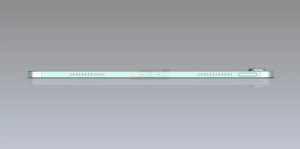
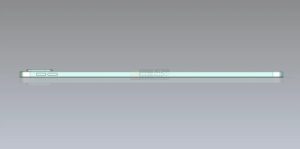
Leaked Renders Showcase Apple’s New 12.9-Inch iPad Air Design

0
Leaked Renders Showcase Apple's New 12.9-Inch iPad Air Design

Highlights

  • CAD renders reveal Apple’s new 12.9-inch iPad Air model.
  • Design mirrors current iPad Air with updates to rear camera aesthetics.
  • Expected to feature an LCD screen, aligning with current iPad Air displays.
  • Rumored to be powered by Apple’s M2 chip for enhanced performance.

Fresh CAD renders of Apple’s upcoming 12.9-inch iPad Air have surfaced, offering a sneak peek into the design of what could be the largest iPad Air yet.

These renders, revealed by industry sources to 91mobiles, suggest that Apple is expanding its iPad Air range to include a model that matches the iPad Pro in screen size.

Release and Series Placement
Release and Series Placement

Apple is expected to launch this new model as the 6th generation in the iPad Air series soon.

The introduction of a 12.9-inch variant marks a significant expansion of the iPad Air lineup, catering to a broader audience.

Design Highlights of the 12.9-inch iPad Air
Design Highlights of the 12.9-inch iPad Air

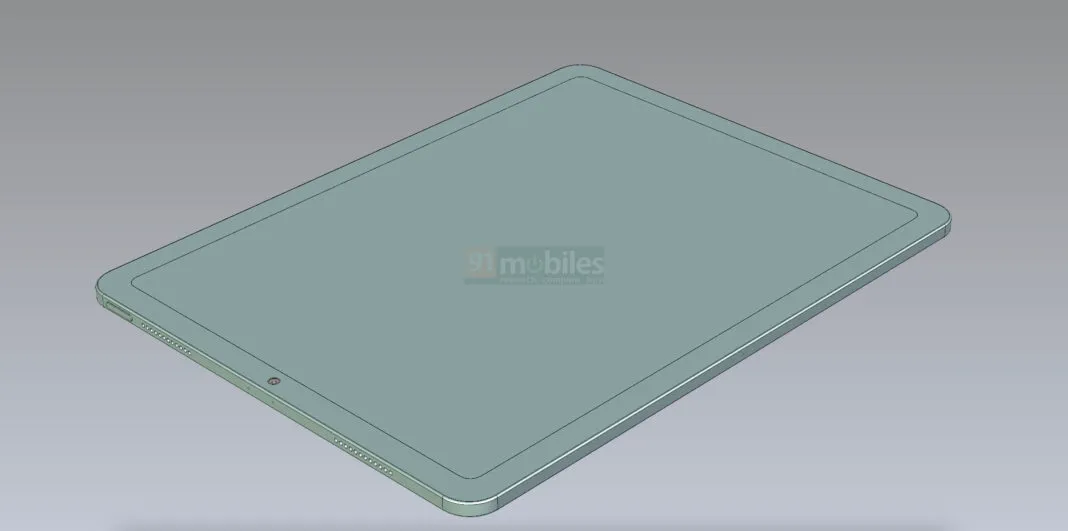
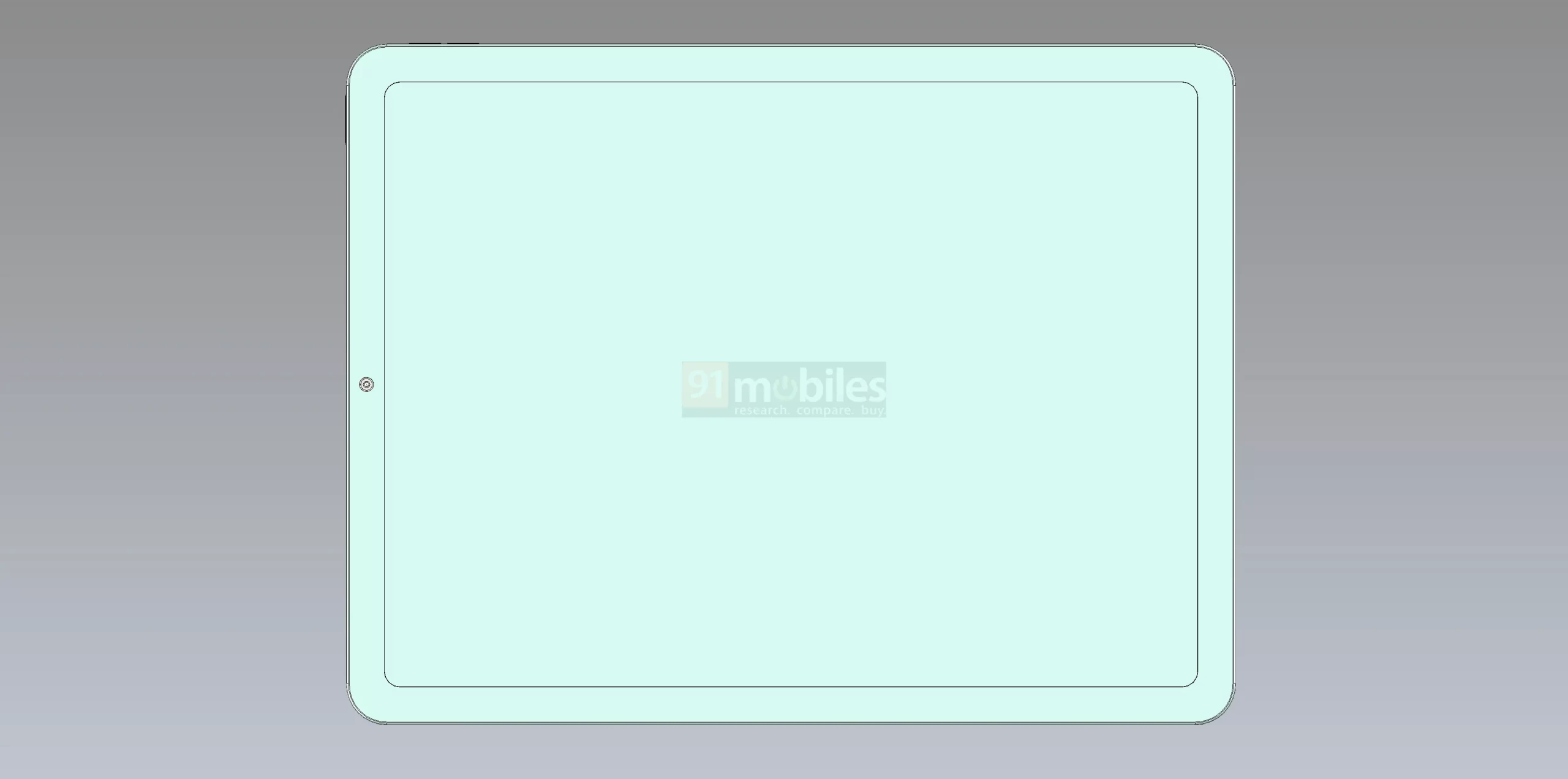
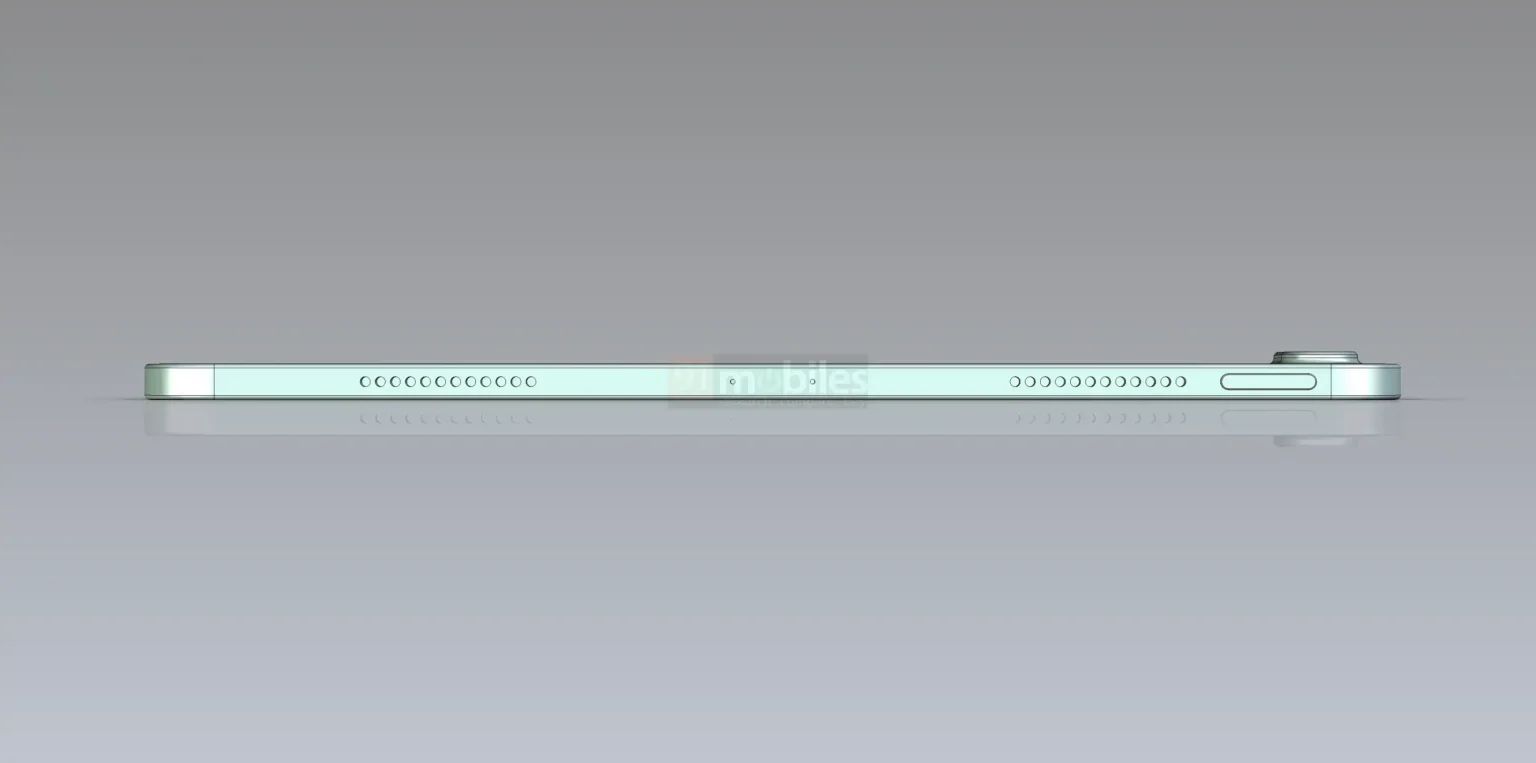
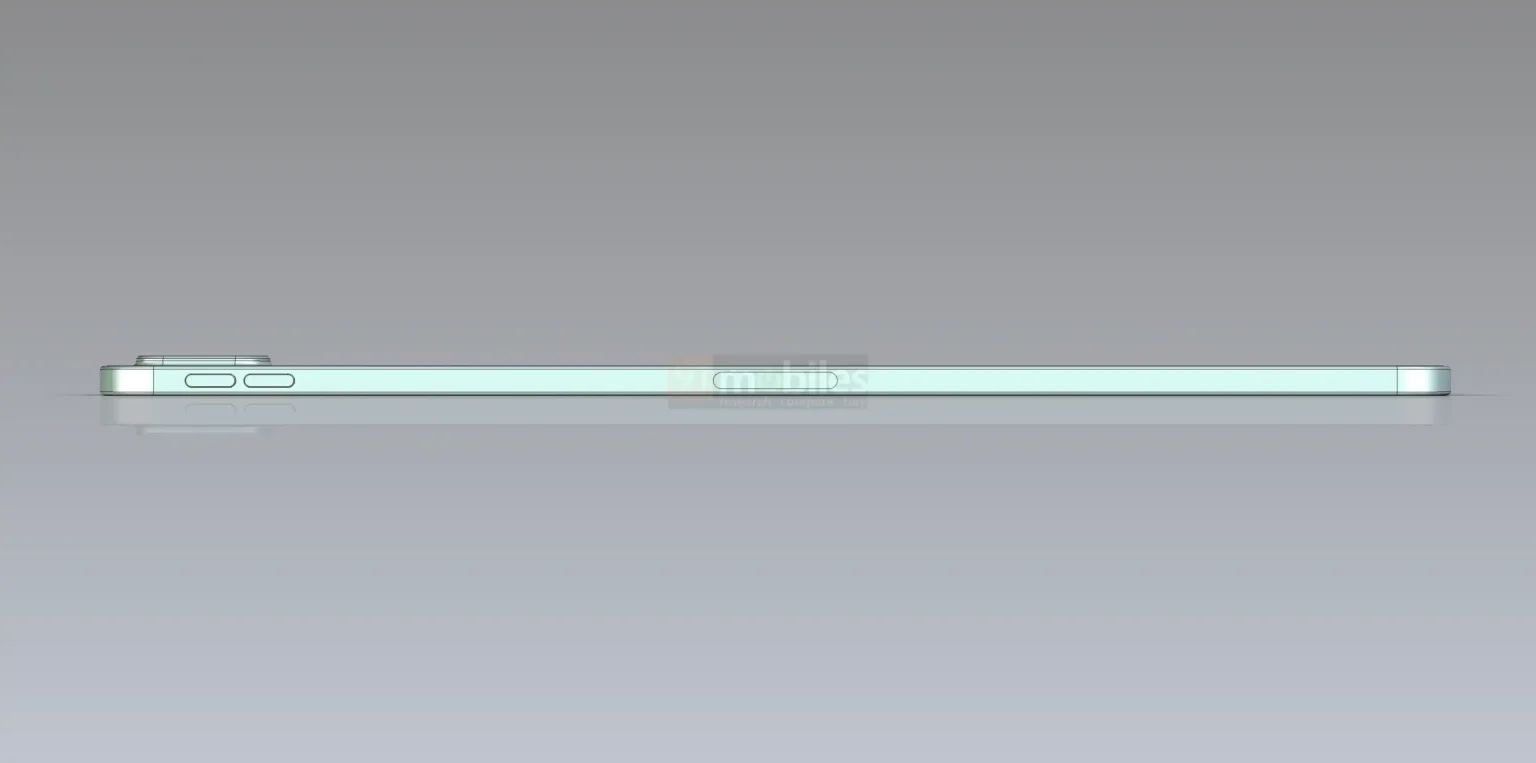
The design of the 12.9-inch iPad Air, as seen in the CAD renders, closely mirrors the current iPad Air model.

It maintains the sleek, all-screen design that the iPad Air range is known for.

This consistency in design suggests that Apple is focusing on size rather than a complete design overhaul for this model.

In line with previous models, the new iPad Air is expected to feature a Touch ID button at the top.

The speaker grilles are positioned at both the top and bottom of the device, adhering to the familiar design language of the iPad Air series.

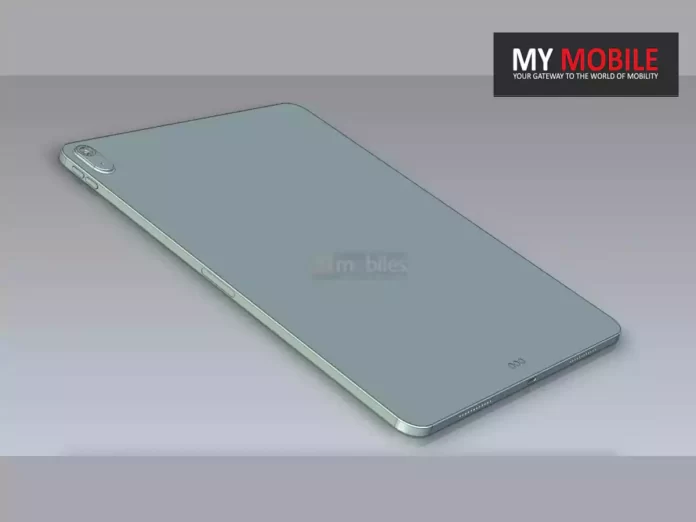
An interesting design tweak is noticeable in the rear camera setup.

Unlike the current iPad Air, which features a bare camera sensor, the new 12.9-inch model appears to have a border around the camera lens and LED flash, indicating a slight shift in Apple’s approach to camera aesthetics for this model.

The renders also show the continuation of the USB-C port at the bottom, maintaining the universal connectivity standard that Apple has adopted in its recent iPad models.

Additional Features of New iPad Air
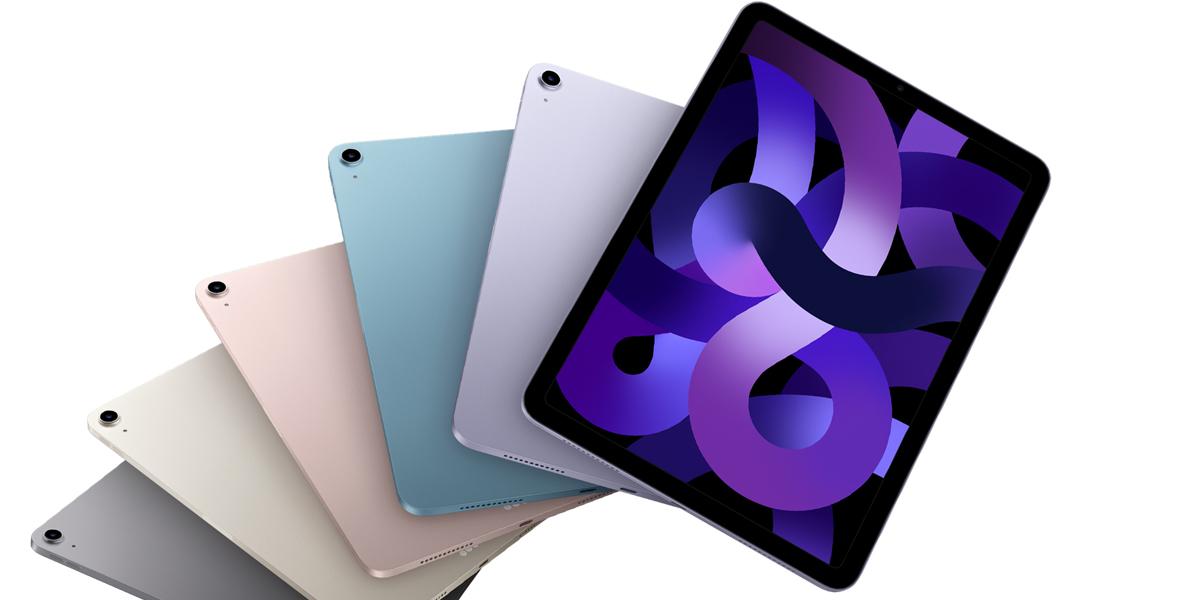
IPad Air 2022
Additional Features of New iPad Air

Contrary to the 12.9-inch iPad Pro’s mini-LED display, the upcoming iPad Air is rumored to feature an LCD display, similar to the current iPad Air model.

This choice indicates Apple’s strategy to differentiate the iPad Air from the more premium iPad Pro lineup.

Reports suggest that the new 12.9-inch iPad Air will be equipped with the M2 chip, promising enhanced performance.

This update positions the iPad Air as a powerful option within Apple’s tablet range, catering to users seeking larger screens without the premium cost of the iPad Pro.
WhatsApp Image 2024-01-21 at 5.25.29 PM (1)
WhatsApp Image 2024-01-21 at 5.25.29 PM
WhatsApp Image 2024-01-21 at 5.25.29 PM (1) WhatsApp Image 2024-01-21 at 5.25.29 PM

FAQs

What do the leaked renders indicate about the new 12.9-inch iPad Air?

The CAD renders suggest that the new 12.9-inch iPad Air will retain a design similar to the current iPad Air models.

Key features include a sleek, all-screen look, a Touch ID button, and updated rear camera aesthetics with a border around the lens.

How does the camera design of the 12.9-inch iPad Air differ from the current model?

Unlike the current iPad Air’s bare camera sensor, the new 12.9-inch model is expected to feature a distinct border around the camera lens and LED flash, based on the leaked renders.

What type of display will the 12.9-inch iPad Air have?

According to reports, the 12.9-inch iPad Air is likely to continue with an LCD display, similar to the existing iPad Air models, rather than adopting the mini-LED display found in the higher-end iPad Pro.

What processor is expected in the new 12.9-inch iPad Air?

The upcoming 12.9-inch iPad Air is rumored to be powered by the M2 chip, which would mark a significant performance boost over the current models.

Next-Gen iPad Air With 12.9-Inch Display and Redesigned Camera Unit Revealed in CAD Renders . Details?

The design of Apple’s upcoming 12.9-inch iPad Air model has today allegedly been revealed in new CAD renders shared by 91Mobiles.

As expected, the renders show an overall appearance that is very similar to the ‌iPad Air‌ design used for the fourth- and fifth-generation models, but simply scaled up to accommodate a larger display.

The most striking difference on the device is a redesigned rear camera unit, which now protrudes from the rear in a longer pill-shape, unlike the single, round protruding cutout on the current ‌iPad Air‌.

This new design seems to be somewhat reminiscent of the rear camera unit of the iPhone X and ‌iPhone‌ XS.

On the front of the tablet, the ‌iPad Air‌ looks very similar to the current 12.9-inch iPad Pro, but with noticeably thicker bezels, just like how the 10.9-inch ‌iPad Air‌ has thicker borders around the display compared to the 11-inch ‌iPad Pro‌.

The device is expected to be targeted at those who want a bigger tablet than the current, 10.9-inch ‌iPad Air‌, but have no need for the high-end features of the 12.9-inch ‌iPad Pro‌ such as ProMotion or a LiDAR scanner.

This is similar to Apple’s approach with the 13.6- and 15.3-inch MacBook Air, as well as the 6.1-inch iPhone 15 and 6.7-inch ‌iPhone 15‌ Plus.

91Mobiles also reiterated reports that the next-generation ‌iPad Air‌ will feature the M2 chip.

The device is rumored to enter production in the first quarter of 2024, so it could already be underway. It is expected to launch “early” this year, likely in March.

Also Read: Apple Is Reportedly Developing A New 12.9-inch iPad Air

Also Read: Apple iPad Air 5 launched: Check specifications, price
Samsung Teases Galaxy Ring in Galaxy S24 Promotions: All You Need to Know

0
Samsung Teases Galaxy Ring in Galaxy S24 Promotions: All You Need to Know

Highlights

  • Samsung teases the Galaxy Ring in its Galaxy S24 promotional material.
  • Anticipation builds for Samsung’s expansion into ring-based wearable tech.
  • Details on the Galaxy Ring’s features and capabilities remain under wraps.
  • Tech community eagerly awaits official information about the Galaxy Ring.

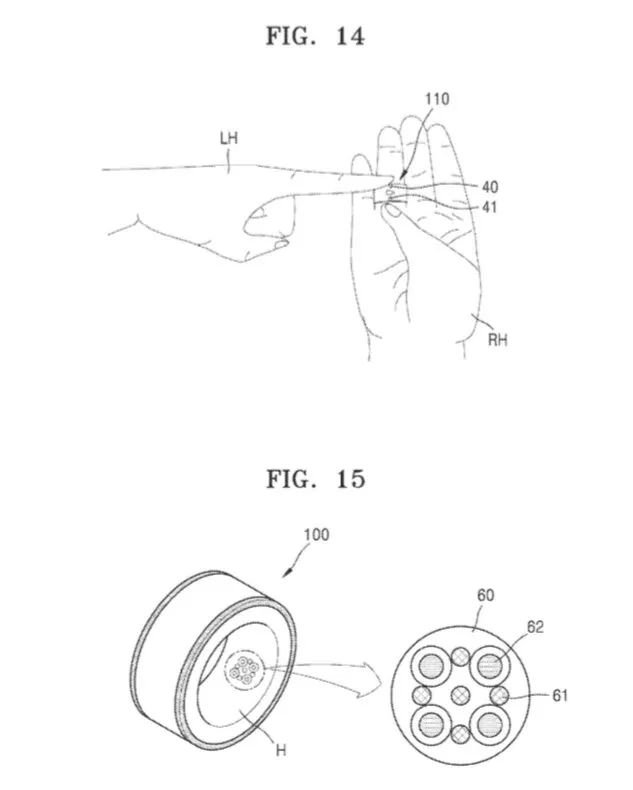
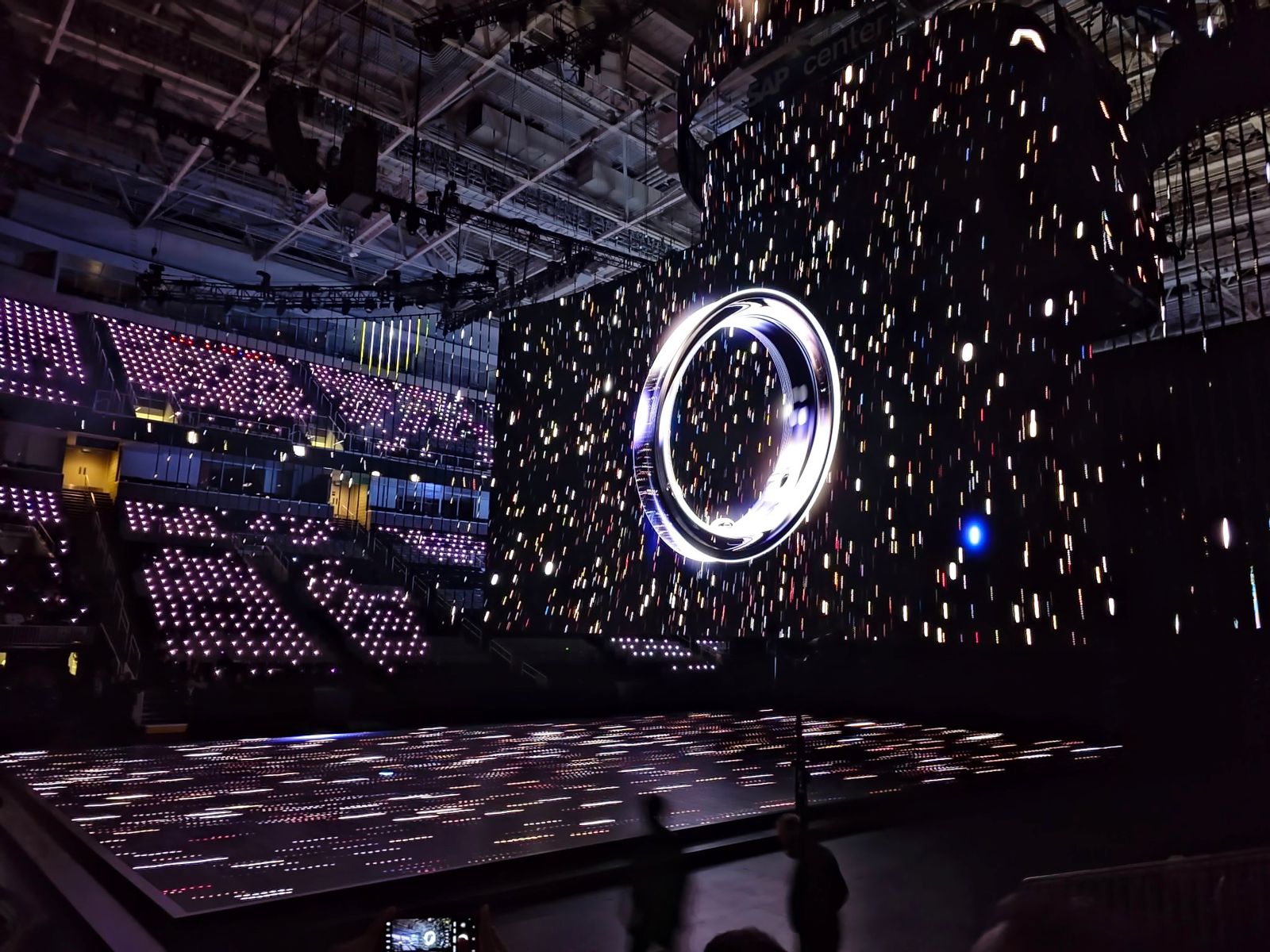
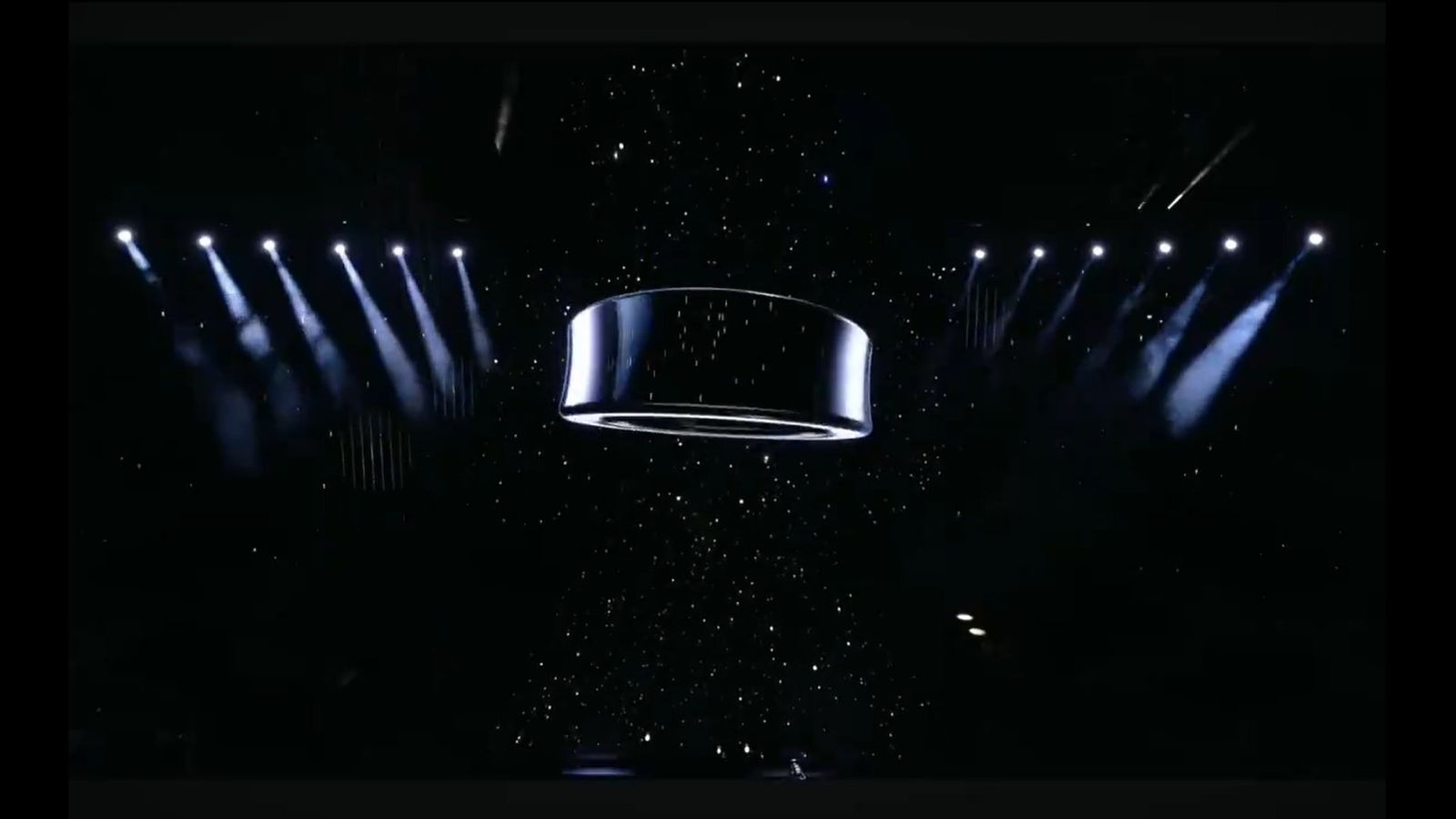
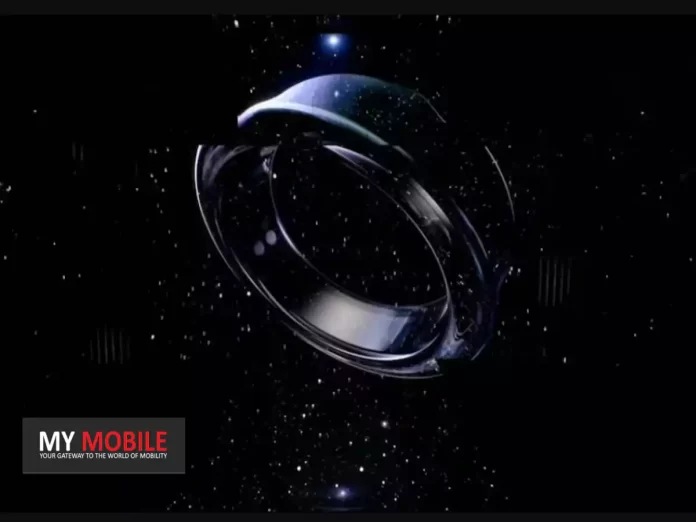
Samsung has sparked intrigue in the tech community with a brief tease of the Galaxy Ring in its promotional materials for the Galaxy S24.

While detailed information and an official announcement about the Galaxy Ring are yet to be made, the teaser has certainly piqued the interest of tech enthusiasts and consumers alike.

“With AI, technology is empowering us to stay connected, unleash our creativity, and stay connected, all in more meaningful ways,” Dr. Matthew Wiggins, a clinical research scientist at Samsung, said in his announcement of the ring on Wednesday.

Official Annoucement about Galaxy Ring
Official Announcement about the Galaxy Ring are yet to be made

What We Know About the Galaxy Ring So Far

What We Know About the Galaxy Ring So Far

The Galaxy Ring was briefly mentioned in the promotions of the Samsung Galaxy S24.

This subtle tease suggests that Samsung is exploring new territories in wearable technology, although specifics about the product remain under wraps.

Given Samsung’s track record in innovative technology, particularly in the wearable sector, expectations are high for the Galaxy Ring.

It is anticipated to be a health-focused device, aligning with the company’s commitment to expanding its health and wellness technology portfolio.

The introduction of the Galaxy Ring indicates Samsung’s venture beyond traditional smartwatches.

This move reflects a growing trend in the tech industry to diversify wearable technology into more varied and discreet formats like rings, which can offer continuous health monitoring in a more unobtrusive manner.

Galaxy Ring indicates Samsung's venture beyond traditional smartwatches
Galaxy Ring indicates Samsung’s venture beyond traditional smartwatches

Anticipation for Official Details

Anticipation for Official Details

The tech community is eagerly awaiting more information from Samsung about the Galaxy Ring.

Details such as its features, functionalities, compatibility with other Samsung devices, and how it integrates with Samsung’s health ecosystem are highly anticipated.

 Galaxy Ring, a new addition to its wearable
Galaxy Ring, a new addition to its wearable

FAQs

What is the Samsung Galaxy Ring?

The Samsung Galaxy Ring is a potential new product in the wearable technology space, briefly teased by Samsung in its promotional materials for the Galaxy S24.

Specific details about the ring’s features and capabilities are not yet disclosed.

Has Samsung officially announced the Galaxy Ring?

As of now, Samsung has not made an official announcement about the Galaxy Ring. It has only been teased briefly, leading to speculation and anticipation within the tech community.

What can be expected from the Samsung Galaxy Ring?

While details are scarce, it is speculated that the Galaxy Ring will focus on health and wellness, in line with Samsung’s commitment to expanding its wearable technology offerings.

When can more information about the Galaxy Ring be expected?

There is no confirmed date for when more information will be available. The tech community is on the lookout for any official announcements or further teases from Samsung regarding the Galaxy Ring.

Also Read: Samsung’s Foldable Smartphone Journey: From Pioneers to Powerhouses

Also Read: Samsung Galaxy Unpacked 2023 Today: How to watch livestream in India, New Expected Launches with Expected Prices & Specifications

Motorola Moto G24: New Leaks Reveal Specs, Design, and Pricing

0
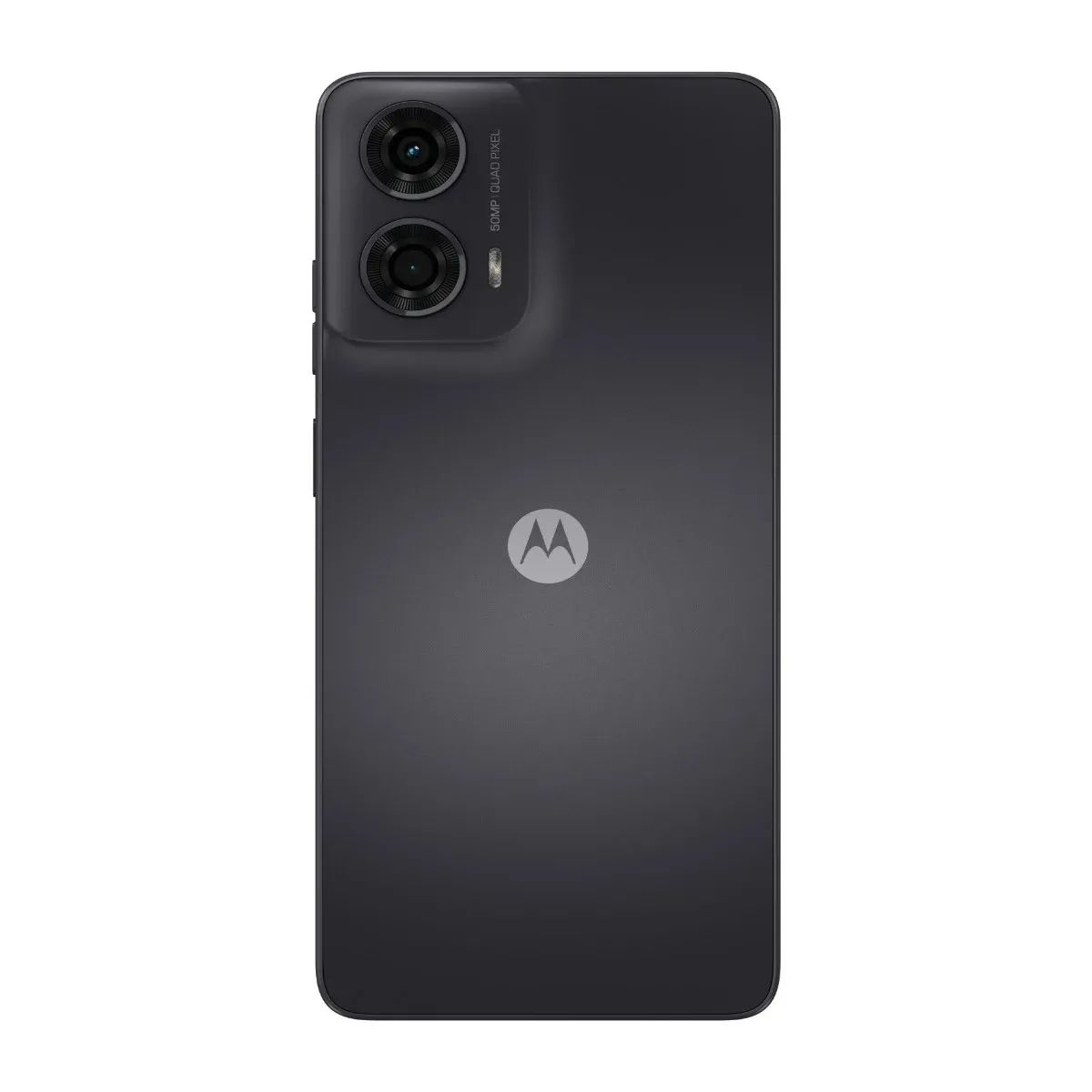
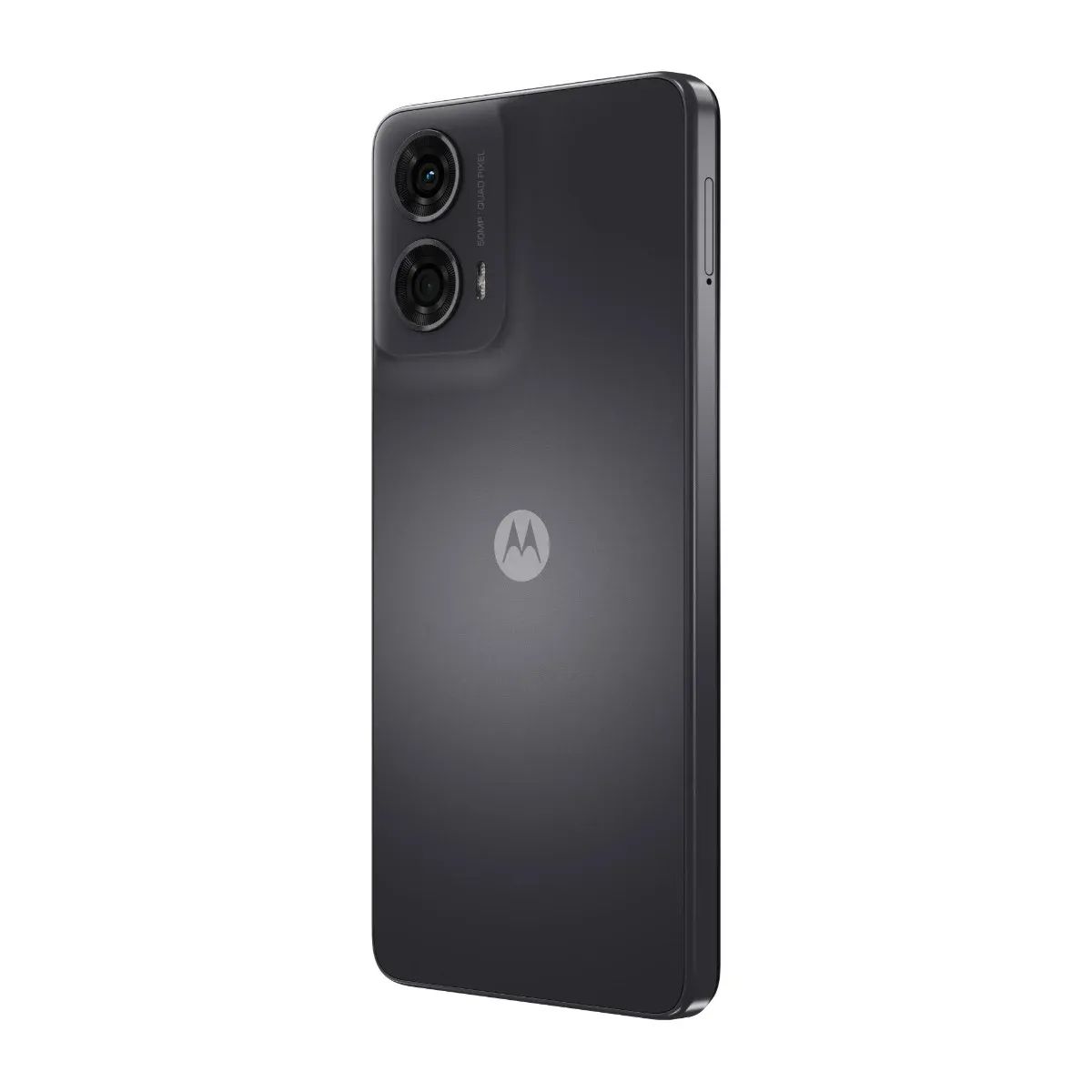
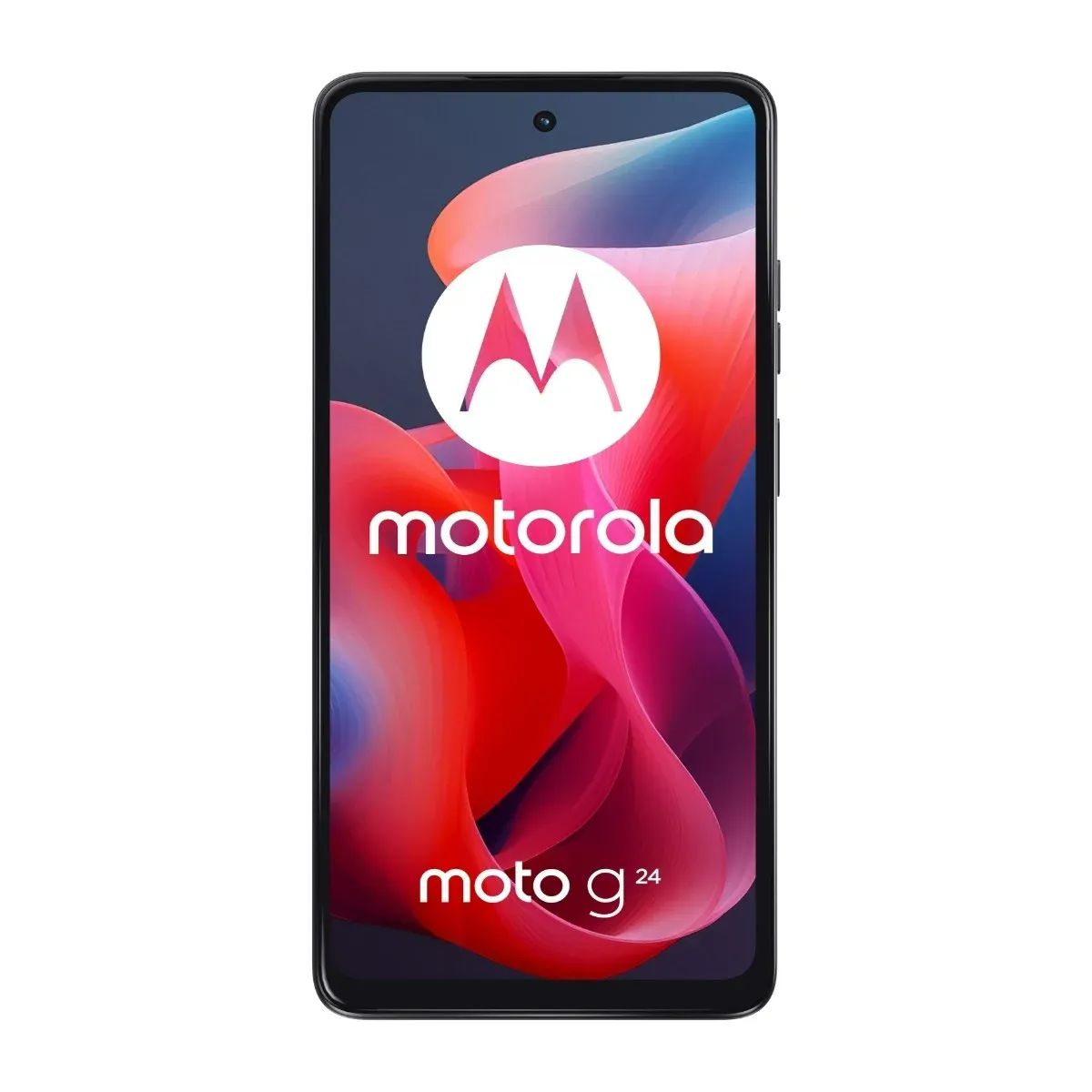
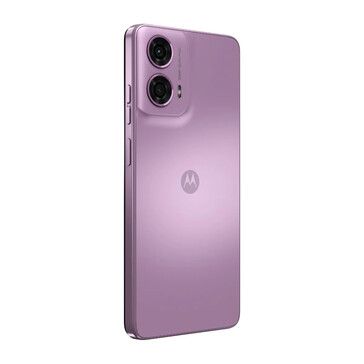
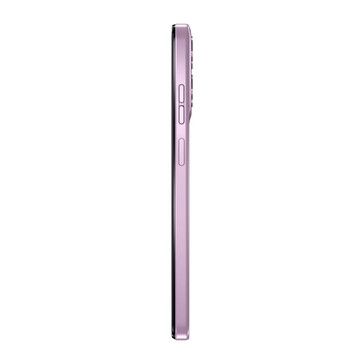
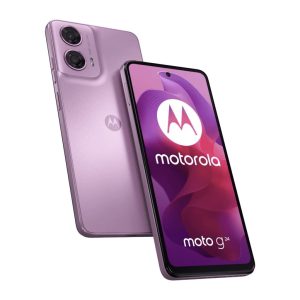
Moto G24 appears in renders, specs and pricing in tow

Highlights

  • Moto G24 to feature a dual-camera setup with a 50MP main sensor.
  • Equipped with a MediaTek Helio G85 processor and 4GB RAM.
  • 56-inch IPS LCD screen, boasting a 90Hz refresh rate.
  • Expected European pricing around EUR 169 for 4GB/128GB variant.

The upcoming Motorola Moto G24, a new addition to the Moto G-series, has been the subject of recent online buzz.

Leaks and renders reveal intriguing details about this smartphone, positioning it as a promising contender in the competitive mobile market.

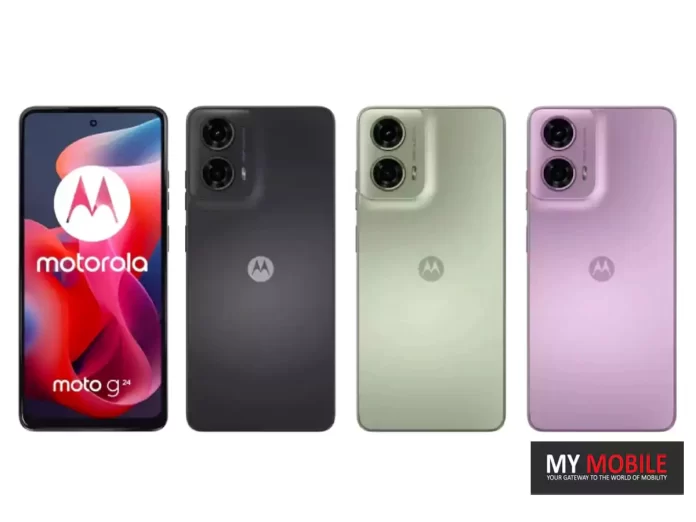
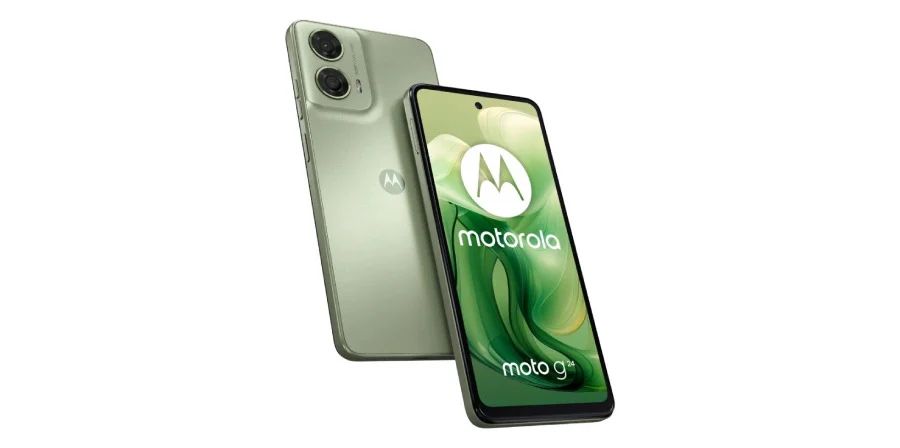
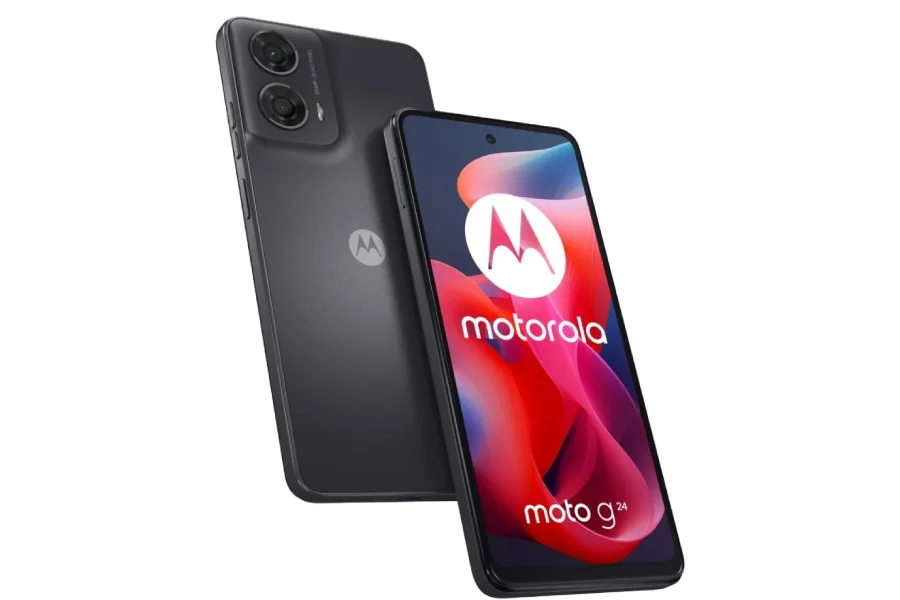
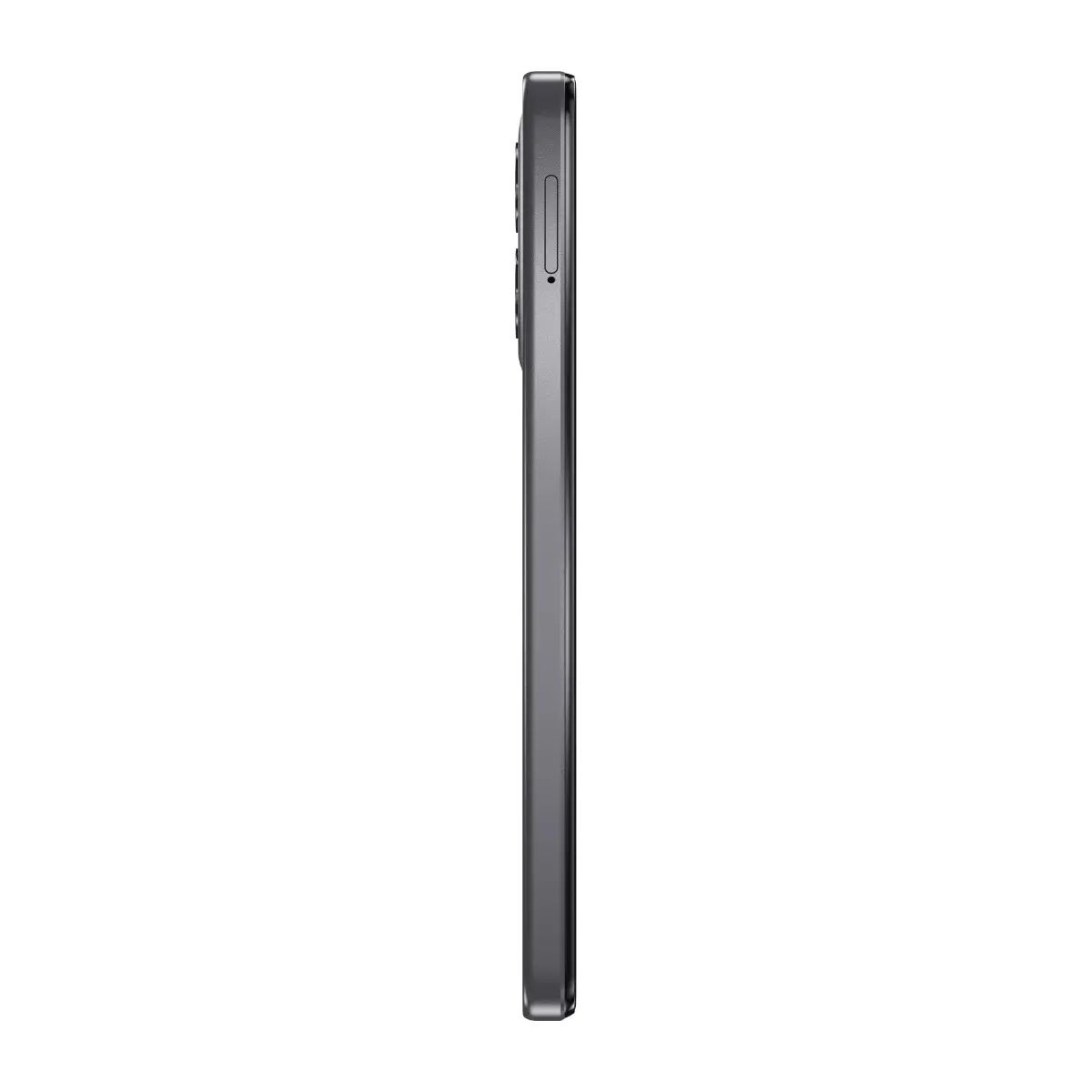
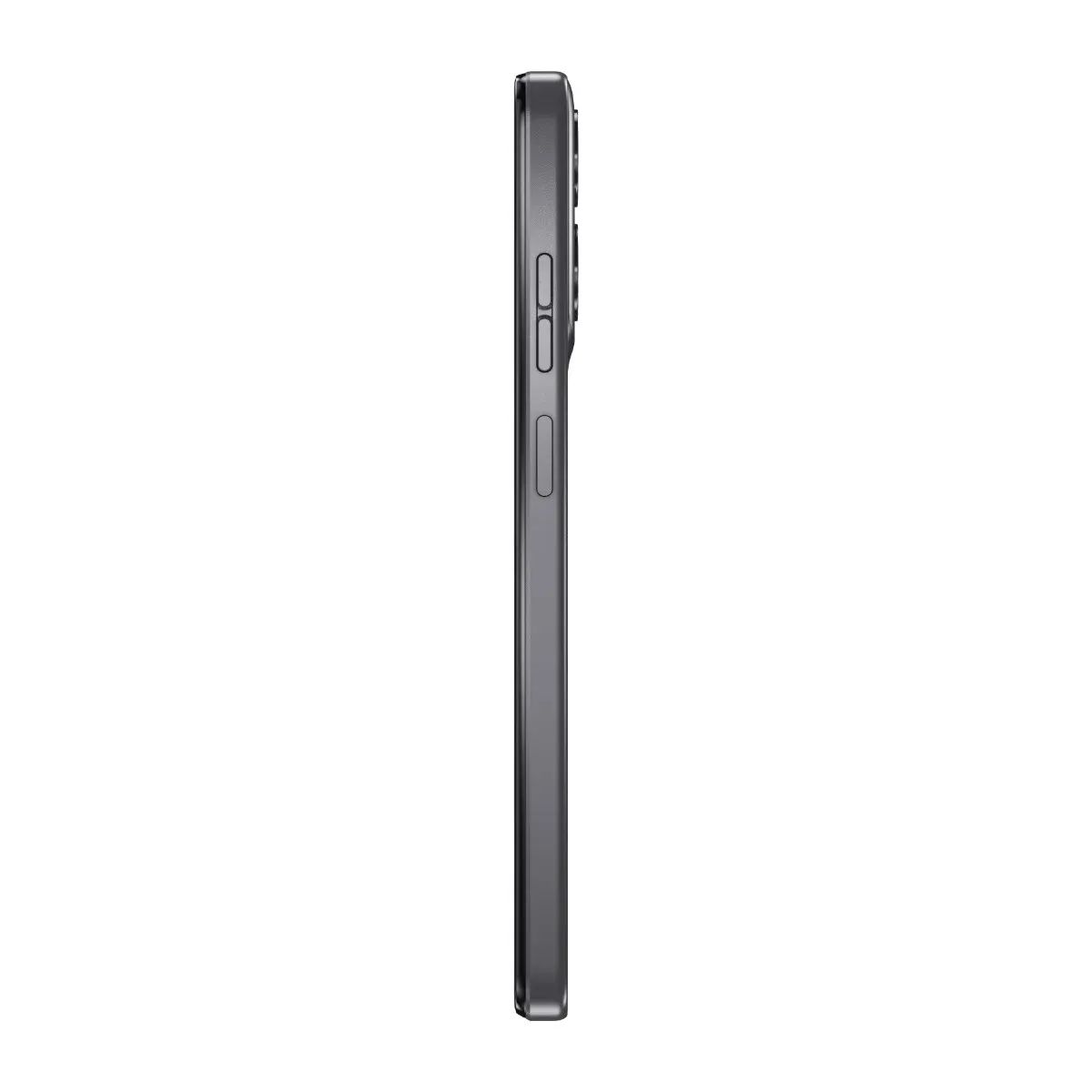
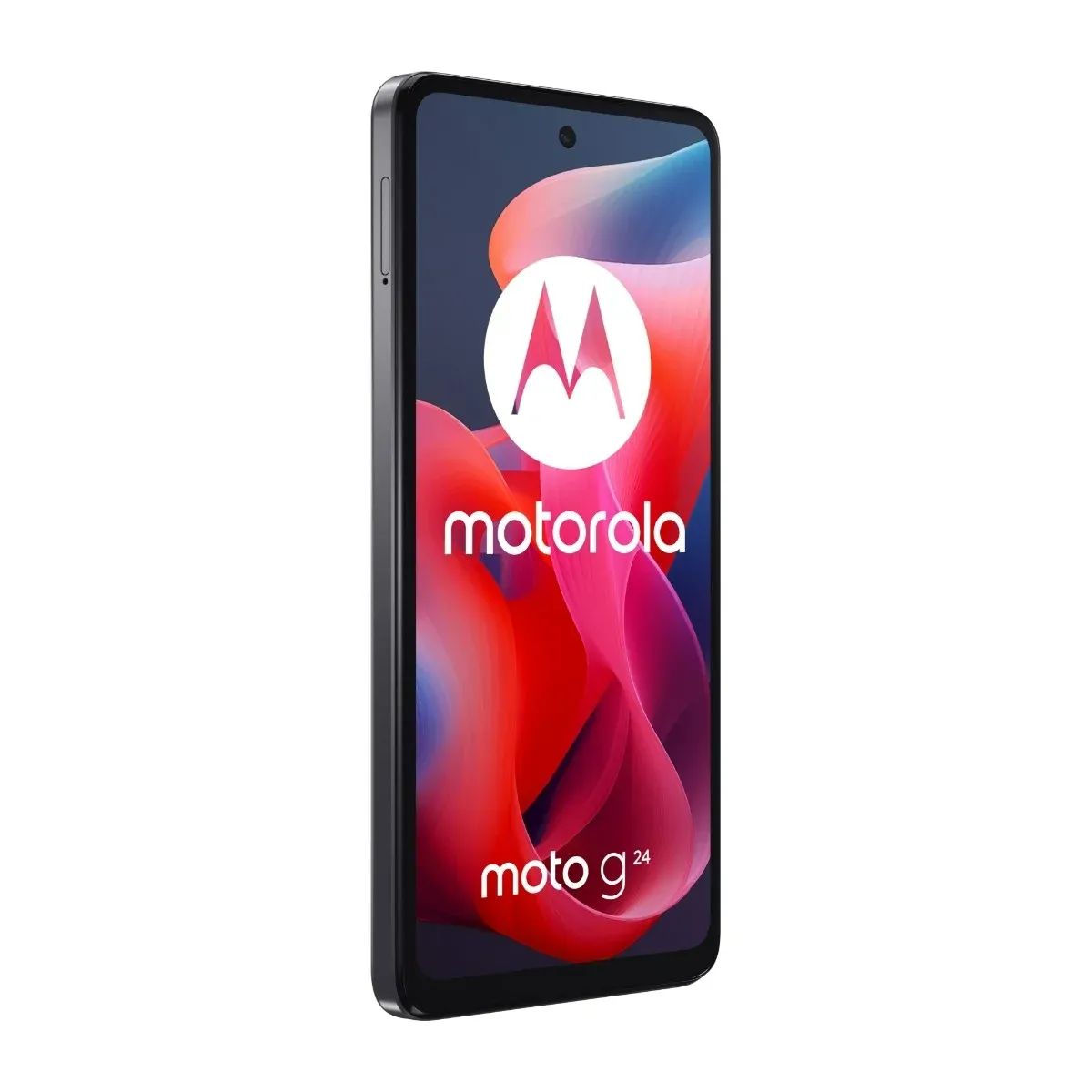
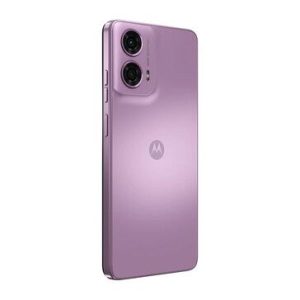
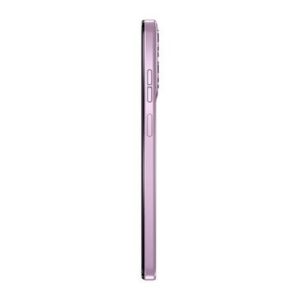
Motorola Moto G24
Upcoming Motorola Moto G24

Moto G24: Pricing Expectations

Moto G24 appears in renders, specs and pricing in tow

The Moto G24, with its 4GB RAM and 128GB storage configuration, is expected to be priced at around €169 in Europe, making it an attractive option for budget-conscious consumers looking for a phone with commendable features.

WhatsApp Image 2024-01-21 at 4.06.35 PM
WhatsApp Image 2024-01-21 at 4.06.34 PM (1)
WhatsApp Image 2024-01-21 at 4.06.35 PM (1)
WhatsApp Image 2024-01-21 at 4.06.36 PM (1)
WhatsApp Image 2024-01-21 at 4.06.36 PM
WhatsApp Image 2024-01-21 at 4.06.38 PM
WhatsApp Image 2024-01-21 at 4.06.37 PM
WhatsApp Image 2024-01-21 at 4.06.34 PM
WhatsApp Image 2024-01-21 at 4.06.35 PM WhatsApp Image 2024-01-21 at 4.06.34 PM (1) WhatsApp Image 2024-01-21 at 4.06.35 PM (1) WhatsApp Image 2024-01-21 at 4.06.36 PM (1) WhatsApp Image 2024-01-21 at 4.06.36 PM WhatsApp Image 2024-01-21 at 4.06.38 PM WhatsApp Image 2024-01-21 at 4.06.37 PM WhatsApp Image 2024-01-21 at 4.06.34 PM

Moto G24: Expected Design and Specs

Upcoming Motorola Moto G24 smartphone’s Pricing, Specs, and Renders leaked ahead of its official launch

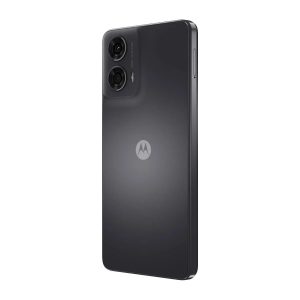
The Moto G24, mirroring the design of the recently launched Moto G34, is set to feature a dual-camera setup on the back.

This includes a primary 50MP camera complemented by a 2MP macro camera.

The front of the device boasts a 6.56-inch IPS LCD screen, offering an HD+ resolution of 1612 x 720, a 90Hz refresh rate, and a pixel density of 269 PPI.

For selfie enthusiasts, an 8MP front camera is expected.

Underneath its sleek exterior, the Moto G24 is rumored to be equipped with a MediaTek Helio G85 processor.

It pairs 4GB of RAM with 128GB of internal storage, ensuring smooth multitasking and ample space for apps and media.

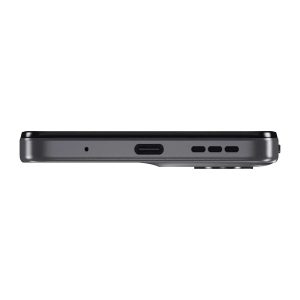
The device’s performance is further bolstered by a robust 5000mAh battery supporting 20W fast charging via a USB-C port.

With dimensions of 163 x 75 x 7.99 mm and a weight of around 180 grams, the Moto G24 promises to be both sleek and practical.

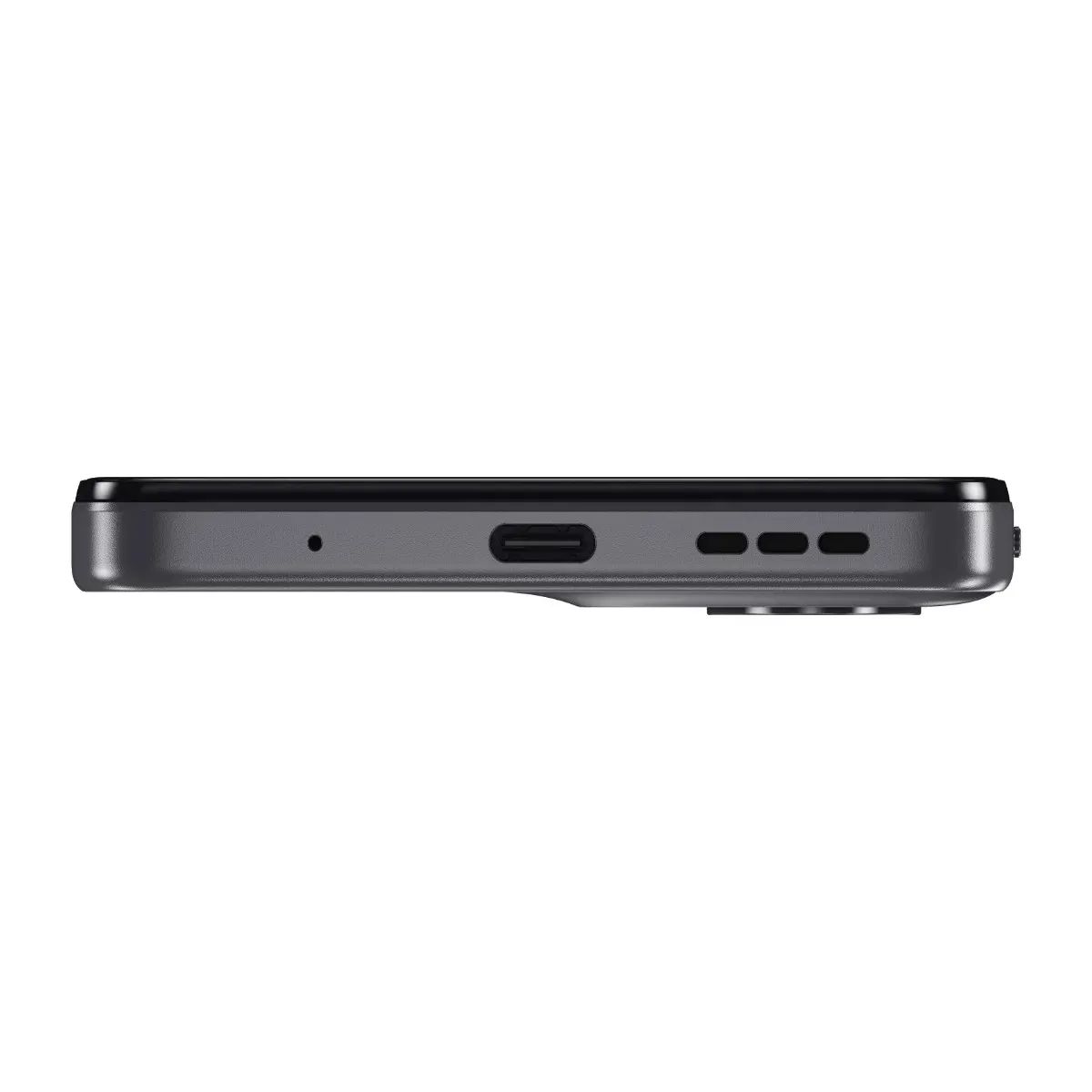
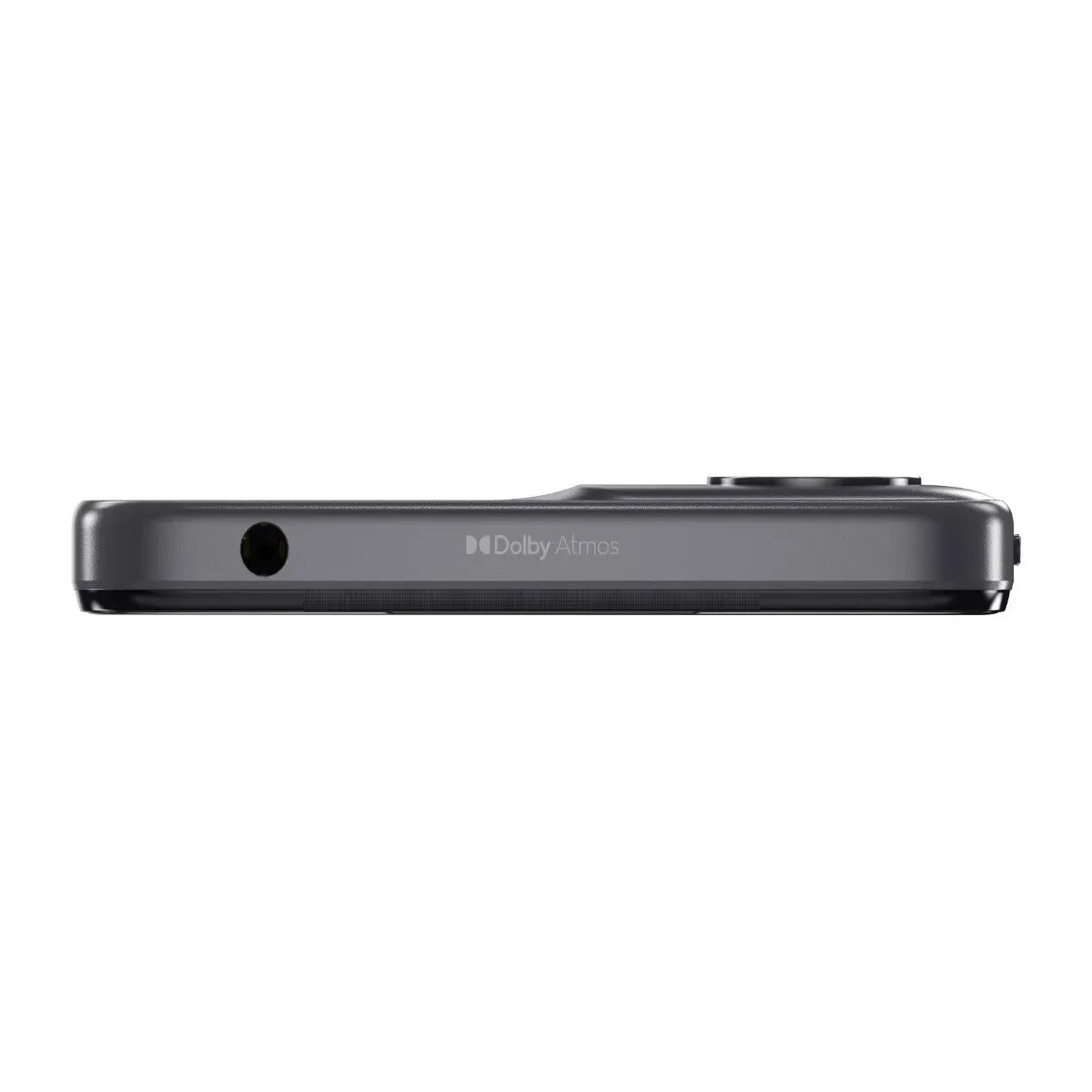
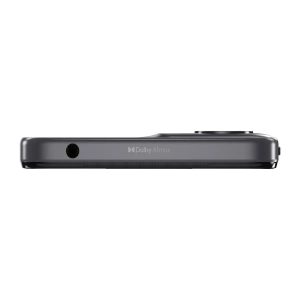
It includes a range of connectivity options such as a 3.5mm headphone jack, Wi-Fi 5, Bluetooth 5.0, dual Nano-SIM support, and a microSD card slot for additional storage.

The phone is equipped with essential sensors like an ambient light sensor, proximity sensor, compass, accelerometer, and gyroscope.

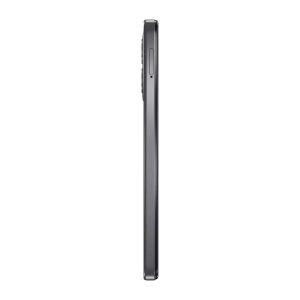
Adding to its appeal, the Moto G24 will run on the latest Android 14 and feature a side-mounted fingerprint scanner for secure access.

WhatsApp Image 2024-01-21 at 4.06.33 PM
WhatsApp Image 2024-01-21 at 4.06.37 PM (1)
WhatsApp Image 2024-01-21 at 4.06.38 PM (1)
WhatsApp Image 2024-01-21 at 4.06.33 PM WhatsApp Image 2024-01-21 at 4.06.37 PM (1) WhatsApp Image 2024-01-21 at 4.06.38 PM (1)

Motorola Moto G24 5G Specs

GENERAL

Sim Type Dual Sim, GSM+GSM (Hybrid Slot)
Dual Sim Yes
Sim Size Nano SIM
Device Type Smartphone
Release Date December 05, 2023 (Expected)

DESIGN

Dimensions 73.8 x 161.6 x 8.9 mm
Weight 192 g

DISPLAY

Type Color IPS LCD Screen (16M Colors)
Touch Yes
Size 6.58 inches, 1080 x 2400 pixels, 120 Hz
Aspect Ratio 20:9
PPI ~ 405 PPI
Screen to Body Ratio ~ 85.5%
Features Anti Fingerprint Coating, Water Repellent Design, HDR10
Notch Yes, Punch Hole

MEMORY

RAM 8 GB
Storage 128 GB
Card Slot Yes, (Hybrid Slot), upto 1 TB

CONNECTIVITY

GPRS Yes
EDGE Yes
3G Yes
4G Yes
5G Yes
5G Bands NR: n1/n3/n5/n7/n8/n20/n28/n38/n40/n41/n77/n78
VoLTE Yes, Dual Stand-By
Wifi Yes, with wifi-hotspot
Bluetooth Yes, v5.3, A2DP, LE
USB Yes, USB-C v2.0
USB Features USB on-the-go, USB Charging

EXTRA

GPS Yes, with A-GPS, LTEPP, SUPL, GLONASS, Galileo
Fingerprint Sensor Yes, Side
Face Unlock Yes
Sensors Proximity Sensor, Accelerometer, Ambient Light Sensor
3.5mm Headphone Jack Yes
Water Resistance Yes
Extra Features Stereo speakers

CAMERA

Rear Camera 50 MP f/1.8 (Wide Angle)
2 MP (Depth Sensor) with autofocus
Video Recording 1080p @ 30 fps FHD
Flash Yes, LED
Front Camera Punch Hole 8 MP f/2.4 (Wide Angle)
Front Video Recording 1080p @ 30 fps FHD

TECHNICAL

OS Android v14
Custom UI My UX
Chipset Mediatek Dimensity 1080
CPU 2.6 GHz, Octa Core Processor
Core Details 2xCortex-A78@ 2.6GHz & 6xCortex-A55@2.0 GHz
GPU ARM Mali G68 MP4
Java No
Browser Yes, supports HTML5

MULTIMEDIA

Email Yes
Music Yes
Video Yes
FM Radio Yes, with FM Recording

BATTERY

Type Non-Removable Battery
Size 5000 mAh, Li-Po Battery
Fast Charging Yes, 18W

FAQs

What are the key features of the Motorola Moto G24 based on the latest leaks?

The Motorola Moto G24 is expected to sport a 6.56-inch IPS LCD screen with HD+ resolution and a 90Hz refresh rate.

It will likely have a dual-camera setup, including a 50MP main sensor and a 2MP macro camera, and an 8MP selfie camera on the front.

What can be expected in terms of performance from the Moto G24?

The Moto G24 is rumored to be powered by a MediaTek Helio G85 processor, combined with 4GB of RAM and 128GB of internal storage.

It’s also expected to have a 5000mAh battery supporting 20W fast charging.

What are the connectivity options available in the Moto G24?

The Moto G24 is likely to offer several connectivity features, including a 3.5mm headphone jack, Wi-Fi 5, Bluetooth 5.0, dual Nano-SIM support, and a microSD card slot for extra storage.

What are the expected dimensions and weight of the Moto G24?

The leaked dimensions for the Moto G24 suggest it will measure 163 x 75 x 7.99 mm and weigh around 180 grams, making it a sleek yet practical smartphone choice.

What are the Geekbench scores of Moto G24?

The Moto G24 scored 407 points in the single-core and 1399 points in the multi-core Geekbench 6 tests. These scores suggest that the phone aims to offer balanced performance.

What kind of processor does the Moto G24 have?

While it’s not explicitly mentioned, the Geekbench listing points to an octa-core MediaTek Helio SoC. The chipset is likely to be the MediaTek Helio G85, based on the mentioned Mali G52 GPU.

How much RAM will the Moto G24 feature?

The Geekbench listing indicates that the Moto G24 will house 8GB of RAM. Other memory configurations may also be available.

Which version of Android will come pre-loaded on the Moto G24?

The device is expected to come with Android 14 pre-loaded, offering users the latest software features and updates.

What do the leaked renders of the Moto G24 Power reveal about its design?

Based on the leaked images from MySmartPrice, the Moto G24 Power adheres to Motorola’s signature design aesthetic familiar to fans of the G series.

The phone appears to have a glossy back with smoothly curved edges and the iconic Motorola logo at its center.

The renders suggest a functional design with volume rockers and power buttons on the right and a SIM card tray on the left.

A nearly bezel-less display with a punch-hole camera cutout and a color scheme potentially including dark blue and silver are also visible.

How does the Moto G34 differentiate itself in design from the Moto G24 Power?

The Moto G34, as per the leaked images, aims for a more premium feel compared to the G24 Power.

It features a boxier design and a unique texture on the back, hinting at variants in faux leather and glossy finishes. Like the G24 Power, it is expected to have essential ports and a headphone jack.

What can be inferred about the technical specifications of the Moto G24 Power and G34?

While specific details are still speculative, it is expected that the Moto G34 may be powered by a Qualcomm Snapdragon 4 Gen 2 SoC, targeting mid-range performance.

The Moto G24 Power might come with a Snapdragon 680 processor. Both models are anticipated to feature at least a 5,000mAh battery, aligning with Motorola’s focus on long battery life. As typical with Moto devices, a stock Android experience is likely.

Also Read: Leaked Renders Reveal Motorola’s Upcoming Moto G24 Power and G34 Models

Also Read: Moto G24 Spotted on Geekbench Potentially Revealing Key Specs and What to Expect

India’s Smartphone Market Shows Resilience in 2023 Despite Slight Decline: Canalys

0
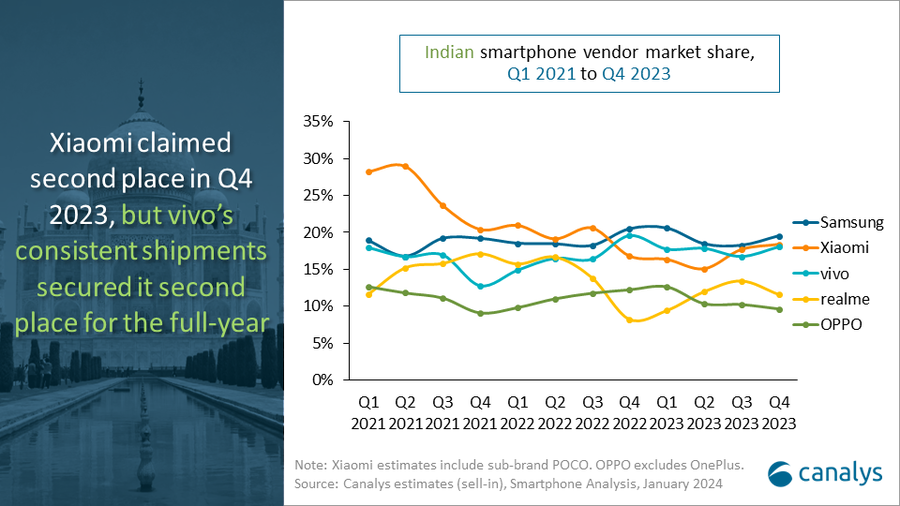
Samsung maintained its lead with a 20% market share, followed by Xiaomi and Vivo. Xiaomi and Realme saw their highest offline shipment share in Q4 2023.

Highlights

  • 2% drop in overall smartphone shipments in India for 2023.
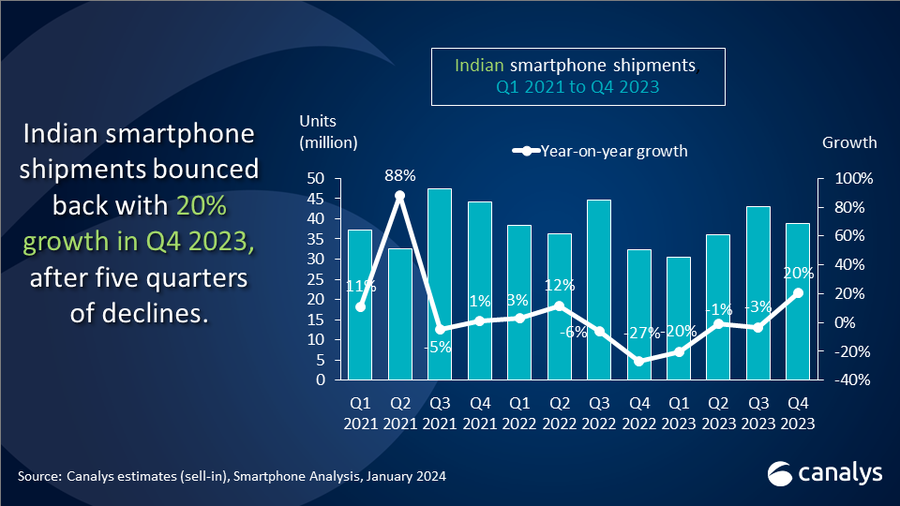
  • Strong recovery in Q4 with a 20% year-on-year increase.
  • Total shipments reached 148.6 million units in 2023.
  • Festive season demand drives market resilience.

In 2023, India’s smartphone market demonstrated remarkable resilience despite a slight overall downturn.

According to a Canalys report, the market experienced a 2% drop in shipments, with a total of 148.6 million units.

Yet, in a significant turnaround, the final quarter of the year saw a 20% year-on-year growth, resulting in 38.9 million units shipped.

This recovery was primarily fueled by strong consumer demand during the festive season, highlighting the market’s robustness in challenging times.

“In 2023, growing investment in mainline retail space proved beneficial not only for vendors but also allowed the overall market to stabilize,” said Sanyam Chaurasia, Senior Analyst at Canalys. Brands such as Xiaomi and realme saw their highest offline shipment share in Q4.

Xiaomi democratized its portfolio, contributing equally to offline and online channels, making its highest offline channel contribution quarter. Its Redmi 12 5G and recently launched Redmi 13C series contributed to its offline share, each surpassing a million shipments.

Similarly, realme also shipped devices with equal channel contribution, with the Narzo series driven by ecommerce, while the remaining portfolio continued to dominate offline channels. To further enhance their positions in the premium space, brands should continually focus on bolstering the confidence of their channel partners.

“The premium segment witnessed robust growth, thanks to easy financing options, incentive schemes for retailers and rising disposable income,” said Chaurasia.

“With the celebration of Diwali in November 2023, Apple got the opportunity to push the latest iPhone 15 series during the festive sales, contributing more than 50% to its shipments in Q4. Additionally, discounts on the previous-generation iPhone 14 and iPhone 13 models during online sales resulted in Apple’s record shipments, allowing it to capture 7% market share in India.

Similarly, Samsung had set aggressive retail targets for its premium Galaxy S23 series to drive premium segment growth. Along with this, Samsung’s latest Galaxy S23 FE launch in Q4 drove shipments, thanks to compelling banking deals.”

“Vendors are entering 2024’s ‘Election Year’ with improved indicators for the consumer market with manageable inflation, a steady interest rate and clear visibility of a stable government to come into power,” said Chaurasia.

“Canalys expects the Indian smartphone market to grow by mid-single digits in 2024, driven by affordable 5G and the pandemic period replacement cycle. But the biggest challenge for vendors this year will be to manage the rising bill of materials costs.”

Key Insights into India’s 2023 Smartphone Market

Overall smartphone market in India experienced a minor drop of 2% in 2023.
  • Samsung’s Dominance: In Q4, Samsung led the market, claiming a 20% share with 7.6 million units shipped. This success was mirrored throughout the year, with Samsung maintaining its position at the top, despite a slight dip in market share.
  • Xiaomi’s Performance: Following closely was Xiaomi, shipping 7.2 million units in the fourth quarter. Over the year, Xiaomi also saw a decline in its market share.
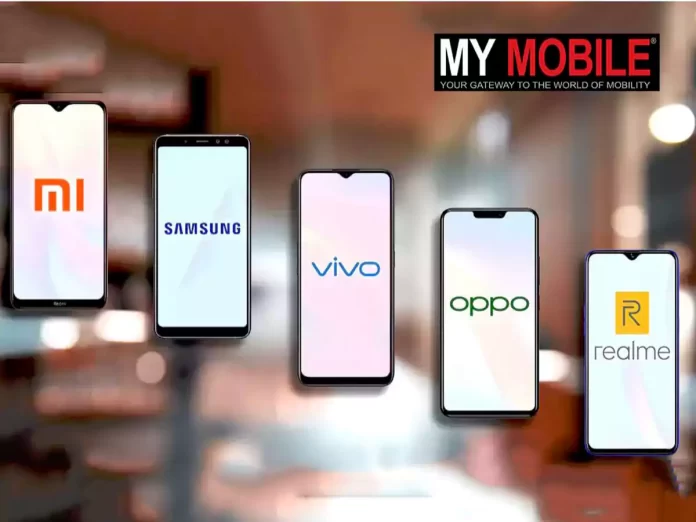
  • Other Key Players: Vivo, Realme, and OPPO rounded out the top five brands, with Vivo displaying modest growth and Realme and OPPO witnessing shipment decreases.

Trends and Consumer Behaviour

Samsung maintained its lead with a 20% market share, followed by Xiaomi and Vivo. Xiaomi and Realme saw their highest offline shipment share in Q4 2023.

As per the report, the festive season played a pivotal role in stabilizing the market, countering challenges such as inflation and inventory issues.

Notably, the premium segment of the market saw significant expansion.

Brands like Apple and Samsung capitalized on this trend by introducing new models and offering attractive financing options.

Channel Strategies and 5G Adoption

  • Offline Expansion: Xiaomi and Realme were successful in extending their offline presence, balancing their distribution channels effectively. This strategy led to an increase in offline shipments, contributing substantially to their total sales.
  • 5G’s Influence: The growing affordability of 5G smartphones has been a major driver of market growth, with consumers showing a keen interest in upgraded technology.

The Outlook for 2024

Looking ahead, Canalys anticipates that the Indian smartphone market will continue its growth trajectory in 2024.

This optimism is based on factors like the availability of reasonably priced 5G models and a replacement cycle spurred by the pandemic.

However, manufacturers will need to navigate the challenge of rising material costs.

FAQs

What was the overall performance of India’s smartphone market in 2023?

In 2023, India’s smartphone market saw a minor decline of 2% in overall shipments, totaling 148.6 million units. Despite this slight decrease, the market remained resilient.

How did the smartphone market in India fare in the last quarter of 2023?

The final quarter of 2023 marked a notable recovery for India’s smartphone market, with a 20% increase in shipments compared to the same period in the previous year, indicating strong market dynamics.

What factors contributed to the resilience of the smartphone market in India?

The resilience in India’s smartphone market was largely attributed to the heightened consumer demand during the festive season, which played a crucial role in driving sales and market recovery.

Was the decline in India’s smartphone market significant?

The 2% drop in India’s smartphone market in 2023 represents a minor decline, especially considering the strong recovery observed in the last quarter of the year.

Who led the Indian smartphone market in Q3 2023?

Samsung led the market with an 18% share and 7.9 million units shipped.

How did Xiaomi perform in this quarter?

Xiaomi climbed to second place by shipping 7.6 million units, largely due to its affordable 5G models.

What trends were observed in the premium smartphone segment?

The premium segment grew robustly, driven by Samsung’s Galaxy S23 series and older-generation iPhones offered at attractive deals.

Which brands faced a decline in Q3 2023?

Realme and Oppo experienced declines compared to the same timeframe in 2022.

How did the Indian smartphone market perform in the third quarter of 2023?

The Indian smartphone market demonstrated consistent year-on-year growth during the third quarter of 2023, with a total of 44 million units shipped. Samsung maintained its position as the market leader despite a slight dip in market share compared to the previous year.

What trends were observed in the 5G smartphone segment in India?

The 5G segment within the Indian smartphone market experienced robust growth, with 5G device shipments reaching a 58% share of the total market. This growth was facilitated by the launch of budget-friendly 5G models and various discounting strategies.

Which smartphone brands are leading in India’s premium market segment?

In India’s premium smartphone segment, significant growth was led by high-end models such as the Apple iPhone 13 and the Samsung Galaxy S23 series. The segment itself grew by 52%, indicating a healthy consumer interest in premium devices.

Has there been a change in the average selling price (ASP) of smartphones in India?
Yes, there has been an increase in the ASP of smartphones in the Indian market, with a rise to approximately Rs 21,000 (US$253). This represents a 12% year-on-year growth and a 5% increase from the previous quarter.

Also Read: Indian Smartphone Market in Q3 Powered by 5G Growth, Samsung Leading the Charge

Also Read: Samsung Retains Crown in India’s Smartphone Market for Q3 2023: Canalys

Also Read: Smartphone Market Plummets at Global Level; 9% Fall for 3rd Straight Quarter

Leaked Renders Reveal Motorola’s New Razr Plus 2024 with Enhanced Features

0
Leaked Renders Reveal Motorola's New Razr Plus 2024 with Enhanced Features

Highlights

  • Motorola’s Razr Plus 2024 retains iconic flip design with modern updates.
  • Expected exclusive Verizon Wireless release in the US.
  • Anticipated improvements include enhanced performance and battery life.
  • Rumored to feature a new Qualcomm Snapdragon processor.

Motorola is reportedly on the brink of unveiling a new iteration of its iconic flip phone, the Moto Razr.

Recent leaks and renders shared by MSPowerUser have provided a glimpse into what the future holds for this storied line of devices.

Evolution of the Moto Razr Plus : What’s New?

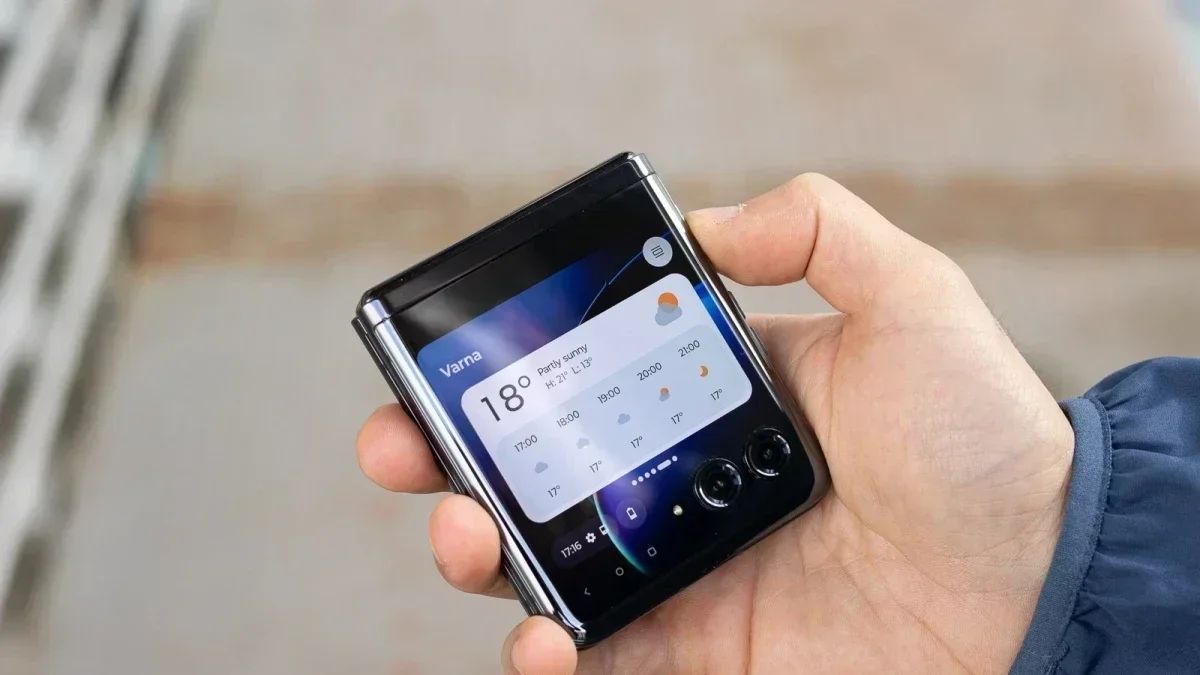
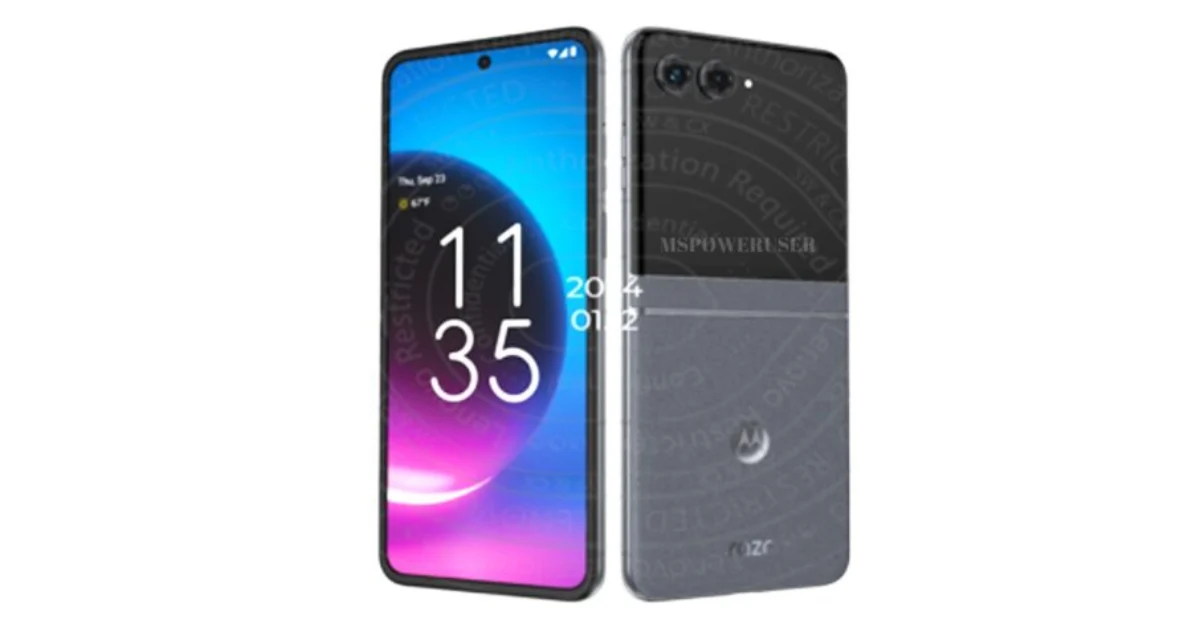
Render of the next version of the Motorola Razr+ for Verizon. Image credit-MSPoweruser

The upcoming model, tentatively named the Razr Plus 2024 and codenamed Glory (model number XT-2453-3), seems to retain the classic aesthetic that has been synonymous with the Razr brand.

It follows the Razr 40 Ultra/Plus lineage and is expected to be available exclusively through Verizon Wireless in the US.

This continuity in design showcases Motorola’s commitment to blending nostalgia with contemporary technology.

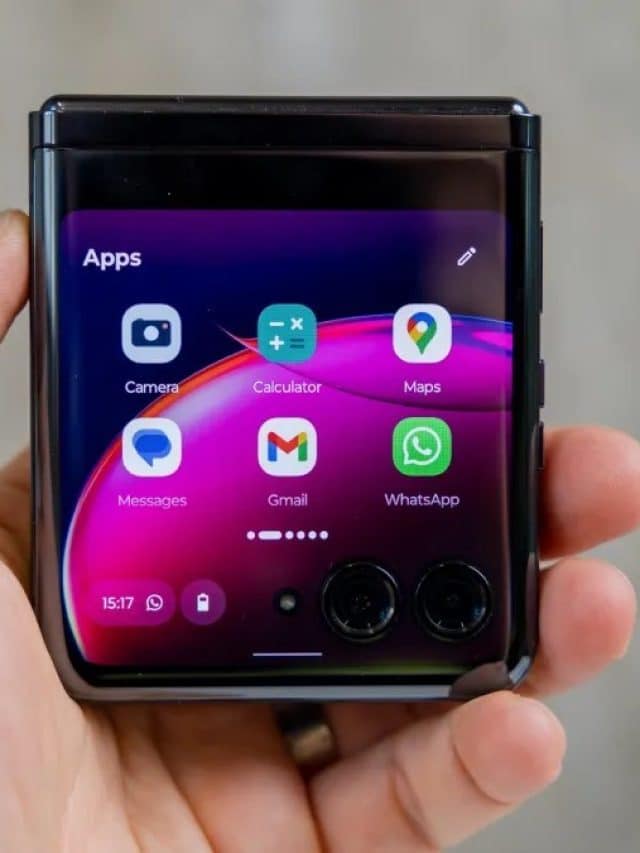
The design render suggests that the new Razr Plus will feature a cover display, a hallmark of the Razr series, and dual camera rings on the top-right, echoing the layout of previous models.

The familiar classic grey finish is anticipated to make a return, maintaining the series’ sleek and stylish look.

Upon flipping the phone open, users can expect a design similar to its predecessors, complete with a central punch-hole camera for selfies.

Anticipation Builds for the Official Launch

Motorola Razr Plus 2024 and Razr 50 Ultra leaks with familiar design

The official release date and pricing details of the Razr Plus are yet to be announced.

However, speculation suggests a potential launch in the first half of 2024.

As more information emerges, anticipation grows among tech enthusiasts and fans of the iconic Razr line for what could be a significant addition to the foldable phone segment.

Moto Razr Plus: Additional Features

Motorola razr40 ultra
New Razr+ could be released in first half of 2024

Under the hood, the Razr Plus is rumored to be powered by a new Qualcomm Snapdragon processor, although the specific chipset remains under wraps.

This upgrade is expected to result in improved performance and enhanced battery life compared to the current Motorola Razr, which utilizes the Snapdragon 8 Gen 1 chipset.

Since the launch of the Razr 40 in 2020, Motorola has been carving out its niche in the foldable phone market.

With successive releases like the Razr 40 Ultra and Razr 40 Plus, Motorola has been competing against major players like Samsung, Huawei, and Xiaomi.

MOTOROLA RAZR 40 ULTRA SPECIFICATIONS

Key Specs

RAM 12 GB
Processor Qualcomm Snapdragon 8 Plus Gen 1
Rear Camera 50 MP + 50 MP + 12 MP
Front Camera 60 MP
Battery 3640 mAh
Display 6.73 inches (17.09 cm)

General

Launch Date July 18, 2023 (Unofficial)
Operating System Android v13

Performance

Chipset Qualcomm Snapdragon 8 Plus Gen 1
CPU Octa core (3.2 GHz, Single core, Cortex X2 + 2.75 GHz, Tri core, Cortex A710 + 2 GHz, Cortex A510)
Architecture 64 bit
Fabrication 4 nm
Graphics Adreno 730
RAM 12 GB

Display

Display Type P-OLED
Screen Size 6.73 inches (17.09 cm)
Resolution 1080 x 2400 pixels
Aspect Ratio 20:9
Pixel Density 391 ppi
Bezel-less display Yes with punch-hole display
Touch Screen Yes, Capacitive Touchscreen, Multi-touch
Refresh Rate 120 Hz
Screen to Body Ratio (claimed by the brand) 70.7 %

Camera

MAIN CAMERA
Camera Setup Triple
Resolution 50 MP f/1.88, Primary Camera
50 MP, Ultra-Wide Angle Camera
12 MP f/2.2, Depth Camera
Autofocus Yes
Flash Yes, LED Flash
Image Resolution 8150 x 6150 Pixels
Settings Exposure compensation
Shooting Modes Continuous Shooting
High Dynamic Range mode (HDR)
Camera Features Digital Zoom
Auto Flash
Face detection
Touch to focus
Video Recording 1920×1080 @ 30 fps
FRONT CAMERA
Camera Setup Single
Resolution 60 MP, Primary Camera
Video Recording 1920×1080 @ 30 fps

Battery

Capacity 3640 mAh
Type Li-Polymer
Removable No
Quick Charging Yes, Rapid, 33W
USB Type-C Yes

Storage

Internal Memory 512 GB
Expandable Memory No
Storage Type UFS 3.1

Network & Connectivity

SIM Slot(s) Dual SIM, GSM+GSM
SIM Size SIM1: Nano, SIM2: eSIM
Network Support 5G Not Supported in India, 4G Supported in India, 3G, 2G
VoLTE Yes
SIM 1
4G Bands:
TD-LTE 2300(band 40)
FD-LTE 1800(band 3)
3G Bands:
UMTS 1900 / 2100 / 850 / 900 MHz
2G Bands:
GSM 1800 / 1900 / 850 / 900 MHz
GPRS:
Available
EDGE:
Available
SIM 2
4G Bands:
TD-LTE 2300(band 40)
FD-LTE 1800(band 3)
3G Bands:
UMTS 1900 / 2100 / 850 / 900 MHz
2G Bands:
GSM 1800 / 1900 / 850 / 900 MHz
GPRS:
Available
EDGE:
Available
Wi-Fi Yes, Wi-Fi 4 (802.11 b/g/n)
Wi-Fi Features Mobile Hotspot
Bluetooth Yes, v5.1
GPS Yes with A-GPS, Glonass
NFC Yes
USB Connectivity Mass storage device, USB charging

Multimedia

Loudspeaker Yes
Audio Jack USB Type-C

Sensors

Fingerprint Sensor Yes
Fingerprint Sensor Position Rear
Other Sensors Light sensor, Proximity sensor, Accelerometer, Compass, Gyroscope


FAQs

What is the Motorola Razr Plus 2024?

The Motorola Razr Plus 2024 is an upcoming flip-style smartphone from Motorola, following the Razr 40 Ultra/Plus.

Leaked renders suggest it retains the classic Razr design, updated with modern technological advancements.

What are the expected new features of the Razr Plus 2024?

The Razr Plus 2024 is rumored to run on a new version of Qualcomm Snapdragon processor, promising better performance and battery life.

It’s expected to maintain the familiar dual-camera setup and cover display like its predecessors.

Will the Razr Plus 2024 be available globally?

Initial reports suggest the Razr Plus 2024 might be sold exclusively through Verizon Wireless in the US.

There’s no confirmation yet on its availability in other global markets.

How does the Razr Plus 2024 compare to its predecessor?

While keeping the iconic flip design, the Razr Plus 2024 is expected to offer significant upgrades in terms of processing power and battery life compared to the first-generation Motorola Razr, which used the Snapdragon 8 Gen 1 chipset.

Also Read: Motorola Razr 40 Ultra Glacier Blue Variant Launches in India with Advanced Features

Also Read: Motorola Razr 40 ultra and Razr 40 flip phones sale starts on 15th July on Amazon, Motorola.in, Reliance Digital outlets & More

Also Read: Motorola Razr 40 Ultra First Look, Impressions & Review – The Slimmest Flip Phone with Largest External Display & Reliable Form Factor, “Moto Razr” is Truly Back!

OnePlus Watch 2 Set for MWC 2024 Debut With A Leap to Wear OS

0
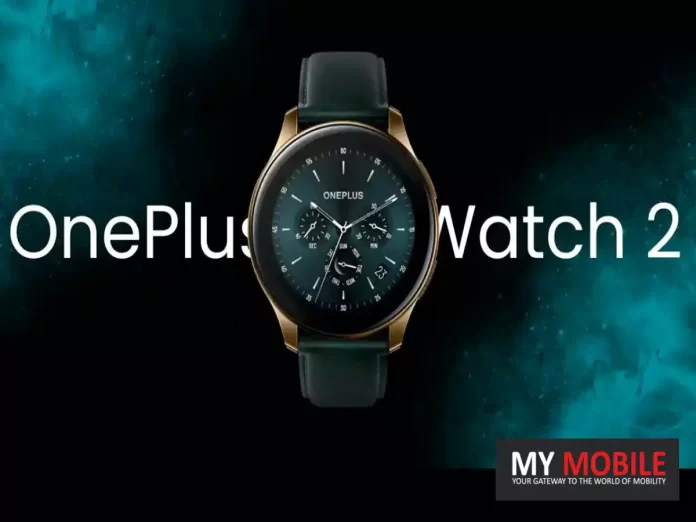
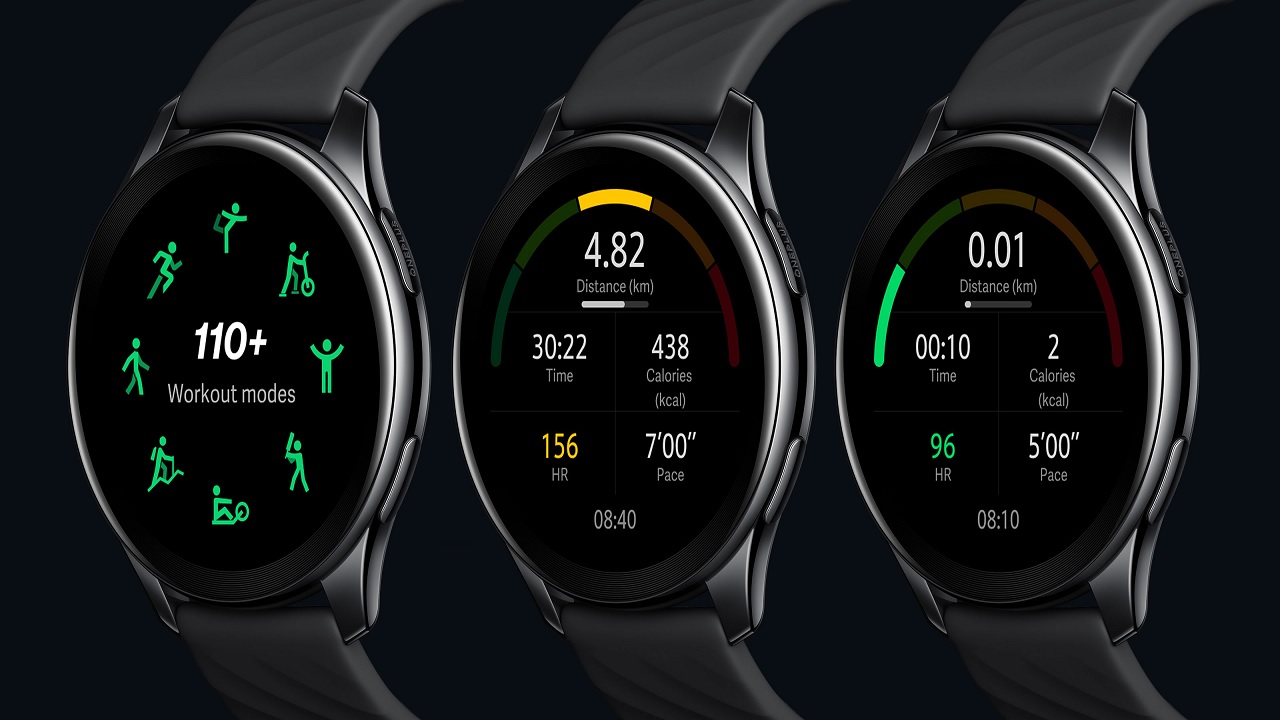
OnePlus Watch 2

Highlights

  • OnePlus Watch 2 anticipated to launch at MWC 2024 in Barcelona.
  • Significant upgrade to Wear OS from previous simpler operating system.
  • Rumored features include 1.43-inch AMOLED screen, Snapdragon W5 Gen 1 chip.
  • OnePlus maintains silence on Watch 2 ahead of OnePlus 12 global event.

The OnePlus Watch 2 is expected to make its debut at the upcoming Mobile World Congress 2024 (MWC 2024) in Barcelona.

This highly anticipated launch comes after the first-generation OnePlus Watch, which was released in April 2021.

Anticipated Features of the OnePlus Watch 2

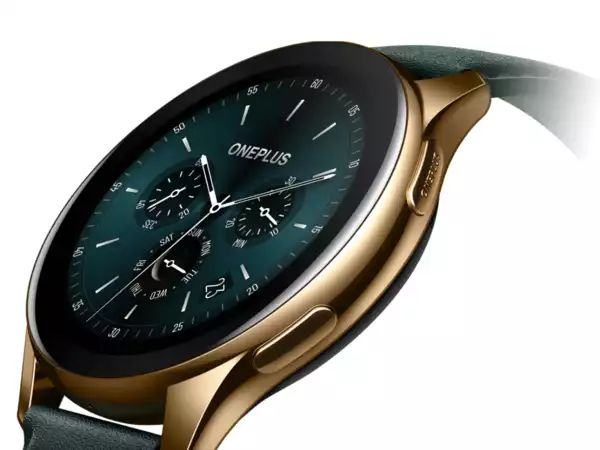
OnePlus Watch 2 will have a fresh design featuring a metal chassis and physical buttons.

One of the most significant upgrades for the OnePlus Watch 2 is its shift to Wear OS.

This change promises to bring a host of advanced features and broader app support compared to its predecessor, which used a simpler operating system.

The specific version of Wear OS to be used, whether Wear OS 3 or Wear OS 4, remains undisclosed.

However, users can expect enhanced functionalities like improved notifications, safety features, and seamless data transfers across devices with this update.

Launch Timeline and Event Details

OnePlus is set to make a significant comeback in the smartwatch market with the unveiling of its OnePlus Watch 2 at the Mobile World Congress (MWC) 2024.
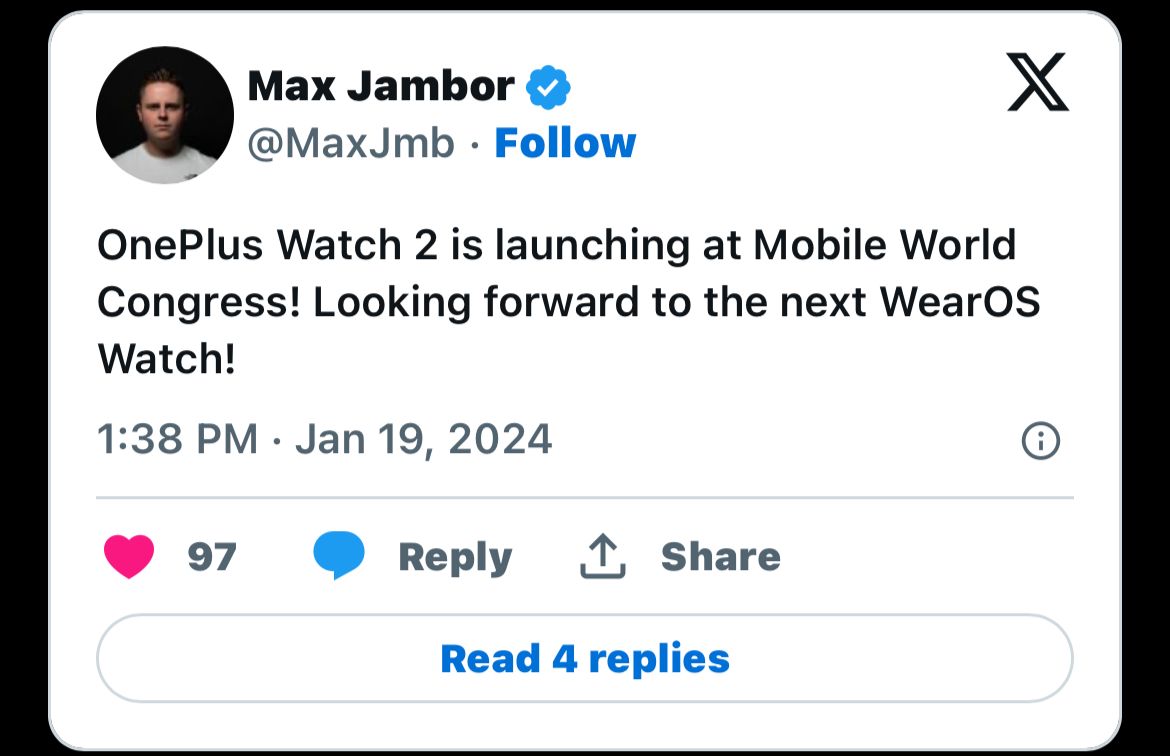
Tipster Max Jambor says on Twitter/X that the “OnePlus Watch 2” won’t arrive during OnePlus’ January 23 launch event for the OnePlus 12 series, but rather at Mobile World Congress

Based on the information shared by Max Jambor of AllAboutSamsung, the OnePlus Watch 2 is slated for launch at MWC 2024.

The event, which is a major gathering for mobile technology innovations, is scheduled from February 26 to February 29, 2024.

This timeline suggests that the new smartwatch could be unveiled by the end of February.

Interestingly, OnePlus has not released any teasers for the OnePlus Watch 2 ahead of its January 23 event, where the OnePlus 12, OnePlus 12R, and OnePlus Buds 3 TWS earphones are expected to be launched.

This silence could be part of the company’s strategy to focus on the upcoming smartwatch release at MWC 2024.

Global and India Launch

The new smartwatch aims to rectify the shortcomings of its predecessor by adopting Google's Wear OS, a departure from the original's basic OS.
The new smartwatch aims to rectify the shortcomings of its predecessor by adopting Google’s Wear OS, a departure from the original’s basic OS.

The OnePlus Watch 2, bearing the model number OPWWE231, was also spotted on the BIS (Bureau of Indian Standards) website, hinting at its release in the Indian market alongside the global launch.

OnePlus Watch 2: Additional Features

OnePlus is set to make a significant comeback in the smartwatch market with the unveiling of its OnePlus Watch 2 at the Mobile World Congress (MWC) 2024.

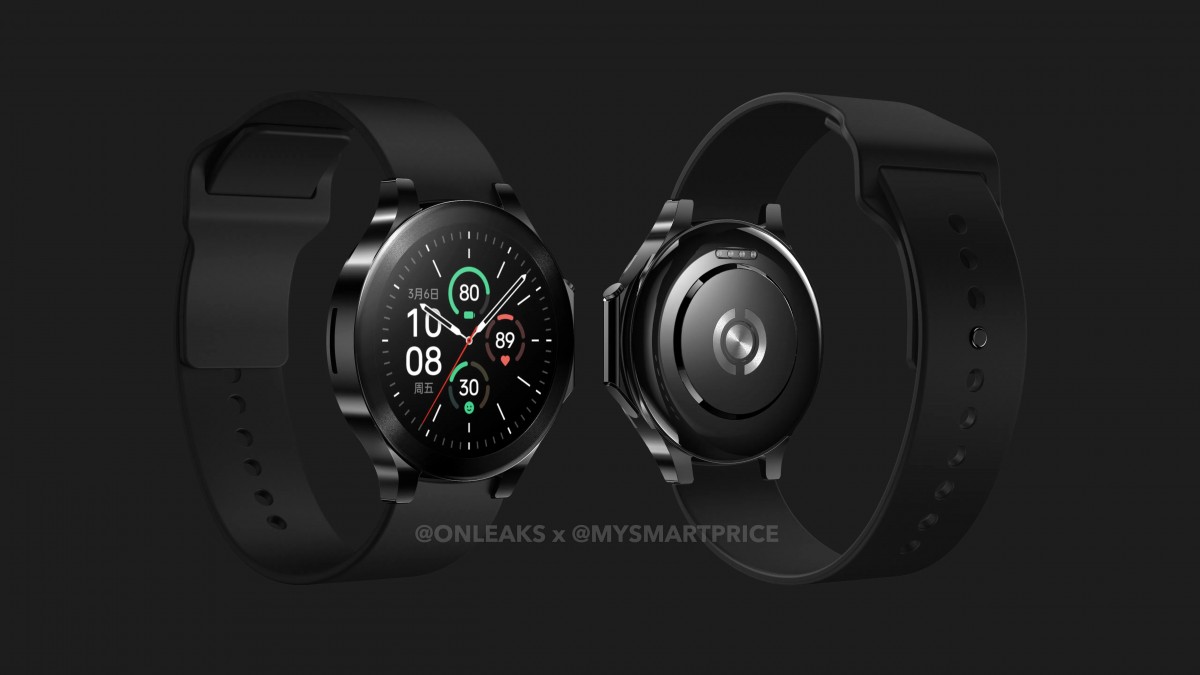
Leaked renders that surfaced in November last year have provided insights into the possible design and specifications of the OnePlus Watch 2.

The smartwatch is rumored to feature a 1.43-inch AMOLED screen and be powered by Qualcomm’s Snapdragon W5 Gen 1 chip, marking a potential upgrade in performance.

The first OnePlus Watch was noted for its 5ATM water resistance and an IP68 rating, ensuring durability and resistance to dust and water.

The upcoming model is likely to continue this trend, offering robust build quality suitable for various environments.

FAQs

What is the expected launch date for the OnePlus Watch 2?

The OnePlus Watch 2 is rumored to be unveiled at the Mobile World Congress (MWC) 2024, which is scheduled from February 26 to February 29, 2024.

This positions the smartwatch’s launch towards the end of February.

What major upgrade will the OnePlus Watch 2 have?

The OnePlus Watch 2 is expected to feature a major upgrade by running on Wear OS, a shift from the simpler operating system used in the first-generation OnePlus Watch.

This change promises more advanced features and broader app compatibility.

What are the speculated features of the OnePlus Watch 2?

Leaks suggest the OnePlus Watch 2 will sport a 1.43-inch AMOLED display and run on Qualcomm’s Snapdragon W5 Gen 1 chip.

It’s also expected to be featured on the BIS website, indicating an India launch as well.

Will the OnePlus Watch 2 be discussed at the OnePlus 12 global launch event?

OnePlus has not teased any details about the OnePlus Watch 2 ahead of the OnePlus 12 global launch event on January 23, where the OnePlus 12, 12R, and Buds 3 TWS earphones are set to debut.

What is new in the OnePlus Watch 2?

The OnePlus Watch 2 boasts a Snapdragon W5 Gen 1 chipset, providing a powerful performance boost.

It also features a 1.43-inch AMOLED display for enhanced clarity and vivid colors. The design includes a circular dial with two side buttons, offering a sleek and modern look.

Which operating system does the OnePlus Watch 2 use?

The OnePlus Watch 2 is set to run on Wear OS 4, marking a significant upgrade from its predecessor.

This change promises a more intuitive user interface and access to a wider range of apps and functionalities.

When can we expect the OnePlus Watch 2 to launch?

While there’s no official release date yet, the OnePlus Watch 2 is expected to launch in 2024.

It was recently spotted on the BIS website in India, hinting at an upcoming release, possibly alongside the OnePlus 12 smartphone.

Also Read: OnePlus Watch 2 Renders Reveal New Features and Design

Also Read: OnePlus Watch 2 Anticipated in India After BIS Certification Spotting

Also Read: OnePlus Watch 4 Reportedly Teased: An Entry into the Premium Smartwatch Arena?

Google Integrates AI Chatbot Bard into Google Messages for Enhanced Communication

0
Google Integrates AI Chatbot Bard into Google Messages for Enhanced Communication

Highlights

  • Bard, as a standalone chatbot, revolutionizes interaction within Google Messages.
  • Offers advanced features like message writing assistance, language translation, and image identification.
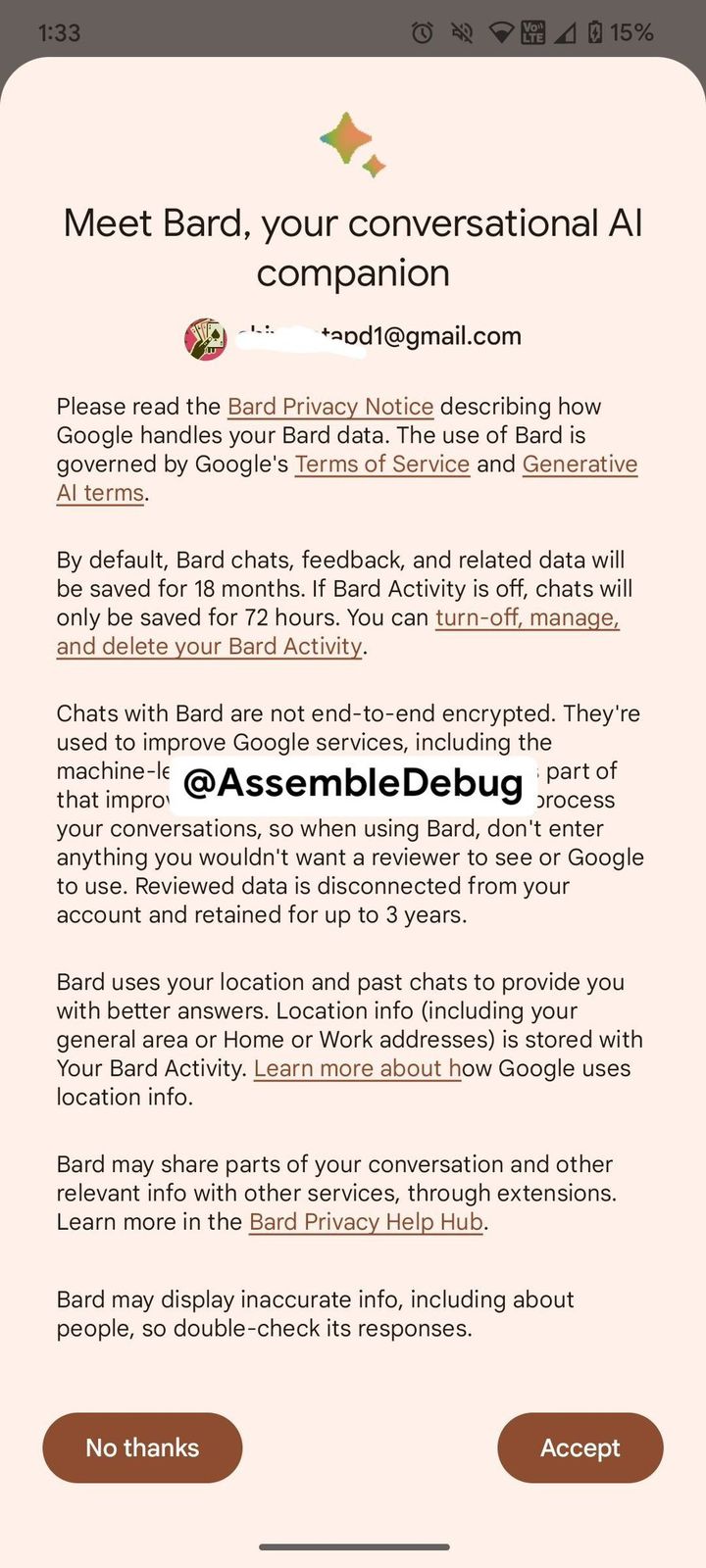
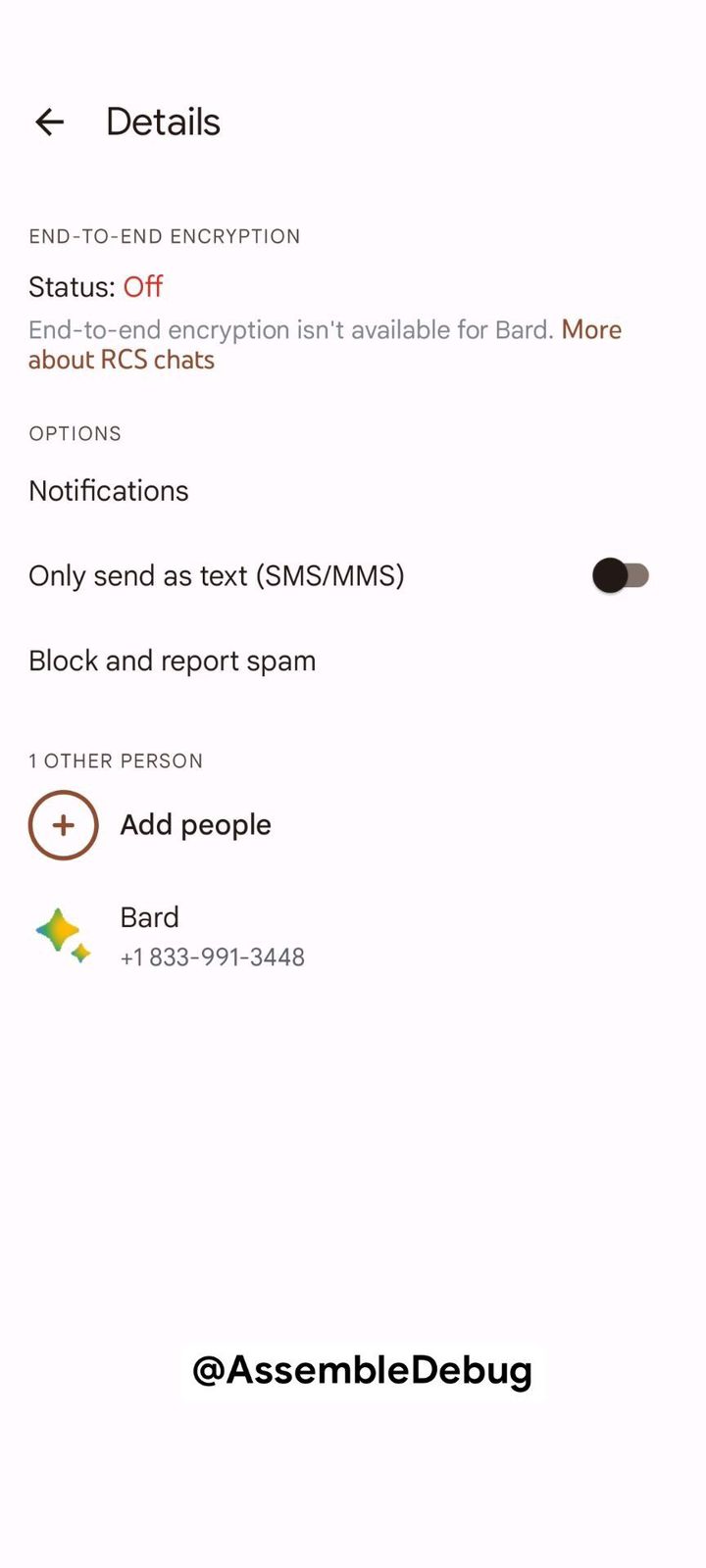
  • Conversations with Bard not end-to-end encrypted to improve AI learning.
  • Google opts against a separate Bard app, focusing on integration into existing platforms.

Google is once again at the forefront of integrating AI into our daily digital communications with the introduction of Bard to Google Messages.

This move brings an advanced AI chatbot directly into one of the most widely used messaging apps, marking a significant step in the evolution of how we interact with technology.

Bard’s Integration into Google Messages

Bard's Integration into Google Messages
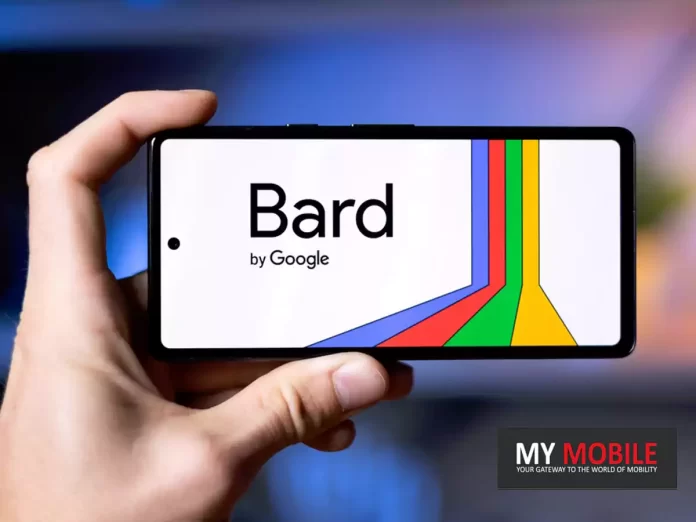
Google’s AI chatbot Bard to arrive on Google Messages

Bard, codenamed “penpal,” is set to revolutionize the way users engage with Google Messages.

Unlike traditional messaging, Bard appears as a standalone chat, identifiable by its unique logo and name at the top of the conversation.

This integration is reminiscent of Google Allo’s Assistant feature but takes a leap forward in AI communication.

Bard promises to be more than just a chatbot.

It’s designed to assist users in writing messages, translating languages, identifying images, and exploring interests.

This array of functionalities signifies Google’s commitment to enhancing user experience by leveraging AI’s vast potential.

Bard in Google Messages aims to be a personal assistant, enriching conversations and providing users with instant, AI-powered support.

Google Messages aims to be a personal assistant

Privacy and User Security with Bard

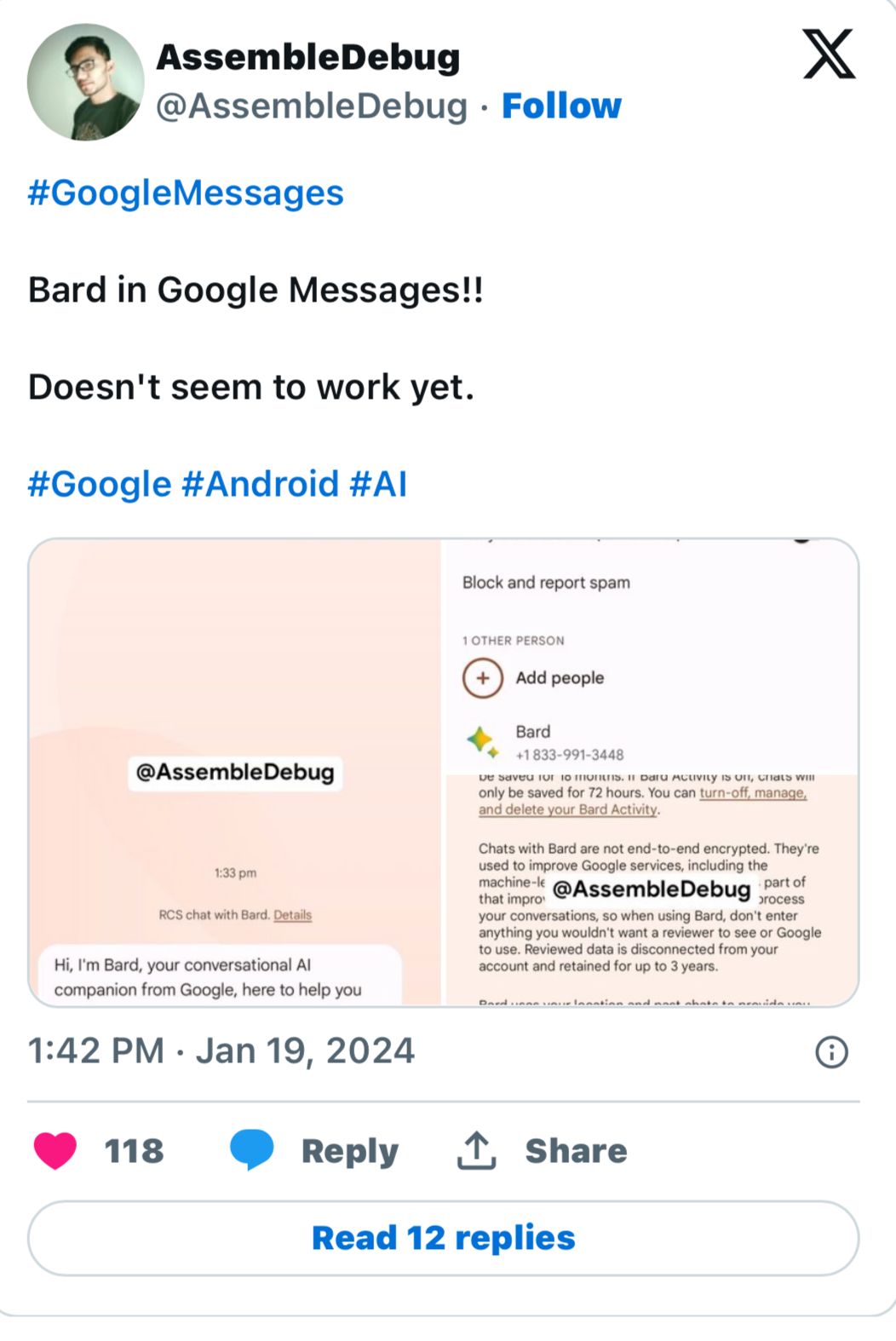
The shared screenshots show that Bard can help users write messages, translate languages, identify images, and delve into various interests.

Initiating a chat with Bard brings up an important privacy notice.

Google has clarified that conversations with Bard are not end-to-end encrypted, a decision made to further train the AI’s machine learning capabilities.

Users are advised to be mindful of the information shared in these chats, as Google intends to use this data for improving Bard, albeit disconnected from individual accounts and retained for up to three years.

Google’s decision not to launch a standalone Bard app, as revealed during I/O 2023, underscores its strategy.

Instead of a separate application, Google is focusing on embedding Bard into widely-used platforms like Google Messages.

This approach aligns with Google’s vision of integrating AI seamlessly into everyday applications, making advanced technology accessible and practical for daily use.

While the timeline for Bard’s full integration into Google Messages is not yet clear, its arrival is eagerly anticipated.

Google’s commitment to rolling out Bard as an experiment through web-based experiences and integrated applications like Messages is a testament to its innovative approach in the AI space.

Google Integrates AI
Google Vision of Integrated AI

FAQs

What is Bard in Google Messages?

Bard, codenamed “penpal,” is an AI chatbot integrated into Google Messages.

It functions as a standalone chat feature, offering assistance in tasks such as writing messages, translating languages, identifying images, and exploring user interests, enhancing the overall messaging experience.

How does Bard differ from traditional chatbots?

Unlike typical chatbots, Bard in Google Messages brings a more advanced level of AI interaction, providing functionalities that go beyond basic communication.

Its integration into a widely-used app like Google Messages makes it a more accessible and versatile tool for users.

What should users know about privacy with Bard?

Users should be aware that chats with Bard are not end-to-end encrypted, a decision by Google to facilitate the improvement of Bard’s AI capabilities.

Google advises users to be cautious about the information they share in these chats, as the data may be used for AI training purposes.

Why didn’t Google create a standalone app for Bard?

In line with Google’s strategy revealed during I/O 2023, the company chose not to release a separate Bard app.

Instead, Google is focusing on integrating Bard into daily-use applications like Google Messages to make advanced AI technology more seamlessly accessible.

When was Google Bard released?

On March 21, 2023, Google began opening access to Bard, inviting users to join a waitlist. On May 10, 2023, Google removed the waitlist and made Bard available in over 180 countries and territories.

Google Bard was initially announced on Feb. 6, 2023, with a vague release date. Many believed that Google felt the pressure of ChatGPT’s success and positive press leading them to rush Bard out before it was ready.

For example, during a live demo by Google and Alphabet CEO Sundar Pichai, it provided a query with a very wrong answer.

In the demo, a user asked Bard the question: “What new discoveries from the James Webb Space Telescope can I tell my 9-year-old about?” In Bard’s response, it mentioned that the JWST “took the very first pictures of a planet outside of our own solar system.”

Astronomers took to social media to quickly point out that the first image of an exoplanet was taken by an earthbound observatory in 2004, making Bard’s answer incorrect.

The next day, Google lost $100 billion in market value — a decline attributed to the embarrassing mistake.

Who can use Google Bard?

Users must be 18 or older and have a personal Google account. Bard is available in more than 230 countries and territories and more than 40 languages.

What are the limitations of Bard?

Like all AI chatbots, Bard must learn and be trained to give the correct answer from inaccurate or misleading information, as was evident during its first demo. AI training is an endless, compute-intensive process since there is always new information to learn.

Is Bard free?

As of this writing, Google has given no indication that it will charge for use. Google has no history of charging customers for services — its cloud business notwithstanding. The current assumption that Bard will be integrated into Google’s basic search engine indicates that it will be freely available for use.

How to access Google Bard AI?

Currently, only a small number of people have access to the Google Bard AI link for testing purposes. To reduce the amount of time and energy spent on computation, Google is developing a “lightweight model version of LaMDA.”

Google Bard AI chatbot, known as Bard, is unfortunately not yet widely available for use. However, once the Google Bard AI link is shared, it will likely be integrated into Google Search and can be accessed by asking questions through the search bar. The chatbot draws information from the web to provide up-to-date answers to text prompts.

It is designed to provide easy-to-digest answers to complex questions and can help with tasks such as planning a baby shower, comparing movies, and getting lunch ideas. It is not yet known if the chatbot will be available through other Google products such as Google Assistant or Google Maps.

Google Bard vs. ChatGPT.Details?

Both Google Bard and OpenAI’s ChatGPT are AI chatbots, meaning they are designed for interaction with people through the use of natural language models and machine learning.

Both use a large language model (LLM), which is a machine learning model for generating and creating conversational text.

ChatGPT uses generative AI, meaning it can produce original content. For example, users can ask it to write a thesis on the advantages of AI. Google Bard does as well — although it serves a slightly different use. Bard is geared to make search more natural and helpful and does synthesize new information in its answers

That said, ChatGPT is also capable of helping refine searches. In January 2023, Microsoft signed a deal reportedly worth $10 billion with OpenAI to license and incorporate ChatGPT into its Bing search engine to provide more conversational search results, similar to Google Bard. That opens the door to other search engines to license ChatGPT, whereas Bard is meant to support only Google.

One of the larger differences between the two is that ChatGPT’s responses are based on data available up to April 2023, whereas Google Bard will be based on up-to-date, current data. For ChatGPT to be viable as a search engine technology, it must be able to answer questions with up-to-date data, not two-year-old data. ChatGPT can browse the web when prompted, despite its training data cutoff.

OpenAI is aware of the potential for plagiarism with ChatGPT and offers a plagiarism detection tool for educators to catch students using it for homework assignments. Thus far, there is no knowledge of whether or not Google Bard has its own plagiarism detection tool.

Bard does cite other content in its responses sometimes and links to the source. Bard’s double-check function searches Google for information similar to its generated content and provides a URL to the source of that information.

Also Read: 2023’s Biggest Controversies in Tech: DeepFakes, Sam Altman, Google Bard, Twitter, and More

Also Read: Google’s Bard Chatbot Set To Transform with Next-Gen Gemini AI Enhancement

Also Read: Sundar Pichai’s Google Bard: What is Google’s New AI Bard Chatbot ? How to access it ? Microsoft’s Chat GPT Vs Google’s Bard

EU’s DMA Pushing Apple to Enable App Sideloading on iPhones

0
EU's DMA Pushing Apple to Enable App Sideloading on iPhones

Highlights

  • EU’s DMA mandates Apple to permit sideloading of third-party apps on iPhones.
  • Sideloading to be initially limited to the 27 EU member countries.
  • Change aims to enhance user choice and market competition.
  • Apple’s security concerns addressed with user responsibility for app safety.

The European Union’s Digital Markets Act (DMA) is bringing a transformative change to Apple’s iPhone ecosystem, particularly in the way apps are installed and used.

One of the most significant implications of this act is that it compels Apple to allow the sideloading of third-party apps on iPhones.

Understanding Sideloading in the EU Context

Understanding Sideloading in the EU Context

Sideloading refers to the process of installing apps on a device from sources other than the official app store, in this case, outside of Apple’s App Store.
Historically, Apple has been stringent about its ecosystem, allowing applications to be downloaded and installed only through its official App Store.

This policy has been a cornerstone of Apple’s approach to security, ensuring that all apps undergo rigorous vetting processes to minimize the risk of malware.

However, the EU’s DMA is set to change this long-standing policy, at least within its member countries.

This move is seen as an effort to open up the digital market and reduce the monopolistic control exerted by major tech firms like Apple.

For users in the EU, this means they will have the option to download and install applications from sources other than the App Store, potentially increasing the variety and availability of apps.

The Implications for iPhone Users and Developers

The Implications for iPhone Users and Developers
  • Increased Flexibility and Choice for Users: EU iPhone users will have access to a broader range of apps, including those not available on the App Store. This could include apps that offer different functionalities or those that might not comply with Apple’s strict app policies.
  • Security Considerations: One of Apple’s primary concerns with sideloading has been the potential increase in security risks. Users installing apps from external sources might be more susceptible to downloading malicious software. In the EU, the responsibility for avoiding such risks will shift more towards the users.
  • Impact on App Developers: For developers, this opens up a new avenue to reach iPhone users directly without going through the App Store’s approval process and its associated fees. This could be particularly beneficial for smaller developers or those creating niche apps.
  • Regional Limitations: As of now, this change is expected to be limited to the 27 EU member countries. Outside these countries, Apple’s traditional approach to app installation is likely to continue.
  • Apple’s Compliance and Potential Penalties: Apple will need to comply with these regulations to avoid hefty fines. The EU has set significant penalties for non-compliance, underscoring the seriousness of these regulatory changes.
EU's DMA Pushing Apple to Enable App Sideloading on iPhones
EU’s DMA Pushing Apple to Enable App Sideloading on iPhones

FAQs

What does iPhone app sideloading mean under the EU’s DMA?

Sideloading on iPhones, as influenced by the EU’s Digital Markets Act (DMA), refers to the ability for users to install apps from sources outside the official Apple App Store.

This regulatory change is aimed at breaking Apple’s tight control over app installations, providing EU users with more flexibility and choice.

Will sideloading be available for iPhones globally?

Currently, the allowance for sideloading apps on iPhones is expected to be confined to the 27 EU member countries, in line with the DMA’s jurisdiction.

This means that outside these nations, Apple’s traditional app installation methods via the App Store will likely remain unchanged.

What are the potential risks of sideloading for iPhone users?

Sideloading apps can potentially expose users to increased security risks, such as malware and trojans.

With this new policy, iPhone users in the EU will bear more responsibility for ensuring the safety of the apps they install from non-App Store sources.

How does app sideloading benefit iPhone users and developers?

This change benefits users by offering a wider range of app choices and potentially promotes innovation by allowing developers to reach users directly without App Store constraints.

It also helps smaller developers who might find it challenging to comply with App Store policies.

What is Apple’s Plan to Comply with the EU’s DMA ?

Apple is preparing to make significant changes to the App Store to comply with the EU’s Digital Markets Act (DMA). These changes are expected to roll out in the coming weeks.

Under the EU DMA, Apple will be obligated to allow users in Europe to install third-party app stores and sideload apps on their iOS devices.

This means that they will have the option to download apps from sources other than the official App Store, giving them more freedom and flexibility in choosing and accessing their favorite applications.

In addition to enabling sideloading, Apple will also have to enable developers to promote their offers outside the App Store and use third-party payment systems. This will allow developers to have more flexibility in reaching their target audience and offering their products or services in ways that best suit their business models.

The changes introduced as part of Apple’s compliance with the EU’s DMA will have a significant impact on how the App Store, Siri, and FaceTime function in Europe. These changes aim to create a more competitive and open digital market, similar to that of Android devices.

What are the Implications of Sideloading in the EU?

The European Union is one of Apple’s biggest markets, and complying with the DMA was an inevitable step for the company.

While Apple has opposed sideloading in the past due to privacy and security concerns, it will now make changes to adhere to this policy.

This move will enhance user choice and versatility in-app installation, while also meeting the requirements of the EU’s antitrust legislation.

By enabling sideloading, Apple opens the door for users to explore different app marketplaces, potentially leading to increased competition and innovation within the app ecosystem.

Users will have the freedom to discover and choose from a wider range of apps and services, ultimately benefiting from a more diverse and competitive market.

Additionally, the split in the App Store allows Apple to comply with the EU DMA while still maintaining control and security over its global user base.

The company can implement region-specific policies and regulations to ensure the safety and privacy of European users, addressing one of the main concerns raised by Apple.

However, the introduction of sideloading in the EU also raises some concerns. One of the primary issues is the potential increase in malware and fraudulent apps.

With the App Store acting as a gatekeeper, Apple has been able to enforce strict review and approval processes to maintain a high level of user trust.

The inclusion of third-party app stores introduces a level of uncertainty, as the responsibility for app verification and security will be shifted to multiple entities.

App Store to Be ‘Split in Two’ Ahead of EU iPhone Sideloading Deadline.Details?

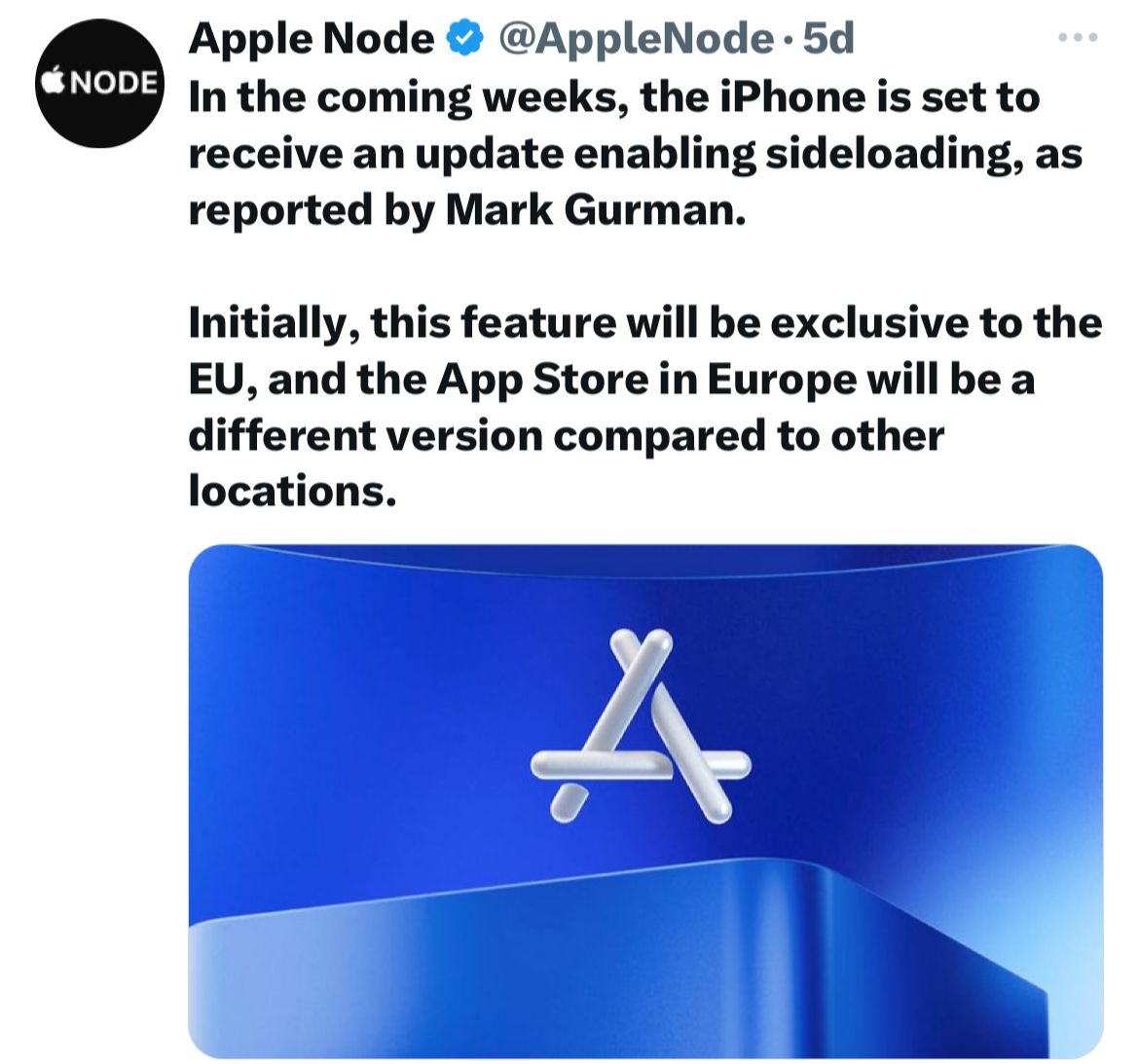
Apple is preparing to split the App Store “in two” in the coming weeks ahead of European Union requirements that will force Apple to enable app sideloading in the region, Bloomberg’s Mark Gurman reports.

In the latest edition of his “Power On” newsletter, Gurman explained that Apple is gearing up to make changes to the ‌App Store‌ in the EU to comply with the region’s impending Digital Markets Act (DMA).

Apple is apparently planning to roll out adjustments to comply with the new legal requirements in the coming weeks, including splitting off the ‌App Store‌ in the EU from the rest of the world.

The deadline for Apple to comply with the DMA is March 7, so the company has just over seven weeks to enact the changes.

Last week, Apple CEO Tim Cook met the European Union’s antitrust chief, Margrethe Vestager, at Apple Park. Vestager reminded Cook of Apple’s impending obligation to allow users to install third-party app stores and sideload apps under the DMA.

Apple will also be obliged to give developers the ability to promote their offers outside the ‌‌‌‌App Store‌‌‌‌ and use third-party payment systems.

The DMA is expected to force Apple to make a range of significant changes to the way the ‌App Store‌, FaceTime, and Siri work in Europe.

Also Read: Apple Consolidates AI Operations: San Diego Data Team Shuts Down, Offered a Move to Austin

Also Read: Apple Reveals Executive Compensation Details in 2023 Proxy Statement, Tim Cook’s Earnings Disclosed

Also Read: Apple Removes Binance, KuCoin, Kraken, and OKX Crypto Exchange Apps from Indian App Store Amid Regulatory Compliance Issues

Also Read: Apple To Ramp Up AI Integration in 2024: New Tools and Features on the Horizon

Google Unveils Minty Green Pixel 8 Variant: A Fresh Take on Smartphone Aesthetics

0
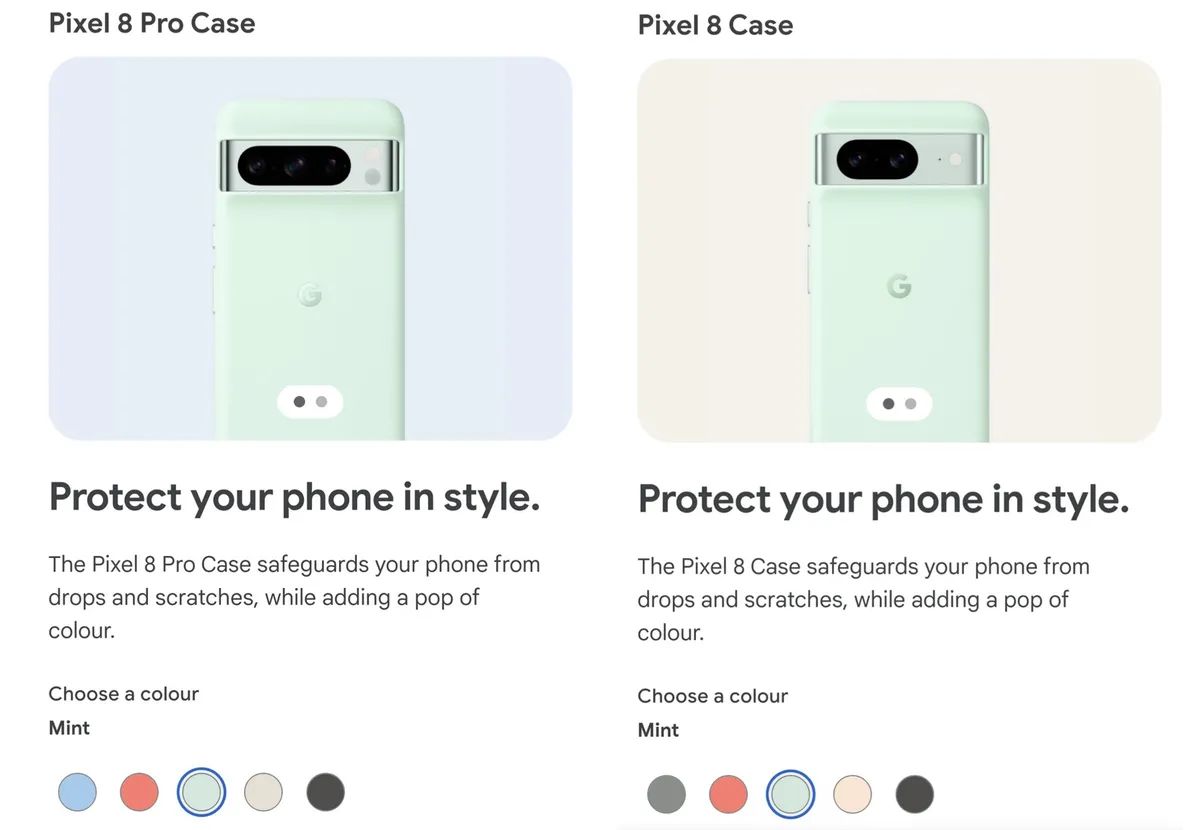
Google Store website showed that case with a green camera bar

Highlights

  • Google announces a vibrant Minty Green Pixel 8, launching January 25.
  • Exclusive availability through Google’s channels, adding exclusivity.
  • Google’s rare mid-cycle color release boosts Pixel 8’s market appeal.
  • Minty Green to complement Pixel 8’s existing color range and features.

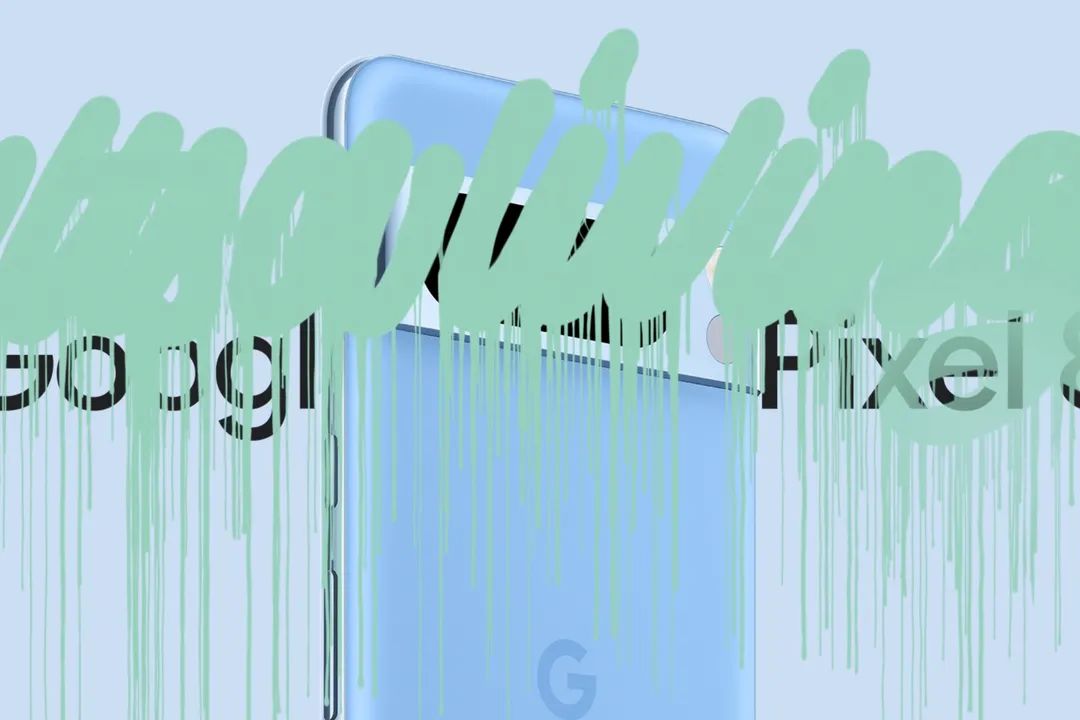
Google is gearing up to add a new splash of colour to its Pixel 8 lineup with the introduction of a Minty Green variant.

This fresh and vibrant hue is set to bring a funkier and brighter option to the existing color palette of the Pixel 8 series.

The announcement, teased through a binary encoded message on X, translates to “Fresh year, fresh drop,” indicating the company’s playful approach to the launch.

Interestingly, this new color release, confirmed for January 25, will be exclusive to Google’s sales channels, as per reports by The Verge.


The teaser predominantly showcases the Pixel 8 Pro in Minty Green, leaving some ambiguity about whether the standard Pixel 8 will also be available in this new shade.

Google’s strategy to introduce a new color mid-cycle is seen as a move to reinvigorate interest in the Pixel 8 series, particularly in the face of stiff competition from rivals like Samsung with its Galaxy S24.

This isn’t a common practice for Google, as the company has rarely released special color variants mid-cycle, with the ‘barely blue’ Pixel 4a being a notable exception.

Google Store website showed that case with a green camera bar

The decision to introduce Minty Green aligns with some of Google’s recent activities, such as selling a mint silicone case for the Pixel 8 and a brief listing of a model with a green camera bar, which sparked rumors about a new color variant.

Despite no official sales data being available, reports suggest that the Pixel 8 series has been performing well in the market, with Google reportedly being the only brand to see an increase in shipments in Q2 2023.

The new Minty Green Pixel 8 will retain the same specifications and design as the existing models, but the introduction of this new color is a strategic move by Google to maintain the series’ momentum and appeal in a highly competitive market.

Pixel 8: Feature and Specs

Google teases a new Pixel 8 color for release next week
  • Display: A 6.2-inch OLED with Full HD+ resolution and up to 120Hz refresh rate.
  • Processor: Also driven by the Google Tensor G3 and Titan M2 chip.
  • Camera: Houses a 50MP primary rear sensor and a 12MP ultra-wide-angle lens with a 10.5MP selfie camera.
  • Battery: A 4575mAh powerhouse with 27W fast charging.
  • Additional Features: Equally feature-packed, including dual SIM, 5G, Wi-Fi 6, and IP68 resistance. Comes in Obsidian, Hazel, and Rose.

GOOGLE PIXEL 8 KEY SPECIFICATIONS

Key Specs

RAM 8 GB
Processor Google Tensor G2
Rear Camera 64 MP + 48 MP + 12 MP
Front Camera 16 MP
Battery 5000 mAh
Display 5.8 inches (14.73 cm)

General

Launch Date May 10, 2023 (Unofficial)
Operating System Android v12

Performance

Chipset Google Tensor G2
CPU Octa core (2.85 GHz, Dual core, Cortex X1 + 2.35 GHz, Dual core, Cortex A78 + 1.8 GHz, Quad core, Cortex A55)
Architecture 64 bit
Fabrication 4 nm
Graphics Mali-G710 MC10
RAM 8 GB

Display

Display Type Super AMOLED
Screen Size 5.8 inches (14.73 cm)
Resolution 1080 x 2268 pixels
Pixel Density 433 ppi
Screen to Body Ratio (calculated) 79.46 %
Bezel-less display Yes with punch-hole display
Touch Screen Yes, Capacitive Touchscreen, Multi-touch

Design

Height 150.5 mm Compare Size 
Width 70.8 mm
Thickness 8.9 mm

Camera

MAIN CAMERA
Camera Setup Triple
Resolution 64 MP f/1.9, Wide Angle, Primary Camera
48 MP f/3.5, Telephoto Camera
12 MP f/2.2, Ultra-Wide Angle Camera
Autofocus Yes
Flash Yes, LED Flash
Image Resolution 9000 x 7000 Pixels
Settings Exposure compensation, ISO control
Shooting Modes Continuous Shooting
High Dynamic Range mode (HDR)
Camera Features Digital Zoom
Auto Flash
Face detection
Touch to focus
Video Recording 1920×1080 @ 30 fps
FRONT CAMERA
Camera Setup Single
Resolution 16 MP f/2.2, Ultra-Wide Angle, Primary Camera
Video Recording 1920×1080 @ 30 fps

Battery

Capacity 5000 mAh
Type Li-Polymer
Removable No
Quick Charging Yes, Fast
USB Type-C Yes

Storage

Internal Memory 128 GB
Expandable Memory No

Network & Connectivity

SIM Slot(s) Dual SIM, GSM+GSM
SIM Size SIM1: Nano, SIM2: eSIM
Network Support 5G Not Supported in India, 4G Supported in India, 3G, 2G
VoLTE Yes
SIM 1
4G Bands:
TD-LTE 2300(band 40)
FD-LTE 1800(band 3)
3G Bands:
UMTS 1900 / 2100 / 850 / 900 MHz
2G Bands:
GSM 1800 / 1900 / 850 / 900 MHz
GPRS:
Available
EDGE:
Available
SIM 2
4G Bands:
TD-LTE 2300(band 40)
FD-LTE 1800(band 3)
3G Bands:
UMTS 1900 / 2100 / 850 / 900 MHz
2G Bands:
GSM 1800 / 1900 / 850 / 900 MHz
GPRS:
Available
EDGE:
Available
Wi-Fi Yes, Wi-Fi 4 (802.11 b/g/n)
Wi-Fi Features Mobile Hotspot
Bluetooth Yes, v5.2
GPS Yes with A-GPS, Glonass
USB Connectivity Mass storage device, USB charging

Multimedia

Loudspeaker Yes
Audio Jack USB Type-C

Sensors

Fingerprint Sensor Yes
Fingerprint Sensor Position On-screen
Other Sensors Light sensor, Proximity sensor, Accelerometer, Compass, Gyroscope

FAQs

What is the new color variant for the Pixel 8?

Google has introduced a Minty Green color variant for the Pixel 8 series, adding a fresh and vibrant hue to the smartphone’s palette.

This new color is set to offer a funkier and more eye-catching option compared to the current range.

When and where will the Minty Green Pixel 8 be available?

The Minty Green Pixel 8 is scheduled for release on January 25 and will be exclusively available through Google’s sales channels. This exclusivity adds a unique appeal to the new variant.

Will both the Pixel 8 and 8 Pro be available in Minty Green?

While the teaser primarily shows the Pixel 8 Pro in Minty Green, it’s not yet clear if the standard Pixel 8 will also be offered in this new color. This ambiguity has piqued consumer interest.

Why is Google releasing a new color for the Pixel 8 series?

Google’s introduction of a new color variant mid-cycle is a strategic move to revitalize interest in the Pixel 8 series, especially amidst strong competition from brands like Samsung. This approach is not typical for Google, making it a notable development.

What’s new in the Pixel 8’s camera setup?

The Pixel 8 boasts a 50MP primary camera and a 12MP ultrawide lens, ensuring crisp and wide photos.

How does the Pixel 8 Pro differ from the Pixel 8 in terms of camera capabilities?

The Pixel 8 Pro features a 50MP primary, 48MP ultrawide, and a 48MP telephoto lens, offering up to 30x zoom.

Are the Pixel 8 and Pixel 8 Pro water and dust resistant?

Yes, both devices come with IP68 certification, ensuring protection against water and dust.

Also Read: Google Pixel 8’s Resale Value Drops Faster Than Apple’s iPhone 15: Reports

Also Read: Google Pixel 8 Series Found to Support DisplayPort Alternate Mode: What This Means for Users

Also Read: Google Pixel 8 Series and Android 14 Bring Lossless Audio to the Mainstream

Also Read: Google Pixel 8 and Pixel 8 Pro Launched With Tensor G3 SoC, 50MP Camera: Pricing, Features, Availability, and More

HMD Global to Launch Own-Brand Smartphones, Diverging from Nokia Legacy

0
HMD Global to Launch Own-Brand Smartphones, Diverging from Nokia Legacy

Highlights

  • HMD Global set to launch its first smartphones without Nokia branding.
  • Leaked models, N159V and TA-1585, indicate a new direction for HMD.
  • Rumored designs suggest a focus on the low- to mid-range market segment.
  • HMD’s move represents a significant shift in the company’s smartphone strategy.

HMD Global, known for its revival of Nokia-branded smartphones, is reportedly stepping into a new era by launching its own branded devices.

This marks a significant pivot for the company since its entry into the smartphone market in 2016.

Here’s a comprehensive editorial piece summarizing the latest developments:

HMD Global’s Journey and New Direction

HMD Global's Journey and New Direction
HMD Global’s Journey and New Direction

Since its inception in 2016, HMD Global has made notable strides in the smartphone industry, primarily through its Nokia-branded devices.

The company’s expansion into eight global regions and its diverse product portfolio have positioned it as a key player in the market.

Now, HMD is preparing to take a bold step by introducing smartphones under its own brand, moving beyond the Nokia name.

Upcoming HMD Smartphones: What We Know

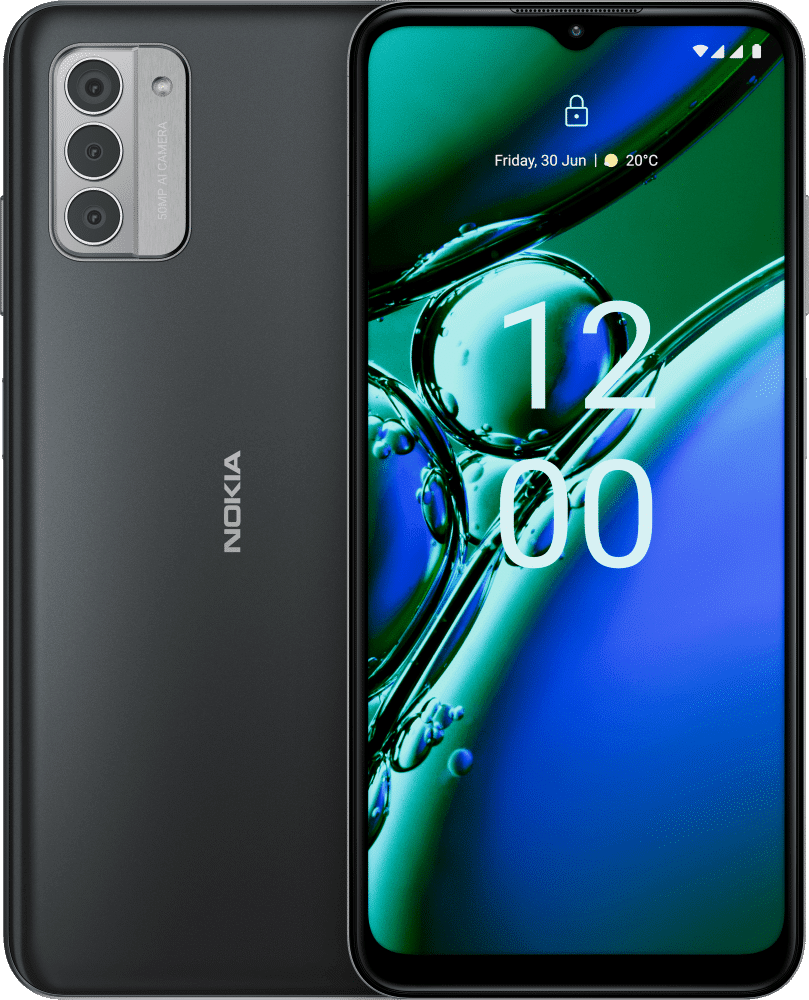
nokia-G42_5G-so_grey-front_back-int
Upcoming HMD Smartphones: What We Know

Reports from 91mobiles and Android Authority reveal that HMD is planning to release its first two global smartphones without the Nokia branding, known by their model numbers N159V and TA-1585.

These names were spotted in the IMEI database, hinting at HMD’s impending launch.

While the official product names are yet to be disclosed, it’s suggested that these model numbers might represent the same phone, differentiated for regional markets.

The company aims to launch at least one such device by 2024, although an exact release date remains under wraps.

Design and Specifications: A Sneak Peek

Leaker Evan Blass says that Verizon will carry the device, meaning it will be available in the US.

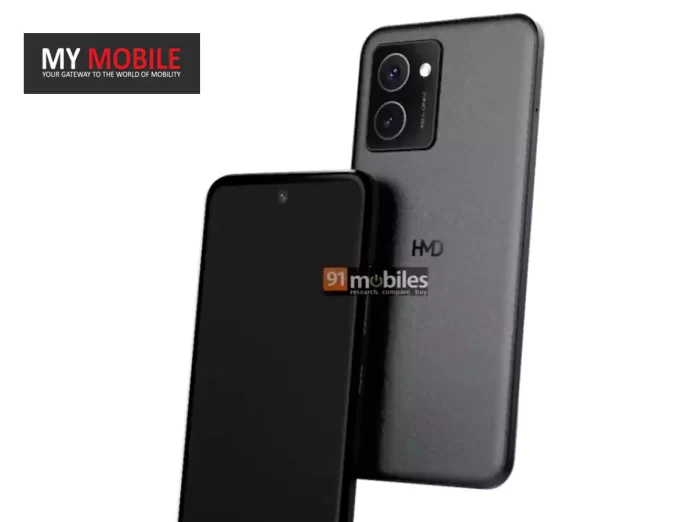
Leaked images of the N159V model suggest a design that leans towards the low- to mid-range segment.

The absence of visible antenna lines indicates the possibility of a plastic body, departing from the more premium aluminum builds.

The phone is expected to feature a dual-camera setup on the rear and a single front camera.

A flat display and right-side button placement are other notable design aspects.

Notably, Evan Blass, a well-known leaker, shared on X (formerly Twitter) that Verizon might be among the first US carriers to offer this new HMD phone.

The Competitive Landscape

The Competitive Landscape

As HMD enters the market with its branded device, it faces stiff competition in the mid-range smartphone segment.

For instance, OnePlus is set to introduce the OnePlus 12R globally, marking its debut in North America.

This device, with its Qualcomm Snapdragon 8 Gen 2 chip and a 5500mAh battery, is expected to challenge flagship models, offering high-end features at a competitive price.

FAQs

What is HMD Global planning in the smartphone market?

HMD Global is reportedly preparing to launch its own-branded smartphones, moving away from solely producing Nokia-branded devices.

This marks a strategic shift for the company, signaling its ambition to carve out a distinct identity in the competitive smartphone landscape.

What are the known details about HMD Global’s upcoming smartphones?

HMD Global’s forthcoming smartphones, currently known by their model numbers N159V and TA-1585, have been spotted in the IMEI database.

While their official names haven’t been released, these models signify HMD’s venture into branding its devices independently of Nokia.

What can consumers expect from HMD Global’s new smartphones in terms of design and features?

The leaked images of the N159V model suggest a design aimed at the low- to mid-range market.

Features like a dual-camera setup, a plastic body, a flat display, and a single front camera lens are expected. These elements point towards an accessible, budget-friendly device.

When is HMD Global expected to release these new smartphones?

HMD Global is expected to release at least one of its own-branded smartphones by 2024. However, a specific launch date has not been announced yet, keeping the tech community in anticipation.

Also Read: HMD Global launches Nokia C32 in India with 3-day battery, 50MP camera, Android 13; Check Price, Specifications, Availability & Offers

Also Read: How HMD EasyPay is Transforming Nokia Smartphone Purchases: Exclusive Interview with Ravi Kunwar, VP India & APAC for HMD Global

Also Read: HMD Global Secures Top Spot in Feature Phone Market IDC Q3 2023 Report