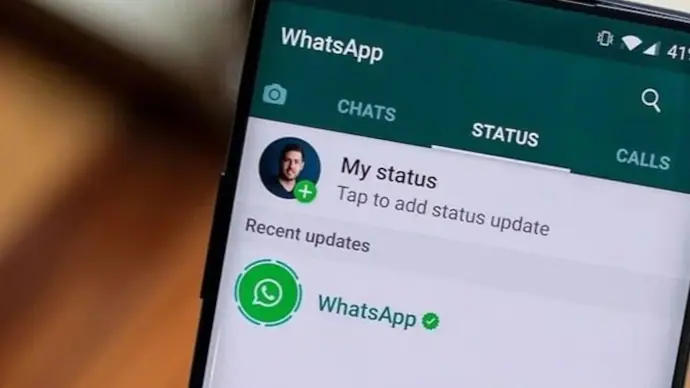
WhatsApp now allows group calls with up to 31 participants, up from the previous limit of 15.
The new feature streamlines the group calling process, allowing users to add all 32 participants from the start.
Initially rolled out for iOS users, the feature is expected to reach Android devices soon.
WhatsApp has introduced a new update that significantly enhances the group calling feature.
Prior to this update, WhatsApp users were confined to initiating group calls with a rather limited 15 participants.
This was an improvement from an even more restricted number of 7, but the latest development takes it up several notches, allowing for a group call that can include up to 31 participants.
The Streamlined Calling Experience
The real highlight of this update is the user-friendly experience it aims to deliver. Previously, the group call feature only allowed you to initiate a call with 15 participants, requiring additional users to join later.
This often interrupted the flow of the conversation and could be cumbersome to manage. Now, the app enables the initiation of a call right from the start with all 32 participants, including the host.
For WhatsApp’s sizable user base, this offers a more streamlined and enriched group calling experience.
How to Use the Feature
Using the feature is straightforward.
Simply open the group chat, tap on either the Video or Voice call button, and you’re good to go.
If the group has more than 32 members, you’ll need to choose who to include in the call.
But if it’s 32 or fewer, the call starts instantly. This simplifies the entire process, making it far more efficient and enjoyable for users.
WhatsApp Now Allows Group Calls with up to 31 Participants
The Rollout
Currently, this feature has been rolled out to iOS users and is expected to be available for Android users soon.
This phased approach helps WhatsApp ensure that the new feature integrates smoothly across different platforms.
Added Layer of Privacy
In addition to the group calling feature, WhatsApp is also in the development stages of another interesting update—enabling users to hide locked chats.
Currently, if you have a locked chat, anyone who has access to your phone can see that such a chat exists.
The new feature aims to hide these chats, only revealing them when a secret code is entered in the search bar.
While this feature is still under development, it is definitely a step forward in enhancing user privacy and security.
FAQs
How many people can now participate in a WhatsApp group call?
The latest update allows for a group call to include up to 31 participants, making it 32 including the host.
How does this new feature improve the group calling experience?
Previously, initiating a group call allowed you to start with 15 participants, requiring others to join later. The new feature allows you to add up to 31 participants right from the start, providing a more streamlined experience.
Is this feature available for Android users?
Currently, the feature is available for iOS users. However, it is expected to be rolled out for Android users in the near future.
What are the additional features being developed by WhatsApp?
WhatsApp is working on a feature that will allow users to hide their locked chats, providing an extra layer of privacy and security.
Following the recent unveilings of the Moto G14, Moto G54 5G, and Moto G84 5G, the tech giant is setting the stage for yet another mid-range marvel— the Moto G24.
This newcomer has just popped up on Geekbench, revealing some compelling details about its hardware prowess.
Geekbench Scores
Motorola appears to be aiming for competitive performance with the Moto G24.
Spotted first by MySmartPrice, on Geekbench 6, the device scored 407 and 1399 points in the single-core and multi-core tests, respectively.
These scores suggest that the handset will likely offer a balanced performance, making it a solid contender in the mid-range market.
Moto G24 Spotted on Geekbench
Moto G24: Possible Features
A closer examination of the Geekbench listing hints at an octa-core MediaTek Helio SoC, equipped with a 2 + 6 core configuration.
The cores are clocked at 2.00GHz and 1.80Hz, implying that the device is optimized for both power efficiency and speed.
Accompanying this processor is an impressive 8GB of RAM.
However, the likelihood of additional memory configurations should not be dismissed, providing potential users with more options to suit their needs.
While the Geekbench data sheet doesn’t clearly indicate which MediaTek Helio chipset the Moto G24 will house, signs point toward the Helio G85.
The Mali G52 GPU included in the listing further supports this presumption.
If this proves accurate, it means the Moto G24 will follow in the footsteps of its predecessor in terms of processing power.
Adding another feather to its cap, the Moto G24 is expected to come pre-loaded with Android 14, the latest version of Google’s operating system.
This not only assures users of up-to-date software features but also enhances the device’s future-proof credentials.
FAQs
What are the Geekbench scores of Moto G24?
The Moto G24 scored 407 points in the single-core and 1399 points in the multi-core Geekbench 6 tests. These scores suggest that the phone aims to offer balanced performance.
What kind of processor does the Moto G24 have?
While it’s not explicitly mentioned, the Geekbench listing points to an octa-core MediaTek Helio SoC. The chipset is likely to be the MediaTek Helio G85, based on the mentioned Mali G52 GPU.
How much RAM will the Moto G24 feature?
The Geekbench listing indicates that the Moto G24 will house 8GB of RAM. Other memory configurations may also be available.
Which version of Android will come pre-loaded on the Moto G24?
The device is expected to come with Android 14 pre-loaded, offering users the latest software features and updates.
Xiaomi 14 Pro introduces new Snapdragon 8 Gen 3 chipset and HyperOS.
Significant display enhancements with peak brightness reaching 3,000 nits.
Modest camera updates but significant software improvements.
HyperOS replaces MIUI, focusing on AI and smart device integration.
As technology enthusiasts await the global release of Xiaomi’s newest flagship devices, the Xiaomi 14and 14 Pro, it’s pertinent to explore how the new offerings compare to last year’s Xiaomi 13 Pro.
The 14 series made its debut in China, raising eyebrows with its Qualcomm Snapdragon 8 Gen 3 chipsetand the new HyperOS, which has replaced MIUI.
With no shortage of innovations, let’s delve into a head-to-head comparison between the Xiaomi 14 Pro and its predecessor, the Xiaomi 13 Pro.
Description
Xiaomi 14 Pro
Xiaomi 13 Pro
Chipset
Qualcomm Snapdragon 8 Gen 3
Qualcomm Snapdragon 8 Gen 2
OS
HyperOS based on Android 14
MIUI 13 based on Android 13
Display
6.7-inch QHD+ OLED, 3000nits
6.7-inch QHD+ OLED, 1,900nits
Camera
50MP main sensor, 50MP telephoto with 3.2x optical zoom, 50MP ultra-wide
RAM and Storage
Up to 16GB LPDDR5X RAM, Up to 1TB UFS 4.0 storage
Up to 12GB LPDDR5X RAM, Up to 512TB UFS 4.0 storage
Battery and Charging
4,880mAh, 120W
4,820mAh, 120W
Design
Xiaomi 14 Pro: Design
In the design department, Xiaomihas long been perceived as crafting devices reminiscent of Apple’s iPhone series.
This aesthetic continues in the Xiaomi 14 Pro, with a square-shaped rear camera hump that features more refined detailing compared to last year’s model.
The device also incorporates flat sides with a chrome finish, and there’s even a Titanium model that mimics the iPhone 15 Pro’s matte sides.
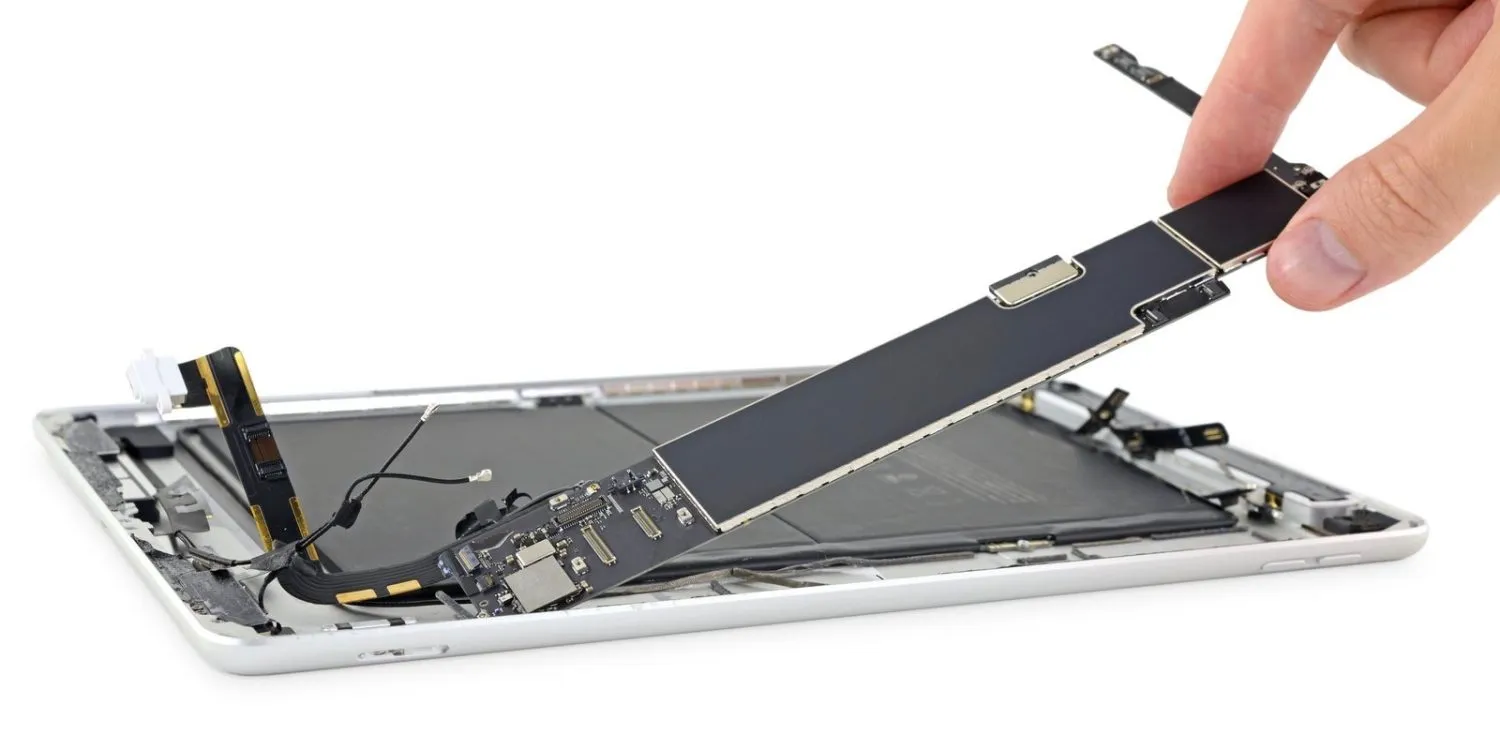
However, some may argue that the Xiaomi 13 Pro possessed a more balanced and elegant design.
Display
Xiaomi 13 Pro: Display
Display technology has witnessed rapid advancements in the past year, and Xiaomi hasn’t lagged behind.
The Xiaomi 13 Pro featured a 6.7-inch QHD+ curved edge OLED panelwith 1 billion colours and a peak brightness of 1,900 nits.
In contrast, the 14 Pro also utilizes a 6.7-inch panel but opts for a flat design.
The new OLED panel supports up to 10 billion colours and a groundbreaking peak brightness of 3,000 nits.
Xiaomi has also made a shift in the protection technology, moving from Corning Gorilla Glass Victus 2 to its proprietary Longjing Glass, claiming superior protection against drops and scratches.
Performance
Xiaomi 14 Pro: Performance
In terms of performance, the 14 Pro is ahead of the curve, thanks to the new Snapdragon 8 Gen 3 chipset.
It boasts up to 16GB LPDDR5X RAM and 1TB UFS 4.0 storage, promising swift read/write speeds and rapid app loading times.
But the most noteworthy upgrade comes in the form of the new HyperOS, focusing on AI and smart device ecosystem integration, replacing the older MIUI interface.
Cameras
Xiaomi 13 Pro: Camera
On the camera front, Xiaomi has maintained a cautious approach.
The Xiaomi 13 Pro already featured an impressive camera system, so the 14 Pro sees modest hardware changes.
The device employs a new 50MP sensor while retaining the same telephoto and ultra-wide sensors as its predecessor.
On the software side, Xiaomi promises improved performance.
Additionally, the front-facing camera now supports 4K video recording at 30 fps, a feature that was lacking in the 13 Pro.
Final Verdict
Xiaomi 14 Pro Rear View
The Xiaomi 14 Pro undeniably brings several incremental improvements over the Xiaomi 13 Pro.
With a brighter display, improved performance, and software enhancements, it is a compelling upgrade for anyone using older models.
However, if camera and design are your primary concerns, the differences might not justify the switch.
In summary, the Xiaomi 14 Pro is more of an evolutionary step than a revolutionary leap, but it’s a step that takes the device significantly ahead in the fiercely competitive smartphone market.
It is important to note that these evaluations are based just on the two device’s spec sheets.
Stay tuned for a more in-depth approach when the Xiaomi 14 Pro gets a global launch.
What is the main chipset difference between Xiaomi 14 Pro and Xiaomi 13 Pro?
The Xiaomi 14 Pro features the new Qualcomm Snapdragon 8 Gen 3 chipset, providing superior performance and efficiency compared to the Snapdragon 8 Gen 2 chipset in the Xiaomi 13 Pro.
How do the displays of the two phones compare?
The Xiaomi 14 Pro retains the 6.7-inch panel but offers a peak brightness of 3,000 nits and support for 10 billion colours. The Xiaomi 13 Pro had a peak brightness of 1,900 nits.
What are the software changes in Xiaomi 14 Pro?
The Xiaomi 14 Pro debuts with HyperOS, which replaces the older MIUI interface. HyperOS focuses on AI and aims to create an ecosystem of smart devices.
Have there been significant camera upgrades?
While the Xiaomi 14 Pro maintains similar hardware for its camera system, the new software promises improved performance. Additionally, the selfie camera now supports 4K video at 30 fps.
MediaTek unveils Dimensity Auto platform, targeted at smart vehicle innovation.
5G Non-Terrestrial Network solutions introduced for satellite communications in mobile devices.
Flagship 5G Dimensity system-on-chips showcased, powering new smartphone releases.
Wi-Fi 6/7 solutions highlighted, including routers and mesh systems.
At this year’s India Mobile Congress (IMC) 2023, MediaTek, a global fabless semiconductor company powering nearly 2 billion connected devices annually, displayed an extensive range of technologies.
The company showcased innovations spanning its Dimensity, Filogic, Genio, Kompanio, Pentonic, and Dimensity Auto portfolios.
The event served as a platform for MediaTek to demonstrate its commitment to shaping the future of connectivity and intelligent systems across multiple verticals.
Automotive Technology
MediaTek: Automotive Technology
MediaTek is diving headlong into the automotive sector with its Dimensity Auto platform, aiming to transform the way vehicles connect and function.
The platform comprises several key components such as Dimensity Auto Cockpit for in-vehicle infotainment, Dimensity Auto Connect for seamless connectivity, Dimensity Auto Drive for autonomous driving solutions, and Dimensity Auto Components for customized hardware solutions.
Through this, the company aims to provide robust computing power and comprehensive technologies that can pave the way for smart vehicle innovation.
Satellite Connectivity
In a first-of-its-kind venture, MediaTek has introduced its 3GPP standards-based 5G Non-Terrestrial Network (NTN) solutions.
This technology promises two-way satellite communications for devices like smartphones.
Among the products powered by MediaTek’s NTN solution are Motorola’s defy 2 smartphoneand defy satellite link, which make satellite communications more accessible to the average consumer.
Smartphones and Tablets
MediaTek’s portfolio of system-on-chips (SoCs) for mobile devices was also on display at the event, including their flagship 5G Dimensity seriescomprising the Dimensity 9200+, 9200, 9000+ and 9000.
These chips find applications in a plethora of smartphones from prominent brands, such as the newly launched OPPO Find N3 Flip and Vivo X90, both powered by MediaTek Dimensity 9200, among others.
MediaTek Device
Smart Devices
MediaTek is not just about smartphones and automotive tech; the company also showcased its capabilities in powering smart devices.
This includes a variety of digital TVs, smart speakers, Wi-Fi routers, and arm-based Chromebooks.
Specific products such as the Lenovo smart clock, Amazon Echo and Fire TV Stick, and various portable projectors are all driven by MediaTek’s chipsets.
Wi-Fi 6/7 Enabled Solutions
MediaTek also presented its latest in Wi-Fi technology with Filogic-powered routers, access points, and mesh systems.
In addition, the company demonstrated its MediaTek T750 5G platform, specifically designed for Customer Premises Equipment (CPE) that can offer fixed wireless access in gateways, routers, and mobile hotspot devices.
FAQs
What did MediaTek showcase in the automotive sector at IMC 2023?
MediaTek revealed its Dimensity Auto platform which aims to revolutionize the future of smart vehicles by providing comprehensive technology solutions and impressive computing power.
What is MediaTek’s 5G Non-Terrestrial Network?
The 5G Non-Terrestrial Network is a 3GPP standards-based solution by MediaTek that enables two-way satellite communications for smartphones and other devices.
What smartphones feature MediaTek’s new Dimensity chips?
New launches like the OPPO Find N3 Flip and Vivo X90 are among the smartphones powered by MediaTek’s new 5G Dimensity system-on-chips.
What are MediaTek’s offerings in Wi-Fi technology?
MediaTek showcased its latest Wi-Fi 6/7 enabled solutions, including routers, access points, and mesh systems powered by its Filogic technology.
Apple’s Scary Fast event to potentially showcase new MacBooks and iMacs.
Next-generation M3 silicon chips are highly anticipated at the event.
The event will be an online-only affair, streamed on multiple platforms.
Possibility of a USB-C universal charging system and MacBook Pro refresh.
Appleis all set to host its second major event of the year, named “Scary Fast,”slated for today, October 30th.
With Halloween themes and mysterious clues scattered through the event’s invite, industry insiders are buzzing with anticipation for a potential showcase of new MacBooks, iMacs, and next-generation M3 chips.
Here’s what you can expect, when and where to tune in for this much-awaited virtual gathering.
When and Where to Watch
The event is scheduled for October 30 at 5 pm Pacific Time (5:30 am on October 31 IST) and will be live-streamed exclusively on Apple’s official website.
Notably, Apple has opted for an online-only event, ruling out any in-person attendance.
What To Expect
New Mac Products
New Mac Products
As per the event’s invite, featuring a silver Apple logo transforming into a Finder widget via augmented reality, speculation is rife that Apple may unveil its latest Mac products.
This could potentially include new MacBooks and iMacs.
Apple has not refreshed its 24-inch iMac since 2021, and reports suggest that an update might be in the offing.
M3 Silicon Chips
M3 Silicon Chips
TechCrunch hypothesizes that the term “Scary Fast” could allude to new chips, likely the next-generation M3 silicon.
With dwindling Mac sales due to various factors, the new chip could be Apple’s gambit to revitalize interest and sales in the Mac lineup.
Reports indicate these new M3 chips will be built on TSMC’s 3nm process, promising increased speed and efficiency.
New iMac Pro Timeline
While industry experts like Mark Gurman from Bloombergsuggest that a larger iMac Pro model could be in the pipeline for late 2024 or early 2025, Ming-Chi Kuo believes the new 24-inch iMac could be released next year.
USB-C Universal Charging System
The event could also see the launch of new accessories as Apple is gradually transitioning to a USB-C universal charging system.
Chances are that perhaps Apple will roll-out USB-C powered Magic Keyboard and Mouse, a feature most tech aficionados are longing for.
MacBook Pro Refresh
Apple had launched its 14-inch and 16-inch MacBook Pros with M2 Pro and Max chips earlier this year.
However, dwindling stock points to a likely refresh, potentially featuring the new M3 Pro and M3 Max chips.
FAQs
When and where can I watch the Apple Scary Fast event?
The Scary Fast event is scheduled for October 30 at 5 pm Pacific Time and will be available for streaming on Apple’s official website, YouTube channel, and Apple TV app.
What can we expect in terms of new Mac products?
Based on industry speculation, Apple is expected to announce new MacBooks and possibly a refreshed 24-inch iMac. The event invite hints at new Mac products through augmented reality features.
Will Apple announce new chips at the event?
There’s a high likelihood that Apple will unveil its next-generation M3 silicon chips. These chips are expected to offer performance gains and greater efficiency, potentially boosting Mac sales.
Are there any other hardware announcements expected?
While primary focus is on Mac products and M3 chips, Apple could also introduce new accessories, possibly moving towards a USB-C universal charging system.
The initiative provides various benefits to customers upgrading from Galaxy devices released before 2020.
Incentives for Loyal Customers
The loyalty program offers Samsung Care+ Screen protection at no extra cost for customers upgrading from older Galaxy A Series,On Series, or J Series devices to the latest 5G-supported Galaxy A series models.
This offer comes in addition to various festive cashback and affordability deals on the Galaxy A series.
Samsung’s Aim
This campaign aligns with Samsung’s goal to democratize 5G technology and make it accessible to a wider audience.
Samsung Unveils Upgrade to Awesome Loyalty Program for Galaxy A Series 5G
Features and Pricing
The Galaxy A series smartphones are known for their long battery life and enhanced entertainment options.
Additionally, festive offers bring down the effective daily cost of these devices to Rs 44/day for Galaxy A14 5G, Rs 47/day for Galaxy A23 5G, Rs 49/day for Galaxy A34 5G, and Rs 63/day for Galaxy A54 5G.
Redemption Process
To avail the offer, customers need to log into the My Galaxy App on their old devices.
Upon successful validation of their phone number and device’s IMEI, a coupon code is generated.
The Samsung Care+ policy gets activated within 48 hours after validation.
FAQs
What is Samsung’s Upgrade to Awesome loyalty program?
The program is aimed at customers in India who want to upgrade from their pre-2020 Samsung devices to the new Galaxy A Series 5G smartphones. It offers various incentives including a free Samsung Care+ Screen protection pack.
Which devices are eligible for the Upgrade to Awesome loyalty program?
The program is applicable to customers upgrading from Galaxy A Series, On Series, and J Series devices that were launched before 2020.
How can customers redeem the Upgrade to Awesome offer?
Customers can redeem the offer by logging into the My Galaxy App on their old device. After validation, a unique code is generated which activates the Samsung Care+ policy within 48 hours.
What are the effective daily costs under this program?
The effective daily costs for the new Galaxy A Series 5G smartphones start from Rs 44/day for Galaxy A14 5G to Rs 63/day for Galaxy A54 5G.
OpenAI adds multimodal support to ChatGPT Plus, enhancing user experience.
Advanced Data Analysis feature allows data summarization, question-answering, and visualization.
Extended file support enables upload of PDFs, code files, and more.
New features aim to benefit students, researchers, and professionals by saving time and effort.
OpenAI is in the midst of enhancing its ChatGPT Plus subscription by rolling out new beta features, aiming to bring some of the functionalities of its enterprise-level offering to individual users.
According to reports by The Verge, these features provide an elevated user experience through more interactive and convenient options.
Multimodal Support
The new update includes a feature known as multimodal support, which eliminates the need for users to manually select modes like “Browse with Bing” from a dropdown menu.
Instead, the chatbot will intuitively guess the user’s requirements based on the context of the conversation.
This function is designed to make the interaction more seamless, although some subscribers, as noted by The Verge, are still awaiting this specific update on their ChatGPT Plus plans.
New Beta Feature To Upload and Analyse Documents
Advanced Data Analysis
Another key feature that has been added is the Advanced Data Analysis tool.
Once a file is uploaded, ChatGPT takes a moment to process the data.
It then offers functionalities like data summarization, question-answering, and data visualization based on user prompts.
The feature has already undergone some testing and has reportedly delivered results as expected.
Extended File Support
The versatility of the chatbot extends to various file formats.
Beyond text files, ChatGPT Plus now supports PDFs, code files, and more.
Users can request the chatbot to give a summary of these documents, generate creative text formats, or even answer questions related to the uploaded material.
ChatGPT Plus Now Supports PDFs
A user on Threads posted an example where they uploaded an image and had ChatGPT transform it into a Pixar-style graphic, demonstrating the chatbot’s capabilities with visual data.
Such upgrades could be particularly beneficial for a range of users including students, researchers, and professionals.
The ability to interact with large datasets and files can be a significant time-saver, allowing for more efficient information processing.
FAQs
What is the multimodal support feature in ChatGPT Plus?
Multimodal support eliminates the need for manual mode selection, instead guessing user needs based on context.
How does the Advanced Data Analysis feature work?
After a user uploads a file, ChatGPT processes the data and can then summarize, answer questions about, or visualize the data based on prompts.
What types of files does ChatGPT Plus now support?
The chatbot now supports a range of file types, including text files, PDFs, and code files.
Who stands to benefit the most from these new features?
Students, researchers, and professionals who need to process large amounts of information will find these features particularly useful.
Vivo X100 Pro appears on Geekbench with Snapdragon 8 Gen 1 SoC.
The device is expected to feature up to 12GB RAM and boot Android 14.
Previous leaks suggested Dimensity 9300 SoC, creating room for speculation.
The smartphone is expected to support 120W fast charging and 5G connectivity.
As anticipation builds for the launch of Vivo’s upcoming X100 series, new information is coming to light courtesy of various leaks and listings.
The most recent revelation comes from a Geekbench listing that details the hardware specifications of the Vivo X100 Pro.
This leak follows earlier information that gave insights into the camera specifications of the X100 and X100 Pro.
Detailed Specifications From Geekbench
Vivo X100 Pro: Detailed Specifications From Geekbench
The Geekbench listing, as seen first by MySmartPrice, reveals that the Vivo X100 Pro, identified by the model number V2324A, will be equipped with Qualcomm’s Snapdragon 8 Gen 1 SoC, coupled with Adreno 730 GPU.
This device is expected to pack up to 12GB of RAM and will boot Android 14 right out of the box.
The device has a multi-core score of 3,293 and a single-core result of 984.
Interestingly, previous leaks had indicated that the X100 and X100 Pro would feature Dimensity 9300 SoC.
The new benchmark result, however, contradicts this and suggests that the phone will instead feature a Snapdragon 8 Gen 1 SoC.
It’s worth noting that the authenticity of the Geekbench listing has yet to be confirmed, leaving room for speculation.
Apart from the Geekbench listing, the Vivo X100 and X100 Pro were also spotted on the 3C certification website.
The 3C listing revealed that these devices will offer 120W fast charging support and 5G connectivity.
For photography enthusiasts, both the X100 and X100 Pro are expected to feature a triple-camera setup.
The X100 is rumoured to include a Sony IMX920 primary sensor, while the X100 Pro might feature a Sony IMX989 sensor.
Both devices are also expected to include a Samsung JN1 sensor for the ultra-wide camera and an OmniVision OV64B sensor for the telephoto camera, offering 3x optical zoom.
Google addresses storage issues affecting Pixel 6 and later models that received the Android 14 update.
A Google Play system update is already rolled out to prevent the issue from spreading to more devices.
Google is working on a system update to restore access to media files without requiring a factory reset.
In light of the recent complications affecting Pixel smartphones after the Android 14 update, Googlehas finally broken its silence.
The tech giant released an elaborate statement on Sunday evening, providing insights into the problem, its ongoing fixes, and possible routes for data recovery.
The issue is primarily impacting Pixel 6 models and their successors.
According to Google, devices that have both received the Android 14 update and have multiple users are susceptible.
The multi-user context here involves guest users, restricted profiles, and child users.
It is important to note that the problem is not triggered by simply having multiple Google Accounts on a single user profile.
As a preliminary measure, Google has already deployed a Google Play system update designed to prevent the issue from affecting additional Pixel devices.
Users can manually update by navigating through their phone settings to Security & Privacy, then to System & Update, and finally clicking on Google Play System Update.
The most current version of this update is dated October 1, 2023.
Google Pixel Storage Issues After Android 14 Update
The ramifications of this storage glitch vary.
Some users have been unable to access their media storage, while others have faced device reboots with a Factory data reset message.
Accepting this message could result in data loss if the data hasn’t been backed up. Declining it, however, leaves the device stuck in a repetitive boot loop displaying a “Pixel is starting” message.
Google has assured users that a system update is in the works.
This would not only fix the issue but also restore access to media files without necessitating a factory reset.
Additionally, for devices stuck in a boot loop, Google is researching ways to recover some data, though this is still a tentative solution.
The company advises users who have factory reset their devices to refrain from creating or logging into a secondary user until an Over-the-Air (OTA) update becomes available.
Google ended its statement with an apology for the inconvenience caused, appreciating users’ patience as they worked to resolve the issue.
FAQs
What models are primarily affected by the storage issue?
The storage issues are mainly affecting Pixel 6 and later models that have updated to Android 14 and have multiple user profiles set up.
How has Google responded so far?
Google has already released a Google Play system update aimed at preventing the issue from affecting additional Pixel devices. It is also working on a comprehensive system update to fix the problem.
What are the consequences of this storage issue?
The issue can either prevent the primary user from accessing media storage or result in the device rebooting with a factory data reset message, potentially leading to data loss.
What is Google’s advice for those who have factory reset their device?
Google advises users who have factory reset their devices to avoid creating or logging into a secondary user profile until an Over-the-Air (OTA) update becomes available.
Limited Edition Galaxy Z Flip5 Retro pays homage to Samsung’s iconic E700 model.
Sports indigo blue and silver colours along with nostalgic pixel graphics.
Exclusively packaged with collector’s items including a unique E700 collector card.
Available from November 1st in select markets including Korea, UK, and Australia.
Samsung is once again tapping into its rich history to offer something both fresh and nostalgic: the limited edition Galaxy Z Flip5 Retro.
This new flip phone serves as an homage to one of its classic models from 20 years ago, the Samsung E700.
Pricing and Availability
The Samsung Galaxy Z Flip5 Retro is set to retail for 1,599,400 won (approx Rs 98,500) for the 512GB model.
Sales kick off on November 1st in select markets including Korea, the UK, Germany, Spain, and Australia. France will join the fray a day later on November 2nd.
To celebrate the launch, Samsung will inaugurate an exhibition space at its Gangnam store in Korea starting November 1.
The company has also partnered with ‘Beongae Market’, a used trading platform, for a special event at the ‘Y173’ cultural complex in Seongsu-dong from November 1 to 5.
The event will offer visitors an experiential journey through Samsung’s history of innovation, spotlighted by the Galaxy Z Flip5 Retro.
Samsung Unveils Limited Edition Galaxy Z Flip5 Retro
Samsung Galaxy Z Flip5 Retro: Features
Sporting the same indigo blue and silver colour scheme as the E700, the Z Flip5 Retro comes loaded with nostalgic pixel graphics and cityscape animations on its Flex Window cover screen.
In essence, the device serves as a perfect blend of the old and new, capturing Samsung’s innovation story or so the company says.
The packaging is a collector’s delight. Inside a specially designed box adorned with logos of both the Z Flip5 and the E700, you’ll find Flipsuit cards with stickers showcasing various Samsung logos from years gone by.
The package also includes an exclusive Samsung E700 collector card, which is engraved with a unique serial number.
Apart from that the Z Flip5 Retro is basically the same phone in terms of specifications as the regular Galaxy Z Flip5.
This includes the Snapdragon 8 Gen 2 chipset, a bigger 3.4-inch display on the outer side, a 50MP primary camera, and more.
As of now, there is no word on an Indian launch.
FAQs
What is special about the Galaxy Z Flip5 Retro?
The Galaxy Z Flip5 Retro is a limited edition phone that pays tribute to the classic Samsung E700. It features the same indigo blue and silver colour scheme and comes with retro pixel graphics.
When and where can I buy the Galaxy Z Flip5 Retro?
The phone will be available starting November 1st in Korea, the UK, Germany, Spain, and Australia. France will join on November 2nd. You can purchase it through Samsung’s official website.
What comes in the package?
The Galaxy Z Flip5 Retro comes in a special box featuring logos of both the Z Flip5 and the E700. It also includes Flipsuit cards with stickers and an E700 collector card engraved with a unique serial number.
How much does the Galaxy Z Flip5 Retro cost?
The 512GB model is priced at 1,599,400 won, which is approximately Rs 98,500.