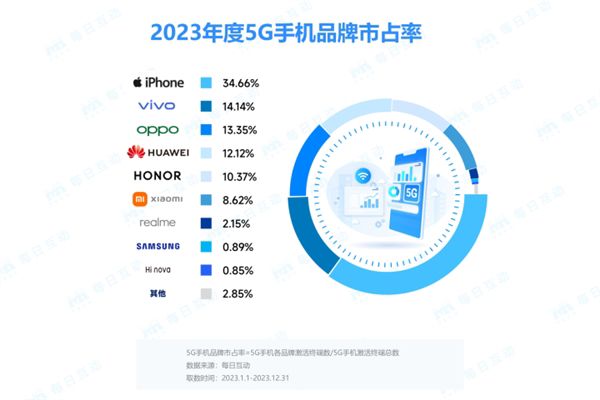
Apple leads China’s 5G market with a 34.66% share, showing significant growth.
iPhones hold the top 9 spots in China’s top 5G mobile devices of 2023.
iPhone 13 and 12 are the most popular models, showcasing older models’ appeal.
Despite competition, brands like Xiaomi and Samsung trail behind Apple in China.
In a significant market development, Apple’s iPhonehas emerged as the dominant force in China’s 5G mobile phone market for 2023.
According to a recent report by research firm Daily Interactive, iPhones not only lead in market share but also occupy most of the top spots in the list of popular devices.
This dominance underscores the brand’s appeal and technological prowess in a highly competitive market.
Apple’s Market Leadership
Apple’s Market Leadership
Apple has secured a commanding lead in the 5G segment with a 34.66% market share, reflecting an 11.86% growth from the previous year.
This impressive performance places Apple well ahead of its closest competitor, Vivo, which holds a 14.4% share.
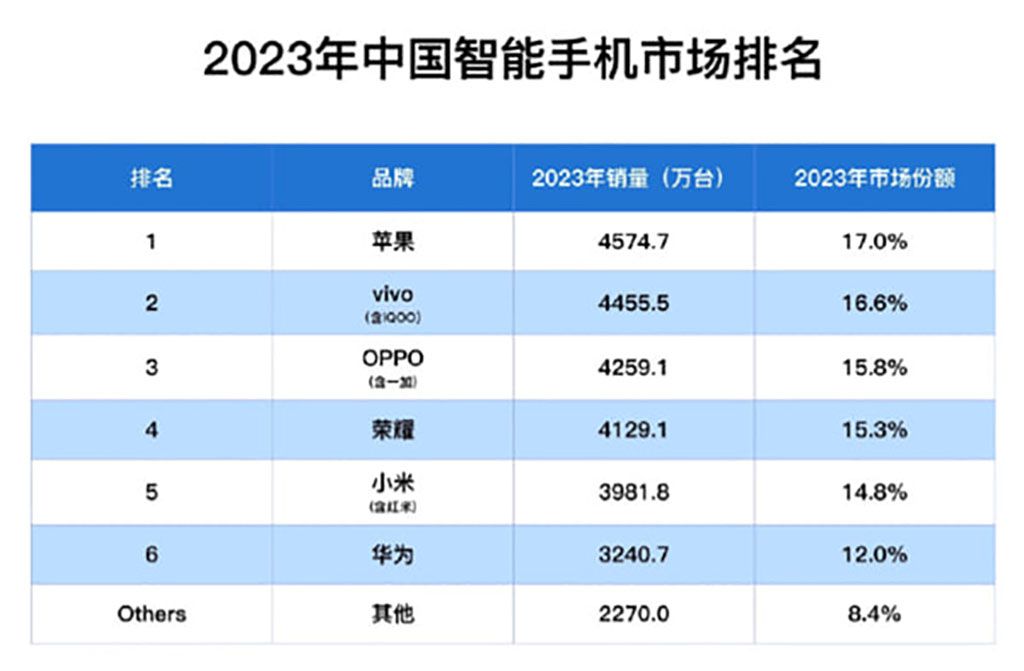
The gap between Apple and other major players like Oppo, Huawei, and Honor highlights the iPhone’s strong consumer preference in China.
Top 5G Mobile Devices
Top 5G Mobile Devices
The dominance is further evident in the list of top 5G mobile devices, where iPhones occupy the first nine positions.
The iPhone 13 leads the pack, closely followed by the iPhone 12, indicating consumers’ continued preference for slightly older, yet reliable models.
The iPhone 13 Pro Max, iPhone 14 Pro Max, and other recent models also feature prominently.
Interestingly, most smartphones on the list are not the latest releases.
Models such as the Oppo Reno 6, Redmi K40, and Huawei Nova 7 have maintained their popularity, suggesting that features, reliability, and perhaps affordability of older models continue to resonate with users.
Market Dynamics
Market Dynamics
The market share breakdown for 5G mobile phones in China for 2023 shows a diverse set of players, with Xiaomi, Realme, and Samsung also making the list.
Despite their efforts, these brands trail significantly behind Apple, highlighting the Cupertino giant’s successful strategy and robust brand loyalty in China.
Apple’s iPhone Tops China’s 5G Market in 2023: Report
FAQs
What is Apple’s market share in China’s 5G mobile phone market for 2023?
In 2023, Apple has captured a 34.66% market share in China’s 5G mobile phone market, reflecting an 11.86% growth from the previous year.
Which Apple models are leading in China’s 5G market?
The iPhone 13 and iPhone 12 are leading in China’s 5G market, with recent models like the iPhone 13 Pro Max and iPhone 14 Pro Max also featuring prominently.
Are older iPhone models still popular in China’s 5G market?
Yes, older iPhone models like the iPhone 13 and 12 continue to be popular in China’s 5G market, indicating a preference for reliable and feature-rich models.
What does Apple’s dominance in China’s 5G market signify?
Apple’s dominance in China’s 5G market signifies strong consumer preference and brand loyalty, setting it apart from competitors like Vivo, Oppo, and Huawei.
How do other smartphone brands fare against Apple in China’s 5G market?
Other smartphone brands like Vivo, Oppo, Huawei, Xiaomi, and Samsung are present in China’s 5G market but significantly trail behind Apple in terms of market share.
What are China 5G Mobile Phone Market 2023 Top Brands ?
Apple – 34.66% Vivo – 14.4% Oppo – 13.35% Huawei – 12.12% Honor – 10.37% Xiaomi – 8.62% Realme – 2.15% Samsung – 0.89% Hi Nova – 0.85% Others – 2.85%
What are China 5G Mobile Phone Market 2023 Top Devices ?
iPhone 13 iPhone 12 iPhone 13 Pro Max iPhone 14 Pro Max iPhone 14 Pro iPhone 13 Pro iPhone 12 Pro Max iPhone 14 iPhone 12 Pro Huawei P40 Pro Huawei P40 Huawei Nova 7 Oppo A58 Vivo Y52s Honor 50 Redmi K40 Honor X30 Oppo Reno 6 iPhone 15 Pro Max Honor 70
What was Apple’s market share in the premium smartphone segment in 2023?
In 2023, Apple held a dominant 71% share in the premium smartphone market, a slight decrease from 75% in the previous year, showcasing its continued market leadership.
What was the impact of Huawei’s comeback in the premium smartphone market?
Despite facing sanctions, Huawei made a significant comeback in 2023, increasing its market share to 5%, up from 3%, indicating a shift in consumer preferences and the brand’s resilience.
What caused the recent decline in Apple’s stock value?
Apple’s stock recently experienced a 3.6% decline, closing at 185.64, primarily due to analyst concerns about the demand for the upcoming iPhone 16 and the overall market outlook for Apple in 2024.
What changes did Barclays analyst Tim Long make to Apple’s stock rating?
Tim Long, an analyst from Barclays, downgraded Apple’s stock from ‘equal weight’ to ‘underweight’, also reducing the price target from 161 to 160.
• Realme is hosting a Republic Day sale featuring great deals on various smartphones, including the in demand Realme C67 and the Realme Pad 2. • If you’re looking for a budget or mid-range smartphone, this could be the best time to buy. • Explore these deals & discounts during Realme’s Republic Day celebration.
As the tricolor adorns the skies and the spirit of patriotism fills the air, it’s also time to unlock incredible deals and discounts on the latest devicesby Realme during this Republic Day sale.
Whether you’re an avid tech enthusiast or simply in need of an upgrade, this listicle is your ultimate guide to navigating the digital landscape and discovering thebest smartphones that promise stellar performance, cutting-edge features, and unbeatable value for your hard-earned money.
Get ready to salute savings and embrace innovation as we unveil the top gadgets to grace your hands this Republic Day sale!
• Realme C67 5G – INR 13,999 Offer prices may vary on different selling platforms.
Realme C67 5G – INR 13,999
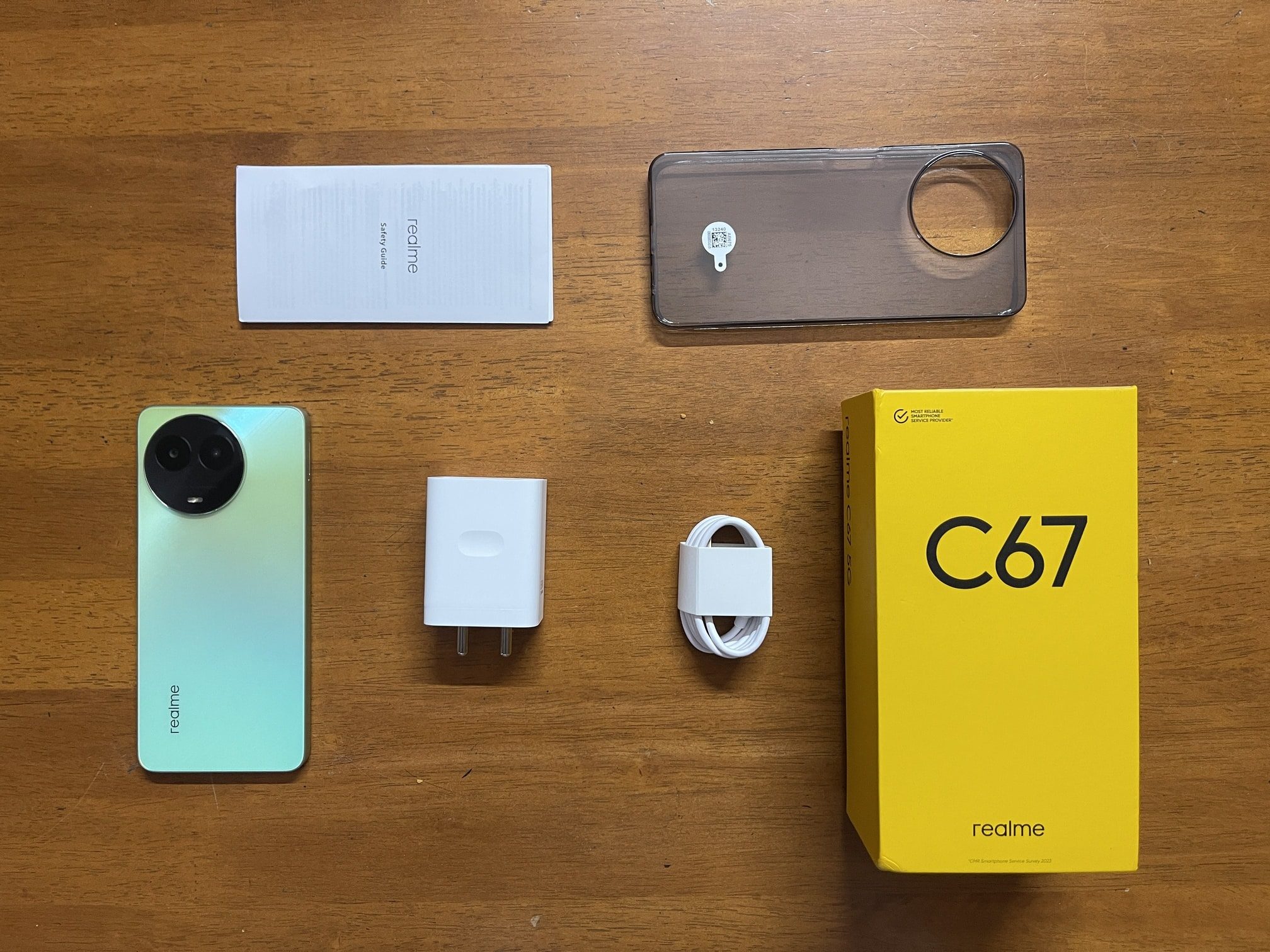
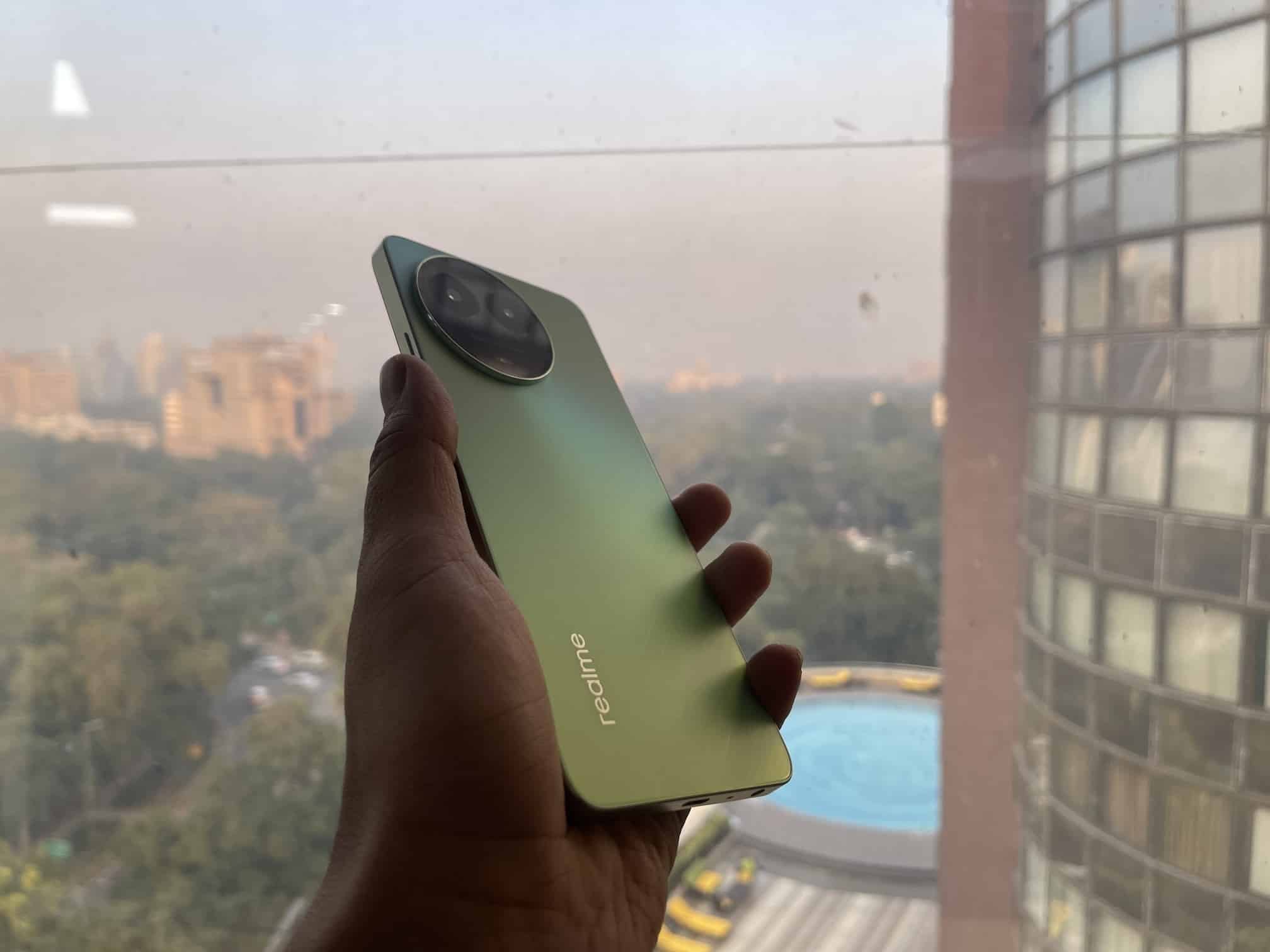
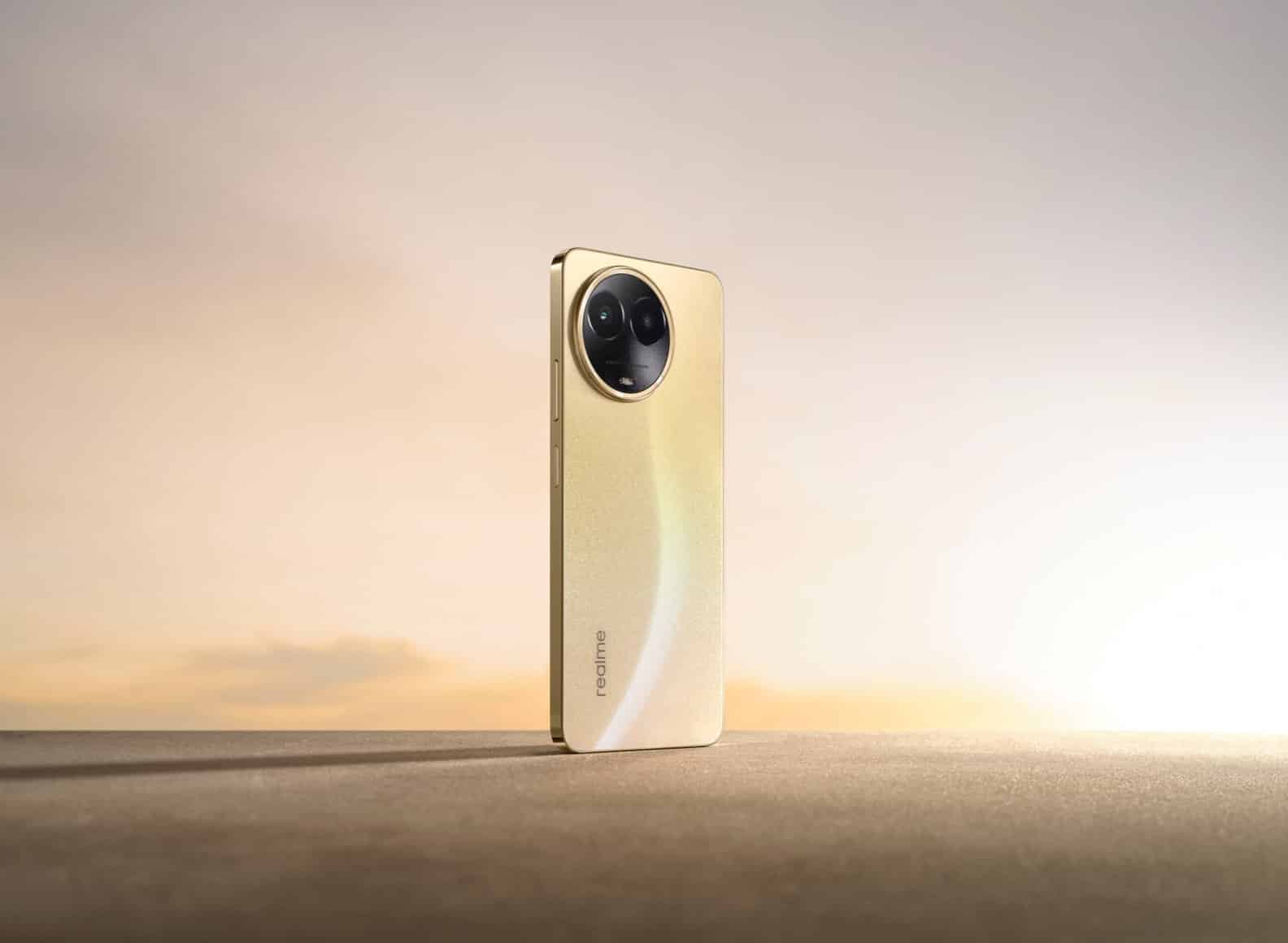
The recently launched Realme C67 5G is the definition of the perfect smartphone in its price segment, wherein it comes with exquisite design and power-packed features.
The C67 5G comes with a 50MP AI Camera and an 8MP AI front camera which allow users to get some fantastic shots.
The phone features a 6.72” FHD+ display that provides a smooth scrolling and viewing experience.
Realme C67 5G Build and Design
Additionally, the phone also houses a powerful 5000mAh Battery with 33W SuperVOOC charging and runs on the powerful MediaTek Dimensity 6100+ 5G chipset, ensuring users a smooth and fast performance.
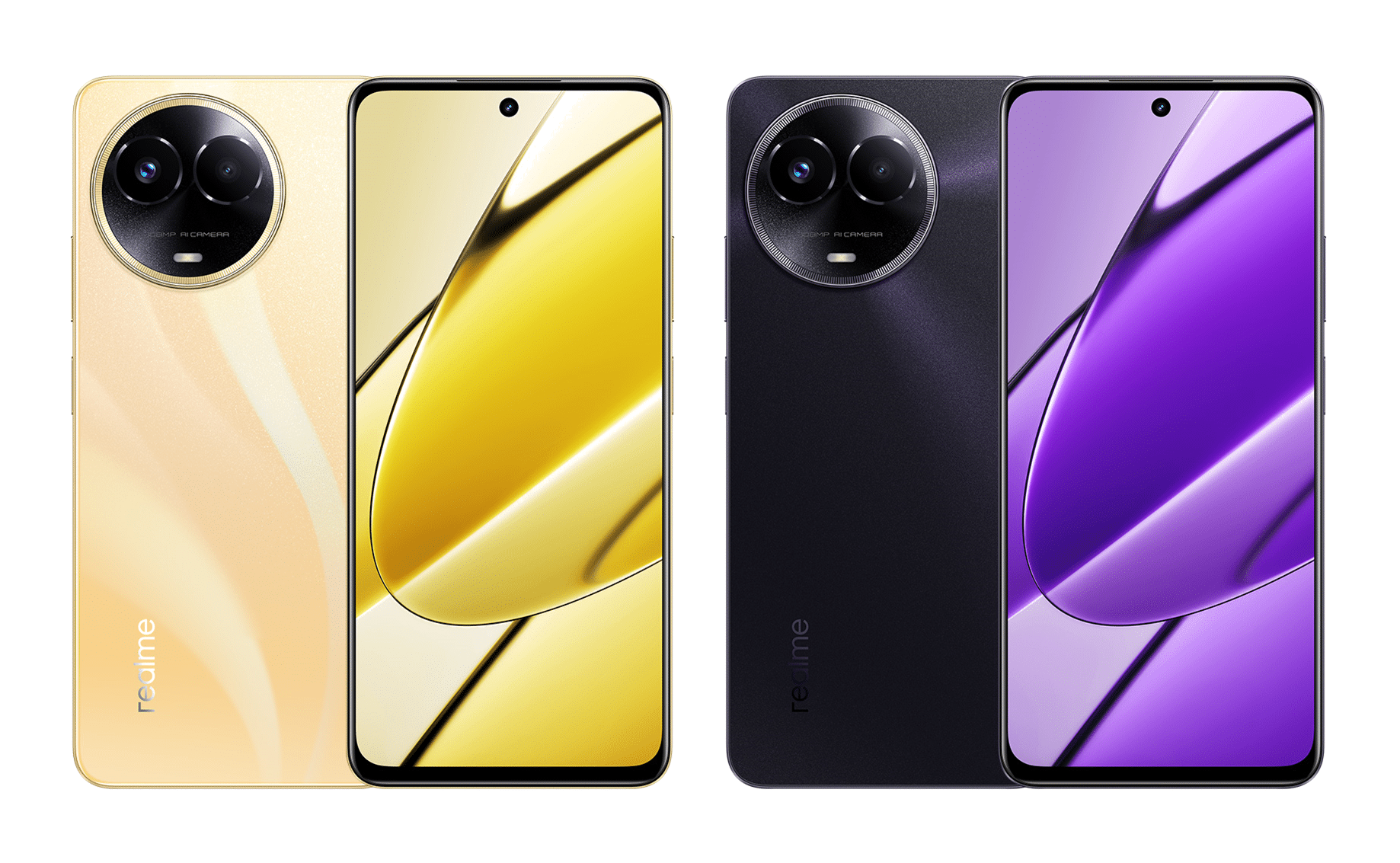
The Realme C67 5G is available in two stunning colors – Sunny Oasis and Dark Purple in two storage variants – 4GB+128GB priced at INR 12,999 (Originally priced at 13,999) and 6GB+128GB priced at INR 14,499 (Originally priced at INR 14,999).
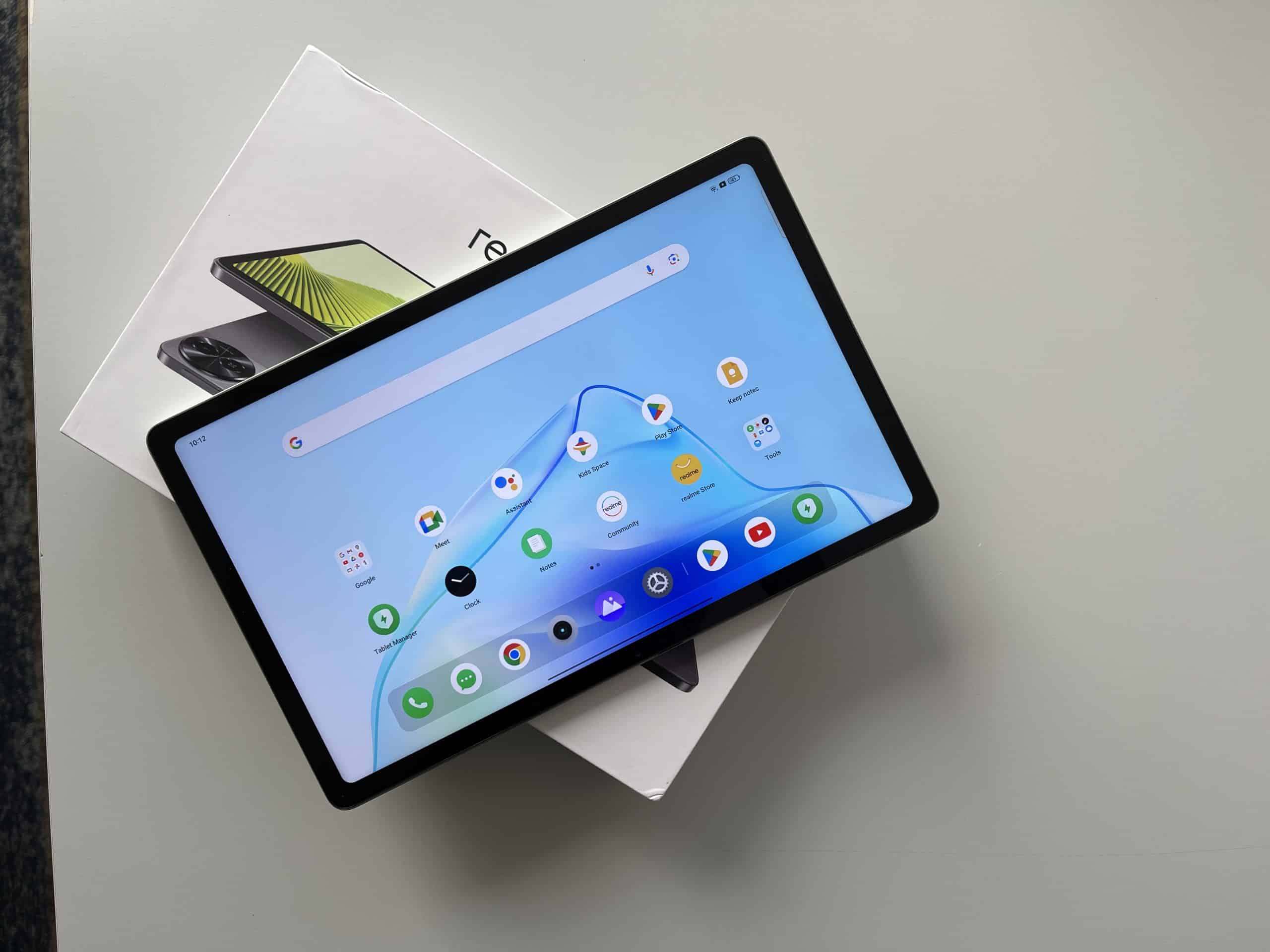
A great device for studying or working, this powerful tablet comes with a massive 8360mAh battery, supported by 33W SUPERVOOC charging support, and is powered by the MediaTek Helio G99 Chipsetto facilitate a buttery-smooth performance.
Realme Pad 2: Display
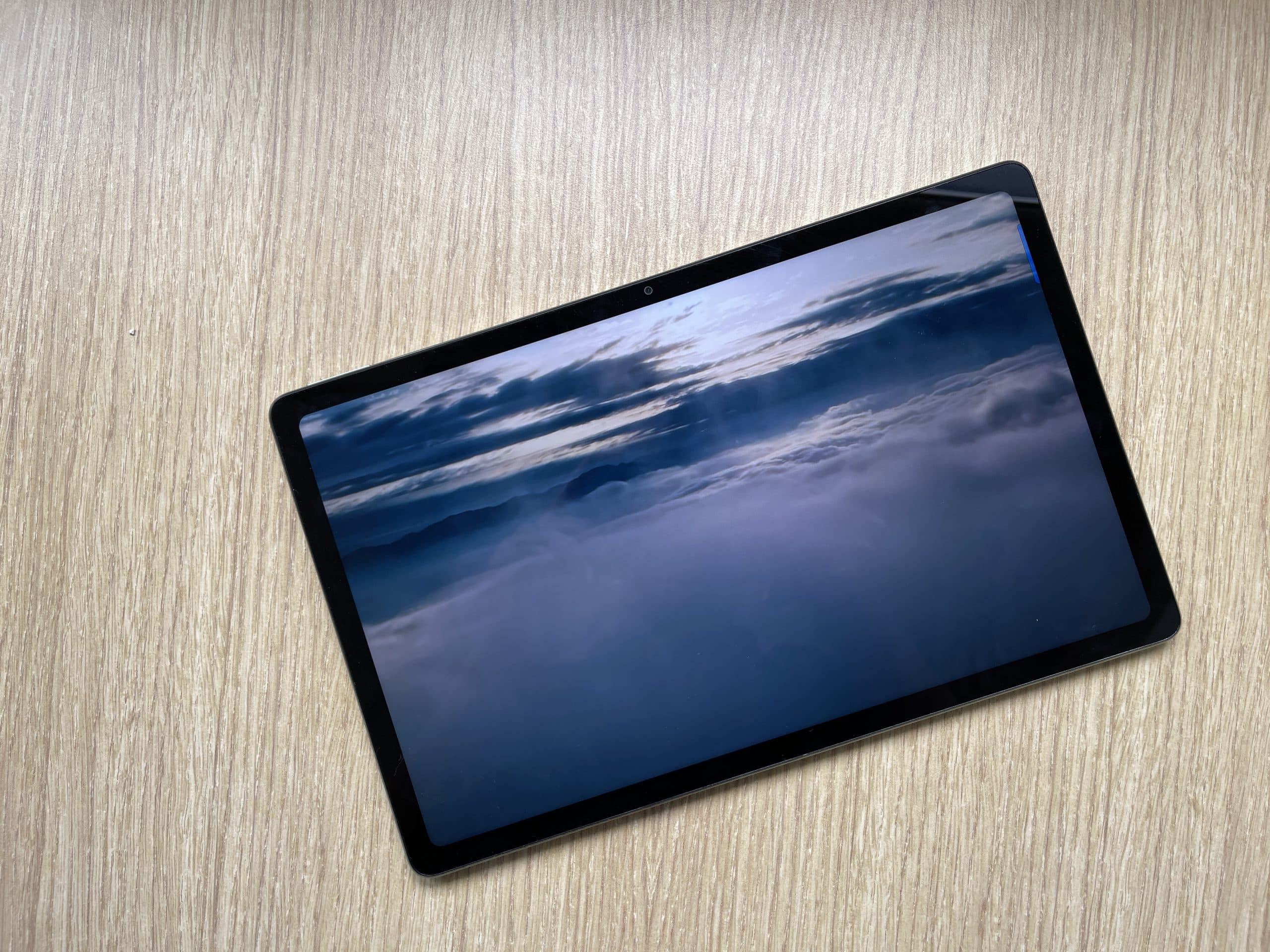
To enhance the gaming and viewing experience the Realme Pad 2 comes with an 11.5” 120Hz 2K Display and Dolby Atmos Quad Speakers which ensure phenomenal sound quality.
The Pad is available in two beautiful colors – Imagination Grey and Inspiration Green, with two storage variants; LTE 6GB+128GB priced at INR 17,999 (originally priced at INR 19,999) and LTE 8GB+256GB priced at INR 20,999 (originally priced at INR 22,999)available on Realme.com and Flipkart.
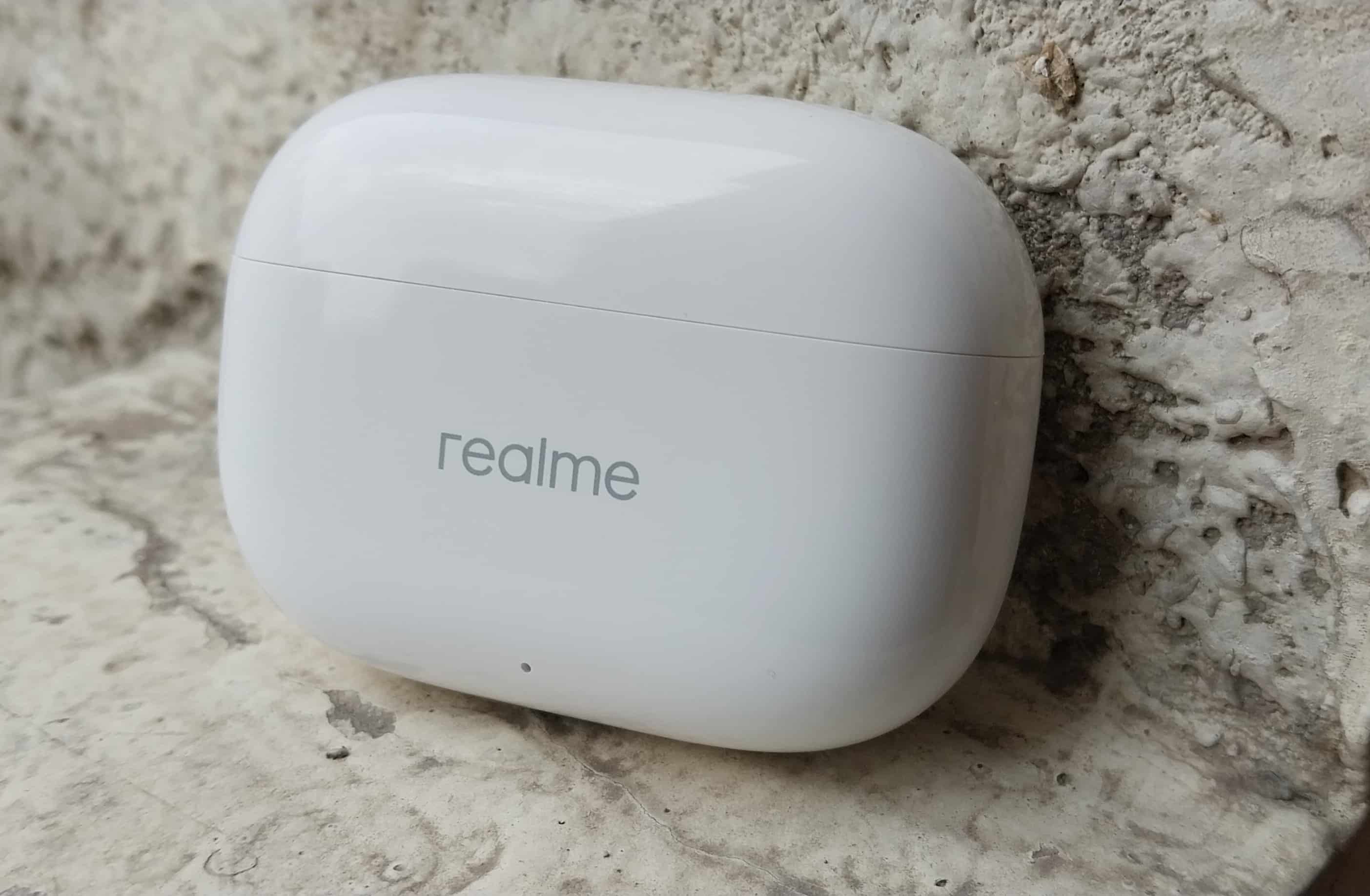
• Realme Buds T300 – INR 2,299 Offer prices may vary on different selling platforms
Realme Buds T300 – INR 2,299
Another amazing gadget you can buy during this Republic Day Sale is the Realme Buds T300.
These buds provide an amazing audio experience with 30 dB active noise cancellation and offer up to 40 hours of battery life, ensuring a day-long audio playback.
The Buds come with an IP55 rating, making them water and dust-resistant.
The Realme 11x 5G is available in two exquisite colors Purple Dawn and Midnight Black along with two storage variants: 6GB+128GB priced at INR 13,499 (Originally priced at INR 14,999) and 8GB+128GB priced at INR 15,999 on Realme.com and Flipkart.
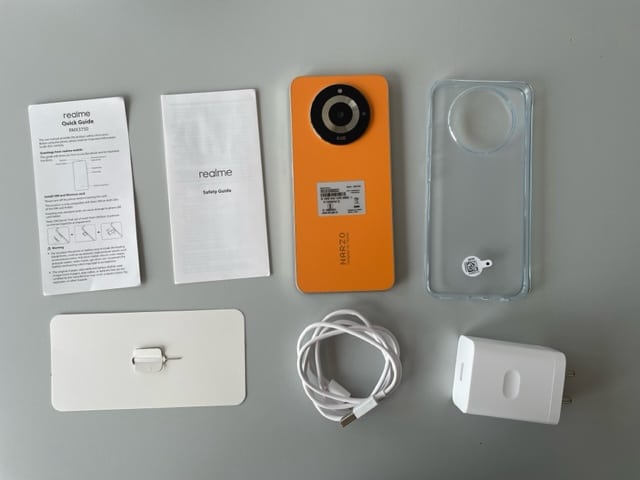
• Realme Narzo 60 5G – INR 17,999 Offer prices may vary on different selling platforms
The device features an excellent 6.43” 90Hz Super AMOLED Display that facilitates a phenomenal visual experience.
It houses a 64 MP Camera along with a 16MP selfie camera that will allow you and your loved ones to capture your jubilant moments with ease.
The device is packed with top-of-the-line features like a massive 5000mAh battery with 33W SUPERVOOC charging support and a powerful MediaTek Dimensity 6020 5G Chipsetwhich offers flawless lag-free performance.
Realme Narzo 60 5G Display
The phone is available in two color options: Mars Orange with the vegan leather back finish and Cosmic Black.
The phone is available in two storage variants: 8GB+128GB priced at INR 14,999 (originally priced at INR 17,999) and 8GB+256GB priced at INR 17,499 (originally priced at INR 19,999) exclusively on Realme.com and Amazon.in.
Photo, AI Beauty, Filter, AI Scene Recognition, Night Mode, Professional, Panoramic View, Portrait Mode, Street, HDR, 64MP Mode, Starry, Chroma Boost, Bokeh Flare Portrait, AI Color Portrait, Video Feature: Video, Video Filter, Slow Motion, Timelapse
Video Recording
1080p @ 30 fps FHD
Flash
Yes, LED
Front Camera
Punch Hole 8 MP f/2 (Wide Angle) with Screen Flash
Anti-ageing material used with a scratch-resistant back panel (Mars Orange variant)
What is MyMobile Verdict on Realme Narzo 60 5G?
Overall, the Realme Narzo 60 is a decent smartphone that offers a range of attractive features. Its premium vegan leather design, lightweight build and durable Corning Gorilla Glass 5 protection give it both style and sturdiness.
The display is vibrant and smooth. Though huge bezels and chin size are a turn-off. The MediaTek Dimensity 6020 5G chipset used in the device has a good record and when combined with 8 GB RAM, it does ensure reliable performance.
The camera setup, featuring a 64MP main camera and 16MP selfie camera, captures decent quality photos, and the 33W SuperVOOC Charge allows for quick battery replenishment.
Now all this when looked at from the price point can seem a bit underwhelming. This is more is Realme’s case because they have better smartphones already floating in the segment.
It does feel a bit expensive considering the segment it wants to enter. Although, in terms of design, display, hardware, software, camera, and battery performance, it is a decent choice for users seeking a reliable smartphone for everyday usage.
Should You Buy Realme Buds T300?
The Realme Buds T300 boast an attractive and durable design with attention to detail. It offers good sound quality with a focus on bass and spatial audio. And ANC performance is highly effective too.
Battery capacity is decent with good charging speed. Overall, I would say these earbuds are a solid choice for those seeking both excellent sound and active noise cancellation in an affordable package.
Buy Realme Buds T300 For?
Good sound quality
Good battery life
Quick charging
50ms super low latency
Intelligent touch control
IP55 water resistance
How Do The Cameras of Realme 11 5G and Realme 11x 5G Compare?
The primary difference lies in the megapixel count and capabilities of the rear cameras. The Realme 11 5G sports a powerful 108MP primary sensor, whereas the Realme 11x 5G features a 64MP primary sensor.
Both have a 2MP secondary sensor. For selfie enthusiasts, the Realme 11 5G offers a 16MP front camera, compared to the 8MP front camera on the Realme 11x 5G. If photography is your priority, the Realme 11 5G will likely serve you better.
Is Realme Pad 2 suitable for gaming?
Realme Pad 2 offers smooth performance and runs games effectively, making it suitable for casual gaming experiences and entertainment on the go.
Is Realme Pad 2 suitable for multitasking and productivity?
Yes, with the MediaTek Helio G99 SoC and multitasking capabilities, Realme Pad 2 is optimized for efficient productivity, making it a reliable tool for work and study.
Reasons to Buy the Realme C67 5G?
Exceptional Display Quality: The 6.72-inch Full HD+ IPS LCD display with a 120Hz refresh rate offers vibrant visuals, making it ideal for media consumption and gaming.
High-Performance Processor: Equipped with the MediaTek Dimensity 6100+ SoC, the phone handles daily tasks and moderate gaming with ease, ensuring smooth performance.
Long Battery Life: The 5,000 mAh battery offers up to two days of usage, making it reliable for extended periods without frequent charging.
Fast Charging Capability: With 33W fast charging, the phone can charge up to 50% in just 29 minutes, significantly reducing downtime.
Versatile Camera Setup: The 50 MP primary camera captures detailed and vibrant photos, supported by useful features like Night Mode and Portrait Mode for enhanced photography.
This decision comes in the wake of multiple reports from users experiencing significant storage-related issues after installing the update, particularly on devices running multiple profiles.
This is not the first time this is happening either, with Google rolling out a fix for the same problem a few months back.
A Google spokesperson acknowledged the problem this evening:“We’re aware of this issue and are looking into it.”
The Core of the Issue
The Core of the Issue
Users across various platforms, including Reddit,have been vocal about the problems they’ve encountered following the new January update.
Key issues include the device’s internal storage failing to mount, crashes in the camera application, and the inability of the Files app to display files.
Furthermore, there have been reports of screenshots not being saved correctly.
For some, it would appear that the situation necessitated a complete factory reset to restore functionality.
Google’s Response
Google has halted the rollout of the January 2024 GPSU following reports of devices having file access issues.
Over the past few days, several users on Reddit, particularly those with Pixel phones, have faced issues with file access. The internal storage isn’t being mounted,… pic.twitter.com/XiqUhkZBWD
— Mishaal Rahman (@MishaalRahman) January 23, 2024
Acknowledging the issue, an official Google representative on Reddit (/u/PixelCommunity) confirmed that the tech giant is aware of the problem and is actively investigating a solution.
Rahman suggests that the root cause of these disruptions may lie in the Dynamic Common Library Apex (DCLA).
This system, a component of Google’s Mainline project, is designed to streamline software updates by segregating shared C++ libraries into a separate module.
The trouble seems to stem from the DCLA Mainline module inadvertently reverting to its original factory version,creating compatibility issues with other modules reliant on DCLA.
The repeat of such a significant bug suggests gaps in testing, especially for scenarios involving devices with multiple user profiles.
FAQs
What issues are Pixel users facing after the latest update?
Users have reported problems with internal storage not mounting, camera application crashes, and the Files app failing to display files following the Google Pixel update in January 2024.
Has Google acknowledged the Pixel update issues?
Yes, an official Google representative on Reddit has confirmed that the company is aware of the storage-related issues and is working on a solution.
What is the speculated root cause of the Pixel’s recent problems?
Android expert Mishaal Rahman suggests that the problem might be due to the DCLA Mainline module reverting to its factory version, disrupting compatibility with other modules.
What action has Google taken regarding the Pixel update?
Google has halted the rollout of the January 2024 update to prevent further issues and is currently investigating the cause.
Are there concerns about Google’s quality assurance for Pixel updates?
The recurrence of similar issues raises questions about the effectiveness of Google’s testing processes, particularly for Pixel devices with multiple user profiles.
Is Pixel facing new storage issue, likely tied to January Google Play system update ?
Pixel devices might be facing another problem related to the January 2024 Google Play System Update this is Following a storage access issue in October with the initial Android 14 release and multiple users.
After updating to the January 2024 Google Play system update (which is different from the January 5, 2024 security update/patch), users report not being able to access data stored in internal storage across all apps.
This results in various cascading issues, like not being able to play downloaded audio/video files or take new pictures, while the Files app appears empty. Other apps refuse to work.
This sounds similar to last year’s issue that impacted devices with multiple users enabled. However, the culprit today appears to be having that Google Play system update installed.
How can you check this storage issue of pixel on your device?
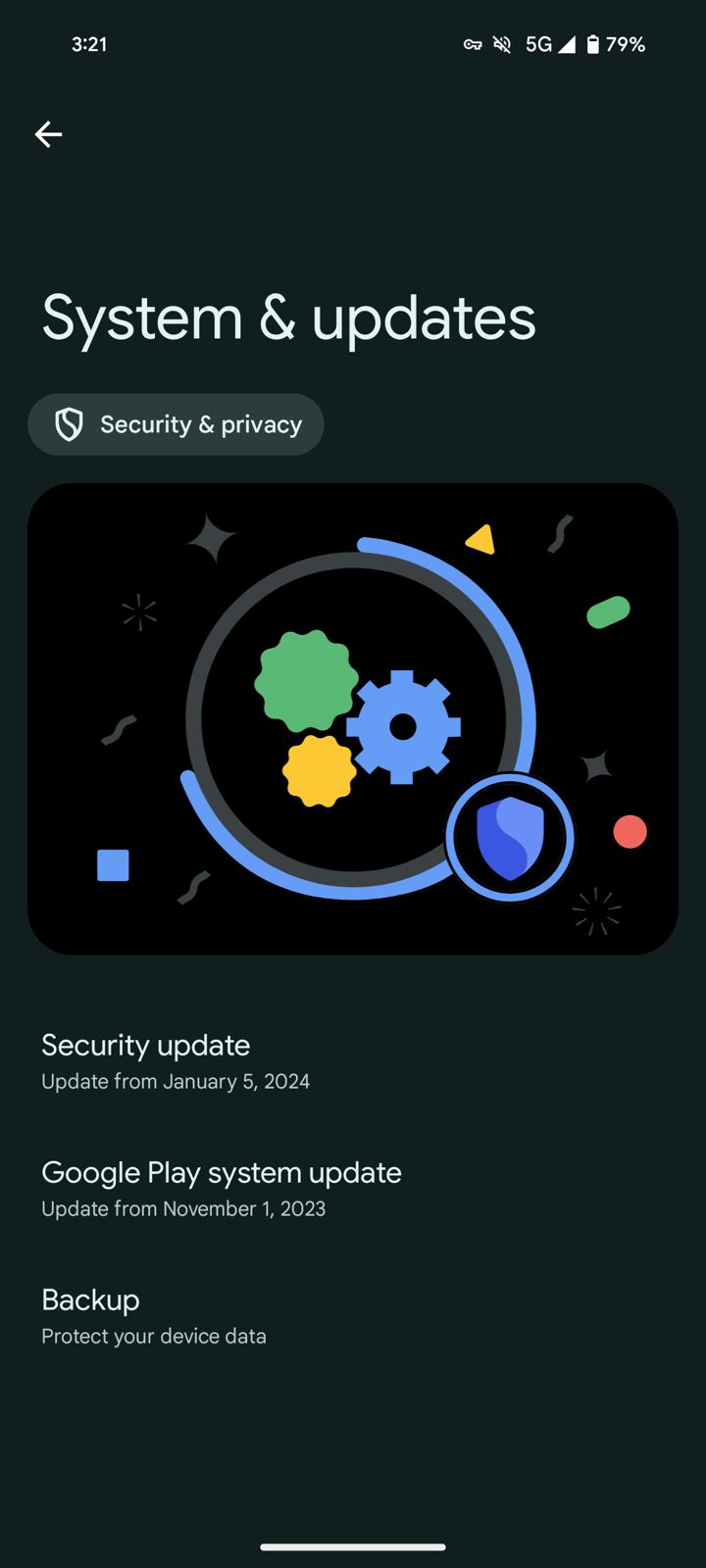
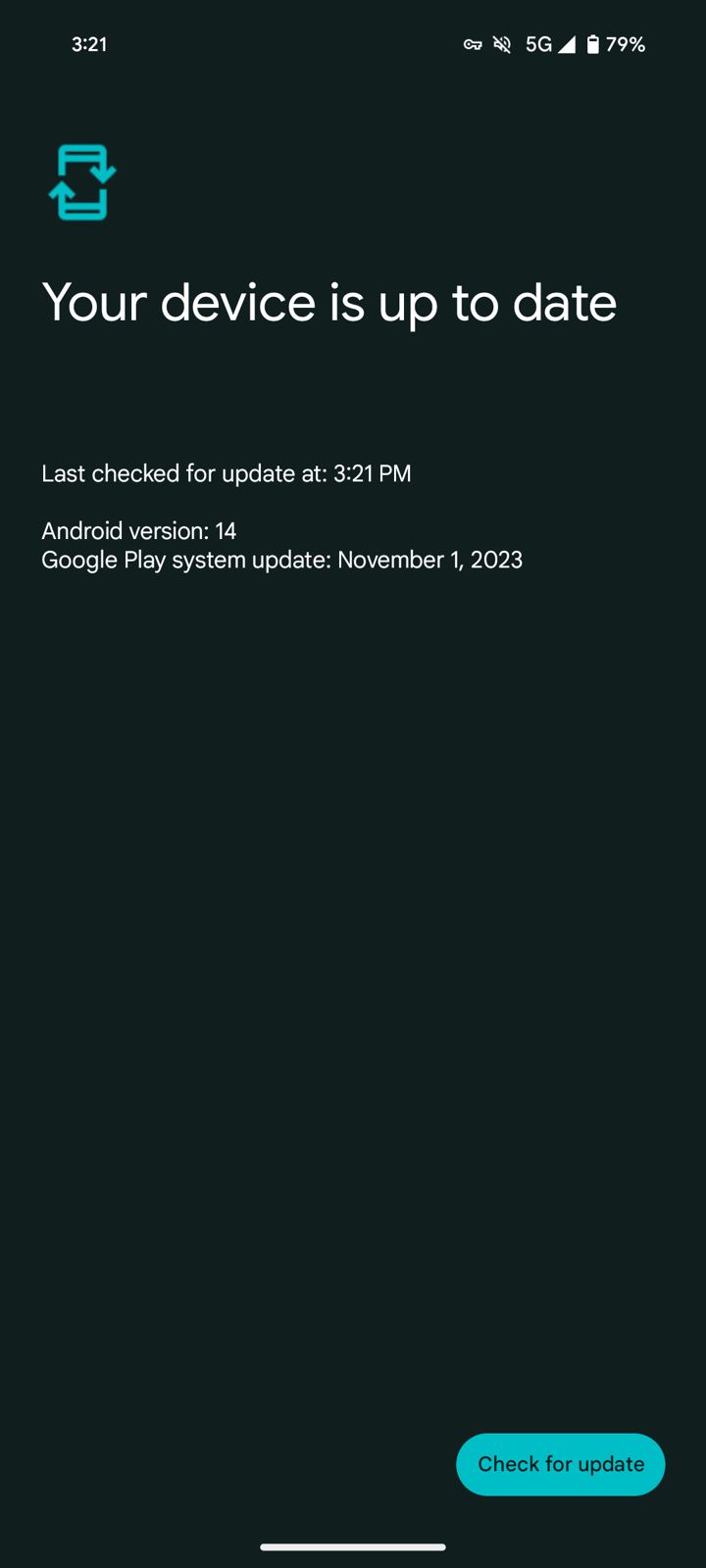
January 2024 update is not widely rolled out, with most Pixel (and other Android) users still on the November 2023 release. (You can check from the Settings app > Security & privacy > System & updates.) That will hopefully limit the issue from spreading to new users as Google can just halt the rollout.
Pixel 8, 7, and 6 series owners are all reporting this problem.
It remains to be seen how Google resolves the problem for those that have installed it. Last time, a system update was needed.
If your device wasn’t stuck in a “Pixel is starting” boot loop, data could be recovered with the aforementioned OTA.
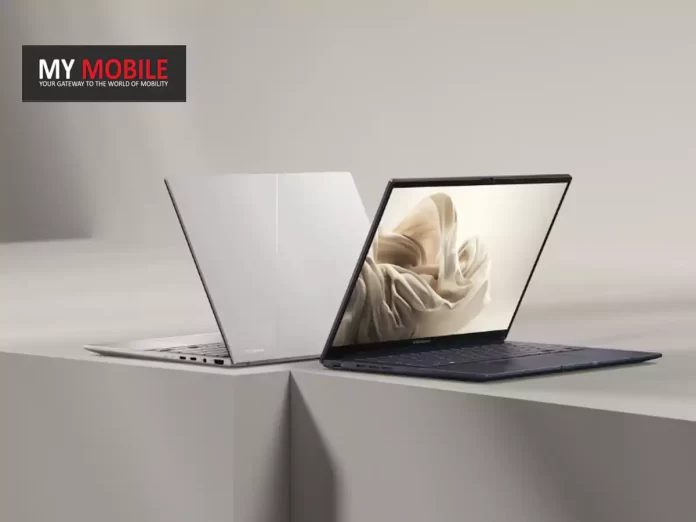
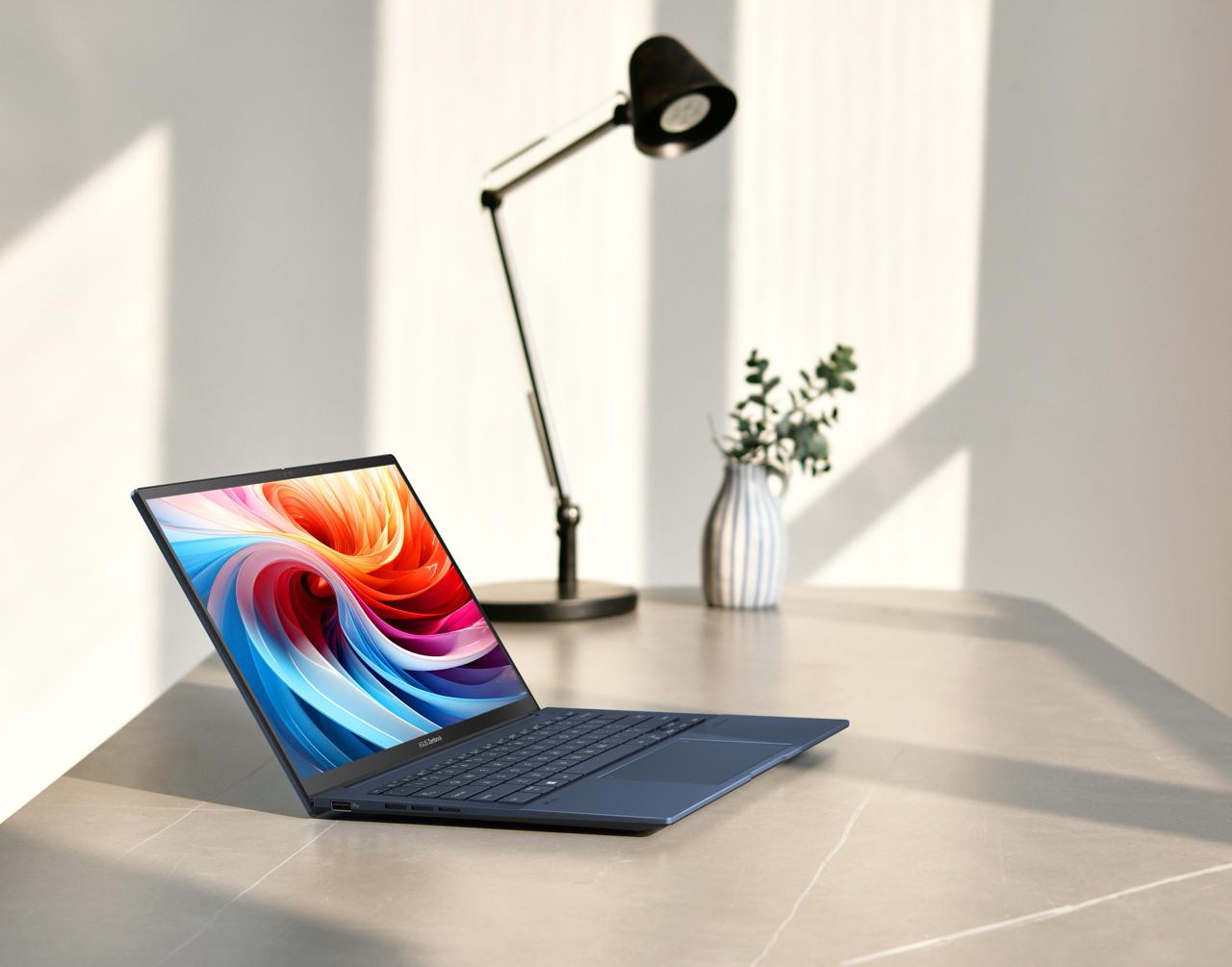
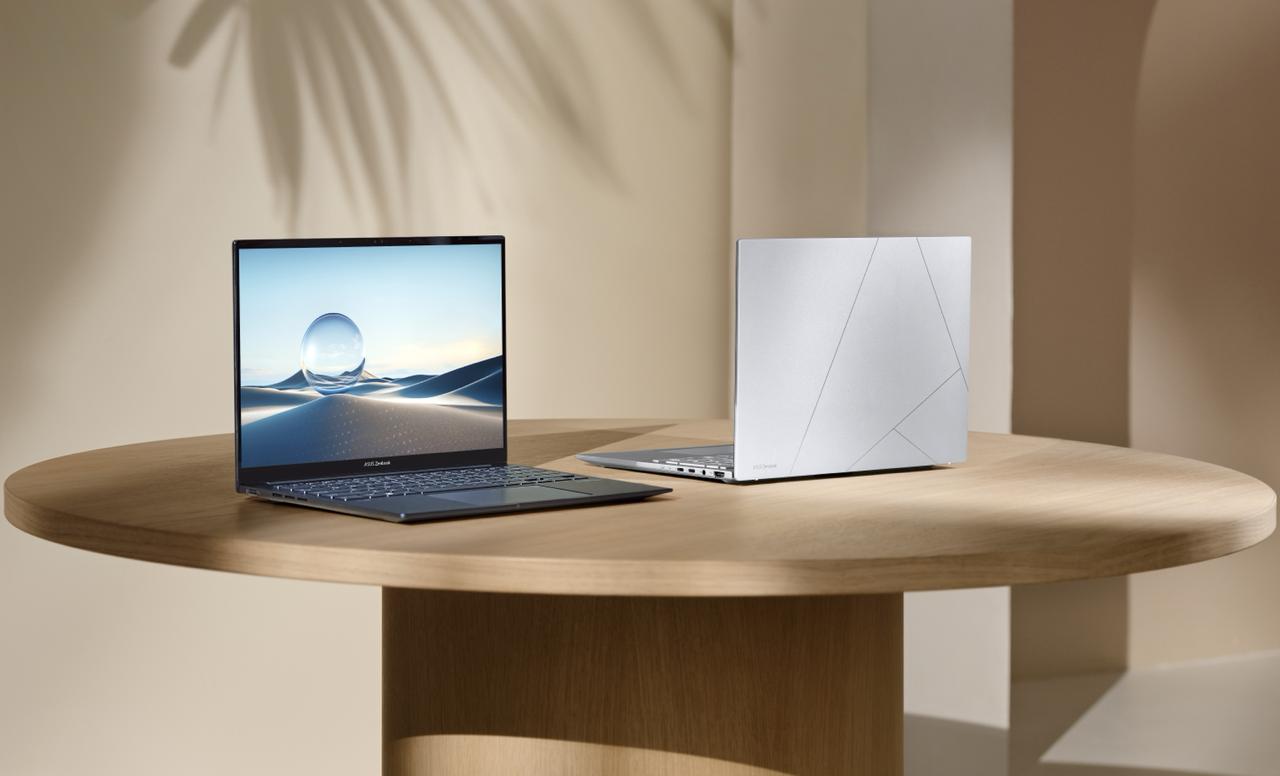
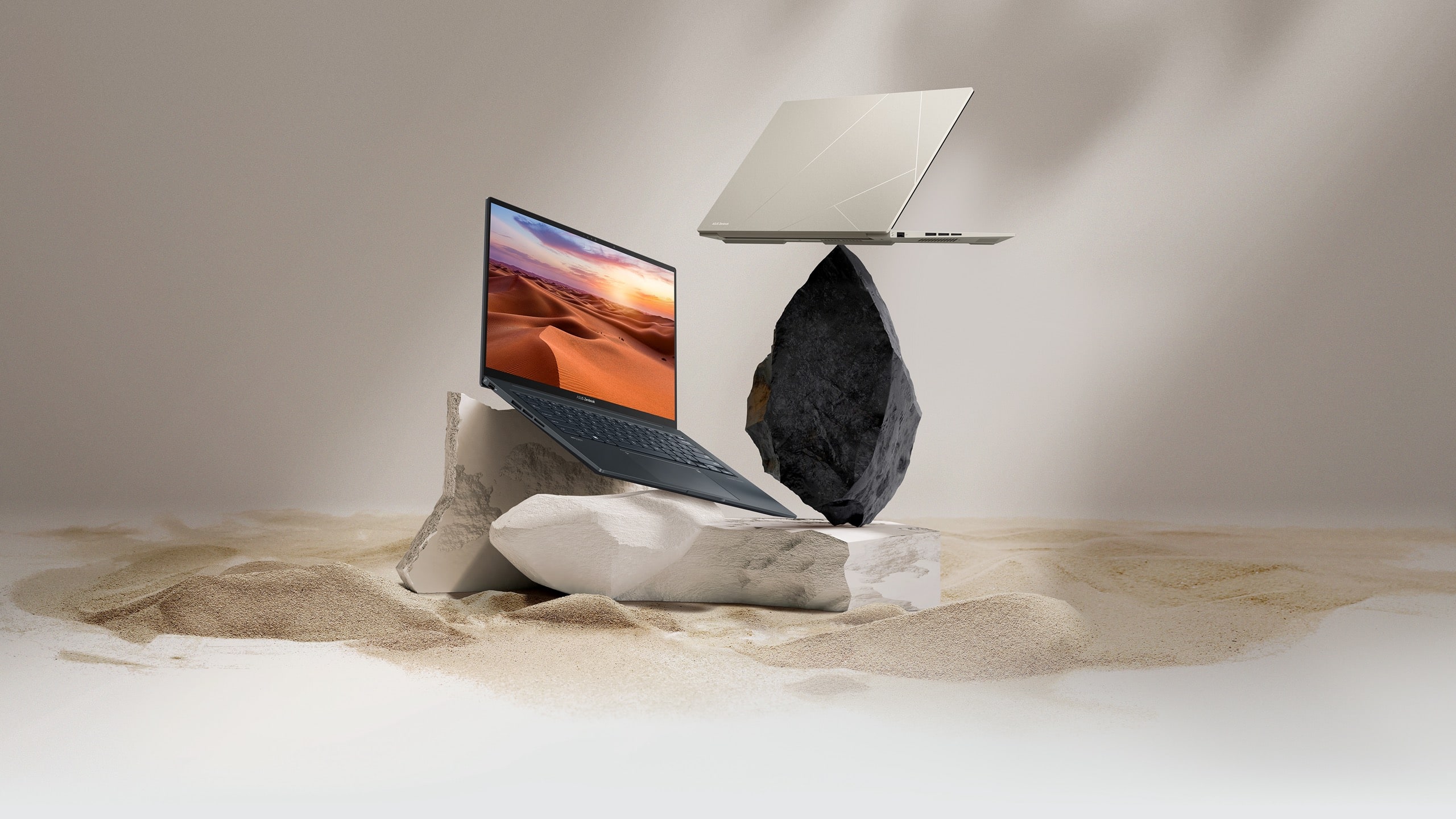
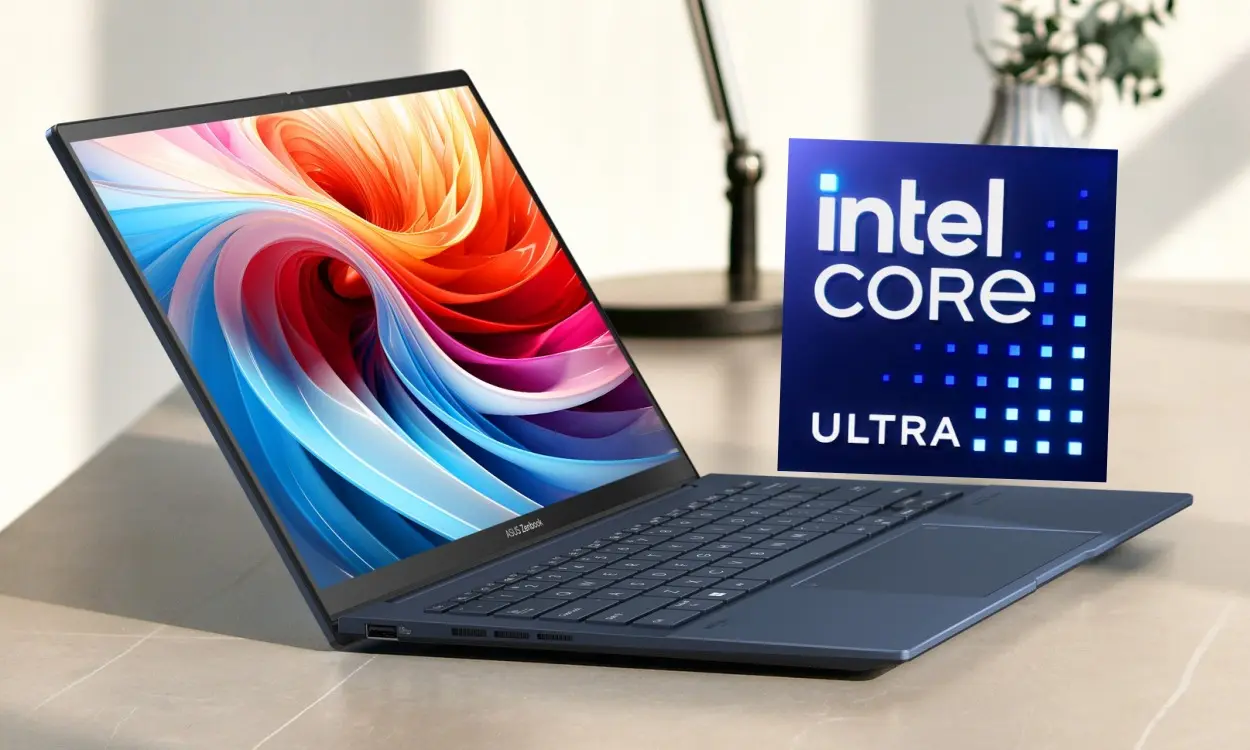
* Asus has introduced its new lineup of Zenbook 14 OLED in India. * The laptops come with Intel Core Ultra series processors and offer advanced AI capabilities. * The Asus Zenbook 14 OLED series has a starting price of Rs 96,990.
Key Highlights of Asus Zenbook 14 OLED
Key Highlights of Asus Zenbook 14 OLED
• AI enhancements: Cutting-edge AI-powered Intel Core Ultra processors, seamlessly integrated with Intel Arc graphics, delivering high performance with optimized energy-efficiency.
• Sophisticated ultraportable design: Now even sleeker and lighter, tipping the scales at a mere 1.2 kg and boasting a slim 14.9 mm profile.
• Exceptional performance: Featuring up to Intel® Evo™ Edition’s – AI-driven Intel® Core™ Ultra 7 CPU paired with a vibrant 14” 3K 120Hz OLED touch display for true-to-life visuals (shorten it).
• Enhanced user experience: Elevating user interaction through advanced features like Windows Hello revolutionary super-linear speakers, and quiet ASUS ErgoSense keyboard.
• Sustainability and Environmental Responsibility: Incorporating recycled materials; subjected to rigorous US military-grade durability tests for an extended and robust service life.
Commenting on the launch, Arnold Su, Vice President, Consumer and Gaming PC, System Business Group, ASUS India, said, “As we push the boundaries of innovation, the Zenbook 14 OLED represents a leap forward in ultraportable laptops, seamlessly integrating power, sleekness, and sustainability.
With the high performing AI-powered Intel Core Ultra processors and Intel Arc graphics, it delivers an immersive user experience for work, gaming, and creativity, all while prioritizing long battery life. ASUS also believes in the staggering need for inculcating sustainable practices, aiming for a 20% global recycling rate for ASUS products by 2025 with the support of our trusted customers.”
ASUS Zenbook 14 OLED: Price in India & Availability
ASUS Zenbook 14 OLED: Price in India & Availability
Price of the updated Asus Zenbook 14 OLED (UX3405) in India starts at Rs. 99,990 for the base variant.
It has seven models and the top-end version with higher RAM and CPU option is priced at Rs. 1,09,990.
The series includes 7 laptops, which will be available for purchase across ASUS retail stores, Reliance Digital, ASUS e-store, Amazon, and Flipkart starting January 31, 2024.
Multi-Brand Retailers: Reliance Digital & all ASUS authorized dealers
₹ 99,990
Zenbook 14 OLED
UX3405MA-PZ752WS
Online: ASUS e-shop
Brand Store: ASUS Exclusive Stores/ ROG Stores
Multi-Brand Retailers: Reliance Digital & all ASUS authorized dealers
₹ 114990
Zenbook 14 OLED
UX3405MA-PZ762WS
Online: ASUS e-shop
Brand Store: ASUS Exclusive Stores/ ROG Stores
Multi-Brand Retailers: all ASUS authorized dealers
₹ 120990
Zenbook 14 OLED
UX3405MA-PZ551WS
Online: ASUS e-shop
Brand Store: ASUS Exclusive Stores/ ROG Stores
Multi-Brand Retailers: Reliance Digital & all ASUS authorized dealers
₹ 99990
Zenbook 14 OLED
UX3405MA-PZ751WS
Online: ASUS e-shop
Brand Store: ASUS Exclusive Stores/ ROG Stores
Multi-Brand Retailers: Reliance Digital & all ASUS authorized dealers
₹ 114990
Zenbook 14 OLED
UX3405MA-QD552WS
Online: Amazon
₹ 96990
Zenbook 14 OLED
UX3405MA-QD752WS
Online: Amazon
₹ 109990
ASUS Zenbook 14 OLED: Features, Specifications
ASUS Zenbook 14 OLED: Features, Specifications
The Asus Zenbook 14 OLED comes preloaded with Windows 11 Home and features a 14-inch 3K (1,800×2,880 pixels) OLED touch display with 120Hz refresh rate, 16:10 aspect ratio, 87 percent screen-to-body ratio, and a peak brightness level of 550 nits.
The screen has DisplayHDR True Black 600 certification and is rated to deliver 100 percent coverage of the DCI-P3 colour gamut.
It is also available in a full-HD (1,200X1,920 pixel) OLED non-touch display with 60Hz refresh rate.
Asus is offering Zenbook 14 OLED with the AI-based Intel Evo platform integrated with Intel Arc graphics.
The laptop can be configured with the Intel Core Ultra 7 155-H processor option or the Intel Core Ultra 5 125-H processor option.
It packs up to 32GB of LPDDR5x onboard RAM and you will get up to 1TB of PCIe NVMe M.2 SSD storage.
The laptop includes a dual neutral compute engine and a dedicated low-power AI engine.
Further, the Asus Zenbook 14 OLED sports a full-HD IR Webcam with ambient light and colour sensor.
It includes two Thunderbolt 4 USB Type-C ports, a USB 3.2 Gen 1 Type-A port, an HDMI 2.1 port, and a headphone jack.
The laptop has Bluetooth 5.3 and Wi-Fi 6E connectivity options as well.
The laptop features two Harman Kardon-certified speakers with Dolby Atmos sound system and includes an ErgoSense keyboard.
It boasts inbuilt microphones with Cortana and Alexa voice-recognition support.
The Asus Zenbook 14 OLED houses a 75Whr lithium polymer battery with 65W fast charging support.
The battery setup is claimed to provide up to 15 hours of unplugged operation on a single charge.
It measures 312.42×220.05×14.9mm and weighs 1.2 kilograms.
These processors boast a dedicated engine, elevating the user experience by unlocking AI capabilities, delivering immersive graphics, and ensuring high performance while consuming low power.
This synergy empowers users to seamlessly navigate work, gaming, and creative pursuits, all while enjoying extended battery life.
Asus Zenbook 14 OLED Sophisticated Ultraportable Design
Asus Zenbook 14 OLED Sophisticated Ultraportable Design
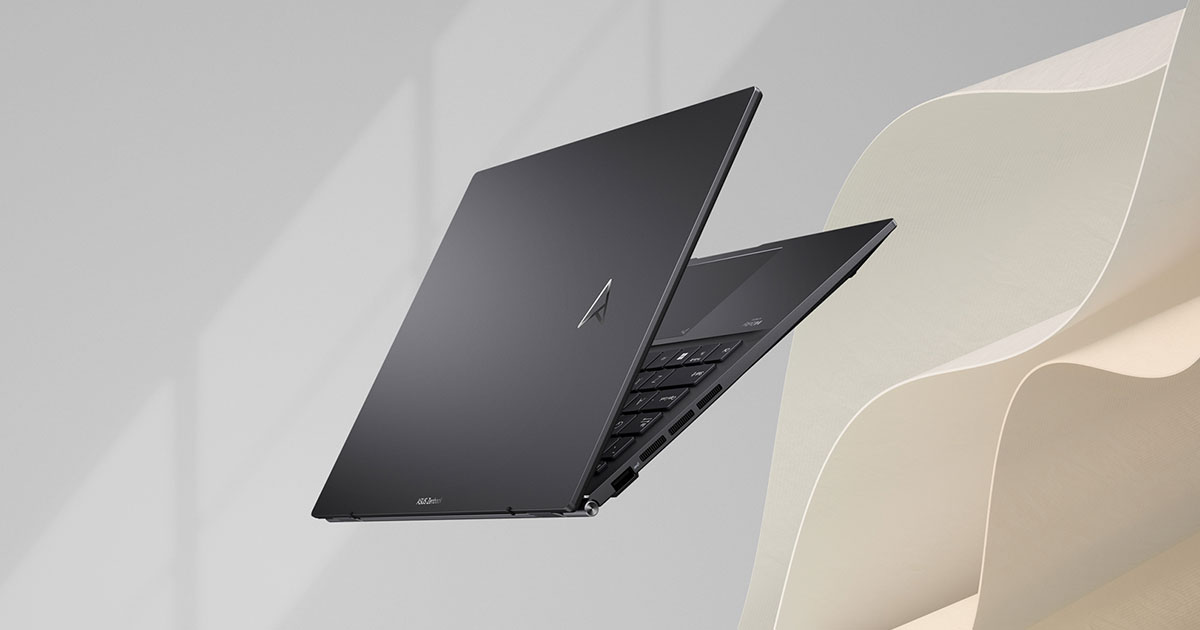
Combining sleek aesthetics with uncompromising durability, the Zenbook 14 OLED’s all-metal design, at just 14.9 mm thin and 1.2 kg light, ensures ease of mobility.
The enhanced 75 Wh battery supports up to 20% more charging cycles, providing up to 15 hours of unplugged operation.
USB-C® Easy Charge simplifies recharging from any suitable USB-C adapter, power outlet, or power bank.
Asus Zenbook 14 OLED Exceptional experience and connectivity
Asus Zenbook 14 OLED Exceptional experience and connectivity
The Zenbook 14 OLED offers an outstanding user experience, powered by the Intel® Evo™ Edition.
It is equipped with up to Intel’s AI-powered Core Ultra 7 processor and Intel Arc™ graphics, ensuring best of the performance.
The laptop ensures seamless connectivity with two Thunderbolt 4 ports, USB 3.2 Gen 1 Type-A, HDMI® 2.1, and a 3.5 mm audio jack.
Featuring an immersive 14” OLED touchscreen, the laptop boasts a 3K resolution (2880 x 1800), a 120Hz refresh rate, a 16:10 aspect ratio, and up to 600 nits brightness.
The audio experience is amplified with powerful super-linear speakers.
The user-friendly design includes convenient features such as a face login, an FHD IR camera with a physical shutter, and a quiet ASUS ErgoSense keyboard.
Asus Zenbook 14 OLED Augments a Sustainable Lifestyle
Asus Zenbook 14 OLED Augments a Sustainable Lifestyle
ASUS is committed to environmental responsibility with Zenbook 14 OLED.
ASUS aimsto minimize its environmental impact by incorporating up to 50% post-consumer-recycled (PCR) materials, eco-conscious packaging, and exceeding the ENERGY STAR® power-efficiency standard by 50%.
Rigorous US military-grade testing ensures outstanding durability, contributing to the laptop’s sustainability.
Specifications
CPU
Intel® Core™ Ultra 7 155-H processor
Intel® Core™ Ultra 5 125-H processor
Display
14” 16:10 3K (2880 x 1800) 120 Hz OLED touchscreen
Four-sided NanoEdge with 87% screen-to-body ratio
550-nits peak brightness
100% DCI-P3
DisplayHDR™ 500 True Black
14″ 16:10 FHD (1920 x 1200) 60Hz OLED (non-touch)
Four-sided NanoEdge with 87% screen-to-body ratio
600-nit peak brightness
100% DCI-P3
DisplayHDR™ 600 True Black
Operating system
Windows 11 Home
Graphics
Intel® Arc Graphics
NPU
Dual Neutral Compute Engine
Dedicated low-power AI Engine
Broad SW support
Main memory
Up to 32GB 7467 MHz LPDDR5x (onboard)
Storage
Up to 1 TB PCIe® 4.0 NVMe® M.2 SSD
Connectivity
Dual-band Wi-Fi 6E (802.11ax) + Bluetooth® 5.3
Camera
ASUS AiSense Camera
FHD 3DNR IR camera with ambient light and color sensor
I/O ports
2 x Thunderbolt™ 4 USB-C® with full-range charging (5–20 V)
1 x USB 3.2 Gen 1 Type-A
1 x standard HDMI® 2.1 (TMDS)
1 x combo audio jack
Touchpad
ASUS NumberPad 2.0 (Optional)
Audio
Harman Kardon-certified Dolby Atmos® sound system with 2 built-in speakers
Built-in array microphone with Cortana and Alexa voice-recognition support
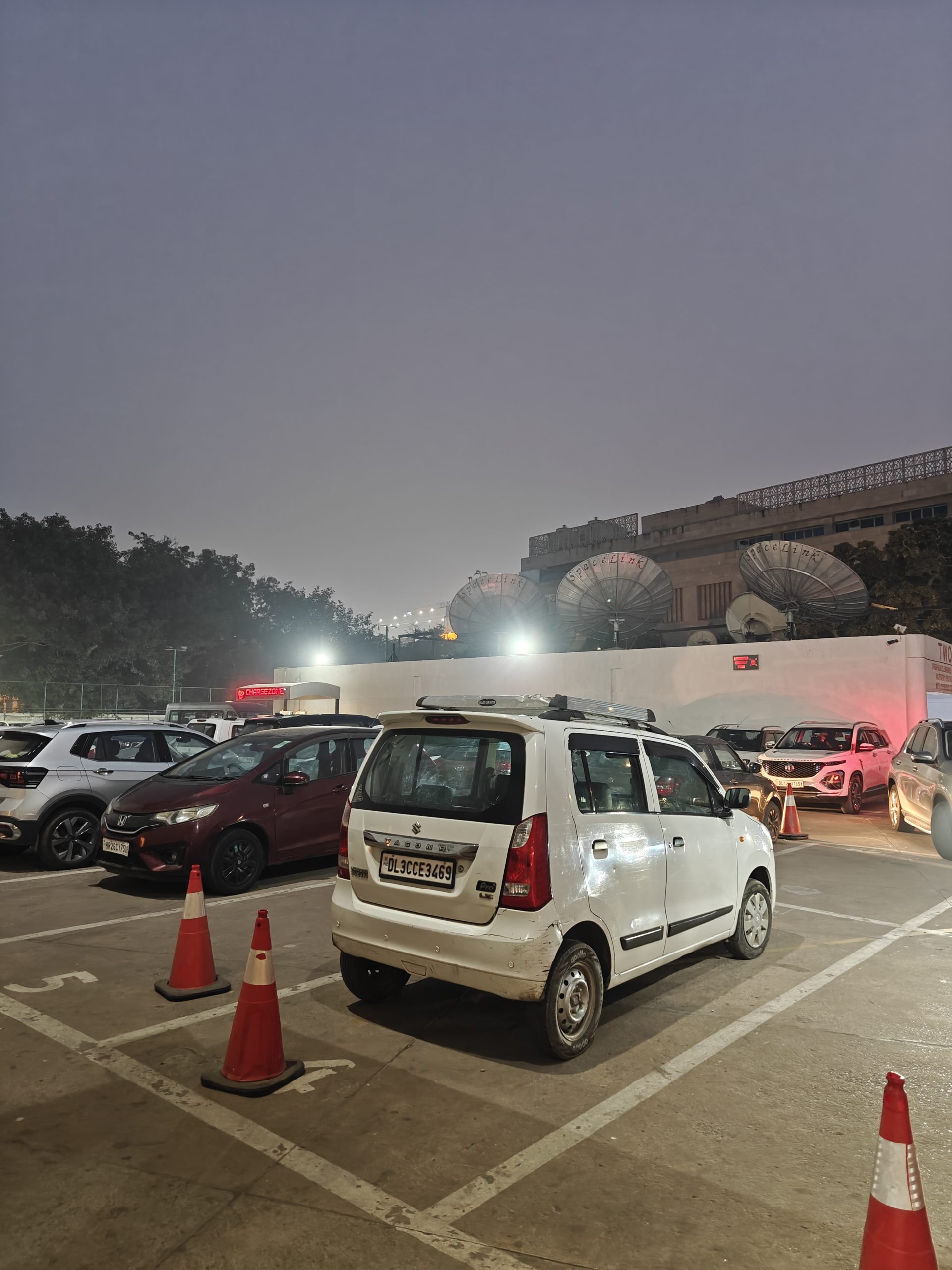
From my experience testing the phone, it seems that they’ve not only updated the internals to the latest specifications but also heavily invested in enhancing the camera system.
It’s a phone that not only meets expectations for a flagship device but in many aspects, surpasses them.
Let’s understand how in my detailed OnePlus 12 review.
Pros
Cons
Powerful Snapdragon 3 chip
Limited software update longevity
Impressive 5400mAh battery life
Familiar design without innovation
Smooth OxygenOS 14 interface
Fast and wireless charging
OnePlus 12: Key Specs
OnePlus 12: Key Specs
Platform: Qualcomm Snapdragon 8 Gen 3 SoC
Memory: 24GB LPDDR5X RAM
Storage:1TB UFS 4.0 ROM
Display:6.8-inch 120Hz 2K Super Fluid AMOLED display
Battery: 5400 mAh dual-cell battery
Charging: 100W SUPERVOOC fast wired charging
Cameras: 50MP main camera, 64MP telephoto, 48MP ultra-wide
Dimensions:164.3×75.8×9.15mm
Weight: 220g
OnePlus 12
Price
12GB + 256GB
Rs 64,999
16GB + 512GB
Rs 69,999
OnePlus 12: Design
OnePlus 12: Design
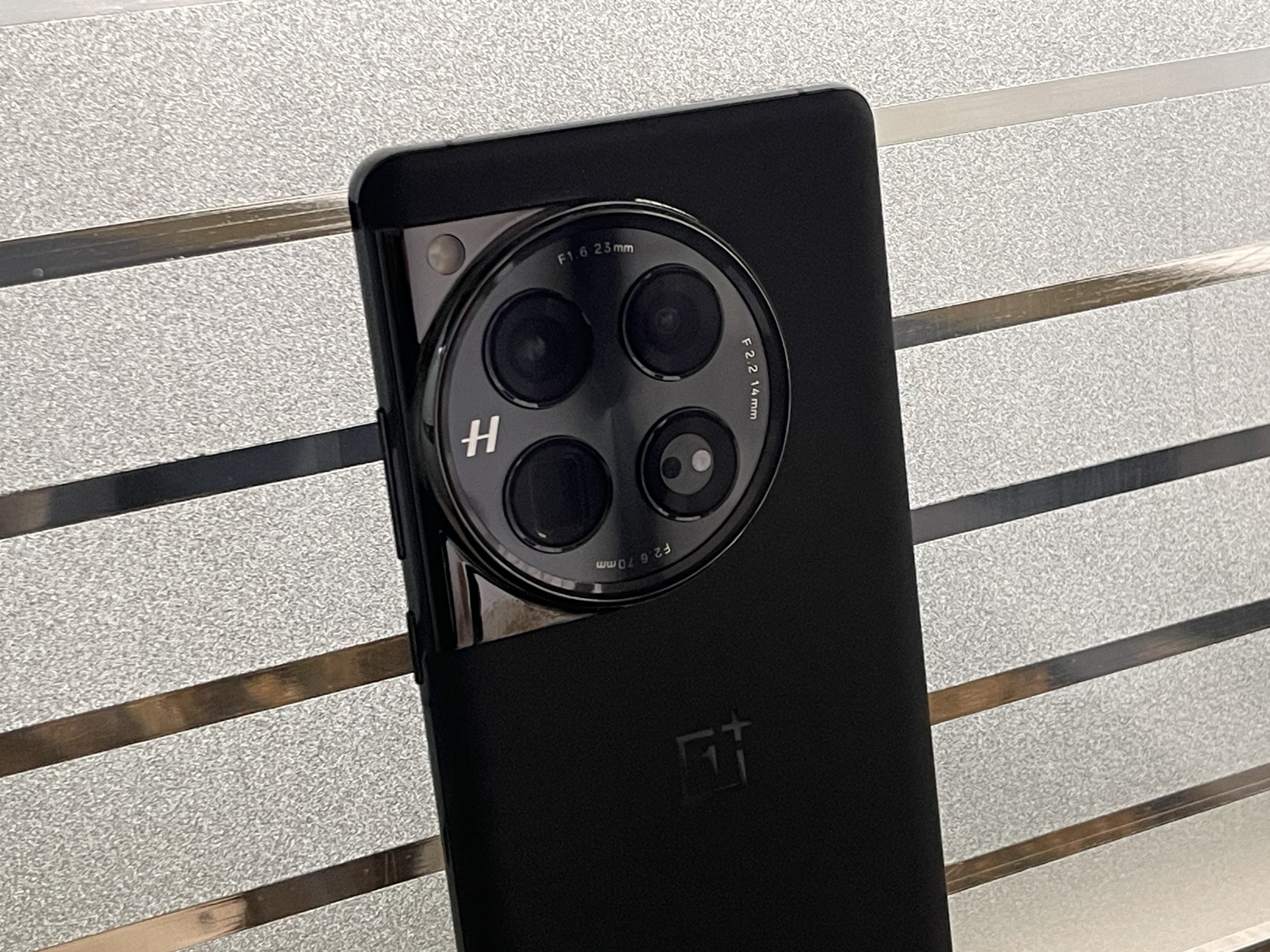
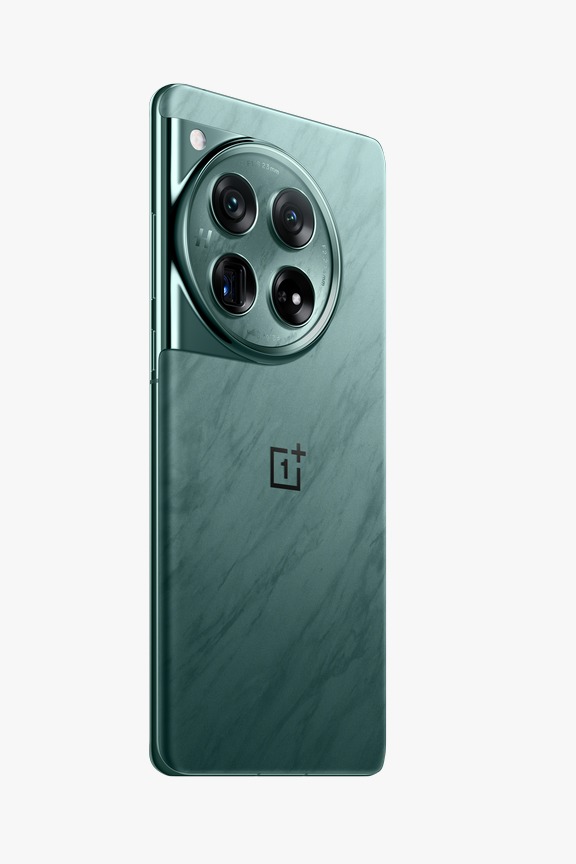
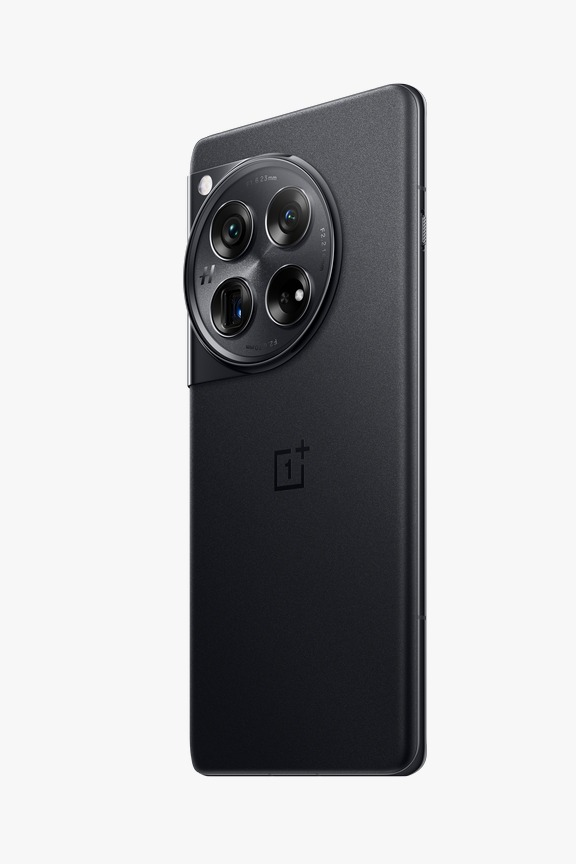
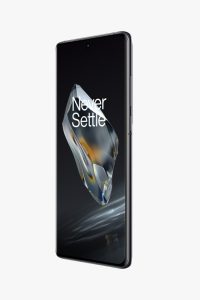
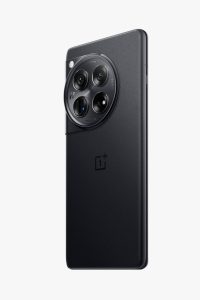
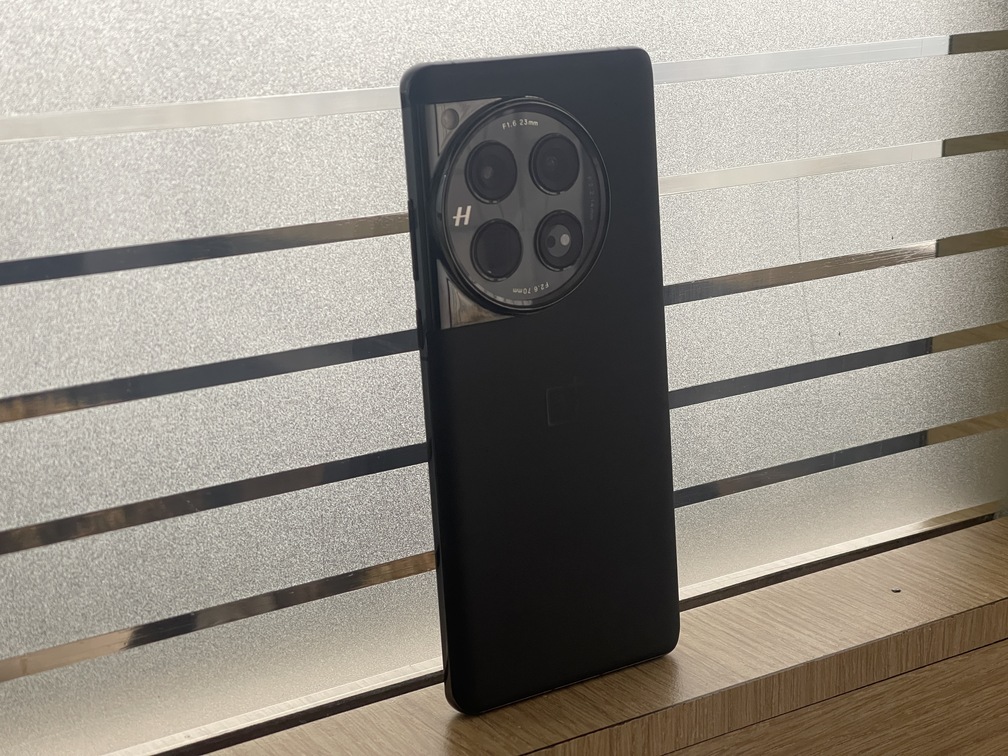
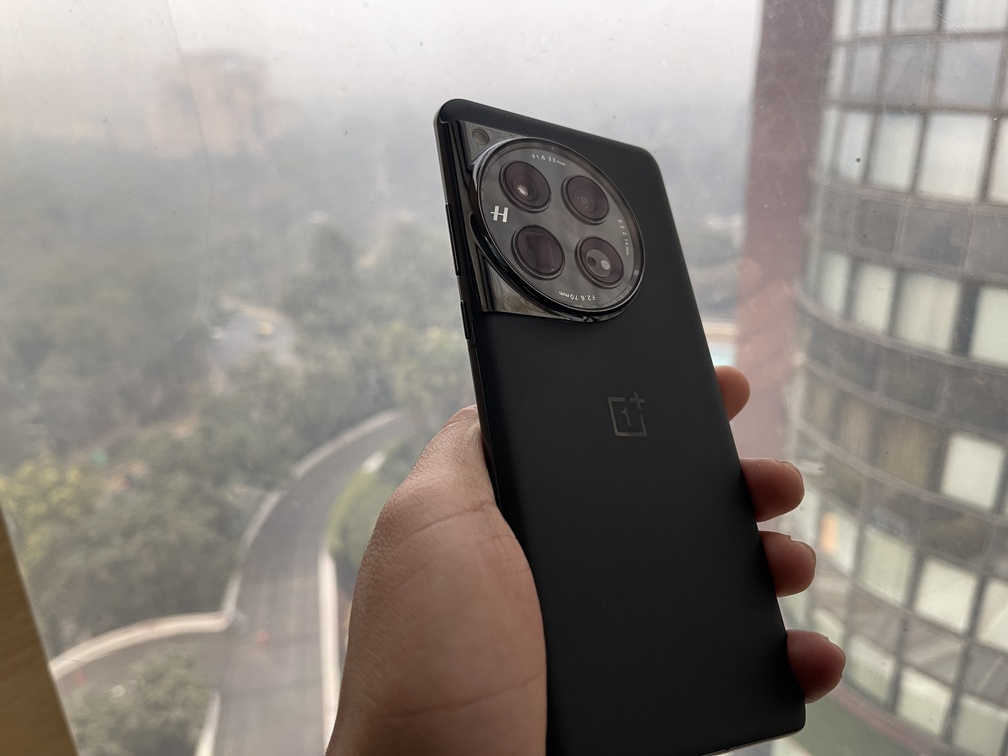
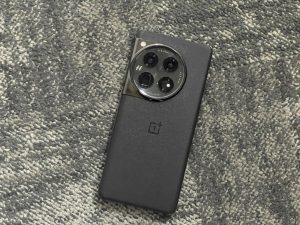
The OnePlus 12, in terms of design, stays true to its roots, echoing the familiar aesthetics of its predecessor, the OnePlus 11.
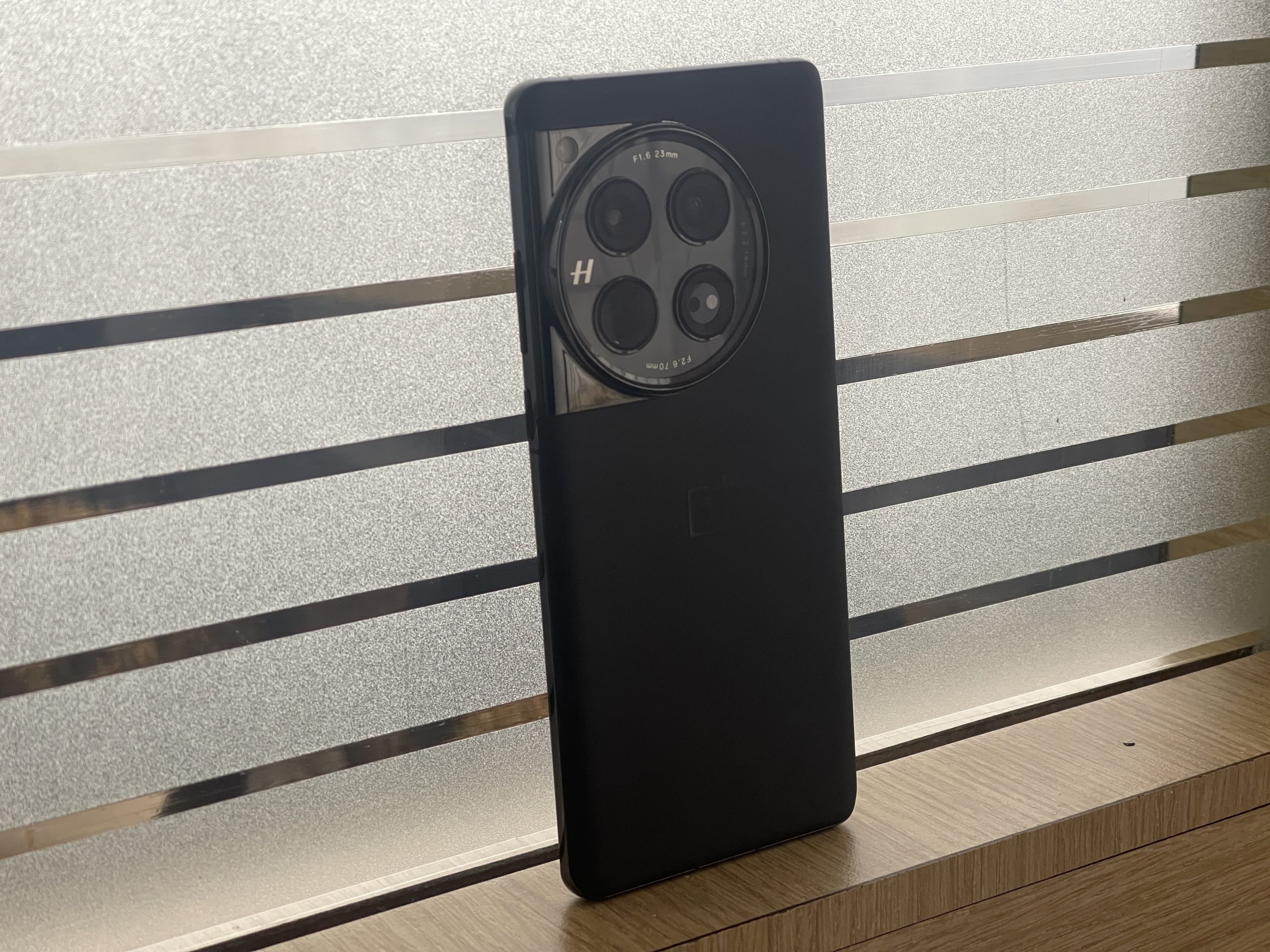
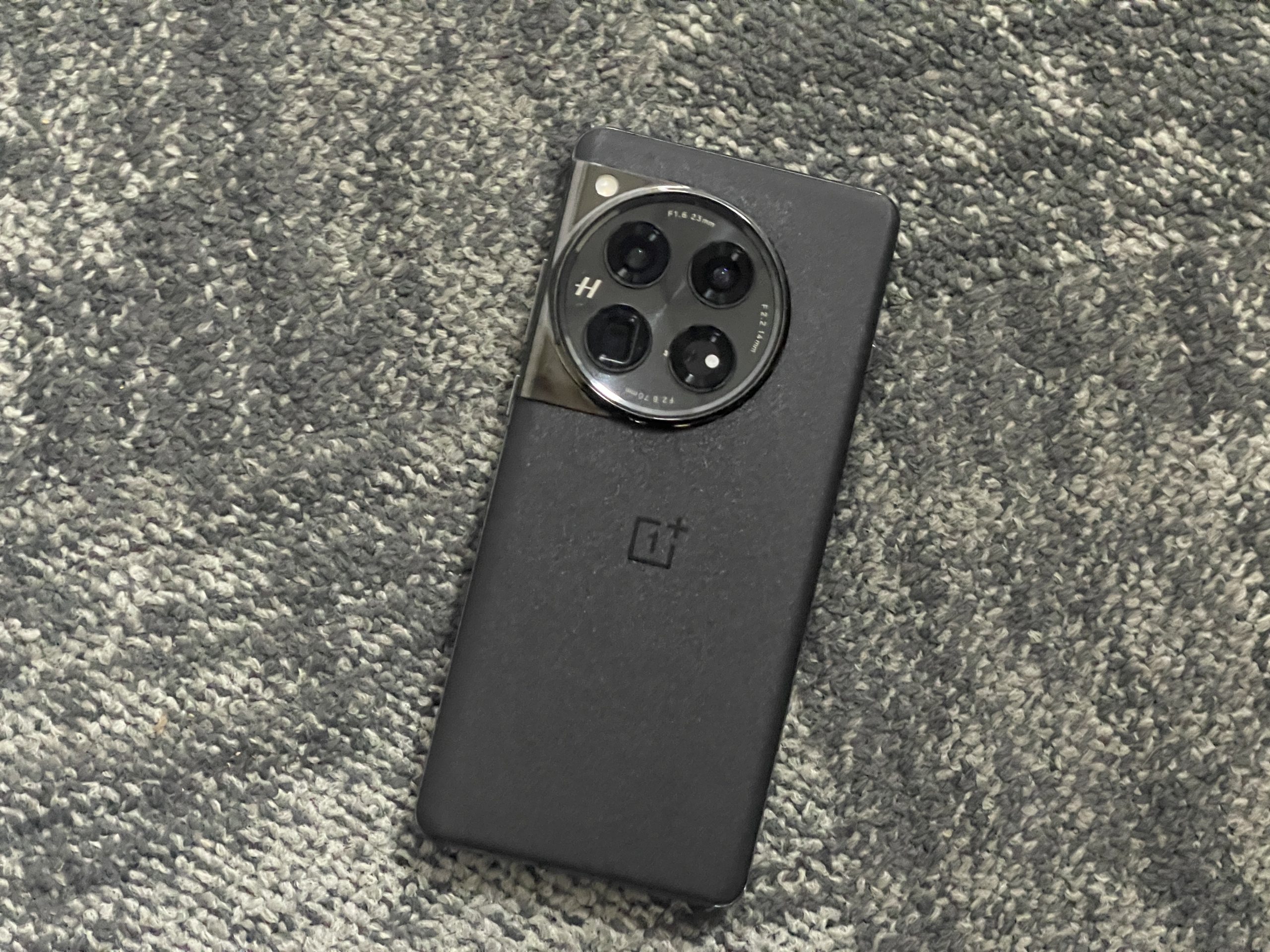
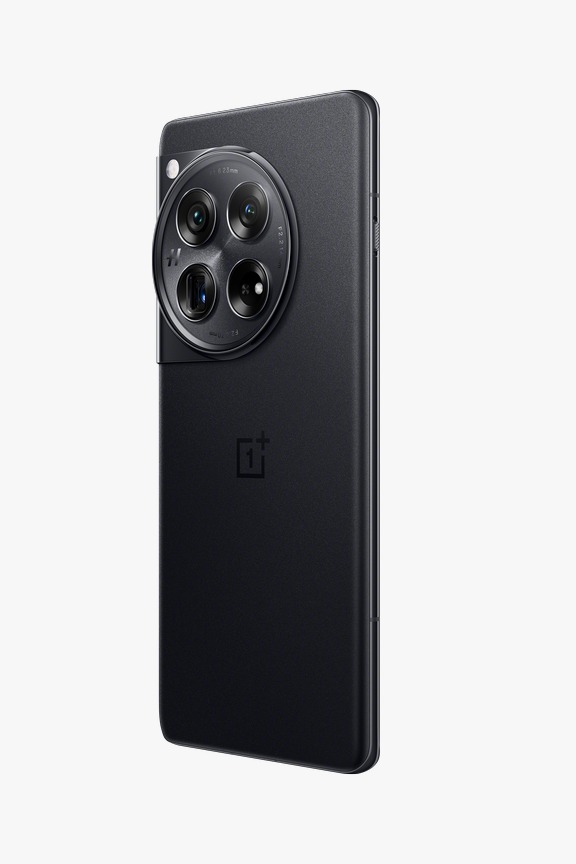
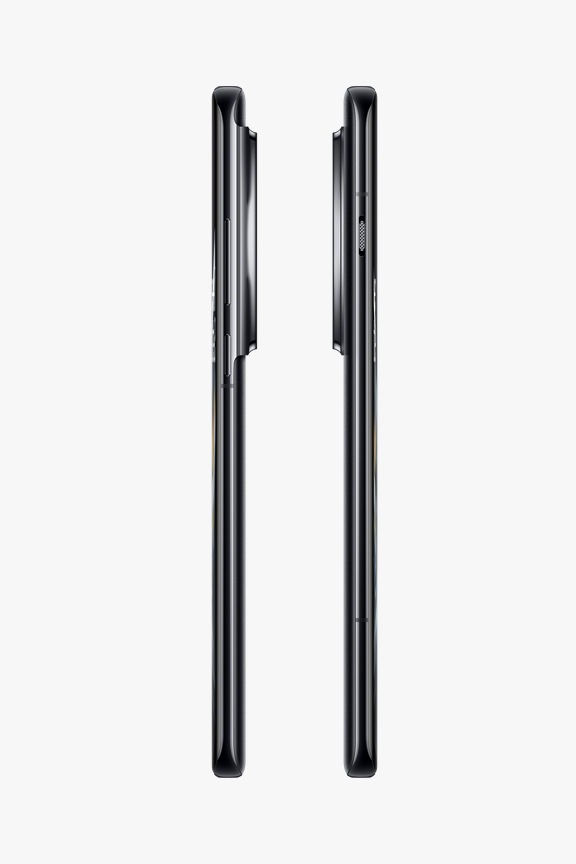
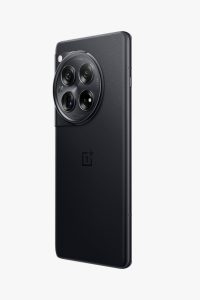
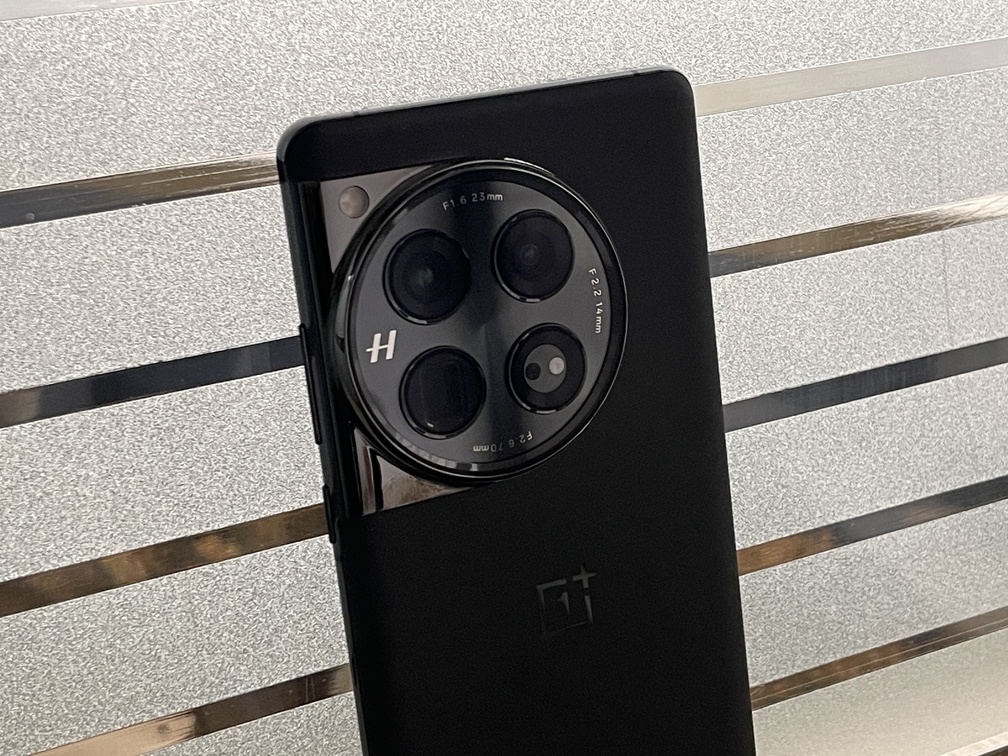
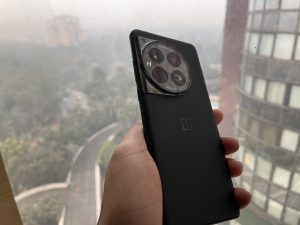
It retains the distinctive circular camera unit embedded in a gracefully curving glass back, surrounded by a sleek aluminium frame.
However, OnePlus introduces a subtle yet noticeable twist with the OnePlus 12.
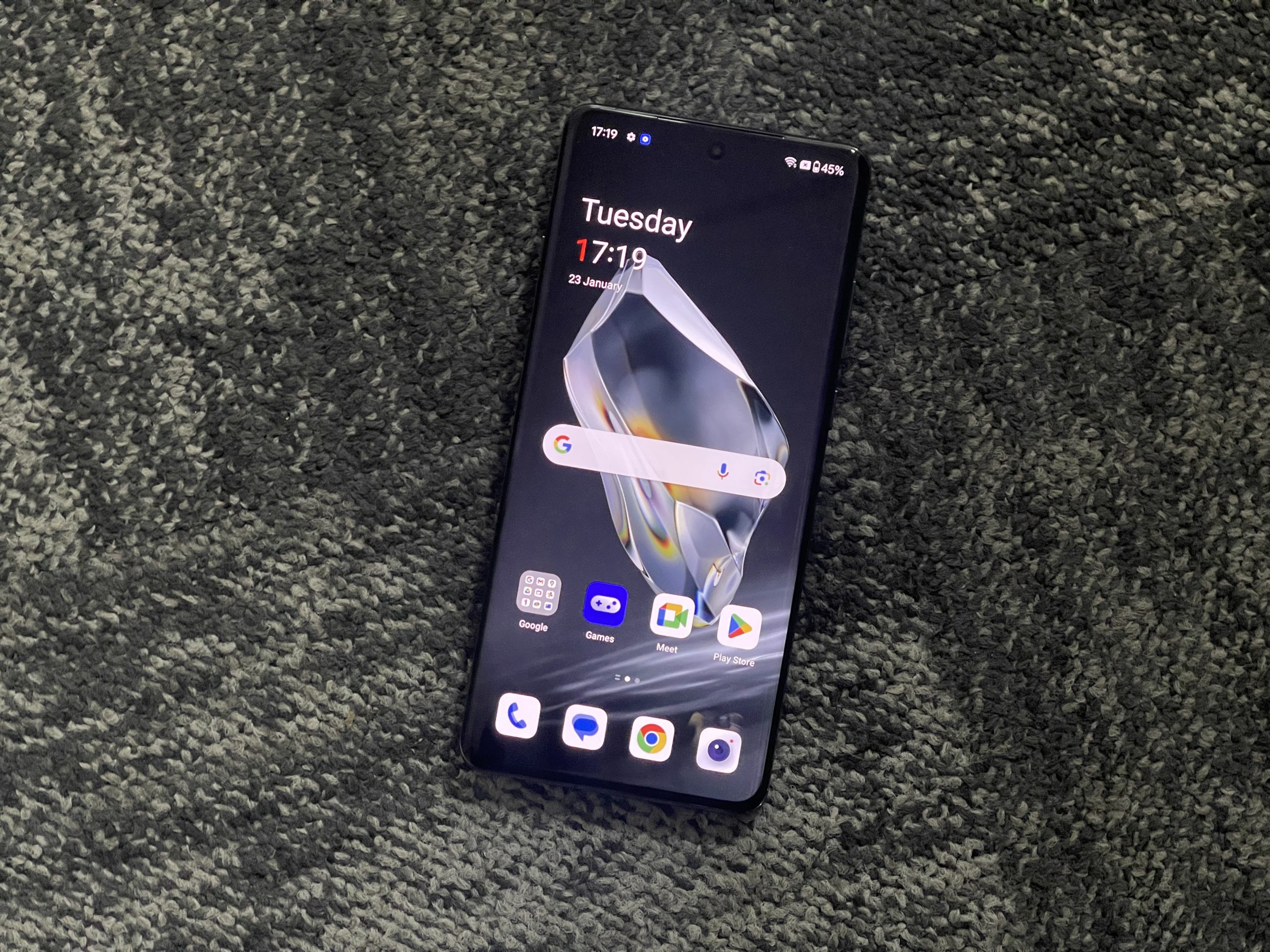
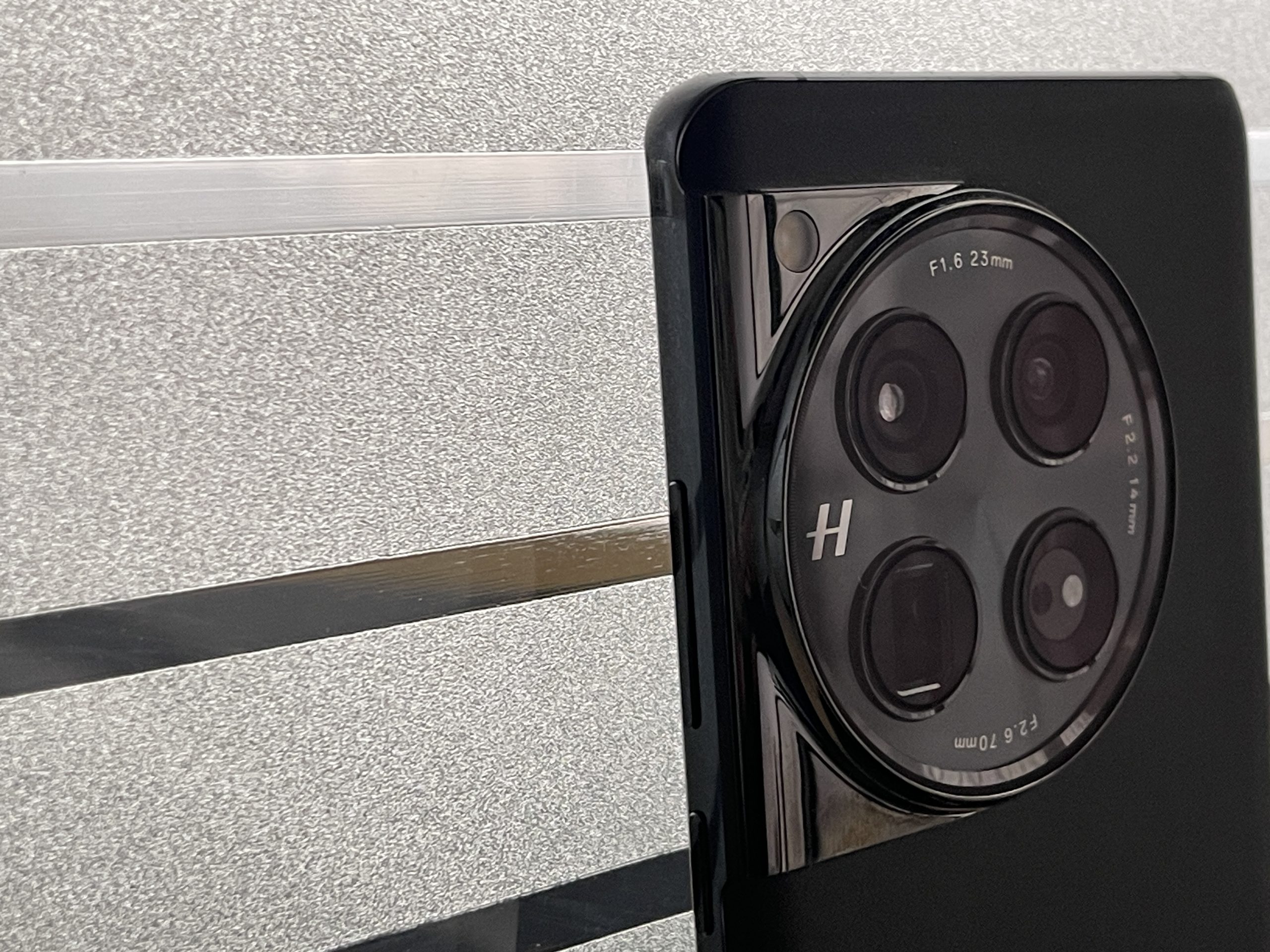
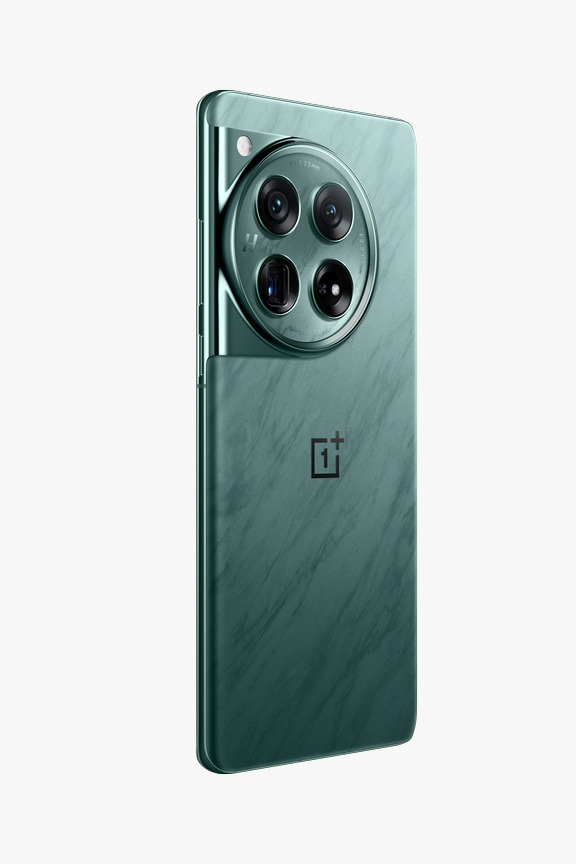
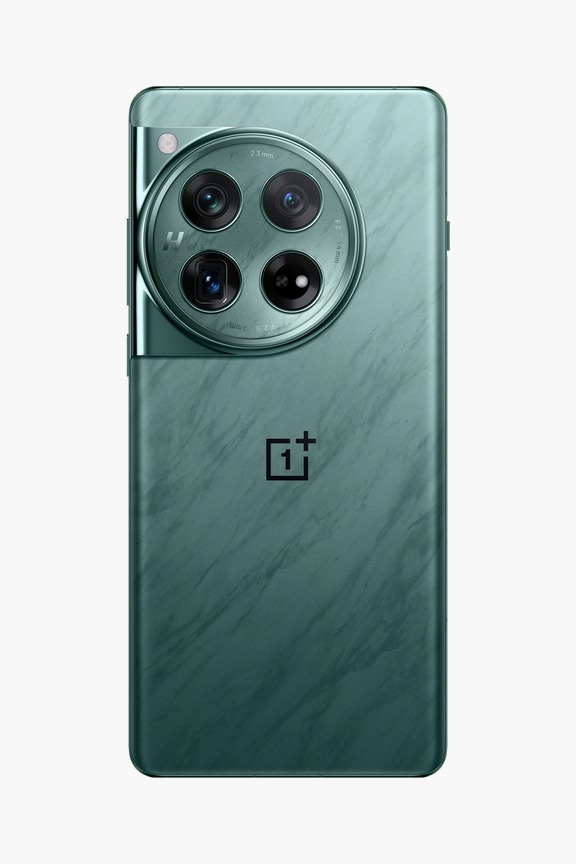
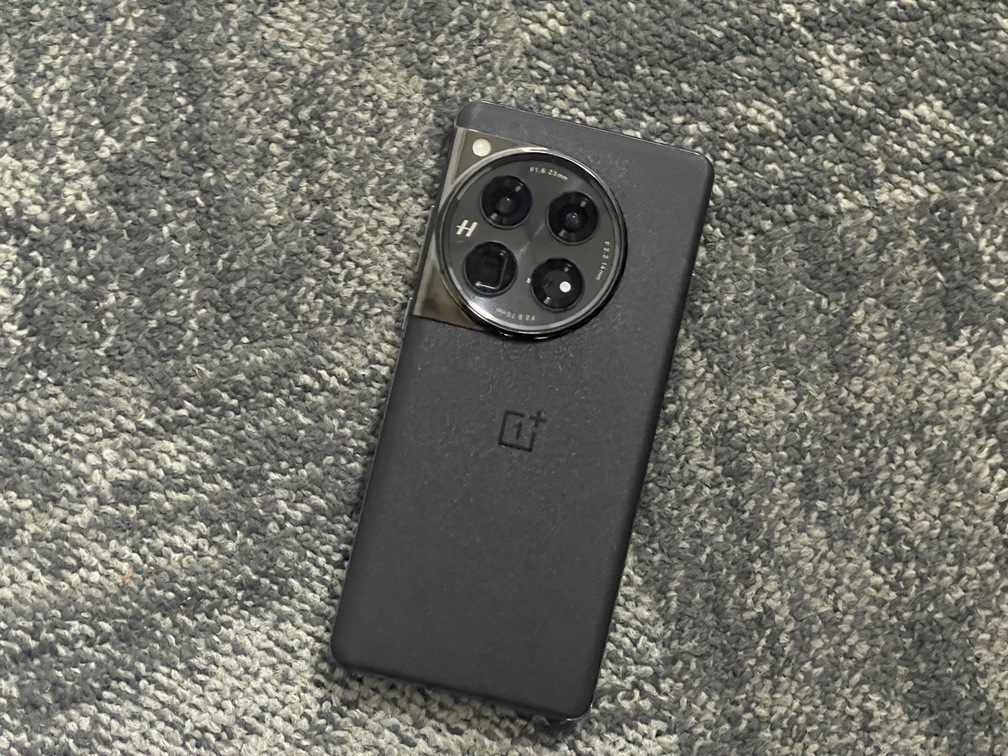
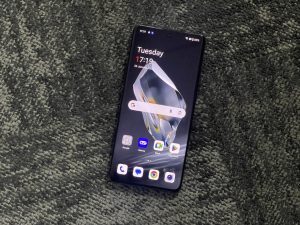
My review unit, in classic black, features a matte glass back adorned with a sandstone-like gradient that I find particularly appealing.
I feel that this design choice not only adds visual intrigue but also imparts a more premium, less slippery feel compared to the glossy finish of the OnePlus 11.
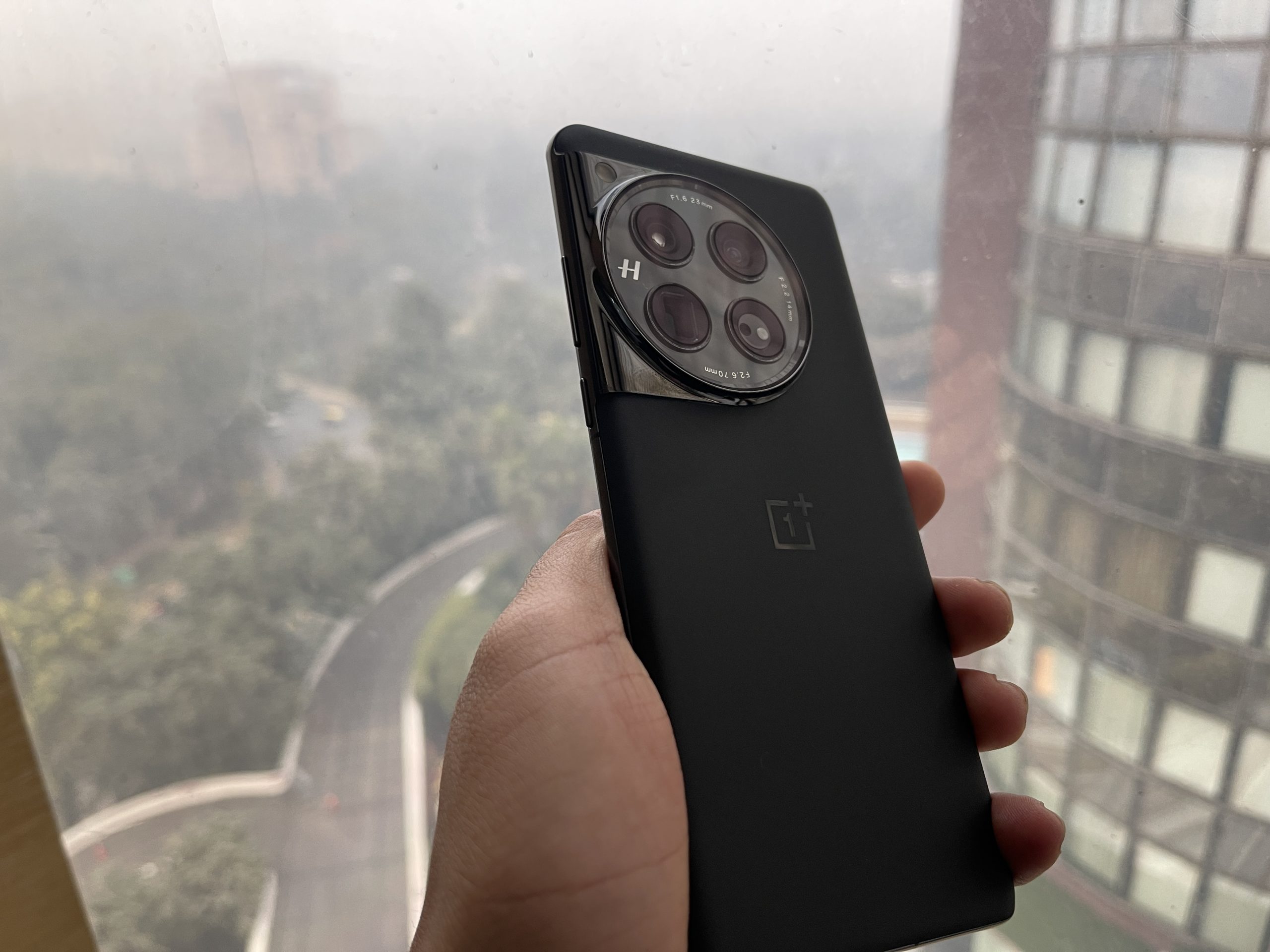
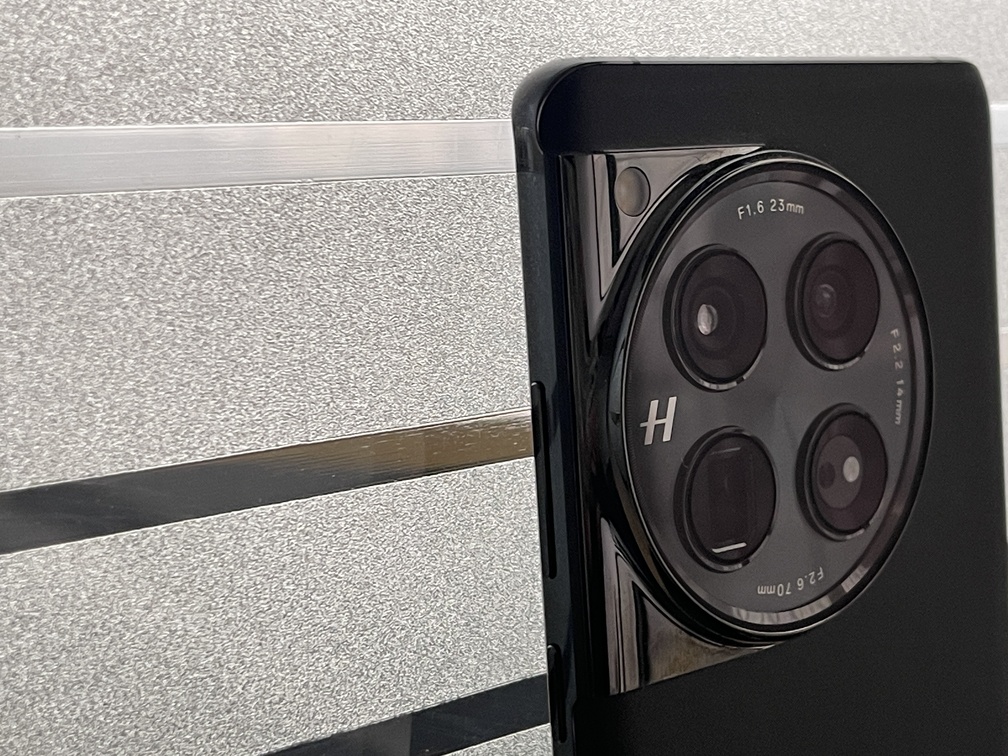
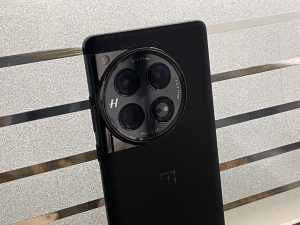
The camera setup on the OnePlus 12 is where OnePlus has really amped up the drama.
Borrowing the circular module from the OnePlus 11, the 12’s version is not just larger; it demands attention, resembling the dial of a high-end wristwatch.
A subtle touch of glamour can also be seen with the sprinkling of glitter around the Hasselblad branding, adding to the device’s luxe aesthetic.
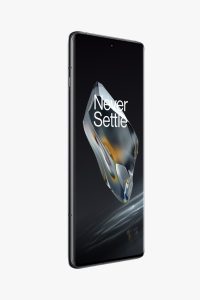
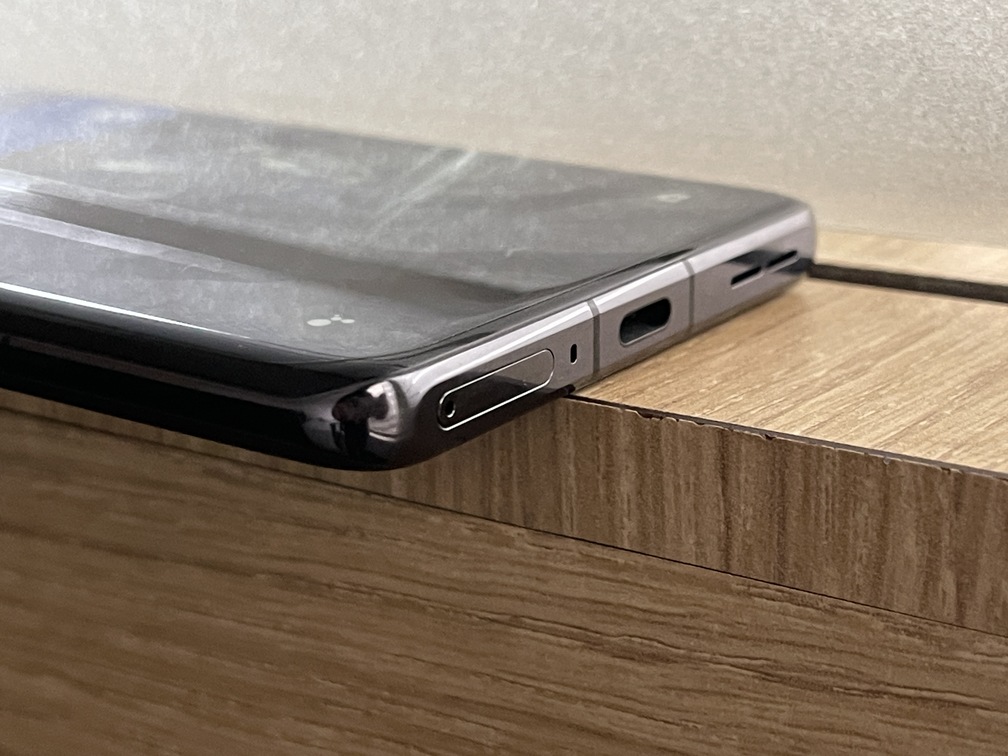
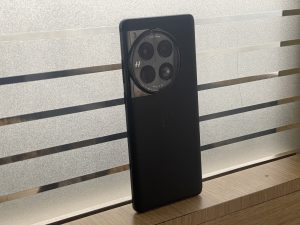
In terms of its overall form factor, the OnePlus 12 boasts curves that are both aesthetically pleasing and ergonomic, seamlessly integrating with the front and back of the phone.
While I don’t necessarily think the OnePlus 12’s design is a step back, I did ponder over the idea of distinctiveness in a personal device.
In a market where a smartphone is more than just a gadget – a companion for at least a couple of years – the desire for something visibly new and different is understandable.
Lastly, I do feel that the OnePlus 12 is a bit heavy in my hand at 220g, but given the hardware it packs, this weight is understandable.
OnePlus 12: Display
OnePlus 12: Display
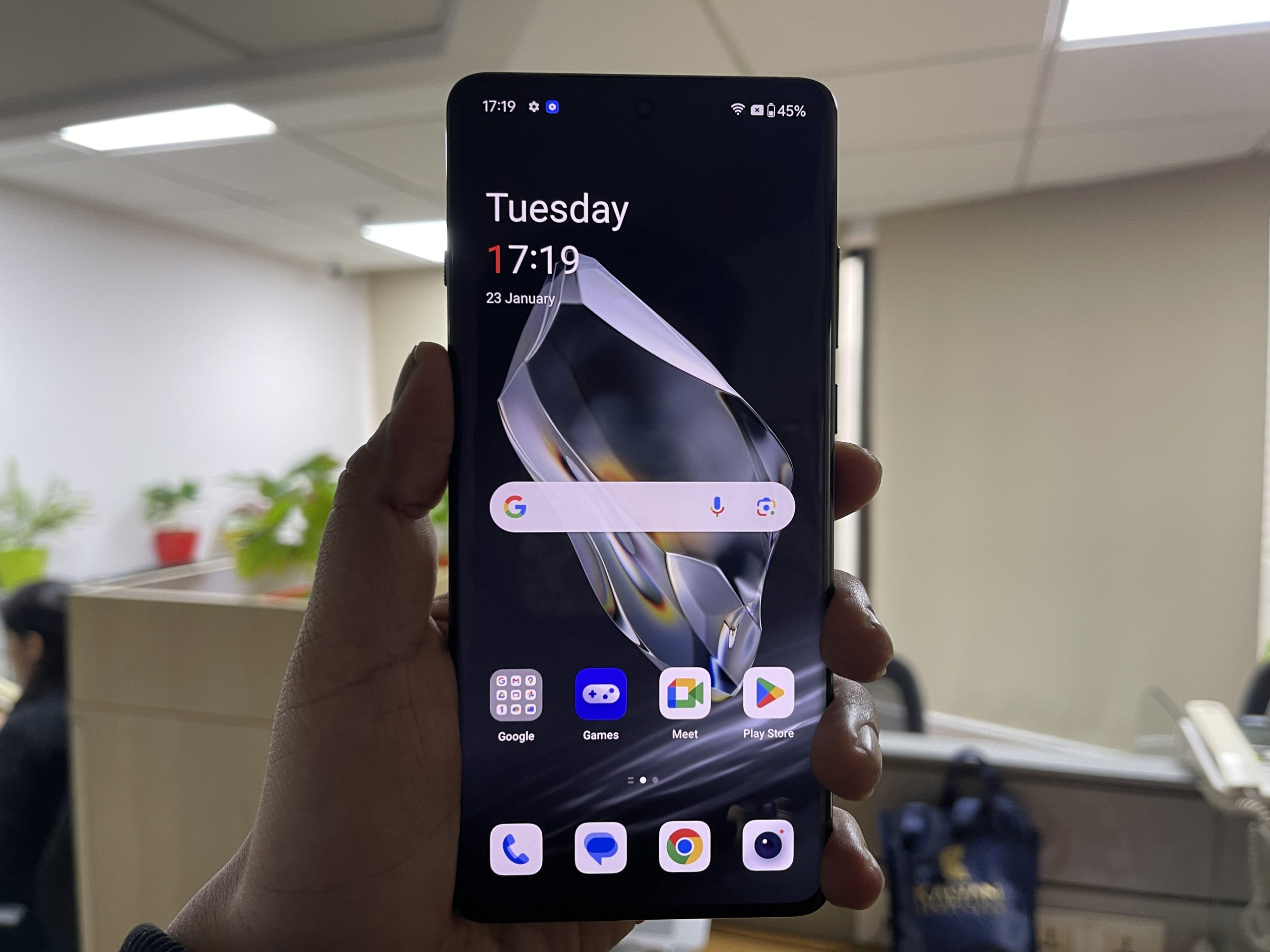
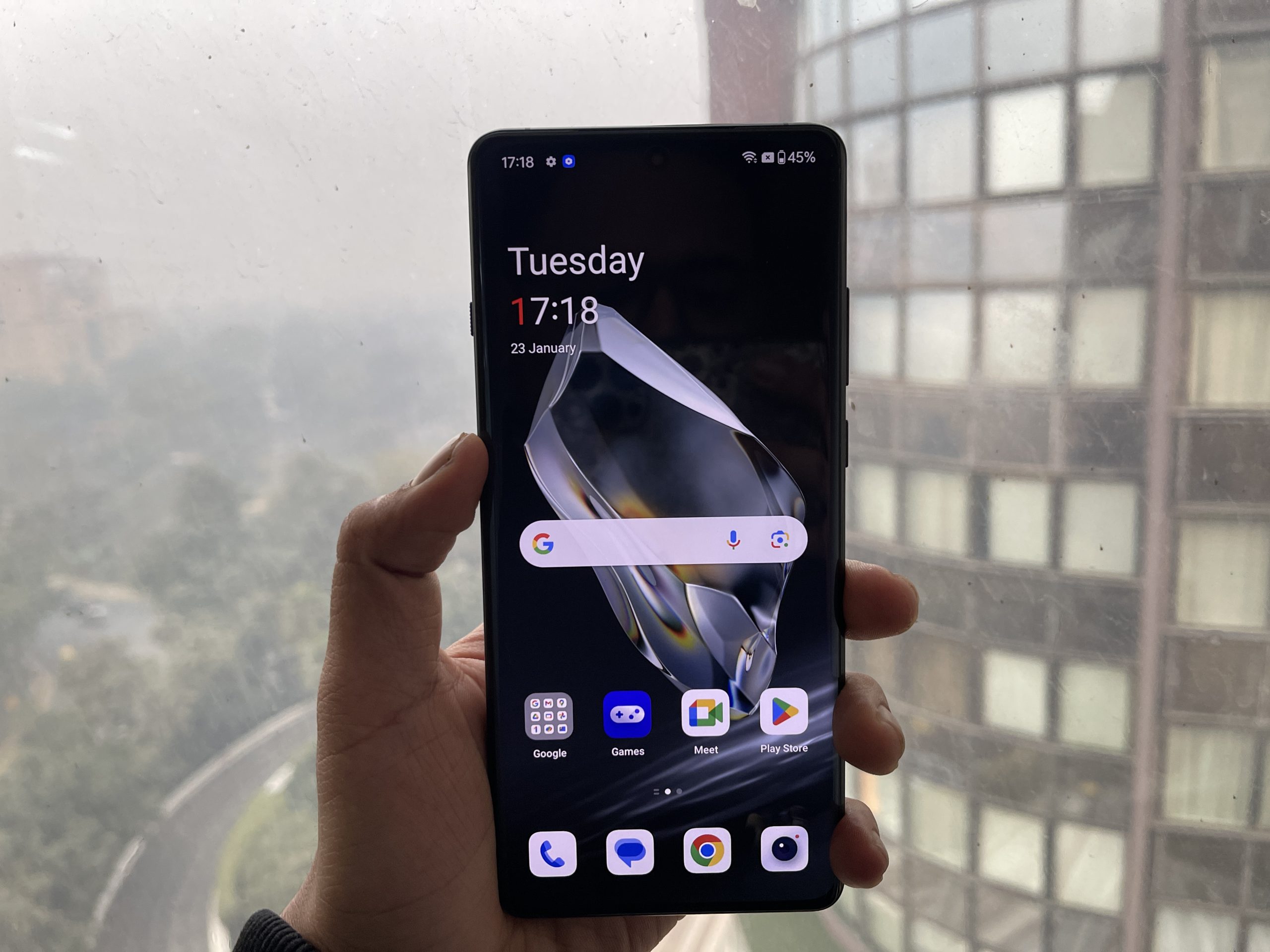
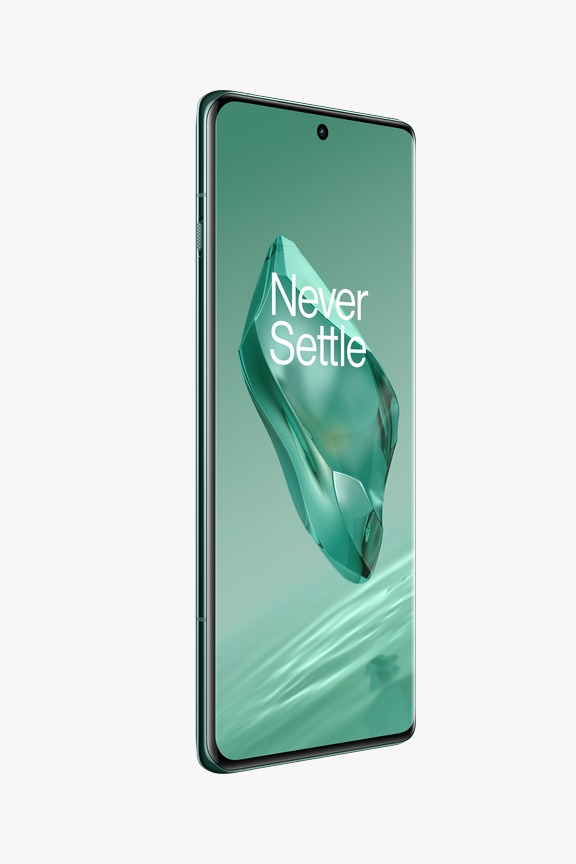
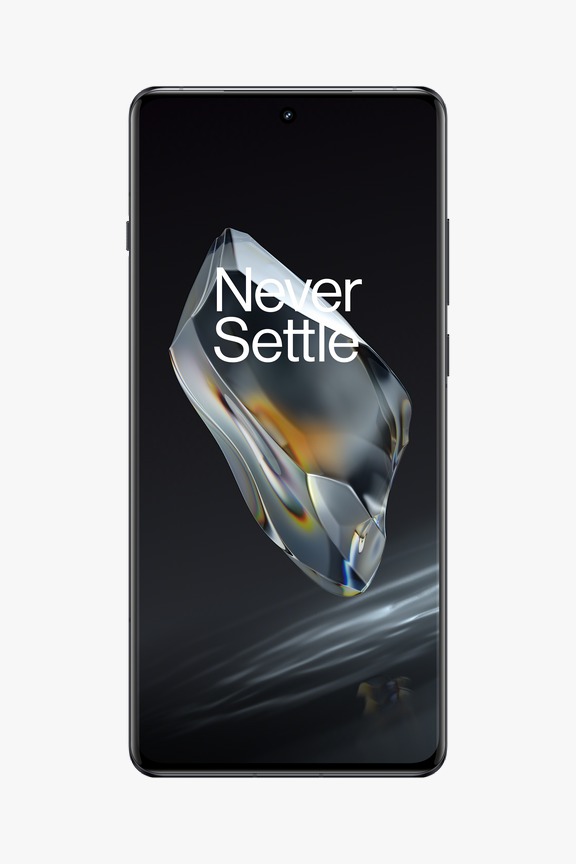
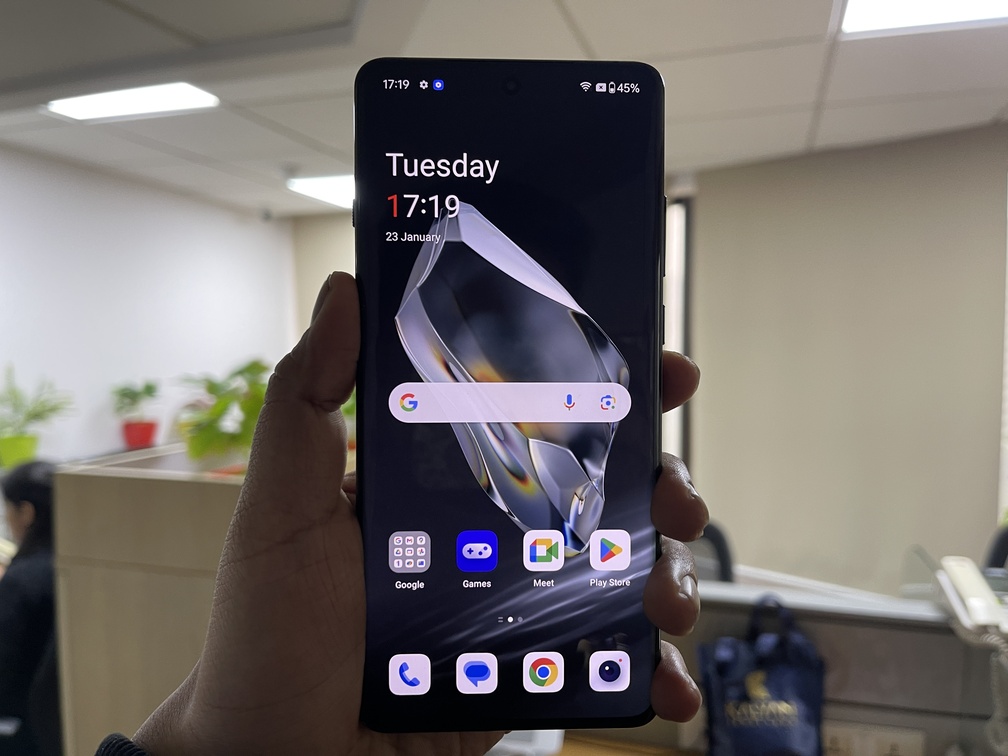
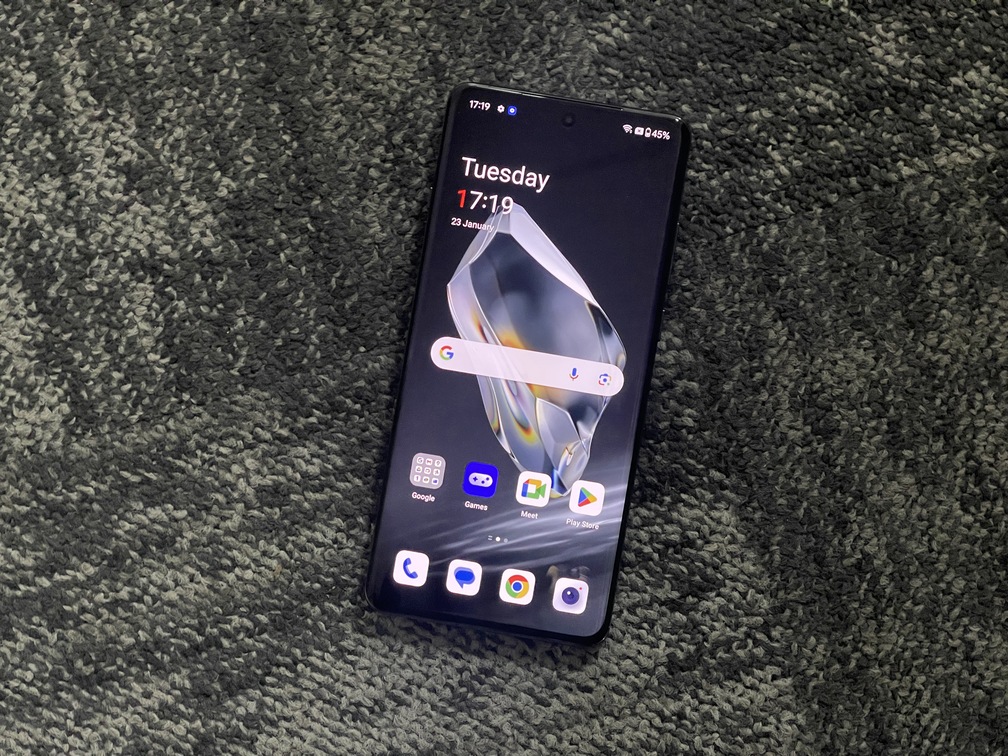
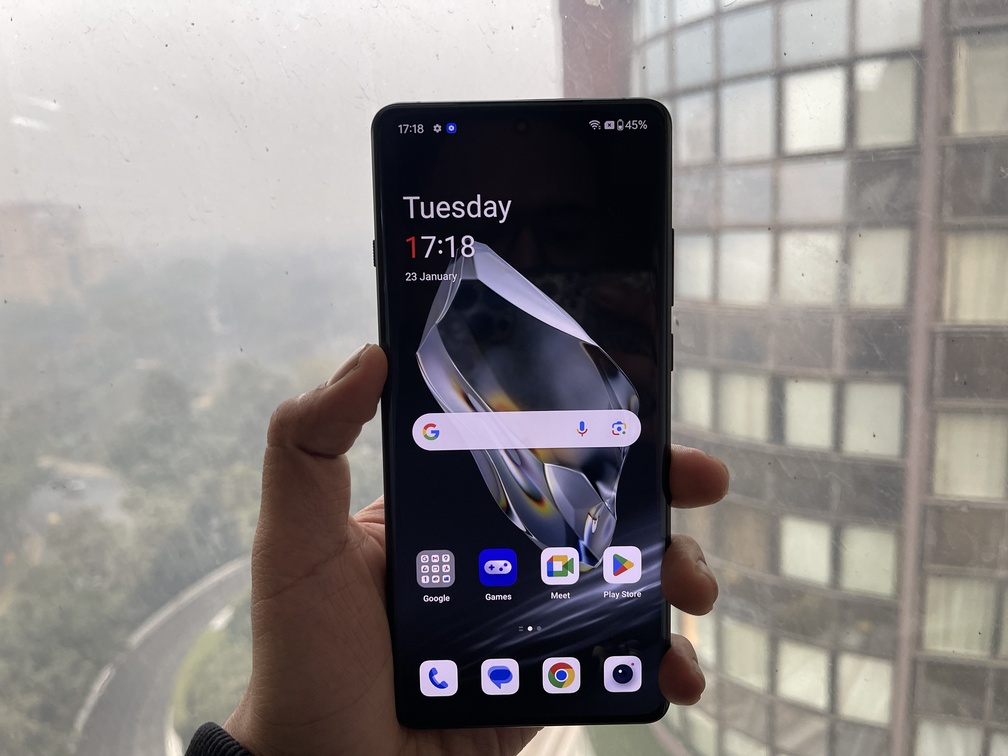
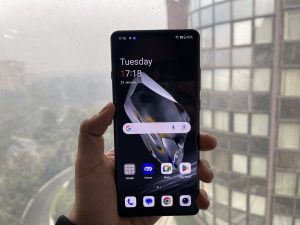
With a 6.78-inch LTPO display, enhanced with ProXDR and Dolby Vision support, the OnePlus 12 distinguishes itself as one of the brightest displays on the market with an impressive 4500 nits peak brightness.
In my experience, this feature proved invaluable, especially during the bright days of Delhi’s winter.
Whether I was reading news articles or browsing content, the screen’s legibility remained uncompromised, even under direct sunlight.
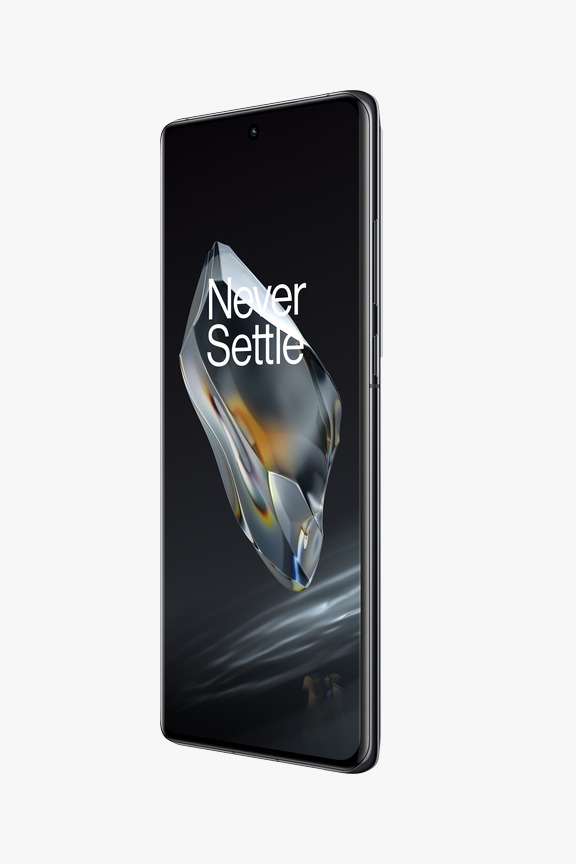
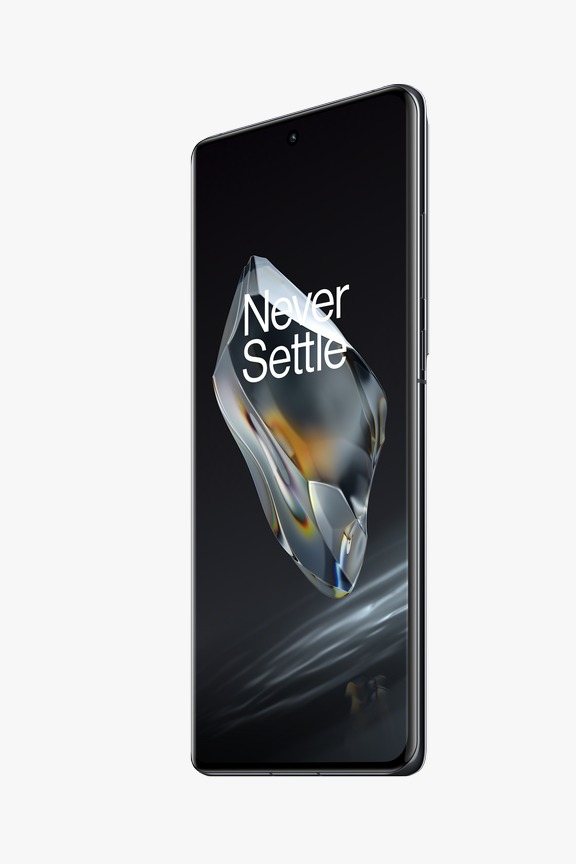
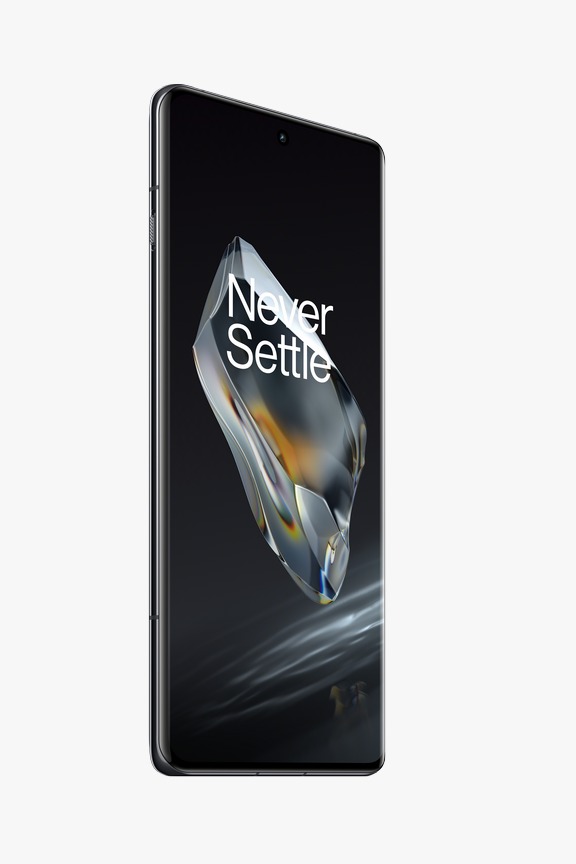
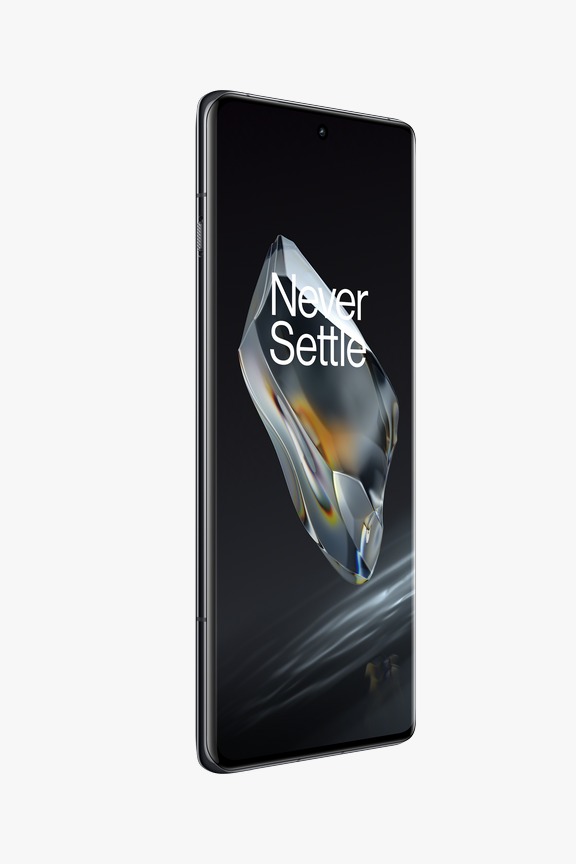
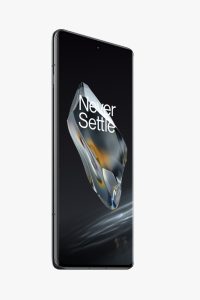
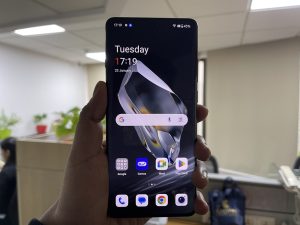
OnePlus also continues to favour curved screens over the prevalent flat-screen trend in flagship phones, and the OnePlus 12 is no exception.
Its display curves subtly, adding to the aesthetic appeal without compromising usability.
I feel that a novel addition is the ‘Aqua Touch’ feature, designed to enhance touchscreen responsiveness under wet conditions.
In my tests, whether unlocking the phone with a wet screen or navigating apps and social media, the phone responded flawlessly, unaffected by the moisture.
Of course, when it comes to visual performance, the OnePlus 12 doesn’t disappoint.
The display delivers sharp, vibrant images, making it a great device for watching videos on the move.
Complementing the visual experience is the phone’s audio capability.
Equipped with dual stereo speakers supporting Dolby Atmos, the OnePlus 12 produces loud, clear sound.
OnePlus 12: Cameras
OnePlus 12: Cameras
In my time with the OnePlus 12, I found that while it continues OnePlus’ tradition of excellent processor performance, its camera capabilities have notably improved.
The device is equipped with a trio of rear cameras: a 1-inch 50MP Sony LYT-808 main camera with a wide f1.6 aperture and larger sensor, a 48MP ultrawide, and a 32MP telephoto lens offering up to 3x optical zoom.
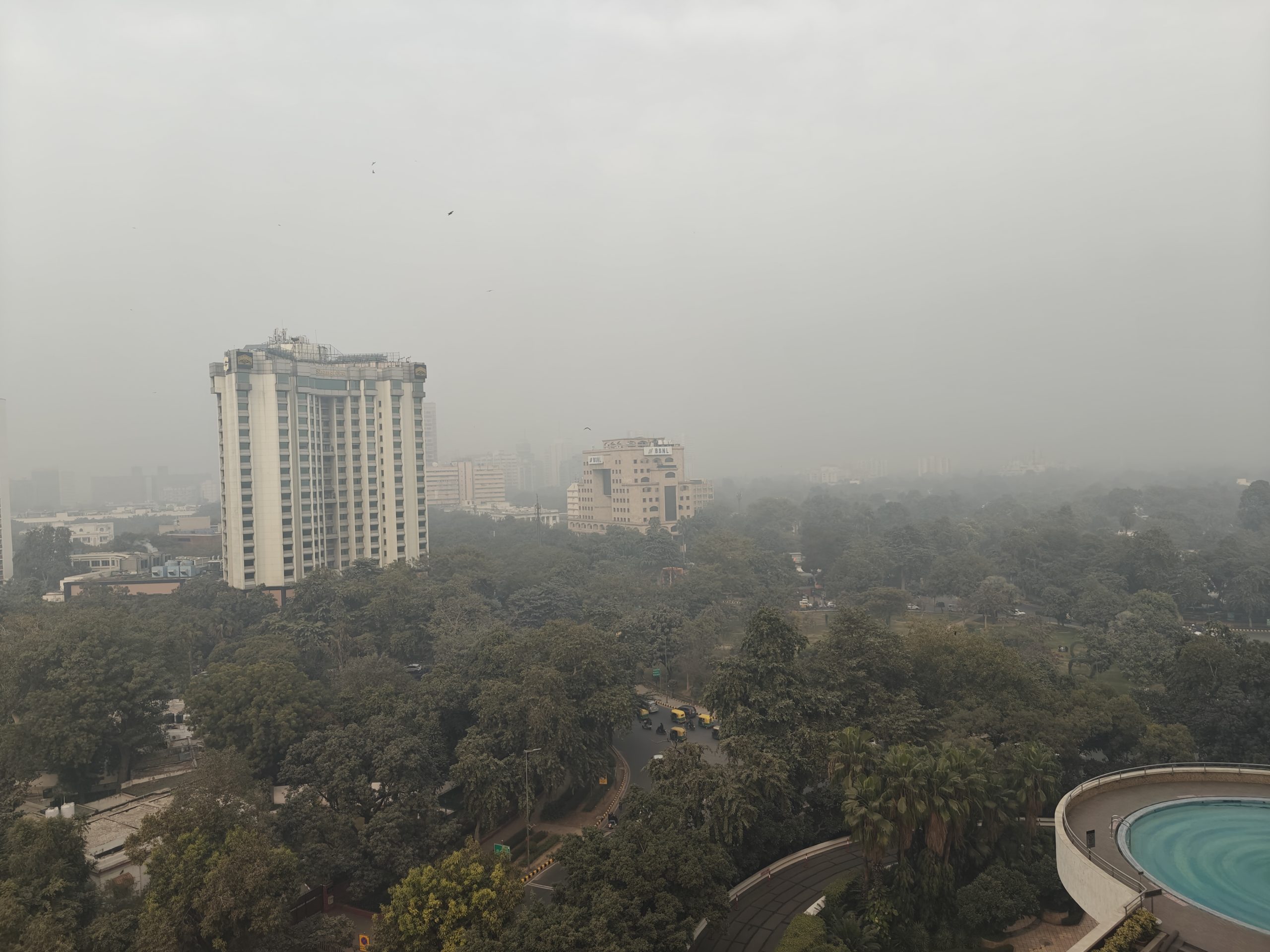
During Delhi’s foggy and smog-filled winter, a challenging environment for any optical apparatus, the main camera of the OnePlus 12 stood out.
It captured colours with remarkable accuracy and vibrancy.
In conditions where dull, polluted air usually hampers photo quality, the OnePlus 12 managed to pull out colours quite impressively.
The zoom functionality maintains clarity up to 6X, but I found the optimal performance at 3X zoom.
This partnership is evident in the colour reproduction of the photos, a feature I observed in last year’s OnePlus Open as well.
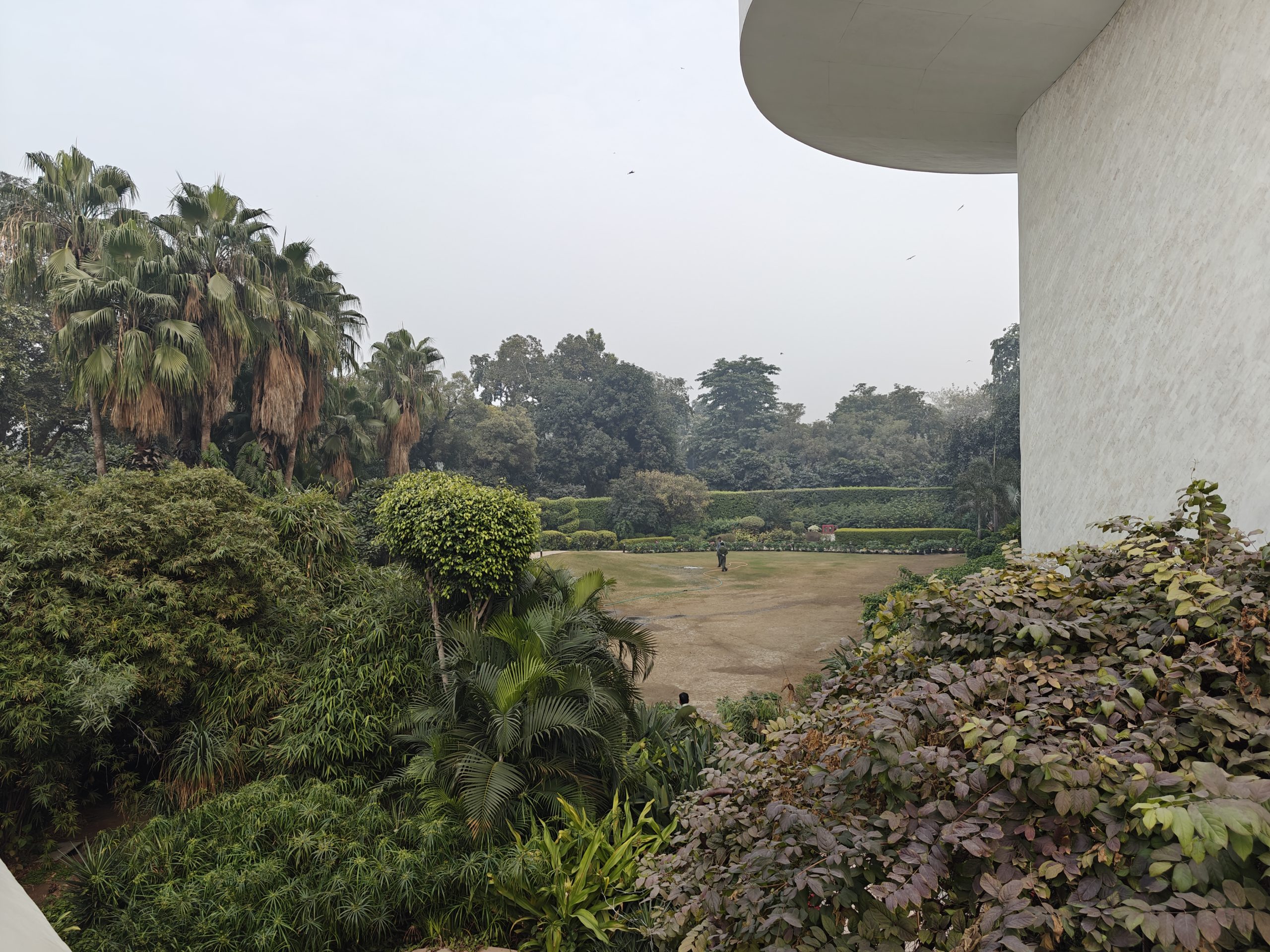
The images showcase high saturation levels along with a shallow depth of field that really pops, especially notable under the challenging lighting conditions I experienced – predominantly cold, snowy, and gloomy.
The phone handled these situations well, preventing overexposure of whites and preserving detail in various subjects.
Macro shots were particularly impressive, delivering crisp images with excellent colour and detail retention, as can be expected from a 32MP sensor.
OnePlus has taken a more restrained approach to AI in photography compared to brands like Samsung or Google.
While it doesn’t feature tools like Google’s Best Take or Magic Editor, the OnePlus 12’s photo processing strikes a balanced chord between the two giants’ imaging philosophies. However,
The front camera also sees an upgrade, moving from the 16MP sensor in the OnePlus 11 to a new 32MP sensor.
The selfies and portraits I took were pleasing, exhibiting good quality.
It’s worth noting that the final processed image often differs from what appears in the viewfinder but it is a common aspect in modern smartphone photography.
Overall, the OnePlus 12’s camera setup, while not revolutionary, marks a significant step up for OnePlus, particularly in terms of colour accuracy and handling challenging lighting scenarios.
OnePlus 12 Camera Day Samples
OnePlus 12 Camera Night Samples
OnePlus 12 Day Video
OnePlus 12 Night Video
OnePlus 12: Performance
OnePlus 12: Performance
Using the OnePlus 12, I immediately noticed its impressive speed and performance, a testament to its hardware and software integration.
This flawless performance extended to other demanding games like the BGMI and the fast-paced Asphalt 9: Legends.
OnePlus has also introduced a new feature in the OnePlus 12, the Dual Cryo-velocity Cooling System.
While it’s not the same groundbreaking technology showcased in the OnePlus 11 Concept at MWC 2023, this cooling system effectively prevents the device from overheating.
During my time with the phone, even under heavy usage, it remained cool to the touch, a feature particularly important for prolonged gaming or intensive tasks.
Beyond gaming, the OnePlus 12 excelled in everyday tasks. Whether it was navigating through the phone’s interface or juggling multiple apps, the experience was consistently fluid.
The combination of a high-end chip and software optimisation has definitely played a significant role here.
I also put the phone through several benchmarks.
Interestingly, even in its balanced performance mode, the default setting, the OnePlus 12 delivered more than adequate performance for everyday tasks.
The phone has a few OnePlus and Google apps, but nothing that overwhelms or clutches the notification panel with unwanted alerts.
The software is replete with new animations and a plethora of customisation options.
This flexibility makes the OnePlus 12 an appealing choice for both users who enjoy personalizing every aspect of their phone and those who prefer a straightforward, hassle-free experience.
Navigating the OnePlus 12’s UI, I noticed it feels very much like its predecessors, the OnePlus 11 and the OnePlus Open.
I wasn’t a big fan of OxygenOS initially, but after using the OnePlus Open extensively, the interface has grown on me.
Add to that the amount of OnePlus phonesI have used over the years and this familiarity adds to the overall comfort of using the OnePlus 12.
However, the software isn’t without its quirks.
For instance, I missed being able to access an app’s permissions screen directly from the app switcher, a feature commonly available on other Android devices.
Also, the OnePlus 12 gets 5 years of software upgrades as compared to the 7 years on the Pixel 8 and Galaxy S24 series.
Despite this, the range of customisation options and features I do like about OxygenOS outweigh these minor inconveniences.
OnePlus 12: Battery
OnePlus 12: Battery
The OnePlus 12’s battery performance is another area where the phone shines.
It is equipped with a substantial 5400mAh battery, which consistently powered me through a full day’s use, typically leaving about 40 percent battery life by night.
In terms of proper screen-on time, I can say that the device got about 6-7 hours.
OnePlus has always excelled in charging technology, and the OnePlus 12 is no exception.
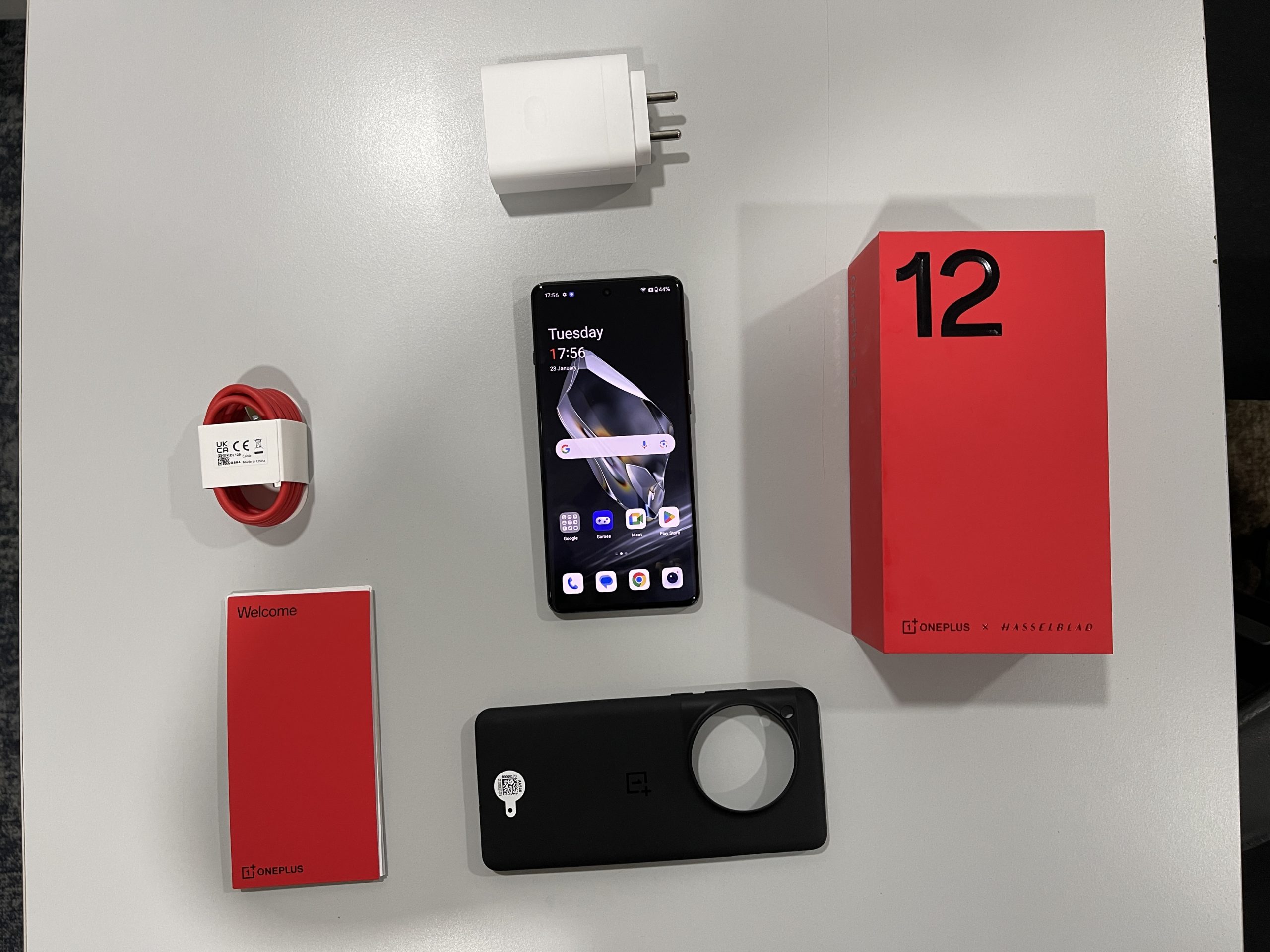
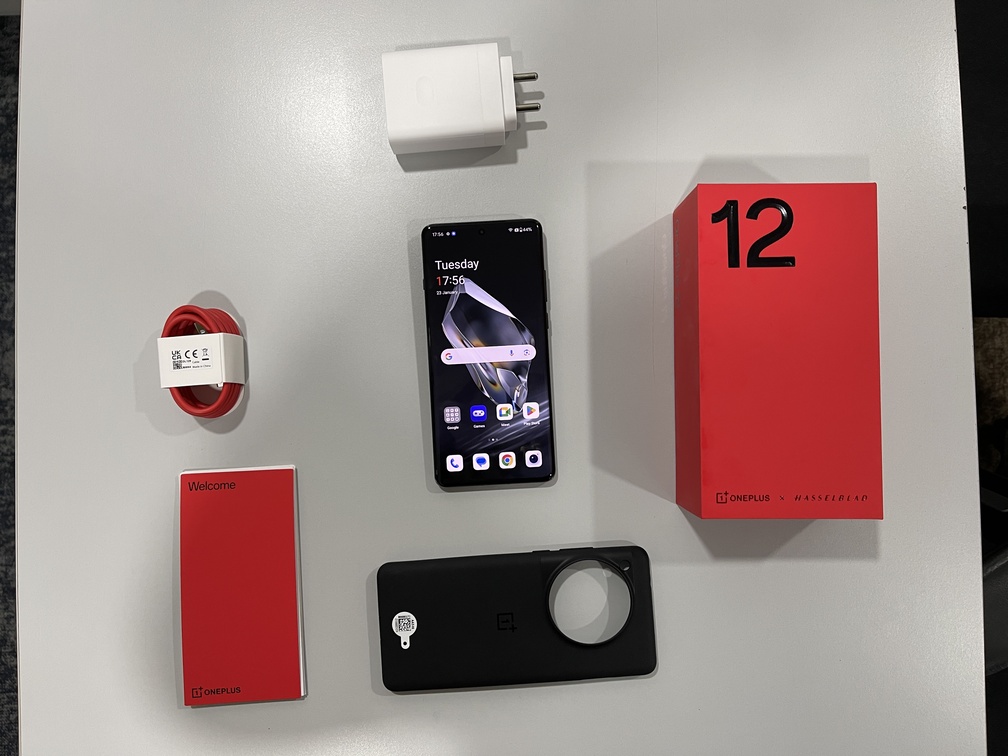
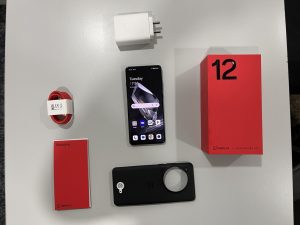
The device comes with an 80W SUPERVOOC wall adapter and the iconic red USB-A to USB-C cable.
While the phone supports up to 100W fast charging, I noticed that the charging speed is capped at 28W with non-OnePlus chargers.
A notable feature in this year’s model is the reintroduction of wireless charging, absent since theOnePlus 10 Pro.
The OnePlus 12 can charge wirelessly at a remarkable speed of up to 50W using the OnePlus AIRVOOC charger, though this is an additional purchase.
Even with standard wireless chargers, it can charge up to 15W, providing flexibility and convenience.
OnePlus 12: Final Verdict
OnePlus 12: Final Verdict
The OnePlus 12, while maintaining the brand’s legacy of powerful performance, shows incremental advancements rather than revolutionary changes.
It harnesses the power of the Snapdragon 3 chip and up to 16GB of RAM, ensuring smooth operation across various tasks, including demanding gaming.
However, the software update longevity doesn’t quite match up with industry leaders, an area where OnePlus could potentially improve.
The battery life is commendable, with a 5400mAh battery lasting a full day under typical use, supported by fast and wireless charging options.
The return of wireless charging is a notable improvement.
On the other hand, the phone’s design, display, and camera, though improved, follow a familiar trajectory rather than offering something substantially new.
High-Performance Processor: The Snapdragon 3 chip ensures seamless operation for gaming and multitasking.
Long Battery Life: A 5400mAh battery supports extensive use throughout the day.
Enhanced Camera System: Offers improved color accuracy and handles challenging lighting scenarios well.
User-Friendly Software: OxygenOS 14 provides a smooth, customizable user experience.
Versatile Charging Options: Supports both fast and wireless charging, offering flexibility and convenience.
Three Reasons Not to Buy OnePlus 12
Three Reasons Not to Buy OnePlus 12
Lack of Long-Term Software Support: Falls behind competitors in terms of software update longevity.
Design Redundancy: Lacks innovation in design, closely resembling its predecessors.
Charging Limitations with Non-OnePlus Chargers: Fast charging speed is restricted when using third-party chargers.
Top 5 Alternatives to OnePlus 12
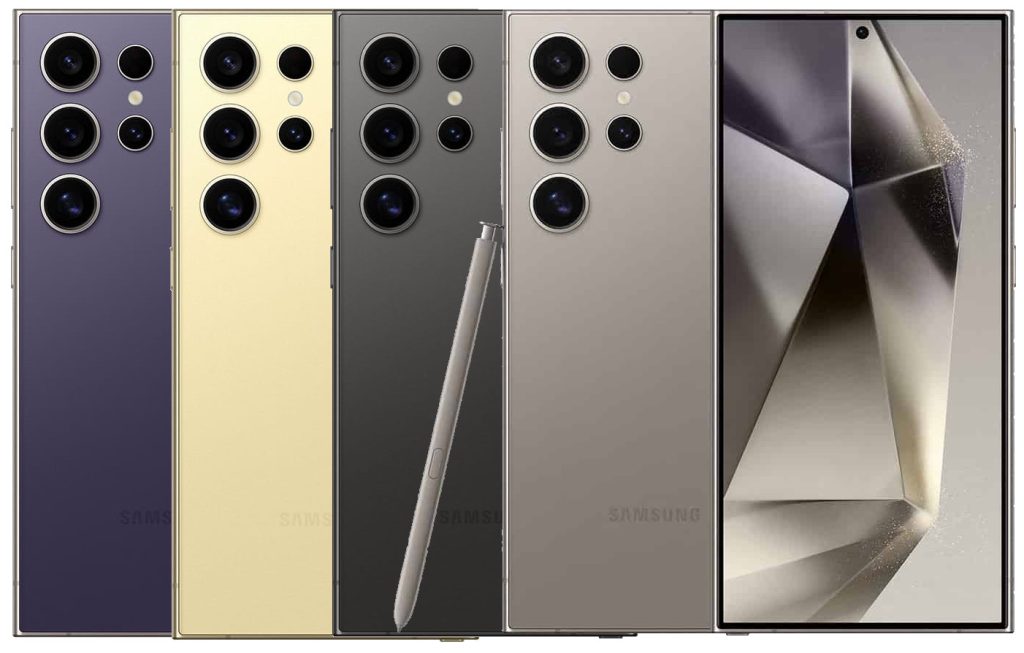
Samsung Galaxy S24
Samsung Galaxy S24
The Samsung Galaxy S24 is known for its long-term software support and innovative design.
It features a vibrant 6.2-inch display, a powerful Snapdragon 8 Gen 3 chipset, and a reliable triple camera setup.
The device also offers a variety of colour options and storage capacities. Its unique design and advanced features make it a popular choice among users.
Google Pixel 8
Google Pixel 8
The Google Pixel 8 stands out for its excellent software updates and unique AI photography features.
It is powered by Google’s own Tensor G3 chipset and comes with an impressive 50MP main camera.
The device also features a 6.2-inch OLED display and a 4575mAh battery. Its AI-powered camera features and software updates make it a top choice for photography enthusiasts and Android purists.
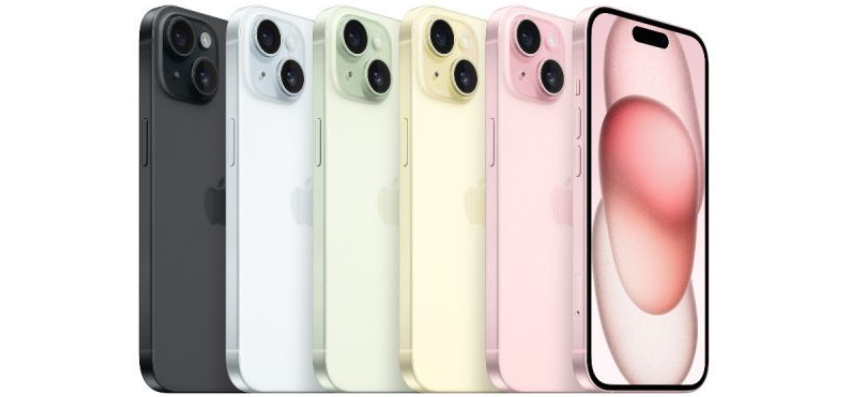
Apple iPhone 15
Apple iPhone 15
The Apple iPhone 15 is renowned for its seamless ecosystem integration and top-tier performance.
It features a new 48MP main camera, a brighter display, and a longer battery life.
The device also comes with a USB-C port and runs on the A16 Bionic chip6.
Its ecosystem integration and high performance make it a preferred choice for many user.
iQOO 12
iQOO 12
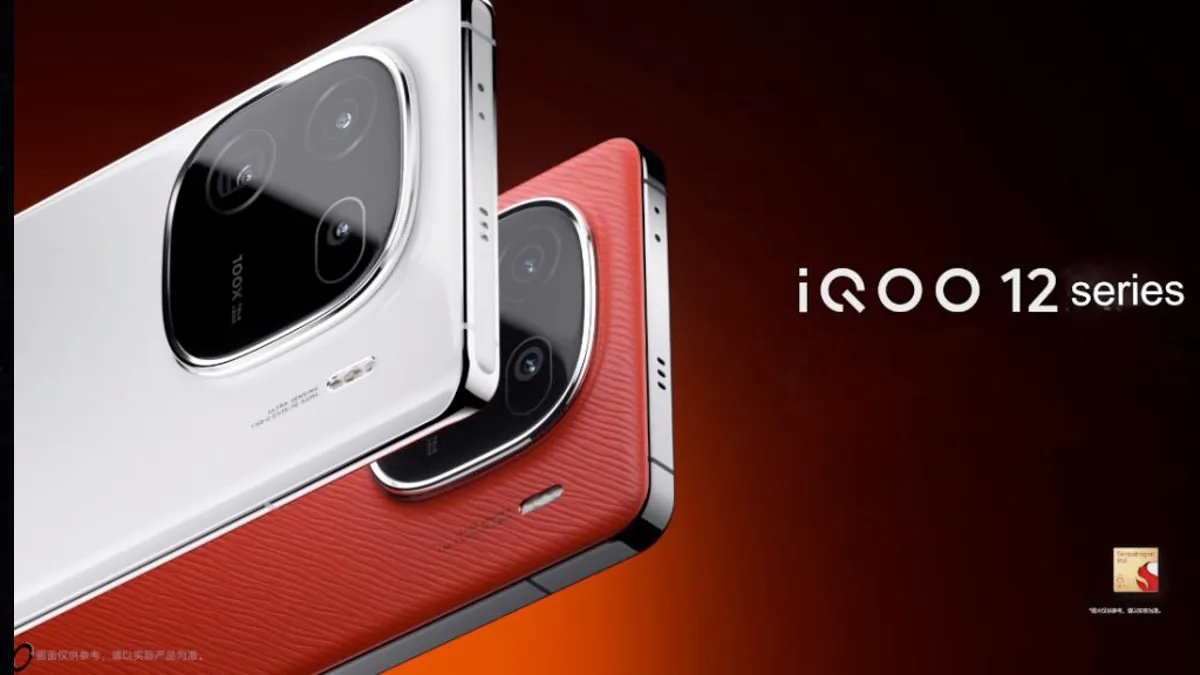
The iQOO 12 provides high-end specs at a competitive price point. It is powered by the MediaTek Dimensity 9300 chipset and features a 6.78-inch LTPO AMOLED screen with a 144Hz refresh rate.
The device also boasts a versatile quad-camera system and a large 5000mAh battery. Its high-end specs and competitive pricing make it an attractive option for users seeking flagship features at a lower cost.
Vivo X100
Vivo X100
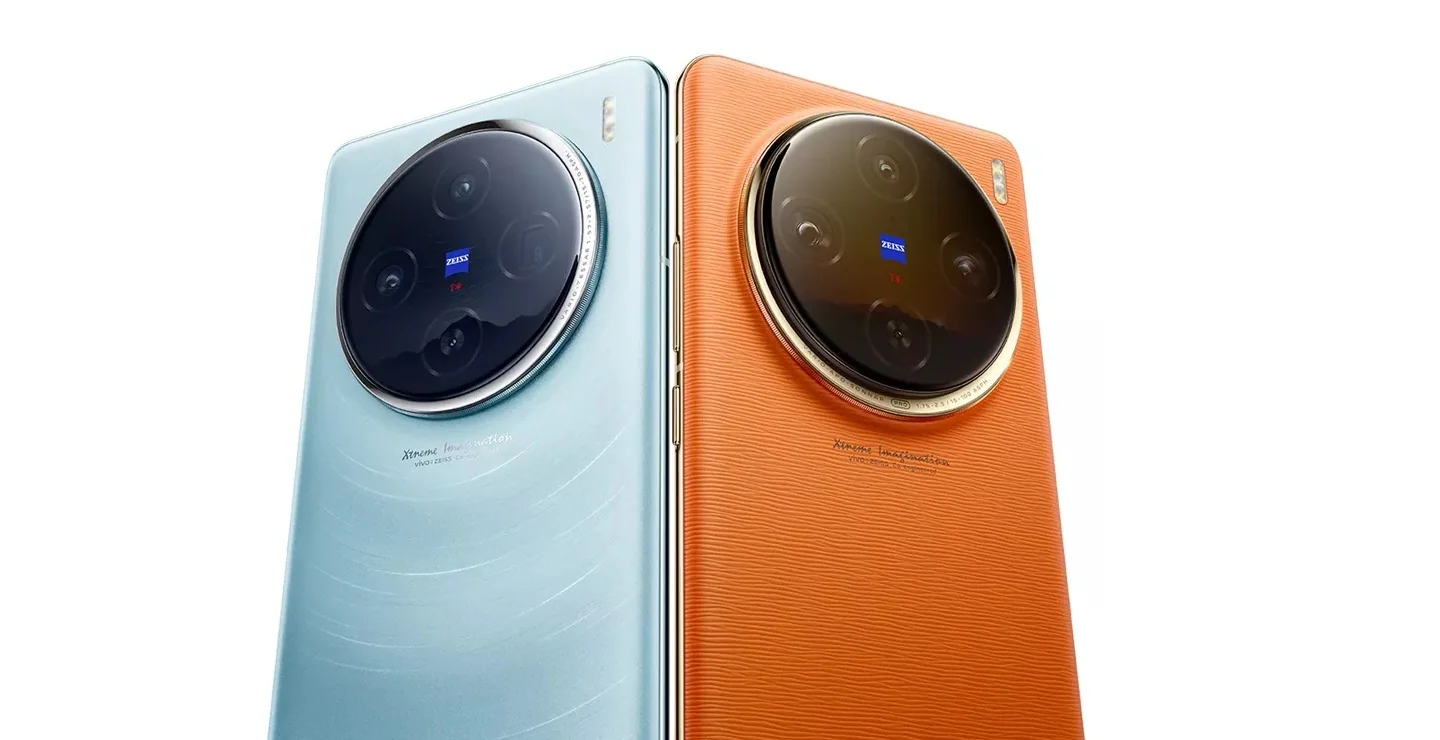
The Vivo X100 offers a balance of design innovation and performance. It features a 6.78-inch LTPO AMOLED screen, a MediaTek Dimensity 9300 processor, and a versatile quad-camera system.
The device also packs a 5000mAh battery and supports 120W fast charging. Its balance of innovative design and solid performance make it a compelling choice for many users.
Oneplus 12 Flowy Emerald
Oneplus 12 Silky Black
FAQs
What are the major upgrades in the OnePlus 12’s camera system?
The OnePlus 12 features an improved camera setup, including a 50MP Sony LYT-808 main camera, a 48MP ultrawide, and a 32MP telephoto lens, offering superior color accuracy and detail in various lighting conditions.
How does the display of the OnePlus 12 stand out?
The 6.78-inch LTPO display of the OnePlus 12, supporting ProXDR and Dolby Vision, offers a peak brightness of 4500 nits, ensuring clear visibility even in bright sunlight.
What makes the OnePlus 12 a powerful device?
Powered by the Snapdragon 3 chip and available with up to 16GB of RAM, the OnePlus 12 delivers exceptional performance, particularly noticeable in gaming and multitasking.
What are the battery specifications of the OnePlus 12?
The OnePlus 12 is equipped with a 5400mAh battery, supporting 80W SUPERVOOC and up to 50W AIRVOOC wireless charging, providing long-lasting usage and fast charging options.
How user-friendly is the OnePlus 12’s interface?
Running on OxygenOS 14 based on Android 14, the OnePlus 12 offers a customizable and intuitive interface, with a balance of new animations and user-friendly features.
Smooth Beyond Belief: OnePlus Debuts the OnePlus 12. Details?
OnePlus officially launched its latest flagship smartphone, the OnePlus 12, at Pragati Maidan in New Delhi.
Representing the culmination of OnePlus’ decade-long pursuit for excellence and innovation, the OnePlus 12 boasts the Snapdragon® 8 Gen 3 Mobile Platform, the proprietary Trinity Engine, the 4th Gen Hasselblad Camera for Mobile, a new 2K 120Hz ProXDR display, 100W SUPERVOOC fast charging, 50W AIRVOOC wireless charging, and OnePlus’ iconic modern elegant design, delivering an unparalleled flagship experience that is incredibly fast and smooth.
“As we celebrate the tenth anniversary of OnePlus with our loyal users worldwide, we are thrilled to introduce the OnePlus 12 — an all-round flagship phone that embodies our decade-long leadership in technology,” said Pete Lau, Founder of OnePlus.
“With our ‘Never Settle’ mantra, OnePlus is dedicated to bringing innovative ideas to life and disrupting the mobile industry.
With the OnePlus 12, we have created a true masterpiece, combining advanced technologies from OnePlus and our partners to make it one of the best flagship smartphones in the year 2024.”
How does OnePlus 12 give Long-lasting Fast and Smooth Experiences ?
The OnePlus 12 is designed to deliver an uncompromising performance.
At the heart of the OnePlus 12 is Qualcomm’s latest Snapdragon® 8 Gen 3 mobile platform, an ultra-intelligent chip promising top-tier performance and power efficiency with up to 30% improved CPU performance and a 25% enhancement in GPU performance.
Empowered by the proprietary Trinity Engine and equipped with up to 16GB of LPDDR5X RAM and 512GB of UFS 4.0 ROM, the OnePlus 12 can keep applications readily available in the background for 72 hours1.
In addition, OnePlus 12 is the first Snapdragon 8 Gen 3 device to be approved as Snapdragon Spaces™ Ready.
This will allow developers to bring their XR ideas to life and explore the full potential of head-worn AR.
The OnePlus 12 introduces an industry-leading Dual Cryo-velocity VC Cooling System, featuring a 3D capillary dissipation structure and a dual VC design with OnePlus’ largest-ever surface area covering 9,140 mm², revolutionizing the flow of the coolant to significantly reduce overheating.
Crafted using a unibody die-casting manufacturing process, the larger VC consistently absorbs heat from the smaller VC to accelerate the entire heat dissipation process, making the OnePlus 12 a versatile companion for activities such as marathon gaming sessions, pro-level video editing, and concurrent charging without risk of overheating.
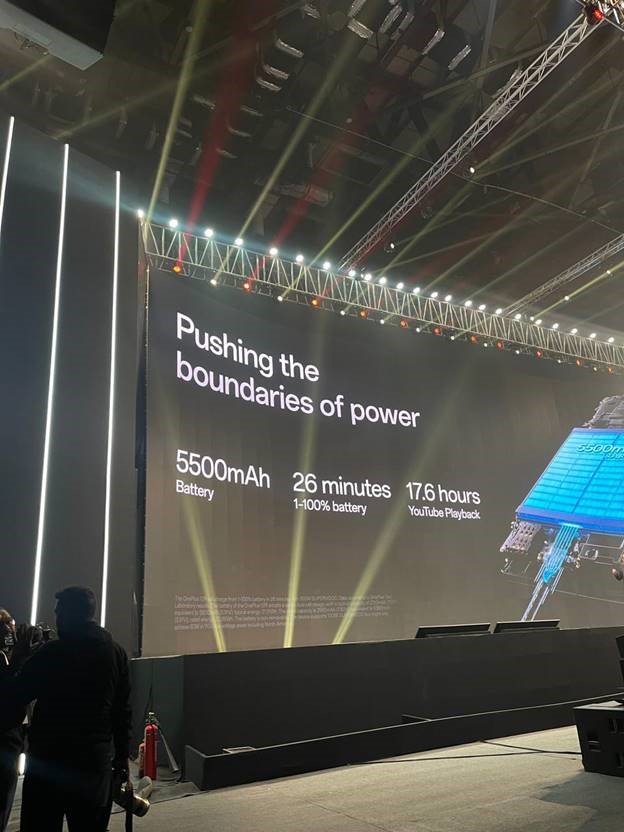
With support for 100W SUPERVOOC Endurance Edition and a 5400mAh big battery, the OnePlus 12 reduces the time spent tethered to an outlet, allowing users to use the device more freely.
The OnePlus 12 takes only 26 minutes from 1% to 100% battery capacity courtesy of its 100W SUPERVOOC fast-charging function.
In North America, the OnePlus 12 charges with 80W SUPERVOOC Endurance Edition that can take only 30 minutes from 1% to 100% battery capacity.
The long-awaited 50W AIRVOOC wireless charging also makes its debut in the OnePlus 12, providing a reliable alternative for those who prefer a cable-free lifestyle.
Harnessing the power of a twin-battery design with each cell charging at an impressive 25W, the 50W AIRVOOC outpaces even some of the most advanced wired charging solutions while offering unmatched efficiency.
As a result, the OnePlus 12 has proven its capability to run Genshin Impact at maximum settings, achieving an impressive and consistent frame rate of 57.4FPS3 (Frames Per Second) during a rigorous 3-hour testing session.
Furthermore, its exceptional battery performance enables it to sustain 5.5 hours of continuous video shooting at 1080p resolution, operating at 30Hz.
In addition, the all-round flagship experience on the OnePlus 12 is boosted further by powerful and stable wireless signal performance.
The omnidirectional antenna design, with a total of 16 antennas, enables the OnePlus 12 to unleash the full potential of high-speed connectivity.
OnePlus 12 features Authentic Hasselblad Style Photography. Details?
The OnePlus 12 stands out as a photography master with a professional-grade camera system featuring flagship hardware and advanced image processing algorithms developed in collaboration with Hasselblad.
The phone takes the flagship-level triple camera system of the OnePlus 11 and brings it to the next level with an industry-first 50MP Sony’s LYT-808 wide-angle camera.
Featuring a large ƒ/1.6 aperture and 1/1.4-inch sensor size, the camera offers a greater depth of field while compensating for the loss of light to deliver crystal-clear images with vibrant colors and intricate details even in low-light environments.
Red glare and artefact reduction are also supported to help capture even more true-to-life images.
As the first OnePlus single-screen flagship to feature a best-in-class OV64B 3x periscope telephoto camera with 6x in-sensor zoom, the OnePlus 12 offers a 3x to 120x photographic zoom range that gives users the flexibility to capture spontaneous moments and highly expressive portraits from afar.
This unrivalled periscope telephoto lens not only ensures high image quality but also perfectly replicates natural lights and shadows.
With its 114° field of view in an impressive 48MP resolution, the OnePlus 12’s ultra-wide camera is more than just the icing on the cake, instead empowering users to capture a broader perspective on life that still retains the finest details.
OnePlus’ latest RAW HDR algorithm further enhances the phone’s ability to control light by understanding visual landscapes and harmonizing the interplay between highlights and shadows.
By rendering optimal brightness, balanced exposure, authentic color saturation, and seamless vignette control, the OnePlus 12 makes it possible to capture DSLR-like images that mirror reality with impeccable resolution and even greater precision.
The newly upgraded Hasselblad Portrait Mode simulates the nuances of bokeh and flare effects of Hasselblad’s classic lenses from 1x to 3x, adding additional visual angles while imparting a natural depth of field to create transitions between subject and background that are seamless beyond belief.
Does OnePlus 12 have a Modern Elegant Design?
The OnePlus 12 is a masterpiece in design that pays tribute to a decade of OnePlus’s daring spiring and bold attitude.
Drawing inspiration from the intricate craftsmanship of luxury watches, the phone inherits the timeless modern elegance of the OnePlus 11 5G while adopting a hollow-curved design that mirrors the precision found in the delicate inner workings of a finely polished timepiece.
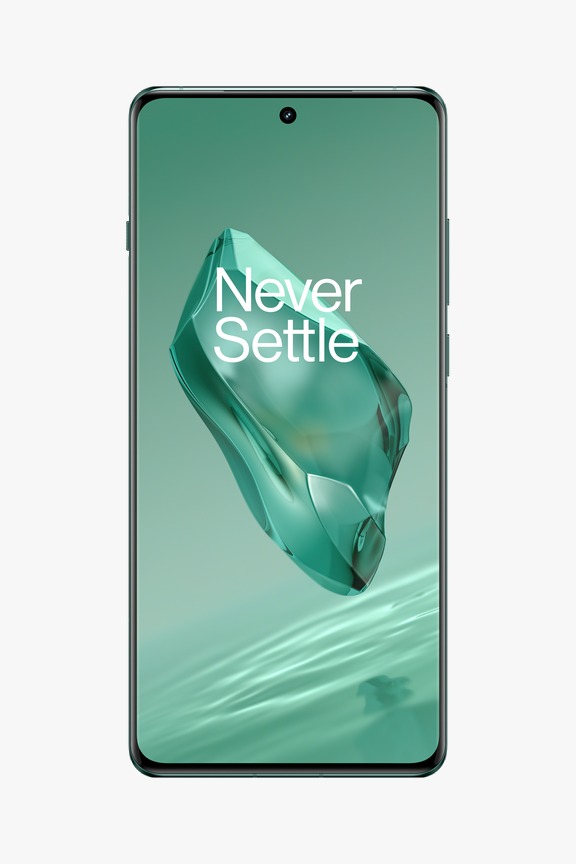
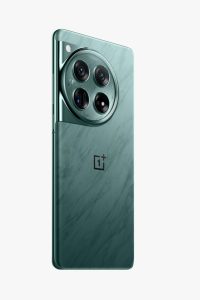
The OnePlus 12 is available in two colorways — Flowy Emerald and Silky Black. Inspired by the breathtaking spectacle of the braided Dart River in New Zealand, where emerald ribbons pulsate with vibrant energy, Flowy Emerald captures the essence of natural wonders and employs state-of-the-art AG technology and a precision etching process to bring a premium texture with exquisite dynamism to the phone’s glass back cover.
What’s the Price & Availability of OnePlus 12?
The OnePlus 12 will be launched in two exciting variants, the 12/256GB option which will be priced at INR 64,999 and the 16/512GB option which will be priced at INR 69,999 will go on sale at 12:00 PM on 30th January.
The pre-booking for the OnePlus 12 starts from 8:45 PM on 23rd January. Customers can get a free trial of Google One & YouTube Premium on OnePlus 12. Find more details on OnePlus.in.
Customers can avail an instant bank discount of INR 2,000 with ICICI credit card and OneCard.
Customers can avail a special exchange bonus of up to INR 10,000 while purchasing the OnePlus 12.
Customers can also buy the OnePlus 12 with OnePlus Easy Upgrades and get 35% assured value at the end of the 24 months.
A special pre-booking offer is available for INR 1,999, where customers can pre-order the OnePlus 12 from 23rd January and also avail no cost EMI for 12 months.
The first 1,000 customers who order the OnePlus 12 are entitled to exclusive OnePlus Merchandise.
OnePlus 12 and users can link to RCC and avail a special coupon discount of INR 3,000 discount while purchasing the OnePlus Pad.
Customers can also avail of 50% off on the Accidental Damage Protection Plan, available on OnePlus.in, OnePlus Store App and OnePlus Experience Stores.
How does OnePlus 12 give Cinematic Visual and Audio Experiences?
The OnePlus 12 harmonizes an ultra-bright display with cinema-like sound to bring users flagship audiovisual experiences like never before.
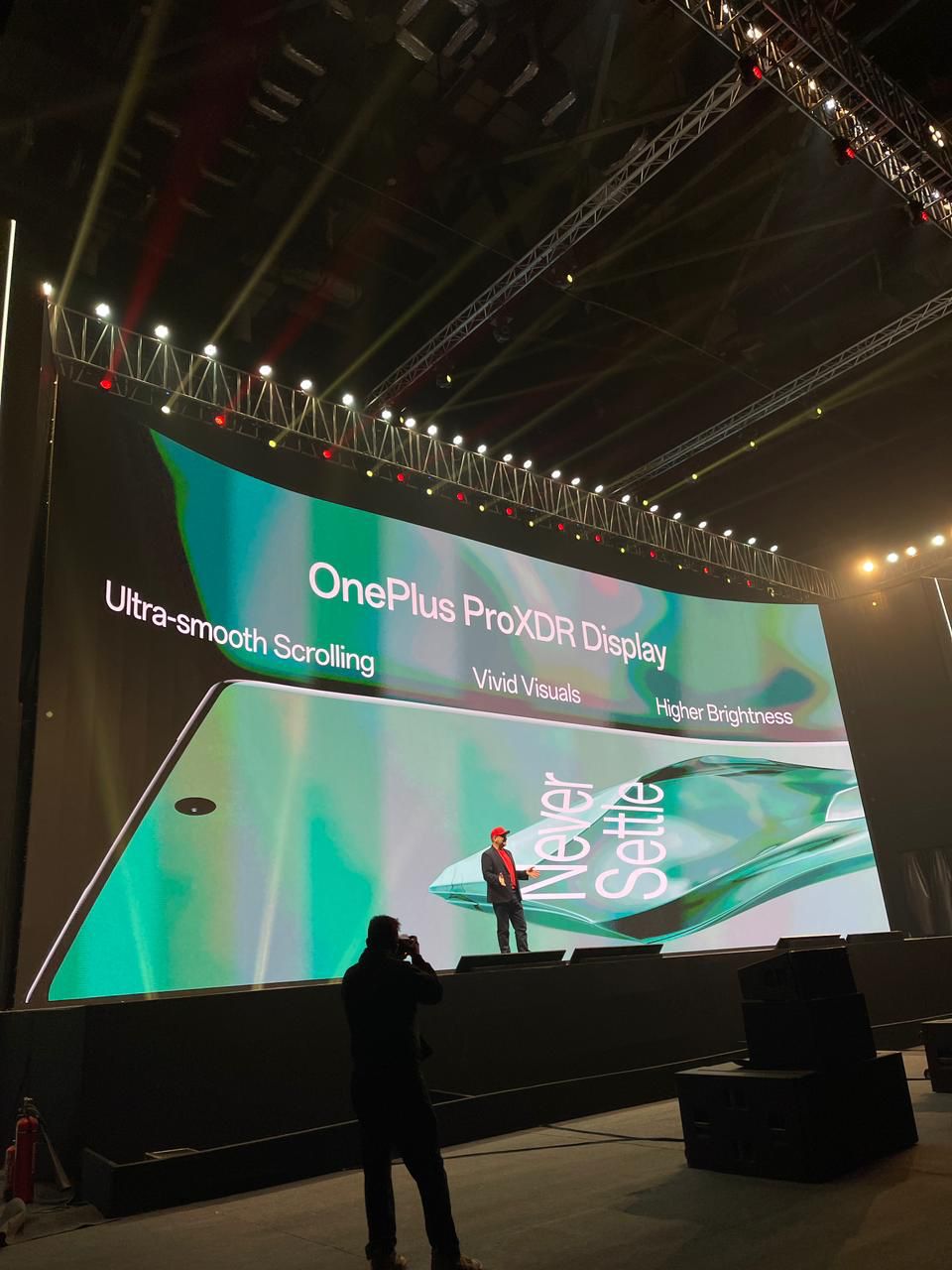
At the centre of this experience is a 2K 120Hz ProXDR display powered by BOE’s brand-new blue diamond pixel layout, which enables the OnePlus 12 to reach a peak brightness of 4,500 nits – the brightest-ever screen on a OnePlus smartphone – with the ability to deliver ultra-realistic, silky-smooth visuals for a premium viewing experience.
ProXDR further ensures that lossless images with high dynamic range and a rich color spectrum can be enjoyed in full detail on the phone’s stunning display.
This innovative display sets or matches 18 smartphone display performance records of DisplayMateA+. It also receives Intelligent Eye Care certification by TÜV Rheinland thanks to its ability to effectively reduce blue light emission and intelligent color temperature adjustment in response to changing ambient conditions.
Fitted with LTPO technology, the display can automatically switch between a refresh rate of 1Hz to 120Hz based on user preferences and specific usage scenarios while keeping power consumption comparatively low.
Dolby Vision is also supported to elevate the overall visual experience with ultra-vivid colors, crisp contrast, and intricate details.
For avid gamers seeking hyper-realistic and ultra-immersive mobile gaming experiences, the OnePlus 12 offers the perfect solution in the form of HyperRendering.
Built upon OnePlus’ in-house graphics algorithms and a dedicated Pixelworks X7 Independent Visual Processor, this groundbreaking visual quality enhancement technology empowers the OnePlus 12 to deliver super-resolution picture quality with remarkable efficiency, achieving 120Hz frame rate for all games through frame Interpolation technology2 while ensuring real-time HDR color calibration.
For enhanced touch accuracy, Aqua Touch can detect wet fingers and water droplets on the screen and compensate accordingly, significantly alleviating issues related to sweaty hands and mistouches during both intense gameplay and everyday use.
Complementing the high-quality visuals are immersive 3D sound spaces that add the finishing touch to the all-round entertainment experience.
When paired with the OnePlus Buds 3 or other OnePlus earbuds with spatial audio and in-app customization support, the OnePlus 12 delivers simultaneous playback of different audio content in multiple directions to create a flagship 3D Spatial Audio experience.
Thanks to the inclusion of dual stereo speakers with Dolby Atoms, dedicated spatial audio can even be enjoyed without earbuds, offering cinema-level audio quality with reduced acoustic resonance.
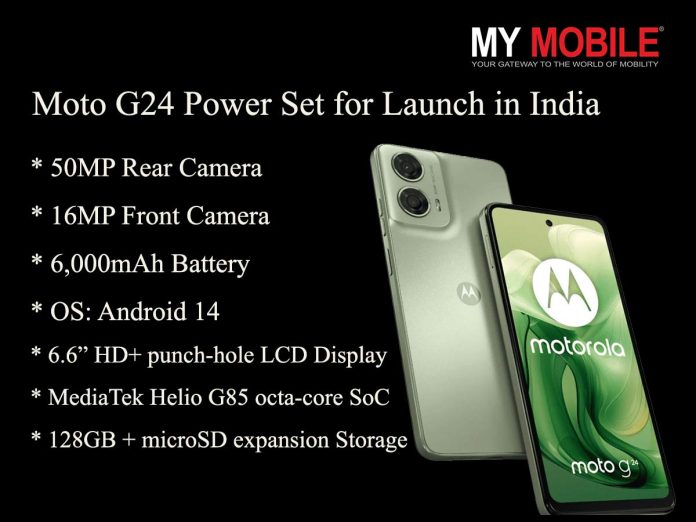
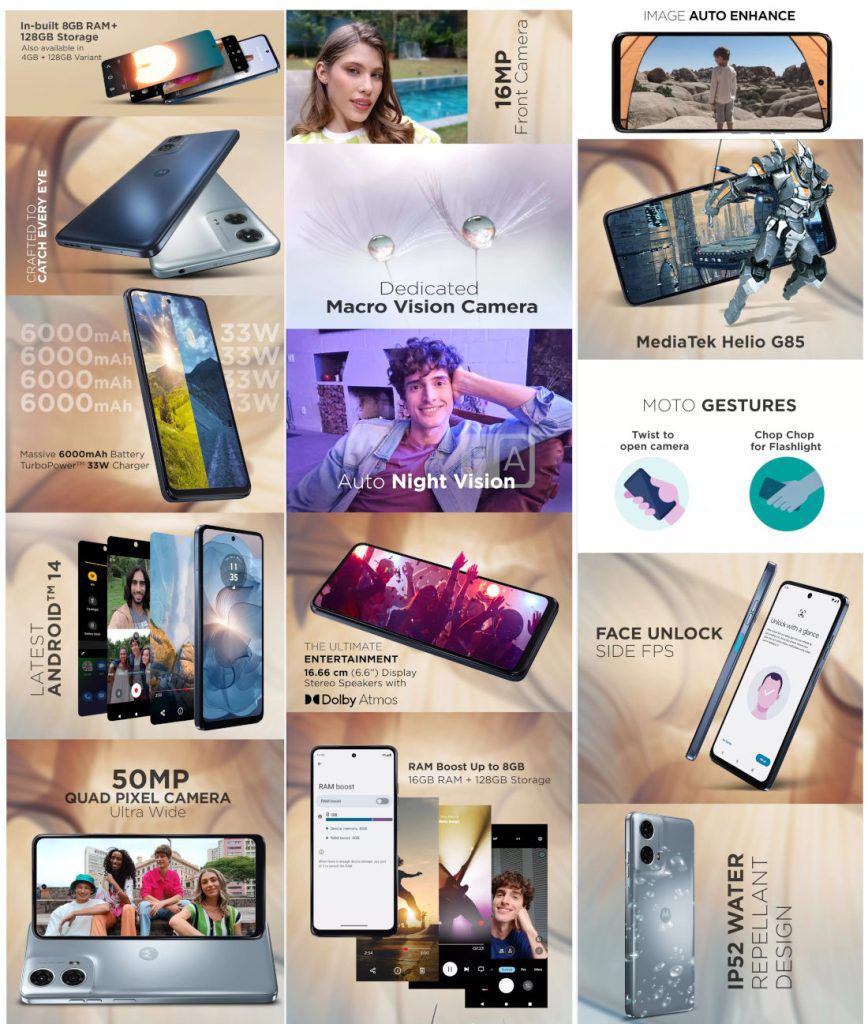
The Moto G24 Power is set to feature a 6.6-inch display with a centrally located punch-hole cutout, offering a modern and immersive viewing experience.
Photography enthusiasts can look forward to a 50MP dual-camera setup on the rear.
The phone also includes a 16MP front-facing camera for high-quality selfies.
Moto G24 Power: Pricing Expectations
Under the hood, the device is powered by an octa-core Helio G85 SoC, ensuring smooth performance.
It will be available in two RAM configurations – 4GB and 8GB, along with 128GB of internal storage, expandable via a microSD card.
What is the screen size and type of the Moto G24 Power?
The Moto G24 Power will feature a 6.6-inch display, providing users with a large, immersive screen for viewing and interaction.
What kind of processor does the Moto G24 Power use?
The phone is powered by an octa-core Helio G85 SoC, offering efficient and responsive performance for a variety of tasks.
What are the camera specifications of the Moto G24 Power?
The Moto G24 Power boasts a 50MP primary rear camera along with a 16MP selfie camera, catering to photography enthusiasts.
How long does the battery last on the Moto G24 Power, and does it support fast charging?
With a 6,000mAh battery and 33W fast charging, the Moto G24 Power ensures extended use and quick recharge times.
What are the security features of the Moto G24 Power?
The smartphone includes a side-mounted fingerprint sensor and face unlock technology, providing users with secure and convenient access.
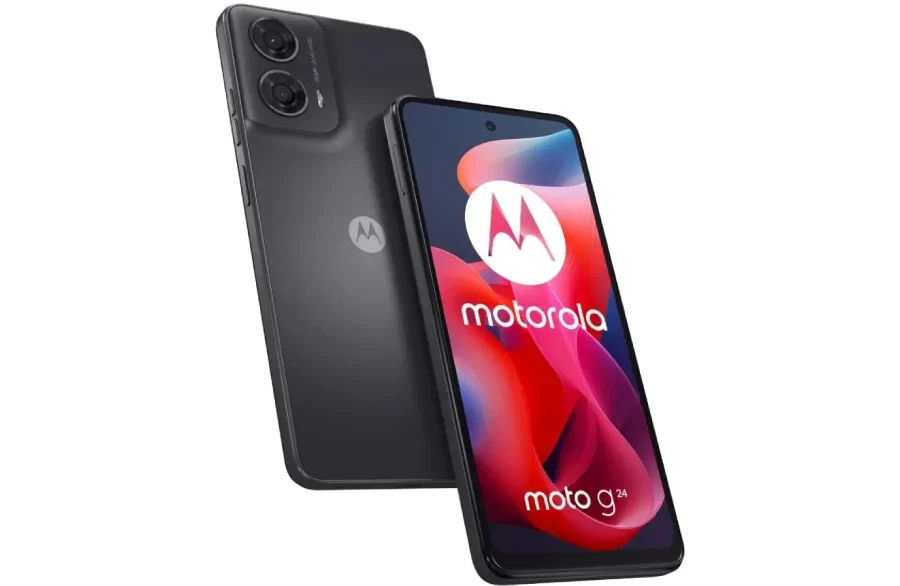
How is the Design of Moto G24 according to the renders ?
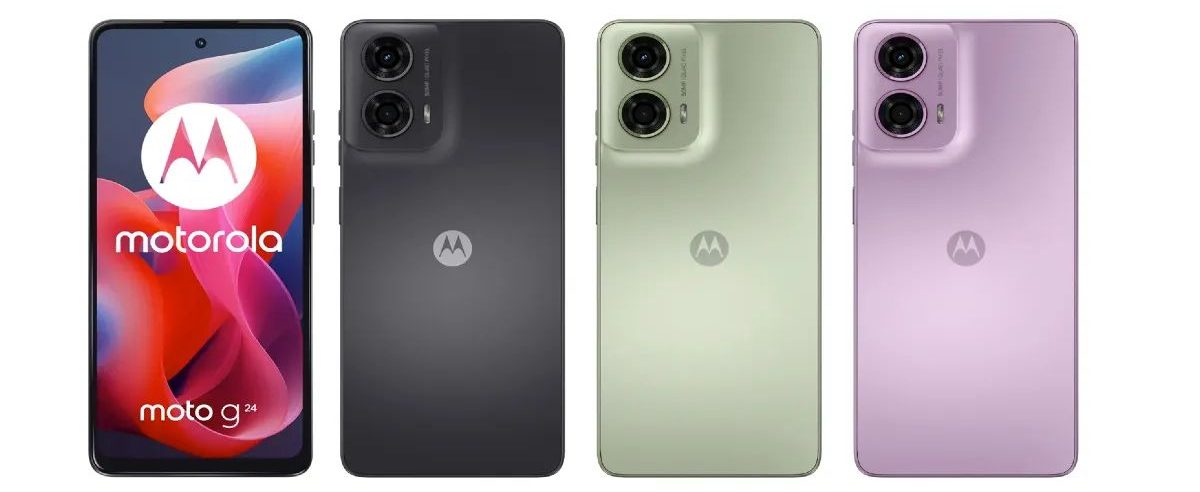
The Moto G24 renders, as exclusively reported by Appuals, show a centre-positioned punch-hole cutout for the selfie snapper, flat edges and reasonably slim bezels.
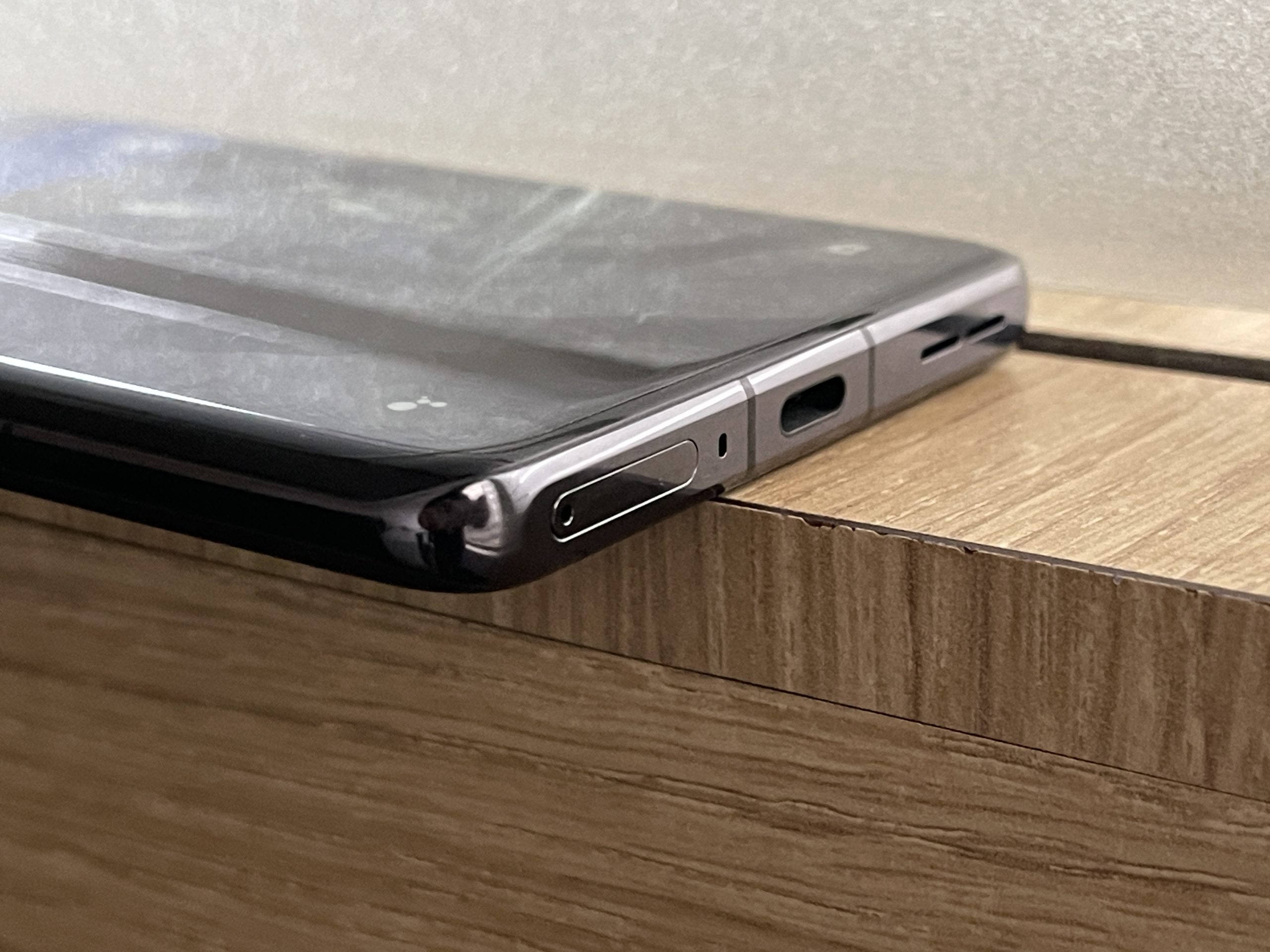
The volume rocker and power buttons are present on the right edge. We see the SIM tray section on the left edge.
Moving to the back, you see a square module to house dual-camera sensors and an LED flash. There is a Moto logo on the back panel as well.
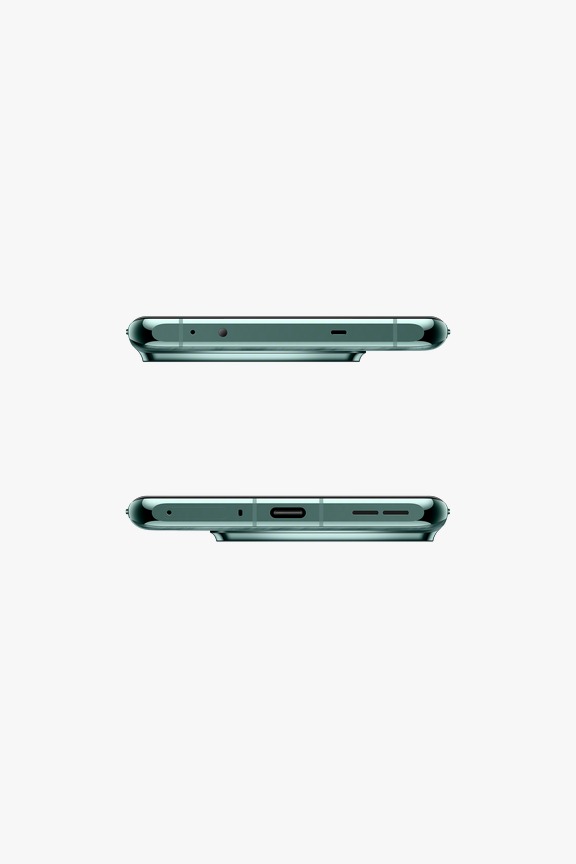
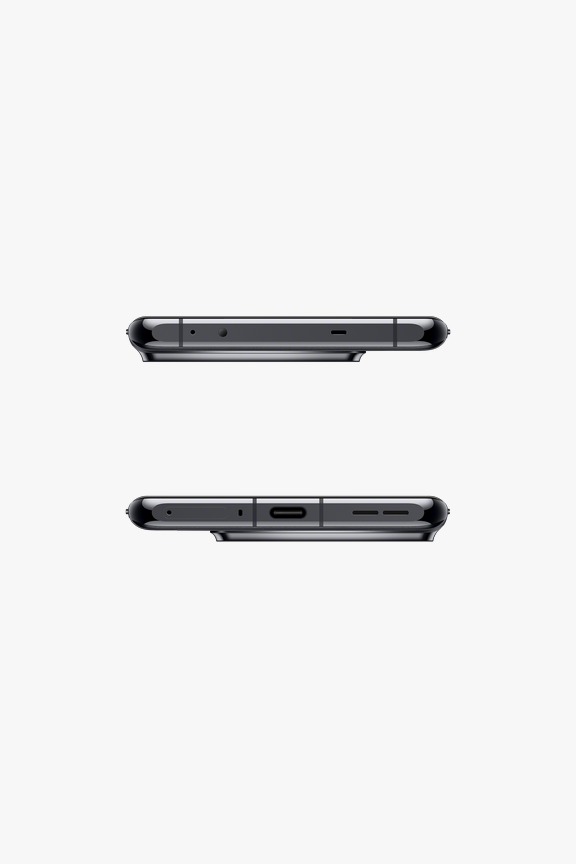
We see a 3.5mm audio jack and Dolby Atmos text on the top.
The USB Type-C port for charging, speaker vents, and a microphone are at the bottom.
We can see the phone in Black, Green, and Purple colour options.
Moto G24 Power India launch confirmed. Details?
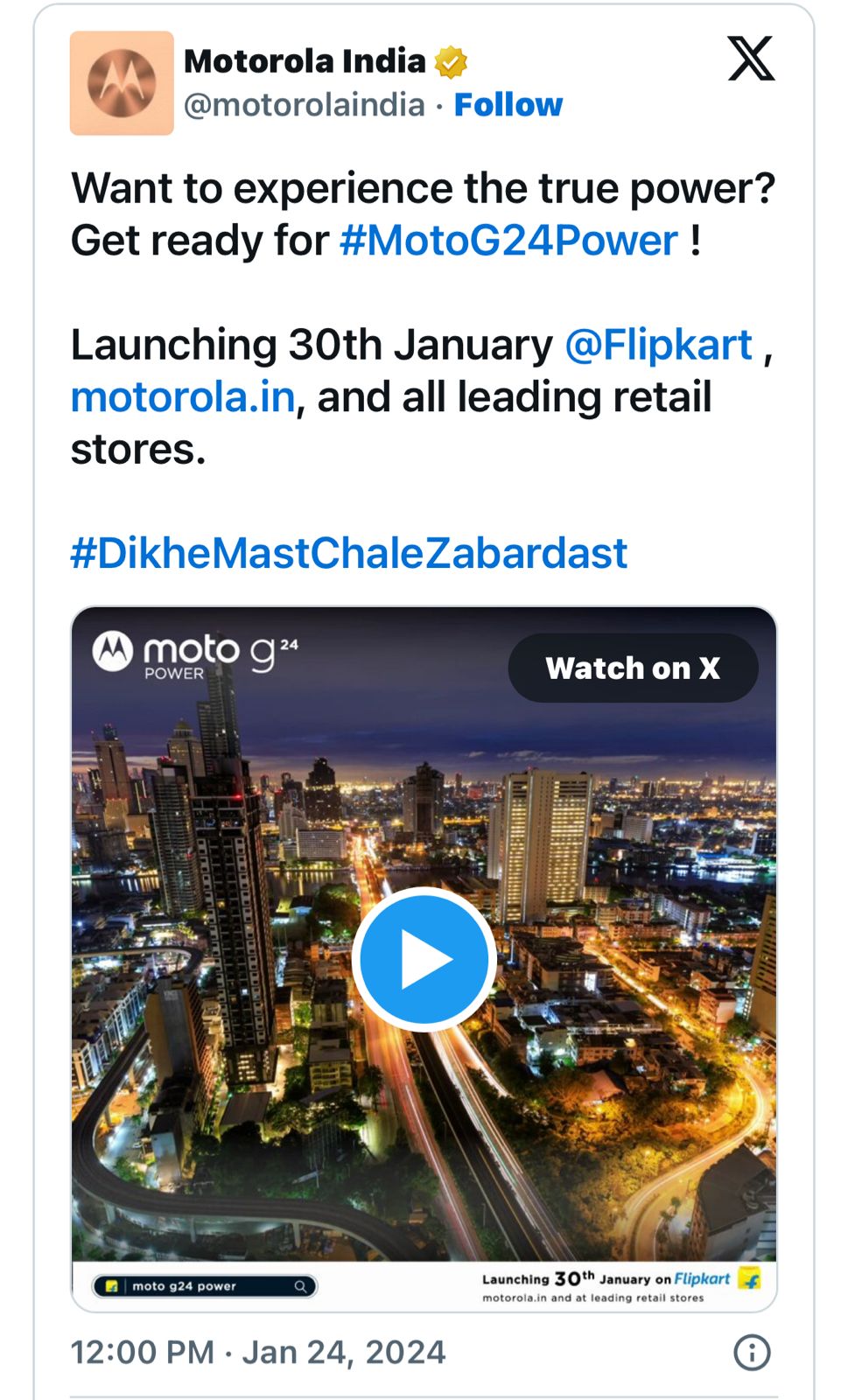
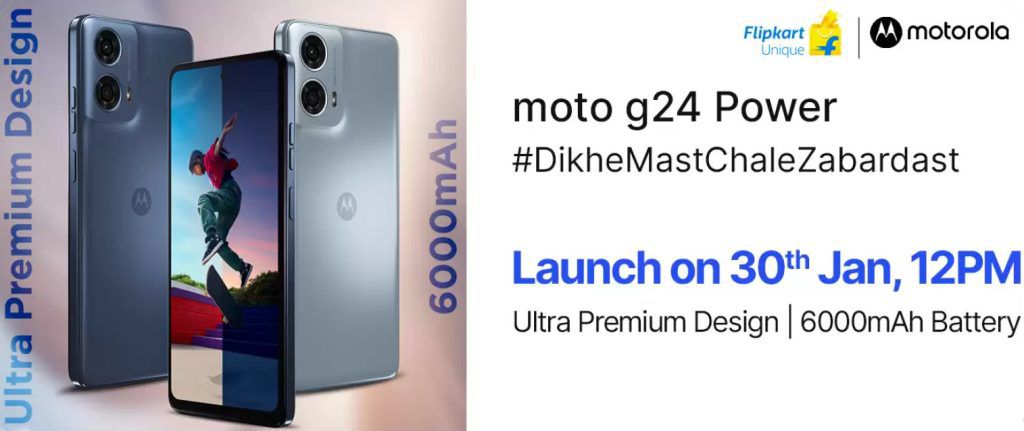
Motorola announced on its X (formerly Twitter) handle that it will announce the G24 Power in India on January 30. It will be available for purchase from the brand’s official website, Flipkart, and retail stores across the country.
E-commerce platform Flipkart has put up a dedicated microsite of the G24 Power revealing its key specifications.
What are the Color’s available in moto g24 power?
The moto g24 Power comes in Glacier Blue and Ink Blue colours.
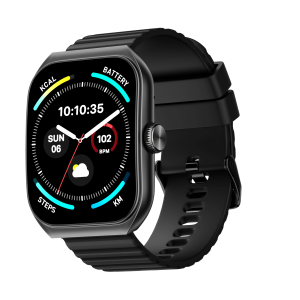
This new smartwatch merges traditional aesthetics with contemporary technology, aiming to cater to the preferences of the younger generation.
Noise ColorFit Hexa: Key Features of Noise ColorFit
Noise ColorFit Hexa: Key Features of Noise ColorFit
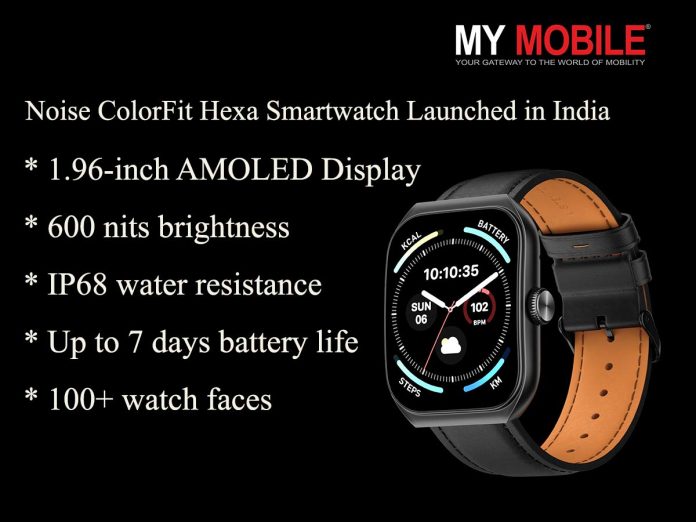
The Noise ColorFit Hexa is equipped with an ArcView Curved Display, enhancing the ergonomics of the conventional smartwatch design.
The display, a 1.96-inch AMOLED screen, features an Always on Display functionality and boasts a brightness of 600 nits for clear visibility under various lighting conditions.
The smartwatch includes animated watch-faces, adding vibrancy to its user interface.
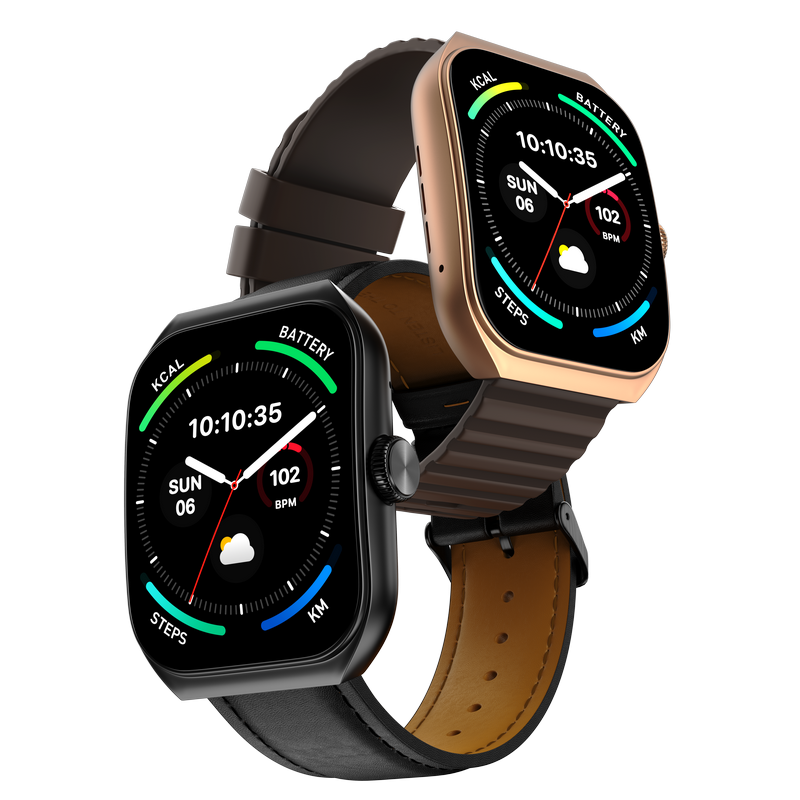
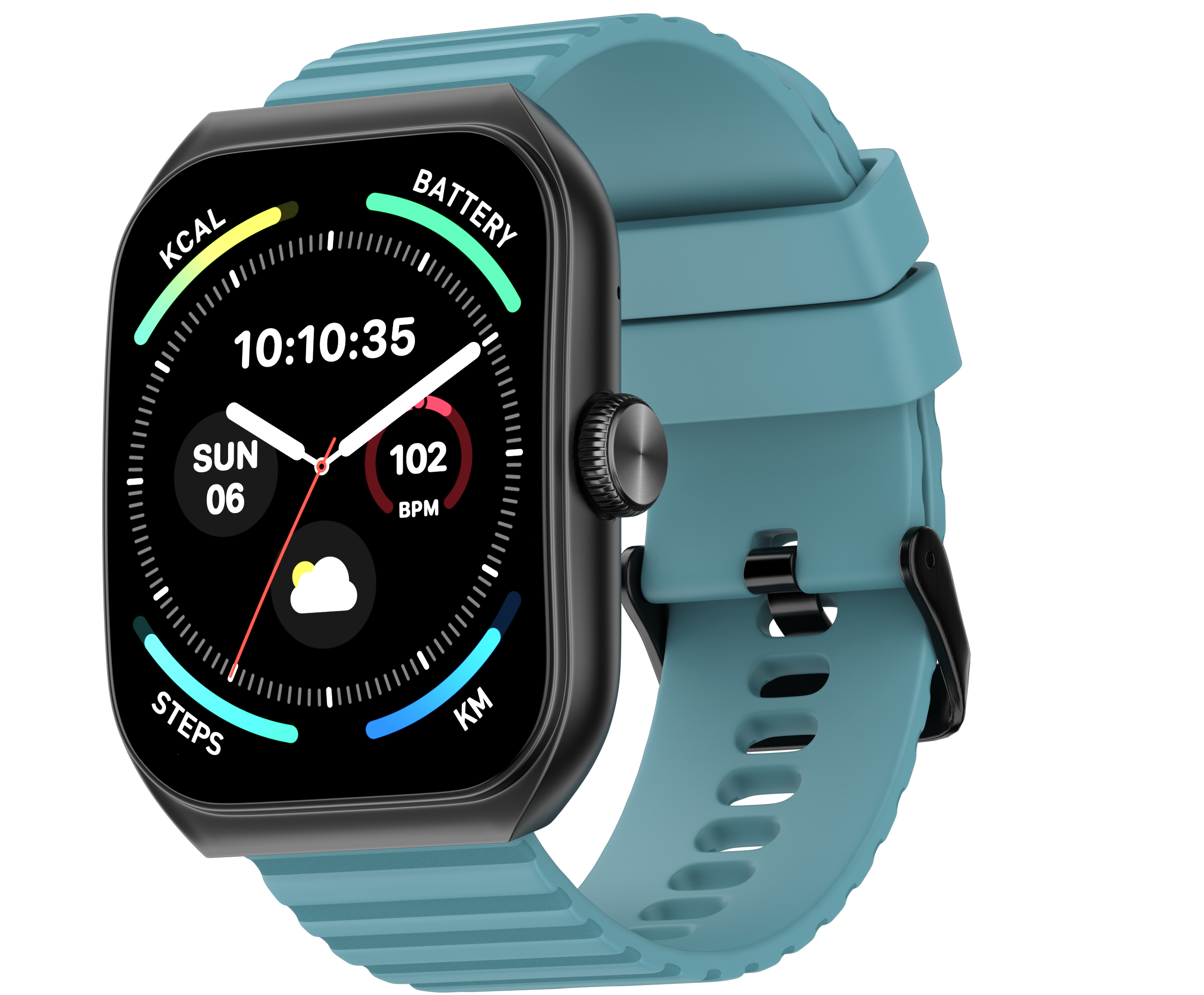
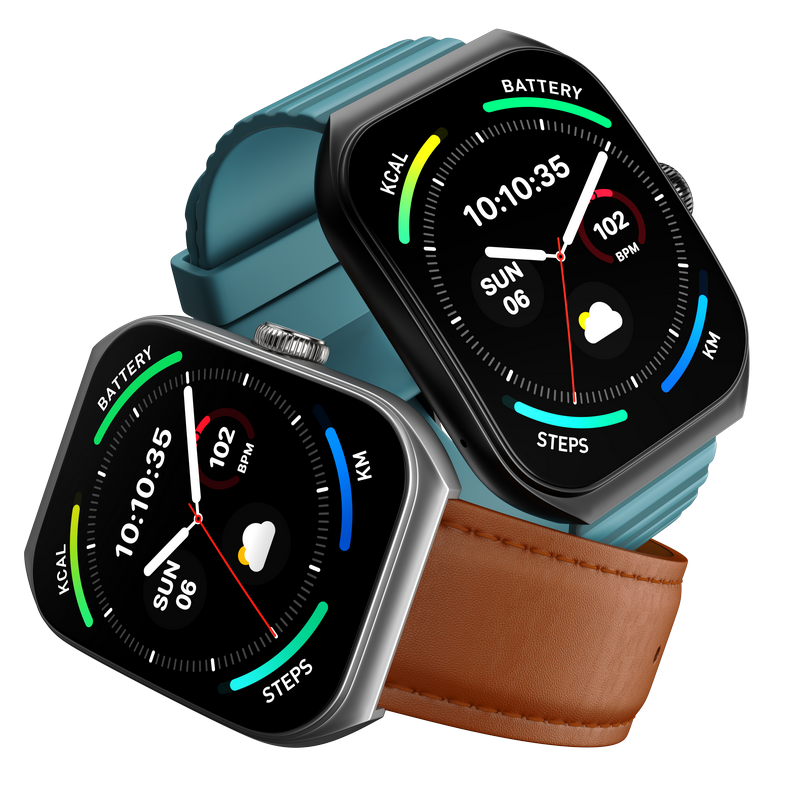
Available in Jet Black, Teal Blue, Vintage Brown, Classic Black, and Classic Brown, the smartwatch offers a range of choices for personal style expression.
It is available for purchase on Flipkart and the official Noise website, priced at Rs 2,199.
Noise ColorFit Hexa Smartwatch Launched in India
The Noise ColorFit Hexa comes with a functional crown, simplifying navigation and adding a classic touch.
It features an AI voice assistant and supports hands-free communication through BT calling, including a built-in microphone and speaker.
Users can access the dial pad and recent call logs directly on the watch, with the option to save up to 10 contacts for quick calling.
Equipped with the Noise Health Suite, the smartwatch monitors key health metrics like heart rate, SpO2, sleep patterns, and stress levels.
Its Productivity Suite offers tools for managing daily reminders and weather forecasts.
The IP68 rating ensures durability against water and dust.
Noise ColorFit Hexa: Battery Life and Charging
Noise ColorFit Hexa: Battery Life and Charging
The Noise ColorFit Hexa supports wireless charging and offers a battery life of up to 7 days.
It provides over 100 watch faces and pairs seamlessly with the NoiseFit App for a comprehensive and productive user experience.
Noise ColorFit Hexa Product Specifications
Screen
1.96-inch AMOLED Display
Brightness
600 nits
Waterproofing
IP68
Battery Usage
Up to 7 days
Watch-faces
100+ watch-faces
Highlight Features
ArcView™ Curved Display
In-built Animated Watch-faces
Functional Crown
Wireless Charging
FAQs
What is the display size and type of the Noise ColorFit Hexa smartwatch?
The Noise ColorFit Hexa boasts a 1.96-inch AMOLED display, offering sharp visuals and an Always on Display feature for enhanced user convenience.
What unique features does the Noise ColorFit Hexa offer?
The smartwatch comes with an ArcView Curved Display, animated watch-faces, and a functional crown for easy navigation, elevating the traditional smartwatch design.
Does the Noise ColorFit Hexa support hands-free calling?
Yes, the Noise ColorFit Hexa supports hands-free communication with BT calling, a built-in microphone, and a speaker, enhancing the calling experience.
How does the Noise ColorFit Hexa assist in health monitoring?
The smartwatch includes the Noise Health Suite, allowing users to track vital health metrics like heart rate, SpO2, sleep patterns, and stress levels.
What is the battery life of the Noise ColorFit Hexa, and does it support wireless charging?
The Noise ColorFit Hexa offers up to 7 days of battery life and supports wireless charging, providing convenience and extended usage time.
Noise, India’s leading smartwatch and connected lifestyle brand has launched a new smartwatch, Noise ColorFit Hexa, today in India.
The latest wearable sports the shape of future, combining timeless traditional aesthetics with best in kind technology, and offering the younger generation a distinctive choice in the world of wearables.
It boasts an ArcView™ Curved Display while enhancing ergonomics in a conventional smartwatch design.
The refreshing display caters to the new-age consumer preferences. Moreover, the Noise ColorFit Hexa promises to bring the smartwatch to life with its in-built animated watch-faces.
What are the Color’s available in Noise ColorFit Hexa Smartwatch ?
Noise ColorFit Hexa Smartwatch comes in an exciting colour range including Jet Black, Teal Blue, Vintage Brown, Classic Black, and Classic Brown.
What is the price & availability of Noise ColorFit Hexa Smartwatch?
The smartwatch is live for sale on Flipkart and gonoise.com at an attractive price of INR 2,199.
What are the health & productivity features of Noise ColorFit Hexa Smartwatch ?
The Noise ColorFit Hexa offers a diverse range of features for both productivity and health monitoring.
With the Noise Health Suite™ users can effectively monitor essential health metrics such as heart rate, SpO2, sleep patterns, and stress levels, among others.
On the other hand, the integrated Productivity Suite keeps daily reminders and weather forecasts easily accessible. The IP68 water and dust resistance ensures durability in any environment.
How is design & display of Noise ColorFit Hexa Smartwatch ?
The customers can enjoy a vibrant 1.96-inch AMOLED display with Always on Display feature, experiencing stunning visuals and convenience on the go.
With 600 nits brightness, the Noise ColorFit Hexa ensures clear visibility at all times despite any lighting condition.
The inclusion of a functional crown adds a touch of classic sophistication and offers an easy way to navigate the smartwatch. Noise has further integrated an AI voice assistant in the Noise ColorFit Hexa adding to the seamless functionality.
Users can make their calling experience hassle free with a hands-free communication using BT calling, a built-in microphone, and speaker.
The smartwatch provides direct access to the dial pad and recent call logs while adding to the customer experience. Additionally, one can save up to 10 favourite contacts for quick and easy calling on the go.
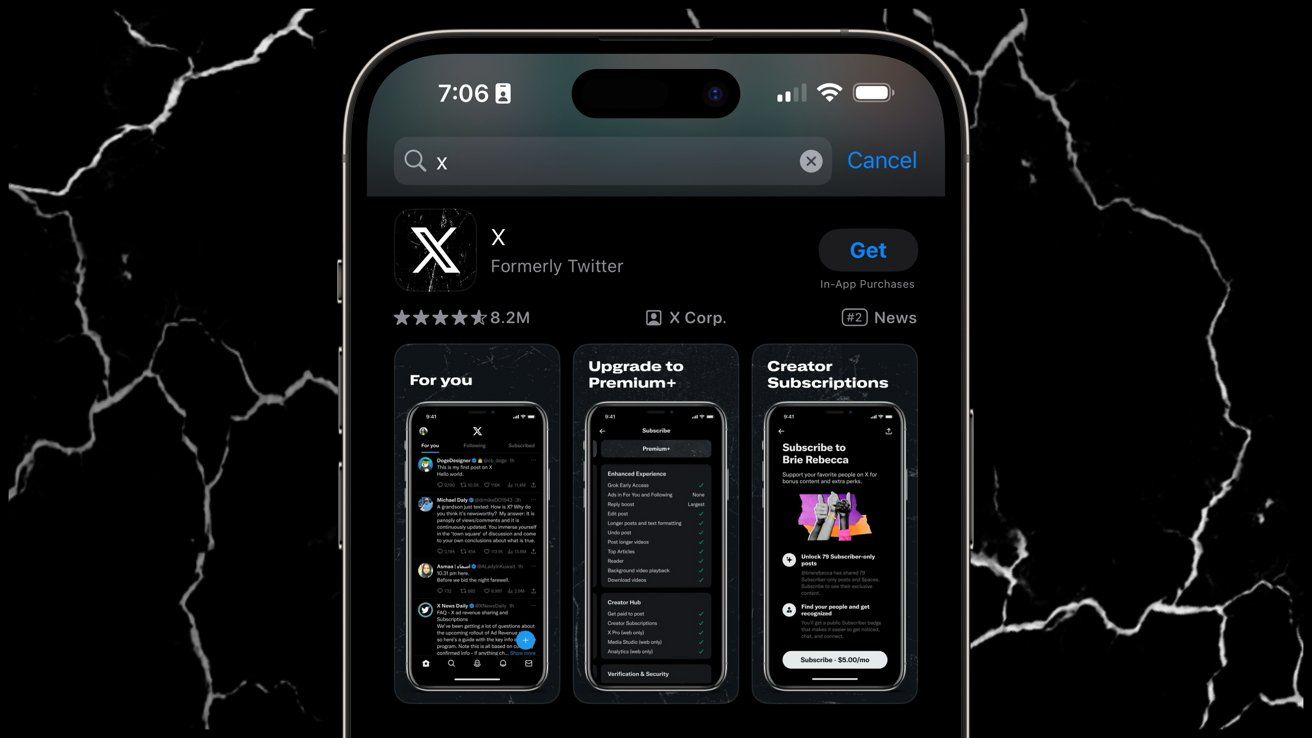
Understanding the need for robust security measures, X has recently implemented passkey authentication for iOS users in the United States, as confirmed via TechCrunch.
This introduction is part of a broader trend in digital security, moving away from traditional passwords towards more secure alternatives.
Elon Musk-run X has added support for “passkeys” as a login option for iOS users in the US.
“Today we’re excited to launch Passkeys as a login option for our US-based users on iOS,” the company announced on X on Tuesday.
X introduces passkey authentication for iOS users in the U.S
“A passkey is a new, easy-to-use, and secure way to log in to your account – all from your device. Passkeys are more secure than traditional passwords since they’re individually generated by your device for each account,” it added.
“Audio and video calls on X slowly rolling out for Android users today! update your app and call your mother,” X engineer Enrique posted on Friday.
What Is Passkey?
X Rolls Out Passkey Authentication for Enhanced Security on iOS
Passkey represents the next generation of secure authentication, developed by the FIDO Alliance in collaboration with leading tech companies like Apple, Google, and Microsoft.
This technology employs advanced methods like facial recognition and biometric authentication, eliminating the traditional hassles of creating and remembering passwords.
This integration represents a major advancement in the application security paradigm for Apple’s operating systems.
In response to removing SMS-based 2FA for non-premium users, X encouraged its users to adopt alternative methods like 1Password, iCloud Keychain, or Google Authenticator.
Now, with passkey, users have a more reliable option that doesn’t rely on potentially insecure SMS delivery.
Once installed, users should navigate to the ‘Settings and Privacy’ section, select ‘Security,’ and then find the ‘Additional Password Protection’ option to enable passkey authentication for their accounts.
FAQs
What is the new security feature introduced by X for iOS users?
X has rolled out passkey authentication, a more secure alternative to traditional passwords, using facial recognition or biometrics for iOS users in the U.S.
How does passkey authentication improve security on X?
Passkey authentication enhances security by eliminating password vulnerabilities, using advanced methods like biometrics for secure and easy logins.
Are all X users eligible for passkey authentication?
Currently, passkey authentication in X is available only to iOS users in the United States, with plans to expand to other regions and platforms.
What technology backs the passkey authentication in X?
Passkey authentication is developed by the FIDO Alliance in collaboration with tech giants, ensuring robust security through cutting-edge technology.
How can iOS users activate passkey authentication on X?
Users can activate passkey authentication by updating the X app on iOS, going to ‘Settings and Privacy,’ then ‘Security,’ and enabling the feature under ‘Additional Password Protection.’
X rolling out passkeys support for iOS users after removing SMS as 2FA option. Details?
X (formerly known as Twitter) last year announced that it would no longer support SMS as a two-factor authentication (2FA) method for users who are not X Premium subscribers.
Luckily for users, the platform is now rolling out support for passkeys in its iOS app to improve account security.
X now lets iOS users sign in with passkey. Details?
The news was confirmed by X itself (via TechCrunch). “Today we’re excited to launch Passkeys as a login option for our US-based users on iOS,” the company said in a post.
However, at least according to the platform, passkey support will only be available to X users in the U.S. for now.
Passkey is a recently developed technology by the FIDO Alliance in collaboration with major companies like Apple, Google, and Microsoft.
Instead of traditional passwords, it enables users to log in using secure methods like facial recognition or biometrics, eliminating the need to create and type a passcode.
Starting with iOS 16, users have been able to create and save passkeys using Safari and iCloud Keychain. Now, with iOS 17, this functionality will be extended to third-party apps.
When X removed support for SMS 2FA, the platform recommended that users migrate to another two-factor authentication method using apps like 1Password, iCloud Keychain, or Google Authenticator.
Of course, those who want to use SMS 2FA can also subscribe to X Premium, although the method is not the most reliable for protecting your account.
If you’re an X user, make sure you download the latest version of the app available on the App Store.
After that, open the X app, go to Settings and Privacy, then tap Security. Look for the Additional Password Protection option and enable passkey for your X account.
How To set up a passkey on X ?
Be logged into X and tap your icon in the top left corner
Open “Settings and Privacy”
Tap “Security and account access” then “Security”
Under “Additional password protection” tap “Passkey”
Enter your password when prompted, then select “Add a passkey”
This dual VC cooling system, with its unique micron-level 3D capillary structure, efficiently manages heat from critical components, keeping the device cool even under strenuous conditions like 4K video recording or high-end gaming.
Visual Excellence: Enhanced Super Fluid OLED Display
Visual Excellence: Enhanced Super Fluid OLED Display
The LTPO+ technology enables an adaptive refresh rate, enhancing battery efficiency.
Additionally, the display supports Pro XDR and Dolby Vision for an immersive viewing experience, all protected by the robust Corning Gorilla Glass Victus 2.
Advanced Photography: New and Improved Camera System
Advanced Photography: New and Improved Camera System
Photography enthusiasts will be thrilled with the OnePlus 12’s camera system. It features a trio of lenses:
A 50MP Sony LYT 808 primary camera with OIS and AF.
A 64MP OV64B 3x periscope camera.
A 48MP ultra-wide camera with a 114-degree field of view.
This setup, coupled with the latest HDR algorithm, promises natural, detailed images and exceptional 4K video capabilities with Dolby Vision support.
The device supports 80W SUPERVOOC and 50W AIRVOOC wireless charging, achieving a full charge in under 30 minutes with the 100W SUPERVOOC charger, a testament to OnePlus’s commitment to efficiency and convenience.
OnePlus 12 Verdict
OnePlus 12 Verdict
The OnePlus 12 is not just an upgrade; in our opinion, it’s a redefinition of what a flagship smartphone can be.
From its powerhouse performance and innovative cooling system to the stellar display, cutting-edge camera, and impressive battery life, the OnePlus 12 is a device that sets new benchmarks in every aspect.
What are the major performance upgrades in the OnePlus 12?
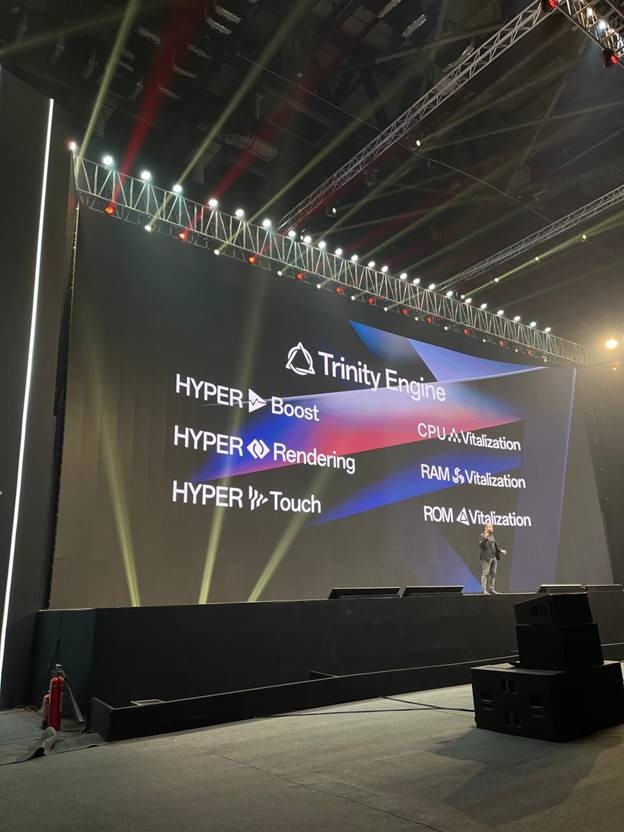
The OnePlus 12 features Qualcomm’s Snapdragon 8 Gen 3 SoC, up to 16GB LPDDR5X RAM, and the Trinity Engine comprising six technologies for optimized performance, including CPU Vitalization and HyperBoost.
How does the OnePlus 12 manage heat dissipation?
The OnePlus 12 employs a Dual Cryo-velocity VC Cooling System, featuring a micron-level 3D capillary structure for efficient heat management, particularly during intensive tasks like gaming or 4K videography.
What are the display features of the OnePlus 12?
The OnePlus 12 includes a 6.8-inch 2K Super Fluid OLED display with a 120Hz refresh rate, LTPO+ technology, Pro XDR, and Dolby Vision support, ensuring a bright and immersive visual experience.
What camera specifications does the OnePlus 12 offer?
The OnePlus 12’s camera setup includes a 50MP Sony LYT 808 wide-angle camera with OIS, a 64MP periscope camera, and a 48MP ultra-wide camera, supporting advanced HDR algorithms and 4K video capabilities.
Smooth Beyond Belief: OnePlus Debuts the OnePlus 12. Details?
OnePlus officially launched its latest flagship smartphone, the OnePlus 12, at Pragati Maidan in New Delhi.
Representing the culmination of OnePlus’ decade-long pursuit for excellence and innovation, the OnePlus 12 boasts the Snapdragon® 8 Gen 3 Mobile Platform, the proprietary Trinity Engine, the 4th Gen Hasselblad Camera for Mobile, a new 2K 120Hz ProXDR display, 100W SUPERVOOC fast charging, 50W AIRVOOC wireless charging, and OnePlus’ iconic modern elegant design, delivering an unparalleled flagship experience that is incredibly fast and smooth.
“As we celebrate the tenth anniversary of OnePlus with our loyal users worldwide, we are thrilled to introduce the OnePlus 12 — an all-round flagship phone that embodies our decade-long leadership in technology,” said Pete Lau, Founder of OnePlus.
“With our ‘Never Settle’ mantra, OnePlus is dedicated to bringing innovative ideas to life and disrupting the mobile industry.
With the OnePlus 12, we have created a true masterpiece, combining advanced technologies from OnePlus and our partners to make it one of the best flagship smartphones in the year 2024.”
How does OnePlus 12 give Long-lasting Fast and Smooth Experiences ?
The OnePlus 12 is designed to deliver an uncompromising performance.
At the heart of the OnePlus 12 is Qualcomm’s latest Snapdragon® 8 Gen 3 mobile platform, an ultra-intelligent chip promising top-tier performance and power efficiency with up to 30% improved CPU performance and a 25% enhancement in GPU performance.
Empowered by the proprietary Trinity Engine and equipped with up to 16GB of LPDDR5X RAM and 512GB of UFS 4.0 ROM, the OnePlus 12 can keep applications readily available in the background for 72 hours1.
In addition, OnePlus 12 is the first Snapdragon 8 Gen 3 device to be approved as Snapdragon Spaces™ Ready.
This will allow developers to bring their XR ideas to life and explore the full potential of head-worn AR.
The OnePlus 12 introduces an industry-leading Dual Cryo-velocity VC Cooling System, featuring a 3D capillary dissipation structure and a dual VC design with OnePlus’ largest-ever surface area covering 9,140 mm², revolutionizing the flow of the coolant to significantly reduce overheating.
Crafted using a unibody die-casting manufacturing process, the larger VC consistently absorbs heat from the smaller VC to accelerate the entire heat dissipation process, making the OnePlus 12 a versatile companion for activities such as marathon gaming sessions, pro-level video editing, and concurrent charging without risk of overheating.
With support for 100W SUPERVOOC Endurance Edition and a 5400mAh big battery, the OnePlus 12 reduces the time spent tethered to an outlet, allowing users to use the device more freely.
The OnePlus 12 takes only 26 minutes from 1% to 100% battery capacity courtesy of its 100W SUPERVOOC fast-charging function.
In North America, the OnePlus 12 charges with 80W SUPERVOOC Endurance Edition that can take only 30 minutes from 1% to 100% battery capacity.
The long-awaited 50W AIRVOOC wireless charging also makes its debut in the OnePlus 12, providing a reliable alternative for those who prefer a cable-free lifestyle.
Harnessing the power of a twin-battery design with each cell charging at an impressive 25W, the 50W AIRVOOC outpaces even some of the most advanced wired charging solutions while offering unmatched efficiency.
As a result, the OnePlus 12 has proven its capability to run Genshin Impact at maximum settings, achieving an impressive and consistent frame rate of 57.4FPS3 (Frames Per Second) during a rigorous 3-hour testing session.
Furthermore, its exceptional battery performance enables it to sustain 5.5 hours of continuous video shooting at 1080p resolution, operating at 30Hz.
In addition, the all-round flagship experience on the OnePlus 12 is boosted further by powerful and stable wireless signal performance.
The omnidirectional antenna design, with a total of 16 antennas, enables the OnePlus 12 to unleash the full potential of high-speed connectivity.
OnePlus 12 features Authentic Hasselblad Style Photography. Details?
The OnePlus 12 stands out as a photography master with a professional-grade camera system featuring flagship hardware and advanced image processing algorithms developed in collaboration with Hasselblad.
The phone takes the flagship-level triple camera system of the OnePlus 11 and brings it to the next level with an industry-first 50MP Sony’s LYT-808 wide-angle camera.
Featuring a large ƒ/1.6 aperture and 1/1.4-inch sensor size, the camera offers a greater depth of field while compensating for the loss of light to deliver crystal-clear images with vibrant colors and intricate details even in low-light environments.
Red glare and artefact reduction are also supported to help capture even more true-to-life images.
As the first OnePlus single-screen flagship to feature a best-in-class OV64B 3x periscope telephoto camera with 6x in-sensor zoom, the OnePlus 12 offers a 3x to 120x photographic zoom range that gives users the flexibility to capture spontaneous moments and highly expressive portraits from afar.
This unrivalled periscope telephoto lens not only ensures high image quality but also perfectly replicates natural lights and shadows.
With its 114° field of view in an impressive 48MP resolution, the OnePlus 12’s ultra-wide camera is more than just the icing on the cake, instead empowering users to capture a broader perspective on life that still retains the finest details.
OnePlus’ latest RAW HDR algorithm further enhances the phone’s ability to control light by understanding visual landscapes and harmonizing the interplay between highlights and shadows.
By rendering optimal brightness, balanced exposure, authentic color saturation, and seamless vignette control, the OnePlus 12 makes it possible to capture DSLR-like images that mirror reality with impeccable resolution and even greater precision.
The newly upgraded Hasselblad Portrait Mode simulates the nuances of bokeh and flare effects of Hasselblad’s classic lenses from 1x to 3x, adding additional visual angles while imparting a natural depth of field to create transitions between subject and background that are seamless beyond belief.
Does OnePlus 12 have a Modern Elegant Design?
The OnePlus 12 is a masterpiece in design that pays tribute to a decade of OnePlus’s daring spiring and bold attitude.
Drawing inspiration from the intricate craftsmanship of luxury watches, the phone inherits the timeless modern elegance of the OnePlus 11 5G while adopting a hollow-curved design that mirrors the precision found in the delicate inner workings of a finely polished timepiece.
The OnePlus 12 is available in two colorways — Flowy Emerald and Silky Black. Inspired by the breathtaking spectacle of the braided Dart River in New Zealand, where emerald ribbons pulsate with vibrant energy, Flowy Emerald captures the essence of natural wonders and employs state-of-the-art AG technology and a precision etching process to bring a premium texture with exquisite dynamism to the phone’s glass back cover.
What’s the Price & Availability of OnePlus 12?
The OnePlus 12 will be launched in two exciting variants, the 12/256GB option which will be priced at INR 64,999 and the 16/512GB option which will be priced at INR 69,999 will go on sale at 12:00 PM on 30th January.
The pre-booking for the OnePlus 12 starts from 8:45 PM on 23rd January. Customers can get a free trial of Google One & YouTube Premium on OnePlus 12. Find more details on OnePlus.in.
Customers can avail an instant bank discount of INR 2,000 with ICICI credit card and OneCard.
Customers can avail a special exchange bonus of up to INR 10,000 while purchasing the OnePlus 12.
Customers can also buy the OnePlus 12 with OnePlus Easy Upgrades and get 35% assured value at the end of the 24 months.
A special pre-booking offer is available for INR 1,999, where customers can pre-order the OnePlus 12 from 23rd January and also avail no cost EMI for 12 months.
The first 1,000 customers who order the OnePlus 12 are entitled to exclusive OnePlus Merchandise.
OnePlus 12 and users can link to RCC and avail a special coupon discount of INR 3,000 discount while purchasing the OnePlus Pad.
Customers can also avail of 50% off on the Accidental Damage Protection Plan, available on OnePlus.in, OnePlus Store App and OnePlus Experience Stores.
How does OnePlus 12 give Cinematic Visual and Audio Experiences?
The OnePlus 12 harmonizes an ultra-bright display with cinema-like sound to bring users flagship audiovisual experiences like never before.
At the centre of this experience is a 2K 120Hz ProXDR display powered by BOE’s brand-new blue diamond pixel layout, which enables the OnePlus 12 to reach a peak brightness of 4,500 nits – the brightest-ever screen on a OnePlus smartphone – with the ability to deliver ultra-realistic, silky-smooth visuals for a premium viewing experience.
ProXDR further ensures that lossless images with high dynamic range and a rich color spectrum can be enjoyed in full detail on the phone’s stunning display.
This innovative display sets or matches 18 smartphone display performance records of DisplayMateA+. It also receives Intelligent Eye Care certification by TÜV Rheinland thanks to its ability to effectively reduce blue light emission and intelligent color temperature adjustment in response to changing ambient conditions.
Fitted with LTPO technology, the display can automatically switch between a refresh rate of 1Hz to 120Hz based on user preferences and specific usage scenarios while keeping power consumption comparatively low. Dolby Vision is also supported to elevate the overall visual experience with ultra-vivid colors, crisp contrast, and intricate details.
For avid gamers seeking hyper-realistic and ultra-immersive mobile gaming experiences, the OnePlus 12 offers the perfect solution in the form of HyperRendering.
Built upon OnePlus’ in-house graphics algorithms and a dedicated Pixelworks X7 Independent Visual Processor, this groundbreaking visual quality enhancement technology empowers the OnePlus 12 to deliver super-resolution picture quality with remarkable efficiency, achieving 120Hz frame rate for all games through frame Interpolation technology2 while ensuring real-time HDR color calibration.
For enhanced touch accuracy, Aqua Touch can detect wet fingers and water droplets on the screen and compensate accordingly, significantly alleviating issues related to sweaty hands and mistouches during both intense gameplay and everyday use.
Complementing the high-quality visuals are immersive 3D sound spaces that add the finishing touch to the all-round entertainment experience.
When paired with the OnePlus Buds 3 or other OnePlus earbuds with spatial audio and in-app customization support, the OnePlus 12 delivers simultaneous playback of different audio content in multiple directions to create a flagship 3D Spatial Audio experience.
Thanks to the inclusion of dual stereo speakers with Dolby Atoms, dedicated spatial audio can even be enjoyed without earbuds, offering cinema-level audio quality with reduced acoustic resonance.
Apple’s Project Titan, starting in 2015, is set for a 2028 launch into the electric vehicle market.
Initially aimed at a fully autonomous vehicle, Apple now targets a Level 2+ autonomous system.
Bloomberg reports internal skepticism about Apple Car’s innovation, labeling it a ‘me-too product’.
The Apple Car faces the challenge of matching established electric vehicle manufacturers like Tesla.
In a groundbreaking revelation, Bloomberg has recently reported that tech giant Apple is inching closer to realizing its long-held ambition of entering the automotive industry.
Project Titan,Apple’s electric car project, which started in 2015, seems to be finally on track for a launch in 2028.
This news comes after years of speculation, executive changes, and strategic shifts within the company.
Apple Car: Project Titan Reportedly Gears Up for EV Market Entry by 2028
Navigating Through Challenges
Apple Car: Navigating Through Challenges
Initially envisioned as a fully autonomous vehicle devoid of a steering wheel, Apple’s automotive dream has undergone significant recalibrations.
The leadership of Kevin Lynch, who took over the project in 2021, has steered this initiative towards a more grounded approach.
Despite almost a decade of development in autonomous driving technology,Apple has had to confront the practical challenges of creating a steering wheel-less car.
So this is quite a shift from the original goal of achieving Level 4 autonomy to settling for a Level 2+ system.
This means that while thecar will possess self-driving capabilities, it will require driver engagement and readiness to take control, particularly on roads and highways.
Facing the Future with Caution
Apple executive car could influence the Apple Car design
The potential for future enhancements through software updates and the evolution of international regulatory frameworks also will keep the door open for more advanced features in future iterations.
However, the report also sheds light on internal pressures and skepticism.
Alexander Hitzinger formerly of Porsche and now said to be working on “Project Titan.”
Apple’s board, as per Bloomberg, had urged CEO Tim Cook to present a definitive plan for Project Titan, with the implicit alternative being the project’s termination.
Bloomberg’s report has also raised concerns about the innovation quotient of Apple’s first car.
Some Apple employees, as per the report, are critical of the current plans, labeling it as a ‘me-too product’, echoing offerings from established players in the field.
How Apple will fare in the highly competitive automotive market is anybody’s guess, but considering the Cupertino-giant is the richest company in terms of market cap, there’s nothing that a big bag of money can’t solve.
Training gear used for testing the self-driving module of a potential “Apple Car”
FAQs
What is Project Titan and when is it expected to launch?
Project Titan is Apple’s electric car project, initiated in 2015.
After years of development and strategic shifts, it is now slated for a launch in 2028, marking Apple’s entry into the electric vehicle market.
How does Apple’s vision for its electric car differ from initial plans?
Apple initially planned a fully autonomous vehicle without a steering wheel. However, the current focus has shifted to a Level 2+ autonomous system, requiring driver engagement, similar to what existing manufacturers like Tesla offer.
What challenges has Apple faced in developing its electric car?
Apple’s journey in developing its electric car has included confronting the practicalities of autonomous technology and internal pressures, as well as skepticism regarding the car’s innovative aspects compared to existing market offerings.
Are there concerns about the innovation level of the Apple Car?
Yes, according to Bloomberg, some Apple employees have expressed concerns, suggesting that the Apple Car might not be as innovative as expected and could be similar to existing electric vehicles.
What could Apple Car Cost be ?
The Apple Car is likely to be priced as a “very high-end” model or “significantly higher” than a standard electric vehicle.
Rumors suggest that Apple is planning to price it under $100,000, but even at $100,000, it would be notably more expensive than entry-level Tesla vehicles. It would be on par with the higher-end Tesla Model S.
What do we know about Apple Car Leadership?
The Apple Car project has seen multiple leadership changes and hundreds of employees have been laid off during the course of development, but it is now under the leadership of John Giannandrea, Apple’s AI and machine learning chief, who took over the reins from Bob Mansfield after Mansfield retired in 2020.
Kevin Lynch, known for leading development on the Apple Watch, has joined Apple’s autonomous vehicle team to oversee Apple Car development in addition to working on the Apple Watch, so Apple has some of its top talent developing the vehicle.
Lynch replaced Doug Field, a former Tesla executive, who left the company in September 2021.
What could the Possible Partnerships be for the Apple car ?
As of early 2021, multiple rumors have suggested that Apple has entered into negotiations with well-known automative electronics suppliers for components for a potential upcoming vehicle-related product, but the project has changed so many times since then that Apple has not yet found a manufacturing partner.
Apple has allegedly had discussions with Hyundai, Nissan, General Motors, LG Magna, Porsche, and even companies like Foxconn and LG.
What do we know about Charging and Battery of the Apple Car ?
The Apple Car could be compatible with the Combined Charging System, a standard used for charging electric vehicles. Companies like Tesla, BMW, Ford, General Motors, Kia, Hyundai, and others all support the CCS, and adopting the same standard would allow Apple Car owners to use charging stations that are already available.
Apple is developing a new battery design that has the potential to “radically” reduce the cost of batteries and increase the vehicle’s range.
Apple is creating a “monocell” design that will bulk up the individual battery cells and free up space inside the battery pack by removing pouches and modules that hold battery materials.
This will allow for more active material in a smaller package. The battery technology has been described as “next level” and similar to “the first time you saw the iPhone.”
How is Apple keeping safety in mind for the Apple Car Design ?
Safety is a major focal point in the design of the Apple Car. Apple wants to create a safer vehicle than companies like Tesla or Waymo, and so engineers are building in redundancies and backup systems that will kick in to avoid driving system failures.
What could the infotainment system be in Apple Car ?
Apple has considered Apple Car designs with a large iPad-like touch screen in the middle of the vehicle, which would not be too dissimilar from the design of Tesla vehicles.
Users would be able to interact with the central panel, and it would be integrated with Apple’s current devices and services.