MyRadar now supports Apple CarPlay, offering weather maps on car displays.
Advanced RouteCast-powered navigation introduced in latest update.
Version 7.82 further improves GPS accuracy and fixes CarPlay bugs.
Premium subscription required for full RouteCast navigation features.
MyRadar, a popular weather tracking app for iPhone, has recently enhanced its functionality with an exciting update.
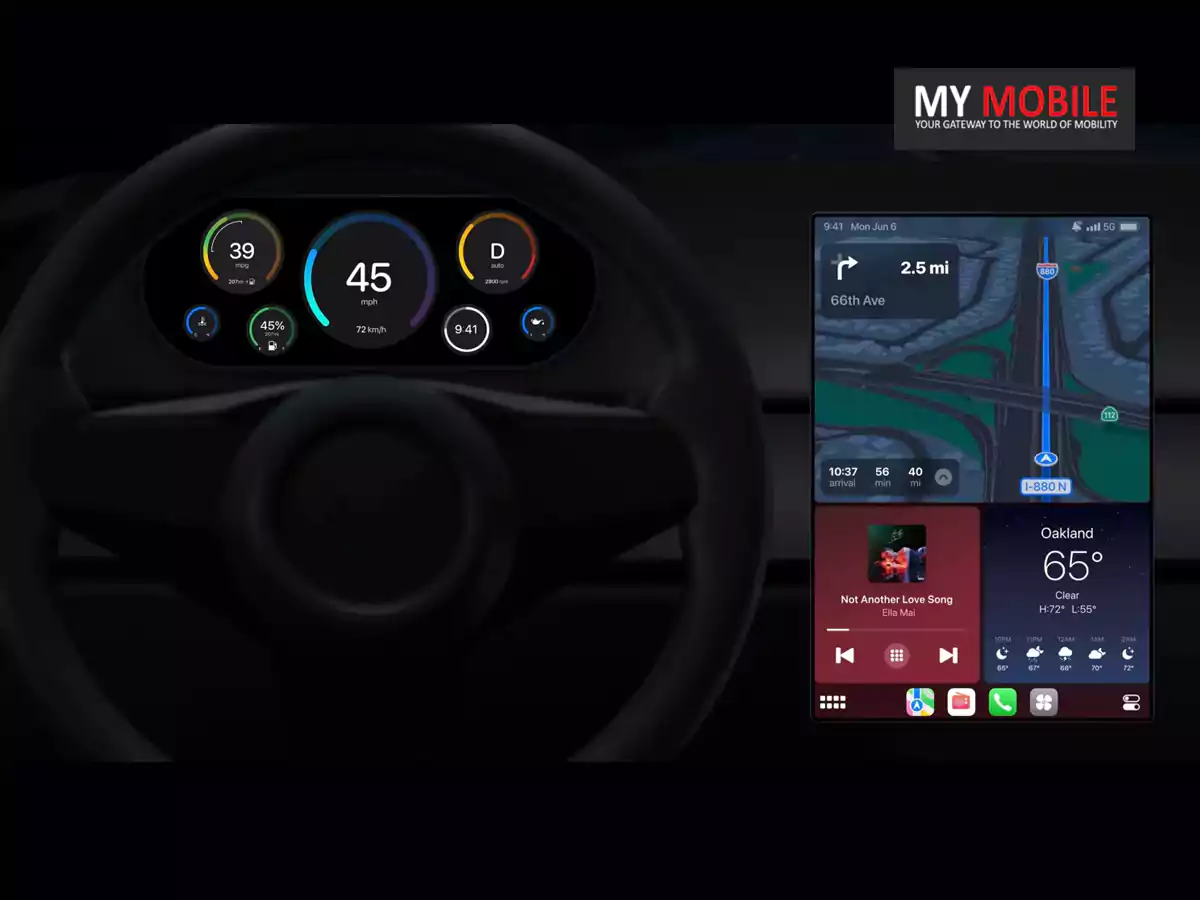
Released on January 8 as part of MyRadar version 7.81, the app now supports Apple CarPlay, allowing users to access weather radar maps directly on their car’s display system.
This integration is a significant development for drivers who rely on MyRadar for real-time weather updates.
This feature enables users to view detailed weather radar maps on the larger screenof their car’s display,providing a safer and more convenient way to monitor weather conditions while on the road.
The update introduces RouteCast-powered navigation, offering real-time, turn-by-turn directions integrated with advanced weather radar and road condition data.
This feature aims to enhance driving experiences in various conditions, whether for daily commutes or longer journeys.
Subscription-Based Premium Features
RouteCast Navigation System requires a Premium Features Subscription
While the basic CarPlay functionality is available to all users, the RouteCast navigation system requires a Premium Features subscription.
This subscription offers added benefits like detailed road weather information, enhancing the utility of the app for regular commuters and professional drivers alike.
Following the initial update, version 7.82, released the next day, brought further enhancements.
It improved GPS usage under CarPlay, ensuring better accuracy during navigation.
Additionally, it fixed a bug related to the location map button, further refining the user experience.
Implications for CarPlay Users
Implications for CarPlay Users
With the introduction of MyRadar’s CarPlay support, the app joins others like Weather on the Way in offering drivers safer ways to monitor weather conditions while navigating.
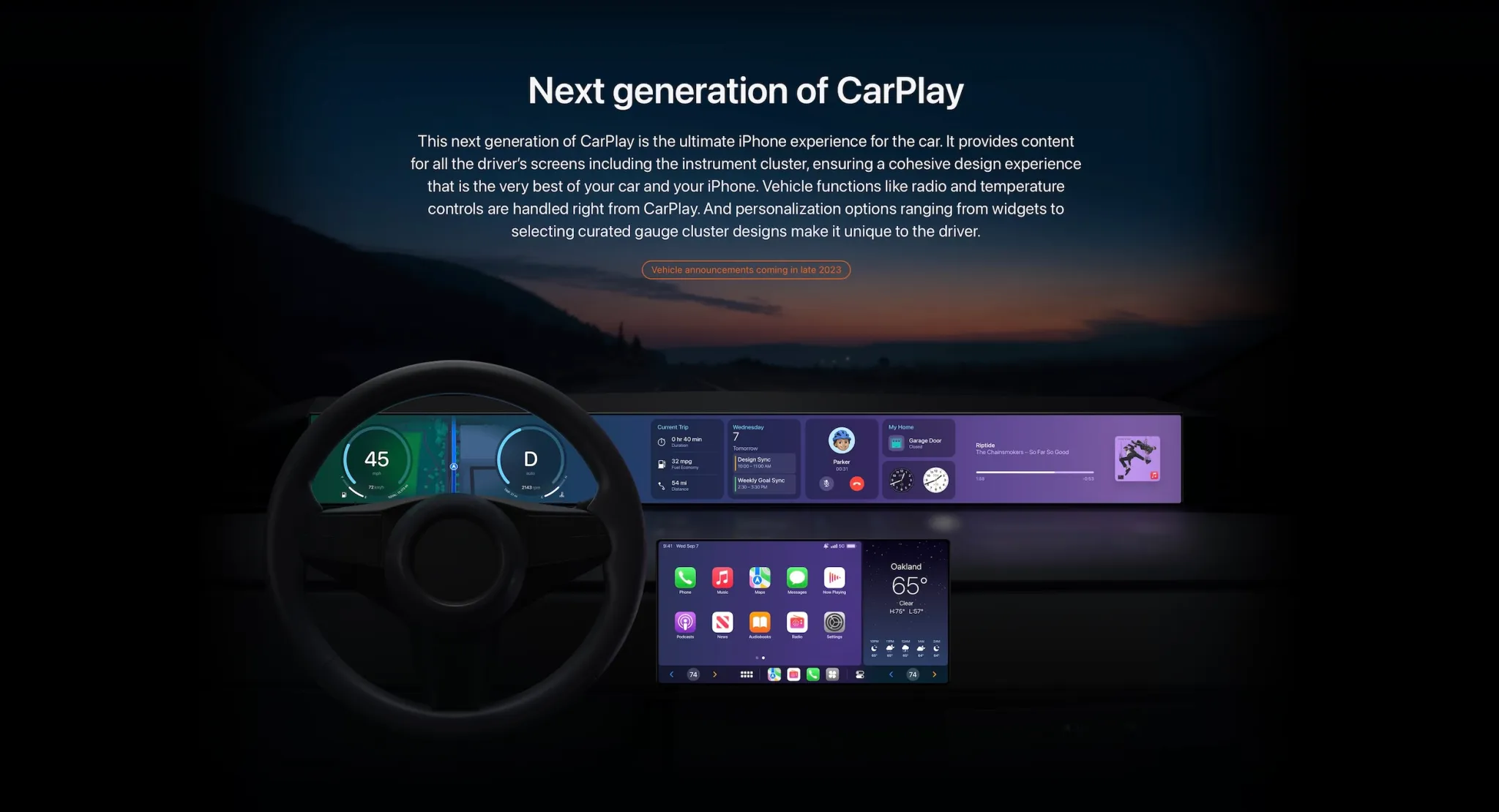
The integration of weather apps into CarPlay is expected to grow, especially with the advent of next-gen CarPlay systems that will likely incorporate Apple’s Weather app directly on the dashboard.
FAQs
What is the latest update to the MyRadar app?
The MyRadar app has been updated to include support for Apple CarPlay, allowing users to view weather radar maps directly on their car’s screen.
This feature was introduced in version 7.81 of the app.
What are the new features available in MyRadar’s Apple CarPlay support?
MyRadar’s Apple CarPlay integration includes state-of-the-art weather radar and map integration, real-time turn-by-turn directions, and a ‘My Vitality Score’ feature for health monitoring.
These features aim to enhance the driving experience by providing detailed road conditions and weather updates.
Is there a subscription required to use all features of MyRadar on Apple CarPlay?
While basic CarPlay functionality is free for all users, access to RouteCast navigation and other advanced features requires a Premium Features subscription in the MyRadar app.
What improvements were made in MyRadar version 7.82?
The MyRadar update in version 7.82 improved GPS usage under CarPlay, ensuring better accuracy during navigation sessions.
It also fixed a bug related to the location map button on CarPlay.
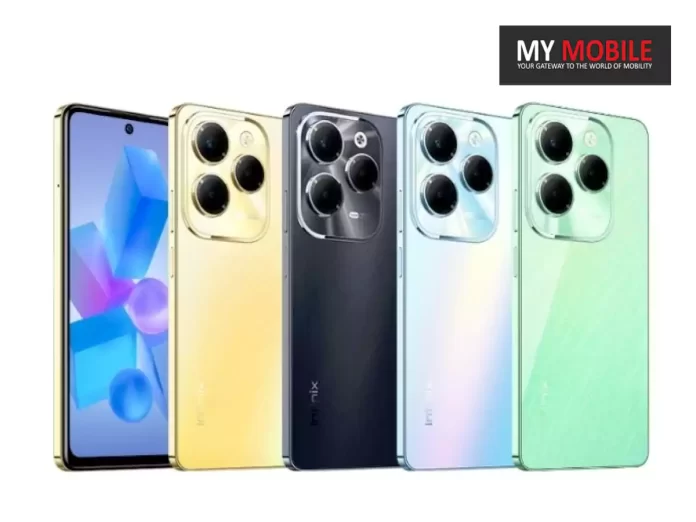
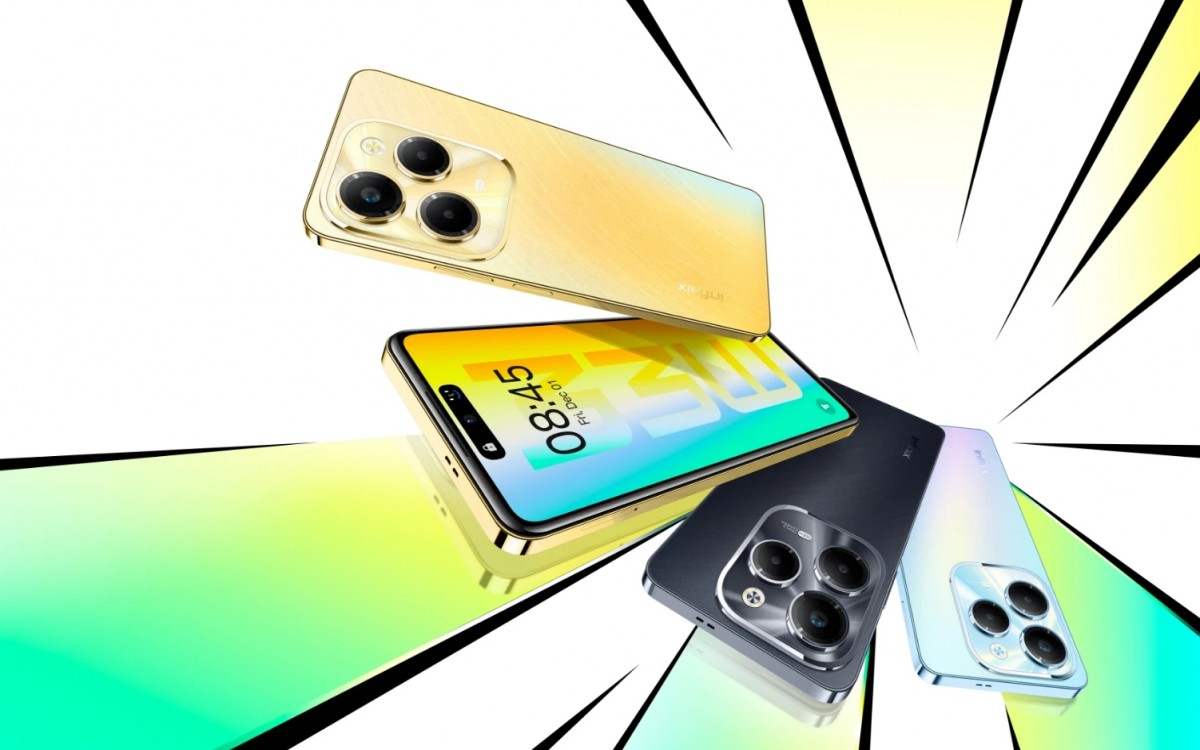
These upcoming models have been the subject of recent online buzz, with certifications and listings revealing key details about their specifications and features.
Infinix Note 40 Series Key Specifications and Design
Infinix Note 40 Pro Key Specifications and Design
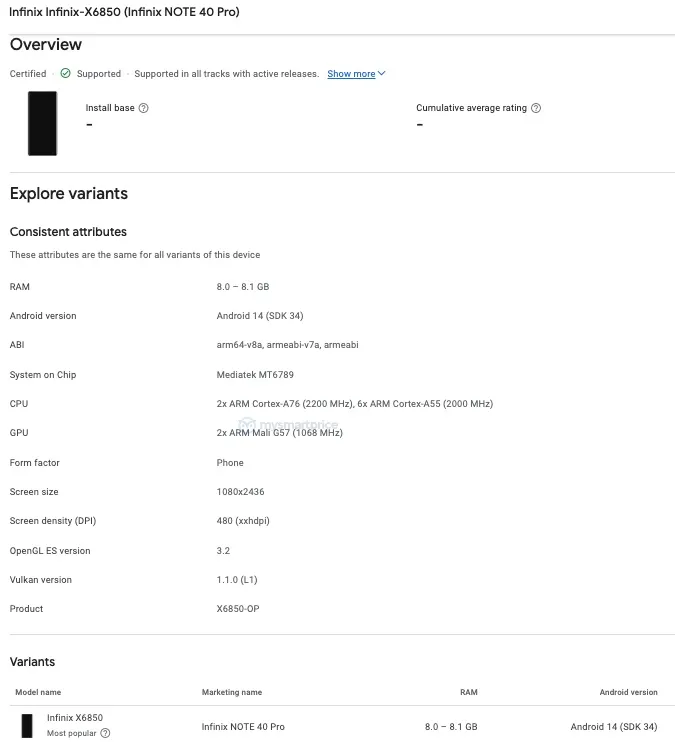
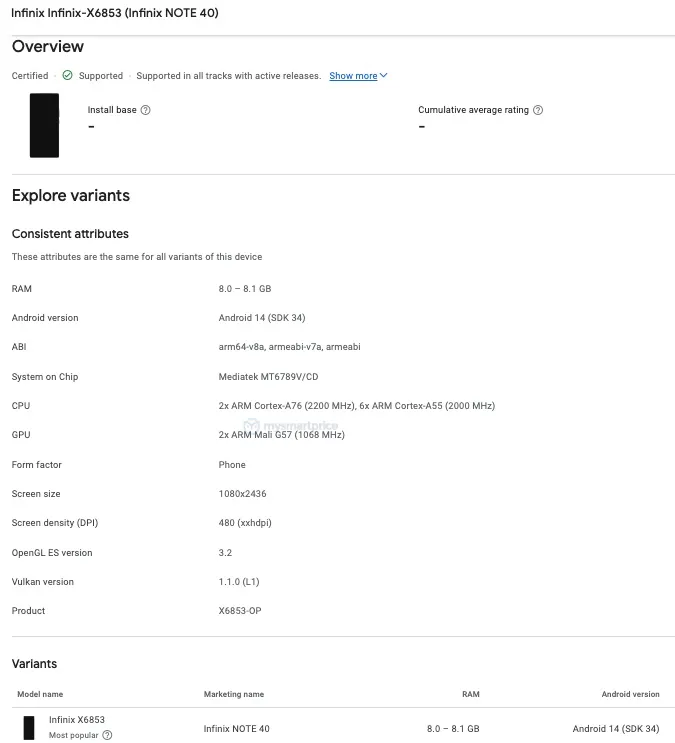
The Infinix Note 40 and Note 40 Pro have made appearances on the Google Play Console, offering insights into their technical attributes.
This processor, known for its 6nm fabrication process, is a testament to the brand’s commitment to efficient and powerful performance, while supporting 4G connectivity.
Infinix Note 40 Google Play Console
Design-wise, the Note 40 series seems to follow a familiar path, with a display resolution of 2436 x 1080 pixels and a pixel density of 480 PPI.
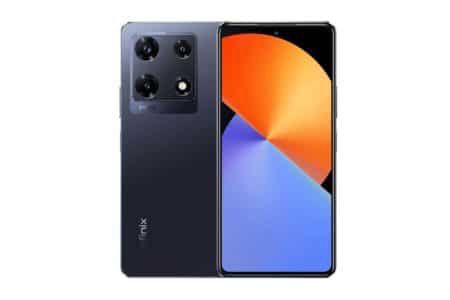
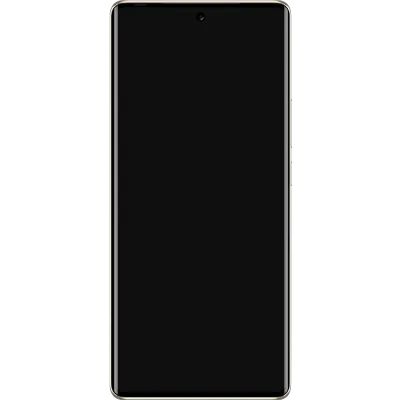
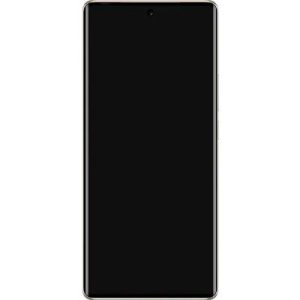
The shared renders on the Google Play Console suggest a sleek, modern look, featuring a center-aligned punch-hole cutout for the selfie camera.
This design choice aligns with current smartphone trends, offering a minimal and unobtrusive front camera placement.
Infinix Note 40 Series Connectivity and Additional Features
Infinix Note 40 Series Connectivity and Additional Features
Further details gathered from the certification sites indicate a range of connectivity options and additional features.
Both models will boast a screen resolution of 1080 x 2436 pixels, ensuring crisp and clear visuals.
The devices are also designed with convenience in mind, with the power button and volume rockers situated on the right side of the phone for easy access.
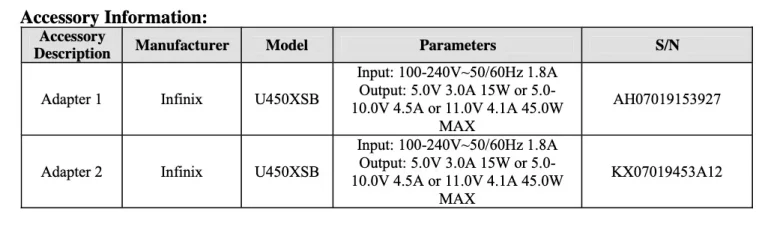
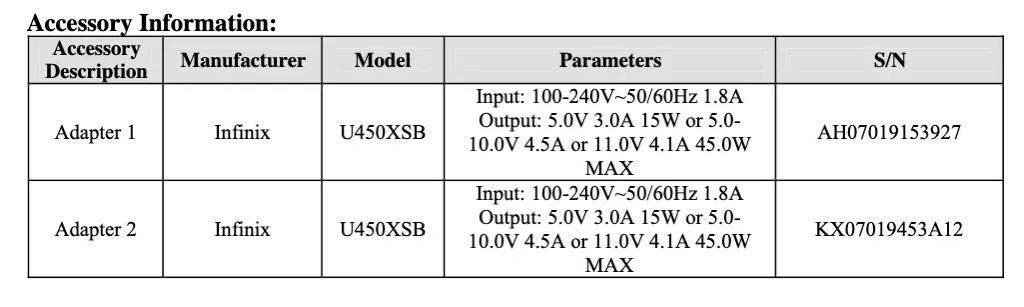
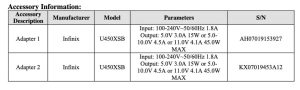
Infinix Note 40 Accessory Information
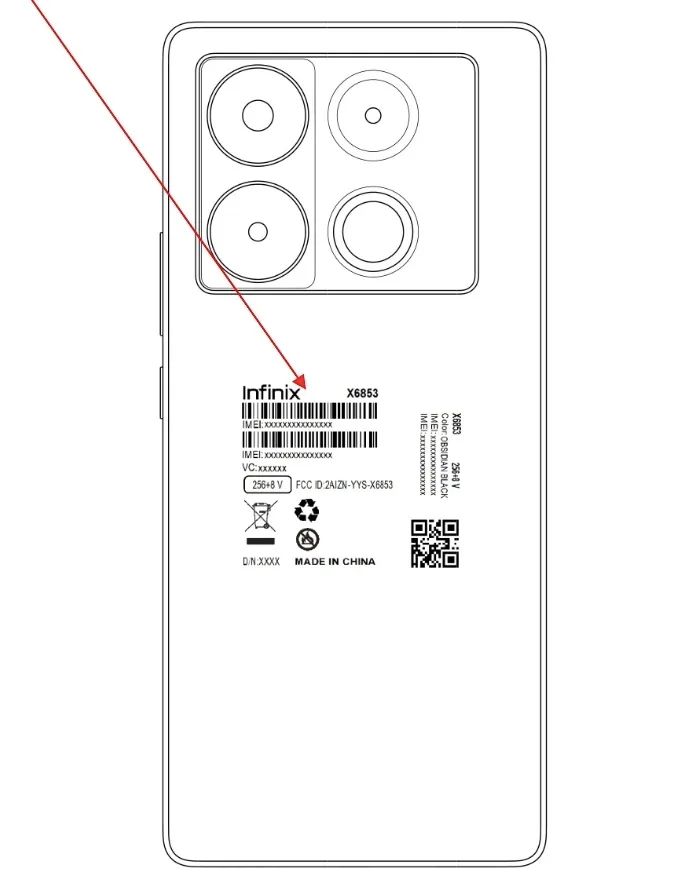
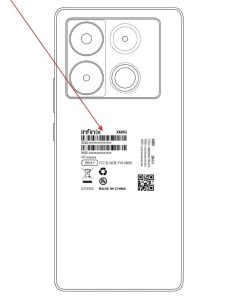
As per the FCC certification, the rear design of these smartphones will include a triple camera setup, continuing the legacy of their predecessors in the Note series.
Film Mode, Video, AI Cam, Beauty, Portrait, Super Night, AR Shot, Short Video, Pro, Slow Motion, Dual Video, Panorama, Documents, Timelapse, Sky Shop, Wide Selfie, Digital Zoom Upto 10X
Video Recording
1440p @ 30 fps QHD, 1080p @ 30 fps FHD
Flash
Yes, Triple LED
Front Camera
Punch Hole 32 MP f/2 (Wide Angle) with Dual LED Flash
What are the key specifications of the Infinix Note 40 and Note 40 Pro?
The Infinix Note 40 and Note 40 Pro are expected to run on Android 14, powered by MediaTek Helio G99 SoC.
They will likely have a display resolution of 1080 x 2436 pixels and a pixel density of 480 PPI.
What design features can be expected in the Infinix Note 40 series?
The design of the Infinix Note 40 series is anticipated to include a center-aligned punch-hole for the selfie camera and a sleek, modern look.
The power button and volume controls are conveniently located on the right side of the device.
What are the camera specifications for the Infinix Note 40 and Note 40 Pro?
Both the Infinix Note 40 and Note 40 Pro are expected to feature a triple rear camera setup. Specific details about the camera sensors are yet to be revealed.
Does the Infinix Note 40 offer wireless charging?
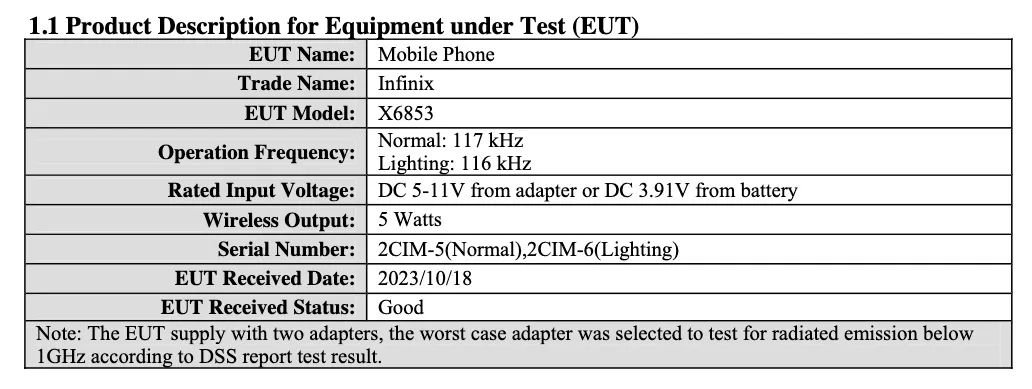
Yes, the Infinix Note 40 is expected to support 5W wireless charging, adding to its range of convenient features.
Infinix Note 40 series spotted on Google Play Certification.Details?
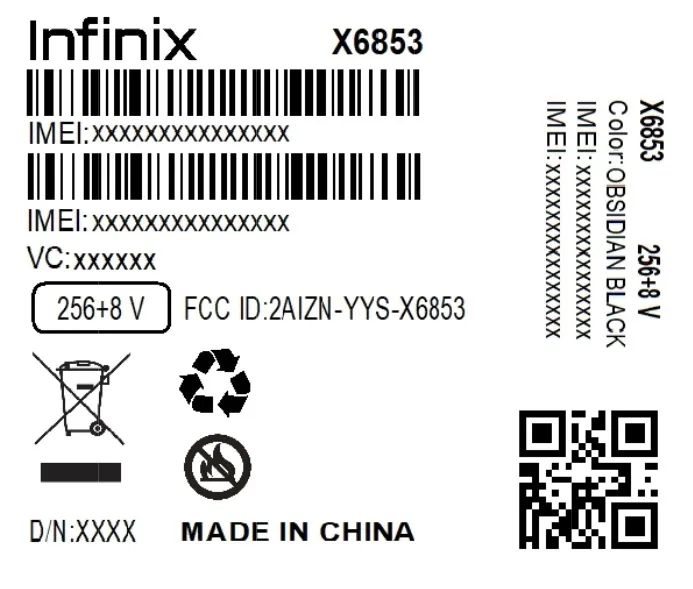
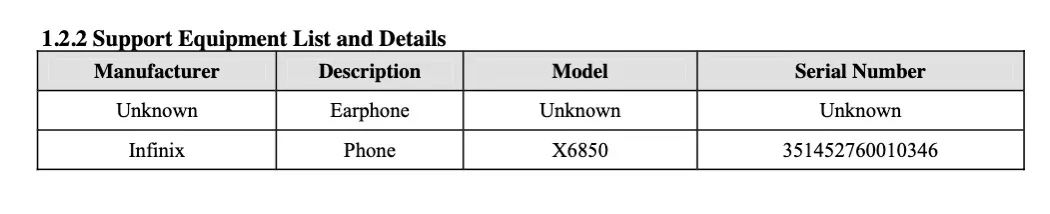
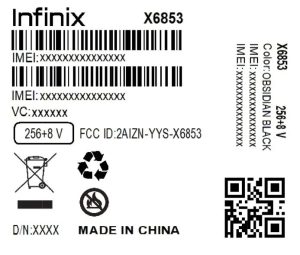
According to a report by MySmartPrice, the Infinix Note 40 and Note 40 Pro have surfaced on the Google Play Console database, carrying the model numbers X6853 and X6850.
The listing confirms the moniker of the device along with some of the key specifications.
The series will come equipped with 8GB of RAM and operate on XOS 14 based on Android 14 out of the box.
A MediaTek chipset, codenamed MT6789V/CD, will power the upcoming smartphones. The codename reveals the chipset as the Helio G99.
The MediaTek Helio G99 includes two Cortex A76 cores with a clock speed of 2.2GHz and six Cortex A55 cores with peak speeds of 2.0GHz. The chipset features an ARM Mali G57 GPU with a maximum clock speed of 1.06GHz for graphics.
The listing also reveals that the smartphones will feature a display with a resolution of 2,436 x 1,080 pixels (Full HD+) and a pixel density of 480 PPI. The display will feature a punch hole for the front camera.
The report includes data obtained from the FCC certification, and confirms that the smartphones will feature a triple rear camera system.
The report also divulges the charging details: the Infinix Note 40, which is model number X6853, will come with 45W fast charging and 5W wireless charging support. The Infinix 40 Pro is also expected to come with the same fast charging capabilities.
Infinix Note 40, Note 40 to Debut with 8GB of RAM.Details ?
The Note 40 and Note 40 Pro smartphones received the Google Play Console database with the model numbers X6853 and X6850.
The Google Play Console certification confirms the moniker of the device. The Note 40 Pro moniker was previously confirmed through the Bluetooth SIG listing.
The database reveals that Infinix will equip the smartphones with up to 8GB of RAM. The upcoming Note 40 series smartphones will debut with Android 14 out of the box. The smartphones are likely to launch with XOS 14 based on Android 14 out of the box. The devices will be powered by the MediaTek chipset with the codename MT6789V/CD. The codename confirms this will be the MediaTek Helio G99 SoC.
The octa-core chipset features two Cortex A76 cores clocked at 2.2GHz and six Cortex A55 cores at 2.0GHz. The chipset also sports the ARM Mali G57 GPU clocked at 1.06GHz. The Helio G99 SoC is fabricated on 6nm process and offers 4G connectivity.
The Google Play Console database also divulge that Infinix will equip the Note 40 and Note 40 Pro smartphones with a screen resolution of 1080 x 2436 pixels and a pixel density of 480 PPI.
The database also provides a glimpse of the front design of the upcoming Infinix smartphones. The render reveals that Infinix will equip the smartphones with a centred punch hole cutout to house the selfie camera.
The power button and volume rockers can be seen on the right side of the device.
Infinix Note 40, Note 40 spotted on FCC .Details?
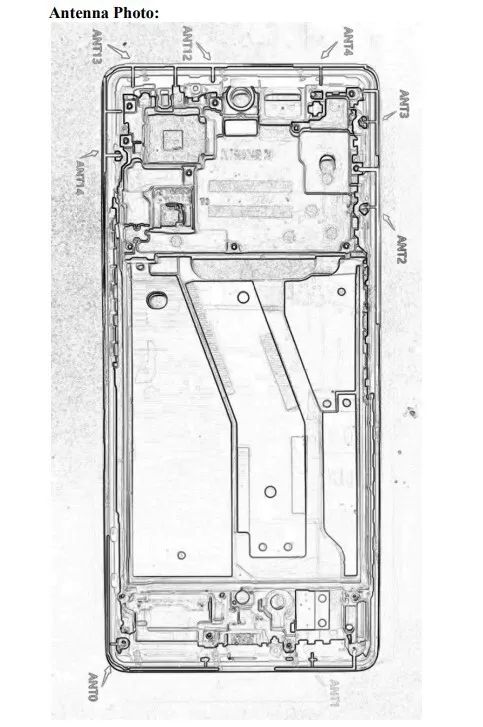
The upcoming Infinix smartphones were also spotted in the FCC certification, revealing the rear design and fast charging details. The FCC certification confirms that Infinix will equip the smartphones with triple rear cameras similar to its predecessors.
The smartphones will sport a camera island design similar to the Infinix Note 30 series smartphones. The FCC documents reveal support for 5W wireless charging with the Note 40 smartphone with the model number X6853. The smartphone brand will equip the base Note 40 with an adapter with the model number U450XSB.
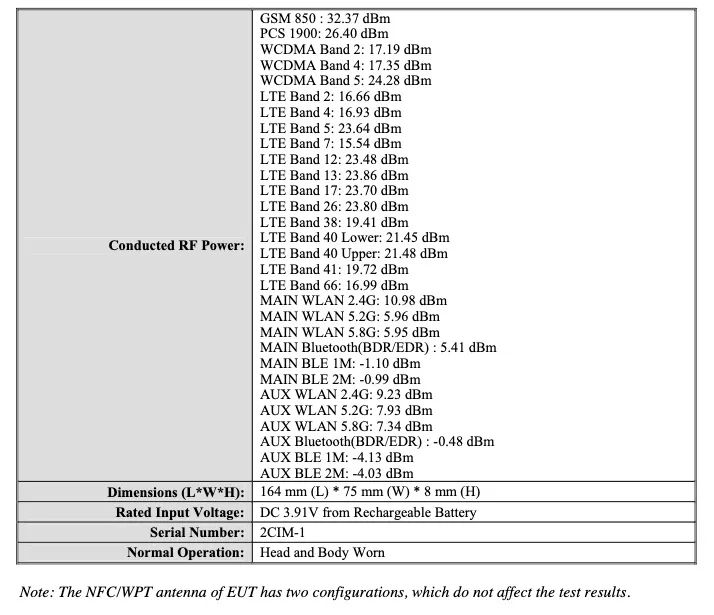
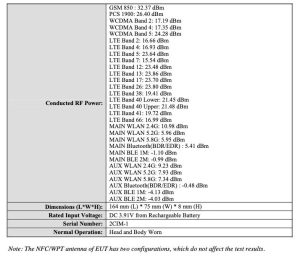
The earlier FCC documents confirmed that the smartphone will debut with support for 45W wired fast charging tech. The documents reveal that the device will have a dimension of 164 x 75 x 8 mm.
The FCC certification also listed the Note 40 Pro smartphone with the model number X6850. The Pro model will also sport wireless charging and 45W wired fast charging tech.
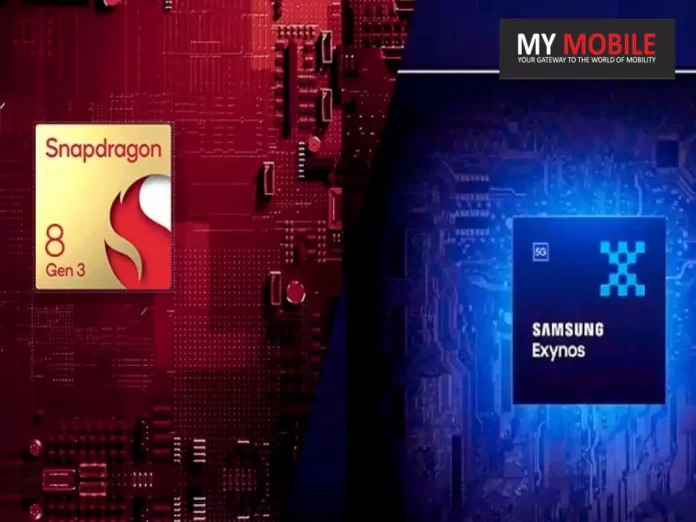
Now comparisons for both chipsets have come out and recent benchmarks provide a clearer picture of their respective performances.
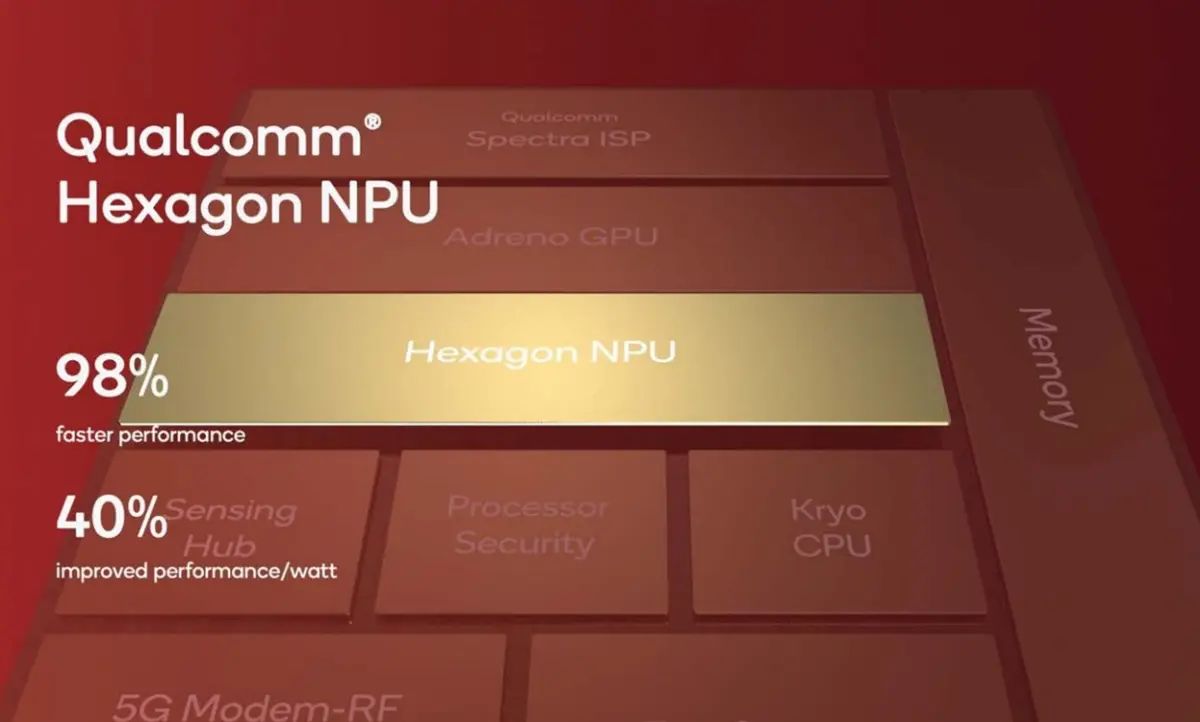
Qualcomm Hexagon NPU
Exynos 2400 vs. Snapdragon 8 Gen 3: Core Architectural Differences
Exynos 2400 vs. Snapdragon 8 Gen 3: Core Architectural Differences
Exynos 2400: This chipset stands out with its deca-core CPU configuration, incorporating a higher number of cores and a higher GPU frequency, which is approximately 56% more than its counterpart. It includes a 3.2GHz Cortex-X4 core, alongside a mix of 2.9GHz and 1.95GHz Cortex-A720 cores.
Snapdragon 8 Gen 3: In contrast, the Snapdragon features an octa-core setup. Its primary Cortex-X4 core is clocked slightly higher at 3.3GHz, supported by Cortex-A720 cores at 3.15GHz and 2.27GHz.
Display Capabilities
Exynos 2400 vs. Snapdragon 8 Gen 3: Display Capabilities
The Exynos 2400 can support 4K displays at a 120Hz refresh rate, offering high-resolution visual experiences.
The Snapdragon 8 Gen 3, while not supporting 4K, can push QHD+ screens up to a 144Hz refresh rate, making it ideal for high-frame-rate applications.
Benchmark Performance
Exynos 2400 vs. Snapdragon 8 Gen 3 Benchmark Performance
In AnTuTu benchmarks, the Snapdragon 8 Gen 3 leads with scores on the Galaxy S24 ranging from 1,699,940 to 1,819,945 points.
The Exynos 2400 scores a commendable 1,639,695 points, which, although lower than the Snapdragon 8 Gen 3, is about 9% higher than the Snapdragon 8 Gen 2’s performance.
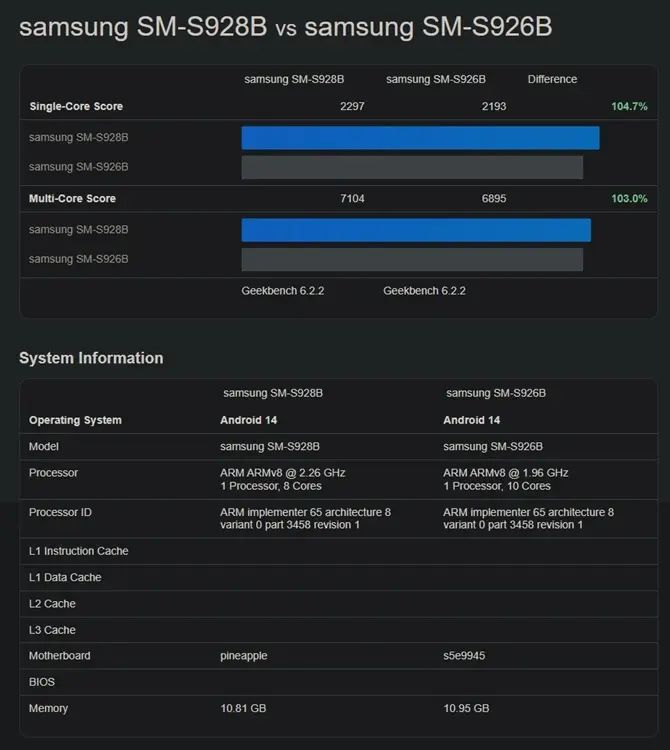
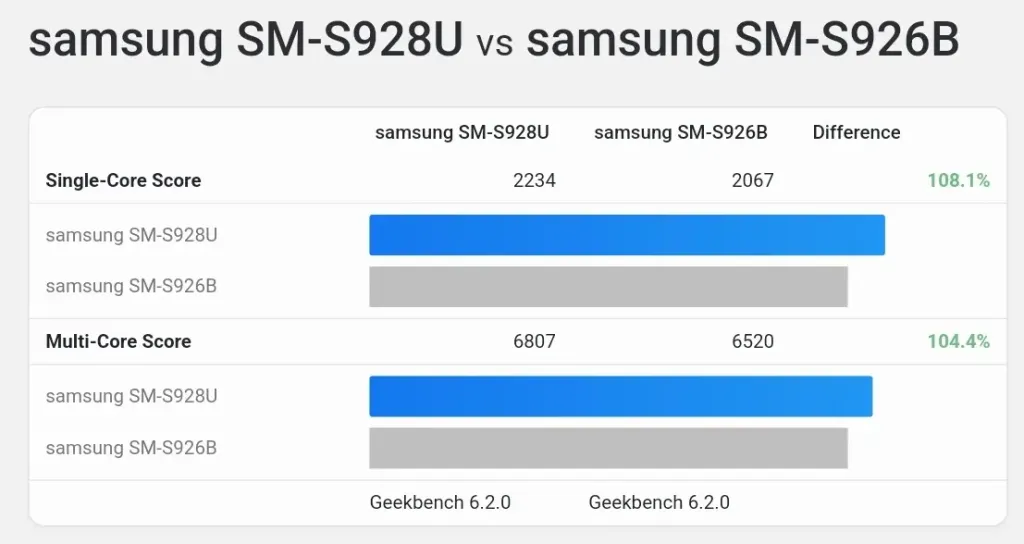
The Snapdragon 8 Gen 3 shows its prowess in Geekbench 6, with a single-core score of 2,254 and a multi-core score of 7,059.
The Exynos 2400, while slightly trailing, posts a competitive single-core score of 2,106 and a multi-core score of 6,757, showcasing its capabilities in handling intensive tasks.
User Implications and Choice
Galaxy S24 Series: Snapdragon 8 Gen 3 vs Exynos 2400 User Implications and Choice
The Snapdragon 8 Gen 3 appears to have an edge in raw performance, particularly noticeable in benchmark testing.
How do the Snapdragon 8 Gen 3 and Exynos 2400 compare in core configuration?
The Snapdragon 8 Gen 3 features an octa-core CPU, while the Exynos 2400 boasts a deca-core CPU, offering a higher number of cores and greater GPU frequency.
This difference plays a significant role in their respective performance capabilities.
What are the AnTuTu benchmark scores for these chipsets?
In the AnTuTu benchmark, the Snapdragon 8 Gen 3 scores range from 1,699,940 to 1,819,945 points, indicating superior performance.
The Exynos 2400 follows closely with a score of 1,639,695 points, showing robust capabilities despite being slightly lower.
How do these chipsets perform in Geekbench 6?
In Geekbench 6, the Snapdragon 8 Gen 3 leads with a single-core score of 2,254 and a multi-core score of 7,059.
The Exynos 2400 scores a single-core of 2,106 and a multi-core of 6,757, illustrating its competitive performance.
What are the display support capabilities of Snapdragon 8 Gen 3 and Exynos 2400?
The Exynos 2400 supports 4K displays at a 120Hz refresh rate, while the Snapdragon 8 Gen 3 is compatible with QHD+ screens at a 144Hz refresh rate, catering to different user preferences.
What does the combination of Exynos and Snapdragon chipsets mean for the Galaxy S24 series?
The integration of both Exynos 2400 and Snapdragon 8 Gen 3 chipsets in the Galaxy S24 series signifies a blend of Samsung’s proprietary technology with Qualcomm’s industry-leading SoC solutions.
This strategy allows Samsung to cater to different markets and preferences, offering tailored performance characteristics.
Why is Samsung opting for a dual chipset strategy for the S24 series?
Samsung’s choice to revert to a dual chipset strategy for the Galaxy S24 series allows for diversification in performance and technology offerings.
This move caters to varied regional market demands and underscores Samsung’s commitment to innovation and competition within the semiconductor industry.
Will all models of the Galaxy S24 have the same features across regions?
While core functionalities will remain consistent across the Galaxy S24 series, certain features powered by the Snapdragon 8 Gen 3 chipset, such as the ISOCELL Zoom Anyplace technology, may be exclusive to the models equipped with this particular SoC, adding a layer of regional differentiation.
What is Exynos 2400 vs Snapdragon 8 Gen 3: Geekbench 6 ?
The Exynos 2400 performed on expected lines, as is evident from the Geekbench CPU test. With a deca-core CPU on the Exynos 2400, it scored 2046 in the single-core test and 6687 in the multi-core test.
And the Snapdragon 8 Gen 3 with eight cores, scored a bit higher, thanks to the increase in peak frequencies of all cores, it gains 2228 in the single-core test and 6858 in the multi-core test.
Both the CPUs are plenty powerful, and Exynos 2400 comes close to the Snapdragon 8 Gen 3, which is quite a feat. However, with 10 CPU cores, Samsung should have scored higher in the multi-core test.
It shows that TSMC’s 4nm fabrication process is still ahead of Samsung Foundry’s 4nm LPP+ process node.
How did both chips perform on various tests ?
Genshin Impact: Both chips managed a mostly steady 60 FPS, proving their ability to handle even demanding titles. However, there was some thermal throttling which isn’t surprising considering Genshin Impact is the most demanding smartphone game.
PUBG Mobile: Both the Exynos and Snapdragon chips in the Galaxy S24 series managed to reach a consistent 90 FPS. But this was only on the Smooth graphics settings. When changing the settings, the highest frame rate option available was Extreme (60 FPS) for both the Snapdragon-powered S24 Ultra and Exynos-powered S24 Plus. This means that Samsung still needs to fine-tune these chips for better performance with PUBG Mobile.
PUBG New State: For New State, both phones support 90 FPS in Ultra graphics settings. There is an Extreme graphics option, but it’s not enabled on either phone, which means there’s still room for improvement via software updates.
Call of Duty: Mobile: The Galaxy S24 Ultra, with its Snapdragon chip and Super Resolution feature, achieved a smooth 120 FPS, while the Exynos-powered S24+ was stuck at 60 FPS.
Mobile Legends: Not a demanding game, so both phones ran it at a steady 60 FPS.
Fortnite: Both chips dropped to the low 70s in combat, but otherwise ran at a decent 90 FPS.
War Thunder: Surprisingly, the Exynos S24+ outperformed the Snapdragon S24 Ultra in this ray tracing-enabled game.
Both started at around 100 FPS, but the Snapdragon chip quickly throttled down to 40 FPS in urban areas.
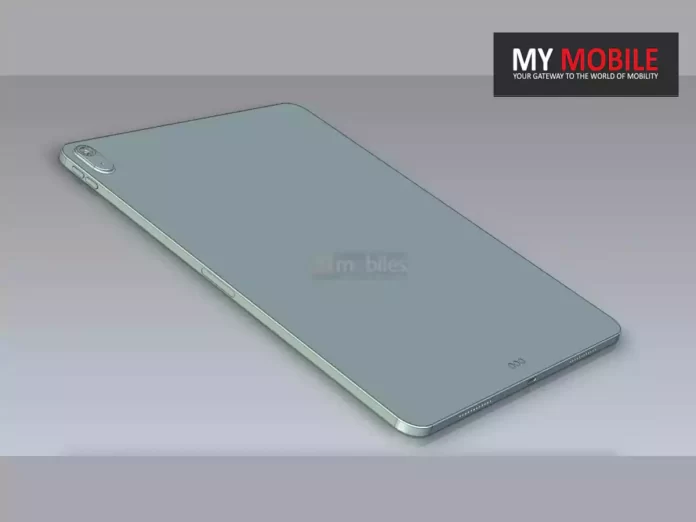
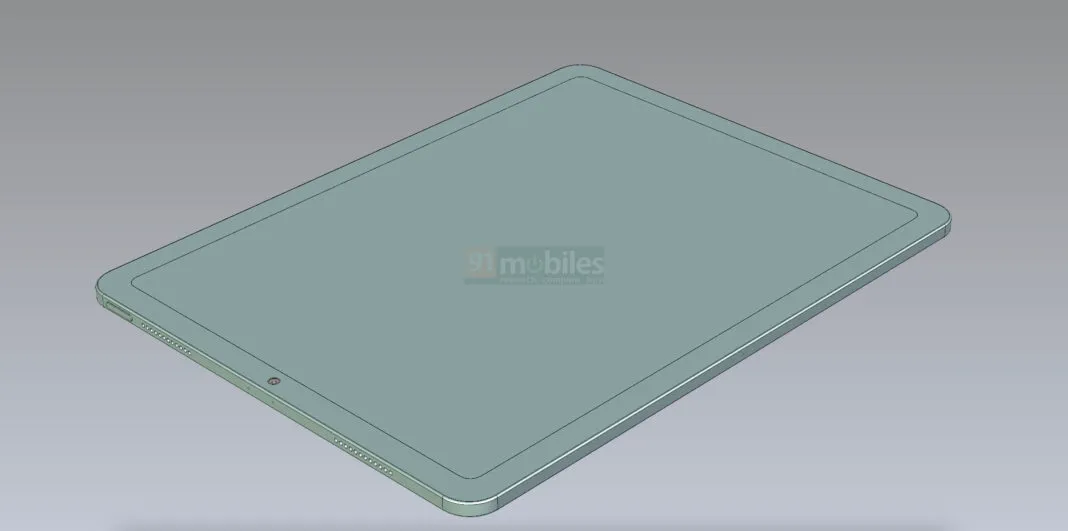
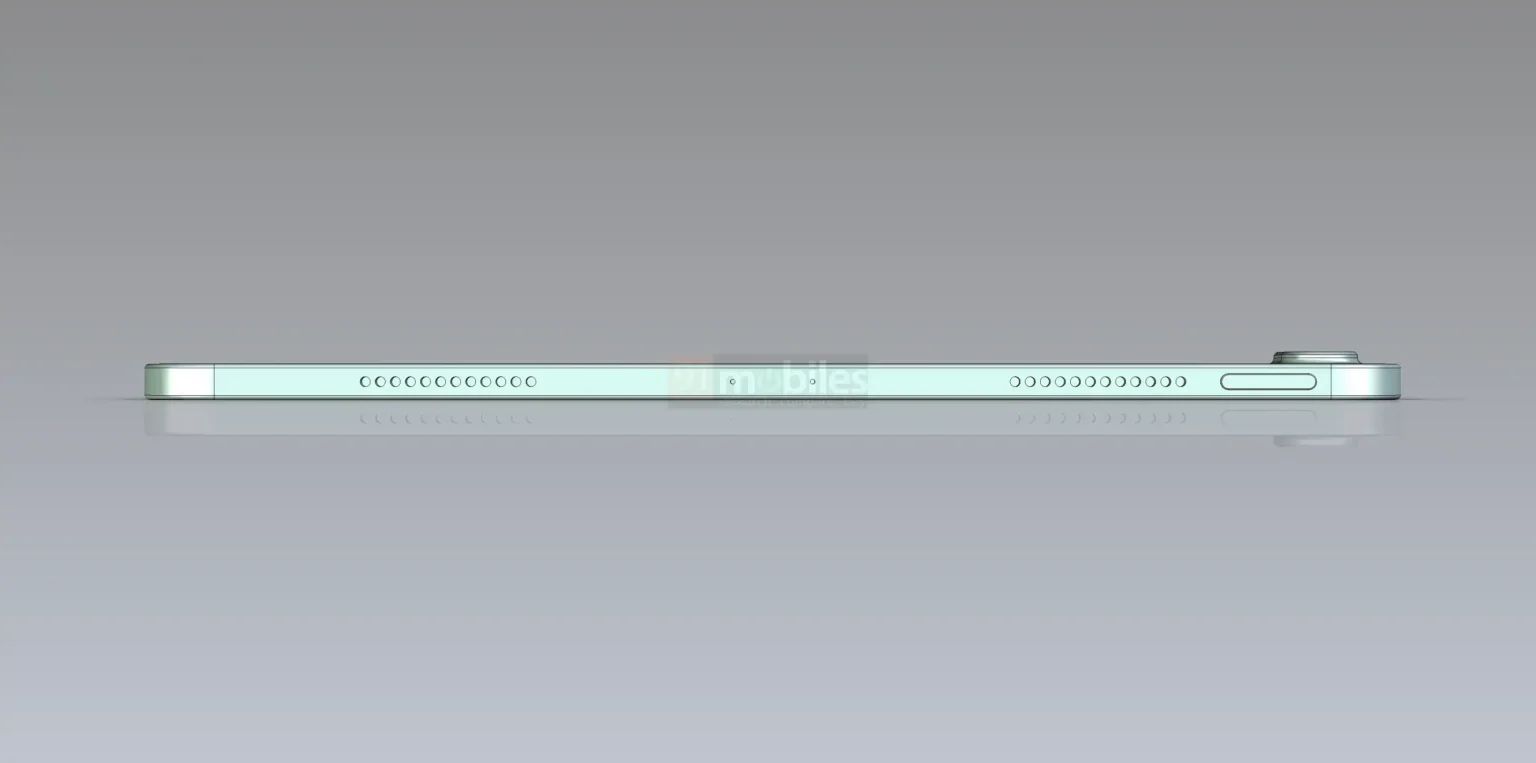
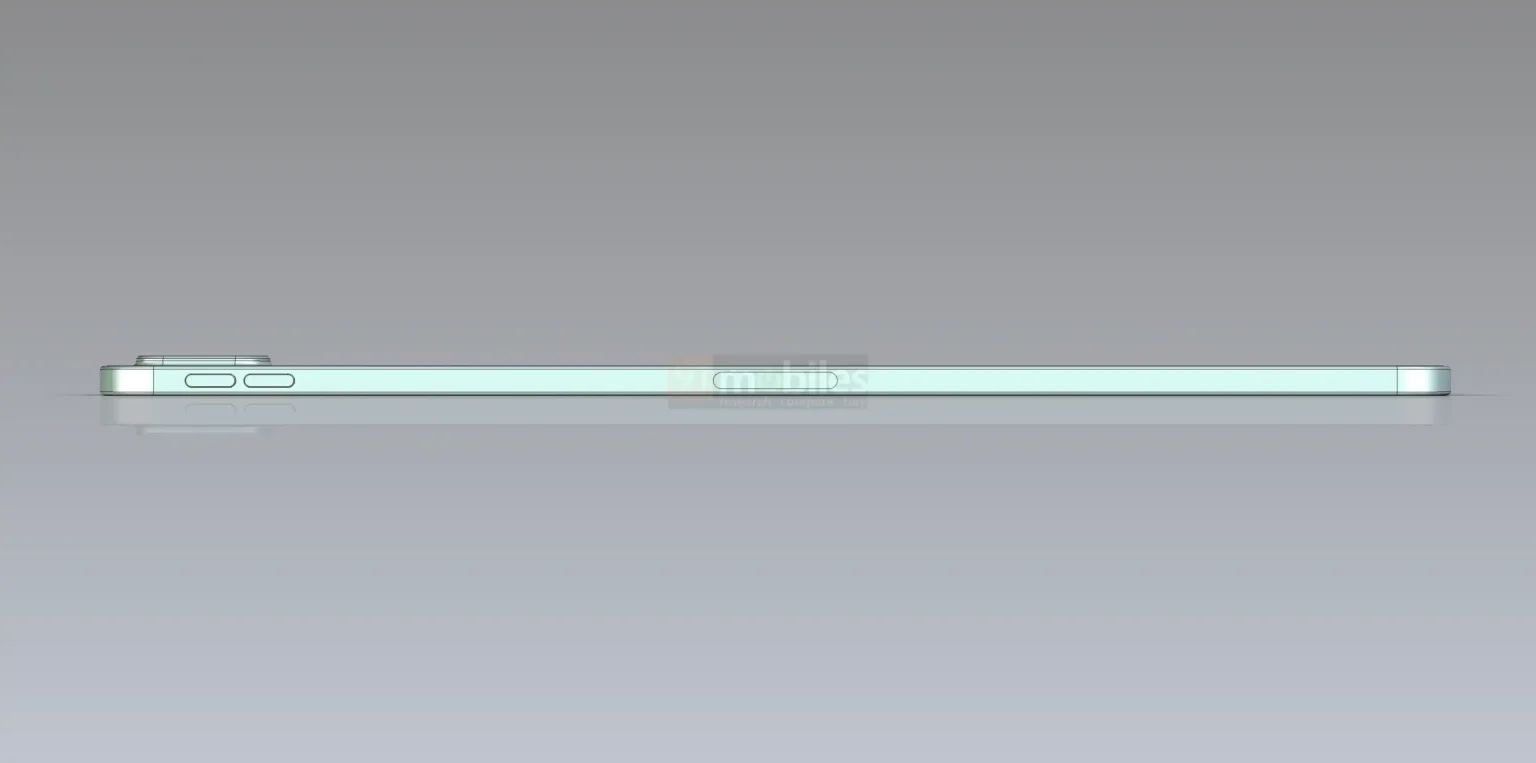
These renders, revealed by industry sources to 91mobiles, suggest that Apple is expanding its iPad Air range to include a model that matches the iPad Pro in screen size.
Release and Series Placement
Release and Series Placement
Apple is expected to launch this new model as the 6th generation in the iPad Air series soon.
The introduction of a 12.9-inch variant marks a significant expansion of the iPad Air lineup, catering to a broader audience.
Design Highlights of the 12.9-inch iPad Air
Design Highlights of the 12.9-inch iPad Air
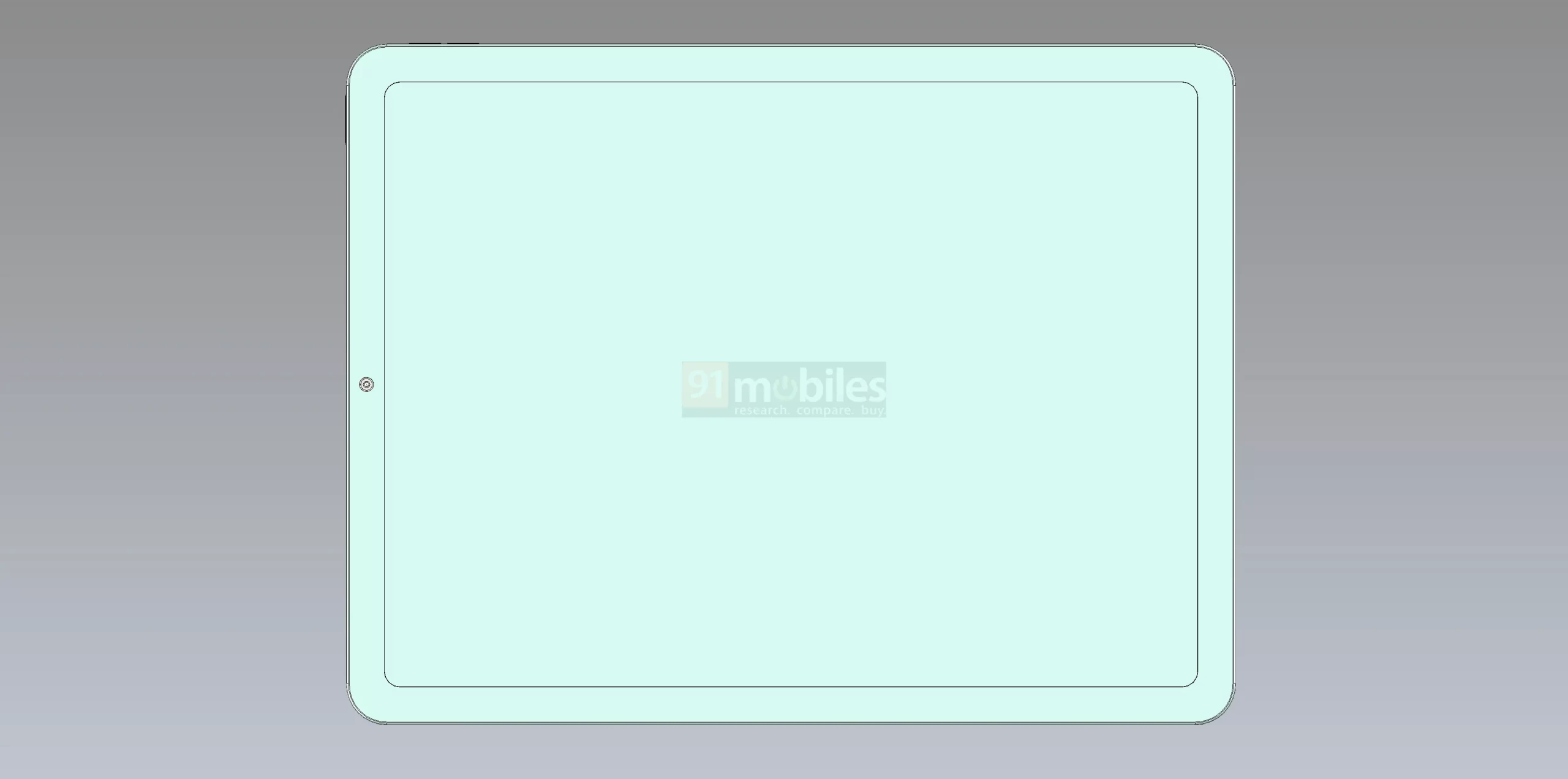
The design of the 12.9-inch iPad Air, as seen in the CAD renders, closely mirrors the current iPad Air model.
It maintains the sleek, all-screen design that the iPad Air range is known for.
This consistency in design suggests that Apple is focusing on size rather than a complete design overhaul for this model.
In line with previous models, the new iPad Airis expected to feature a Touch ID button at the top.
The speaker grilles are positioned at both the top and bottom of the device, adhering to the familiar design language of the iPad Air series.
An interesting design tweak is noticeable in the rear camera setup.
Unlike the current iPad Air, which features a bare camera sensor, the new 12.9-inch model appears to have a border around the camera lens and LED flash, indicating a slight shift in Apple’s approach to camera aesthetics for this model.
The renders also show the continuation of the USB-C port at the bottom, maintaining the universal connectivity standard that Apple has adopted in its recent iPad models.
Additional Features of New iPad Air
Additional Features of New iPad Air
Contrary to the 12.9-inch iPad Pro’s mini-LED display, the upcoming iPad Air is rumored to feature an LCD display, similar to the current iPad Air model.
This choice indicates Apple’s strategy to differentiate the iPad Air from the more premium iPad Pro lineup.
Reports suggest that the new 12.9-inch iPad Air will be equipped with the M2 chip, promising enhanced performance.
This update positions the iPad Air as a powerful option within Apple’s tablet range, catering to users seeking larger screens without the premium cost of the iPad Pro.
FAQs
What do the leaked renders indicate about the new 12.9-inch iPad Air?
The CAD renders suggest that the new 12.9-inch iPad Air will retain a design similar to the current iPad Air models.
Key features include a sleek, all-screen look, a Touch ID button, and updated rear camera aesthetics with a border around the lens.
How does the camera design of the 12.9-inch iPad Air differ from the current model?
Unlike the current iPad Air’s bare camera sensor, the new 12.9-inch model is expected to feature a distinct border around the camera lens and LED flash, based on the leaked renders.
What type of display will the 12.9-inch iPad Air have?
According to reports, the 12.9-inch iPad Air is likely to continue with an LCD display, similar to the existing iPad Air models, rather than adopting the mini-LED display found in the higher-end iPad Pro.
What processor is expected in the new 12.9-inch iPad Air?
The upcoming 12.9-inch iPad Air is rumored to be powered by the M2 chip, which would mark a significant performance boost over the current models.
Next-Gen iPad Air With 12.9-Inch Display and Redesigned Camera Unit Revealed in CAD Renders . Details?
The design of Apple’s upcoming 12.9-inch iPad Air model has today allegedly been revealed in new CAD renders shared by 91Mobiles.
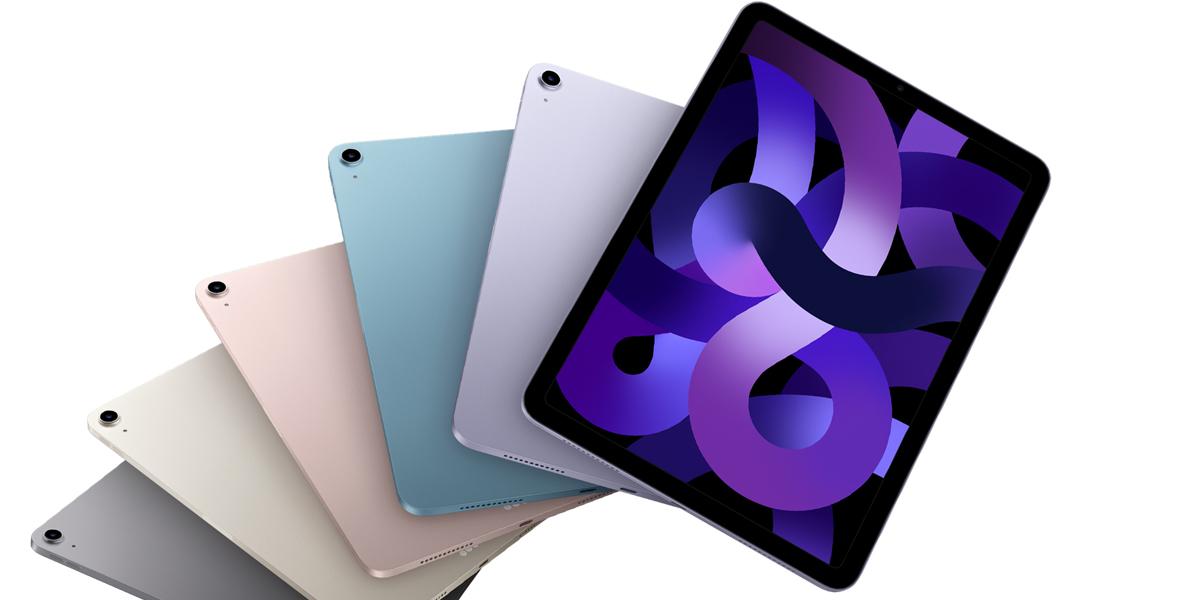
As expected, the renders show an overall appearance that is very similar to the iPad Air design used for the fourth- and fifth-generation models, but simply scaled up to accommodate a larger display.
The most striking difference on the device is a redesigned rear camera unit, which now protrudes from the rear in a longer pill-shape, unlike the single, round protruding cutout on the current iPad Air.
This new design seems to be somewhat reminiscent of the rear camera unit of the iPhone X and iPhone XS.
On the front of the tablet, the iPad Air looks very similar to the current 12.9-inch iPad Pro, but with noticeably thicker bezels, just like how the 10.9-inch iPad Air has thicker borders around the display compared to the 11-inch iPad Pro.
The device is expected to be targeted at those who want a bigger tablet than the current, 10.9-inch iPad Air, but have no need for the high-end features of the 12.9-inch iPad Pro such as ProMotion or a LiDAR scanner.
This is similar to Apple’s approach with the 13.6- and 15.3-inch MacBook Air, as well as the 6.1-inch iPhone 15 and 6.7-inch iPhone 15 Plus.
91Mobiles also reiterated reports that the next-generation iPad Air will feature the M2 chip.
The device is rumored to enter production in the first quarter of 2024, so it could already be underway. It is expected to launch “early” this year, likely in March.
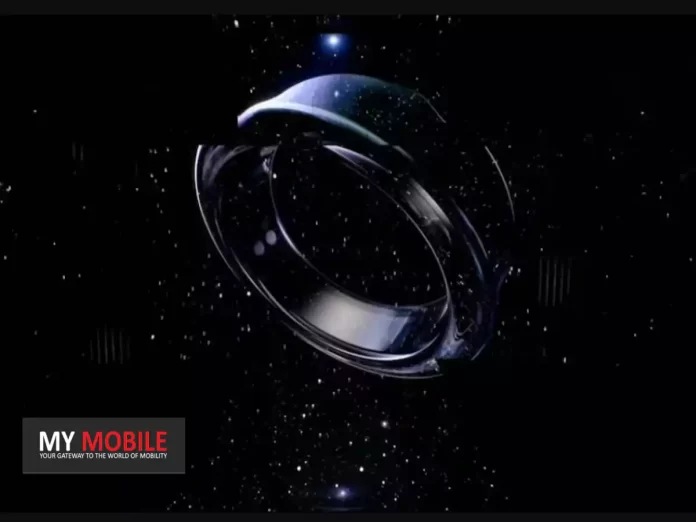
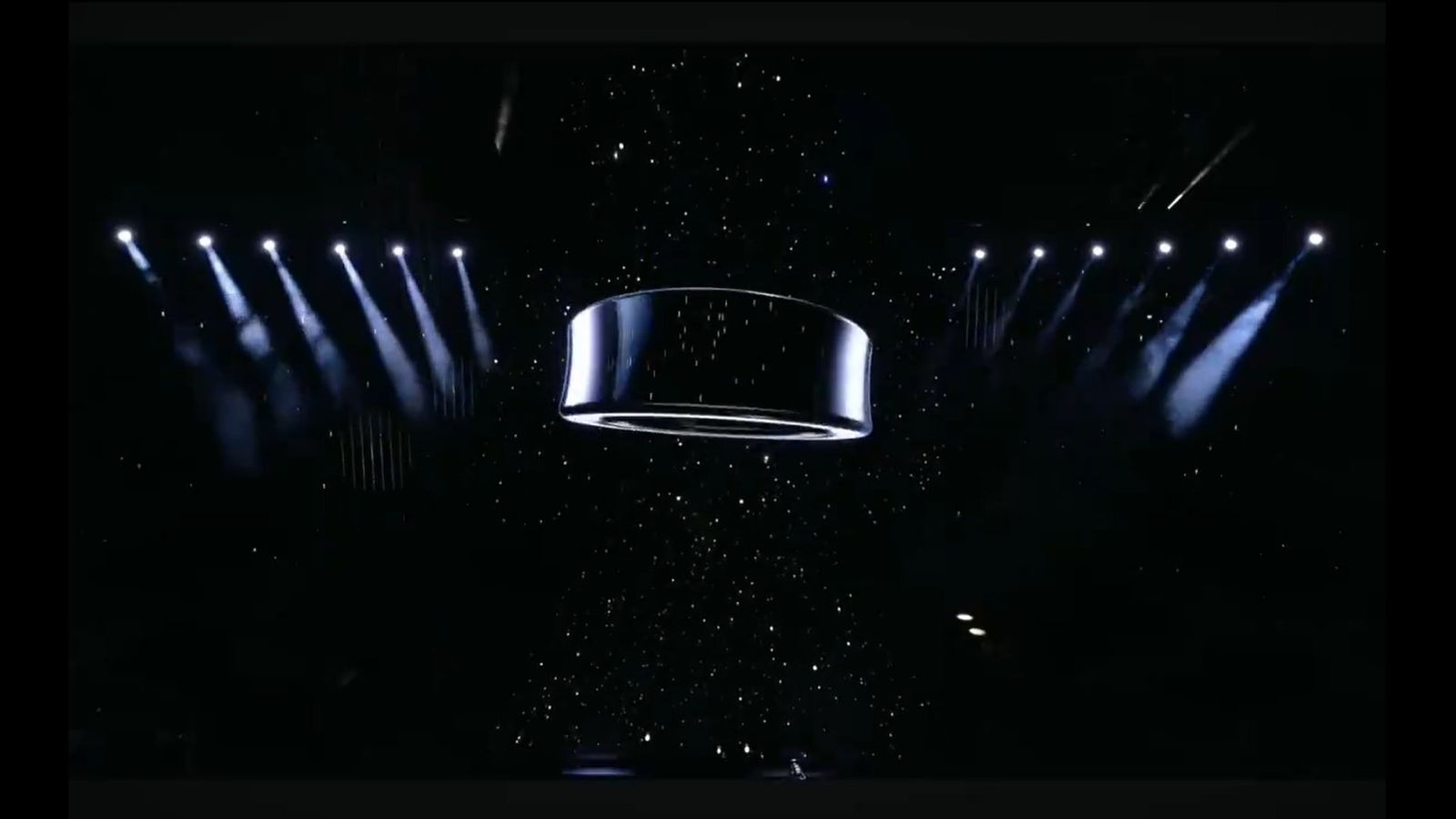
While detailed information and an official announcement about the Galaxy Ring are yet to be made, the teaser has certainly piqued the interest of tech enthusiasts and consumers alike.
“With AI, technology is empowering us to stay connected, unleash our creativity, and stay connected, all in more meaningful ways,” Dr. Matthew Wiggins, a clinical research scientist at Samsung, said in his announcement of the ring on Wednesday.
Official Announcement about the Galaxy Ring are yet to be made
What We Know About the Galaxy Ring So Far
What We Know About the Galaxy Ring So Far
The Galaxy Ring was briefly mentioned in the promotions of the Samsung Galaxy S24.
This subtle tease suggests that Samsung is exploring new territories in wearable technology, although specifics about the product remain under wraps.
This move reflects a growing trend in the tech industry to diversify wearable technology into more varied and discreet formats like rings, which can offer continuous health monitoring in a more unobtrusive manner.
Galaxy Ring indicates Samsung’s venture beyond traditional smartwatches
Anticipation for Official Details
Anticipation for Official Details
The tech community is eagerly awaiting more information from Samsung about the Galaxy Ring.
Details such as its features, functionalities, compatibility with other Samsung devices, and how it integrates with Samsung’s health ecosystem are highly anticipated.
Galaxy Ring, a new addition to its wearable
FAQs
What is the Samsung Galaxy Ring?
The Samsung Galaxy Ring is a potential new product in the wearable technology space, briefly teased by Samsung in its promotional materials for the Galaxy S24.
Specific details about the ring’s features and capabilities are not yet disclosed.
Has Samsung officially announced the Galaxy Ring?
As of now, Samsung has not made an official announcement about the Galaxy Ring. It has only been teased briefly, leading to speculation and anticipation within the tech community.
What can be expected from the Samsung Galaxy Ring?
While details are scarce, it is speculated that the Galaxy Ring will focus on health and wellness, in line with Samsung’s commitment to expanding its wearable technology offerings.
When can more information about the Galaxy Ring be expected?
There is no confirmed date for when more information will be available. The tech community is on the lookout for any official announcements or further teases from Samsung regarding the Galaxy Ring.
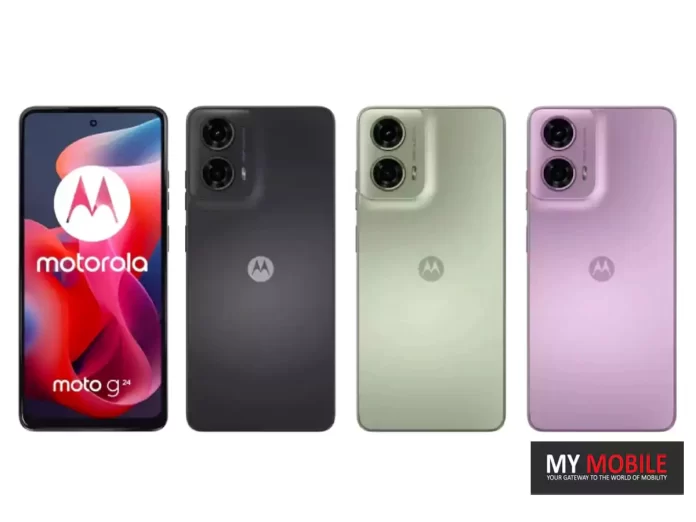
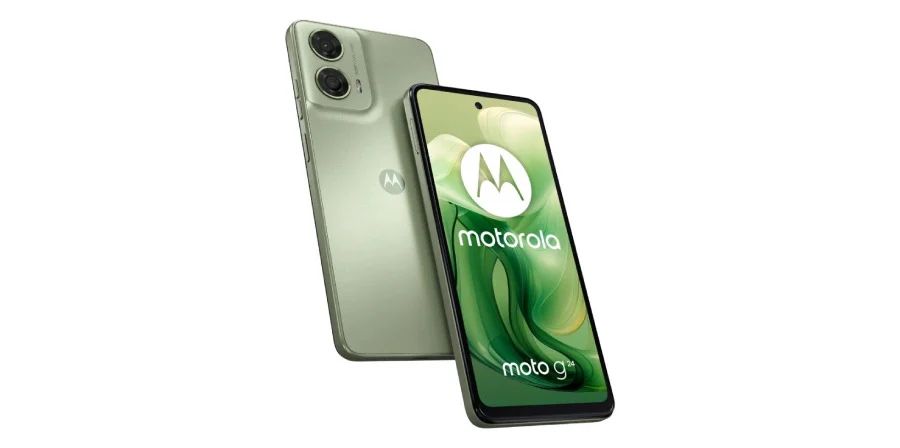
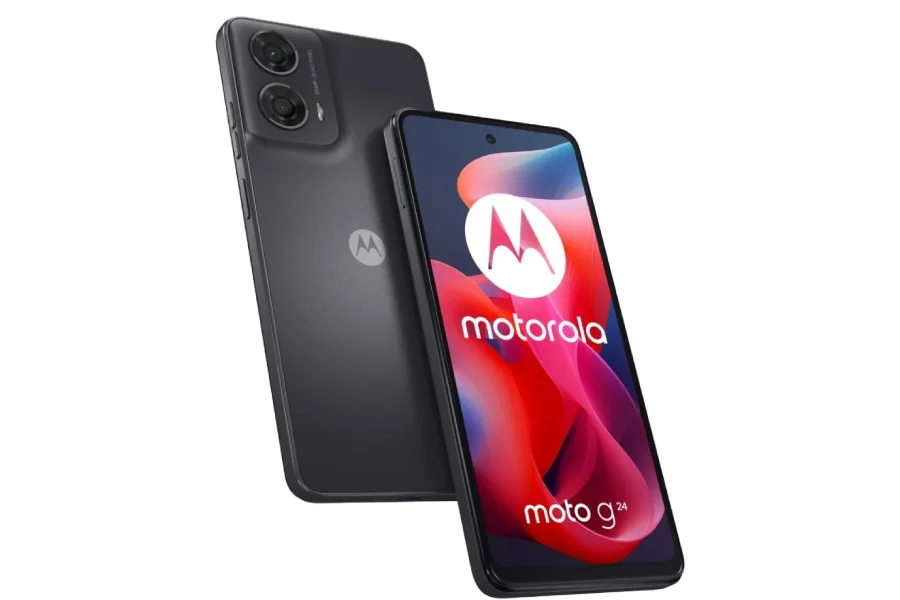
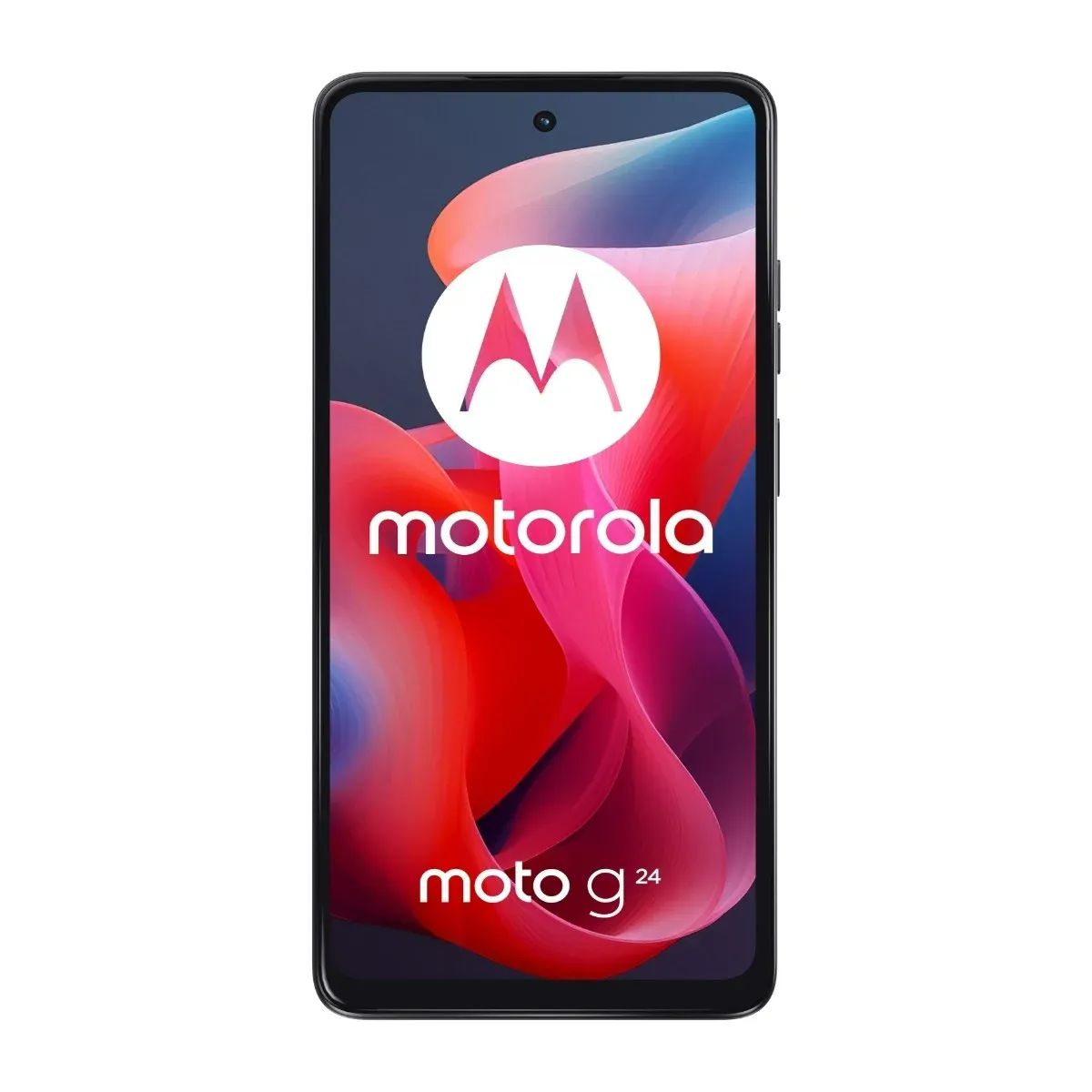
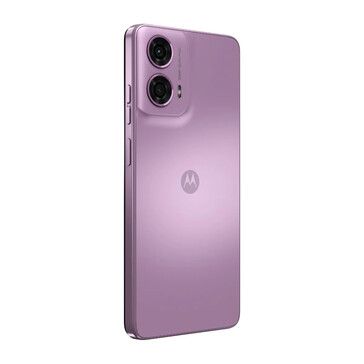
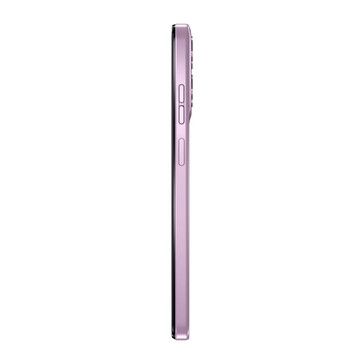
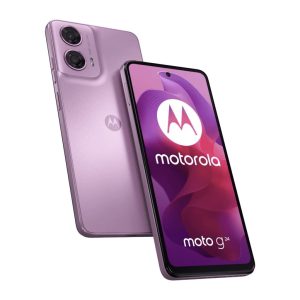
Upcoming Motorola Moto G24 smartphone’s Pricing, Specs, and Renders leaked ahead of its official launch
The Moto G24, mirroring the design of the recently launched Moto G34, is set to feature a dual-camera setup on the back.
This includes a primary 50MP camera complemented by a 2MP macro camera.
The front of the device boasts a 6.56-inch IPS LCD screen, offering an HD+ resolution of 1612 x 720, a 90Hz refresh rate, and a pixel density of 269 PPI.
For selfie enthusiasts, an 8MP front camera is expected.
It pairs 4GB of RAM with 128GB of internal storage, ensuring smooth multitasking and ample space for apps and media.
The device’s performance is further bolstered by a robust 5000mAh battery supporting 20W fast charging via a USB-C port.
With dimensions of 163 x 75 x 7.99 mm and a weight of around 180 grams, the Moto G24 promises to be both sleek and practical.
It includes a range of connectivity options such as a 3.5mm headphone jack, Wi-Fi 5, Bluetooth 5.0, dual Nano-SIM support, and a microSD card slot for additional storage.
The phone is equipped with essential sensors like an ambient light sensor, proximity sensor, compass, accelerometer, and gyroscope.
Adding to its appeal, the Moto G24 will run on the latest Android 14 and feature a side-mounted fingerprint scanner for secure access.
Motorola Moto G24 5G Specs
GENERAL
Sim Type
Dual Sim, GSM+GSM (Hybrid Slot)
Dual Sim
Yes
Sim Size
Nano SIM
Device Type
Smartphone
Release Date
December 05, 2023 (Expected)
DESIGN
Dimensions
73.8 x 161.6 x 8.9 mm
Weight
192 g
DISPLAY
Type
Color IPS LCD Screen (16M Colors)
Touch
Yes
Size
6.58 inches, 1080 x 2400 pixels, 120 Hz
Aspect Ratio
20:9
PPI
~ 405 PPI
Screen to Body Ratio
~ 85.5%
Features
Anti Fingerprint Coating, Water Repellent Design, HDR10
What are the key features of the Motorola Moto G24 based on the latest leaks?
The Motorola Moto G24 is expected to sport a 6.56-inch IPS LCD screen with HD+ resolution and a 90Hz refresh rate.
It will likely have a dual-camera setup, including a 50MP main sensor and a 2MP macro camera, and an 8MP selfie camera on the front.
What can be expected in terms of performance from the Moto G24?
The Moto G24 is rumored to be powered by a MediaTek Helio G85 processor, combined with 4GB of RAM and 128GB of internal storage.
It’s also expected to have a 5000mAh battery supporting 20W fast charging.
What are the connectivity options available in the Moto G24?
The Moto G24 is likely to offer several connectivity features, including a 3.5mm headphone jack, Wi-Fi 5, Bluetooth 5.0, dual Nano-SIM support, and a microSD card slot for extra storage.
What are the expected dimensions and weight of the Moto G24?
The leaked dimensions for the Moto G24 suggest it will measure 163 x 75 x 7.99 mm and weigh around 180 grams, making it a sleek yet practical smartphone choice.
What are the Geekbench scores of Moto G24?
The Moto G24 scored 407 points in the single-core and 1399 points in the multi-core Geekbench 6 tests. These scores suggest that the phone aims to offer balanced performance.
What kind of processor does the Moto G24 have?
While it’s not explicitly mentioned, the Geekbench listing points to an octa-core MediaTek Helio SoC. The chipset is likely to be the MediaTek Helio G85, based on the mentioned Mali G52 GPU.
How much RAM will the Moto G24 feature?
The Geekbench listing indicates that the Moto G24 will house 8GB of RAM. Other memory configurations may also be available.
Which version of Android will come pre-loaded on the Moto G24?
The device is expected to come with Android 14 pre-loaded, offering users the latest software features and updates.
What do the leaked renders of the Moto G24 Power reveal about its design?
Based on the leaked images from MySmartPrice, the Moto G24 Power adheres to Motorola’s signature design aesthetic familiar to fans of the G series.
The phone appears to have a glossy back with smoothly curved edges and the iconic Motorola logo at its center.
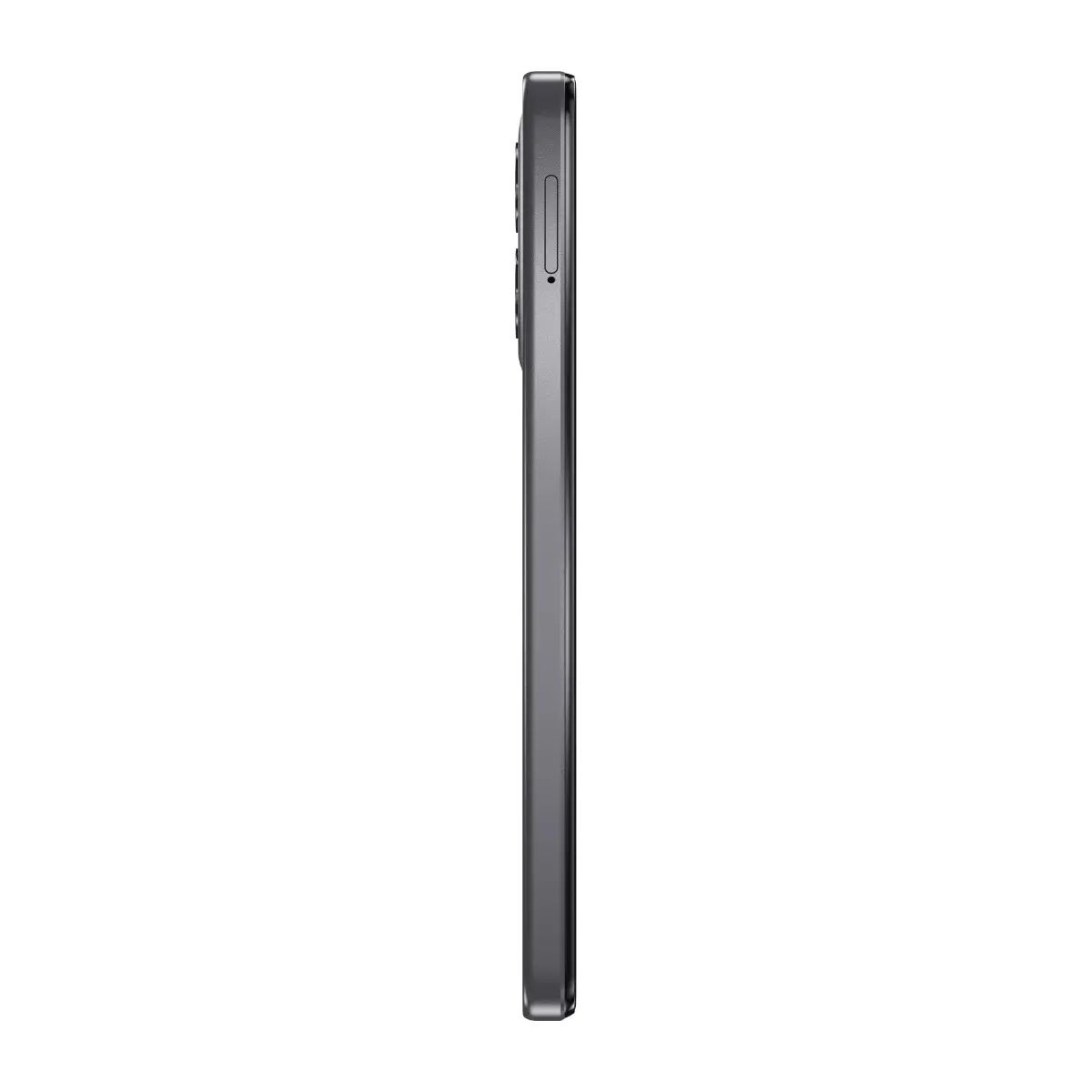
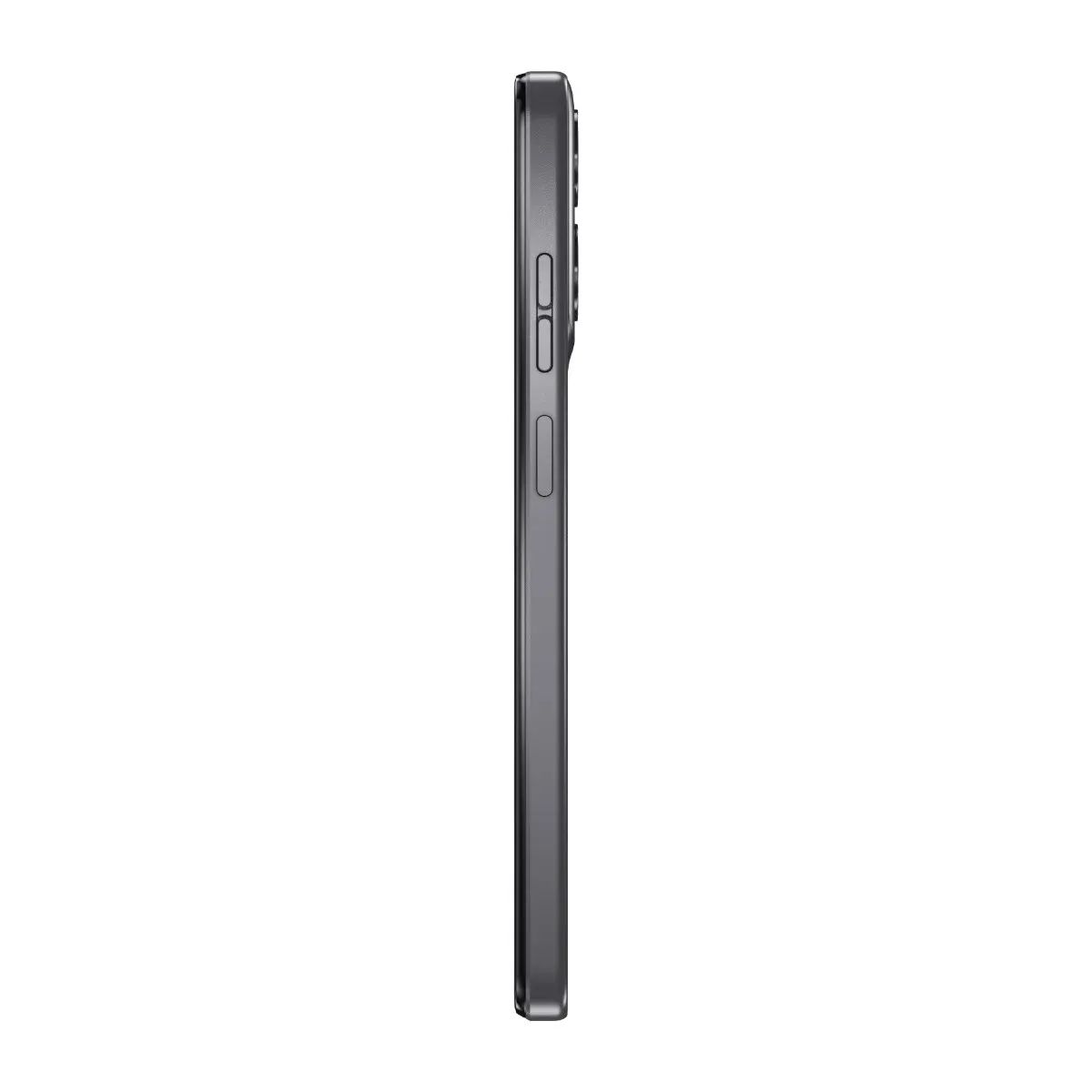
The renders suggest a functional design with volume rockers and power buttons on the right and a SIM card tray on the left.
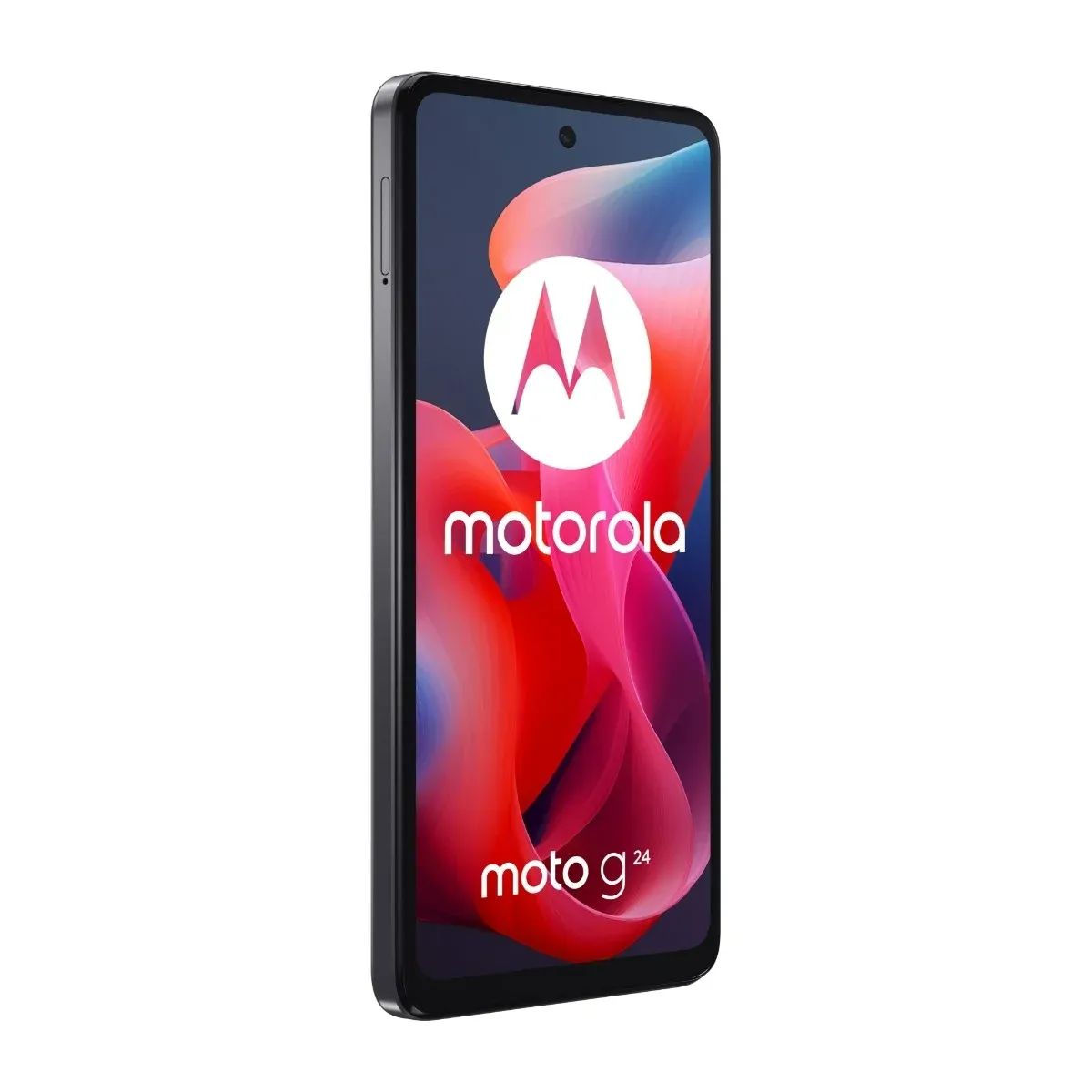
A nearly bezel-less display with a punch-hole camera cutout and a color scheme potentially including dark blue and silver are also visible.
How does the Moto G34 differentiate itself in design from the Moto G24 Power?
The Moto G34, as per the leaked images, aims for a more premium feel compared to the G24 Power.
It features a boxier design and a unique texture on the back, hinting at variants in faux leather and glossy finishes. Like the G24 Power, it is expected to have essential ports and a headphone jack.
What can be inferred about the technical specifications of the Moto G24 Power and G34?
While specific details are still speculative, it is expected that the Moto G34 may be powered by a Qualcomm Snapdragon 4 Gen 2 SoC, targeting mid-range performance.
The Moto G24 Power might come with a Snapdragon 680 processor. Both models are anticipated to feature at least a 5,000mAh battery, aligning with Motorola’s focus on long battery life. As typical with Moto devices, a stock Android experience is likely.
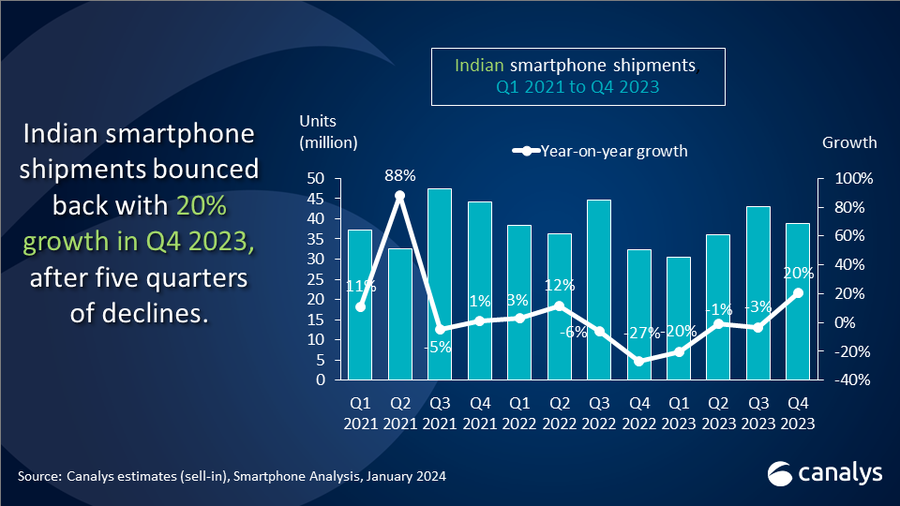
According to a Canalys report, the market experienced a 2% drop in shipments, with a total of 148.6 million units.
Yet, in a significant turnaround, the final quarter of the year saw a 20% year-on-year growth, resulting in 38.9 million units shipped.
This recovery was primarily fueled by strong consumer demand during the festive season, highlighting the market’s robustness in challenging times.
“In 2023, growing investment in mainline retail space proved beneficial not only for vendors but also allowed the overall market to stabilize,” said Sanyam Chaurasia, Senior Analyst at Canalys. Brands such as Xiaomi and realme saw their highest offline shipment share in Q4.
Xiaomi democratized its portfolio, contributing equally to offline and online channels, making its highest offline channel contribution quarter. Its Redmi 12 5G and recently launched Redmi 13C series contributed to its offline share, each surpassing a million shipments.
Similarly, realme also shipped devices with equal channel contribution, with the Narzo series driven by ecommerce, while the remaining portfolio continued to dominate offline channels. To further enhance their positions in the premium space, brands should continually focus on bolstering the confidence of their channel partners.
“The premium segment witnessed robust growth, thanks to easy financing options, incentive schemes for retailers and rising disposable income,” said Chaurasia.
“With the celebration of Diwali in November 2023, Apple got the opportunity to push the latest iPhone 15 series during the festive sales, contributing more than 50% to its shipments in Q4. Additionally, discounts on the previous-generation iPhone 14 and iPhone 13 models during online sales resulted in Apple’s record shipments, allowing it to capture 7% market share in India.
Similarly, Samsung had set aggressive retail targets for its premium Galaxy S23 series to drive premium segment growth. Along with this, Samsung’s latest Galaxy S23 FE launch in Q4 drove shipments, thanks to compelling banking deals.”
“Vendors are entering 2024’s ‘Election Year’ with improved indicators for the consumer market with manageable inflation, a steady interest rate and clear visibility of a stable government to come into power,” said Chaurasia.
“Canalys expects the Indian smartphone market to grow by mid-single digits in 2024, driven by affordable 5G and the pandemic period replacement cycle. But the biggest challenge for vendors this year will be to manage the rising bill of materials costs.”
Key Insights into India’s 2023 Smartphone Market
Overall smartphone market in India experienced a minor drop of 2% in 2023.
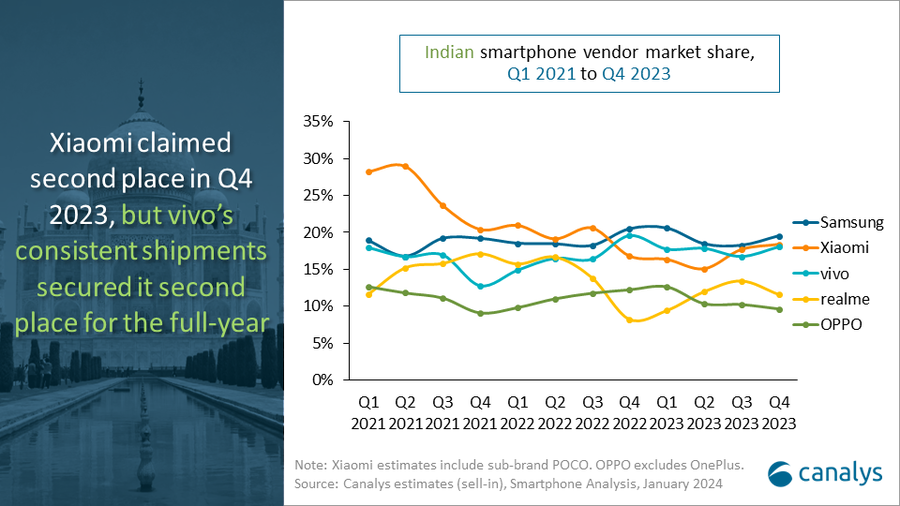
Samsung’s Dominance: In Q4, Samsung led the market, claiming a 20% share with 7.6 million units shipped. This success was mirrored throughout the year, with Samsung maintaining its position at the top, despite a slight dip in market share.
Xiaomi’s Performance: Following closely was Xiaomi, shipping 7.2 million units in the fourth quarter. Over the year, Xiaomi also saw a decline in its market share.
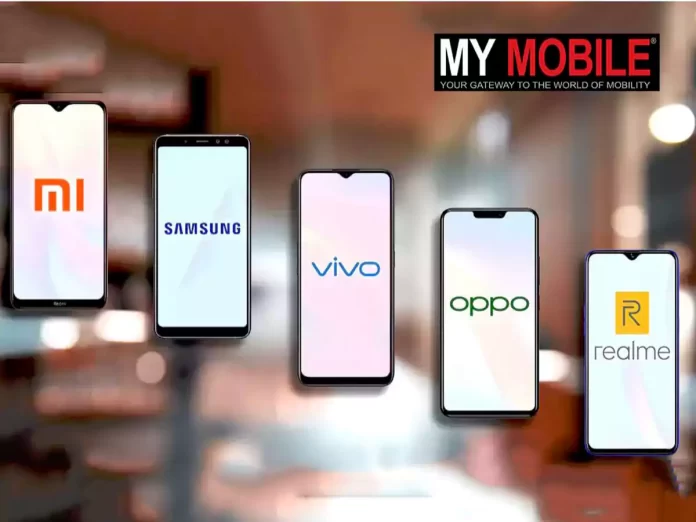
Other Key Players: Vivo, Realme, and OPPO rounded out the top five brands, with Vivo displaying modest growth and Realme and OPPO witnessing shipment decreases.
Trends and Consumer Behaviour
Samsung maintained its lead with a 20% market share, followed by Xiaomi and Vivo. Xiaomi and Realme saw their highest offline shipment share in Q4 2023.
As per the report, the festive season played a pivotal role instabilizing the market, countering challenges such as inflation and inventory issues.
Brands like Apple and Samsungcapitalized on this trend by introducing new models and offering attractive financing options.
Channel Strategies and 5G Adoption
Offline Expansion: Xiaomi and Realme were successful in extending their offline presence, balancing their distribution channels effectively. This strategy led to an increase in offline shipments, contributing substantially to their total sales.
5G’s Influence: The growing affordability of 5G smartphones has been a major driver of market growth, with consumers showing a keen interest in upgraded technology.
The Outlook for 2024
Looking ahead, Canalys anticipates that the Indian smartphone market will continue its growth trajectory in 2024.
However, manufacturers will need to navigate the challenge of rising material costs.
FAQs
What was the overall performance of India’s smartphone market in 2023?
In 2023, India’s smartphone market saw a minor decline of 2% in overall shipments, totaling 148.6 million units. Despite this slight decrease, the market remained resilient.
How did the smartphone market in India fare in the last quarter of 2023?
The final quarter of 2023 marked a notable recovery for India’s smartphone market, with a 20% increase in shipments compared to the same period in the previous year, indicating strong market dynamics.
What factors contributed to the resilience of the smartphone market in India?
The resilience in India’s smartphone market was largely attributed to the heightened consumer demand during the festive season, which played a crucial role in driving sales and market recovery.
Was the decline in India’s smartphone market significant?
The 2% drop in India’s smartphone market in 2023 represents a minor decline, especially considering the strong recovery observed in the last quarter of the year.
Who led the Indian smartphone market in Q3 2023?
Samsung led the market with an 18% share and 7.9 million units shipped.
How did Xiaomi perform in this quarter?
Xiaomi climbed to second place by shipping 7.6 million units, largely due to its affordable 5G models.
What trends were observed in the premium smartphone segment?
The premium segment grew robustly, driven by Samsung’s Galaxy S23 series and older-generation iPhones offered at attractive deals.
Which brands faced a decline in Q3 2023?
Realme and Oppo experienced declines compared to the same timeframe in 2022.
How did the Indian smartphone market perform in the third quarter of 2023?
The Indian smartphone market demonstrated consistent year-on-year growth during the third quarter of 2023, with a total of 44 million units shipped. Samsung maintained its position as the market leader despite a slight dip in market share compared to the previous year.
What trends were observed in the 5G smartphone segment in India?
The 5G segment within the Indian smartphone market experienced robust growth, with 5G device shipments reaching a 58% share of the total market. This growth was facilitated by the launch of budget-friendly 5G models and various discounting strategies.
Which smartphone brands are leading in India’s premium market segment?
In India’s premium smartphone segment, significant growth was led by high-end models such as the Apple iPhone 13 and the Samsung Galaxy S23 series. The segment itself grew by 52%, indicating a healthy consumer interest in premium devices.
Has there been a change in the average selling price (ASP) of smartphones in India?
Yes, there has been an increase in the ASP of smartphones in the Indian market, with a rise to approximately Rs 21,000 (US$253). This represents a 12% year-on-year growth and a 5% increase from the previous quarter.
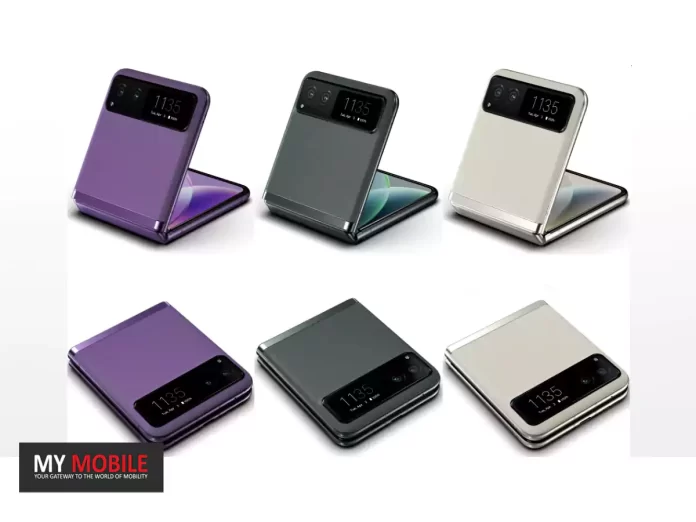
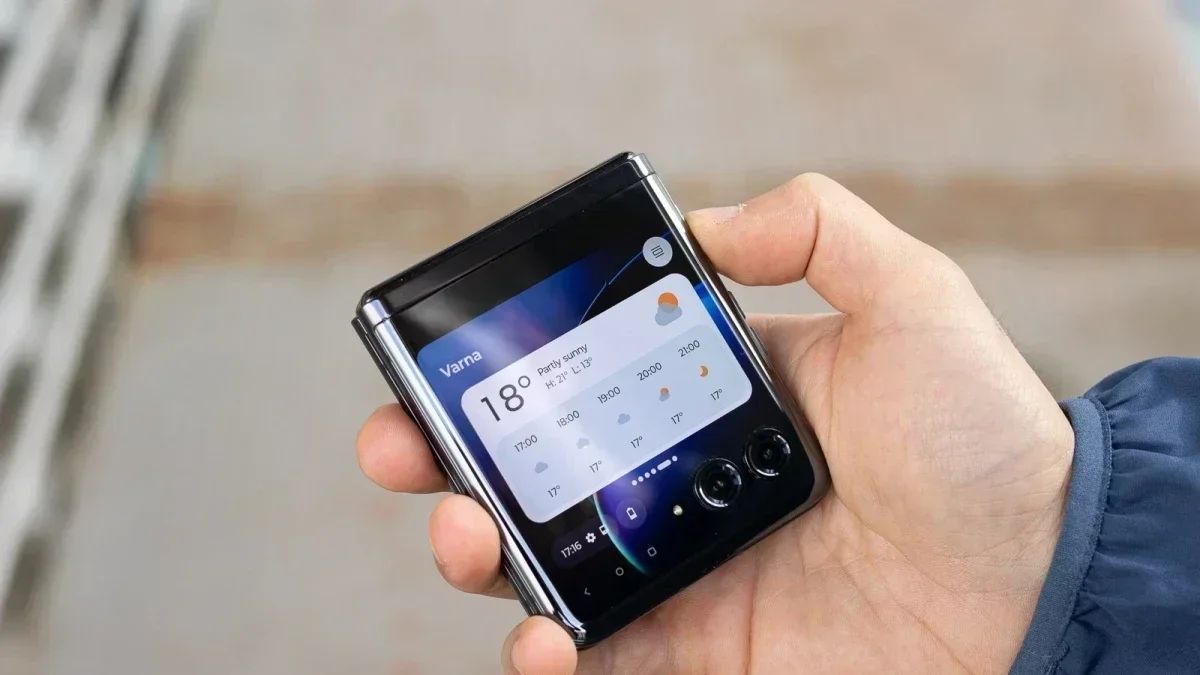
Recent leaks and renders shared by MSPowerUser have provided a glimpse into what the future holds for this storied line of devices.
Evolution of the Moto Razr Plus : What’s New?
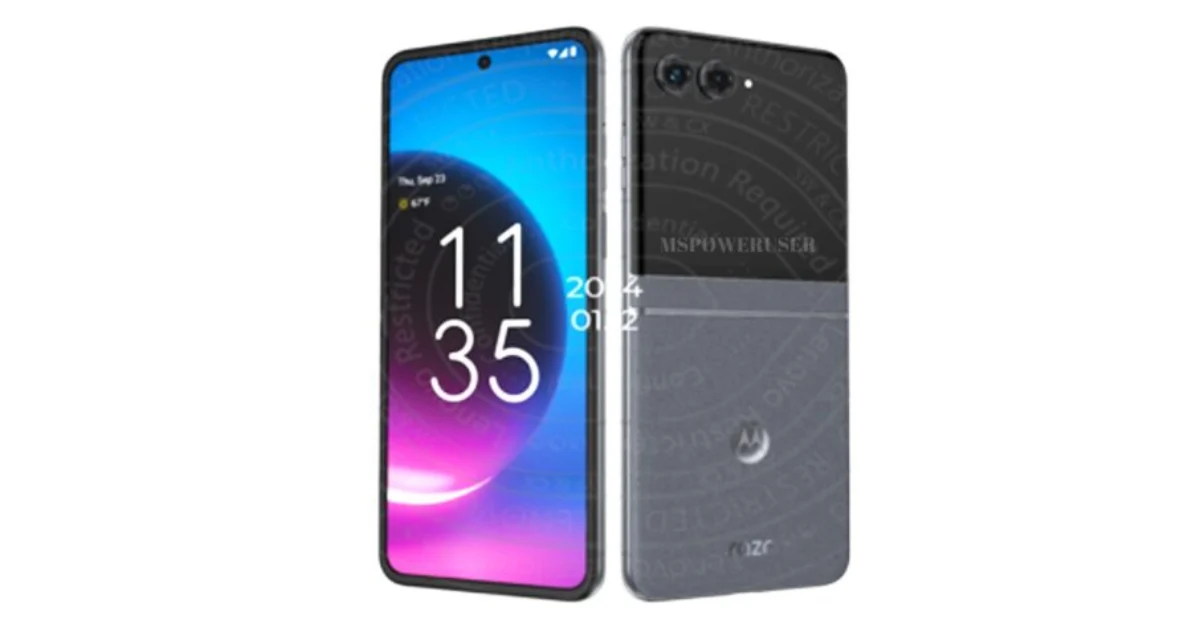
Render of the next version of the Motorola Razr+ for Verizon. Image credit-MSPoweruser
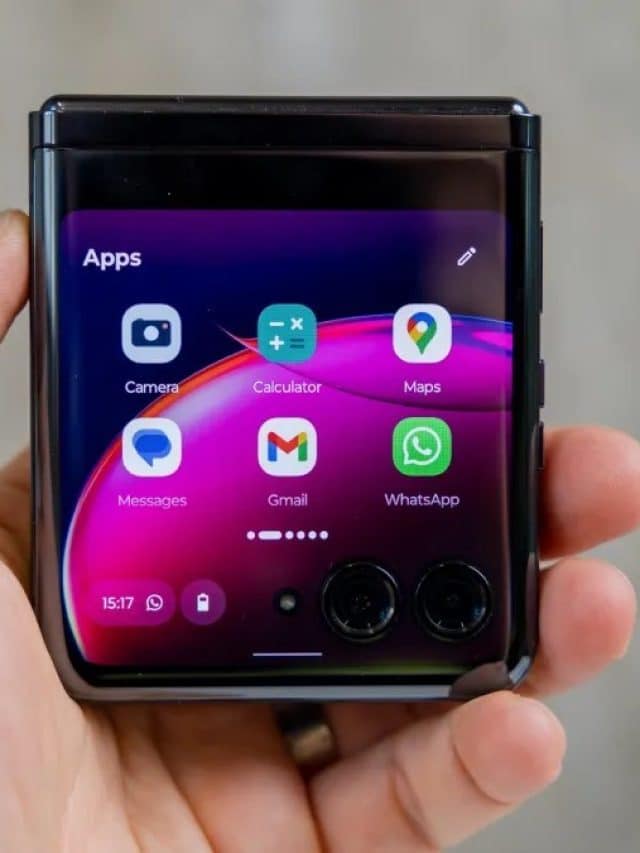
The upcoming model, tentatively named the Razr Plus 2024 and codenamed Glory (model number XT-2453-3), seems to retain the classic aesthetic that has been synonymous with the Razr brand.
It follows the Razr 40 Ultra/Plus lineage and is expected to be available exclusively through Verizon Wireless in the US.
This continuity in design showcases Motorola’s commitment to blending nostalgia with contemporary technology.
The design render suggests that the new Razr Plus will feature a cover display, a hallmark of the Razr series, and dual camera rings on the top-right, echoing the layout of previous models.
The familiar classic grey finish is anticipated to make a return, maintaining the series’ sleek and stylish look.
Upon flipping the phone open, users can expect a design similar to its predecessors, complete with a central punch-hole camera for selfies.
Anticipation Builds for the Official Launch
Motorola Razr Plus 2024 and Razr 50 Ultra leaks with familiar design
The official release date and pricing details of the Razr Plus are yet to be announced.
However, speculation suggests a potential launch in the first half of 2024.
As more information emerges, anticipation grows among tech enthusiasts and fans of the iconic Razr line for what could be a significant addition to the foldable phone segment.
Moto Razr Plus: Additional Features
New Razr+ could be released in first half of 2024
Under the hood, the Razr Plus is rumored to be powered by a new Qualcomm Snapdragon processor, although the specific chipset remains under wraps.
The Motorola Razr Plus 2024 is an upcoming flip-style smartphone from Motorola, following the Razr 40 Ultra/Plus.
Leaked renders suggest it retains the classic Razr design, updated with modern technological advancements.
What are the expected new features of the Razr Plus 2024?
The Razr Plus 2024 is rumored to run on a new version of Qualcomm Snapdragon processor, promising better performance and battery life.
It’s expected to maintain the familiar dual-camera setup and cover display like its predecessors.
Will the Razr Plus 2024 be available globally?
Initial reports suggest the Razr Plus 2024 might be sold exclusively through Verizon Wireless in the US.
There’s no confirmation yet on its availability in other global markets.
How does the Razr Plus 2024 compare to its predecessor?
While keeping the iconic flip design, the Razr Plus 2024 is expected to offer significant upgrades in terms of processing power and battery life compared to the first-generation Motorola Razr, which used the Snapdragon 8 Gen 1 chipset.
This change promises to bring a host of advanced features and broader app support compared to its predecessor, which used a simpler operating system.
The specific version of Wear OS to be used, whether Wear OS 3 or Wear OS 4, remains undisclosed.
However, users can expect enhanced functionalities like improved notifications, safety features, and seamless data transfers across devices with this update.
Launch Timeline and Event Details
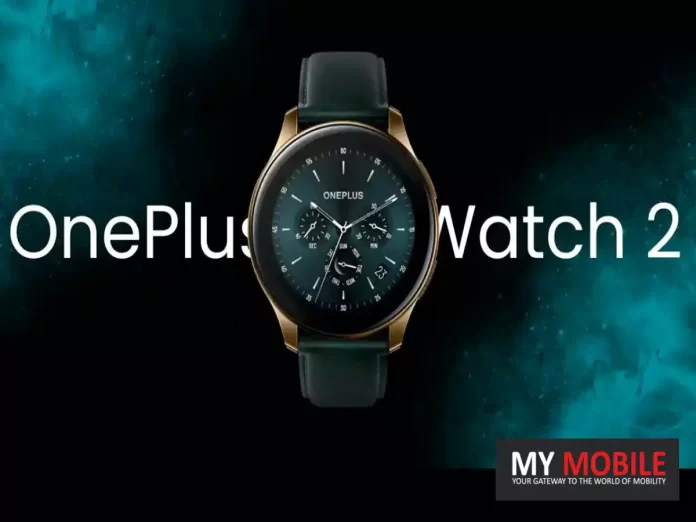
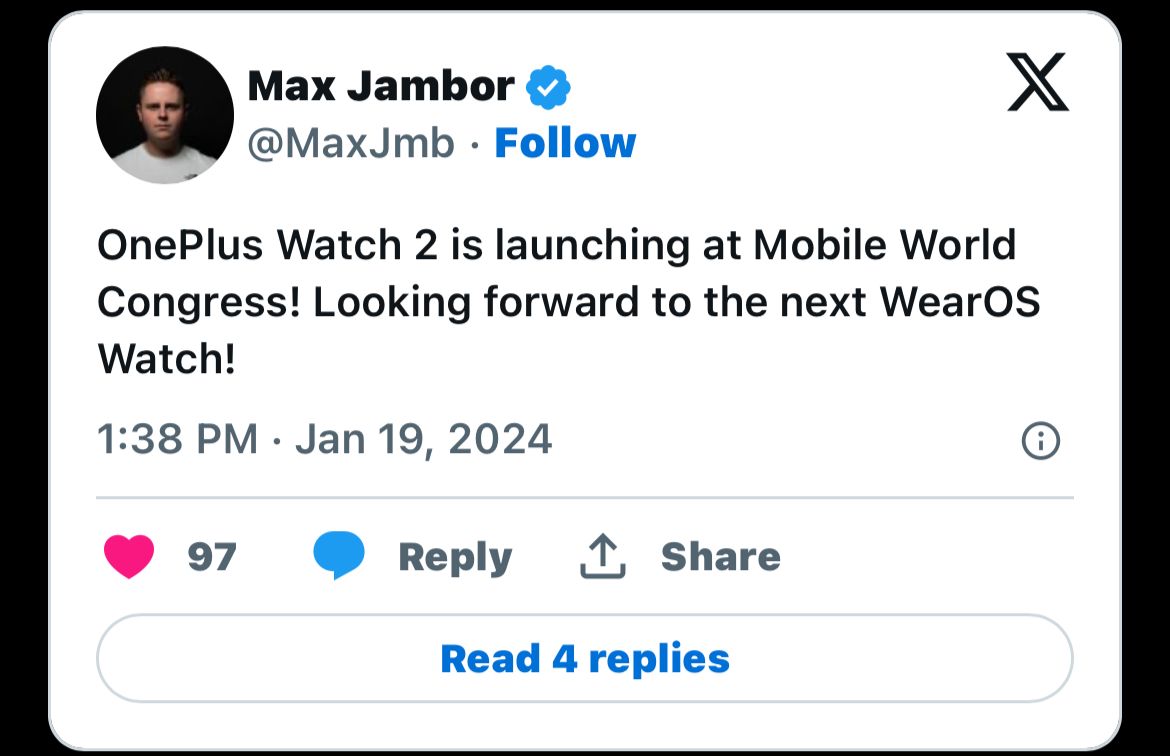
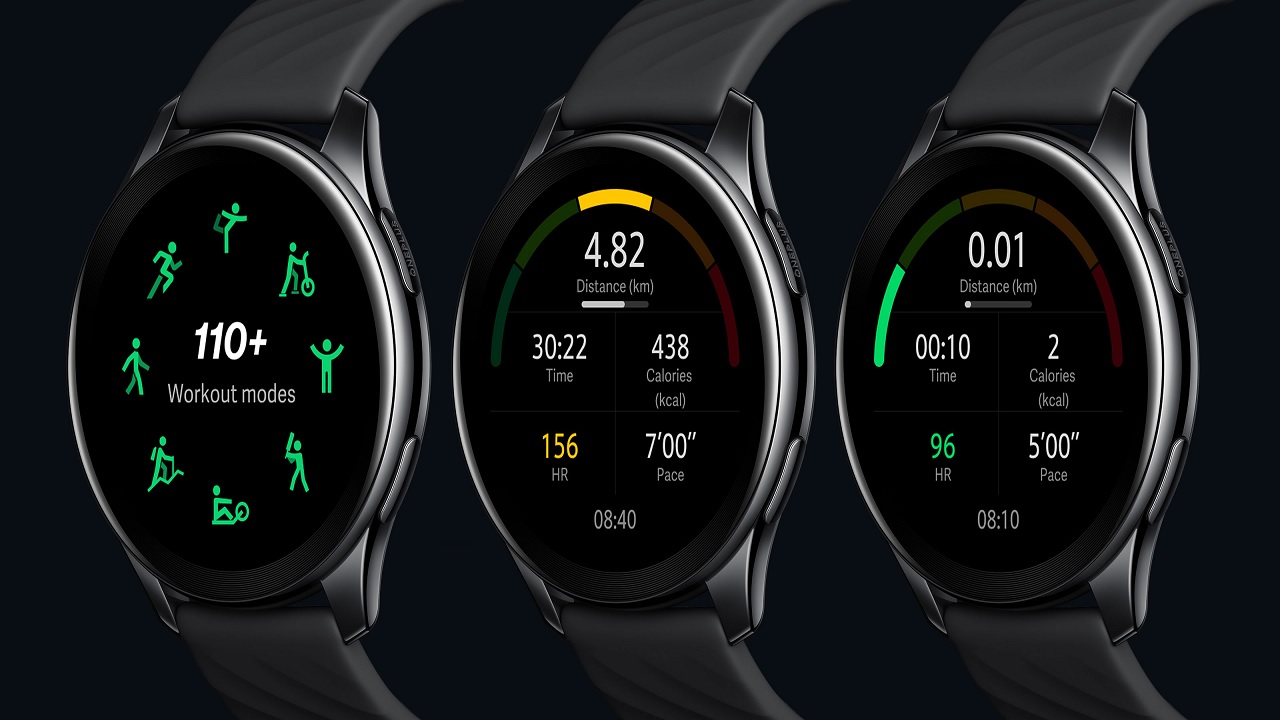
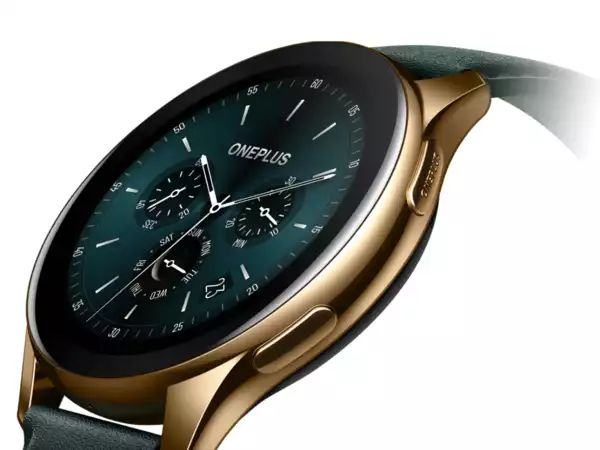
Tipster Max Jambor says on Twitter/X that the “OnePlus Watch 2” won’t arrive during OnePlus’ January 23 launch event for the OnePlus 12 series, but rather at Mobile World Congress
Based on the information shared by Max Jambor of AllAboutSamsung, the OnePlus Watch 2 is slated for launch at MWC 2024.
The event, which is a major gathering for mobile technology innovations, is scheduled from February 26 to February 29, 2024.
This timeline suggests that the new smartwatch could be unveiled by the end of February.
Interestingly, OnePlus has not released any teasers for the OnePlus Watch 2 ahead of its January 23 event, where the OnePlus 12, OnePlus 12R, and OnePlus Buds 3 TWS earphones are expected to be launched.
The new smartwatch aims to rectify the shortcomings of its predecessor by adopting Google’s Wear OS, a departure from the original’s basic OS.
The OnePlus Watch 2, bearing the model number OPWWE231, was also spotted on the BIS (Bureau of Indian Standards) website, hinting at its release in the Indian market alongside the global launch.
OnePlus Watch 2: Additional Features
OnePlus is set to make a significant comeback in the smartwatch market with the unveiling of its OnePlus Watch 2 at the Mobile World Congress (MWC) 2024.
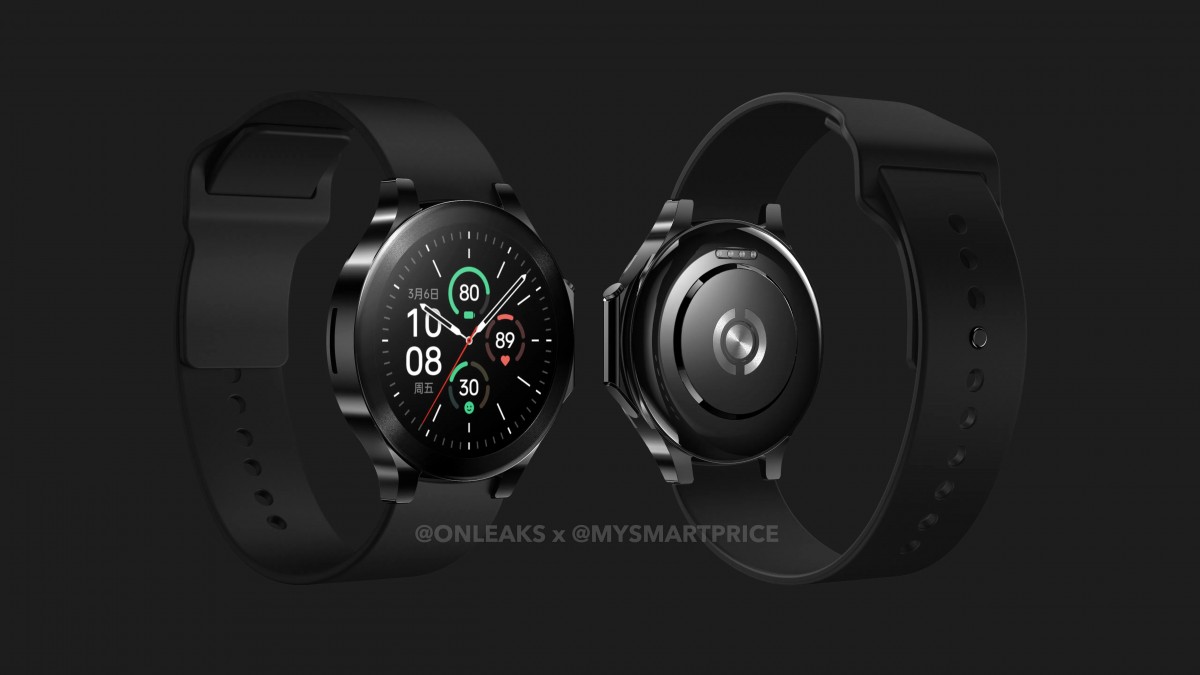
Leaked renders that surfaced in November last year have provided insights into the possible design and specifications of the OnePlus Watch 2.
The smartwatch is rumored to feature a 1.43-inch AMOLED screen and be powered by Qualcomm’s Snapdragon W5 Gen 1 chip, marking a potential upgrade in performance.
The first OnePlus Watch was noted for its 5ATM water resistance and an IP68 rating, ensuring durability and resistance to dust and water.
The upcoming model is likely to continue this trend, offering robust build quality suitable for various environments.
FAQs
What is the expected launch date for the OnePlus Watch 2?
The OnePlus Watch 2 is rumored to be unveiled at the Mobile World Congress (MWC) 2024, which is scheduled from February 26 to February 29, 2024.
This positions the smartwatch’s launch towards the end of February.
What major upgrade will the OnePlus Watch 2 have?
The OnePlus Watch 2 is expected to feature a major upgrade by running on Wear OS, a shift from the simpler operating system used in the first-generation OnePlus Watch.
This change promises more advanced features and broader app compatibility.
What are the speculated features of the OnePlus Watch 2?
Leaks suggest the OnePlus Watch 2 will sport a 1.43-inch AMOLED display and run on Qualcomm’s Snapdragon W5 Gen 1 chip.
It’s also expected to be featured on the BIS website, indicating an India launch as well.
Will the OnePlus Watch 2 be discussed at the OnePlus 12 global launch event?
OnePlus has not teased any details about the OnePlus Watch 2 ahead of the OnePlus 12 global launch event on January 23, where the OnePlus 12, 12R, and Buds 3 TWS earphones are set to debut.
What is new in the OnePlus Watch 2?
The OnePlus Watch 2 boasts a Snapdragon W5 Gen 1 chipset, providing a powerful performance boost.
It also features a 1.43-inch AMOLED display for enhanced clarity and vivid colors. The design includes a circular dial with two side buttons, offering a sleek and modern look.
Which operating system does the OnePlus Watch 2 use?
The OnePlus Watch 2 is set to run on Wear OS 4, marking a significant upgrade from its predecessor.
This change promises a more intuitive user interface and access to a wider range of apps and functionalities.
When can we expect the OnePlus Watch 2 to launch?
While there’s no official release date yet, the OnePlus Watch 2 is expected to launch in 2024.
It was recently spotted on the BIS website in India, hinting at an upcoming release, possibly alongside the OnePlus 12 smartphone.
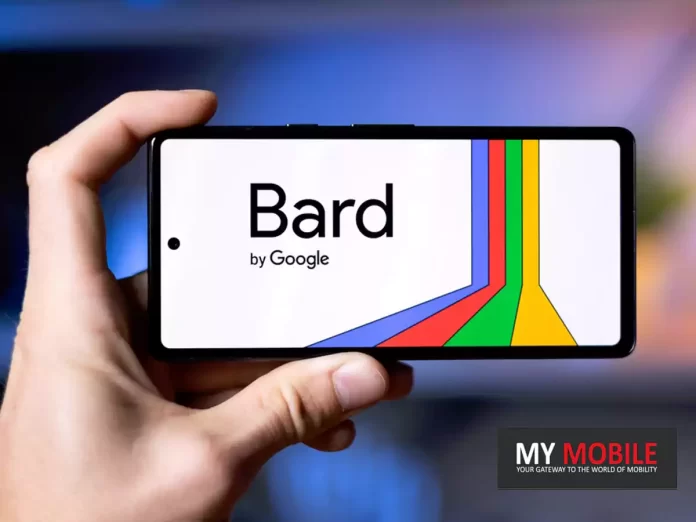
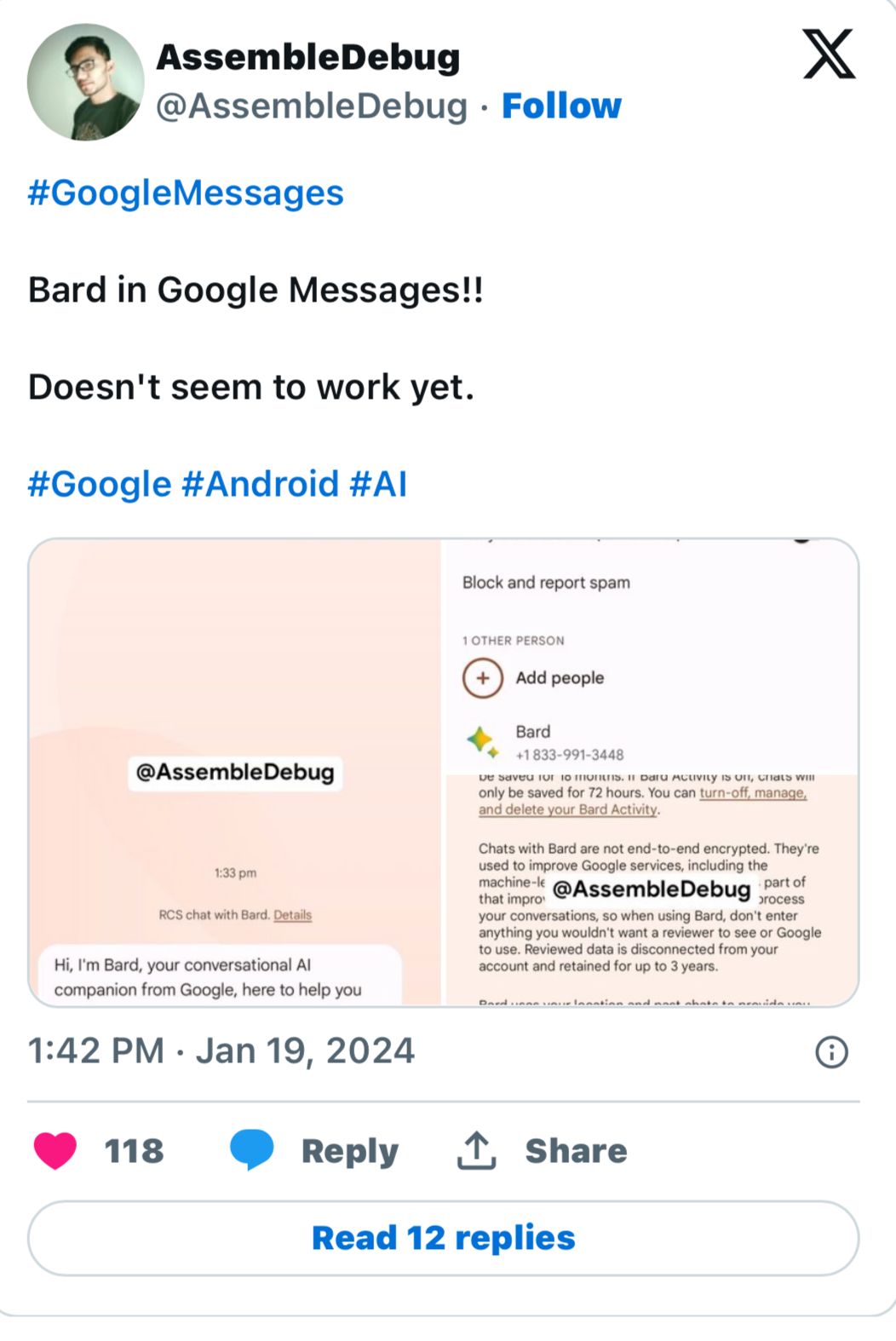
This move brings an advanced AI chatbotdirectly into one of the most widely used messaging apps, marking a significant step in the evolution of how we interact with technology.
Bard’s Integration into Google Messages
Google’s AI chatbot Bard to arrive on Google Messages
Bard, codenamed “penpal,” is set to revolutionize the way users engage with Google Messages.
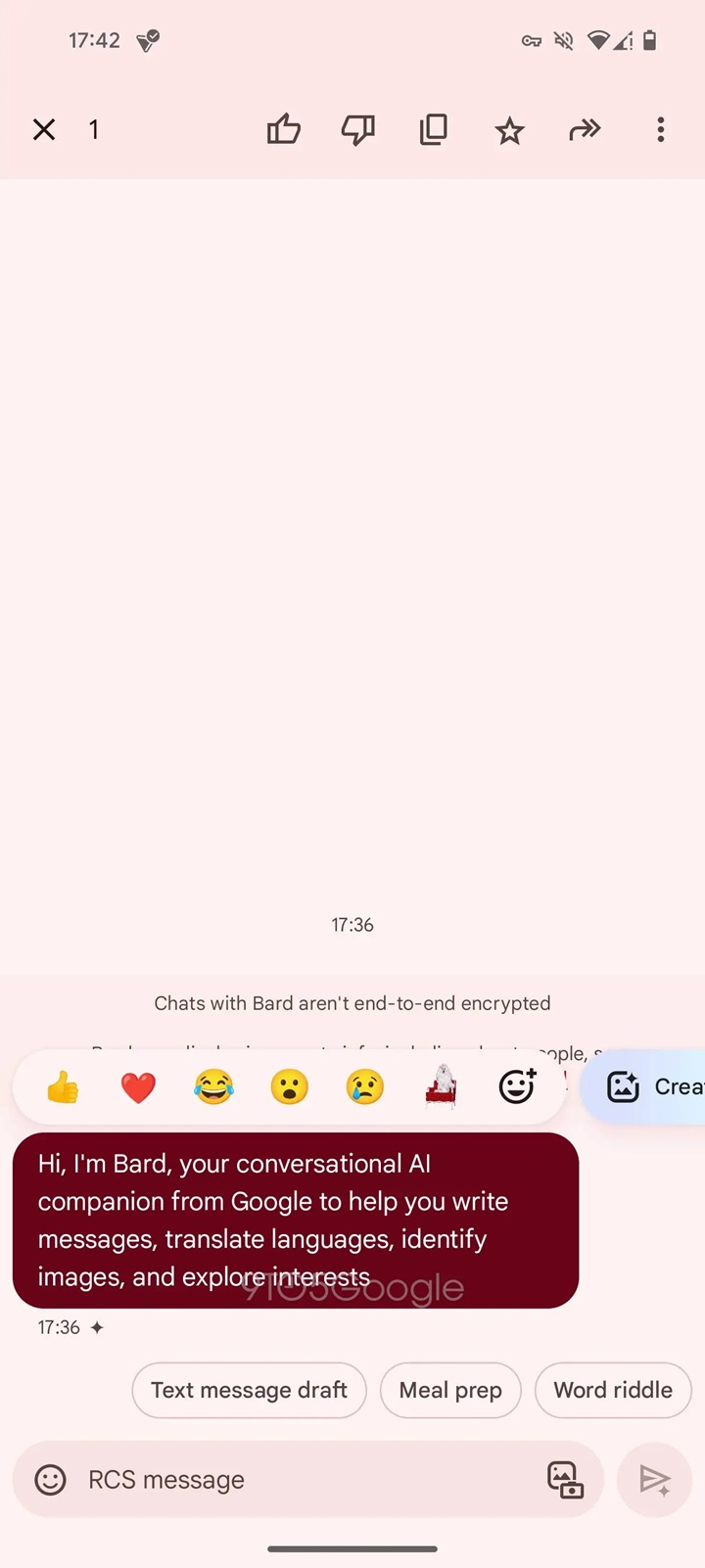
Unlike traditional messaging, Bard appears as a standalone chat, identifiable by its unique logo and name at the top of the conversation.
This integration is reminiscent of Google Allo’s Assistant feature but takes a leap forward in AI communication.
Bard promises to be more than just a chatbot.
It’s designed to assist users in writing messages, translating languages, identifying images, and exploring interests.
Bard in Google Messages aims to be a personal assistant, enriching conversations and providing users with instant, AI-powered support.
Google Messages aims to be a personal assistant
Privacy and User Security with Bard
The shared screenshots show that Bard can help users write messages, translate languages, identify images, and delve into various interests.
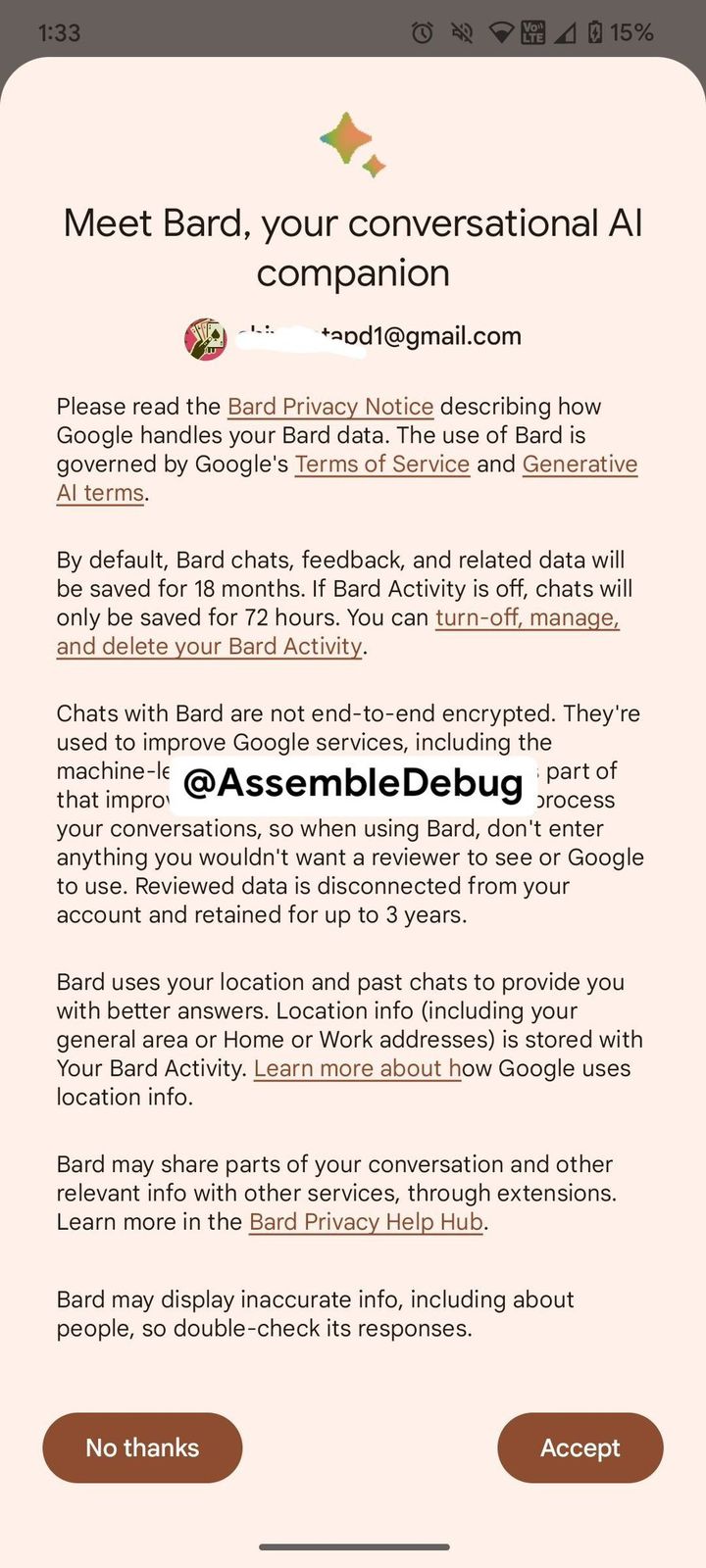
Initiating a chat with Bard brings up an important privacy notice.
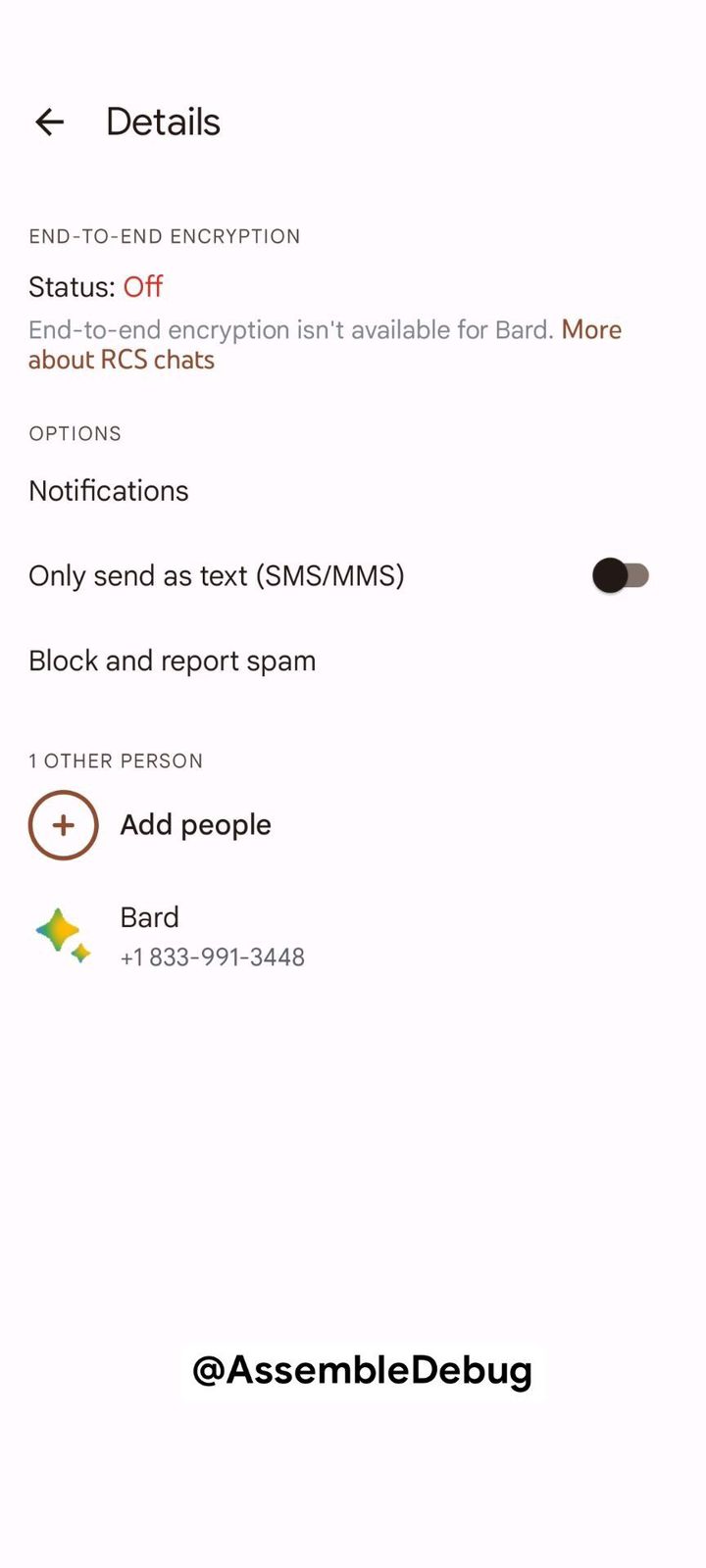
Google has clarified that conversations with Bard are not end-to-end encrypted, a decision made to further train the AI’s machine learning capabilities.
Users are advised to be mindful of the information shared in these chats, as Google intends to use this data for improving Bard, albeit disconnected from individual accounts and retained for up to three years.
Instead of a separate application, Google is focusing on embedding Bard into widely-used platforms like Google Messages.
This approach aligns with Google’s vision of integrating AI seamlessly into everyday applications, making advanced technology accessible and practical for daily use.
While the timeline for Bard’s full integration into Google Messages is not yet clear, its arrival is eagerly anticipated.
Google’s commitment to rolling out Bard as an experiment through web-based experiences and integrated applications likeMessages is a testament to its innovative approach in the AI space.
Google Vision of Integrated AI
FAQs
What is Bard in Google Messages?
Bard, codenamed “penpal,” is an AI chatbot integrated into Google Messages.
It functions as a standalone chat feature, offering assistance in tasks such as writing messages, translating languages, identifying images, and exploring user interests, enhancing the overall messaging experience.
How does Bard differ from traditional chatbots?
Unlike typical chatbots, Bard in Google Messages brings a more advanced level of AI interaction, providing functionalities that go beyond basic communication.
Its integration into a widely-used app like Google Messages makes it a more accessible and versatile tool for users.
What should users know about privacy with Bard?
Users should be aware that chats with Bard are not end-to-end encrypted, a decision by Google to facilitate the improvement of Bard’s AI capabilities.
Google advises users to be cautious about the information they share in these chats, as the data may be used for AI training purposes.
Why didn’t Google create a standalone app for Bard?
In line with Google’s strategy revealed during I/O 2023, the company chose not to release a separate Bard app.
Instead, Google is focusing on integrating Bard into daily-use applications like Google Messages to make advanced AI technology more seamlessly accessible.
When was Google Bard released?
On March 21, 2023, Google began opening access to Bard, inviting users to join a waitlist. On May 10, 2023, Google removed the waitlist and made Bard available in over 180 countries and territories.
Google Bard was initially announced on Feb. 6, 2023, with a vague release date. Many believed that Google felt the pressure of ChatGPT’s success and positive press leading them to rush Bard out before it was ready.
For example, during a live demo by Google and Alphabet CEO Sundar Pichai, it provided a query with a very wrong answer.
In the demo, a user asked Bard the question: “What new discoveries from the James Webb Space Telescope can I tell my 9-year-old about?” In Bard’s response, it mentioned that the JWST “took the very first pictures of a planet outside of our own solar system.”
Astronomers took to social media to quickly point out that the first image of an exoplanet was taken by an earthbound observatory in 2004, making Bard’s answer incorrect.
The next day, Google lost $100 billion in market value — a decline attributed to the embarrassing mistake.
Who can use Google Bard?
Users must be 18 or older and have a personal Google account. Bard is available in more than 230 countries and territories and more than 40 languages.
What are the limitations of Bard?
Like all AI chatbots, Bard must learn and be trained to give the correct answer from inaccurate or misleading information, as was evident during its first demo. AI training is an endless, compute-intensive process since there is always new information to learn.
Is Bard free?
As of this writing, Google has given no indication that it will charge for use. Google has no history of charging customers for services — its cloud business notwithstanding. The current assumption that Bard will be integrated into Google’s basic search engine indicates that it will be freely available for use.
How to access Google Bard AI?
Currently, only a small number of people have access to the Google Bard AI link for testing purposes. To reduce the amount of time and energy spent on computation, Google is developing a “lightweight model version of LaMDA.”
Google Bard AI chatbot, known as Bard, is unfortunately not yet widely available for use. However, once the Google Bard AI link is shared, it will likely be integrated into Google Search and can be accessed by asking questions through the search bar. The chatbot draws information from the web to provide up-to-date answers to text prompts.
It is designed to provide easy-to-digest answers to complex questions and can help with tasks such as planning a baby shower, comparing movies, and getting lunch ideas. It is not yet known if the chatbot will be available through other Google products such as Google Assistant or Google Maps.
Google Bard vs. ChatGPT.Details?
Both Google Bard and OpenAI’s ChatGPT are AI chatbots, meaning they are designed for interaction with people through the use of natural language models and machine learning.
Both use a large language model (LLM), which is a machine learning model for generating and creating conversational text.
ChatGPT uses generative AI, meaning it can produce original content. For example, users can ask it to write a thesis on the advantages of AI. Google Bard does as well — although it serves a slightly different use. Bard is geared to make search more natural and helpful and does synthesize new information in its answers
That said, ChatGPT is also capable of helping refine searches. In January 2023, Microsoft signed a deal reportedly worth $10 billion with OpenAI to license and incorporate ChatGPT into its Bing search engine to provide more conversational search results, similar to Google Bard. That opens the door to other search engines to license ChatGPT, whereas Bard is meant to support only Google.
One of the larger differences between the two is that ChatGPT’s responses are based on data available up to April 2023, whereas Google Bard will be based on up-to-date, current data. For ChatGPT to be viable as a search engine technology, it must be able to answer questions with up-to-date data, not two-year-old data. ChatGPT can browse the web when prompted, despite its training data cutoff.
OpenAI is aware of the potential for plagiarism with ChatGPT and offers a plagiarism detection tool for educators to catch students using it for homework assignments. Thus far, there is no knowledge of whether or not Google Bard has its own plagiarism detection tool.
Bard does cite other content in its responses sometimes and links to the source. Bard’s double-check function searches Google for information similar to its generated content and provides a URL to the source of that information.