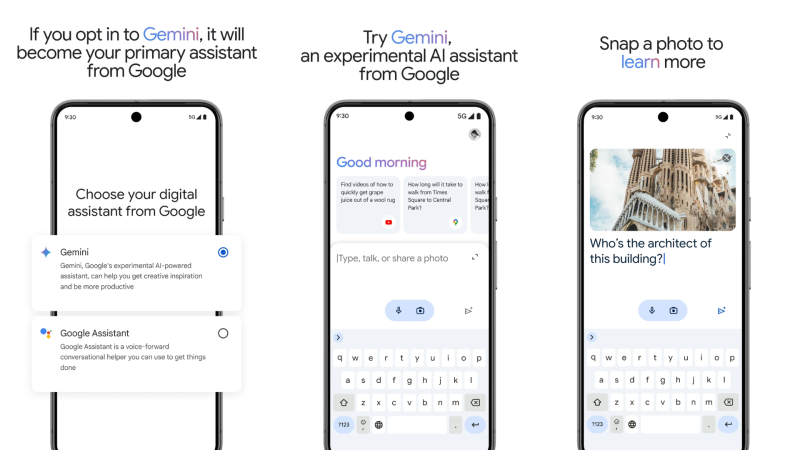
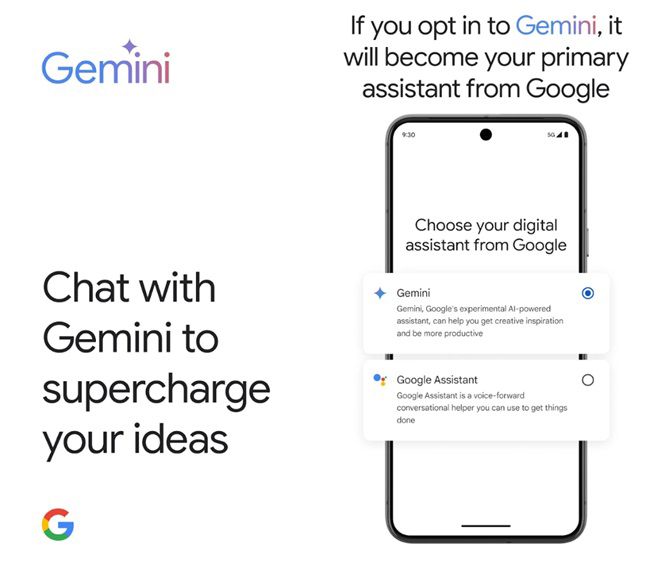
The best part is that it provides access to multiple languages —including English and nine Indian languages like Hindi, Bengali, Gujarati, Kannada, Malayalam, Marathi, Tamil, Telugu, and Urdu.
Obviously, with the move, Google is increasing access to its AI assistant and making tasks easy to be accomplished at people’s will.
Whether it is an event planner, recipe builder, or even a social media posting draft, Gemini helps make interactions smooth through typing, voice commands, or image uploads.
Google launches Gemini app in India with multilingual support
“Exciting news! Today we’re launching the Gemini mobile app in India, available in English and nine Indian languages. We’re also adding these local languages to Gemini Advanced, plus other new features, and launching Gemini in Google Messages in English,” said Sundar Pichai, chief executive officer of Google, on X (formerly Twitter).
“Take a picture of a flat tyre for instructions on how to change it, or get help writing that perfect thank-you note – the possibilities are endless. This marks a significant step forward in our journey to build a truly conversational, multimodal, and helpful AI assistant,” said Google.
“Privacy is a top priority. Gemini keeps your files private to you, and they’re not used to train our models,” said Google. We’ll be rolling out Gemini in Google Messages in English to start with, on select devices,” said the company.
Gemini Advanced, which is based on the company’s most advanced AI model, will also be available in the nine Indian languages.
“…Gemini Advanced boasts the longest context of any widely available consumer chatbot worldwide,” said the company.
Amar Subramanya, Vice President of Engineering for Gemini Experiences, stated, “Today, we’re building on this momentum with new Gemini features designed to empower even more people to get things done in their preferred language.”
Users can type, talk, or even add an image to receive AI assistance on the go. “Take a picture of a flat tire for instructions on how to change it, or get help writing that perfect thank you note – the possibilities are endless,” Subramanya added .
Two versions: Basic and AdvancedThe default version of the Gemini app is powered by Gemini 1.0 Pro, while a paid option called Gemini Advanced uses the more powerful Gemini 1.5 Pro model.
“With a massive 1 million token context window, Gemini Advanced now boasts the longest context of any widely available consumer chatbot worldwide,” Subramanya explained .
“We’re incredibly excited to see how people across India will continue to use Gemini in new and innovative ways. Whether you’re using Gemini on your phone, in Google Messages, or on the web, we hope you’ll find it to be a valuable tool for unleashing your creativity, boosting productivity, and exploring new ideas,” Subramanya added.
Integration with Google Assistant
Exciting news! 🇮🇳 Today, we’re launching the Gemini mobile app in India, available in English and 9 Indian languages. We’re also adding these local languages to Gemini Advanced, plus other new features, and launching Gemini in Google Messages in English.
— Sundar Pichai (@sundarpichai) June 18, 2024
With this, other than the app itself, Gemini is also available on Android by activating Google Assistant.
Corner swipe gestures, a press of the power button on some phones, or saying “Hey Google” will enable you to do this.
This integration ensures an overlay experience with easy access to the features of Gemini while retaining many of Google Assistant’s voice functions, such as setting timers, making calls, or setting reminders.
iOS Accessibility
The Gemini app and Gemini Advanced are now available in nine Indian languages
Specifically, the company is trying to make Gemini easier to access for iOS users by allowing them to turn on Gemini from the Google app, which will create a session with the AI assistant and unlock many more devices.
But that’s not all: alongside the new Gemini app, Google is also announcing support for Indian languages for its supercharged Gemini Advanced.
The Gemini app supports English and nine Indian languages: Hindi, Bengali, Gujarati, Kannada, Malayalam, Marathi, Tamil, Telugu, and Urdu
This advanced version allows one to do everything from document uploading for summaries, feedback, and actionable insights, all the way to data analysis on spreadsheets, where users can clean, analyze, and visualize data with interactive charts and graphs.
Addressing potential concerns, Google assures users that privacy and security are prioritized with Gemini.
This expansion includes Gemini 1.5 Pro, featuring an impressive 1 million token context window — the longest available among consumer chatbots worldwide
User files remain private and are not used to train the AI models, ensuring a secure and transparent experience.
Gemini in Google Messages
Gemini will roll out on iOS through the Google app over the coming weeks, expanding its reach to Apple users
In addition to the standalone app, Gemini is being integrated into Google Messages, initially available in English on select devices.
This integration allows users to collaborate with the AI assistant directly within the Messages app, facilitating tasks such as drafting messages, brainstorming ideas, or planning events seamlessly.
Users can upload large documents (up to 1,500 pages)
FAQs
What languages does the Gemini AI assistant support in India?
The Gemini AI assistant supports English and nine Indian languages, including Hindi, Bengali, Gujarati, Kannada, Malayalam, Marathi, Tamil, Telugu, and Urdu.
How can I access Gemini on my Android device?
You can access Gemini on Android by activating Google Assistant through corner swipe gestures, pressing the power button on some phones, or saying “Hey Google.”
Is Gemini available for iOS users?
Yes, iOS users can access Gemini by turning it on from the Google app, which creates a session with the AI assistant and unlocks more devices.
What features does the Gemini Advanced version offer?
Gemini Advanced allows users to upload documents for summaries, feedback, and actionable insights. It also supports data analysis on spreadsheets, enabling users to clean, analyze, and visualize data with interactive charts and graphs.
How is Google ensuring privacy and security with Gemini?
Google assures that user files remain private and are not used to train AI models, ensuring a secure and transparent experience.
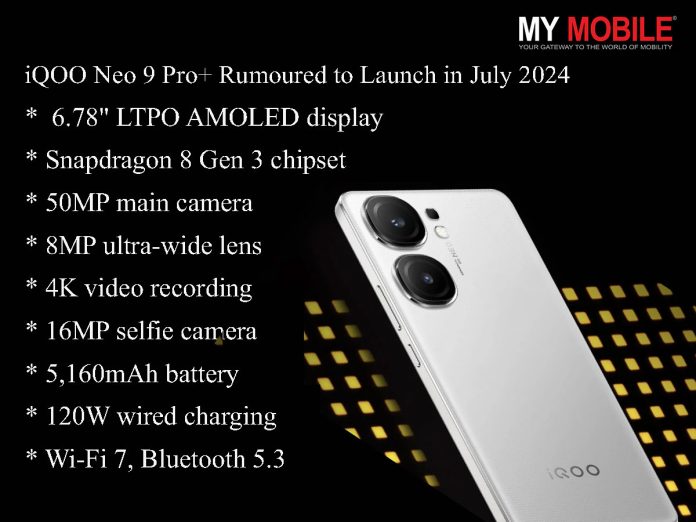
iQOO Neo 9 Pro+ set to feature Snapdragon 8 Gen 3 chipset
6.78″ LTPO AMOLED display with 144Hz refresh rate and HDR10+
Triple camera setup with 50MP main camera and 120W wired charging
Potential India launch with competitive pricing in Rs 35,000 segment
There is a new rumour that iQOO is preparing perhaps to launch one more variant as part of its rather popular Neo 9 series—the iQOO Neo 9 Pro+.
The leak reportedly put the device for a release in July 2024.
According to fresh leaks by Chinese microblogging platforms Weibo, this new edition is supposed to feature the latest chip from Qualcomm: Snapdragon 8 Gen 3.
Smart Pikachu says iQOO Neo 9 Pro+ will have Snapdragon 8 Gen 3
Last year, the iQOO Neo 9 Pro had a Snapdragon 8 Gen 2 chipsetand really represented great value for the price.
This time, however, the Neo 9 Pro+ could turn out even better.
Rumoured Specifications
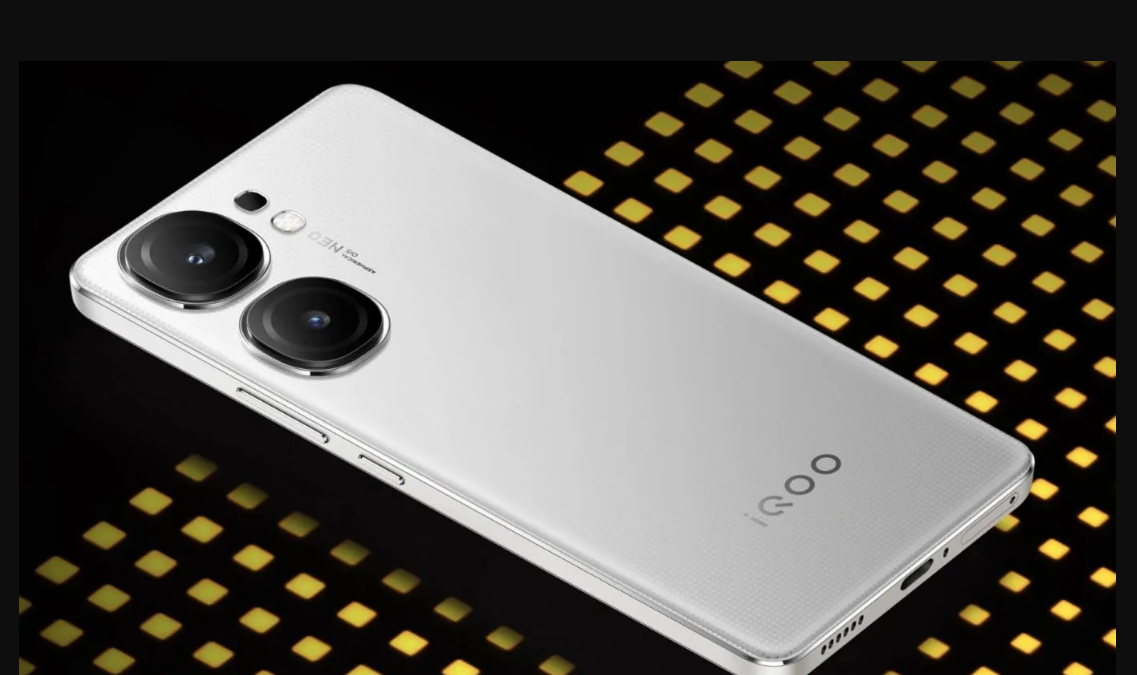
iQOO Neo9 Pro in Marble White
Although the leak primarily focuses on the Chinese market, there’s speculation that the iQOO Neo 9 Pro+ could make its way to India as well.
If that’s the case, here are the rumored specifications that have tech enthusiasts buzzing:
6.78″ LTPO AMOLED display with a 144Hz refresh rate, HDR10+, and a peak brightness of 3,000 nits
Snapdragon 8 Gen 3 chipset
Up to 12GB LPDDR5X RAM and 256GB UFS 4.0 storage
Triple camera setup with a 50MP main camera, 8MP ultra-wide lens, and 4K video recording
16MP selfie camera with 1080p video capability
5,160mAh battery with 120W wired charging and reverse wired charging support
Wi-Fi 7, Bluetooth 5.3
Android 14 with FuntouchOS 14
A Good Move for iQOO?
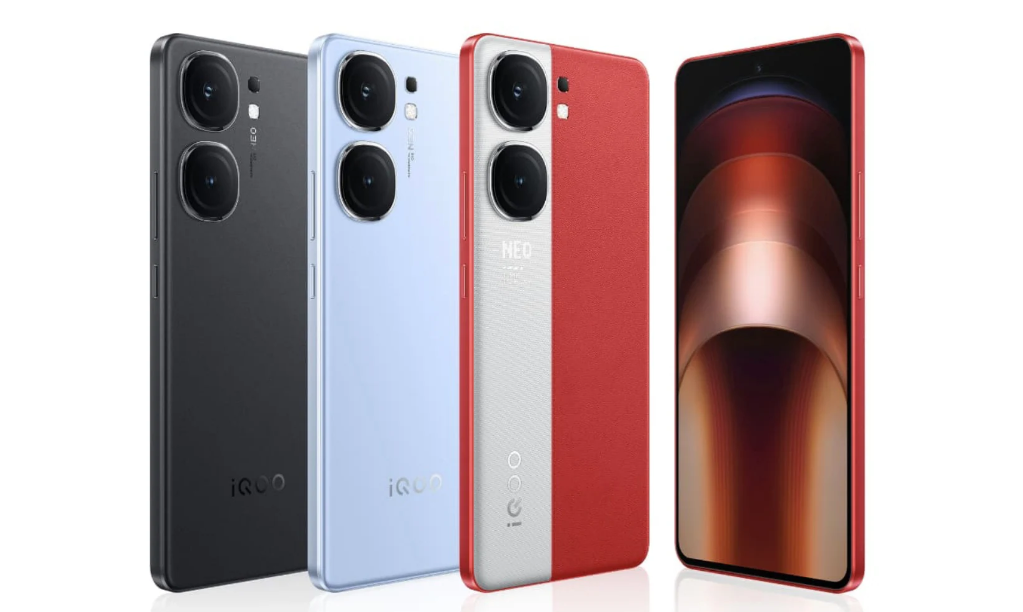
iQOO Neo9 Pro all variants
On the off chance that the reports were true, then, the iQOO Neo 9 Pro+ would have its place in India.
The Neo 9 Pro+ will have an edge over what others lack with so many similar Snapdragon 8s Gen 3 phones about to hit the market, and therefore accomplish what others have not—with its more superior chip for the price tag.
While the iQOO Neo 9 Pro can already stand up to competition in the segment of Rs 35,000, the Neo 9 Pro Plus might bridge that gap between the ‘Neo’ series and the iQOO 12 by bringing powerful performance at an affordable price.
What would be the differentiating factor then?
How much separation will be there between the iQOO Neo series and the signature number series?
While we wait for more updates and confirmations from the officials, that prospect alone of an iQOO Neo 9 Pro+ can make any tech enthusiast excited.
It will be potentially jammed with the speculated specs, and maybe with the help of Snapdragon 8 Gen 3 in the power department, this might just change everything on how much performance one can squeeze from this price point.
FAQs
What is the expected release date for the iQOO Neo 9 Pro+?
The iQOO Neo 9 Pro+ is rumoured to be released in July 2024, according to leaks from Chinese microblogging platform Weibo.
What processor will the iQOO Neo 9 Pro+ feature?
The iQOO Neo 9 Pro+ is expected to feature the latest Snapdragon 8 Gen 3 chipset from Qualcomm.
What are the display specifications for the iQOO Neo 9 Pro+?
The device is rumored to have a 6.78-inch LTPO AMOLED display with a 144Hz refresh rate, HDR10+ support, and a peak brightness of 3,000 nits.
What camera setup is expected on the iQOO Neo 9 Pro+?
The iQOO Neo 9 Pro+ is expected to feature a triple camera setup with a 50MP main camera, an 8MP ultra-wide lens, and 4K video recording capabilities.
What battery and charging features will the iQOO Neo 9 Pro+ offer?
The device is expected to come with a 5,160mAh battery, supporting 120W wired charging and reverse wired charging.
OnePlus collaborates with CATL to develop Glacier Battery technology.
Promises increased battery capacity and reduced charging frequency.
Expected debut in OnePlus Ace 3 Pro with a 6,100mAh battery.
OnePlus Ace 3 Pro to feature 100W fast charging, fully charging in under 30 minutes.
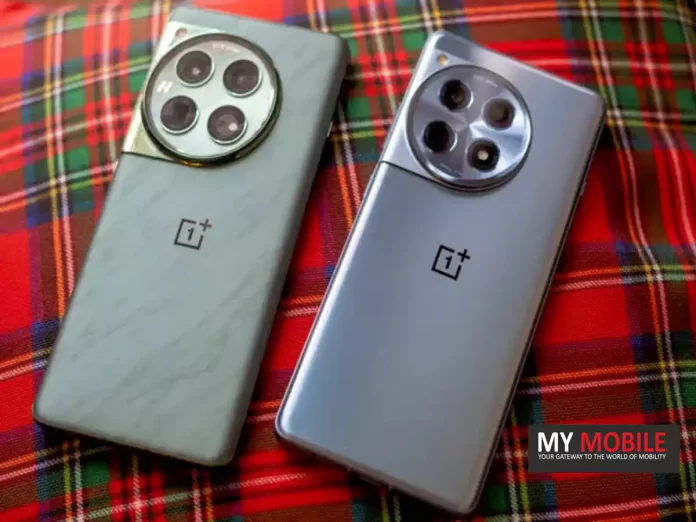
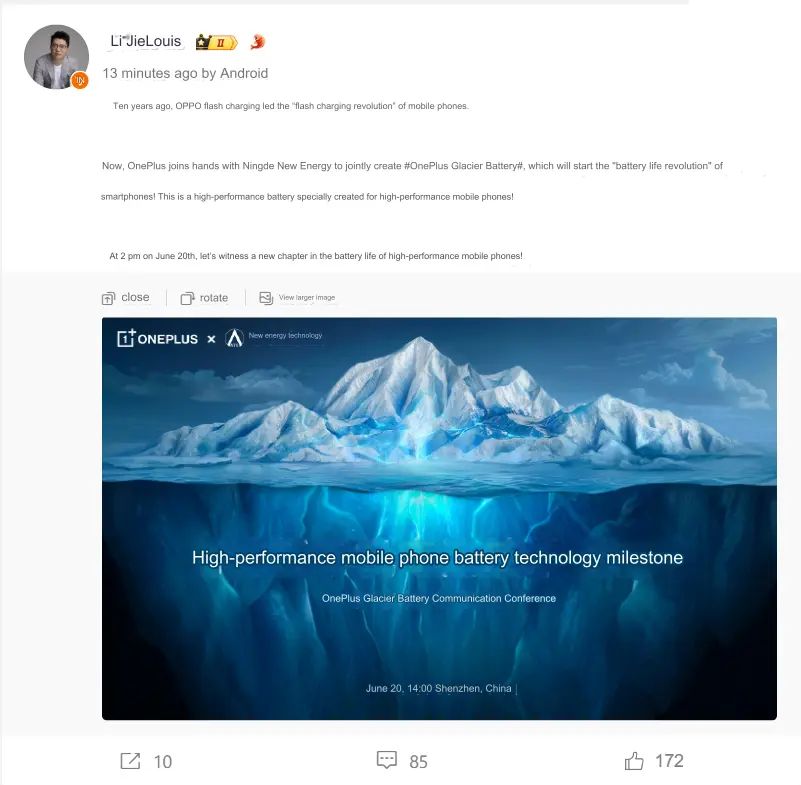
OnePlus has announced a new smartphone battery technologycalled the “Glacier Battery,”developed in partnership with CATL, the world’s largest battery maker.
“Glacier Battery”, an evolution the brand hopes will have much-needed changes for the life and performance of mobile device batteries.
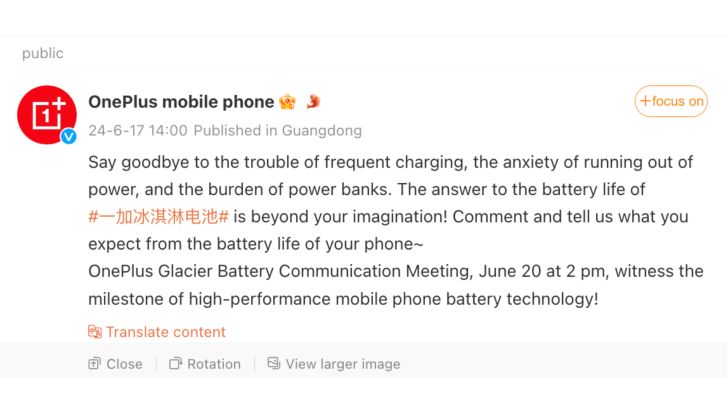
In a Weibo post, OnePlus disclosed some details about its Glacier Battery and claimed that it is going to alleviate some major user frustrations: frequent charging, anxiety over low batteries, and the need for power banks.
OnePlus has introduced a new battery technology
The company further hinted at a battery capacity higher than the standards in place, offering “breakthrough” experiences in regard to battery life.
“Say goodbye to the hassle of frequent charging, the anxiety of running out of power, and the burden of power banks. The answer to the battery life of OnePlus Glacier Battery is beyond your imagination,” the company said.
Energy-Dense and Compact Design
OnePlus teases new tech for longer battery life
Details remain scant, but from what it appears, Glacier Battery technology puts users in a clear path to make smaller, more energy-dense batteries than those available, which could be a huge step toward an industry leap where battery life has been one of the bottlenecks as smartphones pack more power and features.
While performance and integration of features in smartphones have moved ahead with each passing day, anything on battery life remained stubborn.
It is an admitted fact that modern smartphonescannot last more than a day of heavy use without needing a recharge.
OnePlus is calling this tech “Glacier Battery,” which was developed in collaboration with Contemporary Amperex Technology Limited (CATL), the world’s largest battery manufacturer
But stuffing batteries of bigger capacities is not a feasible solution, as that will result in bulkier and less comfortable devices.
If OnePlus’ claims hold true, the Glacier Battery could be our first look at the answer the industry has been waiting for, offering a way to improve battery life without sacrificing the sleek design and portability of smartphones.
The OnePlus Ace 3 Pro: Expected Specs
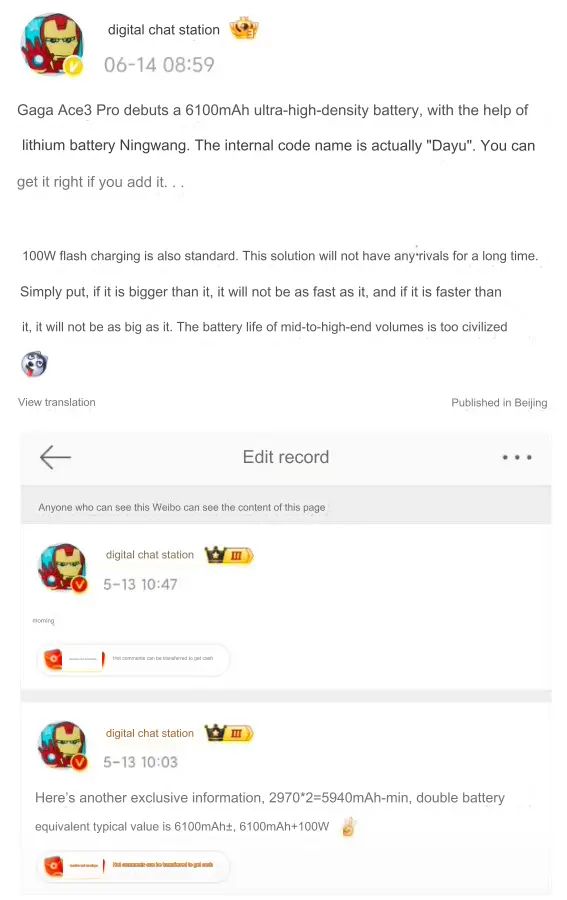
According to the reliable tech leaker Digital Chat Station, this device will feature a massive 6,100mAh battery
A reliable leaker, Digital Chat Station, has shared some further details, suggesting that the very first device to feature this tech will be the OnePlus Ace 3 Pro.
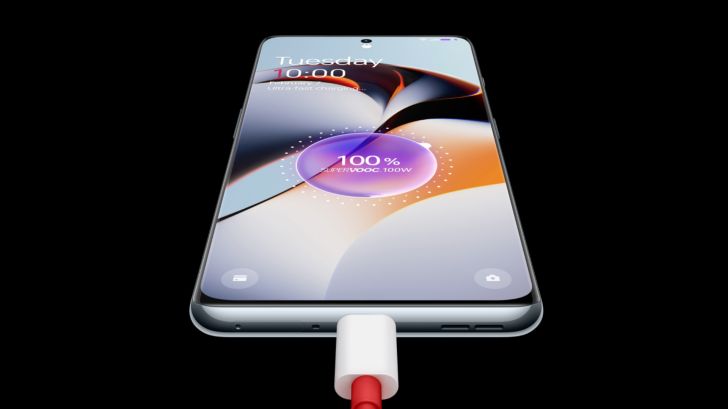
The phone is said to come with a mammoth 6,100mAh battery, touted to charge fully in less than 30 minutes when using 100W charging.
Digital Chat Station, has shared some further details
With this new battery tech, it would not be a surprise if the Ace 3 Pro continued the series’ trend for slim builds, measuring in at a thickness of less than 9mm.
What’s Next?
Ace 3 Pro is tipped to have a slim profile, with a thickness of just under 9mm
Notably, the benefits of the Glacier Battery may not be limited to the Ace 3 Pro.
DCS also suggests that numerous future OnePlus models will incorporate this technology, offering the ultimate combination of large battery capacities and fast charging.
OnePlus will hold a press conference on June 20 to reveal more details about the Glacier Battery.
FAQs
What is OnePlus Glacier Battery technology?
Glacier Battery technology is a new battery innovation developed by OnePlus in partnership with CATL, designed to enhance battery life and performance in smartphones.
Which OnePlus phone will first feature the Glacier Battery?
The OnePlus Ace 3 Pro will be the first device to feature Glacier Battery technology, boasting a 6,100mAh battery.
How quickly can the Glacier Battery charge?
The Glacier Battery in the OnePlus Ace 3 Pro supports 100W fast charging, capable of fully charging the battery in less than 30 minutes.
What are the benefits of Glacier Battery technology?
Benefits include higher battery capacity, more energy-dense design, and the potential to reduce the need for frequent recharging, thereby alleviating user frustrations over battery life.
Will other OnePlus models feature Glacier Battery technology?
Yes, future OnePlus models are expected to incorporate Glacier Battery technology, providing larger battery capacities and faster charging across their lineup.
OPPO Reno12 priced at 499 Euros, Reno12 Pro at 599 Euros
Both feature 6.7-inch FHD+ curved AMOLED displays with 120Hz refresh rate
MediaTek Dimensity 7300-Energy 4nm processor powers both models
Equipped with 50MP main camera and 5000mAh battery with 80W SuperVOOC fast charging
OPPO has introduced its latest flagship offerings, the Reno12 and Reno12 Pro, for the global markets.
These smartphones are poised to set new standards in the industry, combining cutting-edge technology with sleek design and innovative features.
As we delve into the details, prepare to be amazed by what OPPO has in store.
Pricing and Availability
OPPO Reno12 priced at 499 Euros, Reno12 Pro at 599 Euros
The OPPO Reno12 and Reno12 Pro are available in various attractive colorways, catering to different preferences.
The Reno12 comes in Astro Silver and Matte Brown, while the Reno12 Pro is offered in Nebula Silver and Space Brown.
Oppo Reno12 in: Astro Silver • Black Brown
Pricing for the Reno12 is set at 499 Euros (approximately Rs. 44,660) for the single 12GB + 256GB model.
The Reno12 Pro, on the other hand, is priced at 599 Euros (approximately Rs. 53,610) or 499 GBP (approximately Rs. 52,800) for the 12GB + 512GB variant.
Oppo Reno12 Pro in: Nebula Black • Nebula Silver
These smartphones will roll out starting from Europe and the UK in June, with a gradual release in other markets.
Key Specifications
OPPO Reno12 and Reno12 Pro Launched Globally
6.7-inch FHD+ curved AMOLED display with 120Hz refresh rate
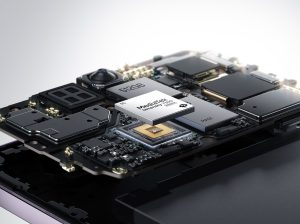
MediaTek Dimensity 7300-Energy 4nm processor
12GB RAM with 12GB additional virtual RAM
Android 14 with ColorOS 14.1
50MP main camera with Sony LYT-600 sensor (Reno12 Pro adds 50MP 2x telephoto camera)
32MP (Reno12) or 50MP (Reno12 Pro) front camera
5000mAh battery with 80W SuperVOOC fast charging
IP65 dust and splash resistance
Features
Both feature 6.7-inch FHD+ curved AMOLED displays with 120Hz refresh rate
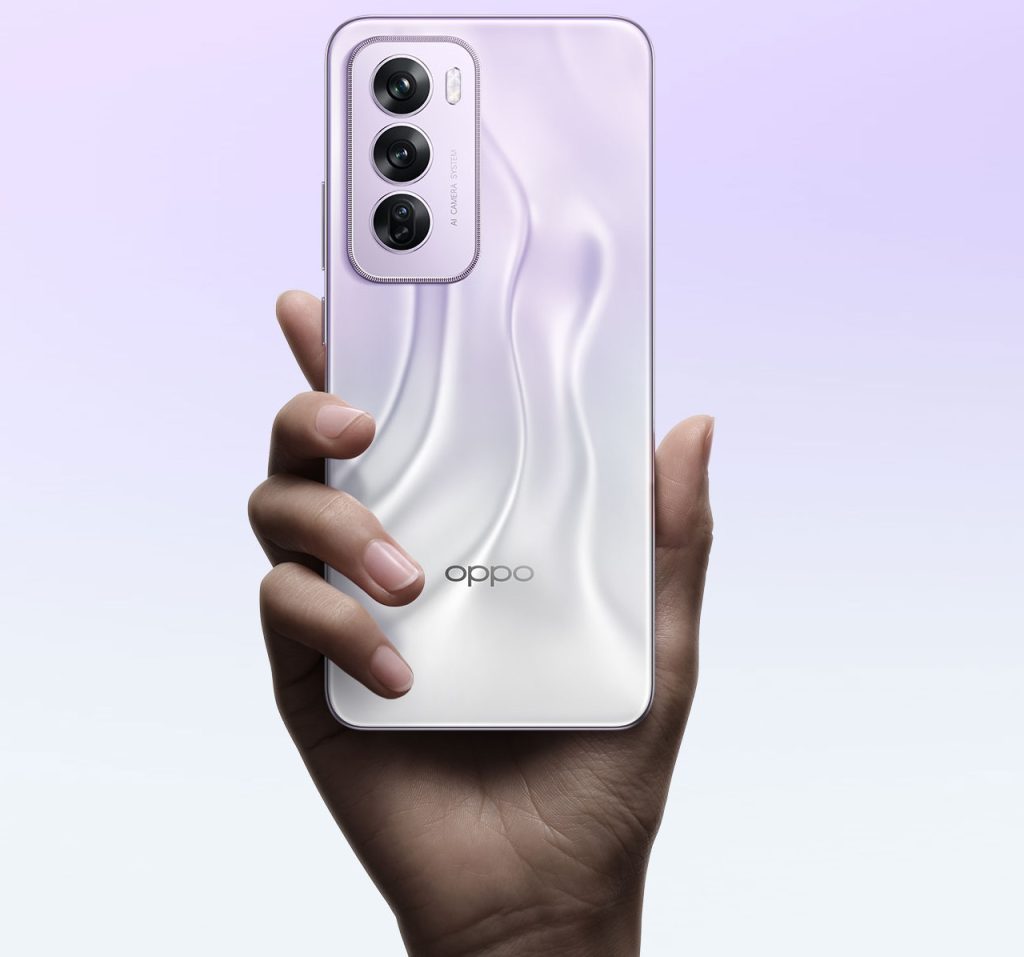
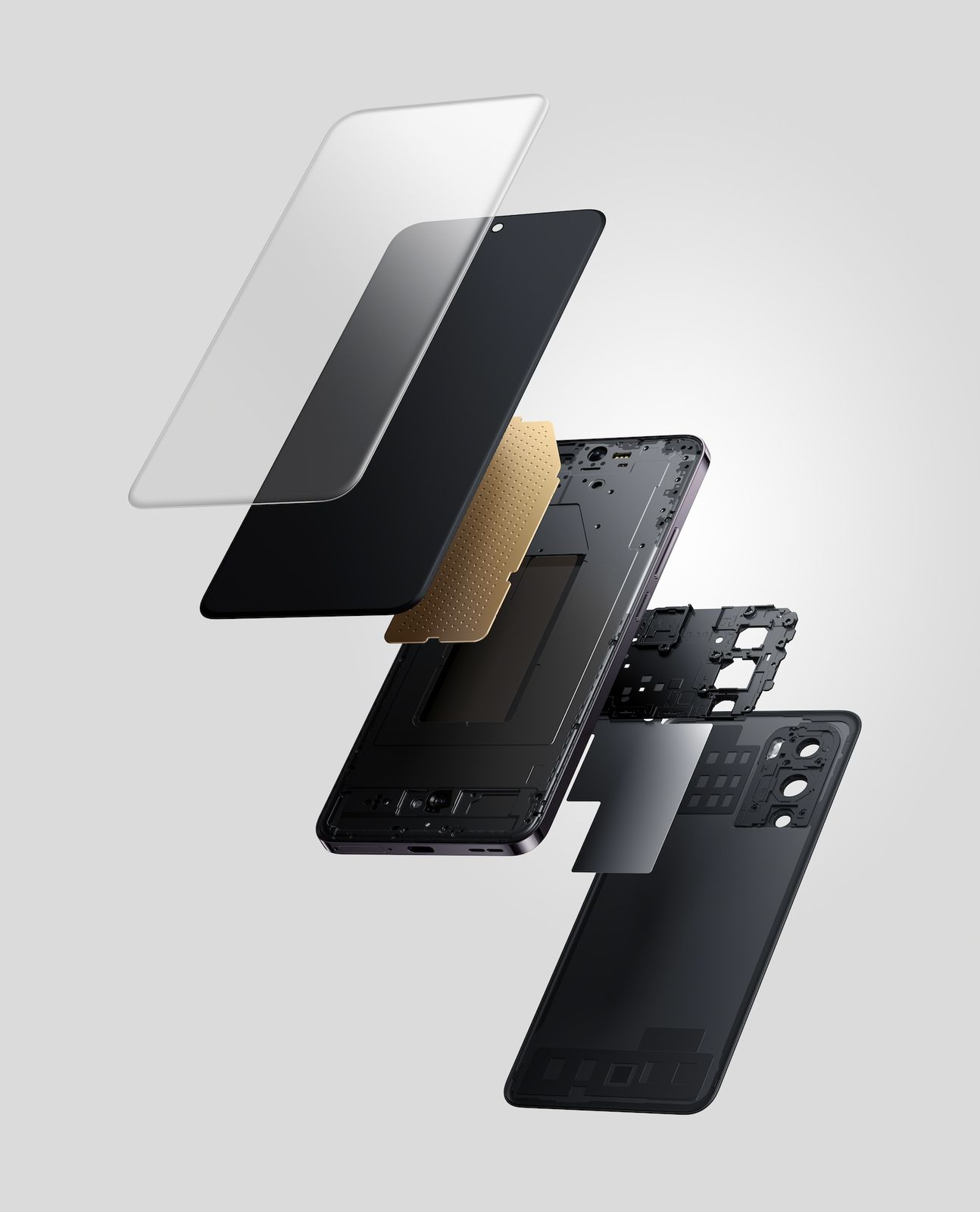
Design and Display: OPPO has incorporated a 3D fluid design with ripples and a smooth finish, while also offering a matte version for both phones.
The phones have AI-based features like AI Clear Face, which enhances facial contour, hair and eyebrows
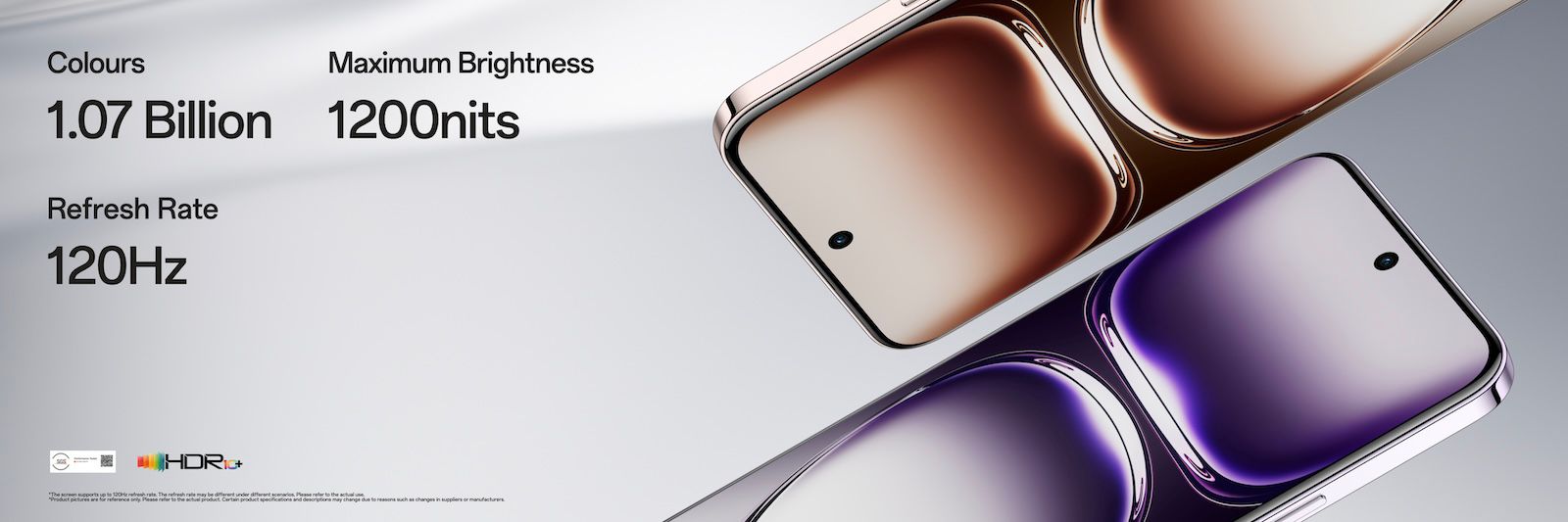
The 6.7-inch FHD+ curved AMOLED display boasts a 120Hz refresh rate, up to 1200 nits peak brightness, and Corning Gorilla Glass protection.
MediaTek Dimensity 7300-Energy 4nm processor powers both models
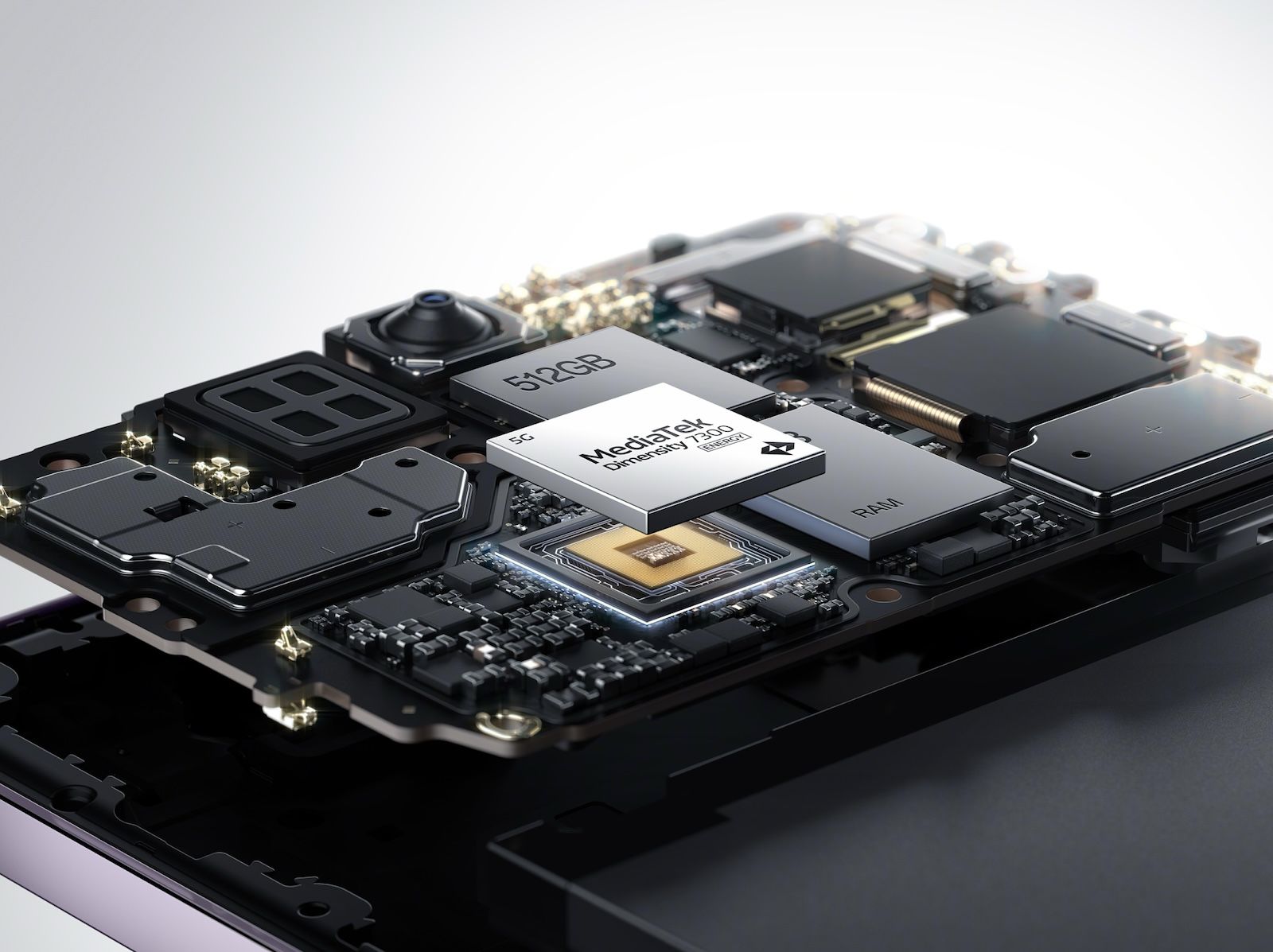
Performance and AI: Powered by the MediaTek Dimensity7300-Energy 4nm processor, co-designed with OPPO, and equipped with 12GB of RAM and 12GB of additional virtual RAM, these smartphones promise seamless performance.
Reno12 5G and Reno12 Pro 5G introduce a suite of breakthrough GenAI features
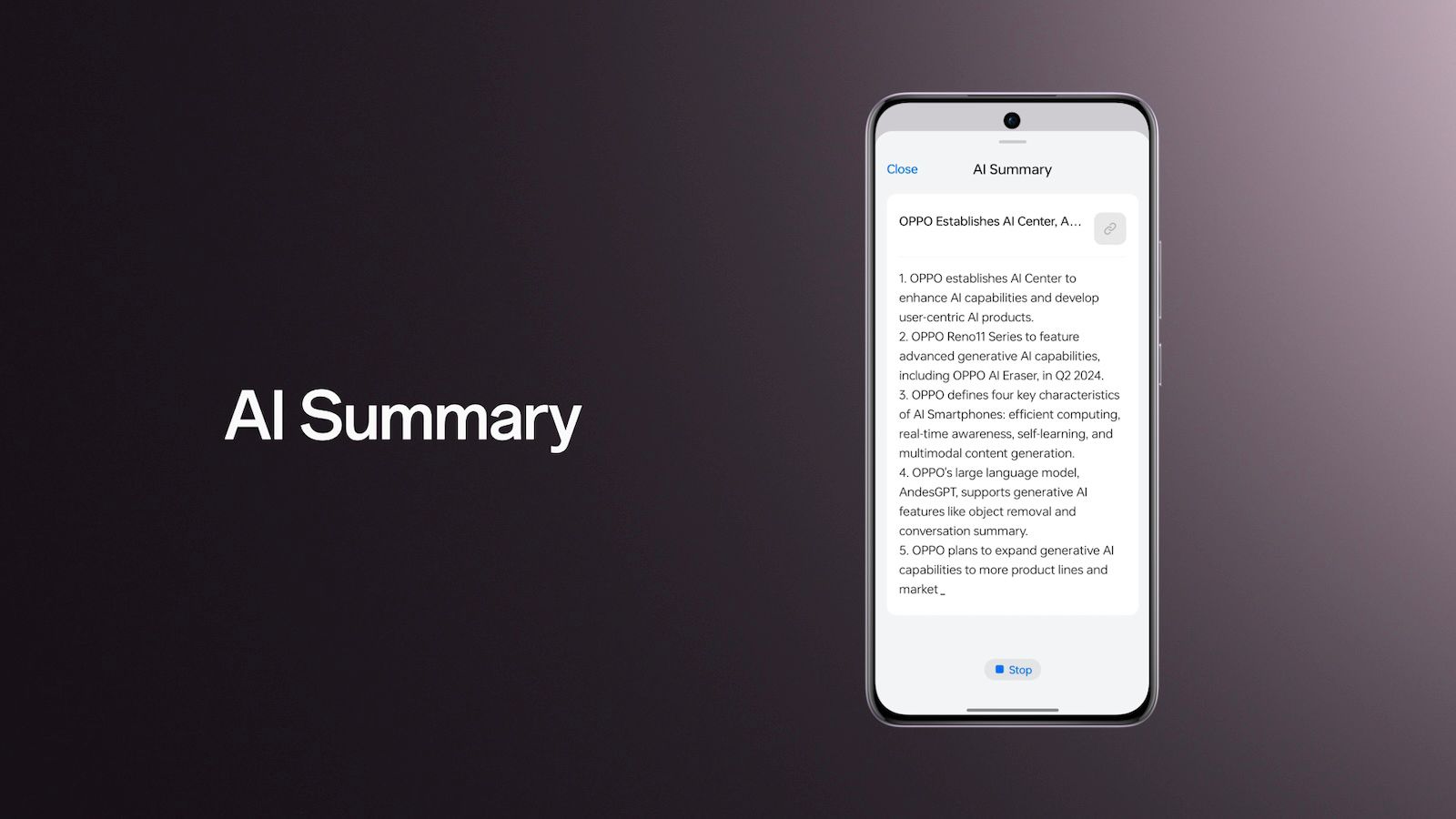
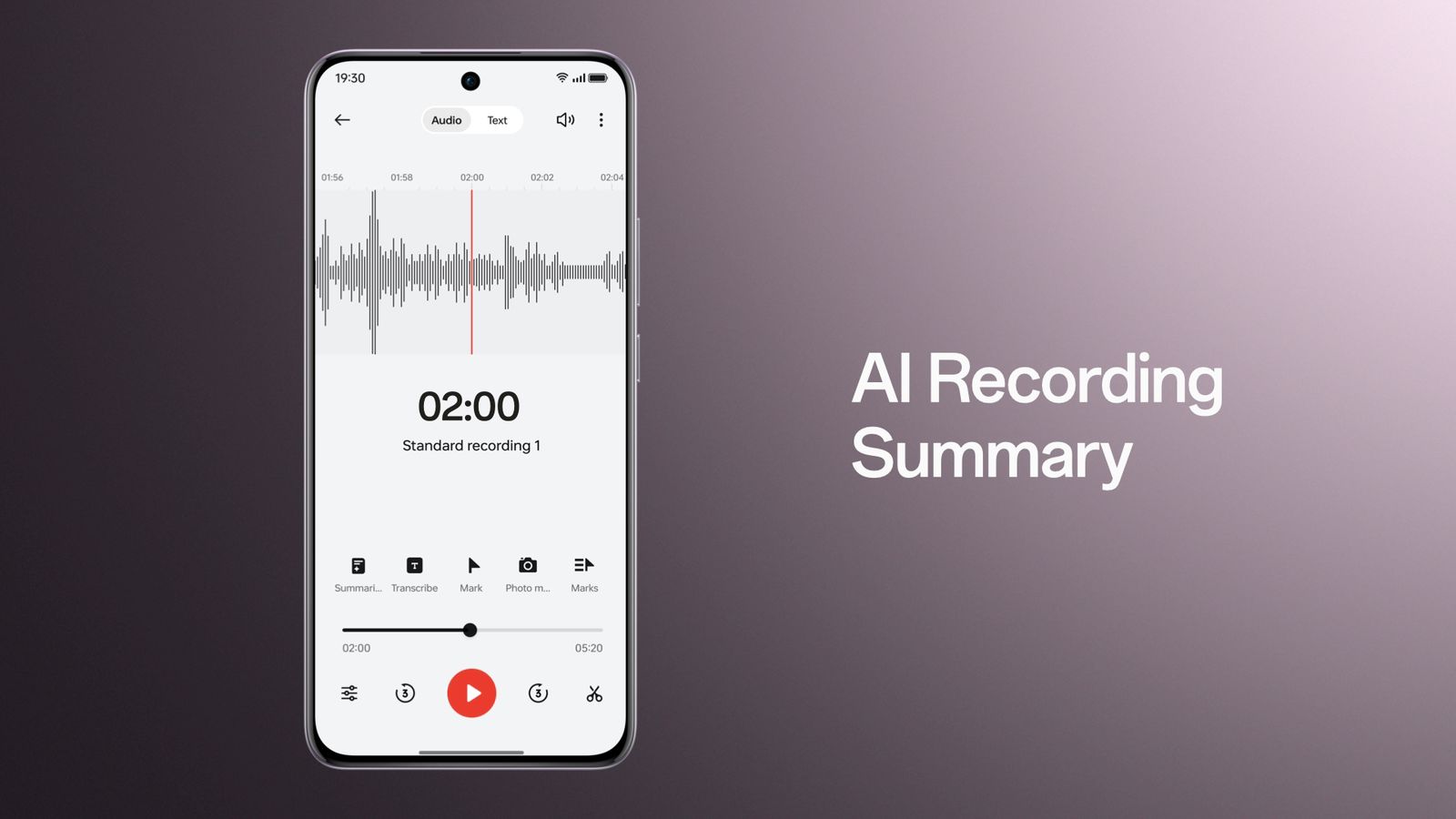
They also feature AI Recording Summary, AI Clear Voice, and an AI Tool Box with AI Summary, AI Writer, and AI Speak.
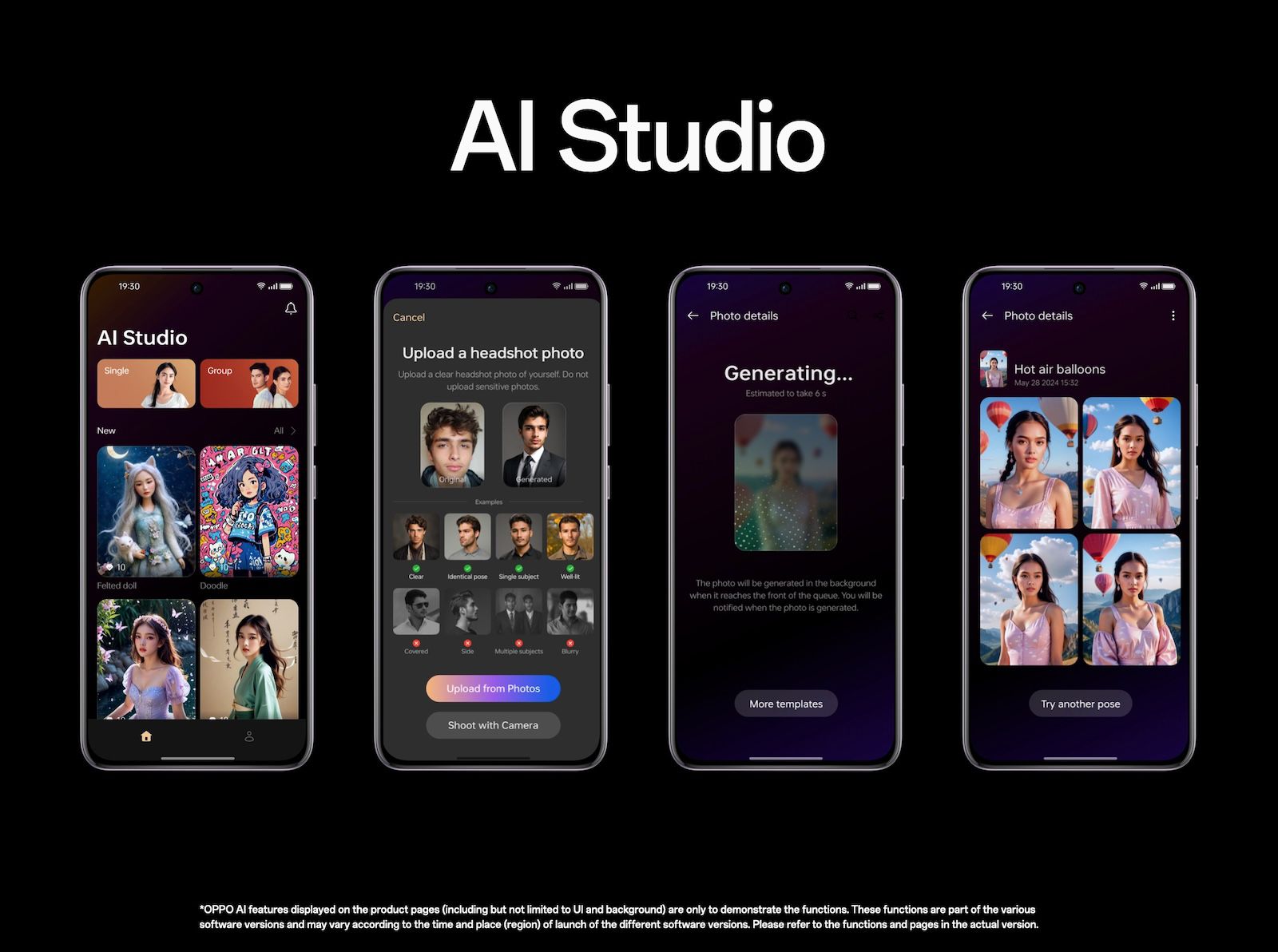
AI Studio can create digital avatars or artistic portrait styles from just one single user photo
Camera Capabilities: The Reno12 and Reno12 Pro boast impressive camera setups. Both feature a 50MP main camera with the Sony LYT-600 sensor and an 8MP ultra-wide camera.
The vanilla Oppo Reno12 has the same main and ultra wide cameras
The Reno12 Pro adds a 50MP 2x telephoto camera, while the Reno12 includes a 2MP macro camera.
AI Clear Face ensures everyone in a group shot, even those far away from the camera
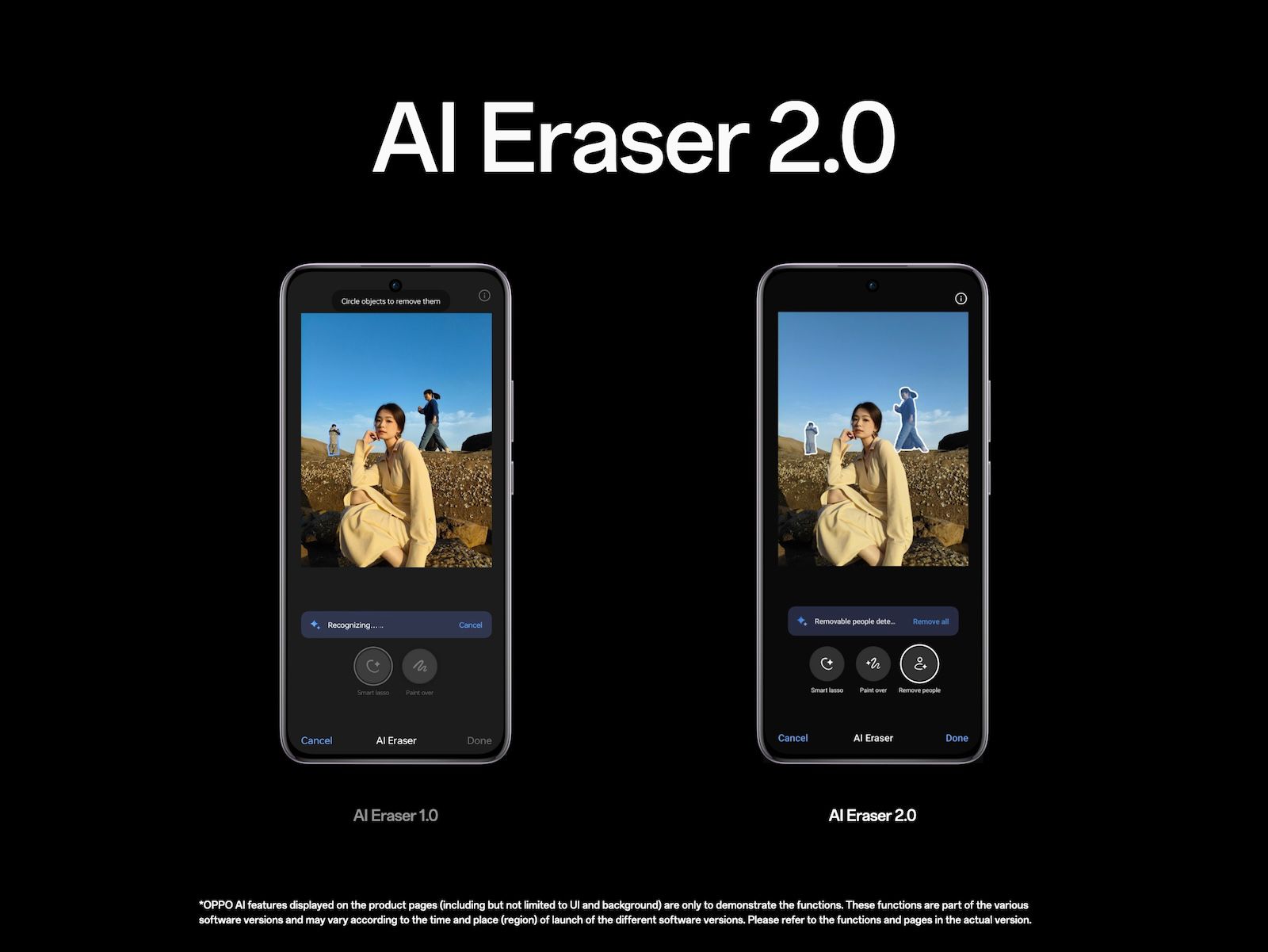
AI Clear Face, AI Best Face, and an improved AI Eraser enhance the photography experience.
AI Best Face meanwhile can automatically identify people in photos with blinked eyes and use advanced GenAI technology to fix them
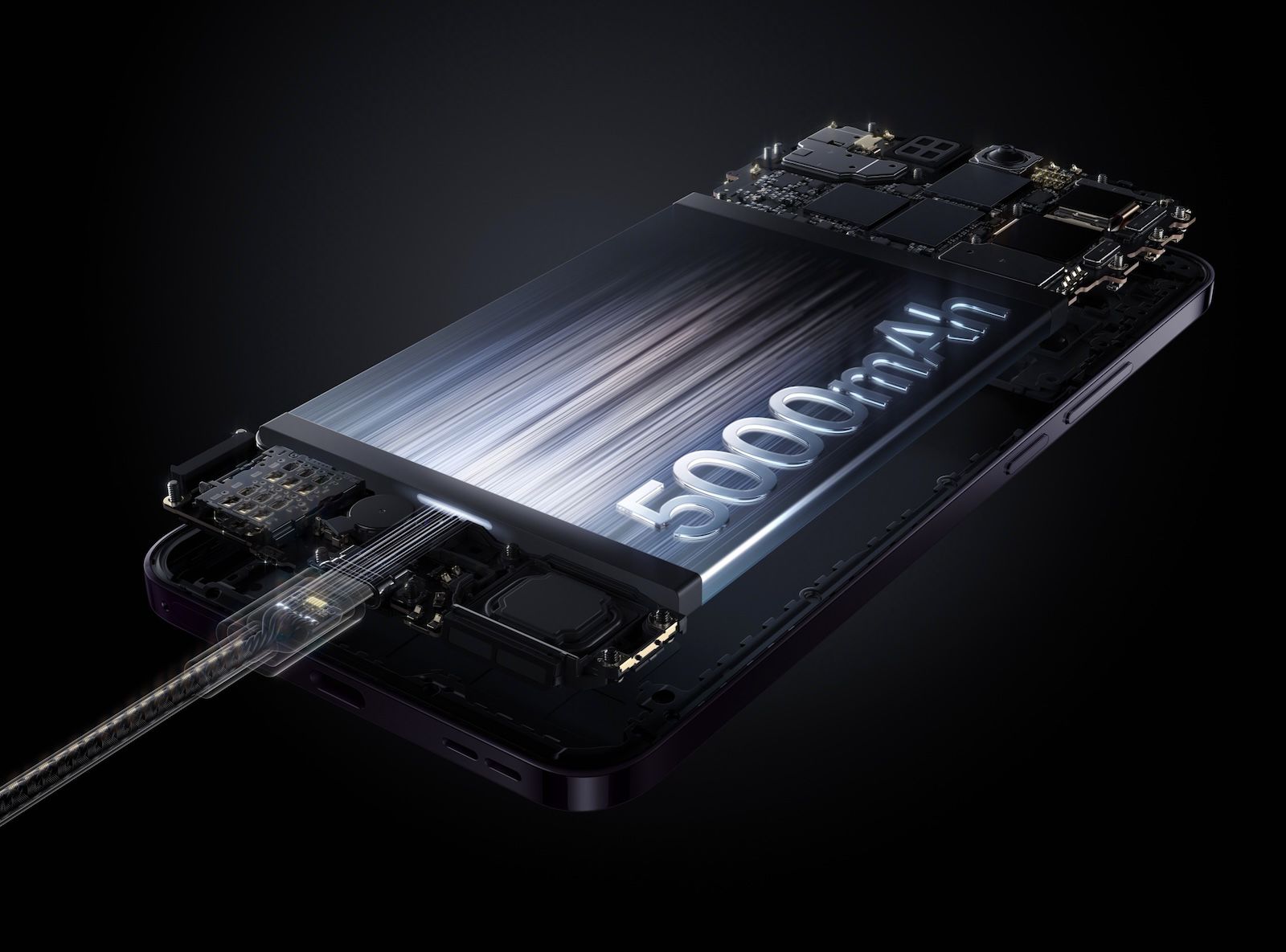
Battery and Charging: Equipped with a 5000mAh battery and 80W SuperVOOC fast charging, these smartphones are designed to keep up with your demanding lifestyle, ensuring you never run out of power.
Equipped with 50MP main camera and 5000mAh battery with 80W SuperVOOC fast charging
With its powerful hardware, advanced AI capabilities, exceptional camera system, and sleek design, the OPPO Reno12 and Reno12 Pro are set to redefine the mobile experience for users around the globe.
What are the colour options for the OPPO Reno12 and Reno12 Pro?
The OPPO Reno12 is available in Astro Silver and Matte Brown, while the Reno12 Pro comes in Nebula Silver and Space Brown.
What are the prices for the OPPO Reno12 and Reno12 Pro?
The OPPO Reno12 is priced at 499 Euros (approximately Rs. 44,660), and the Reno12 Pro is priced at 599 Euros (approximately Rs. 53,610) or 499 GBP (approximately Rs. 52,800).
What is the processor used in the OPPO Reno12 and Reno12 Pro?
Both models are powered by the MediaTek Dimensity 7300-Energy 4nm processor, co-designed with OPPO.
What are the camera specifications of the OPPO Reno12 and Reno12 Pro?
Both phones feature a 50MP main camera with Sony LYT-600 sensor and an 8MP ultra-wide camera. The Reno12 Pro also includes a 50MP 2x telephoto camera, while the Reno12 has a 2MP macro camera.
What battery and charging capabilities do the OPPO Reno12 and Reno12 Pro offer?
Both smartphones come with a 5000mAh battery and support 80W SuperVOOC fast charging, ensuring long-lasting battery life and quick charging times.
What are the best AI Feetures of Oppo Reno 12 & Reno 12 Pro ?
Accelerating the adoption of AI phones
OPPO had outlined its commitment to bring AI capabilities to more users beyond the confines of high-end flagship smartphones.
As part of these efforts, OPPO has joined Google, Microsoft, MediaTek, Qualcomm and other partners to accelerate the arrival of a new generation of AI Phones.
Reno12 5G and Reno12 Pro 5G introduce a suite of breakthrough GenAI features1 covering a range of everyday uses.
With the newly updated AI Eraser, users can easily remove passing unknown people in photos with a simple tap because of the feature’s ability to automatically identify unknown people and objects.
Both devices have two AI features specifically designed to amplify group photos.
AI Clear Face shoes everyone in a group shot, even the people far away from the camera, are captured with amazing clarity by restoring high-resolution details like facial contour, hair, and eyebrows.
AI Best Face can automatically recognise people in photos with blinked eyes and use advanced GenAI technology to fix them, so no group shot goes unseen .
AI Studio can create digital avatars or artistic portrait styles from just one single user photo.
Users can imagine in many styles leveraging the new GenAI capabilities.
Reno12 5G and Reno12 Pro 5G tap into the power of AI to bring added efficiency and creativity.
Built on the Google Gemini large language model (LLM), AI Toolbox is a new addition to the smart sidebar that powerful recognition capabilities to understand the content displayed on the screen and recommend AI features accordingly, such as quick social media content generation or content summaries for lengthy articles.
In the Recording app, users can use the new AI Recording Summary tool to intelligently extract text summaries from a voice record and organize them into notes, with information such as to-do lists, times, locations, and other details highlighted and formatted for improved readability.
How are the connectivity features of Oppo reno 12 & Oppo reno 12 pro ?
Reno12 5G and Reno12 Pro 5G comes with the latest generation of OPPO’s proprietary AI LinkBoost technology.
It has nine individual antennas arranged in a 360° surround architecture, AI LinkBoost is able to boost signal reception and optimize network selection using a system-level AI model to perform agile network switching based on the user’s network environment.
The generation of AI LinkBoost, OPPO has also conducted extensive local testing and optimization in markets worldwide to ensure consistently stable connectivity.
This has capacity to improve network latency in areas with weak signal or busy networks, enhancing seamless switch between WiFi and cellular network, and accelerating signal recovery speeds when exiting elevators or basements.
With the world’s first TÜV Rheinland High Network Performance Certification, Reno12 Series is validated to deliver a smooth network experience in all tested scenarios for added confidence in its class-leading connected performance.
OPPO has introduced BeaconLink4 to Reno12 5G and Reno12 Pro 5G.
Using proprietary communications protocols, BeaconLink boosts Bluetooth transmission to enable communications at a distance of up to 200 meters, making it possible to place one-to-one voice calls in emergency situations without the need for network coverage.
How is the battery capacity & charging capabilities of Oppo Reno 12 & Oppo Reno 12 pro ?
Reno12 5G & Reno12 Pro 5G have helped to create the highest energy density 5,000mAh battery yet on a Reno Series phone, providing extended battery life and over four years of optimal battery condition2 without increasing the size of the battery or the phones.
With support for OPPO’s 80W SUPERVOOCTM Flash Charge on both models, this battery can be charged from 1% to 32% in just ten minutes, with a mere 46 minutes needed for a full 100% charge.
How is the Design language of Oppo Reno 12 & Oppo Reno 12 Pro ?
Reno12 5G and Reno12 Pro 5G has a bold, forward-looking design centred around a space-age silver exterior.
The rear glass panel of both models has been crafted with OPPO’s Fluid Ripple Texture, creating a 3D-like sensation of rippling water cascading across a pond.
The innovative use of the parallax effect ensures this visual sensation is achieved while maintaining the same mirror-smooth texture and feel that has become a hallmark of the Reno Series.
In addition to the new silver look, both models offer two more color options. Sunset Pink on Reno12 5G uses OPPO’s pioneering graphic liquid crystal process to craft a fresh take on the 2024 color of the year, Peach Fuzz.
For a more classic look, Matte Brown features a rich cocoa hue in a fingerprint-free finish.
On Reno12 Pro 5G, Sunset Gold and Space Brown both feature a two-tone matte-gloss design with two halves naturally separated by a chic metallic ribbon running horizontally across the back of the phone.
What is the biggest evolution to the display in Reno Series ?
On the front of Reno12 Pro 5G, the biggest evolution to the display in Reno Series history arrives in the form of the new Infinite View Screen—one of the most advanced screen technologies currently available on any smartphone.
Using a quad micro-curve design, the screen combines the aesthetics of a curved screen with the grip of a flat screen, providing exceptional comfort and fully immersive visuals while significantly reducing the number of accidental touches that occur on the curved edge of the screen.
Both Reno12 5G and Reno12 Pro 5G come with a 6.7-inch, 120Hz OLED display capable of displaying up to 1.07 billion colors while offering hardware-level low blue light eye protection.
Added to this is OPPO’s Splash Touch technology, a proprietary solution that allows the screen to function correctly even when the screen or the user’s hands are wet.
Keeping this screen shielded on Reno12 5G is Corning® Gorilla® Glass 7i with its exceptional drop protection.
Reno12 Pro 5G meanwhile features Corning® Gorilla® Glass Victus® 2–the toughest protective glass ever to appear on a Reno Series phone, providing ultra-flagship level resistance against impacts, drops, bending, and scratches.
With an IP65 rating, both models also provide exceptional dust and water resistance, while critical components across the phone, including openings, speakers, the USB-C port, and the SIM card tray, have been reinforced to make the phones even more waterproof.
How is the performance & efficiency of Oppo Reno 12 & Oppo Reno 12 Pro series ?
Reno12 5G and Reno12 Pro 5G are the first phones to feature the custom 4nm MediaTek Dimensity 7300-Energy mobile platform. Co-developed by MediaTek and OPPO to deliver exceptional power efficiency, the new octa-core platform consists of four A78 performance cores and four A55 efficiency cores.
In-depth collaboration between OPPO and MediaTek on the Dimensity 7300-Energy has also delivered breakthroughs in SoC, memory and storage performance through the latest ColorOS Trinity Engine.
By using AI models to identify the current user scenario, the Trinity Engine’s updated CPU-Vita engine is able to precisely allocate SoC resources, achieving lower power consumption while ensuring system stability and smoothness.
The RAM-Vita engine enhances RAM utilization to accelerate app launch speeds and switches. It can keep active background apps running for an incredible 72 hours without skipping a beat.
On top of this, OPPO’s RAM Expansion can be used to convert 12GB of storage into temporary RAM, providing an extra boost of smoothness whenever needed.
Finally, the updated ROM-Vita engine now performs lossless compression on infrequently used apps, and manages duplicate files to reduce unnecessary storage use, resulting in increased storage space for user files and faster memory read/write speeds.
How is the camera capabilities of the Oppo Reno 12 & Oppo Reno 12 Pro ?
Equipped with a Sony LYT-600 sensor featuring full-pixel omnidirectional autofocus and OIS, the Main Camera of Reno12 5G and Reno12 Pro 5G offers faster and more stable focusing for clearer shots.
Both models also feature a Portrait Mode with up to 2x zoom for easy capture of stunning bokeh-rich portraits capable of rivalling those taken using professional cameras.
Reno12 Pro 5G takes this professional portrait experience even further with a 50MP Telephoto Portrait Camera offering up to 2x optical zoom, and a new 50MP Selfie Camera with autofocus and new AI Portrait Retouching effects that allow for real-time adjustments to facial features like face shape, hairline, cheekbones and more when taking portrait-style selfies.
Both phones feature an enhanced Flash Snapshot, which adjusts the camera exposure process more agilely, allowing photos to capture more realistic lighting effects and natural skin tones.
4K video at 30fps is also available on both the rear and front-facing cameras for stunning high-definition video at four times the resolution of 1080p video.
Premium design with wood finish or vegan leather and IP68 certification
6.67-inch Super HD display with 144Hz refresh rate and Pantone True Color validation
Versatile camera system with 50MP primary, ultrawide, macro, and 64MP telephoto lenses
Powered by Snapdragon 8s Gen 3 processor with 5G and advanced AI capabilities
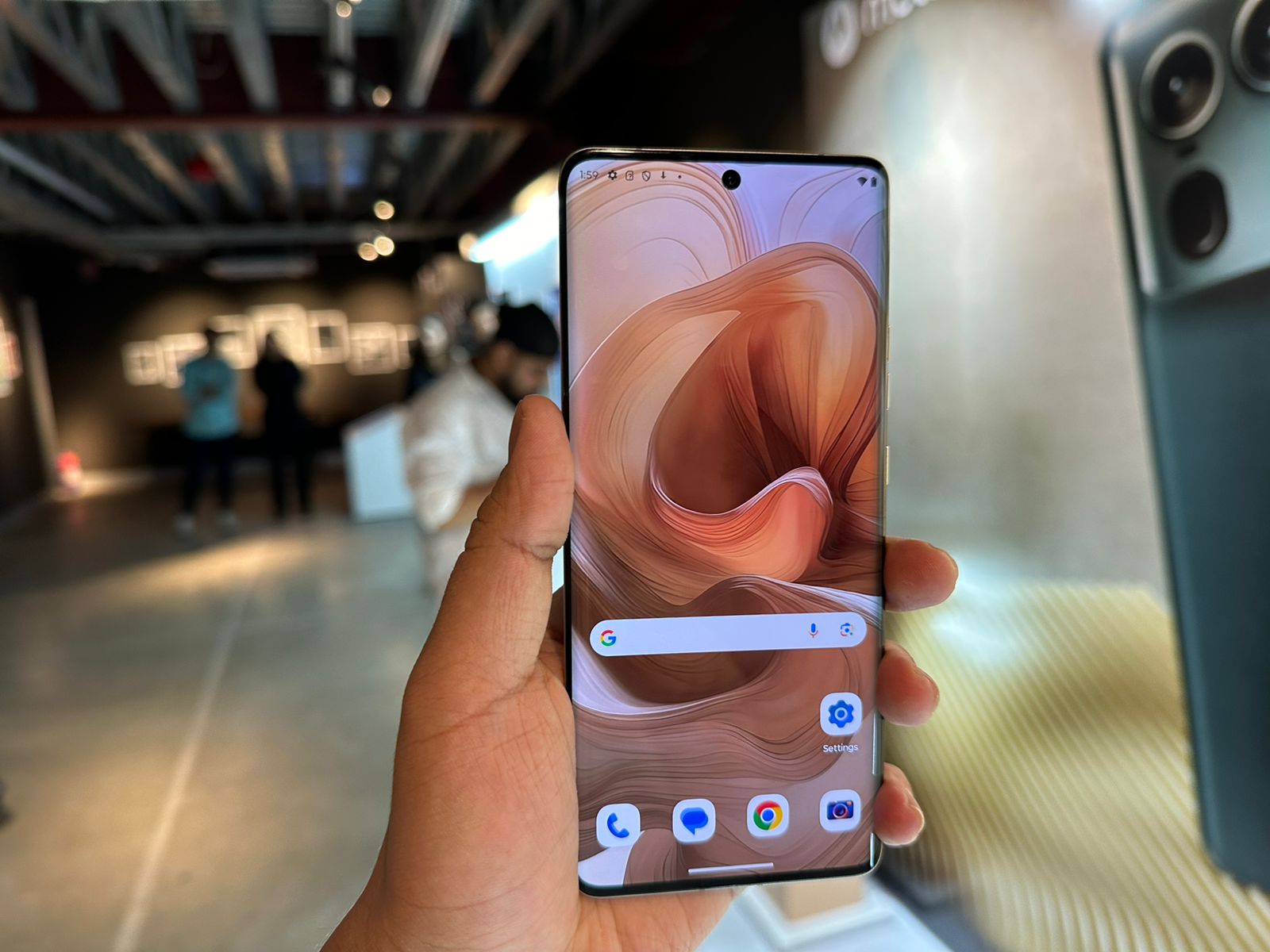
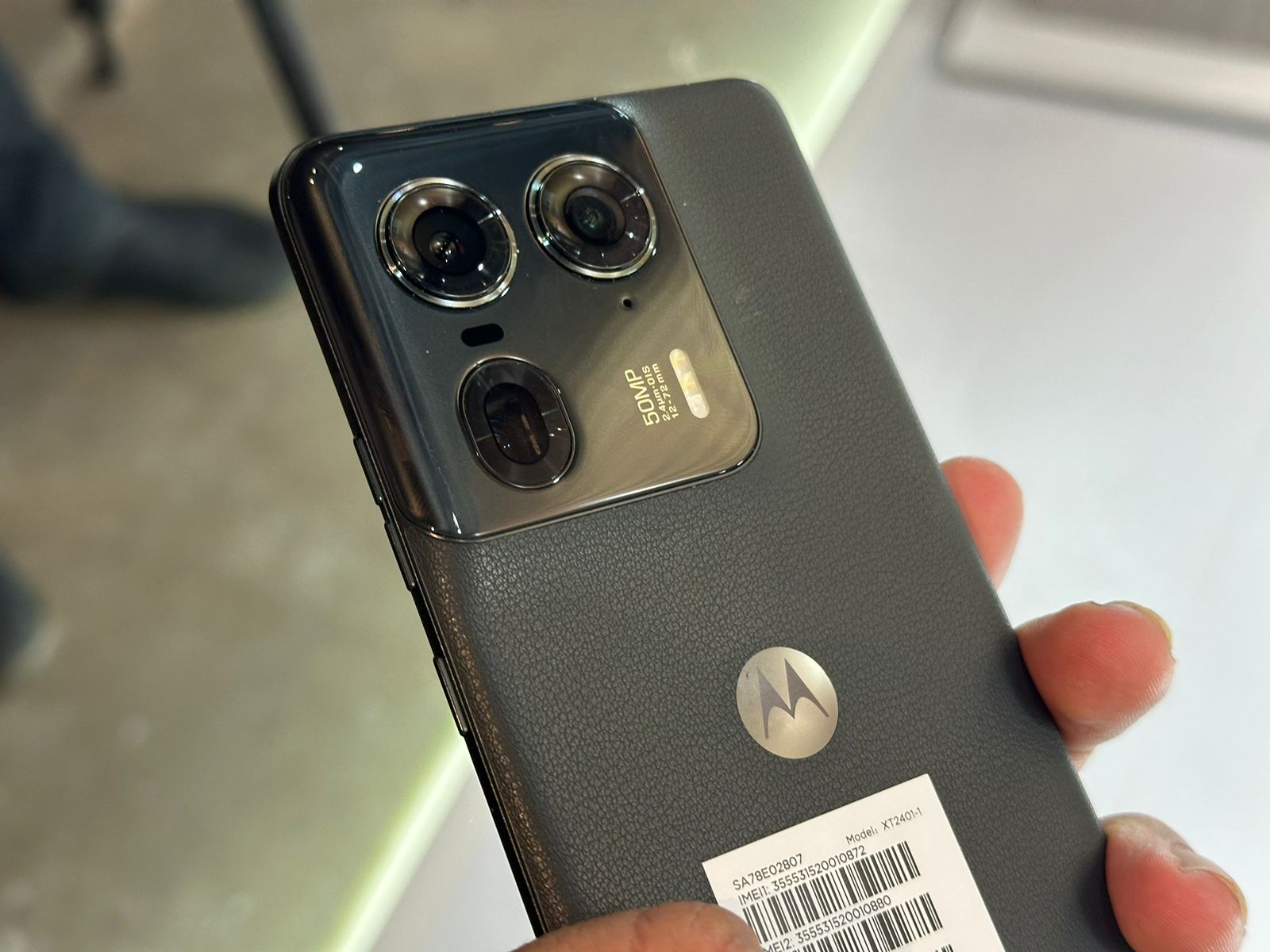
Expanding its latest flagship smartphone line, Motorola has stepped a level higher with the release of the Edge 50 Ultra.
This is, indeed, a powerhouse device with leading specs and novel features that can meet even the most demanding requirements.
From its exceptional camera set-up to its revolutionary Smart Connect Technology, the Edge 50 Ultra is said to deliver an amazing user experience.
Now, allow us to delve into what first impressions can be given of this awesome device, wetting your appetite for our soon-to-come in-depth review.
Motorola Edge 50 Ultra Design and Display
Motorola Edge 50 Ultra Design and Display
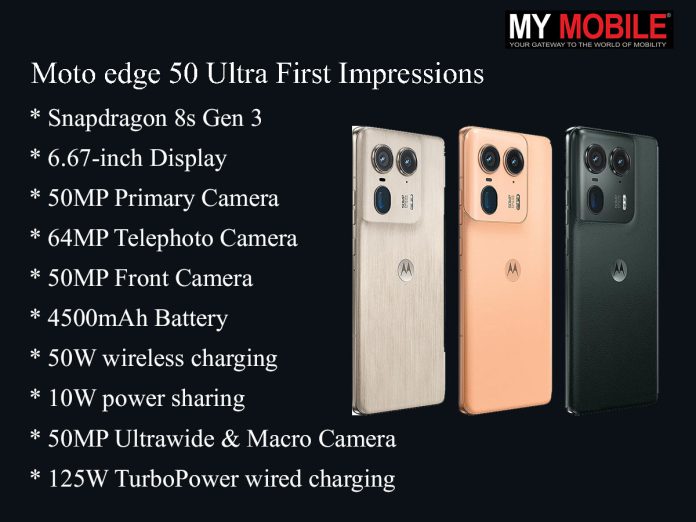
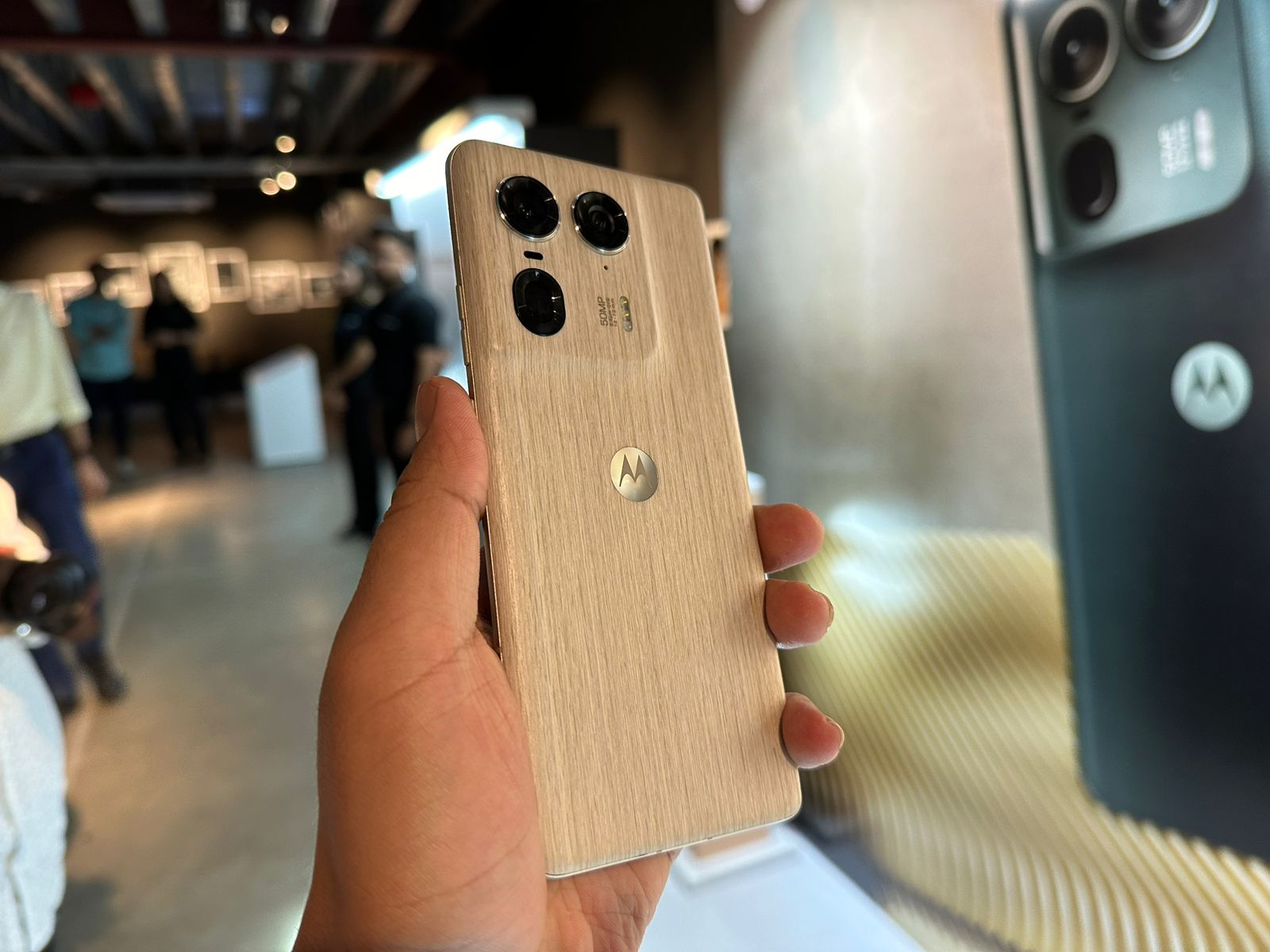
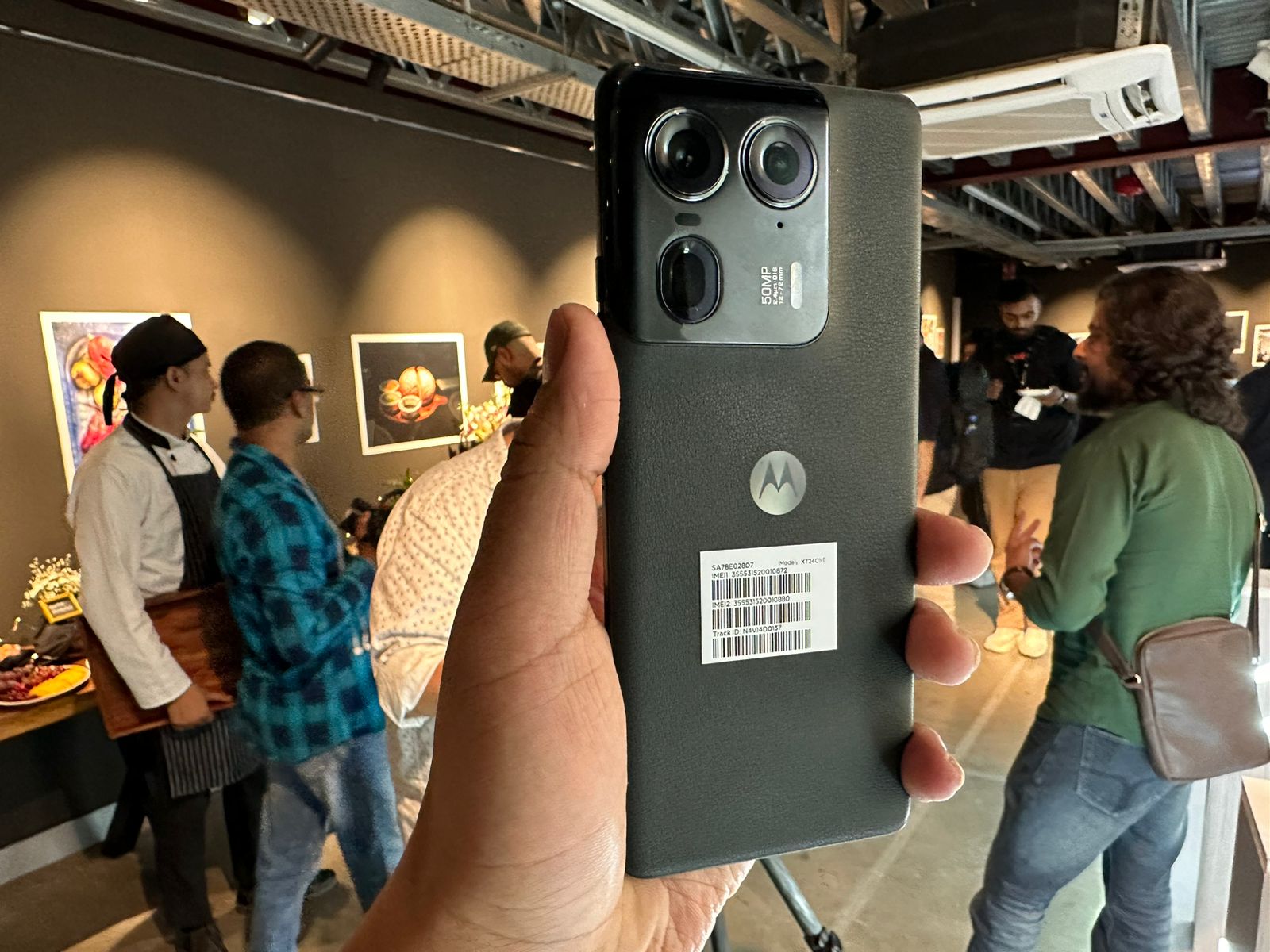
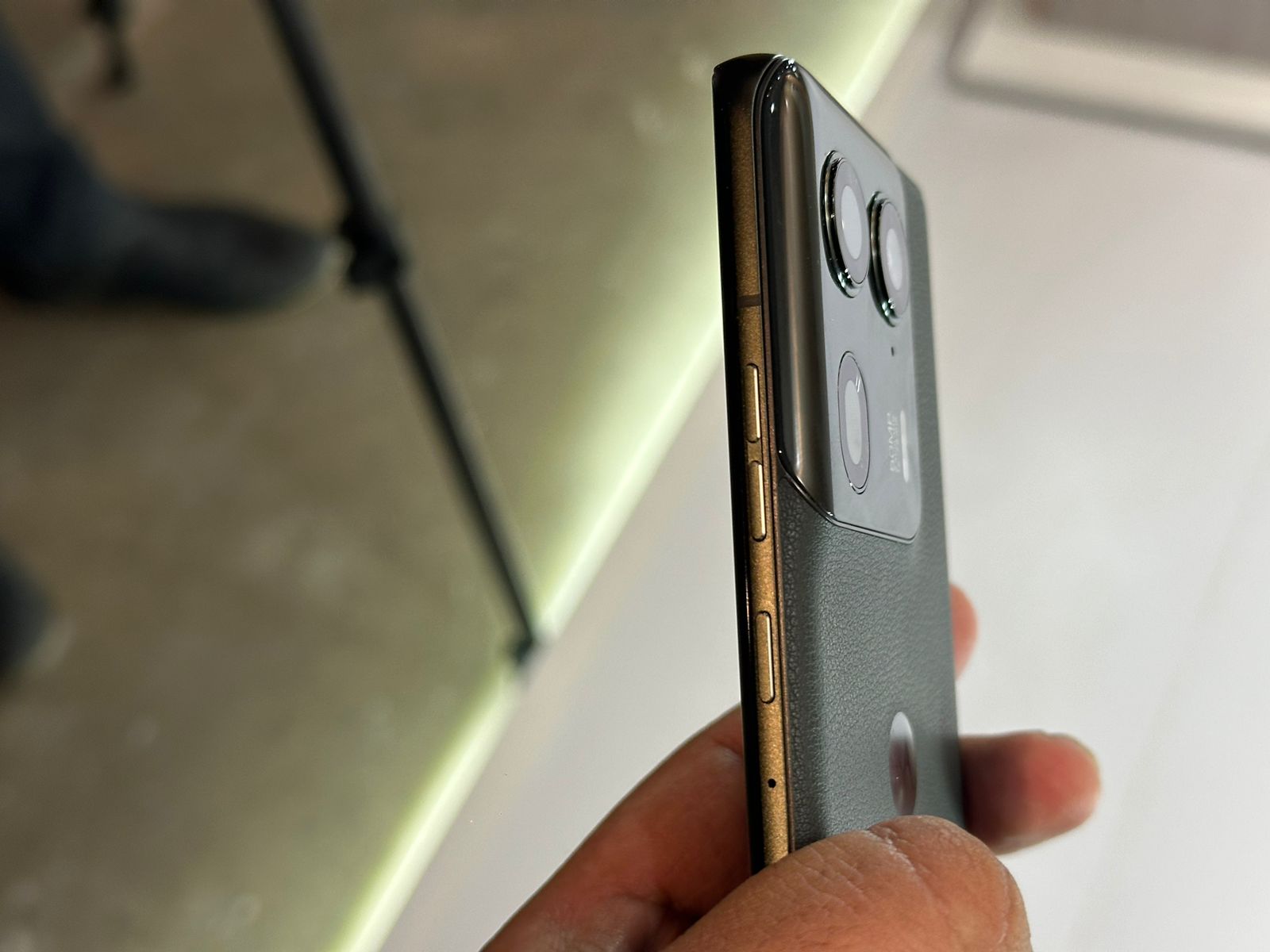
The Edge 50 Ultra is designed to be impressionable with a premium balanced design that is available in a wood finish or the colour of the year vegan leather.
This device is not just gorgeous but built to be tough, evident in its IP68 certification that makes it dust- and water-resistant.
One of the real standouts is its 6.67-inch Super HD, Pantone True Colour validated display, touting vivid and accurate colours, a buttery-smooth refresh rate of 144Hz, and Corning glass protection.
Yes, ontop of DCI-P3, HDR10+, and 10-bit colour depth, this display could raise your visual experience to new heights.
Our upcoming review will explore the display’s performance in various lighting conditions and put its colour accuracy to the test.
Motorola Edge 50 Ultra Camera Capabilities
Motorola Edge 50 Ultra Camera Capabilities
Moving on to the optical hardware of the device, photography enthusiasts will be glad to know that the Edge 50 Ultra includes a versatile camera system.
Equipped with OIS and a wide f/1.6 aperture, the primary 50MP camera can click detailed pictures even in low-light conditions.
The 50MP ultra wide and macro cameras, however, add versatility across varied scenes.
The 64MP telephoto lens with 100x Hybrid Zoom and OIS ensures far-away scenes or objects are clear.
Also, a 50MP front camera with autofocus and wide to infinity f/1.9 aperture will let selfie users take crystal-clear shots of themselves.
We will see how these cameras fare and list out their positives and negatives in various lighting conditions in our review.
Motorola Edge 50 Ultra Performance and Features
Motorola Edge 50 Ultra Performance and Features
Powered by the Snapdragon 8s Gen 3 processor, the Edge 50 Ultra delivers acceleratedperformance and efficiency, complete with a 5G modem and advanced AI capabilities.
Motorola has taken the user experience to new heights with the integration of innovative features such as Smart Connect, which allows users to seamlessly stream apps across devices, enhancing productivity and connectivity.
Additionally, Smart Water Touch with AI Magic Generation and Style Sync with AI Canvas provide intuitive and advanced interactions, further elevating the user experience.
Stay tuned as in our full review we will delve deeper into the device’s performance, benchmarking it against its competitors and exploring these innovative features in detail.
Motorola Edge 50 Ultra Battery Life and Charging
Motorola Edge 50 Ultra Battery Life and Charging
Battery life is a strong suit of the Edge 50 Ultra, with its 4500mAh battery promising all-day usage.
However, what truly sets this device apart is its charging capabilities.
With 125W TurboPower wired charging, the Edge 50 Ultra can go from nearly depleted to fully charged in a matter of minutes.
Additionally, it supports 50W wireless charging and 10W power sharing, ensuring you’re never left stranded with a dead battery.
We’ll put the battery through its paces, testing its longevity under various usage scenarios and assessing the real-world charging speeds.
With its impressive camera system, powerful performance, innovative features, and cutting-edge display, this device is poised to challenge even the most formidable competitors.
As such, stay tuned for our comprehensive review, where we’ll dive deeper into the nitty-gritty details, explore every aspect of this device, and provide our final verdict on whether the Edge 50 Ultra is worthy of its flagship status and deserving of your investment.
Motorola Edge 50 Ultra Five Reasons to Buy
Motorola Edge 50 Ultra Five Reasons to Buy
Powerful Performance: Equipped with the latest Snapdragon 8s Gen 3 processor for seamless multitasking and gaming.
Stunning Display: Features a 6.67-inch super HD (1220p) Pantone True Color validated display with a 144Hz refresh rate.
Advanced Camera System: Pro-grade cameras with 50MP primary, ultrawide, macro, and 64MP telephoto lenses for exceptional photography.
Fast Charging: Supports 125W TurboPower wired charging and 50W wireless charging for quick and convenient power-ups.
Innovative Features: Includes Smart Connect technology for seamless app streaming across devices and IP68 water resistance for durability.
On-screen fingerprint reader
Face unlock
ThinkShield®
Moto Secure
Sensors
Proximity
Ambient light (front)
3-in-1 sensor (exposure, auto white balance, flicker)
Accelerometer
Gyroscope
SAR sensor
Magnetometer (compass)
Battery size
4500mAh
Battery life
Over a day of battery life* (up to 40 hours)
Processor
Snapdragon® 8s Gen 3 Mobile Platform
Charging
125W TurboPower™ charging
Up to 50W* wireless charging
10W wireless power sharingGet power for the day in just <7? minutes of charging.**
Display size
6.7″ Super 1.5K (1220p) display
Display technology
pOLED
HDR10+
10-bit; Over a billion shades of color
100% DCI-P3 color space
144Hz refresh rate
Touch rate: 360Hz (gaming mode)
DC Dimming
LTPS
Peak Brightness: 2500 nits
Display certifications
HDR10+
Amazon HD streaming
Netflix HD streaming
SGS Low Blue Light
SGS Low Motion Blur
Pantone Validated™ color & Pantone Skintone™ Validated
Resolution
1.5K (2712 x 1220 | 1.5K)
446ppi
Aspect ratio
20:9
Screen-to-body ratio
Active Area-Touch Panel (AA-TP): 93.5%
Dimensions
161.09x 72.38 x 8.59mm | 6.3 x 2.8 x 0.3in.
Weight
197g
Body
Front: 3D Corning® Gorilla® Glass Victus® with anti-fingerprint coating
Frame: Sandblasted aluminum
Rear: Vegan Leather (or Real Wood)
Water protection
IP68
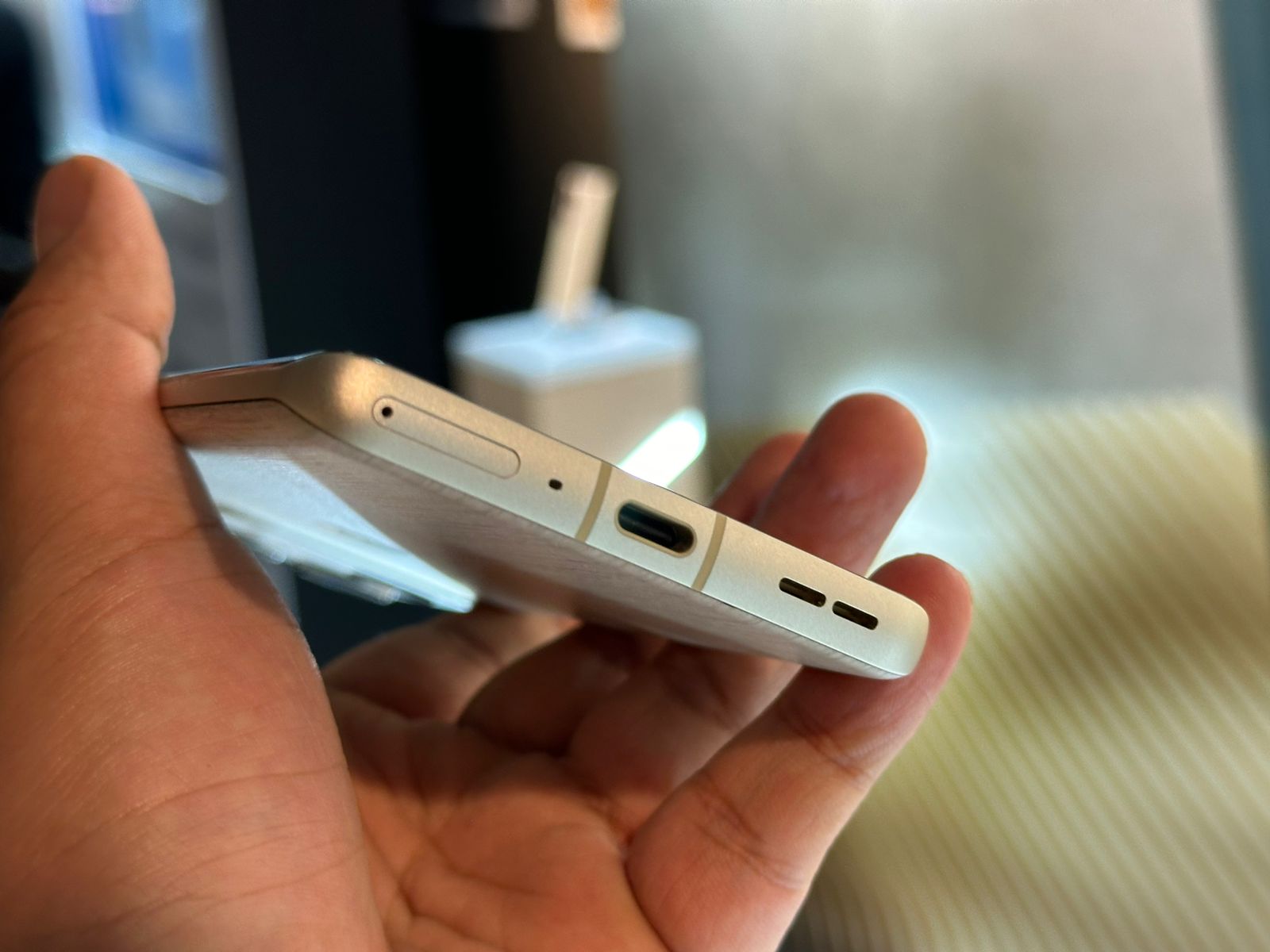
Ports
USB Type-C port (USB 3.1 gen 2 compatible)
DisplayPort 1.4
Colors
Nordic Wood [FSC Certified Real Wood Finish] Peach Fuzz – Pantone Color of the year and Forest Grey [Silicone Vegan leather]
Rear camera 1 hardware
50MP
1/1.3″ optical format
f/1.6 aperture
1.2μm pixel size | Quad Pixel Technology for 2.4μm
Omni-directional PDAF
Optical Image Stabilization
Laser autofocus (time-of-flight);
3-in-1 Sensor (exposure, auto white balance, flicker)
Rear camera software
Shooting modes:
Portrait (24mm/35mm/50mm/85mm)
Macro
Long Exposure
Timelapse
Dual Capture
Ultra-Res
Night Vision
Tilt-Shift
Pro
Scan (powered by Adobe Scan)Artificial intelligence:
Turbo Fusion Pro
Adaptive Shutter
Auto Smile Capture
Gesture Capture
Google Lens™ integration
Shot Optimization/Smart Color Segmentation
Smart High Resolution
Style SyncOther features:
Google Photos Auto Enhance (TBC if it will be on premium)
Pantone Validated™ color & Pantone Skintone™ Validated
Super Resolution Zoom
Hybrid Zoom: 100x
Ultra HDR (10-bit format)
Burst Shot
Timer
Assistive Grid
Leveler
Metering Mode
Watermark
Live Filters
Selfie Photo Mirror
Selfie Stick Support
RAW Photo Output
QR/Barcode Scanner
Quick Capture (twist-twist)
Shooting modes:
Portrait (w/ Group Selfie & Smart Adjustments)
Photo Booth
Pro
Dual Capture
Spot ColorArtificial intelligence:
Auto Night Vision
Auto Smile Capture
Gesture Capture
Shot Optimization
Google Photos Auto Enhance (TBC if it will be on premium)Other features:
Burst Shot
Timer
Assistive Grid
Leveler
Metering Mode
Watermark
Live Filters
Selfie Photo Mirror
Selfie Stick Support
RAW Photo Output
QR/Barcode Scanner
Ultra HDR (10-bit format)
Quick Capture (twist-twist)
125W TurboPower™ charger
USB Type-C to USB Type-C cable
Guides
SIM tool
Protective case
Protective film
FAQs
What design features make the Motorola Edge 50 Ultra stand out?
The Edge 50 Ultra features a premium design available in wood finish or vegan leather, along with IP68 certification for dust and water resistance.
What are the display specifications of the Motorola Edge 50 Ultra?
The device boasts a 6.67-inch Super HD display with Pantone True Color validation, 144Hz refresh rate, DCI-P3, HDR10+, and 10-bit color depth.
What camera capabilities does the Edge 50 Ultra offer?
The Edge 50 Ultra includes a 50MP primary camera with OIS, 50MP ultrawide and macro cameras, a 64MP telephoto lens with 100x Hybrid Zoom, and a 50MP front camera with autofocus.
What performance features are highlighted in the Edge 50 Ultra?
Powered by the Snapdragon 8s Gen 3 processor, the device offers accelerated performance, 5G connectivity, and advanced AI capabilities, along with innovative features like Smart Connect and Smart Water Touch.
How does the Edge 50 Ultra handle battery life and charging?
The Edge 50 Ultra comes with a 4500mAh battery supporting 125W TurboPower wired charging, 50W wireless charging, and 10W power sharing, promising all-day usage and fast charging speeds.
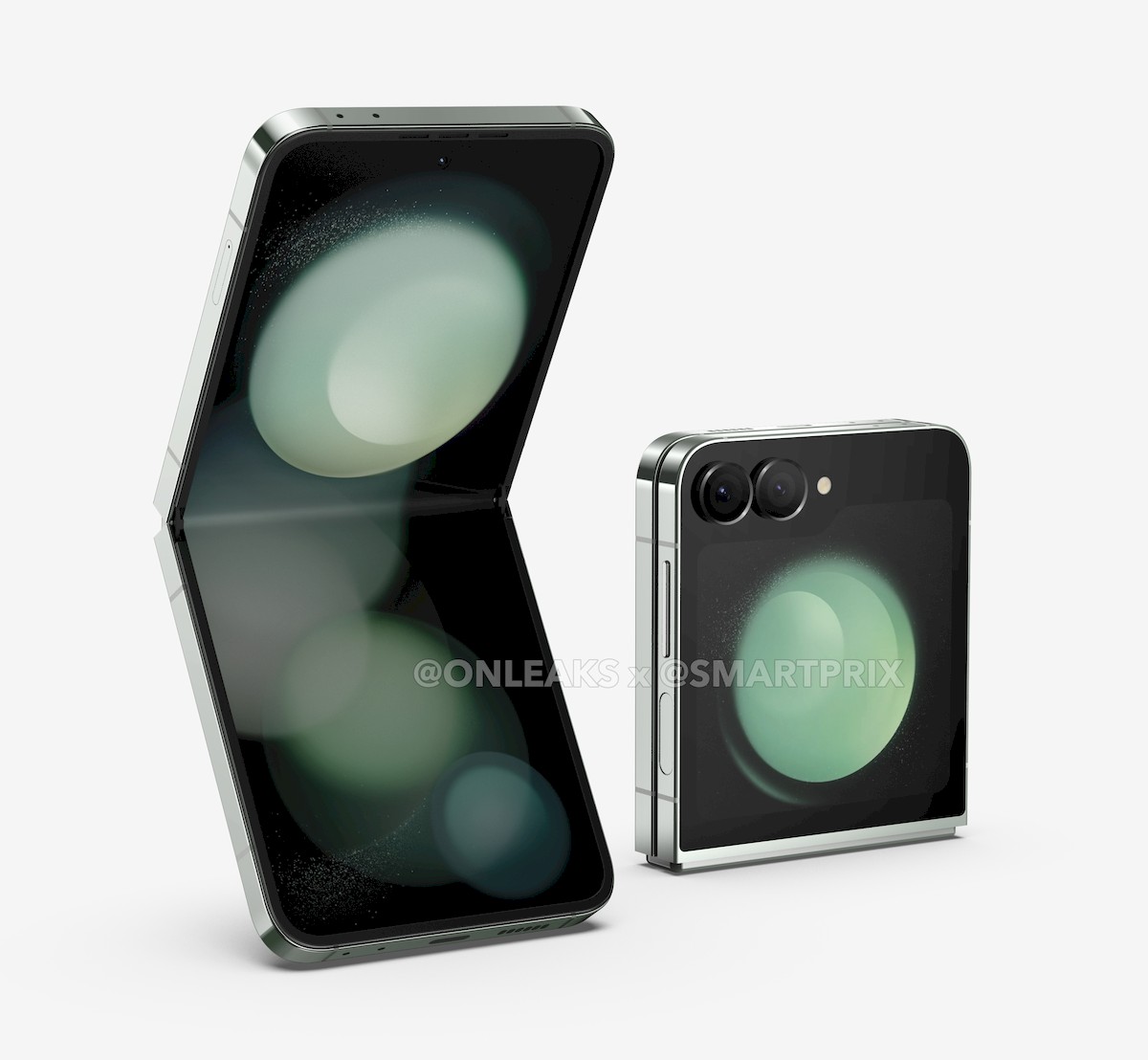
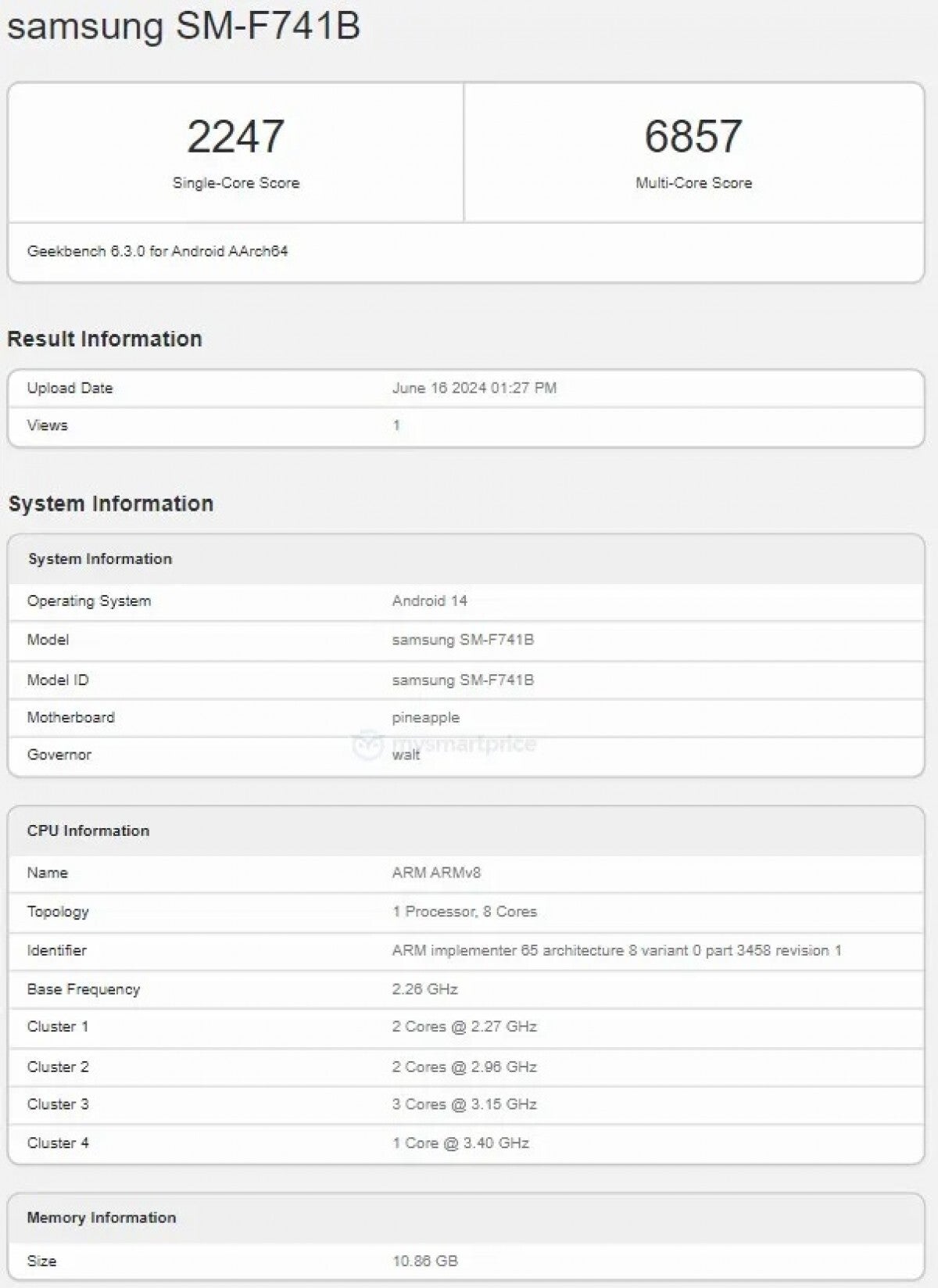
The latest leak, which surfaced on Geekbench, provides even more insights into the Galaxy Z Flip 6, leaving little to the imagination.
Geekbench Listing of Z Flip 6
Samsung Galaxy Z Flip 6 Geekbench Leak Reveals Snapdragon 8 Gen 3 and 12GB RAM
The Geekbench listing reveals that the Galaxy Z Flip 6 will be powered by the Snapdragon 8 Gen 3 chipset, featuring a powerful Cortex-X4 core clocked at an impressive 3.4 GHz, promising a significant performance boost.
Additionally, the foldable device is expected to ship with Android 14 out of the box, ensuring users have access to the latest software features and enhancements.
One of the most exciting revelations from the leak is the inclusion of 12GB of RAM, a substantial upgrade from the 8GB offered in its predecessors.
This increased memory capacity will undoubtedly contribute to a smoother multitasking experience and improved overall performance.
Galaxy Z Flip 6 scored an impressive 2,247 in the single-core test and a remarkable 6,857 in the multi-core test.
In terms of benchmarks, the Galaxy Z Flip 6 scored an impressive 2,247 in the single-core test and a remarkable 6,857 in the multi-core test.
These numbers represent a notable improvement over the Galaxy Z Flip 5’s respective scores of 1,984 and 5,194, suggesting that users can expect a significant performance boost in real-world usage scenarios.
Real-World Performance Could Be Different
Real-World Performance Could Be Different
While benchmark results should be taken with a grain of salt, as they don’t always accurately reflect real-world performance, the dramatic increase in scores is certainly encouraging and has many tech enthusiasts eagerly anticipating the foldable’s official launch.
Rumours also suggest that the Galaxy Z Flip 6 will feature a 6.7-inch foldable display and a slightly larger 3.4-inch cover screen, although earlier rumors of a 3.9-inch cover screen may not materialize.
Additionally, the foldable is expected to boast an upgraded 50MP main camera, further enhancing its photography capabilities.
However, one potential downside is the rumoured price increase for the Galaxy Z Flip 6.
Reports suggest that the device may cost around $1,100, with Samsung initially offering a “free” double storage option, meaning the 512GB variant will be the starting model for the first two weeks.
FAQs
What chipset will power the Samsung Galaxy Z Flip 6?
The Samsung Galaxy Z Flip 6 will be powered by the Snapdragon 8 Gen 3 chipset, featuring a Cortex-X4 core clocked at 3.4 GHz.
How much RAM will the Galaxy Z Flip 6 have?
The Galaxy Z Flip 6 will come with 12GB of RAM, an upgrade from the 8GB offered in its predecessors.
What are the benchmark scores for the Galaxy Z Flip 6?
The Galaxy Z Flip 6 scored 2,247 in the single-core test and 6,857 in the multi-core test on Geekbench, indicating significant performance improvements.
What software will the Galaxy Z Flip 6 run?
The device is expected to ship with Android 14, ensuring access to the latest software features and enhancements.
What is the expected price for the Galaxy Z Flip 6?
The Galaxy Z Flip 6 is rumoured to be priced around $1,100, with an initial offer including a “free” double storage option, starting with the 512GB variant for the first two weeks.
Samsung Galaxy Buds 3 may replace swipe gestures with pinch controls
Pinch sensors discovered in Samsung Members app APK teardown
Pinch gestures reduce accidental activations and offer better user control
Potential functionalities include media playback, volume, and noise cancellation control
Samsung’s upcoming Galaxy Buds 3 seriescould be ditching swipe gestures in favour of a more intuitive pinch control system.
This comes according to information uncovered by Android Authority through an APK teardown in partnership with AssembleDebug,
Pinch Sensor Revelations
Images of pinch right gestures on upcoming Galaxy Buds 3
Pinch sensors that were spotted when browsing through the 5.0.00.11 version of the Samsung Members application.
This also includes images of the earbuds and gestures about them.
Although it is not clear yet whether the pinch sensors and gestures will be on both the Buds 3 and Buds 3 Pro models or just one variant, the discovery indicates a radical change in user interaction for Samsung’s wireless earbuds.
The pinch gestures have been integrated into the earbuds of several prominent brands like Apple, Xiaomi, and Nothing among others.
In most of these models, one can perform a single-finger pinch to pause or play, perform two pinches to skip to the next in line, and triple pinch to go back.
Another essential action is the pinching-and-hold action, which toggles between noise cancellation and transparency modes.
According to Rita El-Khoury of Android Authority, pinch gestures can offer a superior user experience over touch or swipe controls.
Pinch and squeeze gestures are more deliberate actions in and of themselves, which greatly reduce the risk of accidental activations caused by hair or adjustments to the earbuds’ positioning.
Potential Gesture Functionalities
Images of pinch Left gestures on upcoming Galaxy Buds 3
While the specifics of how Samsung will implement pinch gestures remain unknown, it is reasonable to expect a similar approach to industry standards.
Users could potentially control media playback, volume, and noise cancellation/transparency modes through intuitive pinch combinations.
The leaked images also reveal a more conventional earbud design for the Galaxy Buds 3 series, featuring a stem.
Interestingly, the earbuds appear to have red or blue lights at the root of the stem, potentially aligning with the recently leaked “blade lights” featurefor the Galaxy Buds 3 Pro.
FAQs
What new control system might the Samsung Galaxy Buds 3 feature?
The Samsung Galaxy Buds 3 series may feature a new pinch control system, replacing the traditional swipe gestures for user interaction.
How were the pinch sensors for the Galaxy Buds 3 discovered?
Pinch sensors were spotted during an APK teardown of the Samsung Members application, version 5.0.00.11, in partnership with AssembleDebug.
What are the potential benefits of pinch controls over swipe gestures?
Pinch controls offer a more deliberate action, reducing the risk of accidental activations caused by hair or adjusting the earbuds’ positioning, thus providing a superior user experience.
What functionalities could the pinch gestures on Galaxy Buds 3 provide?
Users could potentially control media playback, volume, and toggle between noise cancellation and transparency modes through intuitive pinch combinations.
What design features are revealed in the leaked images of the Galaxy Buds 3?
The leaked images show a more conventional earbud design with a stem, featuring red or blue lights at the root, possibly aligning with the “blade lights” feature for the Galaxy Buds 3 Pro.
US Surgeon General Vivek Murthy calls for warning labels on social media platforms
Concerns include shortened attention spans, body image issues, and exposure to online predators
Congressional scrutiny heightens with hearings on child safety involving major social media companies
Legal challenges expected based on First Amendment considerations
The debate rages on regarding whethersocial media platforms—specifically, Facebook,Instagram, and TikTok—are doing any harm.
US Surgeon General Vivek Murthy called for the implementation of warning labels on these apps, indicating that they might be bad for teenagers.
While it’s acknowledged Murthy has no illusions that such a label would make social media safe for youth, he believes it would increase awareness and perhaps even modify young people’s behaviours.
He likened tobacco warnings to what such labels should do regarding the consumption of social media.
US Surgeon General Vivek Murthy
In an op-ed published Monday in The New York Times, Murthy called on Congress to pass legislation that would “shield young people from online harassment, abuse, and exploitation and from exposure to extreme violence and sexual content that too often appears in algorithm-driven feeds.”
“It is clear to me that we need to do more to make social media platforms safer for our children. We need to have safety standards similar to what we have for cars, medications, and other products our kids use,” wrote Murthy.
The warning labels are just one of several steps Murthy called for, including addressing autoplay, infinite scrolling, and data collection — but all require action from Congress.
“I think this is an issue that’s been years in the making,” said Virginia Tech Communications Professor Dr. Cayce Myers. “The question is, is that a lot of this is based on an assumption, not necessarily data that shows causation, but maybe a correlation between social media use and psychological effects. But one of the things that they’re saying is that we want to get out front of this. We don’t necessarily want to wait for more proof, we sort of have anecdotal proof and, and some scientific proof that there’s some bad effects from overuse of social media, particularly on younger people.”
Myers what Congress does with this request remains to be seen, but if action is taken it would not be as fast as with the forced sale of TikTok and expects pushback from social media companies.
“Any industry that’s going to receive a warning label typically does not want to have that because that impedes their ability to kind of promote their products,” he said. “The other thing is that Congress is divided. And, as we know, that’s harder to get legislation through.
I also would think, though, that there is some level of bipartisan appeal to regulating social media and it’s, kind of, bad effects. I mean, people on the right and people on the left have criticized social media for disinformation, for silencing certain voices.
Although they come at it from a different political and philosophical perspective, that does seem to have some level of bipartisan support it writ large. Now, does that translate into creating warning labels for social that remains to be seen.”
“I don’t know exactly how Congress will react. It’s a complicated issue,” added State Sen. Barbara Favola (D – Arlington). She is a member of the Joint Commission on Technology and Science, which is studying potential social media legislation.
She said the commission met on Monday and mentioned Murthy’s letter. “Hopefully, with the Surgeon General raising the issue there’ll be some advocacy groups and some research centers that will come forward with information that might be very useful. So, yes, it will definitely be something we’re paying attention to.”
“This is sort of a large conversation with lots of stakeholders and lots of opinions. But, we are looking for evidence-based strategies that will protect our children, but still allow for some discretion and freedom, because individual rights are part of this conversation as well.”
Macrini said while it may be an uphill battle to get legislation passed, he is OK with it.
“Because attention is being given to making sure that children are safe on the internet and that is something that should be prioritized across all levels.”
He added that if parents are concerned about their child’s social media use, he encourages them to “set open and honest ground rules and be open to having conversations about what safe social media usage looks like.”
“Also, if they are able tom have shared conversations with parents of their [children’s] friends, so that there is some consistency among those rules that the families are setting,” Macrini said.
“Because, it’s not uncommon for a situation to occur where one set of parents might have a certain set of rules for their children and then that is greatly different from that child’s best friend or something like that.
So, if parents are showing something of a unified front, that is likely going to contribute to them being able to better encourage their teens into engaging with the internet safely.”
“When I first read the article, I was impressed by the fact that this issue is receiving such attention,” said Nick Macrini, Executive Director of the National Alliance on Mental Health (NAMI) – Virginia of the request. “A warning like the Surgeon General’s warning that’s being proposed is a step in that right direction.”
“It’s undeniable, the increasing concern that we see from young people, from parents of young people regarding overuse of social media and the impacts that can have on mental wellness, mental illness,” he added.
“The increased likelihood of experiencing anxiety, depression. Comparing yourself to others, not necessarily knowing when to draw the line, or when to sort of turn off those devices and have some away-from screen time.”
“There’s no escaping the chitter chatter, even if the chitter chatter whether it’s benign chitter chatter or whether it’s more intense negative such as bullying that’s happening online,” said Dr. Yann Poncin, Yale School of Medicine Child Psychiatry Assistant Professor.
“I’d like some protections there and some consequences if social media allows the younger kids to get on. I would like schools to more readily prohibit cell phone use in the schools,” said Dr. Poncin.
“Because to some degree the cat’s already out of the bag, there’s tremendous usage among children who are having a very difficult time dealing with it,” he said. “I don’t know that parents are always aware of what their kids are doing on their smartphones.”
A warning label would help raise awareness, said Beth Houf, the principal of Capital City High School in Jefferson, Mo.
“It’s a step in helping the situation, but there is more that needs to be done,” she said. Houf, who has also led elementary and middle schools in her career, said she’s seen the negative effects social media has on students’ mental health worsen over the 17 years she’s been a principal.
Despite the cyberbullying and the unhealthy comparisons kids make of each other on social media, they can’t seem to turn away from these platforms, she said.
“When you hear something or have a vibration in your pocket, the fear that you’re missing out on something you feel like you have to engage with—that makes it harder to pay attention in the classroom,” she said.
Anjali Verma, a rising senior at Pennsylvania Leadership Charter School, a statewide charter school, also thinks a warning label alone won’t make a big difference.
“Warning labels on media images that have been digitally modified are ineffective in preventing the negative effects of media images on body image at best,” said Rachel Rodgers, an associate professor of applied psychology at Northeastern. “At worst they actually exacerbate these effects.”
Rodgers, who specializes in body image, did a meta-analysis of the experimental literature on this topic and found that there is no benefit to body image when it comes to labels on altered photos.
“Moreover, from a systemic perspective, using warning labels allows harmful industry practices to continue rather than leveraging systemic change, and places the burden on the user to protect themselves from something harmful,” Rodgers said. “When the user is a vulnerable young person, this is not an ethical stance.”
A drastic step or not? Let’s explore it in more detail.
Longstanding Concerns and Criticism
Instagram is possibly ruining mental health of a lot teenagers
Murthy’s call to action aligns with the long-standing concerns of youth advocates and lawmakers, especially against big social media companies such as Facebook, Instagram, TikTok, and Snapchat.
Among these are the shortening of attention span, body image issues, and exposing teens in a greater way to online bullying and predators.
Congressional Scrutiny
Tiktok facing possible ban in the US
The January scrutiny over social media giants was only into high gear when TikTok, Snap, Meta Platforms—owners of Facebook and Instagram, with representatives from X and Discord—appeared for a hearing on online child safety before the US senators.
As much as “you’ve got blood on your hands,” Senator Lindsey Graham said, over failing to safeguard the young users from sexual predators.
Legal Challenges and First Amendment Considerations
Legal challenges expected based on First Amendment considerations
Such a warning label would require legislation from the US Congress, though the legality of that would be challenged in court.
Claudia Haupt, a professor of law and political science at Northeastern, suggests the Supreme Court has recently been “aggressive” in enforcing the First Amendment as an argument against mandatory warning labels.
Claudia Haupt, a professor of law and political science at Northeastern, said that the Supreme Court has been “aggressive” in enforcing the First Amendment and using it as an argument against warning labels.
There’s been litigation over warning labels in the past, Haupt said, with companies arguing against putting graphic labels on cigarette cartons and signs at crisis pregnancy centers stating they’re not health care providers.
“The big problem with compelled disclosures is basically you’re telling the company to tell the consumer that their own product is dangerous,” Haupt said. “They don’t particularly like that because who wants to say, ‘The thing I’m trying to sell you might actually cause you harm.’”
She added that it’s likely social media companies would push back on a warning, if one were passed, claiming it’s infringing on their First Amendment rights.
In the past, she said, the Supreme Court has sided with companies on this. Haupt, along with Wendy Parmet, director of Northeastern’s Center for Health Policy and Law, published research on this, looking into the court’s history when it comes to health warnings.
“Over time, the balance has shifted,” Haupt said of the pair’s findings. “When public health would win in the past, free speech would be more likely to win. That would be relevant for all kinds of contexts where speech is used to inform the public about a public health danger. … The First Amendment gets more and more leeway in the courts so it becomes more and more difficult to actually compel companies to warn about their products.”
Haupt said Murthy’s push for a label that specifically targets young people might be better received, but ultimately it will come down to the precedent set in the crisis pregnancy center case that said disclosures have to be “purely factual and uncontroversial.”
“The First Amendment itself doesn’t say anything about this,” Haupt said. “It’s just the court’s interpretation. … You can debate what’s purely factual, what’s uncontroversial.
And then we get back to what kinds of harm does social media consumption potentially cause and is that worth limiting speech? That’s the ultimate question. It’s really hard to predict what the court will do with this.”
As the discussion continues, the ultimate question remains: Is the potential harm caused by social media consumption worth limiting speech?
It’s a complex issue, and predicting the court’s stance on this matter remains a challenge.
FAQs
What has the US Surgeon General proposed regarding social media platforms?
US Surgeon General Vivek Murthy has called for warning labels on social media platforms like Facebook, Instagram, and TikTok, indicating potential harm to teenagers.
What are the main concerns associated with social media use among teens?
The main concerns include shortened attention spans, body image issues, and increased exposure to online bullying and sexual predators.
How has Congress responded to concerns about social media safety?
Congress has scrutinized major social media companies through hearings on online child safety, with representatives from TikTok, Snap, Meta Platforms, X, and Discord appearing before US senators.
What legal challenges could arise from implementing warning labels on social media?
Implementing warning labels would require legislation from Congress and could face challenges based on First Amendment rights, with courts needing to determine if such labels are “purely factual and uncontroversial.”
Geekbench listing reveals Tensor G4 chipset with 4 efficiency, 3 performance, and 1 prime core
Pixel 9 scores 1653 in single-core and 3313 in multi-core Geekbench tests
Test unit runs Android 14, with final version expected to ship with Android 15
Pixel 9 to feature 8GB RAM, with a rumoured 12GB variant
The Geekbench listing for the highly anticipated Google Pixel 9 is finally here and reveals many essential specifications about this device’s performance.
Even so, take note that benchmarking at this stage may not represent the real capability of the Tensor G4 chipset.
This listing confirms the Tensor G4 will pack 4 efficiency cores clocked at 1.95 GHz, 3 performance cores at 2.60 GHz, and 1 prime core, running at an astonishing 3.10 GHz.
Comparing the Scores
Google Pixel 9 Geekbench Listing Reveals Tensor G4 Performance and Key Specs
According to the listing, the Pixel 9 scored 1653 in the single-core test and 3313 in the multi-core test.
While the single-core score was an update from that of its predecessor, the Pixel 8, which had 1,045, the multi-core score remained farther back at 3,294.
This would perhaps imply that Tensor G4 still does some catching up to the very best Qualcomm chips that score about 2,300 points on the single-core and an impressive 7,249 points on the multi-core Geekbench tests.
Pixel 9 scores 1653 in single-core and 3313 in multi-core Geekbench tests
However, it’s worth noting that this could be an early test variant, and the final performance numbers may differ.
Googleprobably will work on the current heat management issues seen with the last few generations of its in-house Tensor chipset, and this might translate into a better-performing Tensor G4.
The upcoming Android 15, the next version of the software that Google is expected to ship with the Pixel 9, will further bring improvements to longer-sustained performance, memory handling, and standby battery life.
Pixel 9’s Specifications
Test unit runs Android 14, with final version expected to ship with Android 15
The Geekbench listing further confirmed that the test unit of Pixel 9 is running Android 14, while the final version is most probably going to ship with Android 15 out of the box.
Moreover, it comes with 8GB RAM, much like its predecessor, while rumour has it that Google will introduce a higher 12GB variant as well.
According to reports, the Tensor G4 is fabbed on Samsung’s 4nm process, while next year’s Pixel 10 could feature Tensor G5 based on TSMC’s more efficient 3nm process.
FAQs
What does the Geekbench listing reveal about the Google Pixel 9?
The Geekbench listing reveals key specifications of the Pixel 9, including the Tensor G4 chipset configuration, which has 4 efficiency cores at 1.95 GHz, 3 performance cores at 2.60 GHz, and 1 prime core at 3.10 GHz.
How does the Pixel 9 perform in Geekbench tests?
The Pixel 9 scores 1653 in the single-core test and 3313 in the multi-core test.
These scores indicate an improvement in single-core performance compared to the Pixel 8 but show that the Tensor G4 still lags behind top Qualcomm chips.
What operating system will the Pixel 9 run?
The test unit of the Pixel 9 is running Android 14, but the final version is expected to ship with Android 15, which should bring improvements in performance, memory handling, and battery life.
What are the memory options for the Pixel 9?
The Geekbench listing confirms that the Pixel 9 will come with 8GB of RAM, similar to its predecessor. However, rumors suggest that Google might also introduce a higher 12GB RAM variant.
WhatsApp rolls out default HD quality setting for photo and video uploads
No more manual toggling for high-resolution media sharing
Easy setup on both Android and iOS devices
Larger file sizes may slow down upload speeds, with option to revert to standard quality
For those who value high-quality media sharing, WhatsApp has introduced a nifty new feature that’ll be a game-changer.
The popular messaging app is rolling out an option to set HD quality as the default for uploading photos and videos globally, on both Android and iOS devices.
No More Toggling for High-Res Uploads
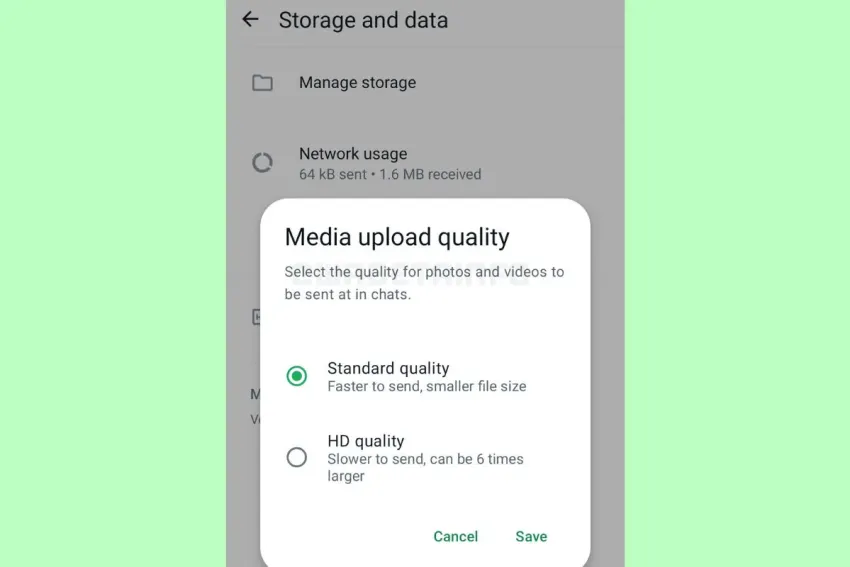
WhatsApp is reportedly testing default media quality setting for Android
Previously, users had to manually tap the “HD” button every time they wanted to share media in high resolution.
This extra step often led to overlooking the option, resulting in low-quality uploads.
With the new update, you can bid farewell to that hassle.
How to Enable HD Uploads by Default
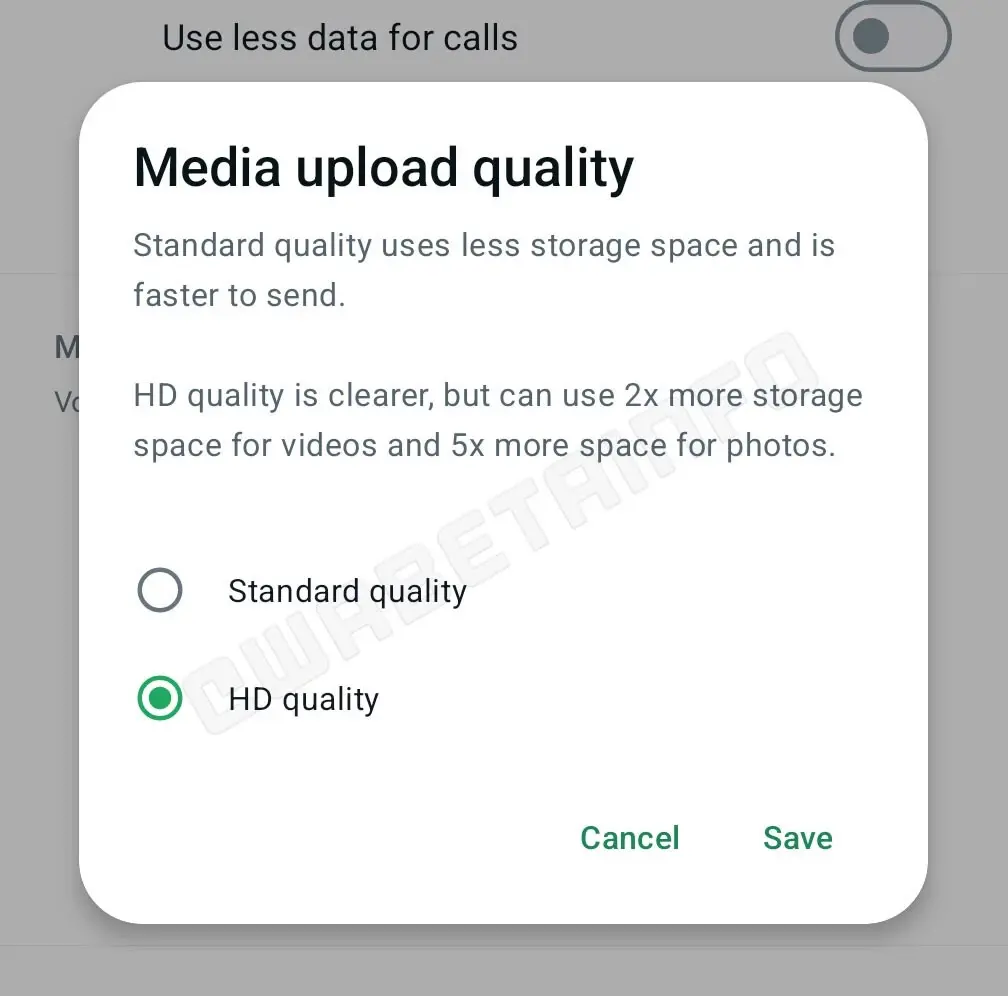
It is said to bring the ability to set the default media quality as HD
Enabling the new HD default setting is a breeze.
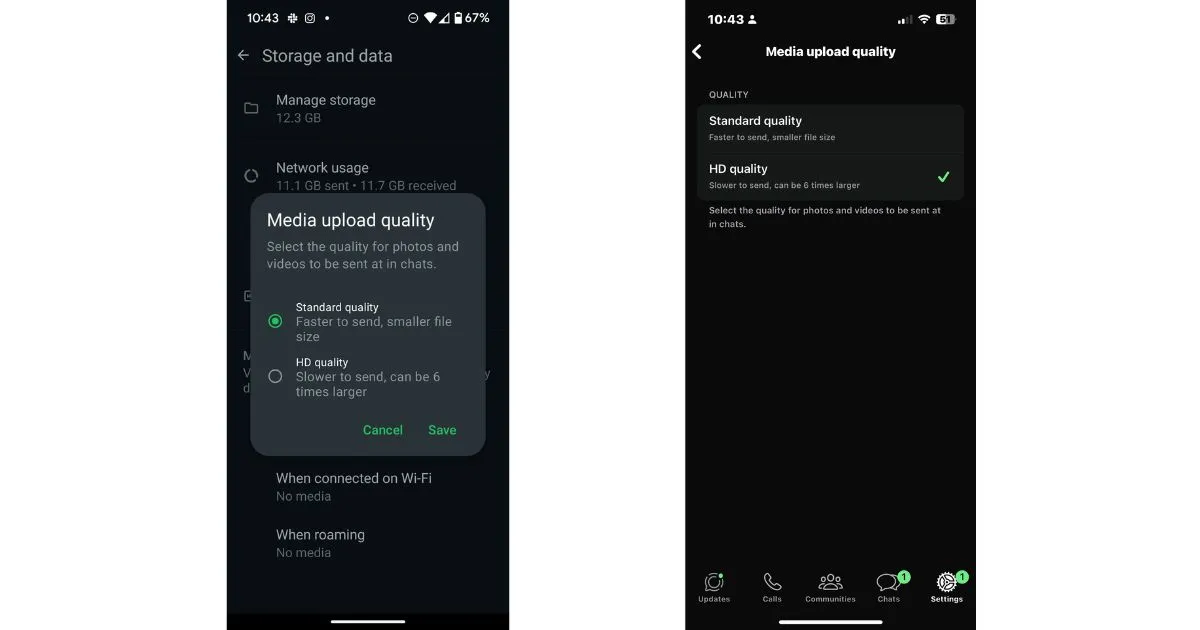
On Android devices, simply open WhatsApp, tap the three-dot menu icon, then navigate to Settings > Storage and Data > Media Upload Quality, and select “HD.”
For iOS users, the process is similar: open WhatsApp, tap the gear icon, scroll down to Storage and Data, and set Media Upload Quality to “HD.”
Important Note on Quality
The rumored WhatsApp default media upload quality setting is now live for me on Android.
Now I can finally send in HD by default without having to flip it on every time! pic.twitter.com/6sJSPXFPAE
— Artem Russakovskii (@ArtemR) June 16, 2024
It’s worth noting that while this setting will ensure all your outgoing media is uploaded in HD quality, any low-resolution files you receive will still be displayed in standard quality.
So, if you want to view shared media in all its glory, both parties will need to have the HD option enabled.
Striking a Balance
WhatsApp rolls out default HD quality setting for photo and video uploads
WhatsApp acknowledges that while HD uploads offer superior quality, the larger file sizes translate to slower upload speeds.
As such, the app provides the option to revert to standard quality if you prioritize faster transmission over high resolution.
Initially spotted in beta versions back in March, the HD default upload option is now rolling out to all users worldwide.
So, whether you’re sharing precious memories or important documents, you can now do it with crystal-clear clarity, without the extra taps.
FAQs
What is the new HD media upload feature on WhatsApp?
WhatsApp has introduced a feature that allows users to set HD quality as the default for uploading photos and videos, ensuring high-resolution media sharing without manual toggling.
How can I enable HD uploads by default on my Android device?
Open WhatsApp, tap the three-dot menu icon, navigate to Settings > Storage and Data > Media Upload Quality, and select “HD.”
How do I set HD media uploads on my iOS device?
Open WhatsApp, tap the gear icon, scroll down to Storage and Data, and set Media Upload Quality to “HD.”
Will HD uploads affect the speed of media sharing on WhatsApp?
Yes, while HD uploads offer superior quality, the larger file sizes may result in slower upload speeds. Users can revert to standard quality if faster transmission is preferred.
How to Set WhatsApp HD Media Sharing As Default?
To turn on HD media sharing as the default option, users must go to settings. Here’s how to do it on Android and iOS.
-Set HD Media Sharing as Default on Android
Open WhatsApp on your phone. Click on the three-dot icon in the top left corner. Select Settings from the drop-down menu. Click on Storage and Data. Click on Media Upload Quality and set it to HD.
-Set HD Media Sharing as Default on iPhone
Open WhatsApp on your iPhone. Click on the gear icon in the bottom left corner. Scroll down to Storage and Data. Click on Media Upload Quality and set it to HD.