
Home Blog Page 680

How to Clear Your Google Search History Easily: A Step-by-Step Guide

0

Highlights

  • Step-by-step guide to sign in and navigate Google Activity controls.
  • Options for deleting search history by time frame or service.
  • Tips for managing privacy with Google Activity controls and auto-delete settings.
  • Utilizing Incognito Mode for searches you don’t want saved.

Every query you input and every site you visit through Google is logged and utilized to customize your search results and advertisements.

While beneficial, this personalization comes with privacy trade-offs.

There may be numerous reasons you’d want to erase your search history: from protecting sensitive information to preventing targeted ads or simply wishing to start afresh.

This guide will walk you through the detailed steps to delete your Google search history across all your devices.

Step-by-Step Guide
How to Clear Your Google Search History Easily

1) Signing Into Your Google Account:

Initiate the process by ensuring you’re logged into your Google account.

Head over to any Google webpage, such as Google.com, and click on the ‘Sign in’ button located at the top right corner. Use your credentials to log in.

2) Navigating to Google Activity Controls:

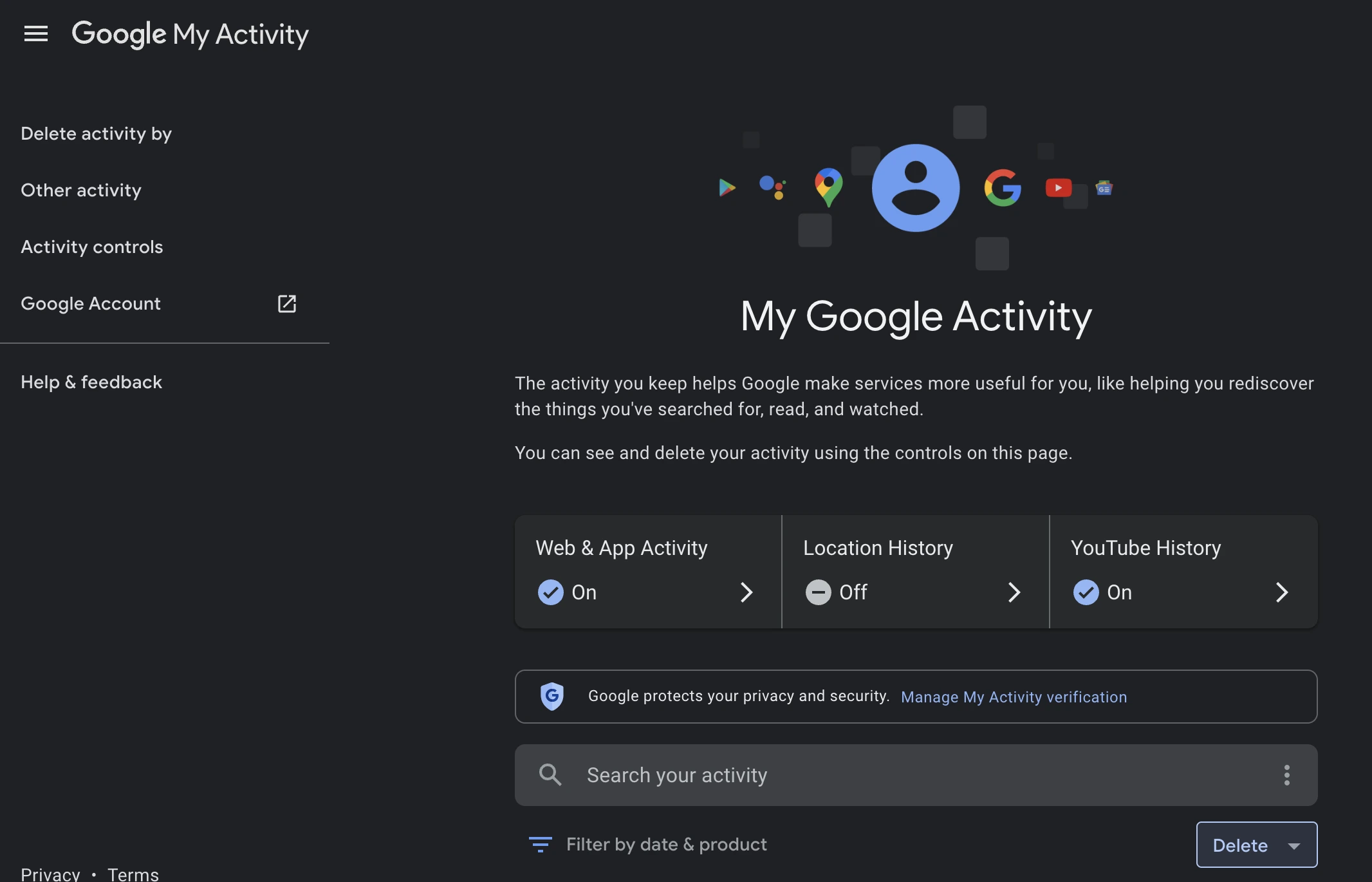
Once logged in, direct yourself to the Google Activity page by typing myactivity.google.com in your browser’s address bar.

This page is a comprehensive dashboard displaying your interactions across Google’s services.

3) Understanding Your Google Activity Dashboard:

The Google Activity page provides a timeline of your activities, including search queries, YouTube views, and app interactions.

Before proceeding to delete anything, take a moment to familiarize yourself with the layout. You can filter your activities by date or by Google service for a more granular view.

4) Selecting Deletion Parameters

Locate the “Delete” option, which might be under the “Activity and timeline” tab or represented as a trash can icon.

Upon clicking, you’ll be presented with options to delete your activity “by topic or product” or “by date.”

For comprehensive privacy management, consider reviewing both options.


5) Choosing a Time Frame for Deletion

Google offers flexibility in how far back you want your deletion to go. You can choose to delete your history from the last hour, the last day, all time, or within a

Tips for managing privacy with Google Activity controls and auto-delete settings

custom date range. Select the option that aligns with your privacy goals.

6) Specifying Services for Deletion

If you’re prompted, you can decide which Google services you’d like to clear history from. This includes Search, YouTube, Maps, and more.

For a focused cleanup, ensure the “Search” option is selected.

7) Confirming Your Deletion

After setting your parameters, clicking the “Delete” button will prompt a confirmation window.

This is your last chance to cancel the process. Confirm your decision to permanently erase your selected search history.

Additional Tips for Managing Your Google Privacy
Additional Tips for Managing Your Google Privacy
  • Review Your Google Activity Controls Regularly: Beyond deleting history, consider adjusting your activity controls to prevent certain data from being saved in the future.
  • Enable Auto-Delete Settings: Google allows users to set up automatic deletion of activity history after 3, 18, or 36 months. This can be a convenient option for ongoing privacy management.
  • Consider Incognito Mode: For searches you don’t want saved, use Google Chrome’s Incognito Mode. Remember, this doesn’t make you invisible on the internet but prevents your activity from being saved to your Google account.

FAQs

How can I delete my Google search history?

To delete your Google search history, sign into your Google account, visit myactivity.google.com, select the “Delete” option, choose your desired time frame, and confirm the deletion.

What options do I have for deleting my history on Google?

You can delete your Google search history from the last hour, day, all time, or choose a custom range. Additionally, you can select specific Google services from which to delete your history.

Can I set my Google search history to delete automatically?

Yes, Google allows you to set up your search history to automatically delete after 3, 18, or 36 months. This can be configured in your Google Activity controls.

Is there a way to prevent Google from saving my searches?

Preventing Google from saving your searches can be managed through the Google Activity controls, where you can adjust settings for activity saving or use Incognito Mode for specific sessions.

How does deleting my search history affect my Google experience?

Deleting your search history may reset personalization features based on previous searches, impacting the relevance of search results and advertisements you see.

How to Delete your Google search history from your computer or web browser ?

If you don’t have your phone handy, delete your browsing history using your web browser.

Navigate to Google My Activity using your favorite web browser.
My Google Activity lists everything you’ve done using Google’s services, including the apps you used on your Android phone.
To narrow your query to your Google searches, click Filter by date and product.
Select Search, and click Apply in the lower-right corner.
Your full Search history displays at the bottom of the page, with an X next to each item and day. Click the X next to each query or day to delete it.
To erase all your search history, click Delete results in the upper-right corner.
Click Delete to confirm.
To delete activity by custom range, click the menu button in the upper-left corner and select Delete activity by.
Choose Custom range.
Enter the days you want to delete and click Next.
Select only Search from the options, then click Next.
A window shows the activity that will be deleted. Click Delete to confirm.
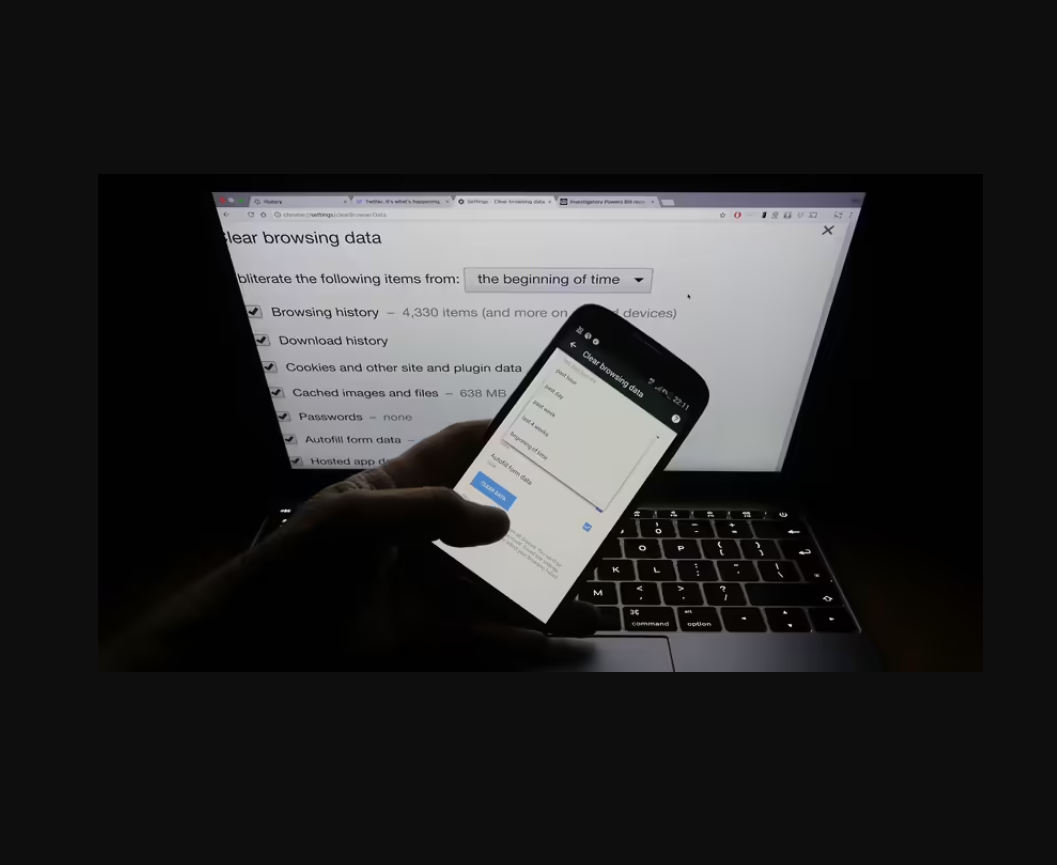
Like on your phone, only your search history is permanently removed, not your browsing data. To remove this using Chrome on your computer, follow these steps:

Click the three-dot menu (⋮) in the upper-right corner.
Click Clear browsing data.
Choose your preferred time range.
Select Browsing history and other data you want to remove, and click Clear data.

How to delete your search history from the Google Search app ?

Open the Google Search app.
Tap your profile picture in the upper-right corner.
Tap Search history.
Google may ask to verify your identity to view your search history. Tap the blue Verify icon at the bottom of the page.
Click Continue and enter your screen lock pattern, password, PIN, or fingerprint.
Your full Search history appears at the bottom of the page, with an X next to each item and day.
Tap the X next to each query or day to delete it.
To delete items in bulk from your search history, tap the blue Delete icon and select from the available options: Delete today, Delete custom range, Delete all time, or Auto-delete. The first three options let you delete all searches from the current day, a specific timeframe, or all of them, respectively. Auto-delete allows you to automatically delete searches older than 3, 18, or 36 months, letting you get rid of queries that aren’t relevant anymore.
Your search history is permanently removed. However, your browsing history isn’t cleared. We’re only talking about your Google search history. Follow the next steps to clear your Chrome browser’s history.

How to delete your search history from Google Chrome ?

If you use the Google Chrome app, you can clear your browsing history in a few taps:

Tap the three-dot menu (⋮) in the upper-right corner.
Navigate to Settings > Privacy and Security.
Tap Clear browsing data.
Select the data you want to remove and from what range, and then tap Clear data in the lower-right corner.

Also Read: Delete last 15 minutes of your search history on Google’s Android app

Also Read: Follow these steps to delete Google search history on your device

Also Read: How to delete Google Pay transaction history
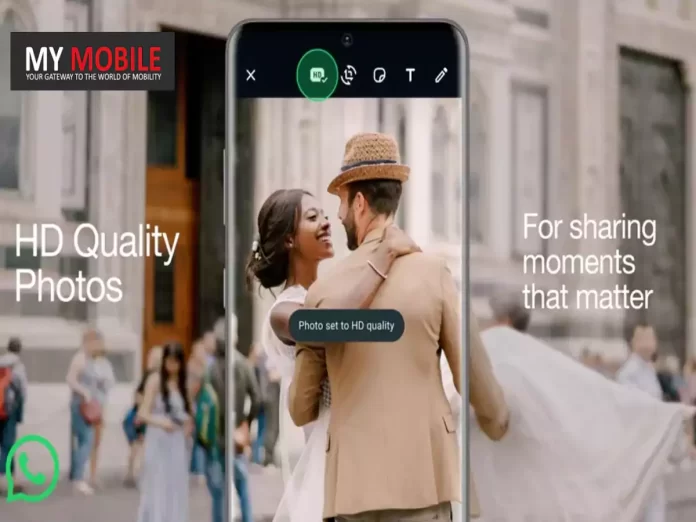
WhatsApp Enhances User Experience with HD Photo Sharing Feature by Default

0
WhatsApp Enhances User Experience with HD Photo Sharing Feature by Default

Highlights

  • WhatsApp introduces HD photo sharing for clearer images.
  • Three photo quality options now available: Original, Standard, and HD.
  • New setting allows users to set default photo upload quality.
  • Feature aims to balance high-quality images with data efficiency.

WhatsApp has long been a go-to for sharing photos, but there was always a catch.

If you wanted to save data, you had to put up with lower-quality images.

Some found a workaround by sending pictures as documents to keep them clear, but it was a bit of a hassle and not quite what everyone wanted.

That is changing now.

“This feature will mark a significant step forward in enhancing the user experience, as it eliminates the need of manually adjusting settings for each media upload individually. With this new option, users will be able ensure that their images and videos are always shared in high quality, maintaining clarity and preserving important details,” mentions the report.

WhatsApp’s New Feature: High-Quality Photos Made Easy

WhatsApp’s New Feature: High-Quality Photos Made Easy

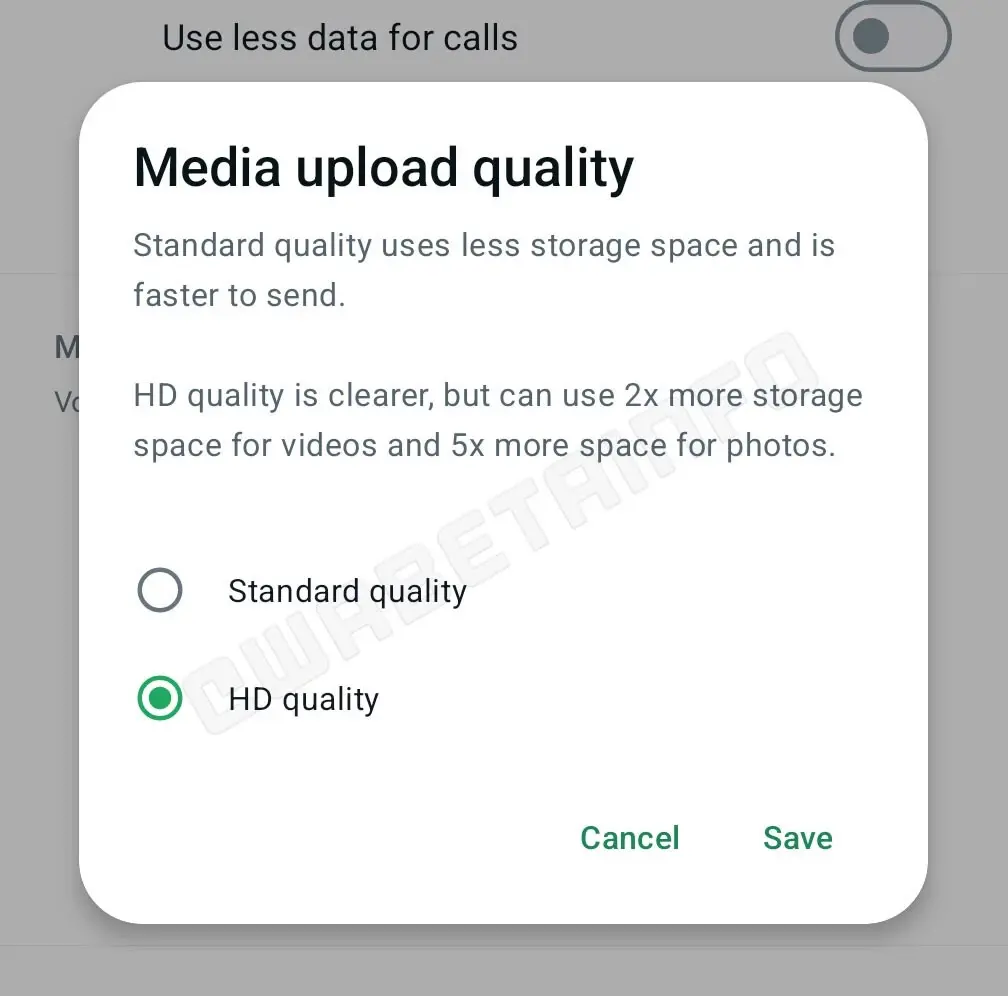
WhatsApp has just rolled out an option to send photos in HD.

This means you can now share pictures that look sharp and clear, much better than before.

However, sending in HD might use more of your data and take up more space on your phone and the phone of the person you’re sending to.

When you’re about to send a photo, WhatsApp gives you three choices: the original quality (which means sending the photo as a document), the standard quality for everyday use, and now the HD quality for those times you really want the picture to look good.

To send a photo in HD, you have to choose the HD option each time, which gives you more control over how you share your photos.

WhatsApp is working on making this even better with a setting that lets you pick your preferred photo quality once and then not worry about it anymore.

This will be great for people who always want their photos to look their best or for those who need to watch their data usage.

One thing WhatsApp hasn’t figured out yet is letting you decide the quality of photos you receive. That could help make managing storage and data even easier.

FAQs

What is the WhatsApp HD Photo feature?

The WhatsApp HD Photo feature allows users to send images in high definition, reducing compression and preserving more detail than standard quality photos. This ensures that the pictures you share look clearer and more vibrant.

How can I send photos in HD on WhatsApp?

To send photos in HD on WhatsApp, select the photo you wish to share, then tap the “HD” option before sending. This will upload your photo in higher quality compared to the standard setting.

Will sending photos in HD on WhatsApp use more data?

Yes, sending photos in HD quality on WhatsApp will consume more data and storage space compared to standard quality images. It’s best used when you have a strong internet connection or sufficient data allowance.

Can I set my photo quality preference in WhatsApp?

WhatsApp is reportedly working on a feature that lets users choose their preferred photo upload quality in the settings. Once available, this setting will apply to all photos sent, saving you the hassle of selecting HD for each image manually.

Are there any limitations to receiving photos in HD on WhatsApp?

Currently, WhatsApp does not allow users to choose the quality of photos they receive. The quality of received photos depends on the sender’s settings. This could change in future updates as WhatsApp continues to improve its features.

How The HD Photo Sharing Feature Will Work?

The default option for sharing high-ress pictures on WhatsApp will always be ‘Standard quality’ for all pictures, so the users have to select the HD option every time they want to send a photo with better quality.

A new tag will be added to the message bubble when sending a photo with the ‘high quality’ option to inform the recipient that the photo is sent using this feature.
According to the report, the ability to send HD pictures on WhatsApp is currently rolling out to some beta testers on Android and iOS, and is expected to roll out to more users over the coming weeks.

Can I send multiple images in HD quality?

Yes, you can send up to 100 photos on WhatsApp in one go. In the preview screen, simply tap the “HD” button present at the top to convert all the images to HD quality.

Do I have to enable the HD quality option every time before sending an image?

Yes, the HD quality option is not enabled by default. After selecting and picking the images you wish to send in a chat, select the “HD” option in the preview screen and then hit “Send” to share a less compressed version of the image.

Also Read: WhatsApp Launches Fact-Checking Helpline to Combat Deepfakes and AI Misinformation

Also Read: WhatsApp To Soon Introduce Screenshot Block for Profile Pictures and New Status Viewing Interface

Also Read: WhatsApp Enhances Messaging with New Formatting Shortcuts: Here’s How to Use Them

OPPO and OnePlus Unleash Over 100 AI Features with Latest ColorOS Update

0
OPPO and OnePlus

Highlights

  • AI Deletion mirrors Google’s Magic Eraser, offering seamless photo edits.
  • AI Call Summary transcribes and highlights key points from phone calls.
  • Xiabou voice assistant gets lifelike enhancements with generative AI.
  • AI Greeting Cards and Photo Studio introduce festive creativity tools.

OPPO is set to change the smartphone experience with a massive rollout of AI-powered enhancements.

These updates, destined for a wide array of OPPO and OnePlus devices, promise to usher in a new era of smart technology.

Hailing from the latest Android 14-based ColorOS update, OPPO says that there are over 100 AI innovations aimed at redefining user interactions with their devices.

This leap forward is initially earmarked for the Chinese market, as revealed in recent Weibo announcements by OPPO.

Among the most talked-about advancements are AI Deletion and AI Call Summary—two features set to transform how we use our smartphones.

But what makes these features stand out, and which devices will benefit from this AI infusion?

Let’s delve into the details.

Transforming Photography: AI Deletion

Transforming Photography: AI Deletion

Ever captured a perfect shot only to find an unwanted visitor photobombing your picture?

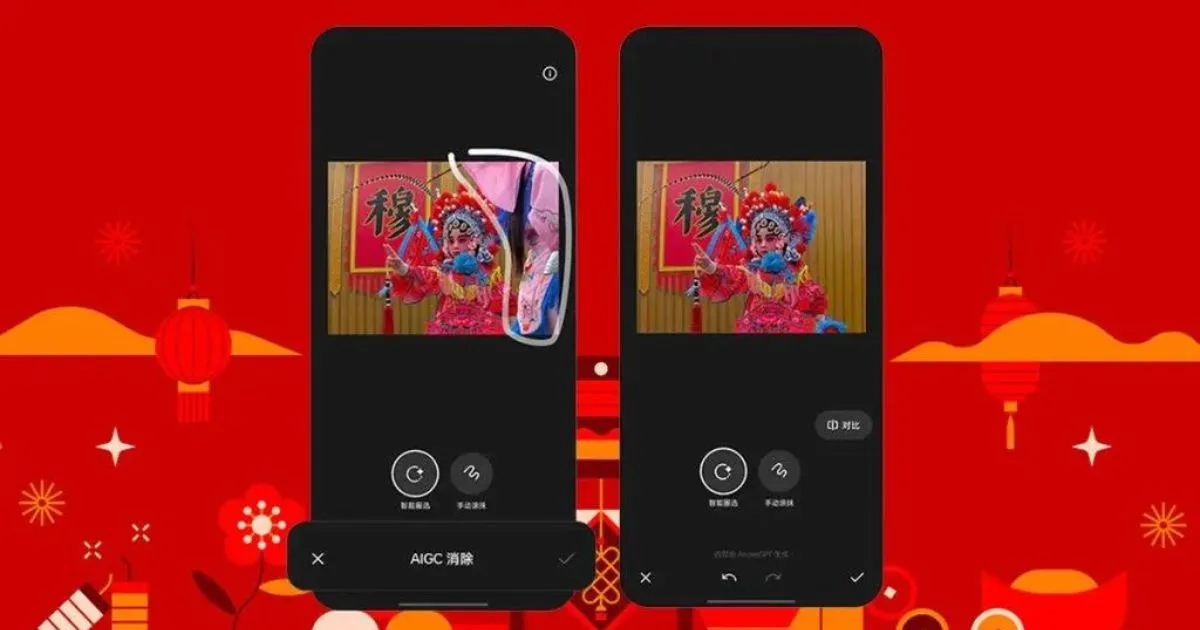
OPPO’s AI Deletion is your new digital eraser.

Mirroring the capabilities of Google’s Magic Eraser and Samsung’s Object Eraser, this feature allows users to seamlessly remove undesired elements from their photographs, ensuring your memories are exactly how you want them to be.

Streamlining Communication: AI Call Summary

Streamlining Communication: AI Call Summary

Phone calls are getting a smart upgrade with the AI Call Summary feature. Aimed at making conversations more manageable, this tool listens in, transcribes, and pinpoints the critical elements of your calls.

It doesn’t stop there; based on the discussion, it can craft reminders and to-do lists, offering a summary note with timestamps for easy reference post-call.

The Power of Voice: Enhancements to Xiabou

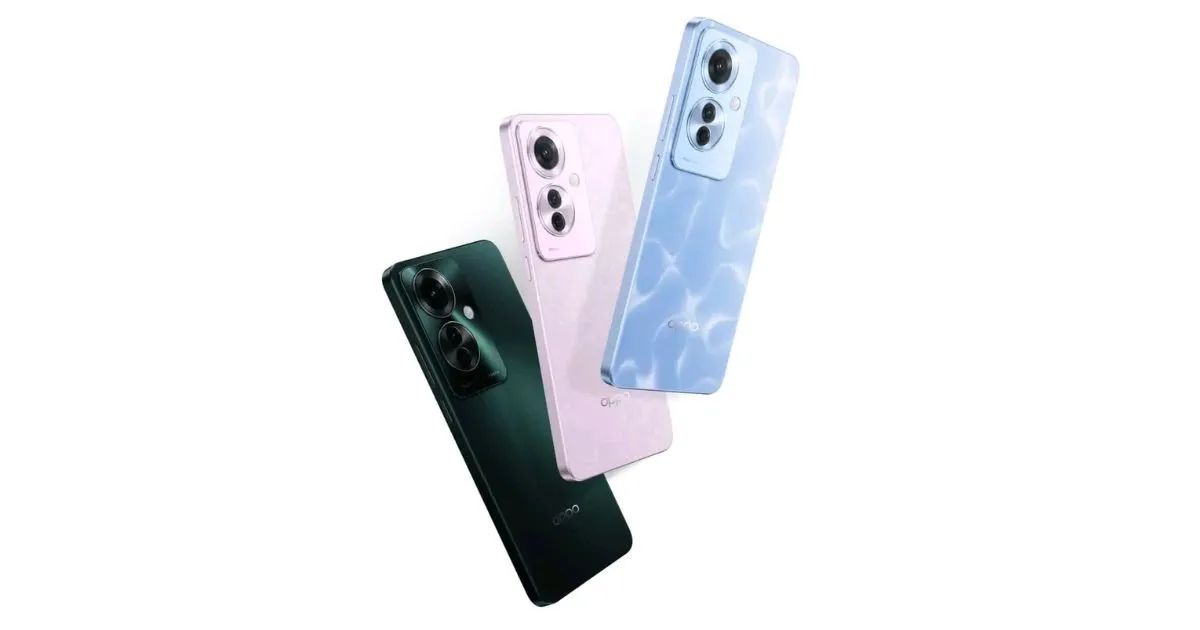
Oppo Reno 11 5G available in India with significant discounts on Flipkart
The Power of Voice: Enhancements to Xiabou

Xiabou, OPPO’s voice assistant, is receiving a significant boost, becoming more lifelike thanks to generative AI-backed speech improvements.

OPPO is not just enhancing its voice; it’s expanding its intellect, enabling Xiabou to tackle everything from mundane tasks to the more complex, even handling tricky queries with ease.

Celebratory Creativity: AI Greeting Cards and Photo Studio
OPPO Reno11 F Poised for Indian Market Debut as the Potential OPPO F25
Celebratory Creativity: AI Greeting Cards and Photo Studio

The festive spirit is in full swing with AI Greeting Cards, allowing users to generate personalized New Year cards from a selection of templates and suggestions.

Additionally, the Photo Studio feature lets users adorn their photos with New Year-themed filters and templates, adding a touch of celebration to every snapshot.
Device Rollout: Who Gets These Features?

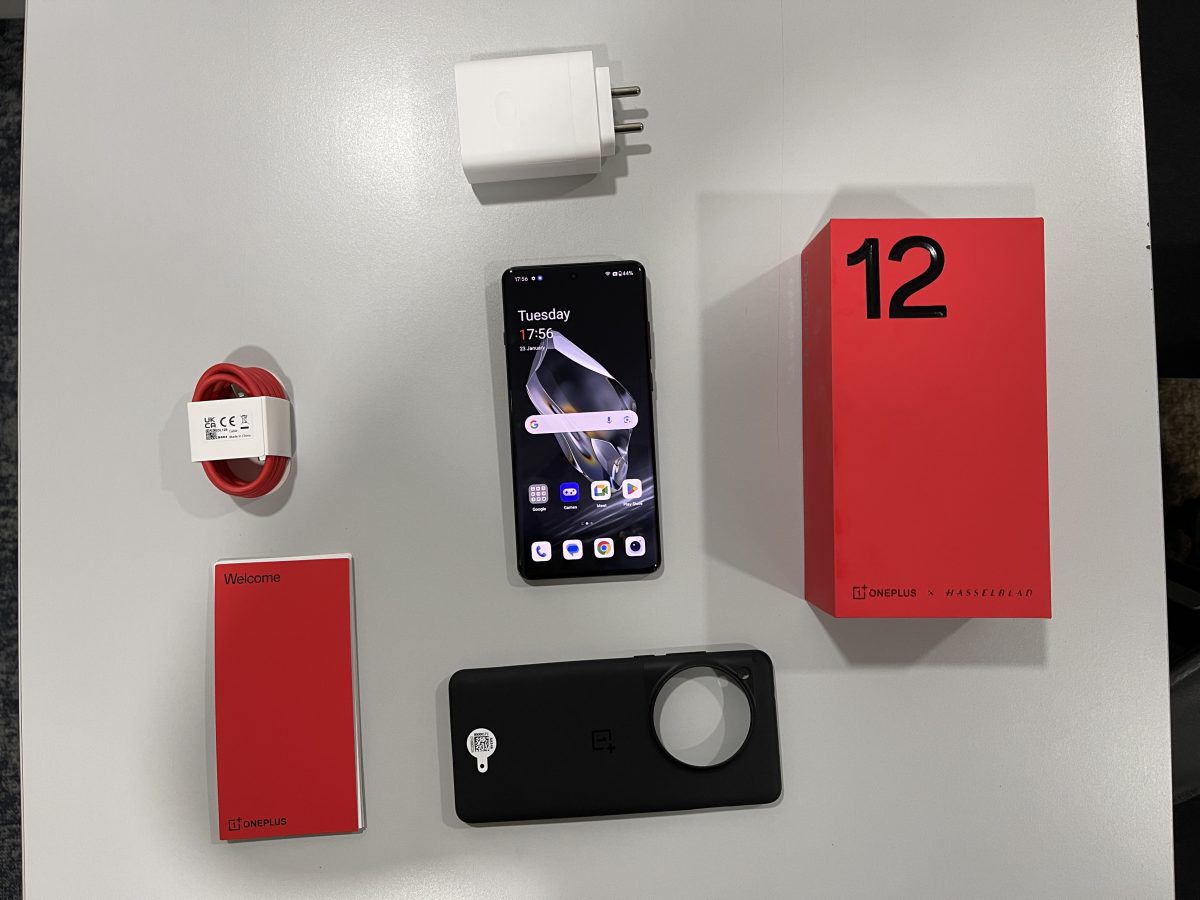
OnePlus 12: Features
Device Rollout: Who Gets These Features?

From the high-end OPPO Find X7 series to the innovative OPPO Find N3 flip, along with the latest OnePlus devices like the OnePlus 12 and OnePlus 11, this update is a testament to OPPO’s commitment to innovation and user satisfaction. The full list is mentioned below

  • OPPO Find X7
  • OPPO Find X7 Ultra
  • OPPO Find X6
  • OPPO Find X6 Pro
  • OPPO Reno11
  • OPPO Reno11 Pro
  • OPPO Reno10
  • OPPO Reno10 Pro
  • OPPO Reno10 Pro+
  • OPPO Find N3
  • OPPO Find N3 Flip
  • OnePlus 12
  • OnePlus 11
  • OnePlus Ace 3
  • OnePlus Ace 2
  • OnePlus Ace 2 Pro

Also Read: OnePlus AI Music Festival in Bengaluru To Be Headlined By Afrojack

Also Read: OnePlus 11 Update OxygenOS 14.0.0.501 Enhances User Experience with Key Fixes

Also Read: Oppo’s Budget Smartphones to Get a Major Upgrade with ColorOS 14 Rollout

Also Read: OnePlus and Oppo May End Hasselblad Partnership in Camera Tech Shake-Up

Apple A17 Pro vs A16 Bionic: Taking Smartphone Performance to New Heights

0
Apple Concludes Long-Standing Wi-Fi Chip

Highlights

  • A17 Pro’s 3nm process outshines A16’s 4nm technology, offering superior efficiency and speed.
  • Enhanced AI capabilities with the A17 Pro’s 32-core Neural Engine, doubling the A16’s performance.
  • A17 Pro introduces gaming revolution with hardware-accelerated ray tracing, a leap over A16.
  • USB 3.2 Gen 2 support in A17 Pro drastically improves data transfer speeds compared to A16.

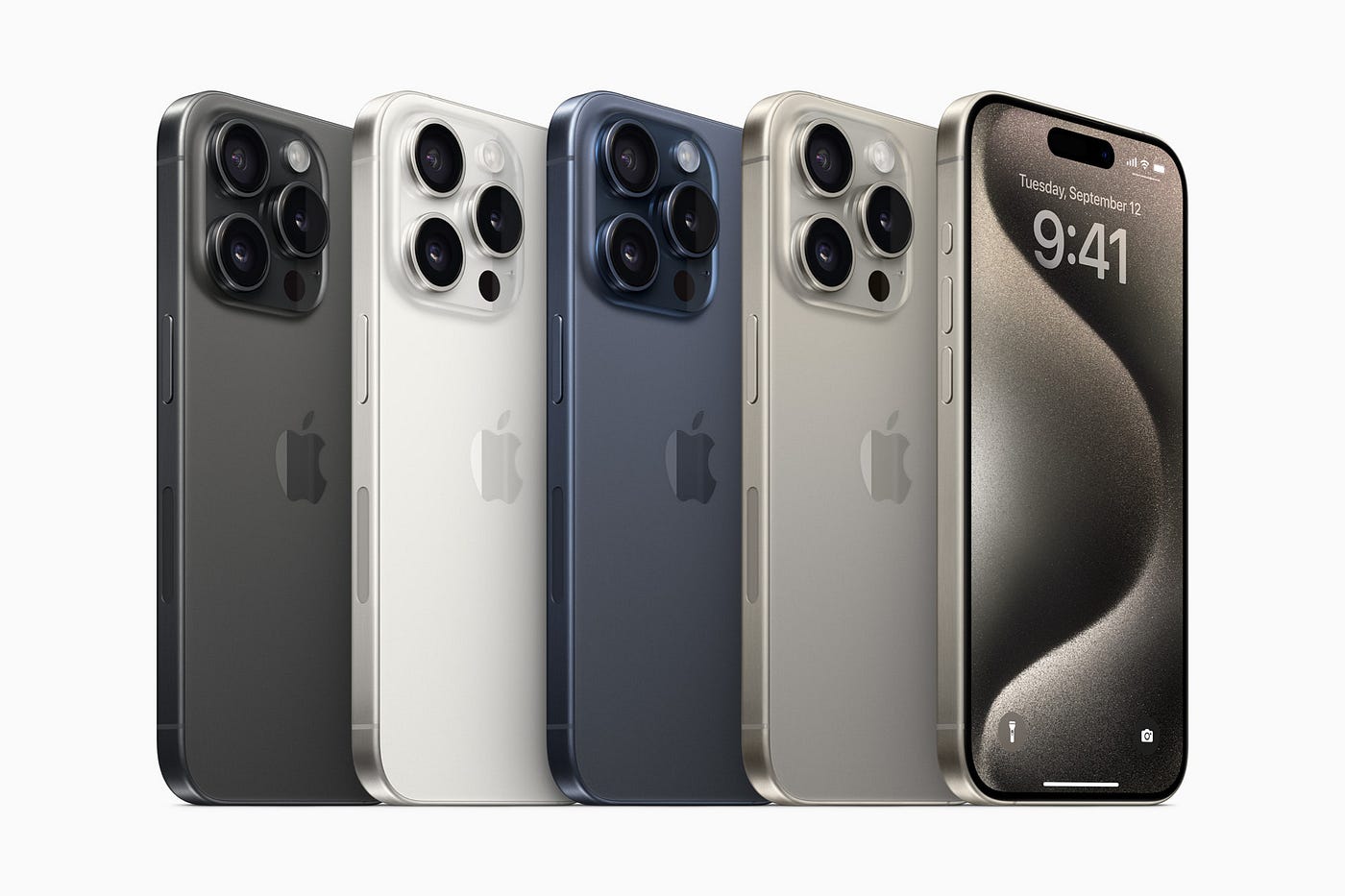
The Apple A17 Pro is the latest silicon marvel powering the iPhone 15 Pro and Pro Max models, marking a significant upgrade from the A16 Bionic that runs the show in the iPhone 15 and 15 Plus.

In the following comparison, we’ll dive into the subtleties of these two formidable chips, illuminating their speed, efficiency, and capabilities.

So, let’s get started on this journey of discovery into the heart of Apple’s smartphone lineup.

Feature A16 Bionic A17 Pro
Process Technology 4nm 3nm
Transistors 16 billion 19 billion
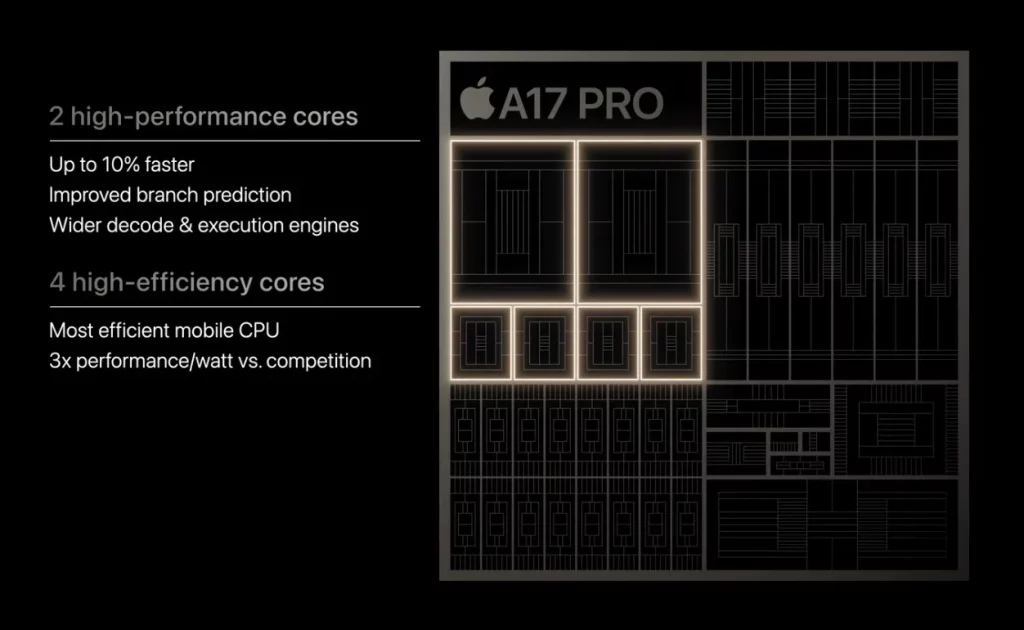
CPU Cores 6 (2 high-performance, 4 efficiency) 6 (2 high-performance, 4 efficiency)
CPU Clock Speed Up to 3.5 GHz Up to 3.8 GHz
GPU Cores 5 6
Neural Engine 16-core 32-core
Memory 6GB LPDDR5 8GB LPDDR5X
Display Support Up to 4K 120Hz Up to 8K 144Hz
Camera Processing ProRes video capture ProRes RAW video capture
Machine Learning 17 trillion operations per second 35 trillion operations per second
Geekbench 5 Score (Single-Core) 4095 4510
Geekbench 5 Score (Multi-Core) 11112 12208

Chip Design and Process Technology

Chip Design and Process Technology
  • A17 Pro: Represents a leap in chip technology as Apple’s first 3-nanometer (nm) chip. This smaller process size allows for more transistors (19 billion) to be packed into the same space, compared to the A16, enhancing both performance and energy efficiency.
  • A16 Bionic: Utilizes a 4nm process technology with 16 billion transistors. While impressive in its own right, it falls short of the transistor density and efficiency gains offered by the 3nm process of the A17 Pro.

CPU and GPU Performance

CPU and GPU Performance
  • CPU Cores: Both chips have a 6-core CPU configuration, but the A17 Pro introduces architectural improvements that boost its single-threaded performance significantly, making it the fastest in any smartphone according to Apple.
  • Benchmarking Scores: As per testing done by 9to5Mac, the A17 Pro outperforms the A16 in Geekbench results, with a 16% increase in single-core and a 13% increase in multi-core scores, indicating substantial performance improvements.
  • GPU Cores: The A17 Pro expands its GPU core count to 6, up from the 5 cores in the A16, along with performance and efficiency enhancements.
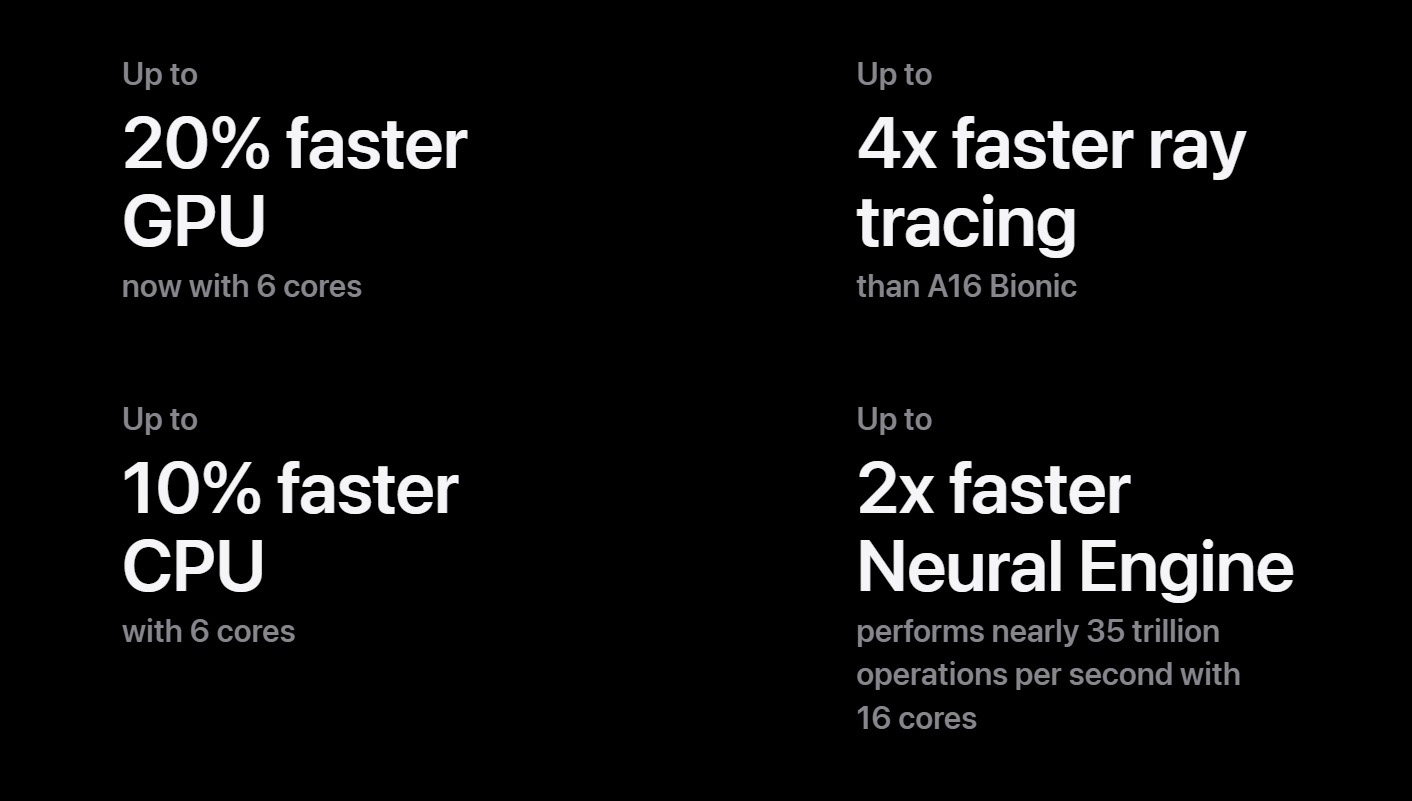
  • Gaming and Rendering: The A17 Pro introduces hardware-accelerated ray tracing for more realistic lighting and shadows in games, a feature that is 4x faster than the A16’s capabilities.

Neural Engine and Memory

Neural Engine and Memory
  • Neural Engine: The A17 Pro doubles the performance of its Neural Engine, capable of up to 35 trillion operations per second, compared to the A16’s 16-core Neural Engine with up to 17 trillion operations per second. This boost supports more advanced machine learning tasks and AI applications.
  • Memory: An increase to 8GB RAM from the 6GB found in the A16 Bionic allows for better multitasking and smoother app performance, illustrating Apple’s focus on optimizing the interaction between its hardware and software.

Efficiency and Connectivity

Efficiency and Connectivity
  • Energy Efficiency: While explicit efficiency metrics between the A17 Pro and A16 Bionic weren’t detailed by Apple, the A17 Pro’s 3nm process inherently suggests improved energy efficiency, offering better performance per watt and making it the “most efficient mobile CPU.”
  • USB 3.0 Performance: A significant upgrade with the A17 Pro is the introduction of USB 3.2 Gen 2 support, enabling 10Gbps data transfer speeds through the new USB-C port on the iPhone 15 Pro models. This is a considerable jump from the A16’s 480Mbps speeds, enhancing file transfer and charging capabilities.

Multimedia Capabilities

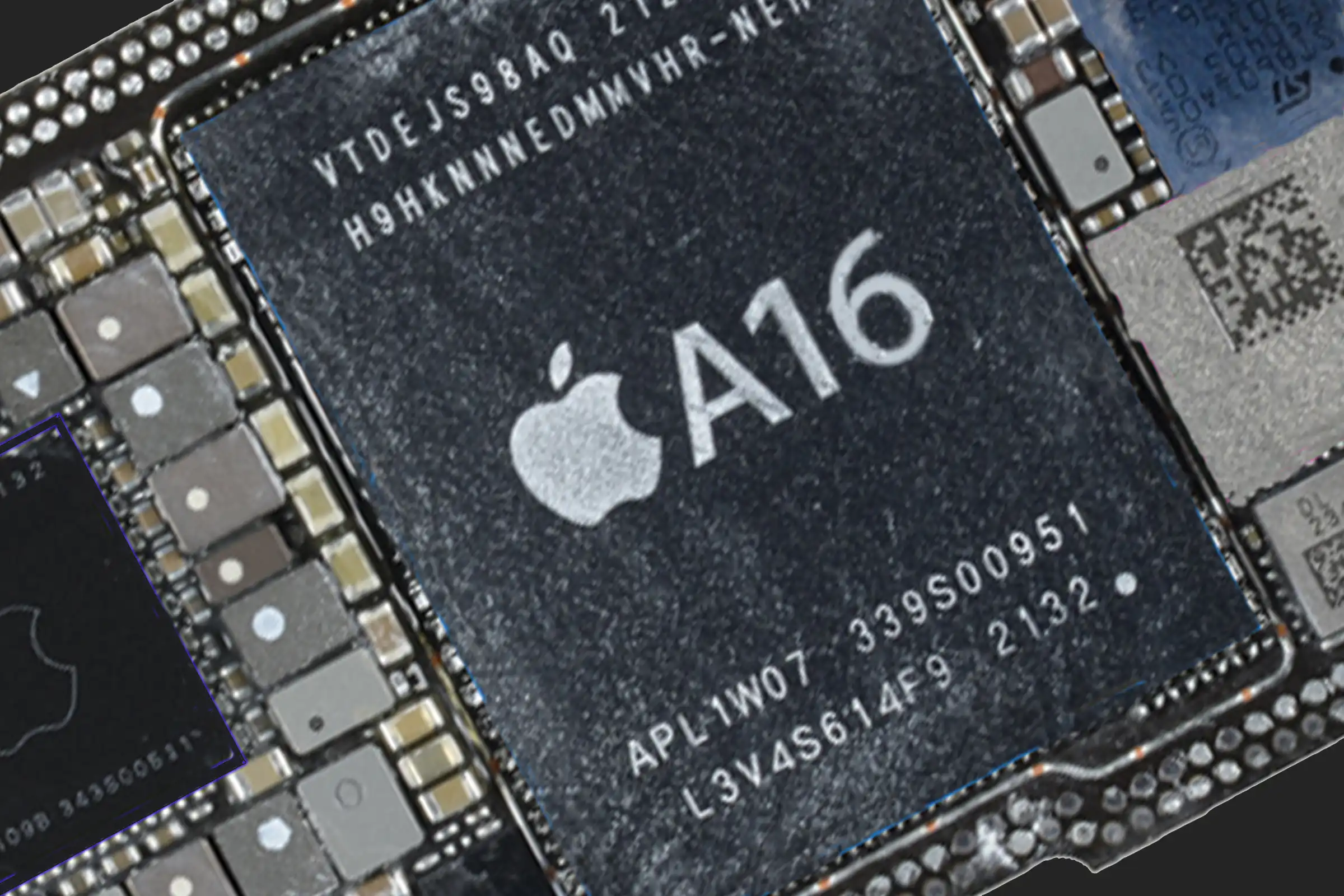
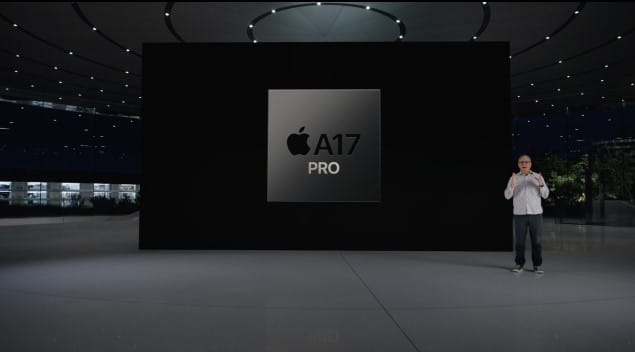
Apple A17 Pro Chipset
Multimedia Capabilities
  • AV1 Decoder: The A17 Pro adds an AV1 decoder, improving video streaming efficiency and quality, a feature increasingly important as streaming services adopt AV1 for its better compression efficiency.
  • ProRes and Display Engines: Both chips support dedicated ProRes codecs and display engines, but the A17 Pro’s enhancements in this area further boost video editing and playback capabilities on the iPhone.

Final Thoughts: A Paradigm Shift in Mobile Computing

Apple’s A16 vs  Snapdragon 8+ Gen 1
Final Thoughts: A Paradigm Shift in Mobile Computing

The comparison between the A17 Pro and A16 Bionic chips demonstrates Apple’s commitment to pushing the boundaries of mobile technology.

The A17 Pro not only enhances the foundational elements of smartphone performance, such as CPU and GPU capabilities, but also introduces next-generation features like hardware-accelerated ray tracing and USB 3.2 Gen 2 support, setting new standards for what users can expect from their devices.

FAQs

What are the key differences between the A17 Pro and A16 Bionic chips?

The A17 Pro utilizes a groundbreaking 3nm process compared to the A16 Bionic’s 4nm, leading to a higher transistor count, faster CPU and GPU speeds, and enhanced energy efficiency.

How does the A17 Pro improve gaming and AI tasks over the A16?

With hardware-accelerated ray tracing and a 32-core Neural Engine, the A17 Pro significantly enhances gaming graphics and doubles the machine learning capabilities over the A16 Bionic.

What connectivity advancements does the A17 Pro offer over the A16 Bionic?

The A17 Pro supports USB 3.2 Gen 2, enabling up to 10Gbps data transfer speeds, a significant leap from the A16’s USB performance, thus improving charging and file transfer experiences.

Can the A17 Pro chip handle more demanding applications better than the A16?

Yes, thanks to its advanced process technology, increased RAM, and higher operation capacity, the A17 Pro is better equipped to handle demanding applications and multitasking more efficiently than the A16.

Does the A17 Pro offer any improvements in display and camera processing over the A16?

The A17 Pro supports up to 8K 144Hz displays and introduces ProRes RAW video capture, enhancing both the visual and camera capabilities beyond what the A16 Bionic offers.

What is A17 Pro vs A16 GPU performance?

The GPU with the A17 Pro gets an even bigger improvement over the A16 Bionic with a focus on 3 aspects:
Performance and efficiency
Complex applications
New rendering features
Speed
Apple labels the GPU “pro class” and says the new 6-core design offers 20% faster graphics performance than A16. And it remains efficient for extended gaming sessions thanks to features like mesh shading.
Hardware-based ray tracing
Another big change with the A17 Pro GPU is hardware-accelerated ray tracing. Apple says that offers much smoother graphics at higher frame rates. That’s 4x faster ray tracing than with A16 Bionic.
To highlight the capabilities, developers like CAPCOM say the new A17 Pro GPU has enabled console-quality games like Resident Evil 4 and Resident Evil Village to launch on iPhone (coming soon).
We don’t have any real-world tests for the A17 GPU.

What is the A16 Bionic?

The A16 Bionic is a system-on-chip introduced by Apple in September 2022 with the launch of the iPhone 14 Pro and Pro Max. Like past chips, the A16 Bionic uses 64-bit ARM-based architecture (like Apple Silicon, but unlike traditional x86 PC processors).

A system-on-chip (SoC) is an integrated circuit that includes a CPU, GPU, RAM, and other components. In 2023, Apple put the A16 Bionic into its base iPhone 15 and its Plus model, continuing the trend of using last year’s top-tier chip in this year’s non-Pro iPhone model.
The A16 features six CPU cores with two of them designed for high performance (clocked at just short of 3.5GHz) and four efficiency cores (running at just over 2GHz) for general compute tasks. These cores do most of the “thinking” on an iPhone, including handling background tasks, with the efficiency cores designed to preserve power and extend battery life.

On top of this, the A16 Bionic features five GPU cores running at just short of 1.4GHz, which handle graphics-intensive tasks including 3D gaming and visual effects like iOS transparency. There’s also Apple’s 16-core neural engine for machine learning tasks like identifying faces and objects in your Photos library. The A16 Bionic is equipped with 6GB of RAM and features 16 billion transistors.

The A16 Bionic introduced a new image signal processor (ISP) to improve computational photography abilities. This means better processing of images coming from the camera, resulting in less noise and ultimately better images.

Apple claimed that the A16 Bionic was the first 4-nanometer chip in a smartphone, a term that refers to the size of the transistors. Analysts discovered this is up for debate and that the chip was manufactured on a slightly improved 5nm process (known internally by chip manufacturer TSMC as N4P).

What is the A17 Pro?

The A17 Pro is an updated system-on-chip that first made its way into the iPhone 15 Pro and Pro Max in 2023. It too uses the same ARM-based architecture, but performance is slightly improved with its six-core CPU featuring two performance cores running at just shy of 3.8GHz and four efficiency cores hitting 2.1GHz.

The A17 Pro also ups the total RAM included on the SoC to 8GB, from 6GB last time around.

Apple also improved the GPU, adding an additional GPU core for a total of six cores with Apple claiming a 20% improvement over the A16 Bionic and support for hardware ray tracing and better shading for improved handling of realistic lighting effects in 3D applications.

Apple boosted the transistor count to 19 billion and added hardware support for AV1 decoding, a video codec that’s set to one day replace HEVC. The A17 Pro is manufactured using TSMC’s N3B process, which is considered to produce “true” 3-nanometer chips.

How Much Better is the A17 Pro?

Apple only claimed a 10% improvement in CPU speed over the A16 Bionic when introducing the A17 Pro, and according to many of the benchmarks, this happens to be the case.
Taking a look at the iPhone 15 Pro Geekbench single-core score shows an improvement from 2540 on the A16 Bionic to 2890 on the A17 Pro, while multi-core scores go from 6420 to 7159 respectively.

More impressive at the Metal scores, which measure GPU performance and corroborate Apple’s claim of 20% taking scores from 22574 on the A16 Bionic to 27074 on the A17 Pro.

Also Read: MediaTek Dimensity 9200 SoC May Launch on November 8, Said to Perform Better than Apple A16 Bionic SoC

Also Read: Apple A18 and M4 Chips to Feature Advanced 3nm Manufacturing For Handling Gen-AI

Also Read: Apple’s A17 Pro Chipset: Revolutionising Mobile Graphics and Performance

Reddit and Google Join Forces to Transform AI Using Social Media Data, Ahead of Anticipated IPO

0
Reddit and Google

Highlights

  • Reddit and Google join forces in a deal worth $60 million to enhance AI models.
  • The partnership aims to tap into Reddit’s vast user-generated content for AI advancements.
  • Reddit prepares for a community-centric IPO, offering shares to active users and moderators.
  • This collaboration could redefine the future of machine learning with real human interactions.

Reddit has inked a pivotal partnership with tech titan Google, signaling a new era of collaboration between social media and artificial intelligence.

This alliance is not just a business transaction; it’s a mix of vast, diverse content with cutting-edge AI technology, setting the stage for unprecedented advancements in machine learning models.

“Advertising is our first business, and advertisers of all sizes have discovered that Reddit is a great place to find high-intent customers that they aren’t able to reach elsewhere,” Steven Huffman ( Reddit co-founder and Chief Executive Officer ) said. “Advertising on Reddit is rapidly evolving, and we are still in the early phases of growing this business.”

“It’s clear that sophisticated investors won’t be excited about buying into the public debut, likely explaining why Reddit will be offering shares to their users, to have stock supporters and get fans to prevent a negative meme stock phenomenon,” Greg Martin co-founder of Rainmaker Securities said.

Reddit Navigating New Revenue Streams

Reddit Navigating New Revenue Streams
Reddit strikes $60 million deal allowing Google to train AI models on its posts

Under this strategic partnership, Google is set to harness the vast and varied content landscape of Reddit, a treasure trove of user-generated discussions, opinions, and insights, to refine and enhance its AI algorithms.

The deal, reportedly valued at a hefty $60 million annually, marks a significant milestone for Reddit as it gears up for one of the most anticipated public offerings in recent times.

With advertising revenues becoming increasingly hard to come by, this partnership could open new revenue avenues for Reddit, beyond the traditional ad dollars.

It comes as little surprise that this collaboration is poised to redefine the landscape of content-driven AI, offering a glimpse into the future of machine learning powered by real, diverse human interactions.

A Community-Centric IPO Approach

Reddit announces IPO plans

Reddit’s foray into the public market is no small affair. Valued at approximately $10 billion during its last funding round in 2021, the company is reportedly planning to offer about 10% of its shares to investors.

This move highlights Reddit’s unique position within the social media landscape, a platform that thrives on the collective creativity and engagement of its vast user base.

But what sets Reddit’s upcoming IPO apart is its commitment to its community. In an unconventional twist, Reddit is extending an offer to its most dedicated users – the moderators and active contributors – to participate in the IPO.

This approach may be considered a token of appreciation for Reddit moderators of taking a thankless job of moderating various sub reddits.

It might also reinforce the sense of ownership and belonging among Reddit’s user base.

It’s a bold strategy, acknowledging users’ central role in the platform’s ecosystem, albeit with its own set of risks, as highlighted in the IPO filings.

The potential for increased market volatility, especially given the lack of a lock-up period for these user-investors, may just add an element of unpredictability to the mix.

The Road Ahead: Reddit and Google’s AI Future

Reddit gains access to Google AI models to enhance its internal site search and other features.

This partnership and IPO are not just about financial transactions; they represent a shift in how social media platforms view their relationship with technology and their users.

By leveraging Google’s AI prowess, Reddit is poised to enhance its user experience, offering more personalized and relevant content.

Meanwhile, Google’s access to Reddit’s diverse content spectrum will undoubtedly fuel advancements in AI, making technology more attuned to the nuances of human conversation and interaction.

FAQs

What does the Reddit and Google partnership entail?

The partnership between Reddit and Google, valued at $60 million, focuses on utilizing Reddit’s diverse content to improve Google’s AI algorithms, indicating a significant step towards integrating social media insights into AI development.

How will the Reddit and Google collaboration benefit machine learning?

By accessing Reddit’s extensive range of user-generated content, Google aims to refine its AI models, making them more responsive to the nuances of human interaction and conversation, thereby enhancing the future of machine learning.

What unique aspect does Reddit bring to its upcoming IPO?

Reddit’s IPO strategy is distinctive for its community focus, inviting moderators and active contributors to participate in the public offering, highlighting the platform’s commitment to recognizing and rewarding its user base’s contributions.

How might the Reddit and Google deal impact the future of AI technology?

This partnership is poised to drive significant advancements in AI technology by combining Google’s AI capabilities with Reddit’s rich, diverse content, potentially leading to more sophisticated, human-like AI interactions.

Can Reddit users directly benefit from the platform’s partnership with Google?

Yes, Reddit’s collaboration with Google not only aims to enhance user experience through improved content relevance and personalization but also strengthens the community’s sense of ownership by involving them in the IPO process.

Also Read: Google Enhances User Experience with Sign-In Redesign and Advances Android Auto AI

Also Read: Google Pay App to Shut Down in US, Merges with Google Wallet

Also Read: Download Reddit Videos with Audio on any device

Also Read: Reddit Reportedly Selling its Content To Unnamed AI Company for $60 Million Ahead of IPO

Exclusive Interview with Madhav Sheth: Honor X9b’s Innovation and HTech’s Future Strategy

0
Exclusive Interview with Madhav Sheth

Highlights

  • Madhav Sheth emphasizes the Honor X9b’s superior display protection to tackle user concerns over durability.
  • The device introduces a 5800mAh battery within a remarkably slim profile, challenging industry norms.
  • HTech’s market approach focuses on genuine innovation and user-centric solutions across diverse price segments.
  • The brand’s expansion into wearables signifies a broader vision for an interconnected lifestyle ecosystem.

With the launch of the Honor X9b, a device that promises not just top-of-the-line specifications but also groundbreaking durability and design innovations, HTech  (Honor Smartphones) is poised to reclaim its position in the competitive space.

To delve deeper into the strategy behind this comeback and the vision driving Honor’s future, we sat down with Madhav Sheth, CEO of HTech in India.

In this exclusive interview, Sheth discusses the philosophy behind the Honor X9b’s development, the brand’s market positioning, and its approach to consumer confidence and satisfaction.

Additionally, he sheds light on Honor’s expansion into the wearables and accessories market, as well as the company’s plans for creating a vibrant community around its products.

Congratulations on the launch today. A key highlight was the Honor X9b’s display protection. Could you delve into why this feature was particularly emphasized and its significance?

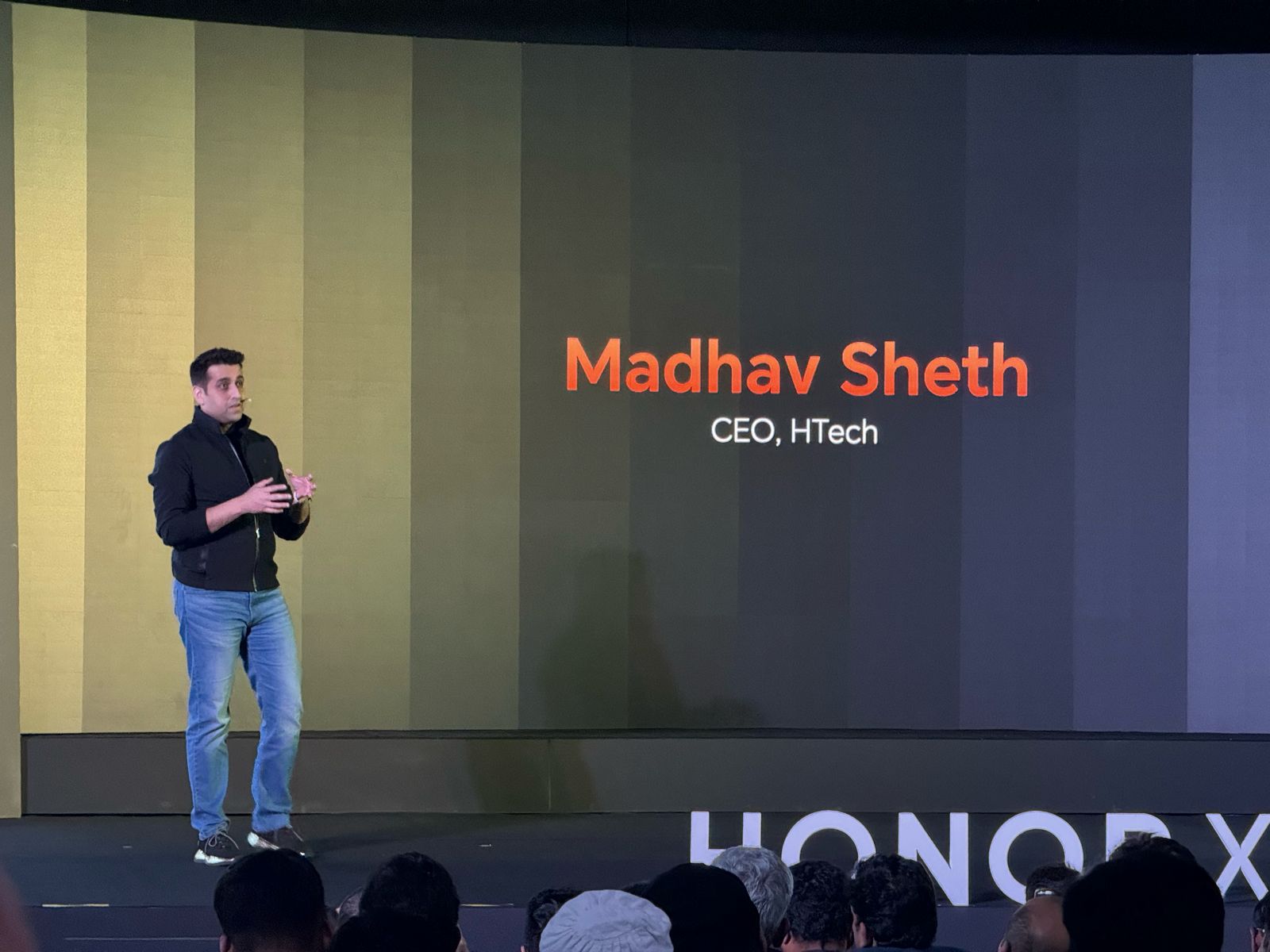
Madhav Sheth unveiling the Honor X9b

Thank you for the warm wishes. Certainly, the focus on the Honor X9b’s display protection is a direct response to a widespread concern among smartphone users – the fear of dropping their device.

This anxiety is not unfounded; smartphones are integral to our daily lives, serving as our primary means of communication, information, and entertainment. When a phone drops, the immediate worry isn’t just about the potential damage to the screen or the financial cost of repairs.

It’s the disruption it causes to our connectivity, the delay in getting the phone fixed, and the impact on our daily routines. To address this, we enhanced the Honor X9b’s durability with superior display protection.

Additionally, we equipped the device with a robust 5800mAh battery, maintaining a slim 7.9mm profile, which is notably thinner than any phone featuring a 5000mAh battery currently available in the market.

This innovation not only caters to durability concerns but also ensures that the device can support extended use without compromising on design or comfort.

Shifting focus to market strategies, the Honor X9b targets the Rs 25,000 segment, while the Honor 90 aims at the approximately Rs 40,000 market. Could you share your vision for Honor’s future in terms of market segments and target audiences?

Honor X9b is the second phone launched by HTech

Our strategy is quite expansive, covering a range from the $200 to the $1,000 segment. But our objective goes beyond just spanning various price points.

The tech market today is saturated with brands that unfortunately tend to confuse consumers by marketing identical products under multiple guises.

This not only dilutes brand integrity but also misleads consumers, making it harder for them to make informed decisions.

At Honor, we’re committed to cutting through this noise by focusing on genuine innovation and addressing the real needs of our consumers.

Whether it’s introducing groundbreaking technology or enhancing user experience, our goal is to bring products to market that truly stand out and meet the evolving demands of our users.

With the introduction of Honor’s first wearable device, what future directions do you see for Honor in the accessories market?

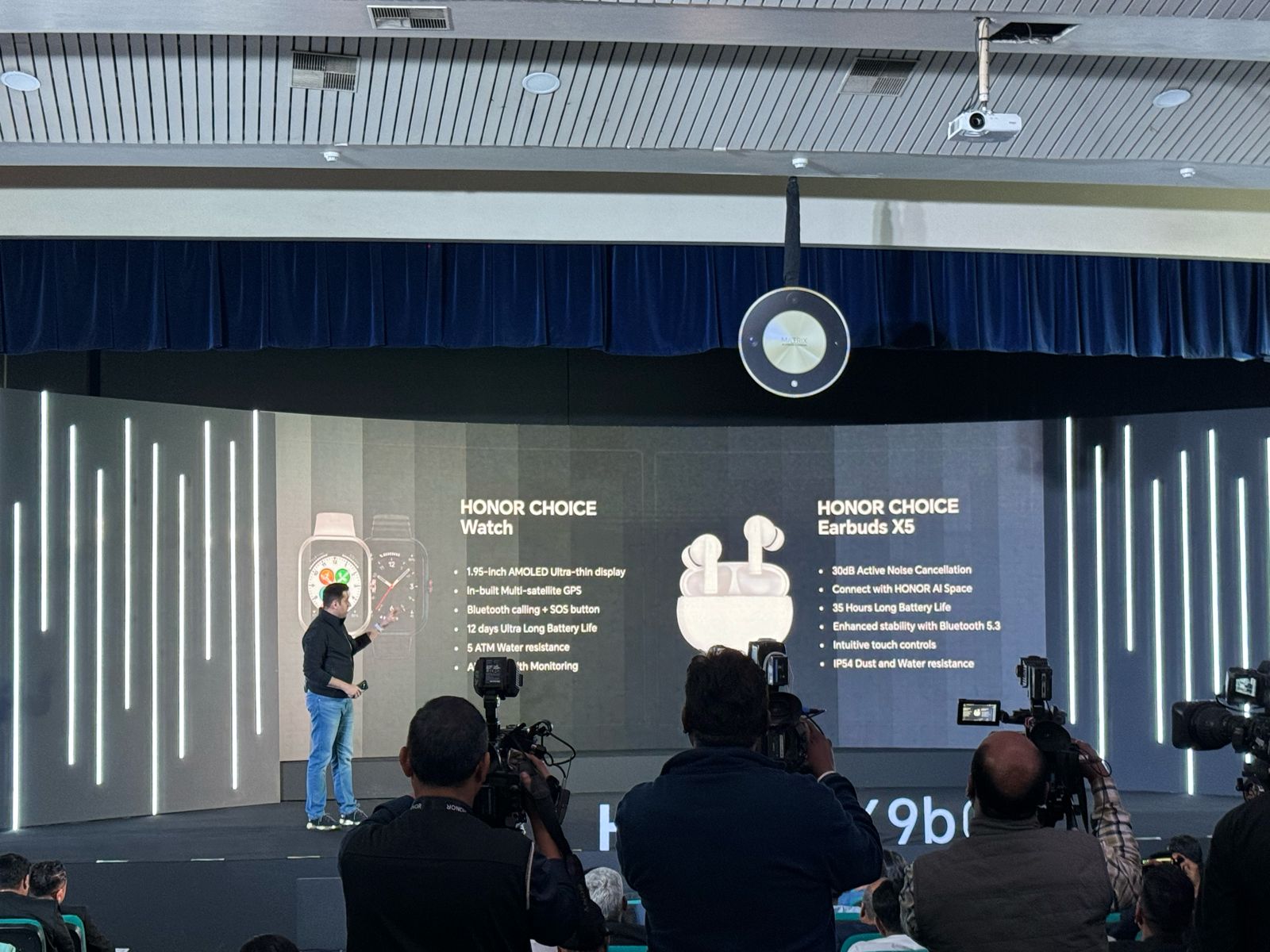
Honor Choice Watch and Honor Choice Buds X5 marks HTech's entry into the wearable segment
Honor Choice Watch and Honor Choice Buds X5 marks HTech’s entry into the wearable segment

Honor is keenly focusing on expanding its footprint in the accessories domain, particularly in audio products and wearables.

We believe there’s a significant synergy to be achieved between our smartphones and accessory lines, offering users a seamless and integrated experience across devices.

This strategy aligns with our broader vision of establishing Honor not just as a smartphone brand but as a comprehensive lifestyle brand that enhances all facets of our users’ digital lives.

By focusing on innovation and interconnectivity, we aim to create a robust ecosystem of products that cater to the diverse needs and preferences of our customers.

Considering the competitive landscape and Honor’s hiatus from the Indian market, what strategies are in place to regain and strengthen Honor’s market position?

Madhav Sheth emphasizes the Honor X9B’s superior display protection to tackle user concerns over durability
Madhav Sheth emphasizes the Honor X9b’s superior display protection to tackle user concerns over durability

The essence of our strategy is simplicity and focus – delivering exceptional products at the right price points. The market is ever-evolving, and consumer needs are continually changing.

By staying closely attuned to these shifts and focusing on addressing the core issues faced by our users, we believe we can differentiate ourselves and regain our foothold in the market.

Success for us is defined by our ability to solve real-world problems through our products, thereby earning the trust and loyalty of our customers.

The 30-day buyback guarantee is a bold move. What was the inspiration behind this policy, and how do you think it will impact consumer confidence?

The 30-day buyback guarantee is a testament to our confidence in the quality and value of our products.

We understand that purchasing a smartphone is a significant decision for most consumers, and we want to ensure they feel confident and secure in their choice.

By offering this guarantee, we are essentially telling our customers that we stand by the quality of our products and are committed to their satisfaction.

This policy allows consumers to experience our products firsthand, ensuring they meet their needs and expectations. Should they find otherwise, they have the option to return the device within 30 days.

While certain conditions apply, such as regarding physical damage, this policy is designed to build trust and reassure our customers of our commitment to their happiness with our products.

Lastly, regarding the newly launched Honor website, what should consumers expect from it?

HTech’s market approach focuses on genuine innovation

The new Honor website is conceptualized as a comprehensive platform for everything related to Honor.

Initially, it will function as a detailed repository of product information and a marketplace for our entire product range.

However, our ambitions for the website go much further. We envision it becoming a vibrant community hub – ‘Magic Nation,’ where Honor users and enthusiasts can connect, share experiences, and access the latest news and updates from Honor.

This community-driven approach is central to our vision for the brand, as we aim to not just sell products but also build a loyal and engaged user base.

FAQs

What drove HTech to emphasize display protection in the X9b model?

Madhav Sheth highlighted that the emphasis on display protection for the Honor X9b stems from addressing a common user concern—the fear of damaging their device upon dropping it, aiming to ensure durability without compromising on design.

How does Honor X9b’s battery design set a new standard in the smartphone market?

The Honor X9b breaks new ground with a 5800mAh battery in a slim 7.9mm body, offering users long-lasting battery life in a design that’s thinner than any current 5000mAh phone, redefining expectations for smartphone design and battery performance.

Can you detail HTech’s strategy in targeting different market segments with its new models?

HTechaims to cover a broad price range from $200 to $1,000, focusing on cutting through market noise with products that offer real innovation and meet genuine user needs, rather than confusing consumers with similar products under different names.

What is HTech’s vision for its entry into the wearables and accessories market?

Expanding into wearables and accessories, Honor seeks to create a seamless ecosystem between its smartphones and new product lines, aiming to enhance users’ digital lifestyles with innovative products that offer integrated experiences.

How does HTech plan to rebuild its market position in India after its hiatus?

Through a strategy centered on simplicity and focus, HTech intends to differentiate itself by directly addressing user needs and staying attuned to market changes, aiming to regain its foothold by offering exceptional products that solve real-world problems.

Also Read: Madhav Sheth is joining Honor, teases new product launch soon which could be Honor X9a

Also Read: Rs 1000 Crore Investment, 100 % Local Licensing For Honor Smartphones In India: Madhav Sheth Announces Honor Tech Brand

Also Read: Honor X9b Ready to Debut in India After Being Teased by HTech’s Madhav Sheth

Top Smartphone Picks February 2024 Across All Price Ranges

0

Highlights

  • Moto E13 leads the budget segment with key features at just Rs. 5,999.
  • Vivo T2 5G offers mid-range excellence with a 64MP camera for Rs. 15,999.
  • OnePlus Nord 3 5G dominates under Rs. 30,000 with a Dimensity 9000 chipset.
  • Samsung Galaxy S24 Ultra sets a luxury standard with a 200MP camera at Rs. 1,29,999.

February 2024 has brought about a plethora of smartphone options across various price ranges.

Whether you’re on a budget or ready to splurge, our comprehensive list has got you covered.

From the pocket-friendly Moto E13 to the luxurious Samsung Galaxy S24 Ultra, we dive into the specifics of each device, so that you have the best choice across price ranges. Here’s our comprehensive list:

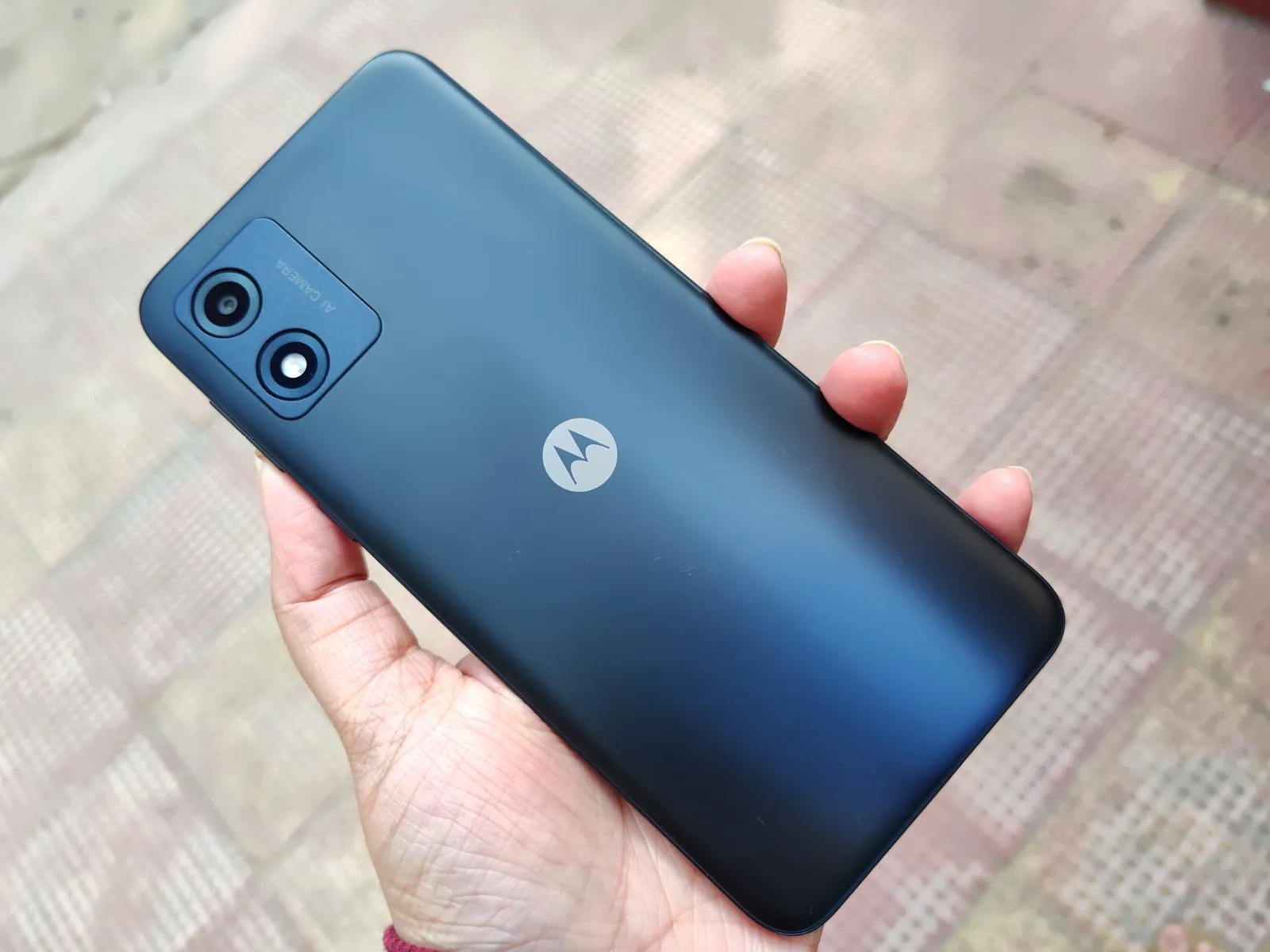
Under Rs 10,000: Moto E13

Under Rs 10,000: Moto E13

Price: Rs. 5,999

Key Specs

  • Display: 6.50-inch, 720×1,600 pixels
  • Processor: Unisoc T606
  • RAM: 2GB
  • Storage: 64GB
  • Battery Capacity: 5,000mAh
  • Rear Camera: 13MP

The Moto E13 is a budget-friendly smartphone that offers a 6.50-inch display and a decent 13MP rear camera.

It is powered by the Unisoc T606 processor and comes with 2GB of RAM and 64GB of storage.

The phone also boasts a 5,000mAh battery, ensuring long-lasting usage.

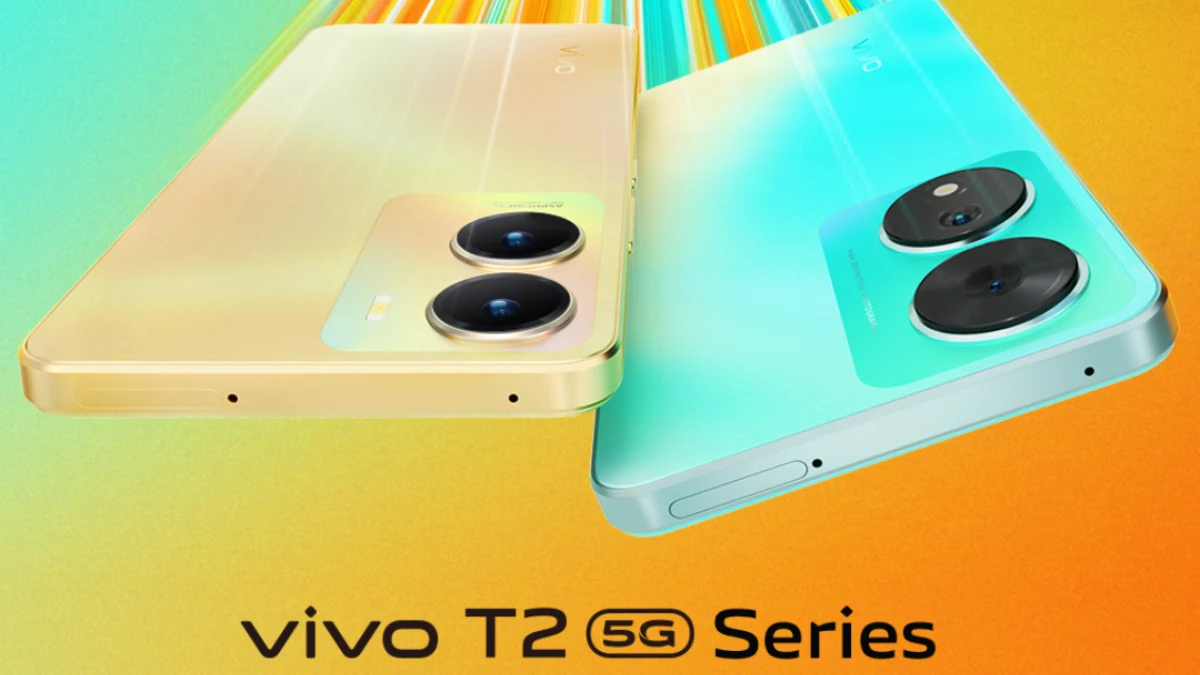
Under Rs 20,000:  Vivo T2 5G

Under Rs 20,000:  Vivo T2 5G

Price: Rs. 15,999

Key Specs

  • Display: 6.38-inch, 1080×2400 pixels
  • Processor: Qualcomm Snapdragon 695
  • RAM: 6GB
  • Storage: 128GB
  • Battery Capacity: 4500mAh
  • Rear Camera: 64MP + 2MP

The Vivo T2 5G is a mid-range smartphone that offers a 6.38-inch display and a dual rear camera setup with a 64MP main sensor.

It is powered by the Qualcomm Snapdragon 695 processorand comes with 6GB of RAM and 128GB of storage.

The phone also features a 4500mAh battery.

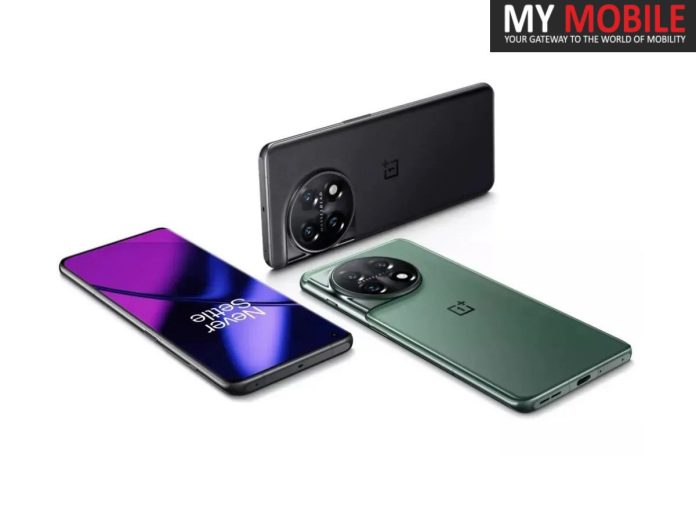
Under Rs 30,000: Phone: OnePlus Nord 3 5G

Under Rs 30,000: Phone: OnePlus Nord 3 5G

Price: Rs. 28,999

Key Specs

  • Display: 6.74-inch, 1240×2772 pixels
  • Processor: MediaTek Dimensity 9000
  • RAM: 16GB
  • Storage: 256GB
  • Battery Capacity: 5000mAh
  • Rear Camera: 50MP + 8MP + 2MP

The OnePlus Nord 3 5G is a high-performance smartphone that offers a 6.74-inch display and a triple rear camera setup with a 50MP main sensor.

It is powered by the MediaTek Dimensity 9000 processorand comes with a whopping 16GB of RAM and 256GB of storage.

The phone also boasts a 5000mAh battery.

Under Rs 40,000: OnePlus 11R

Under Rs 40,000: OnePlus 11R

Price: Rs. 37,999

Key Specs

  • Display: 6.70-inch, 1080×2412 pixels
  • Processor: Snapdragon 8+ Gen 1
  • RAM: 16GB
  • Storage: 256GB
  • Battery Capacity: 5000mAh
  • Rear Camera: 50MP + 8MP + 2MP

The OnePlus 11R 5G is a premium smartphone that offers a 6.70-inch display and a triple rear camera setup with a 50MP main sensor.

It is powered by the Snapdragon 8+ Gen 1 processor and comes with 16GB of RAM and 256GB of storage. The phone also features a 5000mAh battery.

Over Rs 50,000: Samsung Galaxy S24 Ultra

Over Rs 50,000: Samsung Galaxy S24 Ultra

Price: Rs. 1,29,9995

Key Specs

  • Display: 6.80-inch
  • Processor: Snapdragon 8 Gen 3
  • RAM: 12GB
  • Storage: 256GB
  • Battery Capacity: 5000mAh
  • Rear Camera: 200MP + 12MP + 50MP

The Samsung Galaxy S24 Ultra is a top-of-the-line smartphone that offers a large 6.80-inch display and a triple rear camera setup with a whopping 200MP main sensor.

It is powered by the Snapdragon 8 Gen 3 processor and comes with 12GB of RAM and 256GB of storage. The phone also boasts a 5000mAh battery5.

Detailed Specification

Operating System Android™ 13
Processor UNISOC T606 processor with 2xA75 1.6GHz + 6xA55 1.6GHzocta-core CPU, 650MHz ARM Mali-G57 MP1 GPU
Memory (RAM) 8GB
Storage (ROM) 128GB built-in | up to 1TB microSD card expandable
Dimensions 164.19 x 74.95 x 8.47mm
Weight 179.5g
Display 6.5″ IPS LCD display
Battery 5000mAh
Charging 10W Charger in box | 5V2A
Water Protection IP52 Water-repellent design
 Bands 4G: LTE 1/3/5/7/8/20/28/38/40/413G: 1/5/8

2G: 3/5/8

Rear Camera 13MP (f/2.2, 1.12μm) | PDAF
Rear Camera VideoCapture FHD (30fps) | HD (30fps)


Rear Camera Software

Shooting modes: PortraitPhoto Panorama Pro Mode* Night Vision*


Artificial intelligence: Auto Smile

Capture


Other features: HDR

Leveler Timer Assistive Grid Watermark

VIVO T2 KEY SPECIFICATIONS

Key Specs

RAM 8 GB
Processor Qualcomm Snapdragon 870
Rear Camera 64 MP + 12 MP + 2 MP
Front Camera 16 MP
Battery 4700 mAh
Display 6.62 inches (16.81 cm)

General

Operating System Android v12
Custom UI Origin OS

Performance

Chipset Qualcomm Snapdragon 870
CPU Octa core (3.2 GHz, Single core, Kryo 585 + 2.42 GHz, Tri core, Kryo 585 + 1.8 GHz, Quad core, Kryo 585)
Architecture 64 bit
Fabrication 7 nm
Graphics Adreno 650
RAM 8 GB

Best in Class 
RAM Type LPDDR5

Display

Display Type AMOLED
Screen Size 6.62 inches (16.81 cm)
Resolution 1080 x 2400 pixels
Aspect Ratio 20:9
Pixel Density 398 ppi

Best in Class 
Screen to Body Ratio (calculated) 85.3 %
Bezel-less display Yes with punch-hole display
Touch Screen Yes, Capacitive Touchscreen, Multi-touch
Brightness 1300 nits
Refresh Rate 120 Hz

Design

Height 163 mm Compare Size 
Width 76.1 mm
Thickness 8.5 mm

Very Good 
Weight 190 grams

Below Average 

Camera

MAIN CAMERA
Camera Setup Triple
Resolution 64 MP f/1.89, Primary Camera
12 MP f/2.2, Ultra-Wide Angle Camera
2 MP f/2.4, Depth Camera
Sensor ISOCELL Plus
Autofocus Yes
OIS Yes
Flash Yes, LED Flash
Image Resolution 9000 x 7000 Pixels
Settings Exposure compensation
Shooting Modes Continuous Shooting
High Dynamic Range mode (HDR)
Camera Features Digital Zoom
Auto Flash
Face detection
Touch to focus
FRONT CAMERA
Camera Setup Single
Resolution 16 MP f/2.0, Primary Camera
Video Recording 1920×1080 @ 30 fps

Battery

Capacity 4700 mAh
Type Li-Polymer
Removable No
Quick Charging Yes, Fast, 80W
USB Type-C Yes

Storage

Internal Memory 128 GB

Best in Class 
Expandable Memory Yes, Up to 1 TB

Network & Connectivity

SIM Slot(s) Dual SIM, GSM+GSM
SIM Size SIM1: Nano, SIM2: Nano
Network Support 5G Supported in India, 4G Supported in India, 3G, 2G
VoLTE Yes
SIM 1
5G Bands:
FDD N1 / N5 / N8 / N28
TDD N41 / N77 / N78
4G Bands:
TD-LTE 2300(band 40)
FD-LTE 1800(band 3)
3G Bands:
UMTS 1900 / 2100 / 850 / 900 MHz
2G Bands:
GSM 1800 / 1900 / 850 / 900 MHz
GPRS:
Available
EDGE:
Available
SIM 2
4G Bands:
TD-LTE 2300(band 40)
FD-LTE 1800(band 3)
3G Bands:
UMTS 1900 / 2100 / 850 / 900 MHz
2G Bands:
GSM 1800 / 1900 / 850 / 900 MHz
GPRS:
Available
EDGE:
Available
Wi-Fi Yes, Wi-Fi 6 (802.11 b/g/n/ax) 5GHz
Wi-Fi Features Mobile Hotspot
Bluetooth Yes, v5.2
GPS Yes with A-GPS, Glonass
NFC Yes
USB Connectivity Mass storage device, USB charging

Multimedia

Loudspeaker Yes
Audio Jack USB Type-C

Sensors

Fingerprint Sensor Yes
Fingerprint Sensor Position On-screen
Other Sensors Light sensor, Proximity sensor, Accelerometer

OnePlus Nord 3 5G

Key Specs

RAM 8 GB
Processor MediaTek Dimensity 9000 MT6983
Rear Camera 64 MP + 8 MP + 2 MP
Front Camera 16 MP
Battery 5000 mAh
Display 6.7 inches (17.02 cm)

General

Launch Date June 21, 2023 (Unofficial)
Operating System Android v13
Custom UI Oxygen OS

Performance

Chipset MediaTek Dimensity 9000 MT6983
CPU Octa core (3.05 GHz, Single core, Cortex X2 + 2.85 GHz, Tri core, Cortex A710 + 1.8 GHz, Quad core, Cortex A510)
Architecture 64 bit
Fabrication 4 nm
Graphics Mali-G710 MC10
RAM 8 GB

Display

Display Type AMOLED
Screen Size 6.7 inches (17.02 cm)
Resolution 1240 x 2772 pixels
Aspect Ratio 20:9
Pixel Density 453 ppi
Bezel-less display Yes with punch-hole display
Touch Screen Yes, Capacitive Touchscreen, Multi-touch
Refresh Rate 120 Hz

Camera

MAIN CAMERA
Camera Setup Triple
Resolution 64 MP f/1.8, Wide Angle, Primary Camera
8 MP f/2.25, Ultra-Wide Angle Camera
2 MP f/2.4, Macro Camera
Sensor IMX890, Exmor-RS CMOS Sensor
Autofocus Yes
OIS Yes
Flash Yes, LED Flash
Image Resolution 9000 x 7000 Pixels
Settings Exposure compensation, ISO control
Shooting Modes Continuous Shooting
High Dynamic Range mode (HDR)
Camera Features Digital Zoom
Auto Flash
Face detection
Touch to focus
FRONT CAMERA
Camera Setup Single
Resolution 16 MP f/2.5, Wide Angle, Primary Camera

Battery

Capacity 5000 mAh
Type Li-Polymer
Removable No
Quick Charging Yes, Fast, 80W
USB Type-C Yes

Storage

Internal Memory 128 GB
Expandable Memory No

Network & Connectivity

SIM Slot(s) Dual SIM, GSM+GSM
SIM Size SIM1: Nano, SIM2: Nano
Network Support 5G Not Supported in India, 4G Supported in India, 3G, 2G
VoLTE Yes
SIM 1
4G Bands:
TD-LTE 2300(band 40)
FD-LTE 1800(band 3)
3G Bands:
UMTS 1900 / 2100 / 850 / 900 MHz
2G Bands:
GSM 1800 / 1900 / 850 / 900 MHz
GPRS:
Available
EDGE:
Available
SIM 2
4G Bands:
TD-LTE 2300(band 40)
FD-LTE 1800(band 3)
3G Bands:
UMTS 1900 / 2100 / 850 / 900 MHz
2G Bands:
GSM 1800 / 1900 / 850 / 900 MHz
GPRS:
Available
EDGE:
Available
Wi-Fi Yes, Wi-Fi 4 (802.11 b/g/n)
Wi-Fi Features Mobile Hotspot
Bluetooth Yes, v5.2
GPS Yes with A-GPS, Glonass
USB Connectivity Mass storage device, USB charging

Multimedia

Loudspeaker Yes
Audio Jack USB Type-C

Sensors

Fingerprint Sensor Yes
Fingerprint Sensor Position On-screen
Fingerprint Sensor Type Optical
Other Sensors Light sensor, Proximity sensor, Accelerometer, Compass, Gyroscope

Oneplus 11R 5G Key Specifications

Key Specs

RAM 8 GB
Processor Qualcomm Snapdragon 8 Plus Gen 1
Rear Camera 50 MP + 12 MP + 2 MP
Front Camera 16 MP
Battery 5000 mAh
Display 6.7 inches (17.02 cm)

General

Launch Date February 7, 2023 (Unofficial)
Operating System Android v13
Custom UI Oxygen OS

Performance

Chipset Qualcomm Snapdragon 8 Plus Gen 1
CPU Octa core (3.2 GHz, Single core, Cortex X2 + 2.75 GHz, Tri core, Cortex A710 + 2 GHz, Quad core, Cortex A510)
Architecture 64 bit
Fabrication 4 nm
Graphics Adreno 730
RAM 8 GB

Display

Display Type Fluid AMOLED
Screen Size 6.7 inches (17.02 cm)
Resolution 1240 x 2772 pixels
Aspect Ratio 20:9
Pixel Density 453 ppi
Screen Protection Corning Gorilla Glass v5
Bezel-less display Yes with punch-hole display
Touch Screen Yes, Capacitive Touchscreen, Multi-touch
Refresh Rate 120 Hz

Camera

MAIN CAMERA
Camera Setup Triple
Resolution 50 MP f/1.8, Wide Angle, Primary Camera(23 mm focal length)12 MP f/2.4, Ultra-Wide Angle Camera
2 MP f/2.4, Macro Camera
Sensor Exmor-RS CMOS Sensor
Autofocus Yes
Flash Yes, LED Flash
Image Resolution 8150 x 6150 Pixels
Settings Exposure compensation, ISO control
Shooting Modes Continuous Shooting
High Dynamic Range mode (HDR)
Camera Features Digital Zoom
Auto Flash
Face detection
Touch to focus
FRONT CAMERA
Camera Setup Single
Resolution 16 MP f/2.4, Wide Angle, Primary Camera
Video Recording 1920×1080 @ 30 fps

Battery

Capacity 5000 mAh
Type Li-Polymer
Removable No
Quick Charging Yes, Fast, 100W
USB Type-C Yes

Storage

Internal Memory 128 GB
Expandable Memory No

Network & Connectivity

SIM Slot(s) Dual SIM, GSM+GSM
SIM Size SIM1: Nano, SIM2: Nano
Network Support 5G Not Supported in India, 4G Supported in India, 3G, 2G
VoLTE Yes
SIM 1
4G Bands:
TD-LTE 2300(band 40)
FD-LTE 1800(band 3)
3G Bands:
UMTS 1900 / 2100 / 850 / 900 MHz
2G Bands:
GSM 1800 / 1900 / 850 / 900 MHz
GPRS:
Available
EDGE:
Available
SIM 2
4G Bands:
TD-LTE 2300(band 40)
FD-LTE 1800(band 3)
3G Bands:
UMTS 1900 / 2100 / 850 / 900 MHz
2G Bands:
GSM 1800 / 1900 / 850 / 900 MHz
GPRS:
Available
EDGE:
Available
Wi-Fi Yes, Wi-Fi 4 (802.11 b/g/n)
Wi-Fi Features Mobile Hotspot
Bluetooth Yes, v5.1
GPS Yes with A-GPS, Glonass
NFC Yes
USB Connectivity Mass storage device, USB charging

Multimedia

Loudspeaker Yes
Audio Jack USB Type-C

Sensors

Fingerprint Sensor Yes
Fingerprint Sensor Position On-screen
Fingerprint Sensor Type Optical
Other Sensors Light sensor, Proximity sensor, Accelerometer, Compass, Gyroscope

SAMSUNG GALAXY S24 ULTRA SPECIFICATIONS

Key Specs

RAM 8 GB
Processor Samsung Exynos 2200
Rear Camera 200 MP + 12 MP + 10 MP + 10 MP
Front Camera 32 MP
Battery 5000 mAh
Display 6.8 inches (17.27 cm)

General

Launch Date November 23, 2023 (Unofficial)
Operating System Android v12
Custom UI Samsung One UI

Performance

Chipset Samsung Exynos 2200
CPU Octa core (2.8 GHz, Single core, Cortex X2 + 2.52 GHz, Tri core, Cortex A710 + 1.82 GHz, Quad core, Cortex A510)
Architecture 64 bit
Fabrication 4 nm
RAM 8 GB

Display

Display Type Dynamic AMOLED
Screen Size 6.8 inches (17.27 cm)
Resolution 1440 x 3200 pixels
Pixel Density 516 ppi
Bezel-less display Yes with punch-hole display
Touch Screen Yes, Capacitive Touchscreen, Multi-touch

Design

Waterproof Yes, Water resistant, IP68
Ruggedness Dust proof

Camera

MAIN CAMERA
Camera Setup Quad
Resolution 200 MP, Primary Camera
12 MP, Ultra-Wide Angle Camera
10 MP , Telephoto Camera
10 MP
Autofocus Yes
OIS Yes
Flash Yes, LED Flash
Image Resolution 15500 x 13000 Pixels
Settings Exposure compensation, ISO control
Shooting Modes Continuous Shooting
High Dynamic Range mode (HDR)
Camera Features Digital Zoom
Auto Flash
Face detection
Touch to focus
Video Recording 7680×4320 @ 24 fps
3840×2160 @ 30 fps
FRONT CAMERA
Camera Setup Single
Resolution 32 MP, Primary Camera

Battery

Capacity 5000 mAh
Type Li-Polymer
Removable No
Wireless Charging Yes
Quick Charging Yes, Fast
USB Type-C Yes

Storage

Expandable Memory No
User Available Storage Up to 128 GB

Network & Connectivity

SIM Slot(s) Dual SIM, GSM+GSM
SIM Size SIM1: Nano, SIM2: Nano
Network Support 5G Not Supported in India, 4G Supported in India, 3G, 2G
VoLTE Yes
SIM 1
4G Bands:
TD-LTE 2300(band 40)
FD-LTE 1800(band 3)
3G Bands:
UMTS 1900 / 2100 / 850 / 900 MHz
2G Bands:
GSM 1800 / 1900 / 850 / 900 MHz
GPRS:
Available
EDGE:
Available
SIM 2
4G Bands:
TD-LTE 2300(band 40)
FD-LTE 1800(band 3)
3G Bands:
UMTS 1900 / 2100 / 850 / 900 MHz
2G Bands:
GSM 1800 / 1900 / 850 / 900 MHz
GPRS:
Available
EDGE:
Available
Wi-Fi Yes, Wi-Fi 4 (802.11 b/g/n)
Wi-Fi Features Mobile Hotspot
Bluetooth Yes, v5.2
GPS Yes with A-GPS
NFC Yes
USB Connectivity Mass storage device, USB charging

Multimedia

Loudspeaker Yes
Audio Jack USB Type-C

Sensors

Fingerprint Sensor Yes
Fingerprint Sensor Position On-screen
Fingerprint Sensor Type Ultrasonic
Other Sensors Light sensor, Proximity sensor, Accelerometer, Compass, Gyroscope

FAQs

What are the best smartphone options for February 2024 across different price ranges?

February 2024 offers a wide range of smartphones from the budget-friendly Moto E13 to the luxurious Samsung Galaxy S24 Ultra, ensuring options for every price bracket.

Which smartphone is the best under Rs. 10,000 in February 2024?

The Moto E13 is the standout choice under Rs. 10,000, featuring a 6.50-inch display, 13MP rear camera, and a 5,000mAh battery for long-lasting performance.

What features can I expect from a mid-range smartphone like the Vivo T2 5G?

For under Rs. 20,000, the Vivo T2 5G offers a 6.38-inch display, a 64MP dual rear camera, Snapdragon 695 processor, and a 4500mAh battery.

Is there a high-performance smartphone under Rs. 30,000?

Yes, the OnePlus Nord 3 5G provides high performance under Rs. 30,000 with a MediaTek Dimensity 9000 processor, 16GB RAM, and a 50MP triple rear camera setup.

What makes the Samsung Galaxy S24 Ultra stand out in the luxury segment?

The Samsung Galaxy S24 Ultra stands out with its 6.80-inch display, 200MP triple rear camera, Snapdragon 8 Gen 3 processor, and premium build quality at Rs. 1,29,999.

How does the OnePlus 11R perform in terms of processing power?

Equipped with the Qualcomm Snapdragon 8+ Gen 1 chipset and 18GB of RAM, the OnePlus 11R delivers exceptional performance.

It handles intensive tasks with ease and shows impressive scores on benchmarks like Antutu V9 and Geekbench 5, making it a solid choice for power users.

What are the camera capabilities of the OnePlus 11R?

The OnePlus 11R features a 50MP Sony IMX890 primary sensor, providing excellent image quality in various lighting conditions.

Its ultra-wide and macro lenses are decent, while the AI-based Night mode significantly enhances low-light photography, although the ultra-wide and macro lenses could use some improvement.

Why Consider the OnePlus Nord 3?

The OnePlus Nord 3 5G is a noteworthy option in the mid-range smartphone segment, especially after its recent price reduction.

It boasts a sleek design, a high-refresh-rate AMOLED display, and a versatile alert slider for easy notification control.

Powered by the MediaTek Dimensity 9000 chipset, it ensures smooth performance. The 5,000mAh battery with 80W fast charging makes it a reliable choice for users needing long-lasting battery life.

At its new price point under Rs 30,000, the OnePlus Nord 3 5G offers a balanced blend of performance and value.

What are the key features of the OnePlus Nord 3 5G?

The OnePlus Nord 3 5G boasts a 6.74-inch 1.5K AMOLED 120Hz display, MediaTek Dimensity 9000 SoC, a triple rear camera setup with a 50MP primary sensor, and supports 80W SUPERVOOC fast charging.

What color options are available for the OnePlus Nord 3 5G?

The OnePlus Nord 3 5G is available in two color variants: Misty Green and Tempest Gray, offering users a choice to select as per their preference.

How is the camera performance of the OnePlus Nord 3?

The OnePlus Nord 3’s primary camera performs excellently. However, its ultra-wide and macro lenses could use some improvements.

What is the battery life of the OnePlus Nord 3?

The OnePlus Nord 3 offers a day-long power backup on a single charge from its 5,000mAh battery. It can also charge rapidly thanks to its 80W charger

What is Moto E13 (8GB + 128GB) price in India ?

Now available in 8GB RAM + 128GB inbuilt storage, the new variant of the Moto E13 is priced at Rs. 8,999. The previously launched 2GB + 64GB and the 4GB + 64GB storage variants were listed at Rs. 6,999 and Rs. 7,999 at launch.

What are the colours available in the Moto E13 (8GB + 128GB)?

The handset is offered in Aurora Green, Cosmic Black, and Creamy White colour options.

How does Samsung Galaxy S24 Ultra give an Intelligent & Powerful Experience?

Galaxy S24 Ultra is equipped with Snapdragon® 8 Gen 3 Mobile Platform for Galaxy that delivers remarkable NPU improvement for incredibly efficient AI processing.

In all three Galaxy S24 models, 1-120 Hz adaptive refresh rates improve performance efficiency.

Galaxy S24 Ultra comes a1.9 times larger vapor chamber, improving device surface temperature while also maximizing sustained performance power. Ray tracing enables life-like visuals with superior shadow and reflection effect. Galaxy S24 reaches 2600nit peak brightness, making it the brightest Galaxy smartphone ever.

Corning® Gorilla® Armor on the Galaxy S24 Ultra is optically enhanced for superior durability. It delivers dramatically reduced reflection by up to 75% in a wide range of lighting conditions, ensuring a smooth, comfortable viewing experience.

Galaxy S24+ comes with a 6.7-inch and Galaxy S24 has a 6.2-inch display. Galaxy S24 Ultra has a 6.8-inch flatter display, optimized not just for viewing but also for productivity. Galaxy S24+ now supports the same level of QHD+ found on Galaxy S24 Ultra.

Galaxy S24 Ultra is the first-ever Galaxy phone to feature a titanium frame, enhancing device durability and longevity. Galaxy S24 Ultra’s significantly thinner body enables better on-the-go experience with more comfortable grip.

On Galaxy S24+ and Galaxy S24, a streamlined One-mass design satisfies a more aesthetic standard with seamless connection between the device’s rear cover and side frame.

What are Vivo T2x 5G Pros and Cons ?

Pros Cons

● Vivo’s Most Affordable 5G Smartphone
● MediaTek Dimensity 6020 5G Processor
● Extended RAM 3.0
● 50-Megapixel Super Night Camera
● 5000mAh Battery with 18W Fast Charging ● Average Selfie Camera
● The back panel design could have been better (subjective)
● Average Display

Should you buy the Vivo T2 5G?

Judging by the Vivo T2 5G specifications, if you have gaming in your mind then the phone’s 90Hz refresh rate might be lacking in this area and there are better processors in the segment. For other purposes, the Vivo T2 5G is a decent deal on paper.

You get a 64MP primary camera with OIS and a 2MP bokeh sensor for shots with blurred backgrounds. There’s 44W fast charging support with a 4,500mAh battery which should last you decently depending upon usage. The smartphone also has an AMOLED display.


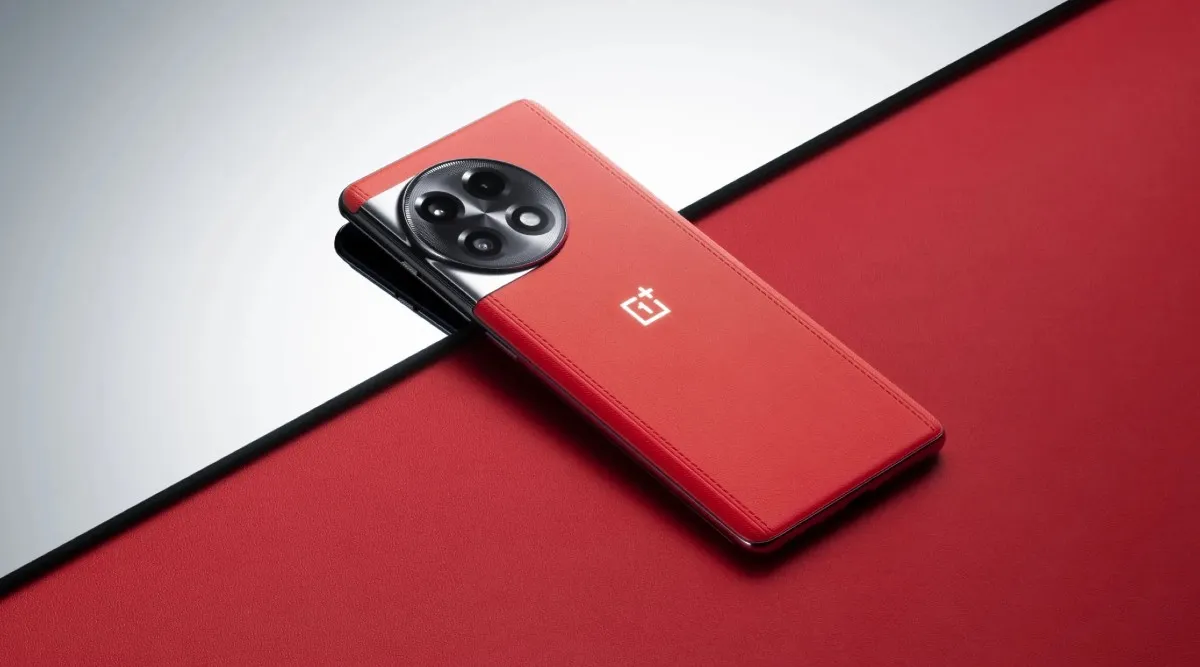
Also Read: OnePlus 11R Solar Red Review: The Perfect Blend of Style and Performance

Also Read: OnePlus Nord 3 5G Price Slashed in India, Now More Affordable: Should You Buy it?

Also Read: Vivo T2 5G with powerful performance goes on sale today: Check Price, Specifications, Bank Offers & Should you buy it ?

Also Read: Motorola launches moto e13 with 8GB RAM 128GB Storage making it India’s most affordable smartphone with this memory configuration at just Rs. 8999

Also Read: Samsung Galaxy S24 Series Surpasses iPhone in Customer Satisfaction, Says PerfectRec Report

OnePlus 11 Update OxygenOS 14.0.0.501 Enhances User Experience with Key Fixes

0
OnePlus 11R

Highlights

  • Latest OxygenOS 14.0.0.501 update brings essential fixes and improvements to OnePlus 11.
  • Includes Android security patch for February 2024, enhancing device security.
  • Notable enhancements in weather app experience and overall system stability.
  • Addresses critical issues including app crashes, NFC card failures, and photo album glitches.

OnePlus has commenced the rollout of its latest software update, OxygenOS 14.0.0.501, for the OnePlus 11, enhancing user experience with a mix of fixes and improvements. 

This update, which includes the Android security patch for February 2024, is being distributed globally across India, Europe, and the US in a phased manner, ensuring that while the rollout has begun, availability may vary.

OxygenOS 14.0.0.501: What’s New

OxygenOS 14.0.0.501: What’s New

The update brings a couple of notable improvements aimed at refining the device’s performance and usability. 

Among these enhancements is an upgraded experience in viewing weather details, suggesting a smoother, bug-free interaction with the weather application. 

Additionally, OnePlus has focused on boosting the system’s stability and overall performance, aiming to deliver a more reliable and efficient user experience.

OnePlus 11 Issues Addressed

OnePlus 11 Issues Addressed

On the fix front, OnePlus addresses several issues that have impacted user satisfaction.

A significant fix rectifies a problem causing certain apps to crash unexpectedly, although the company has not specified which apps were affected.

Another crucial fix resolves a glitch where NFC cards failed to function correctly in specific scenarios, enhancing the device’s compatibility with digital payments and smart locks. 

Lastly, an issue preventing photos from displaying in the default album app has been corrected, ensuring users can access their images without interruption.

While the update may not introduce groundbreaking new features, it signifies OnePlus’s commitment to refining the OnePlus 11’s functionality and reliability.

Oneplus 11 5G Key Specifications

RAM 12 GB
Processor Qualcomm Snapdragon 8 Gen 2
Rear Camera 50 MP + 48 MP + 32 MP
Front Camera 16 MP
Battery 5000 mAh
Display 6.7 inches (17.02 cm)

General

Operating System Android v13
Custom UI ColorOS

Performance

Chipset Qualcomm Snapdragon 8 Gen 2
CPU Octa core (3.2 GHz, Single core, Cortex X3 + 2.8 GHz, Quad core, Cortex A715 + 2 GHz, Tri core, Cortex A510)
Architecture 64 bit
Fabrication 4 nm
Graphics Adreno 740
RAM 12 GB
RAM Type LPDDR5X

 Display

Display Type AMOLED
Screen Size 6.7 inches (17.02 cm)
Resolution 1440 x 3216 pixels
Aspect Ratio 20.1:9
Pixel Density 526 ppi
Screen to Body Ratio (calculated) 89.68 %
Screen Protection Corning Gorilla Glass v7
Bezel-less display Yes with punch-hole display
Touch Screen Yes, Capacitive Touchscreen, Multi-touch
Brightness 1300 nits
Refresh Rate 120 Hz
Screen to Body Ratio (claimed by the brand) 92.7 %

Design

Height 163.1 mm Compare Size 
Width 74.1 mm
Thickness 8.5 mm
Weight 205 grams
Build Material Back: Mineral Glass
Colours Endless Black, Instant Blue

Camera

MAIN CAMERA
Camera Setup Triple
Resolution 50 MP f/1.8, Wide Angle (84° field-of-view), Primary Camera(24 mm focal length, 1.56″ sensor size)48 MP f/2.2, Ultra-Wide Angle Camera
32 MP f/2.0, Telephoto Camera(48 mm focal length)
Sensor Exmor-RS CMOS Sensor
Autofocus Yes, Phase Detection autofocus
OIS Yes
Flash Yes, LED Flash
Image Resolution 8150 x 6150 Pixels
Settings Exposure compensation, ISO control
Shooting Modes Continuous Shooting
High Dynamic Range mode (HDR)
Camera Features Digital Zoom
Auto Flash
Face detection
Touch to focus
Video Recording 7680×4320 @ 24 fps
3840×2160 @ 30 fps
1920×1080 @ 60 fps
Video Recording Features Dual Video Recording
FRONT CAMERA
Camera Setup Single
Resolution 16 MP f/2.4, Wide Angle, Primary Camera(25 mm focal length)
Flash Yes, Screen flash
Video Recording 1920×1080 @ 30 fps
1280×720 @ 30 fps

Battery

Capacity 5000 mAh
Type Li-Polymer
Removable No
Quick Charging Yes, Super VOOC, 100W: 100 % in 25 minutes
USB Type-C Yes

Storage

Internal Memory 256 GB
Expandable Memory No
Storage Type UFS 4.0
USB OTG Yes

Network & connectivity

SIM Slot(s) Dual SIM, GSM+GSM
SIM Size SIM1: Nano, SIM2: Nano
Network Support 5G Supported in India, 4G Supported in India, 3G, 2G
VoLTE Yes
SIM 1
5G Bands:
FDD N1 / N3 / N5 / N7 / N8 / N20 / N28
TDD N38 / N40 / N41 / N66 / N77 / N78
4G Bands:
TD-LTE 2600(band 38) / 2300(band 40) / 2500(band 41) / 2100(band 34) / 1900(band 39)
FD-LTE 2100(band 1) / 1800(band 3) / 2600(band 7) / 900(band 8) / 700(band 28) / 1900(band 2) / 1700(band 4) / 850(band 5) / 850(band 18) / 850(band 19) / 800(band 20) / 850(band 26)
3G Bands:
UMTS 1900 / 2100 / 850 / 900 MHz
2G Bands:
GSM 1800 / 1900 / 850 / 900 MHz
GPRS:
Available
EDGE:
Available
SIM 2
5G Bands:
FDD N1 / N3 / N5 / N7 / N8 / N20 / N28
TDD N38 / N40 / N41 / N66 / N77 / N78
4G Bands:
TD-LTE 2600(band 38) / 2300(band 40) / 2500(band 41) / 2100(band 34) / 1900(band 39)
FD-LTE 2100(band 1) / 1800(band 3) / 2600(band 7) / 900(band 8) / 700(band 28) / 1900(band 2) / 1700(band 4) / 850(band 5) / 700(band 17) / 850(band 18) / 850(band 19) / 800(band 20) / 850(band 26)
3G Bands:
UMTS 1900 / 2100 / 850 / 900 MHz
2G Bands:
GSM 1800 / 1900 / 850 / 900 MHz
GPRS:
Available
EDGE:
Available
Wi-Fi Yes, Wi-Fi 6 (802.11 a/b/g/n/ac/ax) 5GHz, MIMO
Wi-Fi Features Wi-Fi Direct, Mobile Hotspot
Bluetooth Yes, v5.3
GPS Yes with A-GPS, Glonass
NFC Yes
USB Connectivity Mass storage device, USB charging

Multimedia

FM Radio No
Loudspeaker Yes
Audio Jack USB Type-C
Audio Features Dolby Atmos

Sensors

Fingerprint Sensor Yes
Fingerprint Sensor Position On-screen
Fingerprint Sensor Type Optical
Other Sensors Light sensor, Proximity sensor, Accelerometer, Compass, Gyroscope

FAQs

What does the new OnePlus 11 update include?

The OxygenOS 14.0.0.501 update for the OnePlus 11 encompasses several improvements and fixes, such as an enhanced weather app experience, system performance boosts, and the February 2024 Android security patch.

How will the OnePlus 11 OxygenOS 14.0.0.501 update affect my device?

This update aims to refine your device’s usability and reliability by fixing known issues like app crashes, NFC functionality problems, and photo visibility issues in the album app, alongside system performance enhancements.

Is the OxygenOS 14.0.0.501 update available globally?

Yes, the rollout of the OxygenOS 14.0.0.501 update for the OnePlus 11 is global, covering India, Europe, and the US. It’s a phased rollout, so availability might vary.

What improvements can I expect with the OnePlus 11’s new update?

Users can anticipate a more stable and efficient system performance, improved weather app interaction, and fixes for specific problems such as app crashes, NFC card usage issues, and photo album glitches.

When will I receive the OxygenOS 14.0.0.501 update on my OnePlus 11?

The update is being deployed in stages. Even though it has started rolling out globally, the timing of when it reaches your device may vary based on your region and carrier.

Also Read: OnePlus 11 Receives OxygenOS 14 Update with New Features in India

Also Read: OnePlus 12 vs OnePlus 11: Comparing Potential Upgrades in Performance, Design, and Cameras

Also Read: OnePlus 11 and 12 Receive AI-Powered ColorOS Update in China

iPhone 15 Battery Life Exceeds Expectations, AI to Enhance Spotlight Search

0
iPhone 15 Battery Life
Respond to Notifications

Highlights

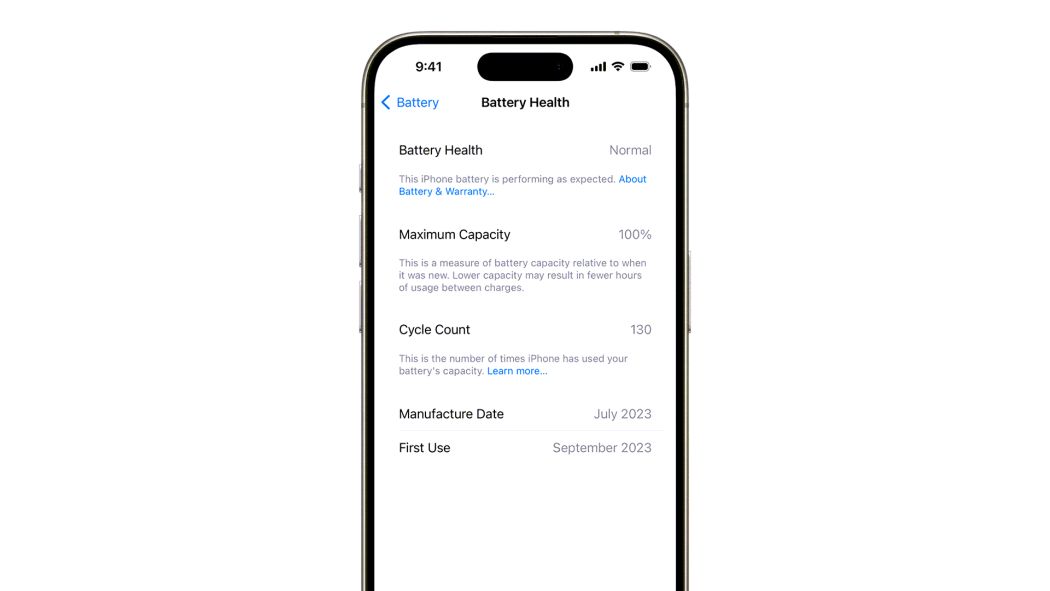
  • iPhone 15 battery promise now doubled to last 1,000 cycles.
  • “Ideal conditions” term raises questions about real-world battery performance.
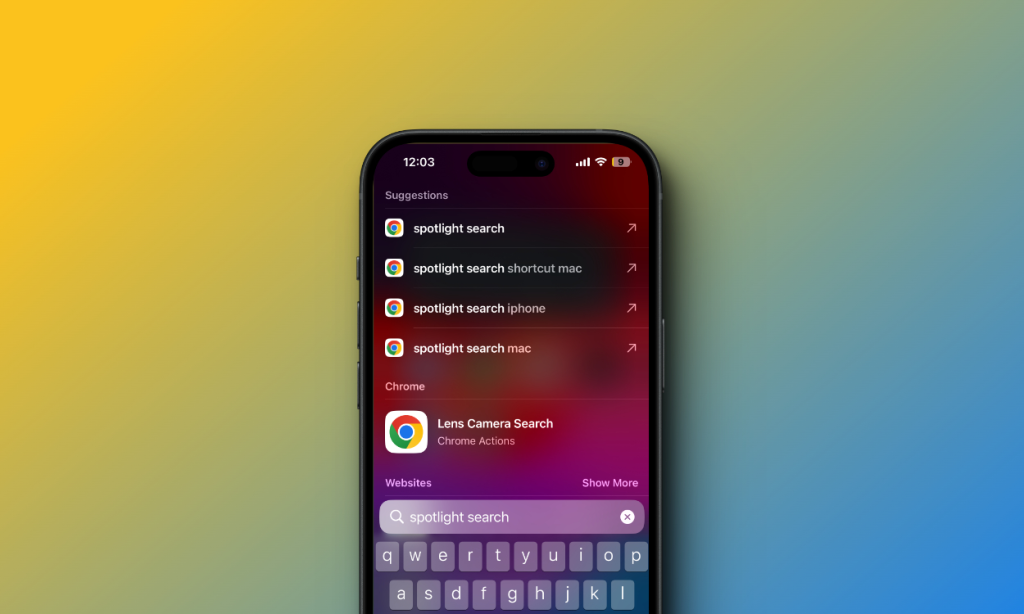
  • Spotlight Search to receive AI overhaul for smarter interactions.
  • Apple’s move hints at significant advances in battery technology and AI integration.

In a surprising turn of events, iPhone 15 users have received unexpectedly positive news regarding their device’s battery longevity.

Contrary to initial claims, Apple has now doubled its battery lifespan promise, suggesting that the iPhone 15’s battery could maintain at least 80% of its original capacity for up to 1,000 charging cycles.

This revelation came after Apple re-evaluated the battery performance in the iPhone 15 and 15 Pro models, as reported by 9to5Mac.

The adjustment marks a significant departure from the previous estimate of 500 cycles, sparking discussions on whether this improvement stems from enhanced battery technology or a revised testing methodology.

Apple Not Being Entirely Truthful about iPhone 15?

Apple Not Being Entirely Truthful about iPhone 15?

The move to advertise these new figures under “ideal conditions” has raised questions, especially when contrasted with the “normal conditions” terminology previously used by Apple.

This shift in language, now applied retroactively to older models on Apple’s website, is making previous statements made by Apple rather ambiguous when it comes to the real-world applicability of these claims.

iPhone 15 battery promise now doubled to last 1,000 cycles

The specific conditions that define “ideal” remain unclear, though Apple hints at in-built software features designed to optimize battery lifespan, including an option to limit charging up to 80%.

This development is particularly noteworthy against the backdrop of reports from iPhone 14 users experiencing premature battery health declines.

If the iPhone 15 indeed delivers on this promise, it could represent a significant step forward in battery technology and user trust.

Spotlight Search to Get an AI Overhaul

Spotlight Search to Get an AI Overhaul

In parallel to the battery life announcement, Apple is poised to transform its Spotlight Search functionality with the integration of artificial intelligence (AI).

This upgrade aims to make Spotlight Search more intuitive, predictive, and efficient, marking a significant leap in Apple’s effort to weave AI into the fabric of its ecosystem.

The spotlight is set to benefit from Large Language Model (LLM) technology, enhancing its ability to perform complex searches, deepen app integrations, and understand nuanced queries.

By leveraging advanced language models, Apple wants to elevate Spotlight Search from a simple file-finding tool to a comprehensive, intelligent assistant capable of navigating the complexities of user data and preferences.

This enhancement is expected to redefine how users interact with their Apple devices, making information retrieval more seamless and intuitive.

iPhone 15 Battery Life Exceeds Expectations, AI to Enhance Spotlight Search

iPhone 15 Key Specs

GENERAL

Country of Origin India
Sim Type Dual Sim, GSM+GSM
Dual Sim Yes
Sim Size Nano-SIM and eSIM
Device Type Smartphone
Release Date September 12, 2023

DESIGN

Dimensions 71.6 x 147.6 x 7.8 mm
Weight 171 g
Colors Black, Blue, Green, Yellow, Pink

DISPLAY

Type Color Super Retina XDR OLED (1B Colors)
Touch Yes
Size 6.1 inches, 1179 x 2556 pixels, 60 Hz
Aspect Ratio 19.5:9
PPI ~ 460 PPI
Glass Type Ceramic Shield front, Colour-infused glass back
Features Dolby Atmos, Haptic Touch, 1,000 nits max brightness (typical), 1,600 nits peak brightness (HDR), 2,000 nits peak brightness (outdoor), True Tone display, 20,00,000:1 contrast ratio (typical),HDR display
Notch Yes, Dynamic Island

MEMORY

RAM 6 GB
Storage 128 GB
Card Slot No

CONNECTIVITY

GPRS Yes
EDGE Yes
3G Yes
4G Yes
5G Yes
5G Bands Bands n1, n2, n3, n5, n7, n8, n12, n20, n25, n26, n28, n30, n38, n40, n41, n48, n53, n66, n70, n77, n78, n79
VoLTE Yes
Wifi Yes, with wifi-hotspot
Wifi Version Wi‑Fi 6 (802.11ax) with 2×2 MIMO
Bluetooth Yes, v5.3
USB Yes, USB-C v2.0
USB Features USB Tethering, USB Charging

EXTRA

GPS yes with A-GPS, GPS, GLONASS, Galileo, QZSS and BeiDou
Fingerprint Sensor No
Face Unlock Yes
Sensors Light sensor, Proximity sensor, Accelerometer, Barometer, Compass, Gyroscope, TrueDepth
3.5mm Headphone Jack Lightning
Extra NFC
Water Resistance Yes
IP Rating IP68
Dust Resistant Yes
Extra Features Ultra Wideband Chip, Voice Isolation, Satellite Services , Road Side Assistance, Emergency SOS, Crash Detection footnote, Spatial Audio playback, Supports Dolby Atmos, Aluminium design,, Wide Spectrum microphone modes

CAMERA

Rear Camera 48 MP f/1.6 (Main)
12 MP f/2.4 (Ultra Wide) with autofocus
Features Super-high-resolution photos, (24MP and 48MP), Next-generation portraits with Focus and Depth Control, 4x optical zoom range, Night mode, Stereo recording, Audio zoom, Deep Fusion, Smart HDR 5, Photo geotagging, Burst mode, Photographic Styles, 12MP 2x Telephoto (enabled by quad-pixel sensor)
Video Recording 1080p @ 60 fps FHD, 4K @ 24/25/30/60 fps UHD
Flash Yes, Dual LED
Front Camera 12 MP f/1.9 with Retina Flash
Front Video Recording 4K @ 60 fps UHD, 1080p @ 60 fps FHD

TECHNICAL

OS iOS v17
Chipset Apple Bionic A16
CPU 3.46 GHz, Hexa Core Processor
Core Details 2×3.46 GHz Everest & 4×2.02 GHz Sawtooth
GPU Apple GPU
IP Rating IP68
Java No
Browser Yes

MULTIMEDIA

Email Yes
Music AAC, MP3, Apple Lossless, FLAC, Dolby Digital, Dolby Digital Plus and Dolby Atmos
Video HEVC, H.264 and ProRes, HDR with Dolby Vision, HDR10 and HLG
FM Radio No
Document Reader Yes

BATTERY

Type Non-Removable Battery
Size 3349 mAh, Li-ion Battery
Fast Charging Yes
Wireless Charging Yes, 15W MagSafe Charging
Music Playback Time 80 hours

FAQs

What has changed with the iPhone 15’s battery life expectancy?

Apple has revised its battery longevity claim for the iPhone 15, now stating the device can retain up to 80% capacity over 1,000 charging cycles, doubling the original estimate of 500 cycles.

What does Apple mean by “ideal conditions” for battery performance?

“Ideal conditions” refer to specific, optimal settings under which the iPhone 15’s battery could achieve the newly claimed longevity. Apple has hinted that features like limiting charging to 80% may play a part, though the exact conditions remain unspecified.

How does the AI overhaul of Spotlight Search affect iPhone users?

The integration of AI into Spotlight Search is set to make the tool more intuitive and capable of handling complex queries, enhancing users’ ability to find information and perform tasks directly from the search feature.

Will older iPhone models benefit from the AI-enhanced Spotlight Search?

While Apple has not specified, updates like these typically roll out across several models. The extent to which older devices will support the full capabilities of the AI-enhanced Spotlight Search may vary.

How does the iPhone 15’s battery update compare to previous models?

The iPhone 15’s battery life update represents a significant improvement over previous estimates, potentially offering longer-lasting performance and reliability, especially in light of past user reports of battery health declines in earlier models.

Apple says iPhone 15 batteries have a longer lifespan than expected ?

Apple says that it is updating the battery cycle lifespan for iPhone 15 and iPhone 15 Pro.

Apple initially said that the iPhone 15’s battery would retain up to 80% of its original capacity at 500 complete charge cycles. Now, the company tells 9to5Mac that the iPhone 15 can retain 80% of its original capacity at 1000 complete charge cycles.

Apple says that its testing involved charging and discharging the battery 1000 times under specific circumstances representing common use cases. The improvement is due to Apple making continued updates to battery components and power management systems over the years.

Apple says that this change in battery cycle lifespan only applies to the iPhone 15, iPhone 15 Plus, iPhone 15 Pro, and iPhone 15 Pro Max. Previous iPhone models continue to be rated at retaining up to 80% capacity at 500 complete charge cycles. The company adds, however, that it is currently investigating older iPhone models, as well.

Also Read: iPhone 15 Battery Introduces Smart Limit to Curb Charging Above 80 percent

Also Read: Apple iPhone 15 Plus Reveals an Impressive Battery Life in New Advertisement

Also Read: iPhone 15 and 15 Pro Overheating and Battery Drain: What You Need to Know

Also Read: iPhone 15’s New Battery Feature: Prolonging Life by Limiting Charge


India to Develop Its Own Mobile Handset Brand, Eyes Global Telecom Innovation

0

Highlights

  • India plans to launch its own mobile handset brand, leveraging its manufacturing success.
  • Minister Ashwini Vaishnaw announces the separation of telecom hardware and software for innovation.
  • The Bharat 6G Alliance aims to position India as a leader in next-gen telecom technologies.
  • India’s semiconductor mission to establish fabrication facilities and lead in specific product categories.

In a significant announcement that promises to reshape India’s position in the global mobile technology landscape, Ashwini Vaishnaw, the Minister of Communications, has unveiled plans to develop a homegrown mobile handset brand.

Speaking at the launch of the Indus Appstore on February 21, Vaishnaw outlined a vision that extends beyond the country’s existing prowess in mobile manufacturing, aiming to bring a comprehensive handset ecosystem within India.

“Our initial success of having large-scale mobile manufacturing has given us very good learning, it has given the industry a lot of confidence, it has given the impetus to the ecosystem partners to come to India,” Vaishnaw remarked. 

This ambition is not just about assembling devices but nurturing an entire ecosystem that includes software, design, and innovation, setting the stage for a transformative era in telecom technology.

“We will work on developing our own Indian handset brand. We will work on creating the entire handset ecosystem in the country. Our initial success of having large scale mobile manufacturing has given us very good learning.

“It has given the industry a lot of confidence. It has given the impetus to the ecosystem partners to come to India. That will be the journey in the next five years,” Vaishnaw said.

Revolutionising Telecom and Semiconductor Landscapes

Revolutionising Telecom and Semiconductor Landscapes
Government to Attract Electronics Component Manufacturers after smartphones

Vaishnaw’s discourse went beyond mobile handsets, touching upon seismic shifts anticipated in telecom technology over the next five years, primarily through the decoupling of telecom software and hardware.

“Pretty much like what happened in IT [information technology] hardware, pretty much like what happened in mobile phone, [a] similar thing is happening in telecom technology, so that is where we have the option to take a lead,” he explained. 

This strategy aligns with a bigger goal of India to not just catch up but lead in the next wave of telecom innovation, including the pivotal move towards 6G technology.

The Bharat 6G Alliance, launched in July last year, is more than enough proof of India’s commitment to being at the forefront of next-generation telecom technology.

By rallying domestic industry, academia, and research institutions, the alliance aims to spearhead innovation and research in 6G and other cutting-edge technologies.

Charting a New Course in Semiconductor Development

Charting a New Course in Semiconductor Development
Government Plans Indian Smartphone Brand in Coming Years

The journey extends into the semiconductor domain, where India aims to transition from a design back office to a hub of product development and innovation.

“Within the design space, India is looking at ways to switch from being a back office to being a product development ecosystem,” Vaishnaw stated. 

This transition is crucial for India to play a significant role in the global semiconductor supply chain, marked by the construction of the Micron plant and the anticipation of more such facilities.

However, challenges loom large, as seen in the hurdles faced by the semiconductor program, including the withdrawal of Foxconn from a joint venture and the struggles of other applicants to meet the government’s standards.

Despite these setbacks, Vaishnaw remains optimistic, envisioning the establishment of high-volume fabrication facilities and achieving leadership in at least one product category within the next five years.

Envisioning a Tech-Forward India

Envisioning a Tech-Forward India

The broader vision for India’s digital economy encompasses the development of 10-12 key technologies in a spirit of public-private partnership, reminiscent of the successful models of the telecom and digital stacks.

“The way we have developed the telecom stack, the way we have developed the digital stack, in exactly same spirit which will be a spirit of public-private partnership, we will be developing a series of technologies which holds good for the country and which can then be exported also,” Vaishnaw articulated.

FAQs

What is India’s plan for its mobile handset industry?

India aims to develop its own mobile handset brand, building upon its extensive experience in mobile manufacturing.

This initiative is led by the Minister of Communications, Ashwini Vaishnaw, who believes it will enhance the country’s technological ecosystem.

How will telecom technology change in India over the next five years?

According to Minister Ashwini Vaishnaw, the next five years will see significant disruptions in telecom technology in India, particularly through the decoupling of hardware and software. This strategy is expected to foster innovation and leadership in the global telecom sector.

What role will the Bharat 6G Alliance play in telecom innovation?

The Bharat 6G Alliance, initiated by the Indian government, aims to catalyze collaboration among domestic industry, academia, and research institutions. Its goal is to spearhead research and innovation in 6G technology, positioning India as a pioneer in future telecom advancements.

How is India advancing in the semiconductor industry?

India is actively working to transition from a semiconductor design hub to a comprehensive ecosystem encompassing fabrication and product development. The establishment of fabrication facilities, like the Micron plant, is a step towards India becoming a significant player in the global semiconductor supply chain.

What are India’s broader goals for its digital economy?

The government plans to develop and export a series of technologies, following the successful models of its telecom and digital stacks. This effort aims to make India a global technology leader, with a focus on public-private partnerships to drive innovation and development.

Also Read: India’s Telecom Sector to Embrace Digital SIM Verification At The Start of Next Year

Also Read: Telecom Trends Expected in 2023 – Jio and Airtel 5G Plans, BSNL 4G and More