As the Chinese tech titan battles against the tides of a US crackdown, reports have emerged painting a picture of a demanding work culture that could be construed as too extreme.
Huawei Making A Gigantic Semiconductor Plant
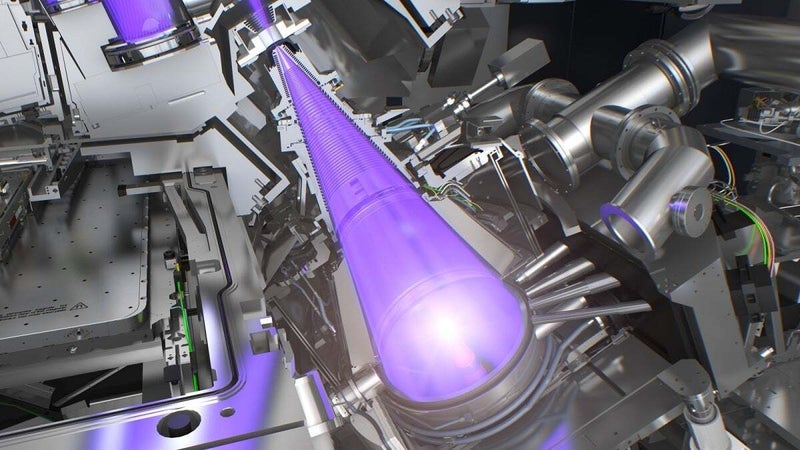
Huawei Amplifies Efforts in Semiconductor Development Amid Challenges
According to industry insiders, Huawei is leaving no stone unturned in its quest to bolster its chip supply chain and achieve technological independence.
This state-of-the-art facility is poised to become a hub of innovation, where the brightest minds in the industry will converge to push the boundaries of what’s possible.
To attract top talent to this cutting-edge endeavour, Huawei is offering salary packages that are nothing short of extraordinary.
Industry executives and sources familiar with the matter reveal that the compensation on offer can be up to twice as lucrative as that of local chipmakers.
Huawei Workers Being Forced to Work 24 Hours?
Huawei intensifies its focus on semiconductor independence with a new R&D centre in Shanghai
However, the rewards of working on the forefront of technological advancement come with significant demands.
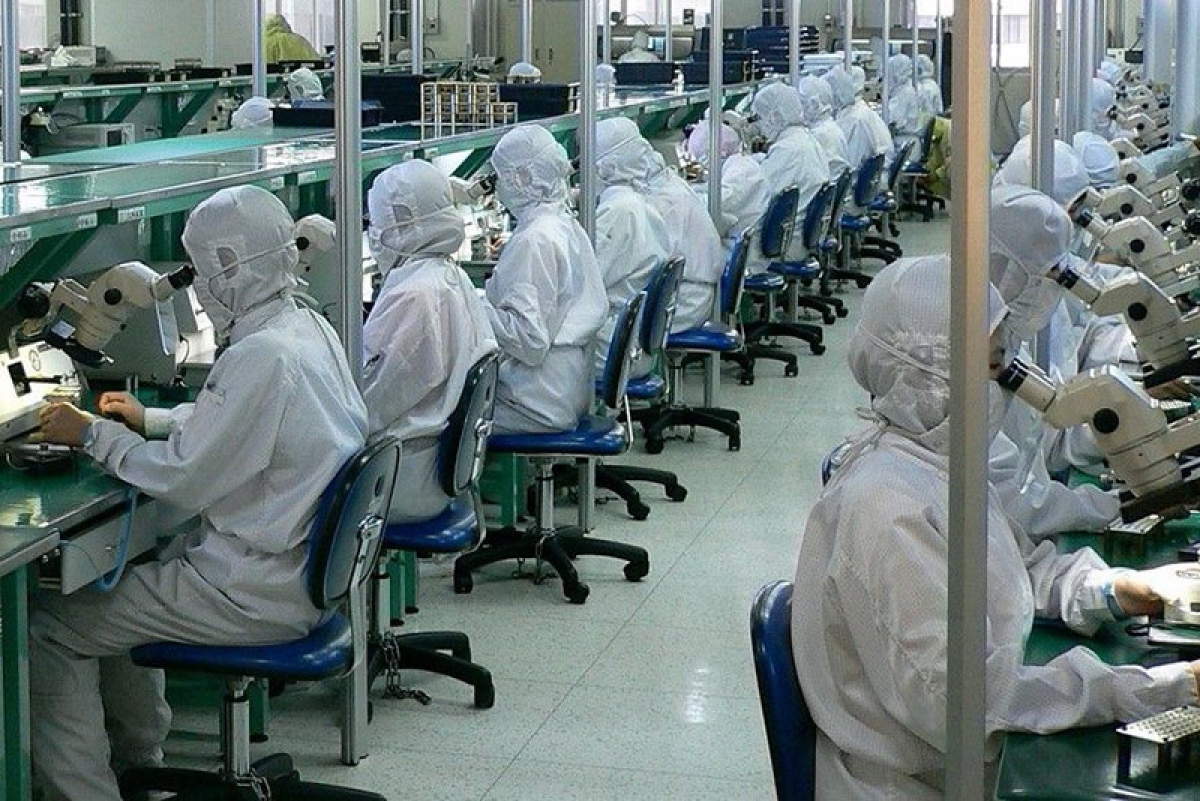
Accounts from chip industry managers paint a picture of a gruelling work culture, where the pursuit of excellence takes precedence over all else.
One Chinese chip engineer, speaking on condition of anonymity, likened the experience to a relentless marathon, with workdays stretching from midnight to midnight, seven days a week, without respite.
While such accounts may seem like an exaggeration, they do show the intensity and dedication required to succeed in an industry where the stakes are high, and the competition is fierce.
FAQs
What is Huawei’s latest initiative in the semiconductor industry?
Huawei has initiated the construction of a large semiconductor equipment research and development centre in Shanghai, demonstrating its commitment to advancing semiconductor technology and reducing dependency on external suppliers amid US restrictions.
How is Huawei attracting talent for its new semiconductor project?
To staff its new R&D centre with the best minds in the industry, Huawei is offering highly competitive salary packages, reportedly double what local chipmakers provide.
This aggressive recruitment strategy underscores the importance of the project to Huawei’s strategic goals.
What are the working conditions like at Huawei’s new semiconductor facility?
While Huawei is pushing for breakthroughs in semiconductor technology, there are reports from industry insiders about a demanding work culture.
Employees may face long hours and continuous work cycles to meet ambitious project goals, reflecting the intense pressure in this high-stakes field.
Why is Huawei focusing on developing its semiconductor technologies?
Huawei’s focus on enhancing its capabilities in semiconductor technology is driven by the need to ensure supply chain resilience and technological sovereignty, especially in the face of international trade restrictions and geopolitical tensions.
Tim Cook’s two-day visit focuses on strengthening relationships with Vietnamese suppliers.
Apple CEO engages with local creators, developers, and students to discuss product uses.
Apple commits to further investments in Vietnam’s local suppliers and sustainable projects.
Company supports 200,000 jobs in Vietnam through its supply chain investments.
Tim Cook, Apple’s Chief Executive, has touched down in the Vietnamese capital, embarking on a two-day visit to one of the tech giant’s crucial manufacturing hubs.
This trip aims to reinforce the company’s bonds with local suppliers and stakeholders, positioning Vietnam as a critical player in Apple’s global supply chain.
Tim Cook’s Vietnam Itinerary
Xin chào, Vietnam! Thank you to the very talented musicians My Linh and My Anh for such a warm welcome. And I loved the egg coffee! pic.twitter.com/vBGwatuXG1
— Tim Cook (@tim_cook) April 15, 2024
During his stay, Cook is slated to engage with content creators, app developers, and students, gaining invaluable insights into how they leverage Apple’s innovative products.
Additionally, the company has announced plans to bolster its financial commitments to local suppliers, further cementing its presence in the region.
Apple’s CEO took to X (formerly Twitter)to share glimpses of his Vietnamese experience, posting a photo of himself savouring the iconic egg coffee in the company of two local musicians.
Phuong Vu and his team are wildly creative. They showed me how they use iPhone, iPad, and Mac to bring everything and anything from their imagination to life in Nirvana Space – an artistic workshop like no other! pic.twitter.com/jpsjLsnv6O
— Tim Cook (@tim_cook) April 15, 2024
In another post, he highlighted his visit to a workshop where creators were harnessing Apple’s tools to craft and showcase their artistic expressions.
The tech behemoth’s commitment to Vietnam extends beyond commercial interests.
Apple has pledged to fund initiatives aimed at promoting clean water access and educational opportunities, demonstrating its dedication to the nation’s sustainable development.
Apple’s Continuous Investment in Vietnam
Tim Cook Visits Vietnam to Strengthen Apple’s Local Supply Chain Ties
Since 2019, Apple has invested a staggering 400 trillion Vietnamese dong (approximately $16 billion) through its supply chains in Vietnam, a figure that has more than doubled over the same period.
The company’s statement on its Vietnamese website affirms that its operations support the livelihoods of 200,000 individuals, encompassing direct employment, supplier networks, and app developers.
Apple commits to further investments in Vietnam’s local suppliers and sustainable projects
What was the purpose of Tim Cook’s visit to Vietnam?
Apple’s CEO, Tim Cook, visited Vietnam primarily to reinforce partnerships with local suppliers and explore further investment opportunities.
His visit underscores the strategic importance of Vietnam in Apple’s global supply chain, especially given its role in manufacturing key components and assembling various Apple products.
What activities were part of Tim Cook’s itinerary in Vietnam?
During his visit, Tim Cook met with local content creators, app developers, and students to understand how Apple’s technology supports their work and education.
He also participated in cultural experiences, including trying local cuisine and visiting a workshop where local artists demonstrated how they utilize Apple products in their creative processes.
How is Apple enhancing its investment in Vietnam?
Apple announced plans to increase financial support for its Vietnamese suppliers, which is part of a broader strategy to diversify its supply chain and reduce dependency on other regions.
Additionally, Apple is investing in community projects focused on providing clean water and educational opportunities across Vietnam.
What impact does Apple’s presence have on Vietnam’s economy?
Since 2019, Apple has invested approximately $16 billion in Vietnam, significantly impacting the local economy by supporting around 200,000 jobs.
This includes direct employment at Apple’s facilities, jobs in local supplier companies, and opportunities for Vietnamese app developers.
This development comes after a hiatus in the C-Series lineup, which previously included models like the Galaxy C8 and C9, available exclusively in China before being discontinued.
Galaxy C55 5G Spotted on Geekbench
Galaxy C55 5G Spotted on Geekbench
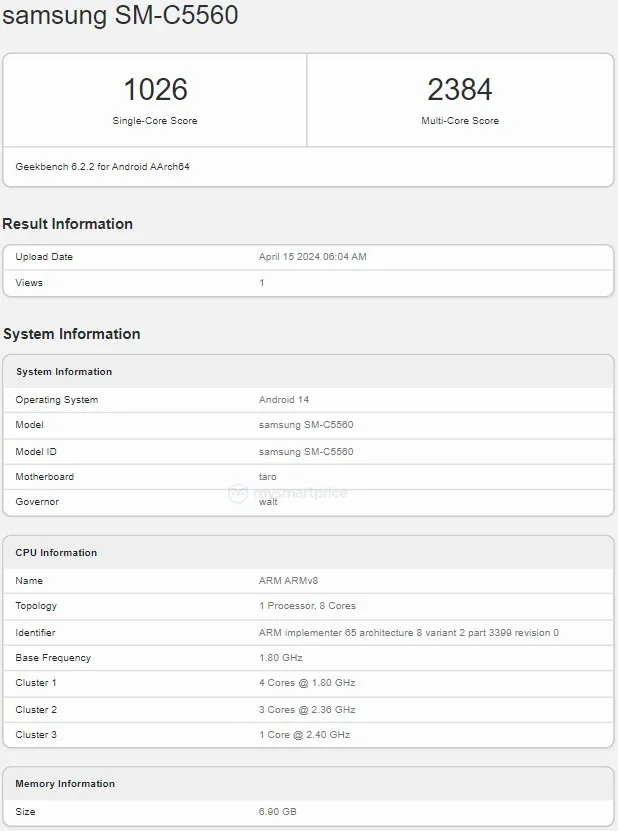
Details about the new Galaxy C55 5G emerged when it was spotted by MySmartPrice on the Geekbench database, under the model number SM-C5560.
The device showcased impressive performance scores, with 1,026 in the single-core test and 2,384 in the multicore test.
The Geekbench listing revealed that the smartphone would be powered by the Snapdragon 7 Gen 1 chipset, operating at a frequency of 2.40 GHz.
Further insights into the Galaxy C55 5G’s specifications have been gleaned from various certification sites, including TENAA and the Google Play Console.
The phone is expected to include a modern punch-hole cutout and an in-screen fingerprint reader, aligning with current smartphone design trends.
The optics on the Galaxy C55 5G suggest a versatile photography experience.
It is expected to feature a triple rear camera setup, including a 50MP primary sensor complemented by an 8MP ultrawide lens and a 2MP depth sensor.
For selfies and video calls, a 13MP front camera is anticipated.
In terms of battery life, the Galaxy C55 5G is likely to be equipped with a 5,000mAh battery, supported by 25W fast charging capabilities.
This combination promises extended usage durations and quick recharging times, catering well to the needs of heavy smartphone users.
C-Series Revival: What toExpect
While Samsung has not officially confirmed the revival of the C-Series, the appearance of the Galaxy C55 5G across certification platforms suggests that a new launch could be imminent.
The Samsung Galaxy C55 5G marks the revival of the C-Series, showcasing a 6.67-inch OLED FHD+ display, a modern punch-hole cutout, and a robust in-screen fingerprint reader.
It combines high performance with elegant design, making it a standout in the mid-range category.
Which processor is used in the Galaxy C55 5G?
The Galaxy C55 5G is powered by the Snapdragon 7 Gen 1 chipset, operating at a frequency of 2.40 GHz.
This processor is complemented by 8GB of RAM and an Adreno 644 GPU, ensuring smooth performance across applications and gaming.
Can you describe the camera features of the Galaxy C55 5G?
The Galaxy C55 5G is anticipated to feature a versatile triple rear camera setup that includes a 50MP primary sensor, an 8MP ultrawide lens, and a 2MP depth sensor.
Additionally, it sports a 13MP front-facing camera for high-quality selfies and video calls.
What are the battery specifications and charging capabilities of the Galaxy C55 5G?
This smartphone is equipped with a 5,000mAh battery that supports 25W fast charging. This setup ensures long-lasting battery life and rapid charging, which is ideal for users with heavy usage patterns.
This development, as reported by Android Headlines, arises from a variety of challenges highlighted by the South Indian Organized Retailers Association (ORA).
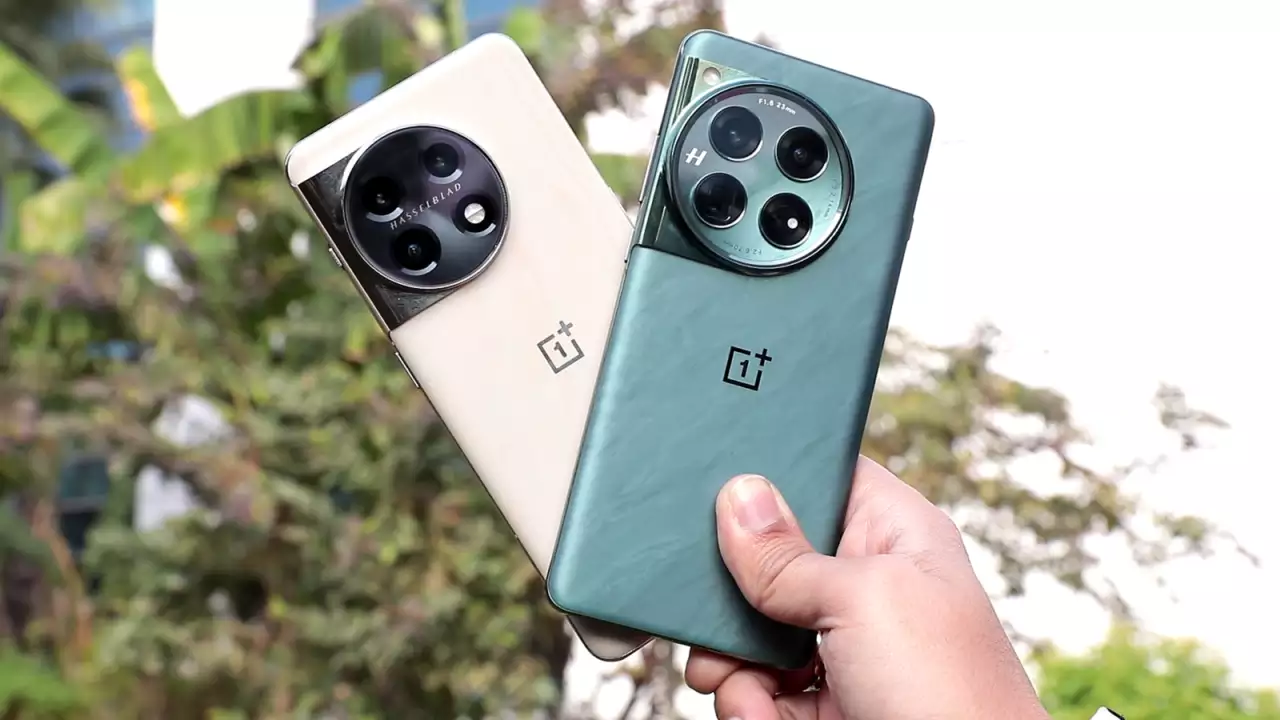
OnePlus Devices To Not Be Sold in South India?
OnePlus Sales Reportedly Halt in Over 4300 Stores Across South India
The ORA has expressed dissatisfaction with OnePlus’s business practices, a sentiment that is shared by the broader All India Mobile Retailer Association (AIMRA).
The issues leading to this decision include critical problems with warranty claims.
Retailers and consumers have reportedly faced significant delays when dealing with service and warranty issues, which has strained relationships and tarnished the user experience.
Additionally, the profit margins on OnePlus products have been consistently low, making it difficult for retailers to justify continuing their sales compared to other brands that offer more sustainable returns.
OnePlus to remain available on major online platforms like Amazon India and Flipkart
The ramifications of this move are considerable.
Although OnePlus devices will remain available on online platforms such as Amazon India and Flipkart, the absence from a vast network of offline stores could severely limit the brand’s market penetration and consumer reach in India.
This development underscores the broader challenges that tech companies face in managing relationships with retail partners and maintaining service quality that meets consumer and retailer expectations.
Why are over 4300 stores stopping the sale of OnePlus devices?
Starting May 1, numerous retailers across South India will cease selling OnePlus devices due to ongoing issues with warranty claims and unprofitable margins.
These challenges have been outlined by the South Indian Organized Retailers Association (ORA) and are supported by concerns from the All India Mobile Retailer Association (AIMRA).
What specific issues have led to the discontinuation of OnePlus sales in these stores?
Retailers have faced significant challenges with OnePlus, particularly with delayed responses to warranty and service claims that have adversely affected the consumer experience.
Additionally, the profit margins from selling OnePlus products have been unsustainably low, prompting retailers to reconsider their sales strategy.
Will OnePlus still be available for purchase in India?
Despite the withdrawal from a large number of brick-and-mortar stores, OnePlus devices will continue to be available for purchase through online platforms, including Amazon India and Flipkart, ensuring that customers can still access these products.
What are the broader implications of this sales halt for OnePlus in India?
The cessation of OnePlus sales in these offline outlets could drastically reduce the brand’s physical market footprint in India, potentially limiting consumer exposure and affecting overall sales performance in one of its biggest markets.
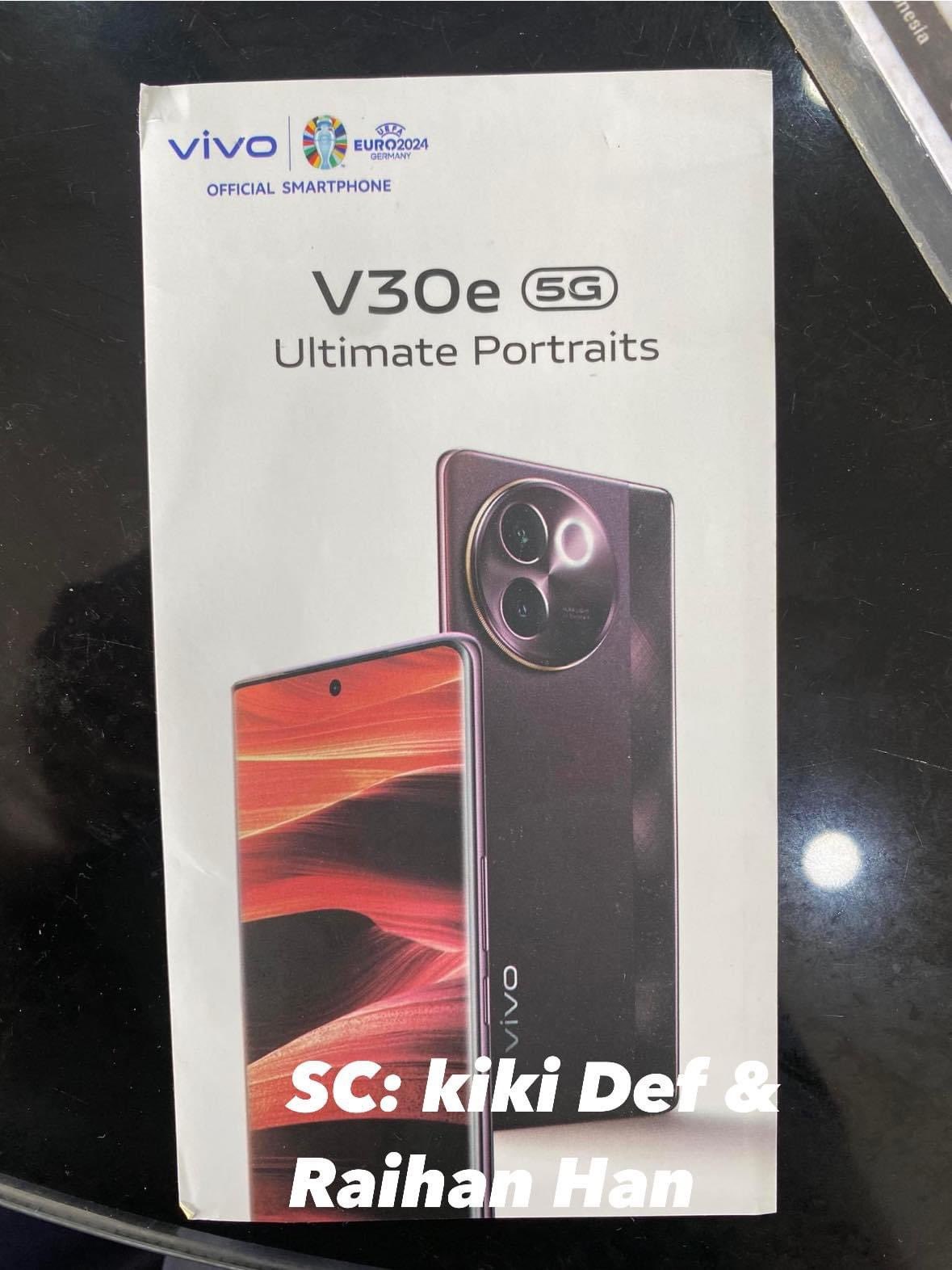
According to a report by 91mobiles, here is a detailed look at what to expect from the Vivo V30e based on the latest leak.
Design and Display Innovations
Vivo V30e Leaks Show The Device with a Slim Design and Powerful Features
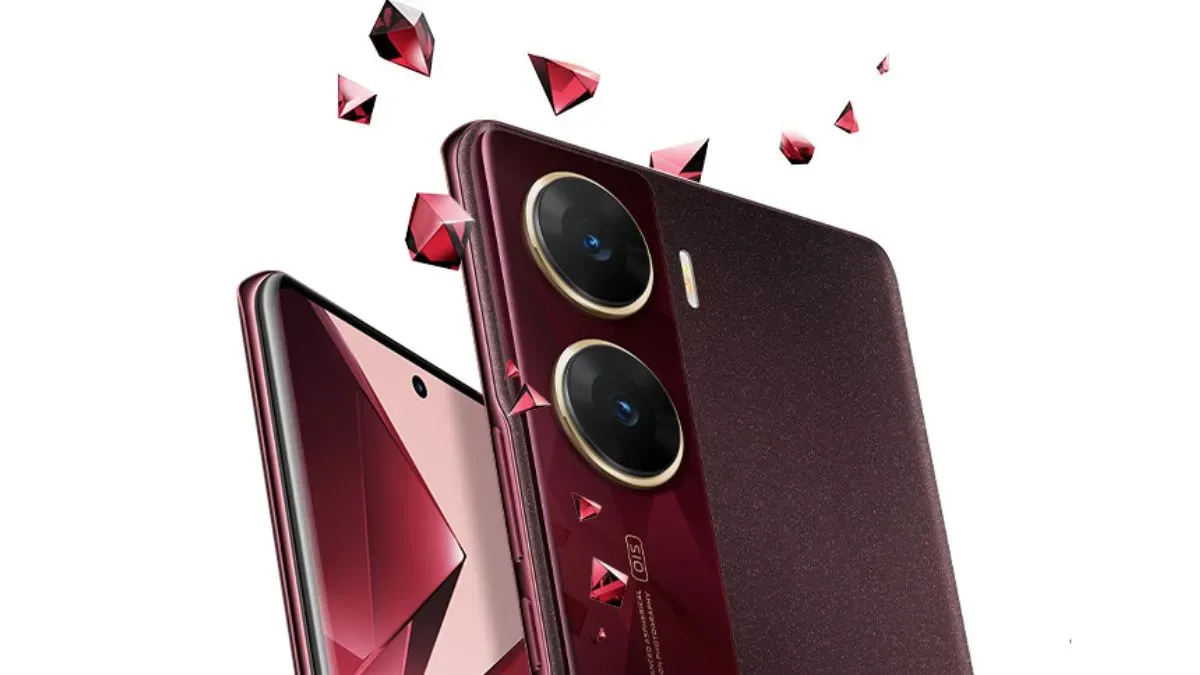
The Vivo V30e is set to feature a sleek 3D curved display, contributing to a premium aesthetic that aligns with modern smartphone design trends.
The device is touted to be one of the slimmest in its category, even with a substantial 5,500mAh battery under the hood.
The phone’s design is expected to include a punch-hole camera on the front, seamlessly integrated into the display for an uninterrupted viewing experience.
The physical volume and power buttons will be conveniently located on the right edge of the device.
Camera and Colour Options
Vivo V30e to sport a 3D curved display and ultra-slim design
Vivo seems to be focusing significantly on the camera capabilities of the V30e.
It is rumoured to include a Sony IMX882 sensor with OIS and what Vivo refers to as an “aura light” for potentially enhanced photography, especially in low-light conditions.
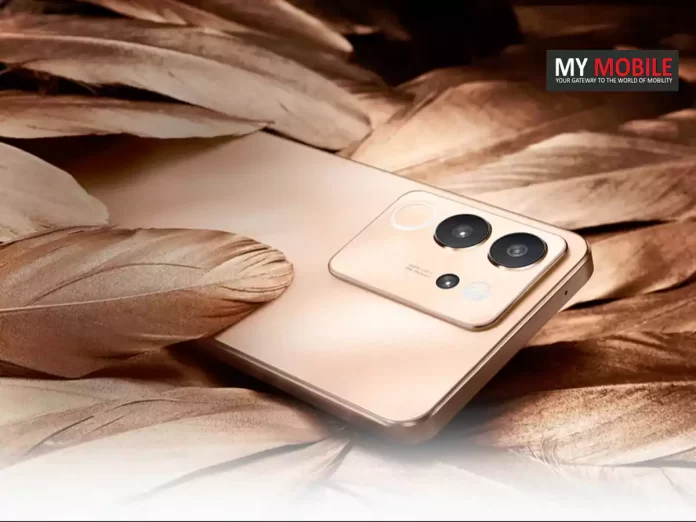
The rear of the phone might feature a stylish circular camera module that houses dual lenses and an LED flash.
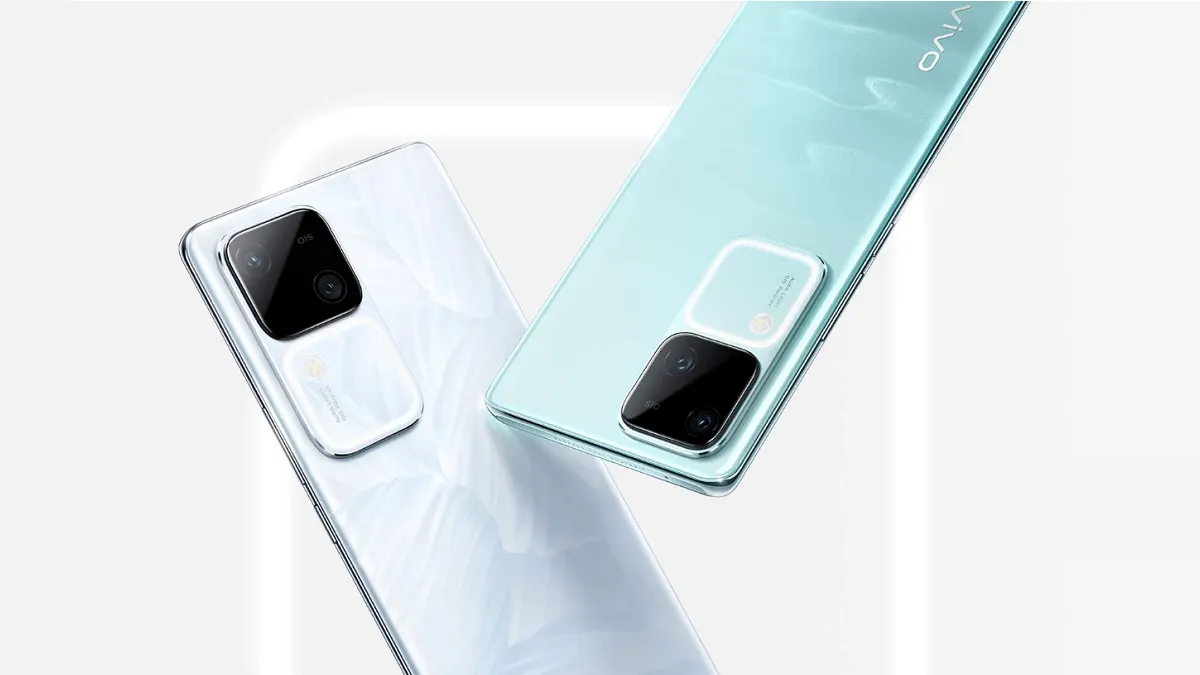
Colour options for the V30e are expected to be vibrant and unique, with the smartphone available in Blue-Green and Brown-Red shades, adding a touch of personality and style to the device.
Performance and Storage
Features a high-capacity 5500mAh battery and 45W fast charging
The phone is expected to come with at least 8GB of RAM and 256GB of internal storage, with the provision for expanding its memory via virtual RAM technology.
Additional Features
Equipped with Qualcomm Snapdragon 6 Gen 1 chipset for robust performance
The Vivo V30e is also anticipated to support a triple rear camera setup, though specific details about the additional cameras remain scarce.
Fast charging is another highlight, with the device expected to support 45W fast charging, enabling quick power-ups for the large battery.
Vivo V30e Specs
GENERAL
Sim Type
Dual Sim, GSM+GSM (Hybrid Slot)
Dual Sim
Yes
Sim Size
Nano+Nano SIM
Device Type
Smartphone
Release Date
August 28, 2024 (Expected
DESIGN
Dimensions
162.5 x 75.8 x 7.7 mm (6.40 x 2.98 x 0.30 in)
Bezel less
Yes
Colors
Artistic Red, Artistic Blue
DISPLAY
Type
Color AMOLED Screen (1B Colors)
Touch
Yes
Size
6.8 inches, 1080 x 2400 pixels, 120 Hz
Aspect Ratio
20:9
PPI
~ 387 PPI
Screen to Body Ratio
~ 85.9%
Features
3D Curved Screen, 8000000:1 High Contrast Ratio, 1200 Hz Instant Touch, Instant Touch Sampling Rate, 1800 nits Local Peak Brightness
Punch Hole 50 MP f/2.5 (Wide Angle) with Autofocus
Front Video Recording
1080p @ 30 fps FHD
TECHNICAL
OS
Android v13
Custom UI
FuntouchOS 13
Chipset
Qualcomm Snapdragon 6 Gen1
CPU
2.2 GHz, Octa Core Processor
Core Details
4xCortex-A78@2.2 GHz & 4xCortex-A55@1.8 GHz
GPU
Adreno 662
Java
No
Browser
Yes
MULTIMEDIA
Email
Yes
Music
Yes
Video
Yes
FM Radio
No
Document Reader
Yes
BATTERY
Type
Non-Removable Battery
Size
5500 mAh, Li-Po Battery
Fast Charging
Yes, 66W
FAQs
What are the standout features of the Vivo V30e’s design?
The Vivo V30e boasts a modern aesthetic with a 3D curved display that enhances user engagement and visual appeal. Despite housing a large 5500mAh battery, the smartphone maintains an ultra-slim profile, making it one of the slimmest in its category.
Additionally, it features a punch-hole camera integrated seamlessly into the display for a sleek look.
Can you describe the camera specifications of the Vivo V30e?
The Vivo V30e is rumoured to be equipped with a Sony IMX882 sensor with Optical Image Stabilization (OIS) and an “aura light” feature that aims to improve photo quality, especially in low-light conditions.
The rear camera setup includes a stylish circular module with dual lenses and an LED flash, enhancing the phone’s photographic capabilities.
What performance capabilities does the Vivo V30e offer?
Powered by the Qualcomm Snapdragon 6 Gen 1 chipset, the Vivo V30e is expected to deliver smooth and efficient processing.
It is likely to come with at least 8GB of RAM and 256GB of internal storage, with the option to expand memory using virtual RAM technology, ensuring ample space and speed for a wide range of applications.
What are the charging and battery features of the Vivo V30e?
The Vivo V30e is designed with a 5500mAh battery that supports 45W fast charging.
This feature enables quick power-ups, significantly reducing charging time and ensuring that the phone can support extended use throughout the day without frequent recharges.
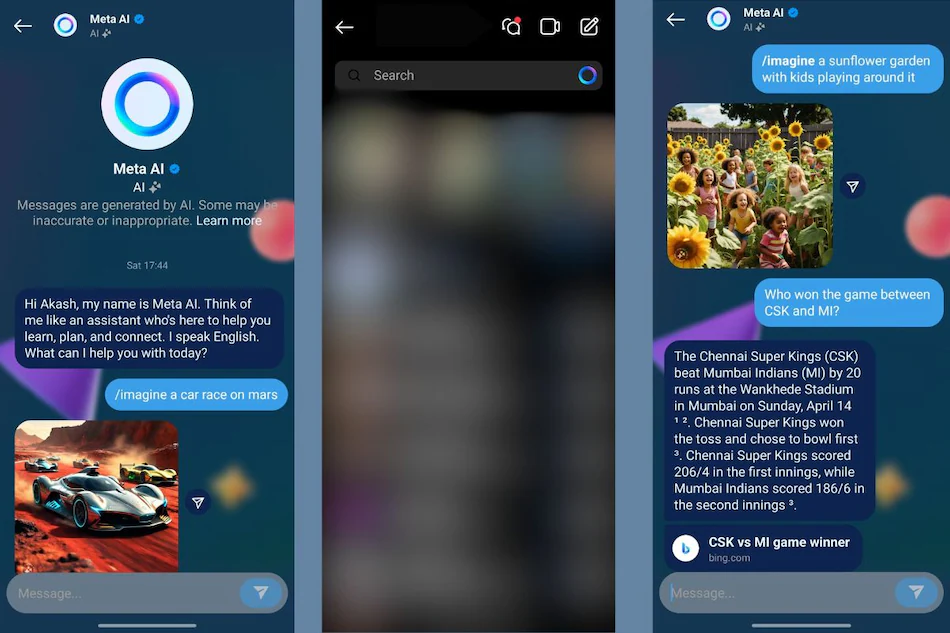
Now, Meta AI has also started showing up for select Instagram and Messenger users in India.
Meta AI Appearing on Instagram
Meta AI Expands Presence in India with New Feature Instagram, and Messenger
Powered by the Llama AI model,Meta AI is a versatile chatbot capable of engaging in natural language conversations, answering questions, generating images, writing essays, and performing a wide range of tasks.
On Instagram, users can find the Meta AI chatbot in the direct message (DM) search bar, represented by a blue ring with pink hues.
However, access to the AI-powered chatbot appears to be limited, with multiple users reporting that they are unable to access the feature.
In a statement to TechCrunch, Meta said that the company is currently testing the new feature in India and parts of Africa, stating, “Our generative AI-powered experiences are under development in varying phases, and we’re testing a range of them publicly in a limited capacity.”
Meta AI now available on WhatsApp, Instagram, and Messenger in India
Prior to this wider release, the availability of Meta AI was confined to the US and a few other regions, with India not included in the initial rollout.
The introduction of Meta AI now places India among the few countries with access to all leading AI chatbots, such as OpenAI’s ChatGPT, Google Gemini, Microsoft’s Copilot, Anthropic’s Claude, and Perplexity AI search engine.
Meta AI distinguishes itself by not only handling text-based tasks like answering queries, generating and translating text, summarizing extensive documents, and aiding in coding but also by its ability to generate images.
Moreover, the AI chatbot is connected to the Internet via Bing, enabling it to provide real-time information.
Meta AI is a generative AI chatbot developed by Meta, powered by the Llama AI model.
It is designed to perform a variety of tasks such as engaging in natural language conversations, answering questions, generating images, writing essays, and even assisting with coding.
It’s a versatile tool intended to enhance user interaction on various Meta platforms.
Where can users find Meta AI on Instagram?
On Instagram, Meta AI can be accessed in the direct message (DM) search bar, where it is represented by an icon featuring a blue ring with pink hues.
This allows users to utilize the chatbot directly within their messaging interface to streamline communication and task management.
Why is access to Meta AI limited in India?
Although Meta AI has been introduced in India, access remains limited as Meta continues to test the chatbot’s features and capabilities.
The company aims to ensure stability and functionality across diverse user interactions before a broader rollout, as stated in their announcement regarding ongoing public tests in limited capacities.
How does Meta AI compare to other AI chatbots available in India?
With its debut, Meta AI joins other prominent AI chatbots like OpenAI’s ChatGPT, Google Gemini, and Microsoft’s Copilot, available in India.
Meta AI is distinctive because it integrates directly with popular social media platforms and offers image generation capabilities, making it a comprehensive AI tool for users.
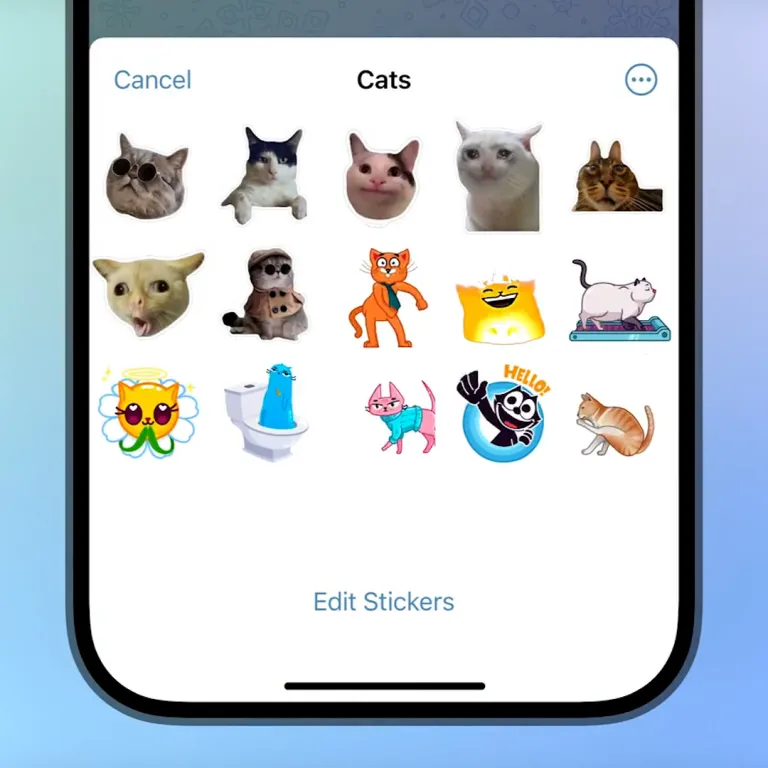
The update introduces a “Sticker Editor” function, allowing users to infuse some fun and creativity into their chats and group messages.
Sticker Editor on Telegram
Telegram Unveils Sticker Editor in Latest Update to Enhance User Creativity
Announced through an official blog post, the Telegram 10.11 update empowers users to craft custom stickers and sticker packs using the in-app Sticker Editor.
This feature enables you to take any photo from your device and embellish it with text, scribbles, emojis, GIFs, and animated stickers, resulting in truly unique stickers that can be shared with friends and contacts.
Similar to the functionality found on iOS and Samsung’s One UI 6 update, Telegram 10.11 offers an intelligent cut-out tool.
By selecting an image and tapping on a subject, the app can automatically remove the background, isolating the desired object, pet, or person.
For more precise control, users can manually erase and restore portions of the image to achieve the perfect selection.
Additionally, a white outline option is available to mimic the classic sticker look and feel.
Additional Functionalities
New Sticker Editor feature allows creation of custom stickers directly within Telegram
The Sticker Editor allows you to either send your creations individually or assemble them into sticker sets.
Upcoming updates promise an additional 16 features to further enrich the app’s capabilities
The app also employs AI to suggest relevant stickers based on the in-app emojis used, including those related to pets, further enhancing the user experience.
What functionalities does the new Sticker Editor in Telegram offer?
The Sticker Editor in Telegram allows users to create custom stickers by adding text, emojis, GIFs, and more to photos from their device.
It includes an intelligent cut-out tool for easy background removal, manual fine-tuning options, and the ability to add a classic white outline to stickers.
How can I create and share my own sticker sets in Telegram?
After creating stickers using the Sticker Editor, you can send them individually or organize them into sticker sets.
These sets can be shared with friends via Telegram and are accessible through a unique t.me link, making it easy to distribute and use them across different conversations and platforms.
Do recipients need the latest Telegram update to view custom sticker sets?
While it’s not specified if recipients require the latest version of Telegram to view custom sticker sets, having the latest update, version 10.11, could ensure compatibility and access to all newly released features, including viewing and using shared sticker sets.
What comparison can be made between Telegram’s Sticker Editor and similar features on other platforms?
Telegram’s Sticker Editor is similar to sticker creation tools found in iOS and Samsung’s One UI 6, particularly with its intelligent cut-out tool that automatically isolates subjects in photos.
However, Telegram enhances this functionality with additional customization options and the ability to integrate these stickers into the app’s ecosystem.
Samsung offers users a choice with its Galaxy AI:they can opt for a less ambitious version of AI features with heightened privacy or a high-performance version with reduced privacy protection, depending on whether the processing occurs on-device or through the cloud.
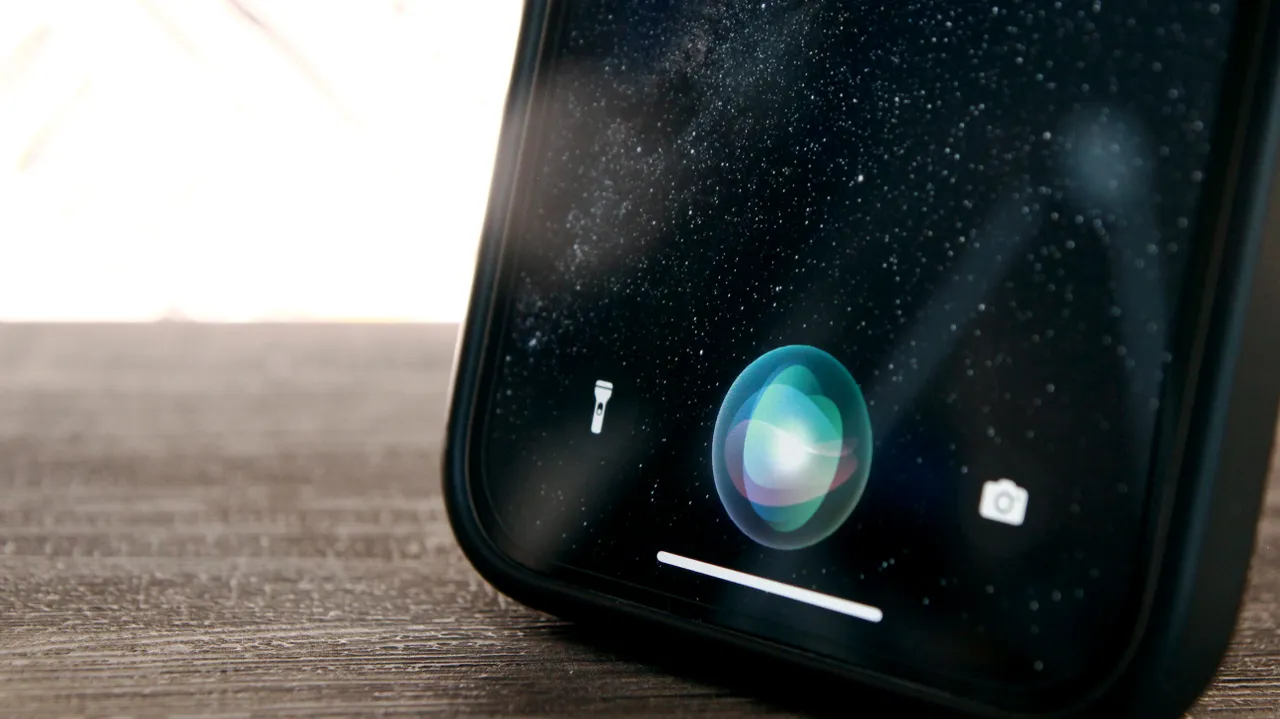
Hailed as the most significant update since the original iPhone’s launch in 2007, iOS 18 is anticipated to initially leverage AI to assist users with everyday tasks on their iPhones, though expectations should be tempered accordingly.
FAQs
What new AI capabilities is Apple introducing in iOS 18?
Apple plans to introduce cutting-edge AI features in the upcoming iOS 18 update, focusing on processing directly on the iPhone.
This approach aims to deliver faster performance and better privacy by reducing reliance on cloud computing for AI functionalities.
How will on-device AI processing benefit iPhone users?
By processing AI tasks directly on the iPhone, users will experience quicker responses and enhanced privacy protection.
This method ensures that sensitive data does not leave the device, offering a secure environment for personal information.
What are the limitations of Apple’s on-device AI in iOS 18?
While on-device processing enhances privacy and speed, it may limit the iPhone’s ability to handle more complex AI algorithms typically run on cloud servers.
This could affect the performance of large language models and other advanced AI applications.
Will there be any cloud-based AI features in iOS 18?
According to Bloomberg’s Mark Gurman, Apple might allow some AI functionalities to be cloud-based, potentially partnering with providers like Google’s Gemini.
This could help balance the need for powerful AI capabilities without fully compromising on-device data processing.
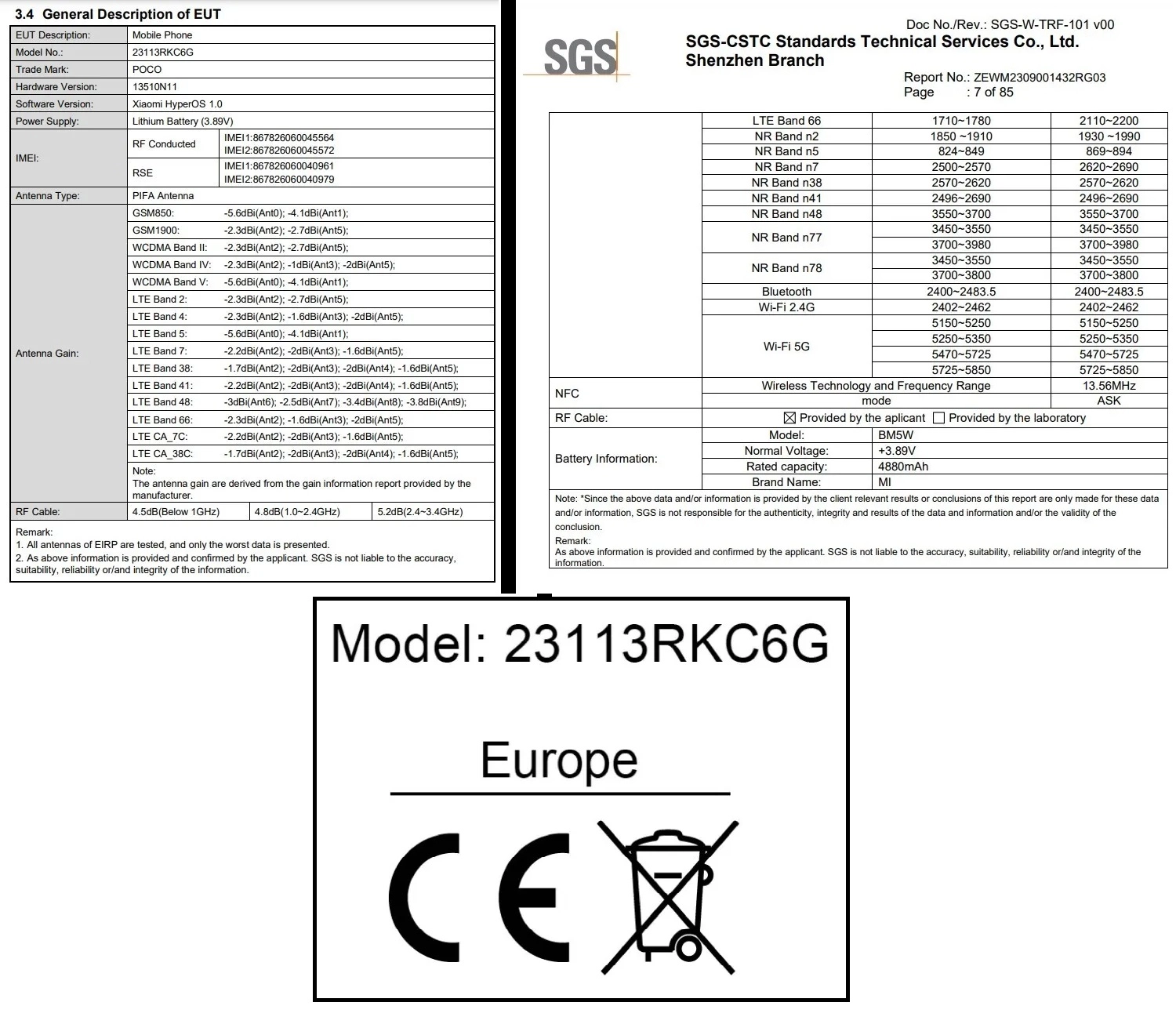
Listed under the model number 23113RKC6G, the FCC certification unveils some intriguing specifications about the device.
POCO F6 Pro: Expected Specs
POCO F6 Pro Gears Up for Launch After Being Spotted on FCC With Advanced Features and Powerful Specs
Key among these is the inclusion of a 4,880mAh battery.
The device is also set to operate on Xiaomi’s HyperOS 1.0 right out of the box and will support both 2.4GHz and 5GHz Wi-Fi networks, enhancing its connectivity capabilities.
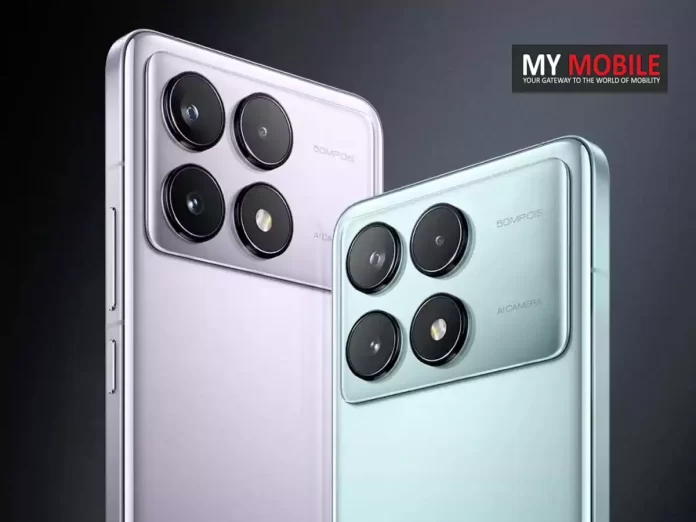
While the FCC listing doesn’t divulge much more, it’s been noted that the model number closely aligns with that of the Redmi K70, suggesting that the POCO F6 Pro may be a rebranded version of this smartphone, which launched in China last November.
If speculations hold true, the POCO F6 Pro will share several features with the Redmi K70.
This includes a 6.67-inch 2K OLED display with a 120Hz refresh rate and a peak brightness of 4,000 nits, along with support for Dolby Vision.
This setup features a 50MP Light Hunter 800 OIS-enabled main camera, supplemented by an 8MP ultra-wide-angle lens and a 2MP macro sensor.
A 16MP front camera is anticipated for selfies and video calls.
Moreover, the POCO F6 Pro is expected to come with a 5,000mAh battery, supporting 120W fast charging technology.
It could also incorporate the Surge G1 battery management chip to optimize power use.
Other prospective features include an IP53 rating for dust and splash resistance, an in-display fingerprint sensor, an IR blaster, and more, making it a well-rounded flagship device.
These specifications suggest the POCO F6 Pro is gearing up to be a significant contender in the smartphone market, especially if it launches in India and other regions under the POCO branding.
What notable specifications does the POCO F6 Pro offer?
The POCO F6 Pro is expected to come with a robust 4,880mAh battery, a 6.67-inch 2K OLED screen with a 120Hz refresh rate, and operates on Xiaomi’s HyperOS 1.0.
This device aims to deliver top-notch performance and connectivity with support for both 2.4GHz and 5GHz Wi-Fi networks.
How does the camera system on the POCO F6 Pro compare to other smartphones?
The POCO F6 Pro boasts a versatile camera system featuring a 50MP main camera with OIS, complemented by an 8MP ultra-wide-angle lens and a 2MP macro sensor.
The front-facing 16MP camera enhances selfie and video call quality, making it competitive in today’s market.
Can the POCO F6 Pro handle intensive applications and games?
Powered by the Qualcomm Snapdragon 8 Gen 2 processor and available with up to 16GB of RAM and 1TB of storage, the POCO F6 Pro is more than capable of handling high-end games and demanding applications, providing users with a seamless and responsive experience.
What additional features enhance the POCO F6 Pro’s usability?
Beyond its core specifications, the POCO F6 Pro includes several features aimed at boosting user experience, such as an IP53 rating for resistance to dust and splashes, an in-display fingerprint sensor for enhanced security, and a Surge G1 battery management chip for efficient power use.
Having a gander at the specs, I am of the opinion that this new series is designed to offer superior performance coupled with an exceptional user experience, promising to shake up the current market dynamics.
But does it manage to do that?
Is there just one too many Realme lineups floating in the budget market?
Let’s find out in this detailed review of the Realme P1.
Pros
Cons
Efficient chipset
Missing ultra-wide camera
Bright, smooth display
Some bloatware
Reliable performance
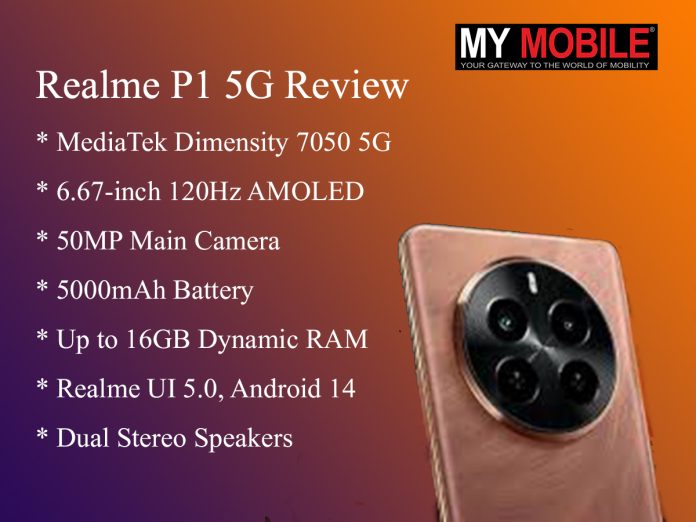
Realme P1 5G: Key Specs
Realme P1 5G: Key Specs
MediaTek Dimensity 7050 5G
6.67-inch 120Hz AMOLED
50MP Main Camera
5000mAh Battery, 45W Charging
Up to 16GB Dynamic RAM
Realme UI 5.0, Android 14
Dual Stereo Speakers
Realme P1 5G: Unboxing Experience
Unpacking the Realme P1 5G, I was satisfied with the inclusion of Realme’s regular accessory set — a rare commitment in today’s market.
This included the smartphone, a clear silicone case, a charging brick, and a USB Type-A to Type-C cable for charging.
Alongside this, you also get the standard documentation including the Setup guide and warranty papers.
Finally there is the SIM ejector toolkit packaged neatly in the middle.
Realme P1 5G: Design and Display
Realme P1 5G: Design
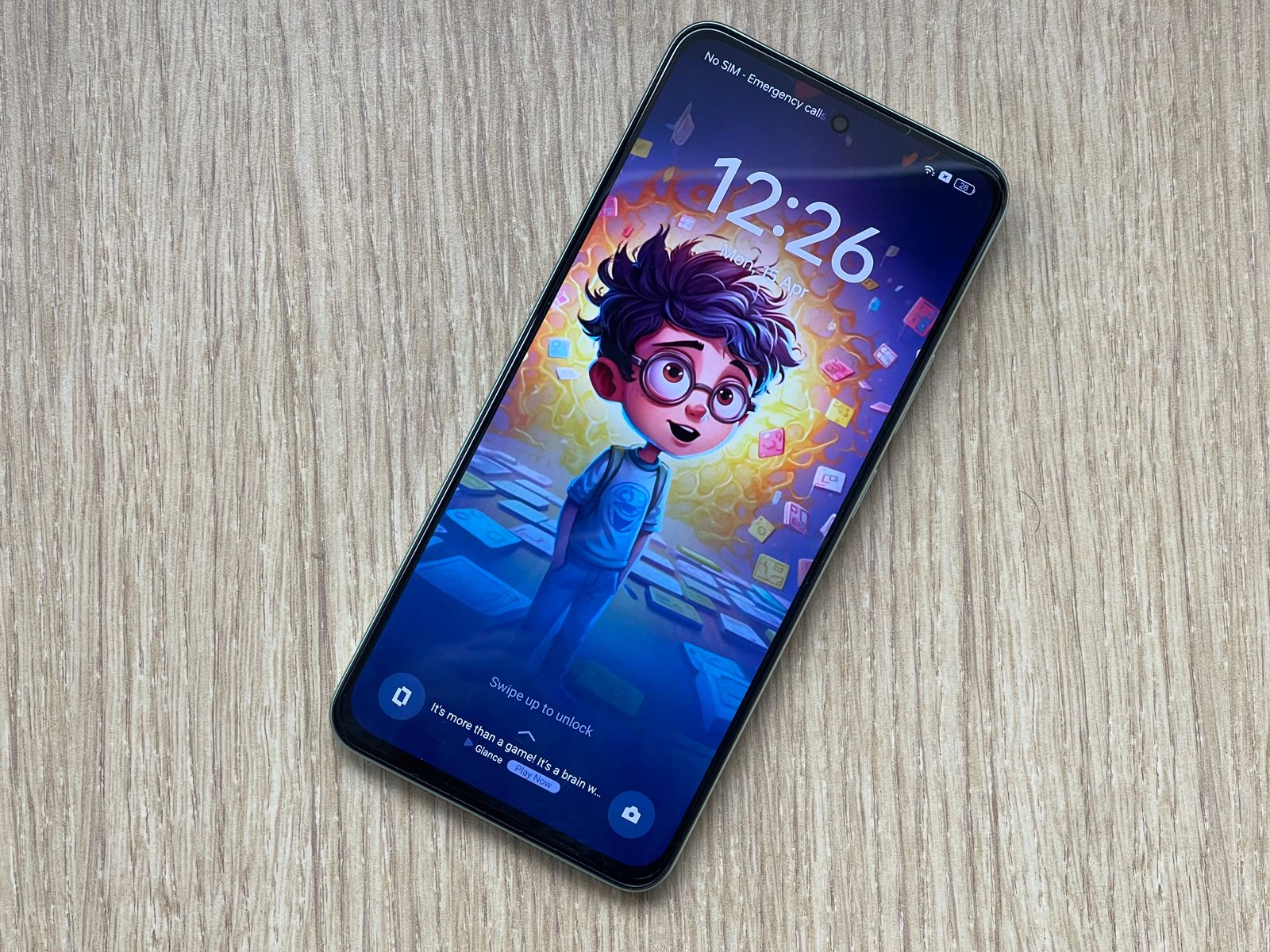
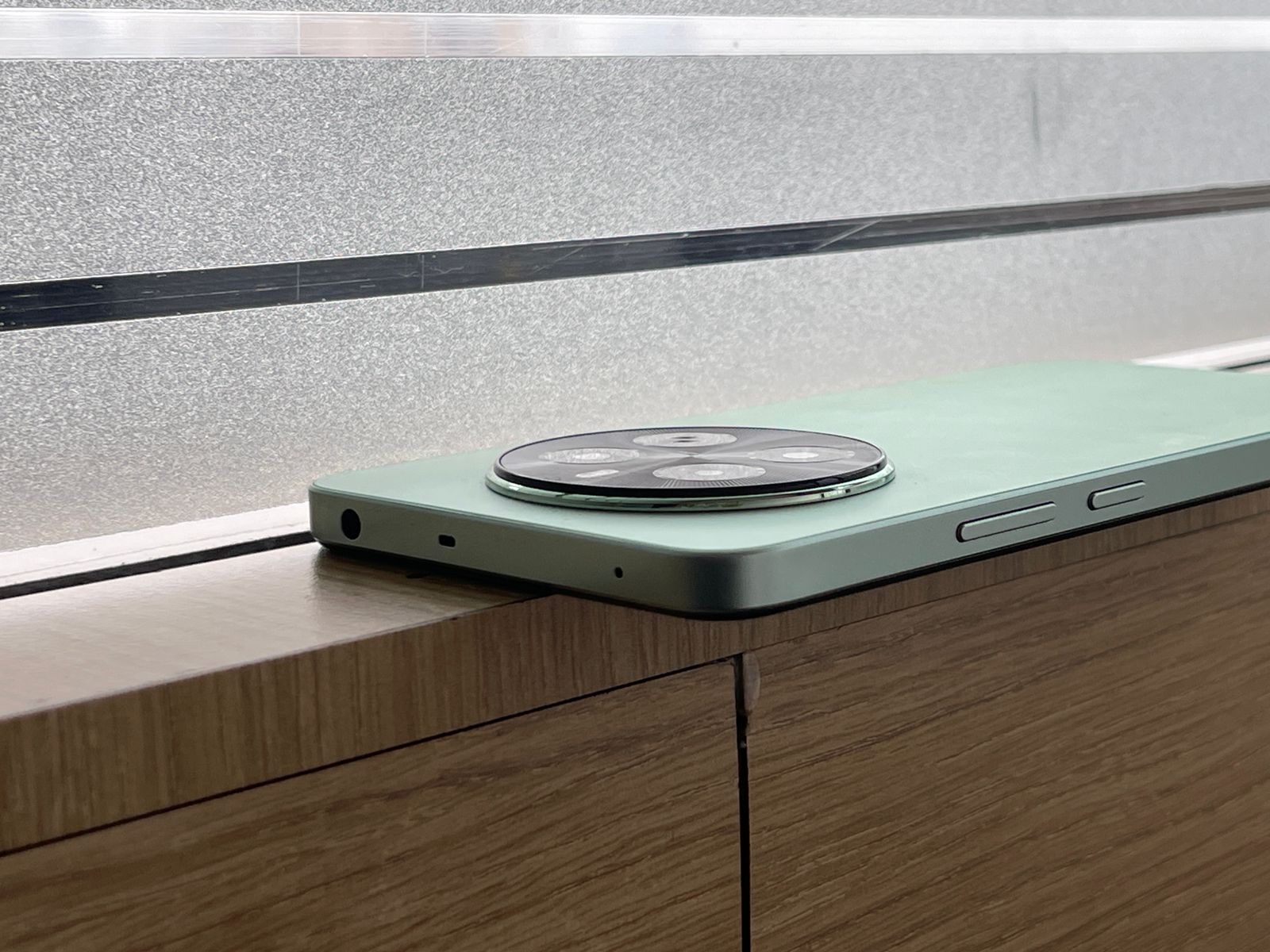
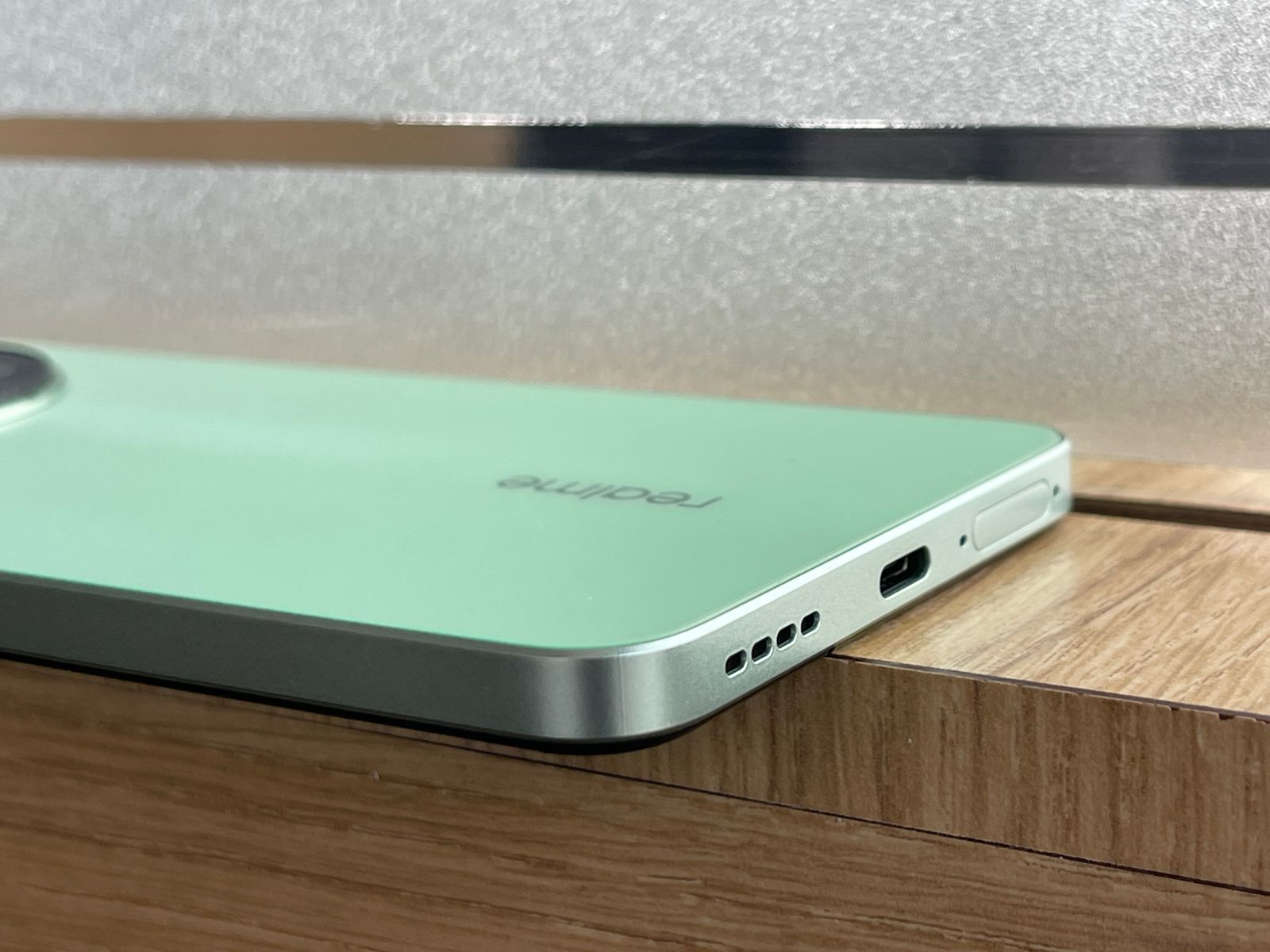
The Realme P1 5G features a design that I think is best described as a double-edged sword in today’s competitive market.
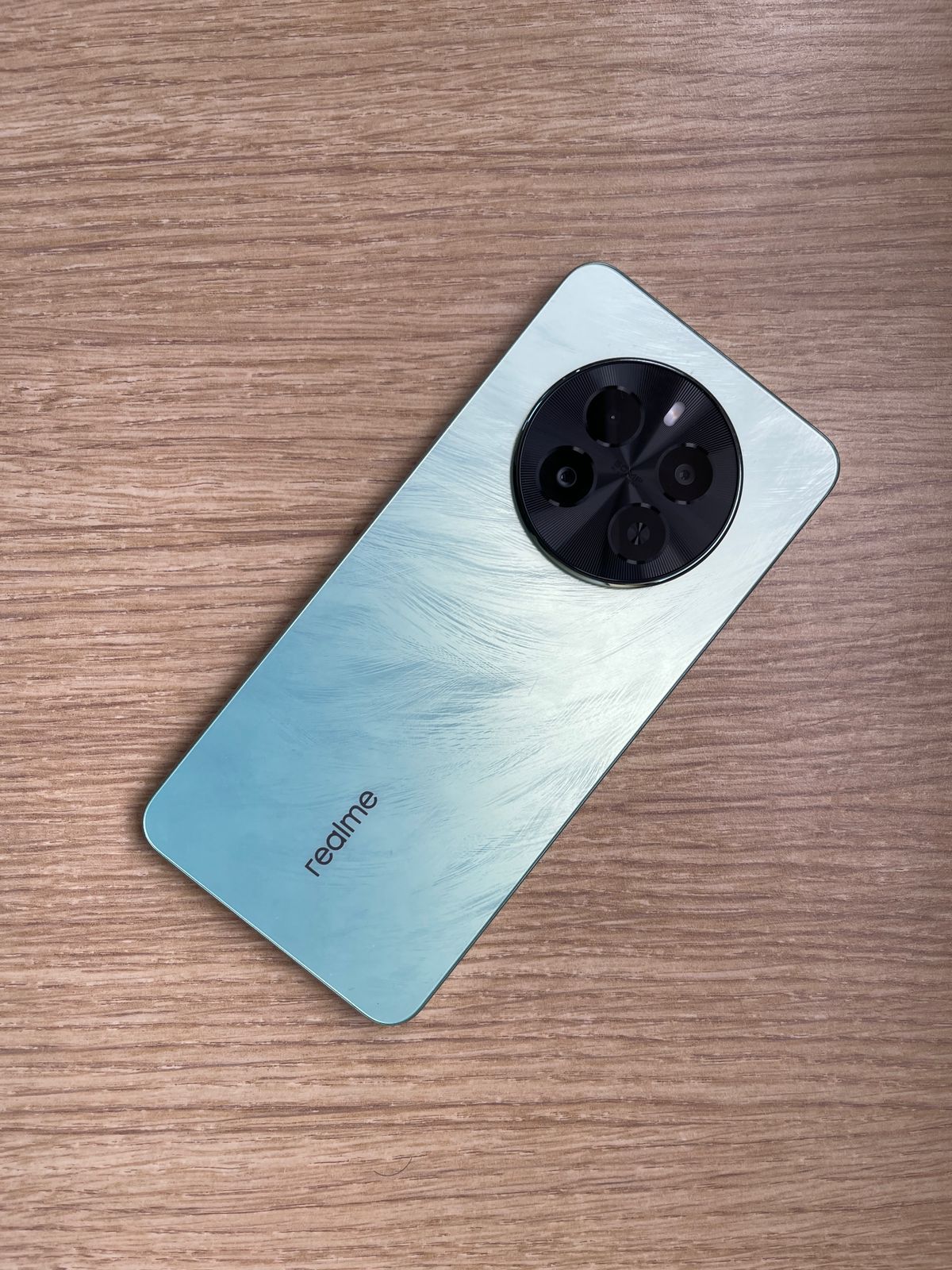
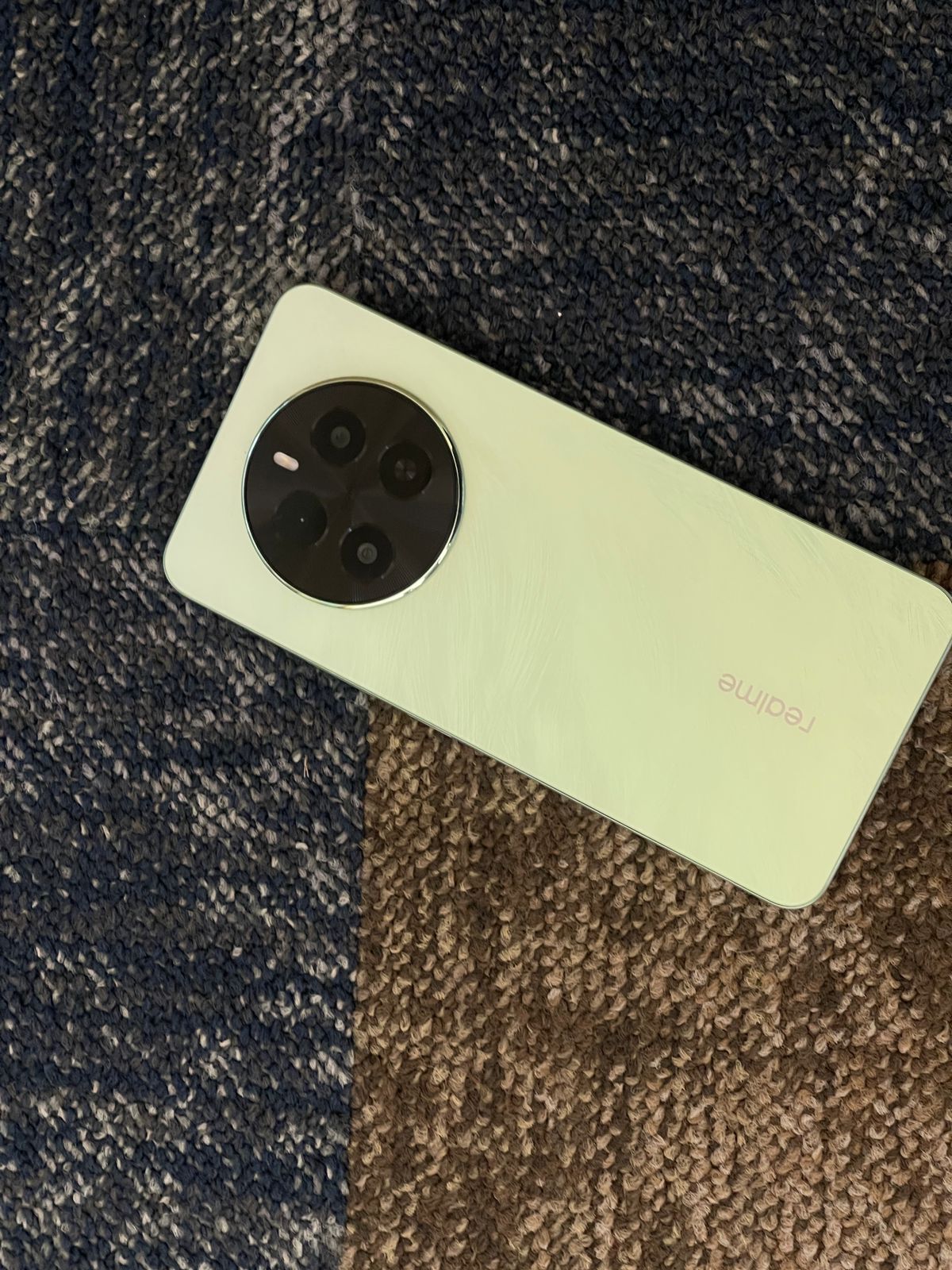
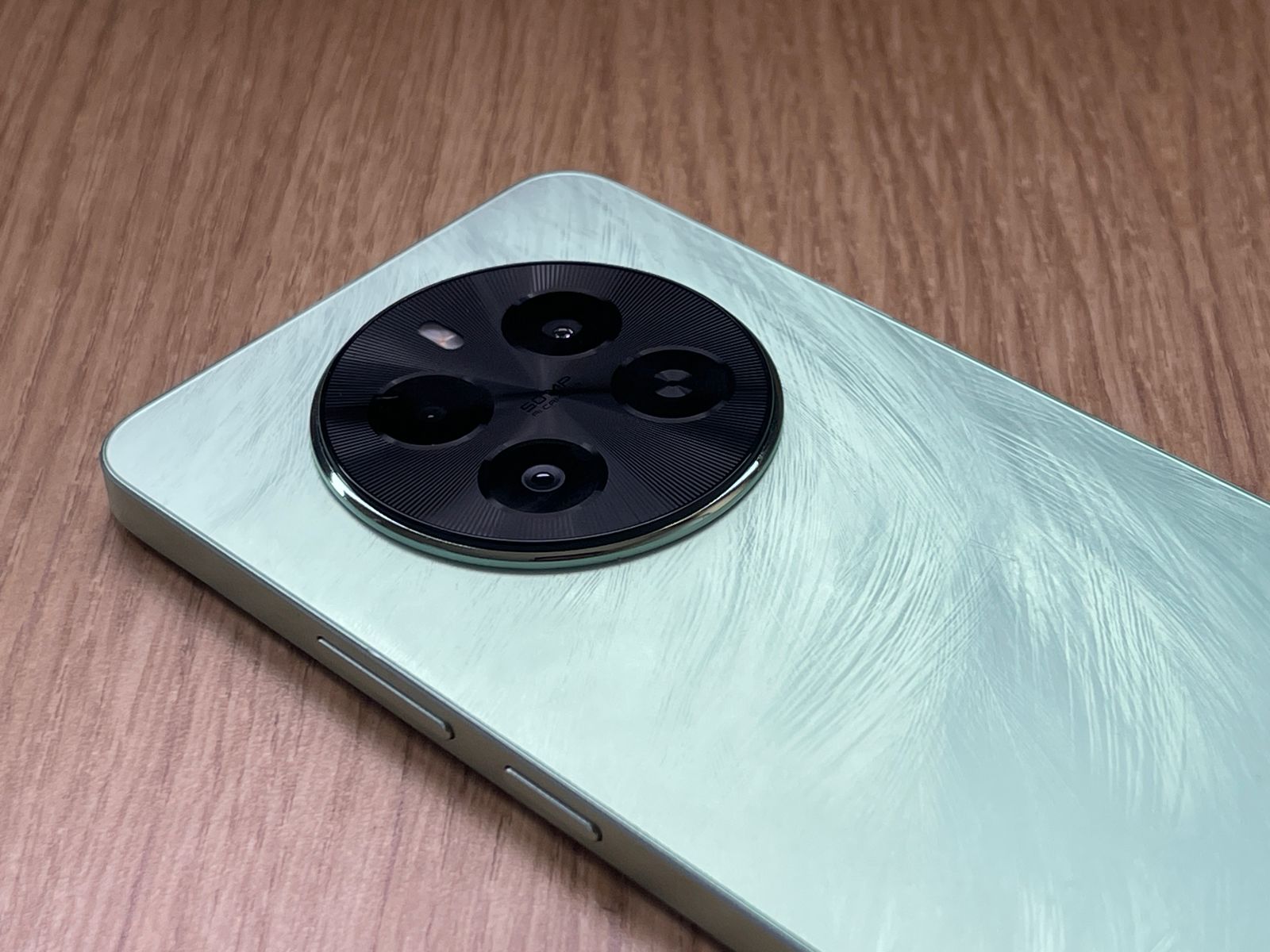
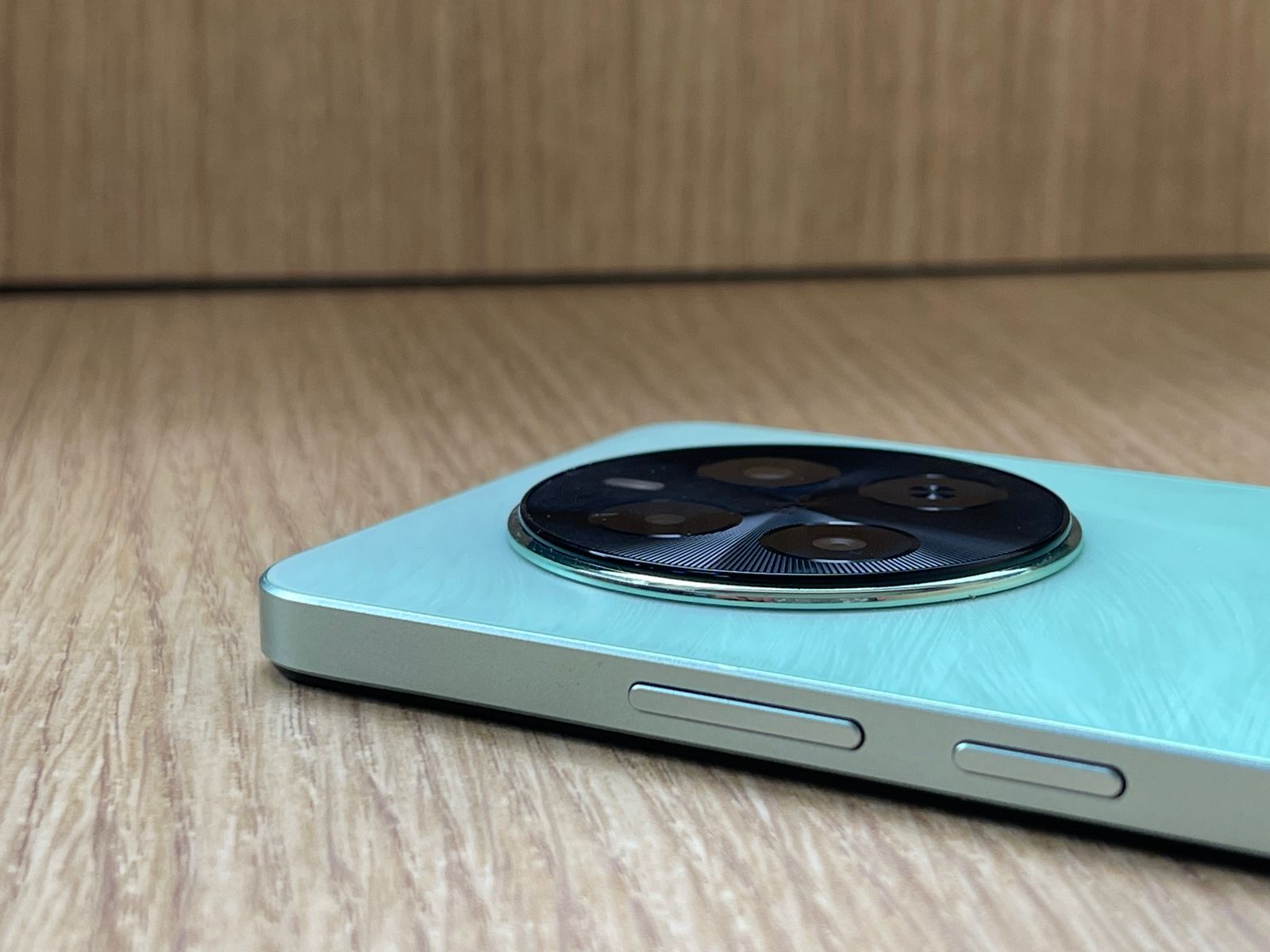
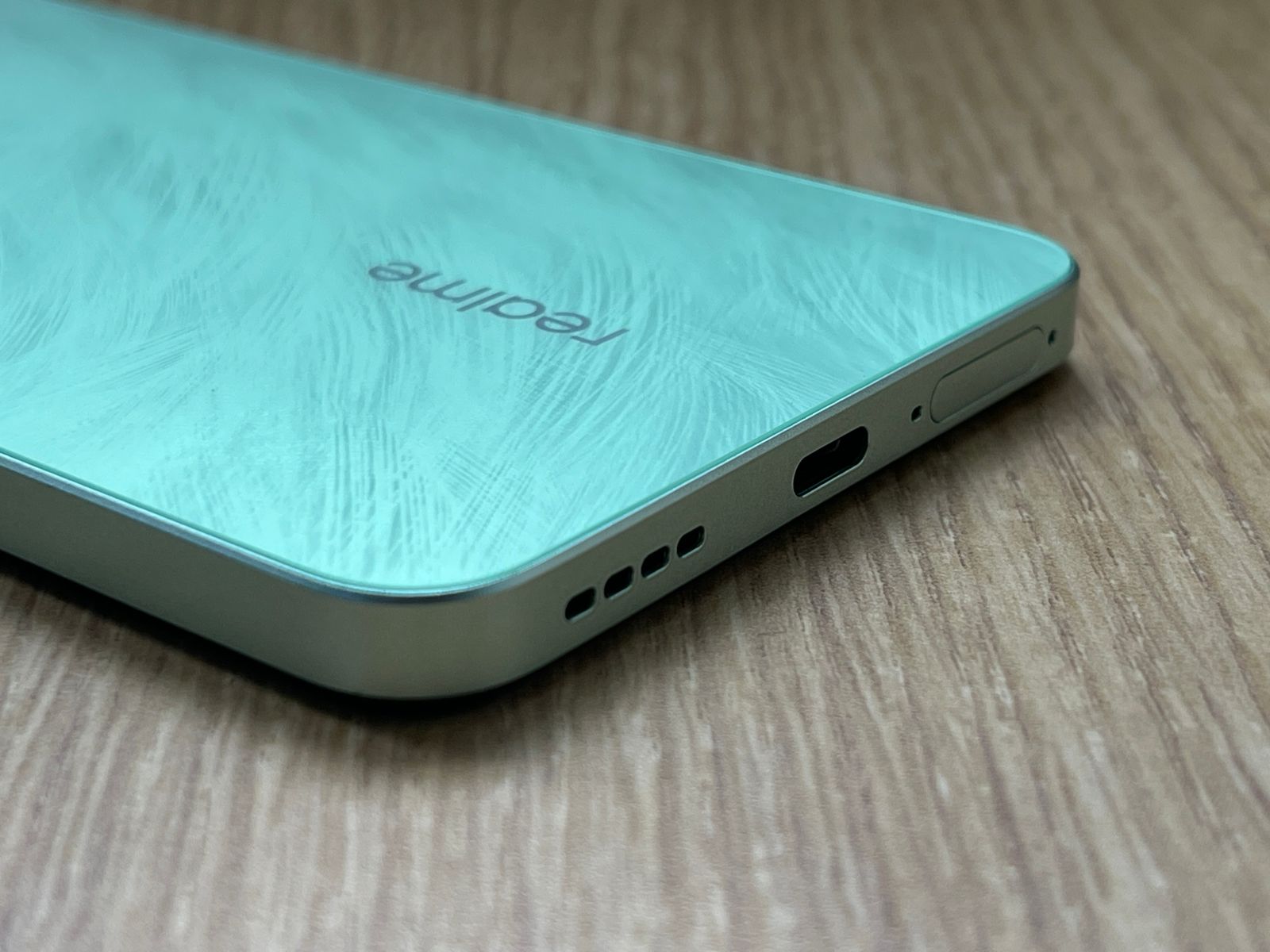
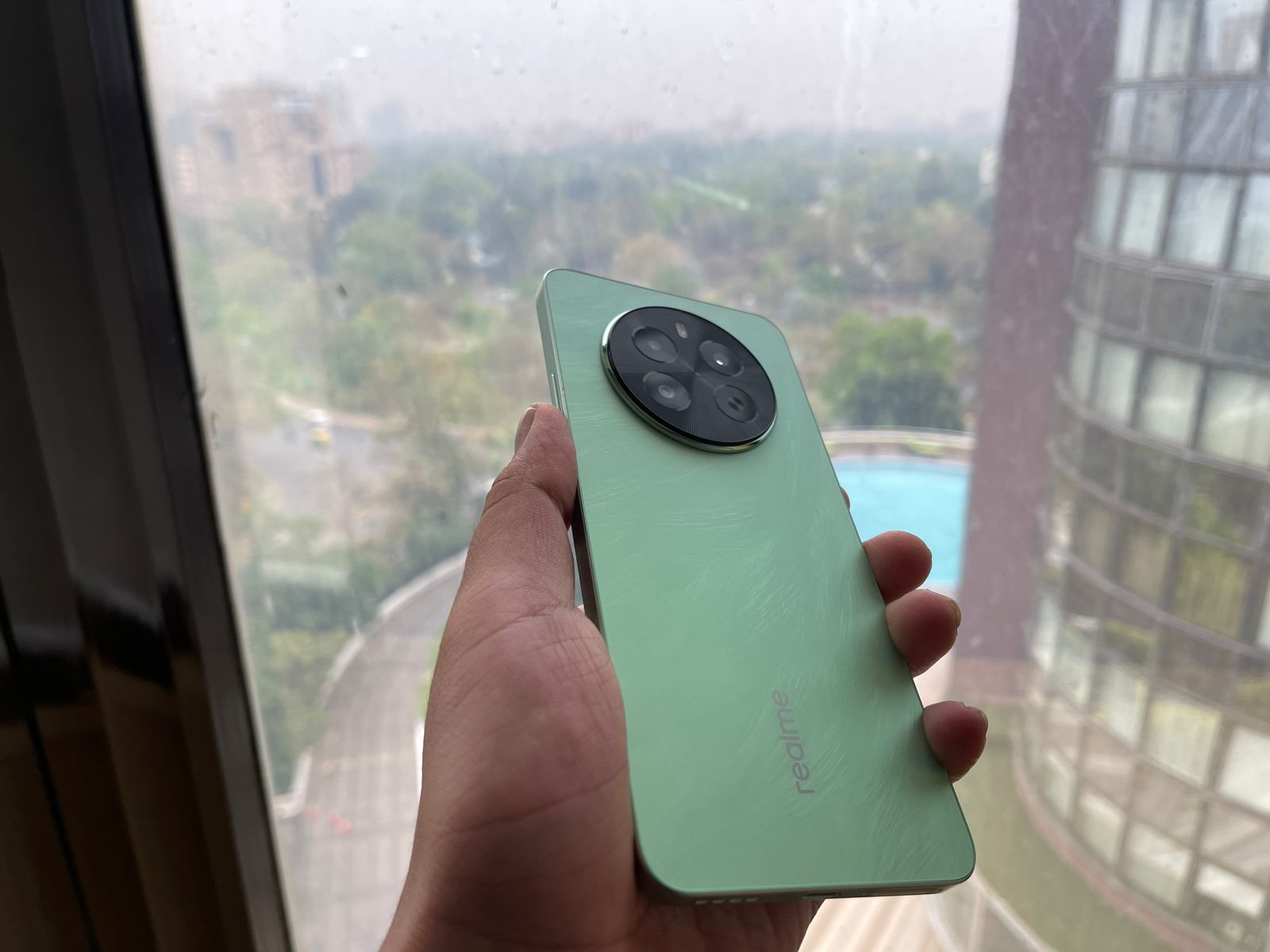
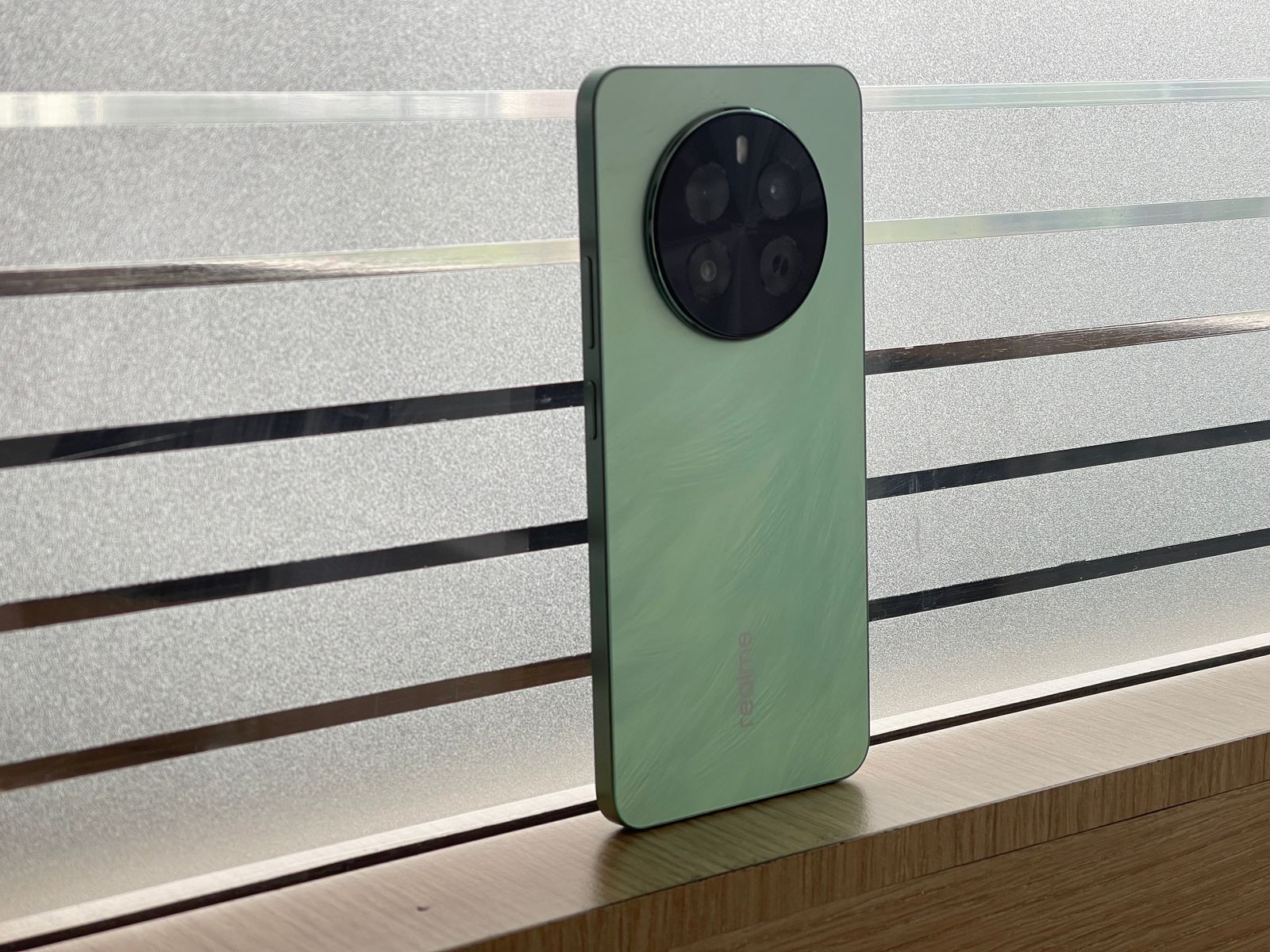
It adopts the Bird Culture-inspired Phoenix Design, incorporating a micro-crystal sparrow feather texture that gleams under light, offering a tactile sensation reminiscent of nature’s elegance.
This unique approach adds an artistic flair, but it’s nestled within a form factor that might feel too familiar to Realme enthusiasts.
I feel that the design from the back, while premium, does not stray far from the aesthetic seen in numerous previous Realme models, which might disappoint users looking for something distinctly fresh.
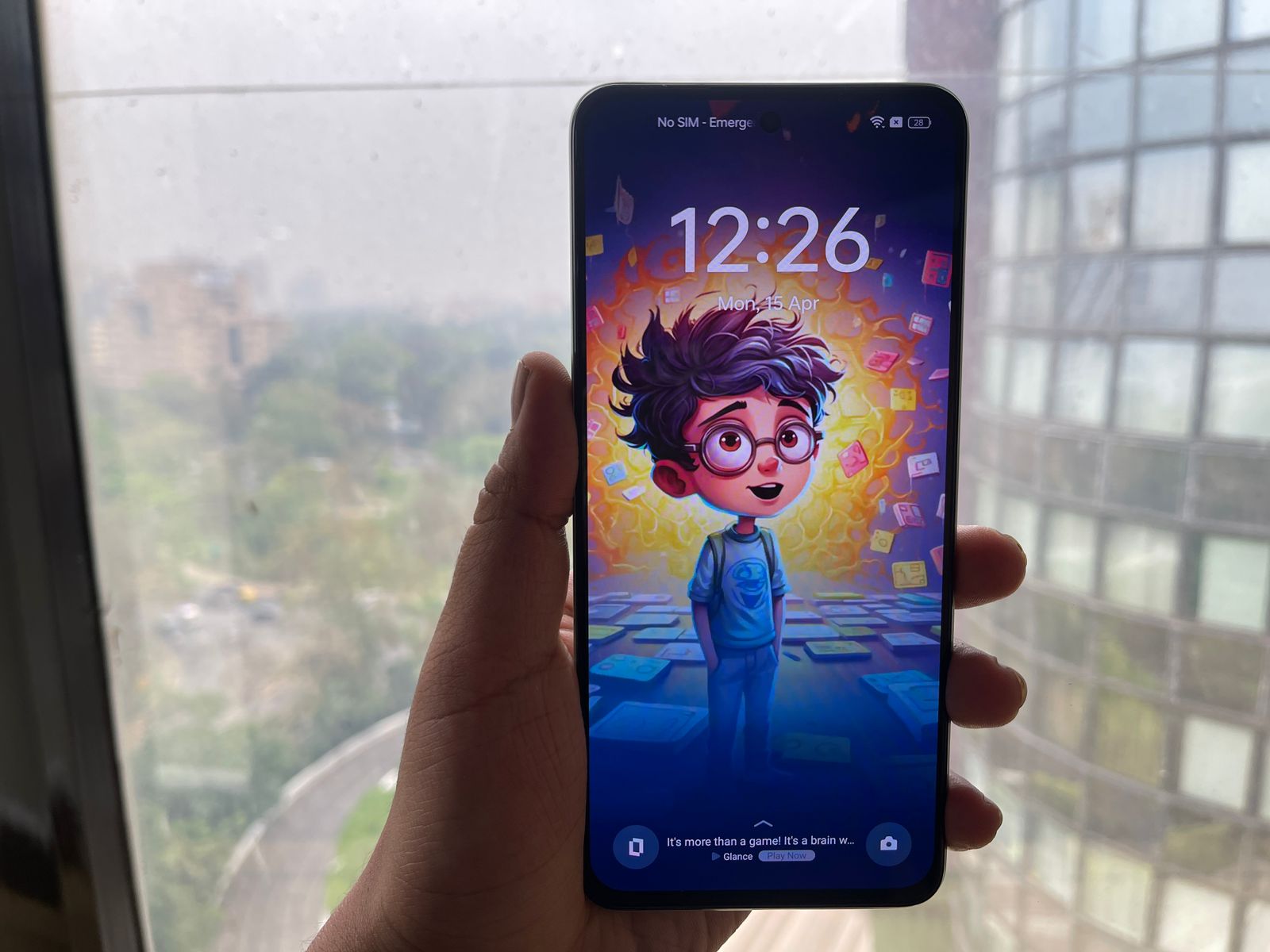
The display also features an innovative Rainwater Smart Touch technology, enhancing screen interaction during inclement weather by adjusting touch sensitivity to prevent unintended inputs.
I feel that this is a significant usability boost, particularly for those living in wetter climates.
While the display offers peak brightness levels up to 2000 nits, ensuring excellent visibility in bright conditions, it lacks HDR support, which has become a common feature in many mid-range smartphones.
Even so, all things considered it is a great offering for casual viewing purposes.
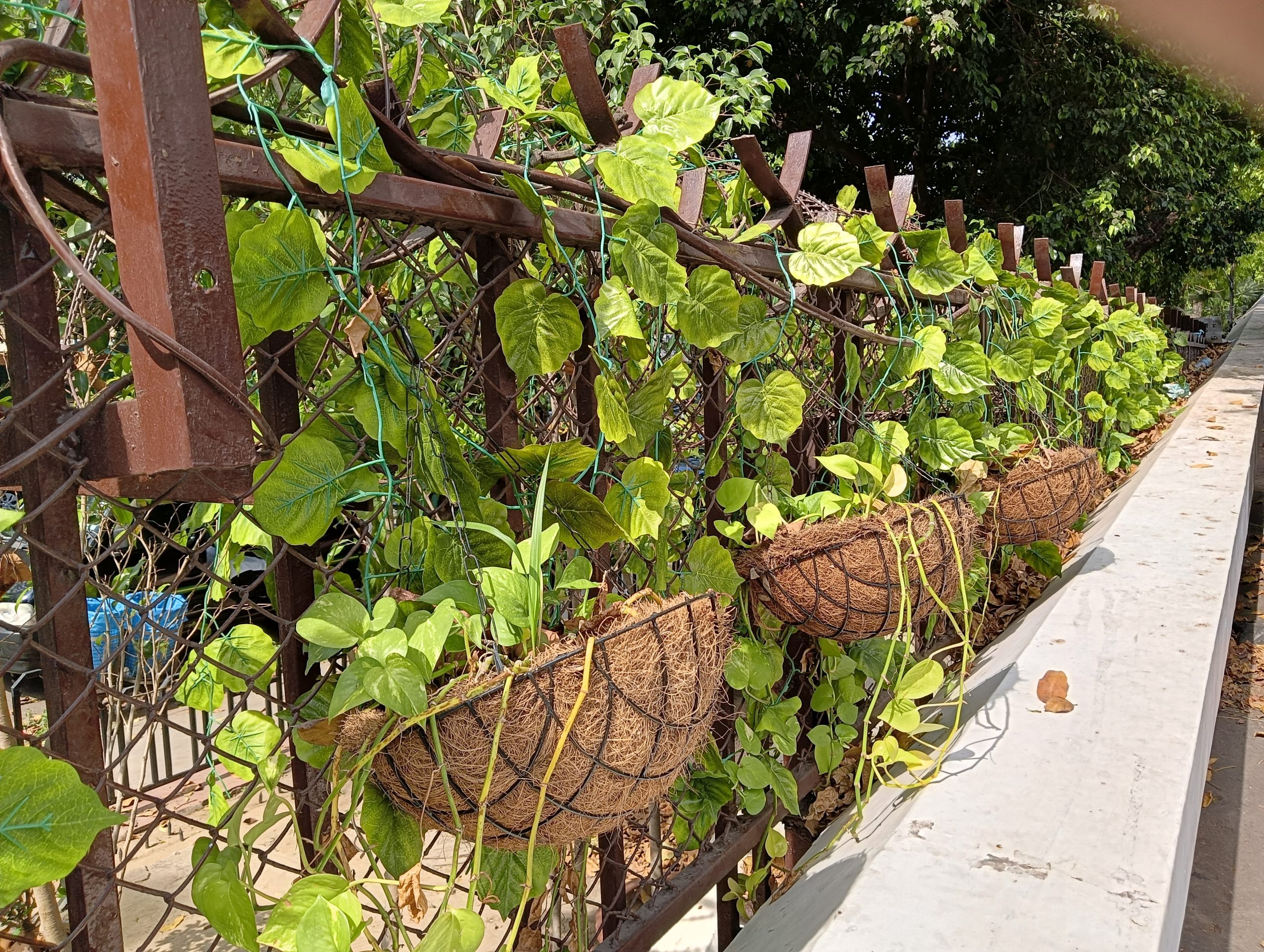
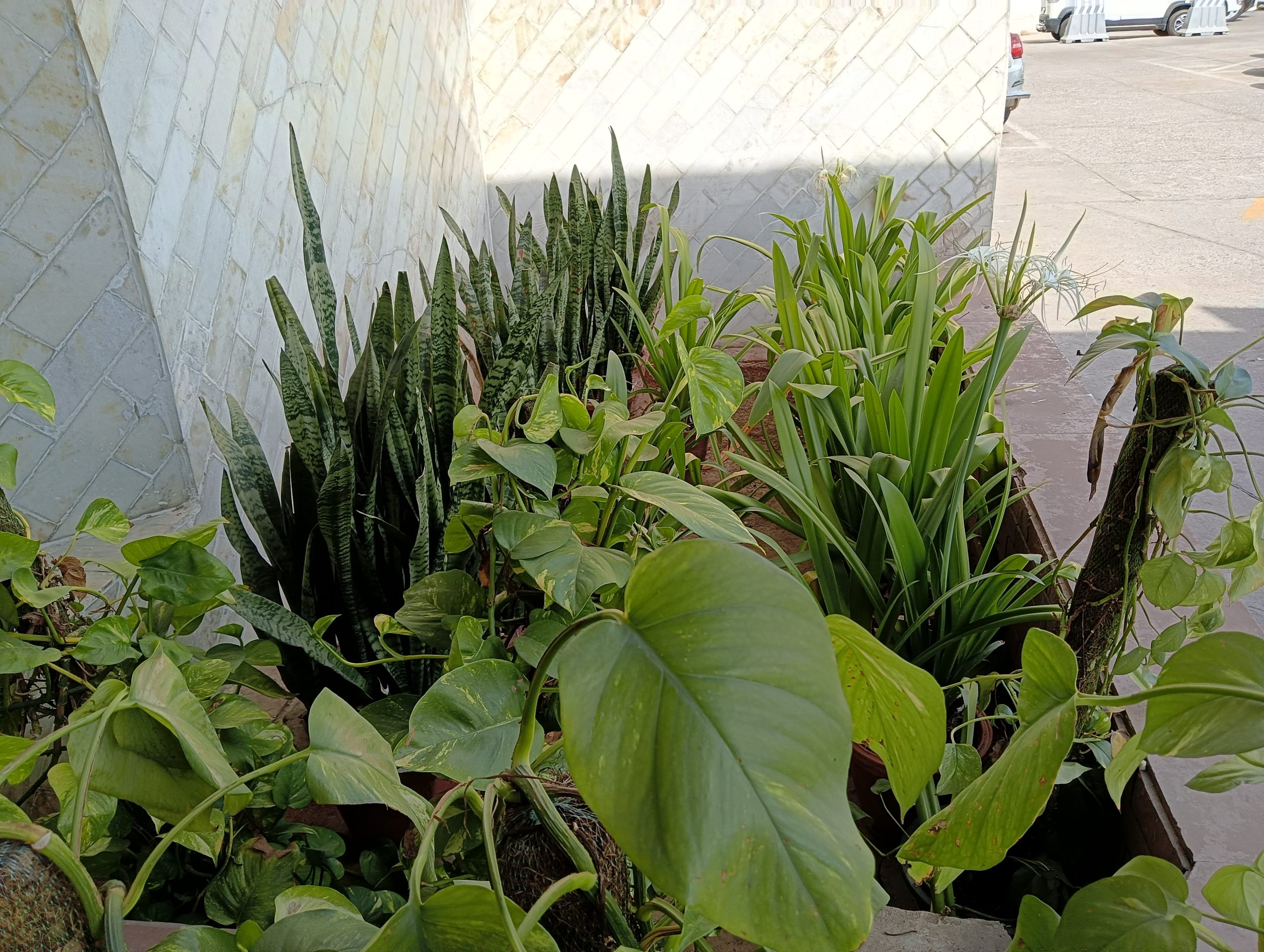
50MP main camera captures vibrant, detailed photos
Additionally, the 2MP macro shooter included in the setup offers very limited utility due to its low resolution.
The images produced by this camera often lacked the detail necessary for impactful close-up shots, which can be frustrating for users looking to explore macro photography.
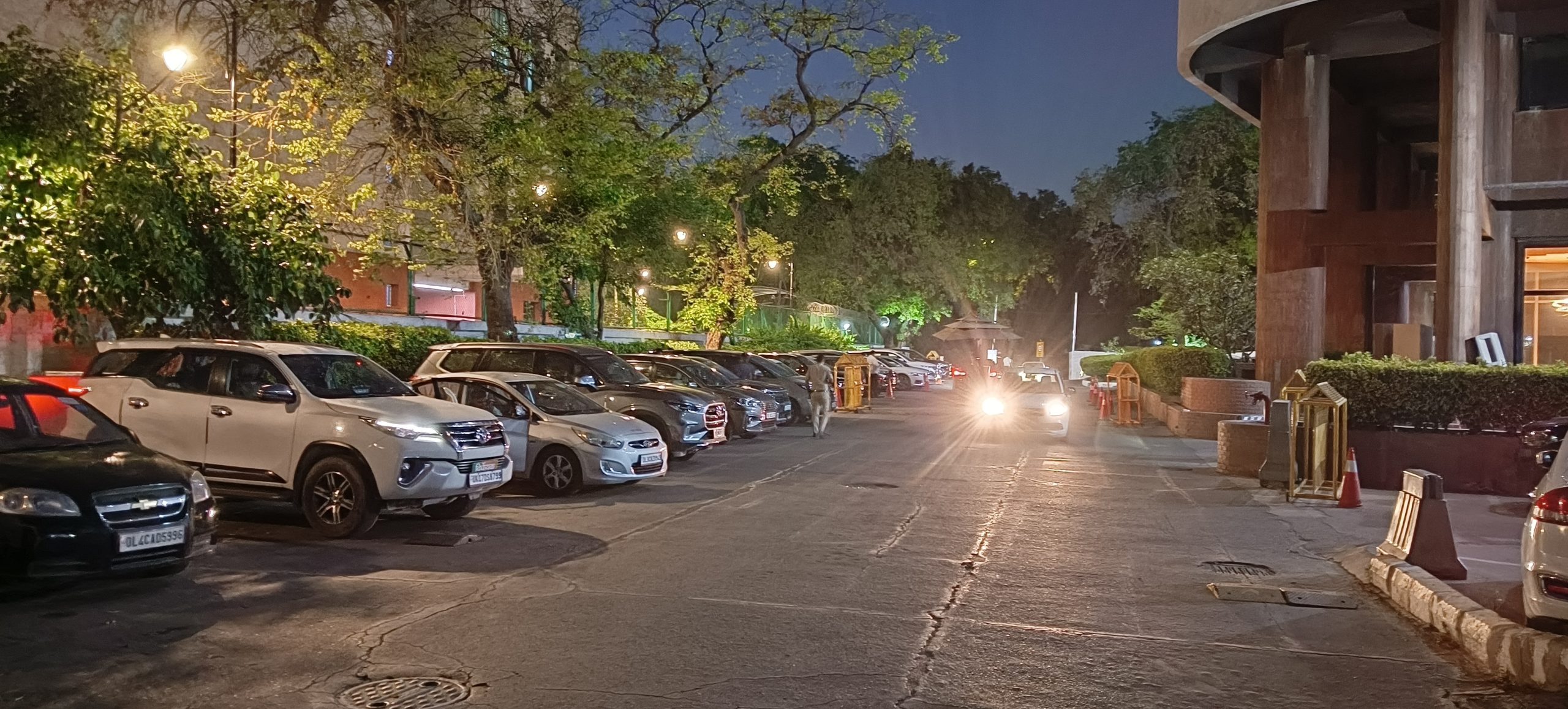
Nighttime photography with the Realme P1 5G also presented some challenges.
In some cases, the night shots appeared washed out or overly processed, lacking the finesse seen in competitors’ night modes that use more sophisticated processing algorithms.
However, the 16MP front-facing camera does a solid job for selfies and video calls, equipped with AI beautification features that enhance portraits.
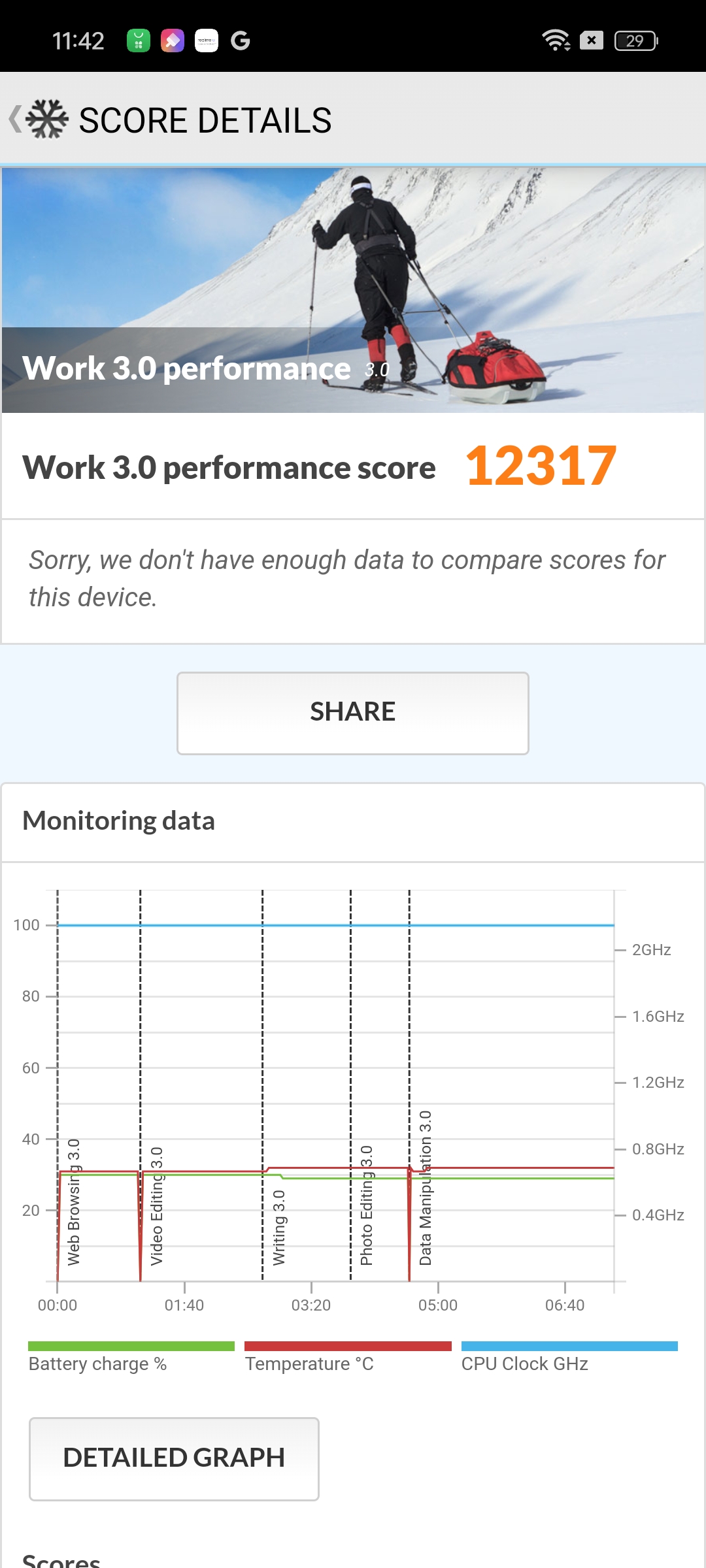
During my use, as I had expected, this processor delivered solid performance, handling everyday tasks and moderate gaming without any noticeable lag.
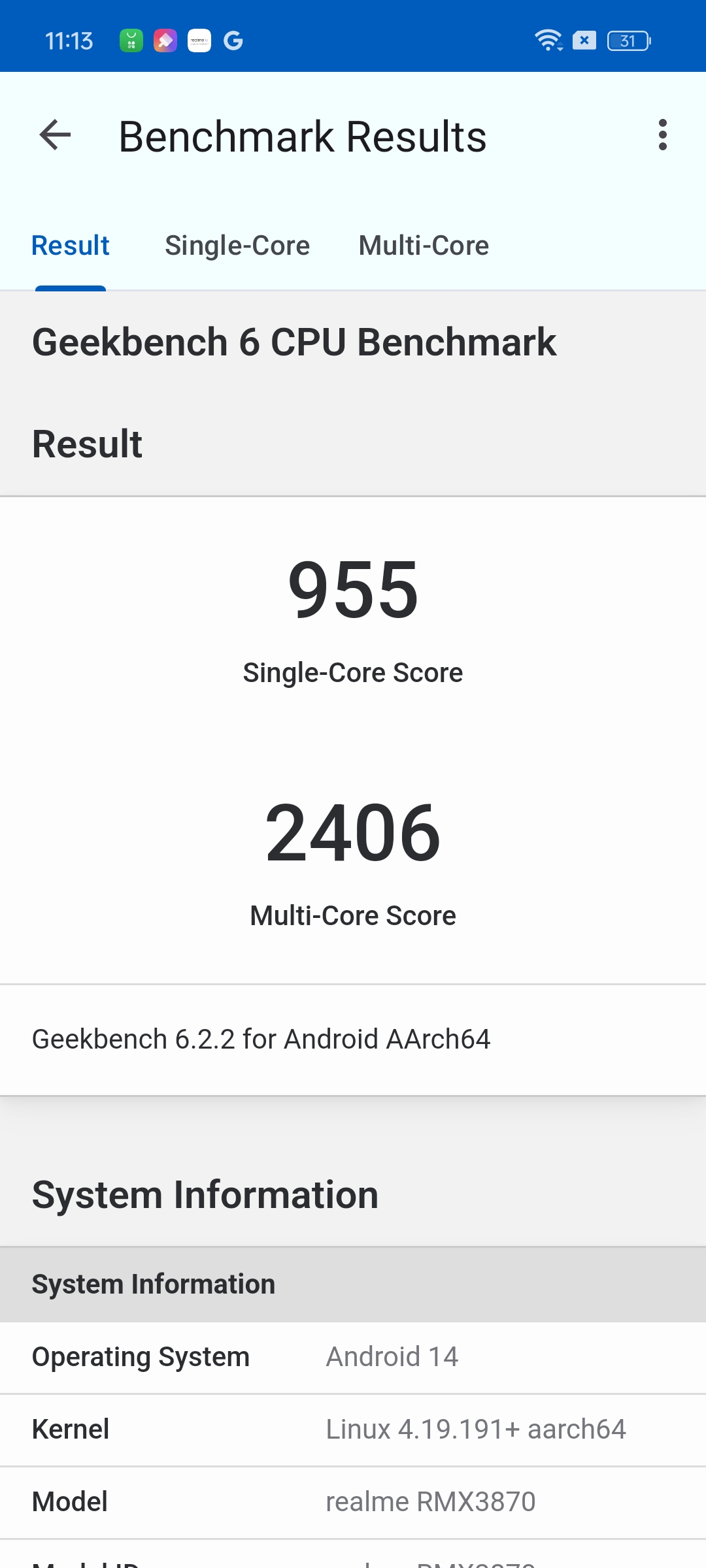
Benchmark tests confirm its capability, showing that the P1 5G can comfortably meet the needs of most users, particularly those who aren’t pushing the device with high-end gaming or intensive multitasking.
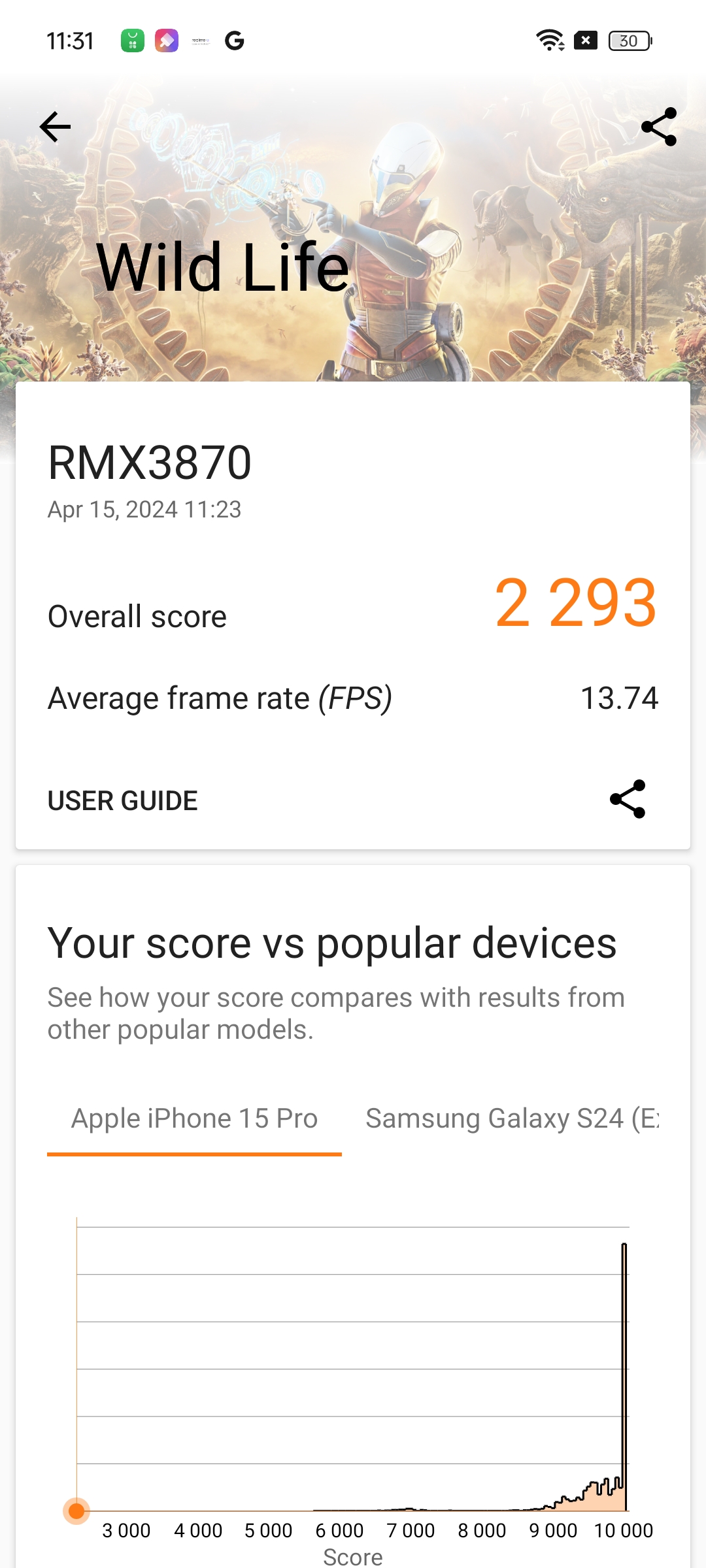
However, while general performance is robust, the device does have limitations when it comes to more demanding games.
I found that I needed to adjust settings to low to maintain a stable frame rate, which might be a bit disappointing for avid gamers looking for a budget-friendly smartphone that doesn’t compromise gaming capabilities.
The Realme P1 5G’s dual stereo speakers were a standout feature, providing an excellent audio experience with rich and clear sound.
As far as network connectivity, goes the Realme P1 5G supports a wide range of bands and includes features like dual 5G and Smart 5G, which efficiently manage power consumption while maintaining stable connections.
The design of the UI is clean and well-organized, making it easy for me to find settings and apps quickly.
The customisation options are abundant, allowing for a personalized experience that can be tailored to individual preferences.
However, still, the presence of bloatware detracts somewhat from the overall experience.
Several pre-installed apps and persistent notifications can be intrusive, which might frustrate users who prefer a cleaner, more streamlined software environment.
This is a common issue with many manufacturer skins, and realme UI 5.0 is no exception.
Realme P1 5G: Battery Life
On the battery front, the Realme P1 5G is equipped with a 5000mAh battery that supports 45W SUPERVOOC charging.
This setup allows for relatively quick top-ups—reaching a 50% charge in just 28 minutes.
While the charging speed is efficient and certainly beneficial for quick recharges, I have to point out that it isn’t the fastest available in this segment.
Some competitors offer faster charging capabilities, which could make the Realme P1 seem less appealing to those who prioritize cutting-edge fast-charging technologies.
Despite this, the battery life is commendable, comfortably supporting a full day of moderate to heavy usage on a single charge.
This device impresses with its Phoenix Design, sharp AMOLED display, and solid performance capabilities.
While it excels in daily tasks and offers a user-friendly interface with Realme UI 5.0, it is slightly marred by bloatware and a camera setup that lacks versatility.
Despite these shortcomings, the Realme P1 5G holds its own with robust battery life, effective fast charging, and commendable network performance, making it a noteworthy option for those seeking a budget-friendly yet capable smartphone.
5 Reasons to Buy
5 Reasons to Buy
Robust Performance: Handles everyday tasks and moderate gaming smoothly.
High-Quality Display: Sharp AMOLED screen with innovative touch features.
Effective Fast Charging: 45W SUPERVOOC charging quickly powers the phone.
Solid Build: Attractive design with a comfortable grip.
Good Network Capabilities: Stable and efficient connectivity options.
3 Reasons Not to Buy
3 Reasons Not to Buy
Limited Camera Flexibility: Lacks an ultra-wide sensor and effective low-light performance.
Presence of Bloatware: Clutters the user interface.
Non-Competitive Fast Charging: Slower compared to some rivals in the segment
What makes the Realme P1 5G stand out in the budget smartphone market?
The Realme P1 5G distinguishes itself with a potent combination of a high-performance MediaTek Dimensity 7050 chipset, a vibrant 6.67-inch AMOLED display, and a robust 5000mAh battery with 45W SUPERVOOC charging.
These features are packaged in a sleek design, offering substantial value in the budget smartphone segment.
How does the camera performance of the Realme P1 5G measure up?
The Realme P1 5G is equipped with a 50MP primary camera that excels in capturing sharp and vibrant images under good lighting conditions.
However, it lacks an ultra-wide lens, which limits its versatility compared to competitors. The macro and nighttime photography capabilities could also be improved to enhance the overall camera utility.
What are the display features of the Realme P1 5G?
The device features a 6.67-inch AMOLED screen with a 120Hz refresh rate, offering fluid and crisp visuals.
The display’s high peak brightness level of up to 2000 nits ensures good visibility even in bright conditions, although it lacks HDR support which is becoming more common in similar price ranges.
Can the Realme P1 5G handle intensive gaming and multitasking?
Thanks to its MediaTek Dimensity 7050 processor and up to 16GB of dynamic RAM, the Realme P1 5G handles everyday tasks and moderate gaming smoothly.
However, for more graphics-intensive games, settings may need to be adjusted for optimal performance, as the device can struggle with high-end gaming demands.
What are some potential drawbacks of the Realme P1 5G?
While the Realme P1 5G offers many advantages, it does have some drawbacks, including the absence of an ultra-wide camera and effective low-light photography features.
Additionally, the presence of bloatware might detract from the user experience, and its fast-charging speed, while quick, is not the fastest available in this market segment.