OPPO confirms India launch of K14 Plus 5G on September 29 at 12pm IST, exclusively via Flipkart.
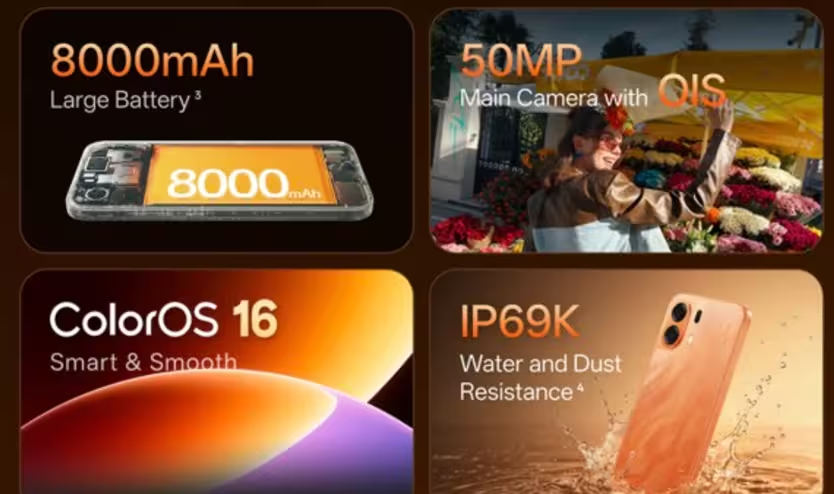
It will pack Dimensity 7360 Max SoC, 1.5K AMOLED 144Hz display, 50MP OIS rear + 16MP Sony IMX480 front camera, 3,600‑nit brightness and 8,000mAh battery.
The phone has been teased in orange and white colour options so far.
OPPO K14 Plus 5G’s India launch date announced. (Image credit: OPPO)
OPPO is set to expand its K-series lineup in India with the launch of the new OPPO K14 Plus 5G. The company has confirmed that the smartphone will be unveiled in the country next week. The K-series in the country includes OPPO K14 Lite, OPPO K14 and OPPO K14x at present. The new model will arrive with several notable features including a 1.5K AMOLED display, MediaTek Dimensity 7360 Max chipset and an 8,000mAh battery. Here’s more on what we know so far.
OPPO K14 Plus 5G India Launch On September 29
OPPO K14 Plus 5G’s India launch on September 29. (Image credit: OPPO)
A dedicated microsite for the smartphone is already live on Flipkart. It gives a look at the design and confirms several key specifications of the upcoming handset.
The official teasers show the OPPO K14 Plus 5G in orange and white colour options. The smartphone will feature a vertically positioned rear camera module, although OPPO has not yet revealed the official marketing names of these colour variants.
OPPO K14 Plus 5G Specifications
The OPPO K14 Plus 5G will be powered by the MediaTek Dimensity 7360 Max chipset. OPPO claims that the smartphone can score more than 1 million points on AnTuTu.
The phone will feature a 50-megapixel primary rear camera with OIS support and 4K video recording. On the front, it will have a 16-megapixel Sony IMX480 camera for selfies and video calls.
The smartphone is teased to feature an AMOLED display with 1.5K resolution and a 144Hz refresh rate. The panel is rated to reach up to 3,600 nits of peak brightness. For keeping temperatures under control, OPPO has equipped the handset with a 5,000 sq mm VC cooling system.
Powering the OPPO K14 Plus 5G will be a large 8,000mAh battery. OPPO also claims that the phone comes with 6-Year Smoothness Protection and a Damage Proof 360 Armour Body. It comes with an IP69K rating for dust and water resistance and also features an in-display fingerprint sensor for biometric authentication.
On the software side, the OPPO K14 Plus 5G will run ColorOS and come with new AI features. The phone will also include dual stereo speakers with an Ultra Volume mode.
More details about the OPPO K14 Plus 5G including its price and availability offers are expected to be revealed soon.
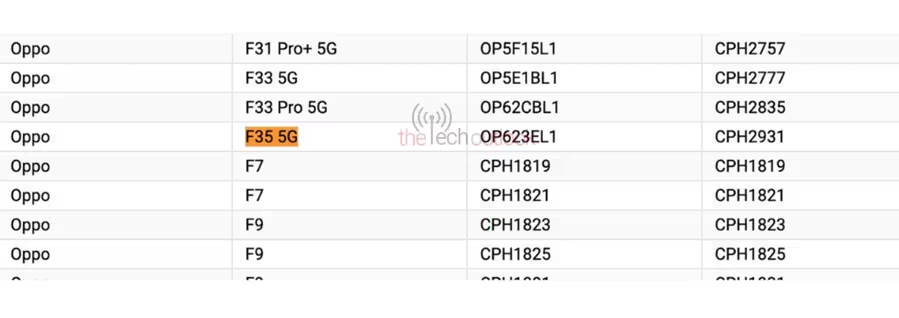
OPPO F35 5G spotted on Google Play Console with model number CPH2931, which is the same as OPPO A7 Pro 5G.
It is expected to feature the MediaTek Dimensity 6300 chipset, different from the A7 Pro’s Dimensity 6360 chipset.
The rumoured India pricing suggests around Rs 40,000 for the F35 5G base model and Rs ₹45,000 for the F35 Pro.
OPPO appears to be preparing to launch its new OPPO F35 series in India. After some leaks and rumours, the standard OPPO F35 5G has now appeared on the Google Play Console supported devices list. This adds to the previous indication that its launch could be getting closer after a leaked poster and retail box image of the F35 Pro shared an early look at the F35 Series devices. Here’s more on the recent database appearance.
OPPO F35 5G Spotted on Google Play Console
According to the Google Play Console supported devices listing (via TheTechOutlook), the OPPO F35 5G carries the CPH2931 model number and OP623EL1 device code. The marketing name is also listed as OPPO F35 5G.
OPPO F35 5G on Google Play Console. (Screenshot by TheTechOutlook)
The listing itself does not reveal any specifications of the smartphone. However, the model number and device code mentioned for the OPPO F35 5G are the same as those associated with the OPPO A7 Pro 5G.
The OPPO A7 Pro 5G was initially launched in China before being introduced in global markets. Since the upcoming OPPO F35 5G appears to use the same model number and device code, it is possible that the new smartphone could arrive as a rebranded version of the OPPO A7 Pro 5G.
OPPO F35 5G Expected Specifications and Price
According to previous leaks, the OPPO F35 5G could be powered by the MediaTek Dimensity 6300 chipset. This would be different from the Dimensity 6360 SoC used by the OPPO A7 Pro 5G in both the Chinese and global markets.
However, more information from OPPO will be needed to confirm the hardware details. Considering the similarities between the model numbers and device codes of the two smartphones, a change in chipset seems unlikely.
Previous reports have also claimed that the OPPO F35 5G could be priced at around INR 40,000 for the base variant in India. Meanwhile, the Pro model is reportedly expected to start at around INR 45,000.
OPPO has yet to officially confirm the F35 series, which means the details mentioned in this report should be treated as unconfirmed for now. We can expect details including launch date, specifications and pricing to emerge in the coming days.
Redmi Note 17 Pro Max sale starts in India today, September 23, with the range starting from ₹49,999 onwards and eligible bank discount offer of ₹5,000.
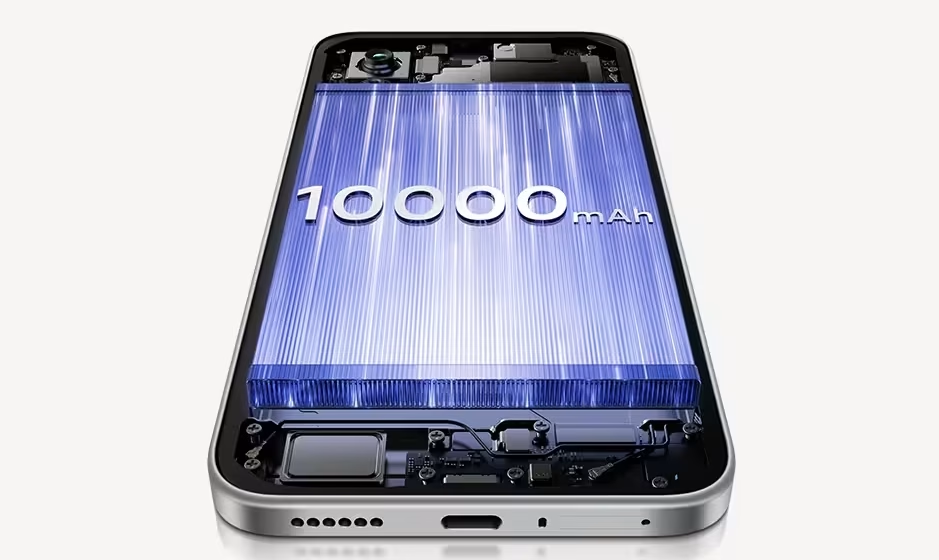
The smartphone packs a 10,000mAh silicon-carbon battery with 100W HyperCharge and 27W wired reverse charging, making the large battery one of its key highlights.
Redmi Note 17 Pro Max features a 50MP Sony IMX882 OIS main camera, 8MP ultrawide lens, 32MP selfie camera and IP69K protection.
Redmi Note 17 Pro Max (Source – Redmi)
Following its launch earlier this month, Redmi Note 17 Pro Max is now available for purchase in India. The smartphone is on sale today, September 23 and it comes with a 10,000mAh silicon-carbon battery, 100W HyperCharge and the Snapdragon 6 Gen 5 chipset.
The phone is available in two RAM and storage configurations, with buyers also getting an instant bank discount on eligible cards. Here are the price, offers, sale details and specifications.
Redmi Note 17 Pro Max Price and Offers
Redmi Note 17 Pro Max features a massive 10,000 mAh battery (Source – Redmi)
The Redmi Note 17 Pro Max is available in India in two configurations:
Variant
Launch Price
Effective Price*
8GB + 256GB
₹49,999
₹44,999
12GB + 256GB
₹55,999
₹50,999
*Effective price after the ₹5,000 eligible bank discount.
Redmi Note 17 Pro Max Bank Offers:
₹5,000 instant discount on eligible SBI, Axis Bank, Kotak Mahindra Bank and IDFC FIRST Bank cards.
Up to ₹5,000 cashback/offer through HDB Financial Services, subject to applicable terms.
10,000mAh Battery With 100W HyperCharge
The 10,000mAh silicon-carbon battery is the main highlight of the Redmi Note 17 Pro Max. Redmi says the battery comes with six years of battery health, while the company claims the phone can deliver up to four days of usage on a single charge.
For charging, the smartphone supports 100W HyperCharge. It also supports 27W wired reverse charging, allowing the phone to be used as a power source for compatible devices.
The device also gets Surge G2 and Surge P3 chips for battery and charging management.
Redmi Note 17 Pro Max Specifications
Redmi Note 17 Pro Max is available in three colours (Source – Amazon.in)
The Redmi Note 17 Pro Max features a 6.83-inch 1.5K flat AMOLED display with a 120Hz refresh rate and up to 3,500 nits peak brightness. The panel also supports 3840Hz PWM dimming and is protected by Corning Gorilla Glass Victus 2.
Under the hood, the smartphone is powered by the Snapdragon 6 Gen 5 chipset paired with LPDDR5X RAM and UFS 4.1 storage. It runs Android 16-based HyperOS 3. Redmi promises four major OS updates and six years of security updates.
For photography, the phone gets a 50MP Sony IMX882 primary camera with OIS and an 8MP ultrawide camera. There is also a 32MP front camera for selfies and video calls.
The smartphone carries IP69K, IP69, IP68 and IP66 ratings for water and dust resistance. It also includes Xiaomi HyperAI features, an optical fingerprint sensor, NFC, Bluetooth 6.0 and an IR blaster.
Redmi Note 17 Pro Max Sale: Where To Buy
The Redmi Note 17 Pro Max sale has started in India from September 23. The phone can be purchased through Mi.com, Amazon and Xiaomi retail channels.
For a limited period, buyers also get the Note 1 Care Plan worth ₹9,999 free with the phone. The plan includes two years of screen protection, two years of battery replacement and two years of warranty.
Motorola Signature 27 has been unveiled at the Snapdragon Summit with Qualcomm’s new Snapdragon 8 Elite Extreme Gen 6.
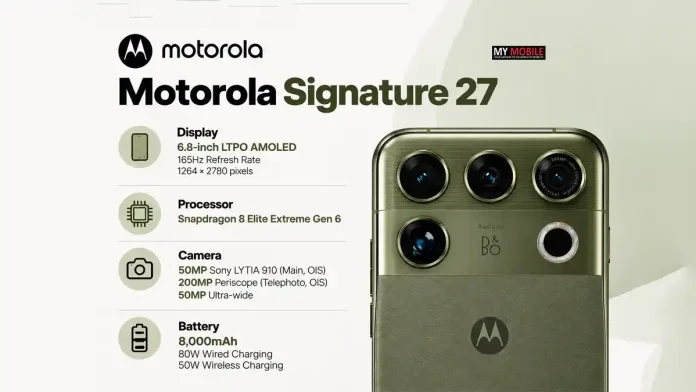
The flagship gets a 200MP periscope telephoto camera alongside a 50MP Sony LYTIA 910 main sensor, with OIS and Motorola’s AI-powered Video Enhancement Engine.
Motorola has upgraded its ArcticMesh cooling system with diamond-infused thermal gel, liquid metal, copper mesh and a redesigned 3D vapour chamber.
Motorola Signature 27 (Source – Motorola)
Motorola has unveiled the Signature 27, its second-generation premium Signature smartphone, at Qualcomm’s Snapdragon Summit. The device arrives alongside the launch of Qualcomm’s Snapdragon 8 Elite Extreme Gen 6 Mobile Platform and is positioned as Motorola’s flagship offering with upgraded performance, cameras, AI features and cooling.
The company has not yet announced the price or commercial sale date for the Signature 27. Motorola says the smartphone is expected to reach markets worldwide in 2026, with more availability details to be announced closer to launch.
Motorola Signature 27 Price and Availability
Revealing our most advanced smartphone yet at #SnapdragonSummit, motorola signature 27. Here’s what to look forward to:
– Our best camera system yet.
– The only smartphone in the market to feature audio by Bang & Olufsen.
– Unprecedented speeds with @Snapdragon 8 Elite Extreme… pic.twitter.com/hGuz5Z9mmd
Motorola has not announced the price of the Signature 27 yet. The company has also not confirmed specific markets or an India launch date.
Motorola says the phone is expected to arrive in markets worldwide in 2026. The company has confirmed two finishes, Pantone Coal Smoke and Pantone Capulet Olive.
The previous-generation Motorola Signature launched in India at ₹59,999, but this should not be treated as an indication of the Signature 27’s pricing, considering the significant price hikes across the tech market.
Snapdragon 8 Elite Extreme Gen 6 Powers the Signature 27
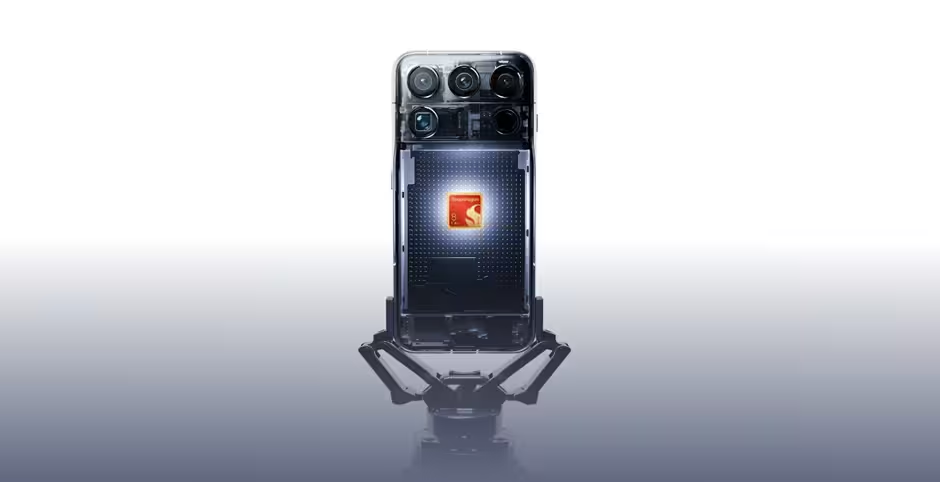
Snapdragon 8 Elite Extreme Gen 6 Processor which powers Motorola Signature 27
The Motorola Signature 27 is powered by the newly announced Snapdragon 8 Elite Extreme Gen 6 Mobile Platform. Motorola describes it as the second-generation Signature device and the first in its ultra-premium range to adopt the new numerical naming structure.
The new Snapdragon platform is designed to improve CPU and GPU performance, on-device AI processing and connectivity. Motorola says the Signature 27 uses six antennas to enable faster connectivity and cloud AI applications.
The chipset also enables AI-powered features on the device, including camera processing, gaming and other everyday tasks.
200MP Periscope Camera and 50MP Sony Main Sensor
Signature 27 features 50MP Sony LYTIA 910 primary sensor (Source – Motorola)
The Motorola Signature 27 gets a significantly upgraded camera setup compared with its predecessor. The confirmed hardware includes a 50MP Sony LYTIA 910 main sensor and a 200MP periscope telephoto camera.
The telephoto camera is designed for capturing distant subjects, architecture and landscapes. Motorola has also confirmed OIS hardware with 3.5-degree stabilisation, working alongside Qualcomm’s Image Stabilization technology for smoother handheld photography and video recording.
Motorola has not officially detailed every camera in the complete rear setup yet. Third-party specification listings suggest an additional 50MP ultrawide camera, but this has not been detailed in Motorola’s official preview, so it is not being treated as confirmed here.
For video recording, Motorola has confirmed Dolby Vision support and its new Video Enhancement Engine. The AI-powered system analyses scenes during recording and adjusts colour tones in real time, with Motorola highlighting its use in situations such as concerts, low-light recording and sunsets.
ArcticMesh Cooling System Gets a Major Upgrade
Motorola Partners with Bang & Olufsen for signature audio feedback (Source – Motorola)
Motorola has also upgraded the thermal system on the Signature 27 with its ArcticMesh cooling system.
The system combines a diamond-infused thermal gel, liquid metal, copper mesh and a redesigned 3D vapour chamber to manage heat during sustained workloads such as gaming, AI processing and video recording.
Motorola says the new vapour chamber is 40% larger than the previous generation, with the company positioning the system for sustained performance during demanding workloads.
Motorola has also upgraded the thermal system on the Signature 27 with its ArcticMesh cooling system.
The system combines a diamond-infused thermal gel, liquid metal, copper mesh and a redesigned 3D vapour chamber to manage heat during sustained workloads such as gaming, AI processing and video recording.
Motorola says the new vapour chamber is 40% larger than the previous generation, with the company positioning the system for sustained performance during demanding workloads.
Google Gemini and AI Features
The Signature 27 integrates Google Gemini for AI-powered assistance and content creation.
Motorola says Gemini Omni can turn a text prompt, photos or existing footage into a polished video. The phone also supports Lyria, which can generate original music and custom soundtracks.
The Snapdragon 8 Elite Extreme Gen 6 also brings additional on-device AI capabilities, allowing the Signature 27 to handle AI processing directly on the smartphone.
Premium Design and Colours
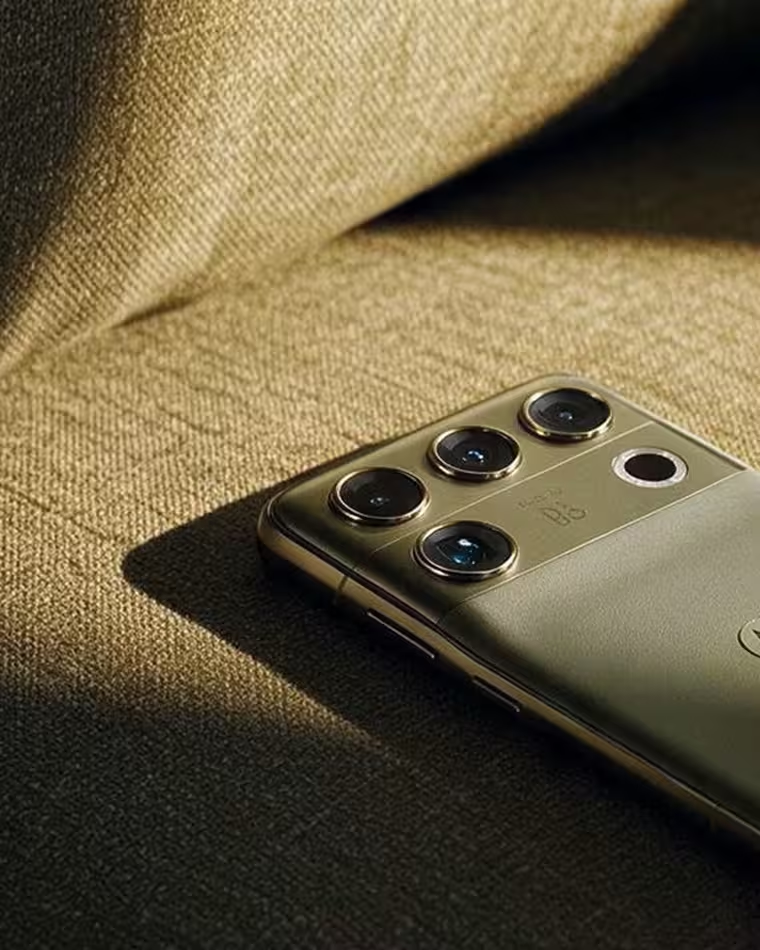
Signature 27 will be available in two colours with textured back panel (Source – Motorola)
The Signature 27 continues Motorola’s premium Signature design language with a sleek aluminium silhouette and contoured edges.
The camera housing combines smooth ceramic and brushed aluminium, creating a distinctive camera module on the rear.
The phone will be available in two confirmed Pantone finishes:
Pantone Coal Smoke with a Tactical Weave texture
Pantone Capulet Olive with a brushed textile-inspired finish
Motorola says the materials and textures are designed to improve grip while maintaining the premium appearance of the device.
Audio by Bang & Olufsen
The Motorola Signature 27 is the company’s first smartphone with Audio by Bang & Olufsen branding.
The partnership follows Motorola and Bang & Olufsen’s recently announced multi-year collaboration. B&O’s audio expertise and design input are being incorporated into the Signature 27’s audio experience.
Motorola has not yet detailed the speaker configuration or other specific audio hardware.
Seven Years of Software Upgrades
Signature 27 expected to be launched with Android 17 out of the box
Motorola has confirmed seven OS upgrades and up to seven years of security updates for the Signature 27.
The support period will begin from the phone’s global launch date, although Motorola notes that availability can vary depending on the market, network provider and model.
The phone is expected to run Android 17 out of the box based on current specification listings, although Motorola’s official preview focuses primarily on the hardware and AI experience.
Motorola Signature 27 Confirmed Specifications
Features
Signature 27
Processor
Snapdragon 8 Elite Extreme Gen 6
Display
6.8-inch LTPO AMOLED, 165Hz
Resolution
1264 × 2780 pixels
Main Camera
50MP Sony LYTIA 910, OIS
Telephoto Camera
200MP periscope, OIS
Ultrawide Camera
50MP, not officially detailed by Motorola
Front Camera
50MP
Video
Dolby Vision, up to 8K recording according to third-party listings
AI
Google Gemini, Gemini Omni, Lyria
Cooling
ArcticMesh with liquid metal, diamond-infused thermal gel and 3D vapour chamber
Frame
Aluminium
Camera Housing
Ceramic + Brushed Aluminium
Audio
Audio by Bang and Olufsen
Colours
Pantone Coal, Pantone Capulet Olive
OS
Android 17 with 7 OS upgrades + up to 7 years security updates
Hands-on images of Vivo V80 show Copper Orange and Stellar Black finishes, flat display with punch-hole selfie camera and ZEISS-branded triple rear cameras.
Meanwhile, first hands-on images of both Vivo V80 and Vivo S2 FE have now surfaced online ahead of any more official confirmations. A tipster on X has not only shared the first hands-on images but has also revealed most of the key specifications of both smartphones.
Vivo V80 Hands-on Images and Expected Specifications
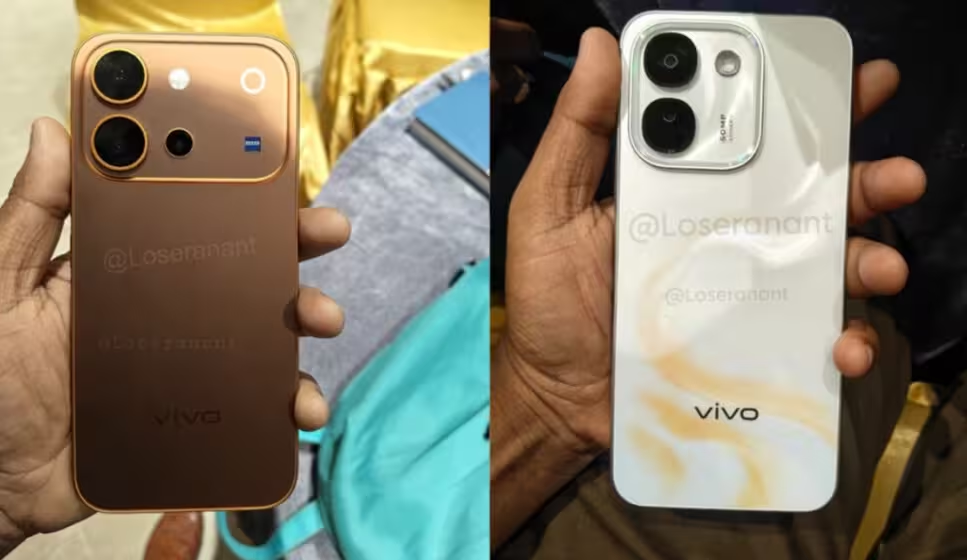
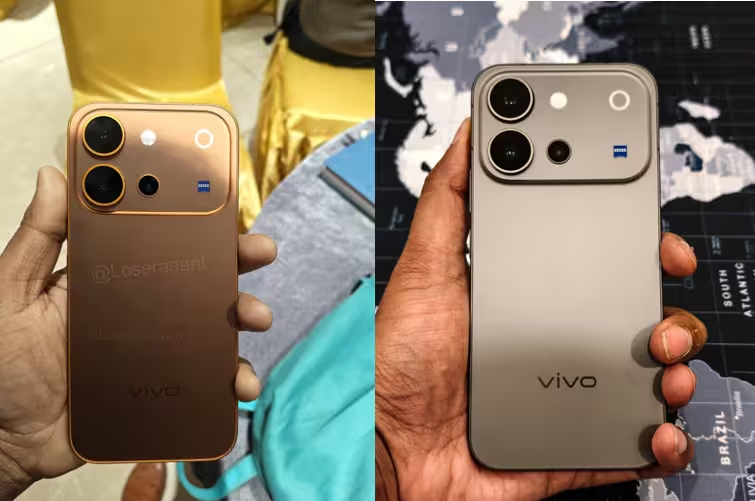
Vivo V80’s leaked hands-on images show Copper Orange and Stellar Black colours. (Credit: @LoserAnant on X)
In multiple posts on X, tipster Anant Rawat @LoserAnant has shared hands-on images of both colour variants of Vivo V80. The tipster has also shared images revealing the front look and display of the upcoming device.
The images reveal the smartphone in Copper Orange and Stellar Black finishes with a matching flat side frame. The phone appears to feature a large rounded-rectangular camera module in the upper-left corner and houses a triple-camera setup.
Two large camera lenses are arranged vertically inside the module with metallic rings around them. A smaller circular camera is placed next to the lower lens. The upper portion of the camera island also includes a circular ring-shaped element and an LED flash.Zeiss branding can be seen on the camera module as well.
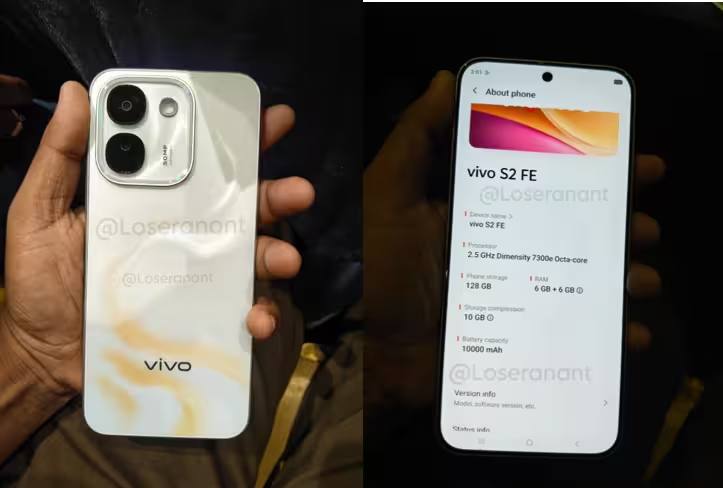
Vivo V80’s leaked hands-on images show the display and settings page. (Credit: @LoserAnant on X)
At the front, the Vivo V80 appears to have a flat display with slim bezels and rounded corners. A centrally positioned punch-hole cutout houses the selfie camera.
vivo V80 first look is here.
Got my hands on the V80 ahead of its expected October launch.
📱 6.59” 144Hz AMOLED
🦾 Snapdragon 7 Gen 4
📸 50MP OIS + 8MP UW + 50MP Telephoto
🤳 50MP Selfie
🔋 7200mAh + 90W
☔ IP68/IP69
🍭 Android 17 + OriginOS#VivoV80#MyCinematicMomentspic.twitter.com/0CcyJm5NMv
According to the leaked information, the Vivo V80 could feature a 6.59-inch AMOLED display with a 144Hz refresh rate. The smartphone is tipped to be powered by the Snapdragon 7 Gen 4 chipset with Android 17-based OriginOS and could come with a 7,200mAh battery supporting 90W fast wired charging.
For cameras, the Vivo V80 is expected to feature a 50MP primary rear camera with OIS, an 8MP ultra-wide camera and a 50MP telephoto camera. A 50MP selfie camera is also tipped for the front.
The upcoming Vivo phone is also said to offer IP68 and IP69-rated protection.
Vivo S2 FE Hands-on Images and Expected Specifications
The same tipster has also published Vivo S2 FE hands-on images giving a closer look at its design. The smartphone appears to have a white rear panel with a reflective wave-like pattern. It features a flat side frame with rounded corners and a rounded-rectangular camera module.
The rear camera setup includes two vertically arranged cameras with an LED flash placed beside the upper camera. The camera module also carries “50MP ASPHERICAL” branding. On the front, the Vivo S2 FE appears to have slim bezels and a centrally positioned punch-hole selfie camera.
The “About Phone” section visible in the leaked images identifies the device as the Vivo S2 FE. The leaked front image shows the phone powered by a MediaTek Dimensity 7300e octa-core processor with a maximum clock speed of 2.5GHz. The leaked details also show 6GB of physical RAM paired with 6GB of extended RAM and 128GB of internal storage. The smartphone is said to support up to 10GB of storage compression.
The Vivo S2 FE is further tipped to feature a 6.84-inch 1.5K display with an in-display fingerprint sensor. The camera setup could include a 50MP primary rear camera and a 32MP selfie camera. The device is also said to support 44W fast wired charging.
vivo S2 FE first look is here.
vivo S2 FE is set to launch in India next month with a massive 10,000mAh battery.
The smartphone is expected to be available in Black, White and Green colour options. However, Vivo has not yet officially confirmed the S2 FE’s launch date, price or availability.
More details about both smartphones are expected to emerge as Vivo prepares to introduce the Vivo V80 in India.
Vivo confirms global launch of X Fold 6 on October 1 via Austria’s official site.
Global variant with model number V2559 spotted on Geekbench and certifications in Indonesia, Malaysia and Thailand.
Key Specs: 8.02″ inner + 6.51″ outer LTPO AMOLED 120Hz displays, Dimensity 9500 Super Edition, up to 16GB RAM/1TB storage, 200MP + 50MP telephoto + 50MP ultra‑wide cameras and 7,000mAh battery with 80W wired/40W wireless charging.
Vivo has finally confirmed the global launch date of its latest book-style foldable smartphone, Vivo X Fold 6. The foldable was launched in China earlier this year during Vivo’s June 2026 event and has remained exclusive to the Chinese market so far. Its global arrival has been expected for some time and now the official Vivo Austria website has finally confirmed the European launch date.
Vivo X Fold 6 Global Launch Date Confirmed
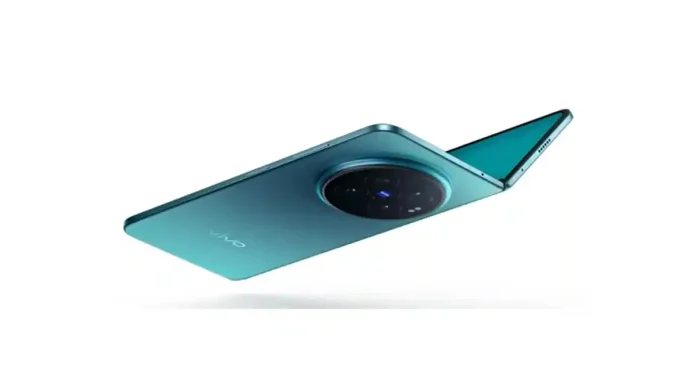
Vivo X Fold 6 teaser. (Image Credit: Vivo)
According to the teaser live on Austria’s official Vivo page, the Vivo X Fold 6 will launch globally on October 1. With this launch, the Chinese smartphone maker will finally bring its latest foldable from China to the global markets.
The Geekbench listing offered an early look at the global model’s performance, along with its memory and software details. Interestingly, the listing indicated that the global X Fold 6 could run Android 17, while the Chinese version runs OriginOS 6 Fold based on Android 16.
Vivo X Fold 6 Specifications
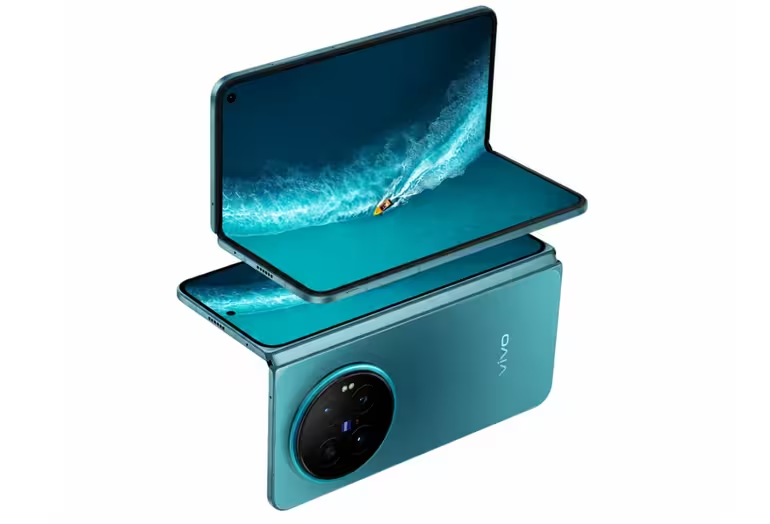
Vivo X Fold 6. (Credit: Vivo)
The Vivo X Fold 6 features an 8.02-inch LTPO AMOLED inner display with a 2504 × 2312-pixel resolution. The outer cover screen is a 6.51-inch LTPO AMOLED panel with a 2528 × 1120-pixel resolution. Both displays support a 120Hz refresh rate and can reach up to 5,000 nits of peak brightness.
Under the hood, the foldable is powered by the MediaTek Dimensity 9500 Super Edition chipset. It is available with up to 16GB of LPDDR5X Ultra RAM and 1TB of UFS 4.1 storage.
For photography, the X Fold 6 has a triple rear camera setup featuring a 200-megapixel primary camera, a 50-megapixel ZEISS APO periscope telephoto camera and a 50-megapixel ultra-wide camera. There are also 20-megapixel cameras on both the inner and outer displays.
The foldable packs a 7,000mAh battery with support for 80W wired charging and 40W wireless charging. It also carries IP58/IP59-rated dust and water resistance. The Chinese model is available in Blue Hole, Polar Night and Salt Lake colour options.
More details about its international availability, pricing and configurations are expected around the global launch.
OPPO has expanded its new flagship Find X10 lineup with the launch of the OPPO Find X10 and OPPO Find X10E in China. The two smartphones were announced alongside the top-end OPPO Find X10 Pro Max and bring a combination of large silicon-carbon batteries, MediaTek processors and Hasselblad-tuned camera systems. Here are more details on both.
OPPO Find X10, Find X10E – Price and Availability
The OPPO Find X10 and Find X10E will go on sale in China from September 24.
The OPPO Find X10E starts at 4,999 yuan for the 12GB + 256GB version, which is approximately US$746 or ₹71,370. The 16GB + 512GB model is priced at 5,499 yuan, or around US$821 or ₹1,07,070.
The OPPO Find X10 starts at 5,499 yuan for the 12GB + 256GB variant, equivalent to approximately US$821 or ₹78,510. The 12GB + 512GB model costs 5,999 yuan, around US$895 or ₹85,650. The 16GB + 512GB version is priced at 6,499 yuan, which is about US$970 or ₹92,790, while the top-end 16GB + 1TB variant costs 7,499 yuan, or approximately US$1,120 or ₹1,07,070.
OPPO Find X10 – Key Specifications
The OPPO Find X10 features a 6.59-inch AMOLED display with a 2760 × 1256-pixel resolution. The panel supports a 1-120Hz refresh rate and can reach a 144Hz refresh rate. It also supports 3,840Hz ultra-high-frequency PWM dimming, up to 2,000 nits peak brightness and Dolby Vision.
The phone is powered by the 3nm MediaTek Dimensity 9600M processor with an ARM G1-Ultra GPU. It comes with either 12GB or 16GB of LPDDR5X RAM and offers 256GB or 512GB of UFS 4.1 storage. The phone runs Android 17 with ColorOS 17 and supports dual nano-SIM cards.
For photography, the Find X10 has a 200MP primary camera with a 1/1.4-inch sensor, f/1.6 aperture and OIS. It is paired with a 50MP ultra-wide camera with an f/2.0 aperture and a 200MP 2.8x periscope telephoto camera. The telephoto camera uses a 1/1.56-inch sensor, has an f/2.6 aperture and OIS. Hasselblad portrait features are also included. On the front, the phone has a 50MP selfie camera with an f/2.0 aperture.
The Find X10 packs an 8,000mAh battery with 80W SuperVOOC wired charging and 50W wireless charging. Other features include an in-display ultrasonic fingerprint sensor, infrared sensor, stereo speakers and USB Type-C audio.
The smartphone measures 156.51 × 74.29 × 8.35mm and weighs 216 grams. It has IP66, IP68 and IP69 dust and water resistance ratings.
Connectivity options include 5G SA/NSA, Wi-Fi 7, Bluetooth 6.2, NFC and USB Type-C 2.0. The phone also supports Beidou, GPS, GLONASS, Galileo, QZSS and NavIC navigation systems.
OPPO Find X10E – Key Specifications
The OPPO Find X10E comes with a 6.59-inch AMOLED display offering a 2760 × 1256-pixel resolution and 120Hz refresh rate. The panel also supports 3,840Hz ultra-high-frequency PWM dimming and Dolby Vision.
Under the hood, the phone uses the 3nm MediaTek Dimensity 9500s processor with an Arm Mali-G1 Ultra MC12 GPU. It is offered with 12GB or 16GB of LPDDR5X RAM and 256GB or 512GB of UFS 4.1 storage. The phone runs Android 17 with ColorOS 17 and supports dual nano-SIM cards.
For cameras, the Find X10E has a 50MP primary camera with an f/1.6 aperture and OIS. It is accompanied by a 50MP ultra-wide camera with an f/2.0 aperture and a 50MP 3x periscope telephoto camera with an f/2.6 aperture and OIS. Hasselblad portrait features are also supported. For selfies, the phone uses a 32MP front camera with a 1/2.74-inch Sony IMX615 sensor and an f/2.4 aperture.
The Find X10E is powered by a 7,025mAh battery and supports 80W SuperVOOC fast charging along with 50W wireless charging.
The phone measures 156.98 × 73.93 × 7.99mm and weighs 203 grams, making it lighter and slightly slimmer than the Find X10. It also comes with IP66, IP68 and IP69 protection, an in-display ultrasonic fingerprint sensor, infrared sensor, stereo speakers and USB Type-C audio.
For connectivity, the Find X10E supports 5G SA/NSA, Wi-Fi 7, Bluetooth 6.0, NFC and USB Type-C 2.0. It also supports Beidou, GPS, GLONASS, Galileo, QZSS and NavIC navigation systems.
OPPO Find X10 vs Find X10E: What’s Different?
OPPO Find X10 (left) vs Find X10E (right).
OPPO Find X10
OPPO Find X10E
Display
6.59-inch AMOLED, 1-120Hz, up to 2000 nits, Dolby Vision
6.59-inch AMOLED, 120Hz, Dolby Vision
Processor
MediaTek Dimensity 9600M
MediaTek Dimensity 9500s
Rear Camera
200MP main + 50MP ultrawide + 200MP 2.8x periscope
OPPO Find X10 Pro Max launched in China with triple 200MP cameras, 2nm Dimensity 9600 Pro chip, and 8,000mAh battery.
The camera system supports 8K Log video, 4K 120fps Dolby Vision, Hasselblad features, and advanced creator tools with Blackmagic and TILTA integration.
The price starts from ¥6,799 and the phone will be available for sale starting Sept 24 in multiple storage variants.
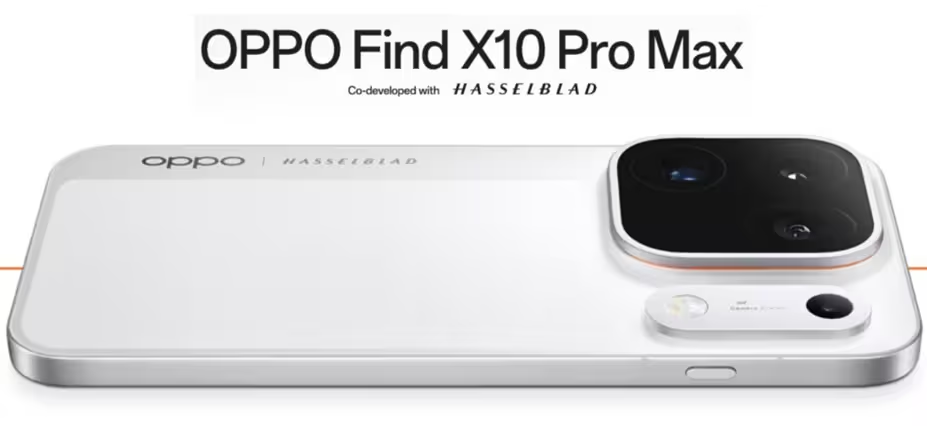
OPPO Find X10 Pro Max has been launched in China. (Image credit – OPPO)
OPPO has officially launched the OPPO Find X10 Pro Max in China as part of its latest Find X10 flagship series. The new smartphone marks the first time OPPO has introduced a “Pro Max” model in the Find series. It stands out for the triple 200MP camera setup, a 2nm MediaTek Dimensity 9600 Pro processor and an 8,000mAh battery. It also brings Hasselblad-inspired design elements, advanced video recording features and IP66, IP68 and IP69 protection. Here’s everything else you need to know about the new OPPO flagship device.
OPPO Find X10 Pro Max – Price and Availability
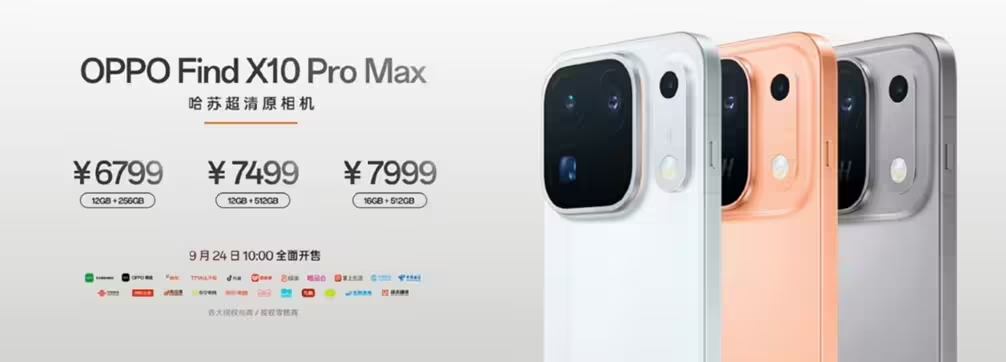
OPPO Find X10 Pro Max pricing. (Image credit – OPPO)
The OPPO Find X10 Pro Max is currently available to order in China and will officially go on sale from September 24.
The 12GB + 256GB version is priced at 6,799 yuan, which is around US$1,015 or ₹97,075. The 12GB + 512GB model costs 7,499 yuan, approximately US$1,120 or ₹1,07,070.
The higher-end 16GB + 512GB variant is priced at 7,999 yuan, equivalent to around US$1,194 or ₹1,14,210, while the top-end 16GB + 1TB version costs 8,999 yuan, or approximately US$1,344 or ₹1,28,490.
The Find X10 Pro Max will be available in Moon White, Warm Orange and Light Titanium colour options.
OPPO Find X10 Pro Max colours. (Image credit – OPPO)
There is currently no information in the provided details about the phone’s availability outside China.
OPPO Find X10 Pro Max – Triple 200MP Camera System With 8K Log Video and Creator Features
The biggest highlight of the OPPO Find X10 Pro Max is its triple 200MP camera setup. It supports native 200MP photography across the ultra-wide, main and telephoto cameras.
The 200MP ultra-wide camera uses a 1/1.56-inch sensor with an f/2.2 aperture and offers a 124-degree field of view. OPPO says it provides a 202% increase in light intake. The 200MP main camera has an f/1.5 aperture and can deliver a single-frame dynamic range of up to 17EV.
The phone also features a 200MP telephoto camera with a wide telephoto aperture and CIPA 7.5-grade optical image stabilisation. The telephoto camera supports 3x optical zoom, telephoto macro photography and up to 120x digital zoom.
The camera system is supported by OPPO’s new LUMO Color Chamber, which combines a second-generation Danxia colour reproduction lens with the LUMO Native Light and Shadow Engine. The system is designed to maintain accurate colours and tones in difficult lighting conditions.
The phone also carries Hasselblad portrait features. For selfies, it has a 50MP front camera with an f/2.0 aperture, which can record 4K video at 60fps with Dolby Vision.
OPPO has equipped the Find X10 Pro Max with several features aimed at video creators. The phone supports 8K Log recording across all focal lengths along with full-focal-length 4K video recording at 120fps with Dolby Vision. Hardware-level horizon stabilisation is also included to help keep handheld footage level.
The camera system introduces OPPO’s DeepPix sensor technology, which increases full-well capacity by 60%. It also enables 16-bit single-frame HDR output while aiming to reduce power consumption.
For professional video workflows, OPPO has announced integration with the TILTA KHRONOS ecosystem and deep software compatibility with Blackmagic Camera. The phone supports Dolby Vision, O-Log2 and Open Gate shooting modes.
OPPO Find X10 Pro Max – Other Key Features
The Find X10 Pro Max features a 6.78-inch LTPO AMOLED display with a 2772 × 1272-pixel resolution. The panel supports a 1-120Hz adaptive refresh rate and can reach up to a 144Hz refresh rate, while peak brightness goes up to 2,000 nits.
For eye comfort, the display can dim down to 1 nit and supports 3,840Hz ultra-high-frequency PWM dimming. It covers 95% of the BT.2020 colour gamut and supports HDR10+ and Dolby Vision. A five-channel ambient colour temperature sensor continuously monitors surrounding light and adjusts the display accordingly.
Powering the smartphone is the 2nm MediaTek Dimensity 9600 Pro processor paired with a Mali-G2-Ultra-NX GPU. The phone comes with 12GB or 16GB of LPDDR5X RAM and offers 256GB, 512GB or 1TB of UFS 4.1 storage.
The Find X10 Pro Max runs Android 17 with ColorOS 17. OPPO’s next-generation Tide Engine handles resource scheduling, and the company says it reduces the interval between consecutive 200MP photos to just 0.7 seconds.
The phone packs a large 8,000mAh battery with support for 80W SuperVOOC wired fast charging and 50W wireless charging.
The rear panel combines Hasselblad-inspired design elements with a metallic finish and a three-dimensional woven pattern. The camera housing features an orange imprint and silver metallic serrations inspired by traditional camera dials and camera construction.
For durability, the smartphone has IP66, IP68 and IP69 dust and water resistance ratings. It has also received a five-star drop and impact resistance rating from SGS Switzerland.
The phone measures 161.32 × 76.57 × 8.4mm and weighs 235 grams. It features an in-display ultrasonic fingerprint sensor, an infrared sensor, stereo speakers and USB Type-C audio.
For connectivity, the dual nano-SIM Find X10 Pro Max supports 5G SA/NSA, Wi-Fi 7 and Bluetooth 6.2. It also supports NFC and USB Type-C 3.2 Gen 1. For navigation, the phone supports Beidou, GPS, GLONASS, Galileo, QZSS and NavIC. OPPO’s updated ShanHai Communication suite provides global network support across more than 230 countries and regions along with tri-network, tri-standby functionality.
MediaTek has launched the Dimensity CX C10 Max featuring a 3nm process.
The Dimensity CX C10 Max will power an upcoming Lenovo Googlebook, although it will not be the already announced 15-inch Lenovo Googlebook powered by Intel.
The new chipset shares much of its architecture with MediaTek’s Kompanio Ultra 910, including the CPU configuration, NPU 890 and Immortalis-G925 MC11 GPU.
MediaTek has introduced the Dimensity CX C10 Max, its first laptop processor under the new Dimensity Compute Experiences (CX) family. The chipset has been designed for the next generation of AI-focused Googlebook devices and is positioned as the flagship model in the new range.
The launch comes as Google’s new Googlebook platform enters the market with initial devices powered by Intel and Qualcomm processors. MediaTek has confirmed that its chipset will feature in an upcoming Lenovo Googlebook, giving the platform another processor option.
MediaTek Dimensity CX C10 Max Specifications
MediaTek Dimensity CX C10 Max Specs (Source – MediaTek)
The Dimensity CX C10 Max is manufactured using a 3nm process and uses an eight-core All Big Core CPU configuration. It combines one Arm Cortex-X925 core, three Cortex-X4 cores and four Cortex-A720 cores.
The chipset also includes an 11-core Arm Immortalis-G925 MC11 GPU and MediaTek’s NPU 890, which can deliver up to 55 TOPS of AI processing performance. MediaTek says the NPU is designed to support Gemini Intelligence and on-device agentic AI features.
Specifications
MediaTek Dimensity CX C10 Max
Process
3nm
CPU
1x Cortex-X925 + 3x Cortex-X4 + 4x Cortex-A720
CPU Clock
Up to 3.73GHz
GPU
Arm Immortalis-G925 MC11
NPU
MediaTek NPU 890
AI Performance
Up to 55 TOPS
RAM
LPDDR5X, up to 9600Mbps
Storage
UFS 4.0
Display
Up to 4K 60Hz internal, dual 4K external
Camera ISP
Imagiq 1090
Camera Support
Up to 32MP
Connectivity
Wi-Fi 7, Bluetooth 6.0
Dimensity CX C10 Max Gets 32MP Camera Support and Wi-Fi 7
The chipset integrates MediaTek’s Imagiq 1090 ISP, which supports camera sensors of up to 32MP. It includes features such as HDR video, electronic image stabilisation, automatic zoom and sustained focus for video calls and content creation.
For connectivity, the Dimensity CX C10 Max supports Wi-Fi 7 with speeds of up to 7.3Gbps and Bluetooth 6.0. MediaTek notes that Bluetooth 6.0 support is not available on Googlebook devices at launch according to 9to5Google’s report.
Dimensity CX C10 Max vs Kompanio Ultra 910
A new AI-first computing experience starts with MediaTek Dimensity CX C10 Max.
Built for premium laptops on an advanced 3nm process, it pairs flagship performance with on-device Agentic AI for demanding workloads, ultra-fast multitasking, smooth gaming and advanced imaging,… pic.twitter.com/KWepu3nBe6
The Dimensity CX C10 Max has several similarities with MediaTek’sKompanio Ultra 910, which has been used in premium Chromebook Plus devices.
Both chips use the same eight-core CPU configuration, Immortalis-G925 MC11 GPU and NPU 890. According to Tom’s Hardware, the C10 Max increases the peak Cortex-X925 clock speed from 3.62GHz to 3.73GHz, while memory speeds rise from 8,533Mbps to 9,600Mbps. The advertised NPU performance also increases from 50 TOPS to 55 TOPS.
This means the Dimensity CX C10 Max appears to be an evolution of the existing Kompanio Ultra platform rather than an entirely different architecture. The comparison is based on the specifications reported for both platforms.
Dimensity CX C10 Max Will Debut in an Upcoming Lenovo Googlebook
Upcoming Googlebook (Source – Google Blogs)
MediaTek has confirmed that the Dimensity CX C10 Max will debut in an upcoming Lenovo Googlebook. However, the company has not revealed the exact model name, pricing or launch date yet.
Importantly, this is not the 15-inch Lenovo Googlebook announced as part of the initial Googlebook lineup, which uses an Intel processor.
There is speculation that the MediaTek-powered device could be related to Lenovo’s previously leaked Googlebook tablet or detachable device, but this has not been officially confirmed by MediaTek or Lenovo.
Preview programme starts with Vivo X300 Pro and select iQOO phones
Vivo has officially unveiled OriginOS 7 for global markets, bringing its Android 17-based software to select Vivo and iQOO smartphones. The new version introduces a redesigned visual interface, expanded multitasking, performance improvements and a cross-device AI assistant called Jovi.
The OriginOS 7 Preview Programme has started in India, Thailand and Malaysia, with the Vivo X300 Pro and select iQOO devices among the first smartphones to receive the software. Vivo has also confirmed that the update will later expand to the X500 series, new X Fold models and the V series.
Vivo OriginOS 7 Global Launch: What’s New
A new journey begins. OriginOS 7 is coming soon.
Mark your calendar! The official launch arrives on September 21.
OriginOS 7 is built on Android 17 and brings changes across the design, multitasking, performance, AI and connectivity experience.
The global rollout follows the launch of the Vivo X500 series in China, which ships with OriginOS 7. For global markets, Vivo has initially opened the Preview Programme in India, Thailand and Malaysia.
The first confirmed devices for the programme are the Vivo X300 Pro and select iQOO smartphones. Vivo has not yet provided a complete global rollout schedule for all eligible models.
OriginOS 7 Gets a New Glass-Like Visual Design
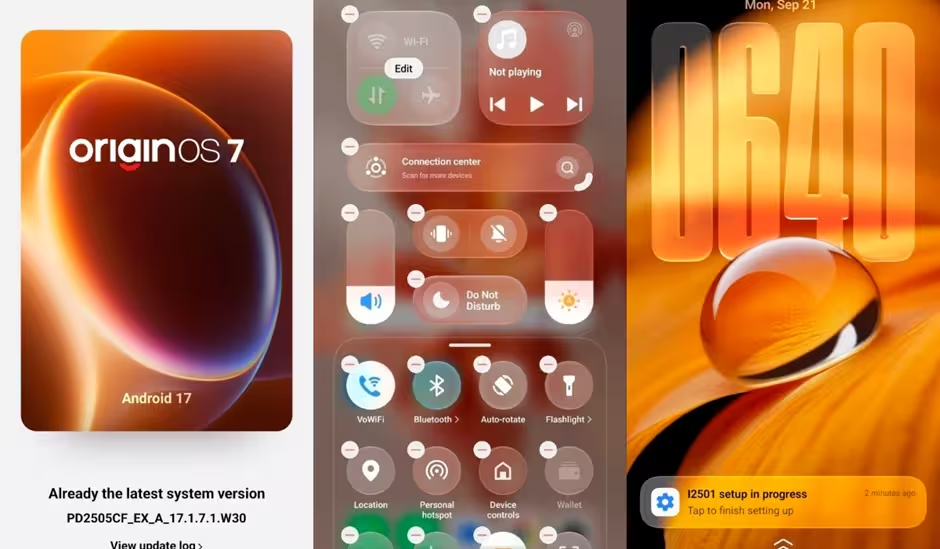
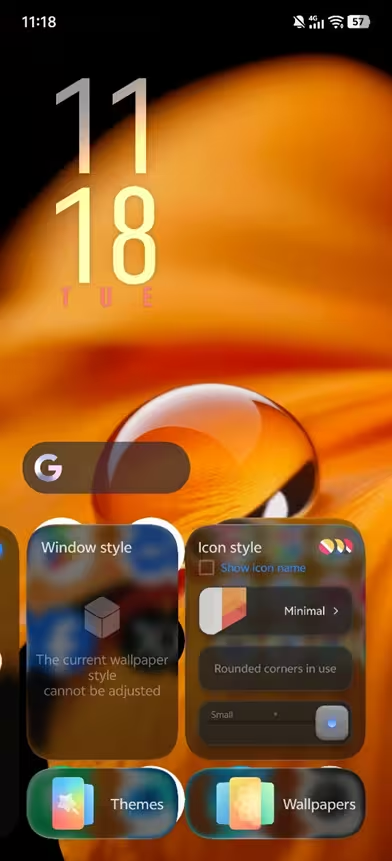
OriginOS 7 builds on the Origin Design language introduced with the previous version. The new interface adds Dynamic Glow, which makes UI elements respond to touch with bouncing, stretching and fluid movement. The effects also respond to the direction and speed of a user’s gestures.
Vivo has also introduced a glass-like translucent material with three visual profiles called Real, Natural and Soft. Users can adjust the appearance of elements such as the quick settings panel, navigation bars and buttons.
The new Origin Animation system adds Fluid Motion, Spring Animation and Seamless Interaction for more natural transitions and scrolling.
Wiggle Theme adds liquid-like movement to personal photos.
Glint Theme uses the phone’s gyroscope to create changing light and shadow effects.
StickIt lets users create layered collages using photos and Live Photos.
Pet Pals adds interactive companion themes that react to movement, charging, music and changes in time
OriginOS 7 Brings Major Multitasking Upgrades
One of the major productivity additions is Origin Workbench, which Vivo previously introduced on select foldable smartphones and tablets.
Origin Workbench creates a desktop-style workspace where users can keep up to five active applications on a single screen. This can be useful for scenarios such as editing video while checking notes, browsing references and messaging at the same time.
The feature also supports cross-app drag and drop, although Vivo notes that availability depends on the device, region and app compatibility. The company says Origin Workbench is currently supported on select models with 12GB RAM or more.
OriginOS 7 introduces the next-generation Origin Smooth Engine, which redesigns graphics computation, memory management and system scheduling.
Its Ultra-Core Computing system dynamically allocates processing resources depending on workload, including demanding scenarios such as gaming and heavy multitasking.
Vivo claims that OriginOS 7 delivers 10% faster app cold starts and an 11% improvement in app page switching as compared to OriginOS 6. The company also says Memory Fusion improves memory reclamation by 60% and can free up to 25GB of storage on a 256GB device.
The updated Dual Rendering system is claimed to improve rendering efficiency by 14.4%, helping with system animations and graphics.
Jovi AI Becomes a Personal Cross Device Agent
A major addition to OriginOS 7 is Jovi, which Vivo describes as a cross-device personal AI agent.
Through Vivo Office Kit, Jovi can coordinate tasks between a Vivo smartphone and connected computers. For example, Vivo says users can ask Jovi to retrieve a spreadsheet from a computer, summarise its figures and send the key information back to the phone.
Jovi can also handle scheduled tasks, such as preparing weekly reports or organising files at specified intervals.
Another feature is Snap Note, which can convert photos of whiteboards, handwritten notes and presentation slides into editable, formatted documents.
For security, Jovi Security records autonomous actions performed by the AI agent. Vivo says users must authorise key actions before they are completed.
OriginOS 7 Connects Vivo Phones With Apple Devices
OriginOS 7 also expands connectivity beyond the Vivo and iQOO ecosystem. Compatible Apple Watch models can be paired with Vivo and iQOO smartphones to display notifications and synchronise workout and health data with Origin Health. AirPods users can also view battery information through Origin Island, with Spatial Audio supported on compatible devices.
Through Vivo Office Kit, users can also hand off tasks, synchronise notes and transfer files between Vivo smartphones and iPad, Mac and Windows devices.
Vivo has additionally added iCloud integration, allowing users to browse photos and files stored in iCloud directly through Vivo File Manager. Availability of these features can vary by device, region and software version.
OriginOS 7 Preview Programme: Eligible Vivo and iQOO Phones
The OriginOS 7 Preview Programme started on September 21 in India, Thailand and Malaysia. The first confirmed devices include:
Devices
OriginOS 7 Compatibility
Vivo X300 Pro
Preview Programme
Select iQOO Devices
Preview Programme
Vivo X500 series
Coming Later
New Vivo X Fold Series
Coming Later
Vivo V Series
Coming Later
Vivo has not yet announced the complete rollout schedule for other Vivo and iQOO smartphones. However, speculations suggest that other Vivo flagship devices including Vivo X300 and X300 Ultra could receive the update soon.