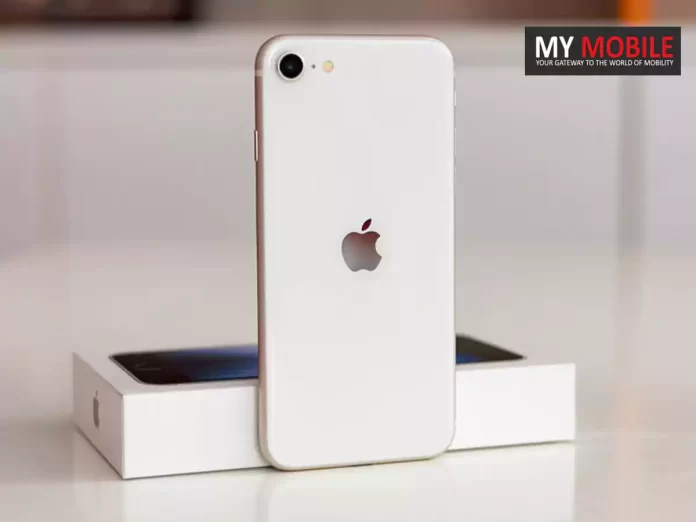
Highlights
- Samsung opts out of iPhone SE 4 display deal over price disagreements.
- BOE set to manufacture displays for the 2025 iPhone SE 4 model.
- iPhone SE 4 to adopt an all-screen design, ditching the Home button.
- Design to repurpose iPhone 13 display technology, cutting costs.
In a significant turn of events in the tech supply chain, reports have emerged suggesting that the much-anticipated iPhone SE 4, set for a 2025 release, will not feature displays made by Samsung.
Instead, it appears that China’s BOE Technology Group has emerged as the leading candidate to manufacture the screens for Apple’s next iteration of its entry-level iPhone.
Samsung Display’s Falling Out With Apple
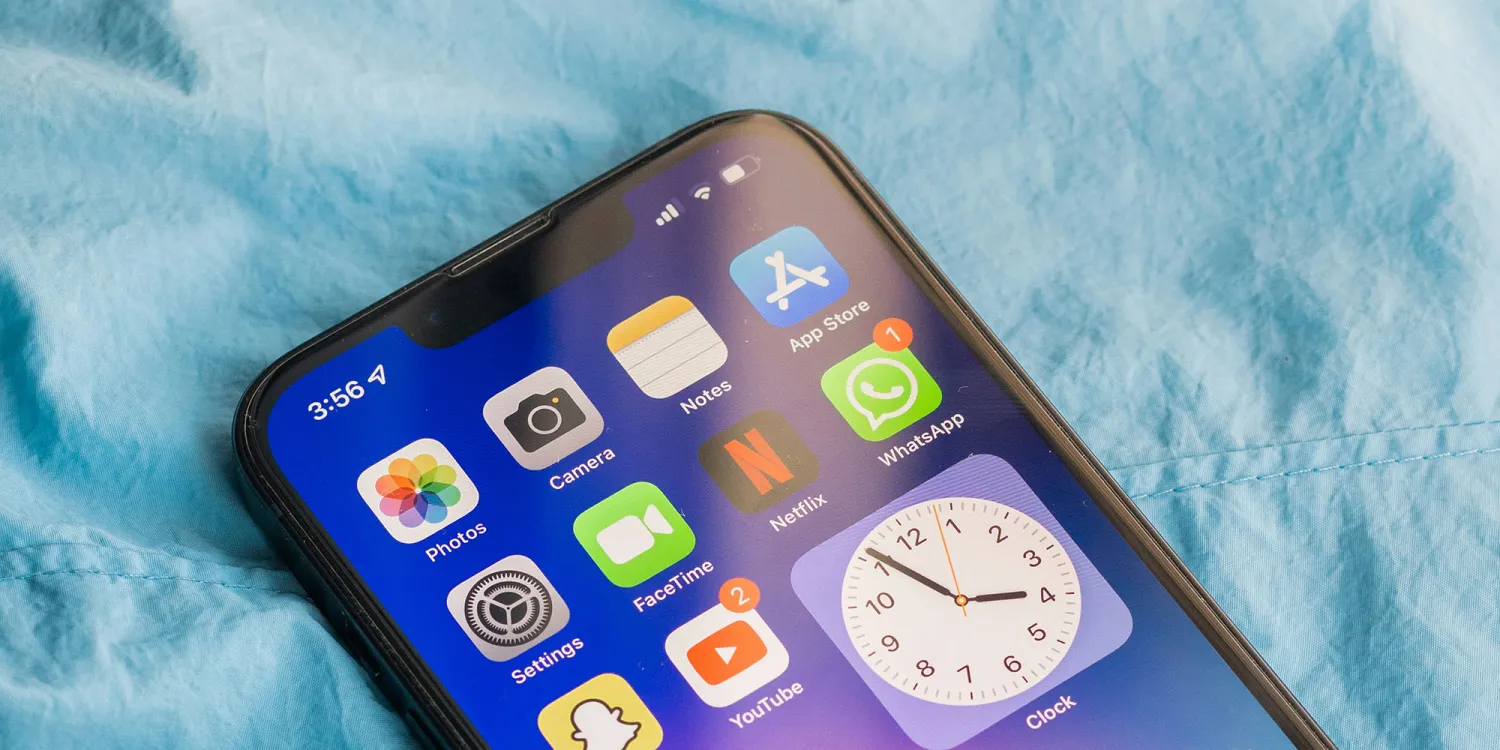
Samsung, a long-standing collaborator with Apple in screen manufacturing, reportedly stepped away from negotiations due to disagreements over pricing.
Sources indicate that Apple proposed a price of $25 per display unit, a figure that fell short of Samsung’s expectation of $30 per unit.
This disagreement has led to BOE stepping into the limelight as the potential supplier for the iPhone SE 4 displays.
The iPhone SE 4 is rumoured to be undergoing a major design overhaul.
Apple plans to eliminate the traditional Home button, aligning the model with the current all-screen design trend.
This design update is speculated to include the use of display technology from the iPhone 13, mirroring the screen used in the iPhone 14, which represents a strategic move by Apple to repurpose existing technology to minimize costs.
BOE Leading Contender for iPhone SE 4 Display
The competition for the contract was not limited to Samsung and BOE; Tianma, another Chinese display manufacturer, was also in the running.
However, it failed to meet Apple’s stringent quality standards, leaving BOE as the primary candidate.
This shift to BOE, while economically sensible for Apple, introduces new challenges.
Samsung’s extensive experience in producing displays for previous iPhone models ensured high production yields from the outset, a benchmark BOE will be expected to meet despite the potential for initial production hiccups.
The transition from Samsung to BOE marks a significant change in Apple’s supply chain strategy, giving a glimpse of the intricate dynamics of price negotiations and quality assurance in the tech industry.
Apple iPhone SE 4 Specs
GENERAL
| Sim Type | Dual Sim, GSM+GSM |
| Dual Sim | Yes |
| Sim Size | Nano+eSIM |
| Device Type | Smartphone |
| Release Date | March 8, 2024 (Expected) |
DISPLAY
| Type | Color OLED Screen (16M Colors) |
| Touch | Yes |
| Size | 6.1 inches, 750 x 1580 pixels |
| Aspect Ratio | 16:9 |
| PPI | ~ 441 PPI |
| Screen to Body Ratio | ~ 65.4% |
| Features | 1,400:1 Contrast Ratio (typical), True Tone Display, Wide Colour Display (P3), Haptic Touch, 625 nits Max Brightness |
MEMORY
| Storage | 64 GB |
| Card Slot | No |
CONNECTIVITY
| GPRS | Yes |
| EDGE | Yes |
| 3G | Yes |
| 4G | Yes |
| 5G | Yes |
| VoLTE | Yes |
| Wifi | Yes, with wifi-hotspot |
| Bluetooth | Yes, v5.3, A2DP, LE |
| USB | Yes, Lightning Port |
| USB Features | USB Charging |
EXTRA
| GPS | Yes, with A-GPS, GLONASS, GALILEO, QZSS, BEIDOU |
| Fingerprint Sensor | Yes, Front |
| Face Unlock | Yes |
| Sensors | Barometer, Three Axis Gyro, Accelerometer, Proximity Sensor, Ambient Light Sensor |
| 3.5mm Headphone Jack | Lightning |
| NFC | Yes |
| Water Resistance | Yes |
| IP Rating | IP67 |
| Dust Resistant | Yes |
CAMERA
| Rear Camera | 12 MP f/1.8 with autofocus |
| Features | Deep Fusion, Smart HDR 4, Photographic Styles, Advanced Red-eye Correction, Auto Image Stabilisation, Burst Mode, Photo Geotagging |
| Video Recording | 4K, 1080p |
| Flash | Yes, LED |
| Front Camera | 10.8 MP f/2.2 with Retina Flash |
| Front Video Recording | 1080p @ 30 fps FHD |
TECHNICAL
| OS | iOS v16 |
| Chipset | Apple Bionic A15 |
| CPU | 3.22 GHz, Hexa Core Processor |
| Core Details | 2×3.22 GHz Avalanche + 4xX.X GHz Blizzard |
| GPU | Apple GPU |
| Java | No |
| Browser | Yes |
MULTIMEDIA
| Yes | |
| Music | AAC, MP3, Apple Lossless, FLAC, Dolby Digital and Dolby Digital Plus |
| Video | HEVC, H.264 and ProRes |
| FM Radio | No |
| Document Reader | Yes |
BATTERY
| Type | Non-Removable Battery |
| Size | Li-ion Battery |
| Fast Charging | Yes, 18W Fast Charging |
| Wireless Charging | Yes, Works with Qi Chargers |
| Music Playback Time | 50 hours |
FAQs
Why is Samsung not manufacturing the iPhone SE 4 display?
Samsung and Apple could not agree on the cost per display unit for the upcoming iPhone SE 4, leading to Samsung withdrawing from the deal. Apple proposed a price that was lower than Samsung’s minimum offer, prompting the search for a new supplier.
Who will manufacture the iPhone SE 4 display?
Following Samsung’s exit from the negotiations, Chinese display maker BOE has emerged as the leading contender to supply the displays for the iPhone SE 4. This marks a significant shift in Apple’s supply chain for its entry-level iPhone.
What changes can we expect in the iPhone SE 4 design?
The iPhone SE 4 is expected to undergo a major redesign, moving to an all-screen format and eliminating the Home button. This design approach aligns with the current trend of screen designs in smartphones and will repurpose the display technology used in the iPhone 13.
How does Apple plan to manage costs for the iPhone SE 4?
Apple aims to manage production costs for the iPhone SE 4 by reusing technology from older iPhone models, such as the iPhone 13’s display technology. This strategy reduces the need for new R&D expenses, enabling Apple to maintain cost-effectiveness.
Also Read: iPhone SE 4 Redesign Rumours Point to an iPhone 14-like Look
Also Read: iPhone SE 4 Set to Sport OLED Display, Eyeing iPhone 13’s Screen Technology
Also Read: iPhone SE 4 CAD Renders Show the Device Featuring a Notched Display and Modern Design
Humane AI Pin Gets Google Photos Integration; Could Have More Google Services Soon
Highlights
- Humane AI Pin integrates seamlessly with Google Photos for easy image management.
- Features a 13MP ultra-wide camera for expansive shot capture.
- Offers voice commands and a unique laser display for intuitive photo taking.
- Supports linking with Google Contacts, Apple/iCloud, and Microsoft for enhanced connectivity.
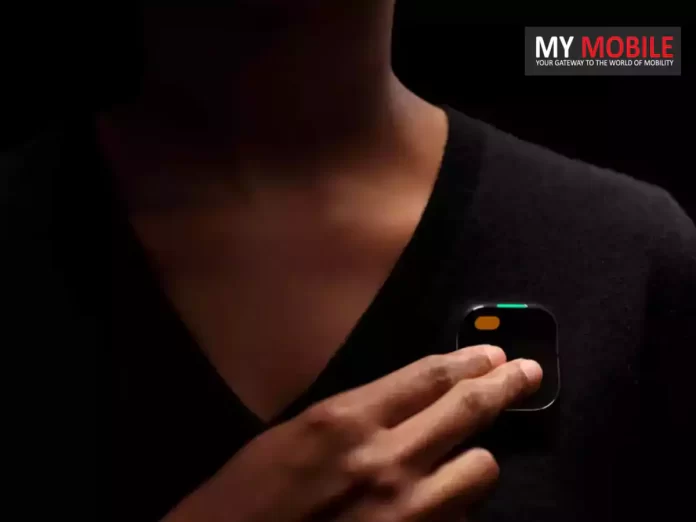
Humane is set to revolutionize the way we capture and share moments with the imminent launch of the AI Pin, a device that marries innovative technology with everyday convenience.
Humane AI Pin Google Photos Integration
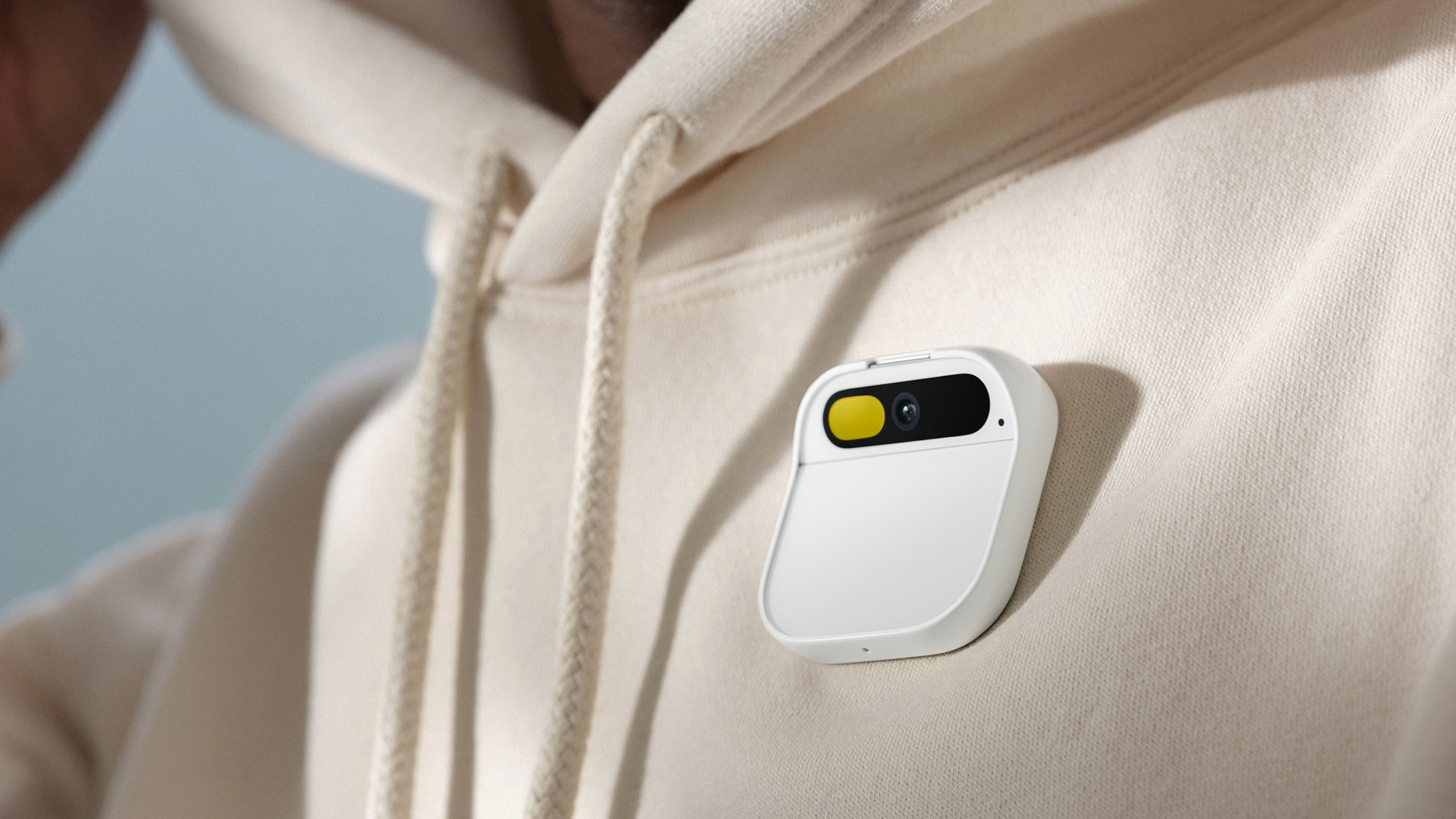
As the release date draws near, Humane has revealed exciting details about the AI Pin’s functionalities, including its integration with Google Photos, enhancing the user experience through seamless photo management and sharing.
This feature not only enables the automatic export of full-resolution images and videos to Google Photos but also allows for the synchronization of Google Contacts.
Moreover, an upcoming feature will integrate Google Calendar, offering voice command functionalities as well.

In a bid to streamline the photo-sharing process, low-resolution images are promptly uploaded over LTE as part of a $24 monthly subscription to the Humane. Center cloud/web portal.
The convenience extends to when the device connects to Wi-Fi and has adequate battery life, whereupon full-resolution photos and videos are uploaded, ensuring your memories are preserved in the highest quality.
Additionally, the device supports linking contacts from other third-party services like Apple/iCloud and Microsoft, showcasing its versatility and user-centric design.
Human AI Pin: Specs and Pricing

The Humane AI Pin is not just any wearable device; it’s equipped with a 13MP ultra-wide camera boasting a 120-degree field of view and an f/2.4 aperture, allowing users to capture expansive shots with ease.
Activating the camera is intuitively designed, offering versatility through double-tapping the touchpad with two fingers, voice commands, or its unique laser display, ensuring moments are never missed.
Priced from $699, the AI Pin is poised for shipment with the first orders expected to arrive by mid-April.

FAQs
What makes the Humane AI Pin unique in the wearable technology market?
The Humane AI Pin stands out for its innovative integration with Google Photos, offering seamless photo management and sharing capabilities.
This wearable device features a 13MP ultra-wide camera, enabling users to capture wide-angle shots effortlessly. The AI Pin also supports intuitive photo-taking methods, including voice commands and a novel laser display, making it a pioneering device in wearable tech.
How does the Humane AI Pin enhance photo-sharing experiences?
Through its integration with Google Photos, the Humane AI Pin automates the export of full-resolution images and videos, simplifying the photo-sharing process.
This device ensures that your cherished moments are automatically uploaded and stored in high quality, thanks to its smart connectivity options that prioritize Wi-Fi uploads when the device has sufficient battery life.
What are the key specifications of the Humane AI Pin’s camera?
The Humane AI Pin is equipped with a 13MP ultra-wide camera that features a 120-degree field of view and an f/2.4 aperture.
This specification allows for the capture of expansive and detailed shots, further enriched by the device’s AI Photographer feature, which selects the best image from a burst of three shots, ensuring optimal photo quality with color correction and denoising.
How does the Humane AI Pin connect with other services and devices?
Beyond its Google Photos integration, the Humane AI Pin supports synchronization with Google Contacts and has an upcoming feature for Google Calendar integration. This enhances the device’s usability, offering voice command functionalities for managing events.
Additionally, the AI Pin can link with third-party services such as Apple/iCloud and Microsoft, showcasing its versatility and commitment to a user-centric design.
Also Read: Humane AI Pin: All You Need To Know About This Game-Changer in Wearable Technology
Also Read: Humane AI Pin Sales to Commence From End of March, Says Company
Also Read: Humane AI Pin Impressions: Ushering Beyond the Era of Smartphones?
OnePlus Nord CE4 Specs and Pricing Leaked Ahead of Official Launch
Highlights
- OnePlus Nord CE4 to feature a new design with an oval camera island.
- Boasts a 6.7-inch LTPS AMOLED display with a 120Hz refresh rate.
- Powered by Qualcomm Snapdragon 7 Gen 3 processor and up to 8 GB RAM.
- Expected to include a 50 MP main camera and support for 100W fast charging.
The announcement of the OnePlus Nord CE4 is anything but a joke even if the launch is set for April 1st, a date traditionally associated with April Fools’ Day pranks.
As the unveiling approaches, a flurry of details about this much-anticipated smartphone has begun to surface, thanks to insights from credible sources, including official-looking renders, speculated specifications, and potential pricing for the Indian market.
OnePlus Nord CE 4: Expected Specs and Design
Exclusive: OnePlus Nord CE4 high-resolution renders and full specs!
What do you think would be the 💰 pricing for the Nord CE4?
Let’s see how well it goes against the Nothing Phone (2a) if priced similarly. #OnePlusNordCE4 #OnePlus pic.twitter.com/kvz45LTnRZ
— Ishan Agarwal (@ishanagarwal24) March 27, 2024
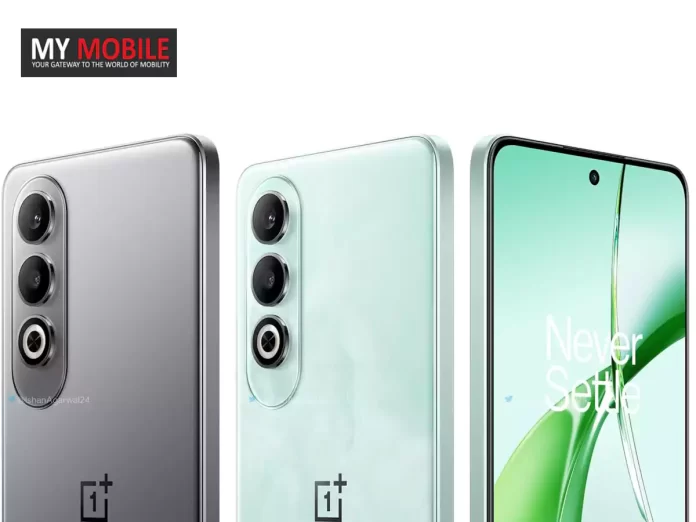
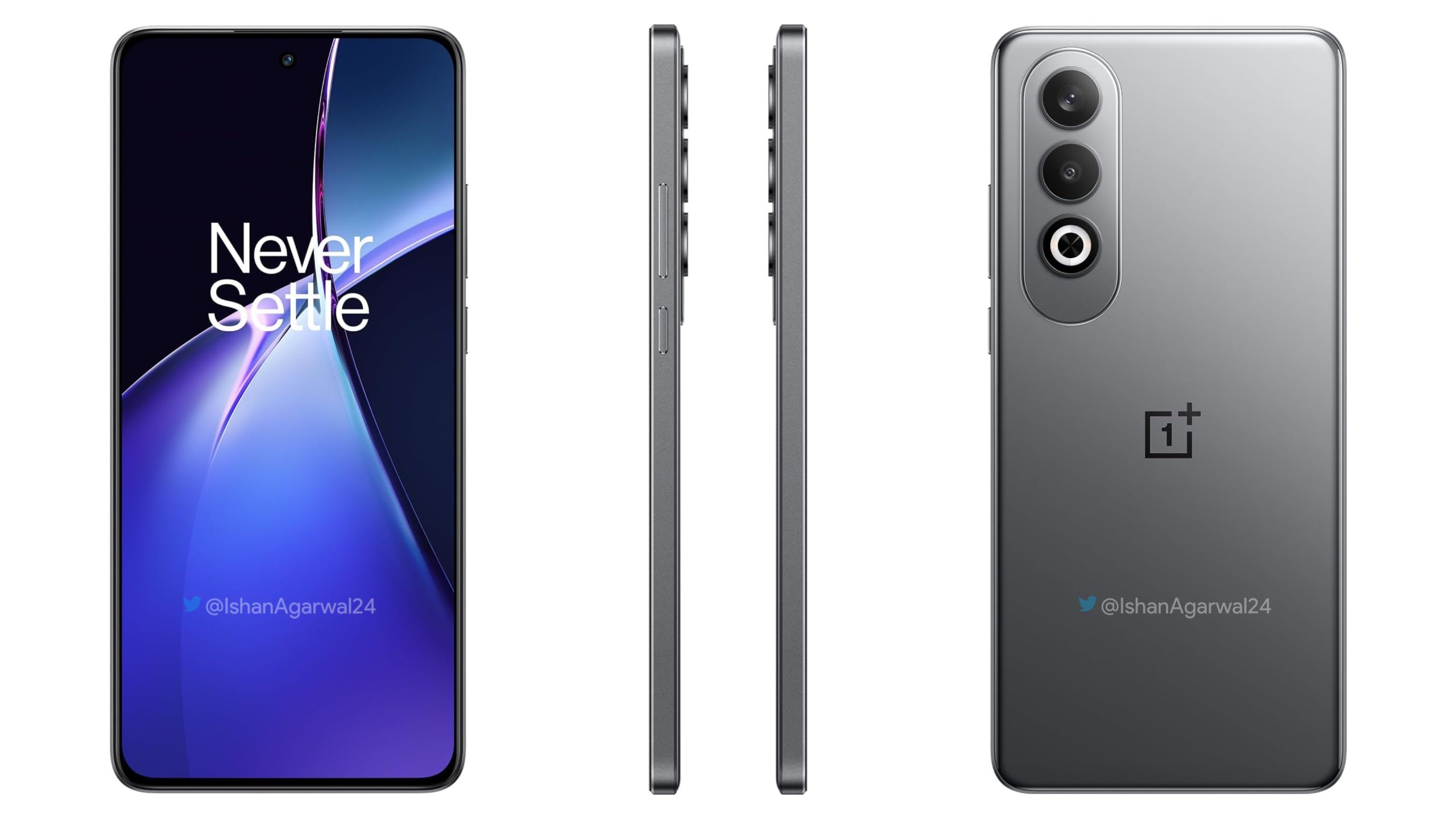
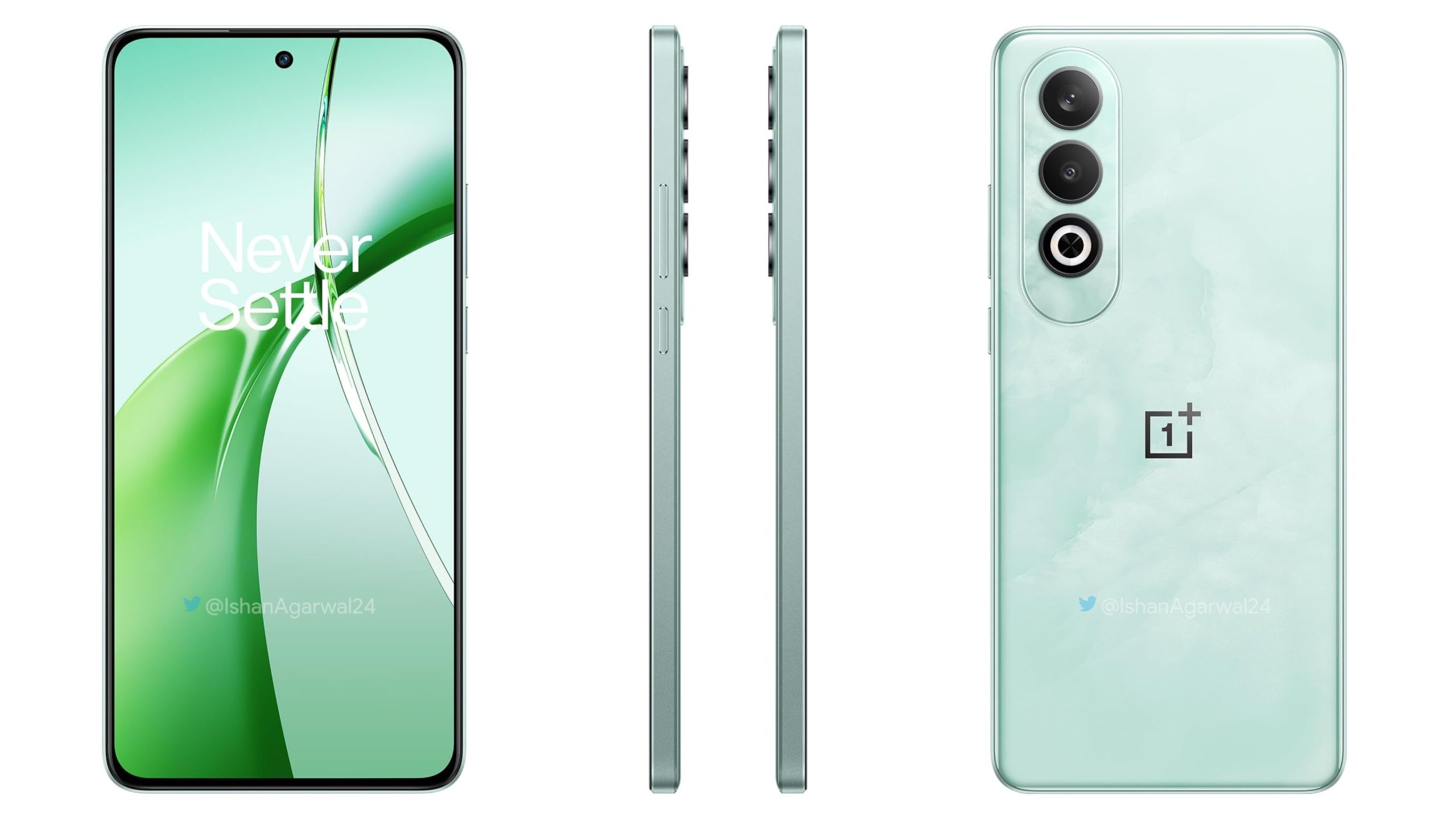
The OnePlus Nord CE4 is poised to introduce a fresh design aesthetic, diverging from the recent design trends seen in the OnePlus 11-12 series.
The device is expected to feature an elongated camera island with an oval shape, incorporating two camera modules and an LED flash in a vertical arrangement.
The front of the phone will offer a sleek look with thin bezels and a central punch-hole for the selfie camera, maintaining the flat display characteristic of mid-range models.
Spec-wise, the OnePlus Nord CE4 is rumoured to boast a 6.7-inch LTPS AMOLED display, capable of a 120Hz refresh rate, promising smooth and vivid visuals.
At its core, the device is expected to be powered by the Qualcomm Snapdragon 7 Gen 3 processor, complemented by up to 8 GB of LPDDR4X RAM.
This chipset marks a significant performance upgrade for the Nord line, ensuring the smooth operation of apps and high-graphic games thanks to its Octa-Core architecture and advanced 4nm process technology, including a mix of Cortex cores and an Adreno 720 GPU.
The OnePlus Nord CE4’s camera setup is said to include a 50 MP Sony Lytia LYT-600 sensor equipped with OIS, alongside an 8 MP ultrawide Sony IMX355 sensor.
A 16 MP front camera is also on board for selfies and video calls.
Powering the device is a robust 5,500 mAh battery, supported by 100W fast wired charging, indicating a significant leap in battery technology for the series.
OnePlus Nord CE 4: Expected Pricing

When it comes to pricing, while official figures are yet to be disclosed, leaks suggest the 8 GB RAM and 128 GB storage variant could be priced at Rs 24,999, with a higher-spec model featuring 8 GB RAM and 256 GB storage potentially costing Rs 26,999.
We won’t have to wait long to see if this pricing holds true or not.
FAQs
What new design features does the OnePlus Nord CE4 offer?
The OnePlus Nord CE4 is expected to break from the traditional design patterns seen in previous OnePlus models, featuring an elongated, oval-shaped camera island that houses two camera modules and an LED flash in a vertical setup.
The device also promises a sleek look with thin bezels and a punch-hole selfie camera, maintaining a flat display which is typical for mid-range models.
What type of display will the OnePlus Nord CE4 have?
The OnePlus Nord CE4 is rumored to come equipped with a 6.7-inch LTPS AMOLED display, offering a 120Hz refresh rate for smooth scrolling and vivid visual experience.
This large, high-refresh-rate screen is designed to enhance gaming, video playback, and general usability.
Can you explain the performance capabilities of the OnePlus Nord CE4?
At the heart of the OnePlus Nord CE4 lies the Qualcomm Snapdragon 7 Gen 3 processor, accompanied by up to 8 GB of LPDDR4X RAM.
This chipset is a noteworthy upgrade for the Nord series, offering enhanced performance capabilities including efficient multitasking and the ability to handle demanding games at high graphics settings, thanks to its advanced 4nm process technology and Octa-Core structure.
What are the camera specifications of the OnePlus Nord CE4?
The camera setup of the OnePlus Nord CE4 includes a 50 MP main sensor equipped with Optical Image Stabilization (OIS), utilizing a Sony Lytia LYT-600 sensor.
Additionally, an 8 MP ultrawide camera featuring a Sony IMX355 sensor, and a 16 MP front-facing camera for selfies and video calls, are part of the device’s photography arsenal.
Also Read: OnePlus Nord CE 4 To Launch on April 1, Promises Major Upgrades and New Design
Also Read: OnePlus Nord CE 4 Features Leaked on Support Page Ahead of April Launch
Google Pixel 9 Series Leaked Renders Show Three Models and the Return of the ‘XL’ Moniker
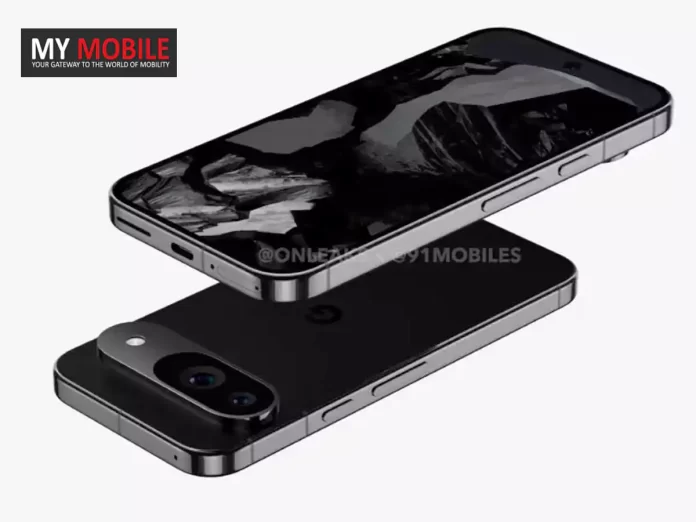
Highlights
- Google to introduce three models: Pixel 9, Pixel 9 Pro, and Pixel 9 Pro XL.
- New 5K renders reveal diverse display sizes and dual-camera setup for Pixel 9.
- Pixel 9 series rumoured to feature Qi2 charging technology for faster wireless charging.
- Expected ‘Adaptive Touch’ technology to enhance touchscreen responsiveness.
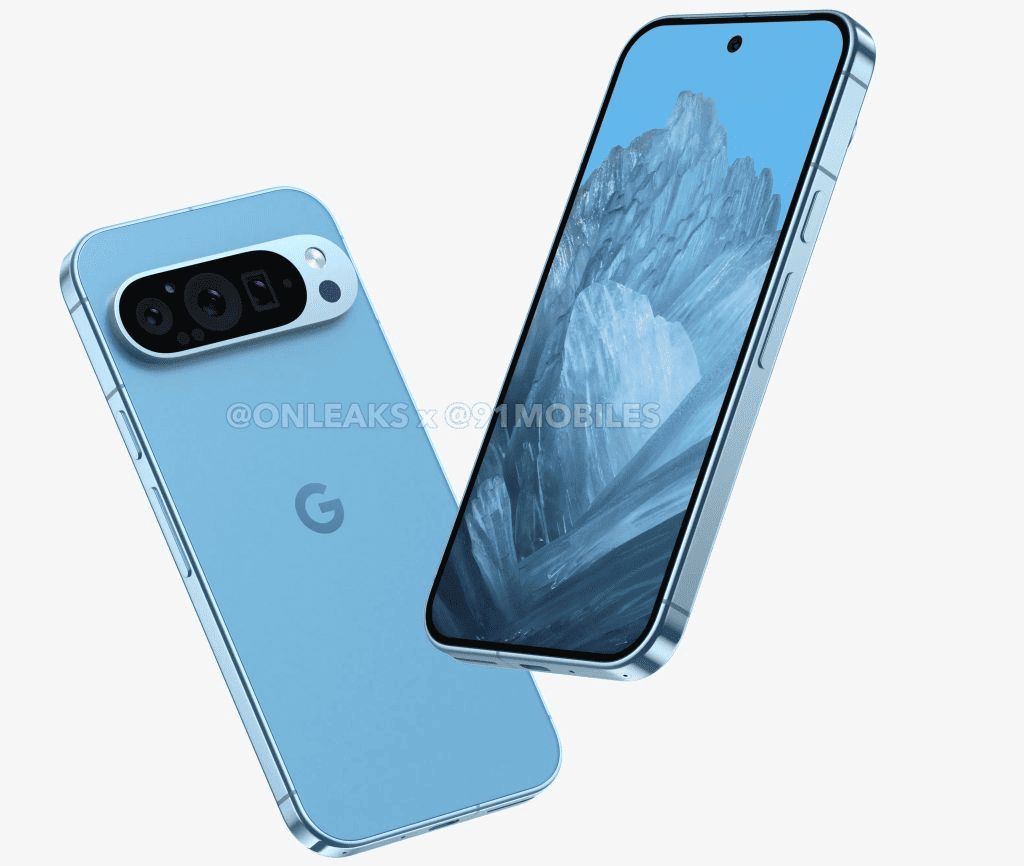
Google is reportedly gearing up to unveil three distinct models of the Pixel 9 as per 91mobiles who have acquired new 5K renders of the upcoming smartphone.
The site, collaborating with renowned leaker OnLeaks, has corrected its initial reports, clarifying that the earlier images depicted the Pixel 9 Pro and an unexpected Pixel 9 Pro “XL” — marking a surprising return to the XL nomenclature after its retirement post-2019.
This pivot hints at an alignment closer to Apple’s, offering consumers a choice between two Pro model sizes, rekindling the XL label to differentiate the larger variant.
Pixel 9 Series Renders and Expected Specs
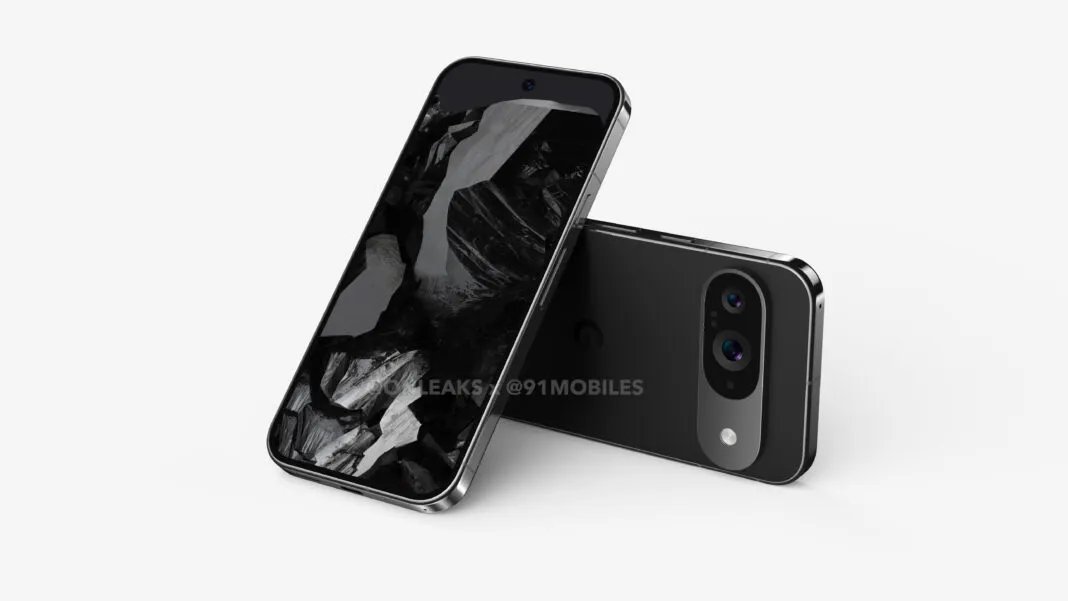
The entry-level Pixel 9, now revealed for the first time, adheres to the design language previewed in past leaks, opting for a utilitarian design with flat edges and increasingly rounded display corners, a departure from the curved aesthetics of its predecessors, the Pixel 8 and 8 Pro.
An exciting aspect of the upcoming lineup is the diversity in display sizes across the models, promising to cater to a wide range of user preferences:
- The Pixel 9 Pro XL is set to boast a 6.5-inch display,
- The Pixel 9 Pro will feature a 6.1-inch screen,
- And the standard Pixel 9 will present a slightly more compact 6.03-inch display.
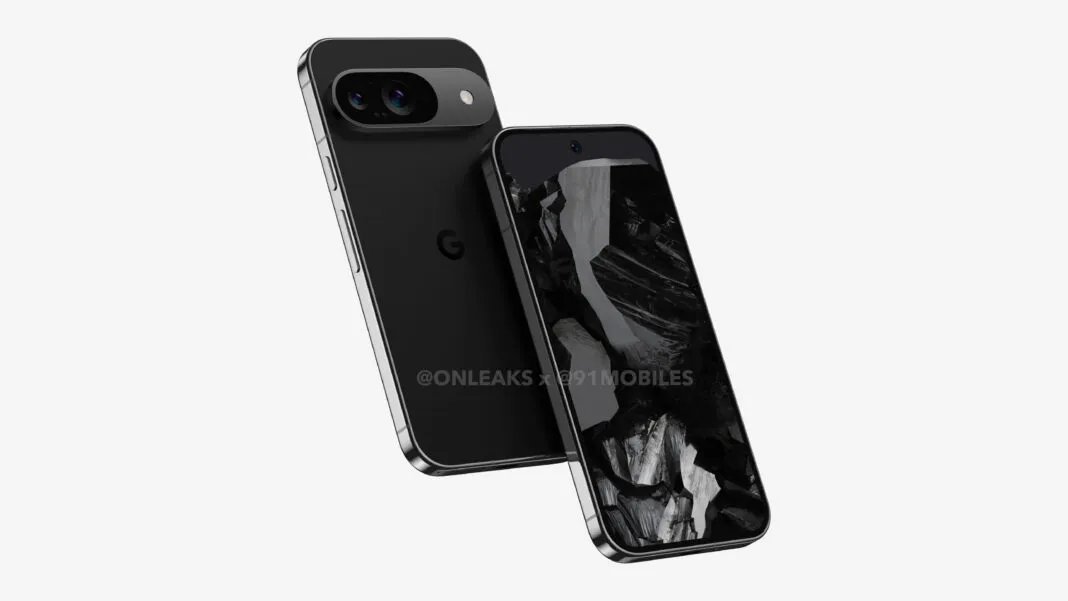
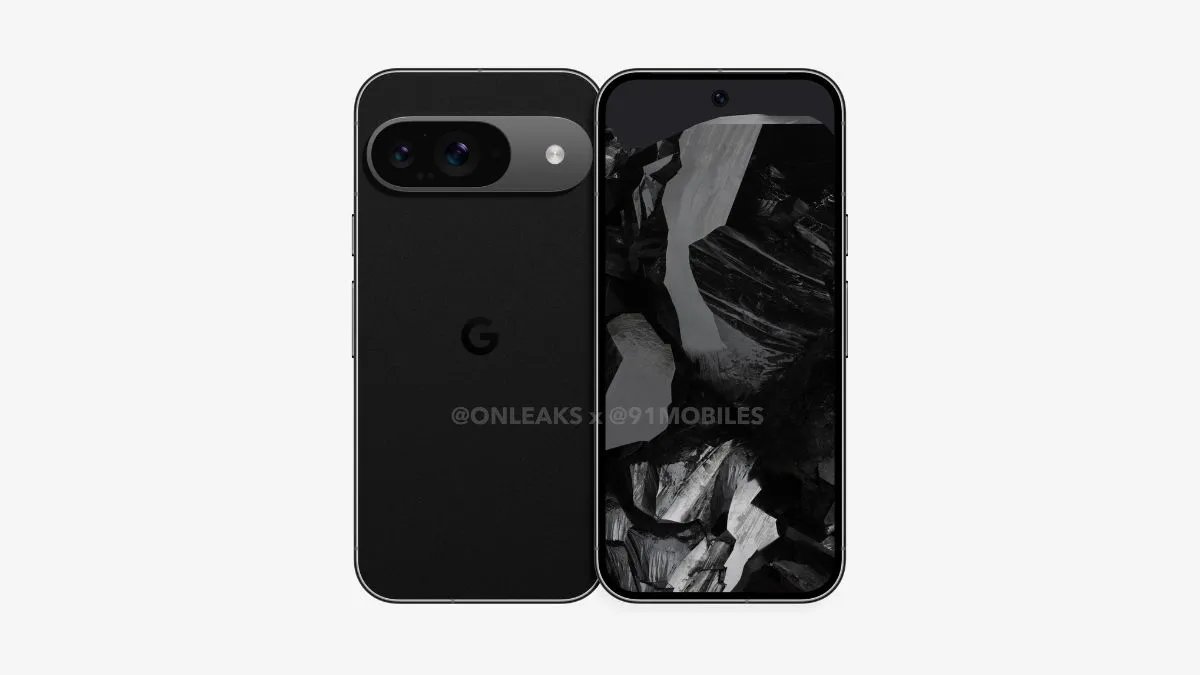
Delving into the design intricacies of the Pixel 9, enthusiasts will be pleased to find a suite of four 5K renders alongside a comprehensive 360-degree video, offering a sneak peek at Google’s flagship ambitions.
The Pixel 9 mirrors the Pro variant’s aesthetic with a substantial rear camera module housing a dual-camera setup, unlike the Pro’s triple-camera array.
This model will sport a flat display, rounded corners, and a central punch-hole for the selfie camera, with the power and volume buttons conveniently located on the right side of its flat frame.
Notably, the device measures in at 152.8 x 71.9 x 8.5mm, slightly swelling to 12mm at the camera bump, highlighting its sleek yet functional form factor.
Pixel 9 Series: Additional Features
Anticipation is also building around the technical specifications, with the Pixel 9 series reportedly rumoured to incorporate the Qi2 charging technology.
This enhancement is said to promise wireless charging speeds up to 15W and improved magnetic alignment, marking a significant upgrade over its predecessors.
While the exterior design and certain features have been generously previewed, much remains under wraps about the Pixel 9’s capabilities.
Speculations suggest the introduction of an ‘Adaptive Touch’ functionality, designed to tailor touchscreen sensitivity to various conditions, such as environmental factors or the presence of a screen protector, adding a layer of intuition and responsiveness to the user experience.
Google Pixel 9 Specs
GENERAL
| Sim Type | Dual Sim, GSM+GSM |
| Dual Sim | Yes |
| Sim Size | Nano+eSim |
| Device Type | Smartphone |
| Release Date | September 19, 2024 (Expected) |
DESIGN
| Dimensions | 158.6 x 74.8 x 8.9 mm (6.24 x 2.94 x 0.35 in) |
DISPLAY
| Type | Color AMOLED Screen (16M Colors) |
| Touch | Yes |
| Size | 6.26 inches, 1080 x 2400 pixels, 120 Hz |
| Aspect Ratio | 20:9 |
| PPI | ~ 420 PPI |
| Screen to Body Ratio | ~ 89.3% |
| Glass Type | Corning Gorilla Glass Victus Plus |
| Features | HDR10+, Always-on Display |
| Notch | Yes, Punch Hole |
MEMORY
| RAM | 8 GB |
| Storage | 256 GB |
| Storage Type | UFS 4.1 |
| Card Slot | No |
CONNECTIVITY
| GPRS | Yes |
| EDGE | Yes |
| 3G | Yes |
| 4G | Yes |
| 5G | Yes |
| VoLTE | Yes, Dual Stand-By |
| Vo5G | Yes |
| Wifi | Yes, with wifi-hotspot |
| Bluetooth | Yes, v5.3, A2DP, LE, aptX HD |
| USB | Yes, USB-C v3.1 |
| USB Features | USB Tethering, USB on-the-go, USB Charging |
EXTRA
| GPS | Yes, with dual-band A-GPS, GLONASS, GALILEO, QZSS, BDS |
| Fingerprint Sensor | Yes, In Display |
| Face Unlock | Yes |
| Sensors | Accelerometer, Gyro, Proximity, Compass, Barometer, Ambient Light Sensor, Magnetometer |
| 3.5mm Headphone Jack | No |
| Extra | NFC |
| Water Resistance | Yes, 1.5 m upto 30 min |
| IP Rating | IP68 |
| Dust Resistant | Yes |
| Extra Features | Stereo Speakers, 3 Microphones, Noise Suppression |
CAMERA
| Rear Camera | 50 MP f/1.9 (Wide Angle) 8 MP f/2.2 (Ultra Wide) with autofocus |
| Features | Magic Eraser18, Motion Mode, Real Tone, Face Unblur, Panorama, Manual white balancing, Locked Folder, Portrait Mode, Portrait Light, Super Res Zoom, Motion autofocus, Frequent Faces, Dual exposure controls, Live HDR+ |
| Video Recording | 4K, 1080p |
| Flash | Yes, Dual LED |
| Front Camera | Punch Hole 12 MP (Wide Angle) |
| Front Video Recording | 1080p @ 30 fps FHD |
TECHNICAL
| OS | Android v14 |
| Chipset | Google Tensor 4 |
| CPU | Octa Core Processor |
| GPU | Mali-GU |
| IP Rating | IP68 |
| Java | No |
| Browser | Yes |
MULTIMEDIA
| Yes | |
| Music | Yes |
| Video | Yes |
| FM Radio | No |
| Document Reader | Yes |
BATTERY
| Type | Non-Removable Battery |
| Size | 5000 mAh, Li-Po Battery |
| Fast Charging | Yes, 80W Fast Charging |
| Wireless Charging | Yes, 45W |
| Reverse Charging | Yes |
FAQs
What models are expected in the Google Pixel 9 series launch?
Google is set to expand its smartphone lineup with three models: the standard Pixel 9, the Pixel 9 Pro, and a newly reintroduced Pixel 9 Pro XL. This trio aims to cater to a broad spectrum of user preferences, with varying display sizes and features across the board.
How do the display sizes differ among the Pixel 9 series models?
The upcoming Pixel 9 series is designed to appeal to a variety of users, offering different display sizes for each model. The Pixel 9 Pro XL is expected to feature a 6.5-inch display, the Pixel 9 Pro a 6.1-inch screen, and the standard Pixel 9 will come with a slightly more compact 6.03-inch display.
What are the design highlights of the standard Pixel 9 model?
The standard Pixel 9 model is anticipated to showcase a pragmatic design with flat edges, rounded display corners, and a dual-camera setup. It also includes a flat display with a centered punch-hole selfie camera, complemented by a sleek form factor measuring 152.8 x 71.9 x 8.5mm, with a slight protrusion for the camera bump.
Can we expect any new charging technologies in the Pixel 9 series?
Yes, the Pixel 9 series is rumored to incorporate Qi2 charging technology, which is expected to enhance wireless charging capabilities significantly. This new standard could offer speeds up to 15W along with improved magnetic alignment, making it a noteworthy upgrade from previous models.
Also Read: Google Pixel 9 Pro Potentially Revealed in Detailed 5K Renders Months Ahead of Official Launch
Also Read: Possible Google Pixel 9 or Fold 2 Appears on UL Demko Certification
Also Read: Google To Reportedly Bring Gemini Nano AI Assistance Called Pixie to Upcoming Pixel 9 Series
Google Expands Circle to Search Feature to More Devices; Samsung Says it is the Most Used Galaxy AI Feature
Highlights
- Circle to Search now available on additional Pixel and older Galaxy devices.
- Feature allows screen content searches with a simple circle gesture.
- Upcoming updates to include on-screen text translation capabilities.
- Samsung reveals Circle to Search as the most popular Galaxy AI feature.
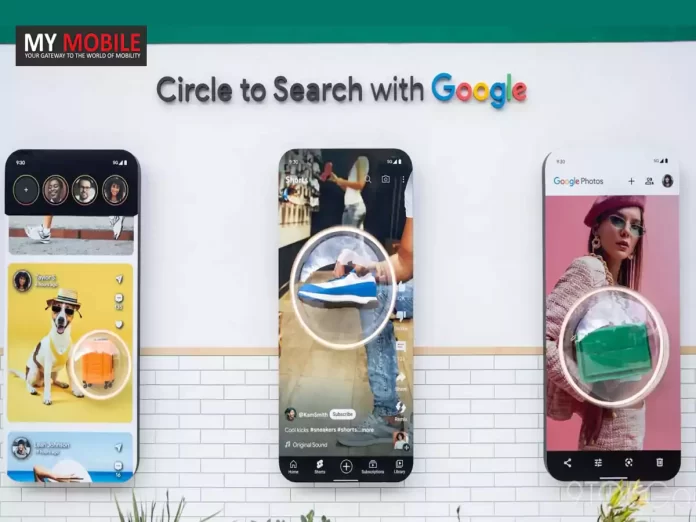
Google is streamlining the process of switching between apps for search purposes, introducing the “Circle to Search” feature to a wider range of Pixel devices and older Galaxy smartphones.
Initially launched in January, this feature will now be available on the Pixel 7A, Pixel Fold, Pixel Tablet, and even extend to the older Pixel 6, 6 Pro, and the budget-friendly Pixel 6A.
Google and Samsung Expanding Circle to Search
In its bid to dominate the AI sector, Google has been embedding AI-driven functionalities across its product range, particularly within its Pixel smartphones.
The rapid expansion of Circle to Search across Google’s Pixel devices underscores its significance in Google’s AI-focused strategy.
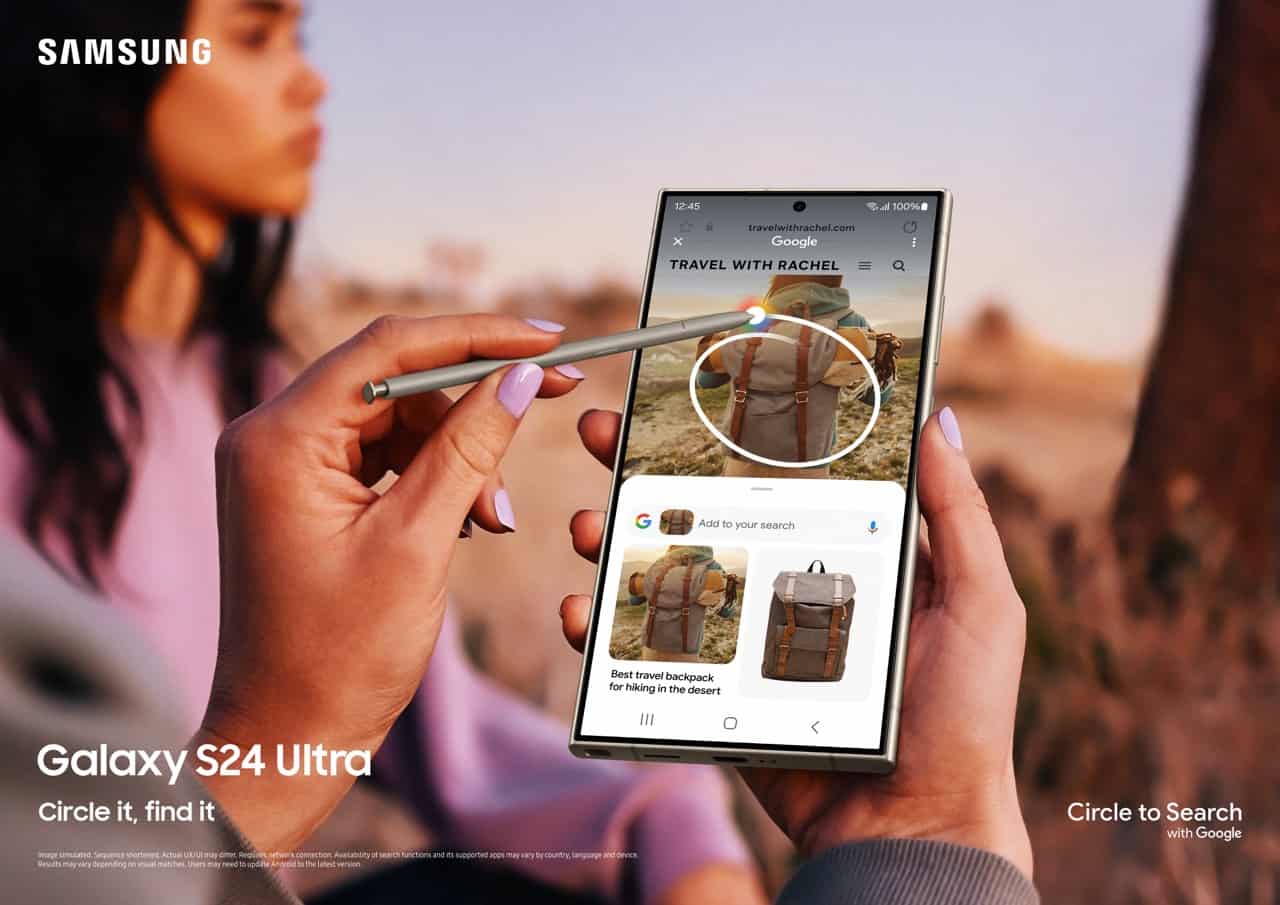
First seen on the Galaxy S24 series, Circle to Search made its way to Google’s latest Pixel 8 and 8 Pro shortly after.
This feature allows users to initiate a Google search for nearly anything displayed on their phone’s screen by simply drawing a circle around it.
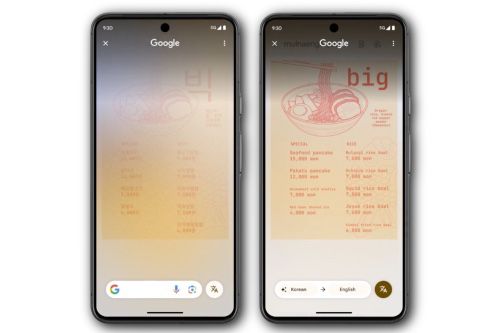
This innovative search method is set to become even more versatile with upcoming updates that will introduce the ability to translate text directly on the screen, further simplifying tasks like translating restaurant menus into various languages without the need for traditional methods involving app switching or photo taking.
Circle to Search Extremely Popular

As Samsung prepares to update its Galaxy S23 lineup, Galaxy Z Flip 5, and Galaxy Z Fold 5 with Circle to Search, the company also disclosed that this feature has emerged as the most celebrated “Galaxy AI” functionality among users of the Galaxy S24 series.
Samsung claims, “Circle to Search with Google revolutionized the way users search, helping it become the most widely used AI feature amongst Galaxy S24 users.

It allows them to learn more about almost anything on their screens quickly with a simple gesture, without having to switch apps.”
Circle to Search’s popularity among Galaxy S24 users isn’t surprising, given its wide availability and the significant marketing efforts by Google, despite its previously limited accessibility.
FAQs
What is Circle to Search and which devices support it?
Circle to Search is a feature that allows users to search for anything displayed on their phone’s screen by drawing a circle around it.
Initially launched on the Galaxy S24 series and Pixel 8 models, it has now expanded to include the Pixel 7A, Pixel Fold, Pixel Tablet, Pixel 6, 6 Pro, Pixel 6A, Galaxy S23 lineup, Galaxy Z Flip 5, and Galaxy Z Fold 5.
How does Circle to Search improve upon traditional search methods?
Unlike conventional search methods that require switching apps or typing queries, Circle to Search simplifies the process. Users can instantly search for information by making a gesture on their screen.
This feature eliminates the need for copy-pasting or photographing text, offering a quicker, more seamless search experience.
Can Circle to Search translate text on the screen?
Yes, an upcoming update will enhance Circle to Search with the ability to translate text displayed on the screen.
This new functionality will make it easier for users to translate text, such as restaurant menus, into different languages directly on their screen, streamlining the translation process without the need for additional steps.
Why is Circle to Search popular among Galaxy S24 series users?
Samsung attributes the popularity of Circle to Search among Galaxy S24 users to its simplicity and efficiency.
The feature allows for quick learning about anything displayed on the screen without the hassle of switching apps. Its ease of access and the ability to provide instant information with a simple gesture have made it a favourite.
Also Read: Google’s Circle to Search: The Next Evolution For Searching Online
Also Read: Google Launches Innovative Circle to Search Feature on Pixel 8 and Galaxy S24
Vivo T3 5G Review: Exceptional Performance and Design While on a Budget
Highlights
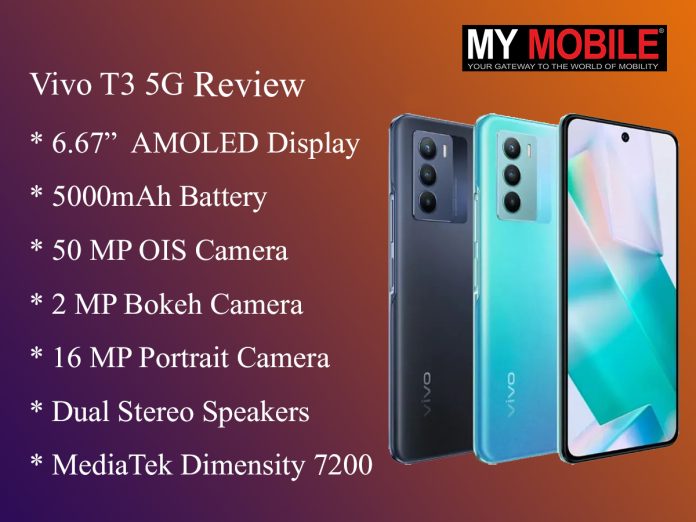
- Vivo T3 5G combines stunning design with powerful performance.
- Features a 50MP main camera with OIS for superior photography.
- Equipped with a MediaTek Dimensity 7200 processor for seamless multitasking.
- Supports 44W fast charging, ensuring quick battery replenishment.
The Vivo T3 5G positions itself as a compelling contender in the sub-Rs 20,000 category, distinguishing itself from the more premium V series and the flagship X series.
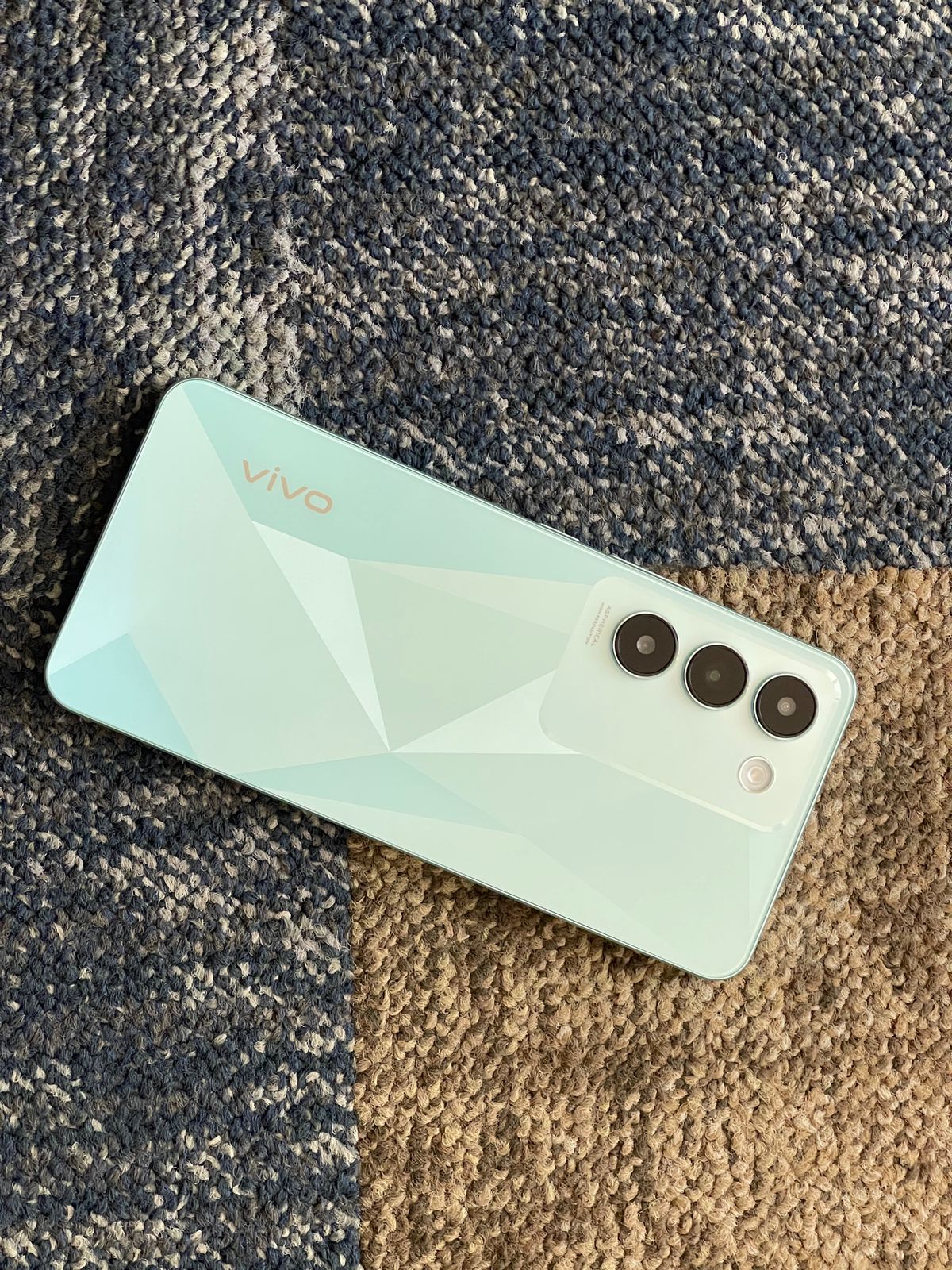
Available in Crystal Flake and Cosmic Blue, it stands out in a sea of monotony.
Beyond its aesthetic appeal, the T3 packs a punch with its performance and features, making one wonder: Could this be the sub-Rs 20,000 phone of choice?
Let’s dive deeper into it with my full review of the Vivo T3 5G.
Vivo T3 5G: Pros and Cons
| Pros | Cons |
| Stunning design, eye-catching effect | Noticeable bloatware |
| Impressive display | Selfie quality drops in darkness |
| Versatile camera | Slower fingerprint sensor |
| Long-lasting battery |
Vivo T3 5G: Key Specs
- Display: 6.67-inch FHD+ 120Hz AMOLED
- Processor: MediaTek Dimensity 7200
- RAM/Storage: Up to 8GB RAM and 256GB internal storage
- Camera: 50MP main, 2MP bokeh, Flicker sensor, 16MP front
- Battery: 5,000mAh with 44W fast charging
- OS: FunTouch OS 14 based on Android 14
- Additional Features: In-display fingerprint sensor, OIS
Vivo T3 5G: Unboxing
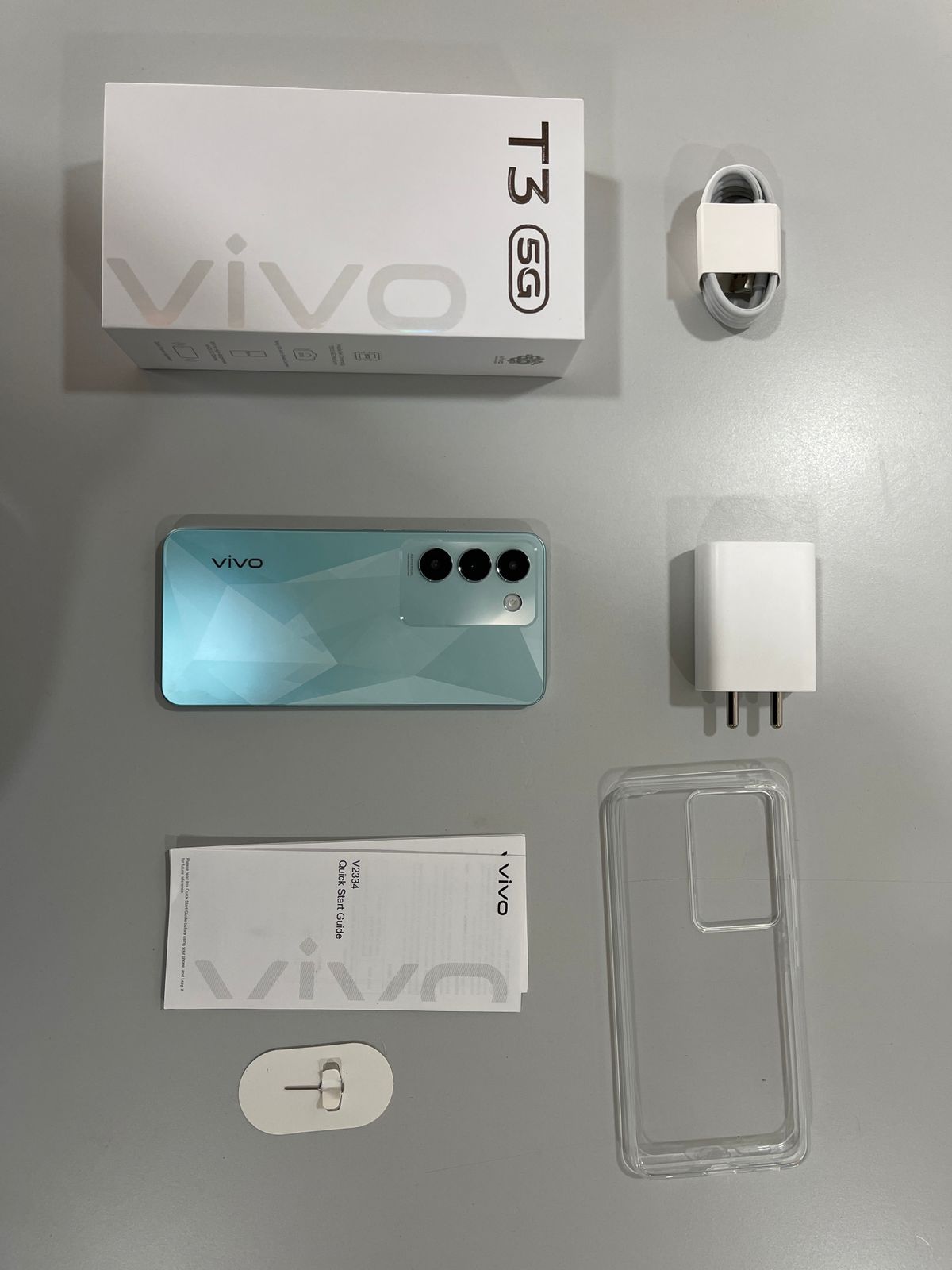
As you lift the lid, you’re greeted by the phone itself, prominently displaying its stunning design. Beneath the phone, neatly arranged, are the essential accessories: a 44W fast charger, USB-C cable, and a protective case that complements the phone’s aesthetics.
The presentation is clean and thoughtful, making the first moments with the Vivo T3 5G feel special and exciting, hinting at a rather premium experience that awaits as you power on the device for the first time.
Unboxing Video of Vivo T3 5G
Vivo T3 5G: Design and Display
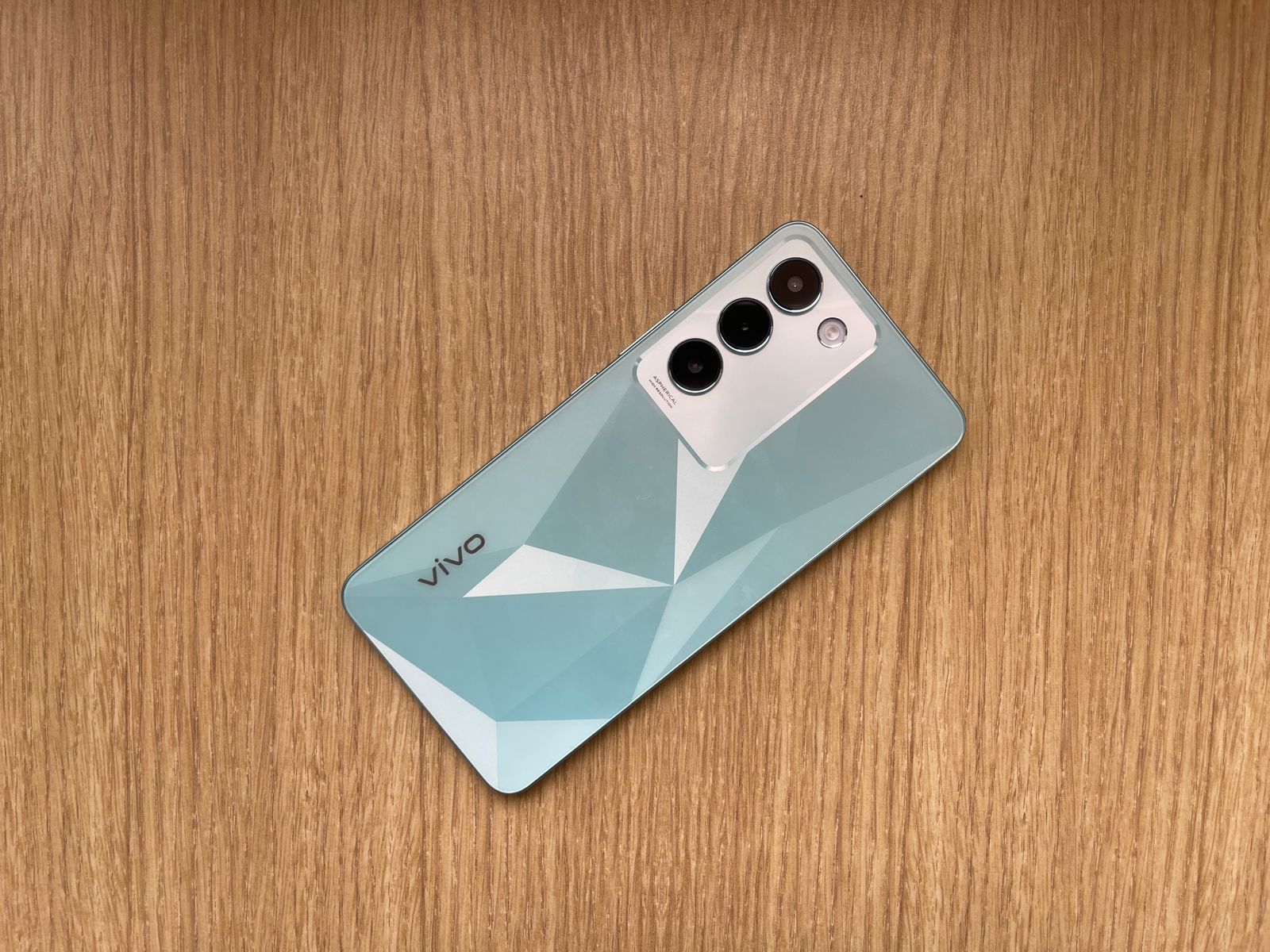
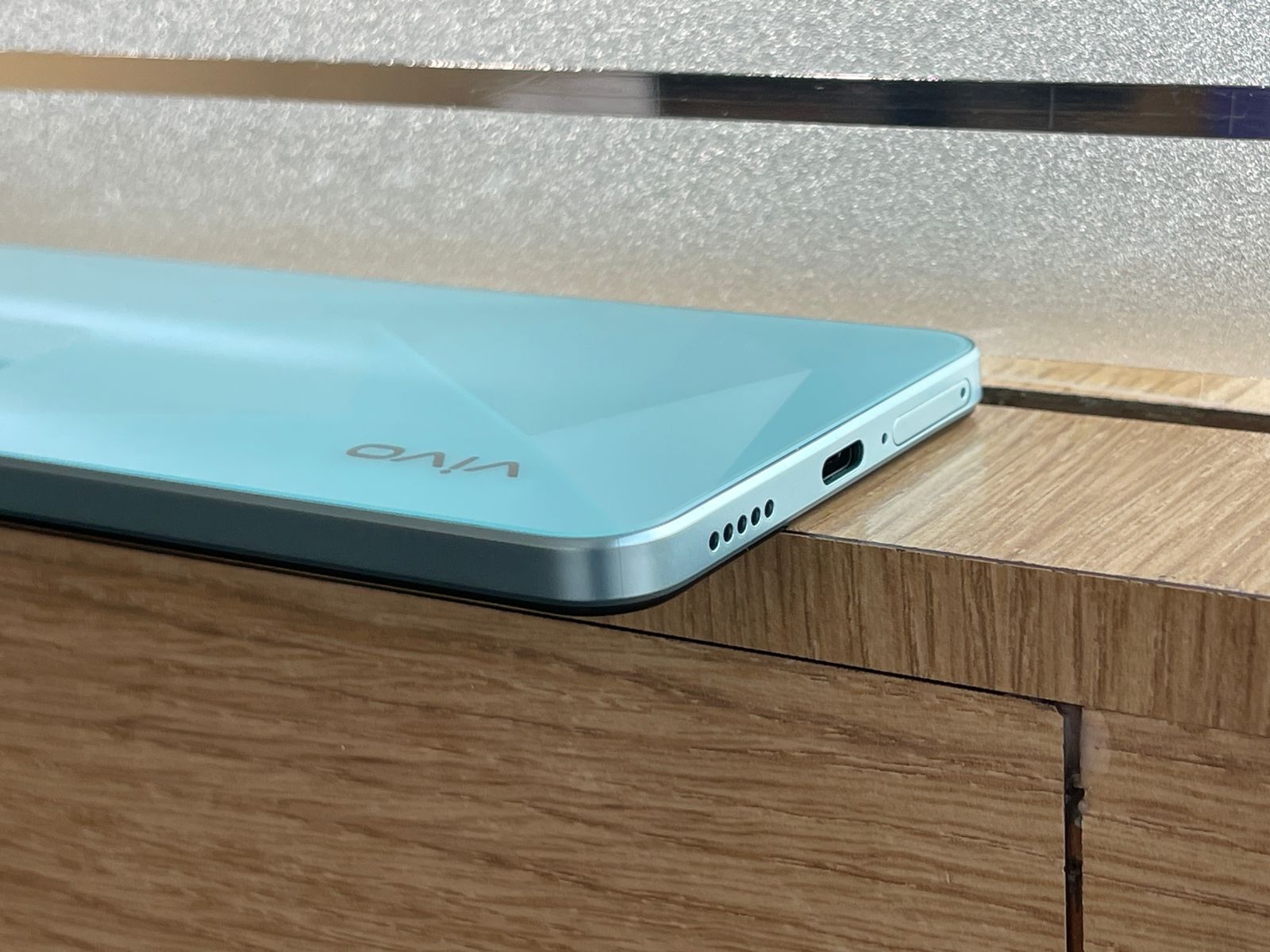
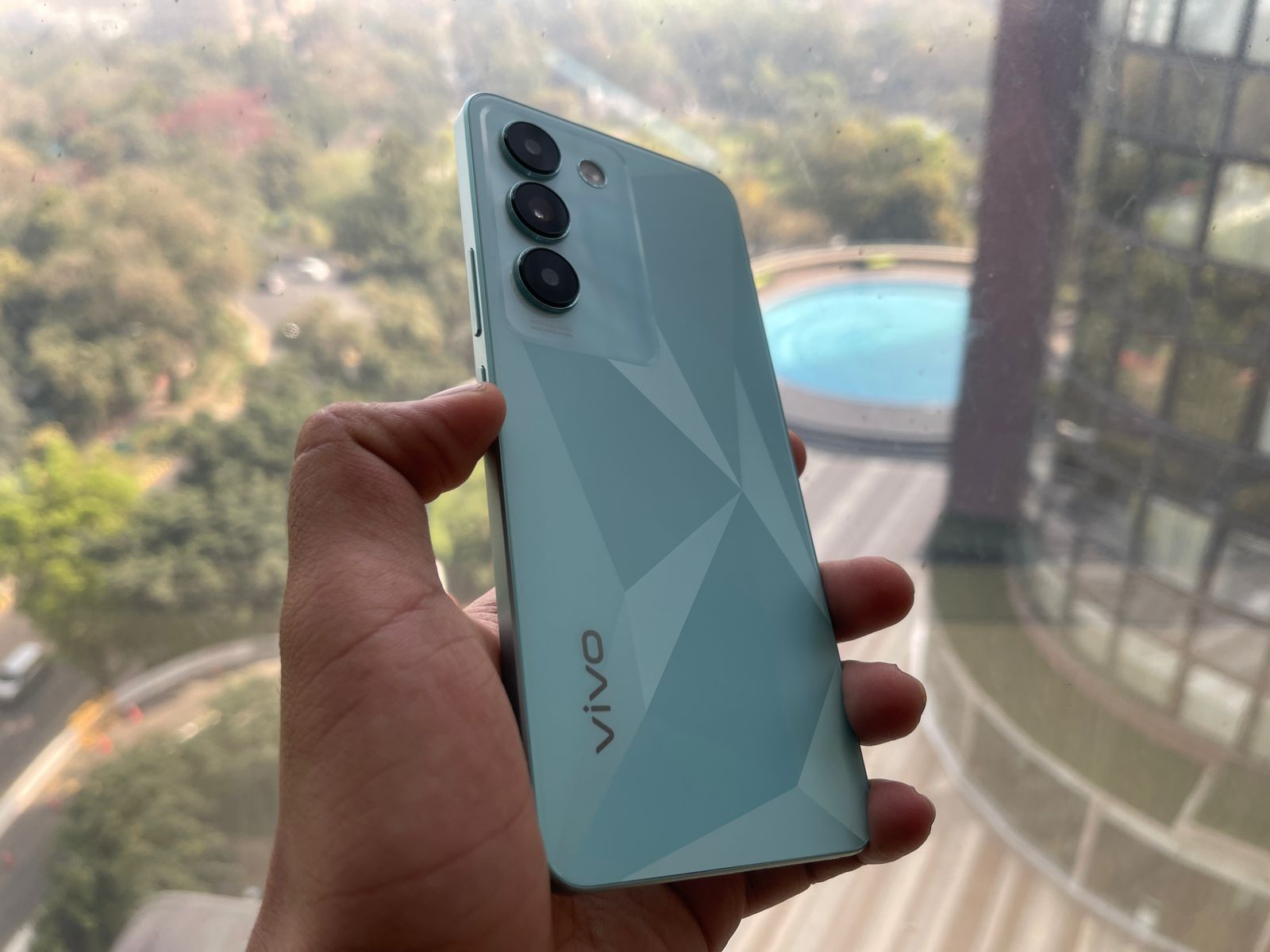
Just holding the Vivo T3 5G, I was immediately taken aback by its design—a rarity in smartphones within this price segment.
My device showcased a captivating blue plastic back panel adorned with a crystal structure.
This unique design reflected light in various ways, creating a mesmerizing 3D effect visible from different angles.
Such a striking appearance is a definite head-turner, especially for those who prefer to use their phone without a cover.
The vivo T3 5G is available in two enchanting color options: Crystal Flake, which is the version I had, and Cosmic Blue.
The build of the vivo T3 is as impressive as its looks, with a boxy plastic frame that’s refreshingly matte.
This choice of material keeps the device free from smudges and enhances its durability—matte surfaces are notoriously less susceptible to scratches.
Shifting the focus to the camera, the Vivo T3 5G doesn’t disappoint. It houses a triple camera setup, with the star being a 50MP main camera complemented by a bokeh and flicker sensor.
The camera’s design contributes to the phone’s premium aesthetic, a feature that, while subjective, certainly elevates the device’s overall look and feel.
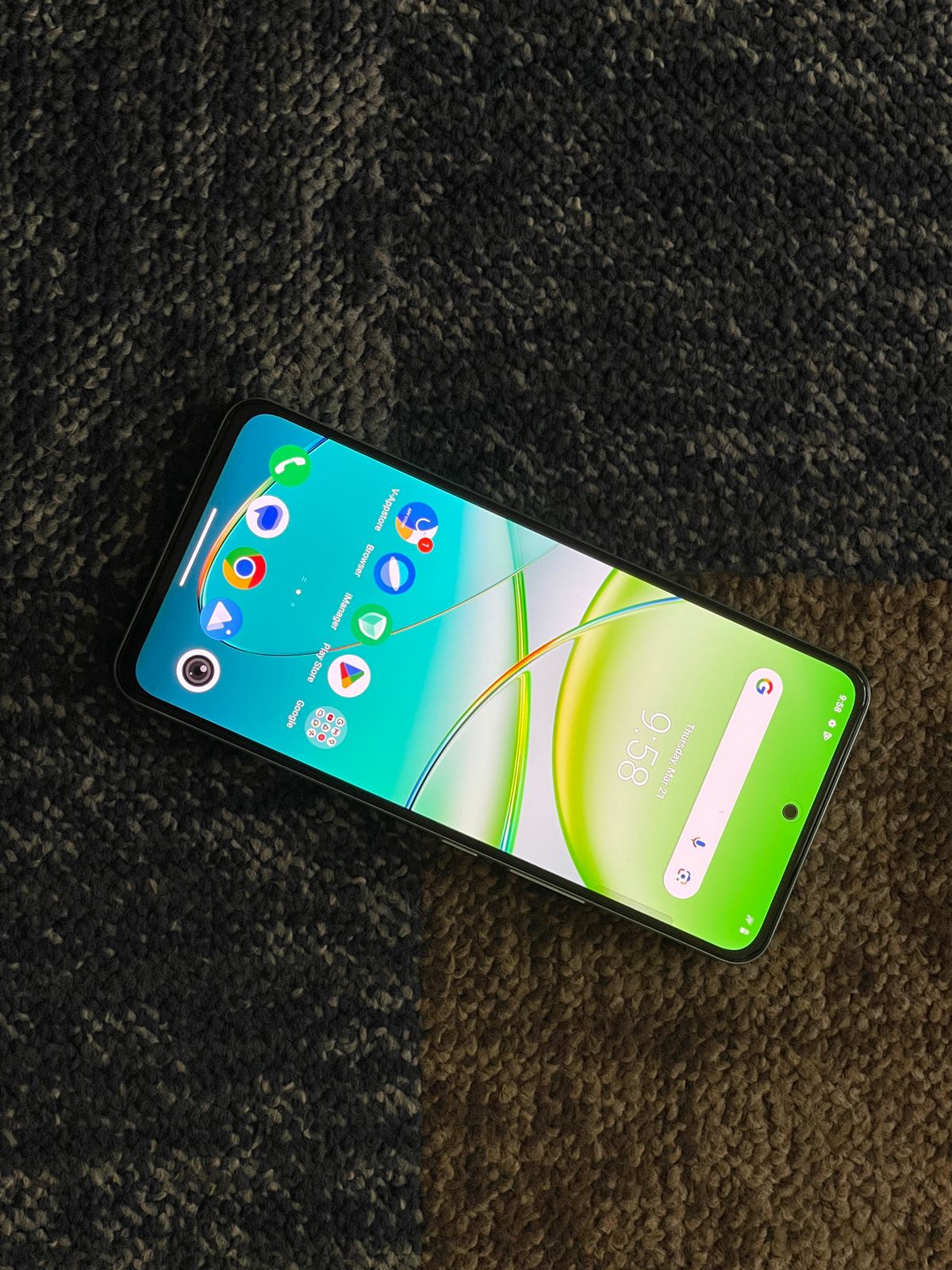
During my time with the vivo T3, I was thoroughly impressed by its display—a 6.67-inch FHD+ AMOLED screen that boasts a refresh rate of 120Hz and can reach a peak brightness of 1800 nits.
It was bright, vivid, and vibrant throughout my testing, without any glitches or problems.
A common challenge with many budget smartphones is their struggle with refresh rate switching, which can lead to a less-than-smooth experience.
However, I noticed none of these issues with the vivo T3 5G.
The device managed to seamlessly switch between different refresh rates, ensuring a smooth user experience without any hiccups.
Moreover, the phone supports the Widewine L1 standard, which means I could enjoy high-quality content on streaming services like Netflix to the fullest.
Vivo T3 5G: Cameras
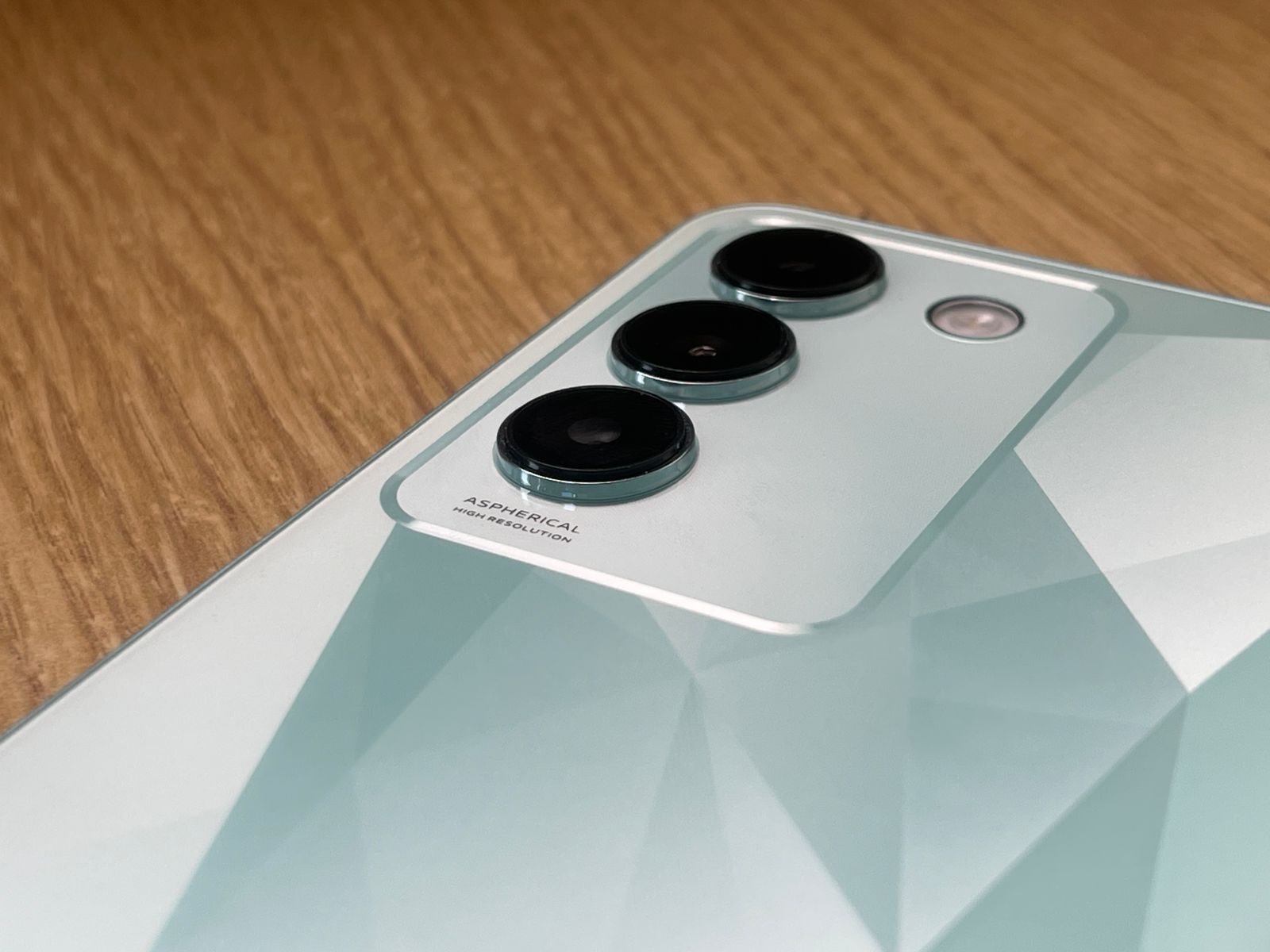
The Vivo T3 has a triple-camera setup with a 50MP Sony IMX 882 main sensor as its primary shooter, a 2MP bokeh camera, and finally an AI sensor.
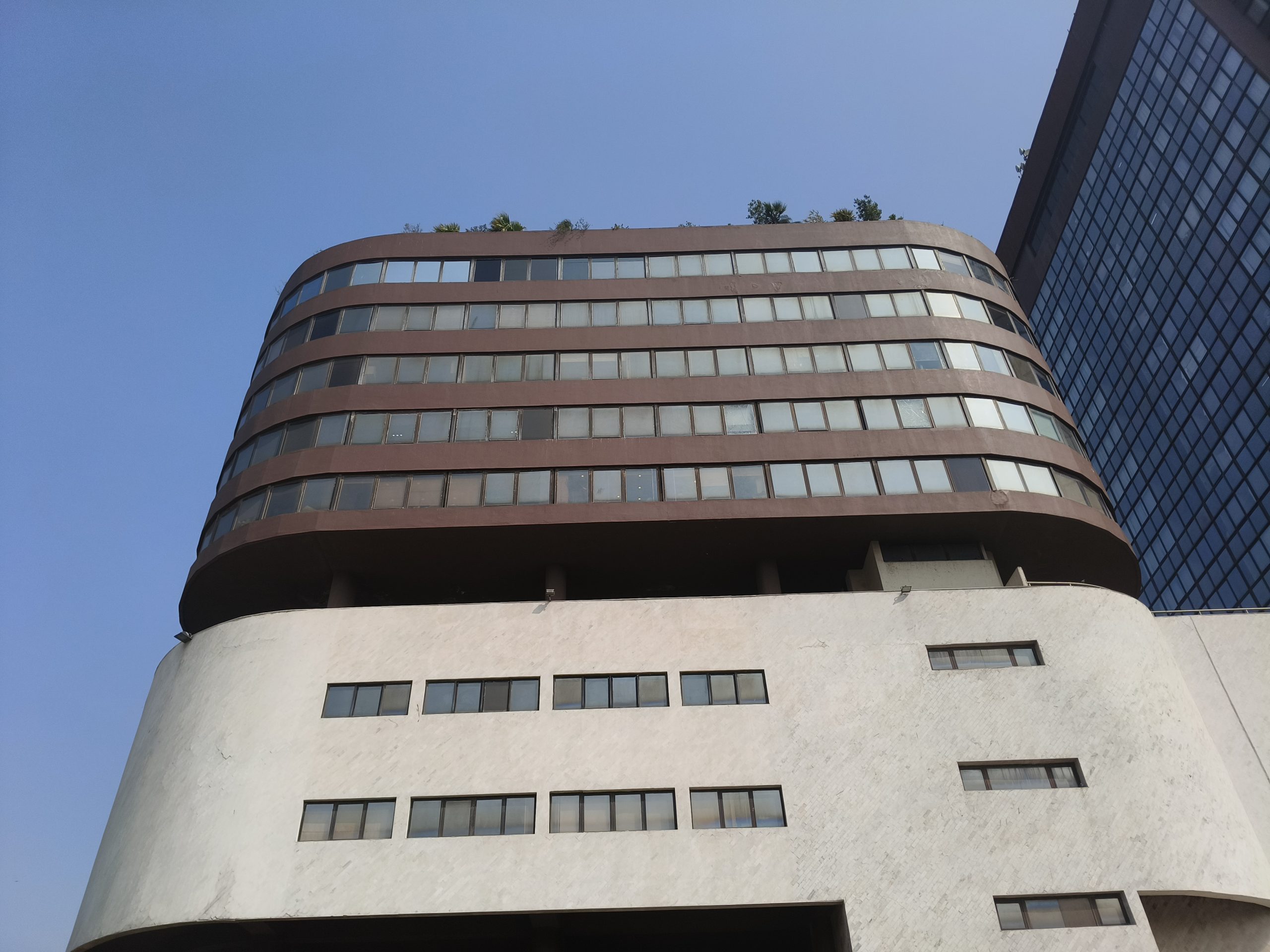
During daylight, the quality of the photos was remarkable.
They came out sharp and vibrant, thanks in part to the well-balanced HDR processing.
This not only enhanced the aesthetics but also significantly boosted the overall camera performance of the vivo T3.
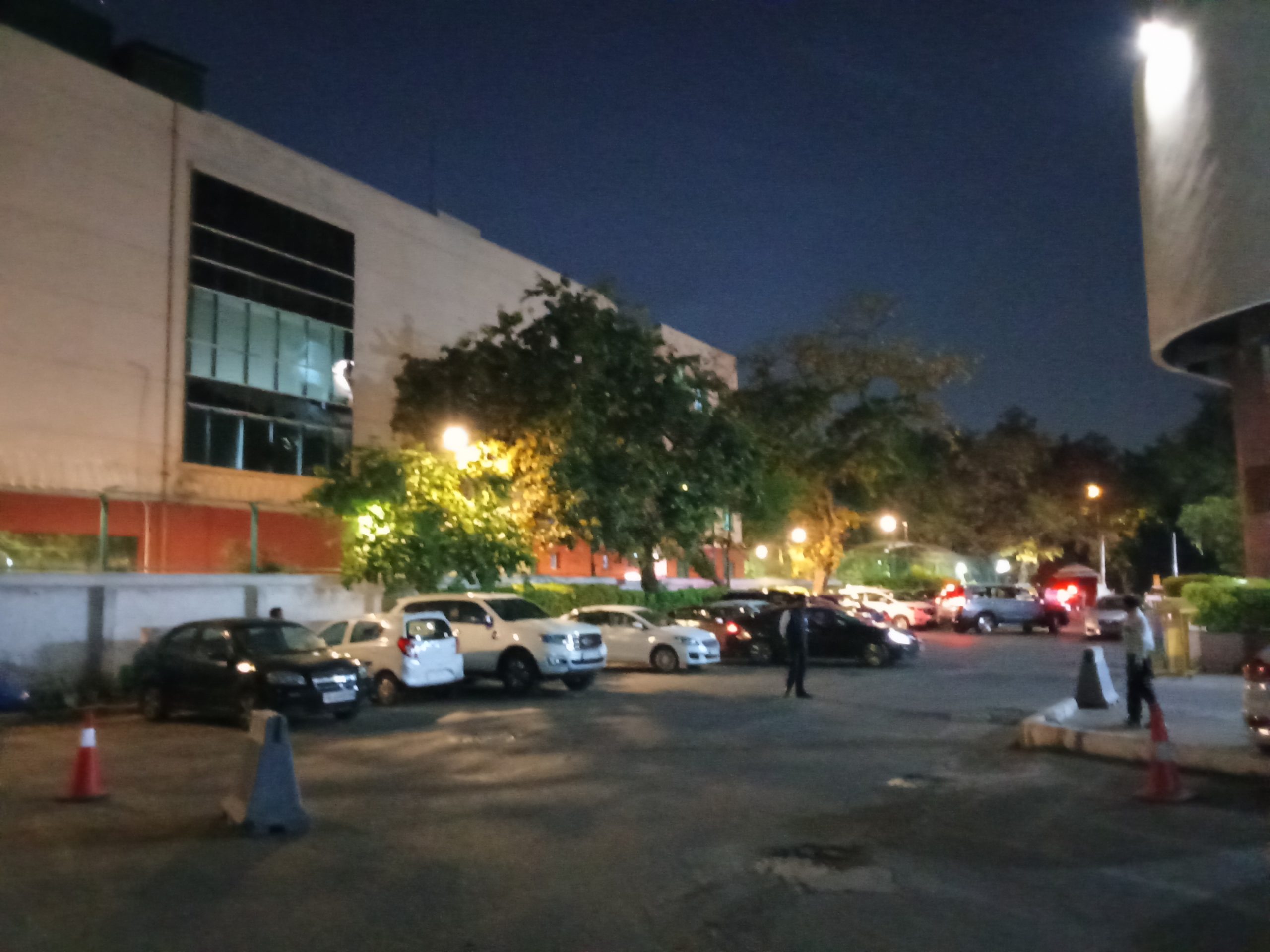
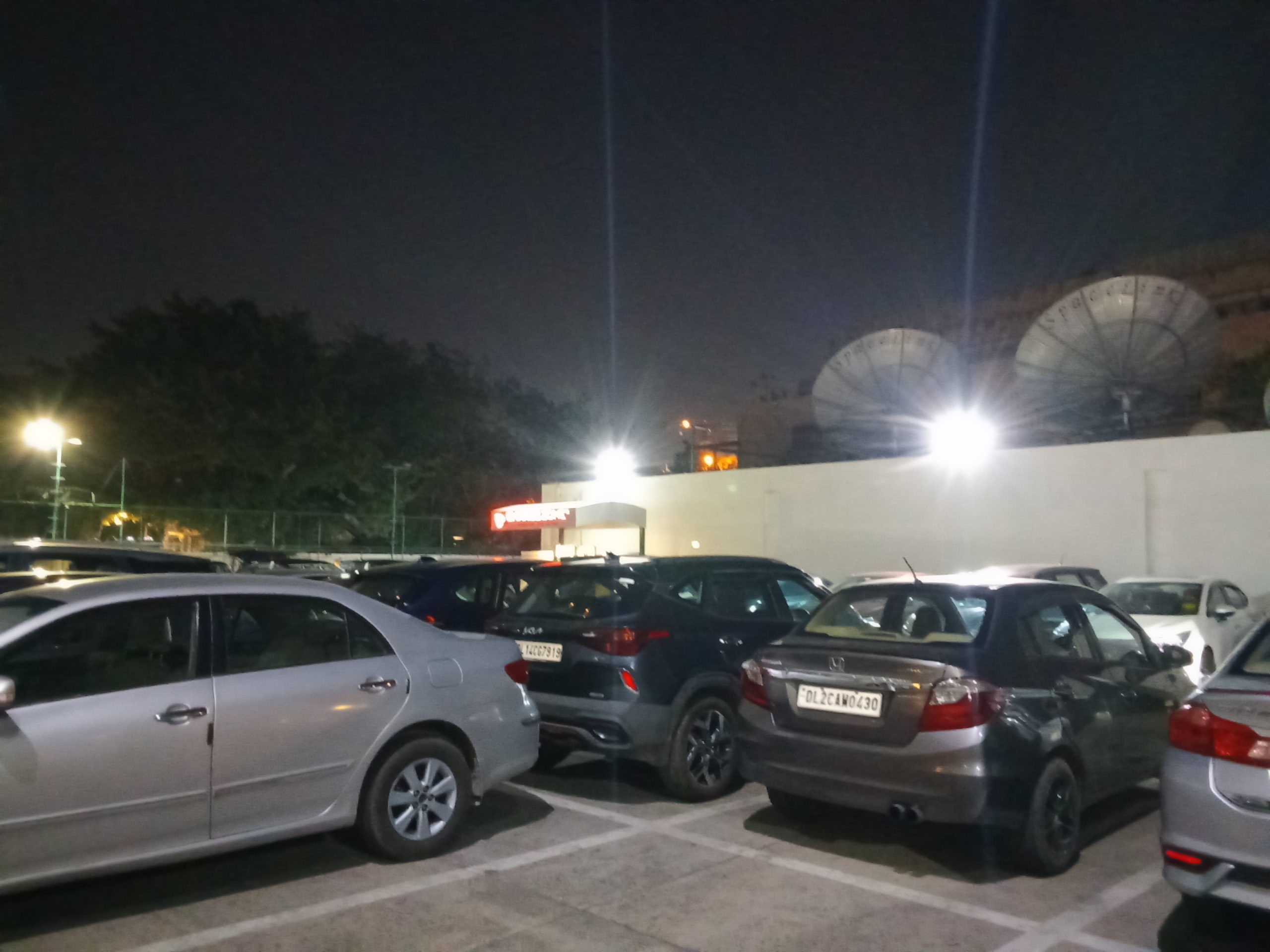
Another noteworthy feature was the inclusion of OIS in the main camera.
This was particularly beneficial for nighttime photography, as it helped capture detailed shots with consistent color reproduction, even in low-light conditions.
Another aspect where the T3 truly excelled was in taking portraits.
The device also boasts a 16MP front camera for selfies, which produced detailed and sharp images without any noticeable issues.
However, it’s important to point out that there was a noticeable drop in quality under low-light conditions.
Despite this, when comparing the vivo T3’s performance to other smartphones within the same price range, it maintained a higher standard of quality, even in less-than-ideal lighting.
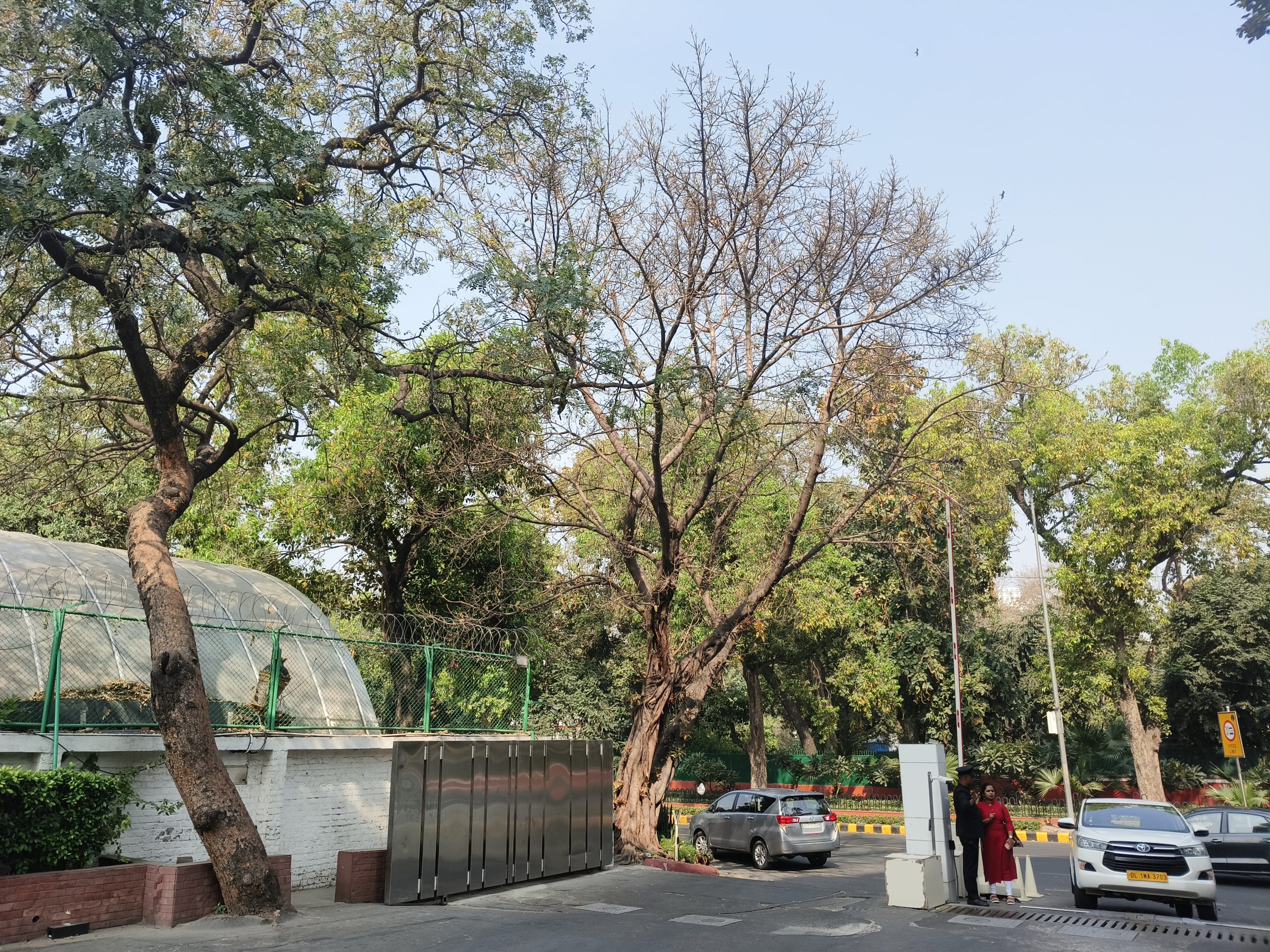
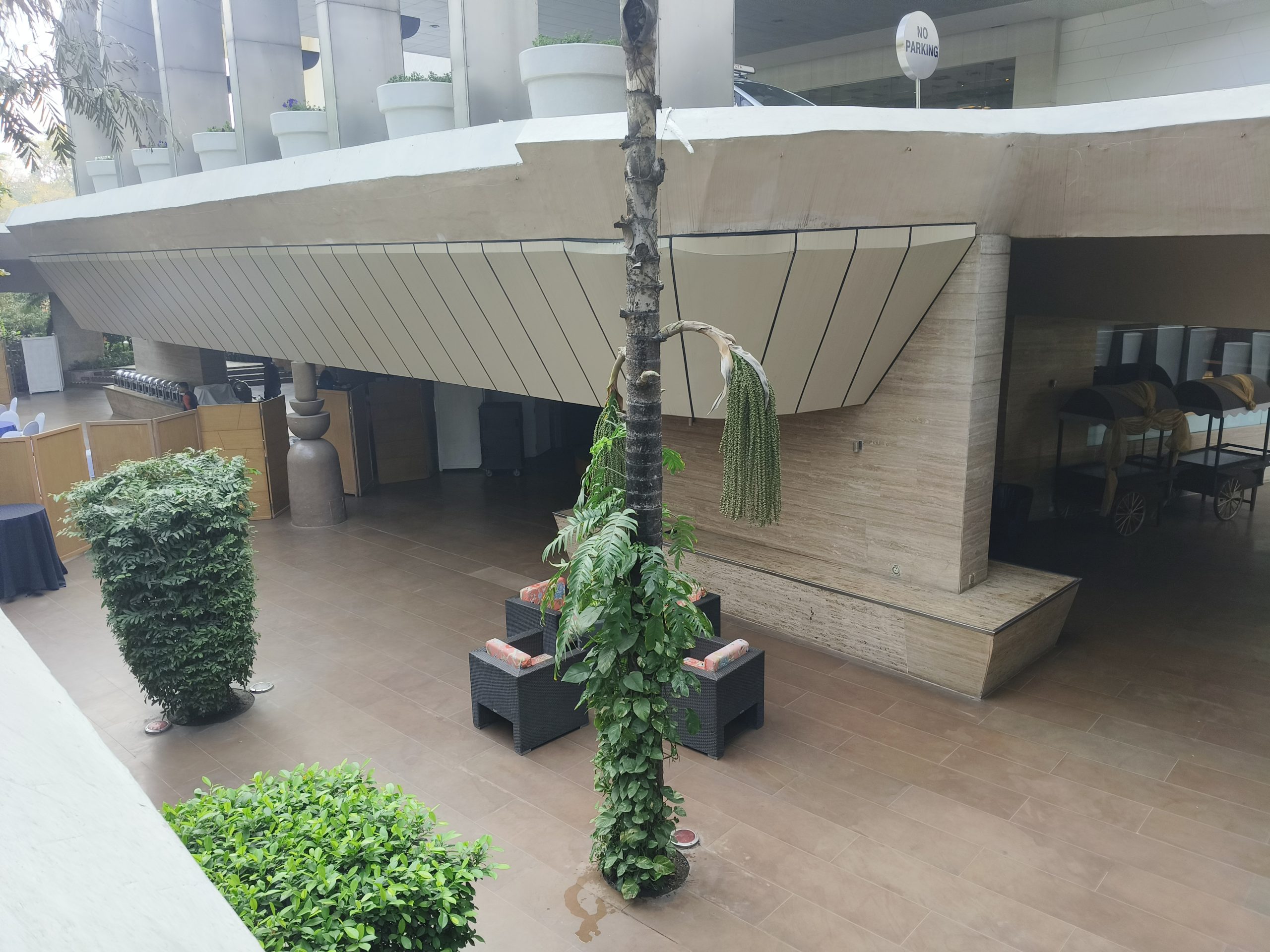
Vivo T3 5G Camera: Day Samples






























Vivo T3 5G Camera: Night Samples






Vivo T3 5G Camera: Day Video
Vivo T3 5G Camera: Night Video
Vivo T3 5G: Performance and Features
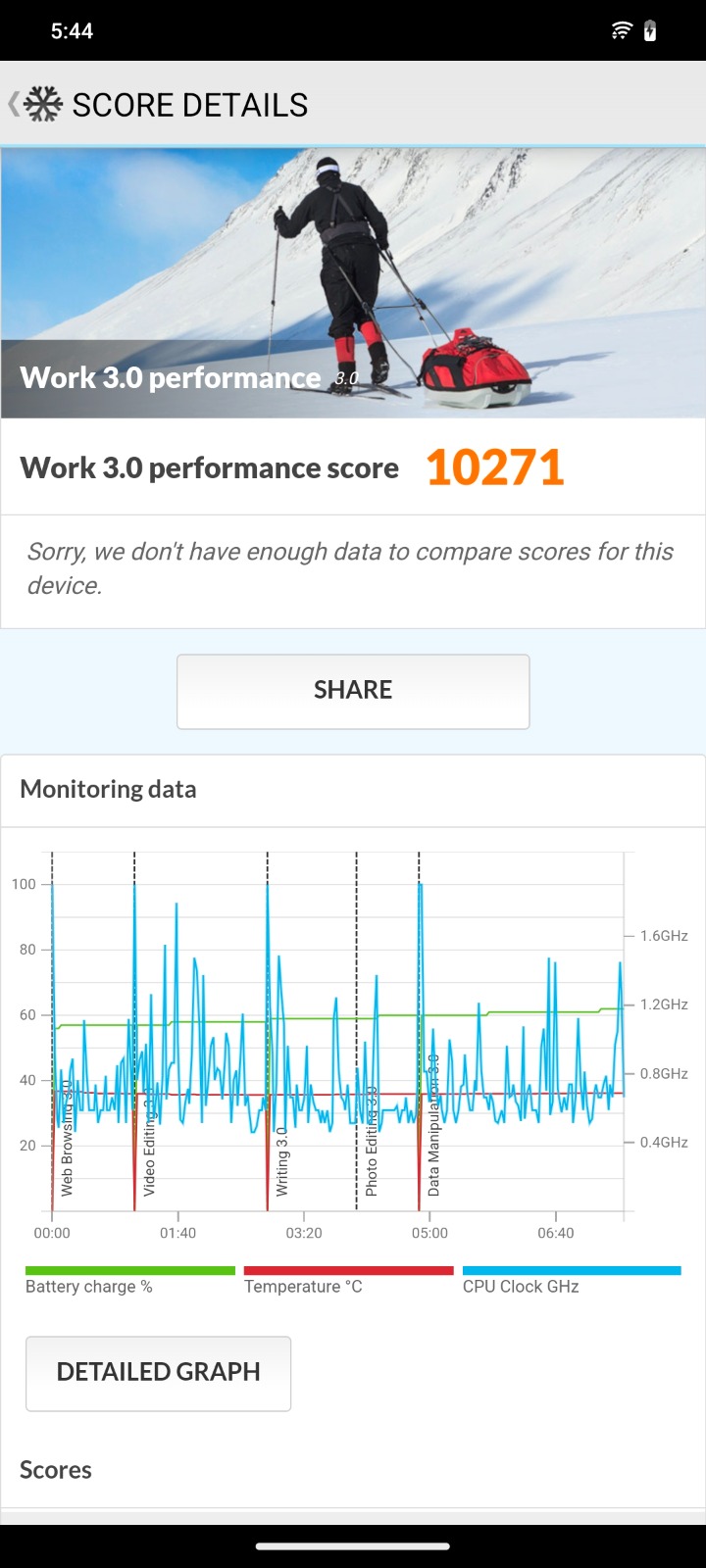
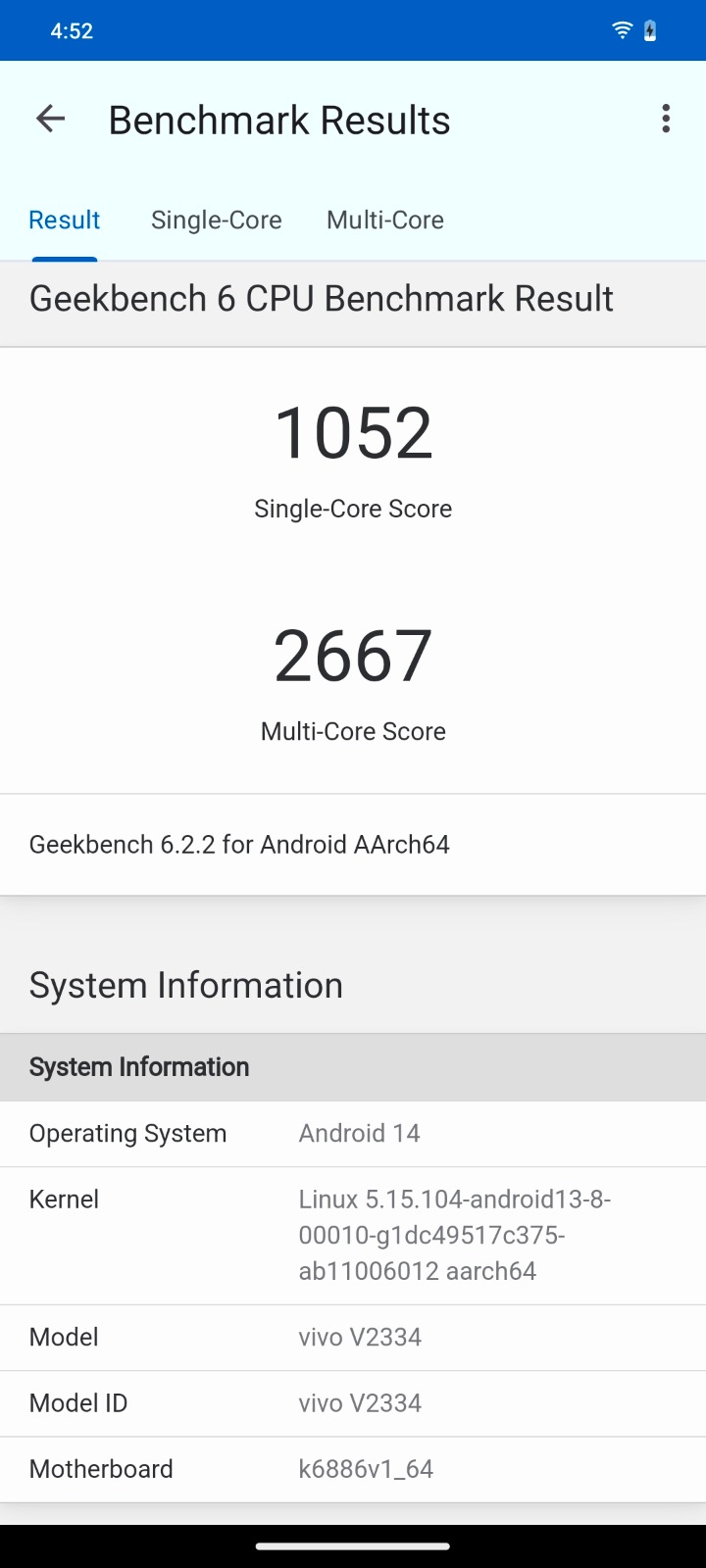
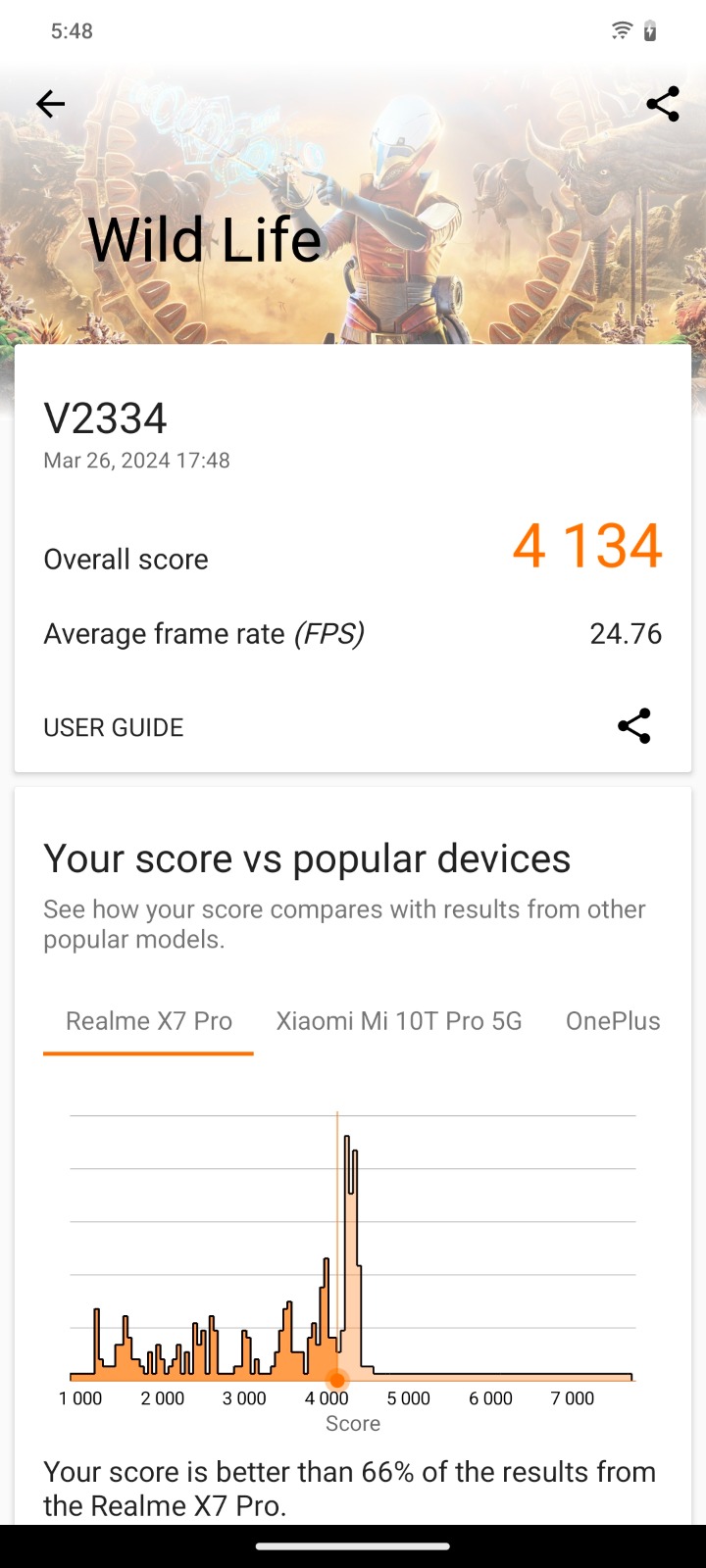


The vivo T3 is powered by the MediaTek Dimensity 7200 chip, featuring 2 Cortex-A715 cores clocked at 2.8 GHz and six Cortex-A510 cores at 2.0 GHz, alongside the Arm Mali G610 MC4 GPU.
This setup is complemented by up to 8GB of RAM and 256GB of internal storage, offering plenty of power and space for all sorts of tasks.
In my use, the 8GB + 128GB configuration of the vivo T3 impressed me with its performance.
There were negligible loading times, and I encountered no lags or stuttering, ensuring a smooth experience for daily activities.
Another aspect worth noting is the device’s endurance in intensive situations.
During a 30-thread, 10-minute throttle test, the vivo T3 didn’t show any performance drop, indicating effective cooling solutions have been put in place by vivo.
Gaming on the vivo T3 was a delight as well.
I put it through its paces with both BGMI and CODM set to the highest refresh rate settings, and the gameplay remained smooth without any lags or jitters.
This demonstrates the phone’s capability to handle demanding games with ease.
Additionally, the vivo T3 features an in-display fingerprint sensor.
While it may not be the quickest, it reliably unlocks the phone under various conditions, including with wet fingers, which adds a convenient layer of accessibility to the device.
Vivo T3 5G: Software and Battery Life
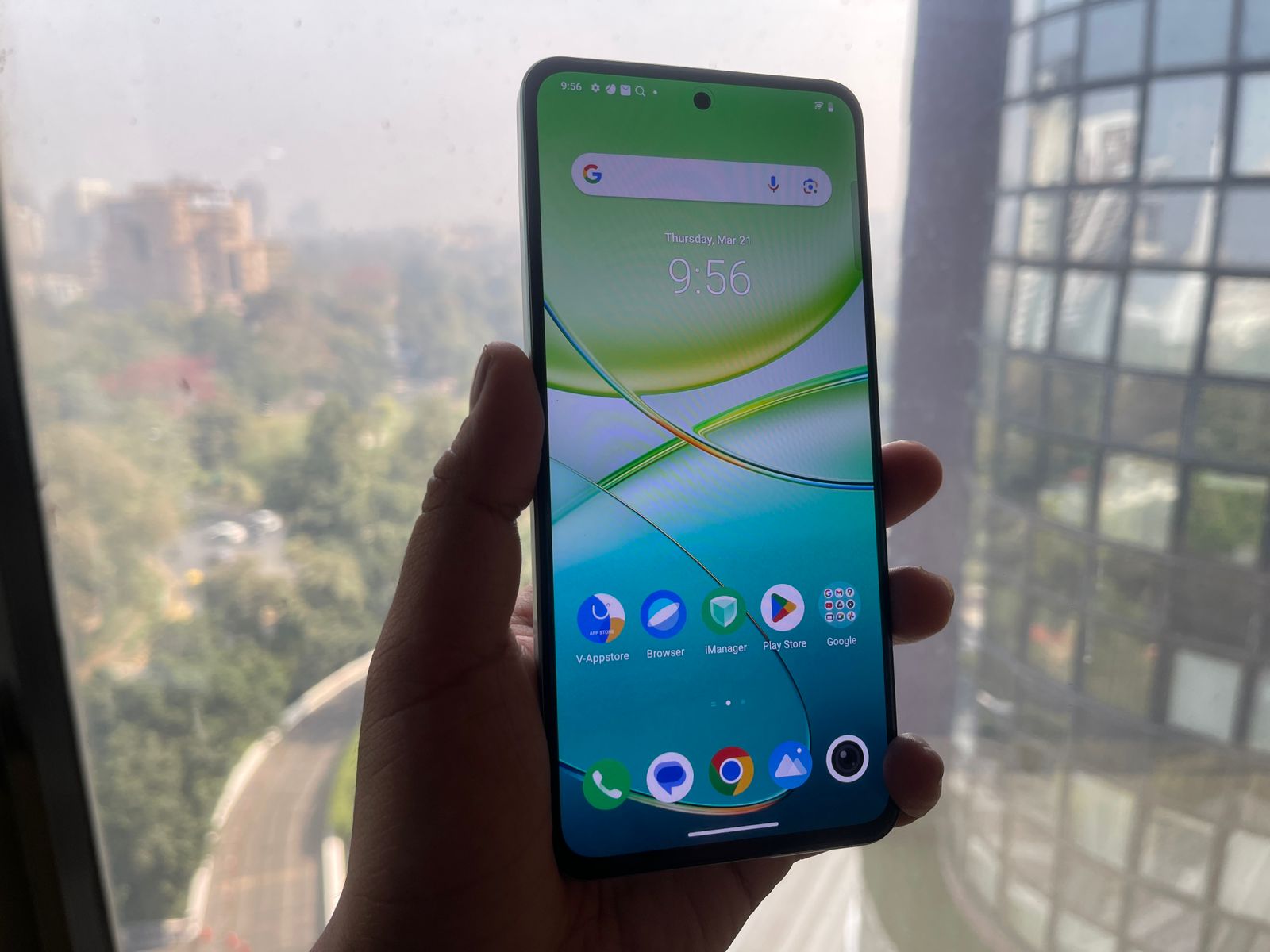
The vivo T3 5G operates on the FunTouch OS 14, which is based on Android 14.
Throughout my use, the user interface was smooth, showing no signs of lag or jitter.
However, I did notice that vivo has included a considerable amount of pre-installed apps, such as Daily Hunt, V-Appstore, and Facebook.
This is a common strategy to offset costs but does add to the phone’s bloatware.
Particularly, the “Hot Apps” and “Hot Games” sections stood out for promoting various applications through advertisements.
Battery life on the vivo T3 5G was remarkable, thanks to its substantial 5,000mAh battery.
It easily handled a full day of intensive use, which included gaming, streaming videos, and taking photos, without needing a recharge before the day was out.
Moreover, there is the 44W fast charger solution which happens to be a significant bonus, enabling the battery to be charged to 50% in under half an hour.
This feature was particularly appreciated during days of heavy usage.
Final Verdict
After thorough testing and daily usage, the Vivo T3 5G emerges as an impressive offering in the highly competitive sub-Rs 20,000 smartphone segment.
This device challenges the notion that affordable smartphones must compromise on quality or features.
With its stunning design, robust performance, and a camera that performs admirably across a range of conditions, the Vivo T3 5G sets a new standard for what consumers can expect at this price point.
5 Reasons to Buy
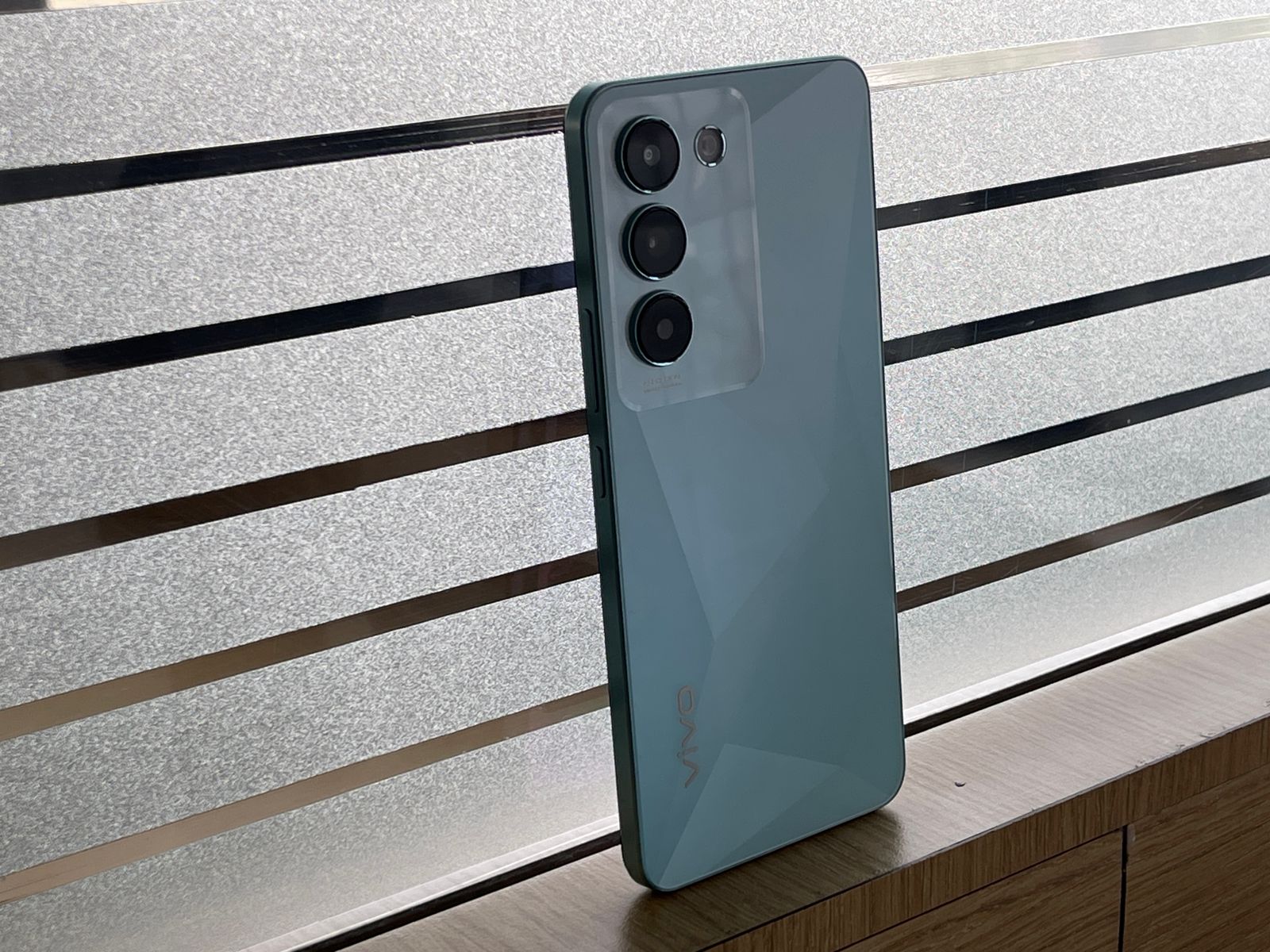
- Stunning Design: Eye-catching back panel with a 3D effect.
- Impressive Display: Bright and vibrant 6.67-inch FHD+ AMOLED screen.
- Solid Performance: Smooth experience with the MediaTek Dimensity 7200 chip.
- Remarkable Camera Quality: Great shots in various lighting conditions.
- Long-lasting Battery: Easily powers through a day with fast charging support.
3 Reasons Not to Buy
- Bloatware: Comes with pre-installed apps and advertisements.
- Low-light Selfie Performance: Drops in quality under poor lighting.
- In-Display Fingerprint Sensor: Reliable but not the fastest.
Top 5 Alternatives to the Vivo T3 5G
OnePlus Nord CE 3 Lite 5G (Price: Rs 17,999)
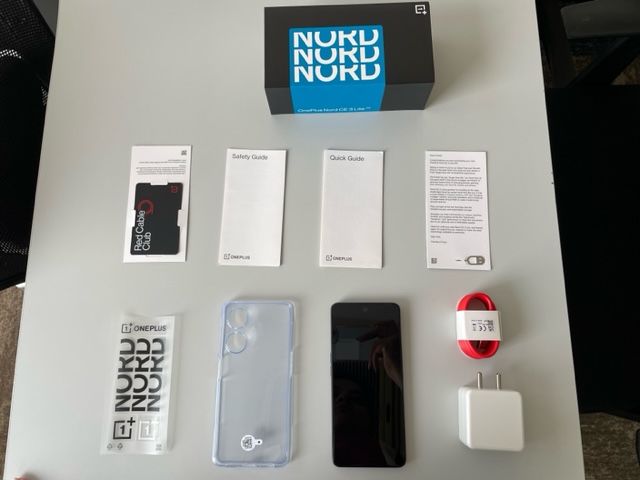
- Processor: Snapdragon 695
- RAM: 8GB
- Display: 6.72 inches, FHD+, IPS LCD, 120Hz Refresh Rate
- Camera: 108MP + 2MP + 2MP Triple Rear, 16MP Front
- Battery: 5000mAh, Super VOOC Charging
- Storage: 128GB
- Other: USB Type-C Port
Realme 11 5G (Price: Rs 16,640)
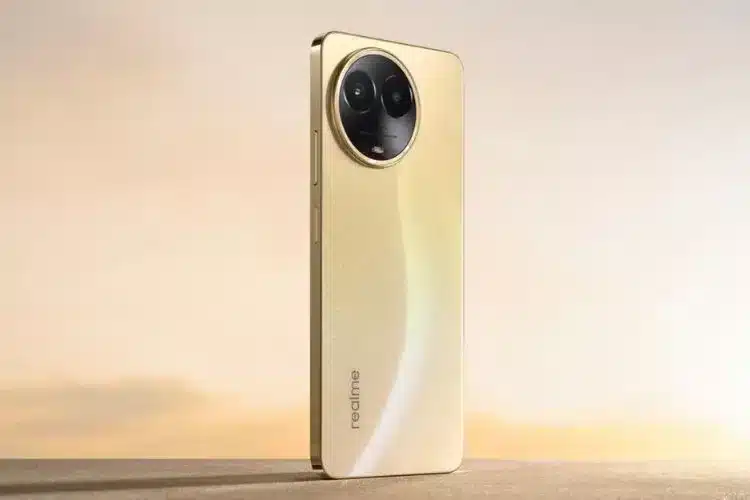
- Processor: MediaTek Dimensity 6100 Plus
- RAM: 8GB
- Display: 6.72 inches, FHD+, IPS LCD, 120Hz Refresh Rate
- Camera: 108MP + 2MP Dual Rear, 16MP Front
- Battery: 5000mAh, Super VOOC Charging
- Storage: 128GB
- Other: USB Type-C Port
Samsung Galaxy M34 5G (Price: Rs 15,999)
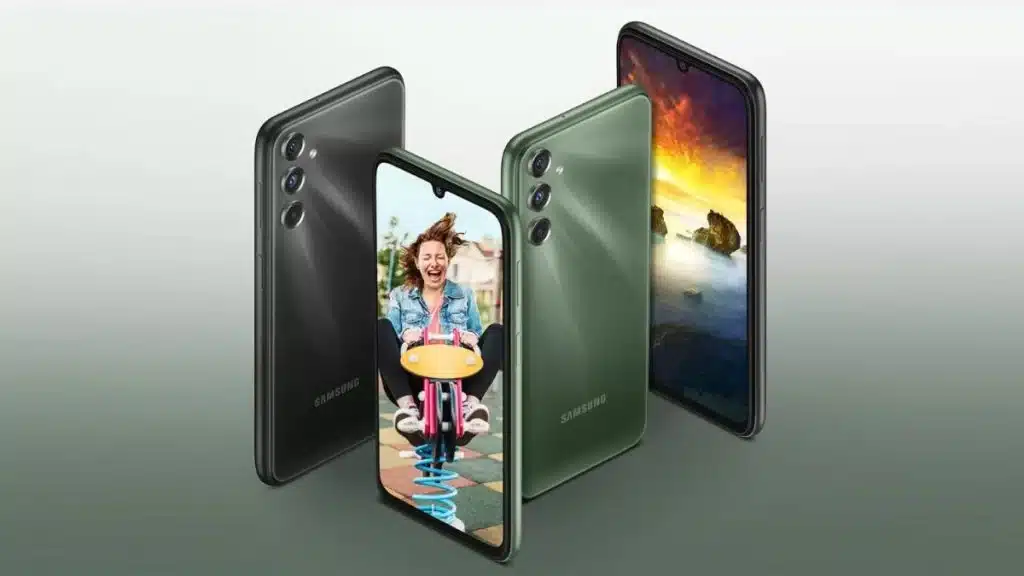
- Processor: Samsung Exynos 1280
- RAM: 6GB
- Display: 6.5 inches, FHD+, Super AMOLED, 120Hz Refresh Rate
- Camera: 50MP + 8MP + 2MP Triple Rear, 13MP Front
- Battery: 6000mAh, Fast Charging
- Storage: 128GB
- Other: USB Type-C Port
Poco X5 Pro 5G (Price: Rs 16,999)
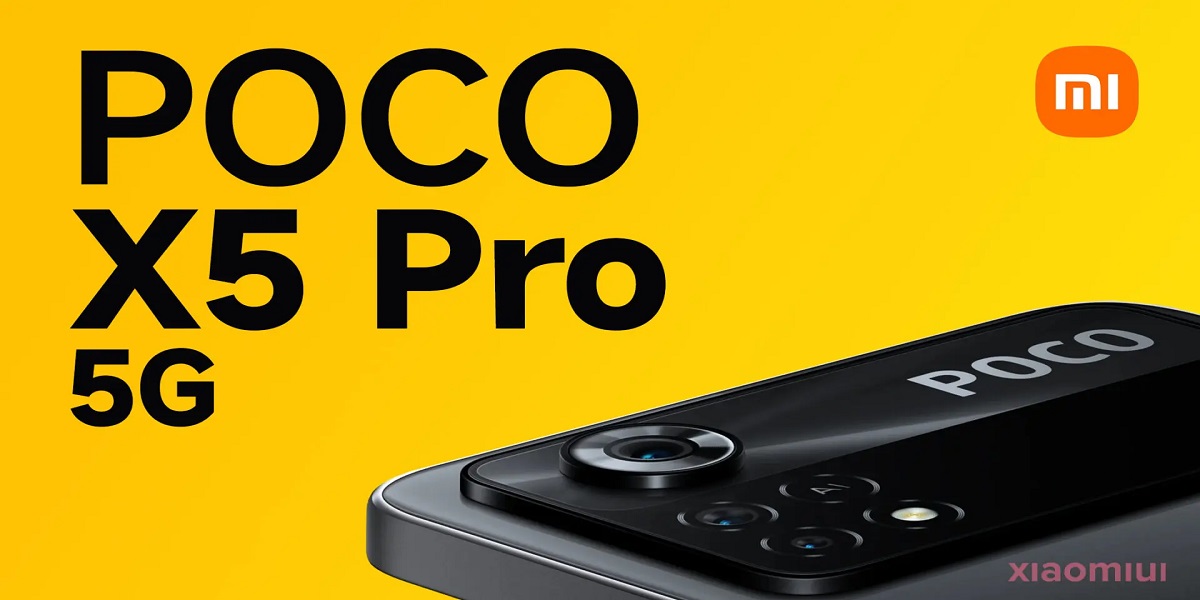
- Processor: Qualcomm Snapdragon 778G
- RAM: 6GB
- Display: 6.67-inch, 1080×2400 pixels
- Camera: 108MP + 8MP + 2MP Rear, 16MP Front
- Battery: 5000mAh, 67W Fast Charging
- Storage: 128GB
- Other: Android 12-based MIUI 14
Xiaomi Redmi Note 11T 5G (Price: Starting Rs 16,399)
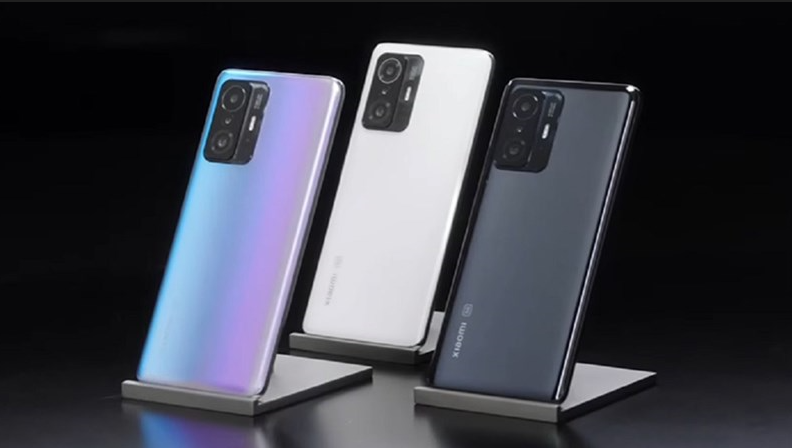
- Processor: MediaTek Dimensity 810
- RAM: Up to 6GB
- Display: 6.6-inch, 1080 x 2400 pixels
- Camera: 50MP + 8MP Rear, 16MP Front
- Battery: 5000mAh, 33W Fast Charging
- Storage: Up to 128GB
- Other: Long battery life with 5G support
Vivo T3 5G Specs
GENERAL
| Sim Type | Dual Sim, GSM+GSM (Hybrid Slot) |
| Dual Sim | Yes |
| Sim Size | Nano SIM |
| Device Type | Smartphone |
| Release Date | April 11, 2024 (Expected) |
DESIGN
| Dimensions | 158.9 x 73.5 x 7.8 mm (6.26 x 2.89 x 0.31 in) |
| Bezel less | No |
| Colors | Nitro Blaze, Velocity Wave |
DISPLAY
| Type | Color AMOLED Screen (1B Colors) |
| Touch | Yes, 480 Hz Touch Sampling Rate |
| Size | 6.58 inches, 1080 x 2400 pixels, 120 Hz |
| Aspect Ratio | 20.5:9 |
| PPI | ~ 413 PPI |
| Screen to Body Ratio | ~ 84.1% |
| Features | up to 1,600 nits Brightness, Contrast Ratio: 6000000:1 |
| Notch | Yes, Water Drop Notch |
MEMORY
| RAM | 8 GB |
| Expandable RAM | Upto 8 GB Extra Virtual RAM |
| Storage | 128 GB |
| Card Slot | Yes, (Hybrid Slot), upto 1 TB |
CONNECTIVITY
| GPRS | Yes |
| EDGE | Yes |
| 3G | Yes |
| 4G | Yes |
| 5G | Yes |
| 5G Bands | 1, 3, 8, 28, 77, 78 SA/NSA |
| VoLTE | Yes, Dual Stand-By |
| Wifi | Yes, with wifi-hotspot |
| Wifi Version | Wi-Fi 802.11 a/b/g/n/ac, dual-band |
| Bluetooth | Yes, v5.3, A2DP, LE, aptX HD |
| USB | Yes, USB-C v2.0 |
| USB Features | USB on-the-go, USB Charging |
EXTRA
| GPS | Yes, with A-GPS, BEIDOU, GLONASS, GALILEO |
| Fingerprint Sensor | Yes, In Display |
| Face Unlock | Yes |
| Sensors | accelerometer, gyro, proximity, compass |
| 3.5mm Headphone Jack | Yes |
CAMERA
| Rear Camera | 108 MP 0.7µm, PDAF, OIS f/1.8 (Wide Angle) 2 MP f/2.4 (Depth Sensor) with autofocus |
| Features | Photo, Night, Portrait, Video, Micro Movie, 64MP, Panorama, Live Photo, Slo-Mo, Timelapse, Pro, AR Stickers, Documents, Double Exposure, Dual-View Video |
| Video Recording | 1080p @ 30 fps FHD |
| Flash | Yes, LED |
| Front Camera | 16 MP f/2 (Wide Angle) |
| Front Video Recording | 1080p @ 30 fps FHD |
TECHNICAL
| OS | Android v14 |
| Custom UI | Funtouch OS 14 |
| Chipset | Mediatek Dimensity 7200 |
| CPU | 2.8 GHz, Octa Core Processor |
| Core Details | 2.8GHz×2+2.0GHz×6 |
| GPU | Mali G610 |
| Java | No |
| Browser | Yes |
MULTIMEDIA
| Yes | |
| Music | WAV, MP3, MP2, MIDI, Vorbis, APE, FLAC |
| Video | MP4, 3GP, MKV, FLV |
| FM Radio | No |
| Document Reader | Yes |
BATTERY
| Type | Non-Removable Battery |
| Size | 4700 mAh, Li-Po Battery |
| Fast Charging | Yes, 67W Superfast Flash Charge |
FAQs
What makes the Vivo T3 5G stand out in its price range?
The Vivo T3 5G distinguishes itself through its unique design, high-quality AMOLED display, versatile camera setup, and robust performance backed by the MediaTek Dimensity 7200 processor. It delivers a premium experience at an affordable price point, challenging the norms of the sub-Rs 20,000 category.
How does the camera performance of the Vivo T3 5G fare in different lighting conditions?
The Vivo T3 5G’s 50MP main camera, equipped with OIS, captures vibrant and sharp images in daylight. At night, OIS aids in maintaining detail and minimizing noise. While the 16MP front camera delivers clear selfies in good lighting, it does experience a drop in quality in low-light scenarios.
Can the Vivo T3 5G handle high-end gaming and multitasking?
Thanks to the MediaTek Dimensity 7200 chip and up to 8GB of RAM, the Vivo T3 5G excels at running demanding games and multitasking. It maintains smooth gameplay and swift app switching, making it ideal for both gaming enthusiasts and power users.
What are the battery life and charging capabilities of the Vivo T3 5G?
With a 5,000mAh battery, the Vivo T3 5G easily lasts through a day of heavy use. The inclusion of a 44W fast charger allows for rapid charging, reaching 50% battery in just under 30 minutes, significantly reducing downtime.
Is there any bloatware on the Vivo T3 5G?
The FunTouch OS 14 on the Vivo T3 5G does come with pre-installed apps and some promotional content in the “Hot Apps” and “Hot Games” sections. While some users may find this inconvenient, it’s a common practice among manufacturers to include such apps.
What makes the Vivo T3 5G stand out in the mid-range smartphone market?
The Vivo T3 5G sets a new standard with its premium design, impressive 120Hz AMOLED display, and a powerful camera setup, offering a high-end experience at a mid-range price point.
How does the camera performance of the Vivo T3 5G fare in low light?
Thanks to its 50 MP Sony IMX882 main camera with OIS and a large f/1.79 aperture, the Vivo T3 5G excels in low-light conditions, promising sharp and clear images.
Can the Vivo T3 5G handle heavy multitasking and gaming?
Equipped with the MediaTek Dimensity 7200 Mobile Platform and features like Extended RAM 3.0, the Vivo T3 5G is designed to deliver smooth multitasking and gaming experiences without lag.
What are the battery specifications of the Vivo T3 5G, and how quickly can it be charged?
The Vivo T3 5G comes with a 5000mAh battery capable of supporting a full day of use, complemented by 44W FlashCharge technology for quick recharging.
What software does the Vivo T3 5G run on, and what are its key features?
Running on FunTouchOS 14 based on Android 14, the Vivo T3 5G offers a user-friendly interface with enhancements like Memory Booster, RAM Saver, and versatile multitasking options for an optimized experience.
Vivo Launches Vivo T3 5G, a Performance-Packed Smartphone Featuring MediaTek Dimensity 7200 and Sony OIS Anti Shake Camera. Details?
Vivo T3 5G brings MediaTek Dimensity 7200 chipset – the fastest processor in its segment along with a 120Hz High Brightness AMOLED Display, and Dual Stereo Speakers.
Vivo T3 5G houses a 5000 Mah battery, ensuring that users can use the device throughout their day easily.
The Vivo T3 5G also comes with a dedicated flicker sensor to deliver a clearer and purer experience when shooting various content.
Vivo, the innovative global smartphone brand, today expanded its series T lineup in India by launching the latest addition, the Vivo T3 5G. The all-new Vivo T3 5G caters to tech-savvy individuals and multitaskers, offering turbo performance.
Powered by the MediaTek Dimensity 7200 mobile platform, the Vivo T3 5G ensures seamless multitasking and an immersive user experience.
Its 6.67-inch FHD+ AMOLED screen, dual stereo speakers, and 5000 mAh battery complemented by a 44W fast charging capability make this device the perfect mid-ranger.
Available in two captivating colors – Crystal Flake and Cosmic Blue, the Vivo T3 5G is priced at INR 19,999 for the 8GB+128GB variant and INR 21,999 for the 8GB+256GB variant. The smartphone will go on sale starting March 27, 2024, across Flipkart and Vivo India e-store.
Consumers can also avail of various offers including a flat instant discount of INR 2,000 using HDFC and SBI cards, or an exchange bonus of up to INR 2,000, along with 3 months No Cost EMI.
How is the performance of Vivo T3 5G?
Flagship Level Turbo Performance
Driven by the MediaTek Dimensity 7200 chipset, the Vivo T3 5G achieves an impressive AnTuTu score of 734,924. Coupled with Vivo’s meticulous optimization, it guarantees a seamless and stable user experience.
Sporting the second-generation Armv9 architecture design, its octa-core CPU, including a high-performance core, Arm Cortex-A715, operates at a clock speed of 2.8 GHz, effortlessly managing multitasking and maximizing performance while maintaining prolonged battery life.
How is the video & audio experience of Vivo T3 5G?
Immersive Video and Audio Experience
Featuring a vibrant 6.67-inch 120Hz Ultra Vision AMOLED Display, the Vivo T3 5G delivers stunning visuals. The display comes with a peak brightness of 1800 nits, the brightest display in the segment, and an in-display fingerprint unlock for seamless accessibility.
The display’s 100% DCI-P3 wide color gamut delivers rich and natural colors, and its pixel density of 394 PPI provides high resolution. The Vivo T3 5G comes with HDR10+ Certification along with SGS Low Blue Light Eye Care certification, ensuring the well-being of the users.
Vivo T3 5G’s audio capabilities provide an immersive experience, being the first series T smartphone to come with Dual Stereo Speakers, boasting a 200%-volume Audio Booster. With High-Resolution Wired and Wireless Certification, users can enjoy high-quality audio for a truly immersive experience.
How is the Camera performance of Vivo T3 5G?
Professional-Grade Camera Performance
The Vivo T3 5G boasts a primary 50 MP OIS Camera alongside a 2 MP bokeh camera, equipped with the segment’s 1st Sony IMX882 sensor which ensures crisper shots and blur-free images, especially in low-light environments.
Utilizing 4-in-1 pixel binding, it achieves a pixel size of 1.6 μm, ensuring clear images in various lighting conditions. Its f1/1.79 aperture enhances light intake, which is particularly beneficial for capturing brighter and clearer night shots in low-light settings.
Additionally, its 4K video recording capability ensures sharper shots, allowing users to effortlessly capture all memorable moments with unparalleled clarity and detail.
The Vivo T3 5G introduces advanced camera features to enhance photography experiences. With the upgraded Supermoon Mode utilizing AI detail enhancement, users can capture stunning moon shots at zoom levels of 5x or higher, ensuring detailed images while overcoming common issues like overexposure and lack of detail.
Additionally, the device’s 2x professional portrait camera delivers authentic visual experiences with minimal distortion, producing natural-looking portraits with a shallow depth of field for a pleasing bokeh effect. This feature is ideal for clear half-body portraits, offering professional-level photography with advanced camera capabilities.
To enhance shooting experiences, the Vivo T3 5G also incorporates a flicker sensor that ensures clearer and purer shots by mitigating alternating light and dark flickers. In indoor or artificially lit environments, it precisely monitors flickering frequencies of ambient light sources to adjust exposure in real-time, resulting in cleaner visual effects for both photos and videos.
How is the Battery performance of Vivo T3 5G?
Long-lasting Power
With a robust 5000 mAh battery, the Vivo T3 5G keeps users connected throughout the day, supported by Super Battery Saver for extended standby time.
Essential functions like calls, messages, and frequently used apps remain accessible without draining the battery or causing unexpected shutdowns, enhancing user connectivity and productivity.
Running on Funtouch OS 14, the Vivo T3 5G provides a seamless operating experience, enhancing user interaction and efficiency.
What makes the Vivo T3 5G’s processor unique?
The Vivo T3 5G is powered by the MediaTek Dimensity 7200 processor, a standout feature for a budget smartphone. This processor is noted for its 4nm fabrication process, which includes two high-performance cores and six efficiency cores.
This configuration is aimed at delivering a balance between high-speed performance and energy efficiency, enabling the phone to handle multitasking and demanding applications smoothly.
How does the Vivo T3 5G accommodate extensive storage needs?
This smartphone comes equipped with 256GB of internal storage, providing ample space for storing a large number of photos, videos, and applications.
For users with even greater storage needs, the device offers the flexibility to expand the storage capacity via a microSD card, ensuring that space constraints are seldom a concern.
Can you describe the Vivo T3 5G’s camera capabilities?
The Vivo T3 5G features a primary camera equipped with the Sony IMX882 sensor, renowned for its optical image stabilization (OIS) capability.
This is complemented by additional camera features such as a 2MP bokeh camera and a flicker sensor, which together enhance portrait photography.
The phone also introduces several modes specifically designed for low-light photography, ensuring quality images in a variety of lighting conditions.
What are the key features of the Vivo T3 5G’s display?
The device boasts an AMOLED display that supports up to 1200 nits of peak brightness, making it suitable for use in various lighting conditions.
The 120Hz refresh rate of the display ensures smooth scrolling and responsiveness, while integrated eye protection features aim to reduce blue light exposure and adapt brightness to protect users’ eyes.
Also Read: Vivo T3 5G First Impressions: A New Era of Mid-Range Excellence?
Also Read: Five Reasons the Vivo T3 5G Stands Out in the Budget Smartphone Market
Also Read: Vivo T3 5G Goes on Sale: Check Price, Sale Offers, Availability & Reasons to Buy the Phone?
LAVA’s O2 Now Available for Sale on Amazon starting at Rs 7,999/-: Should you buy the phone ?
Highlights
•Lava O2 features the UNISOC T616 Octa-core processor for top-notch performance.
•Comes with a 50MP Dual AI Rear Camera for superior photography.
•Equipped with a 90Hz 6.5-inch HD+ Display for immersive viewing.
•Offers quick 18W Fast Charging and a Side Fingerprint Sensor for enhanced security.
•O2 comes with 90Hz 16.55cm (6.5″) HD+ Punch Hole Display
•The smartphone is equipped with 8GB+8GB(Virtual) RAM and 128GB UFS 2.2 ROM
•The smartphone comes with Premium AG Glass Back design with Side Fingerprint Sensor
· Customers can avail Industry First FREE SERVICE @ HOME under warranty.
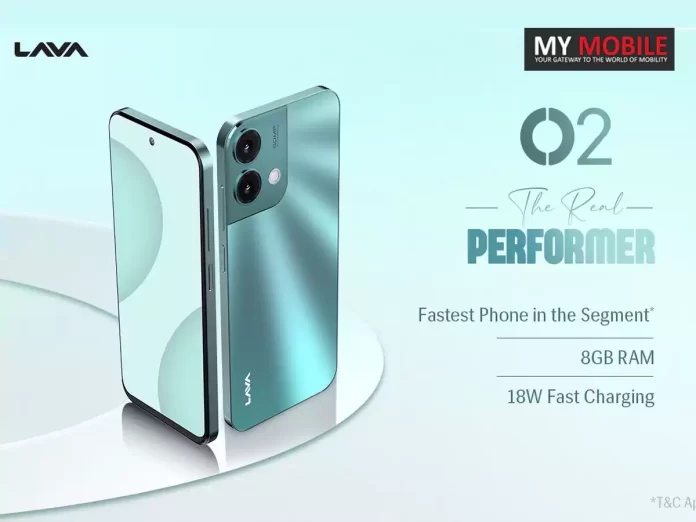
Lava , is thrilled to announce the O2 sale on Amazon starting at Rs 7,999/- today.
Lava has introduced the Lava O2 to the market, touting it as the segment’s leading phone in terms of speed.
The device features notable specifications such as a Unisoc chipset, a dual AI camera system, quick 18W charging, a clean Android 13 interface, and a facial recognition security feature.
Lava O2 is powered by the UNISOC T616 Octa-core Processor, a powerful 5000 mAh battery for long-lasting usage that gets the phone ready with full charge in lesser time.
To deliver an unmatched viewing experience, it features a 90Hz 16.55cm (6.5″) HD+ Punch Hole Display.
Lava O2 boasts an array of features, including a premium back design housing a side fingerprint sensor, 8GB RAM paired with either 128GB UFS 2.2 ROM, 18W Fast Charging facilitated by a Type-C USB Cable, a 50MP Dual AI rear camera alongside an 8MP front camera optimized for superior photography and selfies, a bottom-firing speaker, stock Android 13, and a face unlock feature.
Additionally, it provides 2 years of assured security updates and a guaranteed upgrade to Android 14.
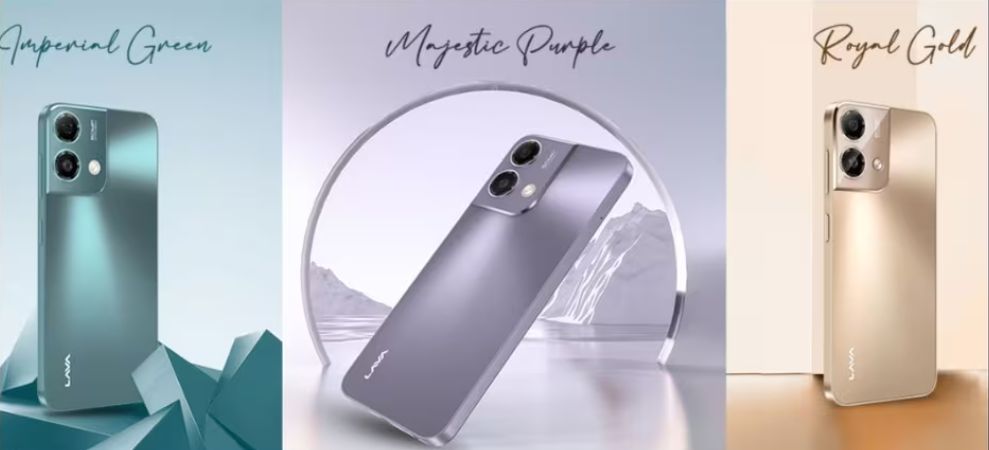
The smartphone is available in three stunning color variants – Majestic Purple, Imperial Green and Royal Gold.
The sale is live for Lava O2 and customers can avail the introductory price on Amazon and Lava E-store.
FREE SERVICE AT HOME
- Lava remains committed to providing a superior after-sales consumer experience.
- The ‘FREE SERVICE AT HOME’ initiative allows customers to avail service at their doorstep within the phone’s warranty period.
- To avail Service at Home, click here:
Price and Availability
The Lava O2 is priced at Rs 8,999 in India.
Lava is offering the smartphone at a special launch price of Rs 7,999.
The sale begins on March 27, 2024, and it will be available through Lava’s own e-store and Amazon.
Sumit Singh, Product Head at Lava International Limited, stated, “Consumer demands are constantly changing, especially among the younger generation who demand both style and functionality from their smartphones without compromise. Lava O2 addresses these evolving expectations by introducing cutting-edge features such as the latest Glass Back Design and delivering a smooth user experience with stock Android 13, with a guaranteed upgrade to Android 14, along with 2-year security updates.
Moreover, the inclusion of a 50 MP Dual AI Camera transforms the O2 into an adaptable all-in-one solution, perfectly catering to the dynamic needs of modern consumers.”
| Model | Variants | Model | Variants | Price | Introductory Price | Availability | Platform |
| Lava O2 | 8+8#GB/128GB | Lava O2 | 8+8#GB/128GB | Rs 8,499/- | Rs 7,999 | Available Now | · Lava E-Store
· Amazon |
Lava O2: Key Specs
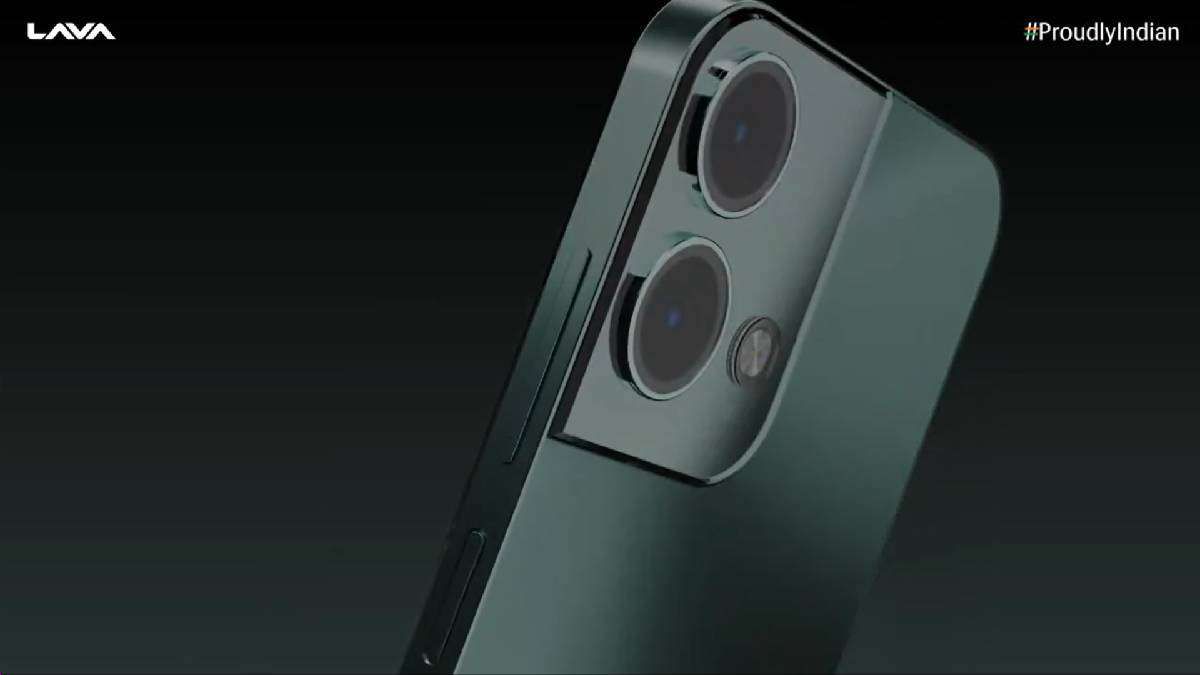
- Processor: UNISOC T616 Octa-core.
- Storage: 8GB RAM + 8GB with 128GB UFS 2.2 ROM.
- Display: 6.5-inch HD+ Punch Hole Display with a 90Hz refresh rate.
- Cameras: 50MP Dual AI Rear Camera; 8MP Front Camera.
- Charging: 18W Fast Charging; Type-C USB.
- Security: Side Fingerprint Sensor; Face Unlock.
- Operating System: Android 13, with a guaranteed update to Android 14 and two years of security updates.
Lava O2: Features
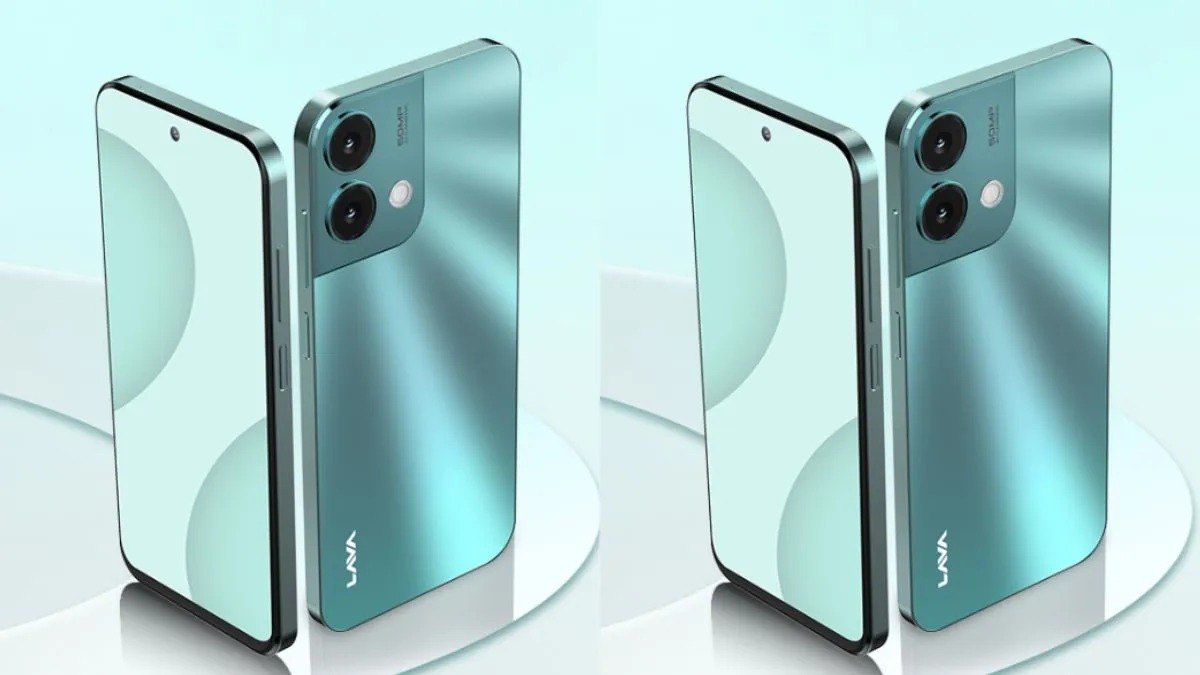
Lava O2: FeaturesThe Lava O2 is engineered to provide an optimized user experience, offering a combination of 16GB total RAM and 128GB internal storage for storing a large amount of data and ensuring fluid app operation.
It’s equipped with the UNISOC T616 processor, allowing for efficient performance across tasks and smooth multitasking capabilities.
There is a 50MP dual AI rear camera on the device and an 8MP front camera.
The device features a 90Hz 6.5-inch HD+ display that ensures a smooth and immersive viewing experience, whether for watching videos, playing games, or browsing.
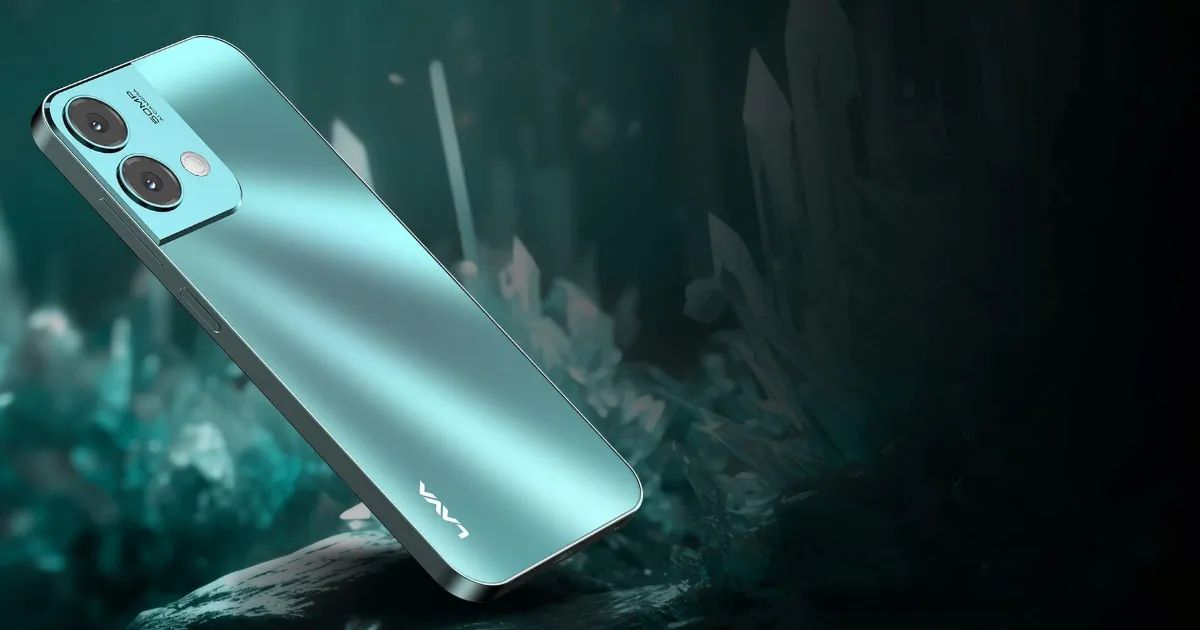
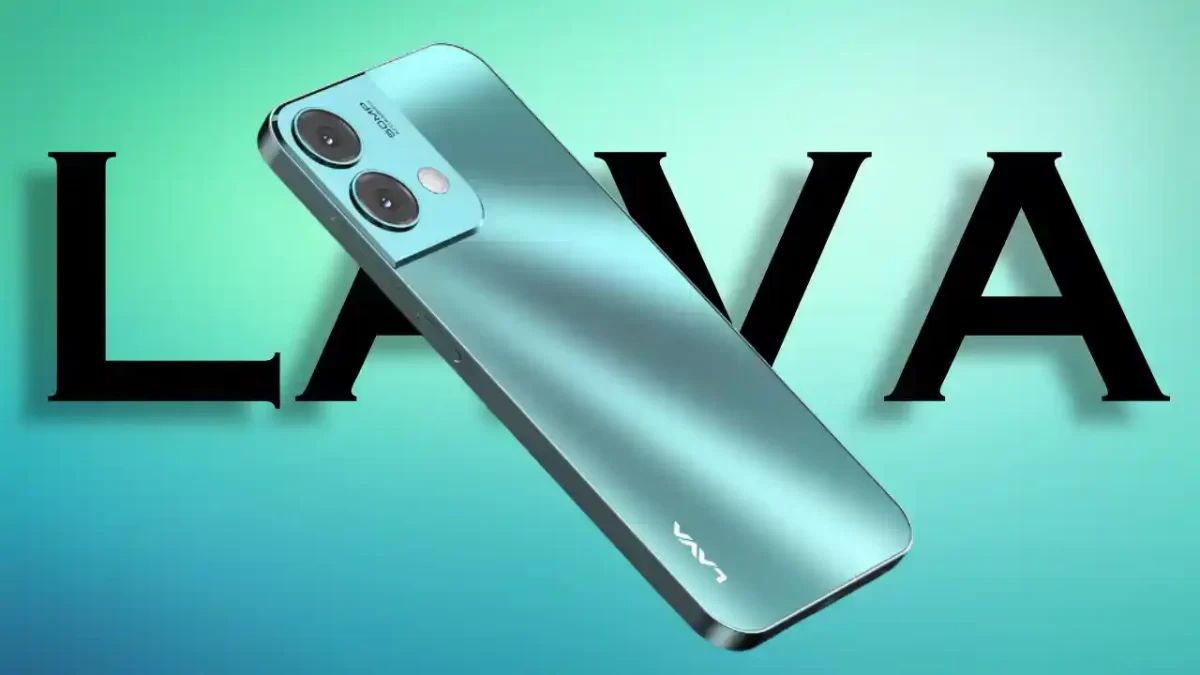
Design-wise, the Lava O2 presents a sophisticated look with its AG Glass Back Finish and includes a side-mounted fingerprint sensor for enhanced security.
The smartphone supports quick 18W charging, facilitating fast power-ups.
It comes in three elegant colours: Majestic Purple, Imperial Green, and Royal Gold, offering users options to match their style.
The device runs on a clean version of Android 13, offering a seamless and intuitive interface for users.
It supports a wide range of network frequencies to ensure connectivity in various regions and includes a dedicated SIM slot that can accommodate two SIM cards and one SD card, enhancing its usability and flexibility.
5 Reasons to Buy
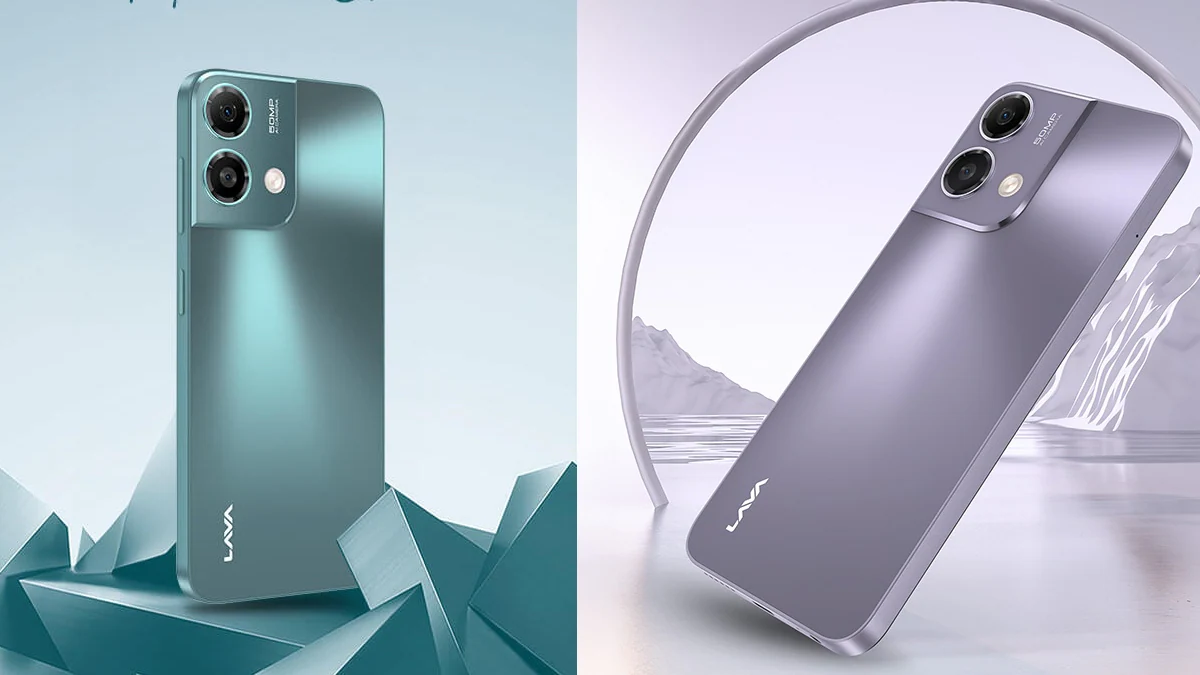
- High-Performance Configuration: With a UNISOC T616 Octa-core Processor and 16GB combined RAM, ensuring smooth multitasking and efficient operation.
- Superior Camera Quality: Boasts a 50MP Dual AI Rear Camera and an 8MP Front Camera for capturing stunning photos and selfies.
- Immersive Display Experience: A 90Hz 6.5-inch HD+ Punch Hole Display offers smooth and immersive viewing for videos and gaming.
- Elegant Design and Security: Features a premium AG Glass Back Finish with a Side Fingerprint Sensor for a stylish look and enhanced security.
- Future-Proof Software: Runs on stock Android 13 with a guaranteed update to Android 14 and two years of security updates, keeping the device up-to-date.
Lava O2 Specs
GENERAL
| Country of Origin | India |
| Sim Type | Dual Sim, GSM+GSM |
| Dual Sim | Yes |
| Sim Size | Nano+Nano SIM |
| Device Type | Smartphone |
| Release Date | March 22, 2024 |
| In The Box | Handset, USB Cable Type-C, Charger, SIM Ejector Pin, Back Cover |
DESIGN
| Dimensions | 76.1 x 165 x 8.7 mm |
| Weight | 200 g |
| Colors | Imperial Green, Majestic Purple, Royal Gold |
DISPLAY
| Type | Color IPS Screen (16M Colors) |
| Touch | Yes |
| Size | 6.5 inches, 1600 x 720 pixels, 90 Hz |
| Aspect Ratio | 20:9 |
| PPI | ~ 269 PPI |
| Notch | Yes, Punch Hole |
MEMORY
| RAM | 8 GB |
| Expandable RAM | Upto 8 GB Extra Virtual RAM |
| Storage | 128 GB |
| Storage Type | UFS 2.2 |
| Card Slot | Yes, upto 512 GB |
CONNECTIVITY
| GPRS | Yes |
| EDGE | Yes |
| 3G | Yes |
| 4G | Yes |
| VoLTE | Yes |
| Wifi | Yes, with wifi-hotspot |
| Wifi Version | Wi-Fi 802.11 b/g/n/ac |
| Bluetooth | Yes, v5.0 |
| USB | Yes, USB-C v2.0 |
| USB Features | USB Tethering, USB on-the-go, USB Charging, USB Storage |
EXTRA
| GPS | Yes |
| Fingerprint Sensor | Yes, Side |
| Face Unlock | Yes |
| Sensors | Accelerometer, Proximity, Ambient Light |
| 3.5mm Headphone Jack | Yes |
| Extra Features | Vibration on Call connection, Conference Call, Anonymous & Auto Call Recording, SAR Value<1.6W/Kg |
CAMERA
| Rear Camera | 50 MP f/2 0.08 MP (VGA) with autofocus |
| Features | Beauty, HDR, Night, Portrait, AI, Pro, Panorama, Slow Motion, Filters, Timelapse, Intelligent Scanning, Burst |
| Video Recording | 1080p |
| Flash | Yes, LED |
| Front Camera | Punch Hole 8 MP with Screen Flash |
TECHNICAL
| OS | Android v13 |
| Chipset | Unisoc Tiger T616 |
| CPU | 2 GHz, Octa Core Processor |
| Core Details | 2×2.0 GHz Cortex-A75 & 6×1.8 GHz Cortex-A55 |
| GPU | Mali-G57 MP1 |
| Java | No |
| Browser | Yes |
MULTIMEDIA
| Yes | |
| Music | Yes |
| Video | Yes |
| FM Radio | Yes |
| Document Reader | Yes |
BATTERY
| Type | Non-Removable Battery |
| Size | 5000 mAh, Li-Po Battery |
| Fast Charging | Yes, 18W Fast Charging |
| StandBy Time | 20 days |
| Talk Time | 38 hours |
| Video Playback Time | 468 hours |
FAQs
What is the launch price of the Lava O2 in India?
The Lava O2 has been launched at a price of Rs 8,999 in India. However, there’s a special introductory offer that lowers the price to Rs 7,999.
Can you tell me more about the Lava O2’s camera capabilities?
The Lava O2 boasts a dual AI rear camera setup with a 50MP main sensor, ensuring high-quality photography. Additionally, it features an 8MP front camera for selfies and video calls.
What are the unique features of the Lava O2’s display?
The Lava O2 comes with a 6.5-inch HD+ Punch Hole Display, offering a 90Hz refresh rate for a smooth and responsive visual experience, enhancing both gaming and video playback.
How does the Lava O2 stand in terms of software support?
The Lava O2 runs on Android 13 and is guaranteed an upgrade to Android 14, alongside two years of security updates, ensuring the device stays current and secure.
What charging technology does the Lava O2 use?
The Lava O2 supports 18W Fast Charging with a Type-C USB cable, allowing for quick and convenient charging of the device’s battery.
Also Read: Lava O2 vs Moto G04 vs Redmi A3: A Detailed Comparison
Also Read: Lava O2 Launching Soon in India with Advanced Features
Also Read: Lava O2 Launched with in India With UNISOC T616, 8GB RAM: Pricing, Features, Specs
Vivo X Fold 3 Series Debuts in China with Qualcomm Snapdragon 8 Gen 3: Pricing, Features, Specs
Highlights
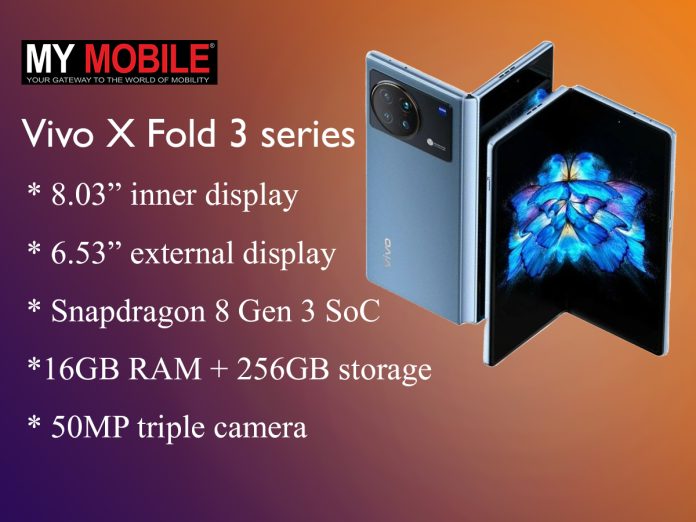
- Vivo X Fold 3 series launched with Snapdragon 8 Gen 2 and Gen 3 SoCs.
- Features include 8.03-inch AMOLED LTPO display with 120Hz refresh rate.
- Triple rear camera setup with a 50MP main sensor for both models.
- The X Fold 3 Pro introduces 100W wired and 50W wireless charging.
Vivo has expanded its portfolio of foldable smartphones with the introduction of the Vivo X Fold 3 series in China.
The series, which includes the Vivo X Fold 3 and the X Fold 3 Pro, brings cutting-edge technology to the foldable market, with the latter being the first foldable to feature Qualcomm’s flagship Snapdragon 8 Gen 3 SoC.
Vivo X Fold 3 Series: Pricing and Availability
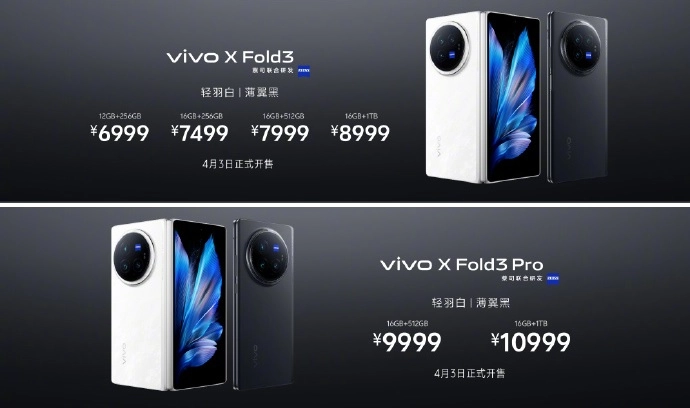
The Vivo X Fold 3 series has been launched with a variety of storage options and in two sleek color choices, Solar White and Eclipse Black.
The pricing for the X Fold 3 starts at CNY 6,999 (about Rs 75,000) for the 12GB + 256GB model, escalating to CNY 8,999 (about Rs 95,000) for the 16GB + 1TB variant.
The more advanced X Fold 3 Pro is available starting at CNY 9,999 (Rs 1,12,000) for the 16GB + 512GB configuration, up to CNY 10,999 (Rs 1,27,000) for the 16GB + 1TB model.
These devices are now available for purchase through Vivo’s online store in China, with shipping expected to begin by the end of the month.
Vivo X Fold 3 Series: Key Specs
Vivo X Fold 3
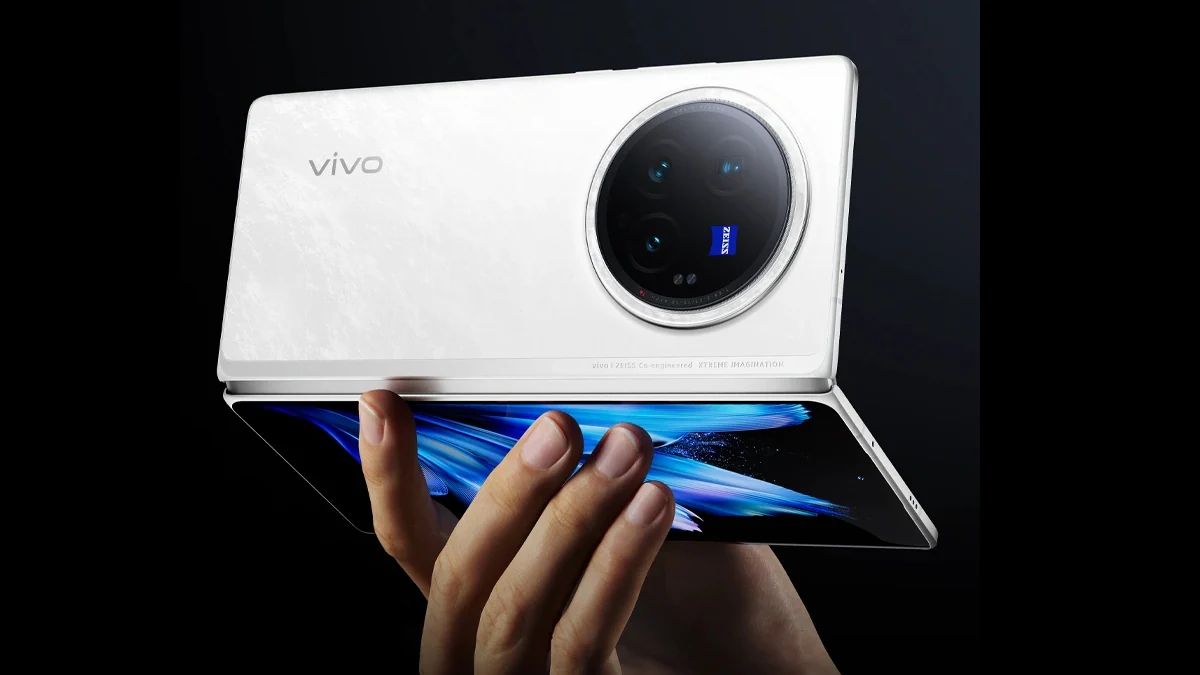
- Processor: Qualcomm Snapdragon 8 Gen 2 SoC
- Display: 8.03-inch AMOLED LTPO, 120Hz refresh rate
- Camera Setup: Triple Rear – 50MP main + 50MP ultra-wide + 50MP portrait; 32MP front camera
- Battery: 5,500mAh with 80W flash charging
- Memory: Up to 16GB RAM; Up to 1TB storage
- OS: OriginOS 4 based on Android 14
- Connectivity: Dual 5G, WiFi-7, Bluetooth v5.3
Vivo X Fold 3 Pro
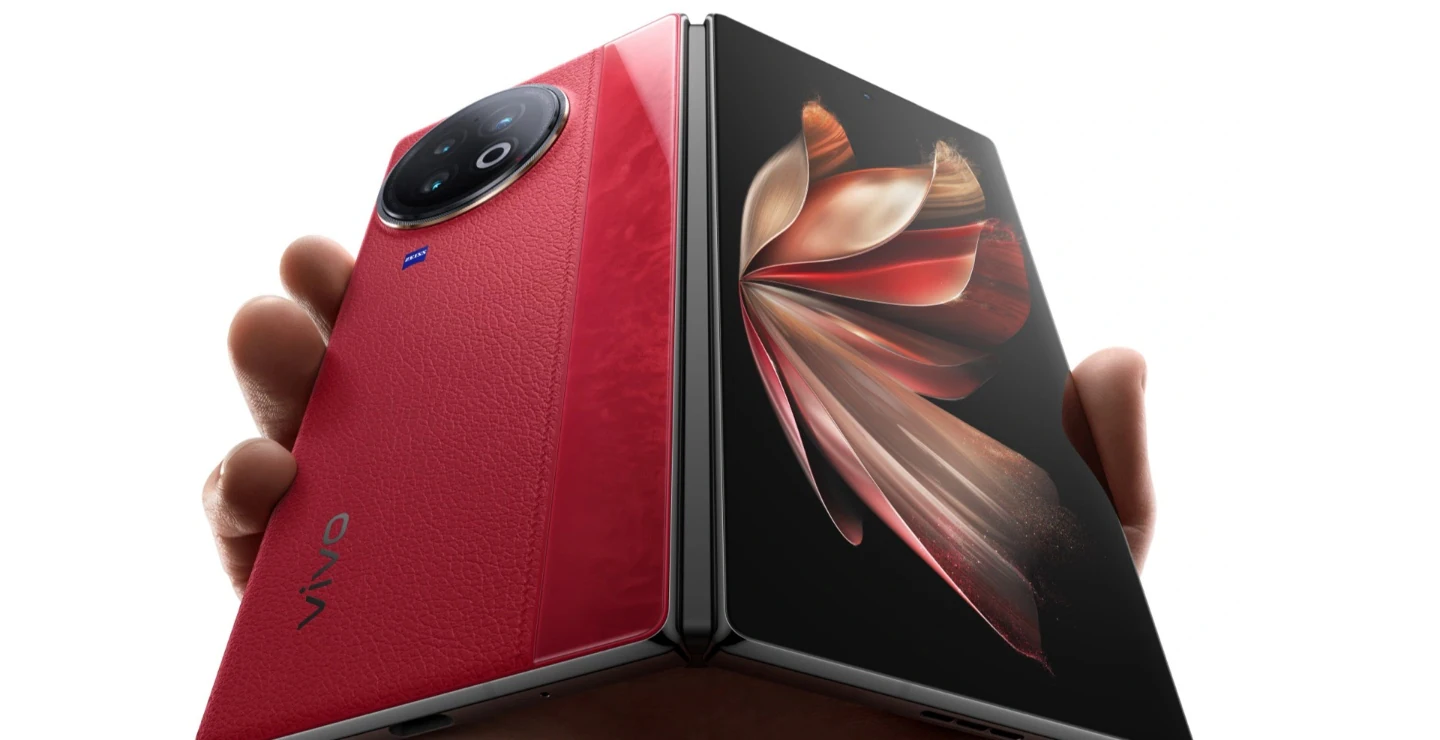
- Processor: Qualcomm Snapdragon 8 Gen 3 SoC
- Display: 8.03-inch AMOLED LTPO, 120Hz refresh rate, Dolby Vision
- Camera Setup: Triple Rear – 50MP Ultra Sensing OIS main + 64MP 3x telephoto + 50MP ultra-wide; 32MP front camera
- Battery: 5,700mAh with 100W flash charging and 50W wireless charging
- Memory: Up to 16GB RAM; Up to 1TB storage
- OS: OriginOS 4 based on Android 14
- Connectivity: Dual 5G, WiFi-7, Bluetooth v5.3
Vivo X Fold 3 Series Features
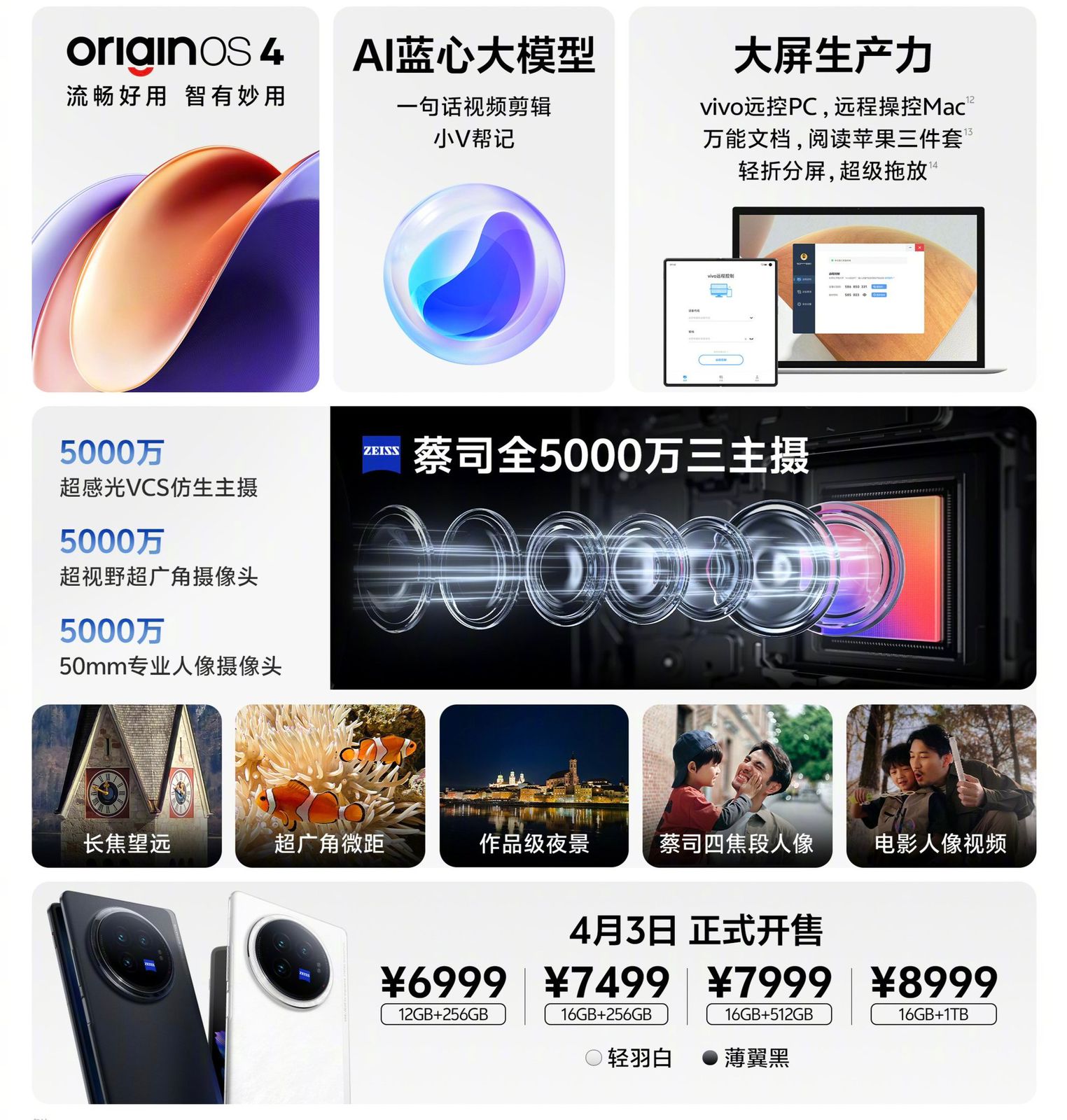
The Vivo X Fold 3 is a powerhouse, featuring the Qualcomm Snapdragon 8 Gen 2 SoC, known for its efficient and robust performance.
Its expansive 8.03-inch AMOLED LTPO display offers a seamless viewing experience with a 120Hz refresh rate, making it perfect for gaming and multimedia consumption.
The device boasts a versatile triple rear camera setup, ensuring high-quality photos and videos.
A substantial 5,500mAh battery equipped with 80W fast charging support ensures that the device stays powered throughout the day.
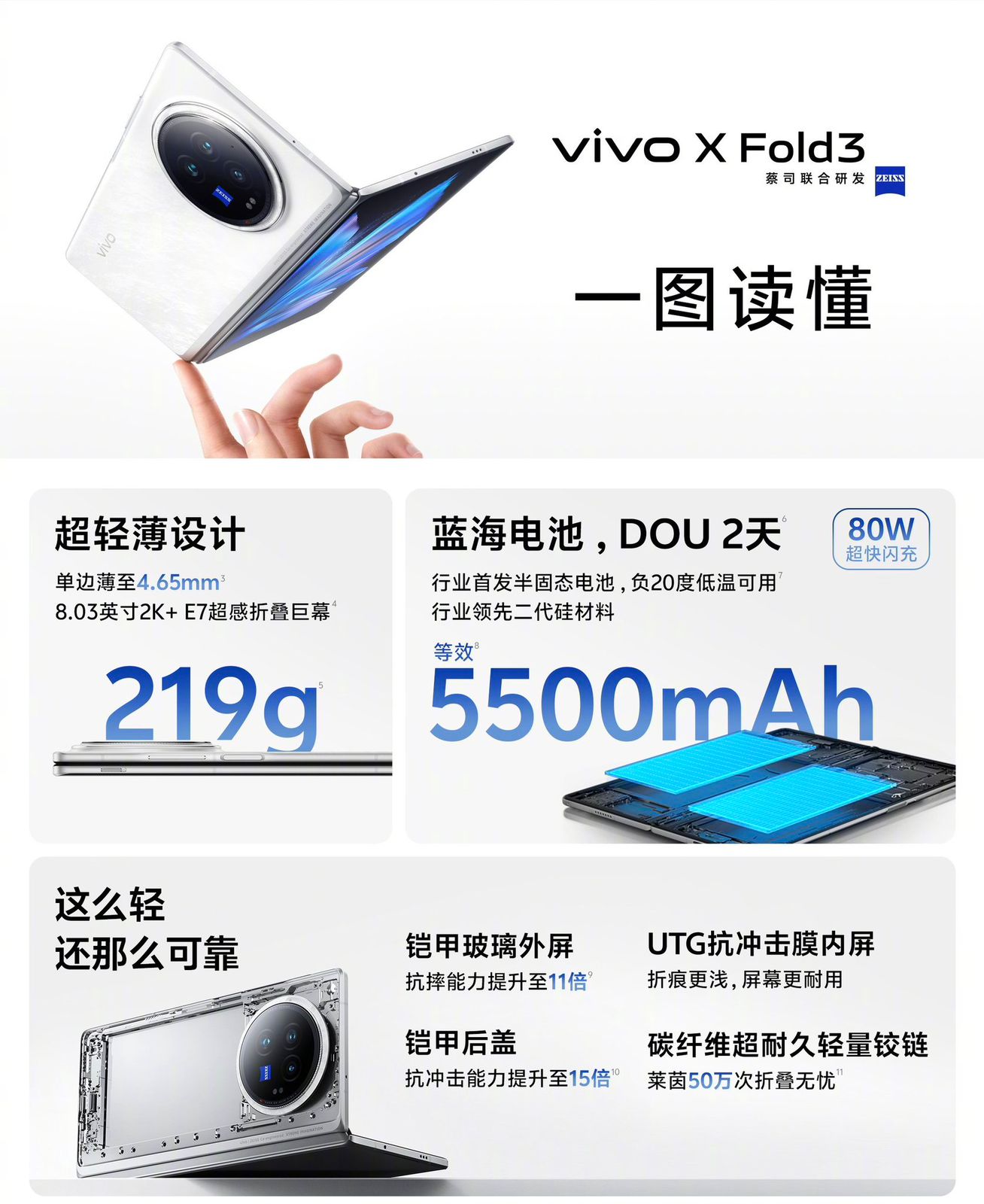
On the other hand, the Vivo X Fold 3 Pro takes the foldable experience a notch higher by being the first to incorporate the Qualcomm Snapdragon 8 Gen 3 SoC, delivering unmatched performance and efficiency.
Its display shares the same size and quality as the X Fold 3 but adds Dolby Vision for an even more immersive visual experience.
The camera system in the Pro version includes a 64MP telephoto lens for superior zoom capabilities and a V3 Imaging Chip for enhanced photo quality.
The larger 5,700mAh battery supports both 100W wired and 50W wireless fast charging, setting a new standard for convenience in mobile devices.
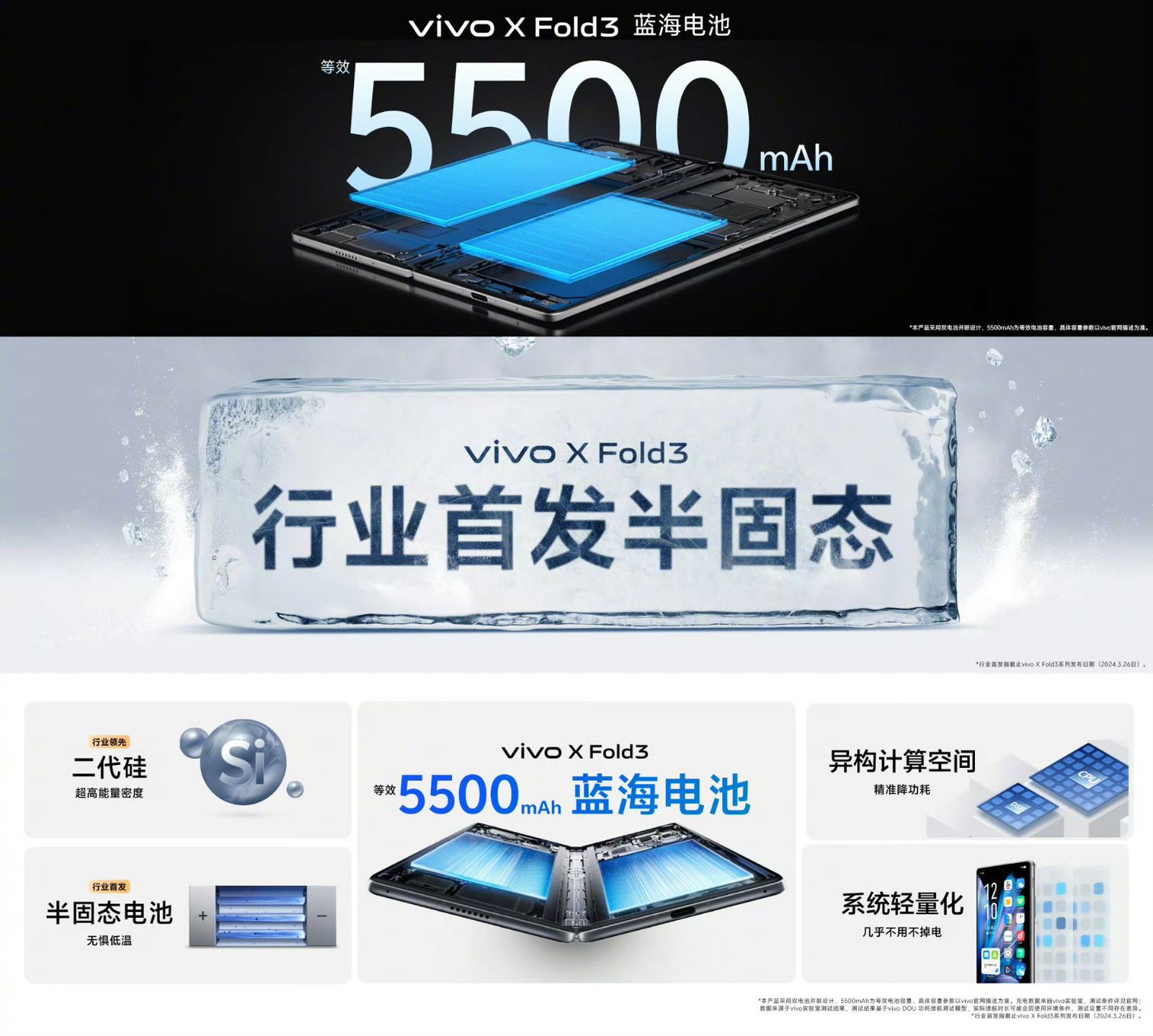
Both devices run on OriginOS 4 based on Android 14, offering a smooth and intuitive user interface.
Their connectivity options are extensive, including dual 5G support, the latest WiFi-7, and Bluetooth v5.3, ensuring fast and reliable connections.
Vivo X Fold 3 Specs
GENERAL
| Sim Type | Dual Sim, GSM+GSM |
| Dual Sim | Yes |
| Sim Size | Nano SIM |
| Device Type | Smartphone |
| Release Date | April 20, 2024 (Expected) |
DESIGN
| Dimensions | Unfolded: 161.3 x 143.4 x 6 mmFolded: 161.3 x 73.4 x 12.9 mm |
| Colors | Black, Blue, Red |
DISPLAY
| Type | Color LTPO AMOLED Screen (1B Colors) |
| Touch | Yes, 240 Hz Touch Sampling Rate |
| Size | 8.2 inches, 1916 x 2160 pixels, 144 Hz |
| Aspect Ratio | 4:3.55 |
| PPI | ~ 360 PPI |
| Screen to Body Ratio | ~ 89.3% |
| Features | HDR10+, 1800 nits (peak) |
| Notch | Punch Hole |
| Foldable Display | Yes |
| Dual Display | Yes, 6.67 inches, 1080 x 2520 pixels, AMOLED, Screen To Body Ratio 88.75%, Aspect Ratio 21:9, 120Hz, 1600 nits (peak) |
MEMORY
| RAM | 12 GB |
| Storage | 256 GB |
| Storage Type | UFS 4.0 |
| Card Slot | No |
CONNECTIVITY
| GPRS | Yes |
| EDGE | Yes |
| 3G | Yes |
| 4G | Yes |
| 5G | Yes |
| 5G Bands | 1, 2, 3, 5, 7, 8, 12, 20, 28, 38, 40, 41, 66, 77, 78 SA/NSA |
| VoLTE | Yes, Dual Stand-By |
| Wifi | Yes, with wifi-hotspot |
| Wifi Version | Wi-Fi 6; Wi-Fi 7; 2.4G&5G |
| Bluetooth | Yes, v5.3, A2DP, LE, aptX HD |
| USB | Yes, USB-C v2.0 |
| USB Features | USB on-the-go, USB Charging |
EXTRA
| GPS | Yes, with A-GPS, GLONASS, BDS, GALILEO, QZSS, NavIC |
| Fingerprint Sensor | Yes, In Display |
| Face Unlock | Yes |
| Sensors | Dual screen fingerprint (under display, ultrasonic) accelerometer, gyro, proximity, compass, barometer |
| 3.5mm Headphone Jack | No |
| Extra | NFC |
CAMERA
| Rear Camera | 50 MP 1/1.49″, 1.0µm, Dual Pixel PDAF, Laser AF, OIS f/1.8 (Wide Angle) 12 MP 47mm, PDAF, 2x optical zoom f/2 (Telephoto) 12 MP 14mm, 114˚ f/2 (Ultra Wide) with autofocus |
| Features | Sports, night scene, portrait, photo, video, micro movie, 50 million, panorama, ultra-clear document, slow motion, time-lapse Photography, time slow door, super moon, starry sky, Zeiss landscape and architecture, professional, gourmet, Jovi scan, dual-view video, dynamic photo, super group photo MP4 |
| Video Recording | K @ 30 fps, 1080p @ 30 fps FHD |
| Flash | Yes, Dual LED |
| Front Camera | Punch Hole 16 MP f/2.5 (Wide Angle) 16 MP f/2.5 (Cover camera) |
| Front Video Recording | 1080p @ 30 fps FHD |
TECHNICAL
| OS | Android v14 |
| Custom UI | OriginOS 4 |
| Chipset | Qualcomm Snapdragon 8 Gen3 |
| CPU | 3.3 GHz, Octa Core Processor |
| Core Details | 1xCortex-X4@3.3 GHz & 5xCortex-A720@3.2 GHz & 2x Cortex-A520@2.3 GHz |
| GPU | Adreno GPU |
| Java | No |
| Browser | Yes |
MULTIMEDIA
| Yes | |
| Music | AAC, MIDI, OGG, FLAC, WMA, WAV, APE, MP3 |
| Video | Yes |
| FM Radio | No |
| Document Reader | Yes |
BATTERY
| Type | Non-Removable Battery |
| Size | 4800 mAh, Li-Po Battery |
| Fast Charging | Yes, 120W Fast Charging |
| Wireless Charging | Yes, 50W |
| Reverse Charging | Yes, 10W |
FAQs
What are the key differences between the Vivo X Fold 3 and the X Fold 3 Pro?
The Vivo X Fold 3 is powered by the Qualcomm Snapdragon 8 Gen 2 SoC, while the X Fold 3 Pro features the newer Snapdragon 8 Gen 3 SoC, marking it as the first foldable to do so.
The Pro model also offers enhanced battery capabilities with 100W wired and 50W wireless charging, compared to the X Fold 3’s 80W charging.
Additionally, the camera systems differ slightly, with the Pro model boasting a 64MP telephoto lens.
Where can I buy the Vivo X Fold 3 series in China?
The Vivo X Fold 3 series is available for purchase through Vivo’s online store in China. Both the X Fold 3 and X Fold 3 Pro are offered in Solar White and Eclipse Black colors, with multiple storage options available.
When will shipping begin for the Vivo X Fold 3 series?
Shipping for the Vivo X Fold 3 series is expected to commence by the end of the month from Vivo’s online store in China.
Does the Vivo X Fold 3 series support 5G connectivity?
Yes, both the Vivo X Fold 3 and the X Fold 3 Pro support dual 5G connectivity. They also come equipped with the latest WiFi-7 and Bluetooth v5.3, ensuring fast and reliable connections across all networks.
Also Read: Vivo X Fold 3 Pro Reportedly Sets New Benchmark with Highest AnTuTu Score
Also Read: Vivo X Fold 3 Spotted on 3C Certification Website Ahead of China Launch
Also Read: Vivo X Fold 3 and Fold 3 Pro Leaked Specs Surface Online Showing Premium Features
Intel Announces New Program for AI PC Software Developers and Hardware Vendors

HIGHLIGHTS
* Intel has announced a new program to boost the development of AI-based software.
* The company will support smaller, more qualified app developers for their research and creation.
Intel Corporation today announced the creation of two new artificial intelligence (AI) initiatives as part of the AI PC Acceleration Program: the AI PC Developer Program and the addition of independent hardware vendors to the program.
These are critical milestones in Intel’s pursuit of enabling the software and hardware ecosystem to optimize and maximize AI on more than 100 million Intel-based AI PCs through 2025.
“We have made great strides with our AI PC Acceleration Program by working with the ecosystem. Today, with the addition of the AI PC Developer Program, we are expanding our reach to go beyond large ISVs and engage with small- and medium-sized players and aspiring developers. Our goal is to drive a frictionless experience by offering a broad set of tools including the new AI-ready Developer Kit.” –Carla Rodriguez, Intel vice president and general manager of Client Software Ecosystem Enabling. Intel says.
The updated developer resource pages provide a convenient one-stop shop for developers to access AI PC and client-focused toolkits, documentation and training.
These collated resources aim to help developers take full advantage of Intel Core Ultra processor technologies to maximize AI and machine learning (ML) application performance and accelerate new use cases.
Qualified partners gain access to Intel’s Open Labs, where they receive technical and co-engineering support early in the development phase of their hardware solutions and platforms.
Additionally, through this program, Intel provides reference hardware so that qualified IHV partners can test and optimize their technology so that it runs as efficiently as possible at time of launch.
What the New Programs Do: The AI PC Developer Program is designed specifically for software developers and independent software vendors (ISVs) to deliver a frictionless developer experience and make it easy for developers to adopt new AI technologies at scale.
It provides access to tools, workflows, AI-deployment frameworks and developer kits that include the latest Intel hardware featuring the Intel® Core™ Ultra processor.
Developers can join Intel’s AI PC Acceleration Program and learn more about Intel’s global partner network that is working to maximize AI performance in the PC industry.

Intel Announces New Program for AI PC Software Developers and Hardware Vendors
Why It Matters: AI will fundamentally change many aspects of people’s lives, including how they work, learn, connect and create.
With optimized software and hardware, powered by Intel’s leading-edge platform – central processing units, neural processing units and graphics processing units – everyone can harness the benefits of AI with an AI PC.
Intel collaborates across a broad and open ecosystem so that end users can experience enhanced performance, productivity, innovation and creativity.
Intel is driving advancements in the AI PC era while empowering ISVs and IHVs.
Through its programs, Intel delivers additional value to developers, including:
* Improved Compatibility: With access to the latest Intel Core Ultra developer kits and optimization and software tools, developers can ensure their software and apps run smoothly on the latest Intel processors, enhancing compatibility and the overall end-user experiences.
* Performance Optimization: Optimizing software for specific hardware architectures early in the development cycle can lead to performance enhancements and efficiency. This will enable better performance once AI PCs are widely available.
* Expanded Market Opportunities and Global Scale: Collaboration with Intel and its broad and open ecosystem of AI-enabled partners presents opportunities to scale through the ecosystem as well as to enter new markets and win across industries.
About the AI PC Acceleration Program: The AI PC Acceleration Program, announced in October 2023, aims to connect independent hardware vendors and independent software vendors with Intel resources including artificial intelligence toolchains, training, co-engineering, software optimization, hardware, design resources, technical expertise, co-marketing and sales opportunities.
Faqs
What the New Programs by intel Do ?
The AI PC Developer Program is designed specifically for software developers and independent software vendors (ISVs) to deliver a frictionless developer experience and make it easy for developers to adopt new AI technologies at scale.
It provides access to tools, workflows, AI-deployment frameworks and developer kits that include the latest Intel hardware featuring the Intel® Core™ Ultra processor.
Developers can join Intel’s AI PC Acceleration Program and learn more about Intel’s global partner network that is working to maximize AI performance in the PC industry.
Why It Matters what the new intel developer program do ?
AI will fundamentally change many aspects of people’s lives, including how they work, learn, connect and create. With optimized software and hardware, powered by Intel’s leading-edge platform – central processing units, neural processing units and graphics processing units – everyone can harness the benefits of AI with an AI PC.
Intel collaborates across a broad and open ecosystem so that end users can experience enhanced performance, productivity, innovation and creativity. Intel is driving advancements in the AI PC era while empowering ISVs and IHVs.
Through its programs, Intel delivers additional value to developers, including:
Improved Compatibility: With access to the latest Intel Core Ultra developer kits and optimization and software tools, developers can ensure their software and apps run smoothly on the latest Intel processors, enhancing compatibility and the overall end-user experiences.
Performance Optimization: Optimizing software for specific hardware architectures early in the development cycle can lead to performance enhancements and efficiency. This will enable better performance once AI PCs are widely available.
Expanded Market Opportunities and Global Scale: Collaboration with Intel and its broad and open ecosystem of AI-enabled partners presents opportunities to scale through the ecosystem as well as to enter new markets and win across industries.
What is Intel AI PC Developer Program?
The AI PC Developer Program will function simultaneously with Intel’s existing AI PC Acceleration Program.
Its main objective is to maximize the utilization of Intel’s hardware for artificial intelligence. The program will also help developers take advantage of the new NPUs present on the latest Intel Core Ultra processors.
Qualified partner developers can also access Intel’s Open labs, where they can gain direct support from the company in the early phases of their software. Intel will also help developers optimize their technology for maximum systems.
Intel has onboarded over 150 hardware vendors and multiple software vendors in its AI PC Acceleration Program. The list includes big names like Adobe, Webex, Zoom, Audacity, Wondershare Filmora, and many others.
Developers will have better access to Intel’s vast AI resources. Basic examples include Studio Effects in Windows 11, which utilizes the NPU on Intel Core Ultra chip systems for AI-powered automatic framing and eye contact correction.
Also Read: Intel Announces 14th Gen Core HX and Ultra CPUs at CES 2024
Also Read: Intel Core 14th Gen i9-14900KS Powers Desktop PCs to Record-Breaking Speeds
Google Chat Rolls Out New Voice Messaging Feature for Workspace Users

Highlights
- Voice messages now available in Google Chat for Workspace accounts.
- Easy recording with a tap—no need to hold down the microphone icon.
- Playback and deletion options available before sending voice messages.
- Future updates to include transcription services for voice messages.
Google has recently announced a significant update to Google Chat, introducing the long-awaited feature of voice messaging.
This enhancement allows users to record and send voice messages within their chats, offering a new dimension to online communication within the platform.
However, this feature debuts exclusively for paid Google Workspace accounts.
Voice Messaging: A Closer Look

The new voice messaging capability is designed with user convenience in mind.
It replaces the previously grayed-out send icon in Google Chat’s Android and iOS applications with a new microphone button, positioned next to the photo/gallery button for easy access.
Users can start recording their message with a simple tap on the microphone icon, eliminating the need to hold it down during recording.
As you speak, Google Chat visually represents your voice with a live waveform, accompanied by a timer to track the duration of your message.
Before sending, you have the option to playback your recording for review or delete it if a retake is necessary.
Once sent, voice messages are visually displayed as waveforms within a pill-shaped container in direct messages, group chats, and Spaces.
Recipients can interact with these voice messages just like any other chat content, including quoting, reacting, and replying.
Google has also announced plans to introduce transcription for voice messages, further enhancing their accessibility and utility in the coming months.
Availability and Future Plans

Initially, this feature is available on mobile devices, with plans to extend support to web users soon.
The introduction of voice messages in Google Chat responds to high demand from the user community, recognizing the value of voice as a quick, informative, and expressive mode of communication.
At its launch, the voice messaging feature is accessible to subscribers of Workspace Enterprise Essentials, Enterprise Essentials Plus, Enterprise Standard, and Enterprise Plus tiers.
Users with free or lower-tier accounts will need to await further updates for access.
The rollout begins today and will gradually reach all eligible users over the next few weeks.
FAQs
How can I send a voice message in Google Chat?
To send a voice message in Google Chat on Android or iOS, simply open a conversation and tap on the new microphone icon next to the photo/gallery button.
The app will start recording your message immediately without needing to hold the button, and you can review or delete the recording before sending.
Who has access to the new voice messaging feature in Google Chat?
At its launch, the voice messaging feature in Google Chat is available exclusively to users with Workspace Enterprise Essentials, Enterprise Essentials Plus, Enterprise Standard, and Enterprise Plus accounts.
Users with free or other lower-tiered Google Workspace accounts will need to wait for wider access in future updates.
Can I review my voice message before sending it in Google Chat?
Yes, Google Chat allows you to playback your recorded voice message before sending it. If you’re not satisfied with the recording, you have the option to delete it and record a new message.
Will Google Chat voice messages be available on web browsers?
While the voice messaging feature is initially rolling out on mobile devices, Google has announced that web support for voice messages in Google Chat is in the works and will be coming soon.
Also Read: Google Chat Redesign Brings Enhanced Navigation and Functionality to Mobile Apps
Also Read: Google Chat To Reportedly Finally Get a Voice Messaging Feature
Also Read: Google Enhances Family Password Sharing in Chrome and Updates Google Chat

About us
My Mobile has always believed in well researched, in-depth, truthful and relevant content which has evolved with time and produced by the very best of well informed journalists. It has always been our endeavour to provide tremendous value to both readers and advertisers with our relevance and reach.
Quick Links
Copyright © 2023 All Right Reserved, My Mobile India