Home Blog Page 53

iQOO 15 Ultra Official Design Unveiled With Sci-Fi Colours, Active Cooling Fan Details Surface

0

Highlights

  • iQOO 15 Ultra to come in sci-fi-inspired colourways named 2077 Flowing Orange and 2049 Cold Blue
  • It will be powered by Snapdragon 8 Elite Gen 5 and scores 4.51M+ on AnTuTu with configurations up to 24GB RAM + 1TB storage.
  • Other features are the largest active cooling fan in a smartphone, vapour chamber to prevent throttling, and a massive 7,800mAh battery.

image

iQOO 15 Ultra Design and Colour Variants. (Image credit – iQOO)

After days of teasers in China, iQOO has officially revealed the design of its upcoming iQOO 15 Ultra smartphone. The first official images confirm two unique colour options and highlight a strong sci-fi and gaming-centric design language. As of now, the phone’s expecting an early February launch.

iQOO 15 Ultra Design and Colour Variants Revealed

image

iQOO 15 Ultra Colour Variants. (Image credit – iQOO)

The iQOO 15 Ultra will be offered in two colourways, named 2077 Flowing Orange and 2049 Cold Blue. The names and finishes clearly reflect science-fiction influences with iQOO positioning the device as a futuristic performance flagship.

The Flowing Orange variant delivers a bold and aggressive look, while the Cold Blue option opts for a more subtle and refined appearance.

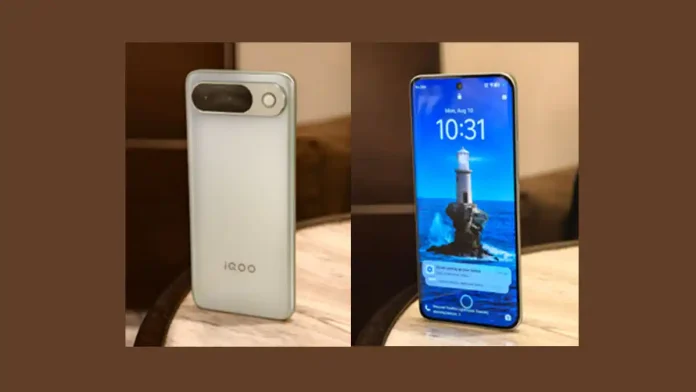
In terms of design, the smartphone features a large square camera module with a transparent design. Inside the camera housing is a horizontal light strip that doubles as a breathing light, reinforcing the phone’s gaming-focused identity. The air intake for the active cooling system is placed just below the camera module, neatly integrated into the rear layout.

The back panel also sports a hexagonal honeycomb texture, underlining its performance-driven character. Along the frame, iQOO has included dual shoulder buttons indicating a clear emphasis on enhanced gaming controls and responsiveness.

Performance Teased with Record-breaking AnTuTu Score

image

iQOO 15 Ultra on AnTuTu. (Via Gizmochina)

Alongside the design reveal, iQOO Product Director Galant V shared AnTuTu benchmark details for the iQOO 15 Ultra. The device has crossed 4.51 million points, although he noted that this figure does not represent its final performance with further optimisation still in progress.

The iQOO 15 Ultra is expected to be powered by Qualcomm’s Snapdragon 8 Elite Gen 5 chipset and will feature an active cooling fan to maintain sustained performance during long gaming sessions.

Leaks also suggest that the phone will start with a base configuration of 16GB RAM and 512GB storage, while the top-end variant could go up to 24GB RAM and 1TB storage, a combination that remains uncommon even among flagship smartphones.

How the iQOO 15 Ultra’s Active Cooling Fan Works?

image

The leaked schematic of the iQOO 15 Ultra. (Credit – DCS on Weibo)

Separately, well-known tipster Digital Chat Station has shared a schematic of the iQOO 15 Ultra on Weibo. It reveals more details about the cooling system of the phone. The image shows that the fan’s air intake is located at the bottom of the camera island, while the air outlet is placed on the side of the frame.

The fan is said to measure 17mm in diameter and 4mm in thickness, and is once again being claimed as the largest active cooling fan used in a smartphone so far.

Tipster Digital Chat Station’s post on Weibo. (Translate via Google Translate)

Alongside the fan, the device is expected to include a large vapour chamber, working together to prevent thermal throttling and ensure smooth, prolonged gaming performance.

According to leaks, the iQOO 15 Ultra may pack a massive 7,800mAh battery.

 FAQs

Q1. What design and colour options will the iQOO 15 Ultra offer?

Answer. The iQOO 15 Ultra will come in two sci-fi-inspired colours, 2077 Flowing Orange and 2049 Cold Blue, featuring a square camera module, breathing light, honeycomb texture, and gaming shoulder buttons.

Q2. What performance highlights are expected from the iQOO 15 Ultra?

Answer. Powered by Qualcomm’s Snapdragon 8 Elite Gen 5, the phone has scored over 4.51 million points on AnTuTu, with configurations up to 24GB RAM and 1TB storage.

Q3. How does the iQOO 15 Ultra’s cooling system work?

Answer. It includes a 17mm active cooling fan, the largest in a smartphone, with air intake below the camera island and outlet on the frame, supported by a large vapour chamber to prevent thermal throttling.

Also Read

https://www.mymobileindia.com/iqoo-15-ultra-teased-ahead-of-february-china-launch-active-cooling-confirmed-other-key-specs-leaked/

https://www.mymobileindia.com/iqoo-z11-turbo-hits-3-59-million-on-antutu-while-iqoo-15-ultra-teased-ahead-of-china-launch/

Deepinder Goyal Steps Down as Eternal CEO; Blinkit Head Albinder Dhindsa To Take Over

0

Highlights

  • Eternal founder and Group CEO Deepinder Goyal is stepping down to become Vice Chairman.
  • Blinkit head Albinder Dhindsa will be taking over as Group CEO.
  • Eternal’s shares rose nearly 5% after the announcement as the company reported a 73% profit rise.
Deepinder Goyal Steps Down as Eternal CEO.

Deepinder Goyal, founder and Group CEO of Eternal, the parent company of Zomato and Blinkit, has announced that he is stepping away from the top executive role. Goyal said the responsibilities of leading a listed company no longer allow him the freedom to pursue the kind of high-risk ideas he is increasingly interested in exploring.

In a letter addressed to shareholders and shared on social media, Goyal revealed that he will transition to the role of Vice Chairman, subject to shareholder approval. Taking over as the new Group CEO of Eternal will be Albinder Dhindsa, who currently leads the company’s quick commerce arm, Blinkit.

Following the announcement, Eternal’s shares closed at Rs 283.40 on the BSE on Wednesday, marking a gain of 4.98%.

Why Deepinder Goyal Is Stepping Aside?

Deepinder Goyal. (Image credit - Unknown)
Deepinder Goyal. (Image credit – Unknown)

Explaining his decision, Goyal said he wants to focus on ideas that involve “significantly higher-risk exploration and experimentation.” He clarified that these initiatives fall outside Eternal’s strategic priorities and risk framework and are therefore better pursued independently of a public company.

“If these ideas belonged inside Eternal’s strategic scope, I would have pursued them within the company. They do not,” Goyal wrote in his letter.

He added that while he personally has the capacity to manage multiple responsibilities, the legal and governance expectations that come with being the CEO of a publicly listed company in India require complete and undivided attention.

According to Goyal, the leadership transition will allow Eternal to remain focused and disciplined. At the same time, it will give him the flexibility to work on projects beyond the company’s defined business scope.

Albinder Dhindsa to Lead Eternal as Group CEO

Albinder Dhindsa. (Image credit - Unknown)
Albinder Dhindsa. (Image credit – Unknown)

Albinder Dhindsa will now take charge as Eternal’s Group CEO with the operational “centre of gravity” shifting to him. Dhindsa will oversee daily execution, business priorities, and key decision-making across the group.

Highlighting Dhindsa’s track record, Goyal noted, “Blinkit’s journey from acquisition to breakeven happened under his leadership.” He described him as a “battle-hardened founder” with a stronger execution focus. Blinkit will continue to be Eternal’s primary growth driver and Dhindsa’s main area of attention.

Goyal emphasised that he is not exiting the company. In his new role, he will remain closely involved in shaping long-term strategy, company culture, leadership development, and governance. He also stated that his financial future remains closely linked to Eternal.

As part of the transition, Goyal said all of his unvested ESOPs will be returned to the ESOP pool. This move, he explained, is intended to help create wealth for the next generation of leaders without increasing dilution for existing shareholders.

“Eternal remains my life’s work,” Goyal wrote, adding that his long-term vision is for the company to become India’s most valuable firm, serve a billion customers, and generate livelihoods for millions.

He described the leadership change as a shift in title rather than a reduction in commitment.

The announcement also comes at a time of strong financial performance for the group. Eternal reported a 73% rise in quarterly profit. Blinkit, meanwhile, posted adjusted core earnings of 40 million rupees, compared with a loss of 1.56 billion rupees in the previous quarter.

FAQs

Q1. Why did Deepinder Goyal step down as Eternal’s Group CEO?

Answer. Goyal said leading a listed company limits his ability to pursue high-risk, experimental ideas outside Eternal’s strategic priorities. He will now serve as Vice Chairman.

Q2. Who is taking over as Eternal’s new Group CEO?

Answer. Albinder Dhindsa, head of Blinkit, will become Eternal’s Group CEO. He will oversee daily execution, business priorities, and decision-making across the group.

Q3. How will Deepinder Goyal remain involved with Eternal?

Answer. Goyal emphasised he is not exiting the company. As Vice Chairman, he will focus on long-term strategy, culture, leadership development, and governance, while returning his unvested ESOPs to support future leaders.

Also Read

https://www.mymobileindia.com/zomato-introduces-15-minute-food-delivery-to-take-on-rival-swiggy-bolt/

https://www.mymobileindia.com/zomato-founder-deepinder-goyal-and-wife-grecia-munoz-delivered-food-orders-in-gurugram-shares-details-kapil-show/

Netflix Plans Vertical Video Feed and Major App Redesign

0

Highlights

  • Netflix plans a major mobile app redesign in late 2026.
  • It might feature swipeable vertical video feeds similar to TikTok and Instagram Reels, aimed at boosting engagement.
  • The revamp will also support Netflix’s push into video podcasts with partnerships involving personalities and collaborations with Spotify and iHeartMedia.
(Photo by Dima Solomin on Unsplash)

Netflix is all set to take on video streaming platforms like YouTube, TikTok, and Instagram that continue to dominate how users watch content on smartphones. During its fourth-quarter earnings call recently, the streaming giant announced plans to expand its short-form video feature and roll out a redesigned mobile app.

As for financials, Netflix reported revenue of $45.2 billion in 2025, with more than $1.5 billion coming from advertising. The company also crossed 325 million paid subscribers globally in the fourth quarter, underscoring its continued scale even as competition intensifies.

Coming to the possible app redesign, it is a move that could also help promote its newly launched original video podcasts. Here’s what we know about this so far.

Netflix Plans App Redesign

Netflix co-CEO Greg Peters confirmed that a refreshed version of the mobile app is slated to launch in late 2026. According to him, the redesign is aimed at supporting the company’s long-term growth by allowing continuous testing and optimisation of the app experience.

A key part of this revamp is the deeper integration of vertical videos.

Netflix has been testing this feature since late May. The new system will allow clips whether from movies, shows, or other content to appear in a swipeable vertical format, similar to Instagram Reels or TikTok videos.

Speaking during the earnings call, Peters said, “You can imagine us bringing more clips based on new content types, like video podcasts.” It suggests that Netflix sees short, swipeable videos as an effective way to attract users and keep them engaged on the platform for longer.

Netflix is also pushing into the video podcast space, a segment traditionally dominated by YouTube. The company recently launched its first video podcasts in partnership with well-known personalities such as Michael Irvin and Pete Davidson. It is also collaborating with major podcast industry players like Spotify and iHeartMedia.

Netflix says this effort is designed to improve content discovery and encourage deeper engagement, mirroring how users interact with social platforms.

However, Netflix insists this experiment is not about copying rivals. CTO Elizabeth Stone, speaking at the TechCrunch conference, said the vertical video feature is still in the testing phase and is focused on improving entertainment discovery through mobile-first innovation, rather than replicating TikTok’s model.

Co-CEO Ted Sarandos also addressed the broader shift in the entertainment landscape during the results call. He noted that streaming platforms are now competing with the entire entertainment ecosystem, not just each other.

“There’s never been more competition for creators, for consumer attention, for advertising and subscription dollars, and the competitive lines around TV consumption are already blurring. TV is not what we grew up on. TV is now just about everything. The Oscars and the NFL are on YouTube…Apple’s competing for Emmys and Oscars, and Instagram is coming next,” Sarandos said.

Sarandos further pointed out that Netflix has been rethinking its movie strategy as well including changes to its theatrical release approach. This reflects how the company is adapting to the increasingly blurred lines between social media, streaming, and traditional film experiences.

FAQs

Q1. What changes is Netflix planning for its mobile app?

Answer. Netflix plans a major redesign in late 2026, introducing swipeable vertical video feeds similar to TikTok and Instagram Reels to boost engagement.
Q2. How does Netflix plan to use vertical videos?

Answer. The vertical video feature will allow clips from movies, shows, and podcasts to appear in a swipeable format, helping users discover and engage with content more easily.

Q3. What new content strategy is Netflix pursuing alongside the redesign?

Answer. Netflix is expanding into video podcasts, partnering with personalities like Michael Irvin and Pete Davidson, and collaborating with Spotify and iHeartMedia to improve content discovery.

Also Read

https://www.mymobileindia.com/netflix-to-get-spotify-video-podcasts-in-2026-under-new-partnership/

https://www.mymobileindia.com/netflix-brings-gaming-to-smart-tvs-now-play-party-titles-like-pictionary-and-lego-party-using-your-phone/

Apple May Replace Siri With Gemini-Powered AI Chatbot Experience

0

Highlights

  • Apple is reportedly transforming Siri into a Gemini-powered AI chatbot, codenamed Campos.
  • The new Siri would remain accessible via the usual voice command or side button but gain advanced features.
  • Apple plans to integrate the chatbot across core apps (Mail, Music, Photos, Xcode, etc.).
Apple to turn Siri into an AI chatbot-like experience. (Image credit - Apple)
Apple to turn Siri into an AI chatbot-like experience. (Image credit – Apple)

Apple is reportedly planning another major transformation for Siri. According to a new report by Bloomberg’s Mark Gurman, the Cupertino giant is working to evolve Siri into a full-fledged AI chatbot similar to Google Gemini, OpenAI’s ChatGPT, or Anthropic’s Claude. Here’s more on that.

Apple’s Vision for a Siri Chatbot

As per the report, Apple is considering replacing the existing Siri interface with an AI chatbot experience that would be deeply integrated across iPhone, iPad, and Mac operating systems. Despite the major backend changes, the way users invoke Siri is unlikely to change.

The assistant would still be accessible via the ‘Siri’ voice command or by pressing and holding the side button.

The initiative is said to be internally codenamed Campos and could be announced at Apple’s WWDC event in June last year. As has often been the case with Apple, the actual rollout is expected to happen later, possibly after the launch of the next iPhone lineup in September.

In terms of capabilities, Gurman suggests that the new Siri chatbot would function much like ChatGPT or Gemini. It is expected to be capable of web searches, content creation, image generation, summarising information, and analysing uploaded files. The chatbot could also tap into users’ personal data to perform tasks such as finding files, songs, or calendar entries.

Additionally, the AI-powered Siri is said to gain deeper control over device features and system settings. This could allow users to type requests for actions like making phone calls, setting timers, or launching the camera, among other everyday tasks.

Deeper Integration Across Apple Apps

The report also mentions that Apple is internally testing a standalone Siri chatbot app, although there are currently no plans to release such an app to users. Instead, Apple is reportedly focusing on weaving the chatbot experience into its core apps including Mail, Music, Podcasts, TV, Photos, and even Xcode.

This tighter integration could enable Siri to handle more advanced tasks such as locating photos based on descriptions, editing images through cropping or colour adjustments, or drafting and sending emails.

Google Gemini at the Core?

While the Siri chatbot is expected to feature an Apple-designed interface, its underlying technology may rely heavily on a custom AI model developed by Google. Apple and Google recently confirmed a partnership that will see Gemini power several upcoming Apple AI features.

Separately, Apple is preparing to introduce a refreshed Siri voice assistant interface with the iOS 26.4 update. According to Gurman, this version of Siri will run on a Google-developed model internally referred to as Apple Foundation Models version 10.

FAQs

Q1. What changes are Apple planning for Siri?

Answer. Apple is reportedly transforming Siri into a full-fledged AI chatbot, codenamed Campos, with capabilities similar to Google Gemini, ChatGPT, and Claude.

Q2. When could the new Siri chatbot be announced?

Answer. The AI-powered Siri chatbot may be unveiled at Apple’s WWDC 2026 event in June, with rollout expected later, possibly after the next iPhone launch in September.

Q3. What new features will the Siri chatbot offer?

Answer. The upgraded Siri is expected to handle web searches, content creation, image generation, file analysis, and deeper integration across Apple apps like Mail, Music, Photos, and Xcode, while relying on Google’s Gemini AI models.

Also Read

https://www.mymobileindia.com/gemini-powered-siri-could-gain-advanced-conversational-skills-emotional-support-and-proactive-suggestions/

https://www.mymobileindia.com/apple-confirms-long-term-google-partnership-to-power-siri-with-gemini-ai-models-elon-musk-reacts/

iPhone 18 Pro Series Likely to Keep Centre-Aligned Selfie Camera With Smaller Dynamic Island: Rumour

0

Highlights

  • The iPhone 18 Pro and Pro Max are expected to retain a centre-aligned selfie camera within a smaller Dynamic Island.
  • Analysts suggest only partial Face ID components may shift, resulting in a reduced cutout.
  • The iPhone 18 Pro series is expected to launch in September 2026.
iPhone 17 Pro series display for reference. (Image credit - Apple)
iPhone 17 Pro series display for reference. (Image credit – Apple)

Earlier, it was suggested that the iPhone 18 Pro and iPhone 18 Pro Max could adopt an under-display Face ID system with the Dynamic Island shifting to the left side of the screen. However, a new leak now disputes those claims.

Dynamic Island Tipped to Be Smaller

According to Weibo tipster Momentary Digital, Apple does not plan to relocate the selfie camera on the iPhone 18 Pro series this year. Instead, the front-facing camera is expected to remain centre-aligned within a smaller Dynamic Island. The leak suggests that only some components of the Face ID sensor array could be shifted slightly toward the left side.

image

Weibo tipster Momentary Digital’s recent post. (Translated via Google Translate)

The tipster further claims that earlier reports indicating the entire Dynamic Island would move to the left edge of the display on the iPhone 18 Pro and iPhone 18 Pro Max were “mistranslated.” There have also been separate speculations about Apple potentially removing the Dynamic Island altogether in favour of a smaller punch-hole cutout, but this new information contradicts that idea.

Display industry analyst Ross Young has also supported this view on X. He noted that not all Face ID components are expected to sit beneath a transparent section of the display, which would naturally result in a reduced cutout rather than a complete redesign.

Young added that this approach is likely to continue through 2026 and 2027.

Display and Design Expectations

While Apple is expected to refresh the Dynamic Island design in future models, recent leaks indicate that the iPhone 18 Pro could feature a 6.27-inch LTPO display with a 120Hz refresh rate. The iPhone 18 Pro Max is said to sport a 6.86-inch screen with the same refresh rate. Some earlier reports had claimed that both models might completely drop the Dynamic Island in favour of a punch-hole selfie camera, but the latest leak suggests otherwise.

Both the iPhone 18 Pro and iPhone 18 Pro Max are rumoured to feature 12GB of LPDDR5x RAM, 18-megapixel front-facing cameras with 6P lenses, and a new C2 modem.

On the rear, they could come equipped with a triple camera setup, including a 48-megapixel main sensor, a 48-megapixel periscope telephoto camera, and a 48-megapixel ultra-wide lens.

As for launch, the iPhone 18 Pro series is expected to debut in September this year.

FAQs

Q1. Will the iPhone 18 Pro series move the selfie camera or Dynamic Island?

Answer. No, leaks suggest the selfie camera will remain centre-aligned within a smaller Dynamic Island, contradicting earlier rumours of a left-shifted or punch-hole design.

Q2. What display sizes and features are expected for the iPhone 18 Pro and Pro Max?

Answer. The iPhone 18 Pro is tipped to feature a 6.27-inch LTPO display with 120Hz refresh rate, while the Pro Max may sport a 6.86-inch screen with the same refresh rate.

Q3. What camera and hardware upgrades are rumoured for the iPhone 18 Pro series?

Answer. Both models are expected to include 12GB LPDDR5x RAM, an 18MP front camera with 6P lens, and a triple 48MP rear camera setup (main, periscope telephoto, and ultra-wide), along with a new C2 modem.

Also Read

https://www.mymobileindia.com/iphone-18-pro-and-foldable-iphone-key-specs-tipped/

https://www.mymobileindia.com/fresh-leak-revives-under-display-face-id-rumours-for-iphone-18-pro-launch-in-2026/

Meta Announces Rollout of Ads on Threads Worldwide Starting Next Week

0

Highlights

  • Meta will begin a global rollout of ads on Threads next week.
  • The AI-powered ad system for personalised delivery with a phased expansion over several months.
  • Advertisers can integrate Threads into campaigns via Advantage+ or manual management with supported formats including image, video, 4:5 ratio, and carousel ads.

image

(Photo by BoliviaInteligente on Unsplash)

Meta has announced that advertisements will soon appear on Threads for users across the globe. The company confirmed that the global expansion of ads will begin next week with a phased rollout that could take several months to fully complete. Here’s more on that.

Ads on Threads

In a blog post, Meta stated, “Beginning next week, we are expanding ads on Threads to users in all markets globally. This follows the initial rollout of ads on Threads to advertisers last spring. Ads on Threads are powered by Meta’s proven AI-powered ads system, which means people can expect to see the same level of personalization in Threads ads that they’re used to on other Meta platforms like Facebook and Instagram.”

image

Meta Announces Rollout of Ads on Threads Worldwide. (Image credit – Meta)

Meta has been testing ads on the platform for some time. Around a year ago, Threads began experimenting with ads in the US and Japan, and by April last year, Meta opened the platform to advertisers worldwide.

Meta has also simplified the process for advertisers to include Threads in their campaigns. Existing advertisers can automatically place ads on Threads through Meta’s Advantage+ program or manage them manually. Supported ad formats include image and video ads, along with newer options such as the 4:5 aspect ratio format and carousel ads.

Advertisers can manage Threads campaigns alongside Facebook, Instagram, and WhatsApp ads within Meta’s Business Settings.

Additionally, Meta has extended third-party verification tools that are already available on Facebook and Instagram feeds and Reels to the Threads feed through Meta Business Partners. This allows advertisers to access independent brand safety and suitability verification on Threads, an important addition as the platform’s closest competitor continues to grapple with issues like illegal deepfakes.

About Threads User Base

Threads, which competes directly with X, has been repeatedly highlighted by Meta CEO Mark Zuckerberg as the company’s next major success story. The platform has now crossed 400 million monthly active users. Shortly after Threads launched, Zuckerberg told investors that the app had strong potential to reach 1 billion users within a few years.

Since its debut in July 2023, Threads has seen rapid growth. The platform reached 200 million users by mid-2024, climbed to 320 million users by January 2025, added another 30 million users by April last year, and has now hit its latest user milestone. Although, Threads has not yet reached the ambitious 1 billion-user mark.

Meta did not specify how frequently ads will appear in users’ Threads feeds. However, the company noted that ad delivery will initially remain “low” as the global rollout gets underway.

FAQs

Q1. When will ads start appearing on Threads globally?

Answer. Meta confirmed that ads will begin rolling out worldwide on Threads starting next week, with a phased expansion that may take several months to complete.

Q2. How can advertisers run campaigns on Threads?

Answer. Advertisers can include Threads in their campaigns automatically through Meta’s Advantage+ program or manage them manually. Supported formats include image ads, video ads, 4:5 aspect ratio, and carousel ads.

Q3. How large is Meta’s Threads’ user base now?

Answer. Threads has surpassed 400 million monthly active users since its July 2023 launch, showing rapid growth but still short of Meta’s long-term goal of reaching 1 billion users.

Also Read

https://www.mymobileindia.com/threads-expands-communities-feature-with-over-200-interest-groups-champion-badges-and-community-flair/

https://www.mymobileindia.com/threads-rolls-out-ghost-posts-disappearing-24-hour-posts-for-more-casual-sharing/


Apple Working on AirTag-Like AI Pin With Dual Cameras and Built-In Speaker

0

Highlights

  • Apple is developing a compact, AirTag-sized AI pin featuring dual cameras, microphones, a built-in speaker and wireless charging.
  • The device’s aluminium-glass design includes a physical control button and may function independently.
  • Apple’s AI pin is tentatively targeted for 2027, though its future remains uncertain.
Apple AirTag in the picture for reference only. (Image credit - Apple)
Apple AirTag in the picture for reference only. (Image credit – Apple)

It appears Apple is developing a compact, wearable AI pin that could bring artificial intelligence features into a new form factor. According to a report by The Information, the device is expected to include multiple cameras, microphones, and a speaker. These may run the next-generation Siri chatbot that Apple plans to introduce with iOS 27. Here’s what we know so far.

Apple AI Pin Design and Hardware Details

The AI pin is reportedly similar in size to an AirTag and features a thin, flat, circular disc-like design. It is said to use an aluminium and glass construction and house two front-facing cameras, a standard lens and a wide-angle lens, intended for capturing photos and videos.

To handle audio input, the device is tipped to include three microphones capable of picking up surrounding sounds.

The report adds that the pin will feature a built-in speaker for audio playback, along with a physical control button placed along one edge. Like the Apple Watch, the wearable is expected to support wireless charging.

Apple is reportedly aiming to keep the final product close to the size of an AirTag, though it may end up being slightly thicker. At the moment, the prototype does not include a built-in attachment mechanism, but this could be added later as development progresses.

It remains uncertain whether Apple plans to sell the AI pin as a standalone product or bundle it with future smart glasses or other hardware. However, the presence of built-in cameras, microphones, a speaker, and a physical button suggests that the device could function independently without relying on another Apple product.

OpenAI is also working with Jony Ive on a small AI-focused device that may or may not be wearable, while also developing multiple other AI products. Meta already offers AI-enabled smart glasses, and Amazon has introduced the Bee bracelet.

In addition, several smaller companies are experimenting with compact, AI-integrated wearables, increasing pressure on Apple to stay competitive.

Possible Launch Timeline

According to The Information, Apple’s AI pin could arrive as early as 2027. However, the report cautions that the project is still in its early stages and could be shelved before reaching a commercial launch.

FAQs

Q1. What do we know about the upcoming Apple’s AI pin?

Answer. Apple’s AI pin is a compact, AirTag-sized wearable device designed to integrate artificial intelligence features. It reportedly includes dual cameras (standard and wide-angle), three microphones, a built-in speaker, and a physical control button. The device may run Apple’s next-generation Siri chatbot expected with iOS 27.

Q2. Will the AI pin be a standalone product?

Answer. Apple has not yet decided whether the AI pin will be sold independently or bundled with other hardware like smart glasses. However, its built-in cameras, microphones, speaker, and button suggest it could function on its own without relying on another Apple product.

Q3. When could Apple launch the AI pin?

Answer. According to reports, Apple’s AI pin could arrive as early as 2027. However, the project is still in its early stages, and there is a possibility it may be shelved before reaching commercial launch.

Also Read

https://www.mymobileindia.com/ios-26-leak-suggests-apples-revamped-siri-to-launch-in-spring-2026-new-apple-airtag-also-expected-next-year/

https://www.mymobileindia.com/gurman-apple-airtag-2-rumored-to-come-with-iphone-15-level-chip/

Samsung Qi2 Magnetic Power Bank With 15W Wireless Charging for Galaxy S26 Series Leaks Online

0

Highlights

  • Samsung’s upcoming EB-U2500 magnetic Qi2 power bank for the Galaxy S26 series supports 15W wireless charging and packs a 5,000mAh battery.
  • Leaked renders show a compact white design with fold-out stand functionality.
  • It is expected to launch in Europe ahead of the Galaxy S26 series.
Samsung Qi2 Magnetic Power Bank Leaks Online. (Image credit - WinFuture)
Samsung Qi2 Magnetic Power Bank Leaks Online. (Image credit – WinFuture)

Samsung is reportedly working on a new magnetically attachable power bank. This accessory is specifically designed for the Galaxy S26, Galaxy S26+, and Galaxy S26 Ultra. Leaked marketing images and pricing details of the accessory have now surfaced online, revealing key features of the device. Here’s a roundup of everything we know about the power bank so far.

Samsung EB-U2500 Qi2 Power Bank Details Leaked

Samsung Qi2 Magnetic Power Bank Leaks Online. (Image credit - WinFuture)
Samsung Qi2 Magnetic Power Bank Leaks Online. (Image credit – WinFuture)

Tipster Roland Quandt of WinFuture has shared promotional images of the accessory, which is reportedly called the Samsung EB-U2500 Magnetic Wireless Charging Powerbank. As per the leak, the power bank will support the Qi2 wireless charging standard, enabling compatible Galaxy S26 models to charge wirelessly at speeds of up to 15W.

When used with a cable, it is said to deliver up to 20W output via USB Power Delivery or Qualcomm Quick Charge.

The leaked renders show the power bank in a white colour option, featuring a compact form factor along with a built-in kickstand. The Samsung EB-U2500 is tipped to pack a 5,000mAh battery and can reportedly be charged at speeds of up to 25W.

In terms of pricing, it is said to be listed at EUR 59.90 (approximately Rs. 6,500) in Germany.

Apart from charging, the magnetic power bank may also double as a phone stand. The fold-out arm shown in the images could allow users to prop up their smartphone for video streaming or video calls.

The accessory is expected to go on sale in European markets well before the official launch of the Galaxy S26 lineup.

Galaxy S26 Series – What to Expect?

The leak further suggests that the Galaxy S26 series will come with built-in magnets, making them compatible with magnetic accessories like the new Qi2 power bank.

In terms of performance, the Galaxy S26 series is expected to be powered by either the Snapdragon 8 Elite Gen 5 chipset or Samsung’s in-house Exynos 2600 SoC, depending on the region. Display details have also surfaced, with the Galaxy S26 Ultra tipped to feature a 6.9-inch M14 QHD+ CoE Dynamic AMOLED panel. The standard Galaxy S26 is said to sport a 6.3-inch display, while the Galaxy S26+ could arrive with a 6.7-inch QHD screen.

The Galaxy S26, Galaxy S26+, and Galaxy S26 Ultra are expected to debut next month and could carry higher prices compared to their predecessors. This is reportedly due to ongoing RAM shortages and other supply chain challenges.

FAQs

Q1. What is the Samsung EB-U2500 Magnetic Wireless Charging Power Bank?

Answer. It’s a compact 5,000mAh power bank designed for the Galaxy S26 series, supporting Qi2 wireless charging at up to 15W and wired charging at up to 20W.

Q2. What special features does the leaked Samsung power bank include?

Answer. The accessory features a magnetic attach system, a built-in kickstand for phone support, 25W recharge capability, and is priced at EUR 59.90 (~₹6,500) in Germany.

Q3. How does the Galaxy S26 series support this accessory?

Answer. The Galaxy S26, S26+, and S26 Ultra are expected to include built-in magnets for compatibility with magnetic accessories like the Qi2 power bank, alongside upgraded displays and Snapdragon 8 Elite Gen 5 or Exynos 2600 chipsets.

Also Read

https://www.mymobileindia.com/samsung-galaxy-s26-series-launch-tipped-for-february-25-expected-timeline-pricing-concerns-and-key-specifications/

https://www.mymobileindia.com/samsung-galaxy-s26-ultra-colour-options-leak-hints-at-possible-shift-away-from-titanium/

OpenAI Begins Global Rollout of Age Verification System for ChatGPT; First OpenAI AI Device Tipped to Be Audio Headset

0

Highlights

  • OpenAI’s Age Prediction System is now rolling out globally, except in the European Union.
  • It aims to identify teenagers and minors who may bypass safety restrictions by entering a false date of birth during signup.
  • OpenAI’s first consumer device is reportedly an AI-powered audio headset.

image

(Photo by Zac Wolff on Unsplash)

OpenAI has started rolling out its long-awaited age verification system, which was first announced in September 2025. The company says the new system ensures additional safety protections against potentially harmful interactions for underage users. Here’s more on that.

OpenAI’s Age Verification System Goes Live

In a blog post, OpenAI confirmed that the age verification system is now being rolled out globally. However, the European Union (EU) is where it will be introduced in the coming weeks due to regional regulatory requirements.

The system mainly targets teenagers and minors who may bypass safety restrictions by entering a false date of birth during signup. OpenAI noted that its teen safety settings are designed to limit sensitive content and restrict exposure to certain types of interactions.

According to the company, the age verification system continuously analyses user activity across accounts, tracking signals such as discussion topics and typical usage times to infer a user’s actual age. OpenAI acknowledged that the system is not flawless and may occasionally misclassify adult users as being under 18. In such cases, the platform automatically applies non-removable safety settings by default once an account is flagged.

With teen safety settings enabled, users can still ask questions, create content, and learn using ChatGPT. However, access will be restricted for content involving graphic violence or gore, risky or harmful viral challenges, sexual, romantic, or violent role play, as well as material that promotes extreme beauty standards, unhealthy dieting, or body shaming.

To address incorrect classifications, OpenAI is offering adult users a way to verify their age. This process is conducted in partnership with Persona, a third-party online identity verification service. Users will be required to upload a live selfie along with a government-issued ID.

As stated in the post, “Persona checks your date of birth and that your selfie matches your ID photo.” Once verification confirms the user is an adult, the restrictions are removed, although OpenAI cautioned there may be a short delay before changes take effect.

OpenAI also clarified that users can conceal other personal details on their ID, as only the photo, name, and date of birth are required. Since Persona handles the verification process, OpenAI itself does not have access to the documents. The company added that both the ID and selfie are deleted within seven days of verification.

OpenAI’s First AI Device May Be an Audio Headset

Separately, a new report has shed light on OpenAI’s upcoming hardware plans. According to ITHome, citing Taiwan’s Economic Daily News, OpenAI’s first consumer device is expected to be an AI-powered audio headset. The report claims that the much-rumoured AI Pen will not be the company’s first hardware product, although it could still be part of OpenAI’s longer-term roadmap.

It also suggests that OpenAI is targeting shipments of 40–50 million units in the first year, indicating strong internal confidence in the product’s potential.

Earlier this week, OpenAI’s Chief Global Affairs Officer, Chris Lehane, reportedly stated that the company’s first AI device would be unveiled in the second half of the year.

However, it may not reach the market in 2026, as Jony Ive had previously indicated that a 2027 launch timeline is more realistic. Another report also noted that OpenAI is still finalising its vendor partner and manufacturing location.

FAQs

Q1. How does OpenAI’s age restriction feature work?

Answer. OpenAI’s age verification system continuously analyses user activity across accounts, tracking signals such as discussion topics and typical usage times to infer a user’s actual age.

Q2. What is the purpose of OpenAI’s age restriction features?

Answer. OpenAI says the new system ensures additional safety protections against potentially harmful interactions for underage users.

Q3. When can we expect OpenAI to release its first hardware?

Answer. OpenAI’s first hardware may not reach the market in 2026. Jony Ive had previously indicated that a 2027 launch timeline is more realistic.

Also Read

https://www.mymobileindia.com/openais-first-audio-wearable-tipped-for-2026-launch/

https://www.mymobileindia.com/chatgpt-plus-gets-one-month-free-trial-in-india-and-us-openai-first-hardware-may-launch-in-2026/

OnePlus Shutdown Rumours Dismissed as CEO Clarifies Company is Operating “As Usual”

0

Highlights

  • OnePlus India CEO Robin Liu dismissed reports of the company being dismantled.
  • Reports claim the company recently cancelled plans for the OnePlus Open 2 foldable and OnePlus 15s compact flagship.
  • The brand’s market share fell from 3.6% in Q3 2024 to 2.4% in Q3 2025 amid chip shortages and competition.
OnePlus Shutdown Rumours Dismissed Officially. (Image credit - OnePlus)
OnePlus Shutdown Rumours Dismissed Officially. (Image credit – OnePlus)

Speculation around OnePlus shutting down gained traction after a report by Android Headlines claimed that the brand was being “dismantled” and gradually “wound down”. The report pointed to falling sales, cancelled product plans, and unnamed internal sources to support its claims.

Now, OnePlus India CEO Robin Liu has publicly denied the allegations, stating that the company’s operations are continuing without disruption.

Responding to the reports on X on Wednesday, Liu said, “I wanted to address some misinformation that has been circulating about OnePlus India and its operations. We’re operating as usual and will continue to do so. Never Settle.”

Along with the post, Liu also shared an image carrying a clear message that read, “Recent unverified reports claiming OnePlus is shutting down are false. OnePlus India’s business operations continue as normal. We urge all stakeholders to verify information from official sources before sharing unsubstantiated claims.”

OnePlus’s official statement.


Rumours Around OnePlus Shutting Down

The rumours surfaced despite OnePlus launching several products in India recently. The company introduced its flagship OnePlus 15 in November 2025, followed by the OnePlus 15R and the OnePlus Pad Go 2 in December.

However, over the past few weeks, reports have suggested that the Oppo-owned brand may have scrapped plans for the OnePlus Open 2, its notebook-style foldable smartphone, as well as the OnePlus 15s, a compact flagship model.

OnePlus has also been facing increasing competition in the smartphone market, alongside challenges linked to ongoing memory chip shortages. According to IDC data, the brand’s market share dropped from 3.6 percent in Q3 2024 to 2.4 percent in Q3 2025, reflecting a 30.5 percent decline year-on-year. In contrast, its parent company Oppo reportedly maintained a stable 13.9 percent market share across Q3 2024 and Q4 2025.

In addition to the shutdown rumours, OnePlus India is also dealing with a tax-related issue. As per a report by The Economic Times, the company has received a ₹93 crore GST notice linked to its lifetime screen replacement programme for the green line display issue.

The notice was reportedly disclosed through a regulatory filing submitted to the Registrar of Companies, where OnePlus stated that authorities had conducted inquiries, searches, and inspections related to its “Green Line Worry Free Solution”.

The company has allegedly deposited ₹10 crore under protest.

FAQs

Q1. Is OnePlus shutting down?

Answer. No. OnePlus India CEO Robin Liu publicly denied the shutdown rumours, clarifying that the company is operating “as usual” and urged stakeholders to rely on official sources.

Q2. What recent products has OnePlus launched in India?

Answer. Despite speculation, OnePlus recently introduced the OnePlus 15 in November 2025, followed by the OnePlus 15R and the OnePlus Pad Go 2 in December.

Q3. What challenges is OnePlus currently facing?

Answer. The company has seen its market share drop from 3.6% in Q3 2024 to 2.4% in Q3 2025 amid chip shortages and competition. Additionally, OnePlus India received a ₹93 crore GST notice linked to its lifetime screen replacement programme, of which ₹10 crore has been deposited under protest.

Also Read

https://www.mymobileindia.com/oneplus-turbo-6-and-turbo-6v-launched-in-china-with-9000mah-batteries-and-snapdragon-chipsets/

https://www.mymobileindia.com/oneplus-16-early-leak-hints-at-200hz-display-and-200mp-camera/