Home Blog Page 790

Poco C65 Launched in the US with Helio, 90Hz Display: Pricing, Features, Specs, and, More

0

Highlights

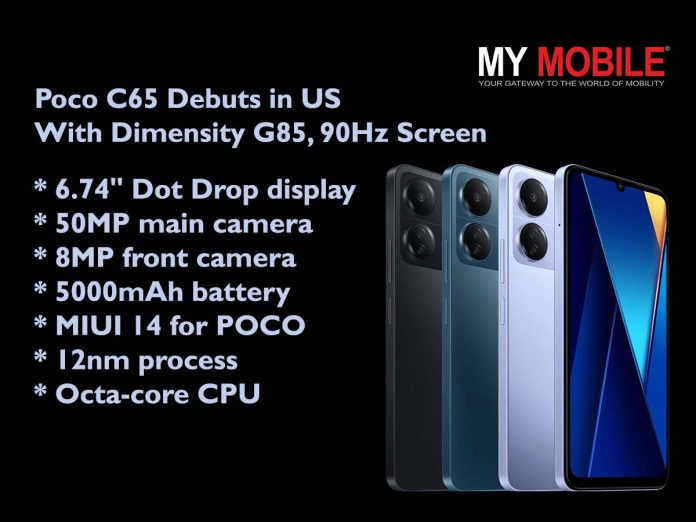
  • Poco C65 debuts with a MediaTek Helio G85 chipset and a robust 5,000mAh battery.
  • Features a 6.74-inch HD+ display with 90Hz refresh rate, protected by Corning Gorilla Glass.
  • Offers dual rear cameras with a 50MP main sensor and an 8MP front camera for crisp imaging.
  • Available in two variants with up to 8GB RAM and 256GB storage, starting at an affordable $129.

Poco has officially raised the curtains on the Poco C65, a direct successor to the Poco C55, and it’s clear the tech company aims to continue its legacy of providing powerful specs at an attractive price point.

Unveiled on November 5, the Poco C65 makes a global splash, first hitting the shelves in the United States, with tech enthusiasts awaiting its introduction to other markets including India.

Pricing and Availability

The new iteration, available in stylish shades of Black, Blue, and Purple, promises to deliver a seamless user experience.

It’s competitively priced at $129 for the 6GB + 128GB variant and $149 for the 8GB + 256GB model, with early bird offers making it even more accessible to budget-conscious buyers.
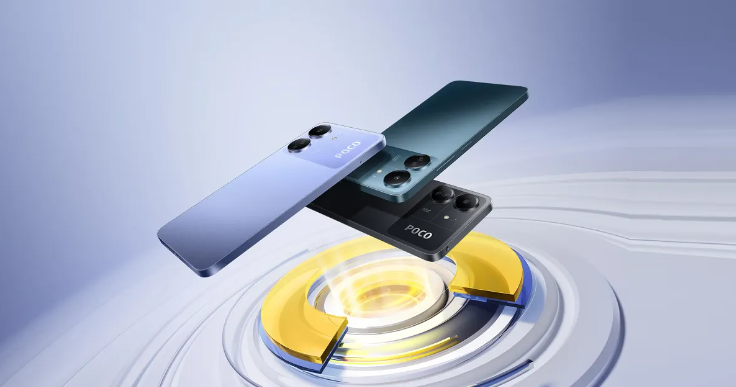
Poco C65 Launched in the US

Poco C65: Features and Specs

The Poco C65 maintains the essence of its predecessor with the MediaTek Helio G85 SoC and the significant 5,000mAh battery unit.

However, it distinguishes itself with notable upgrades in RAM, storage, and charging capabilities.

Diving into the specs, the Poco C65 showcases a sizable 6.74-inch HD+ display, featuring a smooth 90Hz refresh rate and the durability of Corning Gorilla Glass.

Operating on the Android 13-based MIUI 14 for Poco, it ensures a user-friendly interface backed by contemporary software ingenuity.

Budget photography aficionados will appreciate the dual rear camera setup, led by a 50MP primary sensor, while selfie enthusiasts can rely on the sharp 8MP front-facing camera to capture life’s moments.

Apart from that the 256GB of internal storage is expandable via a microSD card slot, inviting users to store more without compromising on performance.

The 18W fast charging helps the Poco C65 to juice up quickly while its extensive connectivity options from 4G VoLTE to Bluetooth 5.1 mean you’re always just a tap away from the rest of the world.

Security is heightened with a responsive side-mounted fingerprint sensor, encapsulating convenience and safety in one sleek package.

Poco C65 Key Specs

GENERAL

Sim Type Dual Sim, GSM+GSM
Dual Sim Yes
Sim Size Nano+Nano SIM
Device Type Smartphone
Release Date November 5, 2023

DESIGN

Dimensions 78 x 168 x 8.09 mm
Weight 192 g
Colors Black, Blue, Purple

DISPLAY

Type Color IPS LCD Screen (16M Colors)
Touch Yes
Size 6.74 inches, 720 x 1600 pixels, 90 Hz
Aspect Ratio 20.6:9
PPI ~ 260 PPI
Screen to Body Ratio ~ 93%
Glass Type Corning Gorilla Glass
Features 450 nits (typ), 600 nits
Notch Yes, Water Drop Notch

MEMORY

RAM 6 GB
Expandable RAM Upto 6 GB Extra Virtual RAM
Storage 128 GB
Card Slot Yes, upto 1 TB

CONNECTIVITY

GPRS Yes
EDGE Yes
3G Yes
4G Yes
VoLTE Yes
Wifi Yes, with wifi-hotspot
Wifi Version 2.4GHz, 5GHz
Bluetooth Yes, v5.3, A2DP, LE
USB Yes, USB-C v2.0
USB Features USB Tethering, USB on-the-go, USB Charging
IR Blaster No

EXTRA

GPS Yes, with A-GPS, Glonass, Beidou
Fingerprint Sensor Yes, Side
Face Unlock Yes
Sensors Accelerometer, Proximity, Compass
3.5mm Headphone Jack Yes
Splash Resistant Yes
Extra Features LPDDR4X RAM

CAMERA

Rear Camera 50 MP f/1.8 (Wide Angle)
2 MP f/2.4 (Macro) with autofocus
Features Photo Mode, 50MP Mode, Timelapse, Night Mode, Portrait Mode, Document Mode, Movie Frame, Voice Shutter, Tilt Shift, Timed Burst
Video Recording 1080p @ 30 fps FHD, 720p @ 30 fps HD
Flash Yes, LED
Front Camera 8 MP f/2.2 (Wide Angle) with Screen Flash
Front Video Recording 1080p @ 30 fps FHD

TECHNICAL

OS Android v13
Custom UI MIUI 14
Chipset MediaTek Helio G85
CPU 2 GHz, Octa Core Processor
Core Details 2×2.0 GHz Cortex-A75 & 6×1.8 GHz Cortex-A55
GPU Mali-G52 MC2
Java No
Browser Yes, supports HTML5

MULTIMEDIA

Email Yes
Music Yes
Video Yes
FM Radio Yes
Document Reader Yes

BATTERY

Type Non-Removable Battery
Size 5000 mAh, Li-Po Battery
Fast Charging Yes, 18W

FAQs

Q: What are the key features of the Poco C65?

A: The Poco C65 boasts a MediaTek Helio G85 SoC, a 5,000mAh battery, a 6.74-inch HD+ display with a 90Hz refresh rate, dual rear cameras including a 50MP primary sensor, and runs on Android 13-based MIUI 14.

Q: How is the camera performance on the Poco C65?

A: The Poco C65 is equipped with a dual rear camera setup featuring a 50MP primary sensor and a 2MP macro lens, and an 8MP front-facing camera, offering users high-quality photography and video capabilities.

Q: What are the pricing and storage options for the Poco C65?

A: The Poco C65 is priced at $129 for the 6GB + 128GB model and $149 for the 8GB + 256GB variant, with expandable storage options up to 1TB, providing ample space for apps and media.

Q: When will the Poco C65 be available in markets outside the US?

A: The launch dates for the Poco C65 in markets outside the US, including India, have not been announced yet. The company is expected to provide details on international availability soon.

Also Read: POCO C51 Airtel Exclusive special edition to be available for Rs.5,999 on Flipkart, sale to start from July 18: Encouraging First Time Internet Users with Affordable 4G Experience

Also Read: Poco C51 with Helio G36 SoC, 5000mAh Battery Launched in India: Price, Specifications & Availability
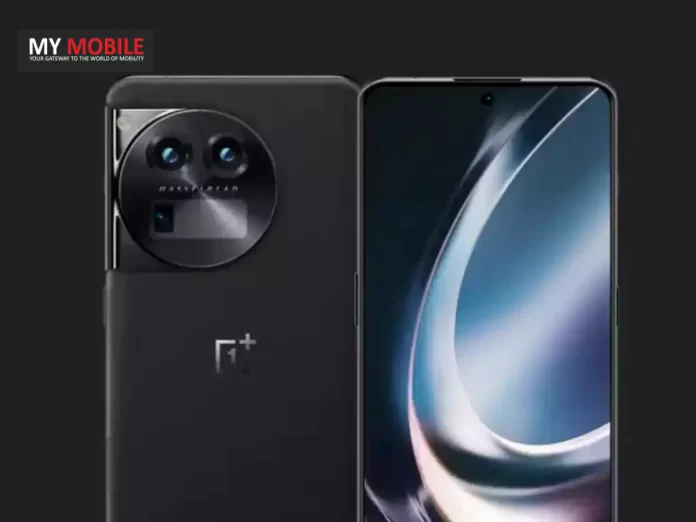

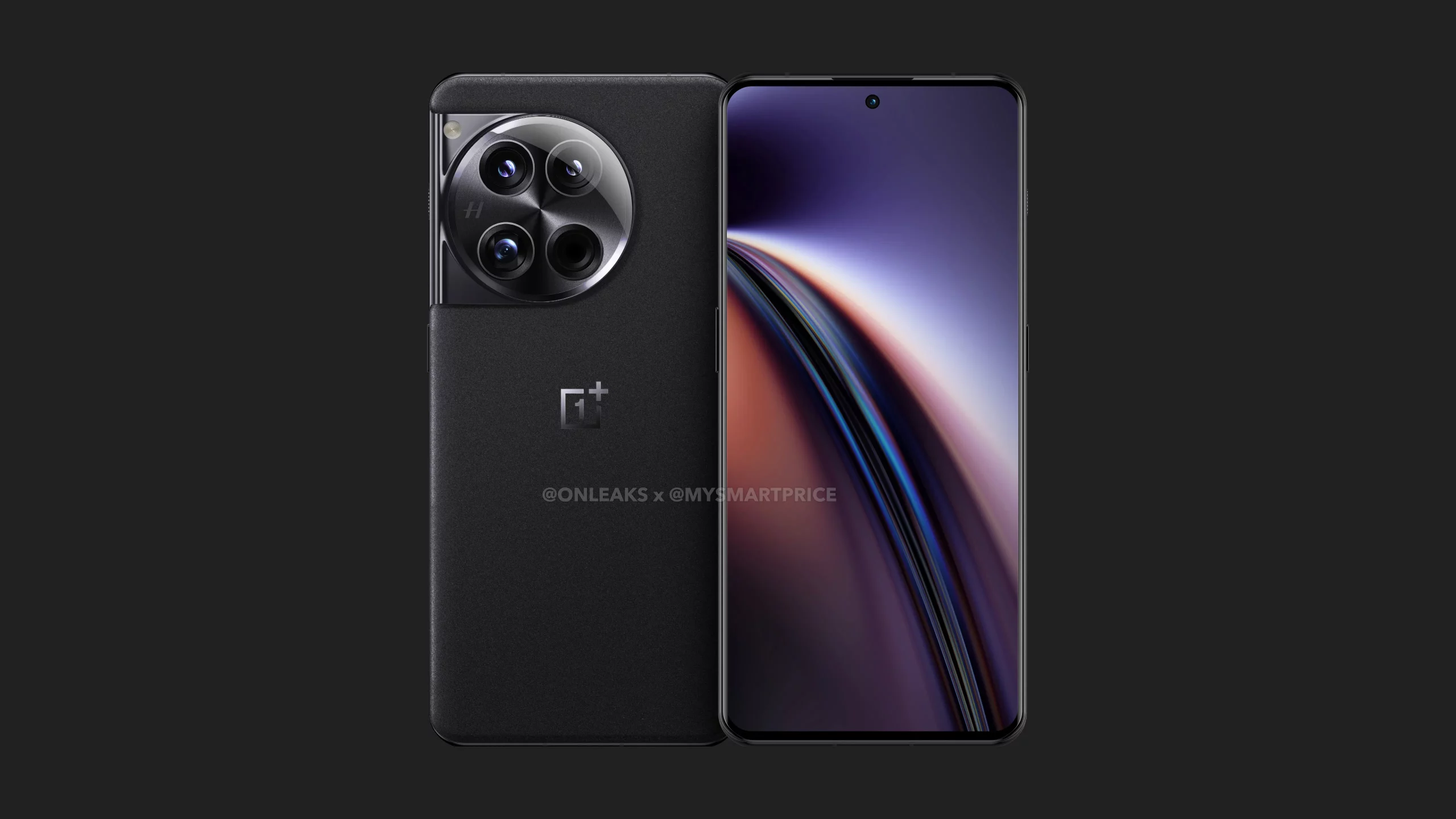
OnePlus 12 Emerges on 3C Certification Website Signaling Impressive Tech Upgrades

0
OnePlus 12 Emerges on 3C Certification Website

Highlights

  • OnePlus 12 (PJD110) confirmed to feature 100W wired and 50W wireless charging 
  • Sony LYTIA sensor integration revealed through Weibo
  • The device sets a performance benchmark with Snapdragon 8 Gen 3, showcasing over two million points on AnTuTu.

New details about the OnePlus 12 have emerged that are likely to stir excitement among smartphone enthusiasts.

It would seem that the OnePlus 12 has been recently seen on the 3C certification website which not only reaffirms its imminent launch but also sheds light on some of the device’s cutting-edge features.

Confirmed Features from Certifications and Leaks

The OnePlus 12, carrying the model number PJD110, has revealed a glimpse of its charging prowess through the 3C certification listing.

While retaining the 100W wired fast charging specification of its predecessor, the OnePlus 12 elevates its positioning with the expected inclusion of 50W wireless charging capabilities.

OnePlus 12 Emerges on 3C Certification Website

With official samples gracing Weibo, Sony’s LYTIA sensor integration in the OnePlus 12 has also been confirmed, signalling major strides in its photographic capabilities.

The anticipated triple rear camera array with a primary 50MP Sony IMX966 sensor, complemented by a 48MP wide-angle lens and a 64MP periscope lens, all of which are likely to deliver a versatile and powerful imaging experience.

Expected Performance and Display Enhancements

The OnePlus 12 is expected to harness the power of the Snapdragon 8 Gen 3 chipset, a revelation that came to light when the device was spotted on the AnTuTu benchmarks.

Scoring over two million points, the OnePlus 12 is poised to be a behemoth in processing capability, setting a high bar for performance among its contemporaries.

OnePlus 12 Expected Performance

Anticipation is also pretty high for the display quality of the OnePlus 12, as it is expected to feature an AMOLED panel sourced from BOE with a sharp 2K resolution and a smooth 120Hz refresh rate.

However, the true highlight is likely going to be an eye-watering 3000nits of peak brightness on offer.

As the rumour mill keeps churning out more leaks, one thing is clear: the OnePlus 12 is going to shake the smartphone industry.

ONEPLUS 12 KEY SPECIFICATION

Key Specs

RAM 8 GB
Processor Qualcomm Snapdragon 888
Rear Camera 50 MP + 8 MP + 48 MP
Front Camera 32 MP
Battery 5000 mAh
Display 6.7 inches (17.02 cm)

General

Launch Date June 7, 2023 (Unofficial)
Operating System Android v12

Performance

Chipset Qualcomm Snapdragon 888
CPU Octa core (2.84 GHz, Single core, Kryo 680 + 2.42 GHz, Tri core, Kryo 680 + 1.8 GHz, Quad core, Kryo 680)
Architecture 64 bit
Fabrication 5 nm
Graphics Adreno 660
RAM 8 GB

Display

Display Type OLED
Screen Size 6.7 inches (17.02 cm)
Resolution 1080 x 2400 pixels
Pixel Density 393 ppi
Screen Protection Corning Gorilla Glass v5
Bezel-less display Yes with punch-hole display
Touch Screen Yes, Capacitive Touchscreen, Multi-touch

Camera

MAIN CAMERA
Camera Setup Triple
Resolution 50 MP, Primary Camera
8 MP
48 MP
Autofocus Yes
Flash Yes, LED Flash
Image Resolution 8150 x 6150 Pixels
Settings Exposure compensation, ISO control
Shooting Modes Continuous Shooting
High Dynamic Range mode (HDR)
Camera Features Digital Zoom
Auto Flash
Face detection
Touch to focus
Video Recording 1920×1080 @ 30 fps
FRONT CAMERA
Camera Setup Single
Resolution 32 MP, Primary Camera
Video Recording 1920×1080 @ 30 fps

Battery

Capacity 5000 mAh
Type Li-Polymer
Removable No
Quick Charging Yes, Fast
USB Type-C Yes

Storage

Internal Memory 128 GB
Expandable Memory No

Network & Connectivity

SIM Slot(s) Dual SIM, GSM+CDMA
SIM Size SIM1: Nano, SIM2: Nano
Network Support 5G Not Supported in India, 4G Supported in India, 3G, 2G
VoLTE Yes
SIM 1
4G Bands:
TD-LTE 2300(band 40)
FD-LTE 1800(band 3)
3G Bands:
UMTS 1900 / 2100 / 850 / 900 MHz
2G Bands:
GSM 1800 / 1900 / 850 / 900 MHz
GPRS:
Available
EDGE:
Available
SIM 2
4G Bands:
TD-LTE 2300(band 40)
FD-LTE 1800(band 3)
3G Bands:
UMTS 1900 / 2100 / 850 / 900 MHz
2G Bands:
GSM 1800 / 1900 / 850 / 900 MHz
GPRS:
Available
EDGE:
Available
Wi-Fi Yes, Wi-Fi 4 (802.11 b/g/n)
Wi-Fi Features Mobile Hotspot
Bluetooth Yes, v5.2
GPS Yes with A-GPS, Glonass
NFC Yes
USB Connectivity Mass storage device, USB charging

Multimedia

Loudspeaker Yes
Audio Jack USB Type-C

Sensors

Fingerprint Sensor Yes
Fingerprint Sensor Position On-screen
Fingerprint Sensor Type Optical
Other Sensors Light sensor, Proximity sensor, Accelerometer, Compass, Gyroscope

FAQs

What does the 3C certification reveal about the OnePlus 12’s charging capabilities?

The 3C certification for the OnePlus 12 confirms that the device will support 100W wired fast charging and introduce 50W wireless charging. This positions the OnePlus 12 as a strong competitor in the market for fast-charging smartphones, providing users with both speed and flexibility in power management.

How does the Sony LYTIA sensor enhance the OnePlus 12 camera?

The integration of the Sony LYTIA sensor in the OnePlus 12 is expected to elevate the device’s photographic capabilities significantly. It will likely offer enhanced dynamic range, detail in photos, and overall improved imaging performance, especially in the primary 50MP camera setup.

What kind of performance can be expected from the OnePlus 12?

With the Snapdragon 8 Gen 3 chipset at its core, the OnePlus 12 is anticipated to deliver outstanding performance. This has been evidenced by its record-breaking AnTuTu benchmark score, indicating that the device will provide smooth, efficient, and high-speed operations.

Also Read: OnePlus Open Launched in India With Folding AMOLED Screen, Snapdragon 8 Gen 2: Pricing, Specs, Features, and More

Also Read: OnePlus Open Leaks Suggest Longevity of 10 Years with 100 Folds Daily

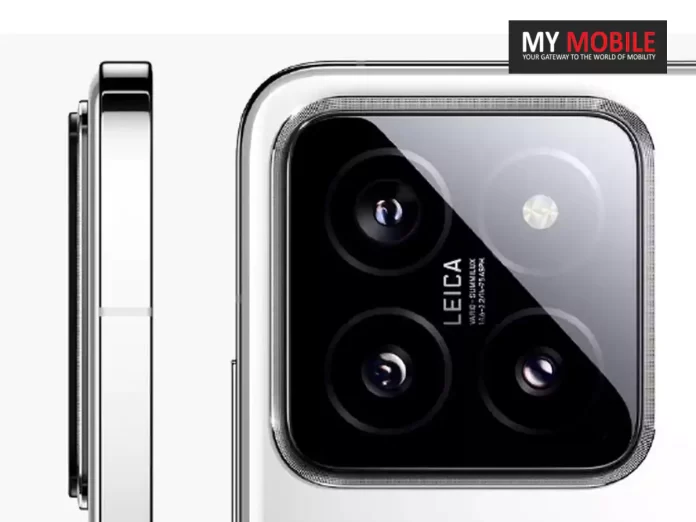
Xiaomi 14 Ultra To Reportedly Sport a Sony LYT-900 1-inch Sensor, Launch in 2024

0
Xiaomi 14 Ultra

Highlights

  • Tipped for a Q1 2024 release, possibly in March.
  • Rumoured inclusion of a Sony LYT-900 camera sensor with a 1-inch size for superior photo quality.
  • Expected to feature a Snapdragon 8 Gen 3 chipset for peak performance.
  • Anticipated 2K slightly curved display for an immersive viewing experience.

Chinese smartphone giant Xiaomi recently unveiled the Xiaomi 14 and 14 Pro in the Chinese markets but fresh rumours are already surfacing about their next potential flagship marvel the Xiaomi 14 Ultra.

Slated for a possible release in the first quarter of 2024, the Ultra model is rumoured to be eyeing a game-changing camera upgrade in the form of a Sony Lytia LYT-900 camera sensor.

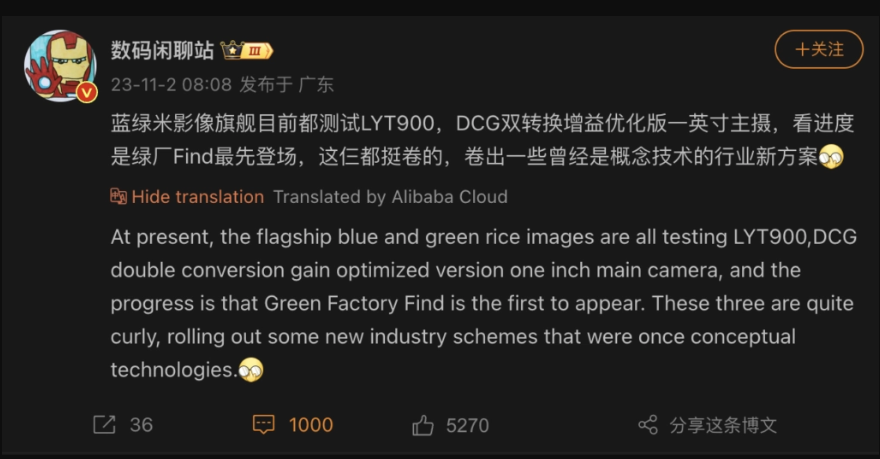
From the corridors of online tech forums on Weibo, spearheaded by the reputable tipster DigitalChatStation, the anticipation for the Xiaomi 14 Ultra is palpable.

Though the tipster’s posts are cryptic, they are widely interpreted as hints towards the launch of the Ultra model, tentatively set for Q1, 2024, with some even pinpointing March as the likely debut month.

Xiaomi 14 Ultra To Reportedly Sport a Sony LYT-900 1-inch Sensor

This launch timeline is not unprecedented, mirroring the interval between the Xiaomi 13 series and its Ultra counterpart.

Among the most exciting whispers is the prospect of the Xiaomi 14 Ultra coming equipped with the Sony Lytia LYT-900 camera sensor.

The LYT-900 isn’t just another sensor—it’s reported to boast a formidable 1-inch size, promising to catapult smartphone photography to dazzling new heights.

If these rumours solidify, Xiaomi fans can expect to see images with unprecedented dynamic range and detail, thanks to the sensor’s Dual Conversion Gain technology.

Camera capabilities could further expand with a suite of 50MP sensorsspanning from ultra-wide to 3x and 5x zoom capabilities, complemented by a macro mode, promising versatility for both panoramic landscapes and intricate close-ups.

Xiaomi 14 Ultra feature a 2K screen
Xiaomi 14 Ultra Feature a 2K Screen

Under the hood, the Xiaomi 14 Ultra is expected to house the Snapdragon 8 Gen 3 chipset, keeping it in line with its siblings in terms of raw power.

The device’s front is rumoured to feature a 2K screen, gently cascading along the edges for a subtly curved visual experience.

On the software front, the new entrant is likely to run on the Android 14-based HyperOS, continuing Xiaomi’s tradition of pairing high-end hardware with sleek, user-friendly software.

Xiaomi 14 Ultra Key Specs

GENERAL

Sim Type Dual Sim, GSM+GSM
Dual Sim Yes
Sim Size Nano+Nano SIM
Device Type Smartphone
Release Date December 22, 2023 (Expected)

DISPLAY

Type Color AMOLED Dot Display (1B Colors)
Touch Yes
Size 6.67 inches, 1440 x 3200 pixels, 144 Hz
Aspect Ratio 20:9
PPI ~ 515 PPI
Screen to Body Ratio ~ 91.4%
Glass Type Corning Gorilla Glass Victus 2
Features HDR10+, AI display Supports, Sunlight Display 3.0, Display Mate A+, Reading Mmode 3.0, 360° Ambient Light Sensors 2.0, Curved Display
Notch Yes, Punch Hole

MEMORY

RAM 12 GB
Storage 256 GB
Storage Type UFS 4.0
Card Slot No

CONNECTIVITY

GPRS Yes
EDGE Yes
3G Yes
4G Yes
5G Yes
VoLTE Yes, Dual Stand-By
Vo5G Yes
Wifi Yes, with wifi-hotspot
Bluetooth Yes, v5.3, A2DP, LE, aptX HD
USB Yes, USB-C v2.0
USB Features USB Tethering, USB on-the-go, USB Charging
IR Blaster Yes

EXTRA

GPS Yes, with tri-band A-GPS, GLONASS, BeiDou, NavIC Support
Fingerprint Sensor Yes, In Display
Face Unlock Yes
Sensors Proximity, Ambient Light Sensor, Accelerometer, Gyroscope, Electric Compass, Hall Sensor, X-axis Linear Motor, Grip Sensor, Barometer, Rear Light Sensor, Flicker Sensor, Multi-dot Laser Focus Sensor
3.5mm Headphone Jack No
Extra NFC
Water Resistance Yes, 1.5 m upto 30 min
IP Rating IP68
Dust Resistant Yes

CAMERA

Rear Camera 50 MP
50 MP
50 MP (periscope)
50 MP with autofocus
Features HDR, Night Mode 2.0, Ultra Night Photos, Portrait, AI Beauty, AI Smart Slimming, Custom Watermark,
Video Recording 8K, 4K, 1080p, 720p
Flash Yes, Dual LED
Front Camera Punch Hole 32 MP f/2.2 (Wide Angle) with Autofocus and Screen Flash
Front Video Recording 1080p, 720p

TECHNICAL

OS Android v14
Custom UI MIUI 14
Chipset Qualcomm Snapdragon 8 Gen3
CPU Octa Core Processor
GPU Adreno GPU
IP Rating IP68
Java No
Browser Yes

MULTIMEDIA

Email Yes
Music MP3, FLAC, APE, AAC, OGG, WAV, WMA, AMR, AWB
Video MP4, MKV, AVI, WMV, WEBM, 3GP, ASF playback
FM Radio No
Document Reader Yes

BATTERY

Type Non-Removable Battery
Size 5000 mAh, Li-Po Battery
Fast Charging Yes, 120W Fast Charging
Wireless Charging Yes, 55W
Reverse Charging Yes, 15W

FAQs

What is the expected launch date for the Xiaomi 14 Ultra?

The Xiaomi 14 Ultra is rumoured to launch in the first quarter of 2024, with March being the potential month based on industry whispers and hints from prominent tipsters.

How will the Sony LYT-900 sensor enhance the Xiaomi 14 Ultra’s camera capabilities?

The Sony LYT-900 camera sensor, expected in the Xiaomi 14 Ultra, is a 1-inch sensor that could bring Dual Conversion Gain technology. This means improved dynamic range and detail in photos, potentially setting new standards for mobile photography.

What processor might the Xiaomi 14 Ultra use?

The Xiaomi 14 Ultra is anticipated to be powered by the Snapdragon 8 Gen 3 chipset, ensuring that it stands on par with the best in terms of processing speed and efficiency.

What type of display can we expect from the Xiaomi 14 Ultra?

The device is rumored to sport a 2K resolution display that features slight curves along its edges, aiming to provide users with a visually immersive and ergonomic experience.

Also Read: Xiaomi to launch Android 13-based MIUI 14 with India-exclusive features to release on February 27th

Also Read: Xiaomi Smartphones’ Battery Customization Via MIUI

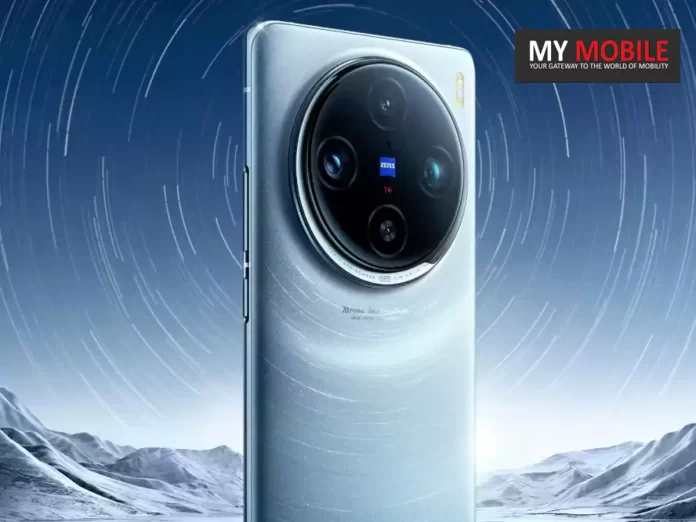
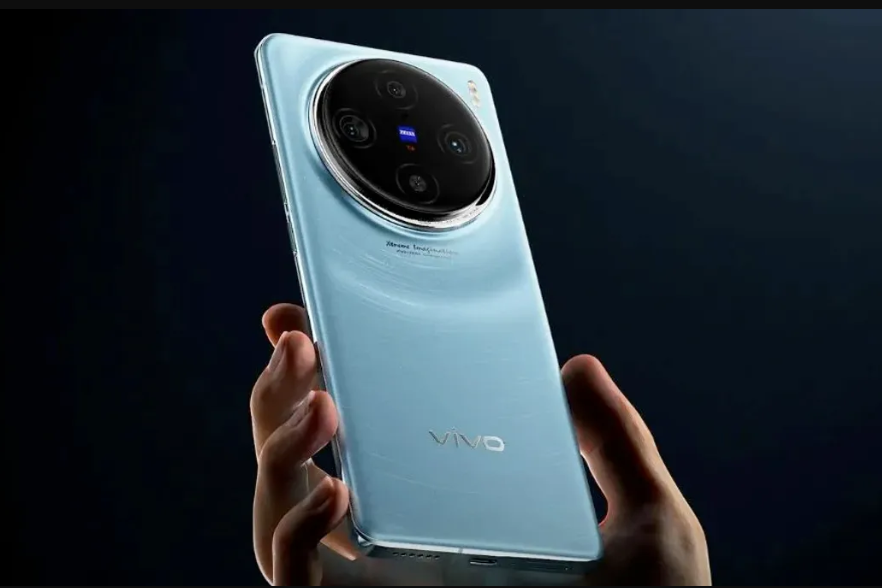
Vivo X100 Spec Sheet Reportedly Revealed Ahead of China Launch This Month

0
Vivo X100 Spec Sheet Reportedly Revealed Ahead of China Launch This Month

Highlights

  • Vivo X100 To Reportedly Feature MediaTek Dimensity 9300, LPDDR5T RAM, and UFS 4.0 A 6.78-inch 120Hz AMOLED screen for crisp, fluid visuals.
  • Triple camera setup with 50MP main and 64MP periscope lenses, equipped with OIS.
  • Long-lasting 5,000mAh battery with 120W fast charging support.

In a significant revelation before its official launch, the Vivo X100’s full spec sheet has been leaked, providing tech enthusiasts with a tantalizing preview of what to expect from the latest addition to Vivo’s flagship series.

Slated for release in China on November 13th, the Vivo X100’s detailed specifications have surfaced courtesy of a 91mobiles report, hinting at a robust device that combines high-end features with competitive pricing.

Pricing and Variants

The expected starting price for the Vivo X100 is pegged at CNY 3,999 (about Rs 45,500), suggesting an approachable entry point for a flagship.

The device is also rumoured to come in an array of color options and multiple storage variants, catering to diverse preferences and needs.

Vivo X100 Expected Features

Vivo X100 Spec Sheet Reportedly Revealed Ahead of China Launch This Month

The Vivo X100 is anticipated to be a powerhouse, boasting the cutting-edge Mediatek Dimensity 9300 (4nm) chipset.

It is also expected to be paired with the latest LPDDR5T RAM and the swift UFS 4.0 storage, recently seen on the Xiaomi 14 series, suggesting that Vivo is not holding back in ensuring the X100 operates with remarkable speed and efficiency.

Visuals are set to be helped by a 6.78-inch AMOLED display with a 120Hz refresh rate and the 2800x1260p resolution guarantees sharp and vibrant images, catering to both gamers and binge-watchers.

As for the optical setup, the Vivo X100 will reportedly have a triple rear camera array featuring a 50MP main sensor, a 50MP ultrawide lens, and a 64MP periscope telephoto lens.

Apart from that there is also going to be an inclusion of OIS and laser focus features that indicate a serious focus on image clarity.

Selfie lovers are still remembered, with a 32MP front camera poised for capturing high-quality portraits.

A hefty 5,000mAh battery is expected to keep the lights on, complemented by a 120W fast charging capability.

The device is set to run on OriginOS 4 based on Android 14, a new interface recently touted by Vivo.

Notably, the Vivo X100 is said to support India’s NavIC system, indicating potential availability in India post-launch.

NavIC’s compatibility is a nod to regional GPS alternatives and positions the X100 as a future-ready device in the Indian market.

VIVO X100 5G KEY SPECIFICATIONS

GENERAL

Sim Type Dual Sim, GSM+GSM
Dual Sim Yes
Sim Size Nano SIM
Device Type Smartphone
Release Date November 13, 2023 (Expected)

DESIGN

Bezel less Yes
Colors Black, Red, Blue

DISPLAY

Type Color AMOLED Screen (1B Colors)
Touch Yes
Size 6.78 inches, 1260 x 2800 pixels, 120 Hz
Aspect Ratio 20:9
PPI ~ 453 PPI
Screen to Body Ratio ~ 90.9%
Features HDR10+, P3 Color Gamut
Notch Yes, Punch Hole

MEMORY

RAM 8 GB
Storage 128 GB
Card Slot No

CONNECTIVITY

GPRS Yes
EDGE Yes
3G Yes
4G Yes
5G Yes
5G Bands 1, 3, 5, 8, 28, 41, 77, 78 SA/NSA
VoLTE Yes, Dual Stand-By
Wifi Yes, with wifi-hotspot
Bluetooth Yes, v5.3, A2DP, LE, aptX HD
USB Yes, USB-C v2.0
USB Features USB Tethering, USB on-the-go, USB Charging
IR Blaster Yes

EXTRA

GPS Yes, with dual-band A-GPS, GLONASS, GALILEO, NavIC
Fingerprint Sensor Yes, In Display
Face Unlock Yes
Sensors Fingerprint (under display, optical) accelerometer, gyro, proximity, compass, color spectrum
3.5mm Headphone Jack No
Extra NFC
Water Resistance Yes
IP Rating IP64
Dust Resistant Yes
Extra Features V3 Chip, LPDDR5T DRAM

CAMERA

Rear Camera 64 MP 1/1.49″, 1.0µm, PDAF, Laser AF, OIS f/1.8 (Wide Angle)
12 MP 50mm, 1/2.9″, 1.22µm, PDAF, 2x optical zoom f/2 (Telephoto)
12 MP 16mm, 1/2.93″, 1.22µm, AF f/2 (Ultra Wide) with autofocus
Features Zeiss optics, Zeiss T* lens coating, Pixel Shift, dual-tone , HDR, panorama
Video Recording 4K @ 30 fps UHD, 1080p @ 30 fps FHD
Flash Yes, Dual LED
Front Camera Punch Hole 32 MP 24mm, 1/2.8″, 0.8µm f/2.5 (Wide Angle) with Screen Flash
Front Video Recording 4K @ 30 fps UHD, 1080p @ 30 fps FHD

TECHNICAL

OS Android v14
Custom UI OriginOS 4
Chipset MediaTek Dimensity 9300
CPU Octa Core Processor
GPU Arm GPU
IP Rating IP64
Java No
Browser Yes

MULTIMEDIA

Email Yes
Music WAV, MP3, MP2, MIDI, Vorbis, APE, FLAC
Video MP4, 3GP, AVI, Video Recording: MP4
FM Radio No
Document Reader Yes

BATTERY

Type Non-Removable Battery
Size 5000 mAh, Li-ion Battery
Fast Charging Yes, 120W FlashCharge

FAQs

What makes the Vivo X100 stand out in the current smartphone market?

The Vivo X100 sets itself apart with its MediaTek Dimensity 9300 processor, high-refresh-rate AMOLED display, and a versatile camera system with OIS. These premium features, combined with fast charging technology, make it a formidable contender in the flagship segment.

How does the Vivo X100 camera system enhance the photography experience?

The Vivo X100’s camera system is designed for versatility and quality. With a 50MP primary sensor, a 50MP ultrawide lens, and a 64MP periscope telephoto lens with OIS, users can capture sharp images across various focal lengths. The laser focus system further aids in quick and precise focusing, essential for capturing crisp photos.

Will the Vivo X100 be suitable for gaming and multimedia consumption?

Absolutely. The Vivo X100 is expected to excel in gaming and multimedia tasks with its 120Hz high-definition AMOLED display and the powerful MediaTek Dimensity 9300 chipset, ensuring smooth gameplay and dynamic visual content delivery.

Can we expect long battery life and quick charging times with the Vivo X100?

Yes, the Vivo X100’s 5,000mAh battery is designed for extended use, and when paired with the 120W fast charging, it promises to deliver not just longevity but also rapid recharge times, reducing the duration users are tethered to an outlet.

Also Read: VIVO X100 PRO+ WILL BE THE FIRST SMARTPHONE WITH A 200 MP TELEPHOTO LENS: LEAK REVEALS DESIGN DETAILS

Also Read: Vivo X100 Series Chipset Details Tipped Ahead of Launch in Q4 of 2023

Samsung Targets High-End Smartphone Dominance with 2024 Galaxy Series

0
Samsung Targets High-End Smartphone Dominance with 2024 Galaxy Series

Highlights

  • Samsung shifts focus to luxury market, launching Galaxy S24 and new foldables in 2024.
  • Aiming to boost Average Selling Price, Samsung seeks to challenge Apple’s premium segment lead.
  • Corporate VP Daniel Araujo bullish on doubling flagship shipments to outpace market.

Samsung has revealed a strategic pivot towards the luxury market—a move poised to redefine its brand identity and market positioning.

With the announcement of its Galaxy S24 series and the innovative Galaxy Z Fold 6 and Galaxy Z Flip 6, Samsung is no longer content playing second fiddle in the premium segment.

This tactical shift signals Samsung’s ambition to dethrone its competitors and carve a dominant presence in the high-end smartphone arena.

Historically, Samsung’s forte has been its diverse range of mid-tier smartphones, which propelled the company to the forefront of the global market.

However, 2024 is set to mark a new epoch for the South Korean titan, with intentions to amplify its Average Selling Price (ASP) and snatch a larger slice of the luxury market pie.

Samsung’s current ASP hovers around $295—starkly contrasting Apple’s lofty $988 ASP.

By channeling its efforts into the upscale category, Samsung aims to narrow this disparity significantly.

Samsung’s Future Positioning

Samsung’s Future Positioning

With the Galaxy S24 lineup and the next generation of Galaxy Z foldables on the horizon, Samsung’s strategy is clear: to entice a clientele with a penchant for the finer things in technology.

The consumer electronics heavyweight is betting on a rising tide of premium demand to supercharge its smartphone replacement cycle in the forthcoming year.

Daniel Araujo, the Corporate Vice President at Samsung’s MX business segment, stands behind this vision, citing the company’s previous successes with flagship sales that outpace market growth.

Amid aspirations to lead the premium phone market, Samsung’s goal extends to populating the best-selling smartphones list with its top-tier devices.

At present, the Galaxy S23 Ultra stands as Samsung’s lone warrior among the top ten shipped models in the first half of 2023.

By broadening its portfolio of high-priced handsets, the company endeavours to populate this list with more of its premium offerings.

With market analysts keeping a close eye on the impending duel between Samsung and Apple—both projected to target 250 million smartphone shipments in 2024—the stakes could not be higher.

Despite Apple’s surging prominence, Samsung’s aggressive focus on upscale smartphones might just tilt the scales in its favour, potentially maintaining its reign as the leading smartphone manufacturer.

FAQs

What is Samsung’s new strategy for the smartphone market in 2024?

Samsung’s 2024 strategy focuses on penetrating the premium smartphone segment more aggressively by releasing high-end models, including the Galaxy S24 series and the latest Galaxy Z Fold and Flip phones. This marks a strategic pivot from their traditional strength in the mid-range market to elevate their Average Selling Price and compete more directly with luxury brands.

How does Samsung’s Average Selling Price compare to Apple’s?

Samsung’s current Average Selling Price stands at around $295, which is considerably lower than Apple’s $988. By expanding their high-end product line, Samsung aims to close this gap and enhance its presence in the premium market space.

What are Samsung’s expectations for its premium smartphones?

Samsung expects to witness a surge in demand for premium smartphones, aligning with consumer replacement cycles. The company aims to capitalize on this demand, targeting double-digit growth in flagship shipments and sales growth that surpasses the overall market.

Also Read: Samsung Galaxy M34 5G and Galaxy F34 5G Spotted on BIS India Certification, Expected to Debut Soon

Also Read: Samsung Galaxy F54 5G India Price Revealed & Specifications leaked ahead of launch announcement

YouTube’s Latest Safety Measures Aim To Tackle Digital Wellbeing of Teens

0

Highlights

  • YouTube enhances safety with new content filters to protect teens from harmful material.

  • “Take a Break” reminders are set to default every 60 minutes, promoting healthier screen time habits.

  • Full-page crisis resource panels aim to provide immediate support for teens in distress.

In an era where digital platforms greatly influence youth behavior and development, YouTube has taken a proactive stance by rolling out new features that bolster the safety, privacy, and mental health of teenage users.

In line with recommendations from the Youth and Families Advisory Committee—a group with expertise in child development, e-learning, and kid-friendly mediaYouTube’s latest updates are a stride towards more mindful content consumption.

YouTube Youth Friendly Features

Recognizing the intricate challenges teenagers face online, YouTube has fine-tuned its algorithm to curtail the visibility of content that could potentially harm teens’ perceptions of body image, showcase idealistic physical attributes, or highlight aggressive behaviors without physical contact.

Initially impacting U.S. users, plans are in place to extend these protective measures globally within the next year.

Tools to Encourage Healthy Habits

YouTube Take A Break Feature Update

YouTube’s user interface now emphasizes digital well-being tools more prominently, such as the “Take a Break” and “Bedtime Reminder” features.

By setting a standard sixty-minute interval for break reminders, the platform empowers both teens and their guardians to cultivate balanced viewing habits.

To offer immediate support for users grappling with critical issues like suicidal ideation, self-harm, and eating disorders, YouTube has enriched its crisis resource panels.

This enhancement offers a comprehensive page of resources, including contact information for external crisis support and alternatives to encourage engagement with uplifting content.

Enhanced Support During Crisis

Beyond these in-platform adjustments, YouTube is forging partnerships with global entities like the WHO and Common Sense Networks to develop resources that advance the conversation on teens’ digital well-being.

Educational initiatives are also in the pipeline, aimed at guiding teens and parents in creating responsible content and fostering healthy online behaviors.

To this end, a consortium of specialists is slated to convene, devising foundational guidelines for age-suitable mental health content and methodologies to effectively disseminate online mental health resources to the youth.

FAQs

Q: What kind of content is YouTube filtering out to protect teens?

A: YouTube is being proactive by restricting teen access to content that may affect their body image or show harmful behaviors like non-contact fighting. This initiative is part of their wider strategy to create a safer online space for young users.

Q: How does YouTube’s ‘Take a Break’ feature work for teen users?

A: ‘Take a Break’ is a feature that prompts users to pause their viewing every hour. It’s designed to remind teens to step away from the screen regularly, helping them to establish more balanced and healthy viewing habits.

Q: Can you tell me more about the crisis resource panels on YouTube?

A: The crisis resource panels on YouTube have been expanded to offer full-page support for issues like suicide, self-harm, and eating disorders. When a user searches for related topics, they’re provided with resources and directed towards positive content.

Q: What is YouTube’s approach to developing online well-being resources for teens?

A: YouTube is working with organizations such as WHO to build comprehensive, age-appropriate resources. These include helping teens navigate content creation responsibly and understand the importance of online habits for mental health.

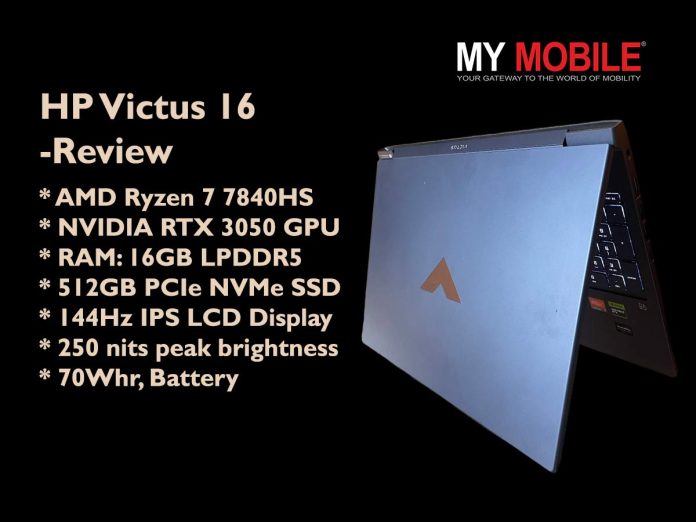
HP Victus 16 Review: Power-Packed Performance Meets Everyday Versatility

0

Highlights

  • AMD Ryzen 7 and RTX 3050 GPU blend for robust performance.

  • 144Hz IPS display with 100% sRGB coverage for smooth visuals.

  • Comprehensive I/O options including USB Type-C and HDMI 2.1.

  • 70Wh battery with smart charging and up to 5 hours of usage.

The HP Victus 16 AMD has to be considered a noteworthy contender in the budget gaming laptop market, especially with a price tag of Rs 85,999 for the 16GB/512GB variant.

It is positioned as a value proposition for those seeking a multipurpose device that straddles the line between gaming performance and everyday productivity.

In this HP Victus 16 review let us find out if this is the laptop for you.

Key Specs

HP Victus 16 Review:
HP Victus 16 Review: Key Specs
  • Processor: AMD Ryzen 7 7840HS

  • Graphics: NVIDIA RTX 3050 GPU with DLSS support

  • RAM: 16GB LPDDR5

  • Storage: 512GB PCIe NVMe SSD

  • Battery: 70Whr, up to 5 hours of usage

  • Graphics: NVIDIA RTX 3050 GPU with DLSS support

  • Display: 144Hz IPS LCD, 250 nits peak brightness, 100% sRGB

Pros

Cons

Decent Performance

Bulky form factor

Vivid 144Hz display

Not the brightest of displays

Robust I/O options

Build and I/O Options

HP Victus 16: Build and I/O Options

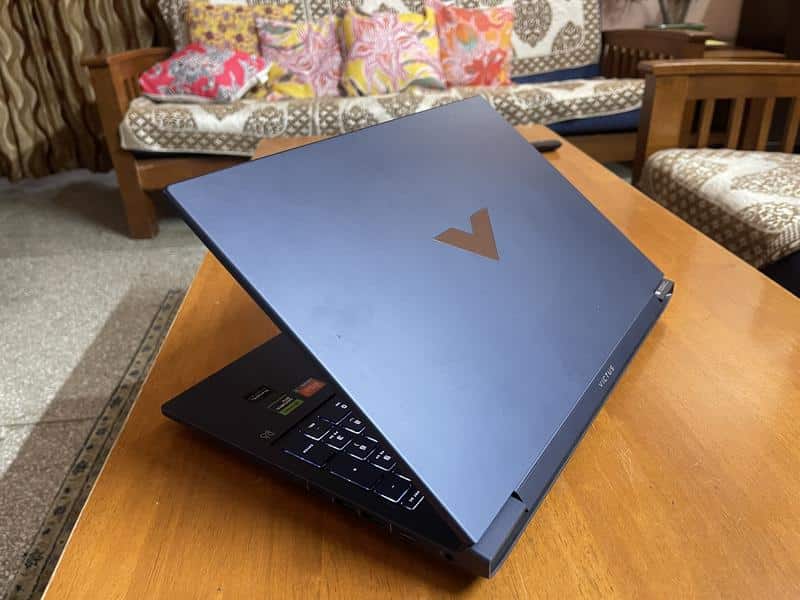
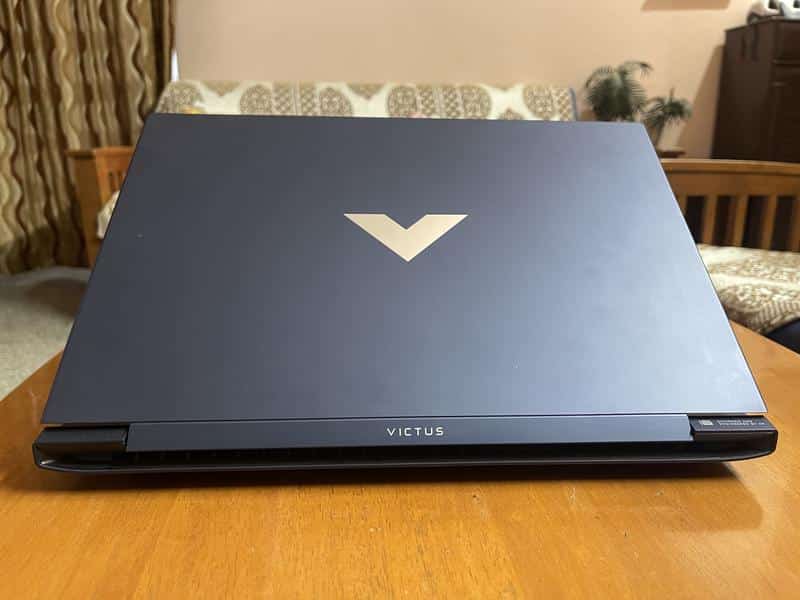
The HP Victus 16 boasts a robust exterior with a solid build, crafted from a plastic unibody that lends it a lightweight appearance despite its larger dimensions.

It’s not exactly compact enough to fit into a backpack, though with some effort we did manage it.

The hinge is particularly sturdy, ensuring the lid remains steady without wobble.
An appealing design feature is the almost gapless connection at the hinge, giving the impression that the lid is suspended in the air.

While it doesn’t scream “gamer,” its understated aesthetic is intentional, with a deep blue color scheme enhancing the chassis.

The Victus branding stands out prominently on the back.

In terms of design, this laptop maintains a basic yet refined minimalism, allowing it to seamlessly transition between casual gaming and everyday work use.

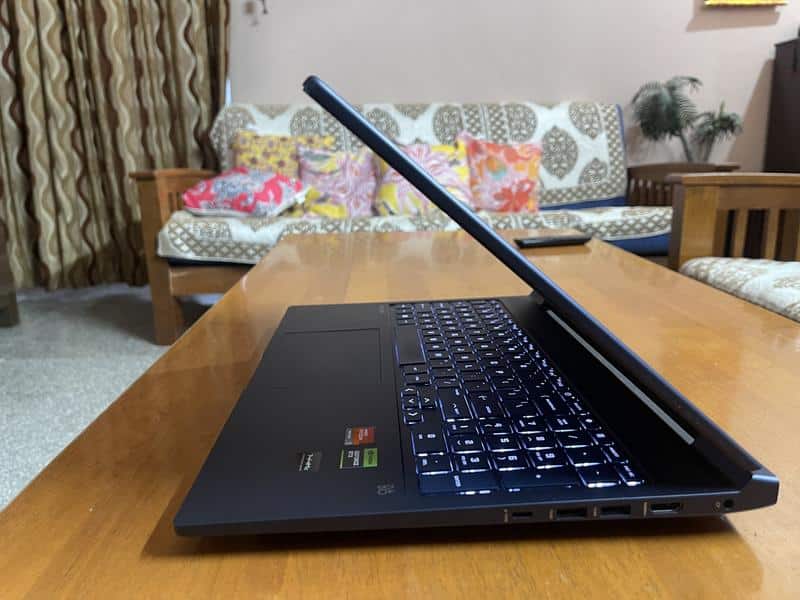
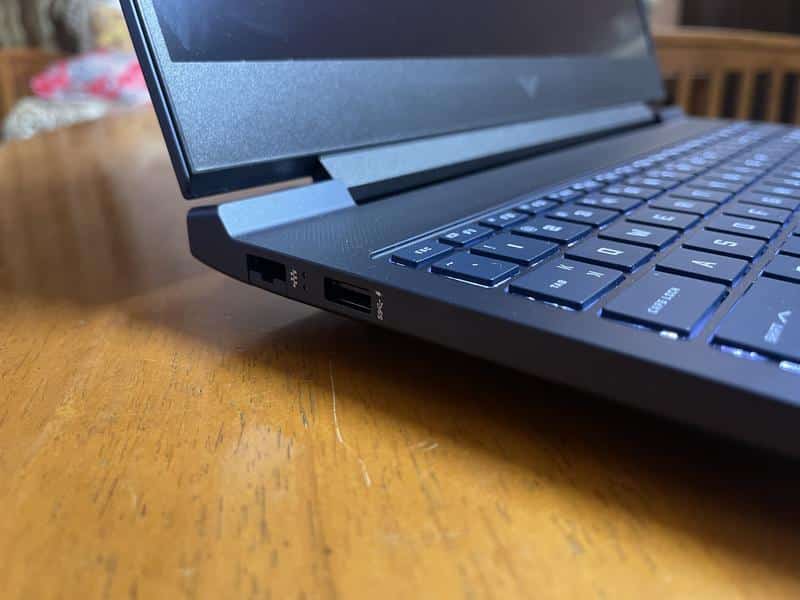
The HP Victus 16 offers a generous array of I/O options.

The device includes an SD media card reader that supports various SD card formats and mini versions with the use of adapters (adapter not included).

For connectivity, you will get one USB Type-C and one USB Type-A port, both with a 5Gbps signaling rate and sleep-and-charge functionality, along with two additional USB Type-A ports at the same signaling rate.

Networking options include one RJ-45 port, and the laptop provides an HDMI 2.1 output for video.

Wireless connectivity is robust with WiFi 6E and Bluetooth 5.3, accommodating a wide range of wireless peripherals and internet connections.

Display and Keyboard

HP Victus 16: Display and Keyboard

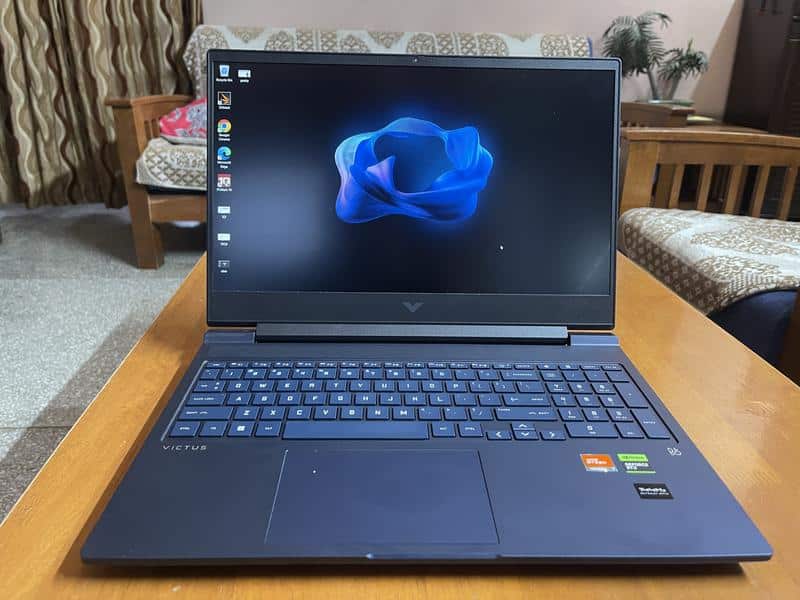
The display of the HP Victus 16 features a 144Hz IPS LCD panel with a 7ms response time, delivering a fluid and smooth visual experience.

The refresh rate enhances on-screen motion, making it quite appealing.

However, the peak brightness of just 250 nits might fall short under very bright lighting conditions.

Color accuracy is satisfactory, with HP’s claim of 100% sRGB coverage making it suitable for light photo editing tasks, although it’s not the top choice for more color-critical work.

The multimedia experience is respectable, providing an enjoyable viewing experience.

While the display could benefit from slightly higher brightness and enhanced color precision, its performance is commendable given the laptop’s price point.

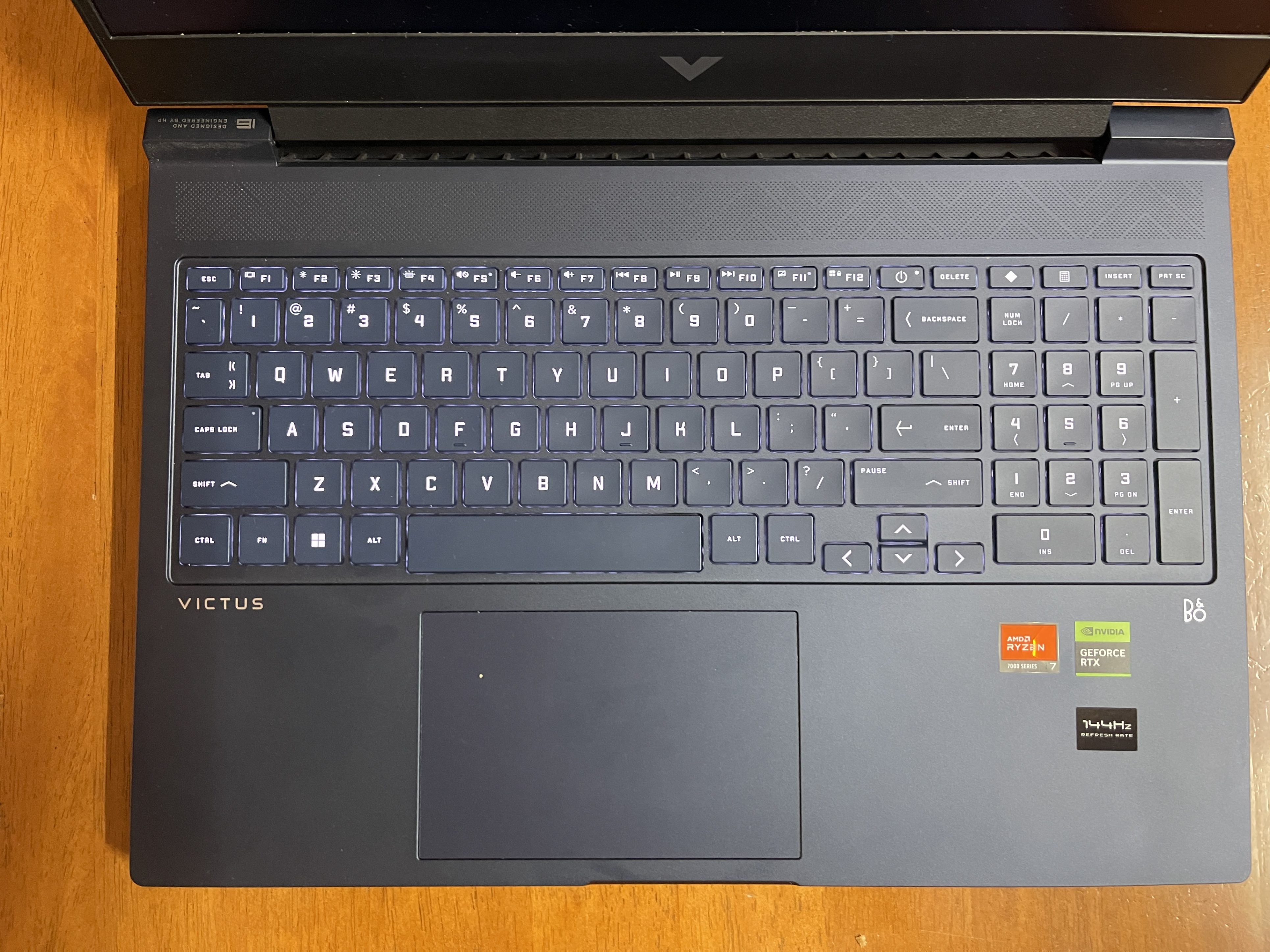
As for the typing experience, the device features a backlit keyboard with single-zone RGB lighting, offering personalisation options to suit your aesthetic preferences.

We feel that transitioning to this keyboard could require an adjustment period due to the key spacing, particularly for those accustomed to more compact laptops.

A notable advantage is the inclusion of a full numeric keypad, enhancing functionality.

While the keys provide ample travel for comfortable typing, they do miss a tactile feedback that typists often appreciate.

The trackpad is quite responsive, albeit a bit stiff, and while there’s potential for a larger trackpad given the available space, this doesn’t significantly detract from the overall user experience.

Performance

HP Victus 16: Performance

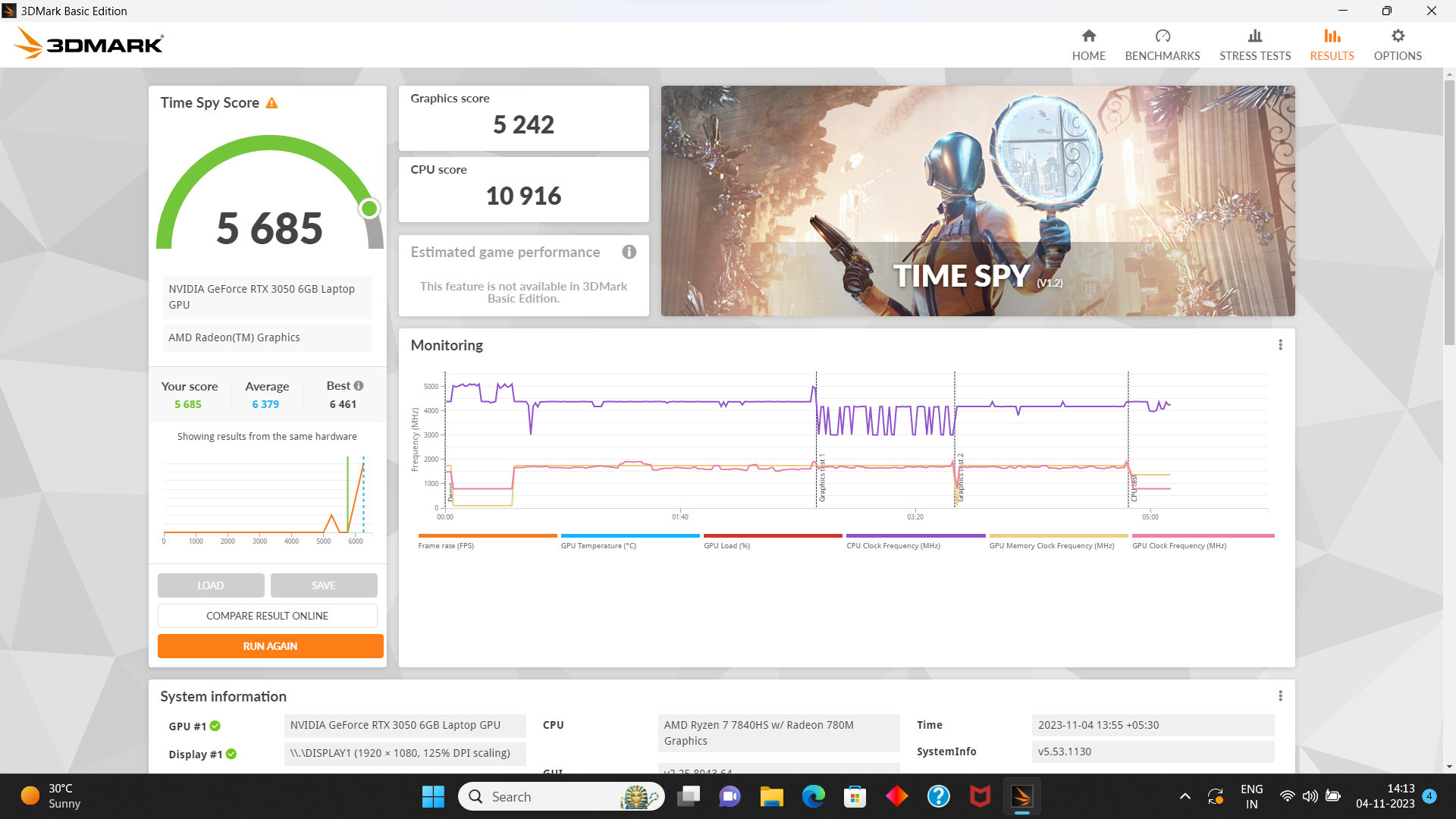
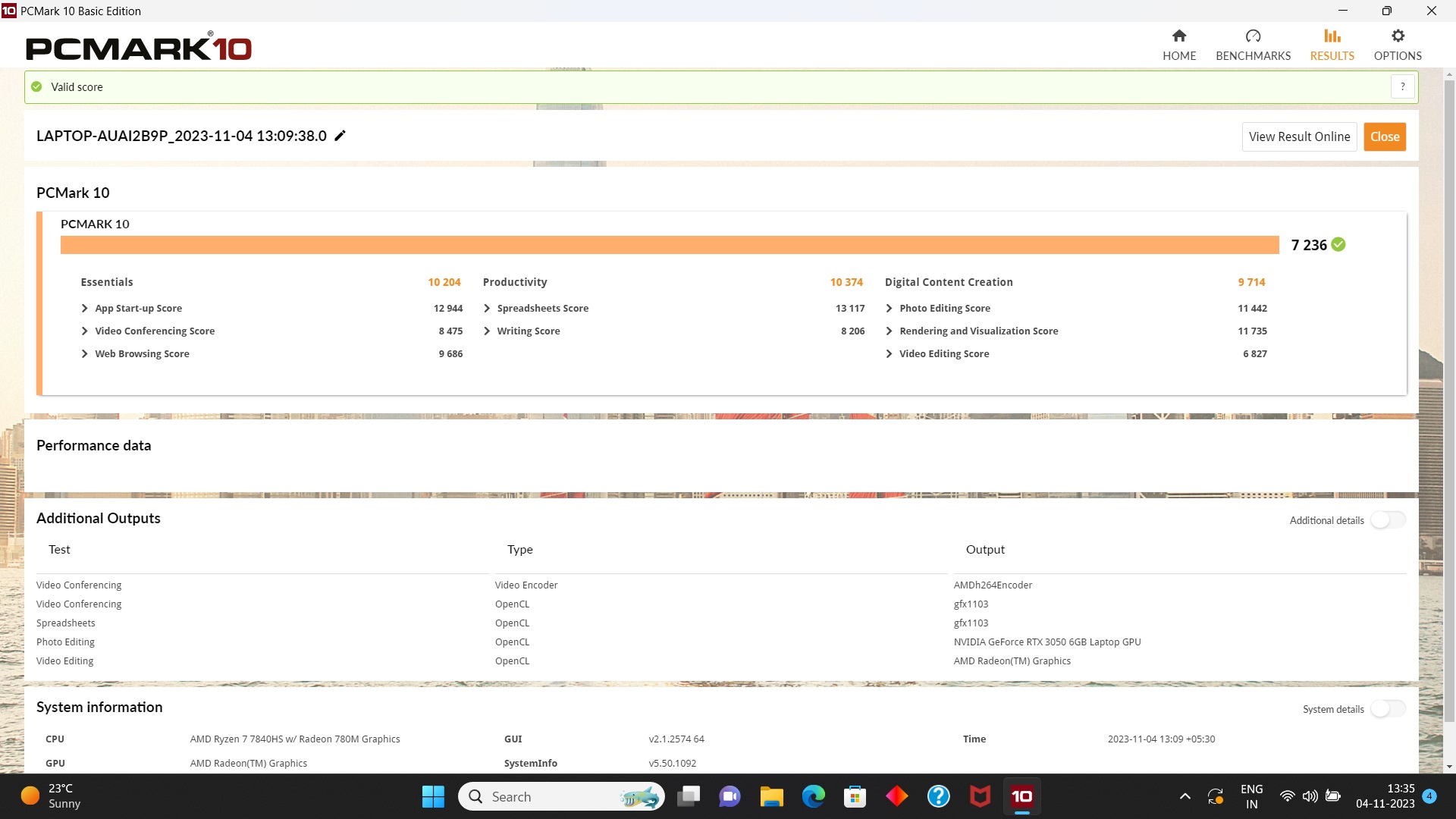
The HP Victus 16 packs an AMD Ryzen 7 7840HS processor that, in our tests, delivered quick and smooth performance across a variety of tasks.

Multitasking, such as managing multiple browser tabs – even as many as 30 across three windows – is handled effortlessly without noticeable lag.

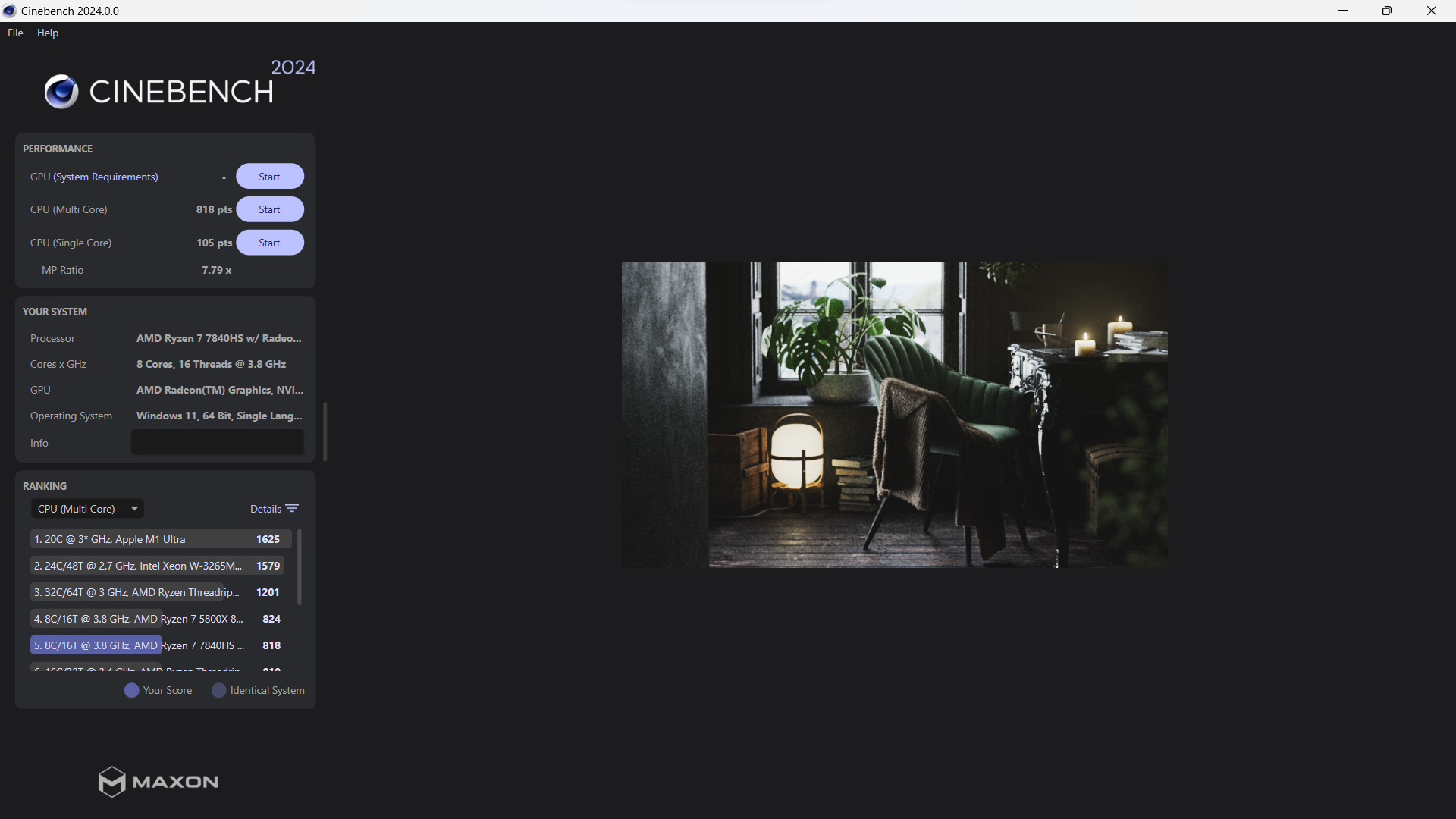
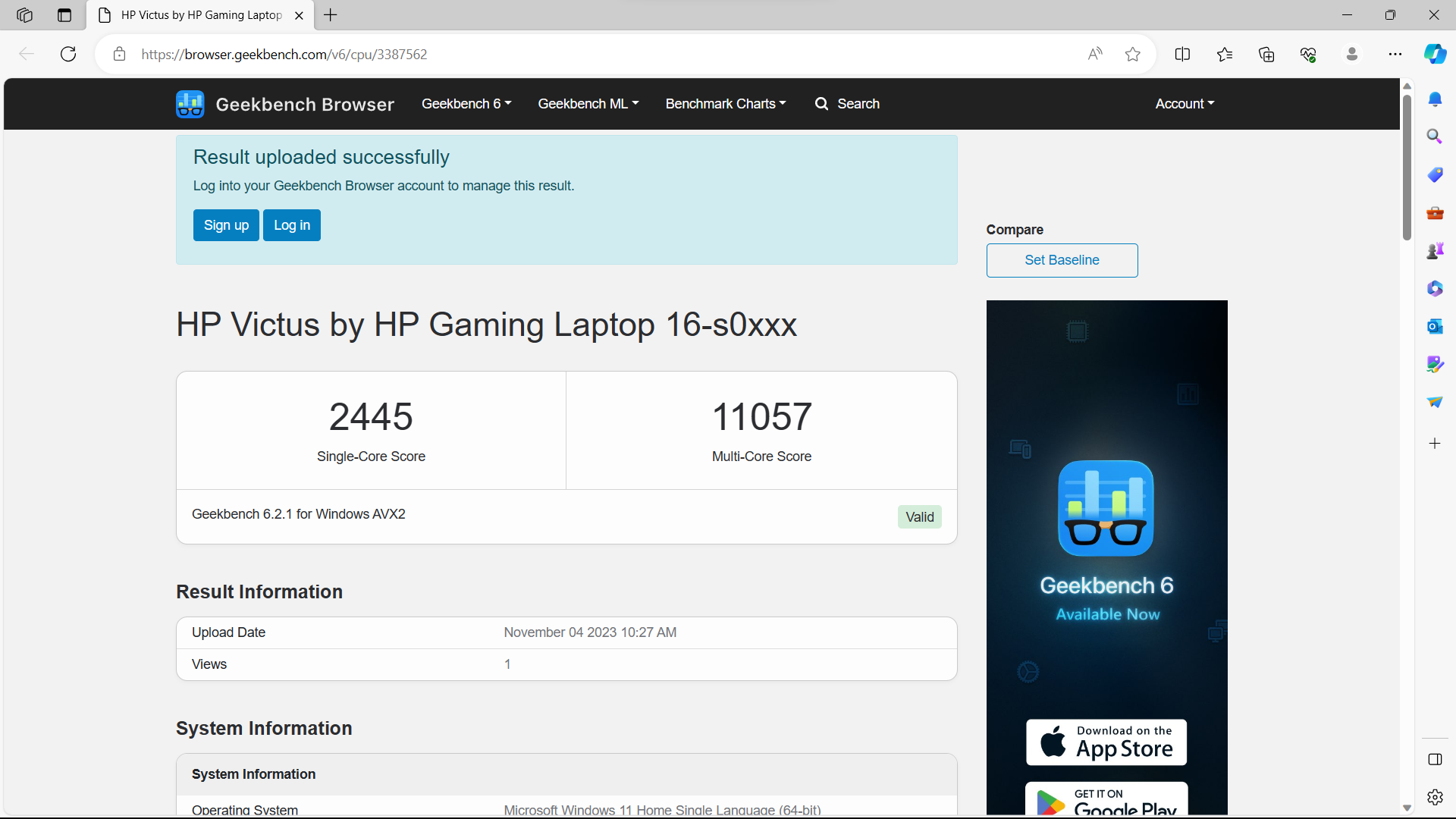
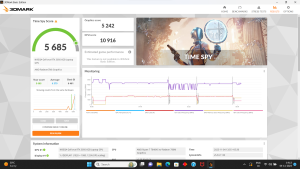
Our usual benchmark scores are telling, with a multi-core score of 11,057 on Geekbench 6 and a solid 818 on Cinebench 2024 reflecting its capabilities.

Apart from this the device also has a cooling system that performs effectively, thanks to ample thermal vents and good airflow that maintain moderate temperatures during use.

3D (1)
PCM (1)
cine (4)
geeky
3D (1) PCM (1) cine (4) geeky

Although the discrete RTX 3050 GPU may find heavy graphics tasks demanding, it still manages light gaming at high settings and more intense AAA titles at moderate to low settings with ray tracing disabled.

Also, you get the trusty DLSS support, which helps in generating a respectable fps rate in most of the demanding titles.

Supporting the processor is 16GB of LPDDR5 RAM and a 512GB PCIe NVMe SSD, both of which are excellent for the laptop’s price bracket.

Features and Battery

HP Victus 16: Features and Battery

Finally, in terms of features, the laptop comes equipped with a respectable audio system fine-tuned by B&O, which delivers a satisfactory auditory experience, particularly for multimedia purposes.

It also features a 1080p webcam, which is sufficient for video conferencing but doesn’t quite meet the highest expectations for quality.

Apart from that talking a bit about the battery life, the Victus 16 houses a 70Whr cell, which provides up to 5 hours of operation under our typical usage and about 2 hours when subjected to heavy or gaming activities.

The included standard adapter can recharge the laptop to full capacity in approximately 2 hours.

Final Verdict

HP Victus 16: Final Verdict

The HP Victus 16 is a solid choice for users who prioritize a blend of performance and versatility.

It handles multitasking with ease, courtesy of the AMD Ryzen 7 processor, while also providing satisfactory gaming capabilities with the RTX 3050 GPU.

The inclusion of a full numeric keypad and the RGB backlit keyboard adds to its appeal for both work and play.

While the display and audio are not best-in-class, they perform well at this price point.

Battery life is moderate, and the overall build quality is robust, making it a durable option for daily use.

Users looking for an affordable laptop that doesn’t compromise on performance will find the HP Victus 16 to be a compelling option.

Reasons to Buy

HP Victus 16: Reasons to Buy
  • You need a versatile laptop that can handle both gaming and work with ease.

  • You’re looking for a laptop with a high refresh rate display for smooth visuals.

  • Strong port selection is important for your connectivity needs.

  • You appreciate a laptop with a fast-charging, long-lasting battery for productivity on the go.

Reasons Not to Buy

HP Victus 16: Reasons Not to Buy
  • If you’re in need of a laptop with exceptional display brightness for outdoor use.

  • If superior audio quality is a top priority for your multimedia experience.

  • You prefer a lightweight laptop for easy portability.

  • If you desire a laptop with a more sensitive, less stiff trackpad.

FAQs

What performance can I expect from the HP Victus 16?

The HP Victus 16 is equipped with an AMD Ryzen 7 processor and an NVIDIA RTX 3050 GPU, which means it offers swift and fluid performance for everyday tasks and gaming. It handles multitasking seamlessly and can run demanding games at moderate settings.

How is the display quality on the HP Victus 16?

The laptop features a 144Hz IPS LCD panel, offering fluid motion and good color accuracy with 100% sRGB coverage. Although the peak brightness is limited to 250 nits, it’s still suitable for gaming and general use, if not under extremely bright conditions.

Does the HP Victus 16 have good connectivity options?

Yes, the HP Victus 16 comes with a wide range of I/O ports including USB Type-C with DisplayPort 1.4, multiple USB Type-A ports, RJ-45 for Ethernet, HDMI 2.1 output, along with the latest WiFi 6E and Bluetooth 5.3 for wireless connectivity.

What is the battery life like on the HP Victus 16?

The device boasts a 70Wh battery that offers up to 5 hours of usage for standard tasks and around 2 hours for more intensive gaming sessions. The included adapter can also recharge the laptop quickly, reaching full capacity in about 2 hours.

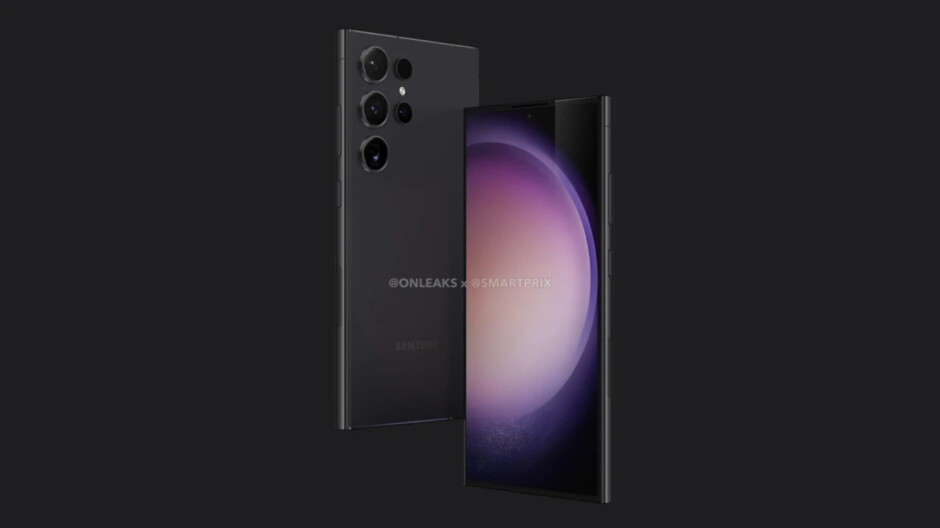
Samsung Galaxy S24 Ultra Build Could Come With Potential Titanium Integration

0
Samsung Galaxy S24 Ultra Build Could Come With Potential Titanium Integration

Highlights

  • The Galaxy S24 Ultra is rumored to feature a robust titanium frame, a first for Samsung smartphones.
  • Prospective production of 15 million titanium frames hints at exclusive use for the S24 Ultra.
  • With an eye on yields, the cost-effective aluminum frame prices may surge if titanium is adopted.

In the world of high-end smartphones, durability, and premium materials are often as crucial as the tech within.

Samsung is reportedly stepping up its game by considering the use of titanium for the Galaxy S24 Ultra’s frame, a move that would set a new standard for the company’s flagship devices.

If the transition to titanium is well-received, it could herald a new era of Samsung smartphones boasting the robust material.

As per the report, the shift to titanium, known for its strength and lightweight properties, would mark the Galaxy S24 Ultra as the pioneer in Samsung’s lineup, ushering in an exceptional build quality that could extend to other models based on consumer feedback and production efficiency.

Financially Feasible?

Samsung Galaxy S24 Ultra: Potential Titanium Integration

The cost implications of adopting titanium frames are significant, with current aluminum frames being relatively economical at under $20.

Titanium, on the other hand, could quintuple these costs if manufacturing yields are low.

Samsung’s aim for high initial production figures, matching the distribution of its Galaxy S23 Ultra models, signals a confident stride towards incorporating titanium in its premium offering.

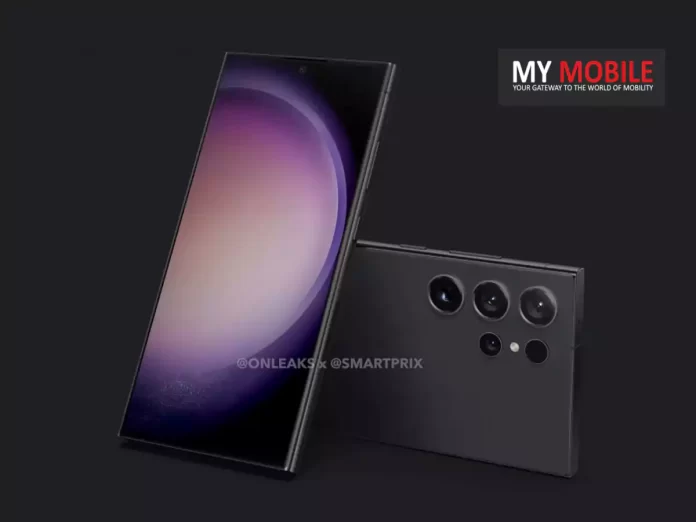
The Galaxy S24 Ultra is anticipated to retain its sleek flat-screen design, complemented by the proposed titanium frame.

The combination of titanium on the outside and aluminum internally would not only enhance durability but also align Samsung with the build practices seen in competitors’ high-tier models, like the latest iPhones.
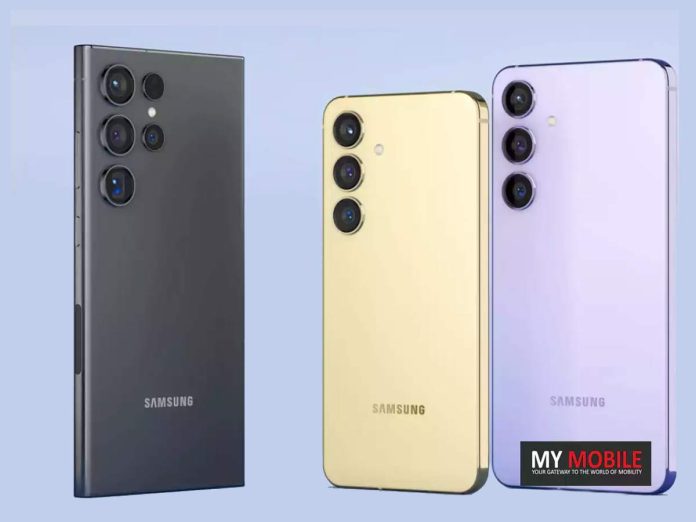
By potentially integrating titanium into the Galaxy S24 Ultra’s design, Samsung is poised to offer a device that could redefine luxury in the Android smartphone market, marrying advanced technology with materials that promise both resilience and elegance.

SAMSUNG GALAXY S24 ULTRA SPECIFICATIONS

Key Specs

RAM 8 GB
Processor Samsung Exynos 2200
Rear Camera 200 MP + 12 MP + 10 MP + 10 MP
Front Camera 32 MP
Battery 5000 mAh
Display 6.8 inches (17.27 cm)

General

Launch Date November 23, 2023 (Unofficial)
Operating System Android v12
Custom UI Samsung One UI

Performance

Chipset Samsung Exynos 2200
CPU Octa core (2.8 GHz, Single core, Cortex X2 + 2.52 GHz, Tri core, Cortex A710 + 1.82 GHz, Quad core, Cortex A510)
Architecture 64 bit
Fabrication 4 nm
RAM 8 GB

Display

Display Type Dynamic AMOLED
Screen Size 6.8 inches (17.27 cm)
Resolution 1440 x 3200 pixels
Pixel Density 516 ppi
Bezel-less display Yes with punch-hole display
Touch Screen Yes, Capacitive Touchscreen, Multi-touch

Design

Waterproof Yes, Water resistant, IP68
Ruggedness Dust proof

Camera

MAIN CAMERA
Camera Setup Quad
Resolution 200 MP, Primary Camera
12 MP, Ultra-Wide Angle Camera
10 MP , Telephoto Camera
10 MP
Autofocus Yes
OIS Yes
Flash Yes, LED Flash
Image Resolution 15500 x 13000 Pixels
Settings Exposure compensation, ISO control
Shooting Modes Continuous Shooting
High Dynamic Range mode (HDR)
Camera Features Digital Zoom
Auto Flash
Face detection
Touch to focus
Video Recording 7680×4320 @ 24 fps
3840×2160 @ 30 fps
FRONT CAMERA
Camera Setup Single
Resolution 32 MP, Primary Camera

Battery

Capacity 5000 mAh
Type Li-Polymer
Removable No
Wireless Charging Yes
Quick Charging Yes, Fast
USB Type-C Yes

Storage

Expandable Memory No
User Available Storage Up to 128 GB

Network & Connectivity

SIM Slot(s) Dual SIM, GSM+GSM
SIM Size SIM1: Nano, SIM2: Nano
Network Support 5G Not Supported in India, 4G Supported in India, 3G, 2G
VoLTE Yes
SIM 1
4G Bands:
TD-LTE 2300(band 40)
FD-LTE 1800(band 3)
3G Bands:
UMTS 1900 / 2100 / 850 / 900 MHz
2G Bands:
GSM 1800 / 1900 / 850 / 900 MHz
GPRS:
Available
EDGE:
Available
SIM 2
4G Bands:
TD-LTE 2300(band 40)
FD-LTE 1800(band 3)
3G Bands:
UMTS 1900 / 2100 / 850 / 900 MHz
2G Bands:
GSM 1800 / 1900 / 850 / 900 MHz
GPRS:
Available
EDGE:
Available
Wi-Fi Yes, Wi-Fi 4 (802.11 b/g/n)
Wi-Fi Features Mobile Hotspot
Bluetooth Yes, v5.2
GPS Yes with A-GPS
NFC Yes
USB Connectivity Mass storage device, USB charging

Multimedia

Loudspeaker Yes
Audio Jack USB Type-C

Sensors

Fingerprint Sensor Yes
Fingerprint Sensor Position On-screen
Fingerprint Sensor Type Ultrasonic
Other Sensors Light sensor, Proximity sensor, Accelerometer, Compass, Gyroscope

FAQs

What makes the titanium frame of the Galaxy S24 Ultra unique?

The titanium frame would be a pioneering feature for Samsung, offering unparalleled strength and lightweight appeal compared to the current aluminum frames. This premium material is anticipated to enhance the device’s durability while maintaining a sleek design.

Will the titanium frame increase the cost of the Galaxy S24 Ultra?

If Samsung transitions to titanium, the frame cost could potentially increase by up to five times due to the higher price of titanium and production yield challenges. However, the final impact on the retail price will depend on Samsung’s ability to manage these production costs effectively.

How many titanium frames is Samsung planning to produce, and why?

Samsung has reportedly set a target to manufacture 15 million titanium frames, which aligns with the number of Galaxy S23 Ultra units shipped. This suggests a dedicated implementation of titanium frames for the Galaxy S24 Ultra, indicating the model’s exclusive and premium status.

Will the inner frame of the S24 Ultra also be made of titanium?

While the outer frame of the S24 Ultra is rumored to be titanium, the inner frame is expected to remain aluminum. This design choice mirrors the construction seen in certain premium iPhone models, balancing durability with cost-effectiveness.

Also Read: Samsung Galaxy S24 Ultra Camera Comes with Zoom Tech Feature

Also Read: Samsung Galaxy S23 FE 5G launch timeline tipped, said to come with Exynos 2200 & Triple-Camera Setup

Imminent watchOS Update to Reportedly Resolve Apple Watch Battery Drain Woes

0
watchOS Update

Highlights

  • Apple confirms a fix is underway for the watchOS 10.1 battery drain issue.
  • Update to address widespread power consumption concerns affecting various Apple Watch models.
  • Customers report severe battery depletion shortly after upgrading to watchOS 10.1.

Apple Watch enthusiasts may soon see a solution to the recent battery drain challenges following the watchOS 10.1 update, as Apple confirms a forthcoming fix.

A recently leaked memo, sourced by MacRumors through various channels, points to Apple’s commitment to addressing the battery issue through an upcoming software update.

Although the details remain scarce, there’s an anticipation that relief is on the horizon for affected users.

The update will build upon the changes introduced in iOS 17.1, which rectified a related power consumption problem when iPhones were synced with Apple Watches.

Despite these improvements, the specific concerns regarding the Apple Watch’s battery longevity persist, prompting this new corrective measure.

There have been growing frustrations on multiple platforms, including the MacRumors Forums, Apple Support Community, and other social channels, suggesting that the problem has spread across several models.

Apple Watch OS Update

From the seasoned Apple Watch Series 5 to the most advanced Apple Watch Ultra 2, reports of batteries plummeting from full charge to half in under an hour have emerged, which just points to the severity of the issue.

However, Apple’s recent smartwatch innovation, the double tap gesture—allowing users to seamlessly interact with calls, messages, and their Smart Stack widgets—have been a well-received feature among Series 9 and Ultra 2 owners.

This intuitive control offers customizable actions, including media playback control and widget navigation, enhancing the user experience.
Even with these innovations battery drain concerns have overshadowed everything.

While awaiting the update, users continue to leverage the dynamic capabilities of watchOS 10.1, confident in the knowledge that Apple is actively working towards a resolution.

FAQs

What is the problem with watchOS 10.1 that Apple plans to fix?

Apple Watch users have experienced unexpected battery drain after updating to watchOS 10.1, with some devices depleting from full charge to 50% in under an hour. Apple has acknowledged this issue and promises a fix in an upcoming software update.

Which models of Apple Watch are affected by the battery drain issue?

The battery drain post-watchOS 10.1 update has been reported across a range of models, from the older Series 5 to the newest Apple Watch Ultra 2. Apple is working to address the problem across all affected devices.

Is there a current workaround for the watchOS 10.1 battery issue?

While Apple’s developer release notes for iOS 17.1 mentioned improvements in power consumption for Apple Watches paired with iPhones on iOS 17, the issue persists, indicating the need for a specific watchOS update to completely fix the battery drain.

Also Read: iOS 17 features for iPhones, as per the latest leak

Also Read: Upcoming iOS 17 Tipped to Bring Major Design Changes to IPhone’s Control Centre

Samsung Galaxy S24 Might Be Bringing Fresh Design with Flat Edges and New Camera Look

0

Highlights

  • The Galaxy S24 series is rumored to showcase a significant design overhaul, with the S24 and S24 Plus adopting flat, edged frames.
  • Renderings suggest a soft curvature on the S24’s edges, marrying style with ergonomic comfort.
  • The camera setup on the S24 may appear larger, though no major hardware changes have been hinted at for the standard models.

Anticipation is building for Samsung’s latest innovation within its esteemed Galaxy S-series.

While past iterations have maintained a consistent aesthetic, the emergent Galaxy S24 range is anticipated to deliver a noticeable departure in design, most notably within the standard S24 and the S24 Plus models.

Industry whispers and conceptual visualizations courtesy PhoneArena, borne from collaborations with skilled 3D artists, suggest a transformation in form.

The Galaxy S24 is expected to eschew the traditional rounded contour in favor of a more pronounced, flat-edged frame.

These refinements, while subtle, aim to deliver a modernized feel without compromising the ergonomic comfort synonymous with the brand, courtesy of delicately curved edges to ensure the device rests comfortably in the palm.

The visual narrative for the S24 extends to its camera system, where it seems the lenses may take on a more substantial presence compared to the previous S23 series.

Samsung Galaxy S24 Fresh Design

However, at this juncture, there’s no concrete evidence to suggest a parallel evolution in camera functionality or hardware for the S24 and its Plus counterpart.

Looking to the zenith of the lineup, the Galaxy S24 Ultra is anticipated to retain much of its design DNA from the preceding model, preserving the flat top and bottom with subtly curved sides that have become characteristic of Samsung’s Ultra range.

However, contrary to its siblings, the Ultra variant may indeed venture into new terrain with advancements in camera technology, potentially altering its photographic profile.

While the exact specifications and design details remain cloaked in the speculative fog of rumors, one can infer that the forthcoming Galaxy S24 series is poised to refresh the visual identity of Samsung’s flagship offerings, crafting a distinct and evolved user experience.

FAQs

What design changes are expected with the Samsung Galaxy S24 series?

The upcoming Samsung Galaxy S24 series is rumored to feature a notable redesign, especially for the S24 and S24 Plus models. These changes include a transition from rounded to flat-edged frames, possibly with a slight curvature for a comfortable grip, and a larger appearance for the camera lenses, though actual hardware changes remain unconfirmed.

Will the Galaxy S24 Ultra look different from the S24 and S24 Plus?

The Galaxy S24 Ultra is anticipated to maintain a similar design aesthetic to the current Ultra model, with flat tops and bottoms and softly curved sides. However, it might sport differences in the camera setup if new hardware is introduced.

Are the new design features based on official information from Samsung?

No, the new design features for the Galaxy S24 series are currently based on leaks, rumors, and 3D renderings. They are not officially confirmed by Samsung and should be taken as speculative until an official announcement is made.

How will the new design impact the user experience?

The redesign of the Galaxy S24 series aims to provide a fresh visual appeal while maintaining the comfort and usability Samsung is known for. Flat edges can offer a modern look and may provide a different handling experience, while larger camera lenses could hint at potential enhancements in photography capabilities.

Also Read: Samsung Galaxy S24 Ultra Camera Comes with Zoom Tech Feature

Also Read: Samsung Galaxy S23 FE 5G launch timeline tipped, said to come with Exynos 2200 & Triple-Camera Setup