iQOO 13 expected to feature Snapdragon 8 Gen 4 SoC
2K OLED display by BOE with revamped screen design
Triple 50MP camera setup with 3x periscope zoom lens
IP69 dust and water resistance with metallic frame
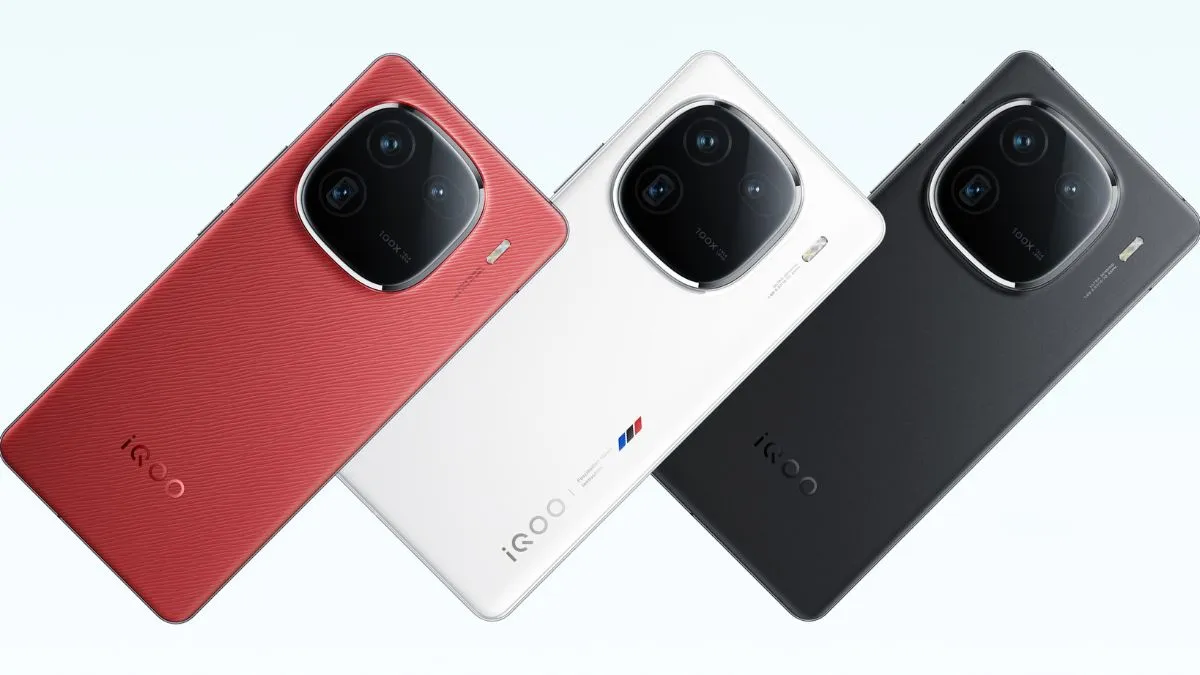
The successor to iQOO’s flagship smartphone, the iQOO 13, is already generating buzz in the tech community, despite being months away from its expected launch.
Following the December 2023 release of the iQoo 12 in India, rumours and leaks about the next iteration are surfacing, hinting at significant upgrades.
iQOO 13: Expected Processor Details
iQOO 13 is rumoured to be powered by the yet-to-be-announced Snapdragon 8 Gen 4 SoC
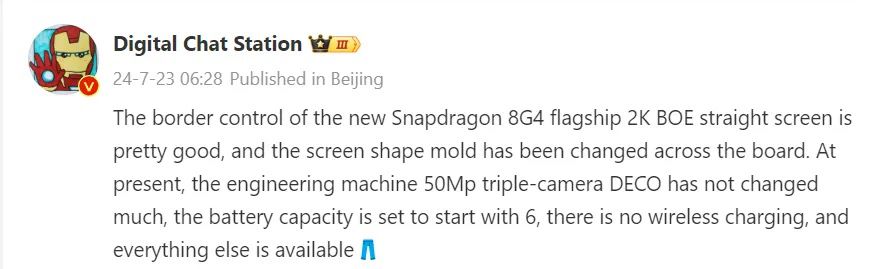
According to information shared by Chinese tipster Digital Chat Station, the iQOO 13 is set to feature a flat OLED screen manufactured by BOE.
This display is expected to offer a 2K resolution, promising users a high-quality viewing experience.
The tipster also suggests that the screen design has been revamped across the iQOO 13 series, although specific details about the screen size remain undisclosed.
iQOO 13 has been leaked to harbour the Snapdragon 8 Gen 4 SoC
Under the hood, the iQOO 13 is rumoured to be powered by the yet-to-be-announced Snapdragon 8 Gen 4 SoC.
Qualcomm has confirmed its Snapdragon Summit launch event for October, where this new flagship processor is expected to be unveiled.
The device might also house a substantial 6,000 mAh battery, likely supporting fast charging capabilities.
iQOO 13: Other Specs
The smartphone could boast an IP69 dust and water-resistant rating
In terms of photography, the iQOO 13 is speculated to feature a triple 50MP camera setup, including a 3x periscope zoom lens.
This configuration suggests a focus on versatile and high-quality imaging capabilities.
Adding to its premium features, rumours indicate that the smartphone could boast an IP69 dust and water-resistant rating, coupled with a metallic frame for enhanced durability and sturdiness.
While these leaks paint an exciting picture of the iQOO 13, it’s important to note that the company has not yet confirmed any of these details.
As the anticipated December launch approaches, more concrete information is likely to emerge.
The iQoo 13 appears poised to build upon its predecessor’s success, potentially offering cutting-edge technology and improved user experience.
FAQs
What processor is the iQOO 13 expected to have?
The iQOO 13 is rumored to be powered by the Snapdragon 8 Gen 4 SoC, which is set to be unveiled at Qualcomm’s Snapdragon Summit in October.
What type of display will the iQOO 13 feature?
The iQOO 13 is expected to feature a flat OLED screen manufactured by BOE, offering a 2K resolution for a high-quality viewing experience.
What are the camera specifications for the iQOO 13?
The iQOO 13 is speculated to have a triple 50MP camera setup, including a 3x periscope zoom lens, focusing on versatile and high-quality imaging capabilities.
Will the iQOO 13 have any special durability features?
Yes, the iQOO 13 is rumored to boast an IP69 dust and water-resistant rating and a metallic frame for enhanced durability and sturdiness.
When is the iQOO 13 expected to launch?
While the iQOO 13 is anticipated to launch in December, exact details are yet to be confirmed by the company.
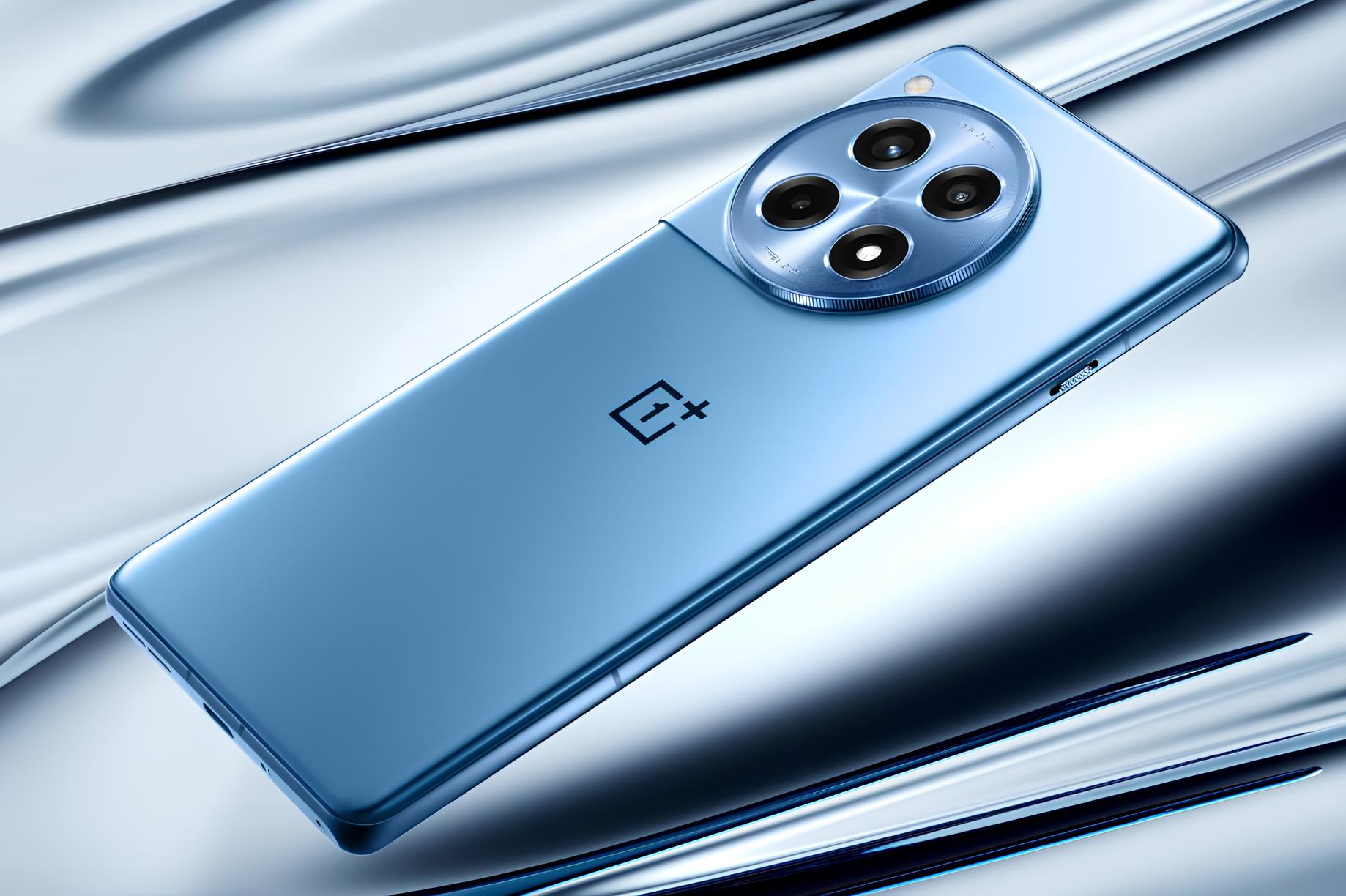
OnePlus 12R features a 5,500mAh battery with 100W SUPERVOOC fast charging
Vivo T3x 5G offers a massive 6,000mAh battery with 44W fast charging
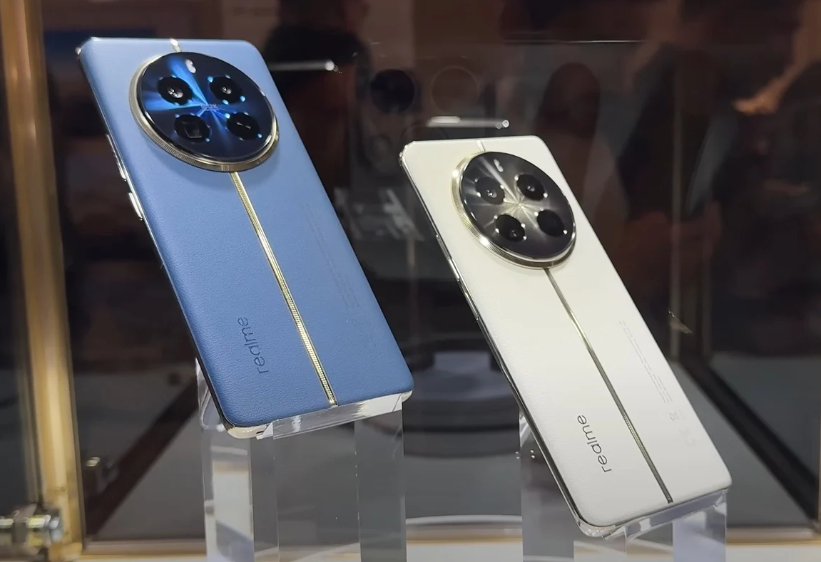
Realme 12 combines a 5,000mAh battery with 45W fast charging
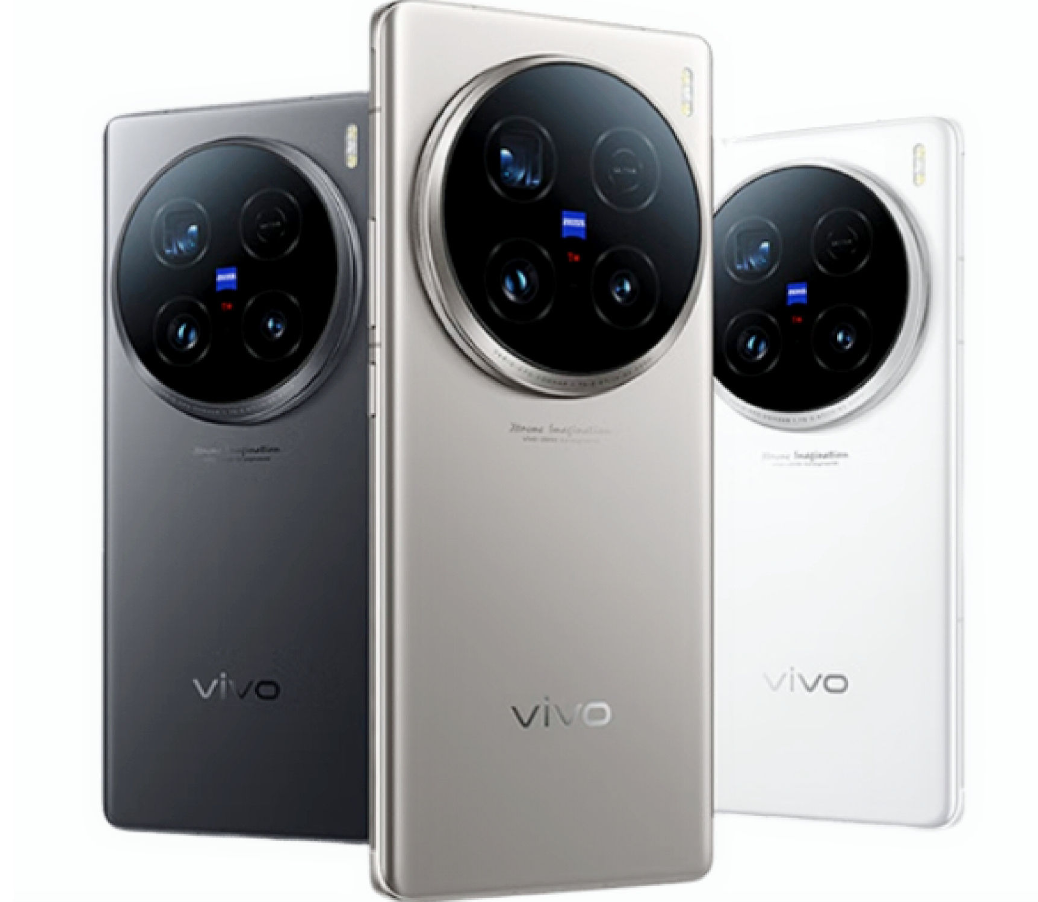
Vivo X100 boasts a 5,000mAh battery with impressive 120W fast charging
In an era where smartphones have become indispensable tools for work, entertainment, and communication, battery life has emerged as a crucial factor in the decision-making process for consumers.
As we navigate through 2024, several Android manufacturers have stepped up to the plate, offering devices that not only pack powerful features but also boast impressive battery longevity.
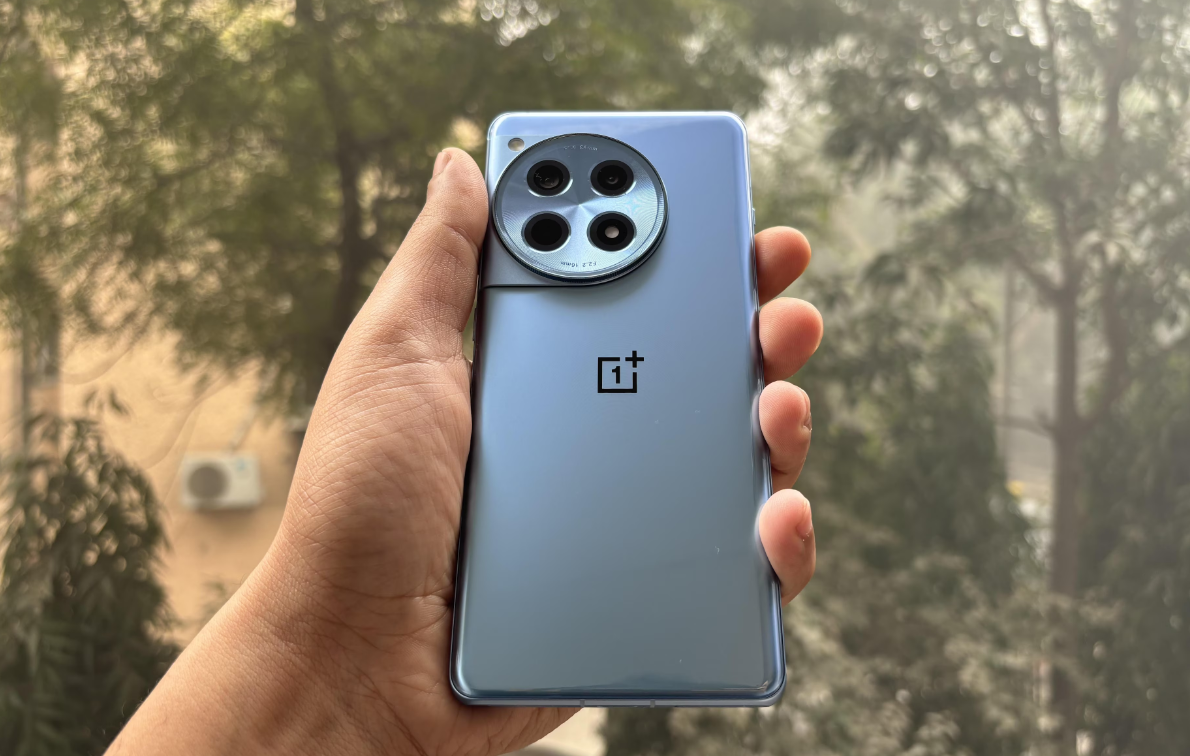
OnePlus 12R features a 5,500mAh battery with 100W SUPERVOOC fast charging
Price: Rs 45,000
5,500mAh battery with 100W SUPERVOOC fast charging
6.78-inch AMOLED display with 120Hz refresh rate
Qualcomm Snapdragon 8 Gen 2 chipset
50MP main camera
16GB RAM and 256GB storage
OxygenOS based on Android 14
The OnePlus 12R impresses with its power efficiency and fast charging capabilities.
Its 5,500mAh battery easily lasts through a full day of heavy use, with only a 5% drop after 30 minutes of video streaming and 6-7% drain during intense gaming sessions.
The 100W SUPERVOOC charging technology fully charges the device in about 30 minutes.
OnePlus has implemented software optimizations in OxygenOS, including adaptive refresh rate technology and an AI-powered battery health engine, to further extend battery life and preserve long-term battery health.
Vivo T3x 5G: Budget-Friendly Battery Beast
Vivo T3x 5G offers a massive 6,000mAh battery with 44W fast charging
Price: Rs 15,000
6,000mAh battery with 44W fast charging
6.72-inch FHD+ display with 120Hz refresh rate
Qualcomm Snapdragon 6 Gen 1 SoC
50MP main camera
Up to 8GB RAM and 128GB storage
Funtouch OS based on Android 13
The Vivo T3x 5G demonstrates remarkable efficiency with its massive 6,000mAh battery.
It loses only 3% battery after 30 minutes of YouTube streaming and 5-6% during half-hour gaming sessions.
The Snapdragon 6 Gen 1 processor balances performance and power efficiency well.
Vivo’s Funtouch OS includes battery-saving features like an ultra power-saving mode and background app management.
While it may not have the fastest charging or most powerful processor, its combination of huge battery capacity, decent fast charging, and budget-friendly price make it an excellent choice for battery-conscious users.
Realme 12: Mid-Range Marvel
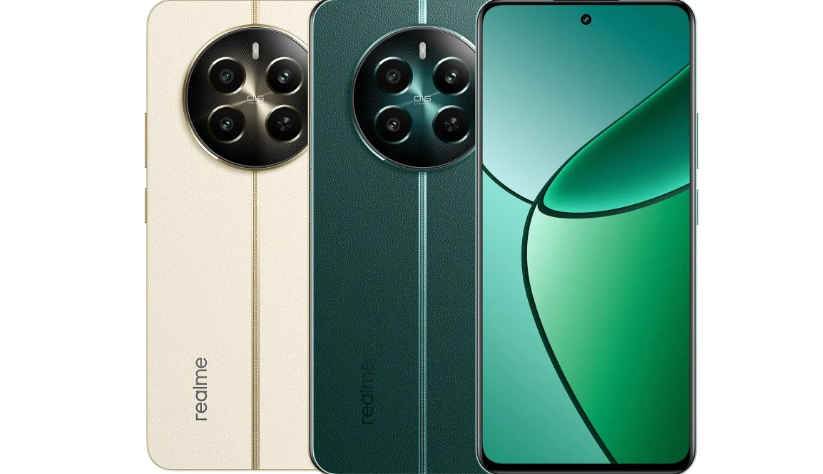
Realme 12 combines a 5,000mAh battery with 45W fast charging
Price: Rs 20,000
5,000mAh battery with 45W fast charging
6.72-inch FHD+ AMOLED 120Hz display
MediaTek Dimensity 6100+ SoC
108MP main camera
Up to 8GB RAM and 256GB storage
Realme UI based on Android 14
The Realme 12 offers solid battery performance in the mid-range segment.
Its 5,000mAh battery drops by only 4% after 30 minutes of YouTube streaming and 8% during BGMI gaming at HD settings.
The 45W fast charging provides quick top-ups when needed.
The MediaTek Dimensity 6100+ chipbalances performance and efficiency, while the 120Hz AMOLED display offers smooth visuals without excessive power drain.
Realme UI includes various power-saving modes to extend battery life further.
Realme 12 Pro+ 5G: Upper Mid-Range Contender
Realme 12 Pro+ 5G steps up the game with its 67W fast charging capability
Price: Rs 30,000
5,000mAh battery with 67W fast charging
6.7-inch FHD+ 120Hz display
Qualcomm Snapdragon 7s Gen 2 SoC
50MP main camera
Up to 12GB RAM and 256GB storage
Realme UI based on Android 14
The Realme 12 Pro+ 5Gsteps up the game with its 67W fast charging capability.
Its 5,000mAh battery loses 4% after 30 minutes of YouTube streaming and 5-8% during gaming sessions.
The device’s 120Hz display adapts its refresh rate to conserve power when possible.
Realme UI’s battery optimization features help manage power consumption effectively, making this a solid choice for users who want fast charging and good battery life in the upper mid-range segment.
Vivo X100: Premium Powerhouse
Vivo X100 boasts a 5,000mAh battery with impressive 120W fast charging
Price: Rs 50,000
5,000mAh battery with 120W fast charging
6.78-inch LTPO AMOLED 120Hz display
MediaTek Dimensity 9300 SoC
Dual 50MP main cameras
Up to 16GB RAM and 512GB storage
OriginOS based on Android 14
The Vivo X100combines flagship features with impressive battery performance.
Its 5,000mAh battery drops by 5% after 30 minutes of YouTube streaming and 6-8% during high-graphics gaming.
The standout feature is its 120W fast charging, which can fully charge the device in under 30 minutes.
The LTPO AMOLED display’s variable refresh rate helps conserve power.
Vivo’s OriginOSincludes advanced power management features to maximize battery life without compromising on performance.
Final Verdict
These smartphones not only offer large battery capacities
From budget-friendly options like the Vivo T3x 5G to premium powerhouses like the OnePlus 12R and Vivo X100, there’s a device to suit every need and budget.
These smartphones not only offer large battery capacities but also come with fast charging capabilities and software optimizations to ensure that users can stay connected and productive throughout the day.
As smartphone technology continues to evolve, it’s encouraging to see manufacturers placing increased emphasis on battery life and charging capabilities, catering to a wide range of user needs and preferences.
FAQs
What is the battery capacity of the OnePlus 12R?
The OnePlus 12R features a 5,500mAh battery, providing ample power for a full day of heavy use.
How quickly can the Vivo T3x 5G charge?
The Vivo T3x 5G supports 44W fast charging, allowing for quick top-ups and reducing downtime.
What are the key features of the Realme 12?
The Realme 12 offers a 5,000mAh battery, 45W fast charging, a 6.72-inch FHD+ AMOLED 120Hz display, and a 108MP main camera.
How does the Vivo X100 stand out in terms of battery performance?
The Vivo X100 features a 5,000mAh battery with 120W fast charging, fully charging the device in under 30 minutes.
Which smartphone offers the best balance of performance and battery life in the mid-range segment?
The Realme 12 Pro+ 5G offers a balanced performance with its 5,000mAh battery, 67W fast charging, and Snapdragon 7s Gen 2 chipset.
What is the price of the OnePlus 12R Sunset Dune edition?
The OnePlus 12R Sunset Dune edition is priced at Rs. 42,999 for the 8GB + 256GB version.
When will the OnePlus 12R Sunset Dune edition be available?
The OnePlus 12R Sunset Dune edition will be available starting July 20th during the Amazon Prime Day Sale.
What is the price of Vivo T3X 5G in India?
The Vivo T3X 5G is priced at Rs XXXX for the 8GB RAM + 128GB storage variant.
It offers competitive pricing with premium features, making it an attractive option for budget-conscious buyers looking for high performance.
What are the standout features of the Vivo T3X 5G?
The Vivo T3X 5G boasts several impressive features, including its large 6.72-inch FHD+ display with a 120Hz refresh rate, a powerful Snapdragon 6 Gen 1 processor, a high-capacity 6000mAh battery with 44W fast charging, and a 50MP main camera for superior photo quality.
What makes the Realme 12 Pro+ 5G stand out on Flipkart?
The Realme 12 Pro+ 5G has been recognized as the top-rated camera phone on Flipkart in its price segment, thanks to its advanced camera system and powerful performance features.
How many units of the Realme 12 Pro+ 5G were sold during the first sale?
During its first sale, the Realme 12 Pro+ 5G saw remarkable sales, with 150,000 units sold, reflecting its popularity among consumers.
What sets the Realme 12 5G apart from its predecessors?
The Realme 12 5G distinguishes itself with a blend of premium design elements like a vegan leather back, advanced features like a 108MP main camera, and a MediaTek Dimensity 6100+ processor, offering a significant upgrade in both aesthetics and performance compared to previous models.
Does the Realme 12 5G have a good display for gaming and video playback?
Yes, the Realme 12 5G’s 6.72-inch FHD+ display with a 120Hz refresh rate provides a smooth and immersive viewing experience, making it suitable for gaming and video playback, although it features an LCD panel instead of the more vibrant AMOLED.
What are the key camera features of the Vivo X100 Series?
The Vivo X100 Series boasts a ZEISS co-engineered camera system.
The X100 Pro includes a 50MP primary camera with a 1-inch sensor, a 64MP telephoto lens, and a 48MP ultrawide lens, while the X100 offers a 50MP primary camera with OIS and a 64MP Zeiss super-telephoto camera.
What display technology is used in the Vivo X100 Series?
Both the Vivo X100 Pro and Vivo X100 feature a 6.78-inch LTPO AMOLED panel with FHD+ resolution and a 120Hz refresh rate.
This panel ensures efficient power consumption while providing stunning visuals.
Night Scene, Panorama, Professional Mode, Portrait, HDR, Super Macro, AI Scene Recognition, AI Beauty, Filter, Color Enhancement, Street Shot, Portrait Bokeh Control, Super Text
Realme Narzo N61 set to launch on July 29th at 12 pm in India
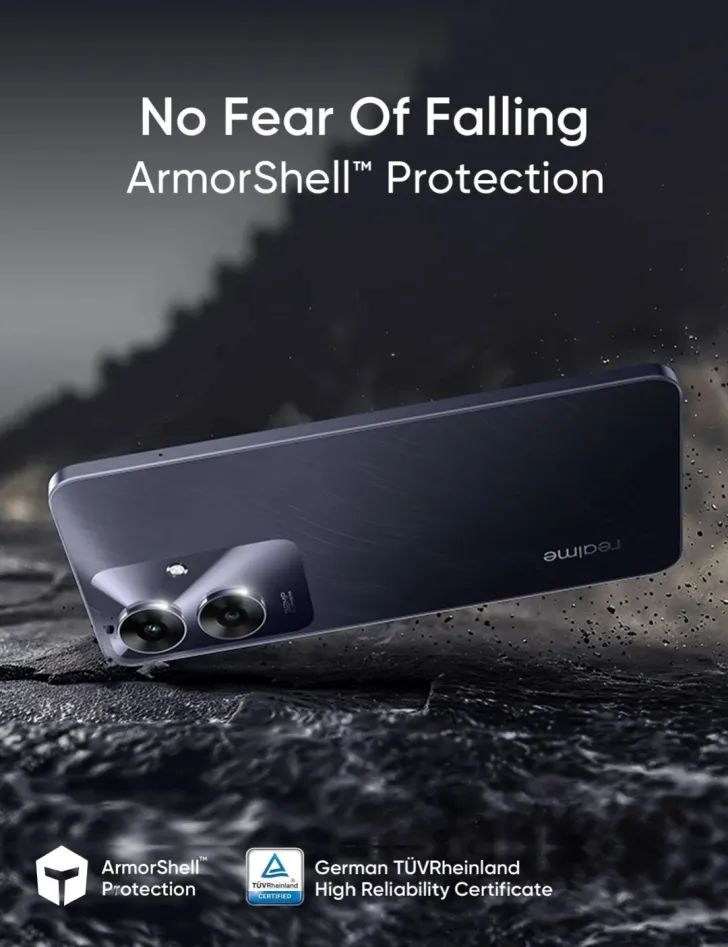
Features ArmorShell Protection and TÜV Rheinland certification
IP54 rating for dust and water splash resistance
Promises four years of updates for long-term durability
Realmehas announced the impending arrival of its latest budget smartphone, the Narzo N61, in the Indian market.
Set to launch on July 29th at 12 pm, this new addition to the Narzo lineup comes just a day before the anticipated Realme 13 Pro series debut.
Narzo N61 Design and Date Revealed
Realme Narzo N61 set to launch on July 29th at 12 pm in India
The company has offered a sneak peek at the Narzo N61’s design, showcasing a light blue colour variant with a patterned back panel featuring a glittery effect, aiming to provide a premium look and feel.
One of the Narzo N61’s standout features is its ArmorShell Protection, which Realme claims will shield the device “against all sorts of harsh environments with ease”.
The phone has also received TÜV Rheinland certification, further emphasizing its durability.
Adding to its resilience, the Narzo N61 will come with an IP54 rating, offering protection against dust and water splashes.
Realme has announced the impending arrival of its latest budget smartphone
It will also feature a Rainwater Smart Touch capability, ensuring the display remains responsive even when wet.
Realme has committed to providing four years of updates for the Narzo N61, though it remains unclear whether this refers to security patches or Android upgrades.
Surprisingly, the Narzo N61 closely resembles the newly announced Realme C61, with comparable design components and defensive features.
Realme Narzo N61: Features ArmorShell Protection and TÜV Rheinland certification
This has sparked conjecture that the Narzo N61 is a renamed version of the C61, maybe with slight variations.
As the launch date approaches, potential consumers and technology aficionados alike are hungry for additional information about the Narzo N61’s characteristics and cost.
Realme appears to be targeting people who value durability and protection in their smartphones while maintaining elegance.
When will the Realme Narzo N61 be launched in India?
The Realme Narzo N61 is scheduled to launch on July 29th at 12 pm in India.
What are the key design features of the Narzo N61?
The Narzo N61 features a light blue color variant with a patterned back panel, flat edges, and a dual-camera setup on the rear.
What kind of protection does the Narzo N61 offer?
The Narzo N61 boasts ArmorShell Protection, TÜV Rheinland certification, and an IP54 rating, making it durable against harsh environments, dust, and water splashes.
How long will Realme provide updates for the Narzo N61?
Realme has committed to providing four years of updates for the Narzo N61, though it is unclear whether this includes security patches or Android upgrades.
Is the Narzo N61 similar to any other Realme phones?
The Narzo N61 closely resembles the newly announced Realme C61, leading to speculation that it might be a rebranded version with slight variations.
Motorola teases the “world’s slimmest” military-grade smartphone
Features MIL-STD-810H certification for durability in tough conditions
Available soon on Flipkart for wide accessibility
Possible new addition to the Motorola Edge series
Motorola is poised to introduce a new smartphone to the Indian market, promising to deliver what it calls the “world’s slimmest” military-grade phone.
The company has begun teasing the device on social media platforms, using the intriguing tagline “Do You Dare to Be Bold?”
New Motorola Rugged Phone
The Bold journey begin soon!😍#ComingSoon pic.twitter.com/KUDQcQdSib
— Motorola India (@motorolaindia) July 23, 2024
While Motorola has not officially named the upcoming smartphone, they have shared some details about its features.
The device is touted as being “built to survive the toughest adventures,” suggesting a focus on durability and ruggedness.
One of the most notable aspects of this new phone is its claimed MIL-STD-810H certification.
The new smartphone will be available for purchase on Flipkart following its launch
This military-grade standard indicates that the device can withstand various environmental stresses, including accidental drops, extreme temperatures, and high humidity.
What makes this certification particularly impressive is that Motorola claims to have achieved it in the world’s slimmest form factor for a smartphone.
The teasers provide a glimpse of the phone’s silhouette, revealing a black colour option with rounded edges.
However, specific details about the device’s specifications remain under wraps.
Flipkart Availability Confirmed
Motorola to Launch World’s Slimmest Military-Grade Phone in India Soon
Motorola has confirmed that the new smartphone will be available for purchase on Flipkart following its launch.
This partnership with one of India’s leading e-commerce platforms suggests that Motorola is aiming for wide accessibility and distribution of the device.
While some reports speculate that the phone could be the Motorola Edge 50 Neo, this remains unconfirmed.
If true, it would mark the first time a device in the Motorola Edge series has received military-grade certification.
The announcement comes on the heels of Motorola’s recent launches in India, including the Moto G85 5G and Motorola Razr 50 Ultra.
This new addition to their lineup demonstrates Motorola’s commitment to innovation and its efforts to cater to diverse consumer needs in the highly competitive Indian smartphone market.
FAQs
What is the unique feature of Motorola’s new rugged phone?
Motorola’s new rugged phone is claimed to be the “world’s slimmest” smartphone with MIL-STD-810H military-grade certification.
What does MIL-STD-810H certification mean?
MIL-STD-810H certification indicates that the phone can withstand various environmental stresses, such as drops, extreme temperatures, and high humidity.
When and where will the new Motorola phone be available?
The new Motorola rugged phone will be available for purchase on Flipkart following its launch.
Has Motorola confirmed the name of the new rugged phone?
No, Motorola has not officially named the upcoming smartphone, though it is speculated to be part of the Motorola Edge series.
What is the significance of Motorola’s recent teasers on social media?
Motorola’s teasers hint at a focus on durability and ruggedness, aiming to attract consumers looking for a tough, reliable smartphone.
Meta’s Llama 3 features 405 billion parameters, surpassing its predecessor.
Supports eight languages with an expanded context window for larger requests.
Significant improvements in math and knowledge benchmarks.
Future multimodal versions to include image, video, and speech capabilities.
Meta Platforms has released its most advanced artificial intelligence model to date, Llama 3, featuring enhanced multilingual capabilities and improved performance in coding and mathematics.
🔵 META UNVEILS BIGGEST LLAMA 3 AI MODEL, TOUTING LANGUAGE AND MATH GAINS
Meta Platforms released the biggest version of its mostly free Llama 3 artificial intelligence models on Tuesday, boasting multilingual skills and general performance metrics that nip at the heels of paid… pic.twitter.com/5vVUBx5d1T
— PiQ (@PiQSuite) July 23, 2024
As reported by Reuters, this latest iteration boasts 405 billion parameters, significantly surpassing its predecessor while still remaining smaller than some competitors’ models.
New Future for Llama 3
Meta Unveils Largest Llama 3 AI Model, Boasting Language and Math Improvements
According to Reuters, Meta CEO Mark Zuckerberg expressed confidence in the future of Llama models, stating, “I expect future Llama models would overtake proprietary competitors by next year.”
Zuckerberg also predicted that the Meta AI chatbot powered by these models would become “the most popular AI assistant by the end of this year, with hundreds of millions of people using it already.”
The new Llama 3 model offers support for eight languages and features an expanded “context window,” allowing for improved handling of larger user requests.
Ahmad Al-Dahle, Meta’s head of generative AI, told Reuters, “That was the number one feedback we got from the community,” highlighting the benefits for computer code generation in particular.
Updated AI Parameters
It supports eight languages with an expanded context window for larger requests
Reuters reports that Meta is releasing updated versions of its 8 billion and 70 billion parameter Llama 3 models alongside the flagship 405 billion parameter version.
All three models are multilingual and feature the expanded context window.
Category
Benchmark
Llama 3.1 8B
Llama 3 8B – April
Llama 3.1 70B
Llama 3 70B – April
Llama 3.1 405B
General
MMLU
73
65.3
86
80.9
88.6
MMLU (CoT)
48.3
45.5
66.4
63.4
73.3
MMLU PRO (5-shot, CoT)
80.4
76.8
87.5
82.9
88.6
Code
IFEval
72.6
60.4
80.5
81.7
89
HumanEval (0-shot)
72.8
70.6
86
82.5
88.6
MBPP EvalPlus (base) (0-shot)
84.5
80.6
95.1
93
96.8
Math
GSM8K (8-shot, CoT)
51.9
29.1
68
51
73.8
MATH (0-shot, CoT)
83.4
82.4
94.8
94.4
96.9
Reasoning
ARC Challenge (0-shot)
32.8
34.6
46.7
39.5
51.1
GPQA (0-shot, CoT)
82.6
48.3
90
85.1
92.3
Tool use
API-Bank (0-shot)
76.1
60.3
84.8
83
88.5
BFCL
8.2
1.7
29.7
14.7
35.3
Gorilla Benchmark API Bench
38.5
18.1
56.7
47.8
58.7
Nexus (0-shot)
68.9
–
86.9
–
91.6
Multilingual
Multilingual MGSM
–
–
–
–
–
Meta’s strategy of releasing Llama models largely free of charge aims to hone innovation and reduce dependence on potential competitors.
As per Reuters, Zuckerberg believes this approach will lead to “innovative products, less dependence on would-be competitors and greater engagement on the company’s core social networks.”
Future multimodal versions to include image, video, and speech capabilities
The company claims significant improvements in key math and knowledge tests, with results suggesting that the largest Llama 3 model is approaching or surpassing the performance of leading paid models like Anthropic’s Claude 3.5 Sonnet and OpenAI’s GPT-4o in some areas.
On the MATH benchmark of competition-level math word problems, Meta’s model scored 73.8, compared to GPT-4o’s 76.6 and Claude 3.5 Sonnet’s 71.1.
On the MMLU benchmark covering various academic subjects, Llama 3 achieved a score of 88.6, nearly matching GPT-4o’s 88.7 and surpassing Claude 3.5 Sonnet’s 88.3.
Meta researchers also hinted at upcoming “multimodal” versions of the models, which will incorporate image, video, and speech capabilities.
Early experiments suggest these models may compete with other multimodal offerings such as Google’s Gemini 1.5 and Anthropic’s Claude 3.5 Sonnet.
FAQs
What is the Llama 3 AI model by Meta?
The Llama 3 AI model is Meta’s most advanced artificial intelligence model, featuring 405 billion parameters, enhanced multilingual capabilities, and improved performance in coding and mathematics.
What improvements does Llama 3 offer over its predecessor?
Llama 3 supports eight languages, features an expanded context window for handling larger requests, and shows significant improvements in math and knowledge benchmarks.
How does Llama 3 perform in benchmarks compared to competitors?
Llama 3 scores highly on key benchmarks, nearly matching or surpassing leading models like Anthropic’s Claude 3.5 Sonnet and OpenAI’s GPT-4o in some areas.
What is Meta’s strategy for releasing Llama 3?
Meta plans to release Llama 3 models largely free of charge to foster innovation and reduce dependence on potential competitors, aiming to boost engagement on its social networks.
Are there plans for future versions of Llama 3?
Yes, Meta researchers hinted at upcoming multimodal versions of the models that will incorporate image, video, and speech capabilities.
Truecaller to launch AI-generated SMS summaries for quick message overview
Large language models (LLMs) will summarize messages beyond OTPs and transactions
AI-enabled summaries will be processed offline and on-device for privacy
Truecaller aims to expand the feature to more markets and languages
Truecaller, the renowned Swedish spam and call blocking application, is set to revolutionise its Smart SMS feature with artificial intelligence.
The company plans to implement an AI-generated summary function, providing users with quick, on-device synopses of their text messages.
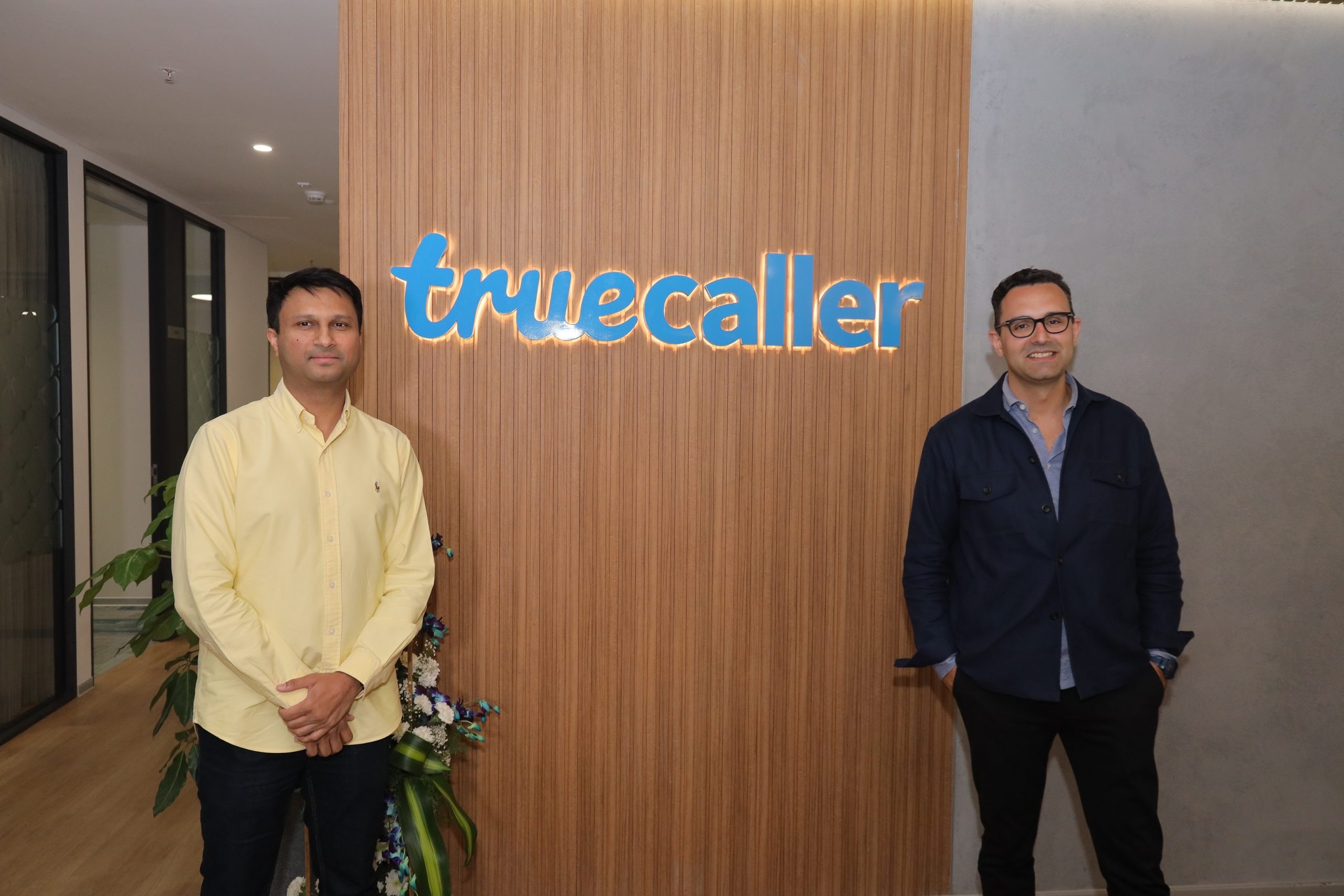
Rishit Jhunjhunwala, Managing Director and Chief Product Officer of Truecaller
Rishit Jhunjhunwala, Managing Director and Chief Product Officer of Truecaller, revealed in an interview with ETTelecom that this new feature will enable users to grasp the content of their messages at a glance, without the need to open the entire text.
“This will allow the summary to appear almost instantly, providing a concise overview of the SMS content at a glance. For instance, for a transactional SMS, one won’t need to open the whole message,” said Jhunjhunwala.
AI Being Used Across Truecaller
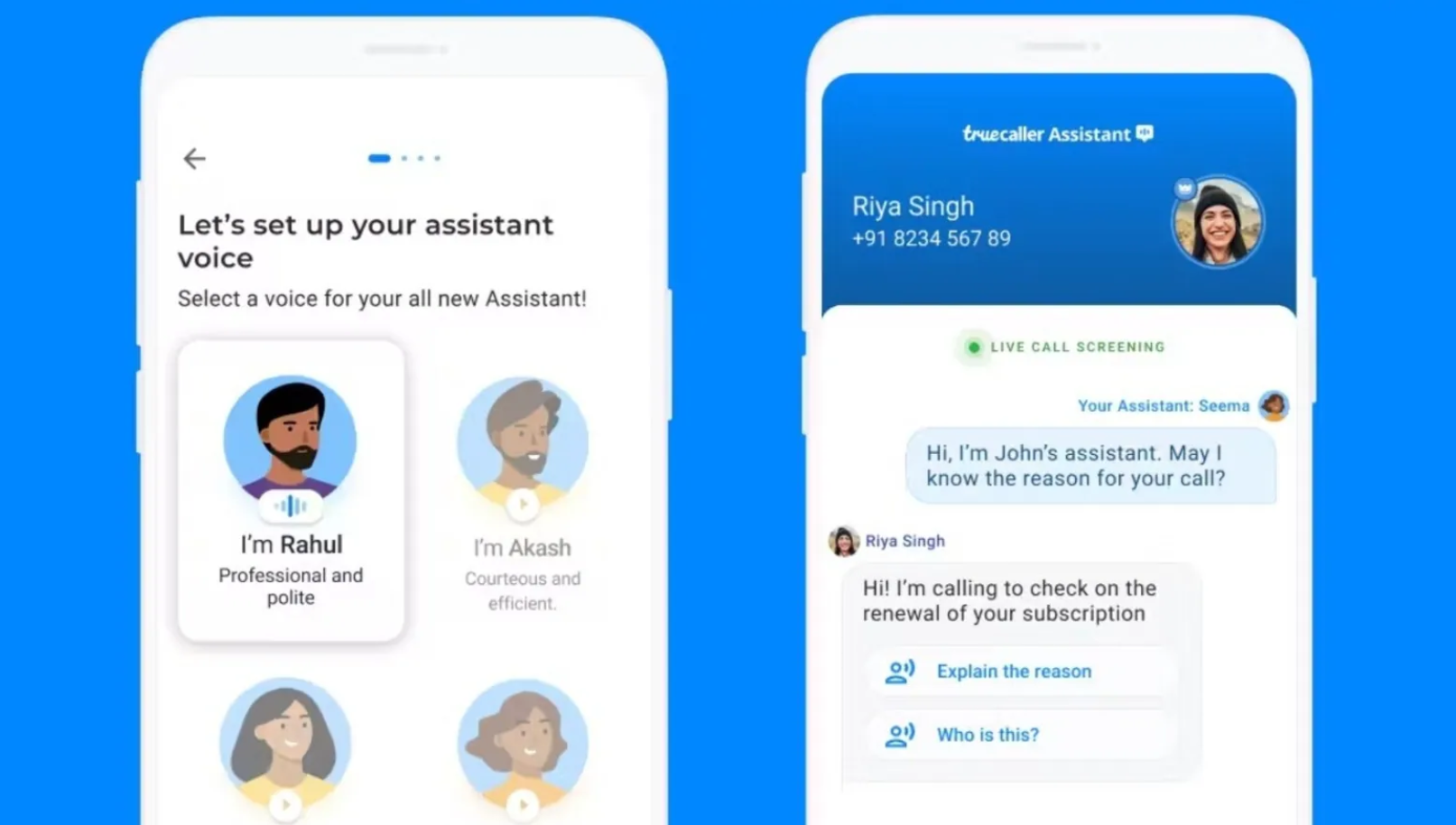
The company has already introduced an AI assistant for call recordings, providing transcripts and summaries.
The key advancement lies in the use of large language models (LLMs) to summarise messages beyond the currently supported categories like OTPs and transactions.
Truecaller aims to expand this capability to cover more use cases and languages, continuously improving the models based on user feedback.
“Truecaller is investing in expanding the use of LLMs to enhance the messaging experience. Such improvements will more accurately identify and summarize even more important messages over and above common categories such as OTPs and transactions. Currently, over 260 million texts are identified and summarized as message ID on a daily basis, a YoY growth of 44% with LLMs. Truecaller will expand this to even more use cases and scale message IDs to many more markets and languages, providing clear summaries and continuously seeking user feedback to improve the models,” said Jhunjhunwala to ETTelecom.
India remains Truecaller’s largest market, contributing about 74% of the company’s global sales.
As of March-end, out of Truecaller’s 383.4 million monthly active users, 272.6 million were from India.
As Truecaller continues to innovate with AI, it remains confident about its position in the market
Prioritising user privacy, Truecaller will process these AI-enabled summaries offline and on-device.
The company has already introduced an AI assistant for call recordings, providing transcripts and summaries.
Truecaller’s business model includes both consumer and B2B aspects.
While 94% of users access the app for free, supported by in-app advertisements, the remaining users subscribe to premium services.
The B2B side, focusing on KYC for official enterprise numbers, has seen rapid growth, expanding by 40% year-on-year.
“We use AI for design, idea generation and in various places operationally already. The second place where we apply AI is in the core of our product itself. We have been using AI for a while now to be able to detect scammers faster than we usually could,” Truecaller executive adds, as per ETTelecom.
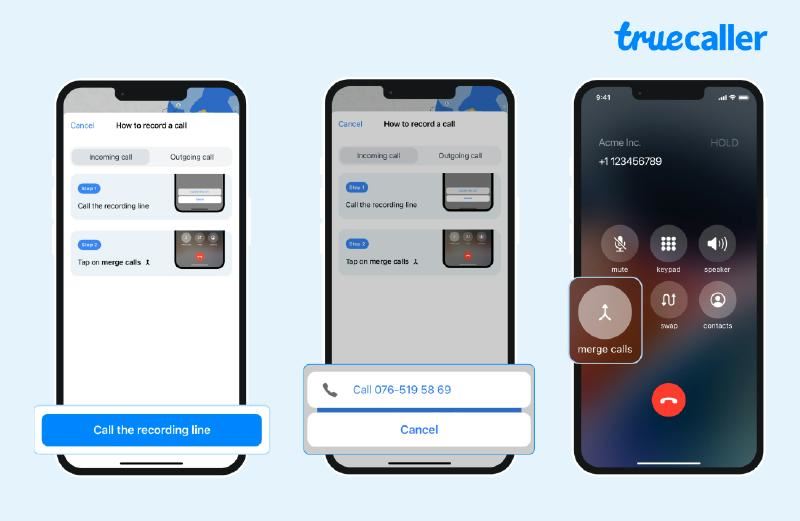
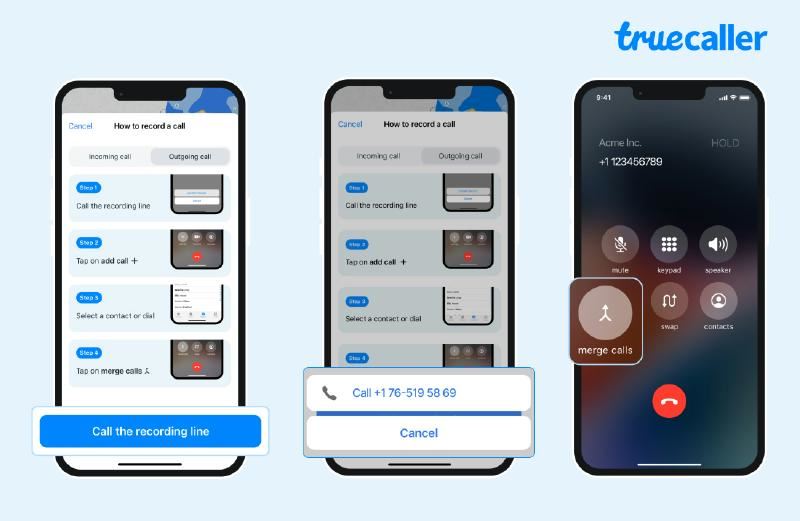
A while back Truecaller also announced a AI-based Call Recording feature
Call Recorder feature records specific incoming and outgoing calls.
Here are the salient points:
Call Recorder feature records specific incoming and outgoing calls.
Manage recordings: listen, rename, share, or delete on an intuitive platform.
Increases productivity by allowing users to focus on discussions without note-taking.
Initially available for premium users in the US, with global access coming soon.
Recordings are stored locally on users’ devices, ensuring privacy.
iPhone users can backup recordings to iCloud; Android users can use Google Drive.
Future updates will include AI-generated summaries and short call titles.
Recordings are stored locally on users’ devices, ensuring privacy.
Speaking about the new feature, Raphael Mimoun, Cloud Telephony Product Director at Truecaller stated, ” The decision to launch the Truecaller Call recording feature is inspired by advancements in Language Learning Models (LLMs) that aim to redefine the call recording experience. Our new feature enables fast, intuitive retrieval and use of recordings with smart search and call summaries. We are eager to see its transformative impact on how our users manage their calls, record, retrieve and utilize conversations”.
Truecaller’s AI Future
Truecaller aims to expand this capability to cover more use cases and languages
As Truecaller continues to innovate with AI, it remains confident about its position in the market, even with the potential introduction of the Caller Name Presentation (CNAP) feature recommended by TRAI.
Jhunjhunwala believes Truecaller’s community-based approach and additional services will allow it to co-exist with CNAP, much like it does in other countries.“It (CNAP) will not have a significant impact on Truecaller. We will co-exist, just like we do in other countries as well,” Jhunjhunwala said.
With these advancements, Truecaller aims to enhance communication for mobile users, moving beyond caller ID to offer a comprehensive suite of services tailored to diverse user needs.
FAQs
What new feature is Truecaller introducing for SMS summaries?
Truecaller is introducing AI-generated Smart SMS Summaries that provide users with quick, on-device synopses of their text messages, allowing them to grasp the content at a glance.
How does Truecaller plan to enhance its messaging experience?
Truecaller is using large language models (LLMs) to summarize messages beyond common categories like OTPs and transactions, expanding the capability to more use cases and languages.
Will the AI-enabled summaries be processed online or offline?
The AI-enabled summaries will be processed offline and on-device to prioritize user privacy, ensuring that sensitive information remains secure.
What is the significance of Truecaller’s investment in AI for its services?
Truecaller’s investment in AI aims to enhance the messaging experience by accurately identifying and summarizing important messages, and it is also used for design, idea generation, and operational efficiency.
How will Truecaller co-exist with the potential introduction of the CNAP feature?
Truecaller’s community-based approach and additional services will allow it to co-exist with the Caller Name Presentation (CNAP) feature, much like it does in other countries.
Clamshell-style design similar to Motorola Razr and Galaxy Z Flip
Apple addresses durability with patented folding display design
Potential partnership with Samsung for foldable panels
Recent reports suggest that Apple may be entering the foldable smartphone market, with a potential release as early as 2026.
This news has sparked excitement among iPhone fans who have been anticipating such a device for years.
Apple Developing New Flip Phone
Apple Developing Foldable ‘Flip’ iPhone with Potential Release in 2026
According to sources cited by The Information, Apple is developing a clamshell-style foldable iPhone, similar to the popular Motorola Razr and Samsung Galaxy Z Flip series.
The device, reportedly codenamed “v68”, is said to maintain the design and dimensions of a standard iPhone when unfolded.
Industry insiders suggest that Apple’s decision to prioritise a foldable iPhone over other potential foldable devices was influenced by the growing popularity of foldable phones in the Chinese smartphone market.
This move could shake up the foldable market, which saw shipments of 15.9 million units in 2023, accounting for 14% of all smartphones delivered that year.
A Challenging Task for Apple
Apple rumored to release foldable iPhone by 2026
The development of a foldable iPhone hasn’t been without challenges.
Earlier reports indicated that Apple had temporarily halted work on the project when a Samsung-supplied foldable display failed during rigorous testing.
However, Apple seems to be addressing these durability concerns, as evidenced by a recent patent titled “Electronic Devices with Durable Folding Displays”.
This patent outlines a design featuring thicker corners and tapered edges where the screen folds, potentially improving the device’s longevity.
Multiple sources, including Digitimes, Hankooki, and ET News, have reported that Apple has begun research and development on a clamshell foldable iPhone this year.
These reports also suggest that Apple has struck a deal with Samsung to supply foldable panels for the device.
Other Foldable Devices on the Horizon
Apple addresses durability with patented folding display design
While the foldable iPhone would be Apple’s first venture into this form factor for smartphones, the company is reportedly exploring other foldable devices as well.
Earlier this year, analyst Ming-Chi Kuomentioned that Apple was developing a foldable Mac with a 20.3-inch display, powered by an M5 chip.
As the foldable smartphone market continues to evolve, with Samsung’s Galaxy Z Flip series leading the way, the prospect of a foldable iPhone is sure to generate significant interest among consumers and industry watchers alike.
However, as with all unofficial reports, it’s important to approach this information with caution until Apple makes an official announcement.
FAQs
When is Apple expected to release its foldable iPhone?
Reports suggest that Apple may release its foldable iPhone as early as 2026, sparking excitement among iPhone fans.
What design will the foldable iPhone feature?
The foldable iPhone is expected to have a clamshell-style design, similar to the Motorola Razr and Samsung Galaxy Z Flip series.
What challenges has Apple faced in developing the foldable iPhone?
Apple has faced challenges such as durability issues, with earlier reports indicating that a Samsung-supplied foldable display failed during rigorous testing.
How is Apple addressing the durability concerns of the foldable iPhone?
Apple has filed a patent titled “Electronic Devices with Durable Folding Displays,” featuring thicker corners and tapered edges to improve the device’s longevity.
Is Apple developing any other foldable devices?
Yes, Apple is reportedly exploring other foldable devices, including a foldable Mac with a 20.3-inch display powered by an M5 chip.
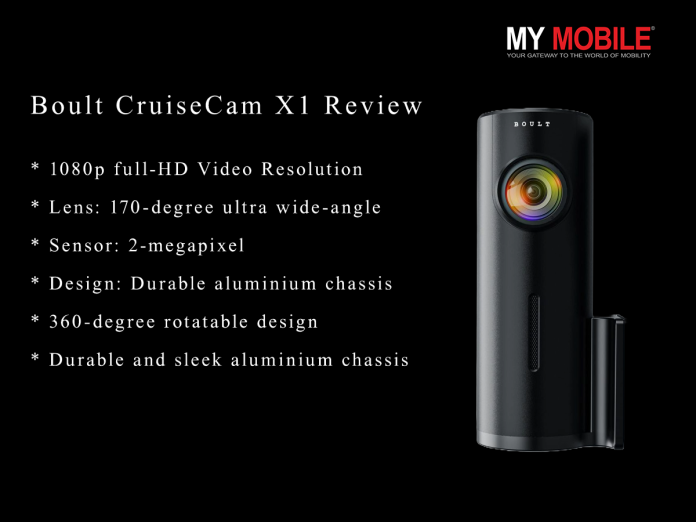
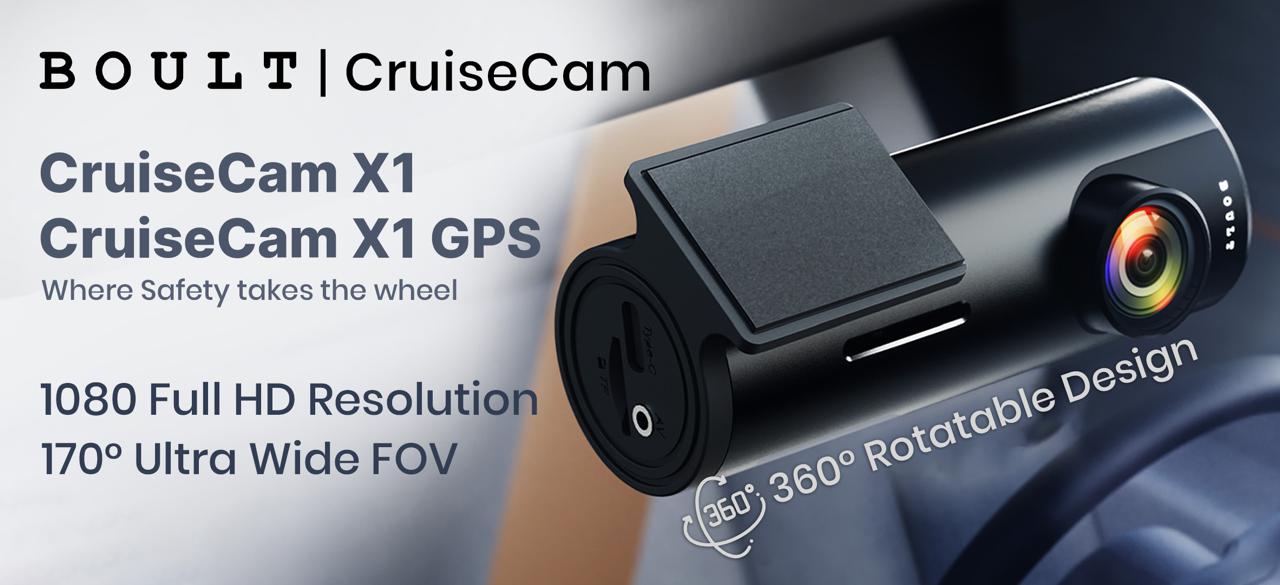
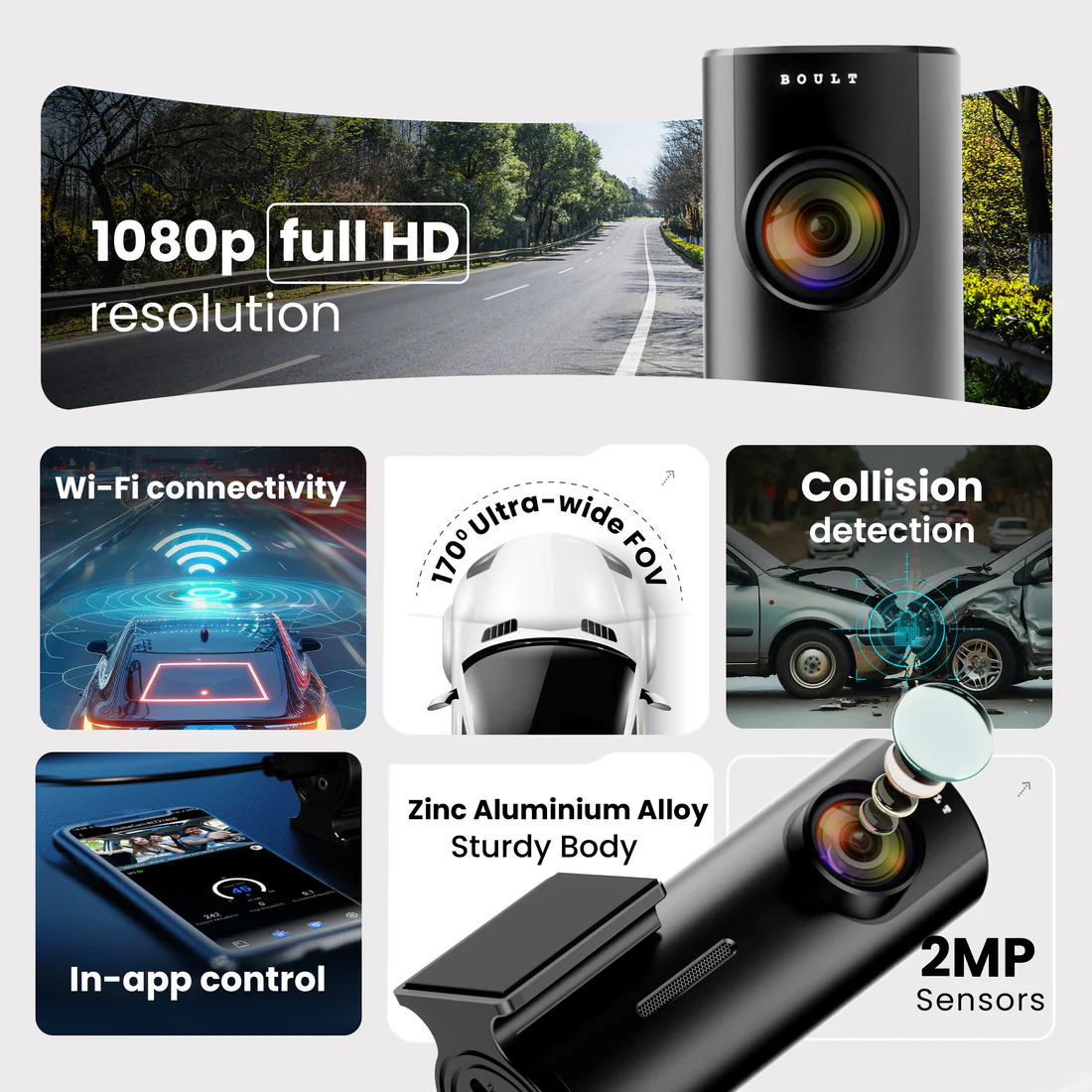
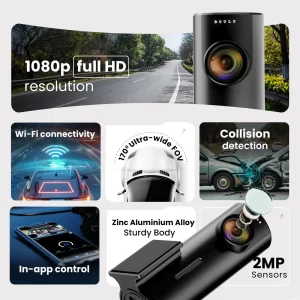
1080p video resolution with 170-degree wide-angle lens
In-built Wi-Fi and app support for easy access and live streaming
GPS logging feature available in the X1 GPS variant
Durable aluminium chassis with 360-degree rotatable design
I recently had the opportunity to try out the Boult CruiseCam X1, and here’s a detailed review based on my experience.
Boult has made a bold entry into the automotive sector with the launch of the CruiseCam X1 series, just a month after introducing its first-ever home audio product.
The company claims its new dashcam can “revolutionise the way drivers monitor and record their journeys”.
But does it live up to the hype? Let’s find out.
Pros
Cons
High-quality 1080p video resolution
No included microSD card
170-degree ultra wide-angle lens
Limited to 2-megapixel sensor
360-degree rotatable design
In-built Wi-Fi with app support
Boult CruiseCam X1: Design and Build
The Boult CruiseCam X1 series can be considered a strong contender in the dashcam market
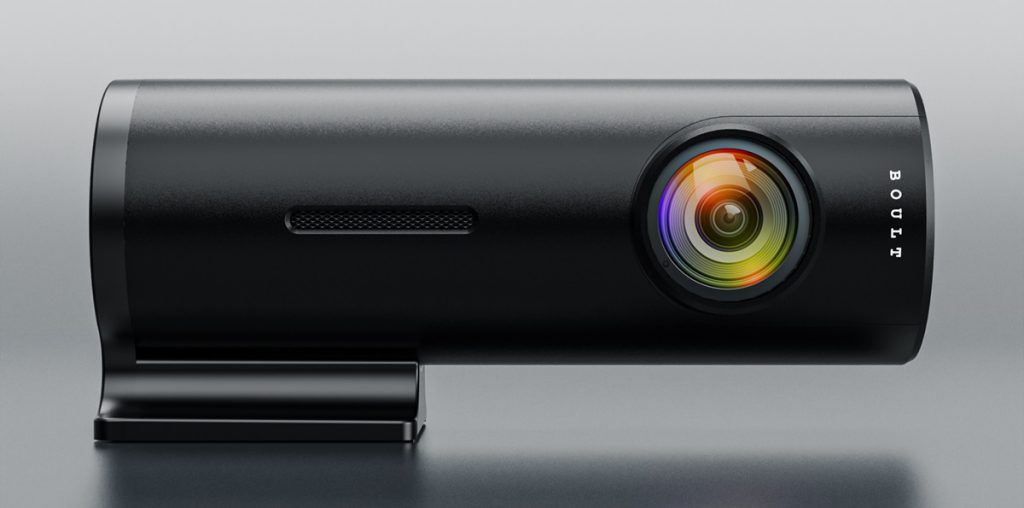
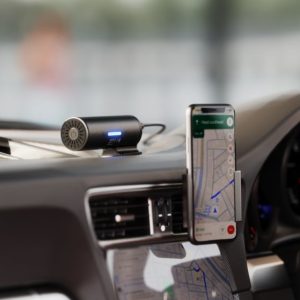
The Boult CruiseCam X1 comes with a sleek aluminium chassis that feels durable and robust.
The 360-degree rotational design is quite handy, allowing easy adjustment of the camera angle to suit various recording needs.
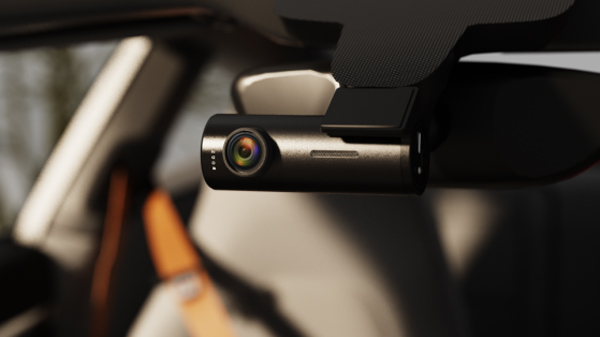
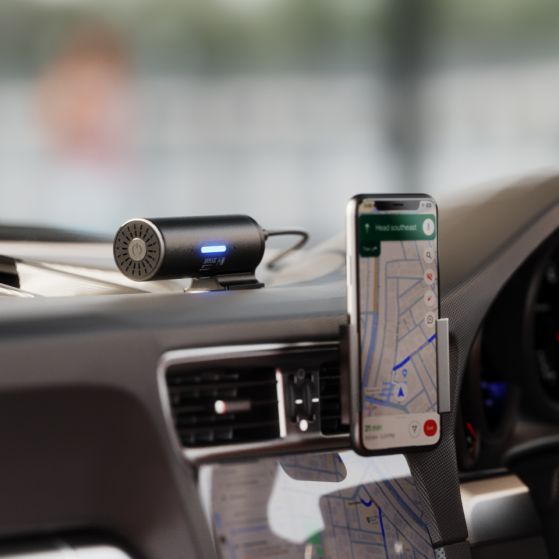
The compact size of the dashcam ensures it doesn’t obstruct the driver’s view, which is a crucial factor for safety.
Boult CruiseCam X1: Camera Quality
The CruiseCam X1’s video quality remains consistent across various lighting conditions, and the wide-angle lens covers a significant portion of the road.
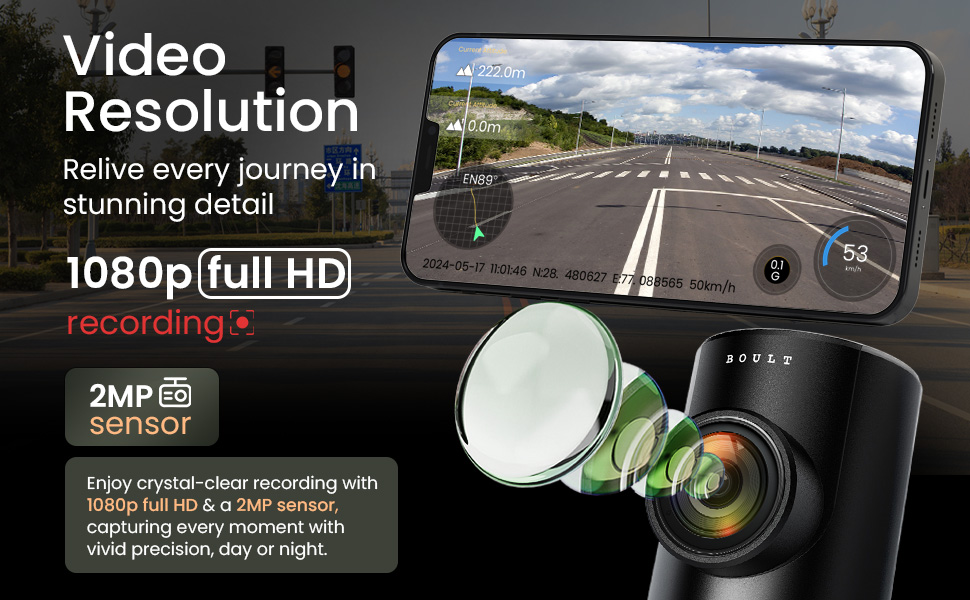
The dashcam boasts a 2-megapixel camera that supports 1080p full-HD video resolution.
The video quality is impressive, capturing clear and detailed footage both during the day and at night.
The 170-degree ultra wide-angle lens is excellent for reducing blind spots and covering more of the road, providing a comprehensive view of the surroundings.
Boult CruiseCam X1: Features and Functionality
CruiseCam X1 GPS variant, the added GPS logging feature is quite beneficial.
One of the standout features of the CruiseCam X1 is the in-built Wi-Fi functionality.
Connecting the dashcam to a smartphone via the Boult Cruise app is straightforward.
The app, available on both Google Play Store and App Store, offers features like journey tracking, quick access to recordings, and live streaming from within the vehicle.
The organised gallery within the app makes browsing recorded media a breeze.
For those opting for the CruiseCam X1 GPS variant, the added GPS logging feature is quite beneficial.
The compact size of the dashcam ensures it doesn’t obstruct the driver’s view, which is a crucial factor for safety.
It enables tracking of the vehicle’s speed and location, which can be particularly useful for fleet management or monitoring teenage drivers.
The GPS data integrates well with the app, offering a seamless user experience.
The in-built G-sensor for collision detection is another notable feature.
It automatically triggers emergency video recording upon detecting a collision, ensuring critical moments are captured and saved securely.
This could be invaluable in the event of an accident, providing crucial evidence.
Boult CruiseCam X1: Performance
The 360-degree rotational design is quite handy, allowing easy adjustment of the camera angle to suit various recording needs.
In terms of performance, the CruiseCam X1 delivers on its promises.
The video quality remains consistent across various lighting conditions, and the wide-angle lens covers a significant portion of the road.
The GPS variant’s logging capabilities worked accurately, and the app’s interface was user-friendlyand responsive.
However, one drawback is the lack of an included microSD card, which means an additional purchase is necessary to start using the dashcam right away.
Boult CruiseCam X1: Pricing and Availability
The Boult CruiseCam X1 is priced at Rs. 2,999, while the GPS variant is available for Rs. 3,999.
The Boult CruiseCam X1 is priced at Rs. 2,999, while the GPS variant is available for Rs. 3,999.
Given the features and build quality, the pricing is quite competitive.
The dashcam is available for purchase on Amazon, Flipkart, and the official Boult website.
Boult CruiseCam X1: Final Verdict
Boult claims its CruiseCam X1 can “revolutionise the way drivers monitor and record their journeys”
The Boult CruiseCam X1 series is a strong contender in the dashcam market.
With its high-quality video, wide-angle lens, and a host of useful features, it offers excellent value for money.
The addition of GPS logging in the X1 GPS variant makes it a great choice for those needing extra monitoring capabilities.
Overall, it’s a reliable and feature-rich dashcam that can significantly enhance the way drivers monitor and record their journeys.
However, the absence of an included microSD card is a minor inconvenience, requiring users to make an additional purchase before they can start using the device.
5 Reasons to Buy
The sleek aluminium chassis and 360-degree rotational design allow for durable construction
High-Quality Video: The Boult CruiseCam X1 offers 1080p full-HD video resolution, ensuring clear and detailed footage both during the day and at night.
Wide-Angle Coverage: Equipped with a 170-degree ultra wide-angle lens, the dashcam effectively reduces blind spots and covers more of the road.
Built-In Wi-Fi and App Support: Easily connect to your smartphone via the Boult Cruise app for journey tracking, live streaming, and quick access to recordings.
Durable and Adjustable Design: The sleek aluminium chassis and 360-degree rotational design allow for durable construction and flexible camera angles.
GPS Logging Feature: The X1 GPS variant tracks vehicle speed and location, integrating well with the app for a seamless user experience.
3 Reasons Not to Buy
GPS variant is priced higher at Rs. 3,999, which may be a consideration for budget-conscious buyersNot to Buy
No Included MicroSD Card: The dashcam does not come with a microSD card, necessitating an additional purchase before use.
Limited to 2-Megapixel Sensor: Despite its high video resolution, the camera’s 2-megapixel sensor might not meet the expectations of some users seeking higher megapixel counts.
Higher Price for GPS Variant: The GPS variant is priced higher at Rs. 3,999, which may be a consideration for budget-conscious buyers.
Boult CruiseCam X1: Products Images
FAQs
What is the video resolution of the Boult CruiseCam X1?
The Boult CruiseCam X1 offers 1080p full-HD video resolution, ensuring clear and detailed footage both day and night.
Does the Boult CruiseCam X1 have Wi-Fi capabilities?
Yes, the dashcam features in-built Wi-Fi, allowing users to connect to their smartphones via the Boult Cruise app for journey tracking, quick access to recordings, and live streaming.
What additional features does the CruiseCam X1 GPS variant offer?
The X1 GPS variant includes GPS logging, which tracks the vehicle’s speed and location, integrating seamlessly with the app for an enhanced user experience.
What type of lens does the Boult CruiseCam X1 use?
The dashcam is equipped with a 170-degree ultra wide-angle lens, reducing blind spots and providing a comprehensive view of the surroundings.
Is a microSD card included with the Boult CruiseCam X1?
No, the dashcam does not come with a microSD card, so users will need to purchase one separately to start using the device.
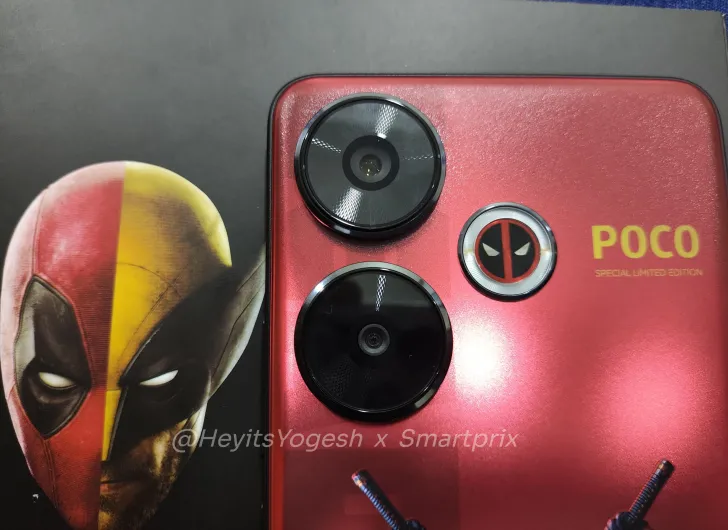
Design: Deadpool and Wolverine accents on the back
Camera: Dual-lens system with Deadpool insignia around the flash
Possible Specifications
POCO Deadpool Edition is expected to be available in limited quantities
While official details are yet to be confirmed, Smartprix suggests this could be a special edition of the POCO F6.
If so, potential features might include:
Display: 6.67-inch AMOLED screen with 120Hz refresh rate
Processor: Qualcomm Snapdragon 8s Gen 3
Memory: 12GB RAM and 512GB storage
Camera: 50MP main sensor and 8MP ultra-wide lens
Battery: 5,000mAh with 90W fast charging
Following the recent trend of special edition smartphones, this POCO Deadpool Edition is expected to be available in limited quantities.
It will likely come in special packaging to appeal to collectors and fans alike.
A Unique Collaboration
Features Deadpool and Wolverine-themed design elements
This partnership between POCO and Marvel showcases the growing trend of collaborations between tech companies and entertainment franchises.
It offers fans a unique way to show their love for both smartphones and superheroes.
With the official announcement just around the corner, fans and tech enthusiasts alike are eagerly waiting to learn more about this exciting new device.
Whether you’re a Deadpool fan, a smartphone enthusiast, or both, July 26th is a date to mark on your calendar.
Stay tuned for more details as POCO gets ready to unveil this mystery Deadpool-themed smartphone!
FAQs
When is the POCO F6 Deadpool Edition launching?
The POCO F6 Deadpool Edition is set to launch on July 26th in India, with sales expected to start in early August.
What is unique about the design of the POCO F6 Deadpool Edition?
The phone features a crimson red color, Deadpool and Wolverine accents, and a dual-lens camera system with the Deadpool insignia around the flash.
What are the expected specifications of the POCO F6 Deadpool Edition?
While official specs are yet to be confirmed, it is rumored to include a 6.67-inch AMOLED display with a 120Hz refresh rate, a Snapdragon 8s Gen 3 processor, 12GB RAM, 512GB storage, a 50MP main camera, and a 5,000mAh battery with 90W fast charging.
Will the POCO F6 Deadpool Edition be available in limited quantities?
Yes, the POCO F6 Deadpool Edition is expected to be a limited edition release, likely featuring special packaging to appeal to collectors and fans.
Why is POCO collaborating with Marvel for this edition?
This collaboration between POCO and Marvel showcases the growing trend of tech companies partnering with entertainment franchises, offering fans a unique way to express their love for both smartphones and superheroes.
Basic customs duty on mobile phones and PCBs reduced from 20% to 15%
Move aimed at making smartphones and accessories more affordable
Expected to enhance India’s mobile manufacturing and export capabilities
Industry leaders praise the decision for boosting competitiveness
In a move that has sent ripples through India’s tech industry, the Union Budget 2024 has proposed a significant reduction in the basic customs duty (BCD) on imported mobile phones, printed circuit board assemblies (PCBAs), and mobile chargers.
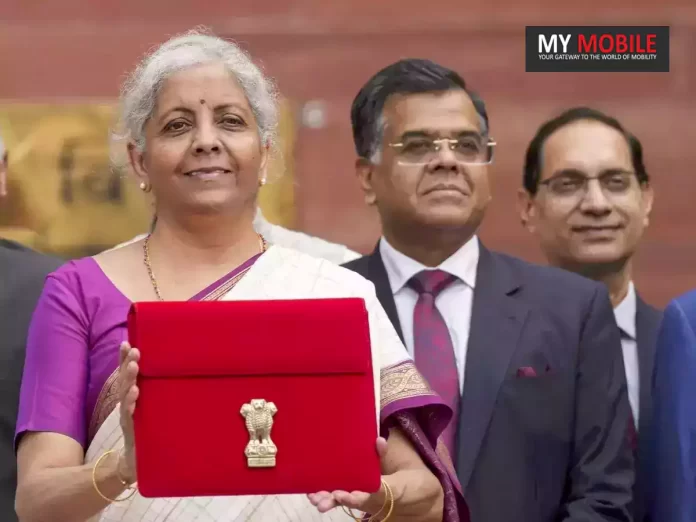
This decision, announced by Finance Minister Nirmala Sitharaman, marks a pivotal shift in the government’s approach to the mobile technology sector.
The reduction of BCD from 20% to 15% is being hailed as a consumer-friendly measure, potentially making smartphones and accessories more affordable.
However, the implications of this decision extend far beyond just price tags.
“With a three-fold increase in domestic production and almost a 100-fold jump in exports of mobile phones in the last six years, the Indian mobile industry has matured. In the interest of consumers, I now propose to reduce the basic customs duty (BCD) on mobile phone, mobile PCBA, and mobile chargers to 15%,” Sitharaman said while presenting the Union Budget 2024-25 in Parliament.
A Maturing Mobile Ecosystem
Cuts to Customs Duty on Mobile Phones and PCBs Will Boost India’s Tech Industry
This policy shift reflects the government’s recognition of India’s rapidly maturing mobile phone industry.
Over the past six years, we’ve witnessed a remarkable transformation – domestic production has tripled, and mobile phone exports have skyrocketed by an astounding 100-fold.
“To increase value addition in the domestic electronics industry, I propose to remove the BCD, subject to conditions, on oxygen-free copper for manufacture of resistors. I also propose to exempt certain parts for the manufacture of connectors,” Sitharaman said.
“I propose to undertake a comprehensive review of the rate structure over the next six months to rationalise and simplify it for ease of trade, removal of duty inversion and reduction of disputes,” added the finance minister.
Arijeet Talapatra, CEO, Transsion India said, ”Transsion India welcomes the Ministry of Finance’s decision to reduce the basic customs duty from 20% to 15% on mobile phones, mobile PCBA, and chargers. This policy change will significantly benefit both manufacturers and consumers, fostering a more competitive smartphone market and strengthen our position in the global market. This move will undoubtedly bolster the industry’s growth making smartphones more affordable and we remain committed to the ‘Make-in-India’ initiative to bring the best-in-class smartphones to the ever-evolving Indian market.”
The customs duty reduction is a strategic move that acknowledges this progress while also aiming to further boost the sector. It’s a delicate balancing act – supporting domestic manufacturing while also ensuring that Indian consumers have access to the latest global technologies at competitive prices.”
Pankaj Mohindroo, Chairman, ICEA said “We would like to congratulate the government for this landmark budget. We are impressed with its intent and direction focusing on enhancing manufacturing and export competitiveness. Hon’ble Finance Minister has also acknowledged the tremendous growth of mobile phone manufacturing and exports.
We had recommended to reduce BCD on mobile phones, its PCBA and Charger/Adapter 15%, which has been accepted. The mobile and electronics industry is elated with the announcements and will go a long way to enhance manufacturing, exports and our competitiveness. Our proposal for tariff slab rationalisation, as has also been acknowledged and Hon’ble FM has announced that it will be taken up in the next six month, will further embolden the industry and its competitiveness.”
Industry Reactions and Expectations
Basic customs duty on mobile phones and PCBs reduced from 20% to 15%
The response from industry leaders has been overwhelmingly positive.
Executives from major tech companies see this as an opportunity to enhance India’s position in global value chains and attract more large-scale manufacturing operations.
“We welcome the Budget 2024 announcement to reduce BCD on mobile phones, PCBA and chargers, while simultaneously extending exemptions on inputs/raw materials for smartphone manufacturing, capital goods, and inputs for capital goods in the electronics industry.
At Xiaomi India, we have been manufacturing nearly 100% of our smartphones locally with a strong emphasis on sourcing components like PCBA, charging cables, camera modules, and mechanics, among others. Today’s announcement will help further strengthen the domestic electronics manufacturing ecosystem.
The proposal for a comprehensive review of the tariff rate structure is another positive step that will further strengthen the industry.
We appreciate the government’s emphasis on increasing women’s participation in the workforce and the employment-linked incentives for first-time employees. With these progressive steps, we anticipate a surge in consumer spending, including increased demand for smartphones.” said, Mr. Muralikrishnan B, President at Xiaomi India.
Mr. Amit Khatri, Co-Founder, Noise chimed in as well. “The Union Budget 2024 presented by Finance Minister Nirmala Sitharaman is a visionary step towards inclusive growth, with a strong emphasis on manufacturing, upskilling, and women empowerment. Youth and participation of women in the workforce hold the key to India’s success.
To this end, the focus on extensive training and skill development initiatives demonstrates a clear commitment to boosting employability and productivity. By linking job creation in manufacturing to first-time workers and offering EPFO incentives, the government is paving the way for a robust manufacturing ecosystem, creating 4 crore jobs over the next five years.
It is certainly a commendable initiative to boost local manufacturing. Additionally, offering internship opportunities in the top 500 companies to 1 crore youth is a strategic move that will equip our young population with the skills and experience necessary to thrive in a competitive global economy.
The establishment of e-commerce export hubs in a PPP model is another significant step taken by the government and will significantly empower MSMEs and traditional artisans to compete internationally. It will open opportunities for Indian players to boost their reach globally while enhancing the ease of doing business and accessing new markets. India has long been an attractive consumer market for international brands, supported by our collaborative and business-friendly policies that enable seamless operations. The export hubs are an efficient step in unlocking similar avenues for homegrown companies, allowing a global stage for their innovation and entrepreneurial mindset, and strengthening India’s position in manufacturing.
Lastly, I feel the abolition of the angel tax will undoubtedly boost funding in the startup ecosystem, fueling innovation and growth. This move, along with incentives for job creation in the manufacturing sector and support for MSMEs, will not only stimulate valuable employment opportunities for millions of young people but also ensure economic resilience, laying a strong foundation for a powerful growth trajectory for India. Driven by the vision of Viksit Bharat, we look forward to actively participating in the nation’s journey towards global prominence and innovation leadership,” he said.
Budget 2024-25: Sitharaman proposes BCD reduction to 15% on phones Read more at: https://telecom.economictimes.indiatimes.com/news/policy/budget-2024-25-sitharaman-proposes-bcd-reduction-to-15-on-phones-mobile-pcba-chargers/111951000
This move will not only benefit manufacturers but also lead to a more competitive smartphone market, potentially driving innovation and improving quality.
Moreover, there’s anticipation that this policy change could catalyze growth in smartphone adoption, particularly in the mid-range and budget segments.
The potential for more affordable 5G devicescould accelerate the transition from feature phones to smartphones, a crucial step in India’s digital transformation journey.
Bipin Gupta, Product Manager, EZVIZ also commented on the same claiming, “The 2024 Union Budget brings hopeful developments for the smart home security sector. As a global leader in smart home solutions at EZVIZ, we are encouraged by the government’s focus on enhancing infrastructure and consumer spending.
The increase in the standard deduction to Rs 75,000 and the revised tax slabs—where individuals earning up to Rs 3 lakh will pay no tax, and those earning between Rs 3 lakh to Rs 7 lakh will benefit from a 5% tax rate—are likely to increase disposable income. This, in turn, could drive greater adoption of smart home technologies as consumers will have more flexibility to invest in such solutions.
The allocation of Rs 50,000 crore towards infrastructure development will also improve urban and residential environments, creating new opportunities for integrating advanced security systems in both new and existing properties. We at EZVIZ look forward to leveraging these positive changes to continue offering cutting-edge products that enhance safety and convenience for families worldwide.”
Challenges and Considerations
Expected to enhance India’s mobile manufacturing and export capabilities
“The government’s decision to reduce the Basic Customs Duty on mobile phones, PCBs, and chargers to 15% marks a pivotal moment for our technology sector. This strategic move recognises the significant maturation of the Indian mobile industry in recent years and is set to attract global value chains to our shores, enabling large-scale manufacturing operations,” CP Khandelwal, Joint Managing Director – HTech, said in a statement.
Navkendar Singh, Analyst with IDC said in a statement, “This can possibly rationalise the prices, especially in the mass segments like below Rs 25,000 and give growth in domestic consumption of phones. We would love to see some price reduction below the Rs 12-13k segment to give a boost to more 5G device uptake and possibly see a 5G device below Rs 8k, which can certainly help get the market on a growth track by getting feature phone to smartphone migration at entry level”
He added that the move could “possibly give some boost for expansion to device manufacturing in India for exports. Since it will be cheaper to import PCBA, etc, it can lead to more volumes being produced in India.”
Prabhu Ram, VP – Industry Research Group, CyberMedia Research (CMR) said, “The reduction of basic customs duty on smartphone parts to 15 per cent is a pivotal step in deepening India’s smartphone manufacturing capabilities. This move is anticipated to further bolster local assembly, attract global investments, and position India as a global smartphone manufacturing hub.”
“In the lower price segments, we may not see this as in these price segments, the margins are very low. However, this could be savings for OEMs who are importing CBU (Completely Built Units), especially Apple or new entrants who do not have manufacturing set up yet, or OEMs importing super-premium models such as foldables though in few quantities,” said Prachir Singh, Senior Analyst at Counterpoint.
While the industry’s response is enthusiastic, some questions remain.
Industry leaders praise the decision for boosting competitiveness
Will the cost benefits be passed on to consumers, or will they be absorbed by manufacturers to offset other expenses?
How will this impact the domestic component manufacturing ecosystem, which has been steadily growing under the previous tariff structure?
There’s also the broader question of how this fits into India’s long-term strategy for tech self-reliance.
While lower import duties can boost consumption and potentially increase export volumes, balancing this with the need to develop a robust domestic supply chain will be crucial.
As we move forward, it will be interesting to see how this policy change shapes the mobile tech landscape in India.
Could it position India as a more attractive destination for global tech giants to set up manufacturing hubs?
“On the overall electronics manufacturing, the government has focused on a very key area, which is upskilling. Announcements regarding upskilling shows the government intent to grow high-skilled labor force and will help the electronics manufacturing sector securing high-skilled local talent,” Counterpoint’s Singh said.
According to V Veerappan, Chairman, India Electronics and Semiconductor Association (IESA), the budget allocation of Rs 1 lakh crore to support commercial private-sector research will serve as a critical impetus for the sustained momentum of the electronics and semiconductors sector, as well as for R&D, innovation, and technological advancement.
The reduction of BCD from 20% to 15% is being hailed as a consumer-friendly measure
One thing is clear – this move signals the government’s commitment to adapting its policies to the evolving needs of both the industry and consumers.
Mayank Arora, Director at Nangia & Co., said that the reduction in BCD exudes confidence in the domestic manufacturing capability of the Indian mobile phone manufacturing ecosystem, which has benefited through multiple fiscal interventions such as M-SIPS, SPECS and PLI Schemes. “BCD on key parts of resistors and capacitors is a positive step, and the Industry has been seeking it since the introduction of SPECS,” he added.
As India continues its journey towards becoming a global tech powerhouse, such nimble policy adjustments will be key to navigating the complex interplay of domestic growth, global competitiveness, and consumer welfare.
The true impact of this decision will unfold in the coming months and years.
For now, it represents a promising step towards a more vibrant and competitive mobile technology ecosystem in India.
Jugul Thachery, Founder & CEO, HOGR said, “The Union budget introduces promising measures for the startup ecosystem, including the removal of the angel tax, which had earlier posed challenges for emerging businesses. As an early-stage startup founder, this change can be transformative by enabling angel investments, enhancing capacities to innovate, attract talent, and scale our vision, fostering a vibrant startup ecosystem where bold ideas can flourish and contribute to the economy.
The government has taken another impactful step to strengthen data governance through the Digital India Mission, which emphasizes the collection, processing, and management of data leveraging advanced technology tools. This strategy promises to benefit many industries and open new avenues for data management. By leveraging these technologies, the food discovery segment for instance, has already witnessed significant traction, particularly in personalizing experiences using data. We are now confident that we will see greater impact in the near future.
Overall, we anticipate that these measures will create a more supportive environment for startups and contribute to a dynamic and thriving business landscape.”
FAQs
What is the new customs duty rate for mobile phones and PCBs?
The basic customs duty on mobile phones, PCB assemblies, and chargers has been reduced from 20% to 15% as per the Union Budget 2024.
How will this customs duty cut benefit consumers?
This reduction is expected to make smartphones and accessories more affordable for consumers by lowering the overall cost of imported components.
What impact will this have on India’s mobile phone industry?
The reduced customs duty is anticipated to boost domestic manufacturing, increase exports, and attract more global investments into India’s mobile phone industry.
What did industry leaders say about the customs duty reduction?
Industry leaders have welcomed the decision, stating it will enhance the competitiveness of Indian manufacturers, foster innovation, and support the ‘Make in India’ initiative.
Will this policy change affect smartphone prices in India?
While it is expected to lower costs for manufacturers, whether these savings will be passed on to consumers in the form of lower smartphone prices remains to be seen.