Home Blog Page 20

iPhone Fold Tipped to Feature Wider-Than-Tall Inner Display When Unfolded

0

Highlights

  • The iPhone Fold is tipped to feature an inner display that is wider than tall when unfolded, resembling the aspect ratio of Apple’s largest iPads.
  • It is expected to have a 5.3-inch outer screen and a 7.7-inch inner screen, with selfie cameras on both displays.
  • Reports suggest a launch price between $2,000–$2,500, making it about twice as expensive as an iPhone Pro model.
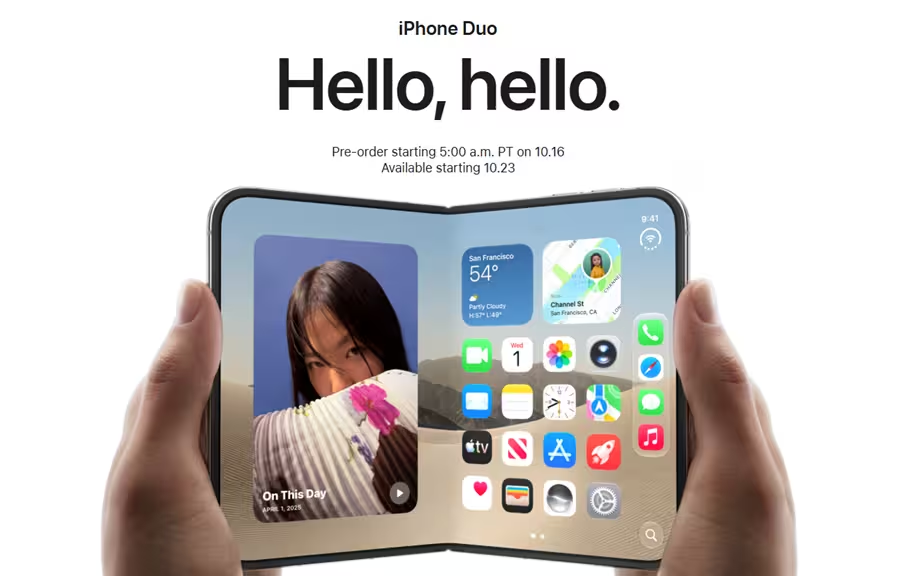
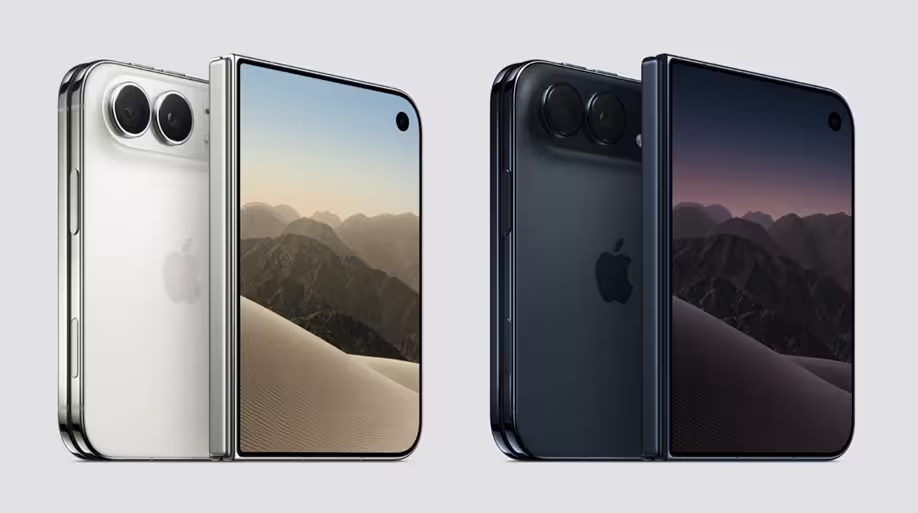
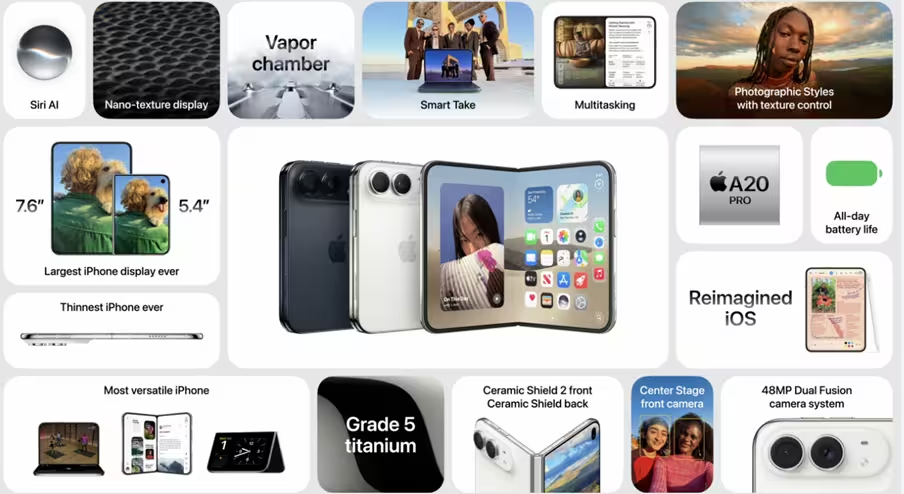
A concept image of the future iPhone Fold. (Credit - 9to5Mac)
A concept image of the future iPhone Fold. (Credit – 9to5Mac)

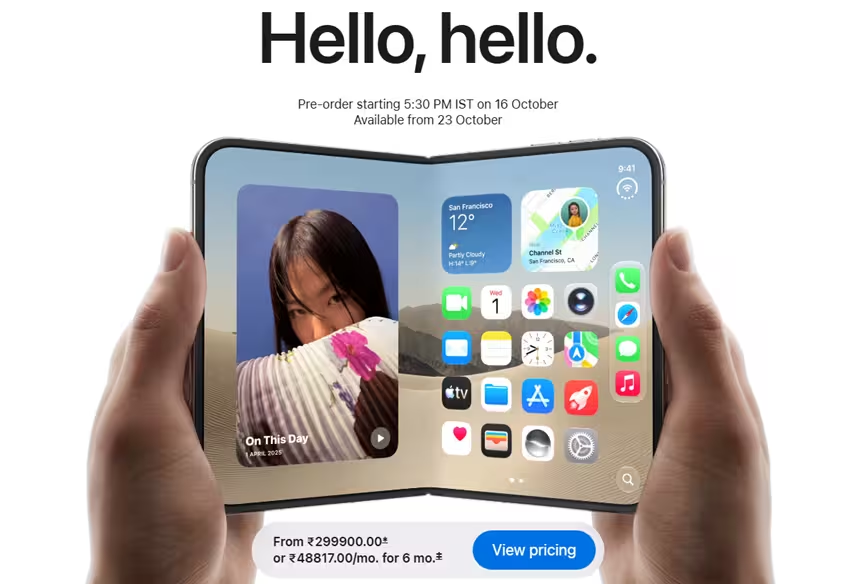
We all know this is the time of the year when all rumours about the next flagship iPhone lineup peak. In the meantime, a new report suggests the much-awaited iPhone Fold could stand out with an unusual form factor. According to the report, the foldable iPhone will feature an inner display that is wider than it is tall when unfolded. Here’s what we know so far.

iPhone Fold Display Shape May Mirror Apple’s Largest iPads

Several key specifications of the iPhone Fold were previously revealed by well-known Weibo tipster Digital Chat Station (DCS). Soon after, a detailed report from The Information outlined Apple’s broader iPhone roadmap for the coming years, confirming many of DCS’s claims while adding more insight into the foldable iPhone’s display dimensions and aspect ratio.

 Tipster DCS’s post on Weibo. (Translated via Google Translate)
Tipster DCS’s post on Weibo. (Translated via Google Translate)

Both sources point to an outer display measuring around 5.3 inches, paired with a larger inner display of approximately 7.7 inches. The device is expected to include selfie cameras on both the external and internal screens. According to DCS, Apple will opt for a punch-hole camera on the outer display, replacing the Dynamic Island with a single circular cutout.

The most notable detail from the new report is that these dimensions will result in an inner display that is described as “more wide than tall.” This would differentiate Apple’s foldable from current foldable smartphones in the US market.

Wayne Ma and Qianer Liu (for The Information) write, “Unlike other foldable phones made by Samsung and Google, Apple’s product will have an aspect ratio similar to that of Apple’s largest iPads when viewed in landscape mode, meaning it will be more wide than tall when unfolded. When closed, the phone will have a display that measures around 5.3 inches. When unfolded, it will sport a larger, 7.7-inch display. As on the iPhone 18 Pro models, a single selfie camera will be embedded in the top-left corner of the device, along with light, proximity and other sensors.”

As 9to5Mac highlights, Apple’s main smartphone rivals are Samsung and Google, both currently offer foldable devices that remain taller than they are wide, even when unfolded. For reference, the Galaxy Z Fold 7 measures 6.24” H × 5.64” W × 0.17” D, while the Pixel 10 Pro Fold comes in at 6.1” H × 5.9” W × 0.2” D.

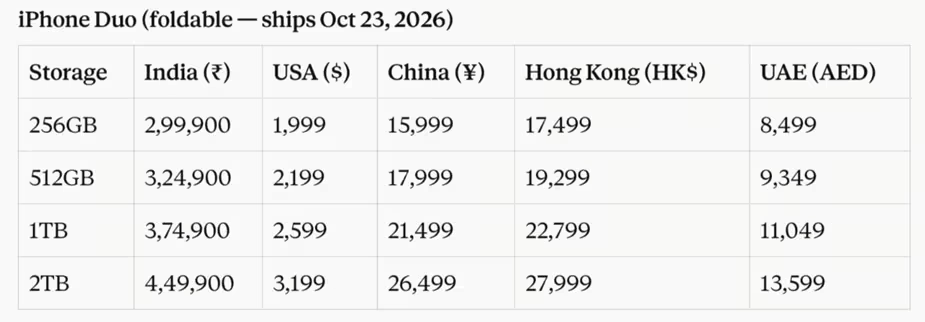
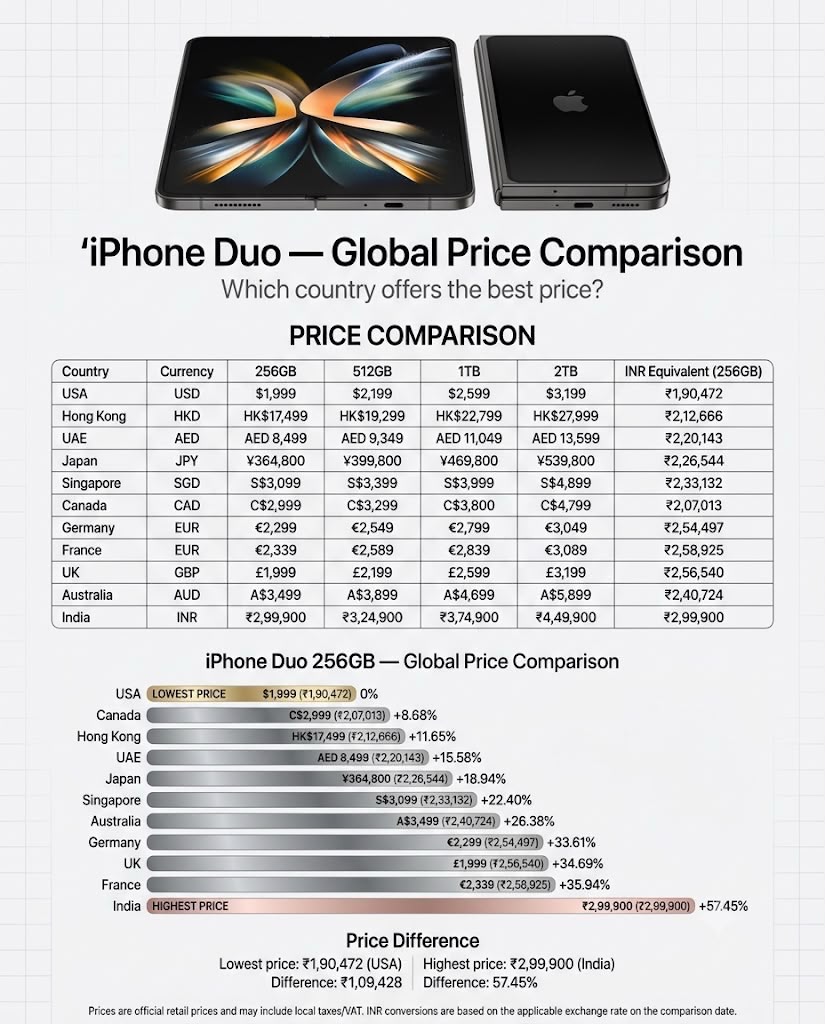
In terms of pricing, various reports have suggested a wide range, starting at around $1,800 and going up to $2,500. However, the general consensus places the expected price between $2,000 and $2,500.

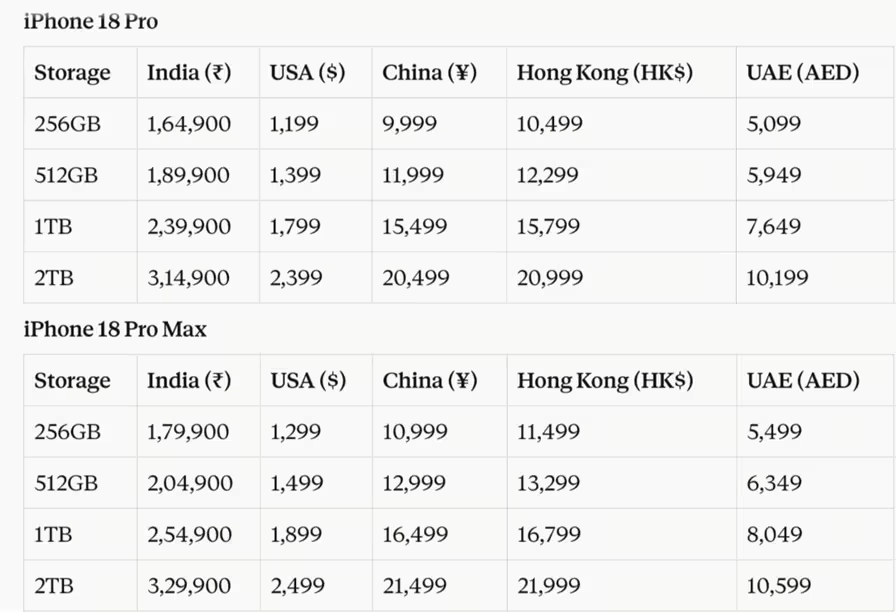
At this price point, the iPhone Fold would cost roughly twice as much as an iPhone Pro model.

FAQs

Q1. What is unique about the iPhone Fold’s inner display?

Answer. The iPhone Fold will feature an inner display that is wider than tall when unfolded, resembling the aspect ratio of Apple’s largest iPads.

Q2. What are the expected display sizes of the iPhone Fold?

Answer. Reports suggest a 5.3-inch outer screen and a 7.7-inch inner screen, with selfie cameras on both displays.

Q3. How much will the iPhone Fold cost?

Answer. Pricing is expected to range between $2,000 and $2,500, roughly twice the cost of an iPhone Pro model.

Also Read

https://www.mymobileindia.com/idc-predicts-iphone-fold-will-be-game-changer-in-2026-as-foldable-market-set-for-30-growth/

https://www.mymobileindia.com/apple-iphone-folds-hinge-may-be-cheaper-than-expected-says-kuo/

Apple Planning Eight New iPhones Over Next Two Years Including iPhone Fold and iPhone 20: Report

0

Highlights

  • Apple plans the iPhone 17e, iPhone 18 Pro/Pro Max and the long‑rumoured iPhone Fold for 2026.
  • Its 2027 Lineup includes the standard iPhone 18, iPhone 18e and a redesigned iPhone Air 2 with possible dual cameras and lower pricing.
  • Apple is developing the iPhone 20 for in fall 2027 to mark the iPhone’s 20th anniversary.
 At least 8 new iPhone models are in development for 2026 and 2027. (Image credit - Apple)
At least 8 new iPhone models are in development for 2026 and 2027. (Image credit – Apple)

Apple is reportedly working on at least eight new iPhone models that are expected to launch between 2026 and 2027. According to a new report from The Information, the company has an ambitious product roadmap that includes everything from incremental updates to major design changes, along with long-rumoured devices such as the iPhone Fold and the iPhone 20. Here’s what we know based on the recent report.

Apple’s 2026 iPhone Roadmap

 iPhone 16e. (Image credit - Apple)
iPhone 16e. (Image credit – Apple)

The latest report claims that Apple will kick things off with the iPhone 17e, which is expected to arrive in spring 2026. This model is described as an “incremental update” over the iPhone 16e and will feature Apple’s latest C1X modem. Notably, the iPhone 17e is expected to bring back magnetic wireless charging. As per the report, the device “will feature a glass back that supports magnetic wireless charging, one of the features consumers missed most on the iPhone 16e.” While the current iPhone 16e supports standard Qi charging, it does not offer magnetic charging.

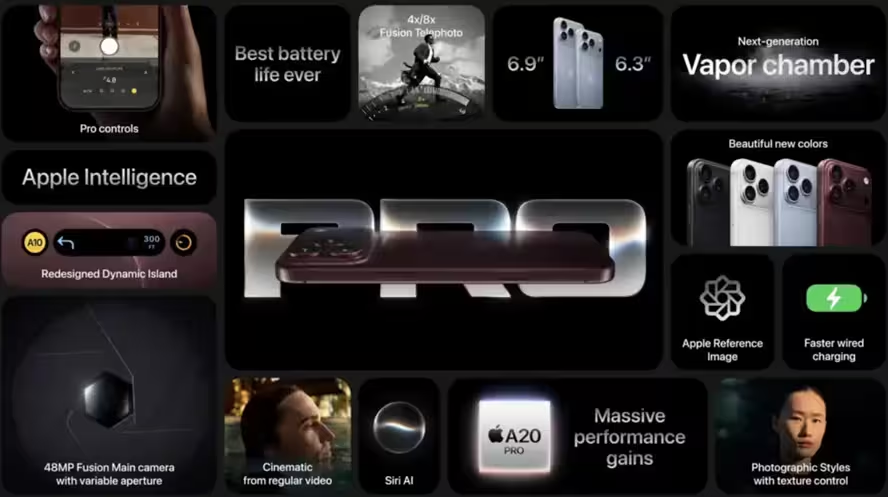
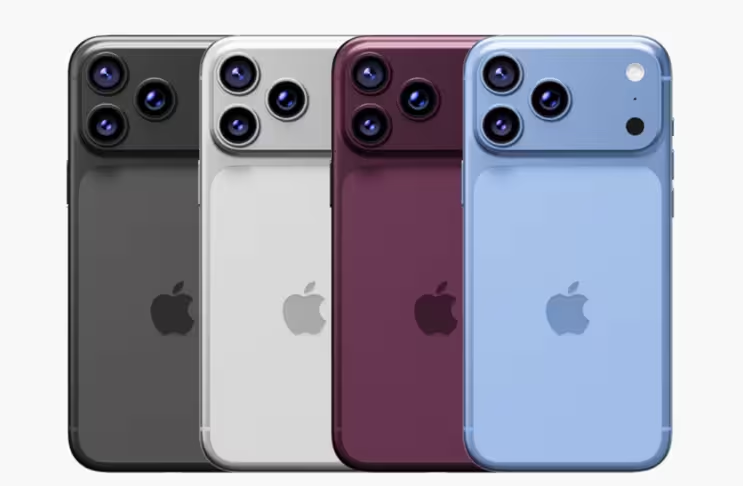
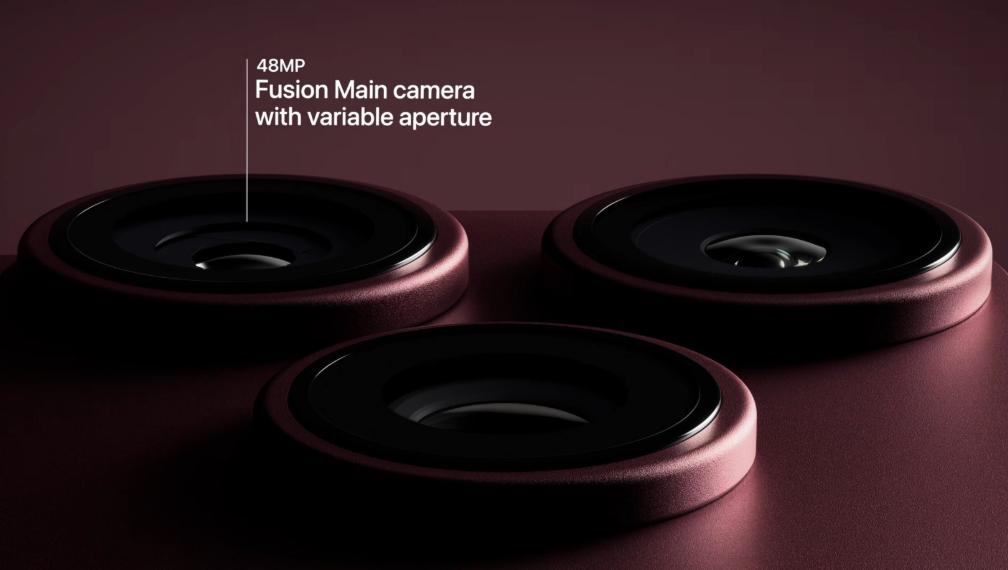
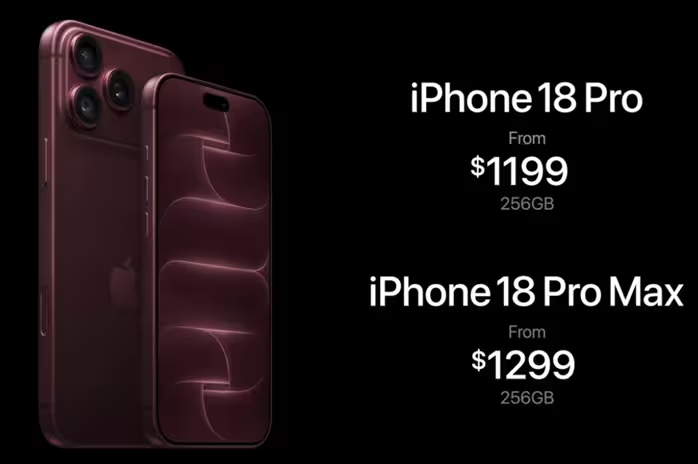
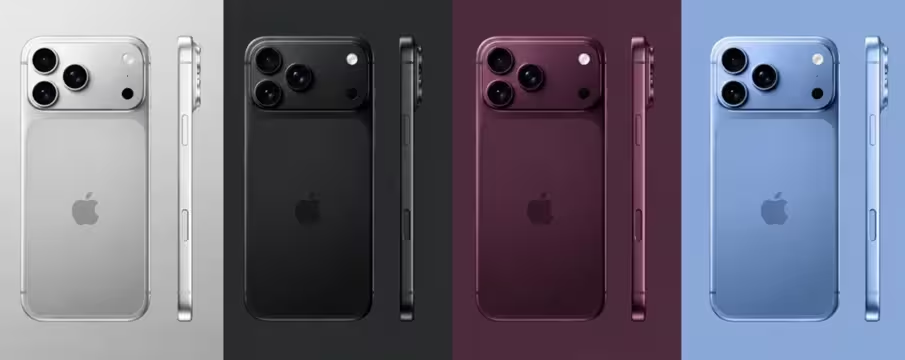
Later in fall 2026, Apple is said to introduce the iPhone 18 Pro and iPhone 18 Pro Max. These flagship models are expected to debut under-display Face ID technology, while the front-facing camera will be moved to the top-left corner of the display, in line with earlier reports. The iPhone 18 Pro lineup will also reportedly include a mechanical aperture on at least one camera. “This will allow inclusion of a new camera image sensor that can capture more light at night while preventing washed-out photos during the day,” the report states.

In terms of design, the iPhone 18 Pro models “will be similar to that of the iPhone 17 Pro. Internally, the devices are expected to use a new chip technology from TSMC that “puts the memory chips closer to the iPhone’s core processor,potentially improving performance and efficiency.

Another major highlight of Apple’s roadmap is the iPhone Fold, which is currently targeted for a fall 2026 launch. According to the report, the foldable iPhone will feature a 7.7-inch display when unfolded, offering an aspect ratio similar to an iPad. When folded, the screen size will shrink to 5.3 inches. The device will be “more wide than tall when unfolded,” the report adds, though it also notes that “one person involved in the project cautioned that the size of the displays could change.”

During development and trial production, Apple is reportedly facing challenges with the foldable display. The Information stated that the company is “encountering a high level of defects.” However, this is described as “to be expected at this stage.” The selfie camera on the iPhone Fold is said to be positioned in the upper-left corner of the display, alongside light, proximity, and other sensors.

Apple’s 2027 iPhone Roadmap

 standard iPhone 17. (Image credit - Apple)
standard iPhone 17. (Image credit – Apple)

Looking ahead to spring 2027, Apple is said to be preparing the standard iPhone 18, which is again described as an “incremental update.” One of the key changes mentioned in the report is the removal of haptic feedback and touch sensing from the Camera Control feature, as previously reported.

The iPhone 18e is also expected to launch in spring 2027. According to The Information, “We don’t know much about changes to this new budget iPhone model, except that it will have wireless charging as its predecessor did.”

Apple is also continuing work on the iPhone Air 2, which is reportedly planned for spring 2027. The report says Apple has gone “back to the drawing board and redesigning the iPhone Air because of the first model’s poor sales.” The company is “considering” adding a second rear camera and reducing the price to make the device more appealing.

Finally, Apple is said to be developing the iPhone 20, which is expected to launch in fall 2027 to mark the iPhone’s 20th anniversary. Bloomberg had previously reported that Apple is planning a bold new design for the milestone model, noting that it will “make more extensive use of glass.”

The Information report reads, “The curved glass enclosure on the front and back and along all four edges will enable a screen without the black frame that typically appears along the edges of smartphone displays. It couldn’t be learned if the display itself will curve around the edges. Instead of a full metal frame, there’s only a narrow metal band running around the midpoint of the device’s edge, where the buttons sit. Apple plans to place the phone’s selfie camera under the display, making it the first iPhone with a full edge-to-edge display and no cutouts.

Based on everything revealed in the latest reports, it is clear that Apple’s iPhone lineup is expected to undergo a big shakeup in the next two years. While fans would definitely be excited for most of the models, we are especially looking forward to what Apple does with the iPhone 20, commemorating iPhone’s 20th anniversary. Anyhow, we still have some time for that and we may get more updates in the future.

FAQs

Q1. How many new iPhones is Apple planning to launch?

Answer. Apple is reportedly working on at least eight new iPhone models between 2026 and 2027.

Q2. What are the highlights of the 2026 iPhone lineup?

Answer. The lineup includes the iPhone 17e (spring, with magnetic wireless charging), iPhone 18 Pro/Pro Max (fall, with under‑display Face ID and mechanical aperture camera), and the long‑rumored iPhone Fold with a 7.7‑inch unfolded display.

Q3. What changes are expected in the 2027 iPhone models?

Answer. Apple plans the iPhone 18 (incremental update), iPhone 18e (budget model with wireless charging), and a redesigned iPhone Air 2 with possible dual cameras and lower pricing.

Q4. What is special about the iPhone 20?

Answer. The iPhone 20, expected in fall 2027, will mark the iPhone’s 20th anniversary and feature a bold new design making extensive use of glass.

Also Read

https://www.mymobileindia.com/apple-to-eliminate-physical-buttons-with-advanced-haptic-controls-in-upcoming-iphone-20/

https://www.mymobileindia.com/idc-predicts-iphone-fold-will-be-game-changer-in-2026-as-foldable-market-set-for-30-growth/

Apple Explores iPhone Chip Assembly and Packaging in India, Report Says

0

Highlights

  • Apple is in early talks with Indian semiconductor firms to explore iPhone chip assembly and packaging locally.
  • Display-related components like driver ICs are the most likely candidates, as Apple currently relies on suppliers in South Korea, Taiwan, and China for these.
  • The plan aligns with Apple’s broader push to diversify production away from China.

image

Caption – (Photo by Alexander Schimmeck on Unsplash)

Apple is reportedly in early-stage discussions with Indian semiconductor firms to assemble and package certain iPhone components in the country. According to a report by The Economic Times on Wednesday, citing people familiar with the matter, this marks the first time Apple has considered chip assembly and packaging operations in India.

The report notes that while it is not yet clear which specific chips could be handled locally, display-related chips are the most likely candidates.

Apple has held talks with Murugappa Group-owned CG Semi, which is currently setting up an outsourced semiconductor assembly and test (OSAT) facility in Sanand, Gujarat.

Responding to the report, CG Semi told The Economic Times that it does not comment on market speculation or discussions involving specific customers. “We will make appropriate disclosures as and when there is something concrete to share,” the company was quoted as saying.

The Economic Times reports highlights Apple sources its iPhone OLED panels from Samsung Display, LG Display, and BOE. Meanwhile, display driver integrated circuits (DDICs) are supplied by companies such as Samsung, Novatek, Himax, and LX Semicon, “which primarily depend on South Korean, Taiwanese or China-based units for getting chips manufactured and packaged.”

If the discussions lead to a formal agreement, it would further strengthen Apple’s growing manufacturing footprint in India. The country has increasingly become central to Apple’s strategy as it diversifies production away from China, with India already serving as a key assembly hub for iPhones.

The development also comes during a busy period for India’s semiconductor sector. Earlier this week, Intel announced a partnership with Tata Electronics, highlighting rising momentum in domestic chip manufacturing and packaging initiatives.

CG Semi’s planned ₹7,600 crore OSAT facility has backing from both central and state governments under the India Semiconductor Mission. The initiative aims to position India as a global hub for semiconductor and display manufacturing.

Apple has previously stated its intention to manufacture most iPhones sold in the United States at Indian facilities by the end of 2026. The company has accelerated these plans to mitigate risks linked to potential tariff increases in China, its primary manufacturing base. Reuters reported in April that the US administration imposed 26% import duties on goods from India, significantly lower than the more than 100% tariffs applied to Chinese imports at the time. While Washington has since paused most of these duties for three months, the higher tariffs on China remain in place.

FAQs

Q1. What is Apple exploring in India?

Answer. Apple is in early talks with Indian semiconductor firms to assemble and package iPhone components, marking its first such initiative in the country.

Q2. Which chips are most likely to be handled locally by Apple?

Answer. While specifics aren’t confirmed, display-related chips such as display driver ICs are the most likely candidates.

Q3. Why is Apple considering chip packaging in India?

Answer. The move would strengthen Apple’s manufacturing footprint in India, diversify production away from China, and align with India’s government-backed semiconductor mission amid global tariff pressures.

Also Read

https://www.mymobileindia.com/apple-releases-ios-26-2-for-iphone-with-liquid-glass-ui-tweaks-apple-music-upgrades-and-new-safety-features/

https://www.mymobileindia.com/apple-fitness-debuts-in-india-subscription-price-free-trial-supported-devices-and-key-features-explained/

Moto G Power (2026) Launched With 6.8-inch 120Hz Display, IP68/IP69 Protection and Military-Grade Build

0

Highlights

  • Moto G Power (2026) launched for sale starting on January 8, 2026 in the US at $299.99 and in Canada at CAD 449.99.
  • The phone will be available via Motorola, Best Buy, Amazon, Verizon, and later through multiple carriers.
  • Key Specs – 6.8‑inch FHD+ 120Hz display, MediaTek 6300 chipset, 8GB RAM, 128GB storage, 5200mAh battery with 30W fast charging, triple rear camera setup led by a 50MP and 32MP selfie camera.
 Moto G Power (2026) launched in the US Market. (Image credit - Motorola)
Moto G Power (2026) launched in the US Market. (Image credit – Motorola)

Motorola has officially introduced the Moto G Power (2026) for the US market, expanding its mid-range G series lineup. The new model arrives as the successor to last year’s Moto G Power. Here’s everything you need to know about the new model, starting with its price and availability.

Moto G Power (2026) – Pricing and availability

The Moto G Power (2026) is available in Evening Blue and Pure Cashmere colour options. In the US, it is priced at USD 299.99 (approximately Rs. 27,290). Sales begin on January 8 with availability through Best Buy, Amazon.com, and motorola.com as an unlocked device.

The smartphone will also go on sale at Verizon on the same date, followed by availability at Cricket Wireless, Tracfone, Visible, Total Wireless, Straight Talk, Simple Mobile, and AT&T in the coming months.

In Canada, the Moto G Power (2026) will be available starting January 8 via motorola.ca with an MSRP of CAD 449.99.

 Moto G Power (2026) colours. (Image credit - Motorola)
Moto G Power (2026) colours. (Image credit – Motorola)

Moto G Power (2026) – Key Features

The newly unveiled Moto G Power (2026) features a large 6.8-inch FHD+ display with a 120Hz refresh rate, ensuring fluid scrolling and an immersive viewing experience. The panel supports a brightness mode of up to 1,000 nits.

Running on Android 16, the Moto G Power (2026) is powered by the MediaTek 6300 chipset, paired with a 2.4GHz octa-core CPU to enable smooth 5G performance. The smartphone comes with 8GB of LPDDR4X RAM, while Motorola’s RAM Boost feature allows users to extend usable memory up to 24GB by utilising internal storage as virtual RAM.

On the storage front, the device offers 128GB of built-in space, which can be expanded up to 1TB via a microSD card. It also supports Dual SIM functionality through a nano SIM slot and eSIM.

Audio is handled by Dolby Atmos-powered stereo speakers, and the phone retains a 3.5mm headphone jack, along with Bluetooth 5.4 connectivity.

Powering the Moto G Power (2026) is a 5200mAh battery with 30W TurboPower fast charging support. Motorola claims the phone can deliver up to 49 hours of usage on a single charge and notes that it “delivers hours of use in just minutes.”

image

Caption – Moto G Power (2026) rear camera module. (Image credit – Motorola)

In the camera department, the smartphone is equipped with a triple rear camera setup, led by a 50MP primary sensor. This is accompanied by an 8MP ultra-wide camera with Macro Vision and a third sensor that functions as an ambient light sensor. On the front, users get a 32MP selfie camera. Both the primary rear and front cameras feature Motorola’s Quad-Pixel technology.

The company has also added several AI-driven camera enhancements, including an AI-powered portrait mode, Night Vision, and Google Photos integration with features such as Magic Eraser.

For video recording, the Moto G Power (2026) supports three capture modes with Full HD resolution available across all cameras. However, only the primary rear camera supports recording at up to 60fps.

FAQs

Q1. What is the price of the Moto G Power (2026)?

Answer. In the US, it is priced at USD 299.99. In Canada, it will retail at CAD 449.99.

Q2. When and where will the Moto G Power (2026) be available?

Answer. Sales begin on January 8, 2026 via Best Buy, Amazon.com, motorola.com, and Verizon. It will later roll out to carriers like Cricket Wireless, Tracfone, Visible, AT&T, and others. In Canada, it will be available from motorola.ca starting the same date.

Q3. What are the key display and performance features of Moto G Power (2026)?

Answer. The phone has a 6.8-inch FHD+ display with a 120Hz refresh rate and up to 1,000 nits brightness. It runs on Android 16, powered by the MediaTek 6300 chipset with 8GB RAM (expandable to 24GB via RAM Boost) and 128GB storage (expandable up to 1TB).

Q4. What are the battery specs of Moto G Power (2026)?

Answer. The Moto G Power (2026) packs a 5200mAh battery with 30W TurboPower fast charging, delivering up to 49 hours of usage on a single charge.
Q5. What camera setup does the Moto G Power (2026) offer?
Answer. It features a triple rear camera with a 50MP main sensor, an 8MP ultra-wide with Macro Vision, and an ambient light sensor. The front camera is 32MP, and both rear and front cameras use Quad-Pixel technology with AI enhancements like portrait mode, Night Vision, and Google Photos Magic Eraser.

Also Read

https://www.mymobileindia.com/new-motorola-leak-likely-points-to-moto-g-power-2026-not-moto-g-stylus-2026/

https://www.mymobileindia.com/moto-g-5g-2024-launch-details/

Oppo Find X9 Ultra Teased Officially, Massive Battery and 200MP Cameras Rumours Surface

0

Highlights

  • Oppo executive Zhou Yibao hinted at the Find X9 Ultra, calling it “unprecedentedly powerful.”
  • Rumours suggest a 200MP primary sensor, 200MP mid-telephoto lens, 50MP ultra-wide, 50MP super telephoto and a multispectral sensor for advanced photography.
  • It is expected to feature Snapdragon 8 Elite Gen 5, 2K flat display, massive 7,000mAh+ battery with 100W wired/50W wireless charging, IP68/IP69 ratings and ultrasonic fingerprint scanner.

image

Caption – Oppo Find X9 Pro in the picture for reference only. (Image credit – Oppo)

Oppo has all but confirmed the existence of the Find X9 Ultra after a senior company executive hinted at the upcoming flagship online. In case you are wondering, the Oppo Find X9 Ultra will be the third model in the Find X9 lineup. Earlier in October this year, the Chinese company debuted the Oppo Find X9 and Oppo Find X9 Pro in China.

Oppo Senior Executive Confirms Oppo Find X9 Ultra

Zhou Yibao’s Weibo response to a user asking about Find X9 Ultra. (Translated via Google Translate)

Zhou Yibao, who leads Oppo’s Find series products, responded to a user requesting him to “quickly reveal” the Find X9 Ultra. His brief but telling reply, “Unprecedentedly powerful”, translated from Chinese. They did not reveal specifications but clearly signalled that the device is in active development.

This teaser aligns with recent reports surrounding Oppo’s next Snapdragon 8 Elite Gen 5-powered smartphone, which is widely expected to debut as the Find X9 Ultra.

To recall, IT Home recently reported the handset is tipped to feature a significantly upgraded camera system, headlined by a 200MP primary sensor measuring around 1/1.12 inches. The camera setup is also said to include a 50MP ultra-wide camera, a 200MP periscope mid-telephoto lens, a 50MP periscope super telephoto lens, and a multispectral sensor, suggesting a strong focus on advanced mobile photography.

Oppo Find X9 Ultra – What Else We Know?

In comparison to its predecessor, the Find X9 Ultra is expected to upgrade both the main camera and the mid-telephoto lens from 50MP to 200MP. The new 3x telephoto sensor is also believed to be larger, increasing to about 1/1.3 inches from the 1/1.56-inch sensor used in the Find X8 Ultra. However, the primary sensor may see a slight size reduction, moving to roughly 1/1.2 inches from the 1-inch sensor found on the previous model.

Leaks that surfaced in October previously pointed to a high-end engineering sample believed to be the Find X9 Ultra. Those reports claimed the phone would feature a large 2K flat display with 2.5D glass, a battery rated above 7,000mAh, and support for up to 100W wired charging and 50W wireless charging.

Additional expected features included an ultrasonic fingerprint scanner, IP68 and IP69 ratings for water and dust resistance, and a large vibration motor.

FAQs

Q1. Has Oppo officially confirmed the Find X9 Ultra?

Answer. Yes. Oppo executive Zhou Yibao hinted at the device, calling it “unprecedentedly powerful,” confirming it is in active development.

Q2. What camera upgrades are rumoured for the Find X9 Ultra?

Answer. Reports suggest a 200MP primary sensor, 200MP mid-telephoto lens, 50MP ultra-wide, 50MP super telephoto, and a multispectral sensor.

Q3. What other features are expected in the Find X9 Ultra?

Answer. It may include a Snapdragon 8 Elite Gen 5 chip, 2K flat display, 7,000mAh+ battery, 100W wired/50W wireless charging, IP68/IP69 ratings, and ultrasonic fingerprint scanner.

Also Read

https://www.mymobileindia.com/oppo-find-x9-and-find-x9-pro-debut-in-india-with-dimensity-9500-next-gen-hasselblad-cameras-and-massive-batteries-oppo-enco-buds-3-pro-also-unveiled/

https://www.mymobileindia.com/sony-launches-its-first-200mp-smartphone-lyt-901-image-sensor-oppo-find-x9-ultra-and-vivo-x300-ultra-expected-to-adopt-first/

SBI Unveils Faster, Lighter YONO 2.0 App to Boost Digital Banking Push, Targets 20 Crore Users

0

Highlights

  • SBI introduced the YONO 2.0 banking app, designed for smooth use even on budget smartphones and weak internet connections.
  • It integrates mobile and internet banking into one backend, adds simplified KYC/re-KYC, improved OTP system and enhanced reliability for UPI and transactions.
  • SBI reportedly aims to onboard 20 crore digital users.

image

Caption – SBI launches YONO 2.0 app.

State Bank of India has officially launched YONO 2.0, an upgraded version of its digital banking platform, as part of its efforts to strengthen its digital ecosystem. The new app was unveiled at an event in Mumbai and highlights SBI’s focus on making online banking simpler, faster, and more accessible to a wider user base.

Faster, Lighter SBI YONO 2.0

With YONO 2.0, SBI aims to deliver a faster and lighter banking experience that places minimal strain on smartphone hardware. The app is designed to work smoothly even on budget smartphones and can be used efficiently in regions with slow or unstable internet connectivity. This makes the platform more inclusive for users across urban and rural areas.

“This is not simply a mobile application,SBI Chairman C S Setty said at the app launch press conference. “We have rewritten the entire internet banking code, which will now be called Yono Net Banking, and alongside that we have launched a completely reimagined mobile application.”

“If a customer starts a journey on mobile or internet banking and is unable to complete it, they can walk into a branch and complete the same journey seamlessly. From a customer experience perspective, this is a critical element,” he added.

YONO 2.0 – What is New?

image

Caption – SBI YONO 2.0 app has been redesigned.

The updated app allows users to easily check account balances, send and receive money, pay utility bills, and carry out UPI transactions. SBI has redesigned YONO 2.0 to better compete with existing UPI-based apps in India, while also improving reliability during peak usage hours.

One of the most significant upgrades in YONO 2.0 is the integration of mobile banking and internet banking into a single backend system. Both platforms now operate on the same architecture and user interface, allowing customers to switch seamlessly between the app and the web version without confusion or service interruptions.

SBI has also introduced simplified KYC and re-KYC processes, reducing the need for repetitive verification steps. This update is expected to speed up onboarding and make account maintenance more convenient for customers.

Security and transaction stability are key focus areas in YONO 2.0. The bank has rolled out an improved OTP system that is designed to function more effectively even on weak network connections, helping ensure smoother and more secure transactions.

SBI’s Goal of 20 Crore Digital Users

SBI’s leadership outlined an ambitious plan to onboard 20 crore digital users from the current 9.4 crore onto the YONO 2.0 platform. To support this large-scale digital shift, the bank plans to recruit around 6,500 new employees with a significant portion of these roles already filled. These recruits will play a key role in helping customers transition to digital banking and offering ongoing support as adoption grows.

“Over the next two years, we aim to take this to 20 crore customers primarily served through mobile banking. From that perspective, the incremental cost is not significant.” Setty said.

FAQs

Q1. What is YONO 2.0 and why did SBI launch it?

Answer. YONO 2.0 is SBI’s upgraded digital banking app, designed to be faster, lighter, and more inclusive, working smoothly even on budget smartphones and weak internet connections.

Q2. What are the key improvements in YONO 2.0?

Answer. The app integrates mobile and internet banking into one backend, offers simplified KYC/re-KYC, improved OTP for weak networks, and enhanced reliability for UPI transactions.

Q3. What is SBI’s target with YONO 2.0?

Answer. SBI aims to onboard 20 crore digital users and is recruiting around 6,500 employees to support customers in transitioning to digital banking.

Also Read

https://www.mymobileindia.com/pib-fact-check-warns-of-sbi-rewards-app-download-scam-rbi-plans-ai-based-anti-fraud-system/

https://www.mymobileindia.com/is-mobile-banking-truly-secure-essential-tips-for-safe-transactions/

Disney-OpenAI AI Partnership Is Exclusive for One Year, Confirms Disney CEO Bob Iger

0

Highlights

  • Disney’s deal with OpenAI grants access to 200+ characters with a one-year exclusivity period in a three-year agreement.
  • Disney invested $1 billion in OpenAI, gaining equity and tech access while monetising its IP through licensing.
  • OpenAI is the only AI firm allowed to use Disney characters during exclusivity.
 (Photo by BoliviaInteligente on Unsplash)
(Photo by BoliviaInteligente on Unsplash)

Disney’s recently announced partnership with OpenAI will remain exclusive for just one year, according to Disney CEO Robert A. Iger. The clarification came during an interview in which Iger also outlined the entertainment giant’s broader approach toward artificial intelligence. The deal is a multi-layered agreement that offers strategic benefits to both Disney and OpenAI.

Under the partnership, OpenAI receives a licence to use more than 200 copyrighted Disney characters across franchises such as Disney Animation, Marvel, Pixar, and Star Wars. This allows OpenAI to use these characters in Sora-generated AI videos and AI images created through ChatGPT.

In addition, Disney has invested $1 billion in OpenAI. In return, Disney gains equity in the AI company along with access to its tools and technologies.

Iger Explains Disney’s AI Strategy

Speaking to CNBC, Iger clarified that Disney is receiving a licensing fee for granting OpenAI access to its extensive character library. It was also highlighted how the exclusivity clause applies only for one year out of the three-year deal, giving Disney flexibility to reassess its AI partnerships in the future.

Disney’s strategy appears focused on entering the AI space through an equity-backed investment that could yield strong financial returns, while simultaneously monetising its intellectual property through licensing. The company also aims to better understand AI technology and explore how it can be integrated into its existing business models.

Once the exclusivity period ends, Disney could choose to strike similar licensing agreements with other AI companies if it makes financial sense.

“No human generation has ever stood in the way of technological advance, and we don’t intend to try. We’ve always felt that if it’s going to happen, including disruption of our current business models, then we should get on board,” said Iger to CNBC.

Benefits for OpenAI and IP Protection Stance

For OpenAI, the one-year exclusivity provides a major advantage. During this period, it will be the only AI company legally allowed to generate videos and images featuring Disney’s iconic characters. This includes globally popular names such as Mickey Mouse, Cinderella, Simba, Darth Vader, Iron Man, Spider-Man, Captain America, Yoda, and several others, making the platform more attractive to users.

Disney, however, has reinforced its firm stance on intellectual property protection. According to reports, Disney has sent a cease-and-desist letter to Google, asking it to stop generating and distributing copyrighted material.

Disney’s concerns were reportedly centred on Google’s text-to-image tool Nano Banana, which was allegedly producing images resembling copyrighted characters. “We have been aggressive at protecting our intellectual property (IP), and we have gone after other companies that have not honoured our IP, not respected our IP, not valued it. And this is another example of us doing just that,” Iger told CNBC.

The company has made it clear that AI platforms must legally license their characters before generating copyrighted content.

FAQs

Q1. How long is Disney’s AI partnership with OpenAI exclusive?

Answer. The exclusivity lasts for one year within a three-year deal, giving Disney flexibility to reassess future AI collaborations.

Q2. What does the partnership allow OpenAI to do?

Answer. OpenAI has licensed rights to use over 200 Disney characters from franchises like Marvel, Pixar, Star Wars, and Disney Animation in AI-generated videos and images.

Q3. How much has Disney invested in OpenAI and what do they gain?

Answer. Disney invested $1 billion, gaining equity in OpenAI, access to its AI tools, and monetising its IP through licensing fees.

Also Read

https://www.mymobileindia.com/the-walt-disney-company-partners-with-openai-in-landmark-deal-to-bring-iconic-characters-to-sora-app/

https://www.mymobileindia.com/disney-revamps-with-hulu-and-espn-integration-global-expansion-of-hulu-brand-begins/

Redmi Note 15 5G Key Details Confirmed Ahead of India Launch – Processor, Display, Battery, and Expected Price

0

Highlights

  • Redmi Note 15 5G will debut in India on January 6, 2026.
  • It features a 6.77-inch curved AMOLED display, Snapdragon 6 Gen 3, 108MP OIS rear camera with 4K video, 5,520mAh battery with 45W fast charging, IP66 rating and runs HyperOS 2.
  • It will be priced under ₹20,000 and will be available via Amazon India.

image

Caption – Redmi Note 15 5G launch date confirmed. (Image credit – Redmi)

Xiaomi has officially revealed several important details about the upcoming Redmi Note 15 5G ahead of its launch in India. The Redmi Note 15 5G is scheduled to launch in India on January 6, 2026. The smartphone will feature a curved display with the power button and volume keys positioned on the right side of the frame. Here’s everything revealed about the phone so far.

Redmi Note 15 5G – Possible Price and Availability

Xiaomi has confirmed that the Redmi Note 15 5G will be positioned in the sub-₹20,000 segment in India. A recently shared promotional poster also confirms that the phone will be available for purchase via Amazon.

For reference, the Redmi Note 14 was launched in India at a starting price of ₹18,999 for the 6GB RAM and 128GB storage variant. Based on this, the upcoming Redmi Note 15 is expected to be priced in a similar range.

Redmi Note 15 5G – Specifications (confirmed)

image

Caption – Redmi Note 15 5G hardware. (Image credit – Redmi)

The Redmi Note 15 5G will sport a 6.77-inch curved AMOLED display. Powering the device is the Qualcomm Snapdragon 6 Gen 3 chipset, which Xiaomi claims delivers a 10 percent improvement in GPU performance, a 30 percent boost in CPU output, and up to 48 months of lag-free performance.

image

Caption – Redmi Note 15 5G camera specs. (Image credit – Redmi)

In the camera department, the mid-range smartphone is confirmed to feature a 108MP primary rear camera with optical image stabilisation (OIS) and support for 4K video recording. The device will carry an IP66 rating for water and dust resistance, which means it can handle splashes but is not designed for full water submersion.

image

Caption – Redmi Note 15 5G battery. (Image credit – Redmi)

The Redmi Note 15 5G will be backed by a 5,520mAh battery and will support 45W wired fast charging. Xiaomi claims the phone can deliver up to 1.6 days of usage on a single charge and is designed to maintain battery health for up to five years.

On the software front, the smartphone is confirmed to run HyperOS 2. While Xiaomi has not officially detailed the Android version, the device is expected to ship with Android 15 out of the box.

Redmi Note 15 5G – Expected Specifications

The Redmi Note 15 5G has already debuted in select global markets, offering a clearer picture of what Indian consumers can expect. Alongside the 108MP primary sensor, the phone is expected to feature an 8MP ultra-wide camera on the rear and a 20MP front-facing camera for selfies and video calls.

The device is likely to be available with 6GB, 8GB, and 12GB of LPDDR4x RAM, paired with 128GB or 256GB of UFS 2.2 internal storage options.

FAQs

Q1. When will the Redmi Note 15 5G launch in India?

Answer. Answer: The Redmi Note 15 5G is scheduled to launch in India on January 6, 2026.

Q2. What are the confirmed key specifications of the Redmi Note 15 5G?

Answer. It features a 6.77-inch curved AMOLED display, Snapdragon 6 Gen 3 processor, 108MP OIS rear camera with 4K video, 5,520mAh battery with 45W fast charging, IP66 rating, and runs HyperOS 2 (expected Android 15).

Q3. What is the expected price range of the Redmi Note 15 5G in India?

Answer. Xiaomi has confirmed it will be positioned under ₹20,000, likely close to the Redmi Note 14’s starting price of ₹18,999.

Also Read

https://www.mymobileindia.com/redmi-note-15-5g-note-15-pro-5g-and-note-15-pro-5g-debuts-globally-with-amoled-displays-bigger-batteries-and-200mp-cameras/

https://www.mymobileindia.com/redmi-note-15-5g-teased-in-india-as-global-lineup-with-five-models-nears-launch-base-5g-note-15-appears-in-europe/

Vivo Pad 5 Pro Soft Light Edition Launched in China with 13-inch 3.1K 144Hz Display and Dimensity 9400 SoC

0

Highlights

  • Vivo Pad 5 Pro Soft Light Edition debuts in China, priced at 3,699 yuan ($524) for 12GB+256GB.
  • It features a 13-inch 3.1K resolution display with 144Hz refresh rate, Dimensity 9400 SoC, OriginOS 5, 12,050mAh battery with 66W fast charging and 13MP rear + 8MP front cameras.
  • The pad supports productivity accessories like Pencil 3 and Smart Touch Keyboard 5 Pro.
 Vivo Pad 5 Pro Soft Light Edition is now available in China. (Image credit - Vivo)
Vivo Pad 5 Pro Soft Light Edition is now available in China. (Image credit – Vivo)

Vivo has officially introduced the Vivo Pad 5 Pro Soft Light Edition in the Chinese market. While the tablet keeps most of the hardware specifications of the standard Vivo Pad 5 Pro that debuted earlier this year, the new variant brings an enhanced soft light display. Here’s everything you need to know about the new Vivo pad, starting with its price and current availability.

Vivo Pad 5 Pro Soft Light Edition – Pricing and Availability

 Vivo Pad 5 Pro Soft Light Edition colours. (Image credit - Vivo)
Vivo Pad 5 Pro Soft Light Edition colours. (Image credit – Vivo)

The Vivo Pad 5 Pro Soft Light Edition is offered in two memory configurations. The 12GB RAM + 256GB storage variant is priced at 3,699 yuan ($524), while the higher-end 16GB RAM + 512GB storage model costs 4,199 yuan ($595).

The tablet is already on sale in China and is available through major online platforms such as Vivo Mall and JD.com.

Vivo Pad 5 Pro Soft Light Edition – Key Features

image

Caption – Vivo Pad 5 Pro Soft Light Edition marketing material for the Chinese market. (Image credit – Vivo)

The Vivo Pad 5 Pro Soft Light Edition comes with a large 13-inch display offering a 3.1K resolution of 3096 × 2064 pixels and a 3:2 aspect ratio. The panel delivers up to 1,200 nits of peak brightness and supports a smooth 144Hz refresh rate for fluid scrolling and animations. The newly added soft light coating helps minimise glare, making the display easier on the eyes during long reading or work sessions.

Vivo has equipped the tablet with dual-side light input technology, which improves brightness efficiency while keeping power consumption in check. The display also supports ecosystem-level colour management, ensuring consistent and accurate colour reproduction across different applications and media content.

At the core, the tablet is powered by MediaTek’s flagship Dimensity 9400 processor. To maintain stable performance under heavy workloads, Vivo has integrated a large 40,600mm² vapour chamber cooling system that helps prevent overheating and sustain high output.

The device runs OriginOS 5 out of the box, bringing enhanced multitasking and productivity-focused features. It supports PC-level WPS document processing and includes AI-powered tools designed to handle demanding workflows. For imaging and video calls, the tablet retains a 13MP rear camera and an 8MP front-facing camera.

Fueling the Vivo Pad 5 Pro Soft Light Edition is a sizable 12,050mAh battery with support for 66W fast charging. Audio is handled by an eight-speaker panoramic sound system, delivering an immersive, cinema-like listening experience.

Despite its large screen, the tablet remains slim and lightweight, measuring just 5.96mm in thickness and weighing 578g. Vivo also offers optional accessories to boost productivity including the Pencil 3 stylus, Smart Touch Keyboard 5 Pro, and Smart Dual-Sided Protective Case 5 Pro.

FAQs

Q1. What is the Vivo Pad 5 Pro Soft Light Edition?

Answer. It’s a new variant of the Vivo Pad 5 Pro launched in China, featuring a soft light display coating that reduces glare for more comfortable long-term use.

Q2. What are the pricing and memory options available for Vivo Pad 5 Pro Soft Light Edition?

Answer. The tablet comes in two configurations: 12GB RAM + 256GB storage priced at 3,699 yuan ($524), and 16GB RAM + 512GB storage priced at 4,199 yuan ($595).

Q3. What are the key display features of Vivo Pad 5 Pro Soft Light Edition?

Answer. It has a 13-inch 3.1K resolution display (3096 × 2064 pixels), 3:2 aspect ratio, 144Hz refresh rate, 1,200 nits peak brightness, and soft light coating to minimize glare.

Q4. Which processor powers the Vivo Pad 5 Pro Soft Light Edition?

Answer. The tablet is powered by MediaTek’s flagship Dimensity 9400 SoC, supported by a large 40,600mm² vapour chamber cooling system for sustained performance.

Q5. What battery and charging features does Vivo Pad 5 Pro Soft Light Edition offer?

Answer. It packs a 12,050mAh battery with 66W fast charging support, complemented by an eight-speaker panoramic sound system for immersive audio.

Also Read

https://www.mymobileindia.com/vivo-pad-5e-launched-with-snapdragon-8s-gen-3-12-1-inch-2-8k-144hz-display-and-10000mah-battery/

https://www.mymobileindia.com/vivo-pad5-tablet-and-vivo-tws-air3-earbuds-launched/

Threads Expands Communities Feature with Over 200 Interest Groups, Champion Badges and Community Flair

0

Highlights

  • Threads has grown from 100 to over 200 interest-based groups, offering more specific and targeted discussions.
  • Meta is testing community champion badges to highlight active contributors and community flair to let members showcase their interests within groups.
  • Communities integrate topic tags with custom feeds, making it easier to find groups.

image

Caption – Threads Expands Communities Feature. (Image credit – Threads)

Meta is continuing to build out the communities feature on Threads. The platform has now introduced a wider range of interest-based groups along with new tools aimed at boosting engagement. Here’s more on this new development.

Threads Expands Communities

After launching more than 100 communities in October, the company has now expanded the feature to include over 200 interests. It is rolling out additional community-focused enhancements in beta.

With the latest update, Meta is significantly broadening the scope of official communities by adding more detailed and specific interest groups. For example, NBA fans are no longer limited to a single basketball community and can now join team-focused groups like Lakers Threads, Knicks Threads, or Spurs Threads, offering more targeted discussions.

Alongside the expanded list of interests, Threads is also testing two new features designed to encourage stronger participation within communities. These tools are currently available to a limited group of users as part of a beta rollout.

image

Caption – Threads Expands Communities Feature with over 200 interests. (Image credit – Threads)

The first feature, community champion badges, highlights popular and active users who help drive conversations and keep engagement high within the communities they participate in. The second addition is community flair, which allows users to showcase their specific interests inside a particular group.

As an example, members of the “Book Threads” community can add flair indicating their preferred genres, making it easier for others to understand their interests at a glance.

According to Meta, community champions will be able to define the available flair options, while members can select one to appear as a tag on all of their posts within that community.

When communities were first introduced on Threads, Meta combined topic tags with custom feeds. This allowed users to discover communities through the Search tool or directly in their feed, where posts were highlighted with blue topic tags. The early lineup included communities such as AI Threads, F1 Threads, Kpop Threads, Design Threads, and TV Threads.

FAQs

Q1. How many communities are now available on Threads?

Answer. Threads has expanded from 100 communities launched in October to over 200 interest-based groups, covering more specific topics like team-focused NBA communities.

Q2. What new features has Meta introduced to boost engagement in Threads communities?

Answer. Meta is testing community champion badges to highlight active contributors and community flair that lets members showcase their specific interests within groups.

Q3. How can users discover and join Threads communities?

Answer. Communities can be found through the Search tool or directly in the feed, where posts are highlighted with blue topic tags. Early examples include AI Threads, F1 Threads, Kpop Threads, and TV Threads.

Also Read

https://www.mymobileindia.com/threads-introduces-communities-feature-for-more-engaging-topic-based-conversations/

https://www.mymobileindia.com/threads-rolls-out-enhanced-insights-dashboard-with-in-depth-post-performance-metrics/