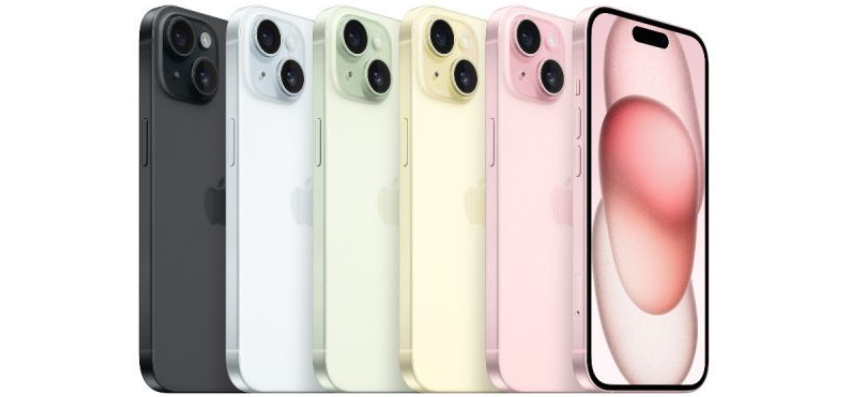
According to analyst Ming Chi-Kuo, iPhone shipments in 2024 are “likely to decline significantly by about 15% year-over-year (YoY) due to structural challenges”.
“Apple has lowered its 2024 iPhone shipments of key upstream semiconductor components to about 200 million units (down 15% YoY). Apple may have the most significant decline among the major global mobile phone brands in 2024,” he said, citing his latest supply chain survey.
“The new high-end mobile phone design paradigm includes AI (GenAI) and foldable phones. The main reason for the decline in the Chinese market is the return of Huawei and the increasing preference for foldable phones among high-end users as their first choice for phone replacement,” he said in his research note.
“Apple may have the most significant decline among the major global mobile phone brands in 2024,” Kuo wrote.
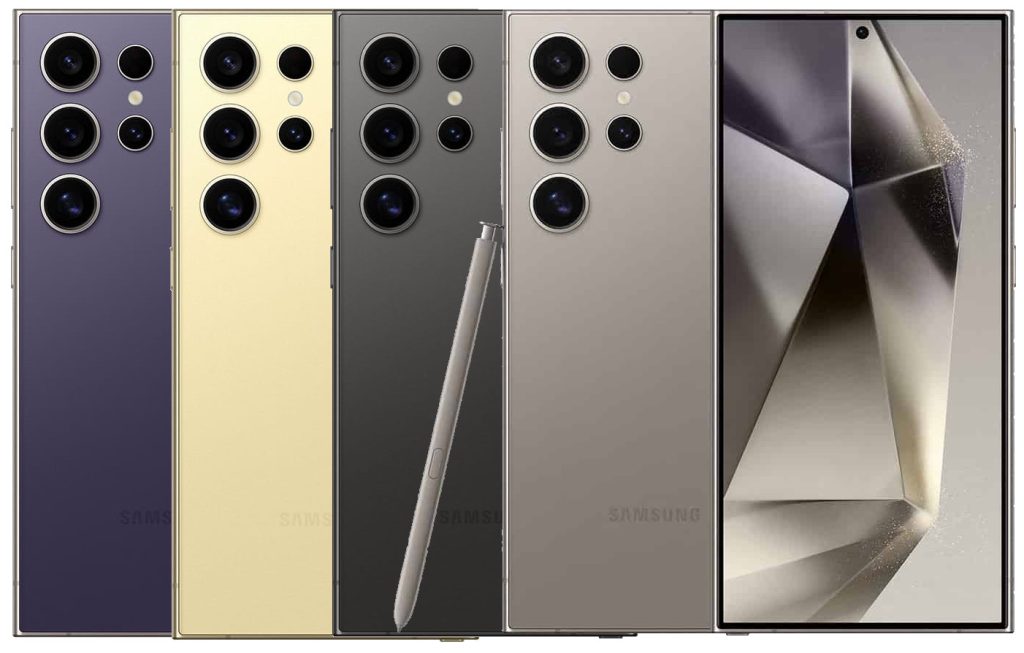
Samsung has upped shipments of its new Galaxy S24 series this year by 5% to 10% as it sees “higher-than-expected” demand thanks to its AI-powered features, Kuo wrote. Apple, meanwhile, has lowered its shipment forecast for the iPhone 15 in the first half of 2024, he added.
Huawei’s comeback as a leading smartphone maker coupled with the “increasing preference for foldable phones among high-end users as their first choice” in the Chinese market are key reasons for the iPhone’s potential decline, Kuo wrote.
Apple’s response to these market shifts has been cautious.
The company has reportedly reduced shipments of key upstream semiconductor components to around 200 million units.
This adjustment mirrors the broader trend of decreased demand for iPhones, particularly in China, where Apple’s weekly shipments have reportedly plummeted by 30% to 40% compared to last year.
He states that significant design changes or the integration of new artificial intelligence features are not expected in the iPhone models releasing this year.
This conservative approach might impact Apple’s momentum in shipments and ecosystem growth until at least 2025, when more substantial updates are anticipated.
The Galaxy S24 series, for instance, has seen a 5% to 10% increase in shipments, buoyed by its AI-powered features.
As Apple gears up to report its quarterly results, analysts project modest revenue growth, highlighting the challenges the Cupertino-based tech giant faces in a rapidly evolving and increasingly competitive market.
Apple Might See Decline in iPhone Shipments Amid Rising Competition in China
FAQs
What factors are contributing to the potential decline in Apple’s iPhone shipments in 2024?
Huawei’s resurgence in the Chinese market and the increasing popularity of foldable phones are major factors impacting Apple’s dominance, leading to a possible 15% drop in iPhone shipments.
How is Apple responding to the shifting market dynamics in China?
Apple has reportedly reduced its shipment of key components, reflecting a cautious approach in response to the decreased demand for iPhones in the Chinese market.
What can we expect from the iPhone 16 lineup in terms of design and features?
Analyst Ming-Chi Kuo suggests that the iPhone 16 lineup will likely focus on stability without significant design changes or the introduction of new AI features until at least 2025.
How are Apple’s competitors, like Samsung, faring in comparison?
Samsung, with its Galaxy S24 series, is experiencing increased demand, partly due to the incorporation of AI-powered features, indicating a contrasting market trend.
What are Ming-Chi Kuo’s Predictions for iPhone 15 Shipments?
Contrary to conservative market estimates ranging between 70-80 million units, Ming-Chi Kuo forecasts around 80 million units of iPhone 15 shipments.
How Will the iPhone 15 Impact Apple’s Stock Price?
Ming-Chi Kuo suggests that the market has been overly conservative about iPhone 15 shipments, leading to stock price corrections. He believes this could offer a favorable trading sentiment and a potential stock rebound for Apple.
Is Apple Likely to Become the Largest Smartphone Brand?
If Apple’s shipment orders for the second half of 2024 remain unchanged, Ming-Chi Kuo estimates that the company could surpass Samsung, with shipments reaching 220-225 million units in 2023.
What About Apple’s Legacy Models?
While Kuo doesn’t elaborate, it is typical for Apple to continue selling previous models alongside new launches. This suggests that iPhone 14 models could still perform well in the market even after the iPhone 15 launch.
What caused the recent decline in Apple’s stock value?
Apple’s stock recently experienced a 3.6% decline, closing at 185.64, primarily due to analyst concerns about the demand for the upcoming iPhone 16 and the overall market outlook for Apple in 2024.
What changes did Barclays analyst Tim Long make to Apple’s stock rating?
Tim Long, an analyst from Barclays, downgraded Apple’s stock from ‘equal weight’ to ‘underweight’, also reducing the price target from 161 to 160.
This change reflects growing concerns about Apple’s future performance and sales.
How have iPhone 15 sales been described, and what is the outlook for iPhone 16?
iPhone 15 sales have been described as “lackluster” by analysts, casting a shadow over the anticipated performance of the iPhone 16.
There are concerns that the iPhone 16 might not significantly boost demand or sales.
What challenges are currently facing Apple’s hardware and services segments?
Apple’s hardware categories, other than the iPhone, are showing signs of stagnation.
Additionally, the services segment, although profitable, faces regulatory scrutiny and is projected to grow by no more than 10% this year.
How is the introduction of Apple Vision Pro expected to impact Apple’s growth in the wearables market?
Priced at $3,499 and set for release in early 2024, the Vision Pro combines virtual and augmented reality, catering to entertainment, communications, and productivity applications.
While the product faced initial skepticism, it opens a new hardware platform for Apple, potentially driving growth in the wearables segment. The key to its success could lie in unique applications like ‘spatial video,’ as suggested by analysts.
What implications does the recent ITC ruling on Apple Watch Series 9 and Ultra 2 have for Apple’s future in the wearables sector?
The recent ruling by the U.S. International Trade Commission, which declared that Apple’s latest smartwatches infringed on patents from Masimo, poses a significant challenge for Apple.
The decision, which impacts the sales of Apple Watch Series 9 and Ultra 2, comes at a time when revenue from the Wearables, Home and Accessories unit has seen a decline.
Apple Vision Pro AR/VR headset faces issues with its ‘Passthrough’ feature.
Notable motion blur and distortion during quick movements.
Challenges in low-light performance and color accuracy.
Vision Pro package includes essential accessories and optional items for comfort.
The Apple Vision Proreviews are trickling down slowly as the Tuesday embargo has lifted.
Not many have posted a full review of Apple’s next big leap in technology, but among those who have are The Verge.
The Vision Pro, for those living under a rock, is Apple’s AR/VR headset for what the company calls ‘Spatial Computing’.
Apple’s next big leap in technology
Most reviews of the device have been generally favourable and The Verge’s review is no different.
Apple’s Vision of AR
However, Nilay Patel, Editor-in-chief of the tech publication, and also the one reviewing the Vision Pro, has identified a few problems with the headset’s passthrough feature.
Again for those not in the know, Passthrough is when a VR headset relays outside information directly to your eyes via a set of cameras and displays.
Vision Pro is Apple’s ambitious attempt to blend the digital and physical worlds
The Vision Pro is Apple’s ambitious attempt to blend the digital and physical worlds.
Unlike its speculated future product, the Glasses, which aims to offer true augmented reality by overlaying digital information onto the real world, the Vision Pro is a virtual reality headsetthat seeks to bring the outside world to the wearer, like the Quest 3.
Vision Pro package includes essential accessories and optional items for comfort
While the concept is groundbreaking, as mentioned above Nilay Patel points out several inherent limitations in the headset’s passthrough feature.
Here are 9 things that he said can be improved upon:
Apple Vision Pro Headset’s Passthrough Feature Could Have a Few Problems
Motion Blur: Quick head movements result in a noticeable blur, a problem that becomes more pronounced in low-light conditions.
Distortion: Straight lines can appear warped, and there’s noticeable flickering in some displays, similar to what one might see in a microwave clock.
Low-light Blurriness: The passthrough’s clarity diminishes in dim lighting due to noise reduction necessitated by high ISO levels.
Inconsistent Brightness: The headset struggles to maintain consistent brightness levels, particularly noticeable when the user is in a mixed-light environment.
Colour Limitations: The Vision Pro can reproduce only 49 percent of the colours visible to the human eye, despite supporting 92 percent of the DCI-P3 colour gamut.
Restricted Field of View: The field of view is narrower compared to other headsets like the Quest 3, leading to a sensation akin to looking through binoculars.
Vignetting: There is noticeable darkening around the edges of the viewable area.
Colour Fringing: Users may observe green and pink fringing at the edges, especially in brightly lit settings.
Lens Reflections: High-contrast scenes can cause distracting reflections on the lenses.
Apple Vision Pro: What’s in the Box?
Apart from The Verge’s review, popular tech YouTuber MKBHD posted his unboxing video of the Vision Pro and there was a fair bit to unpack.
Here is what you will get with the Vision Pro headset along with some optional accessories.
Apple Vision Pro AR/VR headset faces issues with its ‘Passthrough’ feature
The primary component, of course, is the Apple Vision Pro headset itself, which arrives with a stretchy cover designed to safeguard the head-mounted display.
For users who wear glasses, Apple offers an optional solution in the form of optical inserts. These lenses can be conveniently attached magnetically to the Vision Pro, ensuring a clearer view.
An optional Vision Pro travel case is also available. This soft white case is tailored for easy and secure transportation of the headset.
Along with these, the package includes two informational pamphlets. These booklets provide essential guidance on using and maintaining the Apple Vision Pro.
Maintenance is further aided by the inclusion of a microfiber cloth, which is crucial for keeping the headset’s glass clean and smudge-free.
To enhance user comfort and prevent distractions, the package contains two light seals. These magnetic attachments are designed to block any intrusive light.
Addressing comfort, especially given the feedback regarding the headset’s weight, Apple has included a dual-loop band. This accessory is reminiscent of the Elite Strap found on the Meta Quest 3 and aims to improve the headset’s comfort during extended use.
A vital component of the package is the battery pack, with a capacity of 3,166 mAh. This pack needs to be attached to the Vision Pro and is meant to be carried in a pocket, despite its somewhat awkward appearance.
Lastly, for powering the battery pack, there is a USB-C to USB-C braided cable and a 30W charging brick, as noted by Brownlee.
Vision Pro package includes essential accessories and optional items for comfort
FAQs
What is the main issue identified in the Apple Vision Pro headset?
The primary concern with the Apple Vision Pro revolves around its passthrough feature, where users have reported problems such as motion blur and distortion, particularly under specific conditions like low light.
How does the Vision Pro’s passthrough feature perform compared to other headsets?
While the passthrough feature is designed to blend the digital and physical worlds, it currently experiences issues with motion blur, distortion, and color accuracy, falling short of the seamless experience seen in devices like the Meta Quest 3.
What are some key accessories included with the Apple Vision Pro?
The Vision Pro comes with a protective cover, optional optical inserts for glasses wearers, a travel case, light seals, a microfiber cloth, and a dual-loop band for added comfort.
Is there a solution available for the Vision Pro’s display issues?
As of now, there hasn’t been an official fix from Apple for the passthrough feature issues. However, given the company’s track record, a software update could potentially address these concerns.
What are ZEISS Optical Inserts in the Apple Vision Pro?
ZEISS Optical Inserts are specialized corrective lenses designed for Apple’s Vision Pro headset. They are tailored to individual visual needs, including prescription lenses and reading glasses.
How do you pair ZEISS Optical Inserts with the Apple Vision Pro?
To pair the ZEISS Optical Inserts, users need to attach them magnetically to the Vision Pro, then follow a specific process that includes scanning a unique code provided with the lenses.
Is recalibration necessary after pairing new lenses with Vision Pro?
Yes, after attaching new ZEISS Optical Inserts to the Vision Pro, users are required to recalibrate the eye-tracking feature to ensure optimal functionality.
Can the Vision Pro recognize different pairs of ZEISS Optical Inserts?
The Vision Pro headset is equipped to intelligently identify different ZEISS Optical Inserts being used, automatically adjusting settings for the best visual experience.
When are Apple Vision Pro pre-orders expected to arrive?
Customers who pre-ordered the Apple Vision Pro can expect their devices to start arriving as shipments have begun, with the official release set for February 2.
How can I track my Apple Vision Pro shipment?
To track your Vision Pro order, enroll in UPS My Choice for detailed package tracking or use the UPS website’s “Track by Reference Number” feature.
What special feature does the ZEISS partnership add to the Apple Vision Pro?
The collaboration with ZEISS offers Vision Pro users specialized optical inserts, enhancing visual experience with a unique pairing process for authenticity and precision.
Are the sales figures for the Apple Vision Pro available?
While official numbers aren’t released, it’s estimated that between 160,000 to 180,000 units of the Vision Pro were sold during the initial pre-order weekend.
Vision Pro Launch: Apple Has Advice For Those With Medical Conditions. Details?
The Vision Pro is for all apple loves , including the ones who wear glasses but those with a medical condition, Apple has advice for them.
“If you have a pre-existing medical condition, consult with a medical provider before using Apple Vision Pro.
Using this device with certain medical conditions might aggravate symptoms or increase the risk of injury or discomfort,” Apple said in an advisory published last week.
Apple has also highlighted that if a potential customer is experiencing symptoms related to a medical condition, consult with a medical provider before using Apple Vision Pro.
“If you are pregnant, exercise additional caution when using Apple Vision Pro, as pregnancy may increase the risk of nausea or loss of balance,” the company said.
“Apple Vision Pro and its battery contain magnets or components that emit radio waves, which could affect the operation of nearby electronics, including cardiac pacemakers, hearing aids, and defibrillators,” Apple added.
What are the list of conditions that apple has advised for ?
List of conditions that might aggravate symptoms or increase the risk of injury or discomfort include:
Migraines or chronic headaches
Dizziness or vertigo
Eye or vision conditions, such as binocular vision conditions
Psychological conditions
Inner ear conditions
History of dry eyes, itchiness, or swelling of the eyelids
Skin allergies or sensitivities
Seizures
Balance or gait conditions
What are the kind of users who are problem free during apple Vision pro launch ?
Customers who wear prescription glasses may not have a problem but they will need a prescription for Zeiss-made optical inserts.
A reporter for The Times of India Tech-Gadgets Now was among the first ones to have tried the Vision Pro when it was launched. Apple quickly took the power of the glasses and customised them quickly to suit the wearer.
There is an option to include optical inserts for individuals who wear glasses. These optical inserts will enable users to wear the headset without their glasses. However, these inserts will be sold separately.
When to stop using Apple Vision Pro ?
Stop using Apple Vision Pro and consult with your medical provider:
If you experience symptoms related to a medical condition.
If your medical provider confirms that it’s safe for you to use Apple Vision Pro, but you experience severe or persistent physical discomfort, motion sickness, visual discomfort, skin irritation, or psychological symptoms.
If you notice swelling, itchiness, skin irritation, or other skin reactions while using your device or after using the device, stop using it. If symptoms persist, consult with your medical provider.
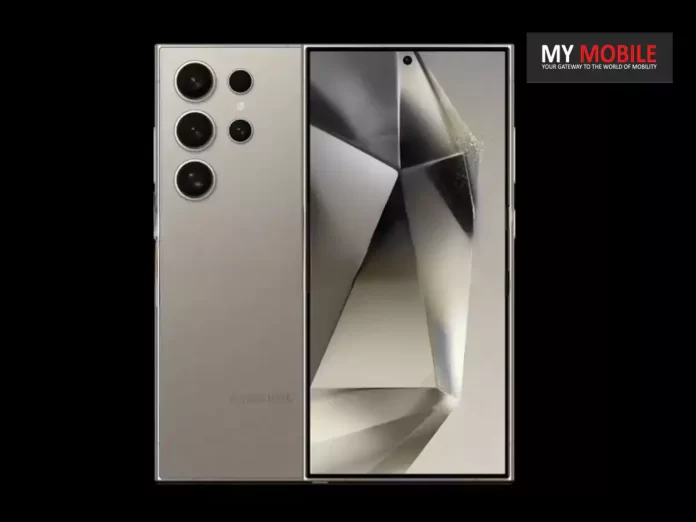
However, very recently a specific issue has emerged with the phone’s viewing capabilities, dimming the initial enthusiasm for this otherwise exceptional device.
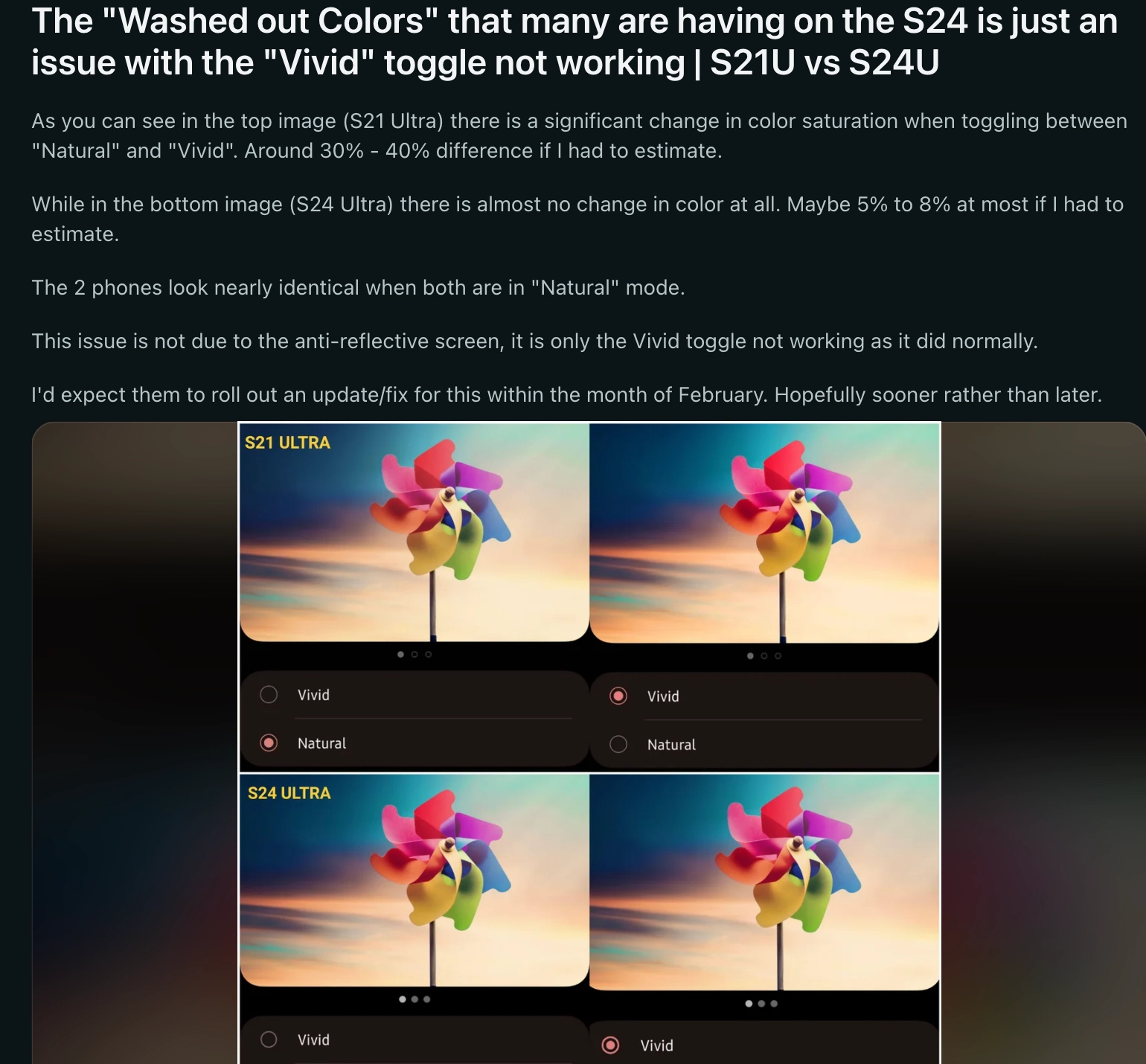
Specifically, when the display is set to the ‘Vivid’ colour profile,which is designed to enhance colour saturation, colours actually appear somewhat washed-out, lacking the vibrancy seen in the preceding Galaxy S23 Ultra.
It is now apparent that this discrepancy has become a topic of discussion among users on various social media platforms, including Reddit and X, highlighting a shared concern over the display quality under certain settings.
Interestingly, this issue seems confined to the ‘Vivid’ setting, as switching to the ‘Natural’ colour profile results in colour representation that aligns more closely with that of the Galaxy S23 Ultra, suggesting a potential software-related root cause.
Given that the problem is present exclusively in the ‘Vivid’ mode, it raises questions about the One UI 6.1 build, currently exclusive to the Galaxy S24 Ultra and its siblings, the S24 and S24+.
At this stage, Samsung has yet to officially acknowledge or address the issue, but users are hopeful for a software update that could rectify the colour calibration and restore the display’s expected vibrancy.
When that will happen is anyone’s guess but we will update you on the situation as and when more information is available.
What is the main issue with the Galaxy S24 Ultra’s display?
The Galaxy S24 Ultra’s display shows washed-out colours when in ‘Vivid’ mode, unlike the vibrant display of the previous Galaxy S23 Ultra.
Is the display issue present in all colour modes?
No, the issue is specific to the ‘Vivid’ colour profile. Switching to the ‘Natural’ profile seems to mitigate the issue, offering colours similar to the Galaxy S23 Ultra.
Could the problem be fixed with a software update?
Yes, as the issue appears to be software-related, specifically tied to the One UI 6.1 version, a future update could potentially fix the colour rendering problem.
Has Samsung commented on the display issue?
As of now, Samsung has not officially acknowledged or provided a response to the display colour concerns reported by users.
What are the key specifications of the Galaxy S24 Ultra?
The Galaxy S24 Ultra features a 6.8-inch Dynamic AMOLED 2X display, Snapdragon 8 Gen 3 processor, up to 12GB RAM, a quad camera setup, and a 5000 mAh battery, among other premium specs.
How does Samsung Galaxy S24 Series Give Creative Freedom ?
Galaxy S24 series’ ProVisual Engine is a comprehensive suite of AI-powered tools that transform image capturing abilities and maximize creative freedom.
The Quad Tele System on Galaxy S24 Ultra now comes with a new 5x optical zoom lens that works with the 50MP sensor to enable optical-quality performance at zoom levels from 2x, 3x, 5x to 10x, thanks to Adaptive Pixel Sensor. Images also show crystal clear results at 100x with enhanced digital zoom.
With upgraded Nightography capabilities, photos and videos shot on Galaxy S24 Space Zoom are brilliant in any conditions, even when zoomed in. Galaxy S24 Ultra’s larger pixel size, now 1.4 μm, is 60% bigger, helping capture more light in dim conditions.
Wider optical image stabilizer (OIS) angles and enhanced hand-shake compensation help reduce blur. Both front and rear cameras are equipped with Dedicated ISP Block for noise reduction.
Galaxy AI editing tools on Galaxy S24 series enable simple edits like erase, re-compose, and remaster.
Edit Suggestion uses Galaxy AI to suggest perfectly suitable tweaks for each photo, while Generative Edit can fill in parts of an image background with generative AI. Anytime Galaxy S24 deploys generative AI to amplify an image, a watermark will appear on the image and in metadata.
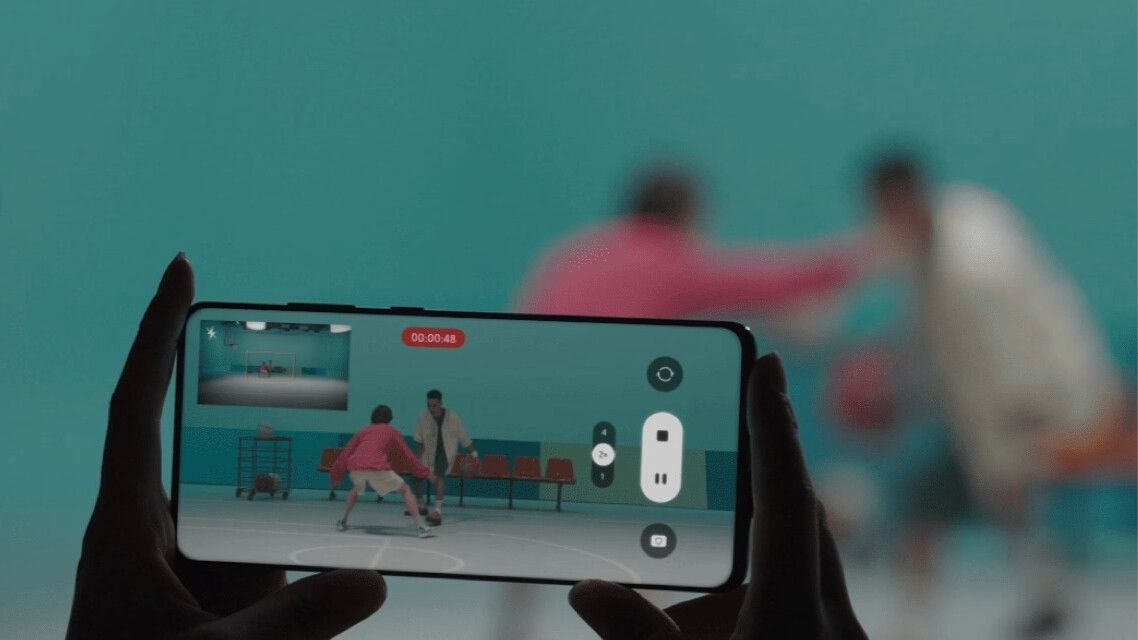
The new Instant Slow-mo can generate additional frames based on movements to smoothly slow down action-packed moments for a more detailed look. Super HDR reveals lifelike previews before the shutter is ever pressed.
How does Samsung Galaxy S24 Ultra give an Intelligent & Powerful Experience?
Galaxy S24 Ultra is equipped with Snapdragon® 8 Gen 3 Mobile Platform for Galaxy that delivers remarkable NPU improvement for incredibly efficient AI processing.
In all three Galaxy S24 models, 1-120 Hz adaptive refresh rates improve performance efficiency.
Galaxy S24 Ultra comes a1.9 times larger vapor chamber, improving device surface temperature while also maximizing sustained performance power. Ray tracing enables life-like visuals with superior shadow and reflection effect. Galaxy S24 reaches 2600nit peak brightness, making it the brightest Galaxy smartphone ever.
Corning® Gorilla® Armor on the Galaxy S24 Ultra is optically enhanced for superior durability. It delivers dramatically reduced reflection by up to 75% in a wide range of lighting conditions, ensuring a smooth, comfortable viewing experience.
Galaxy S24+ comes with a 6.7-inch and Galaxy S24 has a 6.2-inch display. Galaxy S24 Ultra has a 6.8-inch flatter display, optimized not just for viewing but also for productivity. Galaxy S24+ now supports the same level of QHD+ found on Galaxy S24 Ultra.
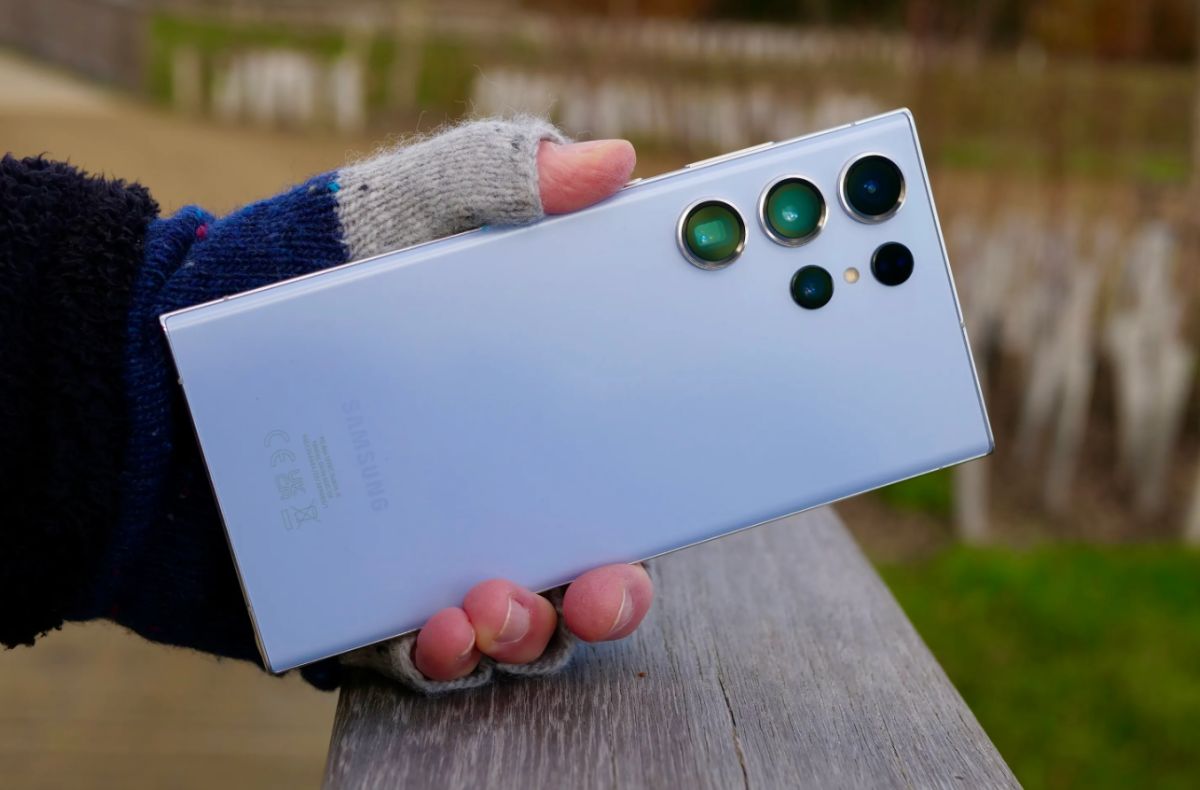
Galaxy S24 Ultra is the first-ever Galaxy phone to feature a titanium frame, enhancing device durability and longevity. Galaxy S24 Ultra’s significantly thinner body enables better on-the-go experience with more comfortable grip.
On Galaxy S24+ and Galaxy S24, a streamlined One-mass design satisfies a more aesthetic standard with seamless connection between the device’s rear cover and side frame.
How does Galaxy S24 Series give Advanced Security & Privacy ?
Galaxy S24 is secured by Samsung Knox for safeguarding critical information and protection against vulnerabilities with end-to-end secure hardware, real-time threat detection and collaborative protection.
Galaxy S24 users have full controllability over how much they allow their data to enhance AI experiences, through Advanced Intelligence settings, which can disable online processing of data for AI features.
Galaxy S24 is also protected with Samsung’s expansive list of innovative security and privacy features including Knox Vault, Security & Privacy Dashboard, Auto Blocker, Secure Wi-Fi, Private Share, Maintenance Mode and more.
Sustainability
Galaxy S24 series continues Samsung’s commitment to extending the product lifecycle, offering seven generations of OS upgrades and seven years of security updates to help users reliably experience the optimized performance of their Galaxy devices for even longer.
For the first time, Galaxy S24 features components made with recycled cobalt and rare earth elements. Galaxy S24 is also the first Galaxy S series to be designed with recycled steel and Thermoplastic Polyurethane (TPU).
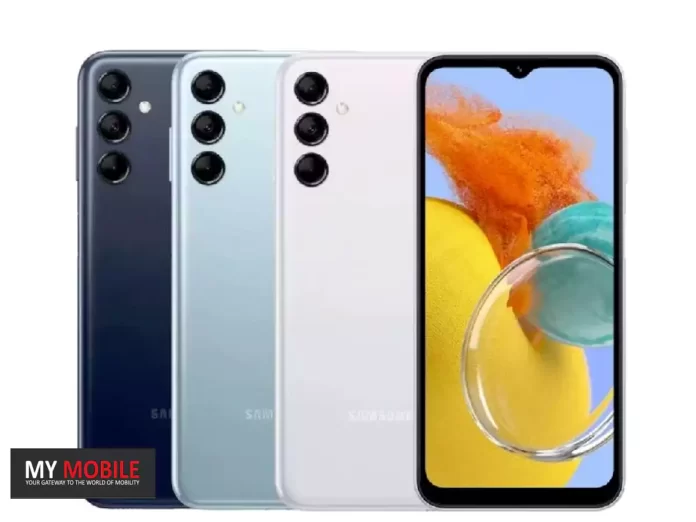
The support page for the Galaxy M14 has gone live, identified first by MySmartPrice, and it gives a strong indication of the device’s imminent arrival.
Galaxy M14 4G and Galaxy F14 4G: What We Know So Far
Galaxy M14 4G and Galaxy F14 4G: What We Know So Far
The Galaxy M14 4G, identified by the model number SM-M146B, and the Galaxy F14 4G, with the model number SM-E146B, are set to bring reasonably advanced features to the 4G spectrum, tailored for different regional preferences.
The model number for the Galaxy F14 4G comes from a support manual for the device, again spotted first by MySmartPrice.
The manual also sheds light on the design language for both phones.
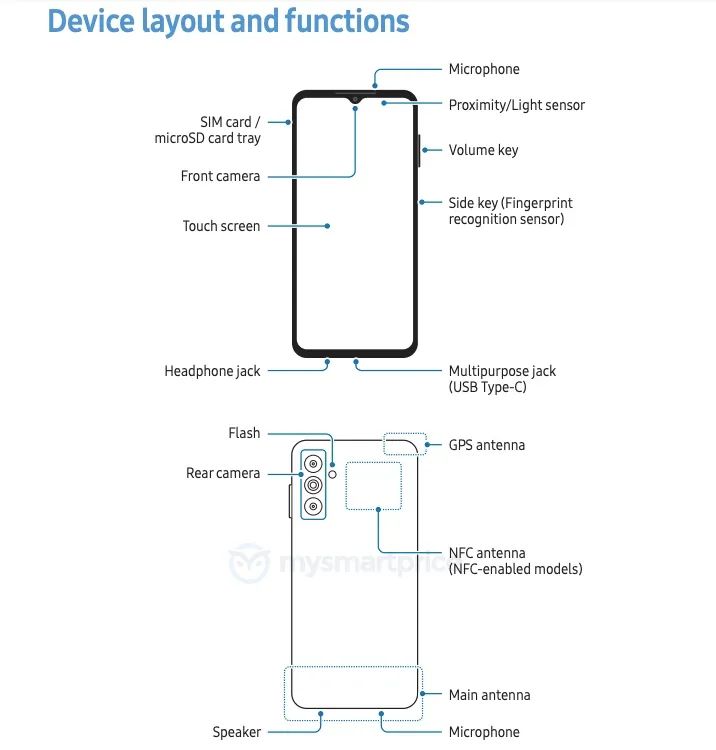
Both models will mirror the design ethos Samsung has championed throughout 2023, featuring a triple rear camera setup positioned elegantly at the top left corner and a sleek front display with minimal bezels, a characteristic waterdrop notch, and a slightly thicker bottom.
Samsung Set to Launch Galaxy M14 4G and F14 4G After Support Page Goes Live
The devices are expected to incorporate standard functionality like the power button doubling as a fingerprint sensor, volume controls on the right, and a conveniently placed SIM tray on the left.
The bottom of the phone will host a single firing speaker, a headphone jack, and a USB Type-C port, ensuring comprehensive connectivity options.
The 5G model boasts a 6.6-inch FHD+ IPS LCD display with a 90Hz refresh rate, protected by Corning Gorilla Glass 5, and powered by the Exynos 1330 SoC.
It runs on Android 13-based OneUI 5.0 and has configurations offering up to 4GB RAM and 128GB storage, expandable up to 1TB via microSD.
Samsung Galaxy Device Layout
The camera setup of the 5G model, featuring a 50MP main sensor complemented by 2MP depth and macro sensors, alongside a 13MP front camera, suggests that the 4G variants will not compromise on photography capabilities.
Finally, the device has a massive 6,000mAh battery supporting 25W fast charging, alongside comprehensive connectivity options including NFC.
When are the Galaxy M14 4G and F14 4G expected to launch?
While specific launch dates are not confirmed, the appearance of the support page for the Galaxy M14 4G suggests an imminent announcement.
What are the key design features of the Galaxy M14 4G and F14 4G?
Both models are expected to maintain Samsung’s 2023 design language with triple rear cameras, a waterdrop notch display, and a sleek, user-friendly layout.
Will the Galaxy M14 4G and F14 4G support NFC?
Yes, despite being budget-friendly options, both models are expected to include NFC functionality, broadening their usability.
What can we expect in terms of battery and charging for these new models?
Reflecting on the 5G variant, the Galaxy M14 4G and F14 4G may feature a 6,000mAh battery with support for 25W fast charging.
How will the camera capabilities compare to their 5G counterparts?
If the Galaxy M14 5G’s setup is any indication, the 4G models should offer solid photography capabilities with a 50MP main sensor and additional depth and macro sensors.
When are the Galaxy M14 4G and F14 4G expected to launch?
While specific launch dates are not confirmed, the appearance of the support page for the Galaxy M14 4G suggests an imminent announcement.
What are the key design features of the Galaxy M14 4G and F14 4G?
Both models are expected to maintain Samsung’s 2023 design language with triple rear cameras, a waterdrop notch display, and a sleek, user-friendly layout.
Will the Galaxy M14 4G and F14 4G support NFC?
Yes, despite being budget-friendly options, both models are expected to include NFC functionality, broadening their usability.
What can we expect in terms of battery and charging for these new models?
Reflecting on the 5G variant, the Galaxy M14 4G and F14 4G may feature a 6,000mAh battery with support for 25W fast charging.
How will the camera capabilities compare to their 5G counterparts?
If the Galaxy M14 5G’s setup is any indication, the 4G models should offer solid photography capabilities with a 50MP main sensor and additional depth and macro sensors.
I feel that this elevation in price is justified by an array of top-tier features that the company has introduced not only in the 12 Pro but also in the 12 Pro+, signaling a significant stride in the brand’s evolution.
In my full review of the Realme 12 Pro, let’s dive deeper into these enhancements, scrutinizing the intricacies that make the handset a noteworthy contender in the competitive sub-Rs 30,000 price bracket.
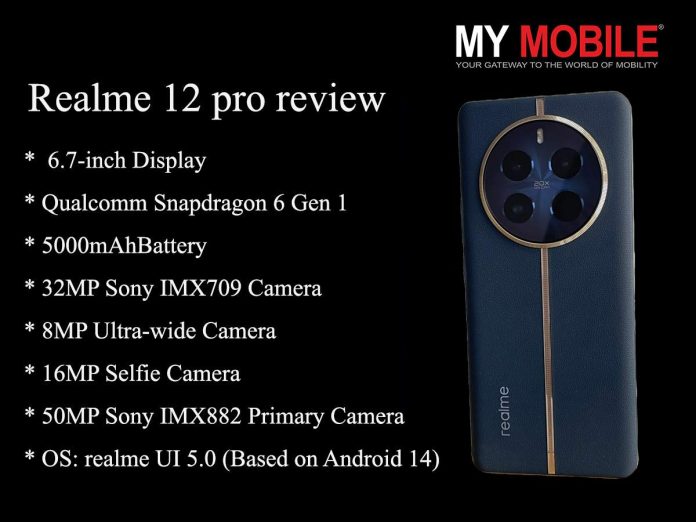
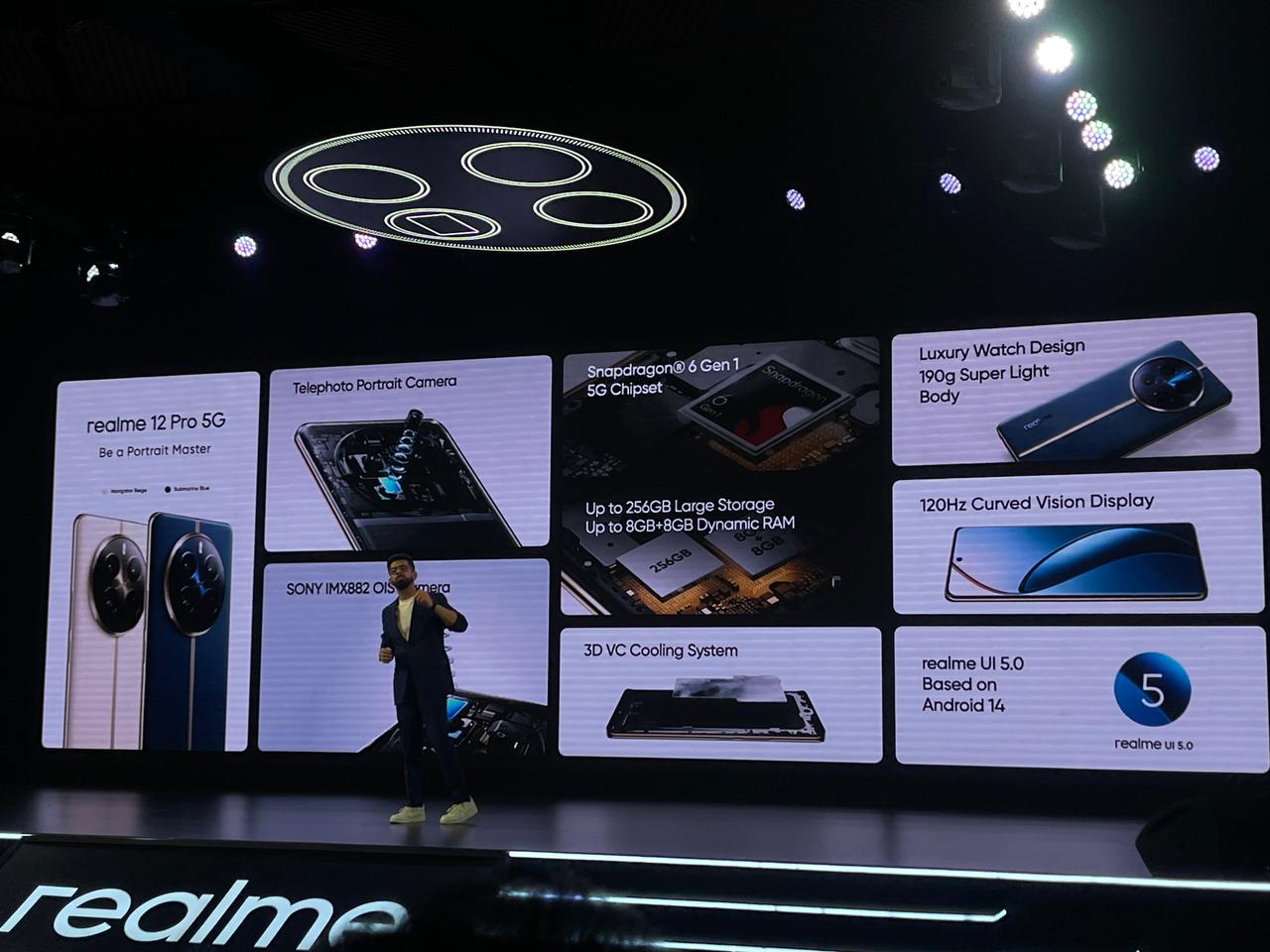
Camera: 32MP Sony IMX709 Telephoto with 2X Optical Zoom, 50MP Sony IMX882 Primary; 8MP Ultra-wide; 16MP Selfie
Battery: 5000mAh with 67W SUPERVOOC charging
OS: realme UI 5.0 (Based on Android 14)
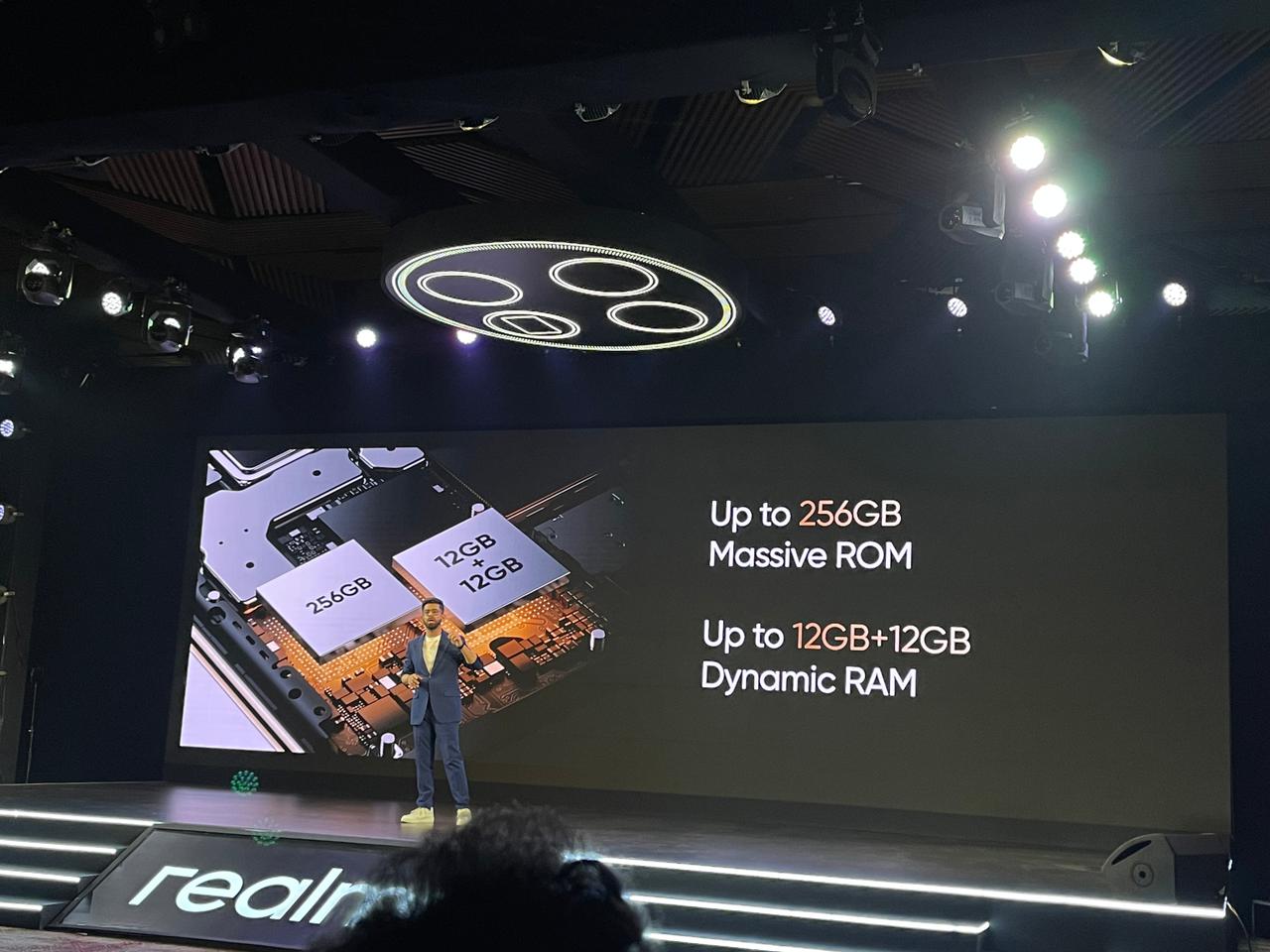
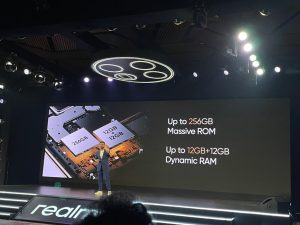
Storage: Up to 256GB ROM
RAM: Up to 8+8GB Dynamic RAM
Realme 12 Pro: Unboxing
Realme 12 Pro: Unboxing
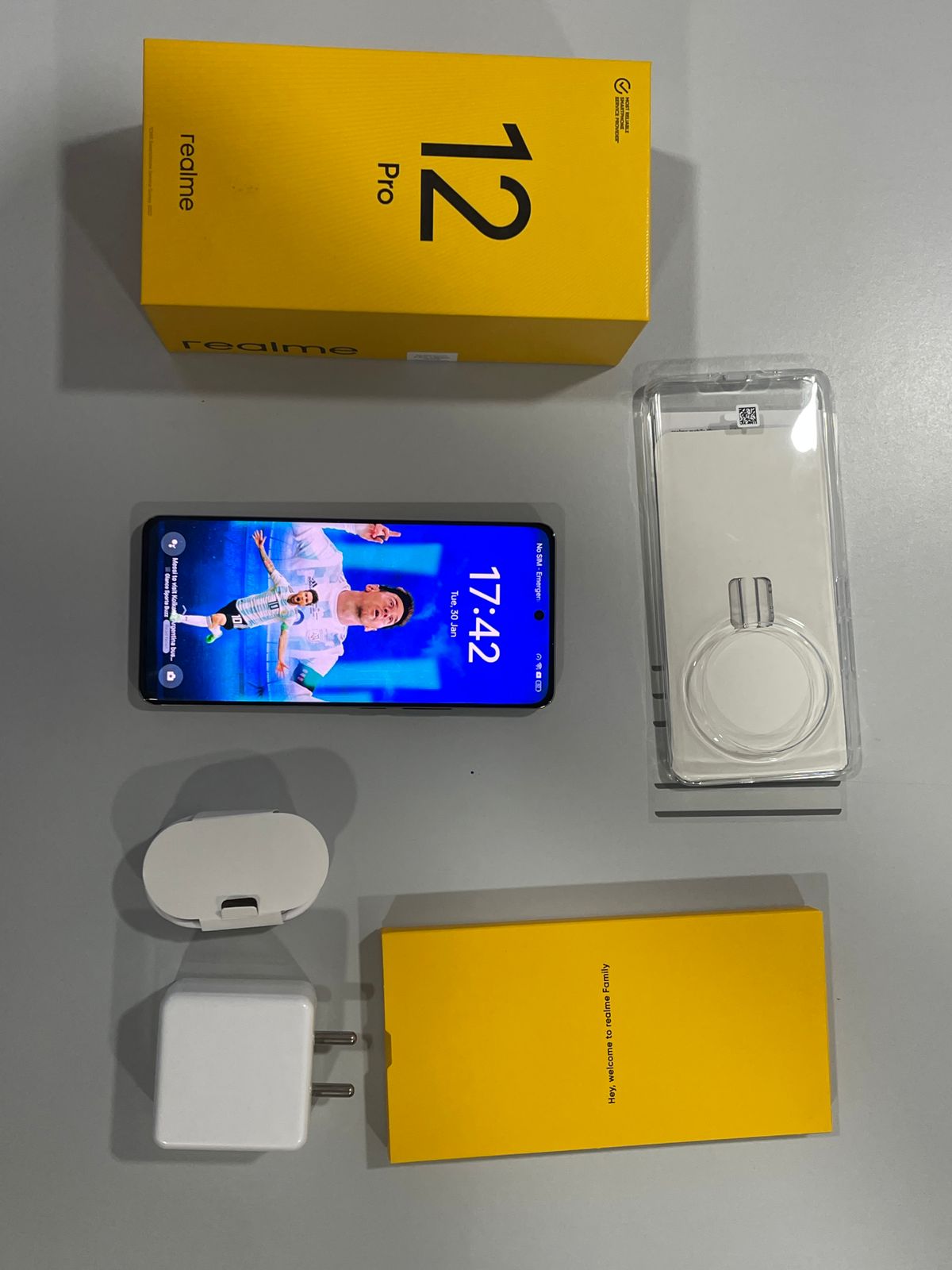
The unboxing experience of the Realme 12 Pro mirrors the same level of satisfaction and detail-oriented approach as seen with the Realme 12 Pro+.
Upon opening the box, the first thing you notice is the Realme 12 Pro itself, immediately impressing with its sleek and refined design, highlighting its premium features.
Below the phone lies the 67W charger and white USB Type-C cable neatly packed and ready to offer quick charging capabilities.
A separate section within the box contains a clear silicone case, a considerate inclusion by Realme.
This case is more than just an accessory; it’s a practical measure to protect the new device from scratches and minor bumps right from the start, something that users typically have to purchase separately.
Moreover, the box also houses the standard paperwork and a sim ejector tool, which is crucial for inserting your SIM card and getting the phone up and running.
Realme 12 Pro: Unboxing Video
Realme 12 Pro: Design and Display
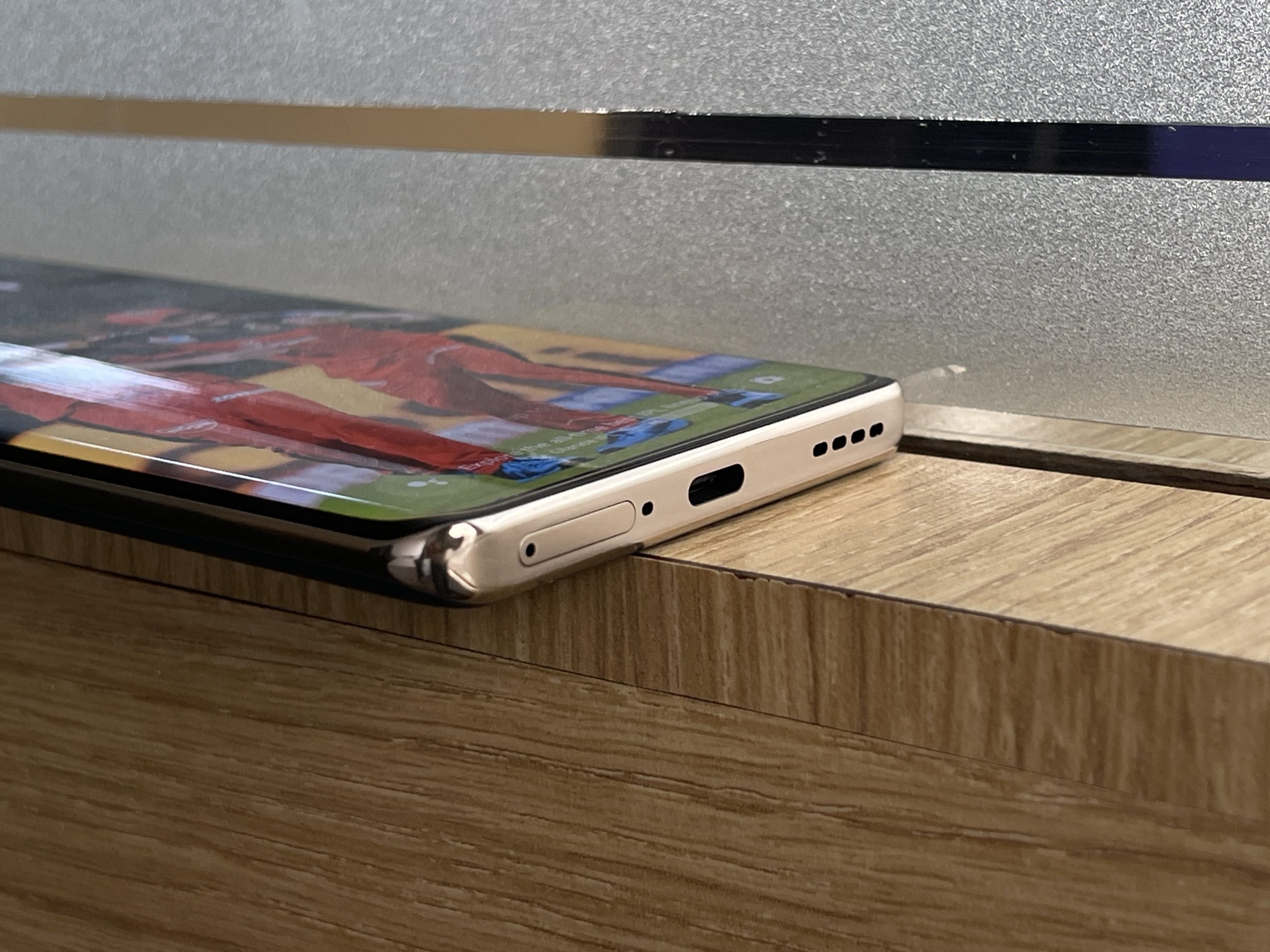
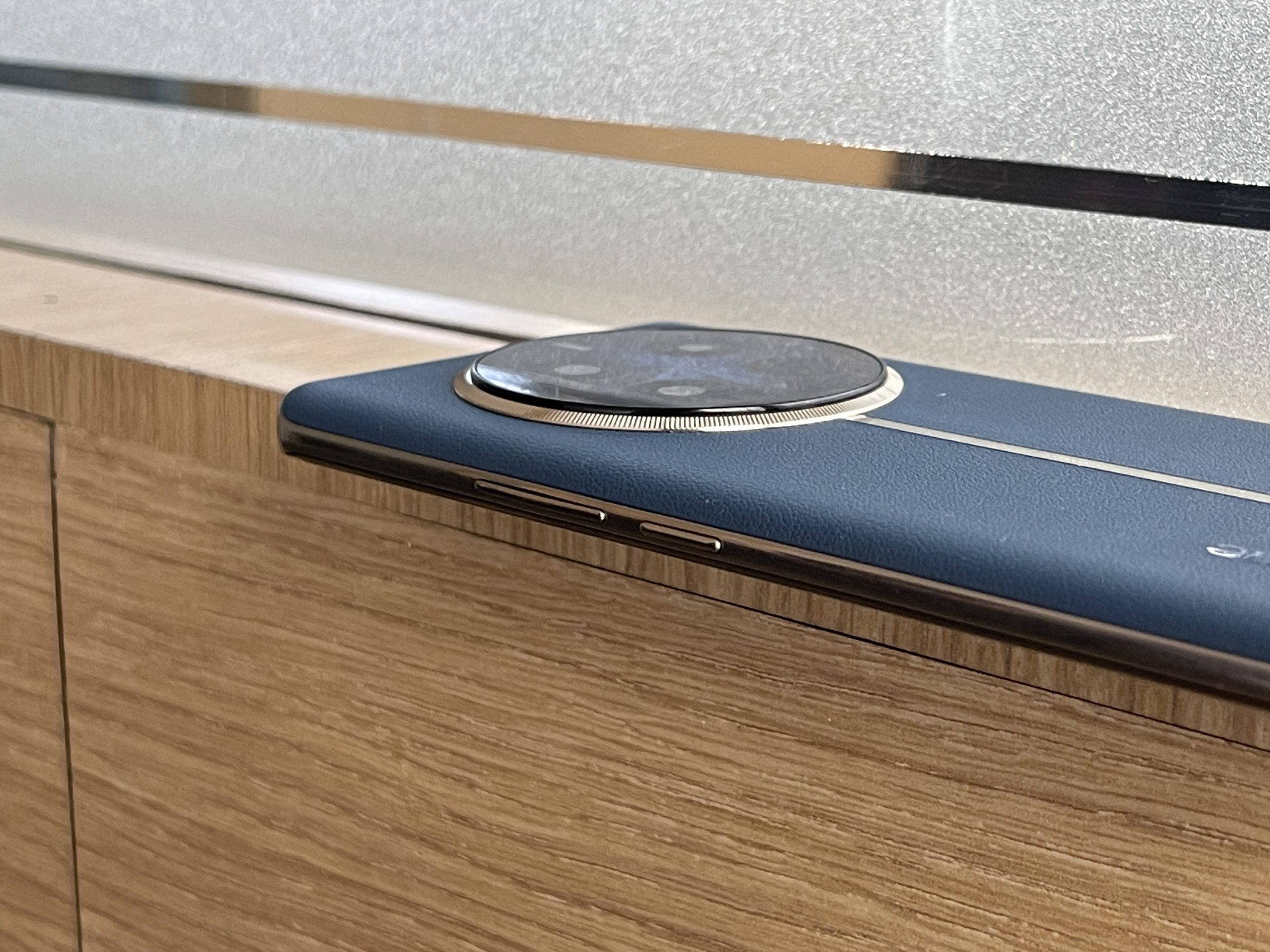
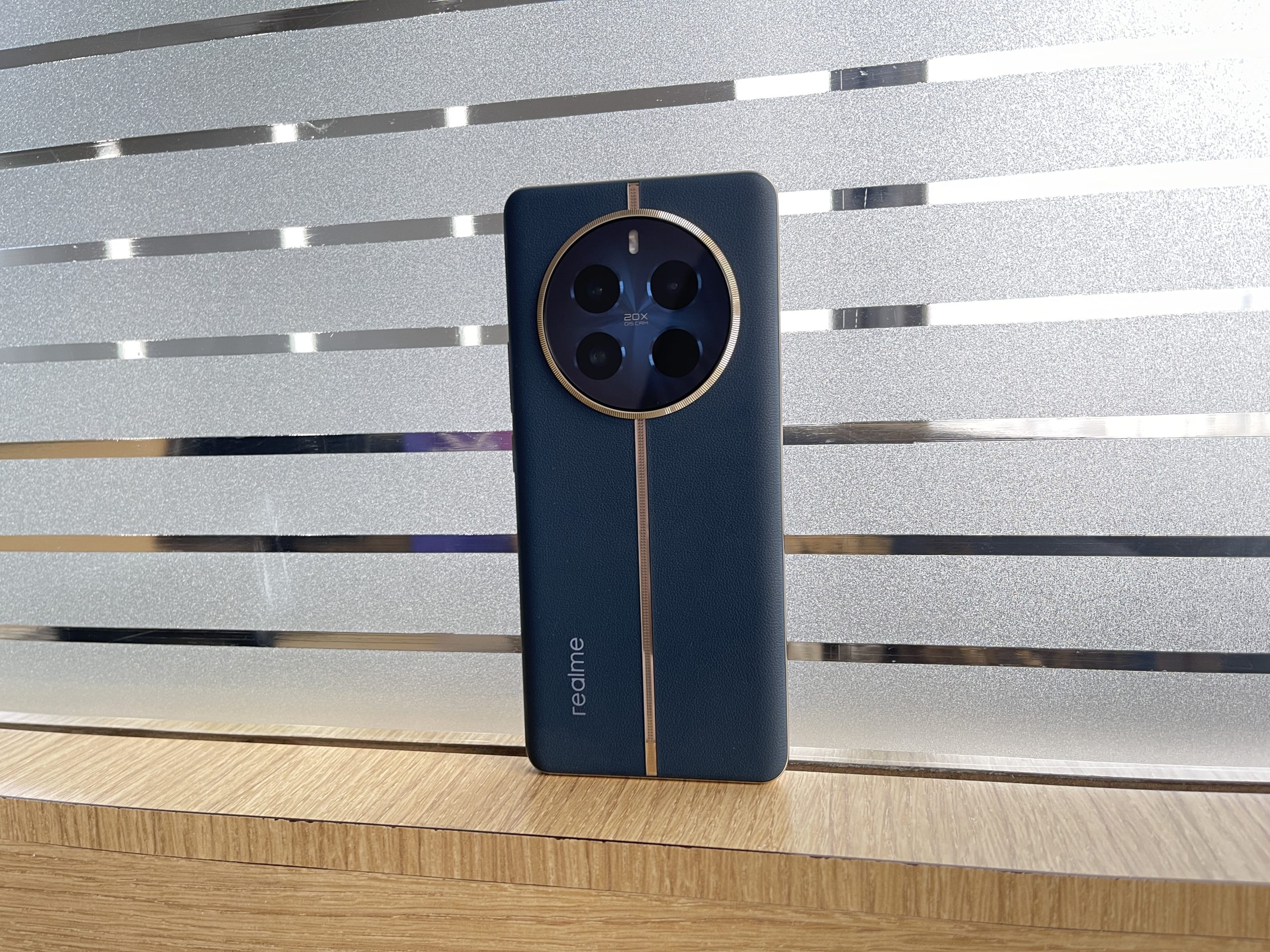
Realme 12 Pro Build and Design
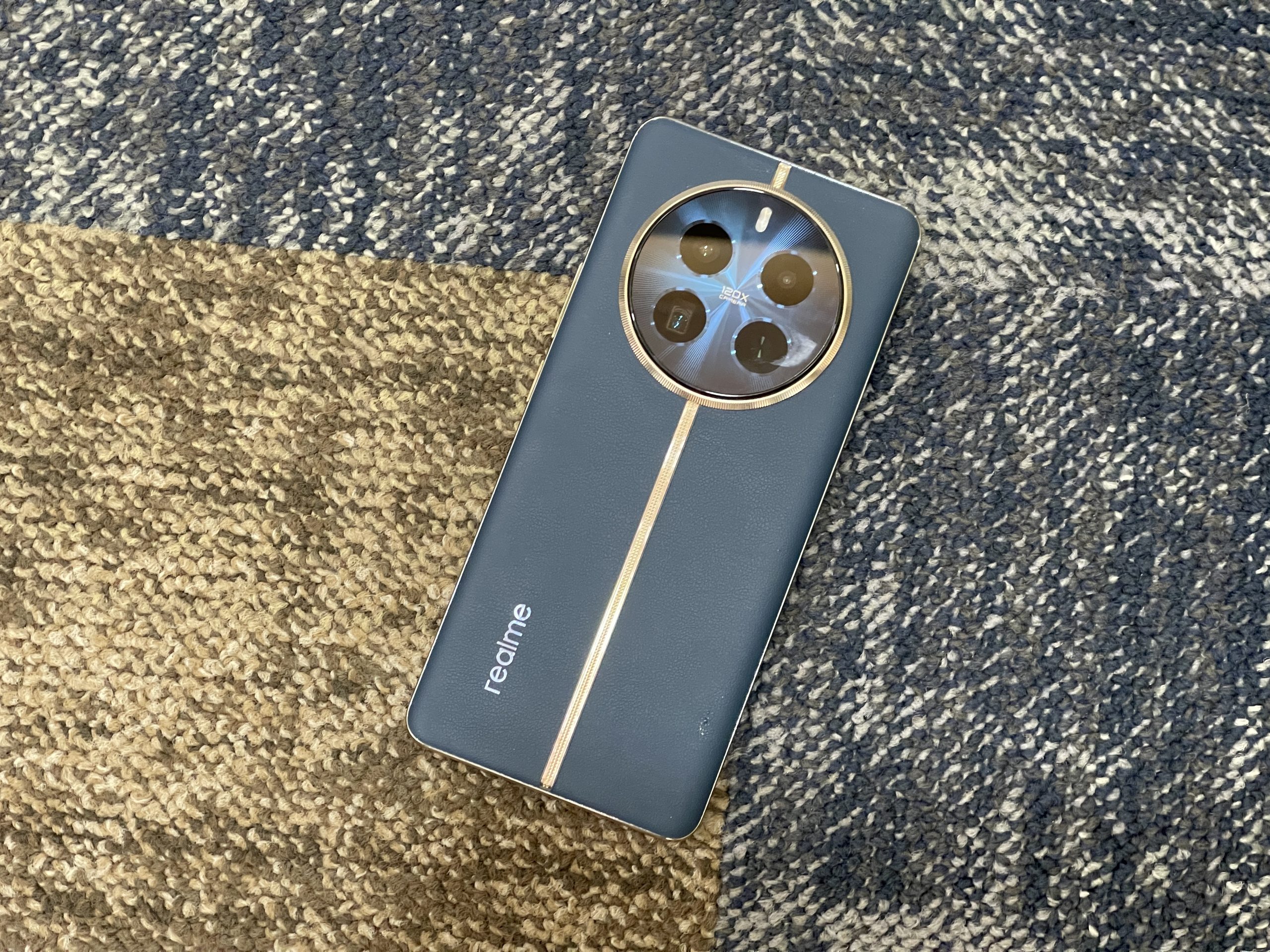
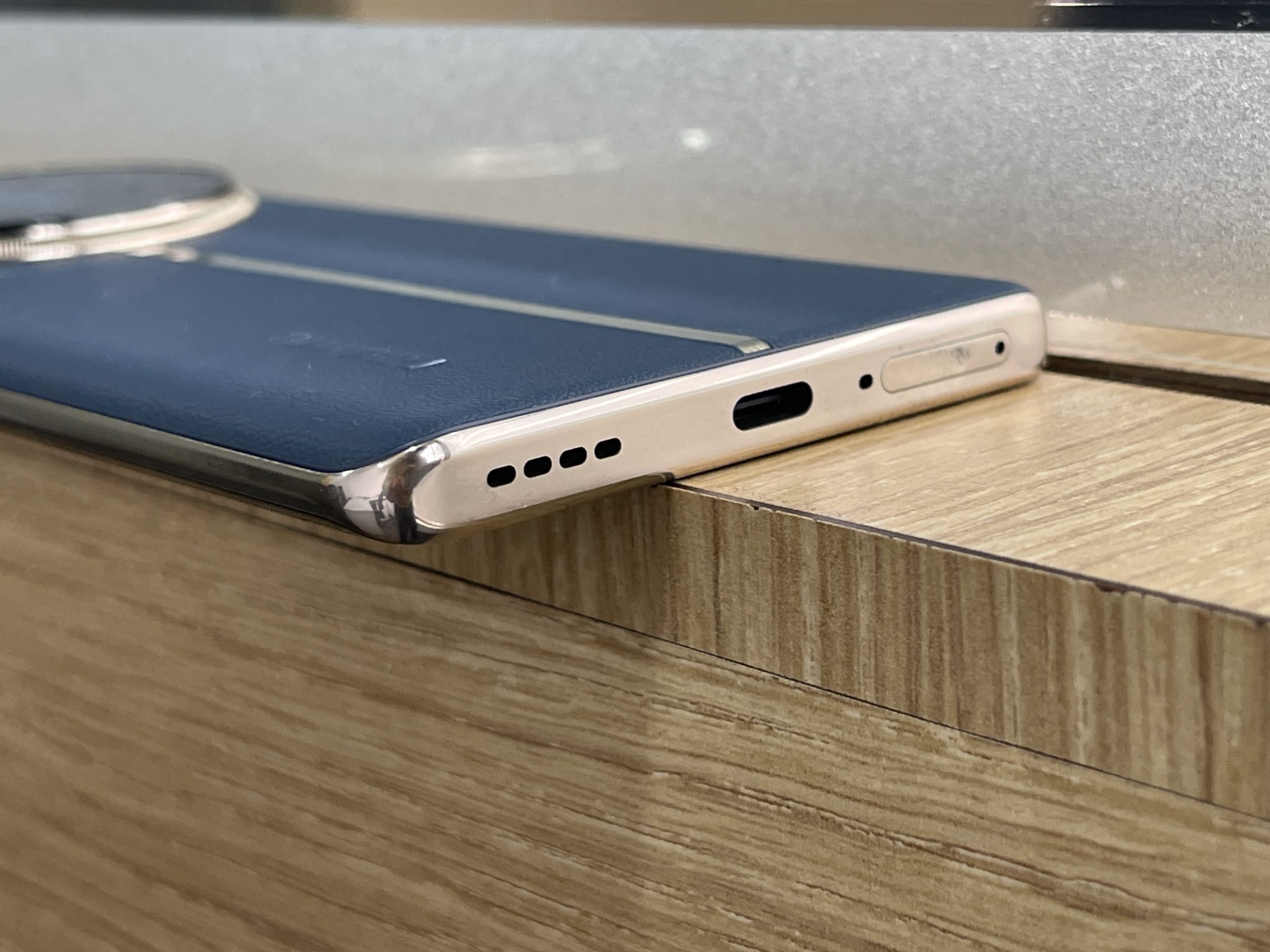
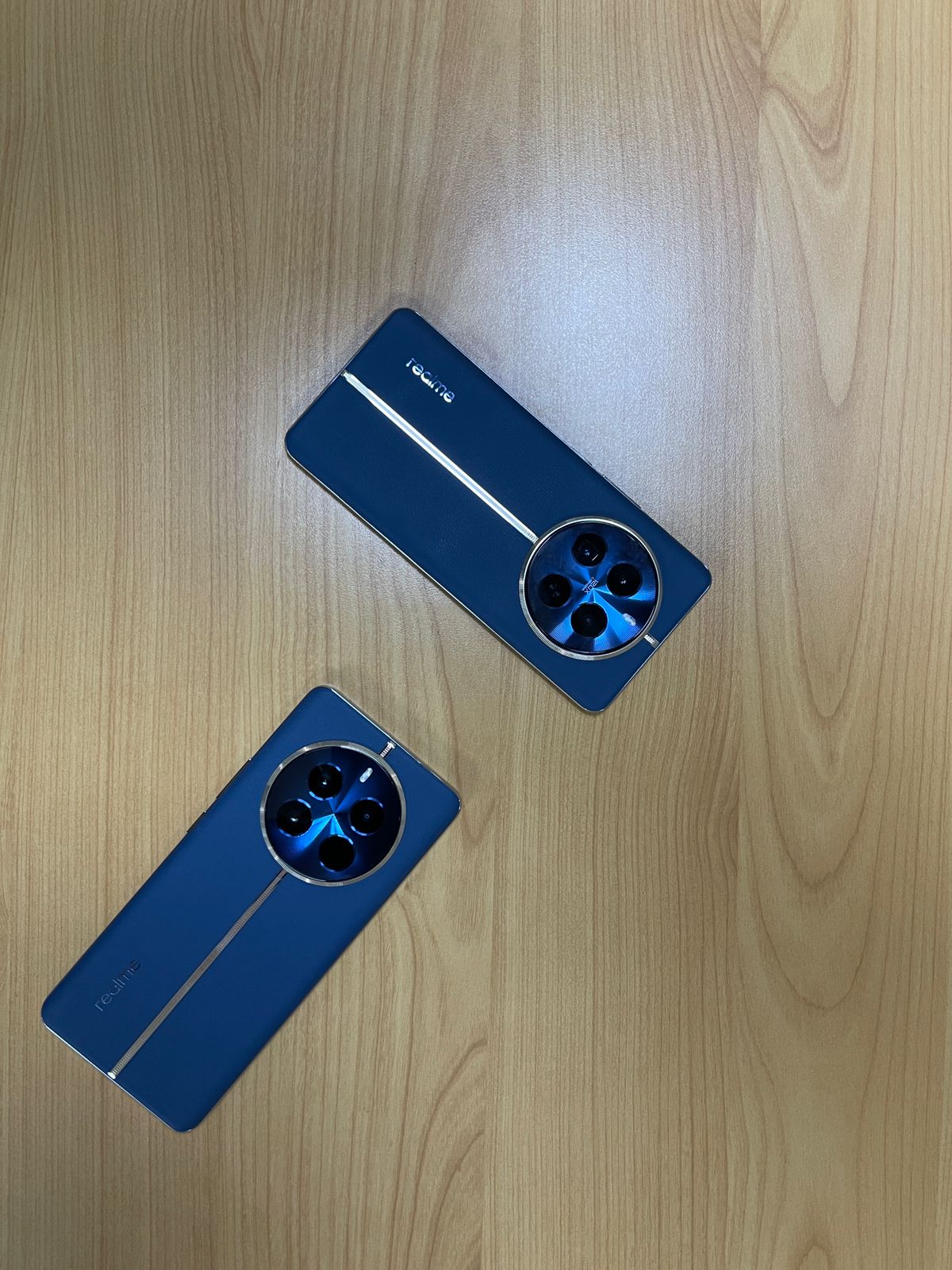
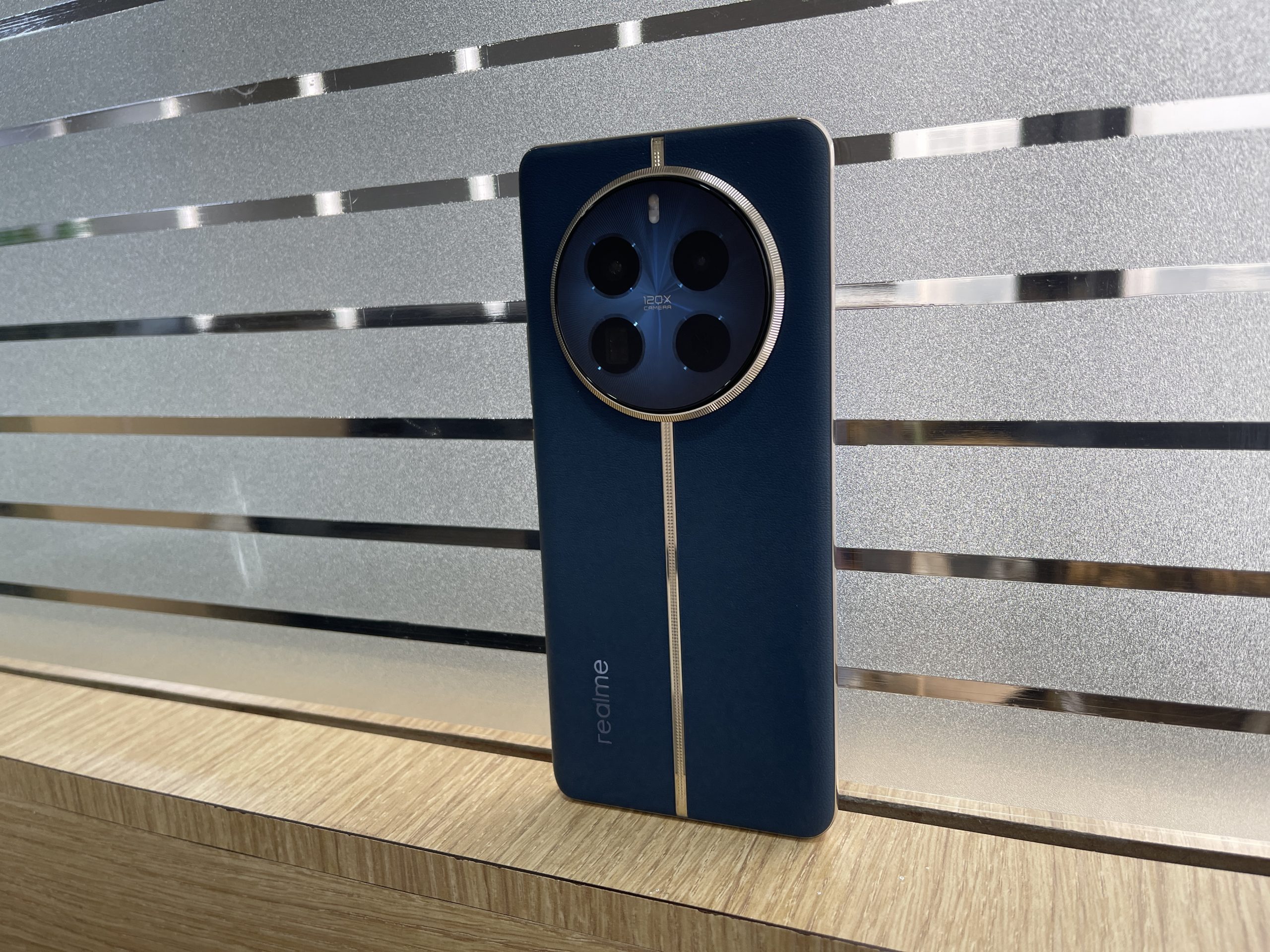
When I first held the Realme 12 Pro, its luxurious feelwas immediately apparent, reminding me of its more expensive sibling, the Realme 12 Pro+.
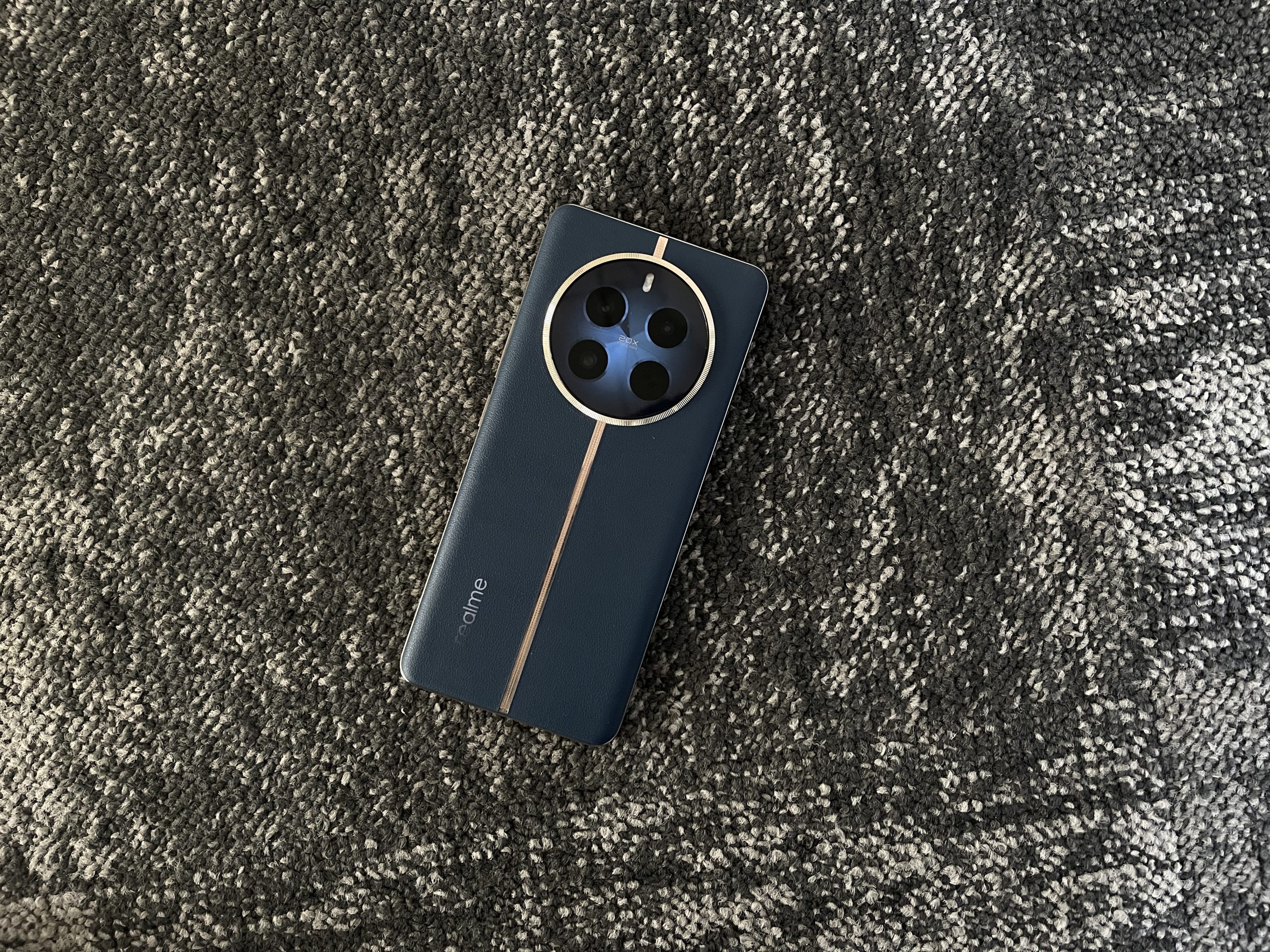
The vegan leather back is not just visually appealing but also practical, offering a comfortable grip while making sure no fingerprints tainted the handset’s back, which I found quite unique in today’s smartphone market.
Its slender yet sturdy build impressed me, striking a perfect balance between elegance and durability.
The thoughtful placement of buttons and the camera layout enhanced my user experience, making it evident that Realme has paid great attention to detail.
What’s more French luxury watchmaker Ollivier Savéo has also had a hand in the Realme 12 Pro’s design just like the 12 Pro+.
The Realme 12 Pro clearly exudes a premium feel, not just in its appearance but also in its build quality – a testament to Realme’s commitment to both innovation and sustainability.
Realme 12 Pro: Display
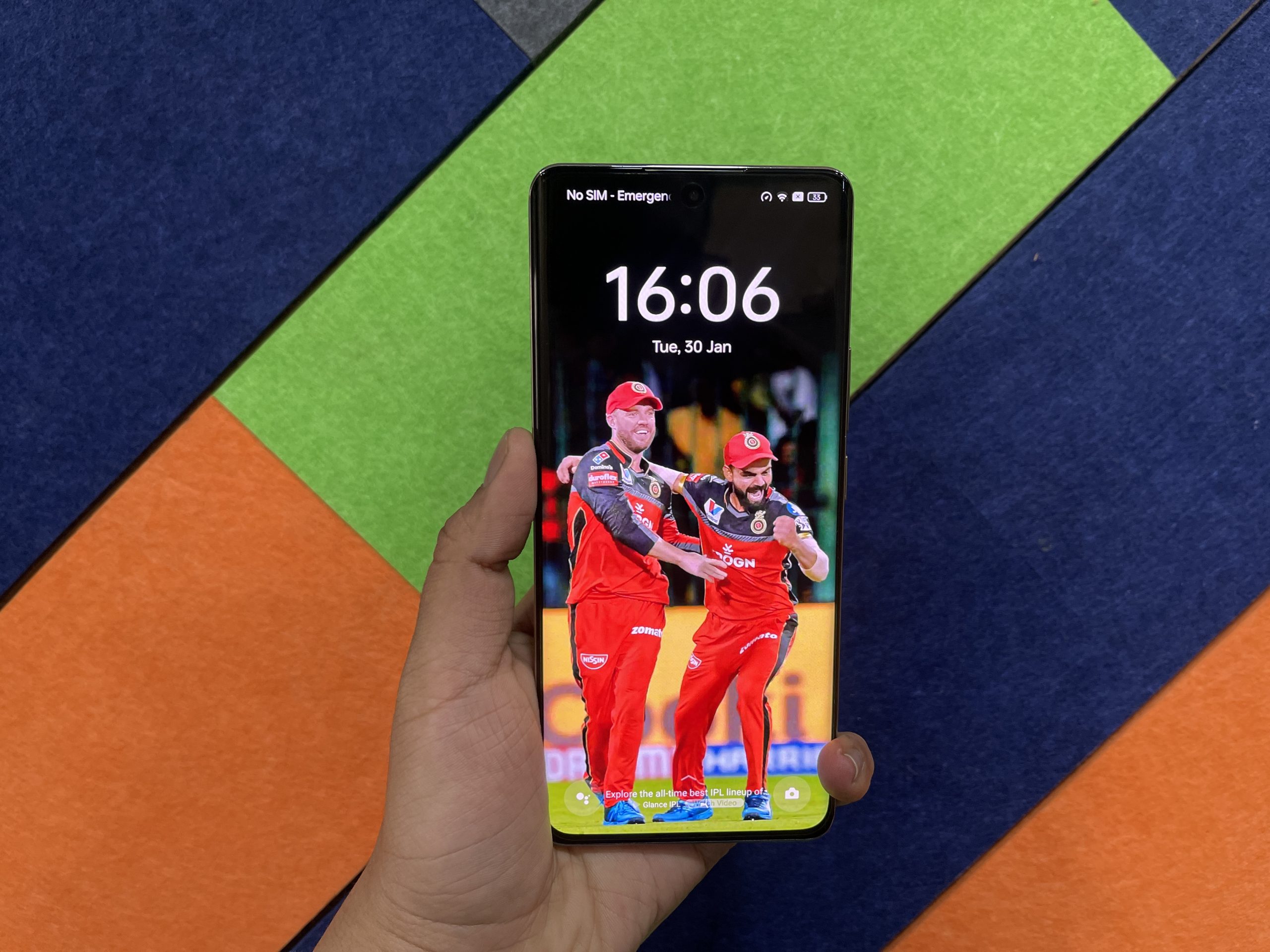
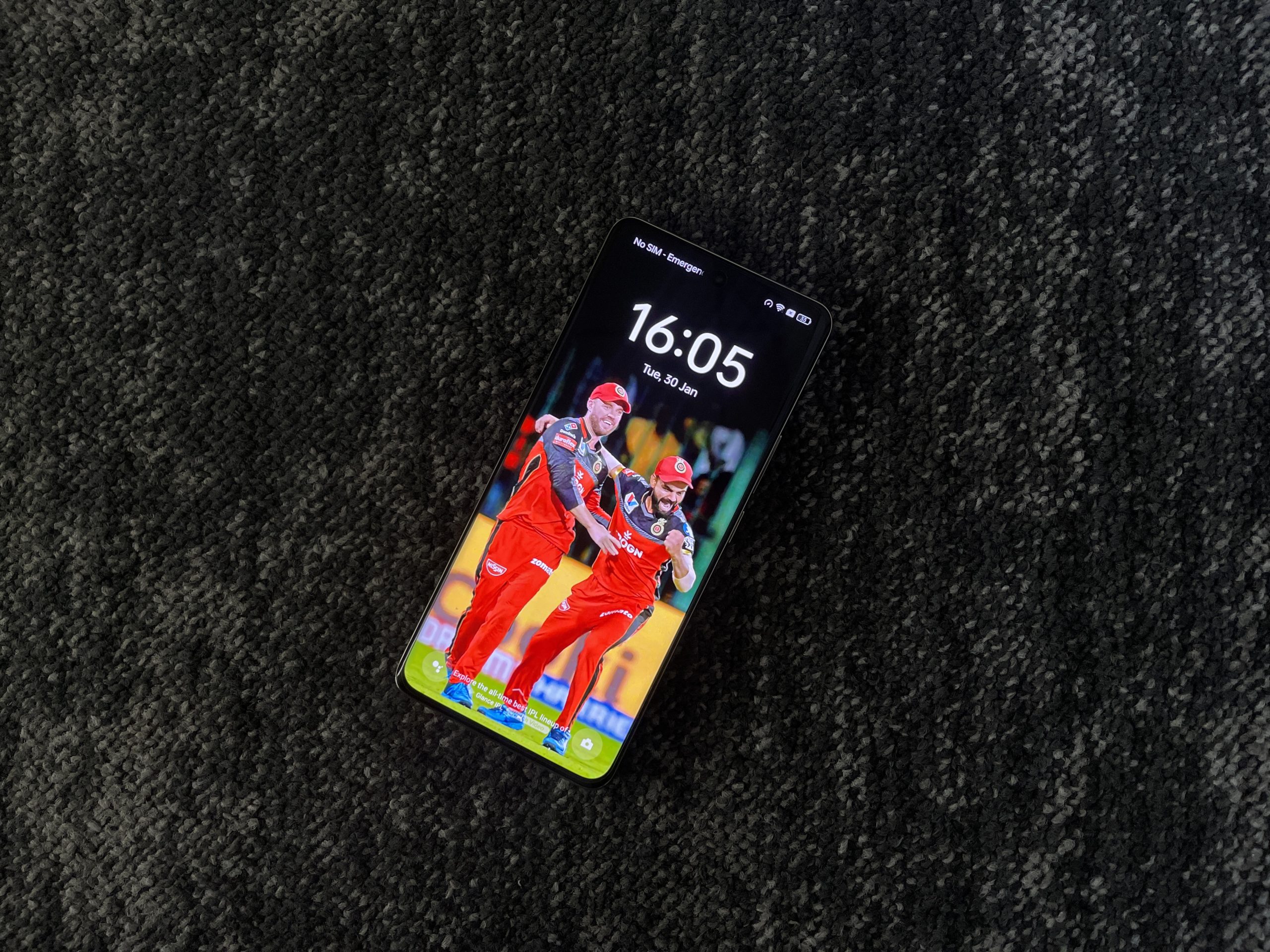
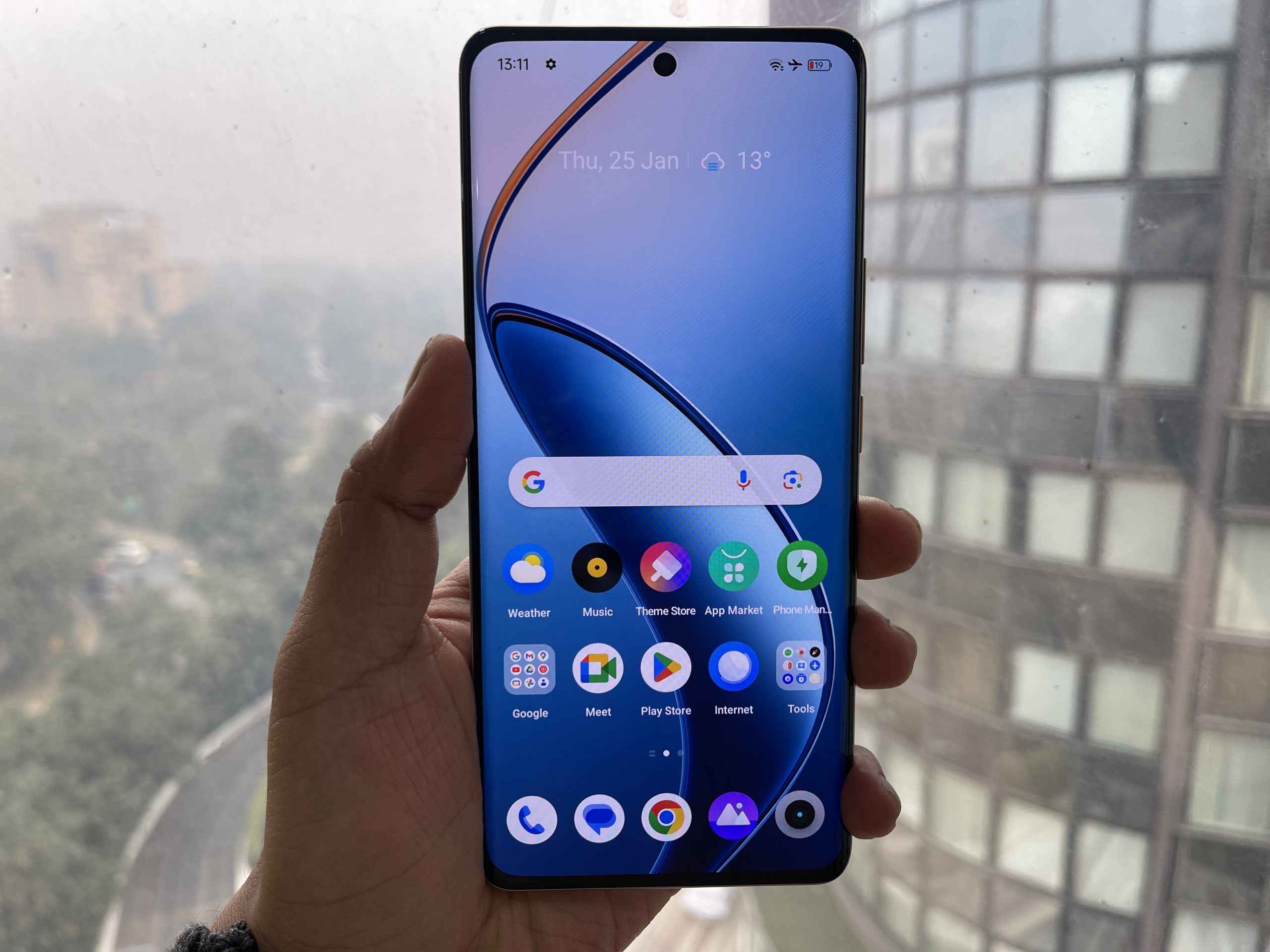
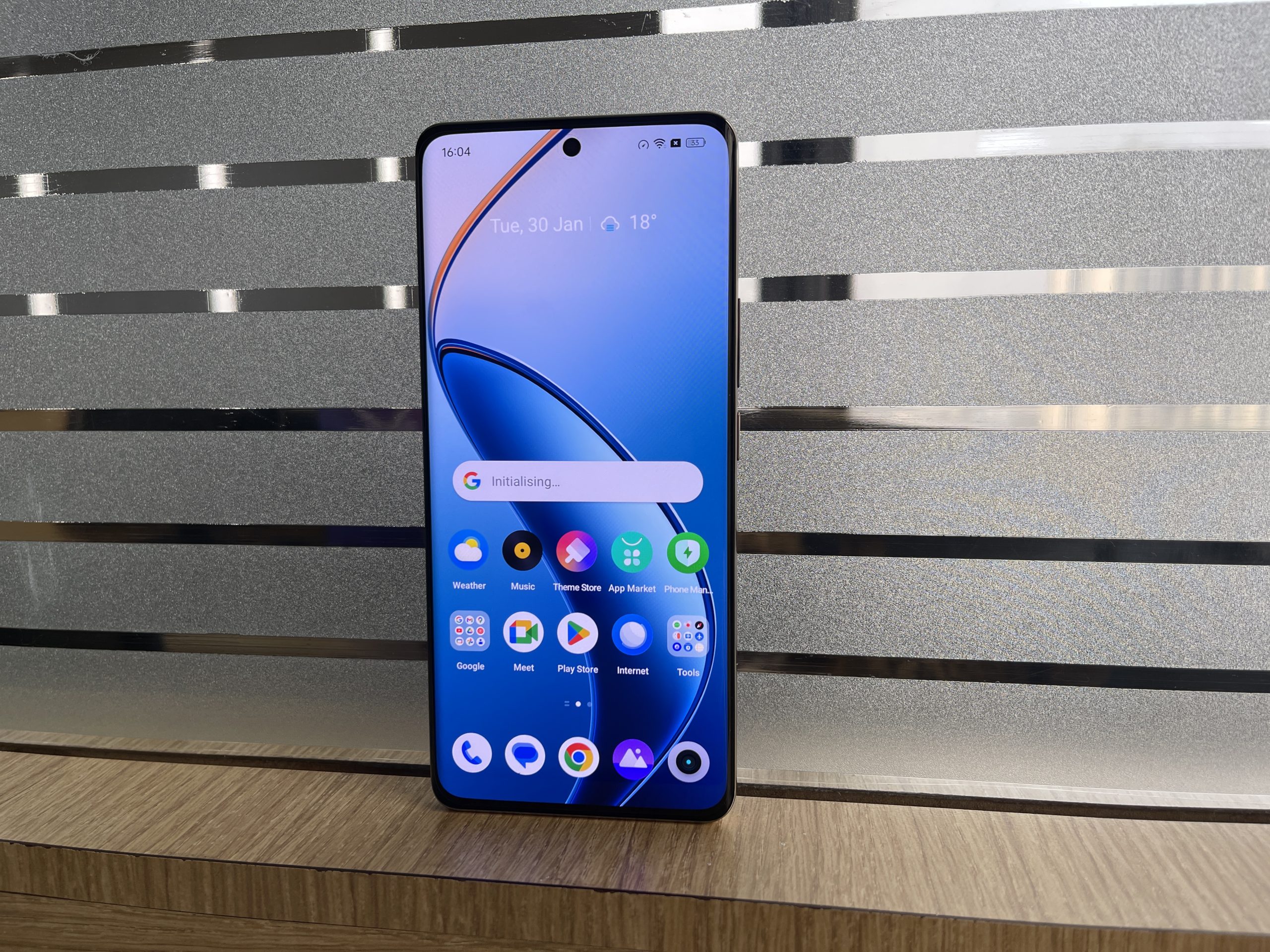
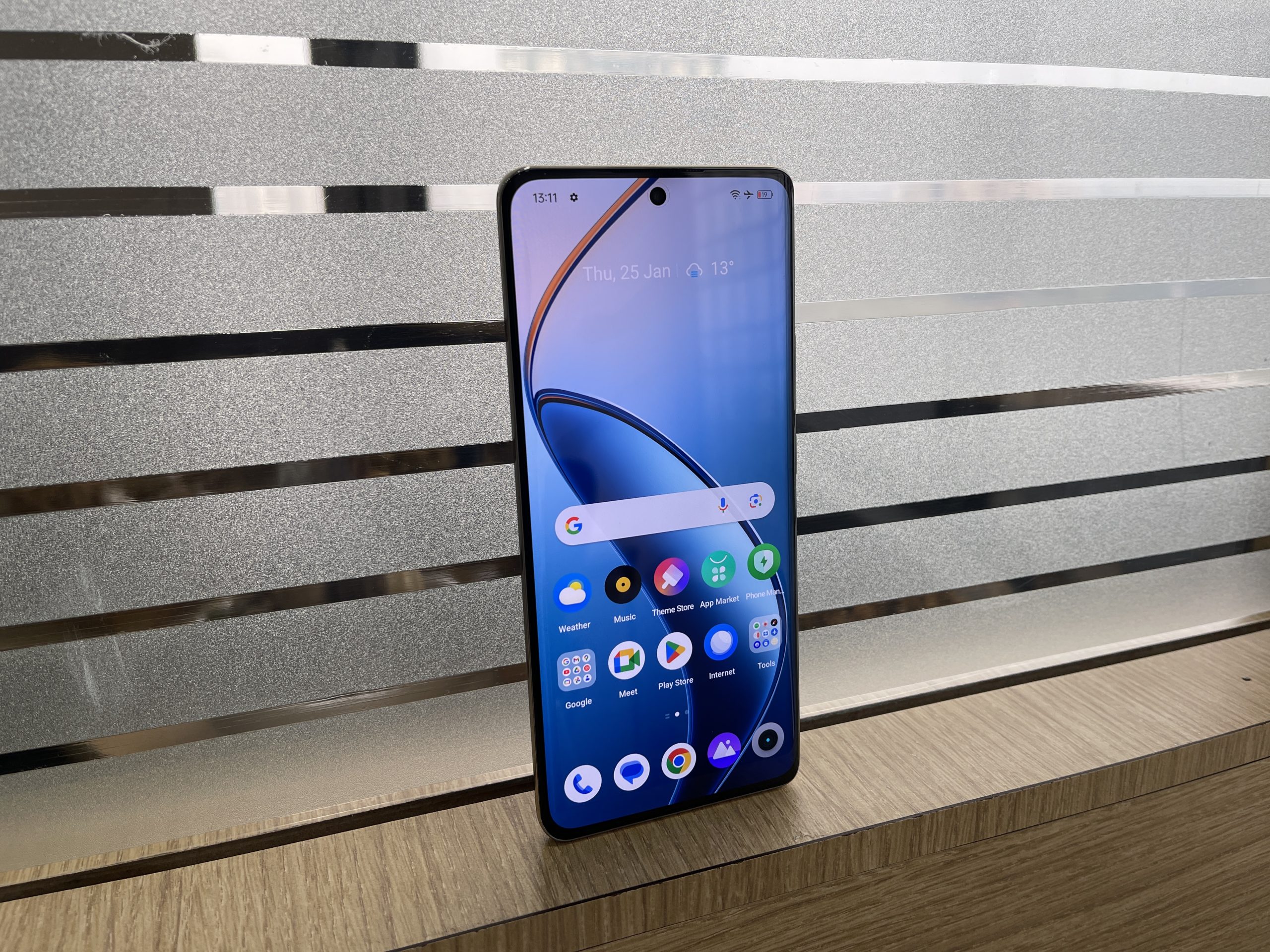
As far as the viewing experience goes, the Realme 12 Pro features a 120Hz Curved Vision Display, offering an outstanding viewing experience.
This display is a 6.7-inch OLED screen with a resolution of 2412 x 1080 FHD+, supporting 1.07 billion colors and 100% P3 color gamut.
It also boasts a high touch sampling rate of 240Hz, with an instantaneous rate of up to 2000 Hz.
For brightness, it reaches a global maximum of 800 nits and a local peak of 950 nits. If all this seems familiar to you, then you would be right.
These are the exact same specs as seen on the Realme 12 Pro+.
The visual acuity was good then and it certainly is good on the Realme 12 Pro.
The screen is protected by 0.55mm secondary tempered high-strength glass, ensuring durability and a premium feel.
What I can say for sure is that the device offers an exceptionally good viewing experience for its price and is a top recommendation from my side at this price.
Realme 12 Pro: Cameras
Realme 12 Pro: Cameras
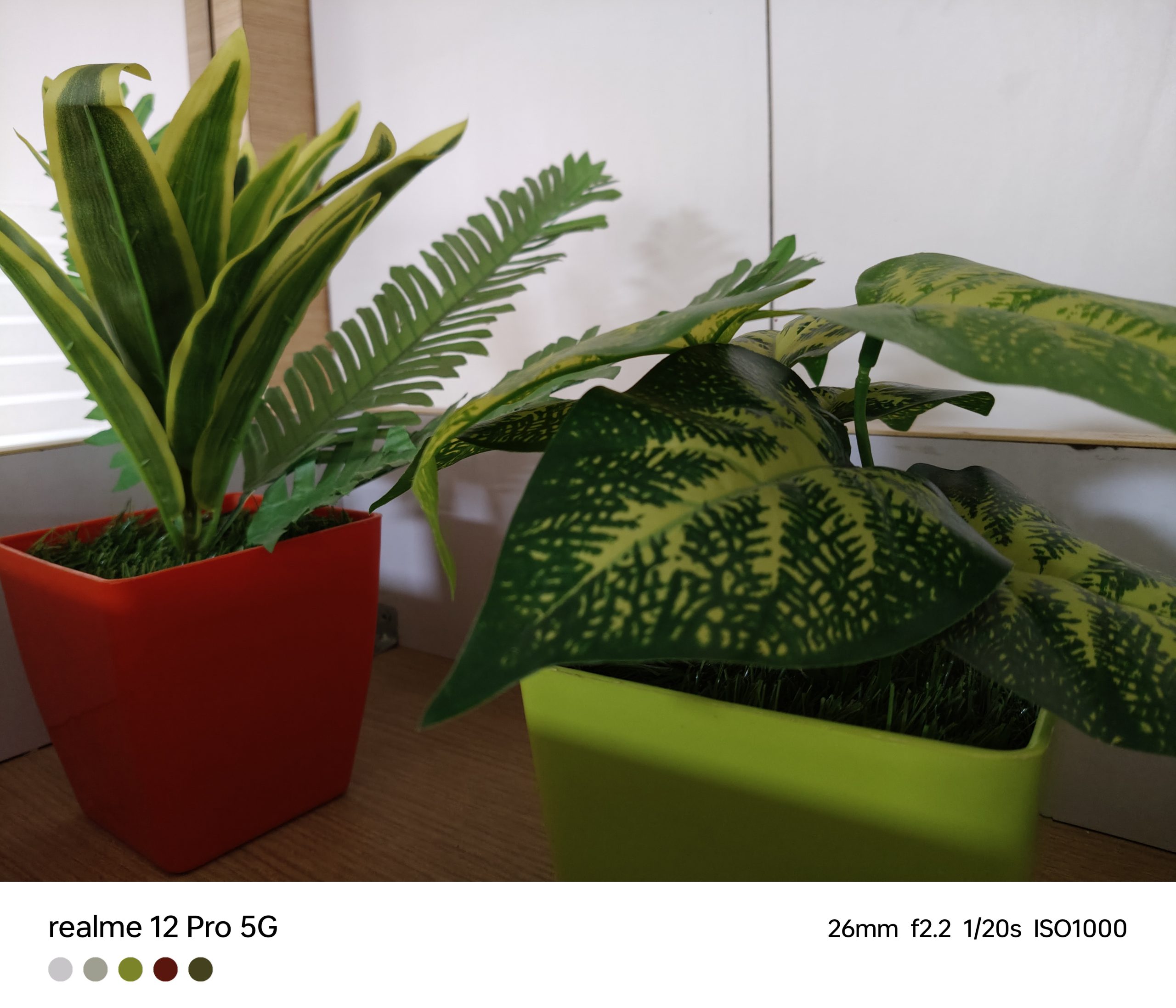
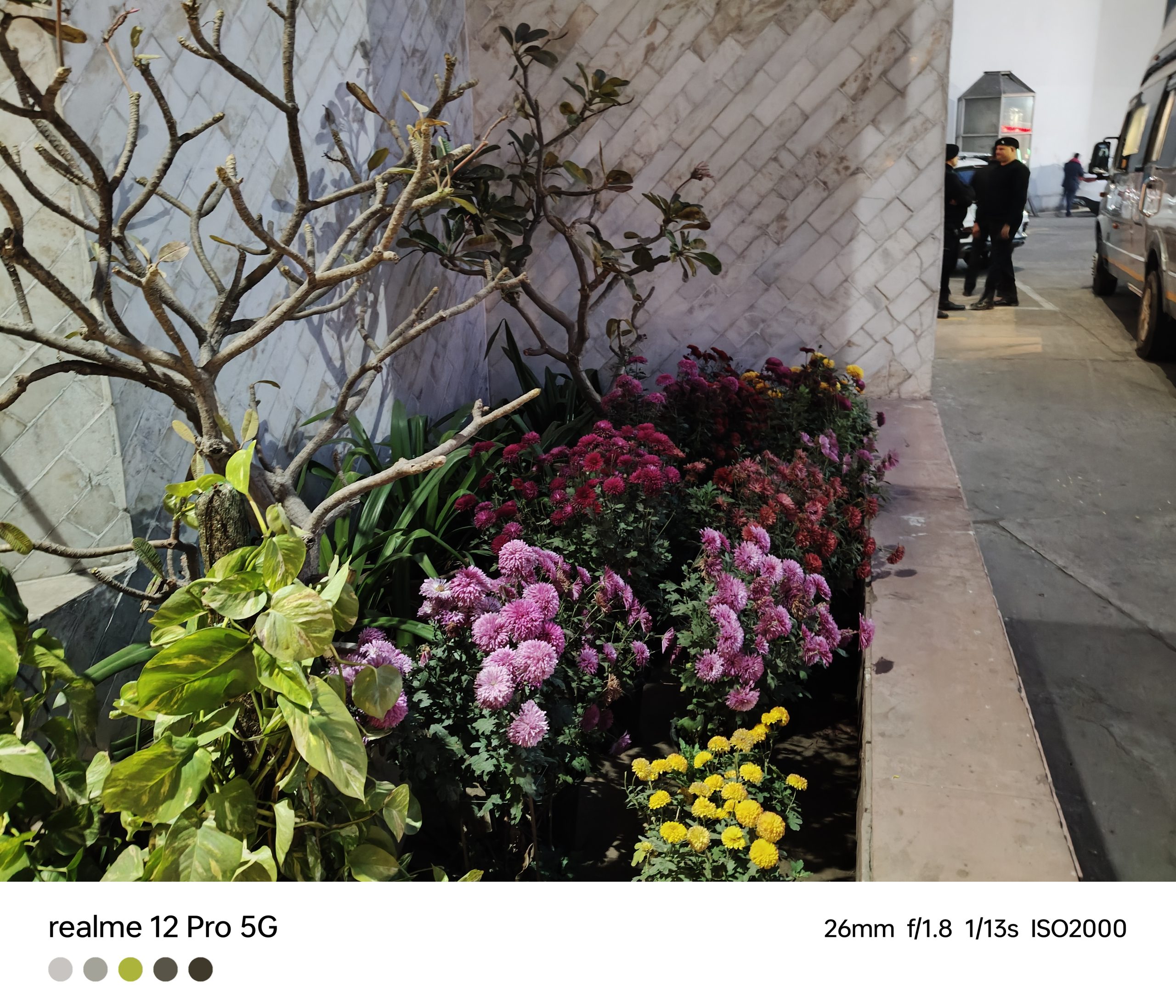
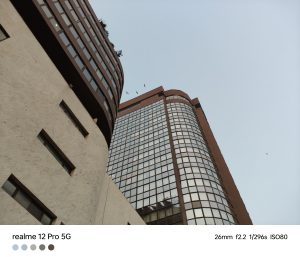
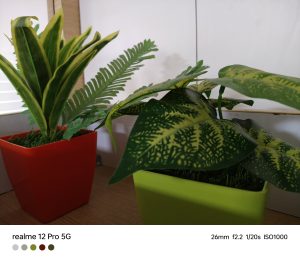
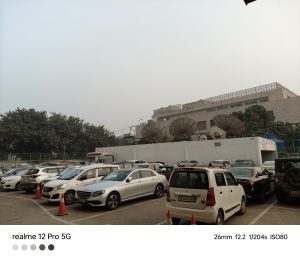
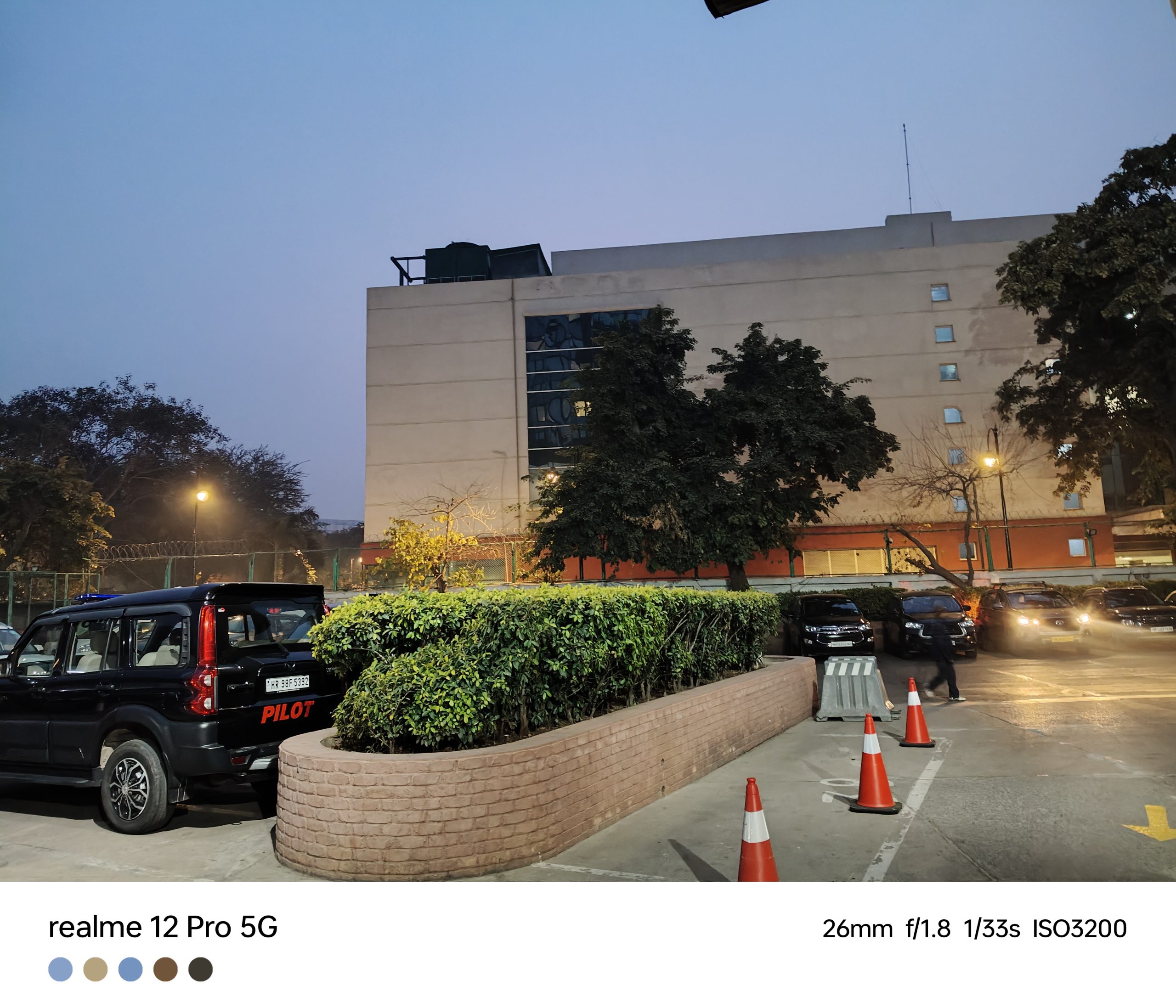
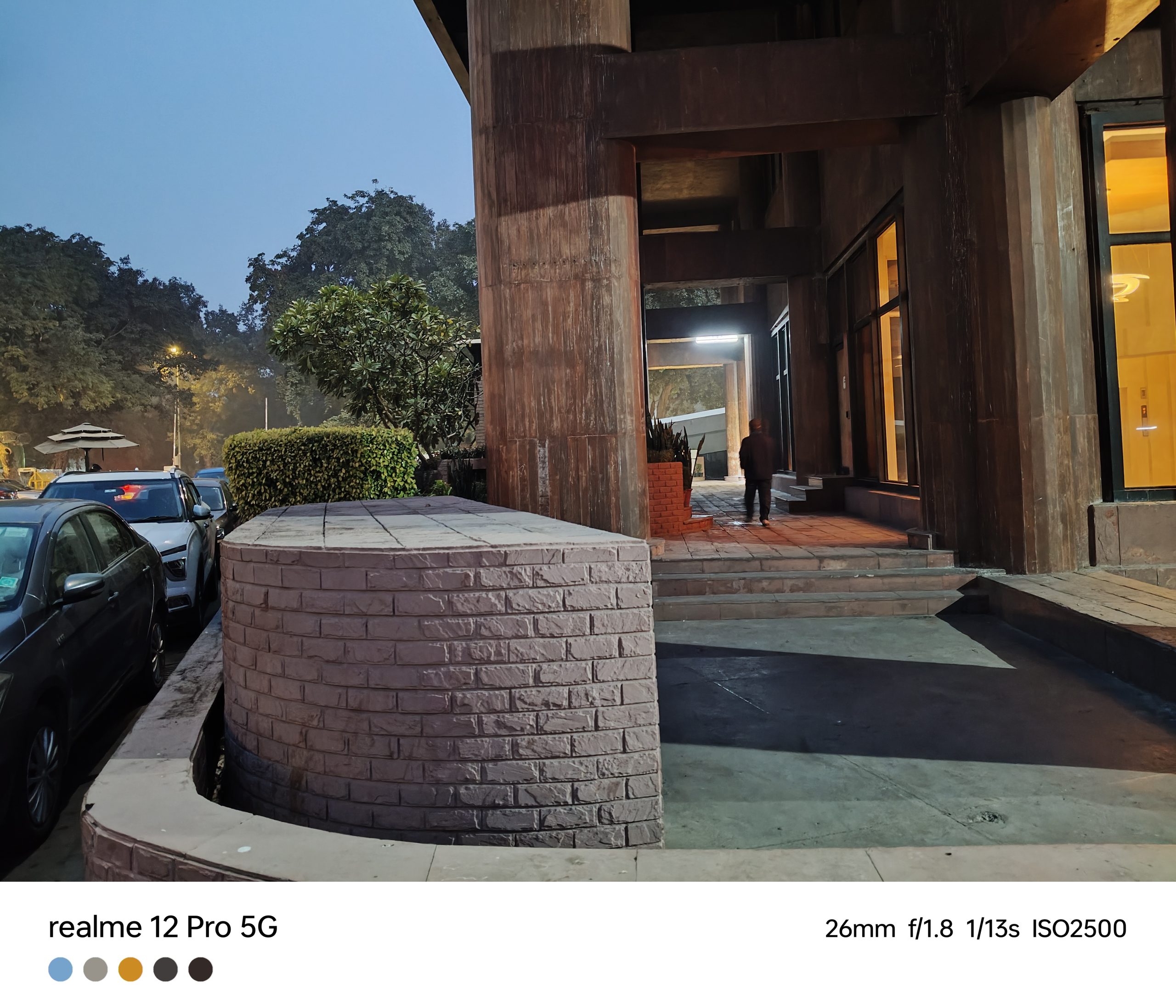
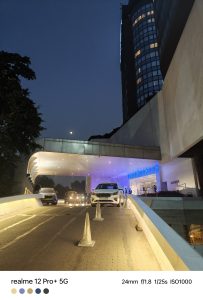
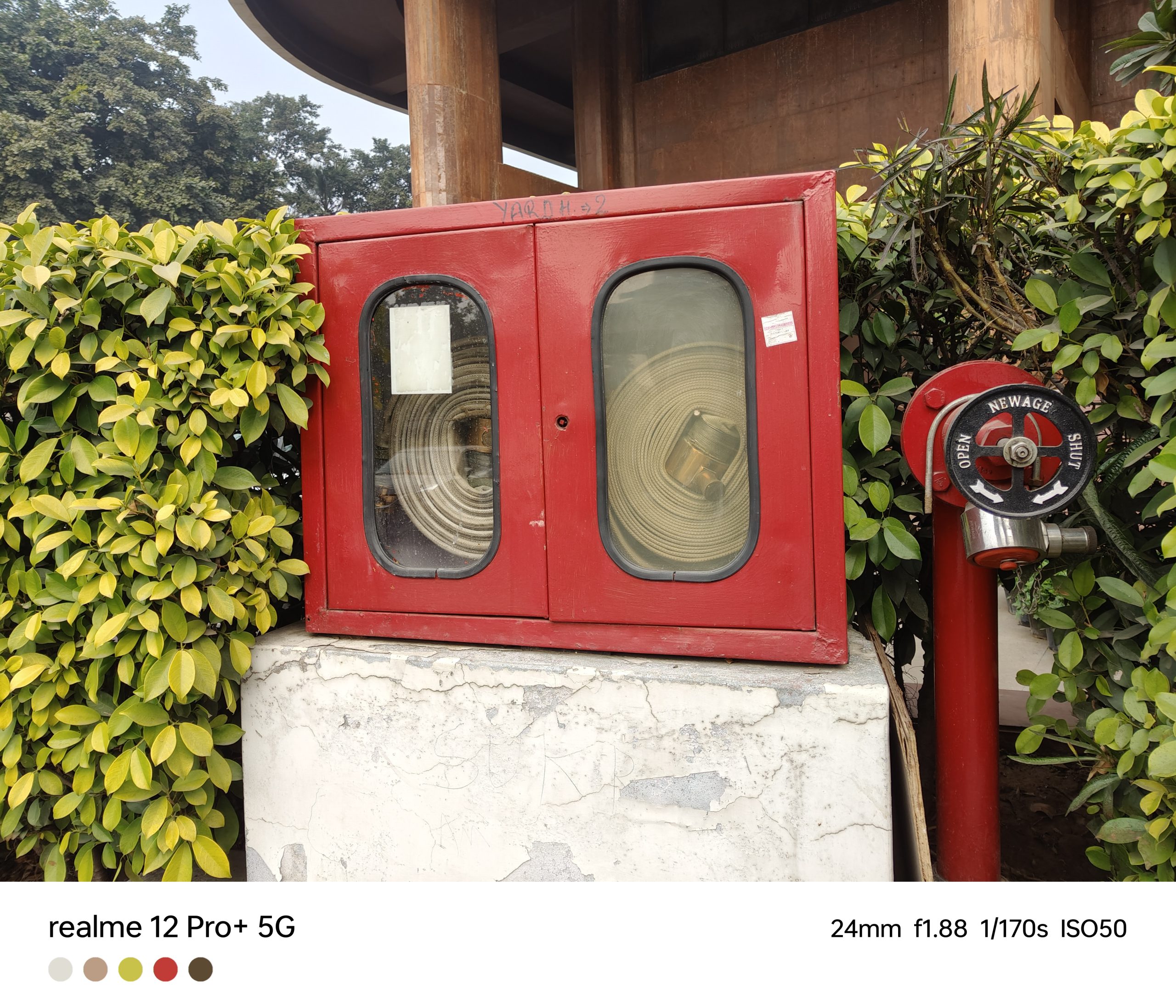
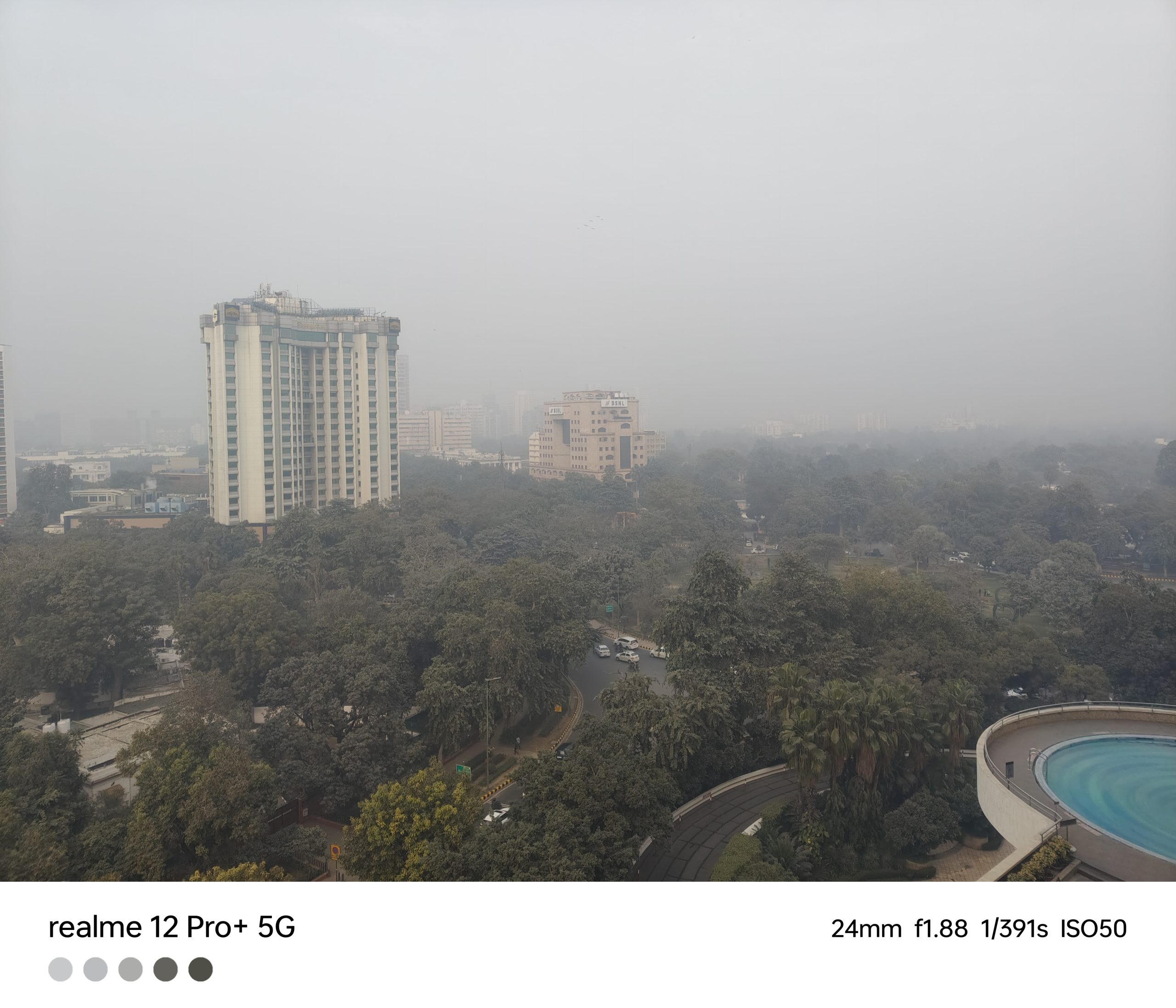
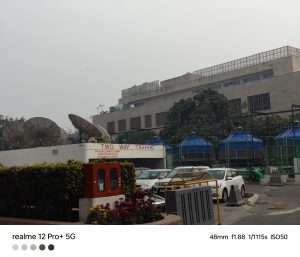
Talking about the camera, the Realme 12 Pro comes with a robust optical setup. The main camera is a 50MP Sony IMX 882 sensor with a 26mm equivalent focal length and an f/1.8 aperture.
It supports OIS, which contributes to the excellent focusing capabilities and fast shutter speeds that I experienced during daylight photography.
The dynamic range was commendable, and the overall daylight photography experience remained solid.
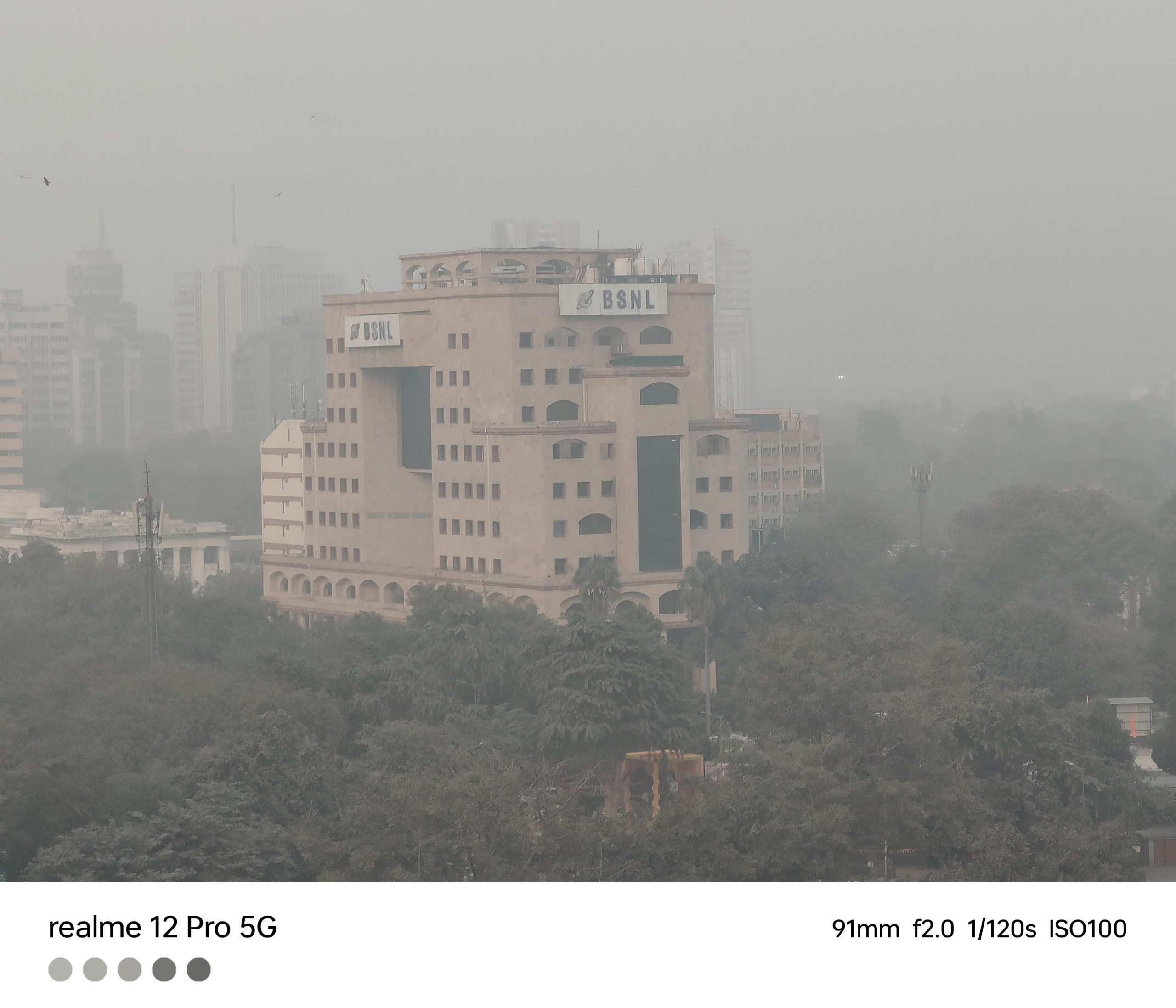
The phone also features a 32MP Sony IMX709 telephoto sensor with a 47mm equivalent focal length and an f/2.0 aperture.
It supports OIS and 4X In-sensor Zoom (ISZ).
This telephoto lens is a key feature of the phone, offering a 2X optical zoom that can go up to 6X.
However, the quality at these zoom levels is not that great, and I advise shooting at 3X for the best results.
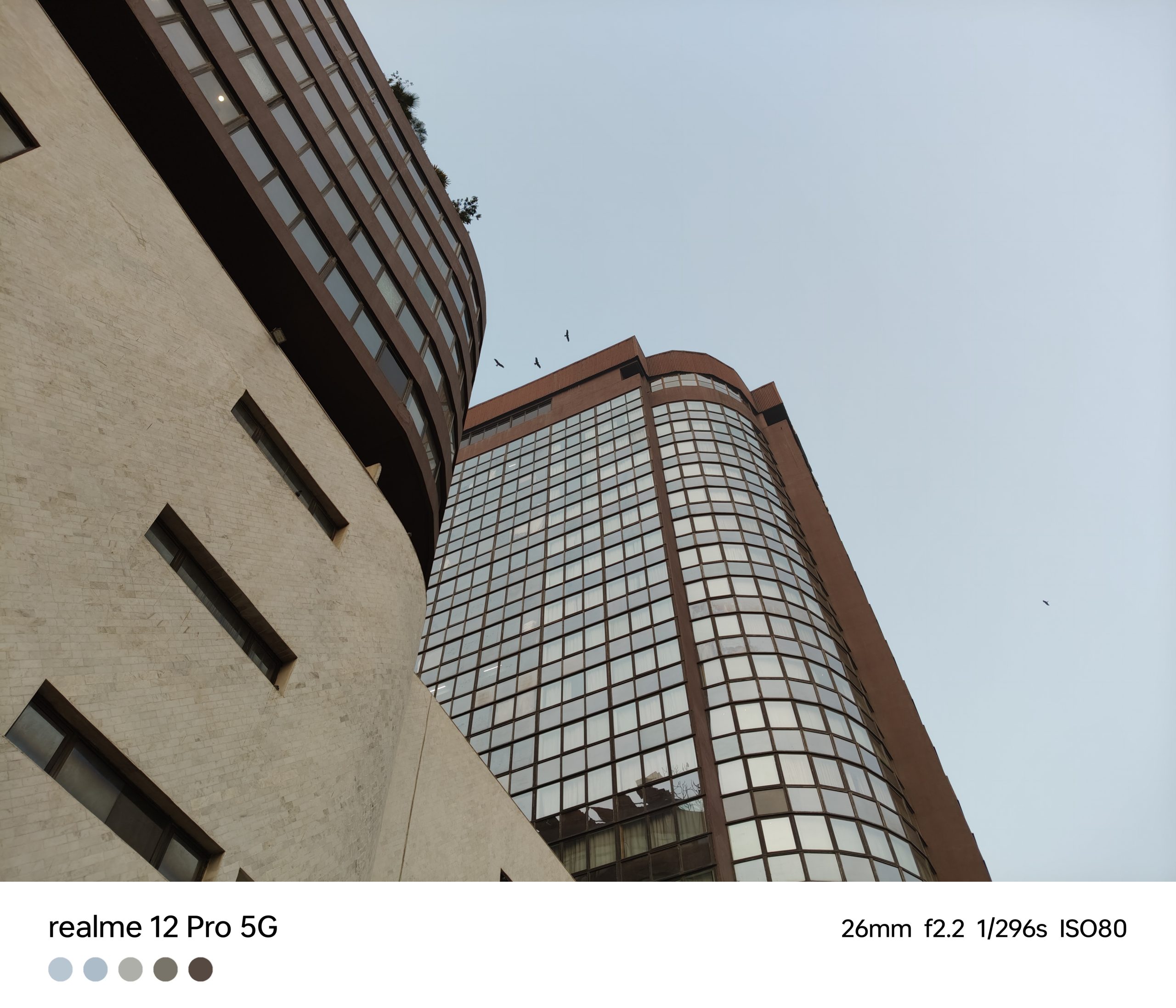
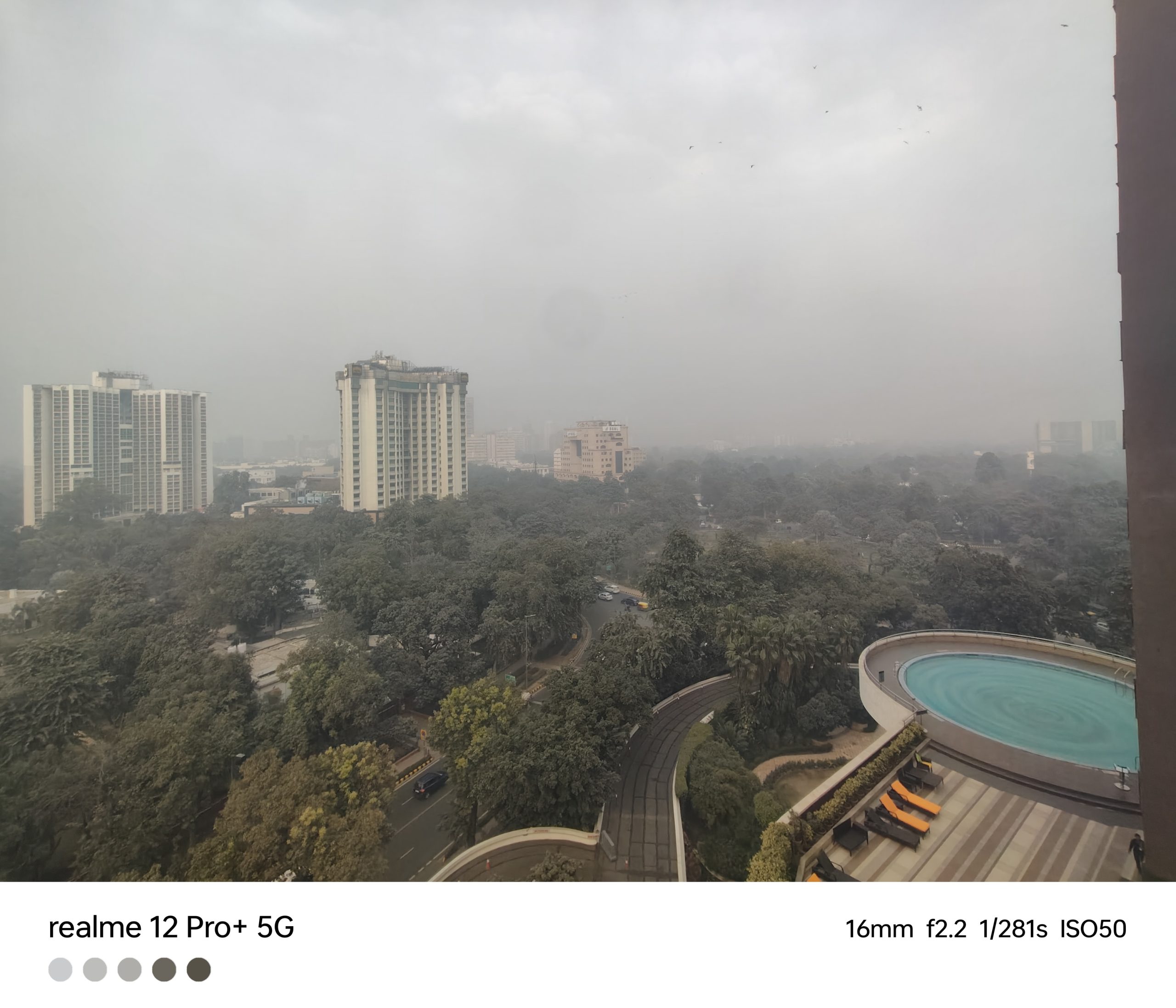
The 8MP ultra-wide camera has a 16mm equivalent focal length and an f/2.2 aperture.
While it offers a very wide field-of-view, the focus tended to be softer even in the frame’s center than I preferred.
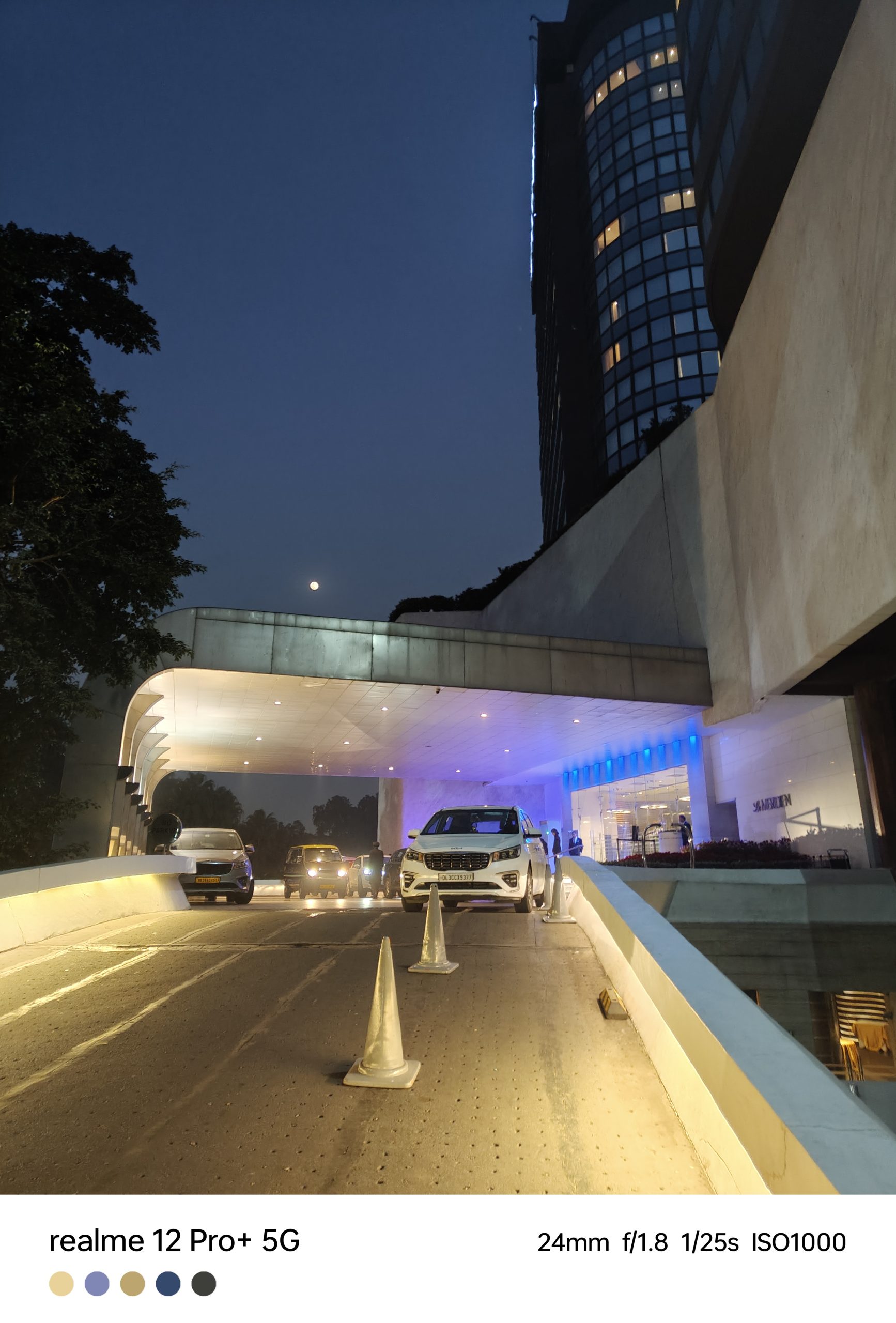
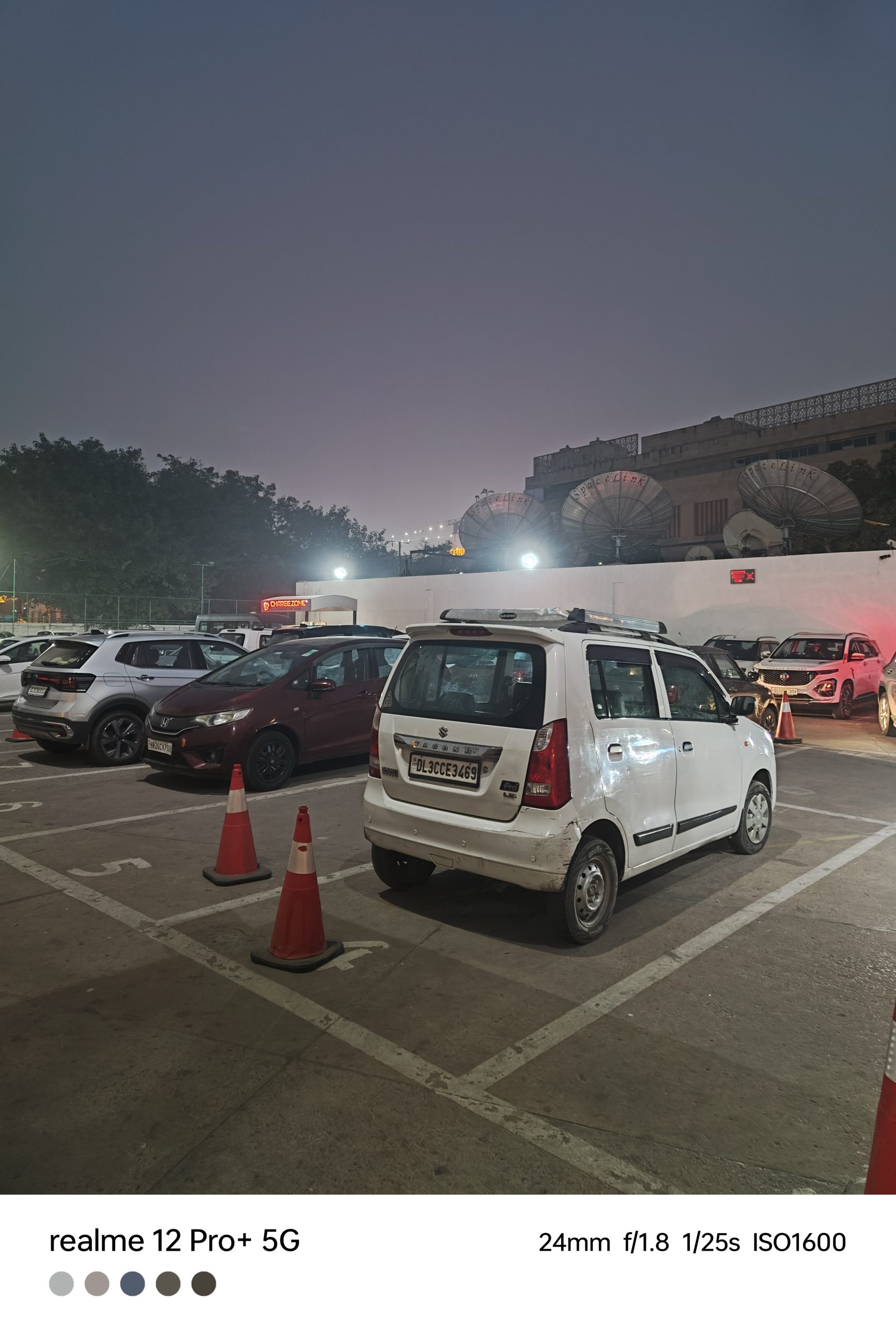
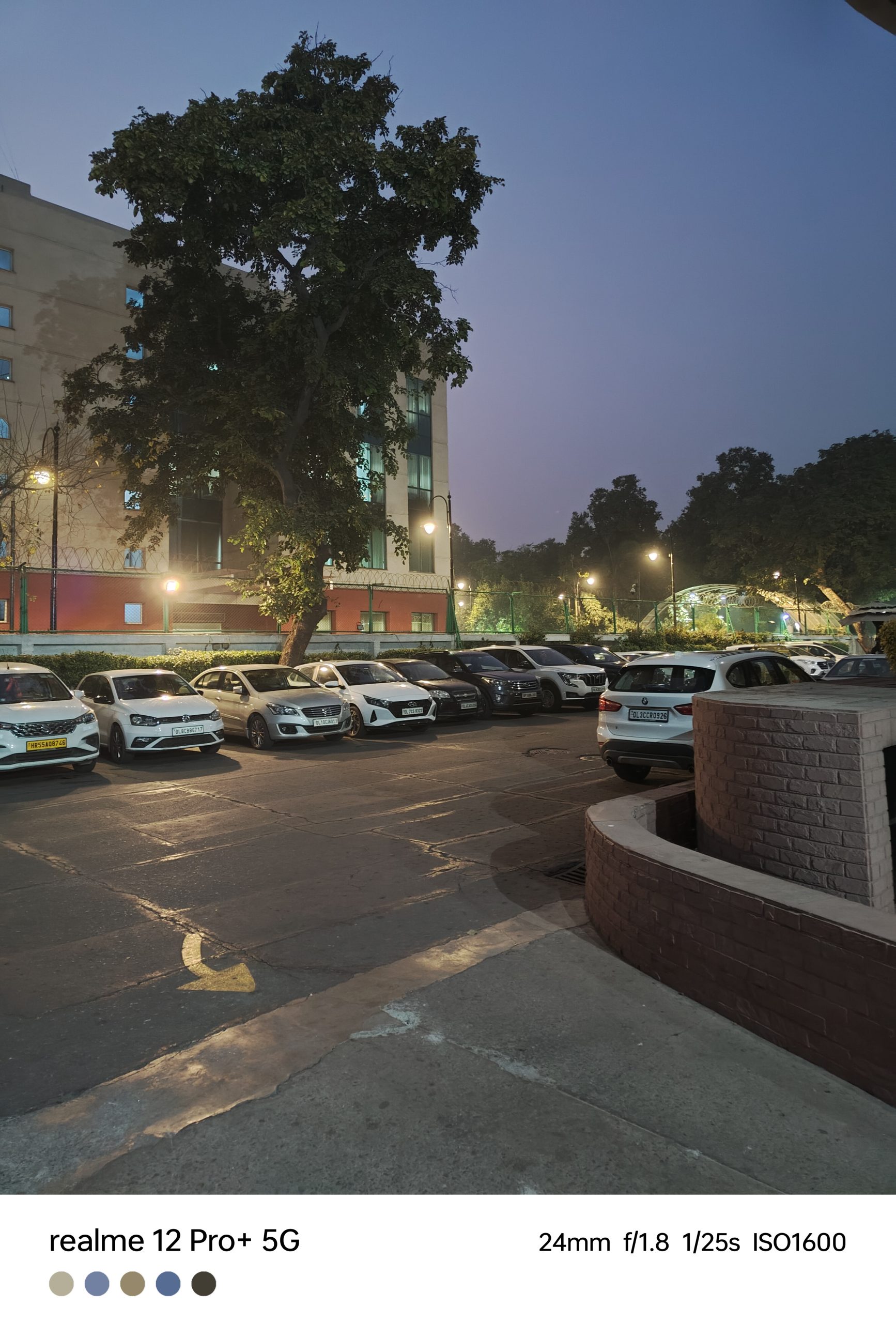
In terms of low-light photography, the Realme 12 Pro performs as well as one could expect at this price point.
The AI-based scene detection is a helpful feature, adding extra lighting to images, although I found the focusing to be a bit slower in these conditions.
The night mode is a highlight, adding good details to images, even though the colours are sometimes more saturated than I would like.
Finally, the 16MP selfie shooter does its job well, providing detailed selfies and satisfactory video calls.
However, I did notice the absence of a macro mode, which could have added more versatility to the camera setup.
The Cinematic Bokeh mode was more of a hit-or-miss, but portrait mode shots were good. Overall, the Realme 12 Pro’s camera setup proved to be quite impressive in daylight photography.
While it is not as colour-accurate or detailed as the Realme 12 Pro+, it is as good as one can get at this price point.
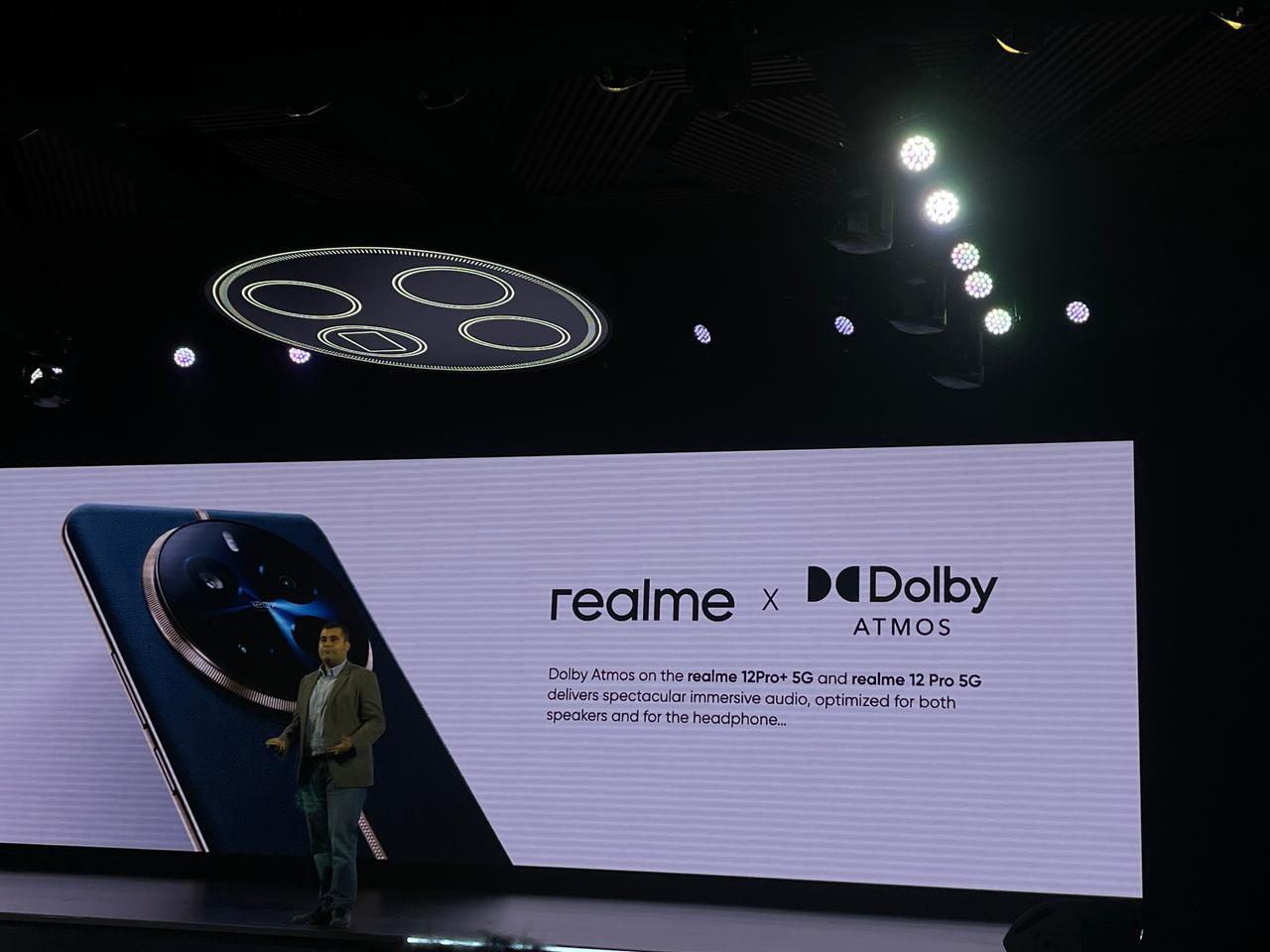
In terms of features, the Realme 12 Pro shines with its Dolby Atmos-powered stereo speaker setup, which delivers loud, crisp sound with a lot of depth.
Just like its sibling, the Realme 12 Pro+, the Realme 12 Pro runs on RealmeUI 5.0. This interface, based on Android 14, introduces several new features compared to its previous iteration.
However, it’s not without its drawbacks, which I have shared in a similar vein in my review of the 12 Pro+.
However, the interface can feel cluttered due to the numerous Realme apps populating both the home screen and app drawer.
Additionally, an intrusive window suggesting similar or trending apps appears every time an app is downloaded, which can be distracting.
Despite these issues, there are a few features that I found particularly useful:
File Dock: This feature offers a versatile solution for efficient content management.
It simplifies the process by allowing users to recognize and extract content like text, images, and links with a single click. Sharing all types of files becomes effortless through the intuitive drag-and-drop feature.
Flash Capsule: This provides convenient access to popular third-party services such as Grab, Swiggy, and Zomato directly from the device.
Smart Image Matting: This feature makes it easy to isolate and share subjects from your photos. It can separate subjects from similar backgrounds and recognize multiple subjects (up to 3).
You can also move cutouts between apps by dragging and dropping or copying and pasting, making it ideal for sharing on social media, DIY projects, and more.
Like with its sibling, one of the features that stood out to me was the extended standby time.
As such the battery levels barely dropped even after leaving the phone idle for a couple of hours.
However, due to differences in the chipsets used in the 12 Pro and 12 Pro+, the battery usage does vary slightly.
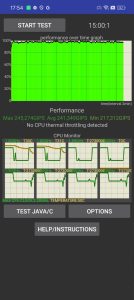
I observed about 6 hours of screen-on time with the 12 Pro, which, while slightly less than the 12 Pro+, is still commendable for a device in this price range.
As for charging speeds, the 12 Pro supports 67W SuperVOOC charging, which can fully charge the phone in approximately 40 minutes.
This, combined with the other factors, contributes to an overall excellent battery performance.
Realme 12 Pro: Final Verdict
Realme 12 Pro: Final Verdict
The Realme 12 Pro is a device that skillfully balances premium elements with practical functionality.
Its move towards a more upscale market segment doesn’t diminish its roots in delivering value for money.
It packs in a luxurious design, vibrant display, and versatile camera, and caters well to the needs of a user looking for a high-quality smartphone experience without a hefty price tag.
While the mid-range processor and software bloatware might be points of contention for some, they are overshadowed by the phone’s overall performance and feature set.
This makes the Realme 12 Pro not just a competitor, but a standout option in its price range.
5 Reasons to Buy
5 Reasons to Buy
Luxurious Design: The vegan leather back and meticulous craftsmanship offer a premium feel.
It has a triple camera setup (64MP + 2MP + 2MP) and a 4700mAh battery. This phone stands out for its balance between performance and display quality.
Motorola Edge 40
Motorola Edge 40
Available for Rs. 26,499, this model comes with a high-resolution triple camera (50MP+50MP+2MP), a powerful Snapdragon 778G+ processor, and a large 144Hz AMOLED display.
It’s known for being thin and lightweight while offering great viewing and gaming experiences.
Nothing Phone (1)
Nothing Phone (1)
At Rs. 29,999, this phone offers a unique design with glyph lights and a clean Android experience.
It has a Qualcomm Snapdragon 778G Plus processor, a 6.55-inch display, and a dual 50MP camera setup. It’s a good choice for those looking for a unique design with essential features.
Night Scene Mode, Street Mode, Photo Mode, Portrait Mode, 108M Mode, Professional Mode, Panorama Mode, Super Text, Tilt-Shift, Group Portrait, AI Video Tracking, One Take (Introduced by OTA Upgrade), CMOS, EIS, 20 Continous Shots, Video Feature: Multi-View Video, Movie Mode, Tilt-Shift, Slow Motion, Timelapse Photography, Video Mode
What is the starting price of the Realme 12 Pro in India?
The Realme 12 Pro is available starting at Rs 25,999, positioning it in the sub-Rs 30,000 category while offering premium features.
How does the design of the Realme 12 Pro stand out?
The phone’s luxurious feel is accentuated by its vegan leather back and ergonomic design, making it visually appealing and comfortable to hold.
What are the key display features of the Realme 12 Pro?
It features a 6.7-inch OLED screen with a 120Hz refresh rate, FHD+ resolution, and supports 1.07 billion colors, providing an immersive viewing experience.
How does the Realme 12 Pro perform in photography?
With a 50MP primary sensor and a 32MP telephoto lens, the Realme 12 Pro offers impressive photography capabilities, especially in daylight conditions.
What makes the Realme 12 Pro a good choice in its price range?
The combination of premium design, high-quality display, robust camera system, and efficient battery life with fast charging makes it a compelling choice in its segment.
Does the Realme 12 Pro series support advanced photography?
Yes, the Realme 12 Pro series is equipped with high-resolution cameras, including a periscope telephoto lens, offering advanced photography capabilities like 3X Optical Zoom and 120X SuperZoom.
What design elements are unique to the Realme 12 Pro series?
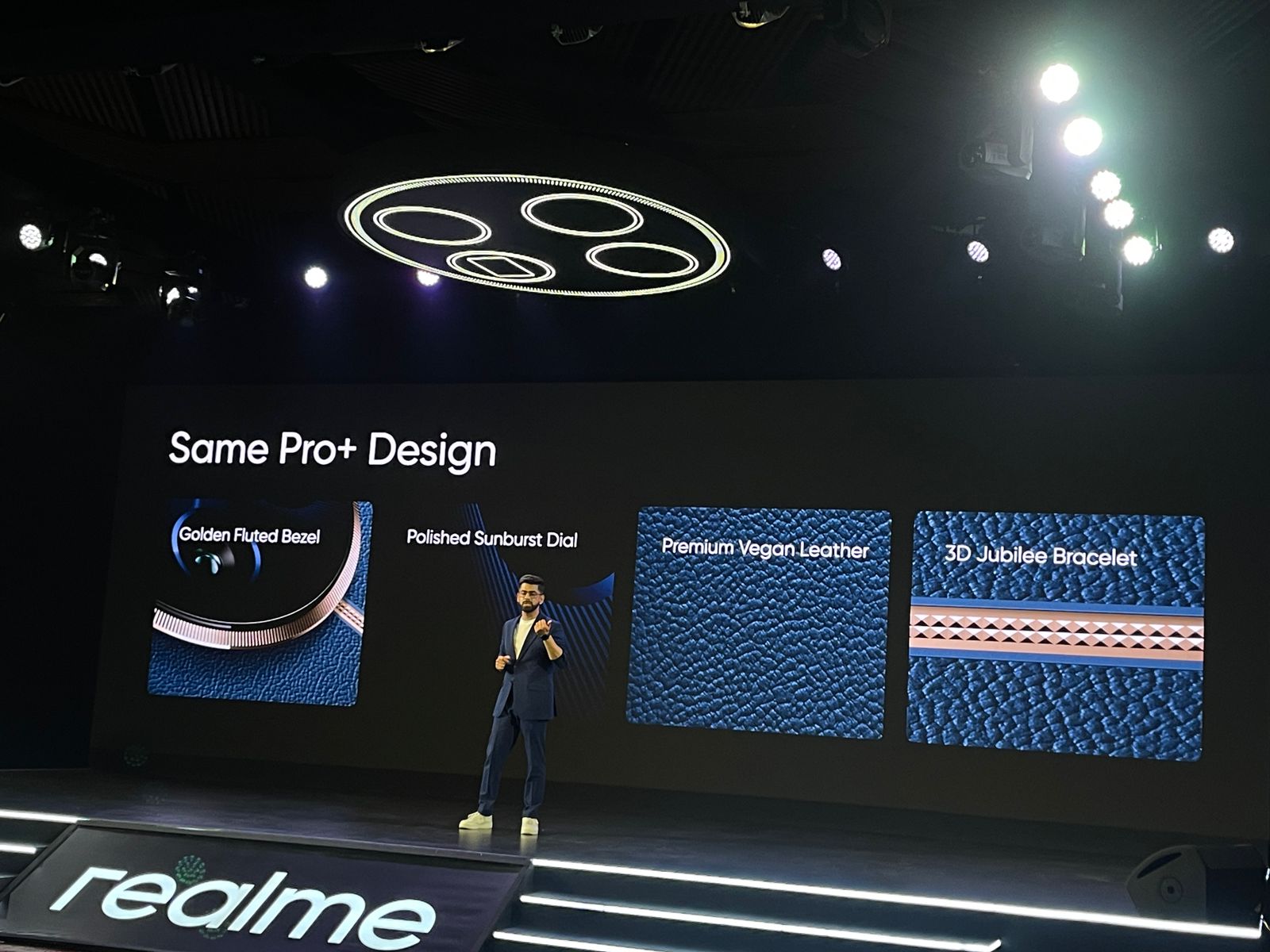
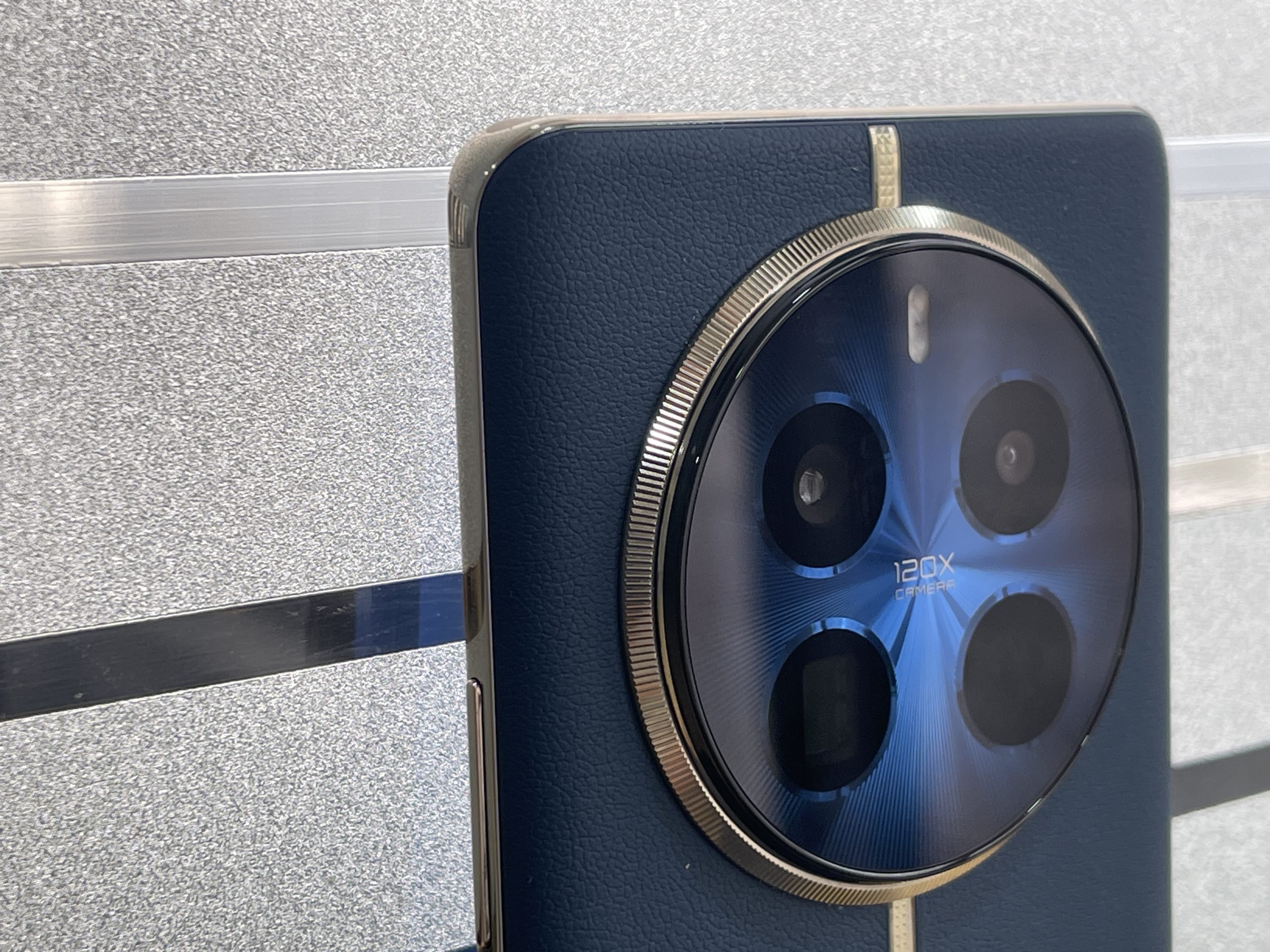
The Realme 12 Pro series incorporates luxury watch design elements, featuring a Golden Fluted Bezel, Polished Sunburst Dial, and Premium Vegan Leather in various color options.
How does the Realme 12 Pro differ from the Pro+ model?
The Realme 12 Pro features a Qualcomm Snapdragon 6 Gen 1 processor, a 32MP Sony telephoto camera with 2X Optical Zoom, and 8GB+8GB Dynamic RAM, distinguishing it from the Pro+ model.
How does the collaboration with Ollivier Savéo reflect in the Realme 12 Pro Series?
Realme’s collaboration with luxury watch designer Ollivier Savéo has led to an exclusive watch design for the Realme 12 Pro Series 5G, showcasing a unique blend of technology and luxury style, particularly evident in the Rolex-inspired camera design.
Realme 12 Pro Series 5G to Feature Segment-First Flagship Periscope Telephoto Lens & Luxury Watch Design. Details ?
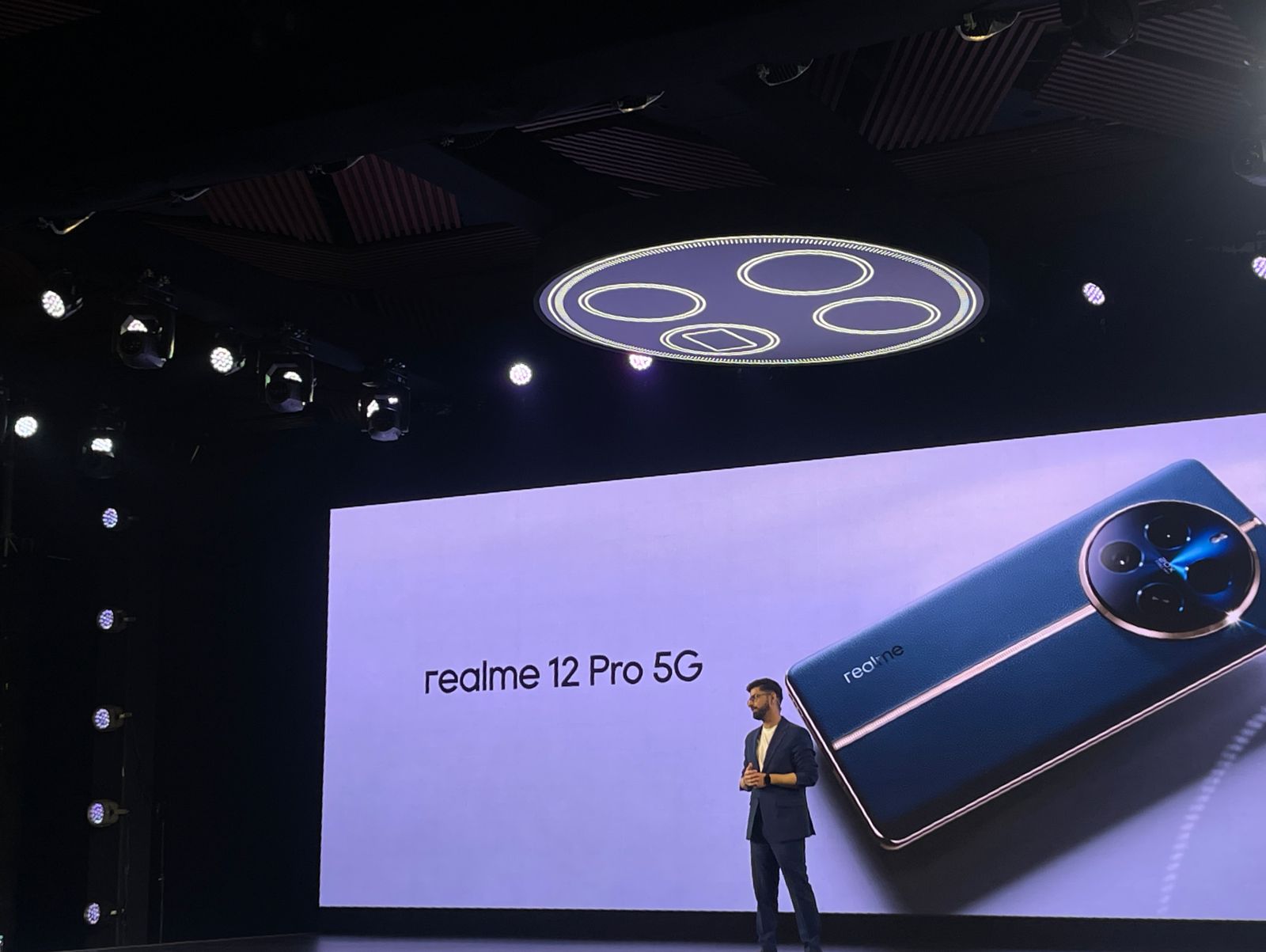
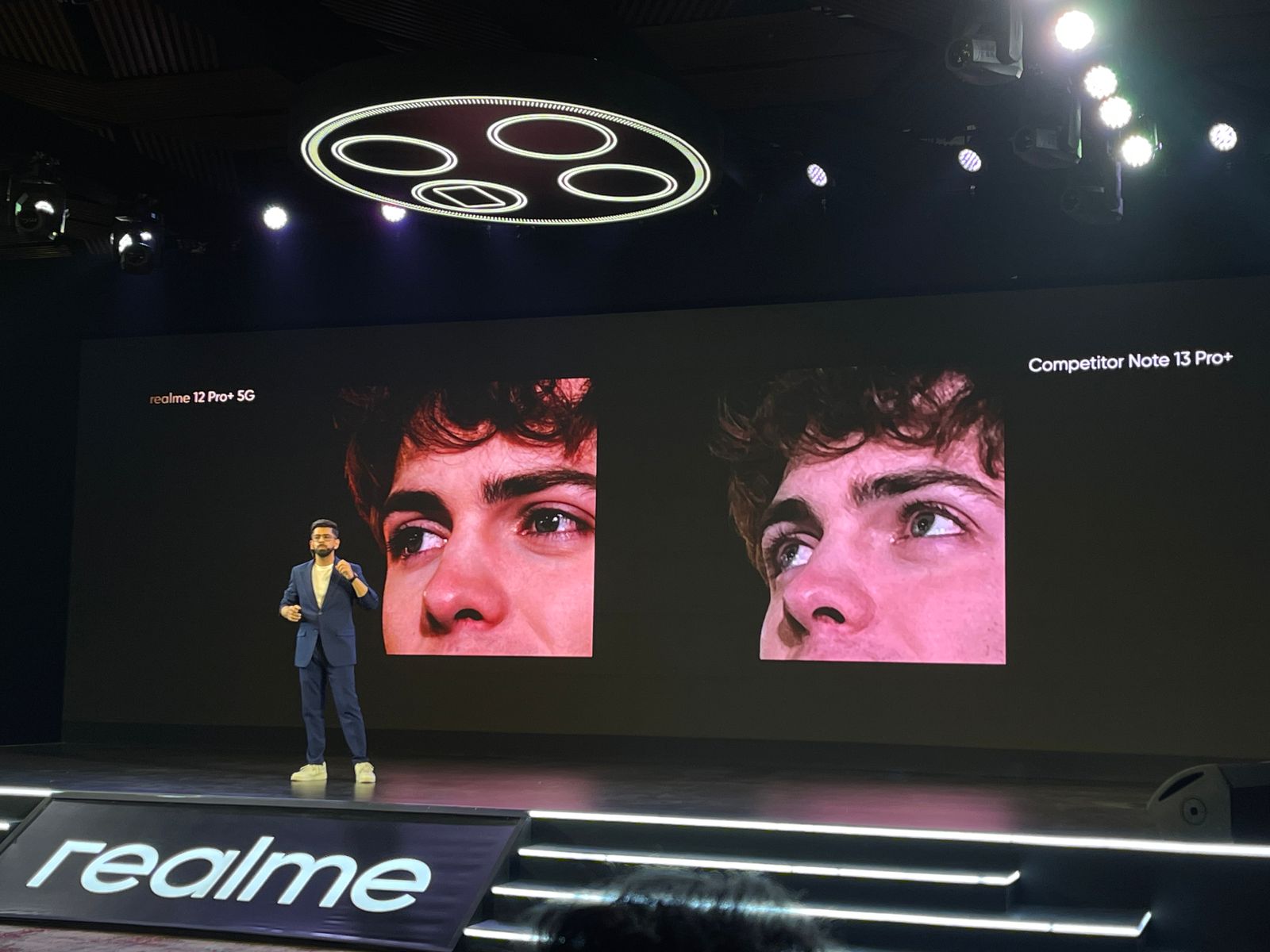
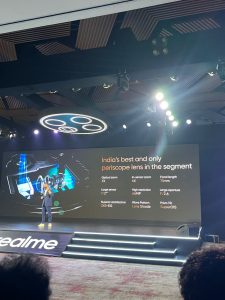
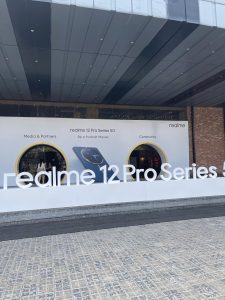
Realme, the Most Reliable Smartphone Service Provider, today announced at its 2024 media preview event in Las Vegas that the Realme 12 Pro Series will include a flagship periscope telephoto lens.
During the event, Realme showcased its advanced periscope telephoto technology and Luxury Watch Design.
Attendees were given a firsthand look at the upcoming Realme 12 Pro Series 5G, with some suggesting that it could potentially lead the category in imaging capabilities.
Realme’s Founder and CEO, Sky Li, recently penned an open letter, marking 2024 as the year of brand refreshment for the company.
Accompanying this announcement, Realme unveiled its new slogan, ‘Make it real,’ thereby repositioning itself as a tech brand that better understands young users.
Under this fresh brand positioning, the Realme number series is set to represent the future of next-gen imaging. This media event marked Realme’s initial official communication following its brand refreshment.
Is Realme 12 pro series 5G Empowering Young Users with Next-Gen Imagery through the Flagship Periscope Telephoto Lens ?
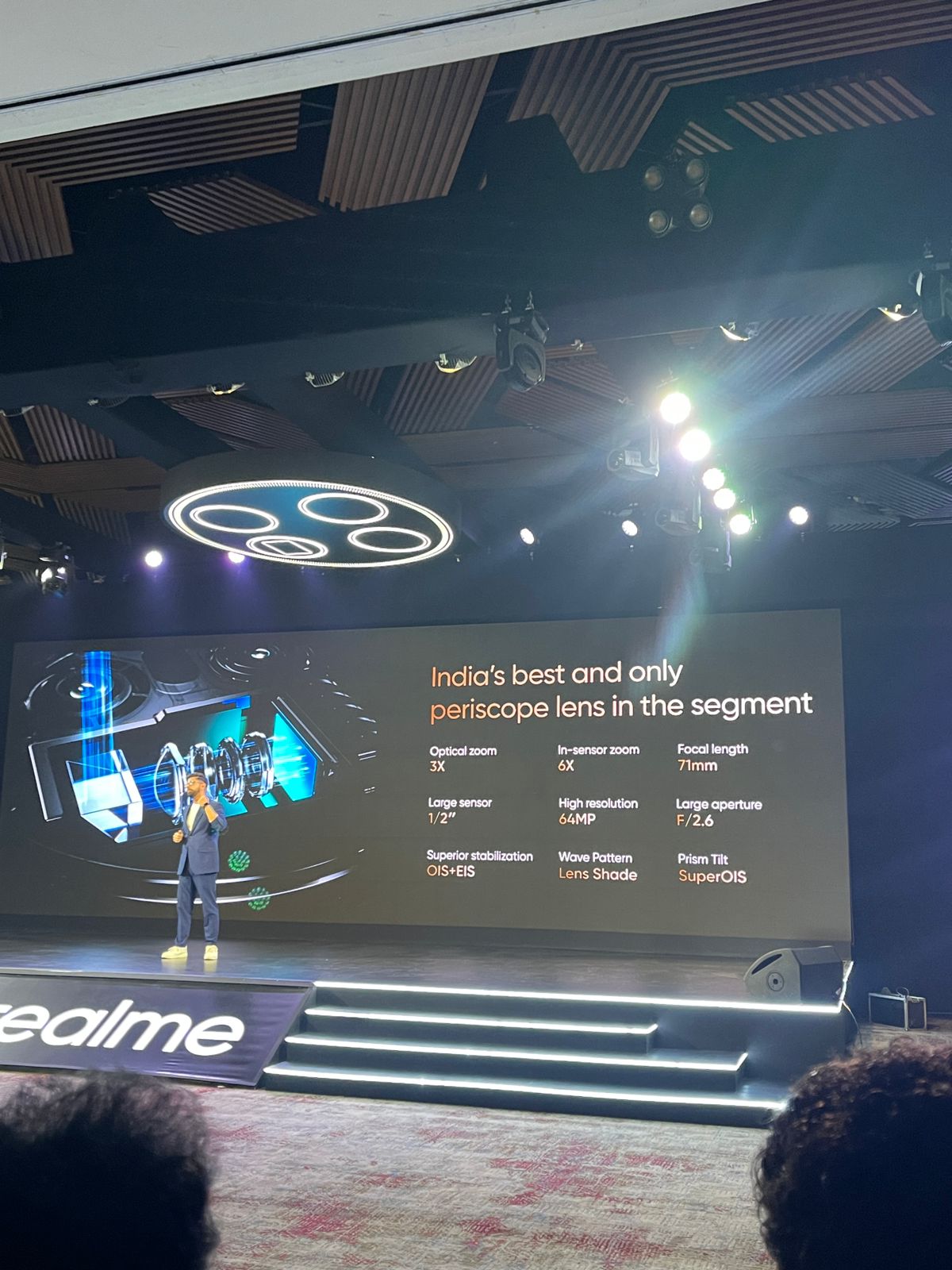
Research conducted by Realme indicates a preference among young users for telephoto lenses with 3X zoom or more, as opposed to just 2X.
To accommodate high zoom levels in slim phones, a periscope telephoto lens is the only feasible option.
However, this technology poses technical challenges and incurs high costs, typically making it exclusive to flagship phones.
Realme aims to bridge this gap by bringing the flagship-exclusive periscope telephoto technology to a wider audience of young users.
Realme has engineered a proprietary periscope telephoto formula to ensure top-quality imaging under diverse conditions.
This formula was first introduced in the Realme GT5 Pro, launched in November 2023, and it positioned Realme GT5’s telephoto performance at the forefront of the industry.
The upcoming Realme 12 Pro Series 5G will adopt this same approach, incorporating a leading sensor size, a high-performance platform, and an advanced algorithm to deliver superior imaging performance.
Is Realme 12 pro 5G The Next-gen Telephoto with the Best Periscope Telephoto Lens in the Segment?
The Realme 12 Pro Series 5G enhances night shot clarity and stability while minimizing flare and ghosting.
It achieves this using a unique combination of prism tilt OIS, sub-wavelength structure coating, and a wave-shaped lens hood – technologies also utilized in the GT5 Pro.
The series features a 3X Portrait Mode with a 71mm golden portrait focal length, which creates a naturally shallow depth of field ideal for portraits.
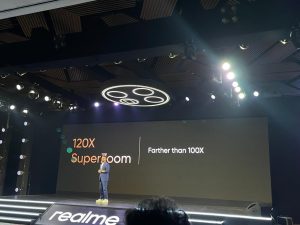
Additionally, the Realme 12 Pro Series 5G leads its class in telephoto capabilities, offering up to 120X digital zoom.
Is Realme 12 pro 5G The Next-Gen Sensor with the Largest Periscope Telephoto Sensor in the Segment?
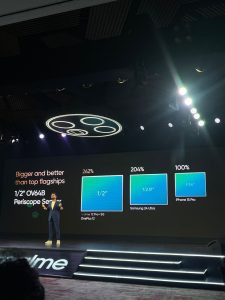
The realme 12 Pro Series 5G boasts the segment’s largest periscope telephoto sensor, featuring the OV64B flagship sensor, which outshines its competitors and matches other top-tier flagships.
With a 1/2-inch size, it’s over twice as large as the telephoto sensor in the iPhone 15 Pro.
Thanks to its larger aperture and light intake, the realme 12 Pro Series 5G telephoto lens is nearly three times more light-sensitive than that of the iPhone 15 Pro.
Realme 12 Pro 5G Partnered with an international luxury watch designer to create a luxury watch design. Details?
The realme number series aims to offer young people Next-gen imaging experiences and aesthetically designed products.
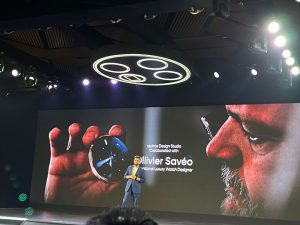
Along with the flagship image technology, realme also collaborated with Ollivier Savéo, the international luxury watch design master, to create an exclusive luxury watch design for the realme 12 Pro Series 5G.
Ollivier Savéo, renowned for his leadership in high-end watch and jewelry groups, has previously collaborated with prestigious Swiss watch brands, including Rolex, Roger Dubuis, Piaget, Breitling, and Quentin.
His expertise has played a pivotal role in the creation of a light luxury watch design that elevates the realme 12 Pro Series 5G to new heights of sophistication.
Taking inspiration from classic luxury watches, realme and Ollivier Savéo embarked on a journey to deconstruct their design and craftsmanship.
This collaboration has resulted in the infusion of refined elements into the industrial design of the realme 12 Pro Series 5G, redefining the concept of light luxury.
Golden Fluted Bezel:
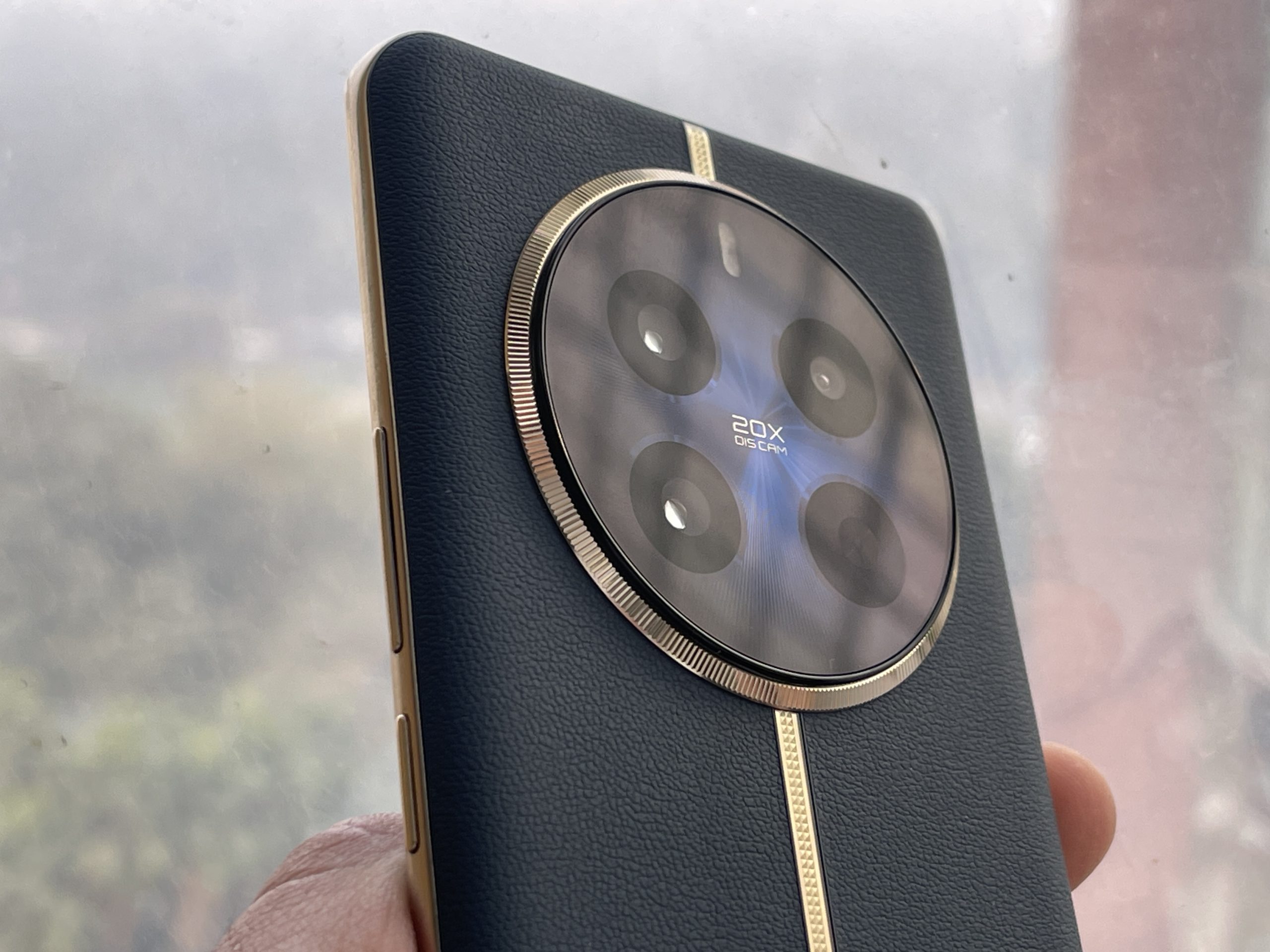
Crafted using CNC machine cutting, the Golden Fluted Bezel achieves a 360° luxury watch-level precision texture with 300 meticulously designed metal lines.
Polished Sunburst Dial:
The Polished Sunburst Dial showcases a light cone texture and gradient UV texture seamlessly blended to present over 500 sunburst patterns interwoven with light and shadow.
Premium Vegan Leather:
The use of the latest silicone materials results in a silky feel and dirt-resistant Premium Vegan Leather, combining high-end aesthetics with practicality.
3D Jubilee Bracelet:
Featuring three-dimensional rhomboid precision splicing, the 3D Jubilee Bracelet creates a metallic strap texture that adds a touch of luxury to the realme 12 Pro Series 5G.
Is realme 12 pro 5G The Next-gen Lossless Zoom with Flagship Full-Focal-Length Lossless Zoom Imaging Capability?
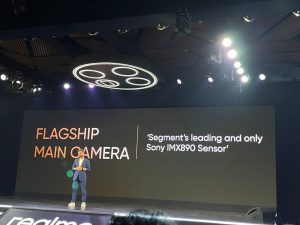
realme 12 Pro Series 5G main camera features Sony IMX890 OIS, which enhances night-time photography.
This camera has a 1/1.56” large sensor, a 24mm equivalent focal length, and a wide f/1.8 Aperture, making it well-suited for nighttime photography.
With OIS support, it excels in providing stable video recording and optimizing the success rate of photos.
Additionally, realme 12 Pro Series 5G features a periscope telephoto and ultra wide-angle camera.
It offers lossless zoom at 0.6x, 1x, 2x, 3x, and 6x, providing a full-focal-length lossless zoom photographic experience comparable to that of a flagship device.
Is Realme 12 Pro The Next-gen Algorithm with Exclusive Customization of the MasterShot Algorithm ?
In collaboration with Qualcomm, realme has enhanced its image processing with the MasterShot Algorithm.
The realme 12 Pro Series 5G is the first and only device in its segment to process RAW domains, ensuring top clarity, dynamic range, and realism in cinematic portraits.
The next-generation omni-focal MasterShot Algorithm is a flagship-level architecture that offers the industry’s most advanced computational photography.
It integrates the LightFusion Engine for enhanced clarity and tone, plus the NightEye Engine for superior night photography.
The series also features a unique movie portrait filter, allowing effortless capture of striking portraits.
What is Realme 12 Pro series price in India & sale details ?
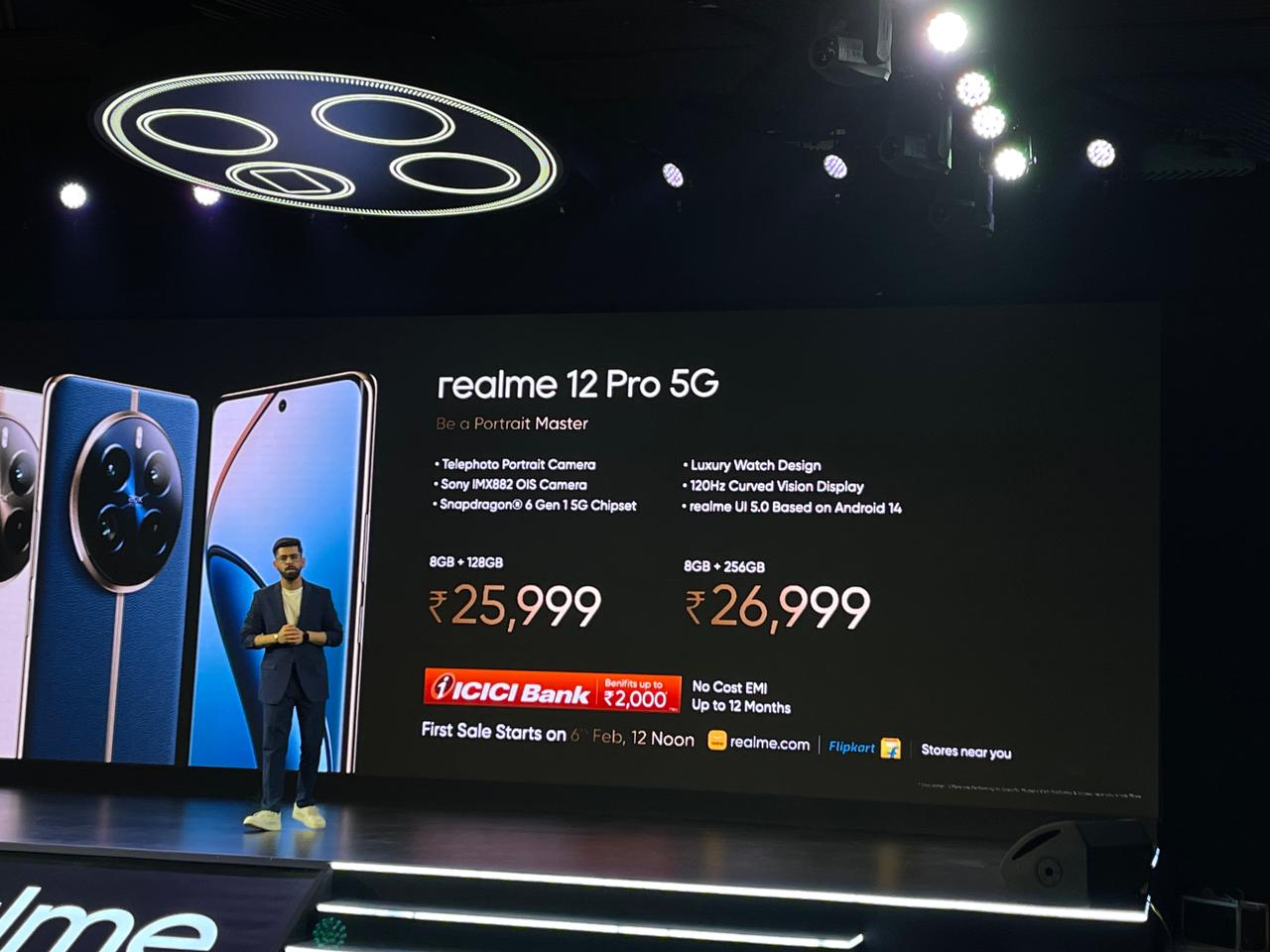
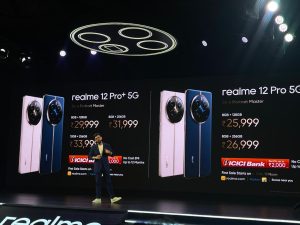
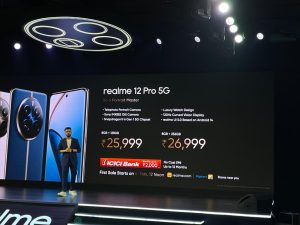
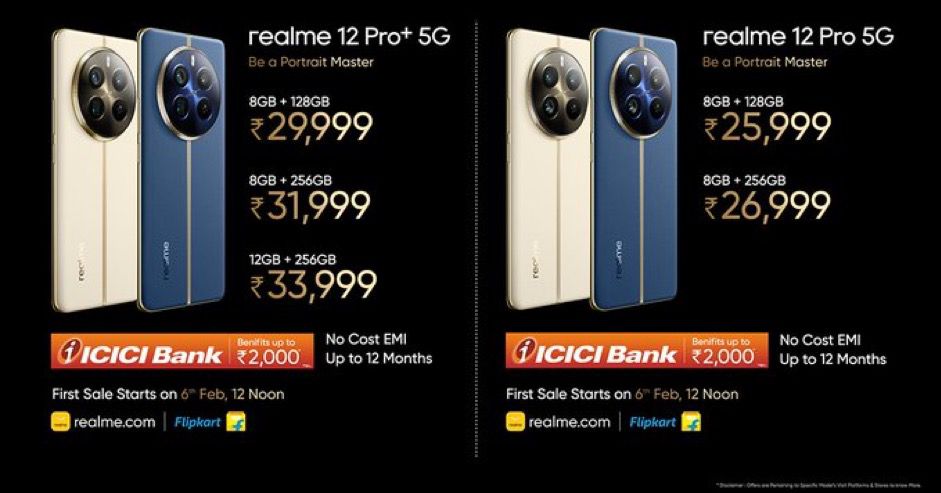
Realme 12 Pro is priced at Rs 25,999 for the 8GB/128GB and Rs 26,999 for the 8GB/256GB model. The phone comes in Submarine Blue and Navigator Beige colours.
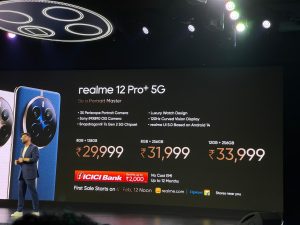
Realme 12 Pro+ is priced at Rs 29,999 for the 8GB/128GB, Rs 31,999 for the 8GB/256GB model, and Rs 33,999 for the 12GB/256GB version.
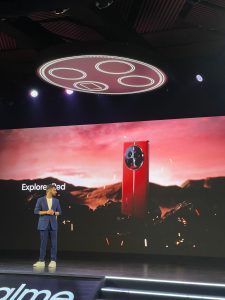
The handset will be sold in Submariner Blue, Navigator Beige, and Explorer Red(only for India) colours.
The first sale of the phones is on February 6th at 12 PM via the Realme website, Flipkart, and retail stores.
The company is offering Rs 2,000 instant discount through the ICICI Bank card and no-cost EMI option. There is also a Rs 1,000 exchange offer as well (pre-booking and early access sale benefit). There is an early-access sale today i.e. January 29th from 6 PM.
Pre-booking for offline stores starts today and from January 30th through Flipkart.
What are the Key features of realme 12 Pro 5G ?
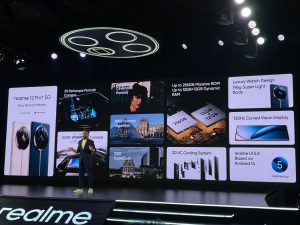
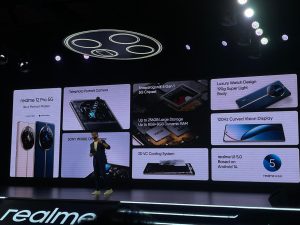
The realme 12 Pro 5G features an improved 50MP Telephoto Portrait camera that comes mated to a Sony IMX 709 sensor for great, flawless photography. The phone also features a 50MP Sony IMX 882 Main Camera, an 8MP Ultra Wide Camera and a 16MP Selfie Camera.
The cutting-edge image technology is enabled by the Sony IMX882 OIS camera sensor that pairs up with the flagship Omnifocal Mastershot Algorithm.
The result is that users get all of the tools needed to create cinematic portraits and inspiring photos in both daytime and low-light circumstances.
Best Telephoto Lens in its Class
The 50 MP Telephoto Portrait Camera comes with a 1/2.74″ sensor, 2X optical zoom, and 4X lossless zoom, as well as the largest-in-class telephoto lens that in combination with the Flagship Omnifocal Mastershot Algorithm, makes it the best telephoto lens in this segment at a fantastic price point.
With a focal length similar to 26mm and an f/1.8 aperture, this lens is great for shooting wide-angle shots in both daytime and low-light circumstances. The wide aperture allows for enough light ingress, improving image clarity.
This is a crucial milestone in realme’s flagship photography journey, making advanced photography more accessible and enabling young enthusiasts to explore and capture cinematic views beyond the horizon.
Superlative Design
The smartphone design is also inspired by luxury watches and comes with a vegan leather finish designed by the realme Design Studio in collaboration with renowned international luxury watch design masterOllivier Savéo, known for collaborations with prestigious Swiss watch brands like Rolex, Roger Dolby, Piaget, Breitling, and Quentin.
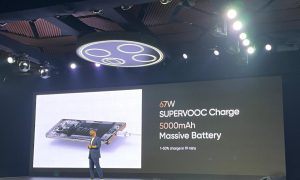
67W SUPERVOOC Charge and Massive 5000mAh Battery
realme 12 Pro 5G comes equipped with 67W SUPERVOOC Charge and a massive 5000mAh battery, offering users long-lasting power. The smartphone sports 2:1 dual charge pump technology, which charges the battery from 1 to 50% charge in as little as 19 minutes.
120Hz Curved Vision Display for the Best Viewing Experience
realme 12 Pro 5G has a stunning 120Hz Curved Vision Display to provide an excellent viewing experience. The display features a 6.7-inch OLED panel with 2412 x 1080 FHD+ resolution, 1.07 billion colors, a 100% P3 color gamut, a touch sampling rate of 240Hz, and an instantaneous sampling rate of up to 2000Hz.
It has a global maximum brightness of 800 nits and a local peak brightness of 950 nits. The display is covered by 0.55mm secondary tempered high-strength glass, giving an inexpensive flagship curved screen for users to enjoy.
Qualcomm Snapdragon 6 Gen 1
The 64-bit octa-core processor, built on 4nm process, boasts four high-performance A78 cores clocked at 2.2GHz and four efficient A55 cores clocked at 1.8GHz, ensuring maximum energy efficiency.
This novel 4nm architecture in its pricing range, with the Qualcomm Adreno GPU and Qualcomm Kryo CPU, greatly increases computing power without compromising battery life.
The Adreno GPU significantly improves graphics performance, setting a new benchmark for speed and efficiency. The performance can ensure smooth running and deliver an immersive visual experience for gaming and multimedia.
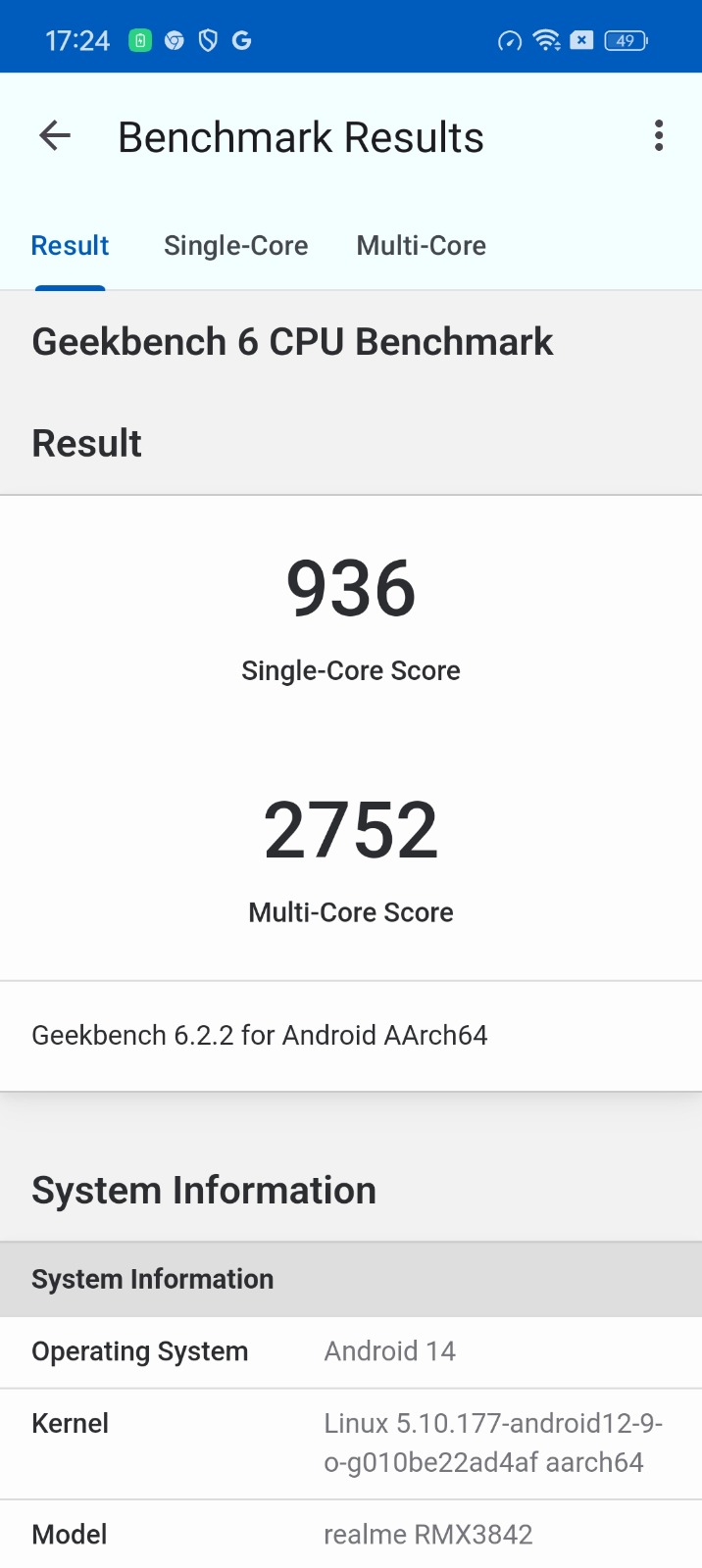
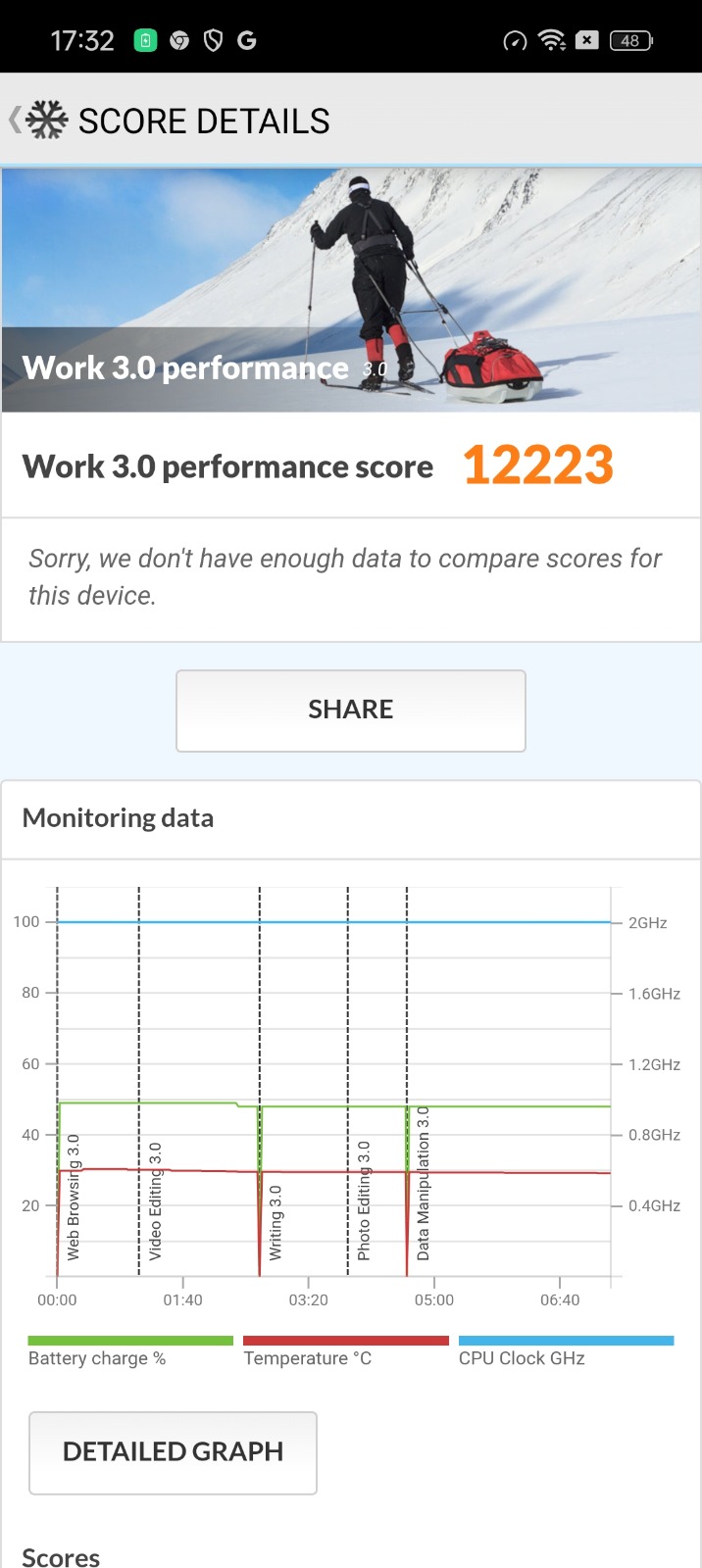
realme 12 Pro 5G has an impressive AnTuTu benchmark score of 590,000, representing a 17% performance gain over its predecessor, realme 11 Pro 5G.
This score represents the device’s improved processing capabilities and efficiency, indicating that the Realme 12 Pro 5G is a powerhouse capable of offering flawless performance.
Its 7th Gen Qualcomm AI Engine adds intelligence to on-device activities in camera, audio and productivity.
The 4th Gen Snapdragon X62 5G Modem-RF System and Qualcomm® FastConnect™ 6700 Mobile Connectivity System bring record speed, coverage, and bandwidth for better 5G connectivity.
The Qualcomm Spectra™ Triple ISP ushers in all-new camera possibilities to this series, including up to 200 MP photos and computational HDR video capture.
Plus, AI De-Noising (AIDE) is a neural network trained to remove noise in low-light images to deliver sharper and clearer photos.
realme UI 5.0
The realme 12 Pro 5G comes with the new realme UI 5.0 based on Android 14, which allows users to enjoy smarter and more improved efficient experiences.
Commenting on the launch, Mr. T.M. Narasimhan, Managing Director, Mobile Business Group – India, said “We are delighted to announce the latest addition to our g series franchise – the moto g24 power. Through our g series smartphones, we democratize smartphone experiences by offering advanced features at affordable price points, catering to the growing demands of the Indian mobile phone consumer.
This smartphone boasts a premium design and a massive battery along with other class-leading features that allow users to experience sophistication and functionality seamlessly at more accessible price points, making it idle for consumers who are constantly on the move.”
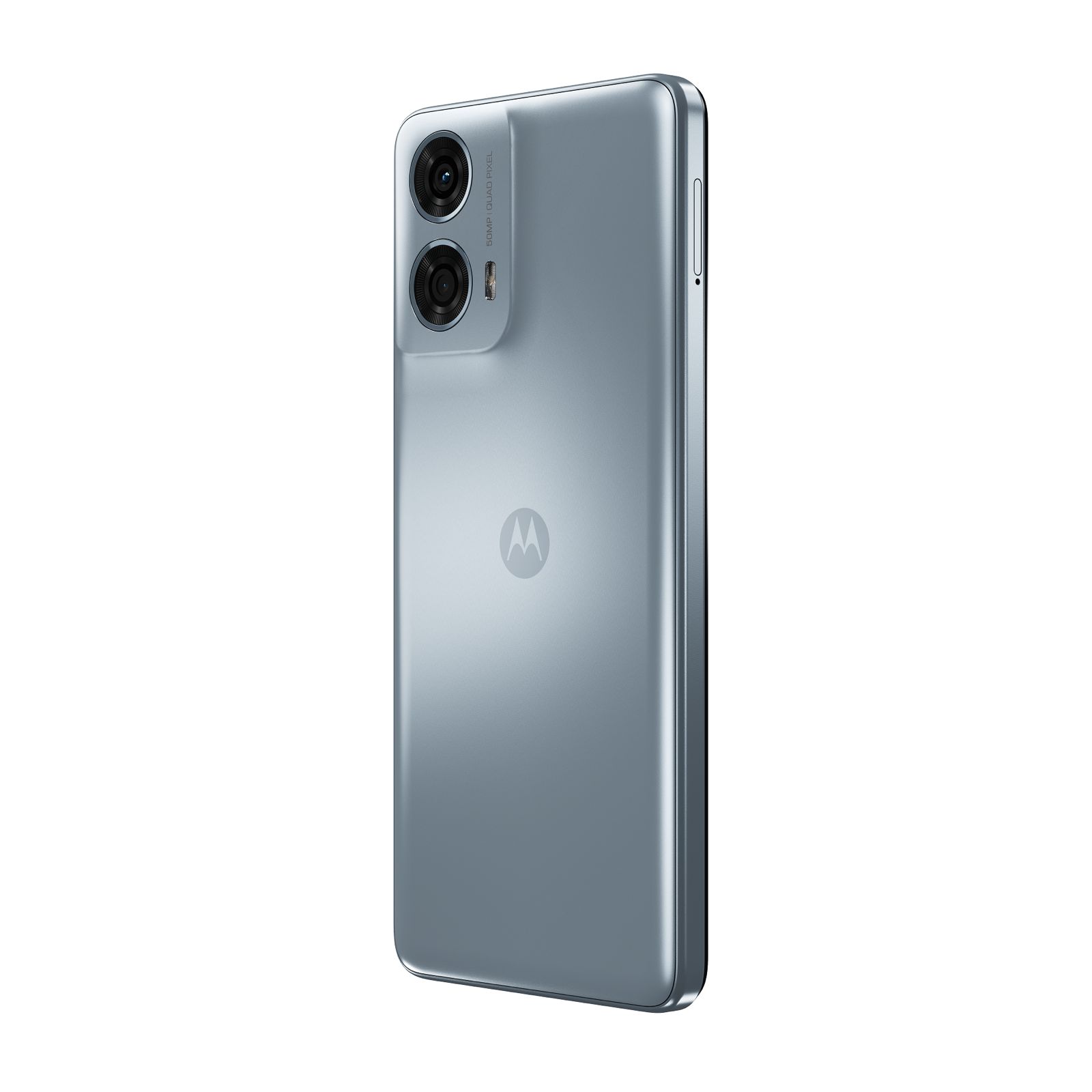
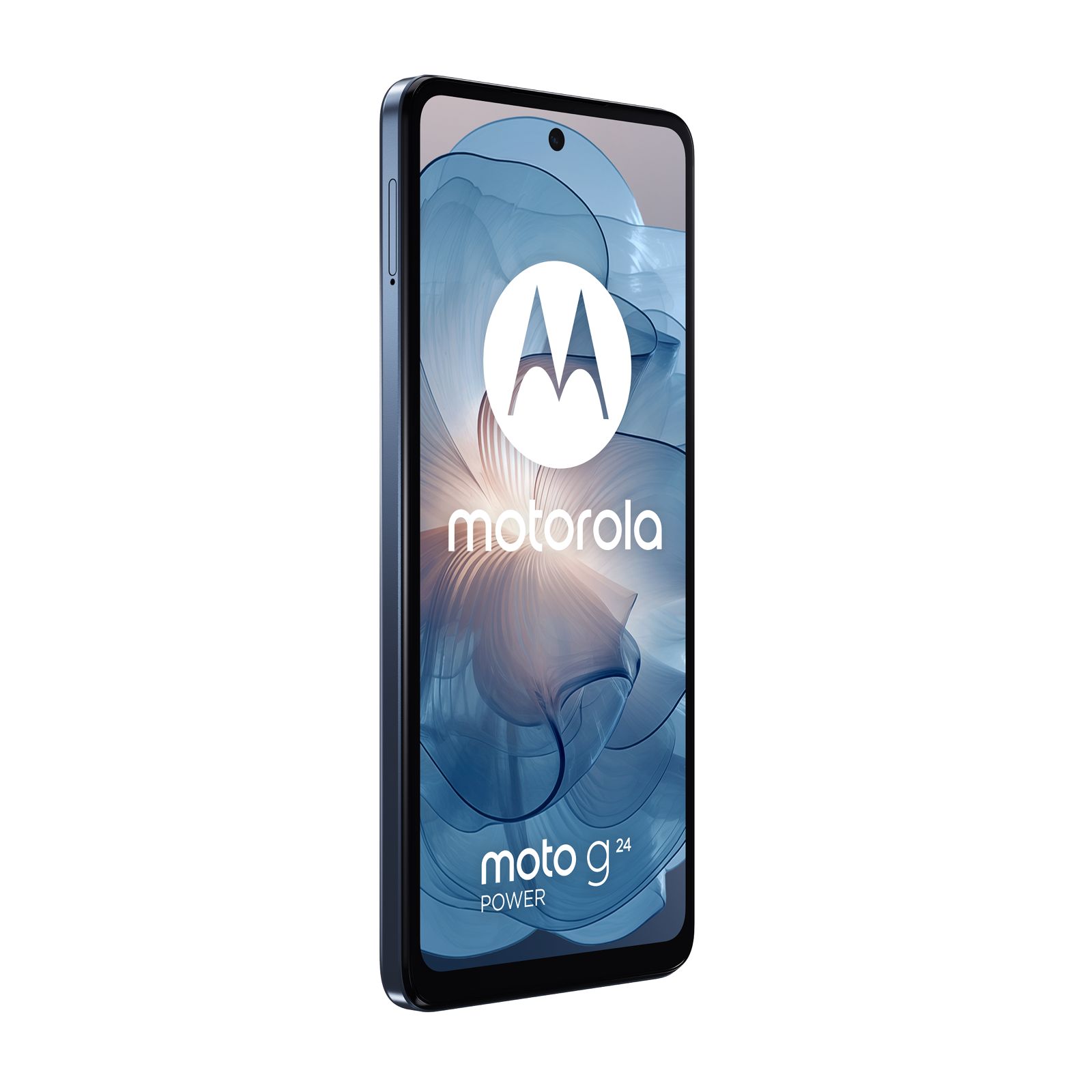
Moto G24 Power Equipped with MediaTek Helio G85 processor and Android 14
Moto G24 Power: Pricing, Availability, and Offers
Moto G24 Power: Pricing, Availability, and Offers
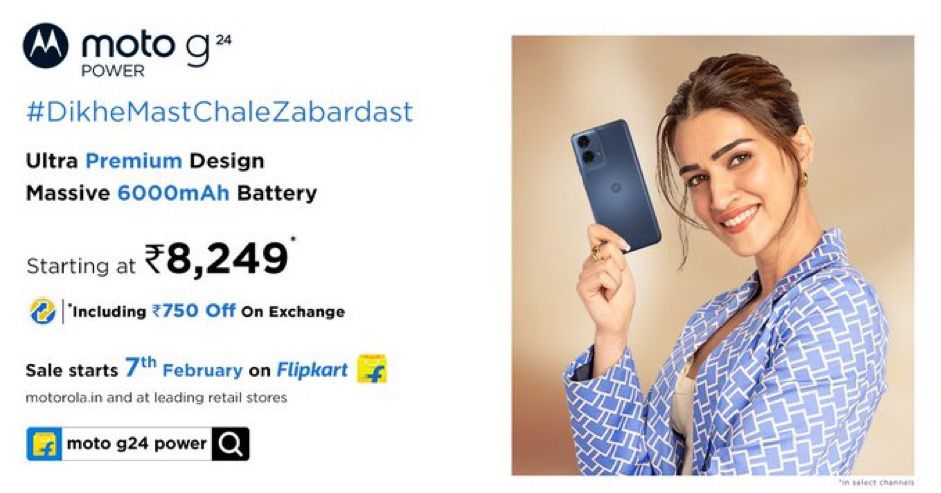
The Moto G24 Power is available at Rs 8,999 for the 4GB RAM + 128GB storage variant and Rs 9,999 for the 8GB RAM + 128GB storage model.
The phone is available for purchase starting February 7, 2024, on Flipkart, Motorola.in, and various retail stores.
Motorola is also offering an additional discount of Rs 750 on an exchange, making the effective prices Rs 8,249 and Rs 9,249 respectively.
Additionally, the device comes with benefits from Reliance Jio, including cashback and partner coupons.
Motorola is also offering an additional discount of Rs 750 on an exchange
Moto G24 Power: Key Specifications
Moto G24 Power: Key Specifications
Display: 6.6-inch IPS LCD with HD+ resolution (1612×720 pixels) and a 90Hz refresh rate.
Processor: MediaTek Helio G85 chipset.
Memory: Available in 4GB and 8GB RAM variants, both with 128GB storage, expandable via microSD card.
Camera: 50MP primary rear camera and a 0.08MP auxiliary lens; 32MP front camera.
Battery: 6000mAh with 18W fast charging support.
Connectivity: 4G LTE, dual-band WiFi, Bluetooth 5.2, GPS, FM Radio.
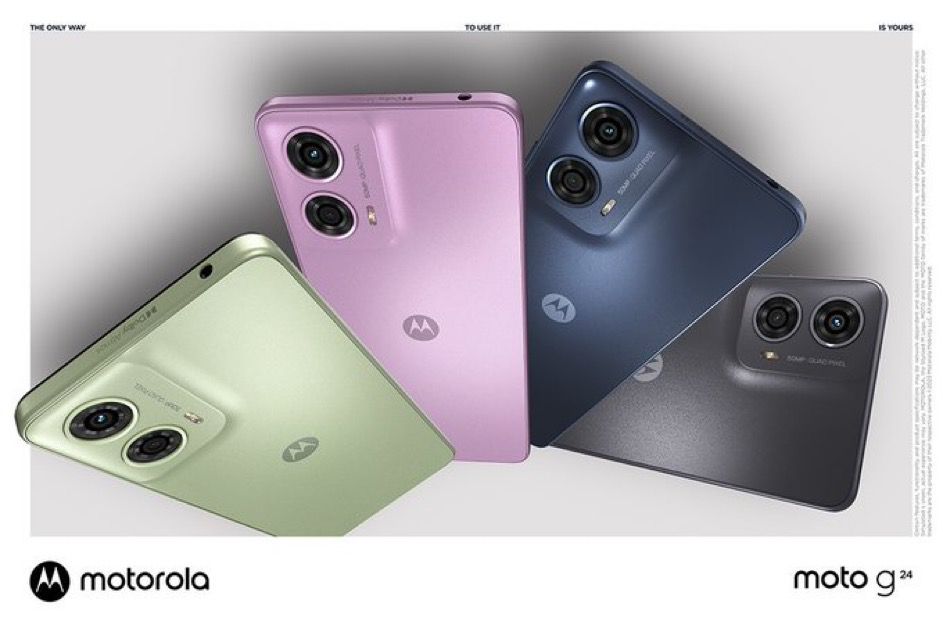
For photography, the Moto G24 power is equipped with a dual-camera setup at the rear, featuring a 50MP quad-pixel main sensor complemented by a secondary lens of an unspecified resolution.
The front hosts a 16MP camera for selfies.
Moto G24 Power Camera
The device’s camera system includes features like Night Vision, HDR, and Portrait mode for versatile photography.
In terms of connectivity, the Moto G24 power supports 4G LTE and offers other standard connections like dual-band WiFi and Bluetooth 5.2.
It also includes a 3.5mm headphone jack, stereo stereo speakers with Dolby Atmos for enhanced audio, and an IP52 rating for added durability against water splashes.
Moto G24 Power Colors
The large 6000mAh battery of the Moto G24 power supports 33W fast charging, promising extended usage on a single charge.
The phone’s design incorporates a side-mounted fingerprint scanner for security and a dedicated microSD card slot for storage expansion.
Moto G24: 5 Reasons To Buy
Moto G24: 5 Reasons To Buy
Massive 6000mAh Battery: This ensures extended usage and can last almost a complete weekend on a single charge.
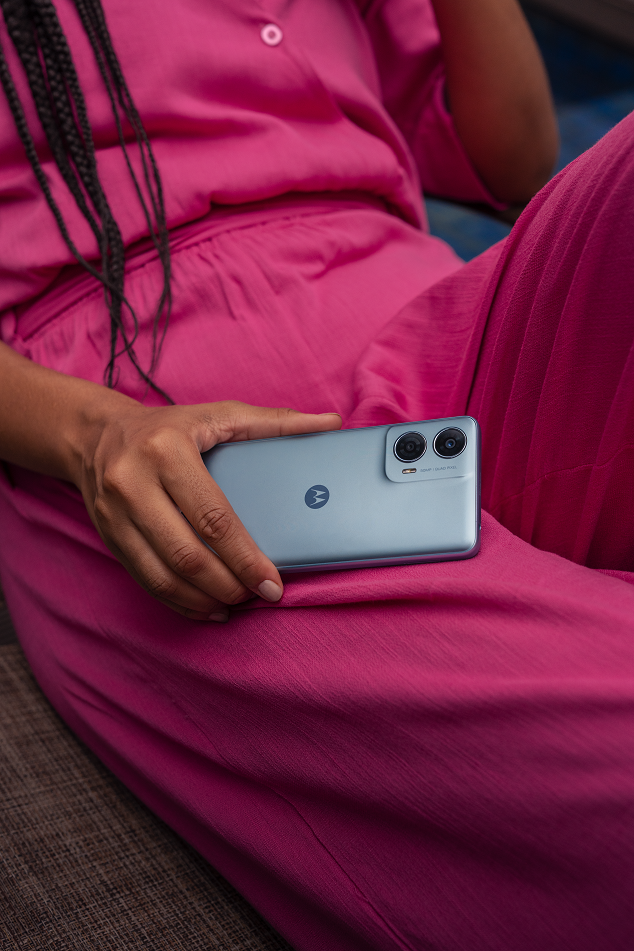
Premium Design with 3D Acrylic Glass Finish: Offers an elegant look and is available in two captivating colors: Ink Blue and Glacier Blue.
Advanced 50MP Quad Pixel Camera System: Ensures high-quality photography, complemented by a 16MP selfie camera.
Affordable Price with Additional Offers: Priced effectively at Rs 8,249 after discounts, making it a value-for-money option in its segment.
Moto G24: value-for-money option in its segment
Top Alternatives to Consider under Rs 10,000
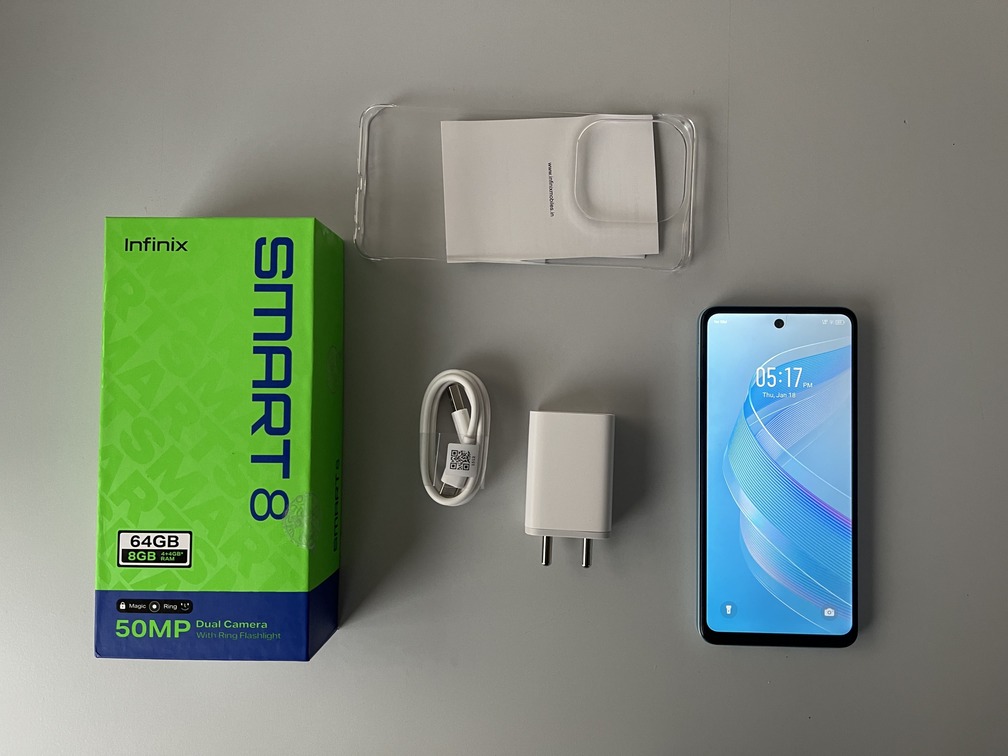
Infinix Smart 8
Infinix Smart 8
Priced at Rs 7,499, this phone offers a 6.6-inch 90Hz IPS LCD display, MediaTek Helio G36 Octa-core processor, a 50MP rear camera setup, 4GB RAM, 64GB storage, and a 5000mAh battery.
It runs on Android v13 OS and includes a fingerprint sensor.
Moto E13
Moto E13
Available for Rs 5,999, the Moto E13 features a 6.5-inch display, Unisoc T606 processor, 2GB RAM, 64GB storage, a 13MP rear camera, a 5MP front camera, and a 5000mAh battery.
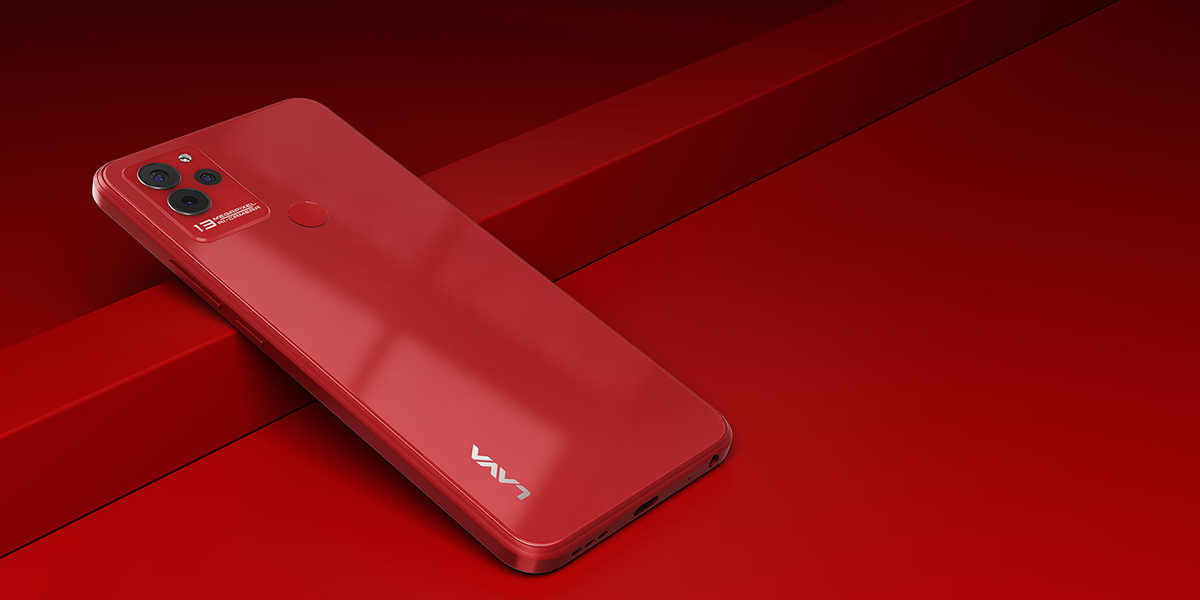
Lava Blaze 5G
Lava Blaze 5G
This smartphone, priced at Rs 9,499, is notable for being an affordable 5G option.
It has a MediaTek Dimensity 700 processor, a 6.51-inch display with a 90Hz refresh rate, 4GB RAM, 128GB storage, and a 5000mAh battery. It also features a 50MP rear camera and an 8MP front camera.
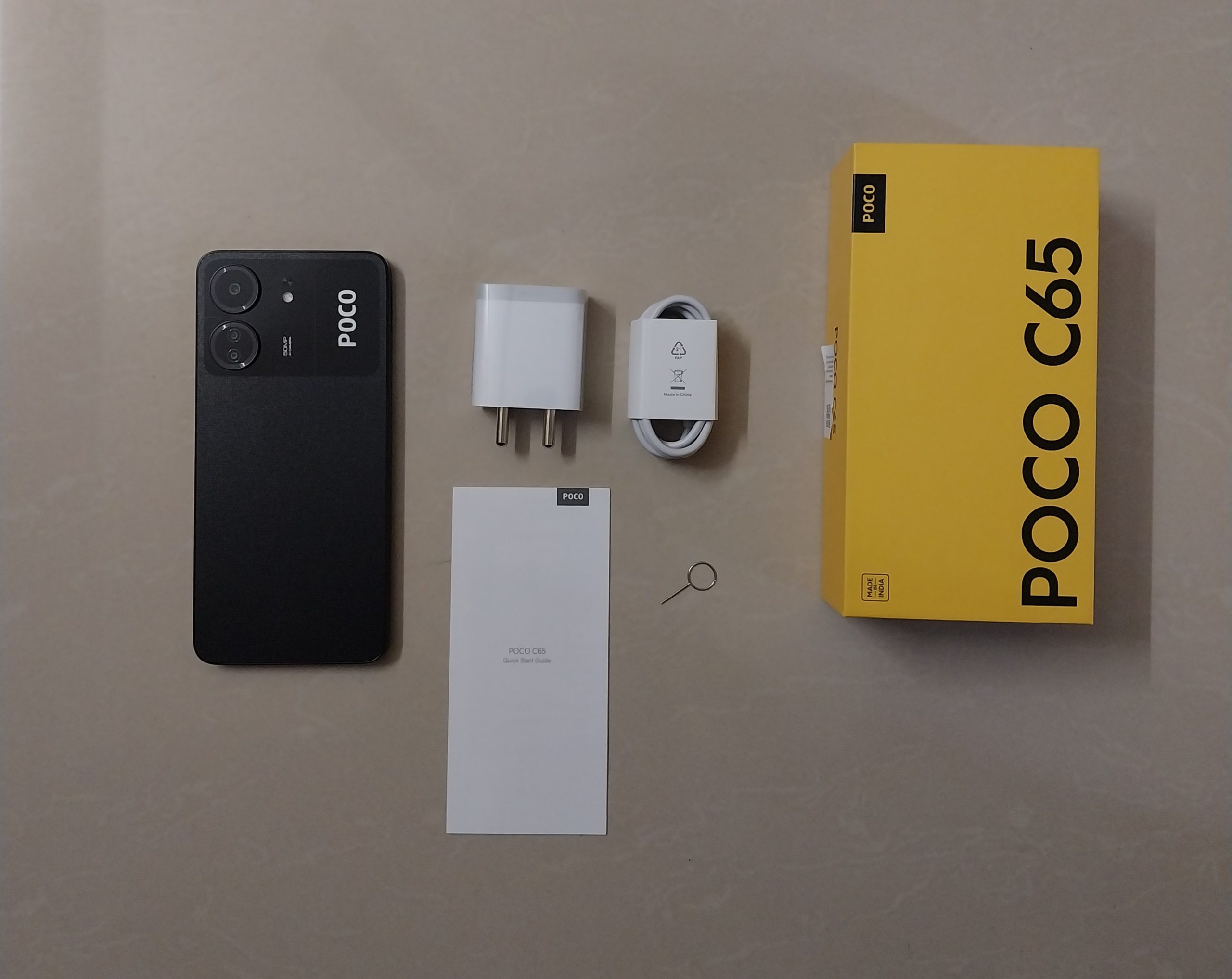
Poco C65
Poco C65
The Poco C65, costing Rs 7,999, includes a 6.74-inch 90Hz display, MediaTek Helio G85 processor, 4GB RAM, 128GB storage, a 5000mAh battery with 18W fast charging, and a 50MP rear camera.
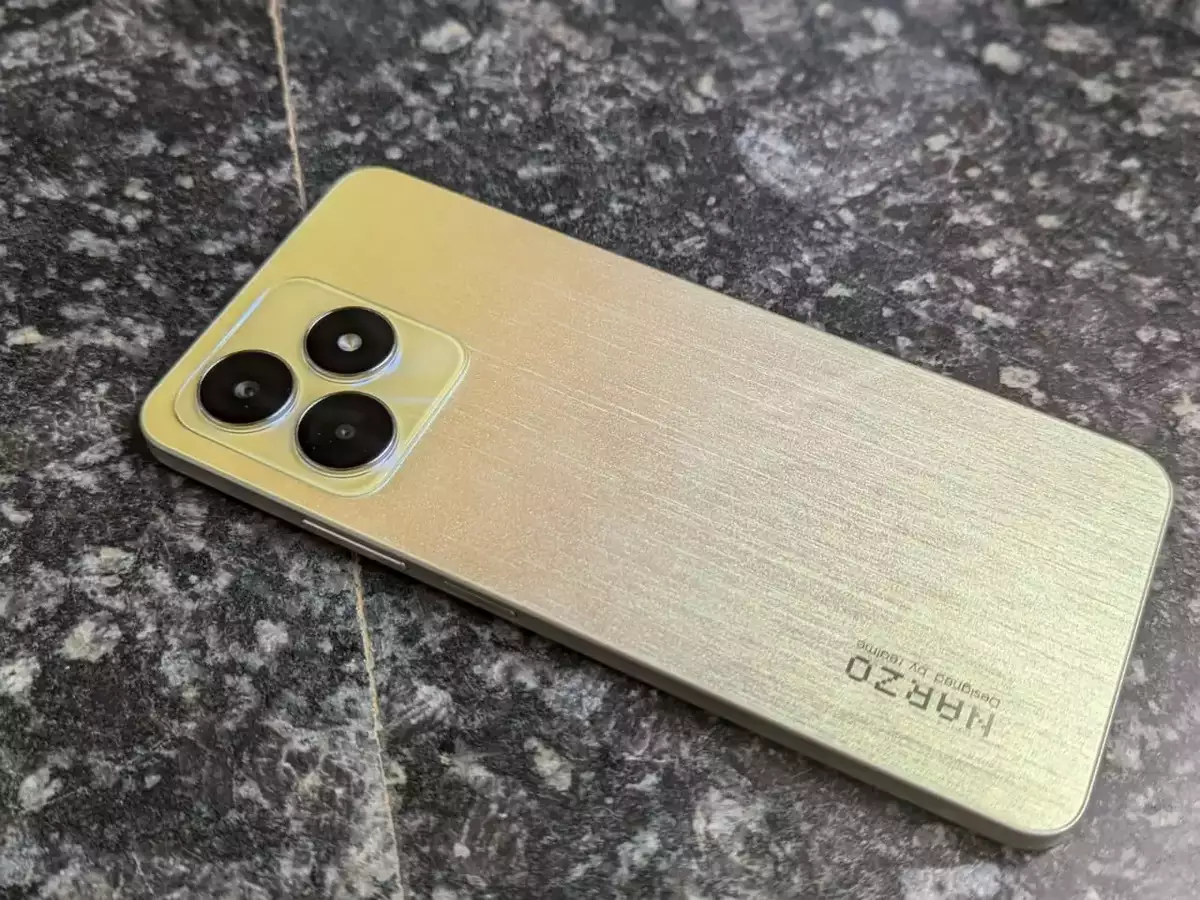
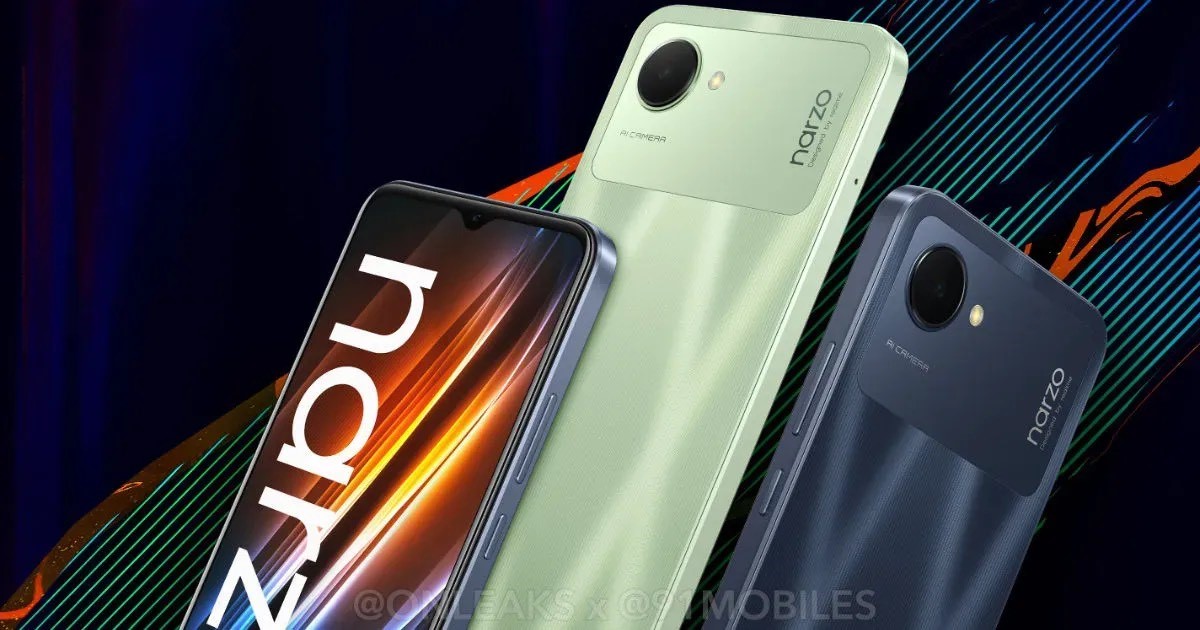
Realme Narzo N53
Realme Narzo N53
For Rs 7,999, the Realme Narzo N53offers a 6.74-inch 90Hz display, Unisoc Octa-core processor, 4GB RAM, 64GB storage, a 5000mAh battery with 33W fast charging, and a 50MP rear camera.
Motorola Moto G24 5G Specs
GENERAL
Sim Type
Dual Sim, GSM+GSM (Hybrid Slot)
Dual Sim
Yes
Sim Size
Nano SIM
Device Type
Smartphone
Release Date
December 05, 2023 (Expected)
DESIGN
Dimensions
73.8 x 161.6 x 8.9 mm
Weight
192 g
DISPLAY
Type
Color IPS LCD Screen (16M Colors)
Touch
Yes
Size
6.58 inches, 1080 x 2400 pixels, 120 Hz
Aspect Ratio
20:9
PPI
~ 405 PPI
Screen to Body Ratio
~ 85.5%
Features
Anti Fingerprint Coating, Water Repellent Design, HDR10
What are the storage options available for the Moto G24 Power?
The Moto G24 Power comes in two variants: 4GB RAM with 128GB storage and 8GB RAM with 128GB storage, both expandable via microSD card.
When will the Moto G24 Power be available for purchase in India?
The phone will be available from February 7, 2024, on Flipkart, Motorola.in, and at various retail stores across India.
Are there any offers available on the Moto G24 Power?
Yes, Motorola offers an additional Rs 750 discount on exchange, bringing the effective prices to Rs 8,249 and Rs 9,249. Plus, there are benefits from Reliance Jio including cashback and partner coupons.
What are the key camera features of the Moto G24 Power?
The phone features a 50MP Quad Pixel rear camera setup and a 32MP front camera, supporting various modes like Night Vision, HDR, and Portrait.
What makes the Moto G24 Power a good buy in the budget segment?
Its combination of a large 6000mAh battery, powerful MediaTek Helio G85 chipset, and the latest Android 14, all packaged in a sleek design, makes it a compelling choice.
Motorola introduces moto g24 power with an ultra premium design, a massive 6000mAh battery and the latest Android™ 14 at an effective price of just Rs. 8,249*. Details?
Motorola, today announced the launch of its latest entry-level smartphone in the g series franchise, the moto g24 power.
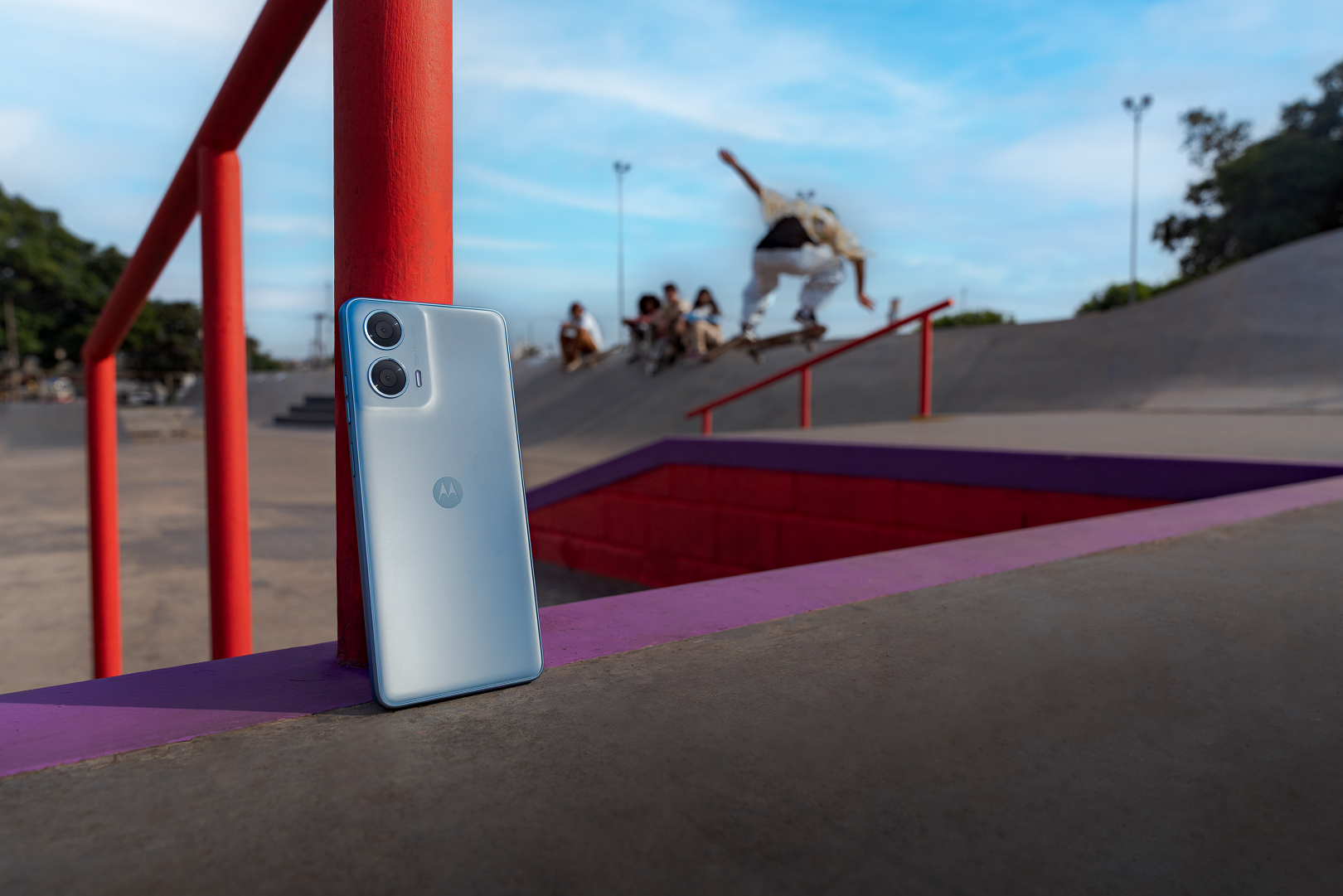
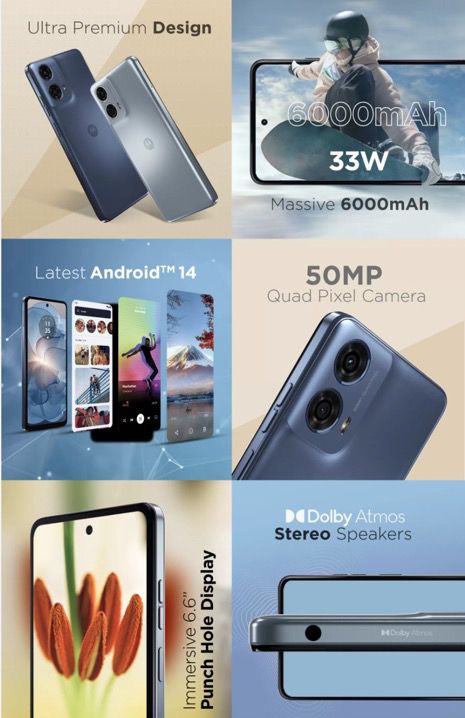
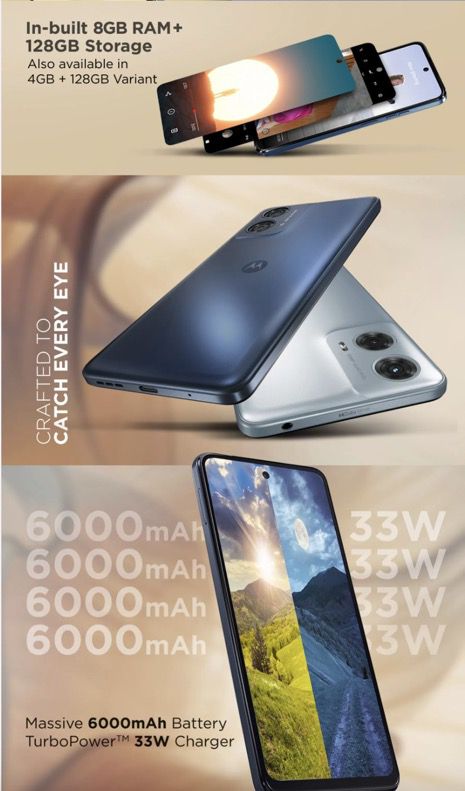
A class-leading affordable smartphone with premium design, a massive 6000mAh battery with a TurboPower™ 33W charger. This device ensures an exceptional and enduring smartphone experience, making it a standout addition to the g series franchise. The moto g24 power has a very elegant look, boasting a 3D Acrylic glass (PMMA) finish, while being one of the thinnest and the lightest devices in segment with 6000mAh battery.
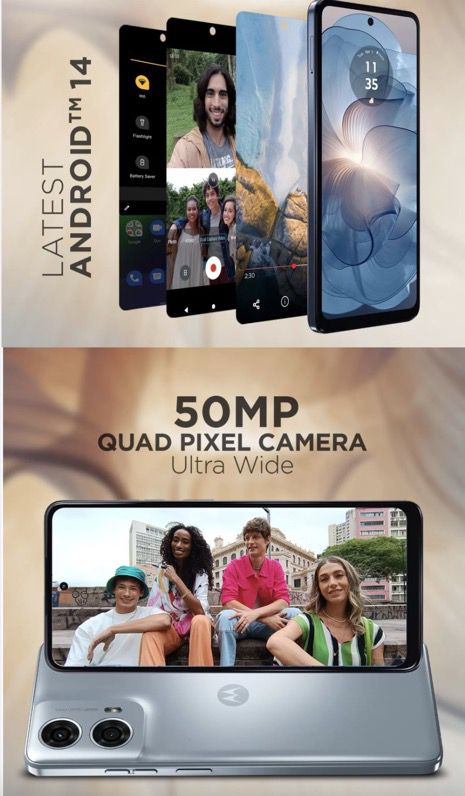
This comes with the latest Android™ 14 and showcases an advanced 50MP Quad Pixel camera system, accompanied by a segment’s leading 16MP selfie camera that captures exceptional photos in various lighting conditions.
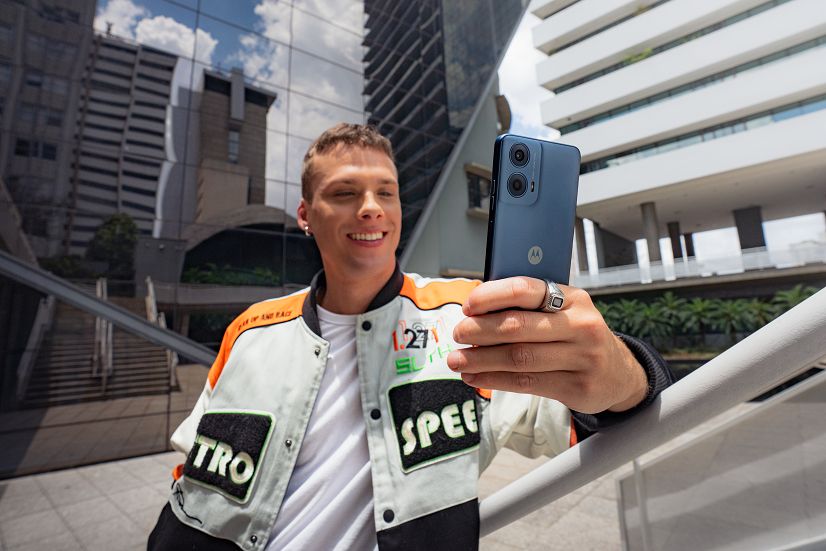
The moto g24 power’s premium design featuring a streamlined camera housing, enhances the device’s overall aesthetics and provides users with a visually stunning smartphone that is comfortable to hold.
Its slim yet robust design is complemented by a side-mounted fingerprint reader, enabling easy and secure device unlocking. The sleek smartphone measuring just 8.99 mm in thickness and weighing 197gm, comes with a water-repellent design and IP 52 rating, and is available in two stunning and elegant colours Ink Blue and Glacier Blue.
The moto g24 power boasts a massive 6000mAh battery enabling users to enjoy their favourite content, play games, and immerse in video calls for longer duration.
With the help of a TurboPower™ 33W charger, the device fuels up quickly and provides users a long-lasting entertainment experience that lasts nearly a complete weekend on a single charge.
Further, the moto g24 power comes with the latest Android™ 14 with 3 years of assured security updates. It also comes with various stand-out experiences like Flash notifications, which alert the users by turning on the flash and screen light for incoming calls, so they don’t miss a notification.
The Health Connect feature enables users to manage their health data in one place with control for privacy. Noteworthy features also encompass Improved magnification, Data-sharing updates, and Enhanced PIN security.
The moto g24 power supports an advanced 50 MP Quad Pixel camera system. With this Quad Pixel technology, users get 4x better low light sensitivity for sharper, more vibrant photos – day or night.
Plus, the dedicated Macro Vision camera brings users within 4 cm of their subject, so that they can capture tiny details with a standard lens. On the front, the smartphone features segment’s leading 16MP camera, which can capture sharp selfies in the blink of an eye.
Furthermore, the camera system also comes with various features and software, such as Auto Night Vision, HDR, and Portrait mode.
The moto g24 power also offers incredible entertainment owing to its notchless 6.6″ 90 Hz IPS LCD display with peak brightness of 537 NITS. Moreover, with a high 90 Hz refresh rate, switching between apps and scrolling websites becomes smooth and fluid.
With Auto Mode in action, the screen refresh rate flexibly switches between 90 Hz and 60 Hz, improving the overall battery efficiency of the smartphone. This immersive viewing experience is further enhanced by the stereo speakers with Dolby Atmos® that delivers high-quality audio with improved bass and cleaned vocals giving more auditory clarity at higher volumes.
Additionally, the moto g24 power provides users with enhanced performance through two RAM variants, namely in-built 4GB or 8GB LPDDR4X RAM which can be expanded up to 16GB with RAM boost feature.
It also offers users ample space for photos, films, songs, apps, and games with up to 128GB of built-in Storge. Users can also benefit from 1TB of expandable storage using a dedicated microSD card slot.
What is price & availability of Moto G24 power ?
The moto g24 power will be available in two beautiful colours: Ink Blue, and Glacier Blue, featuring 3D Acrylic glass (PMMA) finish.
moto g24 power will be available in two memory variants with built-in 4GB RAM and 8GB RAM + 128GB Storage; and will go on sale on Flipkart, Motorola.in and leading retail stores starting 7th February 2024, 12PM onwards.
Launch Price:
4GB RAM + 128GB Storage: Rs. 8,999
8GB RAM + 128GB Storage: Rs. 9,999
Affordability Offers~:
Additional Rs. 750 on exchange.
Effective Price with offer:
4GB + 128GB: Rs. 8,249
8GB + 128GB: Rs. 9,249
Operator Offers:
Total Benefits worth Rs. 4,500 from Reliance Jio (Applicable on pre-paid plan of: Rs. 399)
– Cashback worth Rs. 2000
– Partner coupons worth Rs. 2500
Moto G24 Power Launched in India .Details?
The moto g24 power boasts an elegant and premium design, a massive 6000 mAh battery with a TurboPower™ 33W charger at an incredible starting price of just ₹8,249*
· The moto g24 power impresses with its stunning looks in a 3D acrylic glass (PMMA) finish, available in two captivating colours: Ink Blue and Glacier Blue.
· The moto g24 power is equipped with the industry’s latest Android™ 14, enabling the device to be more personal, protected, and accessible.
· The moto g24 power feres an advanced 50MP Quad Pixel camera system complemented by the segment’s leading 16 MP selfie camera.
· The moto g24 power comes with other top of the line features such as an immersive 6.6” punch-hole display with 90 Hz refresh rate, Dolby Atmos® stereo speakers, IP52 water repellent design and more.
· The device will be available in two memory variants, namely 4GB + 128GB and 8GB + 128GB at Rs. 8,999 and 9,999 respectively.
· Consumers will also be able to get an additional Rs. 750 off on exchange as part of the launch offer, making the effective price of the device just Rs. 8,249 and Rs. 9,249 respectively.
· Moto g24 power will go on sale on Flipkart, Motorola.in and leading retail stores across India, starting 7th February 2024, 12PM onwards.
Processor: MediaTek Helio G85 chipset, paired with Mali-G52 MC2 GPU.
Memory: 8GB RAM, 256GB storage (expandable via microSD card).
Camera: Dual rear setup with 50MP primary and 0.08MP auxiliary lens; 32MP front camera.
Battery: 5000mAh with 18W fast charging support.
Connectivity: 4G LTE, dual-band WiFi, Bluetooth 5.2, GPS, FM Radio.
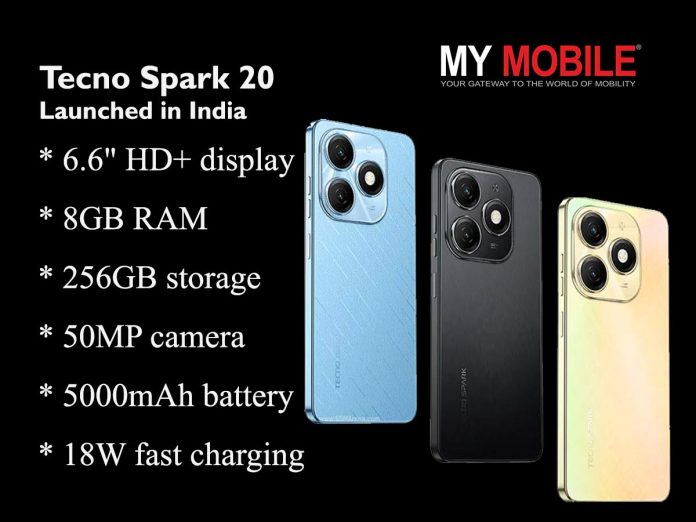
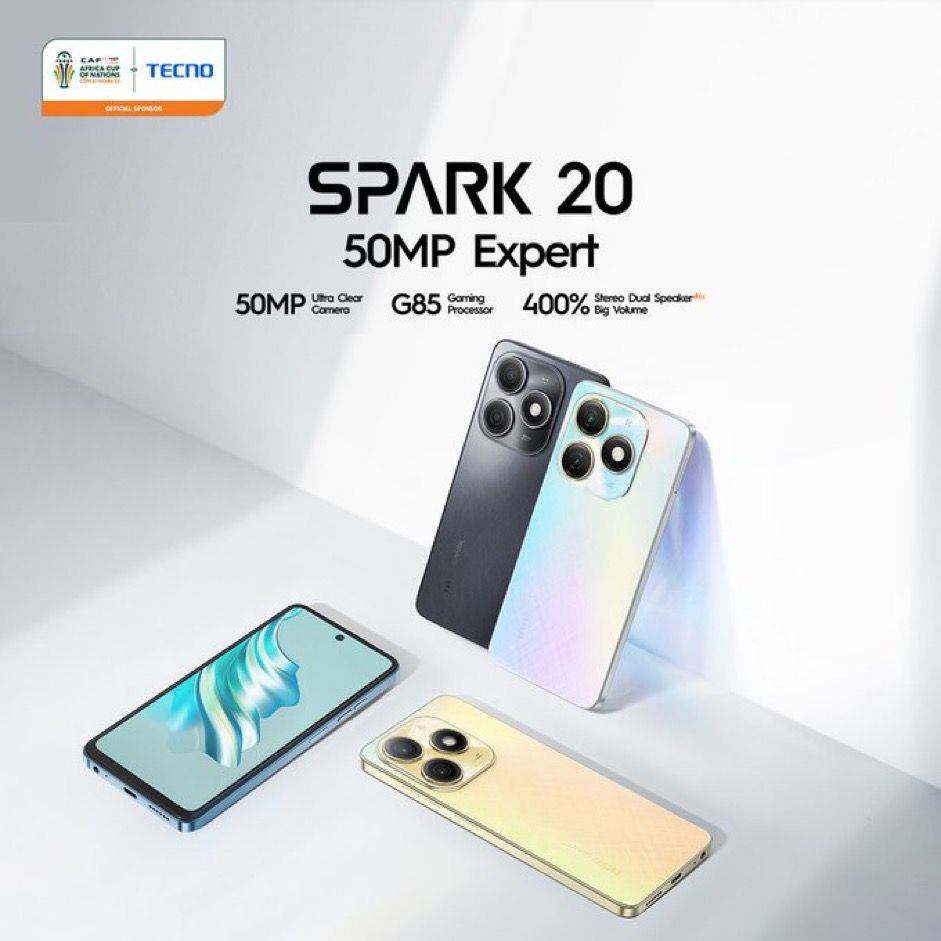
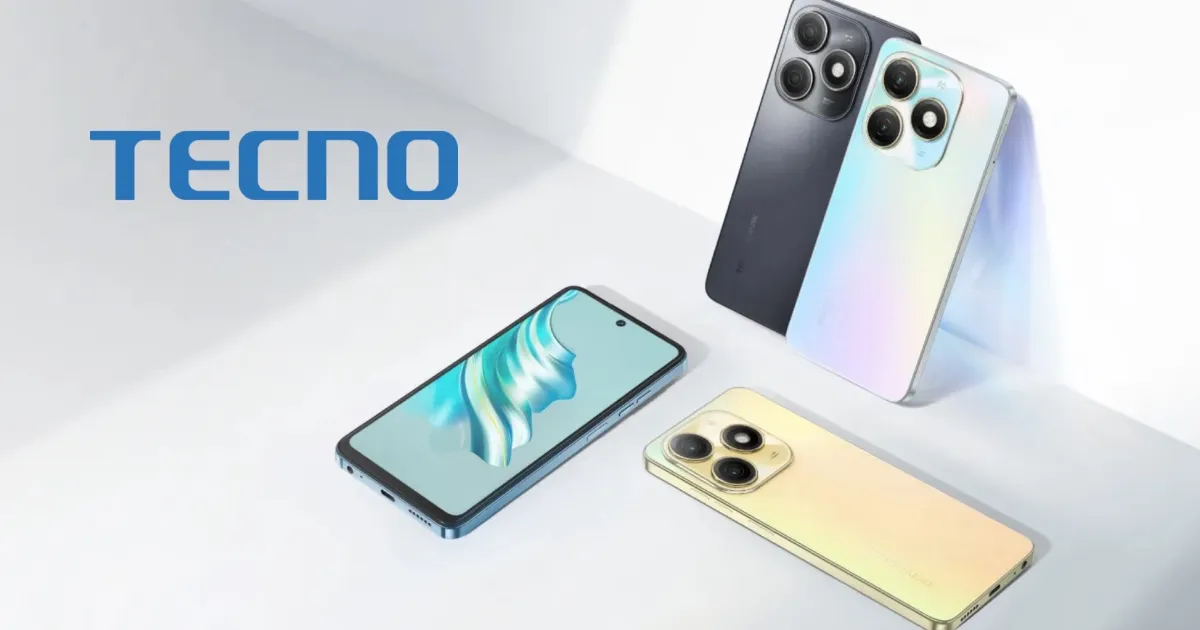
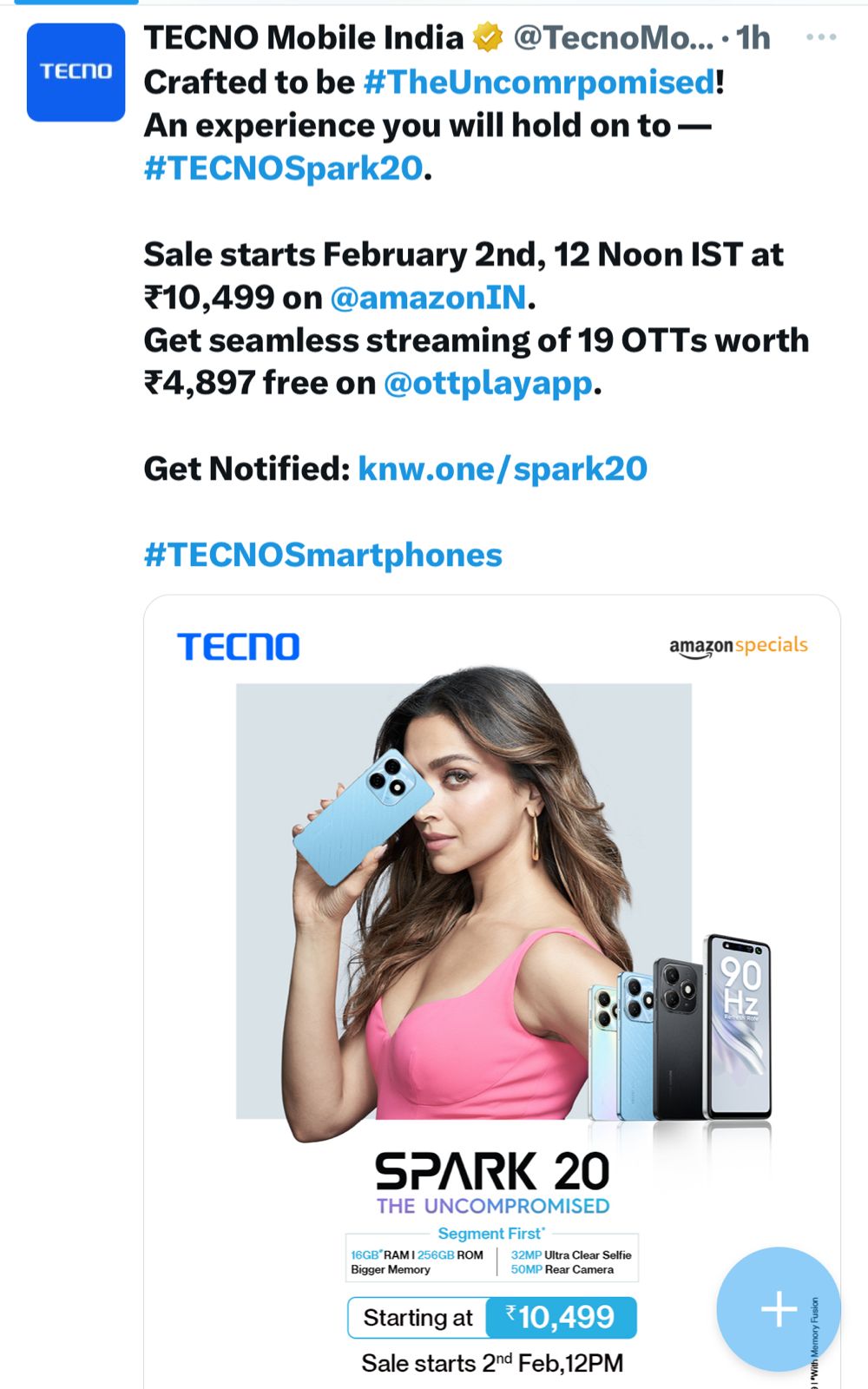
Tecno Spark 20: Features
Tecno Spark 20: Features
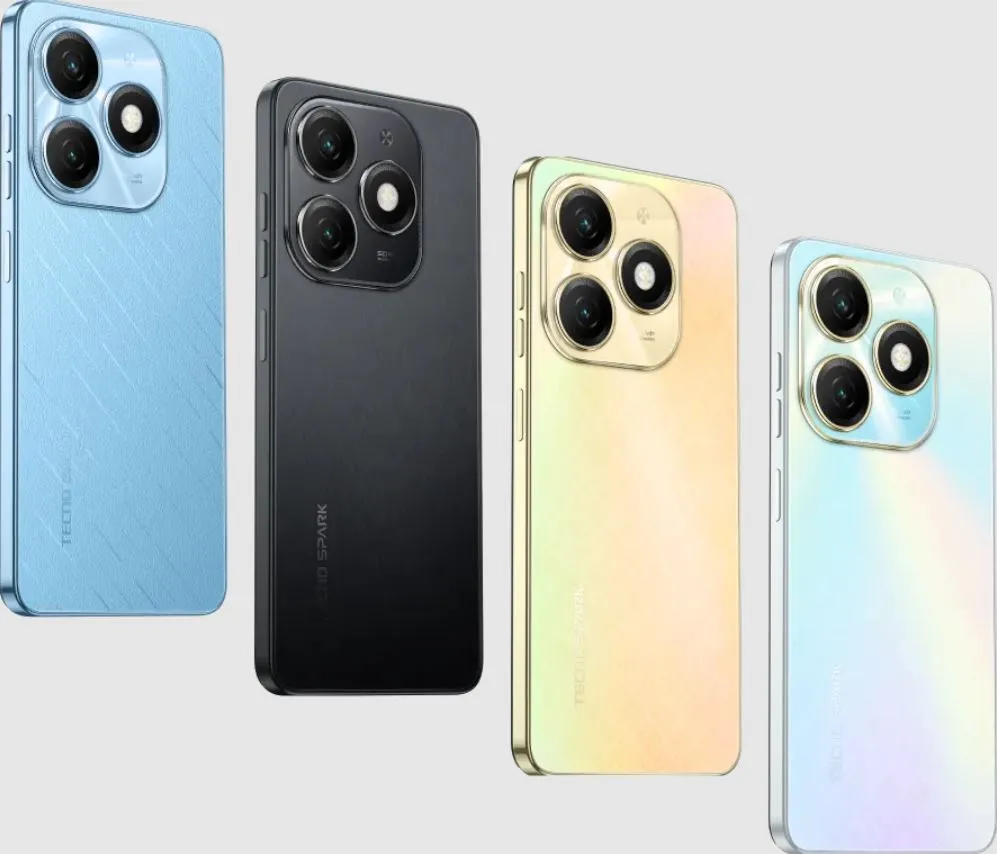
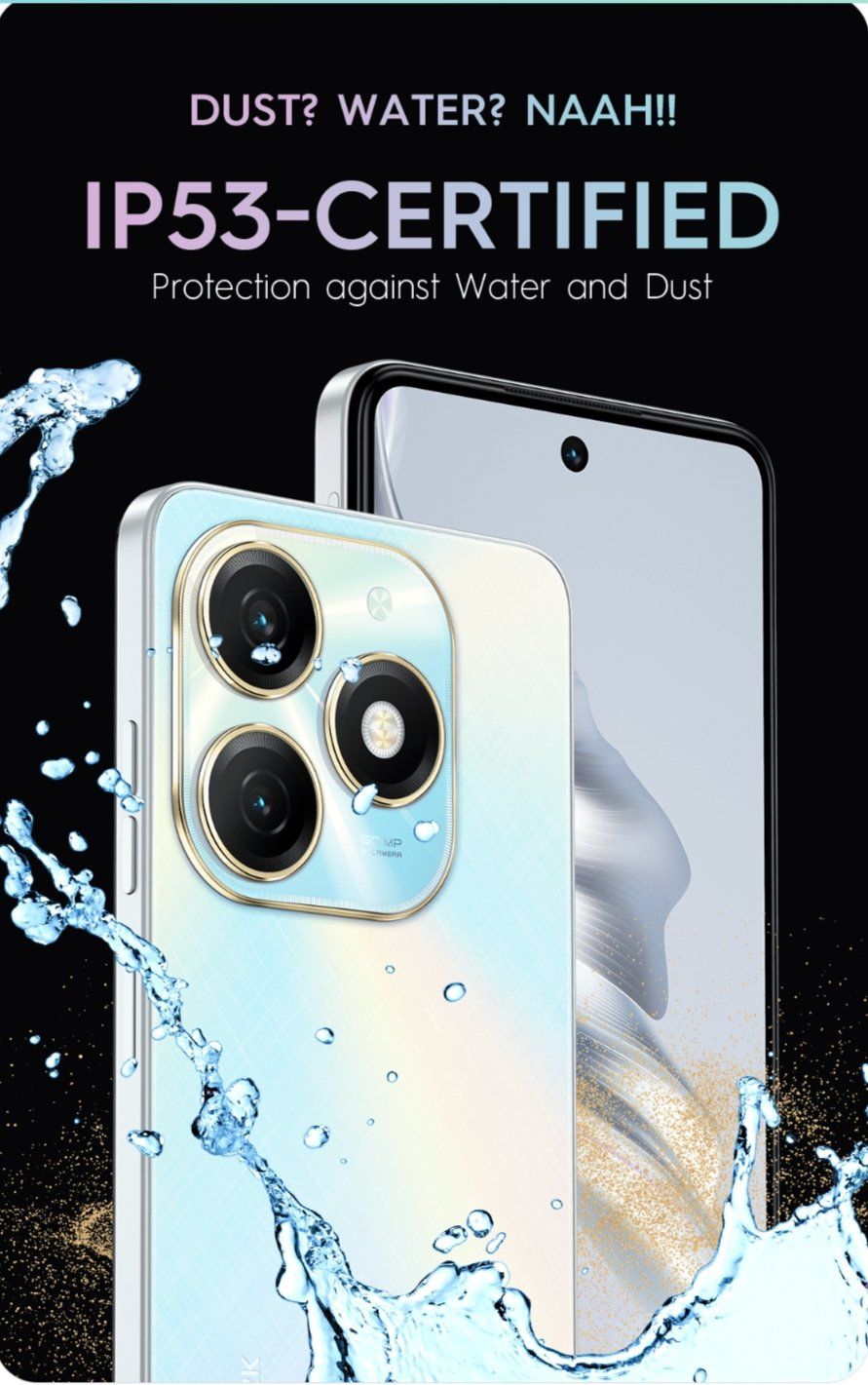
The Tecno Spark 20, designed with a plastic unibody and flat edges, brings a fresh look to the budget-friendly range.
It is available in four colour options: Neon Gold, Gravity Black, Cyber White, and Magic Skin 2.0 (Blue), providing choices to suit various styles and preferences.
The 6.6-inch display ensures a vibrant visual experience with its HD+ resolution and a high refresh rate of 90Hz.
The device is powered by a robust 5000mAh battery supported by 18W fast charging for quick top-ups.
Tecno Spark 20: 5 Reasons To Buy
Tecno Spark 20: 5 Reasons To Buy
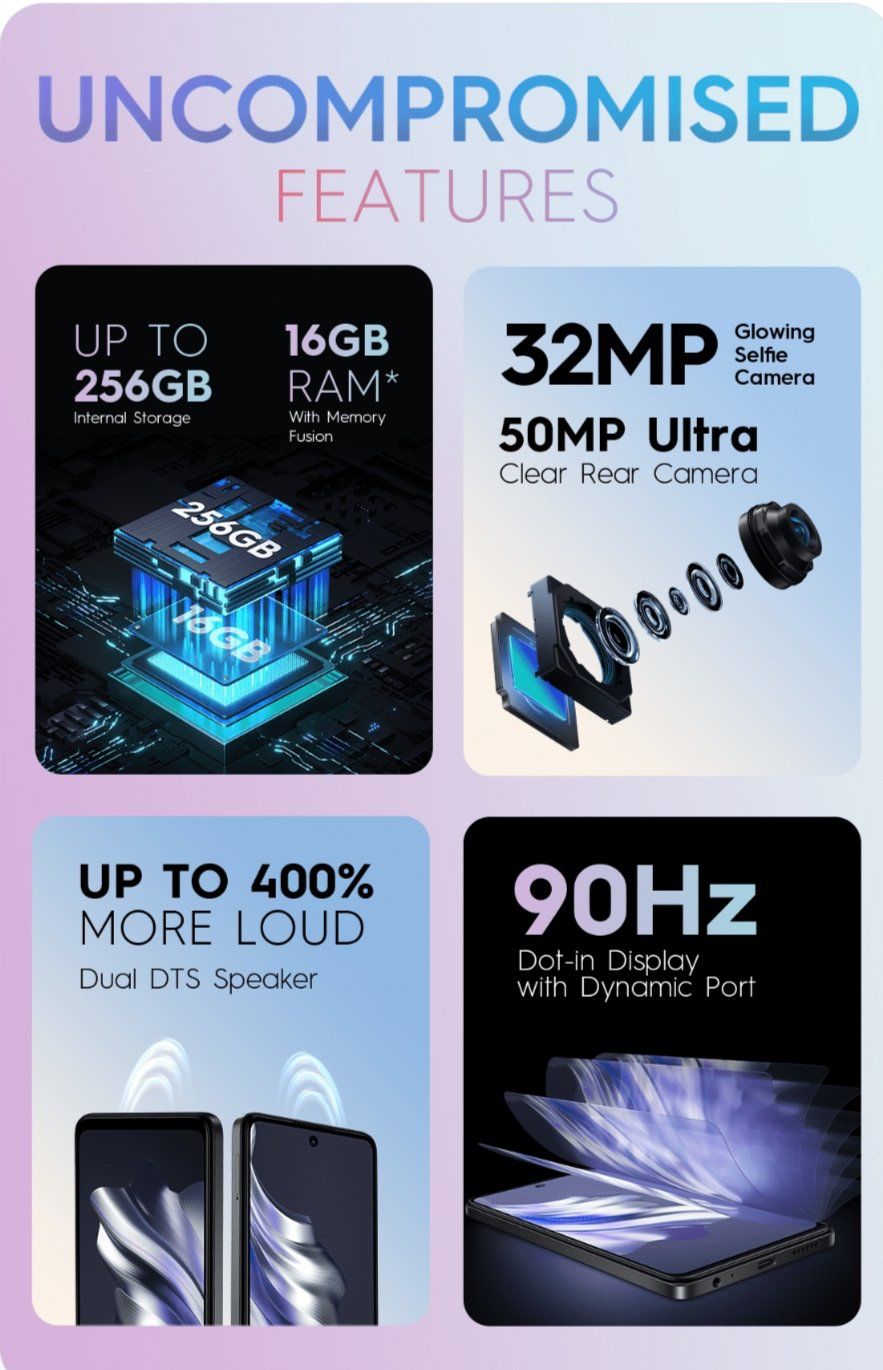
Upgraded Selfie Camera: The 32MP selfie camera is a significant upgrade over its predecessor, making it ideal for selfie enthusiasts.
Improved Processor: The MediaTek Helio G85 chipset provides better performance compared to the previous model’s Helio G37.
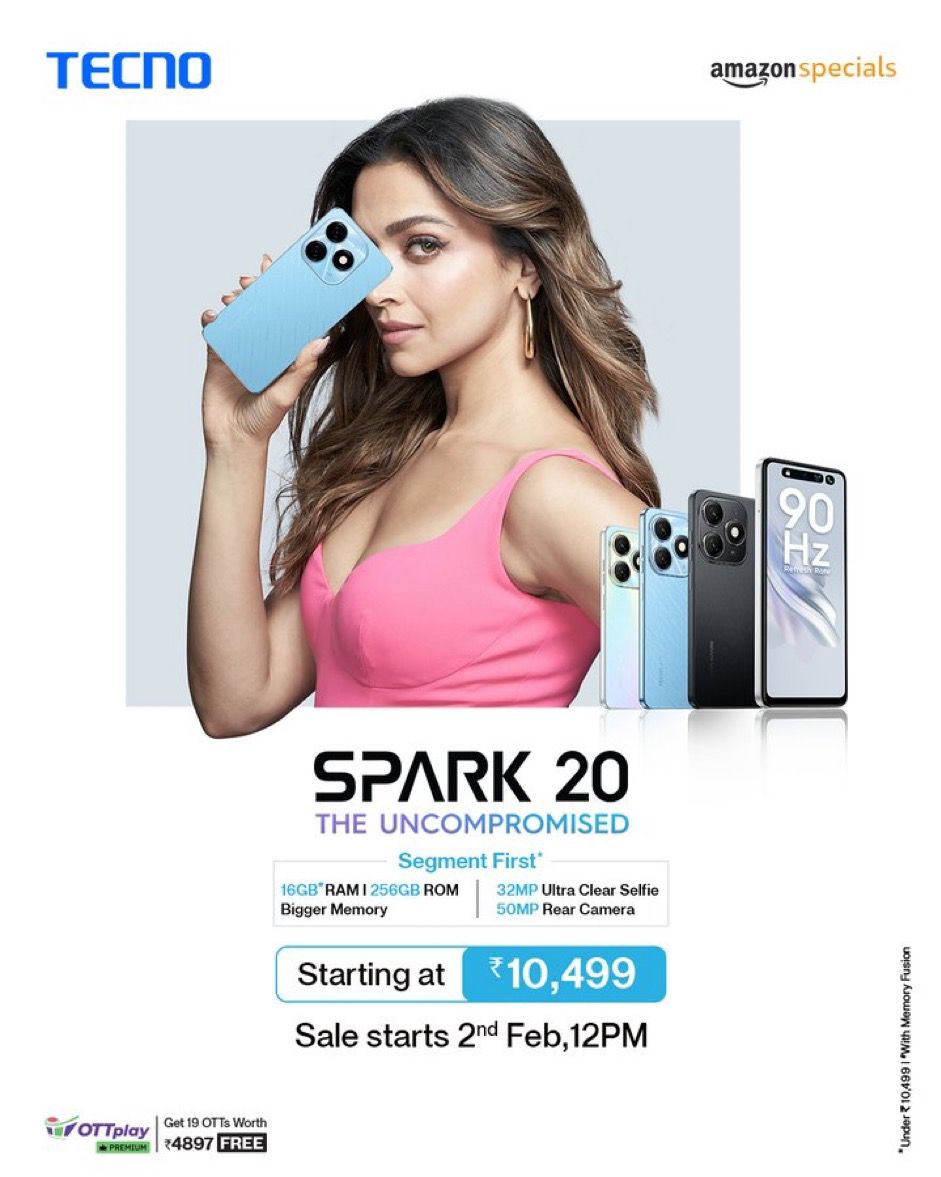
Value-added OTT Subscription: The bundled annual subscription to OTTPlay, giving access to over 23 OTT platforms, adds significant value to the purchase.
Affordable Price: Priced at Rs 10,499 with 8GB RAM and 256GB storage, it’s a competitive option in the entry-level segment.
Good Battery Life and Fast Charging: With a 5000mAh battery and 18W fast charging, it ensures extended usage and quick recharge times.
Tecno Spark 20 priced at Rs 10,499 with 8GB RAM and 256GB storage
Tecno Spark 20: Top 5 Alternatives
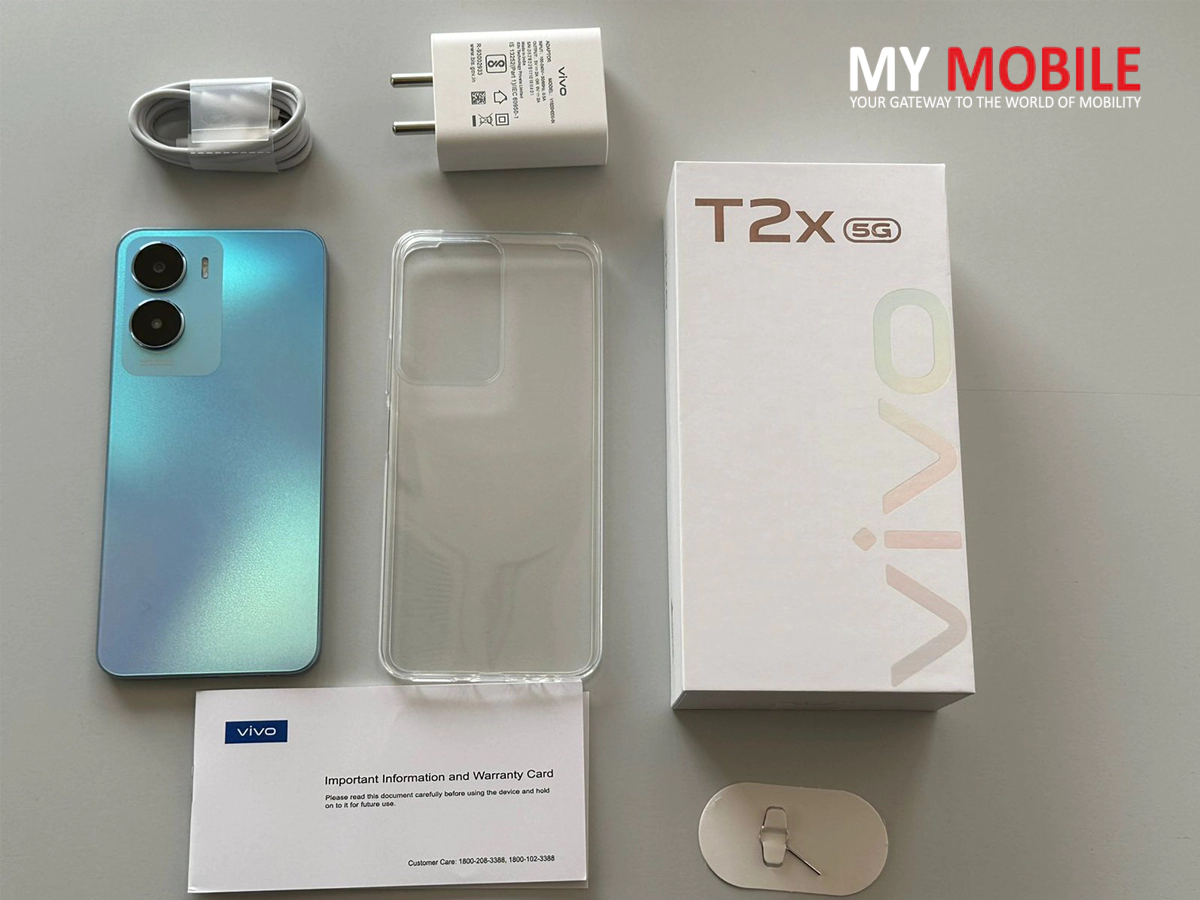
Vivo T2x
Notable for its large 6000 mAh battery and MediaTek Dimensity 1300 chipset, this device offers impressive battery life and efficient performance.
It also boasts a 144 Hz refresh rate display and 5G connectivity, a rare find at this price point.
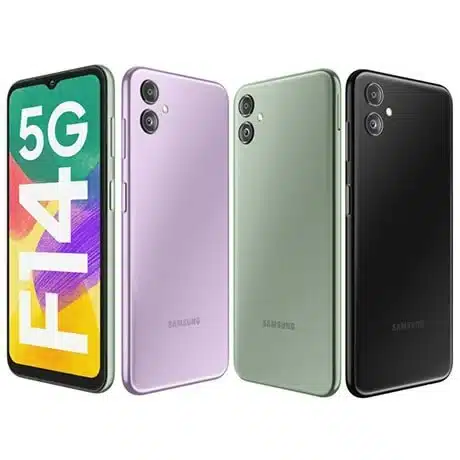
Samsung Galaxy F14
Samsung Galaxy F14
This phone stands out with its 6000 mAh battery and Exynos 1330 chipset.
It features a 6.6-inch display with Gorilla Glass 5 protection and a 90 Hz refresh rate but falls short in low light photography.
It has a smooth 90 Hz display, a premium glass rear panel, and is often available at a lower price than its competitors.
Realme Narzo N55
Realme Narzo N55
A great option for those not prioritizing 5G. It comes with a MediaTek Helio G88 processor, a 6.72-inch 120Hz display, and a 5000 mAh battery with 33W fast charging.
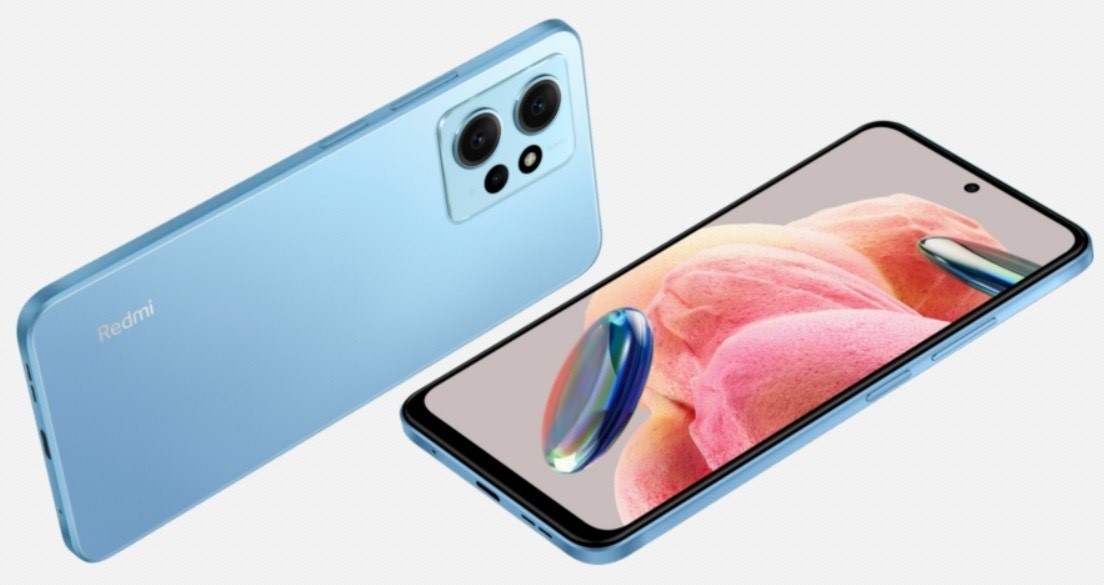
Xiaomi Redmi Note 12 4G
Xiaomi Redmi Note 12 4G
This device features a Snapdragon 685 processor, a 6.67-inch 120Hz Super AMOLED display, and a 50+8+2 MP rear camera setup, offering a good balance of features and performance.
What are the key upgrades in the Tecno Spark 20 compared to its predecessor?
The Tecno Spark 20 features an upgraded 32MP front camera and a MediaTek Helio G85 chipset, enhancing both its photography and processing capabilities over the previous model.
Where can I purchase the Tecno Spark 20 in India?
The smartphone is available from February 2, 2024, on Amazon and select offline stores across India, making it easily accessible for potential buyers.
What additional benefits does the Tecno Spark 20 offer?
Along with its core features, it offers a free annual subscription to OTTPlay, allowing access to over 23 OTT platforms, adding great value to the purchase.
How does the Tecno Spark 20 stand out in the budget segment?
With features like a high-resolution selfie camera, powerful chipset, and an attractive OTT platform subscription, the Tecno Spark 20 offers more than the typical entry-level smartphone.
What are the storage options available with the Tecno Spark 20?
The smartphone comes with a single configuration of 8GB RAM and 256GB storage, providing ample space for apps and media for most users.
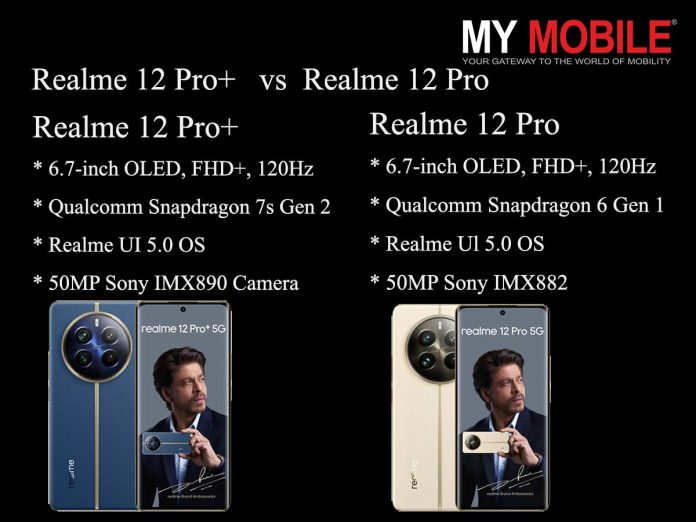
Both models, while part of the same series,cater to different segments of the market, each with its unique set of features and capabilities.
Here’s a comprehensive comparison of the two models, looking at their build, design, performance, camera systems, and more, to help you understand which device might best suit your needs.
32MP Sony IMX709 Telephoto with 2X Optical Zoom, 50MP Sony IMX882; 8MP Ultra-wide; 16MP Selfie
Price
Starting at Rs 25,999
Starting at Rs 29,999
Realme 12 Pro vs Realme 12 Pro+: Build and Design
Realme 12 Pro Build and Design
Both the Realme 12 Pro and 12 Pro+share similar dimensions, measuring 161.5 x 74 x 8.8 mm, and offer the convenience of dual SIM support.
The Pro version is slightly lighter at 190 grams compared to the Pro+ at 196g.
In terms of aesthetics, both models are available in Submarine Blue and Navigator Beige, with an additional Explorer Red option exclusive to the Pro+ model.
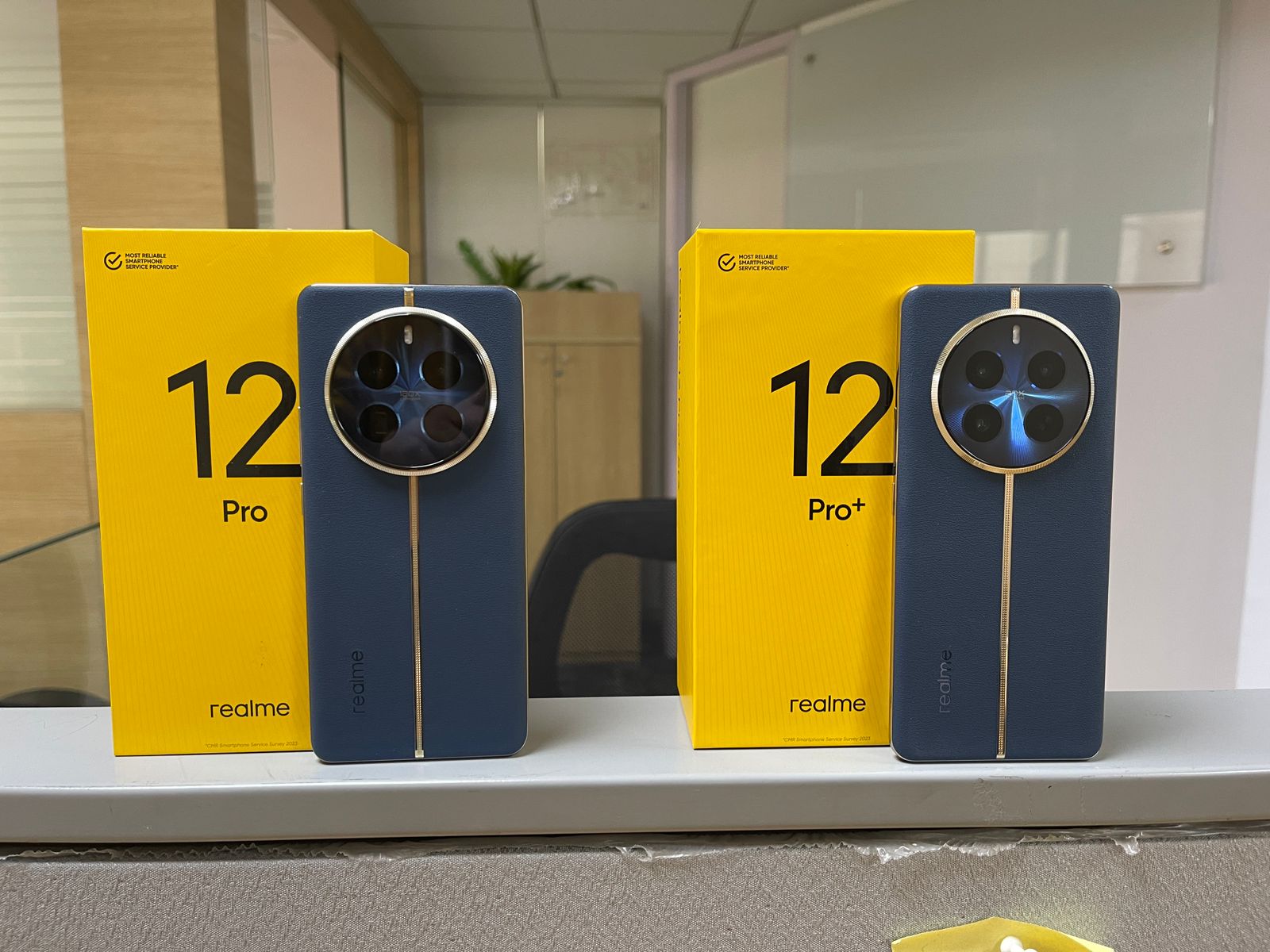
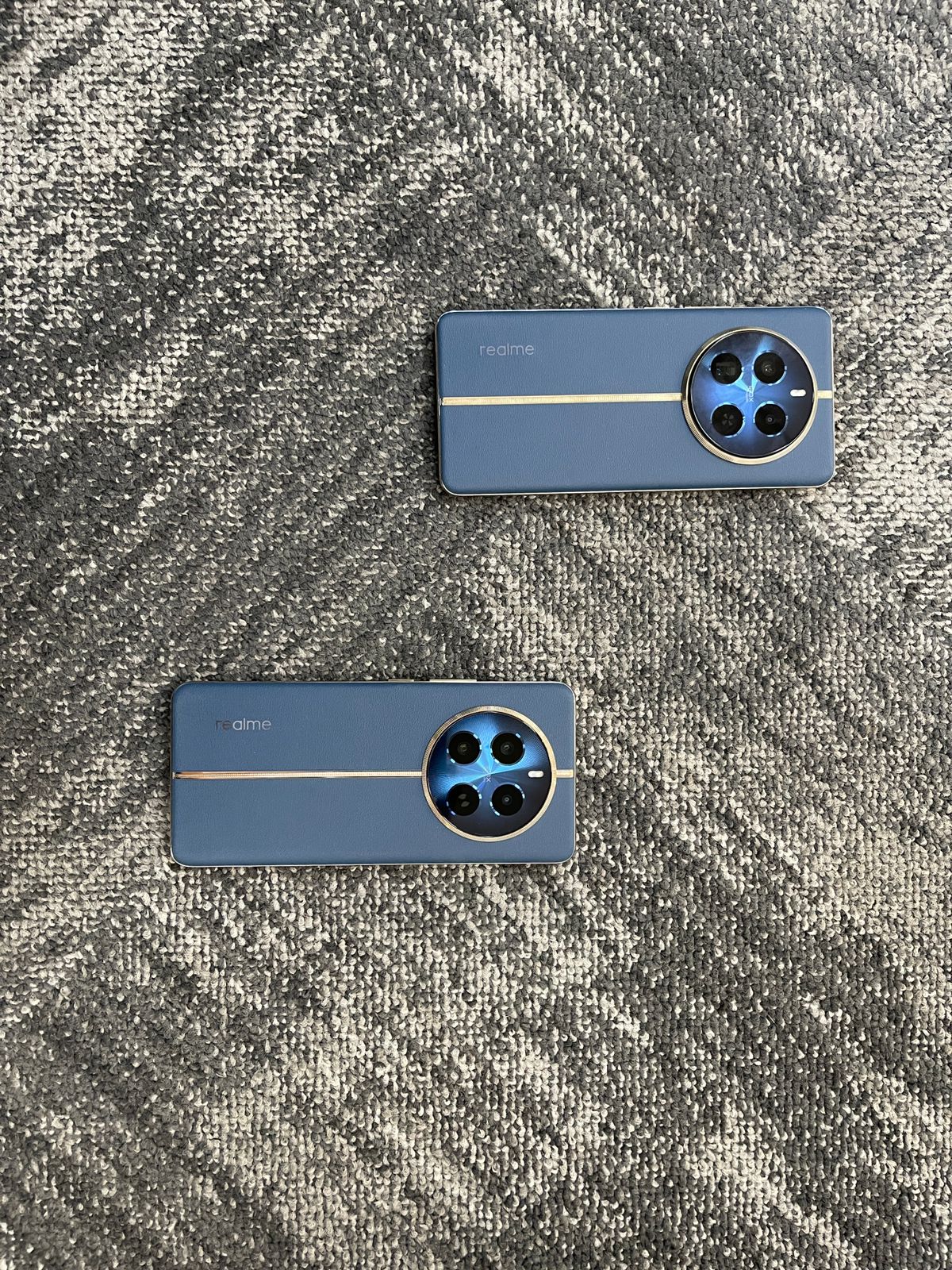
Not too much to choose in terms of design as both devices look near identical.
Realme 12 Pro+:Build and Design
Realme 12 Pro vs Realme 12 Pro+: Display
Realme 12 Pro+: Display
The display is a key feature for both devices, with each boasting a 6.7-inch AMOLED screen, offering a resolution of 1080 x 2412 pixels and a smooth 120Hz refresh rate.
This similarity extends to their peak brightness and color gamut coverage, ensuring vivid and crisp visuals on both models.
Again very little to choose from between the two phones as they harbour the exact same panel.
In our review of the Realme 12 Pro+we had crowned the device’s panel as highly vibrant and colourful, so you can expect the same from the Realme 12 Pro as well.
Realme 12 Pro Display
Realme 12 Pro vs Realme 12 Pro+: Processor and Performance
The Realme 12 Pro features a triple camera system comprising a 50MP main sensor, a 32MP telephoto lens with 2x optical zoom, and an 8MP ultra-wide lens.
The Pro+ model, however, boasts a more versatile setup with a 50MP wide, a 64MP periscope telephoto lens offering 3x optical zoom, and an 8MP ultra-wide lens.
The front camera also sees an upgrade in the Pro+ with a 32MP shooter compared to the 16MP front camera in the standard Pro model.
Both models also feature Dolby Atmos support and dual-mic noise cancellation but lack a 3.5mm headphone jack, which is fast becoming a common trend in modern smartphones.
The Pro+ variant, pricedat Rs 29,999, targets users looking for more advanced features and higher specifications.
Why You Should Buy the Realme 12 Pro+
Why You Should Buy the Realme 12 Pro+
Superior Camera System: The Realme 12 Pro+ features a more advanced camera setup, including a 50MP wide, a 64MP periscope telephoto lens with 3x optical zoom, and an 8MP ultra-wide lens.
This makes it an excellent choice for photography enthusiasts who are looking for versatility and high-quality image capture.
Enhanced Performance: Powered by the Snapdragon 7s Gen 2 chipset, the Realme 12 Pro+ offers better processing power, making it suitable for users who need a device for intensive tasks like gaming or heavy multitasking.
Higher RAM Options: With up to 12GB RAM options, the Pro+ is tailored for power users who demand swift and smooth performance, even when running multiple applications or high-end games.
Improved Selfie Camera: The 32MP front camera is a significant upgrade over the Pro model, ensuring better quality selfies and video calls.
Exclusive Colour Option: The additional Explorer Red color variant gives it a unique and stylish look, appealing to users who prioritize design aesthetics alongside technical specifications.
There’s also Valentine Edition that’s coming exclusively for the Realme 12 Pro+.
Solid Performance: With the Snapdragon 6 Gen 1 chipset and 8GB of RAM, the Realme 12 Pro is still a robust performer for everyday tasks, media consumption, and moderate gaming.
Quality Display: Both models share the same high-quality 6.7-inch AMOLED display with a 120Hz refresh rate, meaning you won’t be compromising on the visual experience.
Good Camera Capabilities: While not as advanced as the Pro+ model, the Realme 12 Pro still boasts a capable triple camera setup with a 50MP main sensor, providing good photography capabilities for most users.
Similar Design Aesthetics: The Realme 12 Pro maintains the sleek design and build quality as the Pro+ variant, ensuring that users still get a premium feel and look in a more budget-friendly package.
Both the Realme 12 Pro and Pro+ models have their unique selling points, catering to different user needs and preferences.
29 January 2024Available at realme.com, and Flipkart
Additional INR 1000 off on exchange
First Sale
realme 12 Pro+ 5G
Variant
Colors
Price
Offer Price
Sale Date
realme 12 Pro+ 5G(8GB+128GB)
Submarine Blue, Navigator Beige and Explorer Red
INR 29,999
06 February 202412 noon onwardsAvailable at realme.com, Flipkart and stores near you
realme 12 Pro+ 5G(8GB+256GB)
INR 31,999
INR 29,999 (INR 2000 Flat Bank offer discount)
No Cost EMI upto 12 months
realme 12 Pro+ 5G(12GB+ 256GB)
INR 33,999
INR 31,999
No Cost EMI upto 12 months
realme 12 Pro 5G
realme 12 Pro 5G(8 GB +128 GB)
Submarine Blue and Navigator Beige
INR 25,999
INR 23,999 (INR 2000 Flat Bank offer discount)
No Cost EMI upto 12 months
06 February 2024, 12 noon onwards Available at realme.com, Flipkart and stores near you
realme 12 Pro 5G(8GB+ 256GB)
INR 26,999
INR 26,999 (INR 2000 Flat Bank offer discount)
No Cost EMI upto 12 months
Additional INR 1000 off on exchange
FAQs
What are the key differences in the camera systems of the Realme 12 Pro and Pro+?
The Realme 12 Pro+ features a more advanced camera system with a 64MP periscope lens and 3X Optical Zoom, compared to the Realme 12 Pro’s 32MP telephoto lens with 2X Optical Zoom.
How do the processor capabilities compare between the Realme 12 Pro and Pro+?
The Realme 12 Pro is powered by a Snapdragon 6 Gen 1 processor, suitable for everyday use, while the Pro+ model features the more powerful Snapdragon 7s Gen 2 for enhanced performance.
Are there any differences in the display of the Realme 12 Pro and Pro+?
Both models share the same 6.7-inch OLED, FHD+ display with a 120Hz refresh rate, offering vibrant and smooth visuals.
What are the pricing details for the Realme 12 Pro and Pro+ in India?
The Realme 12 Pro starts at Rs 25,999, and the Pro+ version is priced at Rs 29,999, catering to different budget ranges.
Which model should I choose between the Realme 12 Pro and Pro+?
The choice depends on your needs: the Pro+ is ideal for photography enthusiasts and power users, while the Pro model offers solid performance at a more affordable price.
What Realme 11 Pros series vs Realme 12 Pro lineup Upgrades ?
The Realme 11 Pro+ and Realme 12 Pro+ have several key differences.
The Realme 12 Pro+ upgrades to a Qualcomm Snapdragon 7s Gen2 processor from the MediaTek Dimensity 7050 in the 11 Pro+, offering improved performance.
It also features a 50MP Sony IMX890 main camera, compared to the 100MP Omnivision sensor in the 11 Pro+. The selfie camera in the 12 Pro+ is 32MP, an upgrade from the 16MP camera in the 11 Pro+.
Both models have a similar screen size and resolution, 6.7-inch FHD+ AMOLED displays, and a 5000mAh battery, but the 12 Pro+ supports a newer Android version, Android 14.
These updates contribute to enhanced performance, photography capabilities, and overall user experience in the Realme 12 Pro+.
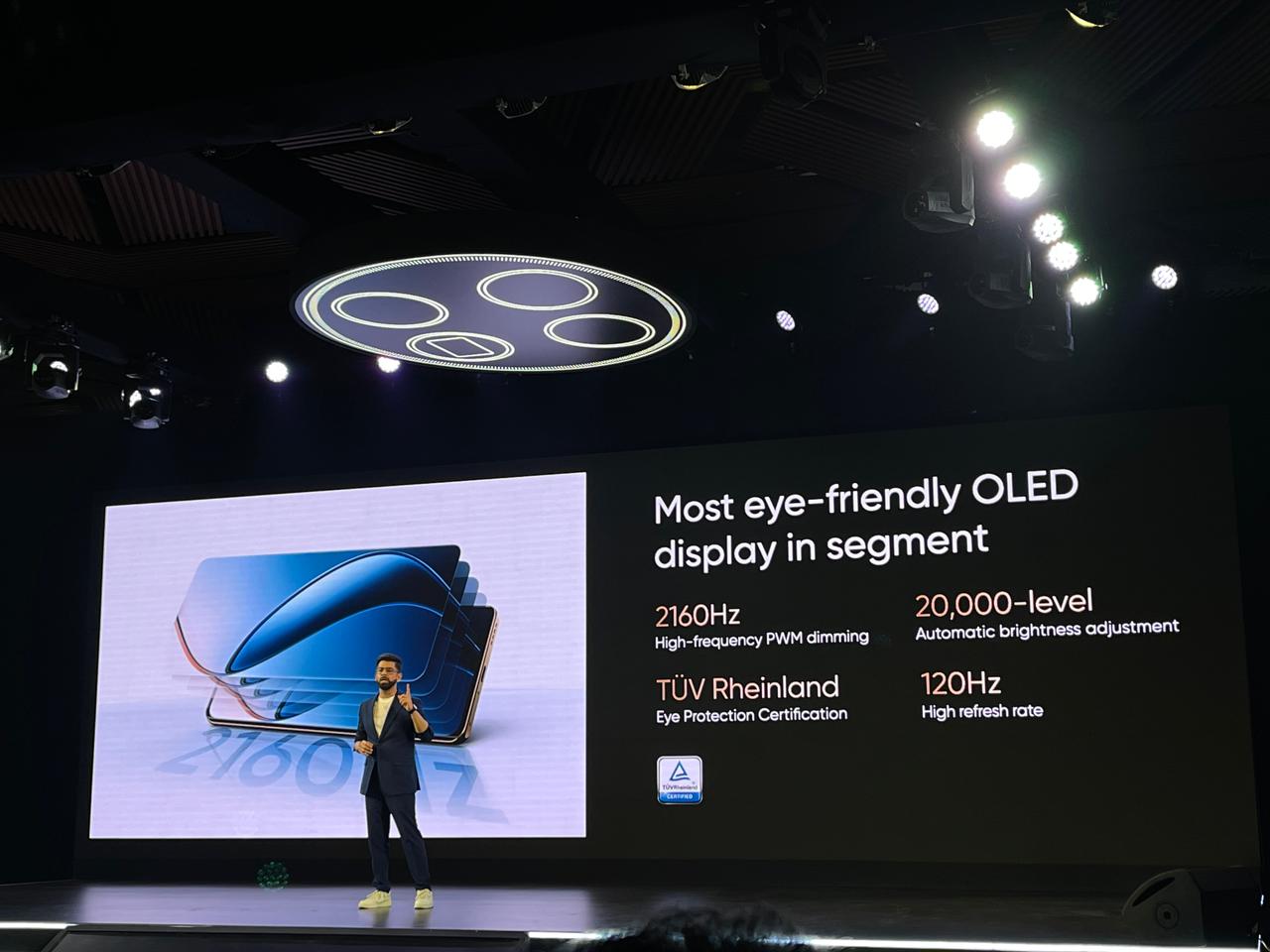
The display size of the Realme 11 Pro and Realme 12 Pro remain the same at a 6.7-inch display with a 120Hz refresh rate and 2160 PWM Dimming support.
In terms of processor, the Realme 11 Pro series shipped with the MediaTek Dimensity 7050 SoC. In comparison, the Realme 12 Pro comes with a Snapdragon 6 Gen 1 SoC, while the 12 Pro+ is powered by the Qualcomm Snapdragon 7s Gen 2 chipset.
Cameras is where the Realme 12 Pro series takes a lead over the Realme 11 Pro lineup. The Realme 12 Pro ships with a 50MP Sony IMX882 primary camera with OIS, a 32MP Sony IMX709 telephoto 1/2.74″ sensor with f/2.0 Aperture, OIS, and 4X support, and an 8MP ultra-wide-angle lens.
In comparison, the Realme 11 Pro shipped with a 100MP rear camera with f/1.75 aperture, OIS and a 2MP macro camera with f/2.4 aperture. The primary sensor should be able to click better images and there is also a new 32MP periscope telephoto shooter.
Realme 12 Pro+ comes with a 50MP Sony IMX890 primary camera with OIS, a 32MP OV64B periscope telephoto sensor with f/2.6 aperture, ALC anti-glare coating, OIS, 6X zoom support and 120x digital Super-Zoom, and an 8MP ultra-wide-angle lens.
In comparison, the Realme 11 Pro came with a 200MP Samsung HP3 sensor, an 8MP ultra-wide camera with f/2.2 aperture, and a 2MP 4cm macro camera.
The charging speed on the Realme 11 Pro+ was 100W, in comparison, the Realme 12 Pro+ only has 67W speed. Both series have the same 5000mAh battery cells.
What are the Key features of realme 12 Pro+ 5G ?
realme’s latest flagship, the realme 12 Pro+ 5G promises to take photography to the next level for smartphone photographers.
It features a 64MP Periscope Telephoto camera, 50 MP Sony IMX 809 Main camera, 8MP Ultra Wide Camera and a 32MP Sony selfie camera with an OV64B camera sensor with 3X optical zoom and 6X in-sensor zoom and boasts the largest-in-class periscope telephoto lens, marking it as the best periscope telephoto lens in this segment.
This is a crucial milestone in realme’s flagship photography journey, making advanced photography more accessible and enabling young enthusiasts to explore and capture cinematic views beyond the horizon at an incredible price range.
Does Realme 12 Pro + 5G have the Best periscope telephoto lens in the segment ?
The realme 12 Pro+ 5G, realme’s latest flagship, aims to take photography and videography to an entirely new level for smartphones.
It features the OV64B sensor with 3X optical zoom and 6X in-sensor zoom, making it the greatest periscope telephoto lens in this market at an unbelievable price.
This is a crucial milestone in realme’s flagship photography journey, making advanced photography more accessible and enabling young enthusiasts to explore and capture cinematic views beyond the horizon.
Is Realme 12 Pro + 5G Design inspired by Luxury Watch ?
Ollivier Savéo, a renowned international luxury watch design master recognized for cooperation with major Swiss watch brands, Roger Dolby, Piaget, Breitling, Rolex and Quentin has collaborated with realme to infuse the design of the new realme 12 Pro+ 5G with elements of premium watch workmanship.
realme and Ollivier Savéo came together and drew inspiration from elements of luxury found in watches, deconstructing and incorporating them into the design of the realme 12 Pro Series, bringing luxury workmanship to mobile phones.
How is the display of realme 12 pro plus 5G?
• 120 Hz Curved Vision Display
realme 12 Pro+ 5G has a magnificent 120Hz Curved Vision Display, to provide an excellent viewing experience.
The display features a 6.7-inch OLED panel with 2412 x 1080 FHD+ resolution, 1.07 billion colors, a 100% P3 color gamut, a touch sampling rate of 240Hz, and an instantaneous sampling rate of up to 2000Hz.
It has a global maximum brightness of 800 nits and a local peak brightness of 950 nits. The display is covered by 0.55mm secondary tempered high-strength glass, making this an inexpensive premier curved screen for users to enjoy.
To complete the immersive experience, the device features breathtaking Dolby Atmos sound for an unparalleled audio experience that you can feel all around you. With Dolby Atmos, your favorite content comes to life with greater depth, clarity, and details like never before.
Is Realme 12 Pro plus 5G powered by Snapdragon 7s Gen 2 Mobile Platform ?
The realme 12 Pro+ 5G has been built using 4nm process and has remarkable energy efficiency enabled by the advanced Qualcomm® Kryo™ CPU and Qualcomm® Adreno™ GPU and powered by a dedicated Qualcomm® AI Engine for enhanced photography, smooth multitasking and gaming, and backed by speedy recharging via Qualcomm® Quick Charge™ 4+ technology.
Using an 8-core 64-bit architecture, which includes 4 ARM Cortex-A78 cores running at 2.4GHz and 4 ARM Cortex-A55 cores running at 1.95GHz, it provides exceptional performance. The Adreno GPU operates at 940MHz and improves graphics capabilities.
The improved CPU provides a significant 20% increase in output, raising the Antutu benchmark from 170000 to 210000 compared to the realme 11 Pro+ 5G. Similarly, the GPU, GFX 1080P Manhattan ES3.0 Offscreen, improves performance by 9%, increasing frame rates from 67 to 73 and demonstrating superior graphics capabilities when compared to the 11 Pro+ 5G.
Also, with 4G Internet access even during phone calls, you will never be stranded without a signal.
How is the battery life of Realme 12 pro plus 5G?
Massive 5000mAh battery and 67W SUPERVOOC Charge
With the high-capacity 5000mAh battery, users can charge their smartphone to up to 50% in as little as 19 minutes. This combination offers minimal waiting time and faster charging speed, allowing customers to fully utilize their device’s capabilities every day.
Does realme 12 pro plus 5G Come with realme UI 5.0 ?
The realme 12 Pro+ 5G comes with the new realme UI 5.0 based on Android 14, which allows users to enjoy smarter and more improved efficient experiences.
What are the Color’s available in Realme 12 Pro plus 5G?
The realme 12 Pro + 5G comes in three stunning colors: Submarine Blue reflects tranquil elegance, Navigator Beige offers refinement, and the exclusive Explorer Red adds a vibrant touch, exclusively available in India. These colors draw inspiration from prestigious luxury watch series.
What are the Key features of realme 12 Pro 5G ?
The realme 12 Pro 5G features an improved 50MP Telephoto Portrait camera that comes mated to a Sony IMX 709 sensor for great, flawless photography.
The phone also features a 50MP Sony IMX 882 Main Camera, an 8MP Ultra Wide Camera and a 16MP Selfie Camera.
The cutting-edge image technology is enabled by the Sony IMX882 OIS camera sensor that pairs up with the flagship Omnifocal Mastershot Algorithm.
The result is that users get all of the tools needed to create cinematic portraits and inspiring photos in both daytime and low-light circumstances.
Best Telephoto Lens in its Class
The 50 MP Telephoto Portrait Camera comes with a 1/2.74″ sensor, 2X optical zoom, and 4X lossless zoom, as well as the largest-in-class telephoto lens that in combination with the Flagship Omnifocal Mastershot Algorithm, makes it the best telephoto lens in this segment at a fantastic price point.
With a focal length similar to 26mm and an f/1.8 aperture, this lens is great for shooting wide-angle shots in both daytime and low-light circumstances.
The wide aperture allows for enough light ingress, improving image clarity.
This is a crucial milestone in realme’s flagship photography journey, making advanced photography more accessible and enabling young enthusiasts to explore and capture cinematic views beyond the horizon.
Superlative Design
The smartphone design is also inspired by luxury watches and comes with a vegan leather finish designed by the realme Design Studio in collaboration with renowned international luxury watch design masterOllivier Savéo, known for collaborations with prestigious Swiss watch brands like Rolex, Roger Dolby, Piaget, Breitling, and Quentin.
67W SUPERVOOC Charge and Massive 5000mAh Battery
realme 12 Pro 5G comes equipped with 67W SUPERVOOC Charge and a massive 5000mAh battery, offering users long-lasting power. The smartphone sports 2:1 dual charge pump technology, which charges the battery from 1 to 50% charge in as little as 19 minutes.
120Hz Curved Vision Display for the Best Viewing Experience
realme 12 Pro 5G has a stunning 120Hz Curved Vision Display to provide an excellent viewing experience. The display features a 6.7-inch OLED panel with 2412 x 1080 FHD+ resolution, 1.07 billion colors, a 100% P3 color gamut, a touch sampling rate of 240Hz, and an instantaneous sampling rate of up to 2000Hz.
It has a global maximum brightness of 800 nits and a local peak brightness of 950 nits. The display is covered by 0.55mm secondary tempered high-strength glass, giving an inexpensive flagship curved screen for users to enjoy.
Qualcomm Snapdragon 6 Gen 1
The 64-bit octa-core processor, built on 4nm process, boasts four high-performance A78 cores clocked at 2.2GHz and four efficient A55 cores clocked at 1.8GHz, ensuring maximum energy efficiency.
This novel 4nm architecture in its pricing range, with the Qualcomm Adreno GPU and Qualcomm Kryo CPU, greatly increases computing power without compromising battery life.
The Adreno GPU significantly improves graphics performance, setting a new benchmark for speed and efficiency.
The performance can ensure smooth running and deliver an immersive visual experience for gaming and multimedia. realme 12 Pro 5G has an impressive AnTuTu benchmark score of 590,000, representing a 17% performance gain over its predecessor, realme 11 Pro 5G.
This score represents the device’s improved processing capabilities and efficiency, indicating that the Realme 12 Pro 5G is a powerhouse capable of offering flawless performance.
Its 7th Gen Qualcomm AI Engine adds intelligence to on-device activities in camera, audio and productivity.
The 4th Gen Snapdragon X62 5G Modem-RF System and Qualcomm® FastConnect™ 6700 Mobile Connectivity System bring record speed, coverage, and bandwidth for better 5G connectivity.
The Qualcomm Spectra™ Triple ISP ushers in all-new camera possibilities to this series, including up to 200 MP photos and computational HDR video capture.
Plus, AI De-Noising (AIDE) is a neural network trained to remove noise in low-light images to deliver sharper and clearer photos.
realme UI 5.0
The realme 12 Pro 5G comes with the new realme UI 5.0 based on Android 14, which allows users to enjoy smarter and more improved efficient experiences.
Night Scene Mode, Street Mode, Photo Mode, Portrait Mode, 108M Mode, Professional Mode, Panorama Mode, Super Text, Tilt-Shift, Group Portrait, AI Video Tracking, One Take (Introduced by OTA Upgrade), CMOS, EIS, 20 Continous Shots, Video Feature: Multi-View Video, Movie Mode, Tilt-Shift, Slow Motion, Timelapse Photography, Video Mode
Starting from January 30, 2024, at 12 PM, customers in India can acquire the OnePlus 12 through various channels, including OnePlus.in, the OnePlus Store App, Amazon.in, and both OnePlus Experience and other offline partner stores.
OnePlus 12: Pricing, Availability, and Offers
OnePlus 12: Pricing, Availability, and Offers
The OnePlus 12 is launched in two configurations – a 12GB + 256GB variant priced at Rs 64,999, and a more extensive 16GB + 512GB option at Rs 69,999.
The phone is available in two colour options, Flowy Emerald and Silky Black.
OnePlus 12 Goes on Sale in India
OnePlus is also introducing the OnePlus Easy Upgrades program, allowing customers to purchase the OnePlus 12 by paying only 65% of its price, along with 24-month No-cost EMI.
This program assures a 35% Assured Value for the OnePlus 12, facilitating easier upgrades to new OnePlus flagships.
Other available offers at the Open Sale include
Other available offers at the Open Sale include
An instant bank discount of Rs 2,000 with ICICI Bank credit cards and OneCard.
No-cost EMI for 9 months.
An exchange bonus of up to Rs 10,000.
A 50% discount on the Accidental Damage Protection Plan.
A 20% discount on OnePlus Cases and a 10% discount on the OnePlus Wireless Charger on purchases from OnePlus.in and the OnePlus Store App.
RCC members can avail of Rs 1,000 off.
A special coupon discount of Rs 3,000 for OnePlus 12 users on the purchase of the OnePlus Pad.
Up to 693 RedCoins on purchasing the OnePlus 12.
OnePlus 12: Key Specs
OnePlus 12: Key Specs
Powered by Qualcomm Snapdragon 8 Gen 3 SoC.
Equipped with 24GB LPDDR5X RAM.
Features 1TB UFS 4.0 ROM.
Sports a 6.8-inch 120Hz 2K Super Fluid AMOLED display.
Comes with a 5400mAh dual-cell battery.
Supports 100W SUPERVOOC fast-wired charging.
Includes a triple camera setup: 50MP main, 64MP telephoto, and 48MP ultra-wide.
The OnePlus 12’s camera capabilities include a triple camera system with a 50MP main camera, a 64MP 3X periscope telephoto camera, and a 48MP ultra-wide camera, along with a 32MP front camera.
In terms of design, the OnePlus 12 incorporates ceramic glass with a matte finish and retains the iconic three-stage alert slider, now repositioned to the left.
This modification is designed to enhance antenna performance, particularly beneficial for gaming enthusiasts.
It harnesses the power of the Snapdragon 3 chip and up to 16GB of RAM, ensuring smooth operation across various tasks, including demanding gaming.
However, the software update longevity doesn’t quite match up with industry leaders, an area where OnePlus could potentially improve.
The battery life is commendable, with a 5400mAh battery lasting a full day under typical use, supported by fast and wireless charging options.
The return of wireless charging is a notable improvement.
On the other hand, the phone’s design, display, and camera, though improved, follow a familiar trajectory rather than offering something substantially new.
So as a whole, the OnePlus 12 is a reliable choice for those seeking a balance of performance and features, but it may not satisfy those looking for groundbreaking innovation in the flagship segment.
Top 5 Alternatives to OnePlus 12
Samsung Galaxy S24
Samsung Galaxy S24
The Samsung Galaxy S24 is known for its long-term software support and innovative design.
It features a vibrant 6.2-inch display, a powerful Snapdragon 8 Gen 3 chipset, and a reliable triple camera setup.
The device also offers a variety of colour options and storage capacities. Its unique design and advanced features make it a popular choice among users.
Google Pixel 8
Google Pixel 8
The Google Pixel 8 stands out for its excellent software updates and unique AI photography features.
It is powered by Google’s own Tensor G3 chipset and comes with an impressive 50MP main camera.
The device also features a 6.2-inch OLED display and a 4575mAh battery. Its AI-powered camera features and software updates make it a top choice for photography enthusiasts and Android purists.
Apple iPhone 15
Apple iPhone 15
The Apple iPhone 15 is renowned for its seamless ecosystem integration and top-tier performance.
It features a new 48MP main camera, a brighter display, and a longer battery life.
The device also comes with a USB-C port and runs on the A16 Bionic chip6.
Its ecosystem integration and high performance make it a preferred choice for many user.
iQOO 12
iQOO 12
The iQOO 12 provides high-end specs at a competitive price point. It is powered by the MediaTek Dimensity 9300 chipset and features a 6.78-inch LTPO AMOLED screen with a 144Hz refresh rate.
The device also boasts a versatile quad-camera system and a large 5000mAh battery. Its high-end specs and competitive pricing make it an attractive option for users seeking flagship features at a lower cost.
Vivo X100
Vivo X100
The Vivo X100 offers a balance of design innovation and performance. It features a 6.78-inch LTPO AMOLED screen, a MediaTek Dimensity 9300 processor, and a versatile quad-camera system.
The device also packs a 5000mAh battery and supports 120W fast charging. Its balance of innovative design and solid performance make it a compelling choice for many users.
When will the OnePlus 12 be available for purchase in India?
Starting January 30, 2024, at 12 PM, the OnePlus 12 will be available for purchase in India through OnePlus.in, Amazon.in, OnePlus Experience stores, and other offline partner stores.
What are the pricing options for the OnePlus 12 in India?
The OnePlus 12 is priced at Rs 64,999 for the 12GB + 256GB variant and Rs 69,999 for the 16GB + 512GB model.
What is the OnePlus Easy Upgrades program?
The OnePlus Easy Upgrades program allows customers to own the OnePlus 12 by paying only 65% of the price initially, along with a 24-month No-cost EMI option. It guarantees a 35% Assured Value for upgrading to future OnePlus flagships.
Are there any special offers available with the OnePlus 12 purchase?
Yes, customers can avail of various offers like a Rs 2,000 instant bank discount, a 9-month No-cost EMI, an exchange bonus of up to Rs 10,000, and discounts on OnePlus accessories.
OnePlus Announces Open Sales of the Highly Anticipated OnePlus 12. Details?
OnePlus, the global technology brand, is thrilled to announce the start of open sales for its latest flagship device, the OnePlus 12. Following an exciting global launch, this latest in the OnePlus flagship line of smartphones is now available in India.
Both variants of the OnePlus 12 will go on sale in the Indian market starting from 30th January 2024, 12 PM. The OnePlus 12 will be available across OnePlus.in, OnePlus Store App, Amazon.in, OnePlus Experience stores, and other offline partner stores.
Built to exceed expectations, the OnePlus 12 represents the culmination of OnePlus’ decade-long quest for excellence. Laying the groundwork for the ultimate fast and smooth experience is a powerful Snapdragon® 8 Gen 3 Mobile Platform supported by the proprietary Trinity Engine, along with 16GB of LPDDR5X RAM with 512GB UFS 4.0 ROM.
Through the CPU-Vitalization technology in OnePlus’ proprietary Trinity Engine, the OnePlus 12 creates a true synergy between hardware and software delivering exceptional performance. It also combines a modern elegance design, with a new 2K 120Hz ProXDR display, the 100W SUPERVOOC fast charging and 50W AIRVOOC wireless charging, and the 4th Gen Hasselblad Camera for Mobile, delivering an experience which is Smooth Beyond Belief.
The OnePlus 12 is available in two colors and configurations, catering to a diverse set of preferences and requirements. The OnePlus 12 will be launched in Flowy Emerald and Silky Black exciting variants, the 12/256GB option which will be priced at INR 64,999 and the 16/512GB option which will be priced at INR 69,999.
What are the OnePlus Easy Upgrades?
OnePlus is excited to introduce the OnePlus Easy Upgrades program. This offer allows customers to own the OnePlus 12 Flagship by paying only 65% of its price with 24-months of No-cost EMI.
This program guarantees 35% Assured Value for the OnePlus 12, providing an opportunity for users to upgrade to a new OnePlus Flagship at any time with ease, making the OnePlus flagships more accessible than ever.
You can also combine the offer with any available exchange offers, bank discounts and more for an even better offering..
Other offers available at Open Sale
Customers can avail an instant bank discount of INR 2,000 with ICICI Bank credit card and OneCard. Customers can also avail no cost EMI for 9 months.
Customers can avail a special exchange bonus of up to INR 10,000 while purchasing the OnePlus 12.
Customers can also avail of 50% off on the Accidental Damage Protection Plan, available on OnePlus.in, OnePlus Store App and OnePlus Experience Stores.
Users can purchase the OnePlus 12 on OnePlus.in and the OnePlus Store App and get 20% on OnePlus Cases and 10% off on the OnePlus Wireless Charger.
RCC members can avail of INR 1,000 off on OnePlus 12. Eligible for select OnePlus devices linked to RCC before 22nd January 2024.
OnePlus 12 users can link to RCC and avail of a special coupon discount of INR 3,000 discount while purchasing the OnePlus Pad.
Users can also earn up to 693 RedCoins on the purchase of the OnePlus 12.
What are the major upgrades in the OnePlus 12’s camera system?
The OnePlus 12 features an improved camera setup, including a 50MP Sony LYT-808 main camera, a 48MP ultrawide, and a 32MP telephoto lens, offering superior color accuracy and detail in various lighting conditions.
How does the display of the OnePlus 12 stand out?
The 6.78-inch LTPO display of the OnePlus 12, supporting ProXDR and Dolby Vision, offers a peak brightness of 4500 nits, ensuring clear visibility even in bright sunlight.
What makes the OnePlus 12 a powerful device?
Powered by the Snapdragon 3 chip and available with up to 16GB of RAM, the OnePlus 12 delivers exceptional performance, particularly noticeable in gaming and multitasking.
What are the battery specifications of the OnePlus 12?
The OnePlus 12 is equipped with a 5400mAh battery, supporting 80W SUPERVOOC and up to 50W AIRVOOC wireless charging, providing long-lasting usage and fast charging options.
How user-friendly is the OnePlus 12’s interface?
Running on OxygenOS 14 based on Android 14, the OnePlus 12 offers a customizable and intuitive interface, with a balance of new animations and user-friendly features.
Smooth Beyond Belief: OnePlus Debuts the OnePlus 12. Details?
OnePlus officially launched its latest flagship smartphone, the OnePlus 12, at Pragati Maidan in New Delhi.
Representing the culmination of OnePlus’ decade-long pursuit for excellence and innovation, the OnePlus 12 boasts the Snapdragon® 8 Gen 3 Mobile Platform, the proprietary Trinity Engine, the 4th Gen Hasselblad Camera for Mobile, a new 2K 120Hz ProXDR display, 100W SUPERVOOC fast charging, 50W AIRVOOC wireless charging, and OnePlus’ iconic modern elegant design, delivering an unparalleled flagship experience that is incredibly fast and smooth.
“As we celebrate the tenth anniversary of OnePlus with our loyal users worldwide, we are thrilled to introduce the OnePlus 12 — an all-round flagship phone that embodies our decade-long leadership in technology,” said Pete Lau, Founder of OnePlus.
“With our ‘Never Settle’ mantra, OnePlus is dedicated to bringing innovative ideas to life and disrupting the mobile industry.
With the OnePlus 12, we have created a true masterpiece, combining advanced technologies from OnePlus and our partners to make it one of the best flagship smartphones in the year 2024.”
How does OnePlus 12 give Long-lasting Fast and Smooth Experiences ?
The OnePlus 12 is designed to deliver an uncompromising performance.
At the heart of the OnePlus 12 is Qualcomm’s latest Snapdragon® 8 Gen 3 mobile platform, an ultra-intelligent chip promising top-tier performance and power efficiency with up to 30% improved CPU performance and a 25% enhancement in GPU performance.
Empowered by the proprietary Trinity Engine and equipped with up to 16GB of LPDDR5X RAM and 512GB of UFS 4.0 ROM, the OnePlus 12 can keep applications readily available in the background for 72 hours1.
In addition, OnePlus 12 is the first Snapdragon 8 Gen 3 device to be approved as Snapdragon Spaces™ Ready.
This will allow developers to bring their XR ideas to life and explore the full potential of head-worn AR.
The OnePlus 12 introduces an industry-leading Dual Cryo-velocity VC Cooling System, featuring a 3D capillary dissipation structure and a dual VC design with OnePlus’ largest-ever surface area covering 9,140 mm², revolutionizing the flow of the coolant to significantly reduce overheating.
Crafted using a unibody die-casting manufacturing process, the larger VC consistently absorbs heat from the smaller VC to accelerate the entire heat dissipation process, making the OnePlus 12 a versatile companion for activities such as marathon gaming sessions, pro-level video editing, and concurrent charging without risk of overheating.
With support for 100W SUPERVOOC Endurance Edition and a 5400mAh big battery, the OnePlus 12 reduces the time spent tethered to an outlet, allowing users to use the device more freely.
The OnePlus 12 takes only 26 minutes from 1% to 100% battery capacity courtesy of its 100W SUPERVOOC fast-charging function.
In North America, the OnePlus 12 charges with 80W SUPERVOOC Endurance Edition that can take only 30 minutes from 1% to 100% battery capacity.
The long-awaited 50W AIRVOOC wireless charging also makes its debut in the OnePlus 12, providing a reliable alternative for those who prefer a cable-free lifestyle.
Harnessing the power of a twin-battery design with each cell charging at an impressive 25W, the 50W AIRVOOC outpaces even some of the most advanced wired charging solutions while offering unmatched efficiency.
As a result, the OnePlus 12 has proven its capability to run Genshin Impact at maximum settings, achieving an impressive and consistent frame rate of 57.4FPS3 (Frames Per Second) during a rigorous 3-hour testing session.
Furthermore, its exceptional battery performance enables it to sustain 5.5 hours of continuous video shooting at 1080p resolution, operating at 30Hz.
In addition, the all-round flagship experience on the OnePlus 12 is boosted further by powerful and stable wireless signal performance.
The omnidirectional antenna design, with a total of 16 antennas, enables the OnePlus 12 to unleash the full potential of high-speed connectivity.
OnePlus 12 features Authentic Hasselblad Style Photography. Details?
The OnePlus 12 stands out as a photography master with a professional-grade camera system featuring flagship hardware and advanced image processing algorithms developed in collaboration with Hasselblad.
The phone takes the flagship-level triple camera system of the OnePlus 11 and brings it to the next level with an industry-first 50MP Sony’s LYT-808 wide-angle camera.
Featuring a large ƒ/1.6 aperture and 1/1.4-inch sensor size, the camera offers a greater depth of field while compensating for the loss of light to deliver crystal-clear images with vibrant colors and intricate details even in low-light environments.
Red glare and artefact reduction are also supported to help capture even more true-to-life images.
As the first OnePlus single-screen flagship to feature a best-in-class OV64B 3x periscope telephoto camera with 6x in-sensor zoom, the OnePlus 12 offers a 3x to 120x photographic zoom range that gives users the flexibility to capture spontaneous moments and highly expressive portraits from afar.
This unrivalled periscope telephoto lens not only ensures high image quality but also perfectly replicates natural lights and shadows.
With its 114° field of view in an impressive 48MP resolution, the OnePlus 12’s ultra-wide camera is more than just the icing on the cake, instead empowering users to capture a broader perspective on life that still retains the finest details.
OnePlus’ latest RAW HDR algorithm further enhances the phone’s ability to control light by understanding visual landscapes and harmonizing the interplay between highlights and shadows.
By rendering optimal brightness, balanced exposure, authentic color saturation, and seamless vignette control, the OnePlus 12 makes it possible to capture DSLR-like images that mirror reality with impeccable resolution and even greater precision.
The newly upgraded Hasselblad Portrait Mode simulates the nuances of bokeh and flare effects of Hasselblad’s classic lenses from 1x to 3x, adding additional visual angles while imparting a natural depth of field to create transitions between subject and background that are seamless beyond belief.
Does OnePlus 12 have a Modern Elegant Design?
The OnePlus 12 is a masterpiece in design that pays tribute to a decade of OnePlus’s daring spiring and bold attitude.
Drawing inspiration from the intricate craftsmanship of luxury watches, the phone inherits the timeless modern elegance of the OnePlus 11 5G while adopting a hollow-curved design that mirrors the precision found in the delicate inner workings of a finely polished timepiece.
The OnePlus 12 is available in two colorways — Flowy Emerald and Silky Black. Inspired by the breathtaking spectacle of the braided Dart River in New Zealand, where emerald ribbons pulsate with vibrant energy, Flowy Emerald captures the essence of natural wonders and employs state-of-the-art AG technology and a precision etching process to bring a premium texture with exquisite dynamism to the phone’s glass back cover.
What’s the Price & Availability of OnePlus 12?
The OnePlus 12 will be launched in two exciting variants, the 12/256GB option which will be priced at INR 64,999 and the 16/512GB option which will be priced at INR 69,999 will go on sale at 12:00 PM on 30th January.
The pre-booking for the OnePlus 12 starts from 8:45 PM on 23rd January. Customers can get a free trial of Google One & YouTube Premium on OnePlus 12. Find more details on OnePlus.in.
Customers can avail an instant bank discount of INR 2,000 with ICICI credit card and OneCard.
Customers can avail a special exchange bonus of up to INR 10,000 while purchasing the OnePlus 12.
Customers can also buy the OnePlus 12 with OnePlus Easy Upgrades and get 35% assured value at the end of the 24 months.
A special pre-booking offer is available for INR 1,999, where customers can pre-order the OnePlus 12 from 23rd January and also avail no cost EMI for 12 months.
The first 1,000 customers who order the OnePlus 12 are entitled to exclusive OnePlus Merchandise.
OnePlus 12 and users can link to RCC and avail a special coupon discount of INR 3,000 discount while purchasing the OnePlus Pad.
Customers can also avail of 50% off on the Accidental Damage Protection Plan, available on OnePlus.in, OnePlus Store App and OnePlus Experience Stores.
How does OnePlus 12 give Cinematic Visual and Audio Experiences?
The OnePlus 12 harmonizes an ultra-bright display with cinema-like sound to bring users flagship audiovisual experiences like never before.
At the centre of this experience is a 2K 120Hz ProXDR display powered by BOE’s brand-new blue diamond pixel layout, which enables the OnePlus 12 to reach a peak brightness of 4,500 nits – the brightest-ever screen on a OnePlus smartphone – with the ability to deliver ultra-realistic, silky-smooth visuals for a premium viewing experience.
ProXDR further ensures that lossless images with high dynamic range and a rich color spectrum can be enjoyed in full detail on the phone’s stunning display.
This innovative display sets or matches 18 smartphone display performance records of DisplayMateA+. It also receives Intelligent Eye Care certification by TÜV Rheinland thanks to its ability to effectively reduce blue light emission and intelligent color temperature adjustment in response to changing ambient conditions.
Fitted with LTPO technology, the display can automatically switch between a refresh rate of 1Hz to 120Hz based on user preferences and specific usage scenarios while keeping power consumption comparatively low.
Dolby Vision is also supported to elevate the overall visual experience with ultra-vivid colors, crisp contrast, and intricate details.
For avid gamers seeking hyper-realistic and ultra-immersive mobile gaming experiences, the OnePlus 12 offers the perfect solution in the form of HyperRendering.
Built upon OnePlus’ in-house graphics algorithms and a dedicated Pixelworks X7 Independent Visual Processor, this groundbreaking visual quality enhancement technology empowers the OnePlus 12 to deliver super-resolution picture quality with remarkable efficiency, achieving 120Hz frame rate for all games through frame Interpolation technology2 while ensuring real-time HDR color calibration.
For enhanced touch accuracy, Aqua Touch can detect wet fingers and water droplets on the screen and compensate accordingly, significantly alleviating issues related to sweaty hands and mistouches during both intense gameplay and everyday use.
Complementing the high-quality visuals are immersive 3D sound spaces that add the finishing touch to the all-round entertainment experience.
When paired with the OnePlus Buds 3 or other OnePlus earbuds with spatial audio and in-app customization support, the OnePlus 12 delivers simultaneous playback of different audio content in multiple directions to create a flagship 3D Spatial Audio experience.
Thanks to the inclusion of dual stereo speakers with Dolby Atoms, dedicated spatial audio can even be enjoyed without earbuds, offering cinema-level audio quality with reduced acoustic resonance.
What is the Trinity Engine in the OnePlus 12 series?
The Trinity Engine is a new feature in the OnePlus 12 series that enhances the phone’s overall performance.
It consists of CPU, RAM, and ROM vitalization technologies, each designed to optimize different aspects of the phone’s functionality.
How does the CPU vitalization in the Trinity Engine benefit OnePlus 12 users?
CPU vitalization in the Trinity Engine boosts the processing power when needed while efficiently managing battery usage. This results in a faster device with extended battery life.
What role does RAM vitalization play in the OnePlus 12’s Trinity Engine?
RAM vitalization in the Trinity Engine manages memory allocation, ensuring active tasks are prioritized and reducing slowdowns, for a smoother multitasking experience.
Can older OnePlus models receive the Trinity Engine update?
The Trinity Engine is a software-based feature and will be available to older OnePlus smartphones compatible with Oxygen OS 14, although performance may vary based on hardware.
Notable tipster Digital Chat Station has shed light on the expected release timelines of Vivo’s next big announcements– the Vivo X Fold 3 series and the X100 Ultra.
This comes on the heels of the Vivo X100 series launch earlier this month featuring the Vivo X100 and X100 Pro.
Vivo X100 Ultra: A Q2 Release
Vivo X100 Ultra: A Q2 Release
As per leaks, Vivo is expected to unveil the Vivo X100 Ultra in Q2 of this year.
Although details are still shrouded in mystery, the device codenamed ‘Thanos’ is believed to be the X100 Ultra.
This ‘Thanos’ device has been the subject of speculation for a long time and rumours suggest it might feature a Samsung E7 AMOLED screen, the Snapdragon 8 Gen 3 SoC, a robust 5,000mAh battery supporting 100W wired and 50W wireless charging, and a versatile 50MP quad-camera setup.
The primary camera is expected to be a Sony LYT-900 sensor, a sensor also found on the OnePlus 12.
Vivo X Fold 3 Series Poised for March Launch
Vivo X Fold 3 Series Poised for March Launch
Apart from just the X100 Ultra, there is also buzz around Vivo’s foldable technology and its next offering that is being touted as the X Fold 3 series.
According to a Weibo post by Digital Chat Station, the lineup is slated for a March 2024 release.
This lineup is going to include the X Fold 3 and X Fold 3 Pro and is expected to bring innovative technology to the forefront.
The standard X Fold 3, aimed at being a more budget-friendly option in the foldable phone segment, is likely to be powered by the Snapdragon 8 Gen 2 chipset.
Meanwhile, the X Fold 3 Pro, a more premium offering, is anticipated to feature the Snapdragon 8 Gen 3 chipset, alongside exclusive features like an ultrasonic in-display fingerprint sensor, wireless charging capabilities, and a 64MP periscope telephoto camera.
Vivo Pad 3: A March Debut alongside X Fold 3?
Vivo Pad 3: A March Debut alongside X Fold 3?
In addition to the foldable phones, Vivo’s tablet segment is also expected to see an expansion with the Vivo Pad 3.
Rumours suggest this device might share the launch stage with the X Fold 3 series in March.
What are the expected release dates for the Vivo X100 Ultra and X Fold 3 series?
The Vivo X100 Ultra is anticipated to launch in Q2 of this year, while the X Fold 3 series is expected to debut in March 2024.
What are the key features rumoured for the Vivo X100 Ultra?
The Vivo X100 Ultra is expected to come with a Samsung E7 AMOLED screen, Snapdragon 8 Gen 3 SoC, 5,000mAh battery, and a 50MP quad-camera setup.
Will there be different models in the Vivo X Fold 3 series?
Yes, the Vivo X Fold 3 series is likely to include both a standard model with Snapdragon 8 Gen 2 and a Pro variant with Snapdragon 8 Gen 3 chipset and advanced features.
What can we expect from the Vivo Pad 3?
The Vivo Pad 3 is rumoured to feature a MediaTek Dimensity 9300 processor, an 80W charger, and a 13-inch display with 3K resolution.
How reliable are the leaks about Vivo’s upcoming products?
While the leaks provide exciting insights, they are still unconfirmed, so it’s advised to approach this information with caution until more concrete details are released.