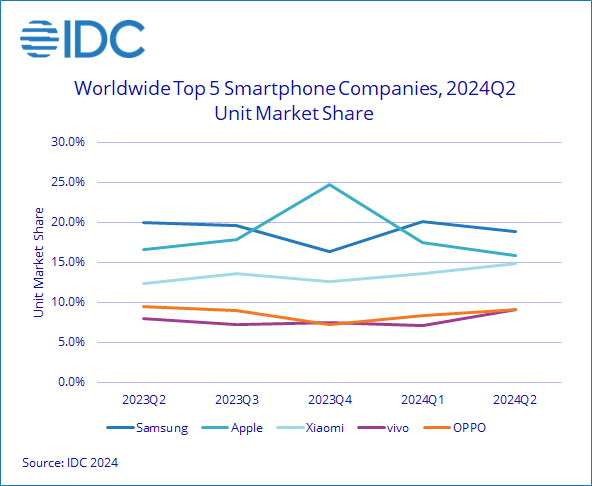
Samsung leads with 18.9% market share, Apple follows at 15.8%
AI features in smartphones expected to capture 19% market share
Premiumisation trend benefits Samsung and Apple with higher selling prices
The global smartphone market is showing signs of recovery, with shipments rising 6.5% in the second quarter of 2024, according to preliminary data from IDC.
This marks the fourth consecutive quarter of growth, led by industry giants Samsung and Apple.
Leaders of the Pack
Worldwide Smartphone Market Grew 6.5% in the Second Quarter of 2024 as Momentum Continues to Build
Samsung maintained its top position with an 18.9% share of shipments, followed closely by Apple at 15.8%.
“While recovery is well under way with the top 5 companies all making year-over-year gains, we are seeing increasing competition amongst the leaders and a polarization of price bands. As Apple and Samsung both continue to push the top of the market and benefit the most from the ongoing premiumization trend, many leading Chinese OEMs are increasing shipments in the low end in an attempt to capture volume share amidst weak demand. As a result, the share of mid-range devices is challenged,” said Nabila Popal, senior research director with IDC’s Worldwide Tracker team.
“The growth in 2Q24 continued to provide some relief to the OEMs, though it’s partly supported by a low comparison base and the overall recovery is still at a soft pace,” said Will Wong, senior research manager for Client Devices at IDC Asia/Pacific. “Some OEMs took a less aggressive move in 2Q24 amid the BOM costs pressure, which prompted the companies to refine the product specs or pricing to ensure profitability. Nevertheless, the second quarter is more like a prelude before more Gen AI smartphones are launched in the second half of the year, which will potentially be the next growth driver after 5G and foldables.”
In response, many leading Chinese manufacturers are increasing shipmentsin the low-end segment to capture volume share amid weak demand in some markets.
While the 6.5% growth in Q2 is encouraging, industry experts caution that a full recovery in demand is yet to materialize.
The market remains challenged in some regions, indicating that consumer confidence and spending patterns are still adjusting post-pandemic.
The increasing focus on AI features and the push towards premium devices suggest that innovation will play a crucial role in driving future growth.
The global smartphone industry’s recovery, while promising, is still a work in progress.
With AI as a potential game-changer and shifting market dynamics, the coming months will be critical in determining the long-term trajectory of the smartphone market.
FAQs
What is the current growth rate of the global smartphone market?
The global smartphone market has grown by 6.5% in the second quarter of 2024, marking the fourth consecutive quarter of growth.
Who are the top players in the smartphone market?
Samsung leads with an 18.9% market share, followed by Apple at 15.8%, and Xiaomi securing the third spot with a 14.8% share.
How is AI influencing the smartphone market?
AI is becoming a key differentiator, with both Samsung and Apple introducing new AI features for their devices. IDC predicts AI-equipped smartphones will capture 19% of the market this year.
What is the premiumisation trend in the smartphone market?
The premiumisation trend refers to the shift towards higher average selling prices for premium devices, benefiting companies like Apple and Samsung, while posing challenges for mid-range devices.
What challenges remain in the smartphone market despite recent growth?
Despite the 6.5% growth in Q2 2024, some regions still face challenges, indicating that consumer confidence and spending patterns are still adjusting post-pandemic.
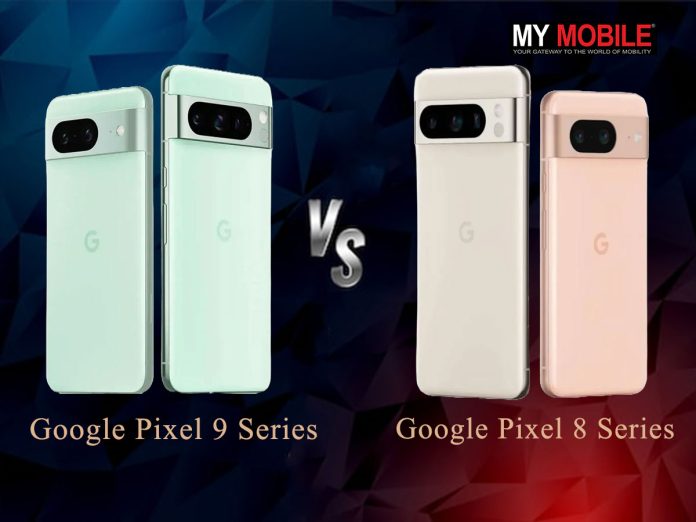
Pixel 9 features a more rounded aesthetic with pronounced curves
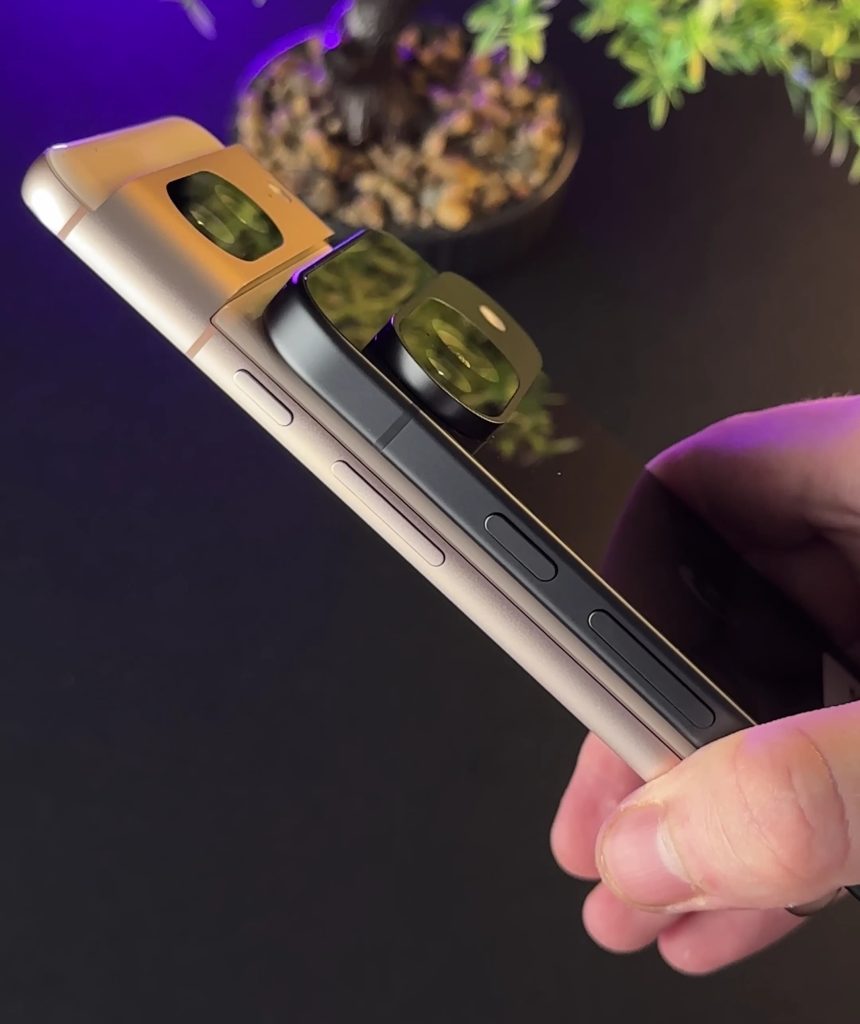
Camera bar design changes create a distinct visual separation
Pricing starts at €899 for the base model with 128GB storage
Three standard models and a foldable option in the Pixel 9 lineup
Google’supcoming Pixel 9 series is poised to shake up the smartphone market with significant design changes and a new pricing strategy.
Design Evolution: Embracing Curves
Google Pixel 9: Design Evolution: Embracing Curves
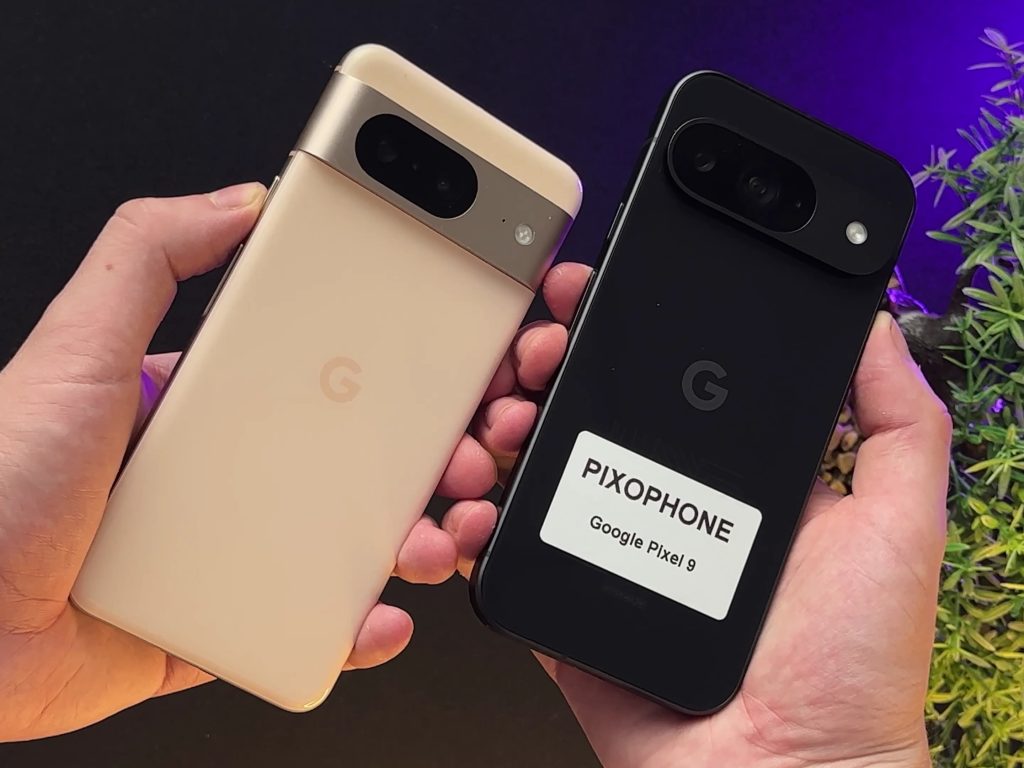
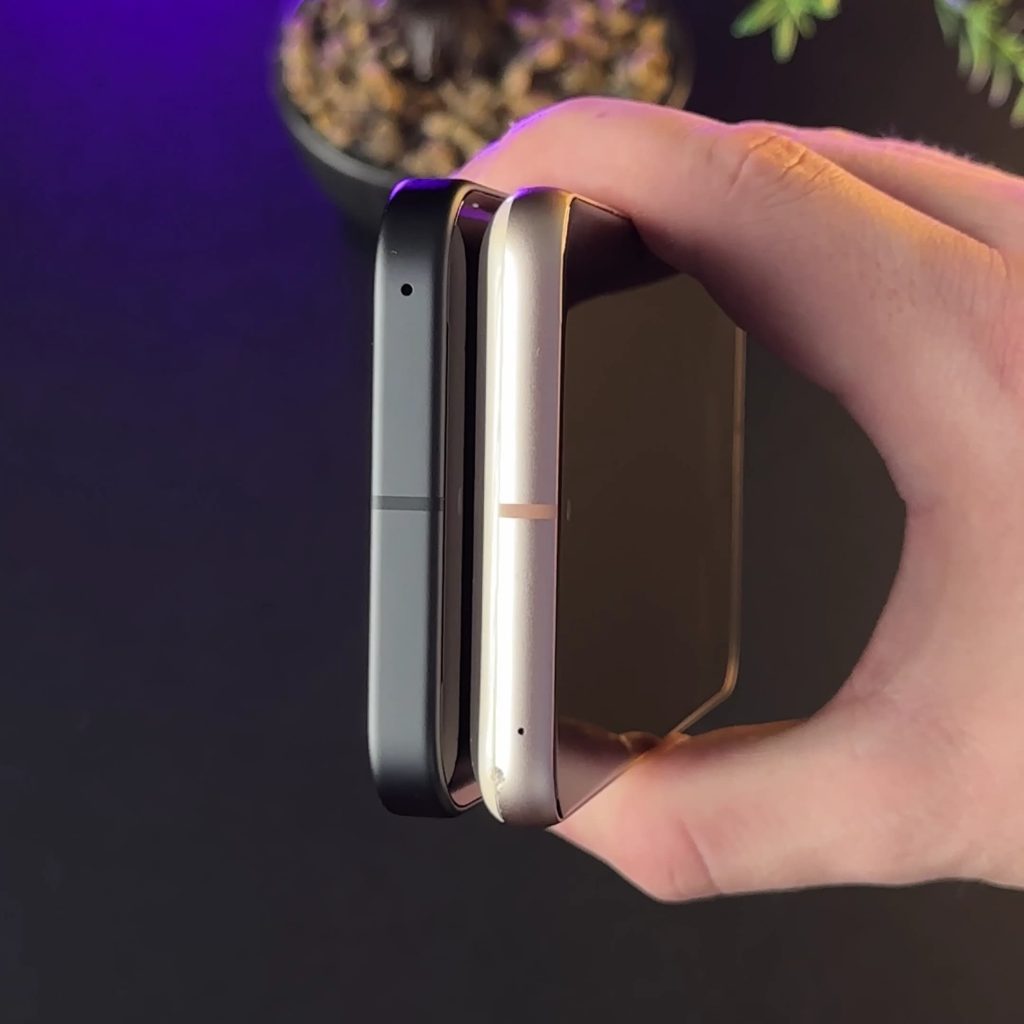
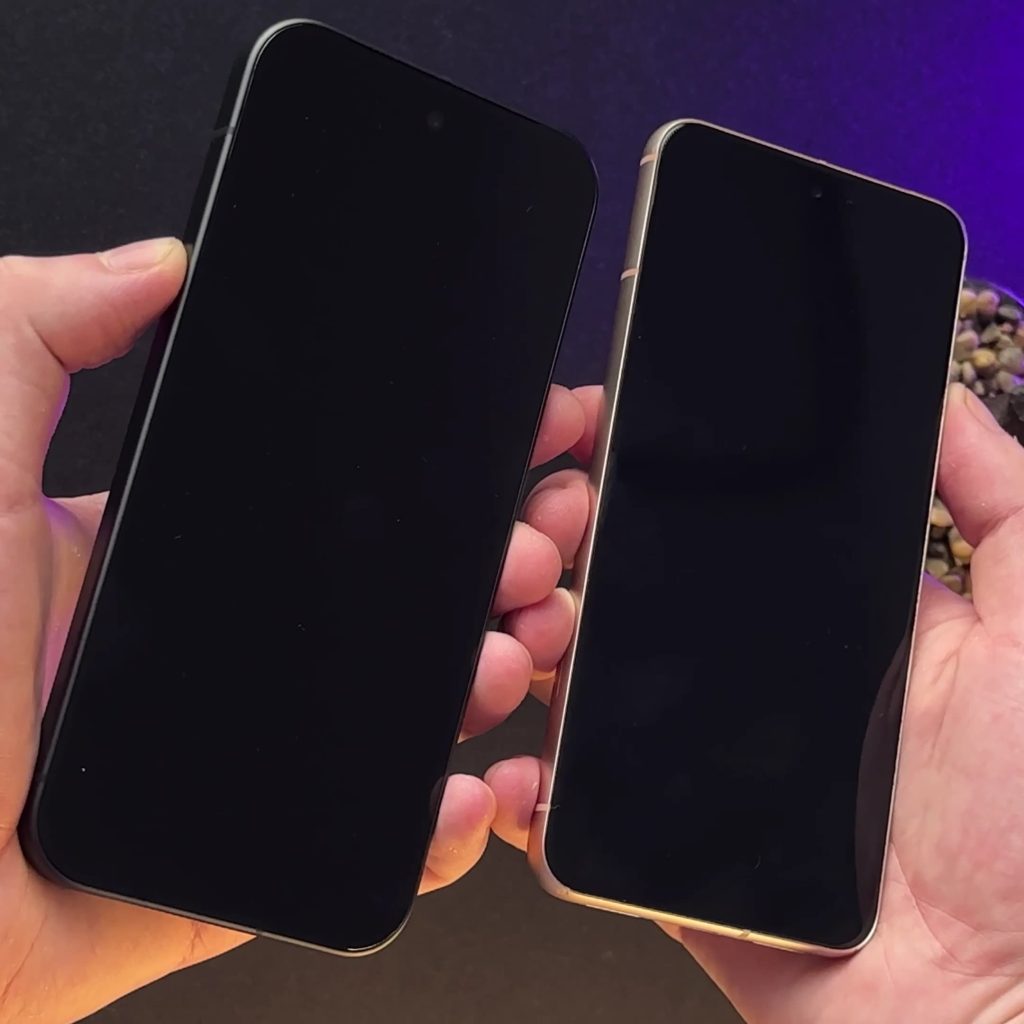
As per 9to5Google, who compared the two phones, the Pixel 9 continues Google’s shift towards a more rounded aesthetic.
Building on the design language introduced with the Pixel 8, the new model features even more curved corners and rails.
This marks a clear departure from the blocky look of thePixel 6and 7 series.
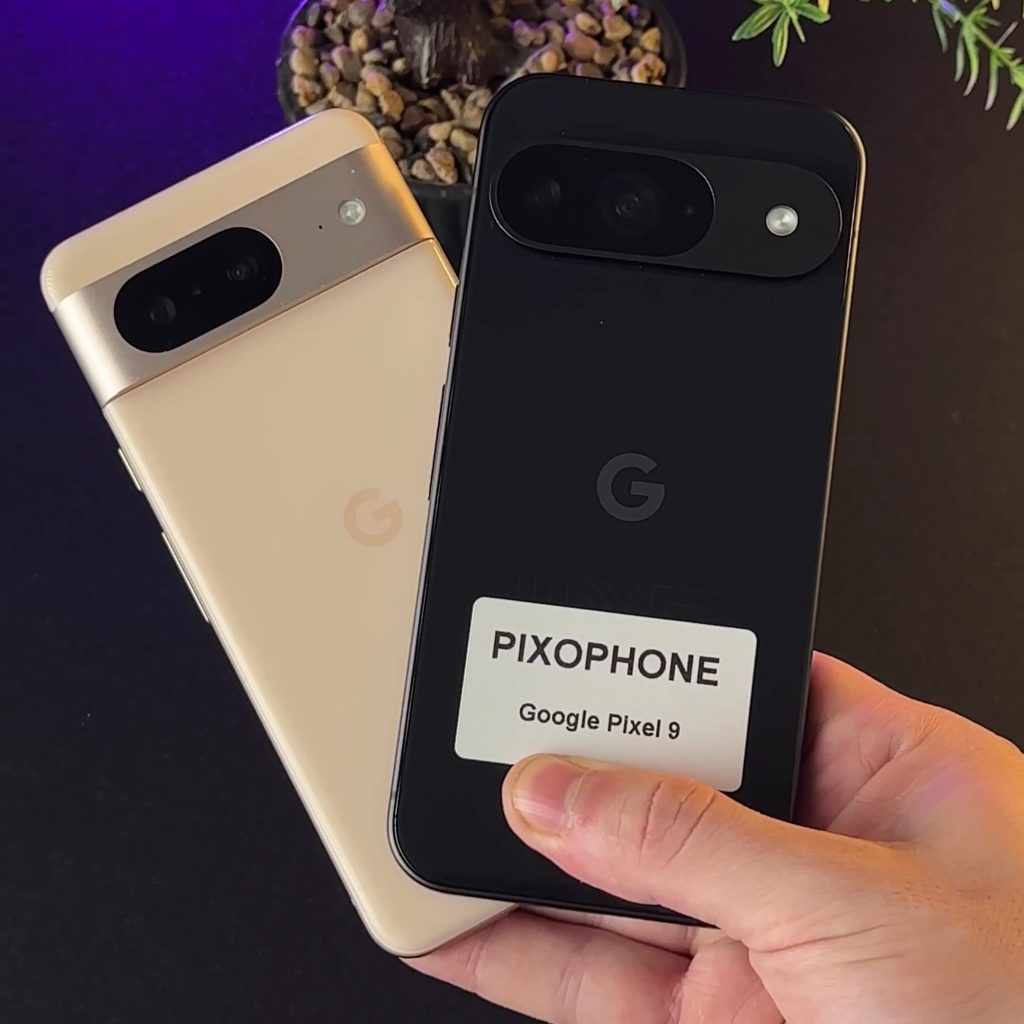
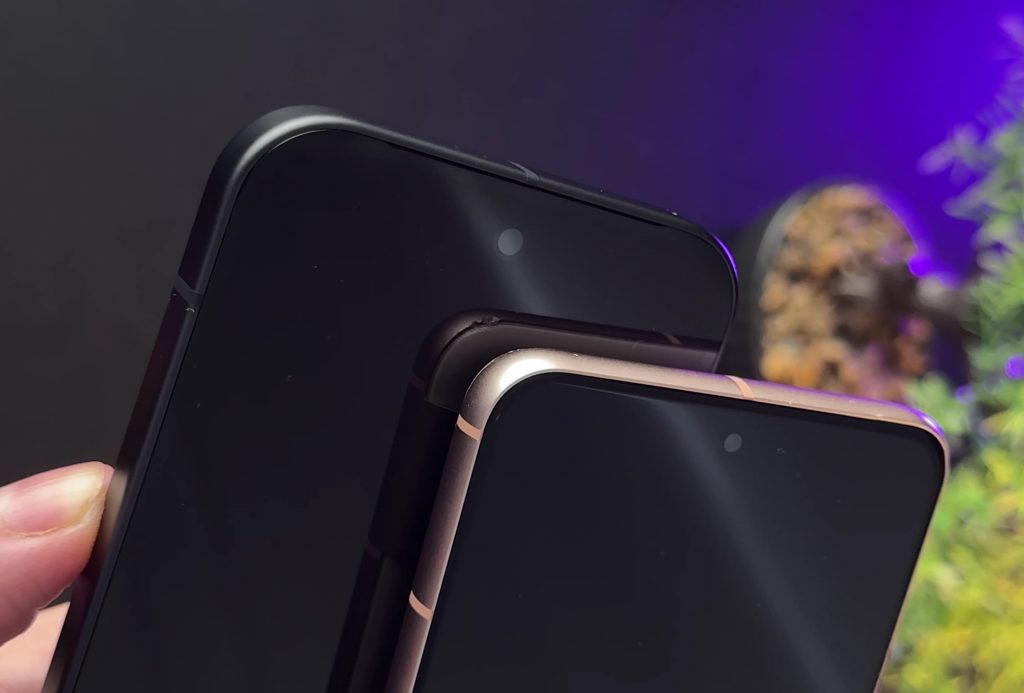
Perhaps the most striking change is the camera bar.
Google Pixel 8: Design Evolution: Embracing Curves
It’s grown larger and now stands out more prominently from the phone’s body.
The edges of the bar no longer slope smoothly into the frame, creating a distinct visual separation.
While this may enhance the phone’s unique look, some users might find it affects the device’s ergonomics.
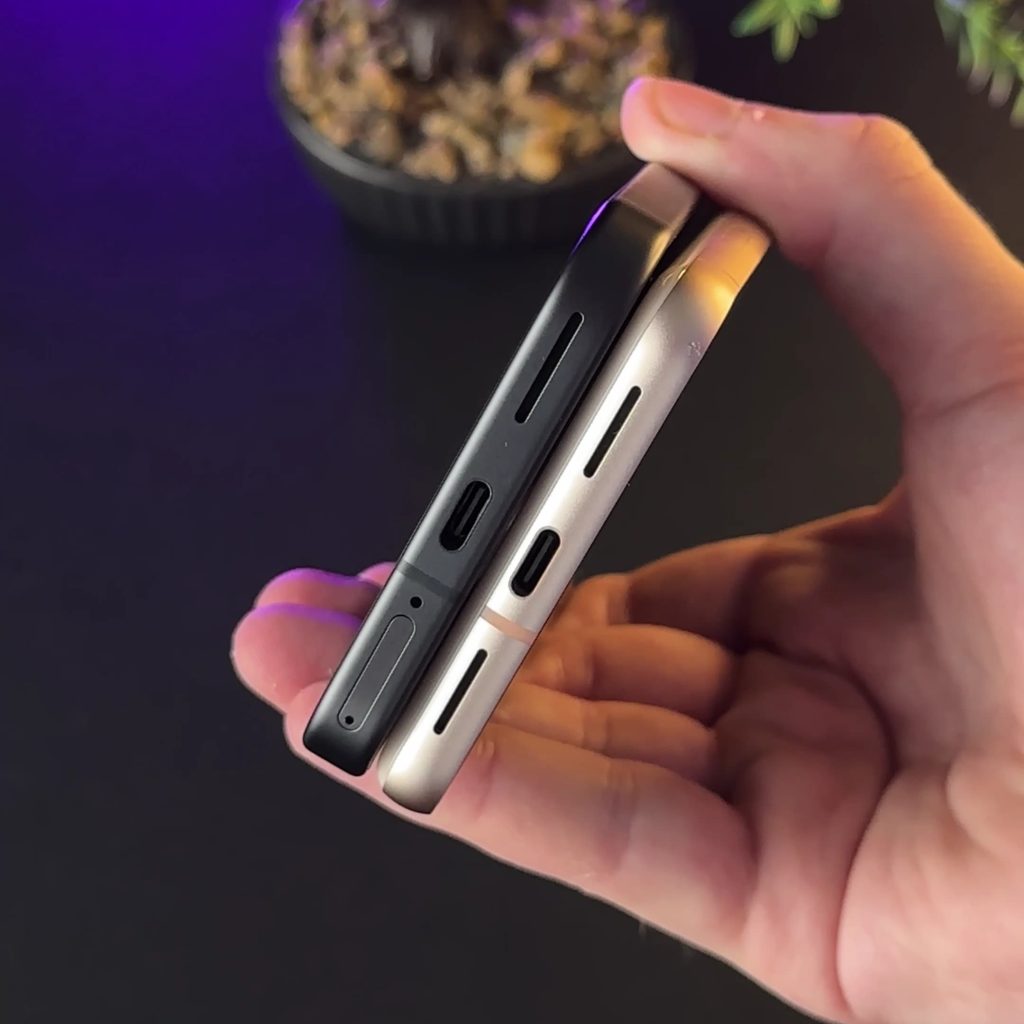
Other notable design tweaks include larger, more visible microphone holes and a repositioned SIM card slot.
These changes contribute to a fresh, modern appearance that sets the Pixel 9 apart from its predecessors.
Pricing Strategy: Aiming Higher
Google Pixel 9: Pricing Strategy: Aiming Higher
Leaked pricing information from Dealabs Magazine suggests Google is positioning the Pixel 9 series in a more premium bracket.
The base Pixel 9 model with 128GB storage is expected to start at €899, a €100 increase from the Pixel 8’s launch price.
The Pixel 9 Pro could begin at €1,099 for the 128GB variant.
Google Pixel 8: Pricing Strategy: Aiming Higher
Interestingly, Google plans to introduce three standard Pixel 9 models alongside a foldable option.
The Pixel 9 Pro will offer high-end specs in a compact form factor, while those seeking a larger premium device can opt for the Pixel 9 Pro XL, starting at €1,199.
A New Era for Pixel
Google Pixel 9: A New Era for Pixel
These changes indicate Google’s ambition to compete more directly with flagship devices from Apple and Samsung.
By combining distinctive design elements with upgraded specs and a higher price point,Google is clearly targeting the premium smartphone market.
Google Pixel 8: A New Era for Pixel
The success of this strategy will depend on how well the Pixel 9’s features and performance justify its increased cost.
Google will need to convince consumers that the Pixel experience is worth the premium price tag in an increasingly competitive market.
Looking Ahead
Pixel 9 features a more rounded aesthetic with pronounced curves
Will the Pixel 9’s unique aesthetic and enhanced capabilities win over new users and justify its higher price point?
Only time will tell.
Google pixel 8 camera bar design changes create a distinct visual separation
But one thing is clear: Google is not content to play it safe.
The Pixel 9 series appears set to challenge our expectations and push the boundaries of what a Google smartphonecan be.
FAQs
What design changes can we expect in the Google Pixel 9?
The Google Pixel 9 introduces a more rounded design with pronounced curves and a larger, more prominent camera bar, moving away from the blocky look of previous models.
How much will the Pixel 9 series cost?
Leaked information suggests the base Pixel 9 model with 128GB storage will start at €899, while the Pixel 9 Pro is expected to begin at €1,099, reflecting a higher price point compared to previous models.
What new features does the Pixel 9 offer?
The Pixel 9 features a redesigned camera bar, larger microphone holes, and a repositioned SIM card slot, enhancing its modern aesthetic and functionality.
Why is Google increasing the price of the Pixel 9 series?
Google’s new pricing strategy aims to position the Pixel 9 series in a more premium market bracket, directly competing with flagship devices from Apple and Samsung.
What models will be available in the Pixel 9 series?
The Pixel 9 series will include three standard models and a foldable option, with the Pixel 9 Pro offering high-end specs in a compact form factor and the Pixel 9 Pro XL as a larger premium device.
Google Pixel 9 Specs
GENERAL
Sim Type
Dual Sim, GSM+GSM
Dual Sim
Yes
Sim Size
Nano+eSim
Device Type
Smartphone
Release Date
September 19, 2024 (Expected)
DESIGN
Dimensions
158.6 x 74.8 x 8.9 mm (6.24 x 2.94 x 0.35 in)
DISPLAY
Type
Color AMOLED Screen (16M Colors)
Touch
Yes
Size
6.26 inches, 1080 x 2400 pixels, 120 Hz
Aspect Ratio
20:9
PPI
~ 420 PPI
Screen to Body Ratio
~ 89.3%
Glass Type
Corning Gorilla Glass Victus Plus
Features
HDR10+, Always-on Display
Notch
Yes, Punch Hole
MEMORY
RAM
8 GB
Storage
256 GB
Storage Type
UFS 4.1
Card Slot
No
CONNECTIVITY
GPRS
Yes
EDGE
Yes
3G
Yes
4G
Yes
5G
Yes
VoLTE
Yes, Dual Stand-By
Vo5G
Yes
Wifi
Yes, with wifi-hotspot
Bluetooth
Yes, v5.3, A2DP, LE, aptX HD
USB
Yes, USB-C v3.1
USB Features
USB Tethering, USB on-the-go, USB Charging
EXTRA
GPS
Yes, with dual-band A-GPS, GLONASS, GALILEO, QZSS, BDS
Magic Eraser18, Motion Mode, Real Tone, Face Unblur, Panorama, Manual white balancing, Locked Folder, Portrait Mode, Portrait Light, Super Res Zoom, Motion autofocus, Frequent Faces, Dual exposure controls, Live HDR+
What is the significance of Apple’s $8 billion sales in India?
Apple’s $8 billion sales in India mark a 33% increase, showcasing the company’s growing presence in a market traditionally dominated by cheaper Chinese brands.
How has Apple adapted its strategy for the Indian market?
Apple has opened two flagship stores in Mumbai and New Delhi, and it plans to produce 25% of all iPhones in India by 2027 to reduce reliance on China.
Why is Apple shifting its production to India?
Apple is shifting production to India to mitigate geopolitical risks associated with reliance on China and to capitalize on India’s growing market potential.
What impact has Apple’s success in India had on its stock performance?
Apple’s success in India has positively impacted its stock performance, with shares rising 20% in 2024 and more gains expected in the future.
What future growth opportunities does Apple see in India?
With India’s booming economy and growing middle class, Apple sees immense potential for further growth, making India a crucial market for its expansion plans.
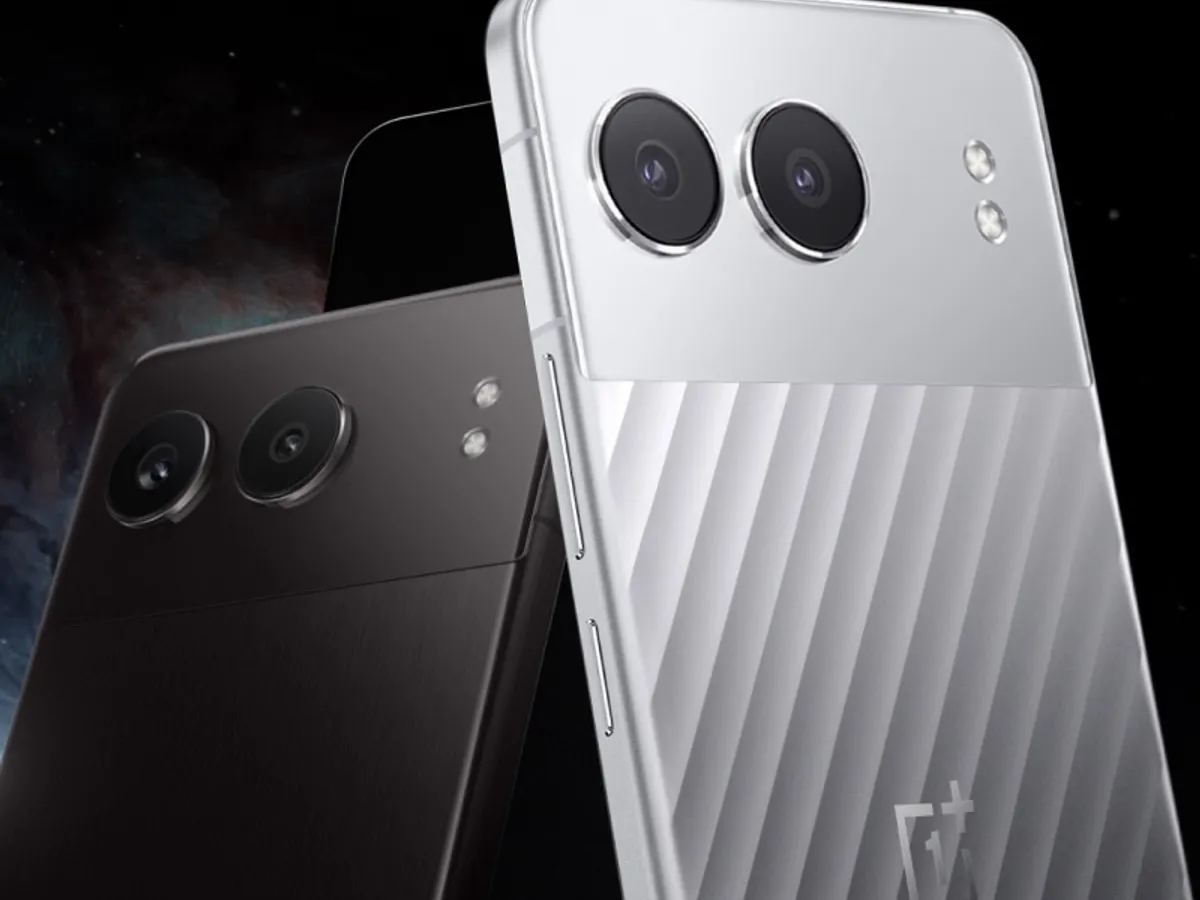
Ahead of the event, the company has revealed exciting AI features for both devices.
AI-Powered Photography
The OnePlus Nord 4 will include several AI tools to enhance photography:
The OnePlus Nord 4 will include several AI tools to enhance photography:
– AI Eraser: Removes unwanted elements from photos – Smart Cutout: Helps isolate subjects in images – AI Clear Face: Adds definition to faces (available at launch) – AI Best Face: Corrects group selfies by opening closed eyes (coming later)
Productivity Boost
Both the Nord 4 and Pad 2 will offer AI-driven productivity features
Both the Nord 4 and Pad 2 will offer AI-driven productivity features:
– AI Speak and AI Summarise: Condense information from websites and apps – AI Writer: Composes long messages from short prompts – Recording Summary: Creates brief summaries with transcripts from long recordings
Performance Optimization
The Nord 4’s Battery Health Engine promises long-term battery life.
OnePlus is integrating AI deeply into OxygenOS 14, the devices’ operating system.
The Trinity Engine optimizes CPU, RAM, and storage performance.
The Nord 4’s Battery Health Engine promises long-term battery life, maintaining over 80% capacity after 1,600 charging cycles.
What to Expect at the Launch
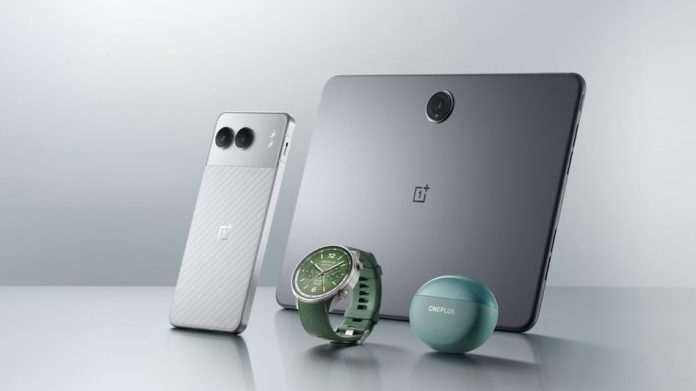
OnePlus Unveils AI Features for Nord 4 Smartphone and Pad 2 Tablet Ahead of Launch
The July 16 event in Milan will reveal more details about the Nord 4 and Pad 2.
OnePlus will also introduce the Nord Buds 3 Pro and Watch 2R.
Fans can watch the live stream on OnePlus’s YouTube channel.
OnePlus’s focus on AI features demonstrates its commitment to enhancing user experience through advanced technology.
As the launch approaches, excitement builds for these AI-powered devices that promise to make daily tasks more efficient and enjoyable.
FAQs
What are the new AI photography features in the OnePlus Nord 4?
The OnePlus Nord 4 will include AI tools such as AI Eraser, Smart Cutout, AI Clear Face, and AI Best Face to enhance photo quality and editing.
What AI productivity features will be available in the Nord 4 and Pad 2?
Both devices will offer AI-driven productivity features like AI Speak, AI Summarise, AI Writer, and Recording Summary to improve efficiency and convenience.
How does the Trinity Engine optimize performance in the Nord 4 and Pad 2?
The Trinity Engine in OxygenOS 14 optimizes CPU, RAM, and storage performance, ensuring smooth and efficient operation.
When and where will the OnePlus Nord 4 and Pad 2 be launched?
The OnePlus Nord 4 and Pad 2 will be launched on July 16 in Milan, with more details to be revealed during the event.
What other products will OnePlus introduce at the July 16 event?
In addition to the Nord 4 and Pad 2, OnePlus will also introduce the Nord Buds 3 Pro and Watch 2R.
It helps users find products, compare items, and get buying advice.
How Rufus Works
Amazon Unveils Rufus: An AI Shopping Assistant for All U.S. Customers
Rufus uses a specialized language model for shopping.
It draws from Amazon’s product catalogue, customer reviews, and web information.
Users can ask questions about products or seek advice on tasks.
For example, you might ask, “What to consider when buying headphones?” or say, “I want to start an indoor garden.”
Amazon introduces Rufus, an AI-powered shopping assistant, to all U.S. customers
The AI can discuss product materials, customer feedback, and even share facts about locations.
It keeps users updated on fashion trends and tech releases.
Rufus also helps track orders and deliveries.
Features and Limitations
Rufus provides personalized product recommendations and buying advice
During testing, Rufus proved helpful for shopping queries.
It avoided problematic answers to non-shopping questions.
However, it sometimes made factual errors.
Its reliance on Amazon’s catalogue may limit recommendation quality.
The assistant draws from Amazon’s catalogue, customer reviews, and web data
To use Rufus, U.S. customers need the latest Amazon Shopping app.
Look for the chat bubble icon with a sparkle in the bottom navigation bar.
Amazon plans to improve Rufus over time.
The company tested it with millions of questions before this wide release.
User Experience and Functionality
Learn what to look for while shopping product categories
Rufus aims to enhance the shopping experienceby providing personalized assistance.
It can handle a wide range of queries, from specific product questions to broader shopping advice.
For instance, when asked about a pool umbrella for Florida, Rufus shared facts about Florida’s weather and humidity.
The chatbot also encourages user engagement by suggesting related questions.
Rufus is now being made available to select customers when they next update their Amazon Shopping app
This feature helps customers explore products more thoroughly.
Users can easily transition from asking about a product’s material to learning about customer opinions.
Rufus goes beyond basic product information.
It can help users stay informed about the latest models of products or current fashion trends.
This feature is particularly useful for tech-savvy shoppers or those interested in staying up-to-date with style.
Future Implications
Customers can dismiss Rufus to return to their traditional search results at any time
The introduction of Rufus marks a significant step in Amazon’s AI strategy.
As e-commerce becomes increasingly competitive, AI assistants like Rufus could become a key differentiator.
They offer a more interactive and personalized shopping experience, potentially increasing customer satisfaction and loyalty.
However, the success of Rufus will depend on its ability to provide accurate and helpful information consistently.
Amazon’s commitment to improving the AI over time suggests they’re aware of this challenge and are prepared to refine the technology based on user feedback and interactions.
As AI shopping assistants evolve, Rufus represents Amazon’s bid to enhance the online shopping experience.
It could set a new standard for how consumers interact with e-commerce platforms, potentially influencing the broader retail industry.
FAQs
What is Rufus and how does it work?
Rufus is an AI-powered shopping assistant in the Amazon mobile app that helps users find products, compare items, and get buying advice by utilizing Amazon’s catalogue, customer reviews, and web information.
How can I access Rufus on Amazon?
U.S. customers can access Rufus by updating to the latest version of the Amazon Shopping app and looking for the chat bubble icon with a sparkle in the bottom navigation bar.
What types of queries can Rufus handle?
Rufus can handle a wide range of shopping-related queries, from specific product questions to broader shopping advice, and it provides information on product materials, customer feedback, and fashion trends.
What are the limitations of Rufus?
While Rufus is helpful for shopping queries, it sometimes makes factual errors and its recommendations are limited to Amazon’s product catalogue.
How will Amazon improve Rufus over time?
Amazon plans to refine Rufus based on user feedback and interactions, continuously enhancing its accuracy and helpfulness to improve the overall shopping experience.
EU scrutinizes X’s blue tick verification system for potential user deception
Concerns over X’s transparency in advertising and data sharing
Musk and Altman’s public feud adds tension to the tech landscape
X faces potential fines and operational changes in the EU
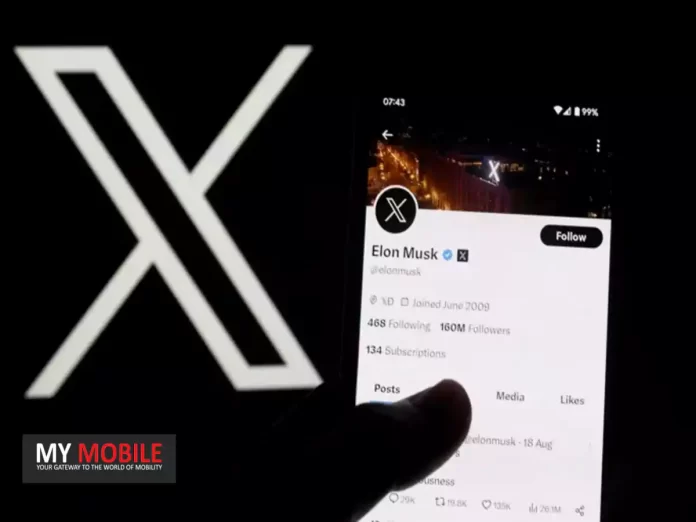
The European Union has launched an investigation into Elon Musk’s social media platform X, formerly Twitter, over potential violations of its online content rules.
EU Investigates X’s Blue Tick System Amid Musk and Altman’s Tech Feud
The EU’s tech regulator, operating under the Digital Services Act (DSA), has accused X of potentially misleading users with its “verified” blue tick accounts.
The main issues include:
Deceptive verification: Anyone can pay for a blue tick, potentially confusing users about account authenticity.
Lack of transparency: X’s advertising practices and data sharing for research are under scrutiny.
Concerns over X’s transparency in advertising and data sharing
EU Commissioner Thierry Breton stated, “Back in the day, BlueChecks used to mean trustworthy sources of information. Now with X, our preliminary view is that they deceive users and infringe the DSA. We also consider that X’s ads repository and conditions for data access by researchers are not in line with the DSA transparency requirements. X has now the right of defence — but if our view is confirmed we will impose fines and require significant changes.”
The Commission added, “There is evidence of motivated malicious actors abusing the ‘verified account’ to deceive users.”
Margrethe Vestager, Executive Vice-President for a Europe Fit for the Digital Age also issued a statement saying, “Today we issue for the first time preliminary findings under the Digital Services Act. In our view, X does not comply with the DSA in key transparency areas, by using dark patterns and thus misleading users, by failing to provide an adequate ad repository, and by blocking access to data for researchers. The DSA has transparency at its very core, and we are determined to ensure that all platforms, including X, comply with EU legislation.”
Musk’s Response and Potential Consequences
In our view @X doesn’t comply with the DSA in key transparency areas. It misleads users, fails to provide adequate ad repository and blocks access to data for researchers. It’s the first time we issue preliminary findings under the Digital Services Act. 👇
— Margrethe Vestager (@vestager) July 12, 2024
Musk reacted strongly to the EU’s accusations, calling the DSA “misinformation” and “censored speech.”
If found in breach of the DSA, X could face fines up to 6% of its global annual turnover and be forced to change its operations in the EU.
The Commission has given X the opportunity to defend itself or propose changes to comply with the regulations.
Musk vs. Altman: A Rivalry Reshaping Tech’s Landscape
Musk and Altman’s public feud adds tension to the tech landscape
The tech world’s latest soap opera features two of its most prominent figures: Elon Musk and Sam Altman.
Their falling out, once unthinkable, now plays out publicly on the very platform Musk acquired for a cool $44 billion.
At the heart of this feud lies OpenAI, the artificial intelligence company Musk co-founded but later departed.
CEO @OpenAI driving one of the most expensive cars
How did open AI become a for profit business when it was a non profit ? pic.twitter.com/5gfjKoGUQh
— Tesla Owners Silicon Valley (@teslaownersSV) July 10, 2024
As OpenAI pivoted from its non-profit roots to a for-profit model, securing hefty investments from Microsoft, Musk’s disillusionment grew palpable.
He now portrays himself as the jilted visionary, claiming ownership of OpenAI’s very name and existence.
Musk’s latest jabs at Altman showcase his penchant for public spectacle.
When footage of Altman cruising in a $2 million Koenigsegg Regera hypercar surfaced, Musk couldn’t resist.
He chuckled along with X users who sarcastically quipped about starting non-profits, a not-so-subtle dig at OpenAI’s transformation.
CEO @OpenAI driving one of the most expensive cars
How did open AI become a for profit business when it was a non profit ? pic.twitter.com/5gfjKoGUQh
— Tesla Owners Silicon Valley (@teslaownersSV) July 10, 2024
This spat goes beyond mere personal animosity.
Musk, ever the provocateur, positions himself as a champion of “open” AI development, despite his own ventures in the field.
Altman, meanwhile, navigates the complex reality of scaling AI research within a capitalist framework.
Elon Musk reacts to video of ChatGPT-maker OpenAI CEO Sam Altman driving this hypercar
Their rivalry entertains but also shapes public discourse on AI ethics, corporate responsibility, and the future of innovation.
Let’s see who comes out on top.
FAQs
What is the EU investigating about X’s blue tick system?
The EU is investigating whether X’s blue tick verification system misleads users by allowing anyone to purchase verification, potentially confusing account authenticity.
Why is the EU concerned about X’s advertising and data sharing?
The EU believes X’s advertising practices and data sharing for research may not meet the transparency requirements set by the Digital Services Act (DSA).
How has Elon Musk responded to the EU’s accusations?
Elon Musk has criticized the EU’s accusations, calling the DSA “misinformation” and defending X’s approach as democratized.
What are the potential consequences for X if found in breach of the DSA?
X could face fines up to 6% of its global annual turnover and be required to make significant changes to its operations in the EU.
What is the nature of the feud between Elon Musk and Sam Altman?
The feud between Musk and Altman centers around OpenAI, which Musk co-founded and later left.
Musk criticizes OpenAI’s shift from non-profit to for-profit, while Altman focuses on scaling AI research.
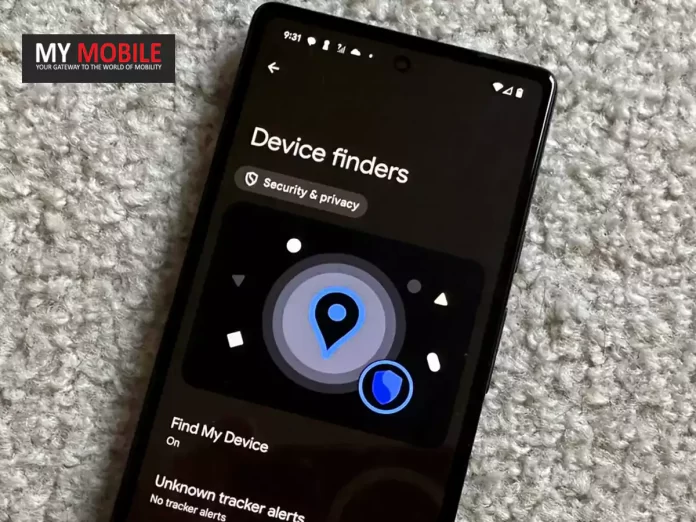
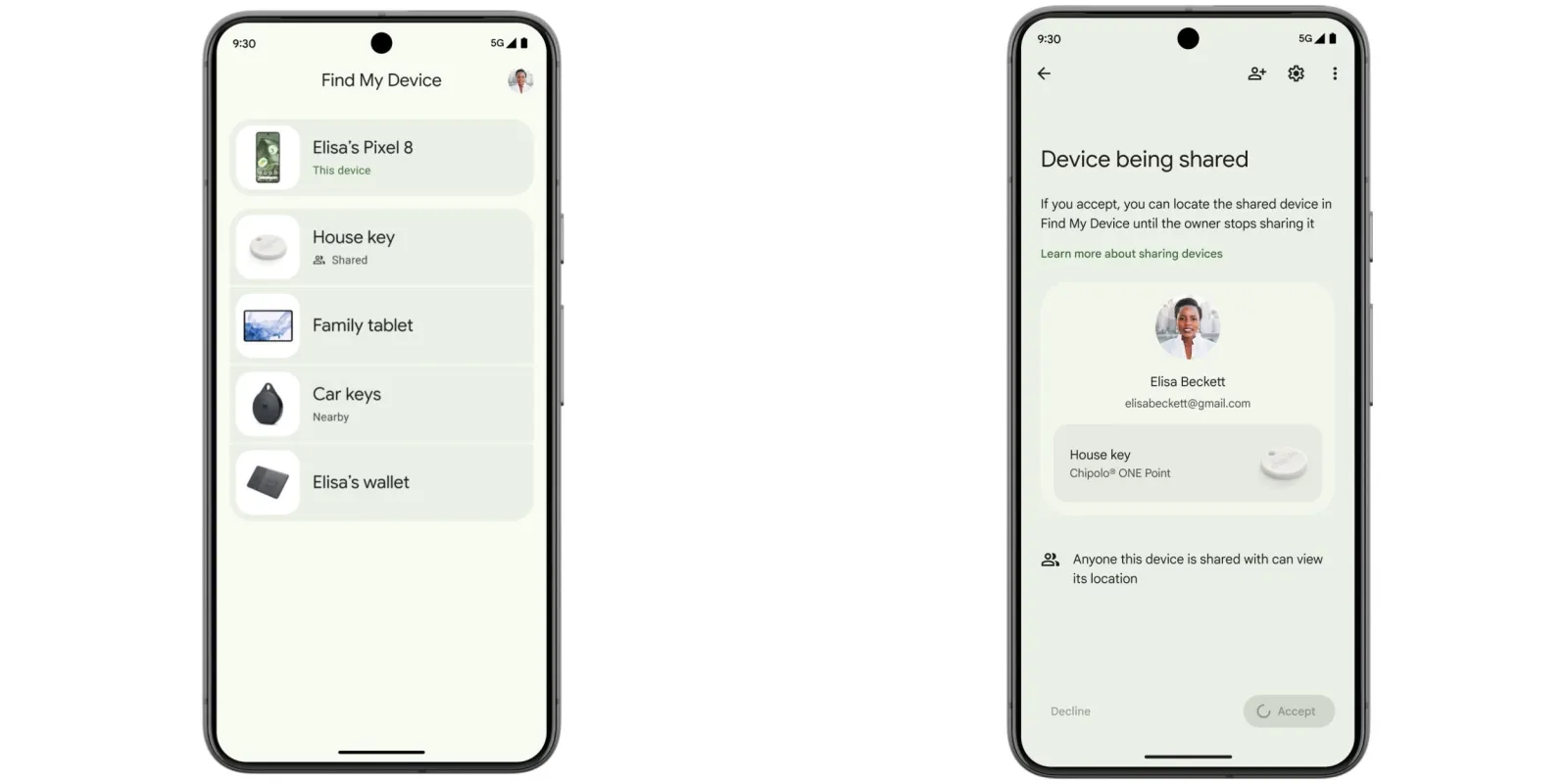
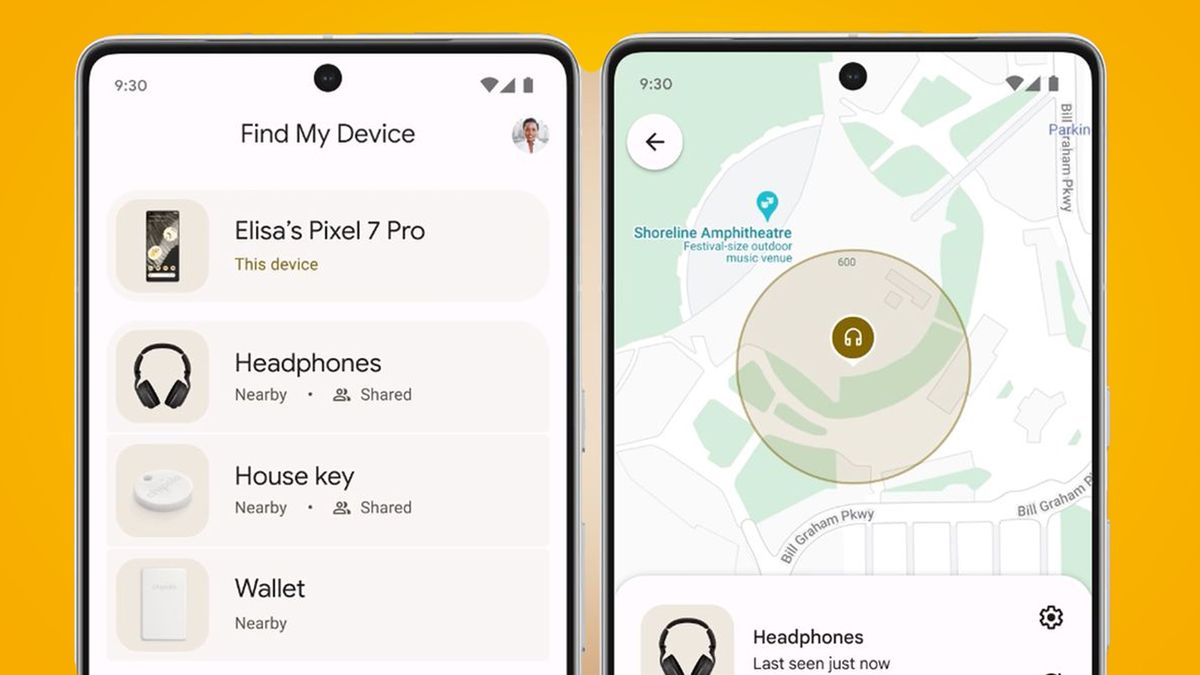
Many users have reported that the network simply doesn’t work as expected, especially in less populated areas.
Trackers from partners like Pebblebee and Chipolo often fail to report their locations, rendering them ineffective for their primary purpose.
The Functionality Trade-off
Google’s network faces criticism despite prioritizing user data control
Google’s decision to prioritize privacy over functionality has led to several issues:
Limited effectiveness: The network’s performance in “low-traffic” areas is significantly compromised, making it less reliable than competitors.
User confusion: The lack of clarity on what constitutes a “high-traffic” area leaves many users uncertain about when and where their trackers will work.
Partner challenges: Companies offering trackers for the network may face negative reviews and high return rates due to perceived poor performance.
Google defends its approach, calling it a “key difference” from other networks.
They encourage users to manually change settings for better performance.
However, this solution puts the onus on users and doesn’t address the core functionality issues.
The Road Ahead
Future improvements promised but may compromise current privacy stance
Google finds itself in a tricky position.
Reversing course on privacy settings could damage their reputation, but maintaining the status quo might render the network obsolete before it truly takes off.
The company promises future improvements, but it’s unclear how they can significantly enhance performance without compromising their privacy-first stance.
This situation highlights the delicate balance between privacy and functionality in modern tech products.
As users and industry observers, we’re left to ponder: Did Google make the right choice in prioritizing privacy so heavily?
Will the Find My Device network evolve to meet user expectations, or will it remain a well-intentioned but flawed product?
Only time will tell how this experiment in privacy-focused technology will play out.
For now, Android usershoping for an AirTag alternative may need to temper their expectations or look elsewhere for reliable item tracking.
FAQs
What is Google’s Find My Device network?
Google’s Find My Device network is a tracking system launched to help Android users locate their lost items.
It prioritizes user privacy by only operating in high-traffic areas by default.
Why are users facing issues with the Find My Device network?
Users report that the network fails to work effectively in less populated areas due to its privacy-first design, leading to limited functionality outside high-traffic zones.
How does Google’s privacy-focused approach differ from competitors like Apple and Samsung?
Unlike Apple and Samsung, Google’s network prioritizes user privacy by limiting tracking to high-traffic areas, giving users more control over their data but at the cost of reduced functionality in low-traffic regions.
What challenges do companies partnering with Google for item trackers face?
Companies like Pebblebee and Chipolo face negative reviews and high return rates due to the perceived poor performance of their trackers on Google’s network, especially in less populated areas.
Will Google make changes to improve the Find My Device network?
Google has promised future improvements to enhance the network’s performance, but it remains unclear how they will balance these changes with their strong privacy-first stance.
Immersive View for Routes: Get a 3D preview of your journey with real-time data
Photo-First Search Results: Discover new places with visual search capabilities
Lens in Maps: Use augmented reality for real-time navigation and surroundings info
Enhanced Driving Navigation: Improved lane guidance and HOV lane support for safer trips
Google Maps, the go-to navigation app for millions worldwide, has just unleashed a game-changing update.
Packed with cutting-edge AI technology, these new features are set to transform how we navigate our world.
From immersive 3D views to smarter search capabilities, Google is pushing the boundaries of what’s possible in digital mapping.
Let’s dive into the five groundbreaking features that are making waves in the navigation world:
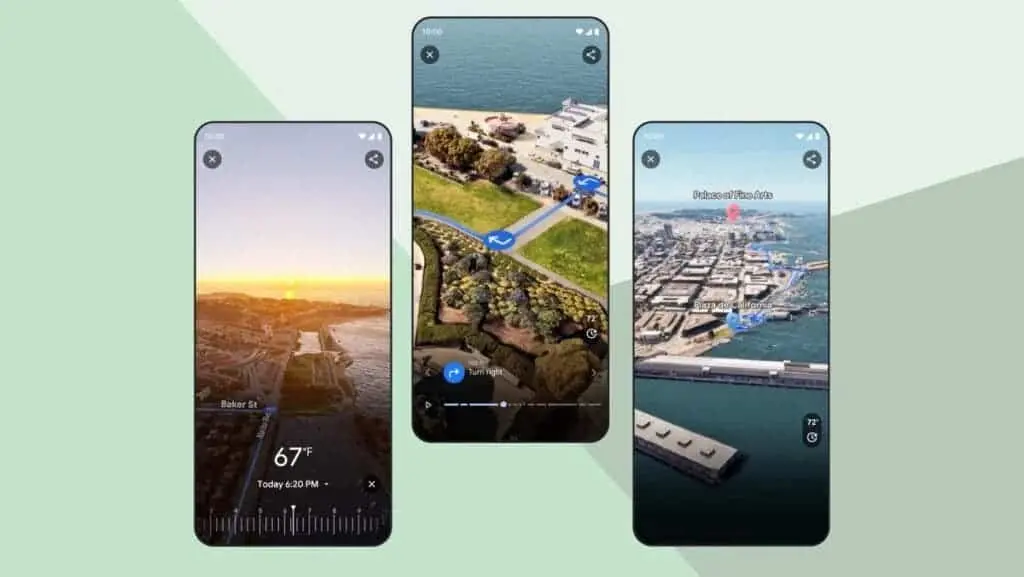
Immersive View for Routes: A Virtual Preview of Your Journey
Immersive View for Routes: Get a 3D preview of your journey with real-time data
Imagine being able to fly over your route before you even step out the door.
That’s exactly what Immersive View for Routes offers.
This feature combines Street View imagery, aerial photos, and real-time data to create a lifelike 3D preview of your journey.
Whether you’re navigating the bustling streets of New Yorkor the winding canals of Venice, you can now get a bird’s-eye view of your entire route.
The system even simulates weather conditions and traffic patterns based on historical data, giving you a realistic expectation of what lies ahead.
This feature is currently rolling out in 15 major cities, including London, Paris, Tokyo, and San Francisco.
It’s not just a visual treat – it’s a powerful tool for planning and decision-making, allowing users to familiarize themselves with complex routes before embarking on their journey.
Photo-First Search Results: A Visual Feast for Explorers
The system even simulates weather conditions and traffic patterns
Google Maps’ search function has received a major upgrade.
Now, when you search for specific places or experiences, the app delivers photo-first results drawn from billions of user-shared images.
Looking for a café with intricate latte art?
Or perhaps a scenic viewpoint for sunset photography?
Simply type in your query, and Google Maps will present you with a gallery of relevant, eye-catching photos.
This visual approach to search makes it easier than ever to discover new places and experiences that match your interests.
Lens in Maps: Augmented Reality at Your Fingertips
Lens in Maps: Use augmented reality for real-time navigation and surroundings info
The app’s AR capabilities have been enhanced with the introduction of ‘Lens in Maps’ (formerly known as ‘Search with Live View’).
This feature turns your phone’s camera into a powerful tool for understanding your surroundings.
By tapping the ‘Lens’ icon in the search bar,you can access a live camera view that labels nearby buildings, landmarks, restaurants, and more.
It’s like having a knowledgeable local guide in your pocket, helping you identify and navigate your surroundings with ease.
This feature is particularly useful for travelers in unfamiliar cities, or for anyone looking to quickly orient themselves in a new area.
Enhanced Driving Navigation: Safer and Smoother Journeys
Enhanced Driving Navigation: Improved lane guidance and HOV lane support for safer trips
The update includes improved lane guidance, more accurate building representations, and the addition of High-Occupancy Vehicle (HOV) lanes in applicable areas.
These enhancements are designed to help drivers navigate complex intersections and busy highways with greater confidence.
By providing a more accurate representation of the road ahead, Google Maps aims to reduce driver stress and improve overall road safety.
While the exact rollout timeline is still unclear, these improvements are expected to become available in 12 countries, including the United States, Canada, France, and Germany, in the coming months.
Smarter EV Charging Information: A Boon for Electric Vehicle Owners
This feature addresses a common pain point for EV drivers
Electric vehicle (EV)owners will find the latest Google Maps update particularly useful.
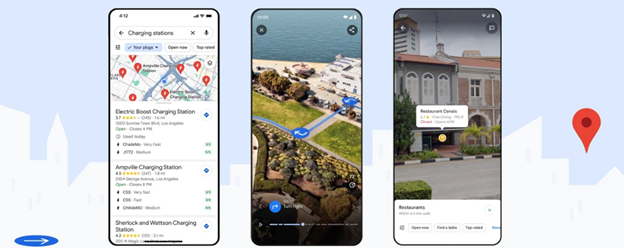
The app now provides more comprehensive information about charging stations, including compatibility with specific vehicle models, charging speeds, and recent usage data.
This feature addresses a common pain point for EV drivers – the uncertainty of finding a functional and compatible charging station.
With reports suggesting that up to 25% of EV chargers in the US may be out of order at any given time, this update could significantly reduce the stress of planning longer journeys in electric vehicles.
A New Era of Intelligent Navigation
Google will roll out even more updates in the coming months
These five AI-powered features represent a significant leap forward in navigation technology.
By harnessing the power of artificial intelligence, Google Maps is not just showing us the way – it’s providing a richer, more interactive, and more informative journey experience.
From virtual 3D previews of our routes to AR-enhanced exploration of our surroundings, these updates make navigation more intuitive and user-friendly than ever before.
They cater to a wide range of users, from pedestrians exploring new cities to drivers navigating complex highways, and even EV owners planning their next charging stop.
FAQs
What is the Immersive View for Routes feature in Google Maps?
Immersive View for Routes provides a 3D preview of your journey, combining Street View imagery, aerial photos, and real-time data to help you plan your route effectively.
How does the Photo-First Search Results feature work in Google Maps?
When you search for places or experiences, Google Maps now shows photo-first results from user-shared images, making it easier to find locations that match your interests visually.
What is Lens in Maps, and how can it help me?
Lens in Maps uses augmented reality to label nearby buildings, landmarks, restaurants, and more through your phone’s camera, making it easier to navigate and understand your surroundings.
What improvements does the Enhanced Driving Navigation feature bring?
Enhanced Driving Navigation offers better lane guidance, accurate building representations, and HOV lane support, aiming to reduce driver stress and improve road safety.
How does Google Maps assist electric vehicle owners with charging information?
Google Maps now provides detailed information about EV charging stations, including compatibility with specific vehicle models, charging speeds, and recent usage data, helping EV owners find reliable charging points.
Affordable 5G smartphones with the capable Dimensity 6300 processor
Large 6.56-inch display with a smooth 90Hz refresh rate
Generous 5000mAh battery for all-day usage
Latest Android 14-based OriginOS 14 for up-to-date features and security
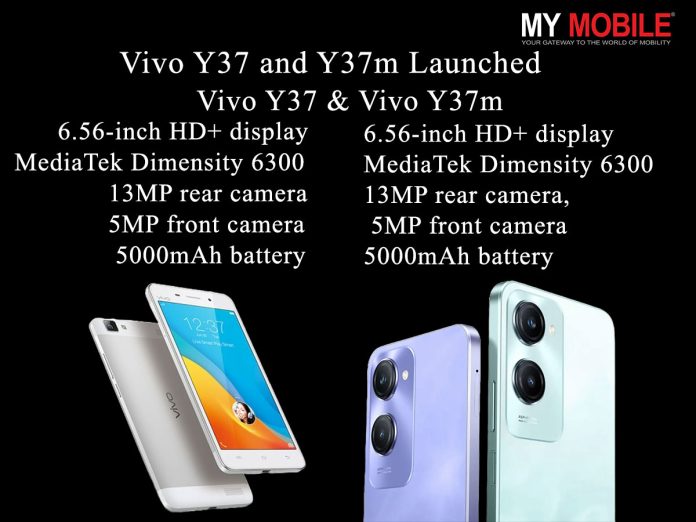
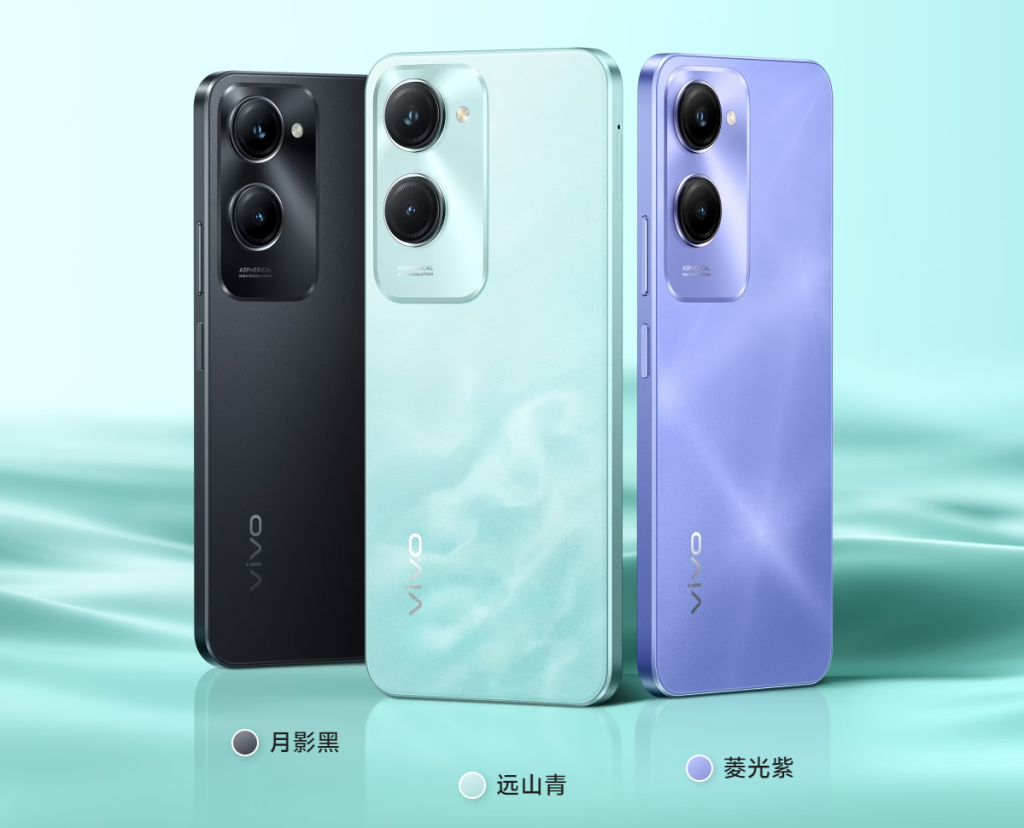
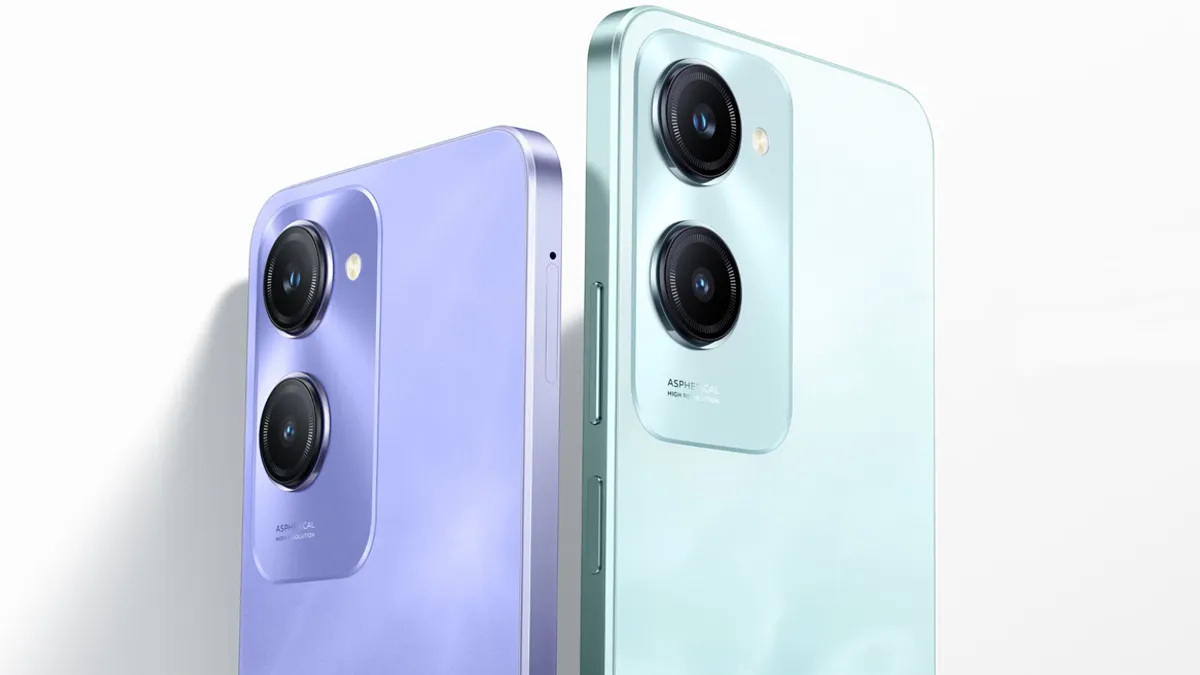
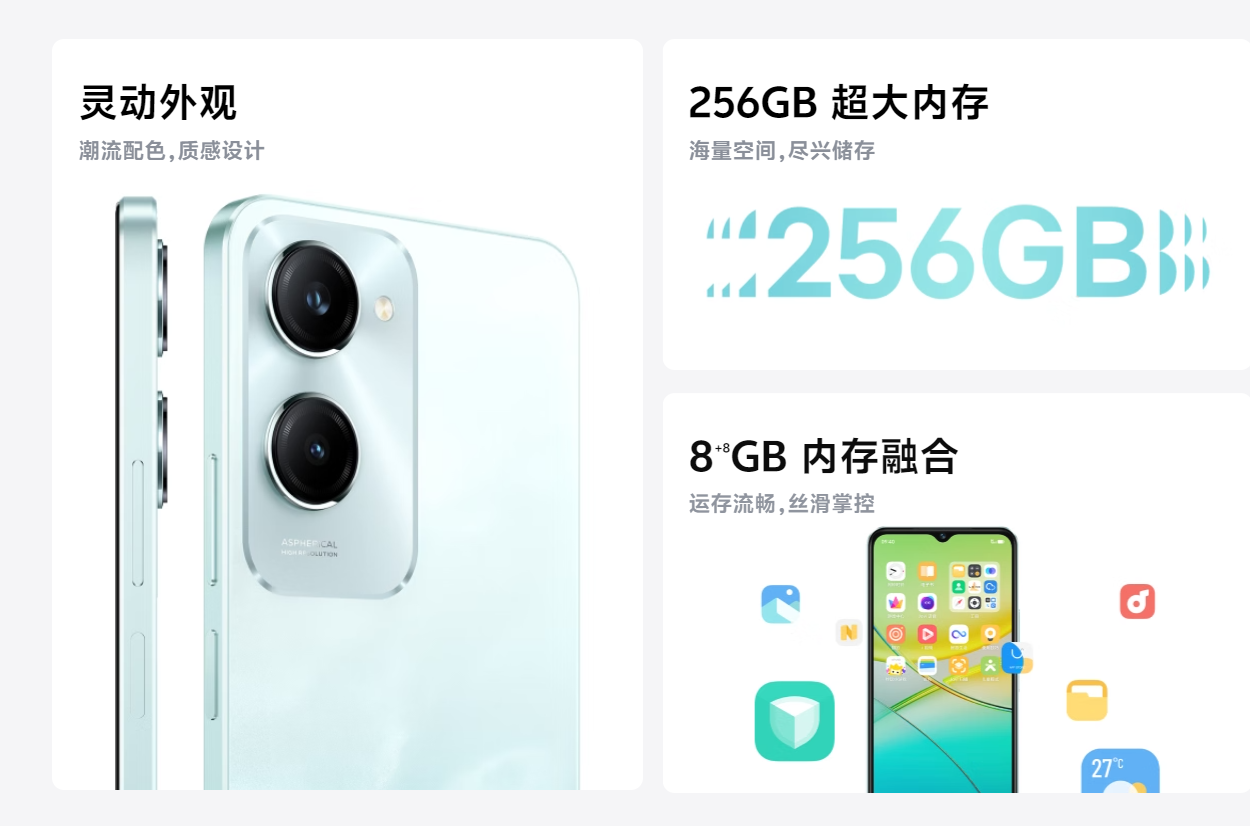
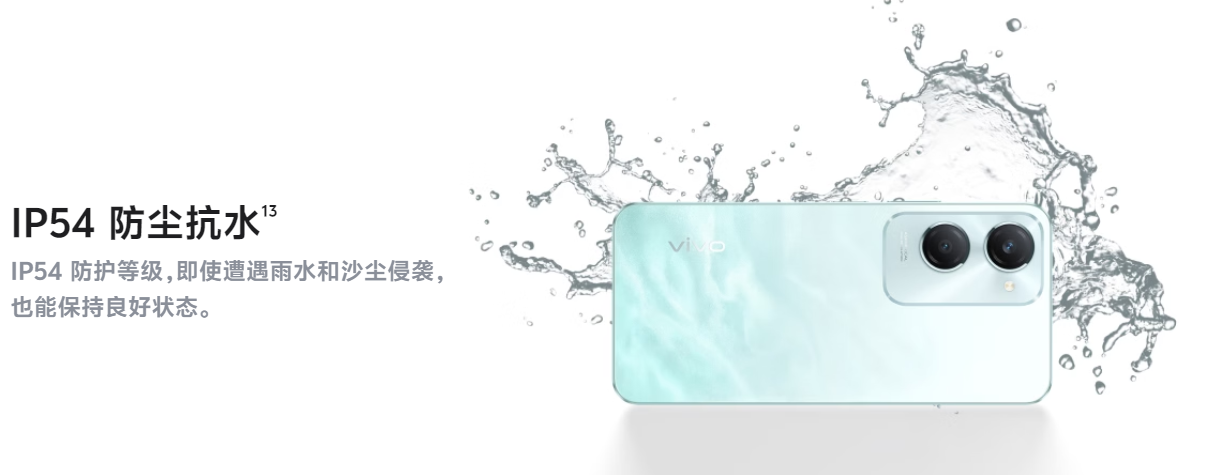
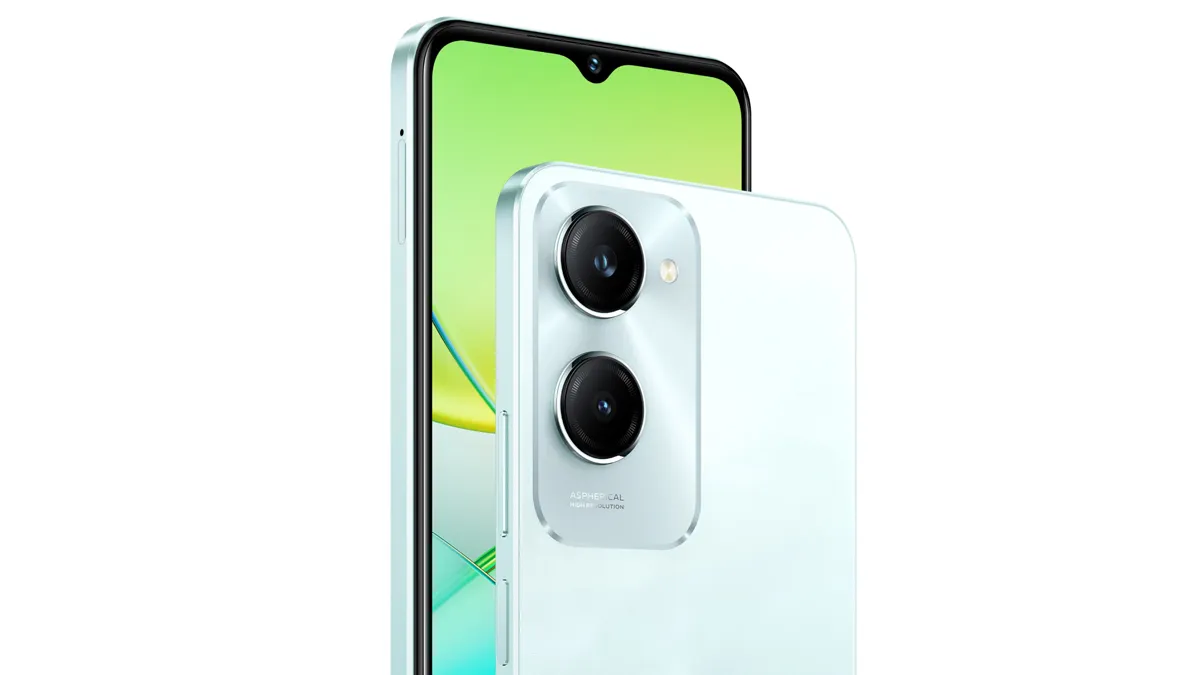
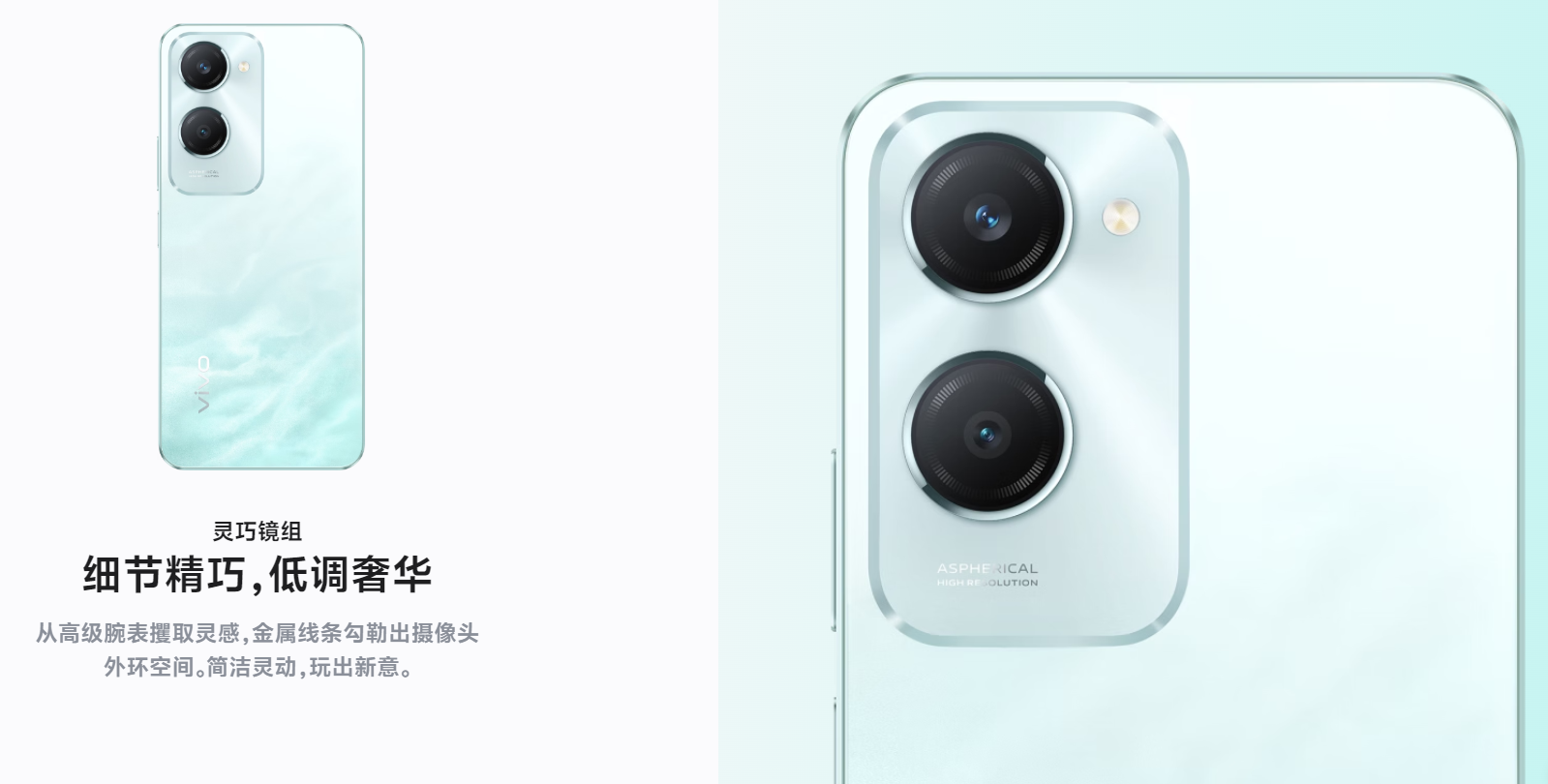
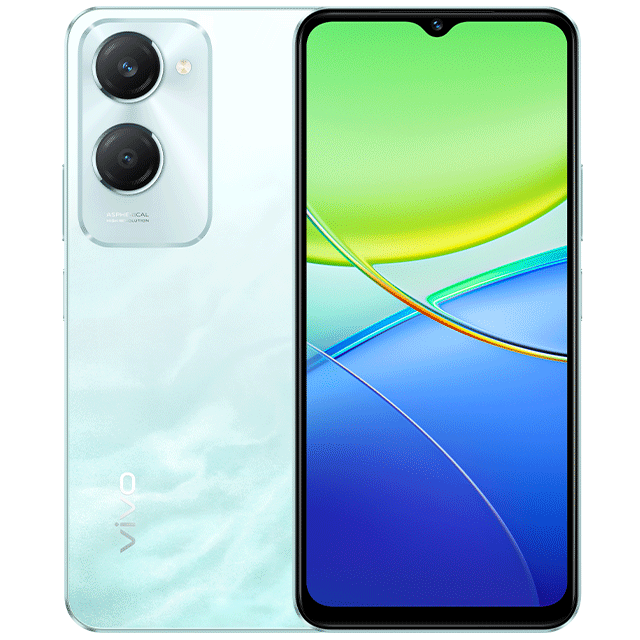
Vivohas expanded its mid-range lineup with the launch of two new smartphones in China – the Y37 and Y37m.
These devices aim to bring 5G connectivity and robust performance to budget-conscious consumers, offering a compelling package of features at competitive price points.
Pricing and Availability
Vivo Y37
Vivo has officially launched its latest smartphones, the Y37 and Y37m, in China
– 4GB+128GB: 1,199 CNY (~$165)
– 6GB+128GB: 1,499 CNY (~$206)
– 8GB+128GB: 1,799 CNY (~$248)
– 8GB+256GB: 1,999 CNY (~$275)
– 12GB+256GB: 2,099 CNY (~$289)
Vivo Y37m
Both devices are available for pre-order in China
– 4GB+128GB: 999 CNY (~$138)
– 6GB+128GB: 1,499 CNY (~$206)
– 8GB+256GB: 1,999 CNY (~$275)
Both devices are available for pre-order in China, with sales expected to begin soon.
Model
RAM + Storage
Price (CNY)
Price (USD)
Vivo Y37
4GB + 128GB
1,199
~$165
Vivo Y37
6GB + 128GB
1,499
~$206
Vivo Y37
8GB + 128GB
1,799
~$248
Vivo Y37
8GB + 256GB
1,999
~$275
Vivo Y37
12GB + 256GB
2,099
~$289
Vivo Y37m
4GB + 128GB
999
~$138
Vivo Y37m
6GB + 128GB
1,499
~$206
Vivo Y37m
8GB + 256GB
1,999
~$275
Key Specifications
Vivo Y37
Vivo Y37 and Y37m Launched in China with Affordable 5G and Powerful Features
6.56-inch HD+ display with 90Hz refresh rate
MediaTek Dimensity 6300 processor
Up to 12GB RAM and 256GB storage
13MP rear camera, 5MP front camera
5000mAh battery with 15W charging
Side-mounted fingerprint sensor
OriginOS 14 based on Android 14
Vivo Y37m
The 90Hz refresh rate provides a fluid user experience,
6.56-inch HD+ display with 90Hz refresh rate
MediaTek Dimensity 6300 processor
Up to 8GB RAM and 256GB storage
13MP rear camera, 5MP front camera
5000mAh battery with 15W charging
Side-mounted fingerprint sensor
OriginOS 14 based on Android 14
Vivo Y37 and Y37m: Features
The performance and safety of the entire device are fully guaranteed, improving the stability and life of the phone.
The Vivo Y37 and Y37m share a striking similarity in their core features, offering users a consistent experience across both models.
This octa-core chip, with its 2.4GHz performance cores and 2.0GHz efficiency cores, coupled with the Mali-G57 GPU, ensures smooth performance for everyday tasks and light gaming.
Both models are powered by the Dimensity 6300 processor
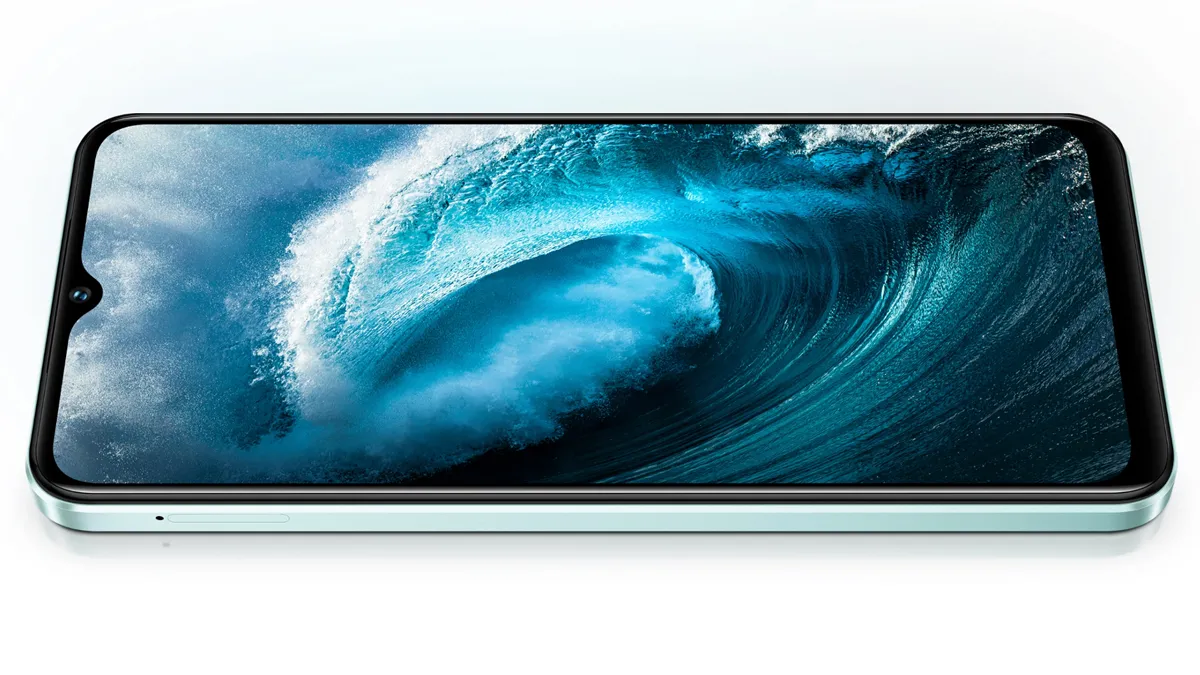
Both smartphones sport a 6.56-inch display with an HD+ resolution of 1612×720 pixels.
The 90Hz refresh rate provides a fluid user experience, while the 20.15:9 aspect ratio and 89.64% screen-to-body ratio offer an immersive viewing experience.
This makes the Y37 and Y37m suitable for content consumption and casual gaming.
In the camera department, both devices feature a 13MP rear camera with an f/2.2 aperture.
Both smartphones sport a 6.56-inch display with an HD+ resolution of 1612×720 pixels
While not groundbreaking, this setup should be capable of capturing decent photos in well-lit conditions.
The 5MP front-facing camera, also with an f/2.2 aperture, is adequate for selfies and video calls.
One of the standout features of both models is the large 5000mAh battery, which should provide excellent battery life.
However, the 15W charging speed might be considered relatively slow by today’s standards.
The 5MP front-facing camera, also with an f/2.2 aperture, is adequate for selfies and video calls
On the software front, both devices run on OriginOS 14, based on Android 14, offering the latest features and security updates.
Connectivity options are comprehensive, with support for 5G and 4G networks, dual nano SIM slots, 2.4G/5G WiFi, and Bluetooth 5.4.
The inclusion of a 3.5mm headphone jack will be appreciated by users who prefer wired audio solutions.
Top 5 Reasons to Buy
Top 5 Reasons to Buy
Affordable 5G smartphones with the capable Dimensity 6300 processor
Large 6.56-inch display with a smooth 90Hz refresh rate
Generous 5000mAh battery for all-day usage
Latest Android 14-based OriginOS 14 for up-to-date features and security
Versatile storage options and expandable RAM for improved multitasking
Specs
Specification
Vivo Y37
Vivo Y37m
Display
6.56-inch HD+ display, 90Hz refresh rate
6.56-inch HD+ display, 90Hz refresh rate
Processor
MediaTek Dimensity 6300
MediaTek Dimensity 6300
RAM
Up to 12GB
Up to 8GB
Storage
Up to 256GB
Up to 256GB
Rear Camera
13MP, f/2.2
13MP, f/2.2
Front Camera
5MP, f/2.2
5MP, f/2.2
Battery
5000mAh, 15W charging
5000mAh, 15W charging
Fingerprint Sensor
Side-mounted
Side-mounted
Operating System
OriginOS 14 based on Android 14
OriginOS 14 based on Android 14
Connectivity
5G, 4G, dual nano SIM, 2.4G/5G WiFi, Bluetooth 5.4
5G, 4G, dual nano SIM, 2.4G/5G WiFi, Bluetooth 5.4
Headphone Jack
Yes
Yes
FAQs
What are the main differences between the Vivo Y37 and Y37m?
The main differences lie in their RAM and storage options.
The Y37 offers up to 12GB of RAM and 256GB of storage, whereas the Y37m offers up to 8GB of RAM and 256GB of storage.
Do both Vivo Y37 and Y37m support 5G connectivity?
Yes, both the Vivo Y37 and Y37m support 5G connectivity, ensuring fast internet speeds and future-proofing the devices.
What is the battery capacity of the Vivo Y37 and Y37m?
Both the Vivo Y37 and Y37m come with a large 5000mAh battery, which should provide excellent battery life for daily use.
Which operating system do the Vivo Y37 and Y37m run on?
Both devices run on OriginOS 14, which is based on Android 14, offering the latest features and security updates.
Are the Vivo Y37 and Y37m suitable for gaming?
With the MediaTek Dimensity 6300 processor and up to 12GB of RAM, both devices should handle light to moderate gaming comfortably.
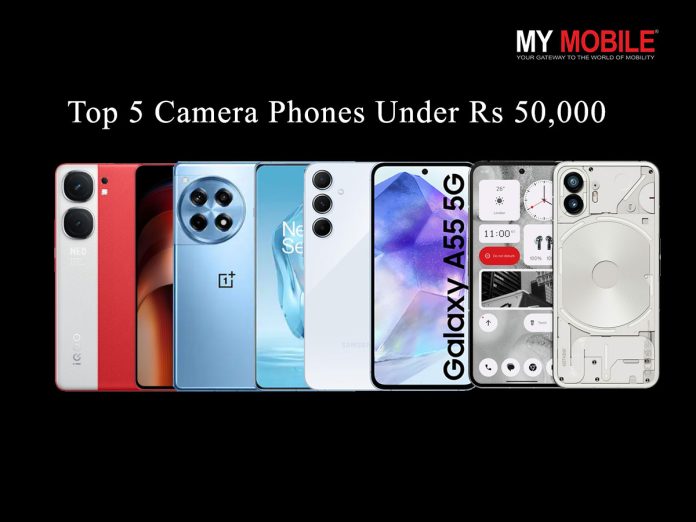
These phones offer impressive camera capabilities without emptying your wallet.
Let’s dive in and see what each has to offer.
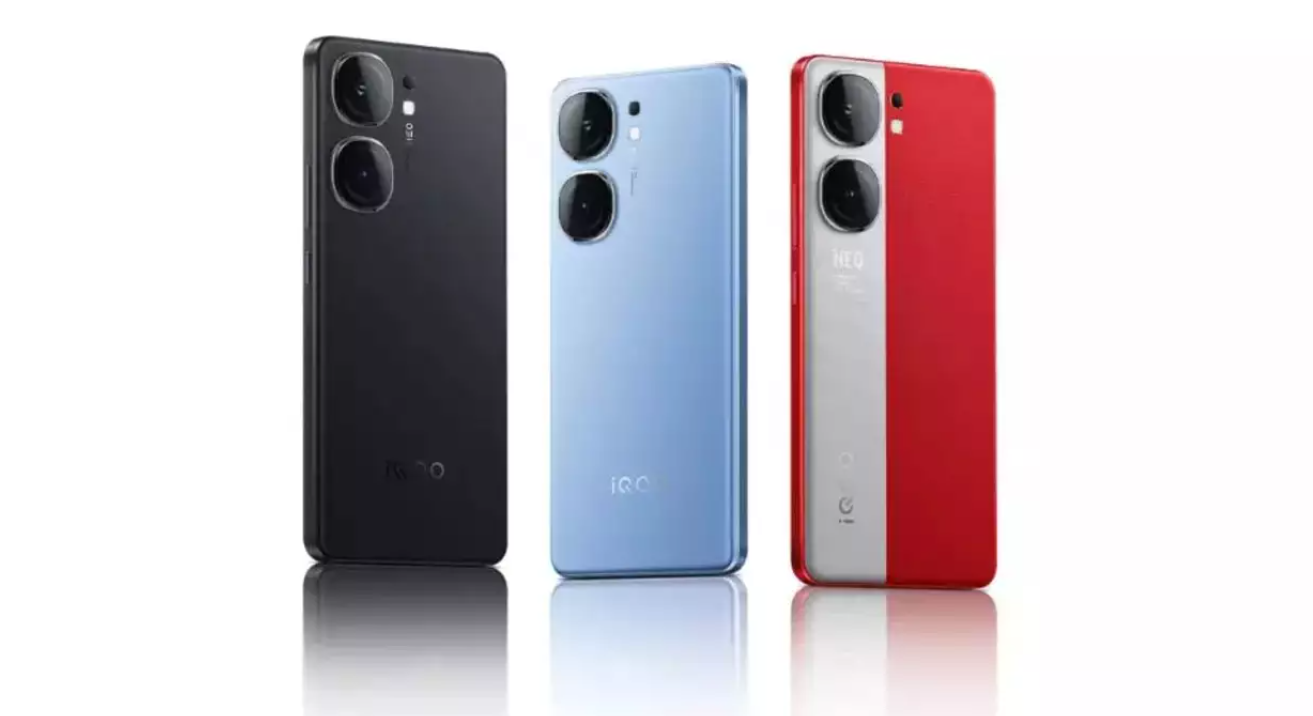
iQOO Neo 9 Pro – Rs 36,999
iQOO Neo 9 Pro offers top-notch camera quality and performance
Processor: Snapdragon 8 Gen 2
RAM: 8GB
Display: 6.78-inch FHD+ AMOLED, 144Hz
Cameras: 50MP main, 8MP ultra-wide, 16MP front
Battery: 5160mAh, 120W charging
The iQOO Neo 9 Pro is a performance powerhouse that doesn’t skimp on camera quality.
Its 50MP main camera is the star of the show, capturing stunning details in both bright daylight and challenging low-light conditions.
The 8MP ultra-wide lens, while not groundbreaking, offers decent landscape shots.
Selfie enthusiasts will appreciate the 16MP front camera for sharp, social media-ready pics.
Where this phone really shines is in its overall performance.
The Snapdragon 8 Gen 2 chip paired with 8GB of RAM ensures smooth multitasking and lag-free gaming.
The 144Hz display is a treat for the eyes, making everything from scrolling to video playback buttery smooth.
And when you need a quick power boost, the 120W charging has you covered, juicing up the battery in no time.
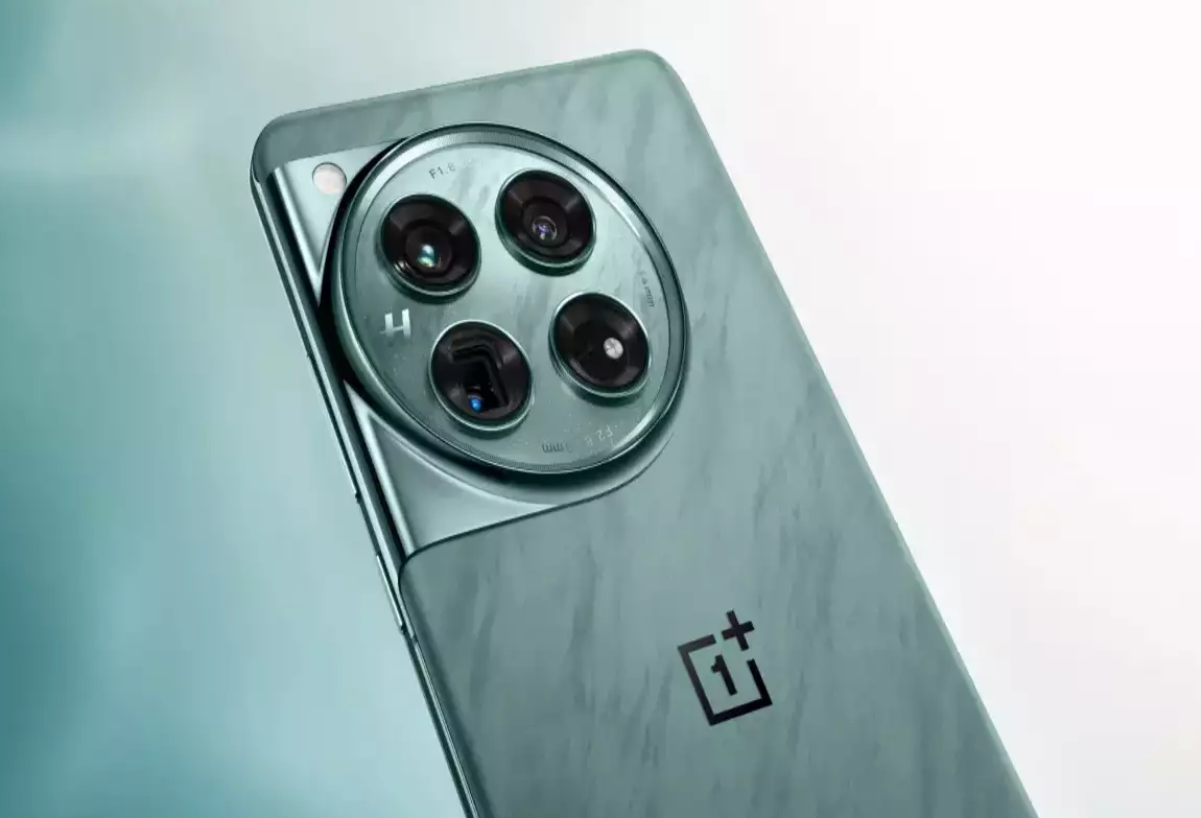
OnePlus 12R – Rs 39,998
OnePlus 12R combines flagship features with excellent camera capabilities
Processor: Snapdragon 8 Gen 2
RAM: 8GB
Display: 6.78-inch FHD+ AMOLED, 120Hz
Cameras: 50MP main, 8MP ultra-wide, 2MP macro, 16MP front
Battery: 5500mAh, 100W charging
The OnePlus 12R continues the brand’s tradition of offering flagship-level features at a more accessible price point.
The camera system, while not revolutionary, is highly capable.
The 50MP main sensor delivers crisp, vibrant shots in most lighting conditions.
The 8MP ultra-wide lens is handy for capturing expansive scenes, though the 2MP macro lens feels more like a spec sheet filler than a truly useful addition.
Where the OnePlus 12R truly excels is in its overall user experience.
The 120Hz AMOLED display is a joy to use, with rich colors and smooth animations.
Performance is top-notch thanks to the Snapdragon 8 Gen 2 chip, handling everything from intensive gaming to multitasking with ease.
The 5500mAh battery is a long-lasting champ, and when you do need to charge, the 100W fast charging has you back up and running in no time.
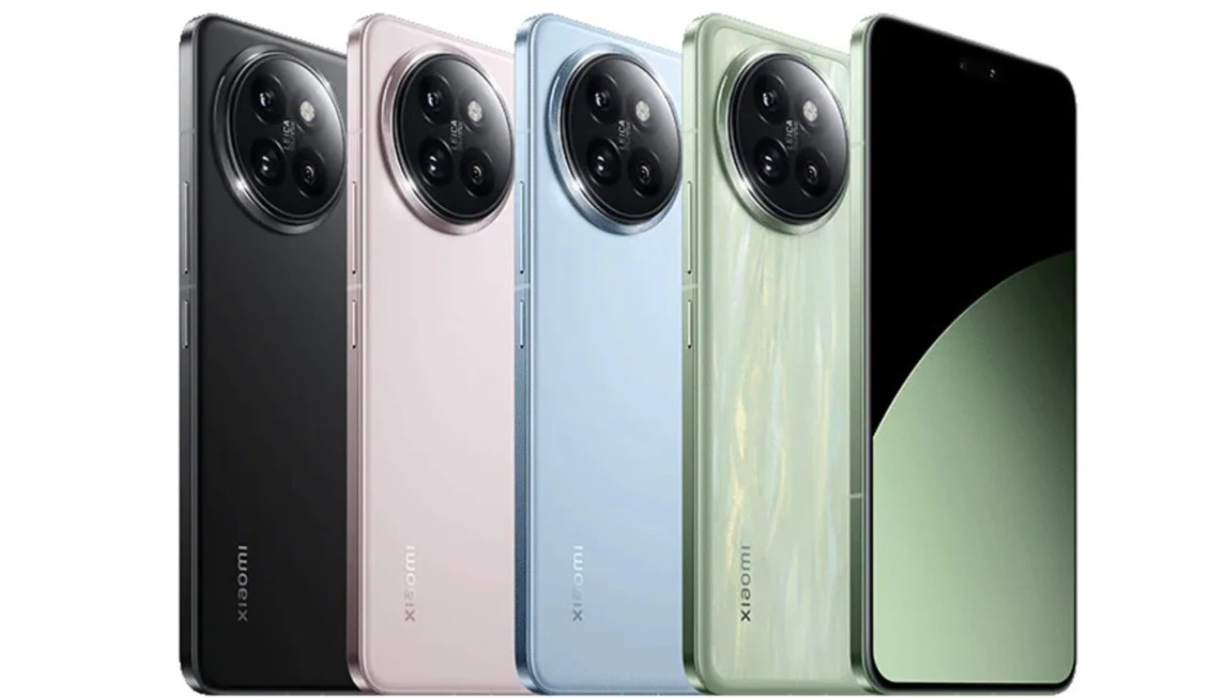
Xiaomi 14 Civi – Rs 42,999
Xiaomi 14 Civi boasts a versatile Leica-branded camera system
Processor: Snapdragon 8s Gen 3
RAM: 8GB
Display: 6.55-inch FHD+ AMOLED, 120Hz
Cameras: 50MP main, 12MP ultra-wide, 50MP telephoto, 32MP front
Battery: 4700mAh, fast charging
The Xiaomi 14 Civiis a stylish contender that doesn’t sacrifice substance for style.
Its Leica-branded camera system is the headline feature, consisting of a versatile 50MP main sensor, a 12MP ultra-wide, and a 50MP telephoto lens.
This setup allows for impressive flexibility in your photography, from wide landscapes to zoomed-in details.
The results are often stunning, with the Leica color science adding a professional touch to your shots.
Beyond the cameras, the Xiaomi 14 Civi impresses with its premium design.
The phone feels incredibly sleek and lightweight, making it a joy to hold and use.
The 6.55-inch AMOLED display is bright and vivid, perfect for showcasing your photos or enjoying multimedia content.
Performance is smooth thanks to the new Snapdragon 8s Gen 3 chip, though some users have reported slight throttling under heavy loads.
Battery life is decent, if not exceptional, but fast charging helps make up for it.
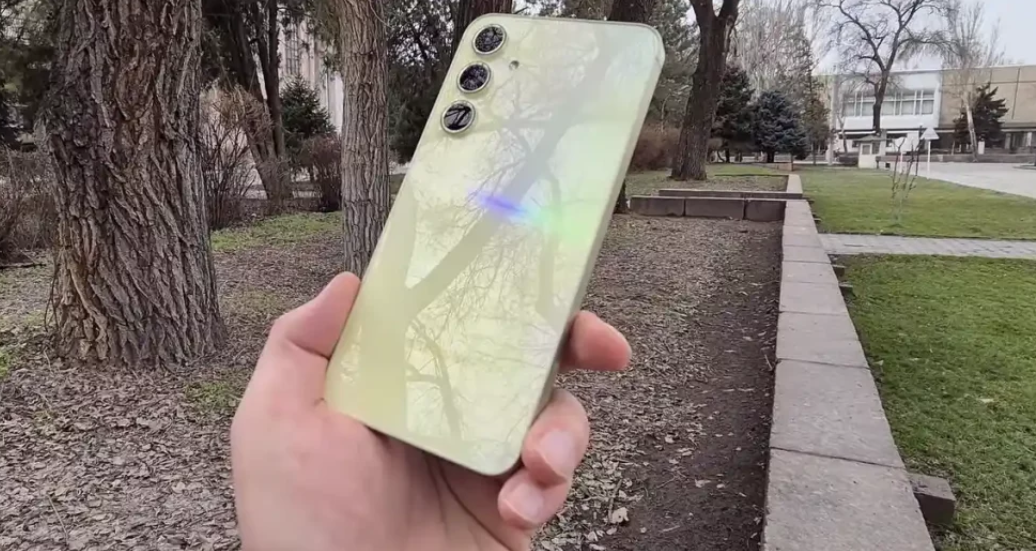
Samsung Galaxy A55 5G – Rs 35,499
Samsung Galaxy A55 5G delivers reliable camera performance and premium build
Processor: Samsung Exynos 1480
RAM: 8GB
Display: 6.6-inch FHD+ Super AMOLED, 120Hz
Cameras: 50MP main, 12MP ultra-wide, 5MP macro, 32MP front
Battery: 5000mAh, 25W charging
Samsung brings its A-game to the mid-range market with the Galaxy A55 5G.
The camera system is well-rounded and reliable, featuring a 50MP main sensor that captures plenty of detail.
The 12MP ultra-wide lens is a step above many competitors in this price range, offering good colour consistency with the main camera.
While the 5MP macro lens isn’t groundbreaking, it can capture some interesting close-up shots when used creatively.
One of the standout features of the A55 5G is its build quality.
The 6.6-inch Super AMOLED display is typically excellent for Samsung, offering vibrant colours and deep blacks.
Performance from the Exynos 1480 chipis smooth for everyday tasks, though it may not match the gaming prowess of some Snapdragon-equipped rivals.
Battery life is a strong point, easily lasting a full day, though the 25W charging is slower than some competitors.
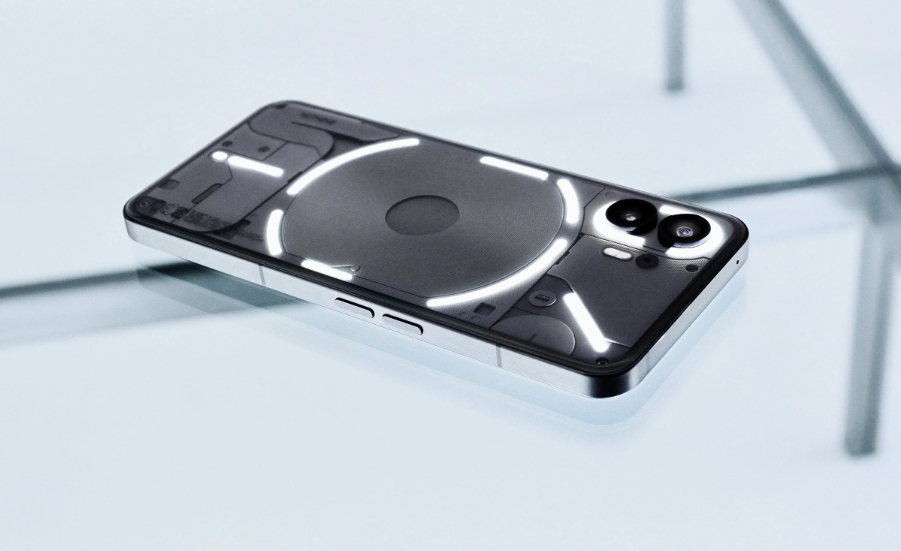
Nothing Phone 2 – Rs 37,999
Nothing Phone 2 stands out with unique design and solid camera setup
Processor: Snapdragon 8+ Gen 1
RAM: 8GB
Display: 6.7-inch FHD+ LTPO AMOLED, 120Hz
Cameras: 50MP main, 50MP ultra-wide, 32MP front
Battery: 4700mAh, 45W charging
The Nothing Phone 2stands out from the crowd with its unique design and Glyph interface.
When it comes to cameras, it offers a capable 50MP main sensor paired with a 50MP ultra-wide lens.
While not class-leading, this setup delivers good results in most situations, with punchy colors and decent detail.
The 32MP selfie camera is also solid, perfect for social media enthusiasts.
What truly sets the Nothing Phone 2 apart is its distinctive look.
The transparent back with customizable LED lights (the Glyph interface) is unlike anything else on the market.
It’s not just for show – these lights can be used for notifications, charging indicators, and more.
Performance is smooth thanks to the Snapdragon 8+ Gen 1 chip, even if it’s not the absolute latest processor.
The clean, minimalist software adds to the unique experience.
Battery life is respectable, and while the 45W charging isn’t the fastest, it’s still reasonably quick.
Final Verdict
Phones offer impressive camera capabilities without emptying your wallet
Each of these phones offers a unique blend of camera capabilities, performance, and features.
Consider what matters most to you – whether it’s pure camera quality, overall performance, or a distinctive design – when making your choice.
At this price point, you’re getting impressive smartphones that can capture your world in stunning detail.
iQOO Neo 9 Pro
OnePlus 12R
Xiaomi 14 Civi
Samsung Galaxy A55 5G
Nothing Phone 2
Display
6.78-inch FHD+ AMOLED, 144Hz
6.78-inch FHD+ AMOLED, 120Hz
6.55-inch FHD+ AMOLED, 120Hz
6.6-inch FHD+ Super AMOLED, 120Hz
6.7-inch FHD+ LTPO AMOLED, 120Hz
Cameras
50MP main, 8MP ultra-wide, 16MP front
50MP main, 8MP ultra-wide, 2MP macro, 16MP front
50MP main, 12MP ultra-wide, 50MP telephoto, 32MP front
50MP main, 12MP ultra-wide, 5MP macro, 32MP front
50MP main, 50MP ultra-wide, 32MP front
Processor
Snapdragon 8 Gen 2
Snapdragon 8 Gen 2
Snapdragon 8 Gen 3
Samsung Exynos 1480
Snapdragon 8+ Gen 1
RAM
8GB
8GB
8GB
8GB
8GB
Battery
5160mAh, 120W charging
5500mAh, 100W charging
4700mAh, fast charging
5000mAh, 25W charging
4700mAh, 45W charging
FAQs
Which phone under Rs 50,000 has the best camera for low-light photography?
The iQOO Neo 9 Pro, with its 50MP main camera, excels in low-light conditions, capturing stunning details and vibrant colors.
Are there any phones under Rs 50,000 that offer professional-level photography features?
The Xiaomi 14 Civi with its Leica-branded camera system provides professional-level features, including impressive color science and versatile lenses.
Which phone offers the best value for money in terms of camera and overall performance?
The OnePlus 12R offers great value with its Snapdragon 8 Gen 2 processor, excellent camera setup, and smooth user experience.
Is the Samsung Galaxy A55 5G good for macro photography?
Yes, the Galaxy A55 5G includes a 5MP macro lens, allowing for creative close-up shots, though it may not be as advanced as some other options.
What makes the Nothing Phone 2 unique compared to other phones in this price range?
The Nothing Phone 2 stands out with its transparent back and customizable Glyph interface, offering a unique look and practical notification features.
What are the key features of the iQOO Neo 9 Pro?
Key features include a Snapdragon 8 Gen 2 SoC for top-notch performance, a dual-camera setup with a 50MP main sensor, a 6.78-inch AMOLED display for vivid visuals, and a large 5,160mAh battery with 120W fast charging.
Does the iQOO Neo 9 Pro come with a charger?
Yes, iQOO includes a charger in the box for the Neo 9 Pro, aligning with its commitment to providing a convenient user experience.
What makes the OnePlus 12R a good choice under Rs 40,000?
The OnePlus 12R stands out for its combination of flagship-level aesthetics and performance, including a Snapdragon 8 Gen 2 SoC, a ProXDR AMOLED display, and rapid 100W charging, all priced competitively.
How does the OnePlus 12R’s camera perform?
The OnePlus 12R’s camera setup, led by a 50MP main sensor, delivers impressive shots in various lighting conditions.
While it includes features like macro and tilt-shift, the macro lens may underperform compared to the main and ultra-wide sensors.
What are the key display features of the Xiaomi 14 Civi?
The standout feature is the quad-curved 6.55-inch AMOLED display with curved edges on all four sides.
It offers 1.5K resolution, a 120Hz refresh rate, and can reach up to 3,000 nits of peak brightness. The display is also protected by Corning Gorilla Glass Victus 2.
What camera system does the Xiaomi 14 Civi use?
The Xiaomi 14 Civi boasts a triple rear camera setup featuring Leica-branded lenses and sensors.
How does the Galaxy A55’s design differ from the Galaxy A54?
While the Galaxy A55’s overall design mirrors the A54, the most apparent difference lies in the side rails, which appear flatter and potentially polished compared to the A54’s rounded and matte finish.
Additionally, there’s an unusual protrusion around the power and volume buttons.
What are the expected features of the Galaxy A55?
Based on the leaks, the Galaxy A55 is expected to have a 6.5-inch FullHD+ display with a 120Hz refresh rate.
It’s speculated to be powered by the Exynos 1480 SoC, feature a 50MP primary camera, and support 25W charging.
What country is nothing smartphone from?
Nothing Technology Limited (stylised as NOTHING) is a consumer electronics manufacturer based in London, England. It was founded by Carl Pei, the co-founder of the smartphone maker OnePlus.
What is the glyph in Nothing phones?
Glyph basically means symbols, So in the Nothing Phone 1, you’ll see the five symbols that light up bright and form different patterns, including 900 LED. In addition, you’ll also see the tiny red LED.