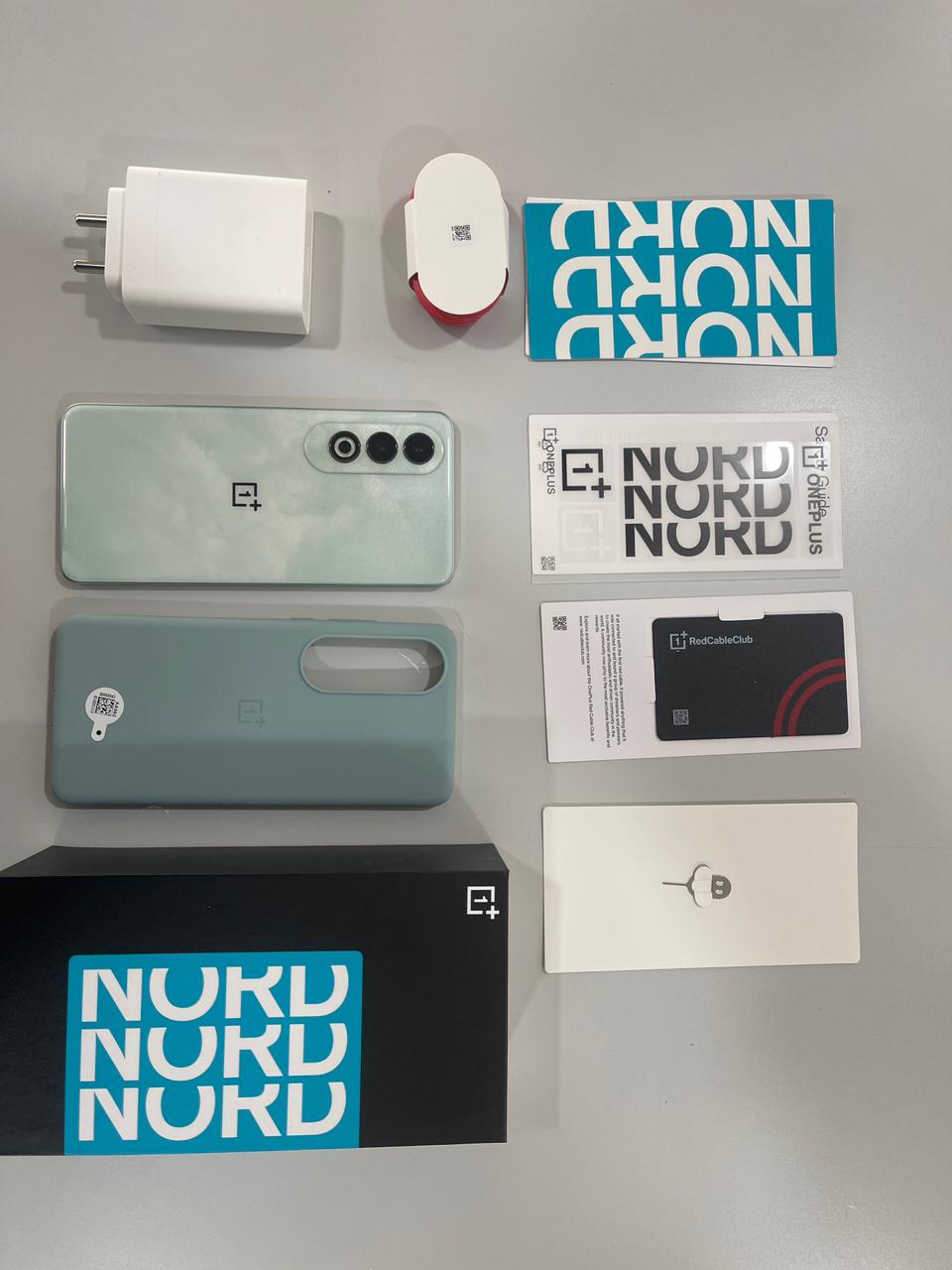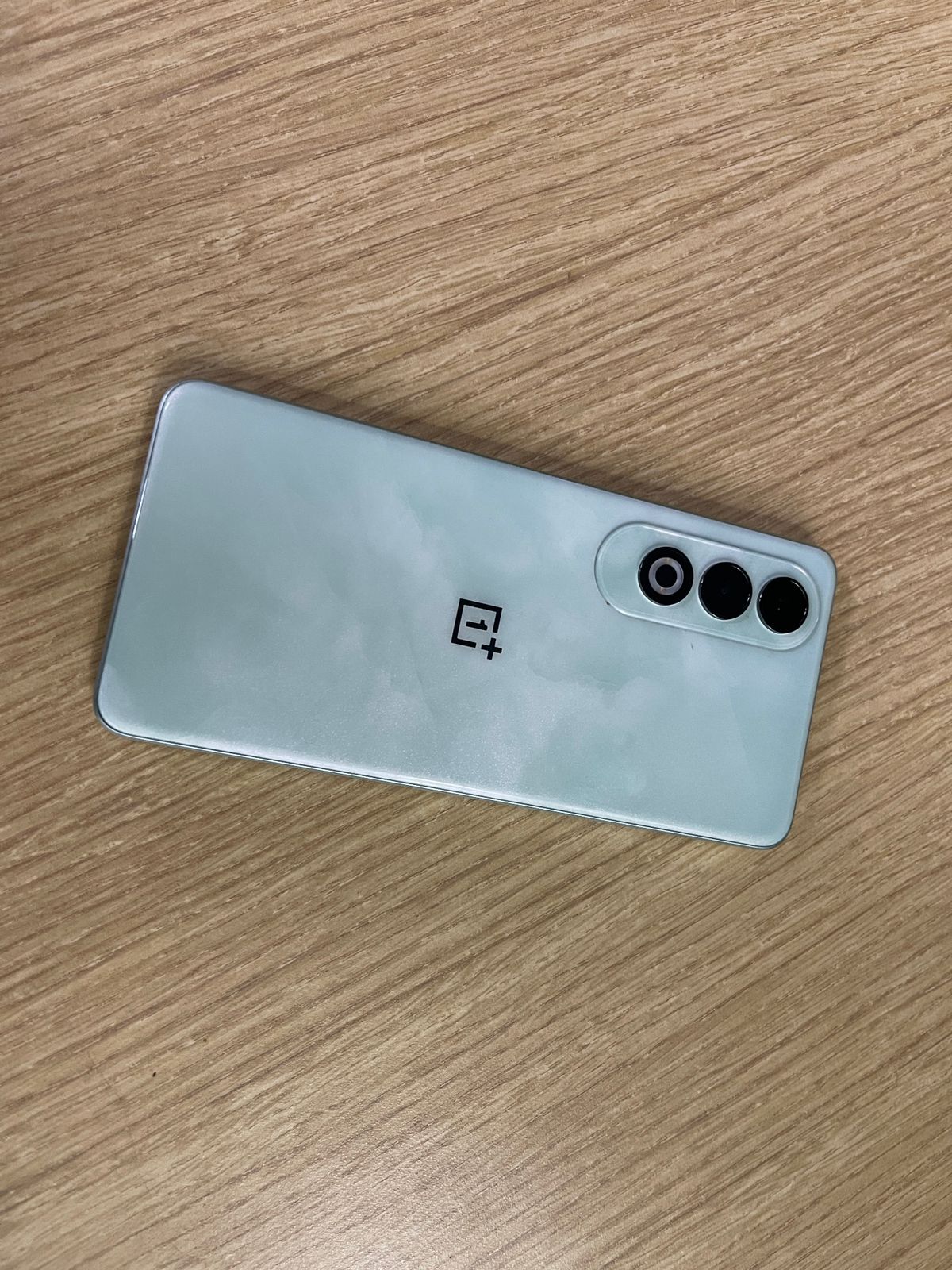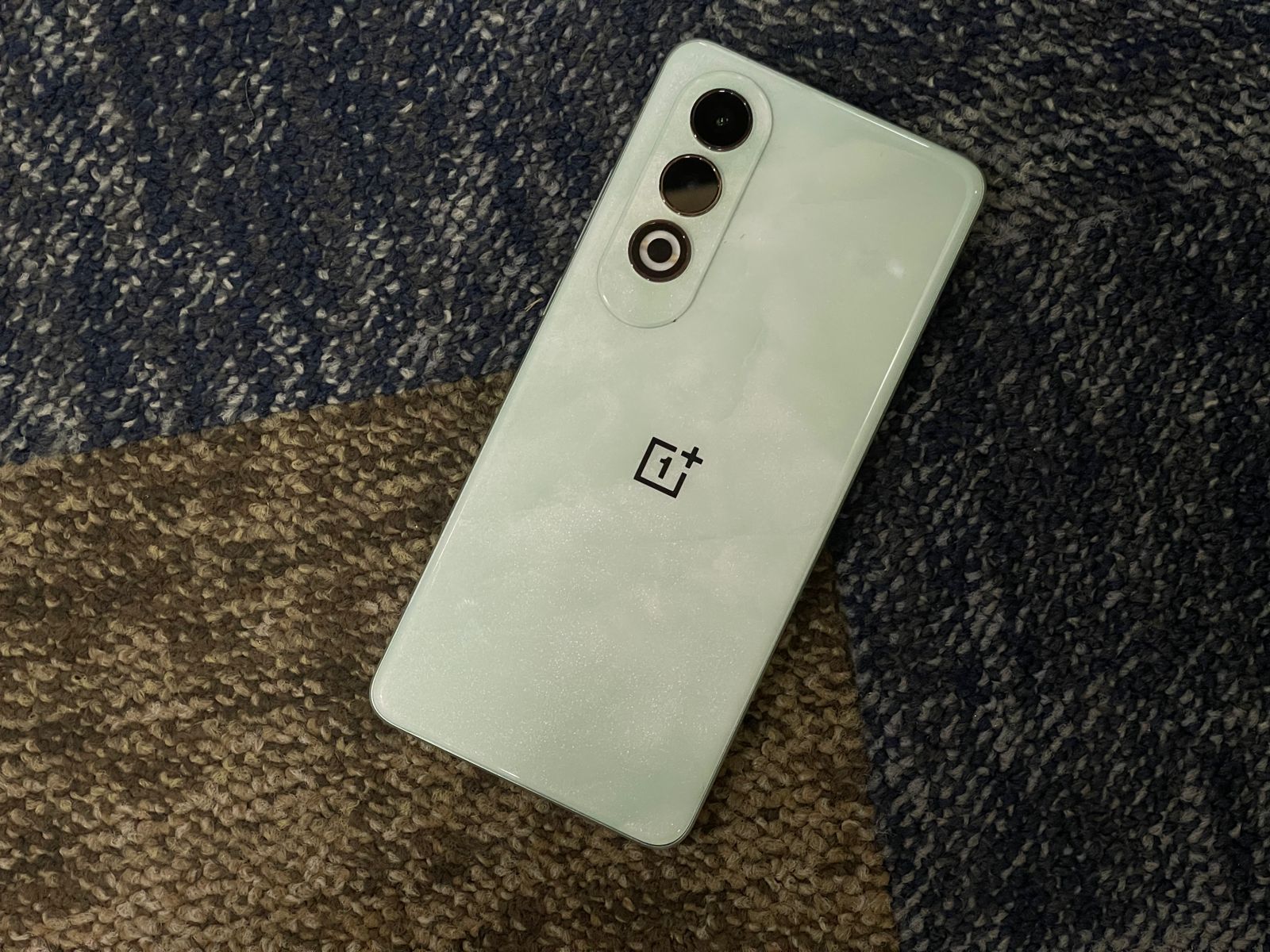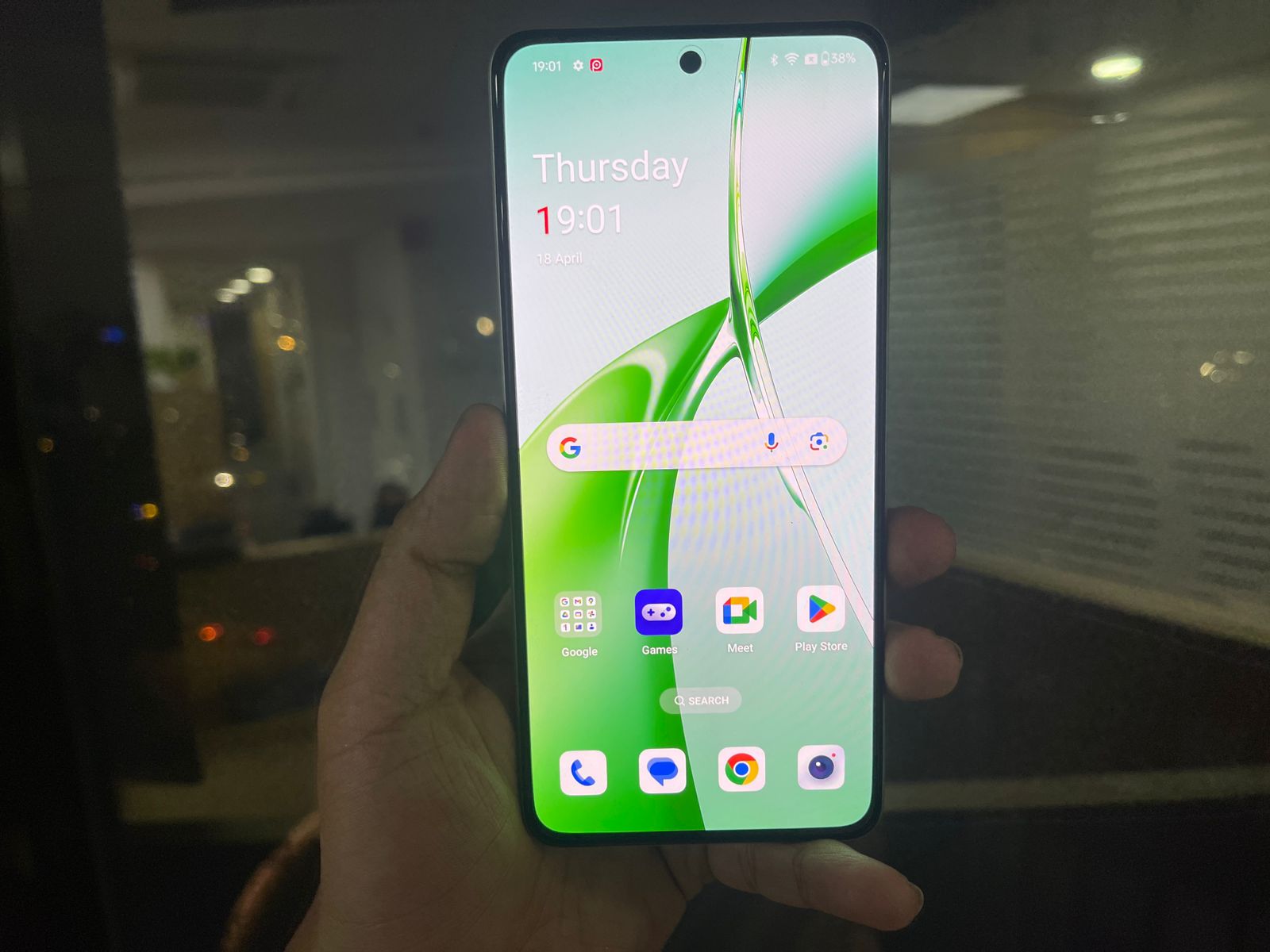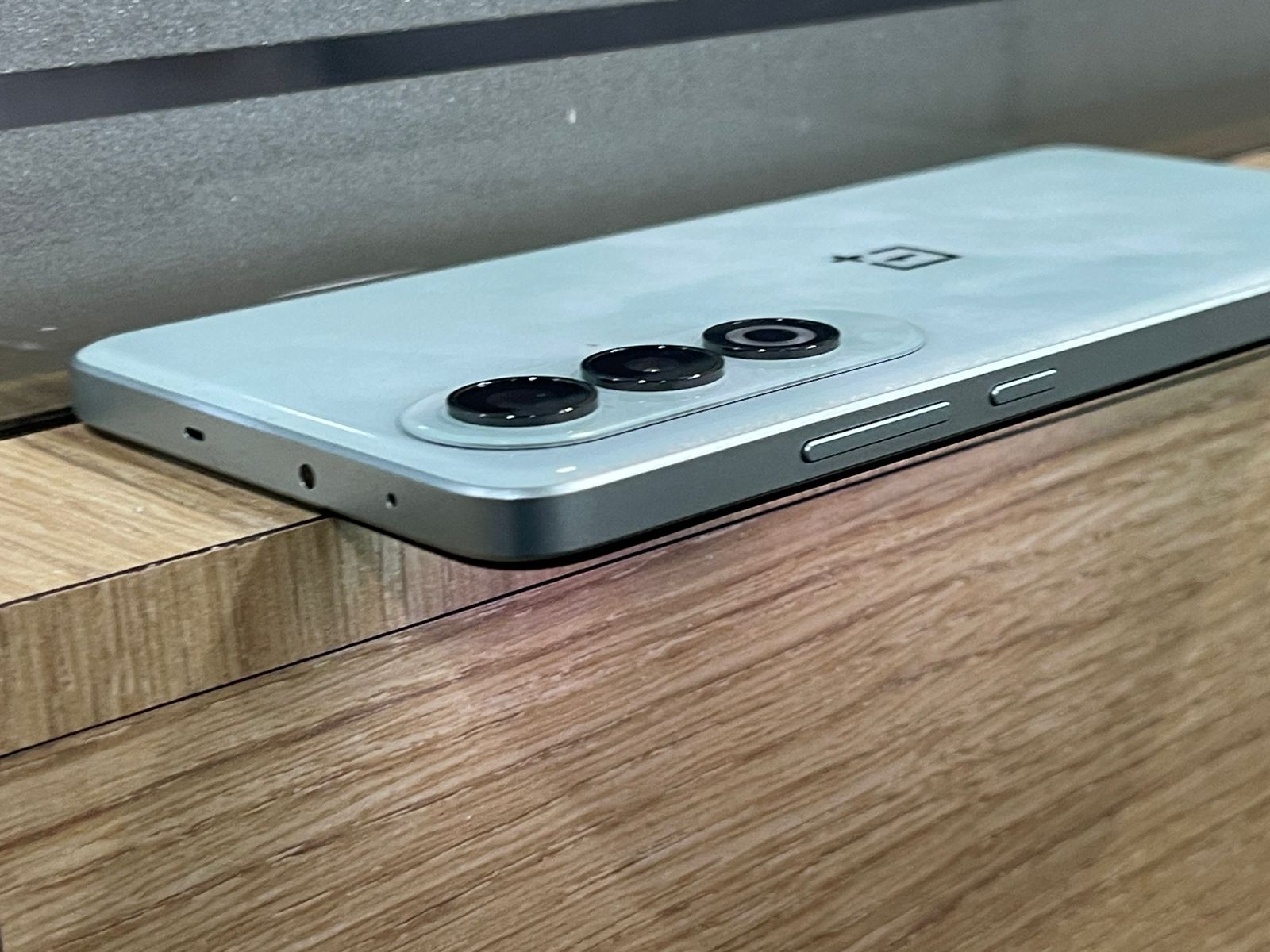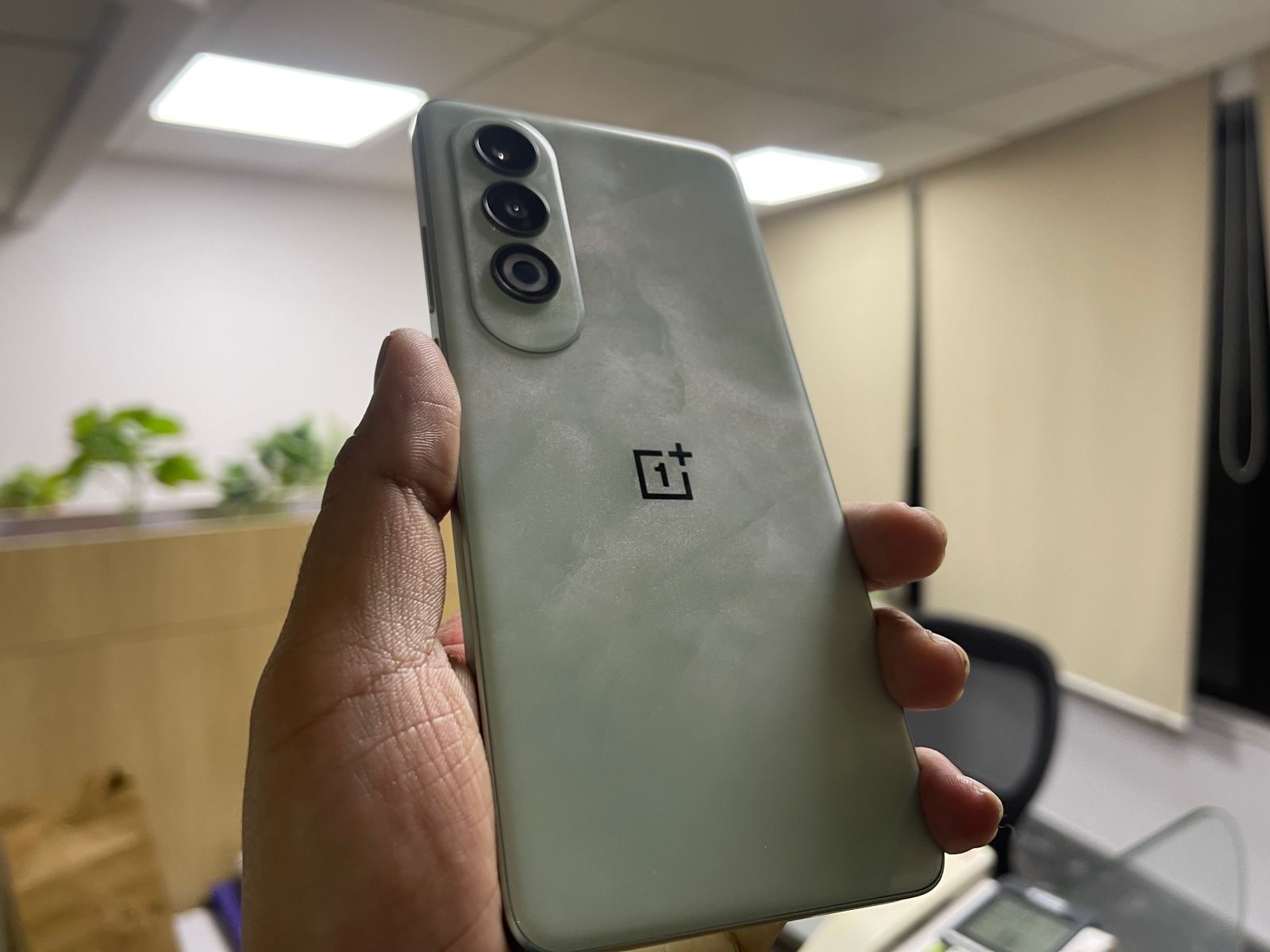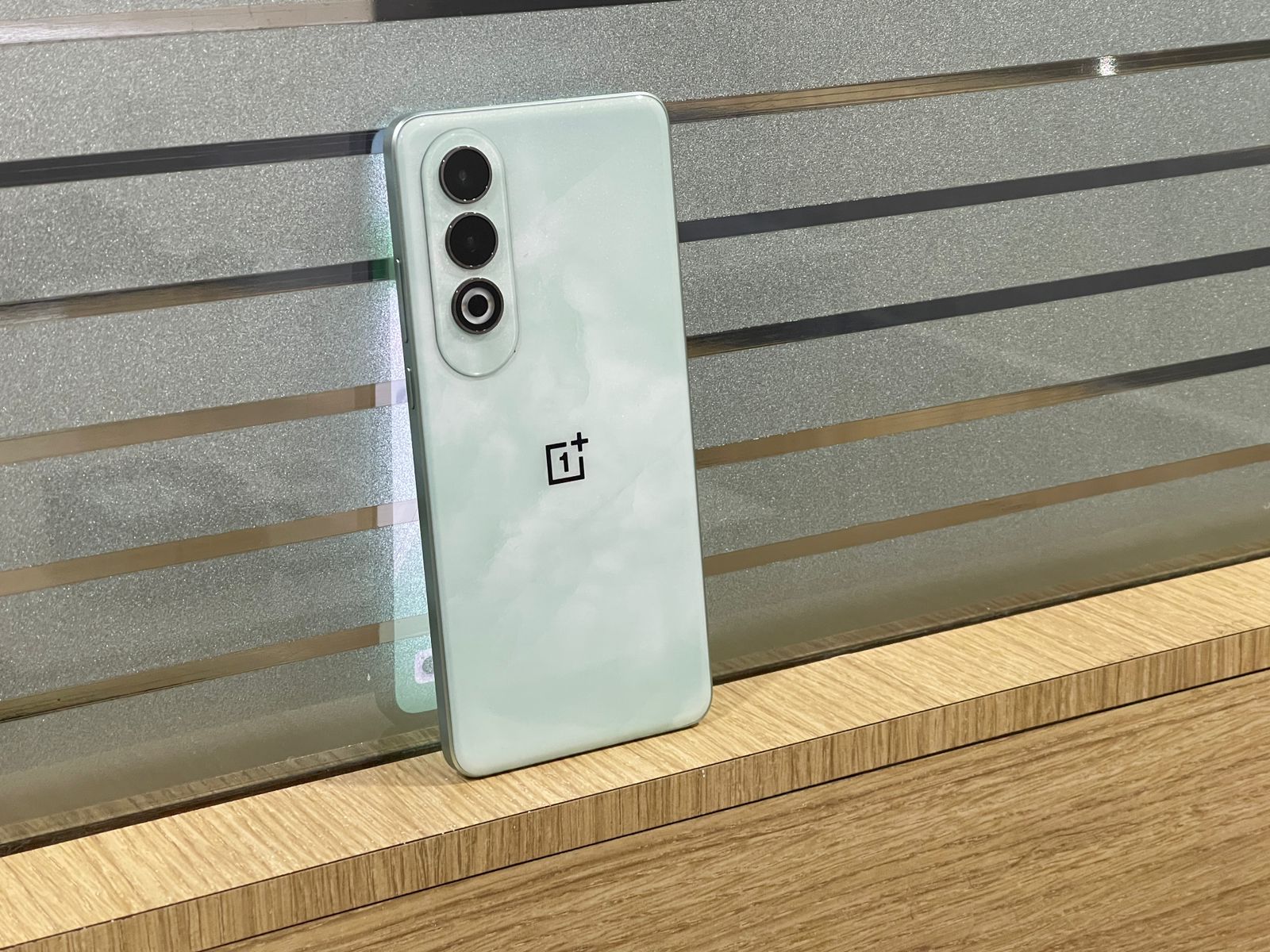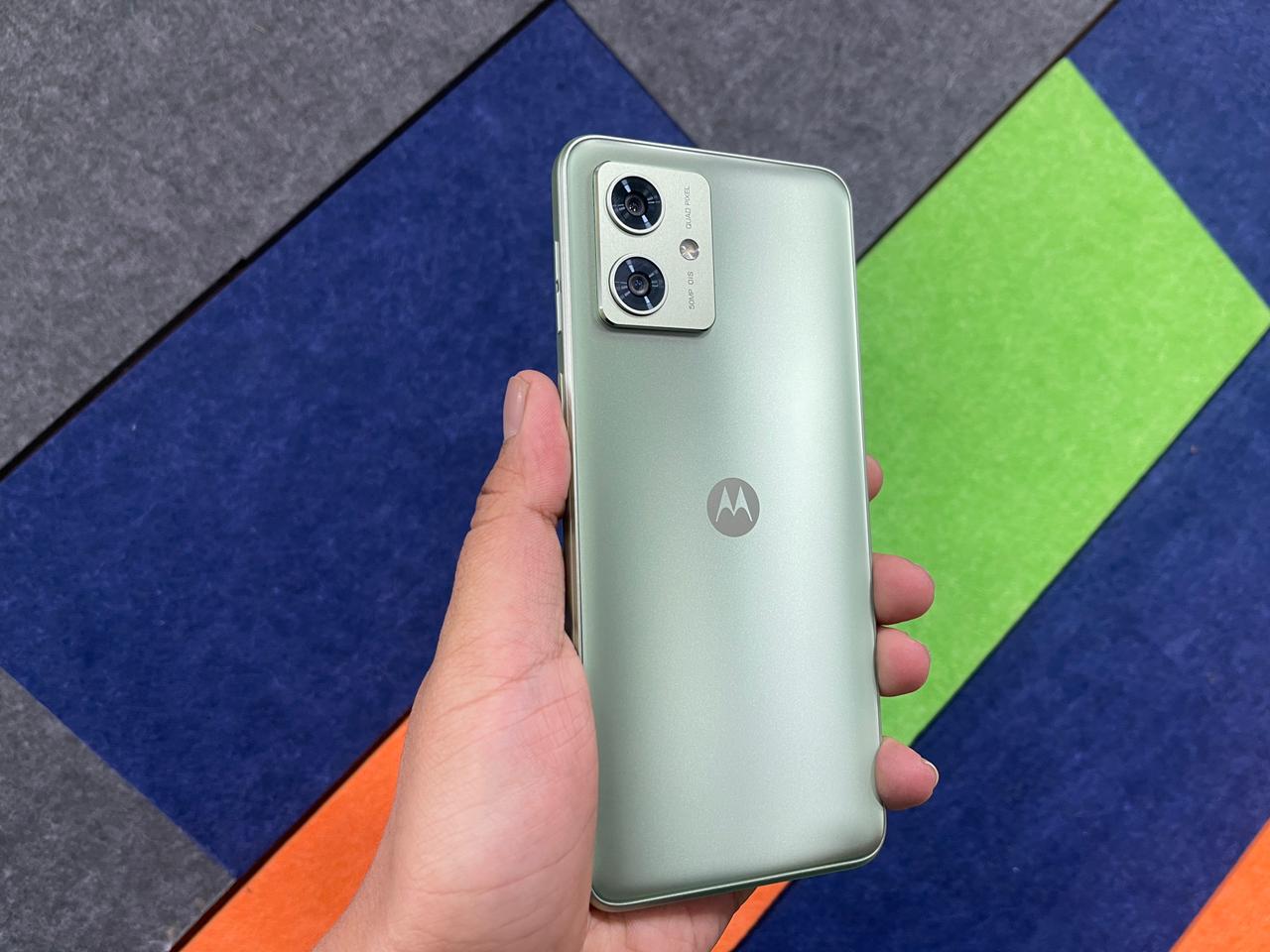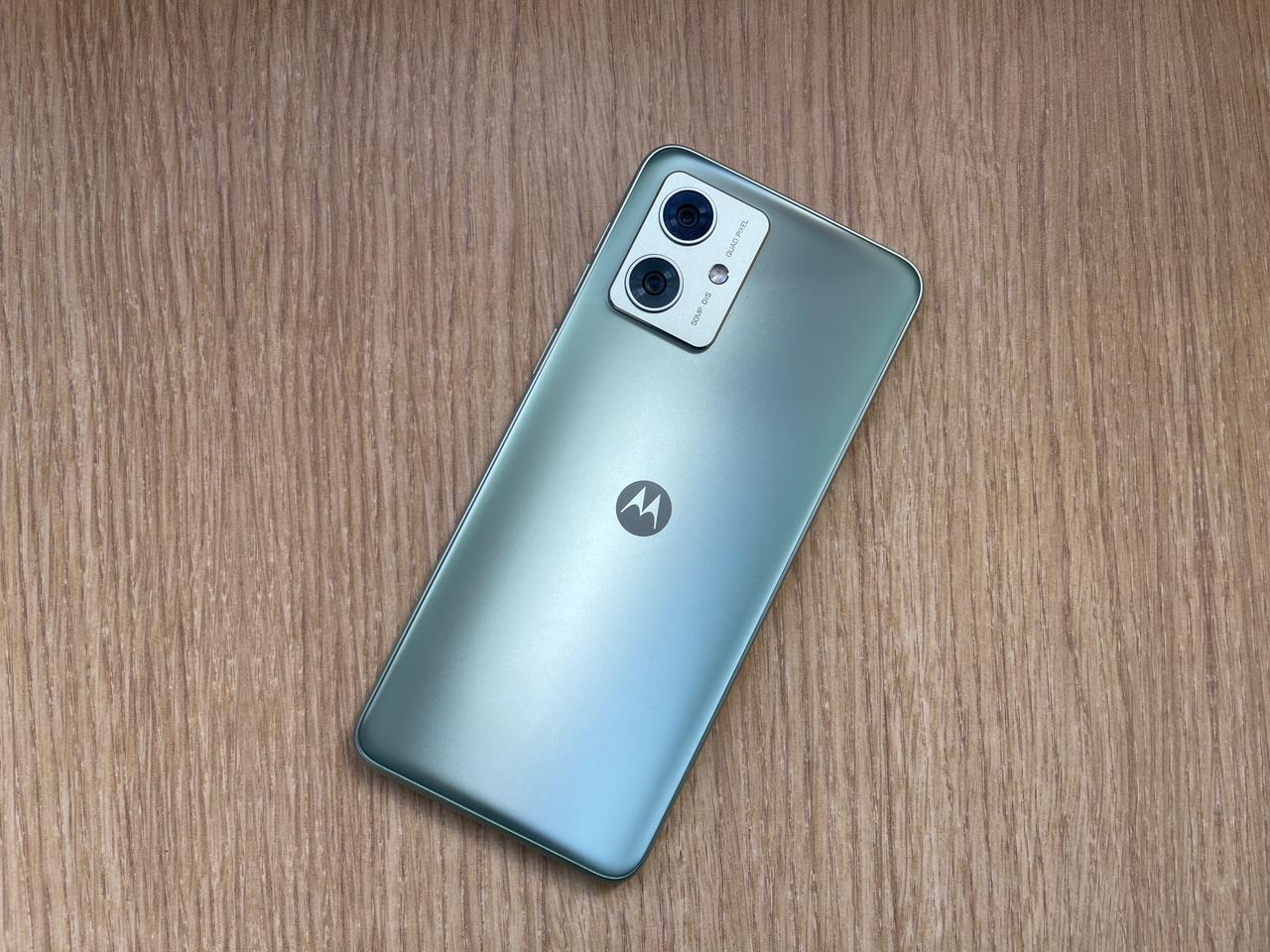
While the focus has been building on this third launch, the Realme 12+ 5G next month, there’s also anticipation around the addition of a new member to the series, rumored to be the Realme 12 Lite.
While the exact launch date remains under wraps, emerging reports shed light on what enthusiasts can expect from this upcoming device.
A Familiar Model with a New Identity
Realme 12 Lite Spotted on IMEI Database; Could Be Rebranded Realme C67
Recent findings from GSMChina have hinted at an intriguing development: the Realme 12 Lite has made an appearance in the IMEI database under the model number RMX3890.
This number matches that of the Realme C67, which makes us speculate that the Realme 12 Lite might debut as a rebranded version of the C67.
While the launch date for the Realme 12 Lite remains a mystery, its spotting in the IMEI database suggests that its unveiling could be just around the corner.
Realme is set to introduce theRealme 12+ 5G in Malaysia, promising another exciting addition to the Realme 12 series, and the expectation is that this Realme 12 Lite might come shortly after.
What to Expect from the Realme 12 Lite
Rumoured specifications for the Realme 12 Lite suggest a device that doesn’t skimp on features.
A 6.72-inch IPS LCD display is expected, boasting Full HD+ resolution and a smooth 120Hz refresh rate.
As for the optical setup, a 50MP dual-camera setup to be a major draw, coupled with an 8MP selfie camera for capturing high-quality images.
Additional features likely include a hefty 5,000mAh battery with 33W charging ensuring prolonged usage, a side-mounted fingerprint sensor, and an IP54 rating for dust and splash resistance.
For memory options you might be getting 4GB/6GB RAM and 128GB storage, expandable via microSD.
FAQs
What is the Realme 12 Lite?
The Realme 12 Lite is rumored to be the latest addition to Realme’s 12 series, potentially offering a budget-friendly option with high-end features.
Has the Realme 12 Lite been officially announced?
No, the Realme 12 Lite has not been officially announced yet. However, its appearance in the IMEI database suggests it might be unveiled soon.
What features can we expect from the Realme 12 Lite?
Expected features include a Snapdragon 685 SoC, a 6.72-inch Full HD+ IPS LCD display with a 120Hz refresh rate, Android 13 with Realme UI 4.0, a 50MP dual-camera setup, and a 5,000mAh battery with 33W charging.
Will the Realme 12 Lite be similar to any existing models?
The Realme 12 Lite is speculated to be a rebranded version of the Realme C67, sharing similar hardware specifications and design elements.
When is the Realme 12 Lite expected to launch?
While there’s no confirmed launch date, the device’s spotting in the IMEI database indicates its unveiling could be imminent, possibly following the Realme 12+ 5G launch.
Chief amongst them is and Galaxy users have a reason to celebrate.
The developer preview of Android 15 promises a suite of enhanced features, aiming for “Platform Stability at Beta 3 in June” of this year, with the stable version likely hitting Google Pixels by July.
However, Samsung stands out with a generous lineup of Galaxy devices slated to embrace this update via the One UI 7.0 rollout, soon after Google Pixels receive their update.
Who’s In for the Upgrade?
Samsung Galaxy Devices Set for Android 15 Update Unveiled
It’s important to note that the following list includes devices currently on the market.
Future releases, such as the Galaxy Z Fold 6, Z Flip 6, and Galaxy A55, are expected to come with Android 15 pre-installed.
Transition ensures enhanced features, user experience, and security
While this list showcases eligible devices, the final nod from Samsung is eagerly awaited by users worldwide.
This update isn’t just about new features; it’s about enhancing user experience, security, and performance across a broad spectrum of devices.
Samsung’s commitment to technology advancement and user satisfaction evident
FAQs
Which Samsung Galaxy series are eligible for the Android 15 update?
The Galaxy M, F, A, and Z series have been listed as eligible for the upcoming Android 15 update, promising a range of enhanced features and improvements.
When is the Android 15 update expected to roll out to Samsung Galaxy devices?
Following the Google Pixels’ receipt of the stable version, likely by July, Samsung Galaxy devices are expected to start receiving the Android 15 update via the One UI 7.0 rollout.
Will newer Samsung Galaxy models come with Android 15 pre-installed?
Yes, future releases such as the Galaxy Z Fold 6, Z Flip 6, and Galaxy A55 are expected to be shipped with Android 15 pre-installed, offering the latest technology right out of the box.
What improvements can Samsung Galaxy users expect with the Android 15 update?
Users can look forward to a suite of enhanced features, focusing on user experience, security, and device performance, ensuring a seamless and efficient interaction with their Galaxy devices.
How does Samsung ensure its devices remain compatible with the latest Android updates?
Samsung’s dedication to keeping its Galaxy lineup updated reflects in its strategic planning and development, ensuring hardware compatibility and software optimization for the latest Android OS versions.
When does the Android 15 Beta start?
Yearly Android releases typically begin with a couple of developer preview releases. This year, Google says there will be two previews released in February and March. Then, in April, the Android 15 Beta program will officially begin.
Google estimates there will be five Android 15 Beta releases in April, May, June, and July leading up to a final release soon after. Android 14 launched unexpectedly late in October 2023, so it remains to be seen if Android 15 will follow suit or move back to its September slot.
What are the privacy & security features of Android 15?
Privacy and Security Measures
Android 15 introduces features to safeguard user privacy and security:
Privacy Sandbox: Upgrades Android AD Services to extension level 10, incorporating the latest Privacy Sandbox for personalized advertising experiences while prioritizing user privacy.
Health Connect: Integrates Android 14 extensions 10, offering a secure platform to manage and share health data collected by apps.
File Integrity: Introduces FileIntegrityManager with enhanced security features utilizing fs-verity to prevent unauthorized file modifications or malware attacks.
Partial Screen Sharing: Supports sharing or recording specific app windows for improved user consent and privacy.
What is the Platform Stability Milestone for Android 15?
Android 15 includes a Platform Stability milestone, expected to be reached at Beta 3 in June 2024, signaling the finalization of APIs and behaviors.
Google encourages developers to target this milestone for final compatibility testing and release planning.
What is the timeline & update of android 15?
Google outlines a timeline for Android 15’s development, including Developer Previews, Beta releases, and the final release to the Android Open Source Project (AOSP) and ecosystem.
February: Developer Preview 1 (Early version for developer feedback, with new features, APIs, and behavior changes).
March: Developer Preview 2 (Update with more features, APIs, and behavior changes).
April: Beta 1 (First beta-quality release, available via over-the-air update to early adopters in Android Beta).
May: Beta 2 (Incremental beta-quality release).
June: Beta 3 (Marks Platform Stability milestone with final APIs and behaviors, and opens Play publishing).
July, August: Beta 4, … (Near-final builds for final testing).
Final release: Android 15 released to AOSP and ecosystem.
Moto G04 offers a premium feel with a matte finish and vibrant color options.
Redmi A3 features unique vegan leather and glass back options.
Infinix Smart 8 leads in camera capabilities with a 50MP primary camera.
All models come with a 5,000mAh battery and 10W charging.
The entry-level smartphone segment in Indiahas recently witnessed the arrival of Motorola’s Moto G04, which joins the fray alongside the Redmi A3 and Infinix Smart 8.
These devices are designed to cater to first-time smartphone users or those seeking budget-friendly options without compromising on essential features.
Let’s delve into a comprehensive comparison of these models, focusing on their design, display, performance, camera capabilities, and battery life.
Description
Moto G04
Redmi A3
Infinix Smart 8
Display
6.6-inch LCD
90Hz, HD+
6.7-inch LCD
90Hz, HD+
6.6-inch LCD
90Hz, HD+
Cameras
16MP
8MP + AI Lens
50MP + AI Lens
Processor
UniSoC T606
MediaTek Helio G36
MediaTek Helio G36
RAM, Storage
Up to 8GB + 128GB
Up to 6GB + 128GB
Up to 8GB + 128GB
Software
Android 14
Android 14
Android 13 Go
Battery
5,000mAh, 10W
5,000mAh, 10W
5,000mAh, 10W
Price
Starting at Rs 6,999
Starting at Rs 7,299
Starting at Rs 7,499
Moto G04 vs Redmi A3 vs Infinix Smart 8: Design Dynamics
Moto G04 Design Dynamics
When it comes to design, the Moto G04 and Infinix Smart 8 both sport a modern look with a centered punch-hole notch display, while the Redmi A3 opts for a traditional waterdrop notch.
The Moto G04 boasts a polycarbonate rear panel with a matte finish, offering a premium feel.
The Infinix Smart 8, too, features a polycarbonate back, keeping up with the segment standards.
Colour choices vary among the models, with the Moto G04 available in Sunrise Orange, Satin Blue, Sea Green, and Concord Black.
The Redmi A3 is presented in Olive Green, Lake Blue, and Midnight Black, while the Infinix Smart 8 offers Galaxy White, Shiny Gold, Rainbow Blue, and Timber Black options.
In my opinion, the Moto G04 slightly edges out in terms of design appeal due to its centered display notch and vibrant colour options.
Moto G04 vs Redmi A3 vs Infinix Smart 8: Display Features
Redmi A3 Smooth & Stylish
The display is a crucial aspect of user experience.
The Moto G04 showcases a 6.6-inch IPS LCD screen with a smooth 90Hz refresh rate.
Similarly, the Infinix Smart 8 features a 6.6-inch display with the same refresh rate but adds the Magic Ring feature, akin to Apple’s Dynamic Island, for an interactive experience.
The Redmi A3, with its larger 6.71-inch LCD and waterdrop notch, also offers a 90Hz refresh rate and is further enhanced with Corning Gorilla Glass 3 protection, a rarity in this price segment.
Smartphone
Configuration
Price
Availability
Moto G04
4GB + 64GB
Rs 6,999
Flipkart
8GB + 128GB
Rs 7,999
Redmi A3
3GB + 64GB
Rs 7,299
Flipkart, Amazon,
and mi.com
4GB + 128GB
Rs 8,299
6GB + 128GB
Rs 9,299
Infinix Smart 8
4GB + 64GB
Rs 7,499
Flipkart
8GB + 128GB
Rs 8,999
Moto G04 vs Redmi A3 vs Infinix Smart 8: Processor and Software
In terms of RAM and storage, the Moto G04 and Infinix lead the way with up to 8GB of memory on offer and an addition 8GB that can be used as a virtual swap from the 128GB storage.
The Redmi A3 has a maximum of 6GB RAM at its disposal.
While the Moto G04 will not receive any Android platform updates, it will benefit from two years of Android security patches.
Moto G04 vs Redmi A3 vs Infinix Smart 8: Camera Capabilities
However, the Redmi A3 and Infinix Smart 8 each bring their own strengths to the table, particularly in terms of display features and camera capabilities.
Timber Black/Shinny Gold/Rainbow Blue /Galaxy White
CHIPSET
MediaTek G36
CPU
Octa-core (4 x 2.2 GHz Cortex-A53+4 x 1.6 GHz Cortex-A53)
GPU
Mali-G57 MC1
TECHNOLOGY
2G / 3G / 4G
CAMERA
REAR: 50MP + AI LENS
FRONT: 8MP
APERTURE
REAR: F/1.85 + F/2.0
FRONT: F/2.0
FLASH
QUAD LED FLASH + FRONT FLASH
SCENE MODES
SHORT VIDEO, VIDEO, AI CAM, BEAUTY, SUPER NIGHT, PORTRAIT, SLOW MOTION, TIME-LAPSE, AR SHOT, DOCUMENTS
VIDEO RECORDING
1080P 30FPS/720P 30FPS
ROM
64GB
RAM
4GB (Up to 8GB via MemFusion)
TYPE
LPDDR4X
EXPANDABLE STORAGE
UP TO 2TB
SIZE
6.6-INCH HD+
SCREEN-TO-BODY RATIO
90.8%
TYPE
IPS a-Si
MATERIAL
LCD
PEAK BRIGHTNESS
500nit(typ)
REFRESH RATE
60/90HZ
TOUCH SAMPLING RATE
Up to 180HZ
AUDIO PLAYBACK*
MP3,MIDI,AMR,WAV
VIDEO PLAYBACK*
MP4,MKV,TS,3GP,WEBM
FEATURES
DTS
CAPACITY(TYP)
5000mAh
CHARGING
10W*, 5V/2A
SIM CARD SLOT
DUAL NANO SIM+MICRO SD
GPS NAVIGATION
YES
WIFI(WLAN)
IEEE 802.11 a/b/g/n/ac
BLUETOOTH
v5.0
USB PORT
Type-C
OTG
YES
EARPHONE
YES, 3.5 JACK
CHARGE Output
5V, 2A
FM
YES
NFC
NO
G-SENSOR
YES
E-COMPASS
YES
GYROSCOPE
YES (BY SOFTWARE)
LIGHT SENSOR
YES
PROXIMITY SENSOR
YES
FINGERPRINT
YES
MOTOR
YES
FAQs
Which smartphone has the best design among Moto G04, Redmi A3, and Infinix Smart 8?
Design preference is subjective, but the Moto G04 stands out with its centred punch-hole display and matte finish. Redmi A3 offers unique back options, while Infinix Smart 8 keeps up with segment standards.
How do the displays compare in these budget smartphones?
All three smartphones feature a 90Hz refresh rate LCD display, with the Moto G04 and Infinix Smart 8 sporting a 6.6-inch screen and the Redmi A3 a slightly larger 6.71-inch display.
What processors are used in these smartphones?
The Moto G04 is powered by the UniSoC T606 chipset, while both the Redmi A3 and Infinix Smart 8 utilize the MediaTek Helio G36 processor.
Which smartphone offers the best camera performance?
The Infinix Smart 8 appears to have an edge with its 50MP primary camera, compared to the 16MP and 8MP cameras of the Moto G04 and Redmi A3, respectively.
Are there any notable software differences?
All three smartphones run on Android, with the Moto G04 on the latest Android 14, and Infinix Smart 8 on Android 13 Go. Update policies for the Redmi A3 are yet to be disclosed.
What makes the Redmi A3 stand out in the budget segment?
The Redmi A3 distinguishes itself with a 90Hz display, a unique Halo design, and a MediaTek Helio G36 processor, making it a compelling choice for first-time smartphone buyers looking for performance and style on a budget.
How can I purchase the Redmi A3 in India?
The Redmi A3 is available for purchase starting February 23 through Flipkart, Amazon, mi.com, Mi Home, and other retail channels, offering a variety of options for potential buyers.
What are the camera specs of the Redmi A3?
The Redmi A3 is equipped with an 8MP primary camera accompanied by an AI lens and a 5MP front camera, designed to deliver clear and vibrant photos and selfies.
Is there a launch offer for the Redmi A3?
Yes, Xiaomi is offering an exchange bonus of Rs 300, effectively reducing the starting price to Rs 6,999. Additionally, the Redmi Watch 2 Lite is available at a discounted price of Rs 1,499 with the purchase of the Redmi A3.
What are the battery and charging capabilities of the Redmi A3?
The Redmi A3 comes with a 5,000mAh battery supporting 10W charging, ensuring long-lasting performance and convenience with USB-C connectivity.
What makes the Infinix Hot 40i stand out in the budget segment?
The Infinix Hot 40i distinguishes itself with a durable design, a high-refresh-rate display, expandable RAM, and a solid battery life, offering great value at a competitive price.
How does the Infinix Hot 40i’s camera performance fare?
The Hot 40i’s 50MP primary camera delivers good daylight images, and its 32MP selfie camera is notably strong in its segment, though low-light performance could be improved.
Can the Infinix Hot 40i handle heavy apps and games?
While the Hot 40i manages everyday tasks with ease thanks to its Unisoc T606 chipset and expandable RAM, it may show limitations when pushed with high-demand applications or games.
Is the Infinix Hot 40i’s battery life sufficient for daily use?
Yes, the phone’s 5000mAh battery supports around six hours of screen-on time, covering typical daily activities efficiently, making it a reliable choice for budget-conscious users.
What are the software features of the Infinix Hot 40i?
Running on XOS over Android 13 Go, the Hot 40i offers a streamlined user experience with minimized bloatware, contributing to a clean and intuitive interface.
How is the design of Infinix Hot 40i ?
Premium Design, Iconic Camera Module
The Infinix Hot 40i boasts a Premium Design featuring the premium Skyfall Design crafted with PMMA material.
The device’s iconic camera module is enhanced with a Quad-LED Ring Flash, providing users with unparalleled photography experiences. The Side Fingerprint Sensor with a Chromed Frame adds a touch of sophistication to the overall design.
What are the camera specs of Infinix Hot 40 i?
Capture Every Moment with India’s first 32-MP selfie
The Hot 40i redefines mobile photography with its 50MP Dual AI Camera, Quad LED Ring Flash and 12+ camera modes including Pro mode, delivering stunning and detailed images.
For selfie enthusiasts, the device features a market-first 32MP Crystal Clear Selfie Cam with Flash, ensuring every selfie is a masterpiece.
How is the storage capacity & RAM of Infinix hot40i ?
Mega Storage and Virtual RAM
The device comes with a Mega Storage capacity of 256GB, coupled with a Dedicated MicroSD Slot supporting expansion up to 2TB, providing ample space for all your needs.
With up to 16GB RAM, including 8GB + 8GB Virtual RAM, the Hot 40i ensures seamless multitasking and enhanced overall performance.
How is Infinix Hot 40i give a Seamless & Smart Experience ?
The Hot 40i introduces a range of seamless and smart features, including the Magic Ring for Face Unlock, Background Call, Charging Animation, Charge Reminder, and Low Battery Reminder.
These intuitive functionalities enhance the user experience, making interactions with the device more convenient and enjoyable.
How is the display of Infinix Hot40i ?
Premium and smooth 90Hz Punch-Hole Display
Breaking new ground, Infinix introduces a 90Hz Punch-Hole Display on the Hot 40i, offering a smooth and responsive visual experience.
The 6.6HD+ Sunlight Readable display ensures clarity even in bright outdoor conditions. It also comes with a side-mounted fingerprint sensor and an IP 53 rating.
Does Infinix Hot 40i give a Powerful Performance ?
Equipped with the UniSOC T606 and a 2x A75 Performance Core Quad-Core Processor, the Hot 40i achieves an impressive AnTuTu V10 score of 254,990.
The device is powered by a robust 5000 mAh Battery, supported by 18W Type-C Fast Charge with Power Marathon capability and reverse charging feature, ensuring long-lasting performance throughout the day.
How is the software of Infinix Hot 40i ?
Latest Software and Optimization
The Infinix Hot 40i runs on the latest Android 13, providing an intuitive and smooth user interface. Loaded with the latest XOS 13 Version on top of Android, the device is optimized to deliver better performance and a seamless user experience.
Infinix continues to push boundaries and set new standards with the Hot 40i, combining cutting-edge technology with elegant design.
The device is set to redefine the smartphone landscape, offering users an unmatched and delightful mobile experience.
What is the price range of the Moto G04, and how does it stand out in the budget smartphone market?
The Moto G04 is priced between Rs 6,999 and Rs 7,999, making it a highly accessible option for those seeking feature-rich yet affordable smartphones. It distinguishes itself with a high-refresh-rate display and the latest Android software, presenting a strong value proposition.
How does the display quality of the Moto G04 contribute to its user experience?
The Moto G04 sports a 6.56-inch LCD panel with HD+ resolution and a 90Hz refresh rate. While it may not be the brightest outdoors, it ensures a pleasant viewing experience indoors with smooth interactions, enhancing the overall user experience.
Can the Moto G04 handle gaming and heavy applications?
Powered by the Unisoc T606 chipset, the Moto G04 is suited for basic tasks and light applications. While it can manage everyday activities efficiently, it is not designed for heavy multitasking or demanding gaming, aligning with its budget-friendly positioning.
What are the camera capabilities of the Moto G04, and how do they perform under various lighting conditions?
The Moto G04 features a 16MP primary camera and a 5MP front-facing camera. It delivers decent outdoor photography with acceptable detail and color accuracy. However, its performance in indoor and low-light conditions shows limitations, with noticeable noise and reduced sharpness.
What software and security features does the Moto G04 offer?
The Moto G04 runs Android 14 out of the box, paired with Motorola’s My UX for a clean and user-friendly experience. It comes with the January 2024 security patch, highlighting Motorola’s commitment to security and software integrity in budget devices.
Huawei Vision to weigh only 350 grams, much lighter than competitors.
Boasts 4K Sony micro-OLED panels for an immersive viewing experience.
Lacks an EyeSight equivalent feature found in Apple’s Vision Pro.
Expected to be priced at around $1,750, offering a more affordable option.
Huawei is reportedly making strides with a new upcoming headset that it is calling Huawei Vision.
It is likely to be a device that could present a formidable challenge toApple’s Vision Pro.
The Chinese social media platform Weibo
This news, originating from a post by Li Nan, the former marketing director at Meizu, on the Chinese social media platform Weibo and further reported by Wccftech, highlights Huawei’s ambitions in the newly emerging but competitive spatial computing domain.
Huawei Vision: Key Features Expected
Huawei Vision Reportedly Set to Rival Apple’s Vision Pro with Advanced Features and Budget Pricetag
Weight Advantage: The Huawei Vision is reported to tip the scales at a mere 350 grams, significantly lighter than the 600 grams of Apple’s Vision Pro.
This reduced weight could offer a more comfortable user experience, potentially mitigating the physical discomfort some users have experienced with the Vision Pro.
Display Technology: Equipped with 4K Sony micro-OLED panels, the Huawei Vision aims to deliver an immersive viewing experience that rivals that of the Vision Pro.
The choice of high-quality display panels indicates that Huawei is committed to providing a premium spatial computing experience.
Feature Set: Despite its impressive hardware, the Huawei Vision will not include a feature akin to Apple’s EyeSight.
This technology allows bystanders to see a representation of the Vision Pro wearer’s eyes, facilitating more natural interactions. The absence of a similar feature in the Huawei Vision might be the biggest drawback for those comparing it to the Vision Pro.
Performance Considerations: Huawei’s push with its foundry partner, SMIC, towards 5nm chip production is noteworthy. However, it’s speculated that this chipset might not be ready in time for the Huawei Vision’s launch.
Coupled with the potential use of a Kirin 9000S chip, there are concerns about whether the device can achieve the promised near-zero lag experience, especially under the load of 4K data streams.
Price Point: Perhaps one of the most compelling aspects of the Huawei Vision is its expected price range.
At around $1,750, it is anticipated to be significantly more affordable than the Vision Pro, making it an attractive option for consumers seeking a high-quality spatial computing experience without the premium price tag.
Looking Ahead
Huawei Vision to weigh only 350 grams, much lighter than competitors
One thing is for certain – an increase in competition is where consumers stand to benefit, with more choices and potentially more accessible price points for cutting-edge technology.
Expected to be priced at around $1,750, offering a more affordable option
FAQs
What makes Huawei Vision stand out from Apple’s Vision Pro?
The Huawei Vision is notably lighter, tipping the scales at 350 grams compared to the 600 grams of the Vision Pro, and is expected to feature 4K Sony micro-OLED panels, promising an exceptional viewing experience.
Will Huawei Vision include any interactive features like Apple’s EyeSight?
No, Huawei Vision is reported not to have a feature similar to Apple’s EyeSight, which could affect its appeal to users looking for more natural interaction capabilities in spatial computing devices.
What concerns exist regarding Huawei Vision’s performance?
There are speculations about the readiness of Huawei’s 5nm chip technology for the Vision’s launch and whether the device can deliver a near-zero lag experience with its current chipset, especially with 4K content.
How does Huawei Vision’s price compare to Apple’s Vision Pro?
The Huawei Vision is expected to be significantly more affordable, with a price point around $1,750, making it an attractive option for those seeking high-quality spatial computing experiences without the premium cost.
Paytm announces partnership with Axis Bank for merchant payment settlements.
Transition to Axis Bank’s escrow account aimed at maintaining transaction efficiency.
RBI confirms continued operation of Paytm QR, Soundbox, and card machine services.
Partnership expected to streamline payment framework and adhere to regulatory standards.
In a recent development, Paytm has announced a partnership with Axis Bank in the backdrop of RBI serving a notice for the closure of Paytm Payments Bank.
This collaboration aims to streamline the settlement process for merchant payments, marking a significant move by Paytm to optimize its financial transaction services.
“The shift of the nodal account to Axis Bank (by opening an Escrow Account) will ensure seamless merchant settlements as before. We strive to continue to empower Indians, contributing significantly to the country’s financial inclusion journey,” the spokesperson added.
Paytm’s Founder and CEO, Vijay Shekhar Sharma, took to X to reassure its vast user base. “Paytm QR, Soundbox, and EDC (Card Machine) will operate as usual, even after March 15,” he said. He also urged the users not to be swayed by rumours and to continue supporting Digital India.
“After March 15, 2024, you (PPBL customers) will not be able to deposit money into your account with Paytm Payments Bank. No credits or deposits other than interest, cashbacks, sweep-ins from partner banks or refunds are allowed to be credited,” the FAQs said. It further said: “It is suggested that you make alternative arrangements with another bank before March 15, 2024 to avoid inconvenience.”.
“However, no further funding or top-ups will be allowed in the FASTags issued by Paytm Payments Bank after March 15, 2024,” it said, and it advised the customers to procure a new FASTag issued by another bank before March 15, 2024 to avoid any inconvenience.
Strategic Shift in Operations
Paytm announces partnership with Axis Bank for merchant payment settlements
As part of this new alliance, Paytm is transitioning its nodal account operations to Axis Bank, utilising an escrow account.
This move is intended to maintain the efficiency of merchant settlements, ensuring that transactions continue without disruption.
The parent company of Paytm, One97 Communications, assures that Paytm QR, Soundbox, and card machine services will remain operational for all merchant partners.
This continuity of service has been confirmed by the Reserve Bank of India (RBI), alleviating concerns about potential service interruptions post-March 15.
“We are committed to providing seamless service to our merchant partners, with a focus on compliance and regulatory guidelines. We assure our users that the Paytm app, and our pioneering devices like Paytm QR, Soundbox card machine will continue to work as always. The shift of the nodal account to Axis Bank (by opening an Escrow Account) will ensure seamless merchant settlements as before. We strive to continue to empower Indians, contributing significantly to the country’s financial inclusion journey,” said the Paytm spokesperson.
Merchants using Paytm’s services linked tonon-Paytm Payments Bank accounts can expect their operations to proceed smoothly.
This transition reflects Paytm’s commitment to regulatory compliance while aiming to minimize impact on merchant services.
Paytm and Axis Bank: A Collaborative Effort
Future of Paytm RBI confirms continued operation of Paytm QR, Soundbox, and card machine servicesServices
This partnership builds on Paytm’s existing relationship with Axis Bank, aiming for a smooth transition that benefits the merchant ecosystem within Paytm.
The collaboration is expected to facilitate a more efficient framework for handling merchant payments.
Paytm’s initiative to partner with Axis Bank for merchant payment settlements aligns with its adherence to regulatory standards.
This strategic move ispart of Paytm’s broader efforts to ensure uninterrupted services for its merchants, emphasizing the company’s role in supporting India’s digital payment landscape.
FAQs
What does the Paytm and Axis Bank partnership mean for merchants?
This partnership signifies a strategic shift in Paytm’s operations to Axis Bank, specifically through an escrow account, to ensure efficient and uninterrupted settlement of merchant payments.
Will Paytm’s services like QR, Soundbox, and card machines be affected?
No, Paytm assures that these services will remain operational for all merchant partners, with the RBI also confirming their uninterrupted functionality beyond March 15.
Why is Paytm shifting its nodal account to Axis Bank?
The shift to Axis Bank is part of Paytm’s commitment to provide seamless service to its merchants by maintaining the efficiency of payment settlements, especially in light of regulatory compliance.
Can merchants using non-Paytm Payments Bank accounts expect any disruptions?
Merchants linked to non-Paytm Payments Bank accounts will not face any disruptions and can continue their operations smoothly, thanks to this strategic partnership.
How will this partnership affect the overall merchant payment ecosystem?
The collaboration between Paytm and Axis Bank is expected to facilitate a more efficient payment handling framework, benefitting the merchant ecosystem and supporting India’s digital payment landscape.
The latest buzz among developers is the “save the date” invite for the much-anticipated Google I/O Connect event in Berlin, scheduled for June 27, 2024.
Berlin Awaits Developers
Google I/O Connect Berlin 2024 Invites Developers for an Exclusive Tech Dive
Developers have started receiving emails about the “Google I/O Connect, Berlin 2024,” promising an engaging day filled with the latest Google products, solutions, live sessions, hands-on activities, and demos.
The event aims to bring together developers from Europe, the Middle East, and Africa, offering a prime opportunity for networking and exploration.
Timing with UEFA Euro 2024
Google I/O Connect Berlin scheduled for June 27, 2024
Notably, the event coincides with the UEFA Euro 2024, adding an exciting backdrop for attendees.
Given the expected influx of visitors to Berlin during the championship, Google advises early birds to book refundable hotel rooms to avoid accommodation hassles.
The organizers hint at potential “additional programming” on June 26 and 28, though more details are yet to be disclosed.
Expanding the Google I/O Experience
Exclusive invite-only gathering with one-on-one sessions with Googlers
Following the successful format of last year’s I/O Connect events in cities like Amsterdam, Miami, and Bengaluru, Google continues to provide a platform for developers worldwide.
These satellite events, designed as in-person developer series, focus on applying Google’s latest technologies through practical demonstrations and interactive sessions.
What to Expect in Berlin
Exclusive invite-only gathering with one-on-one sessions with Googlers
The Berlin event is structured to facilitate knowledge sharing across mobile, web, AI, and cloud domains, with four stages dedicated to diverse tech talks and sessions.
It’s an invite-only gathering, ensuring an exclusive experience for attendees.
Developers will have the chance to engage in 20-minute one-on-one office hours with Googlers, discussing various tech topics and gaining insights directly from the source.
While the main Google I/O conference traditionally takes place in early to mid-May, the Berlin Connect event aligns with last year’s schedule, maintaining consistency in Google’s outreach to the international developer community.
FAQs
What is Google I/O Connect Berlin 2024?
Google I/O Connect Berlin 2024 is an exclusive event for developers to explore the latest Google products and solutions through live sessions, hands-on activities, and demos, scheduled for June 27, 2024.
Who can attend Google I/O Connect Berlin?
The event is aimed at developers from Europe, the Middle East, and Africa. It’s an invite-only event, focusing on those interested in the latest developments in mobile, web, AI, and cloud technologies.
How does the UEFA Euro 2024 affect the event?
With UEFA Euro 2024 happening simultaneously, Google advises attendees to book refundable hotel rooms early due to the expected increase in visitors to Berlin, potentially affecting accommodation availability.
Will there be additional programming besides the main event?
Yes, there’s potential for additional programming on June 26 and 28 surrounding the main event day. Google promises to release more details in the coming weeks.
How can developers benefit from attending?
Developers will gain firsthand experience with Google’s latest technologies, participate in hands-on activities, and have the opportunity for one-on-one discussions with Googlers, enhancing their knowledge and skills.
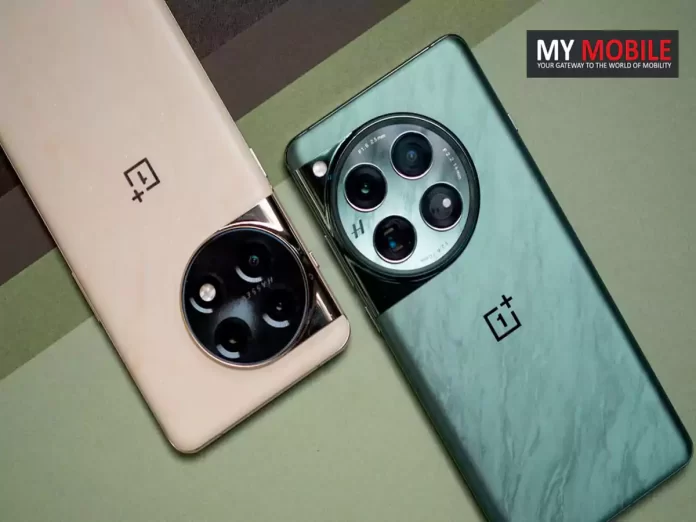
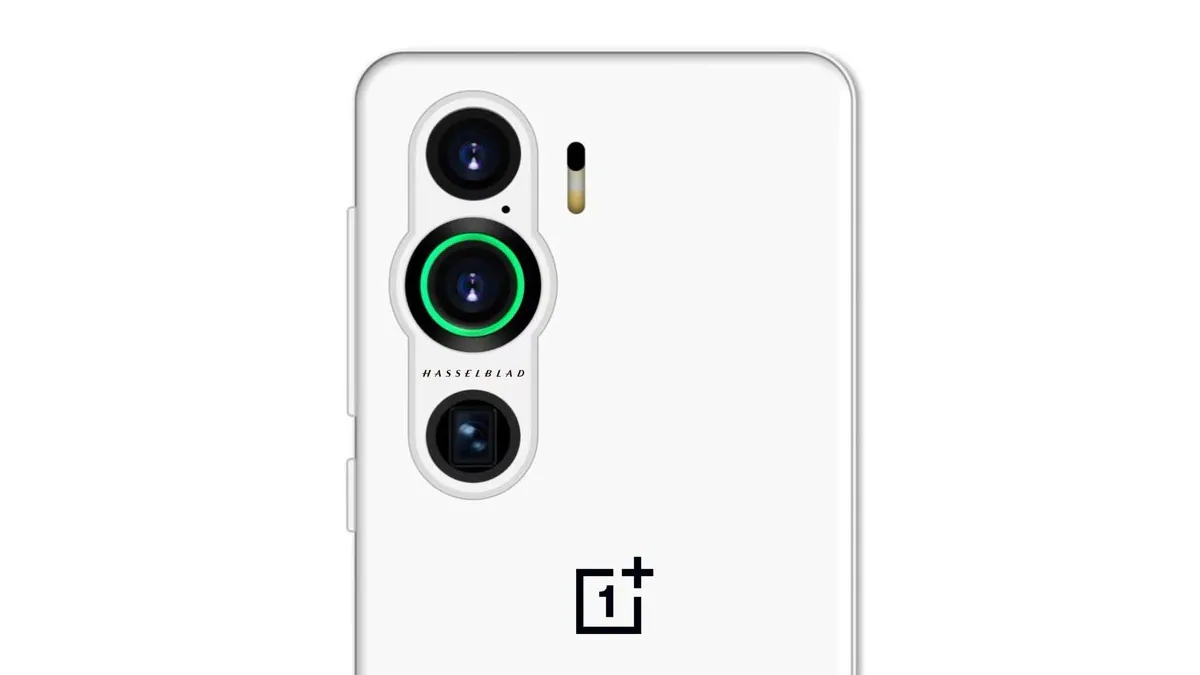
OnePlus and Oppo rumored to end partnership with Hasselblad.
Speculation hints at lack of expected camera improvements.
Vivo and Zeiss, Xiaomi and Leica collaborations still thriving.
Potential shift towards proprietary photography systems by OnePlus and Oppo.
Brands like OnePlus, Oppo, Vivo, and Xiaomi often leverage partnerships with iconic photography brands to enhance their camera technology.
These collaborations have brought legendary names like Hasselblad, Zeiss, and Leica into the pockets of aspiring photographers worldwide.
The tide looks to be changing though.
The Changing Tide of Partnerships
OnePlus and Oppo’s Hasselblad Partnership Ending
Recent buzz in the tech community suggests a potential shift in these alliances.
Tipster Yogesh Brar has hinted at the possibility of OnePlus and Oppo parting ways with Hasselblad, as the partnership reportedly hasn’t met expectations in terms of camera improvements.
This speculation raises questions about the future of such collaborations and whether these brands might follow Huawei’s path in developing their proprietary photography systems, like Huawei’s XMAGE.
The Success Stories
Vivo and Zeiss Collaboration Over?
Not all partnerships are rumored to be in jeopardy, however.
The Vivo and Zeiss collaboration, along with Xiaomi’s alliance with Leica, are being reported as success stories, setting benchmarks in smartphone photography.
Yet, conflicting reports about the Vivo-Zeiss partnership from another tipster Kartikey Tyagi suggest it may also be reaching its conclusion, casting a shadow of uncertainty over future co-engineered products.
What Lies Ahead
OnePlus and Oppo May End Hasselblad Partnership in Camera Tech Shake-Up
The potential end of these partnerships doesn’t spell doom for smartphone photography. Instead, it could mark a new chapter where brands like OnePlus, Oppo, and Vivo might invest in developing their in-house photographic technologies.
For consumers, the landscape of smartphone camera technology presents both challenges and opportunities.
While the dissolution of partnerships with esteemed photography brands might seem like a loss, it will lead to more diverse offerings in the market.
Brands venturing into their own photography systems may also introduce unique features and improvements not possible within the confines of a partnership.
OnePlus and Oppo rumored to end partnership with Hasselblad
FAQs
Is the OnePlus and Oppo partnership with Hasselblad ending?
Recent rumors, particularly from tipster Yogesh Brar, suggest that OnePlus and Oppo may discontinue their collaboration with Hasselblad due to unmet expectations in camera advancements.
What might OnePlus and Oppo do if the Hasselblad partnership ends?
Should the partnership with Hasselblad conclude, OnePlus and Oppo are expected to explore the development of their own proprietary photography systems, following a trend set by Huawei with its XMAGE system.
How have other brand partnerships in smartphone photography fared?
While the OnePlus and Oppo-Hasselblad partnership faces uncertainty, collaborations between Vivo and Zeiss, as well as Xiaomi and Leica, are reported to be successful, setting high standards in mobile photography.
What does the potential end of these partnerships mean for consumers?
The conclusion of these collaborations could lead to a more diverse smartphone camera market. OnePlus and Oppo venturing into proprietary technologies may offer unique features and improvements, enhancing consumer choice.
Will Vivo and Zeiss continue their partnership?
Despite success stories, there are conflicting reports about the future of the Vivo-Zeiss partnership, with some speculation that it may also be nearing its end, indicating a period of transition in smartphone photography partnerships.
India’s smartphone market grows by 1%, shipping 146 million units in 2023.
ASP reaches record $255, marking the third year of double-digit growth.
Online channel share drops to 49%, while offline sales grow by 8%.
5G smartphones gain a 55% market share, with nearly a million foldable phones shipped.
In a year marked by cautious optimism, India’s smartphone market witnessed a modest year-over-year growth of 1%, shipping a total of 146 million units in 2023.
This figure comes amidst an unprecedented average selling price (ASP) surge, according to the International Data Corporation’s (IDC) Worldwide Quarterly Mobile Phone Tracker.
“The road to recovery for smartphones in 2024 looks strained and elongated, as worries around income, inflationary stress, price increases, and inventories remain. 2023 was all about affordable 5G devices, timely price corrections, and offline channel expansion by brands, whereas 2024 and beyond requires greater efforts, especially at entry-level price points, to fuel organic growth,” said Navkendar Singh, AVP, Client Devices Research, IDC India. “IDC estimates a flat to low single digit annual growth in 2024, primarily led by upgraders in ($200<$400) segment, backed by financing schemes, extended warranties and upgrade programs.”
“Most brands chose to reduce prices and offer additional channel margins in the last quarter to manage the inventory levels from post festive cyclic dip. This will give a lukewarm start to 2024 with cautious stocking by the channels,” said Upasana Joshi, Research Manager, Client Devices, IDC India.
“IDC estimates a flat to low single digit annual growth in 2024, primarily led by upgraders in (US$200<US$400) segment, backed by financing schemes, extended warranties and upgrade programs,” ends Singh.
A Year of Contrasts
IDC India’s Smartphone Market Grew by 1% YoY in 2023 to 146 Million Units. (Image: IDC)
The journey through 2023 was a tale of two halves for the Indian smartphone market.
The initial months saw a 10% decline in shipments, a slump offset by an 11% growth in the latter half of the year.
Remarkably, the final quarter alone boasted a 26% growth, with 37 million units shipped, thanks to a flurry of new model launches that exceeded expectations.
Pricing Dynamics
140 Million Smartphones Shipped Last Year in India as Country’s Smartphone Market Sees Modest Growth in 2023
A significant highlight of the year was the ASP reaching a new high of US$255, marking a 14% increase from the previous year.
This escalation, driven by the growing prominence of premium-segment smartphones and a surge in 5G adoption, represents the third consecutive year of double-digit ASP growth, posing challenges to market recovery.
Online vs Offline: The Channel Shift
India’s smartphone market grows by 1%, shipping 146 million units in 2023
The distribution channels saw a notable shift in 2023. Online sales dipped by 6%, reducing its market share to 49%, while offline channels experienced an 8% growth, buoyed by enhanced retail presence and strategic expansion into smaller towns and cities.
Segment-Wise Performance
5G smartphones gain a 55% market share, with nearly a million foldable phones shipped
The entry-premium (US$200-US$400) segment held steady, while the mid-premium (US$400-US$600) and premium (US$600-US$800) segments enjoyed growth, led by flagship models from OnePlus, Samsung, and Apple.
5G and Foldables: The New Frontier
5G smartphonescarved out a 55% share of the market, with 79 million units shipped in 2023.
The mass budget segment of 5G smartphones saw significant growth, while the entry-premium segment remained dominant.
Foldable phones also made their mark, with nearly a million units shipped, spearheaded by Samsung despite increased competition.
Unisoc has not been mentioned in the list but you would imagine it will also occupy a significant market share given the flurry of budget phones that are packing the SoC.
Key Highlights for 2023
– Shipments to online channels dropped by 6% and its share dropped to 49% in 2023, down from 53% in 2022. Offline channel shipments grew by 8% YoY as vendors strengthened their retail presence with lucrative premium offerings as well as an expansion into smaller towns and cities.
Price segment details
The entry level (sub-US$100) segment grew by 12% YoY to 20% share, up from 18% a year ago. While Xiaomi continued to lead, POCO (2nd) and Samsung (3rd) emerged in the top brand list.
Shipments to the mass budget (US$100<US$200) segment declined, with its share dropping to 44% from 51%, declining by 12% YoY. vivo, Realme and Samsung together accounted for 53% of shipments.
The entry-premium (US$200<US$400) segment remained flat, with 21% share. vivo and OnePlus had significant share, making up almost 40% of overall shipments in this price segment.
The mid-premium segment (US$400<US$600) reached a share of 5%, growing by 27% YoY. OnePlus continued to lead with 35% share, followed by Samsung and vivo. The premium segment (US$600<US$800) reached 3% share, growing by 23%, led by the iPhone 13, Galaxy S23/S23 FE and OnePlus 11. While Apple’s share declined, Samsung’s share more than doubled in this segment.
The super-premium segment (US$800+) registered the highest growth of 86%, with its share up from 4% to 7%. The iPhone14/13/14 Plus together accounted for 54% of shipments, followed by the Galaxy S23+/S23/S22+/S23 Ultra with 22% share. Overall, Apple led the segment with a share of 68%, followed by Samsung at 30%.
79 million 5G smartphones shipped in 2023, with a plethora of launches in the mass budget segment. 5G ASPs dropped to US$374, a decline of 5% YoY in 2023. Within 5G shipments, the mass budget (US$100<US200) segment share increased to 35% from 22% a year ago, while the entry-premium (US$200<US$400) segment continued to dominate with 38% share, albeit down from 49% in 2022. Apple’s iPhone 13 & 14, Samsung’s Galaxy A14, vivo’s T2x and Xiaomi’s Redmi12 were the highest shipped 5G models in 2023.
Almost a million shipments of foldable phones shipped, with ASPs declining by 4% at US$1,236. Samsung led the foldable phone market, although its share dropped to 73% in 2023 as other players such as Motorola, Tecno, OnePlus and OPPO have entered India’s foldable market.
The share of MediaTek-based smartphones increased to 50%, growing by 6% YoY. vivo’s T2x, Xiaomi’s Redmi A2, and Realme’s C55 were the highest shipped MediaTek-based models. Qualcomm’s share dropped to 25%, a shipment decline of 6% YoY. Brand performance
Apple had a stellar year, finishing at 9 million units, despite having the highest ASP of US$940. This was led by previous generation iPhone models and its push for local manufacturing. Its iPhone 13/14 were amongst the Top 5 shipped models annually. As a brand, Samsung remained in the leadership position, with a record high ASP of US$338, although with a 5% shipment decline YoY. Its Galaxy A14 was the highest shipped device of 2023.
vivo (excluding iQOO) climbed to the second slot as shipments and ASPs both grew by 8% and 9% respectively. It was the only brand to register growth amongst the top five brands. Realme, despite facing challenges in the beginning of the year, maintained its third position, led by affordable launches.
After declining for four consecutive years, 61 million feature phones shipped, growing by 8% YoY. While Samsung exited the feature phone segment, Transsion continued to lead, followed by Lava. The entry of Reliance Jio’s new 4G feature phone fueled growth in 2H23.
FAQs
What was the growth rate of India’s smartphone market in 2023?
India’s smartphone market experienced a nominal growth of 1% year-over-year, with a total of 146 million units shipped in 2023.
How did the average selling price (ASP) change in 2023?
The ASP of smartphones in India hit a record high of $255 in 2023, reflecting a 14% increase from the previous year and marking the third consecutive year of double-digit growth.
What trends were observed in online vs. offline sales channels in 2023?
In 2023, online sales of smartphones in India declined by 6%, reducing its market share to 49%. Conversely, offline channel shipments grew by 8%, as vendors expanded their retail presence.
How did 5G smartphones perform in the Indian market in 2023?
5G smartphones accounted for a 55% share of the Indian market in 2023, with 79 million units shipped. This segment saw significant growth, particularly in the mass budget category.
What has been Market share of smartphone brands in 2023 ?
The smartphone brand with the highest unit market share is Samsung which currently holds a share of 17 percent.
While this number is a decline from 2022, it still managed to outpace the likes of Vivo, Realme, and Xiaomi which also operate in similar price segments as Samsung.
Vivo witnessed an increase in its market share from 14.1 percent in 2022 to 15.2 percent in 2023 resulting in a positive 8.2 percent year-over-year change.
Realme and Xiaomi take up the third and fourth spot respectively in the smartphone market share with both on a decline in terms of year-over-year change.
Coming in fifth place is OPPO which had a total market share of 10.3 percent in 2023, which again is a decline from 2022.
Perceived as premium brands by the general public, Apple and OnePlus saw a growth of 38.6 percent and 48.7 percent respectively on a year-over-year basis and took up the sixth and seventh positions in the phone market share.
Brands such as POCO, Infinix, and Tecno which tend to offer impressive specifications on their smartphones at aggressive prices are the ones that exhibited the most growth in terms of market share.
What are the Key trends in the smartphone space in 2023 ?
A total of 79 million 5G smartphones were shipped for the budget segment alone in 2023. However, the average selling price of a 5G smartphone decreased to $374 (approx. Rs 31,000) towards the end of last year.
Some of the most shipped 5G smartphones in 2023 include Apple iPhone 13, iPhone 14, Samsung Galaxy A14 5G, Vivo T2x, and Redmi 12 5G.
Close to about 1 million foldable smartphones were shipped in 2023 which also saw Samsung losing some market share in the foldable space to new entrants like Motorola, Tecno, OnePlus, and OPPO.
MediaTek-powered smartphones witnessed a year-on-year increase of six percent taking up the total share in the smartphone market to 50 percent. Vivo T2x, Redmi A2, and Realme C55 were the highest-shipped MediaTek-based models in 2023. On the other hand, Qualcomm’s share declined to 25 percent.
What are the Key insights of Indian smartphone market in 2023 across price segments ?
Entry-level $100 (approx Rs 8,300) – The smartphone market under Rs 8,300 in India saw an increase of 12 percent year-over-year and now contributes 20 percent share in the market. Xiaomi led this segment closely followed by POCO and Samsung.
Mass budget $100 to $200 (approx Rs 8,300 to Rs 16,600) – This particular smartphone price segment declined from 51 percent to 44 percent market share towards the end of 2023. Major contributors to this segment include Vivo, Realme, and Samsung.
Entry-premium $200 to $400 (approx. Rs 16,600 to Rs 33,000) – The entry-premium smartphone category didn’t witness any significant growth or losses and remained at 21 percent market share. Vivo and OnePlus were the winners in the segment.
Mid-premium $400 to $600 (approx. Rs 33,000 to Rs 50,000) – Coming to the mid-premium smartphone segment, with an impressive year-on-year growth of 27 percent, this category had a total share of 5 percent in the smartphone space. OnePlus largely maintained the lead with a 35 percent share with Vivo and Samsung being right behind.
Premium $600 to $800 (approx. Rs 50,000 to Rs 66,000) – Next up is the premium segment in which handsets like Apple iPhone 13, Samsung Galaxy S23/S23 FE, and OnePlus 11 remained consumer favourites. This segment’s contribution to the total smartphone market share increased to 3 percent where Samsung doubled its numbers while Apple saw a decline in its market share.
Super-premium $800 (Rs 66,000) and above – The ultra-premium smartphone space was spearheaded by the likes of Apple and Samsung. This segment recorded the highest growth of 86 percent with its share increasing from four percent to seven percent.
How did the Indian smartphone market perform in the third quarter of 2023?
The Indian smartphone market demonstrated consistent year-on-year growth during the third quarter of 2023, with a total of 44 million units shipped. Samsung maintained its position as the market leader despite a slight dip in market share compared to the previous year.
What trends were observed in the 5G smartphone segment in India?
The 5G segment within the Indian smartphone market experienced robust growth, with 5G device shipments reaching a 58% share of the total market. This growth was facilitated by the launch of budget-friendly 5G models and various discounting strategies.
Which smartphone brands are leading in India’s premium market segment?
In India’s premium smartphone segment, significant growth was led by high-end models such as the Apple iPhone 13 and the Samsung Galaxy S23 series. The segment itself grew by 52%, indicating a healthy consumer interest in premium devices.
Has there been a change in the average selling price (ASP) of smartphones in India?
Yes, there has been an increase in the ASP of smartphones in the Indian market, with a rise to approximately Rs 21,000 (US$253). This represents a 12% year-on-year growth and a 5% increase from the previous quarter.
What makes the mid-range smartphone segment so popular in India?
The mid-range smartphone segment, typically priced between Rs 20,000 and Rs 30,000, has gained immense popularity in India due to its balance of high-end features and affordability.
Phones like the iQOO Neo 7 and Vivo V27 offer advanced capabilities, such as high-quality displays and powerful cameras, without the steep price tag of flagship models.
Which smartphones are currently leading in this price range?
In 2023, smartphones like the iQOO Neo 7, Vivo V27, Motorola Edge 40, and POCO F5 are among the top contenders in the mid-range market.
These phones have attracted consumers with their impressive specifications, such as AMOLED displays, high refresh rates, and substantial battery life.
What are the key features consumers look for in mid-range smartphones?
Consumers in the mid-range smartphone market typically seek features that were once exclusive to high-end models.
This includes AMOLED displays with high refresh rates, large battery capacities with fast charging, high-resolution multi-camera setups, and powerful processors for smooth performance.
How has the mid-range smartphone market evolved in 2023?
The mid-range smartphone market in 2023 has seen significant advancements, with manufacturers focusing on delivering premium features at more accessible price points.
This includes better screen technology, enhanced camera capabilities, and more efficient processors, catering to the growing demand for high-quality yet affordable smartphones.
Triple 50MP rear cameras with advanced apertures for diverse photography.
Sleek design featuring a lighter body and a larger 5300mAh battery.
73″ 2K OLED LTPO display with peak brightness of 3000 nits.
Snapdragon 8 Gen 3 SoC paired with up to 16GB RAM for top-notch performance.
As more details about the Xiaomi 14 Ultra emerge, the device looks like it might be a leap in smartphone innovation.
Following the initial teaser renders, new information sheds light on the triple rear 50MP camera setup, among other cutting-edge features, setting the stage for what could be a major contender in the high-end smartphone market.
Pricing and Availability
Xiaomi 14 Ultra’s full specs leak with images
While the official price for the German market remains unannounced, rumours suggest a starting price of 1,499 euros for the 16GB + 512GB variant in France.
Xiaomi 14 Ultra Detailed specs & more renders surface
The Xiaomi 14 Ultra will have three rear cameras that will all boast a 50MP sensor, with the main camera featuring a f/1.6 aperture for superior low-light performance.
The ultra-wide and periscope cameras are not far behind, with f/1.8 and f/3.0 apertures, respectively, promising versatile shooting capabilities.
While the exact sensor details remain under wraps, rumors suggest a collaboration with Sony, utilizing the Lytia LYT-900 sensor for the main camera and the IMX858 for the additional lenses.
Design with Enhanced Battery
XIAOMI 14 ULTRA FIRST OFFICIAL IMAGES AND PRE-ORDER DETAILS REVEALED
Despite housing a larger 5300mAh battery, the Xiaomi 14 Ultra will maintain a sleek profile, weighing in at 220 grams and measuring 9.2mm in thickness.
This is a slight reduction in weight compared to its predecessor, the Xiaomi 13 Ultra, without compromising on battery capacity.
Display and Performance at Its Core
Xiaomi 14 Ultra Set to be First Ultra Device Without Curved Display
The device doesn’t skimp on display quality either, boasting a 6.73″ 2K OLED LTPO screen capable of reaching a peak brightness of 3000 nits.
Connectivity options are as advanced as ever, with support for Wi-Fi 7, Bluetooth 5.4, and multiple satellite navigation systems, ensuring that the Xiaomi 14 Ultra stays connected in every sense of the word.
HDR, Night Mode 2.0, Ultra Night Photos, Portrait, AI Beauty, AI Smart Slimming, Custom Watermark,
Video Recording
8K, 4K, 1080p, 720p
Flash
Yes, Dual LED
Front Camera
Punch Hole 32 MP f/2.2 (Wide Angle) with Autofocus and Screen Flash
Front Video Recording
1080p, 720p
TECHNICAL
OS
Android v14
Custom UI
MIUI 14
Chipset
Qualcomm Snapdragon 8 Gen3
CPU
Octa Core Processor
GPU
Adreno GPU
IP Rating
IP68
Java
No
Browser
Yes
MULTIMEDIA
Email
Yes
Music
MP3, FLAC, APE, AAC, OGG, WAV, WMA, AMR, AWB
Video
MP4, MKV, AVI, WMV, WEBM, 3GP, ASF playback
FM Radio
No
Document Reader
Yes
BATTERY
Type
Non-Removable Battery
Size
5000 mAh, Li-Po Battery
Fast Charging
Yes, 120W Fast Charging
Wireless Charging
Yes, 55W
Reverse Charging
Yes, 15W
FAQs
What makes the Xiaomi 14 Ultra’s camera setup stand out?
The Xiaomi 14 Ultra is expected to feature a triple 50MP camera system with varying apertures for the main, ultra-wide, and periscope cameras, promising exceptional low-light performance and versatility in photography.
How does the Xiaomi 14 Ultra improve in design and battery over its predecessor?
Despite incorporating a larger 5300mAh battery for extended use, the Xiaomi 14 Ultra manages to maintain a sleek profile at 220 grams and 9.2mm thickness, offering enhanced portability and durability.
What display technology can we expect with the Xiaomi 14 Ultra?
Rumors point to a 6.73-inch 2K OLED LTPO display on the Xiaomi 14 Ultra, which supports a variable refresh rate up to 120Hz and delivers exceptional brightness up to 3000 nits for an immersive viewing experience.
How is the Xiaomi 14 Ultra’s performance anticipated to compare with current models?
With the incorporation of the Snapdragon 8 Gen 3 SoC and options for up to 16GB of RAM, the Xiaomi 14 Ultra is expected to deliver seamless performance for both everyday tasks and demanding applications.
What are the rumored pricing and availability for the Xiaomi 14 Ultra?
While official pricing for the German market is not yet announced, the Xiaomi 14 Ultra is rumored to start at 1,499 euros for the 16GB + 512GB variant in France, indicating a premium positioning in line with its advanced features.
How is the display & design of xiaomi 14 ultra ?
The 14 Ultra boasts a stunning 6.73-inch OLED display with a 1440 x 3200 resolution and a 120Hz refresh rate. Protected by Corning Gorilla Glass Victus 2, it promises vivid visuals and buttery smooth scrolling.
While leaks suggest minimal design changes from the Xiaomi 13 Ultra, rumours hint at a titanium special edition that exudes luxury. Color options include classic Black and White, alongside eye-catching Jade Green and the unique Snow Mountain Pink with its nano-tech skin.
What are the Additional Features available in Xiaomi 14 Ultra ?
Beyond the core specs, the 14 Ultra is rumoured to pack exciting features like an in-display fingerprint sensor, IP water resistance, and stereo speakers with Dolby Atmos support. Xiaomi’s custom X-axis linear motor is also expected to provide immersive haptic feedback.
What are the Early Bird Incentives and Blind Pre-Orders of Xiaomi 14 Ultra ?
Excitement surrounds the Xiaomi 14 Ultra, as evidenced by Xiaomi already accepting pre-orders in China.
Early adopters receive enticing bonuses and participate in a draw for valuable prizes. However, with official pricing and detailed specifications yet to be announced, these pre-orders are essentially “blind,“.
Requiring trust in Xiaomi’s reputation and the promise of a premium flagship experience.
The official launch on February 25th will answer remaining questions and provide a complete picture of the Xiaomi 14 Ultra’s capabilities.
With its flat-screen design, intriguing camera system, and early bird incentives, the phone undoubtedly has the potential to be a major contender in the high-end smartphone market.
What are Xiaomi 14 Ultra rumoured specifications ?
6.73-inch (3100 x 1440 pixels) OLED LTPO display, 1-120Hz variable refresh rate, HDR10+, Dolby Vision, Xiaomi Ceramic Glass protection
Octa Core Snapdragon 8 Gen 3 4nm Mobile Platform with Adreno 750 GPU
12GB / 16GB LPPDDR5x RAM with 256GB / 512GB / 1TB UFS 4.0 storage
Dual SIM (nano + nano)
Xiaomi HyperOS based on Android 14
50MP rear camera with 1″ Sony LYT-900 sensor, f/1.6, Hyper OIS, LED flash, Leica Summilux lens, 50MP 115° Leica ultra-wide angle lens with f/1.8 aperture, 50MP 3.2X Leica telephoto camera with f/3.0 aperture, OIS, Sony, 50MP 5X Leica periscope telephoto camera with f/3.0 aperture, OIS, 8K video recording
32MP front-facing camera with f/2.0 aperture, 4K 60 fps recording
In-display fingerprint sensor, Infrared sensor
USB Type-C audio, Hi-Res audio, Stereo speakers, Dolby Atmos, 4-microphone array
Dust and waterproof (IP68)
5G SA/NSA, Dual 4G VoLTE, Wi-Fi 7 802.11 be, Bluetooth 5.4, Beidou, Galileo, GLONASS, GPS (L1 + L5), NavIC, USB Type-C 3.2 Gen 1, NFC
5,300mAh (Typical) battery with 90W wired fast charging, 50W wireless charging, 10W wireless charging
Xiaomi 14 and Xiaomi 14 Pro: Check Details ?
The Xiaomi 14-series, comprising the Xiaomi 14 and Xiaomi 14 Pro models, is already available in the company’s home country. Both smartphones are powered by Qualcomm’s latest Snapdragon 8 Gen 3 chipset and run on Xiaomi’s new “HyperOS” based on Android 14 straight out of the box.
Based on China’s variant, the Xiaomi 14 Pro and Xiaomi 14 may feature a 50MP (OIS) main camera, a 50MP telephoto lens ar
APP
50MP ultra-wide lens. On the front, theres a
32MP selfie camera for capturing stunning self-portraits.
The Xiaomi 14 Pro is expected to feature a
6.73-inch 2K AMOLED display, while on the other hand, the Xiaomi 14 is tipped to feature a slightly smaller 6.36-inch 1.5K
OLED display.
Launched with a starting price of Rs 6,999 and peaking at Rs 7,999 for the higher-end variant, the Moto G04 is positioned as an accessible yet feature-rich device.
I had a chance to review this device and dive into its various facets, with the aim of equipping you with all the information needed to decide if this smartphone aligns with your needs.
Moto G04: Pros and Cons
Pros
Cons
Affordable Pricing
Very Basic Camera Setup
High Refresh Rate Display
Limited Performance
Clean Software
Moto G04: Key Specs
Moto G04: Key Specs
Display: 6.56-inch IPS LCD, 90Hz refresh rate
Processor: Unisoc T606 SoC
Camera: 16MP primary rear camera
Battery: 5000mAh with 15W charging
Software: Android with Motorola’s My UX
Design: IP52 water-repellent
Connectivity: Bluetooth 5.0, dual-band Wi-Fi, USB Type-C
Design and Display
Moto G04 Design: A Closer Look
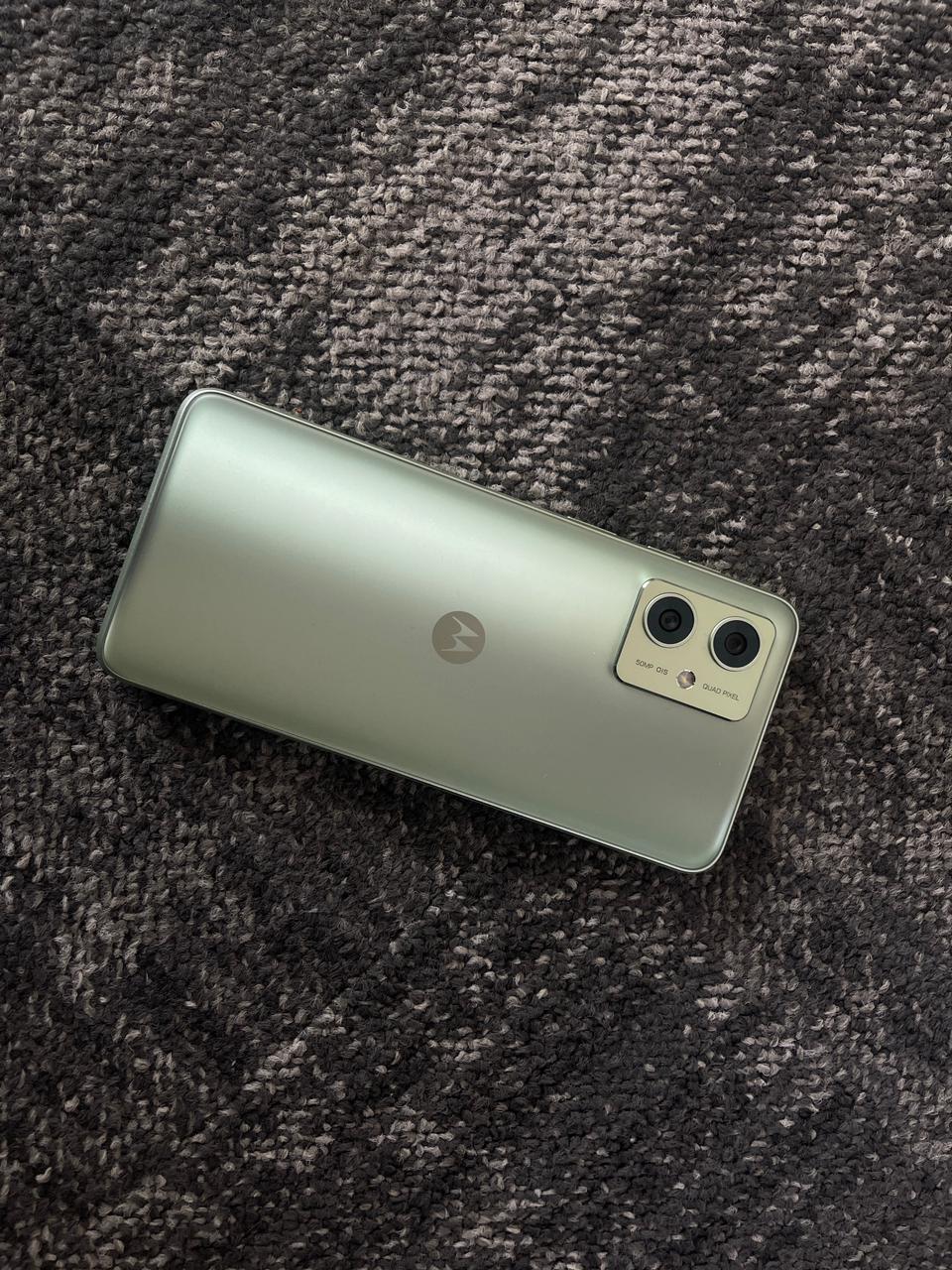
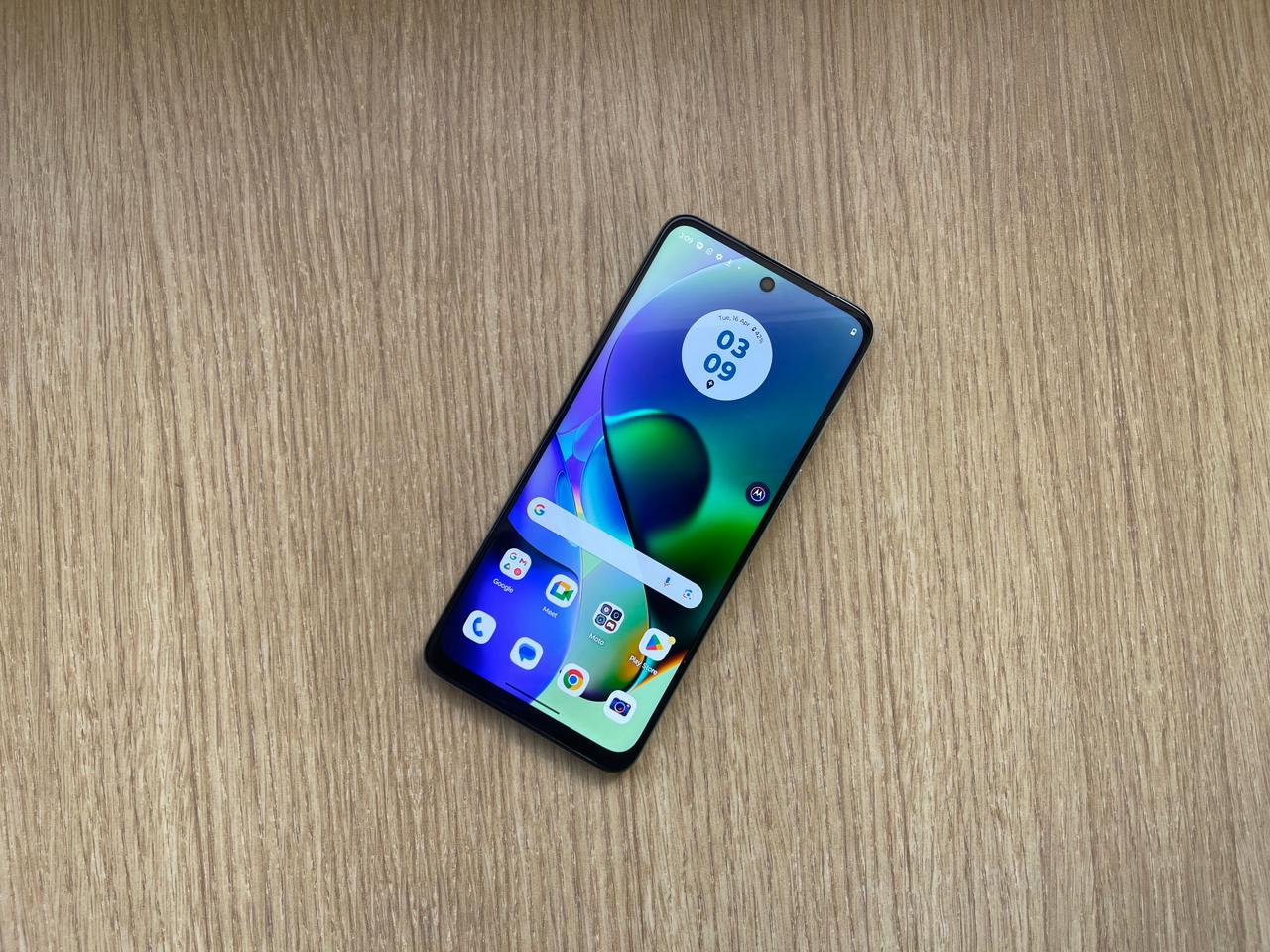
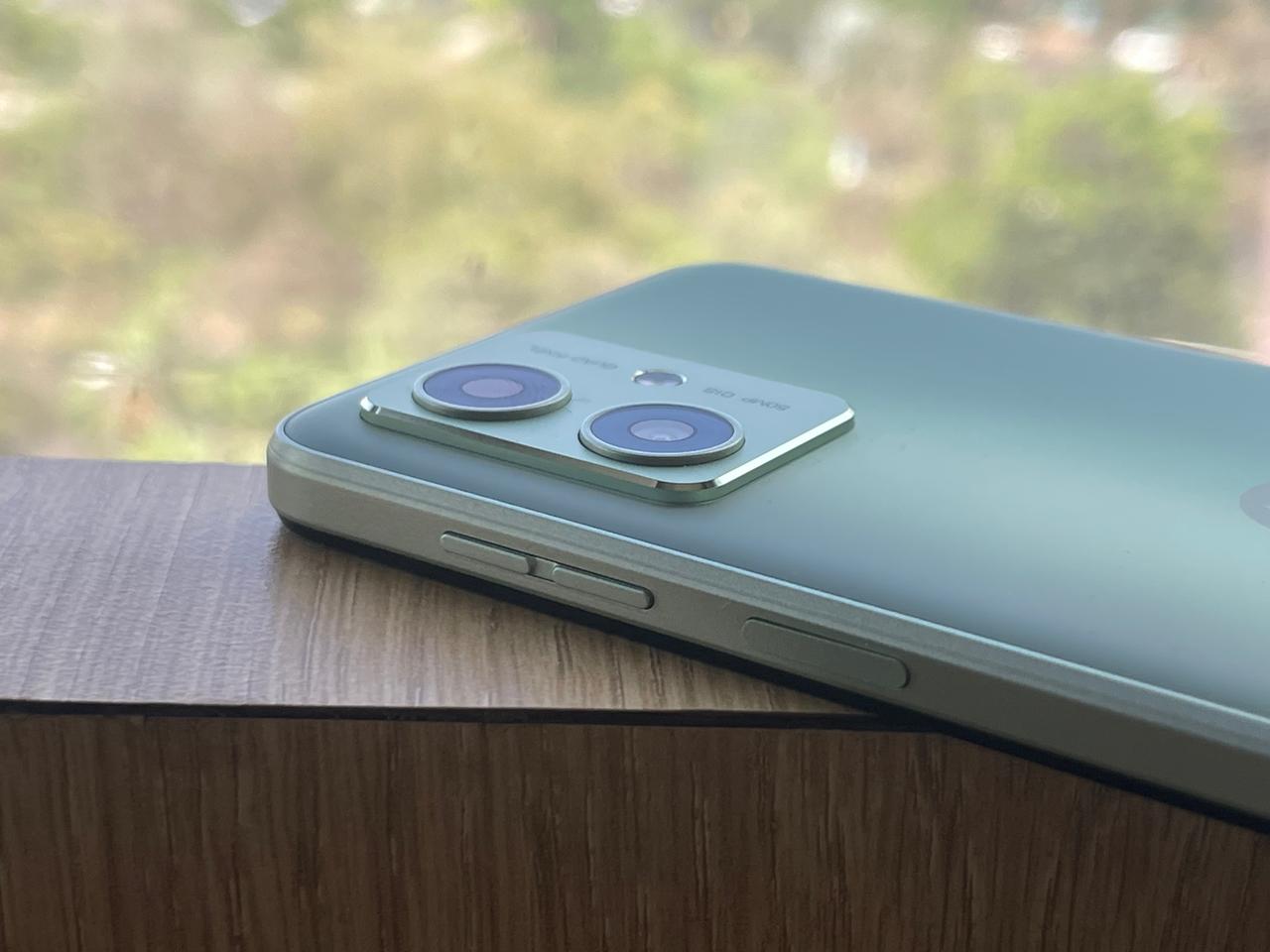
The design ethos of Motorola shines brightly with the Moto G04, especially with its sea green variant, which boasts a subtle shimmer and a matte finish, offering a premium feel that belies its price point.
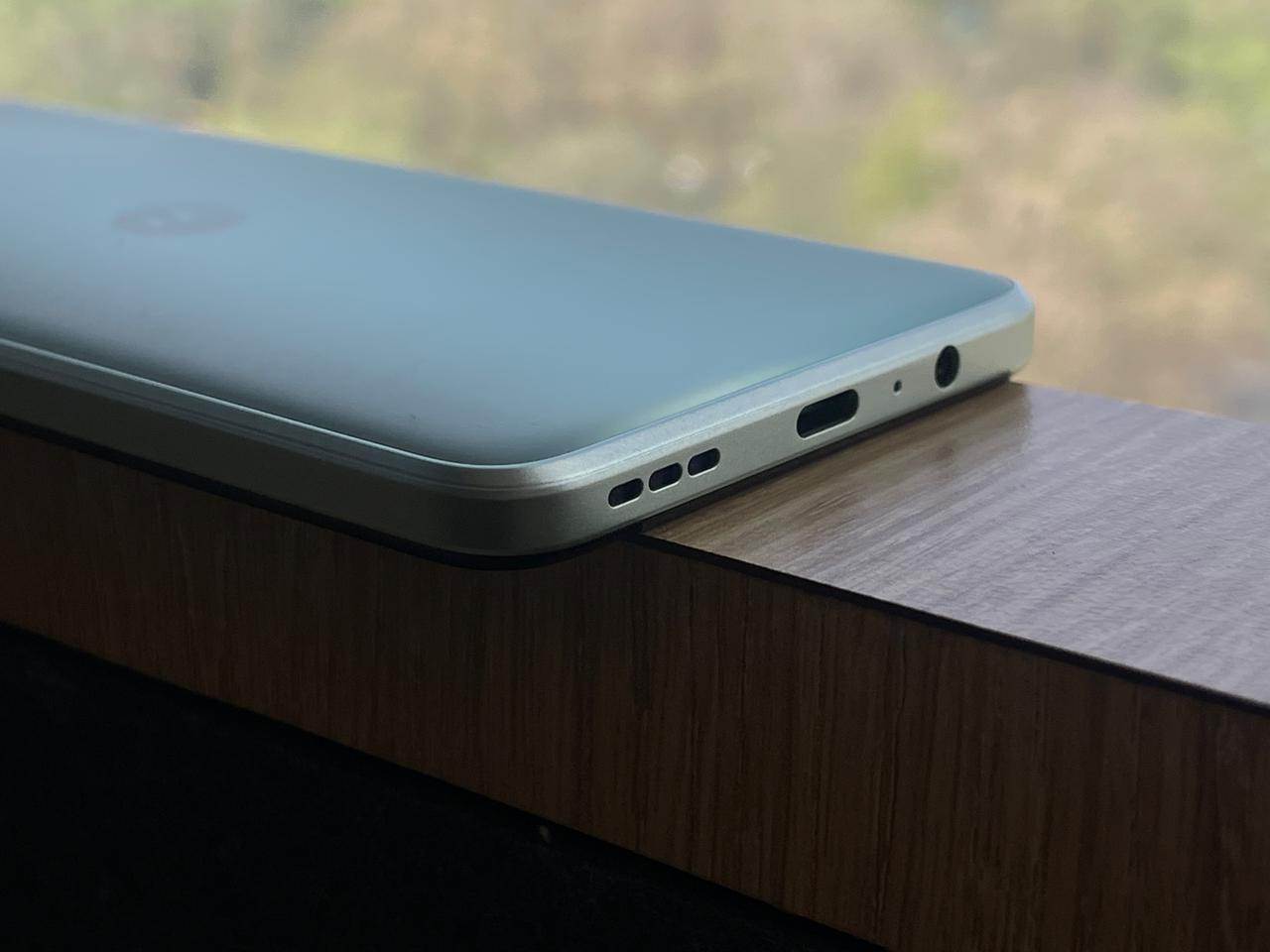
I feel that the Moto G04 design is not just about aesthetics but also functionality, with flat edges that ensure a firm grip and easily accessible display edges.
Additionally, the IP52 rating provides a degree of protection against water splashes, further enhancing its durability.
Moto G04 Powered by Unisoc T606 SoC for efficient daily performance
From my time using the handset, I can say for sure that it manages to stand out with its design, presenting itself as a device from a higher price segment.
It also features the Dolby Atmos branding and, while it houses a single speaker system rather than the stereo setup found in its sibling, the Moto G24 Power, the audio output is surprisingly clear and loud, offering a satisfactory auditory experience.
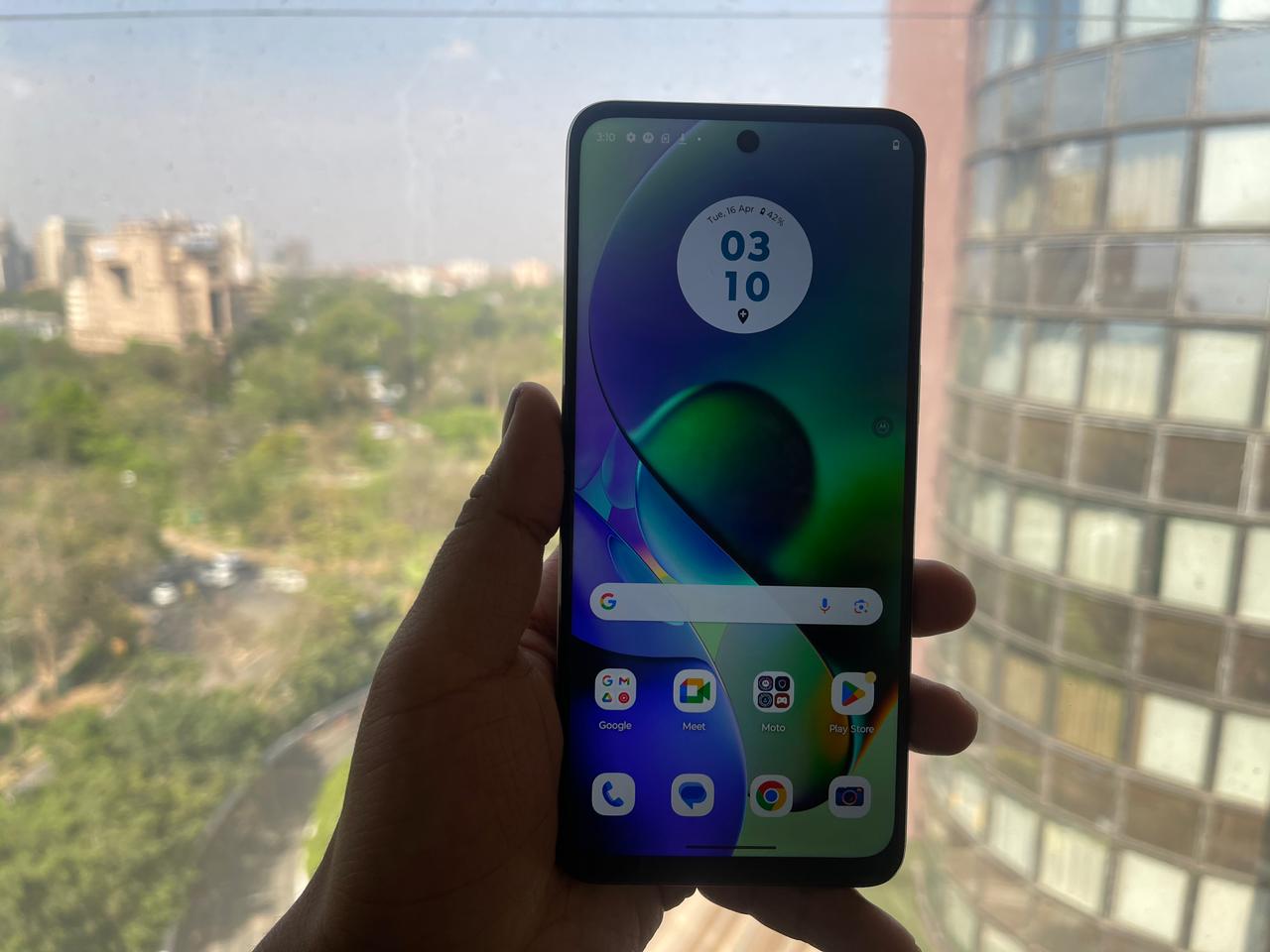
The display is a 6.56-inch LCD panel, offering HD+ resolution and a 90Hz refresh rate.
I don’t think it is the most colourful or even the brightest outdoors, but it provides apleasant viewing experience indoors with decent colour reproduction and enhanced smoothness courtesy of the high refresh rate, making daily interactions on the device notably smoother.
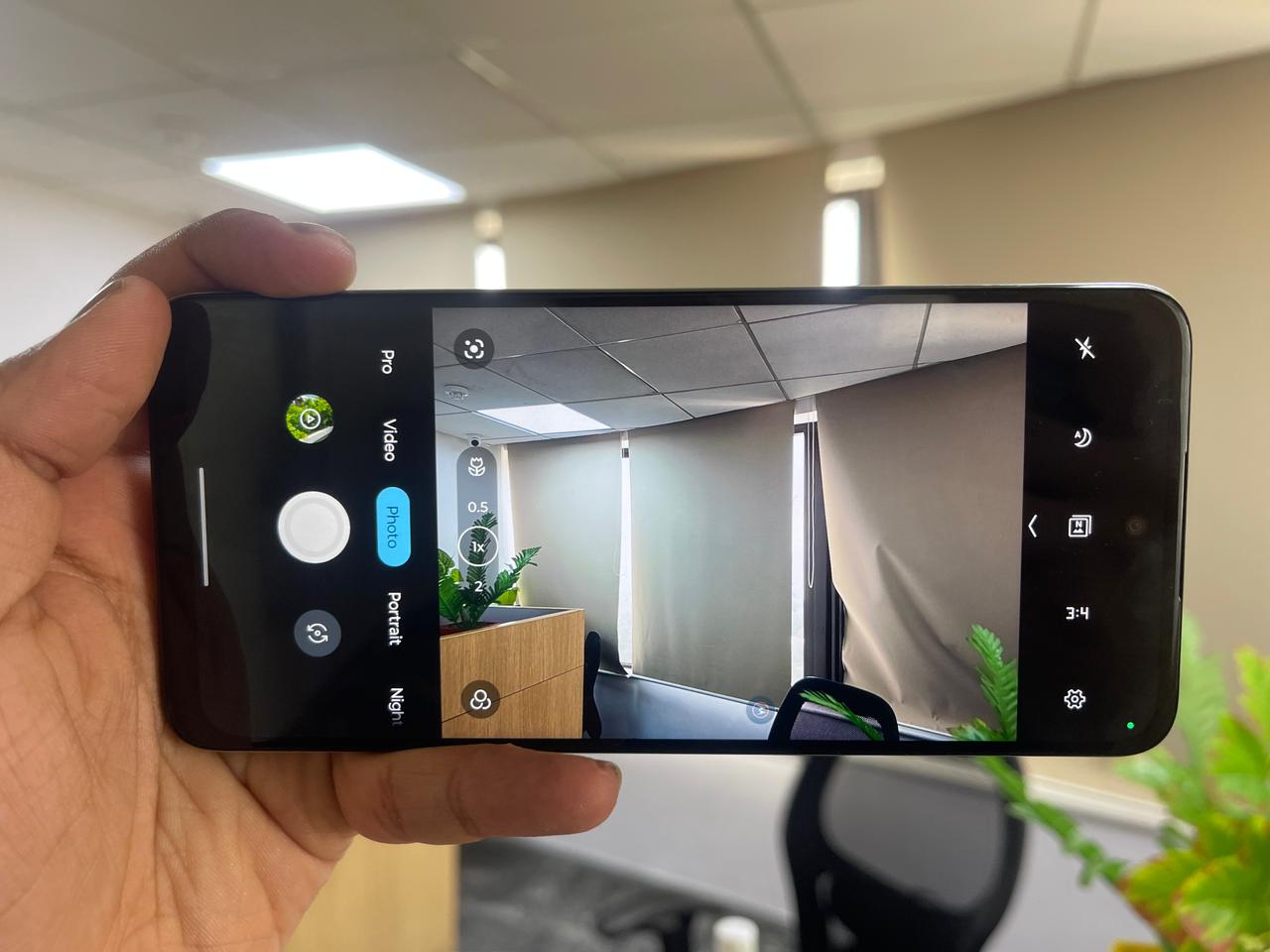
The Moto G04 sports a single 16MP primary camera at the back and a 5MP front-facing camera.
There’s not much to say about it as it lacks any kind of camera versatility, like say someofferings from Infinix or Tecno.
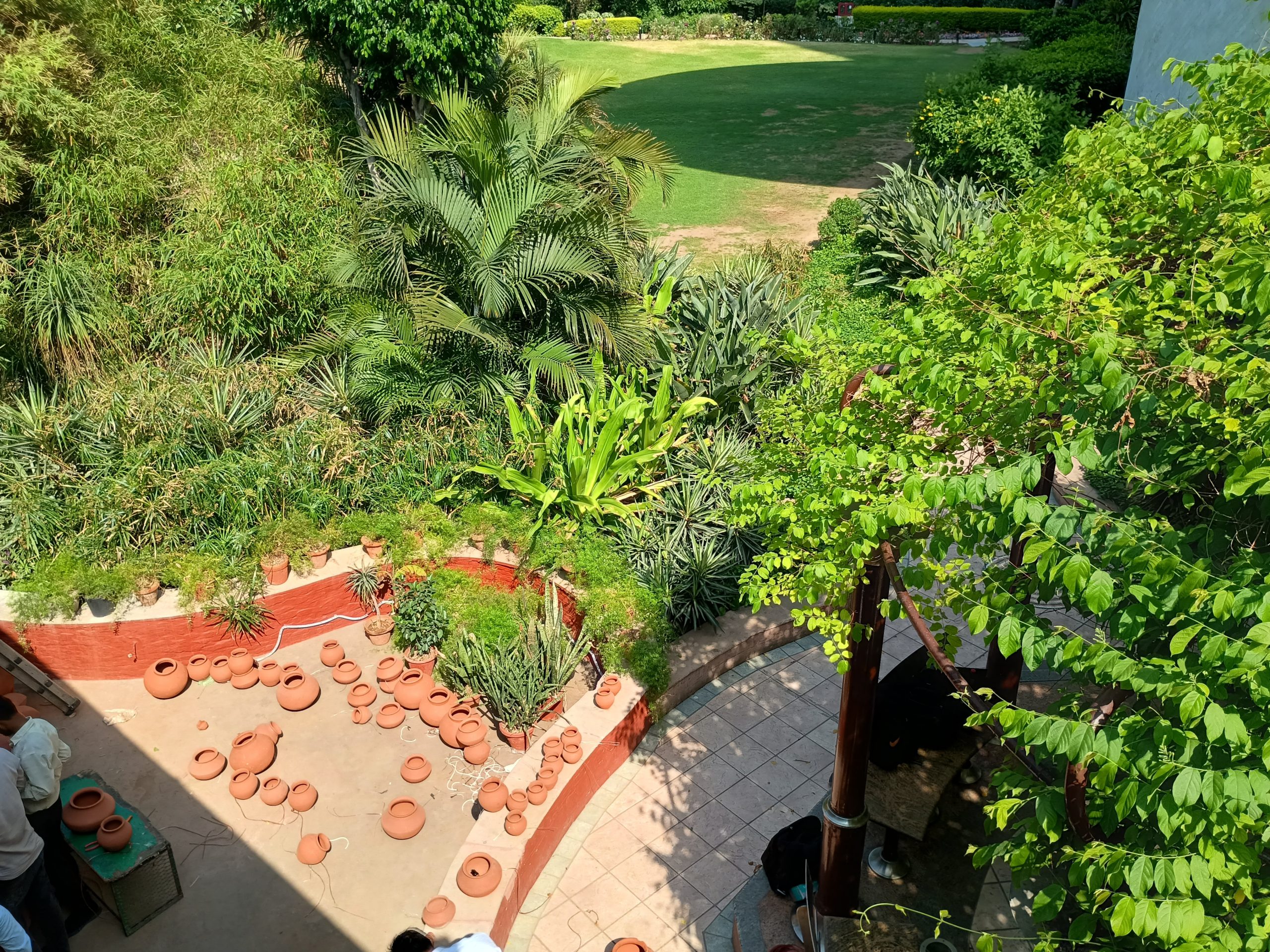
The outdoor photography yields decent results with acceptable detail and color accuracy, although the dynamic range could be improved.
e Moto G04’s camera setup appears promising for its segment
Indoor and low-light conditions challenge the camera, with noticeable decreases in detail and sharpness, and a significant presence of noise.
Night mode attempts to mitigate these issues but with limited success.
Selfie performance is adequate, with the main detractors being noise and a general softness in the images.
Overall not the most seasoned optical hardware to deal with but for the price there is not much else you can expect.
Moto G04 Day Camera Samples

Moto G04 Night Camera Samples

Moto G04 Daylight Video
Moto G04 Nightlight Video
Performance, Features, and Connectivity
Moto G04 Performance and Features: Preliminary Insights
At its core, the Moto G04 is powered by the Unisoc T606 chipset.
My model, with 8GB RAM and 128GB storage, performed adequately in managing basic tasks, though it’s clear that the device is not cut out for heavy multitasking or demanding applications.
That being said, it is very unlikely you will be able to play any kind of heavy-duty games on the device.
Features-wise the fingerprint sensor works adequately and unlocks in a jiffy. Network connectivity and other wireless options like Bluetooth and WiFi also have no issues.
The audio from the single speaker unit at the bottom is serviceable for my needs.
Software and Battery
Moto G04 Software and Battery: First Thoughts
One of the highlights of the Moto G04 is its software; it runs Android 14 out of the box.
While the absence of major OS upgrades might be a downside for some, I think that the inclusion of the latest Android version and Motorola’s commitment to the software experience through MyUX features like ambient display and gestures is commendable.
The device offers a stock-Android-like experience but may occasionally stutter in performance during intensive use. Nonetheless, for everyday tasks, it remains competent and reliable.
It’s noteworthy that the device comes with the January 2024 security patch, a pleasant surprise for a budget device, highlighting Motorola’s attention to security and software integrity.
The 5000mAh battery within the Moto G04 confidently supports more than a day’s usage on a single charge, ideal for regular activities like browsing social media and messaging.

With 15W fast charging, the device can be fully recharged in just over an hour and a half, ensuring minimal downtime.
Final Verdict
Moto G04 Summary: Anticipation Builds
The Moto G04 stands as a testament to Motorola’s ability to offer value-driven devices that cater to the essentials while throwing in some pleasant surprises, such as a high-refresh-rate display and the latest Android software.
While it may not excel in every area, particularly in camera performance under challenging lighting conditions, its design, display, and overall user experience make it a compelling option for those seeking an affordable smartphone that doesn’t compromise on the basics.
MyMobile Rating
Moto G04 MyMobile Rating
Design – 4/5
Display – 3.5/5
Cameras – 3/5
Performance – 3.5/5
Software – 4/5
Battery 3.5/5
Overall – 3.5/5
5 Reasons to Buy the Moto G04

Affordable Pricing: Starting at Rs 6,999, the Moto G04 offers an excellent blend of features and functionality, making it a highly accessible option for those on a tight budget without sacrificing on essential smartphone capabilities.
Design and Build Quality: With its unique sea green variant, subtle shimmer, and matte finish, the Moto G04 offers a premium feel and ergonomic design, including flat edges for a secure grip, that belies its affordable price tag.
Smooth Display with High Refresh Rate: The 6.56-inch LCD panel with HD+ resolution and a 90Hz refresh rate ensures smoother scrolling and interaction, enhancing the daily user experience, especially for media consumption and web browsing.
Latest Android Experience with Added Features: Running Android 14 out of the box and equipped with Motorola’s MyUX features, the Moto G04 provides a stock-Android-like experience with additional functionalities like ambient display and gestures, making it up-to-date with the latest software trends.
Reliable Battery Life with Fast Charging: The inclusion of a 5000mAh battery capable of supporting more than a day’s usage on a single charge, coupled with 15W fast charging, means less downtime and more productivity or entertainment throughout the day.
3 Reasons Not to Buy the Moto G04
Limited Camera Capabilities: The Moto G04 sports a basic camera setup with a single 16MP rear camera and a 5MP front camera, lacking versatility and struggling in low-light conditions, which might not satisfy those who prioritize photography in their smartphone use.
Average Performance for Heavy Tasks: Powered by the Unisoc T606 chipset and with configurations up to 8GB RAM and 128GB storage, the Moto G04 is best suited for basic tasks and may not meet the expectations of users looking to perform intensive gaming or multitasking.
Lack of Major OS Upgrades: Despite launching with Android 14, the Moto G04 is not expected to receive any significant OS upgrades, potentially limiting its long-term appeal to users who desire continual software updates and new features over time.
Top 5 Alternatives To Moto G04
Xiaomi Redmi 12C
Xiaomi Redmi 12C
Features MediaTek Helio G85, a 6.71-inch IPS LCD display, and a 50MP dual primary camera setup.
Tecno Spark Go 2024
Tecno Spark Go 2024
Offers a Unisoc T606 processor, a 6.56-inch display with a 90Hz refresh rate, and a 13MP dual primary camera.
Infinix Smart 8 HD
Infinix Smart 8 HD
Comes with a Unisoc T606 processor, a 6.6-inch display also with a 90Hz refresh rate, and a 13MP dual primary camera.
Realme C51
Realme C51
Features a Unisoc T612 processor, a 6.74-inch display with a 90Hz refresh rate, and a 50MP dual primary camera setup.
POCO C51 128GB
POCO C51 128GB
Offers MediaTek Helio G36 processor, a 6.52-inch display, and an 8MP dual primary camera setup.
moto g04 Specs
Spec
Detail
Operating System
Android™ 14
System Architecture/ Processor
UNISOC T606 processor with 2xA75 1.6GHz + 6xA55 1.6GHz octa-core CPU, 650MHz ARM Mali-G57 MP1 GPU
Memory
4GB RAM, expandable up to 8GB with RAM Boost* 8GB RAM, expandable up to 16GB with RAM Boost*
Storage
64GB/128GB built-in | up to 1TB microSD card expandable
UFS 2.2
What is the price range of the Moto G04, and how does it stand out in the budget smartphone market?
The Moto G04 is priced between Rs 6,999 and Rs 7,999, making it a highly accessible option for those seeking feature-rich yet affordable smartphones. It distinguishes itself with a high-refresh-rate display and the latest Android software, presenting a strong value proposition.
How does the display quality of the Moto G04 contribute to its user experience?
The Moto G04 sports a 6.56-inch LCD panel with HD+ resolution and a 90Hz refresh rate. While it may not be the brightest outdoors, it ensures a pleasant viewing experience indoors with smooth interactions, enhancing the overall user experience.
Can the Moto G04 handle gaming and heavy applications?
Powered by the Unisoc T606 chipset, the Moto G04 is suited for basic tasks and light applications. While it can manage everyday activities efficiently, it is not designed for heavy multitasking or demanding gaming, aligning with its budget-friendly positioning.
What are the camera capabilities of the Moto G04, and how do they perform under various lighting conditions?
The Moto G04 features a 16MP primary camera and a 5MP front-facing camera. It delivers decent outdoor photography with acceptable detail and color accuracy. However, its performance in indoor and low-light conditions shows limitations, with noticeable noise and reduced sharpness.
What software and security features does the Moto G04 offer?
The Moto G04 runs Android 14 out of the box, paired with Motorola’s My UX for a clean and user-friendly experience. It comes with the January 2024 security patch, highlighting Motorola’s commitment to security and software integrity in budget devices.
Motorola disrupts the entry level smartphone market with moto g04 boasting a premium design with 4 stunning colours, 90Hz 6.6” punch-hole display and the latest Android™ 14 at an effective price starting just Rs. 6,249. Details?
Motorola, India’s best 5G smartphone brand launched its latest entry level smartphone today, the moto g04.It comes with a premium design with acrylic glass finish (PMMA) and will be available in 4 attractive colours.
It also features a 16.66 cm (6.6”) IPS LCD punch-hole display with 90 Hz refresh rate. The moto g04 is also India’s most affordable smartphone with the latest Android™ 14.
Furthermore, the moto g04 delivers powerful performance with its built-in 4GB or 8GB RAM which can be extended up to 16GB with RAM boost feature and 64GB or 128GB UFS 2.2 storage with UNISOC T606 chipset, and a massive 5000mAh battery.
Additionally, it features IP52 water-repellent design, a rarity in this price range, and a 16MP AI camera with a Quad Pixel camera system for superb pictures, whether in daylight or low light
The moto g04 boasts an exceptional design, beautifully crafted from premium materials. Its streamlined camera housing feels great in hand and the device is extremely thin just 7.99mm and lightweight just 178g making it one of the lightest and slimmest smartphone in the segment.
Moreover, the side-mounted fingerprint reader ensures an easy and fast unlock along with high-quality matte finish on the back of the phone making it look as good as it feels.
Available in four vibrant colours, namely Concord Black, Sea Green, Satin Blue, and Sunrise Orange, the moto g04 compliments every style. The IP52 water-repellent design also ensures the device stays protected even with light spills and splashes.
Users can enjoy a multidimensional audio-visual experience owing to the punch-hole 16.66 cm (6.6”) 90 Hz display with a High Brightness mode complemented by a powerful Dolby Atmos speaker.
The display offers an immersive experience, eliminating all distractions and disturbances. High Brightness mode automatically adjusts the display outdoors so it’s easier to see, reaching peak brightness levels of up to 537 NITS.
Conversely, the Night Light mode tints the screen amber, making the display easier to view in dim or poor lighting conditions.
Matching such a remarkable display, Dolby Atmos adds another dimension of audio, offering greater depth, clarity, and details.
The moto g04 comes with Android 14, the only phone in its segment to do so. With this, users can make their devices more personal, protected, and accessible while getting privacy updates for health, safety, and data.
With enhanced PIN security that recommends users set a 6-digit PIN, upon finishing which the device unlocks automatically without any friction.
Additionally, the Health Connect feature acts as a central way to connect and sync all the data from various fitness apps in one place, for a more holistic view.
Another feature is the flash notifications that alerts the users by turning on the flash and screen light for incoming calls, so they don’t miss a notification.
Ensuring an unmatched performance, the moto g04 comes with built-in 8GB / 4GB RAM which can be expanded up to 16GB with RAM boost feature.
Coupled with a a reliable UNISOC T606 chipset, and UFS 2.2 storage that enables faster read-write speeds, the moto g04 makes multitasking seamless.
The moto g04 offers two storage options of 64GB and 128GB which can be further expanded to 1TB via a dedicated microSD card and it also features a triple sim card slot.
The moto g04 comes with a massive 5000mAh battery that offers outstanding backup and supports 15W charging. It also comes with an IP52 rated water repellent design and a 16MP AI-powered camera that captures beautiful photos with the help of automatic AI enhancements.
Loaded with smart features like HDR and Portrait mode, to generate professional-looking shots automatically.
Moreover, consumers can click better selfies owing to the device’s 5MP front camera with face retouch, for social media worthy clicks every time. Other notable features included in the camera system are Timelapse, Night Vision, Portrait Mode, and Leveller among others.
What is the price & availability of Moto g04?
Availability:
The moto g04 will be available in four beautiful colours: Concord Black, Sea Green, Satin Blue, and Sunrise Orange, featuring acrylic glass (PMMA) finish with a matte texture that makes it scratch-resistant.
moto g04 will be available in two memory & storage variants with built-in 4GB RAM + 64GB storage and 8GB RAM + 128GB Storage; and will go on sale on Flipkart, Motorola.in and leading retail stores starting 22nd February 2024, 12PM onwards.
Launch Price:
4GB RAM + 64GB Storage: Rs. 6,999
8GB RAM + 128GB Storage: Rs. 7,999
Affordability Offers~:
Additional Rs. 750 on exchange for 4GB + 64GB variant.
Effective Price with offer:
4GB + 64GB: Rs. 6,249
8GB + 128GB: Rs. 7,999
Operator Offers:
Total Benefits worth Rs. 4,500 from Reliance Jio (Applicable on pre-paid plan of: Rs. 399)
– Cashback worth Rs. 2000
– Partner coupons worth Rs. 2500
What are the highlights of Moto G04?
The moto g04 boasts stunning design and comes with four amazing never-before-seen colours made from premium materials, a punch-hole 16.66 cm (6.6”) IPS LCD 90 Hz display for ultimate entertainment at an incredible budget friendly effective price starting Rs. 6,249*
· The moto g04 stands out as India’s most affordable smartphone with Android™ 14 ^making it safer, more personal, and easily accessible.
· The moto g04 also features powerful performance with built-in 8GB / 4GB LPDDR4x RAM and 128GB / 64GB of UFS 2.2 storage. The RAM can be further expanded up to 16GB with the help of RAM Boost.
· The moto g04 comes with other best in segment features such as a Dolby Atmos speaker, IP52 water repellent design and a massive 5000mAh battery making it a perfect entertainer.
· The device will be available in two memory variants, namely 4GB + 64GB and 8GB + 128GB at Rs. 6,999 and Rs. 7,999 respectively.
· Consumers will also be able to get an additional Rs. 750 off on exchange as part of the launch offer in 4GB + 64GB variant, making the effective price of the device just Rs. 6,249 and Rs. 7,999 respectively.
Moto g04 will go on sale on Flipkart, Motorola.in and leading retail stores across India, starting 22nd February 2024, 12PM onwards.
What comes in the box with the Moto G04?
The Moto G04 package includes the smartphone, charger, USB Type-C cable, paperwork, SIM ejector toolkit, and a clear silicone case for immediate protection.
What are the design features of the Moto G04?
The Moto G04 sports a sleek, modern design with an IP52 water-repellent build and a comfortable grip, complemented by a 6.56-inch IPS LCD screen with a 90Hz refresh rate.