Home Blog Page 1338

Realme may soon launch Narzo 30 in 4G and 5G variants

0

Just recently, the Chinese smartphone brand, realme, launched the Narzo 30 Pro 5G as the most affordable 5G smartphone in India. And now, the company has officially confirmed to release another such cheap 5G handset. This device will be called realme narzo 30 5G.

Madhav Sheth, the CEO of realme India and realme Europe answers the questions asked by the public once every month in a YouTube video series called ‘AskMadhav’. In the recently released Episode 25 of the series, the company executive confirms the arrival of realme narzo 30.

As per reports, in the latest video, Sheth reveals that the realme narzo 30 has reached the end of the testing and development phase. But due to the recent demand for 5G smartphones, the brand has decided to launch a 5G variant of this handset. He even confirms that both the models will be released together.

However, the executive does not say when these phones will go official. He merely uses the word ‘soon’. Hence, the launch could take place in a few weeks or even months from now.

Anyway, although we appreciate realme for democratizing 5G technology for the masses, the brand lags behind in the software department. The company debuted the realme narzo 30 Pro 5G with Android 10. This device is scheduled to get Android 11 beta only in Q3 2021.

MediaTek Wi-Fi 6 chipset powers new ASUS gaming notebooks

0

Fabless semiconductor major MediaTek has announced its MT7921 Wi-Fi 6 chipset is powering ASUS Republic of Gamers’ (ROG) and The Ultimate Force (TUF) new gaming notebooks, the first consumer notebooks with MediaTek’s industry leading Wi-Fi 6 connectivity solution.

For the ROG and TUF series, the MT7921 delivers high performance, power efficiency for longer battery  life and fast, reliable connectivity. Key features of MediaTek’s Wi-Fi 6 solutions include:

  • Higher throughput performance over 2×2 dual-band antennas compared with previous Wi-Fi 5 solutions
  • High performance with power efficiency based on the 22nm process
  • Lower latency with hardware enhancements that provide better signal transmission to support super long-range connections

“By collaborating with ASUS, the No. 1 gaming device provider, we bring consumers the best connectivity experiences and ability to seamlessly stream games and enjoy extended battery life,” said Alan Hsu, Corporate Vice President at MediaTek. “MediaTek offers best-in-class solutions for notebooks with our high performance, power efficient chipsets with the latest connectivity technologies. Working with companies like ASUS, has made MediaTek the global leader in connectivity solutions with the broadest Wi-Fi portfolio across broadband, retail routers, smartphones, consumer electronics and gaming devices,” Hsu added.

MediaTek’s Wi-Fi solutions power hundreds of millions of devices every year, and industry demand for Wi-Fi 6 solutions continues to grow. Wi-Fi 6 delivers multi-gigabit, low latency Wi-Fi, providing more reliable connectivity experiences even when users are gaming, streaming or video chatting across multiple devices.

“We’re excited to bring MediaTek’s Wi-Fi technology to ROG and TUF series,” said Rangoon Chang, ROG General Manager, PCs and Laptops. “They’re leaders in the field, and are as committed as we are to giving gamers, creators, and everyone the tools they need to perform at their best. MediaTek products have enabled us to bring Wi-Fi 6 to a more diverse range of gaming devices and will improve the experience for everyone,” Chang added.

Bluei brings in Echo 6, Echo 9 neckband earphones with extra playtime

0

Homegrown mobile accessories brand Bluei today announced an update to its wireless magnetic neckband series with the launch of Echo 6 and Echo 9 in India. The wireless neckbands are equipped with enhanced audio quality and are designed to support big deep bass which is perfect for an online class, office, gym, home, and outdoors activities. While Echo 6 is for those who just cannot afford to compromise on the sound quality, the Echo 9 is affordable in price so no one wants to miss to buy a good quality product at the best price.

The headphones combine convenience with impressive battery life. So, people can enjoy music and make phone calls easily, even when walking, running, or doing a workout. The most advanced Bluetooth 5.0 provides a stable connection range up to 15 meters in both the devices and a powerful rechargeable battery which gives 30 hrs playtimes for Echo 6, and Echo 9 gives 10 hrs playtimes. The devices take less than 1.5 hours to charge the battery.

The Bluei Bluetooth headset comes with a light yet sturdy neckband that drapes across the neck. With a comfortable and snug fit, it comes with a smart lock that prevents it from falling off, even when you workout. The neckband has flexi design, folds easily to be kept in the bag when not in use. The Bluei Echo series boasts features such as noise cancelation, music transfer, and hands-free function via Bluetooth 5.0. Bluei also offers voice-activated dialing feature in the Echo headset.

Akhilesh Chopra, Sales Director, Bluei, said, “The Bluei Echo series is designed with immersive high definition sound quality to add music to one’s daily routine in a seamless manner, enhancing the user experience like none other. Its clear and pleasing sound will give users a soul-soothing music experience.”

While Echo 6 is available in red, blue and black colour options, Echo 9 is available in grey and black colours. Echo 6 costs Rs 950, whereas Echo 9 is priced at Rs 725. Both the devices come with 6 months warranty.

Ecoreco demonstrates the way to handle E-waste

0

Eco Recycling Limited, a leading and only listed entity in the segment in the country, is showing the World how to treat Waste Electrical & Electronic Equipment (WEEE). A unique initiative, spearheaded through a downloadable app, Book My Junk, has been gaining ground in and around the country’s commercial capital.

BookMyJunk, a mobile App developed to assist environment conscious users of electronic devices, when they decide to discard and need someone comes to their door step to collect e-waste for recycling. The App received amazing response from the target group who prefers environment above financial gain out of their e-waste.

To assist these registered users of the BookMyJunk App, made 118 trips with its dedicated vehicles and collected e-waste from 692 places during the beta testing. The collected e-waste or discarded electronic material such as Mobile Phones, Chargers, Laptops, Keyboards, Mouse, TVs, LCDs, Laptops, Desktops, Mixers, Ovens, Irons, Fridges, Washing Machines etc.

Western India contributes more than 30% of the country’s 3.2 million MT of e-waste generated annually making India the fourth-largest producer of e-waste. Hence the significance of the Book My Junk initiative, it not only deals with the e-waste in a scientific manner collected from the doorsteps of the end-users, but the platform also facilitates the producers of the electrical and electronic equipment to meet their obligation and target under the E-waste Management Rules.

Increasing digitization, on line payments, smart cities, change in technologies are contributing to increasing e-waste of India. The country is expected to touch 8 million of e-waste by 2025. “We should not be worried of growing quantity of WEEE, because it’s a direct reflection of our socio-economic growth. Book My Junk, is an easy-to-use app that enables people and organizations to get their e-waste collected & recycled responsibly (R2).

This initiative is aimed to play a key role to assist not only to the end users but the OEMs and Regulator in effectively implementing the Rules and achieving desired targets seamlessly & effortlessly. It is being normally said that lack of awareness and monetary consideration drives the end users to avail inferior way of disposal of their e-waste but BookMyJunk believes that if Awareness is associated with Action, has greater & perpetual impact”, says Mr. B K Soni, CMD of Eco Recycling Limited, the only listed company in the e-waste recycling in the country.

The importance of Book My Junk initiative is critical for the country like India, with her becoming third-largest economy in terms of purchasing power parity, the young and earning population of India offers huge potential for electronic gadgets. However, the consequences of improper e-waste disposal in landfills or other non-dumping sites pose serious threats to current public health and can pollute ecosystems for generations to come. When electronics are improperly disposed and end up in landfills, toxic chemicals are released, impacting the earth’s air, soil, water and ultimately, human health”,

Shunwei Capital exits Bombinate Technologies, parent company of Vokal and Koo

0

Existing investors along with a few prominent Indians have bought out Shunwei Capital’s minority stake in Bombinate Technologies Pvt Ltd, the parent company of Vokal and Koo.

Prominent Indians including Former Indian Cricketer Javagal Srinath, BookMyShow Founder Ashish Hemrajani, Udaan Co-Founder Sujeet Kumar, Flipkart CEO Kalyan Krishnamurthy and Zerodha Founder Nikhil Kamat have participated in the round to buy out shares of Shunwei Capital.

Javagal Srinath, former Indian cricketer and fast bowler said “I am very happy to be backing Koo – one of India’s most talked about social media platforms. The fact that they are building a platform to bring the voices of Indian language audiences onto the internet is commendable and as an Indian I extend my support to them wholeheartedly.”

Aprameya Radhakrishna, CEO and Co-founder, Koo said “As earlier stated, we had been in discussion with Shunwei Capital to enable a smooth exit after it invested in our company 2.5 years ago while we were raising funds for Vokal and have now fully exited the parent company Bombinate Technologies.”

Shunwei Capital had held a bit more than 9% in Bombinate Technologies. It is important to note that Koo has been one of the first companies in India to be proactive in its actions of cleaning up its cap table and has doubled down on its commitment to build an Aatmanirbhar app for India and the world.

Koo is a microblogging platform for thoughts and opinions voiced in Indian languages. Users can easily create their thoughts using text, audio or video in multiple Indian languages and share them with the community at large. It creates a trusted space for Indians to connect, comment and engage with each other. The platform facilitates active conversations as creators can express themselves and users can follow creators of their choice to create a customised feed. It is a one-of-its-kind platform that has been built keeping in mind the nuances of native Indian languages.

Need for Regulation & supervision of Advertisement and Playstore Operations and Platform fees as ‘Critical IT intermediaries’

0

The Aatmnirbhar Digital India Foundation (ADIF), an industry body representing India’s digital and technology startups, deliberated on the need for an India specific policy framework IT intermediaries for Playstore, Search, and rankings.

The esteemed panel constituted of Ramesh Abhishek, Retd IAS, Ex-Secretary, DPIIT, Co-Founder and Group CEO, MakeMyTrip, Murugavel, Founder & CEO, Matrimony.com, Rohan Verma, CEO, MapmyIndia and Ajay Data, Founder and CEO, Data Xgen Technologies, who is also Secretary General, ADIF.

The deliberations revolved around the need for government’s intervention to ensure that no organization specific keywords were permitted for bidding by third parties in Google Ads policy. This has come in the wake of Delhi HC order in favour of Makemytrip where the Court directed Google to suspend the advertising account of HappyEasyGo on the Google Ads Programme.

Murugavel Jankiraman, Founder & CEO, Matrimony.com said, “Stop Google monetizing the brands of Indian companies. Brands are created with so much hardwork, years or decades of effort, built by hundreds or thousands of people, marketed by spending 100’s of crores of investment. All the effort is monetizing by Google by allowing anyone and everyone to bid for these brands.  Companies end up in spending crores of money to protect their own brands to prevent their customers going to competitors or frivolous entities. Companies are losing their revenue and customers because of Google not protecting brands.”

Ashim Sood, Supreme Court, Advocate said, “India has a robust intellectual property law regime which gives protections to entrepreneurs who have worked hard to create brand recognition for their products and services.  Similarly, Indian courts are sophisticated in their understanding of issues including the problems raised by keywords based advertising.  But judicial delays sometimes come in the way of an entrepreneur being able to protect his mark to the fullest extent – many times the fact of whether a trademark was violated comes down to evidence, and this evidence only becomes available in a trial that lasts years.  This coupled with the dominance of Google in the search market renders local entrepreneurs vulnerable.  There does need to be a discussion based regulatory initiative to deal with the issue.”

Ramesh Abhishek, Ex-Secretary, DPIIT said “It is essential to take adequate measures to promote Indian Digital ecosystem and work towards improving ease of doing business. It is needed to undertake in-depth study of the impact of permitting the bidding of brands by competition and benefits obtained by advertisement platforms. Neutrality and unbiased behaviour of large platforms in search and playstore results and rankings is important for ensuring a level playing field”

Rohan, CEO, MapmyIndia said, “Need of immediate, effective regulatory and legal measures to stop monetizing ‘brand value’ by Advertisement and search platform of Big Techs. Every efforts should be made to eliminate any bias and manipulation in the search and ranking algorithms attributing to advertisement keywords, to eliminate any loss to brands”.

Ajay Data, ADIF Secretary General Ajay Data said, “At ADIF, we represent the aspirations and interests of India’s dynamic startup ecosystem. To protect the interests of Indian startups, we need to create an India specific policy framework and work in a collaborative manner going forward. We request government that no organization specific keywords should be permitted for bidding by third parties and ASCI guidelines should be expanded to cover search engine advertising to avoid such in future.”

In line with ADIF’s objective of playing a role in policy framework, the power packed panel brainstormed on the topic – ‘Protection of Your Organization, Brand Name and IPR for online bidding on advertisement platforms.’ ADIF, which is committed towards building an open, fair, neutral and self-reliant technology ecosystem, aims to promote a level playing field for Indian companies to build solutions for the country that are adopted globally.

Owing to unfair policies by leading Big Tech platforms, the usage and bidding on company name specific keywords such as Matrimony, Map My India is allowed. This has resulted in other companies selling similar products and services to capitalize on the brand value of the companies, putting existing companies at a greater disadvantage. To feature at the top of the search results, Indian startups have shell out extra money to safeguard their own company name that was being used as keywords.

Through such discussions, ADIF aims to assist in the creation of forward-looking regulatory processes and ease of doing business policies to propel India as the top destination for innovation and capital. The objective is to listen and understand the challenges of the startup ecosystem and to become the voice of entrepreneurs for policymakers and regulators.

This is in line with ADIF’s vision is to make India a world leader in the technology ecosystem by ensuring a level playing field for Indian organisations and to enable the flow of Indian and international investments to build products and services for Indian and global consumers.

Styx Neo smartwatch with advanced health, fitness monitoring features launched in India

0

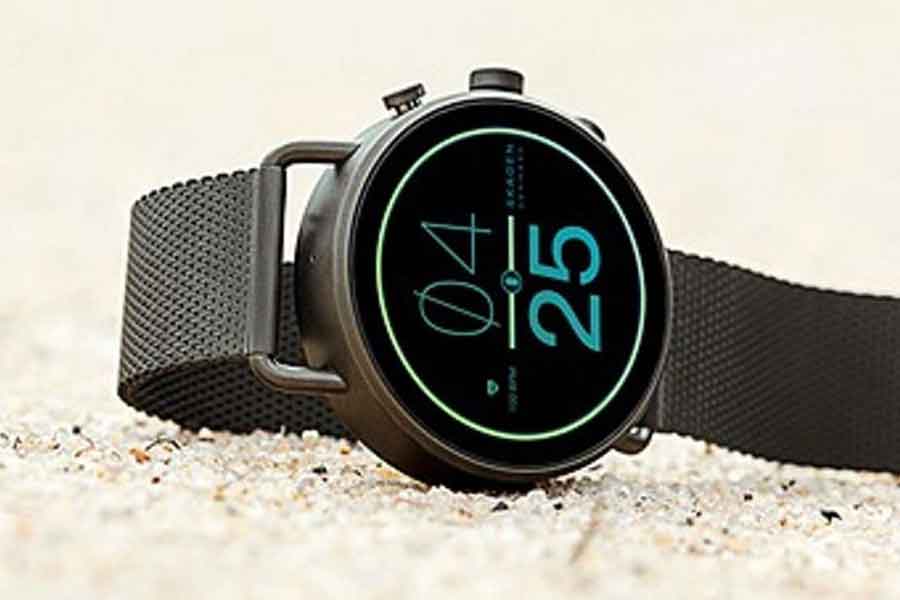
Domestic consumer electronics brand Styx has come up with a smartwatch called Neo in India. Backed by the latest technologies, the all-new Styx Neo smartwatch boasts extended battery life and health monitoring features.

Sandeep Sharma, CEO, Styx India, said, “We are living in an uncertain time and the need for fitness is growing drastically. Wearable devices have become extremely useful for tracking health and fitness. While people download fitness tracking apps on their smartphones but they are not as accurate as they should be. With the launch of Styx Neo smartwatch, we are delighted to come up with a feature-packed wearable watch that offers great benefits to the consumer.”

With the rise of lifestyle disease, people have become health conscious and started incorporating fitness activities into their daily schedule and need constant health monitoring. Styx India’s flagship offering – Neo smartwatch tracks the health of the consumers with extreme accuracy including body temperature, heart rate, and blood pressure.

The Styx Neo smartwatch is available in four colour options – Mystic Rose, Frost Silver, Electric Blue, Carbon Black and can be purchased from the brand’s website, Amazon, Flipkart and offline stores across India. It is originally priced at Rs 4,999 with a 30% discount on the launch, making it available in the market at Rs 3,499.

Paytm Payments Bank remains top beneficiary bank for UPI payments: NPCI report

0

Homegrown Paytm Payments Bank today announced that it leads as the largest beneficiary bank ahead of all major banks in the country. It is also rapidly gaining traction as a remitter bank for UPI payments among banks such as SBI, HDFC, Axis and ICICI.

According to the latest report by the National Payments Corporation of India (NPCI), PPBL has registered 389.24 million transactions in the month of February 2021 as a beneficiary bank, with a month-on-month increase of 5.5%. Beneficiary banks are the banks of the account holder who is receiving money.

PPBL has also continued to outperform other banks in terms of the success rate of UPI transactions. The NPCI data reveals that it has the lowest technical decline rate at 0.11% among all UPI remitter banks and 0.04% among all UPI beneficiary banks. All major banks have a way higher technical decline rate of around 1%. It has become the largest enabler of digital payments in the country driven by merchant payments & increased adoption across small cities and towns. This also confirms the superiority of the in-house technology-infrastructure at Paytm Payments Bank and has been the key reason for its success.

Satish Gupta, MD and CEO, Paytm Payments Bank, said, “UPI payments are an integral part of PPBL’s ecosystem and we have built one of the finest technology infrastructures to facilitate such transactions. Our tech team, which comprises the best minds in the business, works round the clock to provide a seamless and efficient experience to our users and merchant partners. We have witnessed rapid adoption of our UPI payments service across the country as more users are embracing our seamless technology that powers a fast payment experience. Our performance as highlighted in the latest NPCI report is a testament to the trusted and long-lasting relationship that we have with our partners.”

Paytm PaymentsBank already has over 100 million UPI handles on its platform and is accelerating the growth of UPI payments at offline retail stores and even large merchants.

Agri tech startup Farmers Family launches app, brings retailers & consumers closer through technology

0

In order to make quality and fresh farming products reach the last mile, Farmers Family, an agri- tech startup, has launched their online shopping app that is the one-stop solution for all your farm-fresh veggies and fruits needs.

The app is making consumer’s shopping experience hassle-free by enabling them a bouquet of user-friendly services including user-friendly login, in-app messaging services and easy payment options,

Titled as Farmers Family, which will be available on Android and IOS platforms, the app aims at providing a quick and efficient doorstep delivery of services as a part of an effort to restrict people’s movement further. Users can avail all the services with a click of button by simply login with their email or mobile number. The no-contact delivery will ensure that the veggies and fruits are delivered safely to the consumers.

Vikal Kulshreshtha, Co-founder & CEO, Farmers Family said, “We are excited to announce the mobile app which will make things easier for both retailers and the customers. Investment in mobile app will help us reap benefits for a longer period because Rewards/loyalty programs can create value addition through this app. Moreover, we are seeing a substantial rise of smartphone usage as smartphones are easily accessible, and this has transformed not just the mobile industry, but also the retail sector. We believe that this initiative will help us to stay connected with our consumers 24X7. There is no way that a consumer has to neglect his/her right to have fresh veggies and fruits due to the lack of availability of them.”

Farmers Family hopes to create a bridge between the farm and table. It provides healthy and quality farm produce directly from the farms to the consumers. The company has inhouse state-of-the-art machines, which are being used to hygienically clean and pack the products. Their team of agronomist and quality control keep a strict watch on the production, procurement, processing and packaging to ensure compliance with highest quality standards. They also have an appropriate mechanism in place to prevent post-harvest wastage technology driven business with minimum human interference.

“Our antimicrobial air purifier is completely IoT-enabled”

0

Although the increasing air pollution has always been a topic of discussion across the globe, the deteriorating quality of indoor air was never taken that seriously, especially in a country like ours, until the onset of COVID-19 pandemic that changed our lives like never before. The virulent disease taught us how one should be on his/her guard even inside the home or at the workplaces. While it has become a new normal for mankind, homegrown startup AiRTH took it as a challenge to protect people from airborne disease transmission like COVID-19 and air pollution through the world’s first anti-microbial air purifier, which is IoT-enabled that helps you to monitor crucial parameters such as real-time ambient air quality, humidity and temperature. Ramesh Kumar Raja caught up with Ravi Kaushik, an IIT-B alumnus and Founder and CEO of AiRTH, to understand the technicalities of this air purifier, its business proposition and how this technology is in the larger interest of the general public. Excerpts:

How old is AiRTH in India and how is its business going on, especially in the wake of the COVID-19 pandemic?

AiRTH is eight months old with more than two years of successful R&D experience in advanced air purification technologies. We took the challenge to protect people from airborne disease transmission like COVID-19 and air pollution through the world’s first anti-microbial air purifier.

We got our first breakthrough in June 2020 after we validated our SAVE technology for the reduction of SARS-CoV-2 sized particles after working for months on mathematical models, simulations, prototype development, and in-house testing.

In July 2020, we filed for a patent with IIT Bombay and did another testing for microbial reduction from the air itself which no other organization has done. IIT Kanpur’s SIIC has been very supportive and is now helping us with the deployment of our unit at various organizations and hospitals.

We have conducted pilot studies at various organizations like offices, restaurants, co-working spaces, hospitals, and gyms. Through this period, we could note that people want to be safeguarded against unseen viruses and air pollutants. And so, we kept working towards deploying more units and successfully sold more than 10 units to our early adopters. We are now working extensively to cater to the demand which we got as pre-orders on our website (www.airth.in). We are also working with a global elevator company to make elevators safer.

Can you please tell us about the technicalities involved and how it is different from others in the market?

The current problem we are facing today is a combination of airborne disease transmission and air pollution. Other air purifiers can protect from air pollution by capturing air pollutants in the filters but can itself become a source of disease transmission due to the microbial growth on their filters. This can again be resuspended into the air because of the high drag force due to the blower.

Whereas, we have developed the world’s first anti-microbial air purifier which works on the IIT Bombay patent filed DCD mechanism i.e. deactivate-capture-deactivate. It deactivates the pathogens inflight using ionization, UVC, and photocatalysis and has been optimized for higher residence time and intensity. Next, it captures viruses and fine particles using mechanical filtration assisted by inductive forces. The last step is deactivation that takes place due to OH radicals formed in the process of photocatalysis at disinfecting wavelength.

Since we are in the age of smartphones, how are you leveraging this technology?

Our antimicrobial air purifier is completely IoT-enabled. We use this technology to monitor crucial parameters such as real-time ambient air quality, humidity, and temperature.

As per CPWD guidelines, the relative humidity should be in the range of 40%-70% and temperature in the range of 24 to 30 degrees celsius to minimise the risk of airborne disease transmission. Our air purifiers rightly monitor these guidelines. We can analyse the data history and thus can take the necessary steps to maintain these crucial parameters in the advised range.

The device is handy enough to allow users to update it just like they update their mobile and laptops to get additional features. Currently, we are also working on remote diagnostics. This will allow us to check for any malfunctioning from anywhere in the world without having to physically attend to the device.

“The device is handy enough to allow users to update it just like they update their mobile and laptops to get additional features. Currently, we are also working on remote diagnostics. This will allow us to check for any malfunctioning from anywhere in the world without having to physically attend to the device”

Who are your target audience in India?

Our target markets are hospitals, restaurants, and offices. Precisely, we are targeting places where the chances of disease transmission are much higher. We are mainly concerned about OPD areas in hospitals, meeting rooms in offices, and sitting areas in restaurants.

What’s your vision for the Indian market?

We truly believe that the COVID-19 pandemic brought with itself several instances of awareness and now people are much more concerned about the air quality around them. The WHO has also been warning the world about future pandemics. Thus, we all need to be prepared for such an occurrence along with safeguarding ourselves against the long-term effects of air pollution.

We believe organisations will be responsible to provide clean and pathogen-free air to their customers and employees just like they provide clean water today. This is important to help revive the economy with collective efforts.

What are your strategy and plans to promote AiRTH in India?

AiRTH, in a nutshell, is here to function as a confidence booster for any organisation. Our technology induces confidence to help businesses & organisations restart with the post-COVID work life without any fear of contracting an airborne disease. Eventually, we are helping them boost productivity at their workplace and gain higher revenue.

Do you think the government needs to promote this sort of technology for the larger interest of the people?

Yes, our technology is in the larger interest of the general public. Hence, we think the government should promote this sort of technology. We have deployed our anti-microbial air purifier at various government agencies. We are in touch with different departments in the government and we are hopeful it will be deployed at a mass scale for the larger benefit of society.