Home Blog Page 101

YouTube Introduces AI-Powered ‘Super Resolution’ to Automatically Enhance Low-Quality Videos

0

Highlights

  • YouTube now uses AI to automatically upscale videos uploaded below 1080p, aiming to support up to 4K resolution.
  • Thumbnail upload limits have increased from 2MB to 50MB, enabling higher-quality visuals for video previews.
  • YouTube adds immersive homepage previews, contextual search within channels, and QR codes for shopping-linked videos to boost engagement and interactivity.

image

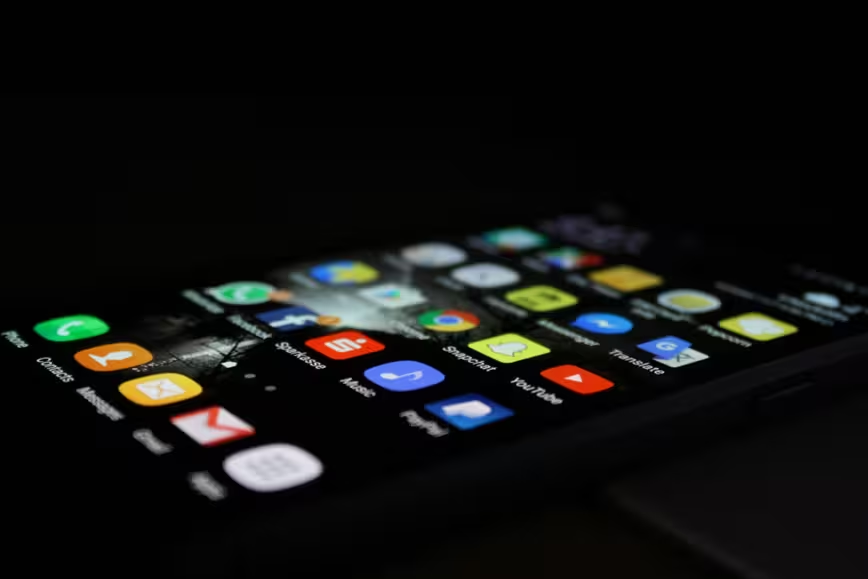
Caption – (Photo by Zulfugar Karimov on Unsplash)

In a new development, YouTube has announced a major AI-driven upgrade for its platform. The platform is introducing a new “Super Resolution” feature that will automatically upscale low-quality videos to higher resolutions. The company revealed this feature along with several other updates in a recent blog post.

YouTube’s AI-Powered Super Resolution Feature

With AI-based upscaling, YouTube will automatically generate higher-resolution versions of videos that were uploaded in less than 1080p. The platform’s ultimate goal is to support resolutions up to 4K, bringing sharper visuals and better viewing experiences even for older or lower-quality uploads.

According to YouTube, the Super Resolution process will be handled automatically, though creators will retain full control over their content. They’ll be able to opt out of the AI enhancement if they wish, and viewers will always have the option to watch the original resolution version of the video.

In an blog post, YouTube explained, “We’re also introducing a new AI-powered feature that automatically generates higher resolutions for videos. We’re starting with videos uploaded below 1080p, upscaling them from SD to HD, with the goal to support resolutions up to 4K in the near future. Creators will retain complete control over their library, as both original files and original video resolution will be kept intact, with a clear option to opt-out of these enhancements. And viewers will still be able to watch creators’ videos in the original uploaded resolution, as super resolution will be clearly labeled under settings.”

Other New YouTube Features

Alongside the AI upscaling feature, YouTube is also increasing the thumbnail upload limit from 2MB to 50MB. This will allow creators to use higher-quality thumbnails for their videos.

For viewers, YouTube is introducing “immersive previews” on the homepage. It is a feature similar to Netflix’s automatic previews. These previews will allow users to browse through channels more interactively while also improving content discovery and engagement.

Kurt Wilms, Senior Director of Product Management for YouTube on TV, wrote, “Viewers will be able to see and flip through their favorite YouTube channels with immersive previews on the homepage, enhancing content discovery and engagement.”

YouTube also shared a few additional updates for its TV experience including contextual search improvements that display results specifically from the channel you’re browsing. Moreover, videos featuring shopping links will now include a QR code for users to view and purchase products directly from their smartphones.

FAQs

Q1. What is YouTube’s new Super Resolution feature?

Answer. Super Resolution is an AI-powered tool that automatically upscales videos uploaded below 1080p to higher resolutions, with a future goal of supporting up to 4K. Creators can opt out, and viewers can still watch in the original resolution.

Q2. Can creators control how YouTube’s Super Resolution affects their videos?

Answer. Yes, creators retain full control. They can opt out of the AI enhancement, and both the original file and resolution remain available to viewers.

Q3. What other features has YouTube introduced recently?

Answer. YouTube has increased thumbnail upload limits to 50MB, added immersive homepage previews for better content discovery, and improved contextual search and shopping features on its TV platform.

Also Read

https://www.mymobileindia.com/youtube-rolls-out-shorts-screen-time-limit-feature-to-help-users-take-breaks/

https://www.mymobileindia.com/youtube-launches-ai-likeness-detection-tool-to-fight-deepfakes-and-protect-creators-identities/

Samsung Wallet Now Supports Digital Car Keys for Mahindra EVs in India

0

Highlights

  • Samsung Wallet now supports keyless entry and ignition for Mahindra’s XEV 9e and BE 6 electric SUVs in India, eliminating the need for physical keys.
  • The feature works on select Galaxy S and Z series smartphones with UWB and NFC, including the S23–S25 and Z Fold/Flip 6–7 models.
  • Users can share keys with others, revoke access anytime, and rely on NFC even during low battery. Security is ensured via biometrics and Samsung Find.

image

Caption – Samsung Wallet App launches Digital Car Key Support for Mahindra EVs. (Image credit – Samsung)

Samsung has introduced Digital Car Key support for Mahindra electric vehicles in India through its Samsung Wallet app. The announcement was made at the Samsung Opera House in Bengaluru recently, marking a significant step for both brands. With this rollout, owners of select Mahindra EVs will soon be able to lock, unlock, and start their cars directly from their Galaxy smartphones. This now completely removes the need for a physical key. Here’s all you need to know.

Samsung Wallet App Now Supports Digital Car Keys

This feature is seamlessly integrated into Samsung Wallet, which comes pre-installed on compatible Galaxy devices. With the partnership, Mahindra has become the first Indian car manufacturer to offer Samsung’s Digital Car Key functionality.

Samsung Wallet App Digital Car Key Support. (Image credit - Samsung)
Samsung Wallet App Digital Car Key Support. (Image credit – Samsung)

Speaking at the launch, Senior Director, Services & Apps Business, Samsung India, Madhur Chaturvedi said, “We are very excited to bring Mahindra eSUV owners the incredible convenience of Samsung Digital Key through Samsung Wallet. Expanding access to Samsung Digital Car Key is an important part of our commitment to delivering connected and secure experiences within the Galaxy ecosystem. Our partnership with Mahindra marks another exciting step forward in making everyday activities—like driving—hassle-free for more Galaxy users.”

Nalinikanth Gollagunta, Chief Executive Officer – Automotive Division, Mahindra & Mahindra Ltd. and Executive Director, Mahindra Electric Automobile Ltd., said, “Our Electric Origin SUVs – XEV 9e and BE 6 have captivated our customers with their advanced technology and futuristic designs. We are delighted to partner with Samsung to bring yet another first-in-class feature – Digital Car key via Samsung wallet, ensuring every journey is even more seamless and convenient. This latest innovation again exemplifies Mahindra’s commitment to delivering an exceptional ownership experience with premium, intelligent electric SUVs for India.

Globally, brands like Mercedes-Benz, Volvo, and Hyundai already support Samsung Wallet’s car key feature, though availability varies by model and region.

Supported Galaxy Devices

The feature works with select flagship Galaxy smartphones equipped with Ultra-Wideband (UWB) and NFC connectivity. Supported devices include the Galaxy S25, Galaxy S24, and Galaxy S23 series, as well as foldable models like the Galaxy Z Fold 7, Z Flip 7, Z Fold 6, and Z Flip 6.

In general, Galaxy S and Z series phones launched after 2020 with UWB support can use the keyless entry and ignition features.

Compatible Car Models

Samsung Wallet’s Digital Car Key is now compatible with Mahindra’s XEV 9e and BE 6 electric SUVs. Galaxy users will be able to use their smartphones to lock, unlock, and start these vehicles effortlessly.

Shareable Digital Keys

Users can share their digital car keys with family or friends for temporary access. The feature also allows users to restrict or revoke access anytime.

For added safety, the primary keyholder receives alerts whenever the vehicle is started, ensuring complete control.

Safety and Security

If a phone with a Digital Car Key is lost or stolen, users can remotely lock the device and erase all data, including the car key, using the Samsung Find service. The feature is secured by biometric or PIN authentication, ensuring that only authorised users can access the car.

Functionality During Low Battery

Even if the smartphone’s battery is completely drained, the Digital Car Key continues to function via NFC. Samsung says its latest Galaxy devices retain enough reserve battery power to keep NFC-based features active, ensuring drivers can always access their vehicles.

This new feature reinforces Samsung’s growing presence in the digital car key market. Competitors such as Google Wallet already offer similar functionality for brands such as Tesla, Volvo, and Polestar in select markets. With Mahindra’s addition, Samsung has expanded its reach into India’s rapidly evolving Electric Vehicle segment.

First launched in June 2022, Samsung Wallet allows users to securely store payment cards, government IDs, digital passes, and now, car keys, all in one app.

FAQs

Q1. Which Mahindra EVs support Samsung Wallet’s Digital Car Key?

Answer. Samsung Wallet’s Digital Car Key is compatible with Mahindra’s XEV 9e and BE 6 electric SUVs, allowing Galaxy users to lock, unlock, and start their vehicles via smartphone.

Q2. Which Galaxy smartphones can use the Digital Car Key feature?

Answer. The feature works on select Galaxy S and Z series devices with Ultra-Wideband (UWB) and NFC, including Galaxy S23–S25 and Z Fold/Flip 6–7 models launched after 2020.

Q3. What happens if the Samsug phone battery dies, can users still access their car with Digital Key?

Answer. Yes, even with a drained battery, the Digital Car Key continues to function via NFC. Samsung’s latest Galaxy phones retain enough reserve power to keep NFC active.

Also Read

https://www.mymobileindia.com/samsung-wallet-thermo-check-and-whatsapp-are-coming-to-the-galaxy-watch-series-check-samsung-three-new-apps-for-its-galaxy-smartwatches/

https://www.mymobileindia.com/samsung-galaxy-xr-headset-debuts-with-27mp-8k-displays-snapdragon-xr2-gen-2-and-full-android-app-support-at-1800/


Nothing Phone (3a) Lite Launched As The Most Affordable Nothing Smartphone Yet, Ditches Glyph Lights for a Minimal Look

0

Highlights

  • Budget-friendly Nothing Phone (3a) Lite has been launched at €249 in Europe and the UK.
  • It boasts a 6.77″ AMOLED display (120Hz, HDR10+, 3,000 nits), Dimensity 7300 Pro chip, 5,000mAh battery with 33W charging, triple rear cameras (50MP + 8MP + 2MP), Android 15-based OS, and expandable storage up to 2TB.
  • The phone comes in Black and White colour choices, follows Nothing’s signature transparent design with no Glyph lights.

image

Caption – Nothing Phone (3a) Lite Launched. (Image credit – Nothing0

Nothing has unveiled a new addition to its mid-range lineup, the Nothing Phone (3a) Lite. This marks the company’s most affordable smartphone to date as the brand aims to expand its popular Phone (a) series.  Here’s all you need to know about the phone, starting with price.

Nothing Phone (3a) Lite – Pricing and Availability

The Nothing Phone (3a) Lite has been officially launched in Europe and the UK, priced at €249 for the 8GB + 128GB model and €279 for the 8GB + 256GB variant. While global availability details remain under wraps, the device is expected to reach India and other markets soon.

image

Caption – Nothing Phone (3a) Lite in the box accessories. (Image credit – Nothing0

Although the retail package doesn’t include a charging adapter, Nothing does provide a transparent protective case in the box.

Nothing Phone (3a) Lite – Design

image

Caption – Nothing Phone (3a) Lite. (Image credit – Nothing0

Unlike previous Nothing smartphones, the Phone (3a) Lite takes a more subtle approach. It retains the brand’s signature transparent rear panel and industrial-inspired internal design but skips the signature Glyph interface entirely. The only remaining lights include a small red square that indicates video recording and a tiny Glyph light placed at the bottom-right corner.

The device sports a clean, minimal aesthetic while still offering a metallic frame, Panda Glass protection, and an IP54 rating for dust and water resistance. Interestingly, the grooves under the back panel might look like a removable battery design at first glance, but that isn’t the case.

The Phone (3a) Lite measures 8.3mm thick and weighs 199 grams, maintaining a sturdy yet manageable form factor.

As for colour options, the smartphone will be available in White and Black choices.

image

Caption – Nothing Phone (3a) Lite colour options. (Image credit – Nothing0

Nothing Phone (3a) Lite – Key Features

Coming to features, the Phone (3a) Lite features a 6.77-inch AMOLED display with FHD+ resolution, a 120Hz adaptive refresh rate, 480Hz touch sampling rate, HDR10+ support, 2160Hz PWM dimming, and up to 3,000 nits peak brightness, all protected by Panda Glass.

Powering the device is MediaTek’s Dimensity 7300 Pro chipset, a slightly upgraded version of the processor found in the Nothing Phone (2a). It comes paired with 8GB of RAM and up to 256GB of internal storage, expandable via microSD card up to 2TB.

The smartphone houses a 5,000mAh battery that supports 33W fast charging. On the camera front, it features a triple rear camera setup that includes a 50MP Samsung primary sensor (1/1.57-inch, f/1.88, EIS), an 8MP ultra-wide lens (f/2.2, EIS), and a 2MP macro sensor (f/2.4, EIS). For selfies, there’s a 16MP front-facing camera.

Other notable specifications include an in-display fingerprint sensor, Bluetooth 5.3, Wi-Fi 6, a hybrid dual SIM slot, and Android 15-based Nothing OS 3.5 out of the box. The device also integrates the Essential Key, giving users quick access to Essential Space App for saving voice notes, viewing stored content, and more.

FAQs

Q1. What is the price of the Nothing Phone (3a) Lite?

Answer. The Nothing Phone (3a) Lite starts at €249 for the 8GB + 128GB variant and €279 for the 8GB + 256GB model in Europe and the UK.

Q2. Does the Nothing Phone (3a) Lite include Glyph lights like other Nothing phones?

Answer. No, the Phone (3a) Lite skips the signature Glyph interface for a minimal design. It only retains a small red video recording indicator and a tiny Glyph light at the bottom-right corner.

Q3. What display features does the Nothing Phone (3a) Lite offer?

Answer. It has a 6.77-inch AMOLED display with FHD+ resolution, 120Hz adaptive refresh rate, HDR10+ support, 2160Hz PWM dimming, and up to 3,000 nits peak brightness, protected by Panda Glass.

Q4. What chipset powers the Nothing Phone (3a) Lite?

Answer. The device is powered by MediaTek’s Dimensity 7300 Pro, paired with 8GB RAM and up to 256GB storage, expandable via microSD card up to 2TB.

Q5. What are the camera specifications of the Phone (3a) Lite?

Answer. It features a triple rear camera setup: 50MP Samsung primary sensor, 8MP ultra-wide lens, and 2MP macro sensor. The front camera is a 16MP shooter for selfies.

Also Read

https://www.mymobileindia.com/nothing-phone-3a-lite-officially-confirmed-for-launch-on-october-29-expected-specs-features-and-price/

https://www.mymobileindia.com/nothing-phone-3a-lite-launch-and-price-leak-reveal-a-november-debut/

WhatsApp to Soon Let All Users Add Profile Cover Photos Similar to Facebook and LinkedIn

0

Highlights

  • WhatsApp is developing a feature that lets all users set profile cover photos, previously exclusive to Business accounts similar to Facebook and LinkedIn.
  • Users will be able to choose who can view their cover photo with three visibility options mirroring existing profile settings.
  • The feature is currently in development and being tested on the Android beta version 2.25.32.2.
 (Photo by lonely blue on Unsplash)
(Photo by lonely blue on Unsplash)

Meta-owned messaging app has been dedicated to expanding its profile customisation options, aiming to make personal profiles more expressive and engaging. In a new development, WhatsApp is reportedly working on a new feature that will allow users to set profile cover photos. It is not something new as this feature was previously exclusive to WhatsApp Business accounts. The feature is currently in development and is expected to roll out in a future update. Here’s all we know about the feature so far.

All WhatsApp Users To Get Cover Photo Feature

According to a recent WABetaInfo report, the company is developing an option for users to upload a custom cover photo that will appear at the top of their profile. It is expected to be much like what users already see on Facebook and LinkedIn. Once introduced, users will be able to select a cover image directly from the profile settings section.

WABetaInfo has been a reliable WhatsApp feature tracker, which means we can trust this update.

The report also shared a screenshot showcasing what the cover photo selector interface might look like once implemented. Along with this, WhatsApp plans to include a privacy control setting to let users decide who can view their cover photo.

As per the report, the cover photo feature is being tested on WhatsApp beta version 2.25.32.2 for Android, which is currently rolling out to beta testers via the Google Play Beta Programme. However, the feature remains in development and is not yet available for beta users to access or use.

image

Caption – WhatsApp to bring Cover Photo feature for all users. (Screenshot by @WABetaInfo on X)

Cover Photo Privacy Options

The new privacy settings will mirror existing options available for Status and Profile Photos. It will have three visibility levels, which most likely will be –

  • Everyone – The cover photo will be visible to all WhatsApp users, even those not in your contacts.
  • My Contacts – Only users saved in your contact list will be able to view the cover image.
  • Nobody – The cover photo will be hidden from all users.

This ensures users have full control over their profile visibility while still enjoying the personalisation benefits.

Once the rollout begins, all WhatsApp users and not just business accounts will be able to set cover photos on their profiles.

FAQs

Q1. What is the new cover photo feature on WhatsApp?

Answer. WhatsApp is developing a feature that allows users to set a custom cover photo at the top of their profile, similar to Facebook and LinkedIn. It was previously limited to Business accounts.

Q2. Will WhatsApp users have control over who can see their cover photo?

Answer. Yes, WhatsApp will include privacy settings with three visibility options: Everyone, My Contacts, and Nobody, giving users full control over who can view their cover image.

Q3. When will the cover photo feature on WhatsApp be available?

The feature is currently in development and being tested in WhatsApp beta version 2.25.32.2 for Android. It’s expected to roll out to all users in a future update.

Also Read

https://www.mymobileindia.com/chatgpt-to-exit-whatsapp-by-january-2026-after-meta-bans-third-party-ai-chatbots/

https://www.mymobileindia.com/meta-is-testing-monthly-message-cap-on-whatsapp-to-curb-spam-report/

TRAI and DoT Approve Caller Name Display Feature for All Incoming Calls in India

0

Highlights

  • TRAI and DoT have approved the CNAP feature, which will show the verified name of incoming callers by default on all phones in India.
  • CNAP uses SIM registration data and bypasses third-party apps like Truecaller, while users can opt out by contacting their telecom provider.
  • It will be a supplementary service managed by telecom operators, not a standalone one.

image

Caption – Roads clear for Calling Name Presentation (CNAP) service in India. (Image credit – @TRAI on X)

The Telecom Regulatory Authority of India (TRAI) has approved a new proposal from the Department of Telecommunications (DoT) that will make it mandatory for the caller’s name to appear by default on the receiver’s phone screen during incoming calls.

The new feature is called Calling Name Presentation (CNAP) and it will use verified information collected during the SIM registration process. This will be offered as a supplementary telecom service. Here are more details on this development.

CNAP – Caller ID Feature for All Users

As per the latest update from TRAI, the CNAP feature will be enabled by default for all telecom subscribers in India. However, users who prefer not to use it can opt out by requesting their telecom service provider (TSP) to disable the feature.

Once implemented, CNAP will display the name and verified identity of the caller directly on the receiver’s phone screen, without relying on third-party apps like Truecaller.

This move aims to help users identify callers more accurately and make informed decisions about answering calls. TRAI believes this system will also play a significant role in reducing spam and fraudulent calls.

How the CNAP System Will Work?

Currently, Indian telecom networks only show the mobile or landline number of the caller, referred to as Calling Line Identification (CLI) with no existing mandate for CNAP. Under the new system, each access service provider will create and manage a Calling Name (CNAM) database, linking every subscriber’s verified name with their phone number.

When a call is received, the terminating network will query the Local Number Portability Database (LNPD) to determine which operator originated the call and fetch the corresponding name details from the CNAM database.

Tested for 4G and 5G Networks

Before the nationwide rollout, the DoT conducted pilot tests of the CNAP feature in select cities for 4G and 5G networks. The service was initially meant to be tested on both circuit-switched and packet-switched networks. However, operators encountered technical issues such as unavailable software patches and the need for infrastructure upgrades.

As a result, testing was limited to packet-switched networks.

Rollout and Availability

The CNAP feature will be offered as a supplementary service that operates in conjunction with basic telecom services and may be available across multiple service providers. However, TRAI clarified that CNAP will not be offered as a standalone feature.

This move marks a major step toward enhancing caller transparency and user safety in India’s telecom ecosystem. The new system could significantly reduce spam and scam calls, giving users more confidence in knowing exactly who is calling.

FAQs

Q1. What is CNAP and how will it benefit telecom users in India?

Answer. CNAP (Calling Name Presentation) is a new feature that displays the verified name of incoming callers by default, helping users identify calls and reduce spam or fraud.

Q2. Will CNAP replace third-party caller ID apps like Truecaller?

Answer. Yes, CNAP will function independently of third-party apps by using verified SIM registration data, offering a built-in caller name display managed by telecom operators.

Q3. Can users opt out of the CNAP feature?

Answer. Yes, while CNAP will be enabled by default for all subscribers, users can request their telecom service provider to disable it if they prefer not to use the feature.

Also Read

https://www.mymobileindia.com/telecom-tariffs-may-rise-again-in-2025-as-subscriber-growth-surges-says-report/

https://www.mymobileindia.com/trai-extends-sms-traceability-deadline-to-december-10-for-telecom-operators/

Google Pixel 10a Renders Leak, Revealing Familiar Design and Key Details Ahead of Launch

0

Highlights

  • Leaked CAD renders reveal that Google Pixel 10a retains a flat plastic back, dual-camera bar, and thick bezels.
  • The phone is expected to use the same Tensor G4 chip and UFS 3.1 storage as the Pixel 9a, with a brighter 2,200-nit display but no Magic Cue AI assistant.

  • The Pixel 10a is likely to launch in Q1 2026 at around $500.

image

Caption – Google Pixel 10a recently leaked render. (Image credit – OnLeaks/AndroidHeadline)

The upcoming Google Pixel 10a has appeared in its first set of CAD-based renders. A recent Android Headlines repost in collaboration with @OnLeaks shared an early look at the company’s next mid-range smartphone in the Pixel 10 series. The renders hint at a design that closely resembles the Pixel 9a with a few minor refinements. Here’s more on that.

Google Pixel 10a – CAD Renders (Leaked)

The leaked renders showcase the Pixel 10a from multiple angles, revealing a flat plastic back panel and a dual-camera setup integrated into the horizontal camera bar. The design appears to be consistent with Google’s recent Pixel lineup. The back appears completely flat and seamless, while the bottom bezels seem slightly slimmer than before.

 Google Pixel 10a leaked CAD renders. (Image credit - OnLeaks/AndroidHeadline)
Google Pixel 10a leaked CAD renders. (Image credit – OnLeaks/AndroidHeadline)

image

The phone’s front still features noticeably thick bezels. Google continues with its unconventional button layout, placing the volume rocker below the power button. This configuration is opposite to most Android phones.

The CAD renders also show antenna lines on all sides, along with a microphone hole both on the top and bottom. The bottom edge appears symmetrical with matching speaker and microphone cutouts, giving the phone a more balanced look.

Although the renders include a SIM card slot, it remains unclear if the final model will retain it, since such details are often placeholders in CAD designs.

Google Pixel 10a – What Else We Know?

According to earlier leaks, the Pixel 10a will be powered by the Tensor G4 chipset, the same processor found in the Pixel 9a, instead of the newer Tensor G5. The device will also continue using UFS 3.1 storage, ensuring solid performance for everyday tasks.

The display brightness is expected to reach 2,200 nits, a modest improvement over the 2,000 nits peak brightness on the Pixel 9a, making it easier to view in bright sunlight.

Interestingly, the Pixel 10a reportedly won’t include Magic Cue, Google’s on-device AI assistant designed for live contextual assistance during calls and chats. This feature remains exclusive to higher-end Pixel models.

Launch Timeline and Expected Price

The Google Pixel 10a is expected to debut in Q1 2026 and be priced around USD 500. These speculations are keeping things in line with previous Pixel “a” series devices. While not a radical redesign, the Pixel 10a appears to refine the Pixel 9a’s formula with brighter display performance and improved design symmetry.

FAQs

Q1. What design changes are expected in the Google Pixel 10a?

Answer. The Pixel 10a is expected to retain a flat plastic back and dual-camera bar, with minor refinements like slimmer bottom bezels and a more symmetrical bottom edge.

Q2. What are the key specifications of the Pixel 10a?

Answer. The device will reportedly use the Tensor G4 chipset and UFS 3.1 storage, with a brighter 2,200-nit display. It will not include the Magic Cue AI assistant, which remains exclusive to premium Pixel models.

Q3. When will the Pixel 10a launch and what will it cost?

Answer. The Pixel 10a is expected to launch in Q1 2026 and be priced around USD 500, continuing Google’s mid-range strategy with modest upgrades over the Pixel 9a.

Also Read –

https://www.mymobileindia.com/google-pixel-11-codenames-leak-pixel-10a-might-stick-to-tensor-g4-with-for-cost-cutting/

https://www.mymobileindia.com/google-reportedly-testing-mediatek-m90-modem-for-upcoming-tensor-g6-and-pixel-11-series/

Apple To Go With OLED Displays for MacBook Air, iPad Air, and iPad Mini by 2026–2028: Report

0

Highlights

  • Apple plans to introduce OLED displays to the iPad mini (by 2026), iPad Air (by 2027 or later), and eventually all iPad models except entry-level versions.
  • The MacBook Pro is expected to get OLED in 2026, while the MacBook Air will follow in 2028 with interim models continuing to use LCD panels.
  • This gradual shift to OLED reflects Apple’s long-term goal to improve visual quality.
 Apple MacBook. (Image credit - Apple)
Apple MacBook. (Image credit – Apple)

Apple is gearing up for a major display upgrade across several of its key product lines. According to a new report from Bloomberg, the company is developing OLED display versions of the iPad mini, iPad Air, MacBook Pro, and MacBook Air. If true, this will be a significant expansion of the advanced display technology beyond the iPad Pro models that already use it. Here’s what we know so far.

OLED Coming to More Apple Devices

Bloomberg’s report suggests that Apple plans to gradually roll out OLED technology across its lineup over the next few years. The iPad mini is expected to be the first among the non-Pro tablets to receive an OLED display, as early as 2026. Additionally, the next-generation iPad mini may feature improved water resistance, enhancing its overall durability.

Meanwhile, the iPad Air will not adopt OLED in 2026. The version expected to launch in spring 2026 will continue using LCD technology. As for the OLED transition, it will most likely be postponed until 2027 or later.

Eventually, Apple aims to offer all three iPad models including Pro, Air, and mini with OLED displays, although the entry-level iPad will continue to use LCD panels due to cost considerations.

OLED Roadmap for MacBook Lineup

Apple also plans to integrate OLED panels into its MacBook lineup, starting with the MacBook Pro. The OLED-equipped MacBook Pro could arrive as soon as 2026, delivering deeper contrast, more vibrant colours, and improved power efficiency.

Following that, Apple is working on an OLED version of the MacBook Air, but the report indicates that the new model won’t launch before 2028. The upcoming MacBook Air refresh in spring 2026 will continue to feature LCD displays, suggesting that Apple is pacing its rollout carefully to balance technology and production costs.

Apple’s shift toward OLED technology aligns with its broader long-term plan to enhance visual quality and efficiency across its devices. OLED displays offer better contrast ratios, true blacks, and thinner form factors compared to traditional LCD screens.

By 2028, Apple’s product ecosystem could feature a nearly complete transition to OLED across the iPad and MacBook lines with only budget models retaining LCD technology. This strategic move underscores Apple’s continued investment in display innovation as it seeks to maintain its competitive edge in the premium device segment.
FAQs

Q1. Which Apple devices are expected to get OLED displays in the coming years?

Answer. Apple plans to introduce OLED displays to the iPad mini by 2026, followed by the iPad Air around 2027, and eventually to the MacBook Pro in 2026 and MacBook Air by 2028.

Q2. Will the 2026 iPad Air and MacBook Air feature OLED screens?

Answer. No, both the iPad Air and MacBook Air models launching in spring 2026 will continue using LCD panels. OLED upgrades for these devices are expected later.

Q3. Why is Apple transitioning to OLED across its product lineup?

Answer. Apple aims to enhance visual quality, contrast, and power efficiency. OLED displays offer thinner form factors and deeper blacks, aligning with its premium device strategy.

Also Read

https://www.mymobileindia.com/apple-introduces-iphone-airultra-thin-5-6mm-design-6-5-inch-oled-display-and-a19-pro-chip/

https://www.mymobileindia.com/apple-is-testing-oled-ipad-mini-display-prototypes-report/

Xiaomi Rolls Out HyperOS 3 Globally with AI Upgrades, Smoother Performance, and Dynamic ‘Hyper Island’ Feature: Check Details

0

Highlights

  • HyperOS 3 based on Android 16 launches first in Europe with Xiaomi 15T/15T Pro and expands to Xiaomi, Redmi, and Poco devices through early 2026.
  • Xiaomi introduces Hyper Island, a pill-shaped interactive hub for notifications and live actions, now available across eligible devices with limited animations on lower-RAM models.
  • New AI tools include DeepThink Note Writing, real-time voice translation, and gallery search, while system performance sees a 30% boost and smoother animations.

image

Caption – Xiaomi Rolls Out HyperOS 3 Globally. (Image credit – Xiaomi)

Xiaomi has officially launched HyperOS 3 worldwide, marking its next major software evolution built on Android 16. The update brings smarter AI-driven tools, enhanced system performance, and a refreshed user interface.

The rollout starts in Europe with the Xiaomi 15T and 15T Pro and will gradually expand to more Xiaomi, Redmi, and Poco devices through early 2026.

Hyper Island – Xiaomi’s Dynamic Island Alternative

image

Caption – Hyper Island is supposedly a Dynamic Island alternative. (Image credit – Xiaomi)

The highlight of the update is Hyper Island, a pill-shaped interactive hub positioned at the top of the display. It consolidates notifications, live activities, and quick actions into one compact area, allowing users to manage music playback, reply to messages, or track ongoing events without leaving the current app.

Compatible with over 70 apps and services, Hyper Island serves as Xiaomi’s take on Apple’s Dynamic Island. Notably, insider PaperKing13 revealed that the latest HyperOS 3.0.23 build removes the earlier code restrictions that limited Hyper Island to select devices. This means all eligible Xiaomi, Redmi, and Poco smartphones will now receive the feature.

However, there’s a small limitation. Devices with lower RAM (around 6GB or less) won’t include the feature’s animated transitions. While the core functionality remains intact, budget models will have simpler, non-animated interactions.

The Xiaomi 15T and 15T Pro have already received the feature globally, while entry-level phones are expected to get it between December 2025 and March 2026.

AI-Powered Enhancements

HyperOS 3 introduces several AI-based features designed to boost creativity, productivity, and system intelligence. New features include –

  • DeepThink Note Writing – Expands short notes into detailed ideas or summaries.
  • AI Voice Translation – Offers real-time translation across multiple languages.
  • AI Noise Reduction – Enhances clarity in recorded audio.
  • Gallery AI Search – Lets users find images by objects, people, or context.

  • System-Wide AI Search – Quickly locates apps, settings, and files.
  • AI Image Description & Summarisation – Converts visual content into contextual captions or summaries.

Performance and Visual Improvements

Xiaomi claims HyperOS 3 delivers a 30% performance boost with apps launching 21% faster and energy efficiency improved by 10%. Gaming performance has also been optimised with fewer frame drops during high-load sessions.

To complement these upgrades, Xiaomi has introduced over 100 refined animation tweaks, resulting in smoother transitions and more natural navigation throughout the interface.

With HyperOS 3, Xiaomi aims to blend AI intelligence, refined aesthetics, and cross-device optimisation into a single cohesive experience. The new OS promises faster performance, smarter tools, and a more unified visual flow, cementing Xiaomi’s vision for a seamlessly connected ecosystem.

Global Rollout Timeline

The company confirmed that beta testers will be the first to receive the update, while regular users can manually check for availability under Settings > About Phone > System Update.

  • October–November 2025: Xiaomi 15 series, 15 Ultra, Redmi Note 14, and Poco F7/X7 models
  • November–December 2025: Xiaomi 14 lineup, Poco F6, and select Redmi mid-range devices
  • December 2025–March 2026: Older flagships like the Xiaomi 12 and 13 series

This phased approach ensures that most recent Xiaomi devices get upgraded to HyperOS 3.

 Xiaomi HyperOS 3 rollout schedule. (Image credit - Xiaomi)
Xiaomi HyperOS 3 rollout schedule. (Image credit – Xiaomi)

Below is the full list of all smartphones eligible for the latest HyperOS 3 update –

Starting October and November 2025

  • Redmi Note 14 Pro+ 5G
  • Redmi Note 14 Pro 5G
  • Redmi Note 14 Pro
  • Redmi Note 14
  • Poco F7 Ultra
  • Poco F7 Pro
  • Poco F7
  • Poco X7 Pro Iron Man Edition
  • Poco X7 Pro
  • Poco X7

Starting November and December 2025

  • Redmi Note 13 Pro
  • Redmi 15
  • Redmi 14C
  • Redmi 13
  • Redmi 13x
  • Poco F6 Pro
  • Poco F6
  • Poco X6 Pro
  • Poco M7
  • Poco M6 Pro
  • Poco M6
  • Poco C75

Starting December 2025 and March 2026

  • Poco F5 Pro
  • Poco F5
  • Poco X6
  • Poco M7 Pro 5G
  • Poco C85
  • Redmi Note 14 5G
  • Redmi Note 145
  • Redmi Note 13 Pro+
  • Redmi Note 13 Pro
  • Redmi Note 13 5G
  • Redmi 15 5G
  • Redmi 15C 5G
  • Redmi 15C

FAQs

Q1. What is Hyper Island and which devices will support it?

Answer. Hyper Island is Xiaomi’s new pill-shaped interactive hub that consolidates notifications, live activities, and quick actions. It will be available across eligible Xiaomi, Redmi, and Poco smartphones, though devices with 6GB RAM or less will have simplified, non-animated interactions.

Q2. What AI features are included in HyperOS 3?

Answer. HyperOS 3 introduces several AI tools including DeepThink Note Writing, real-time voice translation, AI noise reduction, gallery and system-wide search, and image summarisation.

Q3. When will HyperOS 3 roll out globally?

Answer. The rollout begins in Europe with the Xiaomi 15T and 15T Pro in October 2025, expanding to more Xiaomi, Redmi, and Poco devices through March 2026 in a phased schedule.

Also Read

https://www.mymobileindia.com/xiaomi-hyperos-3-global-rollout-begins-in-october-2025-key-features-ai-upgrades-and-eligible-devices/

https://www.mymobileindia.com/xiaomi-16-series-officially-teased-hinting-at-major-changes-hyperos-3-and-new-pro-mini-model-likely-on-the-way/

Apple Reaches $4 Trillion Valuation as iPhone 17 Sales Break Record

0

Highlights

  • Apple briefly crossed a $4 trillion market cap, fueled by strong global demand for the iPhone 17 Series.
  • iPhone 17 and iPhone Air sales up by 14% over the previous generation in key markets like the U.S. and China.
  • Despite financial success, Apple faces criticism for its slow AI progress with delayed features like ChatGPT integration and Siri upgrades expected in 2026.

image

Caption – (Photo by Medhat Dawoud on Unsplash)

Apple has officially hit a new milestone, briefly crossing a $4 trillion market capitalisation for the first time. With that, the Cupertino Giant becomes the third Big Tech firm to reach this landmark. The surge was fueled by strong global demand for the iPhone 17 series, which helped offset investor concerns about the company’s slower pace in artificial intelligence development.

Apple Crosses $4 Trillion Mark

Apple’s stock climbed to $269.89 during intraday trading, pushing its market value to $4.005 trillion before closing slightly lower at $3.992 trillion, up 0.1% for the day. The company’s shares have risen 13% since the iPhone 17 launch on September 9, marking Apple’s first positive year-to-date performance in 2025.

“The iPhone accounts for over half of Apple’s profit and revenue, and the more devices they get into people’s hands, the more they can draw users into their ecosystem,” said Chris Zaccarelli, Chief Investment Officer at Northlight Asset Management.

Apple’s latest smartphone lineup including the iPhone 17 series and the newly introduced iPhone Air has reignited global interest, particularly in Beijing and Moscow. Despite ongoing U.S. tariff challenges affecting manufacturing in China and India, Apple has absorbed the additional costs without raising retail prices.

According to research firm Counterpoint, early iPhone 17 sales outperformed the iPhone 16 by 14% in both the U.S. and China. Analysts believe the iPhone Air’s ultra-slim design could help Apple fend off competition from Samsung Electronics and other rivals in the premium smartphone segment.

Brokerage Evercore ISI predicts Apple’s strong iPhone performance will allow it to beat market expectations for the quarter ending in September and provide an optimistic forecast for the December quarter

Apple now joins Nvidia and Microsoft in the elite $4 trillion club with Nvidia currently leading the market at nearly $5 trillion in valuation.

AI Strategy Still Under Scrutiny

Despite the market high, Apple continues to face criticism over its slow progress in artificial intelligence. Reports indicate that several senior AI executives have recently departed for Meta, and the company’s Apple Intelligence suite has seen delays. The integration of ChatGPT and an AI-upgraded Siri is now expected next year.

Apple has reportedly been in discussions with Alphabet’s Gemini AI, Anthropic, and OpenAI to expand its AI ecosystem. However, industry experts believe Apple’s lack of a clear AI roadmap remains a sticking point.

“The lack of a well-understood artificial intelligence strategy is clearly one of the overhangs for the stock,” Zaccarelli noted. “If Apple can figure out how to integrate AI in a way that excites consumers and investors, we’d be looking at a completely different company.”

Apple recorded its strongest quarterly performance in years between April and June, posting double-digit growth across major business segments and beating Wall Street forecasts. The company is set to announce its fourth-quarter results on October 30.

According to LSEG data, Apple’s shares are currently trading at 33 times projected 12-month earnings, above the Nasdaq 100’s average of 27. While Apple’s stock has gained 7% so far this year, it still lags behind the Nasdaq’s 23% rise, suggesting room for further momentum if iPhone demand and AI initiatives continue to strengthen.

FAQs

Q1. What helped Apple reach a $4 trillion market valuation?

Answer. Apple’s market cap briefly crossed $4 trillion, driven by record-breaking global demand for the iPhone 17 series and the new iPhone Air, which boosted investor confidence despite concerns over the company’s slower AI progress.

Q2. How did the iPhone 17 series perform compared to previous models?

Answer. According to Counterpoint, early sales of the iPhone 17 outpaced the iPhone 16 by 14% in both the U.S. and China, with strong interest also seen in markets like Beijing and Moscow.

Q3. What are the concerns surrounding Apple’s AI strategy?

Answer. Despite strong financials, Apple faces criticism for its delayed AI rollout, executive departures to Meta, and postponed features like ChatGPT integration and an upgraded Siri, now expected in 2026.

Also Read

https://www.mymobileindia.com/apple-stock-reaches-record-high-as-iphone-17-sales-drive-massive-confidence/

https://www.mymobileindia.com/iphone-17-pro-tops-dxomark-selfie-rankings-with-new-18mp-square-sensor-front-camera/

Apple to Eliminate Physical Buttons with Advanced Haptic Controls in Upcoming iPhone 20

0

Highlights

  • Apple is reportedly planning to eliminate all physical buttons in the iPhone 20.
  • The company is planning to replace buttons with solid-state haptic controls that simulate tactile feedback through vibration.
  • The new system may support pressure-sensitive interactions, AI-enhanced sound feedback, and dynamic button zones built into the metal frame and display edges for a seamless experience.
 Apple’s 20th Anniversary iPhone may not have any buttons. (Image credit - Apple)
Apple’s 20th Anniversary iPhone may not have any buttons. (Image credit – Apple)

Apple’s upcoming iPhone 20 is expected to arrive in 2027 as part of the company’s 20th-anniversary lineup. While we have a whole other iPhone lineup to go through before that, new reports about this still-far-away iPhone are quite exciting.

According to a new leak from Chinese tipster Instant Digital, iPhone 20 in 2027 may completely abandon traditional mechanical buttons in favour of solid-state haptic alternatives. Here are all the details.

iPhone 20 With Button-Free Design?

image

Caption – Tipster Instant Digital’s recent post on Weibo. (Translated via Google Translate)

The new post by this known tipster on Weibo suggests that Apple has already completed functional testing on a buttonless design that uses haptic feedback for all primary controls. This includes the Side button, volume keys, Action button, and Camera Control.

Instead of physically moving parts, these buttons will sit flush with the frame, relying on precise vibration feedback to simulate a real click.

This isn’t Apple’s first attempt at solid-state buttons. The company previously experimented with similar technology under the internal codename “Project Bongo”, initially planned for the iPhone 15 Pro in 2023 and later for the iPhone 16 Pro. Both times, the idea was shelved before release.

However, Instant Digital claims Apple has revived the project and is aiming to integrate the new haptic controls across its entire product lineup.

How the New Haptic Buttons Will Work?

According to multiple reports, the new button system is designed to reduce mechanical wear while offering a more versatile input experience. Users will reportedly be able to differentiate between light and firm presses, triggering different functions based on pressure sensitivity.

Apple’s engineers are said to be working on a system where buttons are built directly into the metal frame, featuring no physical movement but delivering tactile feedback identical to traditional buttons. The company may also use a vibration-based sound system that produces click-like sounds via the device’s back panel or frame, enhanced by an AI-based sound compensation algorithm to improve realism.

The rumoured timeline aligns with earlier reports suggesting Apple plans to introduce a wraparound display for its 20th-anniversary iPhone. It is a nearly bezel-free, all-glass slab with no visible cutouts or interruptions. Physical buttons would disrupt this seamless design, making solid-state alternatives a natural fit.

According to the leak, the edges of the display could transform into dynamic button zones, which adjust based on pressure, context, or lighting, creating a fluid and futuristic interface experience.

Whether the company can fully perfect this buttonless haptic system remains to be seen. However, given Apple’s track record, it wouldn’t be the first time it redefined how users interact with their devices.

FAQs

Q1. What major design change is expected in the iPhone 20?

Answer. Apple is reportedly planning to eliminate all physical buttons in the iPhone 20, replacing them with solid-state haptic controls that simulate real clicks using vibration feedback.

Q2. How will the new haptic buttons work on the iPhone 20?

Answer. The haptic buttons will be flush with the metal frame and use pressure sensitivity to differentiate between light and firm presses, triggering different functions. They may also produce click-like sounds using a vibration-based system enhanced by AI sound compensation.

Q3. Why is Apple moving toward a buttonless design for the iPhone 20?

Answer. The buttonless design aligns with Apple’s vision for a seamless, wraparound, bezel-free display for its 20th-anniversary iPhone, eliminating mechanical interruptions and enhancing durability and user experience.

Also Read

https://www.mymobileindia.com/apple-planning-to-launch-iphone-20-and-iphone-18e-in-early-2027-to-mark-20-years-of-iphone-says-report/

https://www.mymobileindia.com/iphone-18-pro-and-iphone-17e-design-details-leaked-heres-what-to-expect-from-apples-2026-lineup/