Instagram has started rolling out a new feature that lets users personalise their Reels algorithm, allowing them to fine-tune the kind of content that appears in their feed.
The Meta-owned platform announced the update through its official X (formerly Twitter) account, stating, “Building your Instagram algorithm ‘brick by brick’ just got easier. Just go to your Reels tab and tap on the top right corner to find your algorithm. There you can modify your interests to make your algo your own. (Available to English-speaking users in most countries.)”
Building your Instagram algorithm “brick by brick” just got easier. Just go to your Reels tab and tap on the top right corner to find your algorithm. There you can modify your interests to make your algo your own. ✨
While Instagram claims the feature is available in most English-speaking regions, it has not shared an official list of supported countries. The rollout also appears to be limited for now. For example, the feature is currently not visible on devices in India, remaining unavailable on both Android and iOS at the time of checking.
How the Reels Algorithm Customisation Works?
Instagram has shared a visual guide explaining how users can access and use the new customisation option. The process begins by opening the Reels tab from the bottom navigation bar. Once on the Reels screen, users need to tap the filter icon located in the top-right corner.
After entering the menu, users are presented with two main options. It includes what they want to see more of and what they want to see less of.
Under the “see more” section, Instagram automatically suggests keywords based on a user’s existing viewing habits. These suggestions can be edited or expanded by adding new topics to further refine recommendations. Similarly, the “see less” section allows users to add topics they wish to avoid, helping reduce or completely filter out certain types of Reels from their feed.
This new feature is designed to give users more transparency and control over how Instagram’s Reels algorithm shapes their content experience.
FAQs
Q1. What is Instagram’s new Reels algorithm customisation feature?
Answer. It’s a tool that lets users personalise their Reels feed by selecting topics they want to see more or less of, giving greater control over recommendations.
Q2. How can users access and use the Instagram reel algorithm feature?
Answer. By opening the Reels tab and tapping the filter icon in the top‑right corner. From there, users can edit suggested keywords, add new topics, or block unwanted ones.
Q3. Where is the Instagram reel algorithm available right now?
Answer. Instagram says it’s rolling out in most English‑speaking regions, but it’s not yet visible in countries like India on Android or iOS.
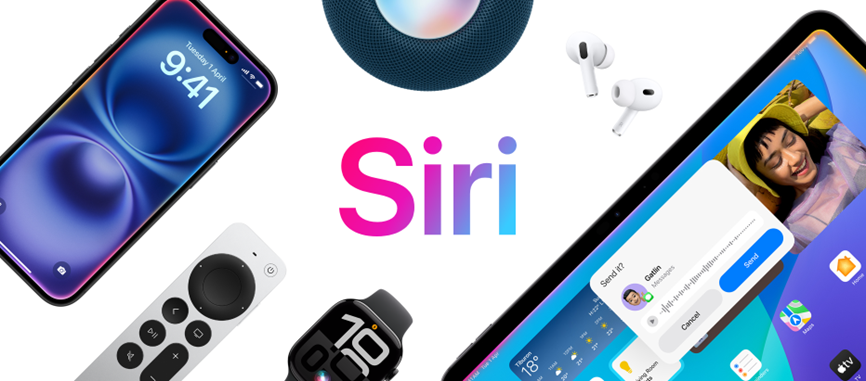
Siri will gain conversational world‑knowledge answers, longer storytelling, emotional support, travel booking and document creation inside apps like Notes.
Initial upgrades expected in iOS 26.4 (March–April 2026).
More advanced features like memory and proactive suggestions are planned for WWDC June 2026 and iOS 27.
Gemini-Powered Siri to have advanced-level features. (Image credit – Apple)
Apple and Google recently announced that Google’s Gemini AI will help power a more personalised version of Siri. A new report from The Information now reveals additional details about the upcoming features, Apple’s control over the AI model and the expected rollout timeline.
New Siri Features Expected
According to the report, the revamped Siri could begin rolling out as soon as this spring with several new capabilities. The updated assistant is said to be able to answer more factual and world-knowledge questions in a conversational manner, tell longer stories, and even provide emotional support.
Siri is also expected to assist with a broader range of tasks including booking travel. Another reported feature allows Siri to create documents directly inside apps such as Notes, for example, by generating content like a cooking recipe.
More Siri Capabilities Planned for WWDC
The report states that Apple plans to announce additional Siri enhancements at WWDC in June. These reportedly include the ability to remember past conversations and offer proactive suggestions using information from apps such as Calendar.
Apple has already confirmed that the personalised Siri will feature a deeper understanding of a user’s personal context, improved on-screen awareness, and more advanced per-app controls. The capabilities mentioned in the report align closely with what Apple has already demonstrated.
In one example previously shown by Apple, an iPhone user asks Siri about their mother’s flight and lunch reservation plans, with Siri pulling details from the Mail and Messages apps.
Apple to Fine-tune Gemini with No Visible Google Branding
The report notes that the current prototype of the Gemini-powered Siri does not display any Google or Gemini branding. Apple is reportedly able to fine-tune the Gemini model to ensure Siri responds in line with Apple’s own preferences and design principles.
The Information further explains Apple’s level of control over the AI system, stating, “Apple can ask Google to tweak aspects of how the Gemini model works, but otherwise Apple can finetune Gemini on its own so that it responds to queries the way Apple prefers, the person involved in the project said.”
Addressing branding concerns, the report adds, “In the current prototype of Apple’s Gemini-based system, AI answers don’t include any branding related to Google or Gemini, this person said.”
Launch Timeline and Software Rollout
Apple first previewed the more personalised Siri at WWDC 2024. The upgraded assistant is expected to launch as part of iOS 26.4 in March or April. However, according to the report, some advanced capabilities may not arrive until iOS 27.
More details are available in The Information’s paywalled report with Apple expected to share further updates during WWDC later this year.
FAQs
Q1. What new features will Gemini bring to Siri?
Answer. Siri will gain conversational world‑knowledge answers, longer storytelling, emotional support, travel booking, and the ability to create documents directly inside apps like Notes.
Q2. When will the upgraded Siri roll out?
Answer. The first wave of features is expected in iOS 26.4 (March–April 2026), while more advanced capabilities such as memory and proactive suggestions are planned for WWDC June 2026 and iOS 27.
Q3. Will Siri show Google or Gemini branding?
Answer. No. Apple will fine‑tune the Gemini model independently, ensuring Siri aligns with Apple’s design principles and displays no Google or Gemini branding.
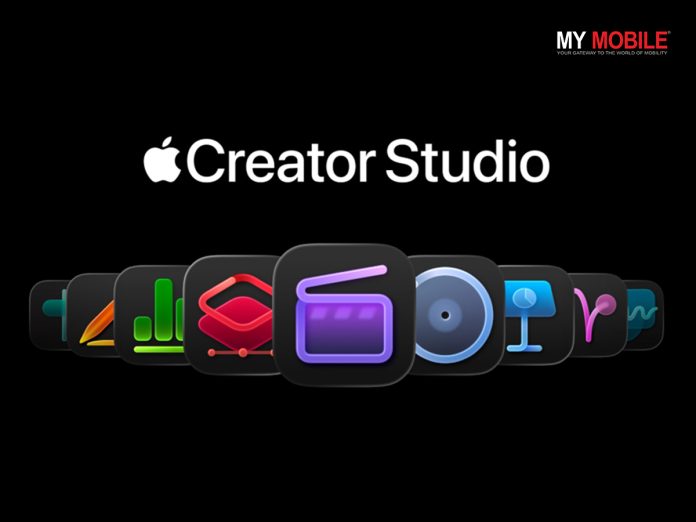
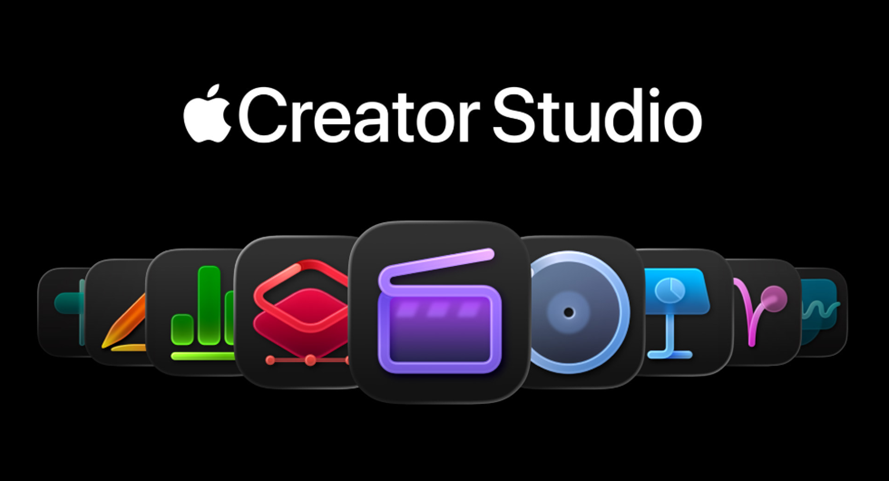
Apple Creator Studio combines Final Cut Pro, Logic Pro, Motion, Pixelmator Pro, Compressor, and MainStage, plus premium features for productivity apps, available on Mac and iPad.
It includes AI-powered tools, a new Content Hub, updated Pixelmator Pro with Liquid Glass interface and Warp tool, and expanded templates across Keynote, Pages, and Numbers.
It is priced at $12.99/month or $129/year (student plan $2.99/month), supports Family Sharing.
Apple Creator Studio has been launched. (Image credit – Apple)
Apple has officially introduced Apple Creator Studio, a new subscription bundle that combines its professional editing and productivity apps into a single package. The service is aimed at creators such as video editors, designers, musicians, and writers, offering access to apps like Final Cut Pro, Motion, and Pixelmator Pro under one subscription.
“Apple Creator Studio is a great value that enables creators of all types to pursue their craft and grow their skills by providing easy access to the most powerful and intuitive tools for video editing, music making, creative imaging, and visual productivity — all leveled up with advanced intelligent tools to augment and accelerate workflows,” said Eddy Cue, Apple’s senior vice president of Internet Software and Services. “There’s never been a more flexible and accessible way to get started with such a powerful collection of creative apps for professionals, emerging artists, entrepreneurs, students, and educators to do their best work and explore their creative interests from start to finish.”
Here’s everything you need to know.
What is Apple Creator Studio?
Until now, Apple’s “Pro” apps such as Final Cut Pro, Logic Pro, and Motion were sold as individual one-time purchases on the Mac App Store. With Apple Creator Studio, Apple is offering these tools for the first time as part of a unified subscription. The bundle also includes Pixelmator Pro, Compressor, and MainStage.
Subscribers can use these apps on both Mac and iPad. Alongside the Pro apps, the subscription also unlocks additional premium features for Apple’s productivity tools including Keynote, Pages, Numbers, and Freeform.
For creators who regularly work with video, audio, and image editing tools, Apple Creator Studio offers strong value. At $12.99 per month, users get access to multiple professional-grade apps along with new AI-powered features. In comparison, Adobe Creative Cloud costs around $70 per month, while purchasing Apple’s apps individually would cost close to $700.
What’s New?
Apple has not shared exhaustive details about all premium content, but it has confirmed the introduction of a new “Content Hub.” This space will offer photos, graphics, and illustrations that users can directly use in their creative projects.
Subscribers will also gain access to new templates across Keynote, Pages, and Numbers. Additionally, these apps will receive AI-powered features such as generating a presentation from a text outline or creating speaker notes from existing slides. In Numbers, users will be able to generate formulas and automatically fill tables using AI.
Pixelmator Pro Gets a Major Update
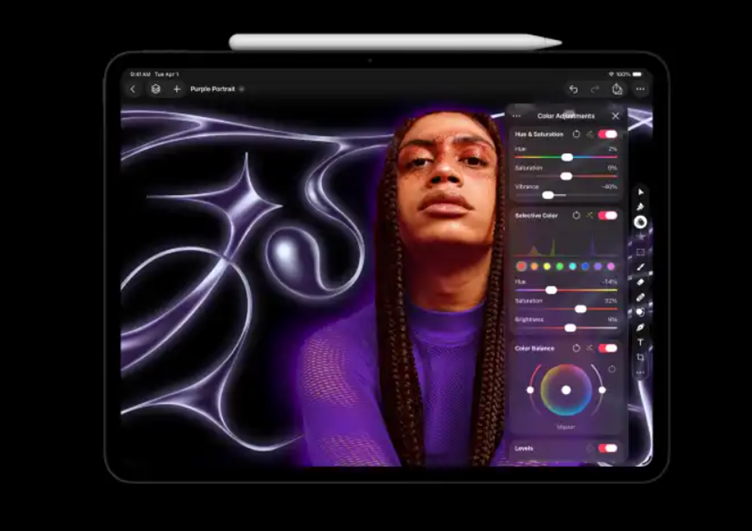
Pixelmator’s first major update. (Image credit – Apple)
Apple Creator Studio marks the first major update to Pixelmator Pro since Apple acquired the app last year. Pixelmator Pro is now part of the subscription bundle and, for the first time, is also available on iPad.
The app has been redesigned to take advantage of the Liquid Glass interface. Subscribers will also get access to a new Warp tool for twisting and reshaping layers, along with exclusive mockups.
Final Cut Pro and Logic Pro Updates
Final Cut Pro is getting an AI infusion with Apple Creator Studio. (Image credit – Apple)
Final Cut Pro is receiving new AI-based tools that allow users to search videos by spoken words or even objects visible in a scene. A new Beat Detection feature has also been added to help sync video edits with the rhythm of background music.
On iPad, Final Cut Pro now includes Montage Maker, which analyzes selected clips and automatically creates a dynamic video using the best moments. It can also reframe videos automatically for different social media platforms.
Logic Pro is also gaining AI-driven tools, including Synth Player and Chord ID, which can turn audio or recordings into chord progressions. A new Sound Library with hundreds of royalty-free samples has also been added.
Apple Creator Studio – Pricing and Plans
Apple Creator Studio is priced at $12.99 per month or $129 per year, and includes a free one-month trial. Customers who buy a new Mac or iPad will receive three months of the subscription at no extra cost. Students and teachers can subscribe for $2.99 per month or $29.99 per year.
The subscription supports iCloud Family Sharing and can be shared with up to six family members.
For comparison, Final Cut Pro and Logic Pro for iPad currently cost $4.99 per month each, totaling $9.98 per month. For an additional $3 per month, Apple Creator Studio adds several more apps and features. Buying the Mac apps individually is significantly more expensive with Final Cut Pro priced at $299 and Logic Pro at $199, bringing the total close to $500 even before adding other apps.
Apple says all apps will continue to be available as standalone purchases for users who prefer not to subscribe. Productivity apps will remain free.
Final Cut Pro: $299
Logic Pro: $199
Pixelmator Pro: $49
Motion: $49
Compressor: $49
MainStage: $29
Keynote: Free
Pages: Free
Numbers: Free
Freeform: Free
Apple also confirmed that all apps will continue to receive regular updates for both subscribers and non-subscribers. However, certain premium features will remain exclusive to Apple Creator Studio subscribers. The Liquid Glass interface update will be available to all users for free.
Availability
Apple has confirmed that Apple Creator Studio will be available starting January 28. Updates for all apps included in the bundle will also roll out on the same day.
FAQs
Q1. What is Apple Creator Studio and which apps are included?
Answer. Apple Creator Studio is a subscription bundle that combines pro apps like Final Cut Pro, Logic Pro, Motion, Pixelmator Pro, Compressor, and MainStage, along with premium features for productivity apps such as Keynote, Pages, Numbers, and Freeform.
Q2. How much does Apple Creator Studio cost and are there student discounts?
Answer. The subscription costs $12.99 per month or $129 per year, with a free one‑month trial. Students and teachers can subscribe for $2.99 per month or $29.99 per year.
Q3. When will Apple Creator Studio be available?
Answer. Apple Creator Studio will be available starting January 28, with updates for all included apps rolling out on the same day.
OpenAI is reportedly developing its first audio wearable with a unique eggstone-shaped case housing pill-style earbuds.
It is rumoured to use a 2nm Exynos-class chipset alongside a custom OpenAI chip enabling Siri-like command functions.
It is expected to launch around September 2026.
(Photo by Dima Solomin on Unsplash)
OpenAI has remained in the spotlight with frequent updates to ChatGPT. The massive popularity of ChatGPT has also played a major role in pushing the company toward new hardware categories. A previous TechCrunch report had hinted that OpenAI could be working on its first-ever AI-powered audio product. And it looks like we finally have a more substantial update on that.
According to a leak shared by Smart Pikachu of Weibo fame on X, OpenAI is said to be developing a “To-Go” hardware project focused on audio. The product is reportedly designed to compete directly with Apple’s AirPods and carries the internal codename “Sweetpea.”
Although most details remain undisclosed, the tipster claims that the device will feature a distinctive and previously unseen design. One of the main components is expected to be made of metal and shaped like an “eggstone.”
Inside this eggstone-like unit, there may be two pill-shaped earbuds that can be removed and placed behind the ear. The design was shown via a leaked image.
Hearing fresh detail on Openai “To-go” hardware project from last report. Now confirmed it is a special audio product to replace Airpod, internal code name is “Sweetpea”
On the hardware side, the earbuds are rumoured to be powered by a 2nm smartphone-class chipset with Exynos being mentioned as the most likely candidate. In addition to this, OpenAI is reportedly developing a custom chip for the device.
This custom silicon is said to enable functionality that could “replace iPhone actions by commanding Siri.”
Possible Launch Timeline
The leak suggests that “Sweetpea” has moved to the front of OpenAI’s hardware pipeline, reportedly due to involvement from Jony Ive’s team. The same source claims that the launch of OpenAI’s rumoured audio wearable could take place around September 2026.
That said, the earbuds are believed to be just one of five hardware products currently in development at OpenAI. The company has not officially confirmed any details so far, meaning all information remains speculative. More clarity is expected only once OpenAI makes a formal announcement about its first AI-focused audio product.
FAQs
Q1. What is OpenAI’s first audio wearable project called?
Answer. The device carries the internal codename “Sweetpea” and is designed to rival Apple’s AirPods, featuring a unique eggstone-shaped case with pill-style earbuds.
Q2. What chipset is rumoured to power the OpenAI wearable audio device?
Answer. The earbuds are tipped to use a 2nm Exynos-class chipset along with a custom OpenAI chip that could enable Siri-like command functions.
Q3. When is the OpenAI audio wearable expected to launch?
Answer. Leaks suggest a September 2026 launch, with Jony Ive’s team reportedly involved in the design.
Likely Google Pixel 10a details revealed via FCC Certification.
The phone could feature GSM, LTE, 5G NR, NTN satellite support, Wi-Fi 6E, Bluetooth, NFC, and Qi wireless charging (not Qi 2).
It is rumoured to launch in mid‑February 2026 with Obsidian, Berry, Fog, Lavender colours and storage choices of 128GB or 256GB.
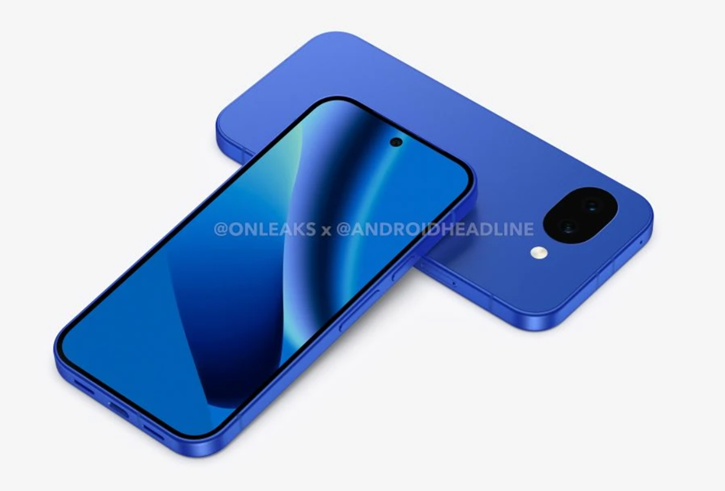
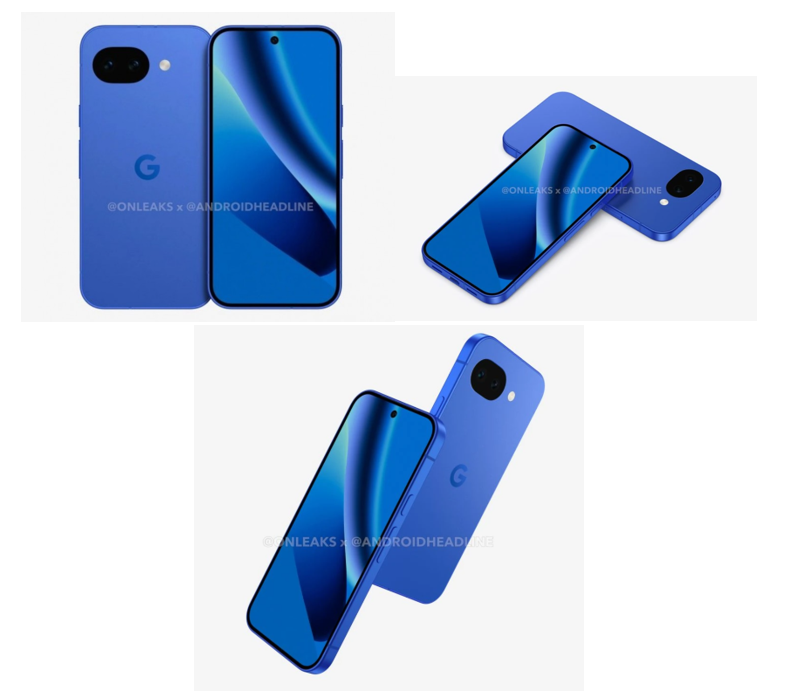
Google Pixel 10a leaked official CAD render. (Image credit – Android Headlines)
Google may be preparing to launch another Pixel smartphone as many reports have previously hinted. Now, an unreleased device has surfaced on the FCC certification database giving more fuel to the rumours about the Pixel 10a launch. This development comes months after the company introduced the Pixel 10 series in August 2025. It was hinted that a new Pixel model could arrive sooner than expected. Here’s what we know so far.
Google Pixel smartphone Appears on FCC Database
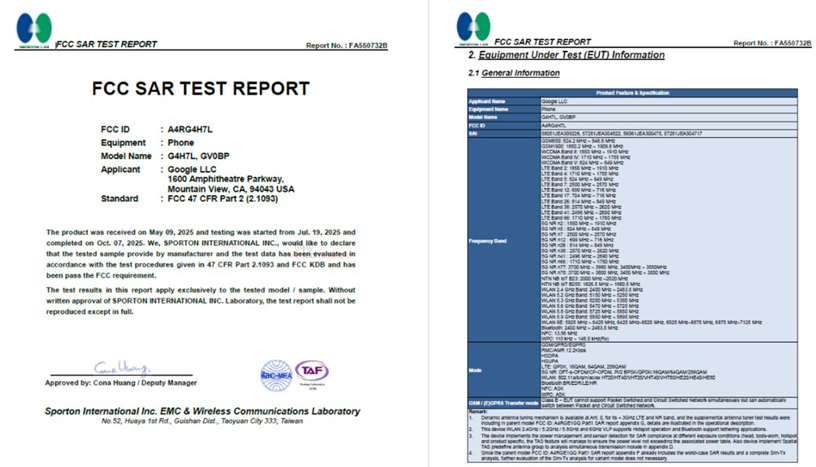
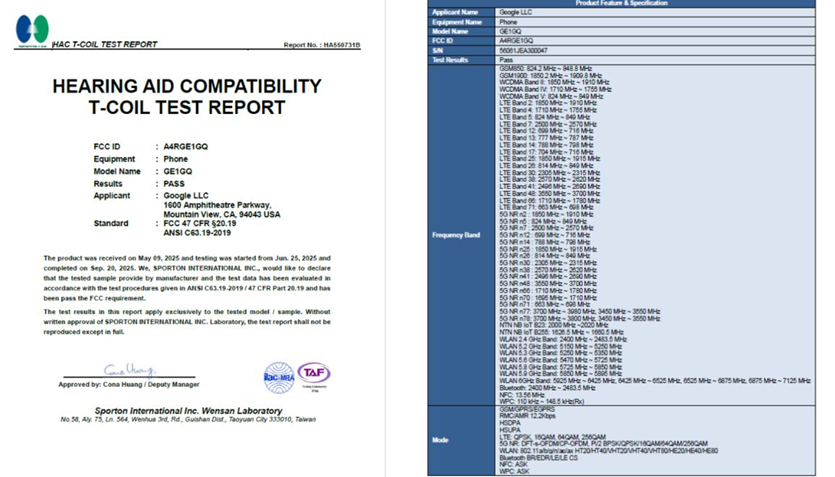
Google Pixel Smartphone spotted on the FCC. (Screenshot by TheTechOutlook)
The FCC listing reveals three model numbers, which are GE1GQ, G4H7L, and GV0BP. Among these, G4H7L and GV0BP are associated with the FCC ID A4RG4H7L, while GE1GQ is listed under FCC ID A4RGE1GQ.
While Google has not officially confirmed the name of these devices, speculation suggests that they could belong to the upcoming Google Pixel 10a. However, there is currently no certification that explicitly confirms this moniker.
Connectivity and Wireless Features (Revealed)
According to the FCC documentation, all three model numbers support a wide range of connectivity options including GSM, WCDMA, multiple LTE bands, and several 5G NR bands. The listing also confirms support for NTN satellite connectivity.
Wireless features include Wi-Fi across 2.4GHz and 5GHz bands along with Wi-Fi 6E, Bluetooth, and NFC operating at 13.56MHz.
The FCC filing confirms support for WPC wireless charging operating between 110kHz and 148.5kHz. This aligns with standard Qi wireless charging technology, which relies on inductive charging without magnetic alignment. This also indicates that the device does not support Qi 2, as Qi 2 operates at a higher frequency of 360kHz and uses magnetic alignment.
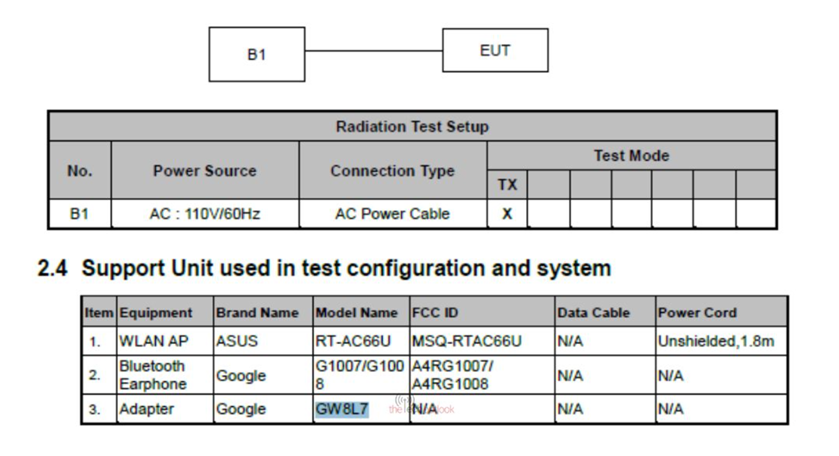
The listing further reveals that the smartphone was tested using a power adapter with the model number GW8L7. This charger corresponds to Google’s 45W USB-C power adapter, although the exact wired charging speed supported by the phone itself has not been disclosed.
If these FCC listings do indeed belong to the Pixel 10a, it could indicate that the device’s official launch is drawing closer.
Pixel 10a Launch Timeline, Colours, and Storage Options Tipped
Google Pixel 10a Official CAD Renders leaked. (Image credit – Android Headlines)
Separate leaks suggest that the Google Pixel 10a could launch around mid-February, which means the wait for the device may be limited to about a month if the rumours hold true.
The smartphone is expected to be offered in four colour options, which includes Obsidian, Berry, Fog, and Lavender. Storage variants could include 128GB and 256GB options.
Leaks indicate that the Pixel 10a may not bring major changes compared to its predecessor, aside from new colour options. The device is rumoured to be powered by the Tensor G4 SoC, although there is still speculation that it could feature a lower-performance version of the Tensor G5 chipset used in the Pixel 10 series.
Google Pixel 10a – Key Specifications (Expected)
As per an earlier leak, the Pixel 10a is expected to feature a 6.28-inch AMOLED display with FHD+ resolution and a 120Hz refresh rate. Camera specifications could include a 48-megapixel primary sensor, a 13-megapixel ultrawide camera, and a 13-megapixel front-facing camera.
The smartphone is also tipped to pack 8GB of RAM and a 5,100mAh battery.
FAQs
Q1. Has the Google Pixel 10a been officially confirmed?
Answer. No, Google has not officially confirmed the Pixel 10a. However, three unreleased devices appeared in the FCC database, fueling speculation that they belong to the upcoming Pixel 10a.
Q2. When is the Pixel 10a expected to launch and in what variants?
Answer. Leaks suggest a mid‑February 2026 launch. The phone may come in four colours (Obsidian, Berry, Fog, Lavender) and two storage options (128GB and 256GB).
Q3. What are the key specifications tipped for the Pixel 10a?
Answer. Expected specs include a 6.28‑inch FHD+ AMOLED display with 120Hz refresh rate, Tensor G4 (or lower Tensor G5 variant), 48MP main + 13MP ultrawide + 13MP front cameras, 8GB RAM, and a 5,100mAh battery.
It features a 6.75-inch 120Hz LCD display, Dimensity 6300 chipset, 50MP dual rear camera, Android 15, up to 8GB RAM, 256GB storage, 7,000mAh battery with 80W SUPERVOOC.
Pricing and availability details are yet to be announced.
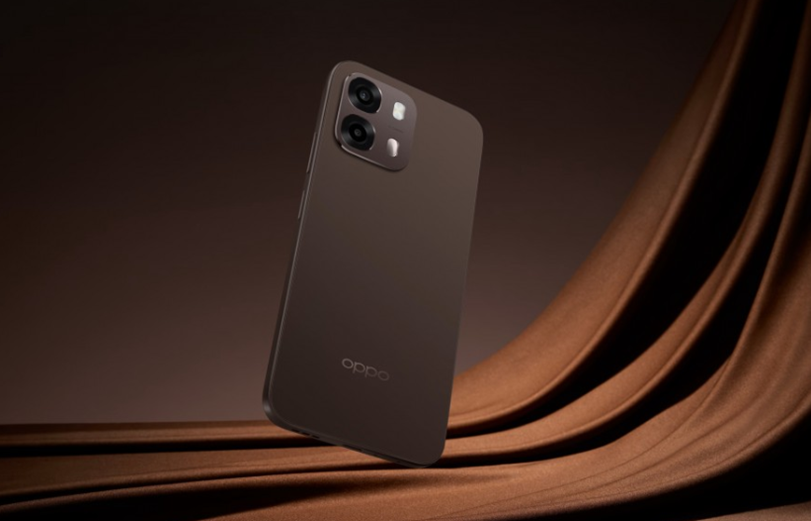
Oppo A6s 5G. (Image credit – Oppo)
Oppo has officially unveiled the Oppo A6s 5G on its global website, shortly after announcing the Oppo A6s 4G smartphone. The new 5G model shares a similar design language with its 4G counterpart. Oppo A6 series in the global markets currency has Oppo A6 5G, Oppo A6 4G, Oppo A6x 4G, Oppo A6x 5G, and Oppo A6s 4G.
As of now, Oppo has not revealed the pricing or availability details of the Oppo A6s 5G. In any case, here’s what has been revealed about the Oppo A6s 5G.
Oppo A6s 5G – Key Features
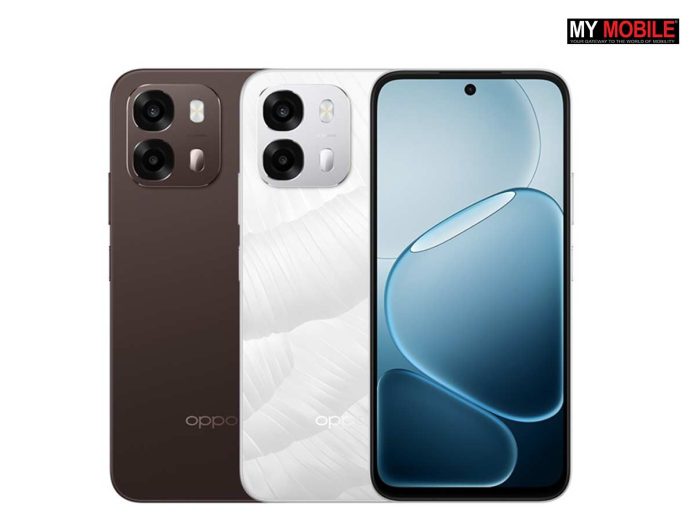
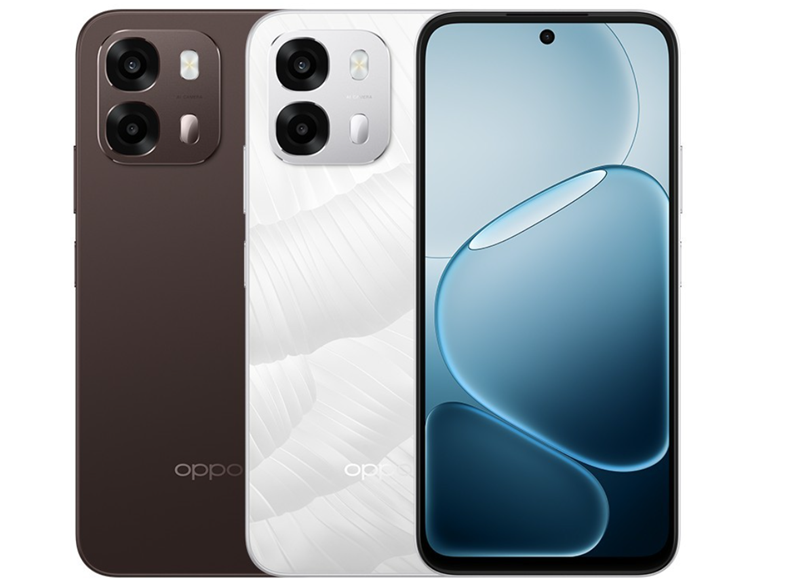
Oppo A6s 5G colours. (Image credit – Oppo)
The OPPO A6s 5G, listed with model number CPH2789, is available in Cappuccino Brown and Ice White colour options. It features a 6.75-inch LCD display with HD+ resolution of 1570 × 720 pixels, a 120Hz refresh rate, and peak brightness of up to 1125 nits in high brightness mode. The smartphone measures 166.61mm × 78.51mm × 8.61mm and weighs approximately 216 grams.
The device is powered by the MediaTek Dimensity 6300 chipset and runs ColorOS 15.0 based on Android 15 out of the box. Oppo offers the phone in multiple configurations including 6GB RAM with 128GB storage, 8GB RAM with 128GB storage, and 8GB RAM with 256GB storage. It uses LPDDR4X RAM and UFS 2.2 storage, and also supports microSD card expansion, USB OTG, and RAM expansion to enhance multitasking.
On the back, the Oppo A6s 5G is equipped with a 50-megapixel primary camera paired with a 2-megapixel monochrome sensor. The front houses a 16-megapixel selfie camera.
The rear camera supports video recording up to 1080p at 60fps, while the front camera records up to 1080p at 30fps. Additional camera features include slow motion, time-lapse, dual-view video, and multiple shooting modes such as Night, Portrait, Pro, Underwater, and Document Scanner.
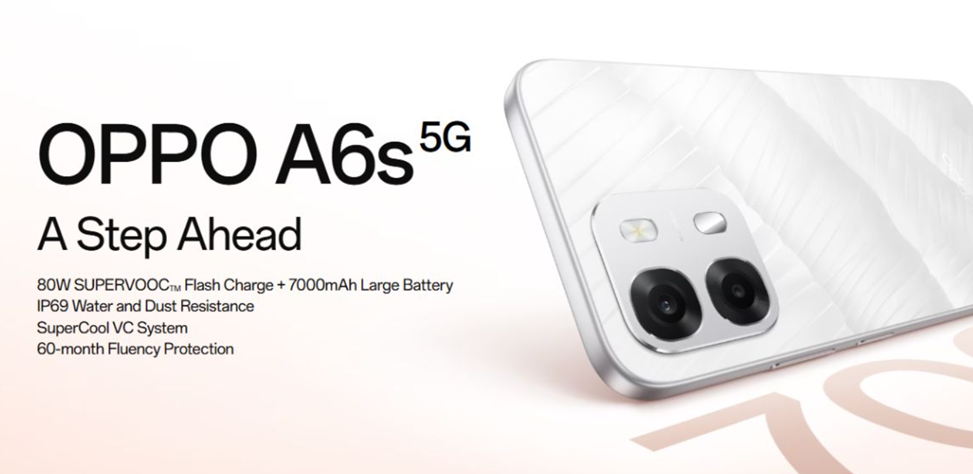
Oppo A6s 5G. (Image credit – Oppo)
The smartphone packs a large 7,000mAh battery with a rated capacity of 6,830mAh, and supports up to 80W SUPERVOOC fast charging. According to the company, the phone can be fully charged in 64 minutes. Oppo also claims up to 40 days of standby time on a single charge, while a 30-minute charge can boost the battery from 1% to 54%.
The Oppo A6s 5G carries an IP69 rating for dust and water resistance. It also includes a spray water removal feature that uses micro-vibrations to expel water from the speaker and ports. To manage heat during extended usage, the phone is equipped with a 3,900mm² vapour chamber cooling system.
Other features include dual stereo speakers with an ultra volume mode, 5G connectivity, Wi-Fi 5, Bluetooth 5.4, USB Type-C, and NFC support in select regions. The device supports multiple navigation systems, including GPS, GLONASS, Galileo, Beidou, and QZSS. For security, it offers a side-mounted fingerprint sensor and face unlock, along with sensors such as an accelerometer, proximity sensor, ambient light sensor, and e-compass.
FAQs
Q1. What is the Oppo A6s 5G and where was it unveiled?
Answer. The Oppo A6s 5G is a new smartphone powered by the MediaTek Dimensity 6300 chipset, officially unveiled on Oppo’s global website.
Q2. What are the key display and design features of Oppo A6s 5G?
Answer. It features a 6.75-inch LCD HD+ display with 120Hz refresh rate, peak brightness of 1125 nits, and comes in Cappuccino Brown and Ice White colour options.
Q3. How powerful is the battery and charging system of Oppo A6s 5G?
Answer. The phone packs a 7,000mAh battery (rated 6,830mAh) with 80W SUPERVOOC fast charging, delivering 54% charge in 30 minutes and full charge in 64 minutes.
Q4. What camera setup and durability features does Oppo A6s 5G offer?
Answer. It has a 50MP + 2MP dual rear camera and a 16MP front camera, supports multiple shooting modes, and carries an IP69 rating for dust and water resistance with spray water removal technology.
CMF Headphone Pro launched in India as the brand’s first over-ear wireless headphones with ANC.
The headphones are priced at ₹7,999 (₹6,999 launch offer) and sales start January 20, 2026.
Key features – up to 100 hours battery life, fast charging, Hi-Res LDAC audio, 40mm drivers, spatial audio modes, 40dB adaptive ANC, Bluetooth 5.4 with dual pairing, wired/wireless support and Nothing X app.
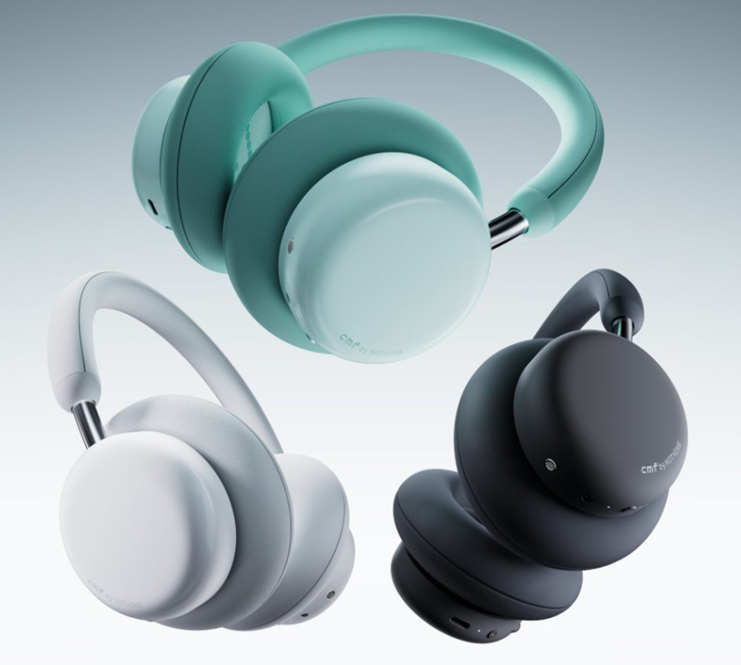
CMF Headphone Pro Launched in India. (Image credit – CMF)
CMF Headphone Pro has been launched in India, marking the brand’s first over-ear wireless headphones with Active Noise Cancellation (ANC). The headphones were initially unveiled in select global markets in September 2025. The Indian variant remains identical to the global model. Sales in India are set to begin later this month. Here’s everything you need to know about the new headphones.
CMF Headphone Pro – Price and Availability in India
The CMF Headphone Pro is priced at ₹7,999 in India. As part of a limited-time launch offer, it will be available for ₹6,999. The headphones will go on sale starting January 20, 2026, at 12 PM via Flipkart and offline retail stores.
These headphones are offered in three colour options, which includes Dark Grey, Light Green, and Light Grey.
CMF Headphone Pro – Design and Controls
The CMF Headphone Pro features a modular design with support for interchangeable ear cushions and multiple colour options, allowing users to customise the look of the headphones.
Physical controls are handled through a tactile three-button setup including a multifunction roller that enables users to manage music playback, calls, and ANC directly from the headphones.
CMF Headphone Pro – Key Features
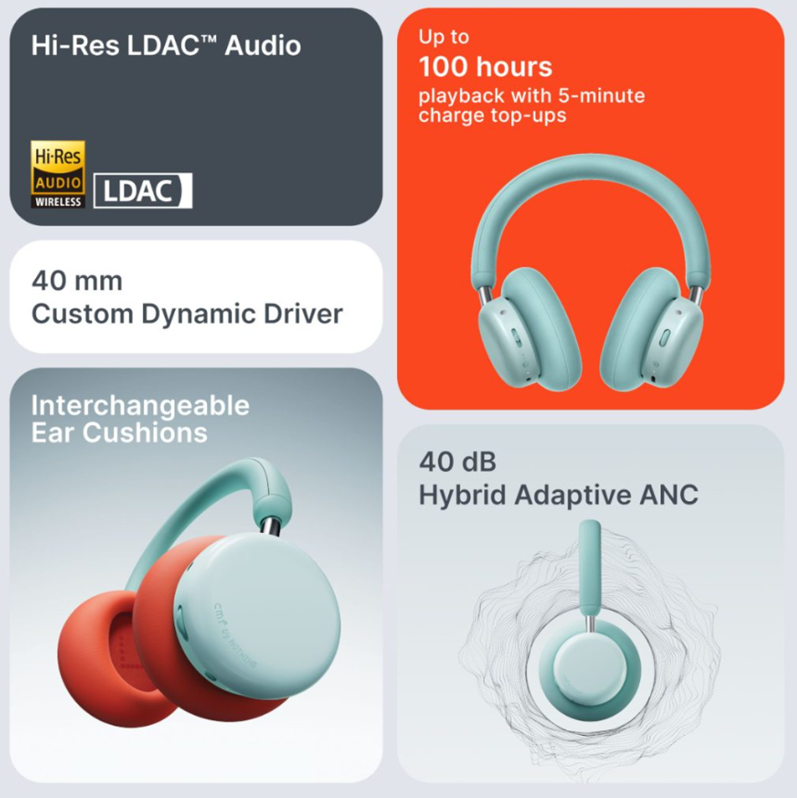
According to the company, the CMF Headphone Pro delivers up to 100 hours of playback on a single charge. With Active Noise Cancellation turned on, battery life drops to around 50 hours. Fast charging is supported, with a quick 5-minute charge offering up to 8 hours of listening time. The headphones can be charged using a smartphone, laptop, or standard power adapter.
For audio, the headphones support LDAC and come with Hi-Res Audio certification, enabling higher-quality Bluetooth audio streaming on compatible devices. They can be used in both wired and wireless modes and are equipped with 40mm nickel-plated drivers designed to minimise distortion and deliver clearer sound.
Spatial audio modes such as Cinema and Concert are also included to enhance music and video playback.
The CMF Headphone Pro offers up to 40dB hybrid adaptive noise cancellation and claims to block up to 99% of background noise. The ANC system dynamically adjusts across different levels based on the surrounding environment.
The headphones work with the Nothing X app, where users can take a short hearing test to create a personalised sound profile. This profile is saved directly on the headphones and works across multiple devices.
Connectivity options include Bluetooth 5.4 with dual-device pairing support and a wireless range of up to 10 metres. The headphones also feature a 3.5mm headphone jack for wired listening, a built-in microphone for calls, sweat resistance suitable for light workouts, and general durability testing as claimed by the brand.
FAQs
Q1. What is the CMF Headphone Pro and when was it launched in India?
Answer. The CMF Headphone Pro is the brand’s first over-ear wireless headphones with ANC, launched in India in January 2026 after its global debut in September 2025.
Q2. What is the price and availability of the CMF Headphone Pro in India?
Answer. It is priced at ₹7,999, with a limited-time launch offer of ₹6,999. Sales start on January 20, 2026, at 12 PM via Flipkart and offline stores.
Q3. What are the key battery and charging features of CMF Headphone Pro?
Answer. The headphones deliver up to 100 hours of playback (50 hours with ANC), and a 5-minute fast charge provides 8 hours of listening.
Q4. What audio and noise cancellation features of CMF Headphone Pro have?
Answer. They support LDAC with Hi-Res Audio certification, 40mm drivers, spatial audio modes, and 40dB hybrid adaptive ANC that blocks up to 99% of background noise.
Q5. What connectivity and customisation options are available in CMF Headphone Pro?
Answer. The headphones feature Bluetooth 5.4 with dual-device pairing, a 3.5mm jack, modular design with interchangeable cushions, tactile controls, and personalised sound profiles via the Nothing X app.
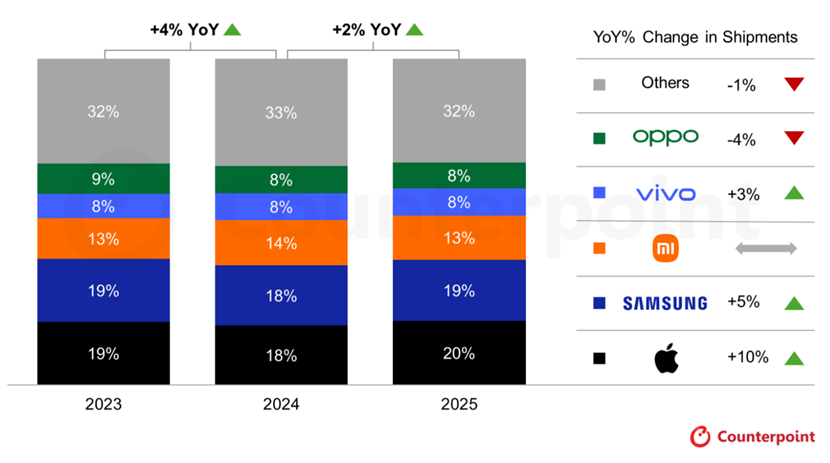
Apple led global smartphone shipments in 2025 with a 20% market share and 10% growth.
Samsung secured second place and Xiaomi held third, while Vivo ranked fourth and Oppo slipped to fifth due to weaker demand.
Analysts expect slower growth in 2026 amid rising memory prices and component shortages.
Apple led global smartphone shipments in 2025 with a 20% market share. (Image credit – Apple)
According to preliminary figures released by Counterpoint Research, Apple has emerged as the world’s top smartphone brand by shipments in 2025. The Cupertino-based company captured a 20% share of the global smartphone market, recording a 10% year-over-year growth. It is the strongest performance among the top five manufacturers. Here’s more on recently released data.
Global Smartphone Shipment Trends in 2025
Global smartphone shipments rose by 2% in 2025, marking the second straight year of recovery for the industry. Counterpoint attributes this growth to strong demand for premium devices, increasing 5G adoption in emerging markets, and flexible financing options that made high-end smartphones more accessible.
Apple benefited from robust demand for the iPhone 17 series in the fourth quarter. Meanwhile, the iPhone 16 continued to perform well in markets such as India, Japan, and Southeast Asia.
Commenting on Apple’s performance, Senior Analyst Varun Mishra said, “Apple’s growth in 2025 was driven by its expanding presence and rising demand across emerging and mid‑size markets, supported by a stronger product mix. The iPhone 17 series gained significant traction in Q4 following its successful launch, while the iPhone 16 continued to perform exceptionally well in Japan, India and Southeast Asia. This dual momentum was further amplified by the COVID‑era upgrade cycle reaching its inflection point, as millions of users were due for replacement.”
Samsung Holds Second Place and Xiaomi Remains Third
Samsung ranked second globally with a 19% market share and posted 5% annual growth. The company’s Galaxy A series continued to drive volumes in the mid-range segment, while the Galaxy S25 and Fold 7 helped maintain momentum in the premium category. Samsung saw shipment gains in Japan but faced challenges in Latin America and Western Europe.
Xiaomi retained its third-place position with a 13% market share. The brand witnessed consistent demand across Southeast Asia and Latin America, supported by a well-balanced lineup spanning premium and mid-range smartphones. Based on Counterpoint’s methodology, Xiaomi is also believed to have topped smartphone shipments in China in 2025.
Vivo finished fourth in the global rankings, aided by growth in the premium segment and strong offline sales performance in India. Oppo dropped to fifth place after recording a 4% decline in shipments, impacted by weaker demand in China and intensifying competition across the Asia-Pacific region. Combined shipments of Oppo and Realme accounted for an 11% market share in 2025.
What to Expect in 2026?
Counterpoint analysts have shared a guarded outlook for 2026. The first is forecasting slower smartphone market growth due to rising memory prices and potential component shortages as chipmakers increasingly divert capacity toward AI data centres.
While Apple and Samsung are expected to remain relatively resilient, Chinese smartphone brands could face mounting supply-side pressures in the coming year.
Commenting on it, Research Director Tarun Pathak said, “The global smartphone market is set to soften in 2026 amid DRAM/NAND shortages and rising component costs, as chipmakers prioritize AI data centers over smartphones. Price hikes in smartphones have already begun to surface. Against this backdrop, we have revised our forecast for 2026 by reducing shipment estimates by 3%. Though the supply crunch will weigh on shipments, Apple and Samsung are likely to remain resilient, supported by stronger supply chain capabilities and premium market positioning, whereas Chinese OEMs concentrated in lower‑price segments will face greater pressure.”
FAQS
Q1. Which company led global smartphone shipments in 2025?
Answer. Apple led with a 20% market share and 10% year-over-year growth, driven by strong iPhone 17 and iPhone 16 sales.
Q2. How did Samsung and Xiaomi perform in 2025?
Answer. Samsung ranked second with a 19% share and 5% growth, while Xiaomi held third place with a 13% share, performing strongly in Southeast Asia and Latin America.
Q3. What is the outlook for the smartphone market in 2026?
Answer. Analysts expect slower growth due to rising memory prices and component shortages, with Apple and Samsung likely to be resilient but Chinese brands facing supply pressures.
Nothing has announced plans to open its first flagship retail store in India.
The move follows the registration of its sub-brand CMF as an independent entity in India.
CMF will next launch the Headphones Pro and Watch 3 Pro on January 13.
Nothing’s first India store teaser. (Image credit – Nothing)
Nothing is set to open its first flagship retail store in India, marking a significant milestone in the company’s efforts to expand its presence in the country. The upcoming store will act as a dedicated physical space for showcasing Nothing’s products and brand identity more closely to Indian consumers. This announcement comes as the company continues to scale its operations in the region.
Nothing Confirms Flagship Store Plans for India
The Carl Pei-led smartphone brand has confirmed through an X and Instagram posts that its first flagship store in India will open soon. The company has not yet revealed the exact launch date or location.
As of now, more official details are expected to be shared in the coming days.
The flagship outlet will allow Nothing to present its products in a more controlled retail environment, reinforcing its long-term commitment to India as a key growth market. The move underlines the company’s strategy to strengthen both its brand visibility and customer engagement through offline retail.
CMF Becomes an Independent Entity in India
The flagship store announcement follows the recent registration of Nothing’s sub-brand, CMF, as a legally independent company in India. This development was first disclosed in September, when Nothing confirmed that CMF would move its entire smartphone manufacturing operations to the country.
According to official records, the sub-brand now operates under the name CMF India Private Limited. The company has shifted its core activities to India, where it will oversee smartphone and wearable manufacturing, operations, and research and development.
The most recent Nothing-branded product introduced in India was the limited Nothing Phone 3a Community Edition, launched in December 2025.
As part of its expanded India-focused roadmap, CMF is set to launch the CMF Headphones Pro and CMF Watch 3 Pro in the country on January 13. With these launches lined up, the opening of the Nothing flagship store is expected to take place later this month, with further clarity likely in the days or weeks ahead.
FAQs
Q1. What has Nothing announced for India?
Answer. Nothing confirmed plans to open its first flagship retail store in India, providing a dedicated space to showcase products and strengthen brand visibility.
Q2. What role will CMF play in Nothing’s India strategy?
Answer. CMF has been registered as an independent company in India under CMF India Private Limited, overseeing smartphone and wearable manufacturing, R&D, and operations locally.
Q3. What upcoming product launches are expected in India?
Answer. CMF will launch the Headphones Pro and Watch 3 Pro on January 13, 2026, with the Nothing flagship store expected to open later this month.
Apple has confirmed a multi-year partnership with Google.
It makes Gemini AI models the foundation for future Apple Intelligence features, including a more advanced Siri.
Reports suggest Apple will pay around $1 billion annually for access to Gemini, which boasts 1.2 trillion parameters.
Google to Power Apple’s Siri with Gemini AI Models. (Image credit – Apple)
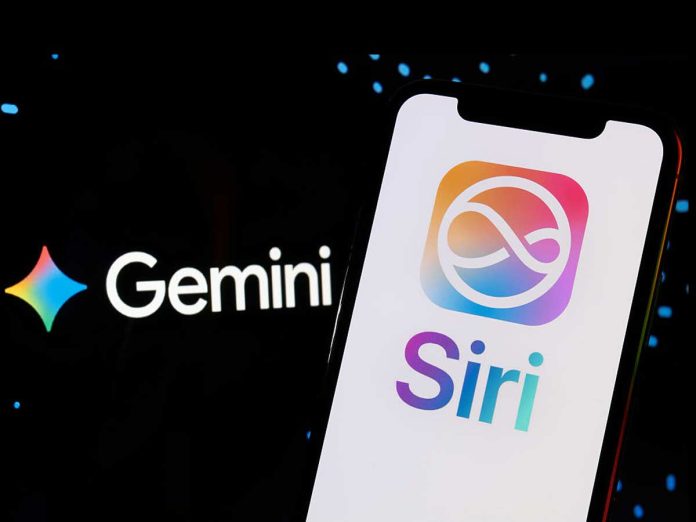
Apple has officially announced a multi-year partnership with Google that will see Siri’s upcoming AI enhancements powered by Google’s Gemini models. The confirmation comes via a joint statement from both companies, bringing clarity to months of speculation about Apple’s choice of AI partner.
Apple and Google Formalise Gemini AI Deal
In the shared statement, the companies said, “Apple and Googlehave entered into a multi-year collaboration under which the next generation of Apple Foundation Models will be based on Google’s Gemini models and cloud technology. These models will help power future Apple Intelligence features, including a more personalized Siri coming this year. After careful evaluation, Apple determined that Google’s Al technology provides the most capable foundation for Apple Foundation Models and is excited about the innovative new experiences it will unlock for Apple users. Apple Intelligence will continue to run on Apple devices and Private Cloud Compute, while maintaining Apple’s industry-leading privacy standards.”
This announcement confirms that Google’s Gemini AI and cloud infrastructure will play a central role in Apple’s next-generation Apple Foundation Models. Apple continues to emphasise on-device processing and its Private Cloud Compute approach for privacy.
Providing further insight into the partnership, a previous report by Bloomberg’s Mark Gurman in November 2025 claimed that Apple is expected to pay roughly $1 billion annually for access to Google’s Gemini model. The model reportedly features 1.2 trillion parameters.
This would mark a significant upgrade over the current 150 billion parameter system that powers Apple Intelligence’s cloud-based features.
Expected Features Coming to the New Siri
The upgraded version of Siri is expected to debut with iOS 26.4, which is likely to roll out around March. Rumoured features include better understanding of on-screen context, more intelligent use of personal data, and the ability to manage complex, multi-step tasks.
Elon Musk Criticises Apple–Google Partnership
The announcement did not go unnoticed by Elon Musk, who reacted strongly to the news that Google’s Gemini will underpin new Siri capabilities. Musk took to X to describe the deal as “an unreasonable concentration of power” for Google.
This seems like an unreasonable concentration of power for Google, given that the also have Android and Chrome
Earlier in the day, the News from Google account on X had confirmed the multi-year partnership with Apple to power Siri and the Apple Foundation Model using Google’s infrastructure. A few hours later, Musk responded to the post with his criticism.
Apple is behaving in a manner that makes it impossible for any AI company besides OpenAI to reach #1 in the App Store, which is an unequivocal antitrust violation.
Musk’s reaction comes as his AI company, xAI, is currently suing Apple and OpenAI over their partnership that integrates ChatGPT as an add-on to Siri and Apple Intelligence features. Musk has alleged that these partnerships have preempted competitors such as Grok from getting a fair opportunity on the App Store. While these claims have been widely discredited, the case is set to move forward after surviving dismissal attempts from both Apple and OpenAI.
FAQs
Q1. What did Apple announce regarding its AI partnership?
Answer. Apple confirmed a multi-year collaboration with Google, under which Siri’s next-generation AI features will be powered by Google’s Gemini models and cloud technology, while maintaining Apple’s privacy standards through on-device processing and Private Cloud Compute.
Q2. How much is Apple expected to pay for access to Gemini AI?
Answer. According to reports, Apple is expected to pay around $1 billion annually for access to Google’s Gemini model, which features 1.2 trillion parameters. It is significantly larger than the current 150 billion parameter system.
Q3. How did Elon Musk react to the Apple–Google deal?
Answer. Elon Musk criticised the partnership, calling it an “unreasonable concentration of power” for Google. His company xAI is also suing Apple and OpenAI over Siri’s ChatGPT integration, alleging unfair competition.