Home Blog Page 31

UIDAI Launches New Aadhaar App for iOS and Android – Store, Share, and Secure Multiple Aadhaar Cards Digitally

0

Highlights

  • UIDAI has introduced a new Aadhaar app for iOS and Android, offering a secure, paperless way to store and share Aadhaar cards digitally.
  • Users can store up to five Aadhaar profiles linked to one mobile number, enable biometric locks, and share credentials via QR codes.
  • The app uses face authentication and a two-step access process, auto-updates Aadhaar profiles, and complements the existing mAadhaar app.
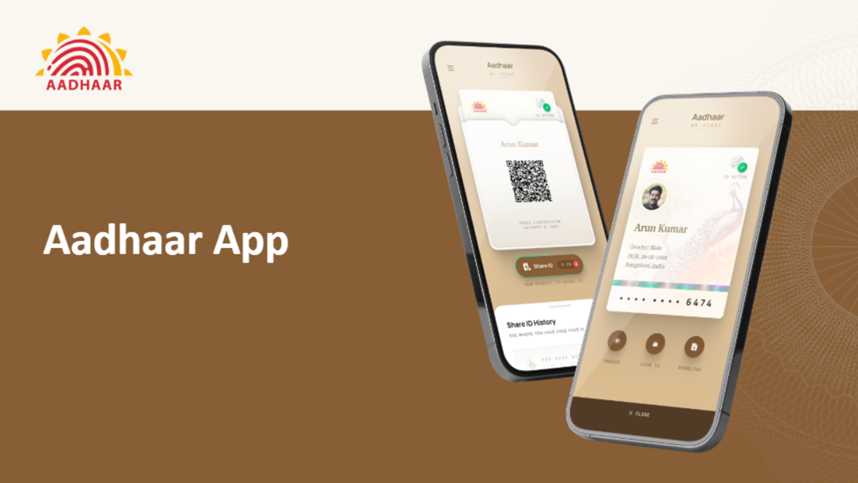
 New Aadhaar App is now available. (Image credit - UIDAI)
New Aadhaar App is now available. (Image credit – UIDAI)

The Unique Identification Authority of India (UIDAI) has officially launched a new Aadhaar app to make it easier and safer for citizens to carry and share their Aadhaar information. The new app complements the existing mAadhaar app and offers a simplified, paperless experience for users who want to store and securely share their Aadhaar card digitally. It is currently available for download on both the Google Play Store and the Apple App Store.

Here’s all you need to know.

New Aadhaar App – Overview and Key Features

image
UIDAI introduces new Aadhaar App. (Image credit – @UIDAI on X)

UIDAI has clarified that the new Aadhaar app is not a replacement for the mAadhaar app. While mAadhaar allows users to download digital Aadhaar cards, order PVC cards, verify registered mobile or email IDs, and generate virtual IDs, the new app primarily serves as a digital wallet for securely storing and showing your Aadhaar card.

The agency explained that the new Aadhaar app enables citizens to carry their Aadhaar details in a convenient digital format, ensuring that they no longer need to rely on printed or PDF versions. Though services like DigiLocker already allow Aadhaar storage, this new app introduces a more intuitive interface and a two-step access process for added security and ease of use.

One of the standout features of the app is its ability to store multiple Aadhaar profiles. Users can store up to five Aadhaar cards linked to the same mobile number. This allows users to keep their family members’ Aadhaar cards in one place. All data can be accessed securely within the app, and Aadhaar details can be shared as verifiable digital credentials.

Additionally, users can enable a biometric lock for added protection. Once activated, the biometric data remains locked until the user temporarily disables it. The app also updates the Aadhaar profile automatically after successful data updates. It supports QR code scanning and sharing, making it easier to use Aadhaar details for various services or transactions directly from the app.

New Aadhaar App with enhanced security, easy access, and a completely paperless experience. (Image credit – Aadhaar app on Google Play Store)

How to Use the New Aadhaar App?

Setting up the new Aadhaar app is straightforward and all you have to do is follow the steps below –

  • Download and install the app from the Play Store or App Store.
  • Select your preferred language and enter your 12-digit Aadhaar number.
  • The app will prompt you to send an SMS from your Aadhaar-registered mobile number.
  • After receiving the OTP, complete the face authentication process.
  • Finally, set a six-digit password to secure your account.

Once the setup is complete, users can view their Aadhaar card on the profile page, mask details, share information securely, or add a biometric lock. The same process can be used to add up to four more Aadhaar profiles. This makes the app an all-in-one solution for digital Aadhaar management.

FAQs

Q1. What is the purpose of the new Aadhaar app launched by UIDAI?

Answer. The new Aadhaar app serves as a secure digital wallet for storing and sharing multiple Aadhaar cards, offering a paperless and user-friendly experience.

Q2. How many Aadhaar profiles can be stored in the app?

Users can store up to five Aadhaar profiles linked to the same mobile number, making it convenient to manage family members’ Aadhaar cards in one place.

Q3. What security features does the new Aadhaar app offer?

Answer. The app includes a two-step access process, biometric lock, masked Aadhaar display, and secure QR code sharing to protect user data and enhance privacy.

Also Read

https://www.mymobileindia.com/aadhaar-facerd-app-all-you-need-to-know-about-uidais-new-app/

https://www.mymobileindia.com/npci-introduces-biometric-authentication-for-upi-payments-replacing-pins-with-fingerprint-and-face-id/

Apple to Bring Satellite Connectivity to Maps and Messages, Enabling iPhones to Work Without Mobile Networks

0

Highlights

  • Apple plans to extend satellite connectivity beyond emergency use, enabling Maps and Messages to work without mobile networks in remote areas.
  • New tech will allow iPhones to connect to satellites without needing line-of-sight, maintaining signal even in pockets, cars, or bags.
  • Apple is also working on 5G Non-Terrestrial Networks and tools for developers to build offline-capable apps for travel, health, and safety.
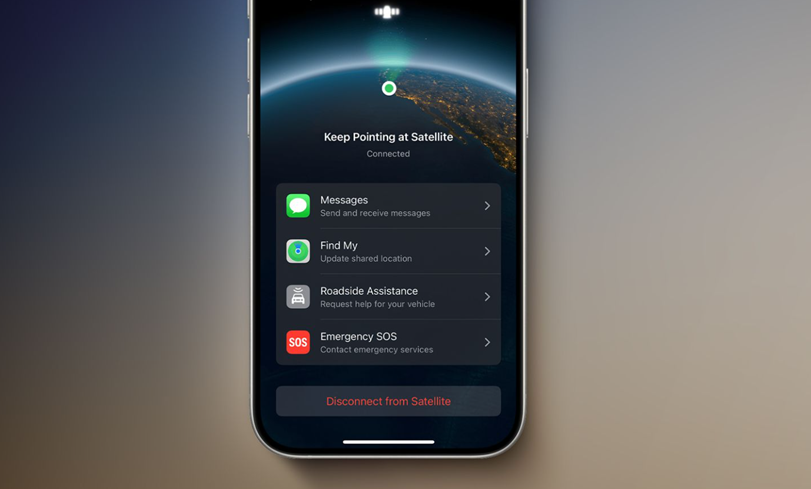
image
iPhone Satellite feature. (Image credit – Apple)

It appears Apple is taking significant steps to make the iPhone more reliable in areas with limited or no mobile coverage. The company is expanding its satellite connectivity features beyond emergency use and is aiming to integrate them into Apple Maps and Messages. If successful, this move would allow iPhone users to navigate, communicate, and stay connected even without cellular networks, making the iPhone far more useful in remote and off-grid locations.

Apple Expanding Satellite Capabilities on iPhone

Apple first introduced Emergency SOS via Satellite in 2022 with the iPhone 14 series, allowing users to contact emergency services without network coverage. The service is powered by Globalstar and currently supports SOS messaging and roadside assistance in critical situations.

However, according to a new report, Apple is now working on advanced satellite connectivity technology that will allow iPhones to connect to satellites directly without requiring users to point their devices toward the sky. This means the connection could remain active even if the iPhone is in a pocket, car, or bag, offering a much more seamless and practical experience in areas with no mobile signal.

Integration With Maps and Messages

The upcoming feature aims to bring satellite connectivity to Apple Maps and Messages, two of the most widely used iPhone applications. Through this integration, users would be able to access navigation, receive location updates, and send text messages even in areas completely cut off from cellular networks.

Although satellite connectivity won’t replace traditional mobile networks, it is expected to enhance user safety and accessibility by providing essential communication features in low-coverage or off-grid environments.

Apple Working on 5G NTN Support

In addition to the satellite integration, Apple is also said to be developing support for 5G NTN (Non-Terrestrial Networks). This technology combines satellite and terrestrial mobile networks, ensuring stronger and more consistent coverage, particularly in regions where connectivity frequently drops.

The company is further developing a framework for app developers, which would allow third-party apps such as those related to travel, health, and safety to function even without an internet connection.

FAQs

Q1. What new satellite features is Apple planning for iPhones?

Answer. Apple is expanding satellite connectivity beyond emergency use to support Apple Maps and Messages, allowing navigation and texting without mobile networks.

Q2. Will users need to point their iPhones toward the sky to use satellite features?

Answer. No, Apple is developing technology that enables seamless satellite connection even when the iPhone is in a pocket, car, or bag.

Q3. What is 5G NTN and how is Apple involved?

Answer. Apple is working on 5G Non-Terrestrial Networks (NTN), which combine satellite and mobile networks for stronger, more consistent coverage in low-signal areas.

Also Read

https://www.mymobileindia.com/qualcomm-announces-snapdragon-w5-gen-2-and-w5-gen-2-wearable-platforms-with-satellite-connectivity/

https://www.mymobileindia.com/xiaomi-15-ultra-launches-in-china-with-200mp-periscope-camera-snapdragon-8-elite-and-satellite-connectivity/

OPPO Reno 15 Series Will Launch on November 17, Pre-Orders Live Now, Colour Options, Storage Variants, and Key Details Revealed

0

Highlights

  • OPPO Reno 15 and Reno 15 Pro will launch in China on November 17, with pre-orders already live.
  • Reno 15 comes in Starlight Bow, Aurora Blue, and Canele Brown; Reno 15 Pro adds Honey Gold.
  • Both models may feature OLED 1.5K displays, Dimensity 8450 chipsets, Android 16, 200MP cameras, and up to 6,300mAh batteries with fast charging.

image

Caption – Oppo Reno 15 Series launch date confirmed in latest official teaser. (Image credit – Oppo)

OPPO has officially announced that its upcoming Oppo Reno 15 series will debut in China on November 17. The lineup will include the Reno 15 and Reno 15 Pro, while reports also suggest the existence of a Reno 15 Mini with a compact design. However, OPPO has yet to confirm this model.

Ahead of the launch, both the Reno 15 and Reno 15 Pro have appeared on OPPO China’s official online store for pre-orders. The listing reveals their design, colour variants, and memory configurations. Here’s everything we know so far.

Oppo Reno 15 and Reno 15 Pro – Colours and Configurations

image

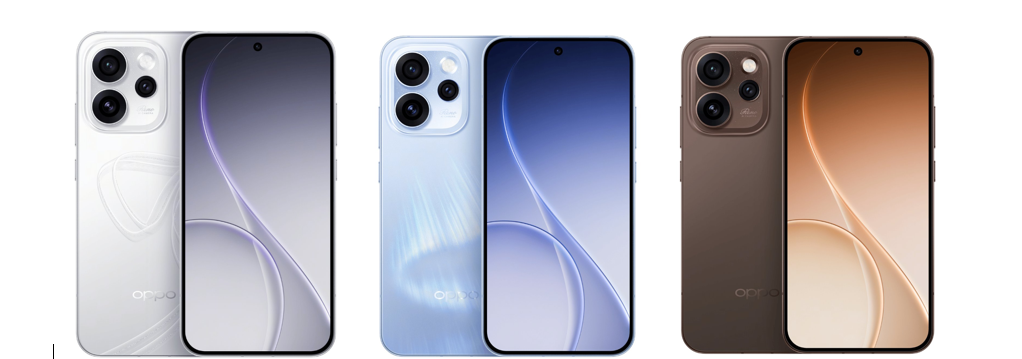
Caption – Oppo Reno 15 colour options. (Image credit – Oppo)

According to the listings, the OPPO Reno 15 will be available in Starlight Bow, Aurora Blue, and Canele Brown colour options. Buyers can choose from multiple memory variants, which includes  12GB + 256GB, 12GB + 512GB, 16GB + 256GB, 16GB + 512GB, and 16GB + 1TB.

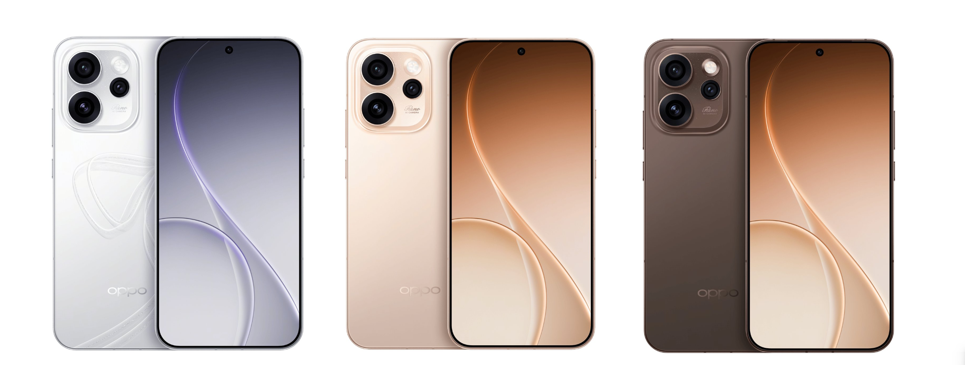
Caption – Oppo Reno 15 Pro colour options. (Image credit – Oppo)

The Reno 15 Pro, on the other hand, will come in Starlight Bow, Honey Gold, and Canele Brown finishes. Its storage and RAM options include 12GB + 256GB, 12GB + 512GB, 16GB + 512GB, and 16GB + 1TB, offering plenty of flexibility for users who prioritise performance and storage.

OPPO Reno 15 Series – Expected Specifications

While OPPO has yet to confirm the full specifications, early reports have shed light on several key details. The Reno 15 is expected to feature a 6.59-inch OLED 1.5K display, while the Reno 15 Pro may sport a slightly larger 6.78-inch OLED 1.5K panel. Both models are rumoured to be powered by the MediaTek Dimensity 8450 chipset, paired with Android 16 and ColorOS 16 out of the box.

Battery details remain partially undisclosed, but leaks suggest the Reno 15 Pro will pack a 6,300mAh battery with support for 80W wired charging and 50W wireless charging. The standard Reno 15 is expected to offer similar charging capabilities, though its battery capacity is still unknown.

In the camera department, the Reno 15 series is expected to boast an impressive 200MP Samsung HP5 main camera, alongside a 50MP ultra-wide sensor and a 50MP periscope telephoto lens. This setup indicates a strong focus on photography and zoom performance.

Both smartphones are also rumoured to feature a metal middle frame and IP68/69-rated protection, ensuring a premium build and enhanced durability.

FAQs

Q1. When is the OPPO Reno 15 series launching and which models are expected?

Answer. The OPPO Reno 15 series will launch in China on November 17, featuring the Reno 15 and Reno 15 Pro. A compact Reno 15 Mini is also rumored but not yet confirmed.

Q2. What color and storage options are available for the Reno 15 and Reno 15 Pro?

Answer. The Reno 15 comes in Starlight Bow, Aurora Blue, and Canele Brown, while the Reno 15 Pro adds Honey Gold. Storage options range from 12GB+256GB to 16GB+1TB.

Q3. What are the expected specifications of the Reno 15 series?

Answer. Both models are expected to feature OLED 1.5K displays, MediaTek Dimensity 8450 chipsets, Android 16, and a 200MP Samsung HP5 main camera, with fast charging and IP68/69-rated durability.

Also Read

https://www.mymobileindia.com/oppo-reno-15-series-tipped-to-launch-on-november-17-in-china-heres-what-to-expect/

https://www.mymobileindia.com/oppo-reno-15-pro-and-pro-tipped-to-feature-dimensity-8500-chipset-launch-expected-in-november/

Realme GT 8 Pro Aston Martin F1 Edition Launches in China With F1-Inspired Design, Snapdragon 8 Elite Gen 5 and 7,000mAh Battery

0

Highlights

  • Realme GT 8 Pro Aston Martin F1 Edition features Racing Lime finish, carbon fibre texture, silver wing logo, and themed accessories for collectors.
  • Features – Snapdragon 8 Elite Gen 5, 6.79″ 2K AMOLED 144Hz display, Ricoh GR co-engineered triple-camera system with 200MP periscope lens, 7,000mAh battery with 120W wired and 50W wireless charging.
  • Priced at ¥5,499 ($770), it comes in a single 16GB RAM and 1TB storage configuration option.

image

Caption – Realme GT 8 Pro Aston Martin F1 Edition launched in China. (Image credit – Realme)

Realme has officially launched the Realme GT 8 Pro Aston Martin F1 Limited Edition in China. This special edition was initially announced earlier this month and it brings together Realme’s top-tier flagship hardware with a Formula 1-inspired design. It has been developed in collaboration with the Aston Martin F1 Team. Here’s everything you need to know about the model, starting with price.

Realme GT 8 Pro Aston Martin F1 Edition – Pricing and Availability

image

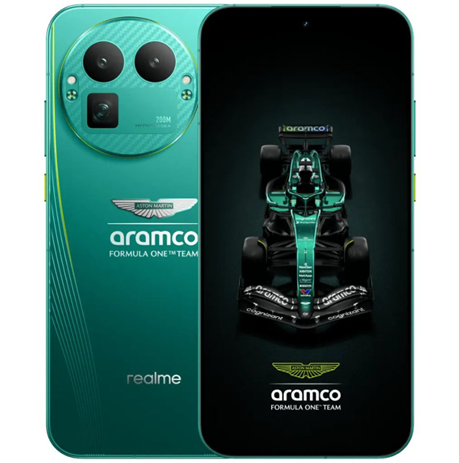
Caption – Realme GT 8 Pro Aston Martin F1 Edition back and front design. (Image credit – Realme)

The Realme GT 8 Pro Aston Martin F1 Edition is priced at 5,499 Yuan (approximately $770). It comes in a single configuration featuring 16GB of RAM and 1TB of storage, targeting users who seek both high performance and a limited edition design.

F1-Inspired Design

The Realme GT 8 Pro Aston Martin F1 Edition takes clear design inspiration from Aston Martin’s Formula 1 race cars. It features a bold “Racing Lime” colour finish, accented by a carbon fibre texture and Aston Martin’s signature silver wing logo. The back panel has an aerodynamic curve for enhanced grip and comfort.

image

Caption – GT 8 Pro Aston Martin F1 Edition design elements. (Image credit – Realme)

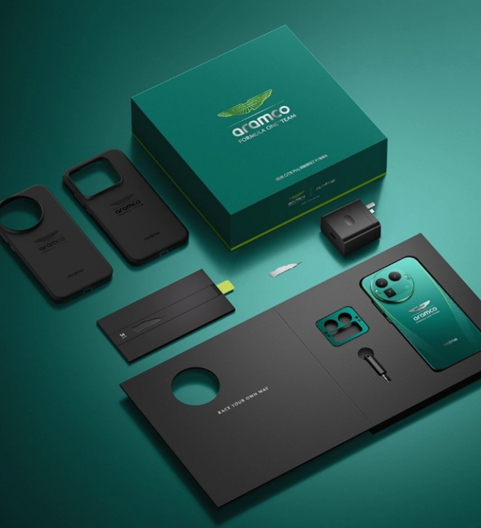
Adding to its collector’s appeal, the limited-edition packaging includes racing-themed accessories designed to reflect its luxury motorsport inspiration. This includes many items such as a custom F1 pin, a bespoke phone case, and a miniature race car model.

image

Caption – Realme GT 8 Pro Aston Martin F1 Edition in-the-box accessories. (Image credit – Realme)

The phone also boasts a custom F1-themed interface, which introduces animated wallpapers, exclusive icons, dynamic charging effects, and Aston Martin-branded camera watermarks. Together, it all creates a fully immersive experience that echoes the racing spirit.

Realme GT 8 Pro Aston Martin F1 Edition – Key Features

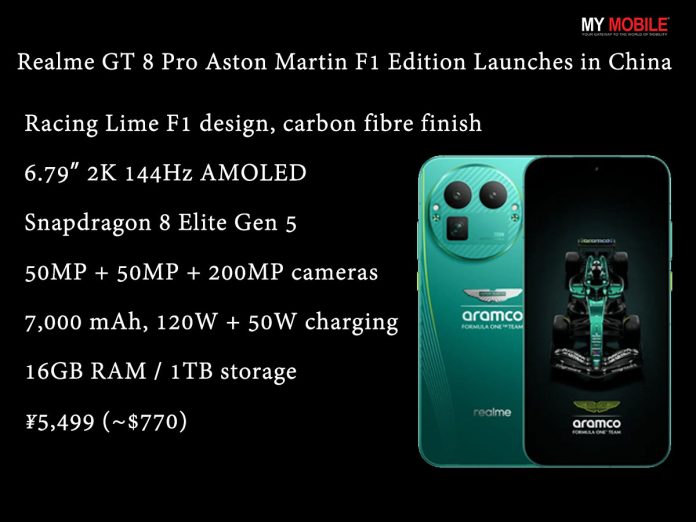
image

Caption – GT 8 Pro Aston Martin F1 Edition Key features. (Image credit – Realme)

The Realme GT 8 Pro Aston Martin F1 Edition is powered by the Snapdragon 8 Elite Gen 5 processor, paired with the R1 display processor for optimised visuals and heat management. It sports a 6.79-inch 2K AMOLED display with a 144Hz refresh rate and an impressive peak brightness of 7,000 nits, ensuring exceptional clarity and smoothness.

The device houses a massive 7,000mAh battery with support for 120W wired fast charging and 50W wireless charging, promising minimal downtime and quick top-ups.

For photography, the smartphone includes a triple-camera system co-engineered with Ricoh GR. It comprises a 50MP primary sensor, a 50MP ultra-wide lens, and a 200MP periscope telephoto camera offering 10x optical zoom and 120x digital zoom. It also supports 4K video recording at 120fps, catering to professional-grade videography.

FAQs

Q1. What is the Realme GT 8 Pro Aston Martin F1 Edition?

Answer. The Realme GT 8 Pro Aston Martin F1 Edition is a limited-edition flagship smartphone developed in collaboration with the Aston Martin F1 Team, featuring a racing-inspired design and premium hardware.

Q2. What are the key design elements of this special GT 8 Pro Aston Martin F1 Edition?

Answer. It features a Racing Lime finish, carbon fibre texture, Aston Martin’s silver wing logo, and comes with themed accessories like a custom F1 pin, phone case, and miniature race car model.

Q3. What are the main hardware specifications of the GT 8 Pro Aston Martin F1 Edition?

Answer. The phone is powered by the Snapdragon 8 Elite Gen 5 processor, includes a 6.79-inch 2K AMOLED display with 144Hz refresh rate, and packs a 7,000mAh battery with 120W wired and 50W wireless charging.

Q4. What camera setup does GT 8 Pro Aston Martin F1 Edition offer?

Answer. It features a triple-camera system co-engineered with Ricoh GR, including a 50MP main sensor, 50MP ultra-wide lens, and a 200MP periscope telephoto camera with 10x optical zoom and 120x digital zoom.

Q5. How much does the Realme GT 8 Pro Aston Martin F1 Edition cost?

Answer. The phone is priced at 5,499 Yuan (approximately $770) and comes in a single variant with 16GB RAM and 1TB storage.

Also Read

https://www.mymobileindia.com/realme-and-ricoh-imaging-announce-strategic-partnership-debuting-with-realme-gt-8-pro/

https://www.mymobileindia.com/realme-gt-8-pro-leak-teases-launch-timeline-audio-upgrades-and-new-software-features/

Lava Agni 4 5G Confirmed to Launch With Dimensity 8350 SoC, LPDDR5X RAM and UFS 4.0 Storage in India

0

Highlights

  • Lava Agni 4 is confirmed to launch with MediaTek Dimensity 8350 SoC, LPDDR5X RAM, and UFS 4.0 storage.
  • It is expected to feature a 6.78″ FHD AMOLED 120Hz display, aluminium frame, dual 50MP rear cameras, and a 7,000mAh battery.
  • The phone is launching on November 20 in India and may be priced around ₹20,000.

image

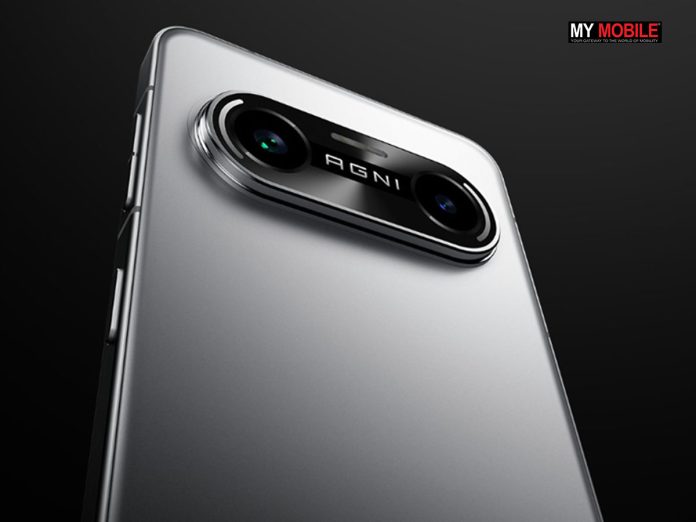
Caption – A look at Lava Agni 4 in the previous teaser. (Image credit – Lava)

Lava has officially confirmed key specifications of its upcoming smartphone, the Lava Agni 4 5G. The company previously announced that the phone will launch in India on November 20 and has already released several teasers showing the design of the phone. Now, a new official teaser gives us a clear picture of the smartphone hardware. Here’s what we know about the upcoming phone so far.

Lava Agni 4 5G – New Teaser

image

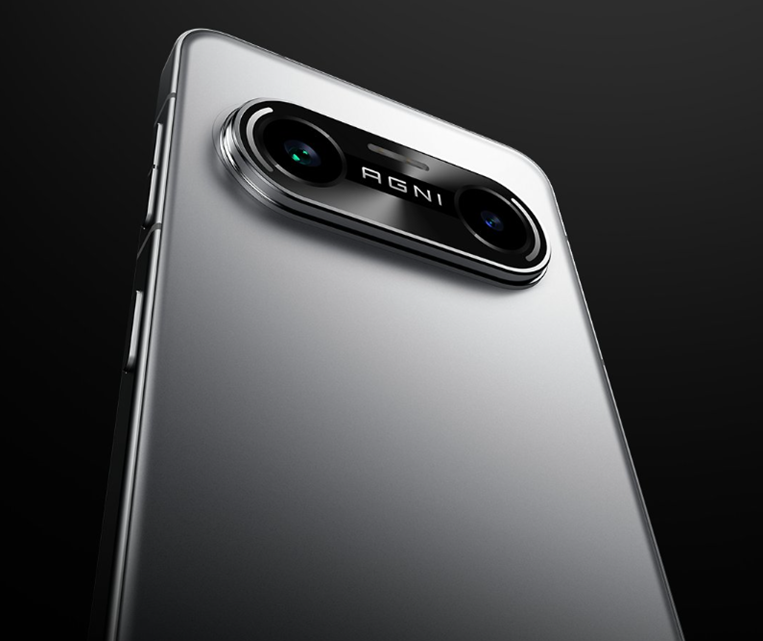
Caption – Lava Agni 4’s latest official teaser. (Image credit – @LavaMobile on X)

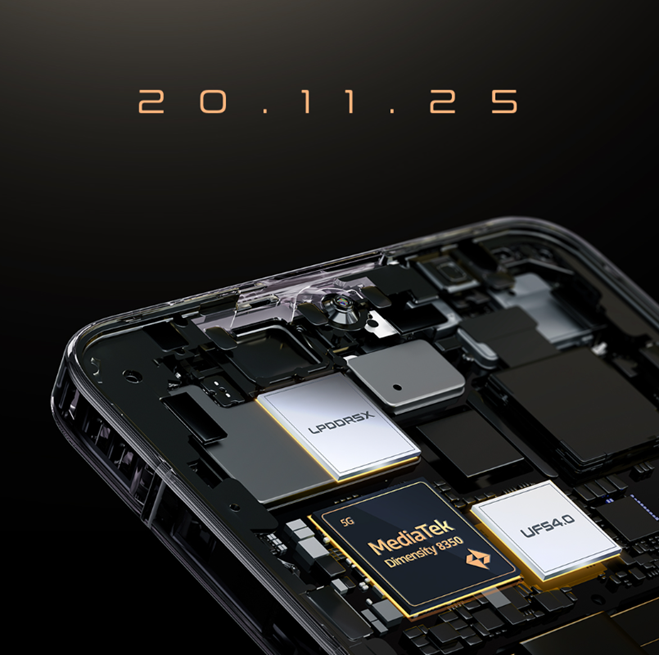
The company has revealed through a new teaser on its official X (formerly Twitter) account that the Agni 4 5G will be powered by the MediaTek Dimensity 8350 chipset. This now puts an end to all previous speculations about a possible chipset.

The latest teaser image also confirms that the Lava Agni 4 5G will feature LPDDR5X RAM and UFS 4.0 storage, components usually found in flagship-grade smartphones. This combination makes the Agni 4 5G the most powerful device Lava has produced to date.

Lava Agni 4 5G – What Else We Know?

image

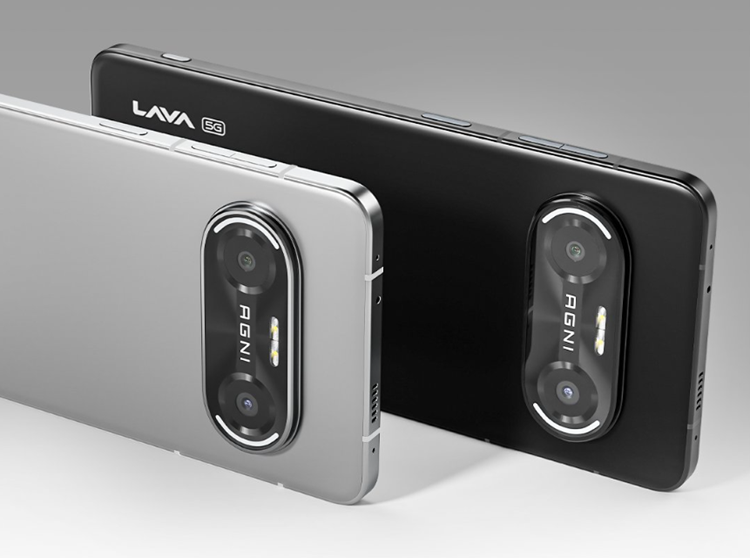
Caption – Lava Agni 4 colours revealed in a previous official teaser. (Image credit – Lava)

As per earlier leaks, the smartphone will sport an aluminium frame and be available in two colour options, Lunar Mist and Phantom Black. On the rear, it will carry a dual-camera setup housed within a horizontal camera module. The right side of the handset will feature an additional button apart from the regular volume and power keys. While the exact purpose of this button remains unclear, it could potentially be customisable for quick access to apps or functions like the camera.


The Lava Agni 4 5G is expected to feature a 6.78-inch Full HD AMOLED display with a 120Hz refresh rate, offering a smooth and vibrant viewing experience. It is likely to run on a near-stock Android interface, though it remains uncertain whether it will ship with Android 15 or the newer Android 16.

In terms of power, the Agni 4 is rumoured to be Lava’s first smartphone to include a massive 7,000mAh battery, promising extended battery life. For photography, it is tipped to include a dual 50MP camera system on the back.

While full details are still under wraps, reports suggest the Lava Agni 4 5G could be priced around Rs 20,000 (approximately $225) in India. If this price range turns out to be true, it would position the phone it as a strong contender in the mid-range 5G smartphone segment.

FAQs

Q1. What processor and memory specs does the Lava Agni 4 5G offer?

Answer. The Lava Agni 4 5G is confirmed to feature the MediaTek Dimensity 8350 chipset, paired with LPDDR5X RAM and UFS 4.0 storage.

Q2. What are the key design and display features of the Agni 4 5G?

Answer. The phone is expected to sport a 6.78-inch Full HD AMOLED display with a 120Hz refresh rate, an aluminium frame, and a dual-camera setup on the back. It will be available in Lunar Mist and Phantom Black colour options.

Q3. When is the Lava Agni 4 5G launching in India and what’s the expected price?

Answer. The Lava Agni 4 5G is set to launch in India on November 20, with an expected price around ₹20,000, positioning it as a strong mid-range 5G contender.

Also Read

https://www.mymobileindia.com/lava-agni-4-teaser-confirms-horizontal-camera-bar-with-dual-cameras-and-no-secondary-display/

https://www.mymobileindia.com/lava-agni-3-5g-launch-date-confirmed-design-and-features-teased/

Next-Gen Apple MacBook Pro With OLED Display and Touch Support Expected Between Late 2026 and Early 2027

0

Highlights

  • Apple is planning a significant MacBook Pro overhaul featuring OLED displays with touch support, a thinner chassis, and possibly 5G and a Dynamic Island-style cutout.
  • It is expected between late 2026 and early 2027.
  • The redesign will debut with the M6 Pro and M6 Max MacBook Pros, while the base 14-inch model will retain its current design for at least one more cycle.

image

Caption – Current 14-inch MacBook Pro. (Image credit – Apple)

It has been well-reported previously that Apple is gearing up for a major redesign of its MacBook Pro lineup. Now, according to the latest Power On newsletter by Bloomberg’s Mark Gurman, the revamped MacBook Pro models are expected to launch sometime between late 2026 and early 2027. This will mark the first significant design overhaul since 2021.

We have also reported that the upcoming redesign will reportedly feature an OLED display with touch functionality, which is a major leap from the current mini-LED panels. Alongside the upgraded display, Apple is also said to be working on a thinner chassis, potential 5G connectivity, and possibly a larger Dynamic Island-style cutout replacing the traditional notch.

Gurman also reveals that the lower-end 14-inch MacBook Pro might not see the same redesign as the premium models, at least not right away. Drawing a parallel to the 13-inch MacBook Pro, which missed out on the Touch Bar for years after its introduction, Gurman suggests Apple may take a similar approach this time.

image

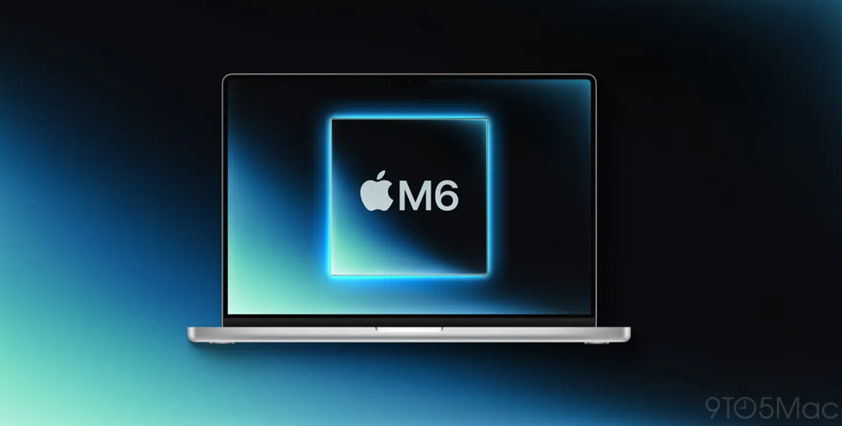
Caption – M6 MacBook Pro concept image. (Image credit – 9to5Mac)

He stated, “In the first half of the year, Apple plans to roll out new MacBook Pro models with M5 Pro and M5 Max processors, as well as an M5 MacBook Air. The middle of the year will bring the M5 and M5 Pro Mac mini, in addition to M5 Max and M5 Ultra versions of the Mac Studio. Toward the end of the year, expect the debut of the M6 chip and the introduction of a new low-end 14-inch MacBook Pro.”

Gurman described these updates as “evolutionary, not revolutionary.” However, he also highlighted that “two Macs on the road map do mark major shifts,” referring to “a revamped M6 Pro and M6 Max MacBook Pro with an OLED display, thinner chassis and touch support,” expected to launch “between late 2026 and early 2027.”

In simpler terms, the base model MacBook Pro isn’t expected to receive the OLED redesign immediately. Apple appears to be planning one more cycle with the existing design before introducing a full refresh.

So, if you’re waiting for the next big leap in MacBook design, you might have to look toward the higher-end M6 Pro or M6 Max MacBook Pro models when they debut late next year or in early 2027.

At present, Apple sells three variants of the MacBook Pro. It includes a base 14-inch model powered by the M4 chip, a higher-end 14-inch variant with M4 Pro and M4 Max chips, and a 16-inch model equipped with the same high-end processors. Apart from performance differences, the entry-level and premium 14-inch versions share nearly identical designs with the key distinction being cooling. The base model includes a single fan, while the Pro and Max configurations feature dual fans.

Apple’s entry-level M5 MacBook Pro is priced $400 less than the M4 Pro model, giving buyers a more affordable option without sacrificing much in terms of features.

FAQs

Q1. When will Apple launch the redesigned MacBook Pro with OLED and touch support?

Answer. Apple is expected to release the revamped MacBook Pro models featuring OLED displays and touch functionality between late 2026 and early 2027. This will be the first major design overhaul since 2021.

Q2. Will all MacBook Pro models get the OLED redesign at the same time?

Answer. No, the OLED redesign will initially be limited to higher-end models with M6 Pro and M6 Max chips. The base 14-inch MacBook Pro is likely to retain its current design for one more cycle before receiving the upgrade.

Q3. What are the current MacBook Pro options and how do they differ?

Answer. Apple currently offers three MacBook Pro variants – A base 14-inch model with the M5 chip and single-fan cooling, a premium 14-inch model with M4 Pro or M4 Max chips and dual-fan cooling and a 16-inch model with the same high-end chips and dual-fan setup.

Also Read

https://www.mymobileindia.com/apples-new-m5-chip-sets-record-breaking-benchmark-scores-in-14-inch-macbook-pro/

https://www.mymobileindia.com/apple-working-on-major-macbook-pro-redesign-with-oled-touchscreen-for-2026-report/

Poco F8 Pro Retail Box Image Leaks With ‘Sound by Bose’ Branding, Tipster Claims No Charger in the Box

0

Highlights

  • A leaked image reveals Poco F8 Pro’s retail box with “Sound by Bose” branding, hinting at premium audio and a possible Redmi K90 rebrand.
  • Tipster claims the F8 Pro may skip the charging adapter unlike its predecessor and the China-only Redmi K90.
  • It is expected to feature a 6.59″ OLED display, Snapdragon 8 Elite, up to 16GB RAM, 1TB storage, triple rear cameras, and 100W fast charging.

image

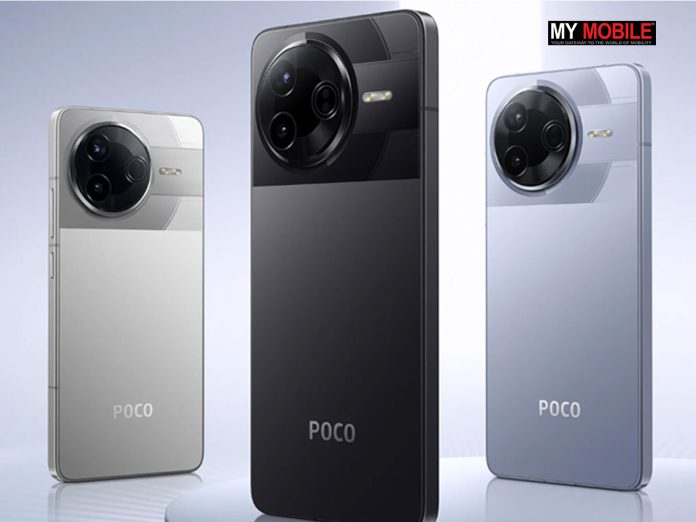
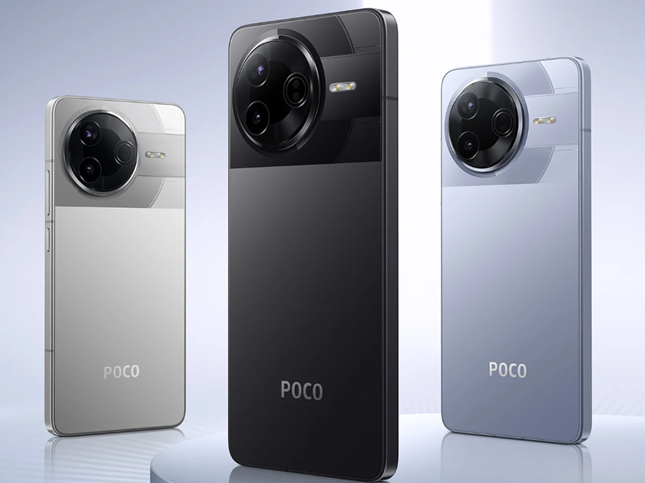
Caption – Poco F7 Pro in the picture for reference. (Image credit – Poco)

The Poco F8 Pro appears to be gearing up for its global debut including its arrival in India. Meanwhile, a leaked image of the smartphone’s retail box has now surfaced online, hinting at some key details about the upcoming device. Here are more details.

Poco F8 Pro Retail Box Image Leaks

image

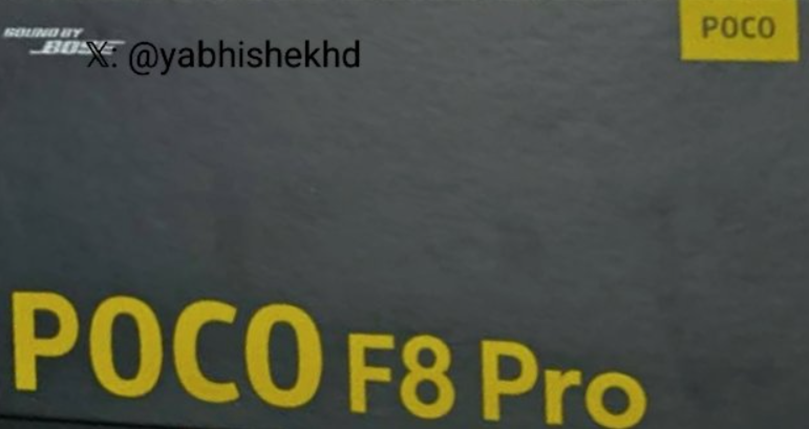
Caption – Leaked image of Poco F8 Pro retail box with “Sound by Bose” branding. (Image credit –  @yabhishekhd on X)

Tipster Abhishek Yadav @yabhishekhd on X (formerly Twitter) shared an image of what appears to be the retail packaging of the Poco F8 Pro. The box showcases the ‘Sound by Bose’ branding, confirming Poco’s collaboration with the premium audio brand.

This aligns with Xiaomi’s Redmi K90 series, which launched last month in China with the same Bose audio partnership and adds to the speculation that the Poco F8 Pro could be a rebranded version of the Redmi K90 for international markets.

No Charger in the Box?

Yadav also claims that the Poco F8 Pro will not ship with a charging adapter. For comparison, the Poco F7 Pro came bundled with a 90W in-box charger, while the China-exclusive Redmi K90 continues to include one. If true, this would make the F8 Pro one of the few Poco devices to skip the in-box charger, a trend increasingly common among flagship smartphones.

Poco F8 Pro – Certification and Expected Specifications

The Poco F8 Pro, identified by the model number 25102PCBE, was recently spotted on the IMDA certification website in Singapore. The listing suggests the device will support 5G, Bluetooth, Wi-Fi, and NFC connectivity features.

image

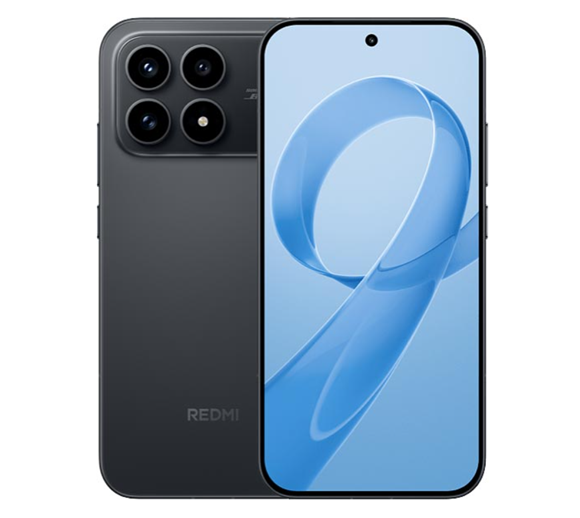
Caption – Xiaomi Redmi K90 in the picture for reference. (Image credit – Xiaomi)

Moreover, if the phone indeed mirrors the Redmi K90, we can expect similar features. Based on that theory, the upcoming Poco F8 Pro is expected to sport a 6.59-inch OLED display and be powered by the Snapdragon 8 Elite SoC. It could offer configurations of up to 16GB RAM and 1TB storage. The smartphone is also expected to run Android 16-based HyperOS 3 out of the box and feature Bose-tuned stereo speakers for enhanced audio quality.

Like he Redmi K90, the Poco F8 Pro could come with a triple rear camera setup featuring a 50-megapixel main sensor with a 1/1.55-inch sensor size, a 50-megapixel telephoto lens, and an 8-megapixel ultrawide sensor. On the front, it houses a 20-megapixel selfie camera.

The device is backed by a 7,100mAh battery supporting 100W wired fast charging and 22.5W wired reverse charging. However, it remains to be seen if the global model retains the same charging capabilities, especially if the in-box charger is omitted.

Poco F8 Pro – Expected Pricing

We still don’t have any word regarding the pricing of the model. For reference, the Redmi K90 starts at CNY 2,599 (approximately Rs. 32,000) in China for the 12GB RAM + 256GB storage variant.

The Poco F8 Pro is expected to launch soon with a similar pricing strategy in global markets.

FAQs

Q1. What does the leaked Poco F8 Pro retail box reveal?

Answer. The leaked image shows “Sound by Bose” branding, confirming Poco’s audio partnership and hinting at premium stereo speakers tuned by Bose.

Q2. Will the Poco F8 Pro include a charger in the box?

Answer. According to tipster Abhishek Yadav, the Poco F8 Pro may not ship with a charging adapter, unlike the Poco F7 Pro which included a 90W charger.

Q3. What specifications are expected for the Poco F8 Pro?

Answer. If it mirrors the Redmi K90, the F8 Pro may feature a 6.59″ OLED display, Snapdragon 8 Elite SoC, up to 16GB RAM, 1TB storage, and a 7,100mAh battery with 100W fast charging.

Also Read

https://www.mymobileindia.com/poco-f8-pro-listed-in-imei-database-most-likely-a-rebranded-redmi-k90/

https://www.mymobileindia.com/redmi-turbo-5-pro-might-pack-an-8000mah-battery-tipster-hints-at-what-to-expect-from-poco-f8/

Nubia Z80 Ultra Goes Global with 6.85-inch OLED Full Display, Snapdragon 8 Elite Gen 5, and 80W Fast Charging

0

Highlights

  • Nubia Z80 Ultra launched globally with sales scheduled for December 3.
  • Prices range from $649 to $899 across four variants.
  • The phone features a 6.85″ OLED Full Display, Snapdragon 8 Elite Gen 5, triple rear camera setup (50MP + 50MP + 64MP), under-display front camera, 7200mAh battery and 80W wired/wireless fast charging.
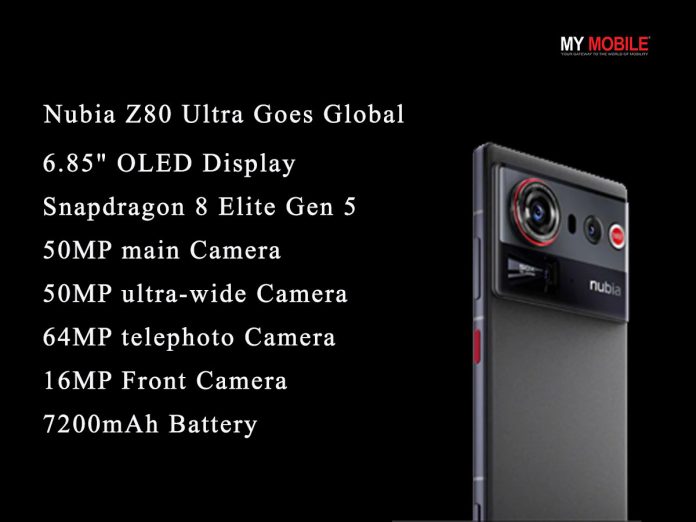
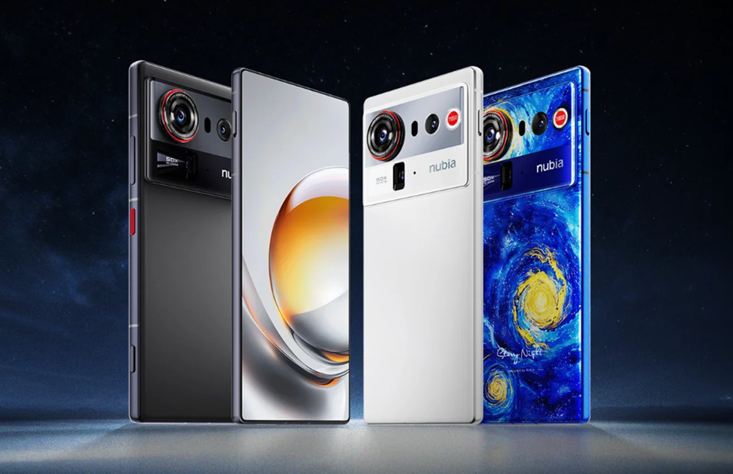
 Nubia Z80 Ultra enters the international market. (Image credit - Nubia)
Nubia Z80 Ultra enters the international market. (Image credit – Nubia)

After debuting in China earlier this year, Nubia has officially launched the Nubia Z80 Ultra for global markets. The global variant brings the same powerful hardware and premium features as its Chinese counterpart. Here’s all you need to know about the phone, starting with price and availability.

Nubia Z80 Ultra – Pricing and Availability

The Nubia Z80 Ultra will be available in Black, White, Blue, and a Limited Starry Night colour edition.

Nubia Z80 Ultra colours. (Image credit - Nubia)
Nubia Z80 Ultra colours. (Image credit – Nubia)

Global pricing –

  • 12GB + 256GB – $649 / £579 / €649
  • 16GB + 512GB – $799 / £709 / €799
  • 16GB + 512GB (Blue) – $829 / £729 / €829
  • 16GB + 1TB – $899 / £799 / €899

Launch timeline:

  • Official global launch: November 6, 2025 (20:00 HKT / 07:00 EST / 13:00 CET)
  • Open sales: December 3, 2025

Nubia Z80 Ultra – Launch Offers and Bundles

Nubia is offering several promotions for early buyers:

  • Early Bird (Nov 11–18): $30 off globally / £20 off UK / €20 off EU + free protective case and charger.
  • Launch Offers (Nov 18 – Dec 2): $30 regional discount + free charger.
  • Bundles (Nov 6 – Dec 2): Discounts of up to $100 on accessories, including the Retro Kit 2.0 ($149) and Nubia Gamepad 2 ($99).

Accessories

The Retro Kit 2.0, co-developed with Fotorgear, features tech nano-leather, titanium-tone aluminium alloy, and premium full-grain leather. It includes smart controls, mechanical buttons, and programmable dials. The magnetic NFC smart case adds further on-the-go convenience and customisation.

Nubia Z80 Ultra – Key Features

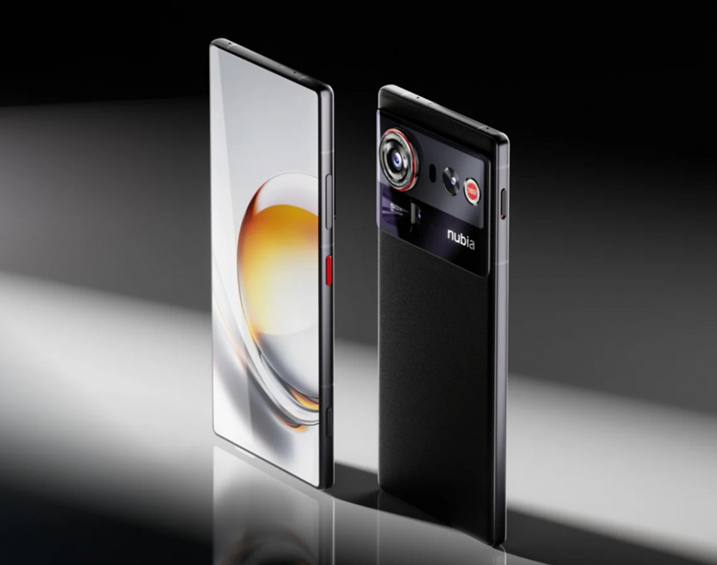
image

Caption – Nubia Z80 Ultra. (Image credit – Nubia)

The Nubia Z80 Ultra features a 6.85-inch OLED Full Display with a 2688 × 1216 resolution and a 144Hz refresh rate. It supports a 3000Hz touch response rate and integrates an under-display front camera for a true full-screen experience. The screen offers 2000 nits peak brightness, and a Synaptics touch chip ensures high touch accuracy.

The device is powered by the Snapdragon 8 Elite Gen 5 Mobile Platform, paired with LPDDR5X RAM options of 12GB or 16GB and UFS 4.1 storage options of 256GB, 512GB, or 1TB. It runs on MyOS 16 based on Android 16. The smartphone is also IP68 and IP69 certified for dust and water resistance.

image

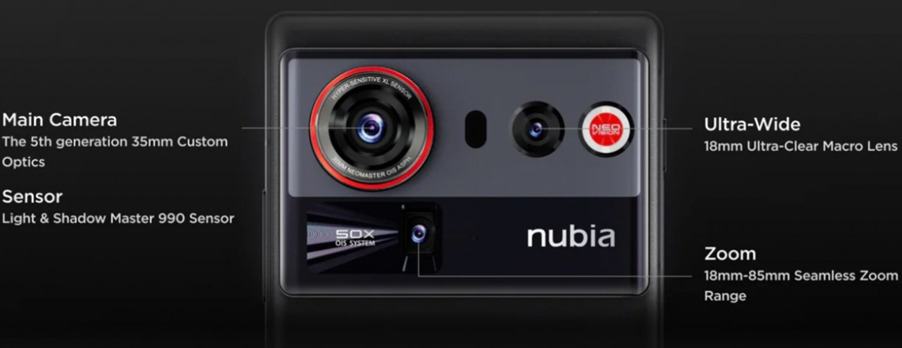
Caption – Nubia Z80 Ultra camera details. (Image credit – Nubia)

On the rear, the Nubia Z80 Ultra packs a triple-camera setup, which includes –

  • 50MP main sensor (35mm, 1/1.3″, OIS, f/1.7)
  • 50MP ultra-wide camera (1/1.55″, f/1.8, AF, 5.5cm macro)
  • 64MP telephoto lens (OIS, f/2.48)

Supporting sensors include Flicker and Laser sensors. Nubia has equipped the device with its Light & Shadow Master 990 imaging sensor and a dual focal-length street setup (35mm + 18mm), offering a zoom range from 18mm to 85mm and 21 creative filters. A physical shutter key enhances photography control. The front houses a 16MP under-display camera.

For gamers, the Z80 Ultra comes with the REDMAGIC-inspired CUBE Gaming Engine, which supports Super Resolution and Super Frame Rate. It delivers gameplay up to 2K at 144Hz with AI Super Frame Stabilisation for smoother performance. To maintain efficiency, Nubia has used composite liquid metal and an oversized 3D Ice Steel VC cooling system, increasing the cooling area by 35% for better thermal control during extended sessions.

image

Caption – Nubia Z80 Ultra battery. (Image credit – Nubia)

The smartphone houses a 7200mAh (typical) battery that supports both 80W wired and 80W wireless fast charging. The company notes that 80W charging requires the official Nubia charger.

Connectivity options include Wi-Fi 802.11 a/b/g/n/ac/ax/be (2×2 MIMO), Bluetooth 6.0, USB-C 3.2 Gen1, NFC (eSE), and support for a magnetic NFC smart case.

Additional highlights:

  • Dual speakers with DTS:X Ultra audio
  • Five microphones
  • Ultrasonic fingerprint sensor
  • X-axis linear motor
  • IR blaster
  • Sliding switch key, dedicated camera key, and customizable shortcut key
  • SGS low blue-light certification

It also includes sensors such as gravity, proximity, compass, and gyroscope. The phone measures 164.5 × 77.2 × 8.6mm and weighs around 227 grams.

FAQs

Q1. When is the Nubia Z80 Ultra launching globally?

Answer. The Nubia Z80 Ultra officially launched globally on November 6, 2025, with open sales starting December 3, 2025.

Q2. What are the pricing and storage options for the Nubia Z80 Ultra?

Answer. Prices range from $649 for the 12GB+256GB variant to $899 for the 16GB+1TB model. A special Blue edition is priced at $829.

Q3. What are the key display and performance features?

Answer. It features a 6.85-inch OLED Full Display with 144Hz refresh rate, Snapdragon 8 Elite Gen 5 chipset, and up to 16GB LPDDR5X RAM.

Q4. What camera setup does the Nubia Z80 Ultra offer?

Answer. The rear includes a 50MP main, 50MP ultra-wide, and 64MP telephoto lens. The front has a 16MP under-display camera for a full-screen experience.

Q5. What gaming and battery features are included?

Answer. It supports 2K gaming at 144Hz via the CUBE Gaming Engine and packs a 7200mAh battery with 80W wired and wireless fast charging.

Also Read

https://www.mymobileindia.com/nubia-z80-ultra-launched-in-china-with-snapdragon-8-elite-gen-5-144hz-display-and-7200mah-battery/

https://www.mymobileindia.com/nubia-pad-pro-launches-globally-with-snapdragon-8-gen-3-144hz-display-and-android-15/

Spotify Launches ‘Listening Stats’ Feature to Track Your Weekly Top Artists and Songs

0

Highlights

  • Spotify’s Listening Stats shows users their top artists and songs from the past four weeks, updating every 24 hours for fresh insights.
  • The feature offers curated playlists, weekly milestones, and music discovery moments.
  • Free and premium users in 60+ countries can access Listening Stats via their profile icon in the Spotify app.

image

Caption – (Photo by Alexander Shatov on Unsplash)

Spotify has rolled out a new “Listening Stats” feature that gives users a closer look at their music preferences. The new feature displays the user’s most played artists and songs from the past four weeks.

The data refreshes every 24 hours, offering up-to-date insights into each listener’s recent music trends. This feature is now available to both free and premium users across more than 60 countries. Here are more details.

Spotify ‘Listening Stats’

image

Caption – Spotify’s listening stats updates every 24 hours. (Image credit – @SpotifyNews on X)

With the new feature, users receive a personalised playlist inspired by their favourite tracks or songs they may want to play next. Spotify also curates recommendations under “More like your top artists/songs”, helping listeners explore new music that aligns with their taste.

In addition, the feature introduces weekly highlights that capture key moments in a listener’s music journey such as milestones, new artist discoveries, or unique fan experiences. Users can easily share these weekly stats through social media platforms like WhatsApp, Instagram, and more.

Spotify described the feature in a blog post, saying, “This new feature shows your top artists and songs from the past four weeks, and it serves up playlists inspired by what you love or tracks you might want to queue up next. Each week, it also includes a special highlight that captures what makes your listening unique, whether it’s a milestone, a new discovery, or a fan moment.”

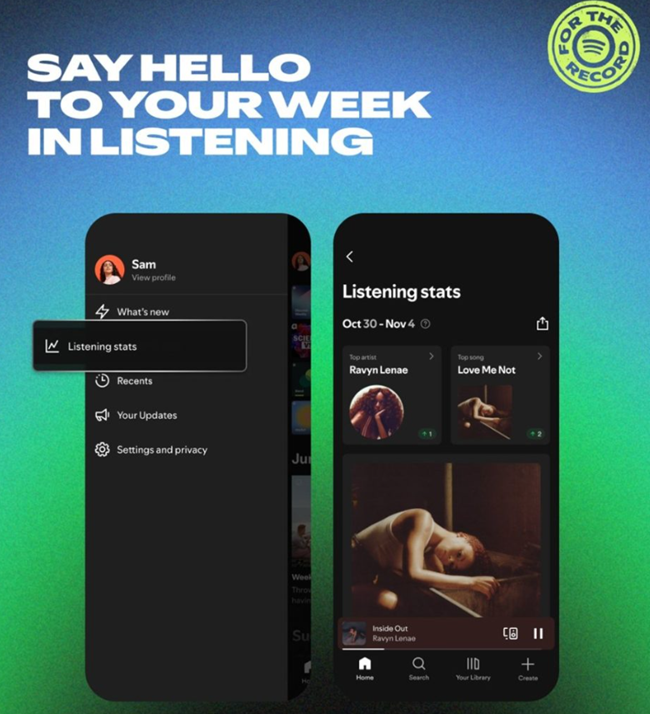
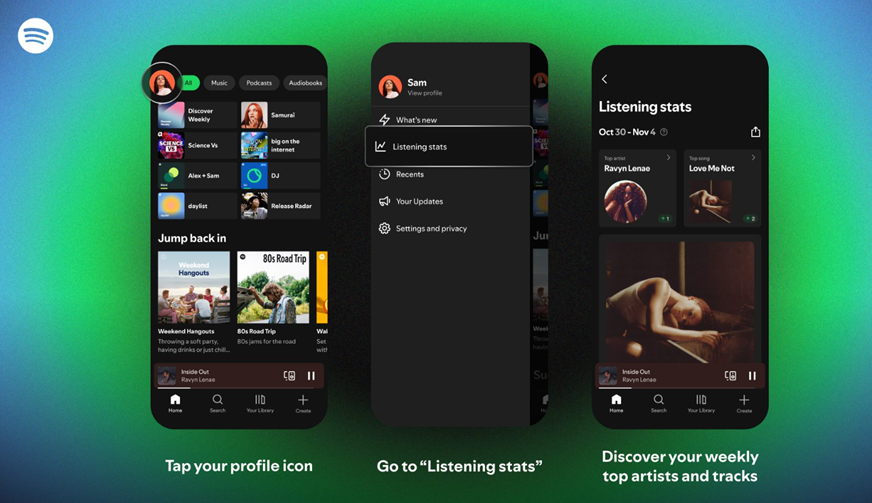
Caption – How to access the Spotify listening stats feature. (Image credit – Spotify)

How to Access Spotify Listening Stats?

Here’s how you can use the new Listening Stats feature in Spotify –

  • Open the Spotify app on your smartphone or desktop.
  • Tap on your profile icon located at the top left corner.
  • You’ll now see the “Listening Stats” icon.

From there, you can view your listening history and share it internally with other Spotify users or externally via social media platforms.

Spotify ‘Listening Stats’ Different from Spotify Wrapped

While Spotify Wrapped gives users a year-end summary of their listening habits from January to October or November, the Listening Stats feature provides real-time, rolling updates every day. This makes it a more dynamic and continuous way to track listening behaviour throughout the year rather than waiting for the annual Wrapped release.

Spotify isn’t the only platform offering personalised listening insights. Apple Music introduced its Music Replay feature last year, which provides monthly breakdowns of users’ favourite songs, artists, albums, and genres. Similarly, YouTube Music has a Music Recap feature that summarises top songs, artists, videos, and listening patterns four times a year.

FAQs

Q1. What is Spotify’s Listening Stats feature?

Answer. Listening Stats is a new feature that shows your top artists and songs from the past four weeks, updating daily to reflect your latest listening habits.

Q2. How is Listening Stats different from Spotify Wrapped?

Answer. Unlike Spotify Wrapped, which offers a year-end summary, Listening Stats provides real-time, rolling updates every 24 hours for continuous music insights.

Q3. How can I access my Listening Stats on Spotify?

Answer. Open the Spotify app, tap your profile icon at the top left, and select the “Listening Stats” icon to view and share your recent music trends.

Also Read

https://www.mymobileindia.com/netflix-to-get-spotify-video-podcasts-in-2026-under-new-partnership/

https://www.mymobileindia.com/chatgpt-get-multi-app-integration-can-now-connect-with-spotify-canva-figma-and-more/

Microsoft Forms MAI Superintelligence Team Under Mustafa Suleyman to Build ‘Humanist Superintelligence,’ Moves Beyond Relying On OpenAI

0

Highlights

  • Microsoft has formed a dedicated division led by Mustafa Suleyman to build “Humanist Superintelligence”.
  • Microsoft’s updated agreement with OpenAI lifts previous restrictions on AGI development and allows independent superintelligence research while retaining a 27% stake in OpenAI.
  • Suleyman emphasises a human-centered approach, rejecting the AI arms race narrative with a roadmap extending to 2032.

image

Caption – (Photo by BoliviaInteligente on Unsplash)

Microsoft has officially entered the race to develop superintelligent AI. The tech giant has announced the creation of a new division called the MAI Superintelligence Team, led by Mustafa Suleyman, head of Microsoft’s AI division. The company says it no longer plans to wait for approval or restrictions to pursue this next phase of artificial intelligence development.

Microsoft’s MAI Superintelligence

According to reports, Microsoft’s new mission is to go far beyond achieving artificial general intelligence (AGI), systems that can match human cognitive ability. Instead, the company will develop superintelligence or AI that can outperform humans in every domain including healthcare, clean energy, and materials science.

image

Caption – Microsoft AI CEO Mustafa Suleyman. (Image credit – Stephen Brashear, Getty Images)

In a blog post, Suleyman explained that while AGI represents AI that can do anything a human can, superintelligence goes “far beyond that performance.” He described Microsoft’s approach as building “Humanist Superintelligence,” a system designed to serve humanity directly. Examples include advanced personal AI assistants, improved medical outcomes, and sustainable energy innovations.

Microsoft-OpenAI New Contract Lifts AI Restrictions

This new direction comes after Microsoft removed a key limitation in its partnership agreement with OpenAI. Previously, Microsoft was restricted from developing its own AGI and from training AI models beyond a set computing power threshold, measured in FLOPS (floating-point operations per second). FLOPS represent the number of mathematical calculations an AI model performs per second and serve as a rough measure of the total computing power used during training.

For a company of our scale, that’s a big limitation,” Suleyman told Fortune.

The updated contract now lifts these restrictions allowing Microsoft to develop its own AGI and superintelligent systems. It also grants Microsoft a 27% stake in OpenAI’s public-benefit company, signaling a shift from full collaboration to what now appears to be strategic competition between the two tech giants.

Microsoft’s previous agreement with OpenAI not only capped model sizes but also prohibited it from building beyond a certain computational limit. The arrangement that effectively prevented independent AGI research. With the revised deal, those boundaries have been removed and opened the door for Microsoft to pursue more advanced models.

Microsoft’s Superintelligence Push – What We Know So Far

Caption – Microsoft Forms MAI Superintelligence Team Under Mustafa Suleyman. (Photo by Steve Johnson on Unsplash)

Suleyman, 41, joined Microsoft in March 2024 after co-founding Inflection AI, whose technology and intellectual property Microsoft acquired. He previously co-founded Google DeepMind and has since reorganized internal Microsoft AI teams, integrating key staff into the new group and launching what he called an internal “AI self-sufficiency effort” to make Microsoft less dependent on outside partners.

He has also recruited top researchers from Google, DeepMind, Meta, OpenAI, and Anthropic to strengthen the company’s AI division.

Microsoft is simultaneously working to extend its OpenAI partnership through 2030 to maintain early access to OpenAI’s most advanced models and intellectual property, even as it builds independence through its own superintelligence program.

Karén Simonyan, who joined Microsoft alongside Suleyman from Inflection AI, will serve as the chief scientist of the new Humanist Superintelligence team.

Suleyman has also told employees that Microsoft plans to invest heavily in its AI infrastructure. While its current AI models remain smaller than those of OpenAI or Google, the company’s long-term roadmap extends to 2032. It is the year its licensing rights to OpenAI’s models are set to expire.

Trend Toward “Superintelligence” Branding

Microsoft’s new initiative aligns with similar efforts across the AI industry. It basically joins a growing list of tech giants rebranding their AI programs around superintelligence.

Former OpenAI chief scientist Ilya Sutskever recently launched Safe Superintelligence, a startup focused on building and controlling superintelligent AI. Meanwhile, Anthropic continues research into the safe development of advanced AI systems.

In June 2025, Meta renamed its AI division Meta Superintelligence Labs, while OpenAI CEO Sam Altman has claimed that his company is already moving beyond AGI toward superintelligence.

However, Microsoft has taken a distinct philosophical approach. Suleyman emphasised that his team rejects the idea of an AI arms race, writing, “We reject narratives about a race to AGI, and instead see it as part of a wider and deeply human endeavor to improve our lives and future prospects. We also reject binaries of boom and doom; we’re in this for the long haul to deliver tangible, specific, safe benefits for billions of people. We feel a deep responsibility to get this right.”

Despite its focus on ethics and safety, Suleyman said Microsoft will still innovate rapidly. He acknowledged that building a “humanist” superintelligence requires caution with capabilities that aren’t ready for widespread deployment, but insisted that this won’t slow the company’s pace of progress.

Interestingly, a noteworthy promise in Suleyman’s essay is that “everyone who wants one will have a perfect and cheap AI companion helping you learn, act, be productive and feel supported.”

As of now, the concept of superintelligence remains theoretical with no existing system close to achieving it. Having said that, Microsoft’s new team represents one of the most significant corporate pushes yet toward that goal. This evident race could very well shape the next decade of AI innovation.

FAQs

Q1. What is Microsoft’s MAI Superintelligence Team?

Answer. Microsoft has launched the MAI Superintelligence Team under AI chief Mustafa Suleyman to build “Humanist Superintelligence,” AI that surpasses human capabilities across domains like healthcare, energy, and science.

Q2. How has Microsoft’s partnership with OpenAI changed?

Answer. Microsoft’s updated contract with OpenAI lifts previous restrictions on AGI development and computing power, allowing Microsoft to build its own superintelligent systems while retaining a 27% stake in OpenAI’s public-benefit company.

Q3. What makes Microsoft’s superintelligence approach different?

Answer. Led by Suleyman, Microsoft emphasizes a human-centered philosophy, rejecting the AI arms race and focusing on safe, long-term benefits for billions through ethical innovation.

Also Read –

https://www.mymobileindia.com/microsoft-releases-windows-11-25h2-update-with-major-security-copilot-experiences-accessibility-upgrades-and-more/

https://www.mymobileindia.com/microsoft-officially-ends-free-windows-10-support-heres-what-users-need-to-know-about-esu-windows-11-upgrade-and-office-2019/