Home Blog Page 840

Xiaomi strengthens ‘Make in India’ journey; joins forces with Optiemus Electronics Limited to manufacture audio products locally

0
Xiaomi

Highlights

• Xiaomi India, country’s leading smartphone and smart TV brand,partners with Optiemus Electronics Limited (OEL) to strengthen its ‘Make in India’ journey.

• Targets 50% increase in Xiaomi’s domestic value addition by 2025

Xiaomi India, country’s leading smartphone and smart TV brand, has announced the partnership with Optiemus Electronics Limited (OEL) to strengthen its ‘Make in India’ journey. This collaboration signifies a larger initiative in the AIoT domain, commencing with the localization of wireless audio products.
Through this partnership, Xiaomi begins the production for its first locally manufactured audio product at the OEL factory situated in Noida.

Through expansion of operations and manufacturing partnerships with domestic champions in the segment, Xiaomi has strengthened its commitment to India, while fostering economic growth and generating employment opportunities. The company is targeting a 50% increase in smartphone domestic value addition over the next two years.

Xiaomi

This collaboration demonstrates Xiaomi’s dedication to producing high-quality products, contributing to the growth of domestic manufacturing in India, and bolstering its efforts in democratising technology for the massive.

Muralikrishnan B, President, Xiaomi India said, “This partnership with Optiemus Electronics Limited marks a major milestone in our efforts to accelerate our localization of products and components to bring out high-quality devices that will be ‘Made in India,’ at honest pricing. We are committed to forging more such collaborations for a wider range of categories, across our  product line-up.”

Xiaomi

Commenting on the association, Nitesh Gupta, Director, Optiemus Electronics Limited said, “We are happy to partner with Xiaomi India and contribute to their vision of localisation. Xiaomi is one of the leading players in the Indian electronics ecosystem and is known for its path breaking technology, so this partnership is a significant testimony to Optiemus Electronics’ expertise and growing capabilities. We look forward to delivering great value through state-of-the art infrastructure to manufacture Xiaomi products.”  

With a focus on bringing alive innovation for everyone, under the new partnership Xiaomi India aims to bring forth advanced technology at honest pricing to the Indian market, further strengthening its position as a key player in the Indian electronics industry.

Xiaomi India partners with Optiemus to manufacture audio products locally

Xiaomi

Xiaomi India, the subsidiary of Chinese electronics company Xiaomi, announced on Monday that it has started local production of audio products in partnership with Noida-based Optiemus Electronics Ltd.

The company said that this is the beginning of a “larger initiative” in the Artificial Intelligence of Things (AIoT) domain.

Xiaomi also said that it is targeting a 50% increase in smartphone domestic value addition over the next two years and strengthen its position as a “key player” in the Indian electronics industry.

The company has in the past claimed that 99% of its smartphones and 100% of its smart TVs sold in India are locally made.

Xiaomi

“This partnership with Optiemus Electronics Ltd marks a major milestone in our efforts to accelerate our localization of products and components to bring out high-quality devices that will be ‘Made in India,’ at honest pricing,” said Muralikrishnan B, President, Xiaomi India. He added that the company will make more such collaborations for a wider range of products.

India has been a key market for Xiaomi, but the company has seen a steep decline in smartphone shipments in the last two quarters due to the economic downturn and the slump in consumer demand.

According to IDC India, Xiaomi slipped from the top to fourth position in Q1 2023 with a 41% year-on-year (YoY) decline in shipments. Globally, its quarterly revenue declined 19% for the quarter ending March.

Xiaomi is reportedly looking to expand its presence in offline stores as it looks to stem further decline in smartphone shipments.

Xiaomi

Optiemus is one of the leading manufacturers of wearable devices, including smartwatches and wireless audio products, for brands such as Noise, Boult Audio, and Harman. In February, Optiemus told Mint that it is looking to double its manufacturing capacity for true-wireless (TWS) headphones, from half a million units per month to a million per month this year to meet the growing demand.

It also makes mobile phones, telecom equipment, and in March announced plans to manufacture 4G laptops at its Noida factory.

“We are happy to partner with Xiaomi India and contribute to their vision of localization. We look forward to delivering great value through state-of-the-art infrastructure to manufacture Xiaomi products,” said Nitesh Gupta, Director, Optiemus Electronics Ltd.

Even though demand for smartphones and laptops has declined, the wearable market in India continues to grow in double digits. To be sure, India shipped 25.1 million wearable devices in Q1 2023 at a growth rate of 80.9% YoY. The wearable market is largely dominated by Indian brands such as Boat Lifestyle, Fire-Boltt, Noise, and Boult Audio.

Xiaomi

Xiaomi Strengthens ‘Make in India’ Commitment with Localized Audio Product Production
Xiaomi, in collaboration with Optiemus Electronics Limited (OEL), has commenced local production of its first audio product at the OEL factory in Noida. This partnership reflects Xiaomi’s dedication to India’s economic growth and job creation, fostering domestic manufacturing through operational expansion and partnerships with local industry leaders.
Promoting Domestic Value Addition.

Xiaomi aims to achieve a 50% increase in domestic value addition for smartphones within the next two years. This commitment underscores the company’s focus on delivering high-quality products and supporting the growth of domestic manufacturing in India, while making technology accessible to the masses.

Advancing Technology for All

Xiaomi

With a strong emphasis on innovation for everyone, Xiaomi India aims to introduce advanced technology at affordable prices to the Indian market. This partnership further solidifies Xiaomi’s position as a key player in the Indian electronics industry.

10
11
6
9
7
8
10 11 6 9 7 8

Faqs

1) What do we know About Xiaomi Corporation?

Ans) Xiaomi Corporation was founded in April 2010 and listed on the Main Board of the Hong Kong Stock Exchange on July 9, 2018 (1810.HK). Xiaomi is a consumer electronics and smart manufacturing company with smartphones and smart hardware connected by an IoT platform at its core.

Embracing our vision of “Make friends with users and be the coolest company in the users’ hearts”, Xiaomi continuously pursues innovations, high-quality user experience and operational efficiency. The company relentlessly builds amazing products with honest prices to let everyone in the world enjoy a better life through innovative technology.

Xiaomi is one of the world’s leading smartphone companies. According to Canalys, the company’s market share in terms of smartphone shipments ranked No. 3 globally in 2022. In December 2022, MAU of MIUI reached approximately 582 million globally. The company has also established the world’s leading consumer AIoT (AI+IoT) platform, with 589 million smart devices connected to its platform as of December 31, 2022, excluding smartphones, tablets and laptops.

Xiaomi products are present in more than 100 countries and regions around the world. In August 2022, the company made the Fortune Global 500 list for the fourth time, ranking #266, up 72 places compared to 2021. Xiaomi is a constituent of the Hang Seng Index, Hang Seng China Enterprises Index, Hang Seng TECH Index and Hang Seng China 50 Index.

Xiaomi India is the number 1 smartphone player since Q3 2017 IDC Quarterly Mobile Phone Tracker report.

2) Everything aboutAbout Optiemus Electronics Limited?

Ans) Optiemus Electronics Limited (OEL), engaged in the business of electronics manufacturing in India, provides end-to-end solutions to global and Indian brands encompassing world class manufacturing, supply chain management and repair/refurbishment. OEL also has a strategic partnership with Wistron Infocomm Manufacturing (India) for manufacturing electronics, creating a joint hub in India for Design Solutions, Product Development and smart manufacturing.

OEL has two state-of-the-art manufacturing units in Noida, Uttar Pradesh. With a highly experienced team and winning attitude, OEL has won the trust of many Local as well as global brands, maintaining its commitment towards Quality, Timely Delivery, Flexibility as well as Customer Satisfaction.

Also Read: Xiaomi Pad 5 New Price In India Ahead Of Xiaomi Pad 6 Launch on June 13: Grab The Upto Rs 1000 Offer Now

Also Read: Xiaomi Pad 6 spotted on Geekbench with Snapdragon 8+ Gen 1: Check Launch Timeline, Specifications & More

iQOO Neo 7 Pro Orange Colour Option Teased Again Ahead of Launch; Reveals Leather Finish

0
iQOO Neo 7 Pro Orange Colour

HIGHLIGHTS

1. iQOO Neo 7 Pro will launch next month in India.

2. The Neo 7 Pro will be a rebadged version of the Neo 7 Racing Edition available in China.

3. The phone is likely to feature a Qualcomm Snapdragon 8+ Gen 1 SoC.

4. iQOO has been teasing the phone for quite some time and it has finally made the announcement official.

5. iQOO Neo 7 Pro 5G will launch on July 4th, 2023, in India

6. It will be positioned above the iQOO Neo 7 5G.

7. It is likely to be priced at around Rs 35,000

8. Here’s a look at what we know about the iQOO Neo 7 Pro so far. 

IQOO recently confirmed that it will unveil the IQOO Neo 7 Pro on July 4 in India. Ahead of the launch, the brand is busy teasing the design of the phone. Some of its recent teasers have hinted that the Neo 7 Pro may arrive in an orange color option. Over the weekend, the brand released a new teaser to give a glimpse of the orange edition of the device.

The Neo 7 Pro’s orange variant appears to feature a leather finish, and there are speculations about the availability of a black variant as well. However, it is currently unclear whether the black variant will also have a leather texture. These color variants are likely to be called Pop Orange and Interstellar Black.

iQOO Neo 7 Pro Orange Colour

Speculations are rife that the iQOO Neo 7 Pro will be priced at around Rs 35,000 (~$424) in India. Like other iQOO phones, it will be sold through Amazon.

As far as specs are concerned, it could be a rebranded version of the iQOO Neo 7 Racing Edition, which has been available in China for several months now.

iQOO is prepping to launch the new Neo series smartphone, the iQOO Neo 7 Pro in India. The brand recently confirmed the launch date of this upcoming smartphone as July 4.

iQOO Neo 7 Pro Orange Colour

Ahead of the official launch, the company is teasing the design of the device.

A couple of days back, iQOO CEO Nipun Marya teased the launch of the handset. The teaser shared by iQOO CEO indicated that the smartphone will launch in the Orange colour option.

Now, iQOO has shared the design of the device, which again confirms that the iQOO Neo 7 Pro will debut in an Orange colour variant.

iQOO Neo 7 Pro Orange Colour Variant Confirmed

iQOO Neo 7 Pro Orange Colour

Additionally, the teaser shared by iQOO via its official Twitter handle also reveals that the iQOO Neo 7 Pro will have a leather finish. Apart from the Orange colour option, the company also might launch the iQOO Neo 7 Pro in Black colour.

As far as the specifications of the device go, it is expected to feature a 6.74-inch AMOLED display with a 120Hz refresh rate and a Full HD+ resolution. The device could be powered by Snapdragon 8+ Gen 1 SoC.

The handset is tipped to pack up to 8GB of RAM. We can expect the device to debut in 128GB/256GB of storage options. As for the software, the smartphone is expected to run Android 13 OS with Funtouch OS skin on top. In terms of imaging, the phone is likely to feature a triple-camera setup.

iQOO Neo 7 Pro Orange Colour

The camera module might include a 50MP primary camera with OIS support, an 8MP ultra-wide lens, and a 2MP macro sensor.
The selfie department on the device could be handled by a 16MP camera. A 5,000mAh battery is likely to be equipped with the device which could support 120W fast charging. As for the security purpose, the handset is said to feature an in-display fingerprint sensor.

The smartphone is expected to retail in India between Rs 38,000 to Rs 42,000 price range. As the launch of the phone inches closer, we shall get to learn more details about it.

iQOO Neo 7 Pro Specifications

iQOO Neo 7 Pro Orange Colour

According to reports, the iQOO Neo 7 Pro will have a 6.78-inch AMOLED FHD+ 120Hz punch-hole display and will be powered by the Snapdragon 8 Plus Gen 1 chipset. The highest variant of the device may ship with 16 GB of LPDDR5 RAM and 256 GB of UFS 3.1 storage. It may arrive with a 5,000mAh battery that supports 120W fast charging.

The Neo 7 Pro’s rear camera setup may comprise a 50-megapixel primary camera with OIS support, an 8-megapixel ultra-wide lens, and a 2-megapixel macro camera. On the front, the device is likely to feature a 16-megapixel camera. It may run on Android 13 OS and FunTouch OS 13. For security, it may feature an in-screen fingerprint sensor.

iQOO Neo 7 Pro 5G: Expected Specifications

* Display: 6.78-inch AMOLED display, 144Hz refresh rate, 1300 nits of peak brightness, 1.5K resolution, punch-hole cutout.
* Processor: Qualcomm’s octa-core Snapdragon 8+ Gen 1 SoC with Adreno 730 GPU.
* Software: Android 13 with Funtouch OS 13.
* RAM and Storage: 8GB/16GB LPDDR5 RAM, 128GB/ 256GB UFS 3.1 storage.
* Rear camera: 50MP, Optical image stabilisation (OIS), 8MP ultra-wide lens, 2MP macro sensor.
* Front camera: 16MP.
* Other Specifications: 5G, dual-SIM card slot, 4G VoLTE, Wi-Fi 6, Bluetooth v5.3, GPS, In-display fingerprint sensor.
* Battery: 5000mAh, 120W fast charging support.

iQOO Neo 7 Pro India Launch Date

iQOO India CEO Nipun Marya tweeted the official launch date of the Neo 7 Pro. The smartphone will launch in India on July 4th. With the launch date out we’re expecting iQOO to release more teasers of the Neo 7 Pro smartphone soon.

But it is speculated that the phone is going to be a rebranded version of the iQOO Neo 7 Racing Edition that is available in China. It isn’t confirmed yet but based on these speculations, let’s take a look at the iQOO Neo 7 Pro’s expected specifications.

iQOO Neo 7 Pro 5G Price in India

iQOO Neo 7 Pro

The iQOO Neo 7 Pro 5G is likely to be priced at around Rs 35,000 in India. It may arrive in two shades, such as Pop Orange and Interstellar Black, as per leaker Paras Guglani.

The device will be sold through Amazon, and its first sale could be scheduled to take place by early July.

IQOO NEO 7 PRO KEY SPECIFICATIONS

Key Specs

RAM 8 GB
Processor Qualcomm Snapdragon 8 Plus Gen 1
Rear Camera 50 MP + 2 MP + 2 MP
Front Camera 32 MP
Battery 5000 mAh
Display 6.78 inches (17.22 cm)

General

Launch Date October 18, 2023 (Unofficial)
Operating System Android v13

Performance

Chipset Qualcomm Snapdragon 8 Plus Gen 1
CPU Octa core (3.2 GHz, Single core, Cortex X2 + 2.75 GHz, Tri core, Cortex A710 + 2 GHz, Cortex A510)
Architecture 64 bit
Fabrication 4 nm
Graphics Adreno 730
RAM 8 GB

Display

Display Type AMOLED
Screen Size 6.78 inches (17.22 cm)
Resolution 1080 x 2400 pixels
Aspect Ratio 20:9
Pixel Density 388 ppi
Bezel-less display Yes with punch-hole display
Touch Screen Yes, Capacitive Touchscreen, Multi-touch
Refresh Rate 120 Hz

Camera

MAIN CAMERA
Camera Setup Triple
Resolution 50 MP, Primary Camera
2 MP, Macro Camera
2 MP f/2.4, Depth Camera
Autofocus Yes
OIS Yes
Flash Yes, LED Flash
Image Resolution 8150 x 6150 Pixels
Settings Exposure compensation, ISO control
Shooting Modes Continuous Shooting
High Dynamic Range mode (HDR)
Camera Features Digital Zoom
Auto Flash
Face detection
Touch to focus
Video Recording 3840×2160 @ 30 fps
FRONT CAMERA
Camera Setup Single
Resolution 32 MP, Primary Camera

Battery

Capacity 5000 mAh
Type Li-Polymer
Removable No
Quick Charging Yes, Flash, 120W
USB Type-C Yes

Storage

Internal Memory 128 GB
Expandable Memory No

Network & Connectivity

SIM Slot(s) Dual SIM, GSM+GSM
SIM Size SIM1: Nano, SIM2: Nano
Network Support 5G Supported in India, 4G Supported in India, 3G, 2G
VoLTE Yes
SIM 1
5G Bands:
FDD N3
TDD N40
4G Bands:
TD-LTE 2300(band 40)
FD-LTE 1800(band 3)
3G Bands:
UMTS 1900 / 2100 / 850 / 900 MHz
2G Bands:
GSM 1800 / 1900 / 850 / 900 MHz
GPRS:
Available
EDGE:
Available
SIM 2
5G Bands:
FDD N3
TDD N40
4G Bands:
TD-LTE 2300(band 40)
FD-LTE 1800(band 3)
3G Bands:
UMTS 1900 / 2100 / 850 / 900 MHz
2G Bands:
GSM 1800 / 1900 / 850 / 900 MHz
GPRS:
Available
EDGE:
Available
Wi-Fi Yes, Wi-Fi 6 (802.11 a/b/n/ac/ax) 5GHz
Wi-Fi Features Mobile Hotspot
Bluetooth Yes, v5.3
GPS Yes with A-GPS, Glonass
NFC Yes
USB Connectivity Mass storage device, USB charging

Multimedia

Loudspeaker Yes
Audio Jack USB Type-C

Sensors

Fingerprint Sensor Yes
Fingerprint Sensor Position On-screen
Fingerprint Sensor Type Optical
Other Sensors Light sensor, Proximity sensor, Accelerometer, Compass, Gyroscope

Also Read: iQOO Neo 7 Pro India launch in June end, Check leaked Price and Specifications; to feature Snapdragon 8+ Gen 1 SoC

Also Read: iQOO Neo 7 SE Promo Poster Teases Specifics; Details Inside 

Realme GT Neo 5 Pro Specifications Leaked Ahead of Launch: Tipped to feature Snapdragon 8 Gen 2 SoC, 1.5K 144Hz Display & 100W Fast Charging

0
Realme GT Neo 5

Highlights

• Realme Gt Neo 5 Pro to Launch Soon.
• Ahead of Launch Tipster Digital Chat Station has reveal key specifications of the upcoming Realme handset .
• The Key Specifications leaked in the recent Weibo post are listed here.

After the launch of the Realme GT Neo 5 and the Realme GT Neo 5 SE, Realme seems to be gearing up for the launch of the Realme GT Neo 5 Pro smartphone. Recently, this upcoming device was spotted at MIIT certification.

The certification revealed the model number of the device as RMX3820 and RMX3823 respectively. Now, ahead of the official launch, tipster Digital Chat Station has shared the key specifications of the handset.

While all the prominent smartphone brands in China have introduced flagship devices equipped with the Snapdragon 8 Gen 2, Realme stands out as the sole exception.

However, reports indicate that Realme is working on its next flagship offering, referred to as the Realme GT Neo 5 Pro. Notably, popular tipster Digital Chat Station shared crucial details regarding the specifications of the upcoming Realme flagship in a recent Weibo post.

Realme GT Neo 5 Pro

A new leak claims to reveal most of the key specs of the upcoming realme GT Neo 5 Pro. The device is expected to be the brand’s latest flagship following the debut of the vanilla GT Neo 5.

While it’s expected to get a spec bump in most areas, it could possible arrive with slower charging speeds than its lower-end counterpart.

The GT Neo 5 Pro is expected to sport a flat 1.5K resolution OLED display with a high refresh rate of 144Hz and the same 6.74-inch size as the base model, according to reliable tipster Digital Chat Station.

REALME GT NEO 5

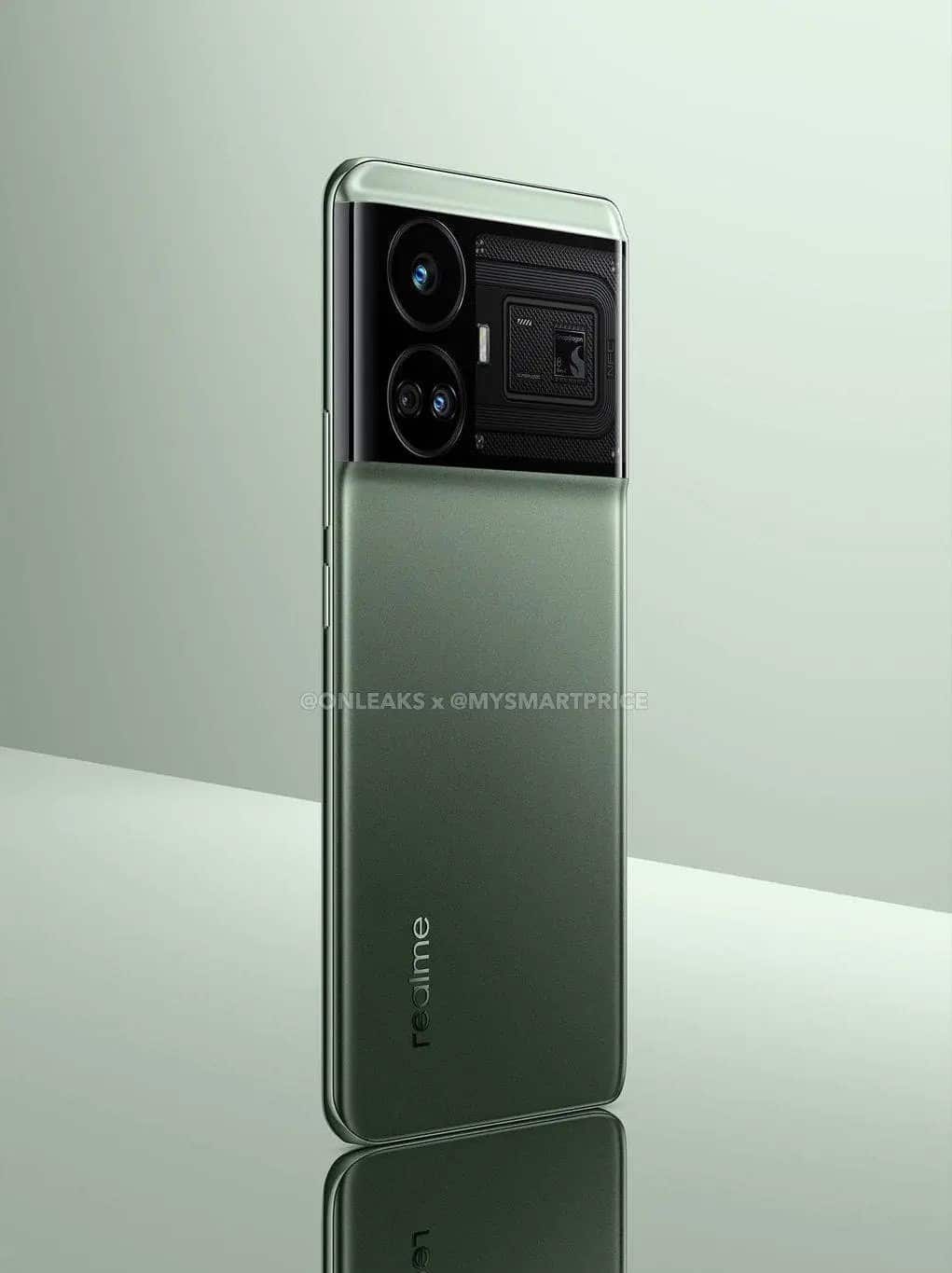
It’s unknown if it will feature the same transparent window on the back that shows off the SoC.

Speaking of which, the Pro is said to run on the Snapdragon 8 Gen 2 chipset from Qualcomm, although there have been rumours that it could go with the upcoming Snapdragon 8 Plus Gen 2 instead, which is speculated to debut in July. This will likely be paired with 16GB of RAM and up to 512GB of internal storage.

Realme GT Neo 5 Pro

Details of the rear-camera setup are still scarce, but earlier reports claim that the GT Neo 5 Pro could carry the same 50MP Sony IMX890 as its main sensor. DCS also mentioned that the photography capacilities of the phone will be improved by a new fusion algorithm.

So far, there is no information yet regarding the battery capacity but for reference, the two versions of the Neo 5 are equipped with 4,600mAh and 5,000mAh batteries with support for 240W and 150W charging respectively. As for the Pro, it might possibly be downgraded to 100W charging.

The GT Neo 5 is confirmed to be marketed as the GT 3 in Malaysia, but no launch date has been revealed yet. As for the GT Neo 5 Pro, it is expected to be unveiled sometime in Q3.

Realme GT Neo 5 Pro Specifications (Rumoured)

Realme GT Neo 5 Pro

According to the renowned tipster, the upcoming Realme GT Neo 5 Pro is expected to feature a flat OLED panel with minimal bezels. The screen is rumored to offer an impressive 1.5K resolution along with a high refresh rate of 144Hz and 2160Hz PWM dimming.

Interestingly, it seems that Realme will utilize the same 6.74-inch OLED panel sourced from the Tianma brand that was previously seen on the Realme GT Neo 5 and GT Neo 5 SE smartphones released earlier this year.

The Snapdragon 8 Gen 2 chipset and 16 GB of LPDDR4x RAM will be present under the hood of the Realme GT Neo 5 Pro. There is no information about the battery size of the device. However, it is expected to support 100W charging.

Realme GT Neo 5 Pro

Some other reports have claimed that the GT Neo 5 Pro’s back panel will have an OIS-enabled 50-megapixel Sony IMX890 primary camera. The details of the remaining cameras on the Pro model have not surfaced yet.
According to DCS, the Realme GT Neo 5 Pro’s main camera will be bolstered by a new fusion algorithm, likely resulting in improved shot quality. The device is expected to run on the Realme UI 4.0based Android 13.

Realme GT Neo 5 Pro Quick Specifications

Realme GT Neo 5 Pro

* Display: 6.74-inch OLED display, 1.5K resolution, 144Hz refresh rate, 2160Hz PWM dimming.
* Processor: Qualcomm’s Snapdragon 8 Gen 2 chipset with Adreno 740 GPU.
* RAM And Storage: 16GB LPDDR4x RAM, 256GB/512GB of UFS 4.0.
* Software: Android 13 with Realme UI 4.0.
* Rear-facing camera: 50MP (Sony IMX890  sensor), ultra-wide camera.
* Battery: 5,000mAh, 100W fast charging support.

Realme GT Neo 5 Pro Tipped To Feature OLED Display, Snapdragon 8 Gen 2 SoC
According to the Digital Chat Station, the upcoming Realme GT Neo 5 Pro is expected to feature a flat OLED display with minimum bezels.
Furthermore, the display panel is expected to offer a 1.5K resolution, a 144Hz refresh rate, and a 2160Hz PWM dimming. It is said that Realme will make use of a 6.74-inch OLED panel which could be sourced from the Tianma brand.

Under the hood, the Realme GT Neo 5 Pro is expected to come with Snapdragon 8 Gen 2 chipset. The device might pack up to 16GB of LPDDR4x RAM. We can expect the handset to pack 256GB/512GB of internal storage. As of now, there is no information about the battery capacity of the device. However, it is said that the smartphone will offer 100W fast charging support.

Realme GT Neo 5 Pro

The previous report suggests that the device will feature a 50MP primary camera (Sony IMX890  sensor) with OIS support. As per Digital Chat Station, the device’s main camera will have a new fusion algorithm, likely resulting in improved shot quality.

As for the software, the device is expected to run on the Android 13 OS with Realme UI 4.0 on top. As of now, Realme has not announced the launch date of the Realme GT Neo 5 Pro.

The past report suggests that the device could be announced by Realme in Q3 2023.
In a piece of related news, a past leak also revealed that Realme is gearing up for the launch of the Realme GT Neo 6 SE smartphone.

Realme GT Neo 5 Pro

As per the details revealed by DCS, the upcoming Realme GT Neo 6 SE could feature a 6.74-inch OLED display with a 144Hz refresh rate. The device is tipped to come with an overclocked version of the Snapdragon 8 Gen 2 SoC.

Similar to the GT Neo 5 Pro, the GT Neo 6 SE is also said to feature a 50MP primary camera. The phone is tipped to offer up to 100W fast charging support.

5
11
12
5 11 12

REALME GT NEO 5 PRO KEY SPECIFICATIONS

Key Specs

RAM 8 GB
Processor Qualcomm Snapdragon
Rear Camera 50 MP + 8 MP + 2 MP
Front Camera 16 MP
Battery 5000 mAh
Display 6.74 inches (17.12 cm)

General

Launch Date September 28, 2023 (Unofficial)
Operating System Android v13

Performance

Chipset Qualcomm Snapdragon
CPU Octa core (3.2 GHz, Single core, Cortex X3 + 2.8 GHz, Quad core, Cortex A715 + 2 GHz, Tri core, Cortex A510)
Architecture 64 bit
Fabrication 4 nm
Graphics Adreno 740
RAM 8 GB

Display

Display Type AMOLED
Screen Size 6.74 inches (17.12 cm)
Resolution 1240 x 2772 pixels
Aspect Ratio 20:9
Pixel Density 451 ppi
Bezel-less display Yes with punch-hole display
Touch Screen Yes, Capacitive Touchscreen, Multi-touch
Refresh Rate 144 Hz

Camera

MAIN CAMERA
Camera Setup Triple
Resolution 50 MP f/1.9, Wide Angle, Primary Camera
8 MP f/2.2, Ultra-Wide Angle Camera
2 MP f/3.3
Autofocus Yes
Flash Yes, Dual LED Flash
Image Resolution 8150 x 6150 Pixels
Settings Exposure compensation
Shooting Modes Continuous Shooting
High Dynamic Range mode (HDR)
Camera Features Digital Zoom
Auto Flash
Face detection
Touch to focus
Video Recording 3840×2160 @ 30 fps
1920×1080 @ 30 fps
FRONT CAMERA
Camera Setup Single
Resolution 16 MP f/2.5, Wide Angle, Primary Camera
Flash Yes, Screen flash
Video Recording 1920×1080 @ 30 fps

Battery

Capacity 5000 mAh
Type Li-Polymer
Removable No
Quick Charging Yes, Super Dart, 100W
USB Type-C Yes

Storage

Internal Memory 256 GB
Expandable Memory No
Storage Type UFS 3.1

Network & Connectivity

SIM Slot(s) Dual SIM, GSM+GSM
SIM Size SIM1: Nano, SIM2: Nano
Network Support 5G Supported in India, 4G Supported in India, 3G, 2G
VoLTE Yes
SIM 1
5G Bands:
FDD N1 / N3 / N5 / N8 / N28
TDD N40 / N41 / N77 / N78
4G Bands:
TD-LTE 2300(band 40)
FD-LTE 1800(band 3)
3G Bands:
UMTS 1900 / 2100 / 850 / 900 MHz
2G Bands:
GSM 1800 / 1900 / 850 / 900 MHz
GPRS:
Available
EDGE:
Available
SIM 2
4G Bands:
TD-LTE 2300(band 40)
FD-LTE 1800(band 3)
3G Bands:
UMTS 1900 / 2100 / 850 / 900 MHz
2G Bands:
GSM 1800 / 1900 / 850 / 900 MHz
GPRS:
Available
EDGE:
Available
Wi-Fi Yes, Wi-Fi 4 (802.11 b/g/n)
Wi-Fi Features Mobile Hotspot
Bluetooth Yes, v5.3
GPS Yes with A-GPS, Glonass
NFC Yes
USB Connectivity Mass storage device, USB charging

Multimedia

Loudspeaker Yes
Audio Jack USB Type-C

Sensors

Fingerprint Sensor Yes
Fingerprint Sensor Position On-screen
Fingerprint Sensor Type Optical
Other Sensors Light sensor, Proximity sensor, Accelerometer, Compass, Gyroscope

Also Read: Realme GT Neo 5 SE, Redmi Note 12 Turbo confirmed to launch with Upcoming Snapdragon 7+ Gen 2 chip

Also Read: Realme GT Neo 5 SE rumour tips new ‘variant’ of Snapdragon 8+ Gen1 SoC than earlier Rumoured Snapdragon 7+ Gen1 SoC

Xiaomi Pad 5 New Price In India Ahead Of Xiaomi Pad 6 Launch on June 13: Grab The Upto Rs 1000 Offer Now

0
Xiaomi Pad 6

Highlights

* Xiaomi has reduced the price of its Pad 5 Android tablet in India before the upcoming Xiaomi Pad 6 launch.
* The company is ready to launch its new Xiaomi Pad 6 in India on June 13.
* Prices of both variants of the Xiaomi Pad 5 have been slashed by up to Rs 1,000.

Xiaomi is all set to launch its latest Android tablet in India.
The company has confirmed that it will launch the Xiaomi Pad 6 in the country next week.
Now ahead of the new launch, the Chinese smartphone maker has slashed the price of its last year launched — Xiaomi Pad 5 Android tablet.
The Xiaomi Pad 5 comes in two variants and both the them have received a price cut.

The upcoming Xiaomi Pad 6 Android tablet is set to be launched in India on June 13, offering several improvements over its predecessor, with the addition of the powerful Snapdragon 870 chipset.
Prior to the tablet’s release, Xiaomi has reduced the prices for its consumers .

Xiaomi Pad 5

The Xiaomi Pad 5 is available in two options: 128GB and 256GB, priced at Rs 26,999 and Rs 28,999 respectively. The 128GB variant has been reduced by Rs 1,000, while the 256GB version has seen a price drop of Rs 500. Customers can now purchase the 128GB model for Rs 25,999 and the 256GB variant for Rs 28,499 after the price adjustment.
The tablet is offered in the Cosmic Grey color option.
Additionally, Xiaomi is offering an instant discount of Rs 2,000 on purchases made with an ICICI bank credit card.

Xiaomi Pad 5 price in India has been reduced by up to Rs 1,000. The price drop comes ahead of the Xiaomi Pad 6 launch in India.

Xiaomi Pad 5The company has announced that the new generation Xiaomi Pad 6 will go official in India on June 13. Xiaomi has reduced the price of both variants of Xiaomi Pad 5, which launched in India last year in April.
The tablet comes with a 120Hz display, Dolby Vision, Snapdragon 860 SoC, a 13MP rear camera, and more.
Read to know about the new pricing of the Xiaomi Pad 5 in India.

Xiaomi Pad 5 Price Slashed in India

Xiaomi Pad 5

Xiaomi has slashed the prices of both variants of the Xiaomi Pad 5 in India. The 128GB variant, which retailed at Rs 26,999, can now be purchased for Rs 25,999. On the other hand, the top-end 256GB variant was priced at Rs 28,999 but is now retailing for Rs 28,499. It can be purchased in Cosmic Black colour from Amazon, Mi.com, and Mi stores across India.

Xiaomi Pad 5 variants Regular Price New Price
Xiaomi Pad 5 128GB Rs 26,999 Rs 25,999
Xiaomi Pad 5 256GB Rs 28,999 Rs 28,499

Xiaomi Pad 5 Specifications

The Xiaomi Pad 5 boasts a 10.95-inch LCD display with a WQHD+ resolution of 2560 x 1600 pixels, delivering a sharp 275 PPI. It offers a high refresh rate of up to 120Hz, ensuring smooth visuals.

The tablet supports stylus input through the Xiaomi Smart Pen, and its 10-bit panel supports the DCI-P3 color gamut and Dolby Vision HDR standard.

With a 16:10 aspect ratio and a peak brightness of 650 nits, the display provides an immersive viewing experience.

Xiaomi Pad 5

Under the hood, the tablet is powered by the Qualcomm Snapdragon 860 SoC, ensuring smooth performance. It comes with LPDDR4x RAM and UFS 3.1 storage, providing ample memory and fast data access.

The device runs on MIUI 13, based on Android 11, with the customized MIUI for Pad interface, delivering a user-friendly experience.

The Xiaomi Pad 5 houses a large 8,720mAh battery, which supports fast charging at 33W (a 22.5W charger is included in the package), ensuring quick and convenient recharging.
In terms of camera capabilities, the tablet is equipped with a 13MP rear camera and an 8MP front-facing camera, allowing users to capture memorable moments.

The tablet also features quad speakers that support Dolby Atmos, Hi-Res Audio, and Hi-Res Audio Wireless, providing an immersive audio experience.

The tablet offers dual-band WiFi, Bluetooth 5.0, and a USB 2.0 Type-C port. It also includes a pogo pin connector for the official keyboard accessory, expanding the productivity options for users.

Xiaomi Pad 5

XIAOMI PAD 6 KEY SPECIFICATIONS

General

Launch Date March 23, 2023 (Unofficial)
Brand Xiaomi
Model Pad 6
Operating System Android v12
Network 5G: Not Supported in India,
4G: Not Available,
3G: Not Available
Fingerprint Sensor No
Quick Charging Yes

Display

Screen Size 11 inches (27.94 cm)
Screen Resolution 1600 x 2560 pixels
Pixel Density 274 ppi
Display Type IPS LCD
Touch Screen Yes, Capacitive Touchscreen, Multi-touch

Performance

Chipset Qualcomm Snapdragon 870
Processor Octa core (3.2 GHz, Single core, Kryo 585 + 2.42 GHz, Tri core, Kryo 585 + 1.8 GHz, Quad core, Kryo 585)
Architecture 64 bit
Graphics Adreno 650
RAM 6 GB

Storage

Internal Memory 128 GB
Expandable Memory No

Camera

MAIN CAMERA
Resolution 13 MP f/2, Primary Camera
Autofocus Yes
Flash Yes, LED Flash
Image Resolution 4128 x 3096 Pixels
Settings Exposure compensation
Shooting Modes High Dynamic Range mode (HDR)
Camera Features Digital Zoom
Auto Flash
Face detection
Touch to focus
Video Recording 1920×1080 @ 30 fps
FRONT CAMERA
Resolution 8 MP f/2, Primary Camera
Video Recording 1920×1080 @ 30 fps

Battery

Capacity 8720 mAh
Type Li-Polymer
User Replaceable No
Quick Charging Yes, Fast, 33W
USB Type-C Yes

Network & Connectivity

Network Support 5G Not Supported in India
VoLTE Yes
Voice Calling No
Wi-Fi Yes, Wi-Fi 4 (802.11 b/g/n)
Bluetooth Yes, v5.0
USB Connectivity Mass storage device, USB charging

Multimedia

Audio Jack USB Type-C

Special Features

Fingerprint Sensor No
Other Sensors Light sensor, Proximity sensor, Accelerometer

XIAOMI MI PAD 5 SPECIFICATIONS

General

Launch Date May 3, 2022 (Official)
Brand Xiaomi
Model Mi Pad 5
Also Known As Xiaomi Pad 5
Operating System Android v11
Custom UI MIUI
Network 5G: Not Supported in India,
4G: Not Available,
3G: Not Available
Fingerprint Sensor No
Quick Charging Yes

Design

Height 254.6 mm
Width 166.2 mm
Thickness 6.8 mm
Weight 511 grams
Build Material Back: Aluminium
Colours Cosmic Gray

Display

Screen Size 11 inches (27.94 cm)
Screen Resolution 1600 x 2560 pixels
Pixel Density 274 ppi
Display Type IPS LCD
Touch Screen Yes, Capacitive Touchscreen, Multi-touch
Screen to Body Ratio 83.2 %

Performance

Chipset Qualcomm Snapdragon 860
Processor Octa core (2.96 GHz, Single core, Kryo 485 + 2.42 GHz, Tri core, Kryo 485 + 1.8 GHz, Quad core, Kryo 485)
Architecture 64 bit
Graphics Adreno 640
RAM 6 GB

Storage

Internal Memory 128 GB
Expandable Memory No

Camera

MAIN CAMERA
Resolution 13 MP f/2.0, Primary Camera
Autofocus Yes
Flash Yes, LED Flash
Image Resolution 4128 x 3096 Pixels
Settings Exposure compensation, ISO control
Shooting Modes High Dynamic Range mode (HDR)
Camera Features Digital Zoom
Auto Flash
Face detection
Touch to focus
Video Recording 3840×2160 @ 30 fps
1920×1080 @ 30 fps
FRONT CAMERA
Resolution 8 MP f/2.0, Primary Camera
Video Recording 1920×1080 @ 30 fps
1280×720 @ 30 fps

Battery

Capacity 8720 mAh
Type Li-ion
User Replaceable No
Quick Charging Yes, Fast, 33W: 100 % in 91 minutes
USB Type-C Yes

Network & Connectivity

Network Support 5G Not Supported in India
Voice Calling No
Wi-Fi Yes, Wi-Fi 5 (802.11 a/b/g/n/ac)
Bluetooth Yes, v5.0
NFC No
USB Connectivity Mass storage device, USB charging

Multimedia

FM Radio No
Audio Jack USB Type-C
Audio Features Dolby Atmos

Special Features

Fingerprint Sensor No
Other Sensors Light sensor, Proximity sensor, Accelerometer, Compass, Gyroscope

Faqs Xiaomi Pad 5

1) What are Xiaomi Pad 5 Specifications & Features?

Ans) The Xiaomi Pad 5 flaunts a 10.95-inch 2.5K LCD screen that offers a 2560 × 1600 pixels screen resolution. Other display features of the tablet include 650nits of brightness, 120Hz refresh rate, DCI-P3 colour gamut support, and the segment-first Dolby Vision support. The audio features include a quad-speaker configuration with support for Dolby Atmos and Hi-Res audio certification.

Powering the performance of the device is a Snapdragon 860 octa-core chipset. The powerful chipset is built on a 7nm fabrication process and paired with an Adreno 640 GPU. On the memory and storage front, Xiaomi Pad 5 offers 6GB of LPDDR4X RAM and up to 256GB UFS 3.1 internal storage.

In the camera department, Xiaomi has fitted the Pad 5 Android tablet with a single camera on the rear panel featuring a 13-megapixel sensor. On the front, there is an 8-megapixel shooter to take care of selfies and video calling. The camera can record up to 4K resolution videos at 30fps.

The company is offering a 22.5W adapter, USB Type-C Cable, Quick Start Guide, and warranty card in the box. Out of the box, the Xiaomi Pad 5 boots MIUI for Pad based on Android 12. At its core, there is an 8,720mah battery that supports 33W fast charging.
Other features include Mi Smart Pen support, 24-bit/192khz audio support, Bluetooth 5.0, dual-band Wi-Fi, and a USB Type-C port with OTG support. There’s also a speaker channel mapping feature, which flips the speakers based on the orientation of the tablet.

2) What is New Price and offer on Xiaomi Pad 5?

Ans) Xiaomi Pad 5 comes in two variants — 128GB and 256GB priced at Rs 26,999 and Rs 28,999. The 128GB version has received a price cut of Rs 1,000, while the 256GB variant got a price drop of Rs 500. The customers can purchase the 128GB version at Rs 25,999 and the 256GB variant at Rs 28,499 after the price cut. The Android tablet can be purchased in Cosmic Grey colour option. Xiaomi is also giving an instant discount of Rs 2,000 on the ICICI bank credit card.

Also Read: Xiaomi Pad 6 spotted on Geekbench with Snapdragon 8+ Gen 1: Check Launch Timeline, Specifications & More

Also Read: Xiaomi Pad 6 Live Images Show Similarities with Xiaomi 12 Pro-like Camera Design, Launch Soon

Leaked Camera Specifications Google Pixel 8 Series: Check New Larger Sensors and Software Features

0
Google Pixel 8 Series Camera Specifications Leaked

HIGHLIGHTS

1. Google might launch the Pixel 8 series with a new Samsung sensor.
2. The Pixel 8 Pro will get a new ultra-wide camera sensor and a thermometer on the back.
3. There will likely be some new AI-powered camera features introduced as well.
4. Google’s Pixel smartphones stand out for their cameras and some major upgrades are expected in the Pixel 8 series. 

5. This time, Google is reportedly upgrading the camera hardware and adding a bunch of new features as well.
6. Here’s the latest on the Google Pixel 8 series’ camera upgrades.

Google is expected to launch the Pixel 8 series later this year.
The company is likely to unveil two flagship smartphones later this year.
If previous launch timelines are to go by. The Pixel 8 series will launch in October.
Google is yet to confirm any details about the Pixel 8 series.

Meanwhile, like every year, details about the Pixel 8 series have started surfacing online ahead of the launch. A new leak has now revealed the camera details of the Pixel 8 series. Based on the leaked details, it looks like the Pixel 8 and Pixel 8 Pro will get a new primary camera sensor.
The Pixel 8 Pro will continue to feature a triple-camera setup.

Google Pixel 8 series camera specifications

Let’s take a look at the Google Pixel 8, Pixel 8 Pro camera specifications and features leaked ahead of the launch.

Google Pixel 8 Pro is also receiving a much-needed upgrade to the ultrawide camera. The dated 12MP Sony IMX386 is replaced by a much more usable 64MP Sony IMX787 — the same sensor as the primary camera found on the Pixel 7a.

This is a huge upgrade; the sensor is almost twice the size and should vastly improve the quality of the ultrawide camera. Google has also made the lens slightly wider.
While we don’t know the exact field-of-view (FoV), it’s been bumped from a 0.56x zoom ratio to 0.49x.

There’s a chance the macro mode introduced with the Pixel 7 series might be missing this year — as of now, the feature is disabled on the Pixel 8 Pro.
The feature may be re-enabled later, or perhaps Google killed it off.
The vanilla Google Pixel 8’s ultrawide camera is also upgraded, although more modestly.

While the camera sensor is the same Sony IMX386 found in the Pixel 6 series, Google has made it slightly wider this year. Pixel 7 had a 0.67x zoom ratio, which is now 0.55x in the Pixel 8.

Google Pixel 8 and Pixel 8 Pro Camera Specs: Hardware Upgrade

Google Pixel 8 series camera specifications

The main upgrade in the camera hardware this year is coming to both of the Pixel 8 models — the Samsung ISOCELL GN1 sensor makes way for the ISOCELL GN2.
This brings a few improvements: first, the sensor is larger and should capture about 35% more light than its predecessor for brighter low-light images and faster shutter speeds to reduce blur.

The sensor also supports 8K/30fps video capture, as does the Tensor G3 processor.
This might not make its way to users; it’s currently not supported by GCam running on the Pixel 8 and existing Pixels run notoriously hot at 4K/60fps already. The last enhancement is the previously leaked support for Staggered HDR.

This reduces the delay between the frames that are captured for HDR to reduce ghosting and speed up the capture process. The technology might push Google’s HDR+ capabilities even further, providing faster, more reliable shots.

Google Pixel 8 Pro is also receiving a much-needed upgrade to the ultrawide camera. The dated 12MP Sony IMX386 is replaced by a much more usable 64MP Sony IMX787 — the same sensor as the primary camera found on the Pixel 7a.

This is a huge upgrade; the sensor is almost twice the size and should vastly improve the quality of the ultrawide camera. Google has also made the lens slightly wider.
While I don’t know the exact field-of-view (FoV), it’s been bumped from a 0.56x zoom ratio to 0.49x.

Google Pixel 8 series camera specifications

Surprisingly, there’s a chance the macro mode introduced with the Pixel 7 series might be missing this year — as of now, the feature is disabled on the Pixel 8 Pro.
The feature may be re-enabled later, or perhaps Google killed it off.

The vanilla Google Pixel 8’s ultrawide camera is also upgraded, although more modestly.
While the camera sensor is the same Sony IMX386 found in the Pixel 6 series, Google has made it slightly wider this year. Pixel 7 had a 0.67x zoom ratio, which is now 0.55x in the Pixel 8.

The telephoto camera on Pixel 8 Pro appears to remain the same 5x module as the Pixel 7 Pro. The same goes for the 11MP selfie camera from the Pixel 7 series. Here’s the full rundown:

Google further divide the regular Pixels from its Pro equivalents.
While previous Pixels in each generation had key differences (e.g. the inclusion of telephoto cameras on the Pro models), it never felt like the regular devices were a major downgrade — they simply had fewer features.
With this generation, this is changing. Buying the regular Pixel 8 over the Pixel 8 Pro will now mean weaker zoom and a lower-end ultrawide experience.

Improved time-of-flight is coming to the Pixel 8

Google Pixel 8 series camera specifications

It isn’t a very well-known fact, but all Pixel phones since the Pixel 6 (excluding the Pixel A series) have had a single-point time-of-flight (ToF) sensor to aid the autofocus — the STMicroelectronics VL53L1.

The Pixel 8 Pro finally gets something more useful. The device has a new 8×8 ToF VL53L8 sensor. While having a real LiDAR camera sensor, like the 0.3MP IMX590 in the iPhone 14 Pro, is obviously far more versatile, the new sensor in the Pixel 8 Pro is still a massive upgrade, and it should, at the very least, make the autofocus much more reliable.
The ToF sensor upgrade isn’t coming to the regular Pixel 8; it retains the old VL53L1.

The Pixel 8 thermometer is only a thermometer

Google Pixel 8 series camera specifications

Another Pixel 8 Pro feature that has already leaked is an FIR thermometer sensor.
Some have speculated that it might be a full thermal camera that could be used for photography purposes too, so let me clear the air: it’s not.
The sensor is a Melexis MLX90632, primarily recommended for high-precision non-contact temperature measurements, including body temperature.

It’s not a camera or anything else that could serve any purpose other than measuring temperature.
Google simply decided to include a fairly expensive gimmick in its device, and not for the first time (hello, Motion Sense).

Pixel 8 camera software: Improved features are coming

Google Pixel 8

While the camera software on Pixel 8 is obviously in fairly early stages of development and mainly focuses on making the new hardware work, we have spotted some new low-level feature enhancements.
“Adaptive torch” is a new feature that dynamically adjusts the flash intensity based on the scene and other inputs (e.g. which capture mode is used). This should prevent overexposed shots and make low-light photography even better if you use the flash.

Another new feature is “Segmentation AWB.” As the name suggests, the scene will be segmented into different parts using AI to then selectively apply different processing to particular parts of the image. This concept isn’t new, Qualcomm announced a similar feature for the Snapdragon 8 Gen 2. It will be interesting to see how Google incorporates this into its existing processing pipelines.

Google might also add a video bokeh blur level selection for the phone’s cinematic mode, which was first introduced on the Google Pixel 7 series.

GOOGLE PIXEL 8 KEY SPECIFICATIONS

Key Specs

RAM 8 GB
Processor Google Tensor G2
Rear Camera 64 MP + 48 MP + 12 MP
Front Camera 16 MP
Battery 5000 mAh
Display 5.8 inches (14.73 cm)

General

Launch Date May 10, 2023 (Unofficial)
Operating System Android v12

Performance

Chipset Google Tensor G2
CPU Octa core (2.85 GHz, Dual core, Cortex X1 + 2.35 GHz, Dual core, Cortex A78 + 1.8 GHz, Quad core, Cortex A55)
Architecture 64 bit
Fabrication 4 nm
Graphics Mali-G710 MC10
RAM 8 GB

Display

Display Type Super AMOLED
Screen Size 5.8 inches (14.73 cm)
Resolution 1080 x 2268 pixels
Pixel Density 433 ppi
Screen to Body Ratio (calculated) 79.46 %
Bezel-less display Yes with punch-hole display
Touch Screen Yes, Capacitive Touchscreen, Multi-touch

Design

Height 150.5 mm Compare Size 
Width 70.8 mm
Thickness 8.9 mm

Camera

MAIN CAMERA
Camera Setup Triple
Resolution 64 MP f/1.9, Wide Angle, Primary Camera
48 MP f/3.5, Telephoto Camera
12 MP f/2.2, Ultra-Wide Angle Camera
Autofocus Yes
Flash Yes, LED Flash
Image Resolution 9000 x 7000 Pixels
Settings Exposure compensation, ISO control
Shooting Modes Continuous Shooting
High Dynamic Range mode (HDR)
Camera Features Digital Zoom
Auto Flash
Face detection
Touch to focus
Video Recording 1920×1080 @ 30 fps
FRONT CAMERA
Camera Setup Single
Resolution 16 MP f/2.2, Ultra-Wide Angle, Primary Camera
Video Recording 1920×1080 @ 30 fps

Battery

Capacity 5000 mAh
Type Li-Polymer
Removable No
Quick Charging Yes, Fast
USB Type-C Yes

Storage

Internal Memory 128 GB
Expandable Memory No

Network & Connectivity

SIM Slot(s) Dual SIM, GSM+GSM
SIM Size SIM1: Nano, SIM2: eSIM
Network Support 5G Not Supported in India, 4G Supported in India, 3G, 2G
VoLTE Yes
SIM 1
4G Bands:
TD-LTE 2300(band 40)
FD-LTE 1800(band 3)
3G Bands:
UMTS 1900 / 2100 / 850 / 900 MHz
2G Bands:
GSM 1800 / 1900 / 850 / 900 MHz
GPRS:
Available
EDGE:
Available
SIM 2
4G Bands:
TD-LTE 2300(band 40)
FD-LTE 1800(band 3)
3G Bands:
UMTS 1900 / 2100 / 850 / 900 MHz
2G Bands:
GSM 1800 / 1900 / 850 / 900 MHz
GPRS:
Available
EDGE:
Available
Wi-Fi Yes, Wi-Fi 4 (802.11 b/g/n)
Wi-Fi Features Mobile Hotspot
Bluetooth Yes, v5.2
GPS Yes with A-GPS, Glonass
USB Connectivity Mass storage device, USB charging

Multimedia

Loudspeaker Yes
Audio Jack USB Type-C

Sensors

Fingerprint Sensor Yes
Fingerprint Sensor Position On-screen
Other Sensors Light sensor, Proximity sensor, Accelerometer, Compass, Gyroscope

GOOGLE PIXEL 8 PRO KEY SPECIFICATIONS

Key Specs

RAM 12 GB
Processor Google Tensor G2
Rear Camera 64 MP + 48 MP + 12 MP
Front Camera 16 MP
Battery 5100 mAh
Display 6.52 inches (16.56 cm)

General

Launch Date May 10, 2023 (Unofficial)
Operating System Android v12

Performance

Chipset Google Tensor G2
CPU Octa core (2.85 GHz, Dual core, Cortex X1 + 2.35 GHz, Dual core, Cortex A78 + 1.8 GHz, Quad core, Cortex A55)
Architecture 64 bit
Fabrication 4 nm
Graphics Mali-G710 MC10
RAM 12 GB

Display

Display Type Super AMOLED
Screen Size 6.52 inches (16.56 cm)
Resolution 1440 x 3120 pixels
Pixel Density 527 ppi
Screen to Body Ratio (calculated) 83.71 %
Bezel-less display Yes
Touch Screen Yes, Capacitive Touchscreen, Multi-touch
Refresh Rate 144 Hz

Design

Height 162.6 mm Compare Size 
Width 76.5 mm
Thickness 8.7 mm

Camera

MAIN CAMERA
Camera Setup Triple
Resolution 64 MP f/1.9, Wide Angle, Primary Camera
48 MP f/3.5, Telephoto Camera
12 MP f/2.2, Ultra-Wide Angle Camera
Autofocus Yes
Flash Yes, Dual LED Flash
Image Resolution 9000 x 7000 Pixels
Settings Exposure compensation, ISO control
Shooting Modes Continuous Shooting
High Dynamic Range mode (HDR)
Camera Features Digital Zoom
Auto Flash
Face detection
Touch to focus
Video Recording 1920×1080 @ 30 fps
FRONT CAMERA
Camera Setup Single
Resolution 16 MP f/2.2, Ultra-Wide Angle, Primary Camera
Video Recording 1920×1080 @ 30 fps

Battery

Capacity 5100 mAh
Type Li-Polymer
Removable No
Quick Charging Yes, Fast
USB Type-C Yes

Storage

Internal Memory 256 GB
Expandable Memory No

Network & Connectivity

SIM Slot(s) Dual SIM, GSM+GSM
SIM Size SIM1: Nano, SIM2: eSIM
Network Support 5G Not Supported in India, 4G Supported in India, 3G, 2G
VoLTE Yes
SIM 1
4G Bands:
TD-LTE 2300(band 40)
FD-LTE 1800(band 3)
3G Bands:
UMTS 1900 / 2100 / 850 / 900 MHz
2G Bands:
GSM 1800 / 1900 / 850 / 900 MHz
GPRS:
Available
EDGE:
Available
SIM 2
4G Bands:
TD-LTE 2300(band 40)
FD-LTE 1800(band 3)
3G Bands:
UMTS 1900 / 2100 / 850 / 900 MHz
2G Bands:
GSM 1800 / 1900 / 850 / 900 MHz
GPRS:
Available
EDGE:
Available
Wi-Fi Yes, Wi-Fi 4 (802.11 b/g/n)
Wi-Fi Features Mobile Hotspot
Bluetooth Yes, v5.2
GPS Yes with A-GPS, Glonass
USB Connectivity Mass storage device, USB charging

Multimedia

Loudspeaker Yes
Audio Jack USB Type-C

Sensors

Fingerprint Sensor Yes
Fingerprint Sensor Position On-screen
Other Sensors Light sensor, Proximity sensor, Accelerometer, Compass, Gyroscope

Faqs

1) What are Google Pixel 8 Series Camera Specifications (Leaked)?

Ans) The Google Pixel 8 series will likely launch in October. Ahead of the launch, new details about the Pixel 8 series camera have leaked online.
The industry report by claims that the Pixel 8 and Pixel 8 Pro will feature a new primary camera sensor. Currently, the Pixel 7 and Pixel 7 Pro (Review) feature a 50MP Samsung GN1 primary camera sensor.

The upcoming Pixel 8 series is said to feature a 50MP Samsung GN2 camera sensor. The larger sensor should help capture 35 per cent more light than the GN1.
The ultra-wide camera in the Pixel 8 series will also get some changes. Starting with the Pixel 8, the device is said to feature a 12MP Sony IMX386 sensor, which was found in the Pixel 6 series. However, the sensor in the Pixel 8 will capture wider 0.55x shots as opposed to 0.67x ultra-wide shots in the Pixel 7.

The Pixel 8 Pro’s ultra-wide camera will be brand new. According to the report, Google will ditch the 12MP IMX386 ultra-wide camera and launch its upcoming Pro model with a 64MP Sony IMX787. The device will have a 0.49x zoom ratio, which is wider than the Pixel 7 Pro’s 0.56x zoom.

Lastly, the telephoto camera. While the Pixel 8 will not feature one, the Pixel 8 Pro is said to feature a 48MP Samsung GN5 sensor with a telephoto lens that can shoot up to 5x optical zoom. Yes, the telephoto camera sensor is the same as the Pixel 7 Pro.
For selfies, there will be an 11MP Samsung 3J1 front camera sensor, which is the same as the Pixel 7 series.

Additionally, the report stated that the Pixel 8 Pro will get an improved Time-of-Flight sensor, which should ideally result in faster autofocus. Also, there is a new thermometer located next to the camera sensors on the back of the 8 Pro. The sensor is a Melexis MLX90632, primarily recommended for high-precision non-contact temperature measurements, including body temperature. It’s not a camera or anything else that could serve any purpose other than measuring temperature, according to the report.

Coming to the camera-centric software improvements, there will be a new feature called “Segmentation AWB.” The feature will segment a scene into different parts using AI to then selectively apply different processing to particular parts of the image. “Adaptive torch” is a new feature that dynamically adjusts the flash intensity based on the scene and other inputs. Lastly, Google might also add a video bokeh blur level selection for the phone’s cinematic mode, which was first introduced on the Pixel 7 series.
Some other details about the Pixel 8 series have leaked as well.

There will be minor changes to the design of the upcoming Google flagship phones. The Pixel 8 will likely sport a tad smaller 6.2-inch display compared to the Pixel 7’s 6.3-inch display.

2) What are Google Pixel 8 Camera Specifications Expectations?

Ans) The vanilla Pixel 8 will likely have a 50MP Samsung GN 2 primary with A 12MP Sony IMX 386 ultra-wide sensor. On the front, the Pixel 8 will have a 10.8MP Samsung 3J1 selfie shooter.

3) What are Google Pixel 8 Pro Camera Specifications Expectations?

Ans) Like the non-pro, the bigger sibling may have a 50MP GN2 primary camera sensor.
We could witness a giant leap in the ultra-wide camera which may clock to 64MP. It could be an IMX 787 sensor, which primarily sits inside the new Google Pixel 7a.
Like last year’s Pixel 7 Pro, the 8 Pro could have the same 48MP Samsung GM5 sensor with up to 5x zoom capabilities. As tipped by reports, the diagram is visible with an FIR thermometer sensor, a To sensor for improved autofocus and a flash. Lastly, the front camera also remains the same at
10.8MP.

4) How is the Google Pixel 8 Series Camera Software?

Ans) The report adds that the phones may have an “adaptive torch” to adjust the light intensity based on the surroundings and enhance overall night photography.
While the primary camera sensor and the hardware chip – Tensor G3, support 8K video recording at 30fps, the smartphones may still stick to 4K at 60fps footage due to thermal issues.

5) Google Pixel 8 camera leak details new main sensor, Pro-only upgrades, more

Ans) The camera has always been the best feature of Google’s Pixel smartphones, and according to a detailed new leak, the Pixel 8 and Pixel 8 Pro are set to adopt some big new upgrades, including a new main sensor, some Pro-exclusive upgrades, and much more.

Another leak courtesy of Kamila Wojciechowska through Android Authority brings us a detailed breakdown of what might be coming to the Pixel 8 and Pixel 8 Pro in terms of the cameras.
The biggest detail here is a new primary camera sensor for both phones, the Samsung ISOCELL GN2. This 50MP sensor is the direct successor to the GN1 that Pixel 6 and 7 use. The sensor is physically larger and able to capture about 35% more light from a scene. The new sensor also adds more technical support for features such as 8K video recording (Tensor G3 also supports this) and Staggered HDR, which was also leaked to be heading to Pixels.

Pixel 8 Pro would get another exclusive upgrade in its time-of-flight sensor, which will adopt an 8×8 ToF VL53L8 sensor. All Tensor-based Pixel phones have had one of these sensors, but the new model in Pixel 8 Pro may deliver some meaningful upgrades to autofocus. The Pro’s previously leaked temperature sensor is also reportedly the Melexis MLX90632, which is just a temperature sensor.
There’s no thermal imaging coming here, despite this singular part apparently being quite expensive.

Both phones are also getting ultrawide camera upgrades. The Pixel 8 Pro will apparently adopt the 64MP Sony IMX787 for its ultrawide camera. That’s the sensor Pixel 7a uses for its primary shooter and a considerable upgrade from the 12MP sensor Google has used for ultrawides for quite some time. Notably, it’s mentioned that the Pixel 7 Pro’s macro mode may not reappear on this new device. Pixel 8 would also get an ultrawide swap-out, to the 12MP Sony IMX386.

The Pixel 8 Pro’s telephoto lens as well as the selfie shooter in both phones reportedly remain unchanged.
Software is also apparently getting an upgrade, with the Google Camera app seemingly bringing three upgrades. This would include level selection for the artificial bokeh produced in videos through “Cinematic” mode, as well as “Adaptive torch,” which would be able to adjust the LED flash intensity based on the scene you’re shooting. And lastly, there’s “Segmentation AWB,” which cuts the scene shot into different pieces using AI to better apply processing methods to each part of the image.

Also Read: Google Pixel 8 Camera Subjected to Online Leak: New Sensor Expected

Also Read: Google Pixel 8 Features New Chipset; Details Inside

Realme’s Former Ceo Madhav Sheth Could join Rival Chinese brand Honor in India as CEO India Head on their Entry Back In India

0
Realme’s Madhav Sheth

HIGHLIGHTS

* Honor is said to be busy setting up the team for its India operations.
* Honor is expected to start by launching a few new smartphones in India.
* Madhav Sheth has referred to claims of him becoming the new Honor India CEO as “speculation”.

Honor is reportedly preparing for its re-launch in the Indian market.
The surprising move could happen as early as next month.
It could start with launching smartphones once it arrives.
In the meantime, the company is busy setting up the team that will take care of operations in India.
The team could even be headed by Realme’s Madhav Sheth.

Honor, the Chinese smartphone brand formerly owned by Huawei, is looking to re-enter India in August at a time when other Chinese brands like Realme and Xiaomi are struggling to drive volumes in the market, which contracted in 2022. Honor’s India partner PSAV Global Tech Private Limited is currently discussing with former Realme India CEO Madhav Sheth to help launch Honor-branded smartphones.

Realme’s Madhav Sheth

Based in Noida, PSAV Global distributes Honor devices such as laptops, tablets and wearables and is most likely to sell Honor smartphones in both online and offline channels for which it will use Sheth’s network. Sources said Sheth will bring key employees from Realme India to help set up sales operations for Honor smartphones.

Sources added that Honor doesn’t plan to set up its own team in India and will continue with its arrangement with PSAV Global, which has a comprehensive network of over 5000 retailers and more than 100 distributors covering both rural and urban areas across India in the top 100 cities.

Last year Honor pulled its team out of India due to geopolitical tensions. The company’s CEO, Zhao Ming, then confirmed the move and said that local partners would operate the operations with a “very safe approach”.

Realme’s Madhav Sheth

When reached out, Sheth declined to comment on his talks with PSAV. Sources added that Sheth, who Realme elevated to the new VP for Business and Corporate Strategy (Global), will formally exit the company within a week.

In 2020, Chinese telecom major Huawei sold Honor smartphone business assets to a consortium of buyers in China, with Shenzhen Zhixin New Information Technology Co Ltd being the most significant stakeholder due to US sanctions.

Realme’s Madhav Sheth
Since then, Honor maintained its presence in the Indian market and launched laptops and wearables through e-commerce platforms. The company is now expected to launch a few smartphone models in India.

Queries sent to Honor and Realme India didn’t elicit any response.

With its mid-range smartphones, Honor competed intensely with companies like Samsung, Vivo and OnePlus in India. It managed to corner a 3% market share in 2018, which was its best year in terms of sales.

Honor to Re-Enter India: What We Know

Realme’s Madhav Sheth

Economic Times (ET) has shared a report where it has claimed Honor India is looking for a return by the end of July. It means we are about two months away from the re-launch of the company if everything goes as per plan. It is expected to begin by launching a few smartphone models that will be sold via online shopping portals.

The company has begun the process of setting up a new team responsible for handling Indian operations. Honor is said to be in touch with various Realme and Xiaomi senior executives to see if they would be willing to join. The biggest highlight of the report is that Realme’s Madhav Sheth could become the CEO of Honor India.

Realme’s Madhav Sheth

Sheth currently serves as the Vice President of Realme and President of Realme International Business Group.

While Sheth has responded by saying, “This is a speculation”, the report adds he is currently having conversations about his role with Sky Li, CEO and Founder of Realme. Nevertheless, it would be a huge move from Honor if it manages to pull it off.

Sheth has been associated with Realme since its early days and has helped it become the brand that it is today. He not only helped the company become a household name in the smartphone space but also played a crucial role in Realme’s expansion into other categories including smart home products.

Realme’s Madhav Sheth

Honor used to be a Huawei sub-brand but the latter was forced to sell the company in 2020 due to sanctions imposed by the US government. Shenzhen Zhixin New Information Technology Co Ltd is the major stakeholder in the consortium of buyers that ended up buying the company. Since then, it has released smartphones, tablets, laptops, and wearables among other products in China and Europe.

Honor India was also quite active but reports started to emerge last year that the company was exiting the Indian market and pulling its team out due to geopolitical unrest. The company responded to these claims by saying that Indian operations will continue to be run by local partners but with a “very safe approach”. Most recently, Honor launched the MagicBook X14 (2023) and MagicBook X16 (2023) laptops in India.

Realme’s Madhav Sheth May Join Honor To Revive Phone Business In India

Realme’s Madhav Sheth

Madhav Sheth, currently VP for Business and Corporate Strategy (Global) at leading technology brand Realme, is likely to soon join Honor India to revive the rival brand in the country, top sources told IANS on Friday.

According to the sources, senior India leadership at Realme is also rumoured to join Sheth in a key exodus, who is likely to spearhead Honor India’s operations as CEO in the country.

The director-level executives from Realme’s online and mainline (offline) verticals have also put in their papers, who will join Sheth at his new stint at Honor India, according to sources.
When contacted, the company did not immediately comment on the development.

Realme’s Madhav Sheth

Importantly, Sheth was absent from the company’s flagship launch event on Thursday, where it introduced Realme 11 Pro 5G series featuring two models — the 11 Pro 5G and the 11 Pro+ 5G.

The Realme 11 series was endorsed by Bollywood superstar Shah Rukh Khan as the company’s new brand ambassador.

In March, the company said that Sheth, who was elevated to the new role of VP for Business and Corporate Strategy (Global), would look after the Indian market which is strategically important for the global technology brand.

The company had told IANS that Sheth’s international background and global vision will provide forward-looking strategic guidance for Realme’s development in the global market.

Realme’s Madhav Sheth
It also firmed up its Indian management team. Nisar Naikoo and Dipesh Punamiya were assigned the responsibility of independently managing the India business.

Sheth, earlier the CEO of Realme India, VP of Realme, and President of Realme International Business Group, has been at the forefront of creating consumer products with trendsetting technologies, features, and designs in the country.
The development at Realme is significant at a time when the Indian smartphone market is going through a churn, as Apple and Samsung solidify their presence amid doubling down on local manufacturing of their products, leaving once formidable Chinese players behind in the race.

In 2020, Chinese conglomerate Huawei sold off its Honor smartphone business assets to China-based Shenzhen Zhixin New Information Technology Co Ltd.
Last year, Honor said it was not planning to exit the Indian market, where it expanded beyond smartphones to enter the laptop segment and also launched a wearables portfolio.

Realme’s Madhav Sheth

“Honor is maintaining business operations in India and will continue its development,” a company spokesperson had said.

The company still has a sizable presence in the country, along with its service centres.
Launched at Rs 42,990, the company’s introductory laptop, Honor MagicBook 15, came with 8GB RAM, 256GB SSD, a hidden pop-up webcam, a 2-in-1 fingerprint power button, and a compact 65W fast charger.

Since its creation in 2013, the Honor brand has focused on the youth market by offering phones in the low- to mid-end price range.

In 2020, the company made the Honor Watch GS 3 available in India for Rs 12,990.

Realme’s Madhav Sheth

Faqs

1) Realme’s Madhav Sheth to join HONOR India as CEO: Report?

Ans) Madhav Sheth, the current VP for Business and Corporate Strategy (Global) at realme, is set to join HONOR India to revive the brand in the country, according to a report by IANS. Additionally, several director-level executives from realme’s online and offline verticals are expected to join Sheth at HONOR India.

It is worth noting that Sheth was noticeably absent from realme’s recent flagship launch event, where the company introduced the realme 11 Pro 5G series. The realme 11 series was endorsed by Bollywood superstar Shah Rukh Khan as the brand ambassador.
Earlier this year, realme announced Sheth’s appointment as VP for Business and Corporate Strategy (Global), specifically overseeing the strategically important Indian market.

The company emphasized that Sheth’s international background and vision would provide strategic guidance for realme’s global development. The India business was entrusted to Nisar Naikoo and Dipesh Punamiya, who would manage it independently.
Sheth has played a pivotal role in introducing consumer products with innovative technologies, features, and designs during his tenure at realme.

This development holds significance as the Indian smartphone market undergoes a transformation, with Apple and Samsung solidifying their presence and focusing on local manufacturing. Chinese players are facing challenges in this fiercely competitive landscape.
HUAWEI divested its HONOR smartphone business assets to Shenzhen Zhixin New Information Technology Co Ltd in 2020. Despite this, HONOR expressed its commitment to the Indian market and expanded its product offerings beyond smartphones to include laptops and wearables. Recently, HONOR launched the HONOR MagicBook X14 and X16 2023 laptops powered by Intel Core i5 12th Gen ‘H Series’.
While the companies involved have yet to confirm these developments, we can expect more information to emerge in the coming days.

2) Realme’s Madhav Sheth may join rival Chinese brand Honor in India. Details?

Ans) Realme’s current VP for Business and Corporate Strategy (Global) Madhav Sheth may reportedly leave the technology brand to join its home country rival, Honor. According to a report in news agency IANS, Sheth is expected to soon join Honor India. According to the report, senior India leadership of Realme too is likely to join Sheth in a key exodus. He is also likely to lead Honor India’s operations as CEO in the country.

The report also claims that director-level executives from Realme’s online and offline verticals have also put in their papers. These executives will reportedly join Sheth at Honor India. However, neither Realme nor Honor has shared an official comment on the development.

The Indian market is strategically important for the global technology brand. In March, the company said that Sheth, who was promoted to the new role of VP for Business and Corporate Strategy (Global), would look after the Indian market.
Earlier, Sheth has served in multiple roles in the company which includes CEO of Realme India, VP, Realme and President and Realme International Business Group. He has also been at the forefront of creating consumer products with trendsetting technologies, features and designs in the country.

Sheth’s absence at Realme 11 Pro 5G series launch event

Sheth was absent from the company’s flagship launch event where it introduced the Realme 11 Pro 5G series. The lineup features two models –the Realme 11 Pro 5G and the 11 Pro+ 5G.

The Realme 11 Pro 5G series is being endorsed by Bollywood superstar Shah Rukh Khan as the company’s new brand ambassador.

Honor in the Indian market

Chinese conglomerate Huawei sold off its Honor smartphone business assets to China-based Shenzhen Zhixin New Information Technology Co Ltd. in 2020.
In 2022, Honor said it was not planning to exit the Indian market. The company also expanded beyond smartphones to enter the laptop segment in the country and even launched a wearables portfolio.

“Honor is maintaining business operations in India and will continue its development,” a company spokesperson had said. Along with its service centres, the company still has a sizable presence in the country. Since its formation in 2013, Honor has targeted the youth audience by offering low- to mid-range phones.

The company’s first laptop, Honor MagicBook 15 was also launched at Rs 42,990. The notebook features 8GB RAM, 256GB SSD, a hidden pop-up webcam, a 2-in-1 fingerprint power button and a 65W fast charger. Also, the company started offering the Honor Watch GS 3 in India for Rs 12,990 in 2020.

Also Read: An exponential growth over the past four years, interview with Madhav Sheth, realme

Also Read: Realme GT 3 launch date confirmed By Madhav Sheth for February 28 at MWC2023 featuring 240W fast charging support

Samsung Commences Early Deliveries of Galaxy F54 for Pre-booked Customers: Check Price, Specifications, Availability

0
Samsung Galaxy F54 5G

HIGHLIGHTS

1. Samsung Galaxy F54 5G features a 120Hz AMOLED display.


2. The phone has a 5nm Exynos SoC.


3. It will get four major Android updates and security support for five years.


4. Samsung Galaxy F54 ships with a large 6,000mAh battery with 25W charging support, a 108MP primary camera with OIS, and a 6.7-inch sAMOLED display.


5. The phone is priced at Rs 29,999.
6. The Samsung phone will be available from Flipkart, Samsung.com and at select retail stores starting from June 6th at 3 PM.

Samsung, India’s largest consumer electronics brand, raised the bar with the launch of Galaxy F54 5G earlier this week. To delight customers, Samsung will commence early deliveries of Galaxy F54 5G for pre-booked customers starting today. Early deliveries will ensure that thousands of pre-booked customers get to experience the prowess of Samsung’s most premium Galaxy F series smartphone.

Samsung Galaxy F54 5G

Galaxy F54 5G stands out with segment-leading features such as 108MP No Shake Camera, flagship camera features such as Astrolapse and Nightography, powerful 6,000mAh battery & Exynos 1380 5nm processor, enhanced Super AMOLED+ 120Hz display, and iconic Galaxy signature design making it the top choice for consumers.

The smartphone hosts exciting features, including Voice Focus, supports Samsung Wallet, and is secured by the best in class, defense-grade Knox Security. It runs on the latest One UI 5.1 and provides up to four generations of OS updates & up to five years of security updates.

Additionally, Galaxy F54 5G stands as the prime example of Samsung’s commitment to the environment by integrating cutting-edge technology with the usage of eco-friendly materials and sustainable packaging.

Samsung Galaxy F54 5G has been launched in India officially as the latest F-series offering. The handset comes as a premium mid-range offering from the brand.

Samsung Galaxy F54 5G

There is a punch-hole cutout for the selfie snapper, triple cameras placed individually on the rear panel with no camera housing, and a side-mounted fingerprint sensor for security.
The Samsung Galaxy F54 ships with a large 6,000mAh battery with 25W charging support, a 108MP primary camera with OIS, and a 6.7-inch AMOLED display.

Samsung has launched the Galaxy F54 5G in India. The new Galaxy F54 5G is Samsung’s most premium Galaxy F-series phone in India. Samsung has launched the device with some value-for-money hardware and a few segment-first features.

The Galaxy F54 5G packs a massive 6000mAh battery under the hood. Samsung has also introduced a new 108MP camera sensor for the first time in the Galaxy F-series in India.
The mid-range smartphone from Samsung will be available for purchase via Samsung India stores and Flipkart. Ahead of the sale, here’s a quick look at the Samsung Galaxy F54 5G price in India, specifications, features and other details.

Samsung Galaxy F54 Price in India, Where to Buy

Samsung Galaxy F54 5G

  • The Samsung Galaxy M54 is priced at Rs 29,999.


* The phone comes in Meteor Blue and Stardust Silver.


* As a part of the launch offer, the phone will be available at an all-inclusive price of Rs 27,999 with select bank cards.


* The phone will be available from Flipkart, Samsung.com and at select retail stores starting from June 6th at 3 PM.

Price, Offers, and Availability Samsung Galaxy F54 5G

Samsung Galaxy F54 5G

Available in two stunning colours – Meteor Blue and Stardust Silver – Galaxy F54 5G comes in 8+256 GB storage variant. It will be available on Flipkart, Samsung.com, and at select retail stores.

As an introductory offer, Galaxy F54 5G will be available at an all-inclusive price of INR 27999 with select bank cards. Customers can also avail attractive No Cost EMI offers while purchasing the Galaxy F54 5G.

Samsung Galaxy F54 5G Price in India and Specifications

Samsung Galaxy F54 5G

The Samsung Galaxy F54 5G has been launched with 8GB of RAM and 256GB of storage. It has been launched in India for Rs 29,999. As part of the introductory offers, the Galaxy F54 5G can be bought for Rs 27,999.

The Galaxy F54 5G has been launched in Stardust Silver and Dark Blue colour options. Customers can pre-order the Galaxy F54 5G starting at 3 PM today via Flipkart and Samsung India’s website.

In terms of hardware, the Galaxy F54 5G borrows the flagship design from the Galaxy S23 series. It has three circular cutouts on the back for the camera setup and a slightly curved body. The device features polycarbonate materials for the rear panel and frame.

Samsung Galaxy F54 5G

It sports a hole-punch cutout at the top centre of the display for the front camera. The bezels around the display are fairly narrow. The device also has a side-mounted fingerprint scanner and volume keys on the right edge.

It features dual speakers, a USB Type-C port and support for storage expansion via a microSD card up to 1TB.

The Galaxy F54 5G also offers main camera features, such as Nightography, dual-track image stabilisation, Single Take, Astrolapse, 4K 30fps video recording, etc. It is also confirmed to get four major Android updates and security support for five years.

The phone weighs about 199 grams and measures 164.9 x 77.3 x 8.4mm in terms of dimensions despite packing a massive 6000mAh battery.

Here’s a quick look at the Samsung Galaxy F54 5G specifications and features

Samsung Galaxy F54 5G

* Display: 6.7-inch Super AMOLED Plus display with a Full HD+ resolution and support for a 120Hz refresh rate. The screen has a layer of Corning Gorilla Glass 5 for added protection against scratches and accidental drops.

* Processor: Exynos 1380 SoC.

* RAM/ Storage: 8GB RAM, 256GB of storage with an option to expand memory upon to 1TB via a microSD card.

* Battery and fast charging: 6000mAh battery with 25W fast charging support (No charger in the box).

* Rear camera: 108MP main camera with an f/1.8 aperture and support for optical image stabilisation; 8MP ultra-wide camera and 2MP macro sensor.

* Front camera: 32MP front camera.

* Software: Android 13-based One UI 5.1.

* Other specifications: Side-mounted fingerprint scanner, USB Type-C port, dual speakers, Samsung Pay, NFC support, etc.

Samsung Galaxy F54 5G Specifications

Samsung Galaxy F54 5G

* 6.7-inch FHD+ (1080×2400 pixels) Super AMOLED Plus Infinity-O Display with 120Hz refresh rate

* Octa Core (2.4GHz Quad A78 + 2GHz Quad A55 CPUs) Exynos 1380 processor with Mali-G68 MP5 GPU

* 8GB RAM, 256GB internal storage, expandable up to 1TB via micro SD card

* Android 13 with Samsung One UI 5.1

* Hybrid Dual SIM (nano + nano / microSD)

* 108MP rear camera with f/1.8 aperture, OIS, 8MP ultra-wide angle camera with f/2.2 aperture, 2MP depth sensor with f/2.4 aperture, LED flash

* 32MP front camera with f/2.2 aperture

* Side-mounted fingerprint sensor

* Dimensions: ‎164.9 x 77.3 x 8.4‎mm; Weight: 199g

* USB Type-C audio, Bottom-ported speakers

* 5G (N1(2100)/N3(1800)/N5(850)/N7(2600)/N8(900)/N28(700)/N40(2300)/ N41(2500)/ N77(3700)/N78(3500)bands), Dual 4G VoLTE, Wi-Fi 802.11 ac (2.4GHz + 5GHz), Bluetooth 5.3, GPS, Glonass, Beidou, Galileo, NavIC, QZSS, USB Type-C 2.0, NFC

* 6000mAh (typical) battery with support for 25W fast charging

SAMSUNG GALAXY F54 KEY SPECIFICATIONS

Key Specs

RAM 8 GB
Processor Samsung Exynos 1380
Rear Camera 108 MP + 8 MP + 2 MP
Front Camera 32 MP
Battery 6000 mAh
Display 6.7 inches (17.02 cm)

General

Launch Date May 10, 2023 (Unofficial)
Operating System Android v13
Custom UI Samsung One UI

Performance

Chipset Samsung Exynos 1380
CPU Octa core (2.4 GHz, Quad core, Cortex A78 + 2 GHz, Quad core, Cortex A55 + Quad core)
Architecture 64 bit
Fabrication 5 nm
Graphics Mali-G68 MP5
RAM 8 GB

Display

Display Type Super AMOLED Plus
Screen Size 6.7 inches (17.02 cm)
Resolution 1080 x 2400 pixels
Aspect Ratio 20:9
Pixel Density 393 ppi
Screen Protection Corning Gorilla Glass v5
Bezel-less display Yes with punch-hole display
Touch Screen Yes, Capacitive Touchscreen, Multi-touch
Refresh Rate 120 Hz

Camera

MAIN CAMERA
Camera Setup Triple
Resolution 108 MP f/1.8, Wide Angle, Primary Camera
8 MP f/2.2, Ultra-Wide Angle Camera
2 MP f/2.4, Macro Camera
Autofocus Yes
OIS Yes
Flash Yes, LED Flash
Image Resolution 12000 x 9000 Pixels
Settings Exposure compensation, ISO control
Shooting Modes Continuous Shooting
High Dynamic Range mode (HDR)
Camera Features Digital Zoom
Auto Flash
Face detection
Touch to focus
Video Recording 3840×2160 @ 30 fps
1920×1080 @ 30 fps
FRONT CAMERA
Camera Setup Single
Resolution 32 MP f/2.2, Wide Angle, Primary Camera
Video Recording 3840×2160 @ 30 fps
1920×1080 @ 30 fps

Battery

Capacity 6000 mAh
Type Li-Polymer
Removable No
Quick Charging Yes, Fast, 25W
USB Type-C Yes

Storage

Internal Memory 128 GB
Expandable Memory Yes, Up to 1 TB

Network & Connectivity

SIM Slot(s) Dual SIM, GSM+GSM
SIM Size SIM1: Nano, SIM2: Nano (Hybrid)
Network Support 5G Not Supported in India, 4G Supported in India, 3G, 2G
VoLTE Yes
SIM 1
4G Bands:
TD-LTE 2300(band 40)
FD-LTE 1800(band 3)
3G Bands:
UMTS 1900 / 2100 / 850 / 900 MHz
2G Bands:
GSM 1800 / 1900 / 850 / 900 MHz
GPRS:
Available
EDGE:
Available
SIM 2
4G Bands:
TD-LTE 2300(band 40)
FD-LTE 1800(band 3)
3G Bands:
UMTS 1900 / 2100 / 850 / 900 MHz
2G Bands:
GSM 1800 / 1900 / 850 / 900 MHz
EDGE:
Available
Wi-Fi Yes, Wi-Fi 5 (802.11 a/b/g/n/ac)
Wi-Fi Features Mobile Hotspot
Bluetooth Yes, v5.3
GPS Yes with A-GPS, Glonass
NFC Yes
USB Connectivity Mass storage device, USB charging

Multimedia

Loudspeaker Yes
Audio Jack USB Type-C

Sensors

Fingerprint Sensor Yes
Fingerprint Sensor Position Side
Other Sensors Light sensor, Proximity sensor, Accelerometer, Compass, Gyroscope

Faqs on Samsung Galaxy F54 5G

1) What are Samsung Galaxy F54 5G specifications?

Ans) * Display: The Samsung Galaxy F54 5G sports a 6.7-inch FHD+ Super AMOLED Plus Infinity-O Display with 120Hz refresh rate, punch-hole cutout for the selfie snapper, and 20:9 aspect ratio.

* Processor: The handset is powered by the Exynos 1380 processor with Mali-G68 MP5 GPU
* RAM and Storage: The phone packs 8GB RAM and 128GB/256GB internal storage that is further expandable via a microSD card.
* OS: The phone run on Android 13 with Samsung One UI 5.1. The company is promising 4 years of OS upgrades and 5 years of security patches.
* Cameras: The Samsung Galaxy F54 5G features a 108MP rear camera, an 8MP ultra-wide angle camera and a 2MP macro sensor. There is a 32MP shooter on the front for selfies.
* Battery: The Samsung Galaxy F54 packs a 6,000mAh battery and 25W fast charging.
* Dimensions: The phone measures 164.9 x 77.3 x 8.4mm and weighs 199 grams.

2) Samsung Galaxy F54 5G Arrives with Exciting Specs in Mid-Range Pricing.Details?

Ans) After a recent confirmation, Samsung has launched the new Galaxy F54 5G smartphone in India. The phone goes on to offer premium features like a 120Hz display, 108MP OIS cameras, and more at under Rs 30,000. Check out the details below.

Galaxy F54 5G: Specs and Features

The Galaxy F54 5G looks like any other Samsung phone and features vertically arranged triple rear cameras. Speaking of which, the camera department is the main highlight with features like Astrolapse, Nightography, Single Take, Object Eraser, Photo Remaster, Fun mode, and more. It features a 108MP main camera with OIS support, along with an 8MP ultra-wide lens and a 2MP macro camera. The front camera stands at 32MP with the Auto Night mode for low-light selfies. There’s support for 4K video recording, up to 10x digital zoom, and slow-motion videos, among other things.

The device has a 6.7-inch Super AMOLED Plus display with a 120Hz refresh rate and a Full HD+ screen resolution. Under the hood, there’s the Exynos 1380 chipset, which also powers the Galaxy M54 5G launched recently in the Middle East. It has support for 8GB of RAM and 256GB of storage. The phone is equipped with RAM Plus for an additional 8GB of RAM.

The Galaxy F54 5G gets its fuel from a 6,000mAh battery, which supports 25W fast charging. This is an area, which can see some improvements given that brands like Xiaomi, Realme, and more offer much faster charging speeds.

The phone runs Android 13-based One UI 5.1 and is confirmed to get 4 years of major software updates and 5 security updates. Additional details include support for NFC, Samsung Wallet, Wi-Fi 802.11 a/b/g/n/ac/ax, Bluetooth version 5.3, Dual-SIM card slots, a USB Type-C port, a microSD card slot for up to 1TB of storage expansion, and more.
Price and Availability.

The Galaxy F54 5G is priced at Rs 29,999 but can be bought for Rs 27,999 after availing of an instant discount of Rs 2,000 on HDFC Bank cards. It is up for pre-order and will be available via Flipkart and the company’s website. The phone comes in Stardust Silver and Meteor Blue colorways.

3) Galaxy F54 5G goes official in India with 108MP OIS camera, 4 OS updates.Details?

Ans) Samsung has finally launched the Galaxy F54 5G in India. It is a modified version of the Galaxy A54 5G, and it cuts down on some premium features to offer a higher resolution camera and a bigger battery at a lower price point. The Galaxy F54 5G is priced at INR 27,999 (including discount from select banks), and it will be available via Flipkart and Samsung.

Galaxy F54 5G features, specifications

The Galaxy F54 5G features a 6.7-inch Super AMOLED+ screen with Full HD+ resolution, a 120Hz refresh rate, and Vision Booster. The phone comes equipped with the Exynos 1380 processor, 8GB RAM, 256GB internal storage, and a hybrid microSD card slot. The device runs Android 13-based One UI 5.1 software out of the box and comes with four major Android OS updates and five years of security updates.

The phone has a 108MP primary rear-facing camera with OIS and 4K video recording at 30fps. The primary camera is paired with an 8MP ultrawide camera and a 2MP macro camera. On the front, the Galaxy F54 5G has a 32MP selfie camera with 4K 30fps video recording. It also features some high-end camera features like Astrolapse, Fun Mode, Nightography, and Single Take. It features VDIS (EIS), too, but it is unclear if it is available at 4K resolution.

The phone features a side-mounted fingerprint reader, GPS, 5G, Wi-Fi 6, Bluetooth 5.3, NFC, and a USB Type-C port. Samsung has protected the front of the phone with Gorilla Glass 5. The device also features stereo speakers, a 6,000mAh battery, and 25W fast charging. Unlike the Galaxy A54 5G, the Galaxy F54 5G has a plastic back.

It lacks the IP67 rating for dust and water resistance that the Galaxy A54 5G has. The phone is available in two colors: Meteor Blue and Stardust Silver. The phone will go on pre-order at 3 PM (local time) in India.

4) Samsung Galaxy F54 5G First Impressions: Big Numbers?

Ans) The Samsung Galaxy F54 5G is a brand new entry in the company’s F series, with a stronger focus on design and cameras while still packing a massive battery. The latter has been a staple feature of the series over the years and it continue to be one of the highlights of the F54 5G too. We spent some time with the new phone and here’s what we think about it.

The Samsung Galaxy F54 5G comes in the typical anorexic box, hinting at the limited number of bundled accessories. There’s a paper sleeve hidden in the lid which contains the USB Type-C cable, SIM eject tool and some documentation. You don’t get a charger along with the phone. The Galaxy F54 5G comes in a single variant with 8GB of RAM and 256GB of storage, and has an introductory price of Rs. 27,999.

We received the Stardust Silver colour of the Samsung Galaxy F54 5G which has a striking appearance. It’s a chunky phone at 8.4mm in thickness but it manages to feel a little lighter than it looks, despite packing a 6,000mAh battery inside. The phone supports 25W fast charging, but you’ll have to use your existing charger or buy one separately. This silver finish attracts fingerprints and dust very easily, so it’s not the easiest to maintain.

The fingerprint sensor in the power button works well and only requires a tap to authenticate, rather than a press. There’s no headphone jack but the SIM tray is the hybrid type, which means you can expand the internal storage.

Samsung boasts of giving the Galaxy F54 5G a flagship design, just like its S23 series. This give the F54 an up-market look, but also dilutes the exclusivity of its flagship series a bit in my opinion. The Galaxy F54 has rounded edges everywhere, making it quite comfortable to hold.

The phone uses a 6.7-inch Super AMOLED+ display with a full-HD+ resolution and a 120Hz refresh rate. The bezels around the display are a bit thick and there’s a hole-punch cutout for the 32-megapixel selfie camera.

Samsung is promising improved low-light performance from the rear main 108-megapixel camera, which is optically stabilised. You also get an 8-megapixel ultra-wide and a 2-megapixel macro camera. We will be testing Samsung’s camera claims in the full review, so make sure you don’t miss it.

The Galaxy F54 5G is essentially a rebadged Galaxy M54 5G for India, and it gets Samsung’s recently announced Exynos 1380 SoC. It’s a 5nm SoC with a total of eight CPU cores, four for performance and four for efficiency. We expect the performance to be along the lines of a Snapdragon 700 series or MediaTek Dimensity 8000 series SoCa, but we’ll know for sure once we test it.

The Samsung Galaxy A54 5G runs One UI 5.1 which is based on Android 13. Samsung has promised four generations of Android OS upgrades and five years of security updates for this phone, which is pretty good.

Also Read: Samsung Galaxy F54 5G India Price Revealed & Specifications leaked ahead of launch announcement

Also Read: Breaking: Samsung Galaxy Z Flip 5, Fold 5 launch date revealed ahead of official announcement could be July 26

This is what Instagram’s upcoming Twitter competitor looks like: Project 92 Screenshots Leaked Online

0
Instagram’s upcoming

HIGHLIGHTS

* Project 92 could be called Threads when it releases publically.
* Meta is testing Project 92 with select celebrities around the globe.
* Project 92 will be interoperable with other ActivityPub-powered apps like Mastodon.
* Instagram has officially confirmed that it is indeed working on a Twitter competitor.
* The new app will be text-based and function similar to Twitter.
* It will be synced with your Instagram account though, and support other apps too.

The way Elon Musk has run Twitter since he took over has left many devoted users of the platform wanting alternatives. This led to the popularity of apps like Mastodon and Bluesky and as a result, the social media juggernaut Meta does not want to be left behind.

It has been working on a Twitter competitor internally codenamed Project 92 for the last few months. This under-development social network has now surfaced in a new leak that gives us an idea of what it might look like.

 Instagram’s upcoming

Instagram has been working on a new standalone app that will compete with Twitter. It’s a text-based app but one that syncs with your Instagram account and others as well. This was only rumoured earlier but the company has now confirmed that there is indeed such an app, and plans to launch it soon.

As of now the app is codenamed “Project 92,” but it could be called Threads which coincidentally is the name of an Instagram had launched but shut it down.

Instagram’s Twitter Competitor

 Instagram’s upcoming

Instagram previewed the upcoming app at a companywide meeting where it talked a little bit about the app and also showed a glimpse of how it would look like, according to a report by The Verge. Instagram wasn’t shy about admitting that this app will compete with Twitter and even calling it “our response to Twitter”.

A screenshot of Project 92’s presentation slide has leaked and been shared by The Verge. It was a presentation from one of the top Meta executives for other employees. The leaked slide mentions Project 92 release timeline as “Coming Soon” which means it could arrive sooner than later. It then shows three interfaces of the app meant for SSO (Single Sign-On), Feed, and Reply.

SSO is the page on which users will be able to sign in. The slide shows the Twitter competitor app will support Instagram accounts. This is not surprising as Instagram is behind the development. It will be a stand-alone app and could be called Threads once it releases publically.

Project 92 is powered by an open and decentralized social networking protocol ActivityPub. This is the reason the app is expected to support other ActivityPub-powered apps like Mastodon. It means users will be able to use the same set of login credentials and take their accounts and followers to other apps.

Chris Cox, Chief Product Officer at Meta, reportedly described the app as “our response to Twitter”. He added, “We’ve been hearing from creators and public figures who are interested in having a platform that is sanely run, that they believe that they can trust and rely upon for distribution.” Many celebrities have reportedly committed to using the app expected to release as soon as possible.

As per the screenshot, Project 92’s feed interface is very similar to what we have on Twitter. One can see the user’s name along with the verified badge and the shared post. Each post has options to like, comment, re-share on your feed, and share on other platforms. There are tabs for the user to access the home screen, search, compose a new post, check liked posts and view his own profile.

Even the Reply interface is a Twitter clone. You have your original poster at the top followed by replies. The app seems to be prioritizing replies from verified accounts. You can further check the number of likes and replies each reply has received.

All-in-all, Project 92 is looking like a Twitter clone as per the leaked screenshot but things could change by the time it is officially announced.

 Instagram’s upcoming

From the above screenshot we can see that the new Instagram app has a Twitter-like UI and where text posts from various people are presented in a centralised feed.

There are buttons below each post to heart (like), comment, reshare or share the post.
Below is the menu tab which has a button for the home page, search, new post, likes and profile.

It’s a simple easy-to-understand UI which looks and works very similar to Twitter.
The new app will sync with your Instagram account so you can have all your data imported here.

This means your followers, people you follow, your handle, bio and even verification will be visible on the app. You will also be able to keep the same settings as your Instagram account.

Instagram is also adding support for other apps that are integrated with Activity Hub like Mastodon. This is another Twitter-like app that launched back in 2016. This is possible through Activity Hub which lets social networking apps work together on a single platform.

There’s no word on the official launch date yet but Instagram plans to launch it as soon as possible. It has also roped in celebrities including Oprah, the Dalai Lama and DJ Slime to use the app when it’s available.

Instagram

Faqs

1) Instagram’s ‘Project 92’ Twitter competitor surfaces.Details?

Ans) Meta, the company behind Instagram, has been diligently working on its own Twitter alternative. As the anticipated launch draws near, leaked slides from an internal meeting shed light on the app’s design and functionality via The Verge.

The app, internally known as “Project 92” and potentially named “Threads,” utilizes Instagram’s account system to automatically populate user information. The forthcoming standalone app, described by Meta’s chief product officer, Chris Cox, as “our response to Twitter,” will integrate with ActivityPub, a decentralized social media protocol.

This integration paves the way for users to seamlessly transfer their accounts and followers to other ActivityPub-supporting apps, such as Mastodon. According to a top executive, the company has received interest from creators and public figures seeking a responsibly operated platform.

Cox revealed that development for the app commenced in January, expressing Meta’s commitment to release it at the earliest opportunity. Notably, DJ Slime and other prominent personalities have already committed to using the app, with discussions underway with notable figures like Oprah and the Dalai Lama.

Chris Cox, Meta’s Chief Product Officer, shared the following thoughts on the app’s development:

We’ve heard from creators and public figures who want a platform that’s well-managed, trustworthy, and reliable for content distribution. Our aim for the app is to prioritize safety, user-friendliness, and reliability. We want to provide creators with a stable environment to build and expand their audiences.

2) Project 92 Screenshots Leaked Online: New Leak Shows How Instagram’s Twitter Rival Will Look Like.Details?

Ans) Meta has successfully adapted many popular features of its competitors into its social media platforms. Now, it is ready to start a war with Twitter.
Mark Zuckerberg-owned company plans to bring text-based posting features like Twitter. The new app (internally known as Project 92) will use Instagram’s account system.
Instagram’s Twitter Rival Revealed

In recent leaks, the new Meta app has been spotted. It offers a sneak peek into the app’s design and functionality. The standalone app might be potentially named “Threads.”
The new app will integrate with ActivityPub, a decentralized social media protocol. This will allow users to seamlessly transfer their accounts and followers to other ActivityPub-supporting apps like Mastodon.

Meta’s chief product officer, Chris Cox, stated that the new Instagram’s Project 92 app is “our response to Twitter.” The company is pitching it as a responsibly operated platform.
The new app has been in development since January. Meta plans to offer it to the public as soon as possible and cash in on fatigue among Twitter users.
Many notable figures have been roped in to use the app before the public launch.

“We’ve heard from creators and public figures who want a platform that’s well-managed, trustworthy, and reliable for content distribution,” said Chris Cox, Meta’s Chief Product Officer, about the app’s development.
“Our aim for the app is to prioritize safety, user-friendliness, and reliability. We want to provide creators with a stable environment to build and expand their audiences,” he added.

3) New leak gives us another look at what Instagram’s Twitter competitor will look like.Details?

Ans) We already got a sense of what Instagram’s upcoming Twitter competitor might look like, and today’s leak just adds fuel to that fire.

The Verge got access to an internal meeting at Meta in which employees discussed the upcoming social media app. In the meeting, the company shared screenshots of what Project 92 (the internal codename of the product) will look like. The screenshots are very similar to what we saw with another leak back in May.

According to internal documents and the meeting, the app, which is straight up being called a “response to Twitter” by Meta chief product officer Chris Cox, could publicly be called Threads.

The forthcoming app, which, in the meeting today, Meta chief product officer Chris Cox called “our response to Twitter,” will use Instagram’s account system to automatically populate a user’s information. The internal codename for the app is “Project 92,” and its public name could be Threads, based on internal documents also seen by The Verge.
According to Cox, Project 92 is also being built as a platform that will be “sanely run,” without directly mentioning Elon Musk’s rollercoaster over at Twitter.

“We’ve been hearing from creators and public figures who are interested in having a platform that is sanely run, that they believe that they can trust and rely upon distribution,” Cox said, throwing direct shade at Elon Musk’s handling of Twitter, to cheers from the audience. He said the company’s goal for the app was “safety, ease of use, reliability” and making sure that creators have a “stable place to build and grow their audiences.”
According to the leak back in May, the following features are expected to be available when the app launches:

* You can post text updates up to 500 characters (that’s less than an Instagram caption, an extended tweet, or a LinkedIn post so be concise!)
* You can attach links, photos, and videos up to 5 minutes long
* You can engage with likes, replies, and reposts

It’s very much Twitter, but with the benefits of being able to connect your Instagram and followers from there. I’m personally willing to give it a go, especially since Twitter has been nothing but a total mess since last fall. We’ll see if Meta, of all things, becomes the real place that people choose as their Twitter alternative.

Also Read: Instagram Will Allow Users To Put 5 “Links In Bio”, Confirms Mark Zuckerberg: Here’s How to do it

Also Read: How to Check If Someone Blocked You on Instagram?

Nothing Phone (2) to feature with Nothing OS 2.0: Could offer Pixel-like software; Would Focus on Personalization and Delivering Relevant Information with Ease of Mind

0
Nothing OS 2.0 Release Date

HIGHLIGHTS

* Nothing OS 2.0 will look to improve productivity and be fun to use at the same time.
* Nothing OS 2.0 will focus on making everything easier to access instead of scrolling or digging deep.
* Nothing OS 2.0 will arrive in July alongside the Nothing Phone 2.
* A Nothing executive has dished out a few details regarding the Nothing Phone 2 software.
* Expect the software to look similar to the executive’s previous work on a minimalistic phone.
* It also sounds like Nothing is taking cues from Google’s at-a-glance and contextual smarts.

When Nothing launched its first smartphone Nothing Phone 1 last year, it also unveiled a new software experience named Nothing OS.
It was based on Android as one would expect and was quite bare bones in terms of software-based functionalities.

The team obviously made it better with future updates but it is now ready to take the experience to the next level.
The company is preparing for the Nothing OS 2.0 release and its Software Creative Director Mladen M. Hoyss has shared a few glimpses of what to expect.

The Nothing phone (2) has been confirmed to be launching next month, and we already know a bit about what to expect. It will have the Snapdragon 8+ Gen 1 for example, a bigger battery, and a U.S. launch. Ahead of its release, we spoke with Mladen M. Hoyss, Software Creative Director at Nothing, to talk about what to expect from Nothing OS 2.0.

Nothing OS 1.0, 1.5, 2.0, and Mladen Hoyss: A brief history

Nothing has had a bit of an interesting history since its inception. With Nothing OS 1.0, the company had a small team of roughly five people and outside contractors building up its operating system, hence the resemblance to stock Android and few unique features.

Following the launch of Phone (1), the company scaled up its team to nearly 100 people, building Nothing OS 1.5 with more features and improvements. Now we’re moving into the next stage of the company’s own Android system: Nothing OS.

Speaking with Hoyss about his introduction to Nothing, he first started with Blloc and the Zero 18, focusing on minimalism.
The company then went on to make Ratio, a launcher also focused on minimalism that’s available on the Google Play Store. Now he works at Nothing as the company’s Software Creative Designer, and there’s a lot of change that he wants to incorporate.

Nothing Phone (2)

Hoyss’ story, he tells me, started with seeing the original Phone (1) and enjoying the design of it, but that the software “wasn’t what you expect” based on the design of the phone. He then took his team of “very talented designers” from Blloc to Nothing to begin work on creating a new look for Nothing OS. Hoyss tells me that there may be some overlap visually and they’re “kind of on the same page”, but that it’s still an entirely different product that has to be “edgy and techy.”

As a result, when it comes to Nothing OS 2.0, the company wants to “start almost from scratch” in terms of looks, as it has the “opportunity” and “momentum” to do so. The key concept behind Nothing OS 2.0, according to Hoyss, is “functional aesthetics”, which is a data science term that relates to taking a lot of data and trying to visualize it and make it easy to digest.

“Intentional smartphone consumption” – A major focus

Nothing Phone (2)

Intentionality is a big topic when it comes to computing devices currently, as it refers to making sure technology supports you, rather than you support your technology. It refers to your intent, and that’s something Nothing is looking to propagate in newer versions of its operating system. Hoyss tells me that Nothing “wants the user to be productive, […] to have fun.”

The intent is for it to be immediately recognizable as part of the Nothing ecosystem, fitting the hardware at the same time.

Of course, the base of Android is well respected by Nothing, and it’s not that they want to go against it. Instead, it’s clear from my conversation with Hoyss that the team wants to uplift some of the best parts of Android and make them easier and more productive for end-users.

He tells me they want to take from Android and figure out how to “build on top of that”, making a product that is “undoubtedly Nothing.”

Starting with the home screen on your smartphone, I get the feeling that Hoyss feels that most home pages on Android smartphones essentially serve as advertorial springboards. “You have a page system where you scroll through basically logos of companies” he tells me. “If you take a look at an app, it’s basically the logo of a company. And this is your ‘home screen.’ If you want to embody the word home into an OS then it’s way more than just a page with logos.”

Nothing Phone (2)

Going further, a “home screen”, in his eyes, should have “what’s personal to you”, and that “your interests, your information” should be available “at a glance.” This should be the “first layer” of your smartphone he continues, which I concur with.

Every time a person makes use of their smartphone, Nothing’s goal is that they do so with a sense of purpose. Everything you want from your phone and your OS should be easier to access “so that you don’t have to scroll that much or dig deep.”

When I asked if this was related in any way to the company’s experimental Tesla implementation, Hoyss told me that Nothing is thinking more on a “system level.” It’s bringing “options that your smartphone already has out of the box” to the foreground. He couldn’t share further details with me, but told me to “imagine it like just more of a functional environment, a more easy-to-use environment, a more at-a-glance environment.”

While some of this sounds similar to a Google Pixel experience in some ways with all of its ambient compute capabilities, he told me that Nothing has its own “spin” on things and that he wouldn’t compare this to “anything that’s out right now.”

“We know where we want to be in five and ten years” – Looking to the future and performance

Nothing Phone (2)

Looking to the future of Nothing OS, Hoyss makes it clear that there are no “overpromises” and that they want to build “stable, beautiful products.” He gives no further elaboration on what the timeline of Nothing is and where they expect it to be in a number of years, but it’s clear that there’s a game plan.

Sadly, though, Hoyss also can’t give me much information about the rollout of Nothing OS 2.0, aside from it being delivered this summer. I asked if it will come to the Nothing Phone (1), but he said that Nothing will be touching on that topic “pretty soon I believe.”

As for working with the existing team of Nothing developers, a mixture of OG OxygenOS developers and Blloc developers, Hoyss smiles when I ask him how that has been. He tells me that in the office, it’s “hardware and software sitting on one floor, communicating, passing our workstations every day, talking about, at the same time, why we’re developing the software and the hardware.” Pausing, he then tells me “It’s just another level.”

Nothing Phone (2)

Moving to performance, something that older OnePlus was known for, I asked him about the future of Nothing phones and how the OS ties into that, and if Nothing wants to be a leader in performance.

He tells that it does “so much”, but there certainly needs to be a balance. While some things may improve performance, they may result in a worse user experience. Developers and designers go back and forth on implementing certain changes in the operating system to get the best of both worlds.

The Nothing Phone (2) will launch in July

Nothing Phone (2)

Nothing’s next smartphone will arrive in July, so just a month away, along with Nothing OS 2.0. While we don’t know a lot about how it looks, it seems pretty clear that Nothing is attempting to take a lot more of a bold approach to Android on its smartphones.

Hoyss told me he feels that Android’s biggest weakness is “visual inconsistency”, though quickly noting that you can’t really blame Google for that on account of its sheer size.

Nevertheless, it’s clear that Hoyss has been thinking strongly about Android as a platform, and he seems particularly confident about the company he’s designing software with. We’re excited to see just how differently Nothing does things with its upcoming smartphone, and if it will be as drastic an overhaul as it seems it may be.

Nothing OS 2.0 Changes and New Features

Nothing Phone (2)

Hoyss spilled beans about what the team is cooking for Nothing OS 2.0 during an exclusive conversation with XDA Developers. The first thing to note is that Nothing’s software team now has about 100 members as compared to just five and a few third-party contractors when they shipped Nothing OS 1.0.

This is the reason team was able to release more features and better improvements when it pushed the Nothing OS 1.5 update based on Android 13.

The company now wants to “start almost from scratch” for Nothing OS 2.0. Hoyss says they primarily want to focus on “functional aesthetics”. This is an approach where they take data, visualize it, and make it easier to digest instead of just throwing it up at you.
Personalization is another crucial thing behind Nothing OS 2.0 development.

Hoyss describes current phone home screens as “a page system where you scroll through basically logos of companies”. He wants to change this and make home screens something beyond a collection of app icons. This is where the personalization aspect comes into the picture.

Nothing Phone (2)

He says when you look at the home screen, you should be looking at things that are personal to you, and information related to your interests should be available “at a glance”. You should be able to access what you are looking for easily instead of scrolling or digging deep.

If these wordings sound familiar to you then it’s because Google has said similar things in the past while detailing the Pixel software experience. It even has an At a Glance widget that shows relevant and contextual information right on the home screen.

It seems like Hoyss knows these comparisons will be made which is why he clarified that Nothing is adding its own spin on things and he would not compare it with anything that already exists. He adds Nothing OS 2.0 will bring options that the smartphone already has to the foreground.

He did not share any visual representation of things or offered any specific details but said, “Imagine it like just more of a functional environment, a more easy-to-use environment, a more at-a-glance environment.”

Nothing OS 2.0 Release Date

Nothing Phone (2)

Nothing OS 2.0 will release in July alongside Nothing Phone (2). We will have to wait until then to see the exact implementation of everything that Hoyss has talked about so far. As for the smartphone itself, it is set to come with Qualcomm Snapdragon 8+ Gen 1 processor which will put it in the flagship category. The phone is confirmed to be made in India and will also cater to the demands of the Indian market.

NOTHING PHONE 2 KEY SPECIFICATIONS

Key Specs

RAM 8 GB
Processor Qualcomm Snapdragon 8 Plus Gen 1
Rear Camera 50 MP + 50 MP + 50 MP
Front Camera 32 MP
Battery 4700 mAh
Display 6.67 inches (16.94 cm)

General

Launch Date July 19, 2023 (Unofficial)
Operating System Android v13

Performance

Chipset Qualcomm Snapdragon 8 Plus Gen 1
CPU Octa core (3.2 GHz, Single core, Cortex X2 + 250 MHz, Tri core, Cortex A710 + 2 GHz, Quad core, Cortex A510)
Architecture 64 bit
Fabrication 4 nm
Graphics Adreno 730
RAM 8 GB

Display

Display Type OLED
Screen Size 6.67 inches (16.94 cm)
Resolution 1080 x 2400 pixels
Pixel Density 395 ppi
Bezel-less display Yes with punch-hole display
Touch Screen Yes, Capacitive Touchscreen, Multi-touch
Refresh Rate 120 Hz

Camera

MAIN CAMERA
Camera Setup Triple
Resolution 50 MP, Primary Camera
50 MP
50 MP
Autofocus Yes
Flash Yes, LED Flash
Image Resolution 8150 x 6150 Pixels
Settings Exposure compensation, ISO control
Shooting Modes Continuous Shooting
High Dynamic Range mode (HDR)
Camera Features Digital Zoom
Auto Flash
Face detection
Touch to focus
FRONT CAMERA
Camera Setup Single
Resolution 32 MP, Primary Camera

Battery

Capacity 4700 mAh
Type Li-Polymer
Removable No
Wireless Charging Yes
Quick Charging Yes, Fast, 66W
USB Type-C Yes

Storage

Internal Memory 128 GB
Expandable Memory No

Network & Connectivity

SIM Slot(s) Dual SIM, GSM+GSM
SIM Size SIM1: Nano, SIM2: Nano
Network Support 5G Not Supported in India, 4G Supported in India, 3G, 2G
VoLTE Yes
SIM 1
4G Bands:
TD-LTE 2300(band 40)
FD-LTE 1800(band 3)
3G Bands:
UMTS 1900 / 2100 / 850 / 900 MHz
2G Bands:
GSM 1800 / 1900 / 850 / 900 MHz
GPRS:
Available
EDGE:
Available
SIM 2
4G Bands:
TD-LTE 2300(band 40)
FD-LTE 1800(band 3)
3G Bands:
UMTS 1900 / 2100 / 850 / 900 MHz
2G Bands:
GSM 1800 / 1900 / 850 / 900 MHz
GPRS:
Available
EDGE:
Available
Wi-Fi Yes, Wi-Fi 4 (802.11 b/g/n)
Wi-Fi Features Mobile Hotspot
Bluetooth Yes, v5.2
GPS Yes with A-GPS
NFC Yes
USB Connectivity Mass storage device, USB charging

Multimedia

Loudspeaker Yes
Audio Jack USB Type-C

Sensors

Fingerprint Sensor Yes
Fingerprint Sensor Position On-screen
Other Sensors Light sensor, Proximity sensor, Accelerometer, Compass, Gyroscope

Faqs

1) The Nothing Phone 2 could offer Pixel-like software. Details?

Ans) The Nothing Phone 1 was a well-rounded debut phone for the startup company, but one of our biggest complaints was the barebones software. The brand has since beefed up its software division, but what should we expect as a result? Well, the company may have just given us some answers.

Nothing software creative director Mladen M. Hoyss elaborated on the Nothing Phone 2 skin in an interview with XDA-Developers. Hoyss and some current Nothing colleagues previously worked on the Blloc Zero 18 minimalistic Android phone and Ratio launcher, and he notes that the Nothing Phone 2 skin is “kind of on the same page” as these offerings. However, he adds that the company wants to “start almost from scratch” in terms of the Nothing OS 2.0 looks.

It also seems like the Nothing Phone 2 skin could see notable improvements to the home screen. Hoyss argues that today’s home screens are pages featuring “basically logos of companies,” referring to the app icons.

Nothing OS 2.0: Inspired by the Pixel series?

The executive instead suggests that a home screen should have “what’s personal to you” and that your info and interests should be accessible “at a glance.”

Hoyss adds that the company’s approach is to focus on the “options that your smartphone already has out of the box” and bring them to the fore. The executive didn’t mention specifics but hinted that the Nothing Phone 2 software would be more “easy-to-use” and more “at-a-glance.”

The “at a glance” mentions bring to mind the Google Pixel line, which prominently features an “at-a-glance” widget on the home screen. This widget, which is also available for other Android phones, shows important contextual information throughout the day, such as the weather and upcoming meetings/events. However, the Pixel line also gets a few extra at-a-glance categories related to the Nest doorbell, package deliveries, smart home, and the timer/stopwatch.
In saying so, the executive told XDA-Developers that Nothing would offer its own spin on things and that he wouldn’t compare this functionality to other existing products. We still wouldn’t mind if Nothing was inspired by Google as Pixel features like the at-a-glance widget and Now Playing functionality are great examples of a proactive approach to smartphone software.

2) Nothing OS 2.0 is coming this summer! Things to expect from the ‘stable, beautiful products’ offering?

Ans) The Nothing Phone (2) is confirmed to launch next month, and the company already revealed what’s to come. For example, it will have Snapdragon 8+ Gen 1, a 4,700mAh bigger battery, a 6.7-inch bigger display, and the US launch. Meanwhile, Mladen M. Hoyss, Software Creative Director at Nothing has confirmed that the Nothing OS 2.0 is coming this summer!

In an interview with XDA Developers, Hoyes said that Nothing OS may have some overlap visually and that they are “on the same page”, but it is still a completely different product that is “edgy and technical”.

Talking about Nothing OS 2.0, the consumer tech giant wants to “start almost from scratch” in terms of looks, as it has the “opportunity” and “momentum” to do so. According to Software Creative Director, the main concept behind Nothing OS 2.0 is “functional aesthetics”. Functional aesthetics is a data science term that seeks to take lots of data and make it visual and easy to digest.

In addition, Hoyes told XDA that Nothing “wants to make the user productive. Beyond that, the intention is to make the hardware fit as well as make it immediately recognizable as part of the Nothing ecosystem.“

Nothing respects the premise of Android, so the company’s developer team wants to elevate some of the best parts of Android and make them easier and more productive for end-users.

Looking at the upcoming Nothing OS, the Software creative director makes it clear that there are no “tremendous promises” and that they want to make a “stable, beautiful product.” Sadly, though, Hoyss can’t provide more details about the rollout of Nothing OS 2.0, except that it’s being distributed over the summer.

3) Nothing OS 2.0 with major changes to launch with Phone (2).Details?

Ans) The highly anticipated Nothing Phone (2) is set to launch next month, and recent renders reveal that it come with a new curved design. In a conversation with Mladen M. Hoyss, Software Creative Director at Nothing, XDA developers gained insights into what to expect from the upcoming Nothing OS 2.0.

The Evolution of Nothing OS

Nothing’s journey with operating systems has been interesting. Initially, with Nothing OS 1.0, a small team and external contractors developed an OS that closely resembled stock Android with a few unique features.

After the release of Phone (1), the team grew to nearly 100 people, resulting in the development of Nothing OS 1.5 with enhanced features and improvements. Now, Hoyss reveals that Nothing is entering a new phase with their own Android-based system called “Nothing OS.”

Intentionality and Productivity

Nothing aims to incorporate intentionality into their computing devices and operating system. They want users to feel productive and have fun while using their devices. The goal is to establish a recognizable Nothing ecosystem that harmonizes with the hardware, leveraging the best aspects of Android and making them more accessible and efficient for users.

Reimagining the Home Screen

Hoyss criticizes the current Android home screen, which he sees as a collection of company logos. He envisions a home screen that reflects personal interests and provides relevant information at a glance. This first layer of the smartphone should enable purposeful interaction and easy access to everything users need, reducing the need for excessive scrolling and digging.

A Unique Functional Environment

Nothing plans to bring out-of-the-box options available on smartphones to the forefront, creating a functional and user-friendly environment. While some aspects may resemble features found in Google Pixel devices, Hoyss emphasizes that Nothing has its own unique approach that sets it apart from existing offerings.

Nothing is committed to building stable and aesthetically pleasing products. Although specific details regarding the future roadmap and timeline remain undisclosed, it is clear that Nothing has a solid game plan.

After the Nothing OS 2.0 this summer, the company will reveal further updates on its compatibility for the original Nothing Phone (1).

The Synergy of Hardware and Software

The collaboration between the original OxygenOS developers and Blloc developers at Nothing has created a remarkable synergy. With hardware and software teams working side by side, sharing insights, and striving for a unified vision, the level of coordination is unparalleled.

While Nothing aims to deliver exceptional performance, they also prioritize providing an optimal user experience. Developers and designers carefully consider the trade-offs between performance improvements and user satisfaction when implementing changes in the operating system.

Nothing OS 2.0’s core concept is “functional aesthetics.” This term, rooted in data science, involves transforming large amounts of data into visually digestible and easily comprehensible representations. With the opportunity and momentum to start afresh, Nothing plans to create a visually appealing and data-rich user experience.

The Nothing Phone (2) will launch in July with Nothing OS 2.0. It boasts 3x more recycled or bio-based parts compared to its predecessor. Additionally, the company has revealed that the Phone (2) will be manufactured in India to meet the needs of the Indian market.

Also Read: Nothing Phone (2) official launch confirmed for July; battery capacity revealed it will be bigger than Nothing Phone 1

Also Read: Carl Pei confirms Nothing Phone (2) will be powered by Snapdragon 8+ Gen1

Priced Under INR 15,000, Infinix brings bypass charging technology to its Upcoming Note 30 5G to Launch on 14 June: Check Specifications, Features & More

0
Infinix Note 30 5G

HIGHLIGHTS

* The Infinix Note 30 5G will launch on June 14.
* The device features a 6.78-inch display with a 120Hz refresh rate, a 108MP triple-camera setup, and a 16MP selfie camera.
* The smartphone comes with an octa-core Dimensity 6020 processor and a 5,000mAh battery which supports 45W fast charging.

Infinix has a reputation for being the go-to budget smartphone brand carrying a lineup of devices that are affordable, capable and innovative. Now, adding to their range of smartphones, Infinix has unveiled Infinix Note 30 5G in India.
Scheduled to be launched in India on 14th June 2023, Infinix Note 30 5G price in India is expected to be less that Rs 15000 for the base variant.

Now, the Note Series has been out in the global market for some time now with its three models – Infinix Note 30, Infinix Note 30 5G, and Infinix Note 30 VIP. In India, however, we are only getting the Infinix Note 30 5G as of now

Infinix Note 30 5G

After a few teasers, Infinix has officially confirmed the Infinix Note 30 5G India launch date. As per the information shared by Infinix via its Twitter handle, the Infinix Note 30 5G will launch in India on June 14.

The smartphone will be available for purchase in India via Flipkart. As per the previous details, the Infinix Note 30 5G will feature a JBL-powered stereo speaker which will offer enhanced audio with distortion-free volume and deeper bass. The smartphone is also expected to come with ChatGPT powered voice assistant.

After teasers, Infinix has confirmed the launch of Note 30 5G, the company’s next 5G phone in the Note 30 series in India on June 14th. The phone will feature JBL-powered stereo speaker that promise enhanced audio with distortion-free volume, deeper bass and JBL’s signature sound.

It also comes with a 108MP camera with a film mode for shooting videos with a cinematic flair and a super night mode for low-light images. The smartphone will also come with dual-view feature of recording videos simultaneously from the front and rear cameras.

Infinix Note 30 5G

Shrug off your battery anxiety with Infinix India’s upcoming Note 30 5G which will be available at an astonishing price, starting below INR 15,000. With its bypass charging (30% by default) feature, the charging current bypasses the battery to go straight to the motherboard.

This reduces overheating while charging and playing at the same time which makes it an ultimate choice for gamers.

Compared with regular charging mode, Bypass Charging can reduce the temperature increase by a maximum of 7°C.

Infinix Note 30 5G

To take its power-packed performance to the next level, the phone is equipped with dual-channel fast charging technology, featuring two 2:1 charge parallel pumps capable of delivering a 45W charge.

With this charging speed, the device can go from 1% to 75% battery in just 30 minutes.

Even a brief 5-minute charge allows the Infinix NOTE 30 5G to regain 1.75 hours of gaming time (MLBB), ensuring that you can quickly return to the action without much delay.


The phone comes with a massive 5000mAh battery that can endure 1000 charge and discharge cycles, making it a true powerhouse.

Even after 1,000 charge cycles, the battery still maintains 80% capacity. This surpasses the industry standard of 800 cycles by 25%, providing approximately 3 years of regular usage if charged once daily.

The Infinix Note 30 5G is poised to redefine the smartphone experience with its impressive specifications and cutting-edge features.

Infinix Note 30 5G

The NOTE 30 5G is designed to enhance both work and play with powerful performance and stylish design.

With a Dimensity 6080 5G processor, 14 5G bands, up to 16GB RAM + 256GB Internal Storage, and 45W All-Round FastCharge, the NOTE 30 5G offers ultra-fast connectivity and upgraded performance.

It features a stunning 120Hz FHD+ display, a powerful 108MP camera, and JBL-tuned sound for an excellent audio-video and image experience, making it an ideal choice for power-hungry users who demand excellence at a competitive price.

Why do we call it the Best 5G Smartphone of the Segment?

Infinix Note 30 5G

1. All-Round Fast Charging Technology: 45W Type-C Fast Charging (Charge up to 55% in just 20mins*), Bypass Charging, Wired Reverse Charging, AI Smart Charge, PD 3.0 Agreement, 5000mAh Massive Battery

2. Highest Resolution Camera Imaging System in Segment: 108MP AI Triple Camera Setup, Super Night Mode, Dual View Mode, Film Mode, Street Photography Filter, Sky Remapping, Style Makeup, 16MP Selfie Camera

3. Flagship Performance and Biggest Memory in the Segment: MediaTek Dimensity 6080 6nm Processor, 14 5G Bands, Dual Sim 5G, Up to 8GB* (4GB+4GB virtual RAM) RAM +128GB ROM and Up to 16GB* RAM (8GB + 8GB virtual RAM) and 256GB ROM

4. Best Entertainment Experience in the Segment: 6.78” FHD+ LTPS Display, Dual Speakers with JBL Surround System, High-Res Certification, DTS Sound, AI Noise Cancellation, WideVine L1 Certification, TUV Rheinland Eye Care Certification

5. Iconic Design & Immersive Software Experience: Matte Finish & Vegan Leather Design, NFC, IP53 Rating, Latest XOS13 Based on Android 13, 2-Year Security Patch & 1 Android Upgrade Promise

Infinix Note 30 5G is available in 2 memory Variants and both the Variants will be available in 3 Vibrant Colors.

a) Up to 8GB* RAM (4GB + 4GB Virtual) + 128GB Internal Storage
b) Up to 16GB* RAM (8GB + 8GB Virtual) + 256GB Internal Storage

Infinix Note 30 5G Launching On June 14

Infinix Note 30 5G


Considering that the handset has been launched globally, we are already aware of its specifications. We can expect the Infinix Note 30 5G India variant to offer the same features as the global model.

To recall, the Infinix Note 30 5G features a 6.78-inch display that has a Full HD+ 2460×1080 pixels resolution and a 120Hz refresh rate. The device is powered by MediaTek’s octa-core Dimensity 6080 processor which is coupled with 8GB of LPDDR4X RAM and 256GB of internal storage.

As far as the rest of the key features go, the handset features a triple-camera setup, which consists of a 108MP primary lens, a 2MP depth sensor and an AI camera.
The smartphone boasts a 16MP selfie camera and a side-mounted fingerprint sensor. The device packs a 5,000mAh battery which has 45W fast charging support. The smartphone also has 5G support, a 3.5mm audio jack, and a stereo speaker setup.

Infinix Note 30 5G Key Features

Infinix Note 30 5G

● 6.78-inch FHD+ Eye-care Display with 120Hz Dynamic Refresh Rate
● Dimensity 6080 5G Processor
● 108MP Master Triple Camera
● Up to 16GB Extended RAM 8GB+8GB
● 256GB Storage
● Dual Speaker with Sound by JBL & Hi-Res
● 5000mAh Mega Battery with 45W All-Round FastCharge, Reverse Charge and Bypass Charge
● Android 13

Infinix Note 30 5G Specifications

Infinix Note 30 5G

* 6.78-inch (2460×1080 pixels) Full HD+ LCD screen with 120Hz refresh rate, 240Hz touch sampling rate

* Octa Core MediaTek Dimensity 6080 6nm processor (Dual 2.4GHz Cortex-A76 + Hexa 2GHz Cortex-A55 CPUs) with Mali-G57 MC2 GPU

* 4GB/8GB LPDDR4X RAM, 128GB / 256GB storage, expandable memory up to 2TB with microSD

* Dual SIM (nano + nano + microSD)

* Android 13 with XOS 13

* 108MP camera with 1/1.6” Samsung HM6 sensor, f/1.75 aperture, 2MP depth sensor and AI camera with f/2.4 aperture

* 16MP front-facing camera with f/2.0 aperture

* Side-mounted fingerprint scanner

* 3.5mm audio jack, Dual Speaker with Sound by JBL & Hi-Res

* Dimensions:168.51×76.51×8.45mm; Weight: 204.7g

* Dust and Splash resistant (IP53)

* 5G SA/NSA, Dual 4G VoLTE, Wi-Fi 802.11 ac (2.4GHz + 5GHz), Bluetooth 5.1, GPS/GLONASS/Beidou, USB Type-C

* 5000mAh (typical) battery with 45W fast charging

Infinix Note 30 5G Specifications

Infinix Note 30 5G

* Display: 6.78-inch display, Full HD+ resolution, 120Hz refresh rate, punch-hole cutout, 240Hz touch sampling rate.

* Processor: Octa-core Dimensity 6020 SoC with Mali-G57 MC2 GPU.

* RAM And Storage: 4GB/8GB LPDDR4X RAM, 128GB / 256GB storage, microSD support.

* Software: Android 13 with XOS 13.

* Rear-facing camera: 108MP primary camera, f/1.75 aperture, 2MP depth sensor, AI camera, f/2.4 aperture.

* Front-facing camera: 16MP, f/2.0 aperture.

* Other Features: Side-mounted fingerprint scanner, 3.5mm audio jack, dual Speaker with Sound by JBL & Hi-Res, IP53 rating.

* Connectivity: dual 4G VoLTE, 5G SA/NSA, Wi-Fi 802.11 ac, Bluetooth v5.1, GPS, USB Type-C port.

* Battery: 5000mAh, 45W fast charging.

* Dimensions And Weight: 168.51×76.51×8.45mm; Weight: 204.7g

INFINIX NOTE 30 KEY SPECIFICATIONS

Key Specs

RAM 8 GB
Processor MediaTek Helio G88
Rear Camera 50 MP
Front Camera 8 MP
Battery 5000 mAh
Display 6.78 inches (17.22 cm)

General

Launch Date May 24, 2023 (Expected)
Operating System Android v13

Performance

Chipset MediaTek Helio G88
CPU Octa core (2 GHz, Dual core, Cortex A75 + 1.8 GHz, Hexa Core, Cortex A55)
Architecture 64 bit
Fabrication 12 nm
Graphics Mali-G52 MC2
RAM 8 GB

Best in Class 
RAM Type LPDDR4X

Display

Display Type IPS LCD
Screen Size 6.78 inches (17.22 cm)
Resolution 1080 x 2460 pixels
Aspect Ratio 20:9
Pixel Density 396 ppi

Best in Class 
Screen to Body Ratio (calculated) 84.65 %
Bezel-less display Yes with punch-hole display
Touch Screen Yes, Capacitive Touchscreen, Multi-touch
Brightness 580 nits
Refresh Rate 90 Hz
Screen to Body Ratio (claimed by the brand) 90.7 %

Design

Height 168.6 mm Compare Size 
Width 76.6 mm
Thickness 8.4 mm

Very Good 
Weight 196 grams

Below Average 
Colours Racing Black, Surfing Green, Sonic White

Camera

MAIN CAMERA
Camera Setup Single
Resolution 50 MP f/1.6, Primary Camera(2.55″ sensor size)
Autofocus Yes
Flash Yes, Quad LED Flash
Image Resolution 8150 x 6150 Pixels
Settings Exposure compensation, ISO control
Shooting Modes Continuous Shooting
High Dynamic Range mode (HDR)
Camera Features Digital Zoom
Auto Flash
Face detection
Touch to focus
Video Recording 2048×1152 @ 30 fps
FRONT CAMERA
Camera Setup Single
Resolution 8 MP f/2.45, Primary Camera
Flash Yes, Dual LED
Camera Features Fixed Focus

Battery

Capacity 5000 mAh
Type Li-Polymer
Removable No
Standby time Up to 1056 Hours(2G)
Quick Charging Yes, Fast, 33W: 55 % in 30 minutes
USB Type-C Yes

Storage

Internal Memory 256 GB

Best in Class 
Expandable Memory Yes, Up to 1 TB
USB OTG Yes

Network & Connectivity

SIM Slot(s) Dual SIM, GSM+GSM
SIM Size SIM1: Nano, SIM2: Nano
Network Support 5G Not Supported in India, 4G Supported in India, 3G, 2G
VoLTE Yes
SIM 1
4G Bands:
TD-LTE 2600(band 38) / 2300(band 40) / 2500(band 41)
FD-LTE 2100(band 1) / 1800(band 3) / 2600(band 7) / 900(band 8) / 700(band 28) / 1900(band 2) / 1700(band 4) / 850(band 5) / 800(band 20)
3G Bands:
UMTS 1900 / 2100 / 850 / 900 MHz
2G Bands:
GSM 1800 / 1900 / 850 / 900 MHz
GPRS:
Available
EDGE:
Available
SIM 2
4G Bands:
TD-LTE 2600(band 38) / 2300(band 40) / 2500(band 41)
FD-LTE 2100(band 1) / 1800(band 3) / 2600(band 7) / 900(band 8) / 700(band 28) / 1900(band 2) / 1700(band 4) / 850(band 5) / 800(band 20)
3G Bands:
UMTS 1900 / 2100 / 850 / 900 MHz
2G Bands:
GSM 1800 / 1900 / 850 / 900 MHz
GPRS:
Available
EDGE:
Available
Wi-Fi Yes, Wi-Fi 5 (802.11 a/b/g/n/ac)
Wi-Fi Features Mobile Hotspot
Bluetooth Yes
GPS Yes with A-GPS
NFC Yes
USB Connectivity Mass storage device, USB charging

Multimedia

FM Radio Yes
Loudspeaker Yes
Audio Jack 3.5 mm
Audio Features DTS Sound

Sensors

Fingerprint Sensor Yes
Fingerprint Sensor Position Side
Other Sensors Light sensor, Proximity sensor, Accelerometer, Compass, Gyroscope


Faqs on Infinix Note 30 5G

1) Infinix Note 30 5G with JBL-powered stereo speakers, 108MP camera teased ahead of India launch this June.Details?

Ans) Infinix has started teasing the Infinix Note 30 5G head of India launch mid-June. The phone was introduced last month along with other phones in the Note 30 series.

The phone will feature JBL-powered stereo speakers. Sound by JBL promise enhanced audio with distortion-free volume, deeper bass and JBL’s signature sound that users will enjoy, especially when listening to music or watching videos.

The Infinix Note 30 5G also comes with 108MP camera with a film mode for shooting videos with a cinematic flair and a super night mode for low-light images that promise exceptional clarity and minimal noise.

The smartphone will also come with dual-view feature of recording videos simultaneously from the front and rear cameras.

To remind you, the phone has a 6.78-inch Full HD+ LCD screen with 120Hz refresh rate, is powered by MediaTek Dimensity 6080 6nm processor with up to 8GB RAM and up to 256GB storage, and packs a 5000mAh (typical) battery with 45W fast charging.

We should know the launch date of the phone in India soon.
Commenting on the partnership with Infinix, Roumu Hu, Vice President and General Manager, HARMAN Embedded Audio, said:

The JBL brand is all about delivering the fullest sound experience, and we are therefore extremely proud to collaborate with the Infinix team to deliver superior audio through Sound by JBL. Rooted in a shared passion for sound, we know the Infinix team is committed to audio excellence in their mobile devices, and we will continue to work together bringing upgraded sound quality to more consumers as we look forward to deepening our cooperation with Infinix for more product development.

2) Infinix Note 30 5G to Bring JBL Audio and 108MP Camera to the Game
Details Inside

Ans) The Infinix Note 30 5G promises to redefine mobile photography with its 108MP high-resolution imaging camera system.

KEY HIGHLIGHTS
* Infinix Note 30 5G sets the pace with JBL stereo speakers, promising an immersive audio experience.
* Equipped with a high-resolution 108MP camera, the Infinix Note 30 5G is set to elevate mobile photography and videography.
* Unique features like film mode, super night mode, and dual-view video enhance the Infinix Note 30 5G’s camera capabilities.
The Infinix Note 30 5G, slated for a mid-June release, is turning heads as it promises to pioneer advancements in smartphone technology with JBL stereo speakers and a high-resolution 108MP camera.

A phone isn’t just a communication device; it’s a portable entertainment system. With this in mind, Infinix has partnered with JBL to enhance the audio capabilities of the Note 30 5G. JBL is a respected brand in the audio industry known for delivering a full, rich sound experience. The Note 30 5G, thus, promises distortion-free volume, deeper bass, and the signature sound quality that JBL patrons have come to love.

Camera Features to Elevate Mobile

Photography and Videography

The Infinix Note 30 5G promises to redefine mobile photography with its 108MP high-resolution imaging camera system. This feature is expected to deliver unparalleled
clarity, sharpness, and depth in both photos and videos, making the Note 30 5G a delight
for photography enthusiasts.
Camera Features to Elevate Mobile
Photography and Videography

The Infinix Note 30 5G promises to redefine mobile photography with its 108MP high-resolution imaging camera system. This feature is expected to deliver unparalleled clarity, sharpness, and depth in both photos and videos, making the Note 30 5G a delight for photography enthusiasts.

Further enhancing the phone’s camera capabilities are features like film mode and super night mode. The film mode allows users to shoot videos with a cinematic flair, while the super night mode ensures lowlight images retain exceptional clarity with minimal noise.
An innovative dual-view feature also enables users to record videos simultaneously from the front and rear cameras. This capability should make for unique and immersive video experiences, be it for vlogs, social media stories, or personal clips.

3) Infinix Note 30 5G teased with JBL-powered stereo speakers, 108MP camera: Know more

Ans) Infinix has recently begun teasing the upcoming Note 30 5G in the Indian market, which is scheduled to launch in mid-June 2023. The smartphone was unveiled last month alongside other devices in the Note 30 series. The upcoming Note 30 5G will boast JBL-powered stereo speakers, ensuring an immersive audio experience (claims the company). With Sound by JBL, users can expect superior sound quality, distortion-free volume, richer bass, and the renowned JBL signature sound. This feature will enhance the music and video playback on the phone.

Equipped with a remarkable 108MP camera, the Infinix Note 30 5G offers an incredible photography experience. It introduces a film mode for capturing videos with a cinematic touch, adding a creative flair to your footage. Additionally, the phone’s super night mode ensures exceptional clarity and minimal noise in low-light conditions, resulting in stunning images that surpass expectations.

Adding to its impressive features, the Infinix Note 30 5G will incorporate a dual-view functionality that enables users to record videos simultaneously using both the front and rear cameras. This innovative feature opens up new possibilities for capturing diverse perspectives and creating engaging content.

As a reminder, the Infinix Note 30 5G boasts a spacious 6.78-inch Full HD+ LCD screen, delivering crisp visuals and enhanced clarity. With a smooth 120Hz refresh rate, the display ensures seamless scrolling and fluid animations. Under the hood, the phone is powered by the MediaTek Dimensity 6080 6nm processor, offering powerful performance. It also offers ample storage options with up to 8GB of RAM and up to 256GB of internal storage. To keep up with the demands of the day, the phone houses a robust 5000mAh (typical) battery and supports 45W fast charging, ensuring quick and convenient recharging.

4) Infinix Note 30 5G to sport JBL’s immersive stereo speakers and the segment’s highest-resolution 108MP camera. Details?

Ans) Infinix is preparing to expand its Note series by introducing Note 30 5G in mid-June. The device will feature JBL-powered stereo surround sound, taking entertainment to new heights. The new Note Series with Sound by JBL will deliver enhanced audio with distortion-free volume, deeper bass and JBL’s signature sound that users will enjoy, especially when listening to music or watching videos.

“The JBL brand is all about delivering the fullest sound experience, and we are therefore extremely proud to collaborate with the Infinix team to deliver superior audio through Sound by JBL. Rooted in a shared passion for sound, we know the Infinix team is committed to audio excellence in their mobile devices, and we will continue to work together bringing upgraded sound quality to more consumers as we look forward to deepening our cooperation with Infinix for more product development.” – Roumu Hu, Vice President and General Manager, HARMAN Embedded Audio.

Consumers can also expect Infinix Note 30 5G to surpass all others in the segment with 108MP high-resolution imaging camera system, guaranteeing unmatched clarity, sharpness and depth in photos and videos. The upcoming device from Infinix to come with a film mode for shooting videos with a cinematic flair and a super night mode for low-light images with exceptional clarity and minimal noise. The smartphone is also expected to include a dual-view feature of recording videos simultaneously from the front and rear cameras, giving them a unique and immersive feel.

5)Infinix Note 30 5G launching in India on June 14.Details?
Ans)After teasers, Infinix has confirmed the launch of Note 30 5G, the company’s next 5G phone in the Note 30 series in India on June 14th. The phone will feature JBL-powered stereo speaker that promise enhanced audio with distortion-free volume, deeper bass and JBL’s signature sound.

It also comes with a 108MP camera with a film mode for shooting videos with a cinematic flair and a super night mode for low-light images. The smartphone will also come with dual-view feature of recording videos simultaneously from the front and rear cameras.

Infinix Note 30 5G specifications

6.78-inch (2460×1080 pixels) Full HD+ LCD screen with 120Hz refresh rate, 240Hz touch sampling rate
Octa Core MediaTek Dimensity 6080 6nm processor (Dual 2.4GHz Cortex-A76 + Hexa 2GHz Cortex-A55 CPUs) with Mali-G57 MC2 GPU
4GB/8GB LPDDR4X RAM, 128GB / 256GB storage, expandable memory up to 2TB with microSD
Dual SIM (nano + nano + microSD)
Android 13 with XOS 13
108MP camera with 1/1.6” Samsung HM6 sensor, f/1.75 aperture, 2MP depth sensor and AI camera with f/2.4 aperture
16MP front-facing camera with f/2.0 aperture
Side-mounted fingerprint scanner
3.5mm audio jack, Dual Speaker with Sound by JBL & Hi-Res
Dimensions:168.51×76.51×8.45mm; Weight: 204.7g
Dust and Splash resistant (IP53)
5G SA/NSA, Dual 4G VoLTE, Wi-Fi 802.11 ac (2.4GHz + 5GHz), Bluetooth 5.1, GPS/GLONASS/Beidou, USB Type-C
5000mAh (typical) battery with 45W fast charging

Also Read: Infinix GT 10 Pro to come with 260W fast charging; launch later this year: Check Specifications, Price & More

Also Read: Infinix HOT 30i with 90hz display, MediaTek G37 SoC & 5000 mAh battery launched in India: Check Price, Features & Specifications