Poco has officially teased a new X‑series phone, strongly hinting at the global launch of the Poco X8 5G.
The phone is expected to feature a 6.83″ AMOLED 1.5K display, Snapdragon 6s Gen 4 chip, 9,000mAh battery, and dual‑camera setup.
Other tipped specs include HyperOS 3 based Android 16, in‑display fingerprint sensor, IP68/69 rating, and an 8MP front camera.
Latest Poco teaser. (Image credit – Poco)
Poco appears to be preparing to introduce the Poco X8 5G in global markets. The company has seemingly started teasing a new X-series smartphone, suggesting that the standard Poco X8 could arrive soon. Here’s more on that.
Poco X8 5G Global Launch Officially Teased
Poco has shared a teaser on X hinting at the arrival of a new X-series smartphone. While the company has not revealed the name of the device, the timing and recent certification activity suggest that it could be the Poco X8.
The teaser image shows a smartphone in a familiar Yellow colour, a shade that has been used on several X-series models in the past. Notably, Poco has not only shied away from revealing the official name, but it is yet to officially confirm any key details or the launch date.
♾️ Infinity Identity Activated
Mission Update.
A new route has appeared inside the POCO Infinite Universe.
Only those who move faster than the moment can unlock it.
🟡 POCO X Series
The Spacetime Pilot
eXplore. eXceed. eXpand.
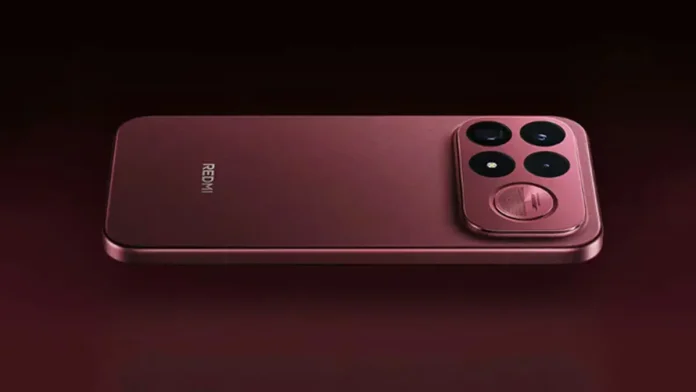
According to recent reports, the Poco X8 could be a rebranded version of the Redmi Note 17 Pro 5G, which was launched in China last month. If that turns out to be the case, the Poco phone could feature a 6.83-inch AMOLED display with a 1.5K resolution and a 120Hz refresh rate.
The smartphone is expected to be powered by the Snapdragon 6s Gen 4 chipset and could pack a huge 9,000mAh battery. For photography, the Poco X8 may feature an 8-megapixel front camera, while the rear could house a dual-camera setup comprising a 50-megapixel primary sensor and a 2-megapixel secondary camera.
Other expected features include HyperOS 3 based on Android 16, an in-display fingerprint sensor and an IP68/69-rated body, which would provide a high level of protection against dust and water.
Earlier this year, Poco launched the Poco X8 Pro and Poco X8 Pro Max in several markets. At the time, there was speculation that the company might skip the standard X8 model this year. However, the phone appearing on certification platforms in recent months has indicated that the device is indeed in development. The latest teaser now suggests that its launch may not be far away.
Redmi Note 17 5G goes on sale in India via mi.com, Amazon Specials and Xiaomi Retail.
The company is offering a ₹3,000 instant bank discount on launch prices alongside JioAI Cloud storage, YouTube Premium Lite, and Google One benefits.
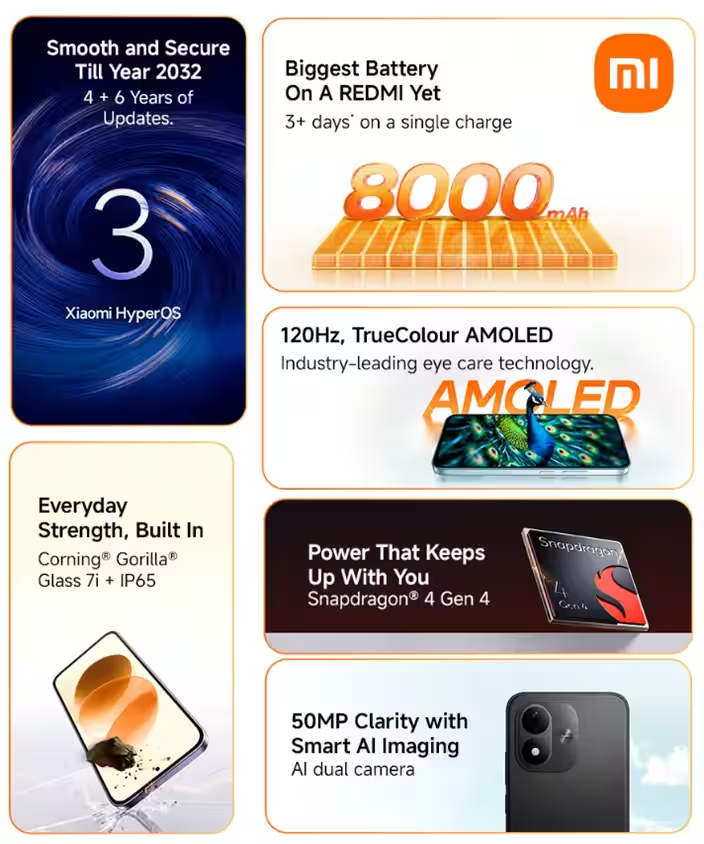
Key specs – 6.9″ AMOLED 120Hz display, Snapdragon 4 Gen 4 chipset, dual rear cameras, 8,000mAh battery with 45W fast charging and 22.5W reverse charging.
Redmi Note 17 5G. (Image credit – Redmi)
The Redmi Note 17 5G is now available for purchase in India via mi.com, Amazon Specials and Xiaomi Retail. The latest Redmi Note-series smartphone was launched in the country last week and is the first model from the brand’s new Note lineup. Key highlights include a 6.9-inch AMOLED display with a 120Hz refresh rate, Qualcomm’s Snapdragon 4 Gen 4 chipset and an 8,000mAh battery with 45W charging. Here’s everything you need to know.
Power. Endurance. An experience built to go the distance.
Redmi Note 17 5G – Price, Offers and Availability in India
Redmi Note 17 5G comes in two memory variants including a 6GB RAM + 128GB storage variant priced at an MRP of Rs. 27,999, while its introductory price is Rs. 24,999. The other is an 8GB + 128GB variant carrying an MRP of Rs. 29,999 and available at an introductory price of Rs. 27,999.
Redmi Note 17 5G. (Image credit – Redmi)
The introductory prices include an instant Rs. 3,000 bank discount for customers using SBI Card, Axis Bank and Kotak Bank credit cards or EMI transactions.
Buyers will also get 5TB of JioAI Cloud storage with Jio True 5G, along with three months of YouTube Premium Lite and six months of Google One with 200GB cloud storage.
The new smartphones is available in Dark Night, Arctic Blue and Starlight Purple colour options.
Redmi Note 17 5G – Key Features
The Redmi Note 17 5G features a 6.9-inch Full-HD+ AMOLED display with a resolution of 1,080 x 2,396 pixels. The panel supports a refresh rate of up to 120Hz, covers 100 percent of the DCI-P3 colour gamut and offers up to 1,800 nits of peak brightness. The screen is protected by Corning Gorilla Glass 7i.
The phone is powered by the 4nm Snapdragon 4 Gen 4 chipset. It comes with up to 8GB of LPDDR4x RAM and up to 256GB of UFS 2.2 storage. Users can further expand the storage by up to 2TB using a microSD card. For thermal management, the smartphone features a 10,416-square-millimetre vapour chamber cooling system designed to help dissipate heat efficiently.
It uses a nano-SIM + nano-SIM configuration and runs HyperOS 3 based on Android 16. Xiaomi has promised four years of OS upgrades and six years of security updates for the smartphone.
For photography, the Redmi Note 17 has a dual rear camera setup. It includes a 50-megapixel primary sensor with an f/1.8 aperture along with a secondary camera whose specifications have not been disclosed. On the front, the phone features an 8-megapixel camera for selfies and video calls.
One of the biggest highlights of the Redmi Note 17 is its 8,000mAh battery. The battery supports 45W wired fast charging, while the phone also supports 22.5W wired reverse charging, allowing it to charge compatible devices. Xiaomi claims the smartphone can provide up to 2.5 days of battery life on a single charge.
The Redmi Note 17 measures 169.7 x 79.14 x 8.4mm and weighs around 225 grams. It also carries an IP65 rating for protection against dust and water, adding some extra durability for everyday use.
As multiple reports have already confirmed, the upcoming Poco F9 Ultra and F9 Pro are expected to be rebranded versions of the Redmi K100 Pro Max and Redmi K100 Pro, respectively. Both models have recently launched in China and you would expect the same hardware on the upcoming Poco phones as well. However, a new leak suggests that Poco could make some significant changes to the battery capacities of the two phones.
Poco F9 Ultra, F9 Pro Battery Specs
According to reliable tipster Kacper Skrzypek (via Ximitime), details found in the HyperOS code reveal the battery capacities and charging capabilities of the upcoming Poco phones.
The Poco F9 Ultra is reportedly set to feature an 8,050mAh battery, while the Poco F9 Pro could pack a 6,330mAh battery.
These capacities are notably different from those of their expected Redmi counterparts. The Redmi K100 Pro Max comes with a much larger 9,070mAh battery, while the Redmi K100 Pro features an 8,580mAh battery.
Redmi K100 Pro Max packs a massive 9,070mAh battery. (Image credit – Redmi)
Despite the difference in battery capacities, the charging speeds are expected to remain unchanged. Both Poco models are tipped to support 100W fast charging and match the charging capabilities of the corresponding Redmi smartphones.
Other than this, the two phones are expected to retain most of the hardware specifications found on their Redmi counterparts.
Poco F9 Ultra, F9 Pro Expected Specifications
The Poco F9 Ultra is expected to feature a 6.9-inch AMOLED display, while the Poco F9 Pro could come with a slightly smaller 6.59-inch screen. Both smartphones are tipped to offer a 1.5K resolution and a high 185Hz refresh rate, which could make them particularly appealing to users looking for a gaming-focused display.
Under the hood, both models are expected to be powered by the Snapdragon 8 Elite Gen 5 V-series chipset. They could be offered with up to 16GB of LPDDR5X RAM and as much as 1TB of UFS 4.1 storage.
For selfies and video calls, the Poco F9 Ultra and F9 Pro are expected to feature a 32-megapixel front camera. The primary camera on both phones could be a 200-megapixel Samsung HP5 sensor.
The camera setups are expected to differ beyond the main sensor. The Poco F9 Ultra may feature a 50-megapixel ultra-wide camera and a 50-megapixel periscope telephoto lens with 5x optical zoom. Meanwhile, the Poco F9 Pro could have an 8-megapixel ultra-wide camera paired with a 50-megapixel periscope telephoto camera offering 2.5x optical zoom.
More details about the two upcoming Poco smartphones are likely to come out before their expected launch in the coming months.
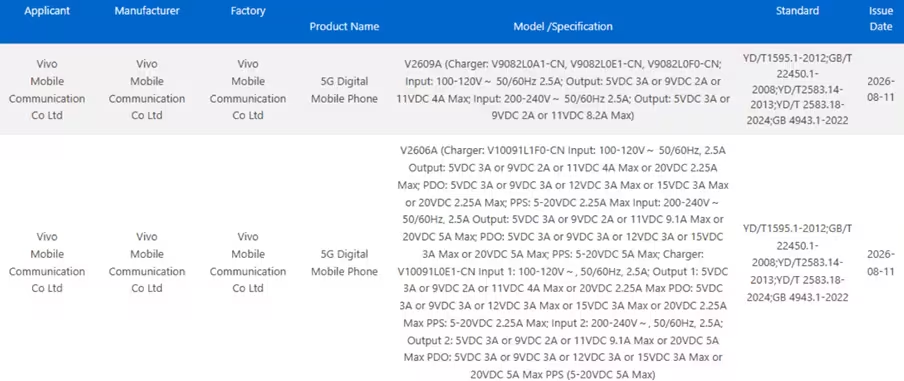
Devices with model numbers V2609A (Vivo X500 Series) and V2606A (iQOO 16) have cleared China’s 3C certification.
The certification confirms V2609A and V2606A will support 90W and 100W charging, respectively.
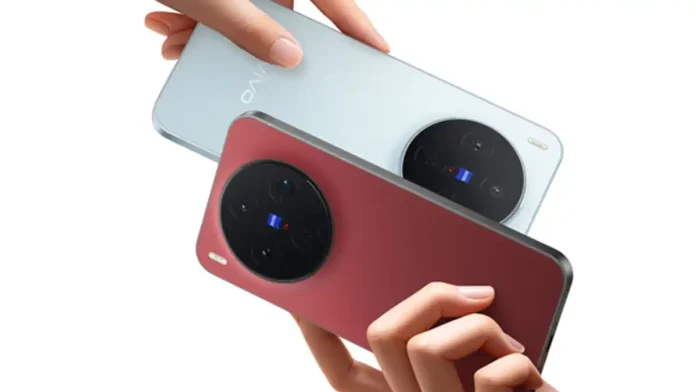
Vivo X500 series is expected with Dimensity 9600 Lite/Pro chipsets, while iQOO 16 is tipped to debut the Snapdragon 8 Elite Gen 6 Pro.
It appears Vivo and iQOO are getting closer to launching their next-generation flagship smartphones in China. Two new devices with Vivo model numbers have cleared the country’s 3C certification, which reveals their charging capabilities among other details. Interestingly, both model numbers were previously spotted on China’s SRRC and MIIT certification databases as well. Here’s more on what we know so far.
Vivo X500, iQOO 16 Receive 3C Certification
Vivo X500, iQOO 16 Receive 3C Certification. (Screenshot by @ZionsAnvin on X)
According to the last post of tipster Anvin @ZionsAnvin on X, Vivo devices with model numbers V2609A and V2606A have been approved by China’s 3C authority. It is suggested that model number V2609A is believed to be part of the upcoming Vivo X500 series, while the V2606A is expected to be the iQOO 16.
The latest 3C certification confirms that the Vivo X500 will support a 90W charging adapter and N79 5G band connectivity. A separate version of the phone with Beidou satellite communication support is also reportedly in development.
Meanwhile, the alleged iQOO 16 with model number V2606A has also cleared 3C certification. The listing confirms support for a 100W charging adapter along with the N79 5G band.
China’s 3C authority has approved the following upcoming flagships
– Vivo X500 (V2609A), spotted with 90W charger, expected to be powered by Dimensity 9600
The Vivo X500 series is expected to use MediaTek’s upcoming Dimensity 9600 series chipsets. The lineup is tipped to include a 3nm Dimensity 9600 Lite and a 2nm Dimensity 9600 Pro. However, it is still unclear whether the standard Vivo X500 will be equipped with the Pro version of the chipset.
The earlier MIIT certification has also revealed some of the AI capabilities expected on the Vivo X500. The phone is said to support multiple AI models and platforms including Vivo’s BlueLM, Zhipu AI’s ChatGLM, Baidu’s ERNIE, ByteDance’s Doubao, DeepSeek and Alibaba’s Qwen.
As for the upcoming iQOO flagship, it is expected to be among the first smartphones powered by Qualcomm’s Snapdragon 8 Elite Gen 6 Pro chipset. The phone is reportedly scheduled to launch in China in early October, although an earlier launch by the end of September is also possible.
With both devices now having cleared 3C certification, more details about their specifications and launch dates could emerge in the coming weeks.
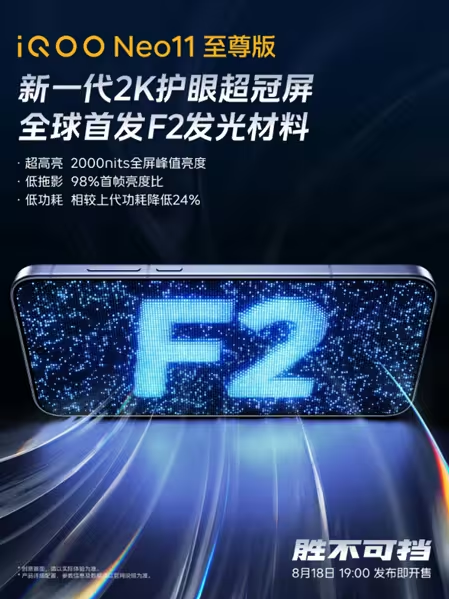
iQOO Neo 11 Extreme Edition launches in China on Aug 18 with a new horizontal camera design, matte metal frame and 3D Flowing Light rear effect.
It features a 6.83″ 2K Visionox F2 OLED display, 2,000 nits brightness, 24% lower power use, eye‑care tech and up to 4,000Hz instantaneous touch sampling.
The phone will be powered by Dimensity 9500 and pack a 9,100mAh battery with 100W fast charging.
The iQOO Neo 11 Extreme Edition is set to launch in China on August 18 alongside the iQOO Z11S. The company has now revealed details about the upcoming phone with a closer look at its design and display.
According to the latest teaser shared on X by TECH INFO @TECHINFOSOCIALS, the iQOO Neo 11 Extreme Edition will feature an all-new horizontal camera deco design. iQOO is also highlighting a 3D Flowing Light Effect, which should give the rear panel a different look as light moves across its surface.
The phone will have a matte metal mid-frame, adding a more premium feel while also helping with grip. iQOO teaser reveals the device will feature a 9.13mm large radius angle, which could mean more rounded edges and a smoother transition between the frame and the body.
IQOO Neo 11 Extreme Edition Design.
💠 3D Flowing Light Effect
💠 9.13mm Large Radius Angle
💠 Matte Metal Mid Frame
💠 All new Horizontal DECO Design pic.twitter.com/BWIsmu15N5
According to a separate post on X by Tech Home @TechHome100, the phone will feature a 6.83-inch 2K flat display supplied by Visionox, using the company’s new F2 luminescent material.
The panel will support up to 2,000 nits of HBM full-screen brightness, which should make the screen easier to view outdoors. iQOO also claims the display has low ghosting and a 98% first-frame brightness ratio to deliver more consistent brightness during use.
Despite the improvements, iQOO says the new display consumes 24% less power than the previous-generation panel.
For gamers, the Neo 11 Extreme Edition will feature an ultra-sensitive touch chip. The display can support up to 500Hz multi-finger touch sampling rate (TSR), while the instantaneous touch sampling rate can reach 4,000Hz.
The tipster has also revealed several eye-care features to the Neo 11 Extreme Edition. The phone will use a new Circularly Polarised Light Display 2.0 technology along with a 1-nit Dark Night Eye Protection mode for more comfortable viewing in very low-light conditions.
The company says the display’s harmful blue-light content is limited to 5% or less.
iQOO Neo 11 Extreme Edition
● 6.83″ 2K Visionox F2 Flat Screen
● New Circularly Polarized light display 2.0
● New 1nit Dark Night Eye Protection
● Harmful Blue light content ≤5%
● Ultra-sensitive Touch Chip
● Up to 500Hz Multi-finger TSR
● Up to 4000Hz… pic.twitter.com/4CX2LSyE6y
In previous updates, iQOO has already confirmed that the Neo 11 Extreme Edition will be powered by the MediaTek Dimensity 9500 chipset.
The chipset choice also ties in with an earlier Geekbench listing believed to belong to the Neo 11 Extreme Edition. The listing showed an 11-core Mali-G1-Ultra GPU, rather than the standard Dimensity 9500’s 12-core configuration. This suggests that iQOO could be using a binned version of the Dimensity 9500 in the new phone.
The phone will also pack a massive 9,100mAh battery with support for 100W wired charging.
With the launch now just days away, iQOO is gradually revealing more about the Neo 11 Extreme Edition
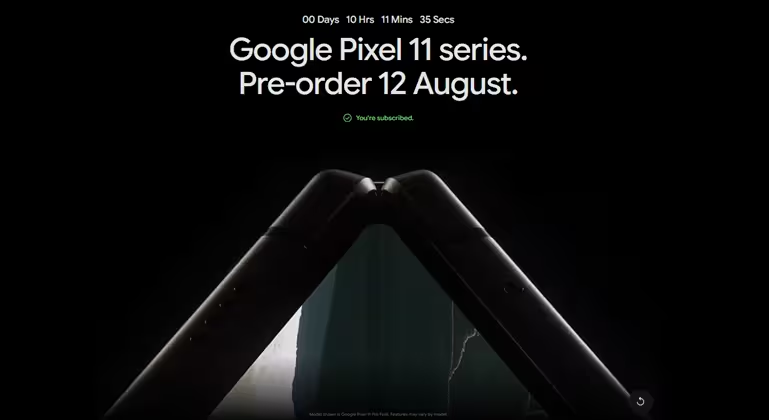
Google’s Made by Google 2026 event goes live on August 12 at 6 pm ET with a livestream available on Google’s YouTube channel and online store.
Pixel 11 lineup with Pixel 11, 11 Pro, 11 Pro XL, 11 Pro Fold are expected, alongside Pixel Watch 5, Pixel Tag, Gemini AI upgrades and previews of Android XR glasses and Googlebook laptops.
Pixel 11 pre‑orders open August 12 at 7 am PT (7:30 pm IST) with prices starting at $899.
The day we get to see a new range of Google products is here as the company is all set to unveil its latest Pixel smartphones at its Made by Google event. The lineup is expected to include the Pixel 11, Pixel 11 Pro, Pixel 11 Pro XL and Pixel 11 Pro Fold. And that’s not all! Google is also expected to introduce the Pixel Watch 5, announce new Gemini features and more alongside the phones. Here’s a roundup of everything you need to know before today’s Google event.
Made by Google August 2026: How to Watch?
What
Made by Google August 2026
When
August 12
Time
6 pm ET / 3 pm PT / 11 pm BST / 3.30 am (next day) IST
Where to Watch
Google’s official YouTube channel, Google’s online store
Event Location
New York
Host
Trevor Noah
Expected Celebrity Guests
Shubman Gill, Alex Cooper, Ayami Nakajo, Stephen Curry, Peggy Gou, Jesser, Juju Watkins, Pink Pantheress, Chari Hawkins, Steven Gerrard, and Daniel Durant
Made by Google August 2026 – What to Expect?
Multiple leaks and reports have already revealed that the upcoming Made by Google event will primarily launch the Google Pixel 11 series. The lineup includes Google Pixel 11, Pixel 11 Pro, Pixel 11 Pro XL, and Pixel 11 Pro Fold. The company is also expected to introduce next-generation Google Pixel Watch 5 and a first Bluetooth tracker, the Pixel Tag.
Leaked Pixel 11 Series images give a glimpse of possible colour options. (Credit: Reddit & Evan Blass)
Pixel 11
The Google Pixel 11 is expected to start at $899 (roughly Rs. 79,000) in the US and EUR 999 (roughly Rs. 1,00,000) in the EU.
It could be available in Fuchsia, Light Sterling, Moss and Midnight Haze colours.
The phone may introduce the HiLight feature, previously expected to be called Pixel Glow.
It could feature a 6.3-inch Actua OLED display with Full-HD+ (1,080 x 2,424 pixels) resolution, up to 120Hz refresh rate and 3,000 nits peak brightness.
The phone is expected to use the Tensor G6 chipset with Google’s Titan M3 security coprocessor and run Android 17.
Its dual rear camera setup could include a 48-megapixel main camera and 13-megapixel ultra-wide camera.
The Pixel 11 could pack a 4,985mAh battery with 30W wired and Qi2 wireless charging.
Google Pixel 11 Pro
The Google Pixel 11 Pro could start at $1,099 (roughly Rs. 96,500) and come in Dune, Light Fog, Midnight Haze and Pine colours.
It may feature a 6.3-inch Super Actua LTPO OLED display with up to 120Hz refresh rate and 3,600 nits peak brightness.
The phone is expected to use the Tensor G6 chipset, Titan M3 security coprocessor and Android 17.
Its triple rear camera setup could include a 50-megapixel main, 48-megapixel ultra-wide and 48-megapixel periscope telephoto camera.
A 42-megapixel selfie camera could be housed in the display’s hole-punch cutout.
The Pixel 11 Pro may pack a 4,850mAh battery with 30W wired fast charging.
Google Pixel 11 Pro XL
The Google Pixel 11 Pro XL could start at $1,299 (roughly Rs. 1,14,000) and be offered in Dune, Light Fog, Midnight Haze and Pine.
It may feature a 6.8-inch LTPO OLED display with up to 120Hz refresh rate and 3,600 nits peak brightness.
The phone is expected to use the Tensor G6 chipset, Titan M3 security coprocessor and Android 17.
Its triple rear camera setup could include a 50-megapixel main, 48-megapixel ultra-wide and 48-megapixel periscope telephoto camera.
It could feature a 42-megapixel front camera housed inside a hole-punch cutout.
The phone may pack a 5,115mAh battery with 45W wired and Qi2 wireless charging.
Google Pixel 11 Pro Fold
The Google Pixel 11 Pro Fold could be the most expensive model, with a starting price of $1,899 (roughly Rs. 1,67,000).
It may feature an 8-inch foldable OLED inner display and a 6.4-inch OLED cover display, with both supporting up to 120Hz refresh rate.
The foldable is expected to use the Tensor G6 chipset, Titan security coprocessor and Android 17.
Its rear camera setup could include a 48-megapixel primary, 10.5-megapixel ultra-wide and 10.8-megapixel telephoto camera with 5x optical zoom.
It may have two 10-megapixel selfie cameras, placed on the cover and inner displays for selfies and video calls.
The Pixel 11 Pro Fold could pack a 4,806mAh battery with the same charging support as the Pixel 11 Pro.
What Else Could Google Announce?
While the Pixel 11 series is going to the centre stage at today’s event, that will not be the only thing we will talk about post-event. The Cupertino giant is expected to touch upon several of its other products and here’s everything we know so far.
What’s New With Gemini?
Google introduced Gemini Intelligence alongside Samsung’s latest foldables but the Pixel 11 series is expected to showcase its capabilities more fully. All Pixel 11 models will run Android 17, which launched in May.
Leaks so far have suggested that Gemini this time will offer a deeper integration. We can expect the AI assistant to have sharper context understanding across your Google account and interact with different parts of the phone.
An Upgrade to the Pixel Watch
Alongside the new smartphones, Google is also expected to unveil the Pixel Watch 5 at its Made by Google event. The smartwatch is tipped to come in 41mm and 45mm sizes with both variants measuring around 12.3mm thick. The smaller model could weigh 31 grams, while the larger version may weigh 36.7 grams.
Other expected features –
An Actua 360 LTPO AMOLED display with up to 3,000 nits peak brightness, a 60Hz refresh rate and 320ppi pixel density.
The screen could be protected by custom 3D Corning Gorilla Glass 5.
May use Qualcomm’s Snapdragon W5 Gen 2 chipset paired with a Cortex-M55 coprocessor.
The 41mm model could pack a 332mAh battery, while the 45mm version may feature a larger 465mAh battery.
Pixel Tag
Leaked image from DeaLabs. (via 9To5Google)
Google is also reportedly preparing to launch the Pixel Tag, which could become the company’s first Bluetooth-based item tracker and a direct competitor to Apple’s AirTag. The device is expected to help users find misplaced belongings through audible alerts using Google’s Find My Device network.
The Pixel Tag could be offered in at least a Fog Light colour option. In the EU, it is reportedly expected to cost EUR 34.90 (roughly Rs. 3,800).
Android XR? Googlebook?
Android XR glasses – Google may share more details about its upcoming XR glasses. Warby Parker and Gentle Monster are among the first brands expected to launch Android XR glasses in fall 2026 with Google’s Gemini AI features integrated into the experience.
Googlebook laptops – Google could offer a preview of its upcoming Googlebook laptop lineup, although a separate event may be planned for the devices. The laptops are expected to run Android andoffer seamless integration with Pixel phones.
Google Pixel 11 Pre-Order Deals
Google Pixel 11 pre-orders are expected to begin on August 12, 2026, ahead of the Made by Google event scheduled for later the same day. The Google Store is expected to start accepting pre-orders from 7 AM PT (7:30 PM IST). The pre-order window is also expected to be available in markets including India.
Here’s how to pre-order the Google Pixel 11 –
Visit the official Google Store website and select the Pixel 11 model you want to buy.
Choose your preferred colour and storage variant.
Depending on your market, check available options such as unlocked purchase, carrier plans, trade-in offers or financing.
Review your selected configuration and check for any pre-order offers or promotions.
Sign in to your Google account and enter your shipping details.
Select an available payment method and review the order.
Check the final price and estimated delivery date, then confirm the purchase to complete your Pixel 11 pre-order.
Google Pixel 11 Launch Event – How To Watch Livestreaming in India?
If you are in India, the August 12 Google Pixel 11 launch live event will take place at 3:30 am, the next day (August 13). The best way to watch the event live is via the company’s official YouTube channel.
Indian tech enthusiasts can also follow the launch via Google’s official press releases and social media posts.
Xiaomi 18 Pro and 18 Pro Max are reportedly being tested in black, white, pink, blue, and red finishes.
The series is expected to debut Snapdragon 8 Elite Gen 6 built on TSMC’s 2nm process paired with Oryon CPU (2+3+3 cores), Adreno 845 GPU and LPDDR5X memory support.
Leaked India launch plan suggest Redmi 17 series on Sept 5, Redmi Note 17 Pro mid‑Sept and Xiaomi 18 Pro series by December.
Xiaomi is reportedly preparing its next-generation flagship smartphones in the coming months. While there is no official word, fresh leaks have revealed details about the Xiaomi 18 Pro and Xiaomi 18 Pro Max including their colour options, chipset, rear-panel material and expected launch timeline in India. Here’s what we know based on recent leaks.
Xiaomi 18 Pro Series Colours and Rear Design Leaked
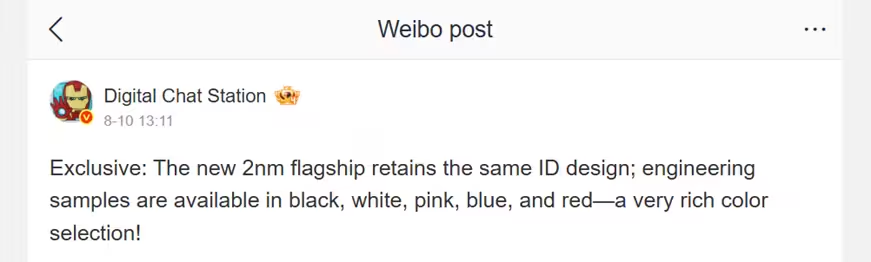
DCS’s post on Weibo. (Translated via Google Translate)
Tipster Digital Chat Station on Weibo has revealed that Xiaomi’s upcoming flagship phones are currently being tested in black, white, pink, blue and red colour options.
Although the tipster did not specifically identify the models, the information is believed to refer to the Xiaomi 18 Pro and Xiaomi 18 Pro Max.
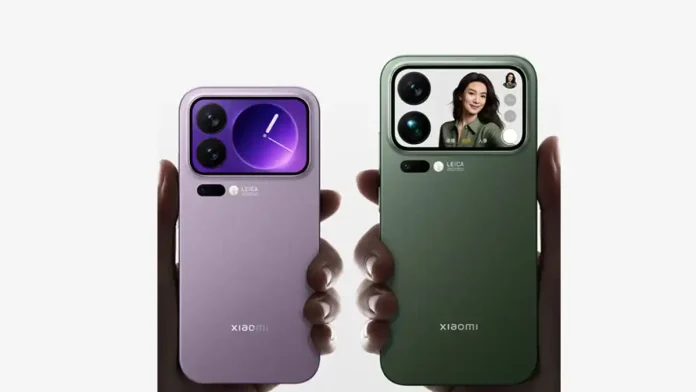
In terms of design, the Xiaomi 18 Pro and Xiaomi 18 Pro Max are expected to follow their predecessors. This includes retaining the secondary display on the rear panel. The rear screen could also become larger compared with the previous generation, although its exact size has not been revealed yet.
Another interesting detail from the latest leak concerns the rear material. Digital Chat Station reportedly indicated that none of the colour variants of these upcoming devices will use a glass rear panel.
Xiaomi 17 Pro in the picture. (Image credit – Xiaomi)
Xiaomi 18 Series Could Use 2nm Snapdragon Chip
The Xiaomi 18 series is expected to be among the first smartphones powered by Qualcomm’s Snapdragon 8 Elite Gen 6 platform. As per DCS’s recent post, the chipset is tipped to be manufactured using TSMC’s 2nm process.
According to the leaked information, the processor could feature Qualcomm’s self-developed Oryon CPU in a 2+3+3 octa-core configuration. It is also tipped to include a shared 16MB L2 cache and an Adreno 845 GPU. The platform is expected to support LPDDR5X memory.
Xiaomi’s India Launch Strategy
Alongside the hardware details, a separate leak has revealed Xiaomi and Redmi’s expected India launch schedule for the remaining part of 2026. Tipster Abhishek Yadav @yabhishekhd on X has shared a roadmap covering three launches between September and December.
The Xiaomi 18 Pro series is tipped to arrive in India by December. The lineup is expected to retain the rear secondary display, while the Xiaomi 18 Pro could reportedly receive a larger rear screen than the Xiaomi 17 Pro.
Before the Xiaomi 18 Pro series arrives, the company is reportedly planning the launch of the Redmi 17 series in India. According to the leaked roadmap, the Redmi 17 lineup could debut on September 5. Following the Redmi 17 series, Xiaomi is reportedly planning to introduce the Redmi Note 17 Pro series in India around September 18 or September 20.
However, none of the launch dates, specifications or design details mentioned in these leaks has been officially confirmed by Xiaomi. The reported timelines and specifications should therefore be treated as estimates until the company makes an official announcement.
Independence Day sale season brings attractive smartphone deals, bank discounts and exchange offers.
POVA 8, POVA Curve 2 and Spark 50 5G offer a mix of performance, battery life and 5G connectivity.
HONOR 200 5G and AI+ Nova 5G offer premium features and AI-powered experiences at different price points.
The Independence Day sale season has become one of the most anticipated shopping periods of the year, especially for those planning to upgrade their smartphones. With brands rolling out attractive offers, bank discounts and exchange deals across online and offline channels, it’s an ideal time to invest in a device that delivers long-term value.
Whether you’re looking for all-day battery life, immersive entertainment, dependable performance or a design that stands out, the right smartphone can make all the difference. If you’re planning an upgrade this season, here are some smartphones that deserve a place on your wishlist.
POVA 8: Built for Those Who Want More Power Every Day
Whether it’s powering through work, streaming your favourite content, gaming for hours or juggling multiple apps, the POVA 8 is designed to keep up with every part of your day. Combining a bold design with dependable performance and long-lasting battery life, it’s an ideal choice for users who don’t want to compromise on style or functionality. The signature ALIVE Matrix Display further adds a distinctive touch, making the smartphone stand out while delivering a premium everyday experience.
Price: Starting at ₹27,999 (6GB + 128GB) | ₹29,999 (8GB + 128GB) Colours: 16-Bit White, Terminal Green
POVA Curve 2: Style Meets Performance in a Sleek Curved Design
If you’re looking for a smartphone that pairs premium aesthetics with everyday practicality, the POVA Curve 2 deserves a spot on your shopping list. Its immersive curved AMOLED display enhances everything from binge-watching and gaming to everyday browsing, while the slim design offers a comfortable in-hand feel. Backed by a large battery, fast charging support and smooth 5G performance, it is built to keep pace with your day without constantly reaching for the charger, making it a compelling pick this Independence Day sale season.
If you’re looking for a smartphone that delivers dependable everyday performance while keeping up with the demands of a connected lifestyle, the Spark 50 5G is worth considering this Independence Day sale season. Combining a sleek design with reliable 5G performance, it’s built for users who want a smooth experience across streaming, social media, gaming and daily multitasking. The massive 6,500mAh battery ensures you stay powered throughout the day, while 45W fast charging gets you back up and running quickly whenever needed. With AI-powered noise reduction for clearer calls and a capable MediaTek Dimensity 6400 processor, the Spark 50 5G strikes the right balance between performance, convenience and long-lasting value.
HONOR 200 5G: Flagship-Level Camera Experience Without the Flagship Price Tag
If you’re looking for a smartphone that delivers a premium photography experience without stretching your budget, the HONOR 200 5G is a strong contender this Independence Day sale season. Designed for users who love capturing portraits and everyday moments, it combines an AI-enhanced camera system with a vibrant AMOLED display and smooth day-to-day performance. Whether you’re editing photos, binge-watching your favourite shows or switching between apps, the HONOR 200 5G offers a polished experience wrapped in a sleek, premium design, making it a compelling choice for buyers looking to upgrade to a feature-rich smartphone.
Price: Starting at ₹34,999 (12GB + 512GB) Colours: Moonlight White, Black
AI+ Nova 5G: A Fresh Take on AI-Powered Smartphones
For buyers looking to explore a new entrant in the smartphone space, the AI+ Nova 5G brings together intelligent features with dependable everyday performance. Designed to make AI more accessible, it offers a smooth display, capable 5G performance and a clean software experience that enhances productivity and entertainment alike. Its modern design, long-lasting battery and AI-powered tools make it an interesting option for those who want to try something different while staying within budget this Independence Day sale season.
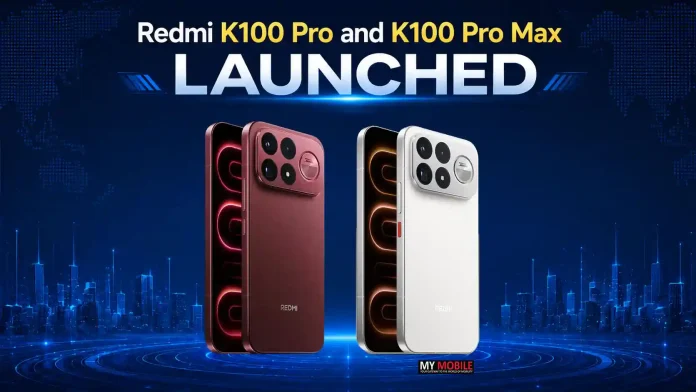
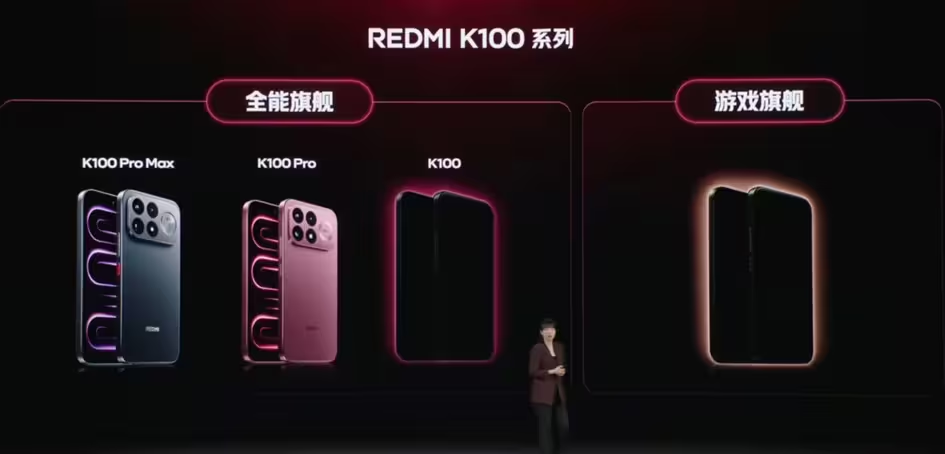
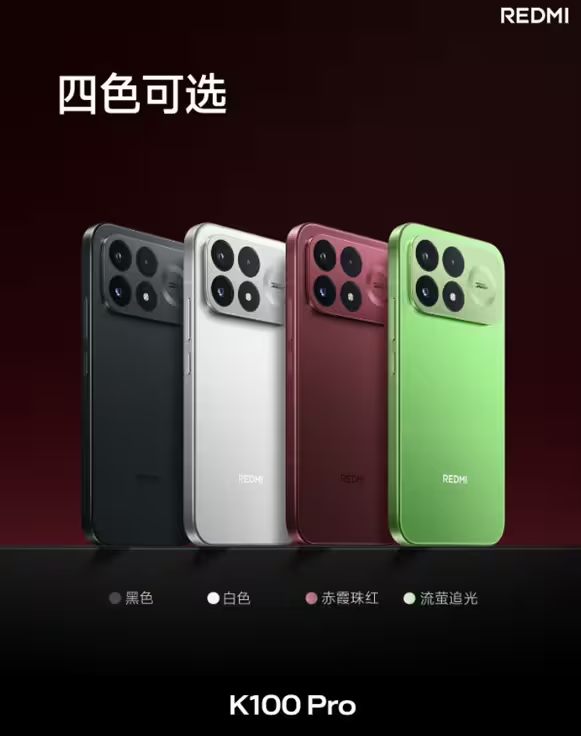
Redmi has launched the K100 Pro and K100 Pro Max in China, featuring Snapdragon 8 Elite Gen 5 chipsets, OLED displays with 185Hz refresh rate, and large batteries.
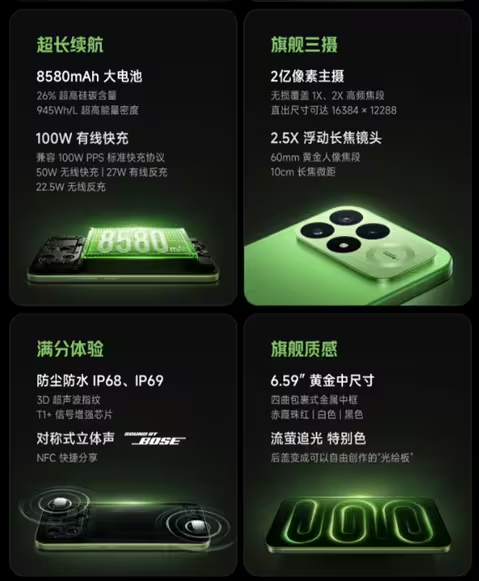
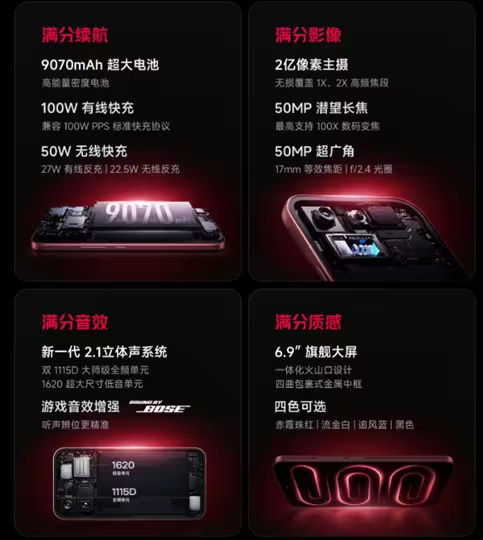
K100 Pro offers a 6.59″ OLED, 200MP triple camera, 8,580mAh battery with 100W wired + 50W wireless charging, while K100 Pro Max has a 6.9″ OLED, 50MP triple camera, 9,070mAh battery, and enhanced cooling.
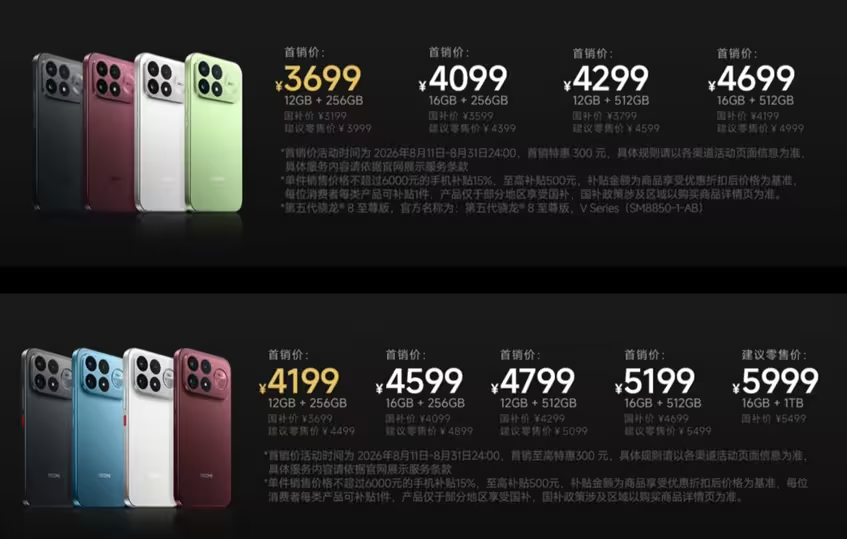
Prices – K100 Pro starts at ¥3,699 (12GB+256GB) up to ¥4,699 (16GB+512GB); K100 Pro Max starts at ¥4,199 (12GB+256GB) up to ¥5,999 (16GB+1TB).
Redmi K100 Pro and K100 Pro Max unveiled in China.
Redmi has launched the Redmi K100 Pro and Redmi K100 Pro Max in China. The two new smartphones bring flagship-grade processors, high-refresh-rate OLED displays, large batteries, advanced cooling systems and high-resolution camera setups.
The Redmi K100 Pro comes with a custom Snapdragon 8 Elite Gen 5V Series chipset, while the higher-end K100 Pro Max is powered by the Snapdragon 8 Elite Gen 5. Here’s everything you need to know about the newly launched smartphones.
Redmi K100 Pro – Key Features
The Redmi K100 Pro features a 6.59-inch TCL M11 Real RGB OLED flat display with a 2510 × 1156-pixel resolution. The LTPS panel supports a 185Hz refresh rate and can reach up to 10,000 nits peak brightness at 1 percent APL, while peak brightness reaches 4,500 nits at 25 percent APL.
The display offers up to 2,200 nits of HBM brightness, covers 90 percent of the BT.2020 colour gamut and supports 4,800Hz instantaneous TSR.
Under the hood, the Redmi K100 Pro is powered by the Snapdragon 8 Elite Gen 5 V Series chipset and gets an AI independent D2 graphics chip built on a 12nm process. The processor is paired with LPDDR5X Ultra RAM and UFS 4.1 storage. For thermal management, the phone uses a 5,200mm² VC cooling system.
For photography, the Redmi K100 Pro has a 200-megapixel HP5 primary camera with a 1/1.56-inch sensor and OIS. It is accompanied by an 8-megapixel OV08F ultra-wide-angle camera and a 50-megapixel JN5 floating telephoto camera with a 1/2.75-inch sensor. The telephoto camera offers 2.5x optical zoom, a 60mm focal length, up to 60x digital zoom and a minimum focusing distance of 10cm. On the front, there is a 32-megapixel OV32D40 camera for selfies and video calls.
The phone packs an 8,580mAh battery with support for 100W wired fast charging and 50W wireless charging. It also supports 27W wired reverse charging and 22.5W wireless reverse charging. Redmi has equipped the device with Surge P3, Surge G2 and Surge T1+ chips along with bypass charging support.
On the software front, the Redmi K100 Pro runs Android 16 with HyperOS 3. Other features include IP69 and IP68 ratings, an IR blaster, a 3D ultrasonic fingerprint sensor, dual 1115F speakers, an 0809 motor and Sound by Bose. Connectivity options include USB 2.0, Wi-Fi 7, Bluetooth 6.0 and NFC.
The Redmi K100 Pro measures 8.55mm in thickness and weighs 218 grams.
Redmi K100 Pro Max – Key Features
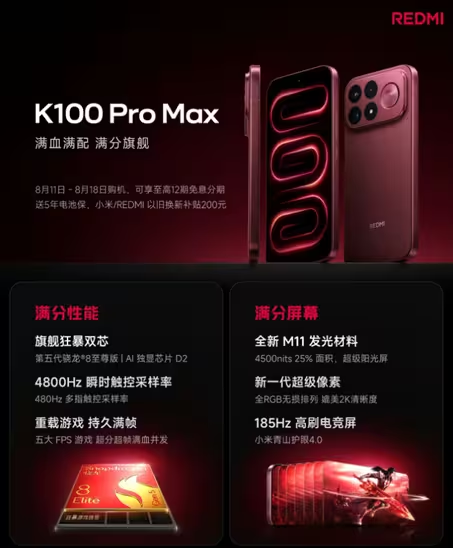
The Redmi K100 Pro Max is the more advanced model in the new lineup. It is powered by the Snapdragon 8 Elite Gen 5 chipset and features an AI independent D2 graphics chip manufactured using a 12nm process. The phone comes with LPDDR5X Ultra RAM and UFS 4.1 storage. For thermal management, the device is equipped with a large 6,300mm² VC cooling system.
The K100 Pro Max sports a 6.9-inch TCL M11 Real RGB OLED flat display with a resolution of 2608 × 1200 pixels. The panel uses LTPS technology and supports a 185Hz refresh rate.
The display can reach up to 10,000 nits of peak brightness at 1 percent APL and 4,500 nits at 25 percent APL, while its HBM brightness reaches 2,200 nits. The panel also covers 90 percent of the BT.2020 colour gamut and supports 4,800Hz instantaneous TSR.
The Redmi K100 Pro Max runs Android 16 with HyperOS 3. It carries IP69 and IP68 ratings for dust and water resistance.
The Redmi K100 Pro Max features a triple rear-camera system. The primary camera is a 50-megapixel HP5 sensor measuring 1/1.56 inches and supporting OIS. It is accompanied by a 50-megapixel OV50M ultra-wide camera with a 1/2.88-inch sensor.
The third camera is a 50-megapixel JN5 periscope telephoto sensor with a 1/2.75-inch sensor, a 120mm focal length and 5x zoom. It also supports up to 100x digital zoom and has a minimum focusing distance of 30cm. For selfies, the phone has a 32-megapixel OV32D40 front camera.
The Redmi K100 Pro Max is equipped with a 9,070mAh battery. It supports 100W wired fast charging and 50W wireless charging. The device also supports 27W wired reverse charging and 22.5W wireless reverse charging. Redmi has included the Surge P3, Surge G2 and dual Surge T1+ chips as part of its power and charging system.
Other features include an IR blaster, 3D ultrasonic fingerprint sensor, bypass charging and USB 3.2 Gen 1 connectivity. For audio, the phone has dual 1115D speakers, a 1620 subwoofer and a 2.1 stereosystem with Sound by Bose. The smartphone also gets an RGB ring light and an 0815 motor. Connectivity options include Wi-Fi 7, Bluetooth 6.0 and NFC.
The Redmi K100 Pro Max measures 8.45mm in thickness and weighs 238 grams.
Redmi K100 Pro and K100 Pro Max – Price in China
The Redmi K100 Pro has been launched in four configurations. Its prices are as follows:
Two Xiaomi tablets with model numbers 26103RP65G and 2612CRPFFG have received IMDA certification in Singapore.
The 2612CRPFFG model is likely the global Xiaomi Pad 9 Pro, expected to mirror the Chinese variant with Snapdragon 8‑series chipset and 67W wired fast charging.
The standard Xiaomi Pad 9 may support 45W charging but Xiaomi has not officially confirmed details yet.
Xiaomi appears to be preparing to expand its upcoming tablet lineup to global markets with two new models now receiving regulatory approval in Singapore. The latest development also adds to earlier certification sightings and leaks surrounding Xiaomi’s next-generation devices. Here’s what we know so far.
Upcoming Xiaomi Tablets Certified By Singapore’s IMDA
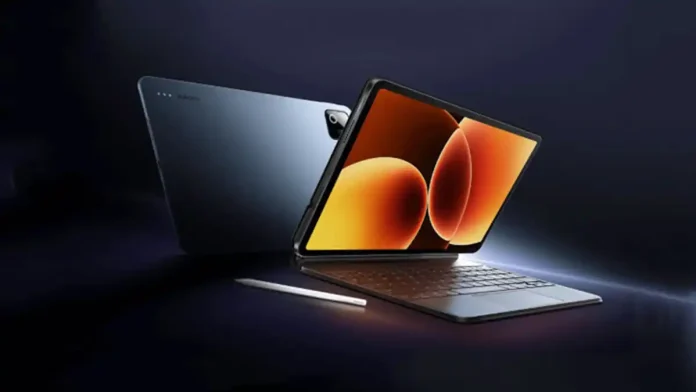
Upcoming Xiaomi Tablets get IMDA certification.
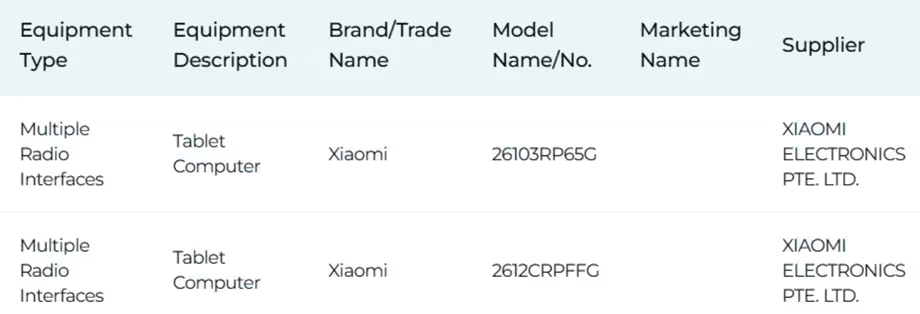
According to a recent X post by tipster Anvin, Xiaomi devices carrying model numbers 26103RP65G and 2612CRPFFG have been certified by the Infocomm Media Development Authority (IMDA).
While the certification does not officially reveal the marketing names of the tablets, the two models are believed to be linked to the upcoming Xiaomi Pad 9 and Xiaomi Pad 9 Pro.
Interestingly, the model number 2612CRPFFG has already appeared on the EEC certification database. Its marketing name was not revealed in that listing either. The latest IMDA sighting therefore provides another indication that Xiaomi could be preparing these tablets for launch outside China.
Singapore’s IMDA has approved two upcoming Xiaomi tablets: 26103RP65G and 2612CRPFFG.
Xiaomi Pad 9 Pro Global Variant Could Be Model 2612CRPFFG
The model number 2612CRPFFG is closely related to model 2612CRPFFC, which was previously spotted in China. The Chinese model received 3C certification with support for 67W wired fast charging.
The difference between the two model numbers is the final letter. The letter “C” is generally associated with Chinese variants, while “G” is commonly used for global versions. This suggests that the 2612CRPFFG could be the international version of the Xiaomi Pad 9 Pro, although the certification has not officially confirmed the tablet’s name.
Xiaomi Pad 9 Pro Specifications Tipped
Tipster Digital Chat Station had previously revealed that Xiaomi is developing two tablets for the Chinese market namely the Xiaomi Pad 9 Pro and Xiaomi Pad 8s Pro.
The Xiaomi Pad 9 Pro is expected to be powered by a Snapdragon 8-series chipset, although the exact processor has not been disclosed yet. The tablet’s Chinese variant carrying model number 2612CRPFFC has already been associated with 67W fast charging.
Since the newly certified 2612CRPFFG shares almost the same model number, it is possible that the global version could offer similar core hardware and charging capabilities.
The standard Xiaomi Pad 9 has previously been linked to the model number M656BA. Unlike the Pro model, it is expected to support 45W charging.
The IMDA certification suggests that Xiaomi could be moving closer to launching its upcoming tablets in international markets. However, the company has yet to officially confirm the names, specifications or launch timeline of the Xiaomi Pad 9 and Xiaomi Pad 9 Pro.