
Poco has begun teasing its budget-focused M8 lineup in India.
It is expected to launch in January 2026 with two models including Poco M8 and Poco M8 Pro.
The phones may be rebranded Redmi Note 15 variants, with the M8 Pro rumoured to feature a 50MP main camera instead of Redmi’s 200MP sensor.
– Poco M8 Series teaser posted by Poco India. (Image credit – Poco)
Poco has recently expanded its global portfolio with the launch of the Poco F8 series. Now, the brand is shifting attention to its next budget-focused lineup. The company has officially begun teasing the Poco M8 series in India, signalling that the next-generation M-series smartphones are set to arrive soon. Here’s what we know about the phones so far.
Poco M8 Series – Latest Teasers
The initial teaser shared by Poco does not disclose any specifications or design details. But it confirms that a new M-series launch is on the way. Reports suggest that the lineup will include two models, which are the Poco M8 and the Poco M8 Pro.
While the exact launch date has not yet been announced, Poco is expected to reveal more details later this week.
What We Know About The M8 Series?
Leaks and industry speculation indicate that the Poco M8 and M8 Pro could be rebranded versions of the Redmi Note 15 and Redmi Note 15 Pro+. However, the Poco variants are expected to feature slightly altered designs compared to their Redmi counterparts.
There may also be a notable difference in camera hardware. While the Redmi Note 15 Pro+ is tipped to come with a 200-megapixel primary camera, the Poco M8 Pro is rumoured to feature a 50-megapixel main sensor instead.
Caption – POCO M8 (left) and POCO M8 Pro (right) renders leaked online. (Image credit – WinFuture)
Renders of the Poco M8 and Poco M8 Pro have already surfaced online. The Poco M8 Pro has appeared on several certification platforms, including the UAE’s TDRA, IMEI database, FCC, and IMDA. The Poco M8 5G has also received certifications from NBTC, IMDA, BIS, and TDRA, further indicating that the launch is drawing closer.
Poco Launch Timeline
The Indian smartphone market is already gearing up for major launches with the Redmi Note 15 5G and the Realme 15 Pro series scheduled to debut on January 6, 2026. The Poco M8 series is likely to be the third major smartphone announcement around that time.
Looking beyond the M-series, a recent report claims that Poco will shift focus to the Poco X8 Pro lineup after the M8 launch. This upcoming series is expected to include the standard Poco X8 later this year, along with two models, Poco X8 Pro and Poco X8 Pro Max. These devices are said to be rebranded versions of the Redmi Turbo 5 and Redmi Turbo 5 Pro Max, which are expected to launch in China in January. The same report also suggests that Poco may skip launching the standard Poco F8 in 2026.
Poco is expected to begin sharing more teasers and officially announce the India launch date of the Poco M8 series in the coming days.
FAQs
Q1. When is the Poco M8 series expected to launch in India?
Answer. The Poco M8 series is expected to launch in January 2026, around the same time as the Redmi Note 15 5G and Realme 15 Pro series.
Q2. What models are included in the Poco M8 lineup?
Answer. The lineup will include two smartphones, the Poco M8 and the Poco M8 Pro.
Q3. How will the Poco M8 Pro differ from its Redmi counterpart?
Answer. Leaks suggest the Poco M8 Pro may feature a 50-megapixel main camera, unlike the Redmi Note 15 Pro+ which is tipped to have a 200-megapixel sensor.
The OnePlus 15R earns a strong repairability score of 8.5/10 in a new teardown video.
It equips standard Philips screws, easy access to the main board, a modular camera design, and a pull pouch for safer battery removal.
The glass back panel is glued and requires heat to remove, posing risks of cracks or internal damage.
OnePlus 15R teardown video is out. (Image credit -PBKReviews)
OnePlus 15R has just hit the stores and most of the popular tech reviewers have already shared their verdict. But if there is one thing that we wait for when a new phone arrives in the market, it is teardown review. PBKreviews are often the first ones to share the inner workings of a new phone and that’s exactly is the case with OnePlus 15R as well.
In the recently shared teardown video, PBKreviews suggests that OnePlus has focused on making repairs easier this time. This strategy has made OnePlus 15 earn an impressive repairability score of 8.5 out of 10. Here’s a quick look at everything we learn from the teardown video.
A major factor behind the high score is the phone’s accessibility. Instead of using proprietary screws, OnePlus has opted for standard Philips screws, which most users already have tools for. Accessing the main board is also simplified, as it requires removing just a single screw.
The camera modules follow a modular design and can be detached by popping them off the board, making replacements far less complicated. Even the lens cover can be removed separately by applying heat and gently prying it off, eliminating the need to dismantle the entire phone for small cosmetic repairs.
Battery replacement, which is often one of the most challenging aspects of modern smartphone repairs, is handled more thoughtfully on the OnePlus 15R.
The device includes a pull pouch for the battery, allowing it to be removed without aggressive prying that could damage or puncture the cell. Although the battery cables are tucked beneath graphite film and copper tape, the pull pouch significantly simplifies the overall removal process compared to fully glued batteries.
The OnePlus 15R is not entirely free of drawbacks. The glass back panel is still held in place with adhesive rather than screws or clips. Opening the phone requires applying heat using a hairdryer or heat gun, which introduces a risk of cracking the glass if not done carefully.
Excessive heat can also damage internal components, so the initial opening process demands caution. Additionally, repairers must carefully peel away thin graphite film and copper tape to access the battery connectors, adding some complexity.
Replacing the display is the most time-consuming repair on the OnePlus 15R. The screen flex cable is not directly accessible and requires removing the back panel, multiple screws, the bottom cover, and the subboard. Once exposed, the display must be heated and pried off, and fresh adhesive needs to be applied when installing the replacement screen.
Overall, the teardown highlights that while the OnePlus 15R is not perfect, it stands out as a more repair-friendly smartphone than many of its competitors, especially in terms of accessibility and battery replacement.
You can check out the complete Teadown video below –
FAQs
Q1. What repairability score did the OnePlus 15R receive in the teardown?
Answer. The OnePlus 15R received a repairability score of 8.5 out of 10, which reflects its accessible and repair-friendly design.
Q2. Which design choices make the OnePlus 15R easier to repair?
Answer. The phone is easier to repair because it uses standard Philips screws, has modular camera modules that can be detached easily, and includes a battery pull pouch that allows safe removal without aggressive prying.
Q3. What are the main drawbacks of repairing the OnePlus 15R?
Answer. The main drawbacks are that the glass back panel is glued and requires heat to remove, the battery connectors are hidden under graphite film and copper tape, and replacing the display is complex and time-consuming.
OnePlus Pad Go 2 was launched in India recently at the starting price of ₹26,999.
The pad is offered in Lavender Drift and Shadow Black colour options.
It is available via Amazon, the OnePlus India website and other retail channels starting December 18, 2025.
We have been using the newly unveiled OnePlus Pad Go 2 for over a week now and here’s our hands-on review.
OnePlus Pad Go 2 – Key Features
1-inch LCD 120Hz Display
MediaTek Dimensity 7300-Ultra
8GB LPDDR5X RAM
128GB / 256GB (UFS 3.1) Storage
8MP Front and 8MP Rear Cameras
10,050mAh Battery capacity
33W Fast Charge (45W Adapter in the box)
OxygenOS 16
Quad Speakers
5G Connectivity
OnePlus Pad Go 2 – Pros and Cons
Pros
Cons
● Good design and colour
● Excellent display
● Smooth performance
● Great battery life
● Competitivepricing
● No fingerprint scanner
● No Accessories in the box
OnePlus Pad Go 2 – Unboxing
OnePlus Pad Go 2 – Design and Build
Our first thought while getting the OnePlus Pad Go 2 out of its box was how different it looked compared to what we had seen in the first-gen device. The dual-tone back finish is gone and instead, we have this classy-looking pad that feels premium right from the start.
We received the Lavender Drift colour unit for this review and the colour is very refreshing. It is a soft lavender hue with a subtle shine and a matte finish. The back finish does an excellent job of resisting fingerprints and smudges.
It follows a minimalist aesthetic with only a subtle OnePlus logo in the centre and the single camera lens top right-hand side corner. The camera module sits neatly in the corner without sticking out too much. The in-hand feel is also very robust. The pad is slim and lightweight with proper weight distribution.
All in all, when it comes to design, we feel OnePlus has definitely offered an upgrade.
Accessories – OnePlus Pad Go 2 Stylo And Folio Case
We have also had the opportunity to get an in-hand feel of the OnePlus Pad Go 2 Folio Case and Stylo.
The folio instantly changes the whole feel of the tablet. It looks great and has a solid build. It definitely makes it easier to hold the tablet. You can fold the case as a stand as well.
The Pad Go 2 Stylo connects over Bluetooth 5.4 and charges via USB-C. The battery life is impressive and it can last for days on a single charge, depending on how much you will use it. Pressure sensitivity of the pen is good and it stays responsive. We tried using it notes and it was easy to use.
Both the stylo and the folio are sold separately. The Stylo is available at ₹3,999, while the folio case costs ₹1,499.
OnePlus Pad Go 2 – Display and Multimedia Experience
The display is easily one of the best things about the OnePlus Pad Go 2. It comes with a large 12.1-inch LCD screen with a sharp 2800×1980 resolution. In daily use, it is a perfectly smooth display for watching videos, browsing the web, or reading documents. Text looks crisp and images have good clarity. Watching HDR and Dolby Vision content is enjoyable on this display.
The 120Hz refresh rate makes scrolling through apps, social media, or even long web pages feel very smooth. Animations are fluid and the interface feels quick and responsive. This smoothness also helps while gaming, as supported games remain responsive and enjoyable.
The display can go up to 900 nits in High Brightness Mode and stays around 600 nits for normal use. It is perfectly fine indoors, but the glossy screen does make outdoor use a bit difficult, as reflections can get in the way under direct sunlight.
It also has a quad-speaker setup placed on both sides of the tablet. This works well and keeps the sound balanced whether you’re using it in landscape or portrait mode.
OnePlus Pad Go 2 – Performance and Software Experience
The OnePlus Pad Go 2 features the MediaTek Dimensity 7300-Ultra processor with 8GB of LPDDR5X RAM and up to 256GB of UFS 3.1 storage.
Tasks like watching content on YouTube or streaming platforms, browsing the web, writing notes or scrolling through e-commerce apps, all was handled smoothly without any lag or stutters. App loading times were quick. The tablet also felt quite responsive in moving between apps. Multitasking on Pad Go 2 works well. You can expect a reliable performance as long as you are not pushing too many heavy apps at the same time.
We tested the device on benchmarks and below are the results.
We also tried casual gaming, the tablet performs well. Lighter games run smoothly without any major issues. But you’ll need to lower the graphics settings to get stable frame rates if you play some graphics-intensive games on this device.
OxygenOS 16 based on Android 16 feels familiar, clean, and easy to use. The tablet layout also brings some useful multitasking features. There are also a bunch of AI features. We experimented with the AI Writer, AI Recorder, AI Image Editor, and AI Translate. Most of these are useful and come with decent capability of following instructions. It can come in handy if you intend to use the tablet for work or studying.
OnePlus Pad Go 2 – Battery Life and Charging
The Pad Go 2 packs a large 10,050mAh battery, which is optimum for everyday use. For an average user like ourselves, we easily managed to get about 15 hours of power. It is impressive for a tablet of this size. You can, however, expect draining when multitasking for too long.
OnePlus includes a 45W SuperVOOC charger in the box. However, the tablet itself supports charging speeds of up to 33W. As we tracked the charging time, it takes around 1.3 hours to go from 10 to 100% charge. There is also reverse wired charging at up to 6.5W.
Verdict – Should You Buy OnePlus Pad Go 2?
OnePlus Pad Go 2 is a good upgrade when you remind yourself of the first-gen Pad Go launched almost 2 years ago. It brings meaningful upgrades over its predecessor and is a perfect device for watching videos, browsing, reading and light productivity. The quad speakers and smooth display adds to the overall experience of the tablet. Battery easily lasting a full day and charging speeds is decent.
Overall, it is worth buying if you want a reliable and well-rounded mid-range Android tablet for everyday use.
Reasons To Buy
Good for streaming content
Reliable performance
Good design
Reasons Not To Buy
Not for gaming
Slow charging
Alternatives
Xiaomi Pad 7 – ₹25,999
Lenovo Idea Tab 5G – ₹20,499
Samsung Galaxy Tab S10 Lite – ₹30,999
FAQs
Q1. What is the price and availability of the OnePlus Pad Go 2 in India?
Answer. The tablet starts at ₹26,999 and has been available since December 18, 2025 via Amazon, OnePlus India’s website, and retail stores.
Q2. In which colour options is the OnePlus Pad Go 2 offered?
Answer. It comes in two finishes: Lavender Drift and Shadow Black.
Q3. What are the key display and performance specifications?
Answer. The Pad Go 2 features a 12.1-inch LCD display with 120Hz refresh rate, powered by the MediaTek Dimensity 7300-Ultra chipset and 8GB LPDDR5X RAM.
Q4. How much storage does the OnePlus Pad Go 2 provide?
Answer. It offers 128GB or 256GB UFS 3.1 storage options, ensuring fast read/write speeds.
Q5. What are the battery and charging capabilities of the device?
Answer. The tablet packs a 10,050mAh battery with 33W fast charging support, and includes a 45W adapter in the box.
Instagram now limits creators to five hashtags per post or Reel, aiming to reduce hashtag stuffing and improve user experience.
The platform advises using targeted, relevant hashtags instead of broad ones like #reels or #explore.
Adam Mosseri clarified that hashtags aid search visibility but don’t increase reach.
(Photo by Alexander Shatov on Unsplash)
Instagram has introduced a new limit on hashtag usage, allowing creators to add only up to five hashtags per post and Reel. The update was confirmed by Instagram head Adam Mosseri and comes nearly a month after the Meta-owned platform removed the feature that let users follow hashtags. Here’s everything creators should know.
Instagram Hashtag Limit
In a post shared on Instagram’s official @creators account, the platform said it found that “using fewer (up to 5), more targeted hashtags rather than generic ones can improve both your content’s performance people’s experience on Instagram.”
Alongside the change, Instagram also shared guidance on how creators can optimise hashtag usage. The platform advised users to stick to hashtags that are directly relevant to their content. For example, beauty creators are encouraged to use beauty-related hashtags so that users interested in similar content can discover their posts more easily.
Instagram also warned that broad or unrelated hashtags such as #reels or #explore do not significantly help content appear in areas like Explore. In some cases, the company noted such hashtags may even hurt a post’s overall performance.
Adam Mosseri further addressed the update on the Instagram Advice channel, explaining that while hashtags can help with search visibility, they “don’t increase your reach.” He also encouraged creators to “focus on working out what kind of content resonates with your audience.”
Although hashtags continue to play a role in search and content discovery, Instagram has been trying to curb hashtag stuffing. It is the common practice where users add a large number of often irrelevant hashtags to boost reach, even when they have little connection to the actual content.
Instagram recently rolled out a new feature aimed at giving users greater control over their Reels feed. The “Your Algorithm” feature shows users what Instagram believes is most important to the user.
FAQs
Q1. What is the new hashtag limit on Instagram posts and Reels?
Answer. Instagram now allows creators to use only up to five hashtags per post or Reel.
Q2. Do hashtags help increase reach on Instagram?
Answer. According to Adam Mosseri, hashtags can improve search visibility but they do not increase reach.
Q3. What kind of hashtags should Instagram creators use for better performance?
Answer. Instagram advises using targeted, relevant hashtags related to the content, while broad or unrelated ones like #reels or #explore may hurt performance.
Vivo is expected to debut the V70, V70 Elite, and X200T in India by late January 2026, while the X300 FE may arrive later.
Vivo V70 could be available at ₹45,000, V70 Elite at ₹50,000), X200T at ₹55,000) and X300 FE at around ₹60,000)
The Vivo V70 features Snapdragon 7 Gen 4, 8GB–12GB RAM, 256GB storage, Android 16 and 5G connectivity.
Caption – Reports suggest Vivo V70 could be a rebranded version of Vivo S50. (Image credit – Vivo)
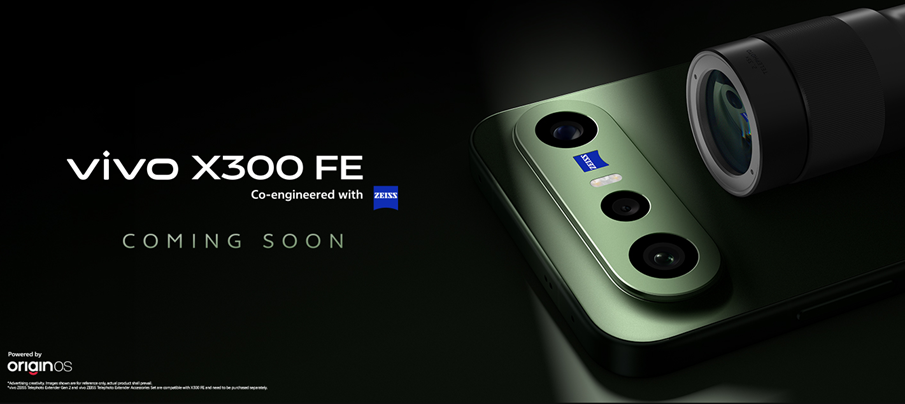
Vivo is said to be gearing up to launch a new lineup of smartphones in India in early 2026. Multiple reports suggest the company is working on the Vivo V70 series, along with the Vivo X200T and Vivo X300 FE. A fresh leak has now revealed possible India launch timelines and tentative pricing details for these upcoming models.
Vivo V70, V70 Elite, X200T and X300 FE India Launch Details (Leaked)
According to tipster Abhishek Yadav @yabhishekhd on X, Vivo could introduce three smartphones in the Indian market in January 2026. The leak claims that the Vivo V70, Vivo V70 Elite, and Vivo X200T may launch in late January 2026. Meanwhile, the Vivo X300 FE is said to arrive at a later date in India.
Vivo X200 FE in the picture for reference. (Image credit – Vivo)
The tipster further suggests that the standard Vivo V70 could be offered in a single configuration with 8GB of RAM and 256GB of internal storage. The handset is also tipped to launch in Red and Yellow colour options.
Expected Prices in India
In terms of pricing, the Vivo V70 is expected to be priced at around Rs. 45,000 in India. The Vivo V70 Elite could reportedly launch with a price tag of approximately Rs. 50,000. The Vivo X200T is said to be priced at around Rs. 55,000, while the Vivo X300 FE could debut at roughly Rs. 60,000.
However, the tipster notes that these prices are only estimates and could change at the time of launch.
Vivo V70 Specifications and Certifications
The Vivo V70 was recently spotted on the FCC certification website, which revealed some of its key specifications. According to the listing, the smartphone features 12GB of RAM and 256GB of internal storage, runs Android 16, and supports 5G connectivity along with Bluetooth, NFC, and Wi-Fi.
Additionally, the Vivo V70 has also appeared earlier on the Bureau of Indian Standards (BIS) website and Geekbench, carrying the model number V2538. The Geekbench listing indicated that the handset is powered by a Snapdragon 7 Gen 4 processor paired with 8GB of RAM. In benchmark tests, the device reportedly scored 1,235 points in the single-core test and 3,920 points in the multi-core test.
As Vivo has yet to officially confirm the launch timelines, pricing, or specifications, more clarity is expected to emerge closer to the anticipated January 2026 launch window.
FAQs
Q1. When will Vivo launch its new smartphones in India?
Answer. According to leaks, the Vivo V70, V70 Elite, and X200T may launch in late January 2026, while the Vivo X300 FE is expected to arrive later.
Q2. What are the expected prices of these upcoming Vivo models?
Answer. The Vivo V70 is tipped at around ₹45,000, V70 Elite at ₹50,000, X200T at ₹55,000, and X300 FE at approximately ₹60,000.
Q3. What specifications have been revealed for the Vivo V70?
Answer. The Vivo V70 is expected to feature a Snapdragon 7 Gen 4 processor, 8GB–12GB RAM, 256GB storage, Android 16, 5G support, and scored 1,235 (single-core) and 3,920 (multi-core) on Geekbench.
Noise has released its 2025 Year-End Wellness Report, offering insights into how health and fitness habits across India have evolved over the past year. The report suggests that wellness in India is increasingly shifting away from short-term fitness goals toward a more preventive, habit-focused lifestyle.
Releasing the report, Amit Khatri, Co-founder of Noise, said, “Wearables have quietly become part of everyday life and the use-cases are expanding in every corner of urban India. We are witnessing a wellness paradigm shift. From Bangalore’s power users to Pune’s balance-seekers to Hyderabad’s professionals integrating health with productivity, consumer health habits in India point to a clear shift towards preventive healthcare through wearables. From prioritizing rest over the weekend, to nearly 90% of users preferring outdoor movement, and millions actively tracking recovery, the focus is no longer on aesthetics alone. Instead, Indians are investing in long-term wellbeing and longevity — and that’s the India we see emerging.”
According to the findings, eight out of ten Indians now view wellness as a long-term investment. Preventive healthcare is also gaining momentum, growing at a compound annual growth rate (CAGR) of 18 percent. The rising adoption of practices such as yoga, mindfulness, and AI-powered personalisation points to a broader transition from burnout-driven routines to balanced living with greater emphasis on understanding the body rather than pushing physical limits.
Noise 2025 Wellness Report – Key insights
Caption – Key insights from the recently released Noise 2025 Wellness Report. (Image credit – Noise)
The report highlights a noticeable rise in early-day activity with Indians recording 21 percent more steps during morning hours, indicating stronger discipline toward starting the day actively. In contrast, weekends showed a different pattern with steps and calories burned dropping by 40 percent, reflecting a conscious approach to rest and recovery.
When it comes to workout preferences, outdoor fitness continues to dominate with 90 percent of users choosing to exercise outside. However, regional differences remain evident as users in Delhi showed a preference for indoor workouts. Clearly, this is largely due to air quality concerns.
Running emerged as the most popular fitness activity nationwide with two out of five Indians selecting it as their primary form of exercise. In Delhi, weight training stood out with one in seven residents focusing on weightlifting. Sleep habits also revealed interesting trends, with 37 percent of Indians identified as night owls who remain active past midnight. This is significantly higher compared to the UK, where only 13 percent fall into the same category.
In 2025, Indians collectively logged an estimated 99 trillion steps. According to the report, this distance is equivalent to travelling to the Moon and back 85 times. The data also highlights regional variations with residents of Andaman recording 40 percent more steps than those in Tripura.
Based on aggregated and anonymised data from the NoiseFit app, the report indicates a broader cultural shift in India toward integrating physical movement, quality sleep, mental well-being, and recovery into everyday routines. Technology is playing a key role in building awareness and supporting long-term behaviour change.
FAQs
Q1. What key fitness trend did the Noise 2025 Wellness Report highlight?
Answer. Indians recorded 21% more morning steps in 2025, showing stronger discipline in starting the day actively.
Q2. What are the workout preferences of Indians according to the report?
Answer. 90% of users prefer outdoor workouts, with running being the most popular nationwide. Delhi residents leaned toward indoor workouts and weight training due to air quality concerns.
Q3. How are Indians viewing wellness and healthcare now?
Answer. Eight out of ten Indians see wellness as a long-term investment, with preventive healthcare growing at an 18% CAGR, supported by wearables, yoga, mindfulness, and AI-driven personalisation.
Google launched the Pixel Upgrade Program in India.
It offers Pixel 10 series smartphones via 24-month no-cost EMI plans starting at ₹3,333/month with assured buyback through Cashify.
Buyers get exchange bonuses up to ₹7,000 and free trial subscriptions.
Google’s Pixel Upgrade Program is now available in India. (Image credit – Google)
Google has officially rolled out the Pixel Upgrade Program in India. It offers users a new way to own and upgrade to the latest Pixel smartphones including the Pixel 10 series. The programme is designed to make Pixel ownership more convenient by allowing customers to buy devices on monthly instalments, along with the option to upgrade later. Here’s everything you need to know about the new program.
Google Pixel Upgrade Program Details
According to Google’s blog post, the Pixel Upgrade Program allows customers to access the latest Pixel hardware without paying a large upfront amount. Instead, buyers can opt for fixed monthly instalments spread over a defined period.
Pixel Upgrade Program benefits. (Image credit – Google)
The Pixel Upgrade Program offers no-cost monthly EMI options starting at Rs. 3,333 per month. Eligible Pixel 10 series smartphones purchased through participating partners such as Bajaj Finance or HDFC Bank credit cards qualify for the 24-month no-cost EMI scheme. Additionally, buyers can receive an exchange bonus of up to Rs. 7,000 through Cashify when trading in their current device.
Alongside flexible financing, new Pixel purchases under the programme also come with trial subscriptions to several Google services. As per Google, the Pixel 10 Pro, Pixel 10 Pro XL, and Pixel 10 Pro Fold will include one year of Google AI Pro, six months of Fitbit Premium, and three months of YouTube Premium at no extra cost.
Meanwhile, Pixel 10 buyers will get six months of Google One Premium with 2TB storage, six months of Fitbit Premium, and three months of YouTube Premium.
How To Participate in Pixel Upgrade Program?
To participate in the programme, users need to follow a few steps.
Customers can start by selecting an eligible Pixel smartphone such as the Pixel 10, Pixel 10 Pro, Pixel 10 Pro XL, or Pixel 10 Pro Fold. The device must be purchased from a nearby partner retail store under a 24-month no-cost EMI plan.
After completing the purchase, users are required to enrol in the Pixel Upgrade Program on Cashify’s website within 30 days.
Once enrolled, buyers can choose to upgrade to a newer eligible Pixel device after paying a minimum of nine EMIs and before completing fifteen EMIs. If the upgrade option is exercised within this timeframe, Cashify will credit the customer’s bank account with an amount equal to the remaining balance of the original EMI loan.
According to Google, this process allows users to close their existing loan without any pre-closure charges. After the upgrade, customers are automatically shifted to a fresh 24-month no-cost EMI plan for the new Pixel device.
FAQs
Q1. What is the Pixel Upgrade Program launched in India?
Answer. It’s a financing scheme that lets customers buy Pixel 10 series smartphones on 24-month no-cost EMIs, with the option to upgrade later.
Q2. What benefits do buyers get under the program?
Answer. Customers enjoy EMIs starting at ₹3,333/month, exchange bonuses up to ₹7,000 via Cashify, and free trial subscriptions to Google services like Google AI Pro, Google One Premium, Fitbit Premium, and YouTube Premium depending on the Pixel model.
Q3. How can users upgrade to a new Pixel device?
Answer. After paying at least 9 EMIs and before completing 15, users can upgrade. Cashify credits the remaining loan balance, closing the old loan without pre-closure charges, and a fresh 24-month EMI plan begins for the new Pixel.
The Oppo Reno 15 Pro global variant has appeared on Geekbench.
It features the MediaTek Dimensity 8450 chipset, Android 16, 12GB RAM, and benchmark scores of 1,231 (single-core) and 5,676 (multi-core).
A separate listing for the Oppo Reno 15 Pro Max (model CPH2811) shows it also uses the Dimensity 8450, runs Android 16 with 12GB RAM and achieved an OpenCL score of 11,789.
Oppo Reno 15 Pro was launched in China earlier in November 2025. (Image credit – Oppo)
The global version of the Oppo Reno 15 Pro has reportedly been spotted on the Geekbench benchmarking database, hinting at an upcoming international launch. The listing reveals some early details about the smartphone’s hardware. To recall, Oppo had unveiled the Reno 15 and Reno 15 Pro in China in November, both powered by the MediaTek Dimensity 8450 SoC. Here’s what we know about the international version of the Oppo Reno 15 Pro based on recent appearance.
Oppo Reno 15 Pro – Geekbench Listing
Oppo Reno 15 Pro in Geekbench listing. (Image credit – Oppo)
As per a recent post by tipster Abhishek Yadav @yabhishekhd on X, the Oppo Reno 15 Pro with model number CPH2813 has appeared on Geekbench. The listing reveals the model is powered by the MediaTek Dimensity 8450 chipset. Notably, this is the same processor used in the Oppo Reno 14 Pro, indicating that Oppo may continue with the existing silicon for its new Pro model.
The MediaTek Dimensity 8450 features a CPU configuration that includes one Cortex-A725 core clocked at 3.25GHz, three Cortex-A725 cores running at 3.00GHz, and four Cortex-A725 cores operating at 2.10GHz. The chipset is paired with a Mali-G720 MC7 GPU.
According to the Geekbench database, the Oppo Reno 15 Pro runs Android 16 and is equipped with 12GB of RAM. In benchmark testing, the device reportedly achieved a single-core score of 1,231 points and a multi-core score of 5,676 points.
Oppo Reno 15 Pro CPH2813 Global/Indian variant spotted on geekbench benchmarking website with the same MediaTek Dimensity 8450 Chipset as Reno 14 Pro.
Additionally, a separate Geekbench listing has surfaced for a device carrying the model number CPH2811, which the tipster believes corresponds to the Oppo Reno 15 Pro Max. This variant recorded an OpenCL score of 11,789, offering an early indication of its graphics performance.
Reports further suggest that the global and Indian versions of the Oppo Reno 15 Pro Max will also be powered by the MediaTek Dimensity 8450 chipset. This points to Oppo potentially standardising the processor across both Pro models, despite differences in their positioning.
Similar to the Reno 15 Pro, the Reno 15 Pro Max is expected to run Android 16 and come with 12GB of RAM. Oppo has yet to officially confirm specifications, pricing, or launch timelines for either smartphone in India or other global markets. However, their appearance on Geekbench indicates that more official information could emerge soon.
Meanwhile, a different report has also hinted that Oppo may introduce a Reno 15 Pro Mini variant soon. This will most likely arrive in select global markets, which could also include India.
FAQs
Q1. Has the Oppo Reno 15 Pro global variant been spotted online?
Answer. Yes, the Oppo Reno 15 Pro global version (model CPH2813) has appeared on the Geekbench database, suggesting an upcoming international launch.
Q2. What hardware details are revealed about the Oppo Reno 15 Pro?
Answer. The Geekbench listing shows it is powered by the MediaTek Dimensity 8450 chipset, runs Android 16, comes with 12GB RAM, and achieved benchmark scores of 1,231 (single-core) and 5,676 (multi-core).
Q3. Is there any information about the Oppo Reno 15 Pro Max?
Answer. Yes, a separate Geekbench listing for model CPH2811 indicates it is the Reno 15 Pro Max, also powered by the Dimensity 8450, with 12GB RAM, Android 16, and an OpenCL score of 11,789.
The Redmi Note 15 5G leaked prices suggest it will be available at ₹22,999 for 8GB+128GB and ₹24,999 for 8GB+256GB.
Key specs include a 6.77-inch curved AMOLED 120Hz display, Snapdragon 6 Gen 3 chipset, 5,520mAh battery with 45W fast charging, and 108MP OIS camera with 4K video support.
The phone is expected in Black, Glacier Blue, and Mist Purple colour options.
Redmi Note 15 5G microsite is now live on Amazon. (Image credit – Redmi)
The Redmi Note 15 5G is set to launch in India on January 6, 2026. The smartphone has already been confirmed to go on sale via Amazon and the Xiaomi India online store. The dedicated microsite has also revealed several specifications including display details and the phone’s IP rating. Now, ahead of its official debut, details regarding its pricing and memory configurations have surfaced online. Here’s what the recent leak reveals.
Redmi Note 15 5G – Price in India and Key Specs (Leaked)
Tipster Abhishek Yadav @yabhishekhd on X shared the expected Redmi Note 15 5G price in India, along with its RAM and storage variants. According to the leak, the base model with 8GB RAM and 128GB internal storage could be priced at Rs. 22,999. The top-end variant is said to feature 8GB RAM and 256GB storage and may carry a price tag of Rs. 24,999.
The smartphone was launched in Poland earlier this month at a starting price of PLN 1,199 (around Rs. 30,000) for the 6GB RAM and 128GB storage version.
Redmi Note 15 5G – What Else We Know?
Redmi Note 15 5G camera specs. (Image credit – Redmi)
Meanwhile, the Amazon microsite for the Redmi Note 15 5G has been updated with additional specifications. The smartphone will feature a 6.77-inch curved AMOLED display with up to a 120Hz refresh rate and a peak brightness of up to 3,200 nits. It will also support Hydro Touch 2.0, which is designed to improve touch responsiveness even when the screen is wet.
The display is said to be TUV Triple Eye Care certified. The Redmi Note 15 5G will also come with an IP66 rating, offering protection against dust and water.
The smartphone will pack a 5,520mAh battery, which Xiaomi says can offer “1.6 days of usage”. It will also support 45W wired fast charging. On the camera front, the Redmi Note 15 5G in India is confirmed to feature a 108-megapixel MasterPixel primary rear sensor with optical image stabilisation (OIS). The device will also support 4K video recording.
The Indian variant of the Redmi Note 15 5G will be powered by Qualcomm’s Snapdragon 6 Gen 3 chipset, the same processor used in the Polish model. Xiaomi claims the SoC delivers a 10 percent GPU “boost”, 30 percent better CPU performance, and up to 48 months of lag-free usage.
In select international markets, the handset is available in Black, Glacier Blue, and Mist Purple colour options.
FAQs
Q1. What is the expected price of the Redmi Note 15 5G in India?
Answer. The base model with 8GB RAM + 128GB storage may cost ₹22,999, while the 8GB + 256GB variant could be priced at ₹24,999.
Q2. When will the Redmi Note 15 5G launch in India and where will it be available?
Answer. The smartphone is set to launch on January 6, 2026, and will be sold via Amazon and Xiaomi India’s online store.
Q3. What are the key specifications of the Redmi Note 15 5G?
Answer. It features a 6.77-inch curved AMOLED 120Hz display, Snapdragon 6 Gen 3 chipset, 5,520mAh battery with 45W fast charging, and a 108MP OIS rear camera with 4K video support.
The Xiaomi 17 Ultra is tipped to feature a 6,800mAh battery with 100W wired fast charging and wireless charging.
It is expected to launch in four colour options including black, green, purple, and white.
The flagship will debut in China between December 22–27, 2025.
Caption – Xiaomi 15 Ultra in the picture for reference. (Image credit – Xiaomi)
The Xiaomi 17 Ultra is expected to launch in China soon as the flagship model in the new Xiaomi 17 series. Ahead of its official debut, fresh leaks have revealed key details about the smartphone’s battery capacity, charging capabilities and colour options. Here’s what we know.
Xiaomi 17 Ultra – Specifications and Colours (Leaked)
As per a post shared on Weibo by tipster named Bald Panda, the Xiaomi 17 Ultra will pack a 6,800mAh battery. The handset is said to support 100W wired fast charging, along with wireless charging.
If the leaked information is accurate, the Xiaomi 17 Ultra will feature a slightly larger battery than its predecessor. However, it is still expected to fall short of the Xiaomi 17 Pro, which is reportedly equipped with a bigger 7,500mAh battery.
Caption – Tipster’s post on Weibo. (Translated via Google Translate)
To recall, the Xiaomi 15 Ultra was launched in February this year and came with a 6,000mAh battery and supported 90W wired and 80W wireless fast charging.
The tipster also revealed that the smartphone will launch in four colour options, which are black, green, purple, and white. While black and green shades were previously offered on the Xiaomi 15 Ultra, the new green and purple variants are said to replace earlier finishes such as black and silver, along with pine and cypress green, on the next-generation model.
Other details mentioned in the post are related to dimensions. The leak suggests the Xiaomi 17 Ultra could measure 77.6mm in width and 8mm in thickness, with a weight of around 227g. For reference, the Xiaomi 15 Ultra measures 75.3mm in width and 9.4mm in thickness, and weighs up to 229g depending on the configuration.
Xiaomi 17 Ultra – What Else We Know So Far
Earlier leaks suggest the Xiaomi 17 Ultra could be powered by the Snapdragon 8 Elite Gen 5 chipset. On the camera front, it is expected to feature a 50-megapixel primary sensor, a 200-megapixel telephoto camera, and a 50-megapixel ultra-wide-angle lens.
Xiaomi has already confirmed that the Xiaomi 17 Ultra will launch in China next week. Although the company has not announced an exact date, reports indicate the unveiling could take place between December 22 and December 27.
To know the exact date, we will have to wait for Xiaomi’s official announcement.
FAQs
Q1. What battery and charging specs are leaked for the Xiaomi 17 Ultra?
Answer. It is expected to feature a 6,800mAh battery with 100W wired fast charging and wireless charging support.
Q2. In which colour options will the Xiaomi 17 Ultra launch?
Answer. Leaks suggest four colours: black, green, purple, and white, with new finishes replacing some of the Xiaomi 15 Ultra’s earlier shades.
Q3. When is the Xiaomi 17 Ultra expected to launch in China?
Answer. Xiaomi has confirmed a launch window between December 22 and December 27, 2025, though the exact date is yet to be announced.