Meta launches ad-free subscription in EU; €9.99/month for web, €12.99/month for mobile.
NOYB challenges Meta’s model, citing EU consent law violations.
Meta defends subscription, claims EU regulation compliance.
Concerns over potential industry-wide impact of Meta’s fee model.
Meta’s recent introduction of a paid subscription so that users can browse the company’s services ad-free experience, is now under regulatory eyeballs in the EU.
The service, priced at €9.99 per month for web users and €12.99 for iOS and Android users, is positioned as a compliance measure with EU data protection regulations, offering users a choice between ad-supported services and a paid ad-free experience.
However, things are not going to plan for Meta.
Controversy Over the Subscription Model
The digital rights group NOYB (None Of Your Business) has raised serious concerns about Meta’s subscription service, leading to a complaint with the Austrian regulator.
Felix Mikolasch, a data protection lawyer at NOYB, stated that charging up to €250 per year for data protection violates the EU law that mandates consent as a genuine free choice.
Meta Faces EU Scrutiny Over Paid Subscription Model for Ad-Free Privacy
This stance taken by NOYB positions the ‘meta privacy fee’ as a contentious issue, possibly setting a precedent that could impact the broader tech industry.
Meta’s Response and Industry Implications
In response to the criticism, Meta defended its subscription model, asserting that it complies with European regulations while providing users with a choice.
The company emphasized that the pricing is in line with similar offerings in Europe and strikes a balance between regulatory compliance and user preference.
However, NOYB’s warning about the broader industry impact of such a fee model is significant.
They cautioned that if Meta’s approach is accepted, other companies might follow suit, potentially leading to substantial annual costs for users who wish to maintain privacy across their devices.
FAQs
What is Meta’s new paid subscription service in the EU?
Meta has launched a paid subscription service in the EU, allowing users to browse ad-free for €9.99/month on web and €12.99/month on iOS and Android. This service is positioned as a compliance measure with EU data protection regulations, offering an alternative to ad-supported browsing.
Why is NOYB challenging Meta’s subscription model?
NOYB, a digital rights group, has filed a complaint with the Austrian regulator, arguing that Meta’s subscription fee essentially charges users for privacy. They claim this contradicts EU law, which requires genuine free user consent, and could set a concerning industry precedent.
How has Meta responded to the criticism of its subscription model?
Meta defends its subscription model by stating it aligns with European regulations and provides users with a choice between ad-supported and ad-free experiences. The company emphasizes that their pricing structure is consistent with similar services in Europe.
Huawei unveils MatePad Pro 11-inch (2024) with unique two-way satellite communication.
Features 11-inch OLED display, Kirin 9000s chipset, and HarmonyOS 4.
Offers 13MP main camera, 8MP ultrawide lens, and 16MP front camera.
Priced at CNY 4,299 for 256GB and CNY 4,799 for 512GB; global launch anticipated.
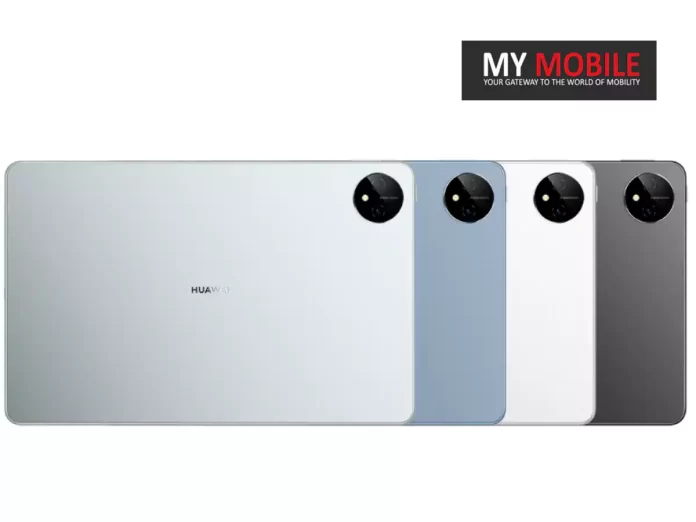
Huawei’s latest product launch in China has brought the Huawei MatePad Pro 11-inch (2024) into the spotlight,showcasing significant upgrades and innovative features.
This launch marks a pivotal moment in Huawei’s journey in the tablet market, highlighting the MatePad Pro as a flagship device in their lineup and also adding to it an intriguing communications feature, which is quite likely to be a first in the tablet segment.
Pricing and Availability
In terms of pricing, the Huawei MatePad Pro 11-inch (2024) is set at CNY 4,299 (about Rs 51,500) for the 256GB variant and CNY 4,799 (about Rs 57,500) for the 512GB model.
While a global launch has not been announced, the precedent set by the 2022 model suggests a potential international release.
Huawei MatePad Pro 11-inch (2024): Design and Features
Huawei MatePad Pro 11-inch (2024): Design
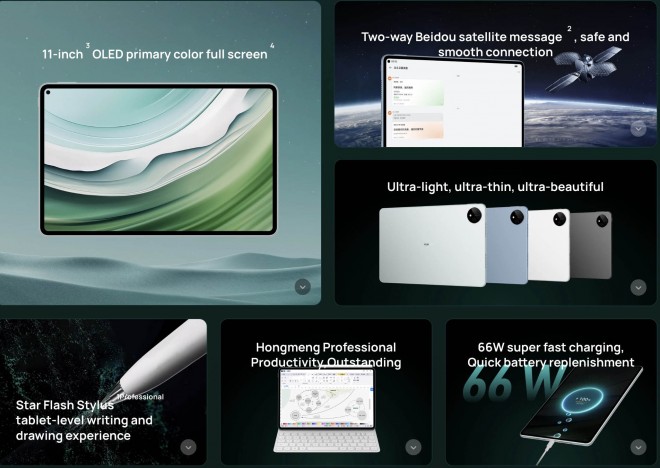
The Huawei MatePad Pro features an 11-inch OLED display with a resolution of 1,600 x 2,560 pixels, a 16:10 aspect ratio, and 600 nits of peak brightness.
The aluminum chassis and a thickness of just 5.9mm definitely give it a premium and lightweight look.
At the heart of the Huawei MatePad Pro 11-inch (2024) is the Kirin 9000s chipset, a significant update from its predecessors.
This chipset boasts a 1+3+4 CPU configuration, with the performance core clocked at 2.49 GHz.
Due to the blanket technology ban on Huawei by the US, the chipset is not really the fastest in the mobile world.
Satellite Communication?
However, one of the most groundbreaking features of the Huawei MatePad Pro 11-inch (2024) is its two-way satellite connectivity, a first in Huawei’s tablet lineup.
This feature, utilizing the BeiDou satellite network, positions the Huawei MatePad Pro as a pioneer in communication technology, offering users the ability to send and receive messages via satellite.
This functionality is particularly significant for areas with limited or no cellular coverage, ensuring connectivity in almost any environment.
Other Features
Other Features
Huawei MatePad Pro’s camera setup includes a 13MP main camera and an 8MP ultrawide lens, complemented by a 16MP front-facing camera in a punch-hole design.
The Huawei MatePad Pro is powered by a robust 8,300 mAh battery, supporting 66W fast charging.
The tablet is also equipped with Bluetooth 5.2 and supports the third-generation Huawei M-Pencil, enhancing its versatility and has Huawei’s HarmonyOS running for software needs.
FAQs
What are the key features of the Huawei MatePad Pro 11-inch (2024)?
The Huawei MatePad Pro boasts an 11-inch OLED display, a Kirin 9000s chipset, and HarmonyOS 4. It has a slim 5.9mm aluminum chassis and offers a camera setup with a 13MP main and an 8MP ultrawide lens, plus a 16MP front camera.
What makes the Huawei MatePad Pro 11-inch (2024) unique in terms of connectivity?
The tablet introduces two-way satellite connectivity using the BeiDou network, a first for Huawei’s tablets. This feature ensures communication in areas without cellular coverage, making it highly versatile for various environments.
How is the Huawei MatePad Pro 11-inch (2024) priced, and when can we expect a global launch?
The 256GB model is priced at CNY 4,299, and the 512GB at CNY 4,799. While there’s no official announcement yet, a global launch is expected, following the pattern of its 2022 predecessor.
What are the battery specs and software features of the Huawei MatePad Pro?
The MatePad Pro is equipped with an 8,300 mAh battery supporting 66W fast charging. It runs on HarmonyOS 4, offers Bluetooth 5.2 connectivity, and is compatible with the third-generation Huawei M-Pencil.
Redmi K70 series, including K70, K70 Pro, and K70e, set to launch today in China.
Series boasts 120Hz AMOLED displays, 50MP OIS cameras, and Snapdragon 8 Gen chipsets.
Redmi K70e offers an affordable option with a 64MP primary camera and 90W charging.
Launch event scheduled for 7:00 PM local time, with limited online streaming availability.
The highly anticipated Redmi K70 launch is set to be unveiled today in China.
This new series, which will likely be comprised of the Redmi K70, K70 Pro, and K70e, is expected to showcase remarkable features and innovative designs, as per recent leaks and official announcements.
When and Where To Watch
As for the launch timing, the Redmi K70 Serieswill be announced at 7:00pm local time (4:30pm IST).
Online viewers are unlikely to catch the event live since it will be streamed over Chinese servers, firewalled in India.
Key Specs of Redmi K70 Series
Key Specs of Redmi K70 Series
Display: 6.67-inch AMOLED screens with punch-hole cutouts; 2K resolution and 120Hz refresh rate for K70 and K70 Pro.
Camera: 50MP main camera with OIS for K70 and K70 Pro; K70 Pro adds a 2x telephoto lens; K70e features a 64MP primary camera.
Processor: Snapdragon 8 Gen 2 chipset for K70; Snapdragon 8 Gen 3 for K70 Pro; Dimensity 8300-Ultra chipset for K70e.
Battery: 5,000 mAh (K70) and 5,120 mAh (K70 Pro) batteries supporting 120W fast charging; 5,500 mAh battery with 90W charging in K70e.
RAM and Storage: Up to 16GB RAM and 1TB storage for K70; Up to 24GB RAM and 1TB storage for K70 Pro; Options up to 16GB RAM and 1TB for K70e.
Design: Glass back with triple-camera setup in metal rings; power and volume keys on the right edge.
Expected Design
At the forefront of the Redmi K70 launch is the series’ impressive design.
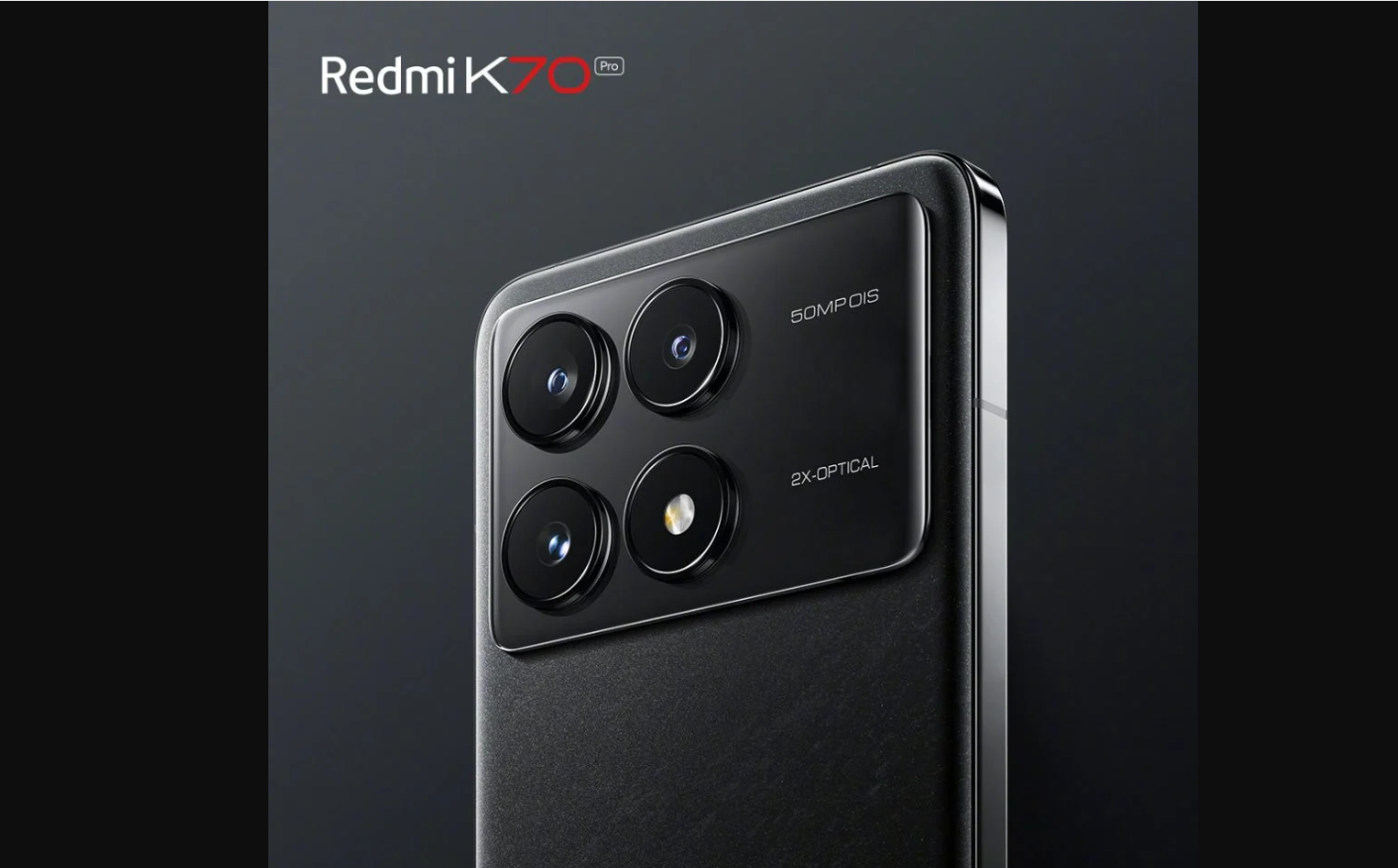
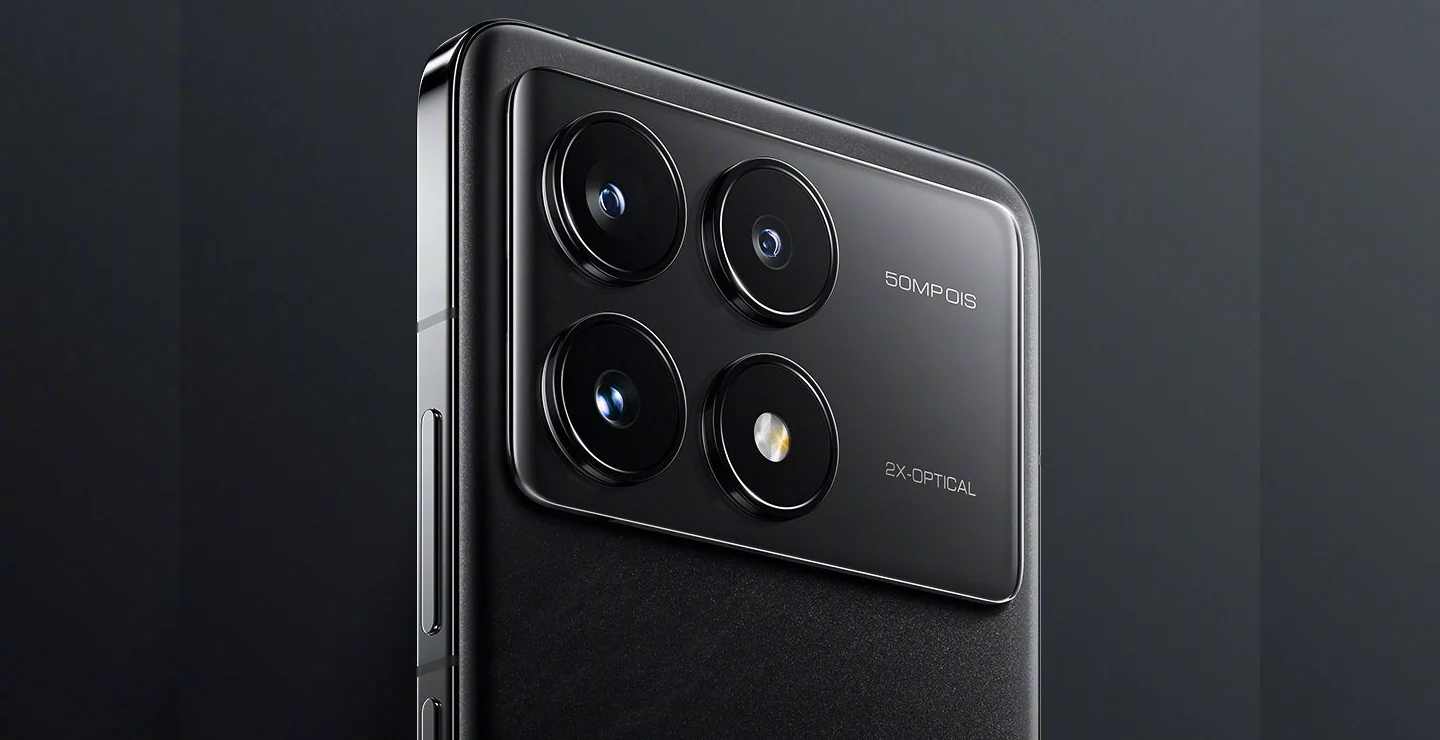
Each model sports a sleek rear design, featuring a glass camera island that houses three lenses encircled in metal rings, and a dedicated cutout for the LED flash.
The right edge of the upcoming phones will have ergonomically placed power and volume keys.
Performance and Display
Performance and Display
In terms of performance, the Redmi K70 is expected to be powered by the Snapdragon 8 Gen 2 chipset, complemented by a robust 5,000 mAh battery supporting 120W fast charging.
The K70 Pro, on the other hand, is anticipated to feature the Snapdragon 8 Gen 3 processor, alongside a 5,120 mAh battery with similar fast charging capabilities.
Both models will offer configurations including 16 GB and 24 GB RAM variants, with storage options going up to 1 TB.
Both the K70 and K70 Pro are expected to feature a high-refresh-rate 120Hz OLED display, providing users with an immersive viewing experience.
The sharp 2K resolution of these displays aligns with the current market trends for high-end smartphones.
Camera Capabilities and Variants
Camera technology takes center stage in the Redmi K70 launch.
The standard K70 and Pro models are equipped with a 50MP main camera with OIS, ensuring high-quality photography.
The Pro variant boasts additional features like a 2x portrait camera and an ultrawide lens. The K70, on the other hand, includes a 2MP AI camera.
The tipster suggests a 50MP OmniVision OV50e sensor for the primary camera in both models, complemented by an 8MP ultra-wide lens.
The Pro model gets an upgrade with a 50MP OV50d telephoto camera with 2x optical zoom.
It’s rumoured to feature a 64MP OmniVision OV64B primary camera, similar to the 8MP ultra-wide lens and 2MP macro camera of the standard K70.
This model is expected to house the Dimensity 8300-Ultra chipset, with options for up to 16GB of RAM and 1TB of UFS storage, along with a 5,500 mAh battery supporting 90W charging.
What can we expect from the Redmi K70 series launch?
The launch will unveil the Redmi K70, K70 Pro, and K70e, each featuring standout specs like 6.67-inch AMOLED displays, high-resolution cameras with up to 50MP sensors, and powerful Snapdragon chipsets. The K70e is aimed at budget-conscious users with slightly pared-down specs but still impressive features.
What are the key specifications of the Redmi K70 series?
Key specs include 120Hz refresh rate AMOLED displays, 50MP main cameras with Optical Image Stabilization, and high-performance processors – Snapdragon 8 Gen 2 for K70 and Gen 3 for K70 Pro. The series also offers large battery capacities with fast charging support, and storage options up to 1TB.
How does the Redmi K70e differ from the K70 and K70 Pro?
The K70e is positioned as a more affordable option within the series, featuring a 64MP primary camera, the Dimensity 8300-Ultra chipset, and a 5,500 mAh battery with 90W charging. While it shares some similarities with its higher-end counterparts, it’s tailored for budget-conscious consumers.
Foxconn Announces $1.5 Billion Investment in India, Boosting iPhone Production
The Foxconn $1.5 billion investment is channelled through its subsidiary Hon Hai Technology, which is registered in Maharashtra since 2015.
This subsidiary’s latest financial allocation is earmarked for a construction project designed to meet “operational needs.”
This move is part of a broader trend within the technology sector, often referred to as “China+1,” where companies are diversifying their manufacturing bases beyond China.
Prior to Foxconn’s $1.5 billion announcement, the company had already outlined significant projects in India, including a $600 million initiative in Karnataka and a $500 million factory in Telangana.
Pandemic Challenges and Apple’s Diversification Strategy
Pandemic Challenges and Apple’s Diversification Strategy
Foxconn and several other manufacturers have understandably faced challenges in China due to Covid-19 lockdowns and geopolitical tensions, particularly the US-China trade war.
The slowdown in Foxconn’s expansion in China, noticeable since 2018, is a major factor for the company to reassess its global footprint.
Foxconn’s $1.5 billion investment in India is a response to these challenges, ensuring continuity and resilience in its operations.
This investment aligns with Apple’s diversification strategy of shifting base from the concentrated manufacturing hub in China.
What does Foxconn’s $1.5 billion investment in India signify?
Foxconn’s $1.5 billion investment represents a strategic shift in Apple’s iPhone production, moving away from a China-centric approach. This initiative in India is aimed at enhancing operational capacity and diversifying manufacturing locations.
How does this investment align with the broader ‘China+1’ strategy?
The ‘China+1’ strategy involves diversifying manufacturing bases beyond China. Foxconn’s $1.5 billion investment in India is a significant step in this direction, helping mitigate risks associated with over-reliance on a single country.
What impact will Foxconn’s investment have on India’s role in global manufacturing?
Foxconn’s investment is likely to significantly boost India’s position in the global supply chain. By expanding iPhone production capabilities, it could potentially double the country’s output by 2024, enhancing India’s manufacturing stature.
What are Foxconn’s previous investments in India?
Before the $1.5 billion announcement, Foxconn had already committed to a $600 million project in Karnataka and a $500 million factory in Telangana, underscoring its growing commitment to India as a key manufacturing hub.
Caution advised on unconfirmed Nothing Phone 2a details.
If potential rumours are to be believed, Nothing, a brand known for its unique design ethos, might just be about to unveil a new offering called the Nothing Phone 2a.
Emergence of the Nothing Phone 2a
Recent buzz on social media platforms, including X (formerly Twitter), points towards the development of the Nothing Phone 2a.
A big part of this speculation comes amidst expectations of the brand’s focus shift towards audio products.
However, tipster Sanju Choudhary brings a new narrative with the mention of the Nothing Phone 2a.
Design and Specifications
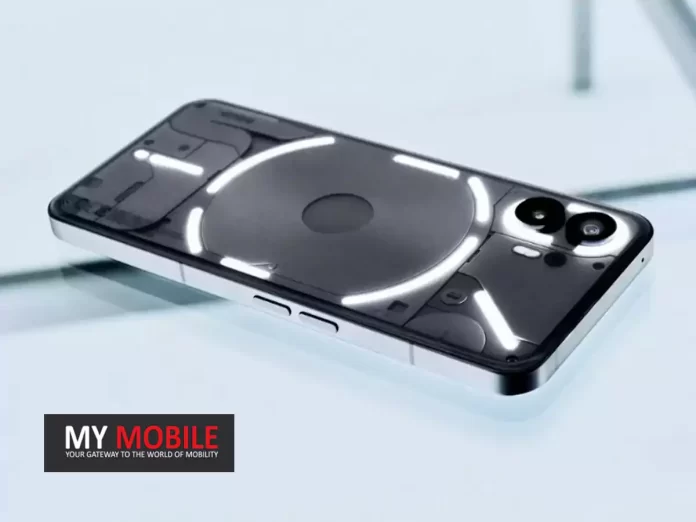
Rumours Hint At A Possible Nothing Phone 2a In the Offing
The Nothing Phone 2a, though not the much-anticipated Nothing Phone (3), appears to align with the company’s flair for distinctive design.
As per the leaks, this new upcoming device is likely to feature a transparent back panel and a dual-camera setup.
While the image shared by the tipster offers limited visibility, it’s enough to spark curiosity about what the Nothing Phone 2a could bring to the table.
Model Number and Moniker Confirmation
Adding credibility to these rumours, the model number AIN142, associated with the Nothing Phone 2a, was reportedly confirmed in the IMEI database as early as August.
This detail, though minor, at least gives some ground to the swirling rumours about the device.
The latter has already made its impressions in the wearable and hearable category.
However, as with any unconfirmed news in the tech world, it’s prudent to approach leaks being churned from the rumour mill about the Nothing Phone 2a with caution.
FAQs
What is the Nothing Phone 2a?
The Nothing Phone 2a is a rumoured upcoming smartphone from the brand Nothing, known for its unique design. If rumours are accurate, this device could represent a new direction for the brand, traditionally focused on audio products.
What are the expected features of the Nothing Phone 2a?
The Nothing Phone 2a is rumoured to boast a transparent back panel and a dual-camera setup. These features are anticipated to continue Nothing’s trend of distinctive and innovative design in its products.
Has the model number of the Nothing Phone 2a been confirmed?
Yes, the model number AIN142, associated with the Nothing Phone 2a, has reportedly been confirmed in the IMEI database. This lends some credibility to the circulating rumors about the device.
Should we trust the rumours about the Nothing Phone 2a?
While the rumours about the Nothing Phone 2a are compelling, it’s important to approach them with caution. Until official information is released, these details should be considered speculative.
Over 100 brands, led by Apple and Disney, suspend ads on X due to antisemitism concerns.
Elon Musk’s controversial comments intensify the advertising boycott.
X’s potential ad revenue loss could reach $75 million.
Key brands like Disney extend their response by stopping all platform activities.
In a significant blow to social media giant X, formerly known as Twitter, over 100 brands have suspended advertising following a controversy involving antisemitic content and the platform’s owner, Elon Musk.
Apple and Disney, who actually kickstarted this exodus of advertisers, could result in an estimated financial loss of up to $75 million for X.
Background of the Controversy
Over 100 Brands Withdraw Ads from X Amid Antisemitism Row
The current situation has no true origin points, but a study by Media Matters revealed that advertisements from prominent brands were displayed alongside extremist hate speech, including antisemitic content, on X.
Despite Musk’s dismissal of the findings as “fraudulent,” internal documents from X indicate a recognition of the potential revenue impact.
Musk’s Role in the Escalation and Ad Revenue Impact
The response of the brands is not solely based on the content issue but also Musk’s personal conduct on the platform.
His endorsement of an antisemitic post with the comment “You have said the actual truth,” which remains unapologized for and undeleted, has further fuelled the backlash.
This incident is not isolated, as Muskpreviously threatened legal action against the Anti-Defamation League for highlighting racist content on X.
Musk’s Role in the Escalation and Ad Revenue Impact
Initially, the impact was estimated internally at X to be around $11 million. However, a recent report by The New York Times suggests that the actual financial hit could reach $75 million.
This figure accounts for the withdrawal of over 100 brands and the potential cessation of advertising by dozens more.
X has commented on these numbers, suggesting they might be outdated or part of an internal risk evaluation.
Broader Actions by Brands
In addition to halting advertisements, several brands, including media giants Disney, Paramount, Lionsgate, Sony Pictures, Universal, and Warner Bros.
Discovery, have ceased all activity on the platform. They are now taking theri business over to X’s competitor Threads, a platform owned by Meta.
FAQs
Why have over 100 brands stopped advertising on social media platform X?
Brands have ceased advertising on X due to the platform’s association with antisemitic content and the concerning response of its owner, Elon Musk. The situation escalated following Musk’s endorsement of an antisemitic post and lack of subsequent apology.
Which major companies have led the advertising boycott on X?
Apple and Disney were among the first to suspend their advertising campaigns on X. They were soon followed by other significant players such as Paramount, Sony, and Warner Bros. Discovery.
What is the estimated financial impact on X due to the advertising boycott?
Initially, X estimated a loss of $11 million, but internal documents and further analysis suggest the financial impact could be as high as $75 million. This figure accounts for the current and potential future suspensions of advertising on the platform.
Have any brands taken steps beyond just pausing ads on X?
Yes, several brands, including Disney, Paramount, and Warner Bros. Discovery, have gone beyond pausing ads. They have ceased all activity on X, including posting on the platform, in response to the ongoing controversy.
Redmi K70 series camera specs leaked, revealing diverse configurations across models.
K70 to feature 50MP primary sensor; K70 Pro with additional telephoto lens.
K70e rumored to have a 64MP main camera, among other advanced features.
Series expected to offer high-end chipsets and enhanced display capabilities.
Ahead of the official launch on November 29 in China, key camera details of the Redmi K70 series have been leaked on Weibo.
The series, including the K70, K70 Pro, and K70e, is expected to showcase varied camera setups across its models.
The standard Redmi K70 is rumoured to be equipped with a primary 50MP OmniVision OV50e camera, complemented by an 8MP ultra-wide lens and a 2MP macro camera.
Redmi K70 Series Leaked Camera Specs Revealed Before Official Launch
The K70 Pro variant is likely to share the same 50MP OV50e primary sensor, but with an additional 50MP OV50d telephoto camera offering 2x optical zoom and retaining the 8MP ultra-wide lens.
The K70e, a different model in the lineup, is expected to feature a 64MP OmniVision OV64B primary camera, along with an 8MP ultra-wide lens and a 2MP macro camera.
As with all speculations, however, this one too should be taken with a pinch of salt before the official announcements.
Expected Chipsets and Display Features
Expected Chipsets and Display Features
The Redmi K70e is anticipated to house the Dimensity 8300-Ultra chipset, supporting configurations up to 16GB RAM and 1TB of UFS storage.
It’s rumored to have a 5,500mAh battery with 90W charging and a 6.67-inch OLED display offering 1.5K resolution and a 120Hz refresh rate.
The K70 model is speculated to come with the Snapdragon 8 Gen 2 chipset, a 5,000mAh battery with 120W fast charging, and various storage options.
The display is expected to be a 120Hz OLED panel with 2K resolution.
Lastly, the K70 Pro might be powered by the Snapdragon 8 Gen 3 processor, paired with a 5,120mAh battery also supporting 120W fast charging.
Storage options might include up to 24GB RAM and 1TB storage, with the same display specifications as the K70.
All models in the K70 series are expected to run on HyperOS-based Android 14 and come in colours like black, white, blue, and purple.
FAQs
What are the leaked camera specifications for the Redmi K70 series?
The Redmi K70 is expected to come with a 50MP primary camera, alongside an 8MP ultra-wide and a 2MP macro lens. The K70 Pro is rumored to also have a 50MP primary camera but includes a 50MP telephoto lens with 2x optical zoom. The K70e is speculated to feature a 64MP primary camera.
How do the chipsets differ across the Redmi K70 series?
The K70e is anticipated to be powered by the Dimensity 8300-Ultra chipset, while the K70 is expected to include the Snapdragon 8 Gen 2 chipset. The K70 Pro might feature the more advanced Snapdragon 8 Gen 3 processor.
What display features are expected in the Redmi K70 series?
The K70 and K70 Pro are likely to boast a 120Hz OLED display with a 2K resolution. The K70e is expected to come with a 6.67-inch OLED display, offering a 1.5K resolution and a 120Hz refresh rate.
What battery specifications and storage options are rumoured for the K70 series?
The K70 is rumoured to have a 5,000mAh battery with 120W fast charging, while the K70 Pro might feature a slightly larger 5,120mAh battery also with 120W charging. The K70e could include a 5,500mAh battery with 90W charging. Storage options may vary, with up to 1TB offered in some models.
This performance underscores OnePlus’s growing influence in the competitive smartphone segment.
Key Product Performances
One of the highlights of OnePlus’s success was the OnePlus Open 5G, which became the top-selling foldable phone in the above Rs 1 lakh category on Amazon.in during its open sale day.
This period extended from January 2023 to October 27th, 2023.
Furthermore, the company’s comparatively more budget offering OnePlus 11R 5G stood out as the leadingpremium Android smartphone in the above Rs 30K category during the festival.
OnePlus Leads Android Smartphone Sales in Amazon Great Indian Festival 2023
These achievements are quite a testament to the company’s strong portfolio and its ability to cater to diverse consumer preferences.
OnePlus and Amazon India Comments
Ranjeet Singh, Head of Sales, OnePlus India shared, “We are thrilled to witness the remarkable response for our products on Amazon India during the Great Indian Festival. This accomplishment is a testament to the trust and loyalty our community and users place in our brand.
At OnePlus, we are dedicated to pushing the boundaries of innovation and providing exceptional products that elevate the lives of our users. And our long-standing engagement with Amazon has continued to help us achieve just that. This success also motivates us to continue delivering unparalleled technology that exceeds our users’ expectations.”
Ranjit Babu, Smartphones and Televisions, Director, Amazon India said “Amazon India is thrilled to continue our engagement with OnePlus, a brand that consistently delivers on technology and understands customers. During the Amazon Great Indian Festival 2023, we saw the preference for premium smartphones reach unprecedented levels surpassing the previous year by an astounding 2.5 times driven by affordability options such as easy No Cost EMI and Exchange offers.
The significant growth underscores our steadfast commitment to drive value and providing an unparalleled selection of smartphones to our customers. Our long-term engagement with OnePlus continues to redefine customer expectations, with the latest milestone being the remarkable success of the OnePlus foldable device.”
FAQs
What achievement did OnePlus secure during the Amazon Great Indian Festival 2023?
OnePlus attained the status of the best-selling Android smartphone brand during the Amazon Great Indian Festival 2023. This achievement highlights its strong market presence and consumer preference for its products during one of India’s biggest online shopping events.
Which OnePlus models stood out during the Amazon Great Indian Festival?
The OnePlus Open 5G was the top-selling foldable phone in its price range. Additionally, the OnePlus 11R 5G emerged as the leading premium Android smartphone, while the OnePlus Nord CE 3 Lite 5G was the most popular Android smartphone overall during the festival.
What was the response to the OnePlus Open 5G during its launch?
The OnePlus Open 5G received an overwhelmingly positive response on its launch day, becoming the highest-selling foldable phone in its price category on Amazon.in. This indicates a strong consumer interest in innovative smartphone designs from OnePlus.
How did the OnePlus 11R 5G and Nord CE 3 Lite 5G perform in the market?
The OnePlus 11R 5G was the best-selling premium Android smartphone, and the Nord CE 3 Lite 5G was the most sought-after Android smartphone during the Amazon Great Indian Festival. These models catered well to the diverse needs and preferences of customers.
Aitana Lopez, a 25-year-old AI model from Spain, gains 141,000 followers on Instagram.
Earning potential of up to €10,000 a month, averaging around €3,000.
Created by designer Rubén Cruz and The Clueless agency as a response to challenges with human influencers.
Aitana’s virtual persona includes being a fitness enthusiast, gamer, and cosplay lover.
Aitana Lopez, a completely real-looking model made from AI, hailing from Spain, has taken Instagram by storm, amassing an impressive following of 141,000.
This AI-generated model, known for her distinctive pink hair, is not just a social media sensation but also a lucrative digital entity,capable of earning up to €10,000 monthly, approximately Rs 9 lakh.
On average, her earnings hover around €3,000 per month. Behind Aitana’s creation is designer Rubén Cruz and his agency The Clueless, who have innovatively navigated the influencer market with this AI entity.
Aitana’s Creation and Popularity
Spanish AI Model Aitana Lopez: A Digital Sensation Earning Rs 9 Lakhs Per Month
The genesis of Aitana was a strategic move by Cruz during a period when his projects were either stalled or canceled due to complications with human influencers and models.
In creating Aitana, the agency sought financial stability and independence from the unpredictability of working with real-life personalities.
Aitana’s weekly activities and social media posts are meticulously planned by the agency.
Her virtual existence is shaped through artificial intelligence and photoshop, diverging from traditional photoshoots.
Aitana’s Creation and Popularity
This approach allows her to resonate with followers on a more personal level, despite her digital nature.
Initially conceptualized as a fitness enthusiast, Aitana’s character is described as a strong, determined woman, embodying traits that appeal to contemporary society.
Her trendy pink hair and gamer persona are inspired by current trends.
Beyond Instagram, she also features on Fanvue, akin to OnlyFans, and has recently been appointed the face of a sports supplement brand.
Interestingly, her popularity has reached such heights that she receives private messages from celebrities, unaware of her virtual identity.
FAQs
Who is Aitana Lopez and what makes her unique?
Aitana Lopez is a 25-year-old AI-generated model from Spain. She stands out due to her artificial intelligence foundation, allowing her to engage as a digital influencer on platforms like Instagram, where she has over 141,000 followers.
How much does Aitana Lopez earn and how?
Aitana Lopez has the potential to earn up to €10,000 monthly. Her average earnings are about €3,000 per month, primarily through her social media influence, brand collaborations, and appearances on platforms like Fanvue.
What was the reason behind Aitana Lopez’s creation?
Designer Rubén Cruz and The Clueless agency created Aitana Lopez in response to challenges faced in the influencer market, particularly issues related to working with human models and influencers. They sought a consistent and reliable digital presence.
How is Aitana Lopez’s character and persona developed?
Aitana’s character is developed through weekly planning by the agency, focusing on activities and posts that resonate with current trends. She was initially designed as a fitness enthusiast and embodies traits such as strength, determination, and generosity.
99.2% of mobile phones in India are now locally manufactured.
Indian mobile manufacturing industry’s value reaches $44 billion.
India sets goal to produce $300 billion in electronics by 2025-26.
Major tech giants Apple and Google ramp up manufacturing efforts in India.
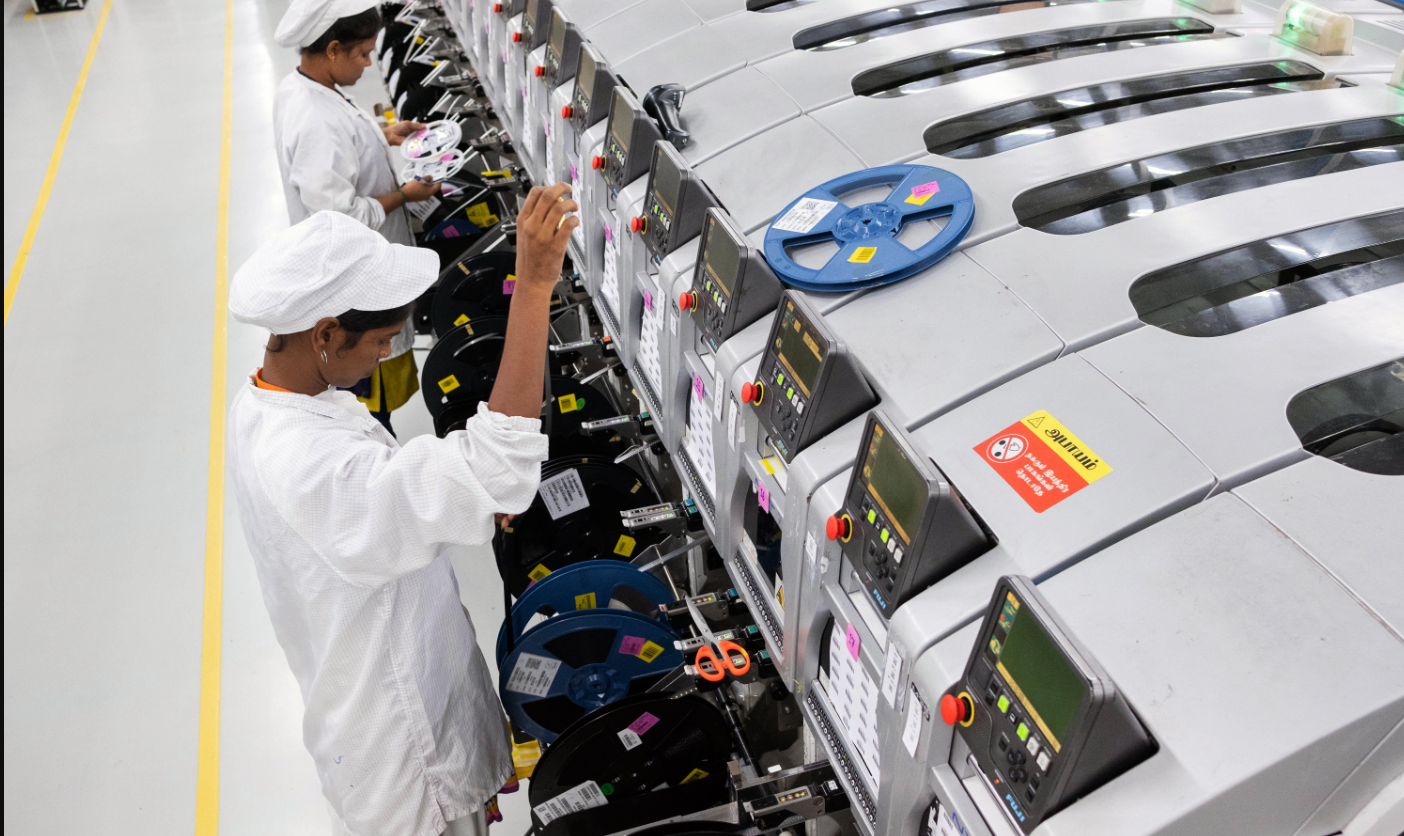
The Indian mobile phonemarket has achieved a significant milestone, with 99.2% of the devices used within the country now being manufactured locally.
This impressive figure was recently shared by Union Minister Ashwini Vaishnaw, indicating a major shift in India’s approach tomobile phone production.
Growth and Value of India’s Mobile Manufacturing
Met Mobile industry to review progress.
📱Industry has grown 20 times in 9 years.
👉2014: 78% import dependent
👉2023: 99.2% of all mobiles sold in India are ‘Made In India’. pic.twitter.com/SxUeDwNjsn
— Ashwini Vaishnaw (@AshwiniVaishnaw) November 25, 2023
The value of India’s mobile manufacturing industry has surged to $44 billion which is all but a demonstration of the country’s technological prowess.
India is not only increasing its production volumes but also advancing up the value chain with various mobile phone components now being produced domestically.
India has now emerged as the second-largest producer of mobile phones globally, a significant leap from just 19 percent of shipments being ‘Made in India’ in 2014.
Government’s Ambitious Targets and Global Participation
Now the country is setting higher goals. India’s ambitious target is to manufacture $300 billion worth of electronics products by the 2025-26 fiscal year.
The government’s production-linked incentive (PLI) schemes are likely to play a pivotal role in attracting global manufacturers and diversifying the country’s manufacturing capabilities.
Apple, a major player in the global smartphone market, has been significantly expanding its manufacturing footprint in India.
The company reportedly aims to make India a very valuable market and increase production to over $40 billion in the next 4-5 years.
India’s Mobile Manufacturing Industry Soars with 99.2% of Phones Made Locally
“There are some big leaders in the Opposition who still believe that mobile phones are imported. They forget that today 99.2 percent of mobile phones used in India are made in India,” Vaishnaw said to reporters on 27th November at Tata’s iPhone plant in Tamil Nadu’s Hosur.
Google, too, has joined the trend, announcing plans to manufacture its Pixel smartphones in India.
For now, the company will initiate this process with its flagship Pixel 8and Pixel 8 Pro, with the first units expected to roll out in 2024.
India’s Semiconductor Program and Employment Impact
Vaishnaw also highlighted the progress in India’s semiconductor program and the positive impact of mobile phone industry growth on employment.
The construction of plants for chip manufacturing is reportedly progressing well.
In 2022, the ‘Make in India’ initiative saw mobile phone shipments surpass 2 billion units, marked by a Compound Annual Growth Rate (CAGR) of 23 percent over the last nine years.
This growth is attributed to factors like strong domestic demand, increased digital literacy, and supportive government policies.
FAQs
What percentage of mobile phones are manufactured in India?
In India, 99.2% of mobile phones used are manufactured within the country. This marks a significant increase from previous years and demonstrates India’s growing capabilities in mobile phone production.
What is the current value of India’s mobile manufacturing industry?
The mobile manufacturing industry in India has reached a value of $44 billion, showcasing substantial growth and positioning India as the world’s second-largest producer of mobile phones.
What are India’s future goals for electronics manufacturing?
India aims to manufacture $300 billion worth of electronics products by the fiscal year 2025-26. To achieve this, the government is utilizing production-linked incentive (PLI) schemes to attract global manufacturers and enhance local production.
How are global tech companies contributing to India’s manufacturing growth?
Global companies like Apple and Google are significantly expanding their manufacturing in India. Apple plans to increase its production to over $40 billion in the next 4-5 years, while Google intends to start manufacturing its Pixel smartphones, including Pixel 8 and Pixel 8 Pro, in India by 2024.