
Home Blog Page 47

Leaked Image Suggests Galaxy S26 Ultra Might Borrow iPhone 17 Pro’s Bold Orange Colour, Netizens Aren’t Thrilled

0

Highlights

  • A Reddit image suggests Samsung’s Galaxy S26 Ultra may adopt a vibrant orange colour similar to the iPhone 17 Pro’s Cosmic Orange.
  • The intense hue and timing have led to accusations of mimicking Apple’s design choices.
  • Leak’s authenticity is unconfirmed.
 Dummies of Galaxy S26 Ultra leaked online. (Image credit - User Direct-Till-2680 on Reddit)
Dummies of Galaxy S26 Ultra leaked online. (Image credit – User Direct-Till-2680 on Reddit)

Orange colour in smartphones isn’t entirely a new concept but this year it has been making headlines, thanks to buzz around the iPhone 17 Pro series. The striking, extreme orange iPhone colour has been a point of discussion amongst tech enthusiasts and casual customers alike. And now, a new leak hints that Samsung may be taking a page from Apple’s playbook when it comes to colour choices for its upcoming Galaxy S26 Ultra. And no one is understandably thrilled about it.

Is Galaxy S26 Ultra Getting an iPhone 17-Like Orange Colour?

The Reddit post by user Direct-Till-2680 on r/samsunggalaxy

A leaked image on Reddit has started the discourse that Samsung could offer a similarly bold orange variant for its next flagship smartphone.

The leak comes from Reddit user Direct-Till-2680, who shared a composite image allegedly showing Galaxy S26 Ultra dummy units. One of these units appears in an eye-catching, bright orange shade, much more vibrant than the subtle orange tones Samsung has previously used.

While some comments on the post have started accusing Samsung of copying Apple, it’s worth noting that the brand has offered orange models in the past. For instance, the Galaxy S24 series was available in an online-exclusive orange colour, though it featured a much softer hue.

The alleged S26 Ultra dummy, however, displays an intense orange finish that strongly resembles the Cosmic Orange seen on Apple’s iPhone 17 Pro lineup.

 iPhone 17 Pro. (Image credit - Apple)
iPhone 17 Pro. (Image credit – Apple)

The comparisons don’t end there. Last year, Samsung launched its Galaxy Watch Ultra, which drew attention for looking remarkably similar to the Apple Watch Ultra, further fueling the narrative that Samsung might be following Apple’s design direction.

That said, not everyone is convinced about the leak’s authenticity.

Renowned leakster Steve H.McFly @OnLeaks on X (formerly Twitter) questioned the image’s credibility, claiming it was “likely an AI-generated picture.”

Online Reactions

The alleged leak has also sparked mixed reactions online, with many users expressing disappointment over the supposed imitation. Redditor losplatanos1 commented, “That color has to be a joke.”

image

Another user, TypicalWeirdoSOS, added, “Almost every huge phone company is trying to be like Apple, originality is dead.”

image

Similarly, user Innocent-Bystander94 questioned, “Bro not the orange. Not like this. The Apple copying allegations are going to continue hard with this. The fuck is going on in South Korea? Did they fire all their designers?”

image

While the authenticity of this leak remains uncertain, it has undoubtedly stirred conversation about Samsung’s upcoming Galaxy S26 Ultra design choices.

FAQs

Q1. Is Samsung planning to release the Galaxy S26 Ultra in a bold orange colour?

Answer. A leaked Reddit image suggests Samsung may introduce a vibrant orange variant for the Galaxy S26 Ultra, similar to the iPhone 17 Pro’s Cosmic Orange.

Q2. Has Samsung used orange colours in its smartphones before?

Answer. Yes, Samsung previously offered softer orange tones, such as the online-exclusive orange variant in the Galaxy S24 series, though the new leak shows a much bolder shade.

Q3. How have people reacted to the leaked orange Galaxy S26 Ultra image?

Answer. Online reactions have been mixed, with some users accusing Samsung of copying Apple and others questioning the authenticity of the leak, which may be AI-generated.

Also Read

https://www.mymobileindia.com/samsung-galaxy-s26-camera-upgrades-look-minimal-but-ultra-model-to-get-privacy-display/

https://www.mymobileindia.com/samsung-galaxy-s26-series-camera-protective-films-leak-ahead-of-launch/


Jio Launches Affordable JioBharat Safety Phones and Free AI Classroom Programme at IMC 2025

0

Highlights

  • Jio’s IMC 2025 announcements include JioBharat Safety Phones priced from ₹799.
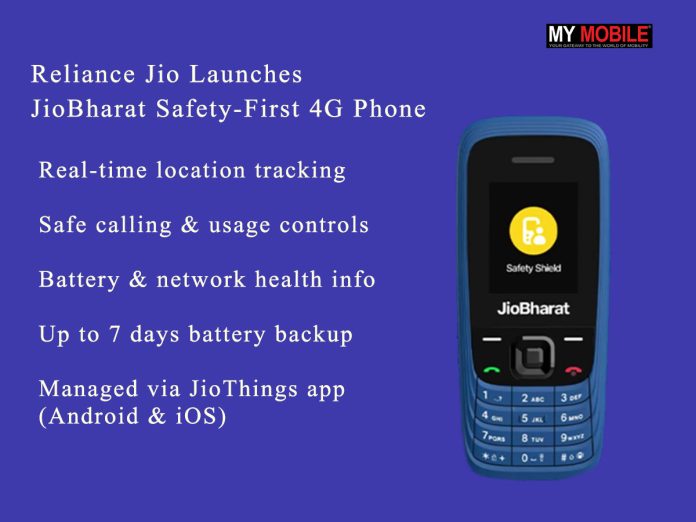
  • These phones offer location tracking, caller control, and up to 7-day battery life, ideal for kids, seniors, and women.
  • Jio AI Classroom also announced with free 4-week AI course via JioPC and Jio Institute.
  • AI Classroom will offer hands-on learning, video modules, and a capstone project with certification.
image
Reliance Jio made some interesting announcements at the India Mobile Congress 2025. (Image credit – Unknown)

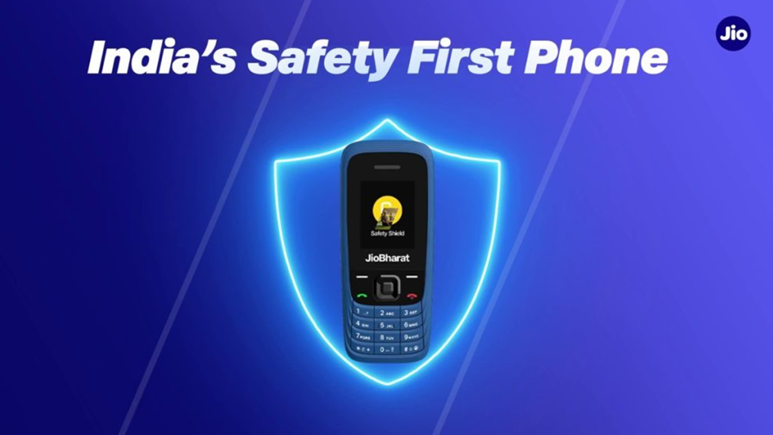
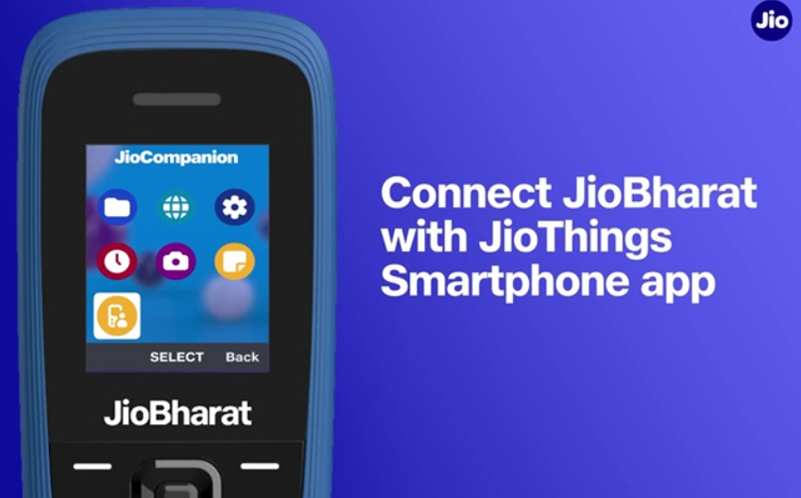
Reliance Jio, at the India Mobile Congress 2025 (IMC 2025), introduced a new line of JioBharat Phones designed with safety-focused features. Alongside, the company also announced the Jio AI Classroom programme aimed at promoting AI education in India.

The company said these new safety-first phones are ideal for children, elderly users, and women, featuring location tracking, usage management controls, and up to seven days of battery life on a single charge.

JioBharat Phones – Price and Safety Features

- The previously launched JioBharat phone in the picture. (Image credit - Reliance Jio)
The previously launched JioBharat phone in the picture. (Image credit – Reliance Jio)

The JioBharat Safety-First Phones start at an affordable price of Rs. 799 and are now available for purchase across Jio Stores, JioMart, Amazon, Swiggy Instamart, and other offline retail outlets in India.

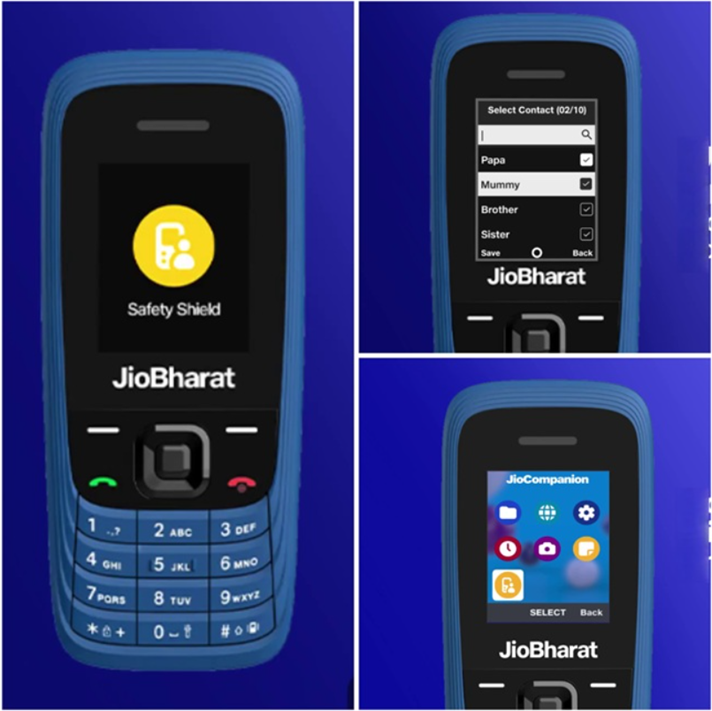
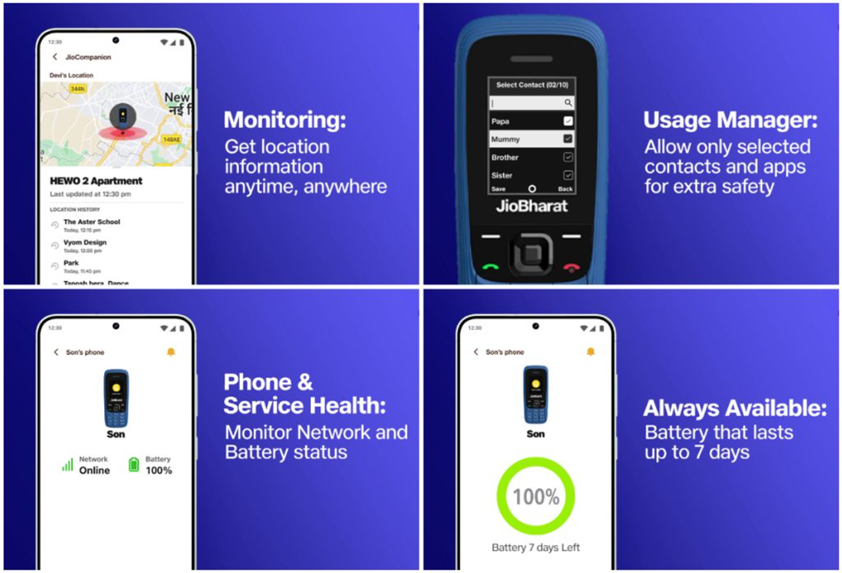
According to Jio, these handsets are built to ensure better safety and digital well-being for families. Parents can buy these phones for their children to help them stay connected while avoiding unnecessary exposure to social media and unknown contacts. The Usage Manager feature allows guardians to control who can call or message their children or elderly parents, while blocking unknown numbers and managing potential distractions.

In addition, the phones come with real-time location sharing capabilities, making it easier for users to stay in touch and ensure the safety of their loved ones. Jio stated that the handsets are also useful for women, offering greater peace of mind with location tracking and caller control features.

The company further highlighted that the JioBharat Safety-First Phones are simple to operate, making them suitable for seniors, and allow caretakers to monitor the health and location of elderly family members. Each device promises up to seven days of battery backup, reducing the need for frequent charging.

Jio AI Classroom – Curriculum and Access Details

Alongside the new phones, Jio also introduced its Jio AI Classroom. It is a free foundation course powered by JioPC and developed in collaboration with Jio Institute. The beginner-friendly programme is designed to help students explore the world of artificial intelligence (AI) and gain hands-on experience with popular AI tools.

According to the company, the course offers interactive, video-based learning modules covering AI fundamentals, real-world use cases, and creative applications. Learners will also complete practical assignments and anAI-powered” capstone project to apply their knowledge.

JioPC users will receive additional benefits such as extended learning content, early access to advanced AI tools, and a certificate from Jio Institute, while other learners will earn a completion badge.

The four-week curriculum of the Jio AI Classroom is structured as follows –

  • Week 1: Introduction to AI and prompt engineering
  • Week 2: Using AI for learning and creativity
  • Week 3: Leveraging AI for communication and building projects
  • Week 4: Completion of the capstone project

Students can access the course via PCs, laptops, smart TVs, or through Jio set-top boxes using JioPC. Enrolment is open on Jio’s official website.

FAQs

Q1. What are the key features of the new JioBharat Safety Phones?

Answer. JioBharat Safety Phones offer location tracking, caller control, usage management, and up to 7-day battery life, ideal for kids, seniors, and women.

Q2. How much do the JioBharat Safety Phones cost and where can I buy them?

Answer. They start at ₹799 and are available via Jio Stores, JioMart, Amazon, Swiggy Instamart, and offline retailers across India.

Q3. What does the Jio AI Classroom programme include?

Answer. It’s a free 4-week AI course with video modules, real-world use cases, and a capstone project. JioPC users get extra content and certification from Jio Institute.

Also Read

https://www.mymobileindia.com/jiohotstar-ai-features-riya-voiceprint-jiolenz-maxview3/

https://www.mymobileindia.com/jio-announces-new-prepaid-plans-starting-at-just-rs-48-with-free-cloud-gaming/

OnePlus 15s Specifications Leaked, Snapdragon 8 Elite Gen 5 Chip, 7,000mAh Battery and 100W Charging Tipped

0

Highlights

  • OnePlus 15s leak reveals it features the Snapdragon 8 Elite Gen 5 chip and retains the 6.32-inch 1.5K OLED display from the OnePlus 13s.
  • Major upgrade to include 7,000mAh+ battery and 100W fast charging, surpassing the 13s’ 5,850mAh and 80W setup.
  • The phone is rumoured to include a metal mid-frame, ultrasonic fingerprint sensor, and minimalist camera module.
OnePlus 13s in the picture for reference. (Image credit - OnePlus)
OnePlus 13s in the picture for reference. (Image credit – OnePlus)

The OnePlus 15s appears to be in development as the next iteration in the company’s “s” lineup. Just to recall, predecessor OnePlus 13s debuted in India earlier this year with a Snapdragon 8 Elite chipset. Anyhow, a fresh leak has now revealed the key specifications of the upcoming model, suggesting major upgrades in performance and battery capacity.

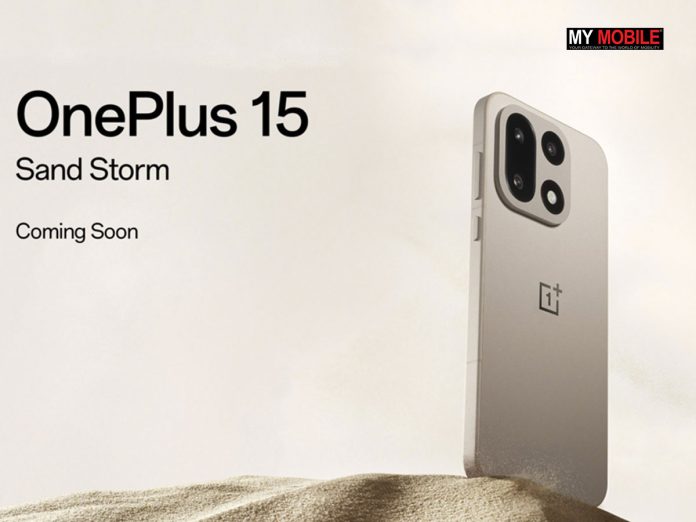
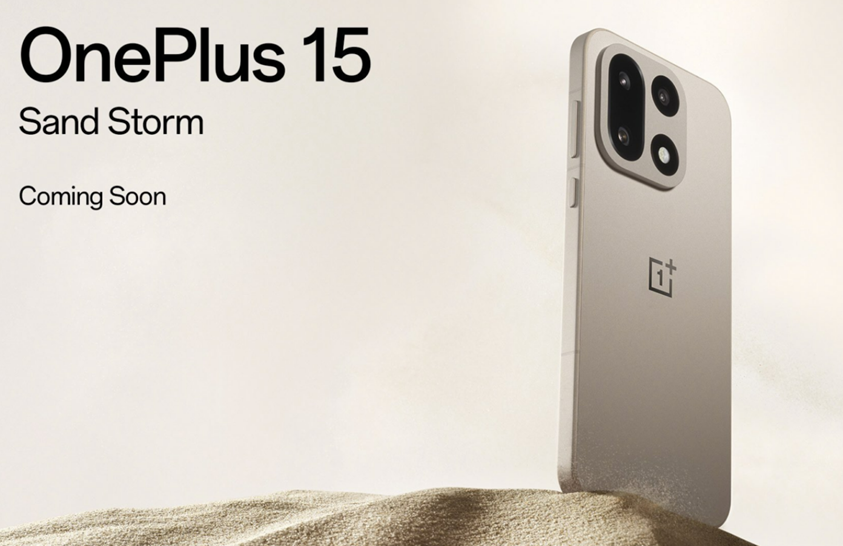
While OnePlus has yet to confirm details about the OnePlus 15s, the upcoming flagship OnePlus 15 is officially set to launch in China later this month. OnePlus 15 will feature Qualcomm’s Snapdragon 8 Elite Gen 5 SoC. Here’s what the latest leaks reveal about the 15s.

OnePlus 15s – Key Features (Expected)

image
An image posted by the leaker. (Image credit – @Sudhanshu1414 on X)

According to tipster Sudhanshu Ambhore @Sudhanshu1414 on X (formerly Twitter), the OnePlus 15s will retain the same 6.32-inch flat 1.5K OLED display seen on the OnePlus 13s. However, the new model is expected to be powered by Qualcomm’s latest Snapdragon 8 Elite Gen 5 chipset, offering improved efficiency and higher processing power compared to its predecessor.

The most notable upgrade appears to be in the battery department. The OnePlus 15s is tipped to pack a massive 7,000mAh+ battery, which marks a major jump from the 5,850mAh unit found on the OnePlus 13s. The handset is also said to support 100W wired fast charging, promising significantly quicker top-ups. Other rumoured highlights include an ultrasonic fingerprint sensor and a metal mid-frame for a more premium build.

The OnePlus 15s is also expected to sport a minimalist camera module, mirroring the design language of the upcoming OnePlus 15 flagship.

Adding to the leaks, tipster @gadgetsdata on X has shared more details about the global variant of the device, confirming some of the previously reported specifications.

Following OnePlus’ usual release strategy, the OnePlus 15T is expected to debut first in China, while the OnePlus 15s could launch later in global markets, including India. This would mirror the company’s earlier approach, where the OnePlus 13s arrived in India as a rebranded version of the China-exclusive OnePlus 13T.

image

Caption – OnePlus 15T Concept Render. (Image credit – Gizmochina)

To recall, the OnePlus 13s launched in India in June 2025, priced at Rs. 54,999 for the 12GB RAM + 256GB storage configuration. It came in Black Velvet, Green Silk, and Pink Satin colour options and ran on the Snapdragon 8 Elite SoC paired with up to 512GB of internal storage. The device also featured a customisable Plus Key for quick access to sound modes, AI functions, the camera, or flashlight.

For optics, the OnePlus 13s sported a dual rear camera setup with a 50-megapixel Sony LYT-700 primary sensor and a 50-megapixel telephoto lens, while the front housed a 32-megapixel selfie camera. The device also supported 80W fast charging.

FAQs

Q1. What processor will power the OnePlus 15s?

Answer. The OnePlus 15s is expected to feature Qualcomm’s Snapdragon 8 Elite Gen 5 chipset, offering improved performance and efficiency over its predecessor.

Q2. How battery and charging of upcoming OnePlus 15s compare to the OnePlus 13s?

Answer. The OnePlus 15s is tipped to include a massive 7,000mAh+ battery with 100W fast charging, a significant upgrade from the 13s’ 5,850mAh battery and 80W charging.

Q3. When and where is the OnePlus 15s expected to launch?

Answer. Following OnePlus’ usual strategy, the 15s may launch globally including India after the China-first debut of the OnePlus 15T, similar to how the 13s followed the 13T

Also Read

https://www.mymobileindia.com/oneplus-13s-launched-in-india-with-snapdragon-8-elite-5850mah-battery-and-new-plus-key-button/

https://www.mymobileindia.com/oneplus-15-global-launch-date-tipped-for-november-13-massive-7300mah-battery-and-snapdragon-8-elite-gen-5-confirmed/

HMD Pulse 2 Pro Leak Reveals 50MP Front Camera, 120Hz Display and Android 15 Ahead of Launch

0

Highlights

  • HMD Pulse 2 Pro leaked renders show a repairable build with a horizontal camera module and purple variant.
  • The device is expected to feature a 50MP front camera, dual rear cameras with OIS, Unisoc T615 chip, up to 8GB RAM, 256GB storage, Android 15 and a 6.7-inch Full-HD+ IPS display with a 120Hz refresh rate.
  • It is expected to launch soon in three colours starting at CHF 169 (~₹18,000) for the base model.
 HMD Pulse 2 Pro leaked render. (Image credit - @smashx_60 on X)
HMD Pulse 2 Pro leaked render. (Image credit – @smashx_60 on X)

The HMD Pulse 2 Pro has been making headlines for weeks. The phone was initially expected to debut at IFA Berlin 2025 but fresh leaks have now revealed its design renders and full specifications ahead of the official launch. Here’s everything we know about the upcoming phone based on the recent leak.

HMD Pulse 2 Pro – Design and Key Features (Leaked)

According to tipster HMD_MEME’S @smashx_60, who shared the details on X (formerly Twitter), the upcoming HMD Pulse 2 Pro will feature a refreshed design and come in a purple colour variant. The render shows slightly rounded corners and a raised horizontal camera module stretching across the top of the back panel, which is reminiscent of Apple’s new “Camera Plateau” design seen on the iPhone 17 series.

The device reportedly uses a plastic frame and is built with a repairable design, staying true to HMD’s sustainability focus.

It could sport a 6.7-inch Full-HD+ IPS display with a 120Hz refresh rate, ensuring smoother scrolling and better visuals for multimedia and gaming.

In terms of optics, the HMD Pulse 2 Pro is expected to feature a dual rear camera setup with a 50-megapixel primary sensor supported by Optical Image Stabilisation (OIS), paired with a 2-megapixel secondary sensor. On the front, the device is tipped to include a 50-megapixel selfie camera.

Under the hood, the handset might be powered by a Unisoc T615 processor, coupled with 6GB or 8GB of RAM and 128GB or 256GB of internal storage options.

The HMD Pulse 2 Pro is rumoured to run Android 15 out of the box and come with an IP54 rating for dust and splash resistance. It is also expected to include dual speakers, NFC support, and two microphones for clearer audio. A customisable button may also be part of the design, allowing users to assign shortcuts or app functions.

Powering the device could be a 5,000mAh battery with 20W fast charging support, promising decent endurance for day-to-day use.

HMD Pulse 2 Pro – Price and Availability (Expected)

Tipster revealed that the smartphone is said to launch in Glacier Green, Midnight Black, and Twilight Purple colour options. As for the pricing, the HMD Pulse 2 Pro was preciously spotted on a retailer’s website listed at CHF 169 (approximately Rs. 18,000) for the 6GB RAM + 128GB storage variant.

While there’s no official confirmation yet, it’s expected to launch soon as the successor to the HMD Pulse Pro, which was introduced in April 2025.

FAQs

Q1. What are the standout camera features of the HMD Pulse 2 Pro?

Answer. The HMD Pulse 2 Pro is expected to feature a 50MP front camera for high-quality selfies and video calls, along with a dual rear setup that includes a 50MP primary sensor with Optical Image Stabilisation (OIS) and a 2MP secondary sensor.

Q2. Which software and hardware specs are expected in the HMD Pulse 2 Pro?

Answer. The device may run Android 15 out of the box and be powered by a Unisoc T615 processor. It’s tipped to offer 6GB or 8GB RAM options, with 128GB or 256GB of internal storage, plus a 5,000mAh battery supporting 20W fast charging.

Q3. What is the expected price and availability of the HMD Pulse 2 Pro?

Answer. The phone was spotted on a retailer’s site at CHF 169 (around ₹18,000) for the 6GB + 128GB variant. It’s expected to launch soon in Glacier Green, Midnight Black, and Twilight Purple colour options.

Also Read

https://www.mymobileindia.com/hmd-touch-4g-hybrid-phone-with-touch-display-and-4g-support-launched-in-india-for-rs-3999/

https://www.mymobileindia.com/hmd-reportedly-working-on-nokia-800-tough-2nd-gen-after-six-years/

Google Expands AI Mode to 200+ Countries and 35+ Languages, Google AI Plus Plan Expands to 36 More Countries

0

Highlights

  • Google’s AI Mode in Search now supports over 35 new languages and is live in 200+ regions, offering smarter, conversational search powered by Gemini.
  • The AI Mode interprets local dialects and cultural nuances, delivering more natural, regionally relevant responses beyond simple translations.
  • Google’s AI Plus subscription expands to 77 countries, offering enhanced access to Gemini tools, image/video generation, cloud storage, and family sharing.
Google Expands AI Mode to more regions while adding support for more languages, AI Plus Plan also reaches more countries. (Image credit - Google)
Google Expands AI Mode to more regions while adding support for more languages, AI Plus Plan also reaches more countries. (Image credit – Google)

Google is broadening the reach of its AI Mode in Search, bringing the advanced AI-powered experience to more people around the world. Alongside the AI Mode expansion, Google has also extended its AI Plus plan to 36 new countries.

Here’s more on both new expansion announcements.

Google’s AI Mode Expands to More Languages and Regions

Google announced that its AI Mode feature will now be available in over 35 additional languages and across 40 new countries and territories, expanding access to more than 200 regions globally.

With this latest rollout, the company aims to make its AI Mode more inclusive and accessible, transforming how users interact with Search. The feature will now be available to people regardless of their language or location, allowing for a context-aware, conversational, and intelligent search experience on a larger scale.

In an announcement post reposted by CEO Sundar Pichai on X (formerly Twitter), Robby Stein, VP Product Google Search confirmed that the AI Mode is now live across multiple regions. It includes several parts of Europe, giving users smarter, more natural ways to find information and explore content online.

The global expansion of AI Mode is driven by Google’s Gemini models, which use natural language understanding and multimodal capabilities to deliver more intuitive results. Gemini allows AI Mode to handle a wide range of user interactions, whether typing, speaking, or visual inputs and to understand complex or conversational queries with precision.

Unlike traditional keyword searches, users can ask long, detailed questions, and Google’s AI Mode will respond with accurate and meaningful answers in their preferred language.

Smarter Understanding of Local Languages and Context

A standout element of this expansion is AI Mode’s improved understanding of local languages, dialects, and cultural nuances. Rather than relying solely on direct translations, Google’s AI Mode interprets regional context and tone, ensuring that responses feel authentic, natural, and locally relevant.

Google AI Plus Plan Expands to 36 More Countries

Google AI Plus Plan Expands to 36 More Countries. (Image credit - Google)
Google AI Plus Plan Expands to 36 More Countries. (Image credit – Google)

In a separate announcement, Google has also extended its AI Plus plan to 36 new countries. Originally available in 41 regions, the plan now covers a total of 77 countries.


The Google AI Plus plan gives users enhanced access to the latest AI tools and features for a monthly fee of R$24.99 BRL, offering greater value for those who use Google’s creative and productivity platforms. As a promotional offer, new subscribers can get 50% off for the first six months.

Key benefits of the plan include –

  • Increased limits for Google’s image generation and editing model, codenamed Nano Banana, in the Gemini app.
  • Expanded access to Google’s video generation model, Veo 3 Fast, available in Gemini and AI creative tools like Whisk and Flow.
  • Integration of Gemini in Mail, Docs, Sheets, and other Google apps.
  • Higher usage limits in NotebookLM.
  • 200GB of shared cloud storage across Google Photos, Drive, and Gmail.
  • The ability to share plan benefits with up to five family members.

Google AI Plus plan is now available in the following 77 countries –

  1. Albania
  2. Algeria
  3. Angola
  4. Argentina
  5. Armenia
  6. Azerbaijan
  7. Bangladesh
  8. Benin
  9. Bolivia
  10. Bosnia and Herzegovina
  11. Botswana
  12. Brazil
  13. Bulgaria
  14. Burkina Faso
  15. Cambodia
  16. Cameroon
  17. Colombia
  18. Costa Rica
  19. Côte d’Ivoire
  20. Dominican Republic
  21. Ecuador
  22. Egypt
  23. El Salvador
  24. Fiji
  25. Gabon
  26. Georgia
  27. Ghana
  28. Guatemala
  29. Haiti
  30. Honduras
  31. Indonesia
  32. Iraq
  33. Jamaica
  34. Jordan
  35. Kazakhstan
  36. Kenya
  37. Kyrgyzstan
  38. Laos
  39. Lebanon
  40. Macedonia
  41. Malaysia
  42. Mali
  43. Maldives
  44. Mauritius
  45. Mexico
  46. Moldova
  47. Morocco
  48. Mozambique
  49. Namibia
  50. Nepal
  51. Nicaragua
  52. Nigeria
  53. Pakistan
  54. Papua New Guinea
  55. Paraguay
  56. Peru
  57. Philippines
  58. Romania
  59. Rwanda
  60. Senegal
  61. Serbia
  62. South Africa
  63. Sri Lanka
  64. Tajikistan
  65. Tanzania
  66. Thailand
  67. Togo
  68. Tunisia
  69. Turkey
  70. Uganda
  71. Ukraine
  72. Uzbekistan
  73. Venezuela
  74. Vietnam
  75. Yemen
  76. Zambia
  77. Zimbabwe

FAQs

Q1. What is Google’s AI Mode in Search and where is it now available?

Answer. Google’s AI Mode offers a conversational, context-aware search experience powered by Gemini models. It’s now live in over 200 regions and supports 35+ languages, including many parts of Europe.

Q2. How does Google AI Mode improve search results for local languages?

Answer. AI Mode understands regional dialects and cultural nuances, going beyond direct translations to deliver natural, locally relevant responses tailored to each user’s language and context.

Q3. What does the Google AI Plus plan include and where is it available?

Answer. The AI Plus plan is now available in 77 countries and offers enhanced access to Gemini tools, image and video generation, 200GB cloud storage, and family sharing. All of this iss for R$24.99 BRL/month with a 50% discount for new users.

Also Read

https://www.mymobileindia.com/google-search-adds-ai-mode-in-india-with-voice-image-and-multimodal-support/

https://www.mymobileindia.com/google-search-to-redirect-all-country-domains-to-google-com-globally/

NPCI Introduces Biometric Authentication for UPI Payments, Replacing PINs with Fingerprint and Face ID

0

Highlights

  • NPCI now allows users to approve UPI transactions using fingerprint or Face ID.
  • Biometric verification simplifies UPI setup and can also be used for ATM withdrawals, PIN resets.
  • NPCI’s move enhances fraud protection using device-level cryptographic checks and bank-side verification.

Caption – Now UPI transactions can be done with fingerprint or Face ID. (Image credit – Unknown)

The National Payments Corporation of India (NPCI) has officially rolled out biometric authentication for UPI payments. It will now allow users to approve transactions using fingerprint or facial recognition instead of the traditional 4 or 6 digit PIN. The feature was unveiled at the Global Fintech Fest 2025 held on October 7 in Mumbai.

Biometric For UPI Payments

The new NPCI system, which performs biometric verification directly on the user’s device, is designed to offer a faster, safer, and more seamless payment experience. It will serve as an alternative to PIN-based authentication, which has been in use since UPI’s launch in April 2016.

The launch was announced by M Nagaraju M, Secretary, Department of Financial Services, Ministry of Finance. He described the feature as a “secure and user-friendly evolution” of UPI authentication.

According to NPCI, biometric authentication can also be used for setting or resetting UPI PINs, and even for cash withdrawals at ATMs using UPI. Users who wish to use this feature will need to opt in voluntarily, giving them full control over their preferred authentication method.

“Each transaction is independently verified by the issuing bank using robust cryptographic checks, ensuring the highest level of safety while keeping the experience simple and seamless,NPCI said in its official statement.

Simplifying Onboarding for New Users and Senior Citizens

The introduction of biometrics is expected to significantly simplify UPI onboarding, especially for first-time users and senior citizens.

Until now, setting up a UPI PIN required users to either enter debit card details or go through Aadhaar OTP verification. With the new Aadhaar-based Face Authentication feature, this process becomes faster and more inclusive, particularly benefiting those who don’t have easy access to debit cards.

UPI’s authentication framework consists of two factors, which includes device binding via SMS that acts as the primary factor and PIN or biometric verification as the second factor.

Addressing Security and Fraud Concerns

The move towards biometric authentication comes amid the Reserve Bank of India’s (RBI) increasing concerns about PIN-related fraud in UPI transactions.

RBI has been urging financial institutions to adopt alternative second-factor authentication methods such as biometric verification or behavioural risk analysis, instead of relying solely on PINs and OTPs.

NPCI has been working on alternative authentication methods for several years. In 2021, it hosted the NPCI PayAuth Challenge, a hackathon that invited startups to design new forms of secure payment authentication. Among the winners were Tech5, Juspay, MinkasuPay, and Infobip. These companies were later allowed to present proofs of concept (POCs) to the UPI Steering Committee, which includes representatives from major banks and UPI apps.

While both Tech5 and MinkasuPay showcased their solutions, banks preferred MinkasuPay’s model, as it required minimal technical adjustments to existing systems.

Meanwhile, the Unified Payments Interface (UPI) continues to dominate India’s digital payments landscape, accounting for nearly 85% of all online transactions. Each month, the platform processes over 20 billion transactions, amounting to ₹25 lakh crore in value.

FAQs

Q1. What is the new biometric authentication feature for UPI?

Answer. NPCI now allows users to authenticate UPI payments using fingerprint or Face ID instead of a PIN. This device-level biometric verification offers a faster, safer, and more seamless payment experience.

Q2. Can biometric authentication be used for other UPI functions?

Answer. Yes, users can use biometrics to set or reset their UPI PIN and even withdraw cash from ATMs via UPI. Opting in is voluntary, giving users full control over their preferred method.

Q3. How does Biometric UPI benefit senior citizens and new users?

Answer. Biometric onboarding simplifies UPI setup by replacing debit card or OTP-based verification with Aadhaar-based Face Authentication, making it more inclusive and accessible, especially for those without debit cards.

Also Read

https://www.mymobileindia.com/airtel-payments-bank-collaborates-with-noise-and-npci-to-unveil-its-upcoming-ncmc-enabled-smartwatch/

https://www.mymobileindia.com/npci-launches-upi-one-world-to-simplify-digital-payments-for-nris-and-tourists/

Qualcomm Announces Acquisition of Arduino, Launches New Arduino UNO Q Board

0

Highlights

  • Qualcomm plans to acquire Arduino and integrate it with Edge Impulse and Foundries.io.
  • Arduino will remain independent and continue supporting open-source development.
  • The new Arduino UNO Q board features a dual-core architecture powered by Qualcomm’s Dragonwing™ processor, supporting AI-driven applications.
  • Also debuts Arduino App Lab, a unified IDE with Edge Impulse integration for seamless AI model development.
 Qualcomm to Acquire Arduino. (Image credit - Qualcomm Press N
Qualcomm to Acquire Arduino. (Image credit – Qualcomm Press N

Qualcomm has officially revealed plans to acquire Arduino, one of the world’s most prominent open-source hardware and software platforms. The acquisition marks a significant step in Qualcomm’s ongoing strategy to strengthen its edge computing ecosystem. Announced in a Press Note, this move aims to give developers broader access to its advanced technology portfolio.

The agreement follows Qualcomm’s recent integrations of Edge Impulse and Foundries.io, further demonstrating its vision to establish a comprehensive, full-stack platform that connects hardware, software, and cloud services.

Completion of the deal remains subject to regulatory approvals and other customary closing conditions.

Qualcomm’s Strategic Vision and Arduino’s Future

According to Qualcomm, this acquisition will bring together Qualcomm Technologies’ expertise in processing, AI, graphics, and computer vision with Arduino’s accessible, developer-friendly ecosystem. The goal is to enhance productivity and innovation across various industries and applications.

Despite the acquisition, Arduino will retain its independent identity, continuing its open-source mission and support for a diverse range of microcontrollers and microprocessors from multiple semiconductor manufacturers.

The move will also benefit Arduino’s global community of over 33 million active users, who will gain access to Qualcomm’s powerful technology stack and worldwide developer ecosystem. This integration aims to make it easier for entrepreneurs, students, and professionals to move from rapid prototyping to full-scale commercialisation.

Commenting on this, Group General Manager, Automotive, Industrial and Embedded IoT, Qualcomm Technologies Inc, Nakul Duggal said, “With our acquisitions of Foundries.io, Edge Impulse, and now Arduino, we are accelerating our vision to democratize access to our leading‑edge AI and computing products for the global developer community. Arduino has built a vibrant global community of developers and creators. By combining their open-source ethos with Qualcomm Technologies’ portfolio of leading edge products and technologies, we’re helping enable millions of developers to create intelligent solutions faster and more efficiently—including a path towards global commercialization by leveraging the scale of our ecosystem.”

Introducing the Arduino UNO Q and App Lab

The new Arduino UNO Q is the first dual-brain board powered by the Qualcomm Dragonwing platform. (Image credit - Qualcomm Press Note)
The new Arduino UNO Q is the first dual-brain board powered by the Qualcomm Dragonwing platform. (Image credit – Qualcomm Press Note)

Alongside the acquisition announcement, Qualcomm and Arduino jointly unveiled the Arduino UNO Q. It is a new-generation single-board computer designed for intelligent and connected applications.

On this, Arduino CEO Fabio Violante said, “Joining forces with Qualcomm Technologies allows us to supercharge our commitment to accessibility and innovation. The launch of UNO Q is just the beginning— we’re excited to empower our global community with powerful tools that make AI development intuitive, scalable, and open to everyone.”

The UNO Q introduces a “dual brain” architecture, combining a Linux-capable microprocessor with a real-time microcontroller, both powered by Qualcomm’s Dragonwing™ QRB2210 processor. The board runs a complete Linux environment and is built to support AI-driven vision and sound applications, including smart home automation, robotics, and industrial control systems.

In addition to maintaining compatibility with the existing Arduino IDE, the UNO Q is the first board to feature the new Arduino App Lab, a next-generation integrated development environment (IDE) that unifies development across Real-Time OS, Linux, Python, and AI workflows.

The Arduino App Lab also includes seamless integration with Edge Impulse. It enables developers to build, train, and deploy AI models for various use cases such as object detection, anomaly detection, and keyword spotting.

FAQs

Q1. What is Qualcomm’s goal in acquiring Arduino?

Answer. Qualcomm aims to strengthen its edge computing ecosystem by integrating Arduino’s developer-friendly platform with its advanced technologies in AI, graphics, and computer vision. This move supports Qualcomm’s broader strategy to democratize access to its tech stack and accelerate innovation across industries.

Q2. Will Arduino remain open-source after the Qualcomm acquisition?

Answer. Yes, Arduino will retain its independent identity and continue its open-source mission. It will keep supporting a wide range of microcontrollers and microprocessors from various semiconductor manufacturers, ensuring continuity for its global developer community.

Q3. What is the Arduino UNO Q and how is it different?

Answer. The Arduino UNO Q is a next-gen single-board computer featuring a “dual brain” architecture. It combines a Linux-capable microprocessor and a real-time microcontroller powered by Qualcomm’s Dragonwing™ QRB2210. It supports AI-driven applications and introduces the Arduino App Lab, a unified IDE for real-time, Linux, Python, and AI workflows.

Also Read

https://www.mymobileindia.com/qualcomm-launches-snapdragon-8-elite-gen-5-for-smartphones-snapdragon-x2-elite-series-for-high-performance-laptops/

https://www.mymobileindia.com/qualcomm-announces-snapdragon-w5-gen-2-and-w5-gen-2-wearable-platforms-with-satellite-connectivity/

WhatsApp Rolls Out AI Message Translation on iPhone, Supports 21 Global Languages

0

Highlights

  • WhatsApp now supports in-app message translation on iPhones, covering 21 global languages.
  • Users can press and hold any message to translate, download language packs for offline use, and manage them via Settings.
  • The feature works only for text in chats and not for media, documents, stickers, or locations.
 (Photo by Mariia Shalabaieva on Unsplash)
(Photo by Mariia Shalabaieva on Unsplash)

WhatsApp has officially introduced its AI-powered in-app message translation feature to iPhone users. Interestingly, this update comes weeks after first launching it on Android. The update is arriving with WhatsApp version 25.28.74 and allows users to instantly translate messages in 21 languages, making cross-language communication on the app smoother and more accessible.

Meta confirmed that the feature will reach all iOS users in the coming weeks, alongside support for Live Photos. Here’s more on this new feature

How to Use WhatsApp’s Translation Feature on iPhone?

image
Simply press and hold on any WhatsApp message to translate. (Image credit – Meta)

To check if the feature is available on your device, simply press and hold any message, tap on “More…”, and then select “Translate.” When using it for the first time, users must choose their source and target languages and download the necessary language packs.

Once downloaded, the translations can function offline without an active internet connection.

You can manage downloaded packs under Settings > Translate > Downloaded Languages, where users can add or remove language options anytime.

Supported Languages

The translation feature currently supports the following 21 languages, although the availability of specific languages may vary depending on your iOS version. The languages supported are –

  1. Arabic
  2. Chinese (Mandarin, Simplified)
  3. Chinese (Mandarin, Traditional)
  4. Dutch
  5. English (UK)
  6. English (US)
  7. French
  8. German
  9. Hindi
  10. Indonesian
  11. Italian
  12. Japanese
  13. Korean
  14. Polish
  15. Portuguese (Brazil)
  16. Russian
  17. Spanish
  18. Thai
  19. Turkish
  20. Ukrainian
  21. Vietnamese

What the WhatsApp AI Translation Tool Can and Can’t Do?

The new feature works for text messages in both individual and group chats, but it doesn’t support translation for media files including documents, stickers, GIFs, contacts, or shared locations.

Meta explains the feature’s functionality and limitations in its release, “You can translate messages you’ve sent or received in an individual or group chat into some languages. You can choose from the available languages to translate messages, but locations, documents, contacts, stickers, and GIFs can’t be translated. You’ll need a strong WiFi signal or cellular data, and ample storage space to translate.”

This update marks a major step forward for WhatsApp’s global communication capabilities, helping users bridge language barriers without leaving the app or depending on third-party tools. It’s also another sign of Meta’s growing AI integration across its messaging ecosystem, which includes previously rolled out features like AI-powered writing assistance tools and message summaries.

FAQs

Q1. What is WhatsApp’s new AI translation feature for iPhone?

Answer. It allows users to instantly translate messages in 21 global languages directly within the app, enhancing cross-language communication.

Q2. How can I use the translation feature on my iPhone?

Answer. Press and hold any message, tap “More…”, then select “Translate.” You’ll need to choose languages and download packs, which then work offline.

Q3. Are there any limitations to WhatsApp’s translation tool?

Answer. Yes, it only works for text messages in chats. It doesn’t support translation for media files, documents, stickers, GIFs, contacts, or shared locations.

Also Read

https://www.mymobileindia.com/whatsapp-to-introduce-usernames-for-enhanced-privacy-and-control-heres-how-it-will-work/

https://www.mymobileindia.com/whatsapp-rolls-out-live-photos-ai-chat-themes-new-stickers-document-scanner-and-more/

Paytm Launches AI-Based ‘Playback’ Feature That Turns Your Spending into Rap Songs, But Raises Privacy Concerns

0

Highlights

  • Paytm Playback transforms users’ monthly spending into personalised rap tracks using AI.
  • The feature is currently available to select high-transacting users via the Paytm app and marks the platform’s first consumer-facing AI tool.
  • The feature has sparked questions about data handling, consent, and transparency with no clear privacy protocols disclosed yet.

image

Popular digital payments platform Paytm has introduced a new feature called ‘Paytm Playback’, which lets users turn their monthly expenses into AI-generated rap songs. The announcement was made by Vijay Shekhar Sharma, Founder and CEO of Paytm, through a post on X (formerly Twitter). Here’s everything you need to know about this interesting new feature.

What is Paytm Playback?

According to the company, the feature creatively transforms users’ spending across categories such as shopping, food, travel, and utilities into musical rap tracks, offering a fun and engaging way to look at expense summaries.

The Paytm Playback feature is currently being rolled out to select high-transacting users as part of its beta launch.

Paytm stated, “Our Playback, India’s first AI-powered rap, brings a playful twist to expense tracking, making it easier to reflect on monthly spending. Young Indians today consume their world as content, and we saw an opportunity to turn routine expense statements into something engaging and relatable. We expect more users to tune in and reflect on their spending habits as they vibe to their rap song, setting them on the path toward greater financial awareness. As a trusted payments platform, we remain committed to introducing innovative solutions and smart tools that make managing finances effortless.”

How to Create a Paytm Rap Song?

Users can try out the Playback feature by following these steps –

  • Open the Paytm app on your smartphone.
  • Tap on the ‘Balance & History’ section from the home screen.
  • Under the ‘Payment History’ tab, look for the ‘Paytm Playback’ banner.
  • Tap on it and select ‘Let’s Go’ to let Paytm’s AI generate a personalised rap song based on your transactions.

If a user has made no payments through Paytm in the previous month, the feature will not generate a song. However, users can choose to set a reminder and try again the following month once new transactions are available.

Paytm’s First AI-Driven Feature

Sharma emphasised that Paytm Playback is the company’s first AI-powered consumer feature, marking a new step in how AI can enhance financial interactions. “AI will allow us to create products that weren’t possible before. Like making a song of your spends! And, we are raising the bar in consumer UPI payments,” he said.

The feature has quickly gained attention on social media with users sharing their AI-generated raps and humorous reactions. One user, Ujjwal Rastogi posted on X, “Just spent ₹54K to become a rap star… now my bank needs therapy.”

Data Privacy Concerns

While the new feature has created buzz online, it has also raised privacy concerns. Paytm has not yet shared details about the data protection measures or privacy protocols used in the Playback system.

Key questions remain unanswered including whether the feature is strictly opt-in, if users can withdraw consent or delete their generated songs, and which AI models are being used.

Moreover, Paytm has not clarified what transaction data is being processed such as merchant names, timestamps, locations, or payment amounts, or whether the system filters out sensitive information related to health, religion, or political donations.

FAQs

Q1. What is Paytm Playback and how does it work?

Answer. Paytm Playback is an AI-powered feature that turns users’ monthly spending across categories like food, travel, and shopping into personalised rap songs.

Q2. Who can access the Paytm Playback feature?

Answer. The feature is currently in beta and available to select high-transacting users. It can be accessed via the Paytm app under the ‘Balance & History’ section.

Q3. Are there any privacy concerns with Paytm Playback?

Answer. Yes, users have raised concerns about data handling and transparency. Paytm hasn’t yet clarified what transaction data is used or the privacy protocols in place

Also Read

https://www.mymobileindia.com/paytm-postpaid-on-upi-now-live-learn-how-to-use-the-new-pay-later-feature/

https://www.mymobileindia.com/paytm-payments-services-discontinues-ties-with-third-party-platforms-transitions-to-direct-processing/

Moto G06 Power Launched in India with 6.88″ 120Hz Display and Massive 7000mAh Battery for Rs 7,499

0

Highlights

  • Moto G06 Power launched in India at ₹7,499.
  • It packs a 6.88″ HD+ display with 120Hz refresh rate, 50MP rear camera, Dolby Atmos stereo speakers, IP64 splash resistance, Google Gemini AI on Android 15 and a 7,000mAh battery with 18W fast charging.
  • It comes in vegan leather back in three Pantone-certified colours.

image

Caption – Moto G06 Power Launched in India. (Image credit – Motorola)

Moto has launched the Moto G06 Power in India. It is a new addition to its popular G series that promises long battery life and a smooth display experience. The Lenovo-owned brand unveiled the device globally last month at IFA 2025, alongside the Moto G06.

Commenting on the launch, T.M. Narasimhan, Managing Director, Motorola India, said, “At Motorola, we believe premium technology should be accessible to all, not limited by price. The moto g06 POWER embodies this vision by combining innovation, impact, and thoughtful design. Its massive 7000mAh battery delivers long lasting usage, while the immersive 6.88” 120Hz display and Dolby Atmos stereo speakers offer an exceptional entertainment experience that lasts longer than ever. By pushing the boundaries of what an entry-level smartphone can deliver, we’re redefining expectations and setting new standards in the value segment. With the g06 POWER, we reaffirm our commitment to democratizing technology — making advanced, reliable, and inspiring experiences available to everyone.”

Here’s everything you need to know about the phone.

Moto G06 Power – Price and Availability

The Moto G06 Power is priced at Rs. 7,499 for the base variant featuring 4GB RAM and 64GB storage. With a vegan leather back panel, the phone comes in three Pantone-certified colour options, which include Laurel Oak, Tendril, and Tapestry.

image

Caption – Moto G06 Power colours. (Image credit – Motorola)

The handset will be available for purchase through Flipkart, the Motorola India website, and leading offline retail stores.

Moto G06 Power – Key Specifications

The dual SIM Moto G06 Power runs Android 15 with Hello UI and sports a 6.88-inch HD+ (720×1,640 pixels) display. The screen supports up to 120Hz refresh rate, has a 395ppi pixel density, 600 nits peak brightness, and comes with Corning Gorilla Glass 3 protection.

Under the hood, the device is powered by a MediaTek Helio G81 Extreme SoC, paired with 4GB RAM and 64GB internal storage, expandable up to 1TB via MicroSD.

image

Caption – Moto G06 Power key features. (Image credit – Motorola)

For photography, the Moto G06 Power features a 50MP rear camera with an f/1.8 aperture. For selfies and video calls, it sports an 8MP front camera with f/2.0 aperture. The phone’s body combines a plastic frame with a vegan leather back panel and also supports Google’s Gemini AI assistant.

Connectivity options include 4G LTE, Wi-Fi 802.11 a/b/g/n/ac, Bluetooth 6.0, GPS, Glonass, Galileo, QZSS, and a USB Type-C port. Sensors on board include an accelerometer, ambient light sensor, and proximity sensor.

The Moto G06 Power has an IP64 rating for dust and splash resistance and features stereo speakers with Dolby Atmos support. Security is handled via a side-mounted fingerprint sensor.

The handset is powered by a massive 7,000mAh battery supporting 18W fast charging (when used with Moto’s 20W charger). According to the company, the battery can deliver up to 65 hours of playback on a single charge. The device weighs 220 grams.

FAQs

Q1. What is the price and availability of the Moto G06 Power in India?

Answer. The Moto G06 Power is priced at ₹7,499 for the 4GB RAM + 64GB storage variant and is available via Flipkart, Motorola India’s website, and offline retail stores.

Q2. What are the key display features of the Moto G06 Power?

Answer. It sports a 6.88-inch HD+ display with a 120Hz refresh rate, 600 nits peak brightness, 395ppi pixel density, and Corning Gorilla Glass 3 protection.

Q3. How long does the Moto G06 Power battery last?

Answer. The phone packs a massive 7,000mAh battery that supports 18W fast charging and delivers up to 65 hours of playback on a single charge.

Q4. What camera setup does the Moto G06 Power offer?

Answer. It features a 50MP rear camera with f/1.8 aperture and an 8MP front camera with f/2.0 aperture for selfies and video calls.

Q5. What other notable features are included in the Moto G06 Power?

Answer. The device includes Dolby Atmos stereo speakers, IP64 splash resistance, Google Gemini AI assistant, side fingerprint sensor, and a vegan leather back panel.

Also Read

https://www.mymobileindia.com/moto-g-2026-and-moto-g-play-2026-leak-reveals-complete-specifications-official-renders/

https://www.mymobileindia.com/moto-g06-full-specs-design-and-pricing-leaked-ahead-of-launch/