Home Blog Page 36

Poco Pad X1 and Poco Pad M1 Debut Globally, Snapdragon 7+ Gen 3, Large Batteries, High-Refresh Displays and More

0

Highlights

  • Poco Pad X1 features an 11.2‑inch 3.2K 144Hz display, Snapdragon 7+ Gen 3 chipset, 8GB RAM + 512GB storage and 8,850mAh battery.
  • Poco Pad M1 sports a 12‑inch 2.5K 120Hz display, Snapdragon 7s Gen 4 chipset, 8GB RAM + 256GB storage and a 12,000mAh battery with 33W fast/27W reverse charging.
  • Poco Pad X1 costs $399 (₹36,000) with an early‑bird price of $349, while Pad M1 is priced at $329 (₹29,000) with an early‑bird offer of $279.

image

Poco has expanded its tablet lineup with the global launch of the Poco Pad X1 and the Poco Pad M1. Announced at the company’s recent event, the two new tablets were introduced alongside the Poco F8 Pro and Poco F8 Ultra. Here’s all about both the new tablets, starting with pricing.

Poco Pad X1, Poco Pad M1 – Price and Availability

image

The Poco Pad X1 is priced at $399 (around Rs. 36,000) for the lone 8GB RAM and 512GB storage model. As part of an early-bird promotion, it is available at $349 (approximately Rs. 31,000).

image

The Poco Pad M1 comes in a single 8GB + 256GB configuration and is priced at $329 (about Rs. 29,000), with an early-bird price of $279 (roughly Rs. 25,000).

Both tablets are now on sale through Poco’s official online store, offered in Blue and Black colour options.

Poco Pad X1 – Key Features

image

The Poco Pad X1 features an 11.2-inch display with 3.2K resolution, 68 billion colour depth, and up to 144Hz refresh rate. Under the hood, it is powered by Qualcomm’s 4nm Snapdragon 7+ Gen 3 chipset, paired with 8GB RAM and 512GB internal storage. Poco says the tablet achieved an impressive 17,73,691 score on AnTuTu.

It runs HyperOS and integrates Xiaomi HyperAI, offering tools such as AI Writing, AI Translation, AI Interpreter, AI Speech Recognition and creative features including AI Art With Canvas, AI Erase Pro, AI Image Enhancement, and AI Image Expansion.

image

It is backed by an 8,850mAh battery and supports the Poco Focus Pen as well as a Floating Keyboard via pogo pins. The tablet measures 6.18mm in thickness and weighs around 500g.

Poco Pad M1 – Key Features

image

The Poco Pad M1 is equipped with a 12-inch 2.5K display with 120Hz refresh rate. It is powered by Qualcomm’s Snapdragon 7s Gen 4 chipset, built using a 4nm process. The tablet includes 8GB RAM, 256GB storage, and supports expansion up to 2TB through a microSD card.

Audio is handled by a quad-speaker system with a 300 per cent volume boost feature. The highlight is its 12,000mAh battery, offering over 83 days of standby, more than 14 hours of video playback, and over 105 hours of music playback. Charging options include 33W fast charging and 27W reverse charging.

image

It also supports the Poco Smart Pen and external keyboard.

FAQs

Q1. What models did Poco launch in its new tablet lineup?

Answer. Poco introduced two new tablets globally, the Poco Pad X1 and the Poco Pad M1.

Q2 . What are the prices of the Poco Pad X1 and Pad M1?

Answer. Poco Pad X1 is priced $399 (~₹36,000) with an early‑bird price of $349 (~₹31,000). On the other hand, Poco Pad M1 costs $329 (~₹29,000) with an early‑bird price of $279 (~₹25,000).

Q3. What are the key display and performance features of the Poco Pad X1?

Answer. It has an 11.2‑inch 3.2K 144Hz display, runs on Snapdragon 7+ Gen 3, with 8GB RAM + 512GB storage, and integrates Xiaomi HyperAI tools.

Q4. What makes the Poco Pad M1 stand out?

Answer. The Pad M1 features a 12‑inch 2.5K 120Hz display, Snapdragon 7s Gen 4, expandable storage up to 2TB, quad speakers, and a 12,000mAh battery with 33W fast charging.

Q5. What accessories are supported by the new Poco tablets?

Answer. The Pad X1 supports the Poco Focus Pen and Floating Keyboard, while the Pad M1 supports the Poco Smart Pen and external keyboard.

Also Read

https://www.mymobileindia.com/poco-f8-ultra-and-poco-f8-pro-launched-globally-with-snapdragon-8-elite-series-chips-price-specs-and-key-features/

https://www.mymobileindia.com/poco-pad-m1-tipped-to-feature-snapdragon-7s-gen-4-12000mah-battery-and-120hz-display/

Qualcomm Unveils Snapdragon 8 Gen 5 With Major CPU, GPU and AI Upgrades

0

Highlights

  • Qualcomm’s Snapdragon 8 Gen 5 built on a 3nm process with Oryon CPU (3.8GHz prime cores) officially launched.
  • It delivers 36% faster CPU, 11% GPU gains, 46% AI boost, and 13% better efficiency over Gen 3.
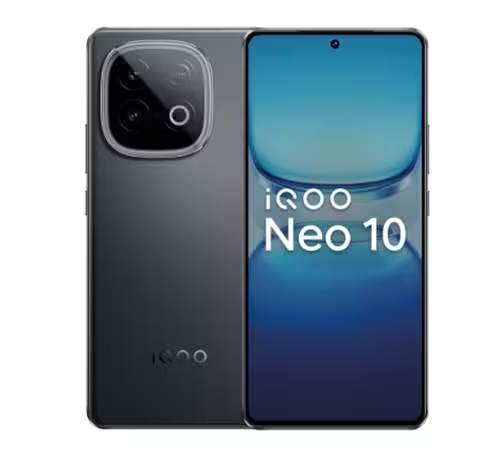
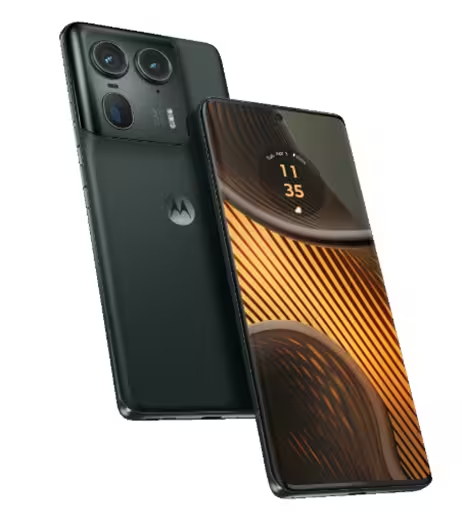
  • The first device to use the chipset will be the OnePlus Ace 15R, followed by iQOO, Motorola, and Vivo smartphones in the coming weeks.
 Qualcomm Snapdragon 8 Gen 5. (Image credit - Qualcomm)
Qualcomm Snapdragon 8 Gen 5. (Image credit – Qualcomm)

Qualcomm has officially introduced the Snapdragon 8 Gen 5, its latest addition to the flagship 8-series chipset lineup. It is positioned just below the Snapdragon 8 Elite Gen 5 and carries many of the same architectural enhancements but at slightly reduced clock speeds. It is built on a 3nm process and features the company’s updated Oryon CPU design, comprising two prime cores clocked at 3.8GHz and six performance cores running at 3.32GHz. Here’s all about the new chipset.

Qualcomm Snapdragon 8 Gen 5

According to Qualcomm, the Snapdragon 8 Gen 5 delivers significant generational gains, offering 36% faster CPU performance and 11% better GPU performance compared to the Snapdragon 8 Gen 3 launched in 2023. The company also highlights 46% faster AI capabilities and 13% improved power efficiency.

The chipset packs an Adreno 840 GPU with Frame Motion Engine 3.0 support, though it lacks the Adreno High-Performance Memory module available on the Elite version.

Snapdragon 8 Gen 5 features. (Image credit - Qualcomm)
Snapdragon 8 Gen 5 features. (Image credit – Qualcomm)

Commenting on the launch, Chris Patrick, senior vice president and general manager of Qualcomm’s mobile handset division, said, “As the demand for premium smartphones continues to surge, Snapdragon 8 Gen 5 is perfectly positioned to meet and exceed consumers’ evolving expectations. We’ve reimagined our 8-series family, putting premium performance into the hands of more consumers worldwide. Snapdragon 8 Gen 5 places users at the center of their mobile experiences, empowering them with the speed, intelligence, and efficiency they need to perform at their peak and unlock their full creative potential.”

The Snapdragon 8 Gen 5 incorporates the Snapdragon X80 5G Modem-RF System with support for both mmWave and sub-6GHz 5G networks. It offers peak download speeds of up to 10Gbps and uplink speeds of up to 3.5Gbps. Connectivity features also include Wi-Fi 7, Bluetooth 6, and Ultra Wideband (UWB) through the FastConnect 7900 system.

Supported storage tops out at UFS 4.0, whereas the Elite variant offers UFS 4.1 compatibility.

For imaging, the chipset uses a triple-20-bit Spectra AI ISP capable of handling advanced computational photography features. It supports Night Vision 3.0 for low-light video recording at 60fps, real-time tone control, and HDR audio via Snapdragon Audio Sense. Camera capabilities scale up to a 320-megapixel single sensor, 4K video capture at 120fps, and playback up to 8K at 60fps.

The Snapdragon 8 Gen 5 also includes Qualcomm’s upgraded Hexagon NPU, providing a 46% improvement in AI workloads and enabling more powerful multimodal on-device AI processing. The integrated Sensing Hub supports motion-triggered assistant activation such as lifting the device.

Qualcomm confirms that the first smartphone powered by the Snapdragon 8 Gen 5 will be the OnePlus Ace 15R. Soon after, brands like iQOO, Motorola, and Vivo are expected to debut their own devices using the new chipset in the coming weeks.

FAQs

Q1. What performance improvements does the Snapdragon 8 Gen 5 offer over its predecessor?

Answer. Compared to Snapdragon 8 Gen 3, it delivers 36% faster CPU, 11% better GPU, 46% stronger AI, and 13% improved power efficiency.

Q2. What connectivity features are included in the Snapdragon 8 Gen 5?

Answer. It integrates the Snapdragon X80 5G modem with up to 10Gbps downloads, plus Wi‑Fi 7, Bluetooth 6, and Ultra Wideband (UWB) via FastConnect 7900.

Q3. Which smartphone will debut the Snapdragon 8 Gen 5?

Answer. The OnePlus Ace 15R will be the first device powered by Snapdragon 8 Gen 5, followed by iQOO, Motorola, and Vivo models.

Also Read

https://www.mymobileindia.com/qualcomm-announces-acquisition-of-arduino-launches-new-arduino-uno-q-board/

https://www.mymobileindia.com/qualcomm-launches-snapdragon-8-elite-gen-5-for-smartphones-snapdragon-x2-elite-series-for-high-performance-laptops/

Poco F8 Ultra and Poco F8 Pro Launched Globally With Snapdragon 8 Elite Series Chips – Price, Specs and Key Features

0

Highlights

  • Poco introduced the Poco F8 Ultra and Poco F8 Pro globally.
  • Both smartphones are powered by Snapdragon 8 Elite chips, running Android 16‑based HyperOS 3, and featuring Bose‑tuned stereo speakers.
  • F8 Ultra price starts at $729 (₹65,100 approx.) with early‑bird discounts from $679, while F8 Pro starts at $579 (₹51,700 approx.) with early‑bird pricing from $529.
  • Colour options include Black, Denim Blue (Ultra), and Black, Blue, Titanium Silver (Pro).
 Poco F8 Ultra and Poco F8 Pro launched in select global markets. (Image credit - Poco)
Poco F8 Ultra and Poco F8 Pro launched in select global markets. (Image credit – Poco)

Poco has introduced its latest flagship lineup, the Poco F8 series, in select global markets. The newly launched smartphone series includes two handsets, the Poco F8 Ultra and Poco F8 Pro. Both bring Qualcomm’s powerful Snapdragon 8 Elite processors, large batteries, and Android 16-based HyperOS 3. Both smartphones also feature speakers tuned by US-based audio giant Bose. Here’s all about both new smartphone models.

Poco F8 Ultra – Key Features

Poco F8 Ultra. (Image credit - Poco)
Poco F8 Ultra. (Image credit – Poco)

The Poco F8 Ultra features a 6.9-inch OLED display (1,200 × 2,608 pixels) with a 120Hz refresh rate, 480Hz touch sampling rate, HDR10+, Dolby Vision, DCI-P3 colour gamut, and 3,500 nits peak brightness. It is powered by the 3nm Snapdragon 8 Elite Gen 5 chipset, paired with up to 16GB LPDDR5x RAM and up to 1TB UFS 4.1 storage. The phone runs Android 16-based HyperOS 3.

 Poco F8 Ultra key features. (Image credit - Poco)
Poco F8 Ultra key features. (Image credit – Poco)

For cameras, the handset includes a triple rear setup featuring a 50-megapixel primary shooter with OIS, a 50-megapixel periscope telephoto lens with 5x optical zoom, and a 50-megapixel ultrawide camera. On the front is a 32-megapixel selfie sensor.

The device packs a 6,500mAh battery with 100W HyperCharge and 50W wireless charging. Connectivity options include 5G, Wi-Fi 7, Bluetooth 5.4, NFC, and multi-band GNSS support including Galileo, GLONASS, QZSS, NavIC, and A-GNSS. It also features an in-display fingerprint sensor and Bose-tuned 2.1 stereo speakers.

Poco F8 Pro – Key Features

Poco F8 Pro. (Image credit - Poco)
Poco F8 Pro. (Image credit – Poco)

The Poco F8 Pro offers a smaller 6.59-inch AMOLED display with a 120Hz refresh rate and up to 3,500 nits peak brightness. It is powered by the previous-generation 3nm Snapdragon 8 Elite chipset, paired with up to 16GB RAM and up to 1TB internal storage. Like the Ultra, it runs HyperOS 3 based on Android 16.

The phone includes a triple rear camera system with a 50-megapixel OPIS-equipped main sensor, a 50-megapixel telephoto lens with 2.5x optical zoom support, and an 8-megapixel ultrawide camera. For selfies, it features a 20-megapixel front shooter.

image

Caption – Poco F8 Pro key features. (Image credit – Poco)

The Poco F8 Pro is backed by a 6,210mAh battery supporting 100W wired HyperCharge and 22.5W reverse wired charging. It also gets an IP68 rating for dust and water resistance and offers similar connectivity features as the Ultra model.

Both new phones mark Poco’s biggest push yet in the premium smartphone segment, combining powerful processors, large batteries, and advanced camera systems.

Poco F8 Ultra and Poco F8 Pro – Price and Availability

image

Caption – Poco F8 Ultra price. (Image credit – Poco)

The Poco F8 Ultra starts at $729 (roughly Rs. 65,100) for the 12GB + 256GB model, while the 16GB + 512GB version is priced at $799 (roughly Rs. 71,300).

image

Caption – Poco F8 Ultra price with early bird offers. (Image credit – Poco)

Early buyers can get the phone for reduced prices i.e. $679 (roughly Rs. 60,600) for the base variant and $729 (roughly Rs. 65,100) for the top model.

 Poco F8 Pro. (Image credit - Poco)
Poco F8 Pro. (Image credit – Poco)

The Poco F8 Pro is priced at $579 (roughly Rs. 51,700) for the 12GB + 256GB option and $629 (roughly Rs. 56,100) for the 12GB + 512GB variant.

 Poco F8 Pro price with early bird offers. (Image credit - Poco)
Poco F8 Pro price with early bird offers. (Image credit – Poco)

Under the early-bird offer, these are available at $529 (roughly Rs. 47,200) and $579 (roughly Rs. 51,700), respectively.

Colour options include Black and Denim Blue for the Poco F8 Ultra, while the Poco F8 Pro is offered in Black, Blue, and Titanium Silver.

FAQs

Q1. What models are included in the Poco F8 series?

Answer. The Poco F8 series consists of two smartphones, Poco F8 Ultra and Poco F8 Pro.

Q2. Which processors power the new Poco F8 Ultra and F8 Pro?

Answer. Both devices are powered by Qualcomm’s Snapdragon 8 Elite series chips, with the Ultra using the latest Gen 5 variant.

Q3. What are the key display features of the Poco F8 Ultra and F8 Pro?

Answer. Poco F8 Ultra features a 6.9‑inch OLED, 120Hz refresh rate, Dolby Vision, HDR10+, 3,500 nits brightness. On the other hand, Poco F8 Pro: 6.59‑inch AMOLED, 120Hz refresh rate, up to 3,500 nits brightness.

Q4. How do the camera setups differ between the Poco F8 Ultra and F8 Pro?

Answer. – Poco F8 Ultra has a triple 50MP rear cameras (main with OIS, periscope telephoto 5x zoom, ultrawide) + 32MP selfie. And Poco F8 Pro comes with triple rear cameras (50MP main with OIS, 50MP telephoto 2.5x zoom, 8MP ultrawide) + 20MP selfie.

Q5. What are the prices and availability of the Poco F8 Ultra and F8 Pro?

Answer. F8 Ultra – Starts at $729 (~₹65,100), with early‑bird pricing from $679 (~₹60,600). F8 Pro – Starts at $579 (~₹51,700), with early‑bird pricing from $529 (~₹47,200). Both are available in select global markets with colour options like Black, Blue, Denim Blue, and Titanium Silver.

Also Read

https://www.mymobileindia.com/poco-f8-series-teased-again-new-poster-hints-at-november-27-launch-in-hong-kong/

https://www.mymobileindia.com/poco-f8-pro-retail-box-image-leaks-with-sound-by-bose-branding-tipster-claims-no-charger-in-the-box/

iQOO 15 Debuts in India With Snapdragon 8 Elite Gen 5, 7,000mAh Battery and 144Hz Display

0

Highlights

  • iQOO 15 debuts with Snapdragon 8 Elite Gen 5, Android 16‑based OriginOS 6, a 6.85‑inch 2K LTPO AMOLED display and promises 5 major Android updates plus 7 years of security patches.
  • It packs a 7,000mAh silicon‑carbon battery with 100W wired/40W wireless charging, 8K VC Cooling system, and triple 50MP rear cameras plus a 32MP 4K selfie shooter.
  • The flagship is priced at Rs. 72,999 for 12GB+256GB and Rs. 79,999 for 16GB+512GB) with Rs. 7,000 bank discount offers.
  • Available via Amazon from December 1, in Legend and Alpha Black variants.

image

Caption – iQOO 15 Debuts in India. (Image credit – iQOO)

iQOO has officially launched the iQOO 15 in India, introducing its latest flagship smartphone roughly a month after its original debut in China. The new handset is powered by Qualcomm’s top-end 3nm Snapdragon 8 Elite Gen 5 chipset and packs a massive 7,000mAh battery supported by 100W fast charging. The device includes a 3D ultrasonic fingerprint sensor and arrives in two colour options via Amazon. Here’s all you need to know.

iQOO 15 – Key Features

The iQOO 15 runs on Android 16-based OriginOS 6 and comes with a promise of five major Android updates and seven years of security patches. It sports a 6.85-inch Samsung M14 8T LTPO AMOLED display with 2K resolution, 508ppi pixel density, up to 144Hz refresh rate, and 6,000 nits of local peak brightness. The device supports a 1Hz always-on display mode and includes an anti-reflective film, Wet Finger Control for seamless usability with wet hands, and triple ambient light sensors.

image

Caption – iQOO 15 software features explained. (Image credit – iQOO)

Under the hood, the phone is powered by the 3nm Snapdragon 8 Elite Gen 5 chipset paired with an Adreno GPU, up to 16GB LPDDR5x RAM, and up to 512GB UFS 4.1 storage. iQOO claims the handset scored over 4.18 million on the AnTuTu benchmark.

Performance enhancements include a 23 percent GPU boost, 25 percent improved Ray-Tracing, 20 percent better single-core output, and 17 percent improved multi-core results. The NPU sees a 37 percent improvement as well.

To handle heat, the device is equipped with an 8K VC Cooling System featuring an 8,000 sq mm heat dissipation area. The phone also introduces a new Monster Halo ambient lighting system placed beneath the rear camera module.

image

Caption – iQOO 15 camera features explained. (Image credit – iQOO)

For photography, the iQOO 15 houses a triple-camera setup led by a 50-megapixel Sony IMX921 sensor (1/1.56-inch) with OIS. It is accompanied by a 50-megapixel Sony IMX882 telephoto periscope lens (1/1.95-inch) offering 3x optical zoom, 3.7x “Lossless Zoom,” and up to 10x zoom. The third sensor is a 50-megapixel ultrawide camera (1/2.76-inch).

On the front, the device features a 32-megapixel selfie shooter with a 90-degree FOV and supports 4K video recording at up to 60fps. AI Visual and Reflection Erase tools are available across Standard, Portrait, and Landscape camera modes.

image

Caption – iQOO 15 available in two colour options. (Image credit – iQOO)

iQOO is offering the iQOO 15 in two colourways,  Legend and Alpha Black.
The iQOO 15 carries IP68 and IP69 ratings for dust and water resistance. It packs a 7,000mAh silicon-carbon battery with 100W wired and 40W wireless fast charging. The phone is 8.17mm thick, with the Alpha Black variant (fibreglass back) weighing 216.2g, while the Legend model (glass back) weighs about 220g.
iQOO 15 – Price and Availability in India

image

Caption – iQOO 15 variant-wise pricing and launch offers. (Image credit – iQOO)

The iQOO 15 starts at Rs. 72,999 for the 12GB RAM + 256GB storage model, while the higher-end 16GB RAM + 512GB storage variant is priced at Rs. 79,999. As an introductory offer, buyers can avail an instant Rs. 7,000 bank discount, bringing down the effective prices to Rs. 64,999 and Rs. 71,999, respectively.

The smartphone will be available for open sale on Amazon from December 1 at 12pm. Priority Pass users, however, can purchase the device earlier starting November 27 at noon.

image

Caption – iQOO 15 reasons to buy explained in a marketing poster. (Image credit – iQOO)

FAQs

Q1. What chipset powers the iQOO 15?

Answer. The iQOO 15 is powered by Qualcomm’s 3nm Snapdragon 8 Elite Gen 5 chipset paired with an Adreno GPU.

Q2. How big is the iQOO 15’s battery and what charging speeds does it support?

Answer. It packs a massive 7,000mAh silicon‑carbon battery with 100W wired fast charging and 40W wireless charging.

Q3. What display features does the iQOO 15 offer?

Answer. The phone sports a 6.85‑inch Samsung M14 8T LTPO AMOLED display with 2K resolution, 144Hz refresh rate, 6,000‑nit peak brightness, and anti‑reflective film.

Q4. What is the camera setup on the iQOO 15?

Answer. It has a triple 50MP rear camera system (main Sony IMX921, telephoto periscope Sony IMX882, ultrawide) plus a 32MP selfie camera supporting 4K video at 60fps.

Q5. What is the price and availability of the iQOO 15 in India?

Answer. The iQOO 15 is priced at Rs. 72,999 (12GB+256GB) and Rs. 79,999 (16GB+512GB), with Rs. 7,000 bank discounts. It goes on open sale via Amazon from December 1, 2025, with Priority Pass access from November 27, 2025.

Also Read –

https://www.mymobileindia.com/iqoo-15-india-price-leaked-ahead-of-november-26-launch-could-be-the-most-affordable-snapdragon-8-elite-gen-5-flagship/

https://www.mymobileindia.com/iqoo-15-launched-in-china-featuring-6-85-inch-amoled-display-snapdragon-8-elite-gen-5-chip-and-7000mah-battery-price-specs-and-more/

Microsoft Copilot Will Leave WhatsApp on January 15, 2026 Following Policy Changes

0

Highlights

  • Microsoft Copilot will no longer be available on WhatsApp starting January 15, 2026.
  • Users can access Copilot on WhatsApp until the cut-off date, after which it will remain available via the Copilot mobile app (iOS/Android), web (copilot.com) and Windows.
  • Chat histories from WhatsApp will not transfer to other platforms.
 Microsoft Copilot is leaving WhatsApp this coming January. (Image credit - Unknown)
Microsoft Copilot is leaving WhatsApp this coming January. (Image credit – Unknown)

If you have been using Microsoft’s Copilot AI via WhatsApp, this news is for you. In a recent development, Microsoft has just announced that its AI-powered assistant will no longer be accessible on WhatsApp starting January 15, 2026.

This move ends the widely used integration that allowed users to interact with Copilot directly within the messaging platform. Here’s everything you need to know about the upcoming change.

Why Microsoft’s Copilot AI Is Leaving WhatsApp?

According to Microsoft, the discontinuation is a direct result of WhatsApp’s revised platform policies. The company revealed that WhatsApp is removing all LLM-based chatbots from its platform effective January 15, 2026.

“This is due to recent updates to WhatsApp’s platform policies removing all LLM chatbots from the platform effective January 15th, and as a result, Copilot will be discontinued. We’re working to ensure a smooth transition for users and enable their continued Copilot access on mobile, web, and PC,” Microsoft explained.

In an official blog post, the company reflected on the impact of the feature, stating, “Since launching in late 2024, Copilot on WhatsApp has helped millions of people connect with their AI companion in a familiar, everyday setting. We’re incredibly proud of the impact it’s had. But starting January 15, 2026, Copilot will no longer be available on WhatsApp.”

What Happens After January 15, 2026?

WhatsApp users can continue accessing Copilot until January 15 cut-off. After that date, the chatbot will cease functioning on the messaging app.

However, Copilot will remain available through other Microsoft-supported platforms. Users can access the AI assistant via Copilot mobile app for iOS and Android, Copilot on the web at copilot.com and Copilot on Windows.

Microsoft also clarified that chat histories from WhatsApp will not carry over to other Copilot platforms. Since WhatsApp access was unauthenticated, user conversations cannot be transferred. The company advises users to save important chats before the discontinuation date. “If you’d like to keep a record of your conversations, we recommend exporting your chat history using WhatsApp’s built-in tools prior to January 15, 2026,” said Microsoft.

The announcement ensures users have more than enough time to transition to alternative Copilot access points and preserve their data ahead of the change.

FAQs

Q1. When will Microsoft Copilot stop working on WhatsApp?

Answer. Copilot will no longer be accessible on WhatsApp starting January 15, 2026, following WhatsApp’s updated policies removing all LLM-based chatbots.

Q2. Why is Copilot being discontinued on WhatsApp?

Answer. The discontinuation is due to WhatsApp’s revised platform policies, which ban all LLM chatbots from the platform effective January 15, 2026.

Q3. How can users continue using Copilot after January 15, 2026?

Answer. Copilot will remain available via the Copilot mobile app (iOS/Android), Copilot on the web (copilot.com), and Copilot on Windows. However, chat histories from WhatsApp will not transfer to these platforms.

Also Read

https://www.mymobileindia.com/microsoft-releases-windows-11-25h2-update-with-major-security-copilot-experiences-accessibility-upgrades-and-more/

https://www.mymobileindia.com/microsofts-copilot-ai-app-now-available-on-mac/

Apple to Become World’s Top Smartphone Brand Again, Set to Overtake Samsung in 2025

0

Highlights

  • Counterpoint Research forecasts Apple will surpass Samsung in 2025, reclaiming the top smartphone brand spot with a 19.4% global market share.
  • Strong iPhone 17 sales in the US and China, favourable trade dynamics, a weaker US dollar, and a major upgrade cycle post-COVID are fueling double‑digit growth.
  • Apple is expected to sustain leadership through 2029.
 (Photo by Medhat Dawoud on Unsplash)
(Photo by Medhat Dawoud on Unsplash)

Apple is on track to reclaim its long-lost title as the world’s largest smartphone manufacturer, according to new data from Counterpoint Research. The growth is driven by strong demand for its latest iPhone lineup and a global surge in device upgrades,

The iPhone 17 series, launched in September, has delivered impressive performance across Apple’s key markets including the US and China. Counterpoint notes that the new models have triggered double-digit year-on-year sales growth in both regions. Analysts attribute this momentum not only to the popularity of the devices but also to improved US-China trade dynamics and a weakening US dollar, which has made Apple products more attractive in emerging markets.

The research firm’s projections indicate that Apple will surpass Samsung Electronics Co. this year. iPhone shipments are forecast to grow by 10% in 2025, significantly outpacing Samsung’s expected growth rate of 4.6%.

With the global smartphone market projected to expand by 3.3% next year, Apple is expected to secure a 19.4% market share. This will mark its first return to the No. 1 position since 2011.

Highlighting the shift in consumer behaviour, Counterpoint analyst Yang Wang said, “Beyond the highly positive market reception for the iPhone 17 series, the key driver behind the upgraded shipment outlook lies in the replacement cycle reaching its inflection point. Consumers who purchased smartphones during the Covid-19 boom are now entering their upgrade phase. Furthermore, 358 million secondhand iPhones were sold between 2023 and Q2 2025. These users are also likely to upgrade to a new iPhone in the coming years.”

The momentum is expected to carry Apple well into the future. Counterpoint forecasts that the company will widen its lead with the anticipated 2026 launch of a foldable iPhone and a more affordable iPhone 17e. Apple is also reportedly preparing a major iPhone redesign for 2027, as previously revealed by Bloomberg.

Analysts predict Apple will maintain its position as the top smartphone vendor through 2029, thanks to these upcoming product cycles.

Meanwhile, Apple has recently confirmed that its sales are growing faster than earlier estimates. The Cupertino Giant is also projected to reach nearly $140 billion in revenue during the ongoing holiday quarter.

FAQs

Q1. When will Apple overtake Samsung as the world’s top smartphone brand?

Answer. According to Counterpoint Research, Apple is projected to surpass Samsung in 2025, reclaiming the No. 1 spot for the first time since 2011.

Q2. What factors are driving Apple’s growth in smartphone shipments?

Answer. Strong demand for the iPhone 17 series, favourable US‑China trade dynamics, a weaker US dollar, and a major upgrade cycle post-COVID are boosting Apple’s shipments.

Q3. How does Apple plan to maintain its lead in the coming years?

Answer. Analysts expect Apple to sustain leadership through 2029 with upcoming launches like a foldable iPhone in 2026, a budget‑friendly iPhone 17e, and a major redesign in 2027.

Also Read

https://www.mymobileindia.com/apple-cuts-sales-jobs-as-company-restructures-enterprise-and-government-operations/

https://www.mymobileindia.com/apple-to-focus-towards-performance-and-stability-for-ios-27-reveals-gurman/

Huawei Launches Huawei Mate X7 Foldable and Huawei MatePad Edge Tablet in China

0

Highlights

  • Huawei Mate X7 Foldable – 8-inch internal and 6.49-inch external LTPO displays, second-gen Red Maple Imaging System, 5600mAh battery and satellite communication support.
  • Mate X7 price starts at 12,999 yuan, available from December 5.
  • Huawei MatePad Edge Tablet comes in a 14.2-inch 3.1K OLED display, Kirin X90 chipset with 3.8× performance boost, HarmonyOS 5.1 dual-mode operation and 12,900mAh battery with 140W fast charging.
  • MatePad Edge Tablet pricing starts from 5,999 yuan to 12,999 yuan depending on configuration.

Huawei has expanded its flagship ecosystem in China with the official debut of the Huawei Mate X7 foldable smartphone and the Huawei MatePad Edge high-performance 2-in-1 tablet. The Mate X7 arrives as the successor to last year’s Mate X6, while the MatePad Edge targets productivity users and creators with a pro-grade HarmonyOS experience. Here’s everything you need to know about the newly launched devices.

Huawei Mate X7 Foldable

Huawei Mate X7 Foldable. (Image credit - Huawei)
Huawei Mate X7 Foldable. (Image credit – Huawei)

Huawei’s latest foldable features an 8-inch internal display (2500 nits) and a 6.49-inch outer panel (3000 nits), both offering a 1–120Hz LTPO refresh rate and 1440Hz high-frequency PWM dimming for smoother and more comfortable viewing.

Huawei says this is the first smartphone to incorporate Yun Brocade craftsmanship, a recognised intangible cultural heritage. The device weighs 235g, measures 4.5mm when unfolded and 9.5mm when folded, while carrying IP58 and IP59 ratings for enhanced water and dust resistance.

 Huawei Mate X7 Foldable poster in China. (Image credit - Huawei)
Huawei Mate X7 Foldable poster in China. (Image credit – Huawei)

The Mate X7 introduces Huawei’s second-generation Red Maple Imaging System, shrinking the camera module while promising flagship-grade performance on a foldable device. It includes:

  • 50MP variable aperture main camera
  • 5x optical telephoto periscope lens
  • 40MP ultra-wide camera
  • Second-gen Red Maple primary-colour camera

The Collector’s Edition takes imaging even further, claiming its 1/1.28-inch primary sensor offers 100% more light intake than the Apple iPhone 17 Pro Max, while the F2.2 periscope module captures 127% more light. It also adds Tiantong satellite calling, while the standard model supports Beidou satellite messaging.

Powered by an upgraded internal architecture, Huawei says the Mate X7 delivers over 42% improved performance compared to its predecessor.

It packs a 5600mAh battery with 66W wired and 50W wireless fast charging. The foldable also supports emergency communication without network coverage and an outdoor exploration mode that offers up to 10 days of extreme standby life.

Huawei Mate X7 Foldable – Price and Availability

 Huawei Mate X7 Foldable comes in five colour variants. (Image credit - Huawei)
Huawei Mate X7 Foldable comes in five colour variants. (Image credit – Huawei)

The Mate X7 is already available for pre-orders and will go on sale in China from December 5. The new foldable comes in five finishes, which includes Obsidian Black, Cloud Brocade Blue, Cloud Brocade White, Cosmic Red and Phantom Purple.

Pricing –

  • 12GB + 256GB – 12,999 yuan (USD 1,830 / Rs. 1,63,320 approx.)
  • 12GB + 512GB – 13,999 yuan (USD 1,970 / Rs. 1,75,885 approx.)
  • Collector’s Edition 16GB + 512GB – 14,999 yuan (USD 2,111 / Rs. 1,88,450 approx.)
  • Collector’s Edition 16GB + 1TB – 15,999 yuan (USD 2,250 / Rs. 2,01,015 approx.)
  • Collector’s Edition Stylus Set 20GB + 1TB – 17,599 yuan (USD 2,475 / Rs. 2,21,115 approx.)

Huawei MatePad Edge 2-in-1 OLED Tablet

 Huawei MatePad Edge 2-in-1 OLED Tablet. (Image credit - Huawei)
Huawei MatePad Edge 2-in-1 OLED Tablet. (Image credit – Huawei)

Alongside the foldable, Huawei also introduced the Huawei MatePad Edge. It is a productivity-focused tablet with a 14.2-inch flexible OLED display. It offers a crisp 3.1K (3120 × 2080) resolution, a 120Hz refresh rate, HDR Vivid, 1000-nit peak brightness, and professional-grade ∆E < 1 color accuracy. It also comes in a Soft Light variant with anti-glare technology.

The tablet achieves a 94% screen-to-body ratio using 4.1mm bezels and an innovative packaging method that hides the 32MP front camera without requiring a notch.

Powered by the Kirin X90 / X90A chipset similar to Huawei’s desktop-class HarmonyOS PCs, the MatePad Edge offers a 3.8x performance boost over the MatePad Pro 13.2 (2023). It runs HarmonyOS 5.1 with dual-mode tablet/desktop operation, four-finger multitasking gestures and seamless window control and keyboard shortcuts.

Cameras

  • Rear cameras include – 50MP primary (f/1.8), 8MP ultra-wide macro (f/2.2)
  • Front – 32MP ultra-wide, supporting 1080p video recording
 Huawei MatePad Edge 2-in-1 OLED Tablet supports M-Pencil Pro stylus. (Image credit - Huawei)
Huawei MatePad Edge 2-in-1 OLED Tablet supports M-Pencil Pro stylus. (Image credit – Huawei)

The device houses a 12,900mAh battery, supports 140W Huawei SuperCharge and offers 40W reverse charging. Huawei has equipped it with a robust cooling system featuring –

  • Dual aluminium fans
  • VC heat dissipation
  • Micro-etched airflow channels
  • Nearly 4000 vent holes

The Liquid-Cooling Edition adds graphene sheets and a dual-core micro pump, supporting up to 28W thermal capacity.

The MatePad Edge includes a six-speaker stereo setup, near-ear spatial audio, and panoramic surround mode when paired with Huawei FreeClip earbuds.

Connectivity options –

  • Dual-band Wi-Fi (2.4GHz, 5GHz)
  • Bluetooth 5.2
  • USB-C 3.1 Gen 1 with DP1.2
  • OTG
  • NearLink support
  • In-display fingerprint sensor
 Huawei MatePad Edge 2-in-1 OLED Tablet is powered by Kirin X90 / X90A chipset. (Image credit - Huawei)
Huawei MatePad Edge 2-in-1 OLED Tablet is powered by Kirin X90 / X90A chipset. (Image credit – Huawei)

Huawei MatePad Edge Pricing

The tablet is available in Deep Space Grey and Moonlight Silver colours with optional keyboards and M-Pencil Pro stylus support.

  • 16GB + 256GB (Wi-Fi) – 5,999 yuan ($840)
  • 16GB + 512GB (Wi-Fi) – 6,499 yuan ($910)
  • 16GB + 512GB Soft-Light Display – 7,299 yuan ($1,020)
  • 24GB + 1TB (Wi-Fi) – 7,999 yuan ($1,120)
  • 24GB + 1TB Soft-Light Display (with keyboard) – 9,999 yuan ($1,400)
  • 32GB + 2TB Soft-Light Display Liquid-Cooling Edition (with keyboard) – 12,999 yuan ($1,820)

FAQs

Q1. What foldable device and tablet did Huawei recently launch in China?

Answer. Huawei introduced the Mate X7 foldable smartphone and the MatePad Edge 2‑in‑1 OLED tablet, expanding its flagship ecosystem.

Q2. What are the key features of the Huawei Mate X7 Foldable?

Answer. It has an 8‑inch internal and 6.49‑inch external LTPO display, IP58/IP59 durability ratings, second‑gen Red Maple Imaging System, 5600mAh battery with 66W wired/50W wireless charging, and supports satellite communication.

Q3. What makes the Mate X7 Collector’s Edition special?

Answer. It offers a larger 1/1.28‑inch sensor with 100% more light intake than the iPhone 17 Pro Max, Tiantong satellite calling, up to 20GB RAM + 1TB storage, and premium Yun Brocade craftsmanship.

Q4. What are the highlights of the Huawei MatePad Edge tablet?

Answer. The MatePad Edge features a 14.2‑inch 3.1K OLED display, Kirin X90 chipset with 3.8× performance boost, HarmonyOS 5.1 dual‑mode operation, 12,900mAh battery with 140W fast charging, advanced cooling, and professional‑grade colour accuracy.

Q5. What is the pricing and availability of these devices?

Answer. Mate X7: Starts at 12,999 yuan (~USD 1,830), available from December 5. And MatePad Edge: Starts at 5,999 yuan (~USD 840) with configurations up to 12,999 yuan (~USD 1,820).

Also Read

https://www.mymobileindia.com/huawei-mate-80-mate-80-pro-mate-80-pro-max-and-mate-80-rs-ultimate-design-unveiled-with-new-kirin-9030-chip-dual-layer-oled-display-and-satellite-connectivity/

Huawei Mate 80, Mate 80 Pro, Mate 80 Pro Max and Mate 80 RS Ultimate Design Unveiled With New Kirin 9030 Chip, Dual-Layer OLED Display and Satellite Connectivity

0

Highlights

  • Huawei unveiled Mate 80, Mate 80 Pro, Mate 80 Pro Max, and Mate 80 RS Ultimate Design.
  • The Mate 80 runs on Kirin 9020, while the higher models use the new Kirin 9030/9030 Pro chipsets, delivering up to 42% performance gains over the Mate 70.
  • The Pro Max debuts the industry’s first dual‑layer OLED display (8000‑nit brightness) with enhanced durability via second‑gen Kunlun Glass.
  • Prices start at 4,699 yuan (USD 661) for Mate 80 and go up to 12,999 yuan (~USD 1830) for the RS Ultimate Design, available from November 28.
 Huawei Mate 80, Mate 80 Pro, Mate 80 Pro Max and Mate 80 RS Ultimate Design Unveiled in China.
Huawei Mate 80, Mate 80 Pro, Mate 80 Pro Max and Mate 80 RS Ultimate Design Unveiled in China.

Huawei has officially introduced its new Huawei Mate 80 Series in China, launching four models. These include the Huawei Mate 80, Huawei Mate 80 Pro, Huawei Mate 80 Pro Max, and the premium Huawei Mate 80 RS Ultimate Design.

Leading the lineup is the Mate 80 Pro Max, which Huawei calls its most powerful and most durable Mate smartphone yet. Mate 80 Pro Max flaunts a full metal build, a dual-layer OLED screen, and advanced satellite capabilities. The standard Mate 80 runs on the Kirin 9020, while the Mate 80 Pro, Pro Max, and RS Ultimate Design upgrade to the new Kirin 9030 chipset. Here’s everything you should know about the newly launched Huawei smartphone series.

Huawei Mate 80 and Huawei Mate 80 Pro

image image

Caption – Huawei Mate 80 Pro (left) and Huawei Mate 80 (right). (Image credit – Huawei)

The Mate 80 and Mate 80 Pro feature a 6.75-inch OLED display with 2832×1280 resolution, 1–120Hz adaptive refresh rate, 1440Hz PWM dimming, and 300Hz touch sampling. Both models come equipped with second-generation Kunlun Glass and a side-mounted fingerprint scanner.

Huawei claims the Mate 80, despite using the older Kirin 9020, offers a 35% performance boost over the Mate 70. The Mate 80 Pro sees a similar 35% jump with the new Kirin 9030, while a higher-binned Kirin 9030 Pro variant, exclusive to the 16GB RAM model and promises a 42% improvement over last year’s flagship.

Both devices support Tiantong satellite calling, two-way Beidou messaging, and become the first phones capable of 700MHz emergency communication without network coverage. Huawei says they can maintain a link up to 13km away and transmit signals through three walls. Connectivity includes Bluetooth 6.0, Wi-Fi 7+, and seamless offline 2.4GHz communication.

The entire Mate 80 lineup uses Huawei’s second-generation “Maple Leaf” primary-colour imaging system.

image

image

Caption – Huawei Mate 80 Pro (left) and Huawei Mate 80 (right) key features. (Image credit – Huawei)

Mate 80 camera setup:

  • 50MP main sensor with 10-stop variable aperture (RYYB, OIS, f/1.4–f/4.0)
  • 12MP periscope telephoto with 5.5× optical zoom (OIS)
  • 40MP ultrawide lens
  • 13MP ultrawide autofocus selfie camera
  • 3D ToF depth sensor

Mate 80 Pro camera setup:

  • 50MP RYYB main camera (OIS, 1/1.28”, f/1.4–f/4.0)
  • 48MP macro telephoto (OIS, 4×/8×)
  • 40MP ultrawide lens
  • 9th-gen ISP offering 2× faster real-time image processing

Huawei is also launching a new pro-grade TILTA photography kit with a 3.3× teleconverter and modular quick-release accessories.

Both models come with a 5750mAh battery (rated 5620mAh). The Mate 80 supports 66W wired and 50W wireless charging, while the Pro steps up to 100W wired and 80W wireless. Reverse wireless charging is included, and the Mate 80 Pro adds an extreme low-power mode that can last up to 13 days.

The series ships with HarmonyOS 6, offering new visual effects, lighting dynamics, and smoother animations. Both phones feature an all-metal frame with a nylon back and a dual-ring camera design. They come in Obsidian Black, Snow White, Dawn Gold, and Spruce Green. The Mate 80 uses a frosted aluminium frame, while the Pro version opts for a glossy finish.

Each device is just 7.95mm thick and weighs around 217–219g with IP68/IP69 certification.

Huawei Mate 80 Pro Max

Huawei Mate 80 Pro Max. (Image credit - Huawei)
Huawei Mate 80 Pro Max. (Image credit – Huawei)

The Mate 80 Pro Max stands out with an all-metal build protected by Huawei’s second-generation Kunlun glass. Huawei claims this improves drop resistance by 20×, enhances bending resistance by 20%, and doubles scratch resistance compared to the previous generation. It also carries IP68 and IP69 ratings.

The phone debuts the industry’s first dual-layer OLED display, delivering 8000-nit peak brightness, improved efficiency, and enhanced contrast. It measures 6.9 inches with 120Hz refresh rate, 10-bit color, 1440Hz PWM dimming, and 300Hz touch sampling.

A full 3D ToF front setup assists biometrics, combining a depth-sensing sender, receiver, and standard front camera for what Huawei calls an AI posture-aware system. This enhances face recognition and motion tracking.

Powered by the Kirin 9030 Pro and Huawei’s Ark Graphics Engine, the Pro Max is said to be 45% smoother and load apps 34% faster than the Mate 70. It also supports 3DGS rendering acceleration and hardware-based ray tracing at 20 million rays per second.

 Huawei Mate 80 Pro Max key features. (Image credit - Huawei)
Huawei Mate 80 Pro Max key features. (Image credit – Huawei)

Connectivity includes Wi-Fi 7+, Tiantong satellite calling, Beidou messaging, and emergency 700MHz communication. Huawei describes the system as “ground network + sky network + no network.”

The Mate 80 Pro Max introduces the second-generation Maple Leaf Imaging System featuring a redesigned sensor with 2.45μm equivalent pixels and 96% higher light intake. Dynamic range is said to be 300% higher thanks to a dual-real-time fusion system with improved colour accuracy via an upgraded spectral array.

Camera specs include:

  • 50MP main RYYB sensor (1/1.28”, f/1.4–f/4.0, 10-stop variable aperture)
  • 40MP RYYB ultrawide
  • 50MP macro telephoto (4× optical zoom)
  • 50MP periscope telephoto (6.2× optical zoom, up to 12.4× “optical-quality” zoom)

The phone also supports a 3.3× teleconverter using the new accessory kit.

Huawei Mate 80 RS Ultimate Design

 Huawei Mate 80 RS Ultimate Design. (Image credit - Huawei)
Huawei Mate 80 RS Ultimate Design. (Image credit – Huawei)

For users wanting something even more premium, Huawei introduced the Mate 80 RS Ultimate Design. Built on the Pro Max platform, it adds a luxurious aesthetic with a star-diamond pattern, titanium Xuanwu mid-frame, and dual Kunlun Glass.

 Huawei Mate 80 RS Ultimate Design model’s colours variants. (Image credit - Huawei)
Huawei Mate 80 RS Ultimate Design model’s colours variants. (Image credit – Huawei)

This model offers up to 20GB RAM and 1TB storage and comes in Jin Purple, Xuan Black, and Hao White. It supports all satellite and outdoor features of the Pro Max while adding HarmonyOS 6 AI tools such as dynamic portrait generation, emotion-aware themes, and Xiaoyi smart assistant features.

It also includes a 6.9-inch dual-layer OLED screen (FHD+, 1–120Hz LTPO, BT.2020 color gamut) and a 6000mAh battery with 100W wired and 80W wireless charging.

Huawei Mate 80 Series – Pricing and Availability

Huawei Mate 80

image

  • 12GB + 256GB: 4,699 yuan (USD 661 / Rs. 59,025 approx.)
  • 12GB + 512GB: 5,199 yuan (USD 731 / Rs. 65,306 approx.)
  • 16GB + 512GB: 5,499 yuan (USD 774 / Rs. 69,074 approx.)

Huawei Mate 80 Pro

image

  • 12GB + 256GB: 5,999 yuan (USD 844 / Rs. 75,355 approx.)
  • 12GB + 512GB: 6,499 yuan (USD 914 / Rs. 81,635 approx.)
  • 16GB + 512GB: 6,999 yuan (USD 985 / Rs. 87,916 approx.)
  • 16GB + 1TB: 7,999 yuan (USD 1126 / Rs. 1,00,477 approx.)

Huawei Mate 80 Pro Max

image

  • 16GB + 512GB: 7,999 yuan (USD 1126 / Rs. 1,00,477 approx.)
  • 16GB + 1TB: 8,999 yuan (USD 1266 / Rs. 1,13,039 approx.)

Huawei Mate 80 RS Ultimate Design

image

  • 20GB + 512GB: 11,999 yuan (USD 1689 / Rs. 1,50,723 approx.)
  • 20GB + 1TB: 12,999 yuan (USD 1830 / Rs. 1,63,284 approx.)

All models will be available starting November 28 via Huawei Mall, authorised e-commerce platforms, and Huawei Experience Stores.

FAQs

Q1. What models are included in the Huawei Mate 80 Series?

Answer. The lineup consists of four smartphones, Huawei Mate 80, Mate 80 Pro, Mate 80 Pro Max, and the premium Mate 80 RS Ultimate Design.

Q2. Which chipset powers the new Mate 80 phones?

Answer. The standard Mate 80 uses the Kirin 9020. The Mate 80 Pro, Pro Max, and RS Ultimate Design feature the new Kirin 9030 chipset, with the Pro Max using the higher‑binned Kirin 9030 Pro for enhanced performance.

Q3. What are the standout features of the Mate 80 Pro Max?

Answer. It debuts the industry’s first dual‑layer OLED display with 8000‑nit peak brightness, an all‑metal build with second‑gen Kunlun Glass for 20× better drop resistance, and advanced satellite connectivity including Tiantong calling, Beidou messaging, and 700MHz emergency communication.

Q4. How do the cameras differ across the Mate 80 lineup?

Answer. The Mate 80 has 50MP main sensor with variable aperture, 12MP periscope telephoto, 40MP ultrawide, 13MP ultrawide selfie, and 3D ToF sensor. On the other hand, Mate 80 Pro features 50MP RYYB main, 48MP macro telephoto, 40MP ultrawide, plus a 9th‑gen ISP for faster image processing. As for the Mate 80 Pro Max, it offers advanced Maple Leaf Imaging System with 50MP main, 40MP ultrawide, 50MP macro telephoto, and 50MP periscope telephoto offering up to 12.4× optical‑quality zoom.

Q5. What is the pricing and availability of the Huawei Mate 80 Series?

Answer. Prices start at 4,699 yuan (USD 661) for the Mate 80 and go up to 12,999 yuan (USD 1830) for the Mate 80 RS Ultimate Design. All models will be available from November 28 via Huawei Mall, authorised e‑commerce platforms, and Huawei Experience Stores.

Also Read

https://www.mymobileindia.com/huawei-mate-70-air-debuts-in-china-with-7-inch-display-6500mah-battery-and-kirin-9020-series-chips/

https://www.mymobileindia.com/huawei-nova-flip-s-and-huawei-nova-14-vitality-edition-launched-in-china-with-attractive-pricing-and-upgraded-features/

OpenAI Launches ChatGPT ‘Shopping Research’ to Deliver Personalised Buying Guides and Product Comparisons

0

Highlights

  • OpenAI introduced Shopping Research in ChatGPT to simplify product discovery and comparisons.
  • The tool asks clarifying questions, researches across the web, reviews sources and uses saved memory to deliver tailored recommendations.
  • Shopping Research is available to Free, Go, Plus and Pro users on mobile and web, integrated with ChatGPT Pulse for Pro subscribers.

image

Caption – OpenAI Launches ChatGPT ‘Shopping Research’. (Image credit – OpenAI)

OpenAI has introduced a new feature within ChatGPT called Shopping Research. It is designed to simplify product discovery and comparison by conducting in-depth research on behalf of the user. Instead of manually browsing through multiple websites, users can now describe what they’re looking for and let ChatGPT build a detailed shopping guide tailored to their needs. Here’s all you need to know.

ChatGPT’s Shopping Research

image

Caption – ChatGPT ‘Shopping Research’. (Image credit – OpenAI)

Announcing the new feature on X (formerly Twitter), OpenAI’s official account wrote, “Introducing shopping research, a new experience in ChatGPT that does the research to help you find the right products. It’s everything you like about deep research but with an interactive interface to help you make smarter purchasing decisions.”

According to OpenAI’s blog post, the feature “asks smart clarifying questions, researches deeply across the internet, reviews quality sources,” and even uses past conversations and saved memory to deliver a personalised recommendation guide. While ChatGPT could already answer basic shopping queries such as pricing or product features, Shopping Research digs deeper and helps users understand tradeoffs, constraints, and comparisons across different models or categories.

The company also revealed that the feature will be integrated into ChatGPT Pulse, currently available only to Pro subscribers. Pulse will proactively suggest personalised buying guides based on a user’s previous interactions.

Shopping Research is available to ChatGPT Free, Go, Plus, and Pro users on both mobile and web with OpenAI saying it is offering “nearly unlimited usage” for eligible users.

How to Use Shopping Research in ChatGPT?

When users ask a shopping-related question, ChatGPT may automatically suggest switching to the Shopping Research mode. If it doesn’t, users can manually activate it by tapping the ‘+’ button below the text input field and selecting ‘Shopping research’ from the options.

Once activated, ChatGPT presents a visual interface where users can interact with product suggestions. They can mark items as “Not interested” or choose “More like this” to refine results. The feature works similarly to ChatGPT’s Deep Research mode, often taking a minute or more to generate a comprehensive buying guide.

For users who’ve enabled ChatGPT’s memory, the shopping guide becomes even more personalised, factoring in previous preferences and past conversations.

After completing the research, ChatGPT provides a detailed and personalised buying guide, highlighting top products, key differences and updated information from retailers. It also shows direct purchase links. OpenAI notes that it will soon enable direct purchases inside ChatGPT for users in regions where Instant Checkout is supported.

The company confirmed that the new Shopping Research feature is powered by GPT-5 mini, which has been “trained with reinforcement learning specifically for shopping tasks.” All results are organic and sourced from publicly available retail websites.

FAQs

Q1. What is ChatGPT’s Shopping Research feature?

Answer. Shopping Research is a new mode in ChatGPT that conducts in-depth product discovery and comparisons, creating personalised buying guides for users.

Q2. How does Shopping Research personalise recommendations?

Answer. It asks clarifying questions, researches across the web, reviews quality sources, and uses saved memory and past conversations to tailor product suggestions.

Q3. Who can access Shopping Research and how is it integrated?

Answer. The feature is available to Free, Go, Plus, and Pro users on mobile and web, with deeper integration into ChatGPT Pulse for Pro subscribers.

Also Read

https://www.mymobileindia.com/openai-introduces-group-chats-in-chatgpt-now-chat-with-friends-family-and-chatgpt-in-one-conversation/

https://www.mymobileindia.com/openai-launches-gpt-5-1-instant-and-thinking-models-with-smarter-reasoning-and-enhanced-personalisation/

DoT Warns Against IMEI Tampering, Urges Citizens to Use KYM Verification for Mobile Device Authenticity

0

Highlights

  • The DoT warns against IMEI tampering and reinforces the Telecommunications Act 2023 and Telecom Cyber Security Rules 2024, which ban altered identifiers.
  • Violations can lead to 3 years imprisonment or fines up to ₹50 lakh.
  • Citizens are urged to use the Sanchar Saathi portal/app or send KYM <IMEI> to 14422 to confirm device authenticity and ensure safe usage.

image

Caption – Verify IMEI on Sanchar Saathi app. (Image credit – DoT)

The Department of Telecommunications (DoT) has issued a fresh advisory warning citizens about the rising misuse of telecommunication identifiers including the IMEI numbers of mobile phones. Incidents involving tampered or unauthorised device identifiers have become a growing concern, prompting the government to tighten legal safeguards. Here’s all you need to know.

DoT Warns Against IMEI Tampering

The Government of India has reinforced regulations under the Telecommunications Act, 2023 to protect users and safeguard telecom infrastructure. The Telecommunications Act 2023 clearly prohibits tampering with unique device identifiers and the use of devices with altered IMEIs.

The DoT highlighted several critical rules under the Telecommunications Act, 2023 

  • IMEI Tampering Is Illegal under Section 42(3)(c). It strictly bans tampering with telecommunication identifiers. Section 42(3)(e) prohibits obtaining SIM cards or identifiers through impersonation, cheating, or fraud.
  • Unauthorised Device Possession – Section 42(3)(f) states that possessing mobile phones, modems, modules, SIM boxes or any radio equipment with tampered or unauthorised identifiers is an offence.
  • Telecom Cyber Security Rules, 2024 – These rules prohibit altering IMEI numbers or manufacturing/possessing equipment capable of configuring or modifying IMEIs.

Violations may lead to up to three years of imprisonment, fines reaching Rs 50 lakh, or both. Moreover, these offences are cognisable and non-bailable as per Section 42(7). The same penalties apply to anyone assisting or encouraging such acts under Section 42(6).

KYM and Sanchar Saathi for IMEI Verification

image

Caption – KYM on Sanchar Saathi. (Image credit – DoT)

To help citizens verify device authenticity, the DoT encouraged the use of the Sanchar Saathi portal or the Sanchar Saathi mobile app. It displays the device’s brand, model, and manufacturer details.

Additionally, users can verify their phone’s IMEI by sending KYM <IMEI> to 14422, a feature designed to confirm whether the device is genuine and safe to use.

DoT Issues Citizen Guidelines

To protect themselves and ensure compliance, citizens have been urged not to:

  • Use devices with tampered or altered IMEI numbers.
  • Procure or operate modems, SIM boxes, or modules with configurable or unauthorised IMEIs.
  • Obtain SIM cards using fake IDs, fraud, or impersonation.
  • Use apps or websites that modify Calling Line Identity (CLI) or other telecom identifiers.
  • Share their SIM cards with others who may misuse them.

The advisory also reminded users that they remain legally accountable if SIM cards issued in their name are used for cyber fraud. Even handing a SIM to another person who misuses it can result in penalties for the original owner.

FAQs

Q1. Is tampering with a mobile phone’s IMEI number legal in India?

Answer. No. Under the Telecommunications Act, 2023, IMEI tampering is strictly prohibited and can lead to up to 3 years imprisonment, fines up to ₹50 lakh, or both.

Q2. How can citizens verify if their mobile device is genuine?

Answer. Users can check authenticity via the Sanchar Saathi portal/app, which shows brand and model details, or by sending KYM <IMEI> to 14422.

Q3. What precautions has DoT advised for mobile users?

Answer. Citizens should avoid using tampered devices, procuring SIMs with fake IDs, sharing SIM cards, or using apps/websites that alter telecom identifiers, as they remain legally accountable if misuse occurs.

Also Read

https://www.mymobileindia.com/telecom-department-addresses-power-dilution-issue-trai-raises-concerns/

https://www.mymobileindia.com/trai-and-dot-approve-caller-name-display-feature-for-all-incoming-calls-in-india/