
Home Blog Page 392

Samsung’s Galaxy A36 5G Spotted in IMEI Database

0

Highlights

  • Samsung is developing the Galaxy A36 and A56 as both were spotted in the IMEI database.
  • The Galaxy A36 has two model numbers for global and US markets.
  • It is expected to come with a 5G-capable processor.
  • Both models are expected to launch in March 2025.

It was last month when we heard about the upcoming Galaxy A56 for the first time. And now have some early information about the upcoming Galaxy A36 5G as well.

According to an exclusive report by Gizmochina, the Galaxy A36 has been spotted in the IMEI database recently. This confirms that Samsung is actively working on developing two models in its popular A series.

As excitement around both the Galaxy A36 and Galaxy A56 has been building for a while now, Samsung fans are now eager to see what these upcoming smartphones will offer in terms of specs and performance.

Galaxy A36 5G Spotted  in IMEI Database

As we are getting closer to the launch of the Galaxy A36 and A56, more and more details about both smartphones keep emerging.

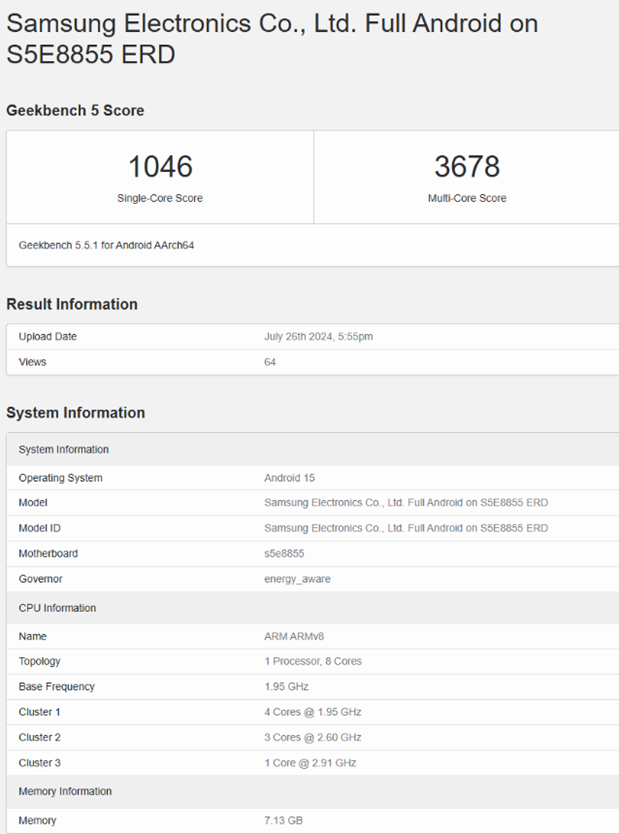
The first hint of the Galaxy A56 came back in July when the Exynos 1580 chip appeared in a Geekbench test. This particular performs the same as the Snapdragon 888 introduced 3 years ago
image
Samsung’s Exynos 1580 Chip appeared on Geekbench in July 2024. Performance comparable to Snapdragon 888. (Screenshot credit – Gizmochina)

After that, the Galaxy A56 was also spotted in the IMEI database and confirmed that Samsung is conducting tests to refine its performance

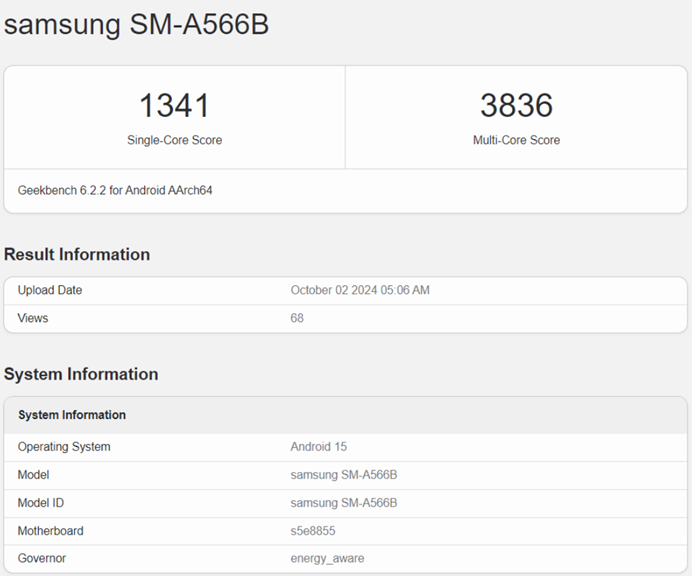
Later, we had Galaxy A56 popping up in the Geekbench database revealing that it will feature the Exynos 1580 chip. The upcoming device scored 1341 in single-core and 3836 in multi-core tests.
image
Samsung Galaxy A56 appeared on Geekbench. (Screenshot – Gizmochina)

As of now, our attention has shifted to the Galaxy A36, which has also been listed in the IMEI database.

Two Versions of the Galaxy A36

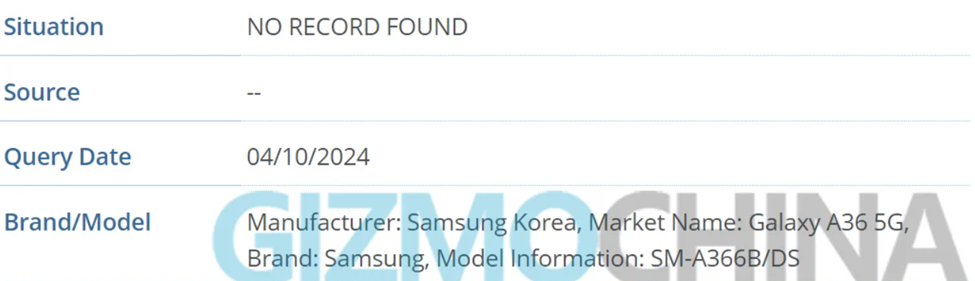
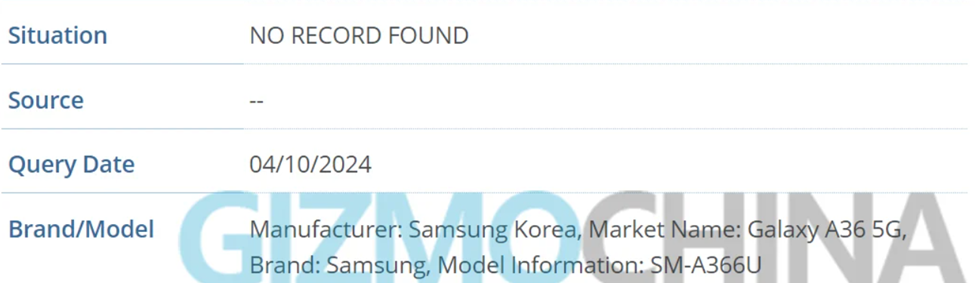
The Galaxy A36 appears with two model numbers, one being speculated for the US and one for the global smartphone market. The two model numbers that appear in the IMEI database are as follows –

  • SM-A366B/DS (the global version)
  • SM-A366U (the US market)
image
Caption – Samsung Galaxy A36 with model number SM-A366B/DS spotted in IMEI database. (Screenshot credit –  Gizmochina)
image
Samsung Galaxy A36 with model number SM-A366U spotted in IMEI database. (Screenshot credit –  Gizmochina)

The “/DS” suffix confirms that the global version will feature a dual SIM slot.

Moreover, the device’s name includes “5G,” which tells us that it will come equipped with a 5G-capable processor.

While the specific processor for the Galaxy A36 hasn’t been confirmed yet, there’s speculation that it could feature an Exynos 1480 chip.

If true, this would follow the trend as the predecessor Galaxy A35 came with an Exynos 1380.

However, certain media reports suggest that Samsung could take another route for Galaxy A36. For those who don’t remember, the earlier Galaxy A34 was powered by a MediaTek Dimensity 1080. And there is always a chance that Samsung would go for a successor MediaTek chipset for A36.

As we mentioned, there is too much speculation when it comes Galaxy A36 chipset with no concrete information as of now. However, we may soon get an official confirmation on this, directly or indirectly.

Galaxy A36 – Expected Launch Date

The exact launch date for the recently spotted Galaxy A36 is still unclear.

However, media reports claim both the Galaxy A36 and Galaxy A56 are expected to be officially launched in March 2025.

As we get closer to the launch date, we can expect more details to surface.

FAQs

Q1. What models is Samsung developing in its A series?

Answer. According to an exclusive report by Gizmochina, the Galaxy A36 has been spotted in the IMEI database recently. This now confirms that Samsung is actively working on developing two models in its popular A series. While excitement has been building around both the Galaxy A36 and Galaxy A56, fans are now eager to see what these new smartphones will offer.

Q2. What are the model numbers for the Galaxy A36 in the IMEI database?

Answer. The Galaxy A36 appears with two model numbers, one being speculated for the US and one for the global smartphone market. The two model numbers that appear in the IMEI database are as follows –

SM-A366B/DS (the global version) SM-A366U (the US market)

Q3. When are the Galaxy A36 and A56 expected to launch?

Answer. The exact launch date for the recently spotted Galaxy A36 is still unclear. However, media reports claim both the Galaxy A36 and Galaxy A56 are expected to be officially launched in March 2025.

Also Read: Samsung Launches Galaxy A06 with the Largest Screen Size on Galaxy A Series, 5000mAh Battery: Price, Features, Specifications

Also Read: Samsung Expands Circle to Search to Galaxy A Series and Galaxy Tab S9 FE Series

ZTE is Testing the Nubia V70 Series, Three Models Spotted in IMEI Database

0

Highlights

  • ZTE is testing three models for the upcoming Nubia V70 series.
  • The series includes Nubia V70, Nubia V70 Design, and Nubia V70 Max.
  • All three models were spotted in the IMEI database recently.

It appears ZTE is gearing up to launch its new Nubia V70 series soon as we can now confirm the brand is currently testing three new models.

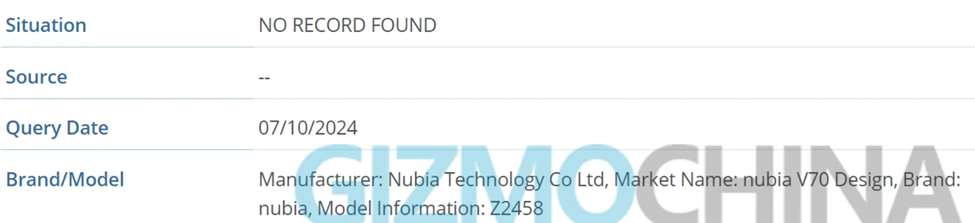
According to a recent Gizmochina exclusive report, three ZTE models have been spotted in the IMEI database, all can be traced to be part of the Nubia V70 series. The model names that appeared in the online listing include –

  • Nubia V70
  • Nubia V70 Design
  • Nubia V70 Max

While there might be more models under development, these are the only ones confirmed at the moment.

image
NET V70 spotted in IMEI database. (Image credit – Gizmochina)
image
NET V70 Design spotted in IMEI database. (Image credit – Gizmochina)
image
NET V70 Max spotted in IMEI database. (Image credit – Gizmochina)

The three models, Nubia V70, Nubia V70 Design, and Nubia V70 Max have been identified in the IMEI database with model numbers Z2459, Z2458, and Z2467, respectively.

The upcoming Nubia V70 series is the latest smartphone line from ZTE, following in the footsteps of the previously released Nubia V60 and V60 Design.

Both predecessor models were designed for the affordable and entry-level smartphone category. It’s expected that the upcoming V70 series models will also maintain this budget-friendly approach.

As of now, the launch date of the V70 series remains unknown.

However, if we look at the past trends of ZTE launch plans for the V60, it’s likely these new smartphones will hit the shelves around the end of this year.

As for key specs, ZTE has managed to keep things hidden and we haven’t heard very many rumours about what ZTE is bringing in the upcoming series. However, we can expect a significant upgrade from the predecessor series Nubia V60.

To recall, the Nubia V60 boasts a 6.6-inch 90Hz HD+ display, a 50MP triple rear camera setup, 5000mAh battery with 22.5W fast charging. On the other hand, the Nubia V60 Design stands out for its Sky-mirror Glass back and offers 256GB of storage with 4GB of RAM.

As mentioned, we can expect a significant upgrade in the upcoming ZTE Nubia V70 series. Hopefully, more details will emerge soon.

FAQs

Q1. What models are included in the upcoming Nubia V70 series?

Answer. According to a recent Gizmochina exclusive report, three ZTE models have been spotted in the IMEI database, all can be traced to be part of the Nubia V70 series. The model names that appeared in the online listing include Nubia V70, Nubia V70 Design, and Nubia V70 Max.

Q2. When is the Nubia V70 series expected to launch?

Answer. While the launch date of the V70 series remains unknown, if we look at the past trends of ZTE launch plans for the V60, it’s likely these new smartphones will hit the shelves around the end of this year.

Q3. What are the expected upgrades in the Nubia V70 series compared to the Nubia V60?

Answer. As for key specs, ZTE has managed to keep things hidden and we haven’t heard very many rumours about what ZTE is bringing in the upcoming series. However, we can expect a significant upgrade from the predecessor series Nubia V60.

Also Read: Snapdragon 8 Gen 4 Datasheet Leaked to Power Xiaomi 15 Series, ZTE Nubia Z70 Ultra, Nubia Flip 2, Red Magic 10 Series

Also Read: ZTE’s New Flagship Contender Nubia Z70 Ultra Spotted Online

Also Read: Nubia Z60 Ultra and Z60S Pro Launched in China with Snapdragon 8 Gen 3: Pricing, Features, Specs

No ‘Serious’ Apple Intelligence Performance Until 2026 or 2027, Hints Analyst

0

Highlights

  • Analyst Edison Lee suggests “series” AI performance won’t arrive in iPhone until 2026 or 2027.
  • Predicts 5-10% growth in iPhone sales unlikely this year.
  • Lee however sees long-term AI potential for Apple over Android devices.
The first set of Apple Intelligence features will arrive with iOS 18.1 by the end of October. (Image credit – Apple)

We all know that the rollout of Apple Intelligence is happening gradually. iPhone 16 Series comes with the tag “built for Apple Intelligence,” which hints how it is a device you get with a promise for the future. The gradual roll of Apple Intelligence features starts soon with the first six features set to launch with a new iOS 18.1 update by the end of this month.
However, we won’t see the new Siri version until next year.

While Apple fans are still conflicted about this, a tech analyst recently suggested that we should lower our expectations even further.

According to recent analyst comments, iPhones won’t have “serious” AI performance until 2026 or 2027.

There was talk that Apple Intelligence would drive a surge in iPhone 16 sales since only iPhone 15 Pro users would get the new features without upgrading.

But as of now, it looks like this year’s iPhone sales are about the same as last year, which indicates that AI isn’t a major selling point yet.

Jefferies analyst Edison Lee isn’t surprised by this. He told The Street recently that a 5-10% growth in iPhone sales is “unlikely.”
Although Lee acknowledges that Apple has a key AI advantage over other smartphone brands, he thinks it will be at least 2-3 years before this significantly boosts demand for new iPhones.

“We like Apple Intelligence long term, as Apple is the only hardware-software integrated player that can leverage proprietary data to offer low-cost, personalized AI services,” Lee said.

“However, smartphone hardware needs rework before being capable of serious AI, likely by 2026/27.”

Lee maintains that Apple has what can be termed as a longer-term advantage compared to Android devices in terms of tech and cost development. He seems particularly positive about Apple’s partnership with chipmaker Taiwan Semiconductor.

He also expects Apple to show better growth next year but that will be more because of the upcoming slimmer iPhone 17 Air and not so much due to Apple Intelligence.

“We believe AI-capable smartphone tech is likely 2-3 years away due to limitations in high-speed memory and advanced packaging tech. [But] Apple’s thin model (17 Air) in 2025 could attract more upgrade demand,” Lee said.

FAQs

Q1. When will the first six Apple Intelligence features launch on iPhone 16?

Answer. The first six Apple Intelligence features are set to launch by the end of this month.

Q2. What is the expected timeline for serious AI performance in iPhones?

Answer. According to recent analyst comments, iPhones won’t have “serious” AI performance until 2026 or 2027.

Q3. What did Jefferies analyst Edison Lee say about the iPhone’s AI potential?
Answer. Edison Lee thinks a 5-10% growth in iPhone sales is “unlikely” this year. He sees Apple as having a key AI advantage but believes it will be at least 2-3 years before this significantly boosts demand for new iPhones.

Also Read : iOS 18.1 Public Beta Now Available with Apple Intelligence: How to Install, Everything New on iOS 18, and More

Also Read : Apple to Expand Language Support for Apple Intelligence in 2025

Also Read : Apple Intelligence Features: What New Features Will Release with iOS 18.1?

Unexpected M4 MacBook Pro Unboxing Video on YouTube Reveals Key Upgrades

0

Highlights

  • A YouTube unboxing reveals significant M4 MacBook Pro upgrades.
  • It’ll have M4 chip with a 10-core CPU, increased base RAM (16GB) and three Thunderbolt 4 ports.
  • Launch announcement expected in late October with availability starting from November 1st.
image
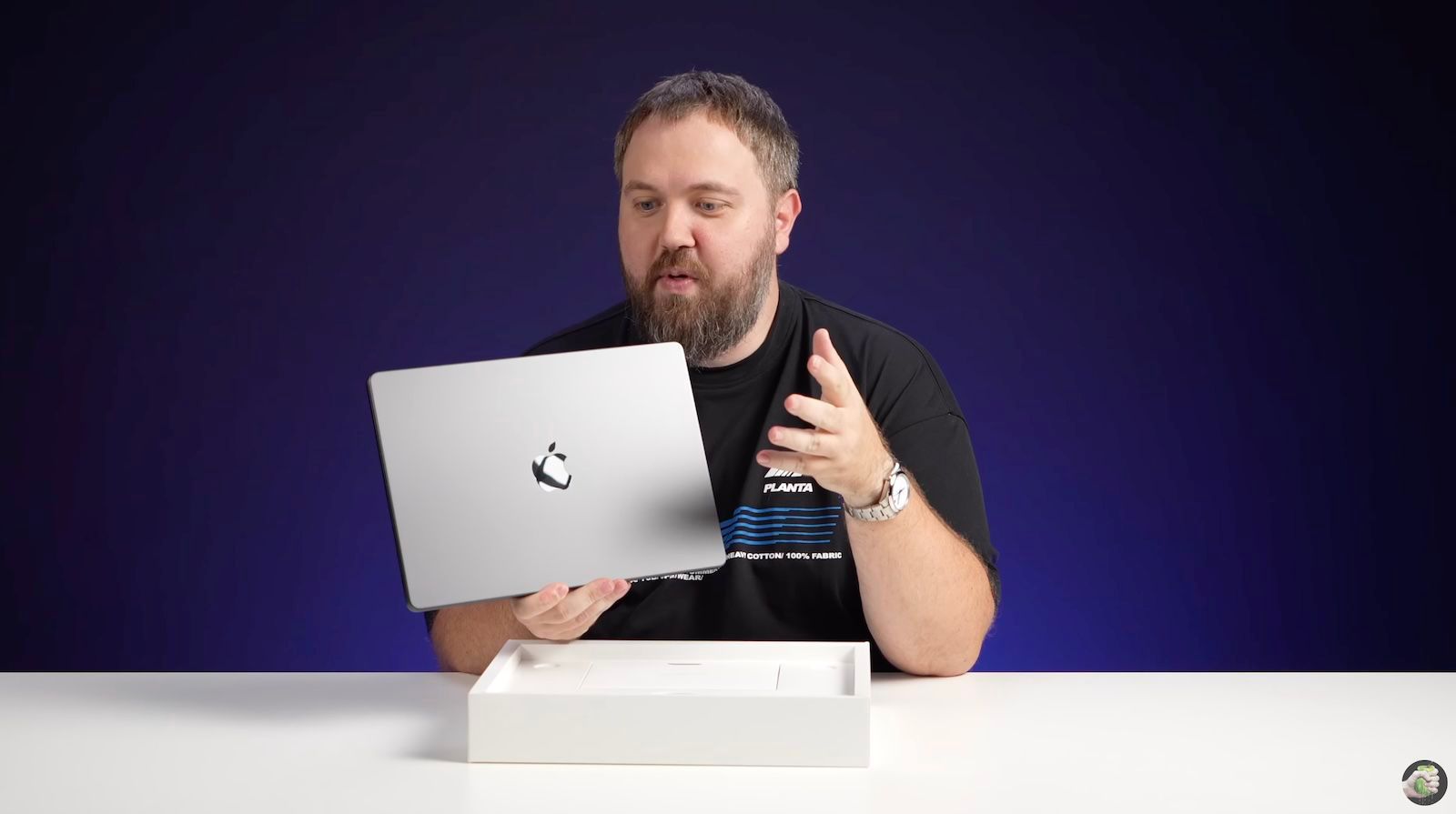
Screengrab from M4 MacBook Pro Unboxing Video on YouTube (Image credit – YouTube Channel Wylsacom)

Apple launches are always eventful even before the actual event. We are sure you all may be waiting for the exact time and launch details of the upcoming MacBook lineup to finally see what Apple has in store.

But an unexpected unboxing video on YouTube has revealed most key details.

Here’s what happened.

A 14-inch M4 MacBook Pro was featured in an unboxing video posted on YouTube and revealed the most significant upgrades the device will be getting.

The unboxing video was shared by the Russian YouTube channel Wylsacom.

We can confirm that it featured a genuine M4 MacBook Pro because even trusted Bloomberg’s Apple reporter Mark Gurman from Bloomberg shared the video, basically validating its authenticity.

M4 MacBook Pro – Launch Timeline

We still don’t have a definite timeline for the launch date. However, Gurman expects the first M4-powered Macs to be announced in late October.

The availability could start from November 1st.

Key Upgrades for the 14-inch M4 MacBook Pro

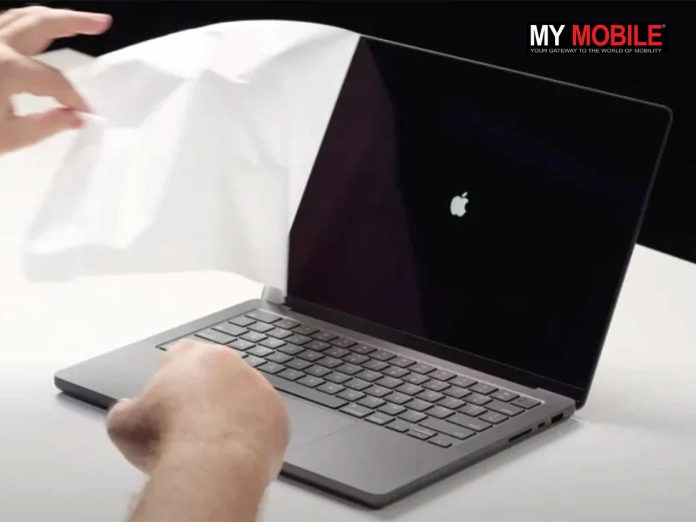
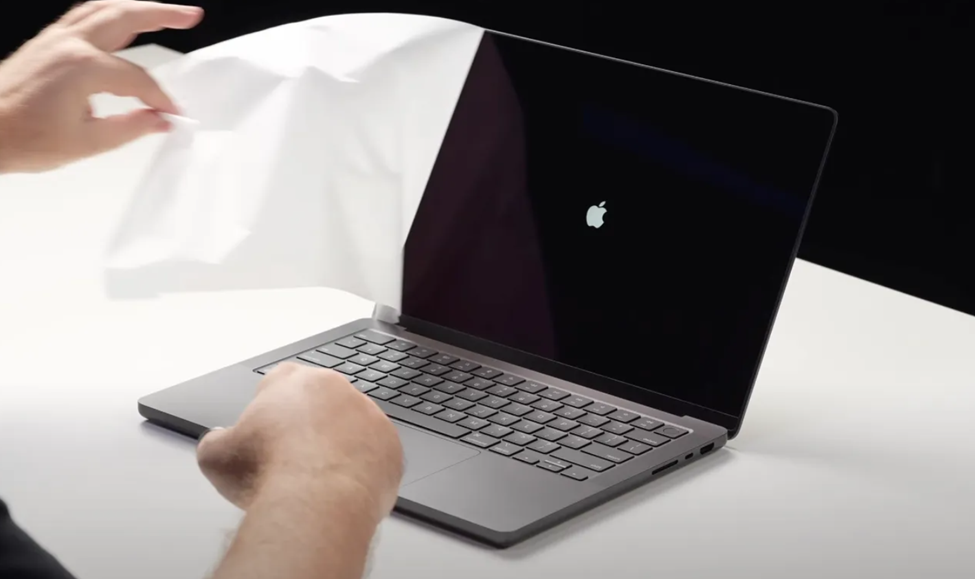
Apple MacBook Pro M4 unboxing

The unboxing video highlights four major updates for the base 14-inch MacBook Pro:

M4 Chip with a 10-core CPU

The unboxing reveals that the new MacBook Pro is powered by an M4 chip featuring a 10-core CPU.

It is an upgrade from the 8-core M3 chip in last year’s model. This upgrade in cores is expected to boost performance by around 25% with benchmark results supporting this claim.

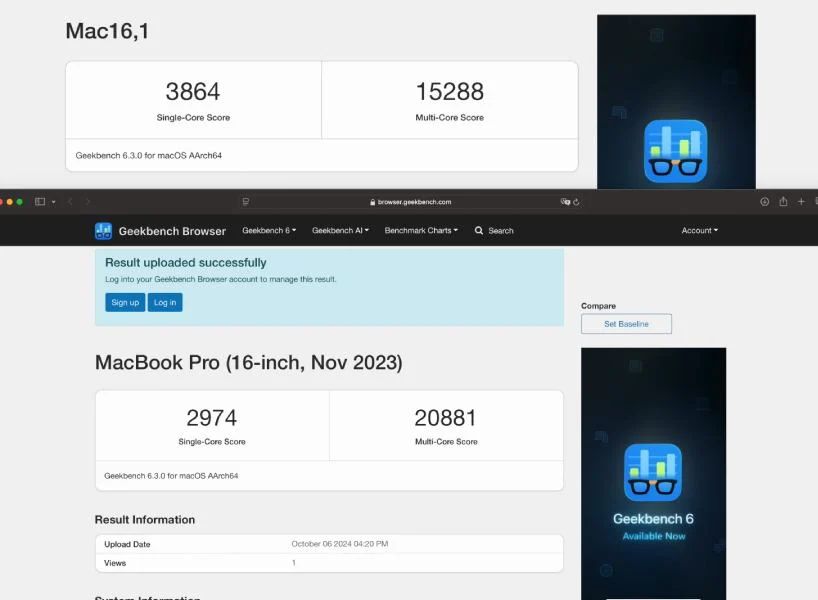
image
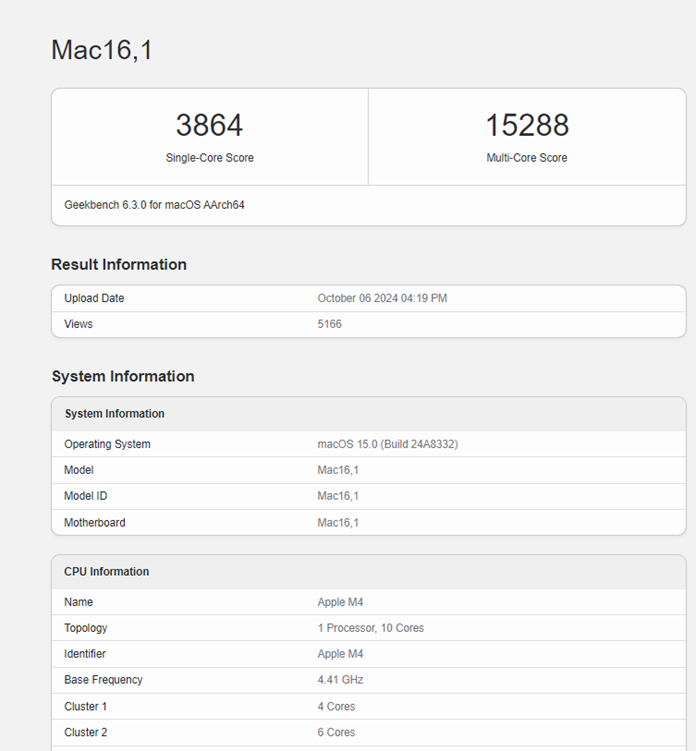
M4 MacBook appeared on the Geekbench website listing page on October 6.

In Geekbench 6 tests, the new M4 MacBook scored –

  • 3864 points in single-core
  • 15288 points in multi-core performance

For comparison, last year’s 16-inch MacBook Pro scored –

  • 2974 points in single-core
  • 20881 points in multi-core
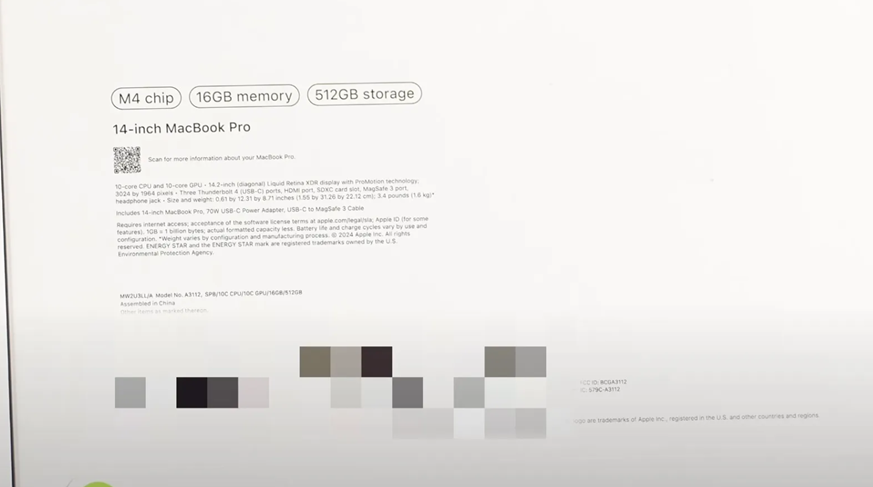
There have been rumors that Apple may increase the minimum RAM to 16GB for future Macs, and we can see the box label of the M4 MacBook with 16GB of memory.

Increased Base RAM

image
Packing box label of the upcoming M4 MacBook Pro. (Image credit – YouTube Channel Wylsacom)

The packaging box label shows 16GB of RAM. This suggests Apple is raising the minimum RAM for its new MacBooks.

However, it’s still unclear if this is the base model or a higher-tier version.

Thunderbolt 4 Ports

As per the unboxing video, we can confirm that the M4 MacBook Pro now features three Thunderbolt 4 ports. Comparatively, the previous model had two Thunderbolt 3 ports.

New “Space Black” Colour Option

Another exciting detail is the possibility of a Space Black colour option for the base 14-inch model.

Currently, this colour is only available on higher-end MacBook Pro models with the M3 Pro or M3 Max chips.

You can watch the full unboxing video here –

FAQs

Q1. What are the significant updates in the new 14-inch M4 MacBook Pro?

Answer. The new 14-inch M4 MacBook Pro features an M4 chip with a 10-core CPU, increased base RAM of 16GB, and three Thunderbolt 4 ports.

Q2. When is the expected launch date for the M4 MacBook Pro?

Answer. The M4 MacBook Pro is expected to be announced in late October, with availability starting from November 1st.

Q3, What new colour option is available for the 14-inch M4 MacBook Pro?

Answer. The 14-inch M4 MacBook Pro may come in a new “Space Black” colour option, which was previously available only on higher-end models.

Read More: Unverified M4 MacBook Pro Packaging Leak Suggests New Upgrades

Read More: M4 MacBook Pro, Mac Mini, and iMac are Set to 2024 Launch, Says Report

Read More: Apple to Launch M4 MacBook Pro Lineup in Q4 2024: Expected Features, Specs, and More

iQOO 13 Set to Launch with Snapdragon 8 Gen 4 & New Heat Dissipation System

0

Highlights

  • A new rumour suggests iQOO 13 may have a redesigned heat dissipation system.
  • The iQOO 13 will feature the Snapdragon 8 Gen 4 chip.
  • Official details are yet to be confirmed.
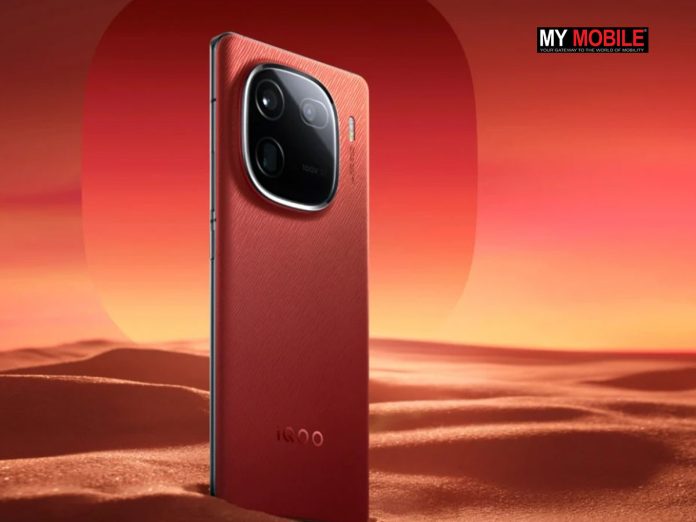
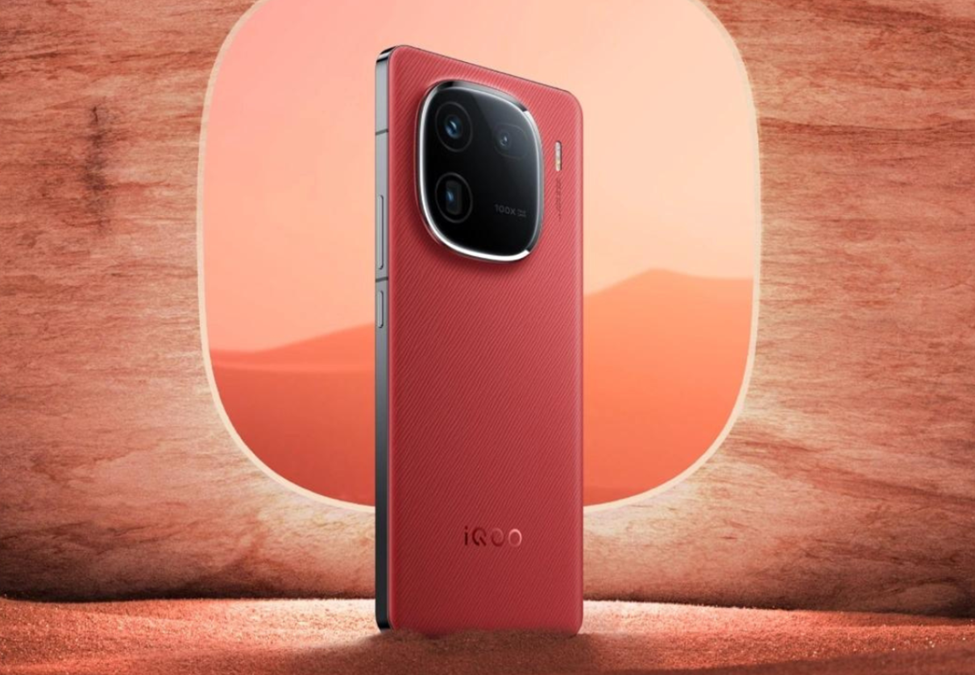
image
iQOO is preparing to release its 2024 flagship smartphone the iQOO 13 soon. (Image credit – iQOO)

As iQOO is gearing up for the release of its flagship smartphone iQOO 13 soon, new details about the device keep showing up. While we know that iQOO 13 will feature Qualcomm’s Snapdragon 8 Gen 4  chip promising a high-performance experience, a new leak suggests it may have a redesigned cooling system in place. Here’s what we know so far.

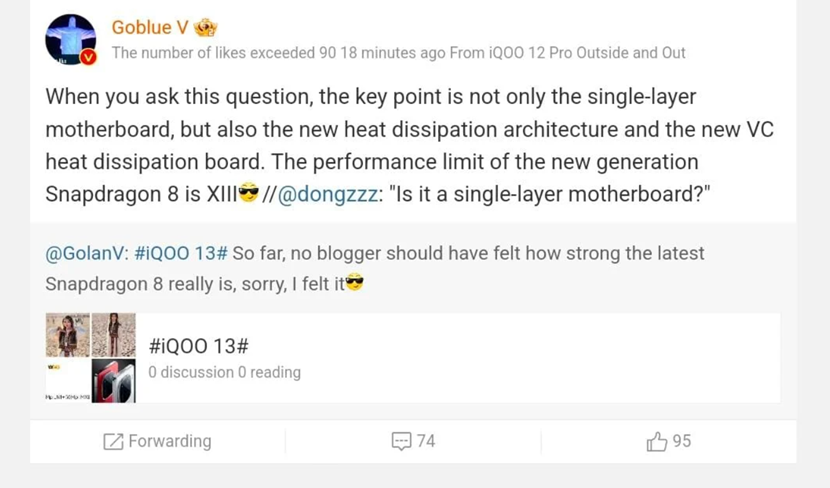
A Weibo leak by tipster Goblue V suggests that iQOO 13 may also introduce a single-layer motherboard supported by a redesigned heat dissipation system.

image
A Weibo leak on iQOO by tipster Goblue V.

As of now, the exact details about the cooling system are still unclear. However, it’s being speculated in multiple media reports that the phone will have a larger vapour chamber (VC) cooling plate.

This will help keep temperatures down during heavy use and enhance the overall performance of the phone for longer periods.

Snapdragon 8 Gen 4 Features in iQOO 13 (Rumours)

The Snapdragon 8 Gen 4 is expected to bring several improvements including support for LPDDR5X RAM and UFS 4.0 storage.

Leaked block diagrams reveal that there will be two versions of the chip, each differing in CPU clock speed and cellular connectivity. However, it’s still unknown which variant will power the iQOO 13.

Early leaks also point to a 56% GPU performance boost over its predecessor, the Snapdragon 8 Gen 3, while offering greater power efficiency thanks to TSMC’s 3nm process.

iQOO 13 Key Specs (Rumoured)

A previous exciting leak hinted that the iQOO 13 will likely get an upgrade to a 6150 mAh battery. If this happens, it will be a big jump from the 5000 mAh we got in the predecessor iQOO 12.

The battery is expected to use silicon-anode technology. Experts believe it would promise longer battery life and better overall performance.

Moreover, the iQOO 13 will sport a 6.7-inch 2K AMOLED display from BOE with a smooth 144Hz refresh rate for a high-quality viewing experience.

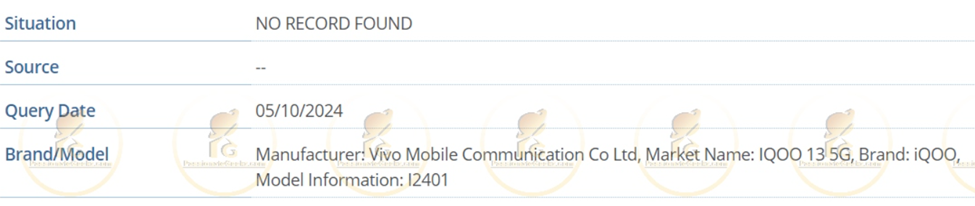
The phone has already appeared in IMEI listings.

image
The iQOO 13 was spotted on the IMEI listing by Passionategeekz with the model number I2401. (Screenshot credit – Passionategeekz)

As for the update on the launch date, many reports have suggested it could launch in India by December 2024.

While these leaks are exciting, it’s important to note that nothing can be considered confirmed until official announcements are made.

However, we can expect more definite details to come out as we approach the release date.

FAQs

Q1. What is the expected launch date for the iQOO 13?

Answer. The iQOO 13 is expected to launch in India by December 2024.

Q2. What chipset will the iQOO 13 feature?

Answer. The iQOO 13 will feature Qualcomm’s Snapdragon 8 Gen 4 chip, promising high performance.

Q3. What are the key rumoured specs of the iQOO 13?

Answer. The iQOO 13 is rumoured to have a 6.7-inch 2K AMOLED display with a 144Hz refresh rate, 6150 mAh battery, and redesigned cooling system with a larger vapour chamber.

Q4. What are the expected improvements of the Snapdragon 8 Gen 4 in the iQOO 13?

Answer. The Snapdragon 8 Gen 4 is expected to support LPDDR5X RAM, UFS 4.0 storage and offer a 56% GPU performance boost over its predecessor.

Read More: iQOO 13 Rumors Reveal Snapdragon 8 Gen 4 SoC and 2K OLED Display

Read More: iQOO 13 Leaks: Snapdragon 8 Gen 4, 2K Display, and 6000mAh Battery

Gurman: Apple Abandons Plans for Smart Ring to Focus on Apple Watch Series

0

Highlights

  • Apple has decided to abandon its Smart Ring project.
  • The company will focus on the Apple Watch Series
  • The decision was taken due to concerns that a smart ring could replace key functions of the Apple Watch.
  • It would sell for less and would be less profitable for the company.
image
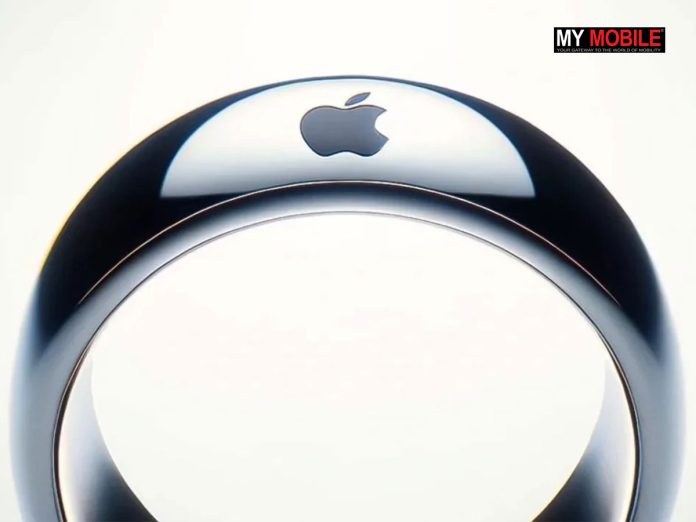
AI-generated Apple Smart Ring concept. (Created by PhoneArena with Pixel Studio; Photo belongs to PhoneArena)

If you have been following the tech industry even a little bit closely, you would know that Smart Rings has been generating quite a buzz since the beginning of the year. We were often told throughout the year that Smart Rings are going to be the next big tech gadgets with the potential to replace smartwatches. (Ironically, we are hearing something similar about smart glasses now, but let’s stick to the smart rings story for now.)

So, the latest update is that Apple has probably realised that it wouldn’t be a wise business decision to invest in the smart ring project any more for them after all.

According to Mark Gurman from Bloomberg, Apple decided not to move forward with a smart ring because it could replace key functions of the Apple Watch. This if happens will potentially lower the demand for the Apple watch range.

Moreover, a smart ring would likely sell for less making it less profitable for Apple eventually.

The company has chosen to focus its efforts on its Apple Watch series, which continues to dominate the wearables market.

The buzz around smart rings somewhat started with Samsung’s recently launched Galaxy Ring – its first device in this emerging category. Ever since many Apple fans hoped the tech giant would follow suit. However, recent reports suggest that Apple has changed its plan.

Smart rings are a popular choice for people who don’t prefer smartwatches or fitness bands.

These wearables can track health, measure physical activity and provide notifications for calls and messages in a lightweight and convenient form.

However, the smaller size means sacrificing advanced features like a display. Moreover, the smart ring market is still relatively niche.

Apple might not see enough demand to justify developing a product in that segment.

“Apple sees no reason to introduce a new product that might cannibalise sales of the Apple Watch, which continues to be a strong performer and a leader in the fitness-tracking market,” Gurman stated.

Earlier Rumours of Apple’s Smart Ring Plans

Earlier this year, rumours about Apple working on a smart ring made headlines in the tech community. This became even the biggest talking point after Samsung confirmed its smart ring project.

image

 Apple’s patent for smart ring (USPTO)

There was speculation that Apple’s version would allow users to control other Apple devices and the company even filed patents for this idea.

But it seems Apple has decided to shelve the project for now.

Can Apple Go Back to Smart Rings Project in the Future?

Gurman, in his newsletter, suggests Apple will continue to focus on the Apple Watch series as its main health and fitness tracking wearable as of now.

image
The Oura Ring (left) and Samsung Galaxy Ring (right) are currently leading the smart ring segment. (Images credit — Oura and Samsung)

However, with devices like the Oura Ring 4 and the success of Samsung’s Galaxy Ring, things could change at any time.

So, we can safely conclude that if the smart ring expands in future, Apple might reconsider its decision.

FAQs

Q1. Why has Apple decided to abandon its plans for a Smart Ring?

Answer. Apple decided not to move forward with a Smart Ring because it could replace key functions of the Apple Watch, potentially lowering its demand. Additionally, a Smart Ring would likely sell for less, making it less profitable for Apple.

Q2. Could Apple reconsider the Smart Ring project in the future?

Answer. Yes, it’s possible. While Apple has shelved the Smart Ring project for now, the company might reconsider it if the market for Smart Rings grows and proves to be viable, as seen with the success of devices like the Oura Ring 4 and Samsung’s Galaxy Ring.

Q3. What are smart rings?

Answer. Smart rings are a popular choice for people who don’t prefer smartwatches or fitness bands. These wearables can track health, measure physical activity and provide notifications for calls and messages, all in a lightweight and convenient form.

Read More: Apple Ring Wearable Tech Rumours

Read More: Apple to Launch Smart Home Display in 2025 with New HomeOS and Apple Intelligence

OnePlus 13 to Feature Magnetic Wireless Charging

0

Highlights

  • The OnePlus 13 will support magnetic wireless charging.
  • Technology will be similar to Apple’s MagSafe.
  • OnePlus 13 expected specs – a 2K curved LTPO display, Snapdragon 8 Gen 4 processor, triple 50MP rear camera setup, 6,000mAh battery, 100W fast wired charging, and 50W magnetic wireless charging.
  • Likely to launch in China first.

With the launch of the OnePlus 13 just around the corner, more details, leaks and rumours about the upcoming flagship keep popping up on the timeline. One of the latest details that have come out is that the OnePlus 13 will support magnetic wireless charging. It is interesting how this feature is gaining popularity in the Android smartphone industry of late.

This news about OnePlus using magnetic wireless charging came out directly from a reliable Oppo source, although in an interesting way.

On China’s social media platform Weibo,  the President of OnePlus China Louis Lee responded to a fan asking about the return of bamboo cases for the OnePlus 13.

image
OnePlus China President Louis Lee’s response to a question on Weibo.

While Lee confirmed that wooden cases aren’t making a comeback anytime soon, he did mention that the OnePlus 13 will offer wood grain cases with a “magnetic suction function.”

He basically confirmed that the OnePlus 13 will come with magnetic wireless charging.

This would mark OnePlus’ entry into the magnetic charging ecosystem.

Recently, we have seen OnePlus’ sister brand Oppo releasing a video to demo the Find X8 series’ magnetic wireless charging. Oppo is even planning a range of magnetic accessories such as a power bank.

Certain online speculations also believe that OnePlus 13 users may also benefit from a similar range of magnetic accessories, expanding their charging and accessory options.

This magnetic system could pave the way for other accessories such as car mounts and wallet cases, which offer a more integrated user experience.

This approach is similar to Apple’s MagSafe technology.

OnePlus 13 Specs (Rumoured)

image
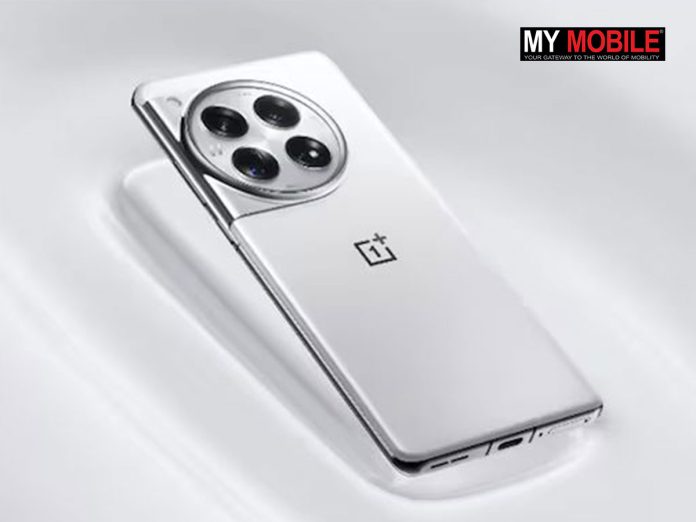
President of OnePlus China, Louis Lee shared the first look of the upcoming OnePlus 13 on Weibo last month. (Image credit – Louis Lee on Weibo)

Leaks as of now suggest that the OnePlus 13 will come with a 2K curved LTPO display, the Snapdragon 8 Gen 4 processor, a triple 50MP rear camera setup, and a 6,000mAh battery.

The phone is expected to support 100W fast wired charging and 50W magnetic wireless charging.

If OnePlus decides to go with the usual pattern of launch plan, the OnePlus 13 will likely launch in China first. A global release will be scheduled post that.

As the launch time approaches, we can expect more details to emerge soon.

FAQs

Q1. Will the OnePlus 13 support magnetic wireless charging?

Answer. Yes, the OnePlus 13 will support magnetic wireless charging, marking its entry into the magnetic charging ecosystem.

Q2. What are the expected key specs of the OnePlus 13?

Answer. The OnePlus 13 is expected to feature a 2K curved LTPO display, Snapdragon 8 Gen 4 processor, triple 50MP rear camera setup, 6,000mAh battery, 100W fast wired charging, and 50W magnetic wireless charging.

Q3. When is the OnePlus 13 expected to launch?

Answer. The OnePlus 13 is likely to launch in China first, followed by a global release. The exact dates have not been confirmed yet.

Q4. What new accessory options might be available for the OnePlus 13?

Answer. The OnePlus 13 may offer wood grain cases with a “magnetic suction function” and could benefit from a range of magnetic accessories, similar to those from Oppo.

Read More: OnePlus 13 Teased with First Look and Key Features

Read More: Enhanced OnePlus 13 Water Resistance – Leaks Suggest IP68 or IP69

Read More: OnePlus 13 Rumored to Feature Major Camera Upgrades with New Sony Sensors

Google Expands Theft Detection Lock, Offline Device Lock & Remote Lock for Android Users Worldwide

0

Highlights

  • Google is rolling out three new security features.
  • All are designed to protect phones and data from theft.
  • Theft Detection Lock uses machine learning to recognize phone snatching.
  • Offline Device Lock secures the phone even when it’s offline.
  • Remote Lock allows users to lock their devices remotely using their phone number.
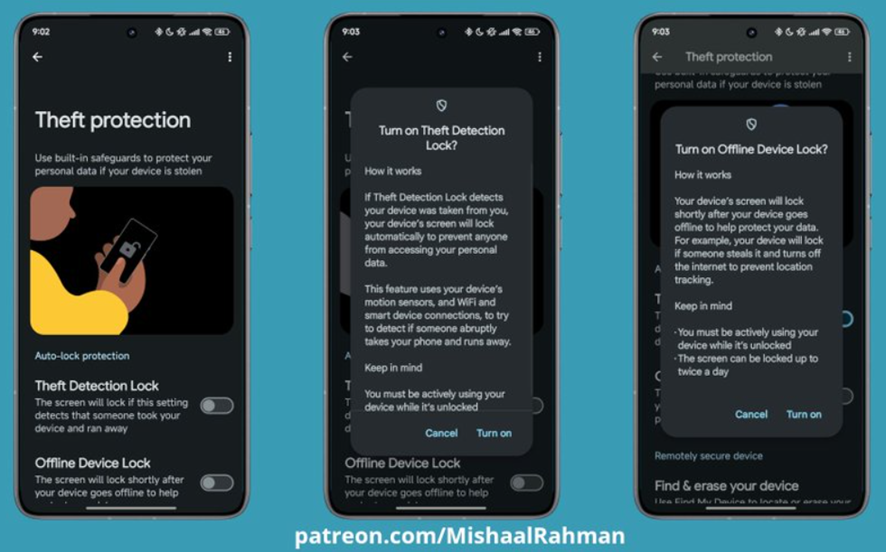
image
 Image credit – @MishaalRahman on X

Google is reportedly rolling out three new security features to Android users across the world. These new features include the Theft Detection Lock, Offline Device Lock and Remote Lock.

Google has specifically designed these features to protect your phone and data if your device is stolen.

As per Mishaal Rahman, a popular source point for Android OS news on X (Twitter previously) and Co-host of Android Faithful, the initial testing of these features has already been conducted in beta in Brazil.

The global rollout of the new features is already underway with some users already reporting access to Theft Detection Lock and Offline Device Lock while others have started using Remote Lock.


Google has confirmed that these features will be available to more users later this year. Here’s what we know about the new Google security features.

Google’s Theft Detection Lock Feature

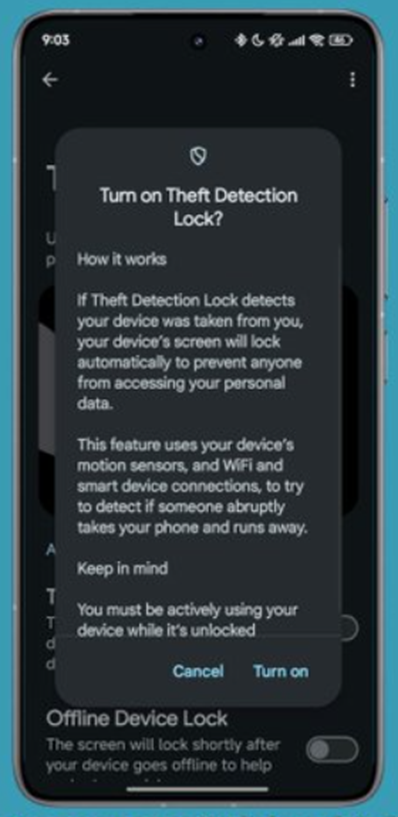
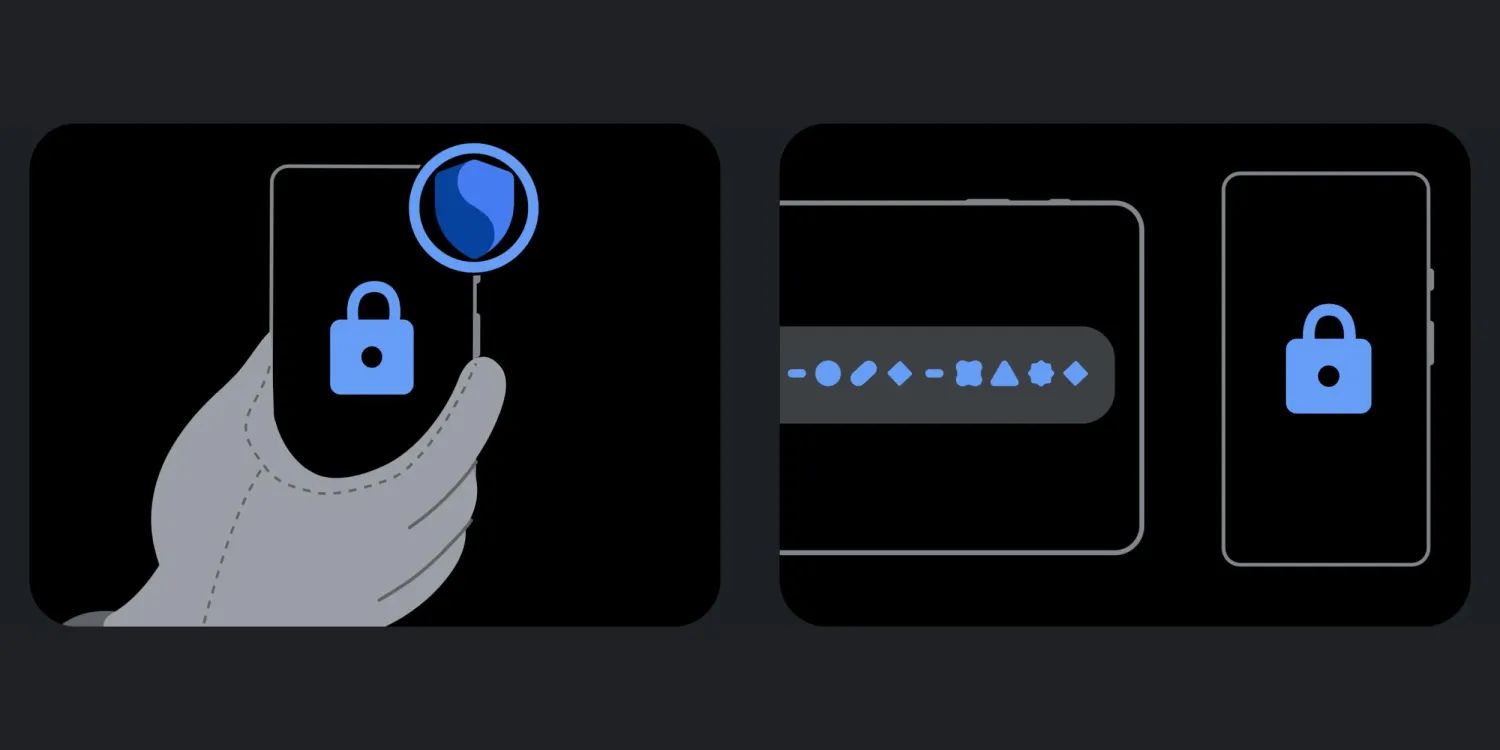
image

Theft Detection Lock feature. (Image credit – @MishaalRahman on X)

This is one of the most unique things we have heard. The Theft Detection Lock uses a machine learning model to recognise when a phone is snatched from a user’s hand, making it literary snatch-free.

The tool can detect snatching in different scenarios whether the thief flees on foot, by bike, or by car. Once detected, the phone automatically locks and prevents unauthorised access. It blocks access to apps and other sensitive data.

Google’s Offline Device Lock Feature

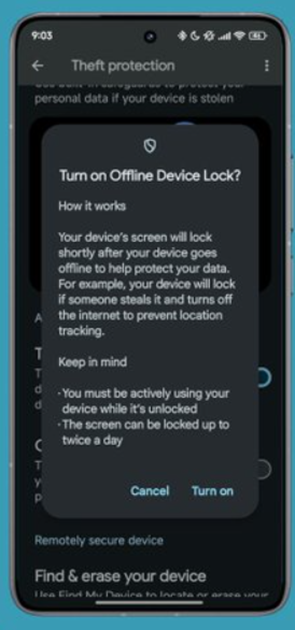
image

Offline Device Lock security feature. (Image credit – @MishaalRahman on X)

This new Google feature adds an extra layer of protection to your Android device.

Offline Device Lock protects the device by locking the screen if a thief disconnects the phone from the internet for an extended period. This feature is again aimed at preventing unauthorized access to data even when the phone is offline.

Google’s Remote Lock Feature

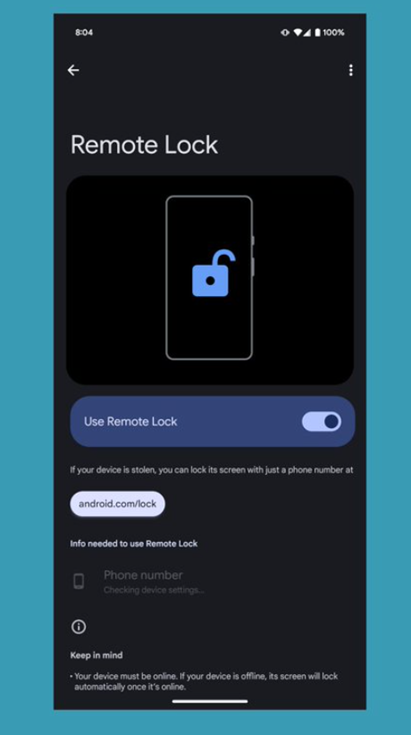
image

Remote Lock security feature. (Image credit – @MishaalRahman on X)

As the name suggests, the new security feature called Remote Lock allows users to lock their devices remotely using their phone number.

This feature is especially handy if you’re unable to sign into Find My Device using your Google account password when your phone is stolen or lost.

Google starts rolling out Android Theft protection features

These new security features are designed to provide Android users peace of mind in situations when users either lose their phones or the phone gets stolen. In such times, the fear of knowing that their data is more secure can be frustrating and Google has managed to address these issues with modern technology.

FAQs

What is the Google Theft Detection Lock feature?

The Theft Detection Lock uses a machine learning model to recognize when a phone is snatched from a user’s hand, automatically locking the phone and blocking access to apps and sensitive data.

How does the Offline Device Lock feature work?

The Offline Device Lock feature adds an extra layer of protection by locking the screen if a thief disconnects the phone from the internet for an extended period, preventing unauthorized access even when the phone is offline.

What is the purpose of the Remote Lock feature?

The Remote Lock feature allows users to lock their devices remotely using their phone number, especially useful if they cannot sign into Find My Device using their Google account password when their phone is stolen or lost.

What is the availability of Google Theft Protection ?

Availability All three theft detection features entered beta testing in August, beginning in Brazil. Google informed Mishaal Rahman that the final versions will be rolled out more broadly later this year.

Some users have reported partial availability; for instance, on his Xiaomi 14T Pro, Rahman found Theft Detection Lock and Offline Device Lock but not Remote Lock, while some Pixel users in the U.S. reported having Remote Lock without access to the other two features.

According to 9to5Google, U.S. Pixel users enrolled in the Google Play Services beta (version 24.40.33) can access all three features, although they are not yet available on the stable channel.

A wider rollout of these Android theft protection features is expected as time progresses across various regions.

Read More: Google for India 2024: With AI for Every Indian Theme, Google Announces Gemini Live in Regional Languages, GPay Gold Loans, India’s 1st G-Sec, and More

Read More: Google Adds Verified Checkmarks to Boost Search Result Credibility

Read More: Google Phone App Testing New Incoming Call UI with Dedicated Buttons for Accepting and Declining Calls

Intel Confirms Stability Issues with 13th and 14th-Gen CPUs Fully Resolved

0

Highlights

  • Intel has confirmed that stability problems affecting its 13th and 14th-gen CPUs have been fully fixed.
  • Issues were known as ‘Vmin shift instabilit.’
  • Users should ensure their system’s BIOS is updated with the latest microcode.
  • Discounted prices are available for some 13th-gen chips.
  • Concerns remain about potential long-term damage.
image
Intel confirmed that the ‘Vmin shift instability’ was the root cause of CPU issues. (Image credit – TechRadar / Future / John Loeffler)

Intel has officially confirmed that the stability problems affecting its 13th and 14th-gen CPUs have been fully fixed. These issues have been under investigation for some time now. Intel now addressed the issues through several mitigations, including three microcode updates. The final microcode update was only recently rolled out.

Previously, Intel had suggested that the root cause of the instability was resolved, but now the company has confirmed that the problem has been solved.

According to a recent The Verge report, Intel spokesperson Thomas Hannaford stated clearly: “Yes, we’re confirming this is the cause and that it is fixed.”

The root cause known as the ‘Vmin shift instability‘ was identified and addressed through these updates.

What Does This Mean for 13th or 14th-gen Intel Processor Users?

As per The Verge report, if you’re using or planning to buy a 13th or 14th-gen Intel processor, including Core i5 models and higher, the confirmation from Hannaford is good news.

Intel has also noted that some of these chips, particularly the 13th-gen, are now being offered at discounted prices as next-gen Arrow Lake processors are on the horizon. However, it’s important to ensure that your system’s BIOS is updated with the latest microcode including the 0x12B update to prevent any further instability or degradation.

For those who have had their CPUs for a while, it’s important to note that Intel’s patches won’t reverse any damage that has already occurred due to the instability.

The updates will only stop further degradation. If your PC has been experiencing crashes or instability, Intel advises that you should return your CPU and request a replacement.

What Concern Remain For 13th or 14th-gen Intel Processor Users?

Although Intel says it has fixed the issues, some users may still be worried about potential long-term damage. The worry includes issues where problems like crashes haven’t been noticed yet.

This invisible wear and tear could potentially shorten the CPU’s lifespan over time. While Intel has extended the warranty for these affected chips to five years and ensures the customer added protection, there is always a chance that problems may arise after that period ends.

Users may never know if any future issues are directly related to the earlier instability. This leaves many users concerned about the durability of their processors.

FAQs

Q1. What stability issues were affecting Intel’s 13th and 14th-gen CPUs?

Answer. The stability issues, known as ‘Vmin shift instability,’ affecting Intel’s 13th and 14th-gen CPUs have been fully fixed through several microcode updates, with the final update recently rolled out.

Q2. What to do to ensure Intel’s 13th or 14th-gen CPU remains stable?

Answer. Users should update their system’s BIOS with the latest microcode, including the 0x12B update, to prevent further instability or degradation. If experiencing crashes, they should return the CPU and request a replacement.

Q3. What are the long-term concerns for Intel’s 13th and 14th-gen CPUs?

Answer. Some users remain concerned about potential long-term damage and invisible wear and tear that could shorten the CPU’s lifespan. Intel has extended the warranty for these affected chips to five years for added protection.

Read More: Qualcomm Considering Takeover of Intel, Kuo Predicts Challenges

Read More: Sony to Work with AMD Again for PS6 Chip After Talks with Intel Fails

Read More: Intel Core Ultra Lunar Lake 200V Series Processors with XE2 Graphics Launched, Offering Better Battery and Enhanced AI Performance

Apple to Release iOS 18.1 on October 28, Reveals Gurman

0

Highlight

  • Apple is set to release iOS 18.1 on October 28.
  • iOS 18.1 will include Writing Tools, a new Siri UI, Notification Summaries, Memory Creation in Photos, Clean Up in Photos, and Intelligent Breakthrough with Notifications.
  • iOS 18.2 to come in December (ChatGPT support, Genmoji, Image Playground)
  • iOS 18.3 or iOS 18.4 in early 2025 (full new Siri experience)
image
Bloomberg’s Mark Gurman predicts iOS 18.1 launch date. (Image credit – Apple)

According to Bloomberg’s Mark Gurman, Apple is set to release iOS 18.1 on October 28. This update will include some of the first Apple Intelligence features, although it’s arriving a bit later than previously expected.

Initially thought to launch in mid-October, Apple is reportedly taking extra time to ensure the update is free of bugs and that its private cloud servers can handle the influx of users downloading it.

“I’m told that Apple is taking its time with the rollout to ensure that major bugs are eliminated and it can support all the new traffic on its AI cloud servers,” writes Bloomberg’s Mark Gurman in his latest newsletter.

What’s New in iOS 18.1?

The Clean Up tool in Photos can identify and remove distracting objects in the background of a photo — without accidentally altering the subject.

Once iOS 18.1 is released, iPhone 16 users will finally gain access to some of the Apple Intelligence features that were promised when the phone first launched, just over a month ago. However, not all features may be groundbreaking right away.

Here’s what users can expect after installing iOS 18.1:

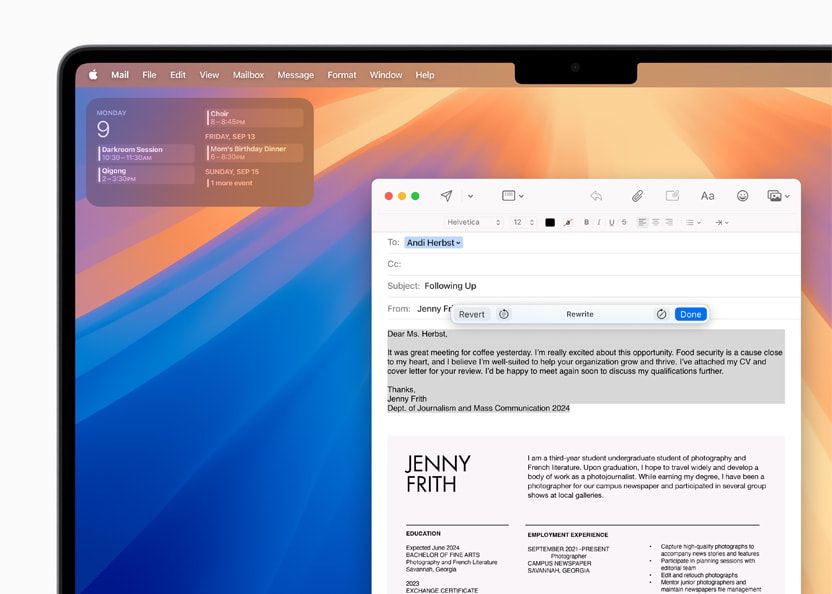
Writing Tools powered by Apple Intelligence, users can rewrite, proofread, and summarise text nearly everywhere they write.
  • Writing Tools to enhance text input
  • A New Siri UI, though the fully revamped experience is set for a future release
  • Notification Summaries, offering more organized alerts
  • Memory Creation in Photos for generating meaningful memories from your photo library
  • Clean Up in Photos, helping with organizing and managing images
  • Intelligent Breakthrough with Notifications, potentially offering smarter notification handling

Subsequent iOS 18 Updates – What’s Coming Next?

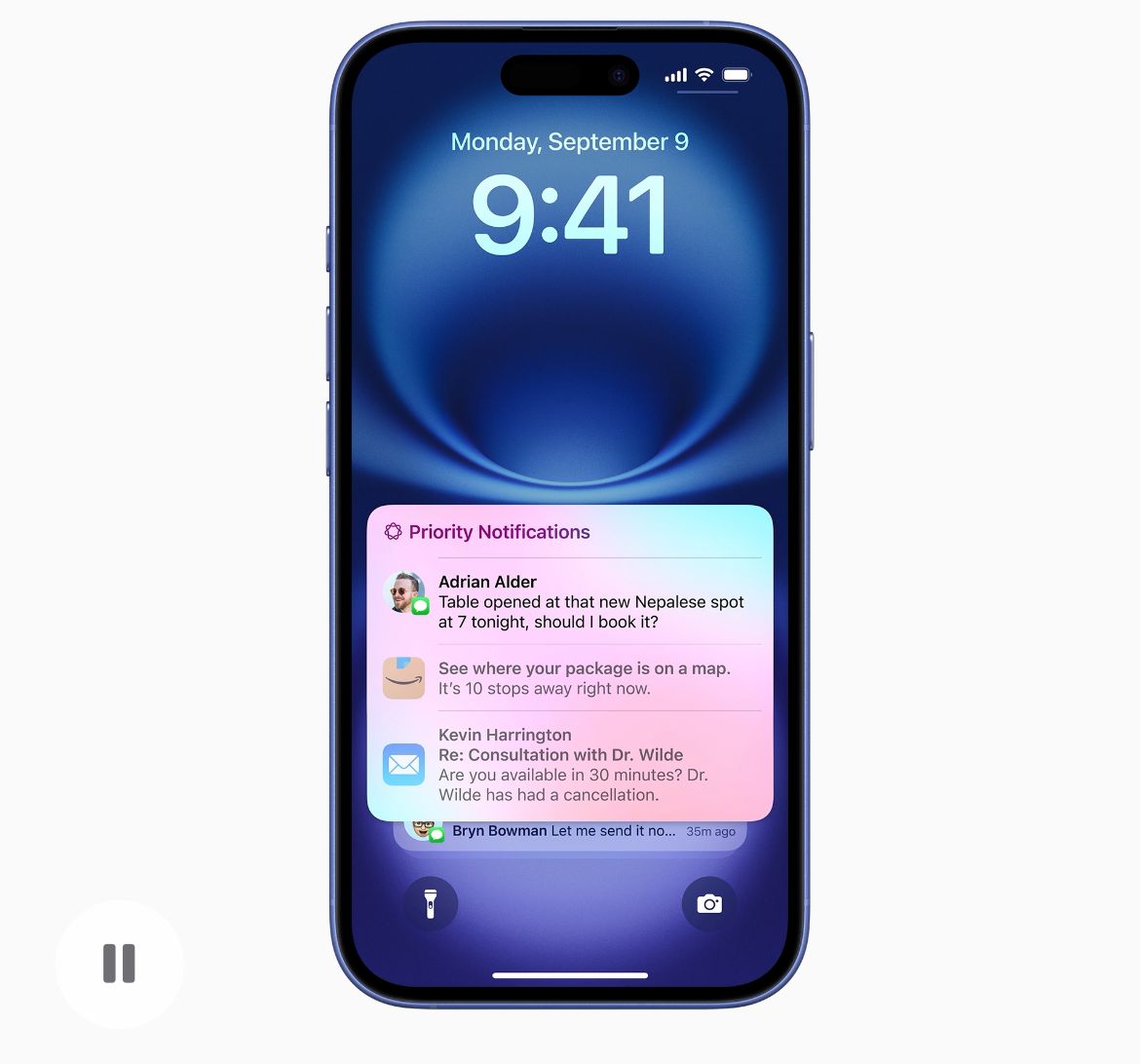
Priority Notifications surface what’s most important, and summaries help users scan long or stacked notifications to show key details right on the Lock Screen.

While iOS 18.1 brings some new features, more exciting updates are planned for later this year and early 2025. Apple has a phased rollout strategy for its new features:

  • October: iOS 18.1 will debut with the features mentioned above.
  • December: iOS 18.2 is expected, which will introduce ChatGPT support, Genmoji, and Image Playground.
  • Early 2025: iOS 18.3 or iOS 18.4 will roll out, including the full new Siri experience.
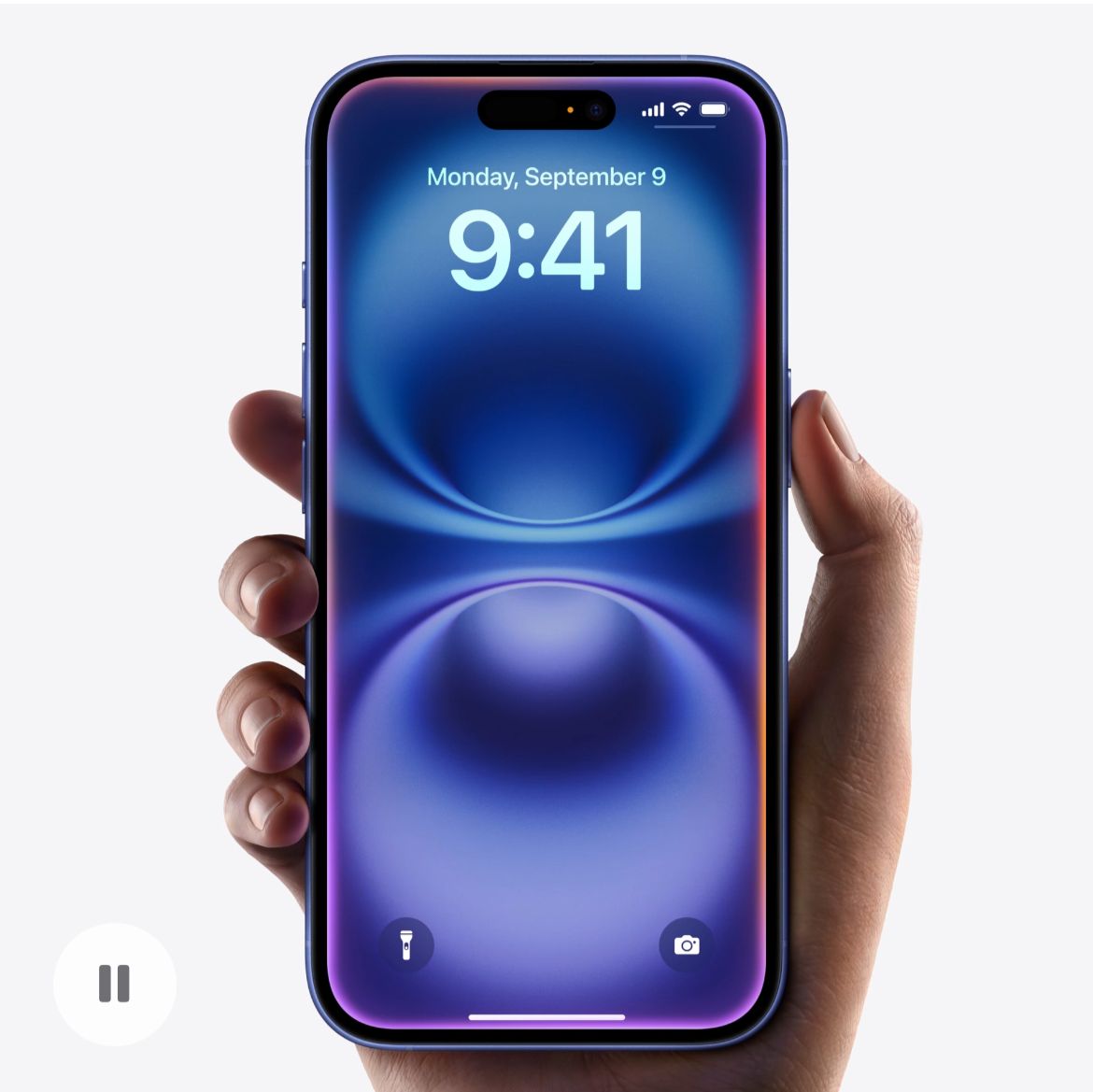
Siri is redesigned with an elegant glowing light that wraps around the edge of the screen when active.

It looks like it will be a while before all of the Apple Intelligence features are fully available. By the time Apple releases the iPhone SE 4, likely in 2025, the complete set of features should be live.

FAQs

When is iOS 18.1 expected to be released?

iOS 18.1 is set to be released on October 28, 2024. Apple took extra time to ensure a bug-free update and prepare their private cloud servers for the influx of users.

What new features can users expect from iOS 18.1?

iOS 18.1 will introduce several new features, including Writing Tools to enhance text input, a new Siri UI, Notification Summaries, Memory Creation and Clean Up in Photos, and Intelligent Breakthrough with Notifications.

What are the upcoming updates planned after iOS 18.1?

Subsequent updates include iOS 18.2 in December 2024, which will introduce ChatGPT support, Genmoji, and Image Playground, followed by iOS 18.3 or iOS 18.4 in early 2025, featuring the full new Siri experience.

Has Apple Shifted Away from Its Annual Release Cycle ?

Gurman noted that Apple is shifting from its traditional annual product update cycle, potentially resulting in more frequent releases and fewer delays.
Apple launched new products each fall, which helped align employee goals and set analyst expectations.

However, with a broader product range that includes multiple iPhones, iPads, Macs, and AirPods, maintaining a yearly update schedule has become impractical, especially for products like the Apple Watch Ultra and iPhone SE.

Apple deviated from its fall schedule, launching new iPads in May 2023 and faster Macs earlier in the year.

This flexible strategy enables Apple to release products when they are ready, rather than adhering to a fixed timeline. The staggered rollout of Apple Intelligence features, acknowledged by CEO Tim Cook, underscores this approach.

For hardware, Apple has demonstrated that not all products require annual updates. Instead of launching an Ultra 3 watch, the company added a new color option for the Ultra 2 and left the Apple Watch SE unchanged, with updates planned for 2025.

Apple’s 2025 strategy includes multiple hardware launches coinciding with significant iOS 18 updates.

To sustain this strategy, Apple must avoid rushing OS features for September releases. This shift could lead to greater innovation and increased revenue outside the holiday season, aligning with its goal of “surprise and delight,” Gurman added.

Read More: iOS 18.1 Public Beta Now Available with Apple Intelligence: How to Install & Everything New on iOS 18

Read More: Apple Intelligence Features: What New Features Will Release with iOS 18.1

Read More: Apple Delays AI Features to iOS 18.1 but Developer Beta Launches Soon