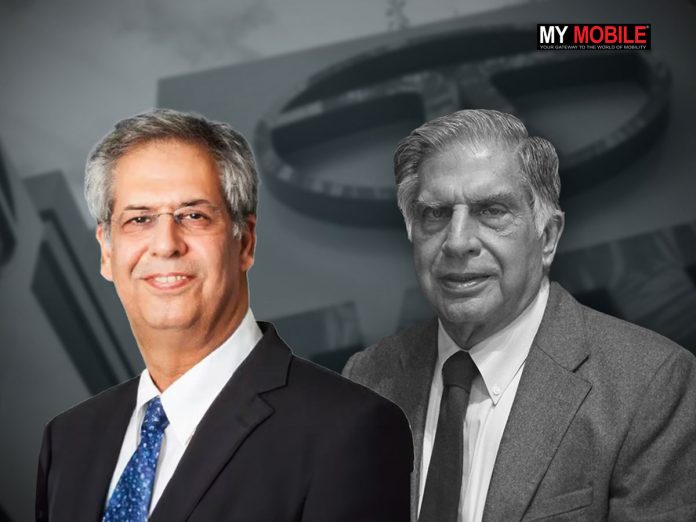
Wipro board of directors will discuss the issue of bonus shares.
The company recently reported a 4.6% increase in consolidated net profit for Q2 FY25
The revenue declines by 3.8%.
Wipro reported a 4.6 per cent year-on-year increase in its consolidated net profit in the June-ended quarter at Rs 3,003.2 crore. (Image credit – Shutterstock)
The Indian multinational Tech Company Wipro recently announced that its board of directors will consider the issue of bonus shares at the upcoming board meeting. The meeting is scheduled for October 16-17, 2024.
Wipro is also set to announce its Q2 FY25 results on October 17, 2024.
The information communication (IT) company in the past had issued bonus shares for its investors 5 years ago on May 6, 2019, in a 1:3 ratio. Other than that Wipro issued bonus shares in 2017 as well in 1:1 ratio.
In the regulatory filing, Wipro stated, “The board of directors of the company will be considering a proposal for the issue of bonus shares, in accordance with the applicable provisions of the Companies Act, 2013 (including the rules and regulations framed thereunder), the Securities and Exchange Board of India (Issue of Capital and Disclosure Requirements) Regulations, 2018, at its meeting scheduled to be held over October 16-17, 2024.”
The Bengaluru-headquartered firm recently also reported a 4.6 per cent year-on-year increase in its consolidated net profit in the June-ended quarter at Rs 3,003.2 crore.The revenue, however, declined 3.8 per cent to Rs 21,963.8 crore.
Wipro CEO and MD Srini Pallia revealed that the company is “confident” in its ability to execute better on bookings and profitable growth in the second quarter. It also continues to build on the ai360 strategy and prepare the workforce for future projects that will be AI-heavy.
Meanwhile, Shares of Wipro ended Friday at Rs 528.95 on the BSE, which was 0.77 per cent higher than the previous day’s numbers.
In the past one year, Wipro shares have gained 28.6 per cent against Sensex’s rise of 23 per cent.
FAQs
Q1. When will Wipro’s board of directors discuss the issue of bonus shares?
Answer. The board of directors of the company will be considering a proposal for the issue of bonus shares at its meeting scheduled to be held over October 16-17, 2024.
Q2. What was Wipro’s consolidated net profit in the June-ended quarter?
Answer. The Bengaluru-headquartered firm recently reported a 4.6 per cent year-on-year increase in its consolidated net profit in the June-ended quarter at Rs 3,003.2 crore.
Q3. What is Wipro CEO and MD Srini Pallia’s outlook for the second quarter?
Answer. Wipro CEO and MD Srini Pallia revealed that the company is “confident” in its ability to execute better on bookings and profitable growth in the second quarter.
Reliance advocates for an auction-based process for satellite broadband spectrum.
This opposes the administrative allocation suggested by TRAI.
Conflict is leading to a clash with Musk’s Starlink.
TRAI is conducting a public consultation on spectrum allocation.
Deloitte forecasts 36% annual growth for India’s satellite broadband market.
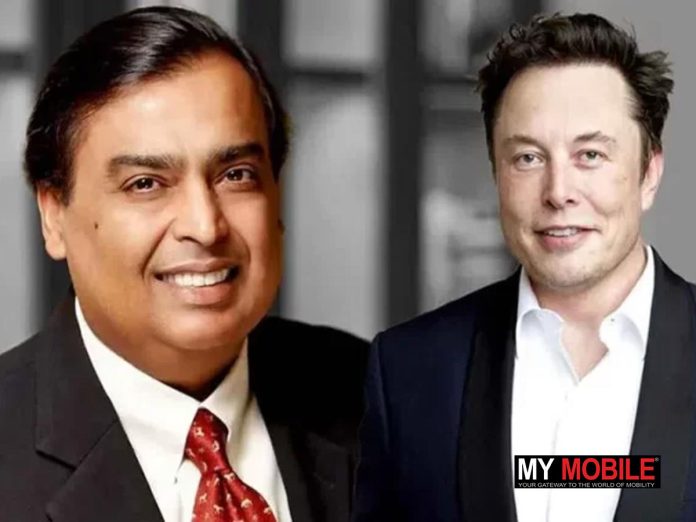
In a private letter to the Telecom Minister, Reliance has argued that TRAI has “pre-emptively interpreted” the situation in favour of allocation over auction. (Image credit – BT)
Reliance is reportedly pushing for a spectrum auction for home satellite broadband instead of a government allocation.
The reports are coming after the telecom regulator suggested that the spectrum for home satellite broadband should be allocated by the government and not auctioned.
The controversy over how to allocate spectrum for satellite services in India has been brewing since last year.
Many global giants such as Musk’s Starlink and Amazon’s Project Kuiper have supported the idea of administrative allocation. However, it is now clear that home-grown Reliance is advocating for an auction-based process.
The issue is about how we interpret Indian laws.
According to a recent Reuters report, some experts believe that the spectrum allocation of last aligns with what Musk has been proposing. However, Reliance has continuously maintained that there are no existing provisions for satellite broadband services.
Reliance has called for the process to be restarted in a private letter dated October 10. The home-grown conglomerate claimed that TRAI has pre-emptively interpreted the situation in favour of allocation.
“TRAI seems to have concluded, without any basis, that spectrum assignment should be administrative,” wrote Kapoor Singh Guliani Reliance’s senior regulatory affairs official, in a letter to Telecom Minister Jyotiraditya Scindia.
On the other hand, the TRAI consultation paper suggested that Indian laws mandate administrative allocation of spectrum. A senior TRAI official reportedly stated that a due process is being followed. The official also encouraged Reliance to submit its feedback during the consultation period.
The outcome of TRAI’s recommendations will play a major role in shaping the government’s decision on spectrum allocation.
Reliance’s letter to Telecom Minister Jyotiraditya Scindia has not been made public.
Deloitte predicts that India’s satellite broadband market could grow by 36% annually. This has the potential to reach $1.9 billion by 2030.
Meanwhile, Musk’s Starlink is eager to launch in India, but unresolved issues around spectrum allocation are slowing progress.
Starlink favours administrative licensing and have argued that it’s in line with global practices. On the other hand, Reliance insists that auctions are critical to maintaining a level playing field, especially as foreign competitors may enter the Indian voice and data services market.
Reliance Jio currently leads the telecom sector in India with 480 million users.
Reliance has written a formal request to Minister Scindia on auctioning the satellite spectrum.
It also suggested reissuing TRAI’s consultation paper to ensure fair competition between satellite communications and traditional networks.
Jio has highlighted that several global satellite constellations including Starlink and Amazon Kuiper are seeking spectrum and market access in India. These companies aim to offer services that could compete directly with traditional mobile and fixed wireless networks.
“Given that terrestrial networks acquire spectrum through auctions for mobile and fixed wireless access, a fair and transparent auction system for satellite services is essential for level competition,” Jio stated.
This letter follows an earlier request to TRAI chairman AK Lahoti, in which Jio sought revisions to the consultation paper on spectrum pricing, arguing that the issue of a level playing field has been overlooked.
The Broadband India Forum (BIF), whose members include OneWeb and Amazon, dismissed Jio’s concerns, claiming that the call for a level playing field reflects a misunderstanding of both technology and the law.
In its recent letter, Jio pointed out that the Department of Telecommunications (DoT) had previously referenced the need for fairness when consulting TRAI. However, Jiofeels that the regulator has not addressed this vital issue.
“We respectfully request your intervention so TRAI addresses these issues in its consultation paper and ensures that its recommendations on spectrum assignment uphold fairness, transparency, and competition as mandated by the Telecommunications Act and Supreme Court rulings,” Jio urged.
Jio also noted that the DoT has not specified a method for spectrum assignment, leaving the issue open for discussion under Section 4 of the Telecommunications Act.
“TRAI seems to have concluded, without any basis, that spectrum assignment should be administrative and based on a ‘first-come, first-served’ approach,” Jio stated.
FAQs
Q1. What does Reliance want for the home satellite broadband spectrum?
Answer. Reliance advocates for an auction-based process for satellite broadband spectrum, opposing the government’s preference for administrative allocation.
Q2. What is the purpose of TRAI’s public consultation on spectrum allocation?
Answer. TRAI is conducting a public consultation on spectrum allocation, and Reliance urges a restart, citing fairness and competition, particularly against foreign competitors.
Q3. What are Deloitte’s forecasts for India’s satellite broadband market?
Answer. Deloitte forecasts 36% annual growth for India’s satellite broadband market, potentially reaching $1.9 billion by 2030, highlighting the market’s significance.
Consumer Court ordered Amazon to refund ₹40,325 to a customer.
Also fined Amazon ₹18,000 for selling a hacked phone.
Customer Sumita Das faced fraud and financial loss due to the hacked device delivered to her.
Amazon delivered a hacked phone to a Chandigarh-based woman, who faced fraud and financial loss. (Image credit – TechCrunch)
The District Consumer Disputes Redressal Commission has recently ordered Amazon Retail India to refund ₹40,325 to the customer for selling a hacked phone.
As per a recent Times of India report, the hacked phone sold to an Amazon customer exposed customer data and was also used for making unauthorised purchases.
Moreover, the retail giant has been also fined a total of ₹18,000, which includes ₹10,000 to the complainant as compensation for mental agony and harassment and ₹8,000 as the cost of litigation.
The case happened with Amazon customer Sumita Das, a resident of Sector 12 in Chandigarh.
Das recently purchased a smartphone from the Amazon website but later discovered the delivered device was already hacked. She faced fraud and financial loss due to the hacked device.
The fraudsters managed to gain access to her personal information via the hacked phone in September 2023.
Some unauthorised purchases were also made from her Amazon account by the fraudsters.
Das has informed that the fraudsters also hacked her ICICI Bank credit card along with her email using her hacked phone.
She claimed that suspicious activities were immediately reported to Amazon. However, the company failed to any appropriate action in time and didn’t cancel the fraud transactions.
It was also reported that Amazon initially promised that a refund of the fraudulent transaction amount would be processed.
However, the e-commerce company later cancelled the refund and Das did not receive any amount back.
Meanwhile, Amazon India and Amazon Pay in their combined reply to the consumer court mentioned that they had cancelled the fraudulent orders. The company claimed that it provided “proper and efficient assistance” to the complainant. Amazon Pay is the platform used to make transaction payments on the Amazon retail website.
“Considering the complainant’s grievance that her account was hacked, we immediately checked internally and assisted the complainant with sanitising/suppressing her account and ensuring all orders were cancelled to avoid any further issues,” the statement added.
Das alleged, “The act of demand made it clear that amount has not been refunded by Amazon Retail India and Amazon Pay Later, and the amount collected has illegally been retained by them despite numerous requests for refund having been made.”
Amazon India and Amazon Pay Later, in their reply, reportedly said, “The complainant contacted our customer support team wherein all orders which were placed had been cancelled and proper and efficient assistance was provided to the complainant against the cancelled orders. Considering the complainant’s grievance that her account was hacked, they immediately checked internally and assisted the complainant with sanitising/suppressing her account and ensuring all orders were cancelled to avoid any further issues.”
“It is a general practice of online platforms that particularly a product before collection at the time of return is verified thoroughly by the collecting agent and the same is collected only after the same is found to be the same as the item delivered. In case of any difference, the product is never collected by the collecting agent. More so, this plea was never communicated at any stage to the complainant and seems an afterthought of Amazon Retail India,” the commission said.
“We are of the considered opinion that all the transactions of sale, collection of amount, ensuring delivery of a product, processing cancellation request, return request and refund of amount are controlled and managed by Amazon only. But in the present case, the act of Amazon for not properly handle the situation despite having complete knowledge of the suspicious activity and not taking prompt action on the complaint of the complainant and ignoring the genuine repeated requests of the complainant, and forcing her to indulge in the present litigation proves deficiency in service on their part,” ruled Singh.
However, the response failed to satisfy the consumer court.
The consumer court maintained that it should be a regular practice for any seller or agent who delivers products from any online platform to “thoroughly verify” the product before delivering it to the customer.
The court added that Amazon has clearly failed to “act promptly” even though they were made aware of the suspicious activity by the customer. The court, in the end, ruled in favour of the complainant in this matter.
FAQs
Q1. What did the Consumer court order when Amazon delivered a hacked phone?
Answer. The District Consumer Disputes Redressal Commission ordered Amazon Retail India to refund ₹40,325 to the customer and fined Amazon ₹18,000, including ₹10,000 as compensation for mental agony and ₹8,000 as the cost of litigation.
Q2. What issues Sumita Das faced due to the hacked phone purchased from Amazon?
Answer. Sumita Das faced fraud and financial loss due to the hacked device. The fraudsters gained access to her personal information, made unauthorized purchases, and hacked her ICICI Bank credit card along with her email.
Q3.What was the allegation by Das & what was the reaction from amazon & commission?
Answer .Das alleged, “The act of demand made it clear that amount has not been refunded by Amazon Retail India and Amazon Pay Later, and the amount collected has illegally been retained by them despite numerous requests for refund having been made.”
Amazon India and Amazon Pay Later, in their reply, reportedly said, “The complainant contacted our customer support team wherein all orders which were placed had been cancelled and proper and efficient assistance was provided to the complainant against the cancelled orders. Considering the complainant’s grievance that her account was hacked, they immediately checked internally and assisted the complainant with sanitising/suppressing her account and ensuring all orders were cancelled to avoid any further issues.”
“It is a general practice of online platforms that particularly a product before collection at the time of return is verified thoroughly by the collecting agent and the same is collected only after the same is found to be the same as the item delivered. In case of any difference, the product is never collected by the collecting agent. More so, this plea was never communicated at any stage to the complainant and seems an afterthought of Amazon Retail India,” the commission said.
“We are of the considered opinion that all the transactions of sale, collection of amount, ensuring delivery of a product, processing cancellation request, return request and refund of amount are controlled and managed by Amazon only. But in the present case, the act of Amazon for not properly handle the situation despite having complete knowledge of the suspicious activity and not taking prompt action on the complaint of the complainant and ignoring the genuine repeated requests of the complainant, and forcing her to indulge in the present litigation proves deficiency in service on their part,” ruled Singh.
The phone is rumoured to have a 6.1-inch OLED display, 48MP camera, A18 chip and 5G support.
Recent leaks suggest it will not have an Action Button.
Apple aims to keep the pricing close to the current iPhone SE.
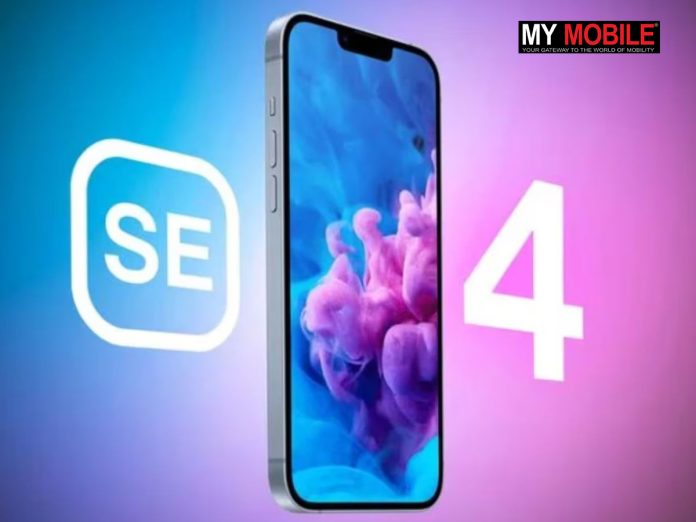
iPhone SE 4 is expected to launch with Face ID and no Touch ID. (Image credit – Apple)
It has been months since we have been hearing leaks and rumours about the next-generation Apple iPhone SE. Multiple reports have indicated the iPhone SE 4 is expected to have a global launch in March 2025.
Now a recent unofficial leak on X (previously Twitter) has shared a glimpse of of a case allegedly designed for the upcoming smartphone. While we cannot be certain about the authenticity of the leaked case images, it does reveal some key details.
pic.twitter.com/cAySCuE1cz
— Sonny Dickson (@SonnyDickson) October 12, 2024
Earlier rumours suggested that the iPhone SE 4 might include an Action Button similar to the iPhone 15 Pro.
However, the recent leaks indicate that this won’t be the case. The phone might feature a cutout for the traditional mute switch on the upper left side similar to the latest iPhone models.
Apart from this, reports have already suggested that the upcoming iPhone SE will have a 6.1-inch OLED display, a powerful 48MP camera, USB-C and Face ID.
Mark Gurman last cited some internal sources to report that Apple is nearing production of an updated iPhone SE — codenamed V59.
“A new iPhone SE with an OLED display, edge-to-edge screen and no home button is in advanced testing, but a release isn’t planned until next year,” Gurman wrote on X (previously Twitter)
A new iPhone SE with an OLED display, edge-to-edge screen and no home button is in advanced testing, but a release isn’t planned until next year. A fresh AirTag is also in development, though Apple isn’t planning a release until next year either.
— Mark Gurman (@markgurman) September 6, 2024
Here’s everything we know about the upcoming iPhone SE 4.
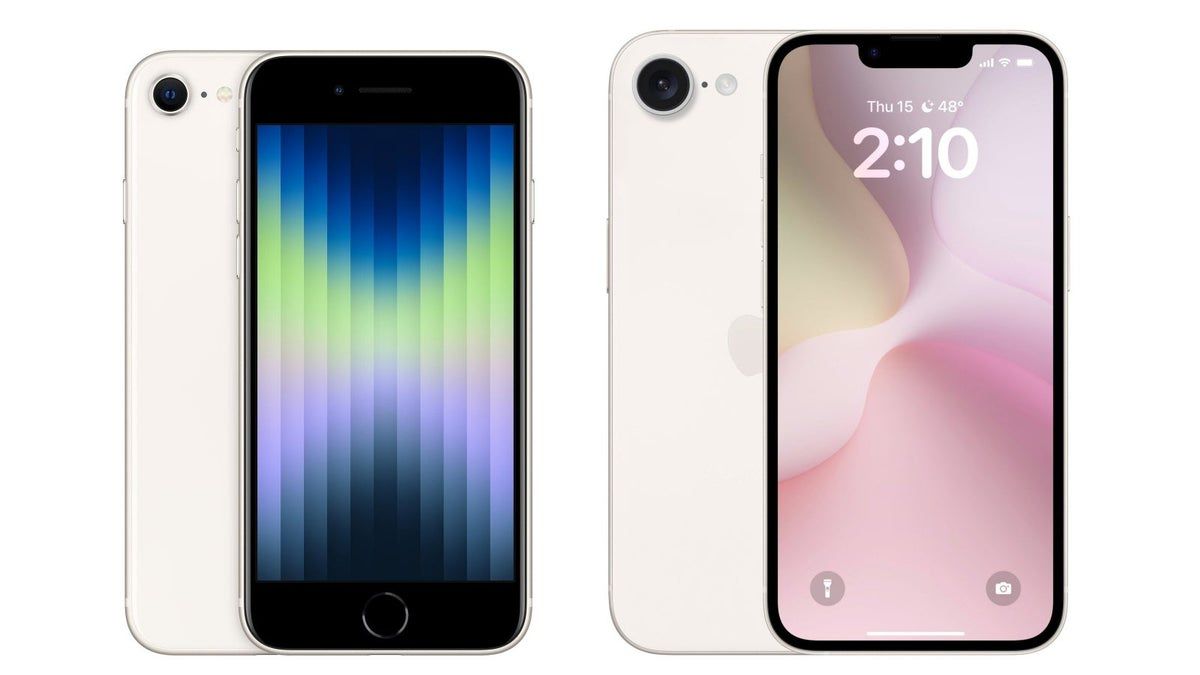
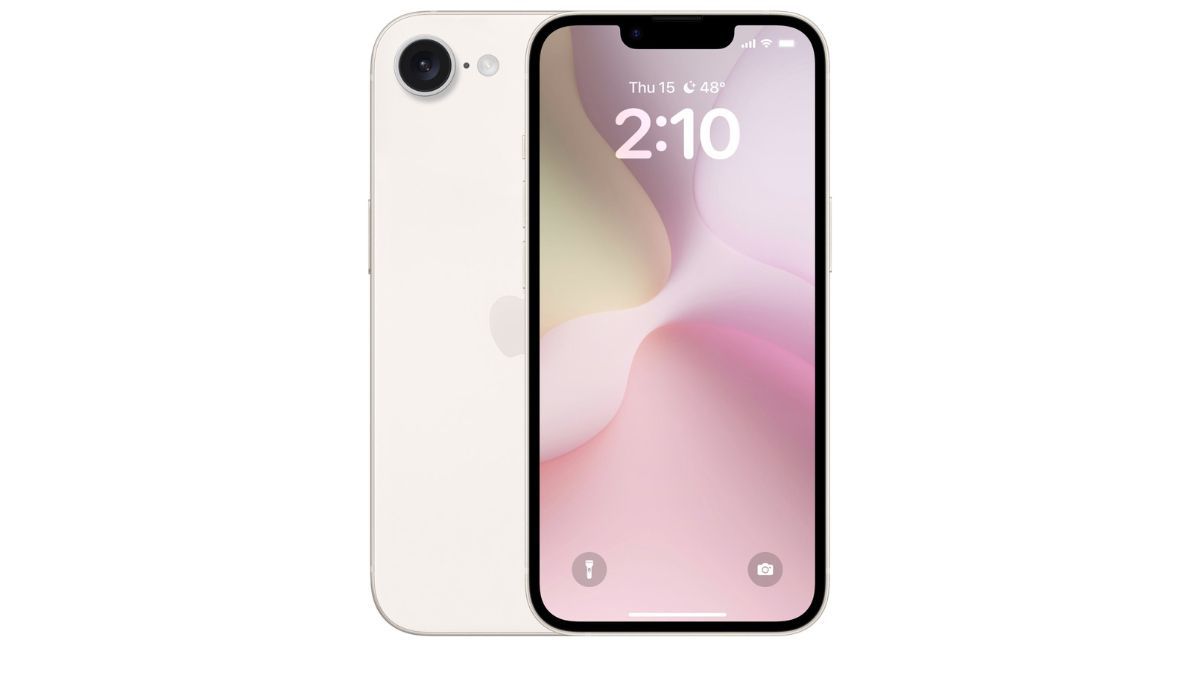
iPhone SE 4 to Look Similar to iPhone 14 With Some Differences (Expected)
The iPhone SE 4 is expected to look similar to the iPhone 14. However, some distinctions can be expected.
Firstly, the SE 4 won’t have the dual-camera setup that we have seen iPhone 14. This means it will not have an ultra-wide camera.
However, it will sport a 48MP main camera. Reports also indicated that despite only having one physical rear camera, the phone will offer two focal lengths. This will be a 1x using the full 48MP sensor and a 2x that zooms into the central 12MP area of the sensor to deliver optical-quality zoom.
iPhone SE 4 – To Include A18 Chip and 5G (Expected)
The next iPhone SE is rumoured to feature the A18 chip. It is the same processor found in the latest iPhone 16 and iPhone 16 Plus.
This would bring significant performance improvements and support for Apple’s AI-driven features. The upcoming device is also expected to come with a 5G modem developed by Apple. This will potentially deliver faster network speeds.
iPhone SE 4 – No Action Button but Mute Switch Expected (Rumoured)
iPhone SE 4 – No Action Button but Mute Switch Expected (Rumoured)
Earlier there were rumours that suggested that the iPhone SE 4 might include an Action Button similar to the iPhone 15 Pro.
However, recent leaks indicate that this won’t be the case.
Instead, the phone will feature a cutout for the traditional mute switch on the upper left side, much like the latest iPhone models.
iPhone SE 4 – Face ID and AI Support (Expected)
iPhone SE 4 – Face ID and AI Support (Expected)
One of the biggest changes expected is the removal of the home button and Touch ID.
The iPhone SE 4 is rumoured to be the first in the series to adopt Face ID marking a significant design shift.
The phone may also support Apple Intelligence features with 8GB of RAM on board, which is the minimum requirement for Apple Intelligence.
iPhone SE 4 – Affordable Pricing (Expected)
As per multiple reports, Apple is aiming to keep the price close to that of the current iPhone SE.
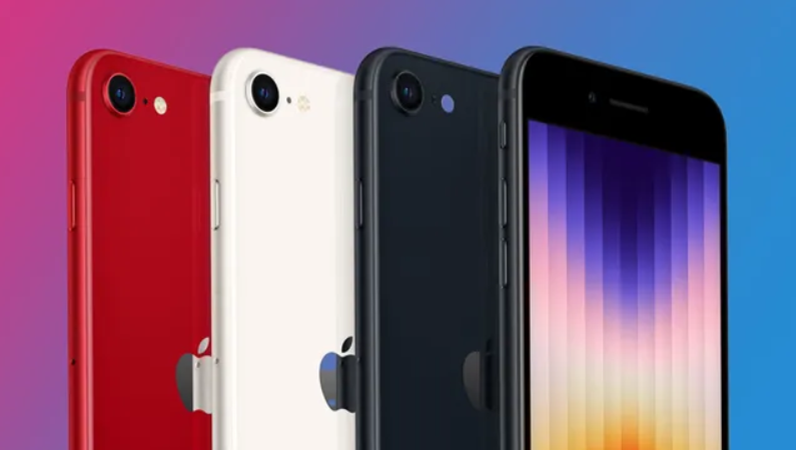
The current iPhone SE launched at $429 in the US, at £419 in the UK, at AU$719 in Australia and ₹46,599 in India.
Apple is expected to keep competitive features and pricing in mind.
Meanwhile, we can expect more details about the iPhone SE 4 to emerge as the 2025 launch date approaches.
FAQs
Q1. When is the expected launch date for the iPhone SE 4?
Answer. The iPhone SE 4 is expected to have a global launch in 2025.
Q2. What are the key expected features of the iPhone SE 4?
Answer. The iPhone SE 4 will have a 6.1-inch OLED display, a powerful 48MP camera, USB-C, Face ID, and is rumored to feature the A18 chip and 5G support.
Q3. Will the iPhone SE 4 include an Action Button?
Answer. Recent leaks indicate that the iPhone SE 4 will not include an Action Button but will feature a traditional mute switch on the upper left side.
Q4. How does Apple plan to price the iPhone SE 4?
Answer, Apple aims to keep the price close to that of the current iPhone SE, which launched at $429 in the US, £419 in the UK, AU$719 in Australia and ₹46,599 in India.
The new plan aims at providing a cost-effective alternative.
BSNL’s competitive pricing attracted over 2.9 million users from other networks in July 2024.
BSNL announces a 28-day recharge plan at Rs 108 for new customers. (Image credit – Unknown)
BSNL has just announced new budget-friendly plans for its new customers including a Rs 108 unlimited call recharge plan. Here’s what we know about the recent announcement.
BSNL’s New Rs 108 Plan Details
BSNL has rolled out a new plan priced at just Rs 108 designed to provide great value for its users.
Validity: The Rs 108 plan offers 28-day validity and gives users nearly a month without needing to recharge frequently.
Unlimited Calls: Users can enjoy unlimited calling to any network throughout the 28-day period.
Data Benefits: The plan comes with 28GB of data, which allows users up to 1GB of data per day.
SMS Services: Moreover, the package includes 500 SMS valid for the entire 28-day duration.
Terms and Conditions –
The Rs 108 plan is specifically designed as a First Recharge Coupon (FRC) for new users.
Users have to activate this plan with a Rs 108 recharge when they buy a BSNL SIM card to enjoy all the benefits for the first 28 days.
BSNL in the last few months have made huge gains in terms of new customers. As per media reports, the state-owned telecom player welcomed more than 2.9 million users from other networks in July 2024 alone.
The massive increase in the number of users migrating to BSNL is mainly credited to private telecom companies increasing their prices. Vi, Airtel and Jio, all private telecom companies have increased their tariffs in recent months.
Why BSNL’s New Rs 108 Plan is Important?
The new Rs 108 recharge FRC plan offers a more affordable monthly option compared to leading private competitors like Jio, Airtel and Vi.
This competitive pricing is one reason why the BSNL user base has grown in recent years. Many users often look for cheaper alternatives and recharge plans when it comes to keeping a mobile number running.
As private telecom providers increase their recharge rates, BSNL has rightfully identified a potential gap to emerge as a popular alternative for budget-conscious customers.
FAQs
Q1. What does the new BSNL Rs 108 plan offer?
Answer. The Rs 108 plan offers 28 days of validity with unlimited calling to any network, 28GB of data (1GB per day) and 500 SMS.
Q2. Who is eligible for the new BSNL Rs 108 plan?
Answer. The Rs 108 plan is specifically designed as a First Recharge Coupon (FRC) for new users. Users have to activate this plan with a Rs 108 recharge when they buy a BSNL SIM card.
Q3. Why has BSNL seen an increase in users recently?
Answer. BSNL welcomed more than 2.9 million users from other networks in July 2024, primarily due to private telecom companies increasing their prices.
Q4. How does BSNL’s Rs 108 plan compare to private telecom competitors?
Answer. The Rs 108 recharge FRC plan offers a more affordable monthly option compared to leading private competitors like Jio, Airtel and Vi, attracting budget-conscious customers.
Q5.How has BSNL become a popular alternative for users ?
Answer. Jio, Airtel, and Vi have increased their recharge prices, BSNL has become a popular alternative for users looking for budget options.
Bsnl comes with some of the cheapest recharge plans available , below Rs 100, making it a good choice whose focus is affordability , this gives BSNL edge over other competitors.
Q5.What are the highlights of BSNL Rs 108 plan ?
Answer. •The Rs 108 plan comes with a 28-day validity, making it a month-long solution for users looking to avoid frequent recharges.
•Users can enjoy unlimited calling to any network for 28 days under this plan.
•The package also provides 500 SMS to customers for the 28-day duration.
•The plan includes 28GB of data, allowing users to access up to 1GB of data daily.
Q7.What are the steps on how to recharge this plan on the Bajaj Finserv BBPS platform ?
Answer .Recharging your BSNL number with the Rs.108 plan on the Bajaj Finserv BBPS platform is a convenient and secure process. Here is a step-by-step guide to make prepaid mobile recharge:
Visit the Bajaj Finserv BBPS website.
Select the ‘BILL PAYMENTS’ section.
Choose ‘MOBILE PREPAID’ as the bill category.
Enter your BSNL mobile number and operator (BSNL).
From the list of available recharge options, select the Rs. 108 BSNL recharge plan.
Review the recharge details (amount, validity, etc.) to ensure accuracy.
Proceed to the secure payment gateway using your preferred method (debit card, credit card, net banking, etc.).
Once the payment is successful, you will receive a confirmation message on your phone and email.
Q7.Can I recharge BSNL for 1 day?
Answer .No, BSNL does not offer a recharge plan for just one day. The plans have a minimum validity period of 28 days. The benefits are to be used over a longer duration.
Apple is working to release a more affordable Vision headset.
It will potentially cost around $2,000.
The launch is expected to be by next year.
The cheaper headset will likely feature a less powerful A-series chipset.
Apple will drop the expensive EyeSight feature.
A second-generation Vision Pro is expected to arrive in 2026.
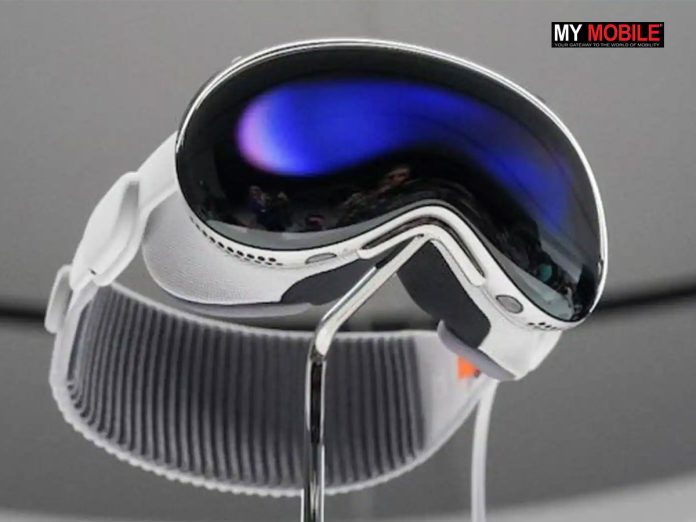
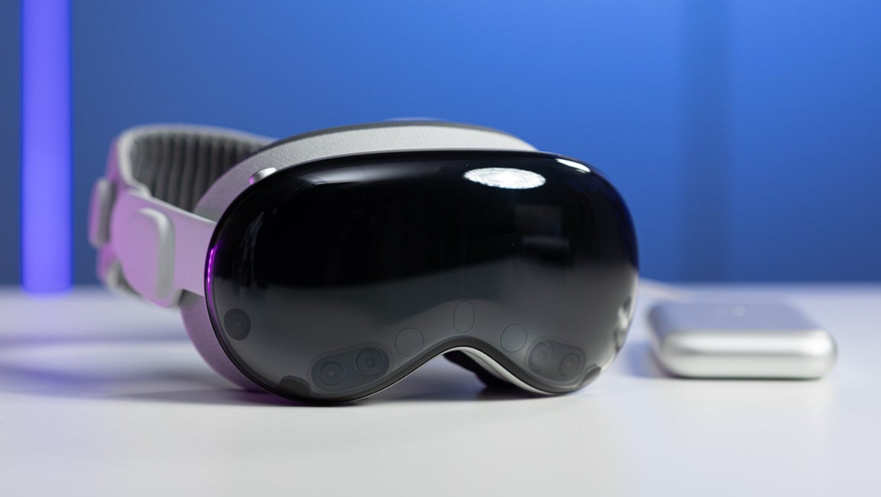
A less costly Apple Vision Headset might arrive by next year. (Image credit – Apple)
A few months ago it was reported in the tech circles that Apple had halted its plans for a cheaper Apple Vision headset. We are now getting an update that it might not be true and Apple is well on track on this front.
Bloomberg’s Apple reporter Mark Gurman in his latest Power On newsletter revealed that Apple is still moving ahead with plans to release a more affordable version of its Vision headset.
Gurman also mentions that a release could happen as early as next year. And if Gurman’s words are to be believed, this lower-end Apple Vision headset model is expected to cost around $2,000.
Cheaper ‘Apple Vision’ headset to cost around $2000; drop EyeSight
Earlier this year, Apple introduced the Apple Vision Pro at a premium price of $3,499.
The launch was headline-grabbing across the tech community. It made Apple fans and critics talk about the Apple Vision Pro and its future possibilities for months. It was immediately in the news that the Cupertino giant was also already working on a successor.
However, it was later suggested that Apple had paused further development of the Vision Pro successor to focus on creating a more budget-friendly version.
This makes sense as the high price of the Vision Pro has made spatial computing out of reach for many potential users.
Gurman reports that the cheaper headset will likely feature a less powerful processor and use more affordable materials.
While the Vision Pro is powered by the M2 chip, the lower-end version could come with an A-series chipset, possibly the A18 Pro, which is roughly equivalent to the M1 in terms of performance.
In terms of design, Apple may replace the Vision Pro’s aluminium and glass construction with more plastic components to cut costs.
Moreover, the lower-cost headset is expected to drop the EyeSight feature. This is a unique but expensive display that allows others to see the wearer’s eyes from the outside. While EyeSight was an interesting innovation, it added significant expense, and Apple has decided to leave it out of the more affordable model.
Apple reportedly anticipates that this cheaper version of the Vision headset will sell twice as well as the Vision Pro. However, given the high price of the Pro model, this might not be a huge sales figure.
Meanwhile, a second-generation Vision Pro is also in the works. As per reports, it is expected to arrive in 2026 and will feature a faster processor.
FAQs
Q1. Is Apple still planning to release a cheaper version of its Vision headset?
Answer. Yes, Apple is moving forward with plans to release a more affordable version of its Vision headset, with a potential release as early as next year.
Q2. What changes to expect in the cheaper Apple Vision headset?
Answer. The cheaper headset will likely feature a less powerful processor, possibly the A18 Pro, use more affordable materials, and will drop the EyeSight feature to cut costs.
Q3. When is the second-generation Vision Pro expected to arrive?
Answer. A second-generation Vision Pro is expected to arrive in 2026 and will feature a faster processor.
Apple is reportedly working on smart glasses and AirPods with cameras.
Expected to launch around 2027.
The new products will most likely use Apple’s visual intelligence technology.
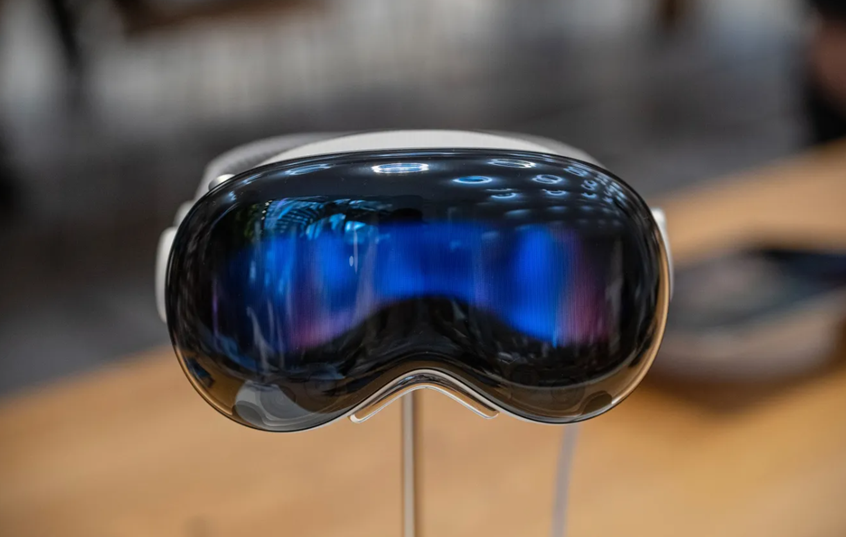
The Vision Pro at an Apple retail store. (Photographer: Victor J. Blue/Bloomberg)
Bloomberg’s trusted Apple reporter Mark Gurman is known for accurately revealing Apple-related news sometimes years ago. In his recent newsletter revealed that Apple is apparently working on some new vision-based products. Gurman suggested that the new products include smart glasses and AirPods with cameras.
However, Gurman also mentions that these products are not expected to launch until at least 2027. And there is also a possibility that we might not see them in stores at all.
Apple smart glasses and AirPods with cameras possibly launching in 2027 Image credit -9 to 5 mac
Gurman in his report suggests that Apple is currently looking to make the most of its multi-billion dollar investment in the visual intelligence technology. This is specifically being developed for the Apple Vision Pro.
However, Apple’s ultimate goal is to extend this tech to more devices.
“The idea is to salvage the billions of dollars spent on the Vision Pro’s visual intelligence technology, which can scan the environment around a user and supply useful data,” Gurman mentions.
A hint of this can already be seen with Apple introducing the visual intelligence features on the iPhone 16’s camera. The obvious next move could be to incorporate this visual intelligence tech into a smart glasses format.
The upcoming smart glasses reportedly will be different from the AR glasses with built-in displays. The rumoured smart glasses would instead focus more on having cameras, speakers and microphones. This sounds quite similar to Meta Ray-Ban glasses.
Meta’s smart glasses have gained popularity and are sold at prices starting at $299. These are also available with pricier options.
Smart glasses are not the only new product with visual intelligence we can expect from Apple in future. In addition to the smart glasses project, Apple is also experimenting with AirPods that feature cameras.
It is not entirely clear how camera-equipped AirPods would work or be a compelling product when we compared it to the concept of smart glasses. But it appears Apple is testing this form factor to explore more ways to use visual intelligence features.
FAQs
Q1. What new vision-based products is Apple reportedly working on?
Answer. Gurman suggested that the new products include smart glasses and AirPods with cameras. However, Gurman also mentions that these products are not expected to launch until at least 2027.
Q2. What is the purpose behind Apple’s development of visual intelligence technology?
Answer. Gurman in his report suggests that Apple is currently looking to make the most of its multi-billion dollar investment in the visual intelligence technology. This is specifically being developed for the Apple Vision Pro. However, Apple’s ultimate goal is to extend this tech to more devices.
Q3. How will the rumoured smart glasses differ from AR glasses?
Answer. The upcoming smart glasses reportedly will be different from the AR glasses with built-in displays. The rumoured smart glasses would instead focus more on having cameras, speakers, and microphones.
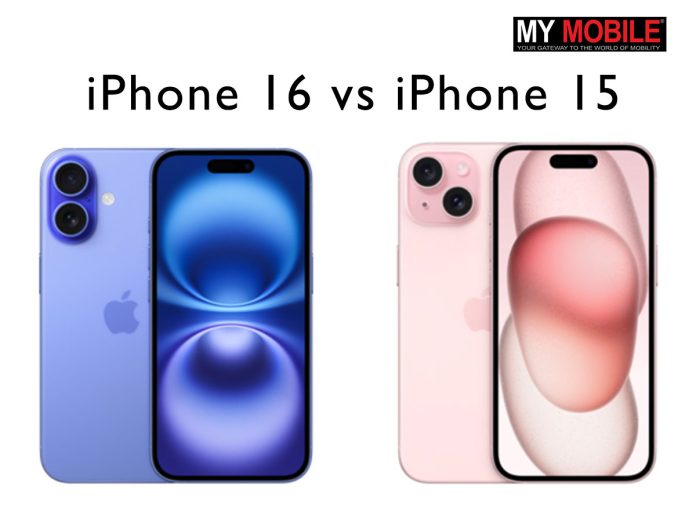
Well… we cannot decide for you if you should upgrade to the newly launched iPhone or not but we can surely help you figure out the answer to the second question. So, let’s understand if the newly launched iPhone 16 base model is any different from the previous generation iPhone 15 base model.
Yes, it is time for iPhone 16 vs. iPhone 15. Let’s get started.
iPhone 16 vs. iPhone 15 – Key Specs
Feature
iPhone 16
iPhone 15
Display
6.1-inch Super Retina XDR OLED
6.1-inch Super Retina XDR OLED
Resolution
2556×1179 pixels
2556×1179 pixels
Processor
Apple A18
Apple A16 Bionic
RAM
6 GB RAM
6 GB RAM
Storage options
128GB, 256GB, 512GB
128GB, 256GB, 512GB
Rear Cameras
Dual 48MP + 12MP
Dual 48MP + 12MP
Front Cameras
12MP
12MP
Battery
3349mAh (Speculative)
3240mAh (speculative)
Charging
120W Fast Charging
20W Fast Charging
Operating System
iOS 17
iOS 17
Water Resistance
IP68
IP68
iPhone 16 vs. iPhone 15 – Design
iPhone 16 – DesigniPhone 15 – Design
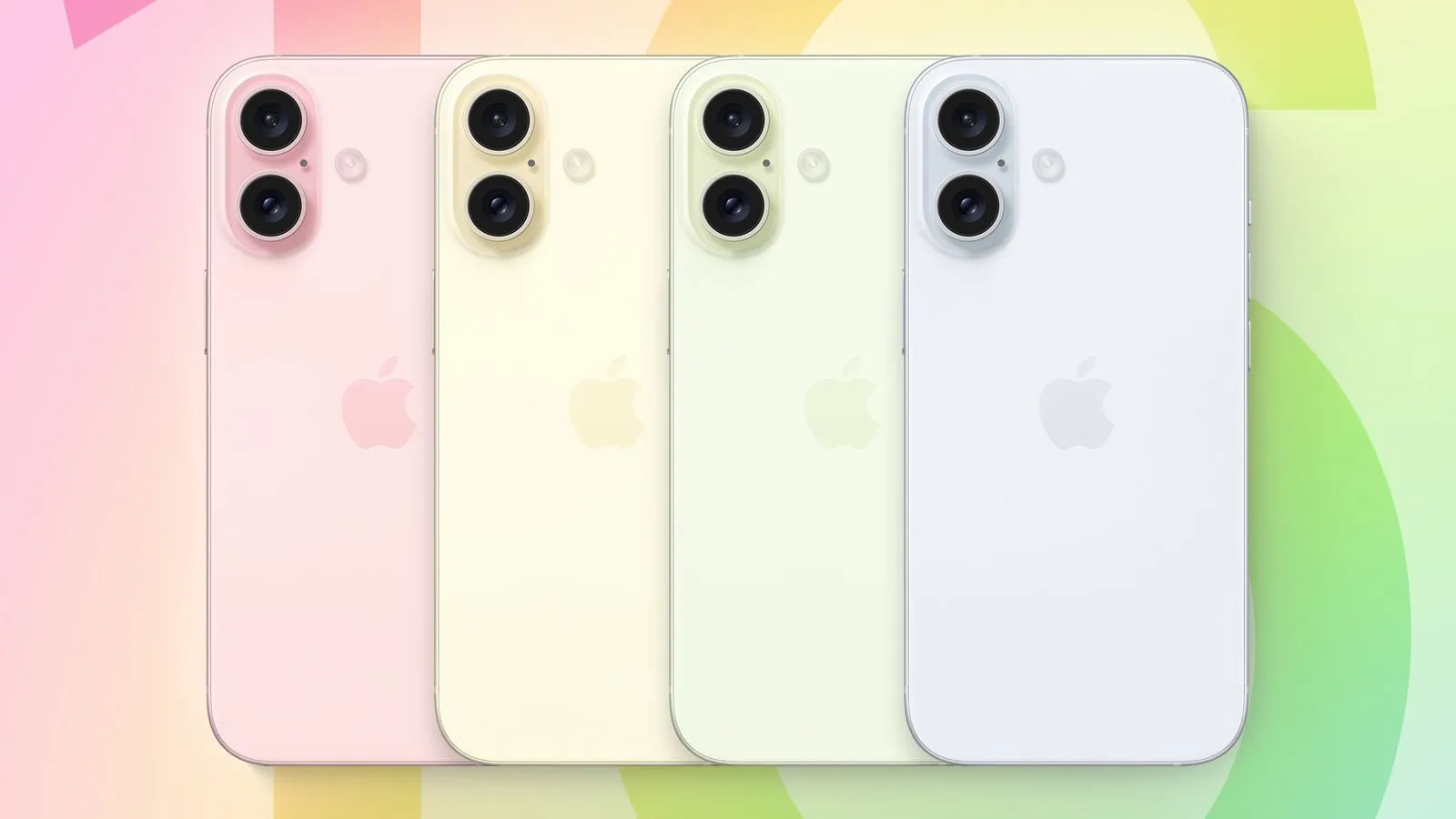
The iPhone 16 has made some useful changes in the overall iPhone design that make it stand out from the previous generation iPhone 15.
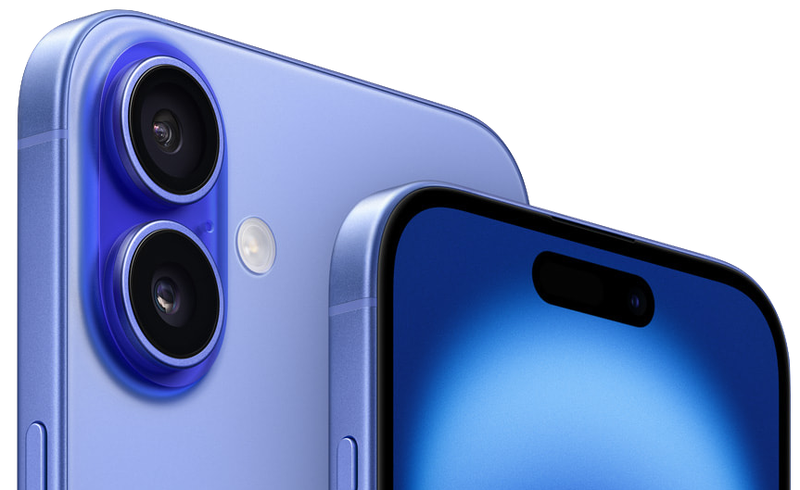
One change that has been talked about the most is definitely the new camera module of the iPhone 16.
We have got the vertical alignment of the camera module back after it was last seen in the iPhone 12. There is another aspect of the iPhone 16 that seems to be catching everyone’s attention. It is the Spatial Capture for videos and photos. It allows photos and videos to be viewed with the Apple Vision Pro headset.
Meanwhile, both phones have the same size and squared edges. Both phones have edges slightly curved into the display and back panel. Both iPhone 16 and iPhone 15 also feature aluminium sides and a textured glass back. However, the iPhone 16 comes in brighter and more colourful options.
We also have the Camera Control button in the newly launched iPhone 16. It is located on the lower-right side and can be used as a shutter button for taking photos. It can zoom and focus by sensing scrolling motions.
Both iPhone 16 and iPhone 15 have the Action button.
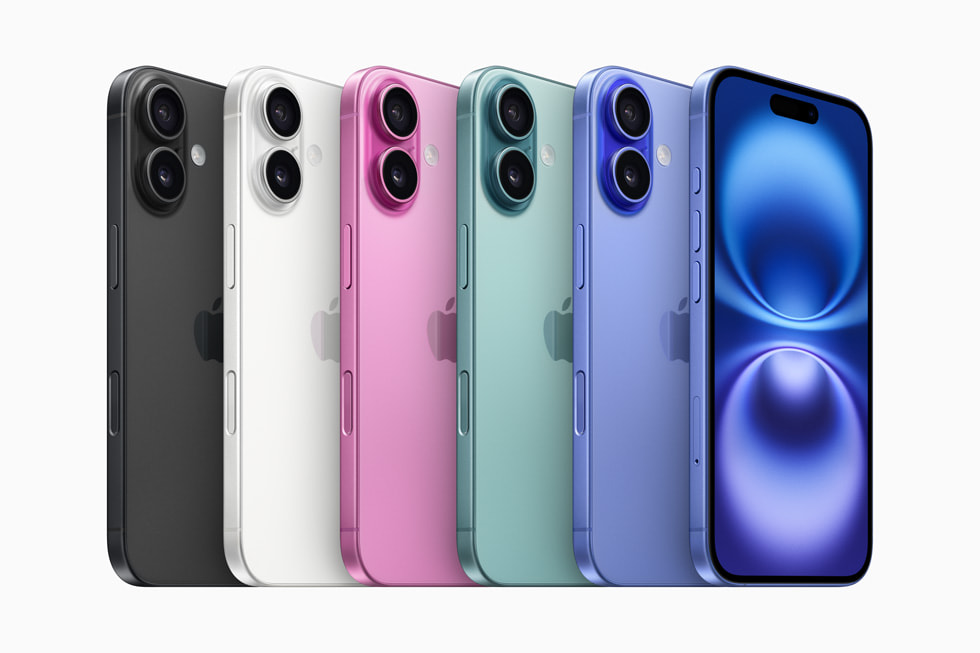
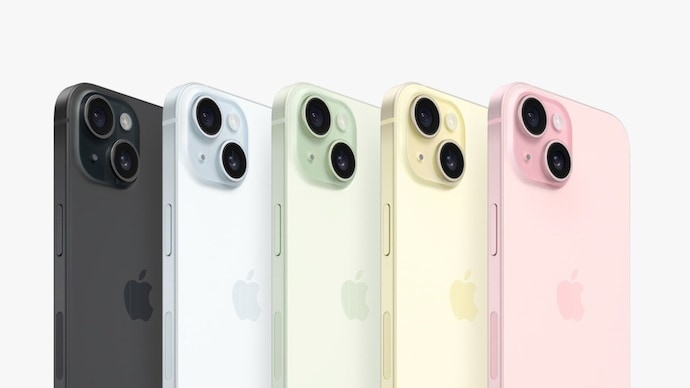
iPhone 16 vs. iPhone 15 – Price and Colours Available
iPhone 16 Colours AvailableiPhone 15 -Colours Available
Display is where is it hard to find any difference between these two phones. Both iPhone 15 and iPhone 16 share the same 6.1-inch OLED screen with a resolution of 2556 x 1179 and a 60Hz refresh rate.
Both also feature the Dynamic Island at the top of the screen. Moreover, both have the same peak brightness of 1,600 nits and a pixel density of 460 pixels per inch (ppi).
The displays are so identically that the refresh rate also remains the same. Reviewers strongly complain about the slow refresh rate after the iPhone 15 was launched and they are doing the same after iPhone 16.
Basically, no significant difference to compare between the two models when it comes to display.
iPhone 16 vs. iPhone 15 – Camera
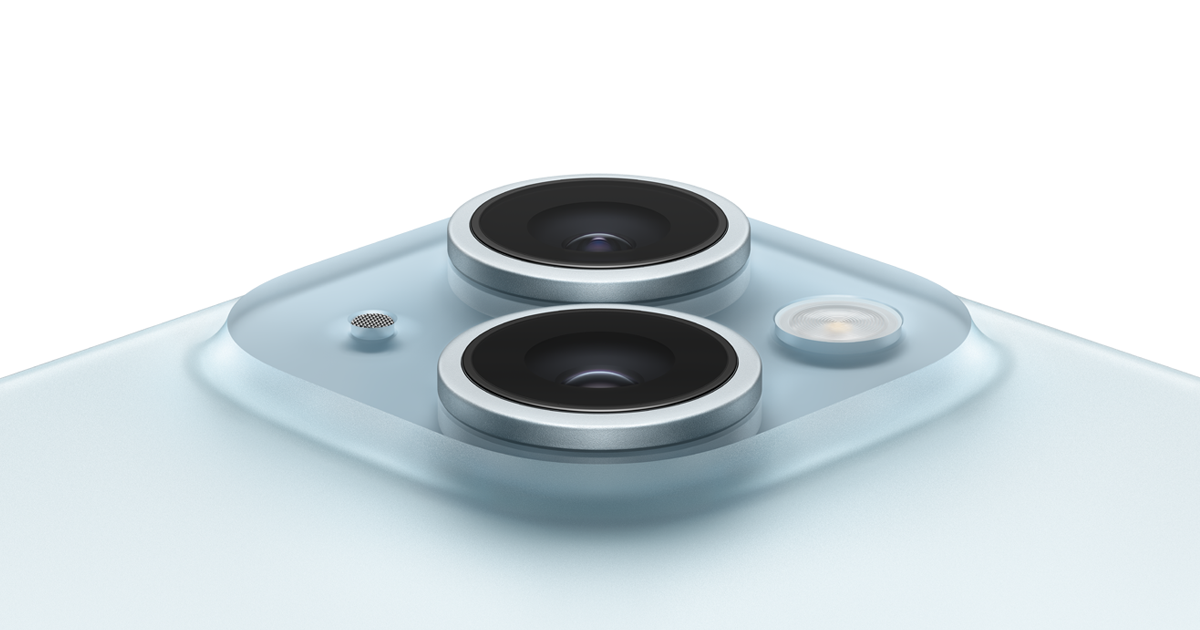
iPhone 16- cameraiphone-15 Camera
The actual camera specs of both iPhone 16 and iPhone 16 are nearly identical.
The iPhone 16 has a 48MP f/1.6 main camera that is called the Fusion Camera. Meanwhile, the predecessor iPhone 15 also has the same 48MP f/1.6 main camera that Apple has only given a different name called the Main Camera. Several reviewers have highlighted that specs and performance-wise both cameras are actually the same.
The camera system on the iPhone 16 also has the capability of taking 12MP photos at 2x zoom. But what’s interesting is that the iPhone 15 camera system has the same shooting capability.
Moreover, both phones also have the same 12MP f/2.4 ultra-wide camera and a 12MP f/1.9 TrueDepth front camera.
So as you can see, there is no major difference in terms of hardware in both these phones.
However, one difference that makes the iPhone 16 camera stand out is the new Camera Control feature.
Apple has added a capacitive button on the lower right side of the newly launched iPhone 16. This button works as a camera shutter and gives a unique photography experience. It also provides physical feedback through clicks or haptics and supports touch gestures.
What also makes this interesting is the Camera Control will also be able to activate Visual Intelligence after Apple Intelligence is rolled out along with iOS 18.1 and later updates.
This is where the iPhone 15 might feel inferior with no Camera Control feature. Moreover, the iPhone 15 camera also won’t support Apple Intelligence or Visual Intelligence.
iPhone 16 vs iPhone 15 – Battery
iPhone 15 – BatteryiPhone 16 – Battery
It is well-known that Apple never shares the exact battery details including the charging speed. However, experts usually depend on tests and benchmarks to speculate about iPhone battery capacity and charging speeds.
According to Apple benchmarks, the iPhone 16 can handle up to 22 hours of video playback. Meanwhile, the same test for iPhone 15 reveals around 20 hours of playback.
GSMArena has suggested that the iPhone 16 has a 3,561mAh battery. In comparison, the iPhone 15 comes with a 3,349mAh battery.
As for the charging speed, the most popular speculation says that the iPhone 16 supports 45W charging with the official site mentioning a “30W adapter or higher.” The iPhone 16 also supports 30W or higher MagSafe charging and Qi wireless charging at up to 7.5W.
iPhone 15 on the other hand supports adapters rated 20W or higher, 15W MagSafe chargers and the same 7.5W Qi wireless charging.
iPhone 16 vs iPhone 15 – Verdict
Display: Both have 6.1-inch Super Retina XDR OLED.
Resolution: Same at 2556×1179 pixels.
Processor: iPhone 16 uses Apple A18 and iPhone 15 uses Apple A16 Bionic.
RAM: Both have 6GB.
Storage Options: Same at 128GB, 256GB, 512GB.
Rear Cameras: Both have dual 48MP + 12MP.
Front Camera: Both have 12MP.
Battery: iPhone 16 has 3349mAh and iPhone 15 has 3240mAh.
Charging: iPhone 16 supports 120W Fast Charging and iPhone 15 supports 20W Fast Charging.
Yes, Water resistant (up to 30 minutes in a depth of 6 meter), IP68
Ruggedness
Dust proof
Camera
Camera Setup
Dual
Resolution
48 MP f/1.6 (Wide Angle, Primary Camera)
Ultra-Wide Angle Camera
12 MP f/2.2
Autofocus
Yes, Dual Pixel Phase Detection autofocus
OIS
Yes
Flash
Yes, Dual-color LED Flash
Image Resolution
8000 x 6000 Pixels
Shooting Modes
Continuous Shooting, HDR, Burst mode, Macro Mode
Video Recording
3840×2160 @ 60 fps, 1920×1080 @ 240 fps
Video Features
Slo-motion, HDR, Night Time-Lapse, Macro Video, Action Mode
Battery
Capacity
3561 mAh
Type
Li-ion
Removable
No
Wireless Charging
Yes
Quick Charging
Yes, Fast, 20W: 50% in 30 minutes
USB Type-C
Yes
FAQs
Q1. What processors do the iPhone 16 use?
Answer. The iPhone 16 uses the latest Apple A18 chip.
Q2. What is different in the display sizes of the iPhone 16 and iPhone 15?
Answer. Both the iPhone 16 and iPhone 15 feature a 6.1-inch Super Retina XDR OLED display.
Q3. How much RAM do the iPhone 15 have?
Answer. The iPhone 15 and iPhone 15 Plus are the last iPhones to feature 6 GB of RAM.
Q4. Are the batteries of the iPhone 16 and iPhone 15 the same?
Answer. iPhone never reveals the exact specs of battery and charging. However, benchmarking and industry reports suggest that the iPhone 16 has a 3349mAh battery and the iPhone 15 has a 3240mAh battery.
Q5. What are the main camera specifications for the iPhone 16 and iPhone 15?
Answer. Both iPhone 15 and iPhone 16 feature near identical dual rear camera setup with 48MP + 12MP sensors.
Reliance Retail enters the quick commerce market with JioMart.
Starts offering no-fee delivery in select areas.
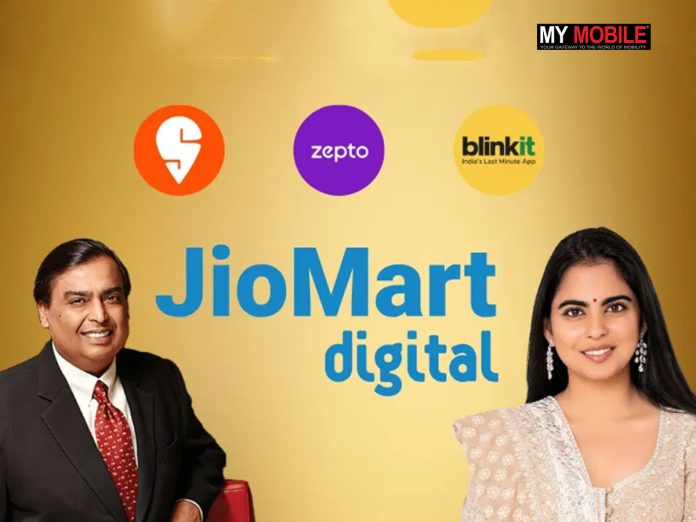
To challenge competitors like Blinkit, Swiggy’s Instamart, and BigBasket.
Reliance Retail enters the quick delivery industry, to rival Swiggy and Blinkit. (Image credit – JioMart)
Reliance Retail is entering India’s fast-growing quick commerce market. The group is set to challenge existing players such as Zomato-owned Blinkit, Swiggy’s Instamart and Tata’s BigBasket.
JioMart has already started offering quick delivery services in select parts of Navi Mumbai and Bengaluru. Experts believe JioMart is set to capture a significant share of the quick delivery market in no time.
It appears Reliance is adopting a strategy similar to what Reliance Jio did in the telecom sector. JioMart is setting itself apart from its competitors by offering a no-fee delivery model.
Here’s what JioMart is doing differently –
Free Delivery: No delivery charges, regardless of order size.
No Platform or Surge Fees: Customers won’t be charged extra during peak hours or for smaller orders.
The no-fee approach would definitely be more appealing to price-conscious shoppers or even to people who order more than once times in a week. This will be a good strategy to establish itself in smaller towns and cities where such services are less common.
The no-fee service could also draw in customers currently using Blinkit, Swiggy Instamart and BigBasket. All these platforms currently charge platform fees or delivery fees or sometimes both.
Industry experts believe that the key part of Reliance Retail’s expansion plan is to focus on areas where quick commerce companies have limited or no presence.
According to a report by the Times of India, the company aims to expand to smaller cities and towns covering 1150 cities and over 5000 pin codes across India. JioMart is aiming to gain a significant edge over competitors by targeting these under-served regions.
There is an advantage that Reliance Retail has. It does not have to worry about investing in building new infrastructure such as dark stores or neighbourhood warehouses. The company will reportedly use its existing network of retail stores and leverage its logistics service Grab to handle fast deliveries.
Reliance Retail also has plans to broaden its portfolio as they are preparing to deliver items such as fashion and small electronic products as well in quick delivery as well.
The company already has a network of Reliance Digital and Trends stores to fulfil a wide variety of orders within 10 to 30 minutes.
FAQs
Q1. What strategy is JioMart competing with Blinkit and Swiggy Instamart?
Answer. JioMart is setting itself apart by offering a no-fee delivery model, which means no delivery charges, no platform or surge fees, regardless of order size or time.
Q2. How is Reliance Retail planning to expand JioMart’s quick commerce services?
Answer. Reliance Retail aims to expand JioMart’s quick commerce services to smaller cities and towns, covering 1150 cities and over 5000 pin codes across India, leveraging its existing network of retail stores and logistics services.
Q3. What products JioMart will have in its quick delivery service?
Answer. Apart from groceries, Reliance Retail plans to broaden JioMart’s portfolio to deliver fashion and small electronic products, using its network of Reliance Digital and Trends stores.
Q4.What are the highlights of delivery by JioMart differentiating it from Swiggy , Blinkit ?
Answer •Reliance is not setting up dark stores or neighborhood warehouses.
•It will operate through the existing store network and acquired logistics service, Grab, to deliver orders.
•With a wider product range of 10,000-12,000 stock keeping units, Reliance aims to cover 1,150 cities spanning 5,000 pin codes.
•Reliance will offer zero delivery fees, platform fees, and surge fees, regardless of the order value.
Q5.What are the new product offerings by JioMart?
Answer.JioMart’s quick commerce services initially focus on groceries, Reliance Retail is also preparing to expand its product categories. They may also start delivering fashion and small electronic products in its quick commerce offerings. With its extensive network of retail stores like Reliance Digital and Trends, the company can fulfill a wide variety of orders within 10 to 30 minutes.
Mr Noel Tata has been appointed Chairman of Tata Trusts.
He will oversee the Rs 30 lakh crore Tata Group empire.
Noel Tata has significant experience in Tata companies.
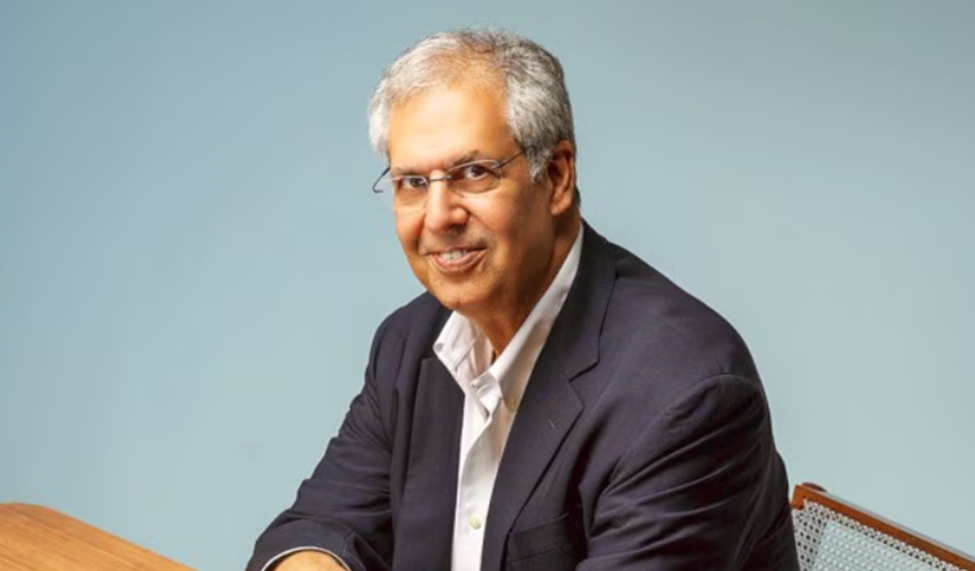
Noel Tata is the new Tata Trusts chairman. (Photo credit – Unknown)
Mr Noel Tata has been named the new Chairman of Tata Trusts. The half-brother of late Mr Ratan Tata will be overseeing the Rs 30 lakh crore Tata Group empire. The decision regarding his appointment was made unanimously at a meeting in Mumbai on Friday following the passing of Mr Ratan Tata on Thursday at the age of 86.
Mr Noel Tata currently serves as Chairman and Non-Executive Director of Tata International Limited. He also chairs Tata Investment Corporation and is a trustee of the Sir Dorabji Tata Trust and the Sir Ratan Tata Trust. Both trusts together hold a 66 per cent stake in Tata Sons, the holding company of the Tata Group.
Noel has played a key role in transforming the Tata group’s retail division called Trent. It went from a single store in 1998 into a successful chain with over 700 stores across India.
Noel Tata has also served as Vice Chairman of both Titan Company and Tata Steel. He has also held the board position at Voltas.
As Managing Director of Tata International Limited, he led the company’s growth and has been often credited for increasing its revenue from $500 million to over $3 billion between 2010 and 2021.
I am deeply honoured and humbled by the responsibility that has been cast on me by my fellow trustees. I look forward to carrying on the legacy of Ratan N Tata and the founders of the Tata Group,’’ Noel Tata said in a statement.
I look forward to carrying on the legacy of Mr. Ratan N. Tata and the Founders of the Tata Group. Founded mor“e than a century ago, the Tata Trusts are a unique vehicle for undertaking social good. On this solemn occasion, we rededicate ourselves to carrying on our developmental and philanthropic initiatives and continuing to play our part in nation building,” Noel Tata said.
More About Mr Noel Tata
Noel Naval Tata appointed as Chairman of all the Trusts that constitute the Tata Trusts and also designated Chairman, Tata Trusts.
Press Release: pic.twitter.com/bwCsTe3Uz0
— Tata Trusts (@tatatrusts) October 11, 2024
Noel was born to Naval Tata and has been closely tied to the Tata family for many years.
His vast experience across different Tata companies and successful stint in leadership roles made him a natural successor to Ratan Tata.
Noel is a graduate of Sussex University in the UK. He has also completed the International Executive Programme from INSEAD.
On the personal front, Noel Tata’s family is also deeply connected to the Tata Group. His wife Aloo Mistry is the daughter of Pallonji Mistry, the man known for being the the largest individual shareholder in Tata Sons.
Their son Neville Tata joined Trent in 2016 and now leads Star Bazaar.His eldest daughter Leah Tata is Vice President at Indian Hotels Company Limited. Meanwhile, his other daughter Maya works at Tata Capital.
FAQs
Q1. What is Noel Tata’s current role within the Tata Group?
Answer. Mr Noel Tata has been named the new Chairman of Tata Trusts. He currently serves as Chairman and Non-Executive Director of Tata International Limited. He also chairs Tata Investment Corporation and is a trustee of the Sir Dorabji Tata Trust and the Sir Ratan Tata Trust.
Q2. What experience does Noel Tata have in the company?
Answer. Noel Tata has significant experience in Tata companies, including serving as Chairman of Tata International Limited, Tata Investment Corporation, and as Vice Chairman of Titan Company and Tata Steel. He is credited for transforming the Tata group’s retail division, Trent, and significantly growing Tata International Limited’s revenue.
Q3. How is Noel Tata’s family connected to the Tata Group?
Answer. Noel Tata’s wife, Aloo Mistry, is the daughter of Pallonji Mistry, the largest individual shareholder in Tata Sons. Their son, Neville Tata, leads Star Bazaar; Leah Tata is Vice President at Indian Hotels Company Limited; and their daughter Maya works at Tata Capital.
Q4.Who is Noel Tata & how is he related to Ratan Tata?
Answer. Noel Tata, an Irish citizen, is known for his simple profile , concentrating on operations rather than focusing on being in the public limelight .
He is on the boards of many Tata Group companies.
Noel is the son of Naval Tata and Simone Tata. Naval was previously married to Soonoo Commisariat, with whom he had two children, Ratan and Jimmy Tata. Noel is married to Aloo Mistry, daughter of the late Pallonji Mistry and sister of the late Cyrus Mistry. The couple has three children: daughters Leah and Maya, and son Neville.
Since 2019, Noel has been on the boards of the Sir Ratan Tata Trust and Sir Dorabji Tata Trust. His children were appointed trustees of various trusts linked to these foundations in 2023.
Q5.What was the current role of Noel Tata?
Answer.Noel is currently the chairman of Trent, Tata International, Voltas, and Tata Investment Corporation. He is also vice chairman of Tata Steel and Titan Company Ltd.
Q6.How did the Noel Tata start his career ?
Answer.He started his career at Tata International and later became managing director of Trent in 1999, where he led the expansion of the Westside retail chain.
Q7.Why is Noel Tata selected to chair Tata Trusts?
Answer.Noel Tata was earlier considered a candidate to head Tata Sons when Ratan Tata was retiring in 2012.
His brother-in-law, Cyrus Mistry, was selected for the role at that time .
In 2016, after a gap between Ratan Tata and Mistry, Mistry was replaced as chairman by Natarajan Chandrasekaran. Mistry died in a car accident in 2022.
Noel Tata was appointed to head Tata Trusts at a meeting in Mumbai.