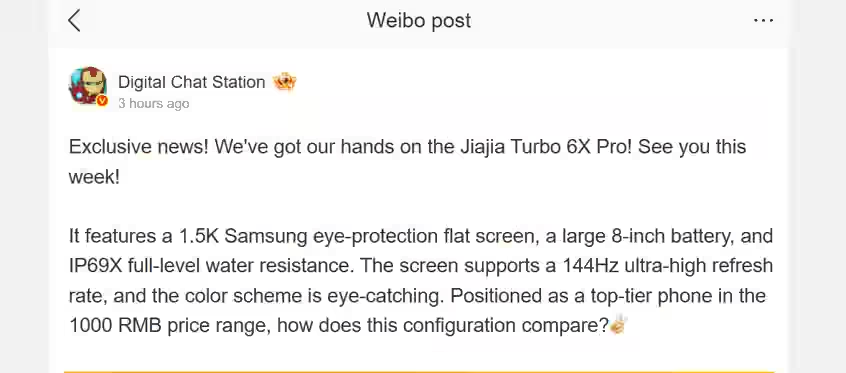
Now, fresh details about the upcoming Turbo 6X Pro model have now surfaced online revealing key specifications and a possible price range. The latest information comes from Chinese tipster Digital Chat Station on Weibo, who claims to have had hands-on access to the device before its debut. Here’s what we know.
OnePlus Turbo 6X Pro – Key Specs (Leaked)
According to the tipster, the OnePlus Turbo 6X Pro will feature a Samsung-made flat display with 1.5K resolution and a 144Hz refresh rate. This new leak builds on an earlier report that suggested the smartphone would come with a 1.5K OLED panel.
The tipster also points more specifically to an LTPS Samsung OLED screen as the display is expected to include eye-protection technology, which could help reduce eye strain during extended usage.
Apart from the display, the leak also sheds light on the phone’s battery and durability features. The OnePlus Turbo 6X Pro is said to pack a large 8,000mAh battery. While that is still a sizeable capacity, it would be 1,000mAh smaller than the batteries found in the OnePlus Turbo 6 and OnePlus Turbo 6V.
The smartphone is also tipped to arrive with an IP69X rating offering a high level of protection against water and dust.
Tipster Digital Chat Station’s post on Weibo. (Translated via Google Translate)
OnePlus Turbo 6X Pro – Pricing (Leaked)
One of the most interesting details from the leak is the expected pricing. The OnePlus Turbo 6X Pro is reportedly positioned in the 1,000 yuan price segment, which could mean the phone will be prices less than $150.
If true, this shows that the upcoming Turbo 6X Pro is expected to target budget-conscious buyers while still offering several standout specifications.
For reference, the OnePlus Turbo 6 debuted this year and arrived with Qualcomm’s Snapdragon 8s Gen 4 chipset and a massive 9,000mAh battery.
Although OnePlus has not officially announced the device yet, recent leaks suggest that the launch of the OnePlus Turbo 6X Pro could be just around the corner.
Motorola Edge 70 Pro+ is tipped to cost ₹47,999 in India for the 12GB RAM + 256GB storage variant.
It features a 6.8-inch 144Hz AMOLED panel, Dimensity 8500 Extreme, 12GB LPDDR5X RAM, Android 16, triple 50MP rear cameras, 50MP selfie camera and a 6,500mAh battery with 90W wired + 15W wireless charging.
The phone is all set to launch in India on June 4th.
Motorola Edge 70 Pro+ India price has leaked. (Image credit – Motorola)
Motorola Edge 70 Pro+ is expected to launch in Indiaon June 4th, 2026. As of now, most of the key specs of the upcoming smartphone have already been confirmed via a dedicate Flipkart microsite and official teasers. There also have been some speculation around the possible pricing strategy but it has largely remained under wraps until now. A fresh leak has now revealed the smartphone’s possible pricing ahead of its official debut.
Motorola Edge 70 Pro+ – India Price (Leaked)
The latest information comes from reliable tipster Sanju Choudhary @saaaanjjjuuu on X. The tipster claims that the upcoming Motorola smartphone will be priced at ₹47,999 for the 12GB RAM and 256GB storage variant.
Sharing the pricing details, the tipster also suggested that the handset appears to be competitively priced considering the current market scenario. The tipster noted, “Considering recent market conditions the pricing seems better compared to the upcoming phone with same chipset in my opinion.”
Exclusive 💫
Moto Edge 70 Pro+ will be priced at ₹47,999 for 12/256GB:
• 6.8″ 1.5K 144Hz curved display
• MTK 8500 Extreme
• LPDDR5X + UFS 4.1
• 50MP LYT710 Main + 50MP UW AF + 50MP 3.5x Periscope + 3 in 1 Light Sensor
• 50MP Front AF
• 6500mAh+ 90W+ 15W wireless
•… pic.twitter.com/B3nu8TPYma
The tipster has also shared key specifications of the upcoming phone, although the company has already revealed several key details through its dedicated Flipkart microsite.
According to the official teasers, the Motorola Edge 70 Pro+ will be available in Pantone Stormy Sea (Green), Pantone Zinfandel (Red), and Pantone Chicory Coffee (Wood) colour options. The smartphone will feature unique rear panel finishes inspired by wood, silk and twill textures.
The phone is confirmed to feature a 6.8-inch AMOLED display with a resolution of 2772 x 1272 pixels. The panel supports a refresh rate of up to 144Hz, HDR10+ content, and a peak brightness of up to 5,200 nits. Motorola has also equipped the display with Pantone Validated colour certification, Water Touch technology for better responsiveness with wet hands and SGS certifications designed to reduce blue light exposure and motion blur.
Powering the smartphone is the MediaTek Dimensity 8500 Extreme processor paired with 12GB LPDDR5X RAM and 256GB UFS 4.1 storage. The device runs Android 16 out of the box, and Motorola has promised three years of Android OS upgrades along with five years of security updates.
For photography, the Edge 70 Pro+ features a triple 50-megapixel rear camera setup. The primary sensor is Sony’s LYTIA 710 with optical image stabilisation (OIS). It is accompanied by a 50-megapixel ultra-wide camera that also handles macro photography and a 50-megapixel periscope telephoto lens offering 3.5x optical zoom and up to 50x Super Zoom.
On the front, the smartphone gets a 50-megapixel selfie camera with autofocus support. Video recording capabilities include support for up to 4K HDR10+ recording at 60fps, while slow-motion videos can be captured at up to 4K resolution and 120fps.
The Motorola Edge 70 Pro+ houses a 6,500mAh silicon-carbon battery. Charging options include 90W wired fast charging, 15W wireless charging, 10W wireless reverse charging, and 5W wired reverse charging.
FAQs
Q1. What is the leaked India price of the Motorola Edge 70 Pro+?
Answer. The smartphone is tipped to launch at ₹47,999 for the 12GB RAM and 256GB storage variant.
Q2. What are the key display features of the Motorola Edge 70 Pro+?
Answer. It has a 6.8-inch AMOLED display with 2772 x 1272 resolution, 144Hz refresh rate, HDR10+ support, 5,200‑nit peak brightness, and Pantone Validated colours.
Q3. What camera setup does the Motorola Edge 70 Pro+ offer?
Answer. The phone features a triple 50MP rear camera system (primary Sony LYTIA 710 with OIS, ultra-wide with macro and periscope telephoto with 3.5x optical zoom), plus a 50MP autofocus selfie camera.
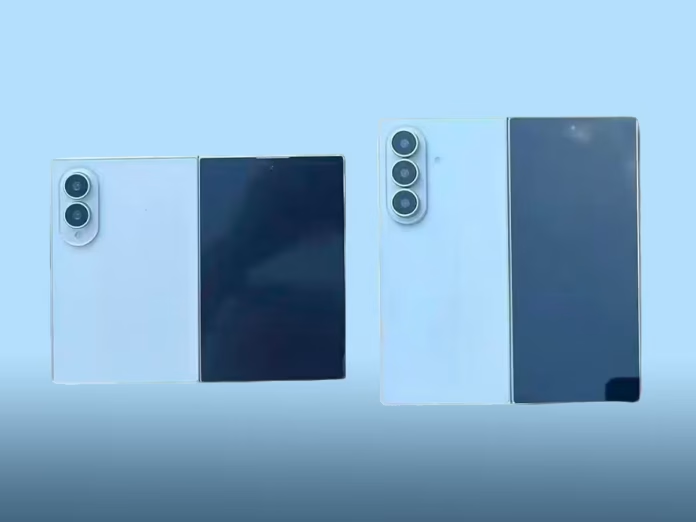
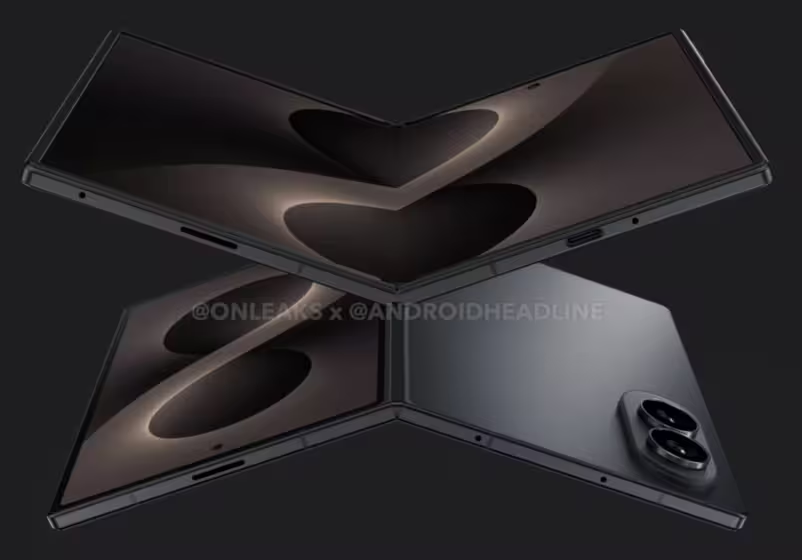
Samsung’s upcoming Galaxy Z Fold 8 has reportedly been seen in public for the first time. Images are circulating online giving fans an early real-world look at the foldable ahead of its expected debut in July. The device was allegedly spotted being used by a Samsung employee at a restaurant in South Korea. Here are more details.
Galaxy Z Fold 8 Spotted In Public – Live Images
Galaxy Z Fold 8 spotted in public being used by an alleged Samsung employee at a restaurant in South Korea. (Credit – DCInside)
The live images of the upcoming Galaxy Z Fold 8 were initially shared on DCInside’s Galaxy Gallery forum by a user who captured photos of the device using 20x zoom.
In the viral images, the smartphone can be seen covered by Samsung’s internal anti-leak protective case, which is a cylindrical shell that is commonly used on prototype devices to conceal final design details from the public. Although the protective cover hid most of the design, the phone’s noticeably wider form factor could still be seen.
This appearance aligns with several leaks and reports that have surfaced over the past few months.
Shortly after the images appeared online, well-known tipster Ice Universe @UniverseIce on X shared additional details about the device. According to the leaker, the phone seen in the images is the Galaxy Z Fold 8. The tipster also claimed that Samsung may have dropped the “Wide” branding that was previously associated with the device. However, the wider foldable is now expected to launch simply as the Galaxy Z Fold 8, while the narrower version could reportedly be marketed as the Galaxy Z Fold 8 Ultra.
A Korean netizen recently spotted a Samsung employee dining at a restaurant while using what appears to be the upcoming Samsung Galaxy Z Fold8 Wide(It has now been renamed the Galaxy Z Fold8.)
The device was covered by Samsung’s internal anti-leak protective case, a special… pic.twitter.com/jdF9Tt3lcH
Galaxy Fold 8 and Galaxy Fold 8 Ultra – Replica Model Images Leaked
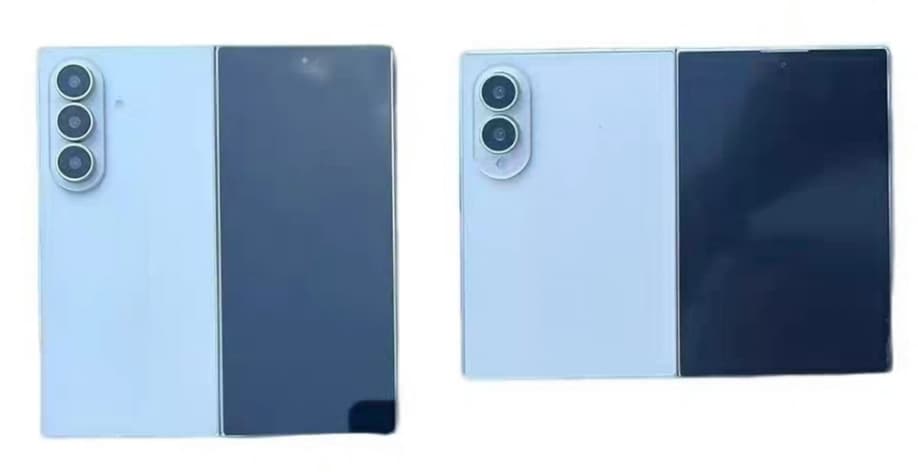
In a separate development, newly leaked design mockups of the Galaxy Z Fold 8 and Galaxy Z Fold 8 Ultra have surfaced online. The images showcase what could be the biggest design difference between Samsung’s upcoming foldables.
Images of Galaxy Fold 8 and Galaxy Fold 8 Ultra replica models leaked online. (Credit – Ice Universe on Weibo)
Shared by same tipster Ice Universe but this time on Weibo, the side-by-side images of low-quality replicas suggest that the choice between the two devices may largely come down to personal preference regarding form factor.
Reports indicate that the Galaxy Z Fold 8 Ultra will closely resemble the current Galaxy Z Fold 7 in terms of overall design. The Galaxy Z Fold 8, on the other hand, is expected to adopt a significantly wider profile reflecting a trend that many smartphone manufacturers are likely to follow in 2026 and 2027.
Samsung Galaxy Z Fold 8 and Z Fold 8 Ultra – What We Know So Far?
Tipster Ice Universe’s post on Weibo. (Translated via Google Translated)
The Galaxy Z Fold 8 has already appeared in several leaks over the past few weeks. Earlier screen protector leaks seemingly confirmed its much wider aspect ratio and strengthened expectations of a near-square 4:3 inner display, which could provide a more tablet-like experience when unfolded.
Leaked dimensions suggest the device could measure 161.4 mm in width while being only 4.3 mm thick when unfolded. This would make the foldable smartphone considerably slimmer than many competing foldables. In terms of hardware, the phone is expected to skip S Pen support and feature a dual 50MP rear camera setup without a dedicated telephoto sensor. This would be a notable difference from the standard model, which is rumoured to offer a triple-camera system.
Samsung is expected to officially unveil the Galaxy Z Fold 8 on July 22, 2026 during a Galaxy Unpacked event that is mostly likely to take place in London.
Q1. Where was the Galaxy Z Fold 8 first spotted in public?
Answer. It was reportedly seen being used by a Samsung employee at a restaurant in South Korea, with images shared online showing the device inside Samsung’s protective anti‑leak case.
Q2. What is the main design difference between the Galaxy Z Fold 8 and Fold 8 Ultra?
Answer. Leaked replica images suggest the Galaxy Z Fold 8 will have a significantly wider profile, while the Fold 8 Ultra will resemble the current Fold 7’s narrower design.
Q3. What specifications and features are expected for the Galaxy Z Fold 8?
Answer. Leaks point to a near‑square 4:3 inner display, dual 50MP rear cameras without a telephoto sensor, and a slim 4.3mm thickness when unfolded. The device is expected to launch on July 22, 2026, at Samsung’s Galaxy Unpacked event in London.
Upcoming Phone Launches in June 2026 – Xiaomi 17T, Motorola Edge 70 Pro+, Redmi Turbo 5, OnePlus 15s and More
June 2026 is shaping up to be a busy month for smartphone launches in India. Several brands including Xiaomi, Motorola, OnePlus, Vivo, Samsung, Realme, Tecno, Infinix, and iQOO, are expected to introduce new devices across different price segments. From flagship smartphones with powerful processors and advanced cameras to budget-friendly 5G devices with massive batteries, buyers will have plenty of options to choose from.
Here’s a look at some of the most anticipated smartphones expected to launch this month.
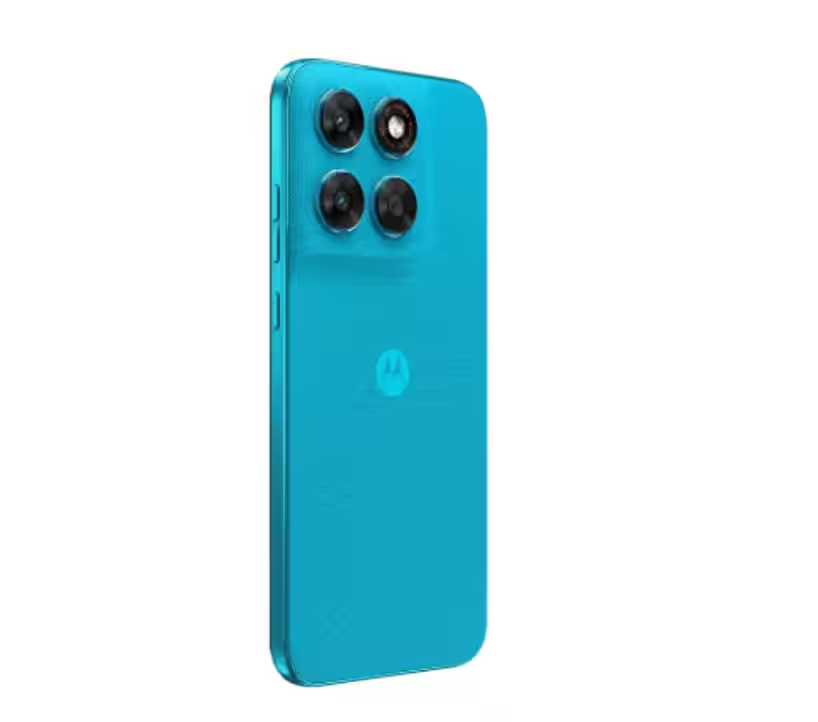
Lava Bold N2 5G
Lava Bold N2 5G.
Launch Date: June 3, 2026
Lava is set to expand its budget 5G smartphone portfolio with the launch of the Lava Bold N2 5G on June 3. The smartphone has already been teased through a dedicated microsite revealing parts of its design and a few key features. The device is expected to arrive as the 5G version of the Lava Bold N2 4G that debuted earlier this year. Lava has confirmed that the handset will ship with Android 16 out of the box, continuing the brand’s focus on offering a clean and near-stock Android experience. Teasers also show the smartphone in blue and gold colour options with a square-shaped rear camera module. The phone is confirmed to feature a 13MP rear camera and is expected to target buyers looking for an affordable 5G smartphone with a large display and long battery life.
Expected Specifications:
75-inch HD+ LCD display
90Hz refresh rate
Unisoc SC9863A processor
Android 16 out of the box
13MP primary rear camera
5MP front camera
5,000mAh battery with 10W wired charging
Side-mounted buttons
Blue and Gold colour options
5G connectivity
Xiaomi 17T
Xiaomi 17T.
Launch Date: June 4, 2026
Xiaomi has confirmed that the Xiaomi 17T will debut in India on June 4. The smartphone has already been showcased globally and Xiaomi has revealed several key details through its India microsite. The device will be powered by the MediaTek Dimensity 8500 Ultra chipset, making it one of the first phones in India to feature the processor. Xiaomi has also confirmed a large 6,500mAh silicon-carbon battery with 67W fast charging support. The display is expected to include TÜV Rheinland certifications for low blue light, flicker-free viewing, and eye protection.
Expected Specifications –
MediaTek Dimensity 8500 Ultra processor
6,500mAh silicon-carbon battery
67W wired fast charging
Hole-punch display design
TÜV Rheinland eye-care certifications
USB Type-C port
Android 16
Motorola Edge 70 Pro+
Motorola Edge 70 Pro+.
Launch Date: June 4, 2026
Motorola has officially confirmed that the Edge 70 Pro+ will launch in India on June 4. The smartphone is expected to arrive as the company’s most premium Edge-series offering yet. It will feature flagship-level specifications including a high-refresh-rate OLED display, powerful Dimensity chipset, wireless charging support, and a versatile triple-camera system.
Expected Specifications –
8-inch 1.5K quad-curved OLED display
144Hz refresh rate
5,200 nits peak brightness
MediaTek Dimensity 8500 Extreme chipset
Android 16-based Hello UX
Three years of Android OS upgrades
50MP primary camera, 50MP ultra-wide camera, 50MP periscope telephoto camera with 3.5x optical zoom
50MP front camera
6,500mAh battery
90W wired charging
Wireless charging support
Satin-Luxe, Sculpted Wood and Twill-inspired finishes
Redmi Turbo 5
Redmi Turbo 5 teaser.
Launch Date: June 10, 2026 (Expected)
Redmi is expected to launch the Turbo 5 in India during the second week of June. The smartphone is likely to arrive with specifications similar to the Chinese model. It is expected to target users looking for flagship-grade performance at a mid-range price point.
Expected Specifications:
59-inch AMOLED display
1268 x 2765 resolution
120Hz refresh rate
HDR10+, HDR Vivid and Dolby Vision support
3,500 nits peak brightness
MediaTek Dimensity 8500 Ultra processor
Android 16
50MP primary camera, 8MP ultra-wide camera, 20MP selfie camera
7,560mAh battery with 100W wired charging and 27W reverse wired charging
Wi-Fi 6, Bluetooth 5.4, NFC, USB Type-C 2
OnePlus 15s
OnePlus 15T in the picture for reference only.
Launch Date: June 2026 (Expected)
OnePlus is expected to launch the OnePlus 15s globally this month. The smartphone is said to be a rebranded version of the OnePlus 15T that debuted in China earlier this year. The device could offer flagship-level hardware in a compact form factor.
Expected Specifications:
32-inch AMOLED display
1216 x 2640 resolution
165Hz refresh rate
HDR10+, HDR Vivid and Dolby Vision support
3,600 nits peak brightness
Qualcomm Snapdragon 8 Elite Gen 5 processor
Android 16
Four major Android upgrades
50MP primary camera, 50MP telephoto camera with 3.5x optical zoom
16MP front camera
7,500mAh battery with 100W wired charging, 50W wireless charging and 10W reverse wired charging
Wi-Fi 7, Bluetooth 6.0, NFC
iQOO Z11
iQOO Z11.
Launch Date: Mid-June 2026 (Expected)
The iQOO Z11 is expected to arrive in India around June 15. The smartphone has already launched in select global markets and is expected to focus on battery life and gaming performance.
Expected Specifications:
83-inch AMOLED display
1260 x 2800 resolution
144Hz refresh rate
5,000 nits peak brightness
Snapdragon 7s Gen 4 processor
Android 16
50MP primary camera, Auxiliary rear sensor
32MP selfie camera
9,020mAh battery with 90W fast charging and 7.5W reverse wired charging
Wi-Fi 6, Bluetooth 5.2, NFC
Realme P4R 5G
Realme P4R 5G teaser.
Launch Date: Mid-June 2026
Realme is preparing to launch the P4R 5G in India, and the teaser page is already live on Flipkart. The smartphone is expected to focus on battery life and display performance while offering 5G connectivity at an affordable price.
Samsung is expected to expand its A-series lineup with the Galaxy A27 5G. The smartphone is likely to target the mid-range segment and may be priced below Rs 25,000.
Expected Specifications:
Snapdragon 6 Gen 3 processor
8GB RAM
50MP triple rear camera setup
13MP selfie camera
5,000mAh battery
25W fast charging
Android 16
5G support
Vivo T5 Lite 5G
Vivo T5 in the picture for reference only.
Launch Date: June 2026
Vivo is expected to introduce the T5 Lite 5G as an affordable smartphone priced under Rs 15,000. The device is likely to offer a large battery and a durable build.
Expected Specifications:
MediaTek Dimensity 6300 or Dimensity 6400 chipset
SGS Five-Star certified body
Military-grade durability
IP64 rating
6,500mAh battery
44W fast charging
Android 16
5G connectivity
OPPO K15 Pro
OPPO K15 Pro.
Launch Date: June 2026 (Expected)
OPPO is expected to launch the K15 Pro with premium hardware including a flagship-grade Snapdragon chipset and fast charging support.
Expected Specifications –
74-inch AMOLED display
120Hz refresh rate
Snapdragon 8 Gen 3 processor
5,500mAh battery
100W fast charging
50MP Sony IMX890 primary camera
Android 16
OPPO K15 Pro Plus
OPPO K15 Pro Plus.
Launch Date: June 2026 (Expected)
The K15 Pro Plus is expected to be the more premium variant in the lineup offering upgraded performance and camera capabilities.
Expected Specifications:
78-inch AMOLED display
144Hz refresh rate
Snapdragon 8 Gen 3+ processor
6,000mAh battery
120W fast charging
Quad-camera setup
64MP periscope telephoto camera
Android 16
Infinix Hot 70
Infinix Hot 70.
Launch Date: June 2026 (Expected)
Infinix may launch the Hot 70 for users seeking a feature-rich smartphone at an affordable price. The device is tipped to offer a high-resolution camera and smooth display experience.
Expected Specifications:
78-inch FHD+ LCD display
120Hz refresh rate
MediaTek Helio G99 processor
108MP primary camera
5,000mAh battery
33W fast charging
Android 16
Moto G87 5G
Moto G87.
Launch Date: June 2026 (Expected)
Motorola is also expected to bring the Moto G87 5G to India. The smartphone could stand out with its massive 200MP camera and premium display specifications.
Expected Specifications:
78-inch 1.5K Extreme AMOLED display
5,000 nits peak brightness
MediaTek Dimensity 6400 processor
12GB RAM
200MP primary camera
Triple rear camera setup
32MP selfie camera
5,200mAh battery
30W fast charging
Android 16
Tecno Pova 8
Tecno Pova 7 5G in the picture for reference only.
Launch Date: June 2026
Tecno has confirmed the India launch of the Pova 8. The smartphone is expected to feature a design inspired by the Nothing Phone series, complete with Glyph-style lighting effects.
Expected Specifications:
76-inch FHD+ display
144Hz refresh rate
MediaTek Dimensity 7100 processor
50MP dual rear cameras
Glyph-style LED lighting
8,000mAh battery
45W fast charging
Android 16
Tecno Pova 8 Pro 5G
Tecno Pova 7 Pro 5G in the picture for reference only.
Launch Date: June 2026 (Expected)
The Pova 8 Pro 5G is expected to arrive as the more powerful version of the standard model, offering an AMOLED display and an upgraded camera system.
Motorola Edge 70 Pro+ will launch in Pantone Stormy Sea, Zinfandel, and Chicory Coffee finishes.
Key features are 6.8-inch 144Hz AMOLED display, Dimensity 8500 Extreme chipset, 12GB RAM, 256GB storage, Android 16 and a triple 50MP rear camera setup with periscope zoom.
The phone packs 6,500mAh battery with 90W wired and 15W wireless charging.
Motorola Edge 70 Pro+ India launch date confirmed via Flipkart microsite. (Credit – Motorola)
Motorola is gearing up to launch the Edge 70 Pro+ in India on June 4. Ahead of the official debut, the company has revealed the smartphone’s complete specifications through its official India website and dedicated Flipkart microsite. The listing confirms key details about the handset’s display, performance, cameras, battery, design and colour options. Here’s more on that.
Motorola Edge 70 Pro+ – Design, Build and Pantone-Inspired Colours
As teased officially via dedicated pages, the Edge 70 Pro+ will launch in Pantone Stormy Sea (Green), Pantone Zinfandel (Red), and Pantone Chicory Coffee (Wood) colour options.
For durability, the smartphone carries IP68 and IP69 ratings for dust and water resistance, along with MIL-STD-810H certification for improved protection against shocks and harsh conditions. Motorola has protected the front of the device with Corning Gorilla Glass 7i. The rear panel will be available in unique finishes inspired by wood, silk, and twill textures.
Despite housing a large 6,500mAh battery, the phone maintains a slim profile measuring between 7.19mm and 7.34mm in thickness while weighing 190 grams.
According to the microsite teasers, the Motorola Edge 70 Pro+ will feature a 6.8-inch AMOLED display with a resolution of 2772 x 1272 pixels. The screen supports a refresh rate of up to 144Hz, HDR10+ content and peak brightness of up to 5,200 nits.
Motorola has also equipped the panel with Pantone Validated colour certification, Water Touch technology for better usability with wet hands, and SGS certifications aimed at reducing blue light exposure and motion blur.
The smartphone is powered by the MediaTek Dimensity 8500 Extreme chipset. The processor is paired with 12GB LPDDR5X RAM and 256GB UFS 4.1 storage. On the software front, the device runs Android 16 out of the box. Motorola has promised three years of Android OS upgrades and five years of security updates.
For photography, the Motorola Edge 70 Pro+ comes with a triple rear camera setup with all three sensors offering 50-megapixel resolution. The primary camera uses Sony’s LYTIA 710 sensor and supports optical image stabilisation (OIS). The secondary sensor handles both ultra-wide-angle and macro photography duties, while the third camera is a periscope telephoto lens offering 3.5x optical zoom and up to 50x Super Zoom.
Motorola Edge 70 Pro+ camera and operating system features. (Credit – Motorola)
On the front, the smartphone features a 50-megapixel selfie camera with autofocus support. The handset is capable of recording videos at up to 4K HDR10+ resolution at 60fps. Slow-motion video recording is also supported at up to 4K resolution and 120fps.
The Edge 70 Pro+ packs a 6,500mAh silicon-carbon battery. It supports 90W wired fast charging, 15Wwireless charging, 10W wireless reverse charging, and 5W wired reverse charging.
Connectivity options include Wi-Fi 6E, Bluetooth 5.4, NFC, and a USB Type-C port. Motorola has also included several premium features such as ThinkShield security, an in-display fingerprint scanner, face unlock, and stereo speakers with Dolby Atmos support.
Motorola Edge 70 Pro+ – Price in India (Expected)
The standard Motorola Edge 70 Pro was earlier launched India at a starting price of Rs 38,999. Given the upgraded hardware offered by the Edge 70 Pro+ including a periscope telephoto camera, wireless charging support, enhanced display capabilities, and premium design finishes, the upcoming model is expected to be positioned higher in the lineup.
Many tech enthusiasts and media reports have hinted that the Motorola Edge 70 Pro+ could launch at a price below Rs 50,000 in India.
Notably, we do not have an official confirmation in this regard as of now.
Lava Bold N2 5G launches on June 3, while Motorola Edge 70 Pro+ and Xiaomi 17T debut in India on June 4.
Motorola Edge 70 Pro+ features Dimensity 8500 Extreme chipset, 6,500mAh battery with 90W fast charging, 144Hz AMOLED display, and Leica‑tuned cameras.
Xiaomi 17T expected with Dimensity 8500 Ultra, 6,500mAh battery, 120Hz LTPS display and Leica triple camera system.
The first week of June is shaping up to be an exciting one for smartphone buyers in India. Brands such as Lava, Motorola and Xiaomi are preparing to launch new devices across different price segments. From an affordable 5G smartphone to premium offerings with flagship-grade cameras and large batteries, there is something for every type of user.
Here’s a look at the smartphones launching in India this week.
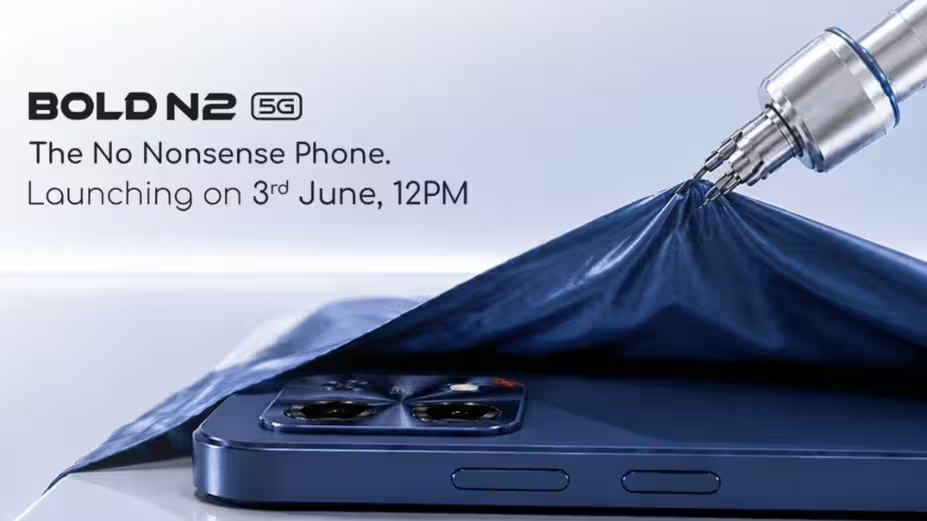
Lava Bold N2 5G – Launching on June 3
Lava Bold N2 5G teaser.
Lava has officially confirmed that the Lava Bold N2 5G will debut in India on June 3 at 12 PM. The smartphone will be available through Amazon and is expected to reach other online and offline retail channels as well.
A dedicated teaser page has already gone live revealing key design details of the upcoming device. The Lava Bold N2 5G has been showcased in a glossy blue finish, while teaser videos have also hinted at a gold colour option. The handset features a square-shaped rear camera module housing two sensors and an LED flash.
One of the confirmed highlights is a 13MP rear camera. While it may not be a high-resolution sensor by current standards, it could be a practical choice considering the phone’s expected budget-friendly pricing. Another major confirmation is Android 16 out of the box and Lava is known for offering a clean, near-stock Android experience, which could be a key selling point.
Although the company has not revealed the complete specifications yet, the device is expected to borrow several features from the Lava Bold N2 4G. If that happens, users can expect a 6.75-inch HD+ LCD display with a 90Hz refresh rate, a Unisoc SC9863A processor, a 13MP rear camera, a 5MP selfie camera, and a 5,000mAh battery with 10W charging support.
The company has already confirmed several specifications through its official microsite. Powering the device will be the MediaTek Dimensity 8500 Extreme processor built on a 4nm architecture. Motorola claims the chipset delivers an AnTuTu score of over 2.4 million points. The smartphone will also offer up to 16GB LPDDR5X RAM for smooth multitasking and gaming.
To keep temperatures under control, the Edge 70 Pro+ includes a large 4,600 sq mm vapour cooling chamber. Battery life is another key highlight, with the phone packing a 6,500mAh battery that Motorola claims can last for more than two days. Charging support includes 90W wired fast charging and 15W wireless charging.
The smartphone will feature a 6.8-inch 1.5K Extreme AMOLED display with a 144Hz refresh rate and peak brightness of up to 5,200 nits. Protection is provided by Corning Gorilla Glass 7i.
The smartphone will be available in Pantone Chicory Coffee, Pantone Stormy Sea, and Pantone Zinfandel colour options. These variants feature unique finishes inspired by wood, twill fabric, and satin textures.
Motorola is also bringing flagship-level durability features including IP68 and IP69 ratings for water and dust resistance alongwith MIL-810H military-grade certification. The device will run Android 16-based Hello UI and is promised to receive three major Android upgrades and five years of security updates.
For photography, the Motorola Edge 70 Pro+ will sport a triple rear camera setup led by a 50MP Sony LYT-710 primary sensor with optical image stabilisation. It will also feature a 50MP periscope telephoto camera capable of delivering up to 50x digital zoom.
Xiaomi 17T – Launching on June 4
Xiaomi 17T teaser.
Xiaomi is also scheduled to introduce the Xiaomi 17T in India on June 4. The smartphone recently debuted in global markets and a fresh leak has now revealed its expected India pricing and specifications.
According to tipster Abhishek Yadav, the Xiaomi 17T could launch at Rs 65,999 for the 12GB RAM and 256GB storage model. This would make it considerably more affordable than the European version, which is priced much higher. The price of the 512GB variant has not been revealed yet.
The Xiaomi 17T is expected to feature a 6.59-inch 1.5K LTPS display with a 120Hz refresh rate. The screen is tipped to offer up to 3,500 nits peak brightness and 2,000 nits HBM brightness alongwith Dolby Vision support for enhanced multimedia performance.
Under the hood, the smartphone is likely to be powered by the MediaTek Dimensity 8500 Ultra chipset. Battery capacity is expected to be another strong point with the Xiaomi 17T tipped to pack a 6,500mAh battery backed by 67W fast charging support.
On the camera side, Xiaomi may offer a Leica-tuned triple-camera system. The setup is expected to include a 50MP primary camera using the Light Hunter 800 sensor, a 50MP periscope telephoto lens with 5x optical zoom and support for up to 120x AI Zoom and a 12MP ultra-wide-angle camera with a 120-degree field of view. The smartphone is also tipped to support 4K 60fps video recording across all rear cameras and 4K 30fps recording through the front camera.
Additional features could include dual stereo speakers with Dolby Atmos, Corning Gorilla Glass 7i protection, NFC, eSIM support and Wi-Fi 6E connectivity.
FAQs
Q1. Which smartphones are launching in India in the first week of June?
Answer. In the first week of June, Lava will launch the Bold N2 5G on June 3, while Motorola will introduce the Edge 70 Pro+ and Xiaomi will debut the 17T on June 4.
Q2. What are the key highlights of the Motorola Edge 70 Pro+?
Answer. The Motorola Edge 70 Pro+ will feature the MediaTek Dimensity 8500 Extreme chipset, a 6,500mAh battery with 90W fast charging, a 144Hz AMOLED display, and a triple camera setup led by a 50MP Sony sensor.
Q3. What is the leaked India price of the Xiaomi 17T?
Answer. The Xiaomi 17T is expected to be priced at ₹65,999 in India for the 12GB RAM and 256GB storage variant, making it more affordable compared to its European version.
Xiaomi 17T will debut in India on June 4th, 2026 shortly after its global unveiling this week.
The 12GB + 256GB variant is tipped to cost ₹65,999 in India, which will be significantly lower than the European price of EUR 749 (around ₹83,000).
Key features – 6.59-inch 1.5K LTPS 120Hz display, Dimensity 8500 Ultra chipset, 6,500mAh battery with 67W charging and Leica triple cameras with 5x periscope zoom.
Xiaomi 17T India launch date confirmed. (Image credit – Xiaomi)
Xiaomi is all set to launch the Xiaomi 17T in India on June 4, just days after unveiling the smartphone for global markets. While the company has already revealed the device’s specifications during its recent launch event, a new leak has now hinted at its expected India pricing and key hardware details.
According to a reliable tipster, the Xiaomi 17T will arrive in India at a much lower price than its European counterpart. The smartphone is currently priced at EUR 749 (approximately Rs 83,000) in Europe but the Indian version is expected to be positioned more aggressively. Here’s everything we know so far.
Xiaomi 17T India Price (Leaked)
As per the leak posted by well-known tipster Abhishek Yadav @yabhishekhd on X, the Xiaomi 17T could be priced at Rs 65,999 in India for the 12GB RAM and 256GB storage variant. This would make it significantly more affordable than the European model.
The tipster has not revealed the pricing of the higher-end 512GB storage variant. For reference, the 512GB version is available in Europe at a price equivalent to around Rs 89,000.
If the leaked pricing turns out to be accurate, Xiaomi 17T could become a great smartphone choice in its category at a competitive price point.
Xiaomi 17T – Key Specifications (Expected)
Although Xiaomi has not officially confirmed the specifications of the Indian variant, the leaked details closely match the global model. This suggests that the smartphone launching in India is likely to carry the same hardware package.
The Xiaomi 17T is expected to feature a 6.59-inch 1.5K LTPS display with a 120Hz refresh rate. The panel is tipped to offer up to 3,500 nits peak brightness and 2,000 nits High Brightness Mode (HBM), along with Dolby Vision support for enhanced viewing quality.
Xiaomi 17T key specs.
Xiaomi 17T is tipped to be powered by the MediaTek Dimensity 8500 Ultra chipset. The device is said to achieve an AnTuTu score of around 2.2 million points and will reportedly be paired with LPDDR5X Ultra RAM and UFS 4.1 storage for faster multitasking and app loading.
The Indian version of the smartphone is also expected to pack a large 6,500mAh battery with support for 67W fast charging.
On the camera front, the Xiaomi 17T is tipped to feature a triple rear camera setup developed in collaboration with Leica. The system may include a 50MP primary camera using the Light Hunter 800 sensor and a 1G+6P lens arrangement.
The device is also expected to offer a 50MP periscope telephoto camera with 5X optical zoom support and up to 120X AI Zoom. Completing the setup could be a 12MP ultra-wide camera with a 120-degree field of view. However, the ultra-wide sensor is said to lack autofocus support.
For video recording, the smartphone may support 4K 60fps recording from all rear cameras, while the front camera is tipped to support 4K 30fps video capture.
Other features may include dual stereo speakers with Dolby Atmos, Corning Gorilla Glass 7i protection, NFC, eSIM support and Wi-Fi 6E connectivity.
FAQs
Q1. When will the Xiaomi 17T launch in India?
Answer. The Xiaomi 17T is scheduled to launch in India on June 4, 2026, just days after its global debut.
Q2. What is the leaked India price of the Xiaomi 17T?
Answer. According to leaks, the Xiaomi 17T could be priced at ₹65,999 in India for the 12GB RAM and 256GB storage variant, making it more affordable than the European model.
Q3. What are the key specifications of the Xiaomi 17T?
Answer. The Xiaomi 17T is expected to feature a 6.59-inch 1.5K LTPS 120Hz display, a MediaTek Dimensity 8500 Ultra chipset, a 6,500mAh battery with 67W fast charging, and a Leica triple camera setup with a 50MP primary sensor and 5x periscope zoom.
A pricing update circulating online shows revised MOP (Market Operating Price) details for both the Nothing Phone (4a) and Phone (4a) Pro. The notice states that the new prices will come into effect from June 1 and all future billing will be based on the revised pricing. Here are more details.
Nothing Phone (4a) New Prices in India
Nothing Phone (4a).
The Nothing Phone (4a) 8GB + 128GB variant is expected to see its price increase from ₹34,999 to ₹37,999. The 8GB + 256GB model will reportedly go up from ₹37,999 to ₹40,999, while the 12GB + 256GB version will be priced at ₹43,999 instead of ₹40,999.
This means all three variants of the Phone (4a) could receive a price hike of ₹3,000.
Nothing Phone (4a) Pro New Prices in India
Nothing Phone (4a) Pro.
The higher-end Phone (4a) Pro is expected to witness a bigger increase. The 8GB + 128GB variant may go from ₹44,999 to ₹49,999 marking a ₹5,000 increase.
Similarly, the 8GB + 256GB version is tipped to rise from ₹47,999 to ₹52,999, while the 12GB + 256GB model could jump from ₹50,999 to ₹55,999. Both variants are also expected to become costlier by ₹5,000.
Here’s a quick look at the new prices –
Model
Old Price
New Price
Hike
Phone (4a) 8GB+128GB
₹34,999
₹37,999
₹3,000
Phone (4a) 8GB+256GB
₹37,999
₹40,999
₹3,000
Phone (4a) 12GB+256GB
₹40,999
₹43,999
₹3,000
Phone (4a) Pro 8GB+128GB
₹44,999
₹49,999
₹5,000
Phone (4a) Pro 8GB+256GB
₹47,999
₹52,999
₹5,000
Phone (4a) Pro 12GB+256GB
₹50,999
₹55,999
₹5,000
More Price Hikes Could Follow
Meanwhile, another Indian tipster named Sanju Choudhary @saaaanjjjuuu on X has claimed that the upcoming increase could be just the beginning as smartphone prices may continue to rise in the coming months.
The tipster suggested that prices could increase almost every month and claimed that several other smartphone brands may soon revise their pricing upward.
Neither Nothing nor other smartphone manufacturers have officially commented on the price revision. However, if the leaked pricing details turn out to be accurate, consumers looking to buy a new smartphone may want to do so early before the revised prices take effect.
FAQs
Q1. When will the Nothing Phone (4a) and Phone (4a) Pro price hike take effect?
Answer. The price hike for the Nothing Phone (4a) and Phone (4a) Pro will take effect from June 1, 2026, and all future billing will be based on the revised prices.
Q2. How much will the Nothing Phone (4a) models cost after the hike?
Answer. After the hike, the Nothing Phone (4a) will cost ₹37,999 for the 8GB + 128GB variant, ₹40,999 for the 8GB + 256GB variant, and ₹43,999 for the 12GB + 256GB variant.
Q3. What is the new pricing for the Nothing Phone (4a) Pro?
Answer. The Nothing Phone (4a) Pro will be priced at ₹49,999 for the 8GB + 128GB variant, ₹52,999 for the 8GB + 256GB variant, and ₹55,999 for the 12GB + 256GB variant after the ₹5,000 increase.
Vivo S60 price starts at CNY 3,599 (about ₹50,000) while the Vitality Edition begins at CNY 2,899 (about ₹41,000).
Official first sale for both models is set to start on June 3 in China.
Vivo S60 features 6.59″ 1.5K AMOLED 144Hz display, Snapdragon 8s Gen 3, triple rear cameras with 50MP periscope telephoto, 50MP selfie and 7,200mAh battery with 90W charging.
Vivo S60 and Vivo S60 Vitality Edition have been officially unveiled in China.
Vivo has officially launched the Vivo S60 Series smartphones in China as the company’s latest mid-range offerings. Alongside the standard Vivo S60 model, Vivo has also introduced the Vivo S60 Vitality Edition. The new devices are set to go on sale in China soon through Vivo’s official online store and arrive in multiple colour options. Here’s everything you need to know about both models.
Vivo S60 and Vivo S60 Vitality Edition – Price and Availability
Both smartphones in the Vivo S60 Series will go on sale in China starting June 3 through Vivo’s online store.
Vivo S60 Series prices in China.
As for pricing, the standard Vivo S60 price in China starts at CNY 3,599 (roughly Rs. 50,000) for the 12GB RAM and 256GB storage variant. The 12GB + 512GB model is priced at CNY 3,999 (around Rs. 56,000), while the top-end 16GB + 512GB variant costs CNY 4,399 (approximately Rs. 62,000).
Meanwhile, the Vivo S60 Vitality Edition is priced at CNY 2,899 (roughly Rs. 41,000) for the 8GB + 256GB variant. The 12GB + 256GB version costs CNY 3,199 (around Rs. 45,000), while the 12GB + 512GB model is priced at CNY 3,499 (roughly Rs. 49,000).
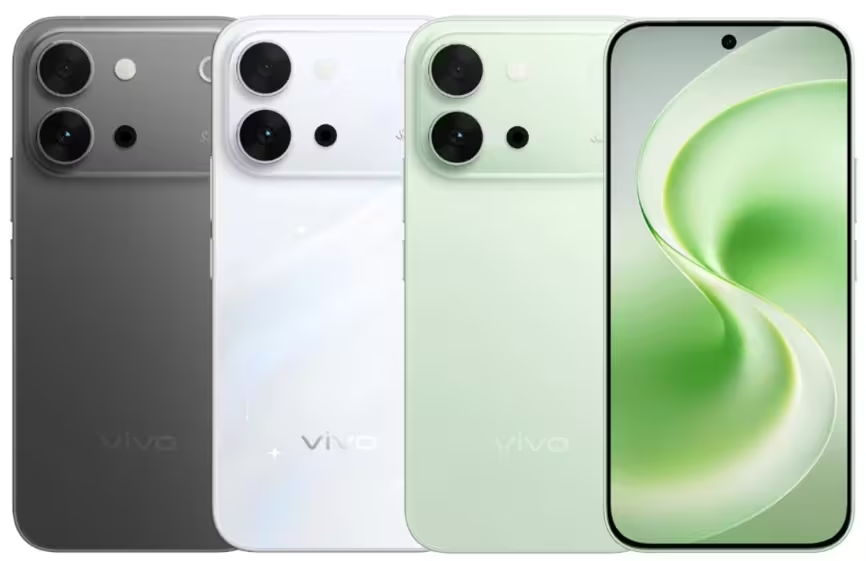
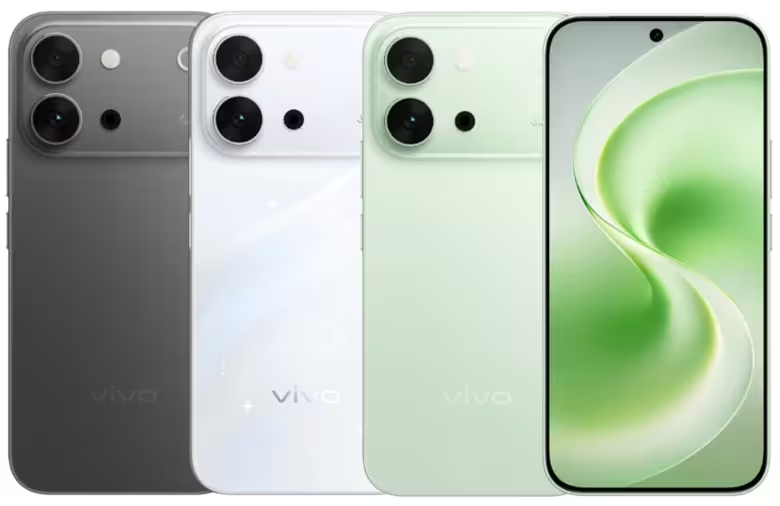
The smartphones are available in Early Summer Green, Midsummer Night’s Dream, and Sea of Stars colour options.
Vivo S60 – Key Features
Vivo S60.
The Vivo S60 features a unibody “cold-carved glass” design and sports a 6.59-inch 1.5K AMOLED display with a resolution of 1,260 x 2,750 pixels. The screen supports up to a 144Hz refresh rate, HDR, 100 percent DCI-P3 colour gamut, 1.07 billion colours, 459ppi pixel density, and a 300Hz touch sampling rate. Vivo has also included IP69 and IP69 ratings for dust and water resistance.
The smartphone runs on Android 16 with OriginOS 6 and is powered by the 4nm Snapdragon 8s Gen 3 chipset featuring a prime core clocked at 3GHz, four performance cores running at 2.8GHz, and three efficiency cores operating at 2GHz. The handset also includes an Adreno 735 GPU, up to 16GB RAM, and up to 512GB onboard storage.
Vivo S60 key specs.
For photography, the Vivo S60 comes equipped with a triple rear camera setup. It includes a 50-megapixel primary camera with an f/1.75 aperture and optical image stabilisation, an 8-megapixel ultra-wide camera with an f/2.2 aperture, and a 50-megapixel periscope telephoto camera with an f/2.65 aperture that supports up to 100x digital zoom.
On the front, the phone houses a 50-megapixel selfie camera with an f/2.0 aperture. The smartphone also supports 4K video recording.
The device packs a 7,200mAh battery with support for 90W wired fast charging via USB Type-C. Connectivity options include 5G, 4G LTE, Wi-Fi 6, Bluetooth 5.4, GPS, BeiDou, GLONASS, Galileo, and QZSS.
Vivo has also equipped the handset with a 3D ultrasonic fingerprint scanner, gravity sensor, proximity sensor, ambient light sensor, e-compass, and gyroscope. The Vivo S60 measures 157.52 x 74.33 x 7.92mm and weighs around 207 grams.
Vivo S60 Vitality Edition – Key Features
Vivo S60 Vitality Edition.
The Vivo S60 Vitality Edition shares many specifications with the standard Vivo S60.
It features the same display, battery capacity, charging speed, software, dimensions, connectivity options and fingerprint sensor. The device also carries the same 50-megapixel primary camera and 8-megapixel ultra-wide camera on the rear.
Vivo S60 Vitality Edition key specs.
However, the Vitality Edition does not include the 50-megapixel periscope telephoto camera found on the standard model.
Instead of the Snapdragon chipset, the phone is powered by the 4nm MediaTek Dimensity 7500 Full Power processor. The chipset features four efficiency cores clocked at 2GHz and four performance cores with a peak clock speed of 2.6GHz. The smartphone also includes an ARM Mali-G625 GPU, up to 12GB RAM, and up to 512GB storage.
The Vivo S60 Vitality Edition weighs slightly less at around 199 grams.
Vivo introduced its first over‑ear noise‑cancelling headphones with 58dB ANC, Hi‑Res audio and 75‑hour battery life.
Vivo Watch GT 2 features 600+ watch faces, a square display and a special strap set.
Vivo TWS 5e offers 55dB adaptive ANC, 55‑hour playback, Bluetooth 5.4 and low‑latency mode.
Vivo has introduced three new audio and wearable products in China including the brand’s first pair of Over-Ear Noise-Cancelling Headphones, the Vivo Watch GT 2 smartwatch and the Vivo TWS 5e True Wireless Earbuds. The newly launched products focus on long battery life, smart features, and improved audio performance.
According to the promotional material, the headphones support high-resolution audio with Hi-Res Gold certification and feature active noise cancellation of up to 58dB.
The headphones weigh only 238 grams that make them comfortable for long listening sessions. The headphones also support cross-device seamless connection allowing users to connect with multiple ecosystem devices easily. Battery life is another major highlight with Vivo claiming up to 75 hours of playback on a single charge.
The new Vivo headphones are currently available for pre-order in China at a price of CNY 499.Official sales are scheduled to begin on June 6.
Vivo Watch GT 2
Vivo Watch GT 2.
Alongside the headphones, Vivo has also launched the Vivo Watch GT 2 smartwatch. The smartwatch comes with over 600 colourful watch faces and features a stylish square-shaped display design. Vivo is also offering a special “Lucky Star Pin Buckle” strap set with the smartwatch.
The Vivo Watch GT 2 is currently available in multiple colour variants and has gone on sale in China.
Pricing starts at CNY 549, while the official price is listed as CNY 599. Vivo is also offering promotional pricing starting at CNY 466.65 under government subsidy offers in select regions.
Vivo TWS 5e
Vivo TWS 5e.
Vivo has additionally unveiled the Vivo TWS 5e true wireless earbuds in China. The earbuds support up to 55dB adaptive hybrid active noise cancellation and are designed for immersive audio performance.
Battery life is one of the key highlights of the Vivo TWS 5e with the company claiming up to 55 hours of total playback time. The earbuds are available in three colour options that include White, Green and Black.
For connectivity, TWS 5e supports Bluetooth 5.4 connectivity, dual-device pairing and support charging via USB Type-C. The earphones offer a wireless range of up to 10 metres and have a low-latency mode offering full-link latency as low as 42ms. It claims the earbuds can deliver up to 13 hours of playback on a single charge, while the charging case extends the total battery life to up to 55 hours.
The Vivo TWS 5e has officially gone on sale in China with a starting price of CNY 229.