This change marks a significant shift, as X will become the only major social media platform to charge for this feature.
News Shared on X
⏩Starting soon, only Premium subscribers will be able to livestream (create live video streams) on X. This includes going live from an encoder with X integration. Upgrade to Premium to continue going live.
— Live (@Live) June 21, 2024
The company shared the news on its own platform, stating, “Starting soon, only Premium subscribers will be able to livestream on X. This includes going live from an encoder with X integration.”
This move aligns with CEO Elon Musk’sprevious statements about charging for basic features in the future.
However, X has not provided a specific timeline for implementing this change or explained the reasoning behind it.
Users who rely on X for video content have criticized the decision.
Many point out that other platforms with more advanced video capabilities offer live-streaming for free.
This is not X’s first step towards a paid model.
In April, the company introduced a $1 annual fee for new accounts in New Zealand and the Philippines to access posting privileges.
Elon Musk has earlier announced that X will soon be charging for every basic feature
Musk described this as a test to combat bots and troll farms, which he claims can easily bypass current verification methods.
The shift suggests X may be moving away from its primarily ad-based model towards a mix of advertising and paid subscriptions.
If the $1 fee expands globally, it would translate to approximately Rs 100 in India.
X’s decision to charge for live-streaming and potentially other basic features represents a departure from the practices of other social media platforms.
The company has not addressed concerns about how this might affect user engagement or content creation on the platform.
X continues to implement changes and make new rules for it users.
It remains to be seen how users will respond to the evolving paid subscription model and its impact on the platform’s functionality and user base.
FAQs
What is the new live-streaming policy on X (formerly Twitter)?
X has announced that only premium subscribers will be able to live-stream on the platform, marking a significant change from its previous model where live-streaming was available to all users.
Why is X restricting live-streaming to premium subscribers?
While X has not provided a specific reason, this move aligns with CEO Elon Musk’s earlier statements about potentially charging for basic features in the future.
It appears to be part of a broader shift towards a subscription-based model.
How have users reacted to X’s decision to charge for live-streaming?
Many users have criticized the decision, noting that other social media platforms with more advanced video capabilities offer live-streaming for free.
Concerns have been raised about the impact on user engagement and content creation.
Has X implemented other paid features before this?
Yes, in April, X introduced a $1 annual fee for new accounts in New Zealand and the Philippines to access posting privileges.
This was described as a test to combat bots and troll farms.
If industry leaders and popular tech experts are to be believed, AI in phones is going to be as groundbreaking for the smartphone sector as the internet was for humans.
It could probably mean no human intervention in devices as AI is performing everything on our prompts.
How ready are we for this future?
So, let’s start by understanding the pros and cons of this future.
AI-Powered Phones – Pros and Cons
Pros
Cons
Enhanced Personalization: AI can tailor the user experience to individual preferences and behaviours, offering a more intuitive and enjoyable experience.
Privacy Concerns: AI requires data to function effectively, raising issues around data security and user privacy.
Improved Camera Functionality: AI can enhance photo and video quality by optimizing settings automatically and offering advanced editing features.
Dependency on the Internet: Many AI features rely on Internet connectivity, which can be a limitation in areas with poor network coverage.
Advanced Voice Assistants: AI-powered voice assistants can handle more complex tasks and understand natural language better, improving user interaction.
Job Displacement: Automation and AI could lead to job losses in sectors reliant on human interaction and traditional roles.
Enhanced Security: AI can offer advanced security features like facial recognition, fingerprint scanning, and behavioural analysis to protect user data.
Ethical Concerns: The development and deployment of AI raise ethical issues, including bias in AI algorithms and decision-making transparency.
Advanced Augmented Reality (AR): AI can enhance AR experiences by providing real-time data analysis and interaction capabilities.
Reliability Issues: AI systems can sometimes fail or produce incorrect results, leading to frustration and potential problems for users.
Time Savings: AI can automate routine tasks, freeing up time for humans to focus on more meaningful activities.
Reduced Human Interaction: Over-reliance on AI can decrease face-to-face social interactions, impacting social skills and relationships
Financial Management: AI can help with budgeting, investment strategies, and financial planning, promoting better financial health.
Security Risks: AI systems can be vulnerable to hacking and cyber attacks, potentially compromising personal information.
Educational Support: AI can provide personalized learning experiences, tutoring, and educational resources, enhancing the learning process.
Mental Health Issues: Constant connectivity and reliance on AI can lead to anxiety, stress, and other mental health issues.
AI-Powered Apps on Our Current Phones
Current gen phones and their app environment kind of rocks
Our phones are already smart.
They perform various tasks for us and invariably make our lives easier.
And for this, we have many cool apps to thank.
While the industry is touting AI as the next smartphone industry revolution, we can argue that we have been using AI in our phones longer than anyone likes to believe.
We already have text enhancement, image enhancement, camera settings, calculators, messaging and a whole bunch of other features that use some sort of AI to function.
Apart from the basics, we already have phones that can identify our behaviour and assist in tasks accordingly.
For many of us, that is already similar to having AI in phones.
Here are a few points that make our current apps cool and can work as arguments against AI-powered phones –
Safety/Privacy – There have been many discussions over the privacy policies of big tech companies. Nonetheless, widespread awareness has made users and product managers equally value user privacy as a prime concern. As a user, you can have a certain amount of trust in the Apps that you are using. You are also more aware of the privacy policy of every company as the information is widely available to those who want to know.
Keeping Brain Working – If this is something you don’t want, then this whole argument is probably not for you. But if you are even remotely concerned about your cognitive conditioning, here’s what we feel. Whenever you learn a new app or explore the updates in an old one, it’s like giving your brain a workout. Just like your body, your brain needs regular exercise to stay active. If you don’t challenge it, it can get sluggish.
Have Control – You have control of your current smartphone in your hands. You decide what you do on your phone, what you save, and what you delete. You can install or uninstall apps as you need, and you know how to use them. This also includes the customisation power. You can customize the way your phone and apps look.
Multiple mobile apps are already using AI for their core functionality
At the end of the day, the question of whether we need AI-powered phones or not is largely redundant because the change is on our doorstep.
It will be hard to resist this change as it is no longer a question of personal preference of what we like or not.
AI is here and AI is here to stay, including in our phones.
Q1. What are AI-powered phones, and how do they differ from regular smartphones?
Answer: AI-powered phones integrate artificial intelligence to enhance various functions and features.
Unlike regular smartphones, these devices use AI to improve camera performance, manage battery life, personalize user experiences, and even assist with tasks through advanced voice assistants.
AI makes the phone smarter, more efficient, and more user-friendly.
Q2. How does AI improve the camera quality on smartphones?
Answer: AI enhances smartphone cameras by automatically adjusting settings like exposure, focus, and colour balance based on the scene.
It can also recognize objects and scenes, apply real-time enhancements, and offer advanced features like portrait mode, night mode, and AI-driven photo editing.
This results in clearer, more vibrant, and professional-looking photos.
Q3. Can AI on smartphones help with battery management?
Answer: Yes, AI helps manage battery life by learning your usage patterns and optimizing power consumption accordingly.
It can predict which apps you’re likely to use next and allocate resources efficiently, minimize background activity for less frequently used apps, and suggest energy-saving tips, ultimately extending your phone’s battery life.
Q4. Are there privacy concerns with AI-powered phones?
Answer: There can be privacy concerns with AI-powered phones because they often rely on collecting and analyzing user data to provide personalized experiences.
To mitigate these concerns, it’s important to use privacy settings, manage app permissions, and stay informed about how your data is being used.
Many manufacturers also emphasize security measures to protect user data.
Q5. How can AI-powered phones assist with daily tasks?
Answer: AI-powered phones can assist with daily tasks through advanced voice assistants like Siri, Google Assistant, and Alexa.
These assistants can set reminders, send texts, make calls, navigate, and answer queries.
Additionally, AI can provide personalized recommendations, automate routine tasks, and even help manage your schedule, making your daily life more efficient and organized.
Q6. How is AI used in apps?
Answer. AI algorithms can analyze user behaviour and preferences to provide personalized content, product recommendations, or even suggest actions within the app.
This enhances user engagement and encourages longer app usage as a result.
Combines TWS earbuds with a fidget spinner case for Rs 2,499.
Features 13mm Dynamic drivers with XBASS technology for balanced sound.
Up to 70 hours of battery life with USB-C charging.
IPX5 water resistance and Environmental Noise Cancellation for calls.
Remember when fidget spinners were all the rage?
Well, Nu Republic certainly hasn’t forgotten.
They’ve taken that addictive little toy and merged it with a pair of TWS earbuds to create the Cyberstud SPIN.
It’s a bold move in a market where most brands are busy one-upping each other with minor tweaks to sound quality or battery life.
Priced at Rs 2,499, these earbuds promise not just to deliver your tunes, but to keep your fingers busy while they’re at it.
With a claimed 70-hour battery life and a case that doubles as a fidget spinner, the Cyberstud SPIN is certainly turning heads.
But is it just a gimmick, or have Nu Republic stumbled upon the next big thing in audio tech?
Let’s give it a spin and find out.
Nu Republic Cyberstud SPIN Unboxing
Nu Republic Cyberstud SPIN Unboxing
Opening the retail box of the Nu Republic Cyberstud SPIN is an experience in itself.
Inside, you’ll find the star of the show – the TWS earbuds nestled within their fidget spinner case.
Accompanying them are some extra ear tips to ensure a comfortable fit for various ear sizes, and a USB-C charging cable for powering up the device.
Nu Republic Cyberstud SPIN: Unboxing Video
Nu Republic Cyberstud SPIN Key Specs
Nu Republic Cyberstud SPIN Key Specs
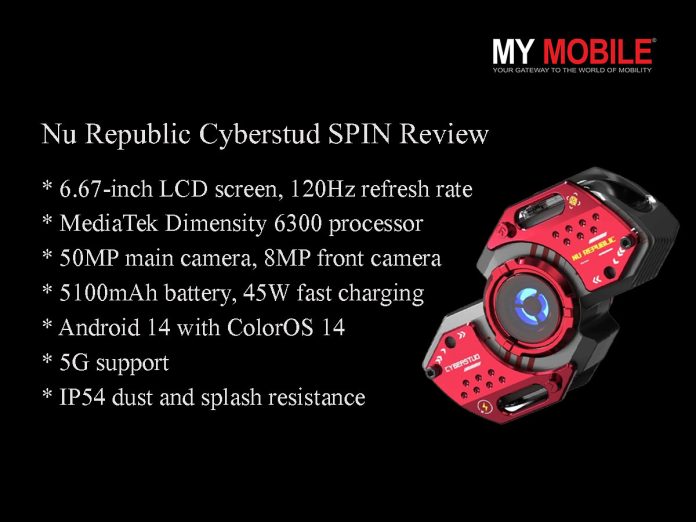
6.67-inch LCD screen, 120Hz refresh rate
MediaTek Dimensity 6300 processor
8GB RAM, 128GB/256GB storage
50MP main camera, 8MP front camera
5100mAh battery, 45W fast charging
Android 14 with ColorOS 14
5G support
IP54 dust and splash resistance
Nu Republic Cyberstud SPIN Pros and Cons
Pros
Cons
Innovative design
No ANC feature
Long battery life
Average bass response
Comfortable fit
No companion app
Affordable price
Nu Republic Cyberstud SPIN Build and Design
Nu Republic Cyberstud SPIN Build and Design
Probably the most striking part of the Cyberstud SPIN is the case.
Unlike the pill-shaped or square-shaped case that we are always familiar with, it takes a very familiar form in a 360° fidget spinner shape.
A plastic build with metal gliders means it should withstand some abuse and have a good hefty feel to it when held/spun.
The red color will make it stand out more with a bold tinge.
The case itself opens—the metal gliders scoop open to a satisfying sound—exposing the earbuds inside, quite tucked in.
It really is an experience sure to get some heads turning and conversations going; that line between tech accessory and playful gadget seems to blur right here.
The buds themselves are semi-transparent and really quite modern and sleek.
They are designed to fit securely and be comfortable, thus suitable for wearing for long periods of time.
Increasingly, the IPX5 rating makes the device impervious to radish or sweat, so no worries about drizzly weather during workouts or running.
One quirky aspect of the design is that the earbuds can occasionally pop out while spinning the case.
While this adds an element of unpredictability that some might find amusing, others might see it as a potential inconvenience.
Nu Republic Cyberstud SPIN Features
Nu Republic Cyberstud SPIN Features
Setting up the Cyberstud SPIN itself is very easy.
Just take the buds from the case, go into your phone’s settings in Bluetooth, and then pair them.
The whole process takes less than a minute to have you go from unboxing to listening.
The touch controls on the Cyberstud SPIN are very intuitive.
In fact, setting them up may differ from many other TWS earbuds.
Here is a breakdown of the touch gestures:
Left earbud single tap: volume down; Right: volume up
A double tap on either bud: Play or Pause music
Triple tap on the left ear bud: Previous song; On the right: Next song
Quadruple tap on the left ear bud: Music mode; On the right: Game mode
Long press on either bud: Voice Assistant
During calls, a single tap answers or hangs up, and a long press rejects the call
Though it does take a little time to learn all these gestures to be done, the functions their array covers are in a way that allows users to get a grip on the audio experience without having to move to reach for the phone.
It’s important to note that these earbuds don’t feature Active Noise Cancellation (ANC).
While the fit of the earbuds provides some passive noise isolation, you’ll still be able to hear a fair bit of your surroundings, especially in noisy environments.
Nu Republic Cyberstud SPIN Battery Life
Nu Republic Cyberstud SPIN Battery Life
One of the most impressive features of the Cyberstud SPIN is its battery life.
Nu Republic claims up to 70 hours of total playback time, including the charge stored in the case.
This is a standout feature in the TWS market, where many earbuds offer total playtimes of 20-30 hours.
In practice, this means you can use these earbuds for days on end without needing to reach for a charger.
It’s particularly useful for those who frequently forget to charge their devices or for long trips where charging opportunities might be limited.
The earbuds themselves offer a respectable playtime on a single charge, and the case provides multiple full charges before it needs to be plugged in.
When it does come time to charge, the USB-C port ensures relatively quick charging times.
Nu Republic Cyberstud SPIN Final Verdict
Nu Republic Cyberstud SPIN Final Verdict
The Nu Republic Cyberstud SPIN is an acquired taste in the TWS space, guaranteed to polarize opinions.
At one end, it refreshingly brings new design with its fidget spinner case, intuitive controls, and great battery life.
If sound quality isn’t top-tier, it is still adequate for most everyday scenarios.
Conversely, the fact that it’s not ANC, occasional earbud pop-outs while spinning, and bass response could be what might not please all ears.
For its price of Rs 2,499, this much can be said about the Cyberstud SPIN:it holds good value for somebody looking at long battery life and is hooked on to the fidget spinner design.
It’s a fun, unique product that delivers decent audio performance and could really be a great conversation starter.
However, if you’re an audiophile who insists on the most superior sound experience possible, or if you just want those features like ANC for the daily grind to and from the office and/or for office work, then you might want to look elsewhere—perhaps at a different price range, too.
Nu Republic Cyberstud SPIN 5 Reasons to Buy
Nu Republic Cyberstud SPIN 5 Reasons to Buy
Unique fidget spinner case design adds fun and functionality.
Impressive 70-hour total battery life for extended use.
Comfortable fit with IPX5 rating for sweat resistance.
Clear call quality with Environmental Noise Cancellation (ENC).
Affordable price point for feature-rich TWS earbuds.
Nu Republic Cyberstud SPIN 3 Reasons Not to Buy
Nu Republic Cyberstud SPIN 3 Reasons Not to Buy:
Lack of Active Noise Cancellation may be a dealbreaker for some users.
Bass response might not satisfy audiophiles or bass enthusiasts.
Occasional earbud ejection when spinning the case could be annoying.
FAQs
What is unique about the Nu Republic Cyberstud SPIN?
The Cyberstud SPIN combines TWS earbuds with a fidget spinner case, offering a playful design that doubles as a stress-relief toy.
How is the battery life of the Cyberstud SPIN?
The Cyberstud SPIN boasts up to 70 hours of total playback time, including multiple charges from the case, making it ideal for extended use without frequent recharging.
Does the Cyberstud SPIN have Active Noise Cancellation (ANC)?
No, the Cyberstud SPIN does not feature Active Noise Cancellation. However, it does have Environmental Noise Cancellation (ENC) for clearer call quality.
What sound quality can I expect from the Cyberstud SPIN?
The Cyberstud SPIN features 13mm Dynamic drivers with XBASS technology, delivering a balanced sound with clear vocals and decent bass suitable for various music genres.
How durable is the Cyberstud SPIN and its case?
The Cyberstud SPIN has an IPX5 rating for water resistance and is built with a durable plastic and metal construction, ensuring it can withstand everyday use and minor drops.
This new smartphone brings 5G connectivity to the mid-range market segment.
There are lot of things that basically are pretty good with the device and it does seem that the A3 Pro could be a compelling option.
Here are some of the details you might be interested in.
Pricing and Availability
OPPO A3 Pro 5G priced at Rs. 17,999 for 128GB and Rs. 19,999 for 256GB
The A3 Pro 5G is priced at Rs. 17,999 for the 128GB version and Rs. 19,999 for the 256GB version.
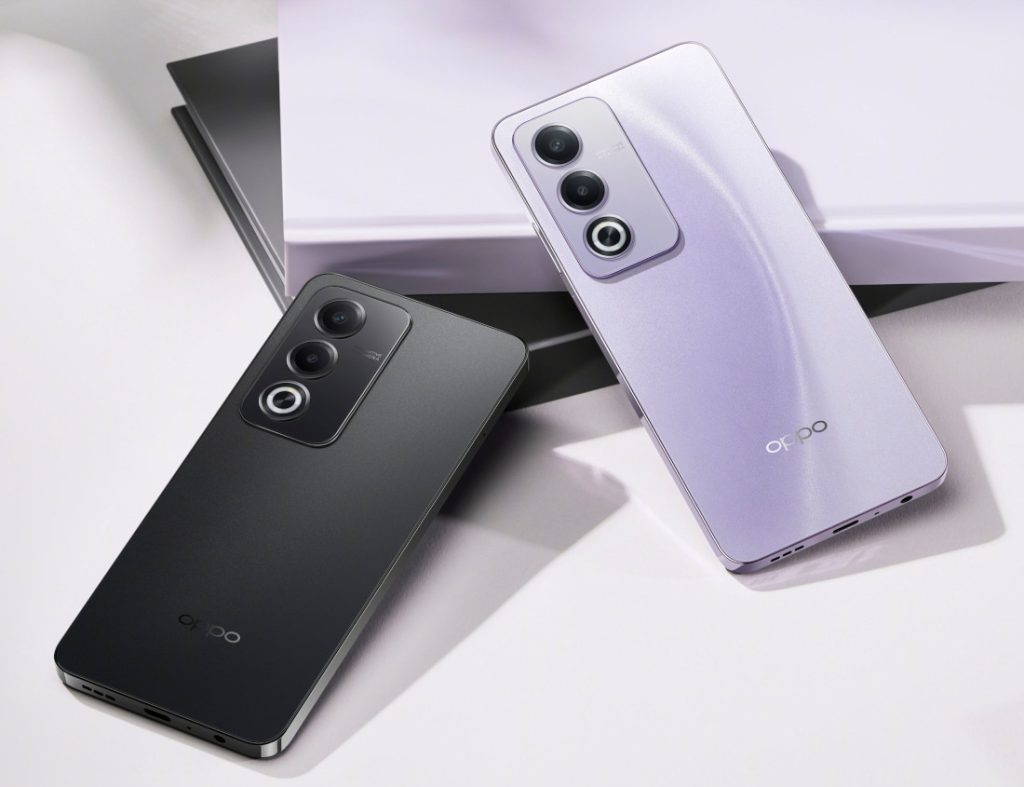
It’s available in Moonlight Purple and Starry Black colors through Amazon, Flipkart,OPPO Store, and retail outlets.
Launch offers
OPPO A3 Pro 5G: Launch Offers
Get up to 10% instant cashback on credit and debit cards from HDFC Bank, SBI Cards, IDFC First Bank, Yes Bank, and ICICI Bank.
Enjoy no-cost EMI for up to 6 months and consumer loans without any down payment with leading partners.
Benefit from the Zero Down Payment scheme option available from leading financiers.
Smartphone
Configuration
Price
OPPO A3 Pro
8GB + 128GB
Rs 17,999
8GB + 256GB
Rs 19,999
Key Specs
OPPO A3 Pro 5G Launched in India with Dimensity 6300
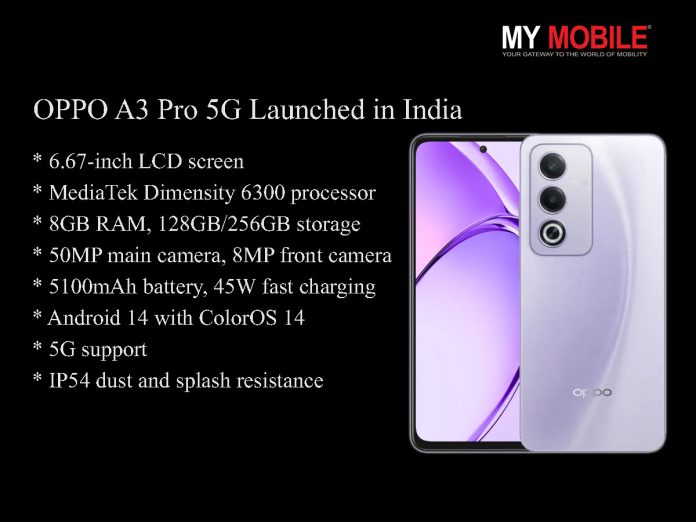
6.67-inch LCD screen, 120Hz refresh rate
MediaTek Dimensity 6300 processor
8GB RAM, 128GB/256GB storage
50MP main camera, 8MP front camera
5100mAh battery, 45W fast charging
Android 14 with ColorOS 14
5G support
IP54 dust and splash resistance
Features
MediaTek Dimensity 6300 processor with 8GB RAM and up to 256GB storage
The A3 Pro 5G is capable of achieving a brightness of up to 1,000 nits and comes with a 180Hz touch sampling rate.
The screen herein is protected and strengthened with Blue Glass double-tempered glass.
OPPO has significantly worked on the phone’s resilience by using an internal structure reinforced with drop-resistant materials.
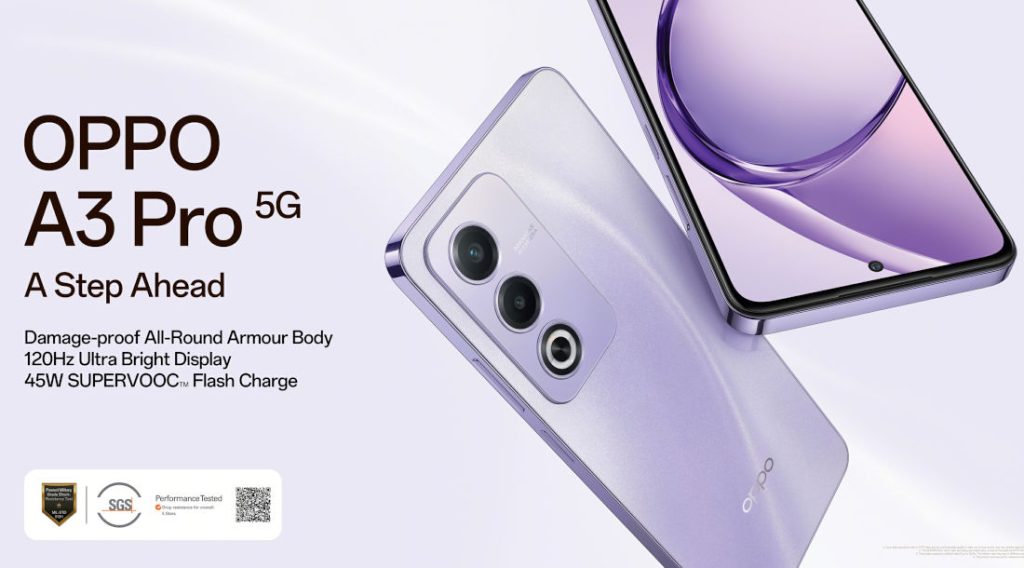
This phone obtains SGS Drop-Resistance Certification and SGS Military Standard Certification, thereby assuring that it can take on everyday knocks and bumps.
It’s the first time that this feature of AI eraser will eliminate unwanted elements in photos from an OPPO A series device.
It also provides memory expansion to 2TB through a microSD card.
According to OPPO, the battery retains more than 80% of its original capacity after 1,600 charge cycles, equivalent to more than 4 years of daily use.
The Moonlight Purple variant has the Magnetic Particle Design by OPPO to create a flowing texture on the back cover, and the Starry Black model has a matte finish processed with OPPO Glow technology.
OPPO A3 Pro 5G Specifications
OPPO A3 Pro sports a damage-proof all-round armour body for drop and impact resistance
6.67-inch display, 120Hz refresh rate, 180Hz touch sampling rate, up to 1000 nits peak brightness, Blue Glass double tempered glass for protection
Octa Core MediaTek Dimensity 6300 6nm processor (2x Cortex-A76 @ 2.4GHz 6x Cortex-A55 @ 2GHz) with Arm Mali-G57 MC2 GPU
8GB LPDDR4x RAM, 128GB / 256GB (UFS 2.2) storage, expandable memory up to 2TB with microSD
Dual SIM
Android 14 with ColorOS 14
50MP rear camer, LED flash, 2MP secondary camera
8MP front camera
Side-mounted fingerprint sensor
3.5mm audio jack
Dimensions:165.79×76.14×7.68mm; Weight: 186g
Dust and water resistance (IP54)
5G SA / NSA, Dual 4G VoLTE, Wi-Fi 802.11 ac (2.4GHz + 5GHz), Bluetooth 5.3, GPS, GLONASS, Galileo, QZSS, USB Type-C
5100mAh (typical) battery with 45W SuperVOOC fast charging
FAQs
What are the pricing and storage options for the OPPO A3 Pro 5G?
The OPPO A3 Pro 5G is available in two variants: Rs. 17,999 for the 128GB version and Rs. 19,999 for the 256GB version. Both variants come with 8GB of RAM.
What display features does the OPPO A3 Pro 5G offer?
The device features a 6.67-inch LCD screen with a 120Hz refresh rate, a peak brightness of 1,000 nits, and a 180Hz touch sampling rate.
The screen is protected by Blue Glass double tempered glass.
What makes the OPPO A3 Pro 5G durable?
The OPPO A3 Pro 5G has received SGS Drop-Resistance Certification and SGS Military Standard Certification.
It includes a reinforced internal structure and drop-resistant materials to withstand everyday impacts.
Does the OPPO A3 Pro 5G support expandable storage?
Yes, the OPPO A3 Pro 5G supports expandable storage up to 2TB via a microSD card, allowing users to store more data and applications.
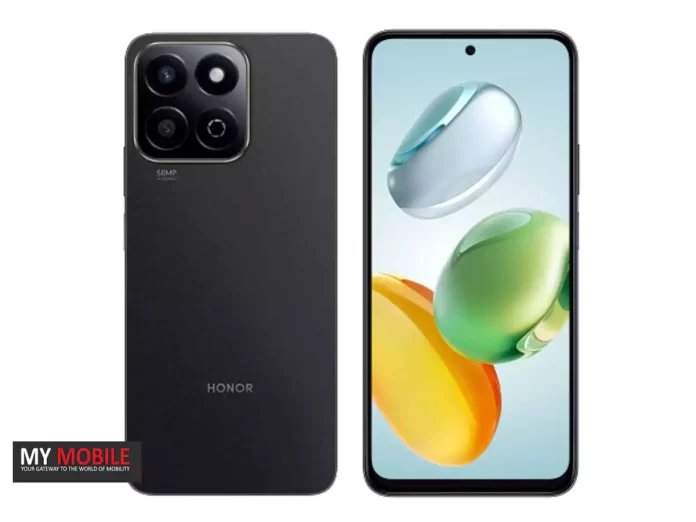
The phone will be sold in the Phantom Black, Wonderland Green, and Moonlight White color options
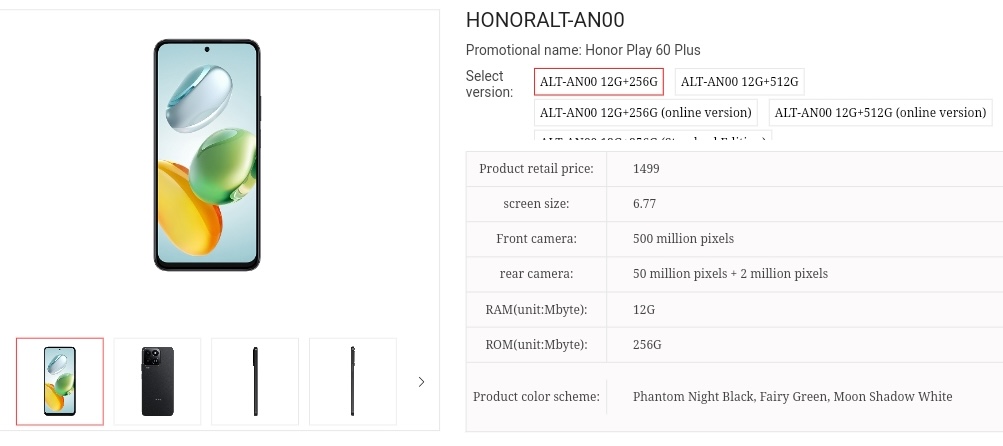
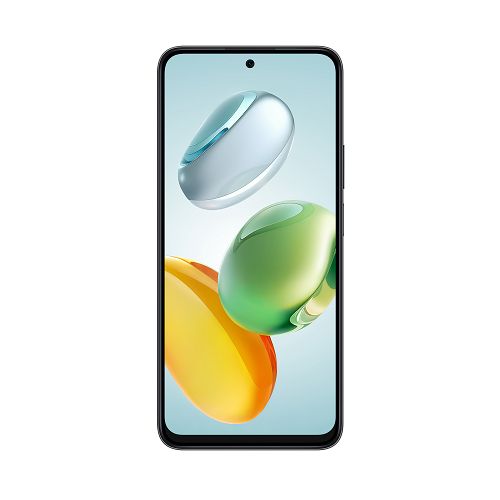
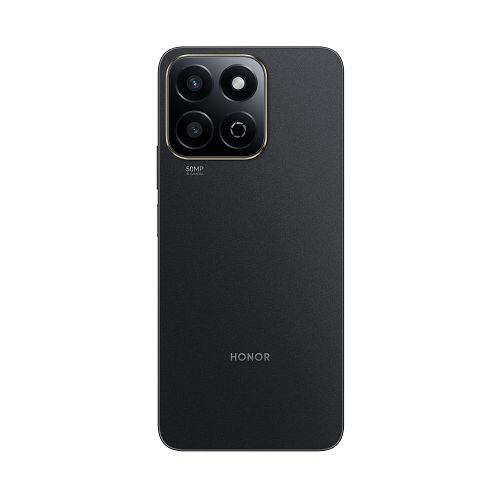
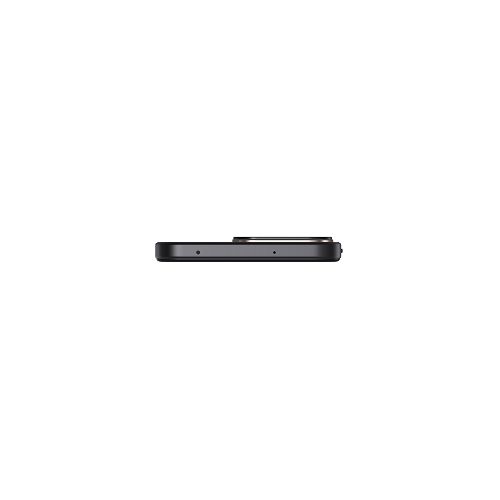
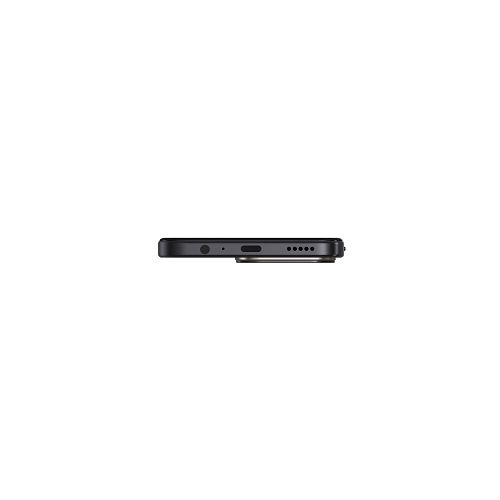
The Play 60 Plus measures 166.9 x 76.8 x 8.09mm and weighs about 197 grams.
According to the listing, the base variant of the Honor Play 60 Plus is expected to be priced around 1500 CNY, which translates to roughly 205 USD or 17,000 INR.
While an official launch date hasn’t been announced, the appearance of the device in various certification databases suggests it could be released soon.
It’s worth noting that this phone was initially thought to be the Honor X60 when it appeared in the 3C certification.
However, the recent listings have confirmed its actual name as the Play 60 Plus.
FAQs
What display specifications does the Honor Play 60 Plus offer?
The Honor Play 60 Plus comes with a 6.77-inch LCD screen that has a resolution of 720 x 1610 pixels.
There are rumors that it might also support a 120Hz refresh rate.
What processor is used in the Honor Play 60 Plus?
The device is powered by the Snapdragon 4 Gen 2 chipset, which includes two Cortex-A78 cores clocked at 2.2GHz for performance and four Cortex-A55 cores at 1.95GHz for energy efficiency.
How is the battery performance of the Honor Play 60 Plus?
The Honor Play 60 Plus is equipped with a 6,000 mAh battery that supports 35W fast charging, ensuring long-lasting use and quick recharging times.
What camera setup does the Honor Play 60 Plus feature?
It has a dual-camera setup on the back, consisting of a 50MP main sensor and a 2MP secondary lens, along with a 5MP front-facing camera for selfies.
What are the storage options and colors available for the Honor Play 60 Plus?
The phone is available in two storage configurations: 12GB RAM with 256GB storage and 12GB RAM with 512GB storage.
It comes in three colors: Phantom Black, Wonderland Green, and Moonlight White.
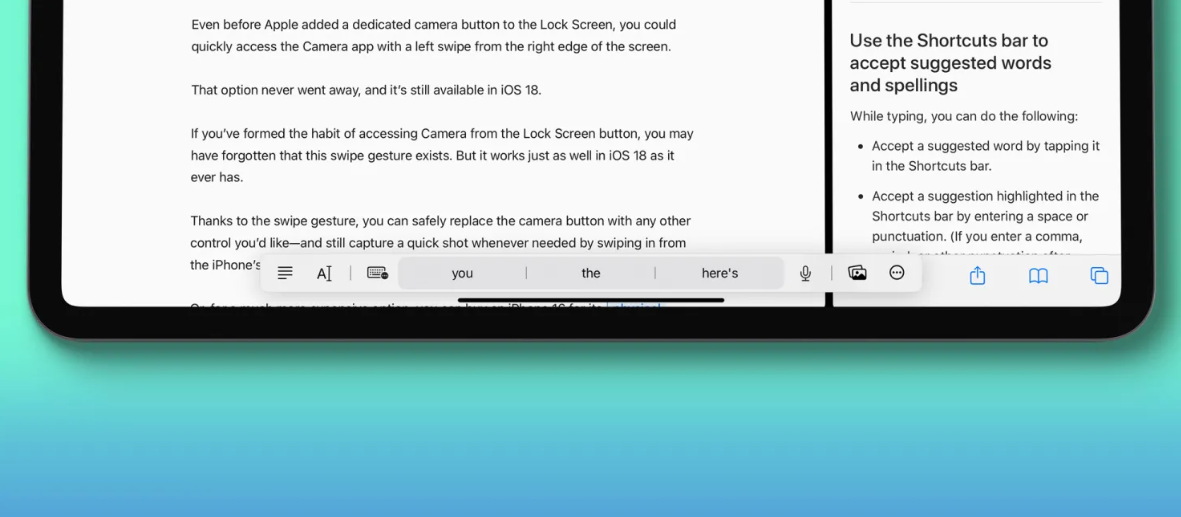
The Shortcuts bar on iPads can interfere with multitasking.
It changes size based on the app, taking up valuable screen space.
The bar often covers important UI elements in Slide Over or Split View.
You can hide the bar to improve your multitasking experience.
Right, let’s talk about this annoying little feature on iPadswhen you’re using an external keyboard.
Apple’s gone and put this thing called the Shortcuts bar at the bottom of your screen.
Sounds helpful, doesn’t it? Well, not really.
The problem is, this Shortcuts bar keeps getting in the way.
It’s especially a pain when you’re trying to multitask with multiple apps open.
Let me break it down for you.
So, this bar changes size depending on what app you’re using.
Minimize the Annoying Shortcuts Bar on iPads
It’s always got this big space in the middle for typing suggestions.
Now, if you’re like me and you’re using a proper keyboard with your iPad, these suggestions are about as useful as a chocolate teapot.
Then you’ve got all these other buttons for keyboard settings, text formatting, and whatnot.
It all depends on what app you’re in.
The thing is, even when it’s not doing much, it’s still taking up space.
And when it’s got lots of features, it’s basically hiding half your screen.
Here’s a real-world example for you.
The Shortcuts bar on iPads can interfere with multitasking
Say you’re writing something in Ulysses and you want to check Slack or your Files.
You pull them up in Slide Over or Split View. Great, right?
Except now the Shortcuts bar is covering up the tab bar at the bottom of these apps.
Can’t see your DMs in Slack or your recent files.
Bit of a nightmare, really.
But don’t worry, there’s a fix. You can hide this pesky bar. Here’s how:
The bar often covers important UI elements in Slide Over or Split View
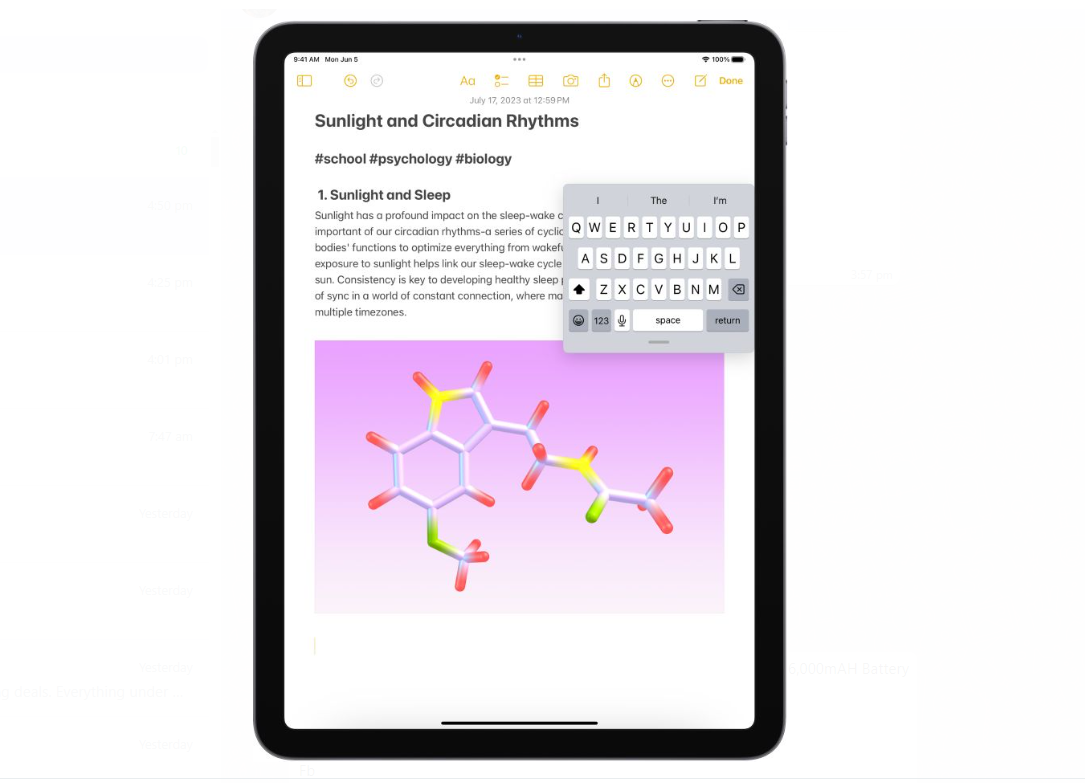
Tap the keyboard icon in the bar and select ‘Minimize’.
Or, if you’re feeling fancy, just grab the bar and drag it into a corner.
Either way, it’ll shrink down into a little floating island that just sits in the corner, minding its own business.
You can always bring it back if you need it, but honestly, once it’s out of the way, you’ll wonder how you ever put up with it in the first place.
So there you have it.
A simple fix for a frustrating feature. Your multitasking experience on the iPad just got a whole lot smoother.
FAQs
What is the Shortcuts bar on an iPad?
The Shortcuts bar is a feature on iPads that appears at the bottom of the screen when using an external keyboard.
It provides typing suggestions and quick access to various keyboard settings and text formatting options.
Why is the Shortcuts bar problematic when multitasking on an iPad?
The Shortcuts bar can be problematic because it takes up screen space and often covers important UI elements, making it difficult to see or interact with other apps in Slide Over or Split View modes.
How does the size of the Shortcuts bar change?
The size of the Shortcuts bar changes depending on the app you are using.
It always includes a space for typing suggestions and additional buttons for various functions, which can vary by app.
Can the Shortcuts bar be minimized on an iPad?
Yes, the Shortcuts bar can be minimized. You can tap the keyboard icon in the bar and select ‘Minimize,’ or you can drag the bar into a corner to shrink it into a floating island.
Will hiding the Shortcuts bar improve my iPad multitasking experience?
Hiding the Shortcuts bar can significantly improve your multitasking experience by freeing up screen space and preventing it from covering important parts of other apps, making your workflow smoother.
Project Astra aims to create AI that understands physical environments
Google shifts focus from phone-based assistants to real-world interactions
Gemini-powered ‘Ask Photos’ turns personal libraries into AI knowledge bases
Practical applications include AI-assisted travel planning and task management
Google’s strategy on artificial intelligence is now shifting from the conventional phone assistant to more ambitious applications in the real world.
The giant envisions AI that can interface with and understand the physical environment around us.
It all began with Google Assistant, hitting its peak on the Pixel 4 back in 2019.
What was conceived is a voice-controlled system that could run the phone and do complex tasks with close to zero latency.
Evidence showed this new system came with its problems.
A user is required to use special phrases, and on top of this, the possible range of actions remained limited to some apps.
While other companies, like Apple, are reportedly exploring large language models as a way to inject some excitement into voice assistants, Google appears to want more than it can get out of a smartphone.
The company’s latest developments, coming out of I/O 2024, have demonstrated a focus on AI that can really help people in the real world.
What is Project Astra
Google’s Project Astra: AI Assistant Leaps from Phones to Real-World Applications
Project Astra is at the front of this new direction.
The goal of project Astra is to develop a responding AI, which includes information and help, when consumers point their phones—and one day, smart glasses— toward things in their real world.
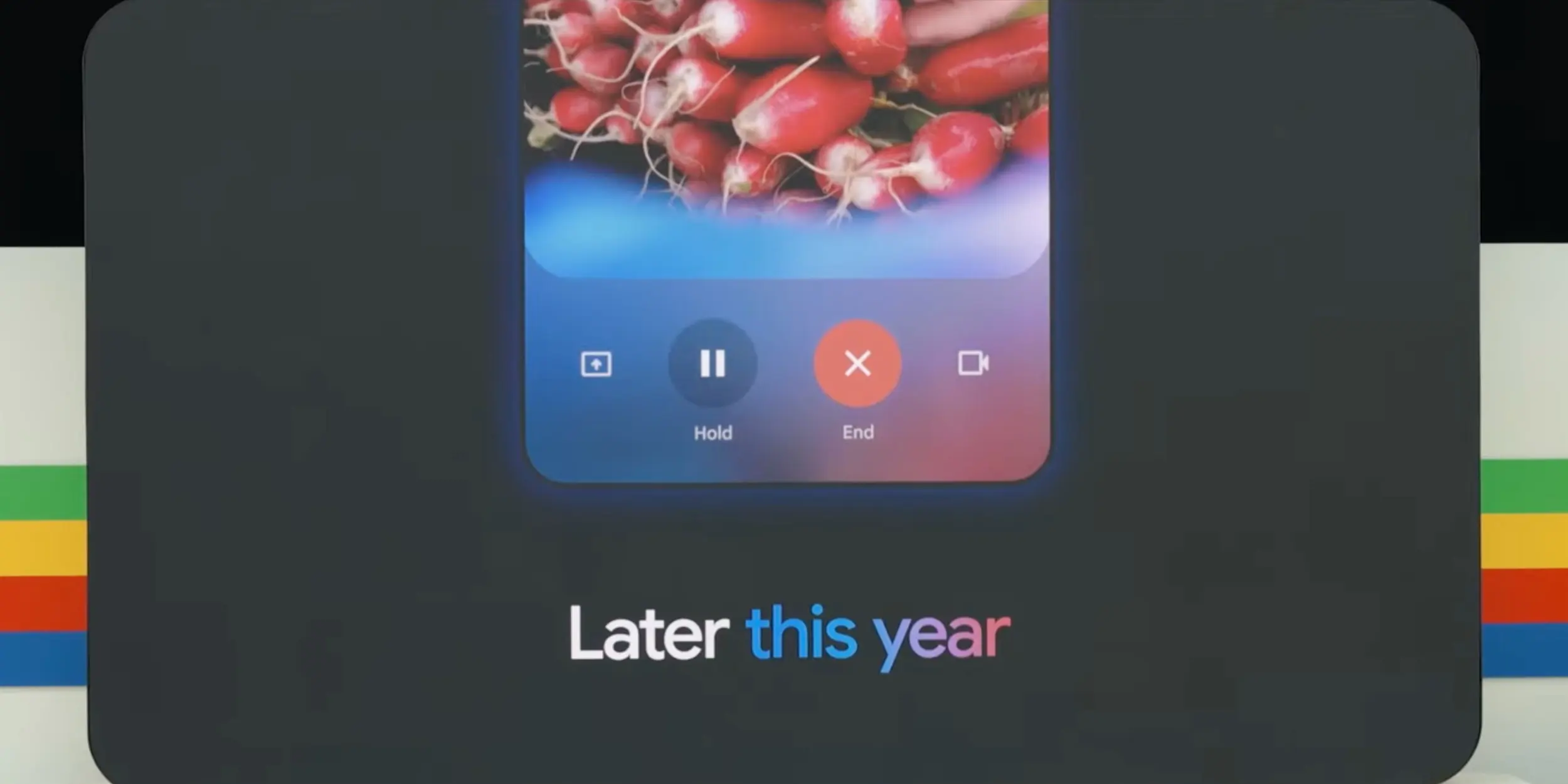
The tech will also, eventually, be brought into the Gemini Live experienceand add natural two-way conversations with AI to it.
This will be first launched as the voice component, with shortly following camera capabilities.
It’s also moving further ahead—with ways in which all this information is going to be harnessed from photos and videos users take.
Entering into the Gemini-powered ‘Ask Photos’ feature, personal photo libraries intend to turn into essentially a knowledge base of their own for AI when doing personalized assistance.
Practicality
Google shifts focus from phone-based assistants to real-world interactions
Practical applications of the technology are already in development.
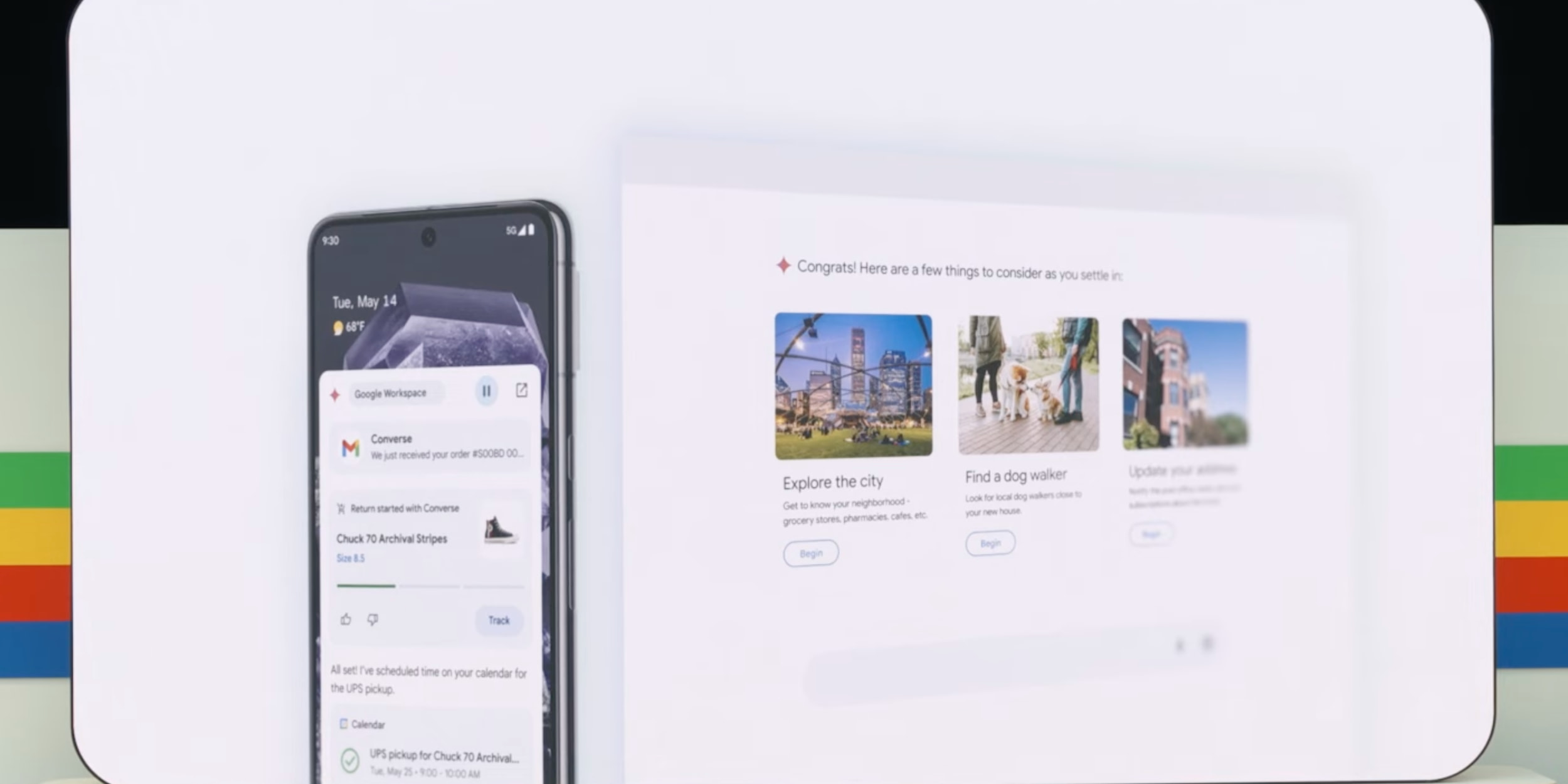
For instance, future Gemini Extensions for Google Calendar, Keep, and Tasks will let users capture calendar entries or a shopping list simply by taking a picture; say, of a school syllabus or a recipe.
Inside Gemini Advanced will be the immersive travel planner and other real-world applications, such as using AI to help return products or plot a move to a new city.
This shift towards real-world AI applications addresses a fundamental challenge that Google has faced since its inception: some questions and their contexts are difficult to express in text form.
By allowing users to provide visual input, Google aims to bridge the gap between digital queries and real-world scenarios.
FAQs
What is Project Astra?
Project Astra is Google’s initiative to develop an AI assistant that can provide information and help when users point their devices at objects in the real world.
It aims to create a more intuitive and context-aware AI that can understand and interact with the physical environment.
How does Google’s new AI approach differ from traditional phone assistants?
Unlike traditional phone assistants that primarily operate within the device, Google’s new AI focus is on creating applications that can understand and interact with the real world.
This includes visual recognition capabilities and the ability to process complex, context-dependent queries.
What are some practical applications of Google’s real-world AI?
Practical applications include creating calendar entries or shopping lists from photos of documents, AI-assisted travel planning, and helping with tasks like product returns or planning a move to a new city.
These applications aim to bridge the gap between digital queries and real-world scenarios.
How does the Gemini-powered ‘Ask Photos’ feature work?
The ‘Ask Photos’ feature uses AI to analyze and understand the content of users’ personal photo libraries.
This allows the AI to use this visual information as a knowledge base for providing personalized assistance and answering queries related to the user’s experiences and surroundings.
When will these new AI features be available to users?
While specific release dates haven’t been announced for all features, Google has indicated that the Gemini Live experience will be launching in stages.
The voice component is expected to launch first, followed by camera capabilities.
Some features, like Gemini Extensions for Google apps, are in development and likely to be released in the near future.
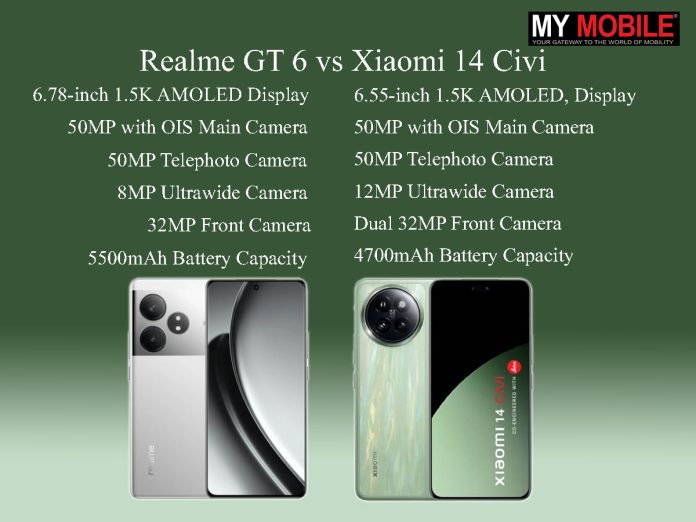
Realme GT 6 starts at Rs 40,999; Xiaomi 14 Civi at Rs 42,999.
Both feature Snapdragon 8s Gen 3 chipset and 1.5K AMOLED displays.
Realme GT 6 offers 5500mAh battery with 125W charging.
Xiaomi 14 Civi shines in camera performance with Leica partnership.
Clearly the Realme GT 6 and Xiaomi 14 Civi are powerful rivals for high-end phones at more pocket-friendly price points compared to their Apple or Samsung counterparts.
Here comes a detailed comparison that will help you decide which phone might better suit your needs.
Specification
Realme GT 6
Xiaomi 14 Civi
Price
Starts at Rs 40,999 (8GB/256GB)
Starts at Rs 42,999 (8GB/256GB)
Top Variant Price
Rs 44,999 (16GB/512GB)
Rs 47,999 (12GB/512GB)
Processor
Qualcomm Snapdragon 8s Gen 3
Qualcomm Snapdragon 8s Gen 3
RAM Options
8GB, 16GB
8GB, 12GB
Storage Options
256GB, 512GB
256GB, 512GB
Display
6.78-inch 1.5K AMOLED, 120Hz, 6000 nits
6.55-inch 1.5K AMOLED, 120Hz, 3000 nits
Display Technology
LTPO adaptive refresh rate
Standard refresh rate
Camera – Main
50MP with OIS
50MP with OIS
Camera – Telephoto
50MP
50MP
Camera – Ultrawide
8MP
12MP
Camera – Front
32MP
Dual 32MP
Battery Capacity
5500mAh
4700mAh
Charging Speed
125W (20% to 100% in <30 minutes)
67W (20% to 100% in ~40 minutes)
Battery Test Result
15 hours (PCMark)
12 hours 15 minutes (PCMark)
Operating System
Android 14 with custom skin
Android 14 with custom skin
Software Updates
3 years of Android upgrades, 4 years security updates
3 years of Android upgrades, 4 years security updates
Special Features
AI Night Vision, AI Smart Removal
Leica-tuned filters, dual front cameras
Design
Metal frame, glass back, IP65 rating
Vegan leather options, compact size
Dimensions
162 x 75 x 8.6 mm
157.2 x 72.77 x 7.45 mm
Weight
199g
178g
Additional Features
In-screen ultrasonic fingerprint scanner
In-screen fingerprint scanner
Price and Storage Options
Realme GT 6 vs Xiaomi 14 Civi
The Realme GT 6 starts at ₹40,999 for the 8GB/256GB model, going all the way up to 16GB/512GB for ₹44,999.
Xiaomi’s 14 Civi begins at ₹42,999 for 8GB/256GB, with a 12GB/512GB variant cost at ₹47,999.
More options for RAM capacities are found in Realme, and it has a slightly more reasonable entry price, while Xiaomi offersmore on the storage side at the top end.
Design and Build Quality
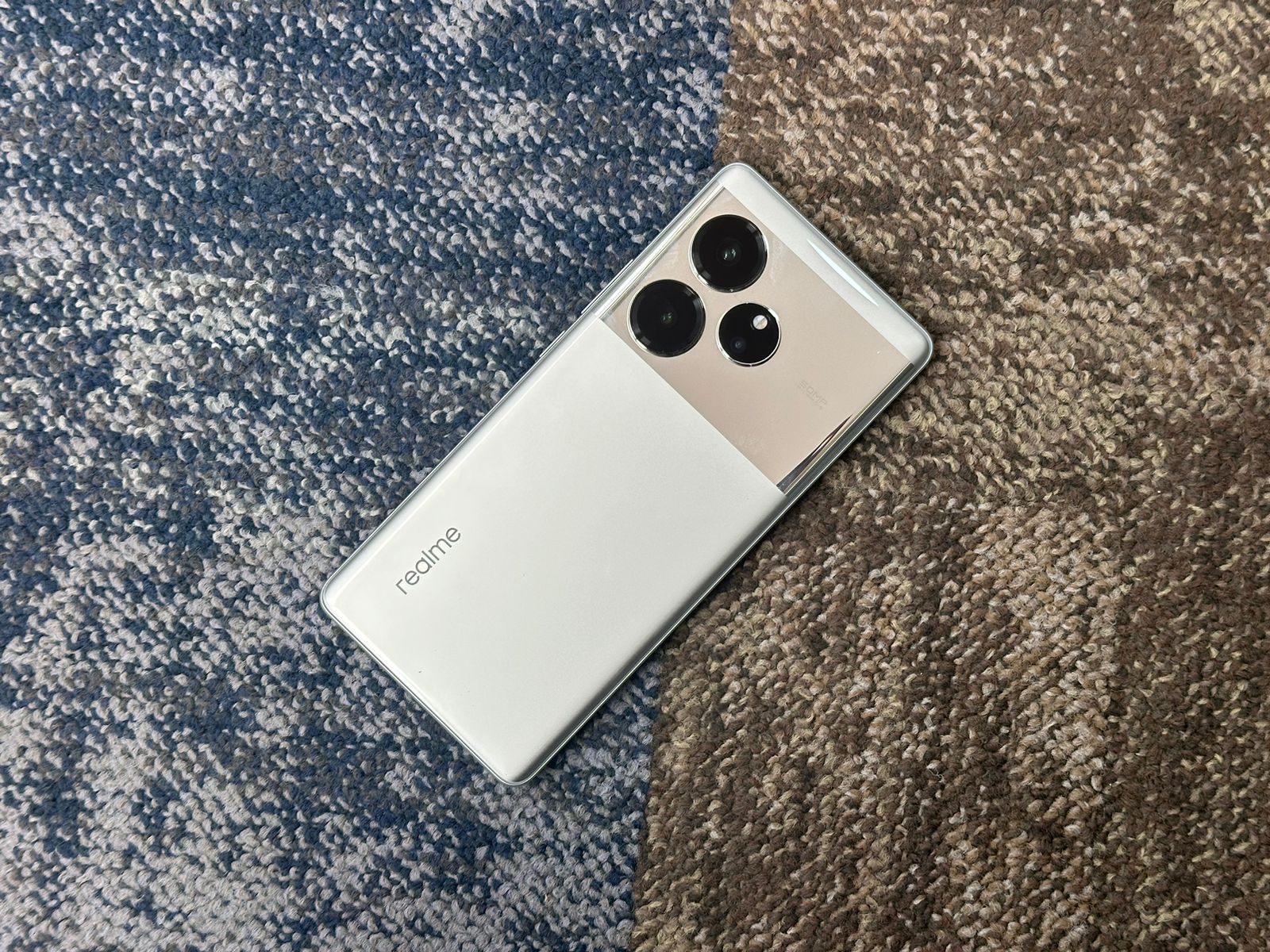
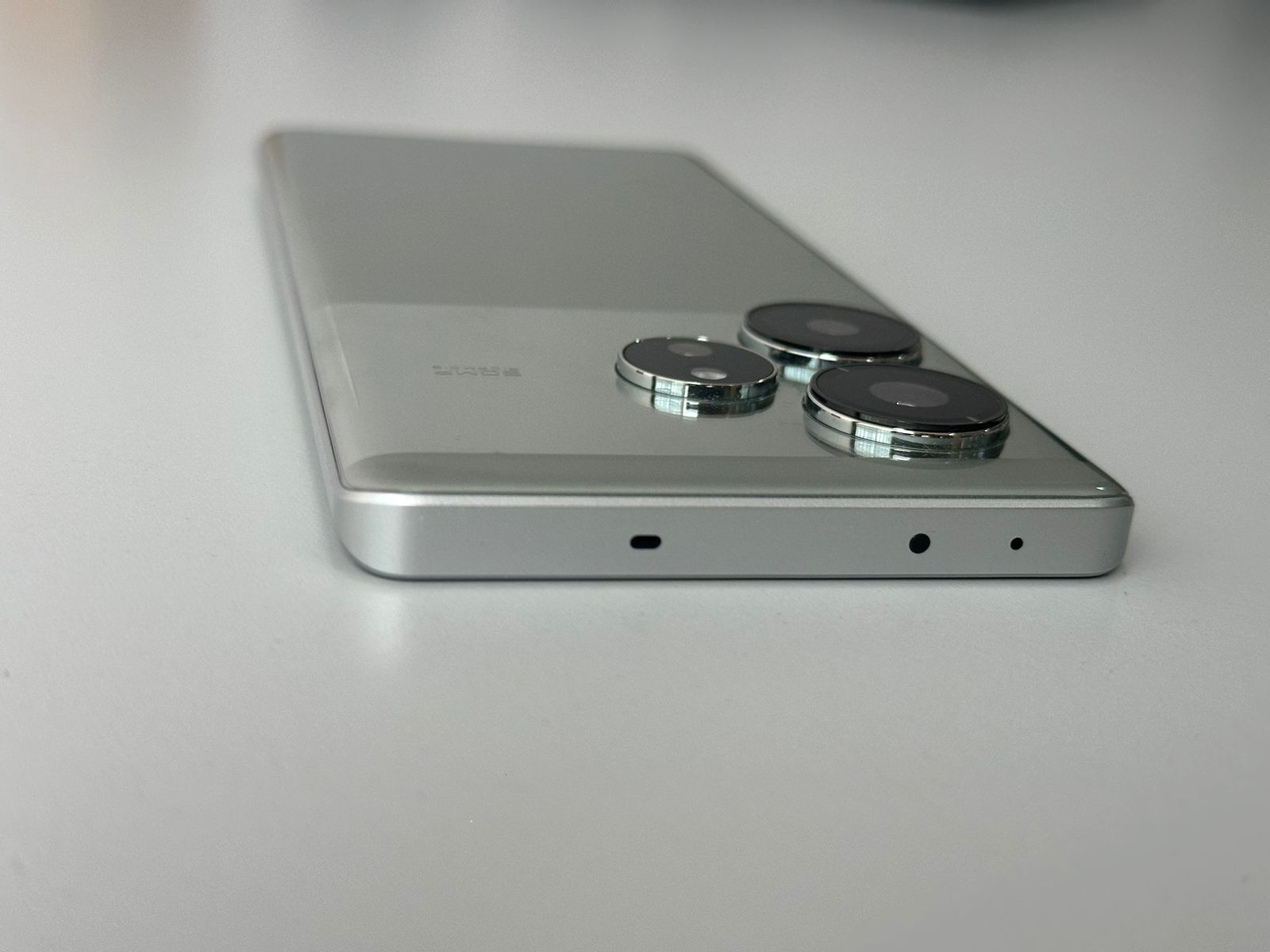
Realme GT 6: Design
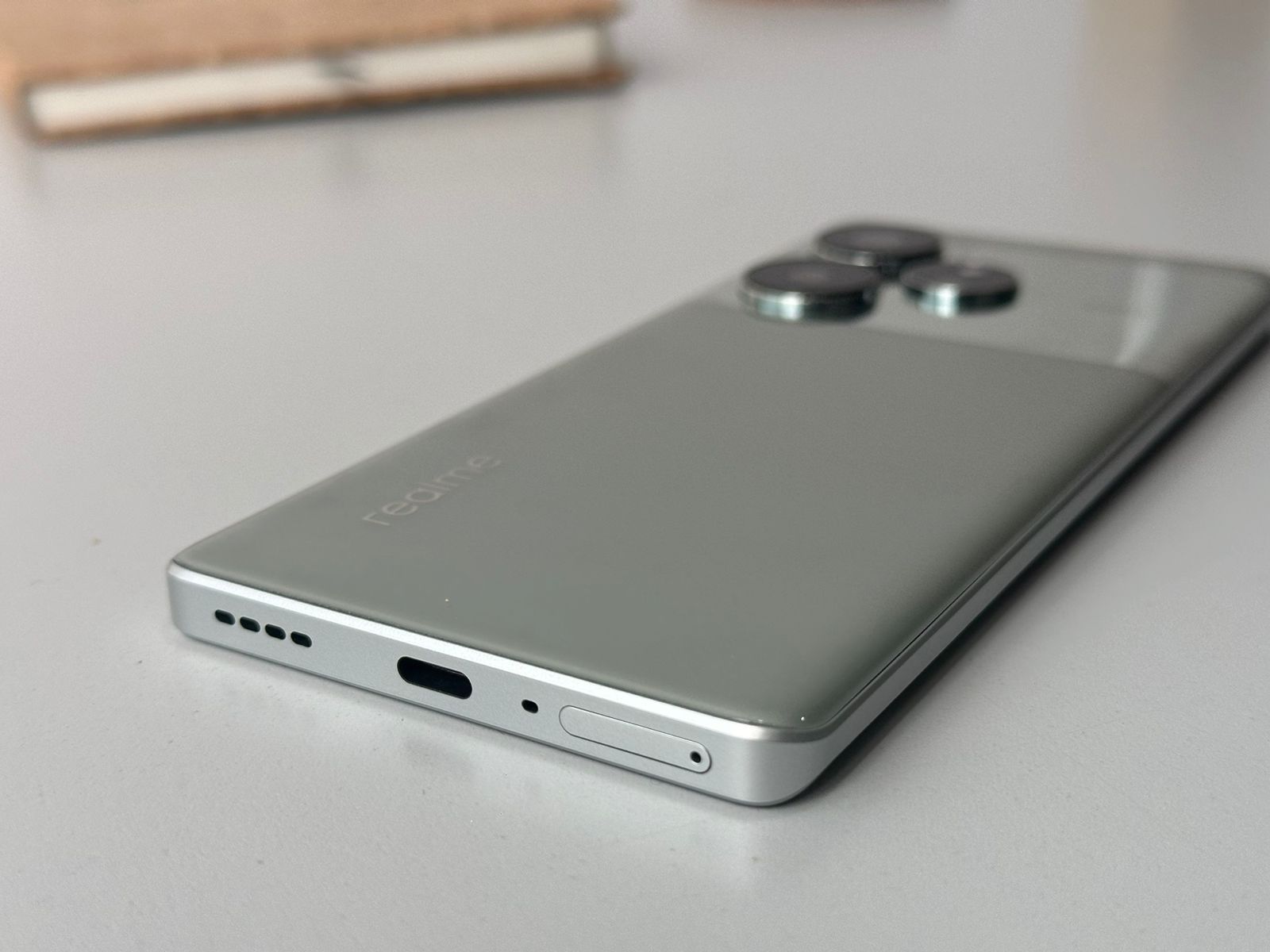
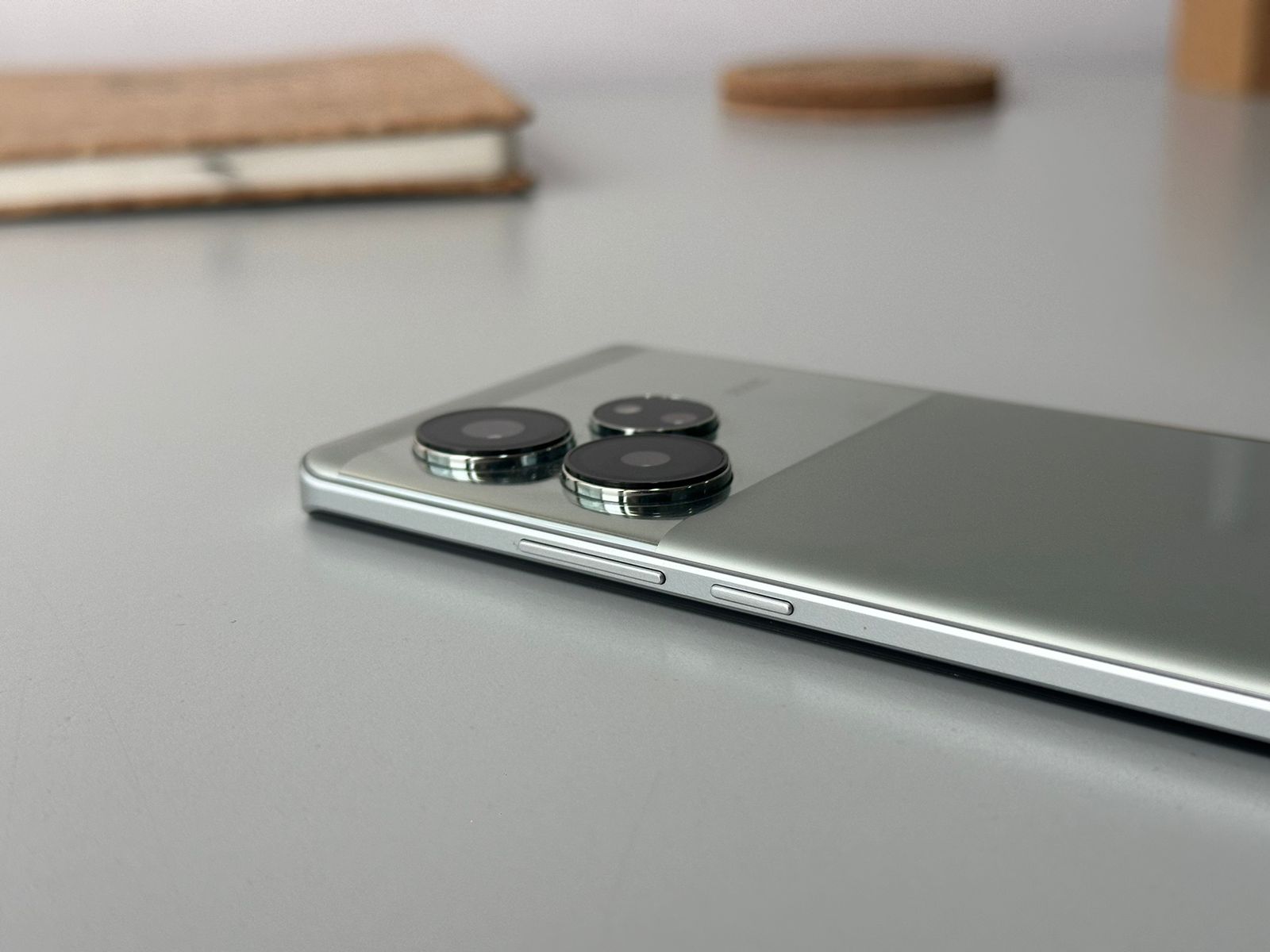
While the Xiaomi 14 Civi is compact and lightweight at 157.2 x 72.77 x 7.45 mm and 178g in weight, the Realme GT 6 dimensions stretch to 162 x 75 x 8.6 mm with a weight more significantly higher at 199g.
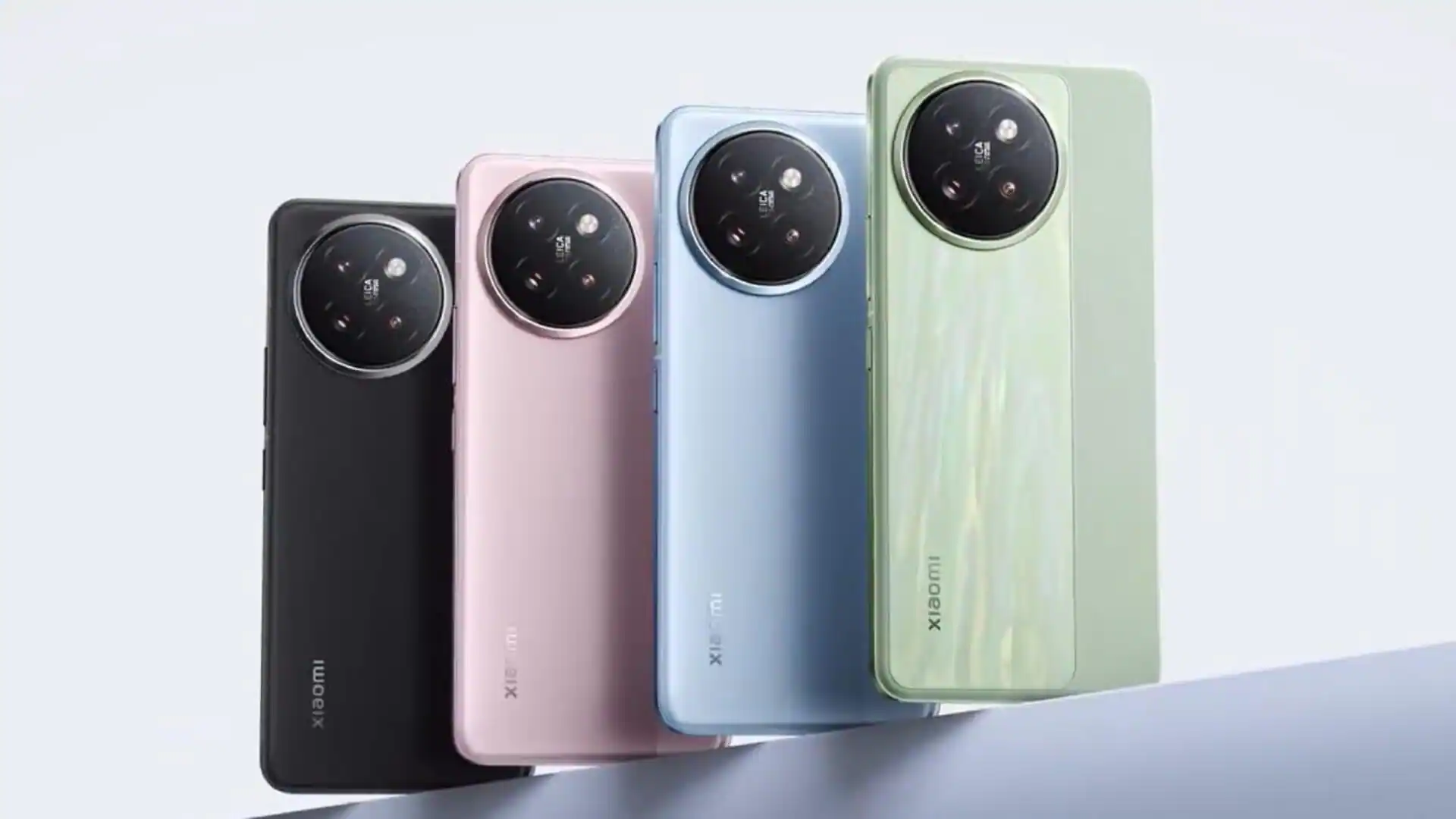
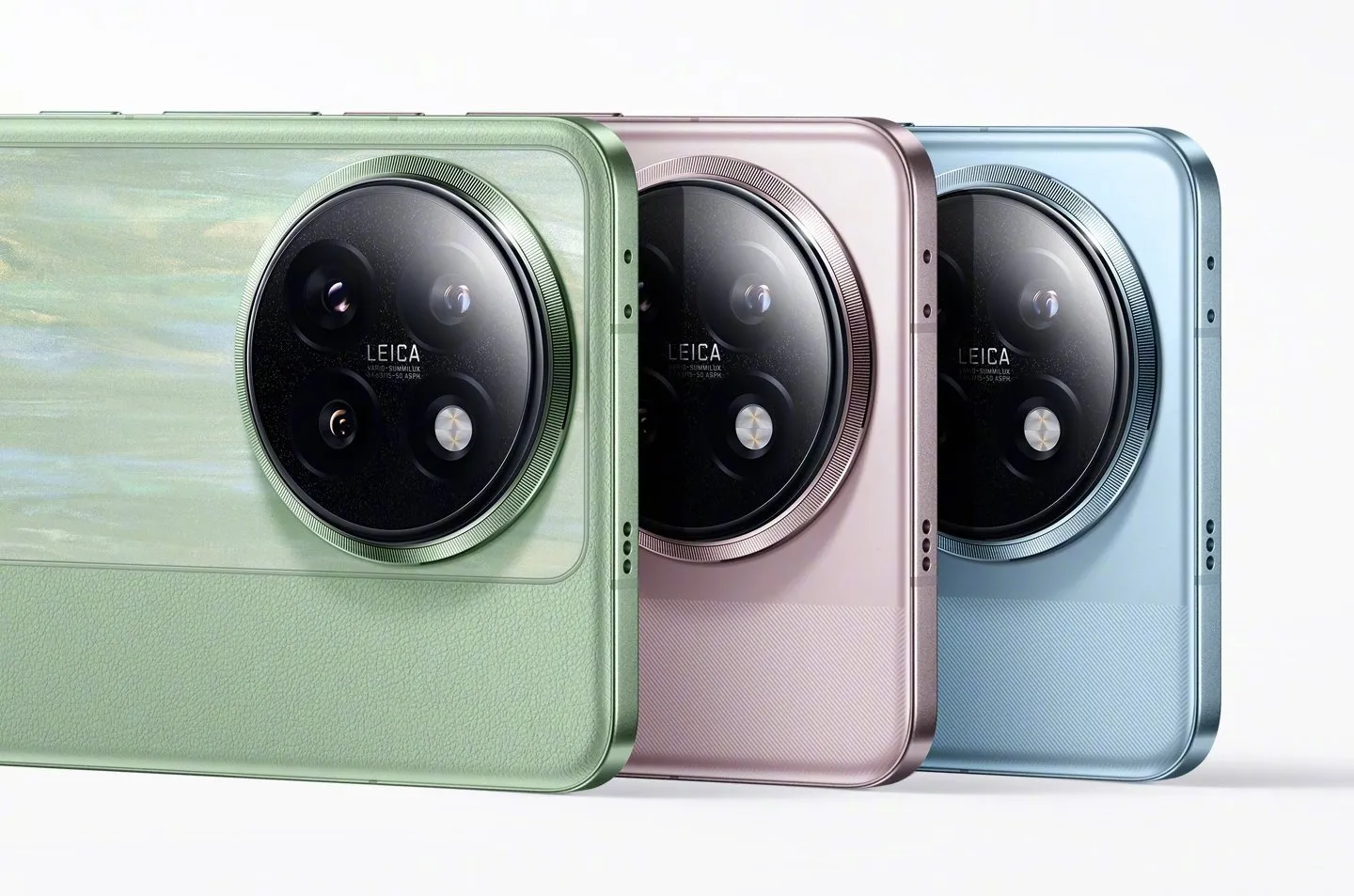
Xiaomi opted for a circular camera module and vegan leather finishes in Cruise Blue or Matcha Green, along with an option in matte Shadow Black.
Xiaomi 14 Civi: Display
Realme goes with a horizontal camera strip and a glass back that comes in Razor Green and Fluid Silver.
The newly releasedRealme GT 6 hits hard with an IP65 rating for water and dust resistance, something that the Xiaomi can’t match.
Display Technology
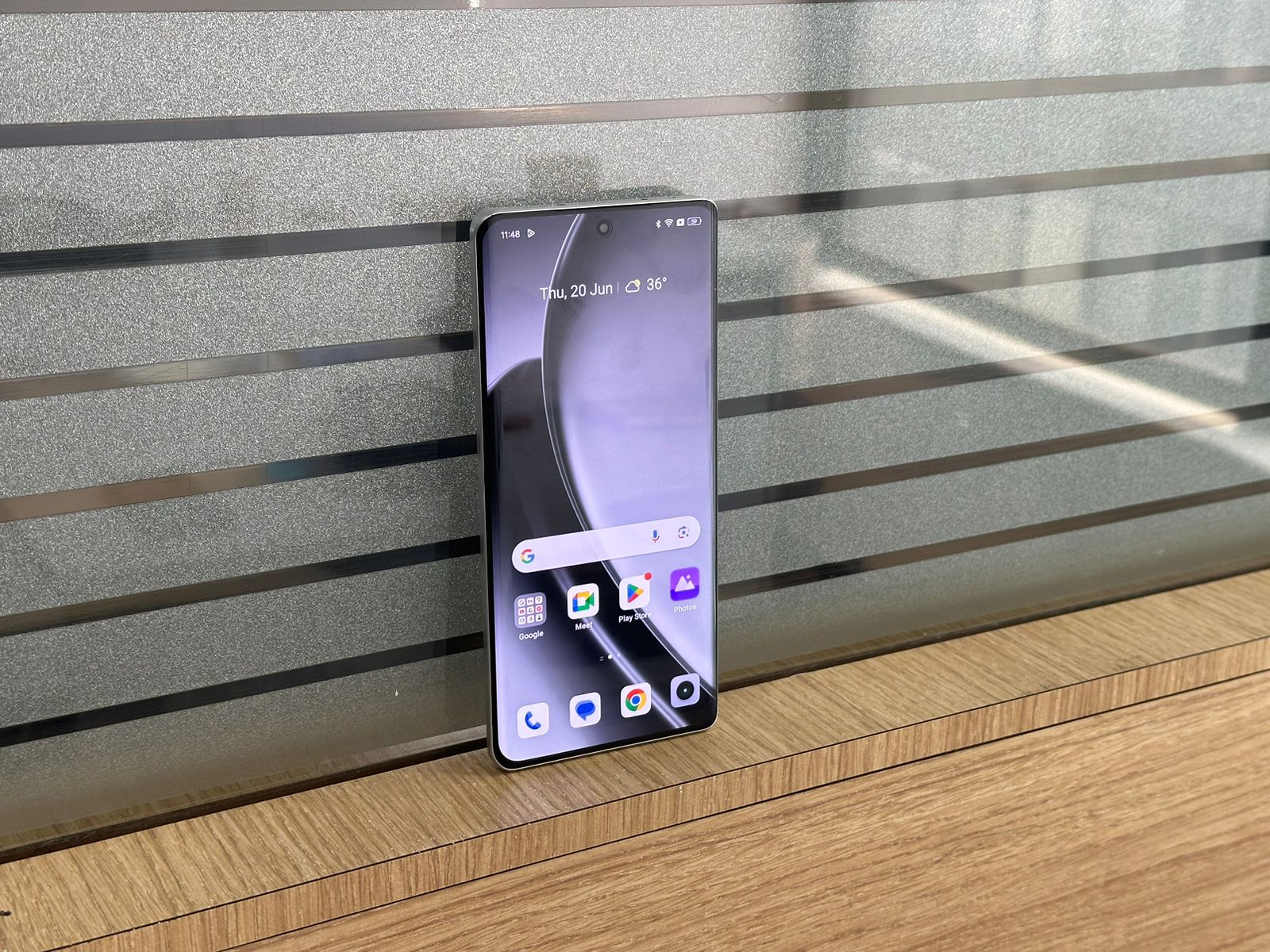
Realme GT 6: Display
Both phones feature 1.5K AMOLED displays with 120Hz refresh rates, but there are key differences.
The Realme GT 6 sports a 6.78-inch screen with an impressive 6000 nits peak brightness and an LTPO panel for adaptive refresh rates.
Xiaomi 14 Civi: Display
The Xiaomi 14 Civi, on the other hand, has a slightly smaller 6.55-inch screen with 3000 nits peak brightness.
The Realme’s brighter display and LTPO technology give it a clear advantage in this department, potentially offering better outdoor visibility and more efficient power management.
Now, on benchmark tests, the Xiaomi 14 Civi scores slightly higher in Geekbench tests at 1,913 single-core and 5,087 multi-core, while the Realme GT 6 just can’t even match it with 1,852 single-core and 4,761 multi-core.
However, the Realme GT 6 was ahead in the AnTuTu benchmarks, where it scored 15,01,830 against 14,430,11 for the Xiaomi.
Xiaomi 14 Civi: Performance and Processing Power
Both phones throttle to some degree when benchmarked, operating at around 40% performance in the sustained workload.
On the Realme GT 6, AI features that are not on this Xiaomi model, such as AI Night Vision and AI Smart Removal, assist the user in a way that might make the experience better for some.
Camera Capabilities
Realme GT 6: Camera
Although it may be versatile on both phones, there are some very important differences.
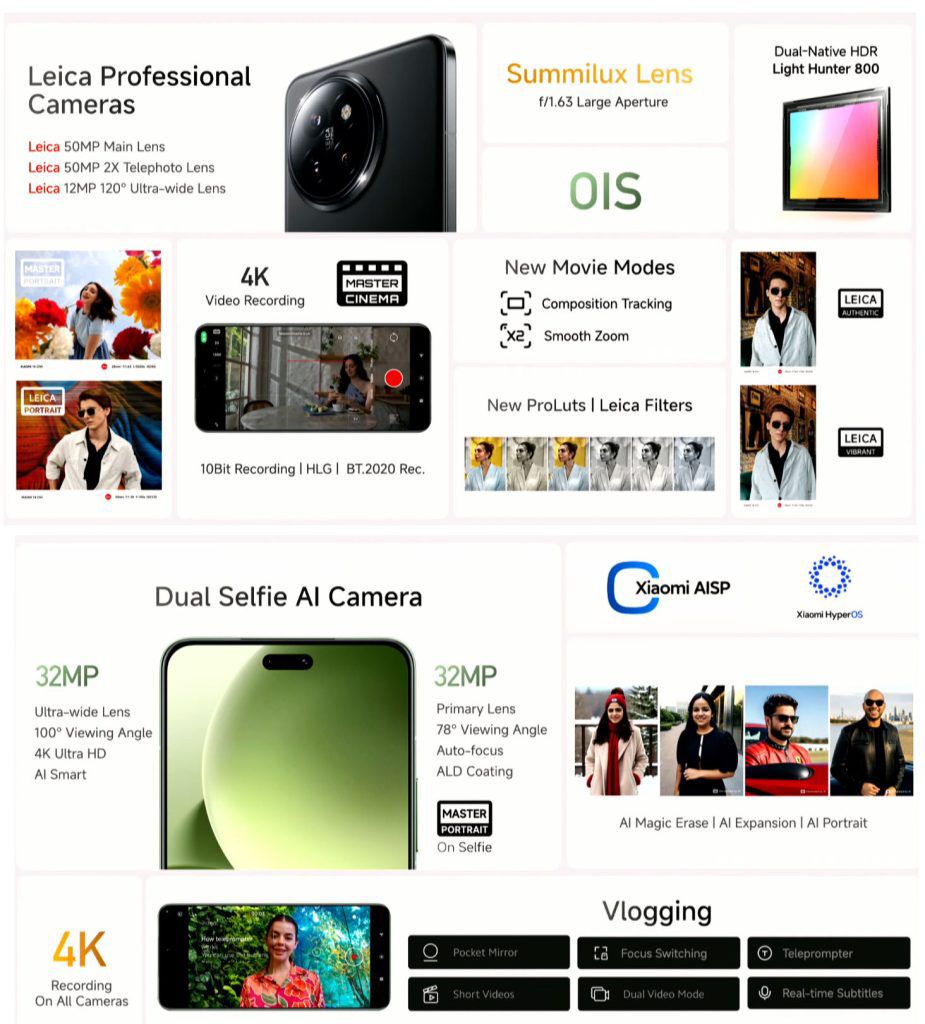
The Realme GT 6 arrives with a 50MP main camera featuring OIS, a 50MP telephoto, an 8MP ultrawide, and a 32MP front camera.
On the other hand, the Xiaomi 14 Civi comes with a 50MP primary camera with OIS, a 50MP telephoto, a 12MP ultrawide angle, and a dual 32MP front camera setup.
Xiaomi 14 Civi: Camera
The Xiaomi 14 Civi, as a result of this collaboration with Leica, offers many filters tuned by Leica into its cameras and an apparent performance boost in telephoto shots.
With dual front cameras, it provided an edge in favor of selfie enthusiasts.
While both devices can take great pictures, the Xiaomi’s Leica partnershipand dual front cameras put it at a slight edge for imagery fanatics.
Battery Life and Charging
Realme GT 6: Battery
The realme GT 6 controls its class with a larger battery at 5,500mAh and faster 125W charging from 20% to 100% in less than 30 minutes.
It lasted for 15 hours in the PCMark battery test.
The Xiaomi 14 Civi comes with a 4,700mAh battery but with 67W charging around 40 minutes to charge from 20% to 100%.
Xiaomi 14 Civi: Battery
In our PCMark battery benchmark, it lasted 12 hours and 15 minutes.
Users seeking a long battery life and fast recharging will see an obvious edge with the Realme GT 6.
They offer 3 years of Android upgrades and 4 years of security updates, ensuring longevity in terms of software support.
The Realme GT 6 includes additional AI features that enhance the user experience, which might appeal to those who enjoy exploring new technologies.
Conclusion: Making Your Choice
Choosing between the Realme GT 6 and Xiaomi 14 Civi ultimately depends on your priorities.
If you value battery life, charging speed, and display quality, the Realme GT 6 has the upper hand.
Xiaomi 14 Civi: Software and User Experience
Its brighter screen, larger battery, and faster charging make it a strong contender for heavy users.
On the other hand, the Xiaomi 14 Civi shines in the camera department, especially for those interested in portrait photography and zoom capabilities.
Its Leica partnership adds value for photography enthusiasts.
In terms of design, the Xiaomi offers more variety with its vegan leather options and is more compact, which might appeal to users who prefer a lighter device.
Performance-wise, both phones are closely matched, with the Realme offering additional AI features that some users might find useful.
Both phones offer good value in the sub-Rs 50,000 range, making either a solid choice for most users looking for high-end features without breaking the bank.
Consider your usage patterns, preferences, and priorities to make the best decision for your needs.
FAQs
Which phone has better battery life?
The Realme GT 6 has a larger 5,500mAh battery compared to the Xiaomi 14 Civi’s 4,700mAh. In PCMark battery tests, the Realme GT 6 lasted 15 hours, while the Xiaomi 14 Civi managed 12 hours and 15 minutes.
How do the cameras compare between the two phones?
Both phones have 50MP main cameras with OIS, but the Xiaomi 14 Civi benefits from a Leica partnership, offering Leica-tuned filters and reportedly better performance in telephoto shots.
The Xiaomi also features dual 32MP front cameras, while the Realme GT 6 has a single 32MP front camera.
What are the key display differences?
The Realme GT 6 has a 6.78-inch AMOLED display with 6000 nits peak brightness and LTPO technology for adaptive refresh rates.
The Xiaomi 14 Civi features a 6.55-inch AMOLED display with 3000 nits peak brightness and lacks LTPO technology.
How do the prices compare?
The Realme GT 6 starts at Rs 40,999 for the 8GB/256GB model, while the Xiaomi 14 Civi begins at Rs 42,999 for the same configuration.
The top variants are priced at Rs 44,999 (16GB/512GB) for Realme and Rs 47,999 (12GB/512GB) for Xiaomi.
What unique features does each phone offer?
The Realme GT 6 includes AI features like Night Vision and Smart Removal, and has an IP65 rating for water and dust resistance.
The Xiaomi 14 Civi offers vegan leather design options and benefits from the Leica camera partnership for enhanced photography capabilities.
Panasonic aims to reduce CO2 emissions by 300 million tons by 2050.
Launch of India’s first Matter-enabled Room Air Conditioners.
Integration of Prime Fresh technology in refrigerators for prolonged freshness.
Expansion of Miraie platform for connected living solutions.
In a recent interview with Mr. Fumiyasu Fujimori, Managing Director of Panasonic Marketing India and Panasonic Life Solutions India (PLSIND), we explored Panasonic’s robust commitment to sustainability and innovation in the Indian market.
Mr. Fujimori highlighted Panasonic’s global environmental vision, Panasonic GREEN IMPACT, aiming to reduce CO2 emissions by 300 million tons by 2050.
Panasonic has been focusing on sustainability and circular economy initiatives globally. How is Panasonic India integrating these initiatives into its product offerings for the Indian market?
Panasonic’s Commitment to Sustainability and Innovation in India
Our commitment to sustainability management is underscored by our mid to long-term environmental vision, Panasonic GREEN IMPACT, which prioritizes addressing global environmental challenges, particularly climate change.
By 2050, we aim to reduce CO2 emissions by at least 300 million tons,equivalent to approximately 1% of current global emissions.
Our brand motto “Create Today. Enrich Tomorrow” highlights our continued commitment to innovation, quality, reliability, and efficiency.
Over the years, we have cultivated a rich legacy in technological innovation and we remain devoted to develop and provide high-quality products and solutions that support people in their everyday lives as well as help improve their health and well-being.
As we evolve with our customers, we assure them of our commitment to delivering products that enrich their lifestyles and meet their needs.
We proudly introduce appliances with cutting-edge innovations and connectivity features.
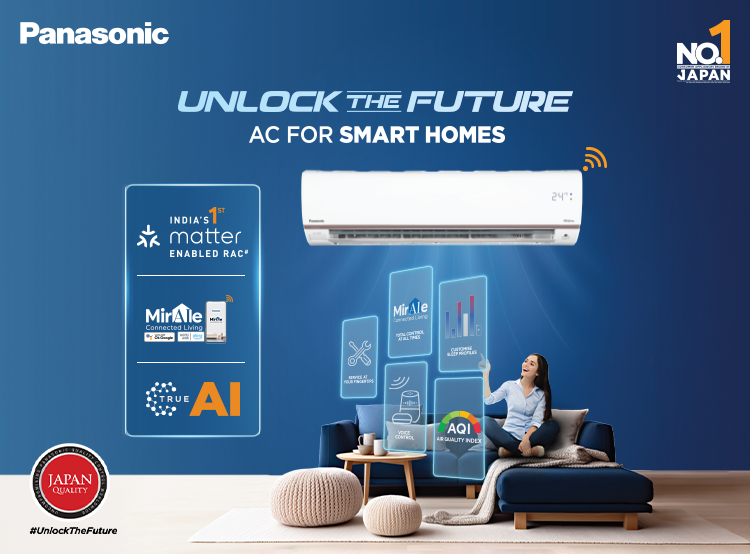
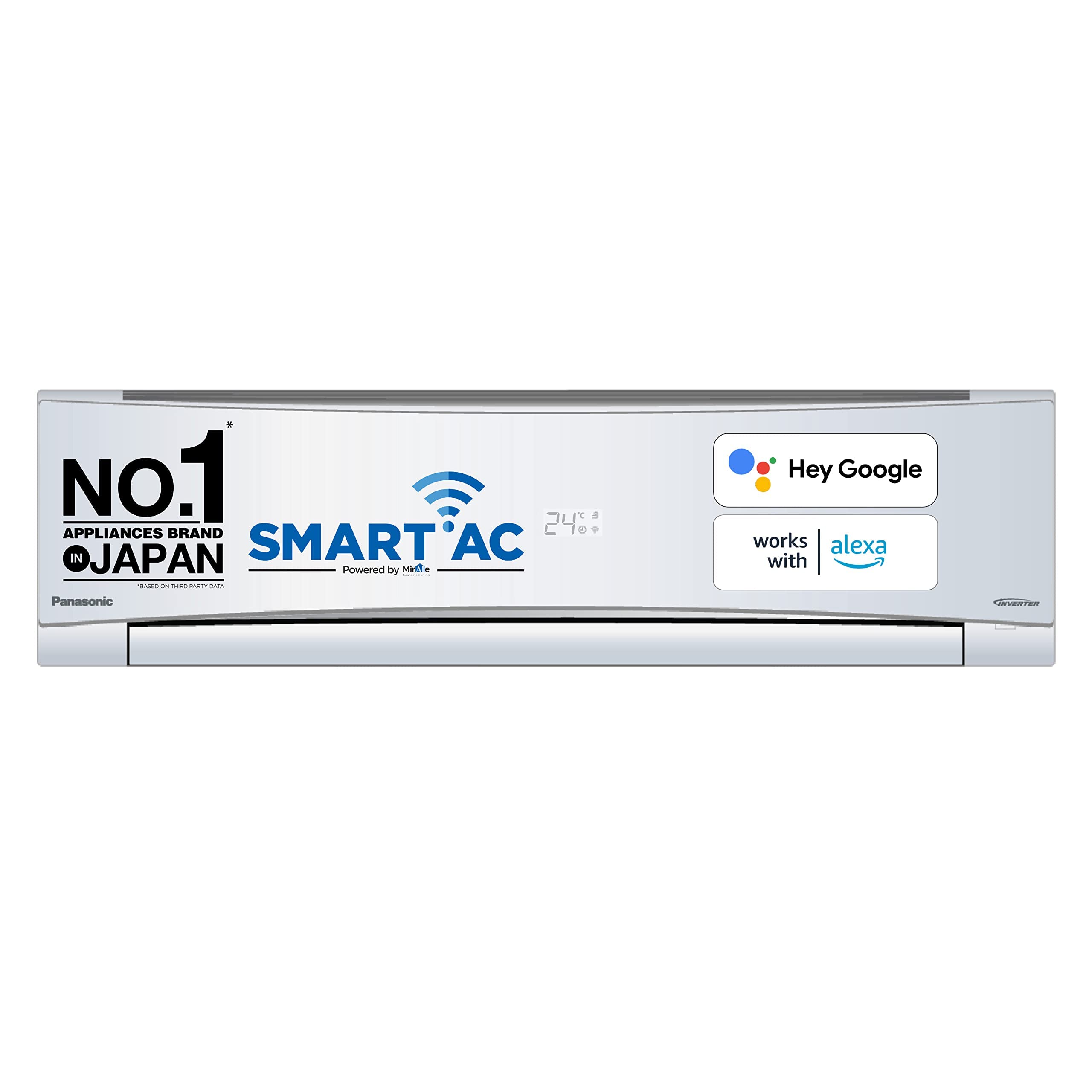
Our smart homes include India’s first Matter-enabled Room Air Conditioners (RACs) powered by Miraie, featuring 7-in-1 convertible modes and AI functionality.
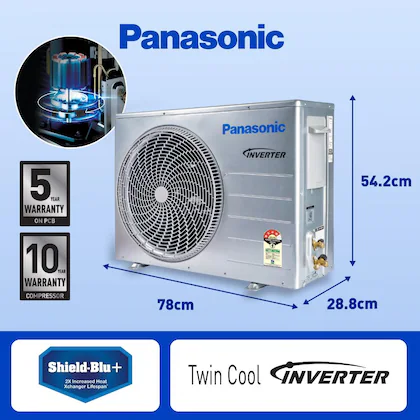
Technologies like ECONAVI optimize power consumption, while Twin Cool Inverter, Jetstream, Converti7, Aerowings, 4-Way Inflow, and nanoe-X and nanoe-G enhance cooling and ensure a cleaner indoor environment.
Our Refrigerators, equipped with Prime Fresh technology, offer time-saving features, flexi-expandable storage, and modes that ensure prolonged freshness and nutrient retention.
Panasonic Washing Machinesincorporate Kizukai technology, built-in Heater with StainMaster+ for removing bacteria and stains, and ECONAVI technology to monitor and analyze water and energy usage via Miraie.
Panasonic is committed to providing innovative solutions that align with sustainable practices, ensuring our products contribute to a better future.
With the recent launch of the Matter-enabled Room Air Conditioners (RACs), how does Panasonic plan to expand its smart home solutions in India, and what other products can we expect in this segment?
Panasonic aims to reduce CO2 emissions by 300 million tons by 2050
In the post-COVID era, consumer preferences have shifted towards smart, connected, comfortable, and convenient appliances that enhance lifestyles while ensuring safety.
Our consumer insights reveal a growing demand for value-driven appliances that are easy to use and energy-efficient.
Recognizing this shift, we launched our Miraie platform a couple of years ago, which now boasts over 250,000 active users regularly logging in to control their appliances, with a significant portion being air conditioner users.
Our platform is designed to enhance consumers’ daily lives by providing comfort, convenience, and seamless connectivity across all Panasonic devices.
By tailoring the quality of living spaces to individual needs and ambient conditions,we aim to create a more intelligent and responsive home environment.
The innovation has been conceptualized and developed at Panasonic’s India Innovation Centre based out of Bangalore.
This range of connected products under the Miraie includes Air Conditioners, Smart Doorbells, and Plugs & Switches.
Through our regular consumer connect program, we discovered another powerful insight: with nearly all brands offering smart products, consumers were burdened with downloading and registering on multiple platforms.
To address this, we launched the world’s first Matter-enabled ACs, powered by our IoT and AI-enabled Miraie platform.
This allows users to seamlessly control and monitor ACs and a wide range of other smart appliances, regardless of the brand, as long as they are Matter-enabled.
With Miraie getting Matter-enabled, we’re committed to expand our connected ecosystem in the coming future to support this technology.
We are also planning to incorporate products from other brands to provide a more cohesive connected experience.
This integration will allow users to control all their Matter-enabled devices using the Miraie app, and conversely, users will be able to control Panasonic’s supported devices using compatible apps from other manufacturers.
Given the diverse consumption patterns between urban and rural India, how is Panasonic tailoring its products to cater to these distinct markets?
Launch of India’s first Matter-enabled Room Air Conditioners
Panasonic stands out as one of the few brands that cover nearly all consumer touchpoints, allowing people to engage closely with our products.
We extend beyond traditional distribution channels, including small dealers in tier II and tier III markets, as well as organized retail partners.
Moreover, our extensive network includes exclusive stores where customers can explore a wide range of Panasonic products.
Additionally, we have a strong presence on leading e-commerce platforms.
We also have an exclusive Panasonic direct-to-consumer portal, enhancing accessibility for customers to purchase and experience our products.
With the increasing consumer aspirations and purchasing power tier II and III cities are emerging as promising markets in driving sales and we expect this trend to continue throughout this year and beyond.
Panasonic has ramped up local production with plants in Haryana for air conditioners and refrigerators. What are the future plans for manufacturing and local product development in India?
Integration of Prime Fresh technology in refrigerators for prolonged freshness
Over the past three decades, Panasonic has made significant strides in expanding the manufacturing capabilities.
In 2012, we established three factories in Haryana dedicated to manufacture washing machines, air conditioners, and industrial welding machines.
This expansion continued in 2015 with the opening of a factory in Haridwar, focusing on switches and wiring devices.
In 2018, we set up a refrigerator factory, and in 2021, we further extended our operations by inaugurating a factory in Sri City, aimed at serving both the Indian market and exporting electrical devices globally.
Our commitment extends beyond manufacturing, we prioritize innovation, conceptualizing and developing products tailored to meet the needs of the Indian market and beyond.
Competition from home-grown and Chinese brands is intensifying in the Indian market. How does Panasonic plan to differentiate its products and maintain its market position?
Expansion of Miraie platform for connected living solutions
Being a consumer-centric company, our recently commissioned study ‘Panasonic’s 2024 Young Parents Everyday Life Concerns, highlighted multifaceted considerations of consumers when it comes to making decisions for purchasing appliances.
Almost 60% young Indian parents are concerned about healthier lifestyles and food habits along with Hygiene.
The study spotlighted the focus on the demand for appliances that address essential lifestyle needs while providing energy efficiency and durability.
At Panasonic, we are dedicated to developing innovative appliances that promote the holistic well-being of consumers by seamlessly integrating advanced technology into daily life.
This year, Panasonic introduced 60 new models of inverter ACs from a wide range of 1.0, 1.5 and 2.0-ton models including the India’s first Matter-enabled RACs.
Matter is an open-source connectivity standard that enables seamless interoperability across smart devices.
It is powered by our IoT and AI-enabled platform Miraie that lets users seamlessly control and monitor ACs and a wide range of smart appliances.
By connecting with other Matter-certified devices and platforms, they will facilitate a smarter and more efficient use of energy, optimizing comfort while minimizing environmental impact.
Moreover, Panasonic ACs extend beyond basic cooling, i.e., indoor air hygiene, efficiency and technological integration (connectivity).
They are equipped with technologies such as nanoe-G and nanoe-X technologies,purifying indoor air quality by inhibiting PM 2.5 matter, bacteria, viruses, and moulds.
Consumers can benefit from this air purification feature all year without using the cooling mode.
Similarly, in line with our syndicated study, our refrigerators leverage technology maintain freshness, nutrition, and storage for a comparatively longer time.
Panasonic Refrigerators come with Prime Fresh technology that helps save cooking time, flexi-expandable storage, and flexi-modes of operation addressing top concerns of prolonged freshness, nutrient retention, and adequate storage needs.
The Prime Fresh Mode includes Pro-Marinate, Insta Cook, Tiffin Fresh, and Pro-Chill modes, preserving food freshness for up to 7 days while retaining nutrients and flavour.
Additionally, AI Econavi sensors and Inverter technology in refrigerators maximize energy savings, aligning with their desire for efficiency.
Furthermore, we are experiencing robust demand for our ACs this season, aiming for a 40% growth compared to the previous year.
Notably, 95% of our ACs sold are inverter models, reflecting the strong consumer preference for smart, energy-efficient solutions.
Panasonic India has set ambitious revenue targets and growth plans. What specific strategies are being implemented to achieve these goals, especially in consumer durables and B2B segments?
Panasonic has been focusing on sustainability and circular economy initiatives globally
The Indian residential air conditioning (AC) industry has been experiencing a surge in demand due to the prevailing heatwave, seen especially in the north.
With that in mind, the industry is expecting a prolonged summer season, thus, a continued demand for ACs and other summer appliances such as refrigerators too.
AC today is no longer an aspirational product but a necessity.
However, the penetration continues to be at approximately 7.5% in India.
This holds immense growth potential for the AC industry.
This season, we are expecting that the AC market shall grow by 25% over the season last year.
At Panasonic, we are looking to grow by 40% compared to the last AC season.
On the other hands, if we talk about B2B business our range of products and solutions spans across various industrial sectors, including servo motors, smart factory solutions, SMP machines, writing robots, and welding machines.
These segments have demonstrated consistent growth over time.
We believe there is immense growth potential across all these categories, particularly as the country’s infrastructure continues to expand, supported by increased capital expenditure allocations as seen in recent budgets.
At Panasonic, we anticipate that this strategic approach will persist, fostering a positive environment for the creation of opportunities within the country.
How is Panasonic leveraging its innovation centre in Bengaluru to develop products specifically suited for Indian consumers, particularly in tier 2 and tier 3 markets?
Panasonic India has set ambitious revenue targets and growth plans
In a time when IoT is ushering the next technological revolution, Panasonic forayed into connected living solutions with the launch of Miraie in 2020, an indigenously developed IoT & AI-enabled platform.
The platform aims to empower the everyday lives of consumers with comfort, convenience and seamless connectivity across all Panasonic appliances, delivering a truly connected living experience.
Since its launch, the Miraie has been integrated into Air Conditioners, Refrigerators, Televisions, Washing Machines, Wi-fi, fans, ROMA Smart digital switches, Smart doorbells and Wi-Fi controller Plugs and switches- amongst others.
With advanced AI features, it delivers timely notifications, troubleshoots problems, streamlines technician visits, and enhances the overall performance and lifespan of products, thus effectively reducing the total cost of ownership.
The intuitive platform helps recognize usage patterns and suggests optimal modes for appliances.
Moreover, since 2020, Panasonic’s Miraie App has been downloaded by over 6 Lakh consumers and is rated above 4.5 on iOS and Google Play.
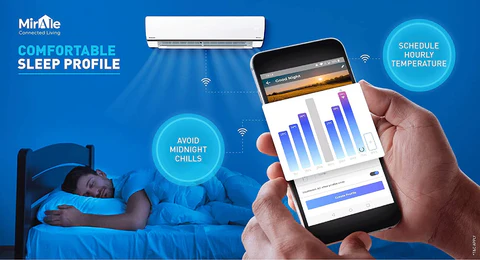
The value that the platform is driving, for instance, is that 70% of installed room air conditioners (RACs) are on-boarded in Miraie, while over 72% of users are using the sleep profile function.
FAQs
What is Panasonic’s environmental vision and goal for CO2 emissions?
Panasonic’s environmental vision, Panasonic GREEN IMPACT, aims to reduce CO2 emissions by 300 million tons by 2050, addressing global climate change challenges.
What new products has Panasonic introduced in the Indian market?
Panasonic has introduced India’s first Matter-enabled Room Air Conditioners and refrigerators with Prime Fresh technology, enhancing smart home solutions and sustainability.
How is Panasonic expanding its smart home solutions in India?
Panasonic plans to expand its smart home solutions by integrating more devices into its Miraie platform, offering seamless control and connectivity for various smart appliances.
How is Panasonic catering to diverse markets in India?
Panasonic tailors its products for both urban and rural markets by using extensive distribution channels, including small dealers, organized retail partners, exclusive stores, and e-commerce platforms.
What are Panasonic’s future plans for manufacturing in India?
Panasonic is expanding its local production with plants in Haryana and Haridwar, focusing on developing innovative products tailored to the Indian market and enhancing manufacturing capabilities.
iOS 18 update boosts A17 Pro chip AI performance by 25%.
Core ML Neural Inference Score on Geekbench increased from 6249 to 7816.
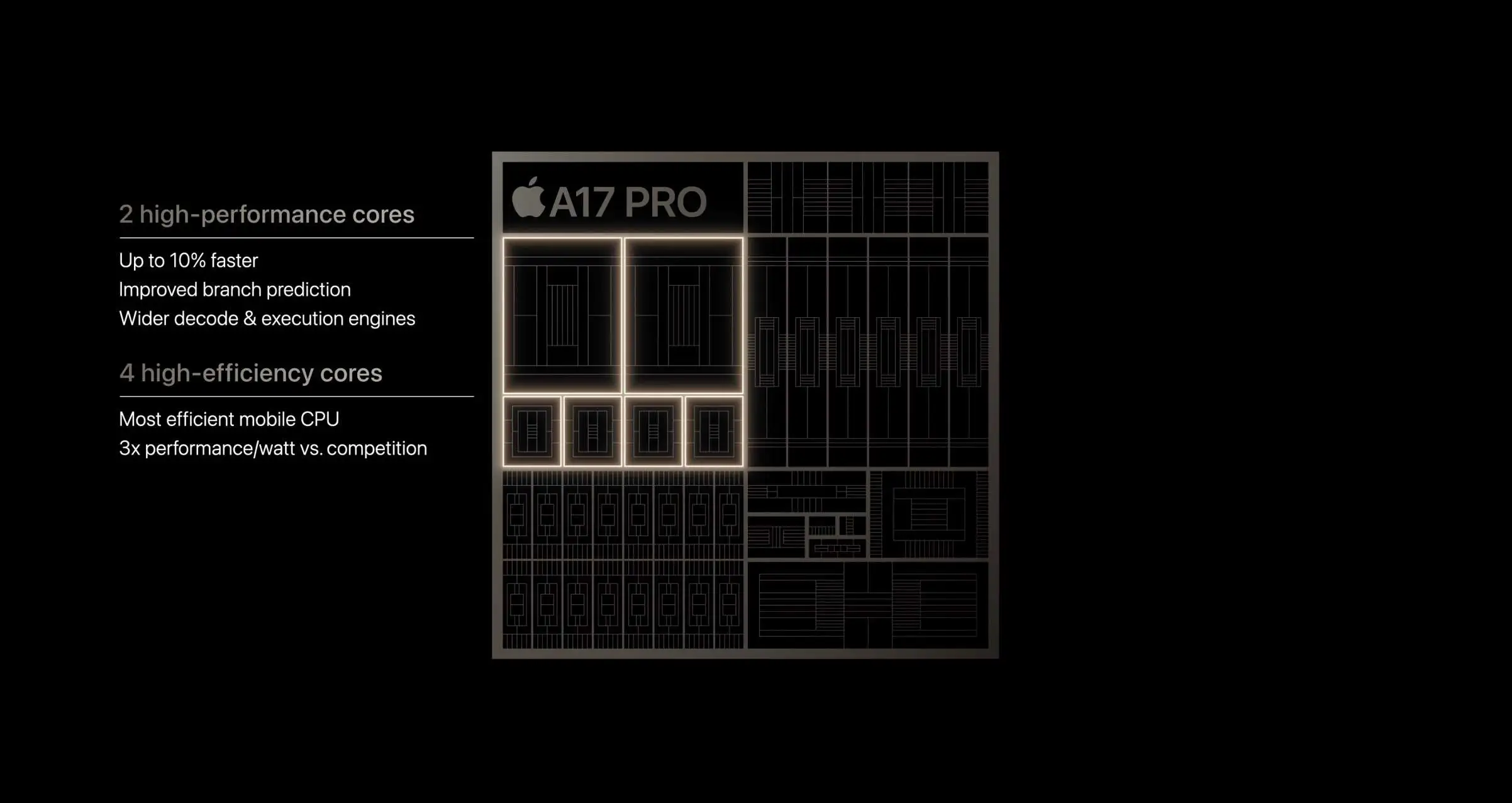
A17 Pro’s Neural Engine handles up to 35 trillion operations per second.
MLTensor addition to Core ML framework enhances machine learning capabilities.
Looks like Apple’s been tinkering under the hood with iOS 18, and it’s made the A17 Pro chip a fair bit nippier when it comes to AI tasks.
A17 Pro Getting Better with iOS 18
After iOS 18 update,
Geekbench machine learning score has greatly improved
(CoreML / Neural Engine Backend) pic.twitter.com/23cZm4qYCI
— INIYSA (@lafaiel) June 16, 2024
Apple has something called Core ML, its fancy machine-learning framework that is aiding iPhones and other Apple gadgets to chew up AI stuff faster and more efficiently.
The beauty of Core ML, of course, is that all its work is done on your device, meaning you do not need an internet connection, and your data stays put.
Now, after some small digging, one tech enthusiast on X got something: they found out that when you update from iOS 17.5.1 to iOS 18, the Neural Engine part of the A17 Pro chip—the brains of your iPhone 15 Pro Max—can now run at speeds of, at the most, up to 25 percent faster.
iOS 18 Reportedly Boosts A17 Pro Chip Performance by 25% for AI Tasks
They have got the numbers to back it up, too—the Core ML Neural Inference Score on Geekbench went from 6249 to 7816.
Let’s talk to the spec people: The A17 Pro packs in 8GB of RAM and its Neural Engine is capable of handling a full 35 trillion operations per second. That is some fair jump from the A16 Bionic inside the regular iPhone 15, which peaks at 17 trillion.
If rumors pan out, the M4 iPad Pro Neural Engine will support 38 trillion operations per second, which could be an indicator of what we might get from the A18 and A18 Pro chips that await us with the next round of iPhones.
Apple Tweaking With its ML Framework
A17 Pro’s Neural Engine handles up to 35 trillion operations per second
Apple’s also tweaked a bit Core ML, adding something called MLTensor.
It should make it easier to do stuff with multi-dimensional arrays—pretty important for machine learning.
Now, the important thing here is, of course, that this 25 percent speed bump comes directly from the software update. Once the A18 and A18 Pro chips come out, we should be seeing even bigger improvements.
MLTensor addition to Core ML framework enhances machine learning capabilities
The developer beta is out now if you’re itching to try out iOS 18. A public beta will likely land next month, with the final version probably landing in September around new iPhones time.
But all in all, Apple is getting ready to smarten up its devices—now it will be interesting to see how they leverage all that AI juice.
FAQs
How much has the A17 Pro chip’s performance improved with iOS 18?
The A17 Pro chip’s AI task performance has improved by up to 25% with the iOS 18 update.
What is the Core ML Neural Inference Score increase after the iOS 18 update?
The Core ML Neural Inference Score on Geekbench increased from 6249 to 7816 after updating to iOS 18.
What are the capabilities of the A17 Pro’s Neural Engine?
The A17 Pro’s Neural Engine can handle up to 35 trillion operations per second, significantly enhancing AI processing.
What new feature has Apple added to Core ML with iOS 18?
Apple has introduced MLTensor to Core ML, which improves the handling of multi-dimensional arrays for machine learning tasks.
When can users expect to try out iOS 18?
The developer beta for iOS 18 is available now, with a public beta likely next month and the final version expected in September.