The iPhone SE 4 is expected to be released next spring.
The design will most likely be similar to the iPhone 14.
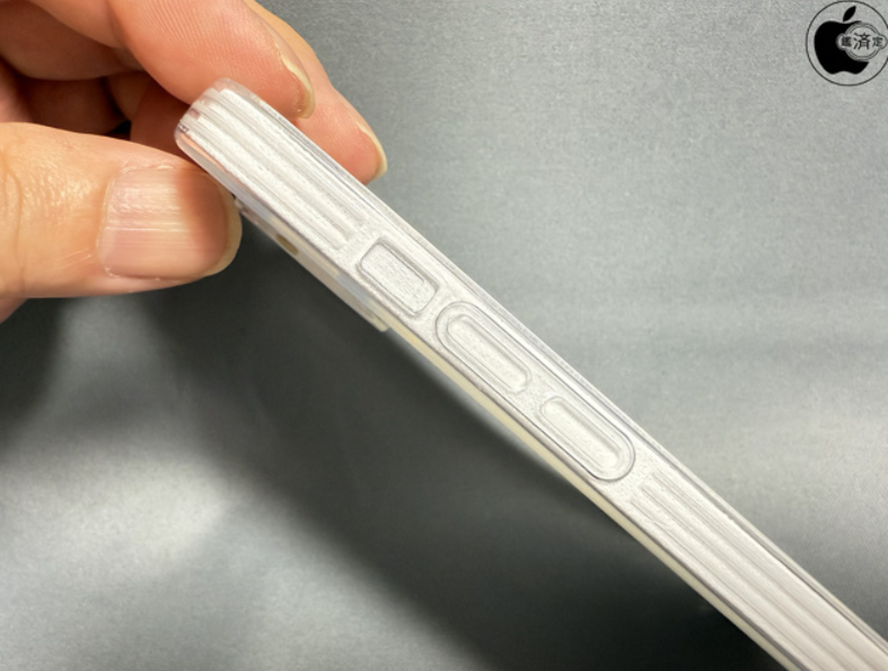
Dummy unit images reveal compatibility with iPhone 14 cases.
Other suggested features include a 6.1-inch OLED display, Face ID, a smaller notch and dimensions matching the iPhone 14.
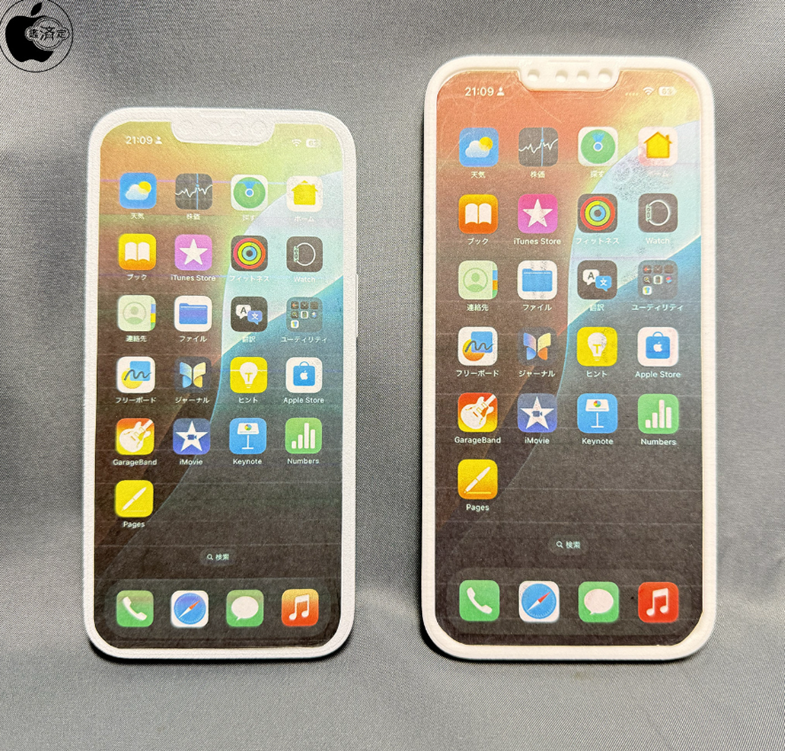
Apple iPhone SE 4 dummy units’ images revealed. (Image credit – Japanese blog Macotakara)
We have been regularly reporting on rumours and leaks on the upcoming iPhone SE. It will be the next iPhone to officially release before we get to see the iPhone 17.
As of now, we are expecting the next iPhone SE to be released sometime next spring, which means we still have at least 6 months of wait. However, this doesn’t mean the buzz around the phone will be fading.
In fact, a recent report showing new images of iPhone SE 4 dummy units gives us our first glimpse of what the new device is going to look like.
The famous Japanese blog Macotakara known for revealing dummy unit images of upcoming iPhones has recently released a set of new images of iPhone SE 4 dummy units. The images give us a closer look at what to expect from Apple’s upcoming budget iPhone.
iPhone SE 4 – Dummy Unit Images Revealed
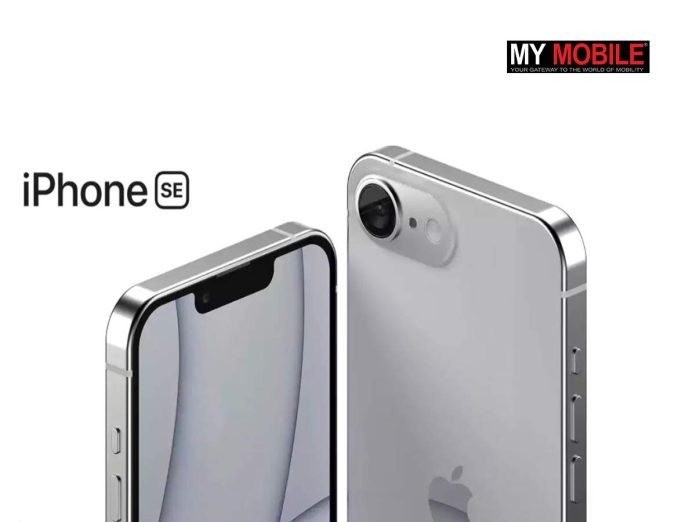
3D mock-up of iPhone SE 4 (Image credit – Japanese blog Macotakara)
As previous rumour suggested, the design resembles that of the iPhone 14.
The dummy units also reveal that we can expect compatibility with iPhone 14 cases. Moreover, Macotakara’s report also hinted at a larger size option for the phone that’s unlikely to happen.
The dummy units released by the Macotakara blog indicate many key features of the upcoming iPhone SE 4.
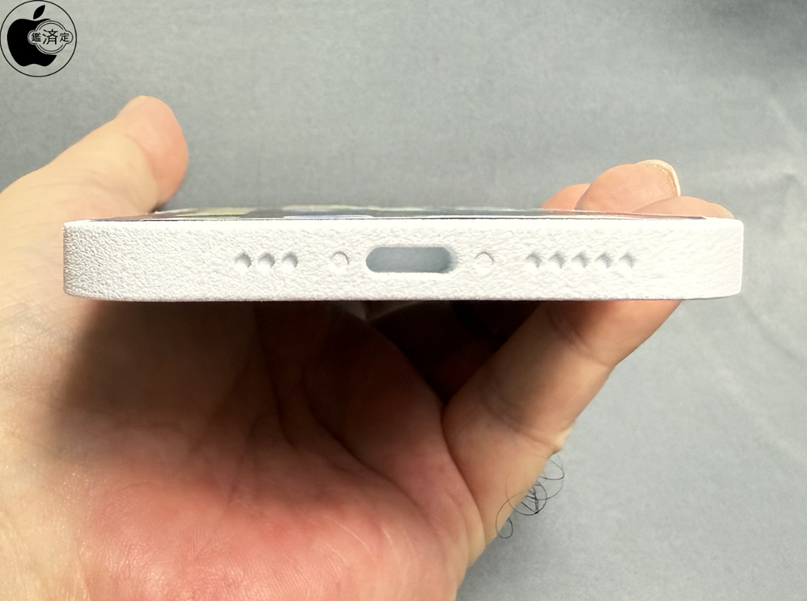
Apple iPhone SE 4 dummy units’ side view image revealed. (Image credit – Japanese blog Macotakara)
The device will most likely feature a single rear camera, a mute switch instead of the new action button seen in recent models and a smaller notch with Face ID at the top.
3D mock-up of iPhone SE 4 (Image credit – Japanese blog Macotakara)
Its dimensions are likely to be 146.7mm x 71.5mm x 7.8mm. And just to make it clear, these mentioned dimensions are identical to the iPhone 14.
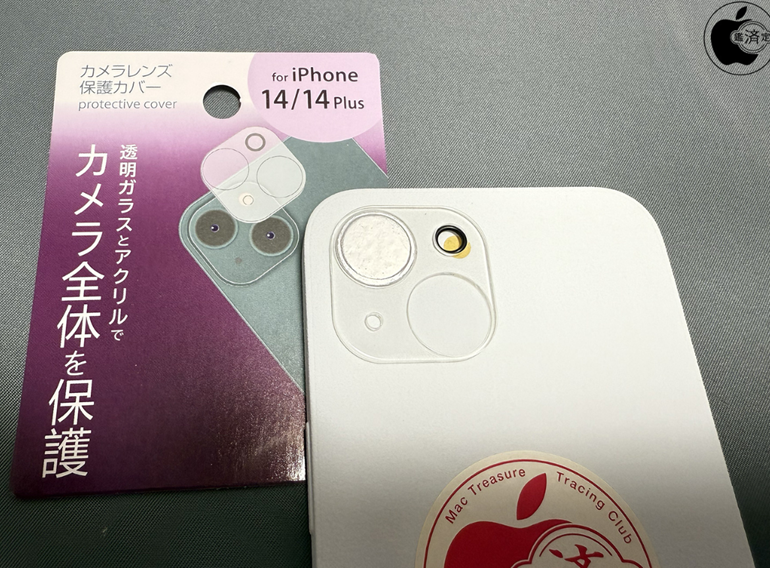
Another important aspect revealed by the blog report is how iPhone 14 cases fit the SE 4 dummy just fine. Although, the camera cutout is larger due to the iPhone 14’s dual camera setup.
3D mock-up of iPhone SE 4 (Image credit – Japanese blog Macotakara)
Macotakara report also mentions that the mute switch is slightly smaller on the SE 4. Meanwhile, the volume and side buttons remain the same as was last seen in the iPhone 14.
iPhone SE 4 Key Details – Features, AI and Key Specs (Expected)
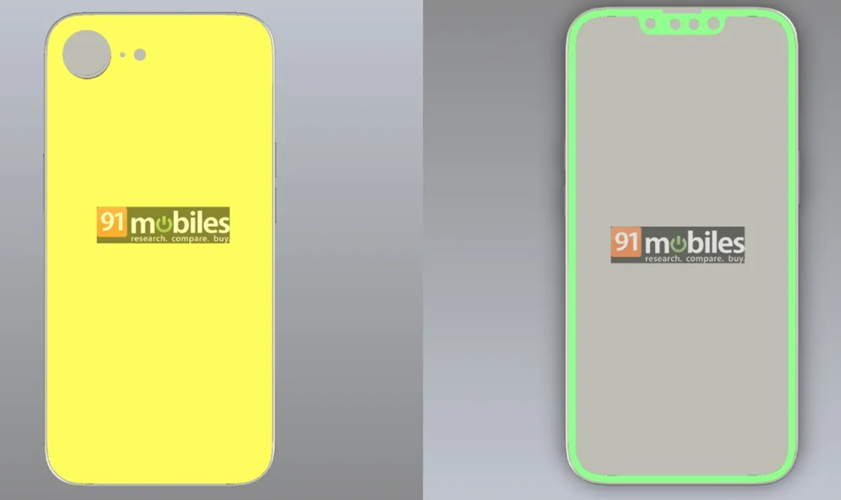
iPhone SE 4 Display dummy (Image credit – 91Mobiles)
As per most recent reports, the iPhone SE 4 is expected to feature a 6.1-inch OLED display similar to the iPhone 14.
This display will come with a flat-edged design, Face ID and a smaller notch.
However, it will stick to a single rear camera unlike what we have seen in iPhone 14.
Display analyst Ross Young previously suggested the SE 4 will share the same 6.1-inch OLED panel supplied by both BOE and LG Display.
Same display as iPhone 14. BOE and LGD are the suppliers. Panel shipments from October…
— Ross Young (@DSCCRoss) October 6, 2024
Moreover, Apple is also expected to move to USB-C for the iPhone SE 4 instead of the Lightning connector. This is more because of the EU regulations that require a unified charging port for devices.
As for the camera upgrades in the upcoming iPhone SE 4, the device is likely to feature the same 48MP rear sensor as the iPhone 15.
This will be a massive upgrade from the 12MP camera we got in the iPhone SE 3.
The front camera will also be upgraded to 12MP from the 7MP selfie camera on the current SE model.
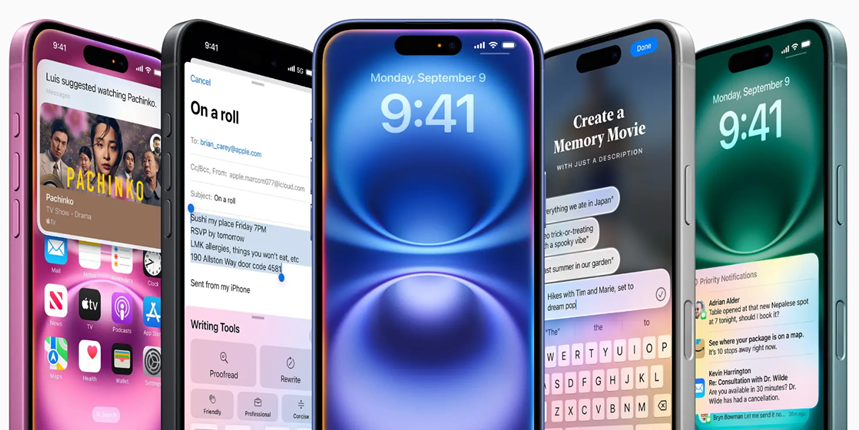
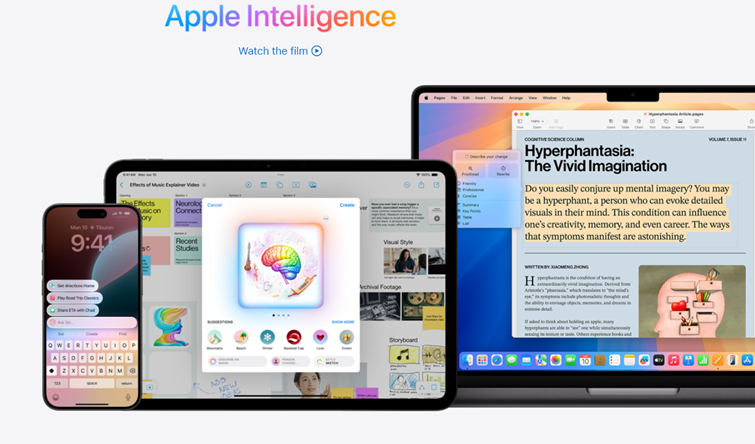
Apple now aims to include Apple Intelligence in all its upcoming devices including iPhone SE 4. (Image credit – Apple)
One exciting feature expected in the iPhone SE 4 is Apple Intelligence.
The phone will most likely powered by the A18 chip and 8GB of RAM, which will make it eligible for Apple Intelligence features.
Apple seems to be now aiming to include this AI-powered feature in as many devices as possible including on its most affordable models.
Moreover, the SE 4 will also mark the debut of Apple’s first in-house modem codenamed “Centauri.”
This modem was developed after Apple acquired Intel’s modem business in 2019 to reduce reliance on Qualcomm. It will handle 5G, Wi-Fi, Bluetooth and GPS.
Last but not least, the iPhone SE 4 is expected to have a higher price point starting at $499 making it a reasonable price for an iPhone under $500.
FAQ
Q1. When is the iPhone SE 4 expected to be released?
Answer. The next iPhone SE is expected to be released sometime next spring, which means we still have at least 6 months of wait.
Q2. What design features are revealed by the iPhone SE 4 dummy units?
Answer. The dummy units indicate that the iPhone SE 4 will have a single rear camera, a mute switch instead of the new action button, and a smaller notch with Face ID.
Q3. What are the expected camera specifications for the iPhone SE 4?
Answer. The device is likely to feature a 48MP rear sensor and a 12MP front camera, which is an upgrade from the 12MP and 7MP cameras on the iPhone SE 3.
Apple employees reportedly believe they are two years behind in AI development.
Apple Intelligence requires an A17 or M1 chipset and 8GB of memory.
AI to be available on all Apple devices with screens by 2026.
The new iPad release is now delayed until late 2025.
Apple Intelligence preview released at WWDC24. (Image Credit – Apple)
According to the latest edition of Mark Gurman’s Power On newsletter, some Apple employees believe the company is about two years behind in developing artificial intelligence.
However, Apple has a strategy to catch up and some internal studies suggest the company is approaching the challenge.
Apple introduced its first AI suite of features called Apple Intelligence at WWDC24 in June.
This included an introduction to tools like AI notification summaries, a revamped Siri with personal context, Image Playground, Genmoji and more.
However, there was an interesting information that was missed out. It was only later revealed that Apple isn’t handling everything in-house.
Apple Intelligence runs primarily on-device to ensure better privacy. However, it also limits the complexity of the models due to hardware constraints.
The hardware requirements for Apple Intelligence include an A17 or M1 chipset or newer and at least 8GB of memory.
Apple also announced a partnership with OpenAI to integrate ChatGPT into the system because of the hardware limitations.
Gurman recently shared some of Apple’s internal studies that indicate that ChatGPT is about 25% more accuratethan Siri and can answer 30% more questions.
This also shows that there is a significant gap between the AI performance of Apple’s own tools and the performance of OpenAI.
Skipping iPad 11 is a sign of apple focus on AI
As Gurman specified in his newsletter, some Apple employees believe the company’s AI technology is still over two years behind other market-leading AI players.
Furthermore, Gurman has predicted that Apple Intelligence will be available on every Apple device with a screen by 2026.
This means we can expect upgrades across the Apple product lineup.
The iPhone SE is to come with the A18 chip in March and an update to the entry-level iPad can be expected in 2025.
iPad Release Expected in Late 2025
The iPad mini with Apple Intelligence.Source: Apple
Speaking of iPad, Gurman has now confirmed that we won’t be getting a new iPad until late 2025. As per the recent 9to5Mac report, this delay in refreshing the iPad indicates that Apple “will be selling a 3-year-old product with a 5-year-old chipset when it finally gets updated.”
It was previously suggested by display specialist Ross Young that panel shipments were underway this month, which indicated in favour of a spring release. However, Gurman speculative timeless shows a different picture.
“The iPhone SE will gain the features in March, and the entry-level iPad will probably get updated later in the year,” Gurman wrote.
The current base model of the iPad is more than 2 years old. It comes with an A14 chip at the moment. The A14 chip was close to 2 years old at the time it was launched. Apple traditionally places a 2-year-old chipset in the base iPad with every new update.
FAQs
Q1. What new features were introduced in Apple Intelligence at WWDC24?
Answer. Apple Intelligence introduced tools like AI notification summaries, a revamped Siri with personal context, Image Playground and Genmoji.
Q2. What are the hardware requirements for Apple Intelligence?
Answer. The hardware requirements include an A17 or M1 chipset or newer and at least 8GB of memory.
Q3. When is the new iPad expected to be released?
Answer. According to Gurman, the new iPad release is delayed until late 2025.
YouTube is testing an AI tool that would automate replies to videos on the creator’s behalf.
The new tool would be able to mimic a creator’s tone and writing style.
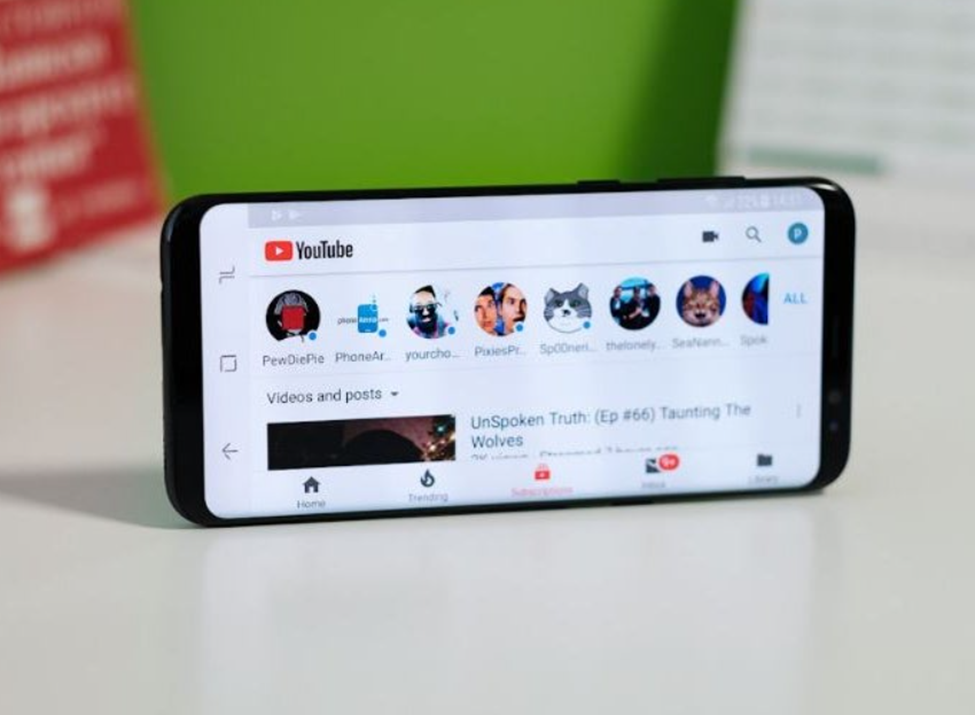
YouTube is testing an AI Comment Reply Feature that could automate the creator’s reply to comments. (Image credit – PhoneArena)
In the last few years, YouTube has been introducing many changes that have not been so well received.
Many YouTube users have been vocal about the platform not prioritising users and only focusing on creator-friendly features.
Now we are hearing that the streaming platform is testing yet another feature that is being designed only for the convenience of creators.
As per a recent PhoneArena report, YouTubefollowing the industry trend is also integrating artificial intelligence to the app.
However, rather than adding features that would help YouTube users, the platform is working on an AI tool for automatic text generation.
Reports suggest YouTube is working on an AI tool that would mimic a creator’s tone and writing style to reply to comments on their behalf on the videos.
This would basically automate the entire creator and viewer interaction on the platform.
Many tech enthusiasts were quick to point out that this would kill the excitement of getting a reply from your favourite YouTuber since now the replies could be an AI-generated response.
As per PhoneArena’s report, the tool would allow creators to quickly generate replies to comments with the option to edit them or post as-is.
It will make it easier for them to manage the engagement on the videos.
Some fear that creators might eventually let the AI run on autopilot, replying to comments without any supervision just to boost engagement.
The PhoneArena report observes, “Text generation is, in my mind, the most boring use an app can find for modern LLMs (Large Language Models). Generating visuals, or even better, understanding them and acting on them is a much cooler concept. It’s what Apple Intelligence aims to do with on-screen awareness. This is also what Microsoft wants to accomplish with the controversial Windows Recall.”
The report also mentioned how many other apps are using AI for only basic purposes such as generating, summarizing, or customising text.
This rightfully raises concerns about the internet becoming increasingly bot-driven without opportunity for any meaningful human interactions.
FAQs
Q1. What is YouTube’s new AI tool designed for?
Answer. Reports suggest YouTube is working on an AI tool that would mimic a creator’s tone and writing style to reply to comments on their behalf on the videos.
Q2. What are the concerns about YouTube’s AI tool for automatic text generation?
Answer. Critics fear that this would kill the excitement of getting a reply from your favourite YouTuber since now the replies could be AI-generated responses.
Q3. How does the new AI tool affect creators’ engagement with their audience?
Answer. The tool would allow creators to quickly generate replies to comments, making it easier for them to manage engagement on their videos.
Instagram and Spotify’s new integration feature announced.
It allows users to add songs from posts or Stories to their Spotify library.
Users can link their Spotify account to Instagram to enable the feature
Saved songs will appear in the Liked Songs playlist and Your Library tab on Spotify.
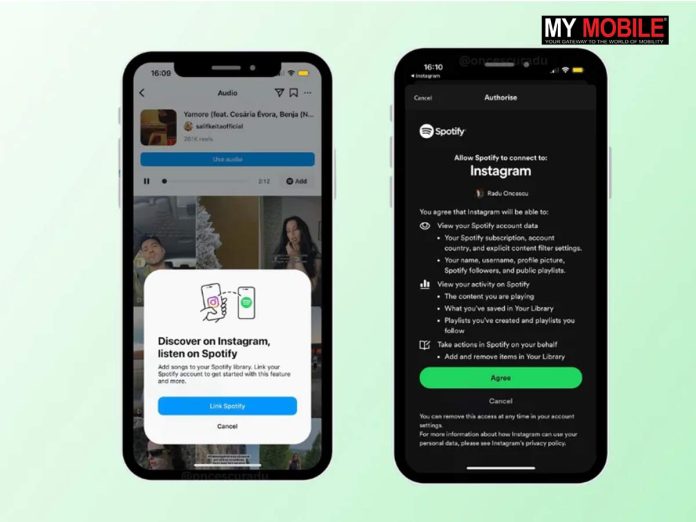
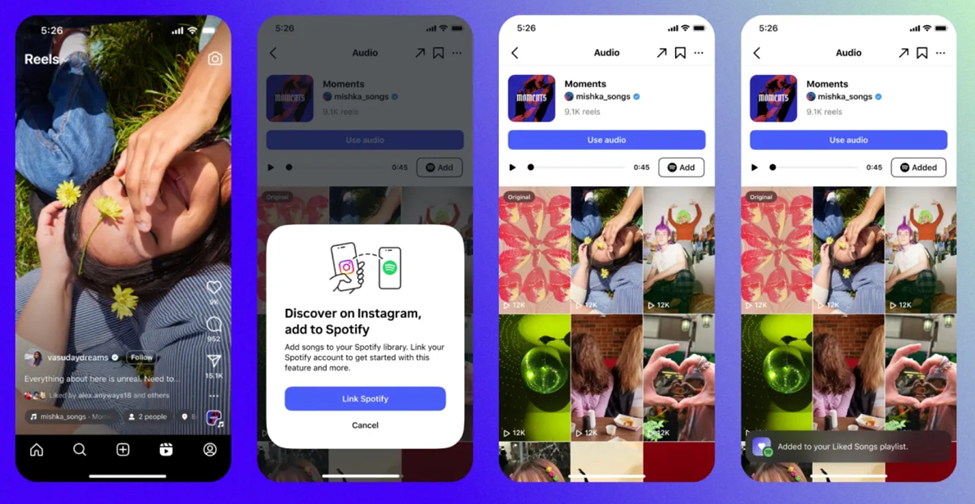
Now add music directly from Instagram reels and stories to your Spotify library. (Image credit – 9to5Mac)
Instagram and Spotify are coming together to make it a little easier for users to discover and save music.
In a recent announcement, both apps have revealed details of a new integration update that will allow Instagram users to quickly add songs they like from posts or Stories directly to their Spotify library.
This can be done with just a few taps from the Instagram app directly.
In a recent report, 9to5Mac quoted Spotify, “We know that music is all around you and sometimes that means right on your social media feed.
That’s why beginning today, Spotify is excited to unveil a new integration with Instagram that makes it even easier to capture and instantly add songs to Spotify from Instagram with just one simple tap.”
With this new update, users can now tap just a button next to the song preview to get more details and also save it straight to their Spotify account without leaving Instagram whenever they come across a song.
Users can link their Spotify account to Instagram to enable this feature.
Once a song is saved, it will appear in the Liked Songs playlist and the “Your Library” tab on Spotify.
This new integration is available for both iOS and Android users. Both apps should have the latest versions installed to be able to use this new feature.
“At Spotify, we’re always looking for new ways to create a deeper connection between artist and fans, and with this Instagram integration we’re introducing new ways for users to discover more of their favourite artists and tracks,” Spotify added.
This feature resembles something TikTok already offers where it allows users to add songs to not just Spotify but also Apple Music and Amazon Music.
Meanwhile, Instagram’s new integration with Spotify is now being rolled out globally making it easier for users to enjoy and save music on the go.
FAQs
Q1. How can Instagram users save songs they like from posts or Stories to their Spotify library?
Answer. Users can now tap a button next to the song preview on Instagram to get more details and save it directly to their Spotify account without leaving the app.
Q2. How to enable the new Instagram and Spotify integration?
Answer. Users need to link their Spotify account to Instagram, and once a song is saved, it will appear in the Liked Songs playlist and the “Your Library” tab on Spotify.
Q3. Is the new Instagram and Spotify integration feature available for all users?
Answer. Yes, the new integration is available globally for both iOS and Android users, provided they have the latest versions of both apps installed.
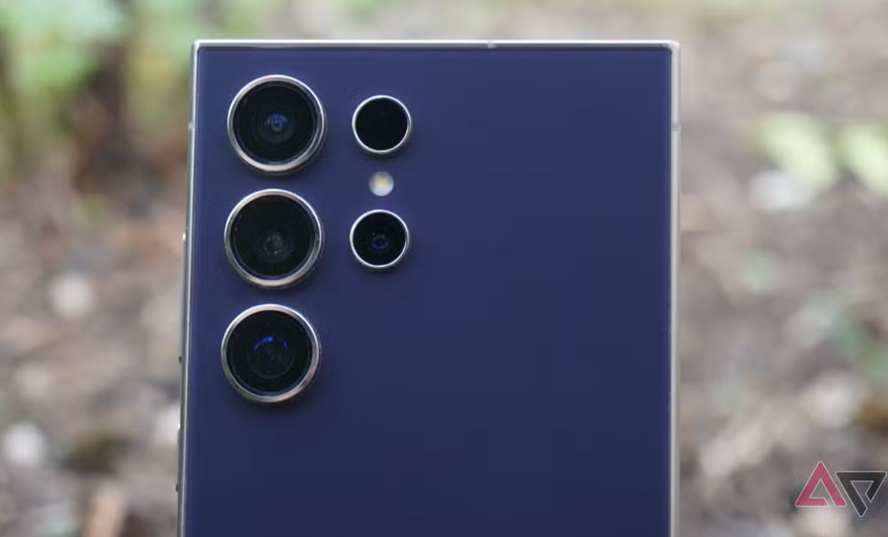
A new leak suggests Samsung Galaxy S25 Ultra might come in black, green, blue and titanium colours.
The phone is expected to come out in January 2025
It will feature a new slimmer design with rounded edges.
Other rumoured features include – Qualcomm’s Snapdragon 8 Gen 4 chip, 16GB of RAM, a 50MP ultrawide camera and a 5000mAh battery with 45W wired fast charging.
The next Samsung flagship is not expected until January 2025.
However, leaks and rumours about it have revealed some of the most exciting details about the upcoming device already.
We already know that the upcoming high-end smartphone will have a new slimmer design with rounded edges. Now, the latest leak reveals some colour options that we might get to see in the upcoming device.
According to popular and reliable leaker Ice Universe on X (previously Twitter), the Galaxy S25 Ultra might come in four colour options. These new colours could be black, green, blue and titanium as per the new updates.
BREAKING!
The Galaxy S25 Ultra will debut in four color options:
Black, Green, Blue, TitaniumI
I don’t know the online color scheme yet. pic.twitter.com/KNHZTC6lma
— ICE UNIVERSE (@UniverseIce) October 19, 2024
Many online tech enthusiasts believe that the black and titanium options could be similar to the Galaxy S24 Ultra’s Titanium Black and Titanium Gray. Meanwhile, the blue and green shades could be something new to look forward to.
The recent Android Police report also suggests that Samsung may also offer exclusive colours. However, those exclusive colours will most likely only be available through its online store in certain regions.
No further details about these special colours are available as of yet.
The addition of titanium colour in the leak is the one that garnered the most attention. It is possibly because the time resembles the Natural Titanium shade that Apple introduced with its iPhone 15 Pro series for the first. We have seen Apple reintroduce the same colour shade with the iPhone 16 Pro lineup as well.
Interestingly, Samsung already uses titanium in the Galaxy S24 Ultra. All seven Galaxy S24 Ultra colours include Titanium as a prefix including the online exclusive colours such as Titanium Green, Titanium Blue and Titanium Orange.
As of now, it is unclear whether Samsung will follow the same naming pattern for the S25 Ultra as well.
Samsung Galaxy S25 Ultra – Key Details (Rumoured)
According to leaks and rumours, the Galaxy S25 Ultra is also expected to pack some serious hardware improvements. Previous leaks have suggested it will feature Qualcomm’s upcoming Snapdragon 8 Gen 4 chip.
Moreover, it might come with 16GB of RAM for better multitasking capabilities.
Certain reports also suggested that a 50MP ultrawide camera might also added to the mix of camera setup.
However, it looks like Samsung isn’t making any big changes to the battery. The phone is rumoured to come with the same 5,000mAh battery and 45W wired fast charging that we’ve seen in previous models.
As the launch approaches next year, we can expect more details to emerge.
FAQs
Q1. When is the Samsung Galaxy S25 Ultra expected to be launched?
Answer. The Samsung Galaxy S25 Ultra is expected to be launched in January 2025.
Q2. What are the leaked colour options for the Samsung Galaxy S25 Ultra?
Answer. The leaked colour options for the Samsung Galaxy S25 Ultra are black, green, blue, and titanium.
Q3. What processor is the Galaxy S25 Ultra expected to feature?
Answer. The Galaxy S25 Ultra is expected to feature Qualcomm’s Snapdragon 8 Gen 4 chip.
Q4. What are the rumoured camera specifications for the Galaxy S25 Ultra?
Answer. It might include a 50MP ultrawide camera in its camera setup.
Q5. Will the battery capacity change in the Galaxy S25 Ultra compared to previous models?
Answer. No, the Galaxy S25 Ultra is rumoured to come with the same 5,000mAh battery and 45W wired fast charging.
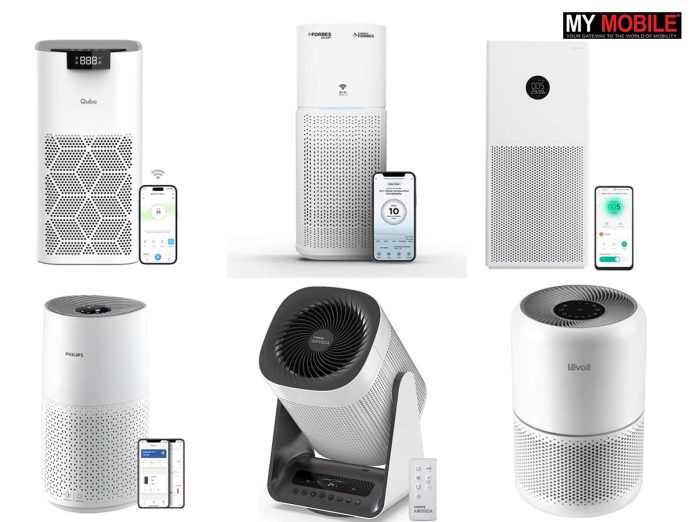
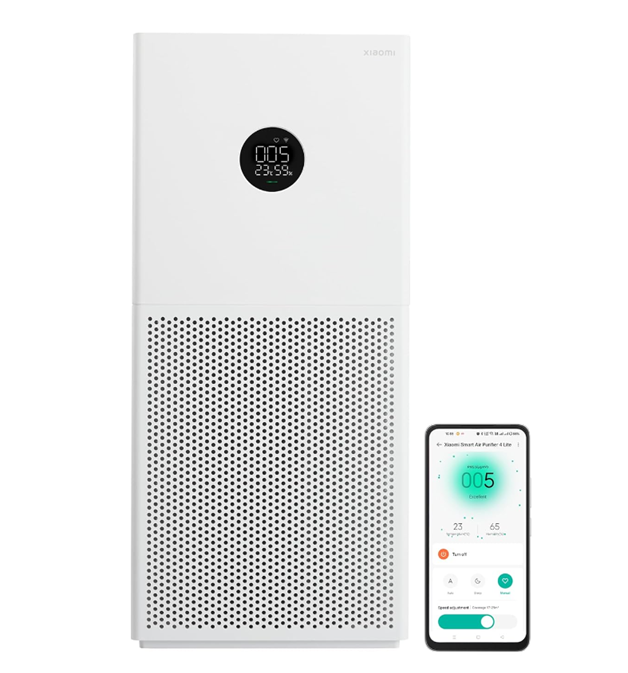
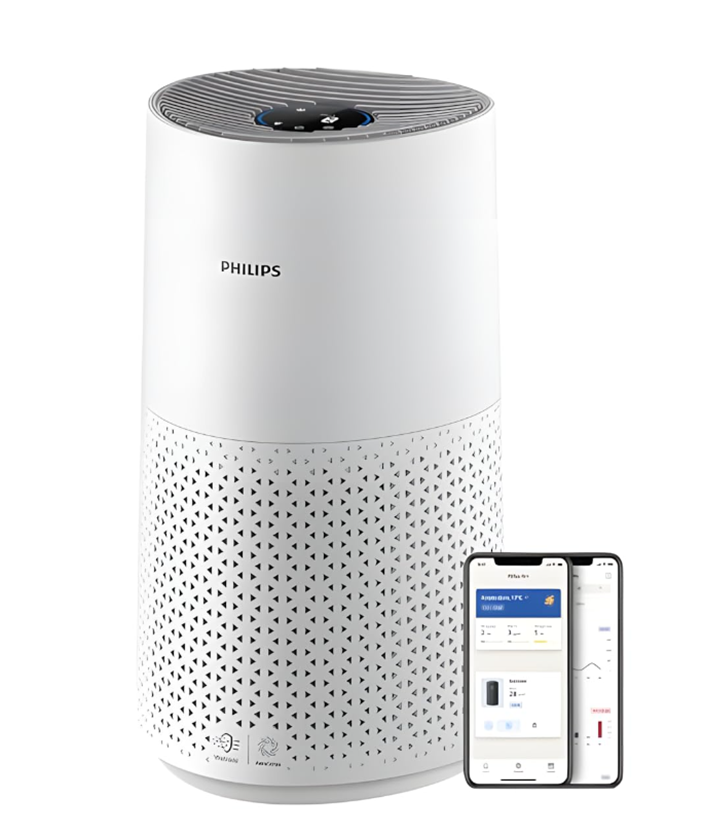
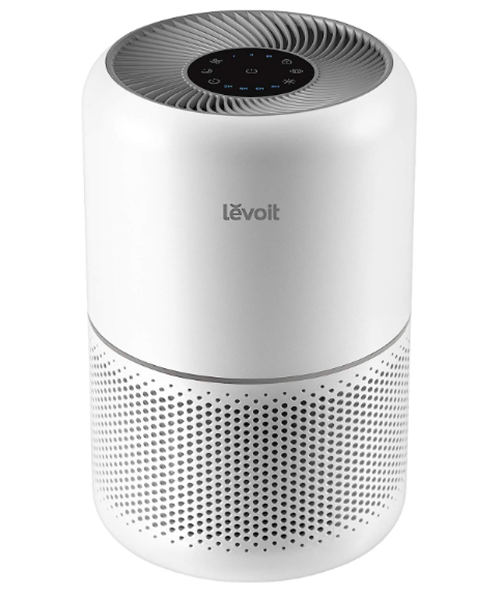
Best Air Purifiers – Eureka Forbes Smart Air Purifier 355, Coway Airmega Aim Professional Air Purifier, Xiaomi 4 Lite Smart Air Purifier, Philips Smart Air Purifier AC1715, Qubo Smart Air Purifier Q500, Dyson Air Purifier TP10 Cool Gen1, LEVOIT Air Purifier.
It is that time of the year when the national capital of India goes through its seasonal worse air quality.
Delhi’s air quality has been worsening at an alarming rate for the last few years and government agencies, despite efforts, haven’t been able to make any significant difference.
Experts have been warning about the ‘very poor’ category of AQI, which is mainly driven by stubble burning across regions and slower winds.
The air at this of the year in Delhi can cause serious health issues including coughing, sore throats, chest tightness and breathing difficulties.
It is worse for asthma patients or people with respiratory conditions.
While we may not be able to do much when outdoors, safeguarding indoor air is fairly achievable with the help of air purifiers.
To help you sort through the multiple air purifiers available in the market, we have curated a list of the best air purifiers available in the market in no particular order of preference.
So, here are some hand-picked air purifier suggestions for your house.
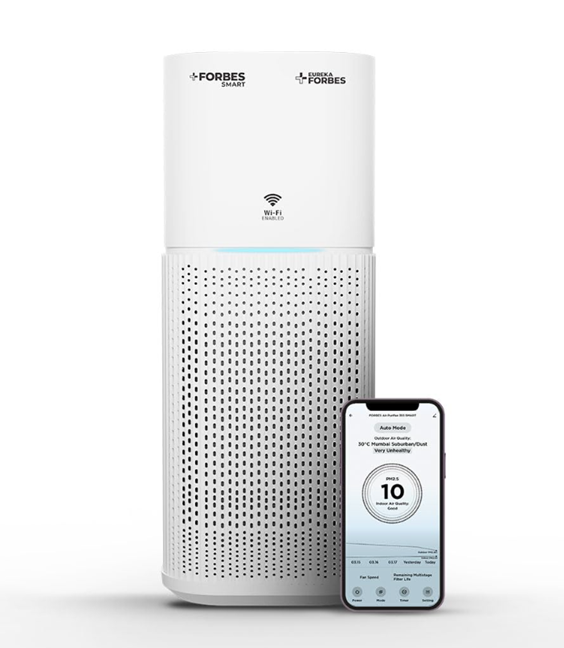
Eureka Forbes Smart Air Purifier 355
Surround 360° Air Intake Technology: Captures bacteria, dust, allergens, and odours from all directions
True HEPA H13 Filter: Removes 99.97% of impurities and particulate matter as small as 0.1μm
4-Stage Filtration System: Includes a pre-filter, activated carbon filter, True HEPA filter, and plasma filtration
WiFi Enabled: Allows for app control and remote monitoring
Covers up to 480 sq. ft.: Suitable for small to medium-sized rooms
10-Min Purification: Quickly purifies the air in just 10 minutes
Sleep Mode: Ensures quiet operation during sleep
Auto Turn Off Timer: Convenient feature for energy-saving
Price – ₹13,999
Coway Airmega Aim Professional Air Purifier
360° Air Purification: Pulls air from all directions for comprehensive purification.
True HEPA Filter: Captures 99.98% of airborne contaminants, including viruses.
Smart Mode: Automatically adjusts settings based on real-time air quality.
Built-in Air Quality Monitor: Displays air quality insights on a digital screen.
Compact Design: Ideal for small to medium-sized rooms.
Quiet Operation: Ensures minimal noise for undisturbed environments.
Filter Replacement Indicator: Lights up when filters need changing.
Price – ₹9,999
Xiaomi 4 Lite Smart Air Purifier
360° All-Round Air Intake: Efficiently captures pollutants from all directions.
Triple Layer Filtration: Includes a primary filter, True HEPA filter, and activated carbon filter.
99% Particle Removal: Eliminates particles as small as 0.1μm.
Coverage Area: Suitable for rooms up to 463 sq. ft.
Quiet Operation: Ensures minimal noise for a peaceful environment.
Odour Elimination: An activated carbon filter effectively removes common odours.
Smart Control: WiFi enabled for app control and remote monitoring.
Price – ₹9,999
Philips Smart Air Purifier AC1715
True HEPA Filter: Captures 99.97% of particles as small as 0.003 microns.
High CADR Rate: Delivers 300 m³/h clean air delivery rate (CADR).
VitaShield Technology: Removes up to 99.9% of viruses and aerosols.
App Control: WiFi enabled for app control and real-time air quality monitoring.
It comes with a new UI design focused on performance, privacy and AI.
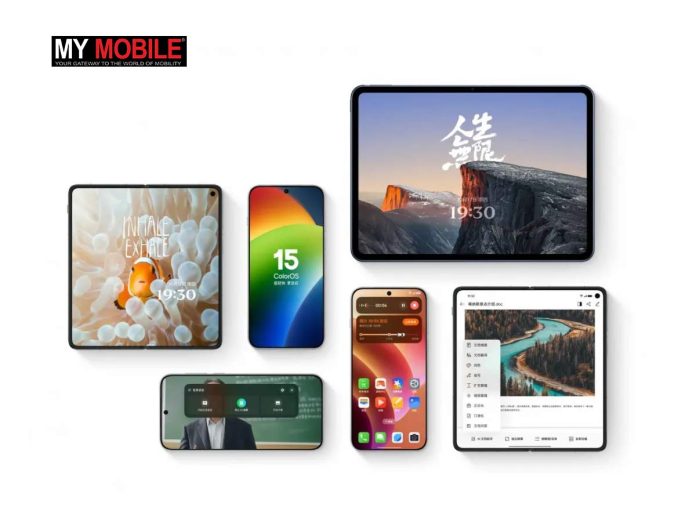
ColorOS 15 will be available out-of-the-box on the upcoming Find X8 series and OnePlus 13.
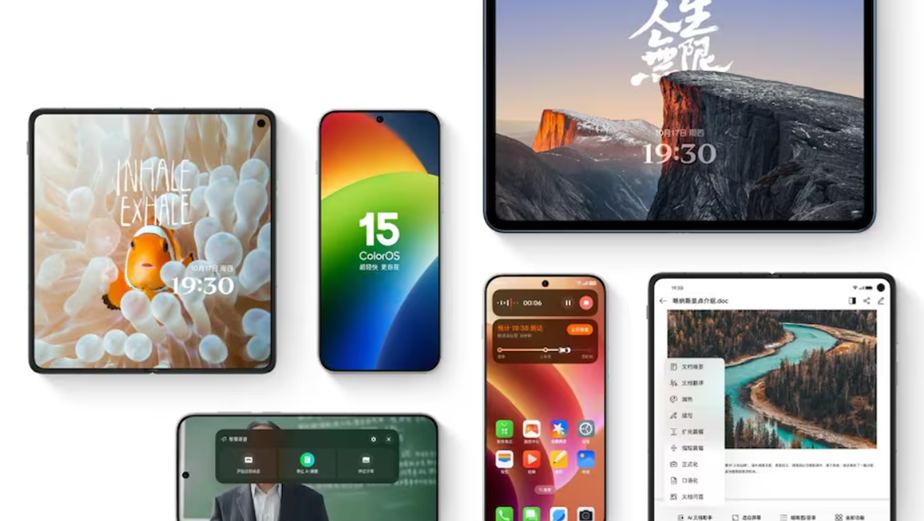
Oppe Unveiled ColorOS 15 based on Android 15 for Oppo and OnePlus smartphones. (Image credit – Oppo)
At the recently concluded 2024 Oppo Developer Conference, the Chinese manufacturer officially launched its new ColorOS 15 based on Google’s latest Android 15.
The OS introduces a completely new UI design along with a host of exciting features that are focused on performance, privacy and AI.
According to the company, ColorOS 15 will be available out-of-the-box on the upcoming Find X8 series and OnePlus 13 in the Chinese market.
Here’s everything you need to know about the newly launched ColorOS 15.
Oppo’s ColorOS 15 (Image credit – Oppo)
ColorOS 15 – New & Improved User Interface
Oppo’s newly introduced ColorOS 15 has been designed to provide a balance between functionality and aesthetics in the new UI.
The interface is now cleaner and simpler with an enhanced personalisation experience. It offers improved transitions and refined motion effects to make the apps feel smoother. There are also responsive gestures that make moving through the features more fluid.
It comes with a Snap-and-Ask feature that allows users to take a photo of an object or scene and get real-time information through the camera.
There is also an AI-powered interface that offers virtual avatars to assist in tasks such as learning new languages or telling stories.
ColorOS 15 also has an AI Image Enhancement feature. This feature improves picture quality by reducing blurs and reflections.
The AI Voice Summary can record meetings or audio files and summarize key points for easy review.
Among other AI features include AI Office Suite for document management, Super Xiaobu Assistant, AI Notes, AI translation, AI sign and AI Super Pixel for enhanced visuals.
ColorOS 15 – Enhanced Focus on Privacy
ColorOS 15 has been designed with a special focus on privacy.
It features improved encryption with a Trusted Execution Environment (TEE), which secures data transfer between the cloud and your device.
There are features like Smart Clipboard Protection and Calendar Write Permissions to provide more control over their personal information to the users.
You can now restore the original versions of edited photos.
For additional security, ColorOS 15 can automatically delete one-time passwords (OTPs) after use.
Oppo has also designed the AI Private Computing Cloud to make sure that all AI processing remains secure.
ColorOS 15 – Cross-Platform Sharing with iOS
One of the most useful features is the new cross-platform sharing feature in ColorOS.
After the latest updates, Oppo devices will now support wireless transfer of documents, videos and images with iPhones. This will make it easier to transfer files across different platforms.
ColorOS 15 – Enhanced Performance
ColorUS lets games and video calls maintain 116.7fps on average. (Image credit – Oppo)
With ColorOS 15, Games and video calls can now maintain an average of 116.7fps offering a smoother experience.
It also makes installing apps 26 per cent faster. Meanwhile, apps themselves load 50 per cent quicker. Responsiveness has also improved by 18 per cent and animations are 40 per cent more stable.
Oppo has also enhanced the dynamic cache allocation by three times.
ColorOS 15 – Release and Compatible Smartphones
The entire ColorOS release timeline and list of compatiblesmartphones with the update are as follows:
Months
Upcoming Smartphone Releases compatible with ColorOS
Q1. What is the basis for ColorOS 15 and on which devices will it be available first?
Answer. ColorOS 15 is based on Google’s latest Android 15 and will be available out-of-the-box on the upcoming Find X8 series and OnePlus 13 in the Chinese market.
Q2. What AI features are included in ColorOS 15?
Answer. ColorOS 15 includes AI features like Snap-and-Ask, AI Image Enhancement, AI Voice Summary, AI Office Suite, Super Xiaobu Assistant, AI Notes, AI translation, AI sign, and AI Super Pixel.
Q3. How does ColorOS 15 enhance privacy for users?
Answer. It features improved encryption with Trusted Execution Environment (TEE), Smart Clipboard Protection, Calendar Write Permissions, automatic deletion of OTPs after use, and AI Private Computing Cloud.
Infinix Zero Flip: Features a 6.9-inch flexible AMOLED LTPO display, MediaTek Dimensity 8020 chipset, dual 50MP cameras and 4720mAh battery with 70W fast charging.
Tecno Phantom V Flip: Sports a 6.9-inch AMOLED display, MediaTek Dimensity 8050 processor, 64MP main camera and 4000mAh battery with 45W fast charging.
Infinix Zero Flip price in India is ₹49,999.
Tecno Phantom V Flip price in India is ₹52,999. Amazon is currently offering a ₹25,000 limited-period coupon, taking down its effective price to ₹27,999 only.
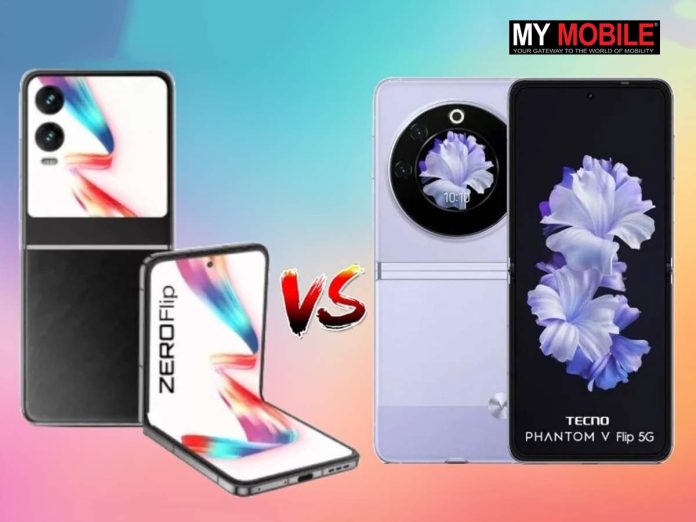
To help you understand where both phones stand in comparison to each other, here’s an in-depth battle of two affordable flip phones in the market.
Infinix Zero Flip vs. Tecno Phantom V Flip – Key Specs
Specs
Infinix Zero Flip
Tecno Phantom V Flip
Processor
MediaTek Dimensity 8020 Octa-core
MediaTek Dimensity 8050 Octa-core
RAM
8 GB RAM
8 GB RAM
Storage
512 GB Storage
256 GB Storage
Main Display
6.9″ (17.53 cm) 120Hz LTPO AMOLED
6.9″ (17.53 cm) 120Hz AMOLED
Cover Display
1.32” Circular AMOLED Display
3.64” AMOLED Cover Display
Camera
50+50 MP Rear
50 MP Front
64+13 MP Rear
32 MP Front
Battery
4720 mAh
4000 mAh
Charging
70W Fast Charging
45W Fast Charging
OS
Android v14 on XOS
Android v13 on HiOS
IP Rating
No
No
Fingerprint Sensor
Yes, Side
Yes, Side
Face ID
Yes
Yes
Infinix Zero Flip vs. Tecno Phantom V Flip – Price
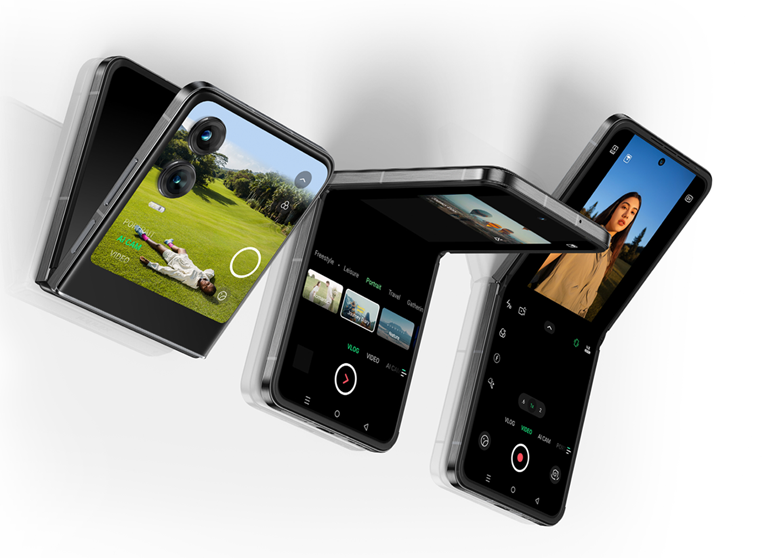
Infinix Zero Flip has a more traditional form factor. (Image Credit – Infinix)
Infinix’s recently launched Zero Flip is available in a single variant of 8GB RAM and 512 GB of internal storage at an introductory price of ₹49,999.
On the other hand, the Tecno Phantom V Flip is available at ₹52,999 for the similar 8GB RAM variant, which comes with 256 GB internal storage.
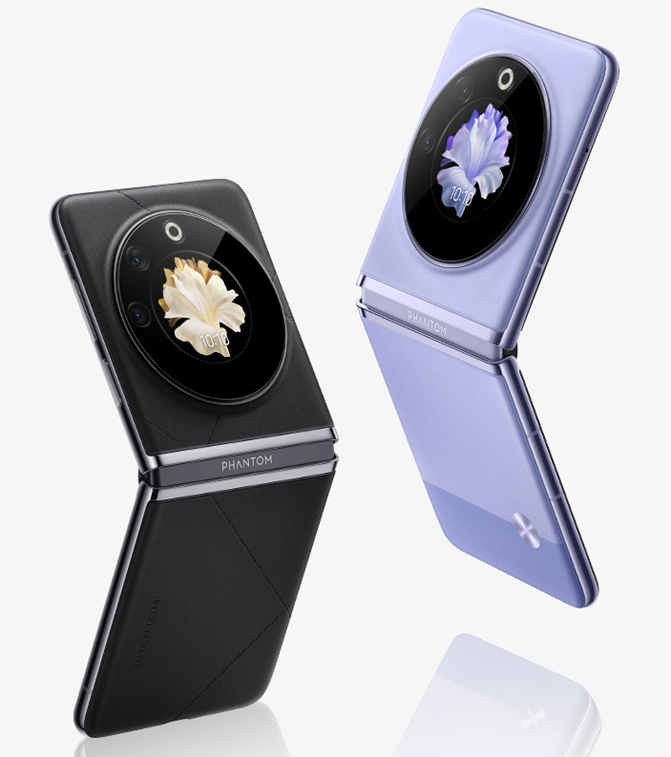
Tecno Phantom V Flip comes in a 3D curved leather design. (Image credit – Tecno)
But here’s a catch if you compare these phones purely on the basis of price. While both phones have some bank offers for additional discounts, Amazon’s Great Indian Festival offer makes Phantom V Flip available at almost half its current price.
Amazon is offering a ₹25,000 limited-period coupon on the Tecno Phantom V Flip. This limited-period coupon makes the Tecno Phantom V Flip available at an effective price of ₹27,999 only. This makes the Phantom V Flip an attractively cheaper option compared to the Infinix Zero Flip.
The Amazon offer on Tecno Phantom V Flip is available till 22 October 2024 only.
Infinix Zero Flip vs. Tecno Phantom V Flip – Design
The Infinix Zero Flip defies the common perception that Infinix doesn’t make premium phones. The phone looks and feels premium in its design and build quality. It comes in a flat metal frame with a metal hinge cover. The phone features a stylish pattern along with the Infinix logo.
Infinix Zero flip tested for over 4,00,000 folds to provide maximum durability. (Image credit – Infinix)
The Zero-Gap Hinge design is a notable feature that promises to withstand 400,000 folds.
The minimalist yet appealing aesthetic works well for the overall design here. One disadvantage is the absence of an IP rating.
The phone is protected by Gorilla Glass 7 and comes in uniform bezels.
Tecno Phantom V Flip tested to be creaseless even after 2,00,000 flips. (Image credit – Tecno)
It comes in a vegan leather exterior, which looks great and offers a good grip as well.
Tecno has a drop-shaped hinge with a ‘Hoverlock’ design that lets the phone open at different angles from 30 degrees to 150 degrees.
The Phantom V Flip has a circular cover display that looks very similar to a smartwatch display. It houses the two cameras.
The fingerprint scanner is on the right side of the phone and is easily reachable with one hand.
Similar to Infinix Zero Flip, Phantom V Flip has no IP rating, so users will have to be extra careful of splashes and dust.
Infinix Zero Flip vs. Tecno Phantom V Flip – Display
Infinix Zero Flip – Display
The Infinix Zero Flip 5G features a 6.9-inch flexible AMOLED with an LTPO panel. The display offers 1080×2640 pixels, 120Hz refresh rate, 1,400 nits peak brightness, and UTG protection.
The cover display has a 3.6-inch AMOLED panel with 1056×1066 pixels resolution, 120Hz refresh rate, and 1100 nits brightness.
To compare, we have the Tecno Phantom V Flip 5G with a 6.9-inch AMOLED display with Full HD Plus screen resolution and 120Hz refresh rate.
The screen offers a peak brightness of 1000 nits but does not have a protective layer. For the cover display, it has a unique 1.32-inch circular AMOLED panel with a peak brightness of 800 nits and Gorilla Glass 5 protection.
It can be seen here that the Infinix Zero Flip 5G takes the lead in terms of display. With a protective layer, large cover display and bright inner display, the Infinix Zero Flip 5G takes the lead in the display department.
The cover display is not only huge, but it also has high brightness, the latest Gorilla Glass Victus 2 protection and a 120Hz refresh rate.
Moreover, the cover display of Zero Flip has a more traditional form factor compared to the Phantom V Flip’s circular display.
This means users can access over 100 optimised apps on the Infinix Zero Flip 5G, which might not be the case with Phantom V Flip.
Infinix Zero Flip vs. Tecno Phantom V Flip – Hardware and Software
In terms of hardware, Infinix Zero Flip and Tecno Phantom V Flip stand on very similar rankings.
The newly launched Infinix Zero Flip 5G is powered by a 6nm MediaTek Dimensity 8020 chipset that comes with Mali-G77 MP9 GPU.
The processor is paired with 8GB LPDDR4X RAM, 8GB Extended RAM, and 512GB UFS 3.1 storage.
In comparison, the Tecno Phantom V Flip 5G features a slightly more powerful 6nm MediaTek Dimensity 8050 processor with Mali-G77 MP9 GPU.
The smartphone packs a faster 8GB LPDDR5X RAM without Extended RAM and a smaller 256GB UFS 3.1 internal storage.
The aspect where the Infinix Zero Flip offers an advantage is the almost double internal storage. Moreover, the extended RAM also allows users to use the 8GB onboard storage as additional RAM if needed.
For software, Zero Flip runs on XOS 14 based on Android 14. The phone is eligible for two OS updates and three years of security patches.
Meanwhile, Tecno Phantom V Flip 5G comes with HIOS 13.5 based on Android 13. The brand has assured two years of OS and three security updates.
Infinix Zero Flip vs. Tecno Phantom V Flip – Camera Specs
The Infinix Zero Flip 5G has a 50-megapixel OIS primary lens and a 50-megapixel ultrawide camera. The main display has a 50-megapixel selfie camera with PDAF.
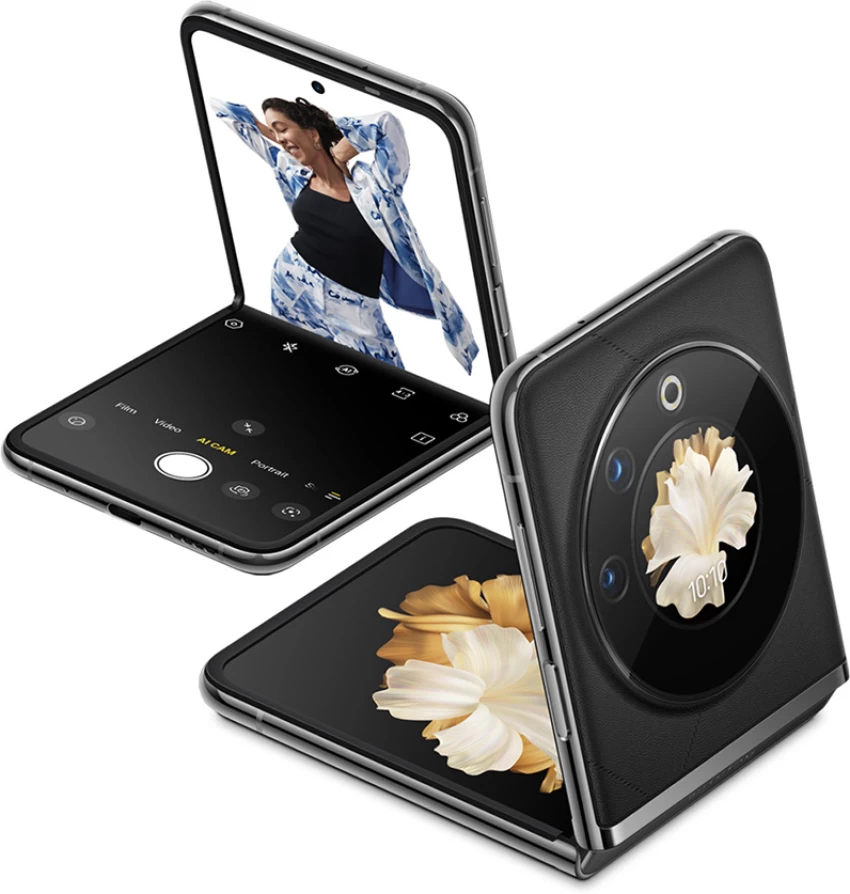
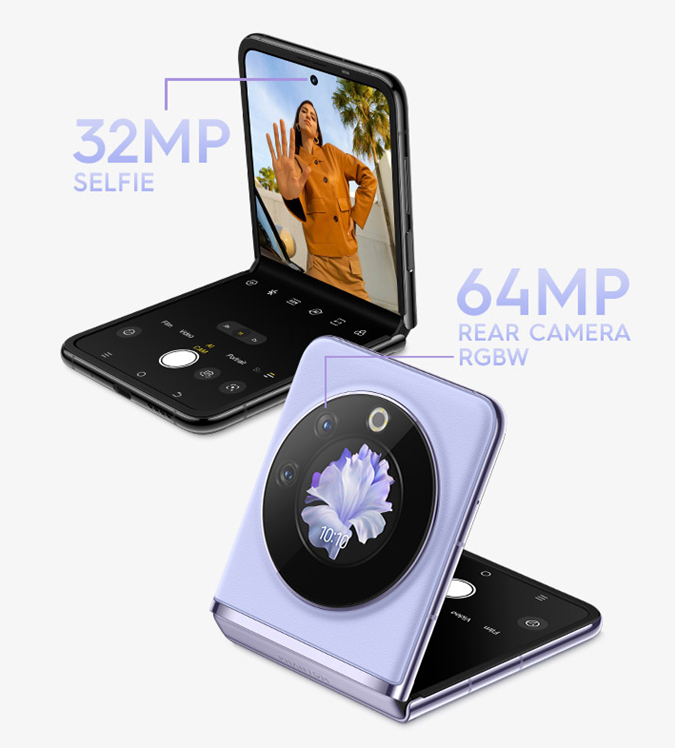
Tecno Phantom V Flip camera features (Image credit – Tecno)
In comparison, the Tecno Phantom V Flip 5G also has a dual camera setup, consisting of a 64-megapixel main camera and a 13-megapixel ultrawide-angle lens.
There is a 32-megapixel selfie camera inside the phone.
Overall, we can see that the Infinix Zero Flip 5G leads the way in terms of cameras. It features a powerful sensor.
You get two 50-megapixel cameras with OIS for the primary system and a 50-megapixel selfie camera with PDAF.
Tecno Phantom V Flip camera features (Image credit – Tecno)
Infinix Zero Flip vs. Tecno Phantom V Flip – Battery Specs
The Infinix Zero Flip 5G packs a 4720mAh battery that supports 70W wired fast charging.
Meanwhile, the Tecno Phantom V Flip 5G packs a 4000mAh battery with 45W wired fast charging.
Out of the two, the Infinix Zero Flip 5G is the better phone with a bigger battery capacity and faster charging support.
Verdict – Infinix Zero Flip vs. Tecno Phantom V Flip
If we consider specs and available features only, the Infinix Zero Flip has an edge over the Tecno Phantom V Flip.
Zero Flip has a brighter display and larger cover display, almost double internal storage, better camera specs and a bigger battery capacity with better fast charging.
However, Tecno Phantom V Flip with its current limited-period Amazon couponis a much more affordable option, effectively half the price of its competitor.
All in all, if you only consider the phone specs, the Zero Flip looks like a better option. However, if you want to save money the Phantom V Flip is a much more cheaper option at the moment.
FAQs
Q1. What is the display configuration of the Tecno Phantom V Flip?
Answer. The Tecno Phantom V Flip 5G sports a 6.9-inch AMOLED display with Full HD+ resolution and a 120Hz refresh rate, along with a 1.32-inch AMOLED cover display.
Q2. What camera setup does the Tecno Phantom V Flip feature?
Answer. It has a dual-camera setup with a 64MP main camera, a 13MP ultrawide-angle lens and a 32MP selfie camera.
Q3. What processor powers and memory options of the Tecno Phantom V Flip?
Answer. It features a 6nm MediaTek Dimensity 8050 processor with 8GB LPDDR5X RAM and 256GB UFS 3.1 internal storage.
Q4. What are the display features of the Infinix Zero Flip?
Answer. The Infinix Zero Flip 5G features a 6.9-inch flexible AMOLED LTPO panel with 1080×2640 pixels resolution and a 120Hz refresh rate. The cover display is a 3.6-inch AMOLED panel with 1056×1066 pixels resolution and a 120Hz refresh rate.
Q5. What camera features of Infinix Zero Flip?
Answer. It has a dual-camera setup with two 50MP sensors (primary and ultrawide) with OIS and a 50MP selfie camera with PDAF.
Q6. What processor and memory does Infinix Zero Flip have?
Answer. Infinix Zero Flip is powered by a 6nm MediaTek Dimensity 8020 chipset, paired with 8GB LPDDR4X RAM, 8GB Extended RAM and 512GB UFS 3.1 storage.
Realme has officially launched its first wireless headphones in India.
The Realme Techlife Studio H1 headphones price in India is ₹4,499.
It is available in Midnight Magic, Crimson Beats and Ivory Beats colour variants.
Realme has just entered the wireless headphone category with Realme Techlife Studio H1. Priced at ₹4,499, the headphones will be available for sale starting 21 October 2024 across various retail channels including realme.com, Flipkart, Amazon and Myntra.
Meanwhile, we have managed to get our hands on the newly unveiled wireless headphones by Realme.
At first glance, TechLife Studio H1 look cool and seems to be packed with features. However, in case you are wondering if should get a pair for yourself, here’s our in-depth review.
Realme TechLife Studio H1 – Key Features
Realme TechLife Studio H1 – Key Features
40mm Dynamic Driver
43dB Hybrid Active Noice Cancelling
Certified by Hi-Res LDAC
Spacial Audio Effect
80ms ultra-low latency
Dual Device Connection
70 Hours Long Play Time
600mAh Battery
Bluetooth v5.4
Realme TechLife Studio H1 – Pros & Cons
Pros
Cons
● Good design and build quality
● Foldable form
● Good spatial audio effect
● Lightweight
● Comfortable fit
● Excellent battery backup
● Smooth dual device connection
● Useful function buttons
● LDAC Audio Codec; Hi-res Certification
● ANC is not too effective
● No App support
● No 3.5mm Jack
● Sound leakage issue
● No IP Rating
Realme TechLife Studio H1 – Unboxing
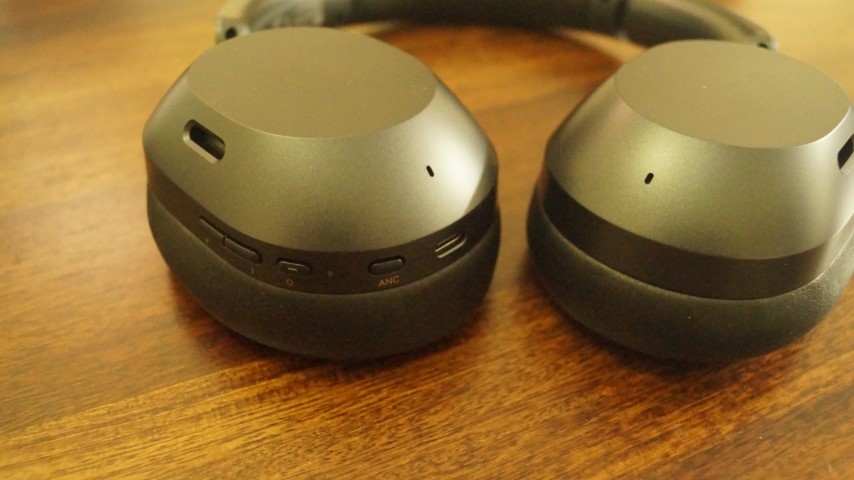
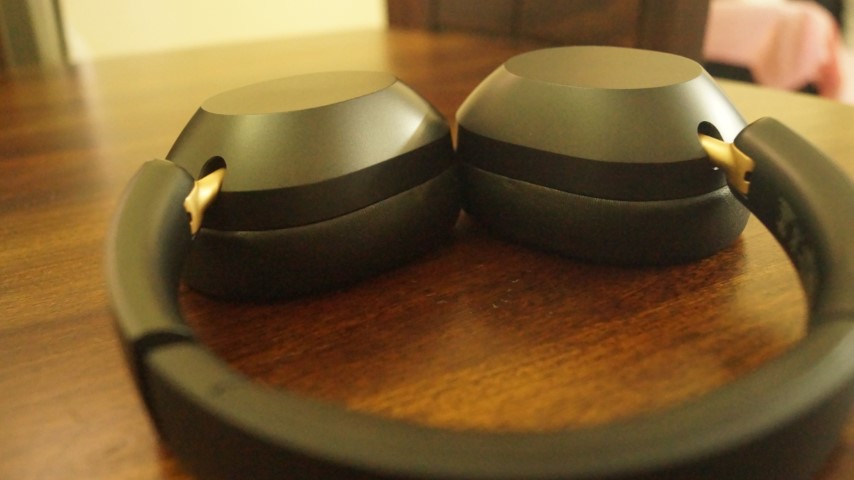
Realme TechLife Studio H1 – Design, Build and Fit
Realme TechLife Studio H1 – Design, Build and Fit
Foldable
Sweat Proof
Power Indicator and Connection Status Indicator
Controls Volume Control, On-off Control and ANC Control
Circumaural – the headphones go around the ears with larger pads
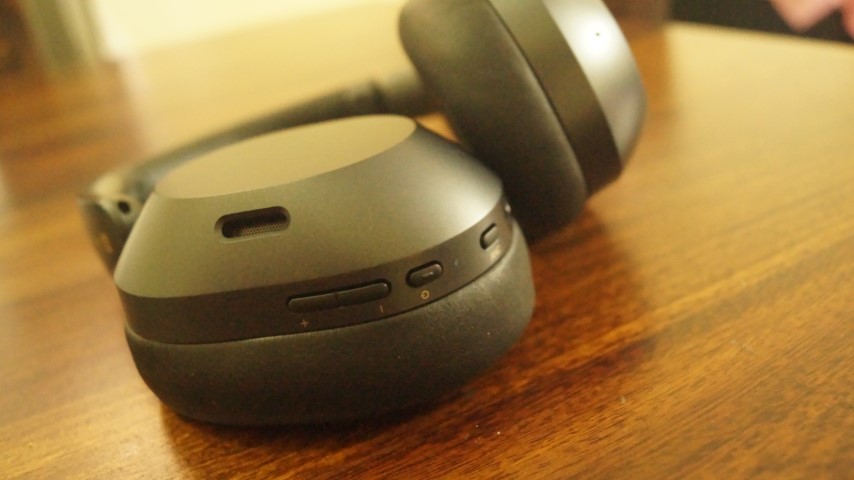
The new Realme TechLife Studio H1 have a very classic design that gives off stylish vibes without being too loud in its design element. It immediately stood out for us design-wise.
The matte metal surface gives a sleek and modern look. The headphones feel premium in both looks and build quality.
What also needs to be appreciated is how lightweight Realme has managed to make these headphones. These are very comfortable to keep on your head even for a longer time. Realme claims to have used skin-friendly materials.
We didn’t experience any discomfort even after wearing them for extended periods.
It has a circumaural design with large ear pads that go around your ears. The sponge memory cushions feel incredibly soft and snug. We actually didn’t feel any issue with the fit of the first Realme headphones.
The headband is scalable. So, you can easily adjust it to fit just right effortlessly. Moreover, the collapsible metal shaft feels solid and is durable.
It is easily foldable, which is perfect for travelling. We also found the function buttons like the volume and on-off controls easy to use. Every control is conveniently placed.
The headphones also have power and connection status indicators. Both are useful without being intrusive.
Overall, Realme TechLife Studio H1 is a stylish set of headphones and is surely impressive for Realme’s first attempt in the headphone space.
We found the sound quality of the Realme TechLife Studio H1 well-balanced. It uses a 40mm Mega Dynamic Bass Driver for promising users a powerful and punchy bass effect.
We tried to play a variety of music including upbeat tracks or something more mellow. The clarity and richness of sound were good.
However, it now seems that Realme has tried to keep every type of user in mind while finetuning the audio settings. While this is a good thing, it can also be an issue for certain users.
For starters, the sound might not immediately feel loud or deep. You can increase the volume easily but that creates another issue. The headphones have severe sound leakage issues.
The headphones also have support for the LDAC audio codec. Everything is clearer and offers from the crisp highs to the balanced mids.
We didn’t experience any sound distortion for the entire time we used the products.
Realme TechLige Studio H1 also has an active noise cancellation feature. It offers 43dB Hybrid Noise Cancellation with three levels of Smart ANC. The overall ANC performance is decent and nothing extraordinary.
We really feel the ANC effect could have been a lot better.
It also has a spatial audio effect that adds an immersive listening experience. The spatial effect makes the sound feel like it is coming from all around you.
Realme TechLife Studio H1 – Features
Realme TechLife Studio H1 – Features
Bluetooth 5.4 with 10m range
Dual device connection
80ms ultra-low latency
The Realme TechLife Studio H1 packs some useful features as well. Realme has added a dual-device connection feature for convenience.
This feature lets you pair the headphones with two devices at once.
We tried connecting with our mobile and laptop. The connection was smooth and effortless.
Moreover, you can anytime switch between the two connected devices without disconnecting and reconnecting every time. It is a convenient feature to have if you have to do a lot of multitasking.
It has Bluetooth v5.4 connectivity. We didn’t experience any connection drops or lag while we were using the headphones. Pairing the device was quick and simple.
For those who enjoy gaming or watching videos, TechLife Studip H1 comes with the 80ms ultra-low latency mode. It keeps the sound perfectly in sync with the action on the screen of the video game.
This feature makes the gaming experience feel more immersive.
As we thoroughly tested the feature, we didn’t notice any audio delays at all.
Realme TechLife Studio H1 – Battery Life
Realme TechLife Studio H1 – Battery Life
5V DC
1 Rechargeable Li-ion Battery
600mAh Battery Capacity
5 hours Charging Time
The newly launched Realme TechLife Studio H1 has a 600 mAh battery that promises an impressive 70 hours of playback on a single charge. What we can say about the battery life is that it looks impressive.
We did not charge the headphones once as we used it thoroughly for this review.
If you are an average listener who indulges in music streaming for a few hours every day, TechLife Studio H1 on a single charge can go on for a week or more easily. Even with turning the ANC feature on, battery performance remains solid. This honestly is very impressive for a headphone of this segment.
As for charging, it only takes about 1.5 hours to fully charge.
Verdict – Should You Buy Realme TechLife Studio H1?
Verdict – Should You Buy Realme TechLife Studio H1?
If you’re looking for stylish, comfortable headphones with decent sound quality and long-lasting battery life, the Realme TechLife Studio H1 is a great choice.
Priced at ₹4,499, TechLife Studio H1 features 43dB ANC, dual device connection and low latency mode.
In short, these headphones offer both convenience and versatility. The 70-hour battery life is a standout feature and makes them perfect for everyday use.
Overall, Realme TechLife Studio H1 deliver fantastic value, especially at this price point.
realme Techlife Studio H1
Colors
Price
Offer
Offer Price
Sale Details
Red, White and Black
INR 4,999
INR 500
INR 4,499
The first sale is scheduled from 21st October 2024, 12 Noon onwards
Available on realme.com, Flipkart, Amazon, Myntra & mainline channels
Key Highlights: realme Techlife Studio H1
Key Highlights: realme Techlife Studio H1
40mm Mega Dynamic Bass Driver
The 40mm Mega Dynamic Bass Driver in the realme Techlife Studio H1 headphones significantly enhances the audio experience. This large driver size allows for a broader soundstage, meaning it can produce a wider range of frequencies more accurately. The result is a richer, fuller sound with deeper bass and clearer treble. Whether you’re listening to music, watching movies, or playing games, this feature ensures a powerful and immersive audio experience that truly brings your media to life.
LDAC Audio Codec and Hi-res Certification
The realme Techlife Studio H1 headphones come with LDAC Audio Codec and Hi-res Certification that contribute to superior sound quality.
LDAC is a type of audio coding technology developed by Sony that enables the transmission of High-Resolution (Hi-Res) audio content, even over a Bluetooth connection. It can transfer data at up to three times greater speed, providing an enhanced wireless listening experience.
The Hi-res Certification means that these headphones have met high standards of audio performance, capable of reproducing the full range of sound from recordings mastered from better-than-CD-quality music sources.
The 43dB Hybrid Noise Cancellation and 3 Level Smart ANC (Active Noise Cancellation) provide an uninterrupted and immersive audio experience. The 43dB Hybrid Noise Cancellation feature uses both feedforward and feedback microphones to detect and neutralize external noise, ensuring that only the sound you want reaches your ears.
This is further enhanced by the 3 Level Smart ANC, which allows users to adjust the level of noise cancellation according to their environment or preference. Whether you’re in a noisy cafe, a bustling street, or a quiet room, these features ensure that you can enjoy your music, podcasts, or calls without unwanted distractions.
Spatial Audio Effect
Spatial Audio Effect
The realme Techlife Studio H1 features the Spatial Audio Effect technology, which works by manipulating the audio signals to mimic the way we perceive sound in real life. This creates the impression that sound is coming from different directions and distances, resulting in an immersive and lifelike listening experience, similar to being in a live concert or a movie theater.
80ms Ultra-Low Latency
The realme Techlife Studio H1 headphones come equipped with the 80ms ultra-low latency feature, ensuring virtually no delay between the audio you hear and the corresponding visuals on your smartphone. This is particularly important when watching videos or playing games, where synchronicity between sound and picture is crucial for an immersive experience. With a latency of just 80 milliseconds, these headphones deliver sound in near real-time, ensuring that what you see and what you hear are perfectly in sync.
Reasons to Buy
Reasons to Buy
Powerful Sound
Long Battery Life
Dual Device Connection
Comfortable Design
Hi-Res Certification
Reasons Not to Buy
Reasons Not to Buy
Mediocre ANC performance
No App support
Sound leakage issue
No IP Rating
Leading Alternatives
Sony WH-CH520
Sony WH-CH520
Key features –
On-Ear Bluetooth Headphones with Mic.
Upto 50 Hours Playtime
DSEE Upscale
Multipoint Connectivity/Dual Pairing
Voice Assistant App Support for Mobile Phones
Price – ₹3,988
JBL Tune 760NC
JBL Tune 760NC
Key features –
Wireless Over-Ear Active Noise Cancellation Headphones with Mic
Upto 50 Hours Playtime
Multi-Device Connectivity
Pure Bass
AUX & Voice Assistant
Support for Mobile Phones
Price – ₹3,999
boAt Nirvana 751
boAt Nirvana 751
Key features –
ANC Hybrid Active Noise Cancelling Bluetooth Wireless
Over-ear headphones with Up to 65H Playtime
ASAP Charge
Ambient Sound Mode
Immersive Sound
Carry Pouch(Gunmetal Grey)
Price – ₹2,999
FAQs
Q1. How long does the Realme TechLife Studio H1 battery last?
Answer. The headphones offer up to 70 hours of playback on a single charge, with a full recharge taking just 1.5 hours.
Q2. Does the Realme TechLife Studio H1 support noise cancellation?
Answer. Yes, it features 43dB Hybrid Noise Cancellation with three adjustable ANC levels.
Q3. Can I connect the headphones to two devices at once?
Answer. Yes, the dual-device connection allows seamless switching between two devices.
Q4. Is the Realme TechLife Studio H1 comfortable for long listening sessions?
Answer. Absolutely, with its soft memory foam cushions, scalable headband, and skin-friendly materials. It’s designed for extended comfort.
Q5. What is the latency of the Realme TechLife Studio H1?
Answer. It has an 80ms ultra-low latency mode, ideal for gaming and watching videos without audio lag.
Elon Musk has committed to bringing Starlink Internet to India.
His comments came after the Indian government decided to allocate spectrum for satellite broadband administratively.
Starlink offers fast and reliable internet using satellites.
Starlink provides high-speed internet to the most remote places on earth. (Image credit – Starlink)
Starlink Internet Coming to India
Elon Musk the owner of Starlink has recently expressed his commitment to “serve the people of India” through a post on X (previously Twitter).
Musk posted on X that Starlink “will do its best to serve the people of India” in response to user @DogeDesigner posting a news story reporting that India’s government will allot spectrum for satellite broadband administratively and not via auction.
Much appreciated! We will do our best to serve the people of India with Starlink.
— Elon Musk (@elonmusk) October 15, 2024
This statement comes after the Indian government’s decision to allocate spectrum for satellite broadband administratively.
The auction route was advocated by Mukesh Ambani, the chairman of Reliance Industries.
Communications Minister Jyotiraditya Scindia also announced this week that the allocation of spectrum for satellite services would be done administratively, with the cost determined by the telecom regulator.
“Satellite spectrum across the world is allocated administratively. India is not doing anything different from the rest of the world,” Scindia said.
He further added, “If you do decide on auctioning, then you will be doing something that is different from the rest of the world.”
This announcement along with Musk’s comments to provide Internet services in India through Starlink now sets the stage for an intense competition between Starlink and Indian telecom companies such as Reliance Jio and Bharti Airtel.
After a very public back and forth, Elon Musk’s Starlink has come closer to the win in the fight for India’s satellite broadband space. The Indian government clarified that the spectrum will be allocated and not auctioned as was advocated by Indian billionaires Mukesh Ambani and Sunil Mittal for a while.
“Those satellite companies who have ambitions to come into urban areas, serving elite retail customers just need to take the telecom licences like everybody else, be bound to the same conditions,” Mittal said at an Industry event in New Delhi this week.
In a statement following Mittal’s remarks, Airtel said, “Satellite operators who want to provide services to urban areas and retail customers indeed need to go through the regular licensing process of any country, and in this case, India, to obtain a license; buy the spectrum; undertake all the obligations, including rollout and security; pay their license fees and taxes and they would be welcomed by the telecom fraternity.”
Starlink – All You Need to Know About Elon Musk’s Satellite Internet Service
Living in a remote area with unreliable internet can be a nightmare. This is where Starlink created by Elon Musk’s SpaceX is a game changer.
Starlink provides fast and reliable internet to even the most isolated places on Earth using a network of satellites.
Starlink is connecting more than 4M people with high-speed internet across 100+ countries, territories and many other markets.
Thank you to all of our customers around the world! 🛰️🌎❤️ → pic.twitter.com/sk7wucihxH
— Starlink (@Starlink) September 26, 2024
Here’s everything you need to know about the service –
Starlink’s Internet Service:Uses satellites in low Earth orbit to provide fast, reliable internet even in remote areas.
How It Works:Unlike traditional internet that relies on cables, Starlink beams data from space without the need for any ground infrastructure.
Easy Setup: Users need a Starlink kit (satellite dish, Wi-Fi router), which can be self-installed without professional help.
Speeds and Data: Offers internet speeds between 25 Mbps and 220 Mbps with unlimited data on most plans.
Global Reach: Starlink is available in countries like the US, Canada, the UK, Germany, France and Australia. It’s expanding to places like Spain, Italy and Mexico, and has a presence in Latin America, with Chile among the first to benefit. Countries like Norway, Sweden, Belgium and Brazil have also joined the growing list of Starlink users.
Potential for India: Starlink could provide reliable internet to rural and remote areas in India where traditional broadband is unavailable or unreliable.
No Data Caps: Most residential plans offer unlimited data with no caps, unlike many satellite services that throttle speeds after reaching a data limit.
Self-Installation:No professional installation is required; users set up the dish and router themselves.
Cost:Equipment and monthly fees may be higher than local providers but offer value in areas without alternative internet options. The cheapest Starlink monthly plan starts at around $50 (Approx INR 4,200)
Flexibility: Starlink offers no long-term contracts giving users the flexibility to opt in and out.
Digital Divide: If introduced in India, Starlink could help bridge the connectivity gap in rural regions.
FAQ
Q1. What is Starlink’s internet service and how does it work?
Answer. Starlink provides fast, reliable internet using satellites in low Earth orbit, beaming data from space and bypassing the need for ground infrastructure.
Q2. What are the expected internet speeds and data plans offered by Starlink?
Answer. Starlink offers internet speeds between 25 Mbps and 220 Mbps with unlimited data on most plans.
Q3. In which countries is Starlink available and expanding?
Answer. Starlink is available in countries like the U.S., Canada, the U.K., Germany, France, and Australia. It’s expanding to places like Spain, Italy, Mexico, Norway, Sweden, Belgium and Brazil and has a presence in Latin America.
Q4. What is the setup process for Starlink, and does it require professional installation?
Answer. Users need a Starlink kit (satellite dish and Wi-Fi router), which can be self-installed without professional help.
Q5. How could Starlink impact internet access in India?
Answer. Starlink could provide reliable internet to rural and remote areas in India where traditional broadband is unavailable or unreliable, helping bridge the digital divide.