Realme Narzo 100 Lite 5G leak reveals the phone to be priced between ₹13,000 – ₹15,000.
Leak confirms 6.8-inch FHD+ 144Hz display, MediaTek Dimensity 6300 chip, 7,000mAh battery with bypass charging, IP64 rating and MIL-STD-810H durability.
The phone is likely to launch in 4GB/64GB, 4GB/128GB and 6GB/128GB options.
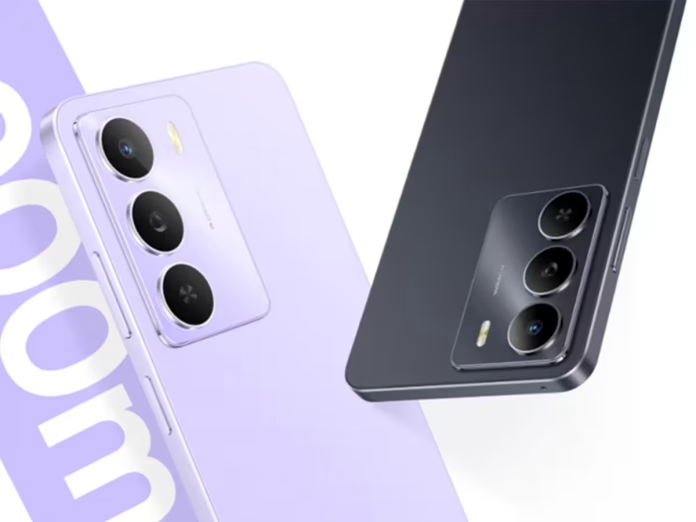
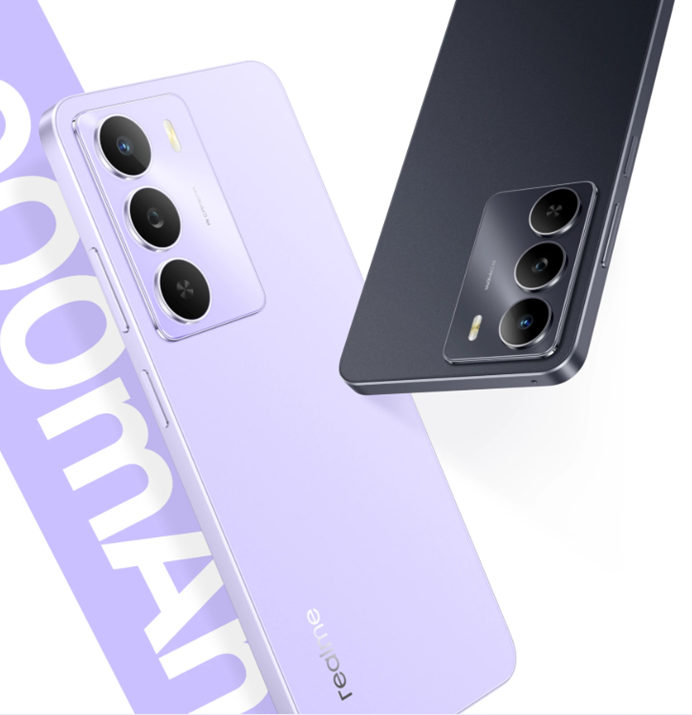
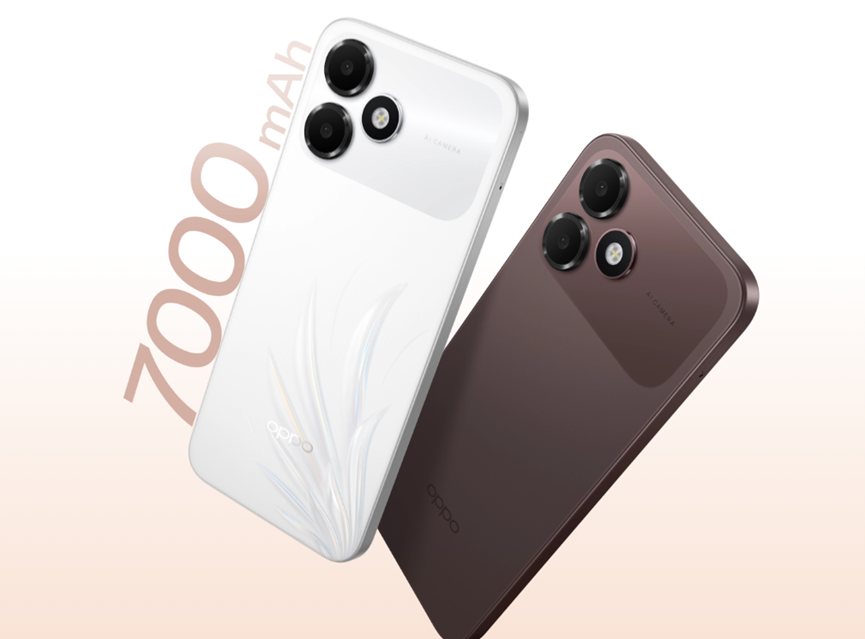
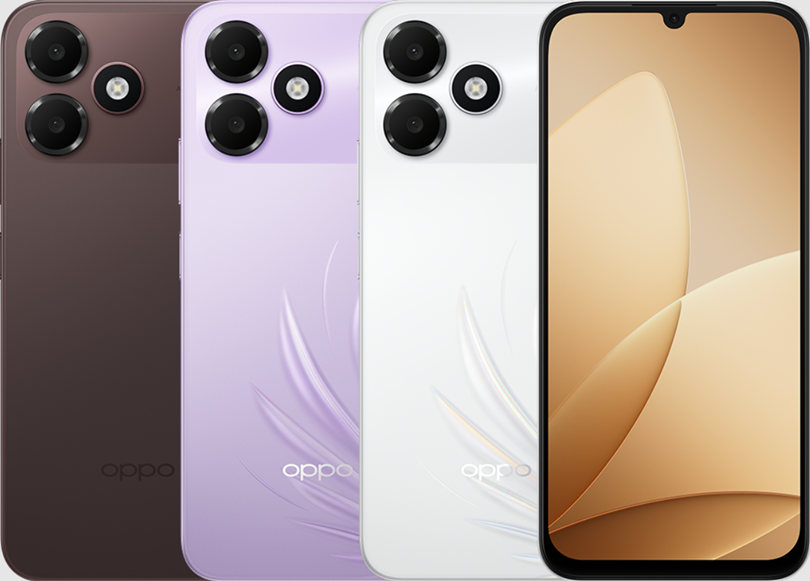
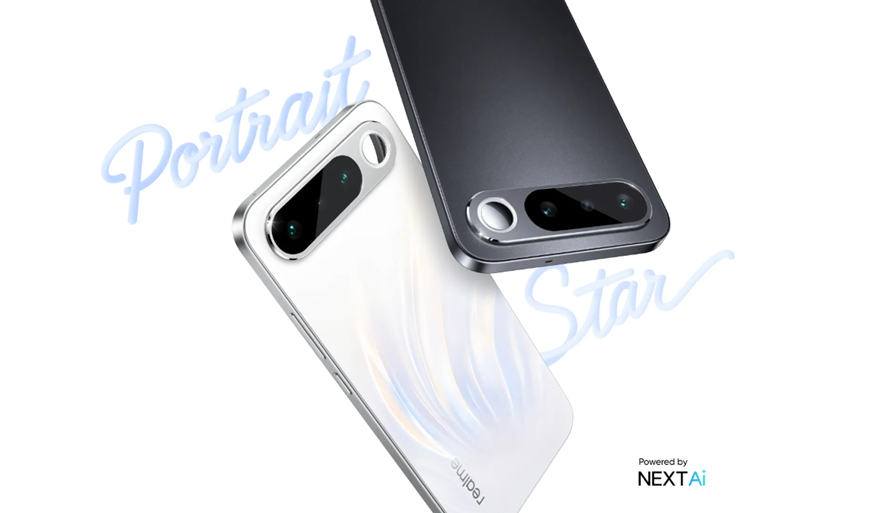
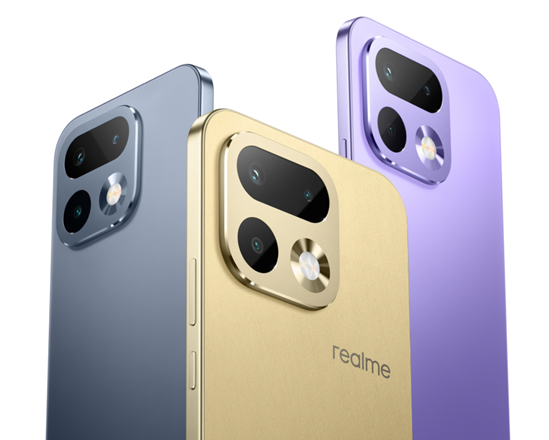
Realme Narzo 80 Lite 5G in the picture for reference. (Image credit – Realme)
Realme is reportedly gearing up to launch a new mid-range smartphone in India, the Realme Narzo 100 Lite 5G. Ahead of its official debut, a fresh leak has revealed the phone’s complete specifications and expected pricing. The upcoming model is likely to succeed the Realme Narzo 80 Lite 5G, a model that was launched last year. Anyhow, here’s what we know about the phone based on recent leak.
Realme Narzo 100 Lite 5G – Specifications (Expected)
As per the leak on X by account @passionategkeez, the Realme Narzo 100 Lite 5G could feature a large 6.8-inch FHD+ display with support for a 144Hz refresh rate. This marks an upgrade over the 120Hz panel seen on its predecessor and promises smoother scrolling and animation.
Realme Narzo 100 Lite 5G
– 6.8″ 144hz display FHD+
– DM 6300
– 13MP Rear
– 5MP Front
– IP64, STD 810H shock free
– 7000 mAh
– 4GB+ 64GB
– 4GB+ 128GB
– 6GB + 128GB
– 4 years of lag free experience
– AI features
– Bypass charging
Silver, Black
under 13K base upto 15K…
— PassionateGeekz.com (@passionategkeez) April 4, 2026
The smartphone is tipped to be powered by the MediaTek Dimensity 6300 chipset. Realme is also said to claim a four years of lag-free experience although specific details behind this claim have not been disclosed.
For photography, the device may come equipped with a 13-megapixel rear camera and a 5-megapixel front-facing camera for selfies and video calls. One of the major highlights is expected to be its large 7,000mAh battery, which could also support bypass charging. This feature allows the phone to draw power directly from the charger instead of the battery during intensive tasks that helps reduce heat and battery wear.
In terms of durability, the Narzo 100 Lite 5G is likely to offer IP64-rated dust and water resistance along with MIL-STD-810H certification for improved ruggedness.
The smartphone is expected to be available in three configurations, which are 4GB RAM with 64GB storage, 4GB RAM with 128GB storage and 6GB RAM with 128GB storage.
It may launch in Silver and Black colour options.
Expected Price and Availability
According to the tipster, the base variant of the Realme Narzo 100 Lite 5G could be priced under ₹13,000 in India, while the top-end model may go up to ₹15,000.
As of now, Realme has not officially confirmed the launch date or pricing details of the device.
FAQs
Q1. What are the key upgrades in the Realme Narzo 100 Lite 5G?
Answer. It is expected to feature a 6.8-inch FHD+ 144Hz display, MediaTek Dimensity 6300 chip, and a 7,000mAh battery with bypass charging.
Q2. What durability features does the Narzo 100 Lite 5G offer?
Answer. The phone may come with IP64 dust and water resistance and MIL-STD-810H certification for ruggedness.
Q3. What is the expected price range of the Narzo 100 Lite 5G in India?
Answer. Leaks suggest the base variant could be priced under ₹13,000, while the top-end model may go up to ₹15,000.
The Lava Bold N2 Pro is priced at Rs. 7,999 and is now available for purchase via Flipkart with exciting launch offers.
The smartphone features up to 8GB RAM (including virtual RAM), 128GB storage, and a 6.75-inch HD+ display with a 120Hz refresh rate.
It comes equipped with a 50MP AI rear camera and a 5,000mAh battery, offering a balanced mix of performance and long-lasting usage in the budget segment.
The budget smartphone segment in India is becoming very competitive as Lava has launched its Bold N2 Pro at an affordable price of Rs. 7,999.
The Lava Bold N2 Pro is now available for purchase exclusively on Flipkart. The device has been launched with feature-packed specification sheet and attractive offers which will be appealing for the first-time smartphone buyers and budget-conscious users.
Price in India and Offers
The starting price of the device is Rs. 7,999 for the 4GB/128GB storage variant. The buyers can also avail addition bank discounts and exchange offers on Flipkart as part of the first sale. There are deals which include no-cost EMI thus making the smartphone more accessible to a wide audience.
The smartphone is available in two colour options – Aurora Gold and Eclipse Grey.
Specifications and Features
The smartphone offers a smoother scrolling and an improved viewing experience as it features a large 6.75-inch HD+ display with a 120Hz refresh rate.
Powered by Unisoc T7250 octa-core processor, Lava Bold N2 Pro comes with 4GB RAM which can be furthers expanded virtually up to 8GB, along with 128GB internal storage, ensuring decent performance for daily tasks such as browsing, social media, and light gaming.
Camera and Battery Performance
Sporting a 50MP AI rear camera, the smartphone captures clear and detailed images in various lighting conditions. The front camera of 8MP is suitable for video calls and various social media usage.
Backed by a 5,000 mAh battery, Lava Bold N2 Pro also supports fast charging and is likely to deliver all-day battery life on single charge thus making it a reliable option for users who need a phone for extended daily usage.
Lava Bold N2 Pro Comes with 50MP AI Rear Camera
Software, Design and Additional Features
Software, Design and Additional Features
The phone offers a clean user interface as it runs on Android 15. Lava Bold N2 Prof also comes with an IP54 rating for dust and splash resistance, adding durability to the device. Some of the additional features of the device include dual SIM support, USB Type-C charging, and useful calling features like auto call recording.
Is Lava Bold N2 Pro Worth Buying?
The smartphone stands out as a strong contender in the sub-Rs. 10,000 segment because of its competitive pricing, large display, 50MP camera, and reliable battery. Lava International has positioned this device to cater to users seeking essential smartphone features at an affordable price.
For those looking to buy a feature-rich smartphone on a tight budget, the first sale of the Lava Bold N2 Pro on Flipkart presents a compelling opportunity.
FAQs
Q1. What is the price of the Lava Bold N2 Pro in India?
The Lava International Bold N2 Pro is priced at ₹7,999 for the base variant.
Q2. Where can I buy the Lava Bold N2 Pro?
The smartphone is available for purchase via Flipkart as part of its first sale.
Q3. What are the key specifications of the Lava Bold N2 Pro?
It features a 6.75-inch HD+ display with a 120Hz refresh rate, Unisoc processor, up to 8GB RAM (including virtual RAM), and 128GB storage.
Q4. What camera setup does the Lava Bold N2 Pro offer?
The device comes with a 50MP AI rear camera and an 8MP front camera for selfies and video calls.
Q5. How is the battery performance of the Lava Bold N2 Pro?
It is backed by a 5,000mAh battery that supports fast charging and is designed to last a full day on regular usage.
Q6. Are there any launch offers available on the Lava Bold N2 Pro?
Yes, buyers can avail bank discounts, exchange offers, and EMI options on Flipkart during the first sale.
iQOO Z11 Lite 5G and Vivo T5 Lite 5G spotted on Bluetooth SIG and BIS.
Both devices feature dual model numbers with select variants explicitly supporting 44W fast wired charging.
Specifications, pricing and launch timelines remain undisclosed.
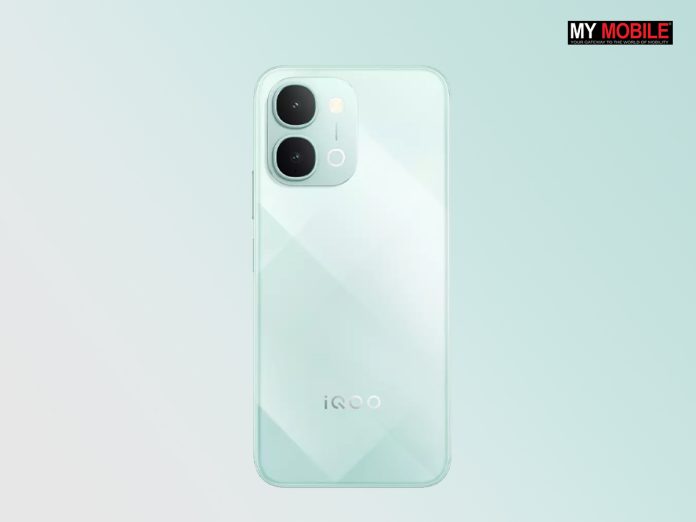
iQOO Z11x in the picture for reference. (Image credit – iQOO)
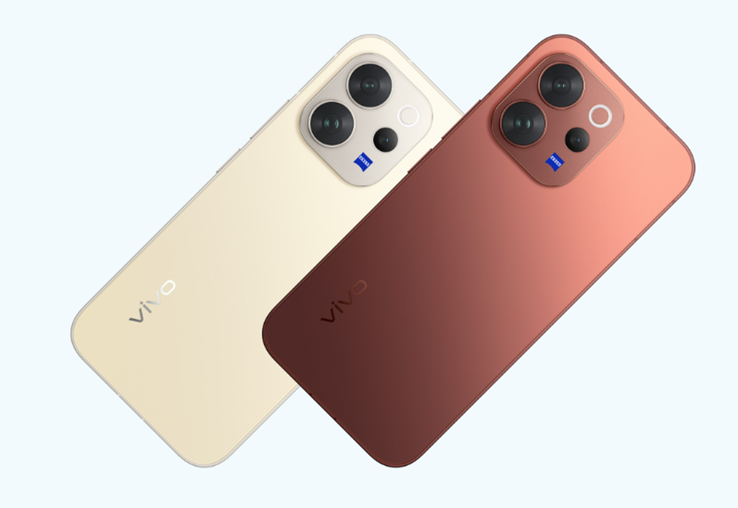
Upcoming smartphones iQOO Z11 Lite 5G and the Vivo T5 Lite 5G have surfaced on the Bluetooth SIG certification platform hinting at their imminent launch. Both devices have also been listed on India’s BIS certification database that confirms that they are headed to the Indian market. Here’s what we know about the phones so far.
iQOO Z11 Lite 5G Certification Details
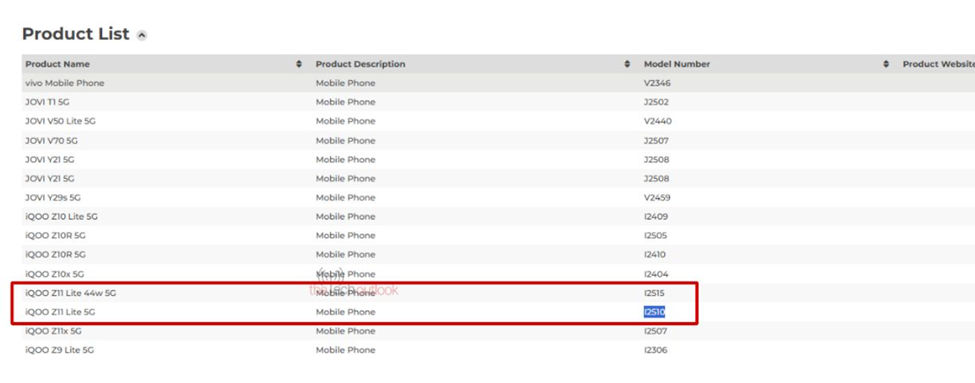
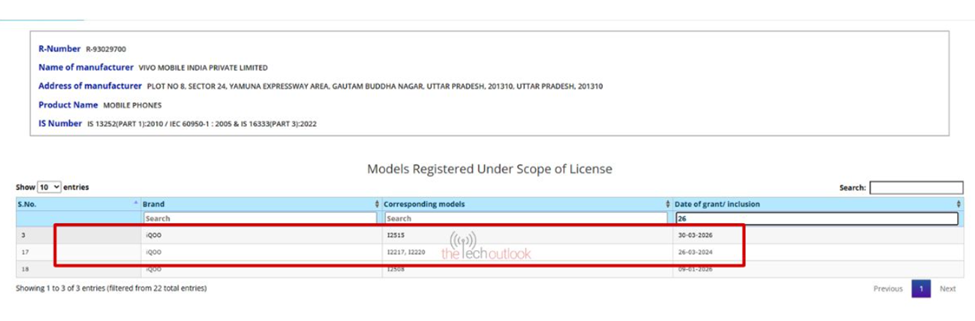
The iQOO Z11 Lite 5G has been spotted on the Bluetooth SIG platform with two model numbers, “I2510” and “I2515”. While both listings carry the same device name the “I2515” model explicitly mentions “44W” within its moniker indicating support for 44W fast wired charging likely to be marketed as 45W charging.
This same model number has also cleared the Indian BIS certification that further confirming its launch in India with the same charging capabilities.
Vivo T5 Lite 5G Certification Details
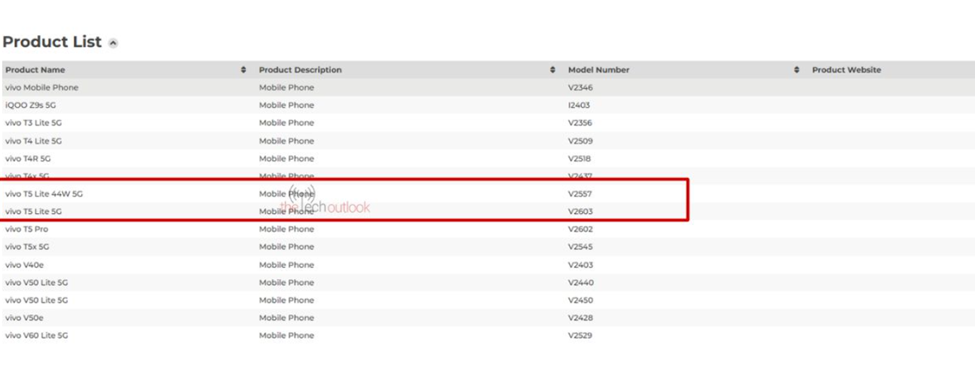
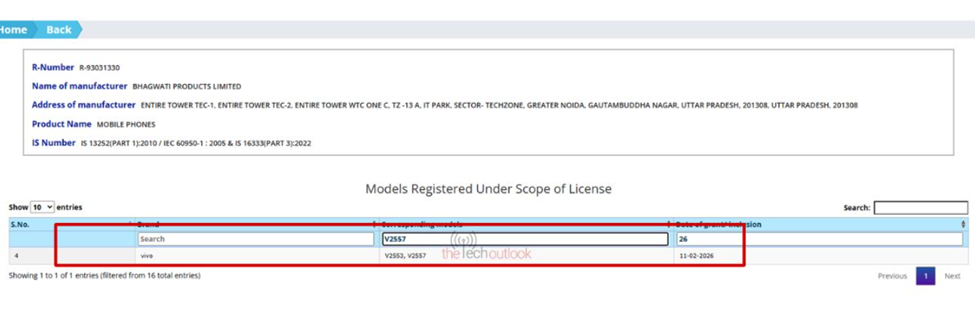
Similarly, the Vivo T5 Lite 5G has appeared on the Bluetooth SIG platform with two model numbers coded “V2557” and “V2603”. Among these, the “V2557” variant includes a reference to 44W fast wired charging in its listing.
Unlike the iQOO device, both of these model numbers have been spotted on the BIS platform as well with “V2603” having appeared in an earlier report, confirming its arrival in the Indian market.
iQOO Z11 Lite 5G, Vivo T5 Lite 5G – What to Expect?
At this point, detailed specifications, launch timelines and pricing information remain undisclosed.
Earlier hints from tipster Paras Guglani had already suggested the Vivo T5 Lite 5G’s India launch though without revealing specifics.
Interestingly, both smartphones could end up being rebranded versions of the same device. This speculation stems from similarities in their certification listings including the presence of dual model numbers and support for 44W fast wired charging.
More details regarding the iQOO Z11 Lite 5G and Vivo T5 Lite 5G are expected to surface soon.
FAQs
Q1. Where were the iQOO Z11 Lite 5G and Vivo T5 Lite 5G spotted?
Answer. Both smartphones appeared on the Bluetooth SIG certification platform and India’s BIS database, confirming their upcoming launch in India.
Q2. What charging support do iQOO Z11 Lite 5G and Vivo T5 Lite 5G offer?
Answer. Select variants of both phones explicitly mention 44W fast wired charging in their certification listings.
Q3. Are the iQOO Z11 Lite 5G and Vivo T5 Lite 5G different devices?
Answer. It is speculated they could be rebranded versions of the same device, given similarities in certification details and charging support.
OPPO A6c 4G goes global with a UNISOC T7250 chip and larger 7000mAh battery.
It features a 7000mAh battery with 15W fast charging, reverse charging, 6.75-inch HD+ LCD, 120Hz refresh rate and Splash Touch for wet-hand use.
Pricing not yet revealed with rollout planned across multiple regions, India launch not confirmed.
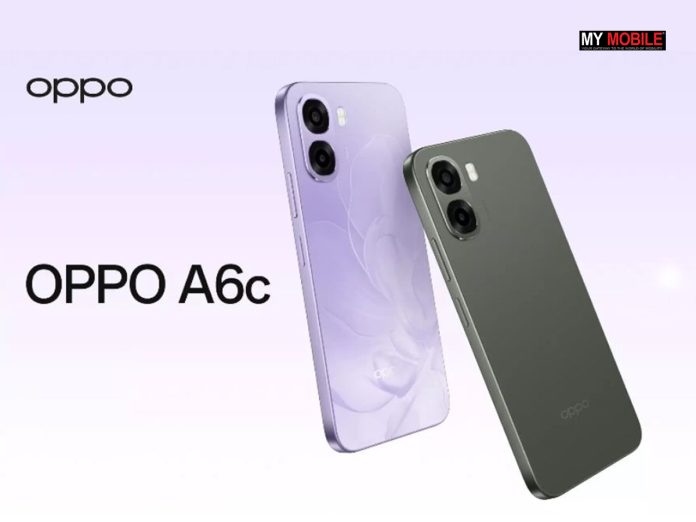
OPPO A6c 4G Goes Global. (Image credit – Oppo)
OPPO is expanding its A-series lineup by introducing the OPPO A6c 4G for the global markets. The smartphone was initially launched in China earlier this year with a Qualcomm Snapdragon 685 processor and a 6500mAh battery. And now, the global version arrives with some key changes like a different chipset and a larger battery capacity. Here’s more on the new model.
OPPO A6c 4G – Key Features
The standout features of this new global OPPO A6c 4G variant is its large 7000mAh battery. According to the company, the model can deliver more than 26 hours of online video streaming on a single charge and offer up to 28 days of standby time at full charge. OPPO also states that the battery is designed to maintain optimal health for up to six years.
The 7000 battery supports 15W fast charging and also includes reverse charging functionality allowing it to be used as a power bank to charge other devices such as smartphones and earbuds.
As per reports, the global version of the smartphone come with a 6.75-inch HD+ LCD display with a resolution of 1570 × 720 pixels. It adopts a waterdrop notch design and supports a 120Hz refresh rate along with a touch sampling rate of up to 240Hz.
The display can reach up to 900 nits of peak brightness. It also includes a Splash Touch feature enabling smooth screen operation even with wet hands.
It is powered by the UNISOC T7250 octa-core processor built on a 12nm process with clock speeds ranging between 1.6GHz and 1.8GHz and runs on Android 16 with ColorOS on top. The device comes with LPDDR4X RAM and UFS 2.2 storage, while graphics are handled by the Mali-G57 GPU.
OPPO also claims a Fluency Experience of up to 48 months suggesting long-term smooth performance.
For optics, the OPPO A6c 4G is equipped with a 13-megapixel rear camera with an f/2.2 aperture and AI-backed features. On the front, it houses a 5-megapixel selfie camera with an f/2.2 aperture for video calls and self-portraits. The device carries an IP64 rating providing resistance against dust and water splashes.
OPPO A6c 4G – Price and Availability in the Global Market
OPPO has not yet revealed the official pricing of the OPPO A6c 4G for global markets.
The smartphone is expected to go on sale in multiple regions in the coming days. It will be offered with 4GB of RAM and two storage options that will be 64GB and 128GB.
As of now, there is no confirmed timeline for its launch in India.
FAQs
Q1. What are the major upgrades in the global OPPO A6c 4G compared to the China version?
Answer. The global model uses a UNISOC T7250 chipset and comes with a larger 7000mAh battery, compared to Snapdragon 685 and 6500mAh in China.
Q2. How long can the OPPO A6c 4G battery last on a single charge?
Answer. OPPO claims it delivers 26+ hours of online video streaming and up to 28 days of standby time.
Q3. What display features does the OPPO A6c 4G offer?
Answer. It has a 6.75-inch HD+ LCD with 120Hz refresh rate, 240Hz touch sampling, 900 nits peak brightness, and Splash Touch for wet-hand use.
Q4. Has OPPO announced the global pricing of the A6c 4G?
Answer. No, OPPO has not yet revealed official pricing. The device will be offered in 4GB RAM with 64GB or 128GB storage options.
Samsung foldables like Galaxy Z Fold 8, Z Flip 8 and a new Wide Fold variant have appeared on India’s BIS certification platform.
Z Fold 8 and Wide Fold may feature larger 5,000mAh batteries with 45W fast charging.
Z Flip 8 is expected to retain a 4,300mAh battery with 25W charging.
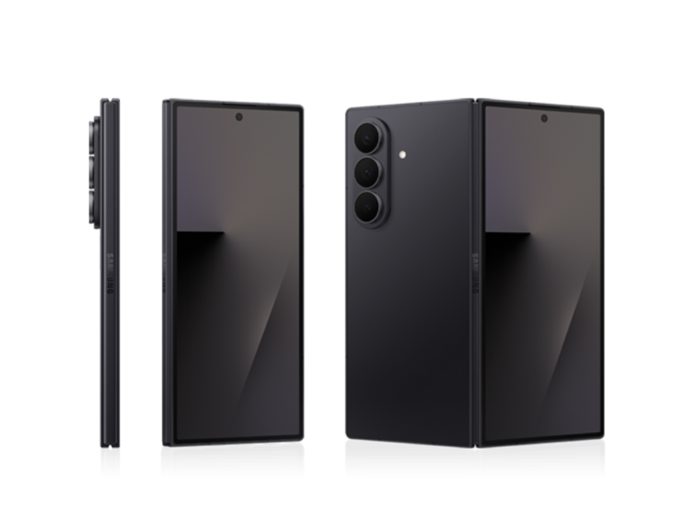
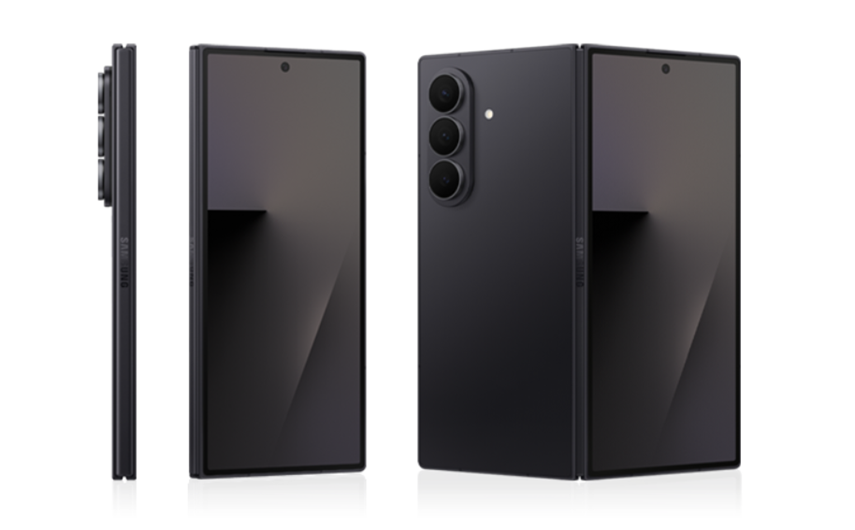
Samsung Galaxy Z Fold 7 in the picture for reference. (Image credit – Samsung)
Samsung’s upcoming foldable lineup appears to be nearing its official debut as multiple devices have now surfaced on India’s BIS certification platform. The listings include the Galaxy Z Fold 8, Galaxy Z Flip 8 and a possible new wider foldable variant. That’s not all, we are also getting a fresh pair of wireless earbuds alongside if we strictly go with the leaked details. Here’s more on that.
Samsung Foldables Appears on BIS
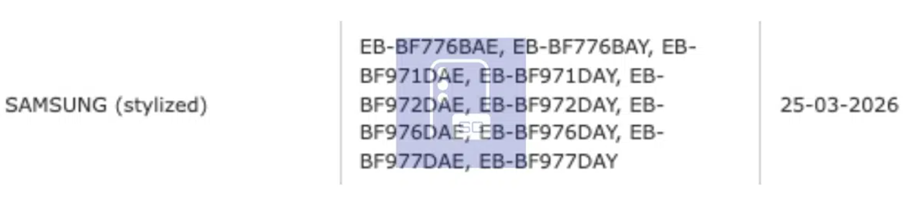
Recent BIS certification entries reveal battery units associated with the Galaxy Z Fold 8, Z Flip 8 and what is being referred to as the Galaxy Z Wide Fold. We have to remind our readers that Samsung has not officially confirmed this naming yet.
Samsung foldables spotted on BIS.
Coming back to the BIS details, there is also a new audio product carrying the model number SM-U600 seen on BIS that is believed to be the previously leaked Galaxy Buds Able.
The Galaxy Z Fold 8 and the wider Fold variant are expected to feature larger 5,000mAh batteries of advertised capacity, which marks a significant increase compared to the 4,400mAh battery Samsung has used in earlier Fold models.
Meanwhile, the Galaxy Z Flip 8 is likely to retain a similar battery setup as its predecessor with a capacity of around 4,300mAh.
Charging capabilities could also see minor improvements as the Galaxy Z Fold 8 and the Wide Fold variant are tipped to support 45W wired fast charging. Meanwhile the Galaxy Z Flip 8 may continue with 25W charging consistent with previous generations.
Upcoming Samsung Foldables – What Else We Know?
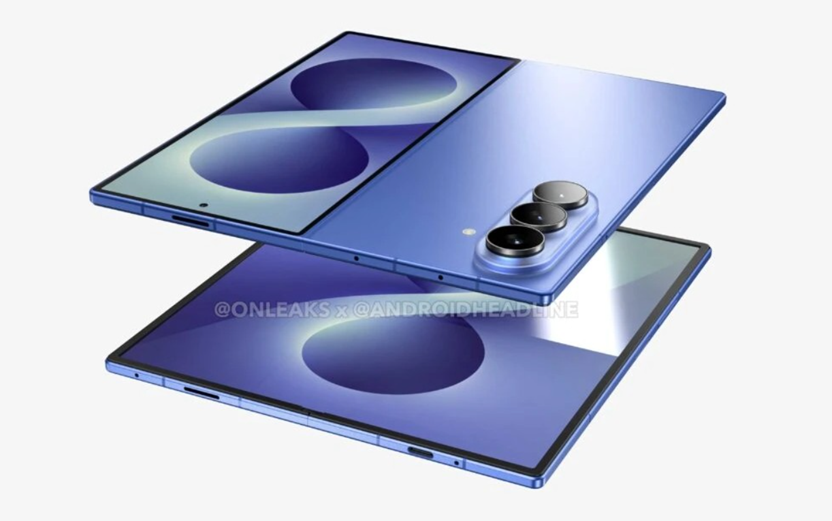
Previously leaked CAD renders of Galaxy Z Fold 8. (Image credit – Android Headlines/OnLeaks)
Early leaks suggest Wide Fold variant could feature a wider 4:3 aspect ratio when unfolded, potentially offering a more tablet-like experience compared to the standard Fold design. Details are still limited but we know Samsung may be experimenting with form factors in its next foldable lineup.
There were also CAD renders already surfacing online and key certifications that hints that Samsung’s next-generation foldables appear to be on track for launch. The company is widely expected to unveil the Galaxy Z Fold 8, Galaxy Z Flip 8 and possibly the new Wide Fold variant in July 2026.
The BIS listings also included several additional battery model numbers that do not directly correspond to the main devices. These could represent prototype units or alternate versions although there is no confirmation yet. Meanwhile, the Galaxy Buds Able in these listings further suggests that the new earbuds could debut alongside the foldable smartphones.
FAQs
Q1. Which Samsung devices were spotted on BIS certification?
Answer. The listings include the Galaxy Z Fold 8, Galaxy Z Flip 8, a new Wide Fold variant, and Galaxy Buds Able.
Q2. What battery upgrades are expected in the new foldables?
Answer. The Z Fold 8 and Wide Fold may feature 5,000mAh batteries with 45W fast charging, while the Z Flip 8 is tipped to retain a 4,300mAh battery with 25W charging.
Q3. When are these foldables expected to launch?
Answer. Samsung is widely expected to unveil the Galaxy Z Fold 8, Z Flip 8, and Wide Fold variant in July 2026.
The Realme 16 5G goes on sale in India today at 12 PM via Flipkart with a starting price of Rs. 31,999.
The smartphone features a 6.72-inch FHD+ display, MediaTek Dimensity chipset, up to 8GB RAM, and 128GB storage, offering solid performance in the budget 5G segment.
It packs a 50MP primary camera and a 5,000mAh battery with fast charging, making it a well-rounded option for everyday use.
Realme 16 5G Sale Goes Live on Flipkart (Image credit – Realme)
The official sale of much-awaited Realme 16 5G in India will be live today at 12 PM exclusively on Flipkart. As the sale goes live, the customers looking to enteraffordable 5G smartphone segment will get several launch offers thus making the device an attractive option for buyers eyeing performance and connectivity.
Realme 16 5G Price in India and Availability
The Realme 16 5G has been competitively priced as its base variant (8GB/128GB) comes at Rs. 31,999 only. Available in multiple RAM and storage configurations, the device caters to different user needs. The smartphone is available in multiple RAM and storage configurations, catering to different user needs. Buyers can also choose from stylish colour options designed to appeal to young consumers.
Customers can also avail instant discounts as part of the launch offers. These discounts are available through select bank cards and exchange benefits. With these offers, customers can get an additional discount ranging from Rs. 2,000 – Rs. 6,000. Along with this, customers can also opt for no-cost EMI which will further make the device more accessible.
Realme 16 5G Specifications and Features
The smartphone comes with numerous features making it a strong contender in its segment. With 6.72-inch Full HD+ display, the device delivers vibrant colours and decent brightness levels for everyday usage. Also with a high refresh rate, it provides smooth scrolling and enhanced viewing experience to the users.
Powered by MediaTek Dimensity series chipset, the smartphone enables seamless multitasking and efficient performance while the processor also ensures support for 5G connectivity, making it future-ready.
Apart from 8GB/128GB variant, the device also comes in 8GB/256GB and 12GB/256GB variants with a slightly higher price range. The memory can be further expanded via microSD card thus ensuring ample space for apps, photos, and media files.
Camera and Battery Performance
In terms of camera, the smartphone comes with dual rear camera setup and a 50MP primary sensor which makes it capable of capturing detailed images in good lighting conditions. The front camera of 8MP makes the device suitable for video calls and social media use.
Backed by a robust 5,000mAh battery, the customers can use the device for the whole day on a single charge. Apart from this, the phone also supports fast charging thus enabling users to quickly charge their devices and stay connected.
Software and Additional Features
As the device runs on Realme UI based on Android, it offers a clean and user-friendly interface. It includes various customization options and features aimed at enhancing the overall user experience.
Additional features include a side-mounted fingerprint scanner, dual SIM support, and enhanced connectivity options.
Should You Buy Realme 16 5G?
With its competitive pricing, reliable performance, and 5G capabilities, the Realme 16 5G is a compelling choice in the budget smartphone segment. Realme continues to strengthen its position in India by offering feature-rich devices at aggressive price points.
For users looking to upgrade to a 5G smartphone without spending heavily, the Realme 16 5G sale on Flipkart todaypresents a solid opportunity.
FAQs
Q1. What is the starting price of the Realme 16 5G in India?
The smartphone starts at ₹11,999 for the base variant, making it an affordable 5G option.
Q2. What processor does the Realme 16 5G use?
It is powered by a MediaTek Dimensity series chipset, ensuring smooth performance and 5G connectivity.
Q3. What are the camera specifications of the Realme 16 5G?
The device features a 50MP primary rear camera and an 8MP front camera for selfies and video calls.
Q4. How big is the battery on the Realme 16 5G?
The smartphone packs a 5,000mAh battery with fast charging support for all-day usage.
Q5. Are there any launch offers available on the Realme 16 5G?
Yes, buyers can avail bank discounts, exchange offers, and no-cost EMI options on Flipkart.
Motorola confirmed a price increase of Moto G models and Moto Edge series in India effective April 6, 2026.
Moto G models see a ₹1,000 hike, while Moto Edge 60 Fusion variants rise by ₹2,000 across the lineup.
Rising component costs and supply chain pressures could be driving the price hike even though brand has not confirmed any reason.
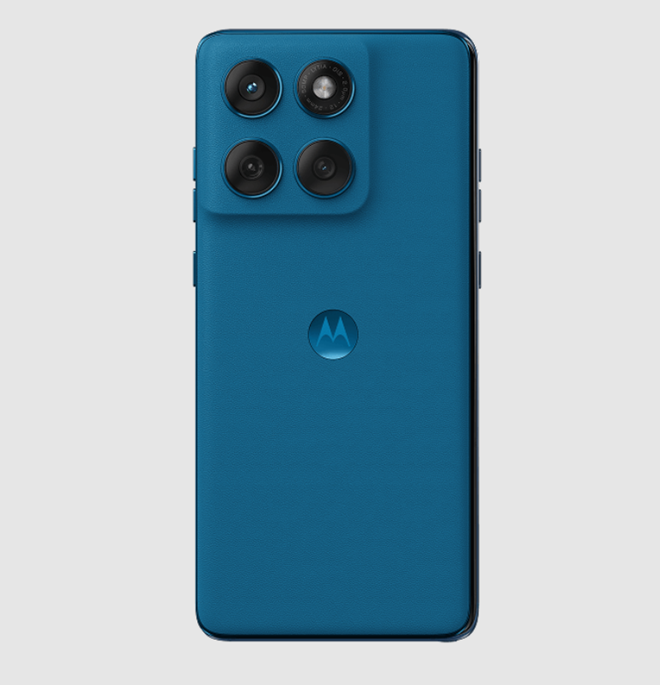
Moto G35. (Image credit – Motorola)
Motorola has announced a fresh price hike for several of its smartphones in India. As per the information shared by the brand, the revised pricing is all set to come into effect from April 6, 2026. The latest update impacts models across the Moto G series and the premium Moto Edge lineup making these devices more expensive for buyers.
The Moto G series smartphones have received a standard price hike of ₹1,000, while the Moto Edge 60 Fusion lineup has seen a higher increase of ₹2,000. Here’s more on the latest update.
Motorola Price Hike Details
As per the official update, the Moto G35 will see a ₹1,000 increase across both its variants. The 4GB RAM model previously priced at ₹11,999 will now retail at ₹12,999, while the 8GB RAM variant will go up from ₹12,999 to ₹13,999.
The Moto G57 8GB RAM has also received a ₹1,000 price hike with its price increasing from ₹14,999 to ₹15,999.
Moto Edge 60 Fusion. (Image credit – Motorola)
In the premium segment, the Moto Edge 60 Fusion lineup have been seen a steeper hike of ₹2,000 across all variants. The 8GB + 128GB model will now be priced at ₹22,999 up from ₹20,999. The 8GB + 256GB variant will cost ₹24,999 instead of ₹22,999, while the top-end 12GB + 256GB model will now retail at ₹26,999 compared to its earlier price of ₹24,999.
A quick look at the price hike –
Model
Old Price
New Price
Hike
Moto G35 4GB
₹11,999
₹12,999
₹1000
Moto G35 8GB
₹12,999
₹13,999
₹1000
Moto G57 8GB
₹14,999
₹15,999
₹1,000
Moto Edge 60 Fusion 8GB + 128GB
₹20,999
₹22,999
₹2,000
Moto Edge 60 Fusion 8GB + 256GB
₹22,999
₹24,999
₹2,000
Moto Edge 60 Fusion 12GB + 256GB
₹24,999
₹26,999
₹2,000
Additionally, Motorola has also indicated that models like the Moto G67 and Moto G96 could also receive a ₹1,000 price increase, although detailed variant-wise pricing for these devices has not been specified.
Industry Trend Behind Price Hikes
While Motorola has not specified an exact reason for the price revision, it is could be linked to broader market conditions such as the geo-political factors and rising component costs. In recent weeks, several smartphone brands have increased prices across segments indicating an industry-wide trend.
As production and supply chain expenses continue to rise, companies are gradually passing on the cost to end consumers that is leading to higher smartphone prices across the board.
FAQs
Q1. When will Motorola’s new prices take effect in India?
Answer. The revised pricing will come into effect from April 6, 2026.
Q2. Which Motorola smartphones are affected by the price hike?
Answer. The Moto G series including Moto G35, G57, G67, G96 and the premium Moto Edge 60 Fusion lineup are impacted.
Q3. How much have the Motorola prices increased?
Answer. Moto G models see a ₹1,000 hike, while Moto Edge 60 Fusion variants have a ₹2,000 increase across all configurations.
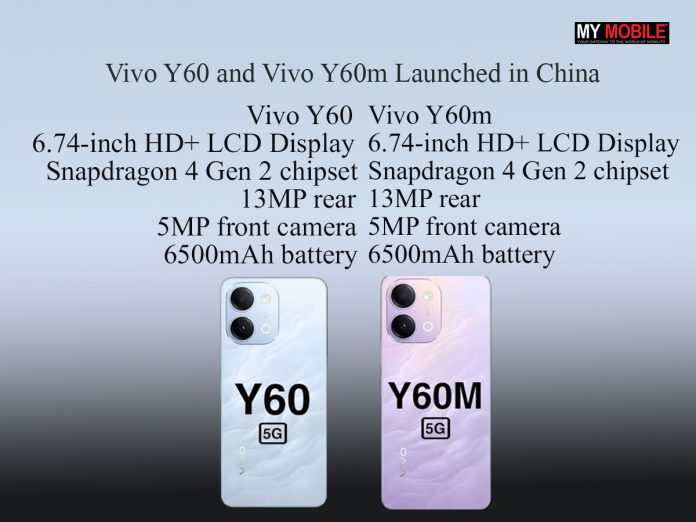
Vivo Y60 and Y60m debut in China with identical specs.
Both phones come with 6.74-inch HD+ LCD, Snapdragon 4 Gen 2, up to 8GB RAM, 256GB storage, 6500mAh battery with 15W fast charging, IP65 rating and SGS 5-star drop resistance.
These phone are available via Vivo China website in three variants with price starting at CNY 1,799.
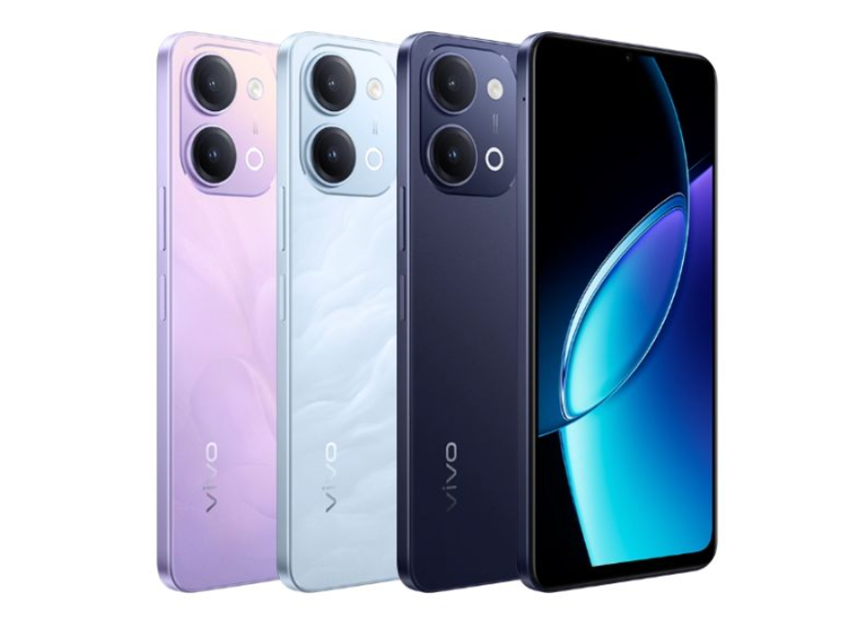
Vivo Y60 and Vivo Y60m were launched in China with identical looks. (Image credit – Vivo)
Vivo has unveiled its latest budget smartphones monikered the Vivo Y60 and Vivo Y60m in China. The interesting thing about the two models is they arrive in the Chinese market with identical specifications and features. It appears Vivo is continuing the strategy seen with their predecessors such as the Vivo Y50 and Vivo Y50m. However, there are no differences at all between the two new devices this time and the phones are actually exact replicas of each other. Here’s more on this.
Vivo Y60 and Vivo Y60m – Price and Availability in China
The Vivo Y60 and Vivo Y60m are currently available for purchase via the official Vivo China website.
These smartphones are offered in three configurations, which includes the 6GB RAM + 128GB storage variant is priced at CNY 1,799, the 6GB RAM + 256GB model costs CNY 1,999 and the top-end 8GB RAM + 256GB variant is priced at CNY 2,299.
Vivo Y60 and Vivo Y60m – Key Features
The Vivo Y60 and Vivo Y60m come equipped with a 6.74-inch HD+ LCD flat display offering a resolution of 1600×720 pixels. The panel supports up to a 120Hz refresh rate and delivers up to 1200 nits peak brightness in High Brightness Mode (HBM). For smoother touch response, it also supports 120Hz, 180Hz and 240Hz touch sampling rates.
For enhanced eye comfort, the display is TÜV Rheinland Low Blue Light certified and includes multiple features such as Professional Eye Protection mode, True DC dimming for flicker-free viewing, a paper-like anti-glare display and Dark mode.
Both smartphones have the Qualcomm Snapdragon 4 Gen 2 chipset paired with up to 8GB of LPDDR4X dual-channel RAM and up to 256GB of UFS 3.1 internal storage. The devices run on OriginOS 6 based on Android 16. Users can expand the RAM virtually by up to 8GB using the Memory Fusion feature if needed.
In terms of battery, both the Vivo Y60 and Vivo Y60m pack a large 6500mAh battery with support for 15W wired fast charging. They also offer OTG reverse charging functionality. For photography, you get a 13MP main rear camera and a 5MP front-facing camera for selfies and video calls.
On the design front, both smartphones feature a plastic mid-frame, a composite material back panel and with IP65 rating for dust and water resistance. For further durability, the devices come with SGS 5-star drop resistance certification and include features like 4-layer diamond protection, scratch resistance and fall resistance. These measure 167.40mm x 77.10mm x 8.39mm and weigh 209 grams.
FAQs
Q1. Are there any differences between the Vivo Y60 and Y60m?
Answer. No, both smartphones are identical in specifications and features, making them exact replicas of each other.
Q2. What are the main specifications of these devices?
Answer. They feature a 6.74-inch HD+ LCD display with 120Hz refresh rate, Snapdragon 4 Gen 2 chipset, up to 8GB RAM and 256GB storage.
Q3. How durable are the Vivo Y60 and Y60m?
Answer. Both come with IP65 dust and water resistance, SGS 5-star drop resistance, 4-layer diamond protection, scratch resistance, and fall resistance.
Q4. What is the pricing of the Vivo Y60 and Y60m in China?
Answer. The 6GB+128GB variant costs CNY 1,799, the 6GB+256GB model is CNY 1,999, and the 8GB+256GB version is priced at CNY 2,299.
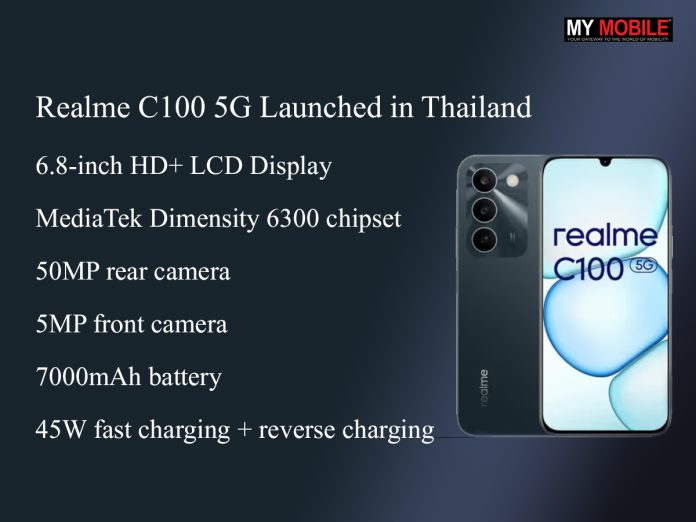
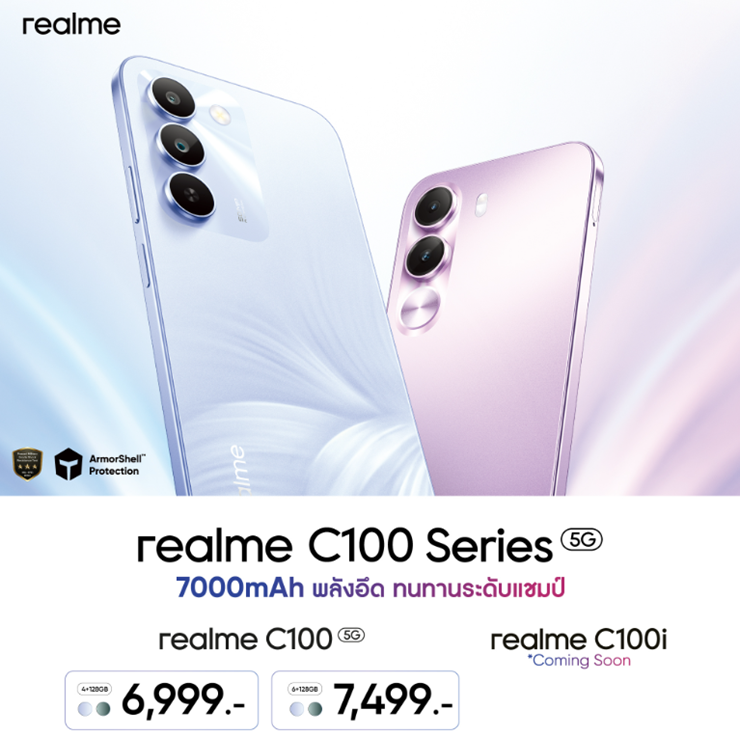
Realme C100 5G debuts in Thailand at ฿6,999 for 4GB+128GB.
It features a 6.8-inch HD+ LCD, Dimensity 6300 chipset, up to 6GB RAM, 128GB storage, 7000mAh battery supporting 45W fast charging and reverse charging, MIL-STD 810H durability and AI-powered features like AI Motion Photo, AI NetPilot and Gemini.
It is available via Shopee, Lazada, and TikTok Shop in Thailand.
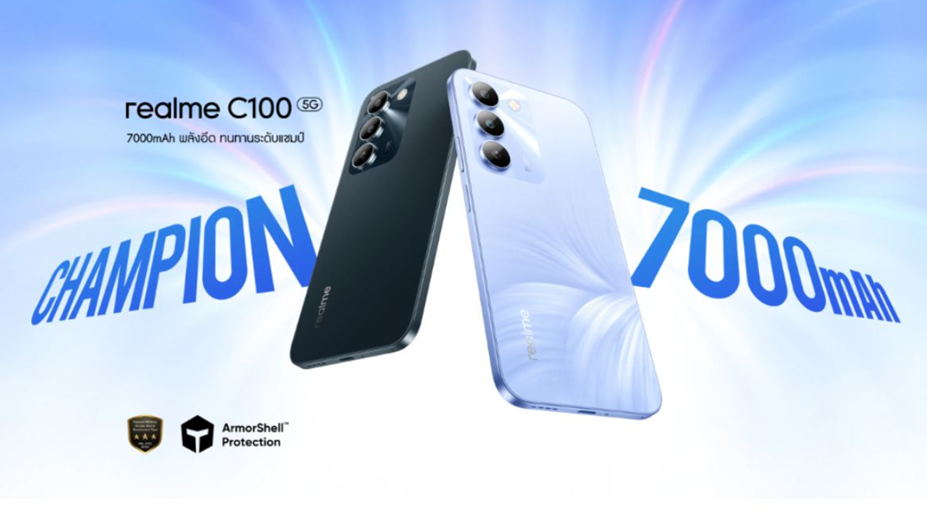
Realme C100 5G is now available for sale in Thailand. (Image credit – Realme)
Realme has officially introduced the Realme C100 5G smartphone in Thailand. The device was recently spotted on a Europe-based retailer listing and this is probably the second region where the phone has arrived for sale. The new budget 5G offering arrives with a large battery, high refresh rate display and AI-backed features. Here’s more on the newly launched Realme 5G smartphone.
Realme C100 5G – Key Features
The Realme C100 5G sports a 6.8-inch HD+ display with a resolution of 1570 × 720 pixels and uses a Corning-backed LCD panel that supports up to a 144Hz refresh rate. The display delivers 700 nits of typical brightness and can reach up to 900 nits in high brightness mode. For added durability, the screen is protected by Panda MN228 glass and it also includes eye protection and relaxation modes to reduce strain during extended usage.
On the durability front, the handset comes with ArmorShell™ protection and carries MIL-STD 810H certification which ensure better resistance against drops and impacts.
Powering the device is the MediaTek Dimensity 6300 SoC paired with up to 6GB of LPDDR4X RAM and 128GB of internal storage based on eMMC 5.1. The smartphone also supports expandable storage via a microSD card and includes USB OTG support.
Realme C100 5G packs a 50MP primary rear camera with autofocus support for main photography. On the front, it houses a 5MP camera for selfies and video calls. It further packs a massive 7000mAh battery that supports 45W wired fast charging and also offers wired reverse charging support allowing users to charge other devices.
In terms of software, the smartphone runs on Realme UI 7. It brings a refreshed interface with a frosted glass effect, updated icon styles and Mini Capsule 4.0 alongwith various customisation options.
The device also includes several AI-powered features such as AI Motion Photo, AI Outdoor Mode, AI NetPilot for improved connectivity, AI Image Matting, AI Smart Loop and Gemini.
Realme C100 5G – Price and availability
The Realme C100 5G is available in two configurations. The 4GB RAM + 128GB storage variant is priced at ฿6,999, while the 6GB RAM + 128GB model costs ฿7,499. The smartphone is currently on sale via major e-commerce platforms in Thailand including Shopee, Lazada and TikTok Shop.
Additionally, the company has confirmed that the Realme C100i 5G smartphone will soon be launched in the Thai market.
FAQs
Q1. What are the key specifications of the Realme C100 5G?
Answer. The phone features a 6.8-inch HD+ LCD display with 144Hz refresh rate, MediaTek Dimensity 6300 chipset, up to 6GB RAM, and 128GB storage (expandable via microSD).
Q2. How durable is the Realme C100 5G?
Answer. It comes with ArmorShell™ protection, Panda MN228 glass, and MIL-STD 810H certification, making it resistant to drops and impacts.
Q3. What is special about the battery in the Realme C100 5G?
Answer. It packs a massive 7000mAh battery with 45W fast charging and wired reverse charging support allowing users to charge other devices.
Q4. What camera setup does the Realme C100 5G offer?
Answer. The smartphone has a 50MP primary rear camera with autofocus and a 5MP front camera for selfies and video calls.
Q5. How much does the Realme C100 5G cost in Thailand?
Answer. The 4GB+128GB variant is priced at ฿6,999, while the 6GB+128GB model costs ฿7,499, available via Shopee, Lazada, and TikTok Shop.
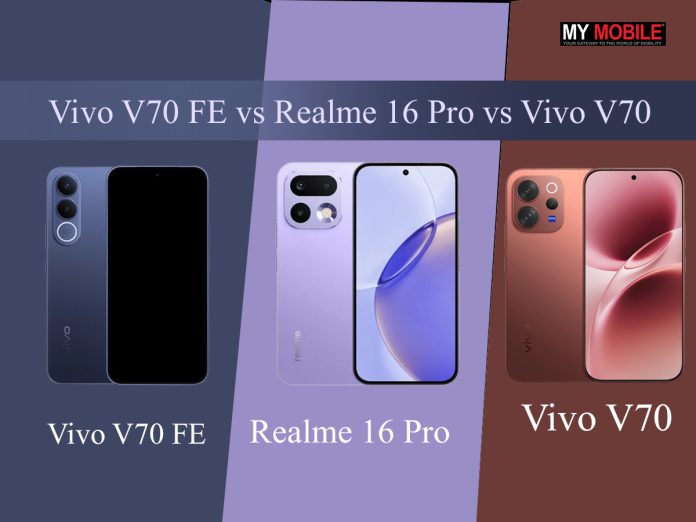
Vivo V70 FE offers a premium slim build and a 6.83‑inch AMOLED 120Hz panel. Realme 16 Pro balances sleek design with a 6.75‑inch AMOLED 144Hz display for smoother gaming, while Vivo V70 opts for a compact 6.59‑inch AMOLED 120Hz screen.
V70 FE runs on Dimensity 7360 Turbo with a 200MP + 8MP rear setup. Realme 16 Pro uses Dimensity 7300 Max with a similar 200MP + 8MP combo. Vivo V70 features Snapdragon 7 Gen 4 and a versatile triple‑camera system of 50MP + 50MP + 8MP.
V70 FE and Realme 16 Pro pack 7,000mAh batteries, while Vivo V70 has a smaller 6,500mAh cell.
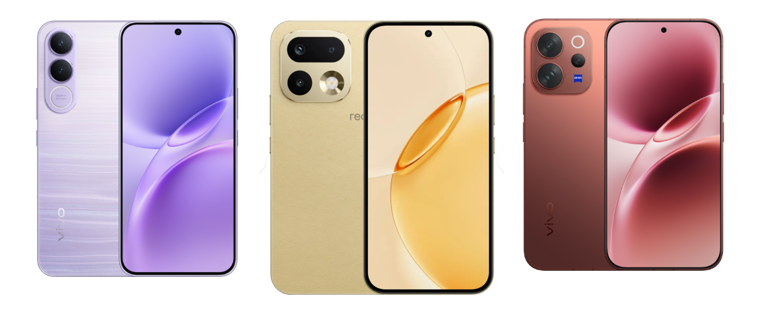
Vivo V70 FE (left) vs Realme 16 Pro (centre) vs Vivo V70 (right)
The Vivo V70 FE, Vivo V70 and Realme 16 Pro 5G are among the mid-range smartphones in India with strong specifications. Here’s a detailed comparison covering their design, display, performance, camera and battery to help you choose the right one.
Vivo V70 FE vs Realme 16 Pro vs Vivo V70 – Key Features
In terms of design, all three smartphones follow a modern aesthetic but differ in their approach to styling and build.
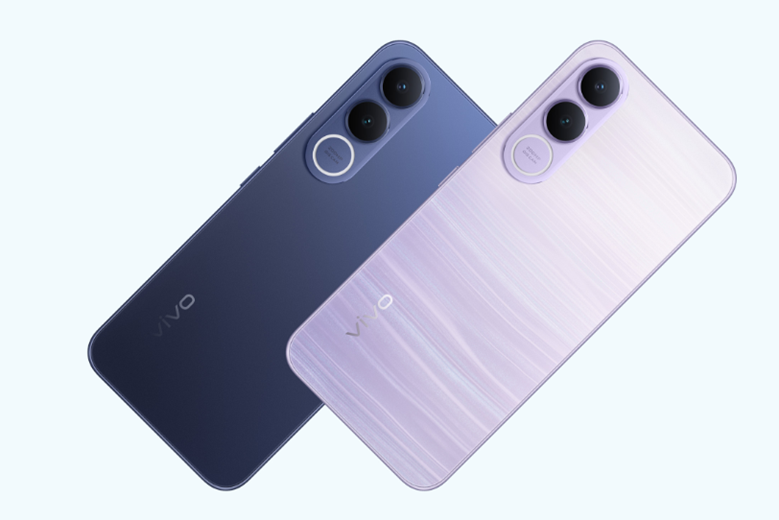
Vivo V70 FE. (Image credit – Vivo)
The Vivo V70 FE stands out with a premium design featuring a slim profile of around 7.5mm thickness and a lightweight build of about 200 grams. It comes with a distinctive “Northern Lights”-inspired finish and introduces a unique “Darkness Glow Technology.”
Realme 16 Pro 5G. (Image credit – Realme)
The Realme 16 Pro 5G also focuses on design appeal offering a sleek build with a large AMOLED display and a modern camera module layout.
Vivo V70. (Image credit – Vivo)
Meanwhile, the Vivo V70 takes a more conventional approach and offer a clean and minimal design with a slightly more compact form factor compared to the V70 FE.
Display
The Vivo V70 FE, Vivo V70, and Realme 16 Pro 5G offer competitive display and performance specifications but each device targets slightly different user preferences.
Starting with the display, the Vivo V70 FE features a larger 6.83-inch AMOLED panel with a 1.5K resolution 1,260 x 2,800 pixels and a 120Hz refresh rate. The Vivo V70, on the other hand, comes with a comparatively compact 6.59-inch AMOLED display with a similar 120Hz refresh rate and a resolution of 1,260 x 2,750 pixels, resulting in a slightly higher pixel density of around 459ppi, making it sharper on paper.
Meanwhile, the Realme 16 Pro 5G offers a 6.75-inch AMOLED display with a resolution of 1,272 x 2,772 pixels and stands out with a higher 144Hz refresh rate. This one is more suitable for users who prefer smoother animations and gaming experiences.
Hardware
In terms of hardware, all three smartphones are powered by octa-core processors but differ significantly in chipset choice.
The Vivo V70 FE is equipped with the MediaTek Dimensity 7360 Turbo chipset, while the Vivo V70 uses the more premium Qualcomm Snapdragon 7 Gen 4 processor, offering better efficiency and performance capabilities. The Realme 16 Pro 5G runs on the MediaTek Dimensity 7300 Max chipset, which is designed to deliver stable performance for gaming and multitasking.
When it comes to memory and storage, all three devices offer similar configurations with options for 8GB and 12GB RAM. The Vivo V70 FE provides storage variants of 128GB and 256GB, while the Vivo V70 is listed with 256GB storage. The Realme 16 Pro 5G also offers 128GB and 256GB storage options, giving users flexibility depending on their usage needs.
Camera
In terms of camera hardware, the Vivo V70 FE and Realme 16 Pro 5G clearly lead with high-resolution sensors, while the Vivo V70 focuses more on a versatile setup.
Both the Vivo V70 FE and Realme 16 Pro 5G feature a 200MP primary rear camera paired with an 8MP ultra-wide lens offering detailed shots and wide-angle flexibility. The Vivo V70 FE includes a 50MP front camera, while the Realme 16 Pro 5G also comes with a 50MP selfie shooter making both devices strong for high-resolution selfies and video recording.
In comparison, the Vivo V70 features a 50MP primary camera along with an 8MP ultra-wide sensor and an additional 50MP lens, giving it a more flexible triple-camera setup despite the lower main sensor resolution. On the front, it also houses a 50MP selfie camera keeping up with the other two devices.
Battery
When it comes to battery performance, the Vivo V70 FE and Realme 16 Pro 5G again take the lead with large 7,000mAh batteries. It makes them suitable for heavy usage and extended screen time. The Vivo V70 FE supports 90W fast charging, while the Realme 16 Pro 5G offers 80W fast charging, ensuring quick top-ups despite the large battery size.
On the other hand, the Vivo V70 features a comparatively smaller 6,500mAh battery with again a 90W fast charging support. It is still adequate for daily use but falls behind the other two in terms of sheer capacity and endurance.
Pricing
When it comes to pricing, there is a noticeable gap between the three smartphones that places them in slightly different segments. The Vivo V70 FE starts at ₹37,999 for the base variant, going up to around ₹44,999 depending on the configuration. It falls in the upper mid-range category.
The Realme 16 Pro 5G is comparatively more affordable with a starting price of around ₹34,999 to ₹35,999. It is a more value-oriented option among the three while still offering competitive hardware.
On the other hand, the Vivo V70 sits at a higher price bracket with pricing starting around ₹45,999 for the base variant and going even higher for upper configurations
All in all, Realme 16 Pro 5G emerges as the most affordable option, the Vivo V70 FE sits in the middle with a balanced price. As for Vivo V70, it is the most premium among the three reflecting its positioning and feature set.
Verdict – Which One Should You Choose?
Between Vivo V70 FE, Realme 16 Pro and Vivo V70, each smartphone brings its own strengths to the table.
The Vivo V70 FE emerges as the most well-rounded option offering a powerful combination of a 200MP camera, a massive 7,000mAh battery, fast 90W charging and a premium design. It is ideal for users who want flagship-like features especially in photography and battery life.
The Realme 16 Pro 5G is a strong competitor and matches the V70 FE in key areas like camera resolution and battery capacity and also offering a smoother 144Hz display. It is better suited for users who prioritise gaming and display fluidity.
On the other hand, the Vivo V70 is a more balanced device with a versatile camera setup and a more compact design. But it falls behind in terms of raw camera resolution and battery size compared to the other two.
FAQs
Q1. Which smartphone offers the best camera setup?
Answer. The Vivo V70 FE and Realme 16 Pro 5G lead with 200MP + 8MP rear cameras, while the Vivo V70 provides a versatile triple‑camera setup (50MP + 50MP + 8MP).
Q2. Which device has the largest battery capacity?
Answer. Both the Vivo V70 FE and Realme 16 Pro 5G pack 7,000mAh batteries, compared to the 6,500mAh battery in the Vivo V70.
Q3. Which phone is best suited for gaming and smooth display performance?
Answer. The Realme 16 Pro 5G is ideal for gamers, thanks to its 144Hz AMOLED display and stable performance with the Dimensity 7300 Max chipset.