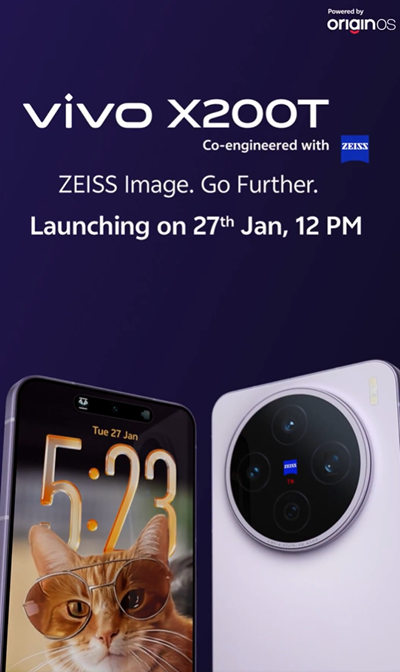
Vivo X200T will debut in India on January 27 at 12pm IST via Flipkart, Vivo’s online store, and offline retailers.
It features Dimensity 9400+ chip, featuring triple 50MP Zeiss cameras, Android 16-based OriginOS 6, 6.67-inch AMOLED 120Hz display, and a 6,200mAh battery with 90W wired + 40W wireless charging.
Expected price to fall between Rs. 50,000–55,000 and it will be offered in Stellar Black and Seaside Lilac colours.
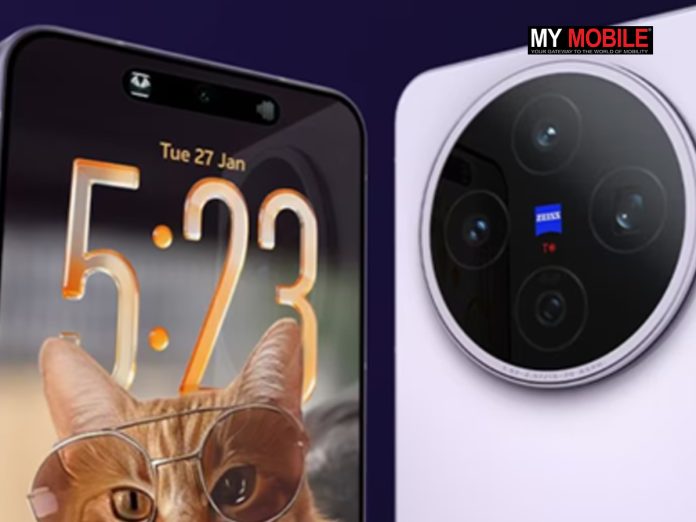
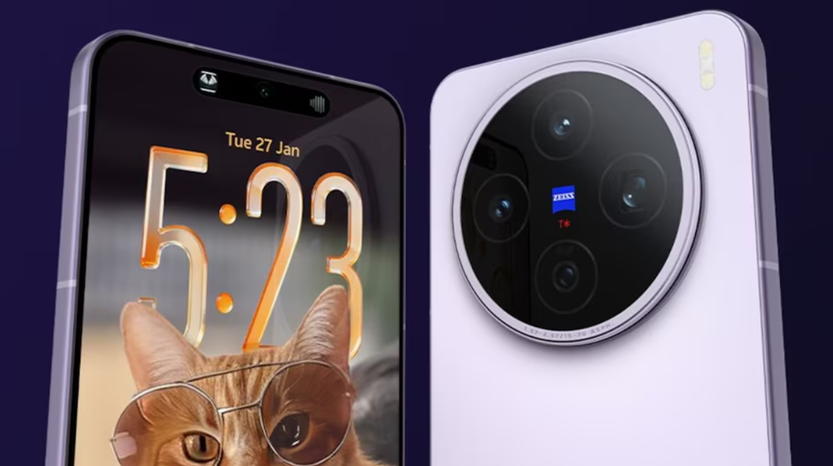
Vivo X200T. (Image credit – Vivo)
Vivo has finally confirmed the India launch of the Vivo X200T. The smartphone will join the Vivo X200 lineup introduced in 2024 alongside the Vivo X200 and Vivo X200 Pro. The company has also revealed several key specifications including its processor, camera setup, and software version. Here’s more on what we know about the India launch so far.
Vivo X200T India Launch Date and Availability
Vivo X200T India Launch Date Confirmed.
In an official press note and social media posts, Vivo announced that the Vivo X200T will be launched in India on January 27 at 12pm IST. Following its debut, the handset will be available for purchase via Flipkart, the Vivo India online store, and select offline retail outlets across the country.
Confirming its camera capabilities, Vivo revealed that the X200T will feature a triple rear camera system, consisting of three 50-megapixel sensors co-engineered with Zeiss optics.
The Vivo X200T will be powered by the MediaTek Dimensity 9400+ chipset. This processor sits below the Dimensity 9500 SoC, which currently powers the flagship Vivo X300 and Vivo X300 Pro models. In comparison, the existing Vivo X200 and Vivo X200 Pro are equipped with the Dimensity 9400 chipset.
Vivo has also confirmed that the upcoming smartphone will run on Android 16-based OriginOS 6.
According to leaks, the Vivo X200T may sport a 6.67-inch AMOLED display with a 120Hz refresh rate. For photography, it is said to feature a 50-megapixel Sony LYT-702 primary sensor with optical image stabilisation, a 50-megapixel Samsung JN1 periscope telephoto camera, and a 50-megapixel LYT-600 ultra-wide-angle lens.
The smartphone is also expected to pack a 6,200mAh battery with support for 90W wired fast charging and 40W wireless charging.
While Vivo has not yet disclosed the official pricing of the Vivo X200T, reports suggest that the handset could be priced between Rs. 50,000 and Rs. 55,000 in India. It is tipped to be offered in Stellar Black and Seaside Lilac colour options.
FAQs
Q1. When will the Vivo X200T launch in India and where will it be available?
Answer. The Vivo X200T will launch on January 27 at 12pm IST and will be sold via Flipkart, Vivo India’s online store, and select offline retailers.
Q2. What are the key specifications of the Vivo X200T?
Answer. It is powered by the Dimensity 9400+ chipset, features triple 50MP Zeiss cameras, runs on Android 16-based OriginOS 6, and is expected to include a 6.67-inch AMOLED 120Hz display with a 6,200mAh battery supporting 90W wired and 40W wireless charging.
Q3. What is the expected price and colour options for the Vivo X200T in India?
Answer. Reports suggest a price range of Rs. 50,000–55,000, with colour options of Stellar Black and Seaside Lilac.
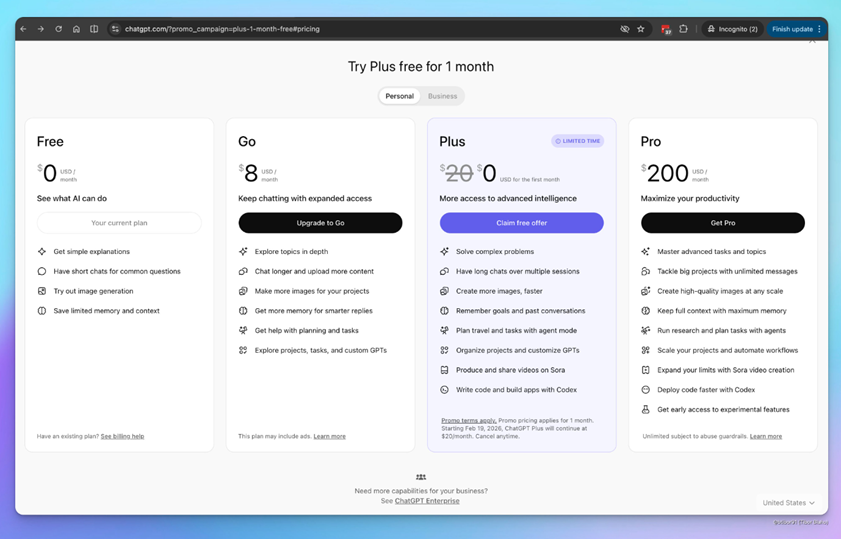
OpenAI launches a one-month free ChatGPT Plus trial in India and the US, open to new and existing users.
Trial requires payment info with auto-renewal; ChatGPT Plus normally costs Rs. 1,999/month in India.
OpenAI confirms it is on track to debut its first device in late 2026, though product details remain undisclosed.
(Photo by Levart_Photographer on Unsplash)
OpenAI has rolled out a limited-period promotional offer, providing a one-month free trial of its ChatGPT Plus subscription. As of now, the offer has been confirmed to be live in India and the United States.
ChatGPT Plus Available for Free for One Month
AIRPM Lead Engineer Tibor Blaho shared details of the offer in a post on X (formerly Twitter). The availability of the one-month free ChatGPT Plus trial in India was independently verified by multiple reports later on. Meanwhile, tech blogs in the US confirmed that the offer is also active in the US.
Screenshot shared by AIRPM Lead Engineer Tibor Blaho on X.
Eligible users can access the promotion through the official link. Users in other countries can also check whether the offer is available in their respective regions.
Notably, the free trial is not limited to existing subscribers. It is also available to users who have never purchased a ChatGPT subscription before. Even users with an active ChatGPT Go plan can upgrade to Plus under this offer. However, Indian users who are currently on the 12-month free ChatGPT Go plan will not be able to revert to Go once the 30-day Plus trial ends.
To activate the trial, users are required to provide financial details such as credit card, net banking, or UPI information. Since the subscription carries an auto-renewal mandate, users who do not cancel before the trial period ends may be charged for the following month.
ChatGPT Plus typically costs Rs. 1,999 per month in India. The subscription includes priority access and higher usage limits for OpenAI’s latest AI models, Sora-powered video generation, expanded memory for improved context retention, and access to Codex for coding assistance.
For users in India, this marks the second major promotional move by the company, following the decision to make ChatGPT Go free for one year in November 2025.
OpenAI Plans First Device Launch in 2026
OpenAI’s Chris Lehane at Axios House, Davos. (Photo – Dani Ammann Photography for Axios)
Separately, OpenAI has also shared an update on its long-rumoured hardware ambitions. Speaking at Axios House Davos on Monday, OpenAI’s Chief Global Affairs Officer Chris Lehane said the company is “on track” to introduce its first device in the second half of 2026.
OpenAI CEO Sam Altman has previously hinted at a future AI-focused device after the company acquired former Apple design chief Jony Ive’s firm last May. However, no specific details about the product or its form factor have been officially disclosed so far.
Lehane declined to confirm whether the upcoming product would take the form of a pin, an earpiece, or another type of device altogether. He described “devices” as one of OpenAI’s major focus areas for 2026 and told Axios’ Ina Fried that more information would be shared “much later in the year.”
While Lehane did not guarantee that the device would go on sale in 2026, he said OpenAI was “looking at something in the latter part [of 2026].”
FAQs
Q1. Where is the one-month free ChatGPT Plus trial available?
Answer. The free trial has been confirmed in India and the United States, with users in other regions advised to check availability.
Q2. What benefits does ChatGPT Plus include and what is its regular cost in India?
Answer. ChatGPT Plus costs Rs. 1,999/month in India and offers priority access, higher usage limits, Sora-powered video generation, expanded memory, and Codex for coding assistance.
Q3. When is OpenAI planning to launch its first hardware device?
Answer. OpenAI is on track to debut its first device in the second half of 2026, though no product details have been disclosed yet.
RedMagic 11 Air debuts in China with a 6.85-inch 1.5K AMOLED display, Snapdragon 8 Elite SoC, 7,000mAh battery with 120W fast charging, and gaming-focused features like cooling fan, shoulder buttons and AI tools.
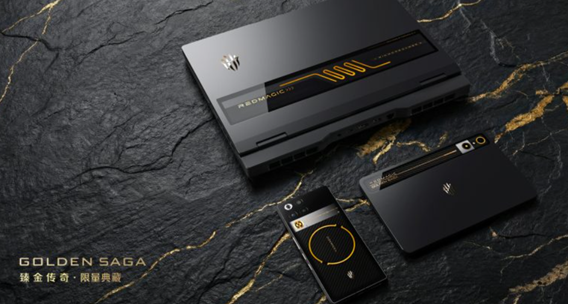
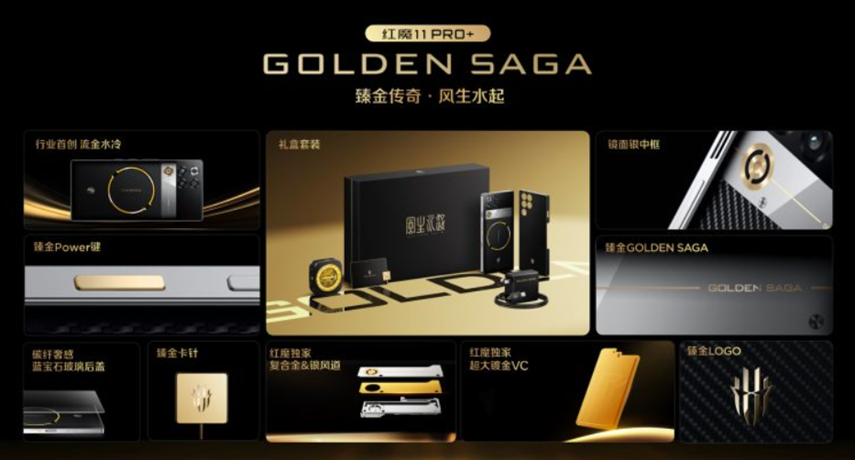
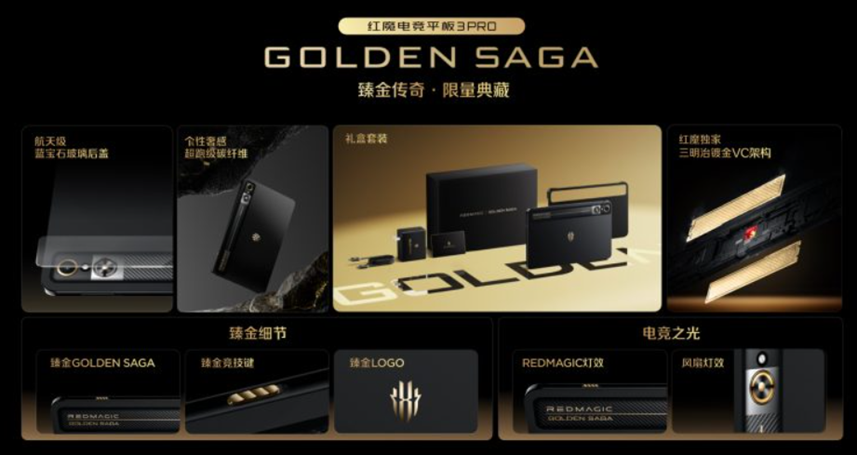
Golden Saga lineup launched including RedMagic 11 Pro+ Golden Saga, Gaming Tablet 3 Pro Golden Saga and Gaming Laptop 16 Pro Golden Saga 3D Explorer Edition.
RedMagic 11 Air starts at 3,499 Yuan, Golden Saga Pro+ at 9,899 Yuan, and Golden Saga Tablet at 7,999 Yuan; laptop availability yet to be announced.
RedMagic 11 Air Debuts in China Alongside Golden Saga Lineup. (Image credit – RedMagic)
RedMagic has officially launched the RedMagic 11 Air smartphone in China. Alongside the new handset, the company has also unveiled a range of premium Golden Saga devices, expanding its gaming-focused portfolio with special edition smartphones, a gaming tablet, and a gaming laptop. Here’s more about everything RedMagic announced.
RedMagic 11 Air – Key Features
RedMagic 11 Air.
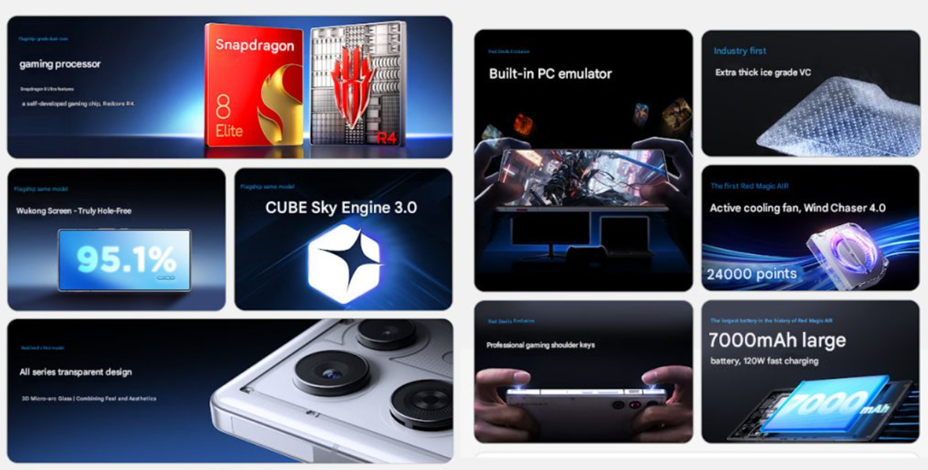
The RedMagic 11 Air features a 6.85-inch BOE Q10 AMOLED display with a 1.5K resolution, 144Hz refresh rate, 2592Hz PWM dimming, and a 2500Hz instantaneous touch sampling rate. Powering the device is the Snapdragon 8 Elite SoC, which the company claims delivers an AnTuTu score of over 3.66 million. It is paired with LPDDR5X Ultra RAM and UFS 4.1 storage.
The smartphone also includes the RedCore R4 chip and Red Devil Cube Sky Engine 3.0. It runs on RedMagicOS 11, bringing features such as AI Game Circle Search, AI Tactical Coach, seamless transitions, AI Recognition, AI Circle Search, and game plugins.
In terms of battery, the RedMagic 11 Air packs a 7,000mAh cell with support for 120W fast charging and all-scenario bypass charging. Camera hardware includes a 50MP main rear camera with OIS, an 8MP secondary rear sensor, and a 16MP under-display front camera.
Additional features include a 4D vibration X-axis linear motor, dual stereo speakers, an IR blaster, Wi-Fi 7 support, an active cooling fan rated at 24,000 RPM, the ICE Magic Cooling system, 520Hz gaming shoulder buttons, a built-in PC emulator, transparent design elements, fully functional NFC, RGB lighting effects, and an in-display fingerprint sensor.
RedMagic 11 Air – Price and Availability
The RedMagic 11 Air is available in Stardust White, Quantum Black, and Aurora Silver colour options. Pricing starts at 3,499 Yuan for the 12GB RAM and 256GB storage variant, while the 16GB RAM model is priced at 4,199 Yuan.
The Stardust White and Quantum Black variants are currently on sale in China.
RedMagic 11 Pro+ Golden Saga Edition Announced
RedMagic has also introduced the RedMagic 11 Pro+ Golden Saga edition. This special variant features liquid gold water cooling using the same fluorinated liquid found in AI servers.
Design highlights include a gold-plated VC heat sink, composite gold and silver air duct, carbon fibrematerial inspired by supercars, an aerospace-grade sapphire glass back cover, a gold power button, a Golden RedMagic logo, and Golden Saga branding.
The device ships in a customised gift box that includes a phone case, RedMagic Magnetic Protective Case, Golden SIM card pin, custom data cable, custom charger, and a user guide. Specifications remain the same as the standard RedMagic 11 Pro+. It is offered in a single 24GB RAM and 1TB storage variant, priced at 9,899 Yuan.
RedMagic Gaming Tablet 3 Pro Golden Saga
The RedMagic Gaming Tablet 3 Pro Golden Saga edition features a sapphire glass back panel, supercar-grade carbon fibre materials, and a sandwich gold-plated VC cooling architecture. Design elements include a gold-level competition key, RedMagic gold logo, RedMagic light effects, and illuminated fan effects.
The tablet comes in a customised box containing a case, custom charger, data cable, and user guide. Hardware specifications are similar to the standard RedMagic Gaming Tablet 3 Pro. The 24GB RAM and 1TB storage variant is priced at 7,999 Yuan.
RedMagic Gaming Laptop 16 Pro Golden Saga 3D Explorer Edition
RedMagic has also unveiled the Gaming Laptop 16 Pro Golden Saga 3D Explorer Edition. The laptop sports a black-and-gold chassis, a gold-plated water-cooled design, and a tempered glass wave energy design. While availability details have not yet been announced, the specifications are said to be identical to the standard RedMagic Gaming Laptop 16 Pro.
FAQs
Q1. What are the key features of the RedMagic 11 Air?
Answer. It has a 6.85-inch 1.5K AMOLED display with 144Hz refresh rate, Snapdragon 8 Elite SoC, 7,000mAh battery with 120W fast charging, and gaming-focused features like cooling fan, shoulder buttons and AI tools.
Q2. What is the price of the RedMagic 11 Air in China?
Answer. Pricing starts at 3,499 Yuan for the 12GB + 256GB model, while the 16GB RAM variant costs 4,199 Yuan.
Q3. What makes the RedMagic 11 Pro+ Golden Saga edition special?
Answer. It features liquid gold water cooling, a gold-plated VC heat sink, sapphire glass back, and comes in a 24GB RAM + 1TB storage variant priced at 9,899 Yuan.
Q4. What design highlights are included in the RedMagic Gaming Tablet 3 Pro Golden Saga?
Answer. It uses sapphire glass, carbon fibre materials, and gold-plated cooling architecture, priced at 7,999 Yuan for the 24GB + 1TB model.
Q5. What is unique about the RedMagic Gaming Laptop 16 Pro Golden Saga 3D Explorer Edition?
Answer. It sports a black-and-gold chassis, gold-plated water-cooled design, and tempered glass wave energy finish, with specs identical to the standard model (availability yet to be announced).
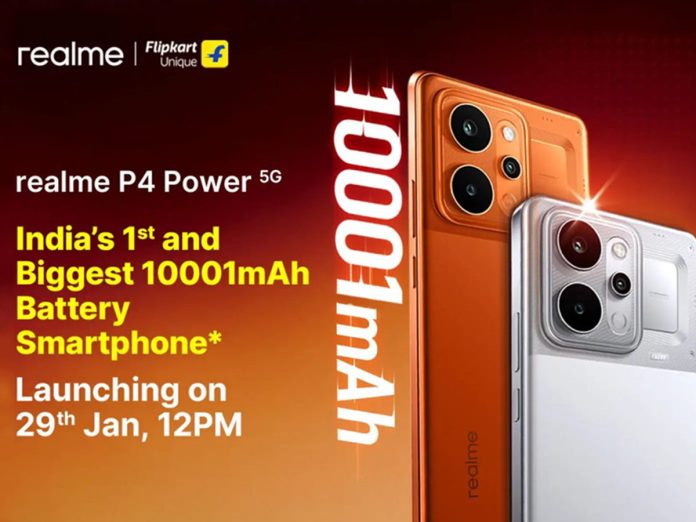
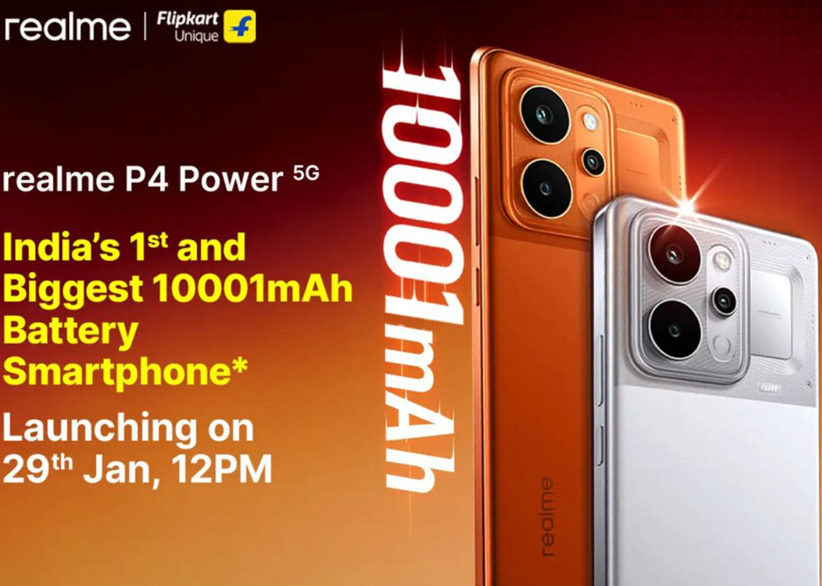
Realme P4 Power 5G will debut in India on January 29 at 12pm via Flipkart and Realme’s online store.
It will feature a massive 10,001mAh Titan Battery, 1.5K 4D Curve+ display with 144Hz refresh rate, and ships with Realme UI 7.0 (Android 16) plus 3 years of OS updates.
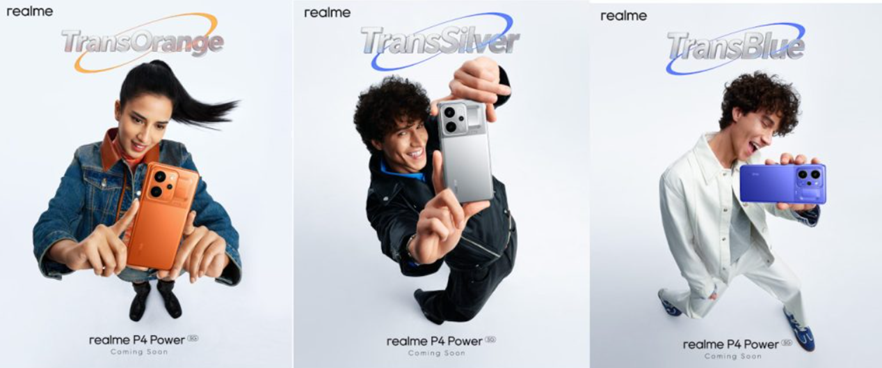
It will be available in TransSilver, TransOrange and TransBlue, while expected to be priced around Rs. 37,999 (12GB+256GB).
Realme P4 Power 5G India Launch Confirmed. (Image credit – Realme)
Realme has officially confirmed the India launch timeline for the Realme P4 Power 5G. Alongside the launch date, Realme has also revealed several key specifications including battery capacity and display details. The smartphone will be sold online via a major e-commerce platform as well as the company’s official website. Meanwhile, the dedicated microsite have already confirmed the colour options for India.
Realme P4 Power 5G India Launch Date and Sale Details
According to a press release, Realme will launch the Realme P4 Power 5G in India on January 29 at 12pm local time. The smartphone will be available for purchase through Flipkart and the Realme India online store.
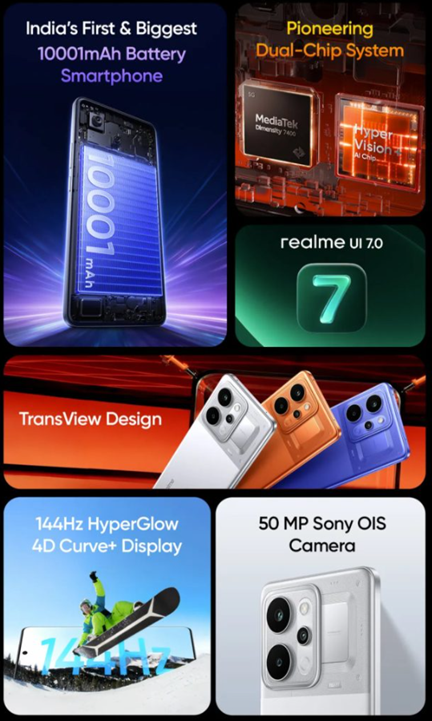
Realme has confirmed that the handset will pack a 10,001mAh Titan Battery. The company claims the phone can deliver up to two hours of gaming “while retaining around 86% battery”. It is also said to offer up to 32.5 hours of video playback on a single charge.
Other Confirmed Specifications
Realme P4 Power 5G key features. (Image credit – Realme)
The Realme P4 Power 5G will feature a 1.5K resolution 4D Curve+ display with support for up to a 144Hz refresh rate. Realme is expected to share more details about the smartphone in the days leading up to its launch.
In terms of design, the handset is shown with a triple rear camera setup placed inside a square-shaped camera module. It sports a dual-tone rear panel along with a flat frame design. The right edge appears to house the power button and volume controls, while the left side seems to remain clean.
Recently, the Flipkart microsite for the Realme P4 Power 5G was updated to reveal that the phone will be sold in three colour options in India, which includes TransSilver, TransOrange, and TransBlue.
The Realme P4 Power 5G is confirmed to ship with Realme UI 7.0 based on Android 16. Realme has stated that the device will receive three years of OS upgrades and four years of security updates. The phone is also teased to feature elements such as a Precision Energy Loop, a Flash Dart Emblem, and a matte-finished rear panel.
Meanwhile, a recent report suggests that the box price of the Realme P4 Power 5G could be set at Rs. 37,999 for the 12GB RAM and 256GB storage variant.
FAQs
Q1. When will the Realme P4 Power 5G launch in India?
Answer. The smartphone is scheduled to launch on January 29 at 12pm, available via Flipkart and Realme’s online store.
Q2. What are the key specifications confirmed for the Realme P4 Power 5G?
Answer. It features a 10,001mAh Titan Battery, a 1.5K 4D Curve+ display with 144Hz refresh rate, and ships with Realme UI 7.0 (Android 16).
Q3. What colour options and design details are available for the Realme P4 Power 5G?
Answer. The phone will come in TransSilver, TransOrange, and TransBlue, with a triple rear camera setup inside a square module and a dual-tone rear panel.
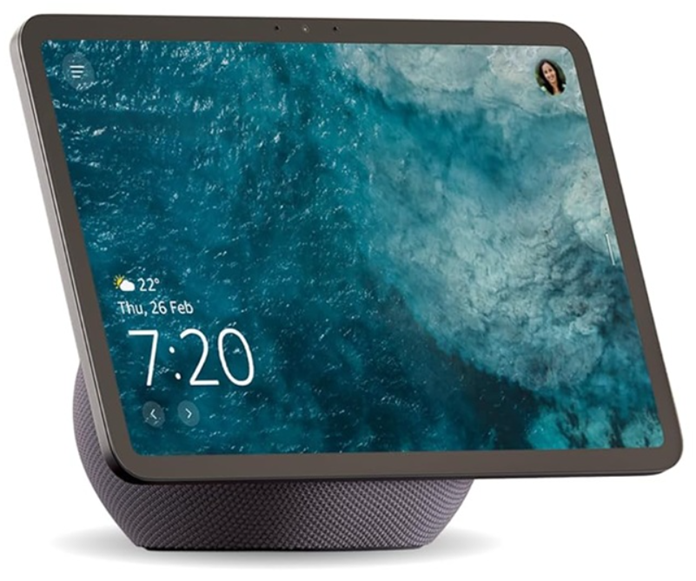
Amazon introduces Echo Show 11 and Echo Show 8 (4th Gen) with refreshed edge-to-edge glass designs and slimmer bezels.
Both devices include 13MP auto-framing cameras, upgraded stereo speakers with spatial audio, Omnisense sensors for motion/temperature routines, and smart home controls.
Devices support video streaming apps, multi-camera viewing, Drop In, and Alexa features.
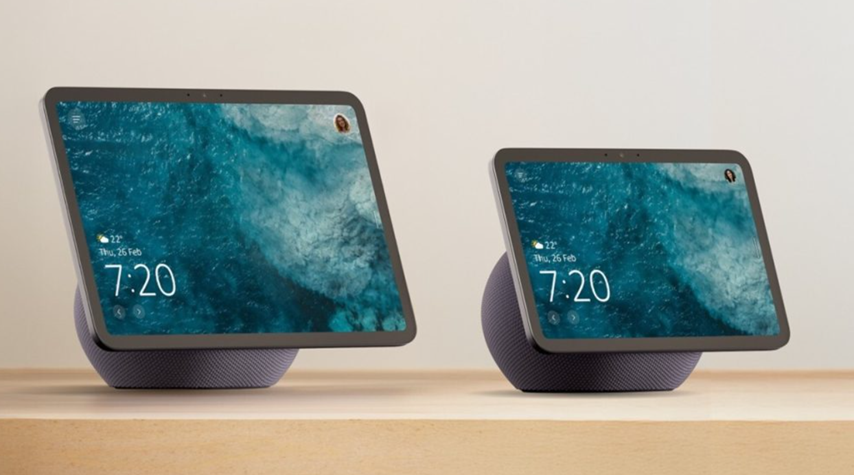
Amazon launches new Echo Show 11 and fourth-gen Echo Show 8 in India. (Image credit – Amazon)
Amazon has expanded its smart home lineup in India with the launch of two new Alexa-powered smart displays, the Echo Show 11 and the fourth-generation Echo Show 8. Both devices arrive with a refreshed design featuring edge-to-edge glass displays, slimmer bezels, upgraded speakers, and Amazon’s new Omnisense sensor system.
Speaking on the launch, Dilip R.S., Director and Country Manager, Amazon Devices India, said, “Whether coordinating family schedules, managing a smart home, or staying on top of a busy day, Echo Show 11 and Echo Show 8 are designed to assist. These devices serve as home assistants, helping customers stay organised and connected, while adapting seamlessly to the way they live and handling routine tasks so they can focus on what matters most. I’m excited to see how customers across India integrate these devices into their daily lives—whether it’s embracing advanced automation enabled by Omnisense technology, new audio experiences, or seamless hands-free voice control with Alexa.”
Here’s everything you need to know about the new device, starting with price and availability.
Amazon Echo Show 11, Echo Show 8 (4th gen) – Price and Availability
The Echo Show 11 is priced at Rs. 26,999 and is available in Graphite and Glacier White colour options. The Echo Show 8 (4th generation) is priced at Rs. 23,999 and also comes in Graphite and Glacier White.
Both smart displays are available for purchase via Amazon India and Flipkart, as well as offline retail outlets including Reliance Digital and Croma.
Echo Show 11 – Key Features
The Echo Show 11 features an 11-inch Full HD edge-to-edge glass display with thin bezels, which Amazon says is larger than previous Echo Show models sold in India. The screen supports touch controls and can also be operated using Alexa voice commands.
For video calling, the device is equipped with a 13MP camera that supports auto-framing, along with noise reduction technology for clearer audio. Users can place video callsvia other Echo devices or through the Alexa app.
Audio duties are handled by front-firing stereo speakers paired with a dedicated woofer positioned beneath the display. Amazon says the setup is designed to project sound forward and supports spatial audio. The Echo Show 11 can stream music from platforms such as Amazon Music, Apple Music, Spotify, JioSaavn, and Audible.
The device runs on Amazon’s AZ3 Pro chip and uses the Omnisense sensor platform, which combines data from the camera, audio sensors, ultrasound, Wi-Fi radar, accelerometer, and Wi-Fi CSI. This enables motion- and temperature-based routines such as automatically turning on compatible lights when someone enters a room or triggering actions when a room reaches a preset temperature.
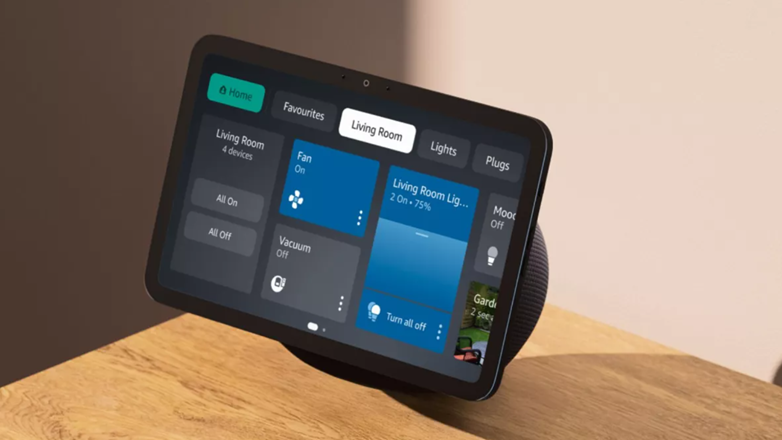
Additional features include smart home control for compatible devices, routine creation via the Alexa app, viewing live feeds from up to four connected security cameras simultaneously, and Drop In functionality to check on other Echo devices in the home.
Echo Show 8 (4th generation) – What’s New?
The Echo Show 8 (4th gen) comes with an 8.7-inch HD edge-to-edge glass display, which is slightly larger than earlier Echo Show 8 models available in India. It also features thin bezels and a fabric-covered rear panel.
Like the Echo Show 11, it includes a 13MP auto-framing camera for video calls and noise reduction for clearer conversations. Video calling is supported via Echo devices and the Alexa app.
The audio setup mirrors that of the Echo Show 11, with front-facing stereo speakers, a custom woofer, spatial audio support, and compatibility with the same set of music streaming services.
Powered by the AZ3 Pro chip, the Echo Show 8 also supports the Omnisense sensor platform. This allows users to create routines based on motion, presence, and temperature such as switching on lights when someone enters a room or activating actions when the room becomes too warm.
It supports smart home controls, video streaming from apps like Prime Video and Netflix, YouTube access through the Silk browser, multi-camera viewing, Drop In, and standard Alexa features including reminders, calendars, shopping lists, and timers.
Privacy Controls and Future Alexa Plus Support
Both the Echo Show 11 and Echo Show 8 include physical buttons to disable the microphone and camera. Users can also manage and delete voice recordings through the Alexa app.
Amazon added that both devices are designed to work with Alexa+, its generative AI-powered version of Alexa, once it becomes available in India.
FAQs
Q1. What new devices has Amazon launched in India?
Answer. Amazon introduced the Echo Show 11 and the Echo Show 8 (4th Gen), both Alexa-powered smart displays.
Q2. What are the prices of the Echo Show 11 and Echo Show 8 (4th Gen)?
Answer. The Echo Show 11 is priced at Rs. 26,999, while the Echo Show 8 (4th Gen) costs Rs. 23,999.
Q3. What is the key design update in these new Echo Show models?
Answer. Both feature edge-to-edge glass displays with slimmer bezels, upgraded speakers, and refreshed aesthetics.
Q4. What camera features do these new Amazon Echo devices include?
Answer. They come with a 13MP auto-framing camera and noise reduction technology for clearer video calls.
Q5. What is Amazon’s Omnisense sensor system used for?
Answer. Omnisense combines data from multiple sensors to enable motion- and temperature-based routines, like turning on lights when someone enters a room.
JioHotstar introduces monthly subscriptions starting at Rs. 79, effective January 28.
Mobile (Rs. 79, 720p, single device, Hollywood add-on), Super (Rs. 149, 1080p, 2 devices, Hollywood included), Premium (Rs. 299, 4K, 4 devices, Dolby Vision).
Mobile and Super remain ad-supported, while Premium offers mostly ad-free viewing (except live sports) with Hollywood content bundled by default.
JioHotstar has announced a new subscription pricing structure for new users, introducing monthly plans across all tiers starting at Rs. 79 per month. According to the streaming platform, the updated pricing is aimed at improving accessibility while reflecting changing viewing habits and the growing consumption of content on larger screens.
The newly introduced monthly options will be available alongside JioHotstar’s existing quarterly and annual subscription plans. JioHotstar confirmed that all newly introduced monthly subscription plans across Mobile, Super, and Premium tiers will come into effect starting January 28.
JioHotstar’s Three-Tier Subscription Model
Under the revised structure, JioHotstar will continue to offer three subscription tiers – Mobile, Super, and Premium. The platform clarified in a press note that both the Mobile and Super plans remain ad-supported, meaning users will continue to see advertisements while streaming content.
JioHotstar Mobile Plan Details and Pricing
The Mobile plan allows users to stream content on one mobile-only device at a time and is priced at Rs. 79 per month. It is also available as a quarterly plan for Rs. 149 and an annual plan priced at Rs. 499. Streaming quality on this tier is capped at 720p HD resolution.
Notably, the JioHotstar Mobile plan does not include Hollywood content by default. Access to Hollywood titles is offered through a separate add-on priced at Rs. 49 per month. This add-on is also available as a quarterly subscription for Rs. 129 and an annual option priced at Rs. 399.
JioHotstar Super Plan Pricing and Features
The Super plan enables streaming on up to two devices simultaneously and supports 1080p Full HD resolution. Subscribers can access content across mobile devices, the web, and supported living room devices.
The Super plan is priced at Rs. 149 per month, while the quarterly and annual subscriptions cost Rs. 349 and Rs. 1,099, respectively.
Hollywood content is included as part of the base pack with the JioHotstar Super plan.
JioHotstar Premium Plan for Large-Screen Viewers
The Premium plan is the highest-priced tier and is targeted at families and users who prefer large-screenviewing. It is priced at Rs. 299 per month with quarterly and yearly subscriptions available at Rs. 699 and Rs. 2,199, respectively.
This plan allows simultaneous streaming on up to four devices and supports 4K resolution along with Dolby Vision. Subscribers get access to ad-free content across the JioHotstar library, except for live sports and other live programming, which will continue to carry advertisements.Hollywood content is included by default in the Premium tier.
Honor Magic8 Pro Air – Slimmest flagship at 6.1mm, 155g weight, powered by Dimensity 9500, 5,500mAh battery, triple camera setup.
Honor Magic8 RSR Porsche Design – Premium model with Porsche-inspired nano-ceramic design, Snapdragon 8 Elite Gen 5, 200MP telephoto camera and 7,200mAh battery.
Honor Watch GS 5 – Advanced health-focused smartwatch with cardiac arrest screening research support and 23-day battery life.
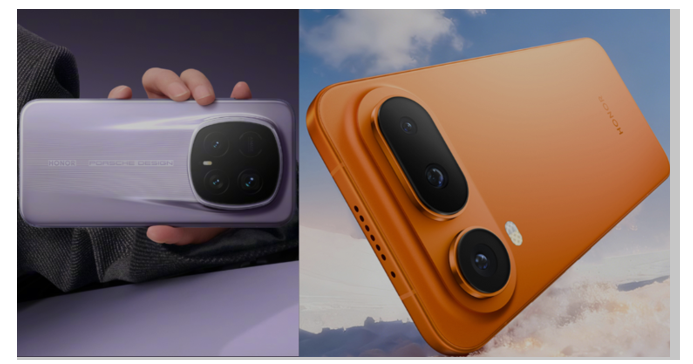
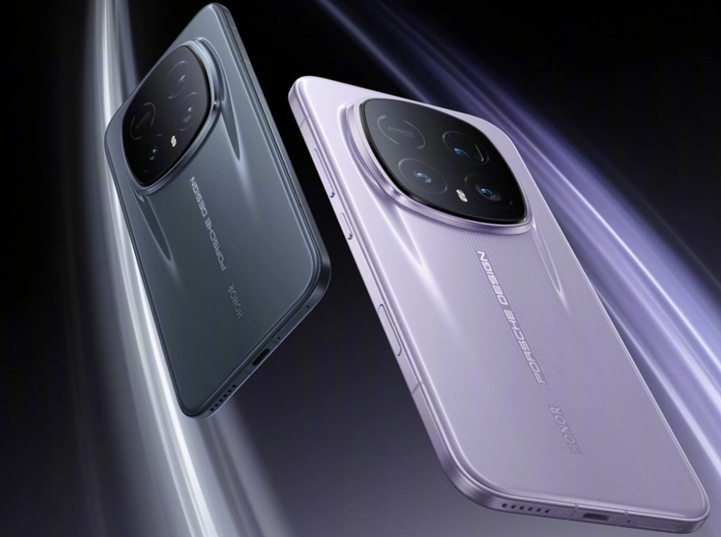
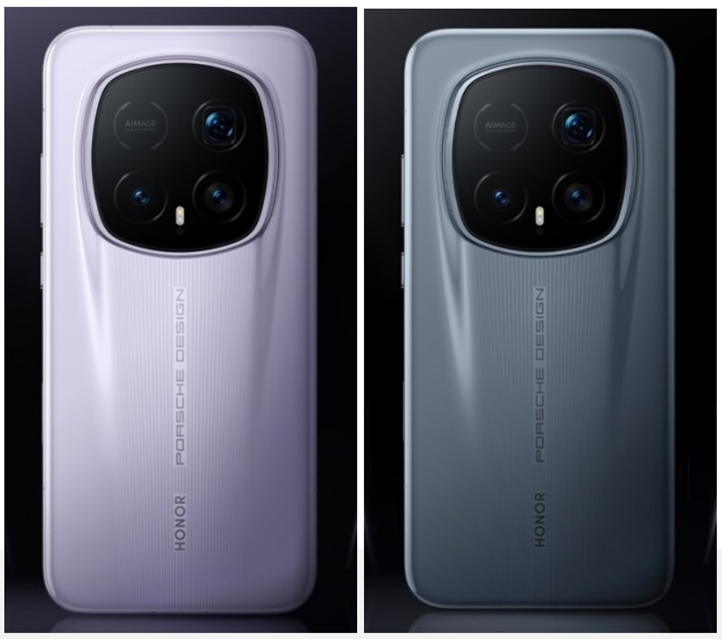
Honor Magic8 RSR Porsche Design (left) and Honor Magic8 Pro Air (right). (Image credit – Honor)
Honor has officially expanded its Magic8 portfolio with the launch of the Honor Magic8 Pro Air, a new slim flagship focused on compact dimensions and lightweight design. Alongside it, the company also unveiled the premium Honor Magic8 RSR Porsche Design smartphone in China. These new models join the existing Magic8 Pro and Magic8, which debuted in October last year.
At the same launch event, Honor also introduced the Honor Watch GS 5 smartwatch, positioning it as a strong alternative to Huawei’s wearable offerings. Here’s everything you need to know about the newly launched Honor products.
Honor Magic8 Pro Air Debuts as the Brand’s Lightest Flagship
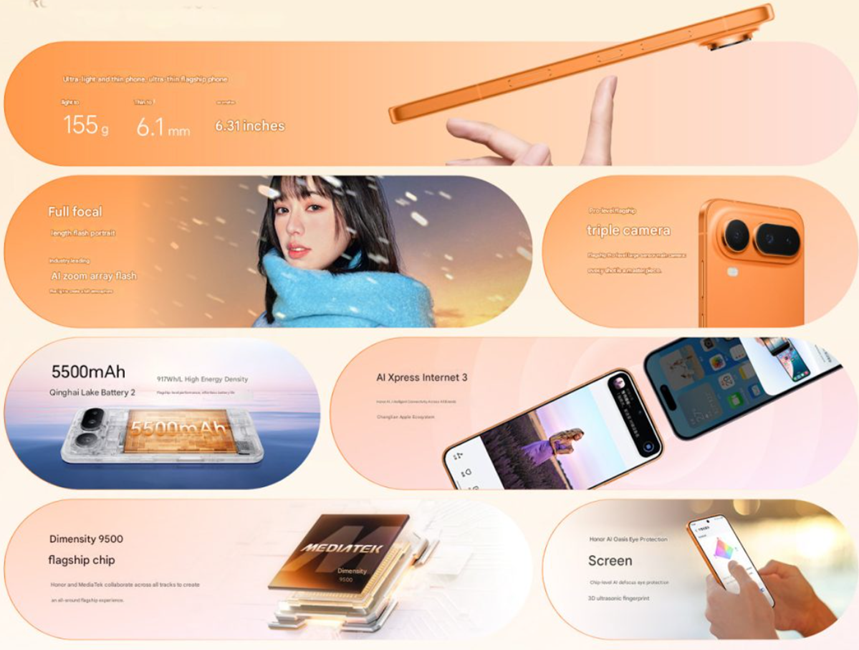
The Honor Magic8 Pro Air is being marketed as the company’s lightest high-end smartphone to date. It weighs 155g and measures just 6.1mm in thickness, placing it among the slimmest flagship phones currently available. The device features a 6.31-inch OLED display with ultra-narrow bezels measuring 1.08mm on all sides, clearly targeting users who prefer compact smartphones without stepping down to a mid-range category.
On the design front, the Magic8 Pro Air comes with a metallic satin-style rear finish created through a multi-layer coating process, which Honor compares to automotive-grade finishes. It uses an aluminium frame with Honor claiming improved structural strength despite the thin form factor.
Honor Magic8 Pro Air – Key Features
Powering the Magic8 Pro Air is MediaTek’s Dimensity 9500 chipset. The phone packs a 5,500mAh battery, which is notably large for a device of this size. Charging options include 80W wired fast charging and 50W wireless charging. Honor also highlights an energy density rating of 917Wh/L, although actual battery performance will depend on usage patterns.
The camera system includes a 50MP 1/1.3-inch main sensor with optical image stabilisation, a 50MP ultra-wide camera with a 112-degree field of view, and a 64MP periscope telephoto lens offering 3.2x optical zoom. Honor is introducing an AI-assisted flash system that dynamically adjusts flash output at different zoom levels, along with a new strobe-style portrait mode aimed at improving low-light photography.
Additional features include IP68 and IP69 water and dust resistance, stereo speakers, a 3D ultrasonic fingerprint sensor, and support for both physical SIM and eSIM. The display is rated for up to 6,000 nits of peak HDR brightness.
Honor Magic8 Pro Air – Price and Availability
The phone is offered in Fairy Purple, Light Orange, Feather White, and Shadow Black colour options.
As for pricing, Honor Magic8 Pro Air price starts at 4,999 yuan with sales scheduled to begin on January 23, 2026, following the ongoing pre-order phase.
Honor has also launched the Magic8 RSR Porsche Design, continuing its collaboration-inspired lineup with design elements influenced by Porsche supercars. The device features a nano-ceramic rear panel, which Honor claims delivers a Mohs hardness rating of 8.5. The phone is said to be around 10% lighter than its predecessor, while the rear camera module design takes inspiration from the matrix headlights found on classic Porsche vehicles.
The Magic8 RSR Porsche Design sports a 6.71-inch quad-curved LTPO AMOLED display with 1.5K resolution, a 120Hz refresh rate, and peak HDR brightness of 6,000 nits. It supports Dolby Vision and 4,320Hz high-frequency PWM dimming, and is protected by Giant Rhino Glass.
Under the hood, the phone is powered by the Snapdragon 8 Elite Gen 5 SoC and is available with up to 24GB of LPDDR5X RAM and 1TB of UFS 4.0 storage. It runs Android 16-based Magic UI 10.0 and includes a wide range of AI-driven features.
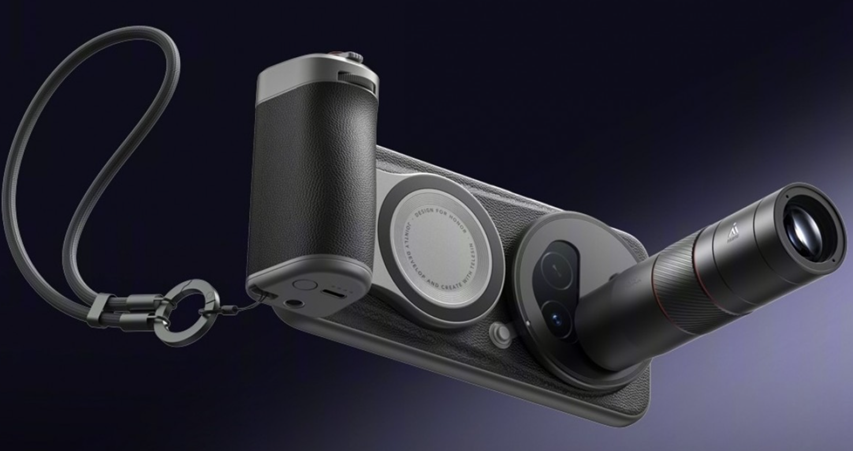
In the camera department, the device features a 50MP 1/1.3-inch primary sensor with an f/1.6 aperture and OIS, a 50MP ultra-wide camera with a 122-degree field of view and macro support, and a 200MP 1/1.4-inch periscope telephoto sensor offering f/2.6 aperture, OIS, and 3.7x optical zoom. Honor claims the phone is the first to achieve a CIPA 6.5 stabilisation rating. It also introduces an AiMAGE colour engine and supports an external 200mm telephoto lens from Nox.
For selfies and biometric security, the phone includes a 50MP front camera housed in a pill-shaped cutout, alongside a 3D depth sensor for face unlock.
The Magic8 RSR Porsche Design packs a 7,200mAh battery with support for 120W wired SuperCharge and 80W wireless charging. Other specifications include a 3D ultrasonic fingerprint scanner, infrared sensor, IP68/IP69/IP69K ratings, 5G connectivity, Wi-Fi 7, Bluetooth 6.0, and NFC. The device weighs 239g and measures 8.45mm in thickness.
It is available in Moonstone and Slate Grey colour options.
Pricing starts at CNY 7,999 ($1,150) for the 16GB RAM and 512GB storage variant, while the 24GB RAM and 1TB storage model is priced at CNY 8,999 ($1,290).
HONOR Watch GS 5 Launched with Advanced Health Tracking
Alongside its new smartphones, Honor also introduced the HONOR Watch GS 5 in China. The smartwatch succeeds the Watch GS 3 and brings a refreshed design along with advanced health-focused features.
According to Honor, the Watch GS 5 is the industry’s only smart wearable supporting research into sudden cardiac arrest screening. It identifies potential heart health risks by analysing the vagus nerve’s ability to regulate heart ratethrough heart rate deceleration force detection. High-risk users also receive professional telephone follow-ups from the research team, providing timely health guidance.
The smartwatch offers comprehensive heart health monitoring including early risk screening for suspected atrial fibrillation, premature beats, sleep apnea, and irregular heart rhythms. It also supports 24/7 real-time monitoring of heart rate, blood oxygen levels, stress, sleep quality, and HRV.
Honor has partnered with Professor Gu Dongfeng’s team to introduce a cardiovascular and cerebrovascular risk assessment model tailored for Chinese users. Based on internationally recognised biomedical models, it delivers personalised risk assessments and health recommendations.
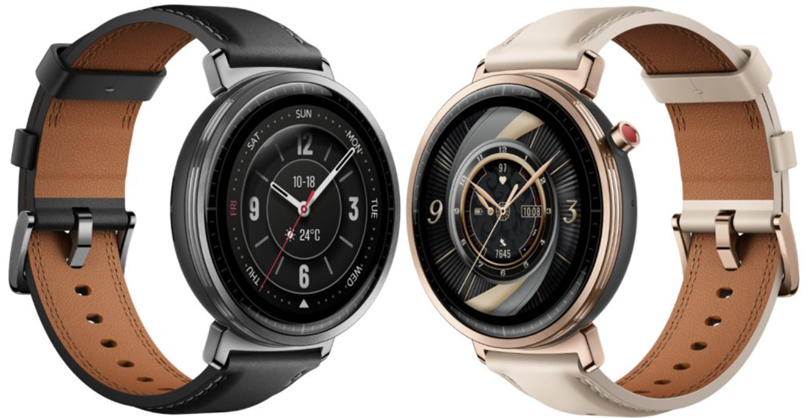
The HONOR Watch GS 5 is just 9.9mm thick and weighs 26g. It features an aluminium alloy bezel, a genuine leather strap, and a 1.32-inch curved AMOLED display. Through optimised internal stacking, the watch houses a 495mAh silicon-carbon anode battery, delivering up to 23 days of battery life with Bluetooth usage and up to 9 days with the always-on display enabled.
HONOR Watch GS 5 – Price and Availability
The HONOR Watch GS 5 is available in Black and Khakhi colour options with a leather strap, priced at 699 yuan (around $100 or Rs. 9,115). It is currently available for order and will go on sale in China starting January 23.
FAQs
Q1. What is the Honor Magic8 Pro Air known for?
Answer. It is Honor’s lightest flagship smartphone, weighing 155g and measuring just 6.1mm in thickness.
Q2. Which processor powers the Honor Magic8 Pro Air?
Answer. The device is powered by MediaTek Dimensity 9500, paired with a 5,500mAh battery and 80W wired fast charging.
Q3. What makes the Honor Magic8 RSR Porsche Design unique?
Answer. It features a nano-ceramic rear panel inspired by Porsche supercars, a 200MP telephoto camera, and Snapdragon 8 Elite Gen 5 chipset.
Q4. How much battery capacity does the Magic8 RSR Porsche Design offer?
Answer. The phone packs a 7,200mAh battery with 120W wired SuperCharge and 80W wireless charging support.
Q5. What health features does the Honor Watch GS 5 provide?
Answer. It supports sudden cardiac arrest screening research, atrial fibrillation risk detection, sleep apnea monitoring and delivers up to 23 days of battery life.
WhatsApp is developing group voice and video calls for its web version.
Users may soon generate shareable call links from group chats, simplifying participation and improving convenience across devices.
A new call scheduling feature will let users set names, descriptions, and times for calls, enhancing planning for both voice and video meetings.
(Photo by Alexander Shatov on Unsplash)
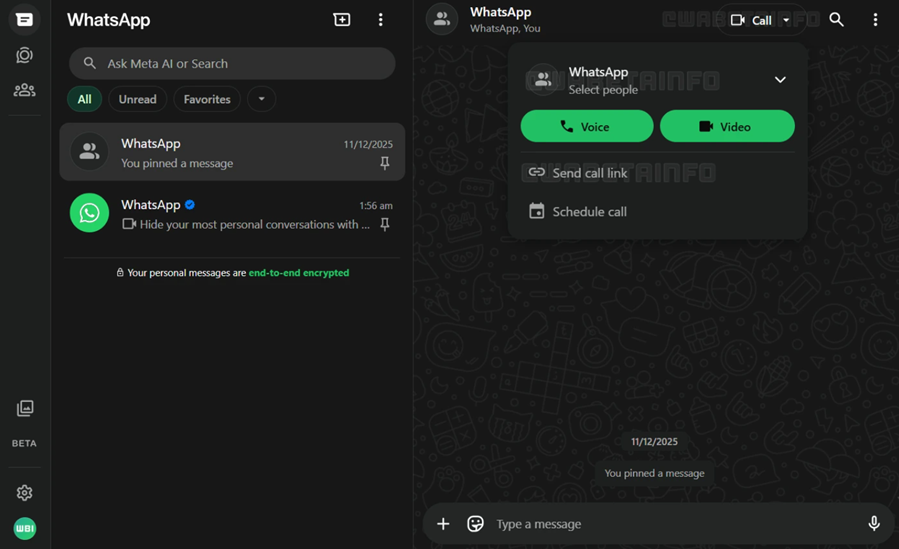
WhatsApp is reportedly working on bringing group voice and video calling support to its web version. According to a new report, the feature is currently under development and is expected to offer functionality similar to what users already get on mobile apps and desktop clients.
Group Calling on WhatsApp Web Could Arrive Soon
As per a report by WABetainfo, WhatsApp appears to be focusing on improving the overall web experience to bring it closer to feature parity with other platforms. The addition of group voice and video calls would make WhatsApp Web more comparable to dedicated conferencing tools such as Zoom and Google Meet.
WhatsApp is working on voice and video calls for group chats on Web. (Screenshot by @WABetaInfo on X)
The report notes that WhatsApp may limit the number of participants to 32, similar to the mobile version. However, it is also suggested that the feature could initially roll out with a lower cap of 8 or 16 participants to ensure better stability.
At this point, the exact participant limit has not been confirmed by WhatsApp.
The aim of this update is said to be greater flexibility, especially for users who rely on shared systems or frequently switch between multiple devices. With group calling on the web, users would be able to stay connected and manage conversations more efficiently, regardless of the platform they are using.
WhatsApp is working on voice and video calls for group chats on Web!
Group calls on the web are also expected to be accompanied by additional features including the ability to create call links directly from group chats. This would allow users to generate shareable links that others can use to join a call, even if they are not currently active in the chat.
Such call links could simplify organising and joining group calls, particularly for larger groups, by removing the need for all participants to be present in the chat at the same time.
Call Scheduling Also In The Works
In addition to group calling and call links, WhatsApp is reportedly developing a call scheduling feature for both individual and group chats. This feature would allow users to set a call name, description, and approximate start and end times in advance.
According to the report, scheduling a call will not trigger it automatically. Instead, WhatsApp Web may create an event that can be shared with participants, ensuring everyone is informed ahead of time. Users may also be able to choose whether the scheduled call is for voice or video, making it easier to plan meetings or events in advance.
Launch Timeline
All of these features including group calling, call links, and call scheduling are still said to be under development. As of now, all we know is that these features could roll out in the near future. Although WhatsApp has not officially confirmed that these features are being worked on.
FAQs
Q1. What new feature is WhatsApp bringing to its web version?
Answer. WhatsApp is developing group voice and video calling for WhatsApp Web, similar to its mobile and desktop apps.
Q2. How many participants will be supported in WhatsApp Web group calls?
Answer. The limit may be up to 32 participants, though initial rollout could cap at 8 or 16 for stability.
Q3. What additional tools will accompany group calling on WhatsApp Web?
Answer. WhatsApp is working on call links for easy joining and a call scheduling feature to plan voice or video calls in advance.
Realme P4 Power 5G features a split rear panel and comes in TransSilver, TransOrange and TransBlue colour options.
The microsite confirms refreshed UI elements like Ice Cube-style app icons, Misty Glass Control Centre and new wallpapers.
Retail Box leak shows ₹37,999 MRP for the 12GB RAM + 256GB storage variant.
Realme P4 Power 5G. (Image credit – Realme)
Realme has already confirmed the India launch of the Realme P4 Power 5G. Now, the Flipkart microsite and Realme India website have revealed the phone’s rear design and colour options. In addition, a tipster has shared an image of the retail box, which also discloses the MRP and storage variant. So, here’s everything we know about the upcoming Realme phone based on recent reports and leaks.
Realme P4 Power 5G Design and Colours Revealed
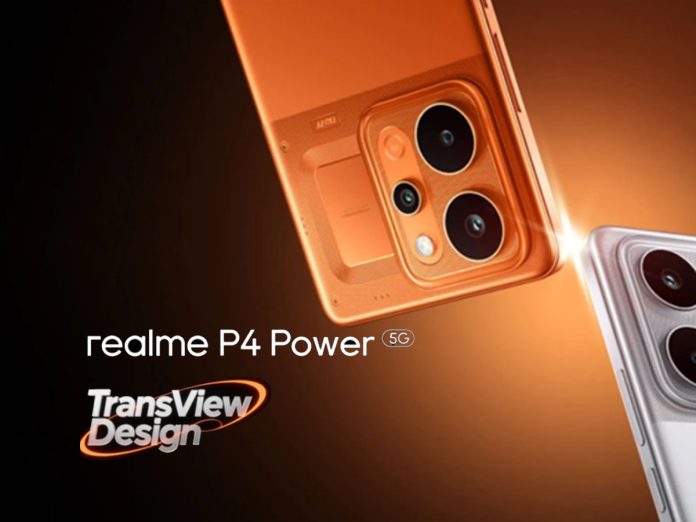
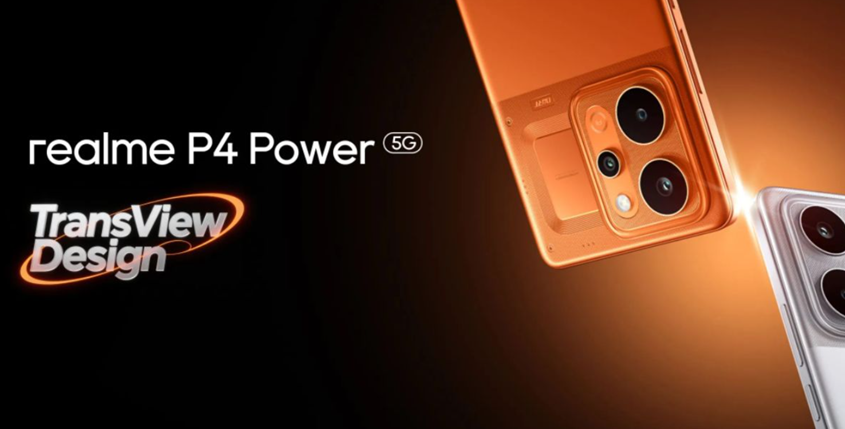
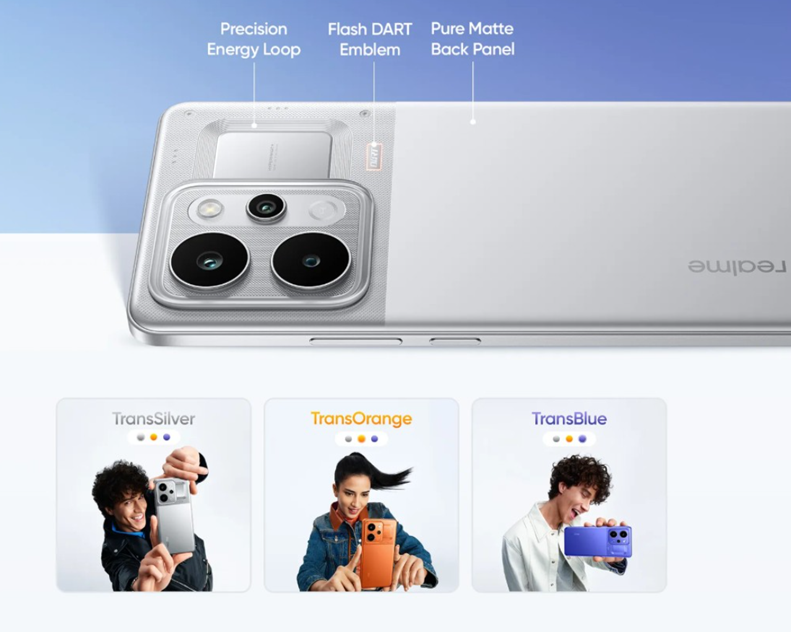
The live microsite on Realme India and Flipkart showcases the design of the Realme P4 Power 5G, which the brand refers to as the “Transview Design”. The rear panel is split into two distinct sections.
The upper portion features a textured finish and houses a rectangular camera module with two large camera lenses, a smaller third lens, and an LED flash.
Realme P4 Power 5G design and colour variants. (Image credit – Realme)
Next to the camera module is a rectangular panel with fine line detailing, labelled as the “Precision Energy Loop”. A small illuminated “DART” emblem is positioned beside this section, acting as a subtle visual indicator. The lower half of the rear panel has a smooth, plain matte finish that is creating a contrast with the textured top section. The design also includes small screw-like accents and dotted patterns.
Realme has confirmed three colour options for the P4 Power 5G, which are TransSilver, TransOrange, and TransBlue. The listing highlights performance with the tagline “mAAAAhsively Smooth”.
The microsite also confirms several software-related changes including new Ice Cube-style app icons, a redesigned Misty Glass Control Centre, new wallpapers, an updated fingerprint animation, and a refreshed “Breathing Dock” feature.
Realme P4 Power G5 Retail Box Image Leak
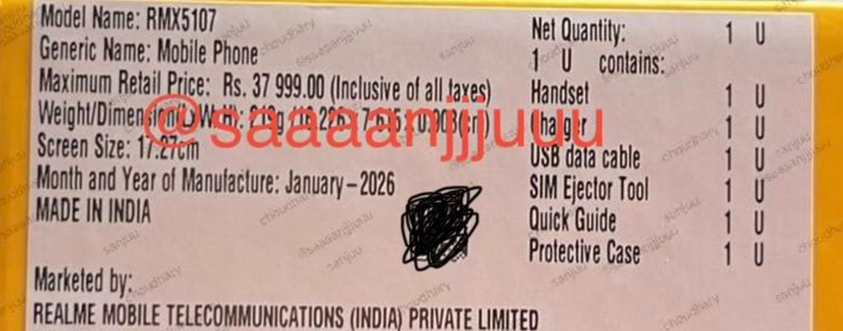
Realme P4 Power 5G retail box image. (Image credit – @saaaanjjjuuu on X)
Separately, tipster Sanju Choudhary @saaaanjjjuuu on X has shared an image of the Realme P4 Power 5G retail box. According to the leaked image, the smartphone carries an MRP of ₹37,999 for the 12GB RAM and 256GB storage variant, although the actual selling price is expected to be lower.
Exclusive 💫
realme p4 power (12/256GB) BOX MRP is ₹37,999 :
• 6.78” 144hz 4D curve + AMOLED
• MTK 7400 Ultra
• HyperVision+ AI chip
• 50MP OIS Main + 8 MP UW
• 16MP front
• 10,001mAh + 80W
• IP68/69, Plastic Frame , 219gm
• 3 Years of OS + 4 years of security… pic.twitter.com/vrXPxH3gca
The retail box also confirms the model number “RMX5107”, which was first spotted in December and is now confirmed to belong to the Realme P4 Power 5G.
That earlier listing had also pointed to a 10,001mAh battery and the same 12GB/256GB memory configuration.
What Else We Know?
Realme has previously confirmed that the smartphone will receive three major OS updates along with four years of security patch updates.
A Geekbench listing has previously suggested that the Realme P4 Power 5G could be powered by the MediaTek Dimensity 7400 SoC, although this has not yet been officially confirmed by Realme.
The launch date of the smartphone remains unannounced. However, a tipster has claimed that the Realme Buds Clip could launch alongside the Realme P4 Power 5G during the same event.
FAQs
Q1. What design features does the Realme P4 Power 5G showcase?
Answer. It uses a “Transview Design” with a split rear panel, textured top housing a triple camera setup, illuminated “DART” emblem, and screw-like accents for a rugged look.
Q2. What colour options will be available for the Realme P4 Power 5G?
Answer. Realme has confirmed three colours: TransSilver, TransOrange, and TransBlue.
Q3. What do we know from the leaked retail box?
Answer. The box reveals an MRP of ₹37,999 for the 12GB RAM + 256GB storage variant, model number RMX5107, and hints at a 10,001mAh battery.
Redmi Turbo 5 Max will debut with a huge 9,000mAh battery, the largest Xiaomi Jinshajiang battery used in a smartphone.
The phone will come with dual rear camera in a pill-shaped module, Ocean Breeze Blue colourway, flat CNC metal frame, fibreglass rear panel and slim bezels with a hole‑punch selfie camera.
It is revealed to pack the new MediaTek Dimensity 9500s SoC that scored 3.29M+ on AnTuTu.
Redmi is gearing up to launch the Redmi Turbo 5 Max in China later this month. The brand has already begun teasing key details of the upcoming smartphone. The company has now revealed the phone’s design, battery capacity, and endurance test claims, offering an early look at what to expect.
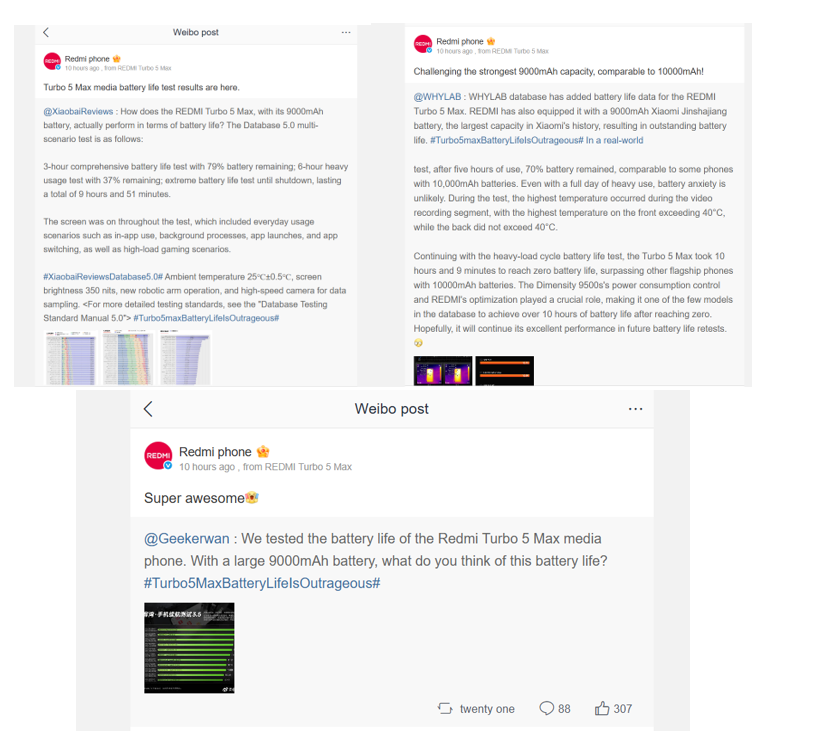
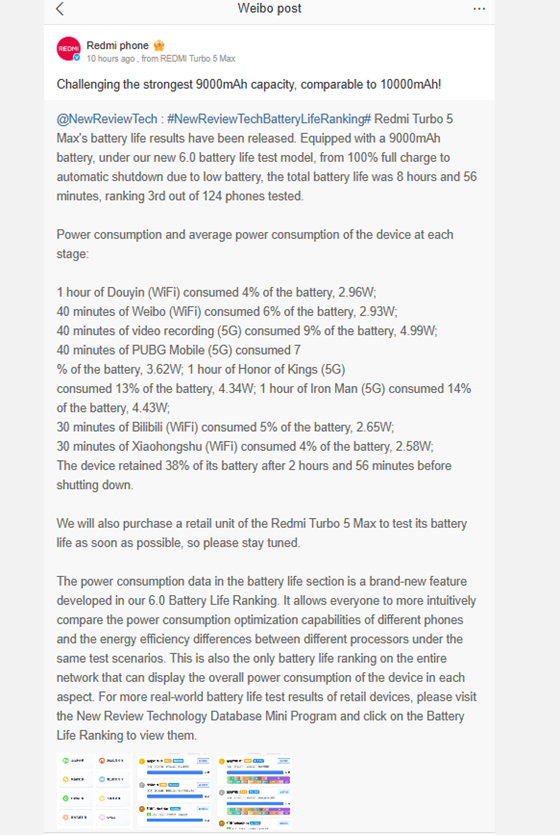
Redmi has shared fresh information about the Redmi Turbo 5 Max in multiple posts on Weibo. The official Redmi posts confirm that the smartphone will pack a massive 9,000mAh battery. According to the company, this battery delivers “battery life comparable to a 10,000mAh” cell. Redmi also claims it is the “largest Xiaomi Jinshajiang battery” used in a smartphone so far.
Official Redmi Turbo 5 Max related posts on Weibo. (Translated via Google Translate)
Redmi Turbo 5 Max Design (Revealed)
Alongside the battery details, Redmi has teased the design of the handset.
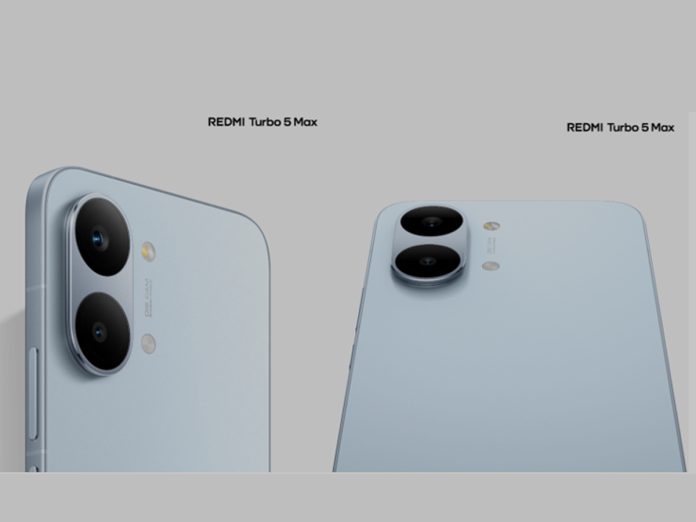
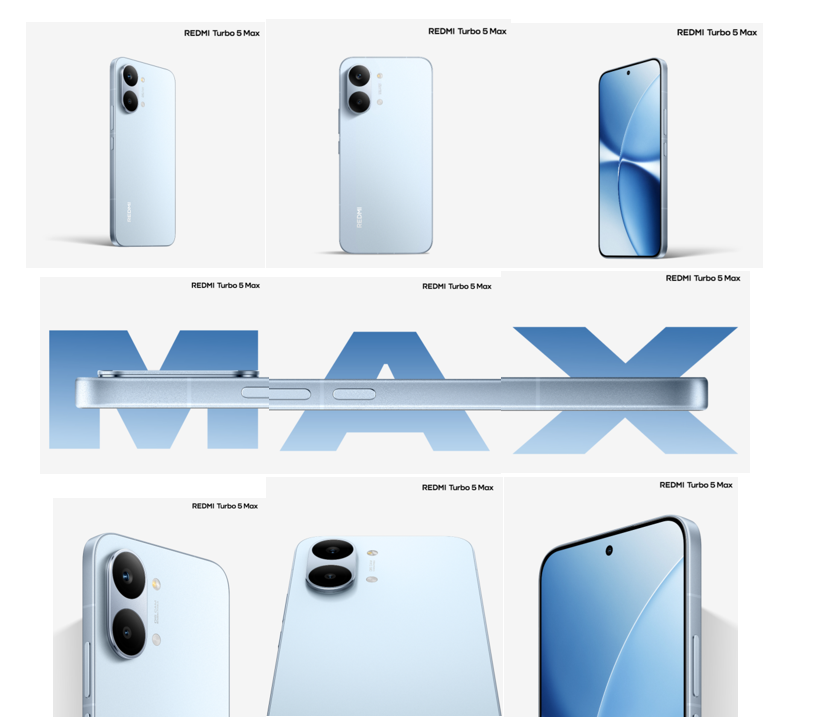
Redmi Turbo 5 Max design teaser released officially. (Image Credit – Redmi)
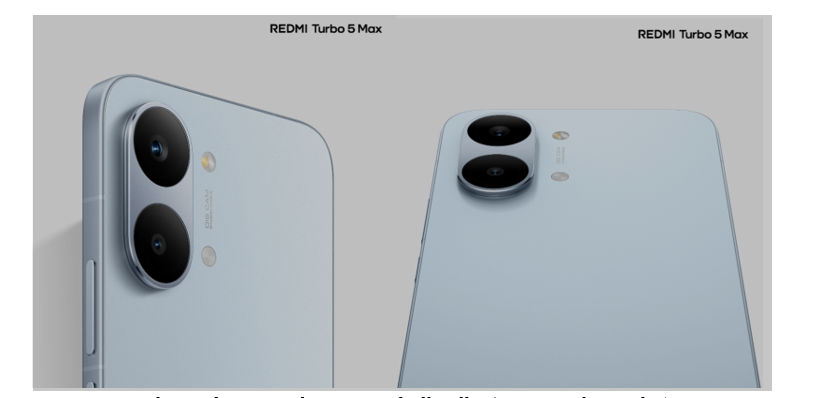
The Redmi Turbo 5 Max is shown with a dual rear camera setup housed in a vertically aligned, pill-shaped camera module. Redmi branding is visible on the bottom-left corner of the back panel.
The device appears in an “Ocean Breeze Blue” colourway, which closely resembles the Blue shade seen on the Xiaomi 17. The smartphone features a flat CNC metal frame with the power button and volume keys located on the right edge, while the left side looks clean and button-free.
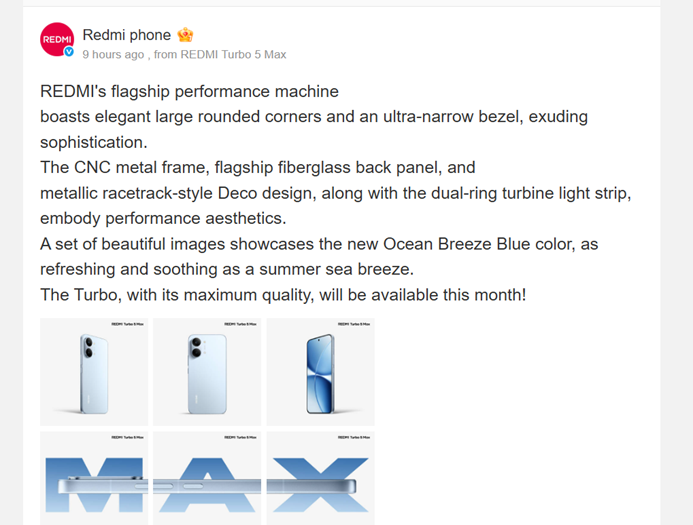
Redmi Turbo 5 Max design revealed officially on Weibo. (Translated via Google Translate)
Redmi has confirmed that the Turbo 5 Max will feature a 50-megapixel rear camera with optical image stabilisation. The phone will come with a fibreglass rear panel. On the front, it is expected to sport a hole-punch display cutout for the selfie camera, along with relatively slim bezels.
Redmi Turbo 5 Max – What Else We Know?
Redmi Turbo 5 Max teaser. (Credit – Redmi)
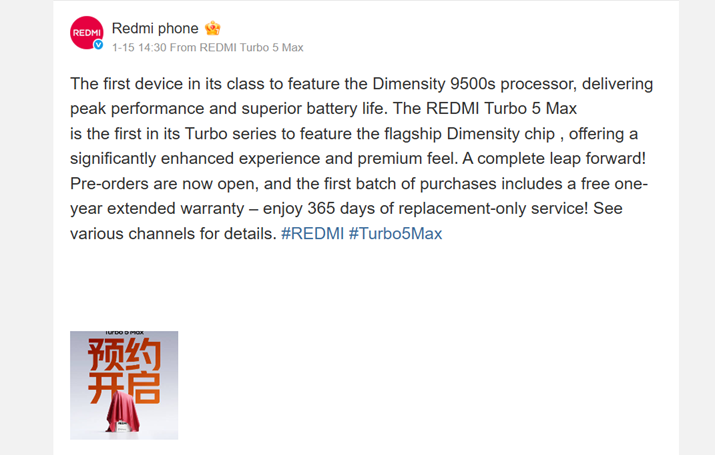
Redmi has also confirmed that the Turbo 5 Max will be powered by the MediaTek Dimensity 9500s chipset, which was unveiled earlier this month. The brand claims that the Redmi Turbo 5 Max will be the world’s first smartphone to launch with this new SoC.
Redmi Turbo 5 processor related post on Weibo. (Translated via Google Translate)
In addition, reports suggest that the handset has been spotted on the AnTuTu benchmarking platform. The Redmi Turbo 5 Max reportedly achieved an overall score of 32,98,445 points, including 9,52,789 points in CPU performance and 11,30,421 points in GPU performance.
The company has not yet disclosed the exact launch date, but more details are expected to be announced in the coming days.
FAQs
Q1. What is the battery capacity of the Redmi Turbo 5 Max?
Answer. The smartphone packs a massive 9,000mAh battery, claimed to deliver endurance comparable to a 10,000mAh cell.
Q2. Which processor powers the Redmi Turbo 5 Max?
Answer. It is confirmed to launch with the MediaTek Dimensity 9500s SoC, making it the world’s first phone with this chipset.
Q3. What design features are highlighted in the Redmi Turbo 5 Max?
Answer. The device sports a dual rear camera in a pill-shaped module, an Ocean Breeze Blue colourway, flat CNC metal frame, and a fibreglass rear panel.