Home Blog Page 1276

Budget 2022: RBI to launch block chain technology based digital rupee, check details

0

The Minister for Finance & Corporate Affairs Nirmala Sitharaman has announced the introduction of Digital Rupee to be issued by the Reserve Bank of India (RBLI) starting 2022-23.  Presenting the Union Budget 2022-23 in the Parliament, the Finance Minister said that the Central Bank Digital Currency (CBDC) will give a big boost to digital economy. Digital currency will also lead to a more efficient and cheaper currency management system, the minister stated. The Digital Currency will use block chain and other technologies.

What is block chain technology

A block chain is a decentralized ledger of all transactions across a peer-to-peer network. The use of block chain technology allows participants to confirm transactions without a need for a central clearing authority.

Digital banking units

In view of the growing digital banking, digital payments and fintech innovations, Sitharaman said that government is continuously encouraging these sectors to ensure that the benefits of digital banking reach every nook and corner of the country in a consumer-friendly manner. Taking forward this agenda, and to mark 75 years of independence, the Finance Minister announced that it is proposed to set up 75 Digital Banking Units (DBUs) in 75 districts of the country by scheduled commercial banks.

Digital payment

The Finance Minister assured that the financial support for digital payment ecosystem announced in the previous Budget will continue in 2022-23. This will encourage further adoption of digital payments. There will also be a focus to promote use of payment platforms that are economical and user friendly, she said.

Wait is over

“The industry was waiting for the government to recognise crypto technology and innovation. Today, it is the beginning of a revolution when the government has itself announced the launch of digital cryptocurrencies. We, as an industry, have taken a step ahead towards adoption of digital currencies. Yes, currently taxation imposed is a little on the higher side, but the industry which was already growing rapidly in the absence of regulation, will now thrive with the government’s clear support,” said Kumar Gaurav, Founder & CEO of Cashaa.

Also, Read Here: Union Budget 2022: Concessions in customs duty to boost domestic electronics manufacturing

Union Budget 2022: Concessions in customs duty to boost domestic electronics manufacturing

0

Finance Minister Nirmala Sitharaman in her Union Budget 2022 speech today announced concessions on the customs duty levied on mobile phone parts and other electronics to boost domestic manufacturing.

“Customs duty rates have been calibrated to provide a greater rate structure to facilitate domestic manufacturing of wearable devices, shareable devices, and electronic smart meters,” the minister said in the Parliament.

“Duty concessions are being given to parts of transformer of mobile phone, chargers, camera lens of mobile camera module, and certain other such items. This will enable domestic manufacturing of high growth electronic items,” she said.

Also Read: Union Budget 2022: India to hold 5G spectrum auctions this year

Sitharaman also announced that spectrum auctions will be conducted this year to roll out 5G services within FY2022-23 in India. Outlining the government’s priorities, the minister also announced inclusion of the design led initiatives for 5G and other technologies in production linked incentive (PLI) scheme.

She said, “To enable affordable broadband and mobile service proliferation in rural and remote areas, 5% of annual collections Universal Service Obligation Fund will be allocated.”

SeHAT app: Home delivery of medicines begins from Feb 1

0

To provide quality healthcare services to patients from the comfort of their homes and  promote Digital India and e-Governance, defence minister Rajnath Singh had launched Services e-Health Assistance and Teleconsultation (SeHAT) on May 27, 2021.  It is designed to be extremely simple and easy to use, which requires minimal effort from the users. It aims to provide.

Furthermore, taking the healthcare delivery right to the patient’s doorsteps, defence secretary Ajay Kumar, took the initiative of providing Home Delivery or Self Pickup of Medicines to patients seeking consultation on SeHAT. Individuals desirous of their home delivery of self-pick-up may indicate their preference while logged in. To start with, this project of home delivery will be started with Base Hospital Delhi Cantt, effective February 1, 2022, and would be extended to more and more stations in coming times.

Here is what you need to know about the app:

SeHAT is the tri-services teleconsultation service of the MoD designed for all entitled personnel and their families.

Stay home OPD is a patient-to-doctor system where the patient can consult a doctor remotely through the internet using his smartphone, laptop, desktop or tablet.

The consultation occurs through video, audio and chat at the same time.

The SeHAT app enables safe and structured video-based clinical consultations between a doctor in a hospital, and a patient within the confines of his or her home anywhere in the country.

The user does not need to pay anything to seek teleconsultation & can simply access the services by visiting , or by using the SeHAT apps available on the Play store & App Stores.

Consultations so far

Since its launch, there have been more than 10,000 successful teleconsultations on SeHAT, with a strong team of 2000 plus doctors on board.

Also, Read Here: Meta rolls out 3D avatars for Instagram, new options for Facebook and Messenger as well

Vivo Y33s 5G spotted online, key specs, features, and price revealed

0

The rumoured Vivo Y33s 5G is claimed to be debuting soon in the Chinese market. Last month, China’s 3C certification site had approved the latest Vivo lineup with model number V2166A. The model is appeared to be the latest Y33s 5G, pointing towards the smartphone’s imminent launch in China.

Vivo Y33s 5G specifications (rumoured)

Vivo earlier launched its Y33s 4G variant, and now it is all set to step forward into the 5G world. 

As per the listing, the new Vivo phone will come with a 6.51-inch LCD panel with Full HD+ resolution (1600×720 pixels). It will also sport a waterdrop notch at the top for the selfie camera. Furthermore, the phone will be powered by a MediaTek Dimensity 700 chipset paired with 8GB of RAM. Also, it has up to 128GB of internal storage, which is further expandable using a microSD card. Moreover, it will be fueled by a massive 5000mAh battery with supporting 18W fast charging as well. 

Vivo y33s 5G

As far as camera features are concerned, it has a triple camera alignment at the back, including a 50MP primary camera, a 2MP macro shooter, and a 2MP depth sensor. For selfies and video calling, it has a 16MP front camera.

Other add-ons to the phone also include a side-mounted fingerprint scanner and face unlock. It will be launched in color options, namely Nebula Blue, Fluorite Black, and Early Snow Dawn, as per the Gizmo China listing, as per the Gizmo China listing.

Vivo Y33s 5G pricing, release date (rumoured)

As per the listing of China Telecom, the upcoming Vivo Y33s 5G is speculated to be priced at 1,499 Yuan (roughly INR 17,685) for 4 GB RAM + 128 GB and 1,599 Yuan (roughly INR 18,865) 6 GB RAM + 128 GB storage. However, the 8 GB RAM + 128 GB storage will be available for 1,699 Yuan (roughly INR 20,046).

The listing OF China Telecom also states that it will be available for buying in China from Feb. 12.


Also Read : Motorola Edge 30 Pro launching this month: Expected price, specifications

Union Budget 2022: India to hold 5G spectrum auctions this year

0

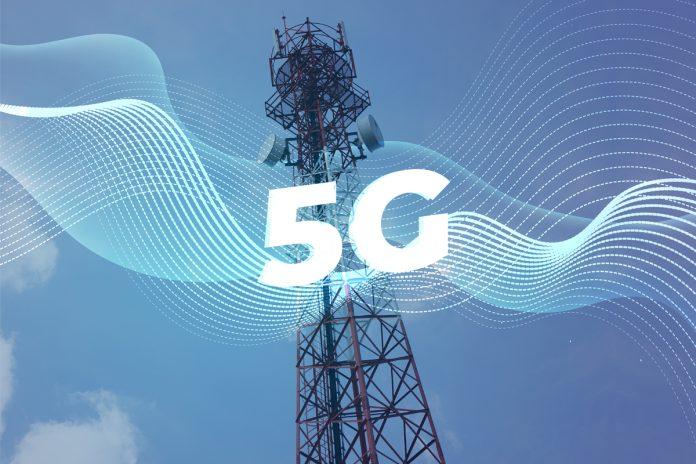
Finance Minister Nirmala Sitharaman in her Union Budget 2022 speech today announced that spectrum auctions will be conducted this year to roll out 5G services within FY2022-23 in India.

Outlining the government’s priorities, the minister also announced inclusion of the design led initiatives for 5G and other technologies in production linked incentive (PLI) scheme.

According to Economic Survey 2021-22 tabled in the Parliament yesterday, the telecom sector reforms are poised to boost 4G proliferation, infuse liquidity and create an enabling environment for investment into 5G networks.

Besides the telecom infrastructure expansion, a slew of measures have been taken to bring about reforms, the survey said, outlining the structural and procedural reforms undertaken in the Indian telecom sector that represents the world’s second-largest telecommunication market.

Also Read: Union Budget 2022: Concessions in customs duty to boost domestic electronics manufacturing

Meanwhile, the industry watchers have welcomed this step of the government. “5G auctions and launch in FY 22-23 is an important and welcome step. 5G rollout would be beneficial to various segments like affordable healthcare, education and overall government service delivery. This would enable greater access and equity to citizens across the country,” said Devroop Dhar, Co-founder and MD, Primus Partners.

“Telecom operators had earlier been permitted non-commercial 5G trials by Government and thus we feel that they would now be ready for commercial rollout,” Dhar added.

“To enable affordable broadband and mobile service proliferation in rural and remote areas, 5% of annual collections Universal Service Obligation Fund will be allocated,” Sitharaman said.

She also informed that the contracts for laying optical fibres via the PPP mode will be awarded in FY23. This will happen under Bharat Net and its completion is expected in FY2025.

PM Narendra Modi, the king of YouTube too: Know how many subscribers his channel has on the video platform

0

Prime Minister Narendra Modi’s popularity reached yet another height today as his YouTube channel has now surpassed 1 crore subscriptions and is the highest amongst top global leaders.

According to reports, Brazil President Jair Bolsonaro ranks second after PM Modi on the list of global leaders with the highest subscriptions on their YouTube channel with a total of 36 lakh subscribers. Progressively following behind is Mexico President Andres Manuel Lopez Obrador with 30.7 lakh subscribers.

Interestingly, the ‘NarendraModi’ channel was created in October 2007 while he was the Chief Minister of Gujarat. Besides, the Prime Minister also has an official PMO India channel on YouTube through which various official statements and PM’s addresses to the nation are shared.

The Prime Minister is also active on other social media platforms such as Twitter with 753 lakh followers and Facebook with 468 lakh followers.

Others on YouTube

If we talk about other leaders on a national level, Congress leader Rahul Gandhi has 5.25 lakh subscribers, party leader Shashi Tharoor has 4.39 lakh subscribers, All India Majlis-e-Ittehadul Muslimeen (AIMIM) chief Asaduddin Owaisi has 3.73 lakh subscribers, Tamil Nadu Chief Minister and Dravida Munnetra Kazhagam (DMK) chief MK Stalin has 2.12 lakh subscribers, and Delhi Deputy Chief Minister and Aam Aadmi Party (AAP) leader has 1.37 lakh subscribers on YouTube.

The subscription number list of global leaders also includes Indonesia President Joko Widodo with 28.8 lakh subscribers. In the decreasing trend, the White House has 19 lakh subscribers, followed by US President Joe Biden with 7.03 lakh subscribers.

Also Read: Blackberry plans to sell patents related to mobile devices for $600 mn: Here’s the reason

Meta rolls out 3D avatars for Instagram, new options for Facebook and Messenger as well

0

Meta is rolling out its 3D avatars to Instagram. Users can access the feature both in stories and Direct messages (DM’s). The feature will allow the users to appear as their virtual selves in the stickers, gifs, feed posts, and even profile pictures.

The update has wheelchairs and also include some different implants and hearing aids, giving out more personalized and realistic feature to be more inclusive of users with disabilities. Furthermore, the avatars will include many face shapes and skin colors to make them look more authentic.

Instagram 3D avatar feature

CEO Mark Zuckerberg, in a statement posted on his Facebook profile, also stated “We’re starting to experiment with digital clothing too. You can use your avatar across Quest, Facebook, Instagram and Messenger. One day you’ll have multiple avatars ranging from expressive to photorealistic. We’re looking forward to sharing more soon.” This clearly explains that avatars have a long way to go with many improved features and options coming very soon.

Meta brings new and improved avatar choices to Facebook and Messenger

Parent company Meta (Previously Facebook) is also bringing updated avatars on Facebook and Messenger. Any changes made to avatars on Facebook and Messenger will also mirror Instagram avatars, although users can keep different avatars if they like. Additionally, they will also get the option to bring the same avatar on all their social media platforms, including VR. Moreover, any changes made by the user on Facebook and Messenger avatar, the same will appear on Instagram automatically.

Meta 3D Avatars

Meta has also specified their long-term objectives saying, its goal is to make it easier for users to move their avatar from place to place and plans to share more updates on this in the future.

Also Read: Blackberry plans to sell patents related to mobile devices for $600 mn: Here’s the reason

Blackberry plans to sell patents related to mobile devices for $600 mn: Here’s the reason

0

After shuttering its smartphone services, BlackBerry has finally announced that it will sell its legacy patents that are primarily related to mobile devices, messaging, and wireless networking for $600 million to a special purpose vehicle formed to acquire the company’s patent assets.

According to a Reuters report, the legacy patents will be acquired by Catapult IP Innovations, a special purpose vehicle that was specifically formed for the acquisition. BlackBerry said the transaction with Catapult IP Innovations Inc, will not impact customers’ use of its products or services.

The development comes weeks after BlackBerry pulled the plug on service for its once ubiquitous business smartphones, which were toted by executives, politicians and legions of fans in the early 2000s.

Shares down

As per the report, US-listed shares of BlackBerry were down 3.6% in premarket trading. One of the so-called “meme stocks”, such as GameStop and AMC Entertainment, that witnessed a surge in early 2021, BlackBerry rose 41% last year.

The company will receive $450 million in cash and a promissory note for $150 million at the closing of the deal, said the Reuters report.

BlackBerry was once known for its phones with a tiny QWERTY physical keyboard and the BBM instant messaging service. Its core businesses today are cybersecurity and software used by automakers.

Also Read: Xiaomi, Apple among top performers of Indian smartphone market in 2021: Read

Xiaomi, Apple among top performers of Indian smartphone market in 2021: Read

0

India’s smartphone shipments grew 11% YoY to reach 169 million units in 2021. However, the shipments declined 8% YoY in the December quarter due to supply issues plaguing the smartphone manufacturing ecosystem. Overall India’s smartphone market revenue crossed $38 billion in 2021 with 27% YoY growth.

According to the latest research from Counterpoint’s Market Monitor service, Xiaomi led the market with a 24% shipment share. The brand also reached its highest ever share in the premium segment with 258% YoY growth.

Samsung registered its highest ever retail ASP in 2021. The brand led the INR 20,000-INR 45,000 price segment with a 28% share. OnePlus witnessed its highest ever shipments in India in 2021 and led the affordable premium segment INR 30,000-INR 45,000. 5G shipments registered 555% YoY growth in 2021. vivo led the 5G smartphone shipments in 2021 with a 19% share.

Top five brands

Among the top five brands, realme was the fastest growing in 2021 with 20% YoY growth. It also captured the second spot in Q4 2021 for the first time ever. Switching to ‘Unisoc’ to manage component shortages, production expansion through partnerships with EMS, focus on the premium segment with newly launched ‘GT series’ and high demand for its revamped C series and Narzo series favored this high growth for realme. Going forward, realme is aiming to provide 5G in all smartphones priced above INR 15000 (~$200). It also plans to enter the ultra-premium segment.

Samsung remained at the second position in 2021 with an 8% YoY decline in shipments. Supply chain disruptions, absence of new Note series, reduced focus on the entry-level segment and fewer launches in the mid segment compared to the previous year led to an overall decline. However, Samsung was the top brand in 5G smartphone shipments in Q4 2021. Its campaign on providing maximum bands in 5G smartphones facilitated this growth. It also led the INR 20,000-INR 45,000 (~$267-$600) segment with a 28% share. Samsung’s foldable device (Fold and Flip series) shipments grew 388% YoY in 2021.

vivo emerged as the top 5G smartphone brand in 2021 with a 19% share. It grew 2% YoY in 2021 driven by a strong performance of its Y series and V It remains the leading player in the offline segment while simultaneously strengthening its hold in the online segment through its sub-brand iQOO.
OPPO held the fifth position in 2021 with 6% YoY growth. It now has a leaner portfolio in the budget segment as it is focusing on the upper, mid and premium segments. In the premium segment, it was the fastest growing brand in 2021.

Transsion Group brands (itel, Infinix and TECNO) registered 55% YoY growth in 2021 and crossed 10 million shipments for the first time ever in a single year. They also maintained their third position in the overall handset market, with itel being the largest player in the feature phone market. Aggressive launches with a strong value proposition, strong demand in Tier 2 and Tier 3 cities and hybrid channel strategy were some of the factors behind this growth.

Apple was one of the fastest growing brands in 2021 with 108% YoY growth in shipments. It maintained its lead in the premium segment (>INR 30,000, ~$400) with a 44% share.Aggressive offers during the festive season, strong demand for the iPhone 12 and iPhone 13 and increased ‘Make in India’ capabilities drove high growth. We expect strong momentum for Apple in 2022 as well with increased manufacturing and retail footprint.
OnePlus reached its highest ever shipments in 2021, crossing the 5-million mark with 59% YoY growth driven by the OnePlus Nord Series. It led the affordable premium segment (INR 30,000-INR 45,000, ~$400-$600).It also captured the second position in the premium segment (>INR 30,000, ~$400) with a 19% share. Camera innovations will be a key focus for OnePlus in 2022.

Mobile handset market

India’s overall mobile handset market grew 7% YoY in 2021. Samsung captured the top position in the handset market in 2021, taking 17% share. Feature phone shipments reached 86 million units to show flat growth in 2021. itel led the feature phone market, taking 24% share followed by Lava, Samsung and Jio. itel has been leading the feature phone market for the last two consecutive years.

Consumer demand

Commenting on the market dynamics, Senior Research Analyst Prachir Singh said, “The Indian smartphone market witnessed high consumer demand in 2021, making it the best-performing year. This feat came in a year that witnessed supply constraints due to a multitude of reasons – a second and more virulent Covid-19 wave, global component shortages and price hikes due to these shortages. The high replacement demand fuelled by increasing smartphone affordability in the mid and high-price tiers due to promotions and discounts, as well as better financing options, led to an 11% YoY growth in 2021. The demand outstripped the supply in the last two quarters of 2021. During Q4 2021, the smartphone market declined 8% YoY. We expect the supply situation to get better going forward and reach normalcy by the end of Q1 2022.”

“India’s smartphone market retail ASP (average selling price) grew 14% YoY in 2021 to reach its highest ever at $227. The price hikes in the budget segment due to component price rise, increasing focus of OEMs on the premium segment, and increased demand for mid-range and premium smartphones due to increasing uses and availability of financing options contributed to the increasing ASP. This resulted in the Indian smartphone market revenue crossing $38 billion in 2021, registering a growth of 27% YoY,” said, Research Analyst Shilpi Jain on the competitive landscape and pricing.

On the developing manufacturing ecosystem, Jain added, “Local manufacturing bounced back, contributing 98% shipments in 2021, compared to 90% in 2020. The PLI scheme has been a great booster for the Indian mobile manufacturing ecosystem, attracting top players like Apple and Samsung to increase their ‘Make in India’ footprint and make India their export hub. Therefore, handset exports saw 26% YoY growth in 2021. Seeing the PLI scheme’s success in the mobile manufacturing ecosystem, the government has launched similar schemes for different product verticals like CIOT and IT hardware.”

Also, Read Here: Vivo T1 5G to launch in India on Feb. 9: It could be the fastest and slimmest 5G smartphone in sub-20K category

Tech NewsWrap: Infinix Zero 5G coming to India… and more

0

Infinix Zero 5G coming to India

The Infinix Zero 5G is launching in India soon. It will debut as the brand’s first 5G smartphone in the country. The handset support 13 5G bands and is coming to India on February 8, 2022. It could sport an AMOLED display with a 120Hz refresh rate and will feature MediaTek Dimensity 900 SoC. The device is also expected to get a triple-camera setup on the back and will run on Android 11 with XOS 10 on top. Although Anish Kapoor, Infinix CEO, said that the phone would fall in the sub-20K segment. However, there is no official confirmation about pricing just yet.

Motorola Edge 30 Pro India launch tipped for February

As per a report, Motorola Edge 30 Pro India and global launch could take place sometime in February. However, the exact launch date is not known yet. The key specifications as well as design of the handset surfaced last week. Motorola Edge X30 is reported to be the rebranded version of the same device that launched in China last month. Motorola Edge 30 Pro may reportedly sport a 6.7-inch full-HD+ POLED display with 144Hz refresh rate and pack a 5,000mAh battery that supports 68W fast charging.

Tecno Spark 8C unveiled

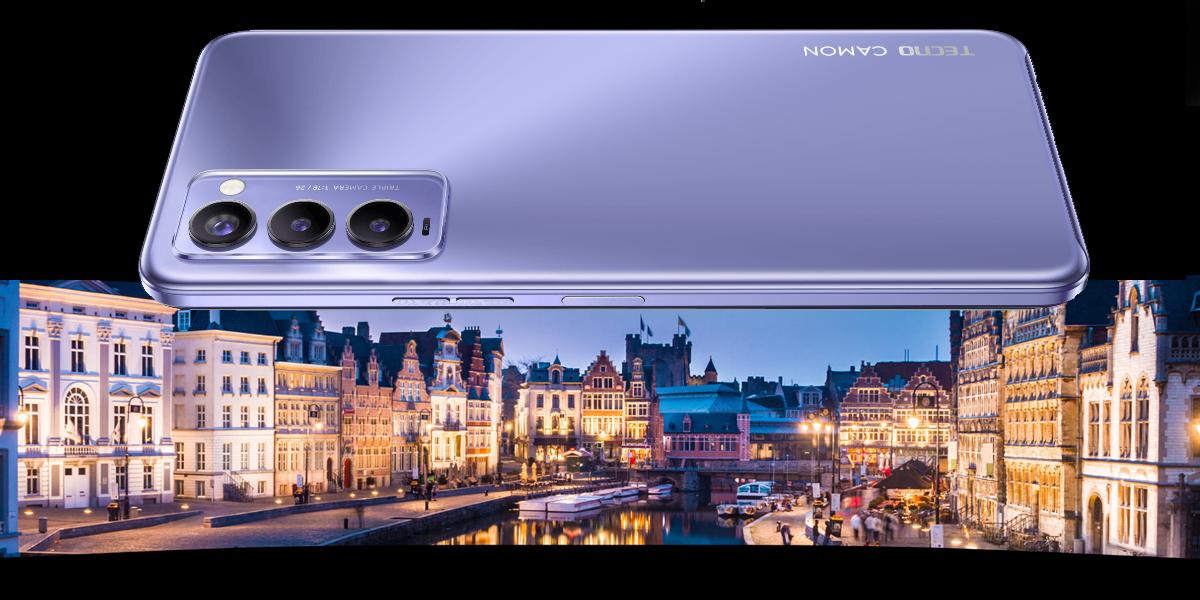
Tecno has launched a new model under its Spark 8 series, named Spark 8C. This is the fifth device under Tecno’s 8 series phones. The new Tecno smartphone equips a Dot Notch display that has a refresh rate of 90Hz and comes with Android 11 Go Edition based on its proprietary skin. The smartphone has debuted in Nigeria and Thailand. Although, the price of the Tecno Spark 8C hasn’t been made official yet, it is available in Iris Purple, Diamond Grey, Magnet Black, and Turquoise Cyan colour options.

Huawei Nova Y9a launched

Huawei Nova Y9a has been launched as the latest smartphone of the company. The smartphone comes with a 6.63-inch LCD display without a notch, courtesy its pop-up selfie camera along with a quad rear camera setup housing a 64-megapixel primary camera. Powered by a MediaTek Helio G80 SoC, it has 8GB of RAM. The Huawei Nova Y9a has been launched in South Africa and the company is yet to bring the smartphone to other regions.

Also Read: Truke Air Buds Lite and BTG 3 Review: Simply outstanding and punches above their weight