Reports confirm stock for the current iPhone SE 3 is running low suggesting its imminent discontinuation.
Upcoming iPhone SE 4 expected features – a 6.1-inch OLED display, Face ID, USB-C and new features like Genmoji and Notification Summaries.
The new iPhone SE is rumoured to start at $499.
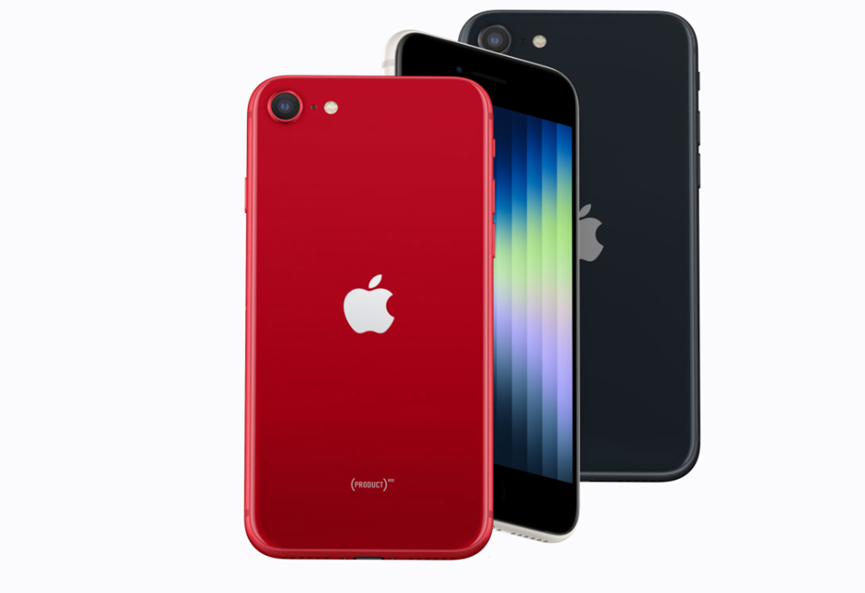
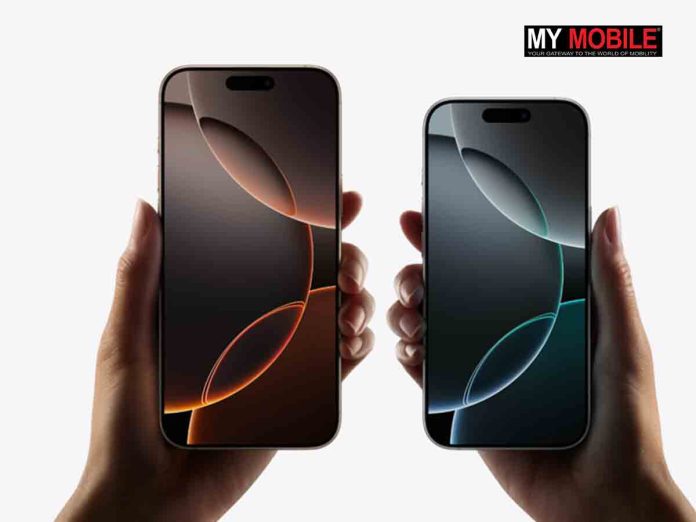
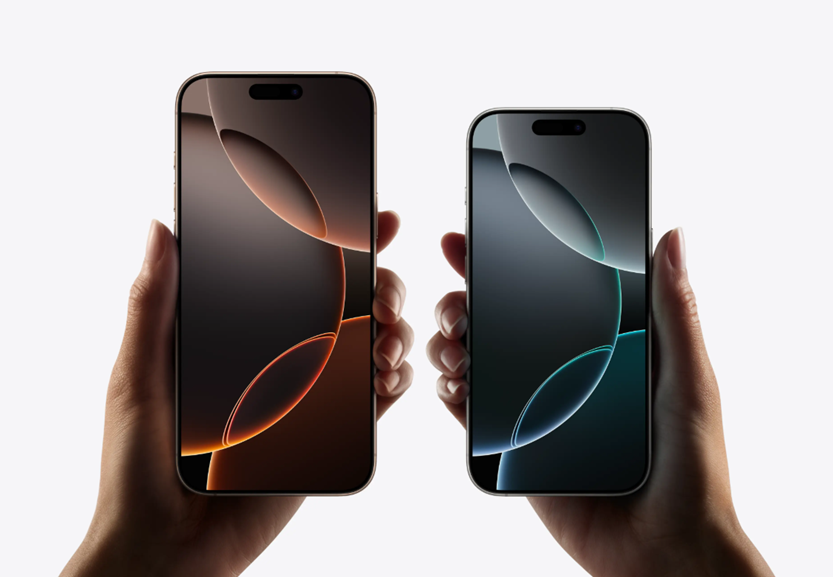
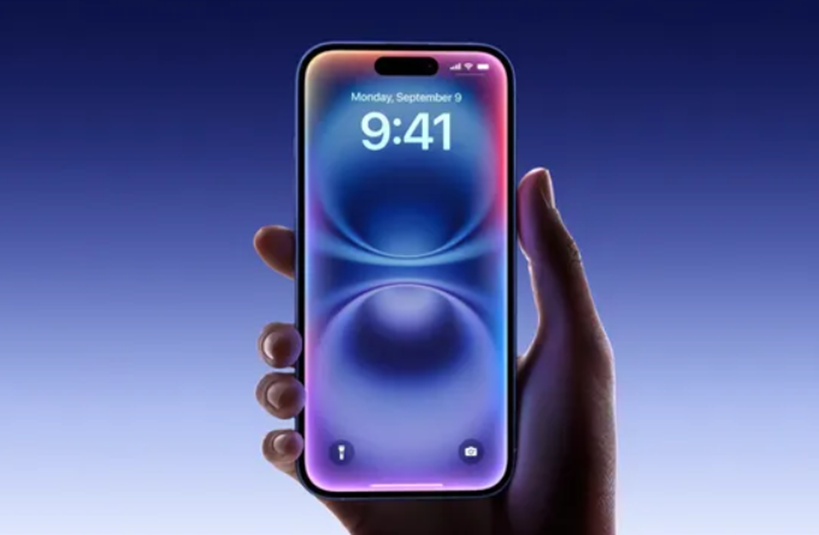
iPhone SE 3 launched in 2022. (Image credit – Apple)
It is now becoming clear that Apple is shifting its focus entirely to the upcoming iPhone SE model with the launch of the redesigned iPhone SE 4 approaching. If you want an iPhone SE 3, you can still order it online for now but reports suggest Apple Store inventory is running low.
The supply of the current iPhone SE launched in 2022 is rapidly shrinking at Apple Stores, according to Mark Gurman’s Power On newsletter. This isn’t surprising as Apple is expected to unveil a brand-new iPhone SE in just a couple of months. However, what’s notable is that Apple seems to have no plans to keep the current model available once the new one launches.
iPhone SE 4 – What We Know So Far?
Apple’s upcoming iPhone SE, which might be called the iPhone 16E, is set for a major overhaul, possibly arriving in April. This will be the biggest redesign in the history of the SE lineup featuring a 6.1-inch OLED display, Face ID, USB-C and support for Apple Intelligence.
New features like Genmoji and Notification Summaries will also be part of the package, which will make it more aligned with Apple’s flagship models.
However, these upgrades come with a price since the new iPhone SE is rumoured to start at $499 marking a significant jump from its predecessor.
Apple often keeps older models at lower prices to cater to budget-conscious buyers as they did with the M1 MacBook Air when the M2 version was launched. Unfortunately, that doesn’t seem to be the case with the iPhone SE 3. Reports suggest that production of the current model has already slowed down signalling its potential discontinuation.
This might disappoint those hoping for an affordable iPhone around $300. However, the iPhone SE 3 is based on the 2017 iPhone 8 and is outdated in many ways. The phone struggles to compete with Android devices in the same price range even as it offers a solid chipset and decent cameras.
Apple stopped selling the iPhone SE 3 in the European Union late last year due to new USB-C regulations, which banned the sale of Lightning-equipped devices like the iPhone SE 3 and iPhone 14.
FAQs
Q1. What is happening with the stock of iPhone SE 3?
Answer. Reports suggest Apple Store inventory of the current iPhone SE, launched in 2022, is running low. Apple seems to have no plans to keep the current model available once the new iPhone SE 4 launches.
Q2. What upgrades can we expect in the upcoming iPhone SE 4?
Answer. The upcoming iPhone SE 4 is set for a major overhaul featuring a 6.1-inch OLED display, Face ID, USB-C, and support for Apple Intelligence, along with new features like Genmoji and Notification Summaries.
Q3. What will be the price of the new iPhone SE 4 and how does it compare to the iPhone SE 3?
Answer. The new iPhone SE 4 is rumoured to start at $499, marking a significant jump from its predecessor. Unlike previous models, Apple seems to have no plans to continue selling the SE 3 at a lower price.
HP OmniBook Ultra Flip, the 14-inch 2-in-1 Laptop, was launched in India last year.
It is available in two striking colours – Atmospheric Blue and Eclipse Gray.
The HP OmniBook Ultra Flip price in India starts at INR 1,81,999.
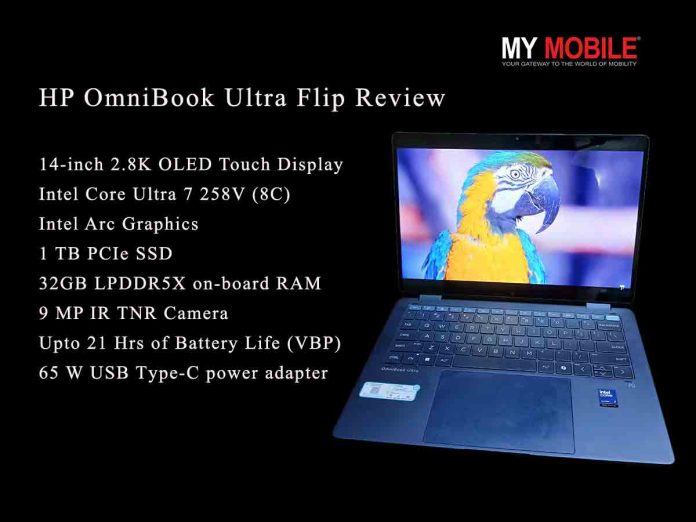
HP launched the HP OmniBook Ultra Flip last year boasting of its design and portability while calling it the next-gen AI PC. In case you have been wondering about it, here’s our quick hands-on OmniBook Ultra Flip Review to get a closer look.
HP OmniBook Ultra Flip – Key Features
HP OmniBook Ultra Flip – Key Features
14-inch 2.8K OLED Touch Display with 48-120Hz VRR, IMAX support and Gorilla Glass 5
Intel Core Ultra 7 258V (8C)
Intel Arc Graphics
1 TB PCIe SSD
32GB LPDDR5X on-board RAM
9 MP IR TNR Camera
Upto 21 Hrs of Battery Life (VBP)
65 W USB Type-C power adapter
Next-gen Windows, Microsoft Office Home & Student Edition 2021
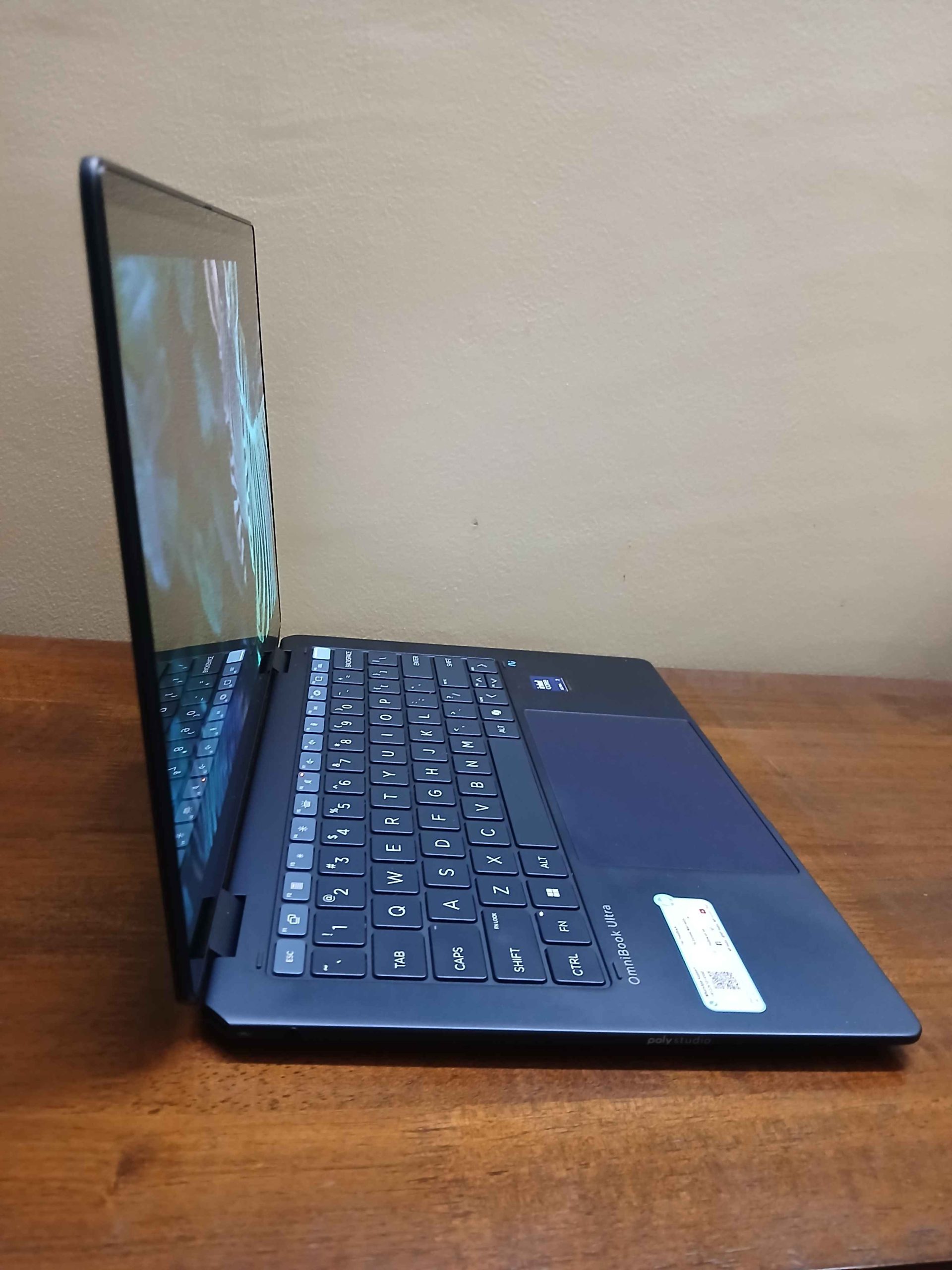
This is, as HP has been promoting it, a delight for freelancers or working professionals who are always on the move. Portability-wise, it is definitely a machine that you can easily carry along. This 14-inch 2-in-1 sleek-looking laptop in the aluminium frame comes in full metal body. It is quite lightweight at just 1.3kg and compact with 14.9 mm thickness.
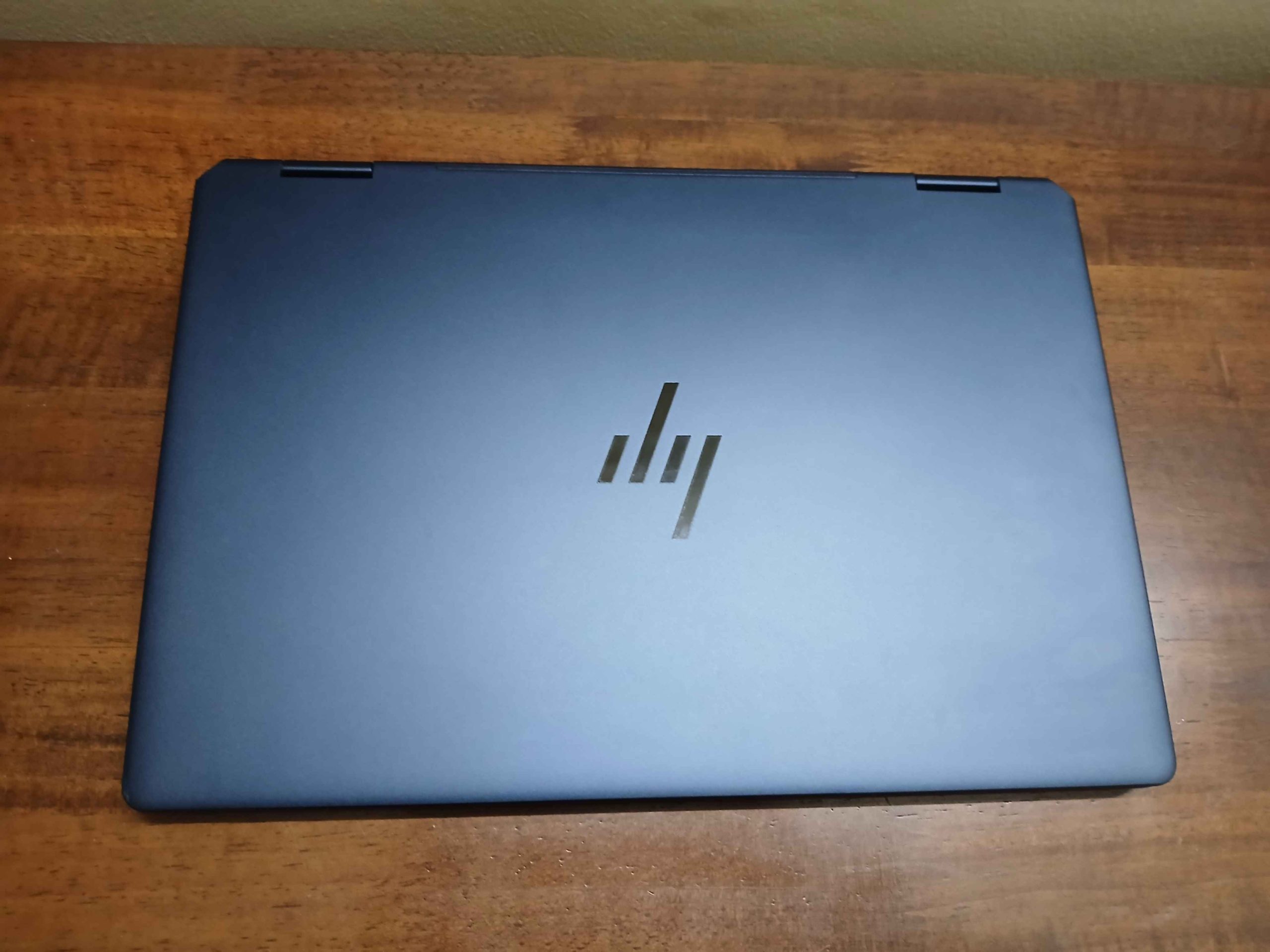
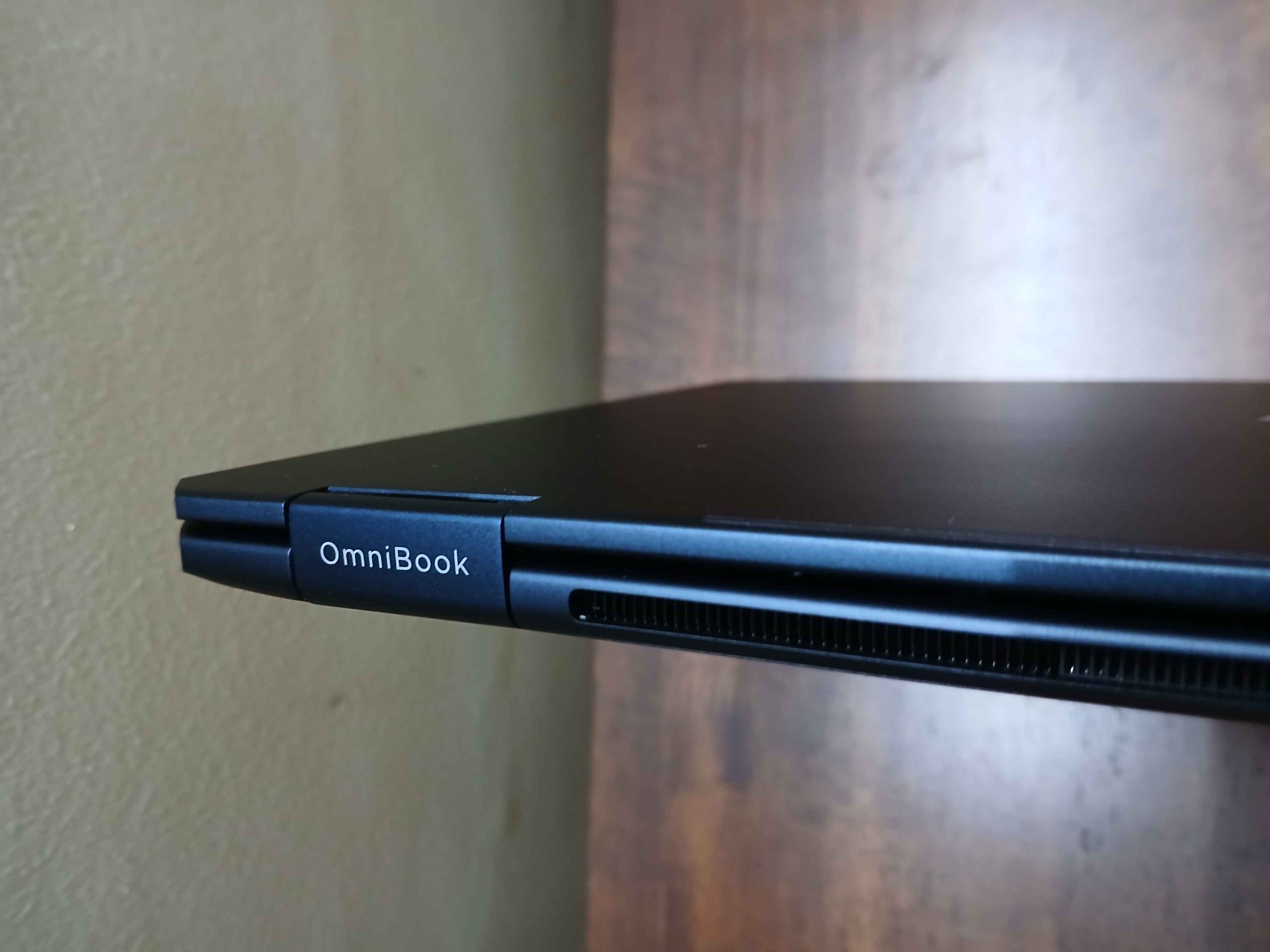
We had the Atmospheric Blue colour unit for this review and it is stunning to look at. It comes in a classic matte finish, which means you don’t have to really worry about keeping it clean all the time.
The 360-degree hinge design can be very attractive depending on what exactly you are looking for in a laptop. HP is calling it Ultra Flip, which is an interesting word choice in times when foldable gadgets are very much in trend. The laptop is basically a convertible as you can flip it into a tablet when needed. The hinge seems to be sturdy.
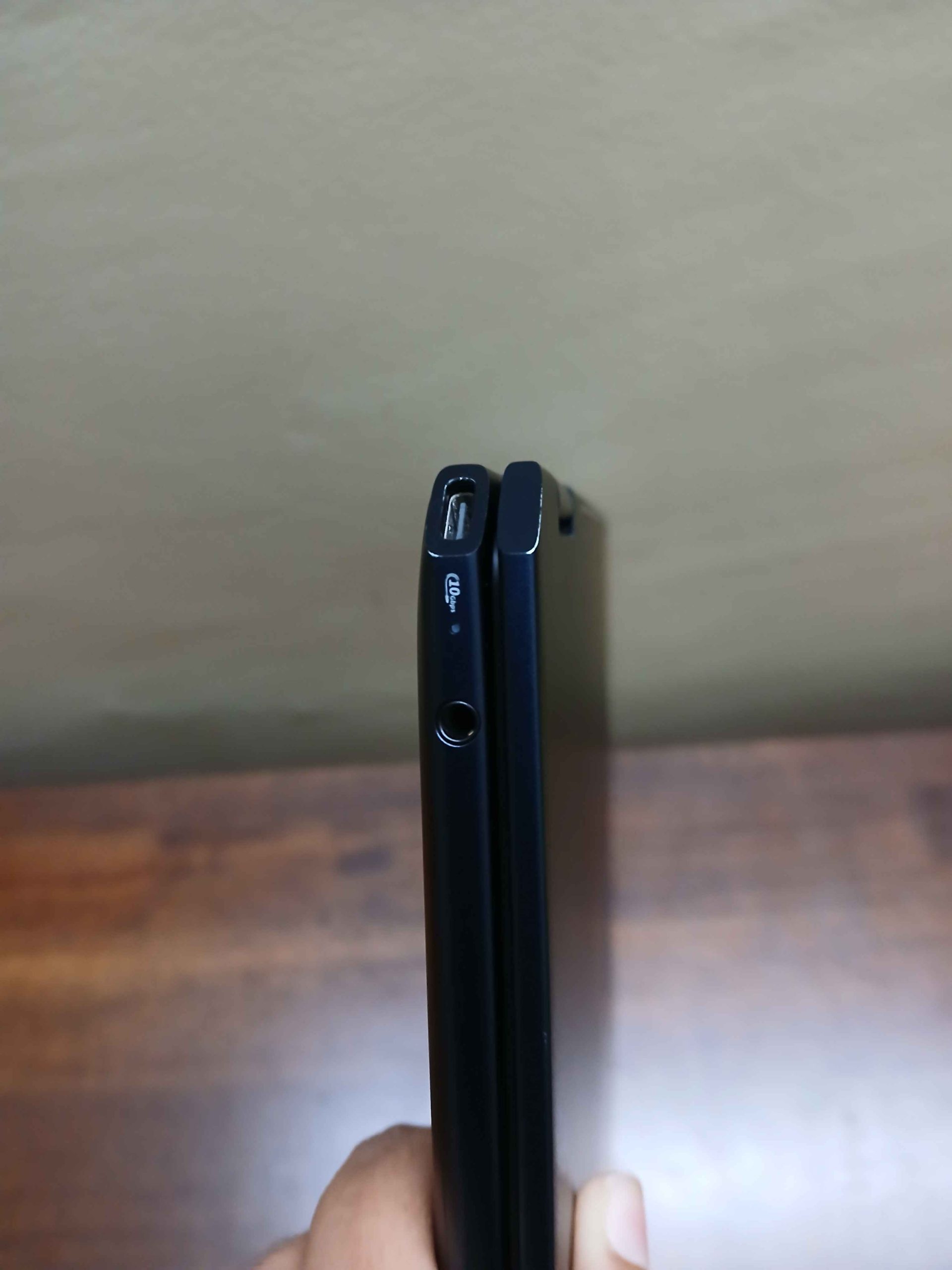
The limited ports could be a problem for some users. It only features 2 Thunderbolts 4s, 1 USB Type-C and 1 headphone/microphone combo.
Overall, the Omnibook Ultra Flip is a compact 2-in-1 Laptop that looks great, offers usage versatility and feels easy to handle. HP has very evidently designed this for people who are always on the move.
HP OmniBook Ultra Flip – Display and Keyboard
HP OmniBook Ultra Flip – Display and Keyboard
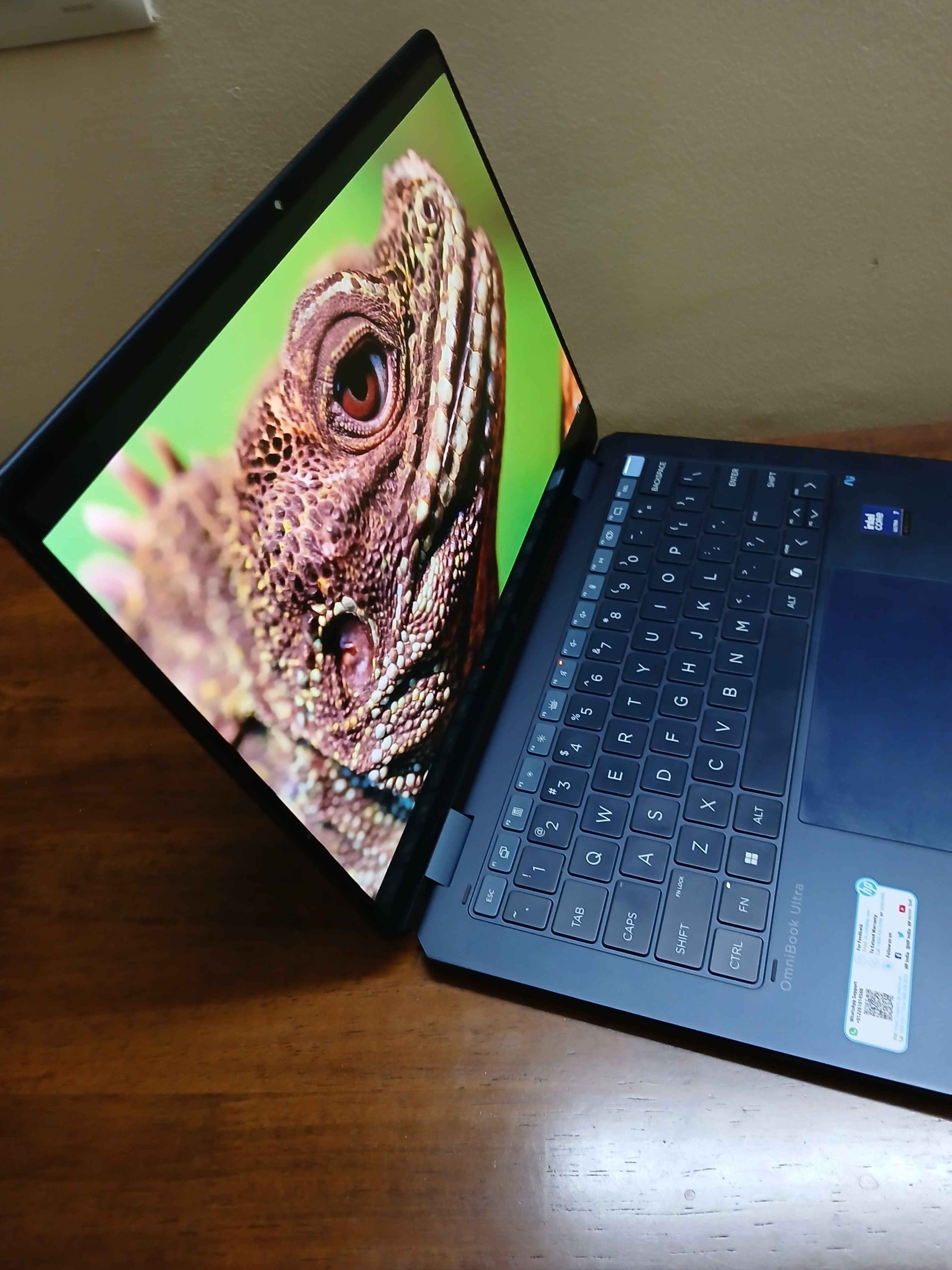
HP OmniBook Ultra Flip sports a 14-inch 2.8K OLED touch display, which comes with Corning Gorilla Glass 5 protection. We found the display sharp and vibrant right from the start. The colours pop out in this OLED panel with a sharp resolution of 2880 x 1800. The visuals appear stunningly rich and it gives an immersive experience.
The colour reproduction is excellent, thanks to the 100% of both the DCI-P3 and sRGB colour spaces. And with 500nits of brightness, this display works decently well even outdoors. The touch feels smooth and handles everyday tasks such as scrolling or navigation well. We didn’t face any significant lags and hangups. The 120Hz high refresh rate keeps responsiveness effortless.
Being a 360-degree versatile 2-in-1 laptop, it comes with some of the best viewing angles we have seen in laptops recently.
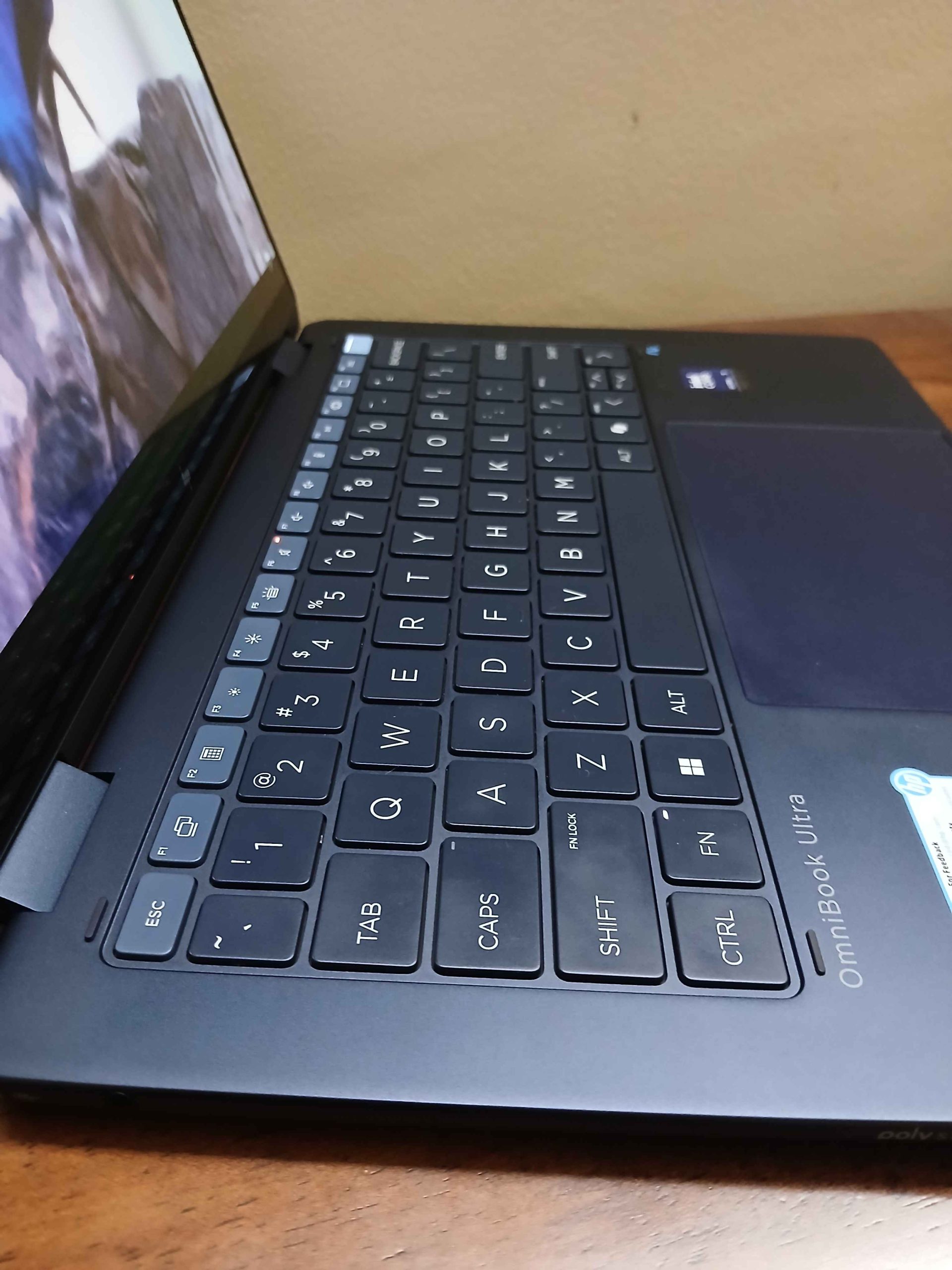
The chiclet-style keyboard isn’t personally our favourite since we type a lot. The keys are quite mushy and require more force to press. So, if your work requires a lot more typing or you are into gaming, we would recommend you consider this aspect once before making any decision when it comes to buying a laptop.
HP OmniBook Ultra Flip – Performance, Features and Battery
HP OmniBook Ultra Flip – Performance, Features and Battery
The brand marketing for the HP OmniBook Ultra Flip is focused on working professionals, freelancers or creators. To cater to this demographic, efficiency is where the machine scores well. Our review unit came with 32GB of LPPDR5x RAM and 1TB of PCIe Gen4 NVMe M.2 SSD configuration. We had a smooth sailing in every task. Multitasking on this laptop was also a breeze and we hardly noticed any significant fallback or overheating.
While it is not particularly a machine designed for gaming, we did try our hands in some of the basic games. The experience was much better than we initially expected it to be. It managed graphic-heavy games on low settings pretty well.
HP is not falling behind the AI trend. Apart from the dedicated Co-Pilot button, you will also notice a new AI tag on the Omnibook Ultra Flip. The laptop comes with a bunch of AI-powered tools that can help simplify some tasks such as Photo or video editing. There is also the HP AI Companion app that does what many AI-powered tools promise. Some of the features of this app include summarising long articles, generating content, answering user queries using natural language processing and optimising the laptop’s performance.
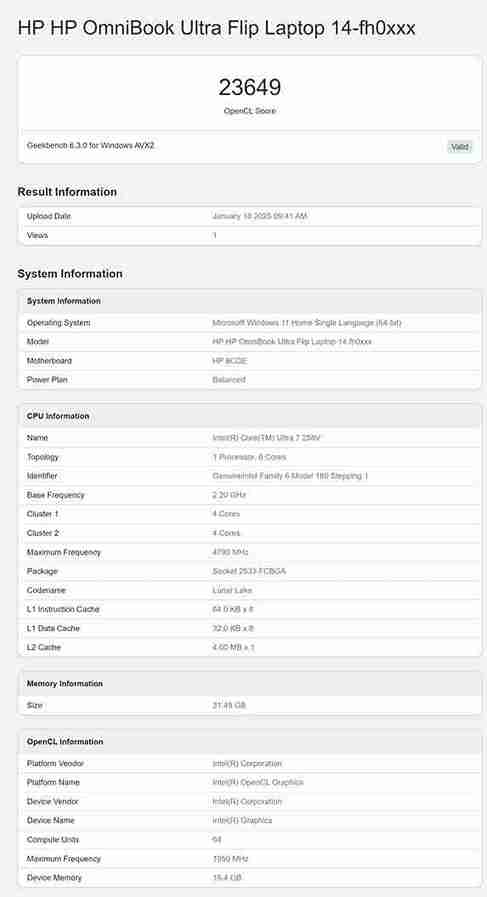
We ran some common benchmark tests on the laptop. On Geekbench, it managed 1526 on single-core and 9146 on multi-core performance. Here are the results.
The battery life is very impressive. We were able to make it through a full workday with some creative work, video streaming and a little bit of gaming, all on a single charge.
Verdict – Should You Buy HP OmniBook Ultra Flip?
Verdict – Should You Buy HP OmniBook Ultra Flip?
HP OmniBook Ultra Flip should be your choice if you are looking for a sleek convertible laptop that delivers on battery and overall performance. While the brand is pushing the laptop on its AI abilities, it is the overall performance where this one should be considered. The AI features are good and can be helpful but they are still on a very basic level.
One of the biggest points in favour of this laptop is its versatile design that gives flexibility to users to use it in multiple ways. The stunning display and Intel Core Ultra 7 258V (8C) ensures that you get an overall good experience. The price does seem on the higher side but in case that is not a constraint, we say you could consider HP OmniBook Ultra Flip before your next upgrade.
Reason To Buy
Reason To Buy
Good design
Nice display
Great battery backup
Reasons Not To Buy
Reasons Not To Buy
Limited ports
Basic AI feature performance
FAQs
Q1. What are the design features of the HP OmniBook Ultra Flip?
Answer. The HP OmniBook Ultra Flip measures just 14.9mm in thickness and weighs around 1.35 kg. It features an aluminium body with an anti-fingerprint coating and comes in two elegant colour options: Atmospheric Blue and Eclipse Gray. The device also includes a 360-degree hinge mechanism and allow easy switching between laptop and tablet modes.
Q2. How is the HP OmniBook Ultra Flip?
Answer. The HP OmniBook Ultra Flip comes with a 14-inch OLED touchscreen display.
Q3. What are the performance specifications of the HP OmniBook Ultra Flip?
Answer. The HP OmniBook Ultra Flip is powered by Intel’s Core Ultra processors with options ranging from the Ultra 7 to Ultra 9. It comes with up to 32 GB of LPDDR5X RAM and storage options up to 2 TB PCIe Gen 4.0 NVMe SSD3. The device also features integrated Intel Arc Graphics.
Q4. How is the battery life of the HP OmniBook Ultra Flip?
Answer. The HP OmniBook Ultra Flip offers up to 21 hours of battery life.
Q5. Does the HP OmniBook Ultra Flip come with a stylus?
Answer. Yes, the HP OmniBook Ultra Flip comes with a stylus and two additional tips for sketching and note-taking.
Apple captures a 9-10% share in India’s smartphone market in Q4 2024.
The brand entered the list of India’s top five brands for the first time.
Festive discounts, no-cost EMIs and deals on e-commerce platforms helped boost sales.
Apple shipped over 12 million iPhones in India in 2024 showing a 34-35% year-on-year growth.
Apple has managed a spot in the top five smartphone brands in India for the first time. (Image credit – Apple)
Apple has made a significant leap in India’s smartphone market capturing a 9-10% share in the fourth quarter of 2024, according to preliminary data from IDC and Counterpoint Research. The Cupertino Giant has entered the top five smartphone brands in India for the first time, thanks to growing demand for its premium devices.
The festive season of 2024 played a key role in Apple’s success. Aggressive pricing strategies, including festive discounts, no-cost EMIs of up to 24 months and attractive deals on e-commerce platforms, helped the brand appeal to a broader audience.
While the new AI-powered iPhone 16 series generated plenty of excitement, Apple’s older models like the iPhone 15 and iPhone 13 also sold remarkably well.
Research Director at Counterpoint Tarun Pathak said, “With increasing disposable income and aspirational purchases among the growing middle class, especially the youth, Apple has become the brand of choice for young consumers. Beyond tier 2 cities, the iPhone represents more than just a smartphone – it’s a lifestyle statement.”
Apple shipped over 12 million iPhones in India in 2024, marking a staggering 34-35% year-on-year growth compared to 9 million units in 2023. This growth cements Apple’s position as a rising star in India’s cost-sensitive smartphone market.
Apple has managed this feat despite competition from Chinese smartphone makers like Vivo and Huawei, who continue to dominate with affordable Android options. Its ability to blend premium features with aspirational branding has helped it stand out in a crowded market.
India has now become Apple’s fifth-largest market and could climb to the third spot by 2026. Experts predict the company will sell around 15 million iPhones annually in India by then mainly due to expanding manufacturing footprint in the country.
FAQs
Q1. What market share did Apple capture in India’s smartphone market in Q4 2024?
Answer. Apple captured a 9-10% share in India’s smartphone market in the fourth quarter of 2024, entering the top five smartphone brands for the first time.
Q2. What strategies helped boost Apple’s sales in India during the festive season of 2024?
Answer. Aggressive pricing strategies including festive discounts, no-cost EMIs of up to 24 months, and attractive deals on e-commerce platforms, helped boost Apple’s sales in India.
Q3. How many iPhones did Apple ship in India in 2024?
Answer. Apple shipped over 12 million iPhones in India in 2024, marking a 34-35% year-on-year growth compared to 9 million units in 2023.
Apple plans to address iPhone 17 thermal issues by introducing vapour chamber cooling.
New tech will be used across both Pro and non-Pro models.
Vapour chamber cooling helps manage heat efficiently preventing processor throttling, lag and battery wear.
Vapour chamber cooling will now be included in the entire iPhone 17 lineup.
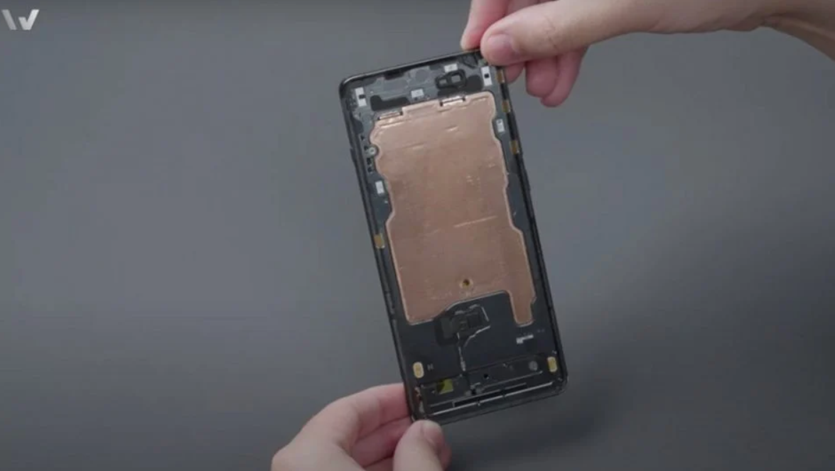
iPhone 17 series to get vapour chamber cooling across both Pro and non-Pro models. (Image credit – Apple)
Apple is reportedly making a big move to address thermal issues in the iPhone 17 series by introducing vapour chamber cooling across both Pro and non-Pro models.
Heat is a key factor in smartphone performance. If a device overheats, it can cause the processor to throttle, leading to slow performance, lag and even freezing. Overheating also speeds up battery wear and shortens the phone’s lifespan.
Apple’s decision to switch to vapour chamber cooling reflects its focus on improving thermal efficiency in the next generation of iPhones.
All iPhones currently rely on traditional heat sinks made from highly conductive metals to manage heat. However, Vapour chamber cooling works differently.
Vapur champer technology uses a sealed liquid that vaporises when heated moving through a chamber to spread the heat evenly. The vapour then condenses back into liquid repeating the cycle. This system dissipates heat more efficiently while taking up minimal space and it doesn’t require extra components like fans.
The benefits of vapour chamber cooling are much more than just better heat management. This tech is crucial for maintaining performance and extending device life as processors are becoming more and more faster along with faster charging speeds.
This is especially important for the A19 Pro chipset, which is rumoured to power the iPhone 17 Pro models. Reports suggest it will reach clock speeds of up to 5GHz making effective cooling essential.
The industry expert and analyst Ming-Chi Kuo previously predicted that vapour chamber cooling would be exclusive to the iPhone 17 Pro Max due to its demanding chipset. However, more recent updates now indicate that Apple will include this technology across the entire iPhone 17 lineup.
FAQs
Q1. What technology is Apple using to address iPhone 17 thermal issues?
Answer. Apple is introducing vapour chamber cooling across both Pro and non-Pro models of the iPhone 17 to address thermal issues.
Q2. How does vapour chamber cooling benefit smartphone performance?
Answer. Vapour chamber cooling helps manage heat efficiently, preventing processor throttling, lag, and battery wear, which is crucial for maintaining performance and extending device life.
Q3. Will vapour chamber cooling be exclusive to any specific iPhone 17 models?
Answer. Initially expected for Pro Max models, vapour chamber cooling will now be included in the entire iPhone 17 lineup, benefiting all users.
Instagram introduces new ways to engage with Reels.
It includes the ability to see what friends have liked and added notes to make it easier to discover content.
A new reply bar on Reels allows users to start conversations around content and increases the chances for Reels to be noticed by more people.
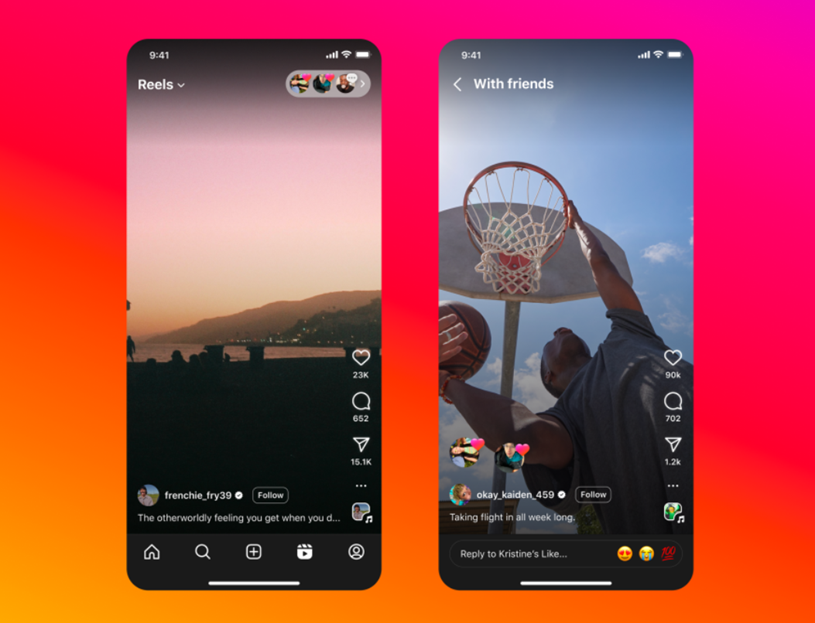
Instagram adds new features to Reels. (Image credit – Instagram)
In business, one man’s loss is often another’s gain. TikTok might be soon winding up its operations in the US but this is surely a situation full of opportunities for competing apps. First, we heard about the Chinese app Rednote reaping some benefits, now Instagram is trying its best to give users what they might be missing once TikTok is banned. In a perfectly timed move, Instagram has just announced two new features for Reels in the US. Here’s what’s new.
New Ways to Engage on Instagram Reels
With TikTok’s availability in the US set to end this weekend, Instagram appears ready to welcome a potential influx of new users. To strengthen Reels (its short-form video feature and TikTok rival), Instagram is rolling out two fresh updates:
See What Your Friends Like
Instagram is making it easier to discover what your friends and followers are engaging with on Reels. At the top-right corner of the Reels tab, you’ll now see content your friends have liked or added notes to.
Start Conversations Effortlessly
A new reply bar will appear on Reels, allowing users to start conversations around the content they enjoy. This opens up more opportunities for your Reels to be noticed by people who don’t follow you yet.
Instagram shared, “We’re making it easier to see and engage with the content your friends are liking (or adding a note to) on reels at the top right corner of the Reels tab.”
These changes also make it possible to interact with friends’ activity on a Reel. For example, if a friend likes a video, you’ll have the option to reply to their like directly—creating more ways to connect and engage socially.
With TikTok’s US ban looming, Instagram could see significant growth in Reels usage.
Meta seems poised to capitalise on this moment and it wouldn’t be surprising to see even more updates for Reels in the near future. For Instagram, this could be a rare chance to cement its dominance in short-form video content.
FAQs
Q1. What new feature has Instagram introduced to enhance engagement on Reels?
Answer. Instagram has introduced a new feature that allows users to see what their friends and followers have liked or added notes to on Reels, making it easier to discover engaging content.
Q2. How can users start conversations on Instagram Reels with the new update?
Answer. Instagram has added a new reply bar on Reels, allowing users to start conversations around the content they enjoy, which opens up more opportunities for Reels to be noticed by a wider audience.
Q3. Why is Instagram introducing these new features for Reels now?
Answer. With the potential ban of TikTok in the US, Instagram aims to attract new users and strengthen its position in the short-form video market by rolling out these updates at a strategically timed moment.
Leaked GTA 6 footage of a police chase showcased next-gen realism.
The video highlighted detailed physics, environmental animations and realistic car movements.
It indicates a blend of cinematic cutscenes with real-time action.
Rockstar shut down the Liberty City Preservation Project mod for GTA 5.
Screenshot from the leaked GTA 6 footage. (Image credit – Reddit)
Grand Theft Auto 6 leaked footage of a police chase recently sparked excitement and discussions about its next-gen realism. Though Rockstar Games removed the video later, fans are still talking about the impressive details it revealed.
In the leaked clip, a player is shown shooting at police cars from the back of a truck leading. The police car later hits a street sign and a bollard causing its bumper to slide across the street before hitting a curb.
The chaos doesn’t stop there as the car crashes into a boulder and a tree before coming to a stop.
According to a GAMINGbible report, the movements in the leaked footage show minute attention to physics and animations hinting at a greater level of realism in GTA 6.
The leaked video also showed small details such as tree branches swaying in reaction to the crash.
Fans on Reddit were quick to praise the attention to detail including the precise movements of car parts during the chaos.
If the leaked footage is any indication, it is clear that Rockstar is aiming for gameplay that matches cinematic cutscenes with real-time action for a more immersive and realistic experience. While the leak has excited fans, some caution that these details may be from scripted moments and it can surely be known how they will play out into actual gameplay.
In other news, Rockstar has shut down the Liberty City Preservation Project, a fan-made mod for GTA 5that aimed to recreate Liberty City from GTA 4.
The mod included a fully functional subway system and realistic traffic but was removed following a request from Rockstar.
This isn’t the first time Rockstar has taken action against mods. Similar takedowns have targeted fan projects for games like Red Dead Redemption 2 and Vice City recreated within GTA 5. The company’s strict stance on mods highlights its commitment to controlling the way its games are experienced.
FAQs
Q1. What did the leaked GTA 6 footage showcase?
Answer. The leaked GTA 6 footage showcased a police chase with unmatched realism and detailed physics, including environmental animations and realistic car movements.
Q2. How did fans react to the leaked GTA 6 footage?
Answer. Fans praised the impressive details, such as precise car part movements and tree branches swaying in reaction to crashes. The footage hinted at a blend of cinematic cutscenes with real-time action.
Q3. What actions has Rockstar taken against fan-made mods?
Answer. Rockstar has shut down the Liberty City Preservation Project mod for GTA 5 and has taken similar actions against other fan projects, like those for Red Dead Redemption 2 and Vice City recreated within GTA 5 to maintain control over its games.
Apple spots the AI-generated notification summaries due to inaccuracies and criticism.
The feature is now disabled in the latest developer previews of iOS, iPadOS and macOS,
It will undergo improvements for accuracy and reliability before reintroduction.
Users can also disable AI summaries directly from the Lock Screen.
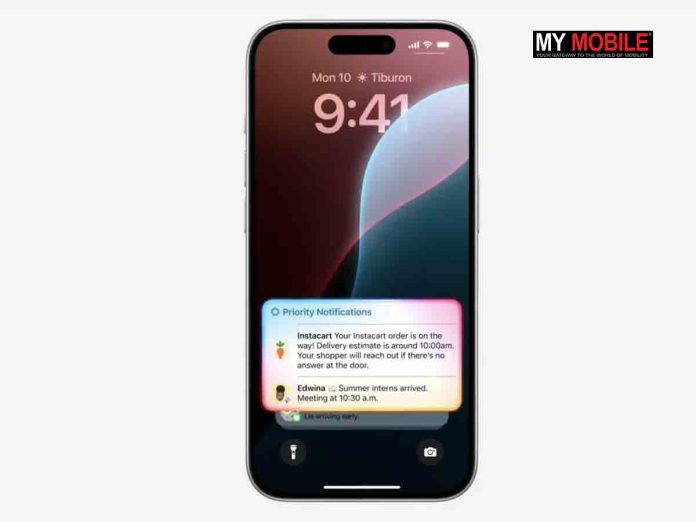
Apple stops AI-generated notification. (Image credit – Reuters)
Apple has paused the rollout of its AI-generated notification summaries for news and entertainment apps following widespread criticism over inaccuracies. The feature was part of the Apple Intelligence initiative and was designed to deliver concise push notifications for breaking news but has been flagged for generating misleading or even false summaries.
Major news organizations including the BBC voiced concerns about the potential for this feature to spread misinformation.
In response, Apple has taken action to disable the AI notification summaries in the latest developer previews of iOS 18.3, iPadOS 18.3 and macOS Sequoia 15.3.
“With the latest beta software releases of iOS 18.3, iPadOS 18.3 and macOS Sequoia 15.3, Notification summaries for the News & Entertainment category will be temporarily unavailable,” an Apple representative told CNBC in a statement.
Apple introduced italicised text for AI-generated summaries making them easier to identify and address user concerns. Moreover, users now have the option to disable notification summaries directly from the Lock Screen offering more control over their alerts.
Apple has released a beta software update that deactivates the AI summarization feature for developers, promising to resolve the underlying issues. The company is working to enhance the accuracy and reliability of the feature with plans to reintroduce it in a future update.
Apple emphasised that the AI notification summaries feature remains in beta and may produce unexpected results. The company reassured users that improvements will be made to ensure the feature meets the highest standards before its full release.
“We are working on improvements and will make them available in a future software update,” read an Apple statement emailed to certain media houses.
FAQs
Q1. Why did Apple pause the rollout of its AI-generated notification summaries?
Answer. Apple paused the rollout due to widespread criticism over inaccuracies and concerns from major news organisations like the BBC about the potential for spreading misinformation.
Q2. What changes has Apple made to the AI notification summaries?
Answer. Apple introduced italicised text for AI-generated summaries to make them easier to identify and allow users to disable notification summaries directly from the Lock Screen.
Q3. What steps is Apple taking to address the issues with the AI notification summaries feature?
Answer. Apple has disabled the AI summarization feature in the latest developer previews and released a beta software update. The company is working to enhance the accuracy and reliability of the feature, with plans to reintroduce it in a future update.
It will allow Indian customers to shop for Apple products, receive personalised recommendations and customise their Macs from the app.
The app launch follows Apple opening its first physical stores in Mumbai and Delhi in 2023.
The company has plans to open additional stores in Bengaluru and Pune among other cities.
The app offers product browsing, personalised recommendations, post-purchase support, online setup sessions, free training, trade-in options and device engravings.
Apple launches Apple Store App in India to boost retail presence across the country. (Image credit – Apple)
Apple has officially introduced its Apple Store app in India making it easier for customers to shop for Apple products and services. This move is part of Apple’s strategy to deepen its presence in the world’s most populous country and tap into the growing demand for its products.
Available for download on the Indian App Store, the Apple Store app allows customers to purchase Apple products directly while receiving personalized shopping recommendations.
Users can also customise their Mac with options for more powerful chips, extra memory, and additional storage features long requested by Indian customers. Delivery and in-store pickup options are also available through the app.
The launch of the app comes after Apple opened its first physical stores in India in 2023, located in Mumbai and Delhi. The company is now planning to open four more stores in Bengaluru, Pune, and additional locations in Delhi and Mumbai. Apple previously launched its online store in India in 2020, marking another step in its growing retail footprint.
“At Apple, our customer is at the centre of everything we do, and we are thrilled to introduce the Apple Store app to reach even more users in India, further deepening our connections,” said Karen Rasmussen, Apple’s head of retail online.
What Apple Store App Offers?
Separate tabs for product browsing, personalised recommendations and post-purchase support.
Online setup sessions with Apple specialists.
Free training sessions at physical Apple Stores.
Access to trade-in and financing options.
Free engravings for devices like AirPods and iPads in eight languages.
India is the world’s second-largest smartphone market and is becoming increasingly important for Apple as it diversifies its manufacturing operations outside of China. Apple began assembling iPhones in India in 2017 and has since expanded production through partners like Foxconn and Tata.
FAQs
Q1. What does the Apple Store app in India offer?
Answer. The Apple Store app offers separate tabs for product browsing, personalised recommendations, and post-purchase support. Users can also access online setup sessions with Apple specialists, free training sessions at physical Apple Stores, trade-in and financing options, and free engravings for devices like AirPods and iPads in eight languages.
Q2. When did Apple open its first physical stores in India?
Answer. Apple opened its first physical stores in India in 2023 in Mumbai and Delhi.
Q3. Why is India becoming increasingly important for Apple?
Answer. India is becoming increasingly important for Apple as it diversifies its manufacturing operations outside of China. India is the world’s second-largest smartphone market, and Apple began assembling iPhones in India in 2017, expanding production through partners like Foxconn and Tata.
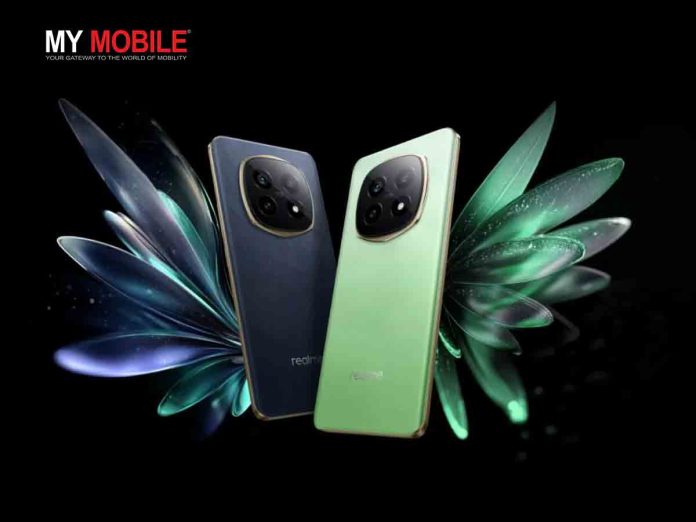
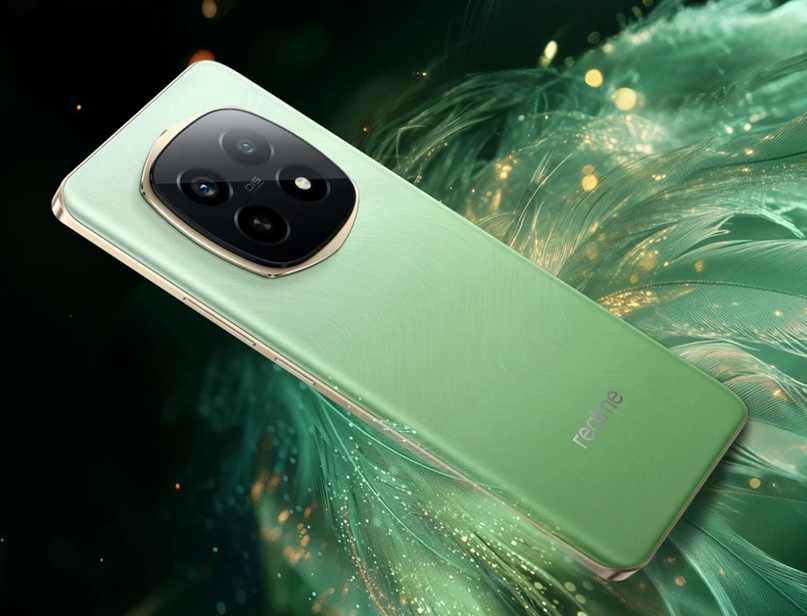
The Realme P3 will come in three configurations – 6GB + 128GB, 8GB + 128GB and 8GB + 256GB.
Colour options will include Nebula Pink, Comet Grey, and Space Silver.
The P3 series will feature three models – Realme P3, P3 Pro (with 12GB RAM and 256GB storage) and P3 Ultra (also with 12GB RAM and 256GB storage in grey).
The Realme P3 Ultra is expected to launch by the end of January 2025 and the P3 Pro in the third week of February 2025.
The launch date for the P3 is still unclear.
Realme P2 image for reference. (Image credit – Realme)
Realme is gearing up to launch its P3 series of smartphones in India and fresh leaks have revealed exciting details about the lineup. According to 91mobiles Hindi, we now know the model number, configurations and colour options for the Realme P3 along with updates on the P3 Pro and P3 Ultra.
Here’s everything we know so far.
Realme P3 Details
The Realme P3 identified by its model number RMX5070 will come in three configurations:
6GB + 128GB
8GB + 128GB
8GB + 256GB
It will also be available in three colour variants – Nebula Pink, Comet Grey, and Space Silver.
Realme P3 Series Lineup
Unlike last year’s P2 series with only the Realme P2 Pro, the P3 lineup will feature the following three models –
Realme P3
Realme P3 Pro
Realme P3 Ultra
The P3 Pro (model RMX5030) is rumoured to include 12GB of RAM and 256GB of storage, while the P3 Ultra (model RMX5032) is expected to launch in the same 12GB + 256GB configuration and a grey colour option.
Realme P3 Series – Launch Timeline
Realme P3 Pro – Expected to debut in India during the third week of February 2025.
Realme P3 Ultra – Likely to launch by the end of January 2025.
Realme P3 – No specific date yet, but it’s unclear whether it will launch alongside the Pro or Ultra models.
Realme P3 Series – Price Speculations
Reports suggest the Realme P3 series may align closely with the pricing of the Realme 14 Pro, which launched in India at a starting price of Rs 24,999.
FAQs
Q1. What configurations will the Realme P3 be available in?
Answer. The Realme P3 will come in three configurations: 6GB + 128GB, 8GB + 128GB and 8GB + 256GB.
Q2. What colour options are available for the Realme P3?
Answer. The Realme P3 will be available in three colours – Nebula Pink, Comet Grey, and Space Silver.
Q3. How many models are in the Realme P3 series?
Answer. The Realme P3 series will feature three models – Realme P3, Realme P3 Pro and Realme P3 Ultra.
Q4. When is the Realme P3 Ultra expected to launch?
Answer. The Realme P3 Ultra is likely to launch by the end of January 2025.
Q5. What is the expected launch timeline for the Realme P3 Pro?
Answer. The Realme P3 Pro is expected to debut in India during the third week of February 2025.
The teaser reveals a larger console with an 8.4-inch OLED display, updated Joy-Cons with new buttons and triggers.
Nintendo will hold Nintendo Switch 2 Experience events across various global cities.
It will allow fans to try out the console before its anticipated June 2025 launch.
Despite the anticipation, Nintendo’s stock dropped by 5.9% in Tokyo.
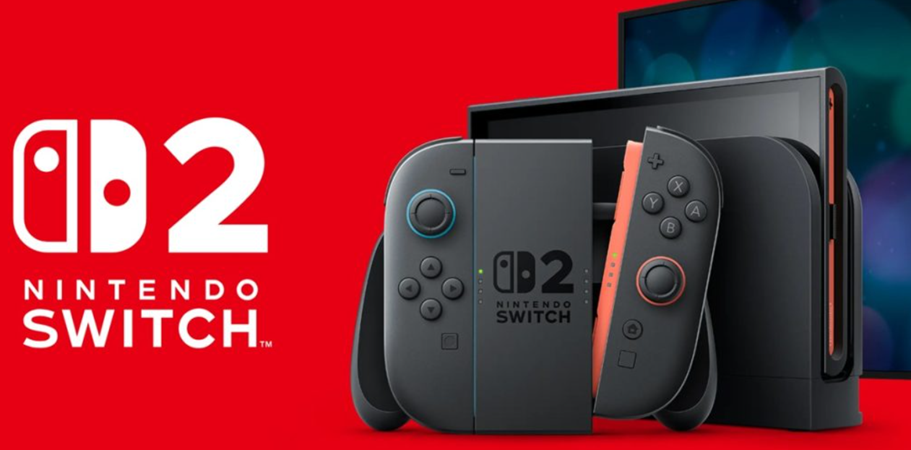
Nintendo Switch 2 design teased before 2025 launch. (Image credit – Nintendo)
Nintendo has officially shared the first details of the highly anticipated Nintendo Switch 2 in a video posted on the Nintendo of America YouTube channel. The video showcases exciting updates to the gaming console’s design, features and compatibility.
Here’s everything we know so far.
Nintendo Switch 2 Teaser
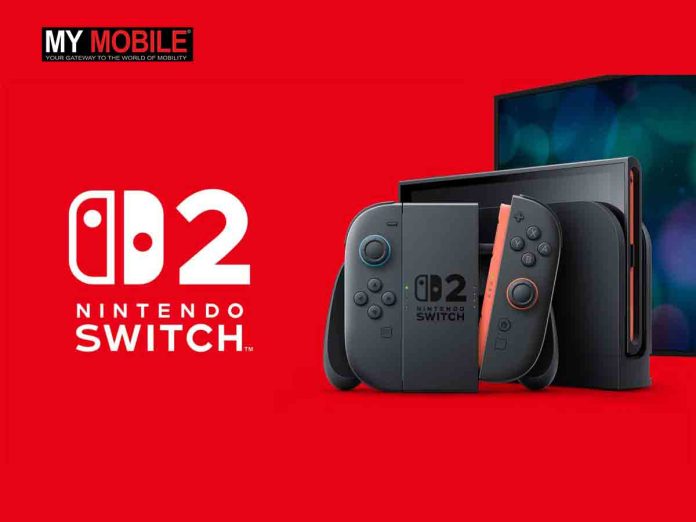
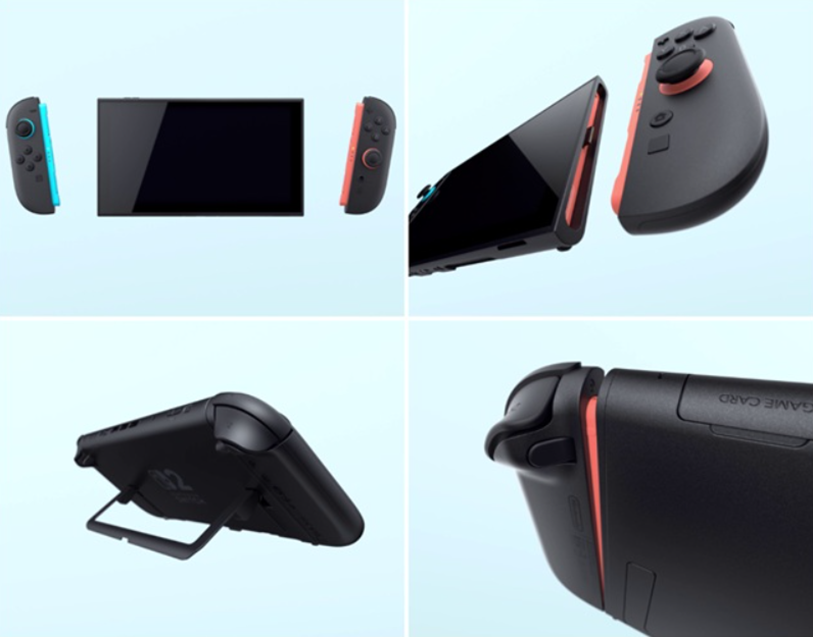
The teaser released on YouTube shows the Nintendo Switch 2 is larger than the original and features a rumoured 8.4-inch OLED display with thinner bezels for a modern look. The updated Joy-Cons are slightly bigger and attach magnetically.
A new button has been added to the right Joy-Con, near the home button, and both controllers now include extra triggers on the back, near the L/R buttons.
Similar to the original, the Joy-Cons can be combined into a traditional gamepad using a controller grip.
The console’s layout feels familiar, with power and volume buttons on the top left, cooling vents in the centre, a headphone jack, and two USB-C ports—one on the bottom and another on the right. The back features a redesigned U-shaped kickstand, offering more flexibility for positioning.
Nintendo also revealed a redesigned dock for the Switch 2 and confirmed the arrival of a new Mario Kart game, likely the long-awaited Mario Kart 9. Fans have been eager for a new instalment since Mario Kart 8 launched in 2014.
Nintendo Switch 2 is expected to launch in June 2025. (Image credit – Nintendo)
The Switch 2 will support exclusive titles along with most physical and digital Nintendo Switch games. However, some older titles may not work perfectly. Nintendo Switch Online members will continue to use the service on the new console.
Nintendo Switch 2 – Experience Events and Global Launch Speculation
Nintendo will share more details during a special Direct event on April 2, 2025. Moreover, Global “Nintendo Switch 2 Experience” events will also give fans a chance to try out the console.
The events schedule as per reports will be as follows –
North America –
New York: April 4-6, 2025
Los Angeles: April 11-13, 2025
Dallas & Toronto: April 25-27, 2025
Europe –
Paris: April 4-6, 2025
London: April 11-13, 2025
Milan & Berlin: April 25-27, 2025
Madrid & Amsterdam: May 9-11, 2025
Oceania –
Melbourne: May 10-11, 2025
Asia –
Tokyo (Makuhari): April 26-27, 2025
Seoul: May 31-June 1, 2025
Hong Kong & Taipei: Dates TBD
Analyst Robin Zhu from Sanford C. Bernstein predicts a possible June 2025 launch based on these event timings.
Market Reaction
Despite the excitement for the Switch 2 teaser, Nintendo’s stock dropped by 5.9% in Tokyo on Friday, marking its largest single-day decline since late September.
“The stock declined because the revealed Switch 2 was exactly in line with what’s been leaked online and lacked any surprise. But I expect the stock will be back as investors’ focus moves to the launch date and price after the April 2 announcement,” said Hideki Yasuda, senior analyst at Toyo Securities.
FAQs
Q1. What new features are included in the Nintendo Switch 2?
Answer. The Nintendo Switch 2 features a larger 8.4-inch OLED display, updated Joy-Cons with a new button and extra triggers and a redesigned dock.
Q2. When and where will the “Nintendo Switch 2 Experience” events be held?
Answer. The events will take place in various global cities, including New York, Los Angeles, Paris, London, and Tokyo, among others. Specific dates range from April 4 to June 1, 2025.
Q3. What new game was confirmed in the Nintendo Switch 2 teaser?
Answer. The teaser confirmed the arrival of a new Mario Kart game, likely Mario Kart 9, which has been eagerly awaited by fans since 2014.
Q4. How did the market react to the Nintendo Switch 2 teaser release?
Answer. Despite the anticipation, Nintendo’s stock dropped by 5.9% in Tokyo due to the Switch 2’s lack of surprises compared to online leaks.