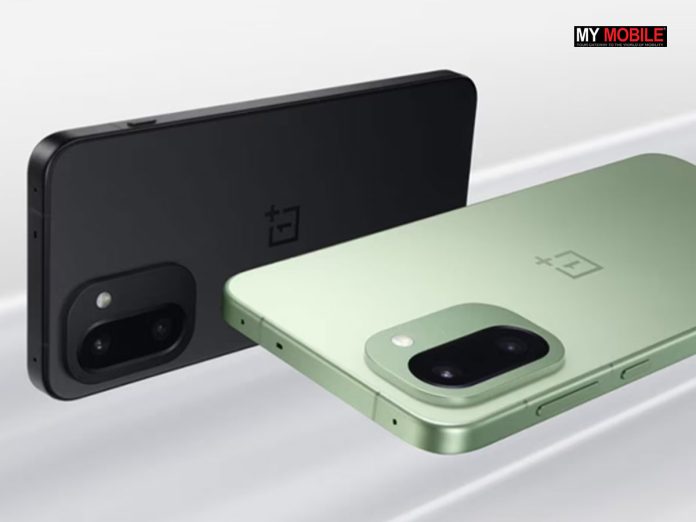

It features 55dB hybrid active noise cancellation, dual DACs for improved bass and clarity and AI noise reduction for calls.
The earbuds are priced at CNY 449 (₹5,300) and are available in Pine Green & Space Grey colours.
OnePlus has launched its newest wireless earbuds the OnePlus Buds 4 in China. These come as a solid upgrade over the previous Buds 3, offering better sound, smarter features and improved noise cancellation. Here’s all we know about the new OnePlus audio accessories.
Global Launch has not been confirmed yet, but OnePlus might launch them in other markets, most likely alongside the upcoming OnePlus 13s.
OnePlus Buds 4 – Key Features
One of the biggest highlights is the 55dB hybrid active noise cancellation, which now covers a wider frequency range up to 5.5kHz. That means they’re better at blocking out all kinds of background noise, whether you’re walking through a noisy street or working in a busy café.
The design is sleeker too, with a matte metallic finish that gives a premium feel.
Like the Buds 3, these also use a coaxial dual-driver setup, but now they include dual DACs for better bass, clearer highs and richer overall sound. The triple-microphone system is supported by AI noise reduction, which helps keep your voice clear on calls, even in loud surroundings.
OnePlus has also introduced a new Golden Sound profile, which adjusts audio output based on how the earbuds fit your ears, giving you a more personalised listening experience.
AI Translation Tools –
Real-time voice translation, handy for travel or learning a new language
Face-to-face translator, available through a paired app
OnePlus Buds 4 – Specs at a Glance
Sandblasted metal texture finish
55dB Flagship-grade ANC
Dual-enhanced voice noise reduction
Triple-mic AI call noise reduction
Flagship coaxial dual drivers
AI Voice Translation (real-time translation during lectures)
AI Face-to-Face Translation
FAQs
Q1. What is the noise cancellation capability of the OnePlus Buds 4?
Answer. The OnePlus Buds 4 feature 55dB hybrid active noise cancellation, covering a wide frequency range up to 5.5kHz, making them highly effective in noisy environments.
Q2. What AI-powered features do the OnePlus Buds 4 offer?
Answer. The earbuds support real-time voice translation and a face-to-face translator, accessible through a paired app—ideal for travel or learning new languages.
Q3. What is the price and availability of the OnePlus Buds 4?
Answer. Priced at CNY 449 (~₹5,300), with a student offer at CNY 419 (~₹4,950), they are available in Pine Green & Space Grey, launching in China on May 27.
OnePlus Ace 5 Ultra and Racing Edition have been officially unveiled in the Chinese market.
The OnePlus Ace 5 Ultra features a 6.83-inch 1.5K AMOLED display with 144Hz refresh rate, Dimensity 9400+ and a 6,700mAh battery with 100W fast charging.
The Racing Edition has a 6.7-inch FHD+ AMOLED screen with 120Hz refresh rate, Dimensity 9400e chipset and 7,100mAh battery with 80W fast charging.
Caption – OnePlus Ace 5 Ultra (Left) and OnePlus Ace 5 Racing Edition (Right). (Image credit – OnePlus)
OnePlus Ace 5 Ultra and Racing Edition – Pricing and Availability (China)
The Ace 5 Racing Edition is available in a Wave White, Wild Green and Rock Black colour option. Meanwhile, the Ace 5 Ultra can be purchased in Burning Titanium, Phantom Black and Breeze Blue colours. Both models have been unveiled in multiple storage configurations.
Both models are now available for purchase in China.
As of now, the OnePlus Ace 5 series is available exclusively in China. The company has yet to confirm international availability or global launch plans.
OnePlus Ace 5 Ultra and Racing Edition – Key Features
The Ace 5 Racing Edition features a 6.7-inch FHD+ AMOLED display with a 120Hz refresh rate. On the other hand, the Ace 5 Ultra steps it up with a 6.83-inch 1.5K AMOLED screen that supports 144Hz refresh rate.
The Ultra Edition sticks to the Ace 5 series’ signature straight screen and flat-edged frame. On the back, it has a dual-camera setup with a flash, all surrounded by smooth metal edges. It comes in Burning Titanium, Phantom Black, and Breeze Blue colour options.
The Ace 5 Ultra includes a “shortcut key” on the left side that retains the classic mute/vibrate/ring toggle. However, now it also supports custom actions like One-click flash memory, One-click mute, One-click translation, One-click recording and up to 8 custom settings.
It’s powered by the Dimensity 9400+ chipset, along with a Lingxi touch chip, e-sports Wi-Fi G1 chip, and OnePlus’ own Fengchi gaming core for smoother gaming and 1% low-frame-rate drop control. The phone also includes a new “Glacier Cooling System” with a 7,300mm² VC cooling plate and a 4,000mm² back cover cooling area. It packs a 6,700mAh battery and supports 100W fast charging with bypass charging support.
Meanwhile, the Racing Edition is powered by the Dimensity 9400e chipset and also features the Fengchi gaming kernel, native 120fps gaming, and 1% low frame rate drop control. It comes with a more advanced Glacier Cooling System, boasting a total heat dissipation area of 29,772mm², including a 7,000+mm² Super VC cooling layer.
The Racing Edition has a huge 7,100mAh battery and supports 80W fast charging.
OnePlus Ace 5 Ultra – Specs at a Glance
Display – 6.83-inch AMOLED (2800 × 1272), 60/90/120/144Hz refresh rate, up to 1400 nits
Chipset – Dimensity 9400+ (up to 3.73GHz), Immortalis-G925 GPU
Caption – OnePlus Ace 5 Ultra and Ace 5 Racing Edition. (Image credit – OnePlus)
FAQs
Q1. What are the key differences between the OnePlus Ace 5 Ultra and Racing Edition?
Answer. The Ace 5 Ultra has a 6.83-inch 1.5K AMOLED display with 144Hz refresh rate and Dimensity 9400+ chipset, while the Racing Edition features a 6.7-inch FHD+ AMOLED screen with 120Hz refresh rate and Dimensity 9400e chipset.
Q2. What battery and charging features do these Ace 5 Ultra and Racing Edition models offer?
Answer. The Ace 5 Ultra packs a 6,700mAh battery with 100W fast charging, while the Racing Edition comes with a 7,100mAh battery and 80W fast charging.
Q3. What gaming enhancements do Ace 5 Ultra and Racing Edition phones have?
Answer. Both models include the Fengchi gaming core, native 120fps gaming, low frame rate drop control, and advanced cooling systems for smoother performance.
Q4. What are the storage and RAM options available on Ace 5 Ultra and Racing Edition?
Answer. The Ace 5 Ultra offers 12GB/16GB LPDDR5X RAM with up to 1TB UFS 4.0 storage, while the Racing Edition provides 12GB/16GB LPDDR5X RAM with up to 512GB UFS 4.0 storage.
Q5. What is the price range for the OnePlus Ace 5 Ultra and Racing Edition in China?
Answer. The Racing Edition starts at 1,799 yuan (₹21,325/$249), while the Ultra Edition begins at 2,499 yuan (₹29,625/$346), with the highest model priced at 3,799 yuan (₹45,030/$527).
The Alcatel V3 series has been launched in India as a comeback launchpad for the brand Alcatel.
The lineup includes V3 Classic (₹12,999+), V3 Pro (₹17,999+) and V3 Ultra (₹19,999+) featuring MediaTek processors, up to 108MP cameras and 5G connectivity.
The Alcatel V3 Ultra is the first in its segment to offer stylus support and features India’s first NXTPAPER 4-in-1 display for eye-friendly reading.
All three models will be available on Flipkart from June 2nd with bank discounts and EMI offers.
Caption – Alcatel V3 Classic, V3 Pro and V3 Ultra have been launched in India. (Image credit – Alcatel)
Alcatel is back in India with a new budget smartphone lineup featuring the Alcatel V3 Classic, V3 Pro and V3 Ultra. The highlight of the launch is the V3 Ultra, which is said to be the first phone in its segment with stylus support. It’s also the first in India to feature a patented NXTPAPER 4-in-1 display, including a special Ink Paper mode for eye-friendly reading. Here’s everything we know about the devices.
Alcatel V3 Series – Price and Availability in India
Alcate V3 Classic
Price – ₹12,999 for 4+128GB and ₹14,999 for 6+128GB
Colours – Cosmic Grey, Halo White
Alcate V3 Pro
Starting Price – ₹17,999 for 8+256GB
Colours – Matcha Green, Metallic Grey
Alcate V3 Ultra
Starting Price – ₹19,999 for 6+128GB and ₹21,999 for 8+128GB
The Alcatel V3 Ultra is the first phone in its category to support a stylus. While the Motorola Edge 60 Stylus also has stylus support, it costs slightly more at ₹22,999.
The V3 Ultra also features India’s first patented NXTPAPER 4-in-1 display. This display has a matte finish that aims to replicate the feel of real paper. It comes with four distinct viewing modes, which are as follows –
Ink Mode – Ideal for reading, offering up to 7 days of reading on one charge
Adaptive Sunlight Mode – Boosts brightness outdoors by 10%
Night-Friendly Mode – Optimises screen for low-light environments
Gently Dimmed Mode – Reduces brightness in dim lighting for eye comfort
With these features, the Alcatel V3 Ultra is targeting users who want paper-like display quality and stylus productivity, all at a budget price.
FAQs
Q1. What makes the Alcatel V3 Ultra unique compared to other models in its series?
Answer. The Alcatel V3 Ultra is the first budget smartphone in India with stylus support and features a NXTPAPER 4-in-1 display, which provides eye-friendly reading modes.
Q2. What are the key specifications of the Alcatel V3 Ultra?
Answer. It has a 6.78-inch FHD+ NXTPAPER display with 120Hz refresh rate, runs on MediaTek Dimensity 6300, offers 6GB/8GB RAM, 128GB storage, and a 108MP main camera.
Q3. What are the different display modes on the NXTPAPER display?
Answer. The NXTPAPER display has four modes: Ink Mode for long reading sessions, Adaptive Sunlight Mode for outdoor brightness, Night-Friendly Mode, and Gently Dimmed Mode for eye comfort.
Q4. What is the pricing of the Alcatel V3 series in India?
Answer. The V3 Classic starts at ₹12,999, the V3 Pro at ₹17,999, and the V3 Ultra at ₹19,999, with discounts and EMI offers available via Flipkart from June 2nd.
Q5. What colours are available for the Alcatel V3 models?
Answer. The V3 Classic comes in Cosmic Grey & Halo White, V3 Pro in Matcha Green & Metallic Grey, and V3 Ultra in Ocean Grey, Hyper Blue & Champagne Gold.
Motorola might be getting ready to launch its new Moto G86 soon. Recent leaks have given us a pretty good idea of what to expect. According to reports, the phone recently appeared on China’s TENAA certification database under the name S60 Neo, which is believed to be a rebranded version of the G86. If true, it seems Motorola is repeating something similar to how the S50 Neo was rebranded as the Moto G85. In any case, here’s everything we know.
S60 Neo/Moto G86 – TENAA Certification and Key Specs
The phone with model number XT2527-3 has been certified by TENAA (certificate number 02-B478-251545).
Popular tipster Anvin recently confirmed on X (formerly Twitter) about the certification and shared key details of the upcoming phone. According to Anvin’s post based on TENNA certification, the phpne will feature a 6.67-inch OLED display, likely a pOLED panel with 1.5K resolution and probably a 120Hz refresh rate.
Alleged Moto G86 (Motorola S60 Neo – XT2527-3) bags TENAA certification in China
The post also revealed that we will have a 2.5GHz chipset powering the device. It could be the MediaTek Dimensity 7300 with likely RAM options such as 8GB, 10GB, 12GB and 16GB. Meanwhile, the storage could go as high as 1TB, starting from 128GB.
Camera-wise, expect a 50MP main sensor with OIS (Sony LYT-600), an 8MP ultra-wide camera and a 32MP front-facing camera for selfies. The phone also comes with a 6520mAh rated battery (6720mAh typical), although in some markets it may have a 5200mAh unit.
Additional features include an under-display fingerprint scanner, microSD card support and reportedly IP68/IP69 water and dust resistance, along with MIL-STD-810H military-grade durability. You’ll also get stereo speakers with Dolby Atmos and 33W wired fast charging.
The phone measures 161.21 x 74.74 x 8.65 mm and weighs around 192 grams.
Moto G86 – Design and Colours
In a separate leak, the renders of Moto G86 in four colour variants appeared on X. Tipster Sudhanshu Ambhore posted multiple renders on Moto G86 revealing the complete design of the device in different colours.
According to Ambhor’s post, the phone will launch in four colours including the following
The design sticks to Motorola’s recent styling with flat rear and side panels, a flat display with slim bezels and a centred punch-hole selfie camera. On the back, the camera module blends into the body and houses three camera sensors and an LED flash.
You’ll find volume and power buttons on the right, a card tray on the left, and speaker grilles, USB-C port, and microphone at the bottom.
Interestingly, the back panel uses three different materials of what look like vegan leather, textured plastic and velvet-like fabric.
Moto G86 – Launch Timeline
Apart from TENAA, the Moto G86 has also reportedly been spotted on the FCC and EEC certification sites. This, along with the growing number of leaks, suggests the official launch might happen soon.
Meanwhile, Motorola is yet to reveal anything officially.
FAQs
Q1. What are the key specifications of the Moto G86 (S60 Neo)?
Answer. The Moto G86 features a 6.67-inch pOLED display with 1.5K resolution and likely 120Hz refresh rate, runs on the Dimensity 7300 chipset, offers RAM options up to 16GB, and storage up to 1TB. It also includes a 50MP main camera with OIS, 8MP ultra-wide lens, and 32MP front camera.
Q2. What colours and design materials are available for the Moto G86?
Answer. The Moto G86 will be available in Spellbound (Dark Blue), Golden Cypress (Greenish), Chrysanthemum (Red), and Cosmic Sky (Light Purple). The back panel reportedly uses vegan leather, textured plastic, and velvet-like fabric.
Q3. When is the Moto G86 expected to launch?
Answer. The Moto G86 has surfaced on TENAA, FCC, and EEC certification sites, signaling an imminent launch. However, Motorola has yet to announce an official launch date.
The Oppo Find X9 Ultra is rumoured to feature dual 200MP sensors with 10x optical zoom and two 50MP sensors.
Other expected features include a Snapdragon 8 Elite 2 chipset, a 6.82-inch flat OLED display with 2K+ resolution and 120Hz refresh rate.
The phone could arrive in early 2026 with ColorOS 16 based on Android 15.
Caption – Oppo Find X8 Ultra for reference. (Image credit – Oppo)
It hasn’t been long since the Oppo Find X8 Ultra launched, but rumours about its successor are already surfacing. The Oppo Find X9 Ultra latest leak is coming from a trusted tipster Digital Chat Station on Weibo. It gives us a peek at some impressive camera upgrades.
Oppo Find X9 Ultra – Camera Upgrade (Leaked)
Caption – Tipster DCS’s recent post on Weibo about Oppo Find X9 Ultra. (Screenshot credit – Gizmochina)
According to the leak, the Find X9 Ultra is still in the prototype stage, but it’s shaping up to be a big leap forward, especially in terms of camera hardware. The phone is rumoured to come with a 200MP main camera with a large sensor and a 50MP ultra-wide camera.
It will also feature a second 200MP periscope telephoto lens that also supports macro photography and another 50MP “super periscope” camera with rumoured support for 10x optical zoom.
If these details are accurate, the X9 Ultra could become one of the most powerful camera phones on the market.
Oppo Find X9 Ultra – Other Features (Leaked)
The leak also mentions model number SM8850, which is expected to be Qualcomm’s upcoming Snapdragon 8 Elite 2 chip.
This matches earlier reports suggesting that while the standard Find X9, X9+, and X9 Pro models could launch in October with MediaTek Dimensity 9500 chips, the Ultra model might arrive later, possibly in early 2026 with Qualcomm’s flagship SoC.
Aside from the camera, the Find X9 Ultra is also rumoured to have a 6.82-inch flat OLED display with 2K+ resolution and a 120Hz refresh rate. On the software side, it’s expected to run ColorOS 16, based on Android 15. Oppo will likely unveil the new software in Q3 2025.
There’s no information yet on the battery size or charging details, but based on Oppo’s track record, it’s expected to follow current trends in fast charging and battery capacity.
More leaks and official details should start surfacing in the coming months.
FAQ
Q1. What camera setup is expected on the Oppo Find X9 Ultra?
Answer. The Oppo Find X9 Ultra is rumored to feature dual 200MP sensors—one for the main camera and another for periscope telephoto with macro support, along with two 50MP sensors for ultra-wide and “super periscope” photography with 10x optical zoom.
Q2. What processor will power the Oppo Find X9 Ultra?
Answer. The leak mentions model number SM8850, which is expected to be Qualcomm’s upcoming Snapdragon 8 Elite 2 chip, possibly arriving in early 2026.
Q3. When is the Oppo Find X9 Ultra expected to launch?
Answer. While the Find X9, X9+, and X9 Pro models might launch in October 2025 with MediaTek Dimensity 9500 chips, the Ultra variant could arrive later, potentially in early 2026.
The Oppo Reno 14 series will reportedly debut in India in early July.
New Pearl White variant appears online revealing a premium 3D pattern and metal frame.
The Reno 14 runs on Dimensity 8350, while the Pro model upgrades to Dimensity 8450 with up to 16GB RAM, 1TB storage and a triple-camera setup featuring a 50MP main sensor.
It has already been reported that the Oppo Reno 14 series is getting ready for its global debut soon. What we didn’t realise until now was that India is most likely to be one of the first countries to get it. According to a new report from SmartPrix, the Reno 14 lineup is expected to launch in India during the first week of July. Alongside this info, the report also includes a live image of the Pearl White variant, which will be heading to India. Here’s everything we know.
Oppo Reno 14 Series – Launch Timeline and Design
The SmartPrix report cites well-known tipster Yogesh Brar, who claims the Reno 14 series will come in two colour options at launch.
Caption – Oppo Reno 14 live image recently leaked. (Image credit – Smartprix via Tipster Yogesh Brar)
While Oppo hasn’t shared official details yet, Brar has posted a live image of the Pearl White edition, revealing a stylish 3D pattern on the back and a metal frame, suggesting a premium design.
Opp Reno 14 Series – Specs (Rumoured)
In case you missed it, the Reno 14 series was officially launched in China earlier this month. The Reno 14 has a 6.7-inch OLED display with 1.5K resolution. It runs on the MediaTek Dimensity 8350 chipset.
The Reno 14 Pro gets an upgrade with the Dimensity 8450 processor. In China, both phones are available with up to 16GB LPDDR5x RAM and 1TB of UFS 3.1 storage.
On the back, the Reno 14 features a triple camera setup:
50MP main camera with OIS
50MP telephoto lens with 3.5x optical zoom
8MP ultra-wide camera
The Pro model swaps the 8MP ultra-wide sensor for a 50MP ultra-wide camera instead. Both phones also come with a 50MP front camera with autofocus for sharp selfies.
Powering both phones is a 6,000mAh battery that supports 80W fast charging. The Pro model also supports 50W wireless charging, although it’s unclear if this feature will be available outside China.
Other highlights include an in-display fingerprint sensor, dual speakers, ColorOS 15 based on Android 15 and an IP68/69 rating for dust and water resistance.
Meanwhile, Oppo has already confirmed that the Reno 14 series will feature Gemini AI integration, thanks to the brand’s new partnership with Google. This means the AI tools will work smoothly with Oppo’s built-in apps like Notes, Calendar and Clock, helping users perform tasks directly within supported chats.
FAQs
Q1. When is the Oppo Reno 14 series launching in India?
Answer. The Oppo Reno 14 series is expected to launch in India during the first week of July, making it one of the first countries to receive the new lineup.
Q2. What are the key specifications of the Oppo Reno 14 series?
Answer. The Reno 14 features a 6.7-inch OLED display, Dimensity 8350 chipset, and a triple-camera setup with a 50MP main sensor. The Pro model upgrades to Dimensity 8450 and swaps the 8MP ultra-wide camera for a 50MP ultra-wide sensor.
Q3. What battery and charging capabilities does the Oppo Reno 14 series offer?
Answer. Both models have a 6,000mAh battery with 80W fast charging, while the Reno 14 Pro additionally supports 50W wireless charging.
The Moto G96 will reportedly feature a curved display with a vegan leather finish in four colour options.
Expected features – 6.67-inch display, Snapdragon 7s Gen 2 chipset, 12GB RAM, 256GB storage, 5,500mAh battery, a 50MP Sony LYTIA 700C main camera and a 32MP front camera.
The phone is expected to launch under ₹25,000 in India, making it a competitive mid-range offering.
Motorola is gearing up to launch a new G series phone called the Moto G96, likely alongside the Moto G86. While there’s no official word yet, a fresh leak from Android Headlines gives us a good look at the design and specs of the upcoming device. Here’s what we know so far.
Moto G96 – What We Know So Far?
According to the recent leak, the Moto G96 will sport a 6.67-inch curved pOLED display with a 144Hz refresh rate, 10-bit color and Water Touch 2.0 support. There’s a hole-punch cutout at the top for the selfie camera.
In terms of design, it looks similar to the Moto G85, while the Moto G86 is expected to feature a flat screen instead.
The G96 will come in four colour options, all with a vegan leather finish.
Caption – Moto 96 leaked renders in four colour variants. (Image credit – Android Headlines)
The colours will be –
Cattleya Orchid (lavender)
Dresden Blue
Greener Pastures
Ashleigh Blue
Under the hood, the phone is expected to run on the Snapdragon 7s Gen 2 chipset, paired with 12GB of RAM and 256GB of storage. This marks a noticeable upgrade from the Snapdragon 6 Gen 4 found in the Moto G95. Interestingly, Motorola isn’t going with the newer 7s Gen 3 chip for this model.
On the back, the Moto G96 will feature a 50MP Sony LYTIA 700C main camera along with an 8MP macro lens. On the front, users can expect a 32MP selfie camera.
The device is also said to pack a 5,500mAh battery, which should offer solid battery life.
While the official price hasn’t been confirmed yet, the Moto G96 is expected to launch under ₹25,000 in India, which is roughly $270 USD.
FAQs
Q1. What type of display does the Moto G96 have?
Answer. The Moto G96 features a 6.67-inch curved pOLED display with a 144Hz refresh rate, 10-bit color, and Water Touch 2.0 support for smooth visuals.
Q2. What processor powers the Moto G96?
Answer. The Moto G96 runs on the Snapdragon 7s Gen 2 chipset, paired with 12GB of RAM and 256GB of storage, providing strong mid-range performance.
Q3. How much will the Moto G96 cost in India?
Answer. While the official price isn’t confirmed yet, the Moto G96 is expected to launch under ₹25,000 in India, making it a competitive mid-range offering.
Two gaming phones, the RedMagic 10S Pro and 10S Pro+, launched in China.
The phones feature 6.85-inch 144Hz OLED displays, Snapdragon 8 Elite Leading Edition processors, up to 24GB RAM, 1TB storage and a custom gaming chip.
These are available at a starting price of ¥4,999 (approx $693 / ₹59,040).
Caption – RedMagic 10S Pro and 10S Pro+ are now available in China. (Image credit – Redmagic)
RedMagic has officially launched its new flagship gaming phones, the RedMagic 10S Pro and 10S Pro+, in China. These follow last year’s RedMagic 10 Pro series and are packed with top-of-the-line specs aimed at serious gamers. Here’s all we know about the newly launched smartphones.
RedMagic 10S Pro and 10S Pro+ – Key Features
Both phones are powered by the Snapdragon 8 Elite Leading Edition processor, clocked at up to 4.47GHz and come with up to 24GB of LPDDR5T RAM (9600Mbps) and up to 1TB of UFS 4.1 PRO storage.
They feature a 6.85-inch 1.5K OLED BOE Q9+ display with a 144Hz refresh rate, 95.3% screen-to-body ratio, 2000 nits peak brightness and support for 2592Hz high-frequency PWM dimming and DC dimming. These displays are built to deliver smooth gameplay and vibrant visuals.
Inside, there’s a custom Red Core R3 Pro gaming chip, which supports 2K+120FPS super-resolution and super-frame concurrency for an enhanced gaming experience.
Caption – RedMagic 10S Pro and 10S Pro+ key features. (Image credit – Redmagic)
Cooling is handled by composite liquid metal cooling 2.0. There’s also a “Hot Wheels” high-speed centrifugal fan that spins at 23,000 rpm, a 12,000mm² 3D ice-step VC area, and a 5,200mm² superconducting copper foil. Together, these components keep temperatures in check during intense gaming sessions.
For the first time, RedMagic is also introducing a built-in PC emulator, claiming it can run several games from the Steam platform.
Other gaming-focused features include 520Hz shoulder triggers, a Dongci 0815 dual X-axis linear motor, stereo speakers and multi-function NFC. The phones run on Android 15 with Redmagic AI OS 10.0.
Camera-wise, both phones sport a 16MP under-display front camera with the latest AI under-screen camera tech for better selfies. On the back, there’s a 50MP main sensor, a 50MP ultra-wide lens (120°), and a 2MP macro camera. Features include night mode, fast autofocus, HDR, AI photo cleanup and AI photo search.
The battery is another highlight. The RedMagic 10S Pro+ packs a 7500mAh silicon-carbon battery with 120W fast charging that goes from 0 to 100% in just 35 minutes. Meanwhile, the RedMagic 10S Pro gets a slightly smaller 7050mAh battery with 80W fast charging.
RedMagic 10S Pro and 10S Pro+ – Pricing in China
Caption – RedMagic 10S Pro and 10S Pro+ design. (Image credit – Redmagic)
RedMagic 10S Pro
Dark Knight/Day Warrior
12GB+256GB – ¥4,999 (approx $693 / ₹59,040)
16GB+512GB – ¥5,499 (approx $763 / ₹64,945)
Deuterium Front Transparent Silver Wing
12GB+256GB – ¥5,299 (approx $735 / ₹62,585)
16GB+512GB – ¥5,799 (approx $804 / ₹68,490)
RedMagic 10S Pro+
Dark Quantum
16GB+512GB – ¥5,999 (approx $832 / ₹70,850)
Dark Knight/Silver Wing
16GB+256GB – ¥6,299 (approx $874 / ₹74,395)
Top model (24GB+1TB) – ¥7,499 (approx $1,040 / ₹88,565)
RedMagic 10S Pro Mingchao Limited Edition
16GB+512GB – ¥5,999 (approx $832 / ₹70,850)
Available starting June
The phones are available for order in China now. RedMagic has confirmed that global launch details for the 10S Pro will be announced on June 5, 2025.
FAQs
Q1. What processor powers the RedMagic 10S Pro and 10S Pro+?
Answer. Both models are equipped with the Snapdragon 8 Elite Leading Edition processor, clocked at up to 4.47GHz, ensuring top-tier gaming performance.
Q2. What is special about the RedMagic 10S Pro+ battery?
Answer. The RedMagic 10S Pro+ features a 7500mAh silicon-carbon battery with 120W fast charging, allowing it to charge from 0 to 100% in just 35 minutes.
Q3. Can the RedMagic 10S Pro series play PC games?
Answer. Yes! For the first time, RedMagic includes a built-in PC emulator, enabling users to run several games from the Steam platform directly on the device.
SpaceX’s Starlink is expected to launch in India with promotional plans starting under ₹1,000 per month (around $10).
It will offer fast, low-latency internet in urban and remote areas where broadband options are limited.
The service is awaiting final approvals from Indian authorities before launch.
Caption – Starlink is all set to enter the Indian market. (Photo by Mariia Shalabaieva on Unsplash)
Elon Musk’s Starlink is almost ready to launch in India. The satellite internet service, which is already running in over 100 countries, aims to provide fast, low-latency internet in places where regular broadband isn’t available. While it will be available in both cities and remote areas, many are wondering about the pricing in India. According to reports, Starlink plans might start at under ₹1,000. Here’s what we know so far.
Starlink Internet in India
A recent report from The Economic Times says SpaceX is likely to introduce unlimited data plans at promotional rates of under $10 a month, that is about ₹840. This affordable pricing could help Starlink attract early users before rivals like Eutelsat OneWeb (backed by Bharti Group), Reliance Jio’s venture with SES and Globalstar enter the market.
Notably, Starlink is also said to be working with Jio and Airtel for distribution in India.
Earlier this month, Starlink received a Letter of Intent (LoI) from the Department of Telecommunications (DoT), moving one step closer to launching. But before it can officially begin services, it still needs final approval from the Indian National Space Promotion and Authorisation Centre (IN-SPACe) and spectrum allocation, according to PTI.
What is Starlink?
Caption – Starlink is SpaceX’s satellite-based internet service. (Photo by Evgeny Opanasenko on Unsplash)
Starlink is a satellite-based internet service developed by SpaceX. It uses a network of low Earth orbit (LEO) satellites to deliver high-speed internet directly to users. These satellites orbit much closer to Earth than traditional ones, which means faster response times and more stable connections.
This makes Starlink ideal for areas that lack proper broadband infrastructure like fibre networks or mobile towers.
How Much Does Starlink Cost?
Starlink is currently active in over 100 countries including neighbours like Bhutan and Bangladesh. It offers fast and reliable internet, especially in areas with poor or no broadband coverage. In the U.S., Starlink’s service costs around $120 a month (roughly ₹10,200).
However, India is expected to see much lower introductory pricing. That said, once promotional deals end, monthly costs could still land anywhere between ₹3,000 and ₹7,000, depending on the location and plan.
Apart from the monthly charges, users will also need to buy the Starlink hardware kit, which includes a satellite dish and Wi-Fi router. Globally, this kit is priced between $250 and $380 (around ₹21,300 to ₹32,400). There’s also a portable version called the Starlink Mini, made for on-the-go internet, which costs $599 or about ₹43,000. This upfront cost might be a hurdle for many users in India, especially since fibre broadband services here usually have low setup fees and offer extra benefits like bundled entertainment.
Still, for people in remote or rural areas who struggle with poor internet, Starlink could be the much-needed solution to finally get reliable, high-speed connectivity.
With its Indian rollout, Starlink is entering a market with huge potential. Analysts say even if the company captures just 1% of India’s broadband users, it could earn nearly $1 billion every year.
FAQs
Q1. What is Starlink and how does it work?
Answer. Starlink is a satellite-based internet service developed by SpaceX. It uses a network of low Earth orbit (LEO) satellites to deliver high-speed, low-latency internet directly to users, especially in areas with poor broadband infrastructure.
Q2. How much will Starlink cost in India?
Answer. Starlink’s promotional pricing is expected to start under ₹1,000 per month (around $10). However, once these deals end, monthly costs could range between ₹3,000 and ₹7,000, depending on the location and plan.
Q3. What approvals does Starlink need before launching in India?
Answer. Starlink has received a Letter of Intent (LoI) from the Department of Telecommunications (DoT) but still requires final approval from the Indian National Space Promotion and Authorisation Centre (IN-SPACe) and spectrum allocation.
The app offers an all-in-one platform for booking tickets, tracking trains, checking PNR status and ordering food.
The app includes live train tracking, coach position finder, Rail Madad integration, multilingual support and R-Wallet for secure payments.
Caption – SwaRail App is now available for Android and iOS. (Image Credit – IRCTC)
IRCTC has rolled out a brand-new mobile app called ‘SwaRail’for Android and iOS users. Currently available in early access, this app brings together multiple Indian Railways services in one place. SwaRail can help you in planning your journey to booking tickets, tracking trains in real time, checking PNR status and even ordering food.
Developed in India by the Centre for Railway Information Systems (CRIS), the app is designed to make train travel easier and more convenient. Even though SwaRail is still in early access, users can continue to use the existing IRCTC app for ticket bookings.
SwaRail App – Key Features
Live Train Tracking – Track your train’s exact location in real-time.
Coach Position Finder – Know exactly where your coach will be on the platform.
Order Food on the Go – Easily order meals during your train journey.
Rail Madad Integration – File complaints or request help directly from the app.
Refund Support – Submit refund requests within the app.
Multilingual Interface – Supports multiple Indian languages for broader accessibility.
R-Wallet Integration – Make fast and secure payments using IRCTC’s own wallet.
How to Book Train Tickets Using the SwaRail App?
Step 1 – Download the SwaRail app and sign in using your IRCTC login. You can also create a new account if needed.
Step 2 – On the home screen, tap on ‘Journey Planner’ and choose the ‘Reserved’ option for confirmed ticket booking.
Step 3 – Enter your departure and destination stations, travel date, class and quota. Tap ‘Search’.
Step 4 – Browse through the available trains and pick your preferred one. Then, choose your desired coach class.
Step 5 – Select the boarding station, add passenger details and contact info, then click on ‘Review Journey Details’.
Step 6 – Check your train info, journey time and fare. Use ‘Fare Breakup’ to see a detailed cost breakdown if needed.
Step 7 – After reviewing everything, solve the captcha and tap ‘Book Now’. Choose to pay via UPI, card, net banking or R-Wallet.
SwaRail aims to offer a smoother and smarter travel experience for Indian Railways passengers, all from your smartphone.
FAQS
Q1. What is the IRCTC SwaRail app, and what services does it offer?
Answer. The SwaRail app, available for Android and iOS, offers an all-in-one platform for booking train tickets, tracking trains, checking PNR status, and ordering food.
Q2. How can users book train tickets using the SwaRail app?
Answer. Users must sign in, enter departure & destination details, select a train & coach, review journey details, solve a captcha, and pay via UPI, cards, net banking or R-Wallet.
Q3. What additional features does the SwaRail app provide for travellers?
Answer. The app includes live train tracking, coach position finder, Rail Madad integration, multilingual support, and R-Wallet for secure payments, ensuring a smoother travel experience.