


Highlights
- YouTube amplifies global efforts to curb the use of ad blockers.
- Users given a choice: disable ad blockers or opt for YouTube Premium.
- The move follows a third straight quarterly decline in YouTube’s ad revenue.
- Restrictions kick in after just three videos for ad-block users.
The relationship between YouTube and advertisements is as old as the platform itself.
Since 2007, ads have served as a revenue model that not only powers the platform but also financially supports content creators.
However, users blocking out ads with the help of ad-blockers has been prevalent for a long time.
That looks to be changing in earnest.
Recent developments from the world’s biggest video-sharing platform indicate a more stringent approach against users employing ad blockers, marking a significant change in YouTube’s revenue strategy.
Early Experiments and the Problem at Hand
Initially, in June this year, YouTube started what it termed as a “small experiment.”
The focus was to encourage a limited group of users employing ad blockers to deactivate them.
Fast forward a few months, and this “experiment” has evolved into a concerted global effort.
This move coincides with the fact that in May, Reddit users noticed YouTube tinkering with the idea of making it mandatory for users to disable ad blockers if they wish to consume content.
This period also saw the company facing a third consecutive quarterly decline in ad revenue, as reported by The Wall Street Journal.


Current Measures
In its latest push, YouTube has become far more aggressive.
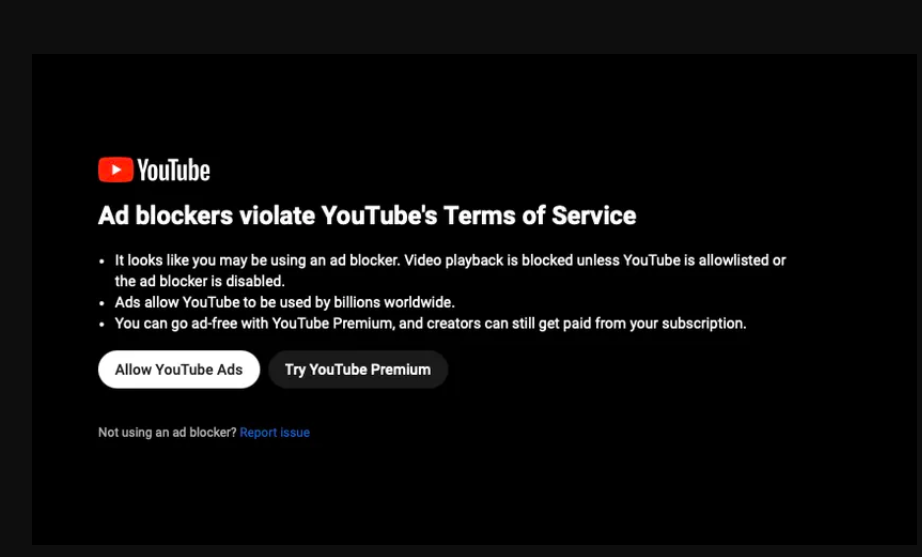
According to statements provided to The Verge by a company spokesperson, YouTube has started to disable video browsing for users who have an active ad blocker.
Initially, this restriction kicks in after the user has viewed just three videos.
It leaves the user with two choices: disable their ad blocker or opt for a YouTube Premium subscription.
Context and Implications
YouTube’s ad saturation has not just been stable; it has steadily increased.
Observers have noted more ad placements on both its mobile and desktop platforms, including the introduction of non-skippable 30-second ads on its TV app.
This ad blockade can be seen as a method to nudge users towards its Premium service while increasing ad-viewability statistics, potentially attracting more advertisers in the process.
FAQs
What is YouTube’s new policy on ad blockers?
YouTube is intensifying its global efforts to disable video browsing for users with active ad blockers. After watching three videos, users have to either disable their ad blocker or subscribe to YouTube Premium to continue browsing.
Why is YouTube cracking down on ad blockers now?
This new policy follows a series of experiments and comes at a time when YouTube has experienced a third straight quarterly drop in ad revenue. The company aims to push more users to its Premium service while maximizing ad-viewability.
How will this affect the user experience on YouTube?
The user experience is likely to change significantly. Those who rely on ad blockers will now be interrupted and prompted to make a choice, which could result in a less streamlined experience for those users.
Are there any alternatives to disabling ad blockers on YouTube?
The main alternative is to subscribe to YouTube Premium, which offers an ad-free viewing experience along with other perks like offline viewing and access to YouTube Originals.
Also Read: YouTube will not Show Videos on the users Homepage if the Watch History is Off

