Home Blog Page 377

Apple Confirms Exciting Mac Announcements for Next Week

0

Highlights

  • Apple teases an exciting week of announcements starting Monday.
  • Expected to focus on the Mac lineup and transition to M4 chip.
  • Expected announcements include new MacBook Pro, iMac and Mac mini.

image
Apple teases “exciting week of announcements” starting Monday. (Image credit – Apple/Greg Joswiak on X)

Apple fans out there need to roll up their sleeves as an “exciting week of announcements” has been lined up for them. We finally have official confirmation for next week’s announcements, starting Monday morning.

Apple is expected to announce new 14-inch and 16-inch MacBook Pro models.

Greg Joswiak, Apple’s marketing VP, shared a teaser on X (previously Twitter) hinting at an “exciting week of announcements.”


While it’s not a formal event, the announcements are expected to focus on the Mac lineup alongside Apple’s transition to the M4 chip. Here’s what to expect from the coming week.

While Apple has not revealed any specific details about how upcoming announcements, experts believe we will have to do with a series of press releases throughout the week. Apple will possibly also release videos highlighting the new releases.

Meanwhile, Bloomberg Apple reporter Mark Gurman revealed that Apple has also invited select creators and media persons for an in-person hands-on event in Los Angeles.

Announcements are anticipated to focus on the iMac, MacBook Pro and Mac mini. All these products will be powered by the new M4 chip.

The M4 chip that first appeared in the iPad Pro earlier this year offers significant performance improvements.

New MacBook Pro – What to Expect?

USB-C Magic Accessories

Rumours and leaks around the upcoming MacBook Pro have already hinted at the look at the base model 14-inch MacBook Pro with the M4 chip.

The new MacBook Pro is expected to come with 16GB of RAM as standard. It will also feature three Thunderbolt 4 ports, which is an improvement from the M3 model.

Apple confirms ‘an exciting week’ of Mac news starting Monday

The M4 chip will have a 10-core CPU and 10-core GPU, an upgrade from the 8-core CPU in the M3.

Moreover, the higher-end 14-inch and 16-inch MacBook Pro models will also get a performance boost with the inclusion of M4 Pro and M4 Max chips.

Other than faster chips, no major changes are expected for these models.

Upgraded iMac with M4 Chip

The next iMac is expected to be equipped with the standard M4 chip.

The 24-inch iMac is also set for an upgrade to the M4 chip replacing the M3 chip that currently powers it.

Similar to the new MacBook Pro, the iMac may come with 16GB of RAM as standard and two additional CPU cores, improving its overall performance.

New Mac Mini

The next Mac mini is expected to be available with M4 and M4 Pro chip options.

The most significant update next week will be the refreshed Mac mini.

Apart from the new configuration with the M4 and M4 Pro chips, the Mac mini is getting its first major redesign after years.
iOS 18.1 With First Apple Intelligence Features

According to a previous Bloomberg report, the new Mac mini will be much smaller than the current model with a form factor that’s similar to the Apple TV. It will have a smaller footprint but could be slightly taller than the current design.

FAQs

Q1. What are Apple’s upcoming announcements next week?

Answer. The announcements are expected to focus on the Mac lineup alongside Apple’s transition to the M4 chip.

Q2. What upgrades can we expect for the new MacBook Pro?

Answer. The new MacBook Pro is expected to come with 16GB of RAM as standard, three Thunderbolt 4 ports, a 10-core CPU, and a 10-core GPU with the M4 chip.

Q3. What is the significant update for the new Mac mini?

Answer. The refreshed Mac mini will feature the M4 and M4 Pro chips and a smaller form factor, similar to the Apple TV, marking its first major redesign in years.

Also Read : Apple’s iOS 18 Brings Game Mode and Major Gaming Enhancements to iPhone and iPad

Also Read : Apple iOS 18 to Introduce Built-In Call Recording Feature for iPhones
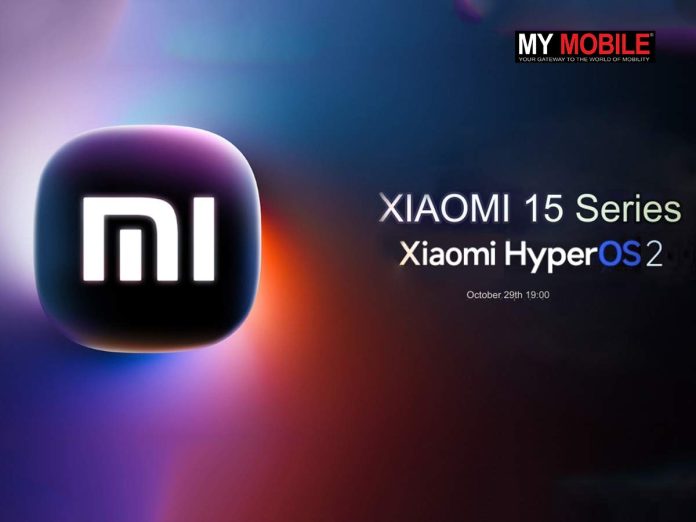
Xiaomi 15 Series and HyperOS 2.0 Official Launch Date Announced

0

Highlights

  • Xiaomi 15 series featuring Snapdragon 8 Elite will be launched on October 29 in China
  • The company will also launch Xiaomi SU7 Ultra and HyperOS 2.0.
  • HyperOS 2.0 introduces key technologies like HyperCore, HyperConnect and HyperAI.
image
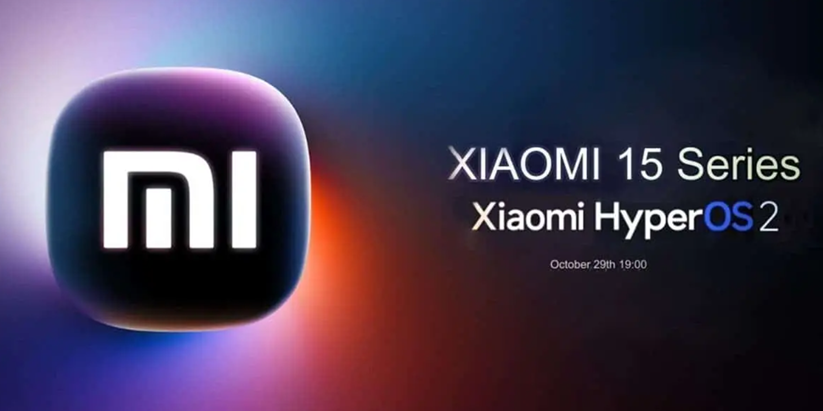
The Xiaomi 15 series along with Xiaomi HyperOS 2 will be launched in China on October 29th.

After the recent unveiling of Qualcomm’s Snapdragon 8 Elite processor, it isn’t a surprise that Android manufacturers are racing to launch their smartphones featuring the flagship chipset. The recent launch date announcement comes from Xiaomi for its Xiaomi 15 series.

Xiaomi 15 series will feature Xiaomi’s HyperCore technology Photo Credit: Xiaomi

Xiami has just announced that its upcoming Xiaomi 15 series will be officially launched on October 29th in China.

image
Xiaomi 15 series and HyperOS 2.0 launch date announcement. (Image credit -Gizchina/Xiaomi)

The Chinese manufacturer will also release its much-anticipated smartphone, the Xiaomi SU7 Ultra and the HyperOS 2.0 update during the same event.

Here’s everything you can expect from the upcoming launch.

Xiaomi 15 series – Xiaomi 15 and 15 Pro

Based on some leaks and rumours, it is being reported that the standard Xiaomi 15 will sport a 6.36-inch flat AMOLED display.

Meanwhile, its counterpart 15 Pro is expected to come with a larger 6.78-inch curved display with a 120Hz refresh rate and advanced Dolby Vision.

image
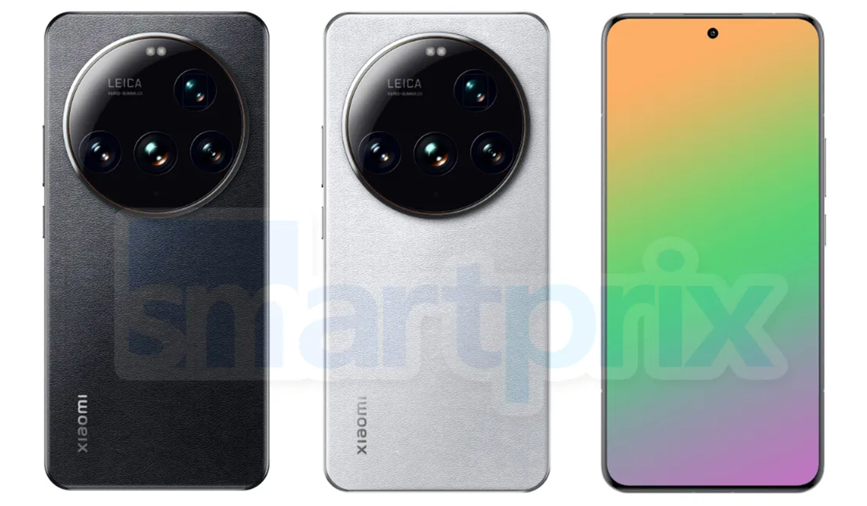
Xiaomi 15 Pro render leaked previously. (Image credit – Smartprix)

The advanced 15 Pro will also likely feature a triple-camera system, which will include a 50-megapixel main sensor, a 5x optical zoom telephoto lens and an ultra-wide sensor.

Xiaomi has set up a special team of more than 3,000 engineers this year.

Both standard and Pro models will also most likely get some battery improvements over 5,000mAh. Support for fast wired and wireless charging is also expected.

The Xiaomi 15 Pro will also have an IP68 water and dust resistance rating.

Xiaomi HyperOS 2.0

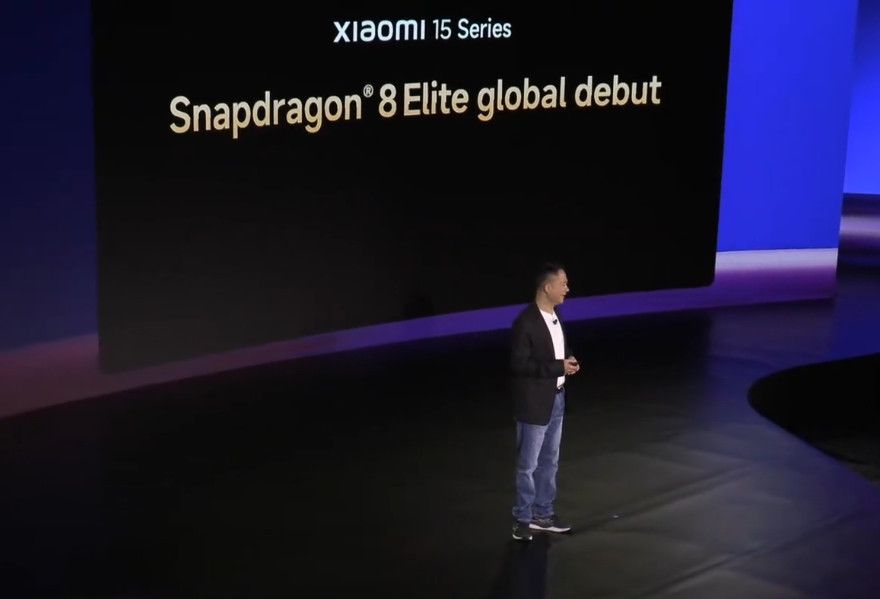
Xiaomi’s latest operating system HyperOS 2.0, previously introduced by company President Lu Weibing, will also be officially launched in China on October 29.

image
Xiaomi’s upcoming HyperOS 2.0 was introduced by President Lu Weibing. (Image credit – Gizchina/Xiaomi)

The latest operating system will provide an enhanced user experience powered by key technologies like HyperCore, HyperConnect, and HyperAI.

All three technologies are explained below –

HyperCore:

  • Powers HyperOS 2.0, ensuring faster and smoother performance.
  • Improves app launching and interface navigation for a seamless experience.
  • Xiaomi’s team of over 3,000 engineers fine-tuned the system.
  • Addressed 25,000 scenarios.
  • Focuses on reducing power consumption during gaming and high-performance tasks.

HyperConnect:

  • Enables Xiaomi devices to work together
  • Creates an interconnected ecosystem between phones, smart home devices and wearables.
  • Enhances the user experience when using multiple Xiaomi devices at once.

HyperAI:

  • Powers Xiaomi’s AI technology to make device interactions smarter and more efficient.
  • Combines cloud-based AI with on-device processing for faster, secure performance.
  • Deeply integrated into the system to improve apps and overall device experience.
  • Prioritises user privacy while boosting efficiency.
WhatsApp Image 2024-10-24 at 5.45.18 PM
WhatsApp Image 2024-10-24 at 5.45.16 PM
WhatsApp Image 2024-10-24 at 5.45.18 PM WhatsApp Image 2024-10-24 at 5.45.16 PM

FAQs

Q1. When will the Xiaomi 15 series be launched?

Answer. The Xiaomi 15 series will be officially launched on October 29th in China.

Q2. What are the display features of the Xiaomi 15 and 15 Pro?

Answer. The standard Xiaomi 15 will sport a 6.36-inch flat AMOLED display, while the 15 Pro will have a larger 6.78-inch curved display with a 120Hz refresh rate and advanced Dolby Vision.

Q3. What is expected from the Xiaomi HyperOS 2.0?

Answer. Xiaomi’s latest operating system HyperOS 2.0 will provide an enhanced user experience powered by key technologies like HyperCore, HyperConnect, and HyperAI.

Also Read : Upcoming MediaTek Dimensity 8400 Processor Spotted in Xiaomi HyperOS

Also Read : Qualcomm Snapdragon 8s Gen 4 Spotted in Xiaomi’s HyperOS Software

Top 5 Speakers Under ₹15,000 to Elevate Your Diwali Party!

0

Highlights

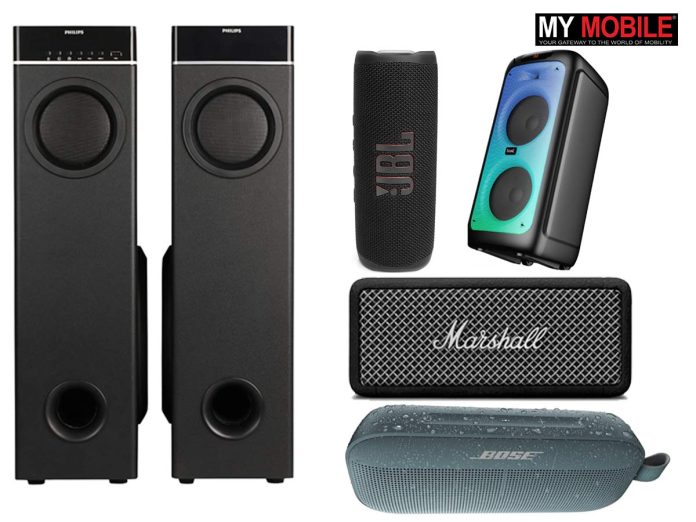
  • Top 5 Speakers Under ₹15,000 – Marshall Emberton II, Bose SoundLink Flex, boAt Partypal 390, Philips Audio Spa9070, JBL Flip 6.

Are you hosting a Diwali party at your place this year? Well, if yes, let us remind you that apart from all that Diwali decor and food that you are planning, any Indian celebration would be incomplete without arrangements for some incredible music.

And to ensure that your guests enjoy that super fun playlist you curated, you must have speakers that can amplify the music to its best.

Well, to help you with that, we’ve curated a list of the top 5 speakers under ₹15000 that are guaranteed to elevate your Diwali party.

Whether you want booming bass, crystal clear highs or the ultimate portability, these speakers have got you covered.

So, without further ado, let’s dive in to find the perfect sound companion for your Diwali party.

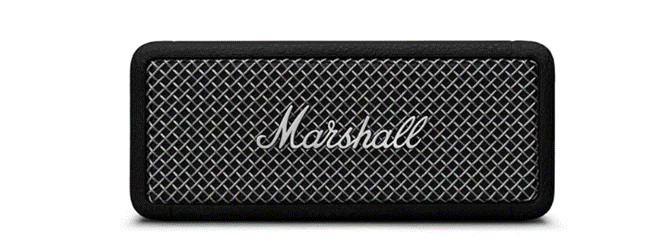
Marshall Emberton II

image
Marshall Emberton II

Features –

  • Two 2-inch full-range drivers and two passive radiators for a rich, clear, and loud sound.
  • Provides 360° sound with every spot being a sweet spot.
  • Textured silicone sleeve, solid metal grille, and classic Marshall script.
  • Up to 30+ hours of playtime on a single charge.
  • IP67 rating; can be submerged in 1 meter of water for up to 30 minutes.
  • Multi-Directional Control Knob: Play, pause, skip tracks, adjust volume, and turn on/off.
  • App Compatibility: Connect to the Marshall Bluetooth app for EQ presets and OTA updates.
  • Easy to carry around for outdoor adventures.

Price – ₹12,998

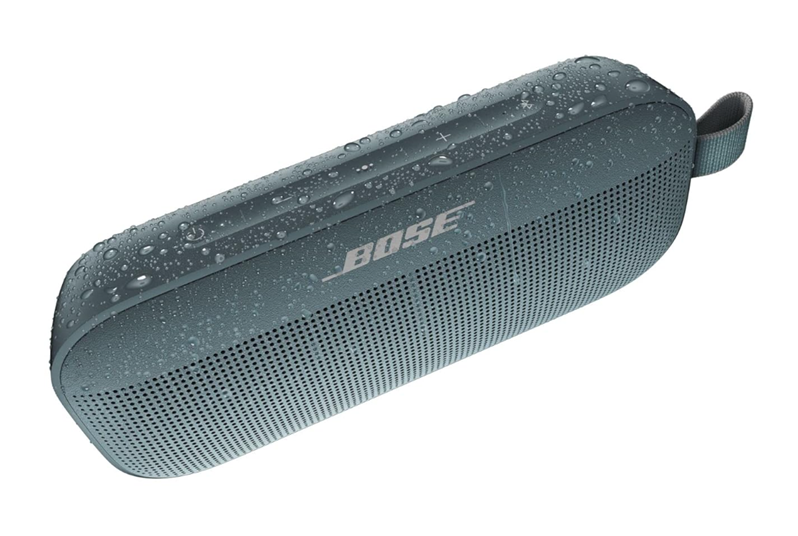
Bose SoundLink Flex

image
Bose SoundLink Flex

Features –

  • 5W speakers deliver rich bass and clear highs with powerful audio performance.
  • Signal-to-Noise Ratio – ‎81.6 dB
  • Waterproof and Dustproof: IP67 rating, making it suitable for outdoor adventures.
  • Up to 12 hours of playtime on a single charge.
  • Powder-coated steel grille and silicone exterior for durability
  • PositionIQ Technology: Automatically adjusts the sound based on its orientation.
  • Can pair with other Bose speakers for an enhanced sound experience.
  • Colour choices available – Stone Blue, Black, Chilled Lilac, Cypress Green and White Smoke.

Price –  ₹10,998

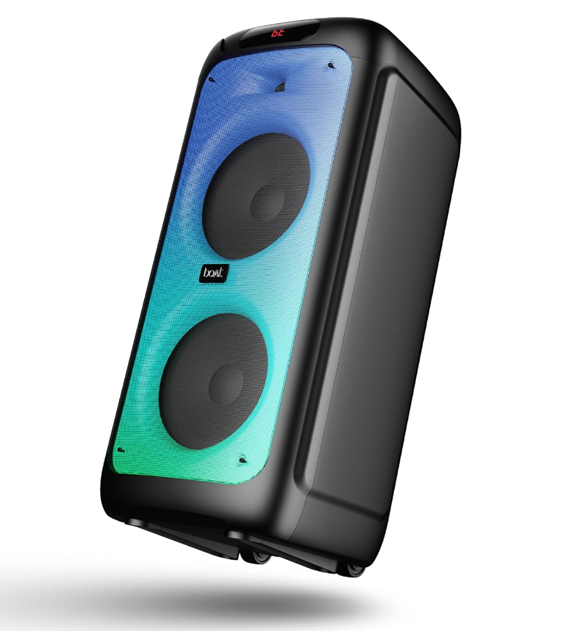
boAt Partypal 390

image
boAt Partypal 390

Features –

  • Powerful Sound: 160W RMS stereo sound with boAt Signature Sound.
  • Long Battery Life: Up to 6 hours of playback on a single charge.
  • Versatile Connectivity: Bluetooth v5.3, AUX, USB, and TF card support.
  • Karaoke and Guitar Ready: Dual microphones and dedicated guitar input.
  • Flame LEDs: Create a party atmosphere with variable brightness levels.
  • TWS Mode: Connect two speakers wirelessly for an immersive audio experience.
  • Customizable EQ Modes: Normal, Party, Pop, Rock, and Jazz for tailored sound.
  • Compact Design: Portable and easy to carry for outdoor adventures.

Price – ₹13,499

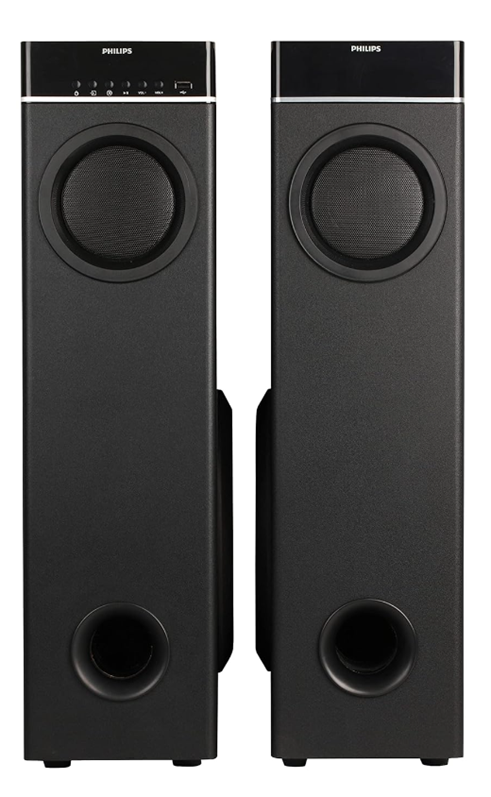
Philips Audio Spa9070

image
Philips Audio Spa9070

Features –

  • 70 W RMS Power Output: Delivers powerful and clear sound.
  • Wide Range Performance: Exceptionally clear sound from 40 Hz to 20 kHz.
  • Multiple Connectivity Options: Bluetooth 5.0, USB, optical input, audio-in, and FM radio.
  • Corded Microphone: Perfect for karaoke and gatherings.
  • Remote Control: Hassle-free control of the speaker.
  • Wooden Cabinet: Enhances sound quality for a rich audio experience.
  • FM Radio: Enjoy music or news every day.
  • 0 Channel Stereo: Provides impactful sound for parties and entertainment.

Price – ₹10,398

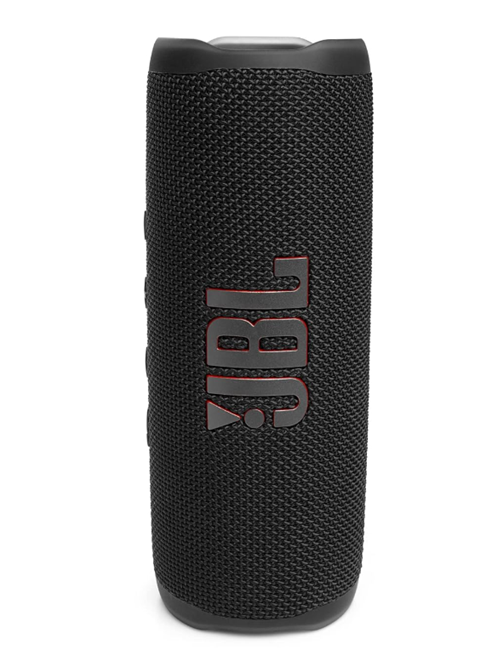
JBL Flip 6

image
JBL Flip 6

Features –

  • A 2-way speaker system with a racetrack-shaped woofer and separate tweeter for loud, clear audio.
  • Dual passive radiators for enhanced bass performance.
  • Waterproof and Dustproof: IP67 rating, suitable for outdoor use.
  • Long Battery Life: Up to 12 hours of playtime on a single charge.
  • Can pair with other JBL PartyBoost-compatible speakers for stereo sound.
  • Bluetooth 5.1: Wireless streaming with a range of up to 10 meters
  • Compact and easy to carry, available in multiple colours
  • USB-C Charging Protection: Alerts you to unplug if water or chemicals are detected.
  • Eco-Friendly Packaging: Recyclable materials and soy ink printing

Price – ₹8,999

FAQs

Q1. What is the battery life of the Marshall Emberton II?

Answer. The Marshall Emberton II offers up to 30+ hours of playtime on a single charge.

Q2. Is the Bose SoundLink Flex waterproof?

Answer. Yes, the Bose SoundLink Flex has an IP67 rating, making it waterproof and dustproof.

Q3. What kind of lights does the boAt Partypal 390 feature?

Answer. The boAt Partypal 390 comes with Flame LEDs that have variable brightness levels to create a party atmosphere.

Q4. Does the Philips Audio Spa9070 support FM radio?

Answer. Yes, the Philips Audio Spa9070 includes FM radio as one of its features.

Q5. How long does the battery last on the JBL Flip 6?

Answer. The JBL Flip 6 speakers have a battery life of up to 12 hours on a single charge.

Also Read : Boult Retro Amp X40 Speaker Review: Classic Vintage-Looking Speakers for Powerful Everyday Performance

Also Read : Brilliant Series Wireless Bluetooth Speaker from UI Launched in India: Price & Features

Also Read : Marshall launches two new portable Bluetooth speakers: Emberton III and Willen II – Price, Specs, Availability

Also Read : Xiaomi Sound Outdoor Bluetooth Speakers

Also Read : Boult Retro Amp X40 Speaker Review: Classic Vintage-Looking Speakers for Powerful Everyday Performance

Samsung Galaxy S25 and S26 to Run on Snapdragon Chips, New Exynos Could Be Used for Galaxy S27

0

Highlights

  • Samsung will use Qualcomm Snapdragon processors for all its Galaxy S25 and S26 models.
  • A new Exynos chip codenamed “Ulysses” is being developed for the Galaxy S27 Series.

Samsung will use the flagship Qualcomm Snapdragon processor for all its upcoming Galaxy S25 models, recent reports confirm. Moreover, the Korean manufacturer will most likely reply on Qualcomm Snapdragon processors for the next-in-line Galaxy S26 series as well.

The Samsung Galaxy S27 Series is anticipated to feature three smartphones: the Samsung Galaxy S27, Samsung Galaxy S27 Plus, and Samsung Galaxy S27 Ultra.

This new update now suggests a strong partnership will be witnessed between Samsung and Qualcomm for now.

For those of you who are wondering what is Samsung’s plan for its Exynos SoC, we are hearing the company is working on pushing it for the Galaxy S27 Series as of now.

Here’s a complete report on the latest news breaks.

Galaxy S26 To Use Snapdragon Processors

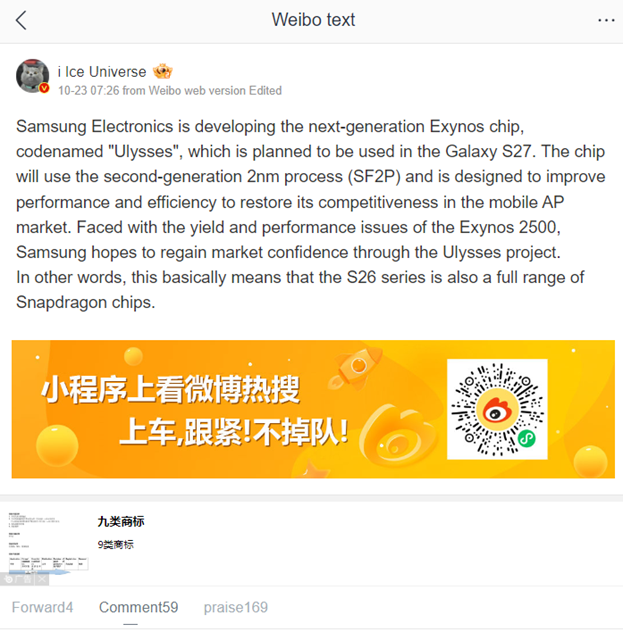
Popular tipster Ice Universe recently shared on Weibo that Samsung is planning to keep using Snapdragon processors for all Galaxy S26 devices.

However, the tip was shared mainly to point out that the development of Exynos SoC isn’t getting pushed under the rug. The chip is very much under development.

image
Tipster Ice Universe Weibo post. Was originally in Chinese, translated using Google Translate.

Even though Samsung is leaning on Qualcomm for the next few years, the company hasn’t abandoned its Exynos processors.

According to Ice Universe, Samsung is developing a new Exynos chip codenamed “Ulysses.” This processor is expected to feature in the Galaxy S27 Series, which will be released in 2027.

X (previously Twitter) user @Jukanlosreve revealed the code name along with other details in a post recently.

The Ulysses chip will be built using Samsung’s second-generation 2nm technology (SF2P), which is set to be ready by the end of 2026.

According to SE Daily, through tipster Jukanlosreve on X, Samsung is reportedly developing the Exynos chipset intended for the Galaxy S27 Series smartphones.

Certain reports suggest that originally Samsung had planned to use its in-house Exynos 2500 chipset built on 3nm technology for both Galaxy S25 and Galaxy S25+ models.

The company even discussed the Exynos 2500 during its earnings call.

However, Samsung couldn’t manufacture enough of these chips because of some production. As a result, the company had to shift to Qualcomm’s Snapdragon 8 Elite chip for all Galaxy S25 models instead.

Samsung is reportedly aiming to revive its Exynos brand through Project Ulysses. We’ll have to wait until 2027 to see if Samsung can make a successful comeback with Exynos in the Galaxy S27.

FAQs

Q1. What processor will Samsung use for its Galaxy S25 models?

Answer. Samsung will use the flagship Qualcomm Snapdragon processor for all its upcoming Galaxy S25 models.

Q2. Is Samsung planning to use Exynos processors in the future?

Answer. Samsung is developing a new Exynos chip codenamed “Ulysses” for the Galaxy S27 Series, which will be released in 2027.

Q3. Why did Samsung shift from Exynos to Snapdragon for the Galaxy S25 models?

Answer. Samsung reportedly couldn’t manufacture enough of its in-house Exynos 2500 chips due to production issues, leading the company to use Qualcomm’s Snapdragon 8 Elite chip instead.

Also Read : New Leak Reveals Samsung Galaxy S25 Ultra Colours

Also Read : Samsung Galaxy S25 Plus Renders Leaked: Looks Similar to S24 Plus, No Battery Upgrades

Also Read : Qualcomm Unveils Snapdragon 8 Elite with Oryon CPU, Boosting Performance and Efficiency

Xiaomi 15 Ultra’s Unusual Camera Module Design and Key Specs Revealed

0

Highlights

  • Xiaomi 15 Ultra’s first look reveals an unusual circular camera module with four lenses.
  • Camera setup to include a 200 MP periscope zoom lens.
  • Other features – a 6.7-inch 120Hz 2K display, Snapdragon 8 Elite chipset, 6000mAh battery and HyperOS 2 based on Android 15.
  • The phone is expected to launch in early 2025.
image
Smartprix released an exclusive first-look image of the Xiaomi 15 Ultra. (Image credit – Smartprix/Yogesh Brar)

Xiaomi is slated to release two of its upcoming smartphones Xiaomi 15 and 15 Pro by the end of October 2024.
While multiple reports with key details of both devices have been circulating around, Smartpix has managed to reveal the look of another Xiaomi device that might arrive sometime in early 2025.

We are talking about the Xiaomi 15 Ultra. Let’s see what the first look at this future Xiaomi phone reveals.

Xiaomi 15 Ultra – First Look Revealed

In an exclusive report, Smartprix has teamed up with popular tipster Yogesh Brar to reveal the first look of the upcoming  Xiaomi 15 Ultra including some of the key details about its design and specs.

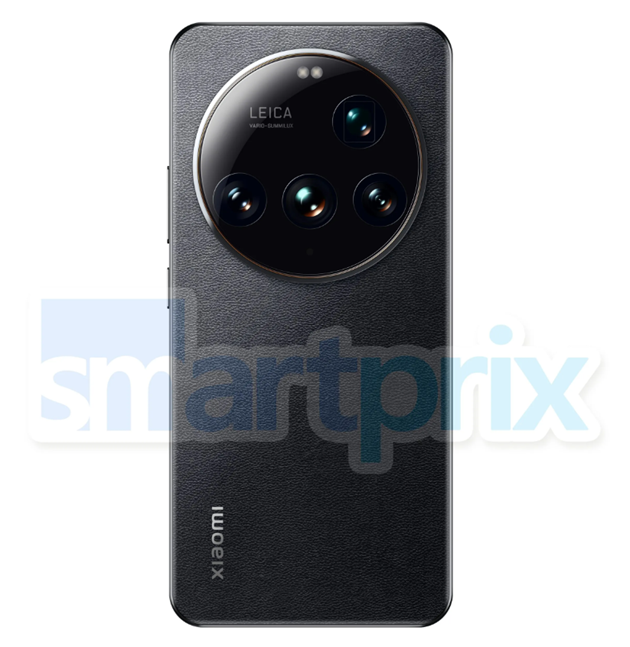
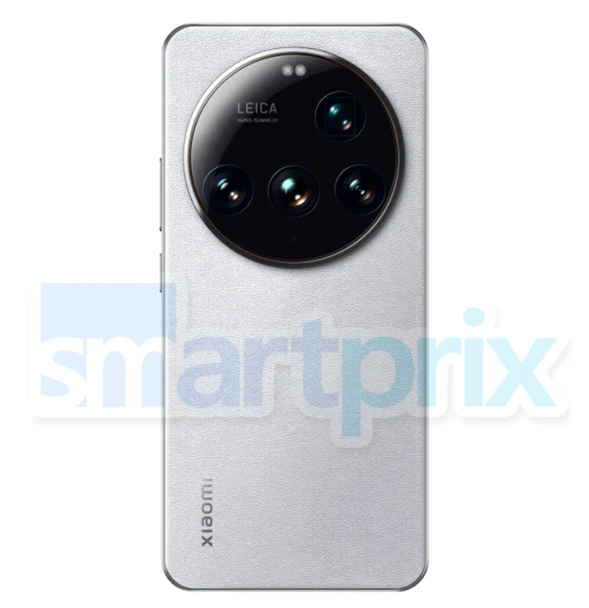
The leaked renders reveal Xiaomi 15 Ultra will sport a rather unusual circular camera module on the back. We can see that it houses four lenses and the Leica branding on the left of the circular module.

image
Xiaomi 15 Ultra Black variant image revealed. (Image credit – Smartprix/Yogesh Brar)


image
Xiaomi 15 Ultra White variant image revealed. (Image credit – Smartprix/Yogesh Brar)

The two flash LEDs have been placed horizontally at the top of the camera module. Meanwhile, the Xiaomi logo can be seen vertically at the bottom left.

Xiaomi 15 Ultra – Camera Specs Revealed

As per the Smartprix report, the top right of the 15 Ultra’s circle camera module is the periscope zoom lens, which is a major upgrade from previous the phone.

This periscope lens will use a Samsung ISOCELL HP9 1/1.4” image sensor and have a 200 MP resolution, 4.3x optical zoom and an f/2.6 aperture.

The primary lens is expected to be a 50 MP Sony sensor.

Leaked images show that the other two lenses are horizontally placed at the bottom of the circular camera module. These lenses could be a 50 MP ultra-wide camera and a 50 MP 2x telephoto zoom lens

Moreover, it will most likely have a 32 MP selfie camera on the front.

Xiaomi 15 Ultra – Key Specs (Expected)

The Xiaomi 15 Ultra is expected to come sporting a 6.7-inch 120Hz 2K LTPO micro quad-curved display.

The phone will be powered by the newly launched flagship Snapdragon 8 Elite chipset.

The battery is expected to be massive 6000mAh, which will be an upgrade from the 5300mAh offered in the China version of the phone.

It will most likely have a wired charging speed of about 90W along with a wireless charging speed of 80W.

The Xiaomi 15 Ultra will run on HyperOS 2 based on Android 15.

Xiaomi 15 Ultra Launch Date (Expected)

Xiaomi is expected to tease the much-anticipated Xiaomi 15 Ultra during the launch event of Xiaomi 15 and 15 Pro later this month in China.

As for the official launch, reports suggest Xiaomi 15 Ultra is expected to be released in February next year.

FAQs

Q1. What is the expected launch date of the Xiaomi 15 Ultra?

Answer. The Xiaomi 15 Ultra is expected to be released in February 2025.

Q2. What camera setup will the Xiaomi 15 Ultra feature?

Answer. The Xiaomi 15 Ultra will sport a circular camera module with four lenses, including a 200 MP periscope zoom lens.

Q3. What is the expected display specification of the Xiaomi 15 Ultra?

Answer. The Xiaomi 15 Ultra is expected to feature a 6.7-inch 120Hz 2K LTPO micro quad-curved display.

Q4. Which chipset will power the Xiaomi 15 Ultra?

Answer. The Xiaomi 15 Ultra will be powered by the Snapdragon 8 Elite chipset.

Also Read : Qualcomm’s Next-Gen Snapdragon Elite Chipset to Power Xiaomi 15 Series

Also Read : Xiaomi 15 Ultra Key Details Revealed

Also Read : Snapdragon 8 Gen 4 Datasheet Leaked to Power Xiaomi 15 Series, ZTE Nubia Z70 Ultra, Nubia Flip 2, Red Magic 10 Series

Google’s Tensor G5 (Pixel 10) and G6 (Pixel 11) Major Process Upgrades Revealed

0

Highlights

  • Google’s Tensor G5 and G6 process upgrades leaked.
  • Google Tensor G5 for Pixel 10 will be built on TSMC’s advanced N3E node.
  • The Tensor G6 will be manufactured on TSMC’s N3P node.

It was previously reported that Google is switching to TSMC for its upcoming chips with confirmed reports that the Tensor G5 chip for Google Pixel 10 will be manufactured by the Taiwanese Semiconductor Manufacturer.

However, there wasn’t much update on which exact process would be used. Now we are getting reports about only on the Tensor G5 but also on the Tensor G6.

In an exclusive report, Android Authority has revealed important details from Google’s gChips division leak about the upcoming Tensor chips.

Android Authority confirmed of obtaining documents of the process nodes that will power Google’s future processors.

Google Tensor G5 To Be Built on TSMC’s Advanced N3E Node

According to the Android Authority report, the Tensor G5 is codenamed “Laguna” and is expected to be the chip in Google’s Pixel 10 series next year. It will be manufactured on TSMC’s 3 nm-class N3E node.

This is the same advanced process that was also used for Apple’s A18 Pro in the iPhone 16 Pro and the M4 chips.

This brings a significant leap compared to the previous Tensor G4 that uses Samsung’s 4 nm-class 4LPE node.

By switching to the N3E node, the Tensor G5 is set to bring massive upgrades in both efficiency and performance.

It is a promising development for Google’s hardware since this is considered the best process node currently available.

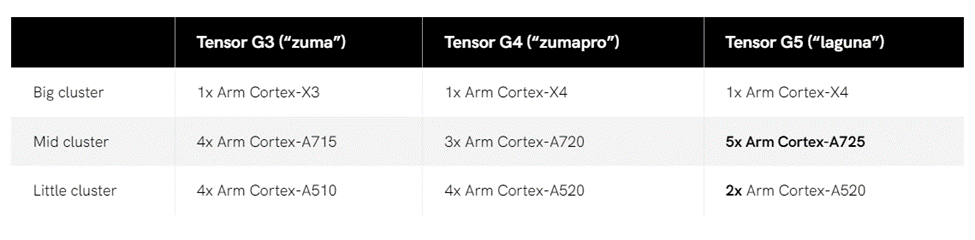
The Tensor G5 will also present upgrades to the CPU cluster.

It will have the same single Arm Cortex-X4 primary core and will shift the core clusters around with five Cortex-A725 cores in the mid cluster and two Cortex-A520 cores in the little cluster.

image
CPU cluster comparison presented by Android Authority. (Screenshot credit – Android Authority)

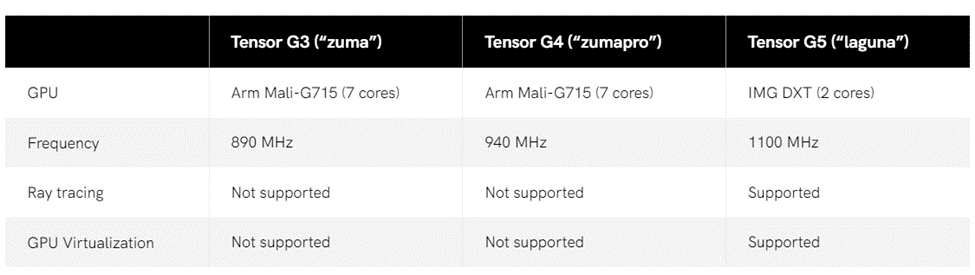
The Tensor G5 comes with a GPU from Imagination Technologies (or IMG) — the DXT-48-1536 running at 1.1 GHz.

The GPU will come with ray tracing support that will be new to Google chips and will provide support for GPU Virtualisation, which will allow accelerated graphics in a virtual machine. Google has been reportedly developing virtualization-based features for some time now.

image
GPU specs comparison presented by Android Authority. (Screenshot credit – Android Authority)

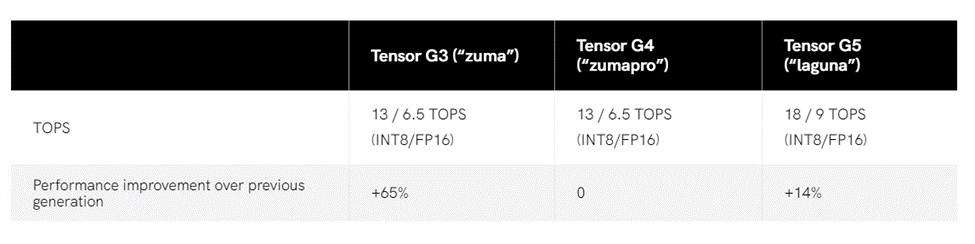
As per the Android Authority report, the Tensor G5 will have a slightly faster TPU than the Tensor G4.

The Trillions of Operations Per Second (TOPS) value is almost 40% larger, while Google’s internal benchmarks suggest the new TPU is only 14% faster.

The advanced TPU will come with small embedded RISC-V cores and support for on-device training.

image
New TPU specs revealed by Android Authority. (Screenshot credit – Android Authority)

Tensor G6 On the N3P Node, Set for 2026

The story doesn’t end there as Android Authority was also able to report on the Tensor G6 chip scheduled for 2026.

G6 Chip is codenamed “Malibu” and will be manufactured on TSMC’s next-generation N3P node.

The N3P node is still part of the 3 nm class and introduces some important enhancements to the table. It is rumoured to be used for Apple’s future A19 chip.

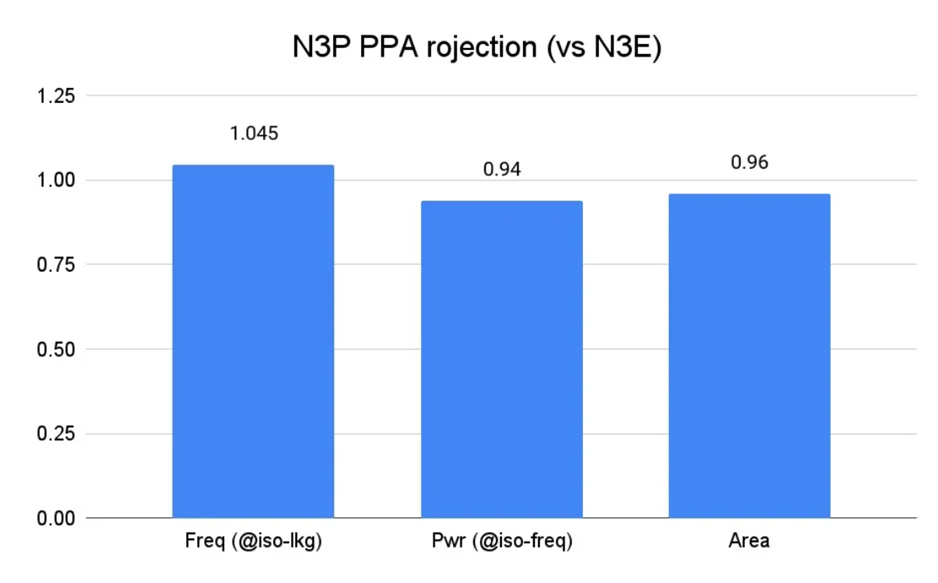
According to the leaked documents obtained by Android Authority, the N3P process node offers the following improvements:

  • Frequency (@iso-lkg): A 5% increase allows for higher performance without causing additional leakage (which affects efficiency).
  • Power (@iso-freq): A 7% reduction in power consumption when maintaining the same frequency.
  • Area: A 4% reduction in the overall size of the chip contributes to a smaller final design.

Android Authority wasn’t able to publish the original leaked documents but managed to recreate the leaked information in this graph –

image
Android Authority recreated leaked document information. (Image credit – Android Authority)

The technical details may seem complex to layman’s eyes. So, the core takeaway from all the above details is that the Tensor G6 will offer significant gains in performance and efficiency.

It is quite evident that Google is finally stepping up its game with Tensor chips and wants to offer the best technology to its customers. Shifting to cutting-edge nodes, Google is definitely taking steps.

All in all, we can assume that both the upcoming Tensor G5 and G6 chips will offer significant advancements for Google’s processor lineup.

Feature Tensor G5 (Laguna) Tensor G6 (Malibu)
Node/Die Size TSMC N3E, POP packaging, 120 mm2 TSMC N3P, POP packaging, 113 mm2 current, target 105 mm2
CPU 1x Cortex-X4, 5x Cortex-A725, 2x Cortex-A520 1x Cortex X925 successor (X930), 6x Cortex-A730, 1x Cortex-A530
GPU IMG DXT 2-core, 1,100 MHz IMG CXTP 3-core, 1,100 MHz
SLC 8 MB 4 MB
Memory 4x 16-bit LPDDR5X-8533 or 4x 16-bit LPDDR5-6400 4x 16-bit LPDDR5X-8533 or 4x 16-bit LPDDR5-6400
I/O USB 3.2 Gen2, UFS 4.0, DP1.4, 2x 2 PCIe Gen4 USB 3.2 Gen2, UFS 4.0, DP1.4, 2x 2 PCIe Gen4
ISP 200 MP, 108 MP with Zero Shutter Lag, Staggered HDR, 8K 30 video recording 100x zoom, Cinematic Bokeh engine

FAQs

Q1. What are the Tensor G5’s process node and expected improvements?

Answer. The Tensor G5 codenamed “Laguna,” will be manufactured on TSMC’s 3 nm-class N3E node, offering significant upgrades in both efficiency and performance.

Q2. What are some of the key features of the Tensor G5?

Answer. The Tensor G5 includes a GPU from Imagination Technologies (IMG), the DXT-48-1536 running at 1.1 GHz, with ray tracing support and GPU Virtualisation.

Q3. What node will the Tensor G6 be built on, and what improvements does it offer?

Answer. The Tensor G6 codenamed “Malibu” will be manufactured on TSMC’s N3P node, offering a 5% increase in frequency, a 7% reduction in power consumption, and a 4% reduction in chip size.

Also Read : Google’s Tensor G5 Chip Reportedly Designed, Set to Power Pixel 10 Series in 2025

Also Read : Google’s Tensor G5 to Use TSMC’s 3nm Process, Enhancing Performance and Efficiency in 2025

Nubia Neo 3 and Nubia Focus 2 Ultra 5G Appear in IMEI Database

0

Highlights

  • ZTE is preparing to launch two new budget smartphones – Nubia Neo 3 and Nubia Focus 2 Ultra 5G.
  • Both phones were recently spotted in the IMEI database.
  • The launch date is not known yet.

ZTE is preparing to release not one but two new budget smartphones, the Nubia Neo 3 and Nubia Focus 2 Ultra 5G.

In recent reports, Gizmochina confirmed spotting both upcoming smartphones in the IMEI database.

ZTE will launch both phones to compete in the entry-level smartphone segment under its Nubia Neo and Nubia Focus series.

Here’s everything we know about both devices.

ZTE Nubia Neo 3 – What To Expect?

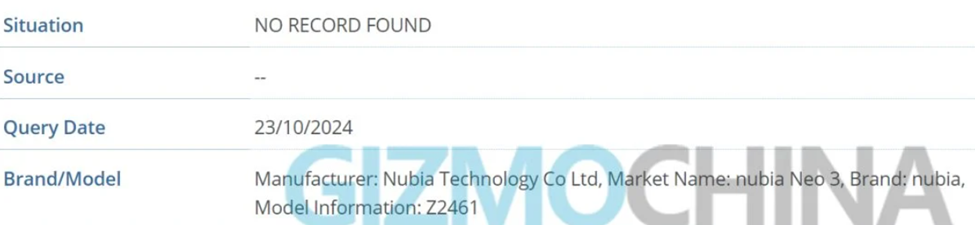
As per a recent Gizmochina report, the upcoming Nubia Neo 3 has been recently spotted in the IMEI listing with the model number Z2461. However, there is no official confirmation about its launch date or features as of now.

image
Nubia Neo 3 with model number Z2461 appeared in the IMEI listing. (Screenshot credit – Gizmochina)

Reports believe that the phone will enter the budget segment and is expected to offer some improvements compared to its predecessor the Nubia Neo 2.

To refresh memory, the Nubia Neo 2 features a 6.72-inch IPS LCD screen with a 120Hz refresh rate.

It comes with 8GB RAM and 256GB internal storage. Powered by the Unisoc T820 chipset, the phone offers a decent performance for an entry-level phone.

Based on this, we can assume the Nubia Neo 3 offers some upgrades in key features including display, memory and performance.

ZTE  Nubia Focus 2 Ultra – What to Expect?

ZTE  Nubia Focus 2 Ultra – What to Expect?

ZTE launched the Nubia Focus 5G just a few months ago and now the company is reportedly working to bring the Nubia Focus 2 Ultra 5G soon.

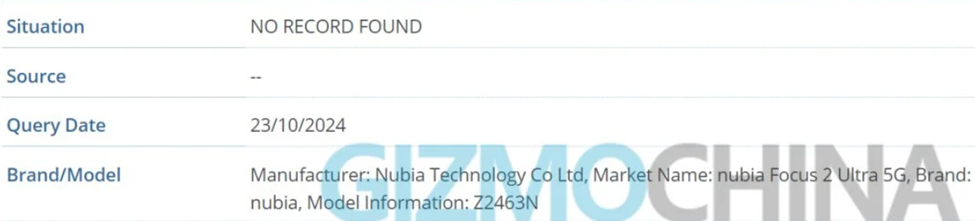
The upcoming Nubia Focus 2 Ultra 5G has been spotted in the IMEI database already. It showed up with model number Z2463N.

image
Nubia Focus 2 Ultra 5G spotted in IMEI Listing with model number Z2463N. (Image credit – Gizmochina)

As of now, there is no confirmation on the launch date or key specs.

However, several reports suggest that the company is aiming to offer compelling upgrades over the previous Nubia Focus model.

The previously launched Nubia Focus 5G offered a 6.56-inch 120Hz IPS LCD screen, Unisoc T760 chipset, 12GB of RAM and 256GB of storage.

It will be interesting to see what improvements ZTE brings to the upcoming Nubia Focus 2 Ultra 5G.

FAQs

Q1. What ZTE smartphones will be launching next?

Answer. ZTE is preparing to launch two new budget smartphones, the Nubia Neo 3 and Nubia Focus 2 Ultra 5G.

Q2. What are the expected upgrades for Nubia Neo 3?

Answer. The Nubia Neo 3 is expected to offer some improvements over its predecessor, the Nubia Neo 2, including enhancements in display, memory and performance.

Q3. What are the key specs of the previously launched Nubia Focus 5G?

Answer. The Nubia Focus 5G featured a 6.56-inch 120Hz IPS LCD screen, Unisoc T760 chipset, 12GB of RAM, and 256GB of storage.

Also Read : ZTE is Testing the Nubia V70 Series, Three Models Spotted in IMEI Database

Also Read : Snapdragon 8 Gen 4 Datasheet Leaked, To Power Xiaomi 15 Series, ZTE Nubia Z70 Ultra, Nubia Flip 2, Red Magic 10 Series

Also Read : ZTE’s New Flagship Contender Nubia Z70 Ultra Spotted Online

Vivo Y04 and Vivo Y19e Spotted in IMEI Listing, Launch Expected Soon

0

Highlights

  • Upcoming budget-friendly releases Vivo Y04 and Vivo Y19e were spotted in the IMEI database
  • Vivo Y04 is expected to feature improvements over its predecessor Vivo Y03.
  • Vivo Y19e is likely similar to Vivo Y19s.
  • Both phones are expected to launch in late 2024.

Vivo has been steadily building its presence in every smartphone segment, especially entry-level basic smartphones with decent features.

Keeping up with its tradition of creating compelling smartphone choices in the lower segment, the Chinese manufacturer appears to be working on not one but two new smartphone models.

In two separate exclusive reports, Gizmochina reported spotting Vivo Y04 and Vivo Y19e in the IMEI listing.

Here’s everything we know about both the upcoming budget-friendly phones.

Vivo Y04 Spotted in IMEI Listing

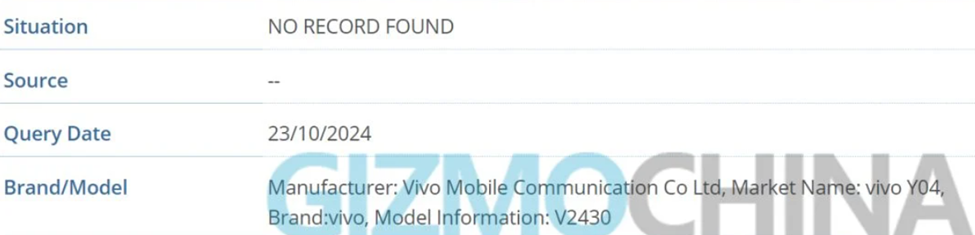
Gizmochina recently reported spotting the budget-friendly Vivo Y04 in the IMEI database with model number V2430.

image
Vivo Y04 spotted in IMEI listing. (Screenshot credit –  Gizmochina)

There is no official confirmation on the device yet and key specifications are also unclear. However, rumours suggest the phone will offer users a much more advanced smartphone compared to the predecessor Vivo Y03.

Just to recall, Vivo Y03 was released earlier this year and comes with a 6.56-inch HD+ resolution display with a refresh rate of 90Hz.

It is powered by the MediaTek Helio G85 chipset and is available in 4GB RAM and up to 128GB internal storage configuration.

The internal storage is expandable up to 1TB with the support of a memory card.

It has a 5000mAh battery and supports 15W fast charging. It comes with a dual rear camera setup including a 13MP main camera and a 5MP front camera.

There is IPX4 waterproofing and IPX6 dustproofing. take a step forward in terms of durability. In this way, the device promises safe use even in harsh conditions.

Assuming the upcoming Vivo Y04 will take things a little higher in terms of key specs, it will become a solid option for users looking for a budget-friendly phone.

Vivo Y19e Spotted in IMEI Listing

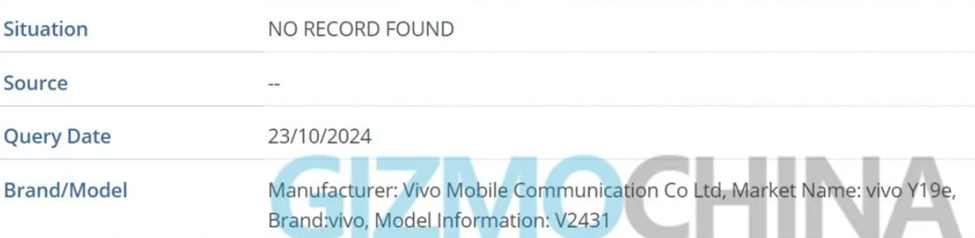
It is also being reported that entry-level Vivo Y19e has also appeared in the IMEI database with the model number V2431.

image
Vivo Y19e spotted in IMEI database. (Screenshot credit – Gizmochina)

Reports expect the Vivo Y19e to be similar to the recently announced Vivo Y19s in terms of key specs.

To give you all an idea, Vivo Y19s sports a 6.68-inch HD+ resolution display with a 90Hz refresh rate and 1000 nits brightness.

The smartphone is equipped with Unisoc T612 chipset and comes in 6GB of RAM and 128GB of internal storage variant. Internal storage is expanded with memory card support up to 1TB.

For cameras, Vivo Y19s offer a 50MP main camera and a 2MP depth perception camera on the rear along with a 5MP selfie camera for selfies.

It has a 5500mAh capacity battery that supports 15W fast charging support. It runs Android 14-based FuntouchOS 14 interface out of the box.

For certifications, Y19s has a MIL-STD-810H Military Standards Certificate, IPX4 water resistance and IPX6 dust resistance rating.

With similar specs as rumoured, Vivo Y19e could also be an attractive option for budget-conscious users.

Gizmochina report suggests Vivo is expected to launch both devices in late 2024. However, we will have to wait some more time for an official launch date.

Vivo Y04 Key Spec

Rear Camera 8 MP Single
Front Camera 5 MP Single
Battery Capacity 5000 mAh
Drain Time 2 days
CPU Octa Core
GPU
Display Type IPS LCD
Screen Size 6.51 inches
Resolution 720 x 1600 pixels
Dimensions
Weight
Color Black
Main Camera Single 8 MP
Main Camera Features LED flash
Main Camera Video 1080p@30fps
Front Camera Single 5 MP
Front Camera Video 1080p@30fps
Chipset Mediatek Helio (not confirmed)
CPU Octa-core
GPU
Card Slot microSD
Built-in Storage 64GB 4GB RAM
USB USB Type-C
Battery Li-Po 5000 mAh, non-removable
Technology GSM / HSPA / LTE
SIM Dual SIM (Nano-SIM, dual stand-by)
OS Android 13
WLAN Wi-Fi 802.11 a/b/g/n/ac, dual-band
Bluetooth 5.0, A2DP, LE
GPS GPS, GLONASS, GALILEO, BDS, QZSS
NFC No
Radio FM radio
Sensors Accelerometer, proximity
Price in Rs. 28,999 PKR

FAQs

Q1. What are the expected key specs of the Vivo Y04?

Answer. The key specifications of Vivo Y04 are still unclear, but it is expected to offer more advanced features compared to the predecessor Vivo Y03.

Q2. What chipset is rumoured to power the Vivo Y19e?

Answer. The Vivo Y19e is expected to be equipped with the Unisoc T612 chipset, similar to the recently announced Vivo Y19s.

Q3. When are the Vivo Y04 and Vivo Y19e expected to launch?

Answer. Vivo is expected to launch both the Vivo Y04 and Vivo Y19e in late 2024, according to the Gizmochina report.

Also Read : Vivo Launches OriginOS 5 for Smarter and More Efficient Experience

Also Read : Vivo X Fold 4 Spotted in IMEI Database, Expected Launch in Early 2025

Gurugram Man Accused Zomato of Selling Fake Paneer to Restaurants in Viral Post on X

0

Highlights

  • A man from Gurugram accused Zomato of supplying fake paneer made from vegetable oils.
  • The accusation was made on Zomoto’s B2B platform, Zomato Hyperpure.
  • This sparked an online debate with mixed reactions from people.
  • Zomato has not responded to the accusations.
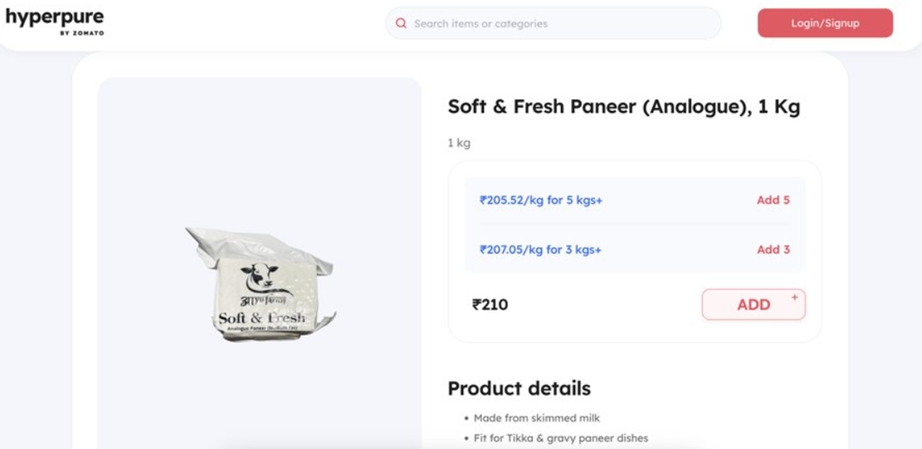
image
Alleged Fake Paneer being sold on the B2B platform, Zomato Hyperpure. (Image credit – X)

One viral post these days is enough to question everything that a company stands for. Many online service providers often find themselves amid strange customer complaints. One such service provider is Zomato.

The company is not new to online outrage and has regularly faced consumer backlash online.

The recent incident happened when a man from Gurugram sparked an online debate after accusing Zomato of selling “fake paneer” to restaurants through its B2B platform, Zomato Hyperpure.

In a post on X (previously Twitter), user Sumit Behal claimed that Zomato is supplying restaurants with “fake paneer” made from vegetable oils. According to Behal, these restaurants then serve the paneer to customers without providing any disclaimer about its true nature.

“India loves paneer dishes and restaurants sell fake paneer made with vegetable oils without any disclaimer.

They make you believe that you are eating healthy food by eating a variety of paneer dishes over junk food.

This is being sold on the website of Zomato for restaurants,” Behal wrote in his post.

Behal also posted screenshots on the product page. The product in question was labelled Analogue Paneer on the website.

It has raised concerns due to its description by the manufacturer as “fit for tikka and gravy paneer dishes.”

This description has led some to question its authenticity.

In a follow-up post, Behal also clarified that his claims were based on a YouTube video shared by the All About Nutrition channel that highlighted the issue first.

Behal’s post quickly gained attention online with people sharing their opinions in the comments section.

While some supported his concerns, others called for more clarity and evidence regarding the product in question.

As of now, Zomato has not responded to the accusations made by Behal.

WhatsApp Image 2024-10-23 at 6.18.33 PM
WhatsApp Image 2024-10-23 at 6.18.32 PM (1)
WhatsApp Image 2024-10-23 at 6.18.31 PM
WhatsApp Image 2024-10-23 at 6.18.30 PM
WhatsApp Image 2024-10-23 at 6.18.32 PM
WhatsApp Image 2024-10-23 at 6.18.33 PM WhatsApp Image 2024-10-23 at 6.18.32 PM (1) WhatsApp Image 2024-10-23 at 6.18.31 PM WhatsApp Image 2024-10-23 at 6.18.30 PM WhatsApp Image 2024-10-23 at 6.18.32 PM

FAQs

Q1. What did Sumit Behal accuse Zomato of doing?

Answer. Sumit Behal accused Zomato of selling fake paneer made from vegetable oils to restaurants through its B2B platform, Zomato Hyperpure.

Q2. Does Zomato sell fake paneer?

Answer. It has not been proven yet but a viral post based on a YouTube video accused Zomato of selling fake paneer through its B2B platform, Zomato Hyperpure.

Also Read : Swiggy and Zomato cut free delivery radius to 7km for premium members: See how users reacted

Also Read : Food delivery apps’ New Year surge in India

Reliance-Disney Merger To Become A Reality, CCI Approves $8.5-billion Deal

0

Highlights

  • CCI approves the $8.5 billion merger between Reliance Industries and Walt Disney’s media assets.
  • The merger will create India’s biggest media company.
  • The company will be valued at over ₹70,000 crore.
  • Reliance will control 60% and Disney 37% of the merged company.
image
CCI approved the $8.5-billion Reliance-Disney merger deal in a detailed order. (Image credit – Shutterstock)

The Competition Commission of India (CCI) recently published a published 48-page detailed order to green-lit the big merger between Reliance Industries and Walt Disney’s media assets.

However, not without a few conditions. As part of the $8.5 billion deal, Reliance and Disney will have to sell off seven TV channels including Hungama and Super Hungama to meet competition rules.

Reliance and Disney have also agreed not to bundle TV ad slots for IPL, ICC and BCCI cricket matches until the end of their current contracts to get the merger approved.

This means that advertising slots for these popular cricket events will be sold separately ensuring fair competition.

“The parties will not bundle OTT ad slot sales for all three cricketing rights available with the parties, i.e. IPL, ICC and BCCI for the balance tenure of the existing rights,” said the 48-page order.

The companies also promised not to raise ad prices for ICC and IPL events “to an unreasonable level” while they hold the rights.

A key part of the deal is the sale of seven TV channels Hungama and Super Hungama.

Reliance-Disney Merger Gets IB Minitry’s Approval

Earlier in September 2024, the Ministry of Information and Broadcasting (I&B) gave its approval for the transfer of non-news TV channels from Viacom18 Media to Star India.

Reliance shared the news in a filing to the stock exchange, saying, “It is hereby informed that the Ministry of Information and Broadcasting (I&B), Government of India, vide its order dated September 27, 2024, has granted its approval for the transfer of Licenses relating to Non News & Current Affairs TV channels held by Viacom18 Media in favour of Star India subject to conditions laid by Competition Commission of India.”

According to CCI, this merger will create India’s biggest media company valued at over ₹70,000 crore.

Mukesh Ambani’s Reliance will control 60% of the new entity, 16% directly and 47% through its Viacom18 business. On the other hand, Disney will own 37%. The combined company will run more than 120 TV channels and two major streaming services giving Reliance a huge presence in India’s media scene.

For the July-September quarter, Reliance Industries reported a profit of ₹19,101 crore. This was a 3.6% drop compared to last year. But on a quarter-on-quarter basis, the company’s profit actually increased by 9.5%.

In the first quarter of FY25, they made a profit of ₹17,448 crore.

FAQs

Q1. What conditions did the CCI place on the Reliance-Disney merger?

Answer. As part of the $8.5 billion deal, Reliance and Disney will have to sell off seven TV channels including Hungama and Super Hungama to meet competition rules.

Q2. What have Reliance and Disney agreed to regarding TV ad slots?

Answer. Reliance and Disney have agreed not to bundle TV ad slots for IPL, ICC, and BCCI cricket matches until the end of their current contracts to get the merger approved.

Q3. How much of the new entity will Reliance and Disney control?

Answer. Mukesh Ambani’s Reliance will control 60% of the new entity and Disney will own 37%.

Also Read : Tira by Reliance Launches Global Luxury Skincare Brand Augustinus Bader in India

Also Read : Mukesh Ambani’s Reliance Pushes for Auction of Satellite Spectrum Amid Competition with Elon Musk’s Starlink