Home Blog Page 1367

“The core objective of ESFI is to grow esports like any other sport”

0

Although it’s a more than a decade old industry, esports has witnessed significant growth in India in the recent past, thanks to the proliferation of high-end smartphones at affordable prices as well as the rise of online multiplayer games which took the world by storm following the COVID-19 outbreak forcing people to remain indoors. To discuss this emerging trend, future prospects and challenges, Ramesh Kumar Raja caught up with Lokesh Suji, Director, Esports Federation of India (ESFI), a sports body that plays the same role which BCCI does in Cricket. ESFI brings together all the stakeholders of the esports ecosystem cohesively and gives opportunities to the budding talents to work at the ESFI’s events to train and provide experience to them. Excerpts:

How do you look at the emerging trend of esports in India, especially in the wake of COVID-19 lockdown?

Sports during lockdown were a fairy tale. With empty stadia and athletes stuck without training facilities, people turned to online gaming for the entertainment and competition aspect. Budding streamers across the country have taken advantage of the lockdown by setting up YouTube channels and Twitch streams to gain popularity, entertain audiences and hopefully enter the big leagues of online gaming.

Esports shares its similarities and differences with physical sports. Though one needs not to train physically, honing skills and practicing combos for 5-6 hours every day is a different challenge that competitive esports gamers face. Tournaments hosted by games of the MOBA (Multiplayer Online Battle Area) genre often host them in huge arenas with a soaring crowd that encourages competition in real-time.

Can you please tell us about the whole business of esports, its market size and opportunities in India?

Esports revolves around largely two things: Video Game and the esports athletes who play that video game, rest other things are built around these two core pillars – Game developers, publishers, broadcasting/streaming, leagues/championships, sponsorships, ticketing, esports teams.

As per our estimates, there are around 200 million esports enthusiasts in India; Opportunities are immense as esports is still in a very nascent stage. Esports is a new industry, just like sports you can look at becoming a pro esports athlete, a live streamer, caster, analyst, coach, esports arena, academies, team owner, technologies for esports, event operator and so on.

How is esports different from Fantasy Gaming and RMG? Where are they moving now?

Esports is a sport, it is competitive video game playing, coordinated by different leagues, where players participate in group gaming competitions. Viewers can watch professional gamers compete against each other in a variety of games. We are a sport because the physicality of responses of our participants leads to the result of a winner. And, esports is essentially a speed competition. The business model of esports depends majorly on three aspects – media rights, sponsorship and merchandising. There is no space for gambling or betting involvement in esports sector. Mostly esports companies never charge their players to play their tournaments; instead they give them prize money on winning the tournament.

These factors clearly embed esports as a professional sport, even the level of luck involved is no different from the traditional sports. While gambling or “real money gaming” depends largely on luck and very little to no skill involved, pairing the two together is in a way disgracing and resenting to acknowledge the skill of these pro esports athletes.

Fantasy gaming: In online fantasy (sportsbooks), players bet on sports from their homes or on their mobile devices, online bookmakers as an easy way to get access to sports betting around the clock. Fantasy has a major element of betting which comes in when you pay money to register your virtual team for a contest with other virtual teams. Here the winners gain money from the losers, with the platform taking a cut. Courts have so far ruled that picking a fantasy team involves strategy, and so it doesn’t come under the purview of gambling, like in a card game or roulette that’s based more on chance.

Real-money gaming: It means the offering, distribution, advertising, promotion and sale of any type of game played via online media in which real money is wagered on the outcome of the game.

What role does ESFI play in this regard and what are the key responsibilities of this organization?

ESFI is the sports federation and plays the same role which BCCI plays in Cricket. Our core objective is to grow esports like any other sport. ESFI brings together all the stakeholders of the esports ecosystem cohesively.

We give opportunities to the budding talents to work at the ESFI’s events to train and provide experience to them.

We had got the Bronze medal during Asian Games 2018 (where esports was a demonstration sport).

Esports is not yet recognized in India, ESFI is in talks with the relevant authorities and aggressively working to get the esports recognized just like any other sport.

Prime Minister Narendra Modi recently routed for #AtmanirbharBharat in the gaming sector. How prepared is India for the same?

While the stress is to become “Atmanirbhar”, I believe this is a great opportunity for the government and the Ministry of Sports to also recognize esports as a medal-prospect sporting opportunity. The gaming community which is fragmented currently can also benefit if government recognition is given to the sport.

“While the stress is to become “Atmanirbhar”, I believe this is a great opportunity for the government and the Ministry of Sports to also recognize esports as a medal-prospect sporting opportunity. The gaming community which is fragmented currently can also benefit if government recognition is given to the sport”

What have been the major achievements of ESFI?

Esports Federation of India (ESFI)’s year began with Indian team qualifying from South Asia for the e-Masters Esports Championship for PES, Arena of Valor and Warcraft III after defeating teams from Nepal, Pakistan, Sri Lanka etc. Team India consisted of Moinuddin Aamdani (PES), Arun Mozhi Varman (Warcraft) and Sonukaran J M (Captain), Shinil R, Aditya Katoch, Manmohan Singh and Aakash Chadalavada, Dwayne Fernandes (Substitute) (Arena of Valor) e-Masters in the Asian Championship organized by the Asian Esports Federation (AESF), the regional qualifiers of which were held in January 20 in Thailand for PES, where Moin was representing India, unfortunately Moin lost a very close match against Team Malaysia. Nevertheless, Team India (AOV & Warcraft) will play at the main event of e-Masters 2020.

National Esports Championship (NESC 2020) was organized in September 20 online due to COVID-19 and Moinuddin Amdani, Abhinav Tejan and Team Random came out victorious and bagged the National Titles and secured their slot in Team India for the 12th Esports World Championship organized by International Esports Federation (IESF), the Global Finals of which are to be scheduled in February 21 in Eilat, Israel. Tejan and Moin (Tekken & PES) maintained their winning streak to win the online South Asian Qualifiers of 12th ESWC and will represent India at the Global Finals.

The festive month of October 20 brought new opportunities for the Indian esports community as ESFI started with the daily national ranking scrims for game titles like Call of Duty-Mobile, Valorant and in the month of December ESFI also included Free Fire and will be adding more games. This is a great chance for the top and underdog team to get themselves recognized and ranked; this will give them bigger visibility, which at times they lose out on. The November months Top 10 Ranked Teams for CODM are:

Blind Esports, Force One, Enigma Gaming, Heroes Official, Xpendables, Complexity Gaming, Underdog Arena, Resilience Esports, Hex Esports, Dragon knights.

ESFI also announced Community Cup for CODM & Valorant.

Esports has redefined online gaming like never before. Where is it moving now?

Esports – the world of competitive and organized video gaming emerged as some sort of an unbeatable champion in the International sporting arena in the recent past. Given the current situation the sports industry itself is in, the chance for a reinvention is ripe to open the jar of opportunities through innovation and, allow the industry to flourish with a few leaps and bounces, along the way.

How has the model of gaming on cloud been one of the biggest boons of the industry which has helped handle the sudden upsurge?

Cloud Gaming will help the casual gamers not the esports athletes, as it adds to the lag/latency.

“The Indian gaming industry has enough wherewithal and can’t be termed dependent on one game. This is a great opportunity for Indian video game developers to build innovative online multiplayer games. Games like HitWicket, WCC or mythology-based games like Raji which are all homegrown products and now have the great opportunity to encash their presence”

 What are the challenges you see from a gaming point of view in India?

In the competitive realm, players require hardware that allows them to run games seamlessly at the highest performance output settings.

However, given the degree of technological finesse involved, high-performance hardware come priced at steep rates, and is not easy to acquire by competitors in time.

The industry thereby loses out on much higher participation and audiences who want to play, but have to draw a line at the pricing of the systems.

Unfortunately, there are also some infamous stereotypes that surround the players and the industry, such as obsessive hours of playing, and anti-social behaviour.

How do you look at the future of esports in India, especially after the ban on many gaming apps from China?

There is no need to panic, the Indian gaming industry has enough wherewithal and can’t be termed dependent on one game. This is a great opportunity for Indian video game developers to build innovative online multiplayer games. Games like HitWicket, WCC or mythology-based games like Raji which are all homegrown products and now have the great opportunity to encash their presence.

Global market for used smartphones to reach $65 bn in 2024: IDC

0

The worldwide shipments of used smartphones, inclusive of both officially refurbished and used smartphones, are expected to reach a total of 225.4 million units in 2020, according to International Data Corporation. This presents an increase of 9.2% over the 206.5 million units shipped in 2019. IDC projects used smartphone shipments will reach 351.6 million units in 2024 with a compound annual growth rate (CAGR) of 11.2% from 2019 to 2024.

Much of the 9.2% growth continues to be driven by mature markets in which trade-in emulates a form of subsidy to push consumers to upgrade. Over the past year, we have seen rapid growth in trade-in programs and average selling prices (ASPs) across numerous channels, IDC said.

Premium flagship offerings continue to rely heavily on trade-in programs to make the upfront cost more affordable to consumers. Vendors such as Apple, Samsung and Huawei have all implemented their own programs with very aggressive trade-in offers compared with other channels, it said.

Telcos on the other hand are using trade-in combined with bundling (family plans and services) to get consumers to turn over their old device and upgrade, it added.

Although 2020 volume was not as large as expected, the used market still performed well compared with the new market, where IDC is expecting a 6.4% decline for smartphones for the year. As with our previous forecast, we still expect to see double-digit growth during the forecast period, at an average of 11.8%, it said.

“In contrast to the recent declines in the new smartphone market, as well as the forecast for minimal growth in new shipments over the next few years, the used market for smartphones shows no signs of slowing down across all parts of the globe,” said Anthony Scarsella, research manager with IDC’s Worldwide Quarterly Mobile Phone Tracker.

“Refurbished and used devices continue to provide cost-effective alternatives to both consumers and businesses that are looking to save money when purchasing a smartphone. Moreover, the ability for vendors to push more affordable refurbished devices in markets where they normally would not have a presence is helping these players grow their brand as well as their ecosystem of apps, services, and accessories,” Scarsella added.

“Although the COVID-19 pandemic has posed challenges for secondary market participants around able-bodied workers and logistics, most of the industry has been able to satisfy the demand for refurbished smartphones. Once the pandemic begins to fade, those that were able to invest in technology will be well-poised to prosper during the recovery,” said Will Stofega, program director, Mobile Phones.

According to IDC’s taxonomy, a refurbished smartphone is a device that has been used and disposed of at a collection point by its owner. Once the device has been examined and classified as suitable for refurbishment, it is sent off to a facility for reconditioning and is eventually sold via a secondary market channel. A refurbished smartphone is not a “hand me down” or gained as the result of a person-to-person sale or trade.

Paytm Mall offers you best deals on iPhones, electronics

0

Ecommerce platform Paytm Mall today welcomed the New Year with the final edition of Maha Shopping Festival till January 14. The company has partnered with American Express and Federal Bank to offer a 10% cashback on all debit and credit card payments. The company is also offering attractive EMI offers on all American Express credit card transactions. Paytm Mall during this festive season has had tied up with several leading banks, Citibank, ICICI, Axis among others to offer massive deals and discounts.

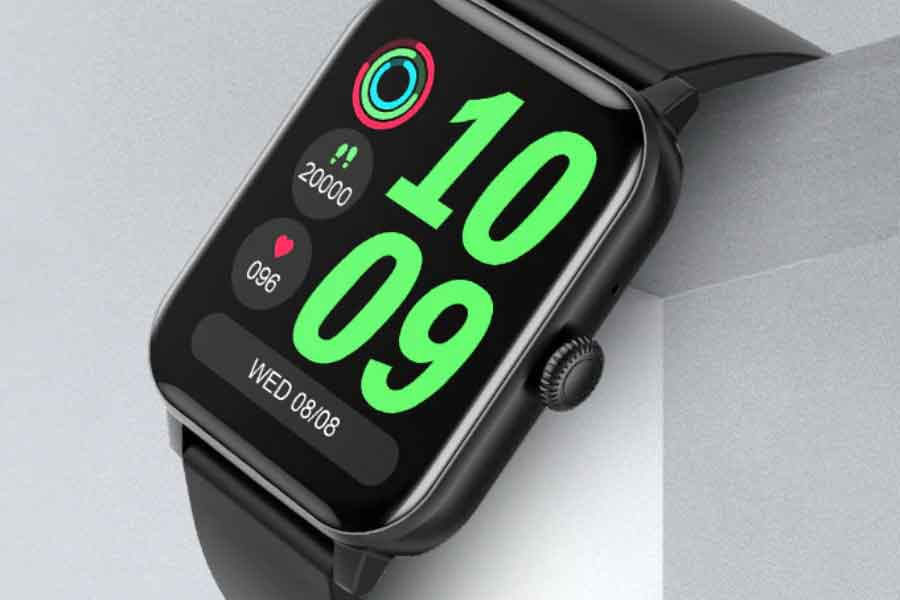
The company is offering massive deals on all Apple products including iPhones, Airpods, and smartwatches. It is also giving exclusive discounts on other popular smartphones from brands including Samsung, Oppo, at a starting price of Rs 5,000. Furthermore, leading laptop brands such as Lenovo, HP, Dell, Asus, and others will be offered at the best prices online at over 40 per cent discount along with a cashback. Customers would be getting the best in class prices on over 5,000 brands and 10,000 sellers.

Latest smartwatches from top brands such as Apple, Fitbit, Garmin, Amazfit, Oppo are also available at attractive prices with almost Rs 7,000 in cashback.

A flat 15% cashback is available on consumer electronics such as wired and Bluetooth headphones, speakers, hard disks, power banks, and more across popular brands including boAt, Boult Audio, Portronics, San Disk, Seagate, etc. Paytm Mall is also offering up to 60% discount on personal grooming products as well.

Abhishek Rajan, COO, Paytm Mall, said, “We want to ring in the New Year with new hopes, aspirations and dreams. This year should be about giving a fresh start to everyone and helping them feel good about themselves. Our final edition of the festive sale is aimed at giving maximum happiness at the most affordable prices. We will keep the momentum going to get the best deals and discounts for our customers. Our tie-up with the top banks in the country is helping customers add more cheer by availing exclusive cashback on each transaction.”

Airtel beats Vodafone Idea and Jio in network quality, other metrics: Tutela

0

In the latest Tutela Mobile Experience Snapshot for India, Airtel won in four of the five metrics tested including the highest Excellent Consistent Quality and fastest median download speeds, while Vodafone Idea had the fastest median upload speeds in the country.

In Common Coverage Areas across India, Airtel had the highest Excellent Consistent Quality with 55.4% of connections having a network experience suitable for use-cases like 1080p video streaming, real-time mobile gaming or HD video calling.

With a difference in performance of 6.9%, Vodafone Idea was in second place, followed by Jio with an Excellent Consistent Quality of 45.1%. The operator BSNL Mobile had the lowest Excellent Consistent Quality in India at only 14.0%, 41.4% difference between first place Airtel and BSNL.

No operator in Common Coverage Areas across India reached the 90% threshold for Core Consistent Quality, representing connections with a network experience suitable for use-cases like SD video streaming, social media sharing and web browsing.

However, Airtel had the highest Core Consistent Quality at 83.0%, followed by Jio at 77.9%, and Vodafone Idea at 73.8%. BSNL Mobile had the lowest Core Consistent Quality at 48.5%, 34.5% difference between the operator and first place Airtel.

In Common Coverage Areas across India, Airtel had the fastest median download speed at 10.0 Mbps, however there was strong competition from Vodafone Idea with a median download speed of 9.4 Mbps. Jio was in third place with a median download speed of 6.5 Mbps, followed by BSNL Mobile at 2.8 Mbps, 7.2 Mbps slower than Airtel.

For upload speeds, Vodafone Idea took first place with a median speed of 5.1 Mbps, followed by Airtel at 4.2 Mbps, Jio with 3.4 Mbps, and BSNL Mobile in fourth place with a median upload speed of 1.7 Mbps, 3.4 Mbps slower than Vodafone Idea.

In the latency test, there was strong competition between Airtel, Vodafone Idea and Jio: Airtel had the most responsive network in Common Coverage Areas across India with 24.0 ms, however only 4.5 ms separated third place Jio from that top spot and only 2.5 ms difference between Airtel and Vodafone Idea.

BSNL Mobile had the least responsive network at 49.1 ms, a difference in performance of 25.1 ms.

Tutela said its findings for India are based on 615 billion network quality measurements including 62.9 million speed tests between August and October 2020.

Portronics launches 2 new laptop stands in its My Buddy series

0

Portable consumer electronics maker Portronics has expanded its existing series of laptop stands with the launch of My Buddy K2 and My Buddy T in India.

In today’s modern-day lifestyles, people barely have time to pay attention to their health and posture, which often becomes the root cause of neck, wrist and spinal injuries.

With the latest additions to the My Buddy series, Portronics is eyeing to offer a comprehensive solution to people at large without compromising on their work style.

The Portronics My Buddy K2 and My Buddy T laptop stands claim to be super lightweight, foldable and portable, and can easily fit into almost all bags. Hence, people can set-up their workstations anytime, anywhere they go.

The My Buddy K2 is crafted with aluminum alloy and silicone material, with 7-level adjustments that allow you to choose the correct angle for yourself. Be it a casual binge-watching spree, deep-focused work, a conference call, or even a cup of tea, one can choose from 7 height levels as per their convenience, minimizing the risk of injuries and fatigue, said Portronics in a statement.

Similarly, My Buddy T is built with aluminum alloy and comes with a single-level adjustment. It speaks for itself- improve body posture while hard at work, or even when binging on your bed. The ergonomic stand elevates the device to reach your eye-level, allowing for an excellent, customized viewing level.

Both the laptop stands are equipped with anti-slip and anti-skid silicone pads, designed to hold the device firmly in place, and scratch-resistant surfaces for extra longevity.

The stands offer adequate ventilation and airflow to keep your devices from overheating and let you work comfortably for longer periods of time. The cross-ventilated design in both stands ensures one can continue using their devices for long hours.

Both the stands are available at an introductory price of Rs 2,999 (each) on all leading online and offline stores and come with a 12-months warranty.

Aristotle Review: Quite interactive and makes the process of learning fun

0

One sector that has registered phenomenal growth numbers during the pandemic-hit 2020 is edtech. A number of edtech platforms were either launched or gained popularity during this period, as remote learning became a new normal due to closure of schools and colleges. One of such apps that made its presence felt emphatically during this period is Aristotle, which is India’s first social learning app developed by edtech pioneer Digital Aristotle.

The app caters to students studying from class 6 to 12 and provides assistants in subjects such as Mathematics and Science. The app covers both CBSE and ICSE curriculum for the aforementioned classes.

Downloading the app

The mobile app is currently available on Google Play. With a user rating of 4.2, the app has already registered more than 50,000 downloads. The size of the app is just 12 MB and hence, it does not hamper the functionality of your mobile phone.

Getting started

Once you download the app, you are required to sign up by entering your mobile number. After the mobile number is entered, the app shares an OTP with which one can log in with ease. Following this, you need to enter a few basic details such as name of student and class in which the ward is studying. You also need to choose whether the student needs services for CBSE or ICSE curriculum. After filling these details, the students need to enter additional details such as name of the school they are studying in and the district and state where the institution is located.

How it works

The app caters to the various needs of students with regard to completing their learning cycles. Unlike other similar apps, it provides services that do not replace but aid the classroom learning of an individual. Special impetus has been given on conducting revisions and a dedicated section is there on the app for the purpose. On a day-to-day basis, different topics from either Science or Mathematics are featured in the section. For instance, if the featured topic is Food and Nutrients, then students are redirected to a multiple choice quiz wherein questions such as ‘Roughage is usable for our body because’ are asked. If students answer it correctly, they are redirected to the next question and if they fail to do so, they are given a detailed answer to understand the concepts. Apart from this, there is a lot of focus on imparting knowledge through gamification techniques. For example, a student can take different topic-based challenges wherein they can compete with peers or a bot. There is a forum as well to ensure instant doubt clarification wherein students can post their queries that would be answered by subject matter experts.

Conclusion

The app is a perfect solution for students who look for additional tools to enhance their subject-based knowledge. The app is quite interactive and makes the process of learning fun. The subjects – Science and Mathematics – are covered by the app in a comprehensive manner.

Wonder Material ‘Graphene’ Will Transform Your Mobile Experience

0

Graphene, the wonder material is considered the world’s thinnest as well as the strongest material. It is one million times thinner than a hair strand, in fact owing to the same, it is considered two-dimensional. Graphene is also believed to be the best conductor of heat and electricity. One-atom thick sheet of carbon atoms arranged in a hexagonal structure make graphene, and due to its various attributes, the material finds utility in a wide range of industries including cellular. The material is appropriate for many uses in our day to day lives which are incomplete without a smartphone. Let’s have a look at some of them.

To prevent heating in smartphones: One issue that most smartphone users face is excessive heating of the phone when in use for extended hours. The usage might vary from being on calls to using apps to learning to gaming. The heating of the phone might be caused by faulty hardware or software glitches and the parts that get the heated most are the CPU and screen. Now if graphene, which is an excellent conductor of heat, is used on the upper layer of the CPU, it will resultantly be distributed across all components of the phone, preventing one specific part from getting more heated.

Thinner touch screens: Graphene can be used to develop resistive touch screens, which are extremely thin as well as unbreakable. Such screens would add to the virtues of smartphones, tablets as well as laptops. According to a finding by the American Chemical Society, if these screens are used on thin plastic rather than glass, they would be more lightweight and compact. In South Korea, the first touch screen panel based on graphene has already been developed.

Extending battery life: Increased electrode density, faster cycle times and enhanced lifespan are some of the most significant benefits of a graphene battery. A lot many tech-powered innovations are currently underway with regard to batteries made out of graphene. As a matter of fact, the first set of such batteries have already been introduced in the US earlier last year. While a normal battery lasts around 600 charge cycles, a graphene battery can last over 1,500 charge cycles. Even as the regular batteries take 90 minutes on average for a full charge, graphene batteries take just around 20 minutes.

“Graphene has proved to be a game-changer in the research and development of nanomaterials. Its dynamic nature and wide properties give unprecedented advantages to all industries from textile to those manufacturing airplanes to those developing medical sensors. In fact, several companies from across the world have conducted research of graphene-based products that would aid in the fight against Covid-19,” says Vikas Bardiya, who is the founder of Nanomatrix Materials, one of the few Indian companies that deal in manufacturing and integration of the wonder material into different applications.

Indeed, the benefits and scope of graphene as a material are endless. Now it is up to the researchers and developers to dwell into the various aspects of the wonder material and ensure that mankind gets the maximum benefit of graphene.

Edtech startup DcodeAI launches new AI learning platform for students

0

Edtech startup DcodeAI has launched new DIY learning platform including Natural Language Processing (NLP), Computer Vision (CV), Data Science for children aged between 12 and 18 years. With angel funding of USD 500,000 from Sultan Chand & Sons, an educational publishing house, DcodeAI was launched with the vision to equip the next generation of learners with AI skills, without having a formal coding background. It aims to democratize AI learning among primary and secondary level students across 10,000+ schools that are currently part of its network.

DcodeAI focuses on low code/no code tools and usage of AI to make learning easy, intuitive and personalized. Hence, even those without any coding background can start to learn and implement AI models. The new set of DIY learning programs is designed for students who can learn the concept of AI and hone their skills in data manipulation, data visualization, statistics, machine learning, deep learning and more. These learning programs are suitable for students who want to learn about developing Chatbots, Image Recognition Models, as well as Voice Recognition-based Bots and Home Automation Systems.

Kartik Sharma, CEO and Co-Founder, DcodeAI, said, “In 2020, we have witnessed multiple disruptions in the education system of the country as well as the overall learning and development process of the students. The Hon’ble Prime Minister of India has given a clear clarion call for the need to democratize AI across all sectors. This journey of AI transformation has to start at the school level and this is what we, at DcodeAI, want to enable. We want to simplify the learning curve of students who want to use AI for solving problems and driving impactful innovations. Our immediate goal is to reach out to 500+ schools in India by Q1 FY2022 and further expand our global footprint in countries like Africa, UK, USA and UAE by Q2 FY2022.”

Lending platform Indifi partners Retailio to strengthen its presence in pharma sector

0

Following its successful foray into the pharma segment, Indifi is strengthening its presence in this space further. As part of this initiative, the leading MSME lending platform has partnered with Retailio, India’s largest B2B pharma marketplace. Through this association, Indifi will be pre-approving and providing pharma retailers with its curated credit options to meet small working capital requirements throughout India.

Retailio, a platform used by retailers to order products from distributors and make payments to them, will now have a lending option as well. Retailers can now take small loans from Indifi’s tech-driven lending platform, and ensure smooth working capital management. The partnership allows Indifi to cater to around 100,000 retailers already present on the Retailio platform.

Alok Mittal, CEO and Founder, Indifi, said, “One of the biggest challenges most retailers face in the pharma space is the lack of access to small-ticket credits. This makes it difficult for them to ensure smooth functioning of their businesses. By collaborating with Retailio, we aim to tackle this pain point and equip retailers with credit facilities to buy inventory from suppliers and ensure timely and seamless procurement in the process.”

Rupesh Pathak, Director – Retailio, said “We are committed to driving growth and sales within the pharma ecosystem by providing the best in class services on our platform. Working capital is one of the major challenges faced by small businesses today which need a solution. Having Indifi onboard is a step towards forging a strong partnership to provide the much-needed assistance to them. Our partners have always been quite enthusiastic about the products that are most trusted and this partnership will enable us to help them grow.”

Since its inception, Indifi has served numerous businesses with its large array of credit options. To take this vision forward, Indifi has launched industry-specific credit products that meet the working capital requirements of that segment.

Trell appoints former Flipkart executive Dina D’Souza as VP Monetisation

0

Dina D’Souza has been appointed Vice President of Monetization at Trell, India’s leading lifestyle, vlogging and social commerce platform. As part of the leadership team, Dina will drive the brand and ad sales initiatives across India.

Dina brings with her 20 years of experience across print, digital, ad tech, gaming, and commerce industries. Her previous assignments involved leadership and sales roles at Flipkart Ads, POKKT, 9X Media, Microsoft, Yahoo!, and Bennett Coleman & Co. Limited.

“We are excited with the addition of Dina to the leadership team at Trell. Dina’s experience and expert knowledge will elevate our brand’s capabilities and build awareness with critical stakeholders. With her contribution, we look forward to building a robust system and functionality that can aid Trell in its monetization strategies in the current phase of growth for the platform,” said Pulkit Agrawal, Co-Founder, Trell.

“I am happy to join Trell to build the India monetization & sales strategy, at this juncture of its growth phase. The digital and media industry has seen significant shifts in the consumer’s media habits in the recent past. Regional content creation, video consumption, and online shopping continue to fuel digital growth in the country. Trell’s team has built a potent and differentiated product in the influencer led content, and lifestyle-commerce space. I look forward to bringing Trell’s full stack of advertising & content solutions to marketeers and media agencies and together build successful content to commerce brand strategies on the platform,” said Dina D’Souza on her appointment.

Trell claims to be India’s largest community commerce platform, where users share 3-minute vertical videos on over 20 interest-based lifestyle categories in over 8 Indian languages. With over 90 million downloads, the platform has hyper-grown over the past few months and surpassed the active users of Twitter and Pinterest in India. Currently, the platform is aggressively expanding its social commerce vertical, where users can also shop their favourite lifestyle products best suited to their needs, based on recommendations from trusted influencers.